Gibraltar – United Kingdom

Today we took a drive to Gibraltar which is about 20 minutes from where we are staying in Spain. Gibraltar is part of the United Kingdom and you have to cross the border and pass through customs to enter the 6km2 outpost of the United Kingdom. The customs procedure is fairly lax though – a cursory glance at our passports that Steve was holding up as he drove over the border. They don’t even look in the passport so I am unsure why they bother with this charade.

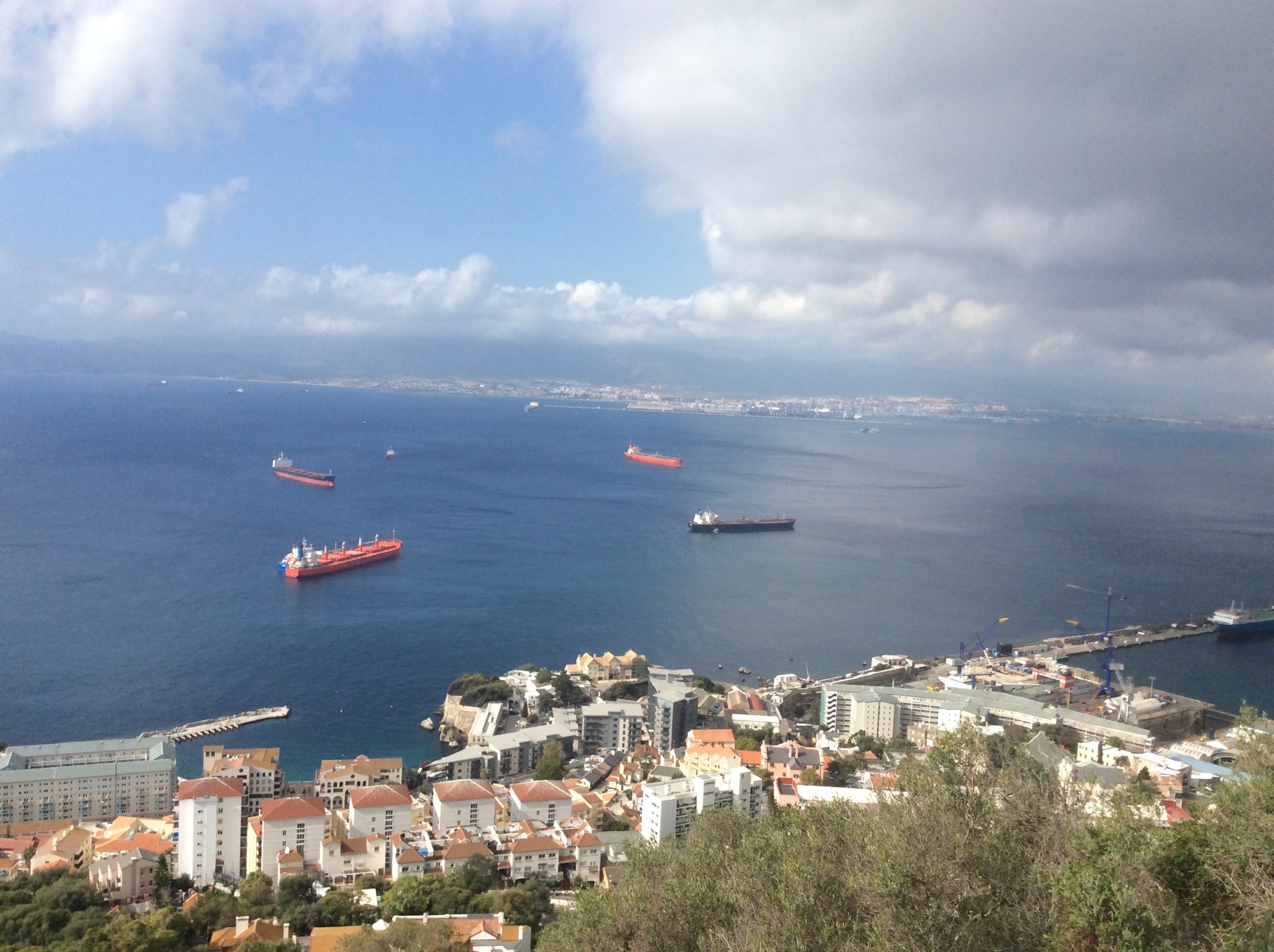
Gibraltar is a British Overseas Territory located on the southern end of the Iberian Peninsula at the entrance of the Mediterranean. It has an area of 6km2 (2.3 sq mi) and a northern border with the Province of Cádiz in Andalusia, Spain. The Rock of Gibraltar is the major landmark of the region. At its foot is a densely populated city area, home to almost 30,000 Gibraltarians and other nationalities.

An Anglo-Dutch force captured Gibraltar from Spain in 1704 during the War of the Spanish Succession on behalf of the Habsburg pretender to the Spanish throne. The territory was subsequently ceded to Britain “in perpetuity” under the Treaty of Utrecht in 1713. It was an important base for the Royal Navy; today its economy is based largely on tourism, online gambling, financial services, and shipping.

The sovereignty of Gibraltar is a major point of contention in Anglo-Spanish relations as Spain asserts a claim to the territory. Gibraltarians overwhelmingly rejected proposals for Spanish sovereignty in a 1967 referendum and again in 2002. Under the Gibraltar constitution of 2006, Gibraltar governs its own affairs, though some powers, such as defence and foreign relations, remain the responsibility of the UK Government.

The name Gibraltar is the Spanish derivation of the Arabic name Jabal Ṭāriq, meaning “Mountain of Tariq”. It refers to the Rock of Gibraltar, which was named after the Umayyad general Tariq ibn-Ziyad who led the initial incursion into Iberia in advance of the main Umayyad force in 711 under the command of Umayyad Caliph Al-Walid I. Earlier, it was known as Mons Calpe, one of the Pillars of Hercules.

IMG_1694.JPG

I had done a bit of investigating re tours on the island and decided that the taxi tour option was the best way to go. You can go to a few points around Gibraltar and they have these taxi mini vans where the taxi drivers act as both your driver and guide. We went to Casemates Square and met Adrian, a born and bred Gibraltarian. We waited for 15 minutes to see if anybody else wanted to join us but there were no takers so we decided to take the private tour option.

Adrian was a real laugh so we knew it was going to be a fun tour. I couldn’t quite make out his accent, at times you could hear the British accent and at other times it had a European slant. First stop was the petrol station – good plan, we didn’t fancy walking to the top of the rock (not with Stevie having fallen over at golf yesterday and spraining his ankle but more about that another day).

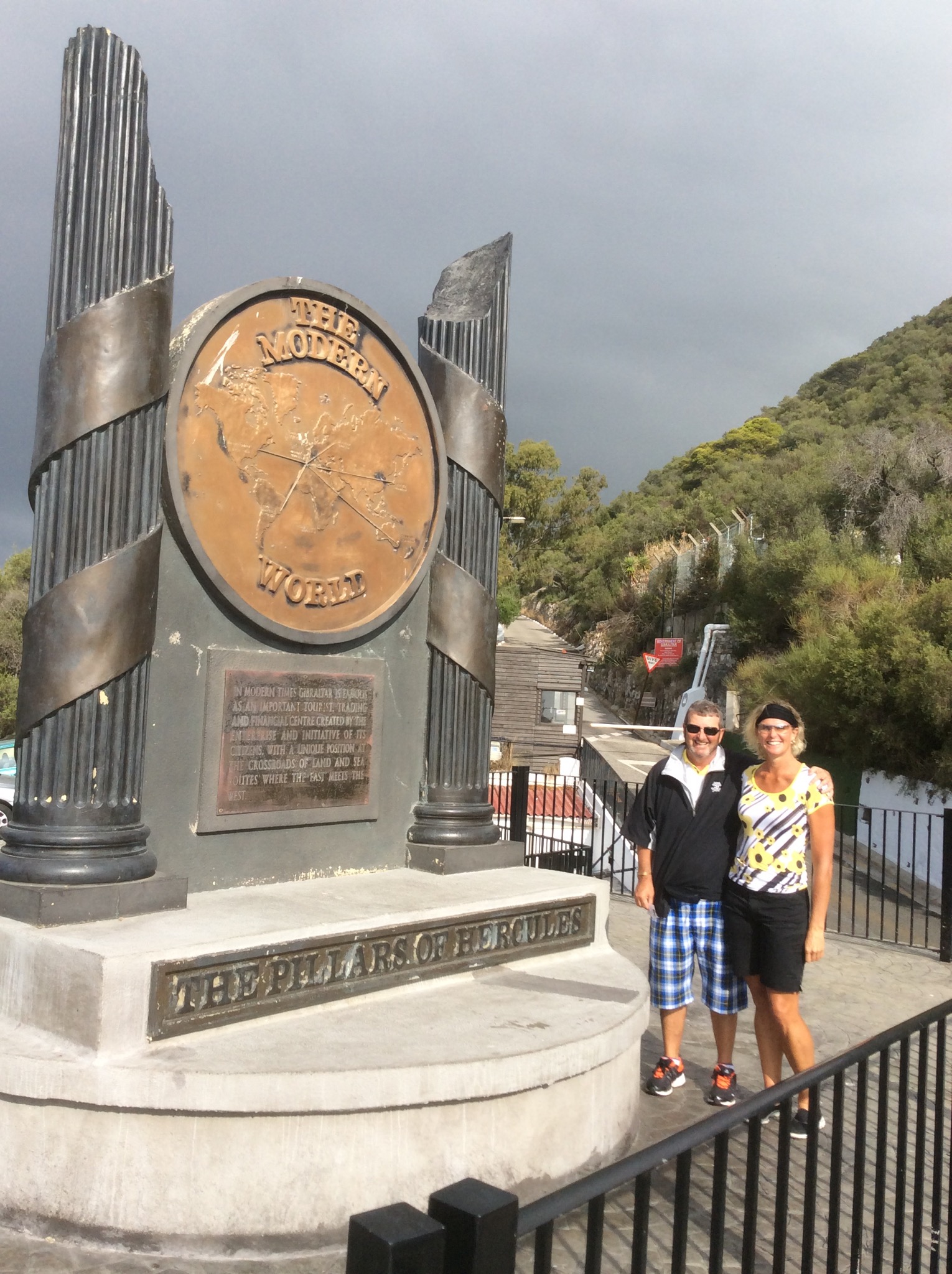
We then headed to the Pillars of Hercules monument which represents the two pillars that stand on either side of the Strait of Gibraltar. According to some Roman sources, while on his way to the garden of the Hesperides on the island of Erytheia, Hercules had to cross the mountain that was once Atlas. Instead of climbing the great mountain, Hercules used his superhuman strength to smash through it. By doing so, he connected the Atlantic Ocean to the Mediterranean Sea and formed the Strait of Gibraltar. One part of the split mountain is Gibraltar and the other is either Monte Hacho or Jebel Musa in Morocco. These two mountains taken together have since then been known as the Pillars of Hercules.
IMG_1615.JPG

IMG_1621.JPG

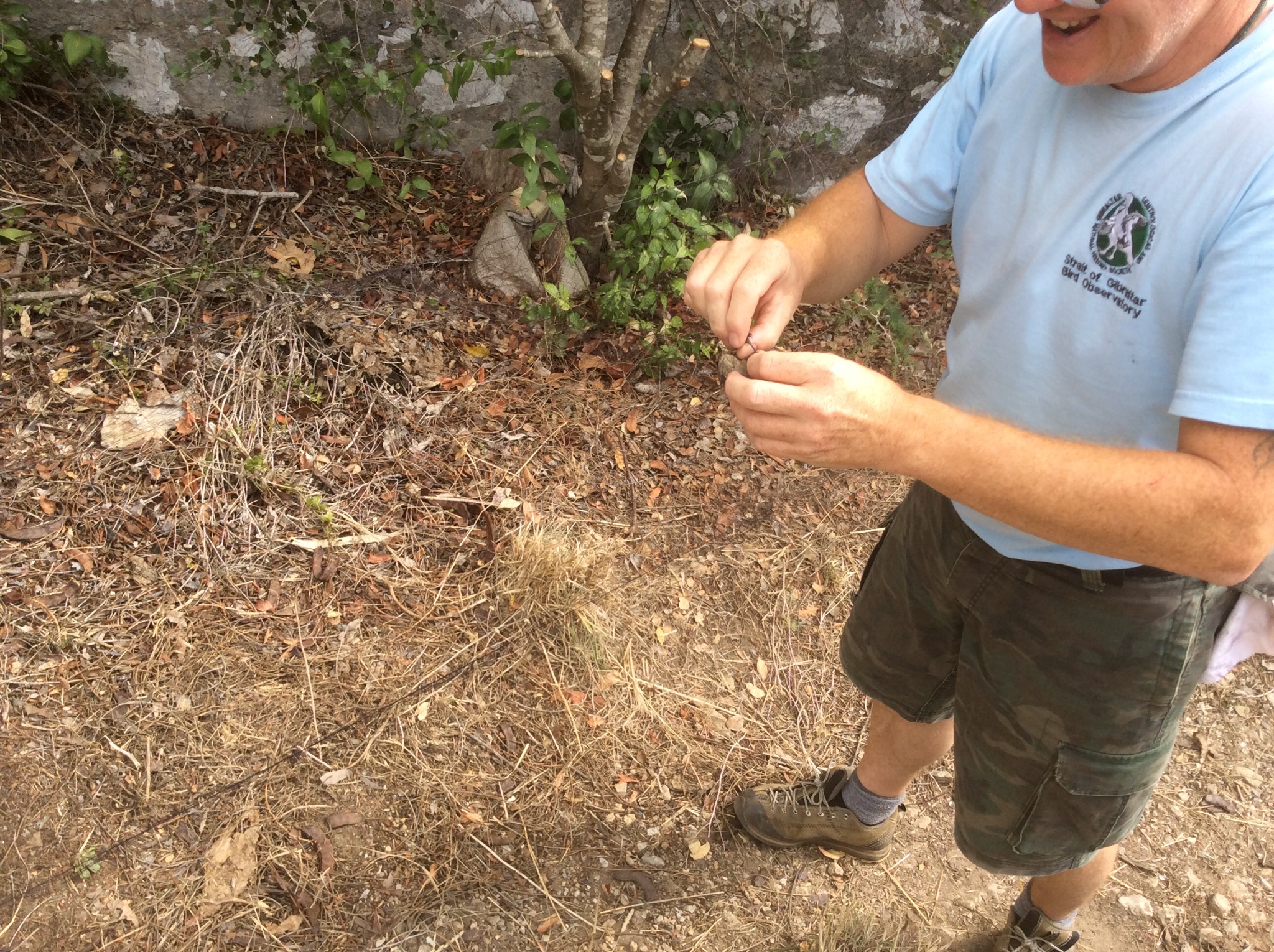
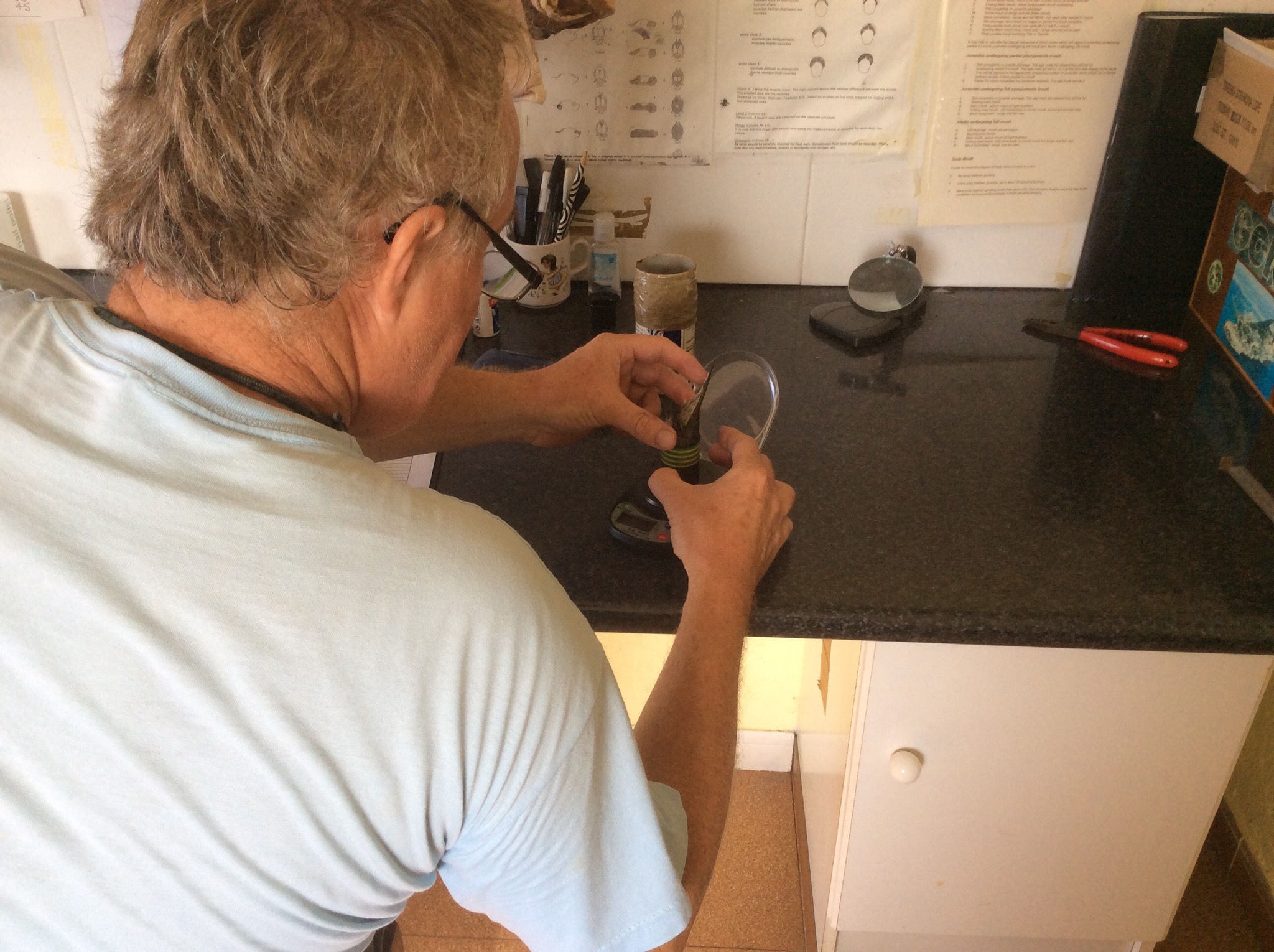
We were then lucky enough to be invited up to the bird centre. Adrian is really interested in birds and has made himself known to the people that capture data about the many birds that pass through Gibraltar. The centre is run by volunteers, although they have to be qualified so many come over from mainland Britain for short periods of time. They set the nets up before the sun comes up and have an iPhone (of course) making bird calls. There is also lots of plant life o attract the birds in. The birds get caught in the net which does not hurt them – the volunteers then collect them in cloth bags and take them up to be weighted and measured as well as information recorded about their sex, fat % and age. They are then tagged and released.

We went and watched this process and it was really interesting – the birds aren’t harmed in the process and the information is used to predict population growth or decline and migration tendencies.
IMG_1616.JPG

IMG_1618.JPG

IMG_1620.JPG

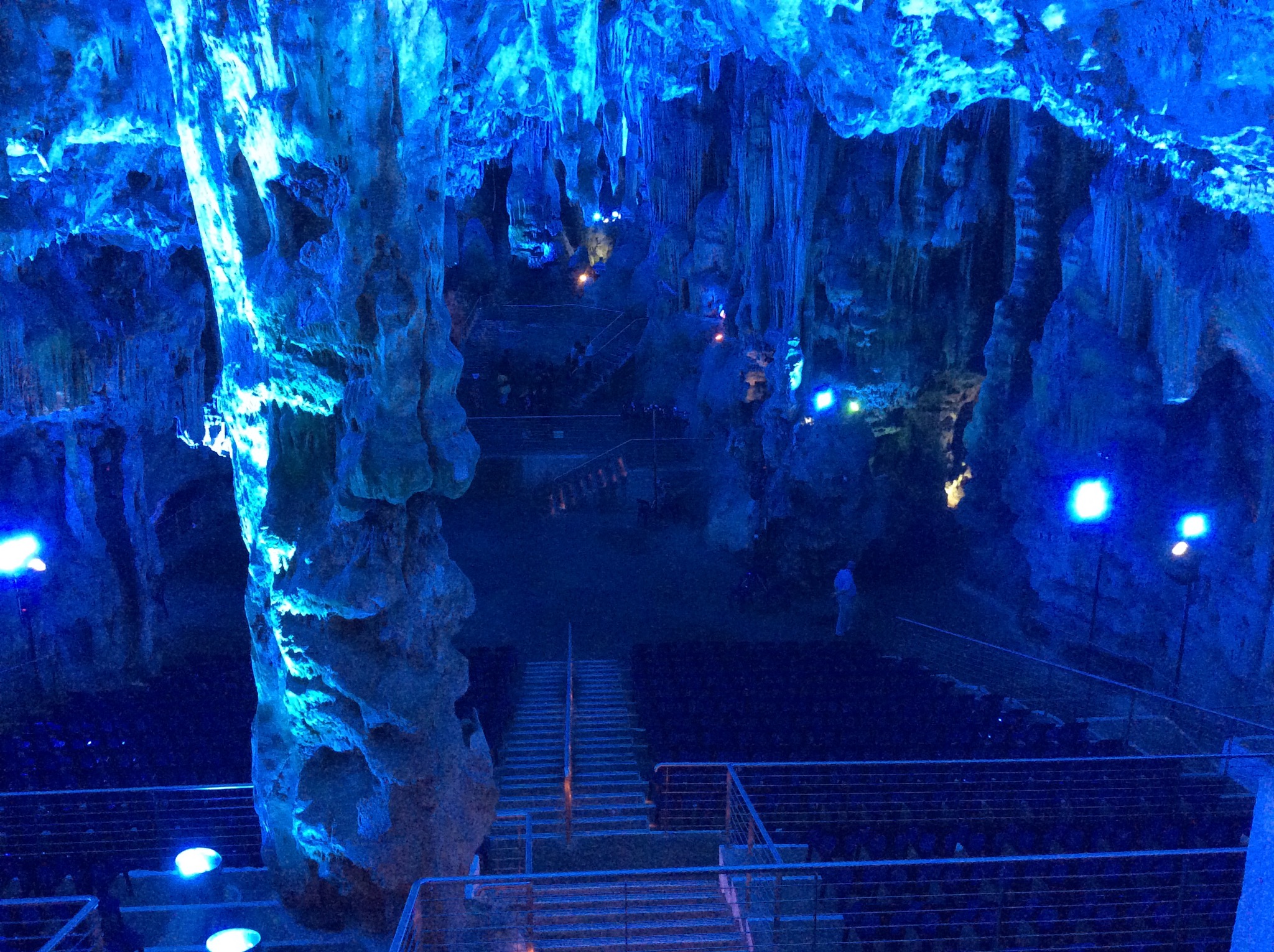
Next stop was St Michaels Cave which is the name given to a network of limestone caves located within the Upper Rock Nature Reserve at a height of over 300 metres (980 ft) above sea level. According to Alonso Hernández del Portillo, the first historian of Gibraltar, its name is derived from a similar grotto in Monte Gargano near the Sanctuary of Monte Sant’Angelo in Apulia, Italy, where the archangel Michael is said to have appeared. When the British took over Gibraltar they tried to change the name to St George’s Cave after the English patron saint but it never stuck.

It is the most visited of the more than 150 caves found inside the Rock of Gibraltar, receiving almost 1,000,000 visitors a year.

The cave was created by rainwater slowly seeping through the limestone rock, turning into a weak carbonic acid which gradually dissolved the rock. Through this process, tiny cracks in The Rock’s geological fault grew into long passages and large caverns over thousands of years. The numerous stalactites and stalagmites in the cave are formed by an accumulation of traces of dissolved rock deposited by water dripping from the ground above.

During the Victorian era the cave was used as a venue for picnics, parties, concerts, weddings and even duels. During World War II the entire cave was prepared for use as an emergency military hospital. It was never used as such.

The largest of the chambers, named the Cathedral Cave, currently serves as an auditorium. They now hold the Miss Gibraltar Beauty Pageant in there as well as various concerts due to the amazing acoustic properties.

IMG_1639.JPG

IMG_1641.JPG

IMG_1646.JPG

IMG_1650.JPG

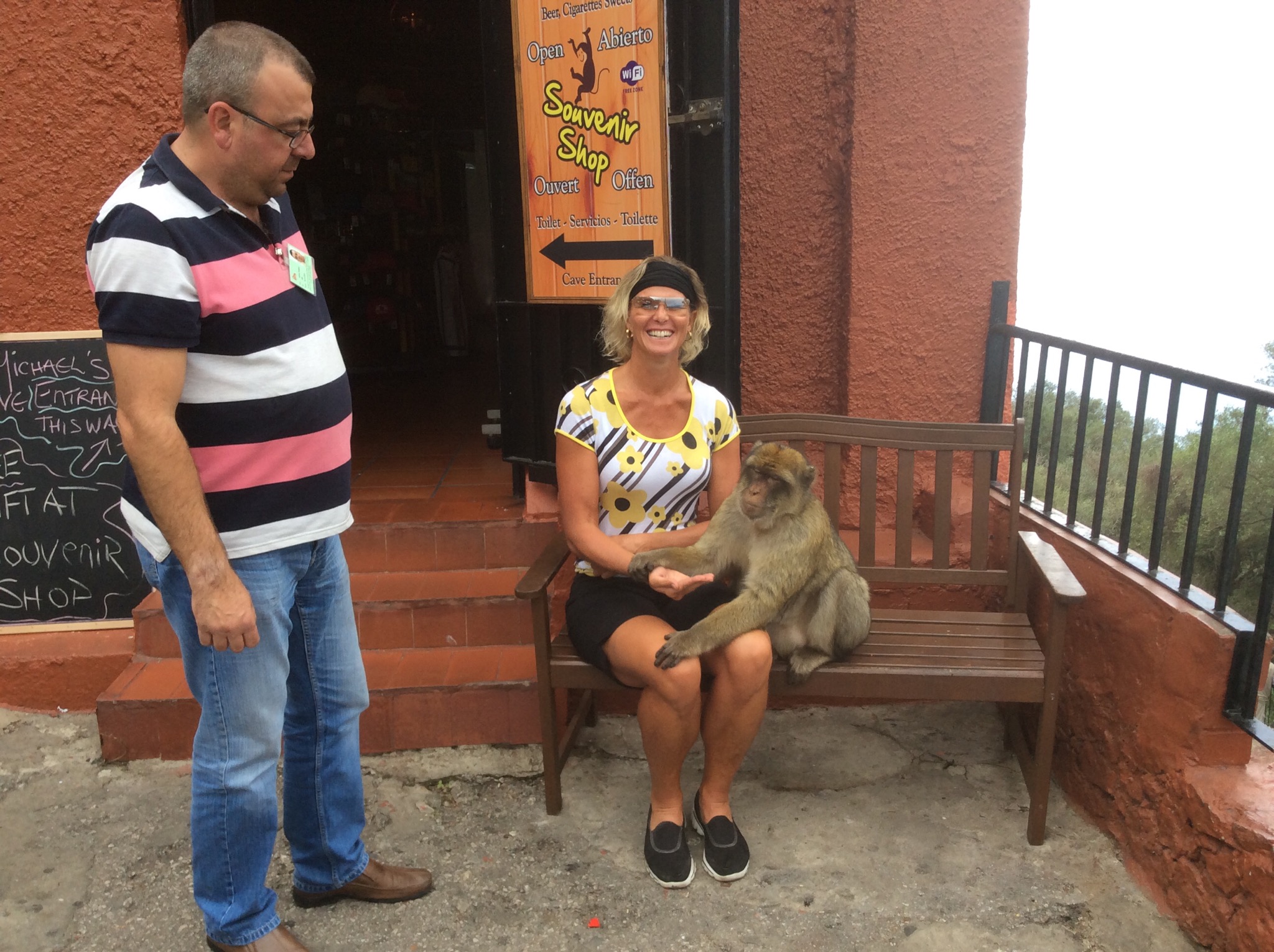
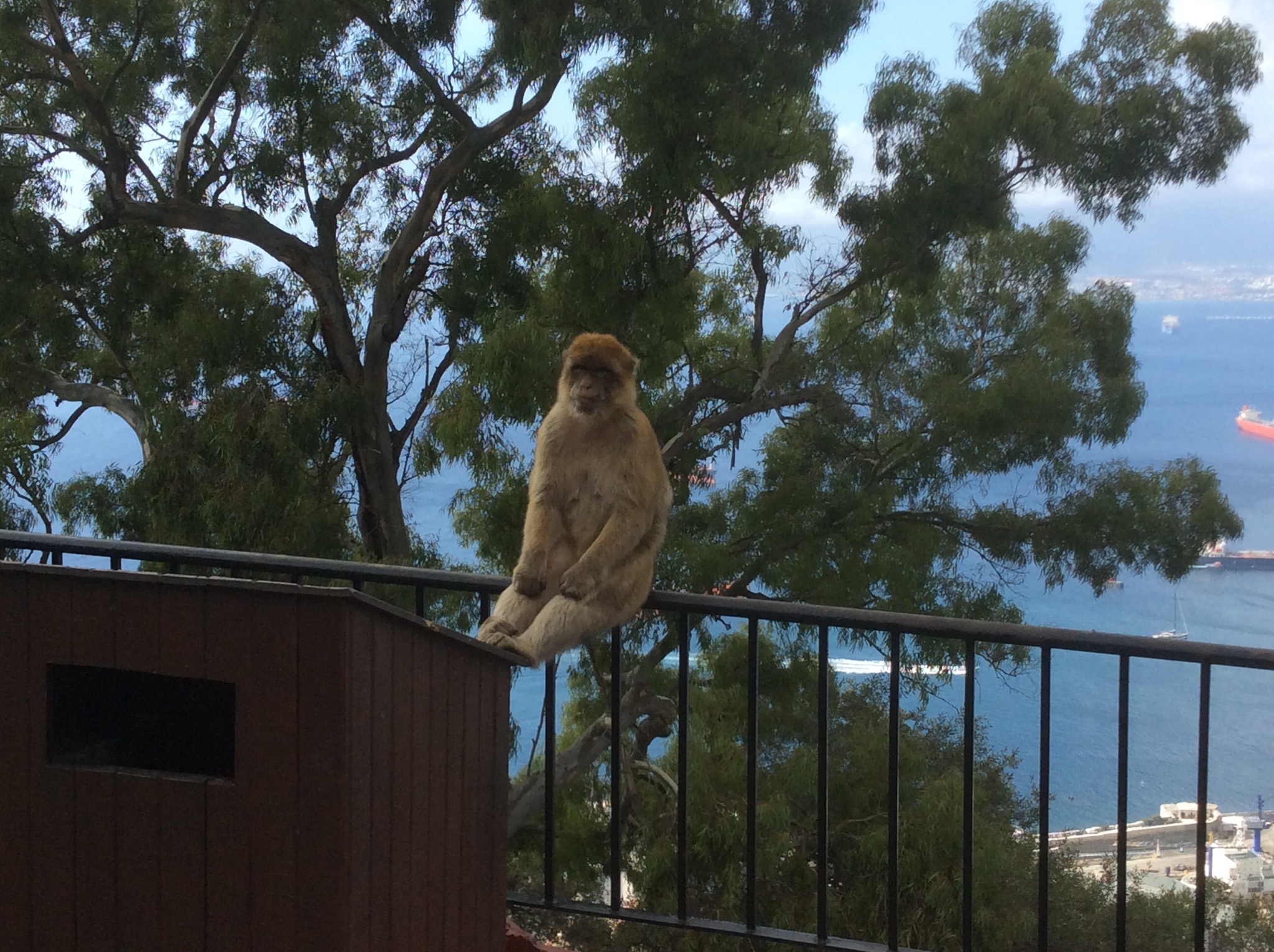
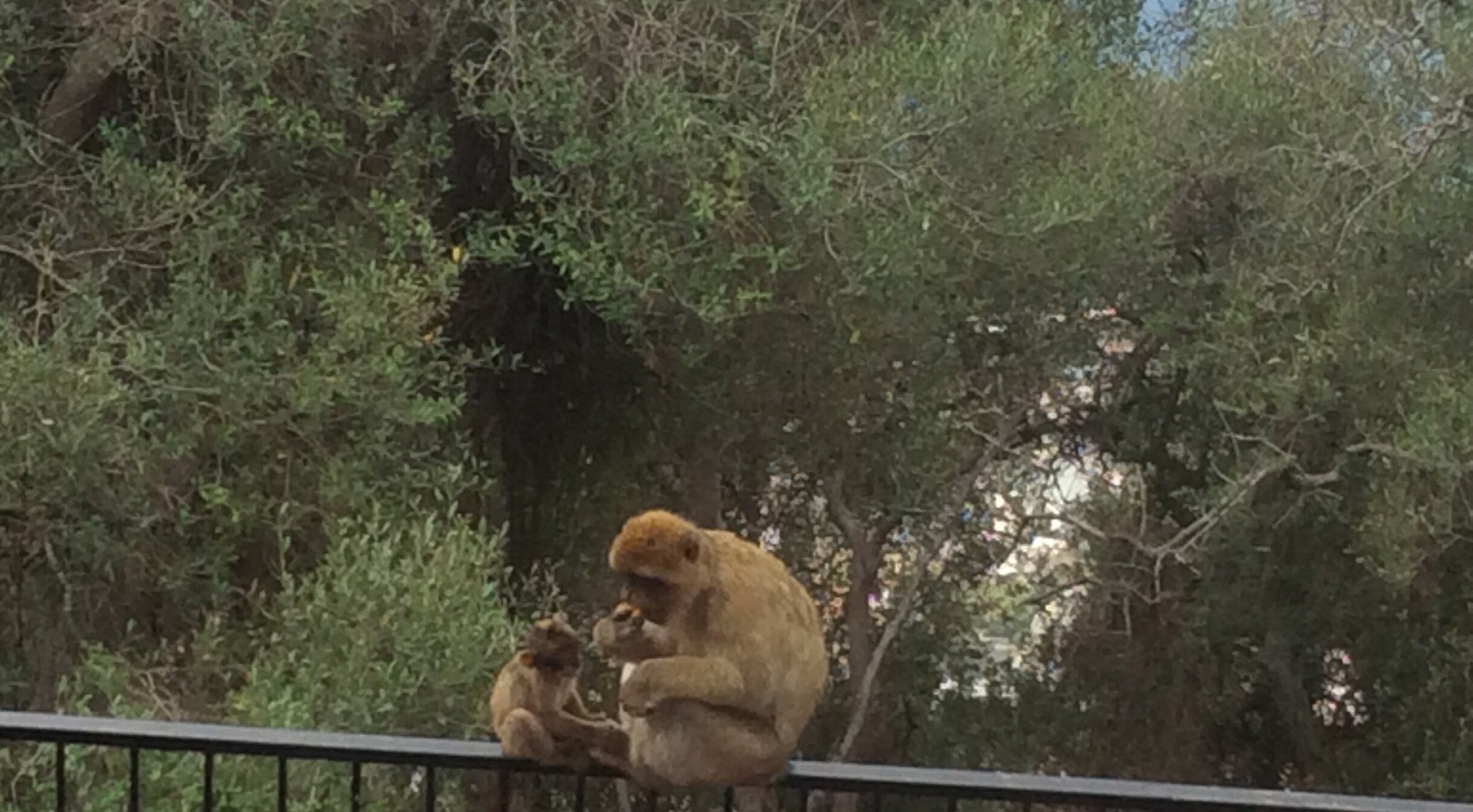
This was also our first introduction to the Apes. Most of the Rock’s upper area is covered by a nature reserve which is home to around 230 Barbary Macaques, the famous apes of Gibraltar, albeit that biologists insist that technically the apes are wild monkeys. These are the only wild apes or monkeys found in Europe. This species, known scientifically as Macaca sylvanus, is listed as endangered by the IUCN Red List and is declining. Three-quarters of the world population live in the Middle Atlas mountains of Morocco. Recent genetic studies and historical documents point to their presence on the Rock before its capture by the British. A superstition analogous to that of the ravens at the Tower of London states that if the apes ever leave, so will the British. In 1944 British Prime Minister Winston Churchill, was so concerned about the dwindling population of apes that he sent a message to the Colonial Secretary requesting that something be done about the situation.

We had read and heard about these monkeys and Adrian warned us that although they appear friendly they can bite. He told us not to touch them but if you feed them they will touch you. We had heard that if you have any food on you they will sniff it out and take it off you, no questions asked. Plastic bags signify food to them so even if you have purchased a souvenir and it is in a plastic bag they will think it is food and take that too. After coming out of the caves we found Adrian sitting with Willy – he was feeding hime peanuts and chatting to him. I sat down next to him and fed him too – he then sat next to me. He was basically only interested in the peanuts.

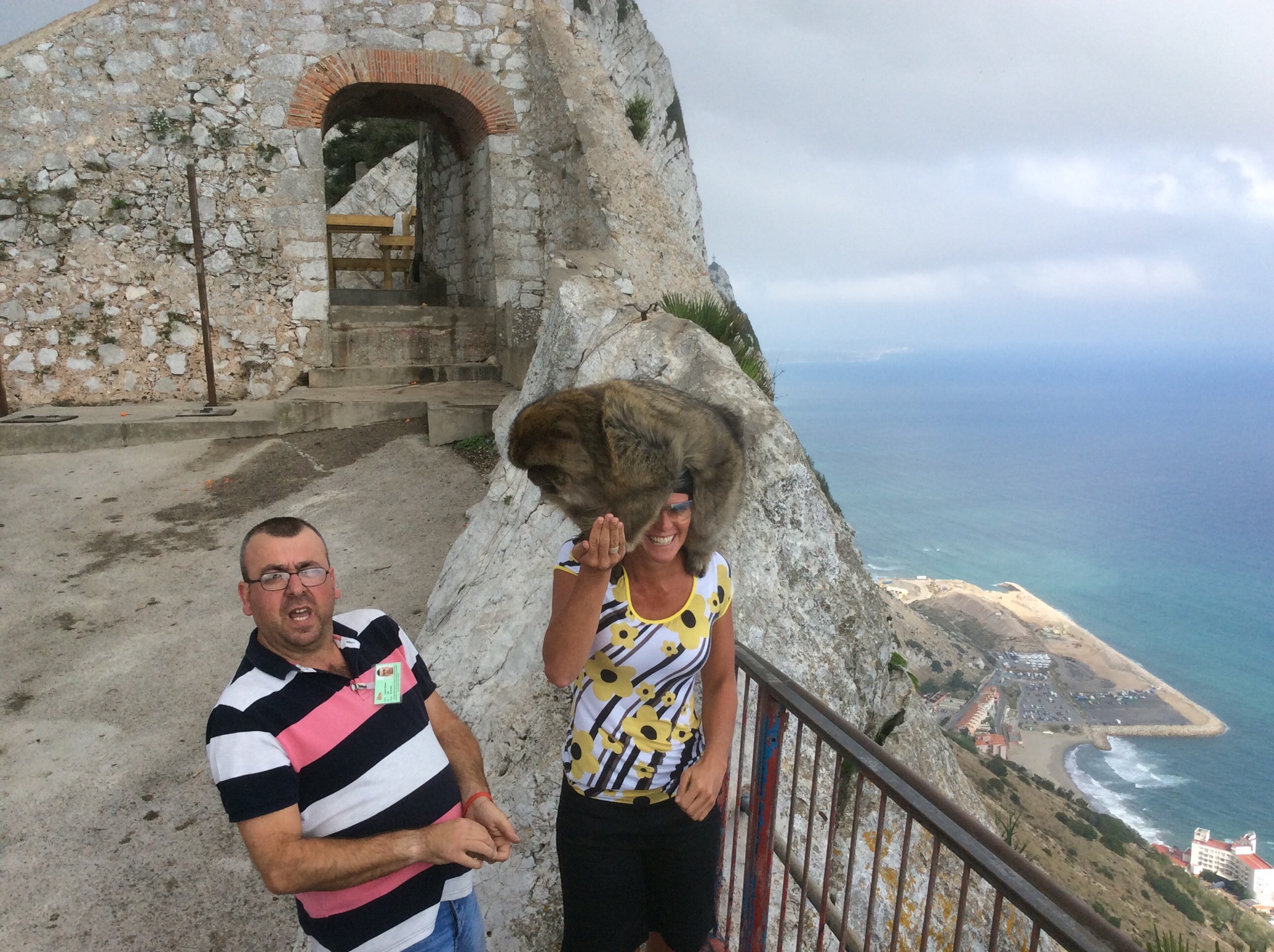
We then drove up the rock a bit further and Adrian again gave us words of advice – if the monkeys jump on your head don’t panic or try and get them off. Just put your hands by your sides and he will deal with them. I am thinking, what the…. He also said, when I stop the van just wait and I will come and open the door for you – some of the monkeys are renowned for jumping in the vehicles and opening and closing everything known to man looking for food. I must say I was feeling a bit apprehensive – my encounter with Willy hadn’t been that bad.

Adrian opened the door and out we hopped. The monkeys obviously know him and one came over to check his pockets for peanuts. He then asked me if I wanted a monkey on my head – oh jeez, why not. Steve is saying – I’ll take the pictures. Next minute I had a monkey on my head – no big deal. He was more interested in the peanuts Adrian had. We had a wander around and I must say the monkeys up here did seem more aggressive – there were a lot more babies running around and apparently that makes the adult monkeys very protective. The monkeys also fight amongst themselves and run up and over the vehicles. They get fed by the Ape Keepers a couple of times a day (four times a day in the summer) so I am surprised they are interested in more food – it is a game to them and keeps the tourists amused.

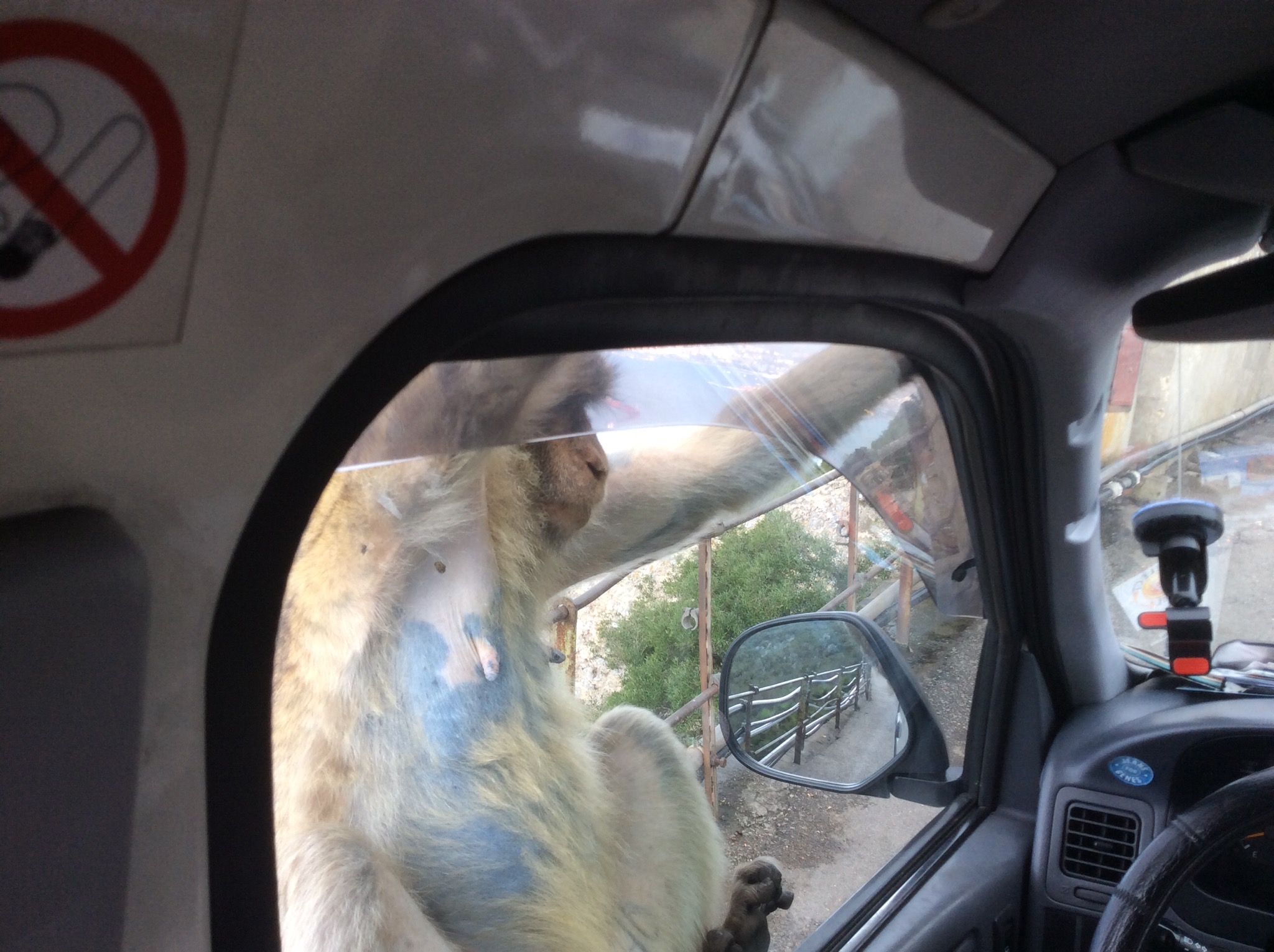
Anyway we were standing by the van and these monkeys were fighting and running over the vehicles – next minute I had another monkey on my head – this one uninvited. I remembered what Adrian said and kept my hands down – Adrian removed the uninvited guest and all was well with the world again : ) When we went to drive off there was a monkey hanging onto the driver’s window – she got off and then as we drove up a bit further Adrian asked if we had seen a monkey drive before. I said but I have a banana in my bag, I don’t want the monkey hopping in to drive and then sniffing out my banana and hopping in the back with us. He reassured me that they wouldn’t sniff it out so in hopped the monkey. No one, I repeat no one gets between me and my food so I had to check!
IMG_1633.JPG

IMG_1654.JPG

IMG_1657.JPG

IMG_1665.JPG

IMG_1669.JPG

IMG_1672.JPG

IMG_1673.JPG

IMG_1675.JPG

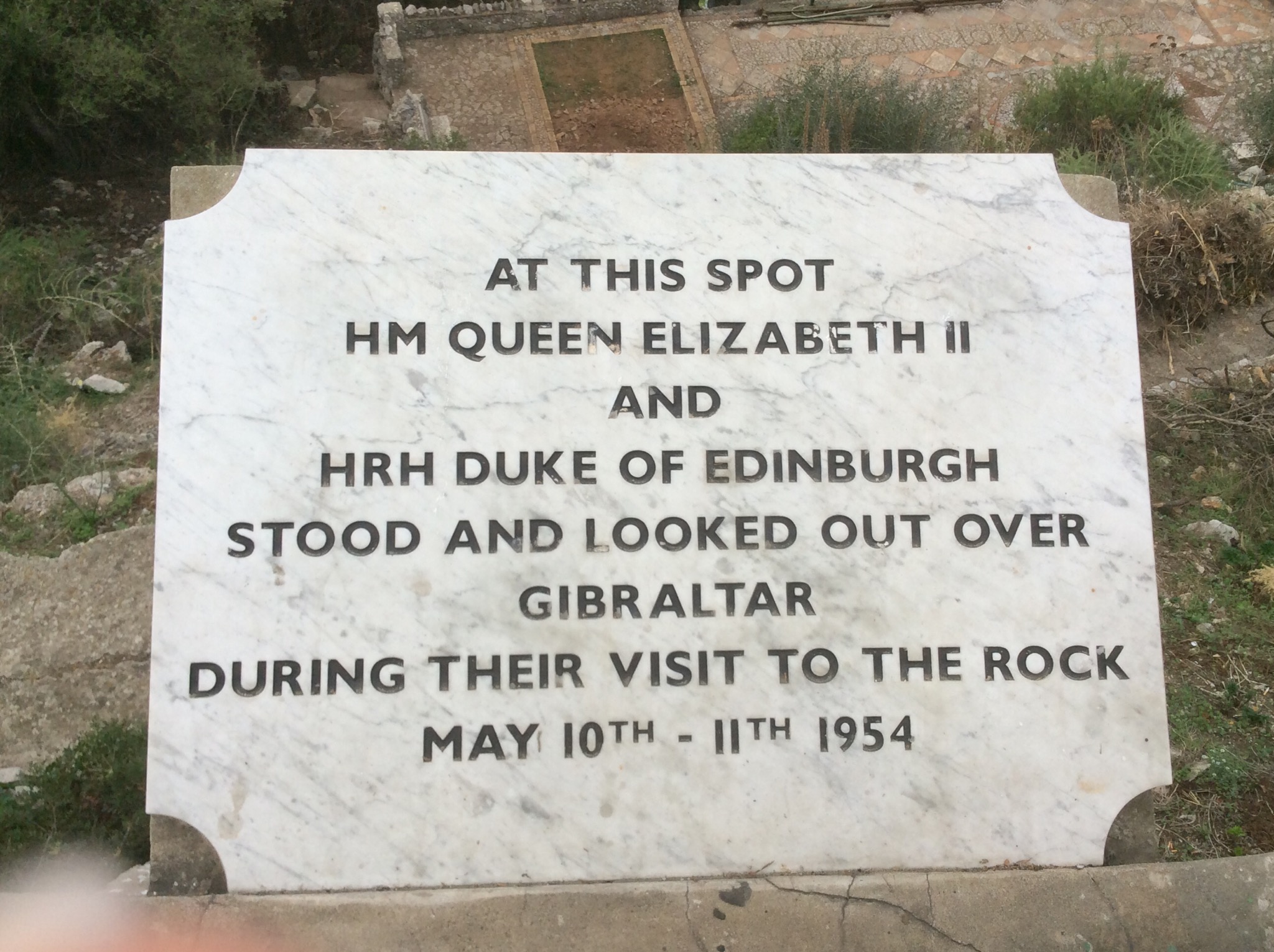
We stopped at the Queen’s Balcony which is where Queen Elizabeth stood to look over the Bay of Gibraltar when she last visited in 1954. She has never been back which is unusual given the close proximity to the UK mainland. Due to the fact that the Spanish would love to claim Gibraltar for their own, Adrian’s theory is she hasn’t visited again because it might upset the Spanish.
IMG_1626.JPG

IMG_1629.JPG

IMG_1627.JPG

IMG_1622.JPG

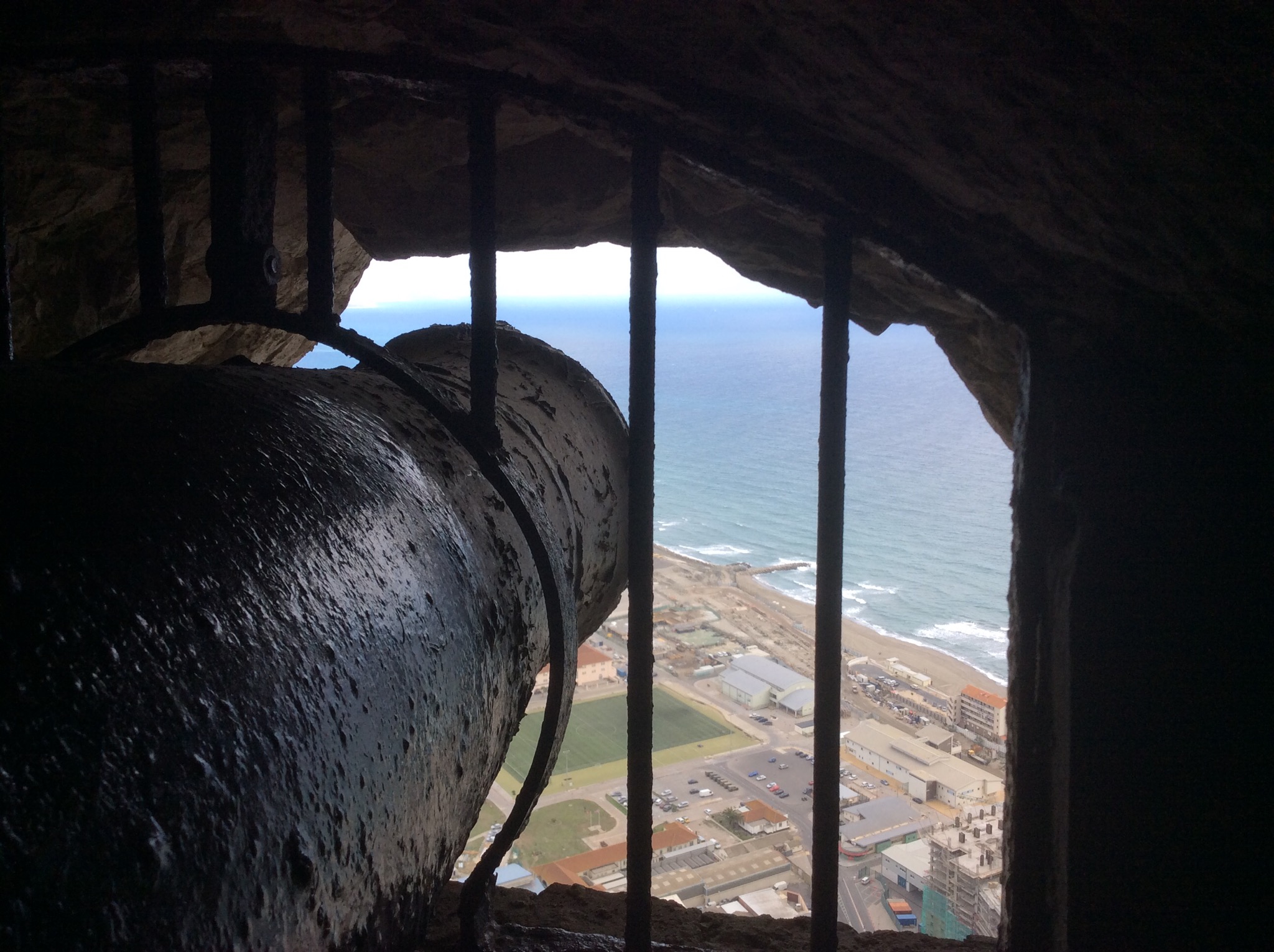
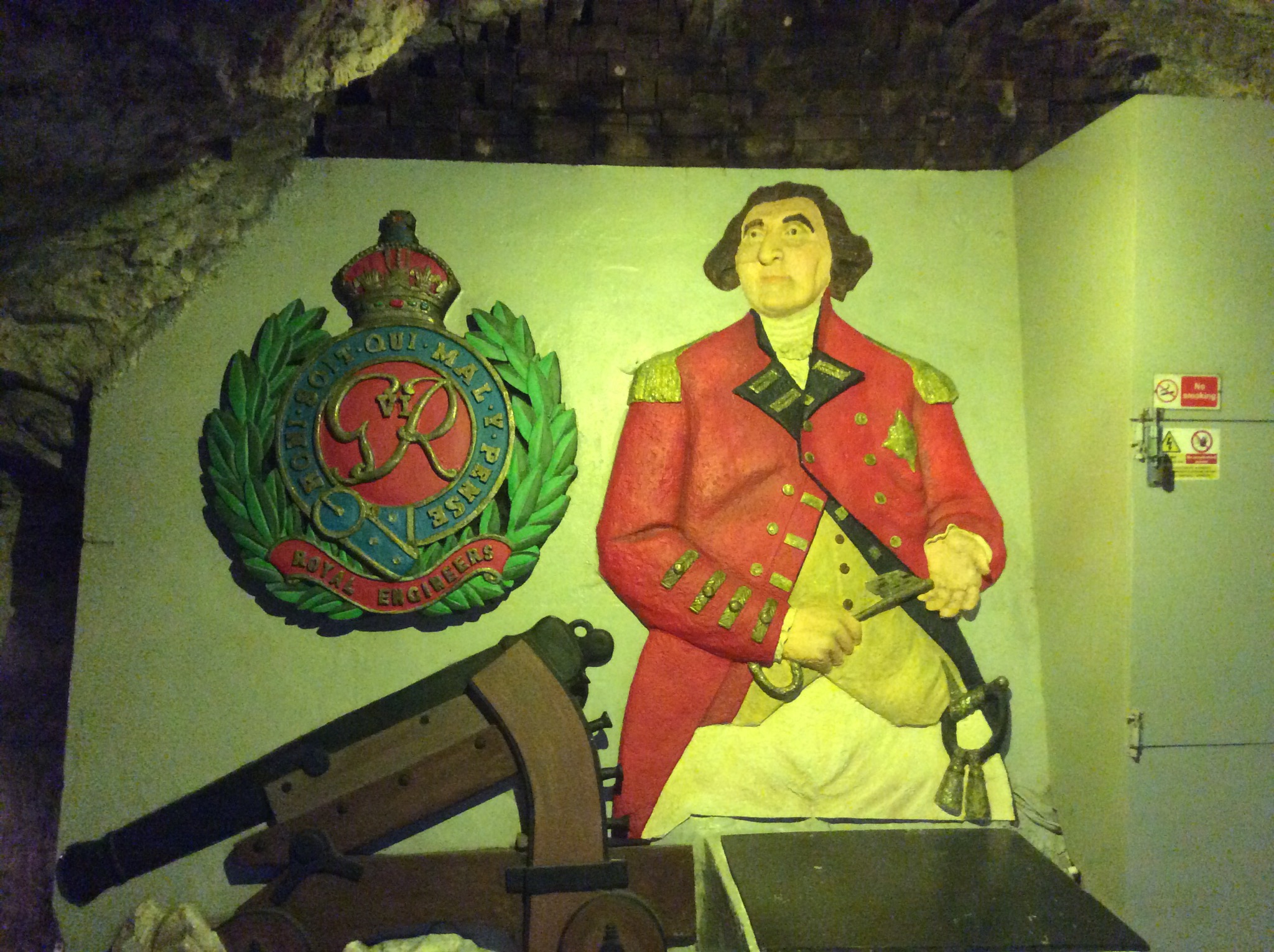
We then drove to the northern end of the Rock to see the Great Siege Tunnels, also known as the Upper Galleries. The Great Siege was an attempt by France and Spain to capture Gibraltar from Great Britain during the American Revolutionary War. It was the fourteenth and final siege of Gibraltar, which lasted from July 1779 to February 1783. During the siege, British and Spanish forces faced each other across an approximately 1 kilometre (0.62 mi) wide stretch of the marshy open ground that forms the disputed isthmus immediately to the north of the Rock of Gibraltar. The British lines blocked access to the City and the western side of the island, while eastern side of the island was inaccessible because of its steep terrain. Guns were placed in a series of batteries on the north face of The Rock, providing overlapping fields of fire so that infantry attacks would come under heavy fire throughout their advance.

The Great Siege Tunnels were reused during the World War II; although it is uncertain exactly how they were used. iDuring World War II, Gibraltar’s civilian population was evacuated (mainly to London, England, but also to parts of Morocco, Madeira and Jamaica) and the Rock was strengthened as a fortress. Spanish dictator Francisco Franco’s reluctance to allow the German Army onto Spanish soil frustrated a German plan to capture the Rock, codenamed Operation Felix. In the 1950s, Franco renewed Spain’s claim to sovereignty over Gibraltar and restricted movement between Gibraltar and Spain. Gibraltarians voted overwhelmingly to remain under British sovereignty in the Gibraltar sovereignty referendum, 1967, which led to the passing of the Gibraltar Constitution Order in 1969. In response, Spain completely closed the border with Gibraltar and severed all communication links. The border with Spain was partially reopened in 1982 and fully reopened in 1985 prior to Spain’s accession to the European Community.

IMG_1677-0.JPG

IMG_1678.JPG

IMG_1679.JPG

IMG_1681.JPG

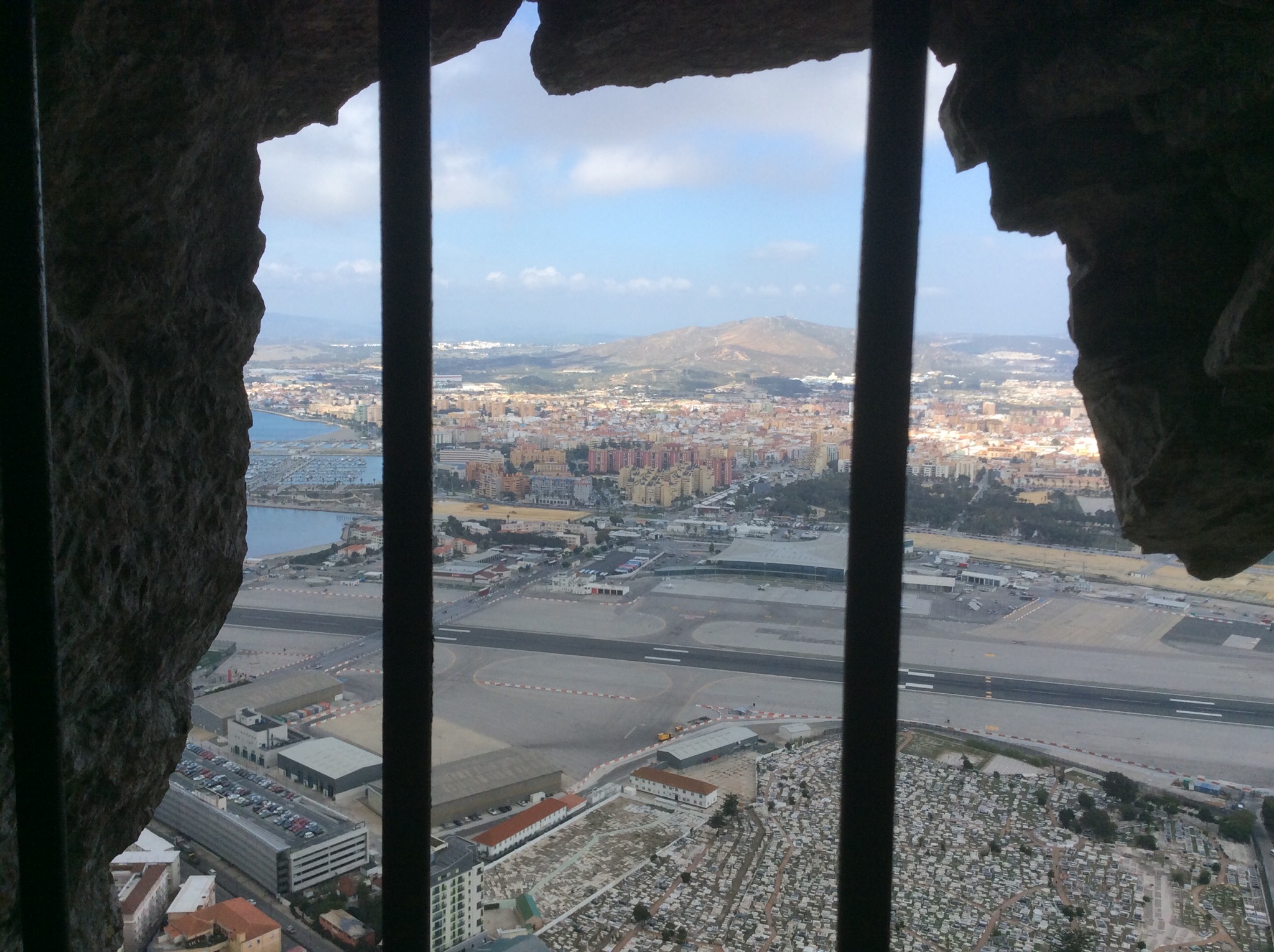
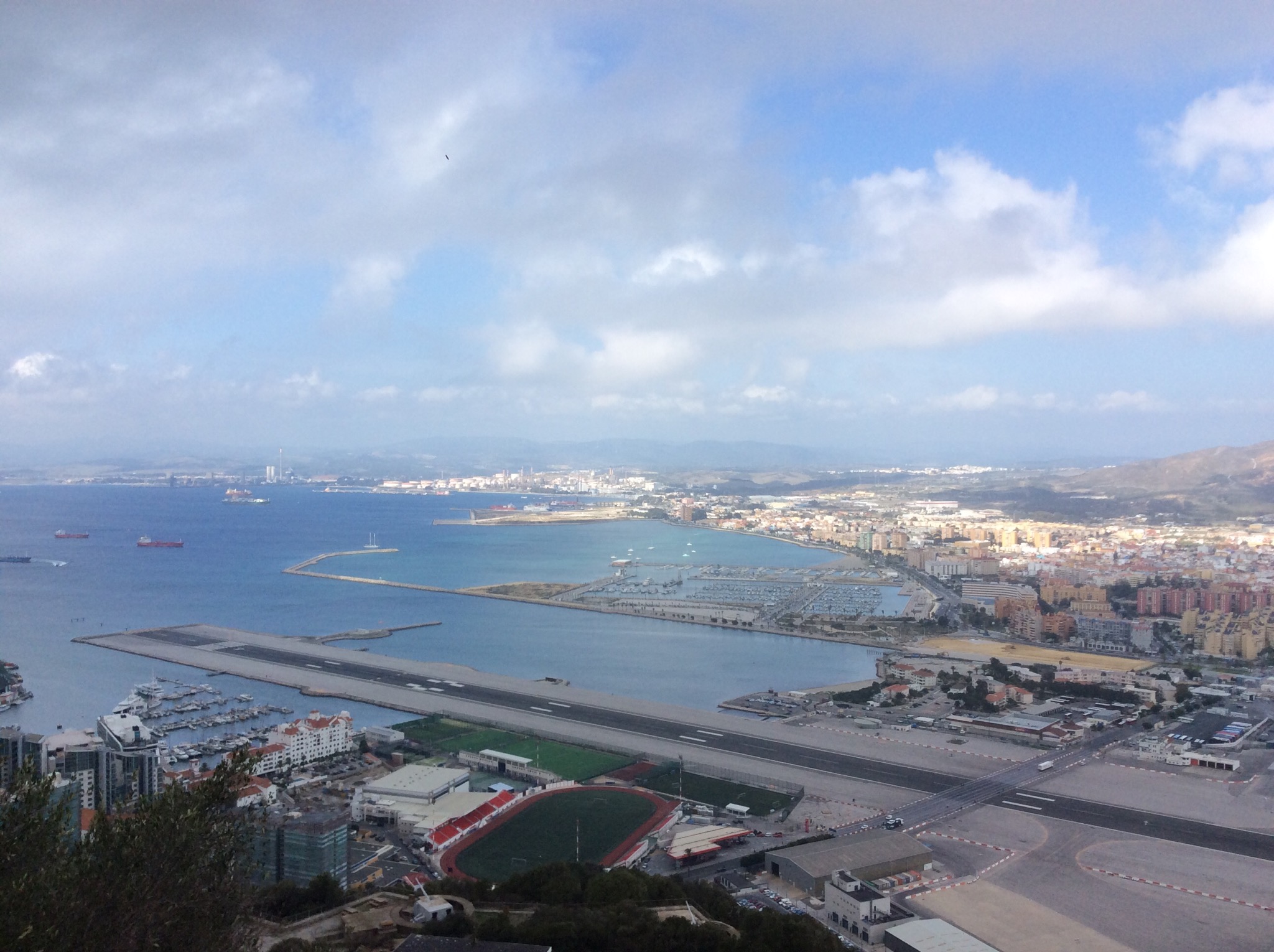
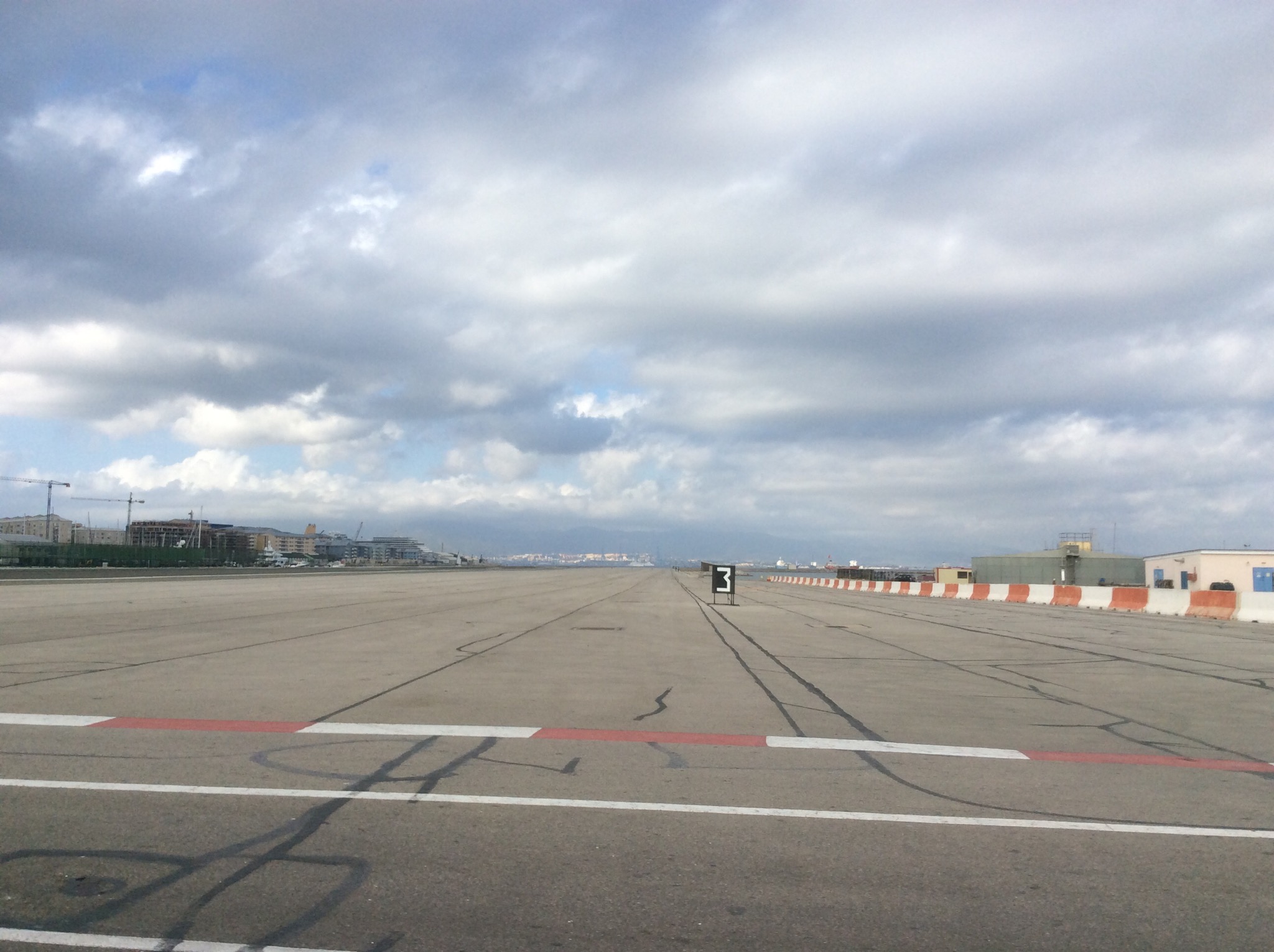
When you drive in and out of Gibraltar you drive through the middle of the airport runway. The airport is a military airport but does have daily commercial flights from the UK. Gibraltar Airport is consistently listed as one of the world’s scariest for air passengers. It is exposed to strong cross winds around the rock and across the Bay of Algeciras, making landings in winter particularly uncomfortable. Its location is unusual not only because of its proximity to the city centre resulting in the airport terminal being within walking distance of much of Gibraltar but also because the runway intersects Winston Churchill Avenue, the main north-south street, requiring movable barricades to close when aircraft land or depart. New roads and a tunnel, which will end the need to stop road traffic when aircraft use the runway are planned.

Motorists and pedestrians crossing the border with Spain are occasionally subjected to very long delays, an issue the Gibraltar government has failed to solve. Spain has occasionally closed the border during disputes or incidents involving the Gibraltar authorities, such as the Aurora cruise ship incident (norovirus outbreak) and when fishermen from the Spanish fishing vessel Piraña were arrested for illegal fishing in Gibraltar waters.
IMG_1611.JPG

IMG_1680-0.JPG

IMG_1692.JPG

IMG_1693.JPG

IMG_1684.JPG

Multiple celebrities have chosen the Rock of Gibraltar for a wedding, drawn to the steadfastness of the rock itself and to the symbolic sturdiness that it seems to offer. 007’s Sean Connery married there, not once, but twice. Among those who also held a destination wedding in Gibraltar were of course the ever popular Beatles, which wedding was chronicled for the ages in a song called the Ballad of John and Yoko, which tells us that they went over and were married there.

Today literally thousands of couples per year select to come to Gibraltar to get married. Amazingly enough, the UK sends only about a third of them, with the remainder coming from the United States, and multiple other countries all over the world. There are no restrictions of residency in Gibraltar, and the government web site offers the information that you can marry there with only 24 hours notice and in an amazing variety of venues. Getting married in Gibraltar is a very simple thing and it is recognised world-wide.

IMG_1689.JPG

After a great couple of very interesting and informative couple of hours with Adrian he dropped us back in Casemates Square. We had a little wander around the shops before heading back across the border experiencing another queue for we are again not quite sure. I thought I would just google what the big deal at the border is and this is what I found:

Gibraltar is a member of the European Union, however it is not part of the Schengen Area or EU Customs Union. This means that there are immigration and customs controls when travelling between Spain and Gibraltar. Citizens of the European Union are required to have a national identity card or passport, while all others are required to have a passport to enter. The entry requirements for Gibraltar are not the same as the United Kingdom.

It is also a tax haven so apparently that also has some bearing. Seriously though, the customs officers we saw were more interested in chatting amongst themselves.

The British military traditionally dominated Gibraltar’s economy, with the naval dockyard providing the bulk of economic activity. This however, has diminished over the last twenty years, and is estimated to account for only 7% of the local economy, compared to over 60% in 1984. Today, Gibraltar’s economy is dominated by four main sectors: financial services, Online gambling, shipping and tourism (including retail for visitors).

In the early 2000s, many bookmakers and online gaming operators relocated to Gibraltar to benefit from operating in a regulated jurisdiction with a favourable corporate tax regime. However, this corporate tax regime for non-resident controlled companies was phased out by January 2011 and replaced by a fixed corporate tax rate of 10%.

Tourism is also a significant industry. Gibraltar is a popular port for cruise ships and attracts day visitors from resorts in Spain. The Rock is a popular tourist attraction, particularly among British tourists and residents in the southern coast of Spain. It is also a popular shopping destination, and all goods and services are VAT free. Many of the large British high street chains have branches or franchises in Gibraltar including Morrisons, Marks & Spencer and Mothercare. Branches and franchises of international retailers such as Tommy Hilfiger and Sunglass Hut are also present in Gibraltar, as is the Spanish clothing company Mango.

A number of British and international banks have operations based in Gibraltar. Jyske Bank claims to be the oldest bank in the country, based on Jyske’s acquisition in 1987 of Banco Galliano, which began operations in Gibraltar in 1855. An ancestor of Barclays, the Anglo-Egyptian Bank, entered in 1888, and Credit Foncier (now Crédit Agricole) entered in 1920.

In 1967, Gibraltar enacted the Companies (Taxation and Concessions) Ordinance (now an Act), which provided for special tax treatment for international business. This was one of the factors leading to the growth of professional services such as private banking and captive insurance management. Gibraltar has several positive attributes as a financial centre, including a common law legal system and access to the EU single market in financial services. The Financial Services Commission (FSC), which was established by an ordinance in 1989 (now an Act) that took effect in 1991, regulates the finance sector. In 1997, the Department of Trade and Industry established its Gibraltar Finance Centre (GFC) Division to facilitate the development of the financial sector development. As of 2012, Gibraltar has 0.103 Big Four accounting firm offices per 1,000 population, the second highest in the world after the British Virgin Islands, and 0.6 banks per 1,000 people, the fifth most banks per capita in the world.

The currency of Gibraltar is the Gibraltar pound, issued by the Government of Gibraltar under the terms of the 1934 Currency Notes Act. These banknotes are legal tender in Gibraltar alongside Bank of England banknotes. In a currency board arrangement, these notes are issued against reserves of sterling. Clearing and settlement of funds is conducted in sterling. Coins in circulation follow British denominations but have separate designs. Unofficially, most retail outlets in Gibraltar accept the Euro, though some payphones and the Royal Gibraltar Post Office do not.

Posted in United Kingdom | Leave a comment

Tangier – Morocco

Yesterday we drove to Tarifa which is about 50 minutes from where we are staying to catch the ferry to Tangier in Morocco. The stretch of water between the two countries at this point is only about 36km. The ferry was supposed to leave at 9am and take 35 minutes. It left not long after 9am but it took over an hour by the time it moves slowly out of the port at Tarifa and into the port at Tangier. A little bit of false advertising me thinks – fast ferry – 35 minutes or perhaps just the Spanish way : )

Anyway it was a smooth trip and we followed the travel agents instructions re filling in the customs forms and getting our passports stamped on the boat by the Moroccan police before disembarking the boat. The passports were then checked again by the Moroccan police as we got ashore. I noticed that the policeman stamping the passports on the boat takes a bit of time looking at the passports of the Arabic looking people but didn’t give us a second glance – stamp, stamp and handed it back. The good old NZ passport : )

IMG_1544.JPG

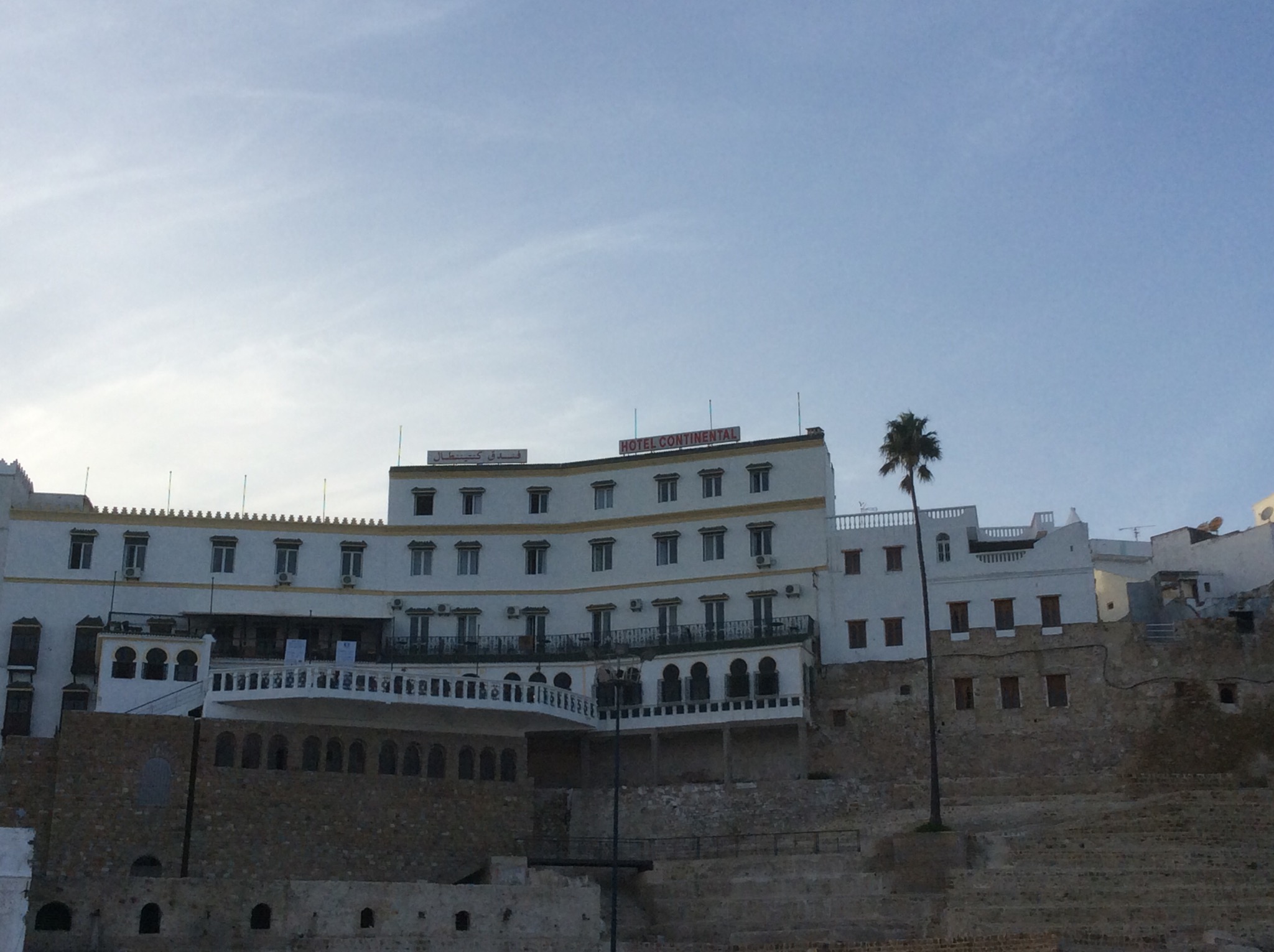
We had organised a private guide for the day – Hamid. Hamid met us at the port with his driver and we were off. We drove out of the port area and through the new city before heading to the Atlantic coast. Hamid pointed out various things along the way including the King’s palace and other properties belonging to Saudi Arabian royalty. We drove through the Californian district or the Beverley Hills of Tangier where the 1% live – Hamid’s name for the wealthy.

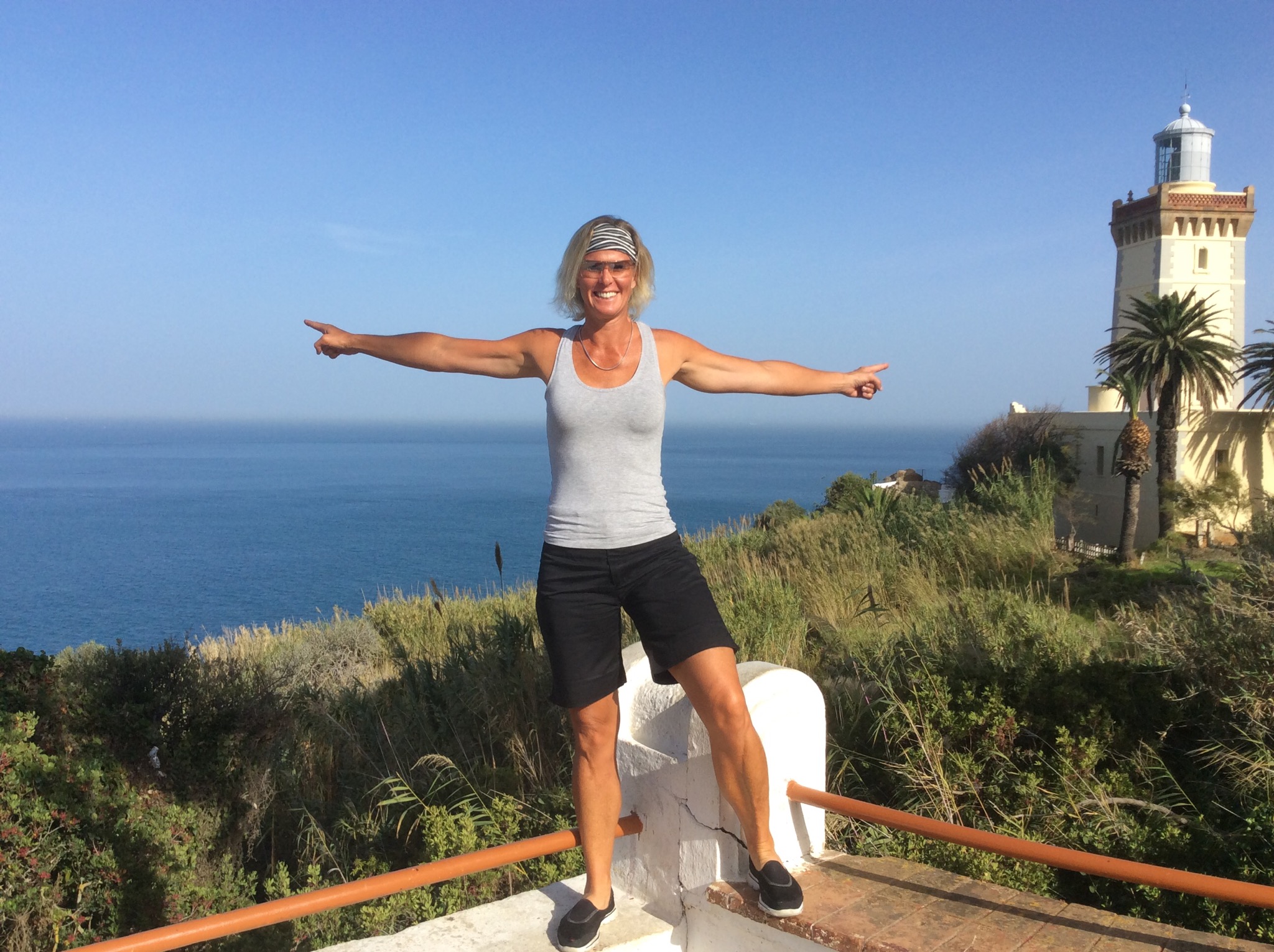
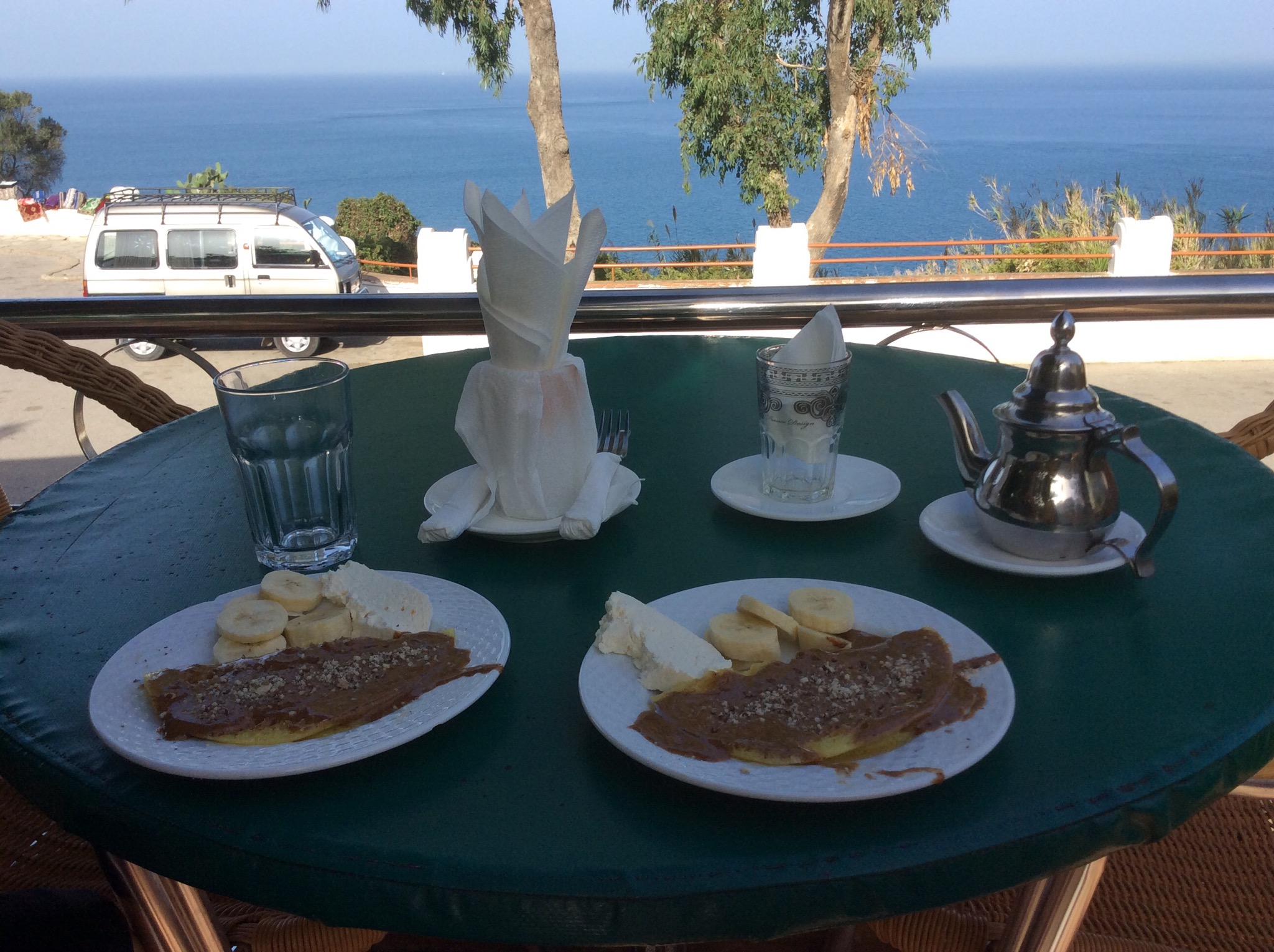
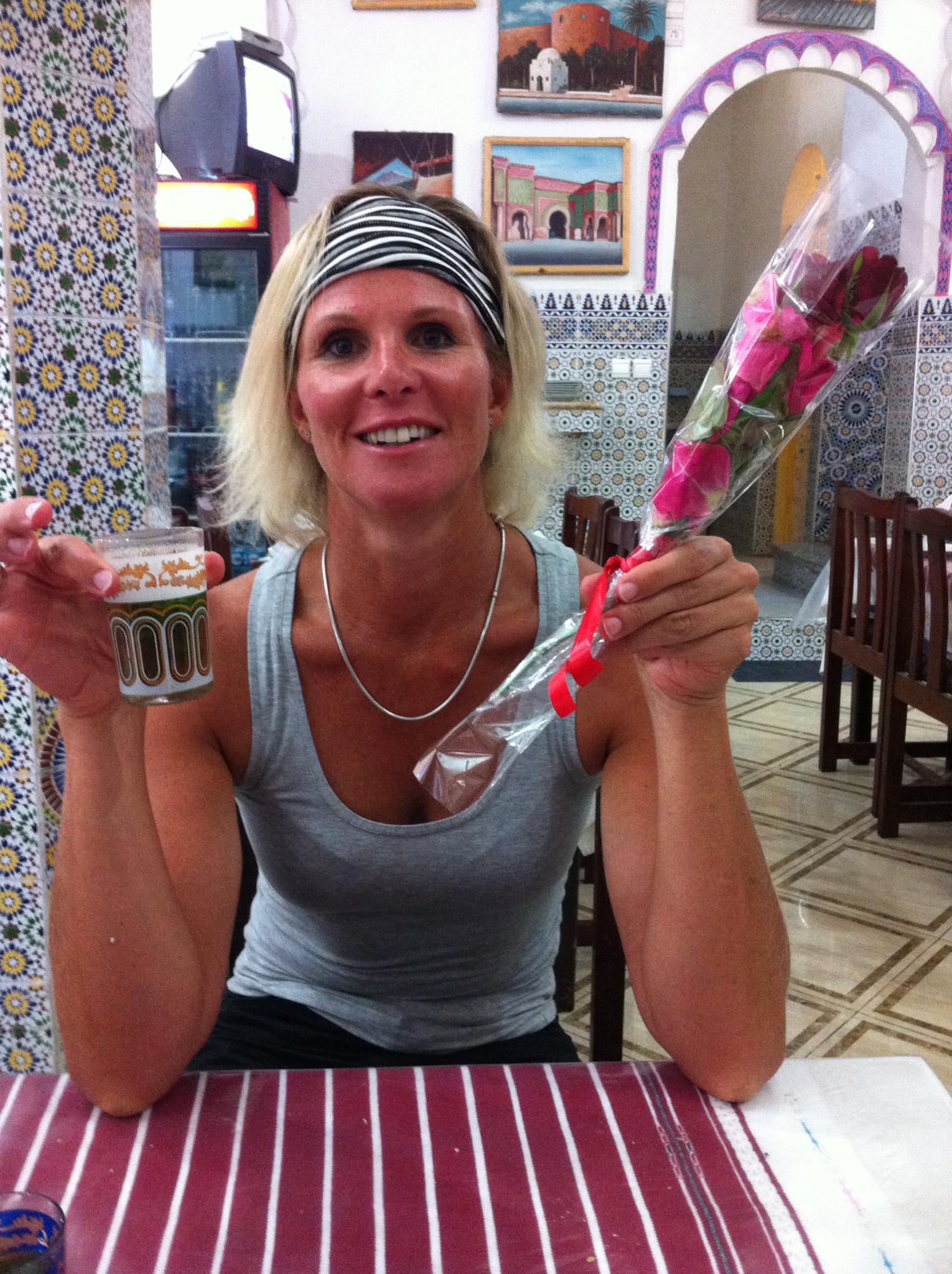
On our way to the most north western tip of Africa where the Atlantic meets the Mediterranean we had a photo stop to admire the Atlantic Coast – Morocco has some 3,000km of Atlantic coast down it’s western side. We then drove to see the lighthouse at Cape Spartel which is the most north western tip of Africa and had morning tea. Mint tea, naan with honey combined with argane oil (Moroccan oil) and ground almonds accompanied by fresh banana – absolutely to do die for. This is my sort of food – the honey and argane oil had a peanut butter taste and consistency. The mint tea is also delicious and by the end of the day it is amazing I didn’t look like a mint leaf I drank so much. Every glass I had differed – some they sweetened a lot, some they didn’t, some was more minty than others but all good : )

IMG_1549.JPG

IMG_1550.JPG

IMG_1552.JPG

IMG_1553.JPG

IMG_1555.JPG

IMG_1556.JPG

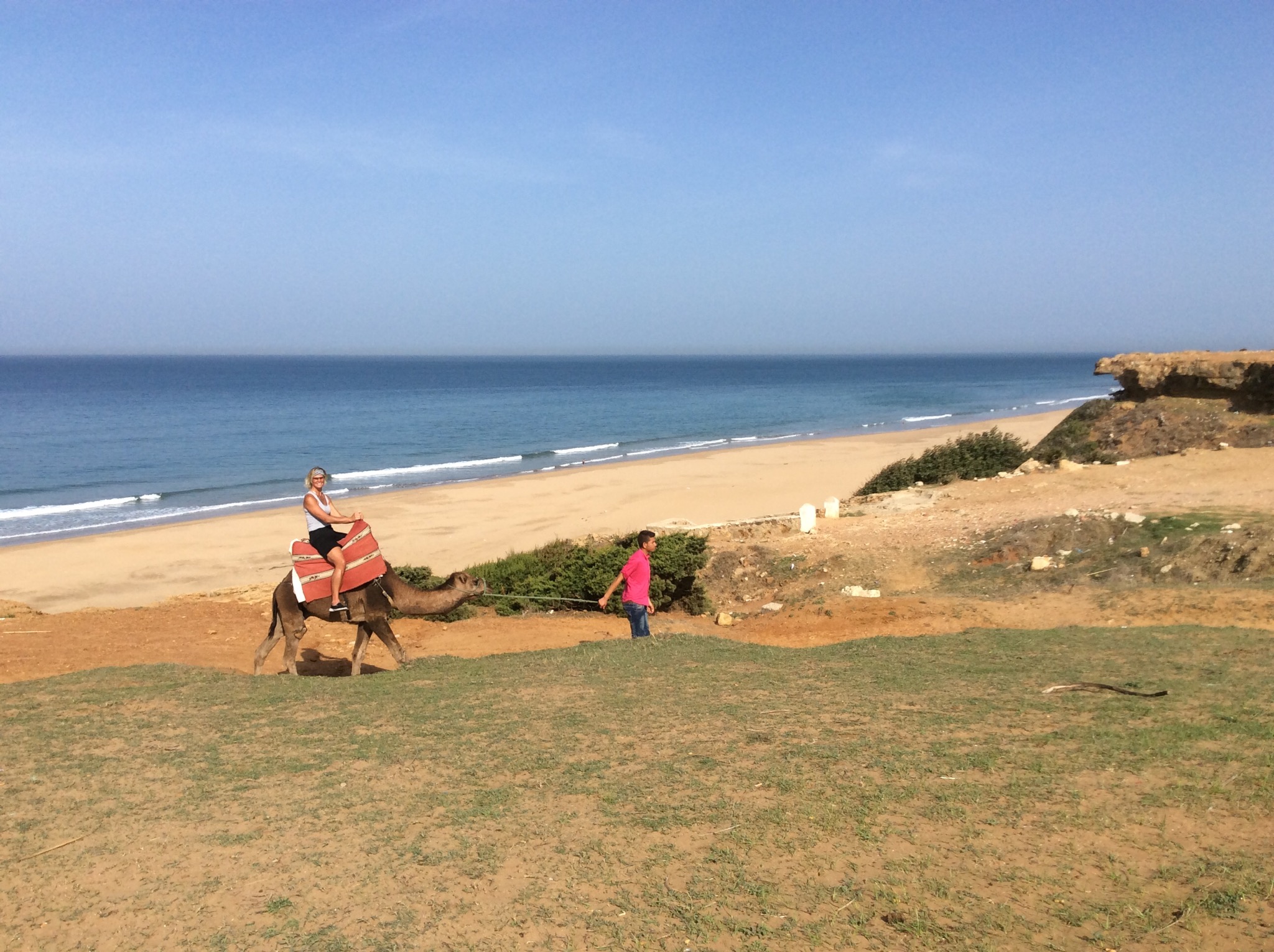
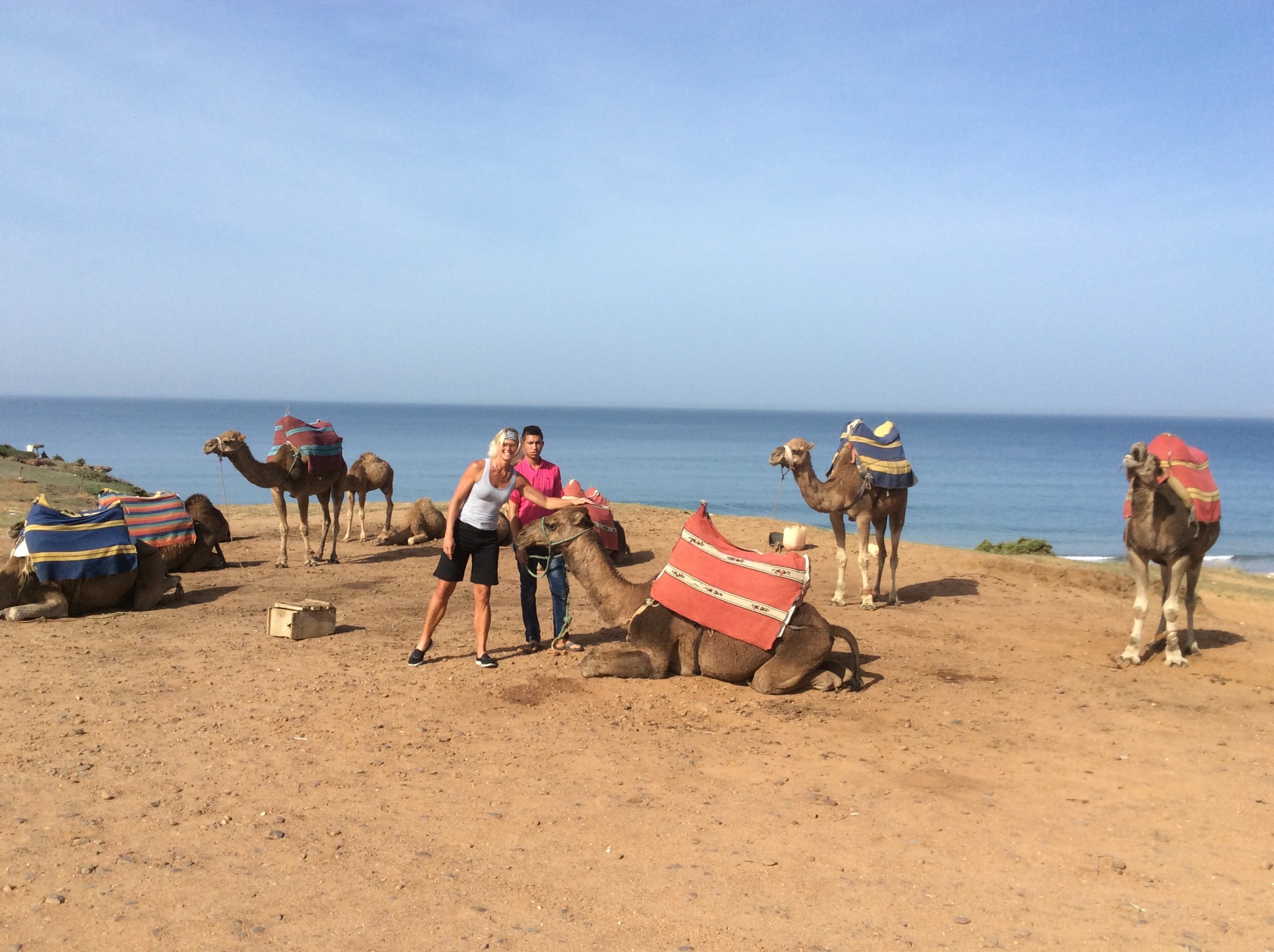
After refuelling we drove along the Atlantic coast where we stopped so I could ride a camel. Leila, the camel I choose was sitting down but I still had to stand on this wooden stool to get on her. She then stood half way up and I thought it was fairly high up so when she stood up fully I felt very high up. They certainly move in an odd way and Leila wasn’t too keen on going too far so the camel boy had to coax her along. Steve wasn’t fussed on having a ride so he was cheif photographer. He also made a video and as he went behind Leila he can be heard saying “let’s see who has the biggest arse”. Still as charming as ever : )

IMG_1559.JPG

IMG_1567.JPG

IMG_1571.JPG

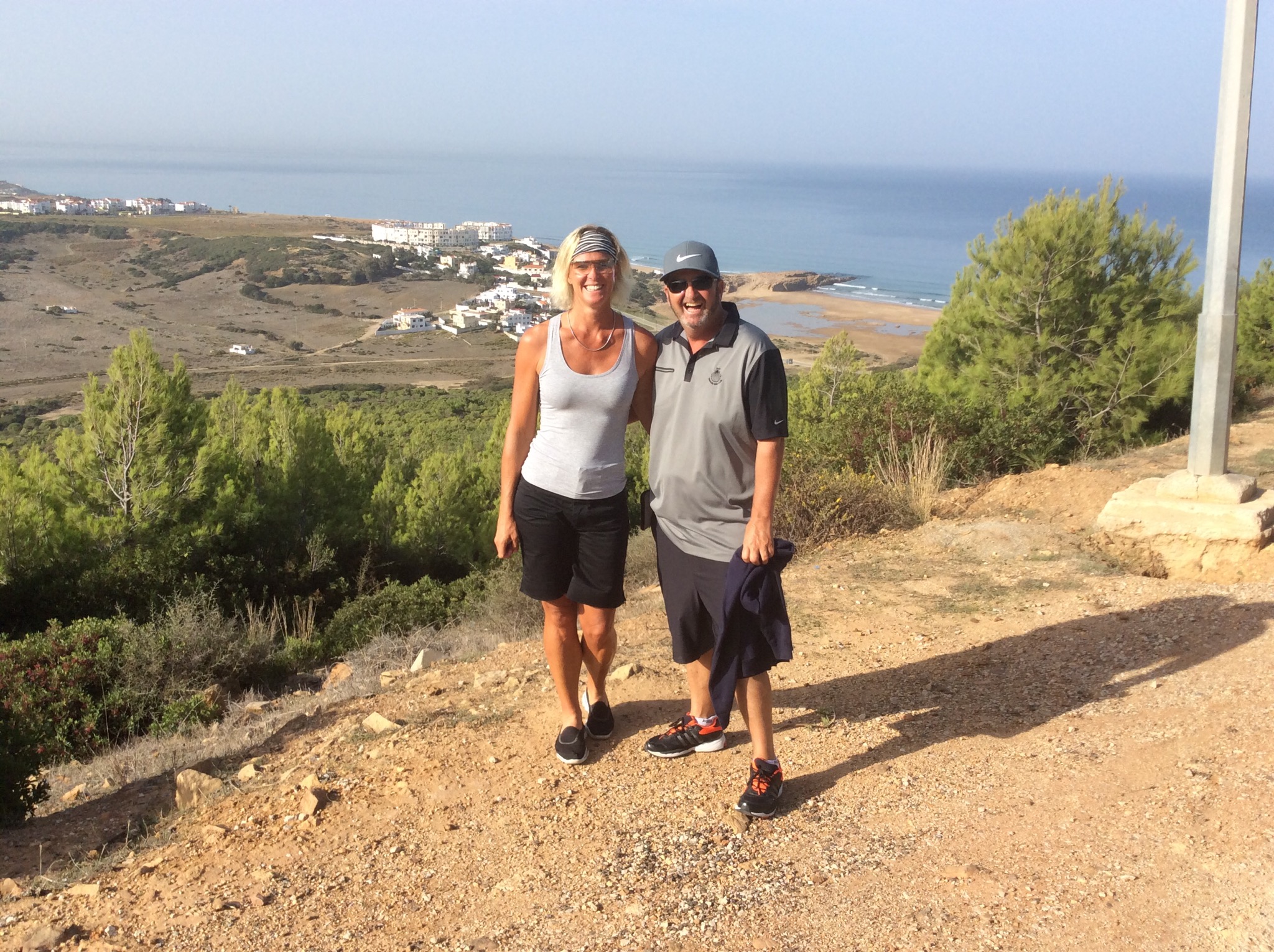
Steve and I then wandered down to the beach. The water was still really warm – Hamid said it was probably about 25 degrees. It was very inviting and given the air temperature was about 30 degrees it was tempting.

IMG_1574.JPG

IMG_1577.JPG

We drove back towards the old city and past a lot of apartment blocks – Hamid called them social housing – a lot of one bedroom apartments that cost about EU35,000. The average monthly wage is about EU500.

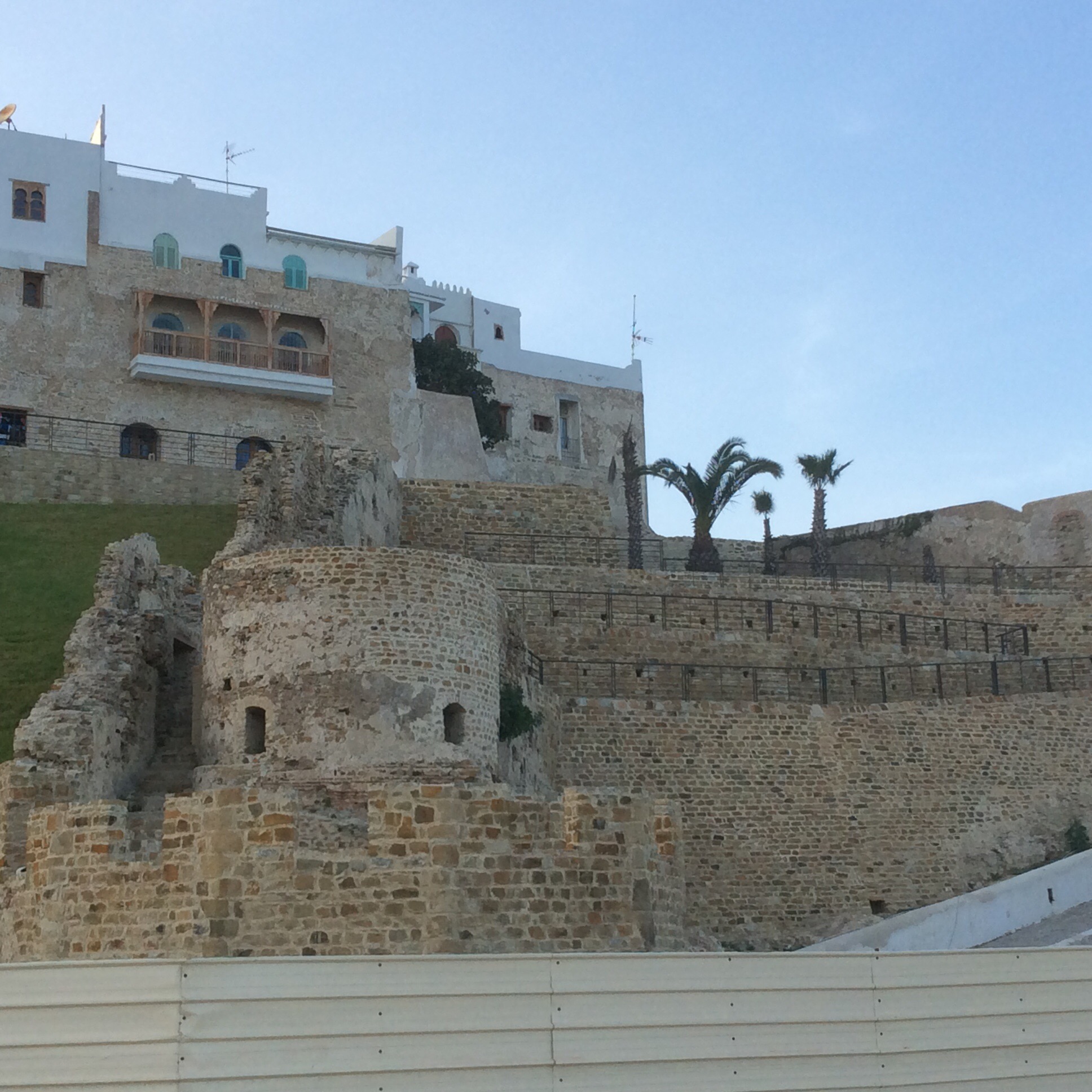
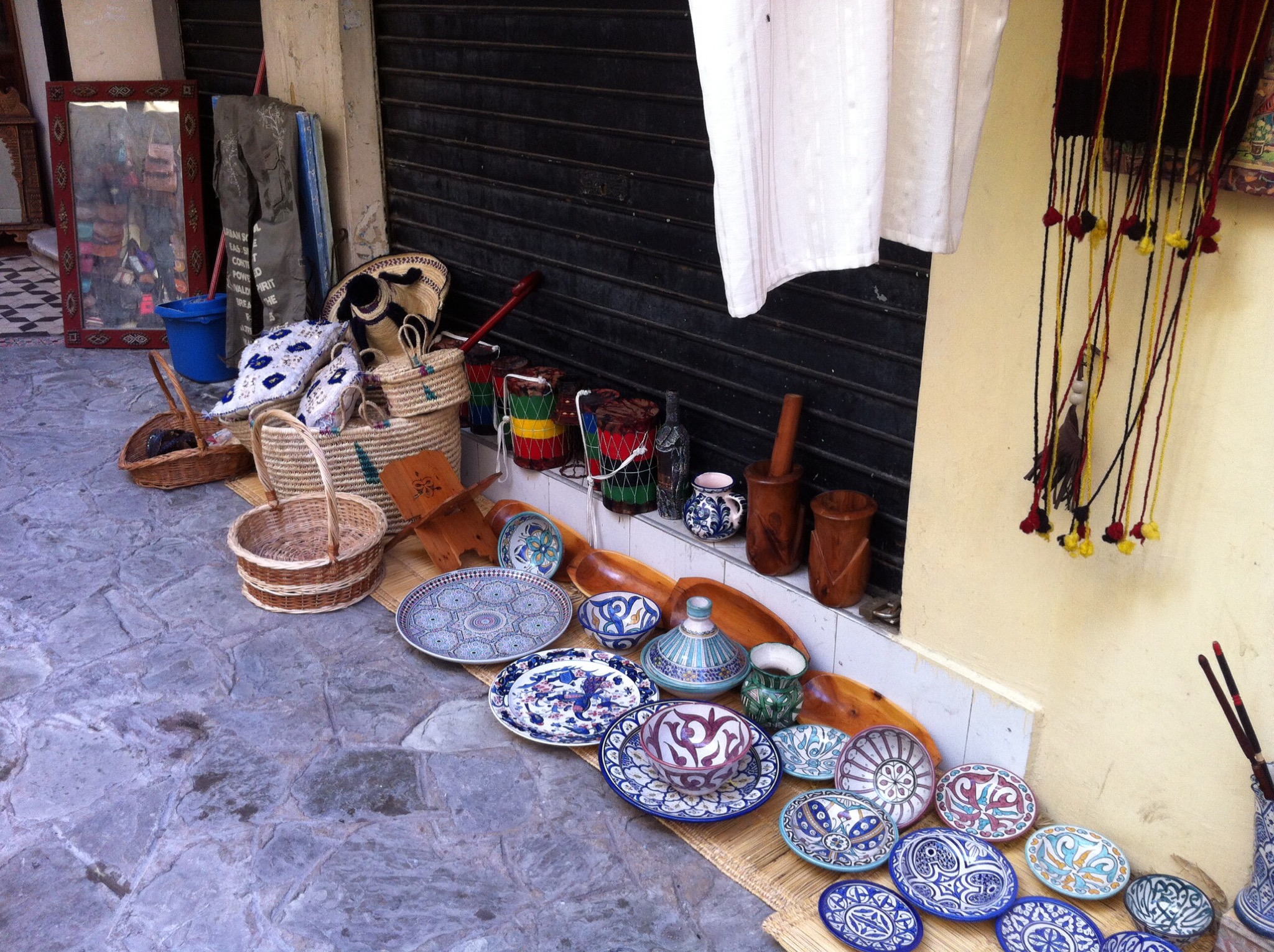
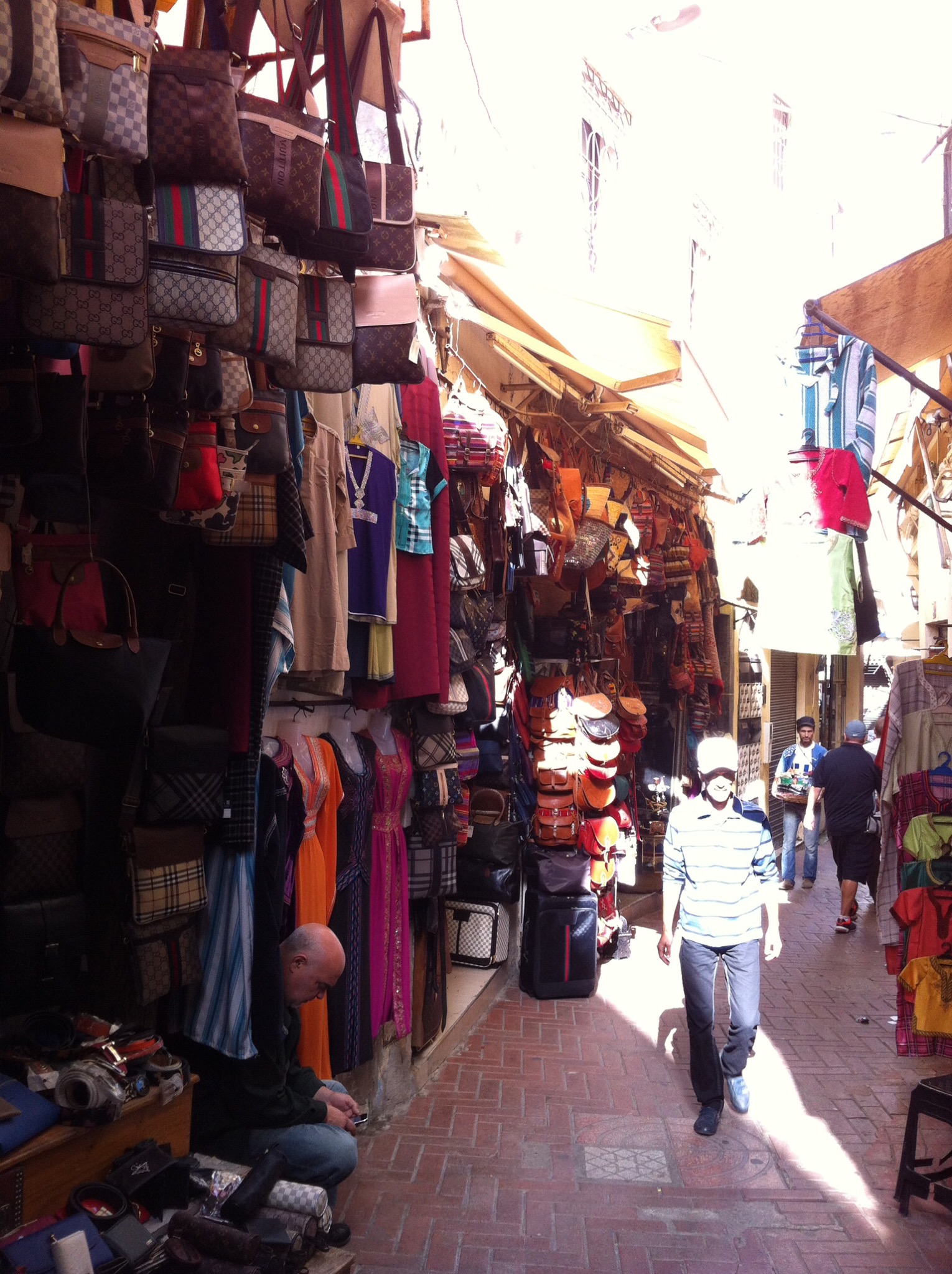
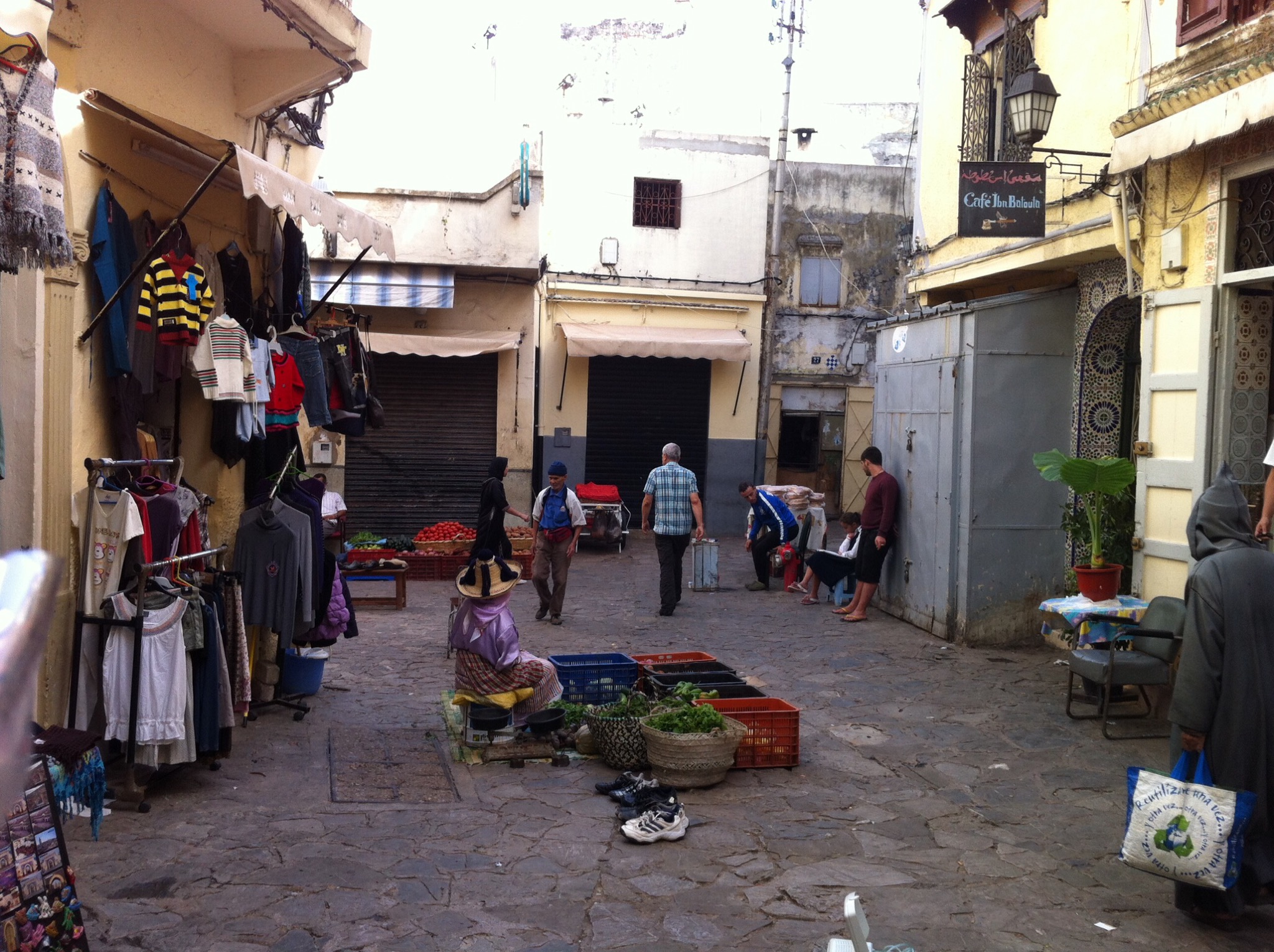
Our driver then dropped us at the entrance to the Kasbah which is the ancient fortification that sits high above the Medina or old town. We wandered through the narrow alleys which were originally only built for horses and carts and pedestrians and ended up in the Medina. There are little shops selling all manner of things from shoes, leather bags, woven items and trinkets.

IMG_1587.JPG

IMG_3947.JPG

IMG_3955.JPG

IMG_3977.JPG

Hamid then took us to the traditional supermarket where they sell meat, fish, fruit, vegetables, flowers, herbs and spices and bread. We saw row upon row of plucked chickens. Hamid showed Steve up by buying me a little bouquet of roses which grow prolifically in the region.

IMG_3960.JPG

After our tour of the traditional supermarket we wandered back through the Medina where Hamid pointed out where some scenes from the movie The Bourne Ultimatum was shot. Hamid has a photo in his wallet of him and Matt Damon – he is very proud of it.
IMG_3942.JPG

We stopped off at the herbalist who gave us a presentation of all sorts of remedies. I love all this stuff so couldn’t resist a few purchases – I now have 5 green lipsticks made from Hemp that go pink and taste of strawberry when applied – much better than conventional lipstick. I also bought some herbal teas and Moroccan oil which is about a third of the price that you pay at home.
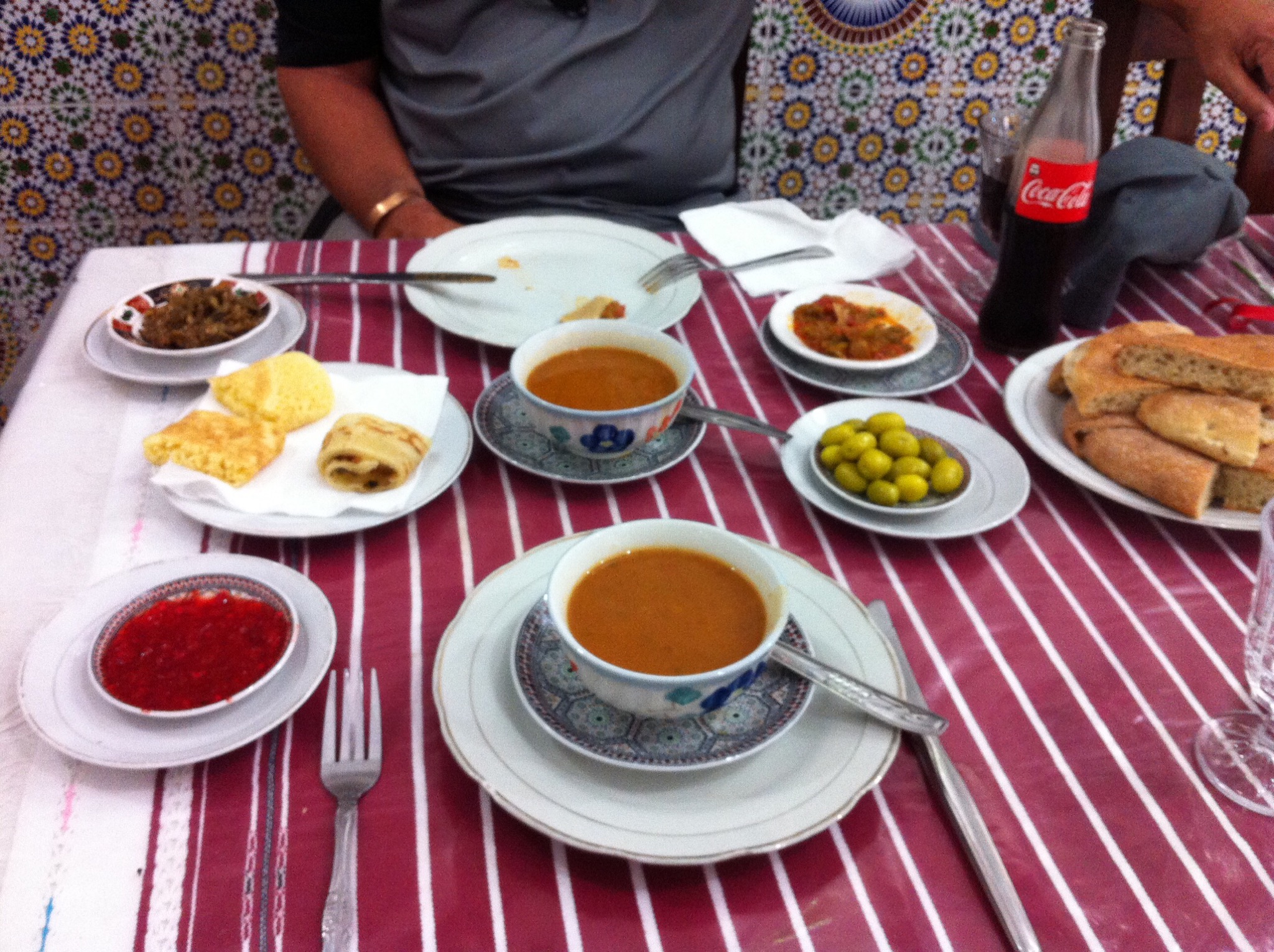
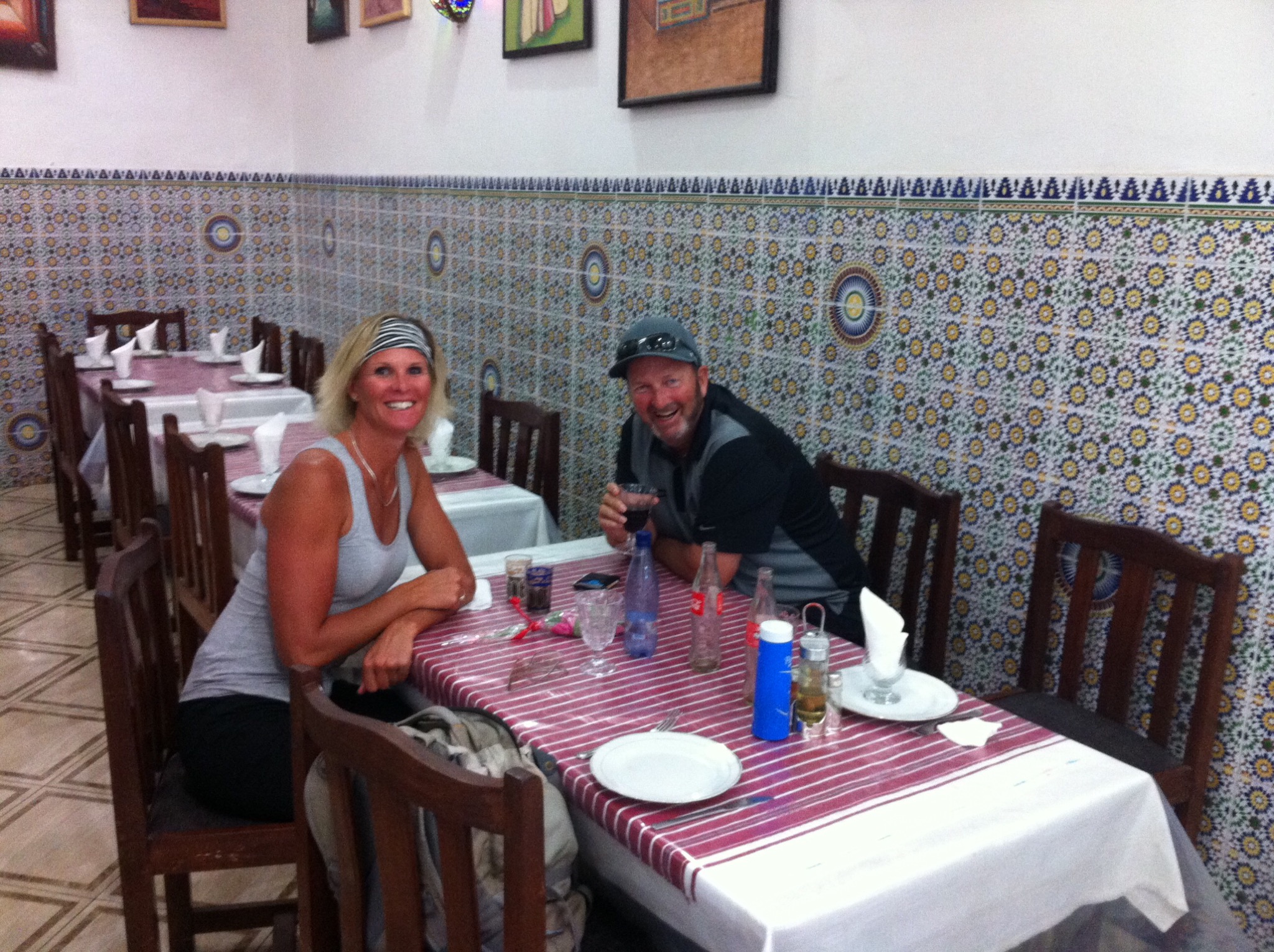
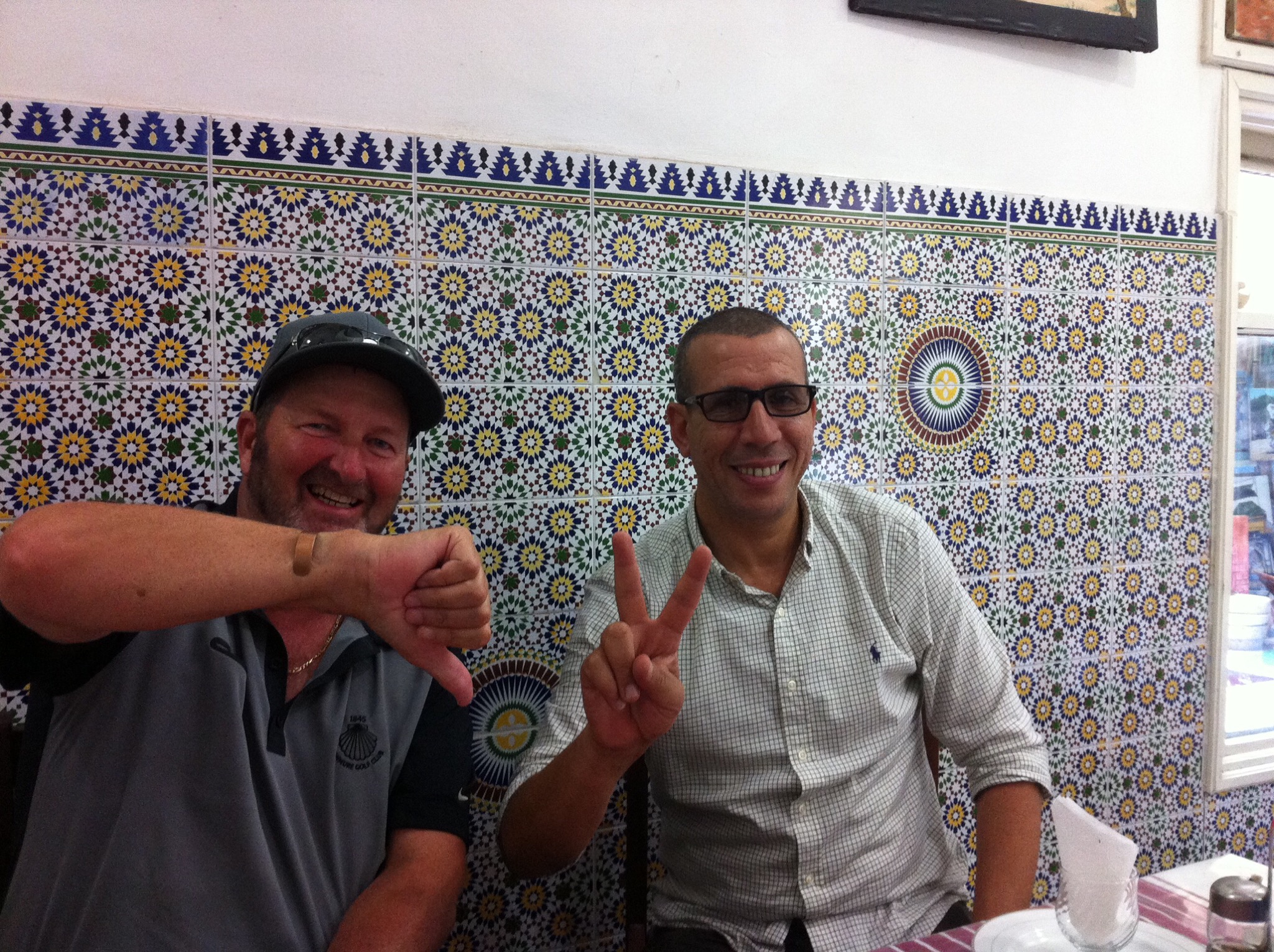
It was then time for lunch – we went to a traditional Moroccan restaurant and had a typical Moroccan meal. The midday meal is the main meal, except during the holy month of Ramadan. A typical meal begins with a series of hot and cold salads, followed by a tagine. Bread is eaten with every meal. Often, for a formal meal, a lamb or chicken dish is next, followed by couscous topped with meat and vegetables. A cup of sweet mint tea usually ends the meal. Moroccans often eat with their hands and use bread as a utensil. The consumption of pork and alcohol are considered Haraam, and are prohibited per Muslim dietary restrictions.

We had some starters followed by a chicken Pastilla. A Pastilla is a traditional Moroccan dish inherited from the Andalus, an elaborate meat pie traditionally made of squab (fledgling pigeons). As squabs are often hard to get, shredded chicken is more often used. It is a pie which combines sweet and salty flavours; a combination of crisp layers of the crêpe-like werqa dough (a thinner cousin of the phyllo dough), savory meat slow-cooked in broth and spices and shredded, and a crunchy layer of toasted and ground almonds, cinnamon, and sugar. It was delicious and my favourite part of lunch apart from the mint tea of course.

We then had a chicken Tangine with couscous followed by fresh fruits for dessert – we were pretty full by this stage.

IMG_3957.JPG

IMG_3968.JPG

IMG_3970.JPG

We stepped out of the restaurant and saw this guy sitting backwards on a bicycle peddling away – he was using peddle power to operate his knife sharpener.

IMG_3971.JPG

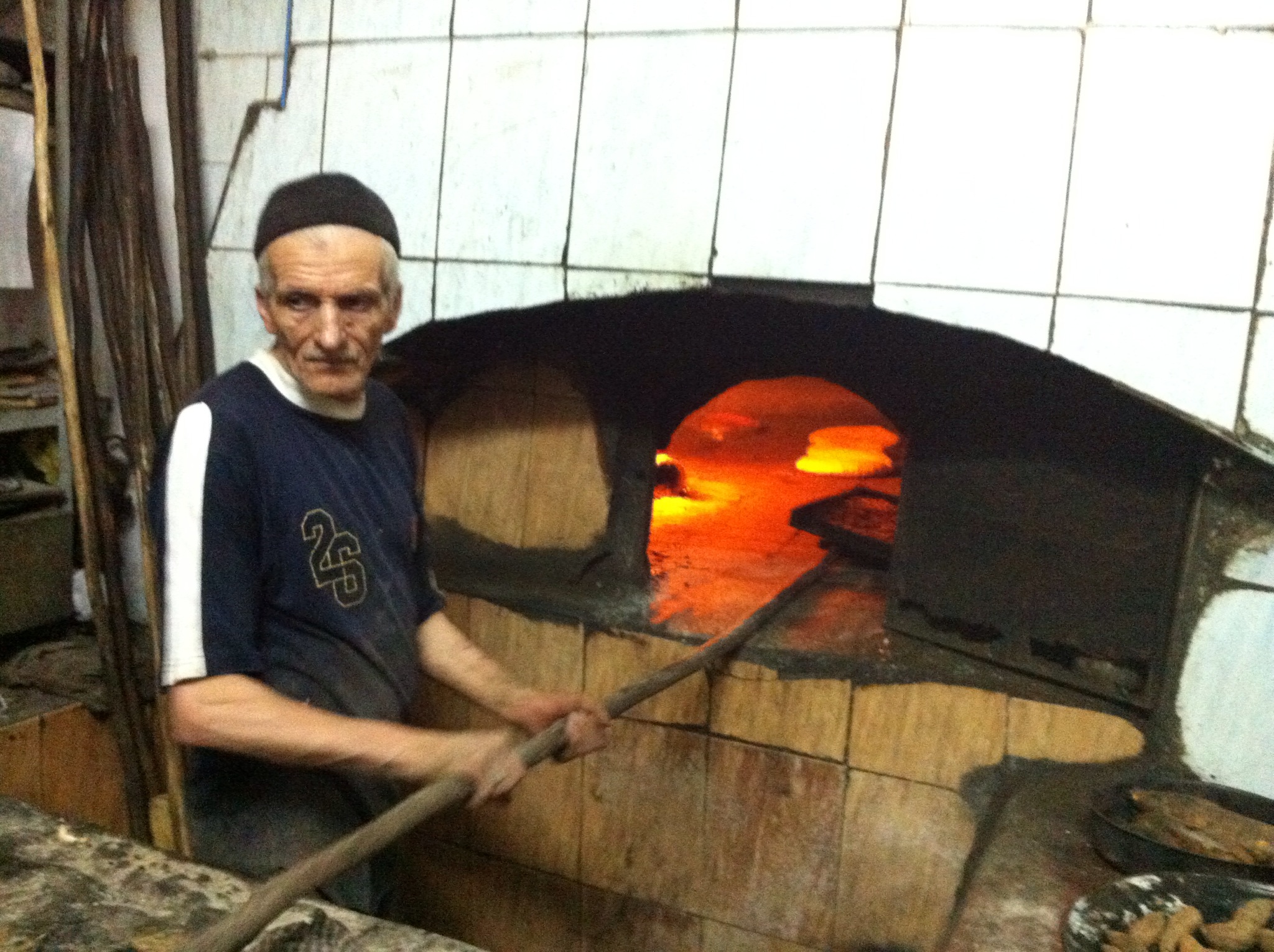
Hamid then took us to the communal oven – these are very common in the Medina. The woman make their bread in the morning and then take it to the communal oven to be baked. They pay the baker a weekly or monthly fee. In days gone by they would make an extra loaf and that would be the baker’s payment but today it is all done with cash. They will also cook trays of vegetables or anything else that you desire.

IMG_4779.JPG

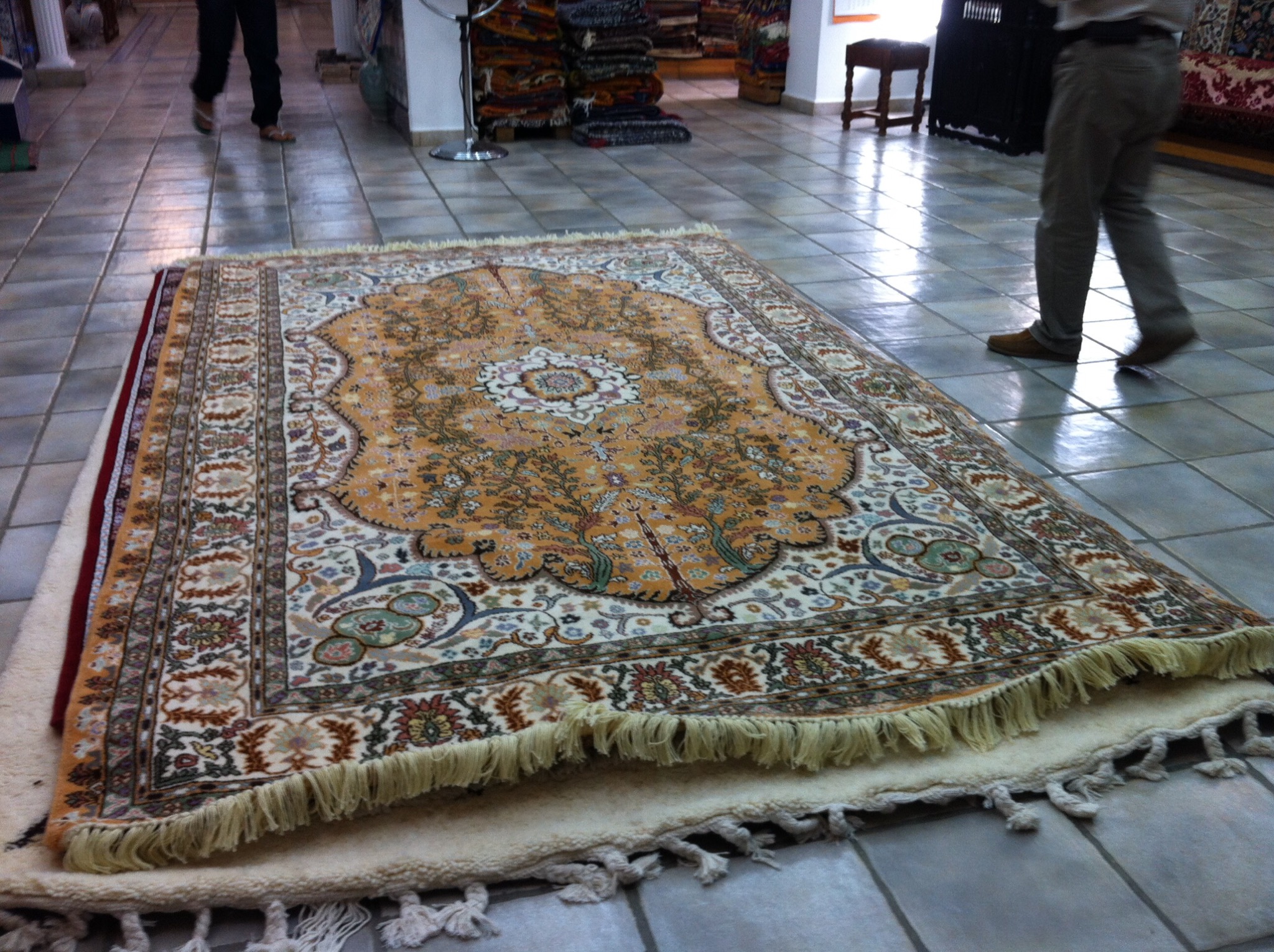
A visit to Tangier without a visit to a rug shop just wouldn’t be right so off to the rug shop we went. They plied me with mint tea and showed us many rugs of which some were lovely and inexpensive by NZ standards. Unfortunately I couldn’t quite visualise any of these rugs in our new house. Steve had a great time testing the rugs out – always looking for somewhere to have a siesta : )

IMG_3979.JPG

IMG_3978.JPG

IMG_3981.JPG

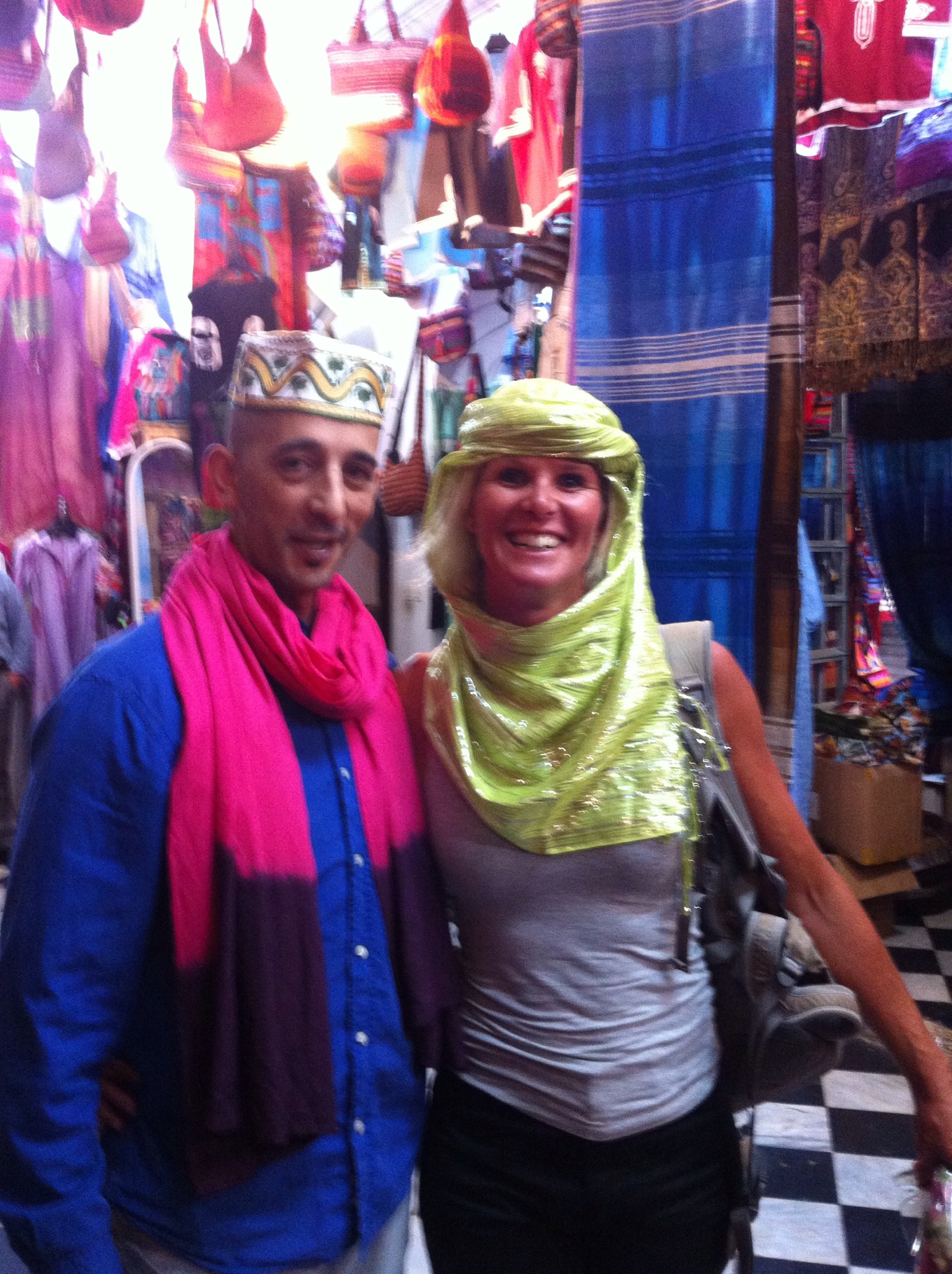
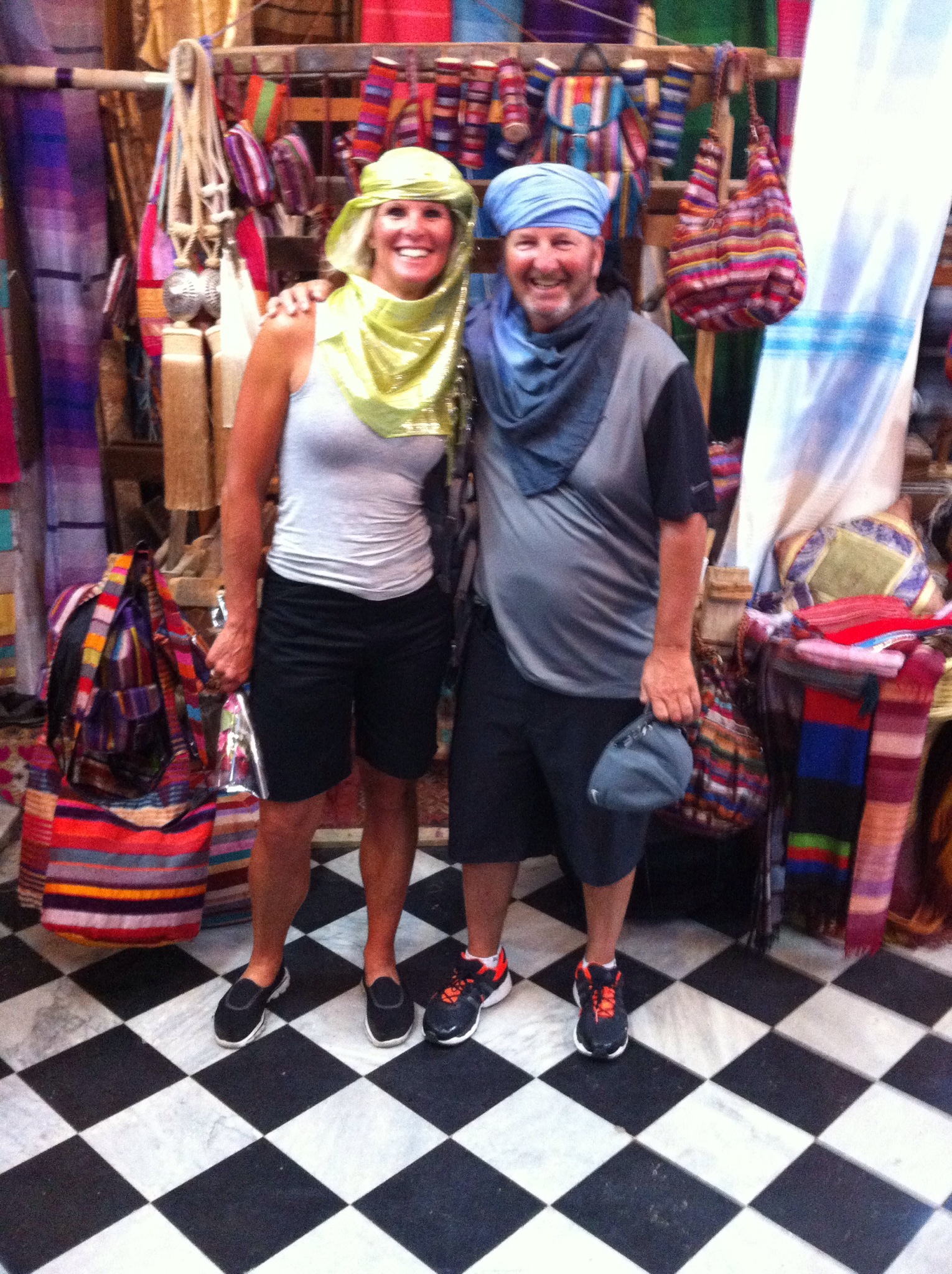
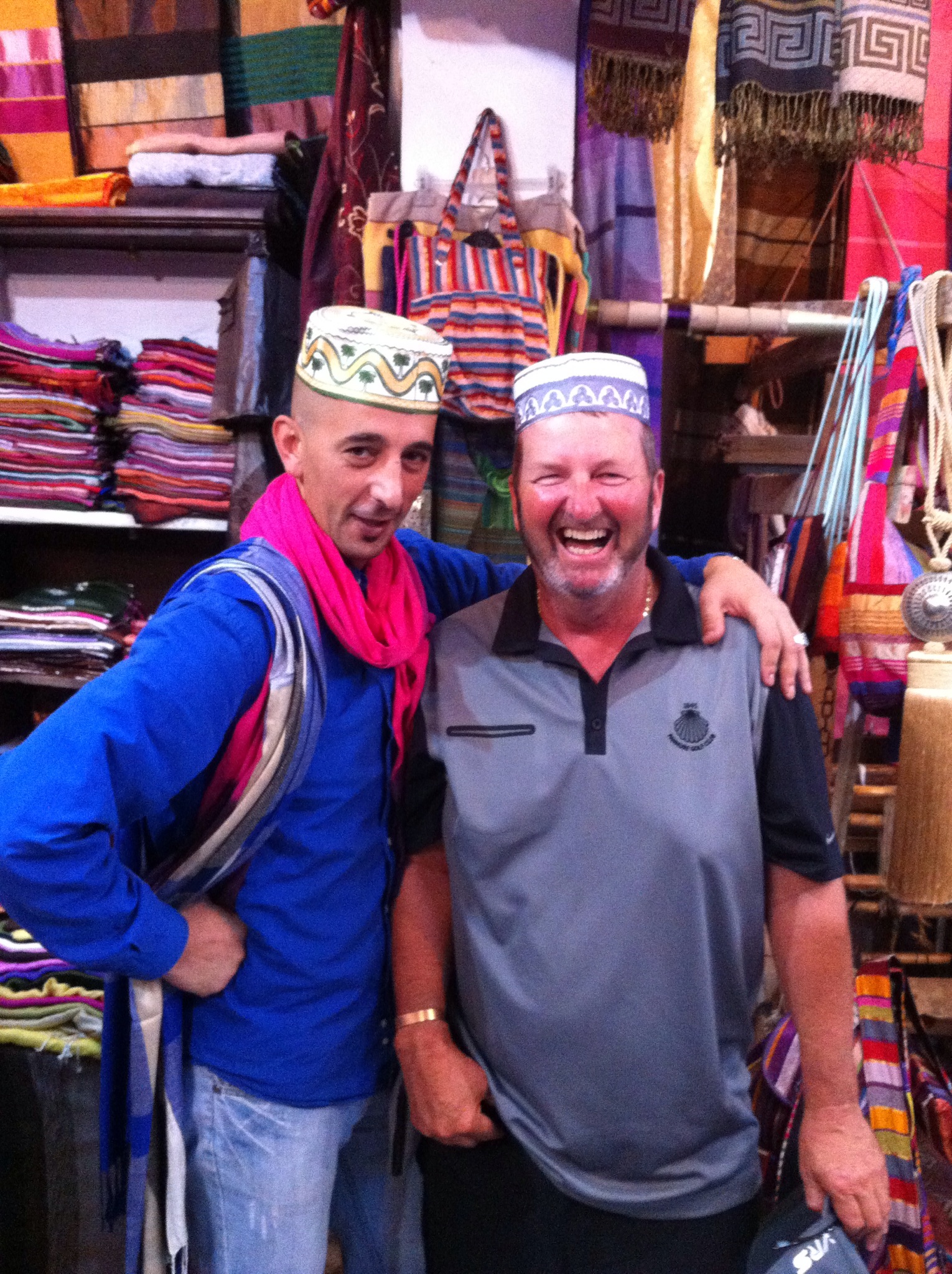
We then went to a weaving place where they were making scarves and bed throws etc… We met up with another private guide and his four Canadian tourists all of who were female. We entered the shop together and the guys in the shop thought Steve had five wives – he of course played up to this and there was great hilarity. One of the guys in the shop took a shine to me and wanted to trade his wife for me – Steve said he was keen! They were quite a laugh and three scarves and a bed throw later we were on our way.

IMG_3982.JPG

IMG_4019.JPG

IMG_4816-0.JPG

IMG_4818.JPG

IMG_4819.JPG

It was then time to say goodbye to Hamid – he walked us to our hotel and got us sorted. He was great fun and as the other private guide we met told us, his nickname is Ocean of Knowledge. He was born and grew up in the Medina so he seemed to know everyone. The Arab men all greet each other with a handshake and a hug – they are a very affectionate race and like human touch. This is very different to the world we live in. It is also very common in this part of the world for groups of men to be sitting around together in the middle of the day chatting and drinking tea together. The woman are to be found elsewhere usually working hard. They wouldn’t survive too long in my world.

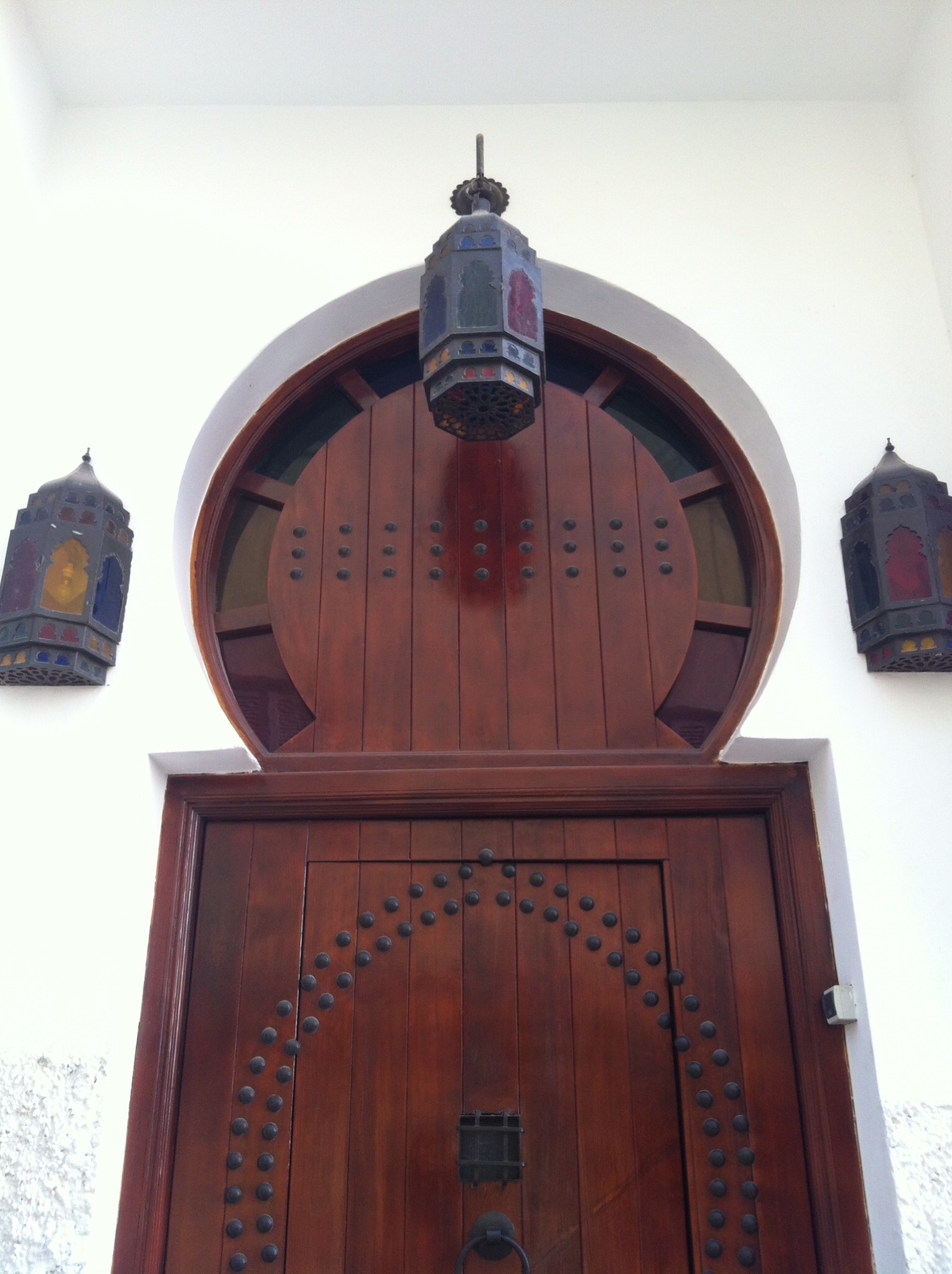
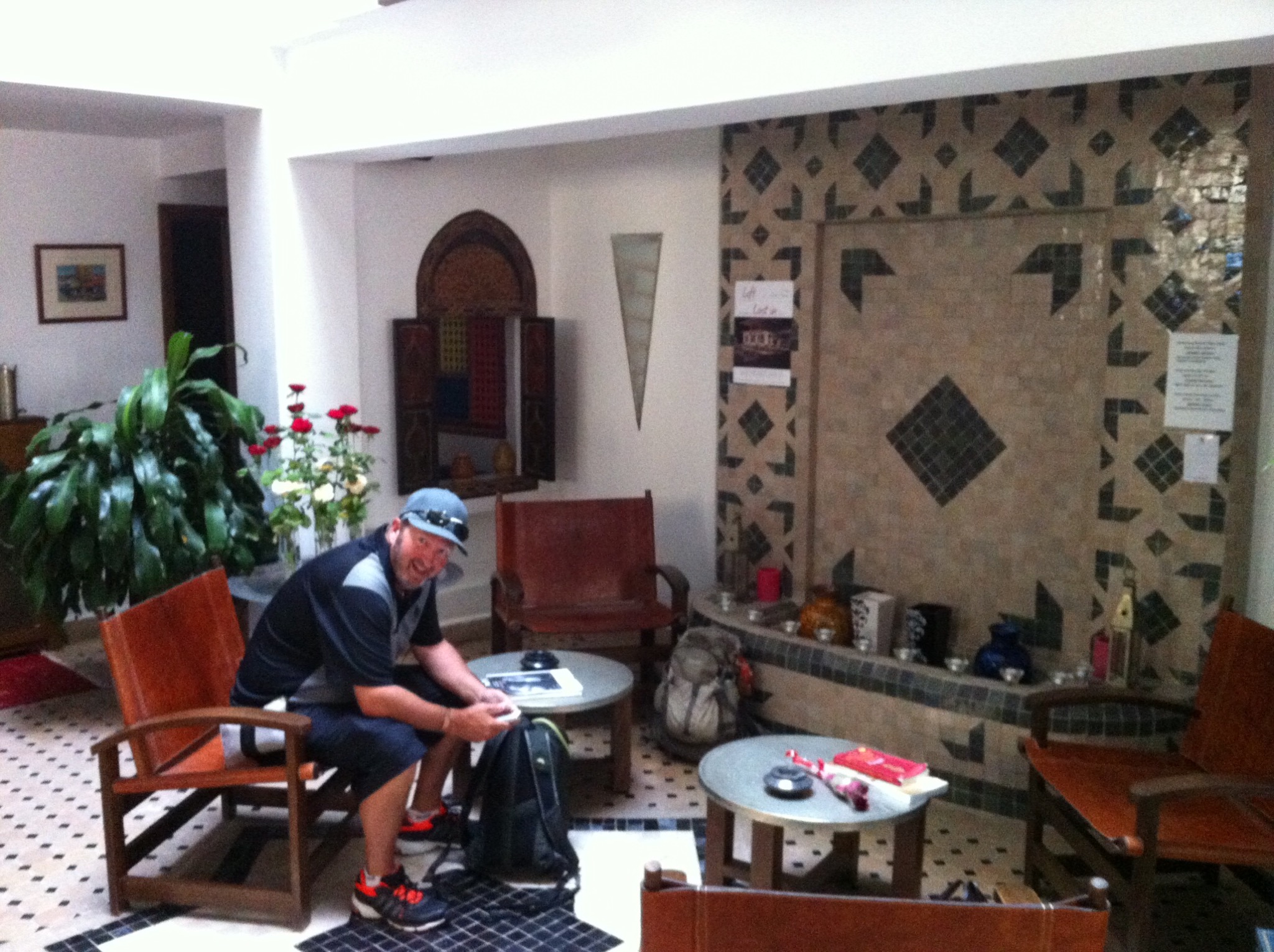
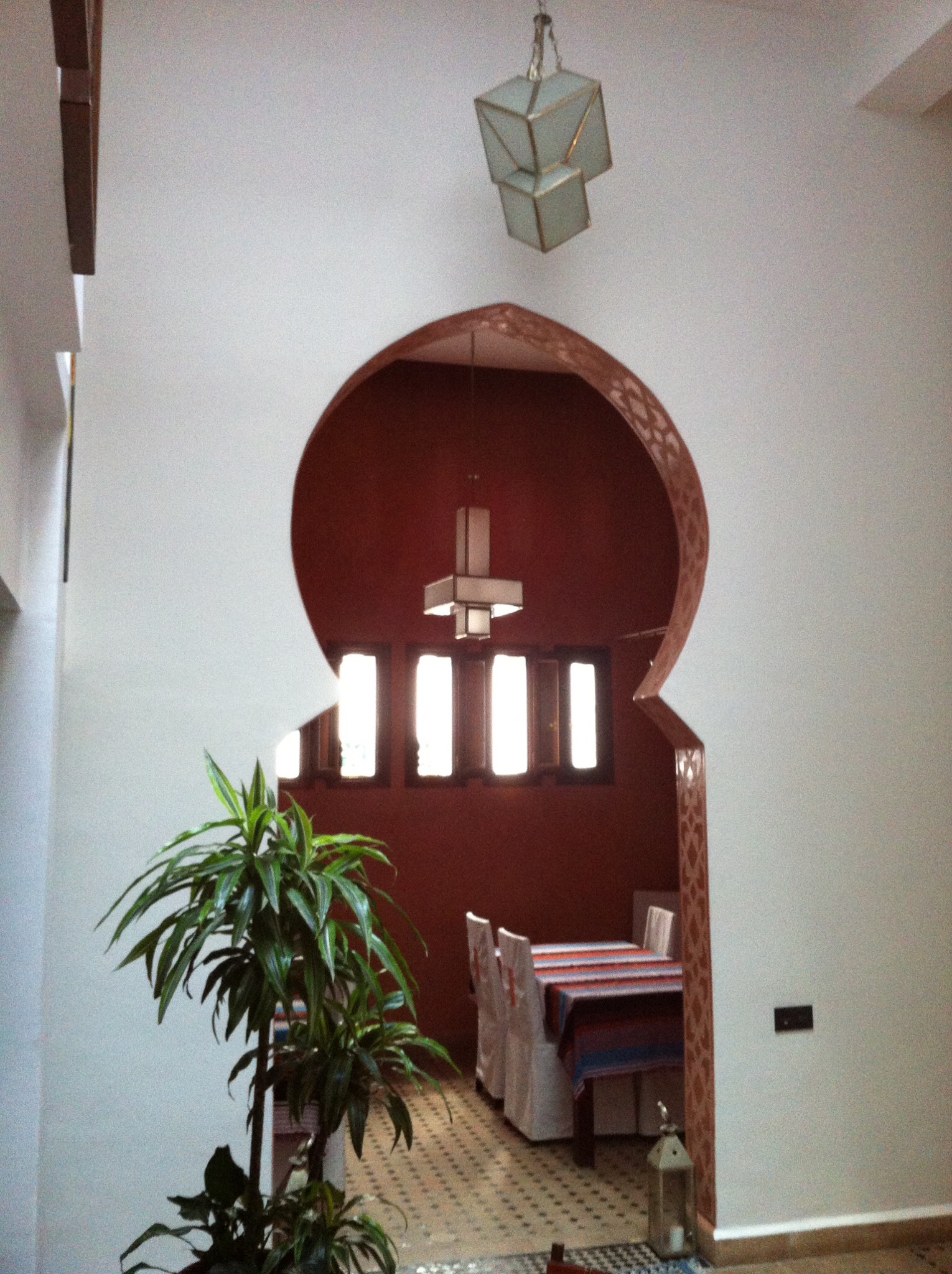
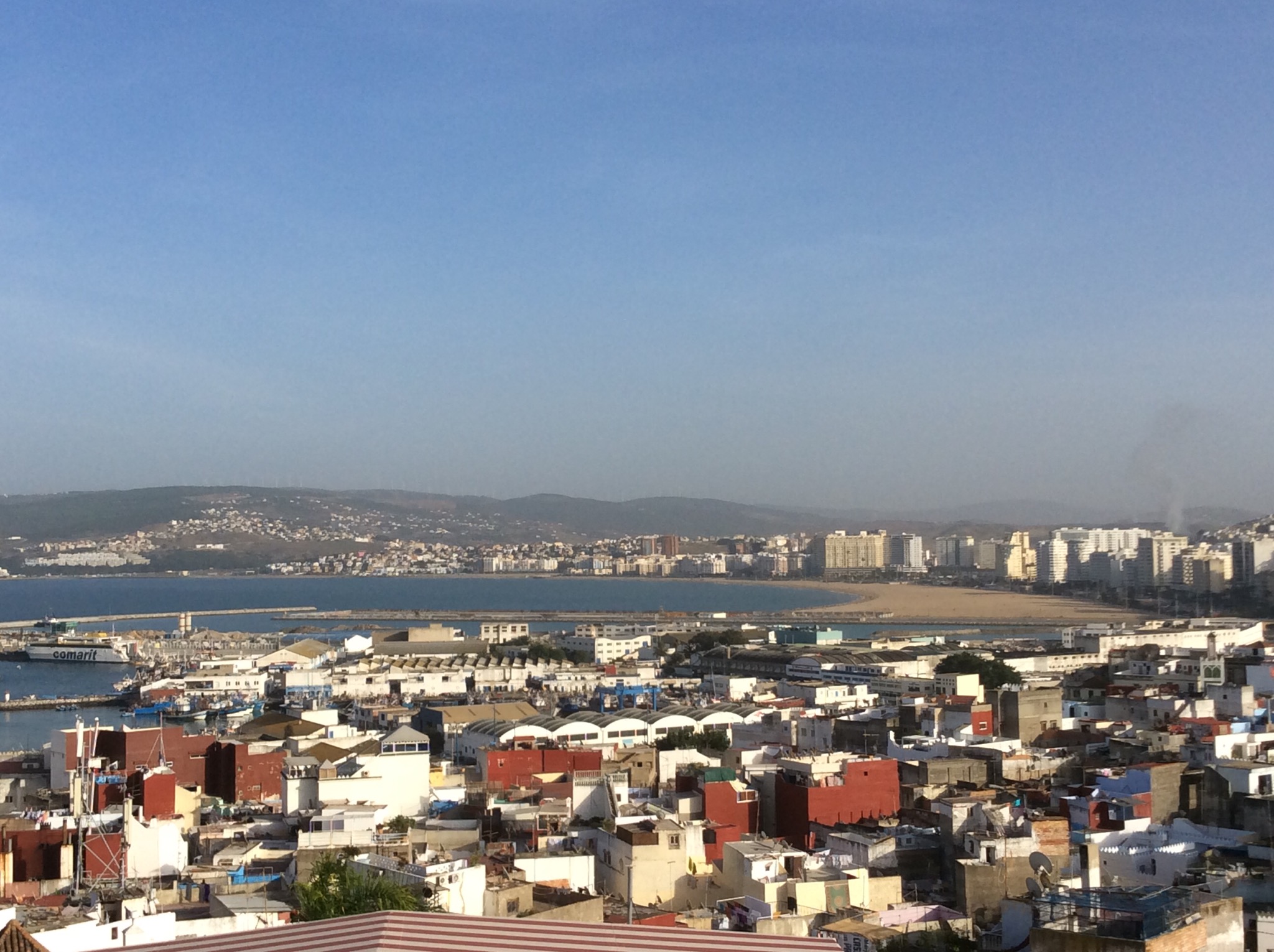
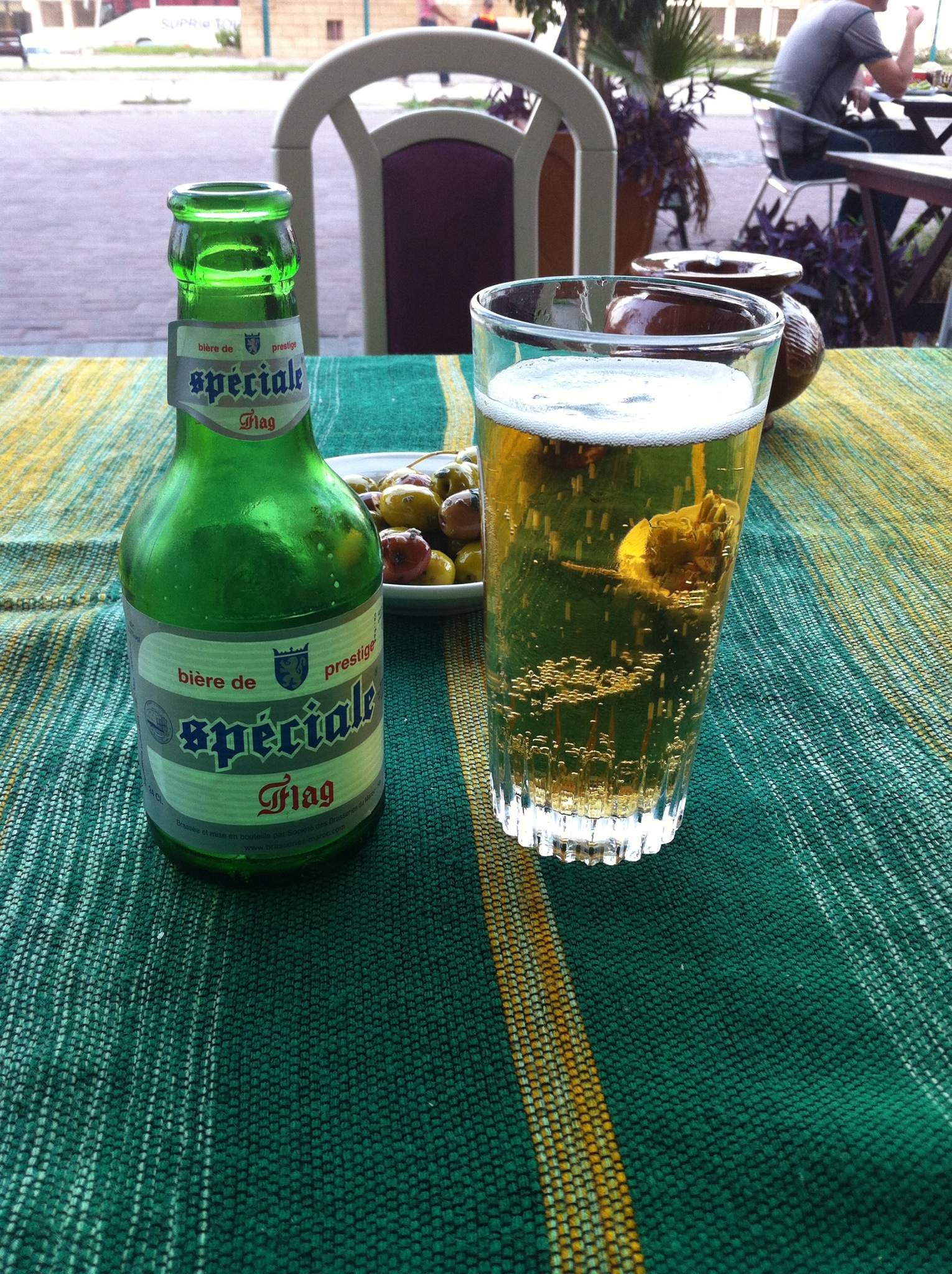
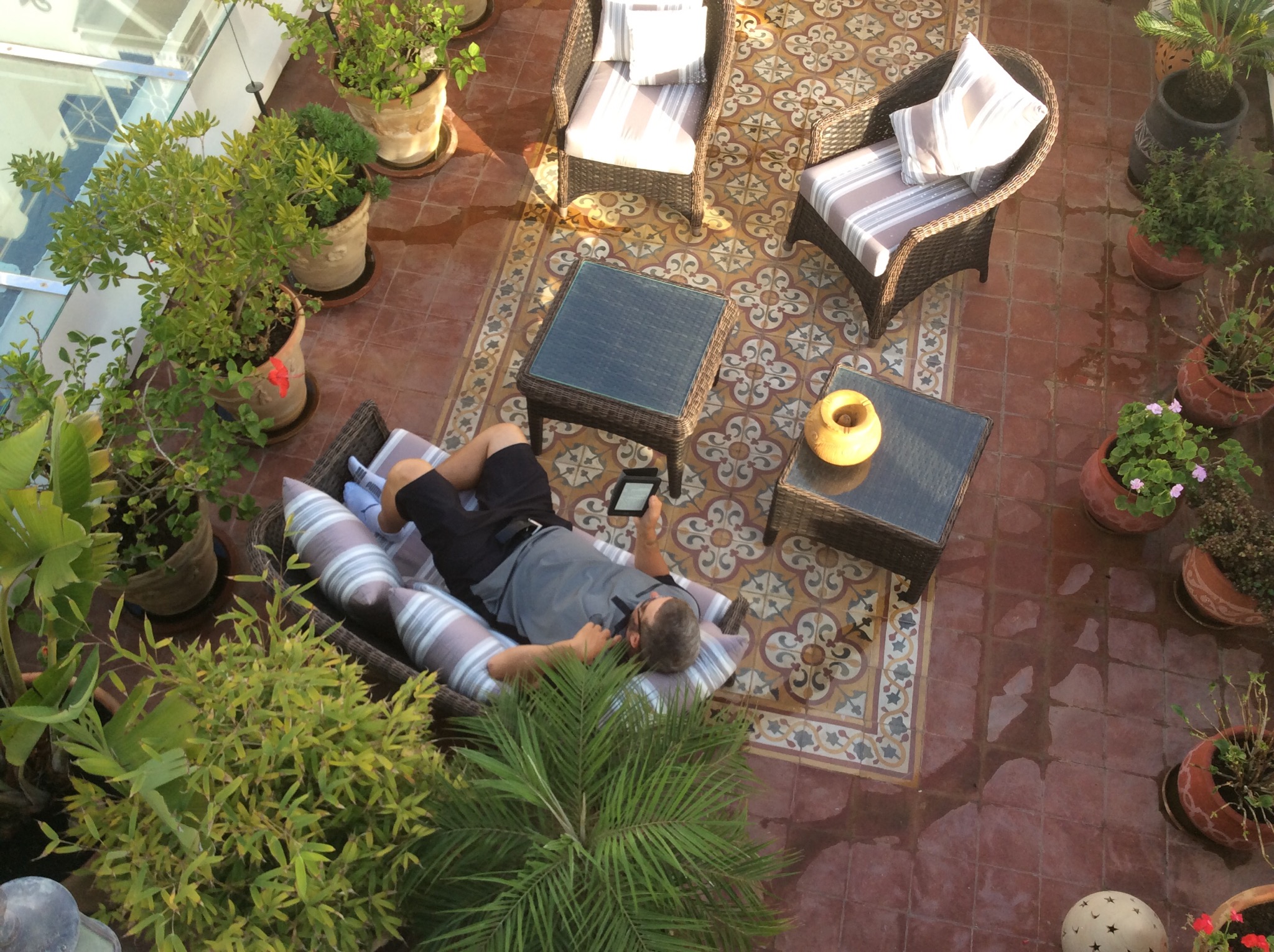
We were staying at Dar Chams Tanja which is a traditional Moroccan guesthouse with the indoor garden and open space all the way to the roof. We checked out the view over the town from the roof and then decided to go down to the port area to have a drink and do some people watching. Not many places sell alcohol but we found a bar that did – Steve sampled a Moroccan beer while I enjoyed more mint tea. We also had a meal there. We had memorised our way back through the narrow alleys so before it got too dark we headed back to Dar Chams.

IMG_0198.JPG

IMG_0199.JPG

IMG_4011.JPG

IMG_4020.JPG

IMG_1583.JPG

IMG_1584.JPG

IMG_1585.JPG

IMG_1586.JPG

IMG_4826-0.JPG

IMG_4827.JPG

IMG_4829.JPG

We woke about 5.40am to the sound of the call to prayer. We had a beautiful breakfast on the roof top before having to meet our driver who was taking us back to the port to catch the ferry back to Spain. We had to queue to go through passport control and we noticed that the locals don’t think twice about getting in your personal space. I think it is common to have to fight for a space and it is just the way they operate. We found it a bit disconcerting to start with and I was very aware of our personal possessions but once I realised that is just the way they are I stood my ground and kept my place in the queue. Again the customs officer didn’t look twice at us – stamp, stamp and handed our passports back.

Tangier, as it is called today, has been under Roman rule, in first Century BCE. Along came the Vandals, who started their move across Africa from here. Between the fourth and fifth centuries, Tangier was part of the Byzantine Emipire. The Arabs arrived in the early 700s. Portuguese laid claim to the area in late 1400s. Spain and Portugal held Tangier together for about 60 years, becoming Portuguese again in the mid 1600s. Catherine of Braganza (Portugal) was to marry Charles II of England. Tangier was given to Charles as part of the Princess’ dowry.

The British ruled the city until Sultan Moulay Ismail imposed a blockade which forced the British to withdraw. Upon leaving, the British destroyed the city and its port. Although partially reconstructed, the city declined to around 5,000 people in early 1800s. Because of its geographic location, many European countries have vied for control.

France was the most influential when the Kaiser of Germany said he was in favor of Morocco remaining a free country. This nearly triggered a war between France and Germany. Morocco was divided between France and Spain. Tangier. In the 1920s, Tangier became a international zone, held by France, Spain, Britain and Italy until World War II. Spain held control of Tangier until Morocco gained its independence. She was reunited with the rest of the country.

Tangier has a checkered past. Once known as a safe haven for international spies and a meeting place for secret agents. Tangier is used as the location for many spy novels and movies. It, also, had quite a reputation as a smuggling center. Tangier attracted many artists such as Matisse and Tiffany. Authors like Choukri, native to the area, and Burroughs wrote about the city and surrounding area.

Today, Tangier is the second largest industrial center in Morocco with its Tangier Free Zone. Construction should be completed shortly on the second Tangier-Mediterranean port. Fishing and agriculture are two smaller industries adding to her economy. Tangier is connected to the rest of Morocco by rail and new expressways. Ibn Batouta International Airport is 15 kilometers from the city’s center. Even with all the modern industries, Tangier still has an old medina were artists ply their wares. Leather goods are the specialty along with traditional clothing, shoes, silver crafts and wood items. The entrance gate to the Medina is found near the Great Mosque and it connects with the beaches.

Tangier is a fast growing city population wise. In the last twenty years, population of the city has quadrupled – it now has a population of about 1.8 million.

Posted in Morocco | Leave a comment

San Roque Club – New Course, round 2, Cádiz – Andalusia, Spain

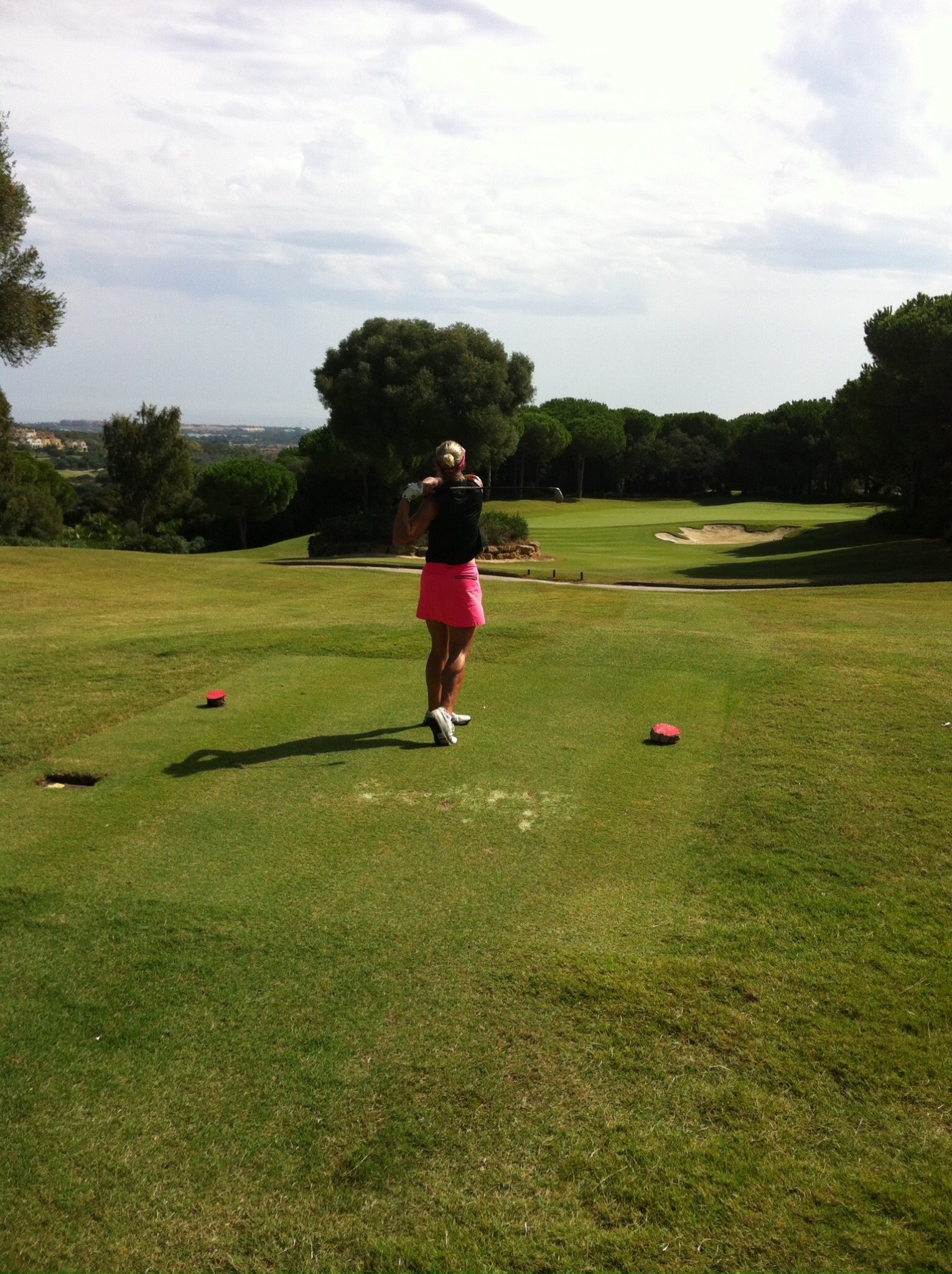
We booked a second round on the New Course at San Roque for today at 8.20am. They then emailed us to say that we would need to tee off at 8.40am as it would still be dark at 8.20am. They were right – we got to the course just after 8am and went to the driving range to warm up – we were struggling to see where the balls were going.

We were paired to play with two canny Scotsman – Eric from Aberdeen (now residing in Warwickshire) and David from Glasgow. They were a real laugh. They had come over for the weekend to play golf – Eric has a place on the 13th hole on the San Roque Old Course. They had a little competition going on between themselves, well when I say little I mean GBP75 for the front nine, GPB75 for the back nine and GBP150 for the match. It makes Steve’s $10, $10 and $10 that he plays for with the boys at Manukau pale in comparison.

They were flying back to the UK after the game. We asked them what time the flight was and they said 2.30pm from Malaga which is about an hours drive north. At the earliest we were going to finish golf about 12.40pm – we said that we thought they would be cutting it a bit fine. David kept saying, don’t worry Eric has it in hand. Eric’s also saying it’s all under control. Steve said but you need to check in at least 30 minutes before etc… It turns out that Eric owns his own plane! No wonder they weren’t worried when we finished at 1.15pm, apparently the plane will wait.

Steve asked him what sort of business he is in to be able to have his own plane – frozen foods was the reply.

It was a very enjoyable morning and the golf was fair to middling. The Scotsman were good fun to play with and we had a few laughs.

Curiosity got the better of me so I did some googling to see if I could work out who Eric was. It turns out he is the majority shareholder in Farmfoods – the frozen food specialists with over 300 stores in the UK. He was ranked as the 16th richest Scotsman in 2013 with a fortune of GBP253 million. You would never have known and no wonder the plane would wait for him : )

IMG_1505.JPG

IMG_1506.JPG

IMG_1507.JPG

IMG_1508.JPG

Posted in Spain | 2 Comments

Yeguada de la Cartuja, Cádiz – Andalusia, Spain

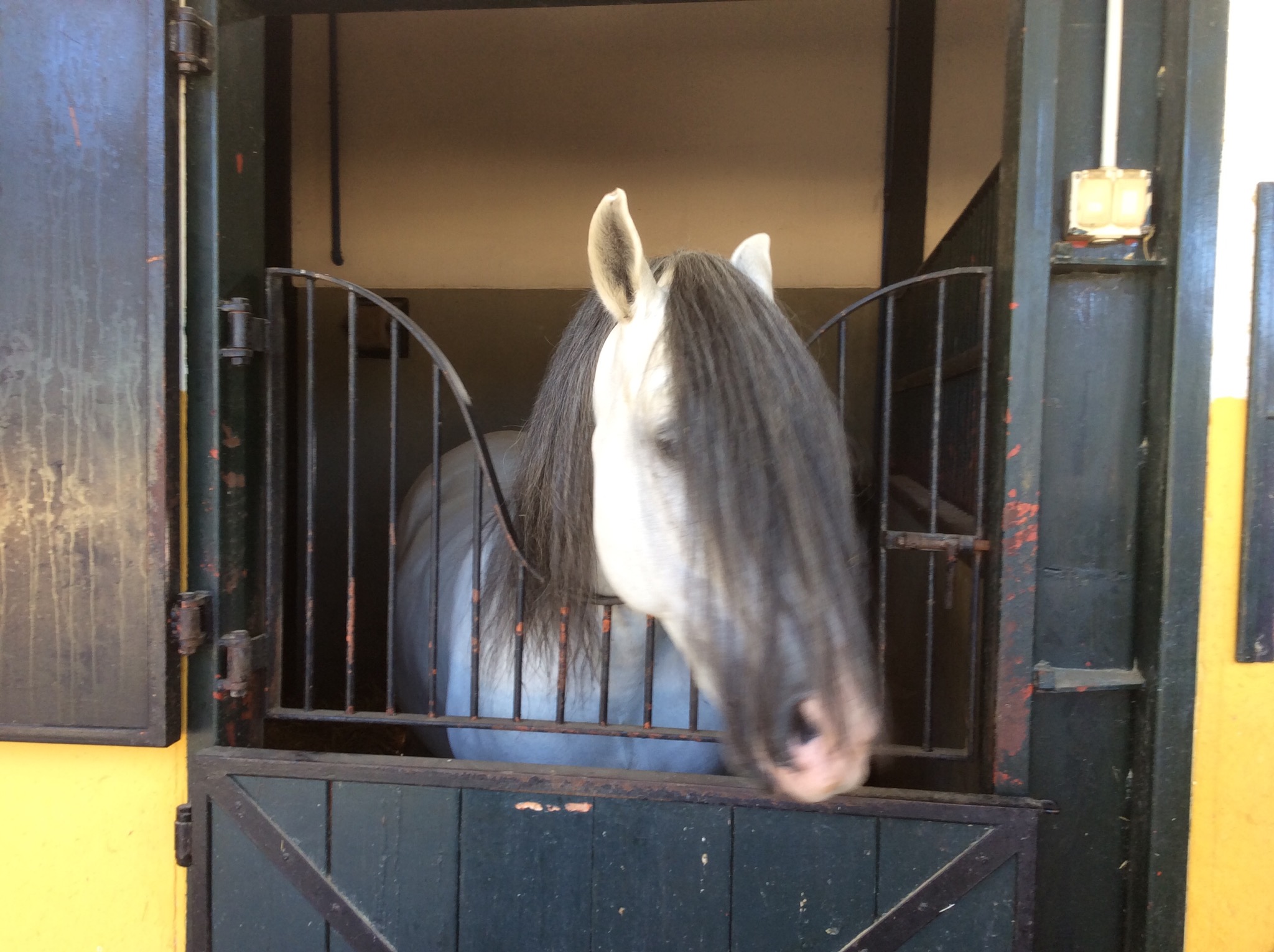
Today we took a drive towards Jerez to see the Carthusian horse stud called Yeguada de la Cartuja which translates to Stud of the Charterhouse. The Carthusian horses are an Andalusian breed of horse as they descend from the Andalusia area. They do tours of the facilities and put on a show on Saturdays.

IMG_1504-0.JPG

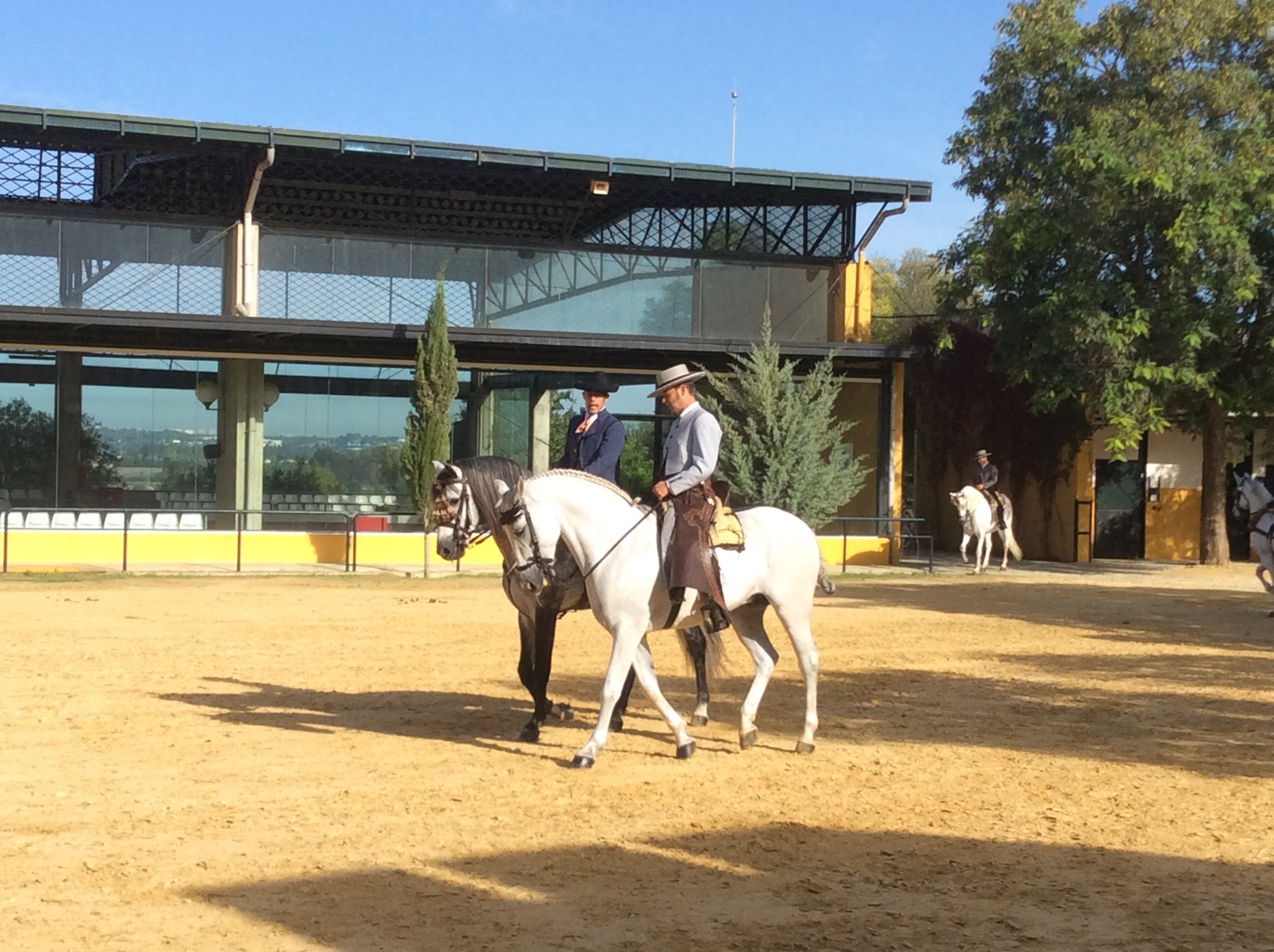
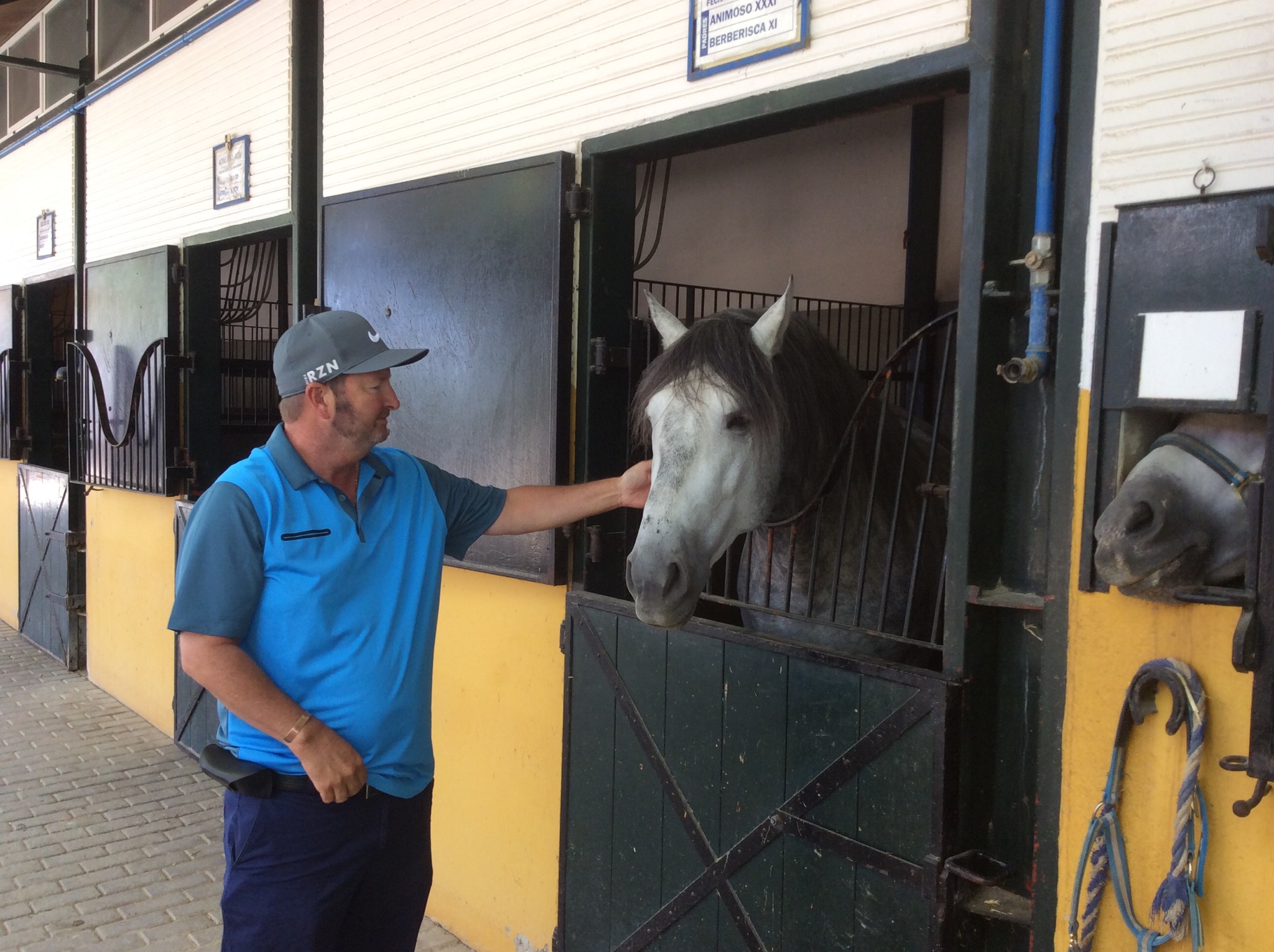
We had been to the Spanish Riding School in Vienna which has ties to this area in the sense that the Lipizzans can be traced back to Spain in the 14th and 15th centuries. The Cartuja stud is so much more relaxed with the public being able to pat the horses and the warms ups being performed in the public courtyard. No one but the horse’s rider is able to touch the Lipizzans at the Spanish Riding School.

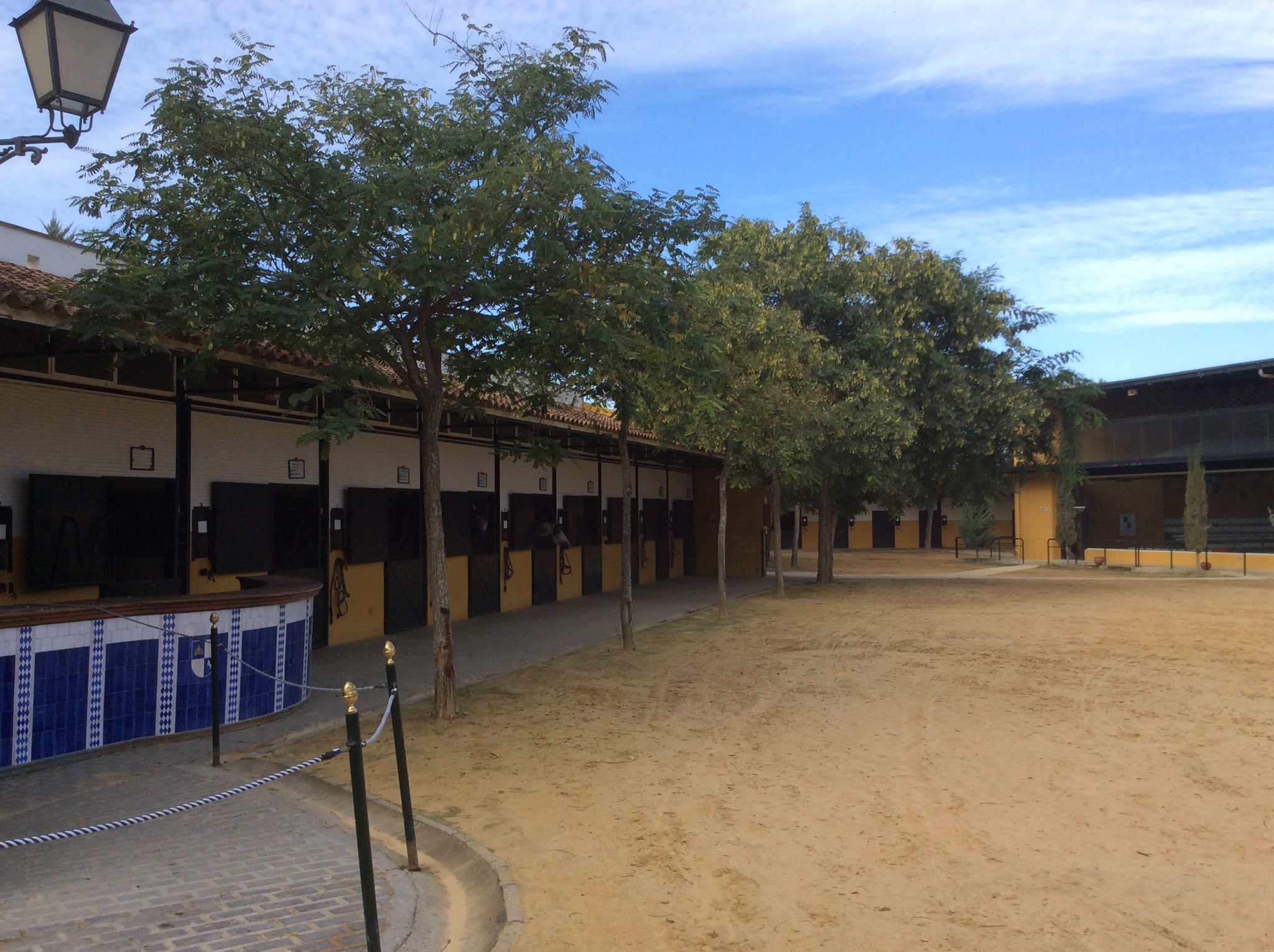
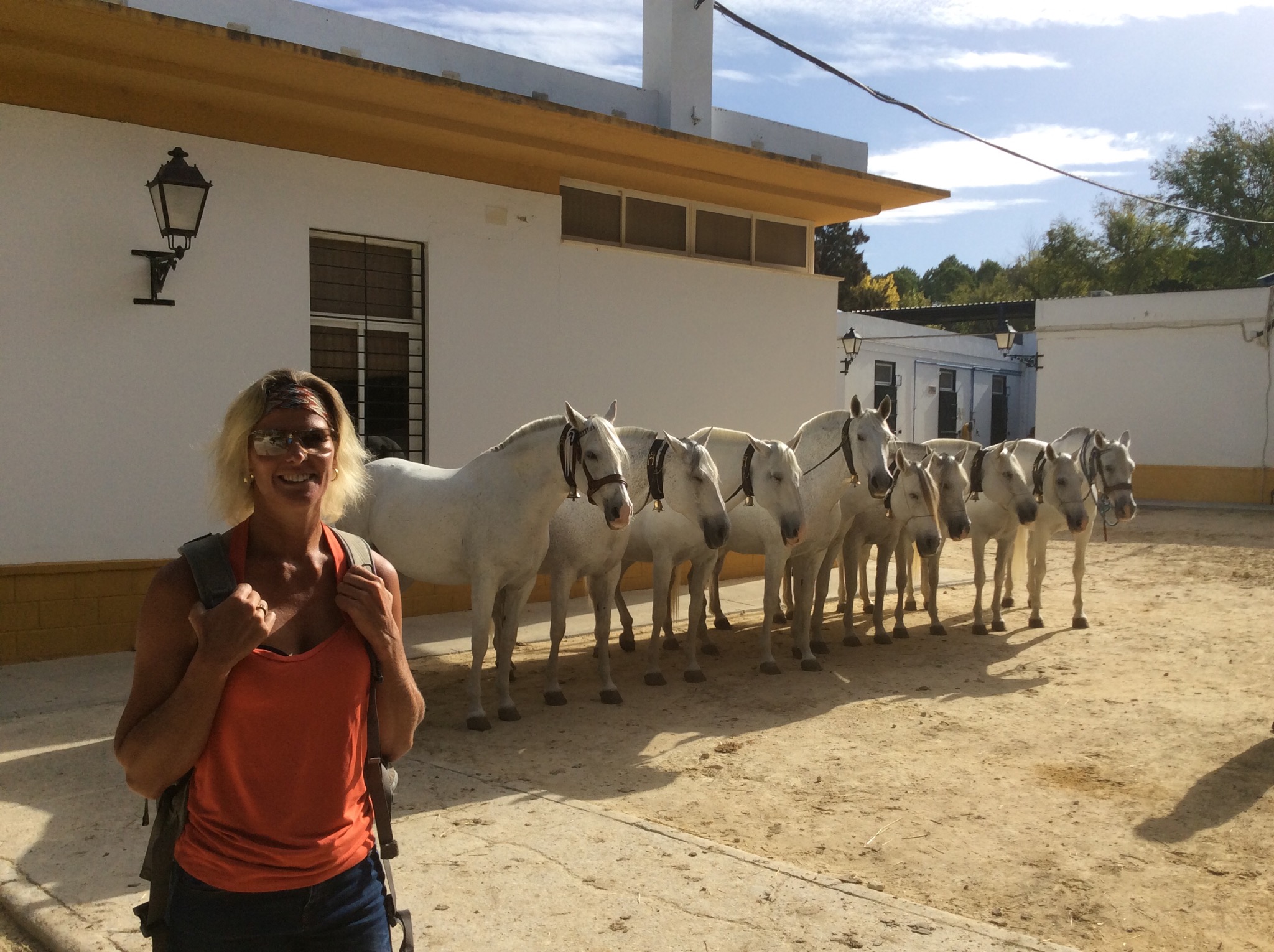
Our tour guide Lena took us to see the stallions who are housed in 5 stables with 10 boxes. They have 300 horses on the 250 acre property. The 50 stallions that are in various stages of training are housed in these stables along with 10 mares who are also trained to perform. The rest of the horses roam in the paddocks.

IMG_1466.JPG

IMG_1468.JPG

All the breeding is done by artificial insemination and the Stud employs three full time vets. Lena showed us the breeding facilities as well as the surgery. The foals are all kept together until they are about six months old – they then gradually separate the stallions and the mares and by the time they are one they live separately. They are assessed for about three years to see if they will be used for breeding and what sort of performing. The horses that are surplus to requirements are sold off to assist with breeding programs in other parts of the world.

IMG_1491.JPG

All the foals are born a brown colour and it can take up to ten years for them to go white. There is the odd brown or chestnut horse but no black ones. This is because they were all killed centuries ago and it will take a long time to recreate the gene that produces a black Carthusian horse.

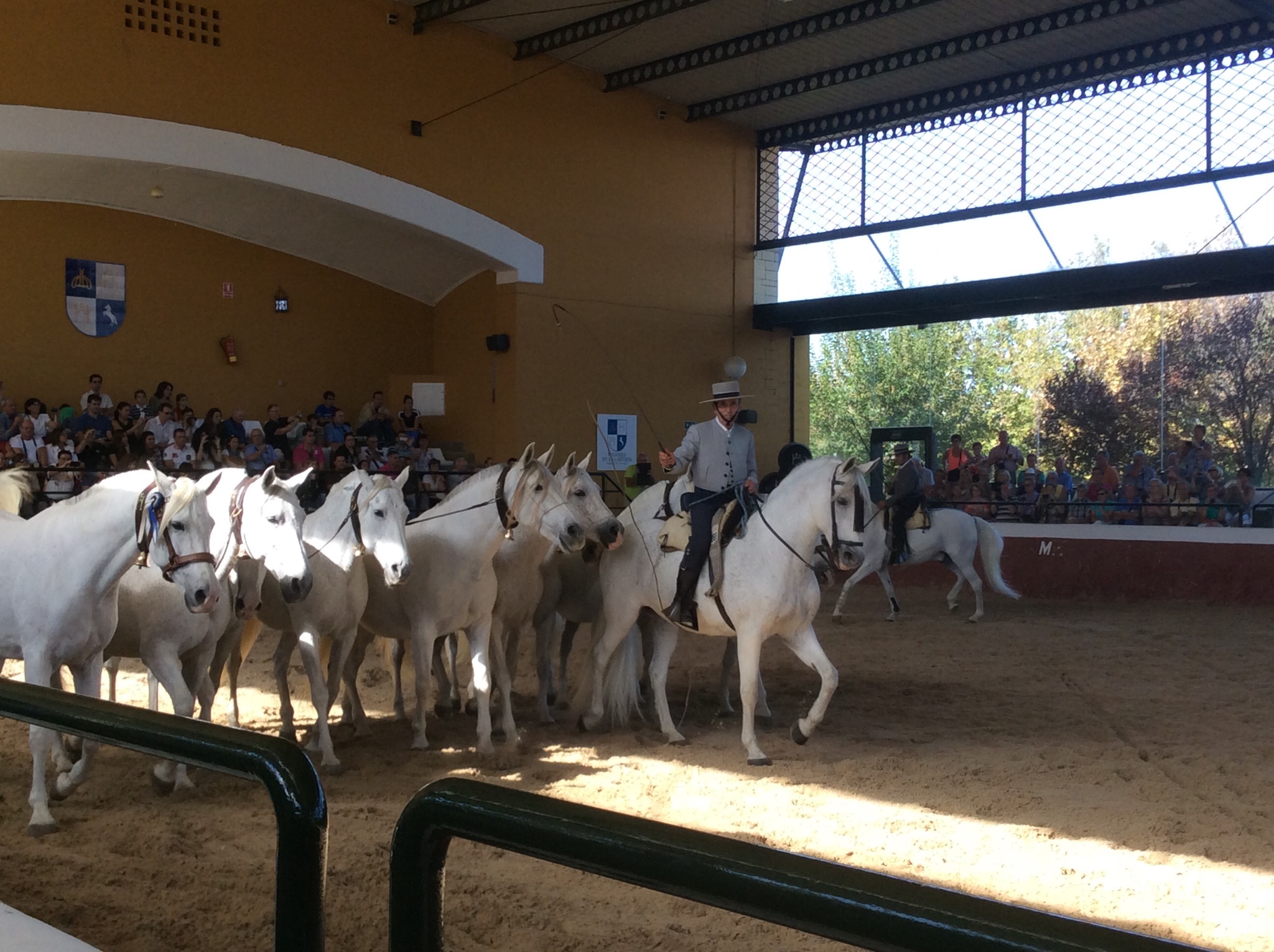
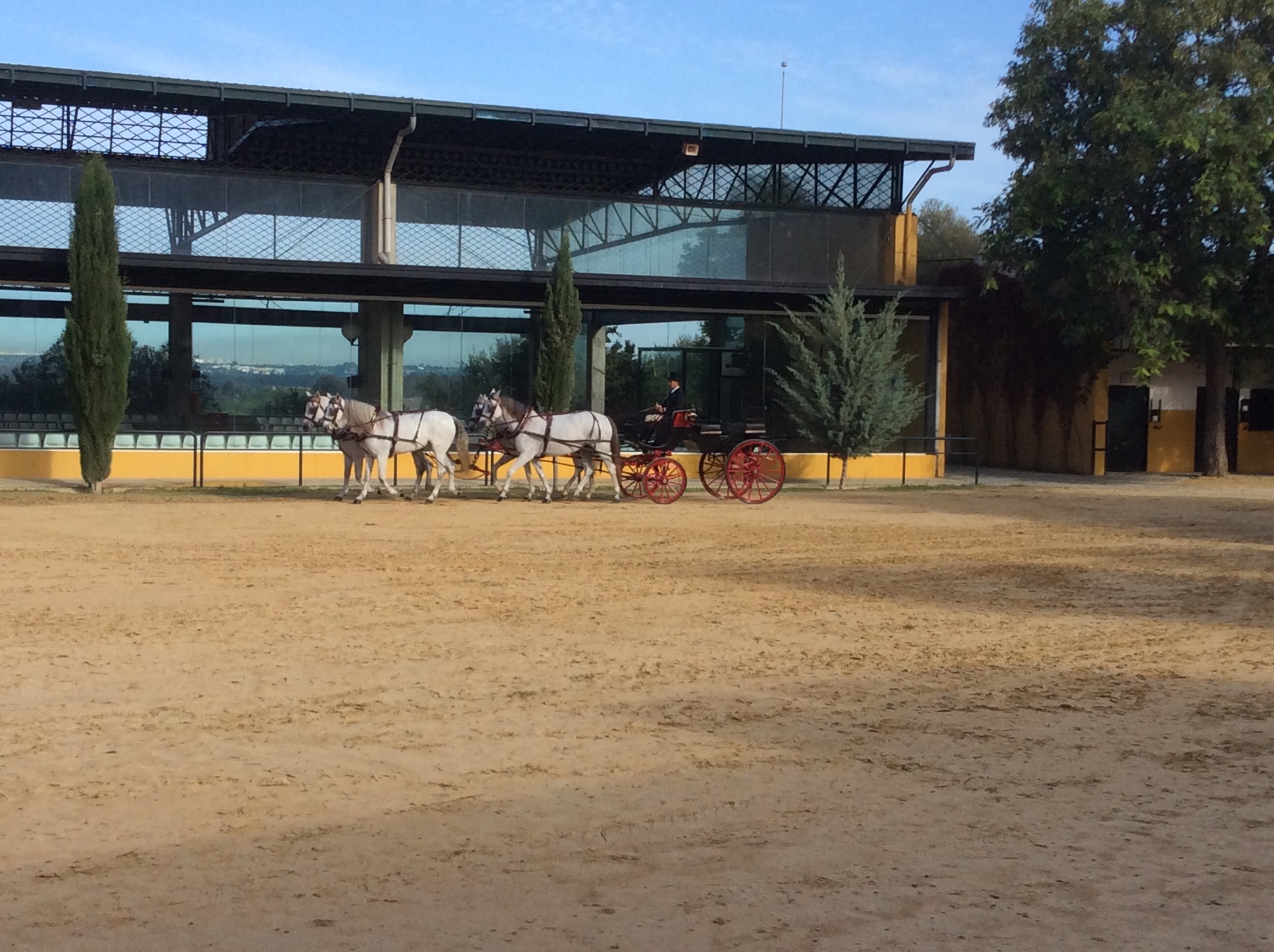
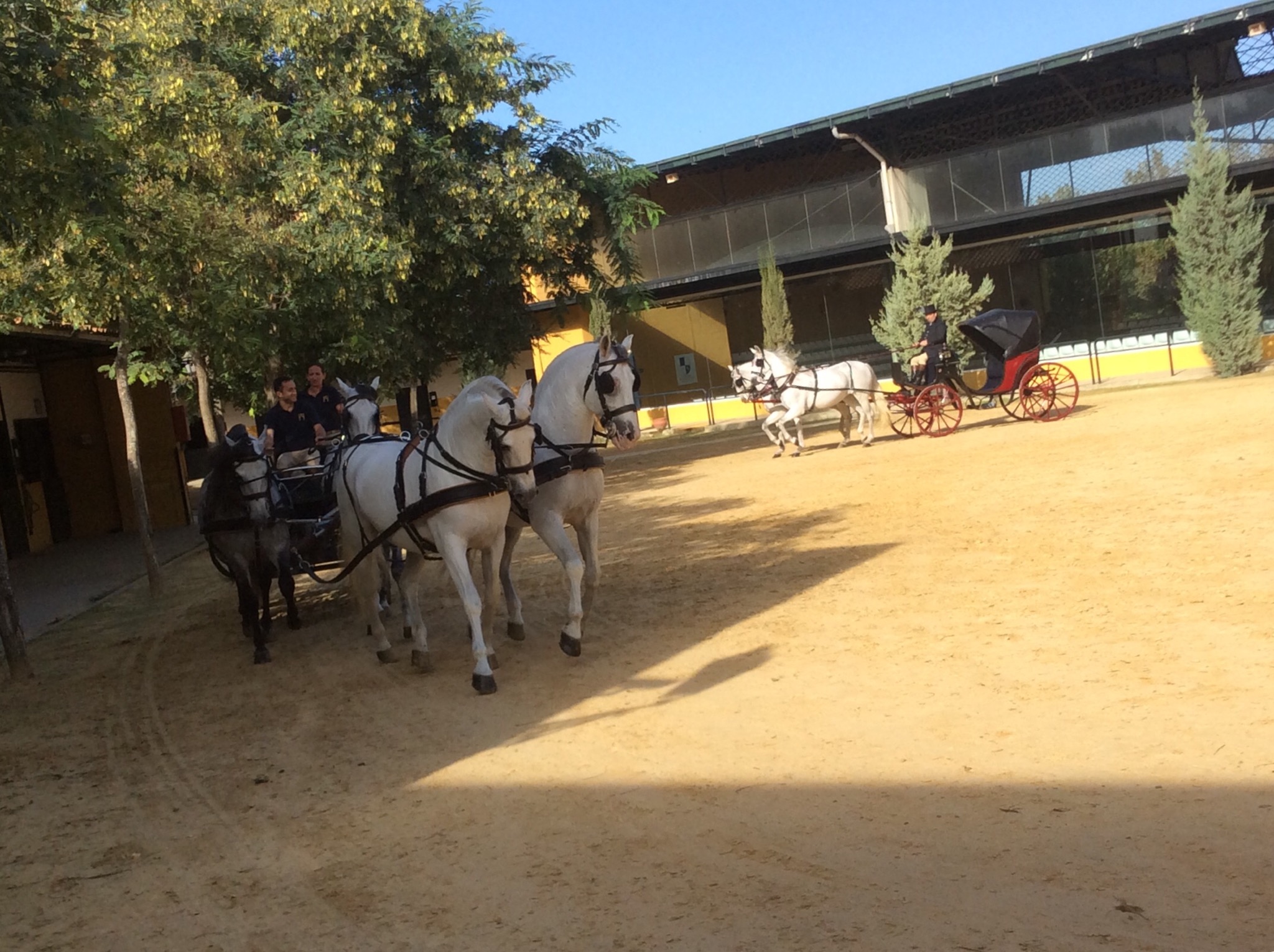
After the tour we went to the arena to watch the show. They brought in a line of mares who are roped together and they move around behind the master on the lead horse, turning this way and that in formation.

IMG_1498.JPG

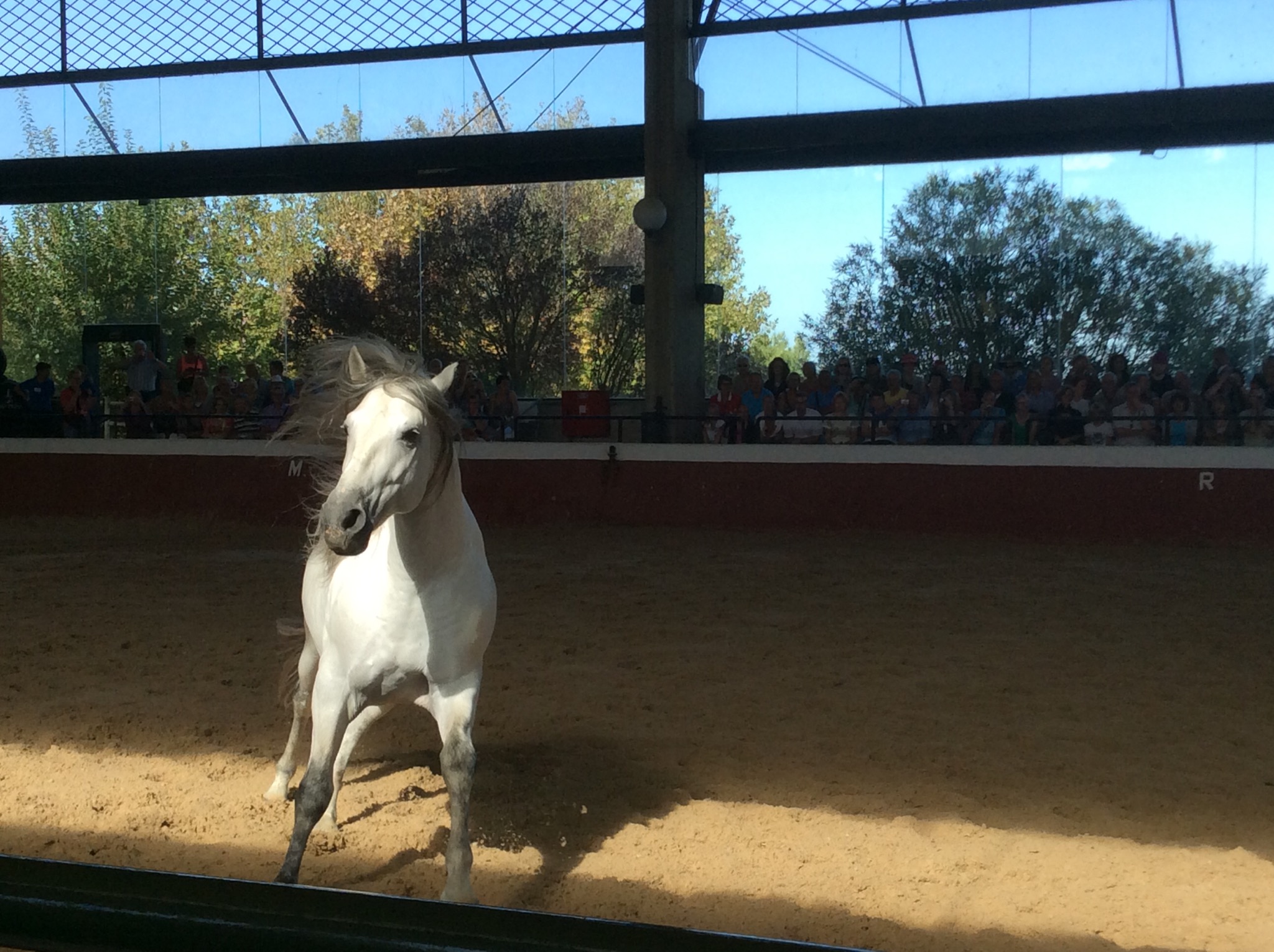
They then bought in a stallion who ran wild and free around the arena – we were in the front row and it is quite amazing to see them running past you so closely.

IMG_1495.JPG

IMG_1496.JPG

They then have two horses pulling a carriage – they move their legs in unison. They then had four horses pulling a cart where they did a time trial around the arena going between the cones.

IMG_1471.JPG

IMG_1479.JPG

They then bought in the dancing horses as such, two horses who move around the arena changing the way they use their legs in a dancelike fashion – it really is quite amazing to watch how graceful they are.

IMG_1480.JPG

IMG_1481.JPG

At the end they bought in the foals who jumped around the arena like lunatics. They then let their mothers in who they are separated from now but straight away each foal found it’s mother and started suckling. It was then the mother’s turn to go loopy – quite a few of them got down on their backs and rolled around in the sand.

IMG_1503.JPG

From ancient times, the horse has played an important role in our culture, a fact which has been demonstrated through numerous pictorial testimonies. In the Iberian Peninsula in particular, it is known that horses already formed part of the everyday life activities in the earliest civilisations.

The origins of the influence of the horse and, in particular the Andalusian horse, within our culture coincides with the flourishing of the first large civilisations in the Peninsula. The Carthaginians incorporated large numbers of horses into their armies due to their strength and endurance. Later, the ancient Romans were capable of appreciating the bravery of the Andalusian horse and used this breed to its full potential both as a means of transportation in civilian life, as well as in the frequent violent conflicts, as a sign of distinction reserved for kings and emperors.

The Arabs organised their armies to include a light cavalry, which was almost exclusively formed by Andalusian horses. This light cavalry was important in the Arab expansion in Spain. From their first contact with the breed, the invaders admired the virtues of the Andalusian horse and their great triumph lay in conserving and strengthening the characteristics or the Spanish race itself. This led to the creation of several important breeding centres and horses were even sent as gifts to Constantinople, Baghdad and other major cities throughout the Islamic Empire.

From its foundation towards the end of the XV century, the Monastery of La Cartuja has been converted into the cornerstone of the Jerezano thoroughbred horses. For three centuries, which coincided with the centuries of greatest splendour of the kingdom of Spain, the Carthusian monks established a breeding stock which, through time, would be converted into one of the most celebrated and appreciated stocks in the world.

The true origins of this stud farm are unknown, although one popular anecdote has it that when tenant of the Carthusian monastery, Don Pedro Picado, was unable to pay his ground rent to the monks, he decided to pay them in kind by offering them his mares and colts

For over five centuries the monks have played an important role with the Carthusian horse and the land on which the stud stands today. They were defeated a couple of times but were then reinstated. The stud and the land have changed hands many times over the last century and combined with a vineyard. In 1983 the State Heritage department (Patrimonio del Estado) took charge of these assets, and in 1985 the livestock was separated from the other assets belonging to the vineyard. In 1990, the State Heritage department incorporated the stud farm into the public sector company EXPASA Agricultura y Ganadería, S. A., which was given the responsibility of maintaining and improving this unique genetic heritage.

In March 1998, the Carthusian monks ceded to EXPASA, for use in the Stud, the original branding iron in the form of a bell, with which the horses were branded in the XV century. With this act the branding irons which have distinguished the stud since its creation were brought together, that of the Yeguada de la Cartuja – Hierro del Bocado.

IMG_1509.PNG

The Yeguada de la Cartuja – Hierro del Bocado, is in the present day, the most important reserve of Carthusian horses in the world, with over 200 horses grazing in freedom in the grasslands of the Finca Fuente del Suero Estate.

IMG_1475.JPG

IMG_1482.JPG

IMG_1483.JPG

IMG_1486.JPG

IMG_1490.JPG

IMG_1501.JPG

Posted in Spain | 1 Comment

Ronda, Málaga – Andalusia, Spain

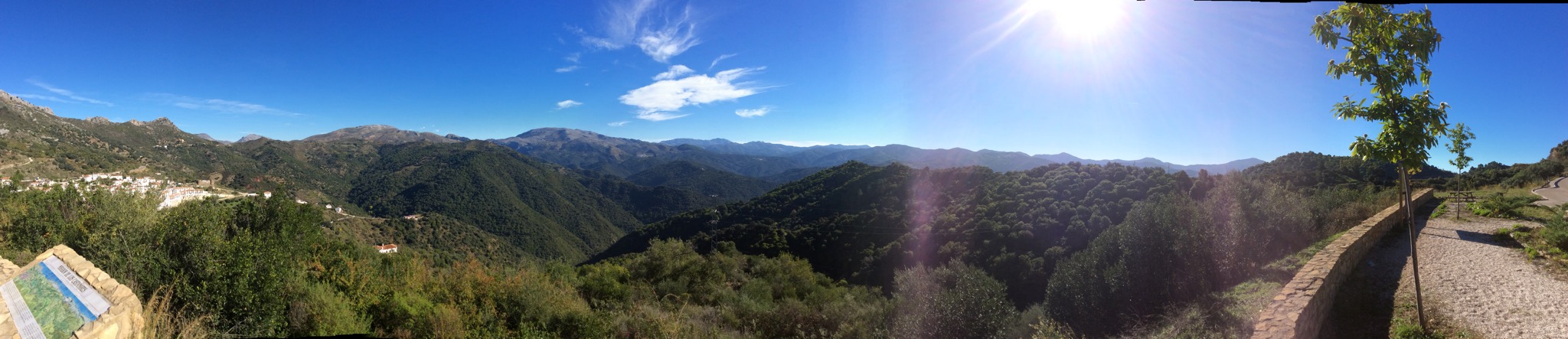
Today we took a drive to Ronda which is situated in a very mountainous area about 750m above sea level. We decided to take the scenic route through the mountains. We turned off the highway just before our normal EU2.00 toll checkpoint that we go through on the way to Marbella. Just because you hop off the highway doesn’t mean you avoid the toll – they have a toll booth just off the highway too. The toll here was only EU0.95 – bargain. It is a bit of a joke re the tolls as Steve is never happy when he sees the toll booth looming in the distance. The highways in Spain are very good so the money has been well spent.

As we headed into the mountains we understood why the toll was only EU0.95 – the road was so bumpy. It was tar sealed but hasn’t been maintained that well so there are dips and hollows all over the show. Luckily it was only like this for the first 24km and once we passed the mountain village of Gaucin the roads were very good.

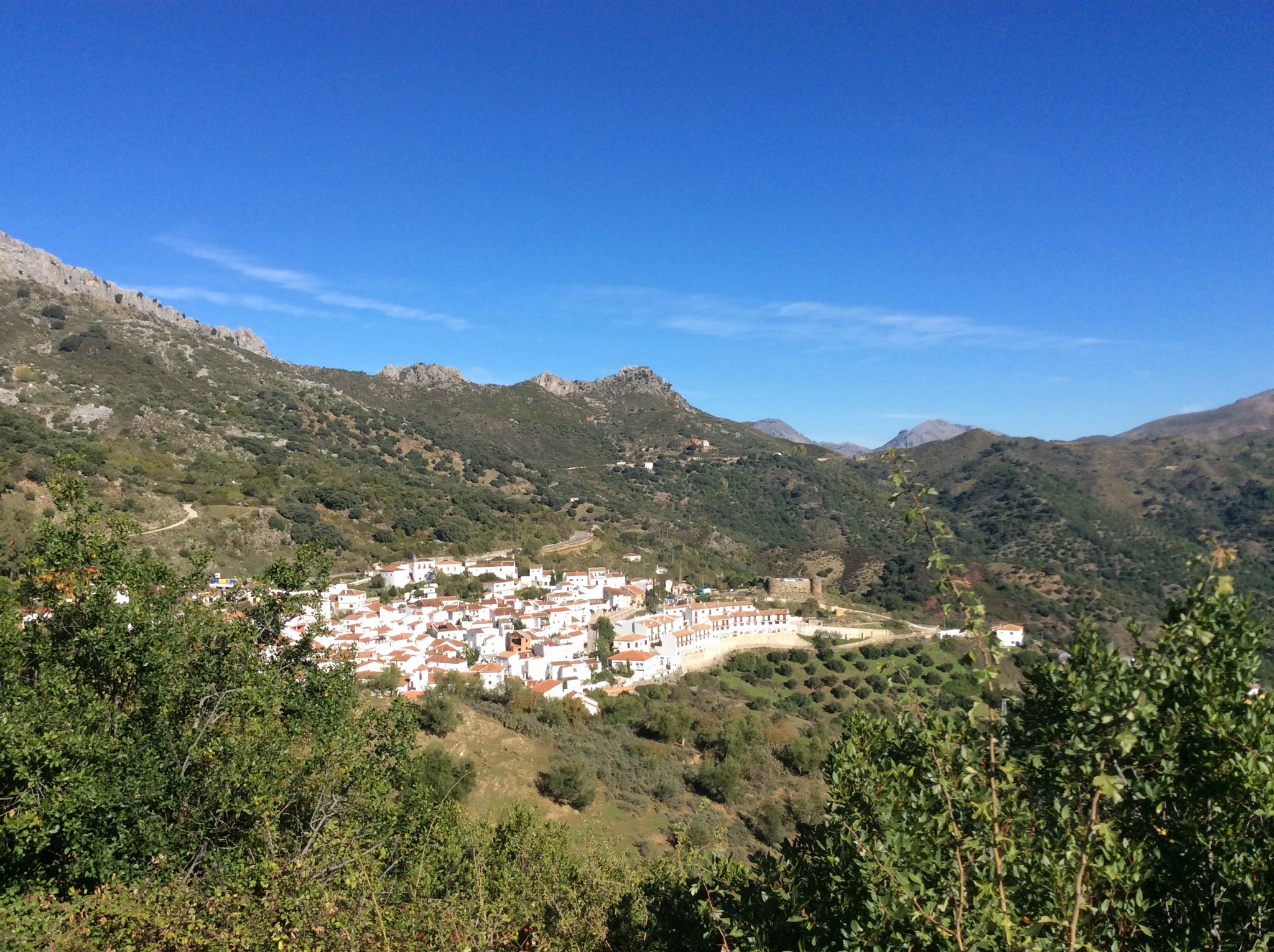
There are these mountain villages dotted along the way as well as the odd house here are there. We wondered what all the people that lived there did for a living – the land is very mountainous and scrub like. There were a few olive plantations and we saw a sign for a lime plantation but as a percentage we didn’t see a lot of productive land.

IMG_1440.JPG

IMG_1441.JPG

IMG_1442.JPG

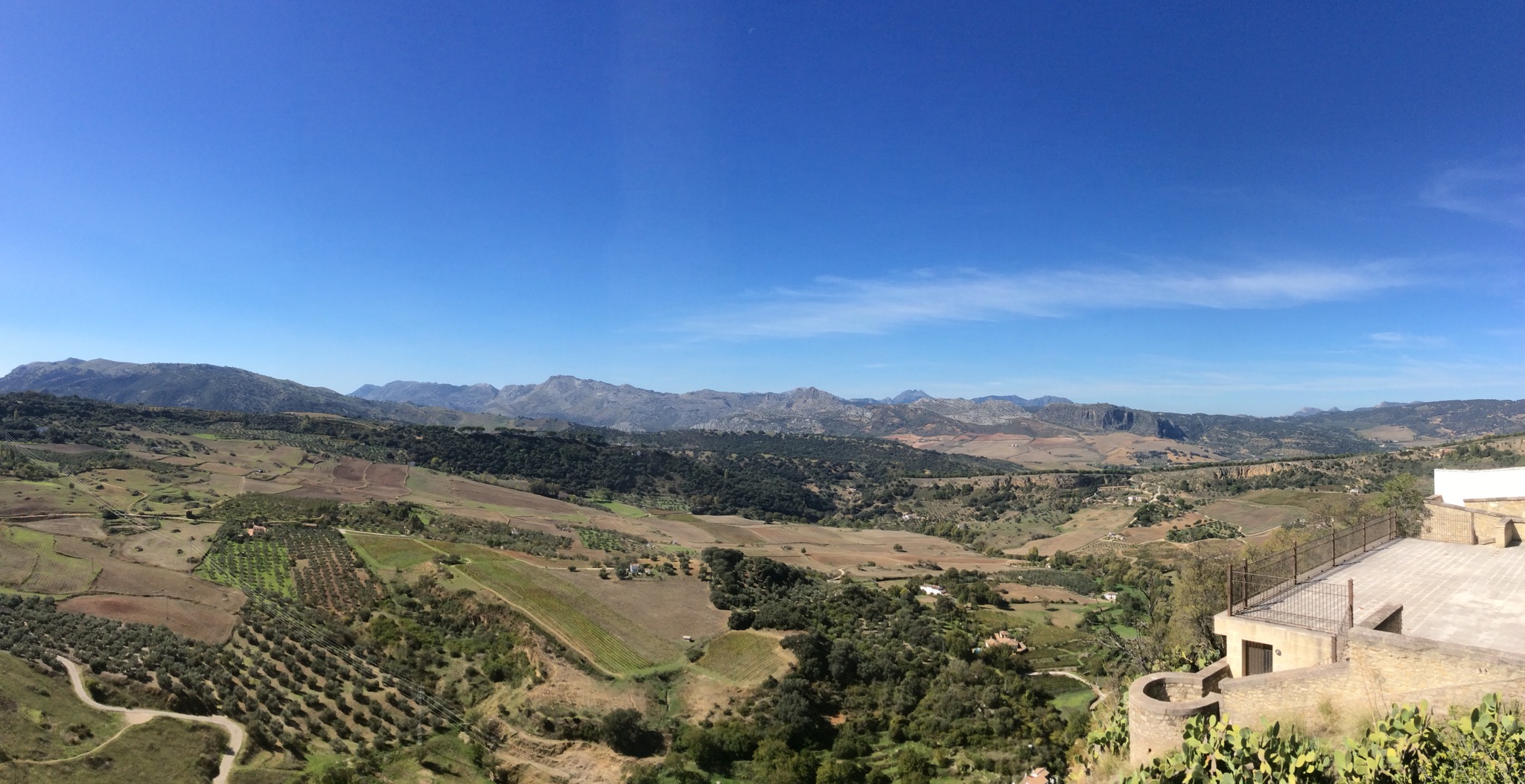
It took us about an hour and a half to get to Ronda – it was a perfect blue sky day again so the contrast between the sky and the mountains was spectacular. Ronda has a population of about 35,000 so it was reasonably busy when we got there – the roads are narrow and there is not a lot of parking. We followed our nose through town and spotted a car coming out of a parking area so we nabbed it quick smart. Steve said we better take good note of where we’re parked so we find the car again. It turned out that this parking lot was just up from the main shopping street and next to the Police and Guardia Civil.

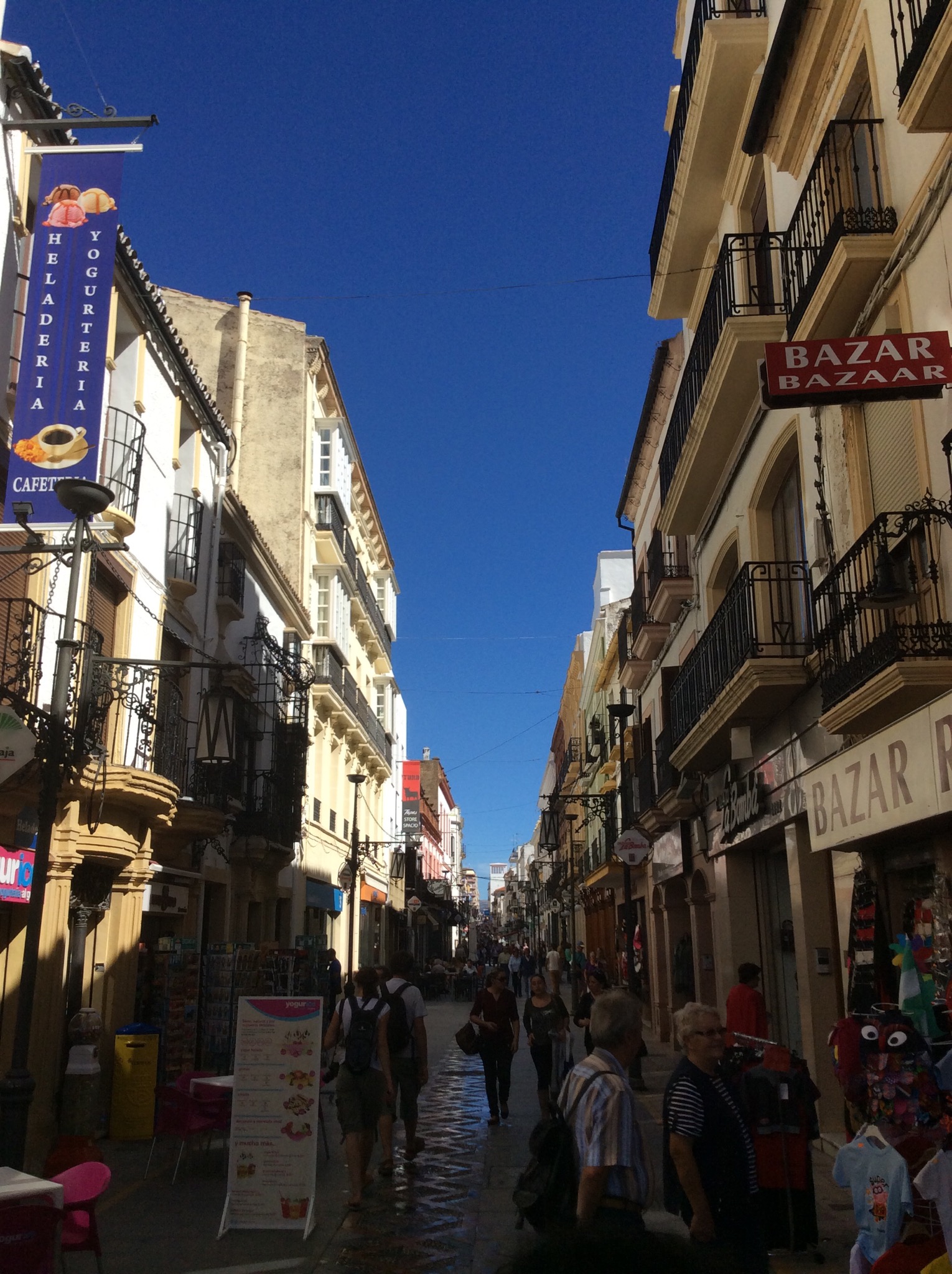
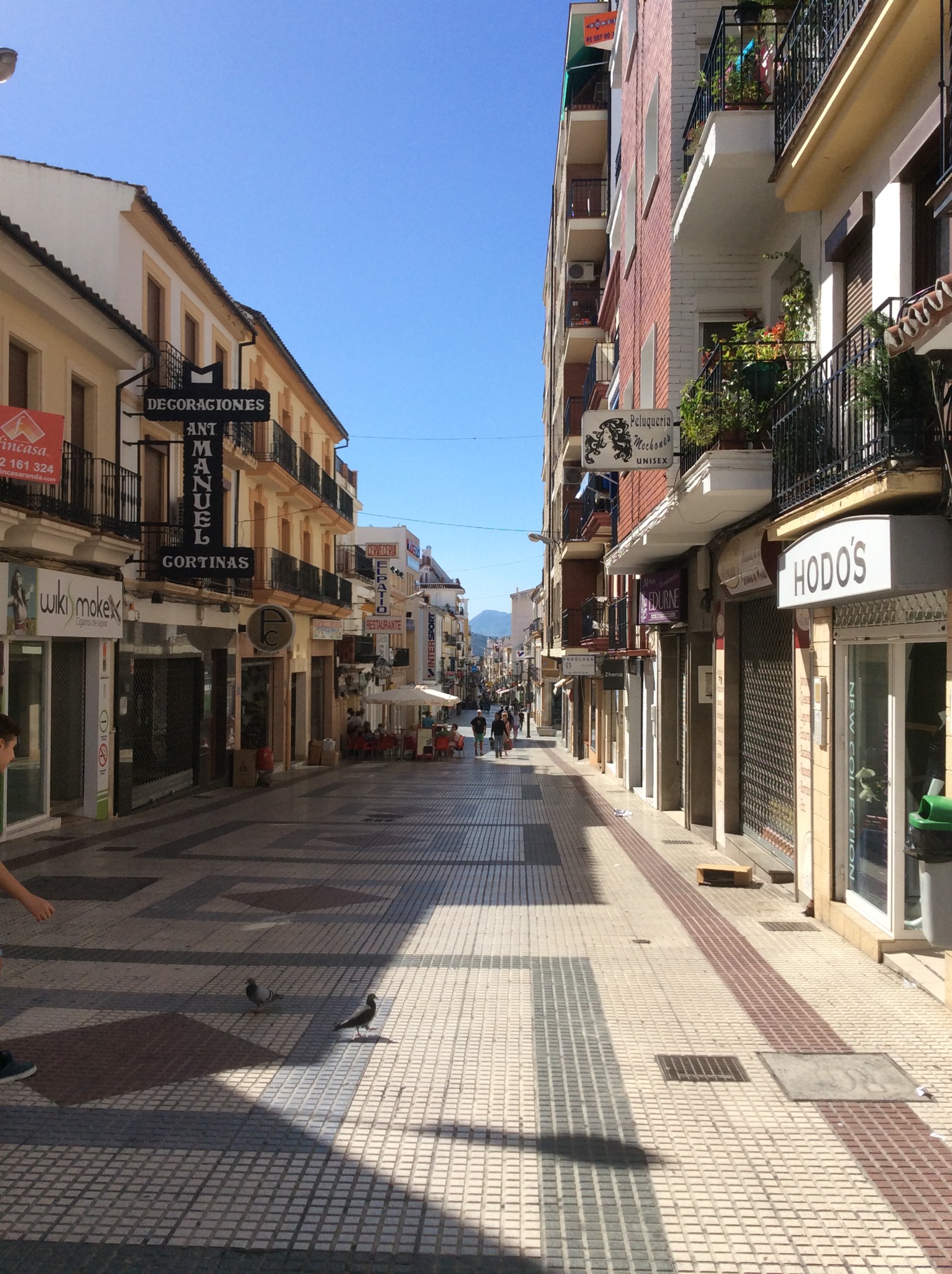
We wandered down the main shopping street which became pedestrian only after a while. We were quite surprised at the number and quality of the shops – it was great. I even managed to replace my running shoes, albeit I had to go with men’s version rather than the women’s. At half the price that I pay in NZ I am not complaining.

IMG_1460.JPG

The Guadalevín River runs through the city, dividing it in two and carving out the steep, 100 plus meters deep El Tajo canyon upon which the city perches. The Spanish Fir (Abies pinsapo) is endemic to the mountains surrounding Ronda.

Three bridges, Puente Romano (“Roman Bridge”, also known as the Puente San Miguel), Puente Viejo (“Old Bridge”, also known as the Puente Árabe or “Arab Bridge”) and Puente Nuevo (“New Bridge”), span the canyon. The term “nuevo” is a bit of a misnomer, as the building of this bridge commenced in 1751 and took until 1793 to complete. The Puente Nuevo is the tallest of the bridges, towering 120 metres (390 ft) above the canyon floor, and all three serve as some of the city’s most impressive features.

American artists Ernest Hemingway and Orson Welles spent many summers in Ronda as part-time residents of Ronda’s old town quarter called La Ciudad. Both wrote about Ronda’s beauty and famous bull-fighting traditions. Their collective accounts have contributed to Ronda’s popularity over time.

Hemingway’s novel For Whom the Bell Tolls describes the execution of Nationalist sympathizers early in the Spanish Civil War. The Republicans murder the Nationalists by throwing them from cliffs in an Andalusian village, and Hemingway allegedly based the account on killings that took place in Ronda at the cliffs of El Tajo.

IMG_1458.JPG

IMG_1457.JPG

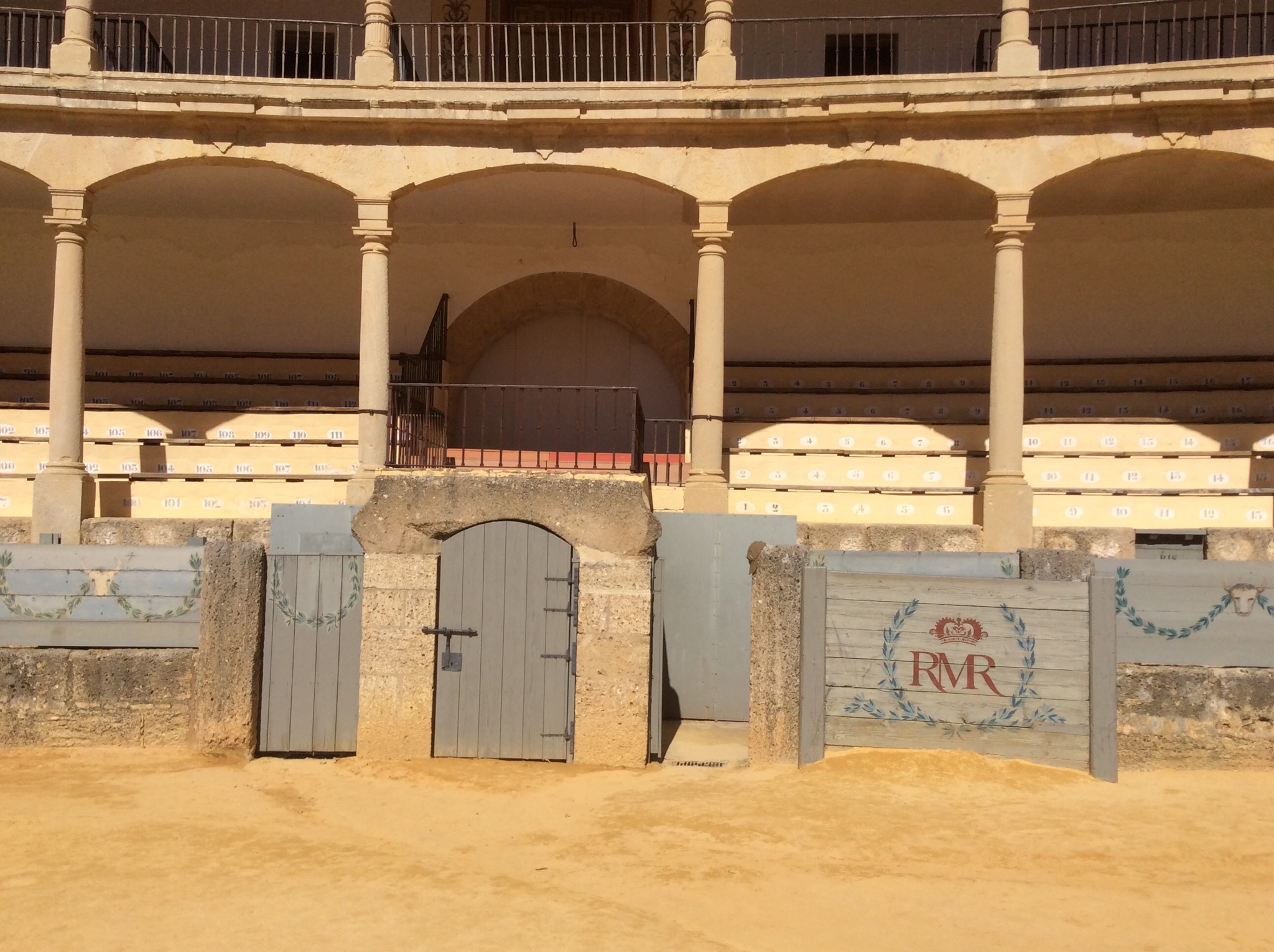
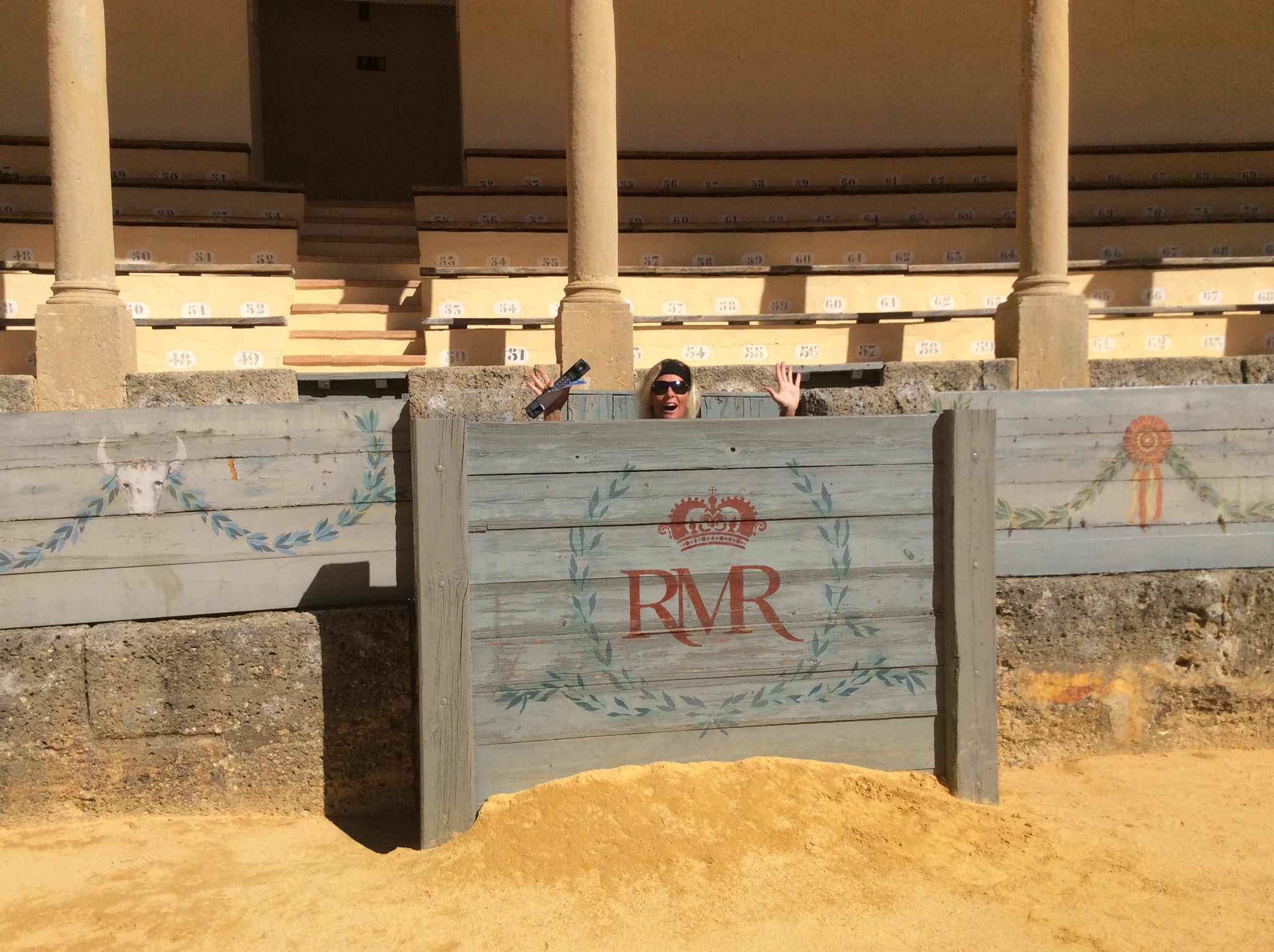
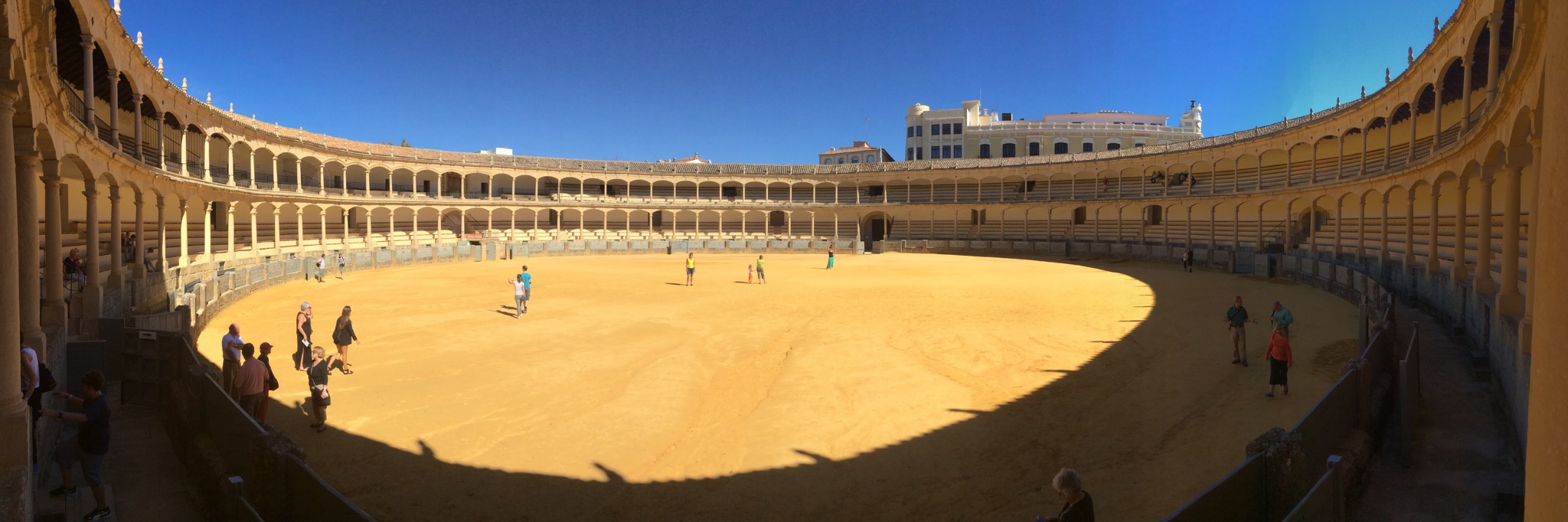
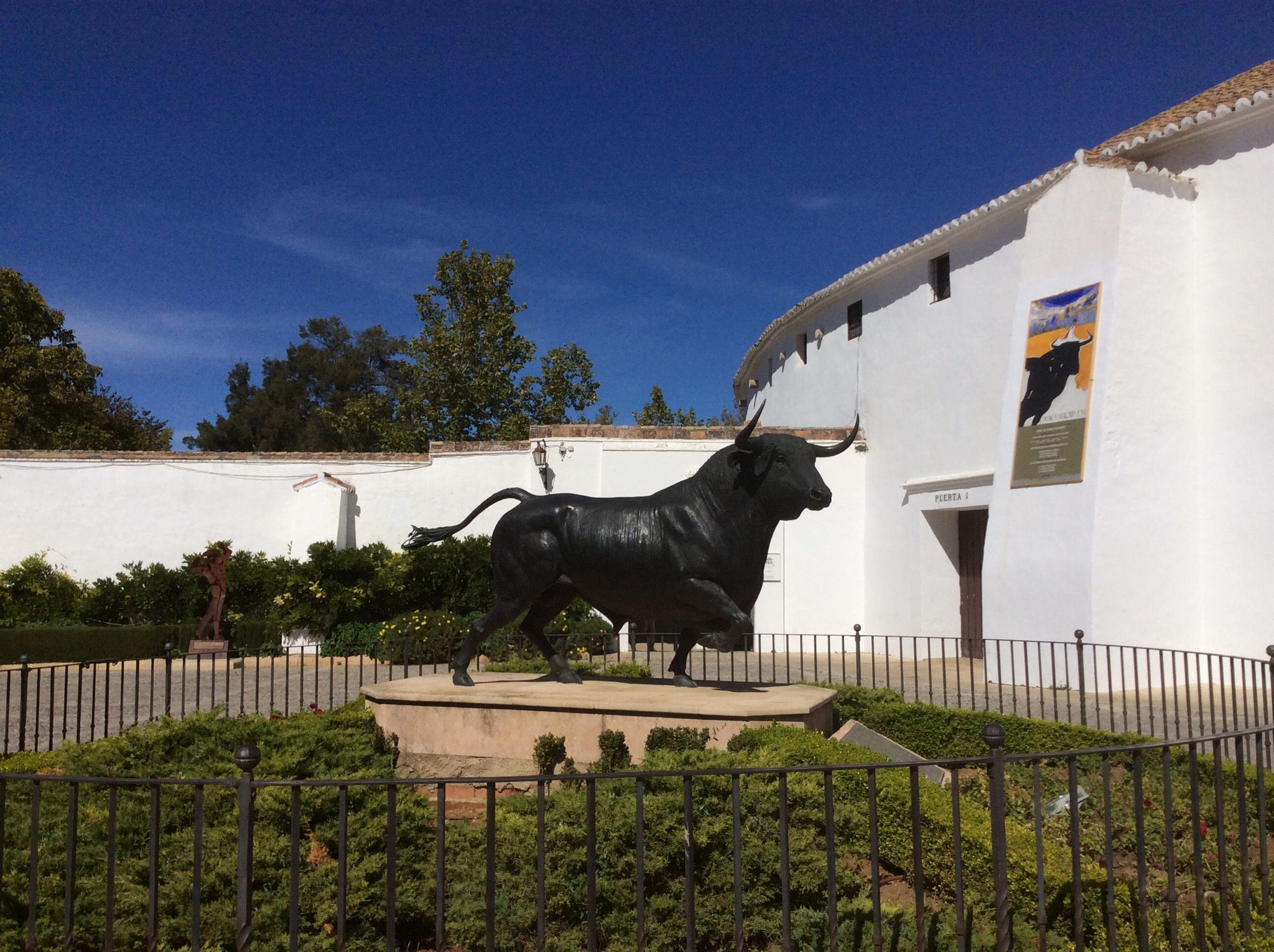
We did a self guided tour of the Plaza de toros de Ronda, the oldest bullfighting ring in Spain. It was built in 1784 in the Neoclassical style by the architect José Martin de Aldehuela, who also designed the Puente Nuevo.

The Plaza de Toros (bullring) in Ronda occupies a very special place in modern Spanish culture and history as the home of the Rondeño style of bullfighting and also of the Real Maestranza De Caballería De Ronda. The bullring was built entirely of stone in the 18th century, during the golden years of Pedro Romero’s reign as champion bullfighter.

Home to the Real Maestranza de Caballería de Ronda, Spain’s oldest and most noble order of horsemanship, an order that traces its heritage back to 1485, and the year the Catholic Monarchs Ferdinand and Isabella defeated the Moors in Ronda, thus bringing the city back under Christian rule after 773 years of Islamic rule.

Many tourist guides will tell you the Ronda bullring is the oldest and largest in Spain, in fact the story is confusing. The little bullring only has seating for 5,000 spectators, hardly the largest in the world, but the rueda, which is the large round circle of sand, is the largest in the world at 66m, making it 6m larger than Spain’s biggest bullring, the Plaza Toros Las Ventas in Madrid.

The bullring in Sevilla is considered older having commenced construction in 1761, and was completed in 1785, compared to Ronda’s commencement in 1779 and completion in 1784, though purists agree Ronda’s bullring should be entitled to the crown since it was first to stage a corrida. However, in May of 1784 during the first inaugural corrida to be held in Ronda’s Plaza de Toros, part of the stand collapsed forcing its closure until repairs could be made.

The second inaugural corrida occurred on May 19th 1785 and featured Pedro Romero and his greatest rival in the ring Pepe Hillo, by all accounts a day to be remembered in Ronda as one of bullfightings greatest moments. All of Ronda’s most noble families were in attendance, and the town was bedecked in flags while in the streets a great party was going on.

Ronda’s bullring, whilst perhaps not the oldest in Spain is definitely the oldest bullring constructed entirely of stone, most others being constructed with a combination of stone and brick. Ronda’s bullring, designed by José Martín de Aldehuela is unique in having all of the seating under cover. The stands were constructed in two levels of seating of 5 raised rows per level and 136 Tuscan sandstone columns forming 68 arches provide support for the top level of seating and the roof of the Plaza de Toros.

After checking out the bullring we visited the museum, the Museo Taurino, which contains many of the most important outfits and bullfighting regalia from the last two centuries, as well as an extensive collection of weapons used by the Real Maestranza during Spain’s many wars.

It was interesting seeing all the behind the scenes pens etc… Steve said he would quite like to see a bull fight but I am not so sure. Although a blood sport, by definition, some followers of the spectacle prefer to view it as a ‘fine art’ and not a sport, as there are no elements of competition in the proceedings. In Portugal, it is illegal to kill a bull in the arena, so it is removed and either professionally killed or treated and released into its owners’ (ganadero) fields.

IMG_1443.JPG

IMG_1444.JPG

IMG_1450.JPG

IMG_1455.JPG

IMG_1453.JPG

IMG_1454.JPG

After our tour of the bullring we wandered back into town for some lunch. It was 2pm so all the shops (except restaurants) were closing for siesta. This tradition is still alive and well with most shops shutting for 2 to 3 hours. It was amazing how quickly the street cleared out.

IMG_1461.JPG

After lunch we drove back to Sotogrande – along the way we saw a traffic jam, Spanish style : )

IMG_1462.JPG

Posted in Spain | 1 Comment

Alcaidesa Golf Links Resort – Alcaidesa Links, Cádiz – Andalusia, Spain

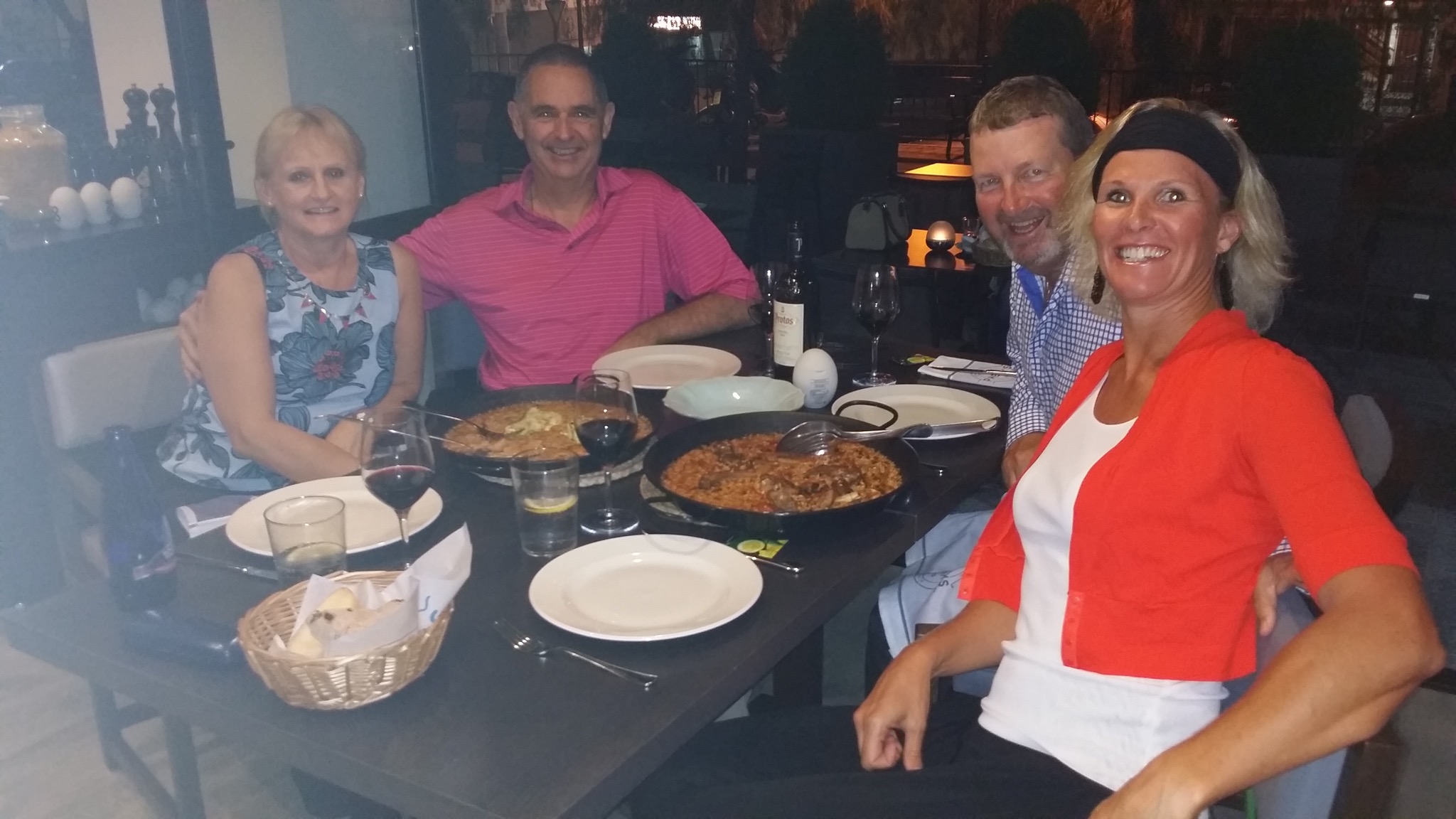
Last night we went to Marbella and caught up with our friends from NZ, Bruce and Konnie who happened to be in the area. We had a lovely dinner at Paella’s Y Mas. I also spotted some very nice shops as we drove through Marbella so have added that to our list of sightseeing destinations.

IMG_1436.JPG

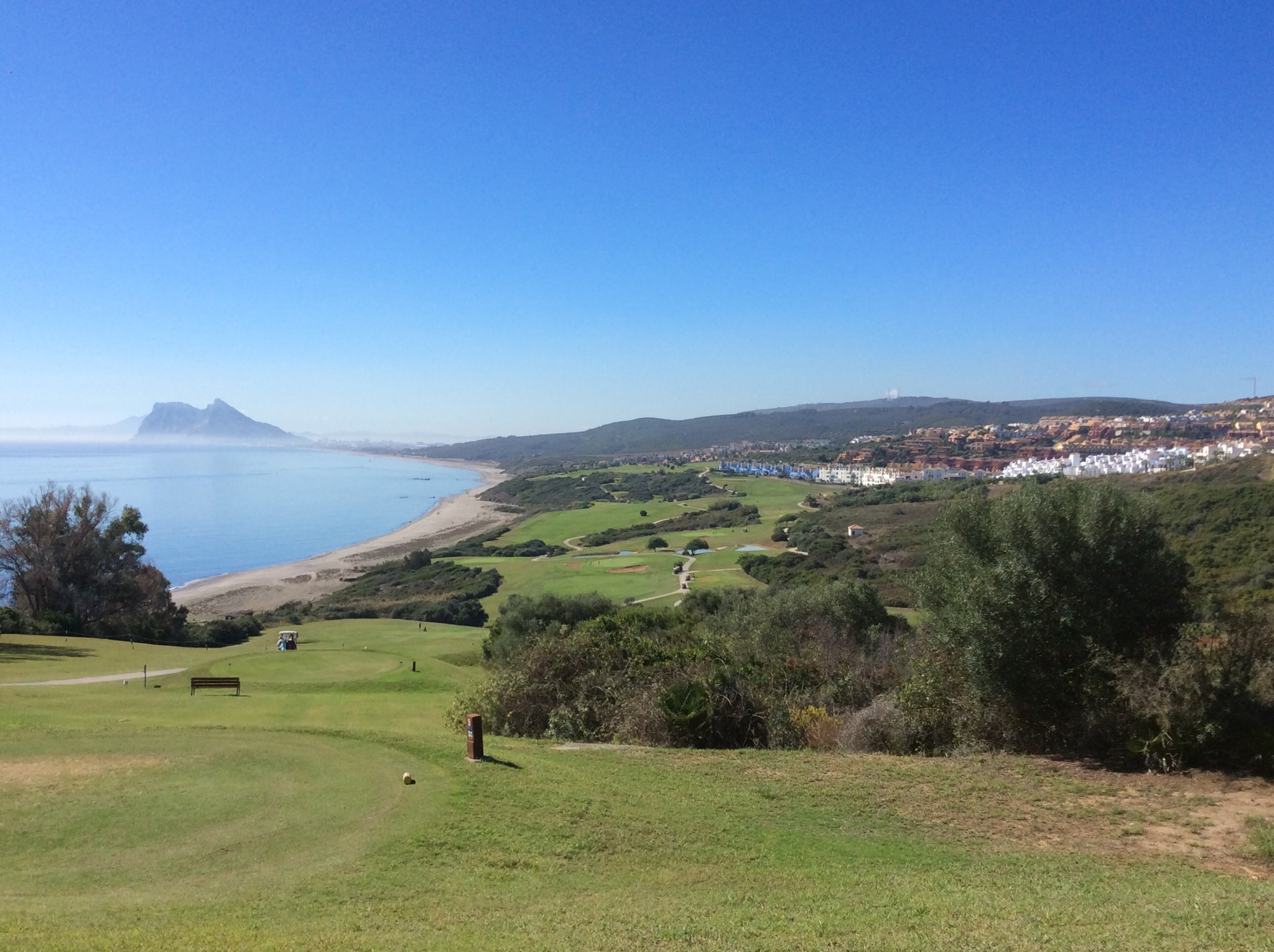
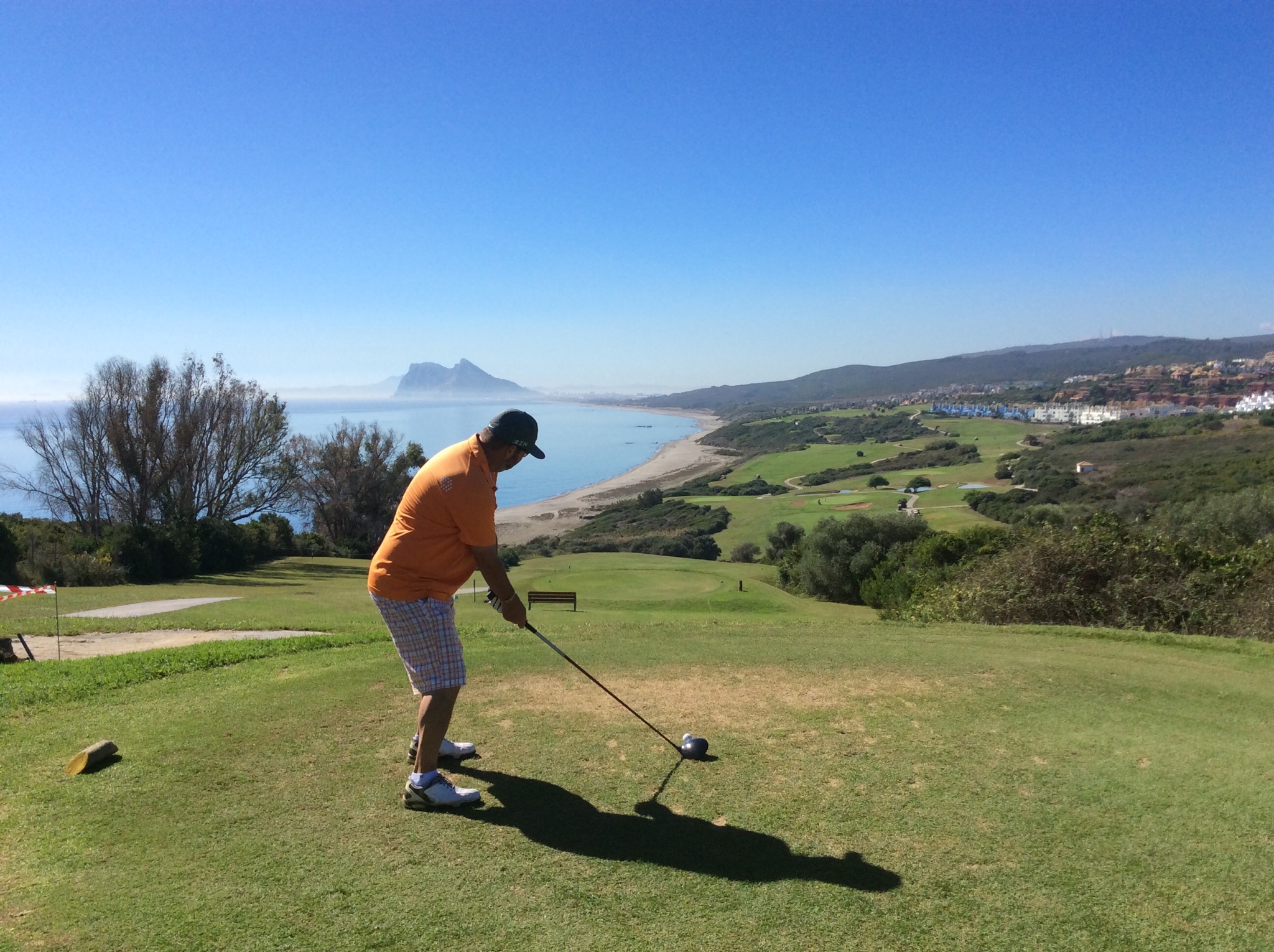
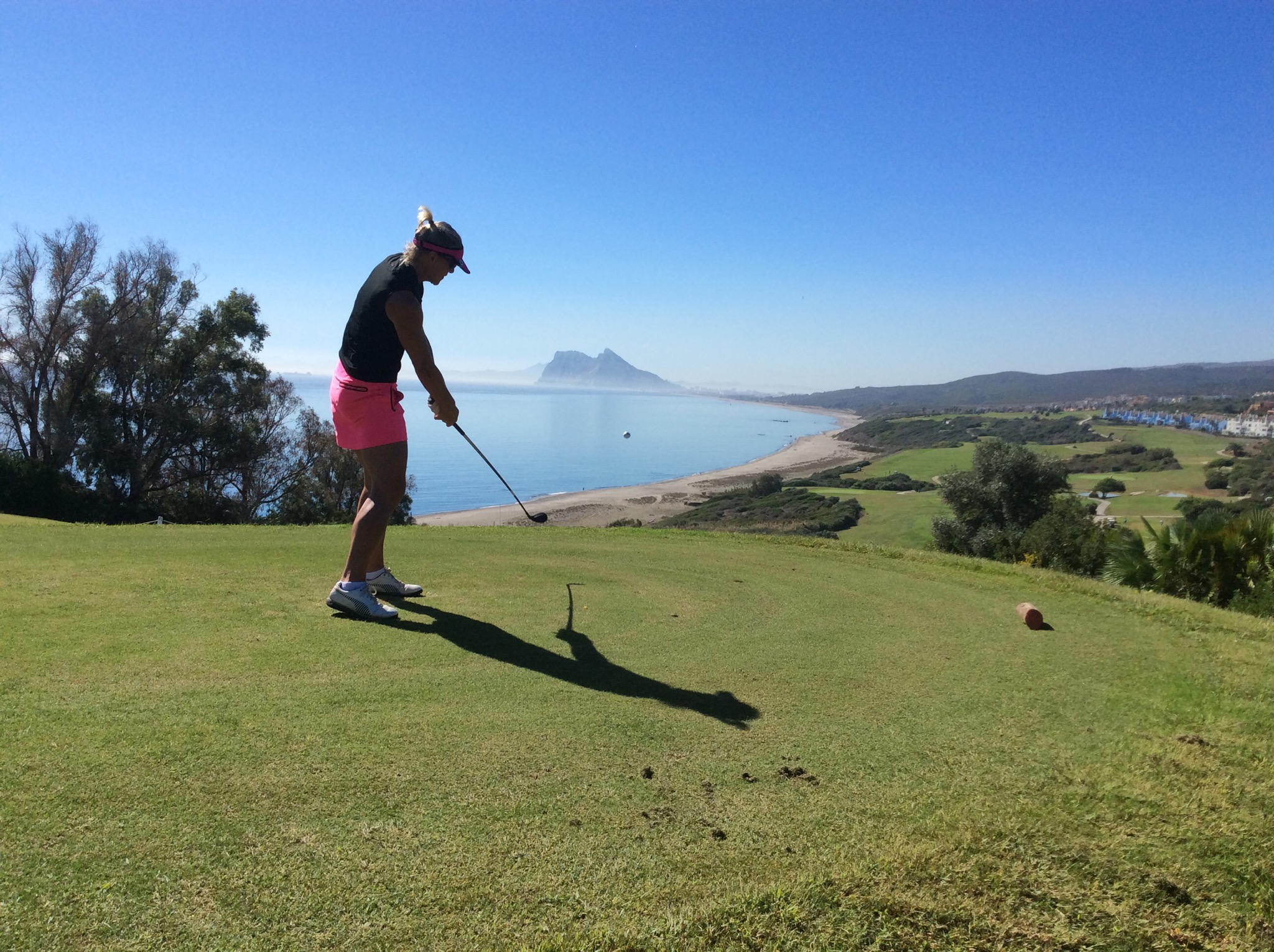
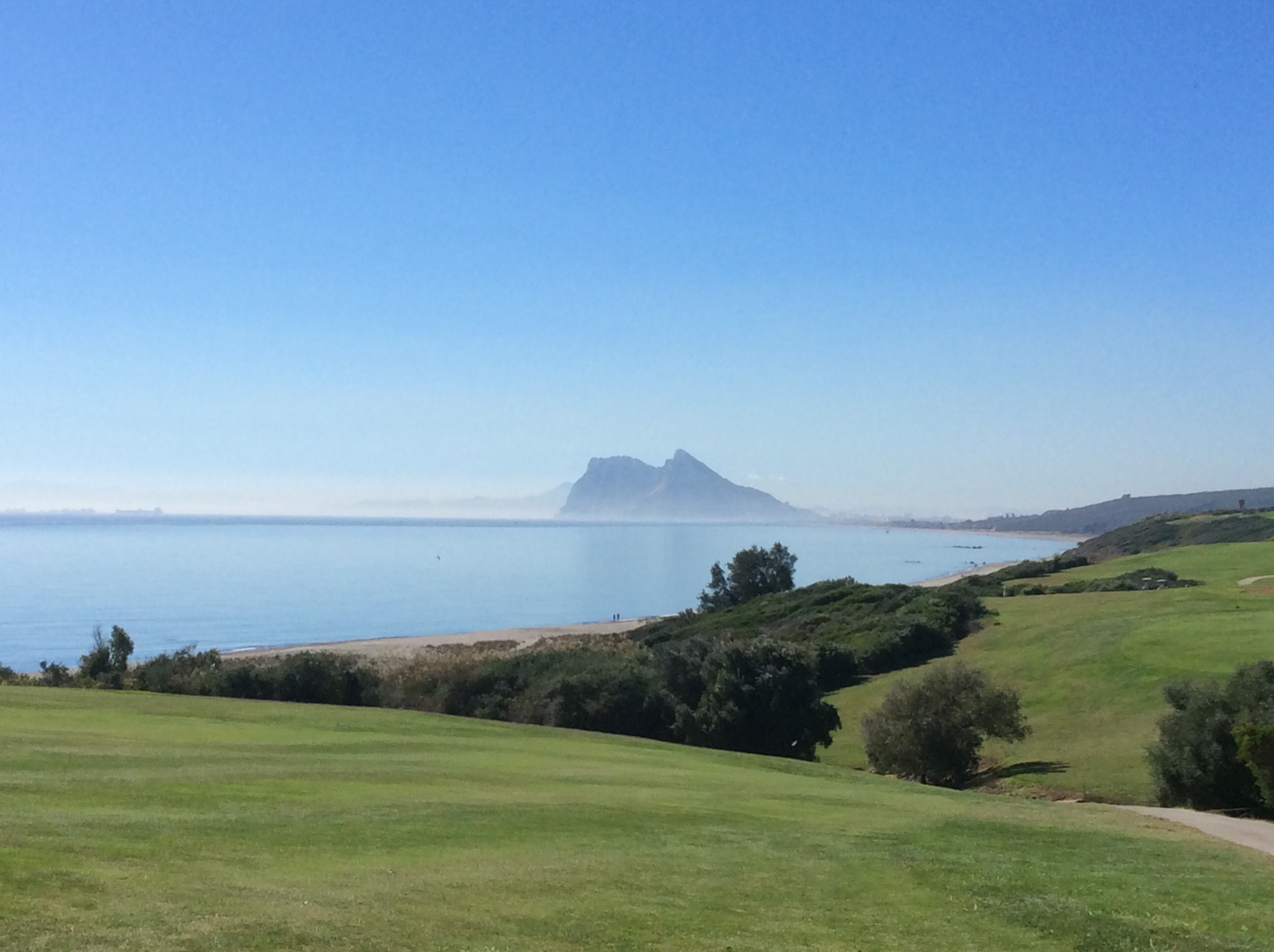
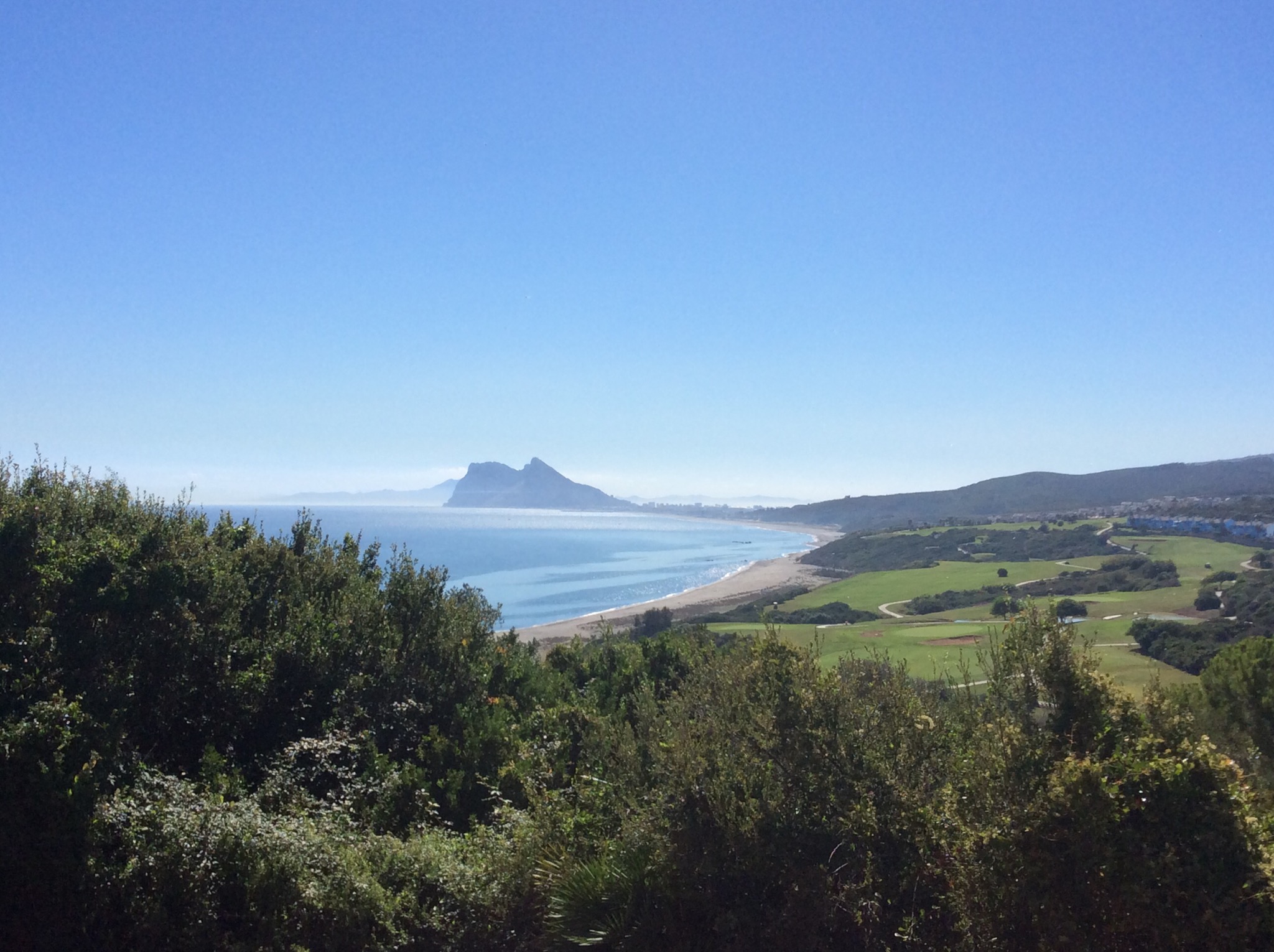
After a few days of mixed bag weather we were very happy to wake up to a beautiful clear sky morning. We booked a round at Alcaidesa Golf Links Resort. There are two courses here – Alcaidesa Links and Alcaidesa Heathland. The Links course has fantastic views of the Mediterranean, the Rock of Gibraltar and North Africa. It was the perfect day to make the most of these views.

It is a very enjoyable course. After a lightbulb moment at the driving range yesterday I played really well and hit the ball nicely. I had two birdies and a handful of pars. It was an I Love Golf day.

Alcaidesa Links is the only links course in southern Europe, inaugurated in 1992 and designed by Peter Ellis and Clive Clark.

IMG_1389.JPG

IMG_1391.JPG

IMG_1393.JPG

IMG_1394.JPG

IMG_1400.JPG

IMG_1405.JPG

IMG_1409.JPG

IMG_1411.JPG

IMG_1414.JPG

IMG_1419.JPG

IMG_1420.JPG

IMG_1421.JPG

IMG_1422.JPG

IMG_1424.JPG

IMG_1426.JPG

IMG_1428.JPG

IMG_1434.JPG

IMG_1435.JPG

Posted in Spain | Leave a comment

Puerto Banús, Málaga – Andalusia, Spain

We are still struggling with the fact that the sun does not rise here until about 8.25am. It rained quite heavily in the night and was quite cloudy when we woke up this morning adding to the darkness. After we finally got moving and went for our regular walk around Sotogrande we decided to check out the large shopping mall near Marbella. It is about 45 minutes from here and was really nice. Steve replaced an old jersey he had thrown out and I continued to avoid all clothes shops – I don’t have any room unless I throw something out which I am struggling with!

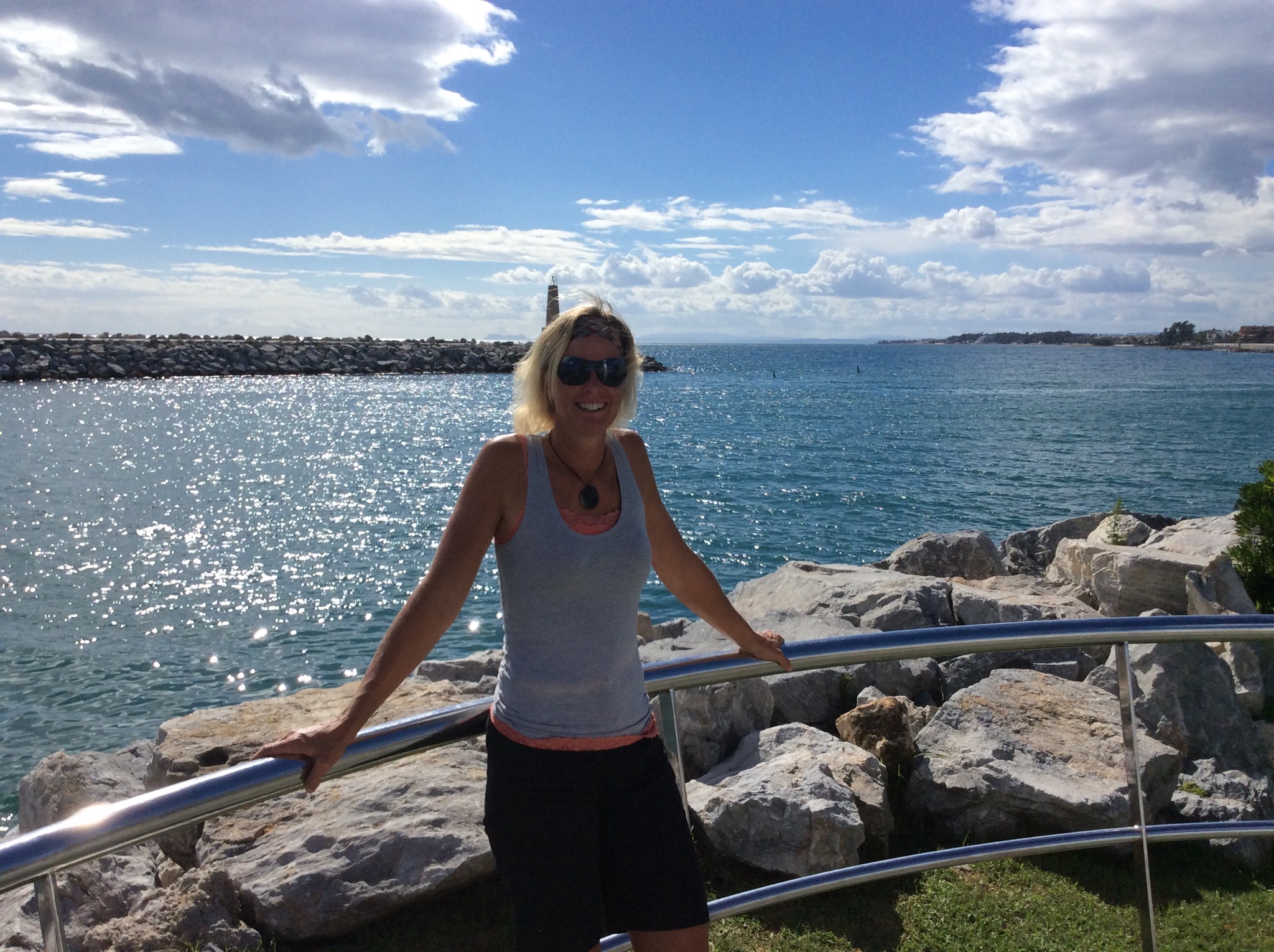
We decided to go down to Puerto Banús for some lunch. We went there the other day after golf but the heavens opened up so we didn’t get to explore. It reminded us of Villamoura in Portugal – lots of restaurants and flash boats in the marina. They also have all the high end shops like Louis Vuitton, Gant, Cartier. We had a nice lunch at The Open Grill. We took a pavement table and were continually waving off the Africans peddling their fake bags and sunglasses.. You wonder how they get away with it with the real mccoy right there in the shops. They obviously don’t have the same laws as they do in France.

After lunch we wandered around and looked at all the boats and flash cars that were dotted around – Rolls Royce’s, Ferrari’s, Bentleys to name a few.

Puerto José Banús, more commonly known as Puerto Banús is a marina located in the area of Nueva Andalucía, to the southwest of Marbella, Spain on the Costa del Sol. It was built in May 1970 by José Banús, a local property developer, as a luxury marina and shopping complex. It has since become one of the largest entertainment centres in the Costa del Sol, with 5 million annual visitors, and is popular with international celebrities. Developed around a coastal village in the Mediterranean architectural style, Puerto Banús contains expensive shopping malls, restaurants and bars around the marina. It is also scene to many exotic cars that are owned by international celebrities and wealthy owners that also own large yachts. Luxury cars like Rolls Royces and high end sports cars like Ferrari’s, Lamborghinis and Mercedes Benz are a common sight in the summer months around Marbella and Puerto Banús.

IMG_1383.JPG

IMG_1375.JPG

IMG_1379.JPG

IMG_1380.JPG

IMG_1386.JPG

Posted in Spain | Leave a comment

San Roque Club – New Course, Cádiz – Andalusia, Spain

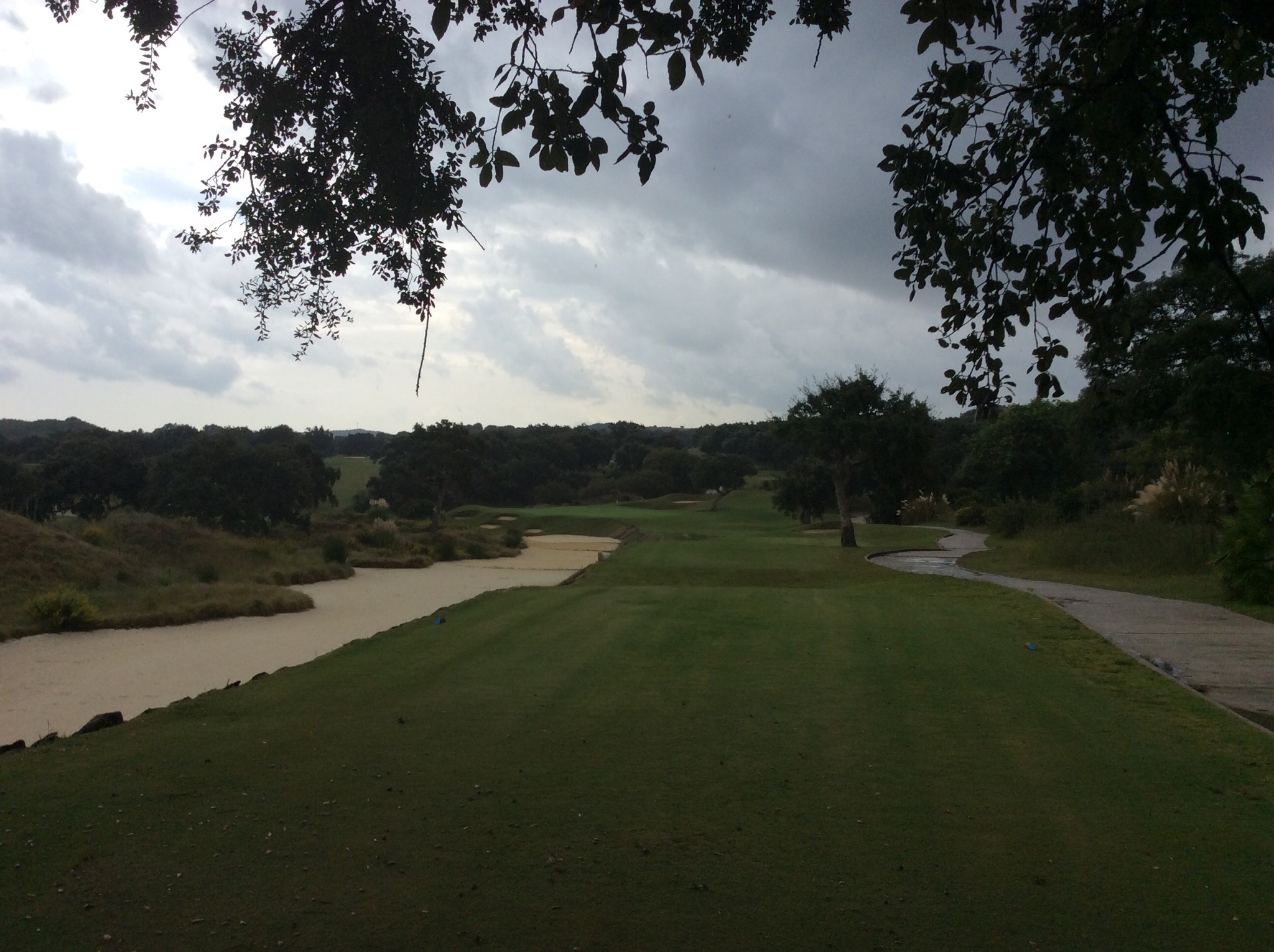
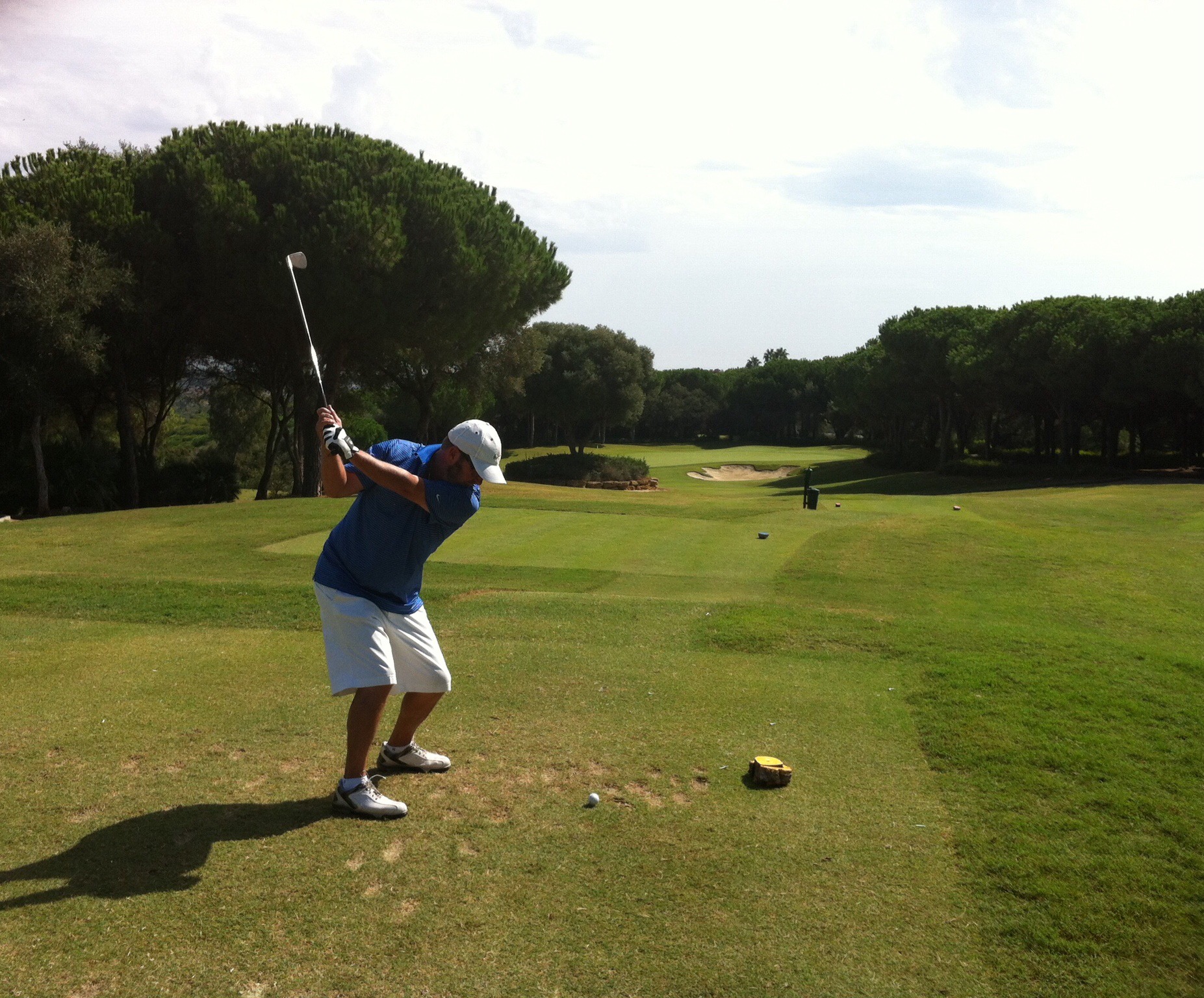
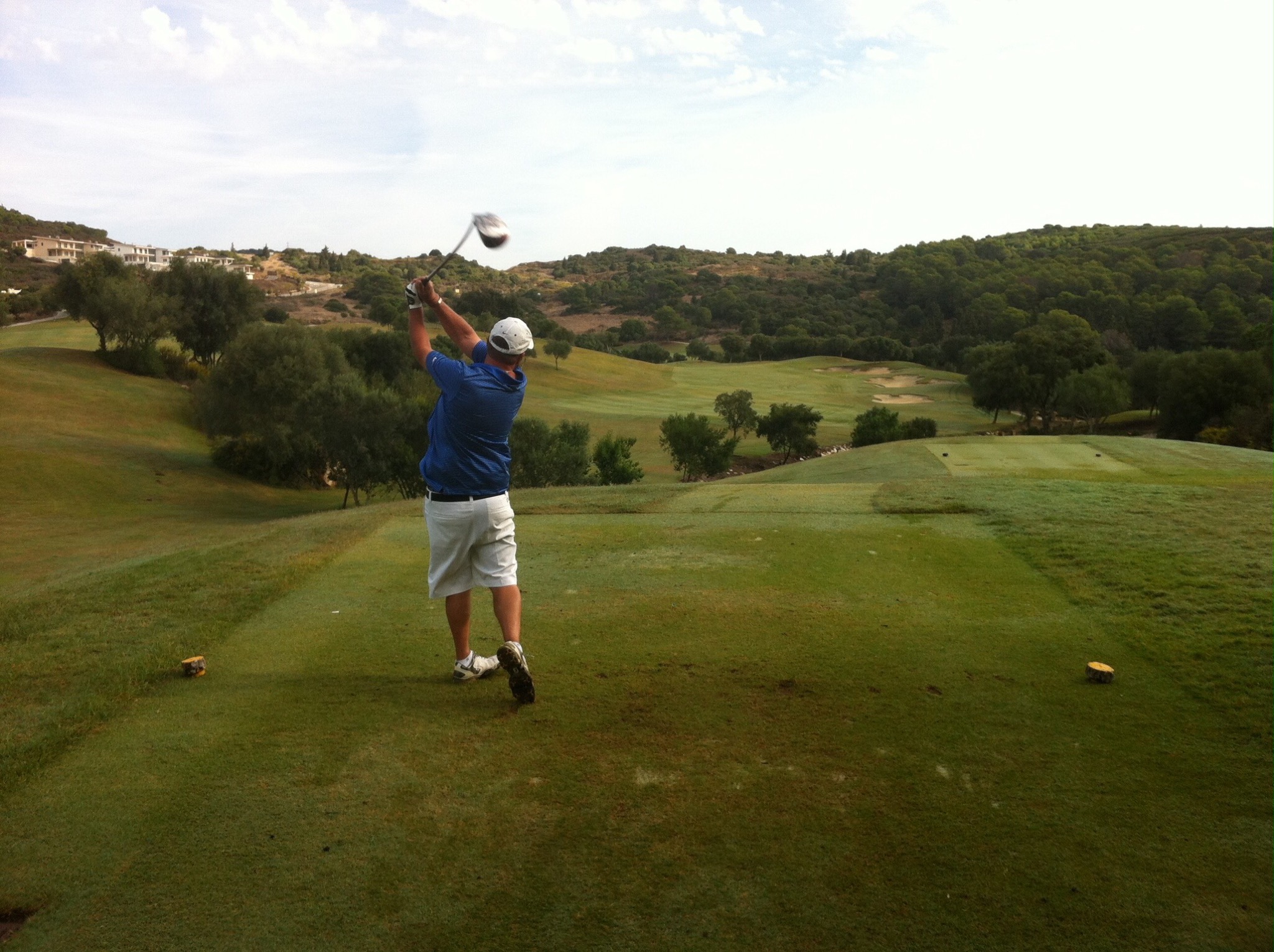
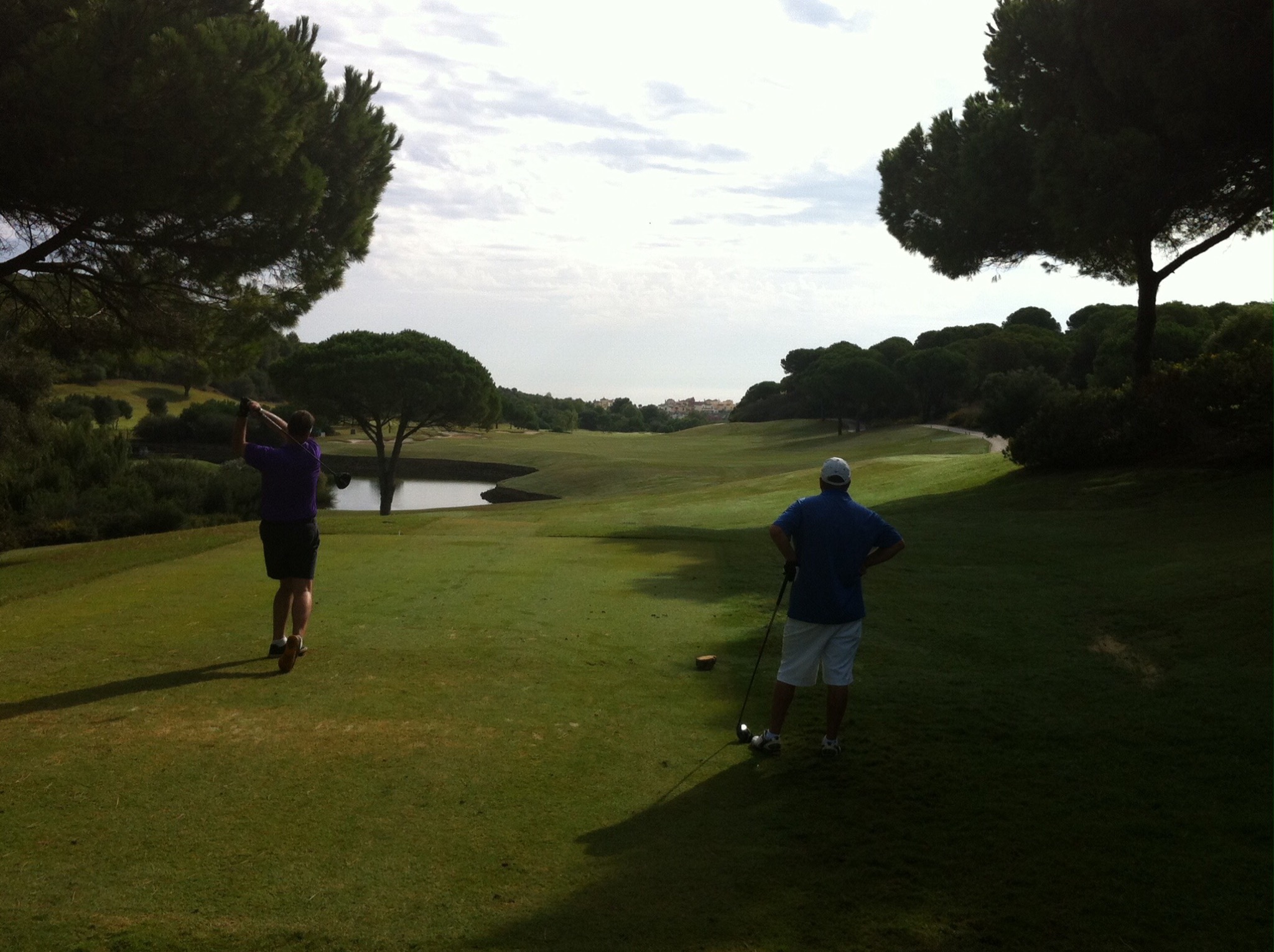
After a wet Sunday the sun was again shining on us as we took a walk around Sotogrande this morning. Based on this sunshine we booked a round at the San Roque Club. It is quite a popular spot with two courses there – the Old Course and the New Course. We were booked on the New Course which we discovered is not as popular as the Old Course although still a very good course at half the price : )

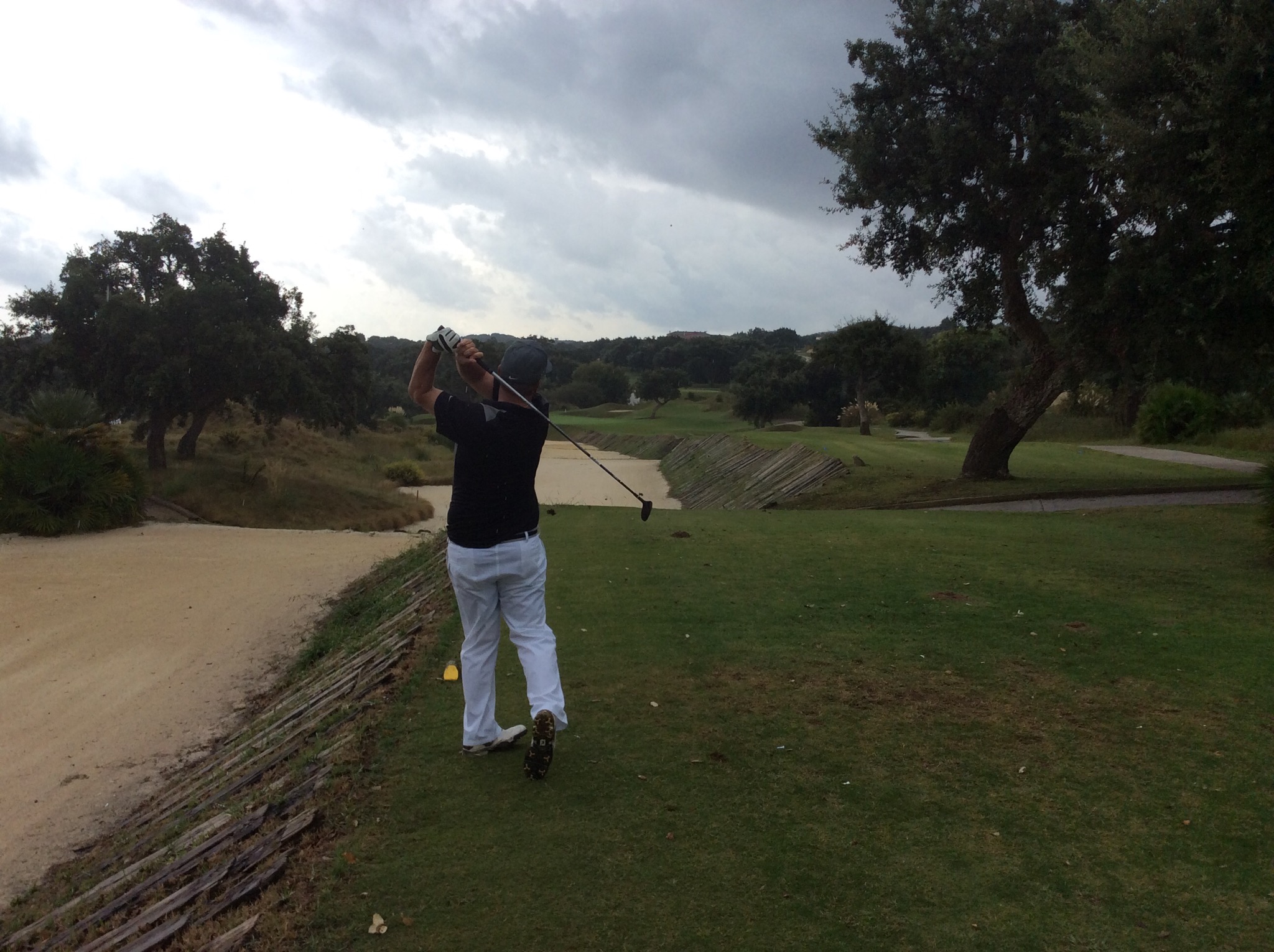
We got through about 4 holes and felt a spot of rain – this wasn’t part of the plan! Me being the forever optimist thought it wouldn’t amount to much but unfortunately it got quite heavy. Not to worry there were plenty of trees to take shelter under and we didn’t have anyone behind us so we could just wait it out. This became a recurring theme on the front nine – play, stop, play, stop. We enjoyed a dry back nine though and my golf even improved slightly! I managed to drive the 12th which was a short par 4 and then sank the putt for an eagle.

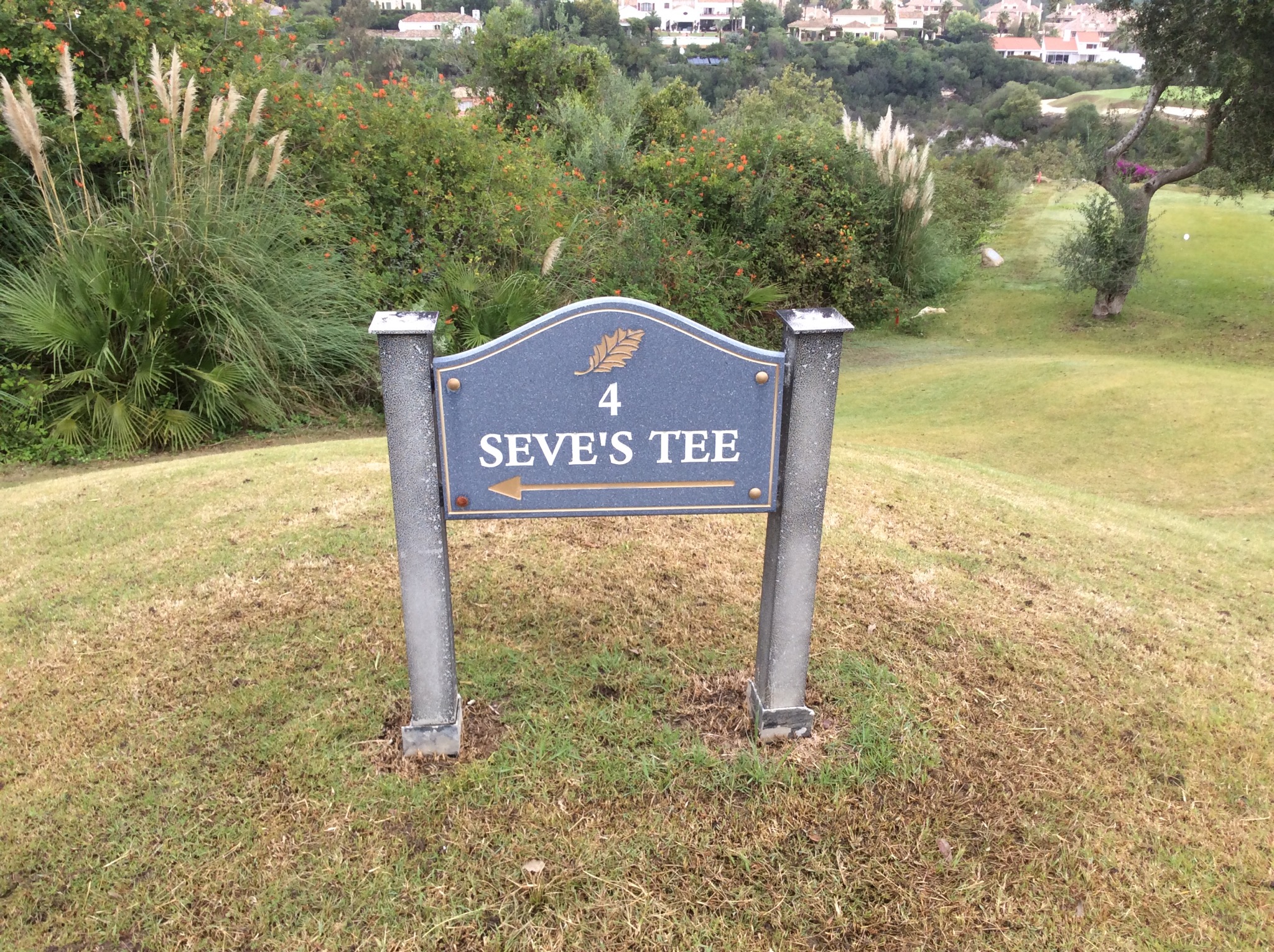
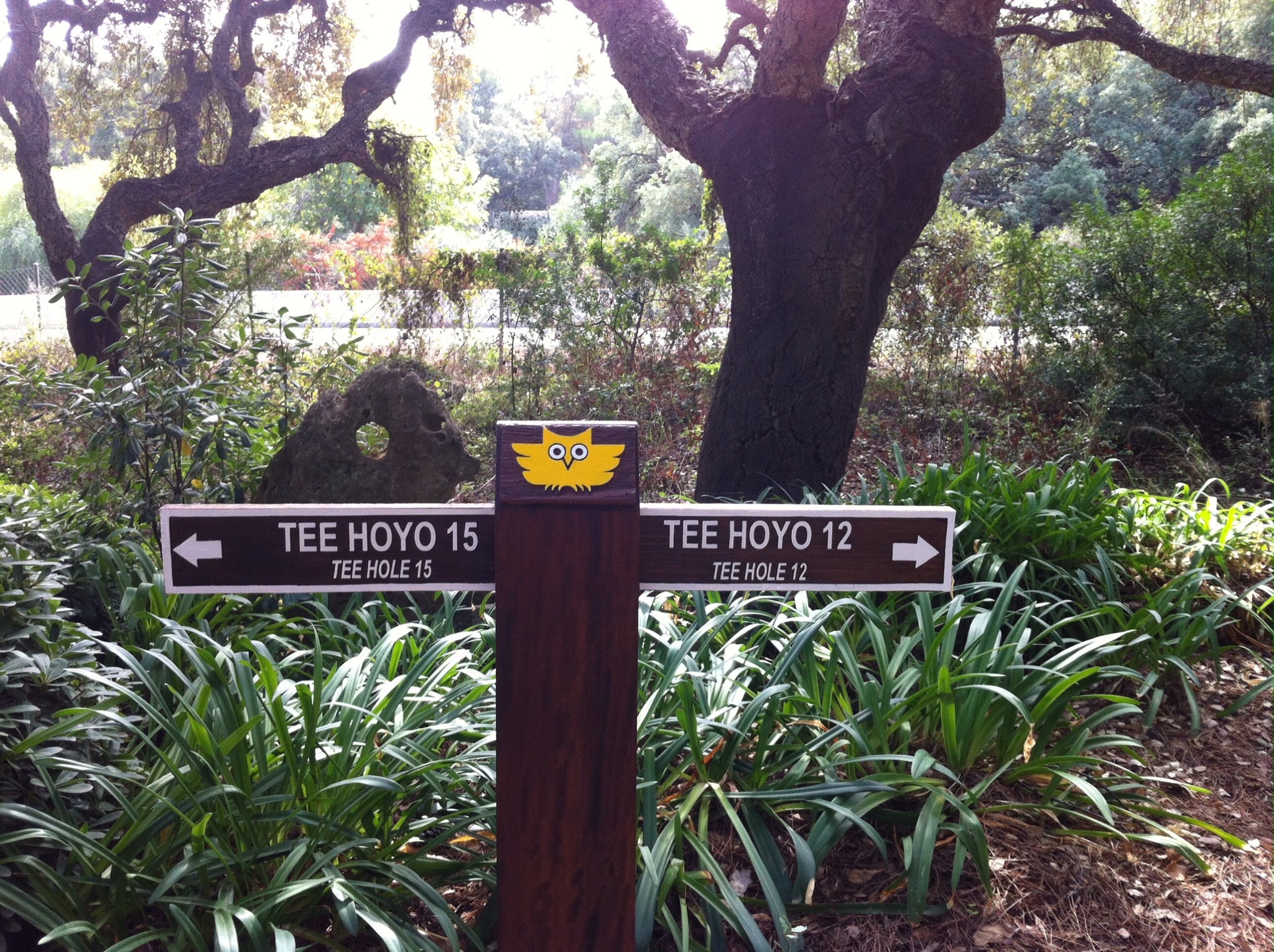
We must have been a bit too excited after that as we drove off the wrong way and Steve teed off on the 6th hole instead of the 13th. Steve’s asking me if it is a par 4 or 5 – I didn’t have my glasses on and I’m looking at the scorecard and I’m saying I think it is a par 5 but that could be a 3! I went back and looked at the sign and it said Hole 6! Duh – we drove back the way we came and wallah there is the sign to the 13th and low and behold it is a par 3. By the way, Steve hit his tee shot out of bounds on the 6th – obviously wasn’t meant to be.

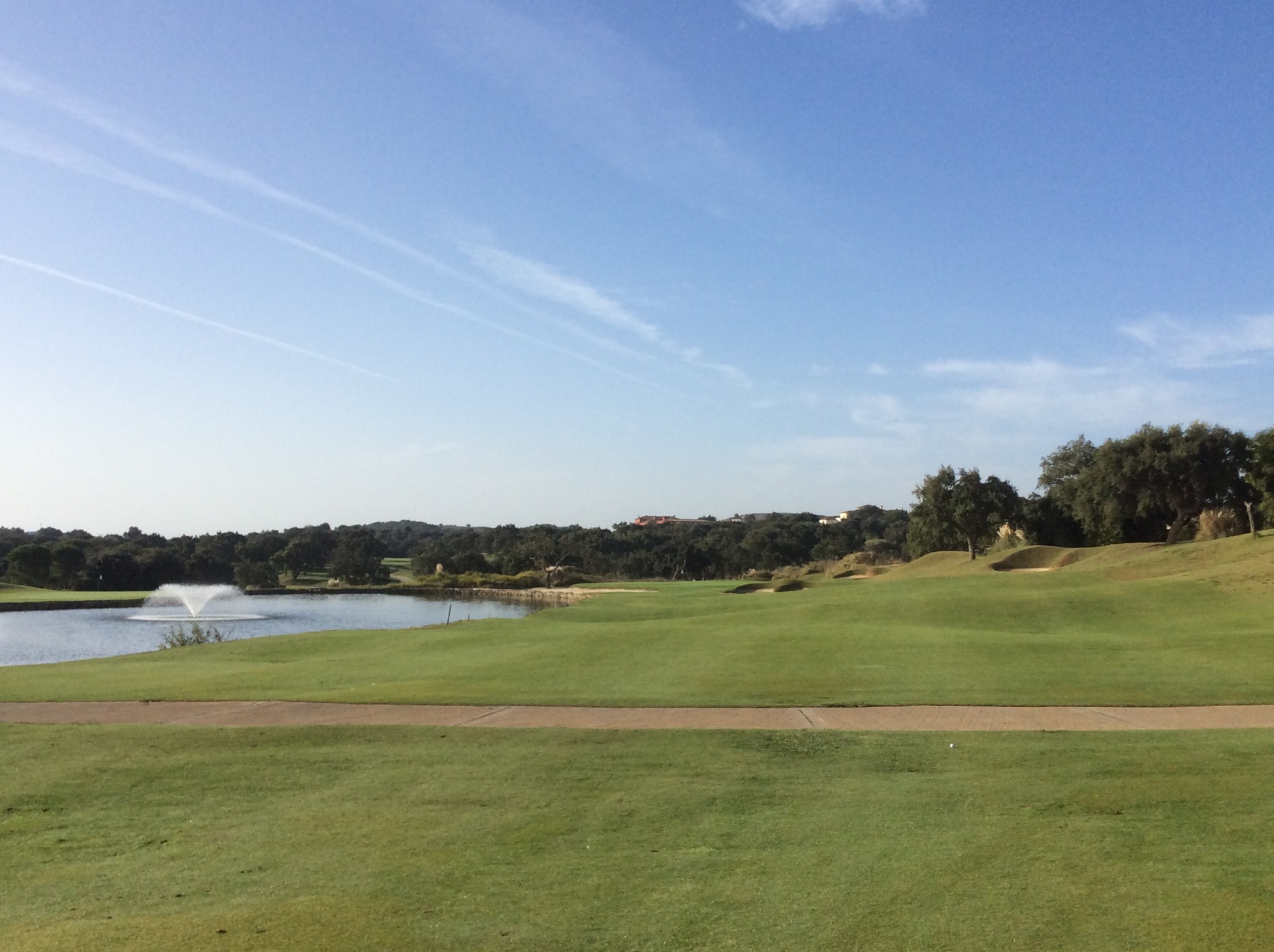
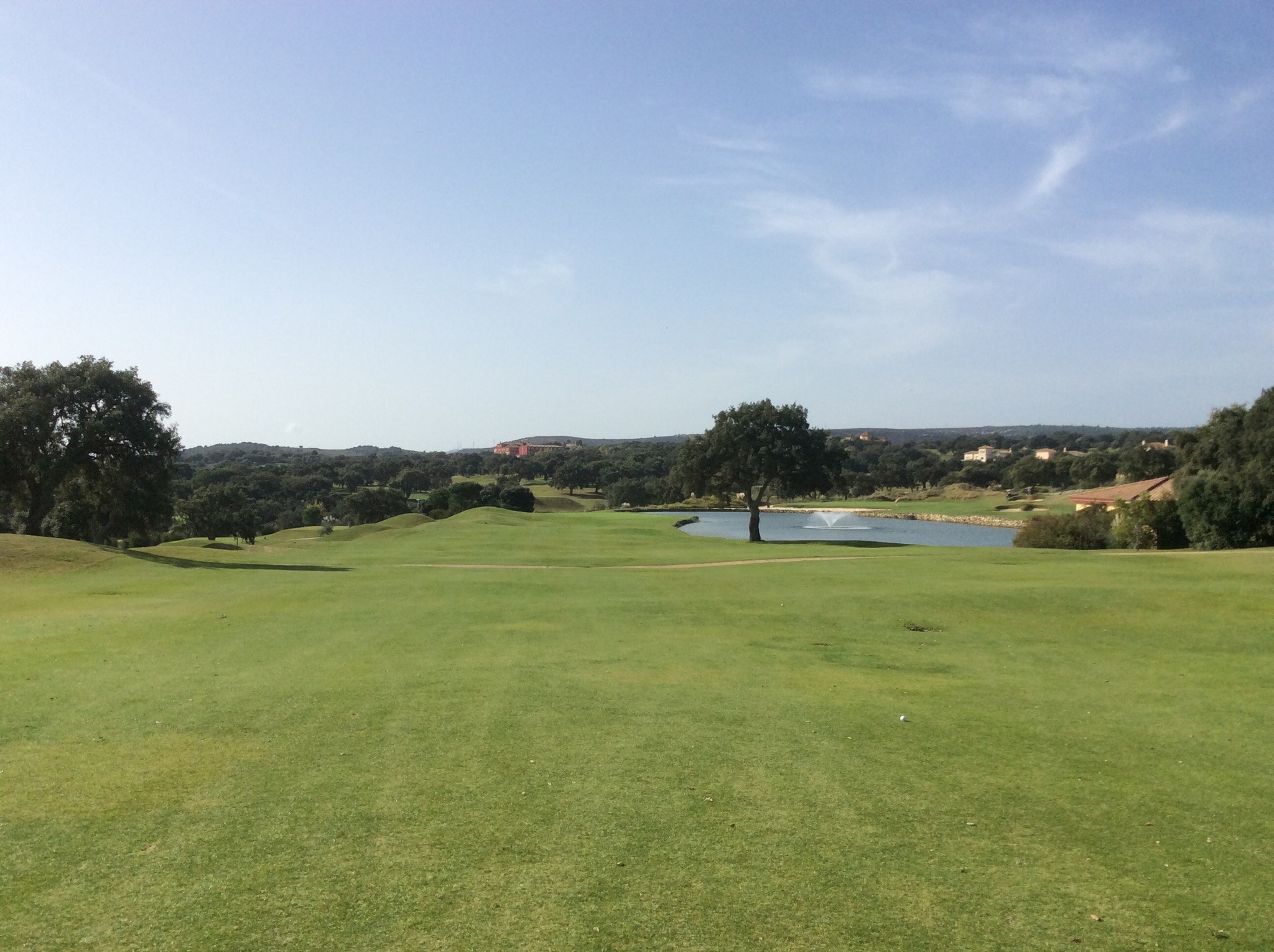
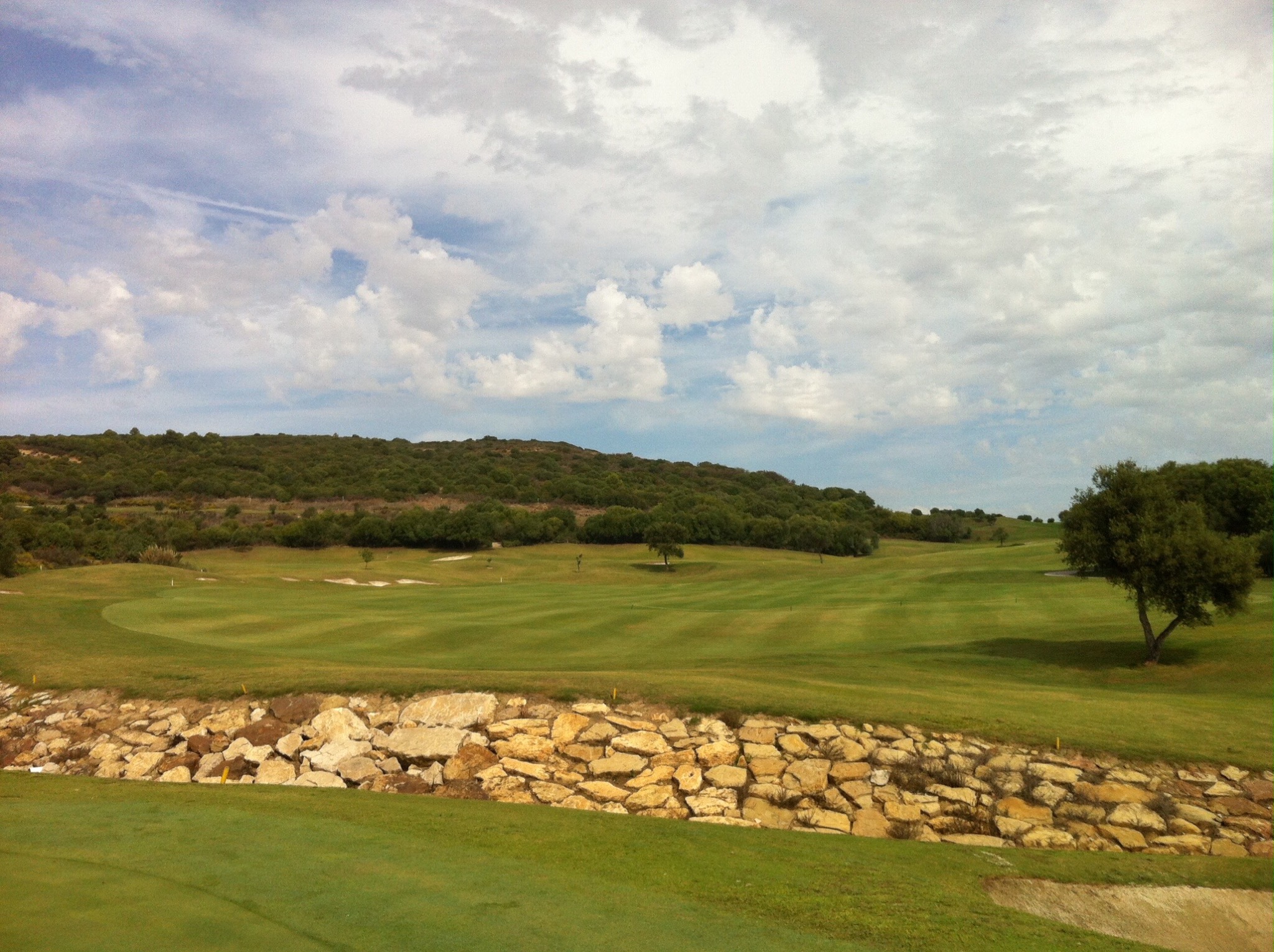
We really enjoyed the course – there were two lakes which they used very well on four of the holes. The New Course was created by Perry Dye in 2003. It is set on beautiful natural terrain with many scenic views. The difference between Old and New is mostly in the Dye-family shaping: big, steep bunkering, larger greens and railroad sleepers. The course resembles a Links in many areas although it is a Parkland course. The New Course was the venue for the Spanish Open in 2006 and the Qualifying School Finals from 2003 – 2007.

IMG_1367.JPG

IMG_1357.JPG

IMG_1356.JPG

IMG_1358.JPG

IMG_1360.JPG

IMG_1361.JPG

IMG_1362.JPG

IMG_1363.JPG

IMG_1364.JPG

IMG_1365.JPG

IMG_1366.JPG

IMG_1370.JPG

Posted in Spain | Leave a comment

La Reserva Club De Golf, Cádiz – Andalusia, Spain

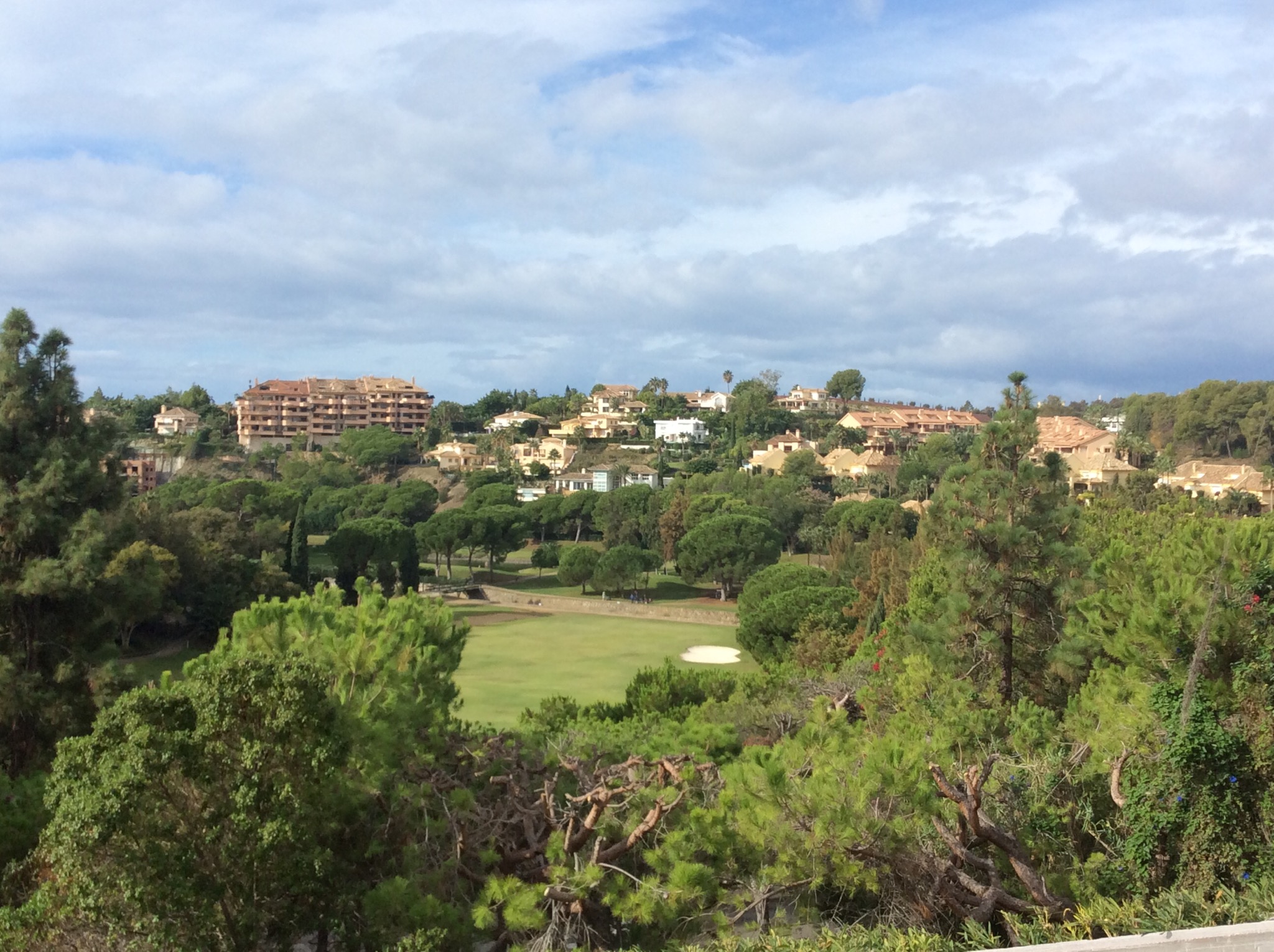
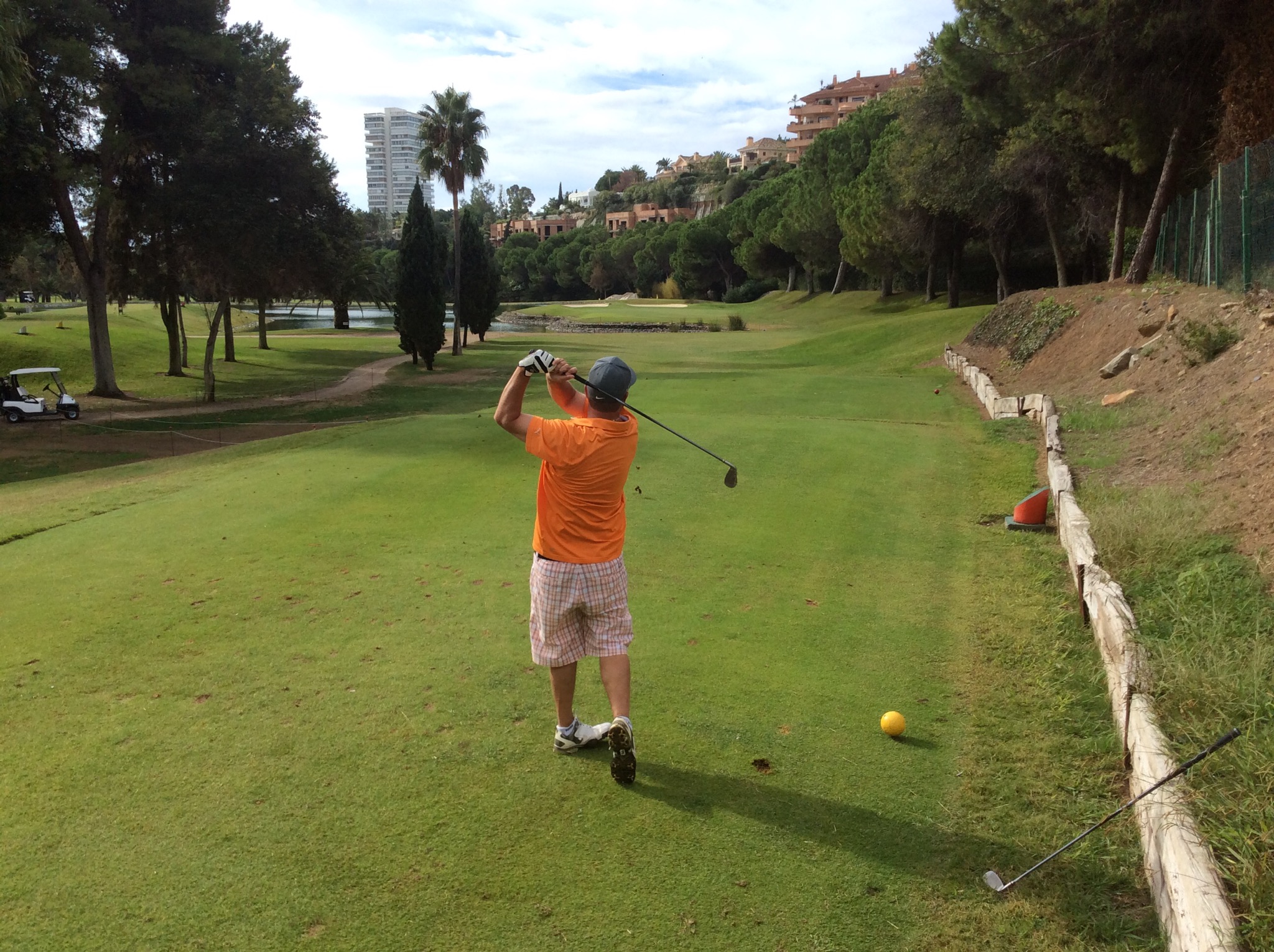
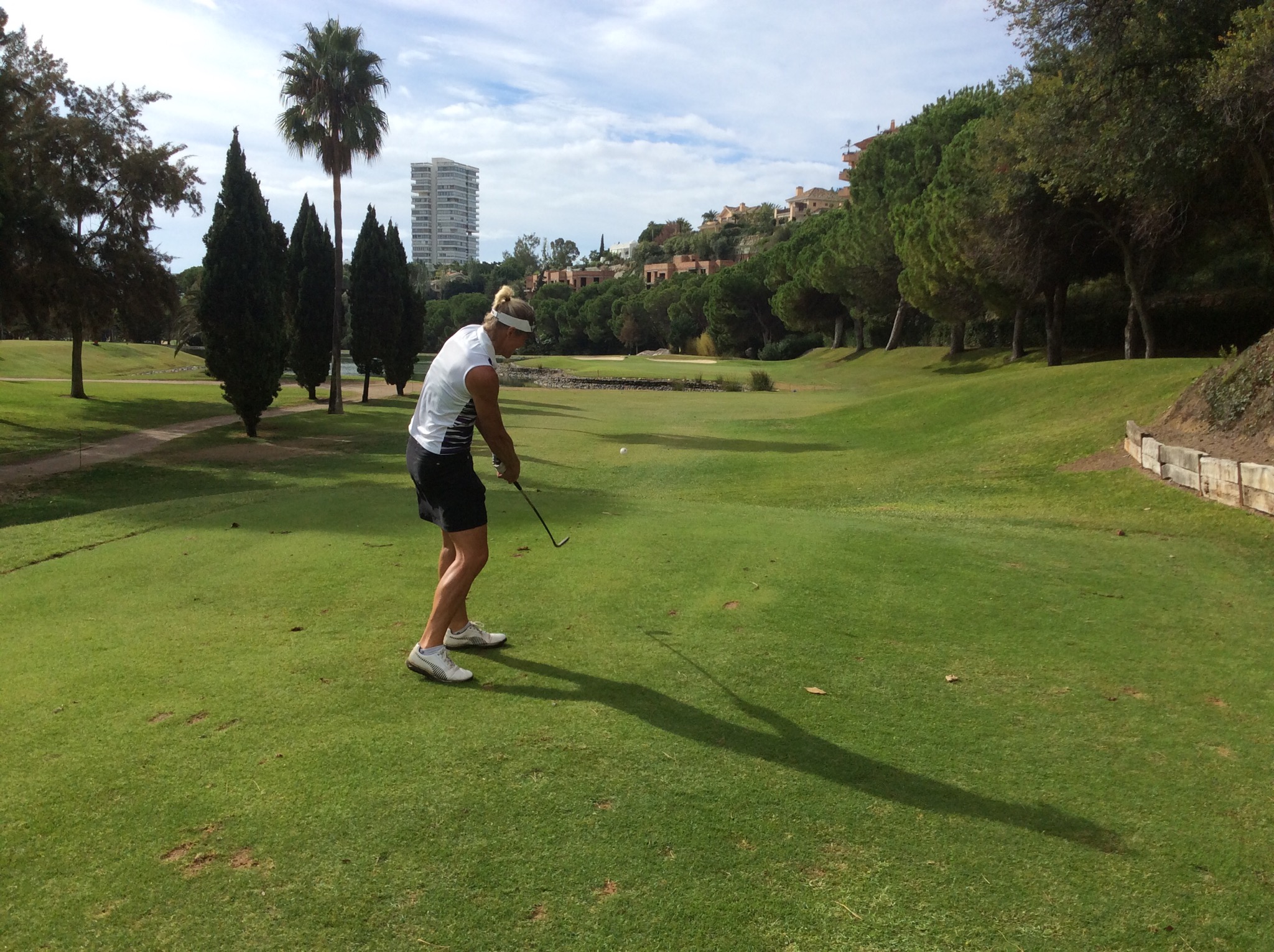
Today we played our “home” course La Reserva Club de Golf – the one in Sotogrande where we are based. We played with our “landlord” Mark who is a fairly handy golfer. Again Steve was happy to have some male company on the golf course and Steve’s competitive streak came out as he challenged Mark to a dual. It is a lovely course and left the first two courses we have played in Spain so far for dead.

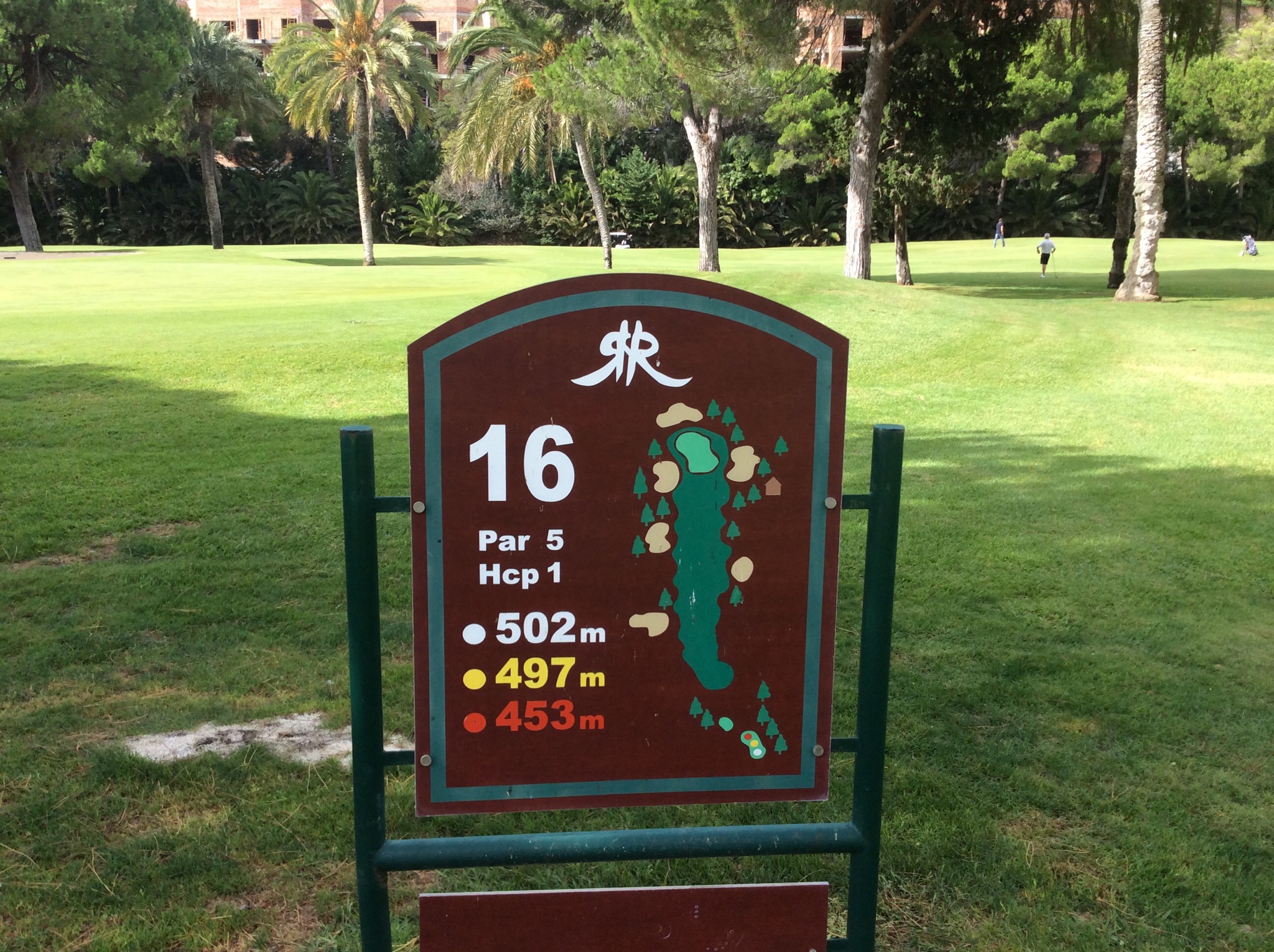
It was another lovely day. Mark got off to a good start and was three up on Steve at one stage. Steve clawed his way back to one down and then Mark got to three up again with three to play. Steve won the 16th and 17th so he was one down with one to play. His drive was errant and ended up down the bank under a tree but he pulled out a Bubba Watson special to land just right of the green. Both Mark & Steve had to chip on and Mark putted in for a four to take the match one up. There will be a re match of course – watch this space.

Meanwhile back on planet SUNGRL, the only thing going really well was the tan. Not my best day at the office but as Steve said some people would give their right arm to play a course like we were playing so I really can’t complain. What’s a few double bogeys between friends. I did par all the par threes though : )

This golf course was opened in 2003 and was designed by Cabell B. Robinson. It is considered to be one of the best courses in Spain and has a lovely clubhouse. The clubhouse is based on the design of a typical Andalusian farmhouse.

IMG_1342.JPG

IMG_1344.JPG

IMG_1346.JPG

IMG_1347.JPG

IMG_1349.JPG

IMG_1350.JPG

IMG_1351.JPG

IMG_1353.JPG

IMG_1352.JPG

Posted in Spain | 1 Comment

Rio Real Golf Club, Málaga – Andalusia, Spain

Today we drove north again to Marbella to play the Rio Real Golf course. We were paired up with a couple of Swedish brothers – Jonas and Matias. They were nice young lads who don’t get to play a lot of golf back in Sweden but had some good natural talent and strength. Steve enjoyed having some male company on the golf course. They spoke good English but would chatter away to each other in Swedish and say various phrases in Swedish if the other did a good shot. Steve tried repeating the phrases – I told him he hadn’t mastered many Spanish phrases yet so probably not a good idea to get confused with Swedish. And we all know what he’s like on the English front : )
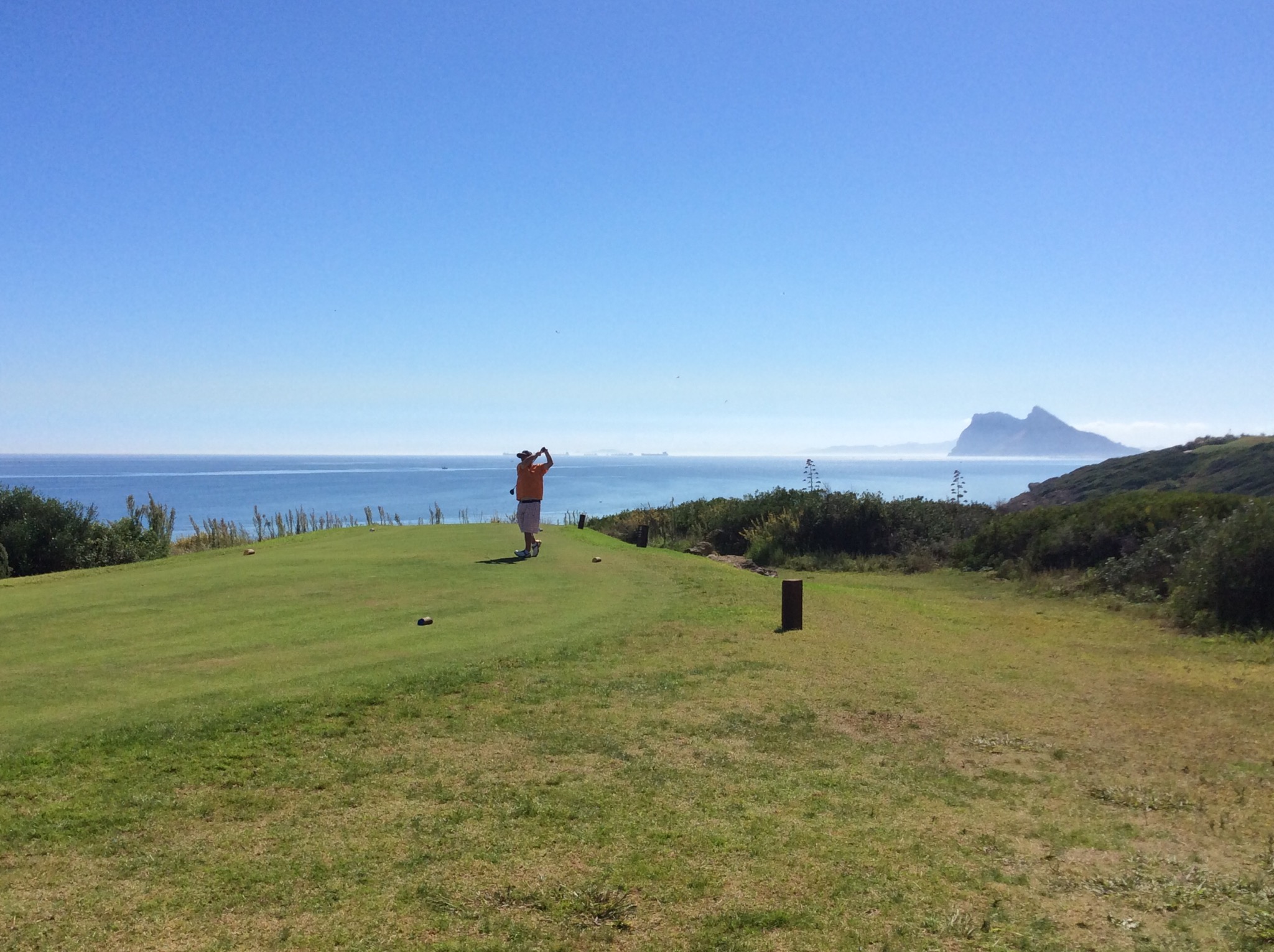
The course was nice and played out towards the sea and back again. It was a lot flatter than the Marbella Golf & Country Club course. I didn’t play too bad – my practice at the Golf Centre is paying off.

The Rio Real golf course was designed by the legendary Javier Arana, considered to be the best Spanish designer of all time. The golf course opened in 1965 and runs alongside the Rio Real River, from which it takes its name, and forms an integral part of the course, right up until it reaches the Mediterranean Sea.

After golf we decided to check out Puerto Banús which is a marina development just south of Marbella. It has a beach promenade, lots of restaurants and cafes, a marina and lots of shopping. We went to Vanilla, a cafe that was highly recommended on Trip Advisor. We sat outside and just as our food arrived the heavens opened up. We tried our best to shelter under the outside umbrellas but it was pretty heavy so we made a mad dash inside with our food in hand. The staff were very friendly, the food good and they did soy milk lattes so all was well with the world.

The forecast had been for a bit of rain in the morning but it didn’t arrive until the afternoon. Our plans for exploring the area were thwarted but we will come back another day I am sure.

IMG_1333-0.JPG

IMG_1334-0.JPG

IMG_1336.JPG

IMG_1340-0.JPG

IMG_1341-0.JPG

Posted in Spain | Leave a comment