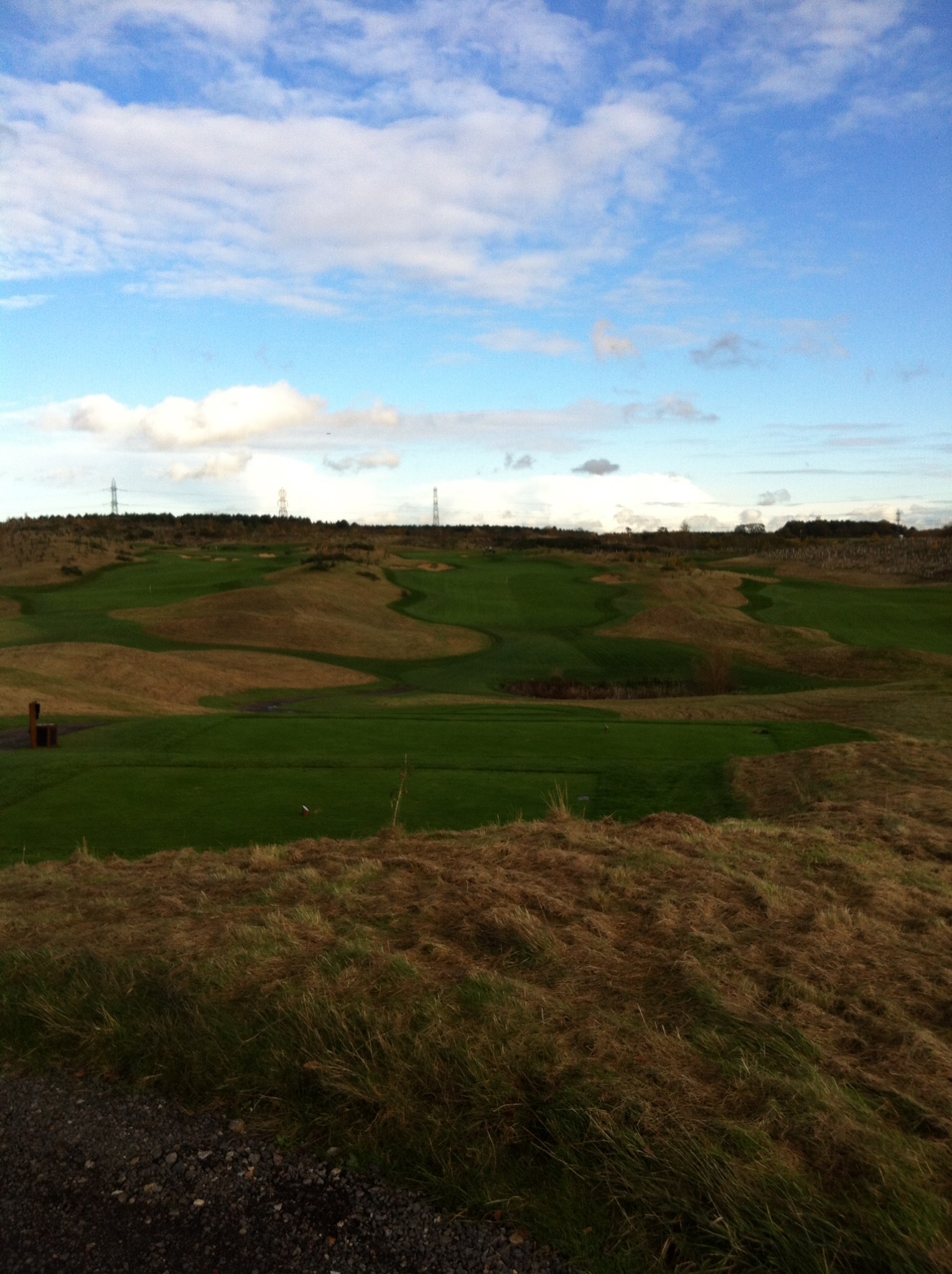
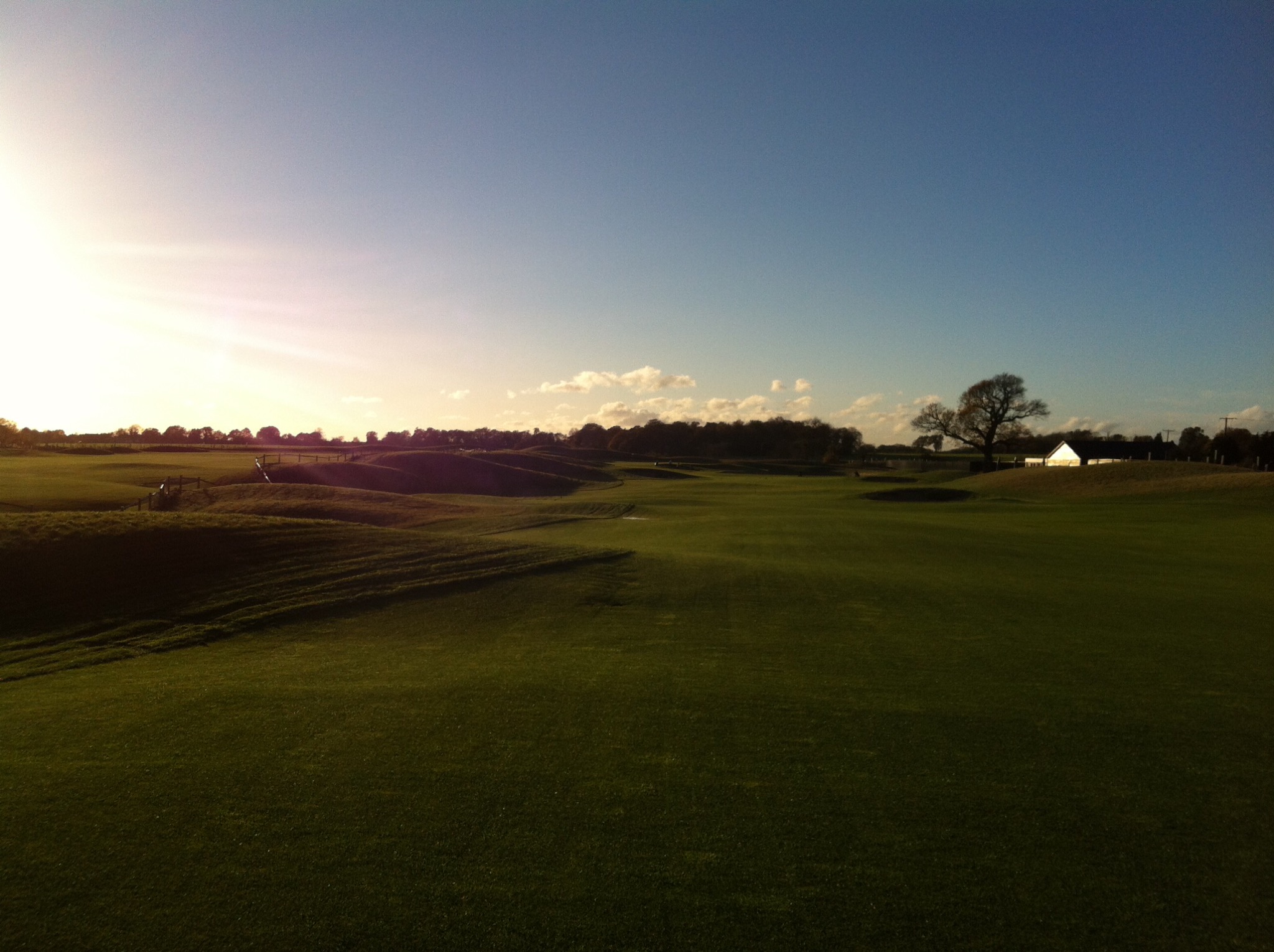
Port Royal Golf Club, Bermuda – Oceania Cruises

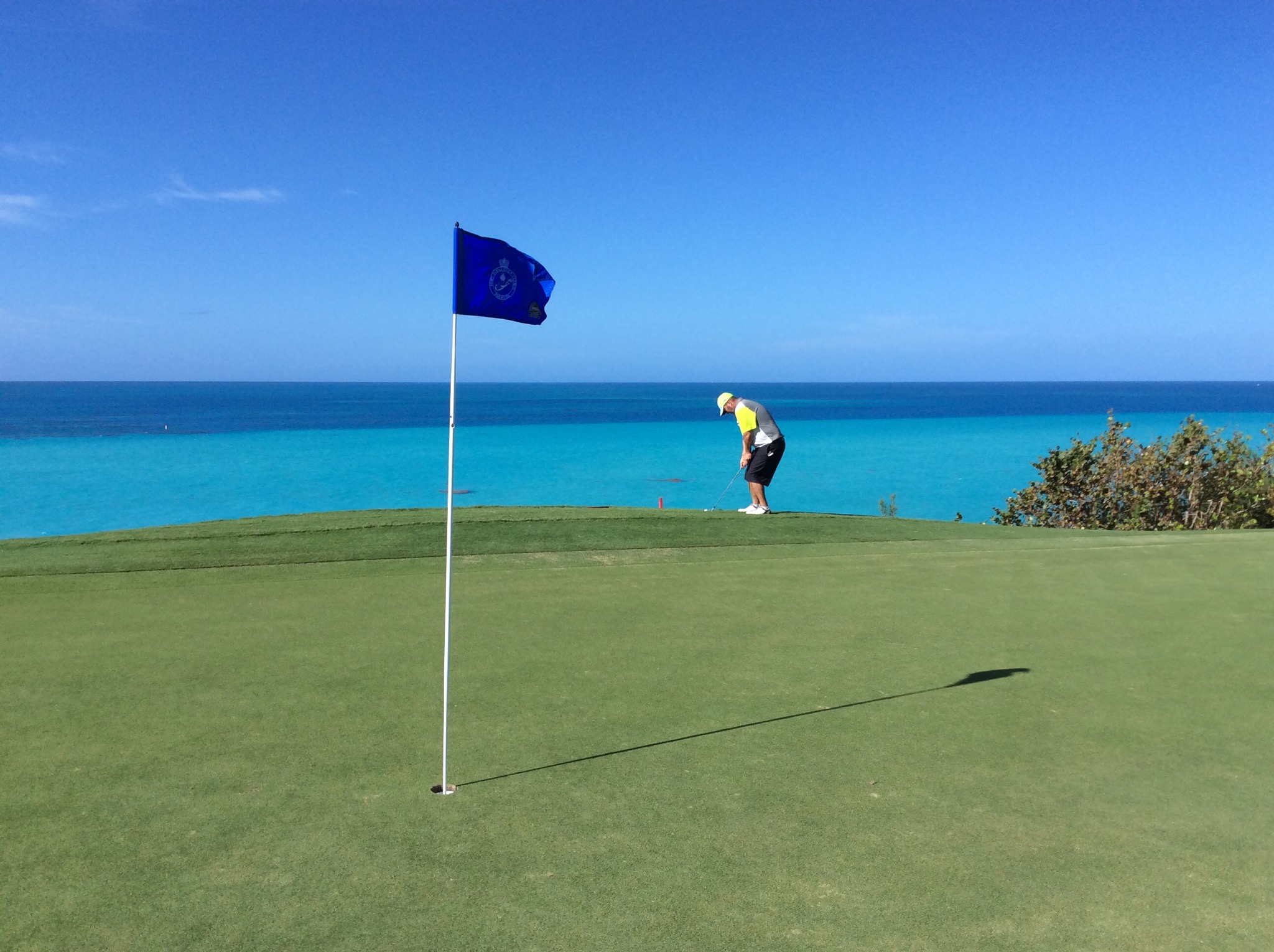
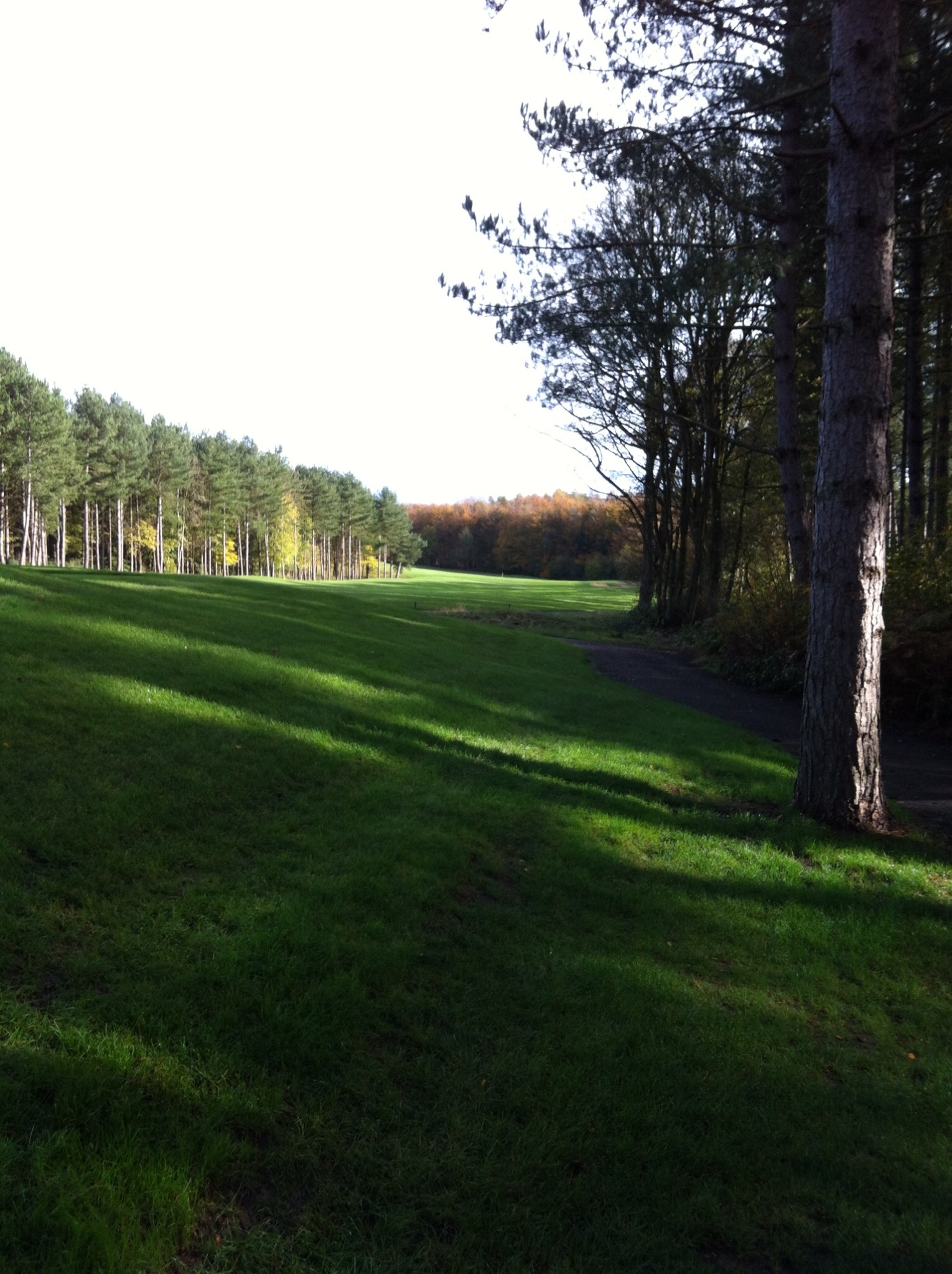
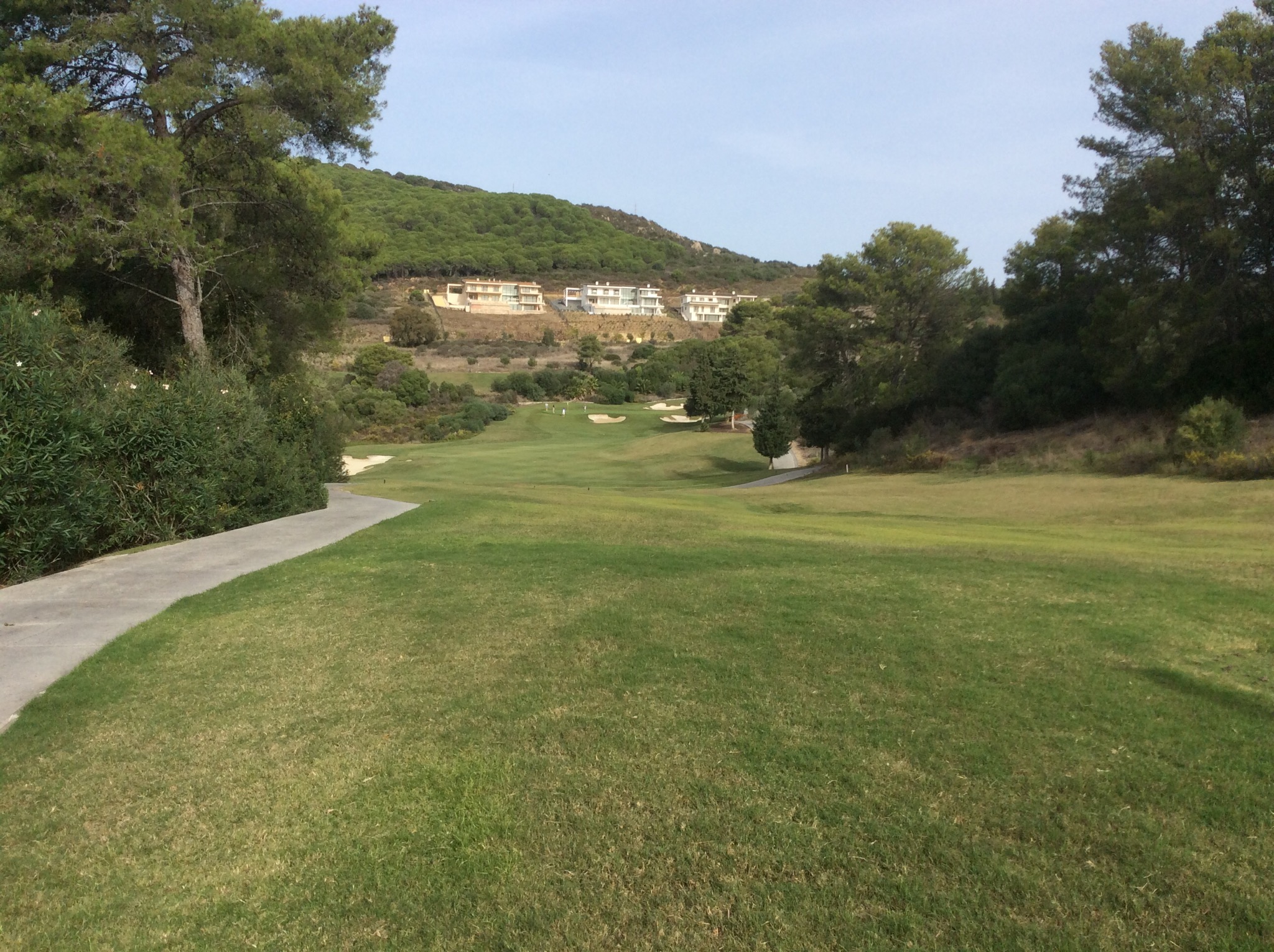
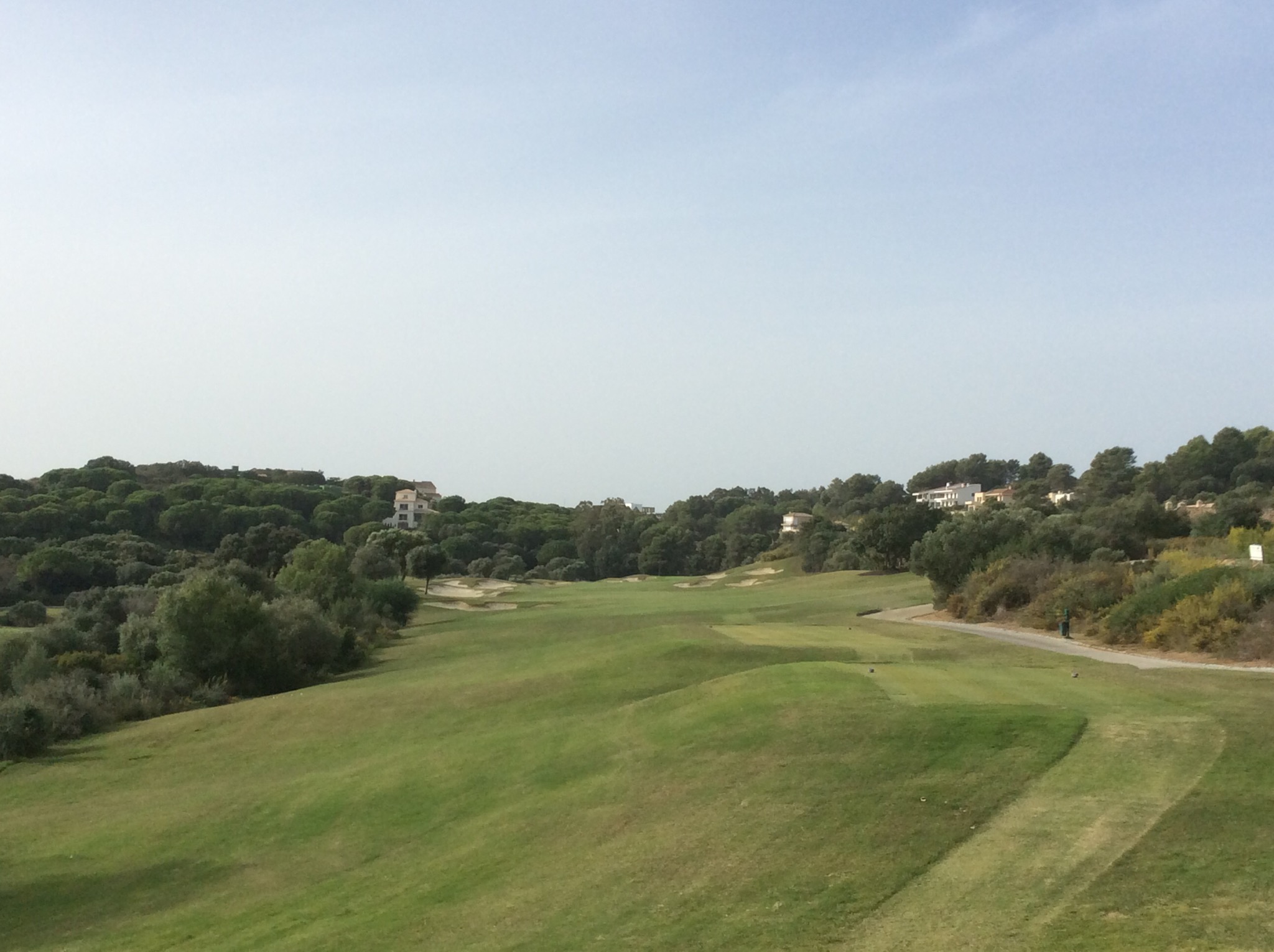
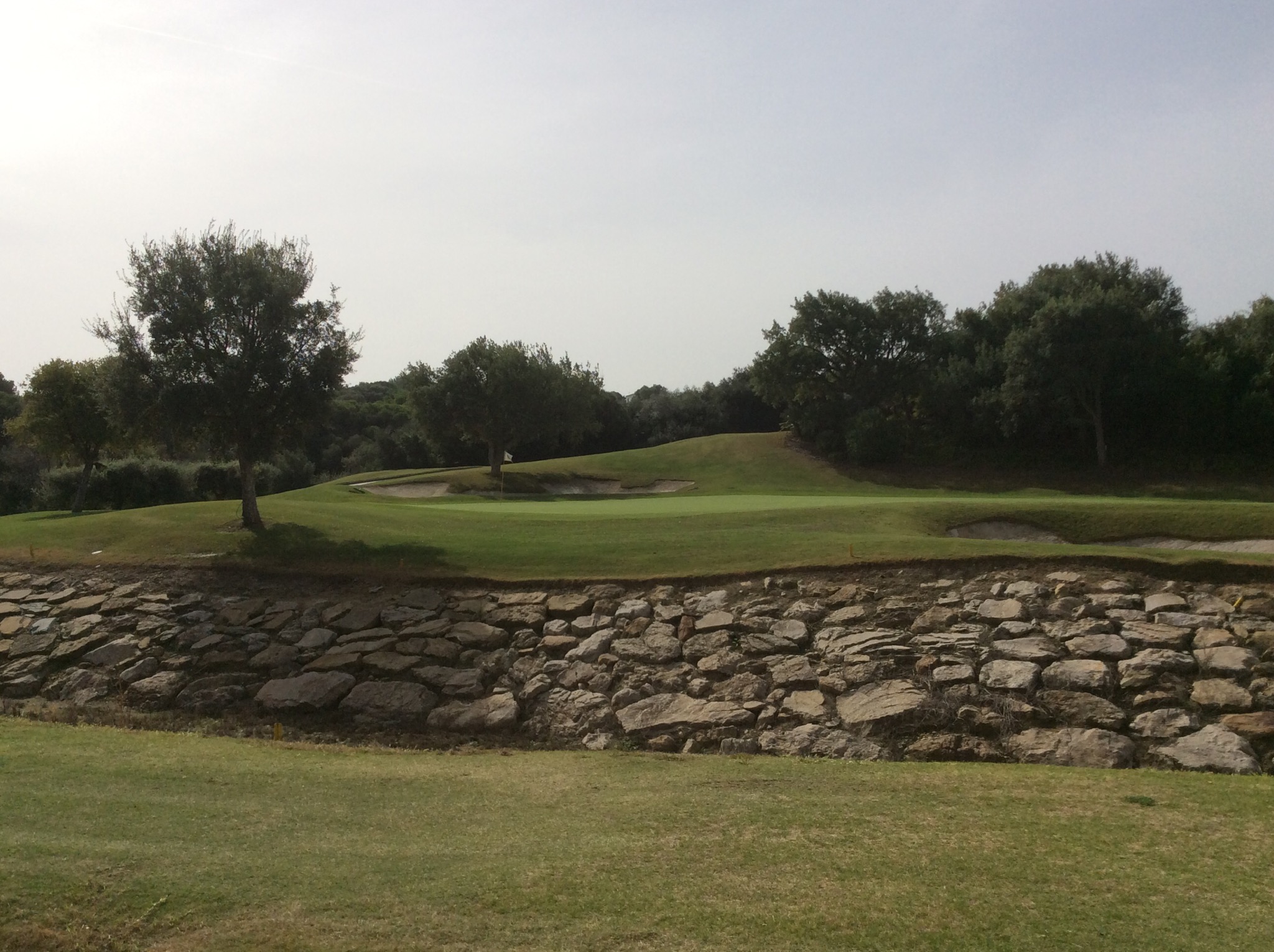
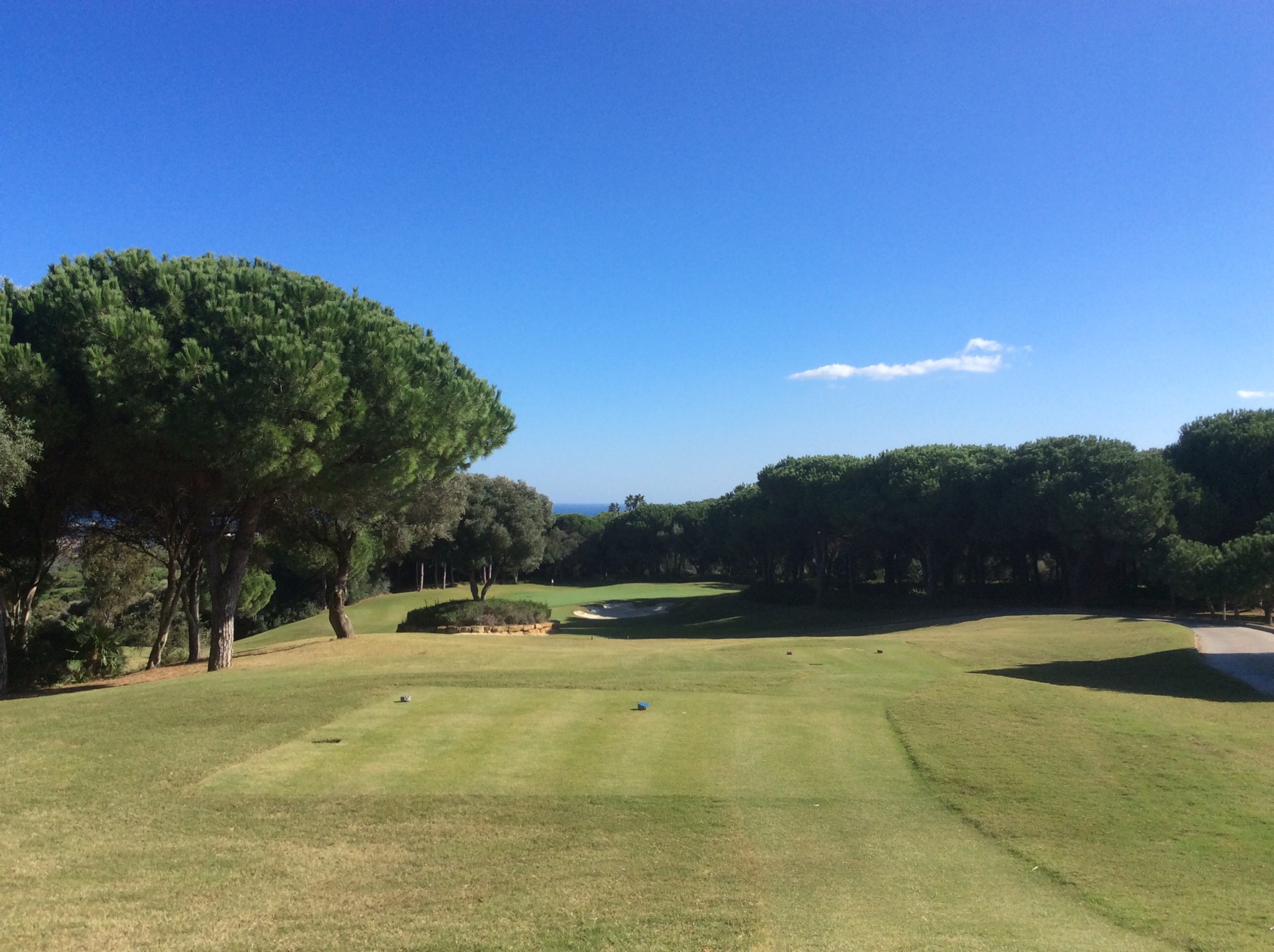
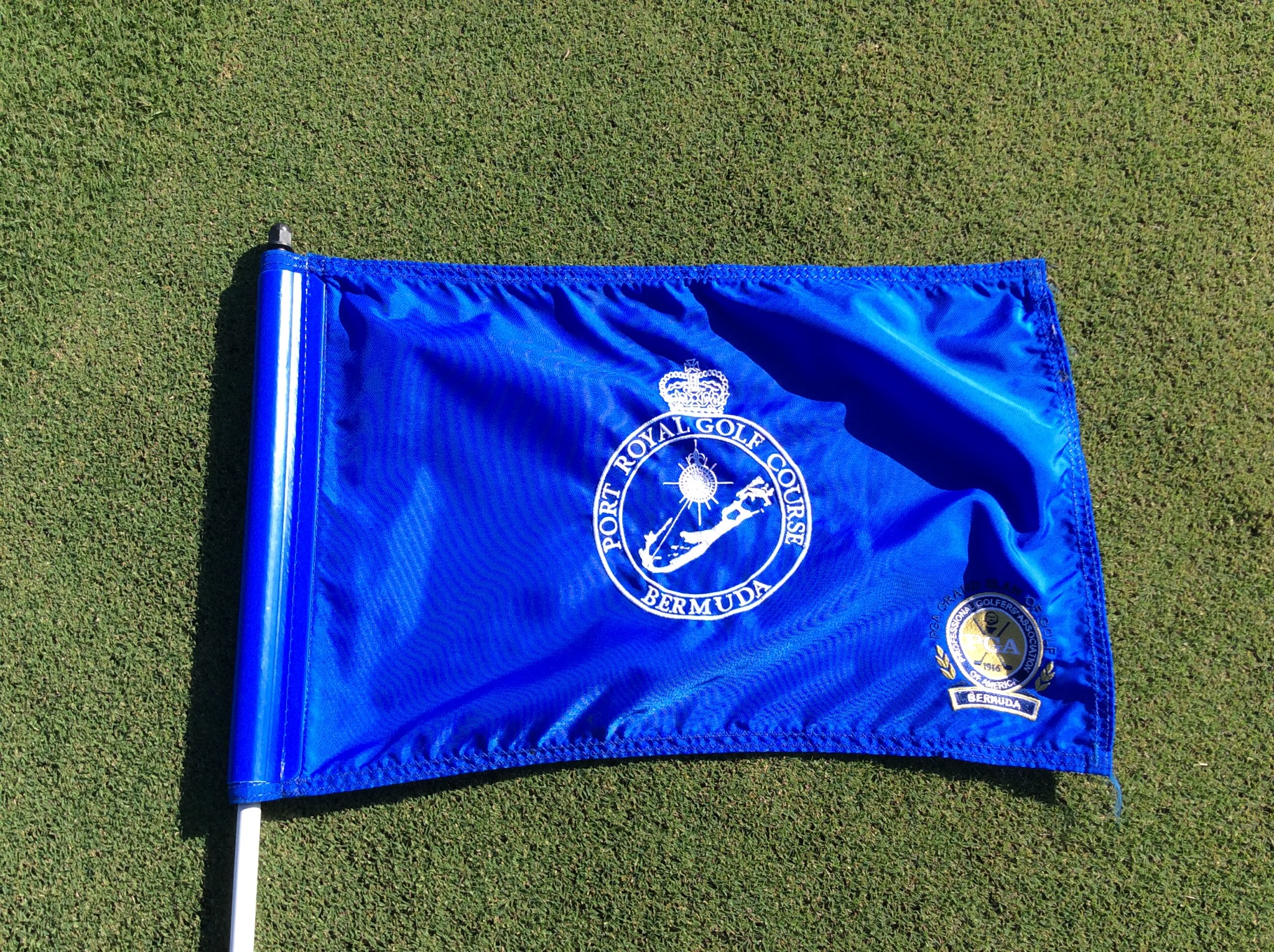
On day two in Bermuda we had a round of golf booked at the Port Royal Golf Club which held the PGA Grand Slam in October. We caught a taxi to the golf course and the taxi driver happened to be a member there. He said there are six courses on the island but he considered Port Royal the hardest.

It was another beautiful day and I was excited to be out on the golf course again after about a three week hiatus. The warm up on the driving range went well which doesn’t necessarily mean anything in relation to how I will play but I am always hopeful.

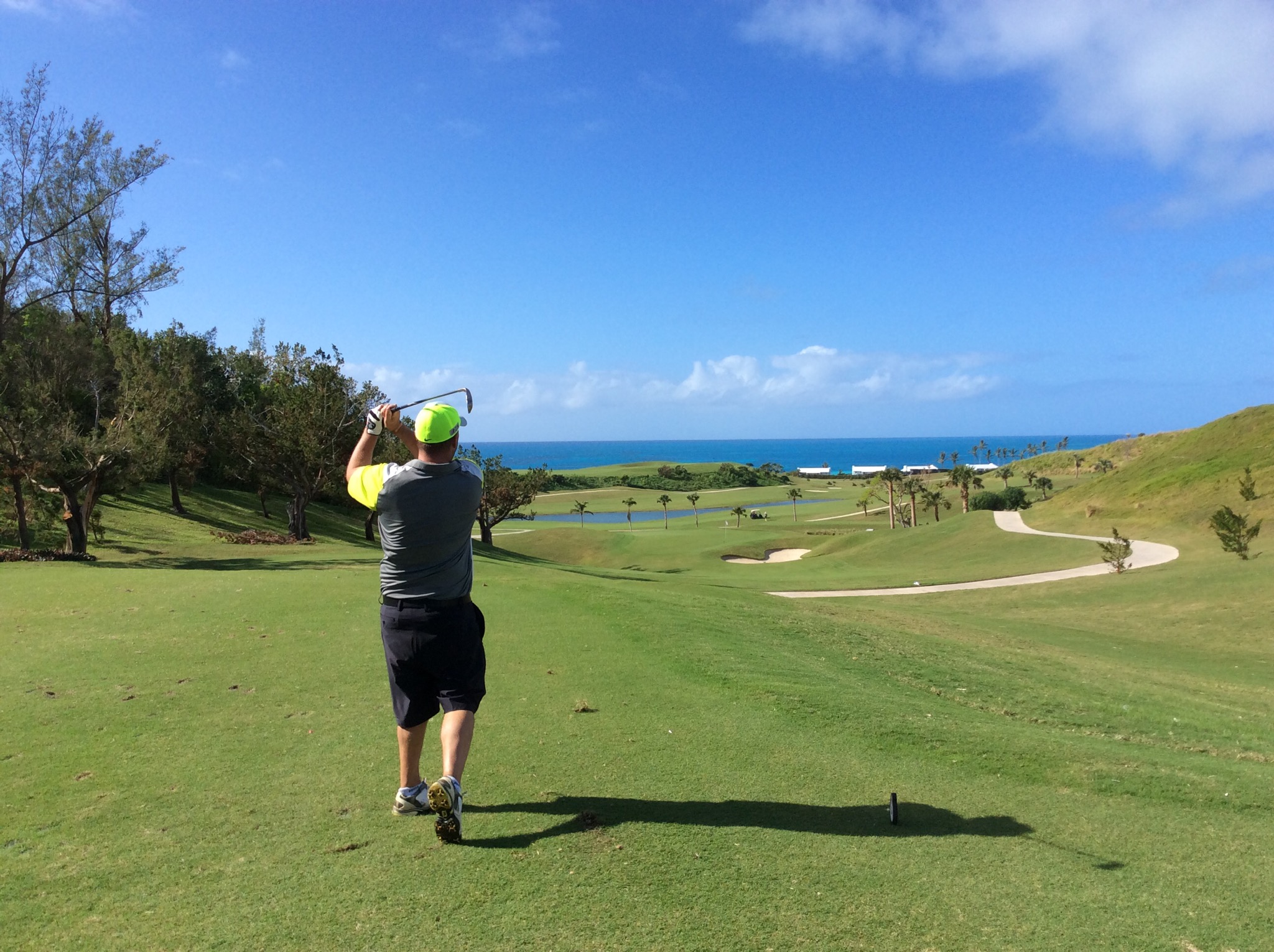
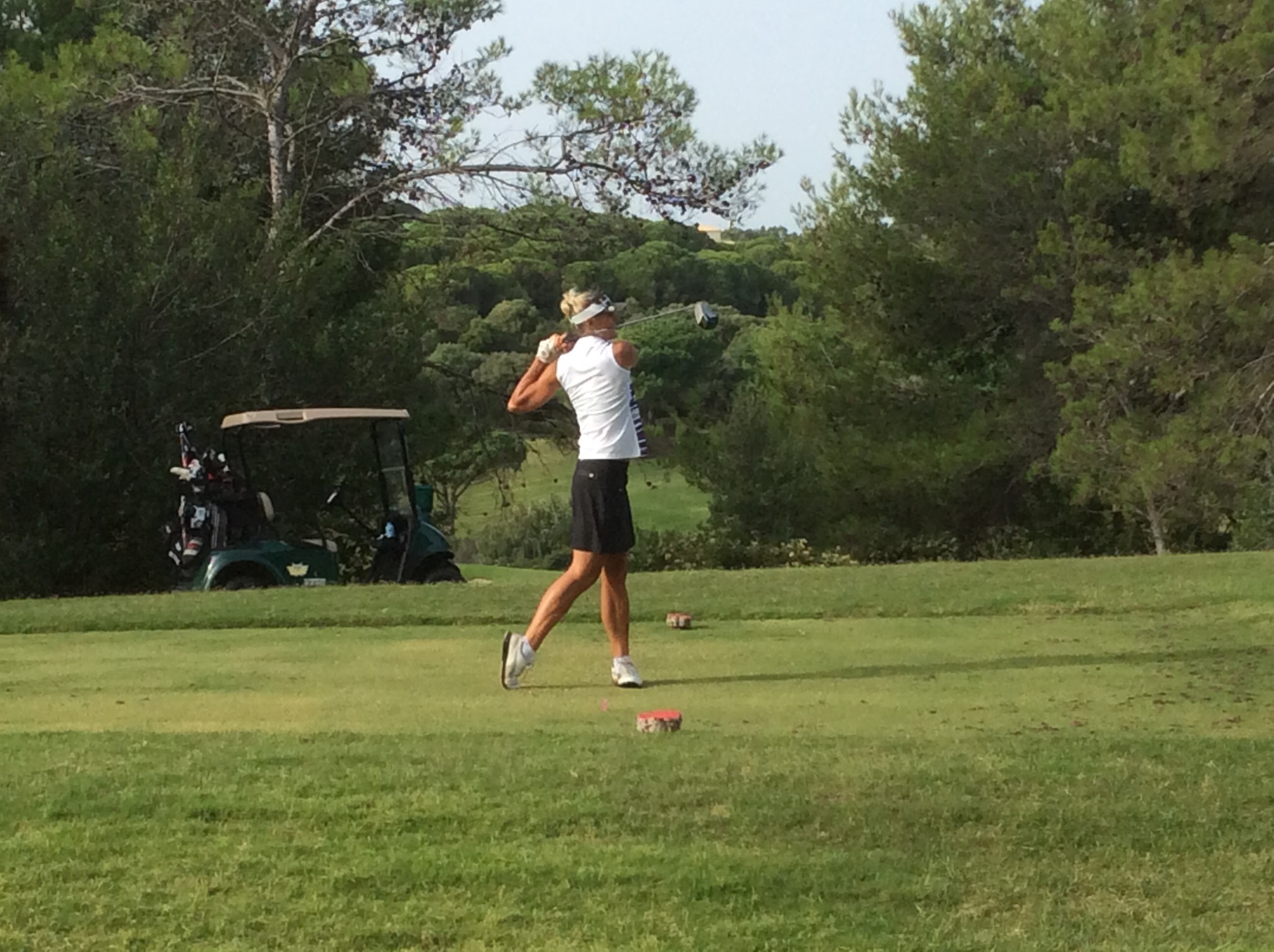
I actually played well shooting 90. Unfortunately all Steve’s table tennis playing had taken a toll on his elbow so he was in a bit of pain hitting the golf ball but still managed a reasonable round. The rough wasn’t long but it managed to hide the balls well that strayed there – we were likening it to the Bermuda Triangle. Steve lost a couple of balls in this rough when we were able to see approximately where they landed – do do do, do do do….

Bermuda was hit by two storms in October and we saw some remnants of the damage – trees uprooted and fencing knocked down. The first storm hit the island on the Friday before the practice round of the PGA Grand Slam on the Sunday. 1,000 people turned up to the golf course on the Saturday to clean the course up so the tournament could go ahead. The players were impressed with how they had managed to get it back in playable condition. The Pro-Am was held on the Monday and the tournament on the Tuesday and Wednesday. The television crews and players left the island on the Thursday and the second storm hit on the Friday.

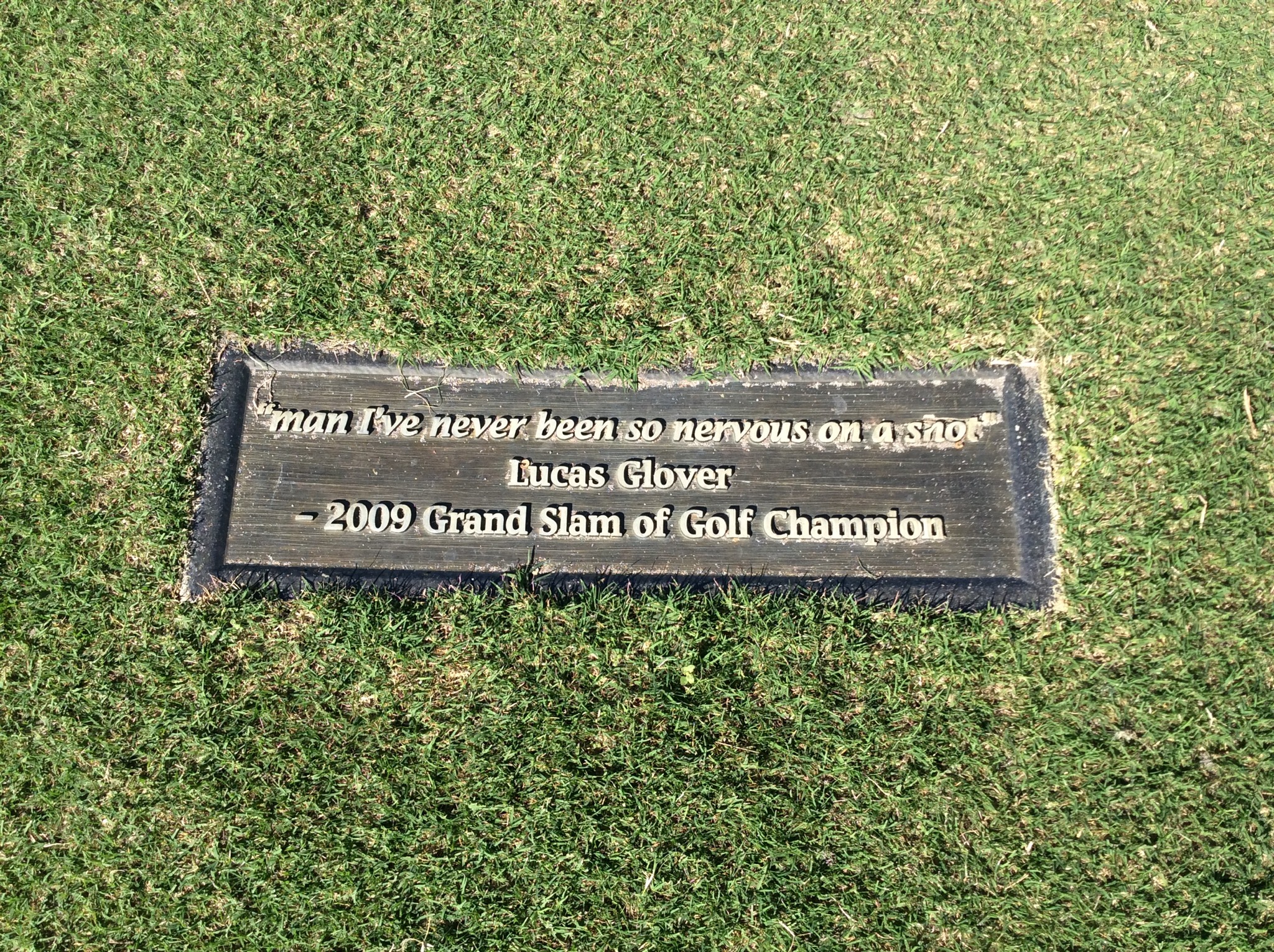
The PGA Grand Slam tournament is a play off between the four winners of the majors. This year Rory McIlroy won both the British Open and the PGA Championship, Bubba Watson won the Masters and Martin Kaymer won the US Open. Because Rory won two of the majors Jim Furyk made up the numbers as a previous major winner. Martin Kaymer won the PGA Grand Slam at Port Royal in a sudden death playoff with Bubba Watson.

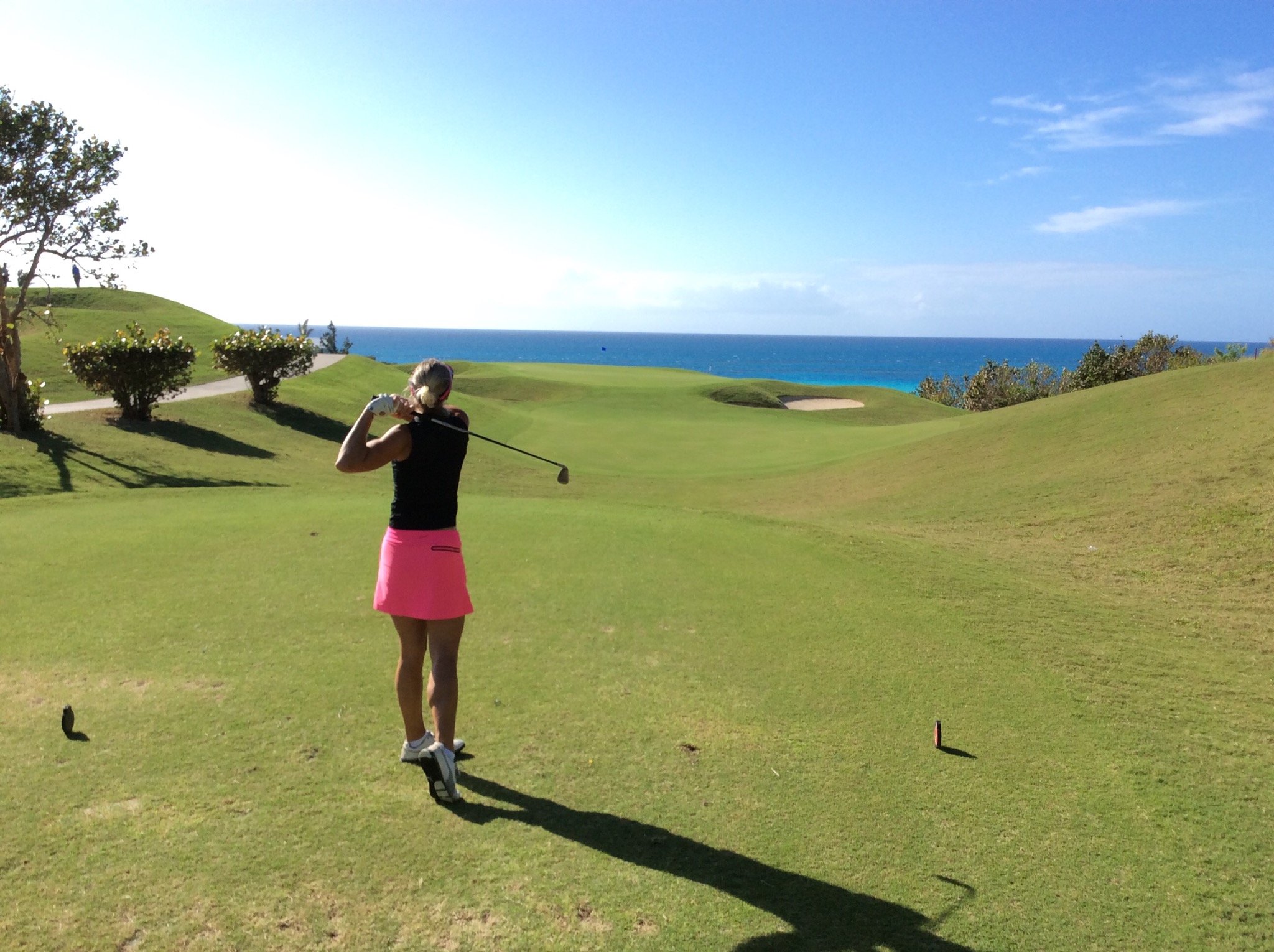
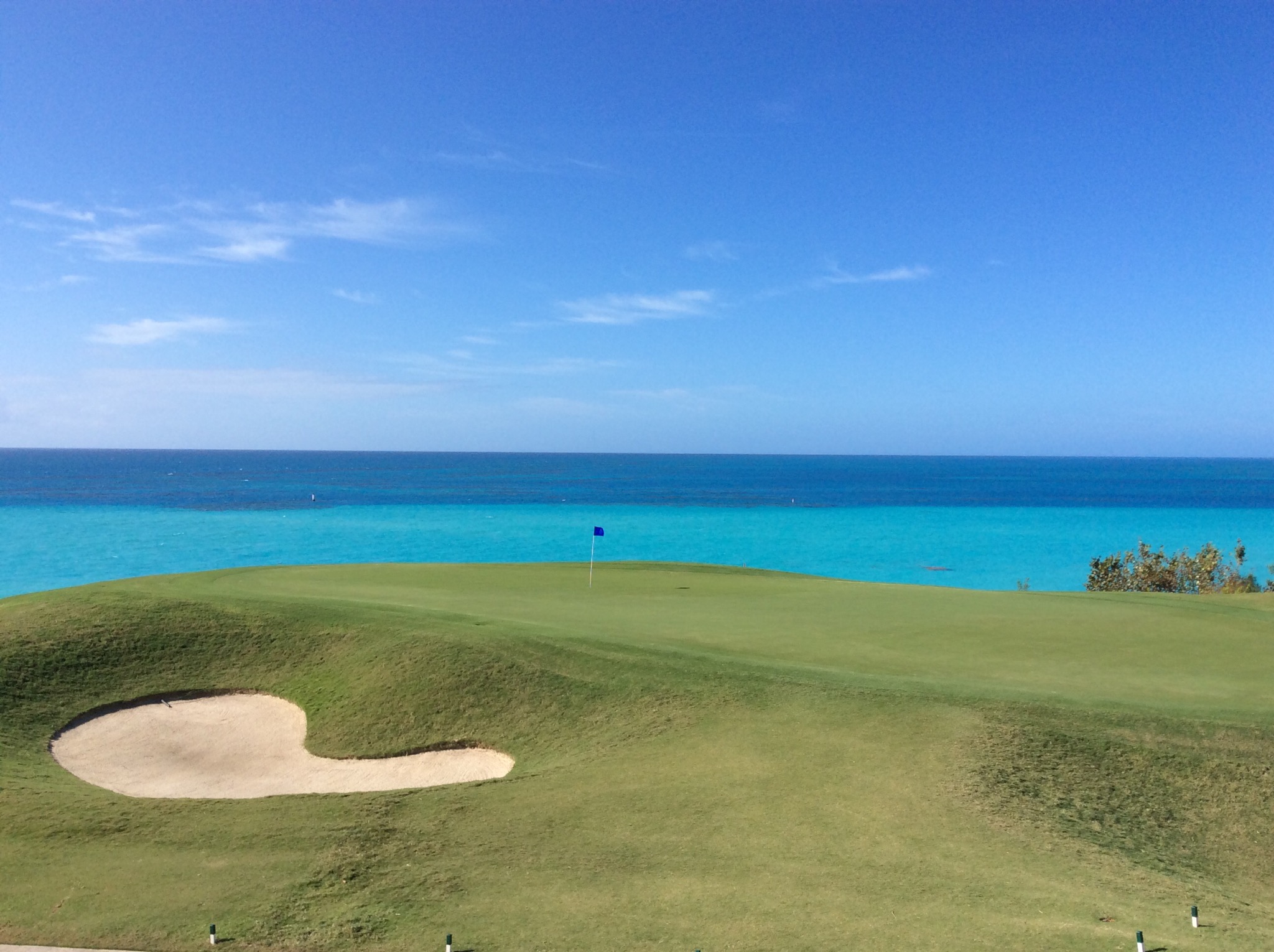
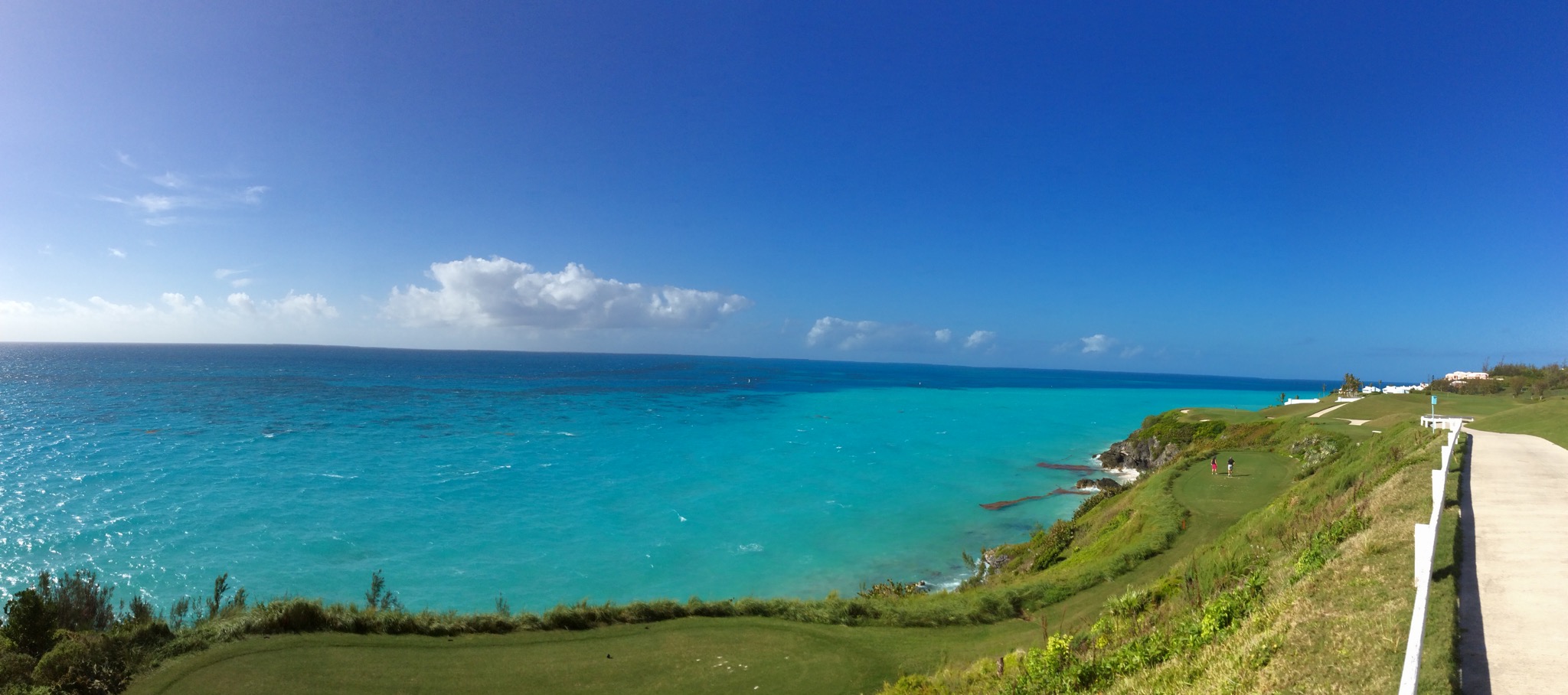
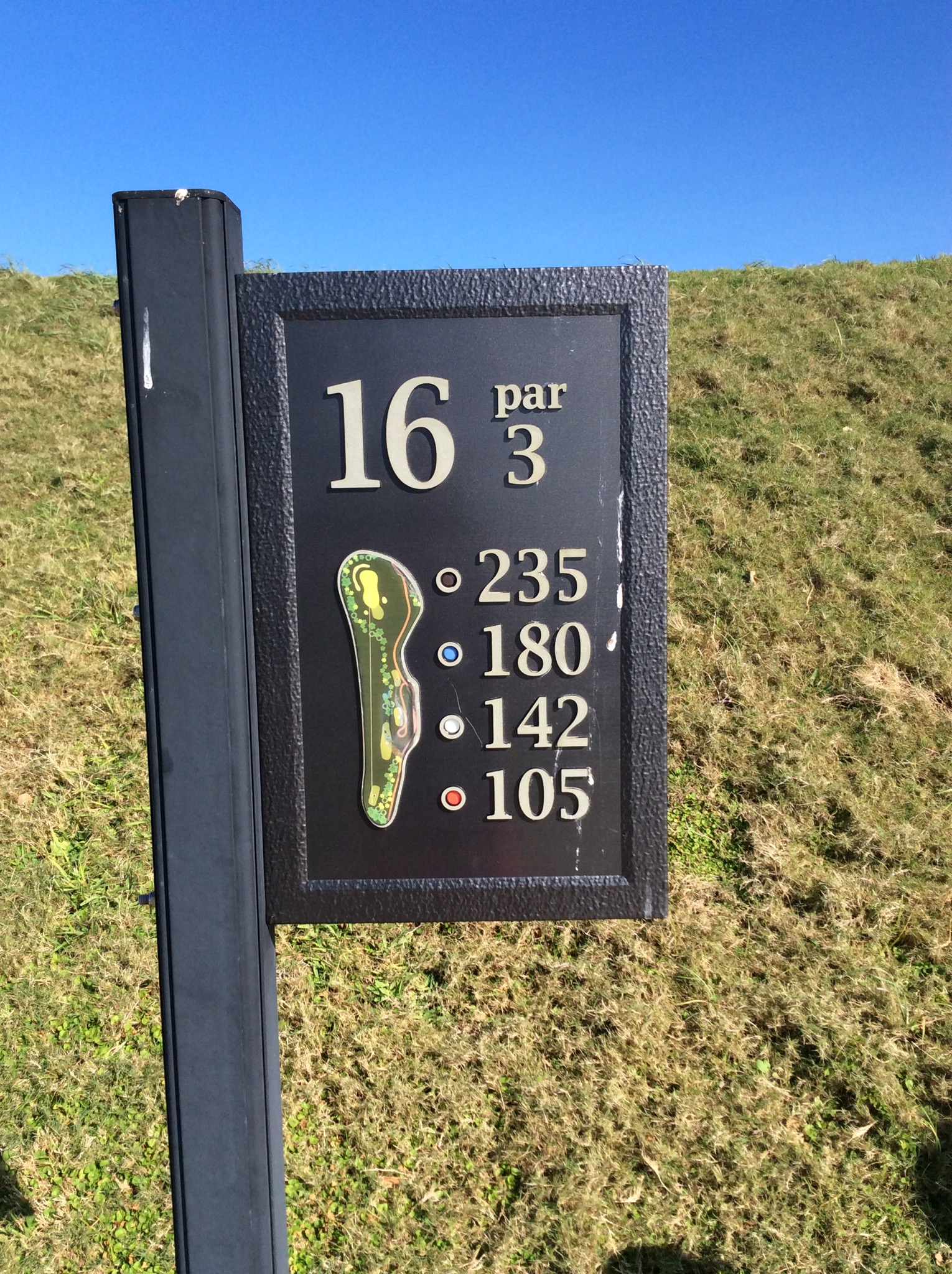
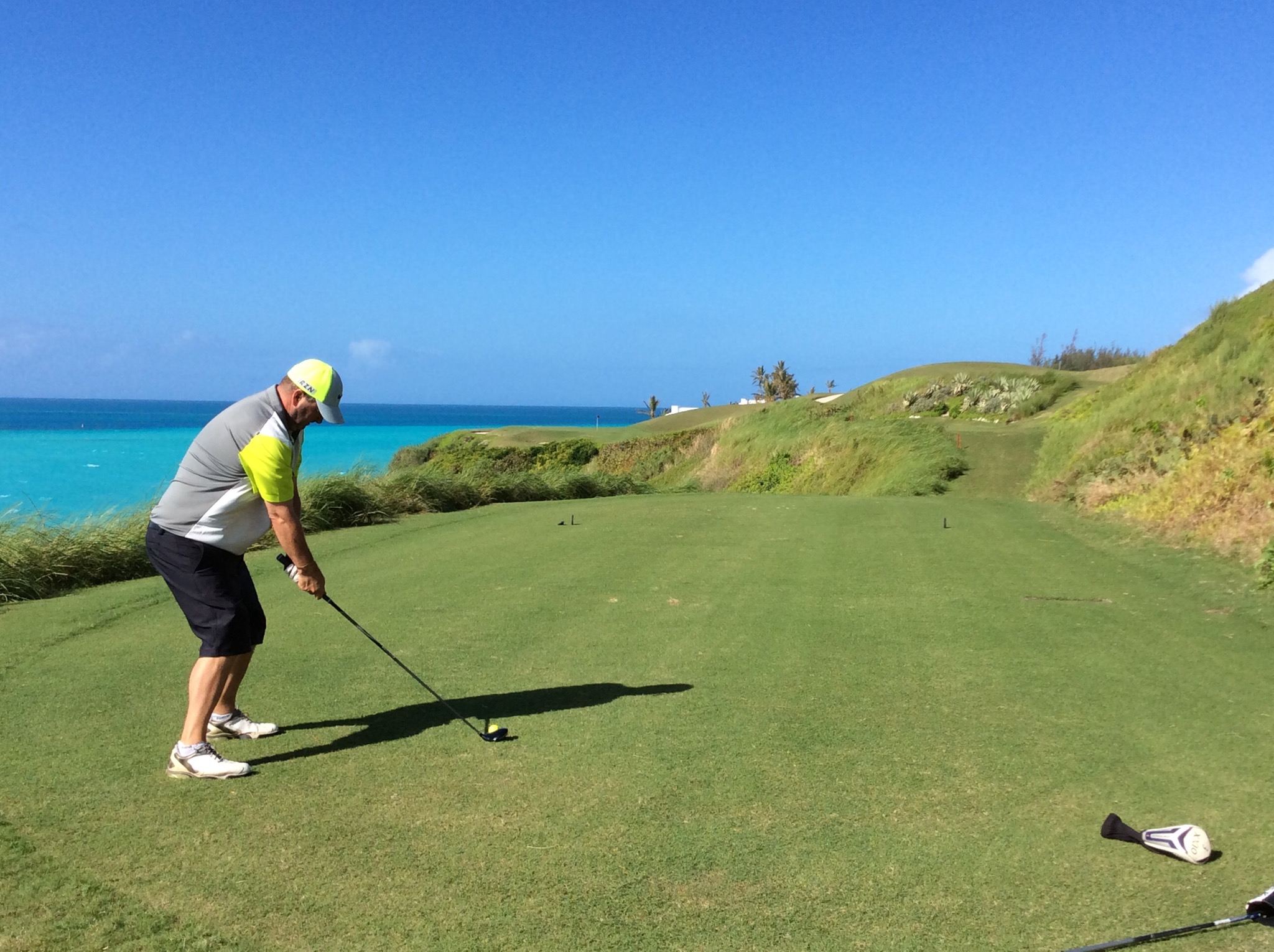
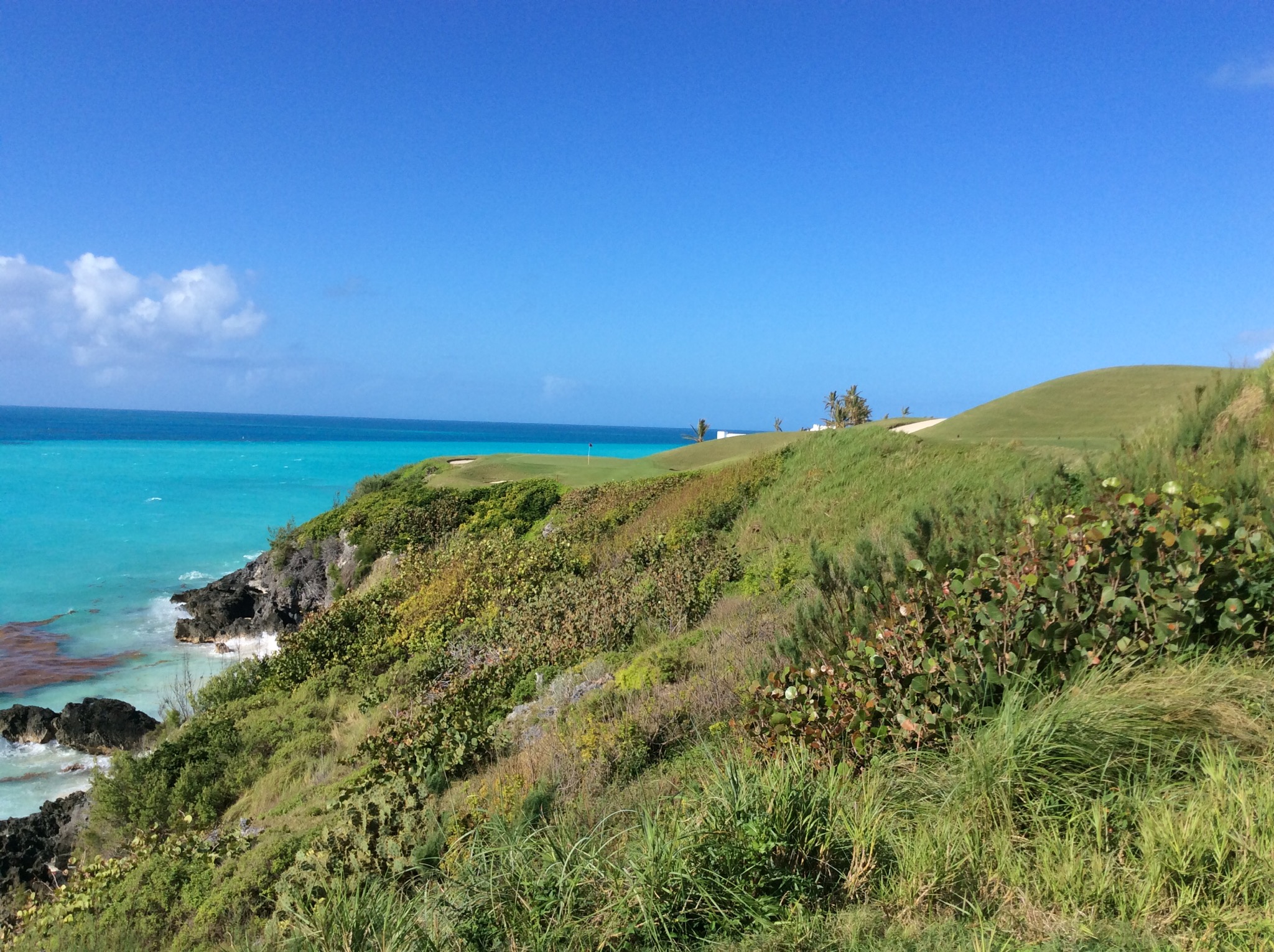
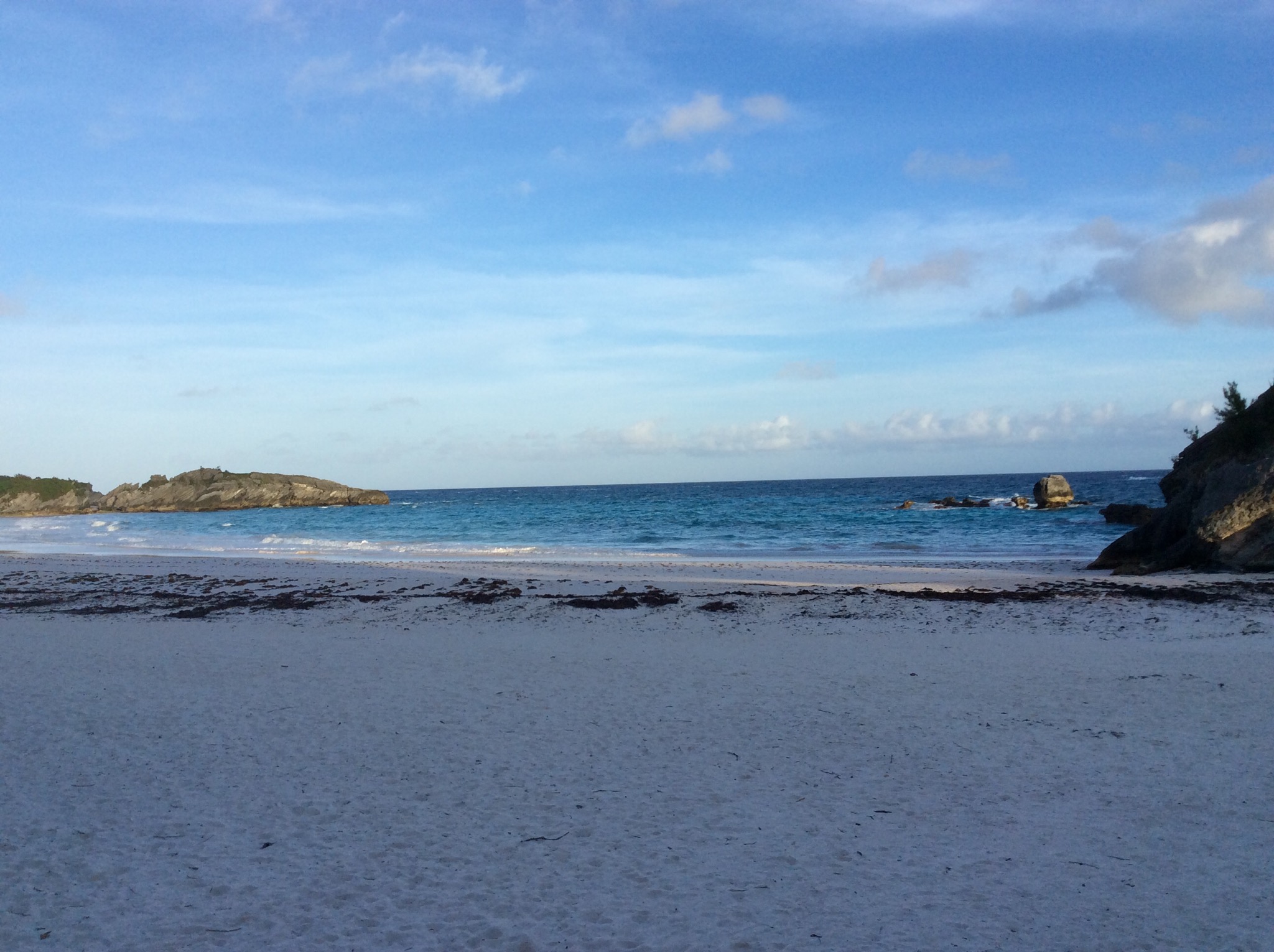
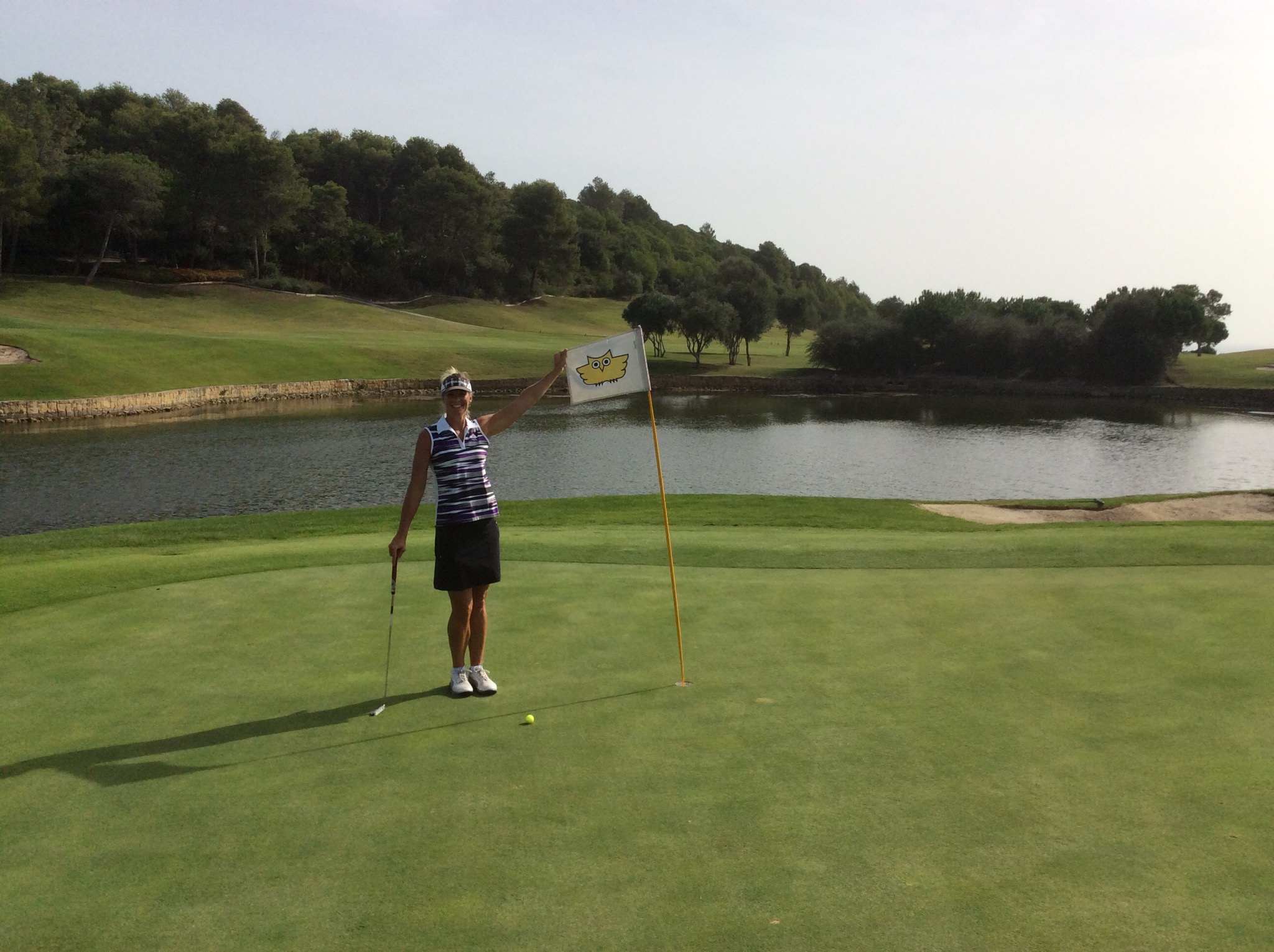
The views of the Atlantic from the 8th and 16th holes were amazing. I couldn’t get over the colour of the water – it was this beautiful turquoise colour. The 16th hole is the signature hole – it is a par 3 that runs along the coast line. The taxi driver told Steve that he should go back and hit from the tips where the pro’s hit from. It is 235 yards or 212 metres with the majority of that over the edge of the cliff which is covered in flora and fauna. His first shot didn’t quite carry the flora and fauna but his second shot ended up at the back of the green. I hit off the black tees which was 135 metres – unfortunately I ended up in the bunker and took two to get out – the Atlantic looming on the other side of the green was a bit intimidating. I ended up with a 5.

History of Port Royal Golf Club, Bermuda
Located in the Southampton Parish, Southampton Golf Club, as the course was originally known, was founded in 1965 under the chairmanship of Mr. Reginald Tucker, with land being purchased in July 1965 after being given the go-ahead on 15 June 1965 from G.H. Taylor Director of Public Works. The plan however was potentially jeopardised because some of the area was originally farmland and one owner refused to sell his property to the course. Undaunted, construction finally got under way in earnest on 1 December 1967, and the project was renamed Port Royal Golf Course.

The course was the creation of golf course architect, Robert Trent Jones. Design had to be changed several times initially due to land agreements, however this rerouting lead to the creation of the world famous, and much photographed, spectacular 16th hole – the tee and green of which perch precariously on cliffs overlooking the Atlantic Ocean.

The course was finally completed and opened in 1970. More recently, it underwent renovation in preparation for the hosting of the 2009 PGA Grand Slam of Golf. A member of the original design team, Roger Rulewich, has headed up this $14.5 million project and the course was officially reopened on 21 July 2009.

IMG_1979.JPG

IMG_1982.JPG

IMG_1990.JPG

IMG_1991.JPG

IMG_1994.JPG

IMG_1996.JPG

IMG_2001.JPG

IMG_2008.JPG

IMG_2015.JPG

IMG_2017.JPG

IMG_2018.JPG

IMG_2019.JPG

IMG_2021.JPG

IMG_2025.JPG

IMG_2032.JPG

IMG_2033.JPG

IMG_2034.JPG

Posted in Oceania Cruises | Leave a comment

Bermuda – Oceania Cruises

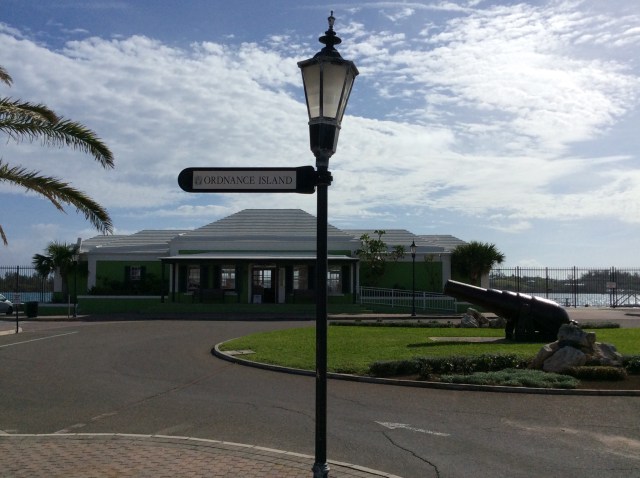
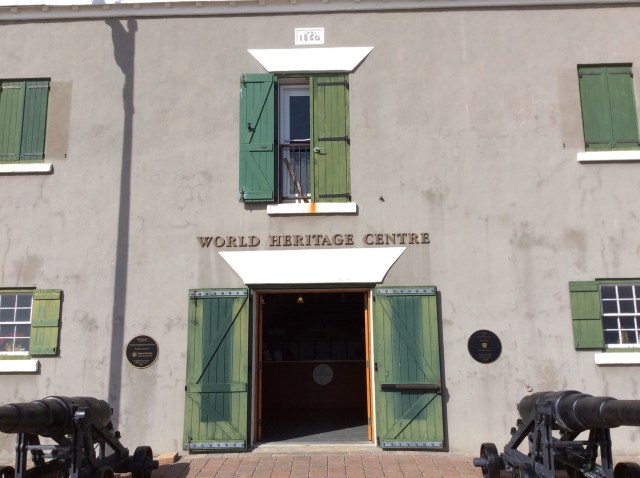
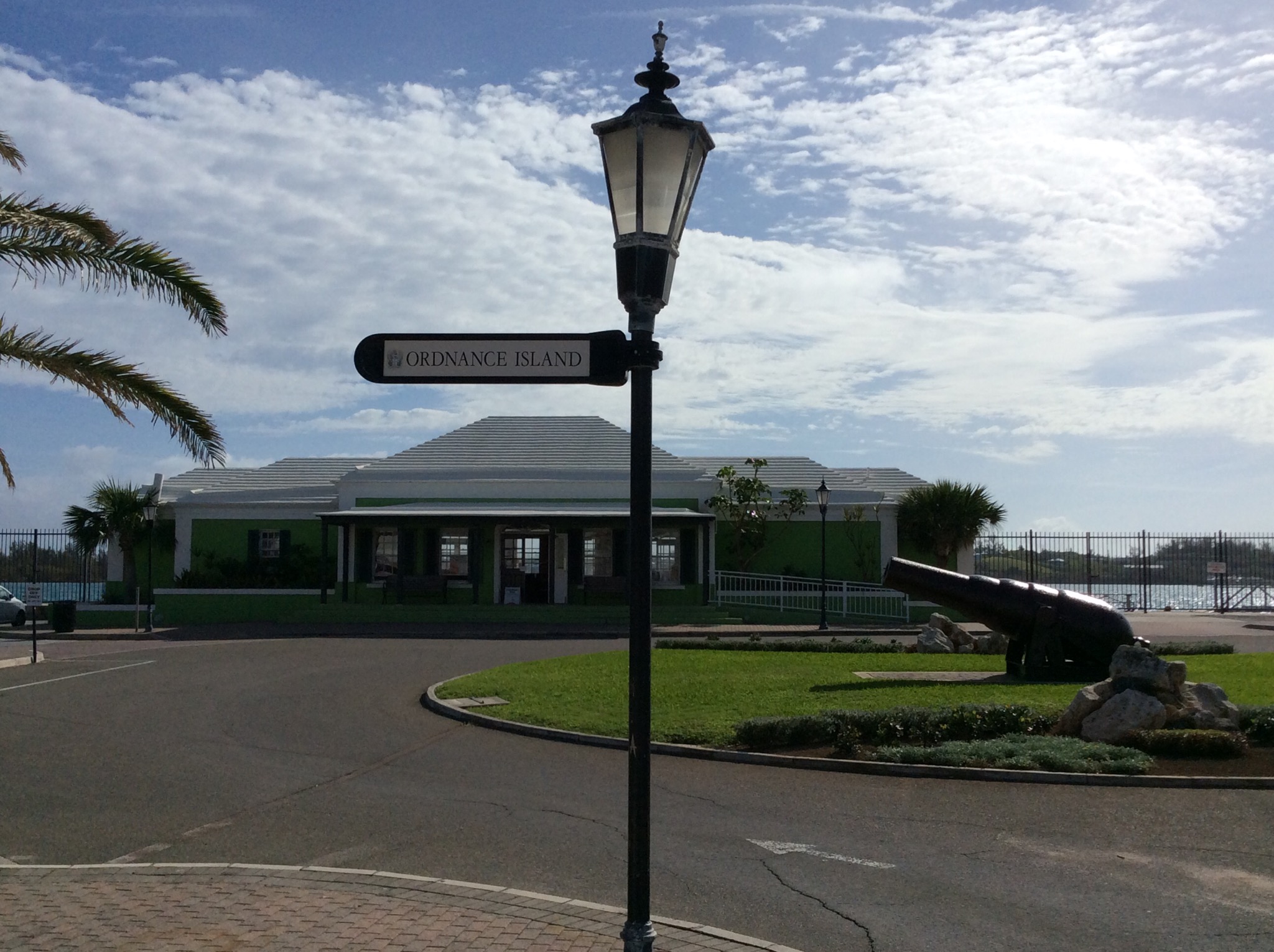
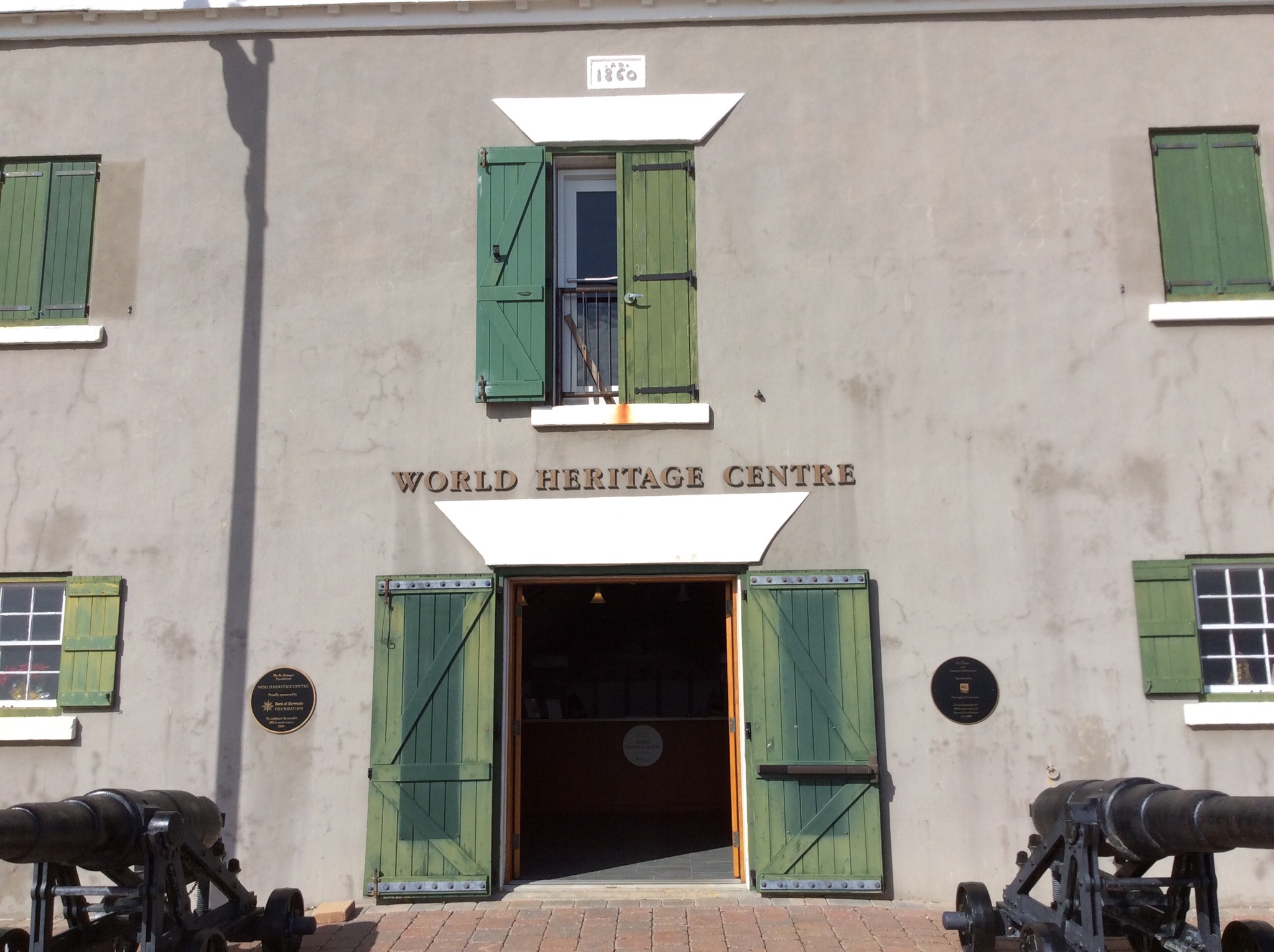
After five days crossing the Atlantic we were looking forward to exploring Bermuda. Our ship was docked at Kings Wharf, Bermuda for two days. Kings Wharf is also known as the Royal Naval Dockyard which was built by the British Navy in 1815. The Georgian style fort served as a North Atlantic base during the World Wars. In 1975 the Bermuda Maritime Museum opened, and restoration of the Dockyard has made it a popular tourist destination.

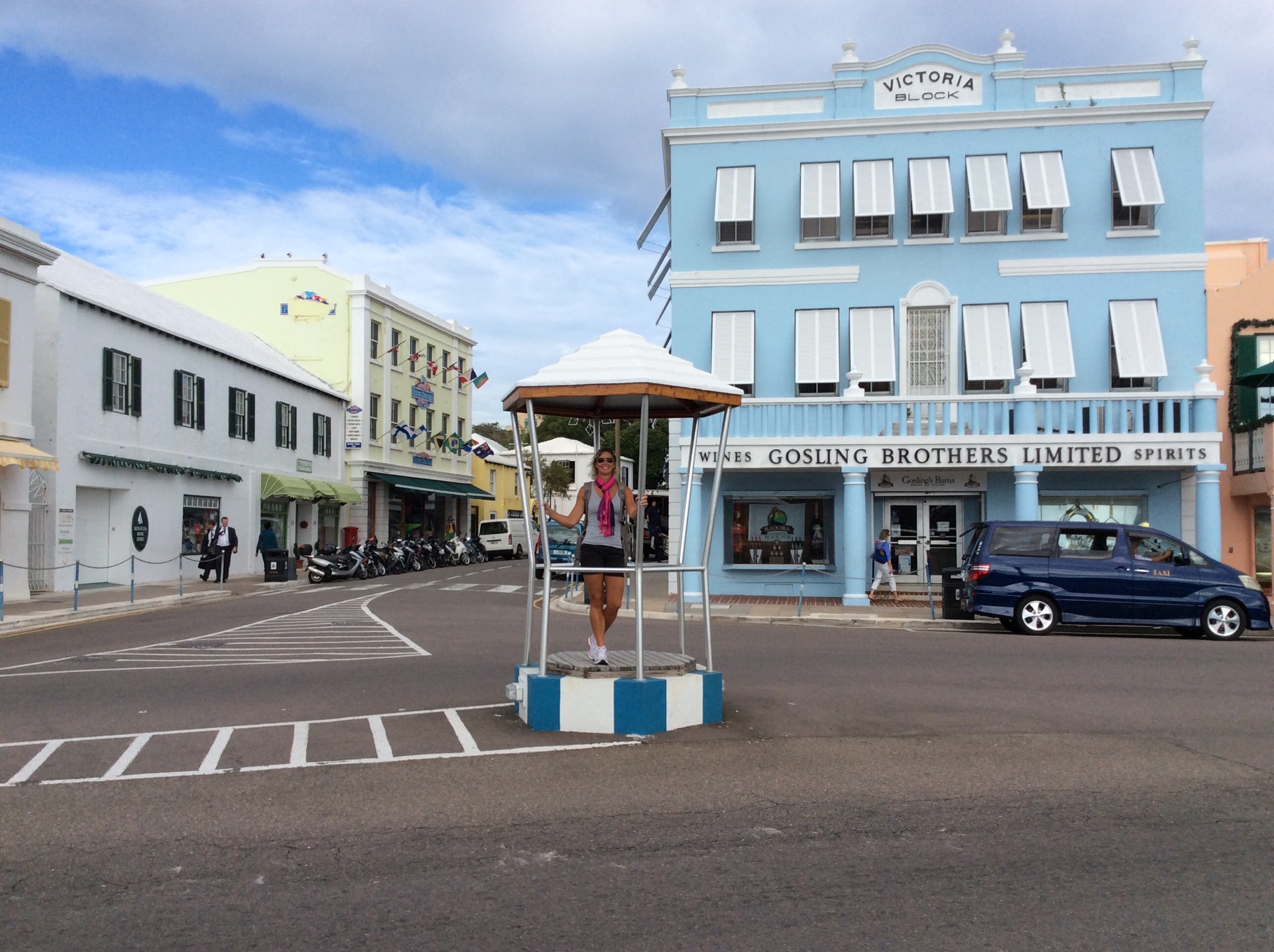
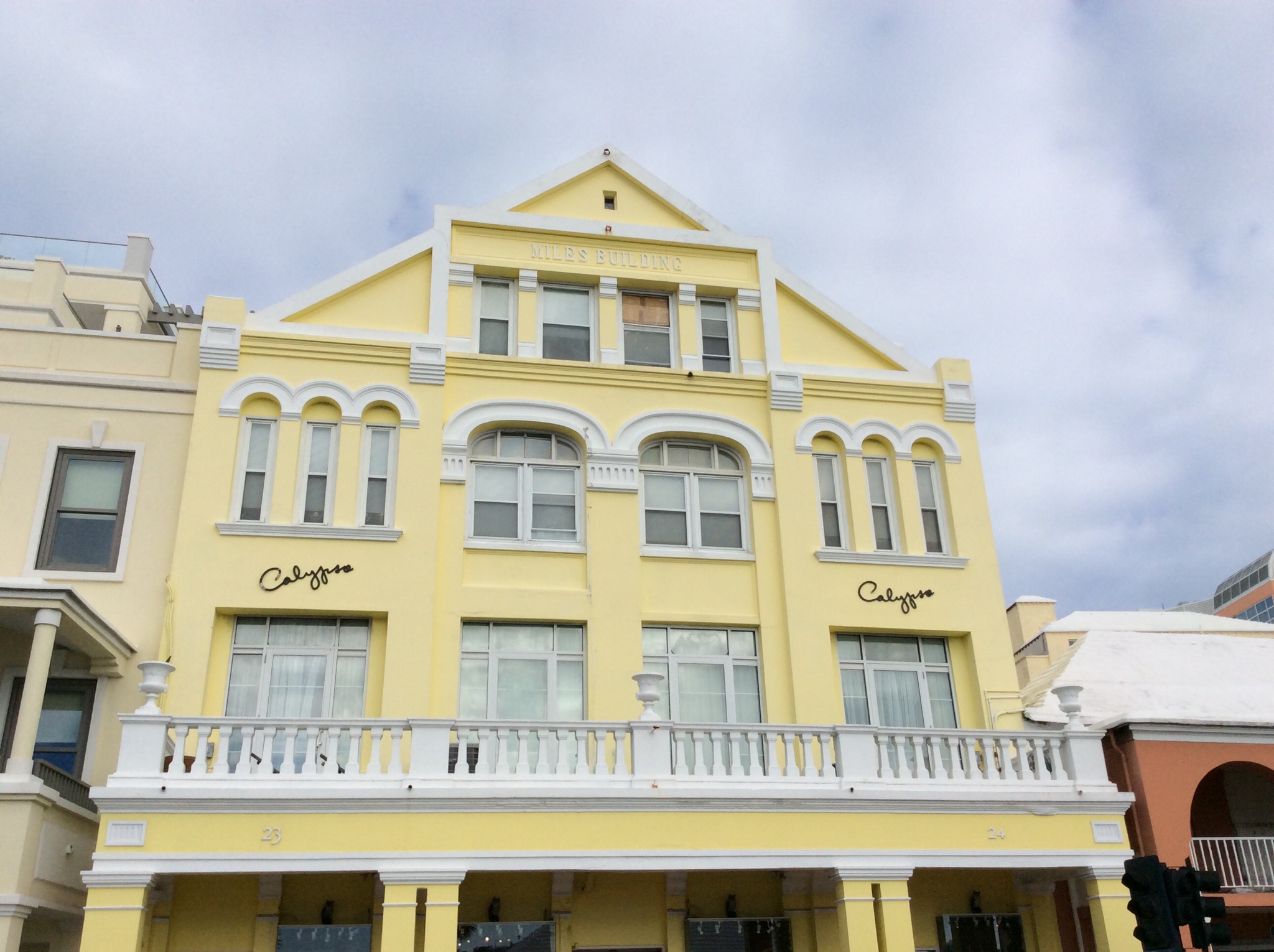
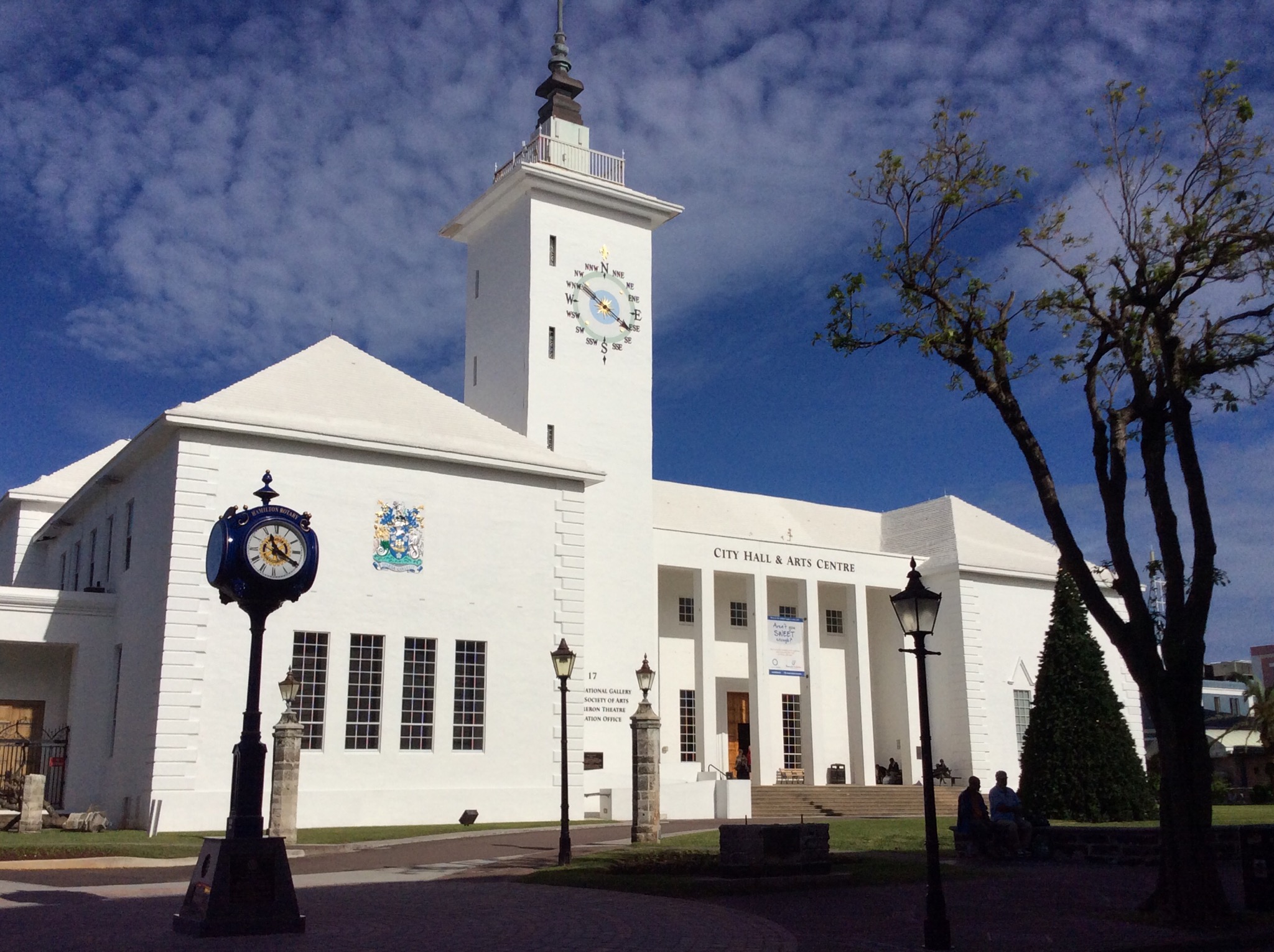
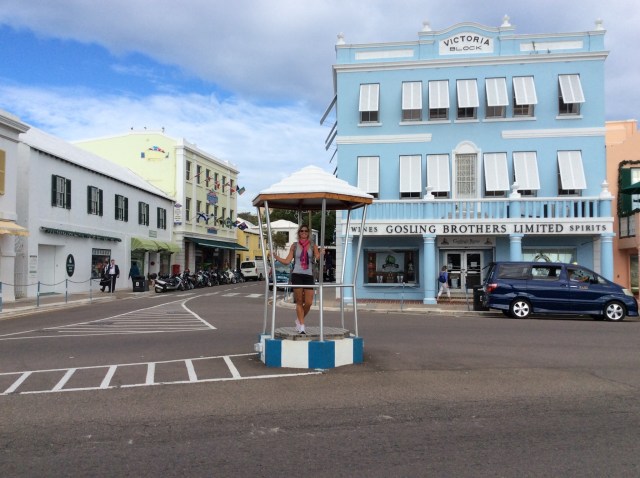
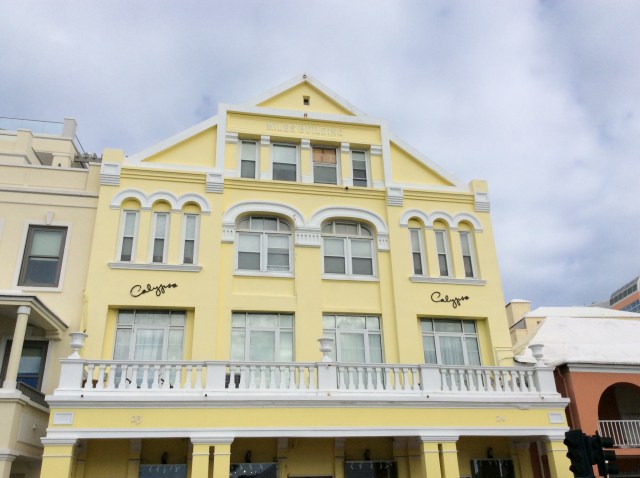
On the first day we got a day pass for the buses and ferries. First up we took the ferry across to Hamilton which is the capital of Bermuda. We were really impressed with the friendliness of the locals. Everyone said hello and asked how you were and they were all so genuine. We really liked the architecture as well – lots of quaint and colourful buildings all over the island. The building roof’s are also unusual in that they are tiled with a concrete or plaster covering. This finishing adds protection against the storms and high winds that sometimes plague the island.

We were studying the map and bus schedule on the ferry and one of the guys who works on the ferry came over and sat down to chat about the island. We had heard that Bermuda was very expensive and this guy confirmed this by telling us that there was very little property on the island that cost under USD1.2 million. He also said to be above the poverty line you had to be earning at least USD70,000. Almost everything is imported which adds to the expensive nature of everything. The local currency is the Bermudian Dollar which is valued at approximately 1:1 with the US Dollar.

Bermuda’s economy is based on offshore insurance and reinsurance, and tourism, the two largest economic sectors. Bermuda had one of the world’s highest GDP per capita for most of the 20th century and several years beyond. Recently, its economic status has been affected by the global recession, however, the people of Bermuda enjoy a high standard of living.

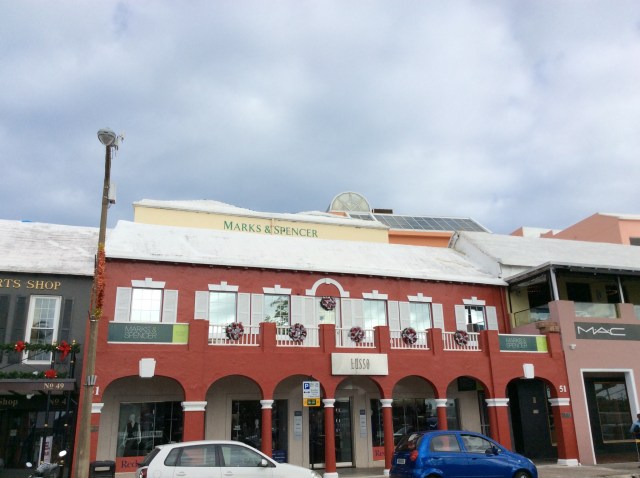
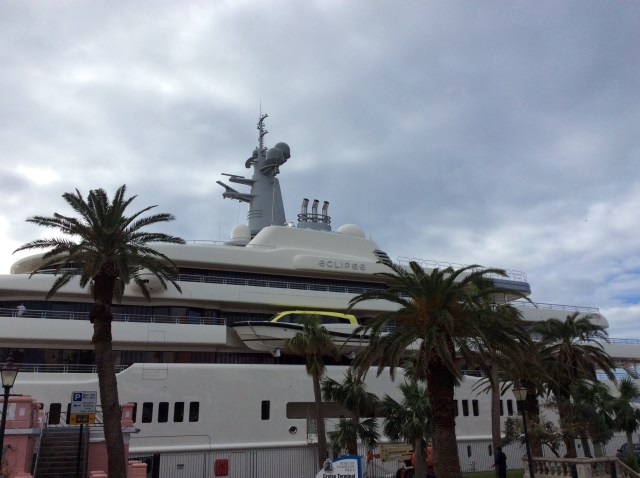
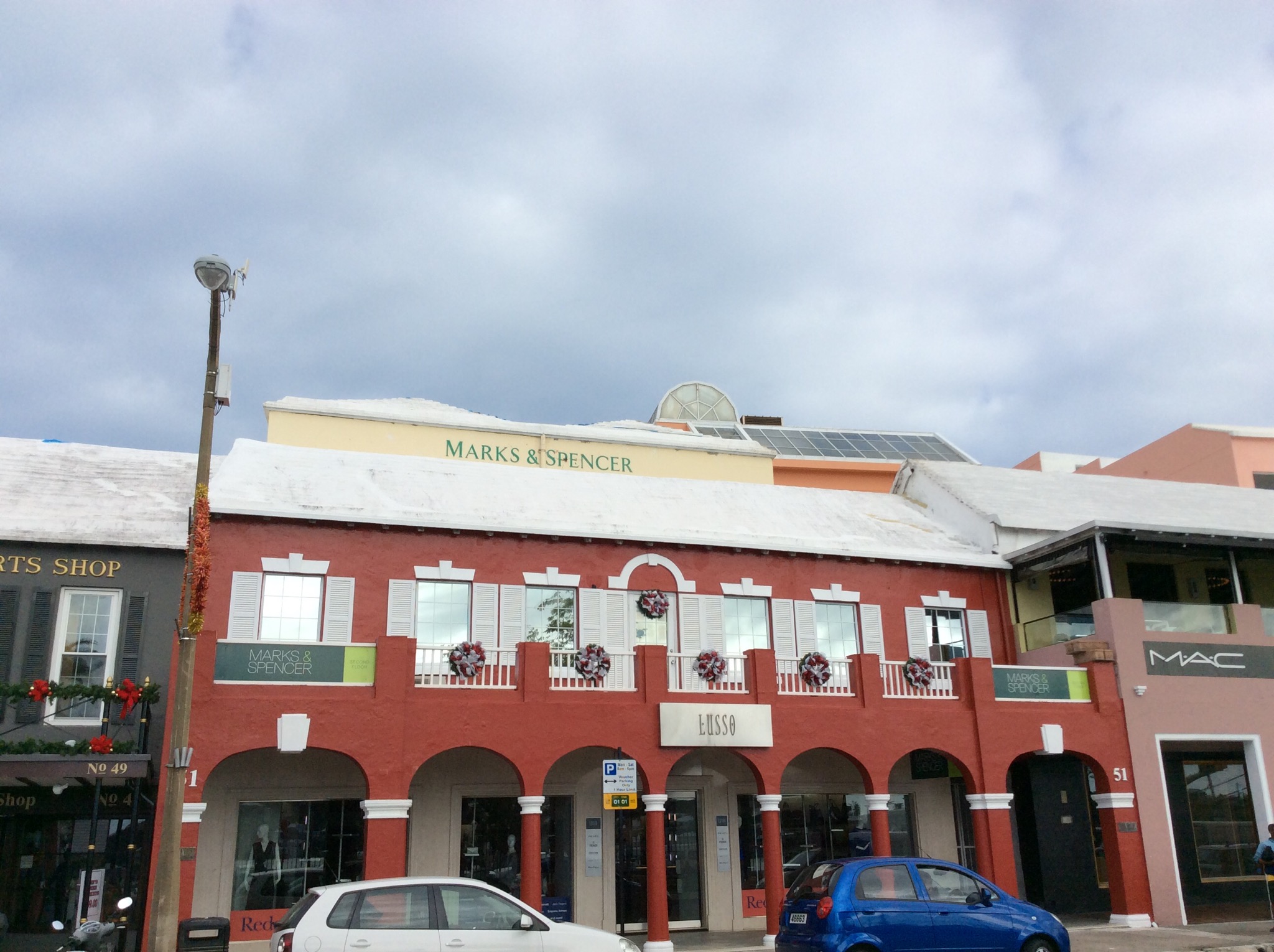
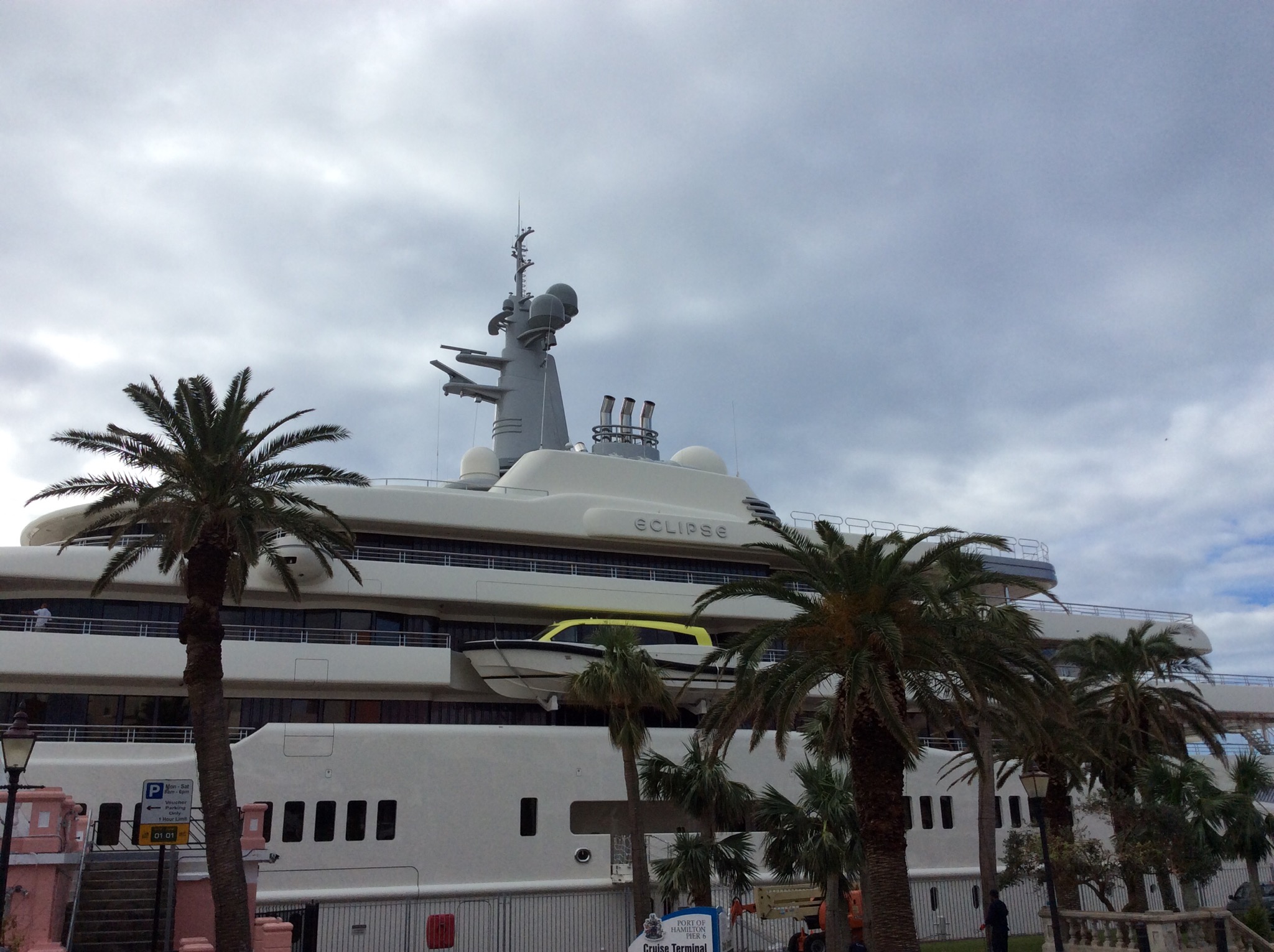
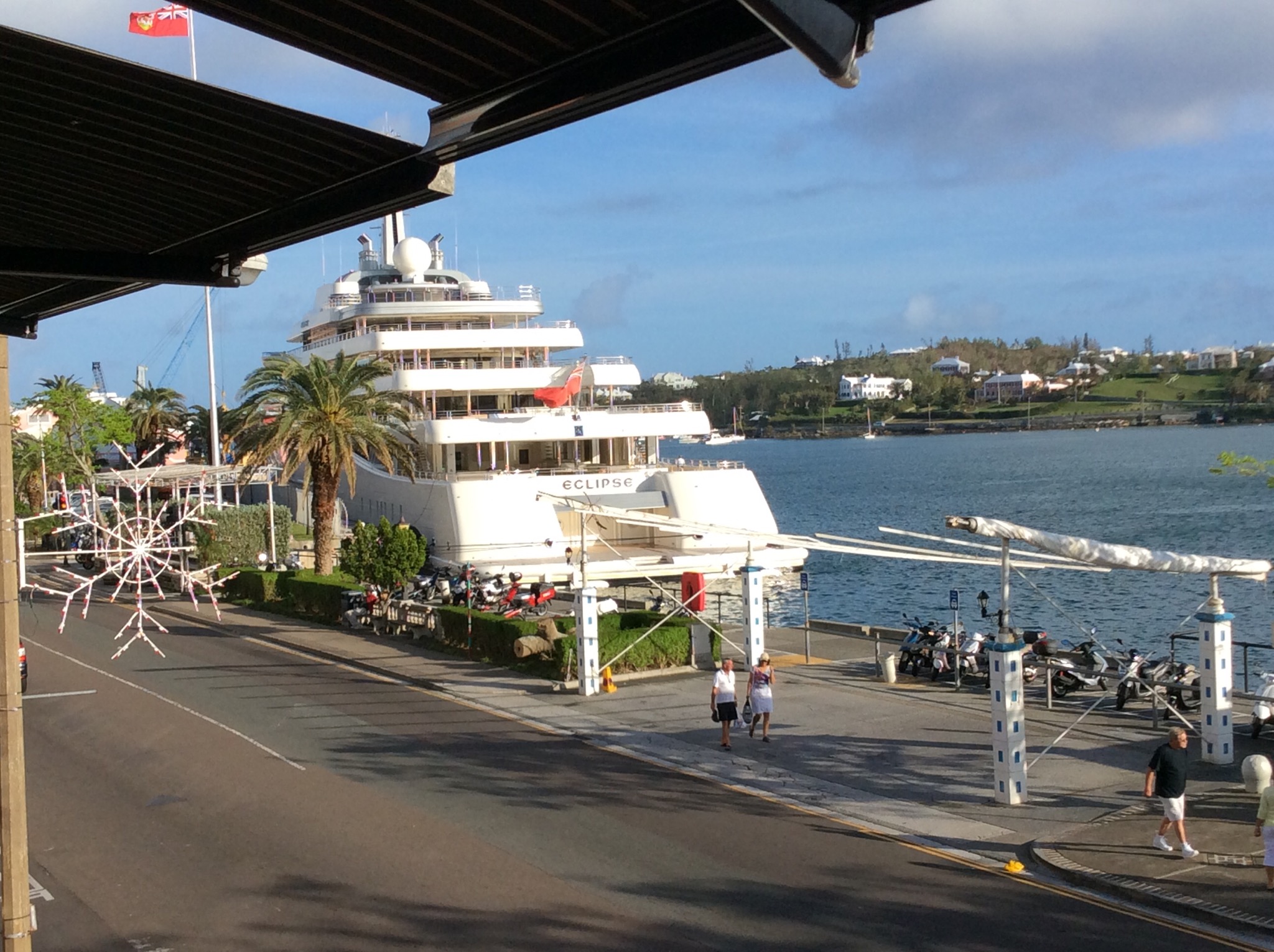
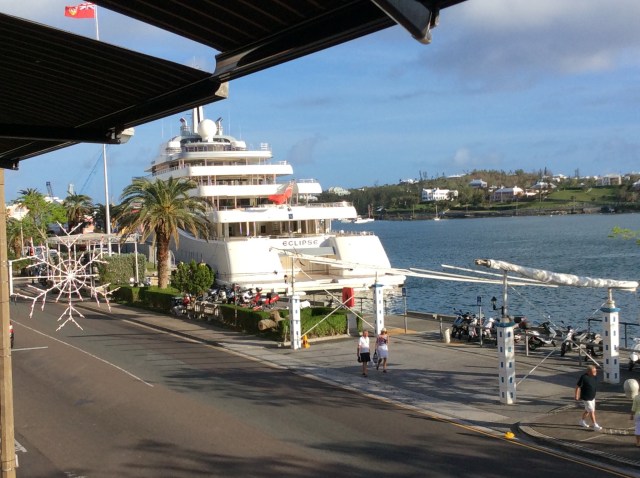
We had a wander along the waterfront in Hamilton which is called Front St where the Chelsea Football Club owner Roman Abramovich has one of his super yachts, Eclipse moored – it was huge. They have some lovely shops and they wouldn’t be a British Overseas Territory without Marks & Spencer. Apart from Marks & Spencer I found it hard to comprehend that the country was British as the people were all dark skinned and spoke with American like accents. The island actually reminded me of an upscale Fiji or Rarotonga.
IMG_1943-0.JPG

IMG_1946-0.JPG

IMG_1947-0.JPG

IMG_1950-0.JPG

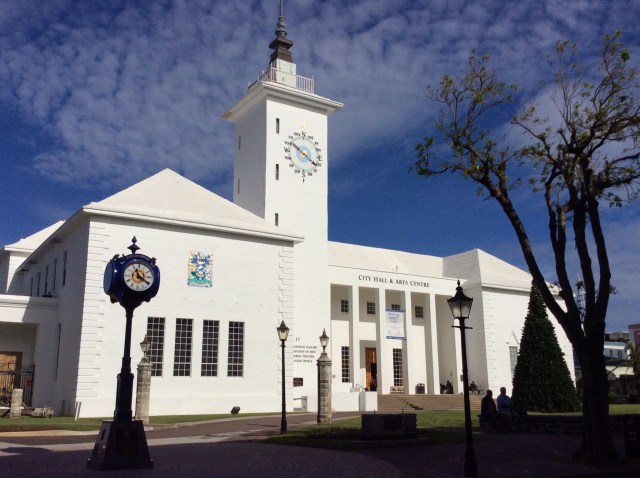
We walked up to the bus station which was next to the City Hall. We were heading to St George. The island has these pink buses which go all over the island – we learnt quickly that the bus drivers think they are driving in the Formula One. The taxi driver we spoke to on our second day on the island said didn’t you see the t-shirts that said “I survived the Bermuda Buses” – definitely summed it up.
IMG_1955.JPG

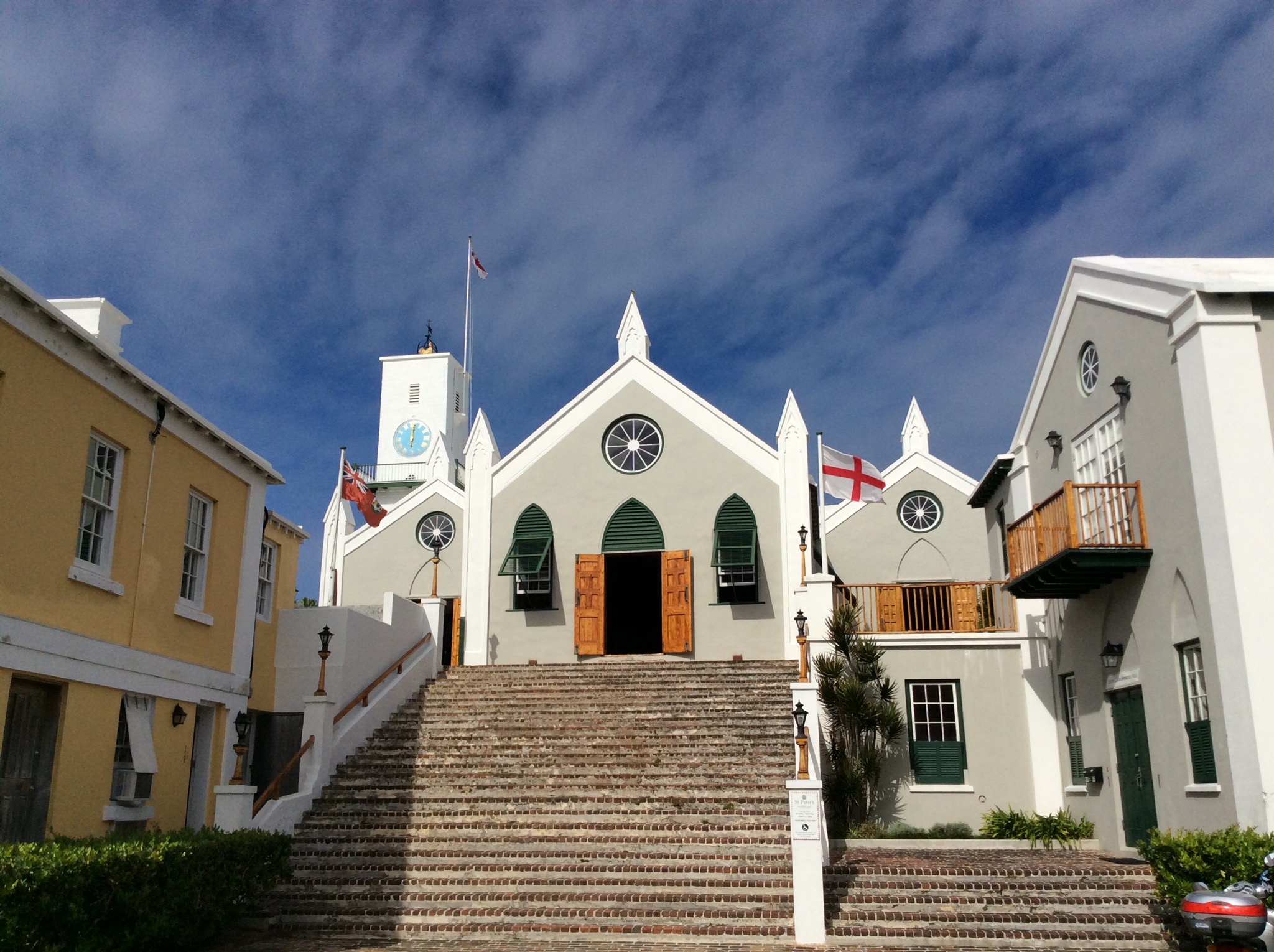
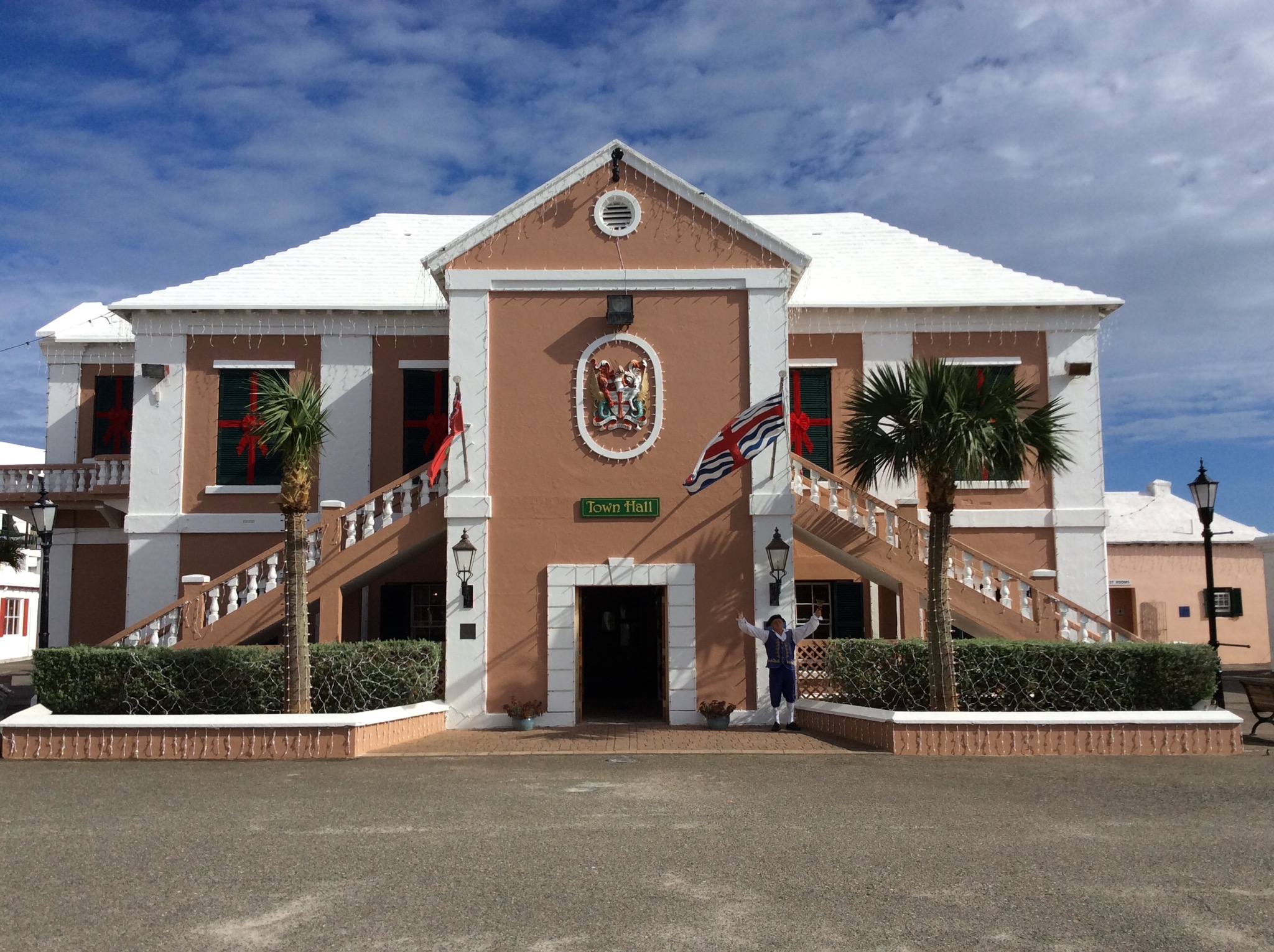
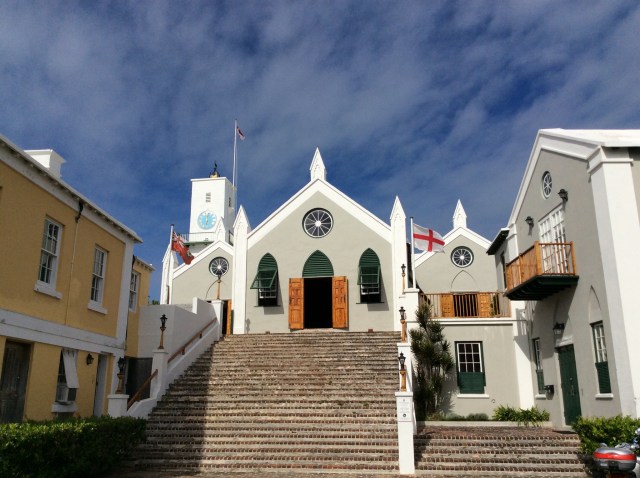
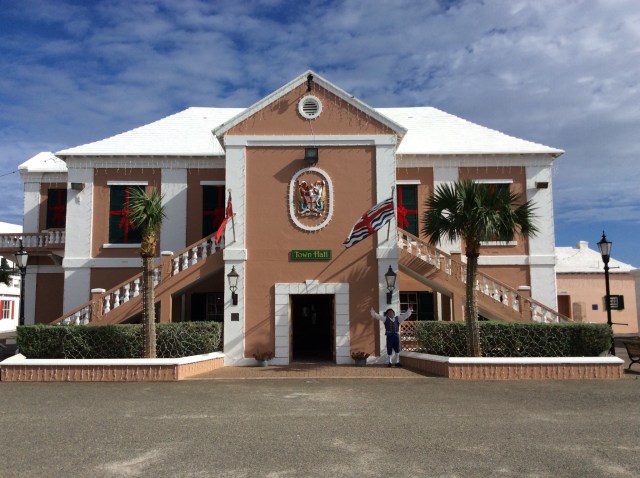
St George used to be the capital of Bermuda. It is a UNESCO World Heritage site and there are many remnants of the island’s involvement in the American Civil War. We went to King’s Square which is the social centre of St George and saw the Town Hall which was built in 1782.
IMG_1957.JPG

IMG_1958.JPG

IMG_1959.JPG

IMG_1960.JPG

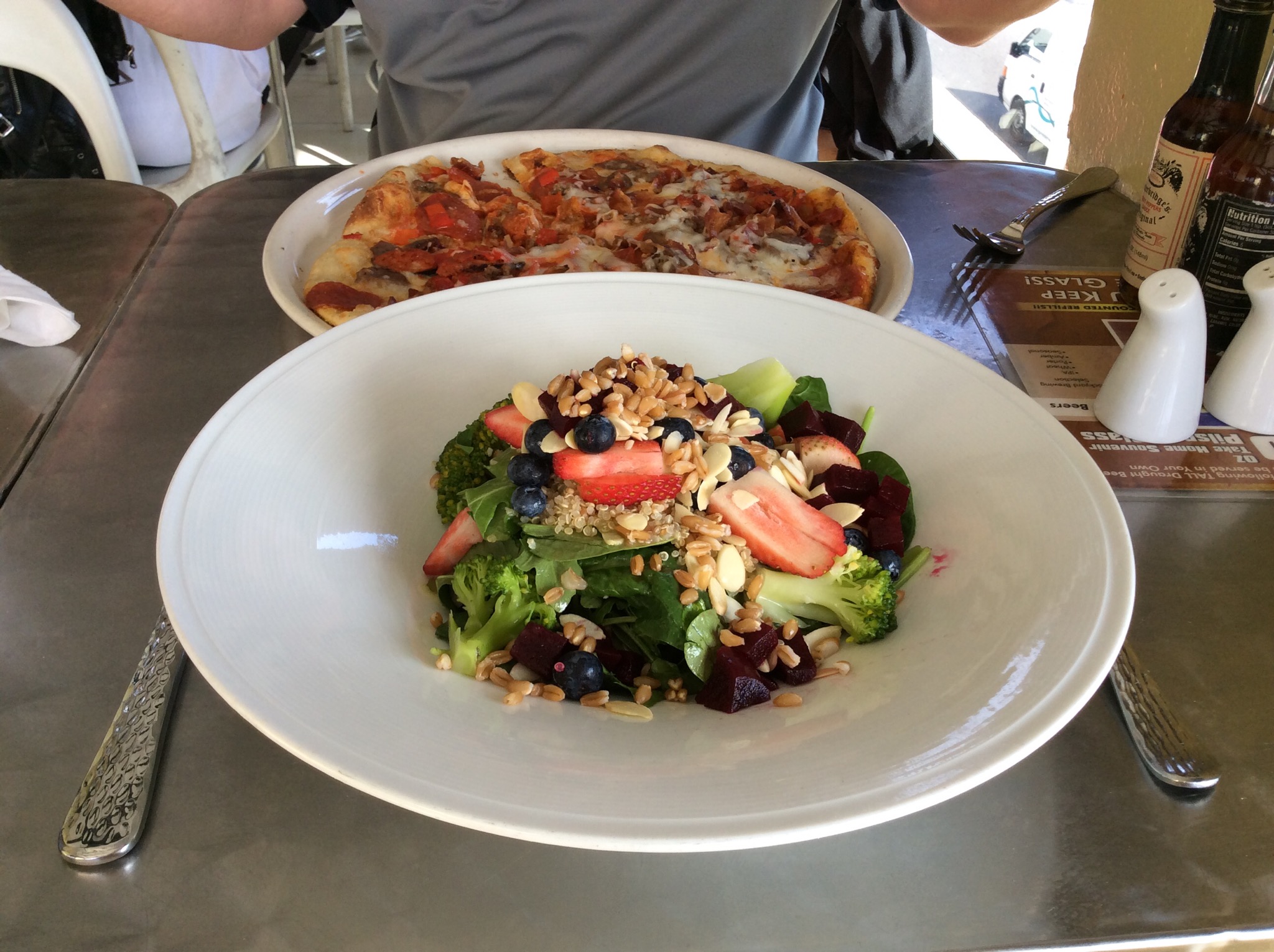
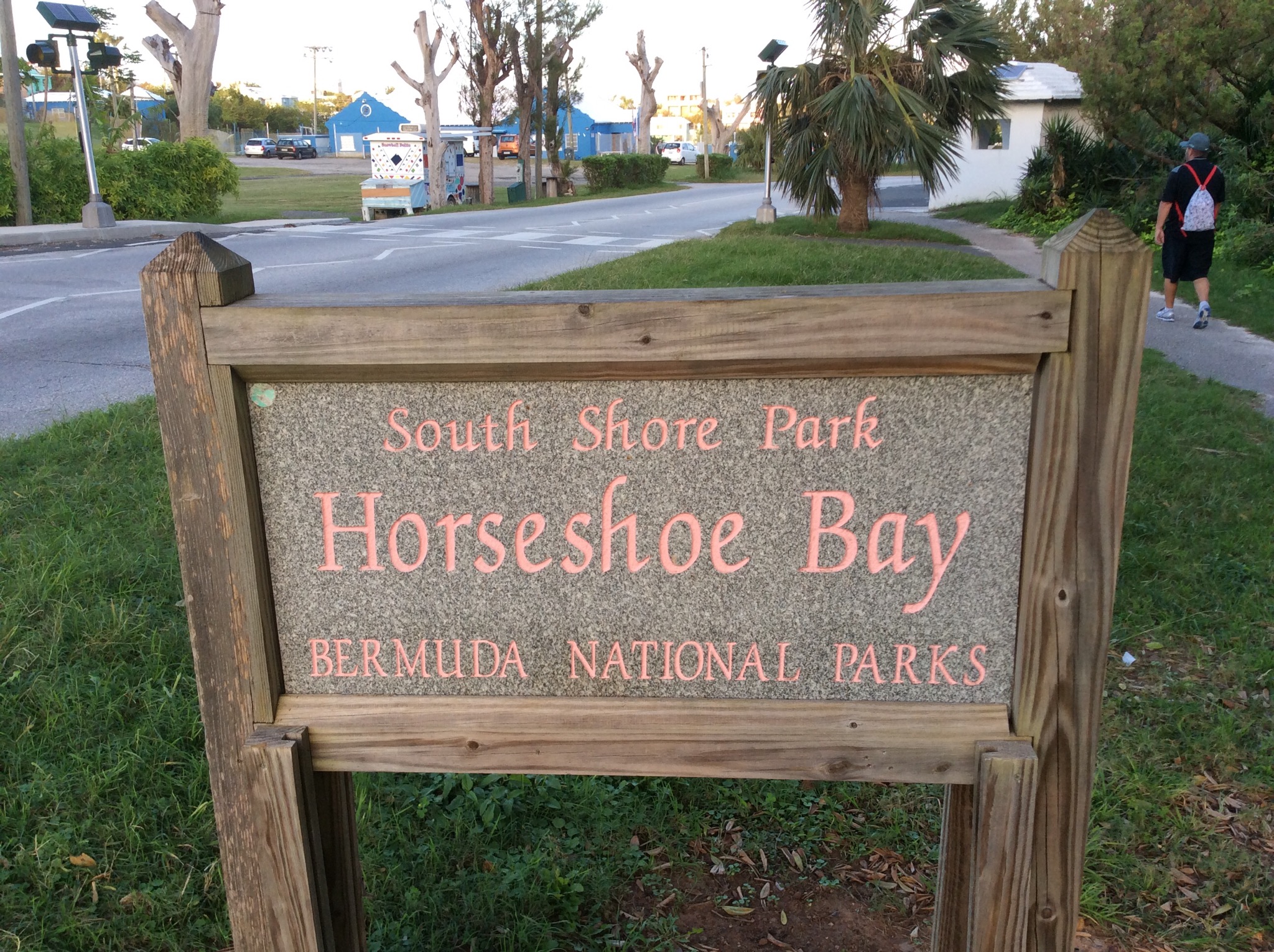
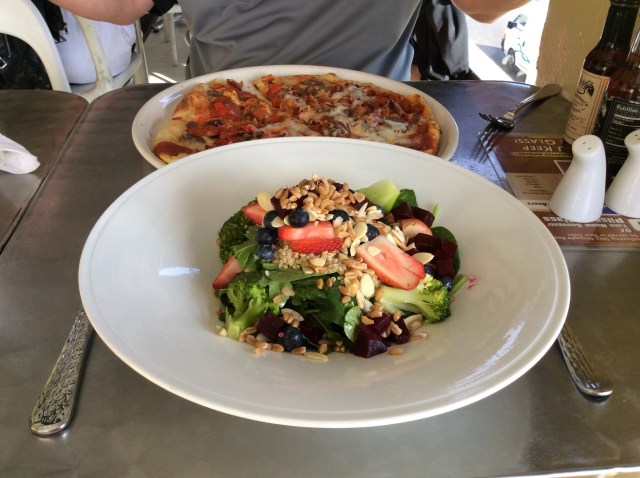
After St George we caught the bus back to Hamilton where we had lunch at the Pickled Onion. The menu was extensive and we enjoyed a nice lunch overlooking the water. Back on the bus after lunch to check out one of the south shore beaches – Horseshoe Bay. The colour of the water is amazing and we enjoyed our walk along the beach. Apparently the sea temperature is about 25 degrees and there were a few people out swimming. Back to the bus stop to catch the bus back to the ship.
IMG_1961.JPG

IMG_1962.JPG

IMG_1970.JPG

IMG_1963-0.JPG

IMG_1967.JPG

Bermuda lies about 600 nautical miles off the east coast of the US. “The Bermudas” are actually a group of approximately 180 islands, with the seven largest islands connected by causeways and bridges. At the core the islands are volcanic. The land above sea level is limestone formed over long centuries by coral and crushed sea shells. The ruggedly elegant limestone adds a wonderful (and practical) character to the style of the island’s architecture.

Bermuda has been on navigational maps of the new world since the 1500’s but none of the European powers exploring the Americas thought of settlement until the English in the early 1600’s. Well marked charts were obviously of little help over the centuries to the hundreds of ships which met their doom upon the treacherous reefs that surround Bermuda. Today the misfortune of the early sailors works to the islands advantage. The multitude of shipwrecks, together with having the northernmost coral reefs in the Atlantic, gives Bermuda some fantastic sites for snorkelling and SCUBA diving.

Following the US Civil War, Bermuda was growing and exporting a lot of vegetables to US markets in New York; among the best and most popular exports were onions. All was going smoothly and profitably until 1898 when some Texans got hold of a packet of onion seed from Bermuda. The entrepreneurial Texans registered the name Bermuda Onions and started growing and exporting them all over the US.

In the best English tradition, if it is 4pm in Bermuda it is time for Tea. Nearly 5,000 years after the Chinese first boiled the little green leaves, tea finally reached England in the mid 1600’s (well after coffee). It quickly became one of the favourite drinks of the working class. The tradition of Afternoon Tea as it is known today is said to have started in the mid 1800’s with the Duchess of Bedford, one of the Ladies-in-Waiting to Queen Victoria. On a stronger note, locally produced Black Seal Rum is an island favourite. When the rum is mixed with ginger beer soda you have the popular “Dark & Stormy.” Another popular mixed drink is the Bermuda Rum Swizzle. This cocktail combines rum, fresh fruit juice, bitters for the snap and grenadine syrup for sweetness. The Bermuda Brewery Company brews some very good, dark, German-Pilsner style stout beers.

Bermuda is the northernmost point of the so-called Bermuda Triangle, a region of sea in which, according to legend, a number of aircraft and surface vessels have disappeared under supposedly unexplained or mysterious circumstances. The island is in the hurricane belt and prone to severe weather.

The Bermuda Triangle is a region of the Western Atlantic Ocean that has become associated with mysterious disasters. Also known as the Devil’s Triangle, the triangle shaped area covers about 440,000 square miles between the island of Bermuda, the coast of southern Florida, and Puerto Rico.

The sinister reputation of the Bermuda Triangle may be traceable to reports made in the late 15th century by navigator Christopher Columbus concerning the Sargasso Sea, in which floating masses of gulfweed were regarded as uncanny and perilous by early sailors; others date the notoriety of the area to the mid 19th century, when a number of reports were made of unexplained disappearances and mysteriously abandoned ships. The earliest recorded disappearance of a United States vessel in the area occurred in 1918, when the USS Cyclops vanished.

The incident that consolidated the reputation of the Bermuda Triangle was the disappearance in December 1945 of Flight 19, a training squadron of five US Navy torpedo bombers. The squadron left Fort Lauderdale, Florida, with 14 crewmen and disappeared after radioing a series of distress messages; a seaplane sent in search of the squadron also disappeared. Aircraft that have disappeared in the area since this incident include a DC-3 carrying 27 passengers in 1948 and a C-124 Globemaster with 53 passengers in 1951. Among the ships that have disappeared was the tanker ship Maine Sulphur Queen, which vanished with 39 men on board in 1963.

Books, articles, and television broadcasts investigating the Bermuda Triangle emphasise that, in the case of most of the disappearances, the weather was favourable, the disappearances occurred in daylight after a sudden break in radio contact, and the vessels vanished without a trace. However, sceptics point out that many supposed mysteries result from careless or biased consideration of data. For example, some losses attributed to the Bermuda Triangle actually occurred outside the area of the triangle in inclement weather conditions or in darkness, and some can be traced to known mechanical problems or inadequate equipment.

In the case of Flight 19, for example, the squadron commander was relatively inexperienced, a compass was faulty, the squadron failed to follow instructions, and the aircraft was operating under conditions of deteriorating weather and visibility and with a low fuel supply. Other proposed explanations for disappearances in the Bermuda Triangle include the action of physical forces known to science, a “hole in the sky”, an unusual chemical component in the region’s seawater, and abduction by extraterrestrial beings. Scientific evaluations of the Bermuda Triangle have concluded that the number of disappearances in the region is not abnormal and most of the disappearances have logical explanations. Paranormal associations with the Bermuda Triangle continue to persist in the public mind.

Posted in Oceania Cruises | Leave a comment

Santa Cruz de Tenerife, Spain – Oceania Cruises

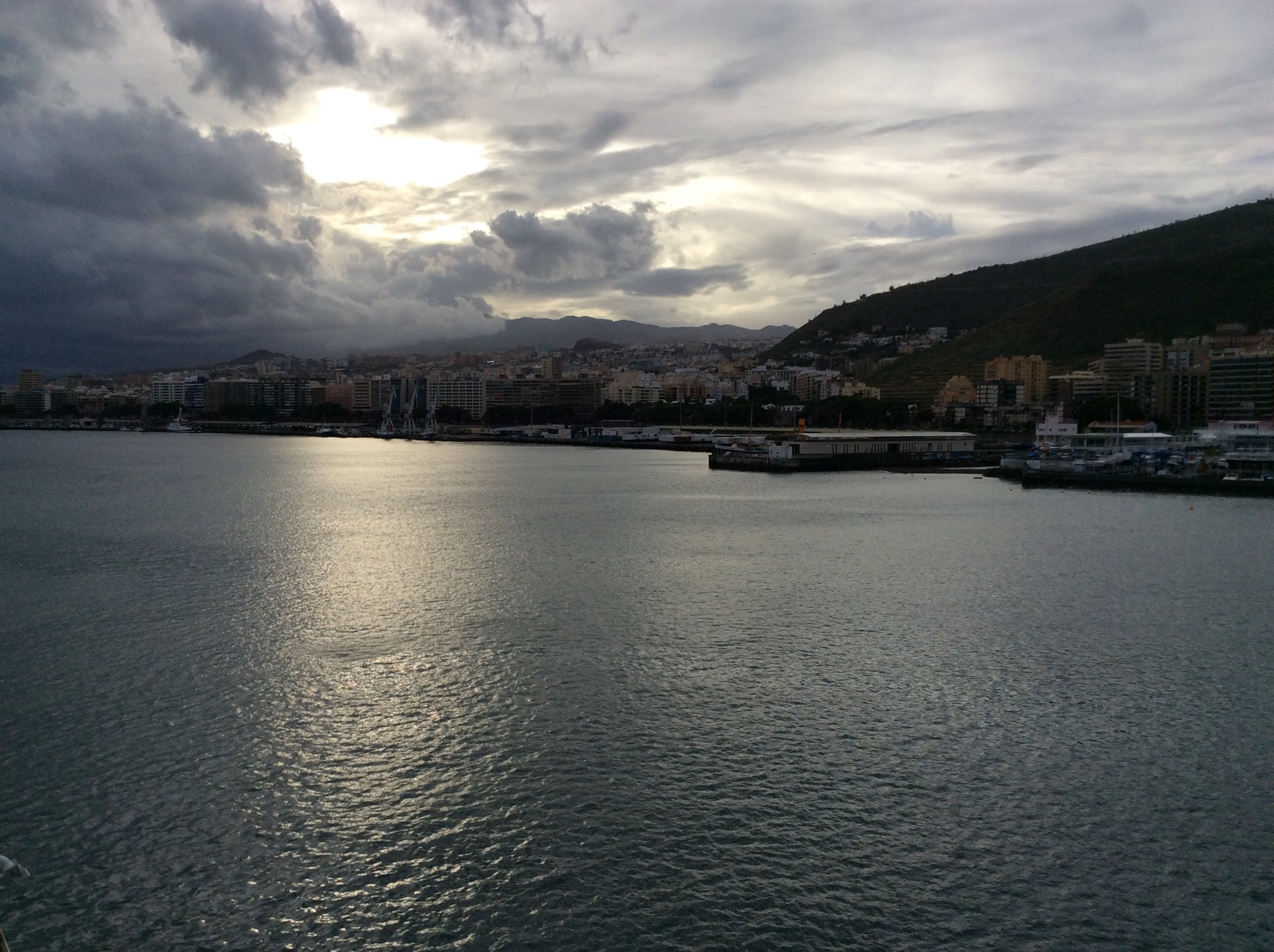
After a day at sea crossing the Straight of Gibraltar we were looking forward to exploring Tenerife. We had booked a tour to La Laguna a little town inland from the Port of Santa Cruz. We were also going to do a wine tasting and visit the wine museum. It wasn’t the best looking day weather wise but with my eternal optimism I thought it would clear up. As I came down the stairs from the gym I heard one of the ship’s officers on the phone and he was saying something about all tours being cancelled. I mentioned it to Steve but thought I may have misheard so we continued to get ready as if everything was on track.

As we were going to breakfast they announced over the loud speaker that the Government had in fact cancelled all tours on the island that day. They didn’t give any explanation so we were a bit disappointed and cursed the Spanish Government. The weather at this stage was still a bit bleak but looked to be clearing. We decided to go ashore anyway and explore the town – although overcast it never rained again all day. Steve had overheard some people saying that apparently the roads on the island were not that good and with all the rain they were too dangerous for the tours to proceed. I had a look on the internet and there was an article about the deluge of rain the island was expecting overnight which didn’t quite materialise. The Government obviously cancelled the tours based on the original forecast which did sound quite dire.

Update on the cancelled tour scenario – we watched the Q & A session with the ship’s Captain yesterday and he said about a month ago two cruise ship passengers died on the island as a result of bad weather so perhaps we can understand their conservatism : )

Santa Cruz de Tenerife is the capital (jointly with Las Palmas) of the Canary Islands, the capital of Province of Santa Cruz de Tenerife, and the island of Tenerife. Santa Cruz has a population of 206,593 within its administrative limits. The urban zone of Santa Cruz extends beyond the administrative city limits with a population of 507,306. This is the main city on the island of Tenerife with a population of nearly 1 million.

Located in northeast quadrant of Tenerife, about 210 kilometres (130 mi) off the northwestern coast of Africa within the Atlantic Ocean. Between the 1833 territorial division of Spain and 1927 Santa Cruz de Tenerife was the sole capital of the Canary Islands, when a decree ordered that the capital of the Canary Islands be shared, as it remains at present. The port is of great importance and is the communications hub between Europe, Africa and Americas, with cruise ships arriving from many nations. The city is the focus for domestic and inter-island communications in the Canary Islands.

The city is home to the Parliament of the Canary Islands, the Canarian Ministry of the Presidency (shared on a four-year cycle with Las Palmas), one half of the Ministries and Boards of the Canarian Government, (the other half being located in Gran Canaria), the Tenerife Provincial Courts and two courts of the Superior Court of Justice of the Canary Islands. There are several faculties of the La Laguna University in Santa Cruz, including the Fine Arts School and the Naval Sciences Faculty. Its harbour is one of Spain’s busiest; it comprises three sectors. It is important for commercial and passenger traffic, as well as for being a major stopover for cruisers en route from Europe to the Caribbean.

In 2012, the British newspaper “The Guardian” included Santa Cruz de Tenerife in the list of the five best places in the world to live along with the north coast of Maui, Hawaii; Sankt Paulidistrict in Hamburg; Cihangir district in Istanbul, and Portland, Oregon (United States).

The Canary Islands, are a Spanish archipelago located just off the northwest coast of mainland Africa, 100 kilometres (62 miles) west of the southern border of Morocco. The Canaries are one of Spain’s 17 autonomous communities and are among the outermost region of the European Union proper. The islands include (from largest to smallest): Tenerife, Fuerteventura, Gran Canaria, Lanzarote, La Palma, La Gomera, El Hierro, La Graciosa, Alegranza, Isla de Lobos, Montaña Clara and Roque del Oeste.

The archipelago’s beaches, climate and important natural attractions, especially Maspalomas in Gran Canaria and Teide National Park and Mount Teide (a World Heritage Site) in Tenerife (the third tallest volcano in the world measured from its base on the ocean floor), make it a major tourist destination with over 12 million visitors per year, especially Tenerife, Fuerteventura, Gran Canaria and Lanzarote. The islands have a subtropical climate, with long warm summers and moderately warm winters. Due to their location above the temperature inversion layer, the high mountains of these islands are ideal for astronomical observation. For this reason, two professional observatories, Teide Observatory on the island of Tenerife and Roque de los Muchachos Observatory on the island of La Palma, have been built on the islands.

During the times of the Spanish Empire the Canaries were the main stopover for Spanish galleons on their way to the Americas because of the prevailing winds from the northeast.

IMG_1931-0.JPG

IMG_1934.JPG

Posted in Oceania Cruises | Leave a comment

Our Second Atlantic Crossing – Oceania Cruises

After we left Santa Cruz de Tenerife we had five days ahead of us crossing the Atlantic Ocean. This was our second Atlantic crossing this year – the first one only took 8 hours though! We were quite looking forward to these five days at sea – we had stocked our kindles with books and downloaded some programs to watch on the laptop. I had visions of it being quite cold outside but that didn’t worry me given we were heading for the Caribbean – plenty of time for warm weather there.

That first night on the boat after leaving Tenerife was pretty rough and we were rocked and rolled around in our bed for most of the night. We both woke up and I must admit it was a bit disconcerting – there were some quite loud noises as a result of the boat hitting the waves. It wasn’t much better by the morning and there was no way I was in any state to go to the gym. I ended up ordering some yoghurt and fruit for breakfast which I ate at lunchtime and we stayed in bed all day. I felt rather ill and bought that breakfast up late afternoon! Steve hadn’t eaten all day so we went down to get some dinner and spoke to some of the crew and other passengers – apparently it had been a very quiet day on the ship. We got some sea sickness tablets from reception and they worked instantaneously.

Day two wasn’t quite as bad and we managed to get out and about. Day three was a beautiful day with the temperature reaching 27 degrees so we spent the day on the deck. Steve played a few games of table tennis with his new found friends. I enjoyed the sunshine and topped up my tan. I even hopped in the pool which was mirroring the ocean – the water was whooshing in and out of the pool and causing mini waves – good fun. Day four had gone downhill again but wasn’t as bad as day one thank goodness.

We have only seen one other boat over the past five days and it was a freighter. The Captain of the ship did a Q & A session and one of the questions he was asked was about other ships on this route. Although this is the most travelled ocean (see below) he said on their radar they only picked up four other ships during this five days – this particular passage is mainly used by passenger ships and is not particularly busy.

Today is the end of day five and I am pleased to say it was sunny and calm again. The tan got another boost and Steve has spent most of the day playing table tennis with the old fullas. One more night and we can say we survived – not sure if I would rush to cross the Atlantic by boat again but all’s well that ends well.

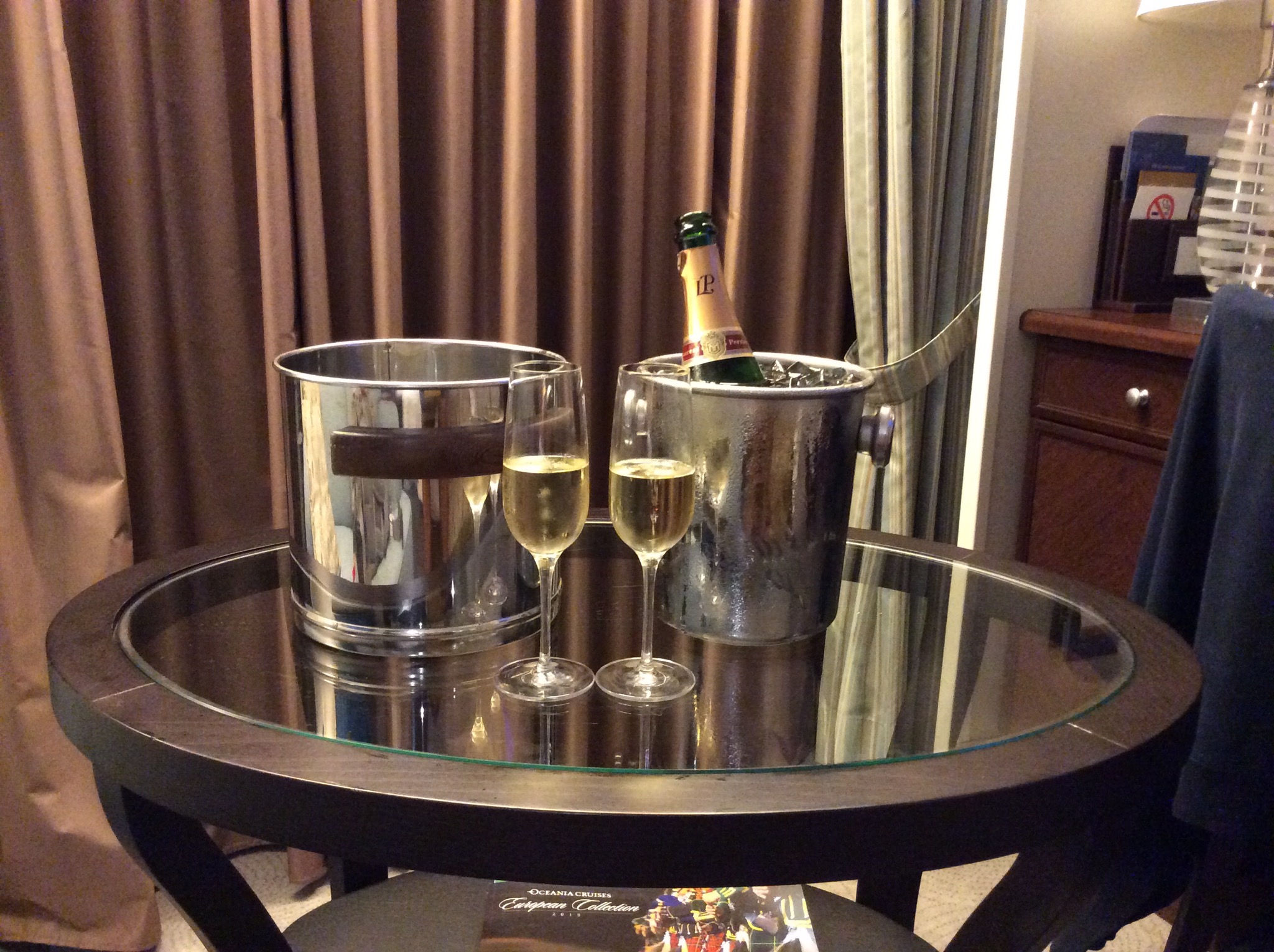
To celebrate our impending survival Steve decided we should have a bottle of the champagne we bought on board. He called room service and asked for some champagne glasses and ice. They turned up with the glasses and asked for our ice bucket so they could fill it up. Steve goes into the bathroom and gets what he is convinced is the ice bucket – I’m telling him the ice bucket is out in the main cabin by the fridge and he is saying no, no it is in here. He comes out of the bathroom with the stainless steel rubbish bin. What a donut! He thought it was quite a clever design feature – building the ice bucket into the bathroom. He really does think outside the square doesn’t he?

IMG_1937.JPG

IMG_1938.JPG

Update as of 9am on Tuesday the 25th November – we are back on terra firma : )

IMG_1942.JPG

The Atlantic Ocean, the second largest of the earth’s four oceans is the most heavily travelled. Only the Pacific Ocean is larger covering about twice the area of the Atlantic Ocean. The Atlantic is divided into two nominal sections – the North Atlantic which is north of the equator and the South Atlantic which is south of the equator. The ocean’s name is derived from Atlas, one of the Titans of Greek mythology.

The Atlantic Ocean is essentially an S shaped north-south channel, extending from the Arctic Ocean in the north to the Antarctic continent in the south and situated between the eastern coast of the American continents and the western coasts of Europe and Africa. The Atlantic Ocean proper has a surface area of about 82 million square kilometres. Including it’s marginal seas – the Gulf of Mexico, the Caribbean Sea, the Arctic Ocean, and the North, Baltic, Mediterranean and Black seas the total area is about 106 million square kilometres.

The Atlantic Ocean contains some of the world’s most productive fisheries, located on the continental shelves and marine ridges of the British Isles, Iceland, Canada (especially the Grand Banks off Newfoundland), and the northeastern United States. Herring, anchovy, sardines, cod, flounder and perch are the most commercial species. Tuna is taken off northwestern Africa and northeastern South America in increasing numbers. The unit catch per unit area is much higher in the Atlantic than in other oceans.

Actively mined mineral resources in the Atlantic include titanium, zircon, and monazite (phosphates of the cerium metals), off the eastern coast of Florida, and tin and iron ore, off the equatorial coast of Africa. The continental shelves and slopes of the Atlantic are potentially very rich in fossil fuels. Large amounts of petroleum are already being extracted in the North Sea and in the Caribbean Sea and Gulf of Mexico region; lesser amounts are extracted off the coast of Africa in the Gulf of Guinea.

IMG_4940.JPG

IMG_4942.JPG

IMG_4945.JPG

Posted in Oceania Cruises | 1 Comment

Cartagena and Malaga, Spain – Oceania Cruises

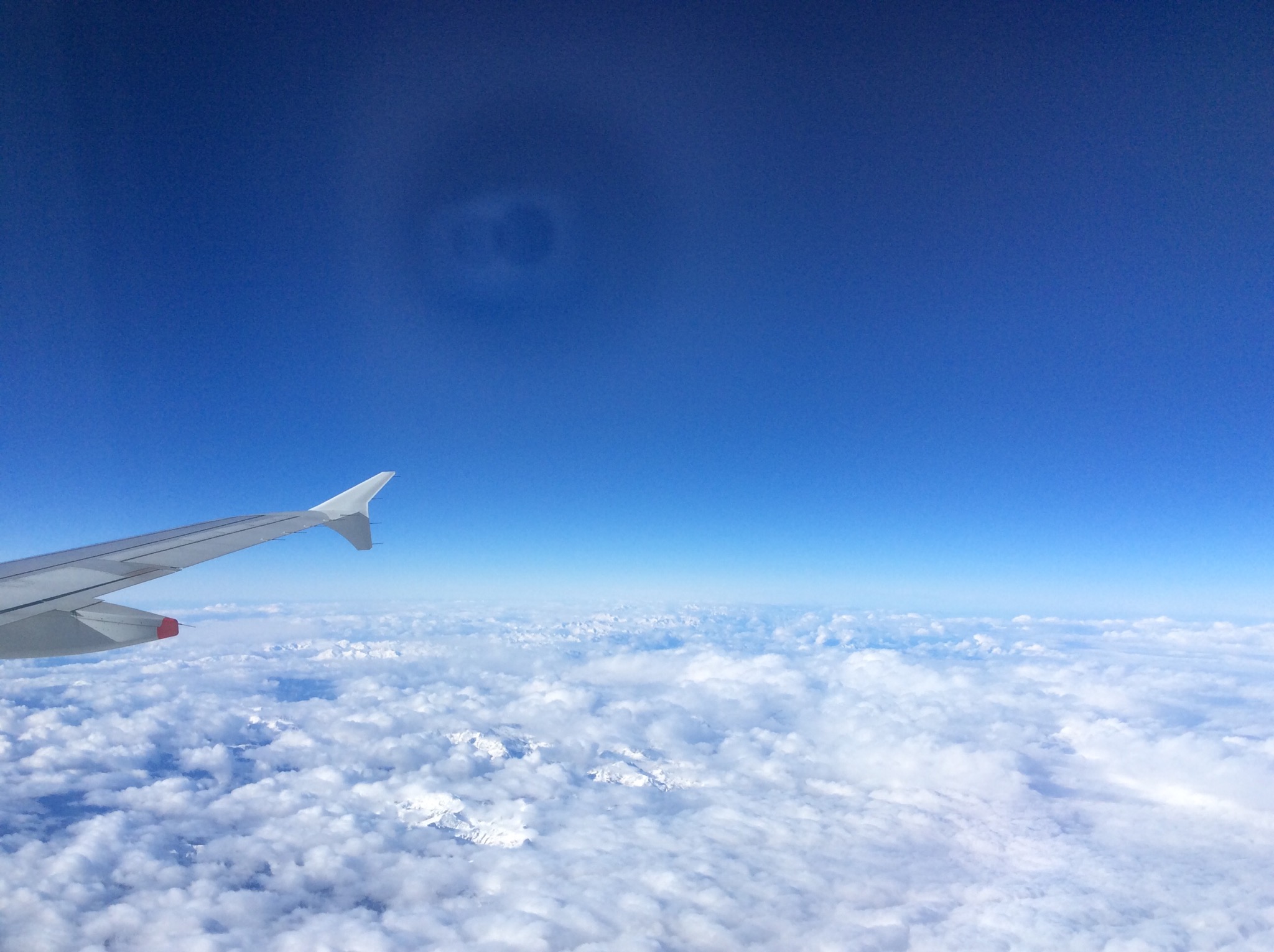
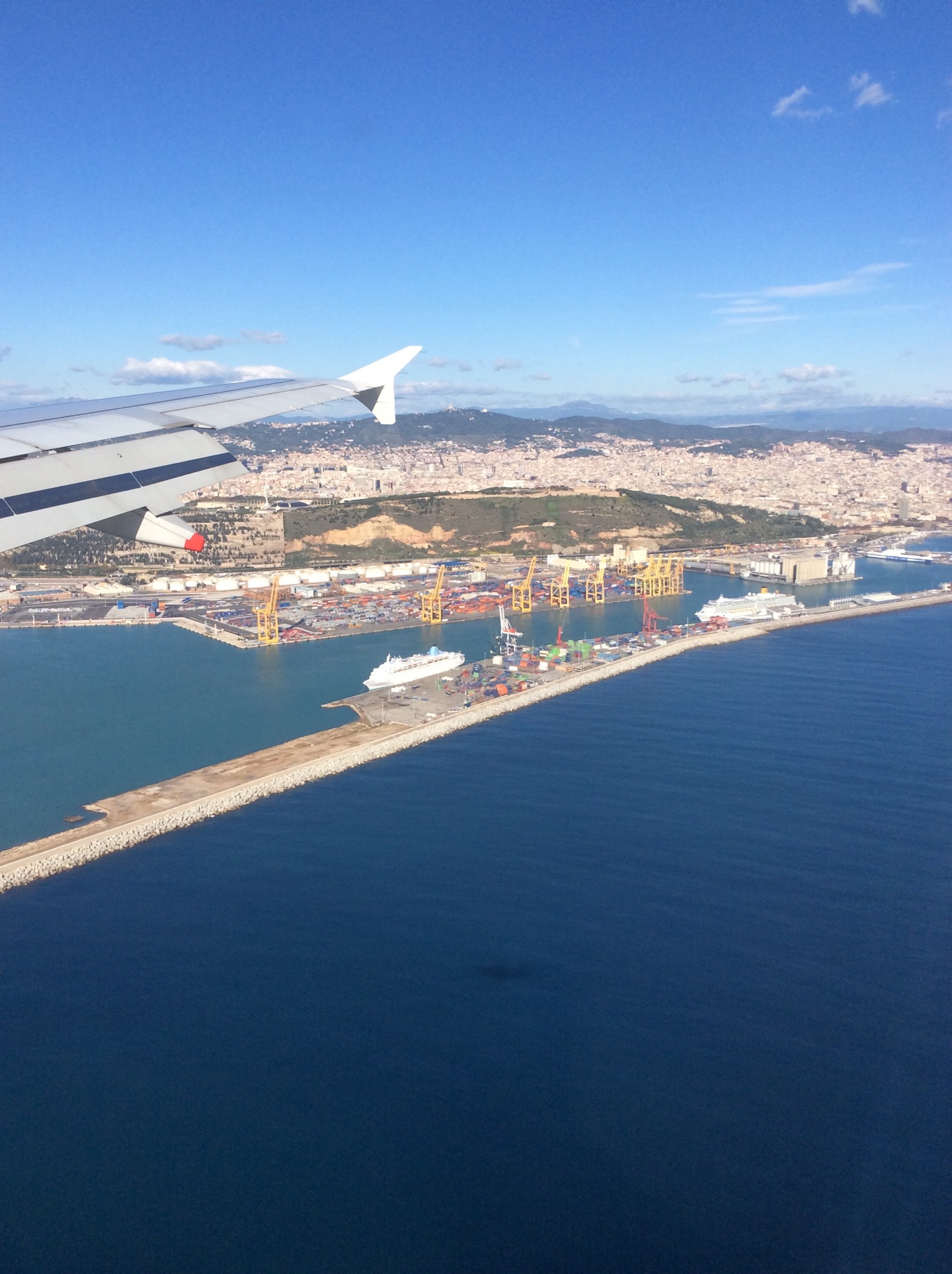
We left London early Saturday morning on a British Airways fight to Barcelona in Spain. We flew over the French Alps where we saw lots of snow but as we neared Spain the landscape changed quite dramatically.

IMG_1896.JPG

IMG_1910.JPG

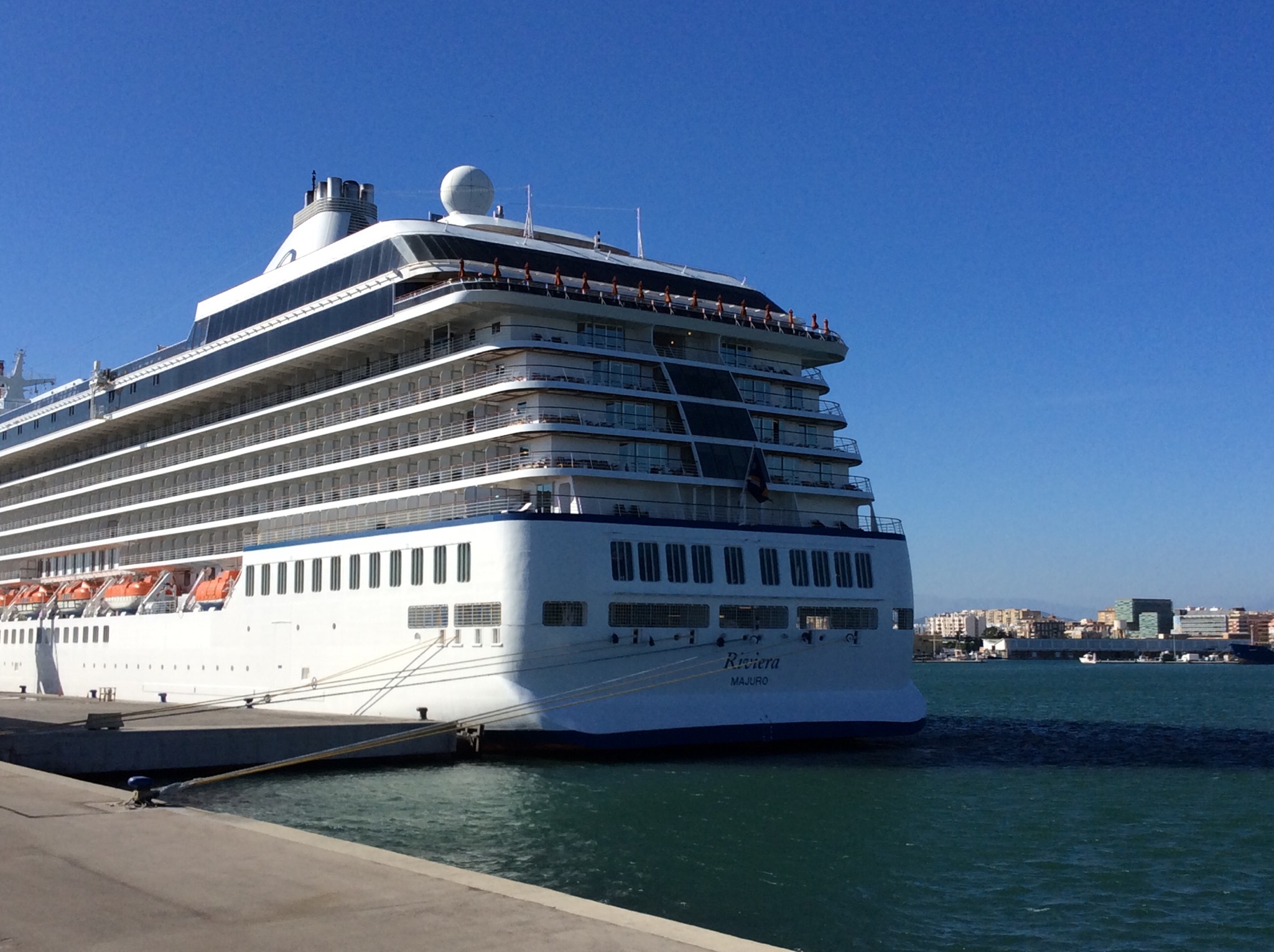
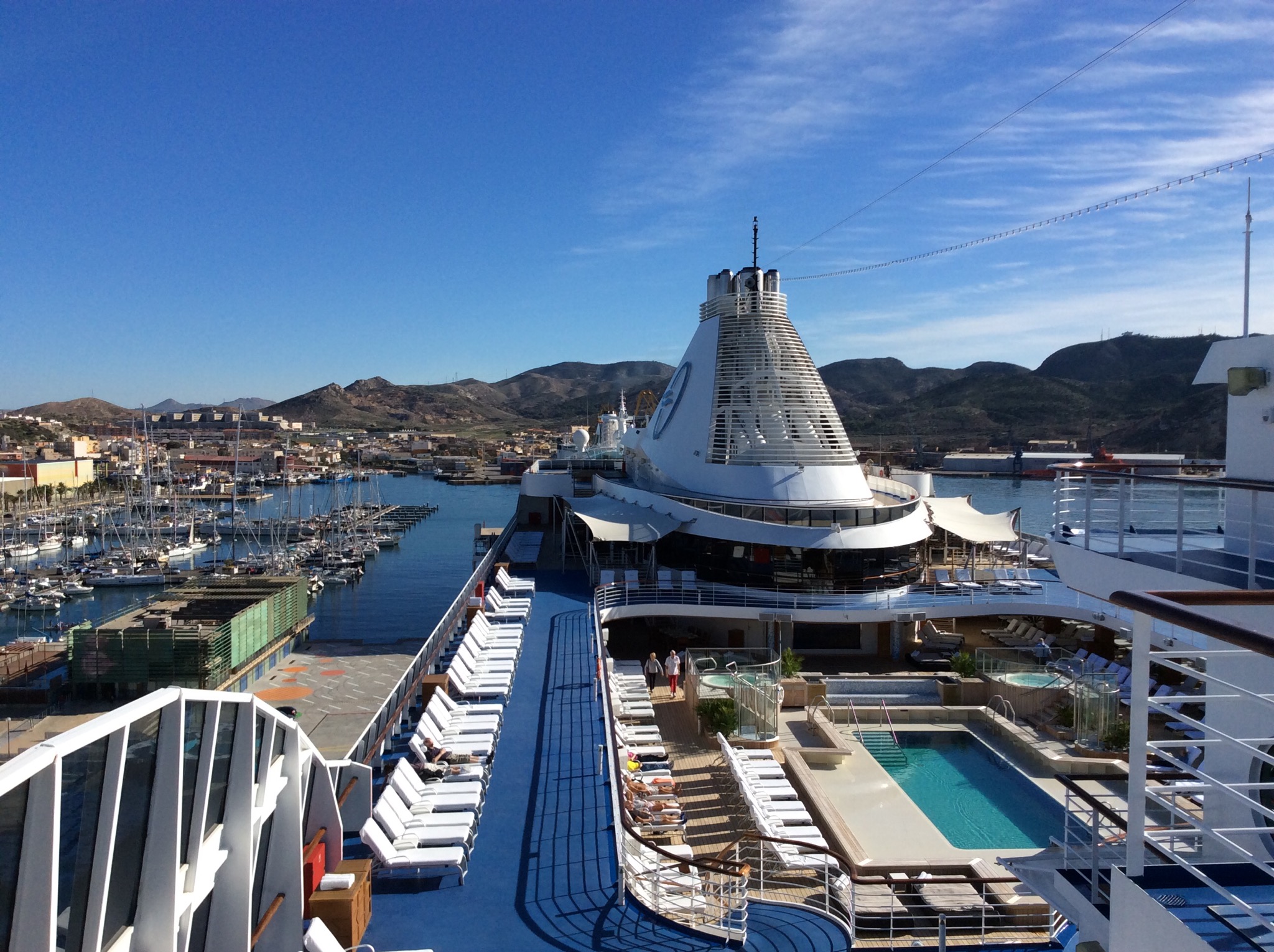
We boarded the Rivera, an Oceania Cruise Lines ship at the Port of Barcelona. This is the smallest of the cruise ships we have been on this year – they cater for 1,250 guests and about 800 staff. The cruise is going down the coast of Spain before cruising into the Atlantic to Santa Cruz in Tenerife and then making the five day Atlantic crossing. This will be our second Atlantic crossing this year – the first one only took 8 hours though – it was on a plane : )

IMG_1925.JPG

IMG_1927.JPG

First port of call was Cartagena, pronounced Cartahenya. We didn’t go ashore as it was a Sunday and everything was closed. We instead enjoyed a lovely day exploring the boat. Steve went along to the Table Tennis competition and befriended Bruce a 67 year old table tennis playing lover. Fortunately for Steve he had bought two good table tennis bats on board with him so lent Steve one. Apparently Steve is no good without the right equipment as the boys back home know : )

It was a lovey day so I could break the bikini’s out again.

Cartagena is a Spanish city and a major naval station located in the Region of Murcia, by the Mediterranean coast, south-eastern Spain. As of January 2011, it has a population of 218,210 inhabitants being the Region’s second largest municipality and the country’s 6th non-Province capital city. The metropolitan area of Cartagena, known as Campo de Cartagena, has a population of 409,586 inhabitants.

Cartagena has been inhabited for over two millennia, being founded around 227 BC by the Carthaginian Hasdrubal the Fair as Qart Hadasht. The city lived its heyday during the Roman Empire, when it was known as Carthago Nova (the New Carthage) and Carthago Spartaria, capital of the province of Carthaginensis. It was one of the important cities during the Umayyad invasion of Hispania, under its Arabic name of Qartayannat al-Halfa.

Much of the historical weight of Cartagena in the past goes to its coveted defensive port, one of the most important in the western Mediterranean. Cartagena has been the capital of the Spanish Navy’s Maritime Department of the Mediterranean since the arrival of the Spanish Bourbons in the 18th century. As far back as the 16th century it was one of the most important naval ports in Spain, together with Ferrol in the North. It is still an important naval seaport, the main military haven of Spain, and is home to a large naval shipyard.

The confluence of civilizations as well as its strategic harbour, together the rise of the local mining industry is manifested by a unique artistic heritage, with a number of landmarks such as the Roman Theatre, the second largest of the Iberian Peninsula after the one in Mérida, an abundance of Phoenician, Roman, Byzantineand Moorish remains, and a plethora of Art Nouveau buildings, a result of the bourgeoisie from the early 20th century. Cartagena is now established as a major cruiser destination in the Mediterranean and an emerging cultural focus.

IMG_1918.JPG

IMG_1919.JPG

Today we are in Málaga which is only an hour north of where we were staying in Sotogrande about a week ago. Another nice day although the wind has got up making it feel a bit chilly.

This morning in the gym I befriended Ken who is about 80 – he told me that he has never seen a woman doing full press ups before. Ken was also doing press ups although any good gym trainer would have been cringing at his form. He told me he had been to NZ a couple of times, the first time being when we held the America’s Cup – he was down there helping out with something.

At breakfast we then met a Canadian couple who had spent 15 summers in a row in NZ, mainly at Ohope Beach. They loved it and would join the local golf club every year. They said they are too old to travel that far now though. Are you seeing the trend re the ages of our fellow passengers? They are a bit younger than the ones on the Cunard Line and we’ve only seen one zimmer frame so far!

Málaga is a state and a municipality, capital of the Province of Málaga, in the Autonomous Community of Andalusia, Spain. With a population of 568,507 in 2010, it is the second most populous city of Andalusia and the sixth largest in Spain. The southernmost large city in Europe, it lies on the Costa del Sol (Coast of the Sun) of the Mediterranean, about 100 km (62.14 mi) east of the Strait of Gibraltar and about 130 km (80.78 mi) north of Africa.

Málaga enjoys a subtropical–mediterranean climate. It has one of the warmest winters in Europe, with average temperatures of 17 °C (62.6 °F) during the day and 7–8 °C (45–46 °F) at night in the period from December through February. The summer season lasts about eight months, from April to November, although in the remaining four months temperatures sometimes reach around 20 °C (68.0 °F).

Málaga’s history spans about 2,800 years, making it one of the oldest cities in the world. It was founded by the Phoenicians as Malaka about 770 BC, and from the 6th century BC was under the hegemony of Ancient Carthage. Then from 218 BC it was ruled by the Roman Republic and later the Roman Empire as Malaca(Latin). After the fall of the empire it was under Islamic domination as Mālaqah (مالقة) for 800 years, but in 1487 it again came under Christian rule in the Reconquista. The archaeological remains and monuments from the Phoenician, Roman, Arabic and Christian eras make the historic center of the city an “open museum”, displaying its rich history of more than 3,000 years.

The internationally acclaimed painter and sculptor Pablo Picasso, Hebrew poet and Jewish philosopher Solomon Ibn Gabirol and actor Antonio Banderas were born in Málaga. The magnum opus of Cuban composer Ernesto Lecuona, “Malagueña”, is named for the music of this region of Spain.

The most important business sectors in Málaga are tourism, construction and technology services, but other sectors such as transportation and logistics are beginning to expand. The Andalusia Technology Park (PTA), located in Málaga, has enjoyed significant growth since its inauguration in 1992. Málaga is the main economic and financial centre of southern Spain, home of the region’s largest bank, Unicaja, and the fourth-ranking city in economic activity in Spain behind Madrid, Barcelona and Valencia.

IMG_1926.JPG

IMG_1921.JPG

Posted in Oceania Cruises | 1 Comment

Lording it in Shenfield & Whitstable – London

We left London on Tuesday afternoon and headed to Shenfield in Essex where we were off to stay with our friends Denise & Gary who we had met earlier in the year in Portugal. We had caught up with them for dinner in London in June and they had said that if we were back in London on our trip to come and stay. It was great to see them again and Denise cooked us a lovely meal on Tuesday night. Their son Nick, who we had also met in Portugal, lives at home still so we were able to catch up with him too.

IMG_4906-0.JPG

On the Wednesday I was catching the train to see my friend Kim who happened to be over here staying with her Mum in Whitstable. Kim is originally from Whitstable, has a house in NZ and works in the Australian outback – some people lead complicated lives : ) I hadn’t seen Kim since she had been back in NZ in February so I was looking forward to seeing her.

Meanwhile Gary and Nick had lined up a couple of busy days for Steve.

Nick is a golf pro so first up was a game at the golf club where he works which is a private golf club – Centurion Club. It is located in St Albans and was designed by Simon Gidman. Apparently Gary beat both Nick and Steve. The weather turned out quite nice but Steve said it was very wet under foot.

IMG_0202.JPG

IMG_0204.JPG

IMG_0205.JPG

IMG_0208.JPG

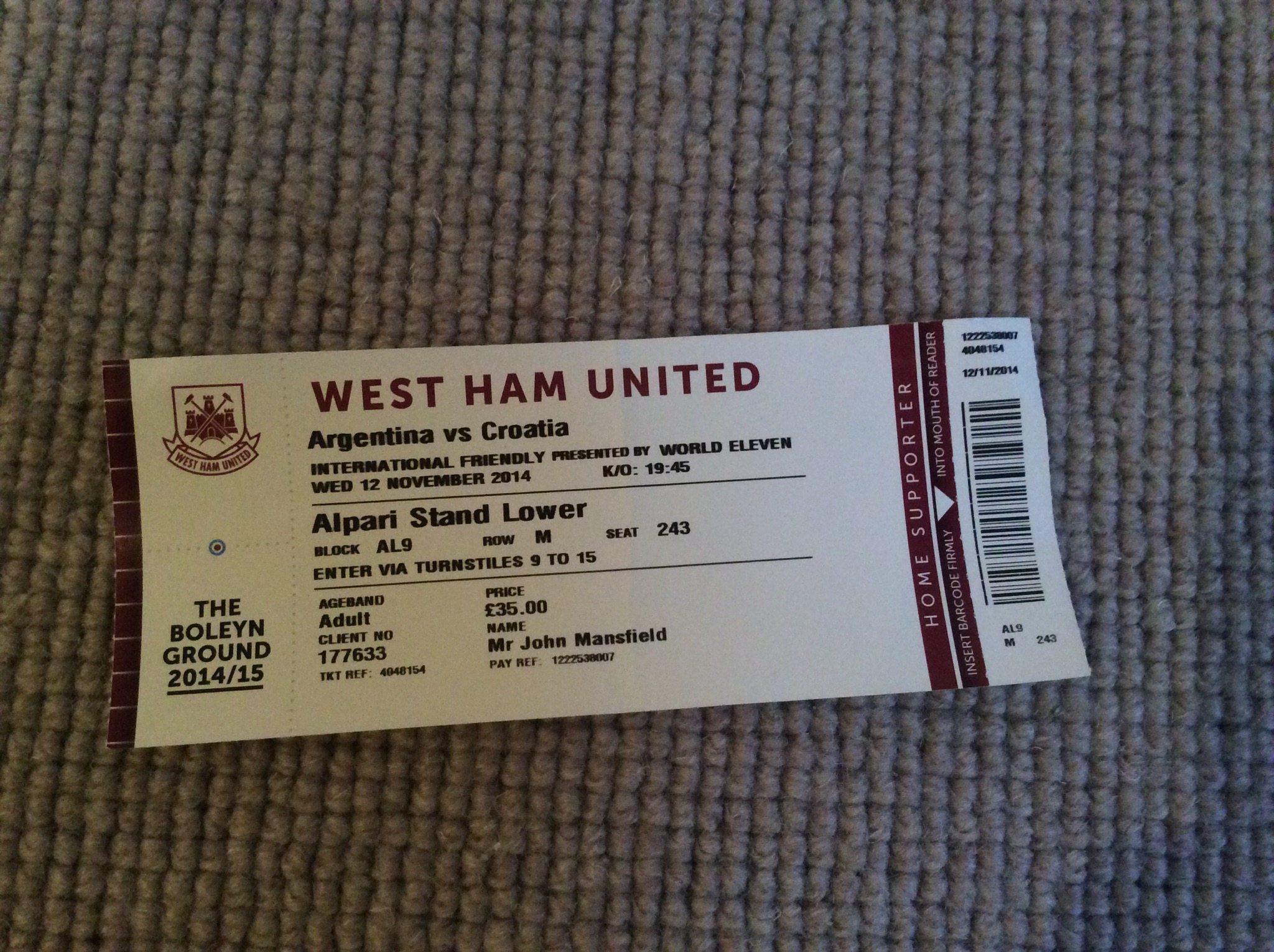
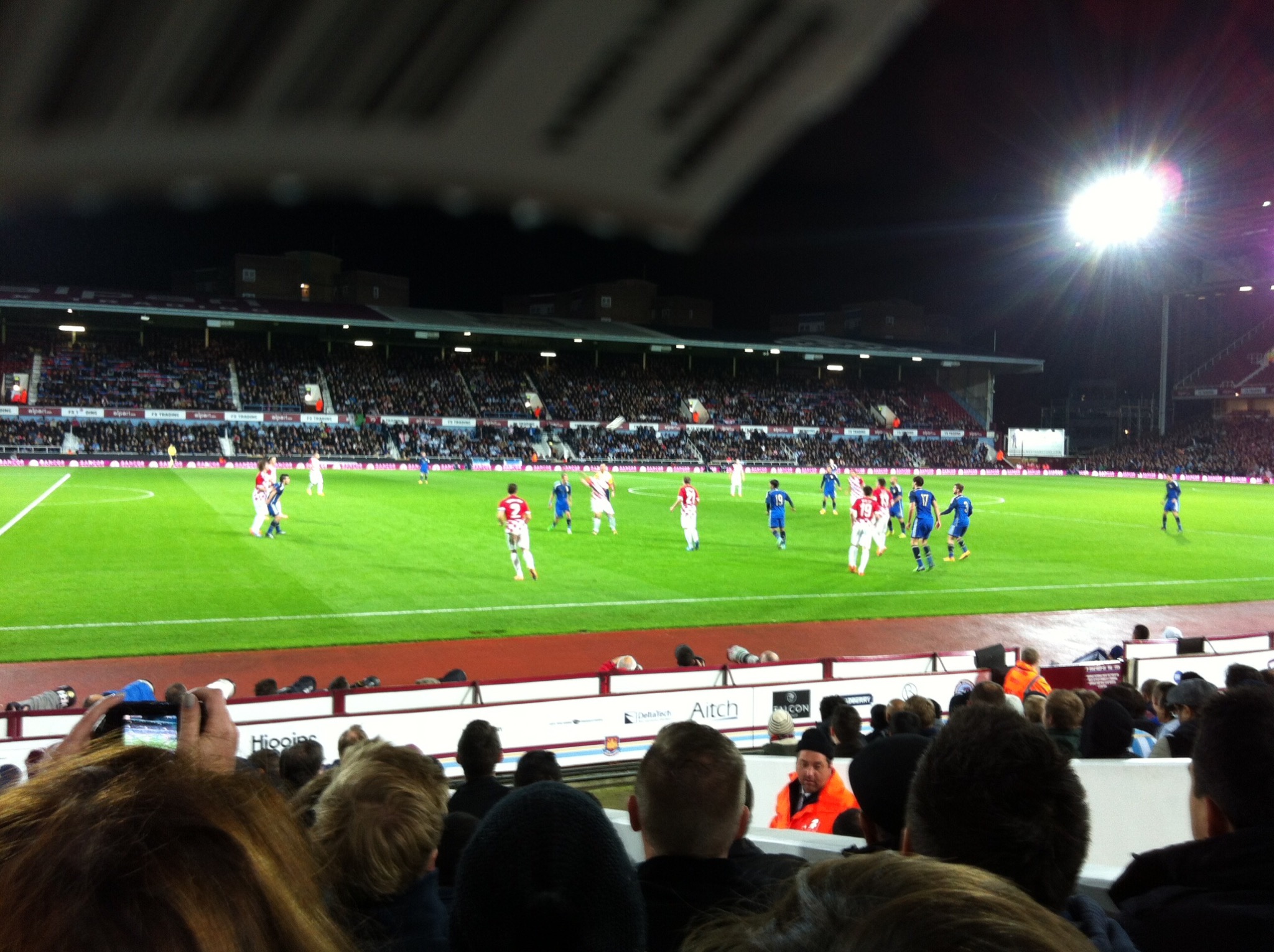
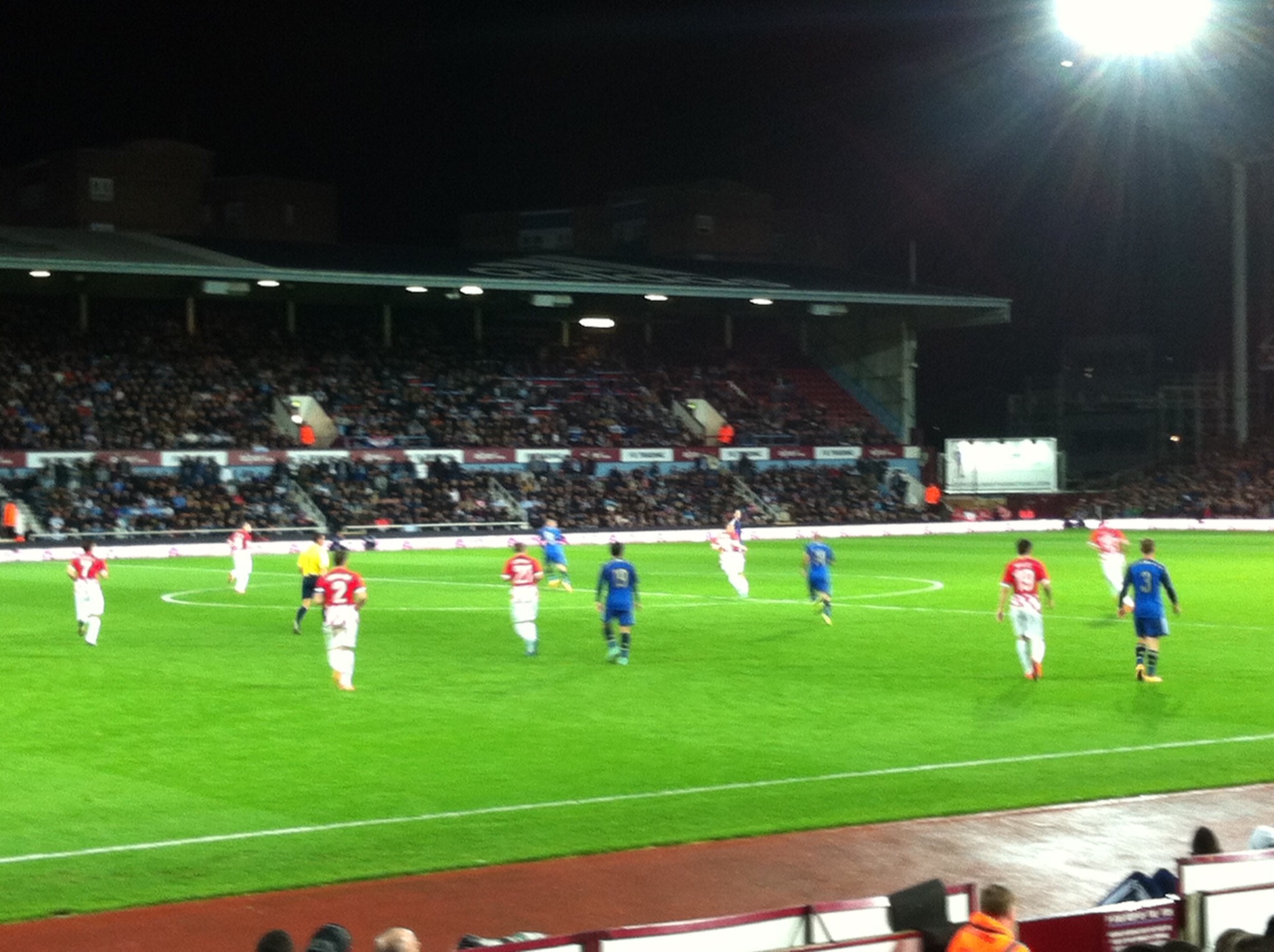
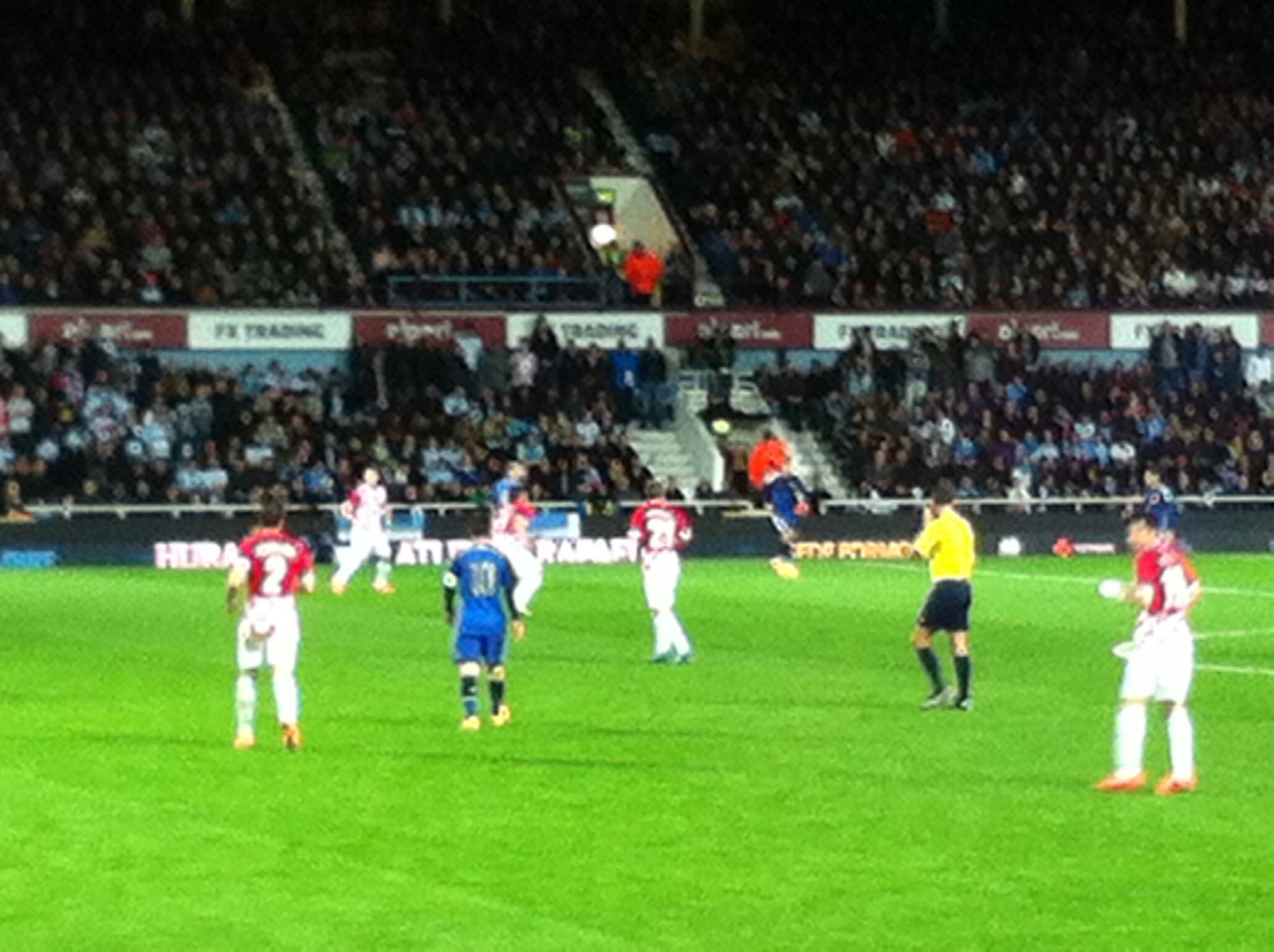
That evening they caught the train to Stratford where they had Pizza Express for dinner – sounds like it was a shame we hadn’t discovered this place earlier. Next stop West Ham Football Stadium where they had tickets to watch the international friendly between Argentina and Croatia. Lionel Messe was playing so Steve got to see the best football player on the planet in the flesh. Argentina won the match 2 – 1.

IMG_1888.JPG

IMG_0207.JPG

IMG_0212.JPG

IMG_0214.JPG

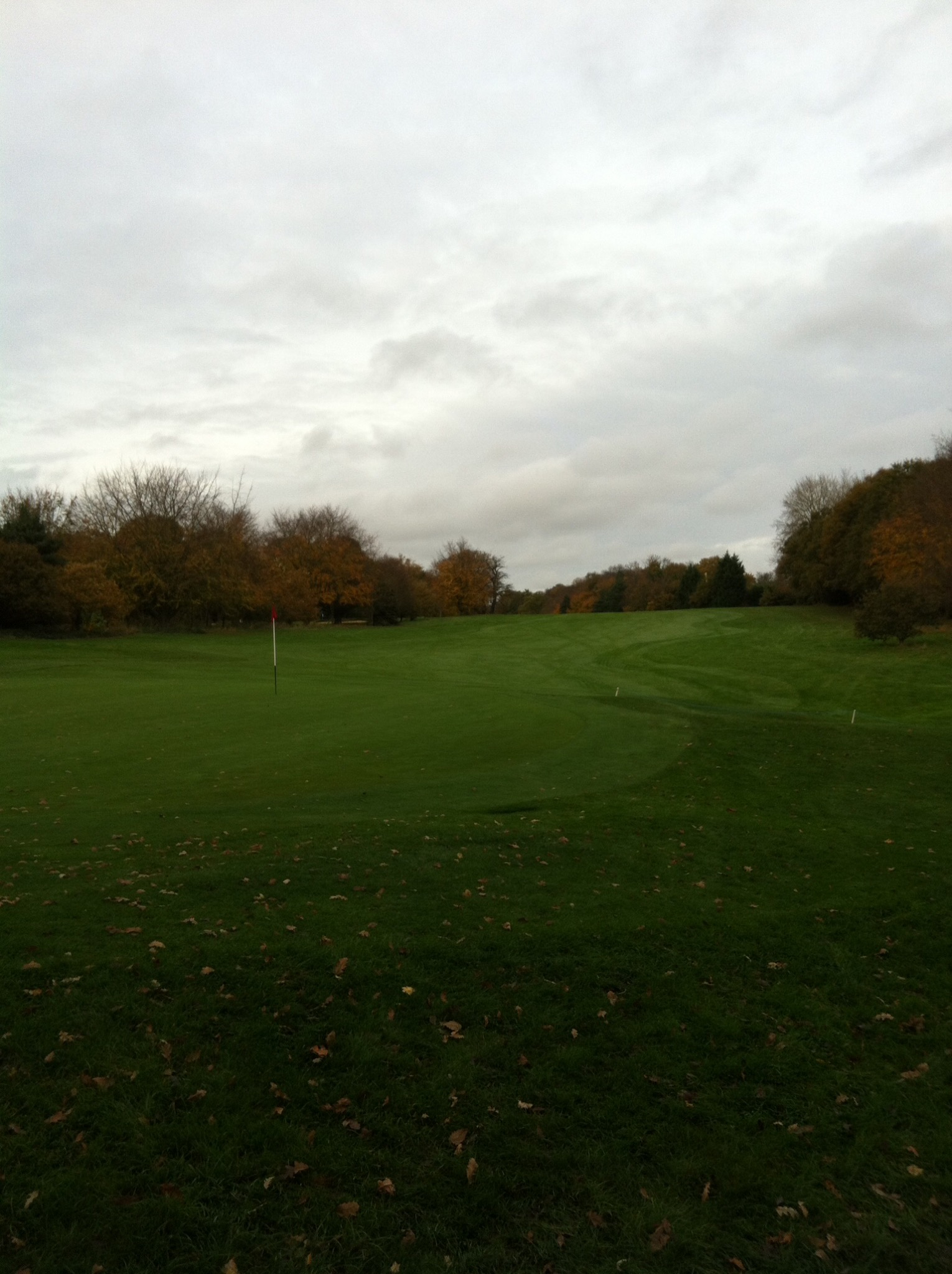
The next day Nick had to work so Gary took Steve to play golf at his golf club – Thorndon Park. It sounds like they had another great day with Gary taking the money off Steve again.

Thorndon Park Golf Club’s course was created in 1920 by Harry Shapland Colt on a deer park dating back to the 1580s. The deer park, already rich with oaks from the 16th century – some of which survive to this day – was enhanced with oaks and chestnuts planted in the 1730s by the eighth Lord Petre, a noted botanist.

The Hall we now see, designed by James Paine and completed in 1770, was the home of the Petre family until 1919. Here, George III was entertained in 1778; here, Lancelot “Capability” Brown laid out a park that was the finest in the county; here, some of the great families of England stayed during the deer-hunting season and joined the Petre family in roller skating in the ballroom.

Ravaged by fire in 1878, Thorndon Hall was offered a new lease of life in 1919 when a group of businessmen saw the grounds as the perfect place for a golf course and for developing a residential estate similar to the one planned for St George’s Hill at Weybridge. St George’s Hill had chosen Harry Colt as its architect – and he was selected to design Thorndon Park golf course.

With the onset of the Second World War and the subsequent constraints of the Green Belt laws, the plans for an estate never materialised. But the course did. It was opened on 1 July 1920 and it has thrived ever since.

The East Wing of Thorndon Hall was leased to the Club in 1921 and, by the late 1940s, the Club had also bought the chapel within the Hall, which was converted into the mixed lounge.

Over a period of time, the Club bought the 240 acres the course occupied and, in 1968, Thorndon Hall. With the building of a new clubhouse in 1974, the Hall was sold the next year to a building company which restored the facade of the Palladian mansion to its former glory and turned the building into apartments with views over the course.

IMG_0211-0.JPG

IMG_0209-0.JPG

It was a right sport billy week for Steve – rugby on Saturday, tennis and table tennis on Monday, golf and football on Wednesday and golf on Thursday – how lucky is he : )

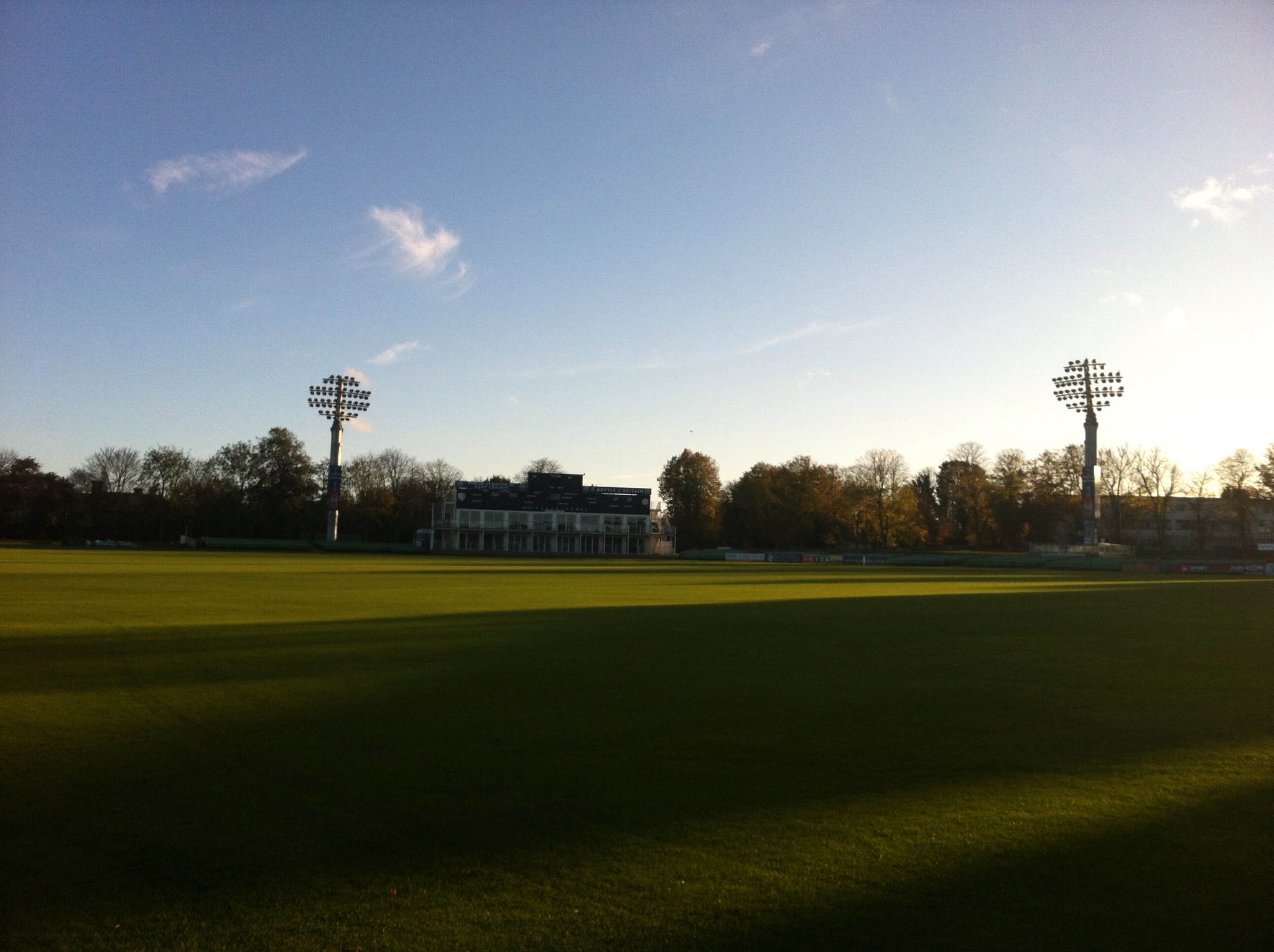
Meanwhile I caught the train on Wednesday morning to Whitstable. Kim met me off the train, first stop was the Windy Cafe where we had a lovely coffee and pumpkin soup for lunch. Kim has been having a few issues with her pelvis etc… so has been going to physio in Canterbury. It was a family outing with her aunt & uncle Pete and Sandra driving us to Canterbury – Pete pointed out all the points of interest as we drove along. The physio is based at the Kent Cricket Club so while Kim was in at physio we had a cup of tea overlooking the Kent cricket ground.

IMG_4907.JPG

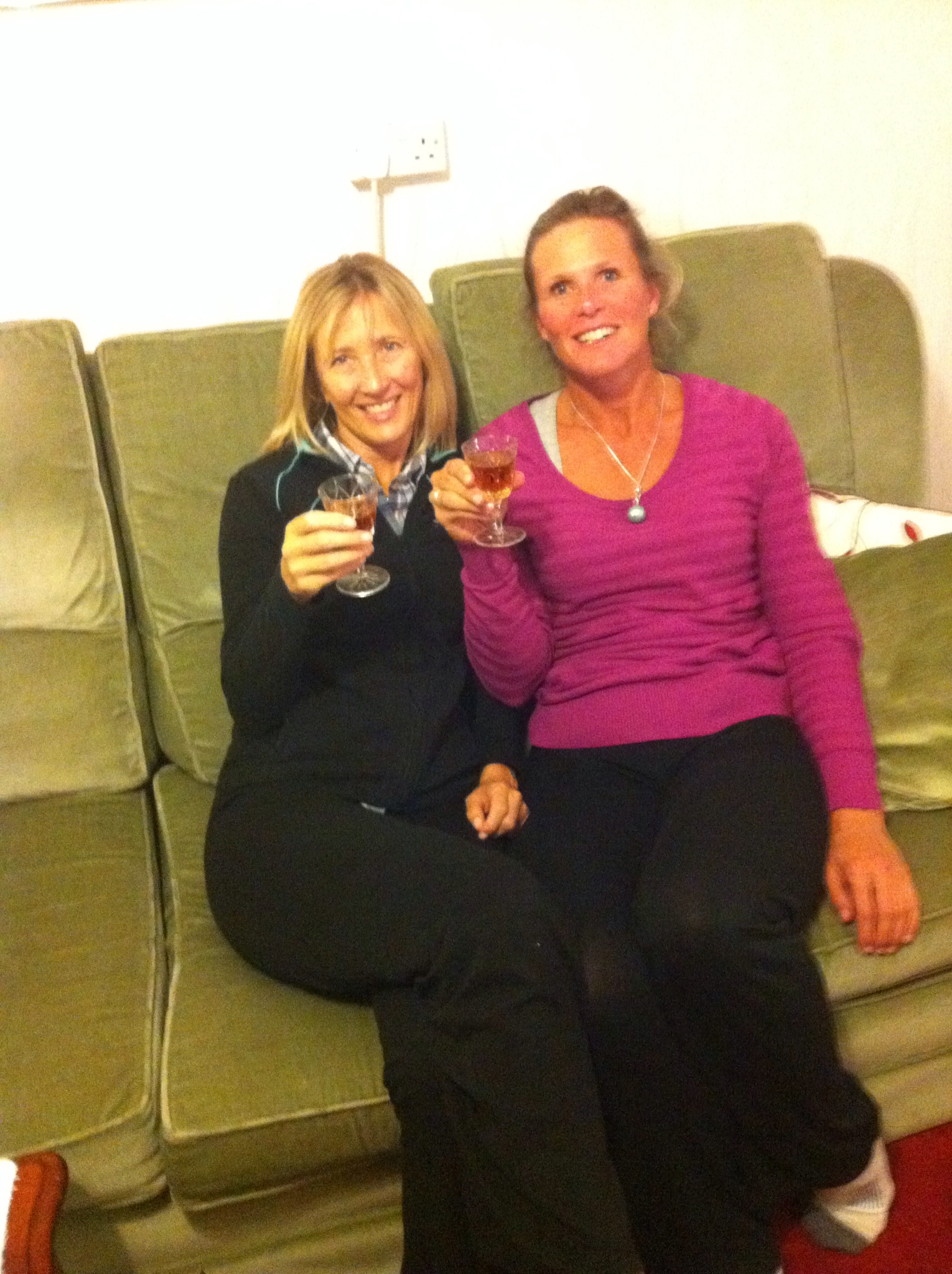
Kim cooked us a lovely meal for dinner and we sat around chatting and laughing all evening with her Mum. We indulged in some ginger wine which was very nice : ) A week before I was going to Whitstable Kim was messaging me saying her Mum was busy making up my bed – I messaged back and said “she does know I’m coming next week?” She did but she likes to be organised – I had all sorts of fury friends lined up to keep me company that night. Bless : )

IMG_4910.JPG

IMG_4911.JPG

IMG_4913.JPG

The next day we had a wander around Whitstable which is a seaside town located on the north coast of Kent and the first seaside town to the south of London, in south-east England – it is very quaint. I have been here a couple of times before but it is always good to visit the “centre of the Universe” as Kim refers to it : )

After saying goodbye to Kim I caught the train back to Shenfield. Gary & Steve picked me up from the station and we went back and caught up on the past two days happenings. We then went to The Plough for dinner which is one of Gary & Denise’s local spots. It was very nice and we enjoyed a lovely meal and many laughs.

IMG_4399.JPG

We thoroughly enjoyed our stays in Shenfield and Whitstable where we were made very welcome and felt very spoilt. Denise and Gary will be visiting us in NZ in January so we look forward to showing them the beautiful Hawkes Bay and spoiling them. Kim will also be back in NZ for a few weeks over the summer so can’t wait to catch up with her again too.

Posted in London | Leave a comment

ATP World Tour Finals, The O2 Arena – London

On Monday morning we met David & Audrey, our friends from Scotland in Holborn for breakfast. They happened to be in London for a long weekend so that was good timing – it was nice to see them again.

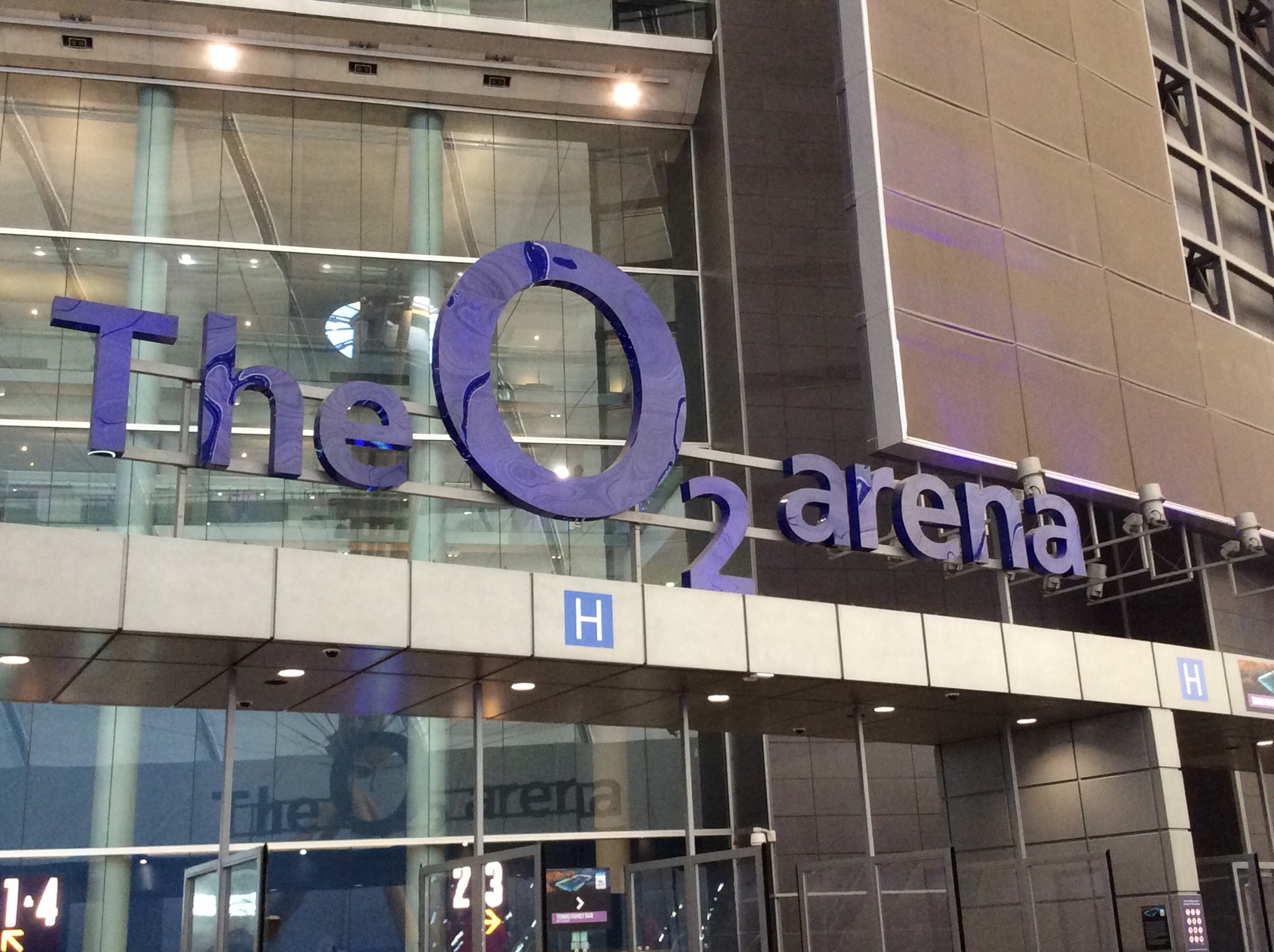
Given we had seen all of the tennis majors in 2014 we thought it only fitting that we went along to the O2 Arena for a day at the ATP Tour Finals. We caught the tube out to North Greenwich and were wowed by the O2 – it is huge with restaurants, a cinema, and a bowling alley. We had a look around before heading towards our entrance gate.

IMG_1808.JPG

IMG_1810-1.JPG

IMG_1819.JPG

IMG_1818.JPG

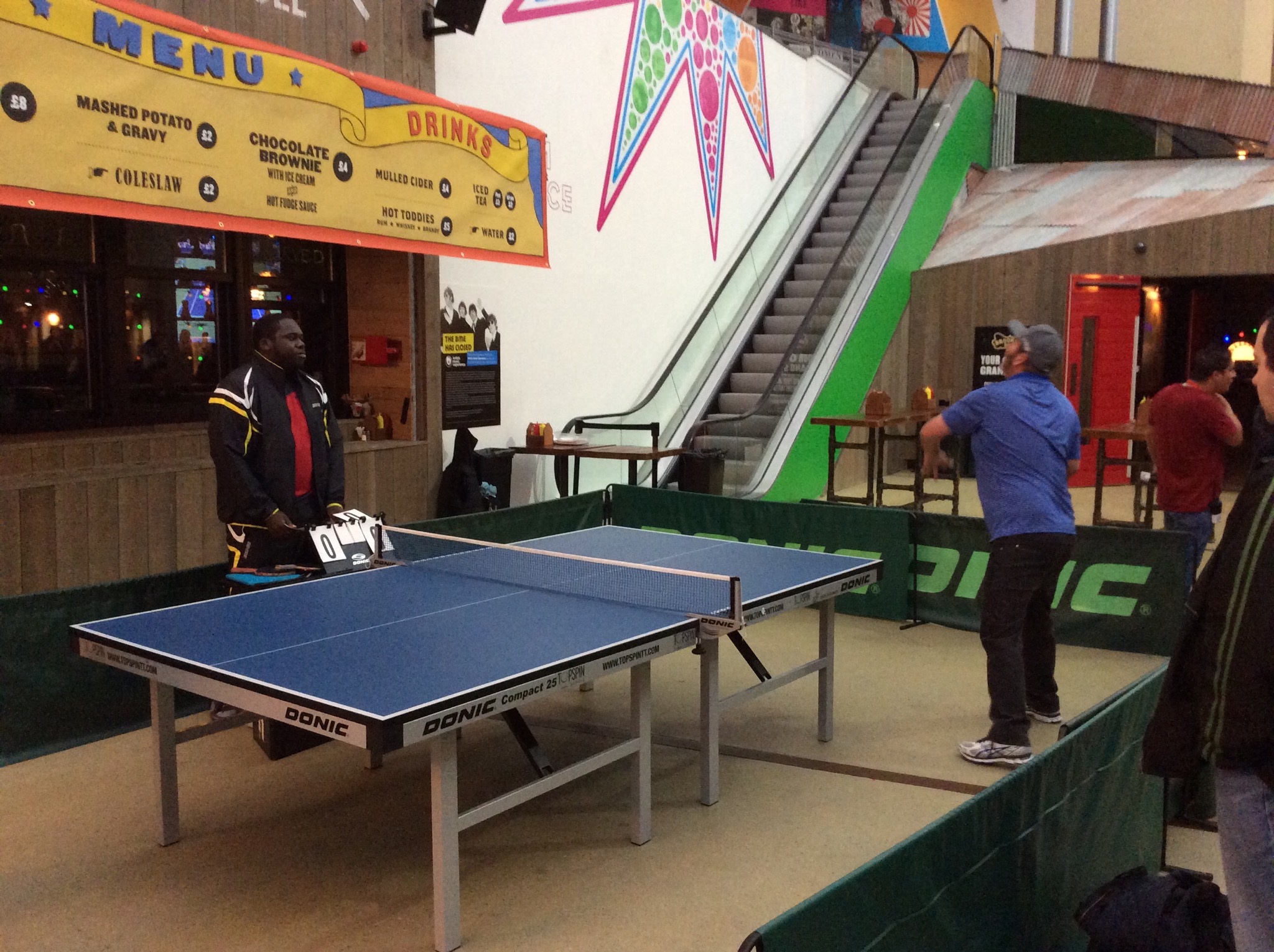
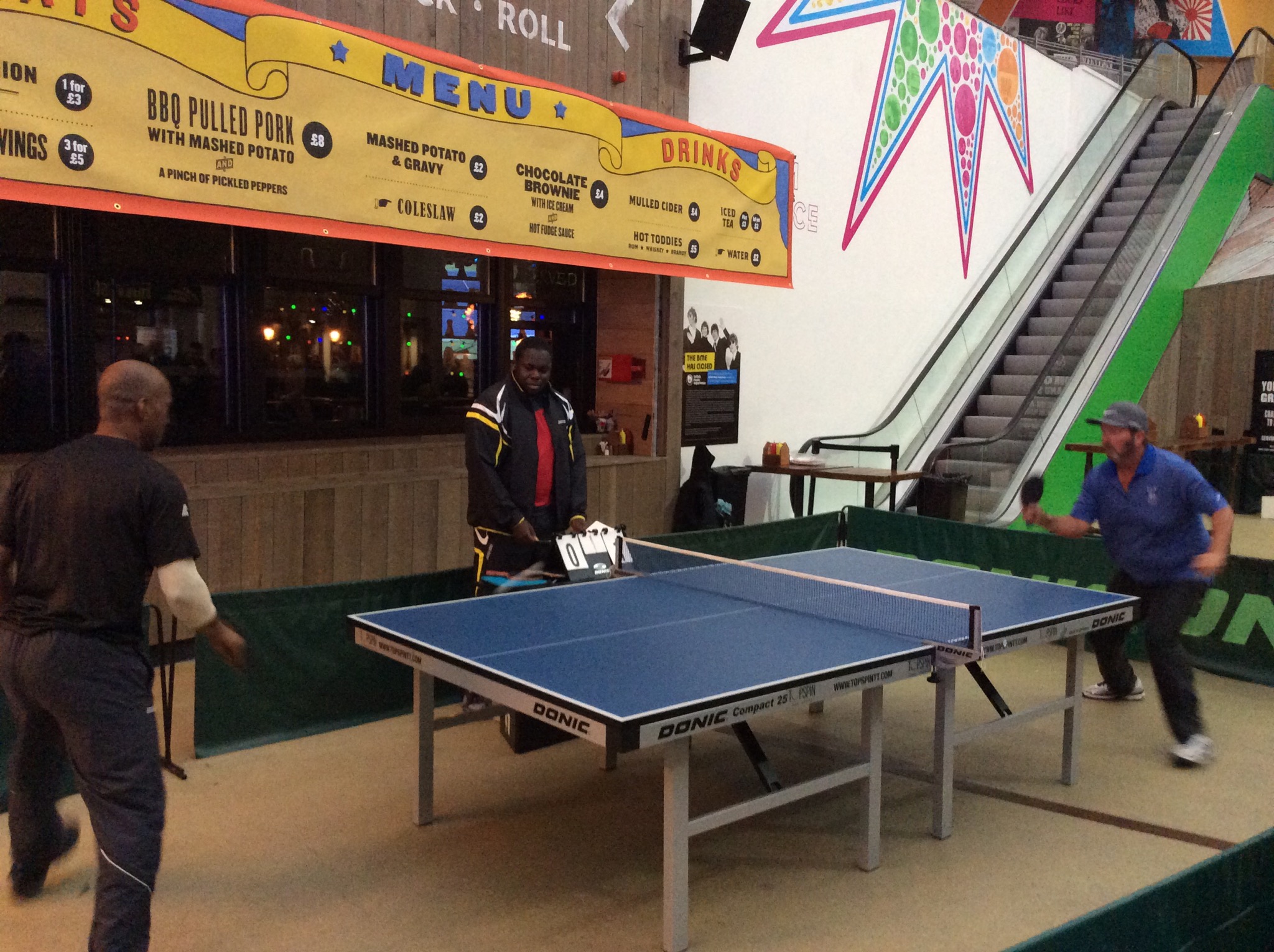
Along the way Steve discovered some table tennis going on – you could play against an English professional and if you got any points against the professional you won tickets to go ten pin bowling. Steve couldn’t resist – you could tell he was thinking I can take this guy! He put his name down and after a few minutes it was his turn – he looked good but only managed 1 point – note the games were only up to 3. He then put his name down and again only managed 1 point. I had to drag him away to go and find our seats.

IMG_1813.JPG

IMG_1816.JPG

IMG_1817.JPG

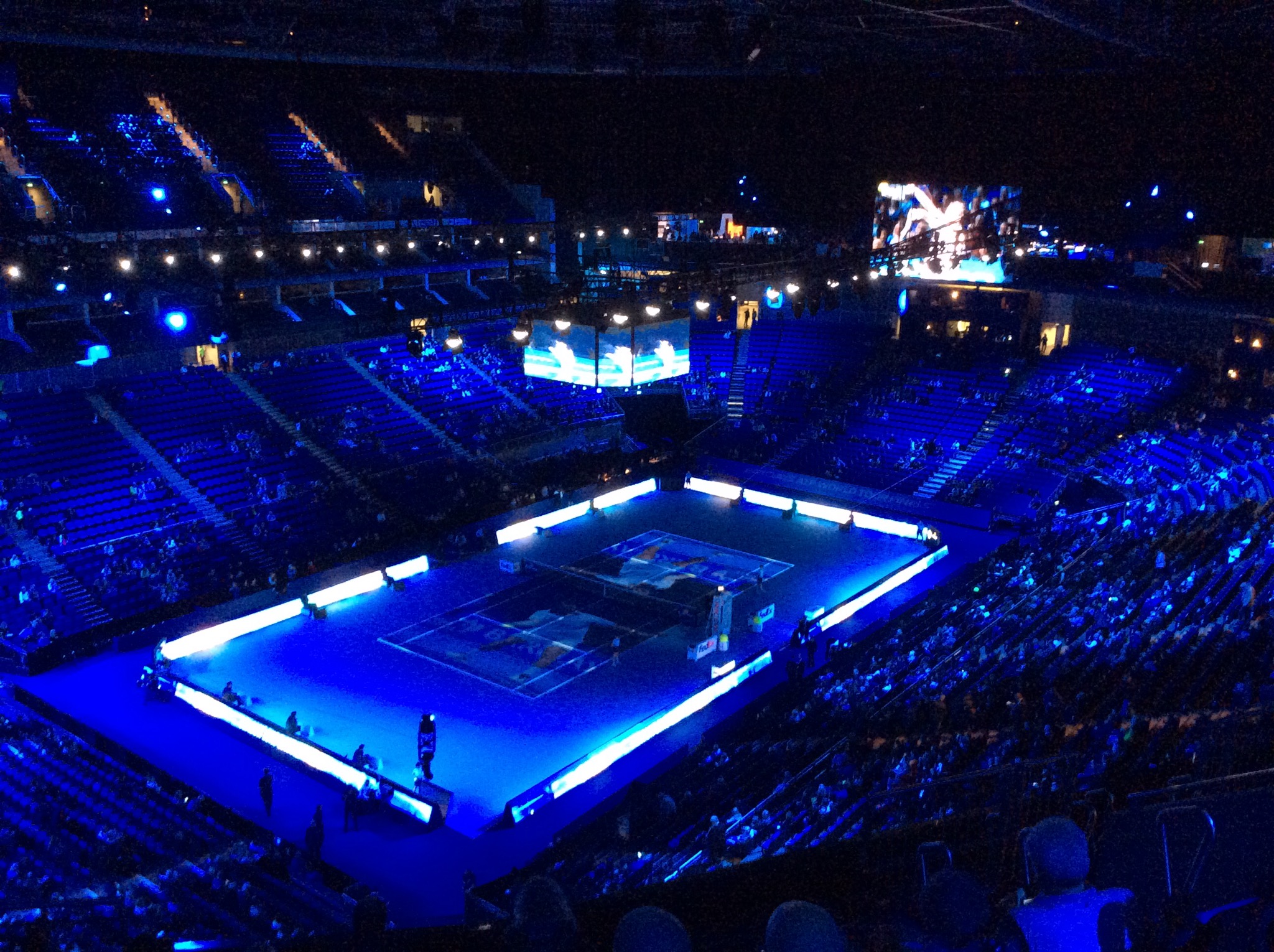
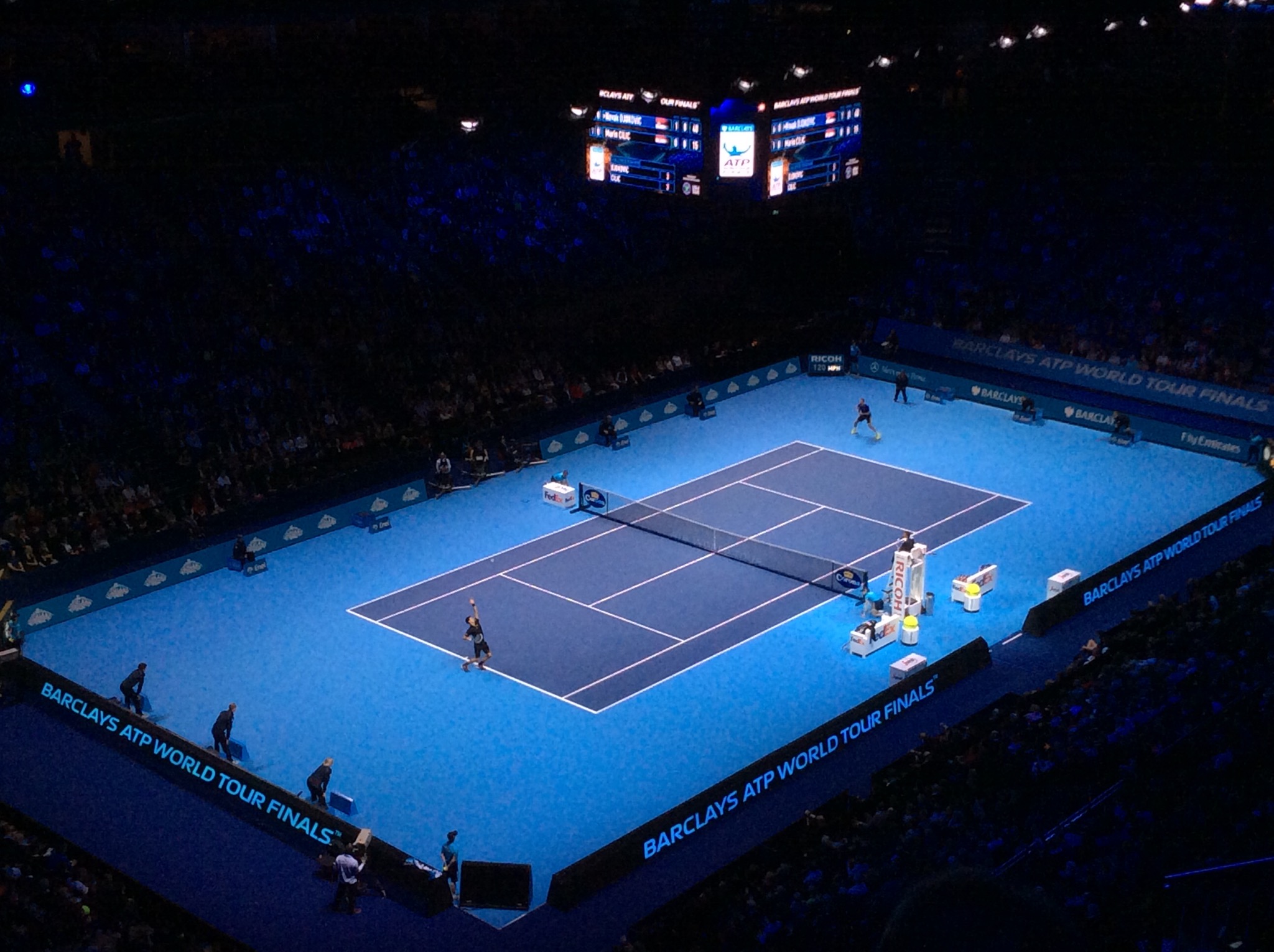
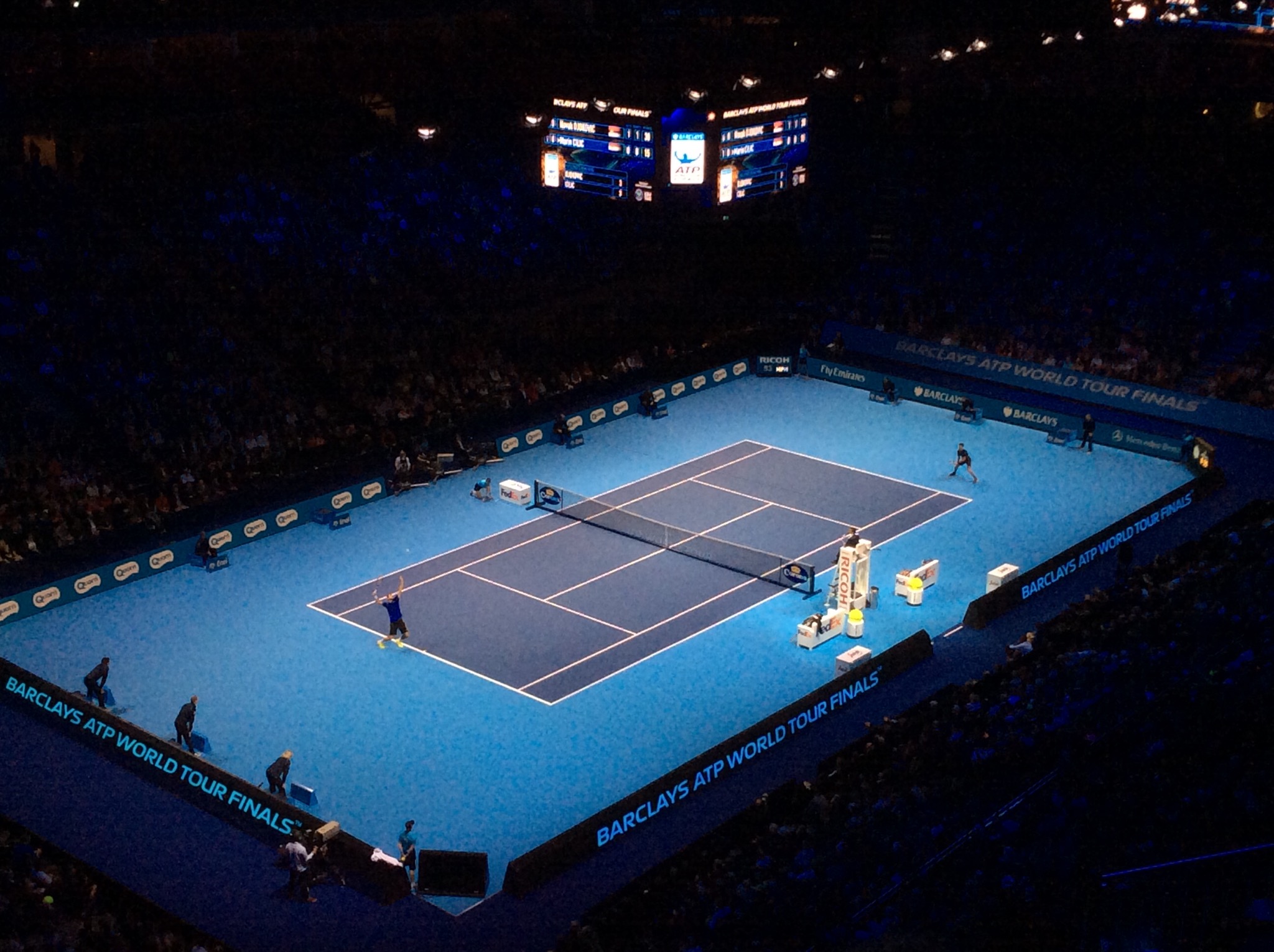
We were sitting quite high up but had a good view of the game – a bit like our seats at the rugby where you were looking at the game from on high. The set up is awesome and because it is inside they can use lighting and sound to great effect. The players are introduced like rockstars and they have this heart beat sound and lighting going around the stadium while the players walk through a smoky entrance onto the court.

IMG_1821-0.JPG

IMG_1822.JPG

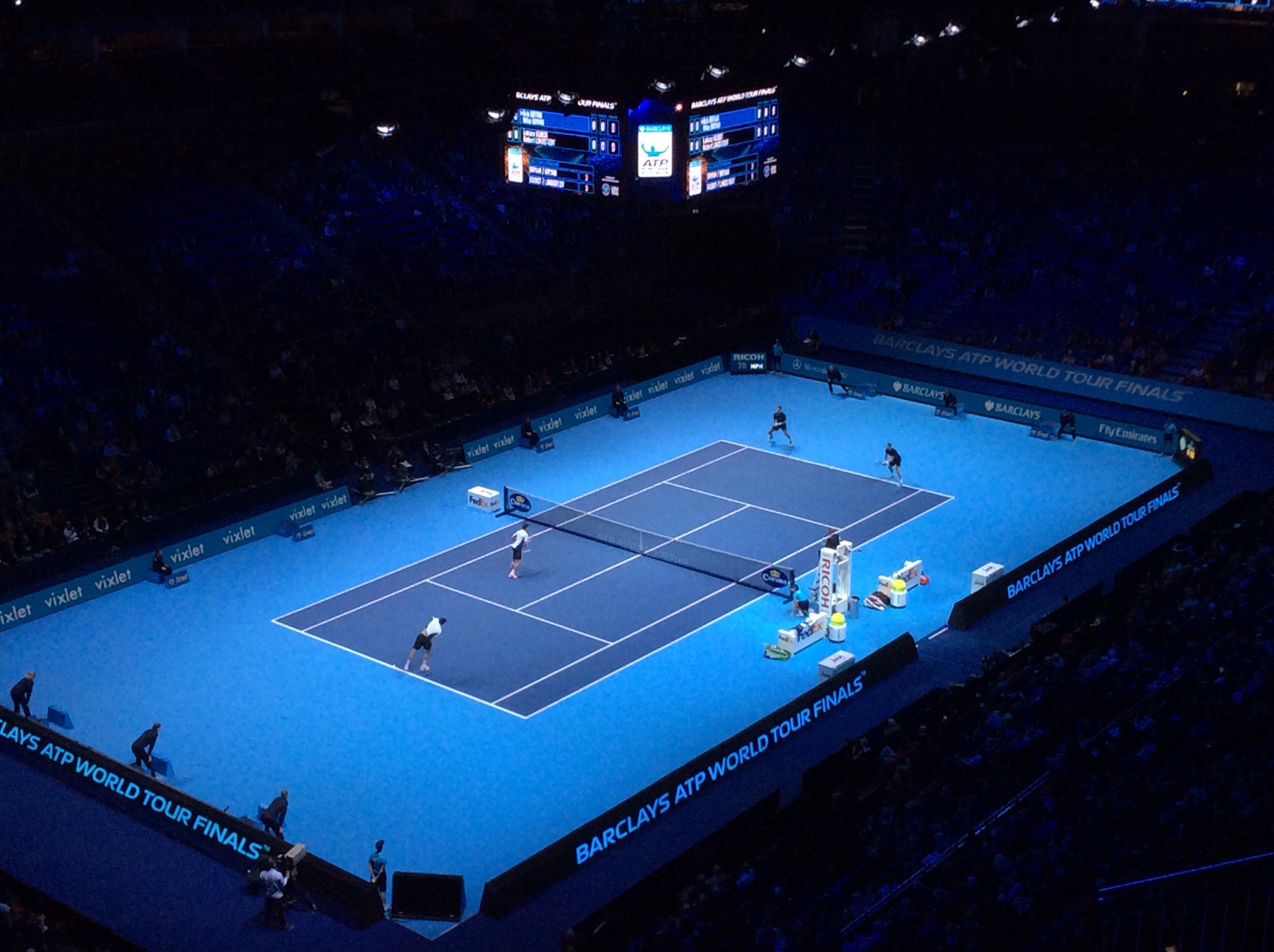
We were there for Pool A play so first up was a doubles match between:

Alexander Peya from Austria and Bruno Soares from Brazil (3rd seeds)
versus
Jean-Julien Rojer from the Netherlands and Horia Tecau from Romania (5th seeds)

Alexander Peya and Bruno Soares won the match 6 / 3, 3 / 6, 12 / 10 in the tie break.

IMG_1828.JPG

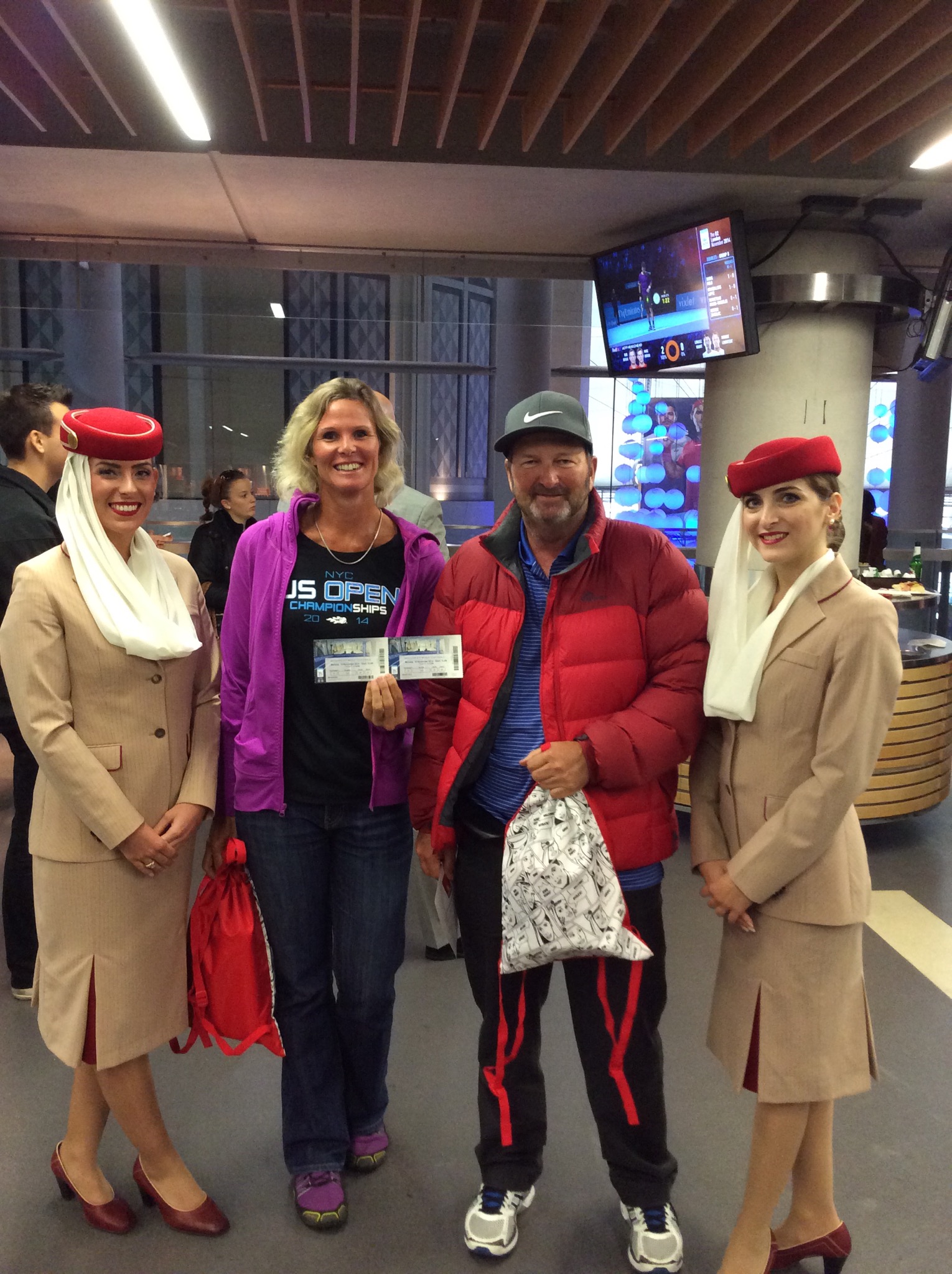
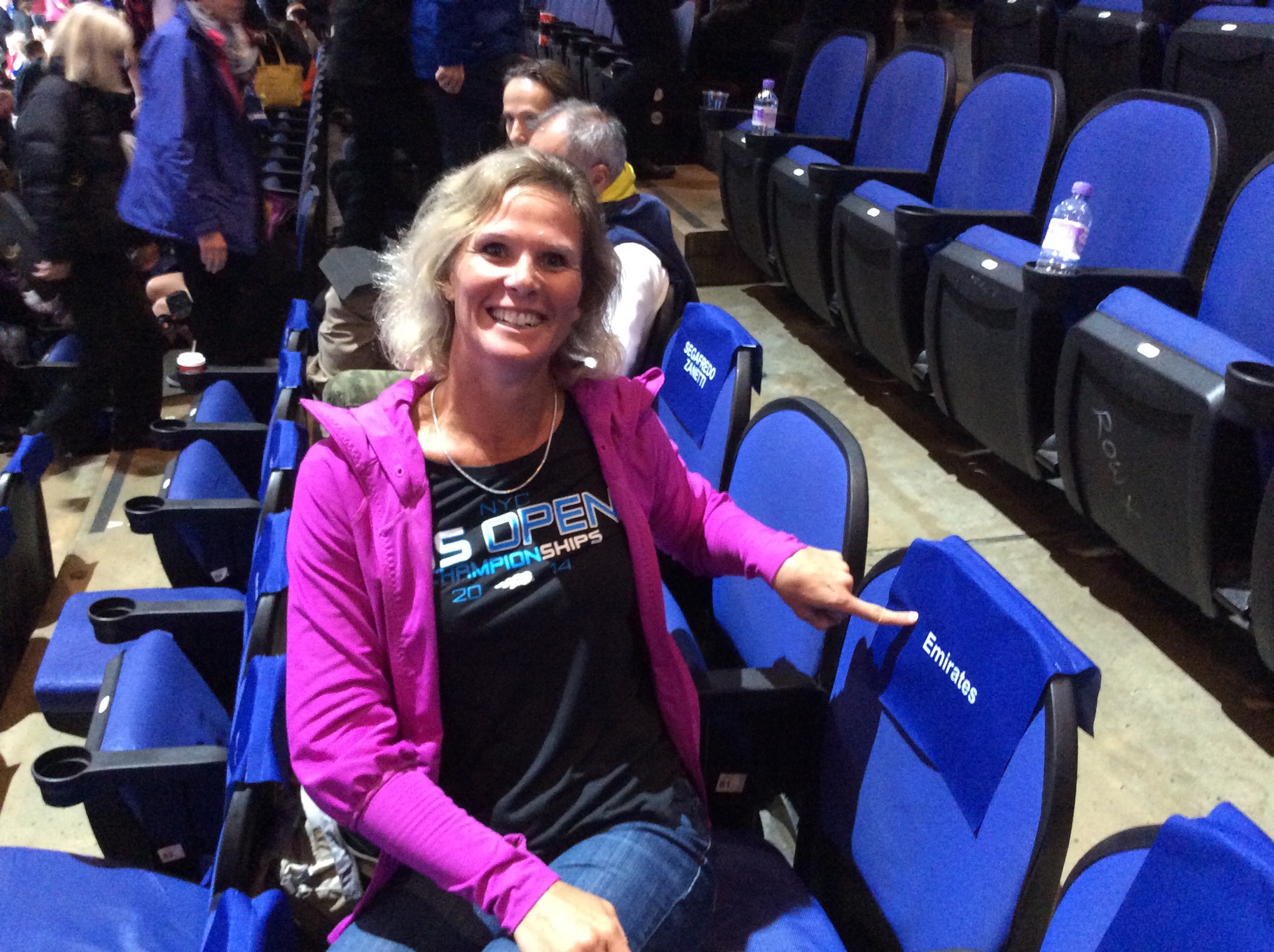
Towards the end of the second set they announced the Emirate Best Seats in the House competition where they panned the audience with a spotlight and picked out two people. Steve says to me “start waving” so I thought OK and started waving – next minute our faces were up on all the big screens and we had won the competition. It must have been the clashing colours we were wearing – I had bright pink on and Steve had his red jacket on. Everyone around us was congratulating us and we were saying “so what did we win” and they’re saying “we don’t know but you won something”.

Just before the doubles finished we went down to investigate what we had won. We went to Customer Services and they made a call. A guy from the ATP came down and said we would be collected by the Emirates team shortly. We got chatting to him and he works for the ATP and travels the world going to all the tournaments representing some of the players – two of those players being Novak Djokovic and Kei Nishikori. Not a bad job I thought.

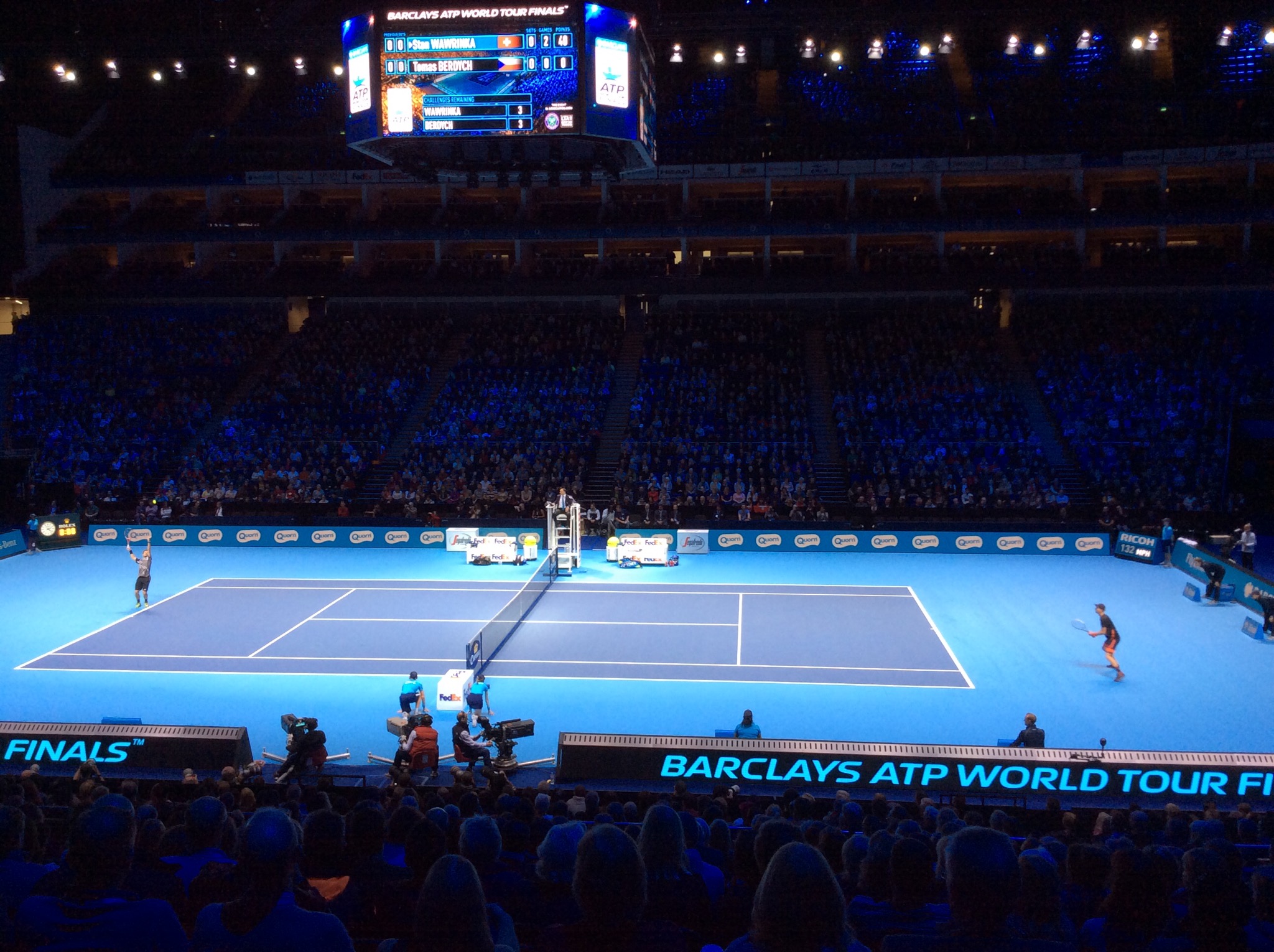
Two ladies from Emirates then appeared and presented us with our prize and a goodies bag. We had won seats in the lower level to watch the upcoming singles match. They took us in and got us seated – we were half way up the first level on the net line – not bad.

IMG_1831.JPG

IMG_1835.JPG

IMG_1853.JPG

We then watched Stan the Man Wawrinka from Switzerland (3rd seed) beat Tomas Berdych from the Czech Republic (6th seed) in straight sets 6 – 1, 6 – 1. The match was over in less than an hour which was a shame on two levels – firstly watching a close game is always good and secondly we wanted to enjoy our flash seats for a longer period. Unfortunately the prize didn’t extend to the evening session that we already had tickets for.

IMG_1843.JPG

IMG_1846.JPG

IMG_1851.JPG

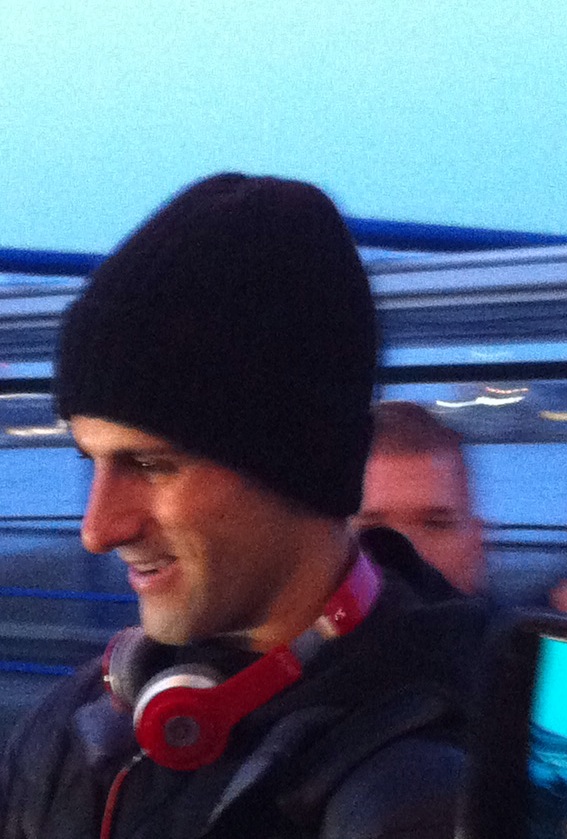
The afternoon session finished so we went to have some lunch and then check out the river bus service back to London for later that night. There were a few people lining up by these barriers and we thought they were waiting for the river bus but it turns out they were waiting to see Novak who was arriving on the river bus. Managed to get a close up photo.

IMG_4892.JPG

We couldn’t believe the number of people that recognised us from the big screen – people kept saying to us “you’re the couple that won that prixe – what did you get?” Steve was feeling pretty pleased with himself – world famous at the O2.

Steve wanted to go back to the table tennis so I went for a coffee while he put his name down to play the professionals again. When I caught up with him he had got himself a little fan club of English lads who were egging him on. He was in his element. I left him there to go and watch the start of the evening session. He came in part way through the doubles and said he had had a proper game against the professional and lost 11 – 4.

The doubles match we watched in the evening session was between:

Lukasz Kubot from Poland and Robert Lindstedt from Sweden (8th seeds)
versus
Mike & Bob Bryan from the USA (Top seeds)

Kubot & Lindstedt beat the Bryan brothers 7 / 6, 6 / 3

IMG_1858.JPG

Next up was Novak Djokovic from Serbia (Top seed) versus Marin Clicic from Croatia (8th seed). Novak won Wimbledon this year and Marin won the US Open. Again it was a one sided affair with Novak being too strong for Marin. They did have some great rallies though and we enjoyed the game.

IMG_1861.JPG

IMG_1871.JPG

IMG_1876.JPG

IMG_1881.JPG

IMG_1884.JPG

We decided to catch the river bus back along the Thames to the Embankment tube station where we got on the District Line back to our hotel. Another big day : )

Posted in London | Leave a comment

The Tower of London – London

The rain had cleared and the sun was shining for our visit to the Tower of London with Glen and Jo who were coming up on the train from Brighton. We met them at the London Bridge Station and wandered towards the Tower.

IMG_1767.JPG

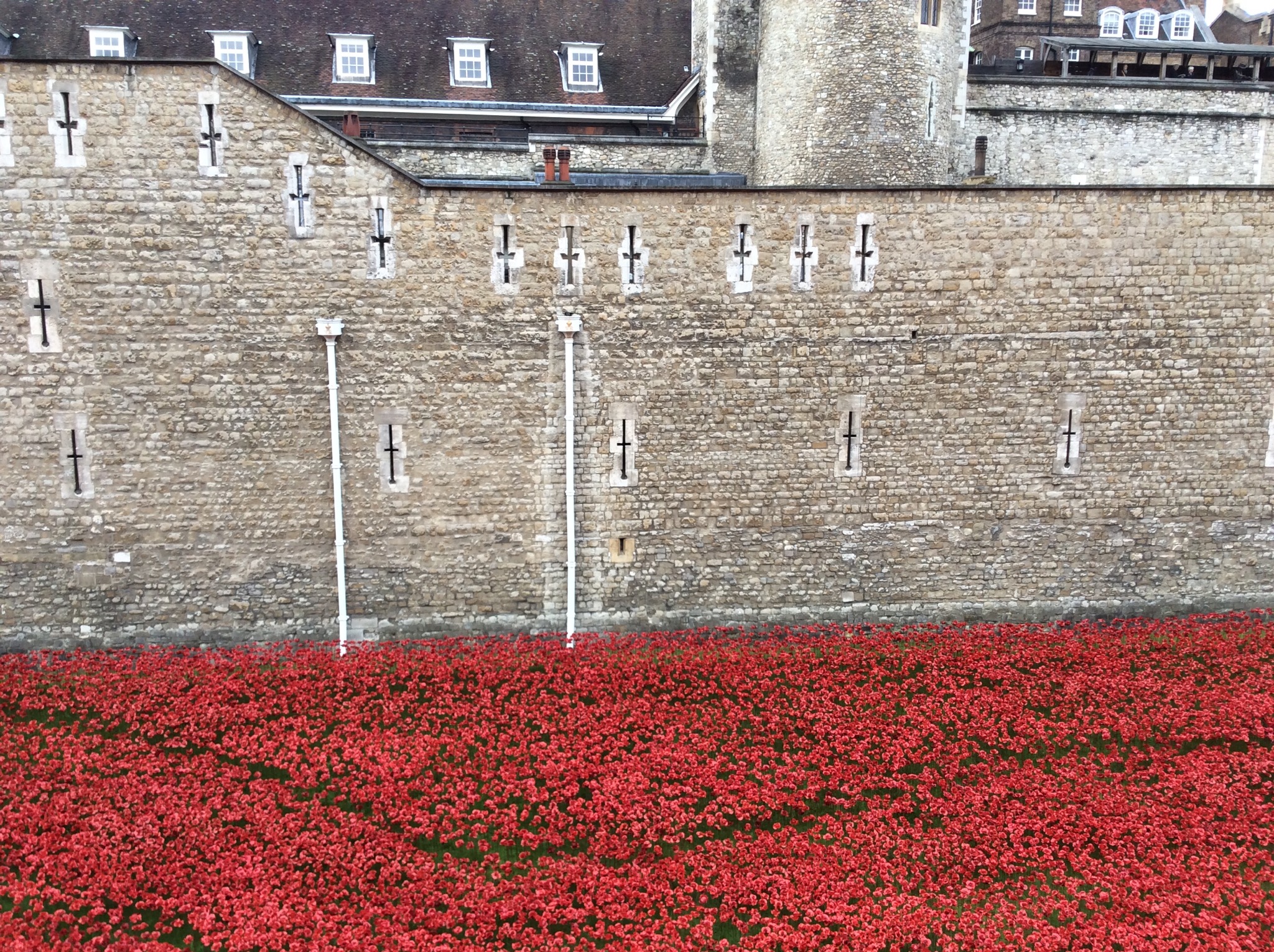
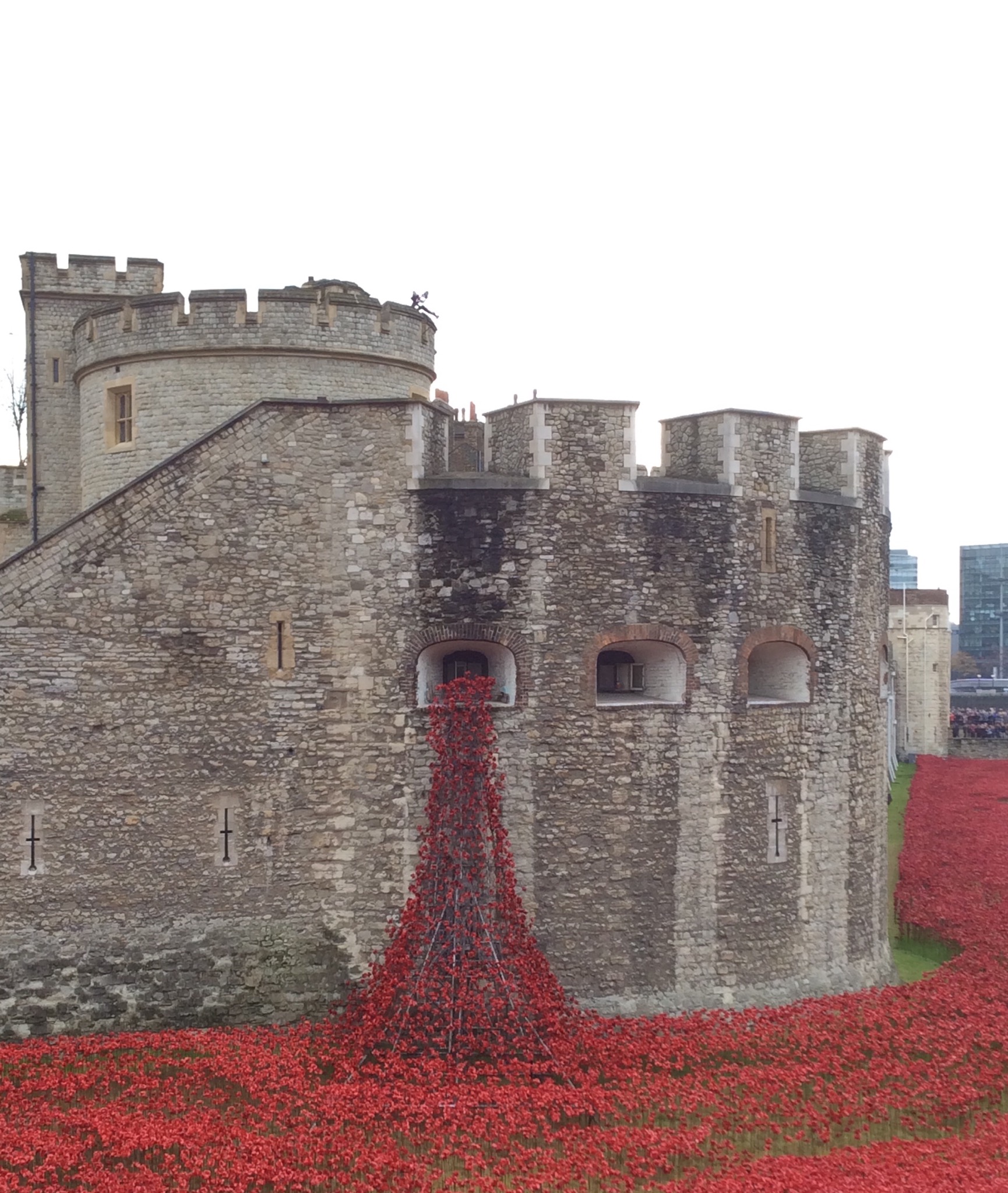
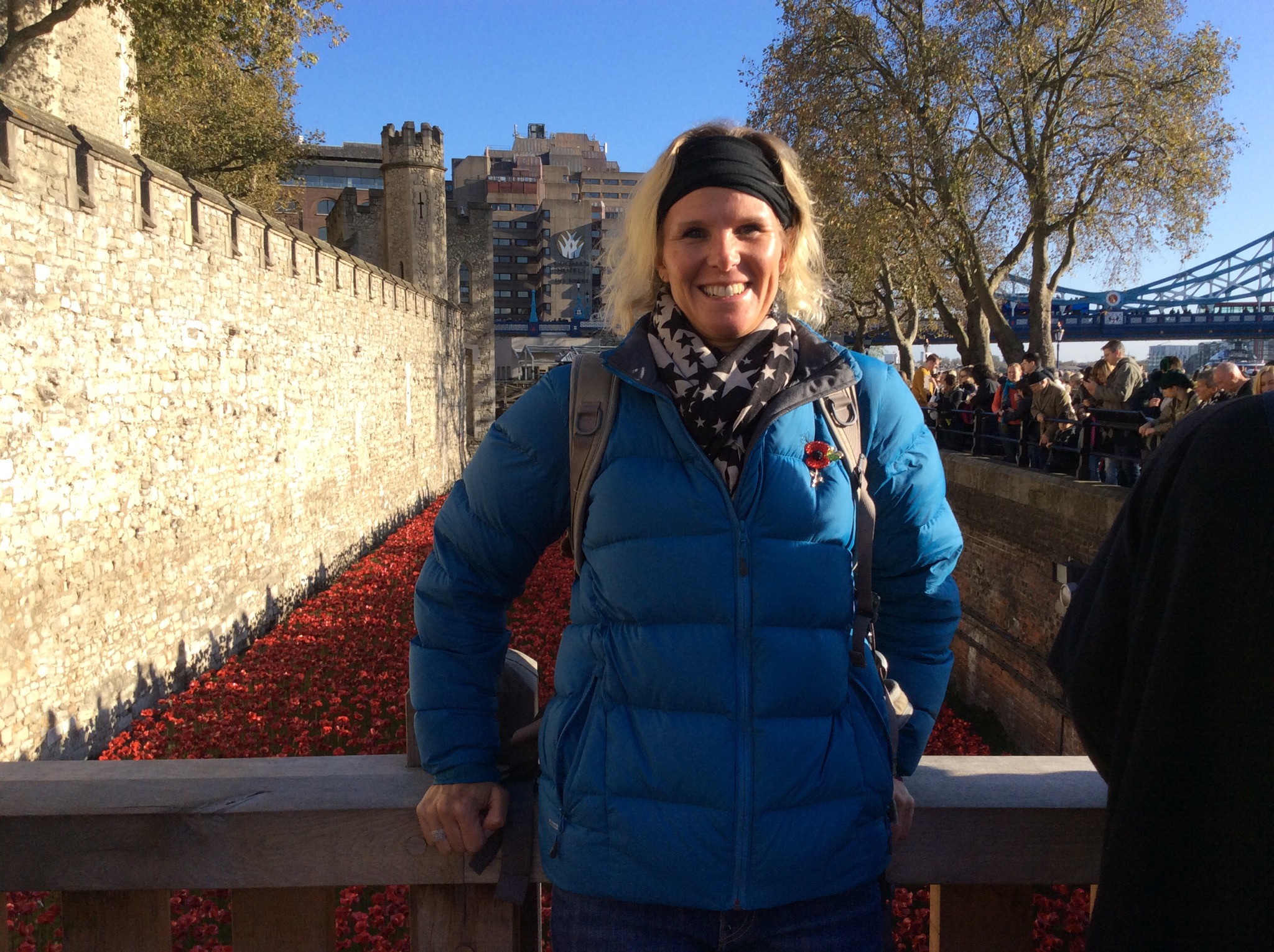
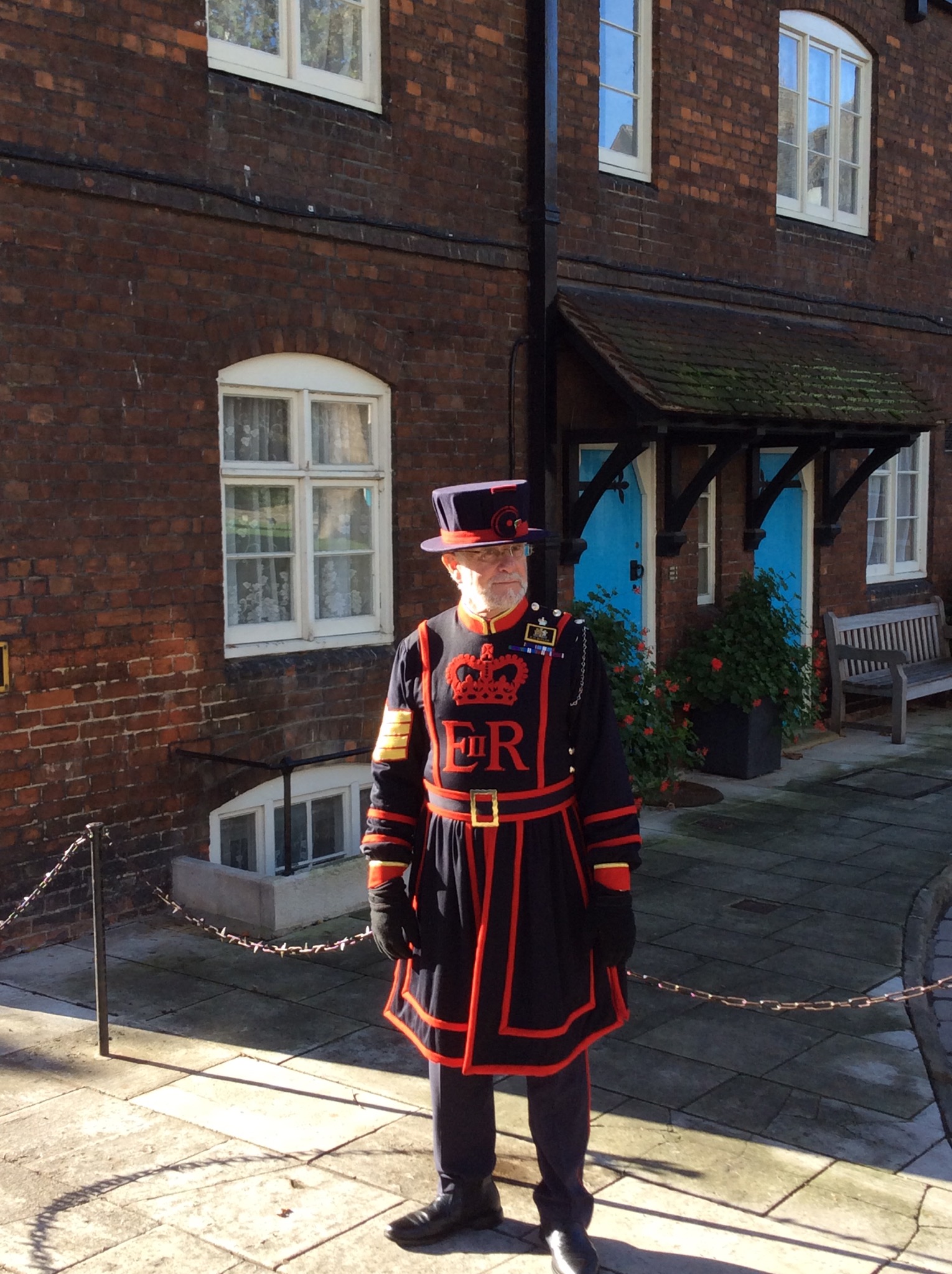
The Tower of London is marking one hundred years since the first full day of Britain’s involvement in the First World War with the Blood Swept Lands and Seas of Red art installation. 888,426 ceramic poppies were made and placed around the Tower of London between the 17th July 2014 when YS Crawford Butler, the longest serving of the Tower of London’s iconic Yeoman Warders, planted the first of the ceramic poppies. The exhibition was opened to the public on the 5th August which was the first full day of Britain’s involvement in the First World War. The last of the 888,246 ceramic poppies, each poppy representing a British military fatality during the war, was planted by a 13 year old territorial cadet at 11am on the 11th November – Armistice Day.

IMG_1886.JPG

Each poppy was sold to members of the public for £25 with 10% plus all net proceeds being shared between six service charities.

IMG_1892-0.PNG

IMG_1769-0.JPG

IMG_1770-0.JPG

IMG_1771-0.JPG

IMG_1776-0.JPG

IMG_1791-0.JPG

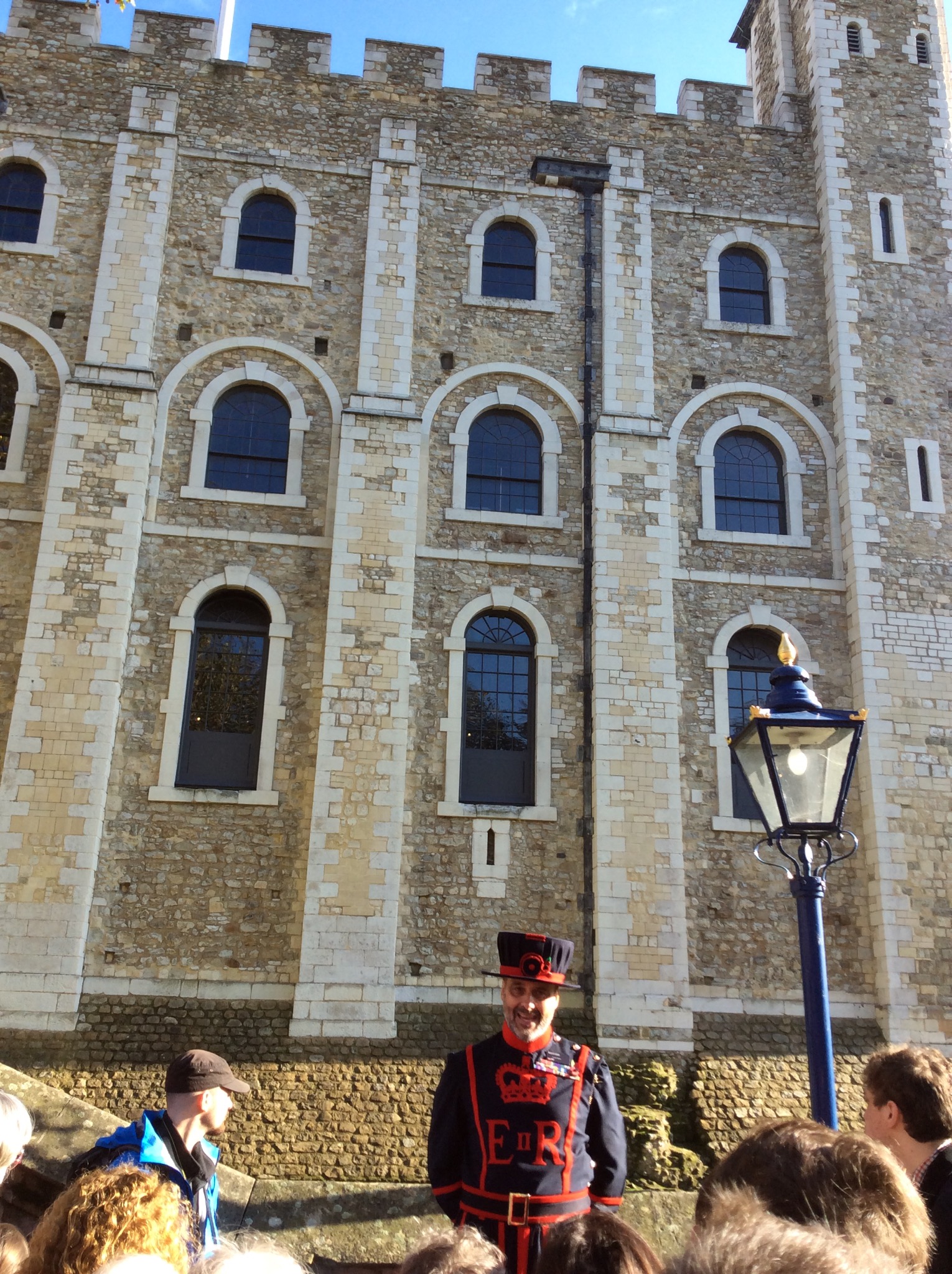
There were lots of people queuing around the outside of the Tower to see the poppies – about 5 million people will see the exhibition by the time is finishes. We had tickets to go into the Tower so we went in and joined a tour with one of the Yeoman Warders – he was a Welshman with a very good sense of humour. Unfortunately the queues to see the crown jewels and the White Tower were extremely long so we opted to go and have some lunch at Butlers Wharf. We went to a lovely Italian restaurant called Cantina.

IMG_1779.JPG

IMG_1781.JPG

IMG_1785.JPG

IMG_1786.JPG

IMG_1787.JPG

IMG_1795.JPG

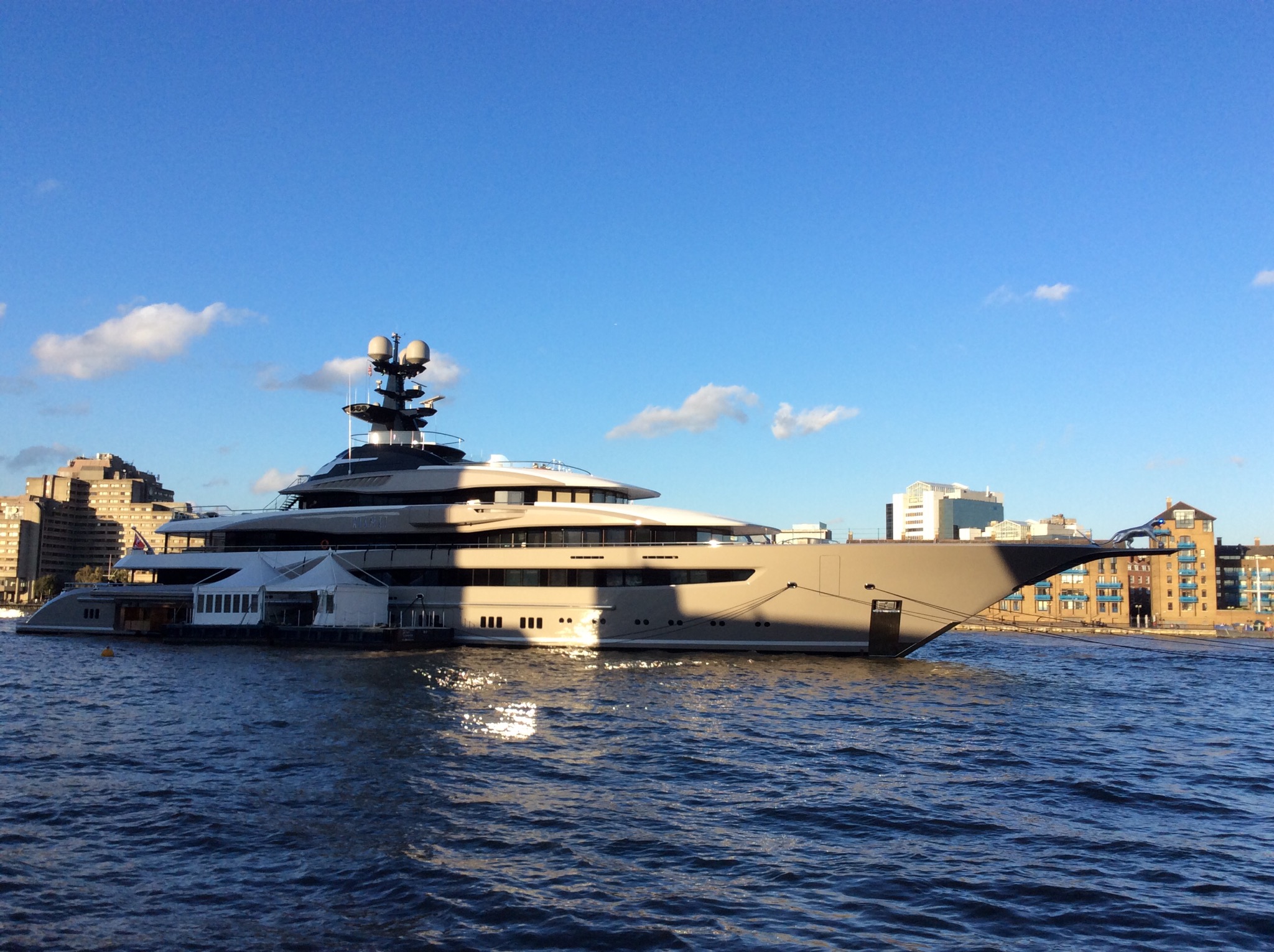
As we walked along Butlers Wharf we saw this amazing super yacht moored in the Thames – it was very impressive and we were wondering who it belonged to. Glen googled it that night and sent me the article that had been in The Standard.

The article read as follows….
A super-yacht boasting its own helipad and worth around £70 million has been seen moored on the River Thames. The Kismet has six bedrooms, a private sundeck, a swimming pool and is around 300 feet long. It belongs to Shahid Khan – one of the richest men in the world and owner of Fulham FC. The boat was seen making a brief stop by Tower Bridge before travelling further along the Thames. It is thought Mr Khan has brought the yacht to London to watch his other team the Jacksonville Jaguars play the Dallas Cowboys at an International Series game on Sunday. A silver jaguar could be seen attached to the bow of the ship confirming this.

IMG_1797.JPG

It was so nice to spend the day with Jo & Glen and London turned on the weather for us. After waving Glen & Jo off we headed back to the hotel for an early night – it had been a busy couple of days : )

IMG_1801.JPG

IMG_1802.JPG

The Tower of London
Her Majesty’s Royal Palace and Fortress, known as the Tower of London, is a historic castle located on the north bank of the River Thames in central London. It lies within the London Borough of Tower Hamlets, separated from the eastern edge of the square mile of the City of London by the open space known as Tower Hill. It was founded towards the end of 1066 as part of the Norman Conquest of England. The White Tower, which gives the entire castle its name, was built by William the Conqueror in 1078, and was a resented symbol of oppression, inflicted upon London by the new ruling elite. The castle was used as a prison from 1100 (Ranulf Flambard) until 1952 (Kray twins), although that was not its primary purpose. A grand palace early in its history, it served as a royal residence. As a whole, the Tower is a complex of several buildings set within two concentric rings of defensive walls and a moat. There were several phases of expansion, mainly under Kings Richard the Lionheart, Henry III, and Edward I in the 12th and 13th centuries. The general layout established by the late 13th century remains despite later activity on the site.

The Tower of London has played a prominent role in English history. It was besieged several times and controlling it has been important to controlling the country. The Tower has served variously as an armoury, a treasury, a menagerie, the home of the Royal Mint, a public records office, and the home of the Crown Jewels of the United Kingdom. From the early 14th century until the reign of Charles II, a procession would be led from the Tower to Westminster Abbey on the coronation of a monarch. In the absence of the monarch, the Constable of the Tower is in charge of the castle. This was a powerful and trusted position in the medieval period. In the late 15th century the castle was the prison of the Princes in the Tower. Under the Tudors, the Tower became used less as a royal residence, and despite attempts to refortify and repair the castle its defences lagged behind developments to deal with artillery.

The peak period of the castle’s use as a prison was the 16th and 17th centuries, when many figures who had fallen into disgrace, such as Elizabeth I before she became queen, were held within its walls. This use has led to the phrase “sent to the Tower”. Despite its enduring reputation as a place of torture and death, popularised by 16th-century religious propagandists and 19th-century writers, only seven people were executed within the Tower before the World Wars of the 20th century. Executions were more commonly held on the notorious Tower Hill to the north of the castle, with 112 occurring there over a 400-year period. In the latter half of the 19th century, institutions such as the Royal Mint moved out of the castle to other locations, leaving many buildings empty. Anthony Salvin and John Taylor took the opportunity to restore the Tower to what was felt to be its medieval appearance, clearing out many of the vacant post-medieval structures. In the First and Second World Wars, the Tower was again used as a prison, and witnessed the executions of 12 men for espionage. After the Second World War, damage caused during the Blitz was repaired and the castle reopened to the public. Today the Tower of London is one of the country’s most popular tourist attractions. Under the ceremonial charge of the Constable of the Tower, it is cared for by the charity Historic Royal Palaces and is protected as a World Heritage Site.

Posted in London | Leave a comment

All Blacks v England, Twickenham – London

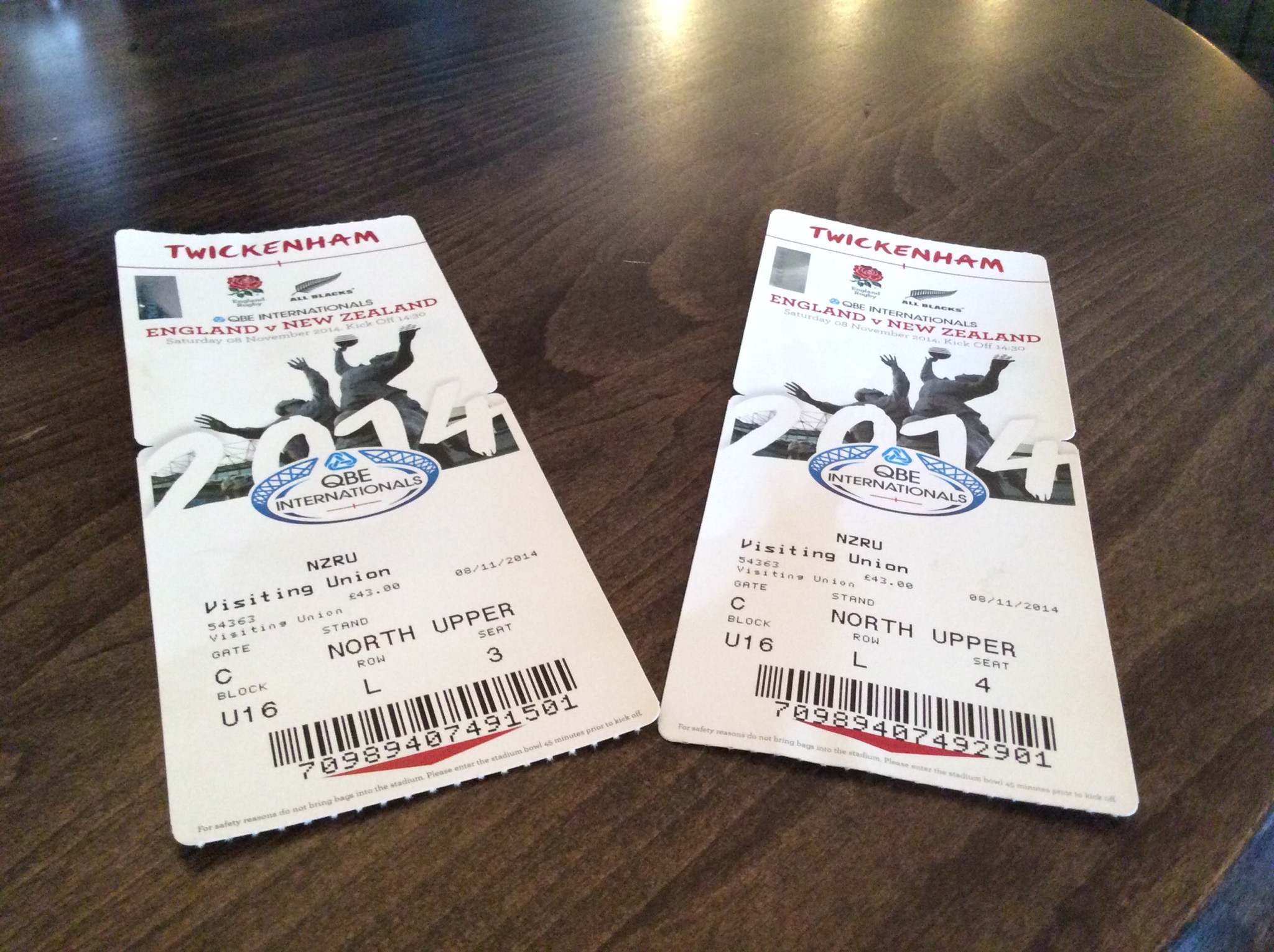
We caught up with our friend Luke from Taranaki back in June and he asked us if we wanted tickets for any of the All Blacks end of year tour matches as he had access to them. Watching the All Blacks play at Twickenham – oh yes please!

IMG_1735.JPG

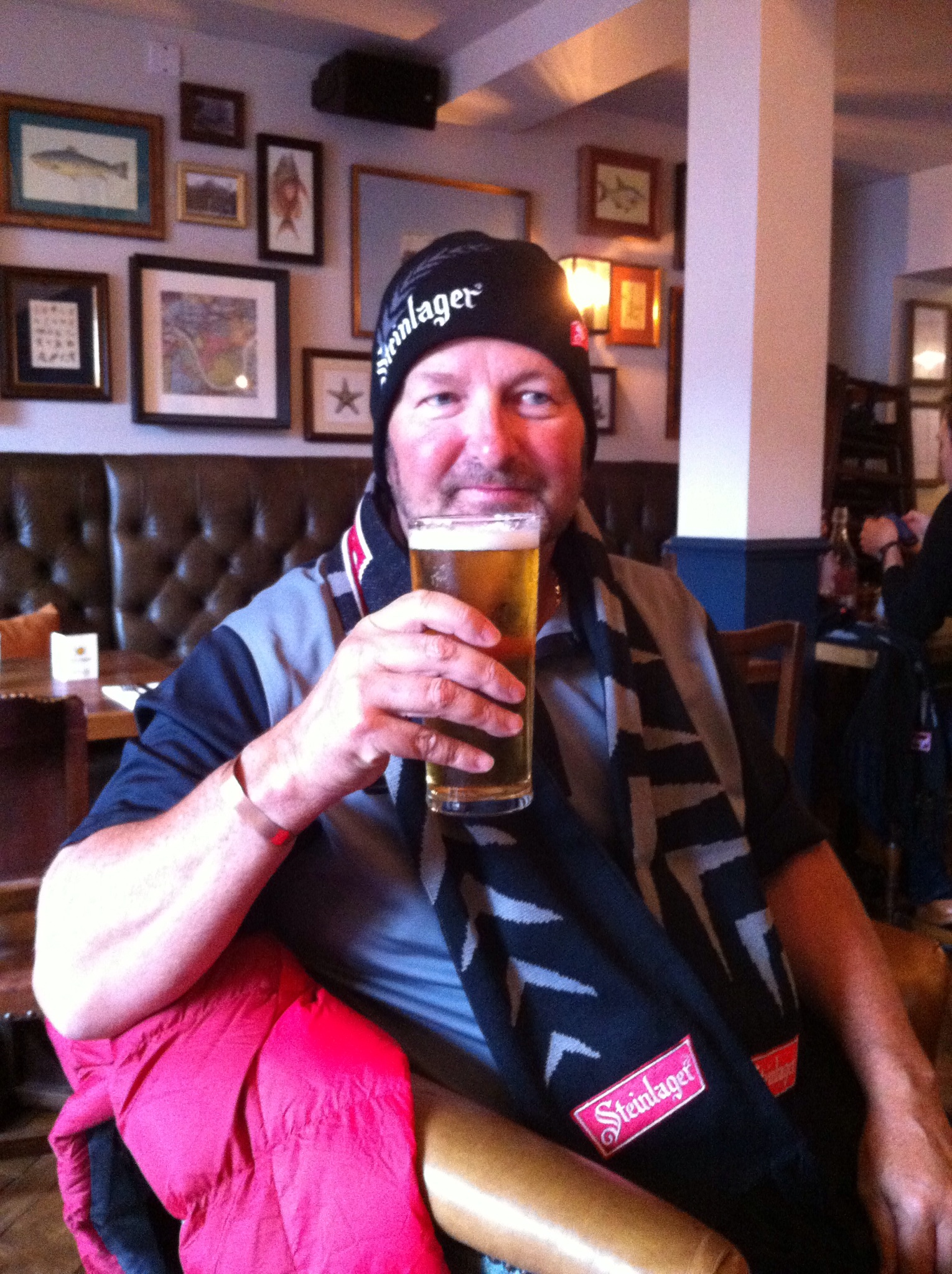
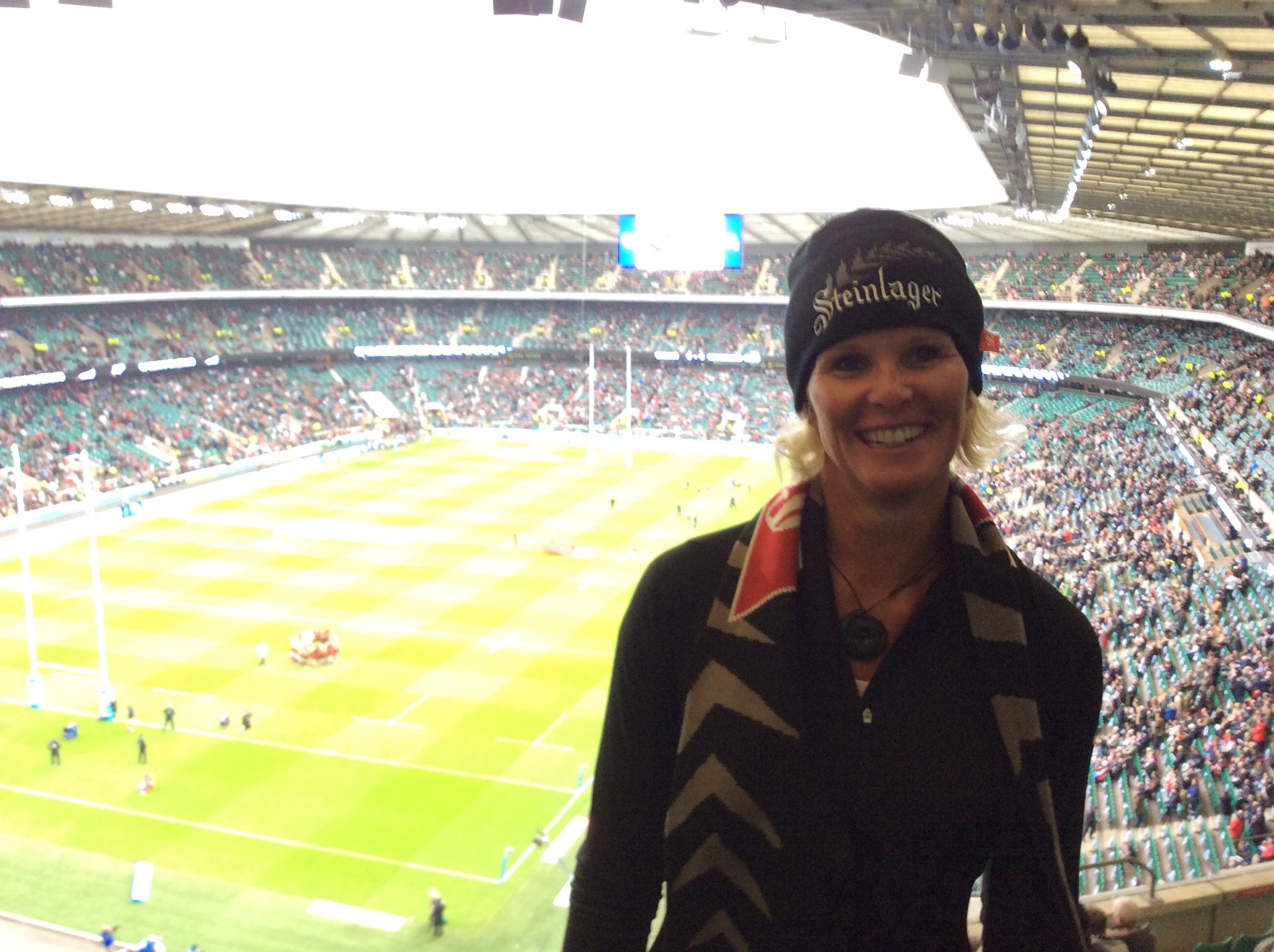
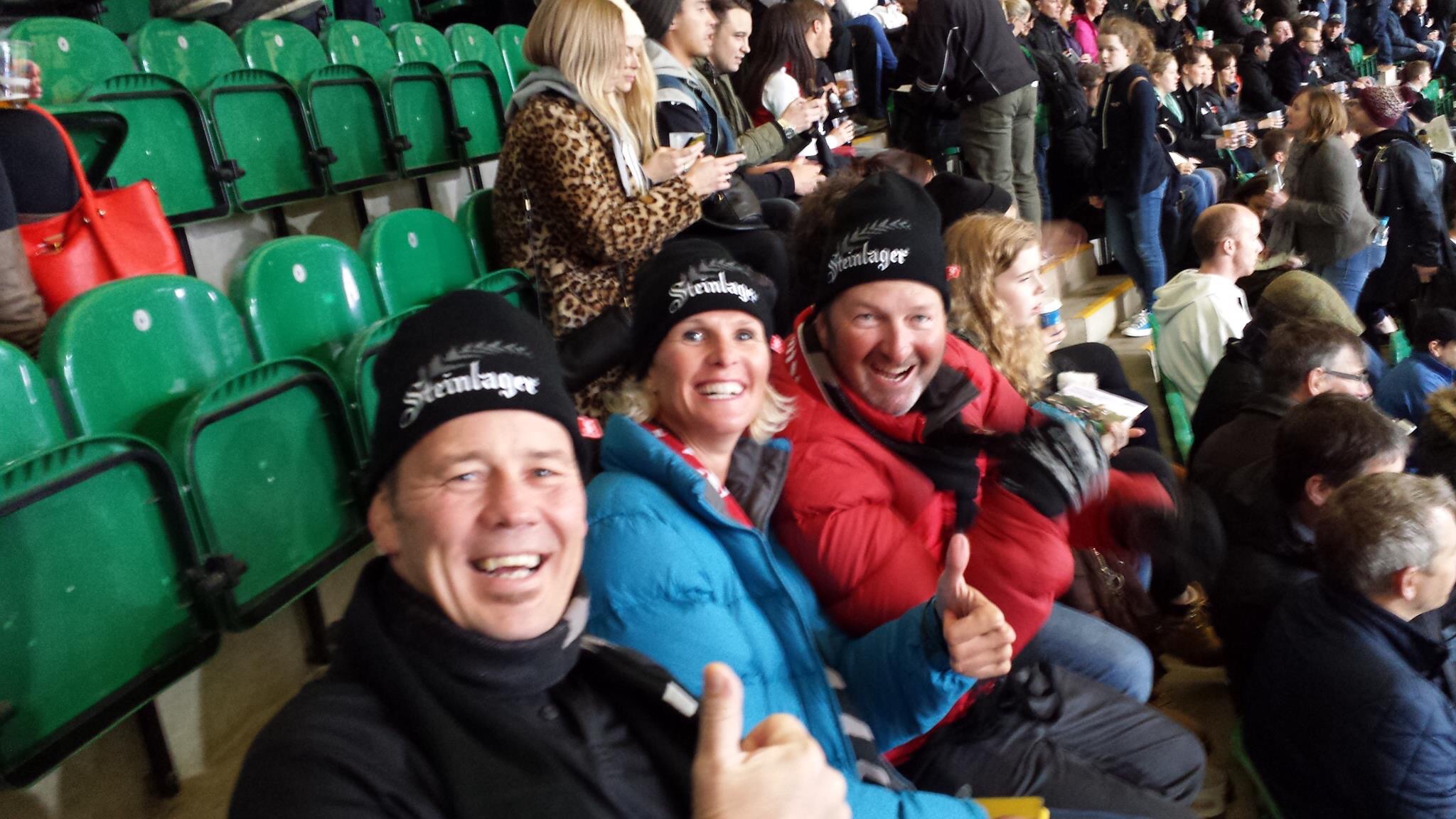
On Saturday morning we caught the tube out to Gunnersbury and walked to the City Barge Pub. Luke had told us that Steinlager were having a supporters club event there and there would be a couple of ex All Blacks there. We got there and a lady greeted us and asked us if we were here for the Steinlager Supporters Club event. Of course we were (actually we didn’t have much idea what was going on) so she went and got us a beanie and scarf each – result : )

They were filming a promotional clip and I spotted Piri Weepu and Nick Evans. Steve thought he better get a beer – it was 10.40am after all! They then did an informal question and answer session which was very funny. Nick Evans has been in the UK for 7 months and was wearing a suit, Piri has been here for 7 weeks and was in his casuals. Someone asked him how long it would be before he started wearing a suit – his response “never, you can take the boy out of Wainuomata but you can’t take the Wainuiomata out of the boy”. They discussed whether Julian Savea is better than Jonah Lomu – Nick thought he was but Piri’s loyalties lay with Jonah after having spent so much time with Jonah over the years.

IMG_4878.JPG

They did a photo session after the question and answer session and I thought why not – up close and personal with the boys that have worn black – good stuff.

IMG_4879.JPG

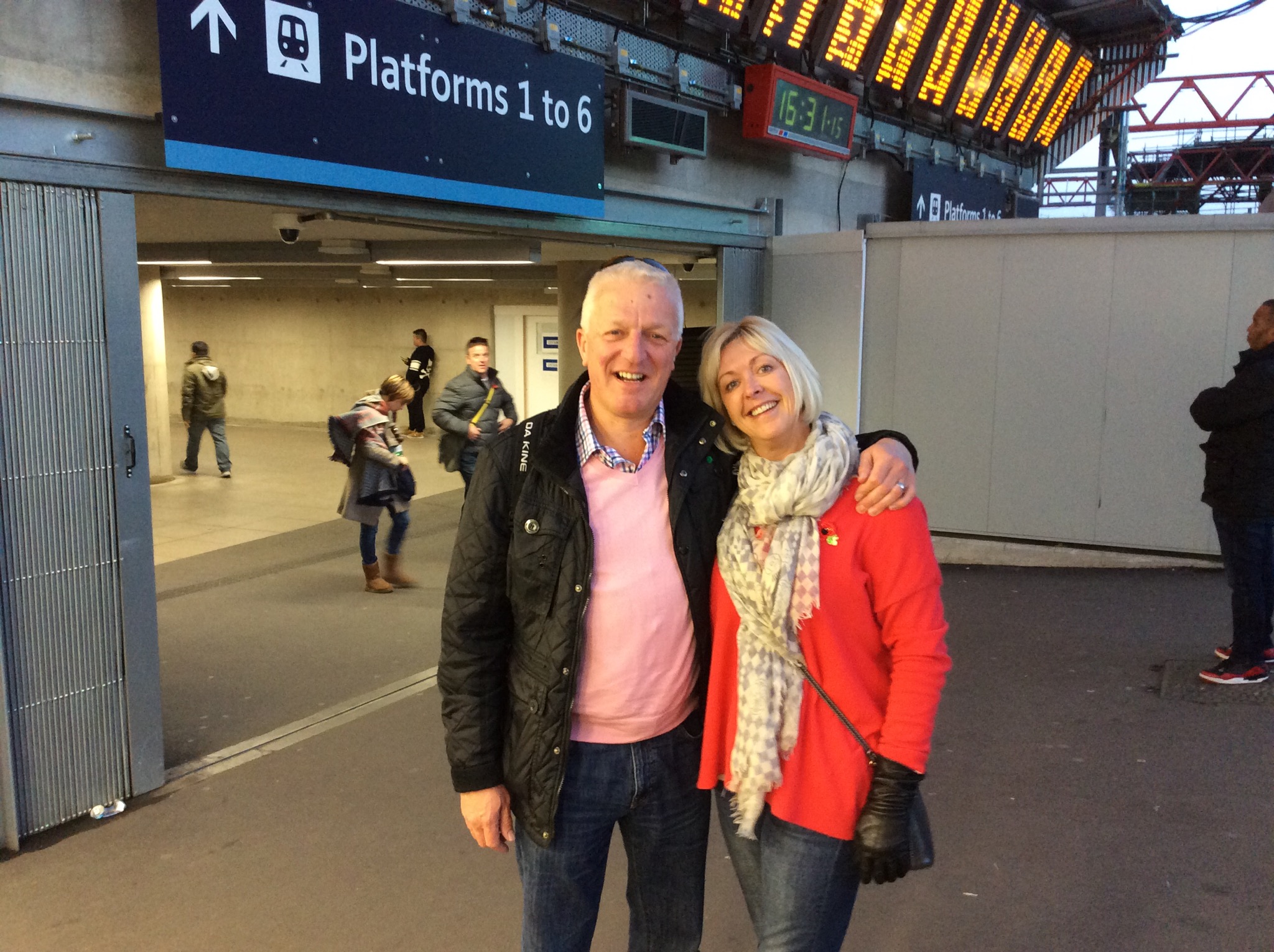
Luke’s contacts who I think have the distribution rights for Steinlager in the UK had organised taxis for us to the game – we were feeling pretty special at this stage. The night before I had been studying the train and bus timetables from the pub to the ground. We were then dropped at the “carpark party” where they back the car in full of beer, wine and food, erect a marquee and wallah a “carpark party”. On our way to the party we saw Craig Norgate another old friend from Taranaki so organised to catch up with him later on.

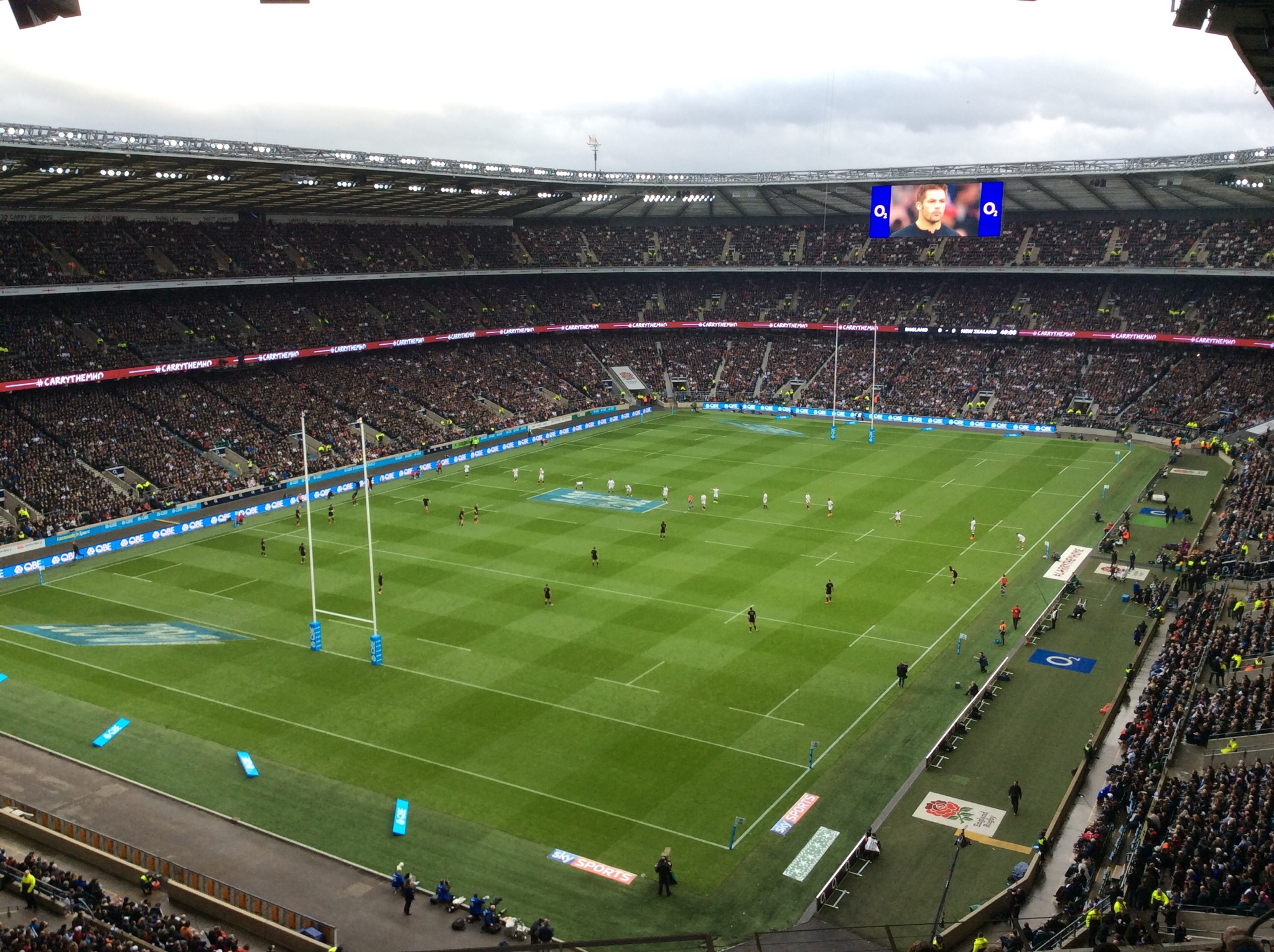
We met a few other Kiwis at the party as well as some English supporters so the banter was good fun. The beer, wine and food flowed. I then wanted to get into the ground to check it out – the anticipation levels were high. We got to our seats which were quite high up in the corner so we had a good view of the All Blacks try line in the second half. It was awesome – what a stadium.

IMG_4881-0.JPG

IMG_1742.JPG

IMG_1747.JPG

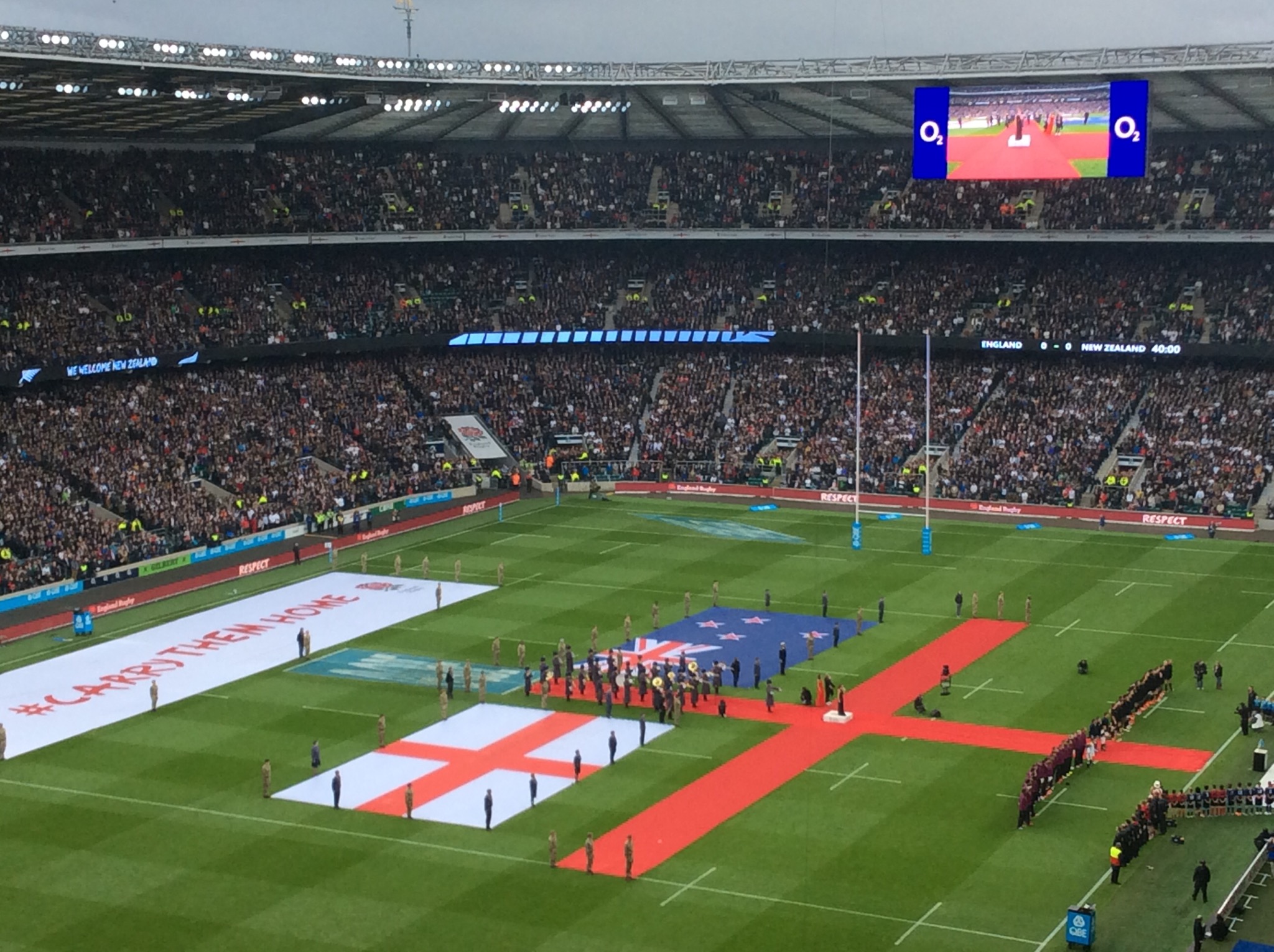
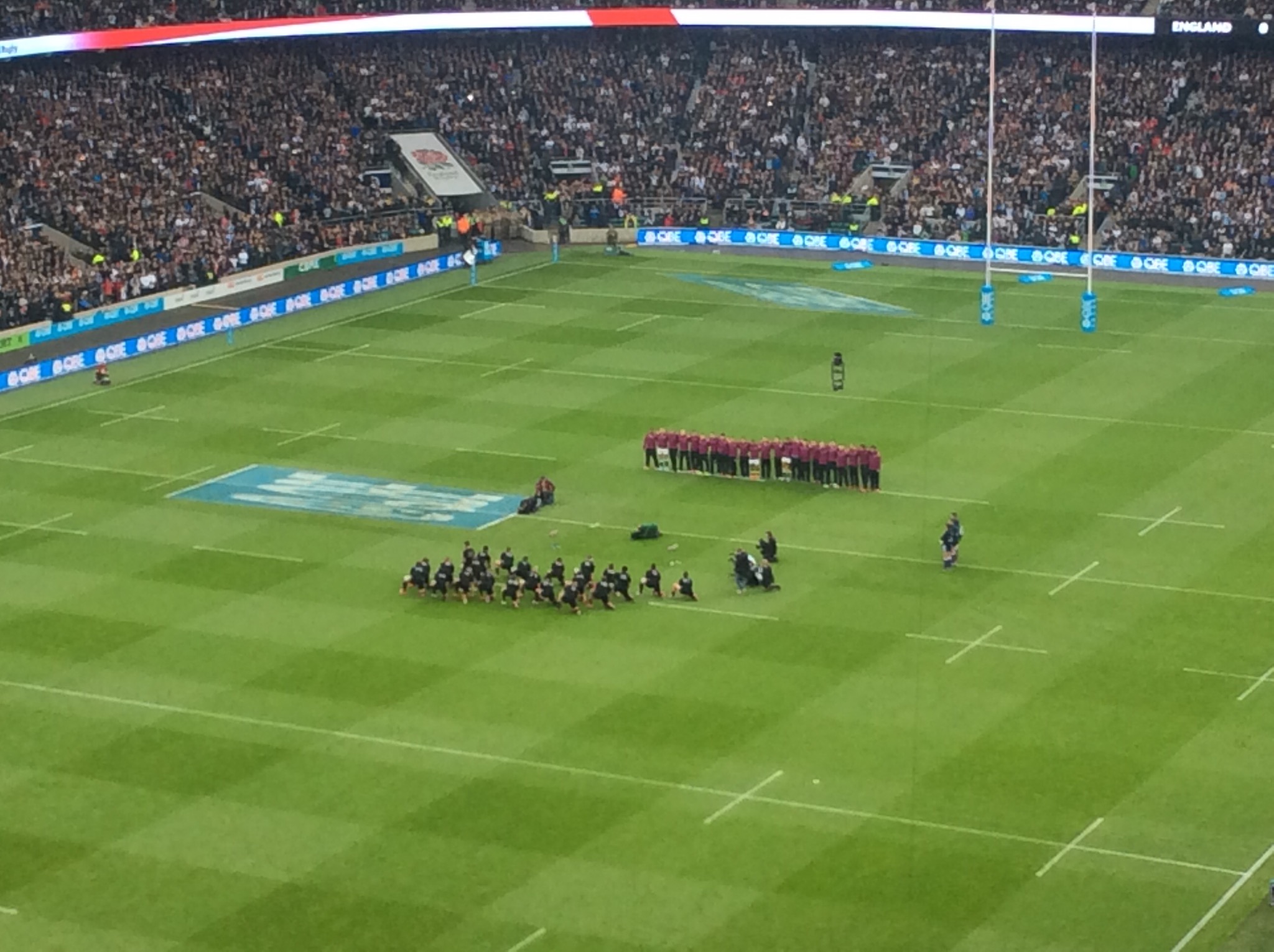
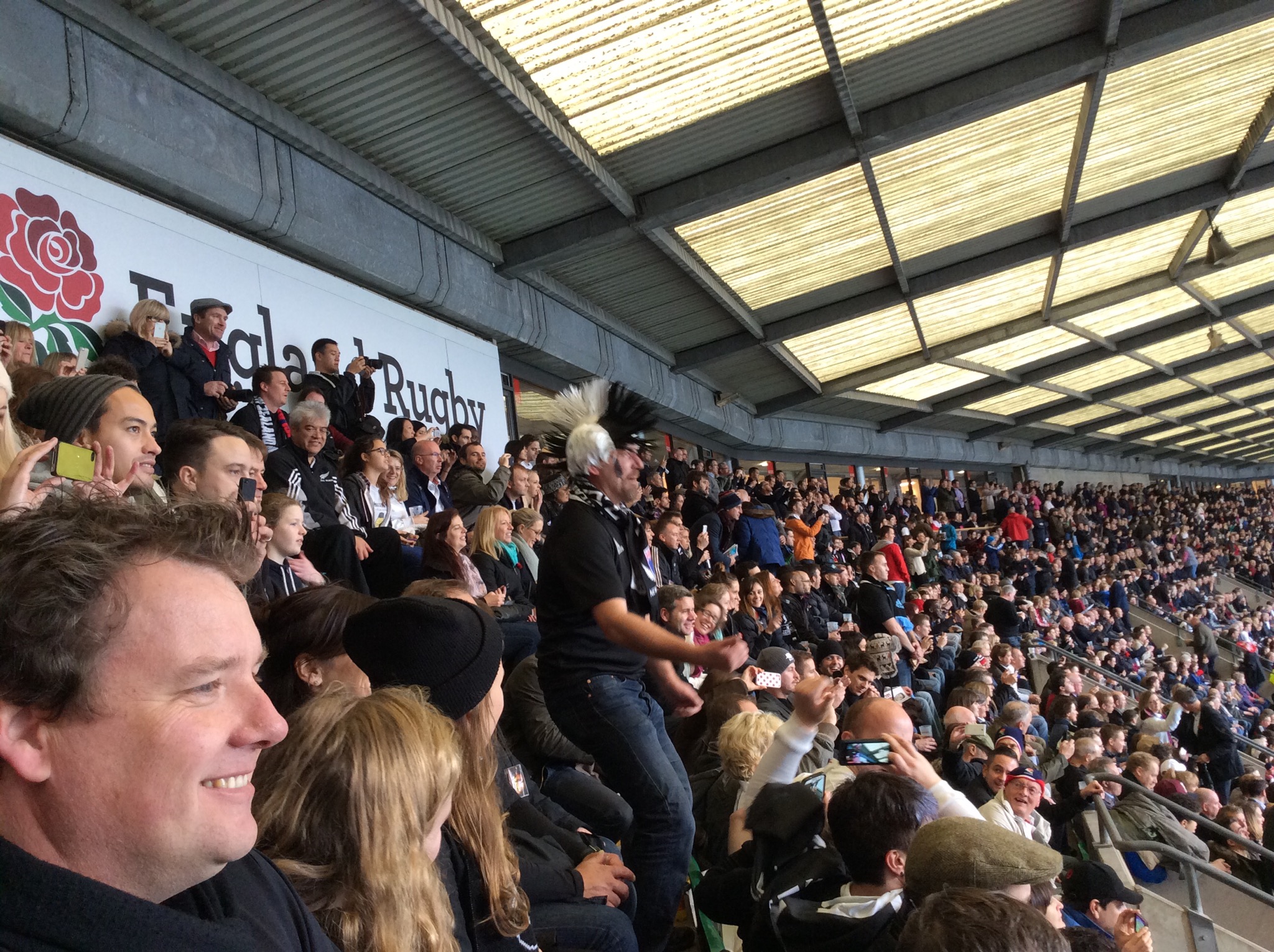
They had a brass band and rolled out the NZ & English flags prior to the singing of the national anthems. We stood and sang proud through the NZ national anthem and thought it was a good Kiwi effort. It was nothing compared to the English national anthem – wow, it was loud and proud. Next up was one of my favourite parts of an All Blacks game – the haka – they went with Kapa O Pango. Our friends had told us you won’t hear the haka as the English will drown it out with Swing Low Sweet Chariot which they did. The singing was amazing and for this one occasion I didn’t mind the haka being drowned out – its not everyday you get to hear that.

IMG_1751.JPG

IMG_1759.JPG

IMG_1763.JPG

IMG_1765.JPG

Being quite high up you could see the plays of the game quite clearly, and in some instances you knew what was going to happen before it happened. We did, however, feel a bit removed from the game because we are so used to watching it on TV with a commentary. It was hard to work out what was happening with some of the referees calls at times – in saying that, he had a brain explosion so having a commentary may not have helped that anyway : )

Royce, also a fellow Taranakite was sitting next to me and had a good rugby knowledge so did a bit of interpreting for me. It was good to see the AB’s keep chipping away at the English and eventually you could see the English tire so the AB’s victory was well deserved. It started raining in the second half but was coming in towards the other side of the grandstand – we were lovely and dry up in our cheap seats.

IMG_1766.JPG

IMG_1890.JPG

After the game we headed back to the carpark party where more food and alcohol was flowing. It was raining quite persistently now but we had enough shelter that we didn’t get too wet. We then organised to meet another friend from Taranaki, Lulu Warren, back at the City Barge Pub. We tried to get taxis but even three hours after the game that was an impossibility – apparently these carpark parties are quite the thing so lots of people hang around after the game. We walked to Twickenham train station instead and caught the train to Richmond before catching a taxi to the pub.

Getting on the train at Twickenham was fun – there were lots of people waiting to get on and the boys had said “make sure you get on this train”. I nearly got muscled sideways and out of reach of the doors before I made a final push and got on the train – the boys who had been behind me managed to get on the train before me and save me a seat : )

Lulu was waiting for us and Craig had also joined us so it was a great Kiwi Dairies reunion – lots of laughs catching up on various people’s happenings.

About 11pm we were starting to hit the wall so after saying farewell we walked back to the tube. We got back to the hotel about 12.30am managing to catch the last tube. We were stuffed – it had been a big day. An awesome day though making lifetime memories.

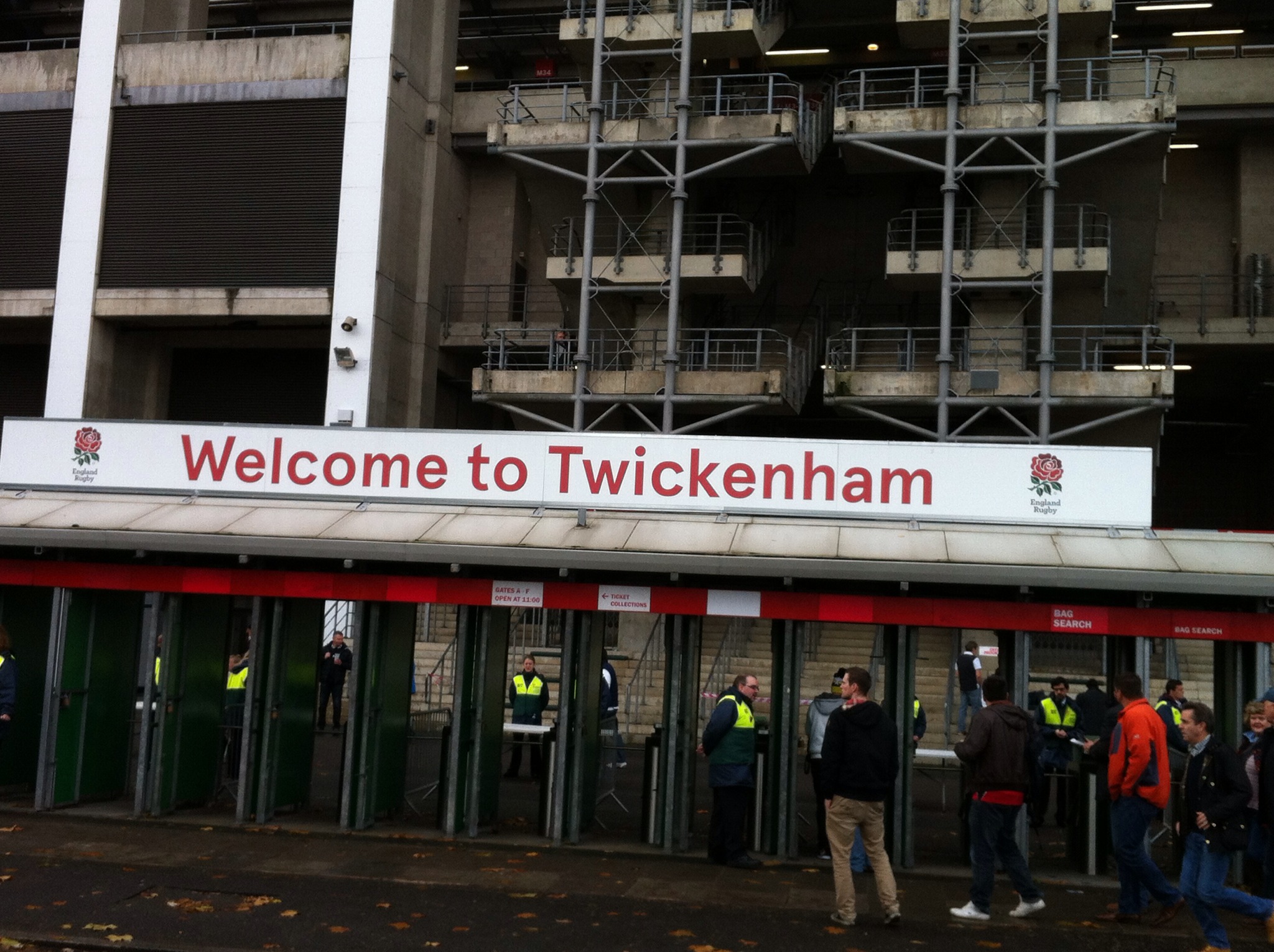
Twickenham Stadium (usually known as just Twickenham or Twickers) is a stadium located in Twickenham, in the London Borough of Richmond upon Thames. It is the largest stadium in the world devoted solely to the sport of rugby union, it is the second largest stadium in the UK after Wembley Stadium and the fifth largest stadium in Europe. The stadium is the home of the Rugby Football Union (RFU), and as such primarily a venue for rugby union and hosts England’s home test matches, as well as the Middlesex Sevens, the Aviva Premiership final, the LV Cup, Heineken Cup matches and Barbarian F.C. home matches. The stadium is considered an icon of English rugby union and the 2009/2010 season saw Twickenham celebrate its centenary.

Although the ground is usually only occupied by rugby union, it has in the past hosted a number of other events, such as concerts by Rihanna, Iron Maiden, Bryan Adams, Bon Jovi, Genesis, U2, The Rolling Stones, The Police, Eagles, R.E.M. and Lady Gaga. It has also been the host of Rugby League’s Challenge Cup final. The stadium has also been used annually for over 50 years to host Conventions of Jehovah’s Witnesses.

Posted in London | Leave a comment

Sotogrande – signing off – Andalusia, Spain

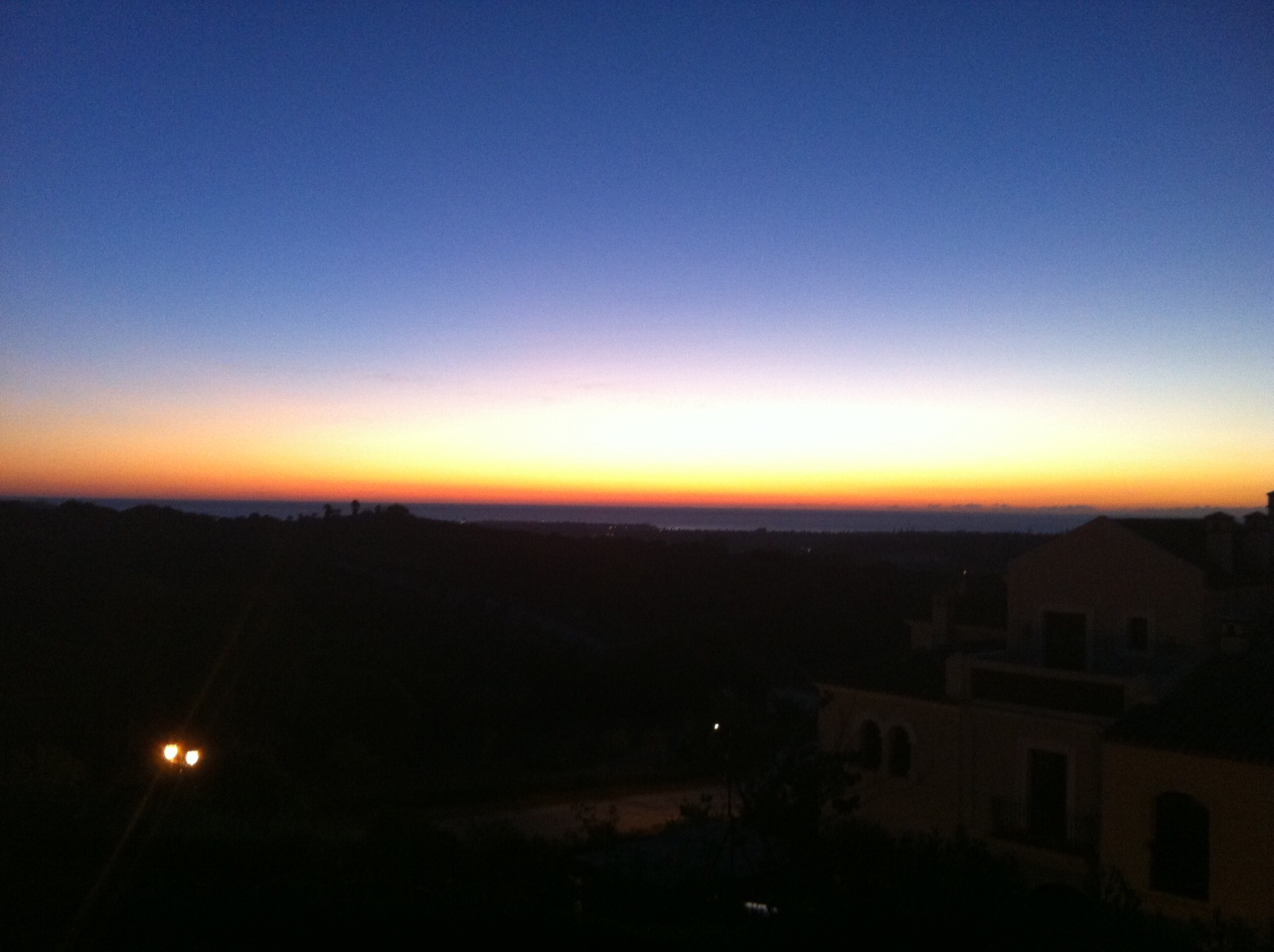
Well today is the last day of our Spanish sojourn. We have spent 5 weeks in this lovely spot and will be sad to lock the door of 58 Los Cortijos for the last time tomorrow morning. We have enjoyed waking up and seeing the sun rise over the Mediterranean each morning as we took our morning run or walk around the Sotogrande Urbanisation.

IMG_1271.JPG

IMG_4164.JPG

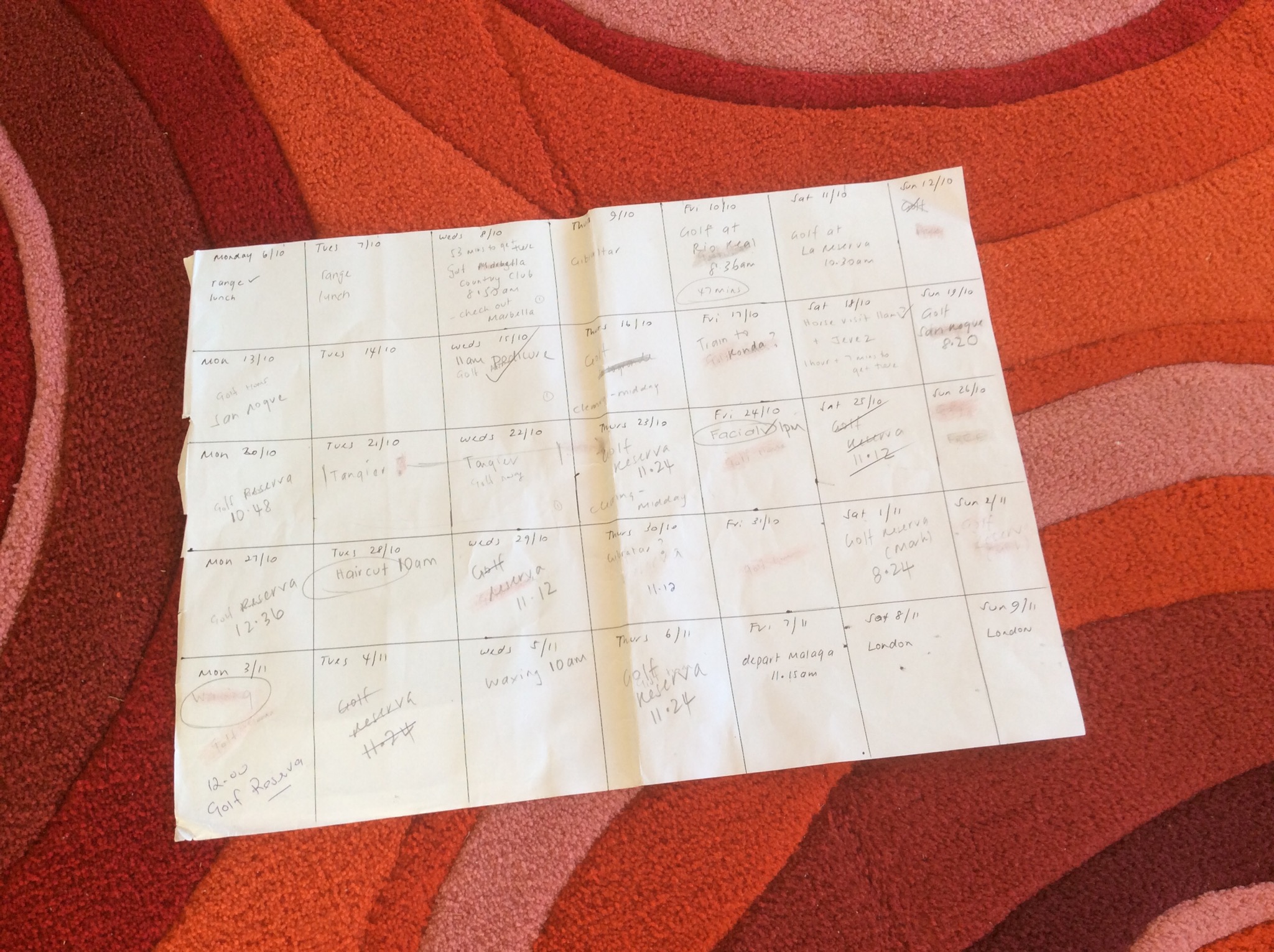
Being the organiser extraordinaire that I am I drew up a 5 week plan – Steve likes to talk about all the things he wants to do (mainly play different golf courses) but unless I crack the whip time can go by the wayside. I also wanted to fit in some sightseeing too.

IMG_1710.JPG

We enjoyed 13 and a 1/3rd rounds of golf – 8 and a 1/3rd being at La Reserva our “home” course. The 1/3rd represents the round we didn’t finish due to Steve falling in a small hole next to the 6th tee and spraining his ankle. It was Nurse SUNGRL to the rescue, dragging him into the golf cart and driving him back to the car. Once firmly ensconced in the back seat we headed back to the ponderosa so he could RICE – rest, ice, compress and elevate. Due to these quick actions he was back on track fairly quickly and out for his daily walk a few days later (under duress of course – but that is normal, sprained ankle or no sprained ankle : )

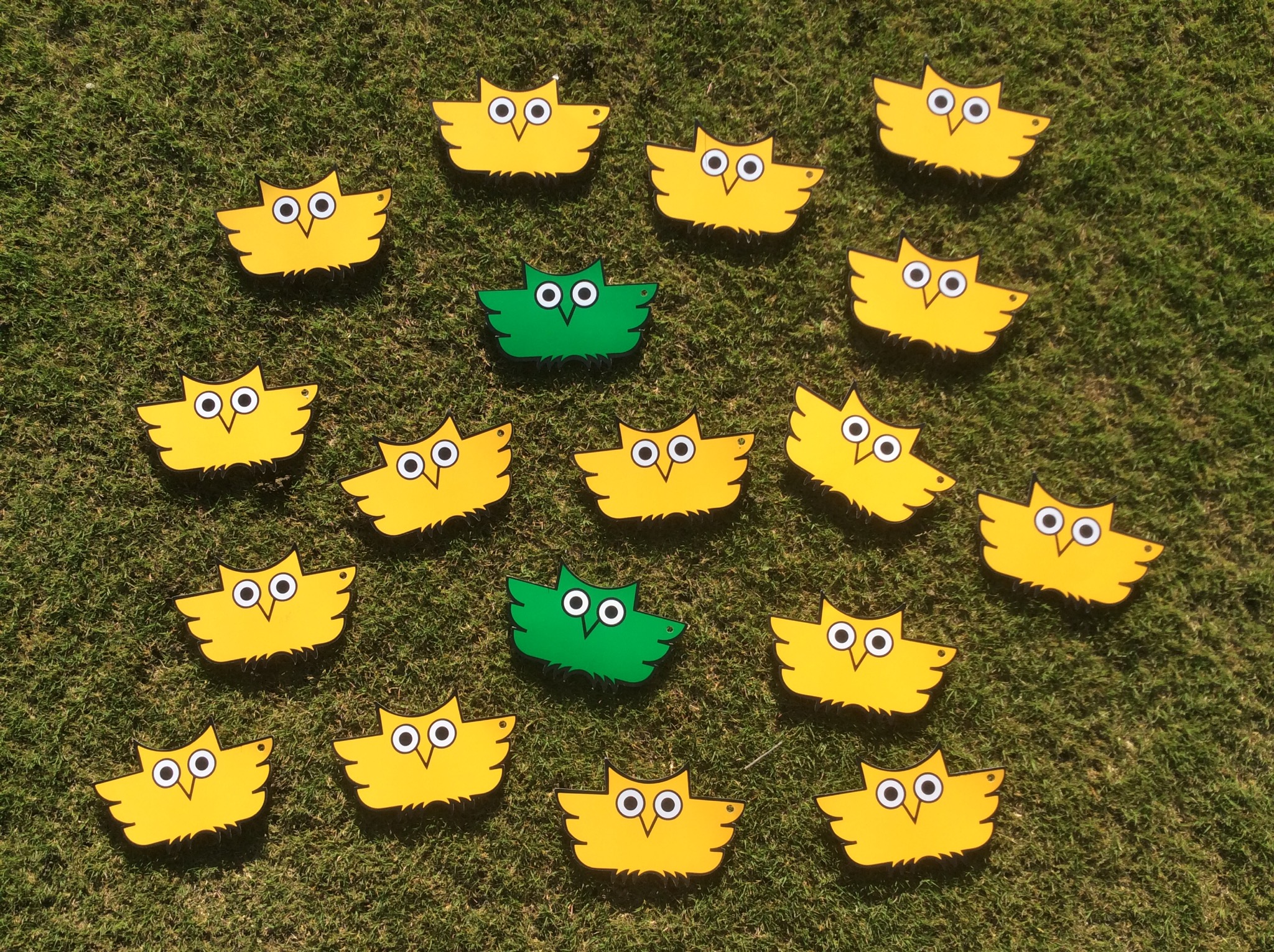
La Reserva have this cute little owl as there mascot and every time we played they gave us one each to show we had paid our green fees. I think they may make good Christmas tree decorations.

IMG_1512.JPG

IMG_1515.JPG

IMG_1516.JPG

IMG_1522.JPG

IMG_1524.JPG

IMG_1527.JPG

IMG_1529.JPG

IMG_1535.JPG

IMG_1537.JPG

IMG_1539.JPG

IMG_1699.JPG

IMG_1702.JPG

IMG_1596.JPG

IMG_1713.JPG

IMG_1714.JPG

IMG_1715.JPG

IMG_1716.JPG

IMG_1718.JPG

IMG_1722.JPG

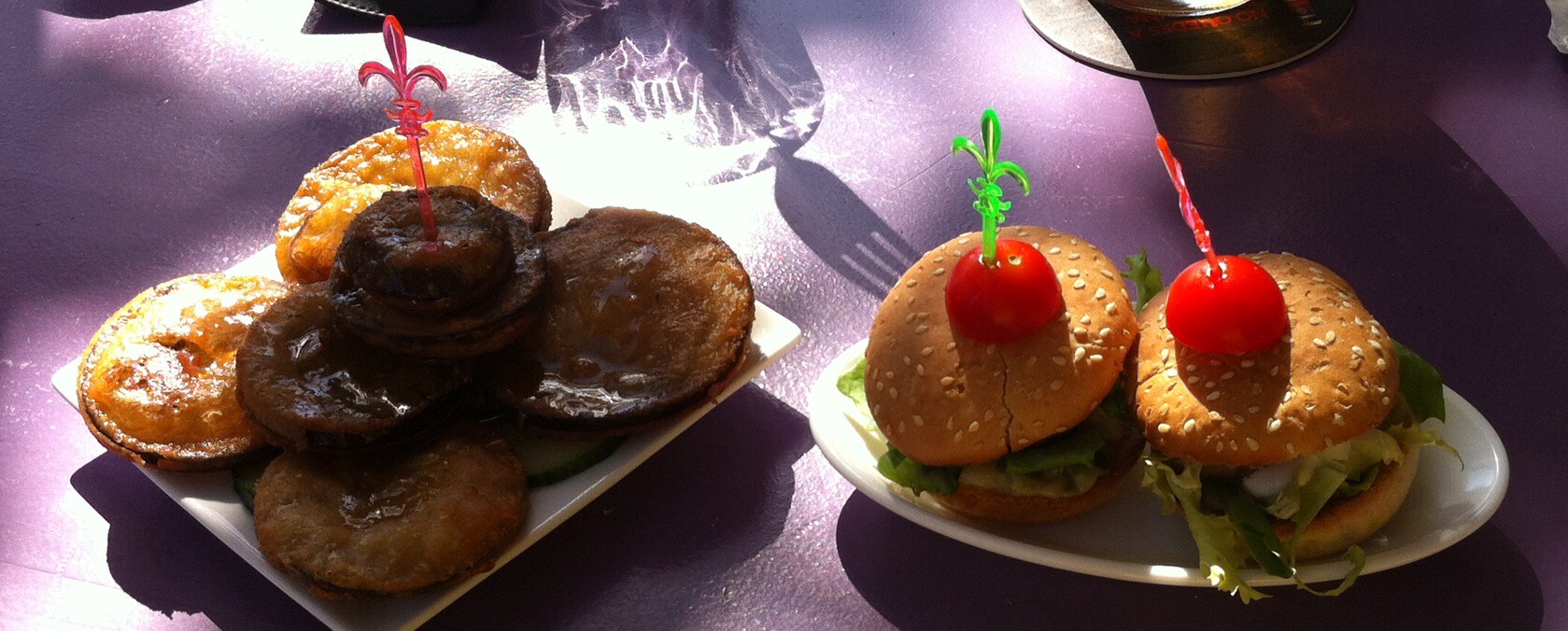
We also enjoyed checking out the local restaurants where tapas is the main theme.

IMG_1600.JPG

IMG_1601.JPG

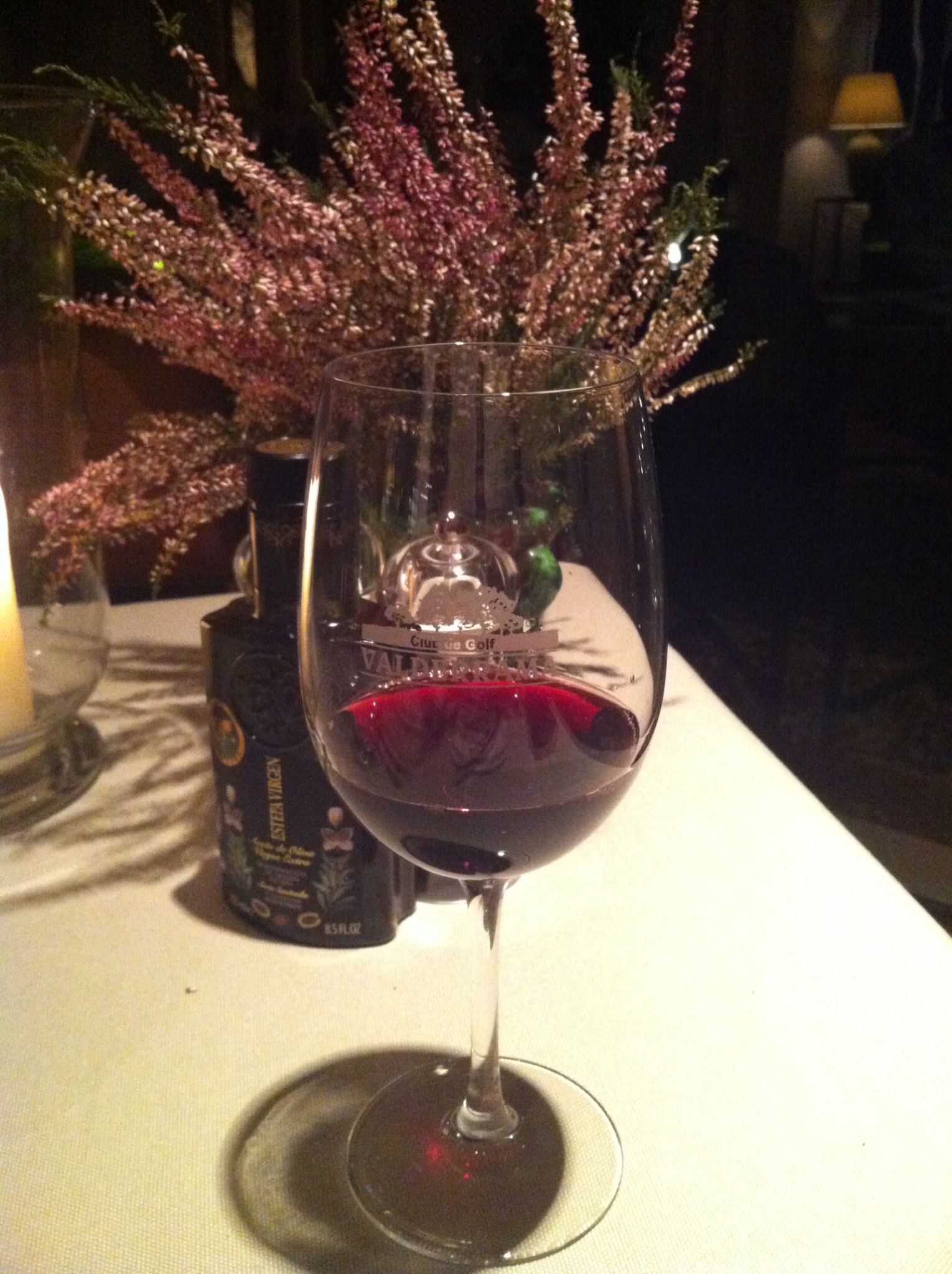
We went to Valderrama for dinner last Saturday night and found we had the restaurant to ourselves until a solitary member came in for dinner about half an hour after we arrived. It was quite eerie being in this fancy restaurant where the only noise was the clink of plates in the kitchen. The food was amazing and the service was fantastic as you would probably expect when there were only 3 of us in the restaurant.

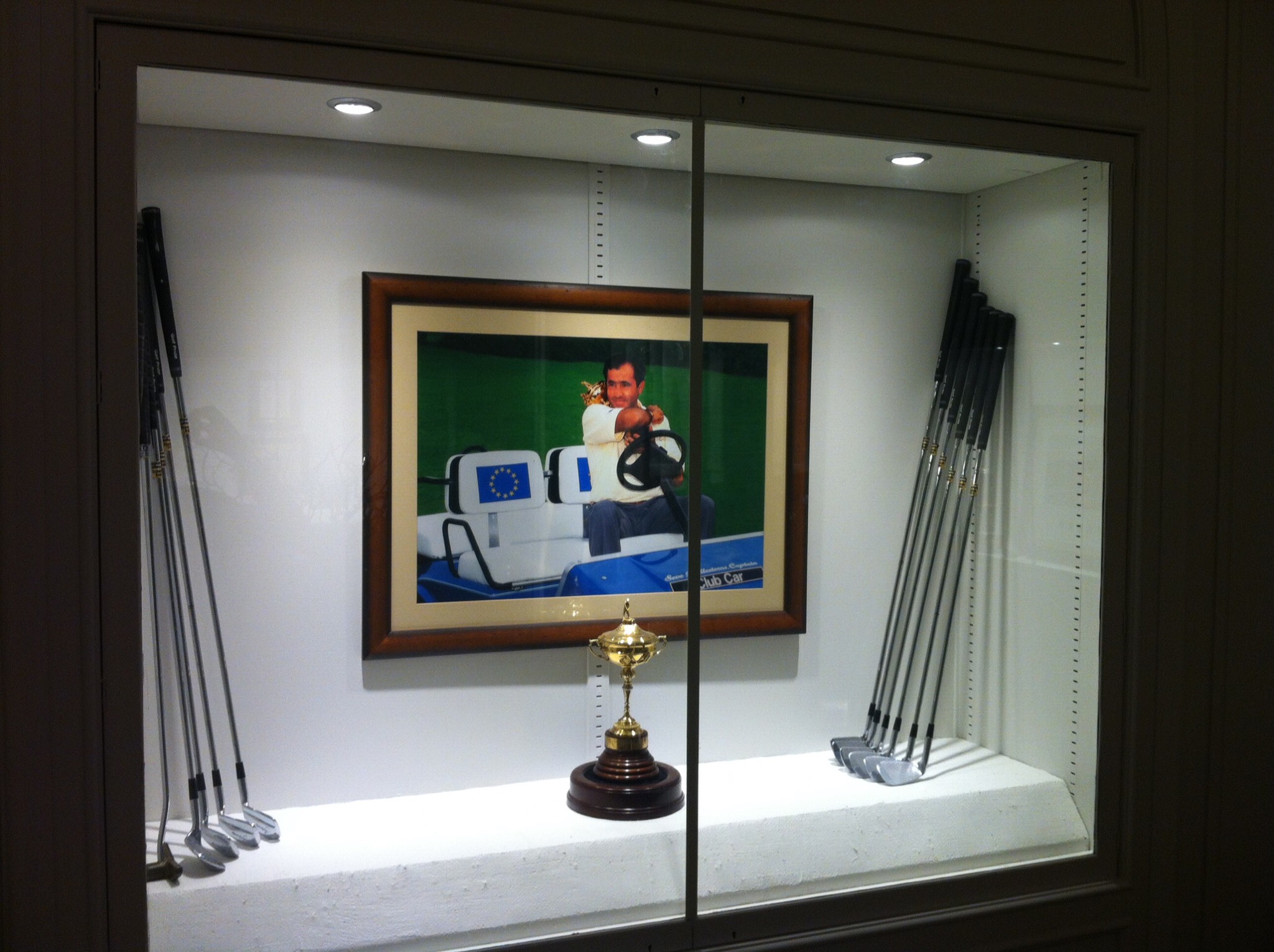
Valderrama is a private golf club where the members pay EU150,000 to join and an annual sub. It hosted the Ryder Cup in 1997 when Seve Ballesteros was the captain. It was also the first Ryder Cup that Tiger Woods played in. Valderrama was the home to the Volvo Masters from 1988 – 1996 and then again from 2002 – 2008. It is very expensive to have a round at but is apparently an unforgettable experience – we thought we would start with dinner : )

IMG_1696.JPG

IMG_4120.JPG

IMG_4122.JPG

IMG_4124.JPG

IMG_4125.JPG

IMG_4127.JPG

IMG_4129.JPG

We had dinner at La Finca Thai Fusion one night and it was delicious – everything is made from scratch and the flavours were really good. We got talking to the owner who is a young Spanish woman with a high class English accent and a hint of American thrown in. She was educated in the UK and is married to an American. She actually has a degree in fine arts and is currently painting animals that have been rescued from various scenarios. There is a small zoo in the area that provides a home for these animals to get them well again. In the eyes of the animals she reflects the scenario that they were rescued from – this is her signature so to speak. He mother in law quilts the paintings which gives them texture – we saw one in the flesh and it was amazing. She also showed us a photo of her current project which is a Tiger that was rescued from the circus so she has the reflection of a circus tent in one of it’s eyes.

The restaurant is run from her family home (she had lived there since she was three days old) – a large Spanish villa next to a camping ground. Her and her husband were at a crosscroads 5 years ago wondering whether to stay in the US or relocate back to Spain, Spain won and they have been operating this lovely restaurant ever since – lucky for us.

They do a special Sunday roast lunch on Sundays due to the large expat community. We couldn’t resist so we enjoyed a lovely roast last Sunday while sitting in the garden. There was roast lamb, roast potatoes, pureed peas, pureed carrots, cauliflower and cheese, broccoli and the most amazing Yorkshire pudding. So yummy. After letting that digest we shared a toffee and caramelised Apple crumble. Needless to say we didn’t need dinner. We also popped back their for dinner tonight – our last night in Spain.

IMG_4043.JPG

IMG_4153.JPG

IMG_4130.JPG

IMG_4133.JPG

IMG_4138.JPG

IMG_4140.JPG

IMG_4178.JPG

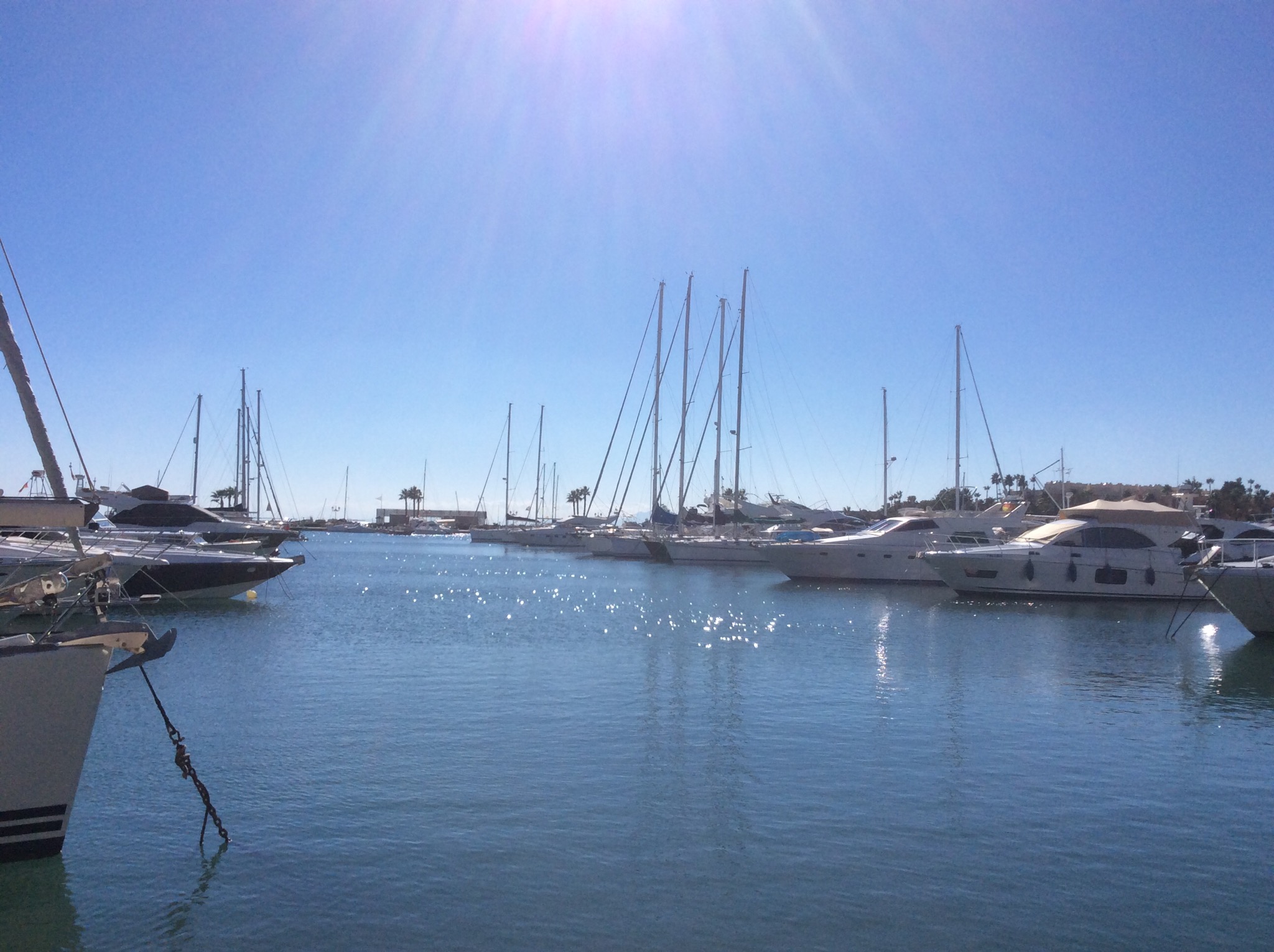
We also enjoyed a few lunches down at Puerto Sotogrande – The Hairy Lemon became a favourite although Steve kept referring to it as The Hairy Onion – who knows how his mind works?

IMG_1706.JPG

IMG_1709.JPG

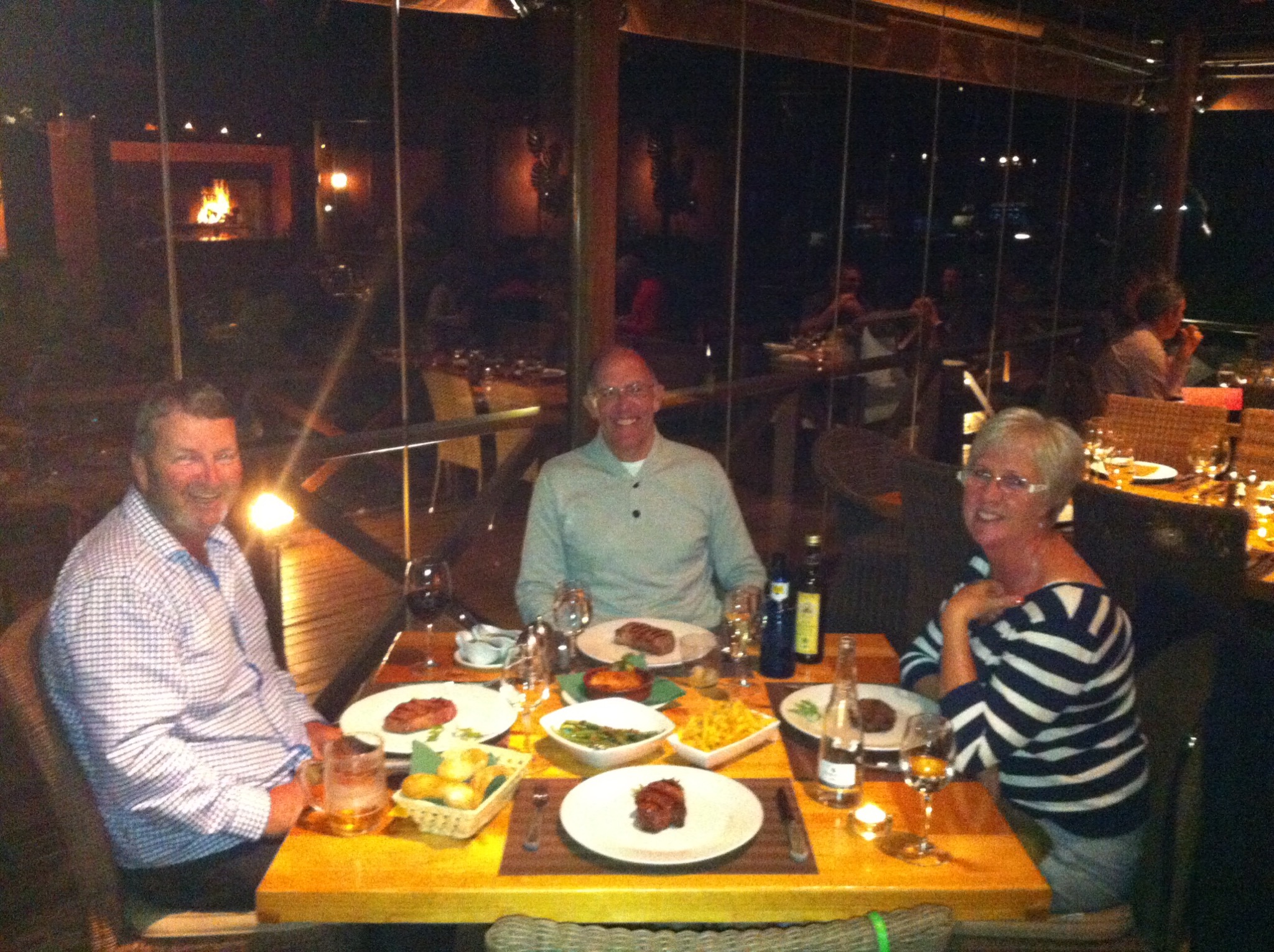
We also met up with some English friends Anne & Grahame who we had originally met in NZ. They had since shifted back to the UK (a long story aye Anne) and have now shifted to Spain. Their new home is a few hours north of where we were staying but they happened to be in the area for a couple of weeks which was great. We caught up on all the news over a lovely meal at Asador Cancha II – an Argentinian steak restaurant overlooking the polo field in San Enrique.

IMG_4163.JPG

Polo is quite a big sport in Spain as is Paddle Tennis a cross between tennis and squash.

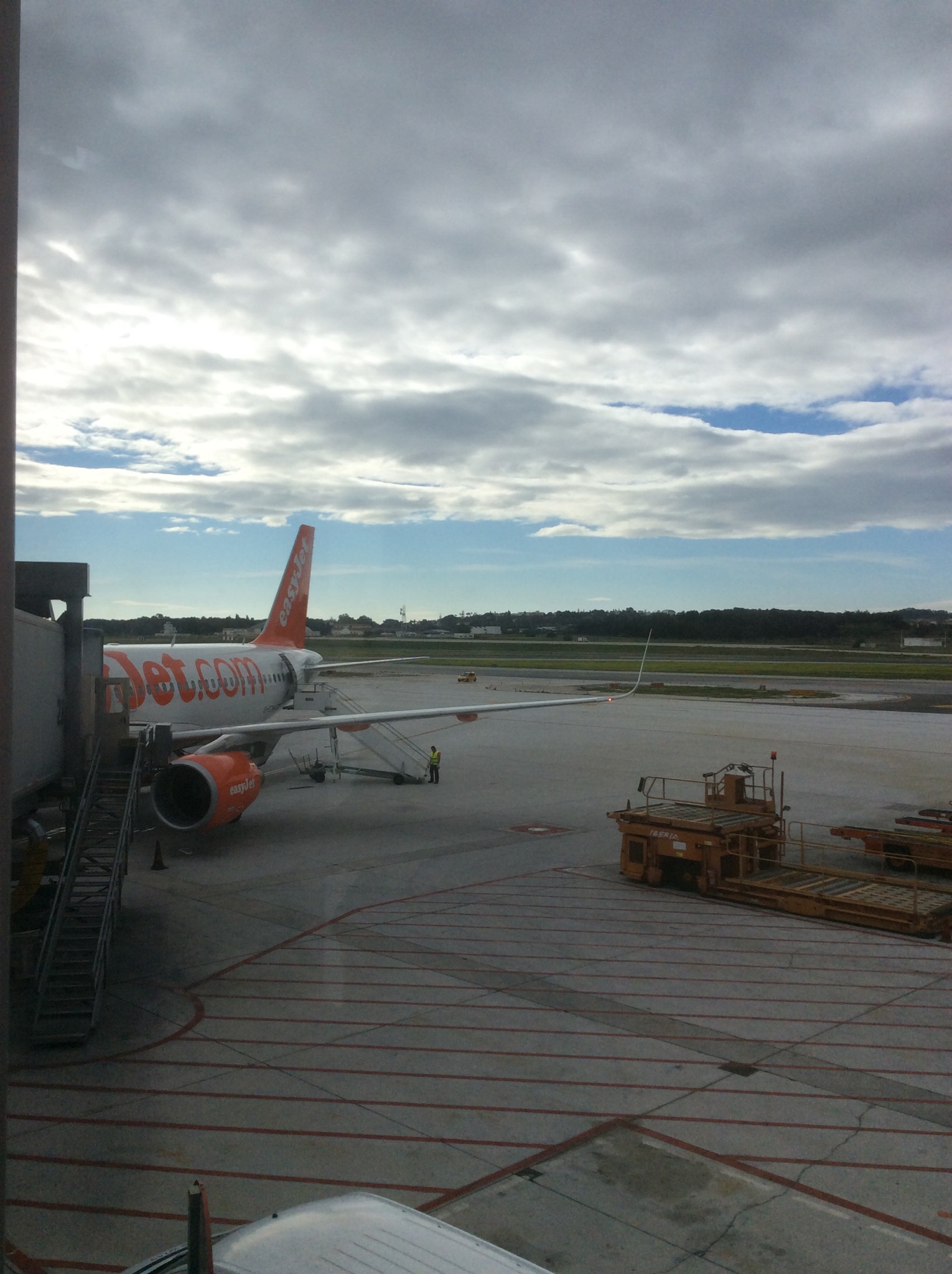
After an early start this morning we are now sitting on an Easyjet flight to Gatwick, London. It was sad locking the door to number 58 Los Cortijos but we have already decided we will return one day. Our car rental drop off was a doddle although we did fear for our lives in the van back to the airport – the driver insisted on going top speed – he even accelerated 50 metres from where he was stopping to drop us off before slamming on the brakes. Spanish logic ?

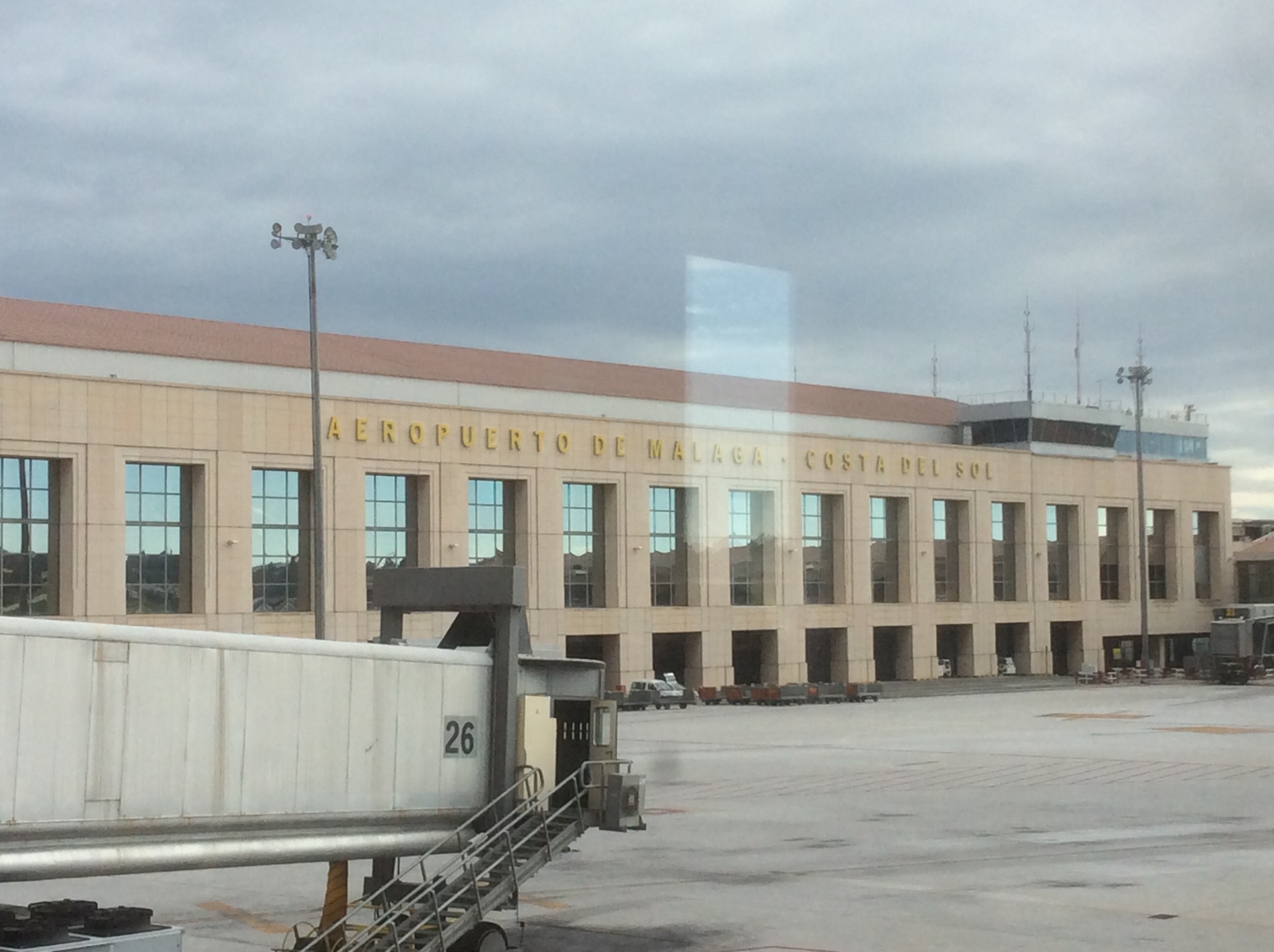
Malaga Airport is very nice and really modern. We are always a bit apprehensive checking in due to our inability to keep our bags under the weight limits. We have our own scales so we know we are always sailing close to the wind. The readings on the check in scales were a lot lighter than we had weighed which we can never understand, especially when the girl said to us – you’re exactly on target? Steve thinks he has come up with a way to foil the scales though – he rests part of the bag on the metal surround so that takes some of the weight – so he believes anyway. It’s all a bit of a game really : )
IMG_1725.JPG

IMG_1726.JPG

We have now arrived safely in London and used the great public transport system here to get to the hotel. We then traipsed halfway across London to Parcel Post to send some stuff home and discovered they don’t sell boxes – you need to go to the Post Office for that. Long story (don’t get me started) but we have posted 8kg of mainly clothes home so Rachel D there is a box coming your way. Now let the shopping begin : )
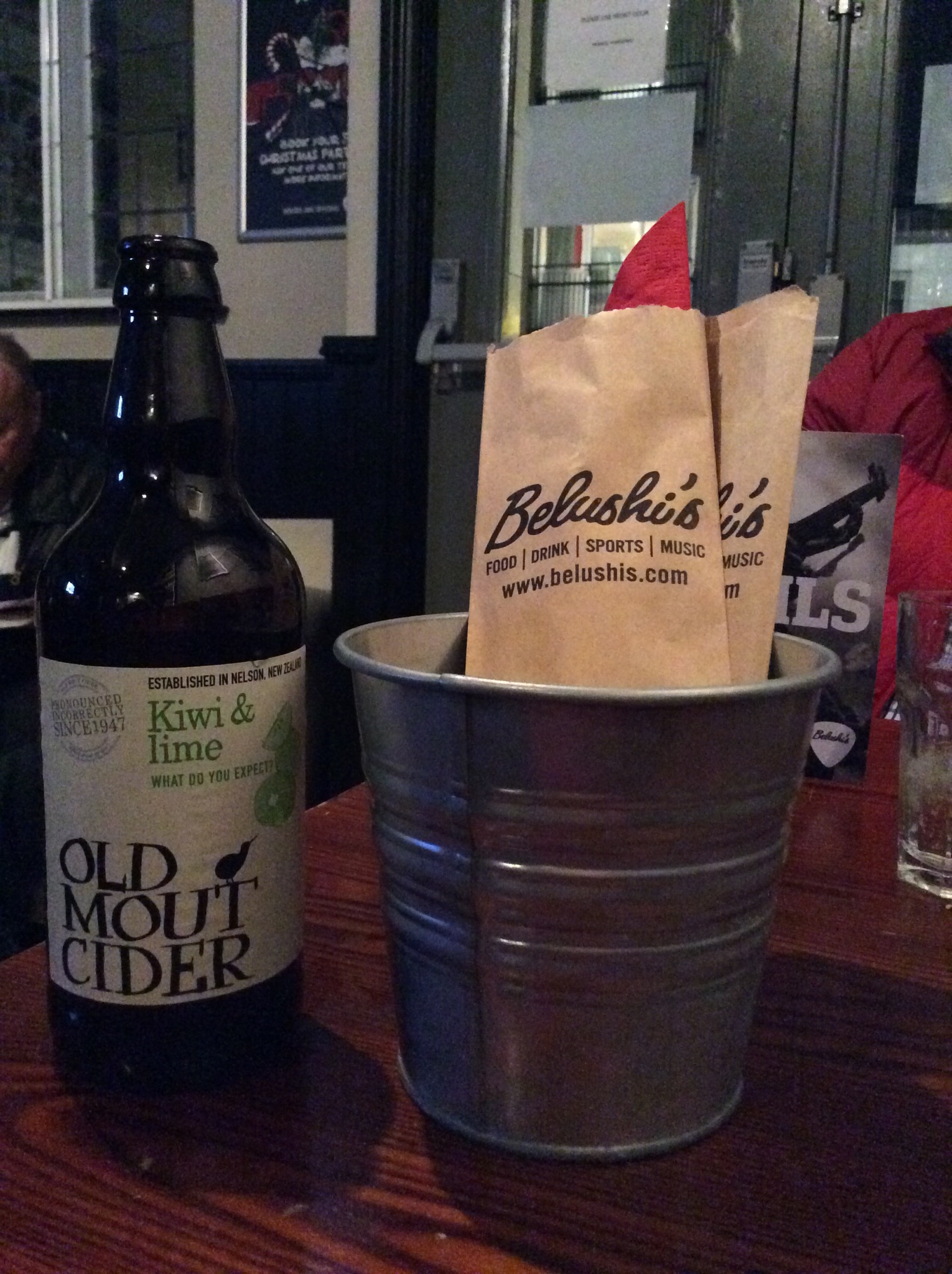
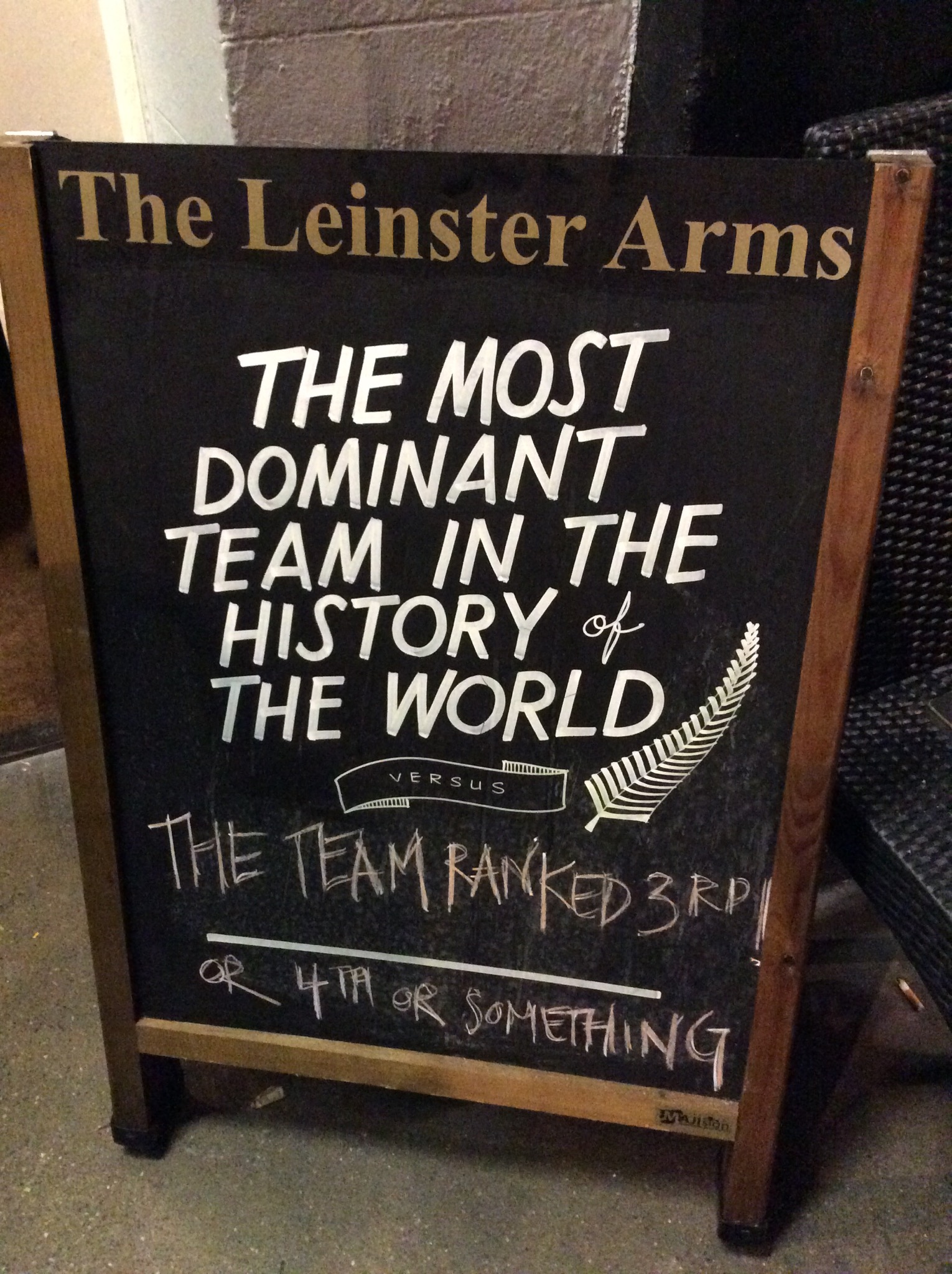
It wouldn’t be London without popping into a couple of pubs where we found a few things to our liking. Bring on the game tomorrow – can’t wait.

IMG_1729.JPG

IMG_1731.JPG

IMG_1733.JPG

Posted in Spain | Leave a comment