
Today we took a drive to Gibraltar which is about 20 minutes from where we are staying in Spain. Gibraltar is part of the United Kingdom and you have to cross the border and pass through customs to enter the 6km2 outpost of the United Kingdom. The customs procedure is fairly lax though – a cursory glance at our passports that Steve was holding up as he drove over the border. They don’t even look in the passport so I am unsure why they bother with this charade.
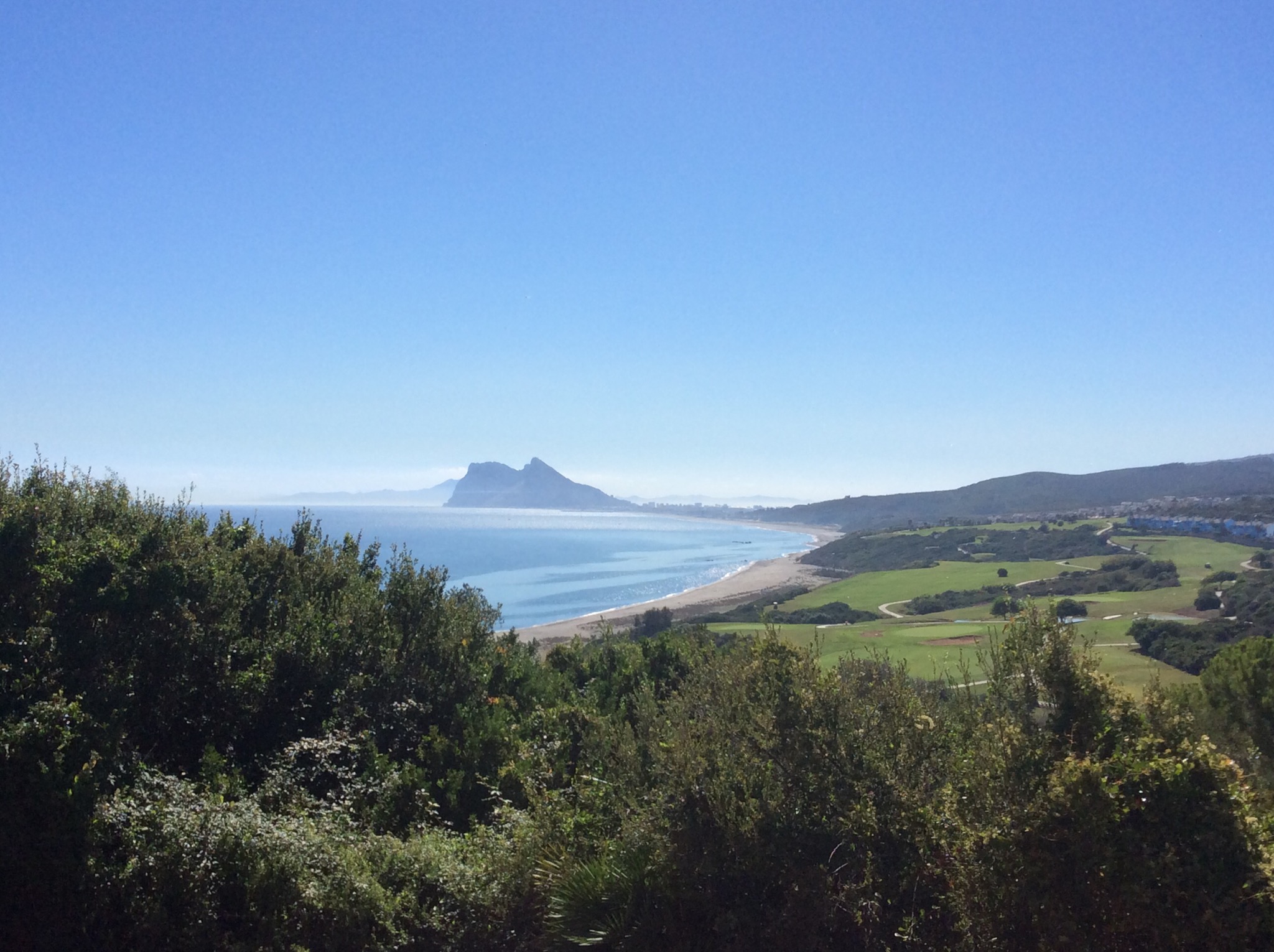
Gibraltar is a British Overseas Territory located on the southern end of the Iberian Peninsula at the entrance of the Mediterranean. It has an area of 6km2 (2.3 sq mi) and a northern border with the Province of Cádiz in Andalusia, Spain. The Rock of Gibraltar is the major landmark of the region. At its foot is a densely populated city area, home to almost 30,000 Gibraltarians and other nationalities.
An Anglo-Dutch force captured Gibraltar from Spain in 1704 during the War of the Spanish Succession on behalf of the Habsburg pretender to the Spanish throne. The territory was subsequently ceded to Britain “in perpetuity” under the Treaty of Utrecht in 1713. It was an important base for the Royal Navy; today its economy is based largely on tourism, online gambling, financial services, and shipping.
The sovereignty of Gibraltar is a major point of contention in Anglo-Spanish relations as Spain asserts a claim to the territory. Gibraltarians overwhelmingly rejected proposals for Spanish sovereignty in a 1967 referendum and again in 2002. Under the Gibraltar constitution of 2006, Gibraltar governs its own affairs, though some powers, such as defence and foreign relations, remain the responsibility of the UK Government.
The name Gibraltar is the Spanish derivation of the Arabic name Jabal Ṭāriq, meaning “Mountain of Tariq”. It refers to the Rock of Gibraltar, which was named after the Umayyad general Tariq ibn-Ziyad who led the initial incursion into Iberia in advance of the main Umayyad force in 711 under the command of Umayyad Caliph Al-Walid I. Earlier, it was known as Mons Calpe, one of the Pillars of Hercules.

I had done a bit of investigating re tours on the island and decided that the taxi tour option was the best way to go. You can go to a few points around Gibraltar and they have these taxi mini vans where the taxi drivers act as both your driver and guide. We went to Casemates Square and met Adrian, a born and bred Gibraltarian. We waited for 15 minutes to see if anybody else wanted to join us but there were no takers so we decided to take the private tour option.
Adrian was a real laugh so we knew it was going to be a fun tour. I couldn’t quite make out his accent, at times you could hear the British accent and at other times it had a European slant. First stop was the petrol station – good plan, we didn’t fancy walking to the top of the rock (not with Stevie having fallen over at golf yesterday and spraining his ankle but more about that another day).
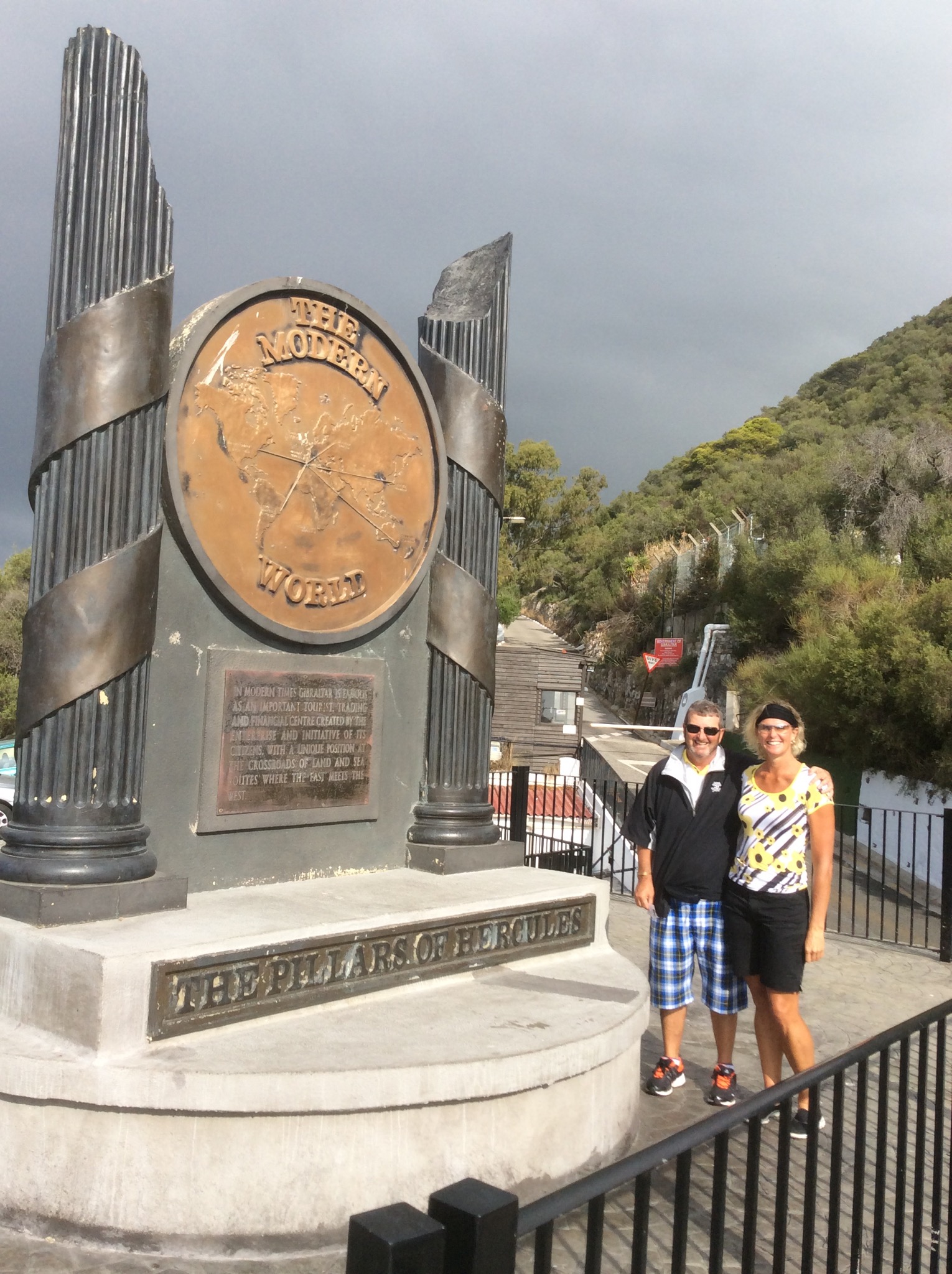
We then headed to the Pillars of Hercules monument which represents the two pillars that stand on either side of the Strait of Gibraltar. According to some Roman sources, while on his way to the garden of the Hesperides on the island of Erytheia, Hercules had to cross the mountain that was once Atlas. Instead of climbing the great mountain, Hercules used his superhuman strength to smash through it. By doing so, he connected the Atlantic Ocean to the Mediterranean Sea and formed the Strait of Gibraltar. One part of the split mountain is Gibraltar and the other is either Monte Hacho or Jebel Musa in Morocco. These two mountains taken together have since then been known as the Pillars of Hercules.

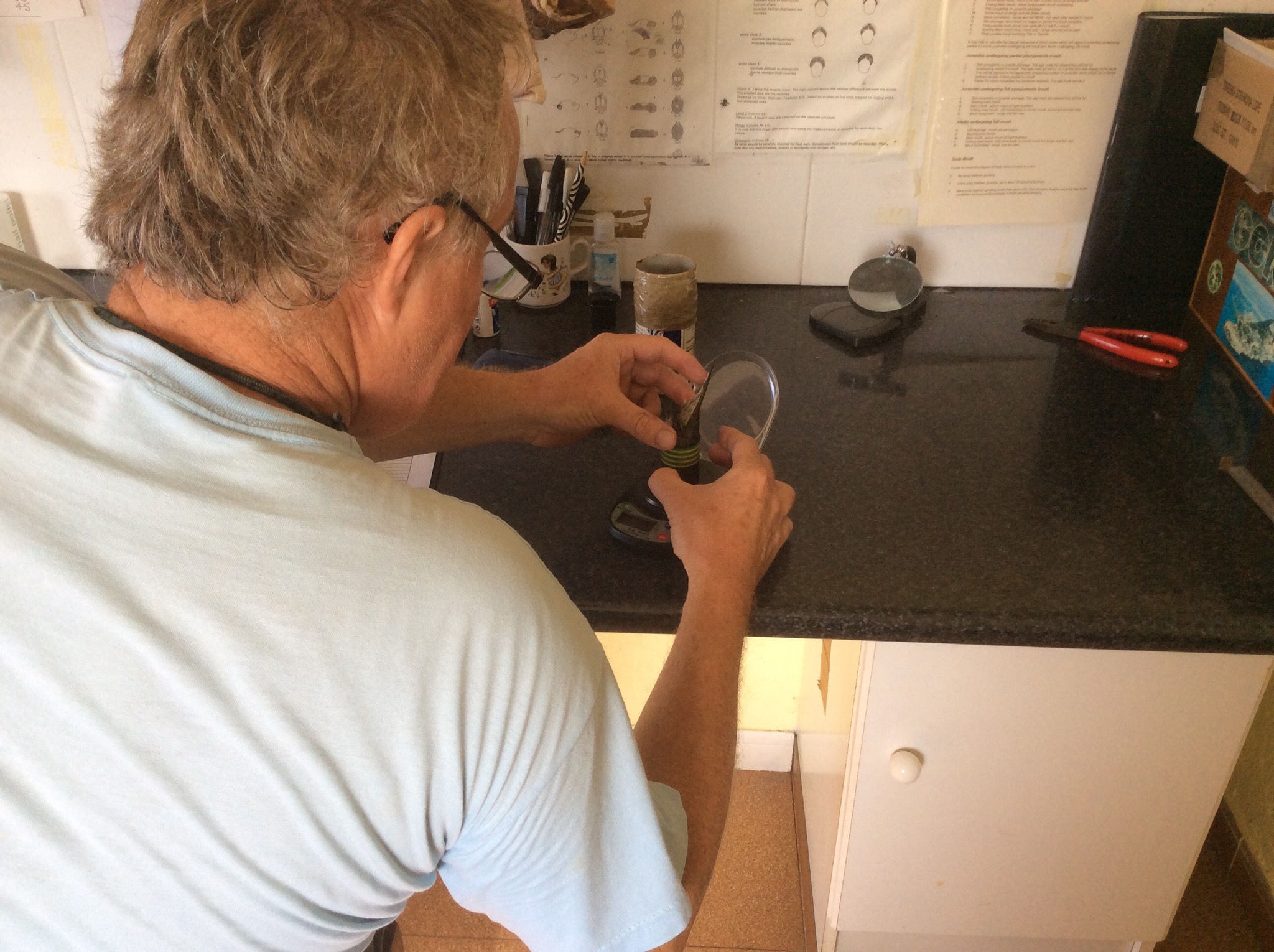
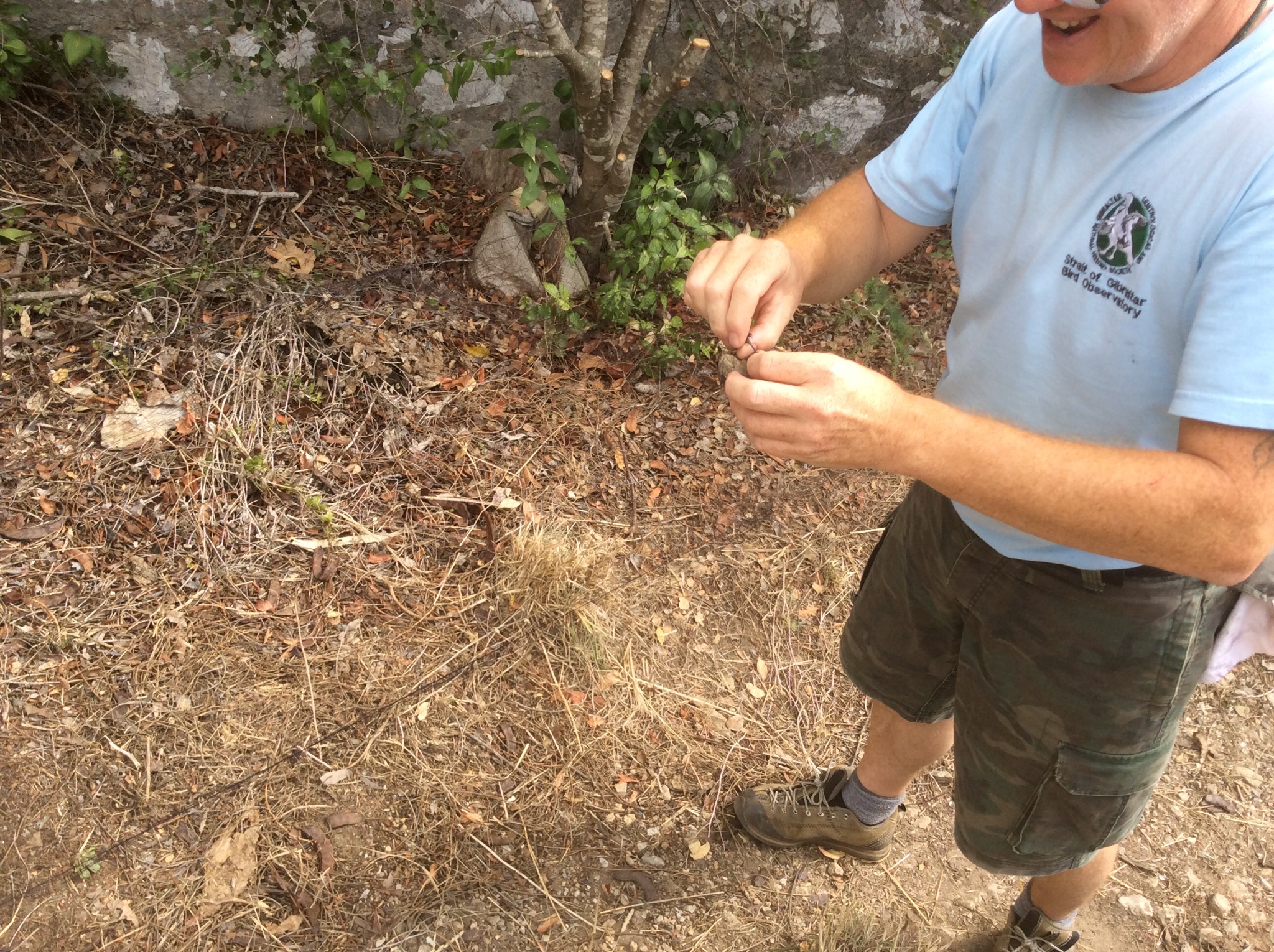
We were then lucky enough to be invited up to the bird centre. Adrian is really interested in birds and has made himself known to the people that capture data about the many birds that pass through Gibraltar. The centre is run by volunteers, although they have to be qualified so many come over from mainland Britain for short periods of time. They set the nets up before the sun comes up and have an iPhone (of course) making bird calls. There is also lots of plant life o attract the birds in. The birds get caught in the net which does not hurt them – the volunteers then collect them in cloth bags and take them up to be weighted and measured as well as information recorded about their sex, fat % and age. They are then tagged and released.
We went and watched this process and it was really interesting – the birds aren’t harmed in the process and the information is used to predict population growth or decline and migration tendencies.

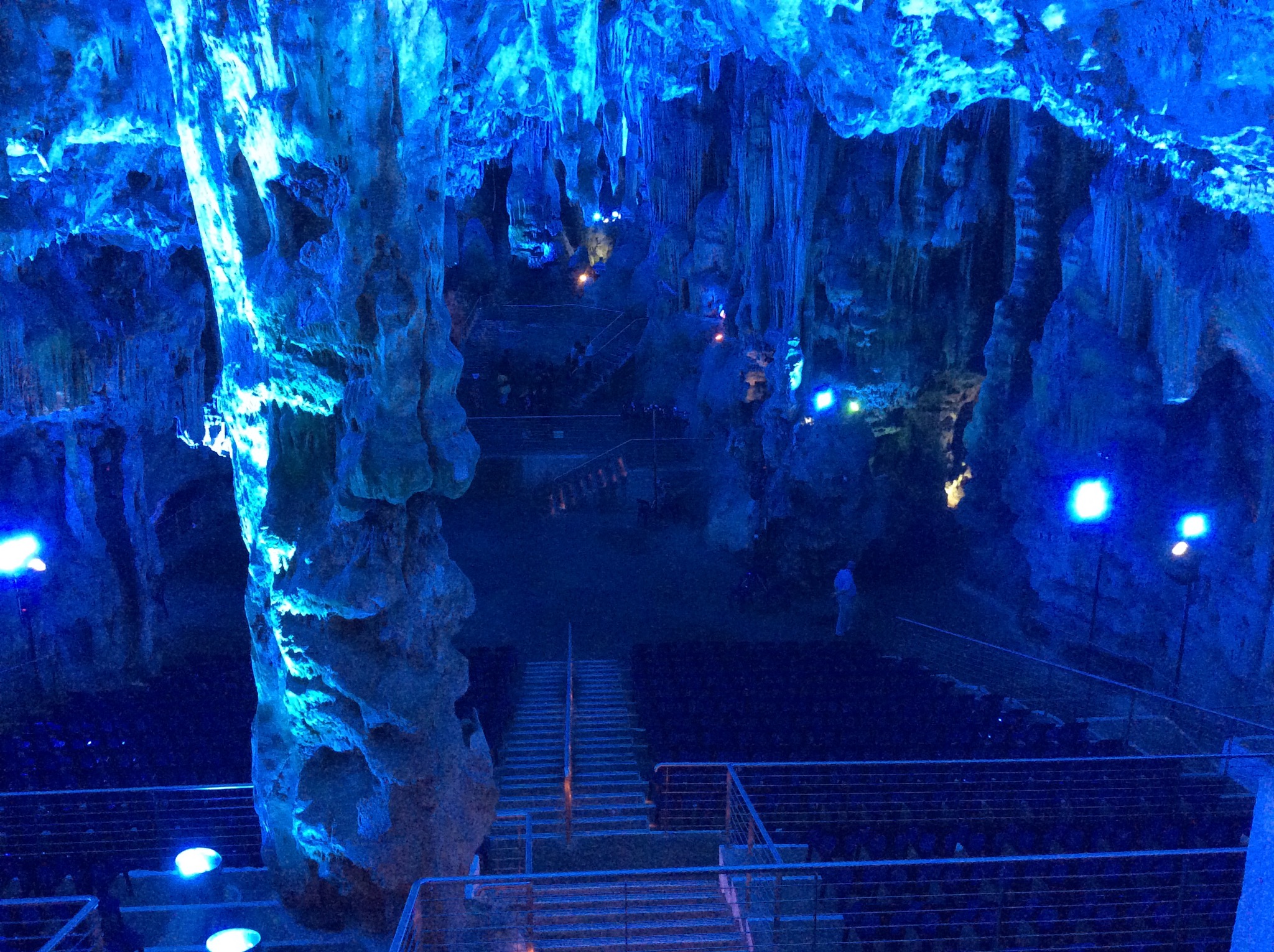
Next stop was St Michaels Cave which is the name given to a network of limestone caves located within the Upper Rock Nature Reserve at a height of over 300 metres (980 ft) above sea level. According to Alonso Hernández del Portillo, the first historian of Gibraltar, its name is derived from a similar grotto in Monte Gargano near the Sanctuary of Monte Sant’Angelo in Apulia, Italy, where the archangel Michael is said to have appeared. When the British took over Gibraltar they tried to change the name to St George’s Cave after the English patron saint but it never stuck.
It is the most visited of the more than 150 caves found inside the Rock of Gibraltar, receiving almost 1,000,000 visitors a year.
The cave was created by rainwater slowly seeping through the limestone rock, turning into a weak carbonic acid which gradually dissolved the rock. Through this process, tiny cracks in The Rock’s geological fault grew into long passages and large caverns over thousands of years. The numerous stalactites and stalagmites in the cave are formed by an accumulation of traces of dissolved rock deposited by water dripping from the ground above.
During the Victorian era the cave was used as a venue for picnics, parties, concerts, weddings and even duels. During World War II the entire cave was prepared for use as an emergency military hospital. It was never used as such.
The largest of the chambers, named the Cathedral Cave, currently serves as an auditorium. They now hold the Miss Gibraltar Beauty Pageant in there as well as various concerts due to the amazing acoustic properties.



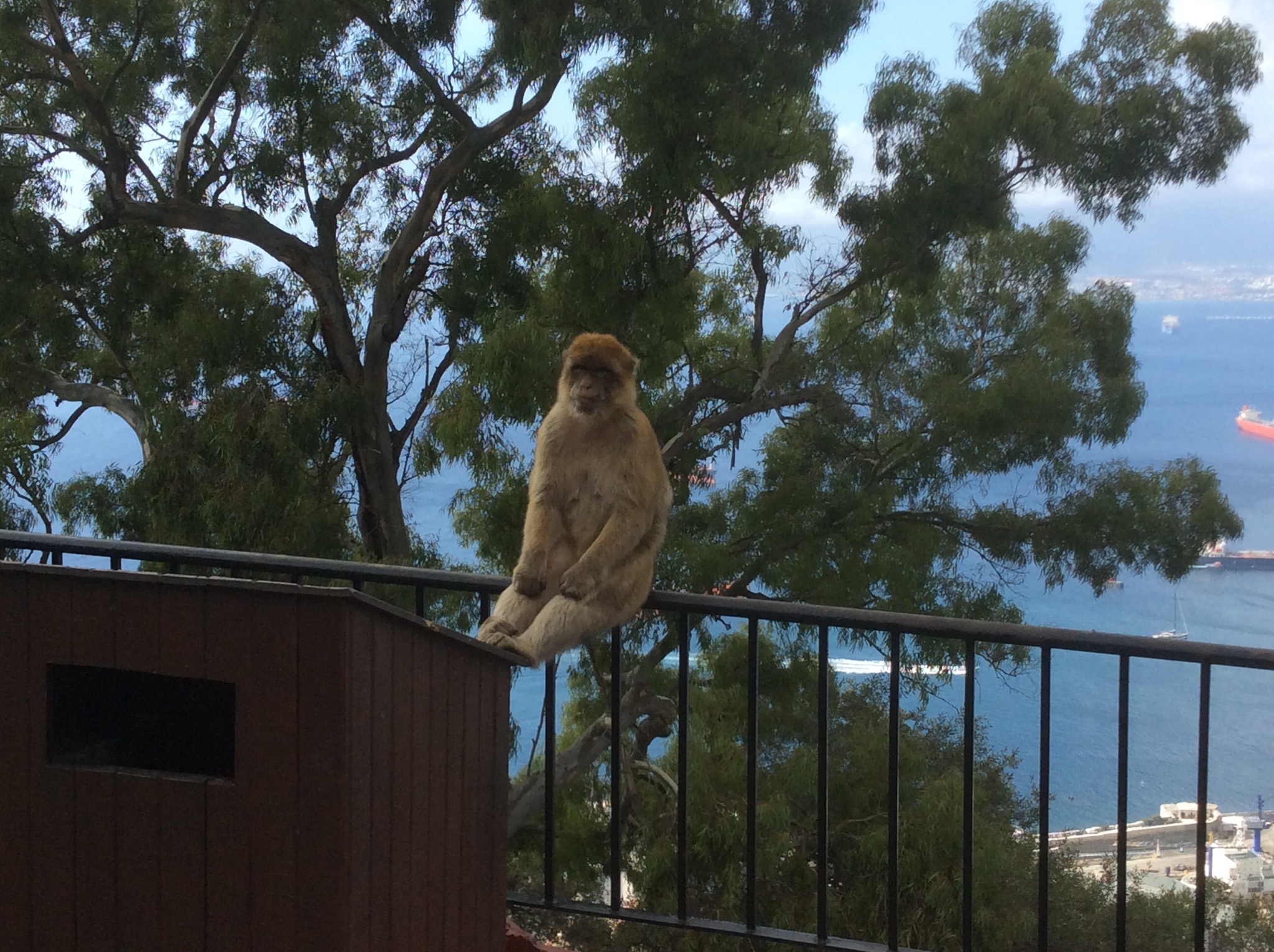
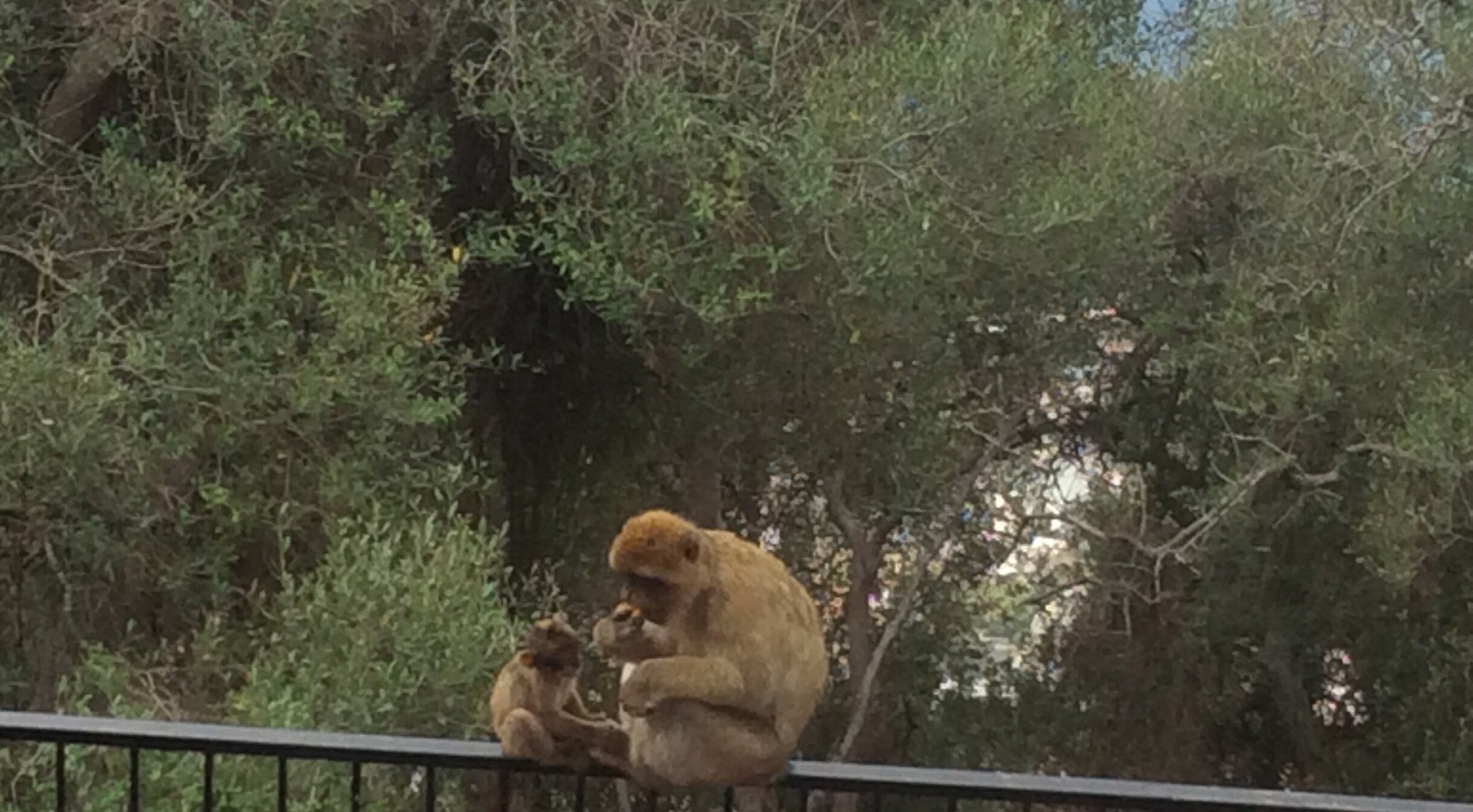
This was also our first introduction to the Apes. Most of the Rock’s upper area is covered by a nature reserve which is home to around 230 Barbary Macaques, the famous apes of Gibraltar, albeit that biologists insist that technically the apes are wild monkeys. These are the only wild apes or monkeys found in Europe. This species, known scientifically as Macaca sylvanus, is listed as endangered by the IUCN Red List and is declining. Three-quarters of the world population live in the Middle Atlas mountains of Morocco. Recent genetic studies and historical documents point to their presence on the Rock before its capture by the British. A superstition analogous to that of the ravens at the Tower of London states that if the apes ever leave, so will the British. In 1944 British Prime Minister Winston Churchill, was so concerned about the dwindling population of apes that he sent a message to the Colonial Secretary requesting that something be done about the situation.
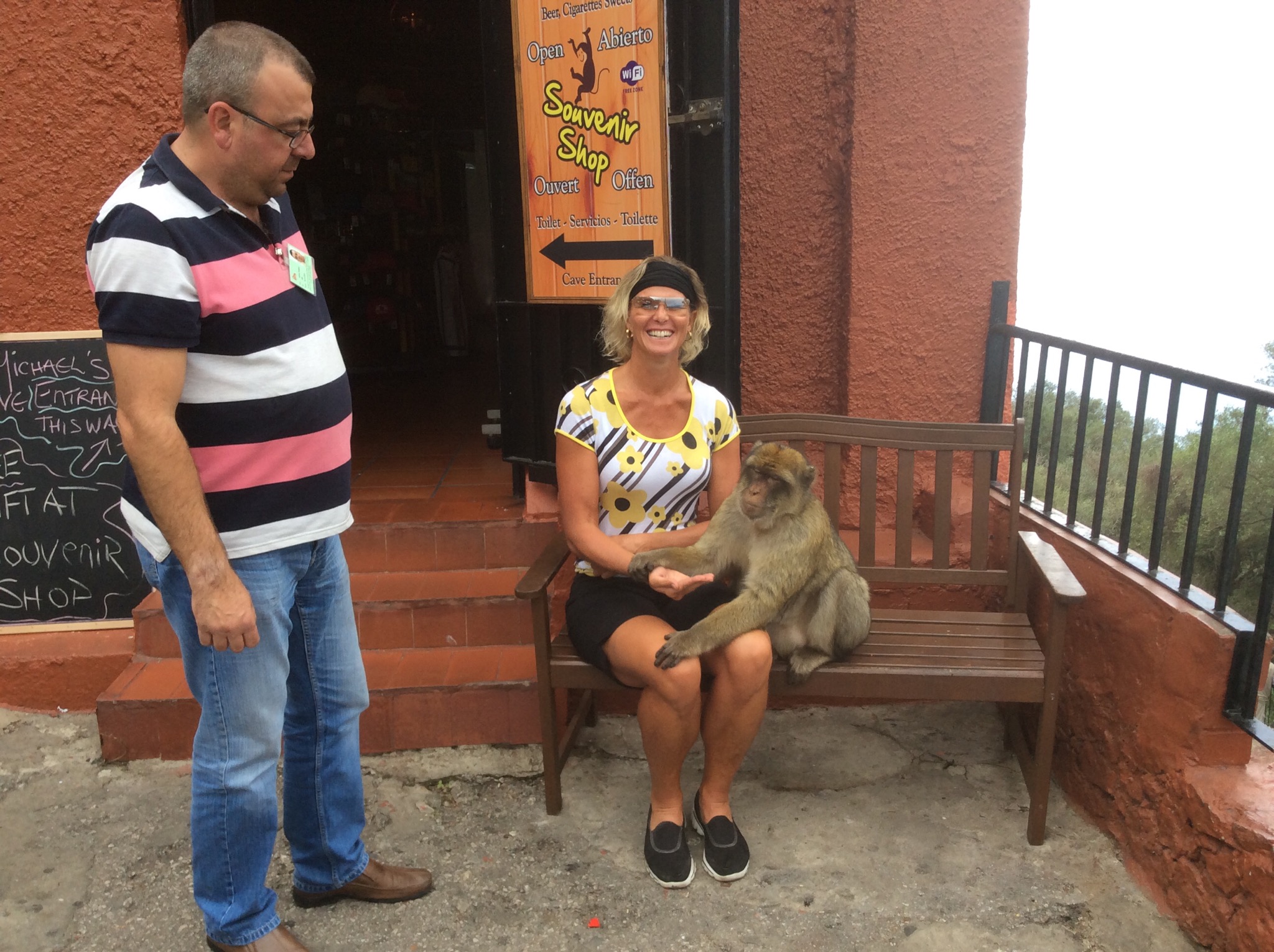
We had read and heard about these monkeys and Adrian warned us that although they appear friendly they can bite. He told us not to touch them but if you feed them they will touch you. We had heard that if you have any food on you they will sniff it out and take it off you, no questions asked. Plastic bags signify food to them so even if you have purchased a souvenir and it is in a plastic bag they will think it is food and take that too. After coming out of the caves we found Adrian sitting with Willy – he was feeding hime peanuts and chatting to him. I sat down next to him and fed him too – he then sat next to me. He was basically only interested in the peanuts.
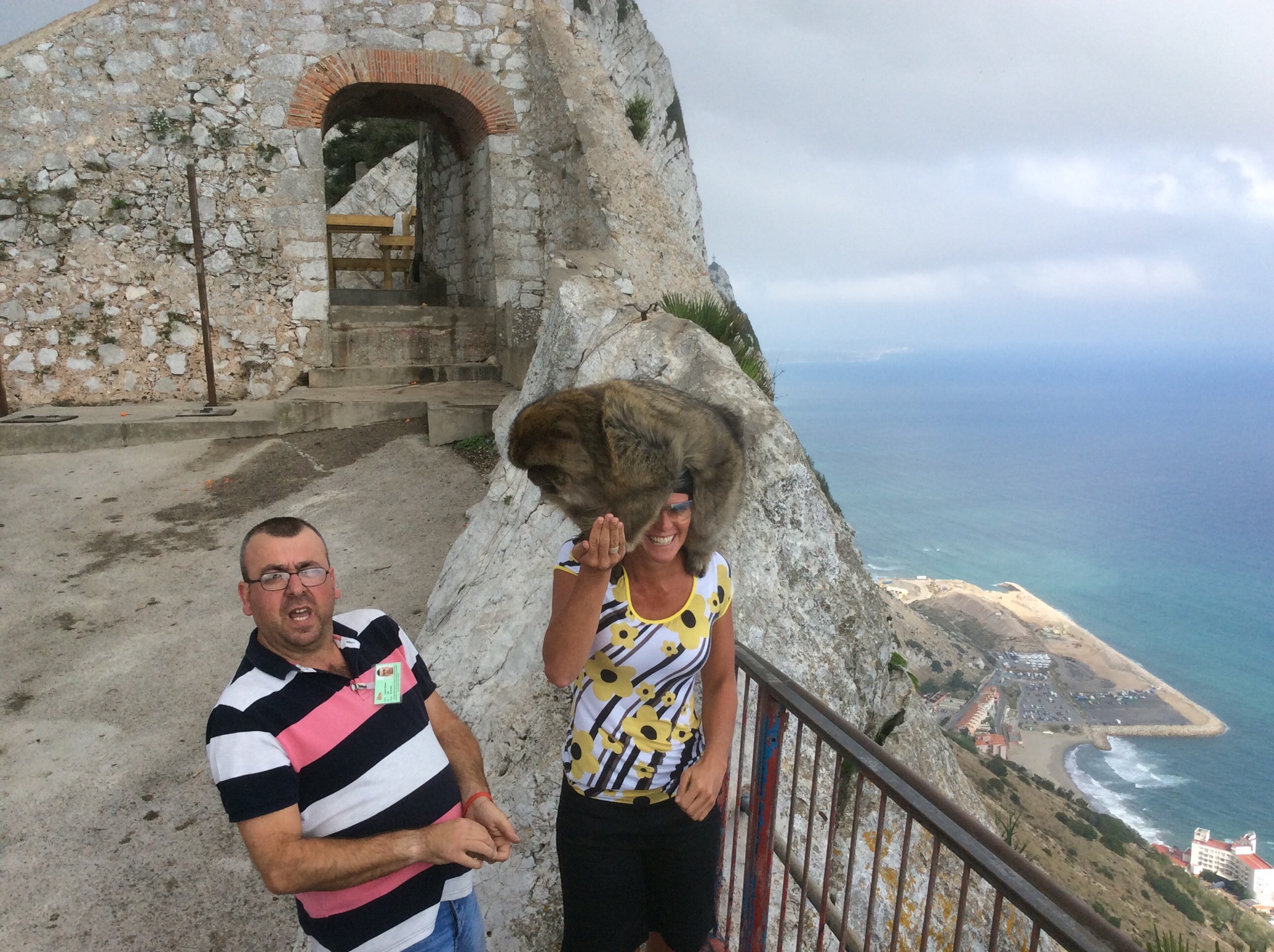
We then drove up the rock a bit further and Adrian again gave us words of advice – if the monkeys jump on your head don’t panic or try and get them off. Just put your hands by your sides and he will deal with them. I am thinking, what the…. He also said, when I stop the van just wait and I will come and open the door for you – some of the monkeys are renowned for jumping in the vehicles and opening and closing everything known to man looking for food. I must say I was feeling a bit apprehensive – my encounter with Willy hadn’t been that bad.
Adrian opened the door and out we hopped. The monkeys obviously know him and one came over to check his pockets for peanuts. He then asked me if I wanted a monkey on my head – oh jeez, why not. Steve is saying – I’ll take the pictures. Next minute I had a monkey on my head – no big deal. He was more interested in the peanuts Adrian had. We had a wander around and I must say the monkeys up here did seem more aggressive – there were a lot more babies running around and apparently that makes the adult monkeys very protective. The monkeys also fight amongst themselves and run up and over the vehicles. They get fed by the Ape Keepers a couple of times a day (four times a day in the summer) so I am surprised they are interested in more food – it is a game to them and keeps the tourists amused.
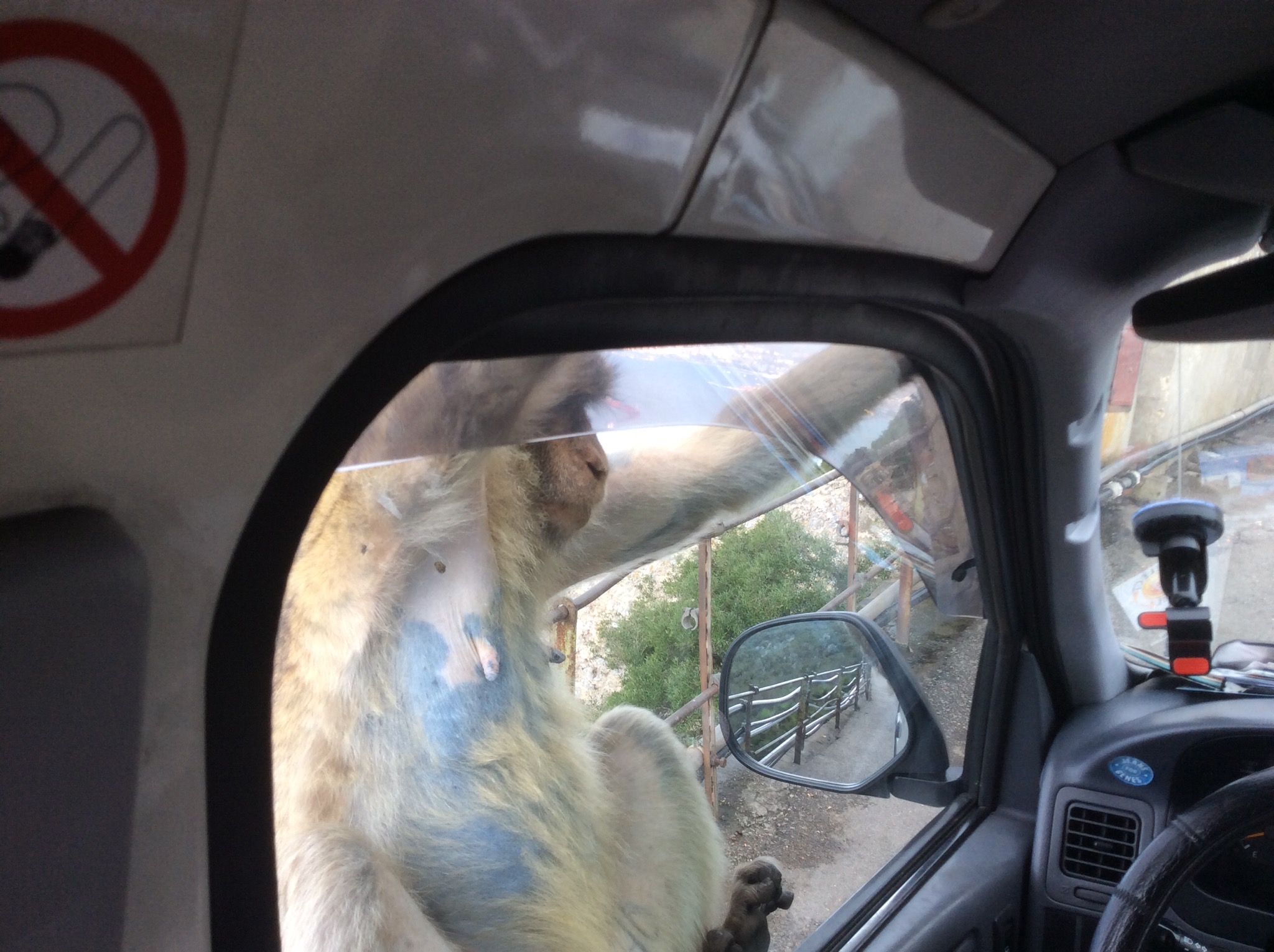
Anyway we were standing by the van and these monkeys were fighting and running over the vehicles – next minute I had another monkey on my head – this one uninvited. I remembered what Adrian said and kept my hands down – Adrian removed the uninvited guest and all was well with the world again : ) When we went to drive off there was a monkey hanging onto the driver’s window – she got off and then as we drove up a bit further Adrian asked if we had seen a monkey drive before. I said but I have a banana in my bag, I don’t want the monkey hopping in to drive and then sniffing out my banana and hopping in the back with us. He reassured me that they wouldn’t sniff it out so in hopped the monkey. No one, I repeat no one gets between me and my food so I had to check!



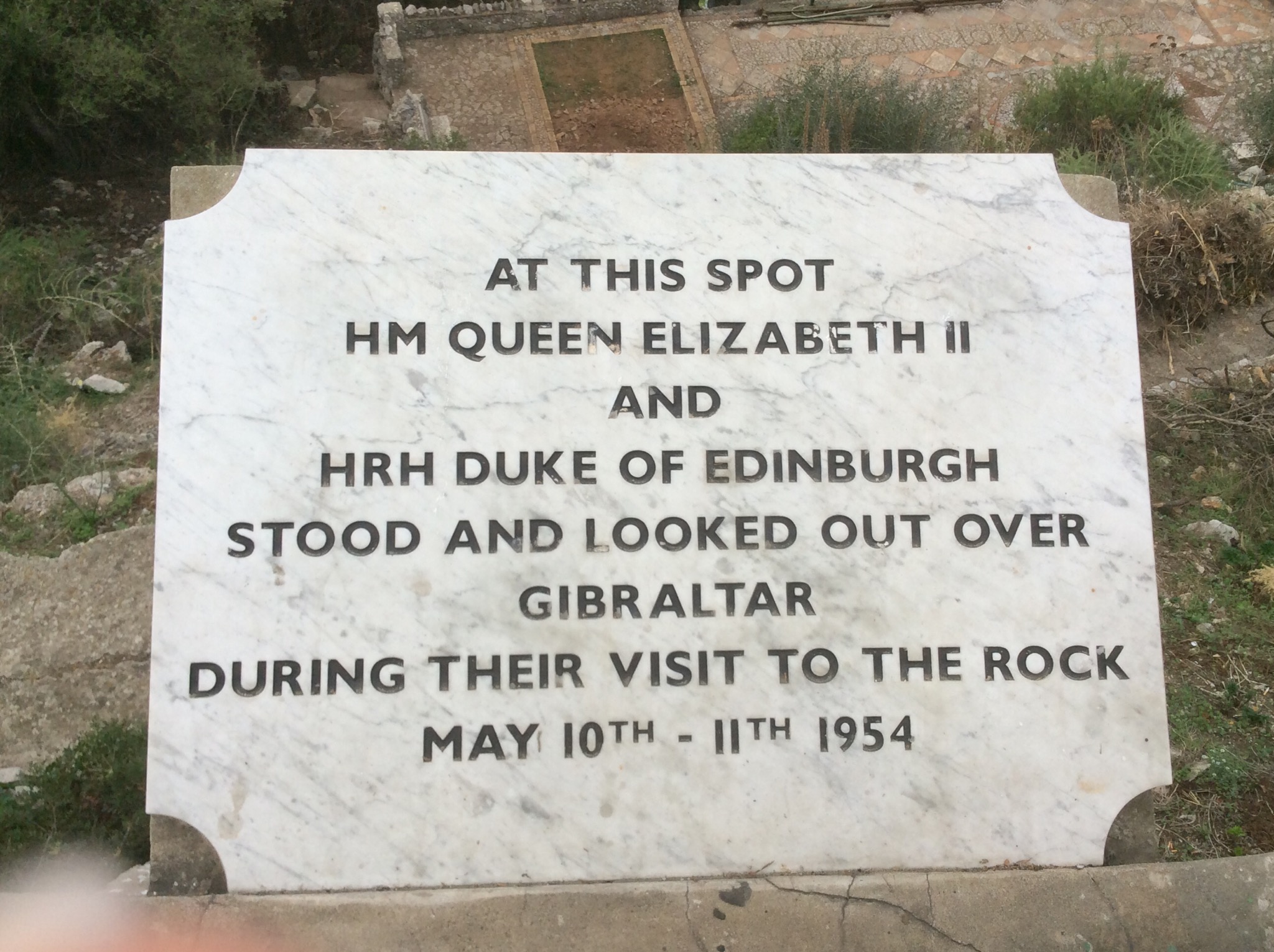
We stopped at the Queen’s Balcony which is where Queen Elizabeth stood to look over the Bay of Gibraltar when she last visited in 1954. She has never been back which is unusual given the close proximity to the UK mainland. Due to the fact that the Spanish would love to claim Gibraltar for their own, Adrian’s theory is she hasn’t visited again because it might upset the Spanish.


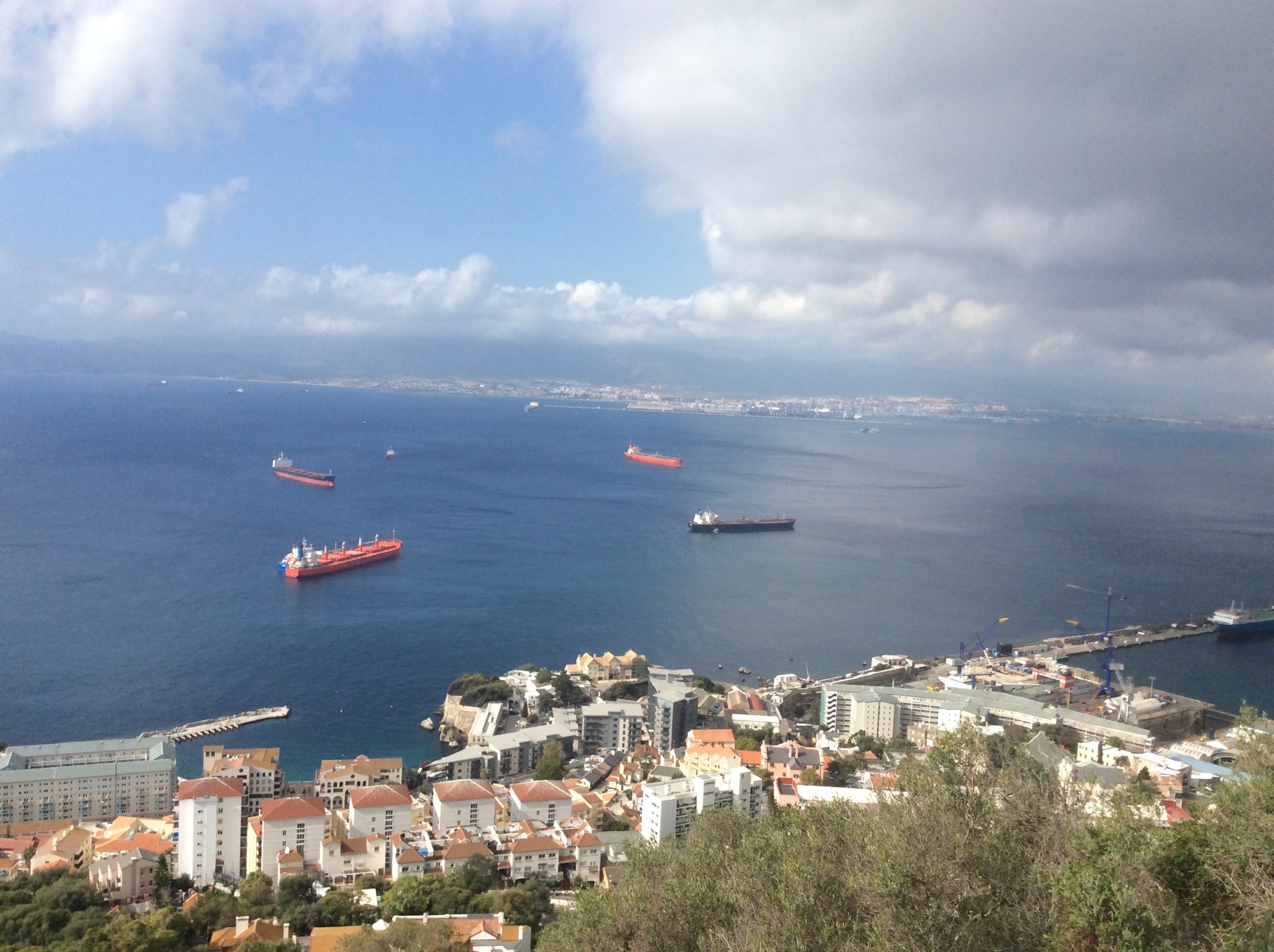
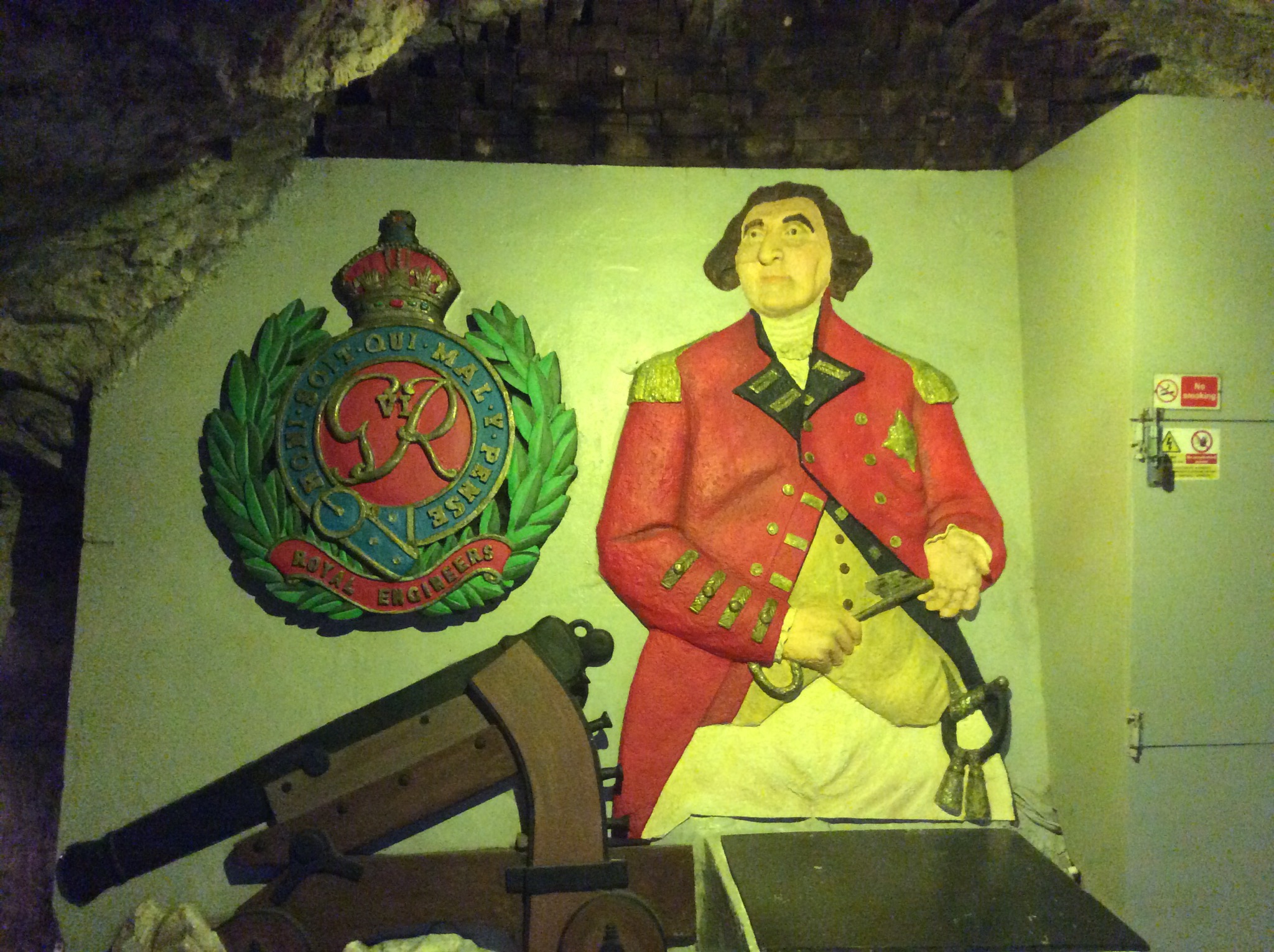
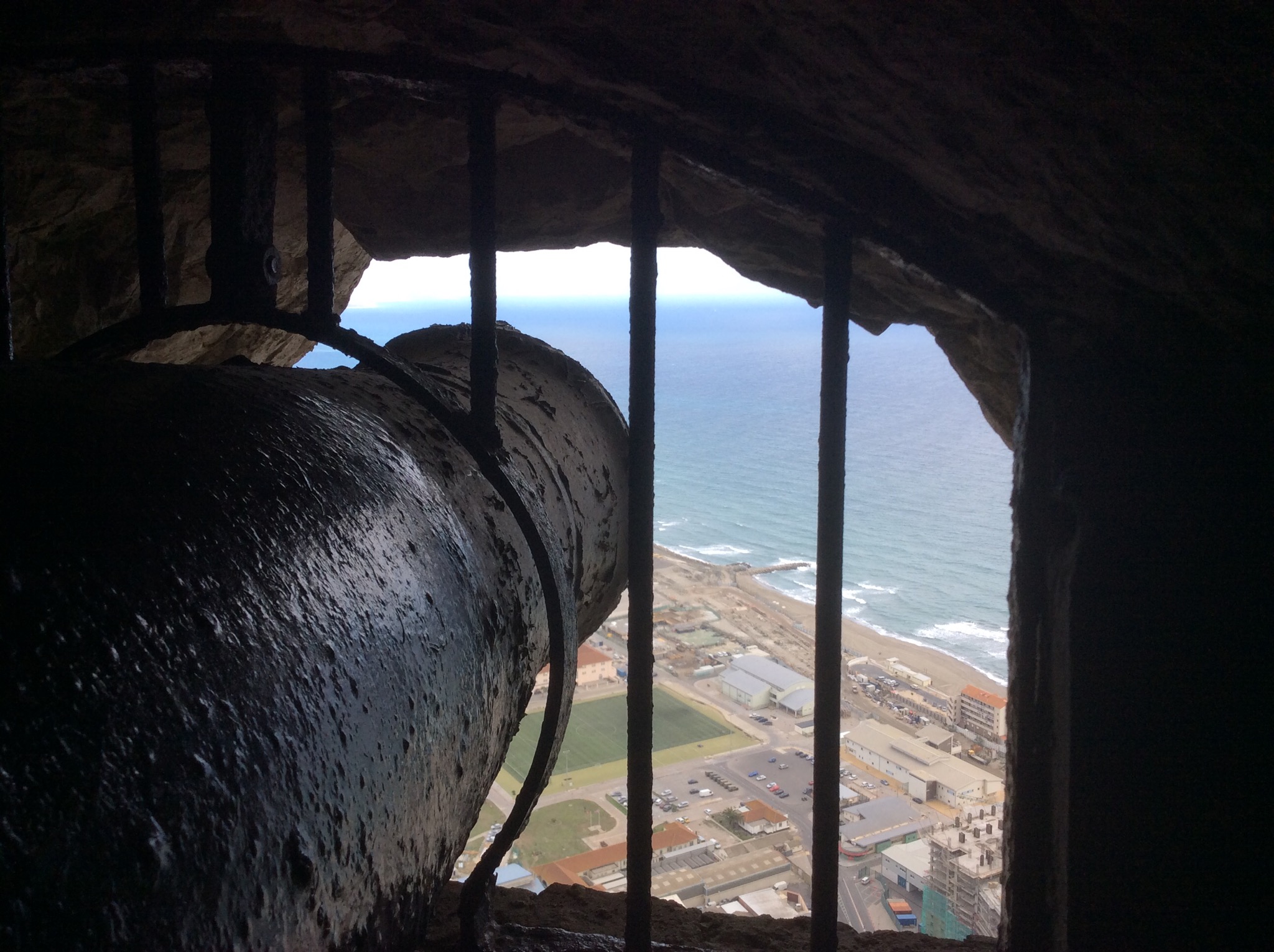
We then drove to the northern end of the Rock to see the Great Siege Tunnels, also known as the Upper Galleries. The Great Siege was an attempt by France and Spain to capture Gibraltar from Great Britain during the American Revolutionary War. It was the fourteenth and final siege of Gibraltar, which lasted from July 1779 to February 1783. During the siege, British and Spanish forces faced each other across an approximately 1 kilometre (0.62 mi) wide stretch of the marshy open ground that forms the disputed isthmus immediately to the north of the Rock of Gibraltar. The British lines blocked access to the City and the western side of the island, while eastern side of the island was inaccessible because of its steep terrain. Guns were placed in a series of batteries on the north face of The Rock, providing overlapping fields of fire so that infantry attacks would come under heavy fire throughout their advance.
The Great Siege Tunnels were reused during the World War II; although it is uncertain exactly how they were used. iDuring World War II, Gibraltar’s civilian population was evacuated (mainly to London, England, but also to parts of Morocco, Madeira and Jamaica) and the Rock was strengthened as a fortress. Spanish dictator Francisco Franco’s reluctance to allow the German Army onto Spanish soil frustrated a German plan to capture the Rock, codenamed Operation Felix. In the 1950s, Franco renewed Spain’s claim to sovereignty over Gibraltar and restricted movement between Gibraltar and Spain. Gibraltarians voted overwhelmingly to remain under British sovereignty in the Gibraltar sovereignty referendum, 1967, which led to the passing of the Gibraltar Constitution Order in 1969. In response, Spain completely closed the border with Gibraltar and severed all communication links. The border with Spain was partially reopened in 1982 and fully reopened in 1985 prior to Spain’s accession to the European Community.

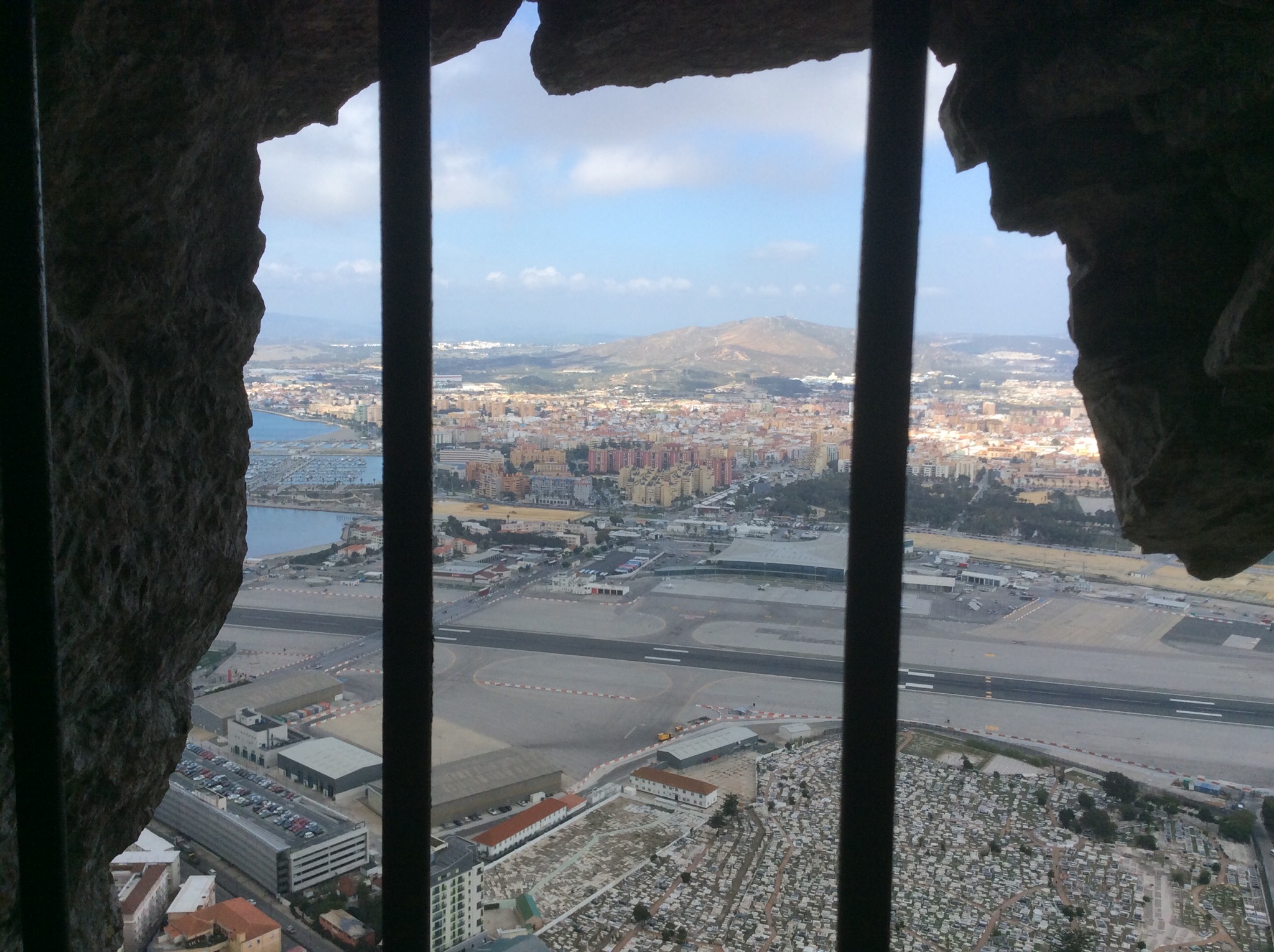
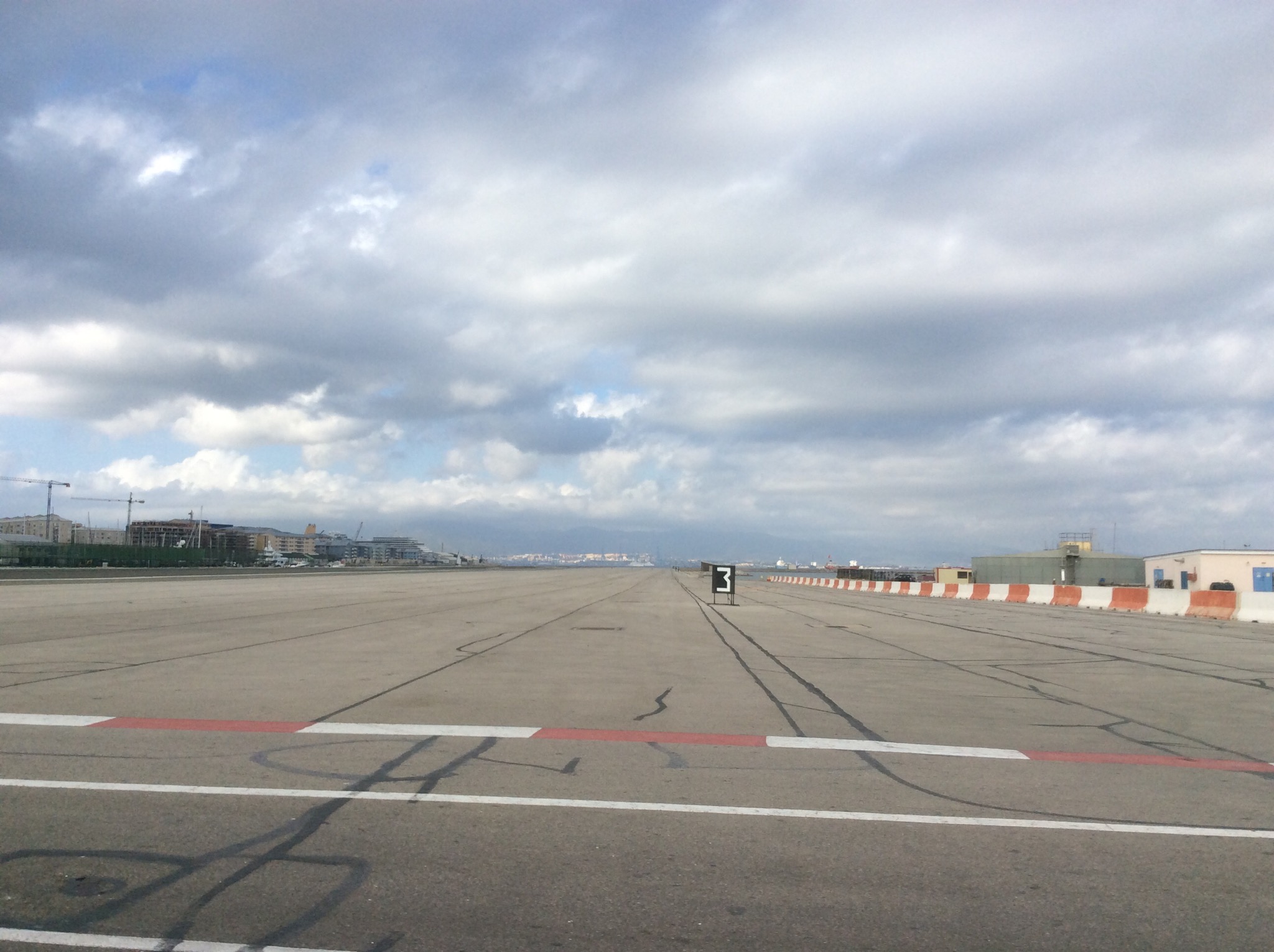
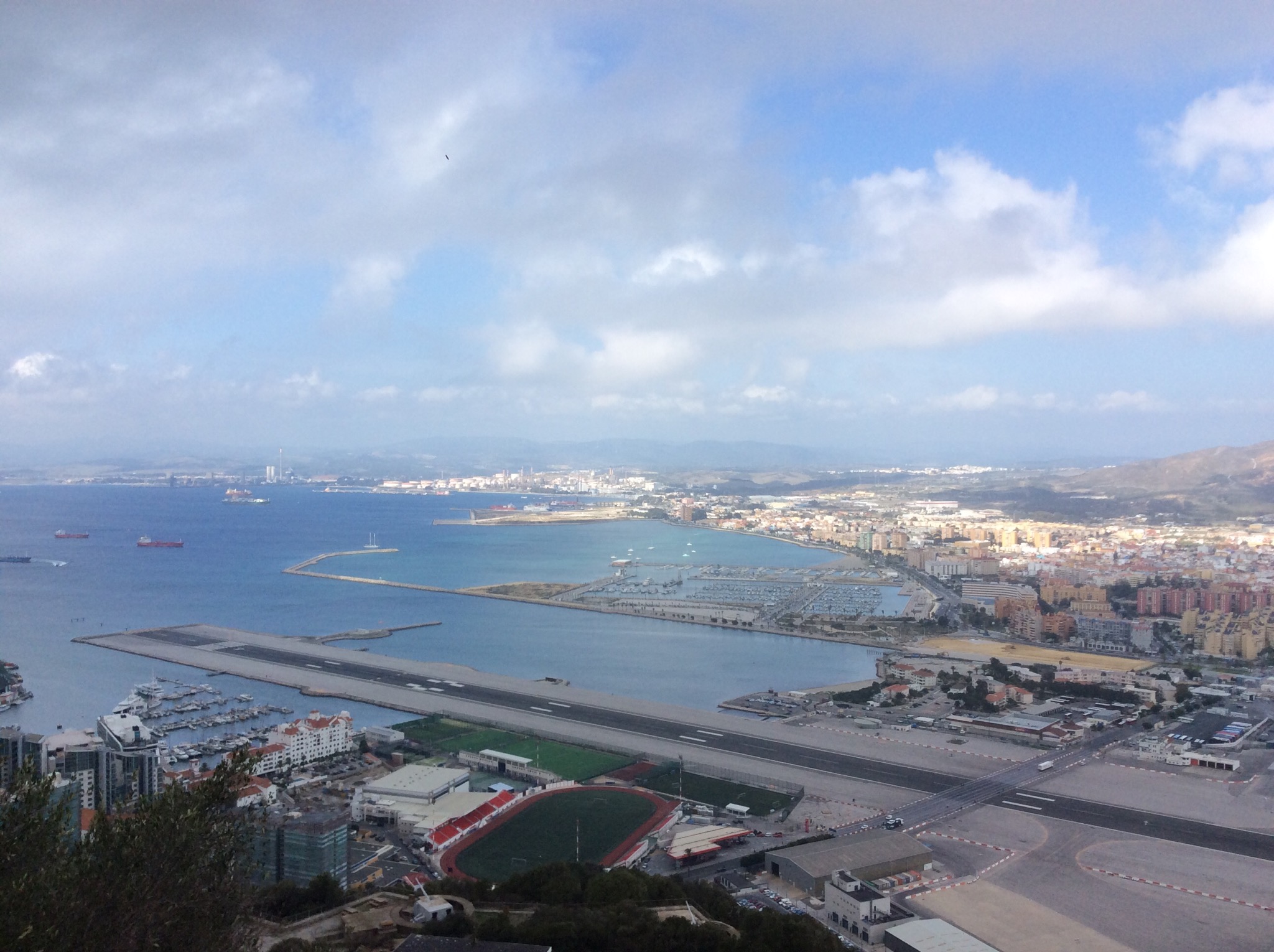
When you drive in and out of Gibraltar you drive through the middle of the airport runway. The airport is a military airport but does have daily commercial flights from the UK. Gibraltar Airport is consistently listed as one of the world’s scariest for air passengers. It is exposed to strong cross winds around the rock and across the Bay of Algeciras, making landings in winter particularly uncomfortable. Its location is unusual not only because of its proximity to the city centre resulting in the airport terminal being within walking distance of much of Gibraltar but also because the runway intersects Winston Churchill Avenue, the main north-south street, requiring movable barricades to close when aircraft land or depart. New roads and a tunnel, which will end the need to stop road traffic when aircraft use the runway are planned.
Motorists and pedestrians crossing the border with Spain are occasionally subjected to very long delays, an issue the Gibraltar government has failed to solve. Spain has occasionally closed the border during disputes or incidents involving the Gibraltar authorities, such as the Aurora cruise ship incident (norovirus outbreak) and when fishermen from the Spanish fishing vessel Piraña were arrested for illegal fishing in Gibraltar waters.


Multiple celebrities have chosen the Rock of Gibraltar for a wedding, drawn to the steadfastness of the rock itself and to the symbolic sturdiness that it seems to offer. 007’s Sean Connery married there, not once, but twice. Among those who also held a destination wedding in Gibraltar were of course the ever popular Beatles, which wedding was chronicled for the ages in a song called the Ballad of John and Yoko, which tells us that they went over and were married there.
Today literally thousands of couples per year select to come to Gibraltar to get married. Amazingly enough, the UK sends only about a third of them, with the remainder coming from the United States, and multiple other countries all over the world. There are no restrictions of residency in Gibraltar, and the government web site offers the information that you can marry there with only 24 hours notice and in an amazing variety of venues. Getting married in Gibraltar is a very simple thing and it is recognised world-wide.

After a great couple of very interesting and informative couple of hours with Adrian he dropped us back in Casemates Square. We had a little wander around the shops before heading back across the border experiencing another queue for we are again not quite sure. I thought I would just google what the big deal at the border is and this is what I found:
Gibraltar is a member of the European Union, however it is not part of the Schengen Area or EU Customs Union. This means that there are immigration and customs controls when travelling between Spain and Gibraltar. Citizens of the European Union are required to have a national identity card or passport, while all others are required to have a passport to enter. The entry requirements for Gibraltar are not the same as the United Kingdom.
It is also a tax haven so apparently that also has some bearing. Seriously though, the customs officers we saw were more interested in chatting amongst themselves.
The British military traditionally dominated Gibraltar’s economy, with the naval dockyard providing the bulk of economic activity. This however, has diminished over the last twenty years, and is estimated to account for only 7% of the local economy, compared to over 60% in 1984. Today, Gibraltar’s economy is dominated by four main sectors: financial services, Online gambling, shipping and tourism (including retail for visitors).
In the early 2000s, many bookmakers and online gaming operators relocated to Gibraltar to benefit from operating in a regulated jurisdiction with a favourable corporate tax regime. However, this corporate tax regime for non-resident controlled companies was phased out by January 2011 and replaced by a fixed corporate tax rate of 10%.
Tourism is also a significant industry. Gibraltar is a popular port for cruise ships and attracts day visitors from resorts in Spain. The Rock is a popular tourist attraction, particularly among British tourists and residents in the southern coast of Spain. It is also a popular shopping destination, and all goods and services are VAT free. Many of the large British high street chains have branches or franchises in Gibraltar including Morrisons, Marks & Spencer and Mothercare. Branches and franchises of international retailers such as Tommy Hilfiger and Sunglass Hut are also present in Gibraltar, as is the Spanish clothing company Mango.
A number of British and international banks have operations based in Gibraltar. Jyske Bank claims to be the oldest bank in the country, based on Jyske’s acquisition in 1987 of Banco Galliano, which began operations in Gibraltar in 1855. An ancestor of Barclays, the Anglo-Egyptian Bank, entered in 1888, and Credit Foncier (now Crédit Agricole) entered in 1920.
In 1967, Gibraltar enacted the Companies (Taxation and Concessions) Ordinance (now an Act), which provided for special tax treatment for international business. This was one of the factors leading to the growth of professional services such as private banking and captive insurance management. Gibraltar has several positive attributes as a financial centre, including a common law legal system and access to the EU single market in financial services. The Financial Services Commission (FSC), which was established by an ordinance in 1989 (now an Act) that took effect in 1991, regulates the finance sector. In 1997, the Department of Trade and Industry established its Gibraltar Finance Centre (GFC) Division to facilitate the development of the financial sector development. As of 2012, Gibraltar has 0.103 Big Four accounting firm offices per 1,000 population, the second highest in the world after the British Virgin Islands, and 0.6 banks per 1,000 people, the fifth most banks per capita in the world.
The currency of Gibraltar is the Gibraltar pound, issued by the Government of Gibraltar under the terms of the 1934 Currency Notes Act. These banknotes are legal tender in Gibraltar alongside Bank of England banknotes. In a currency board arrangement, these notes are issued against reserves of sterling. Clearing and settlement of funds is conducted in sterling. Coins in circulation follow British denominations but have separate designs. Unofficially, most retail outlets in Gibraltar accept the Euro, though some payphones and the Royal Gibraltar Post Office do not.











































 SUNGRL