Happy Birthday to Me – Switzerland

It was only fitting really that the sun was shining on the SUNGRL’s birthday. To top that off Steve even remembered to say Happy Birthday when he opened his eyes – he has been known to need a gentle reminder in years gone by!

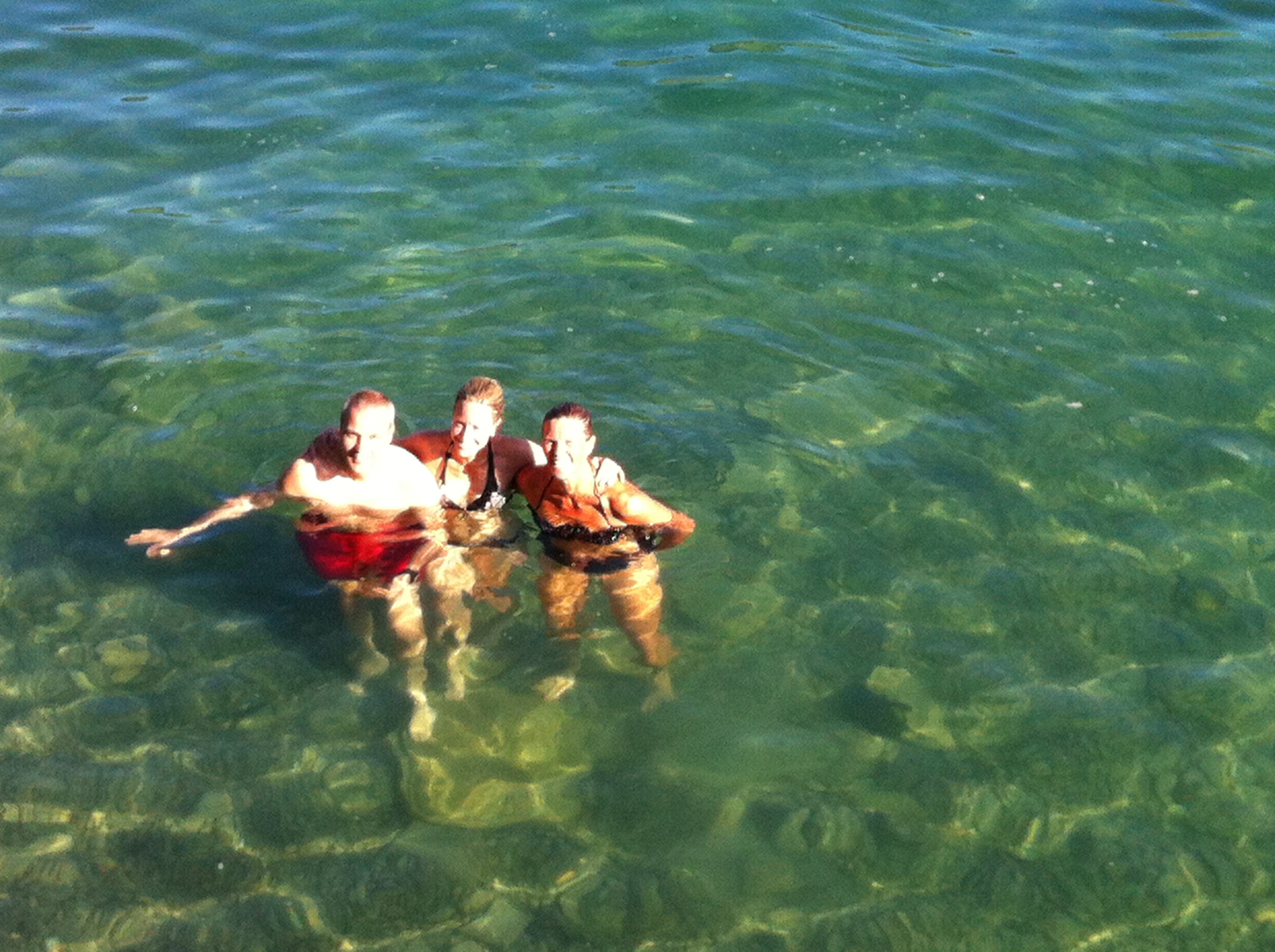
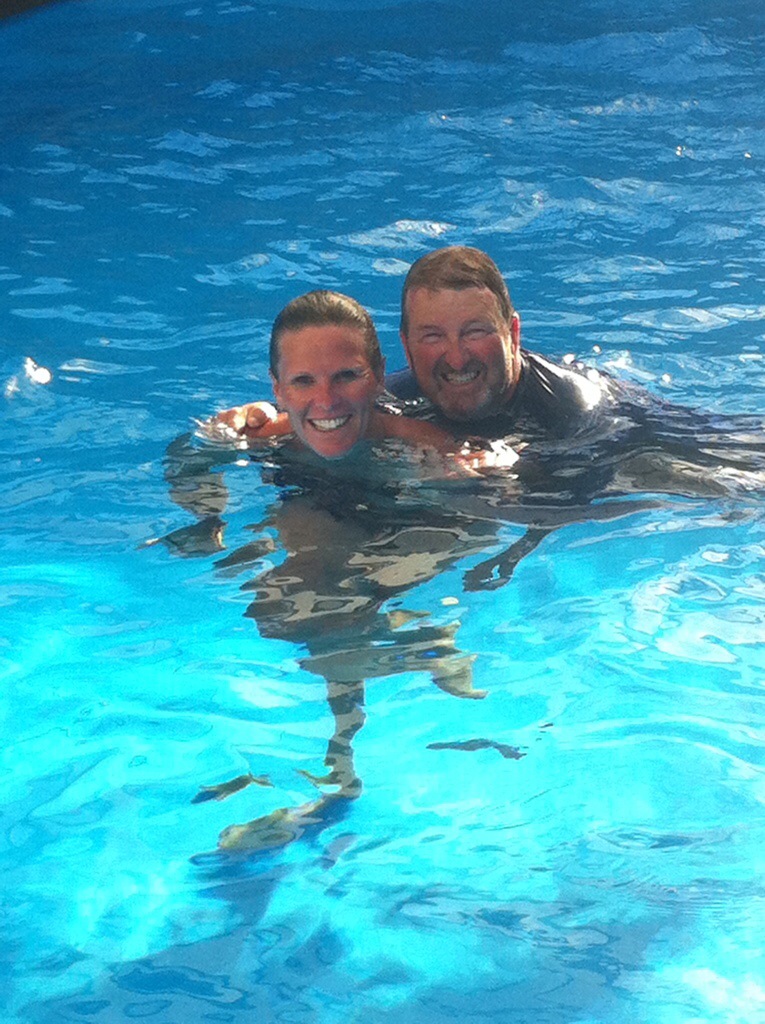
Karin, Elvis and I went for a run and followed it up with another awesome swim in the Lake. You just can’t beat swimming in a fresh water lake.

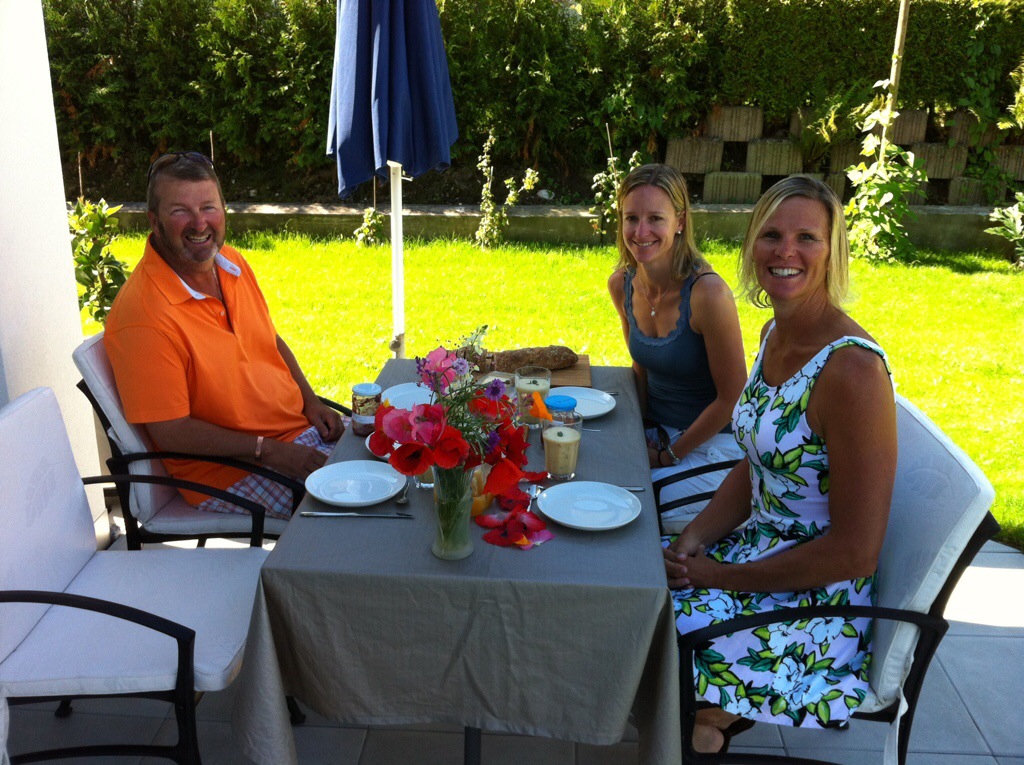
The breakfast table was lovingly decorated with fresh flowers from the garden and we enjoyed fresh fruit smoothies and fresh bread whilst overlooking the lake – a nice leisurely breakfast.

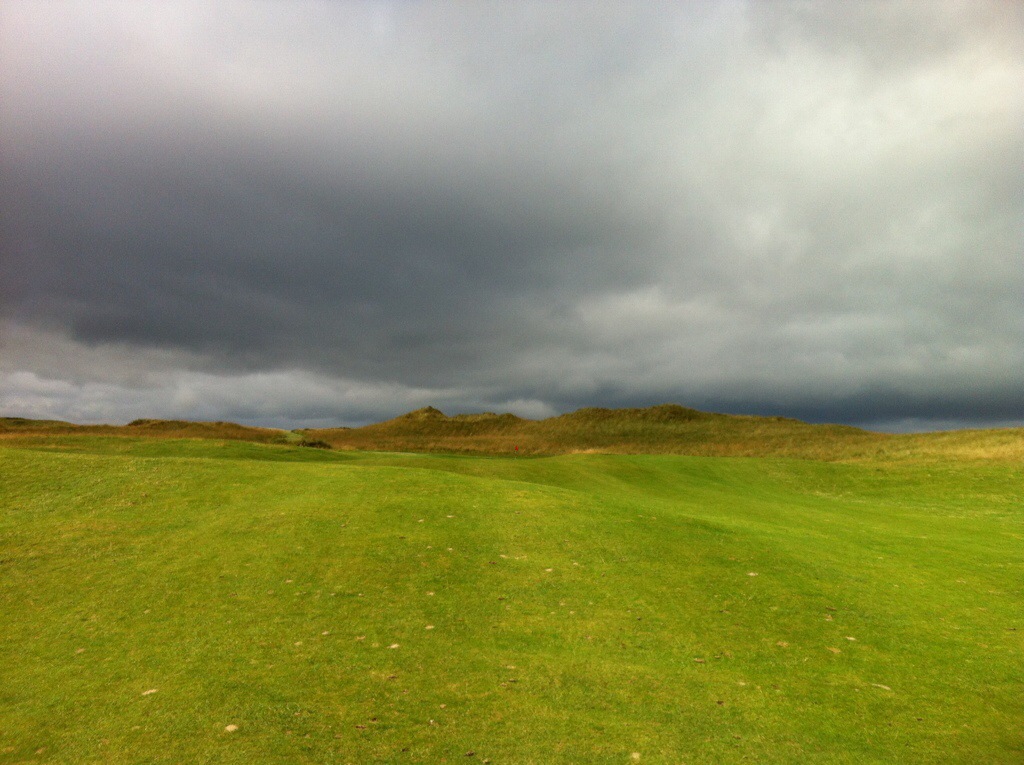
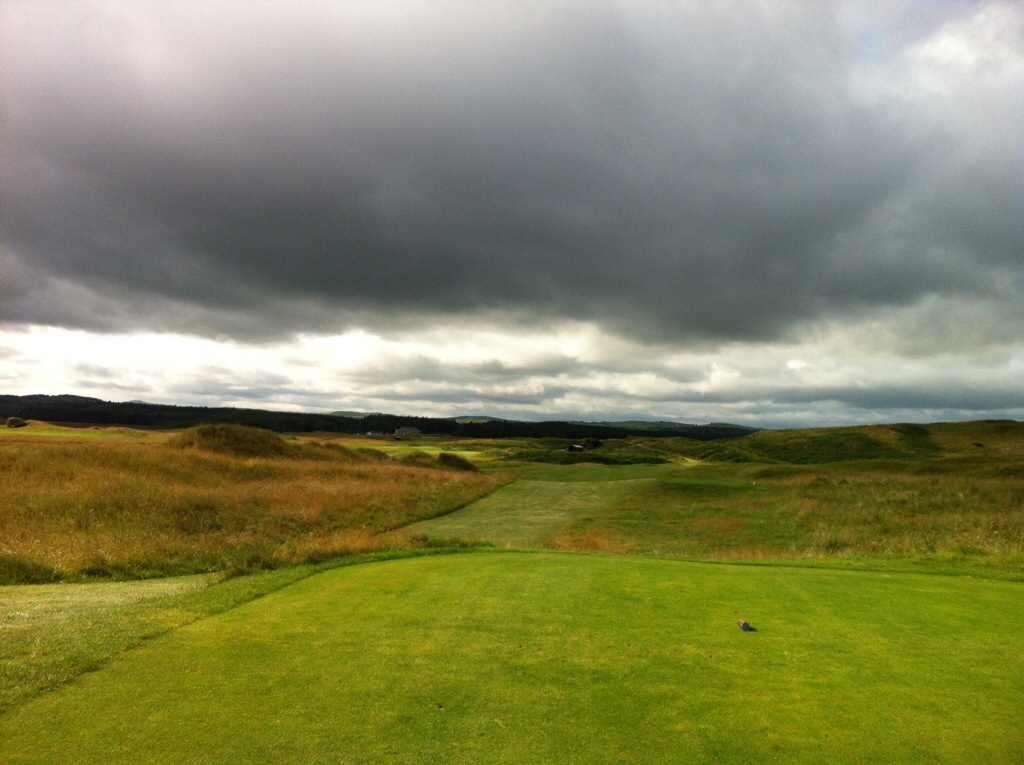
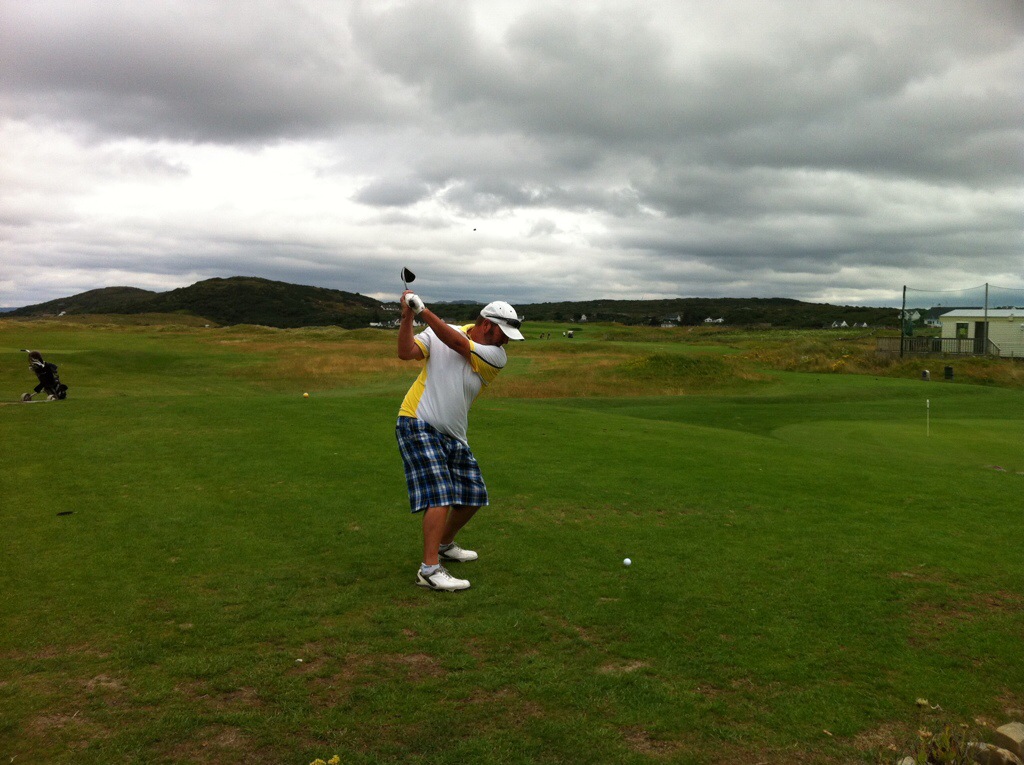
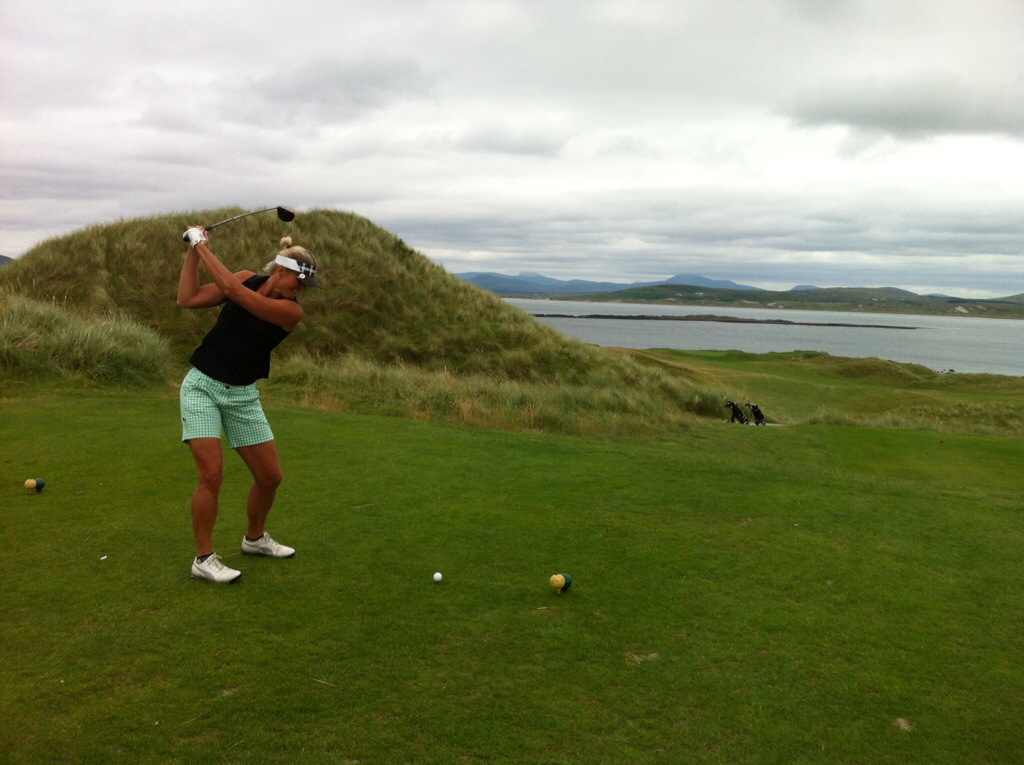
It was then off to the driving range – after a couple of months with no golf we were feeling a bit rusty. We had been to the range earlier in the week so this was round two of freeing the rust. Steve was also teaching Karin & Elvis to hit balls so we all had a lot of fun. The range was followed by a putting competition on the putting green – Steve & Karin won round one.

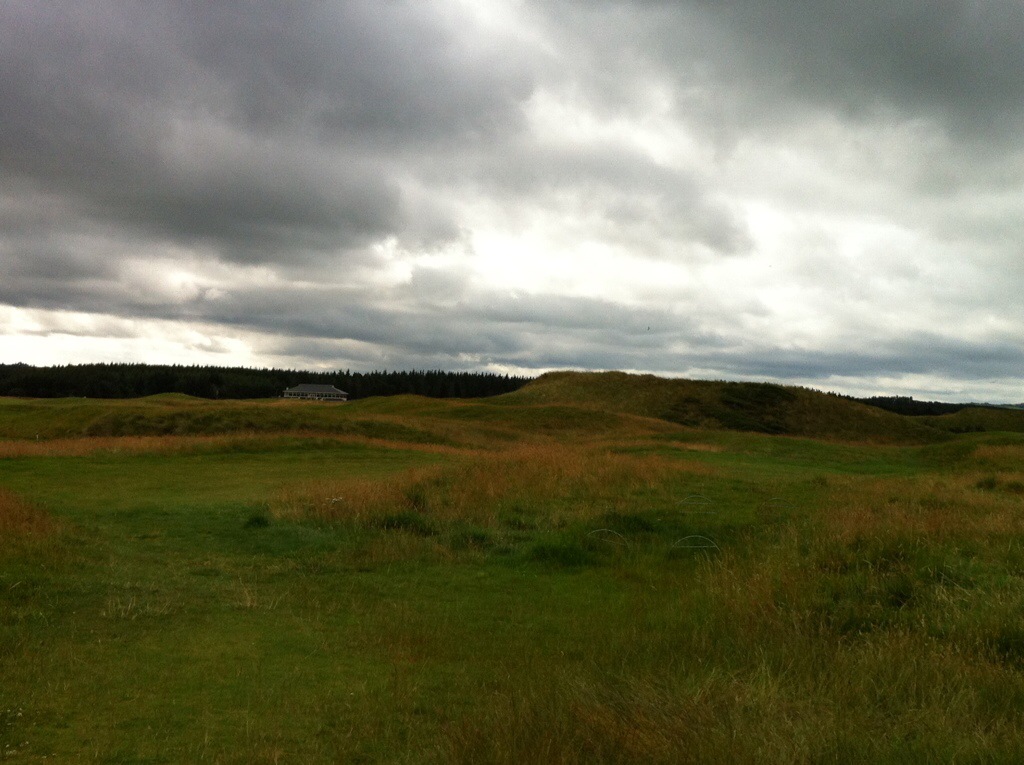
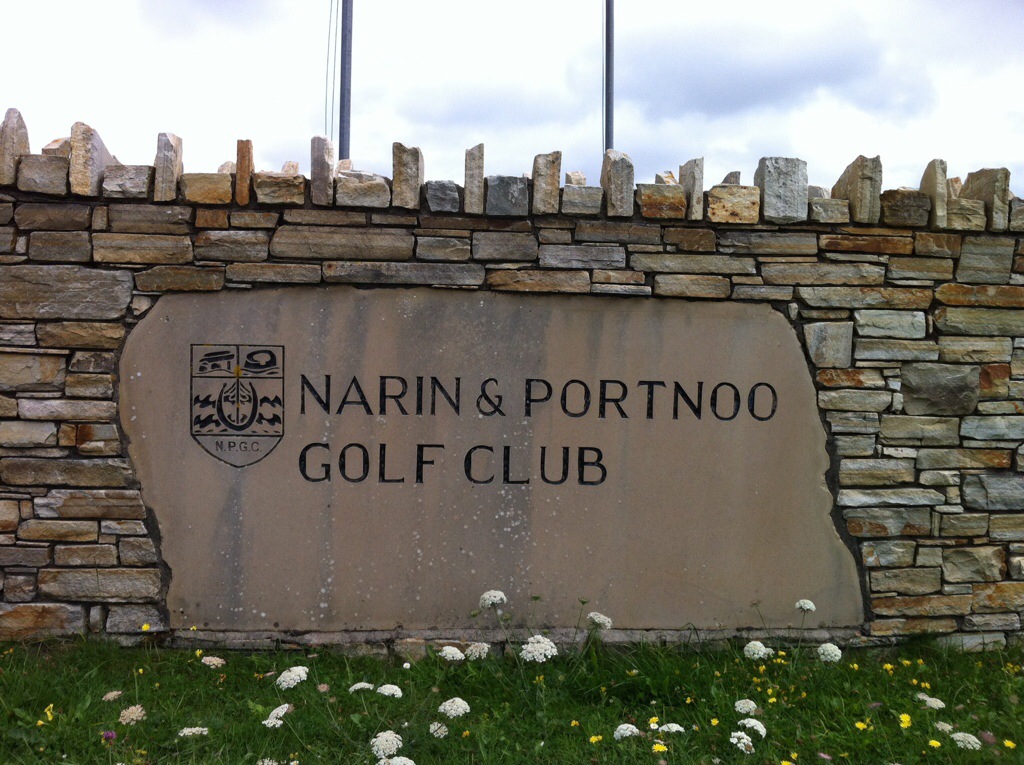
We had a spot of lunch at the golf club and then it was round two on the putting green – boys against girls and unfortunately the boys beat us by one shot – great fun though.

The afternoon was spent lying by the pool reading our books – the temperature was about 30 degrees.

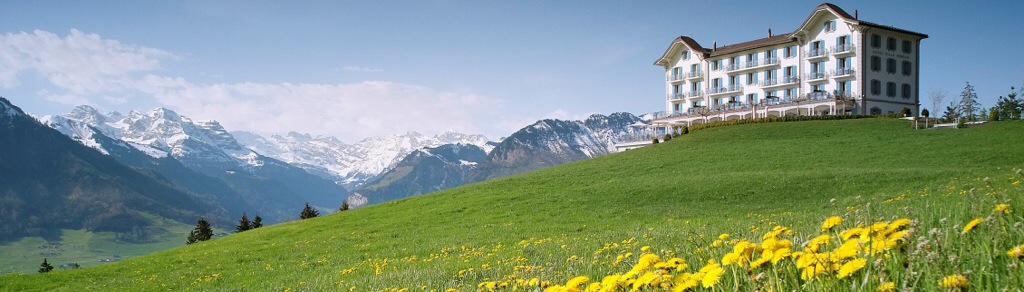
We knew it was going to be a clear night so we had booked the restaurant at Hotel Honegg up on the Bürgenstock overlooking Lake Lucerne. We had called in there on our last trip to Switzerland and it looked lovely. Our impressions were proved correct – it was stunning and we had a great table with a fantastic view. The food and service were also fantastic. It was such a warm and still night – perfect.

Over dinner we discussed Christmas and Elvis said he would be keen on a real Christmas tree. A plan was hatched to go undercover Christmas tree hunting in December – camo gear, night vision goggles and all. Steve of course likes the sound of these black op type missions but I am unsure if the reality of going out in freezing temperatures in the middle of the night will measure up. Watch this space in December for further updates on Operation Christmas Tree.

A bit of history on Hotel Honegg:
In 1905 Emil Durrer from Kerns built Hotel Honegg with 72 guest beds. His uncle was the legendary hotel entrepreneur Franz Josef Bucher-Durrer. The hotel guests came from all over the world and stayed for three to four weeks, partially even for the entire summer. They got taken care of by 15 to 18 local hotel employees. The Hotel Honegg bought its agricultural commodities such as milk and cheese from the Honegg farmers. In 1972 the hotel was closed and all it maintained was a bit of garden production on nice days in the summer. Since 2007 the hotel has been in private tenure. After a renovation that lasted for a few years it was re opened as a five star superior hotel with 23 rooms under the name of Hotel Villa Honegg.

Gault Millau (see below) awards the kitchen with 14 points. The menu is acclimatised to the season. The products, like back in the day, are still being bought from local suppliers as well as suppliers from central Switzerland. They also use ingredients from the hotel’s own salad and spice garden.

Gault et Millau [ɡo e mijo] is one of the most influential French restaurant guides. It was founded by two restaurant critics, Henri Gault and Christian Millau in 1965. Gault Millau rates on a scale of 1 to 20, with 20 highest. Restaurants below 10 points are almost never listed. The points are awarded based on the quality of the food, with comments about service, price or the atmosphere of the restaurant given separately.

Under its original authors and for many years after they left, Gault Millau never awarded a score of 20 points, under the argument that perfection is unachievable. However, in 2004 two restaurants in France achieved a score of 20.

There has been discussion about which guide is more important, the Michelin Guide or the Gault Millau. In the 1970s the Michelin’s continued conservative support of traditional haute cuisine was challenged by the support of nouvelle cuisine by the Gault-Millau. Michelin is more popular and therefore more influential, while Gault Millau has been considered more purist due to the main system being based purely on the quality of the food. Gault Millau also has guides for various other countries, for example Switzerland, Germany, Austria and the Benelux.

IMG_3573

20140722-190129-68489829.jpg

20140722-190140-68500744.jpg

20140722-190148-68508438.jpg

20140722-190156-68516877.jpg

20140722-190206-68526644.jpg


20140722-190214-68534588.jpg

Posted in Switzerland | Leave a comment

The Perfect Summer Day – Switzerland

Thursday was another perfect summer’s day. We started the day with a run and then a swim in the lake. The lake temperature is about 22 degrees and it is perfect for cooling off and doing a bit of swimming (Team RV’s note – pre training for the Wanaka Tri next year).

Beth and Shaun who we had dinner with in the Jura called in for coffee on their way to the Ticino so that was nice to see them again.

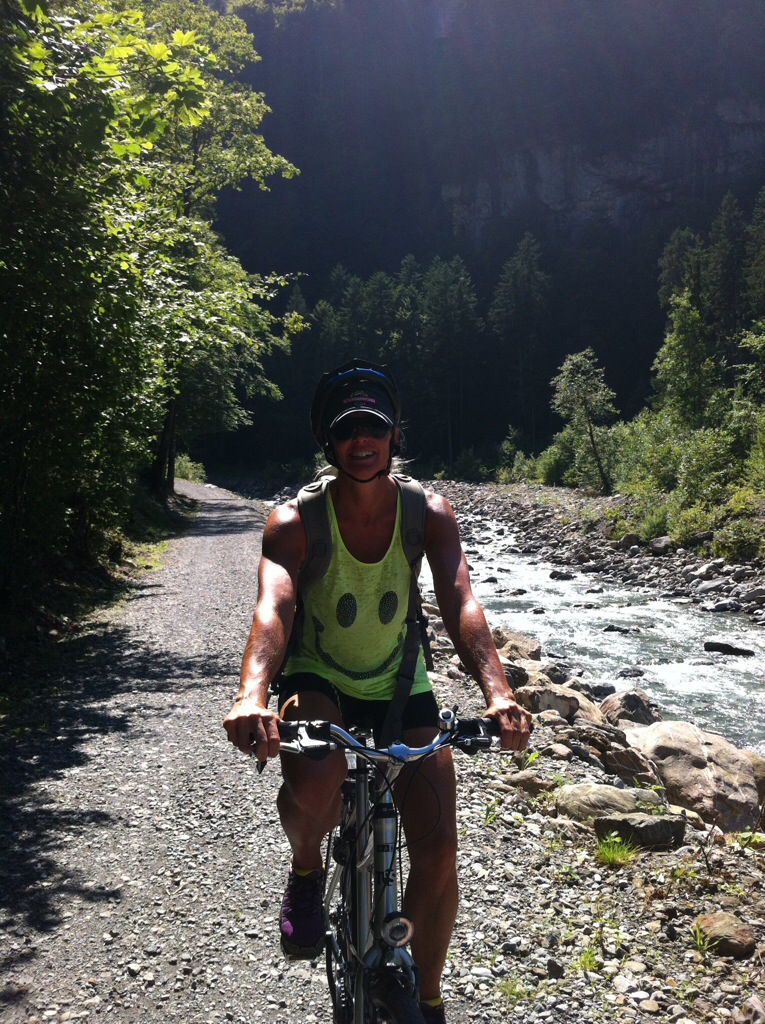
Next on the agenda was a cycle in the Engelberg Valley. We drove to Stans and caught the train up to Engelberg. This is where the golf course is and the day we came up to see that it was very cloudy so it was great to see it in all it’s glory. Mt Titlis looked majestic. We hired our bikes from the local tourist office and did a tour of Engelberg. Next stop was Co-op which is one of the main supermarket chains. We stocked up on supplies with the main item being Swiss sausages. You can also buy little bundles of wood but Elvis was adamant we would find all we needed along the way. Steve enquired whether we had matches which we did not so “good thinking Steve” – we acquired a lighter.

The first part of the trip down the valley is on the road – it is like a chicane and you can certainly pick up good speed. The lady at the tourist office had said you follow the road down until you get to the end of the chicane and you will then see the cycle track. The boys had gone ahead and then Karin & I had got to what we thought was the end of the chicane and saw a little bicycle sign. We pulled over thinking that the boys had overshot the mark. I just saw Steve disappearing around the corner down this steep hill and thought oh no he is going to have to come all the way back up. Anyone that has cycled with Steve knows about his love affair with a) biking and b) going up hill!

On closer inspection the sign actually said you couldn’t cycle on this particular track so we carried on down the valley a bit further and there were the boys waiting at the start of the cycle track. The track was quite bumpy to start with and although the bikes were good they weren’t quite like my Natural High 29er! Not far in we came across a perfect picnic spot overlooking the river and a waterfall. There were two planks that would make great seats.

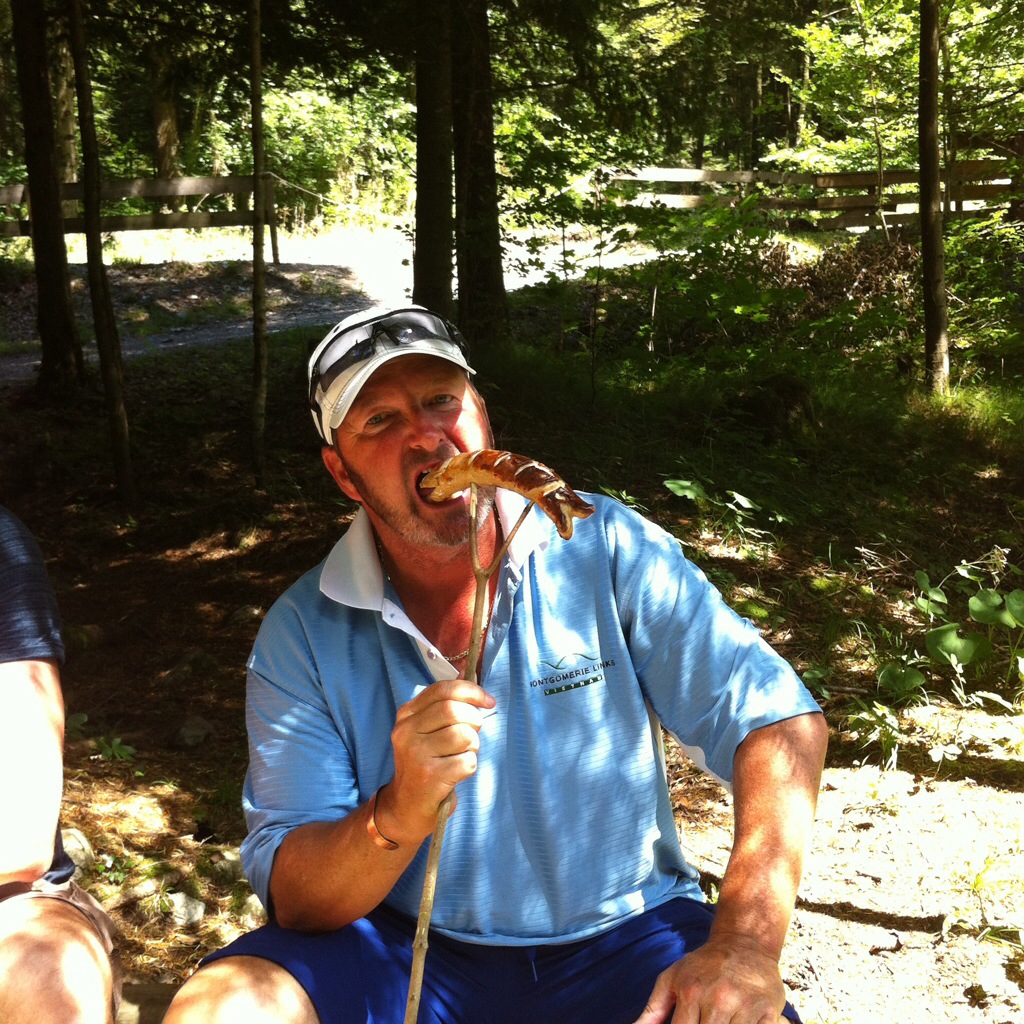
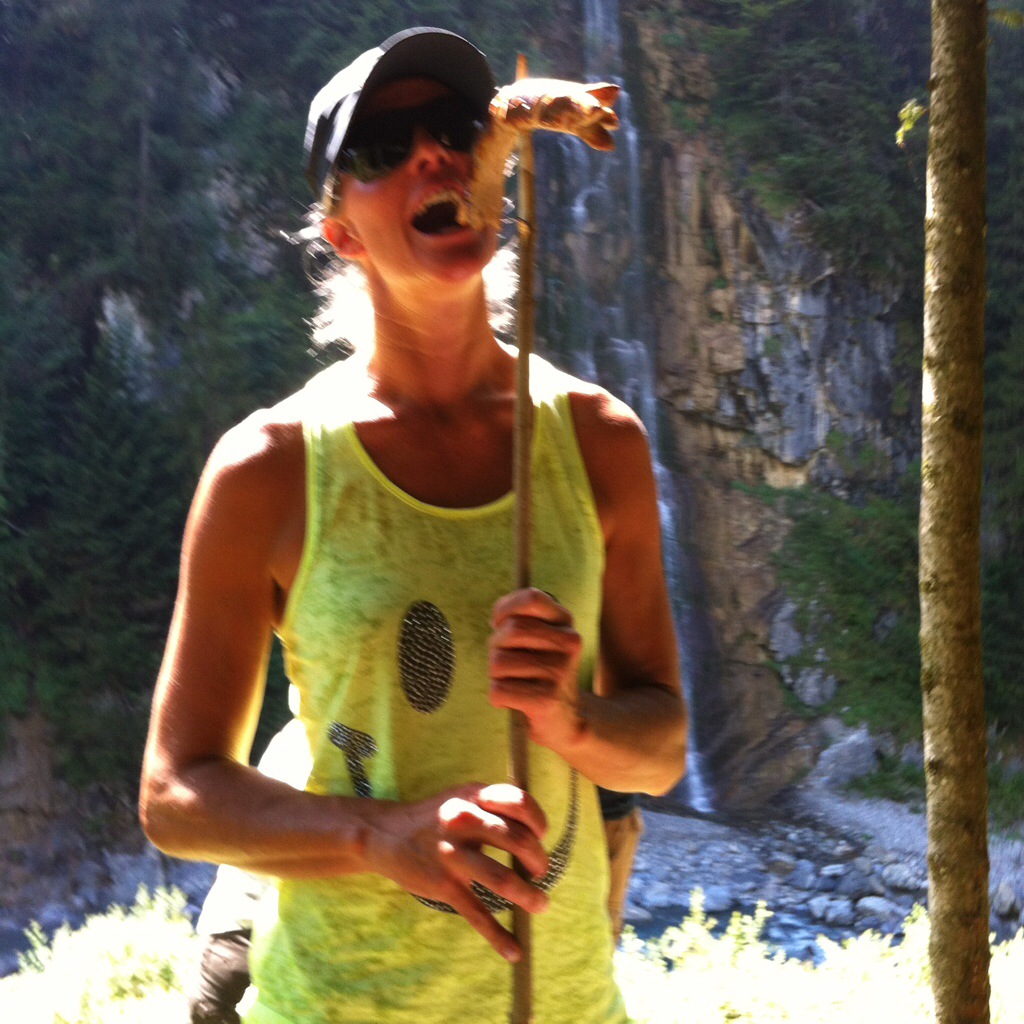
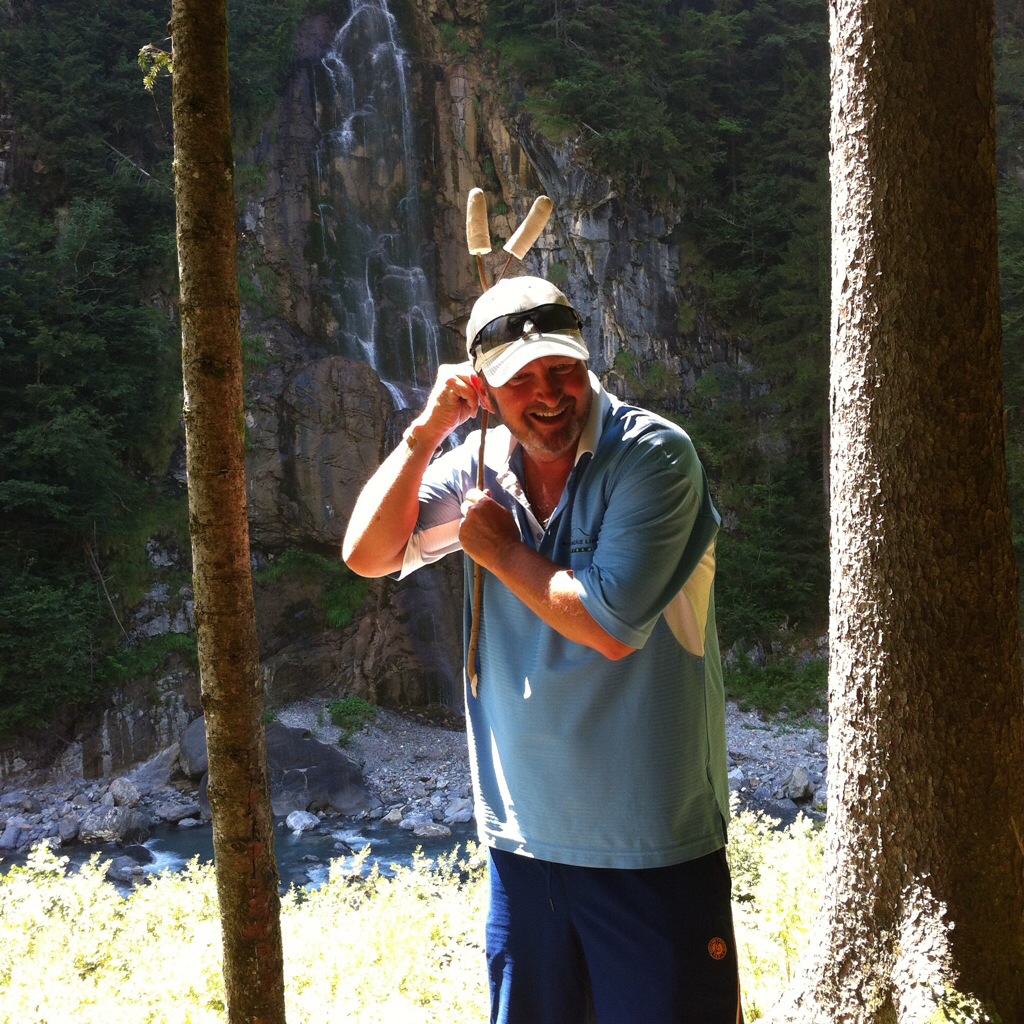
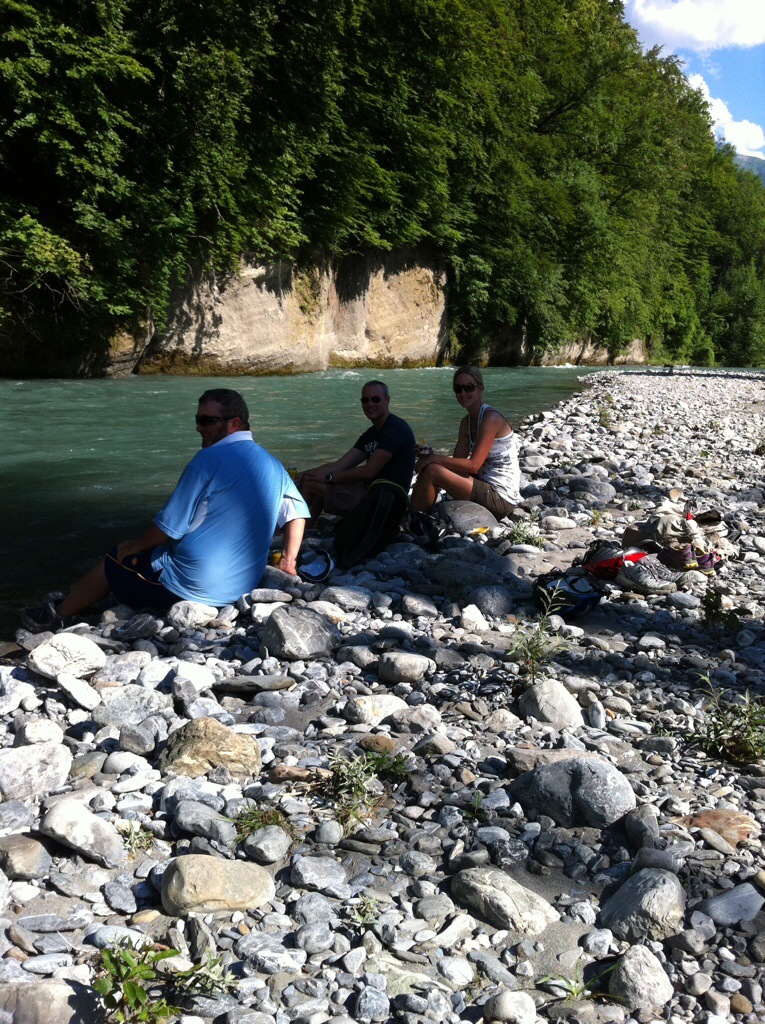
We set about gathering big stones and wood under the direction of little Lucifer aka Elvis. Karin went off to find a suitable tree where she would acquire our skewers. Armed with her Swiss Army knife four sausage holding skewers were produced. Meanwhile Little Lucifer had got the fire going and it was smoking along very nicely. We had to wait for the smoke to subside and the heat in the embers to come through before we could put the sausages on.

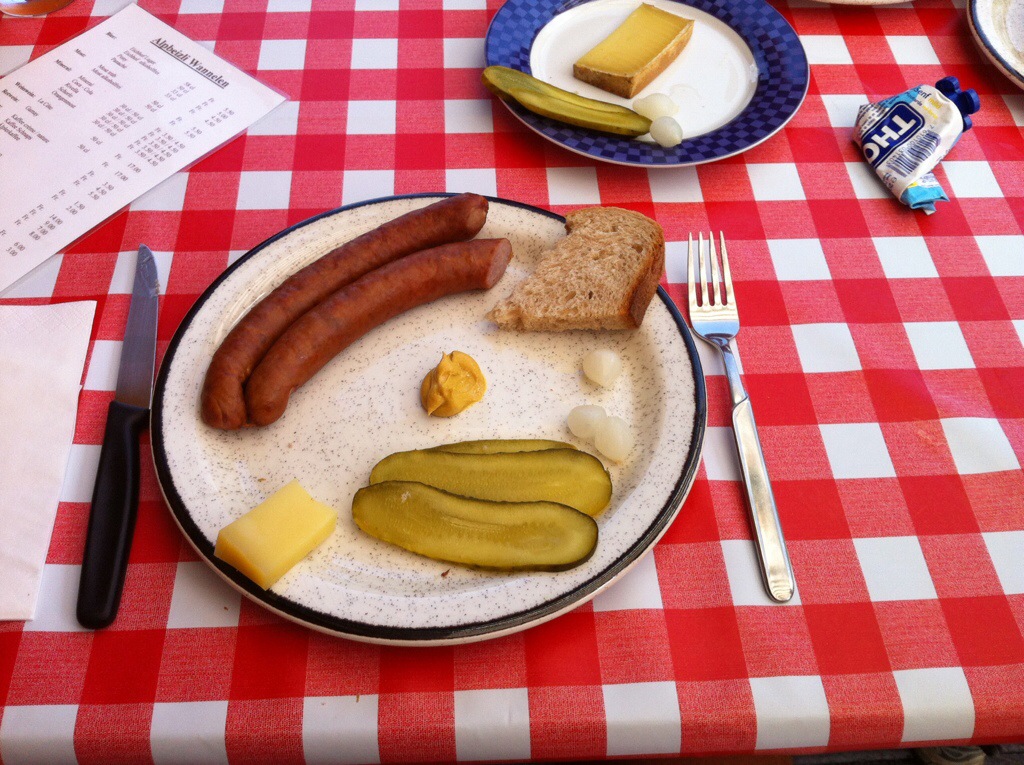
The sausages came out great and were delicious as always – a slightly different taste to the ones cooked on a BBQ. Elvis had remembered the Thomy mustard so all was well with the world.

After dousing the fire (with water not the apparent traditional method of pee) we tidied up and set off on our bikes again. About a hundred metres down the track we discovered a BBQ area with a little shed full of wood. Way too easy – our hunting and foraging was much more fun.

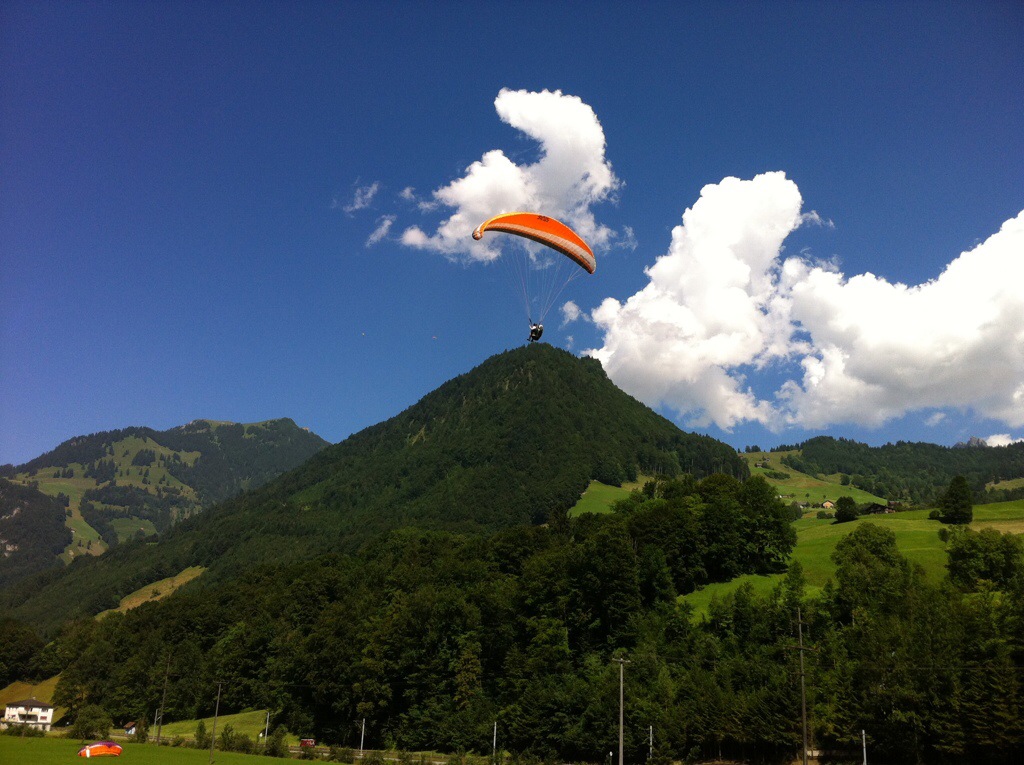
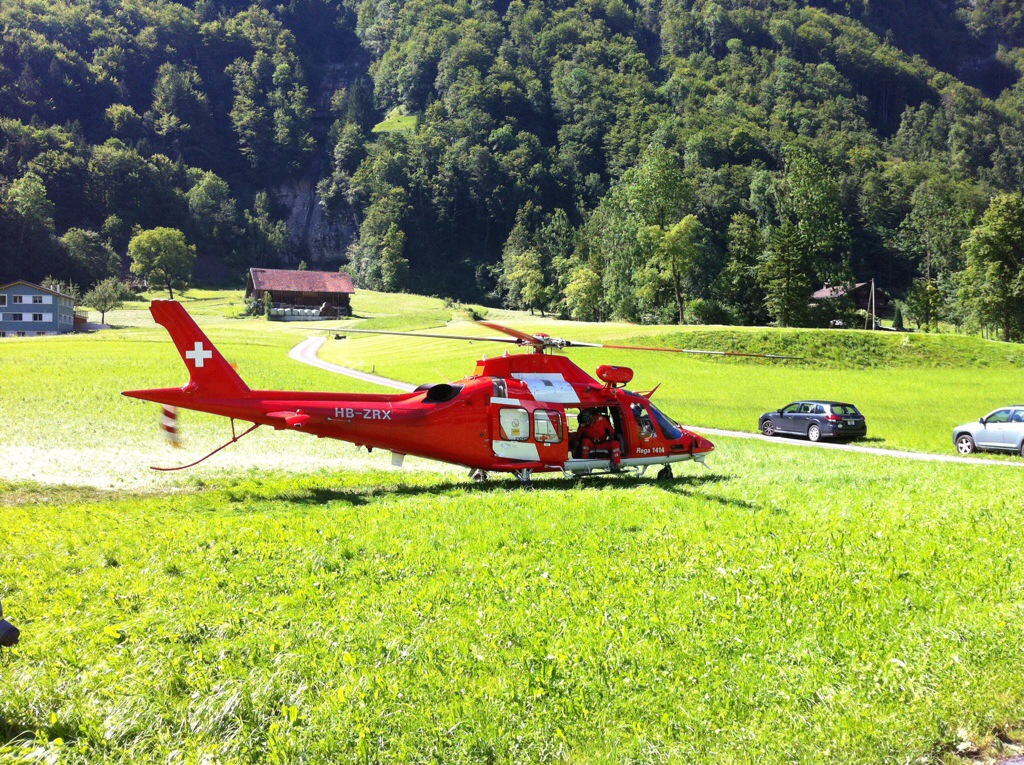
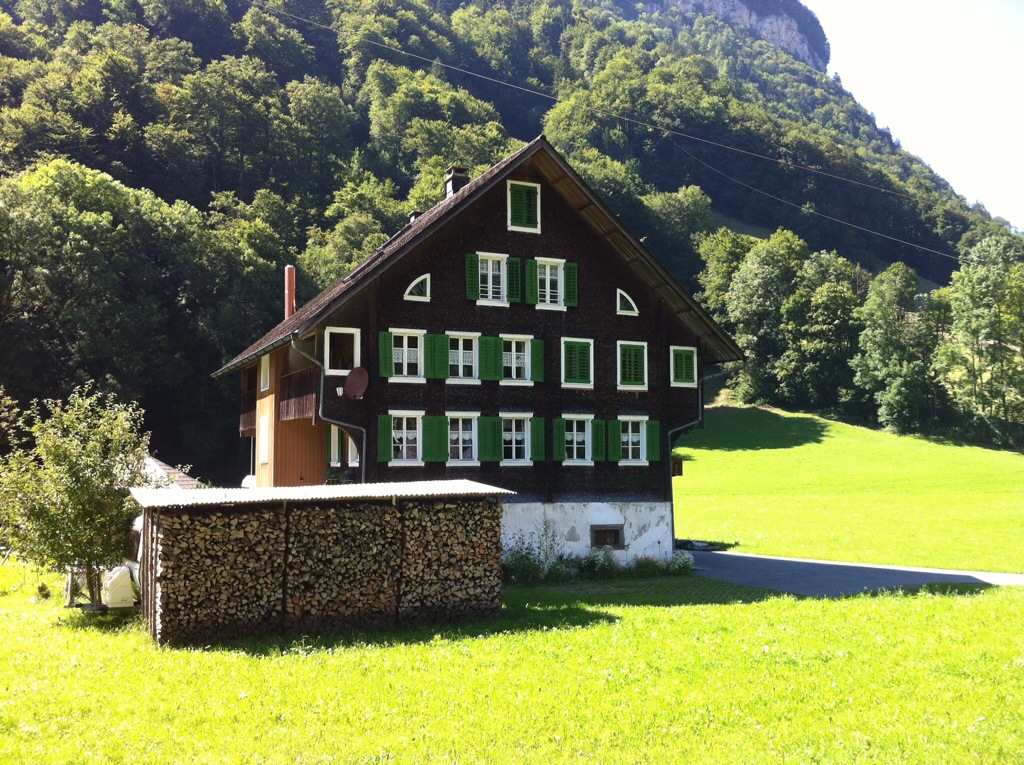
The ride along the river was fantastic – surrounded by mountains and farms it is just so picturesque. As we got down the valley we came across a clearing where the para gliders were landing so we stopped to watch them come down. They then pack up their shutes, load them on their backs and catch the gondola back up the mountain. One of the guys stopped to chat and told us that a german guy had crash landed in the trees up above so the rescue helicopter was coming to get him.

We cycled on and saw the helicopter coming in – it landed just off the track and then headed back up. We saw it hovering above a part of the forest and winching something down. It then started coming back down and we could see someone hanging from the winch.

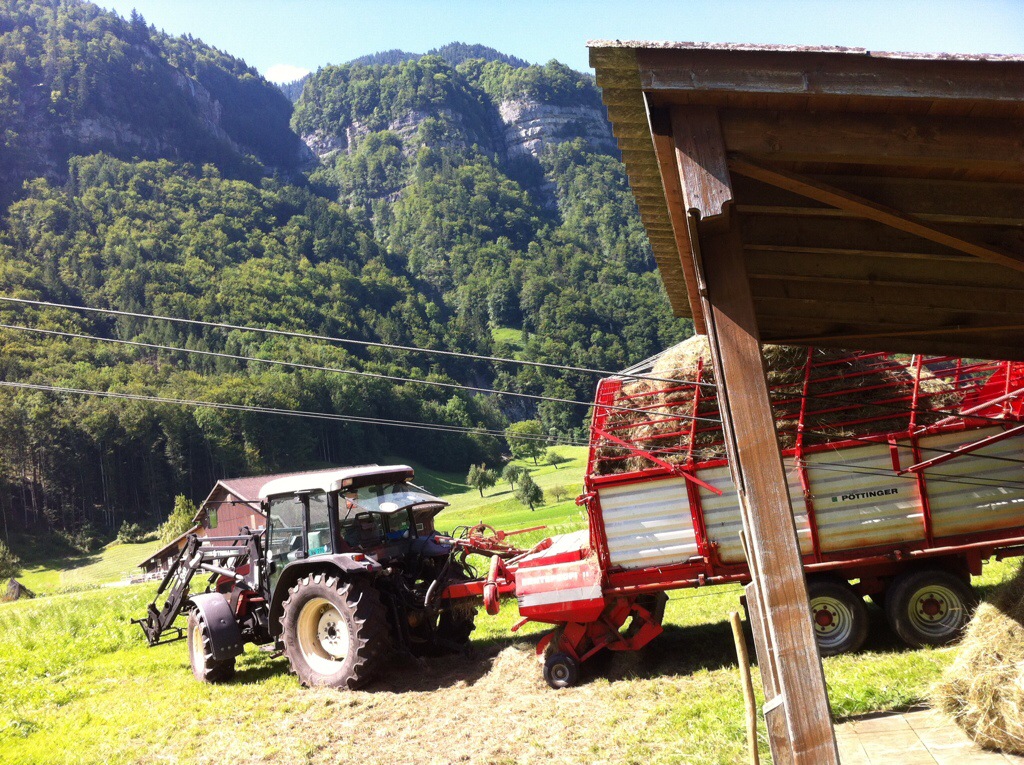
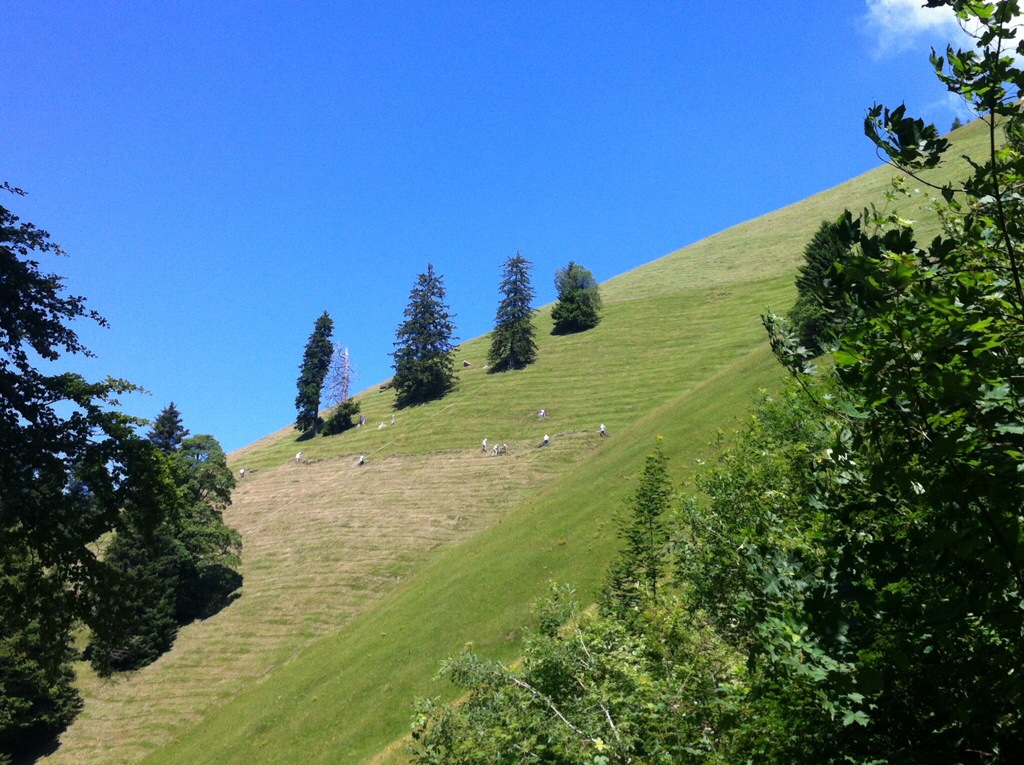
We also came across quite a few haymakers and I saw the hay nets coming down the lines – I am still fascinated by this process.

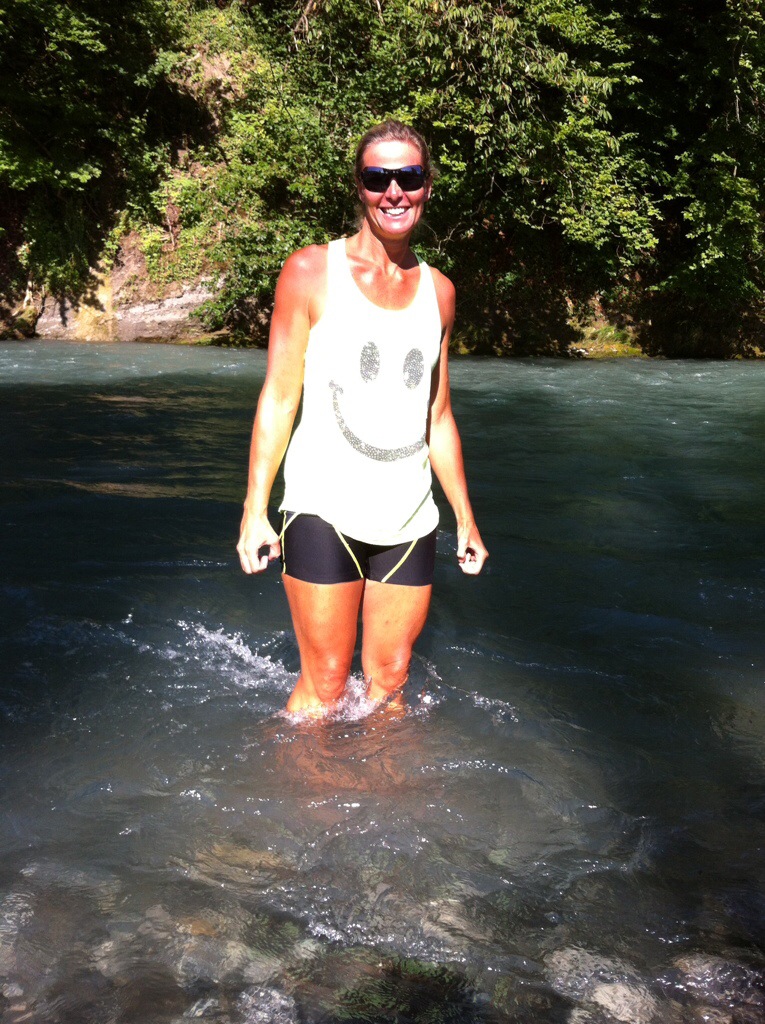
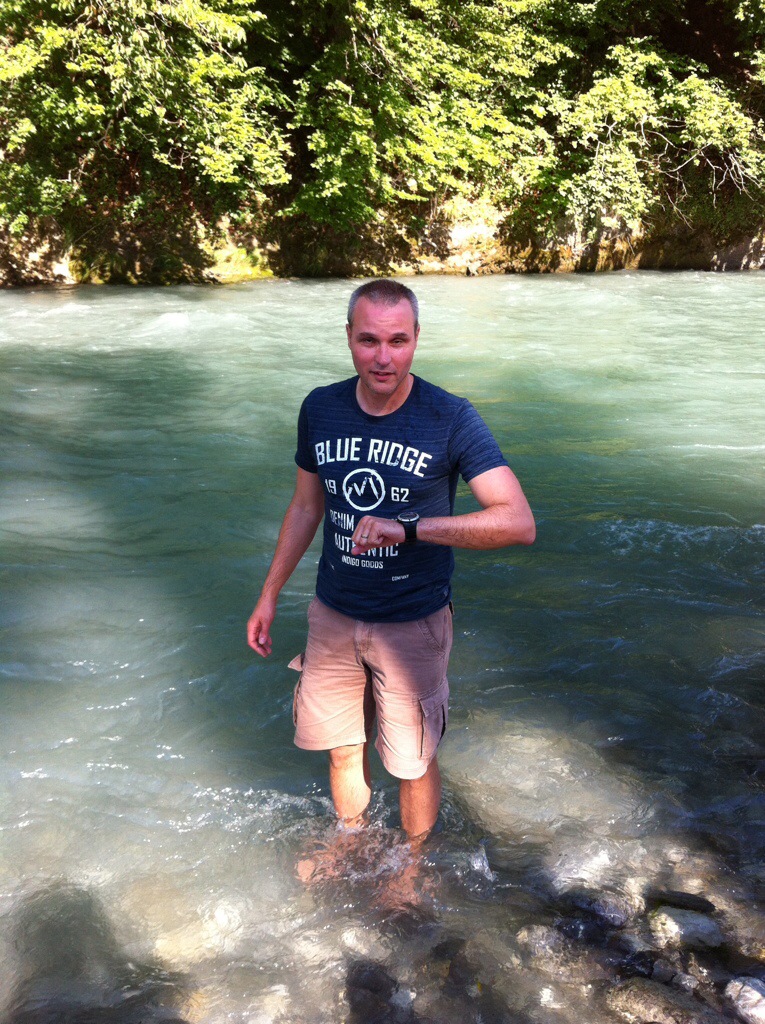
We stopped by the river once we had made it back to the little villages at the bottom of the valley so we could cool down. The boys went off and got drinks and ice creams and we put our feet in the water. The water was quite fast flowing and chilly. Elvis and I stood in the river for a little while – we called it our ice challenge.

We took the bikes back to the drop off point in Stansstad where you had to put them in an old railway carriage. They had given us the lock combination when we picked the bikes up so we unlocked it and put our bikes in. We then caught the train back to Stans where we had left the car.

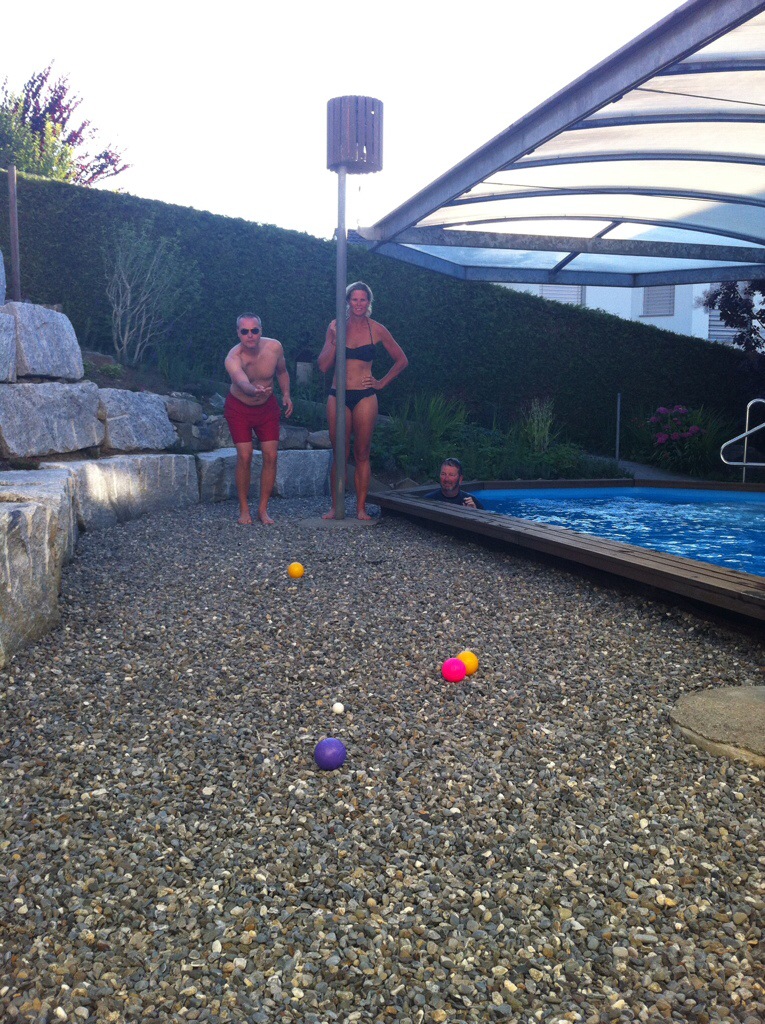
We all hit the pool when we got home – it was still really hot. We had a game of Boule (Pétanque) on the stones next to the pool – Steve didn’t want to get out of the pool to play so played from the pool. The Kiwis had a victory over the Swiss : )

When we had gone running that morning Elvis had said this is the perfect summer’s day referring to the weather. He was right – it was the perfect summer’s day in more ways than one. Loved it!

20140720-082247-30167064.jpg

20140720-082259-30179205.jpg

20140720-082309-30189676.jpg

20140720-082321-30201676.jpg

20140720-082330-30210697.jpg

20140720-082337-30217499.jpg

20140720-082343-30223520.jpg

20140720-082348-30228581.jpg

20140720-082359-30239540.jpg

20140720-082409-30249171.jpg

20140720-082427-30267609.jpg

20140720-082443-30283941.jpg

20140720-082450-30290509.jpg

20140720-082455-30295161.jpg

20140720-082459-30299779.jpg

20140720-082503-30303784.jpg

20140720-082517-30317877.jpg

20140720-082508-30308874.jpg

20140720-082526-30326823.jpg

20140720-082521-30321977.jpg

20140720-082534-30334933.jpg

20140720-082542-30342493.jpg

20140720-082547-30347292.jpg

20140720-082557-30357842.jpg

Posted in Switzerland | 1 Comment

Barfalen & Musenalp Hike – Switzerland

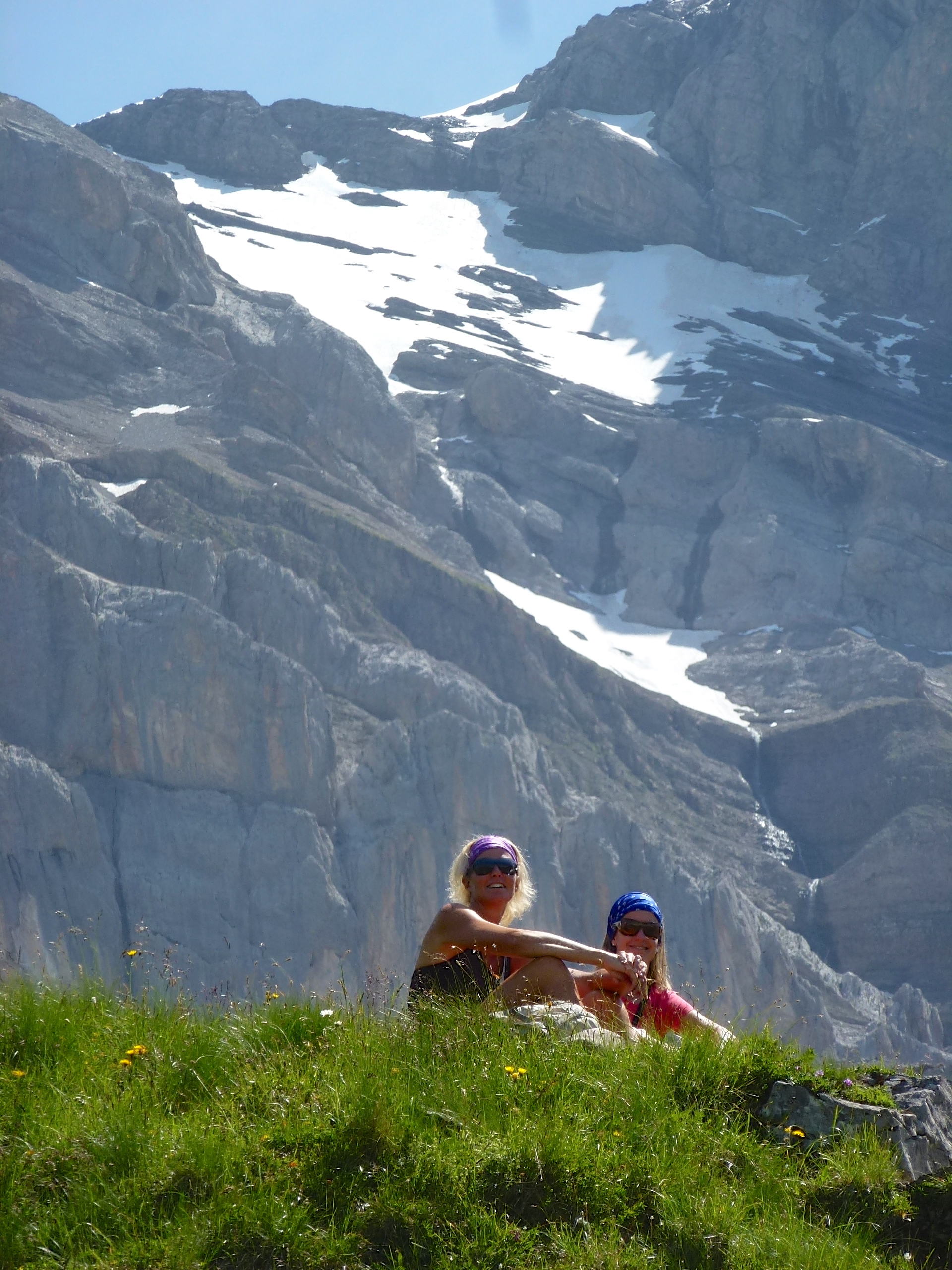
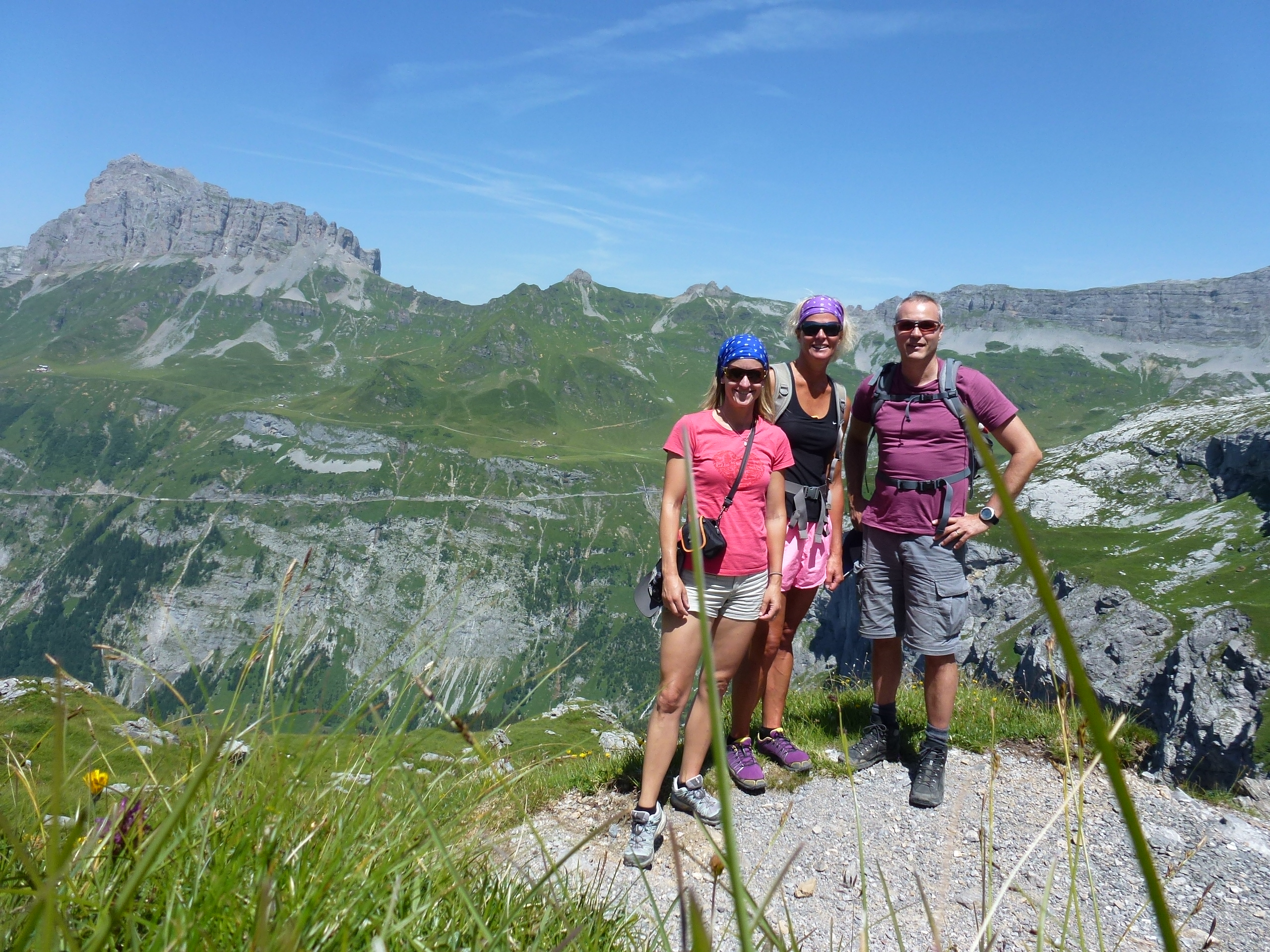
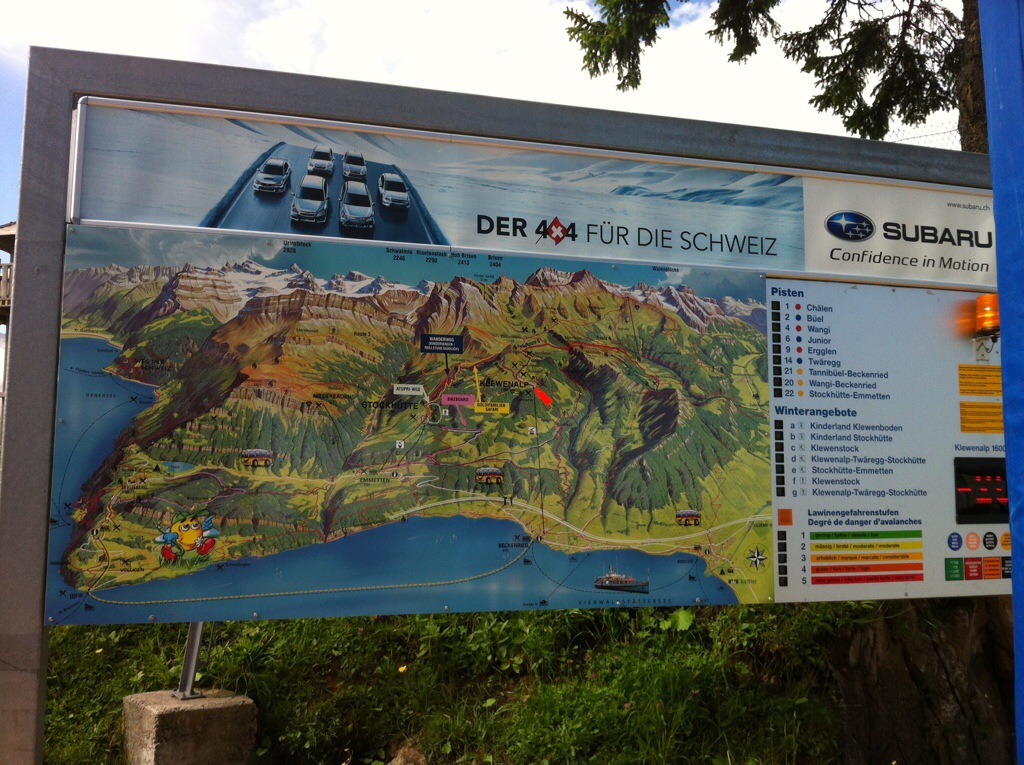
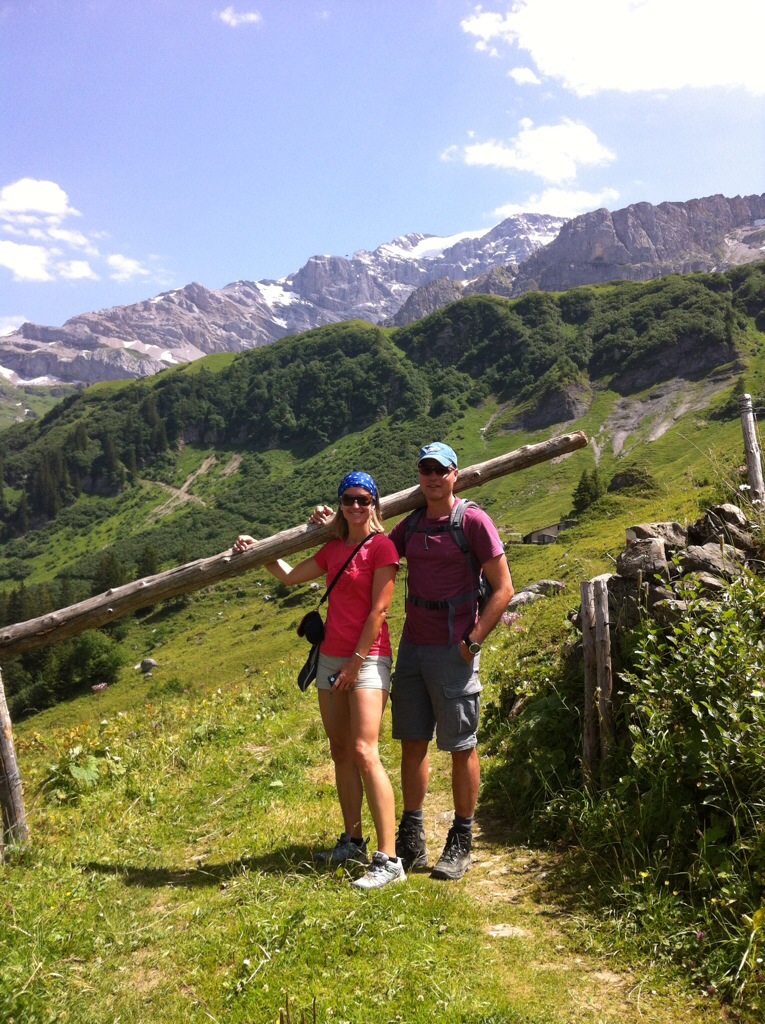
On Wednesday we took the bus from Buochs to Beckenried to catch the Beckenried – Klewenalp gondola which goes up to about 1,600m. The plan was to hike to Barfalen and then onto Musenalp.

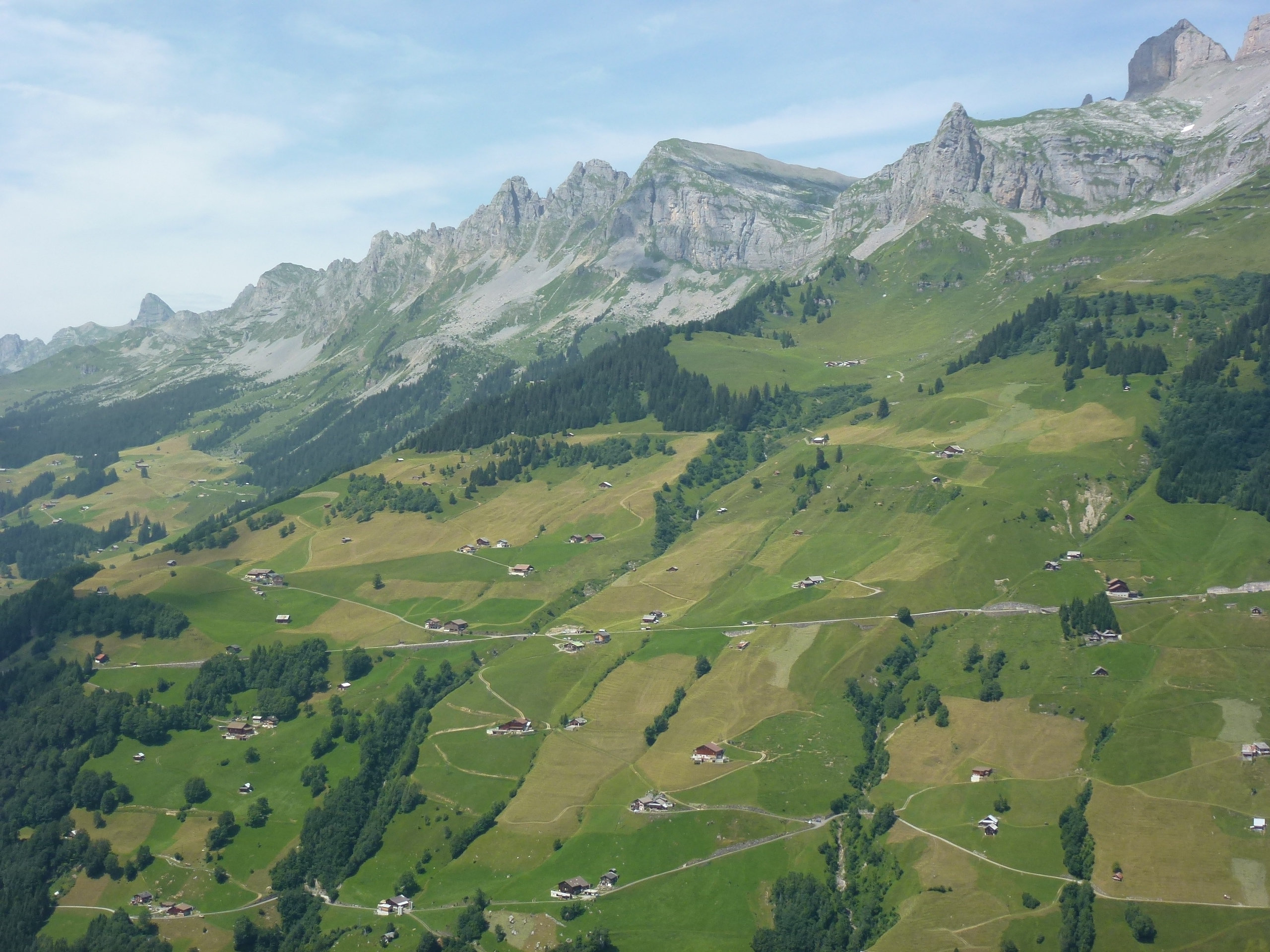
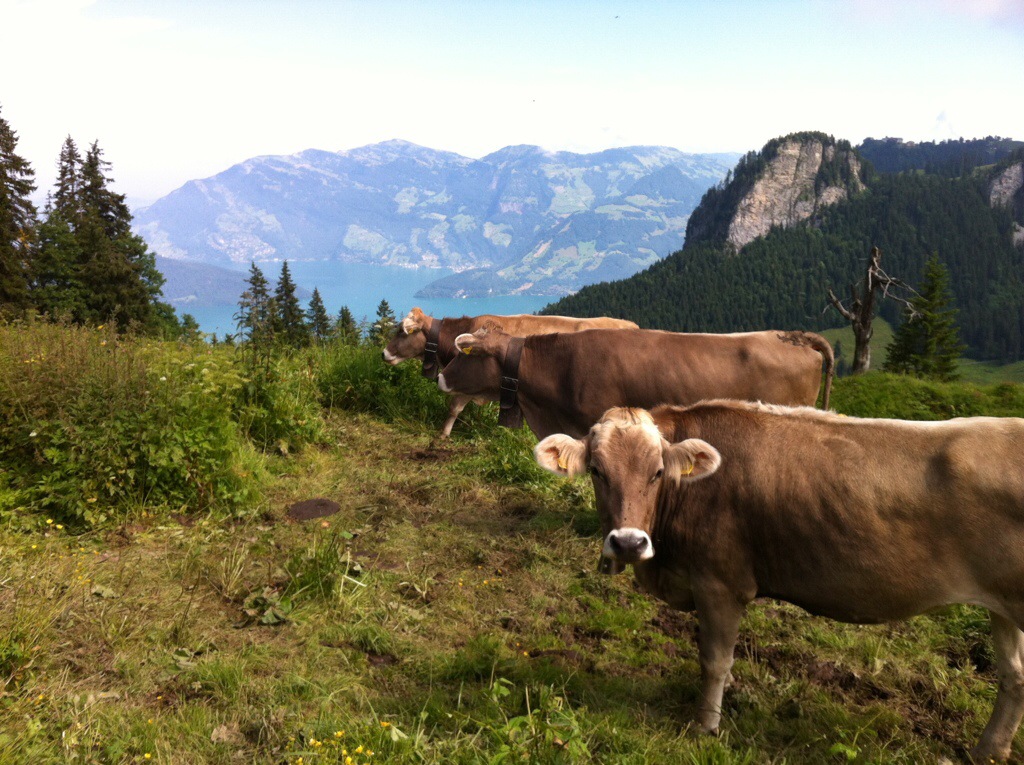
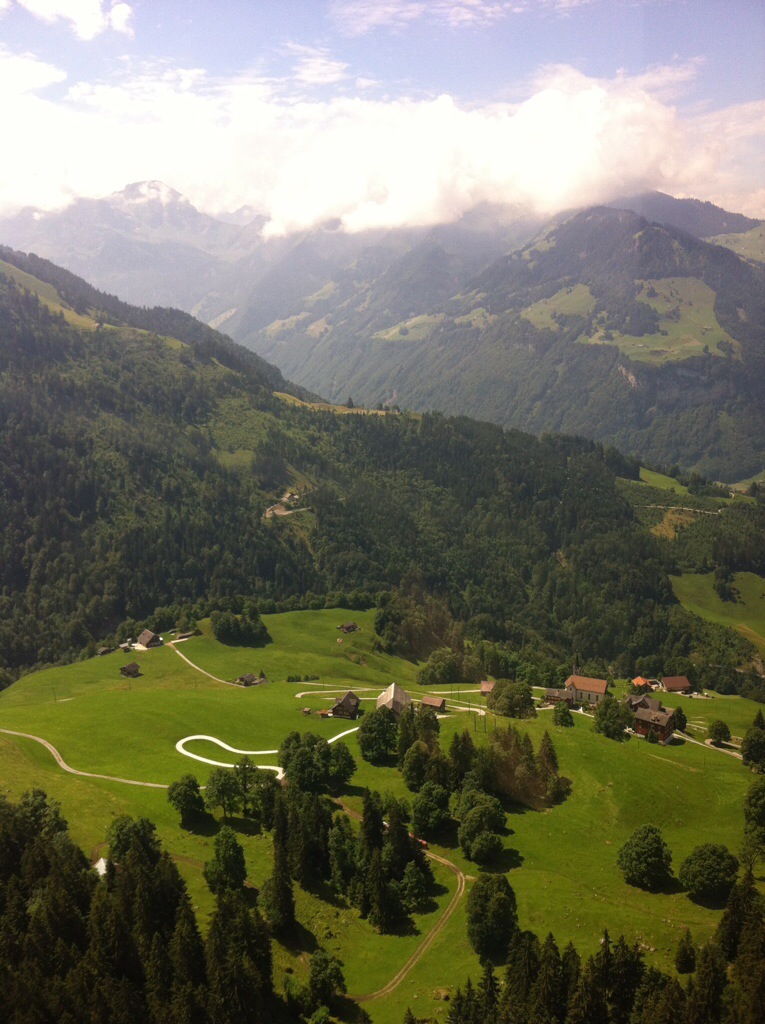
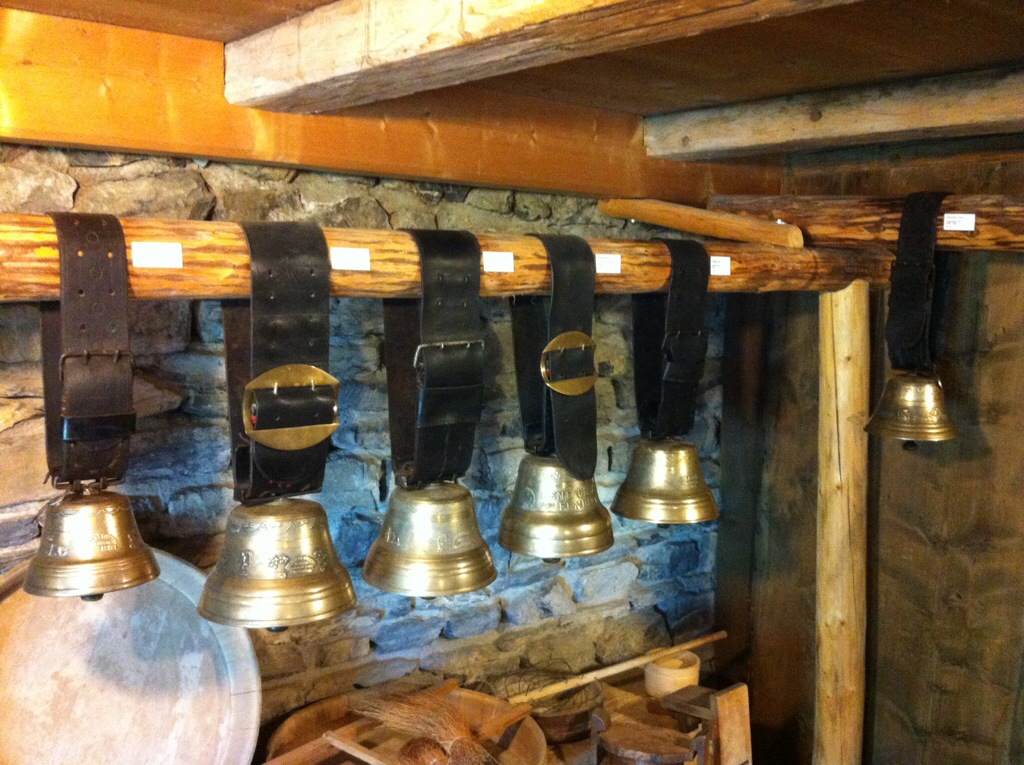
It was a beautiful day and the view down to Lake Lucerne is pretty special. In winter this area is used for skiing so Karin & Elvis were pointing out the chairlifts and tow ropes etc… It was hard to imagine all the green pastures covered in snow. In the summer the cows graze up on the slopes and you can hear cow bells for miles. You actually get used to the constant ringing and it is only if you stop to listen that you notice them.

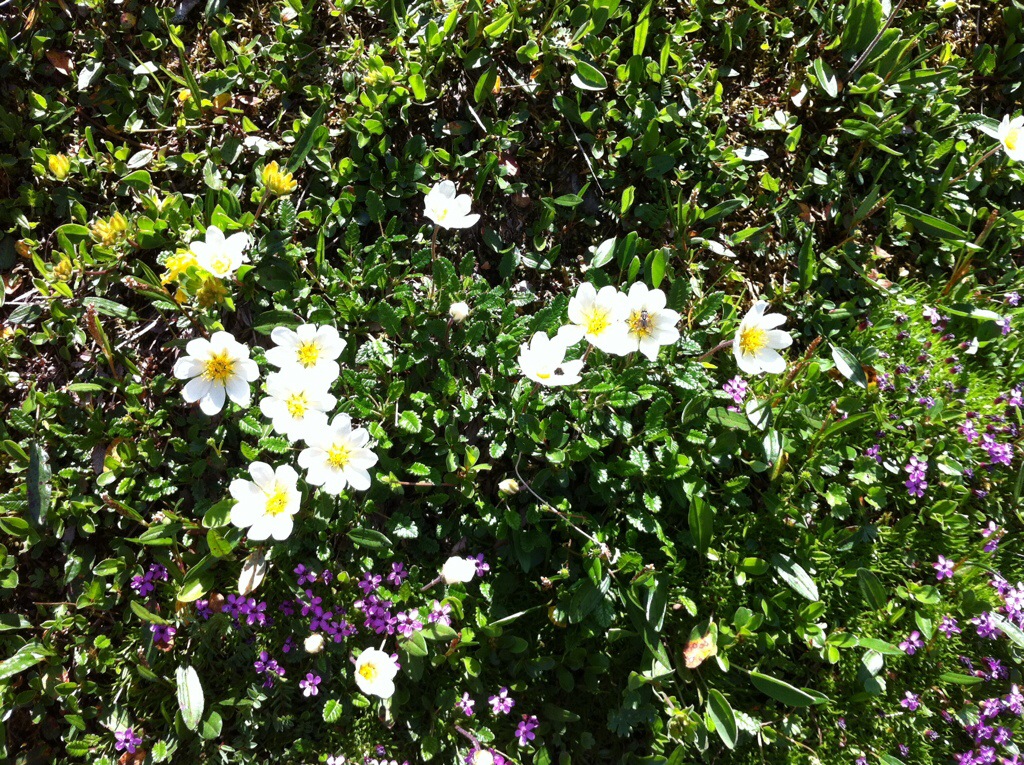
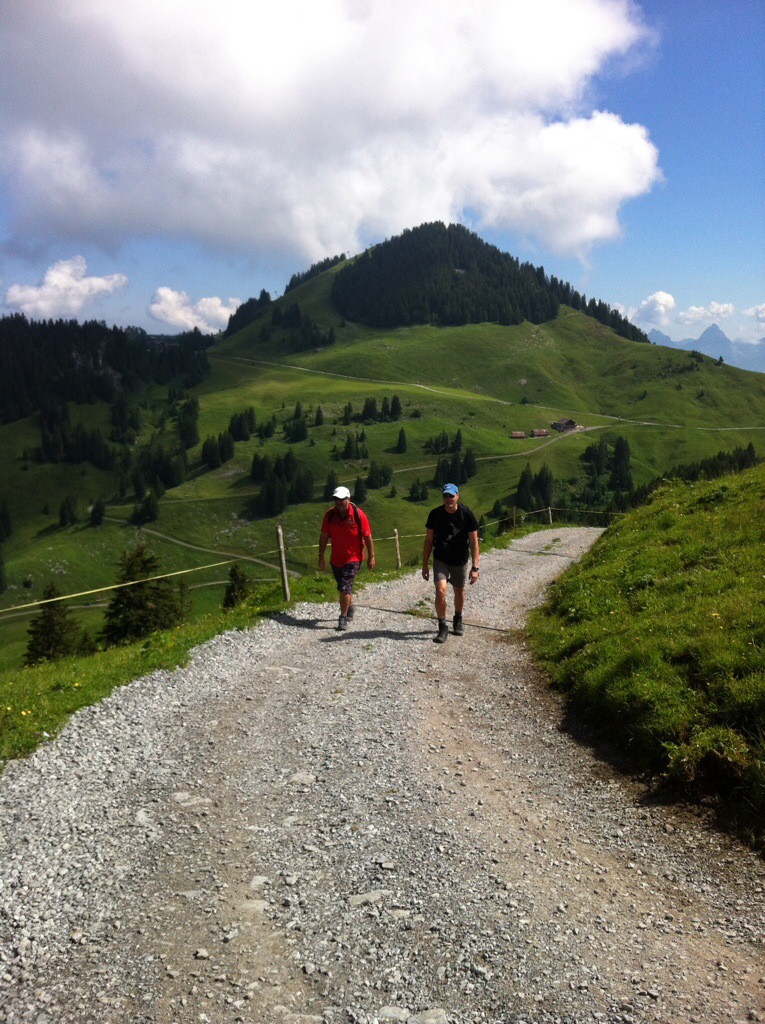
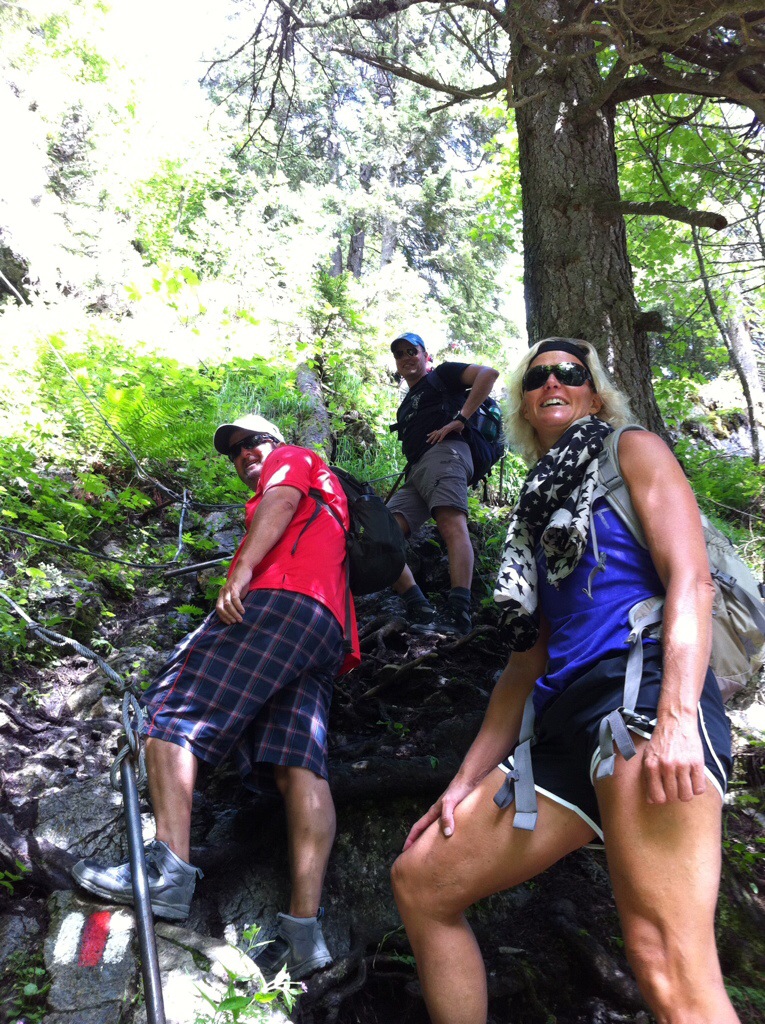
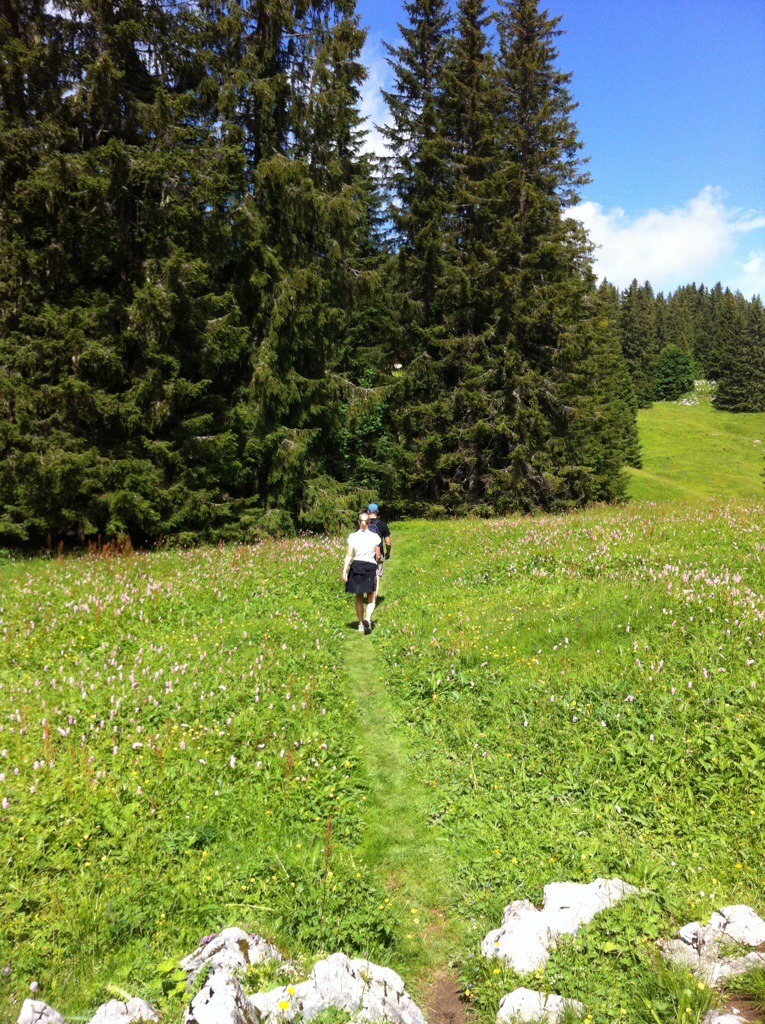
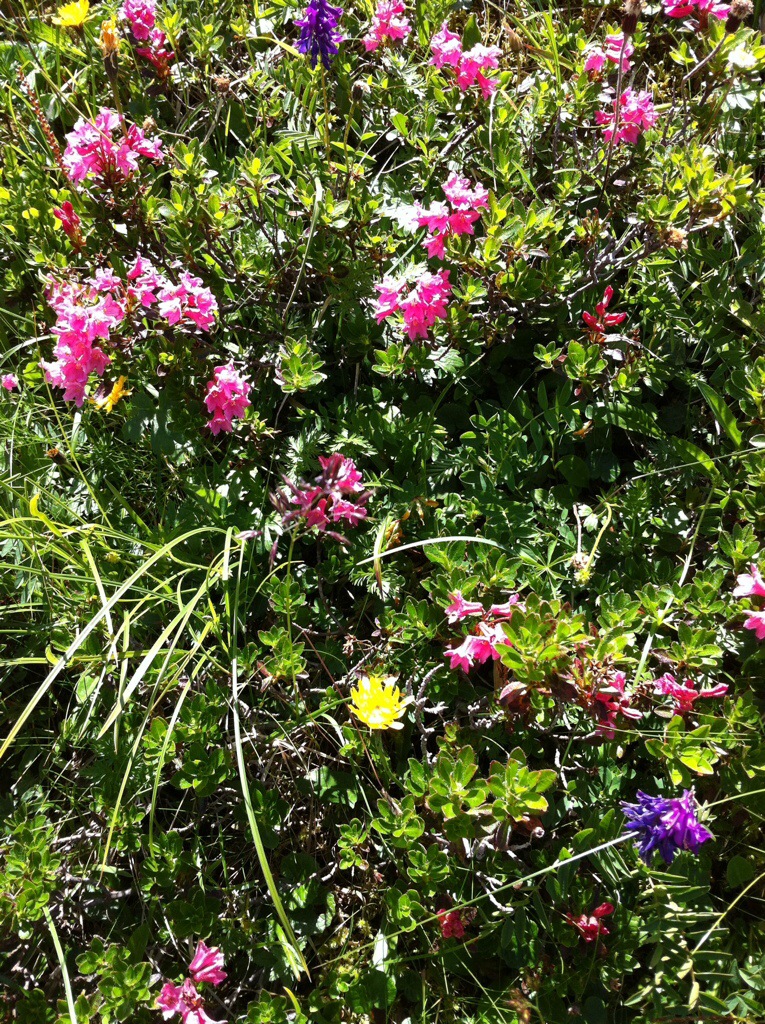
The walk was a bit up and down – we started on a good track and then had to climb up through some trees until we plateaued into flower covered pasture – the wild flowers are really pretty and varied in colour. Karin collected some of the flowers so we could dry them for a herbal tea.
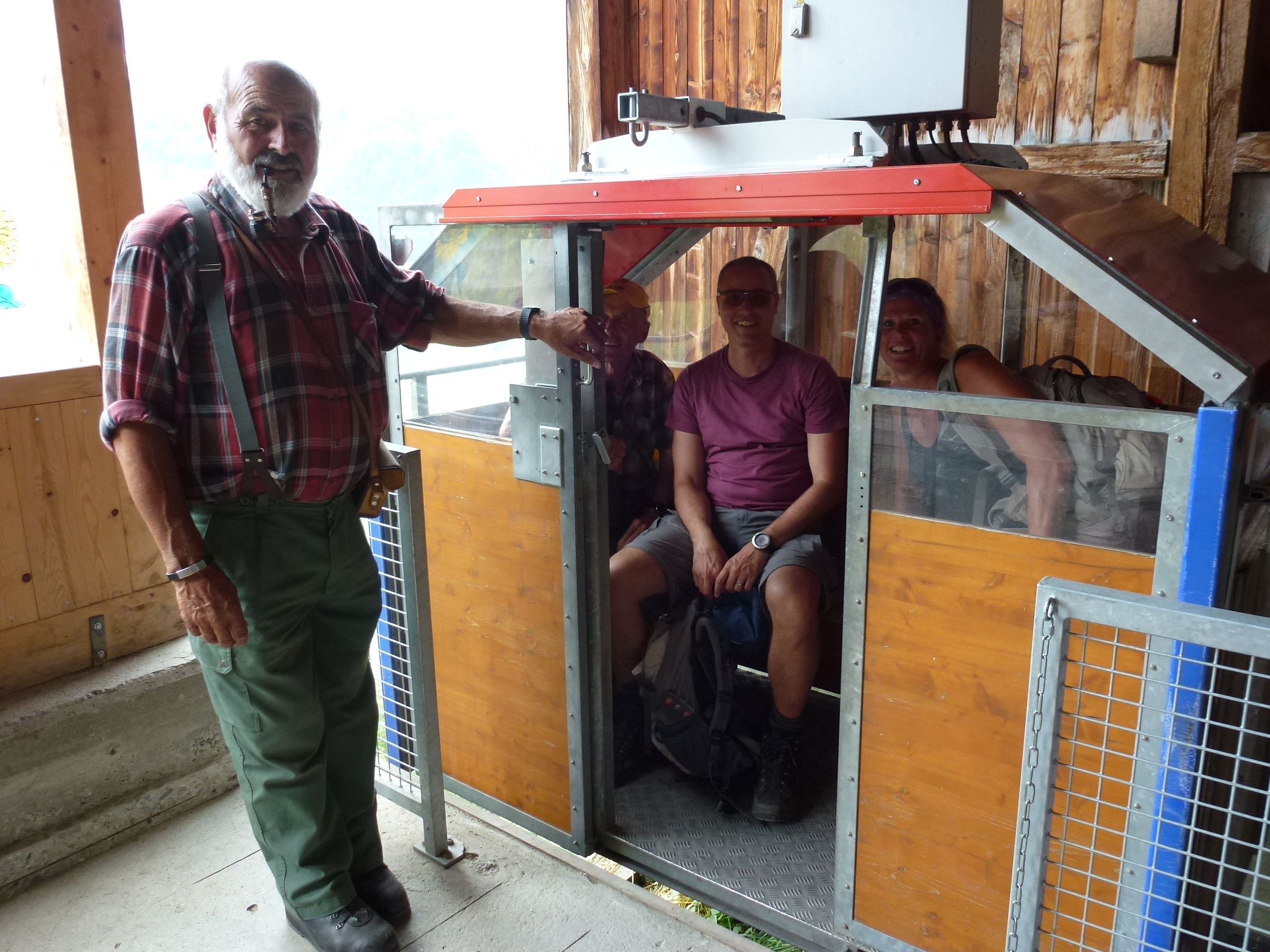
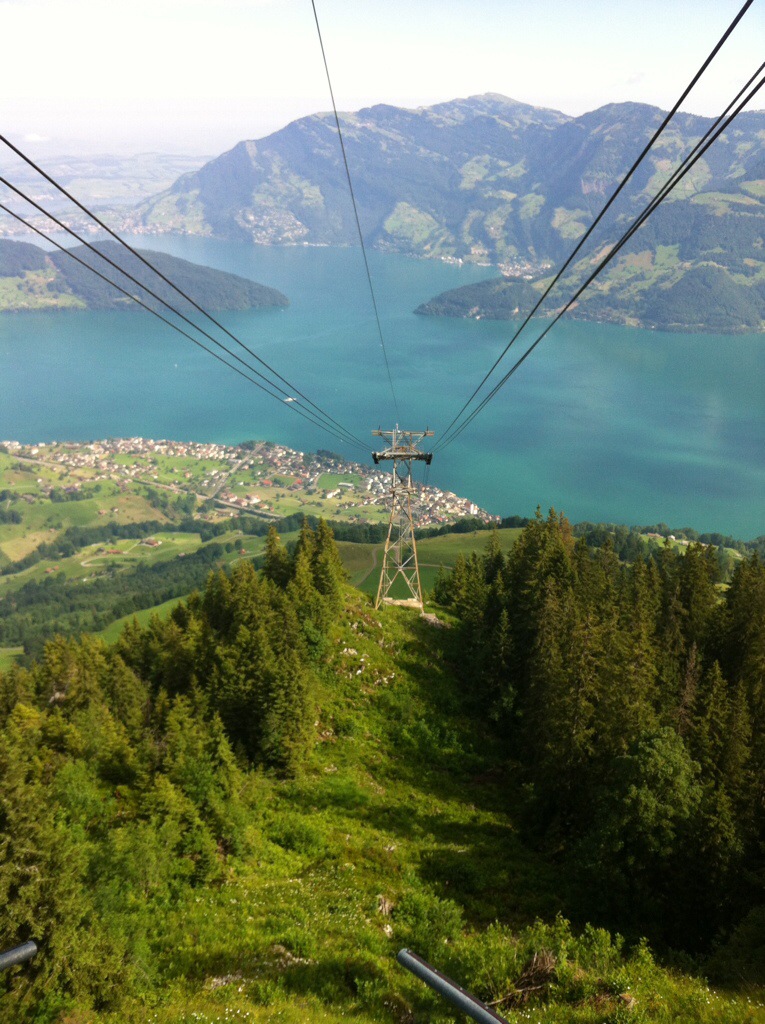
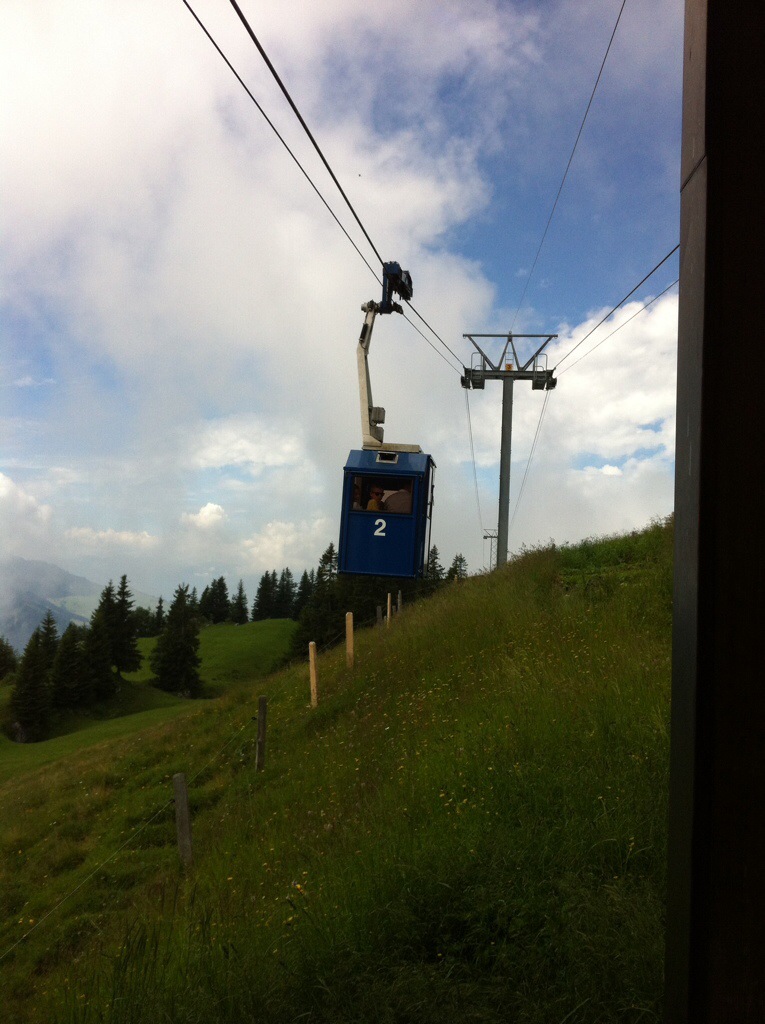
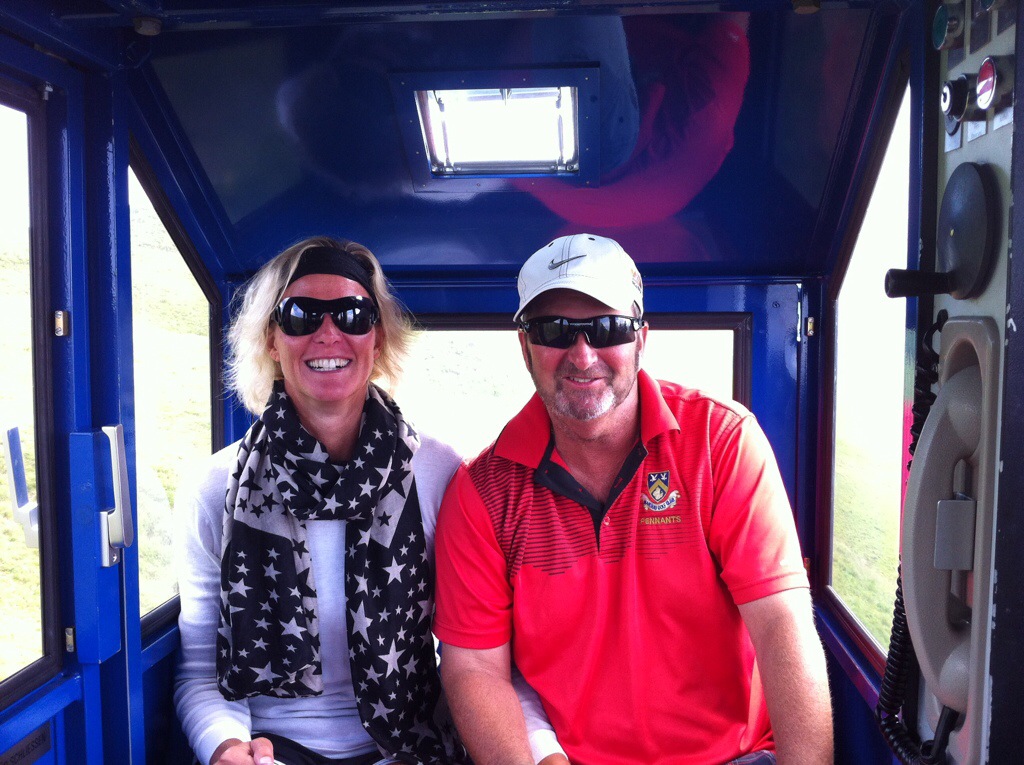
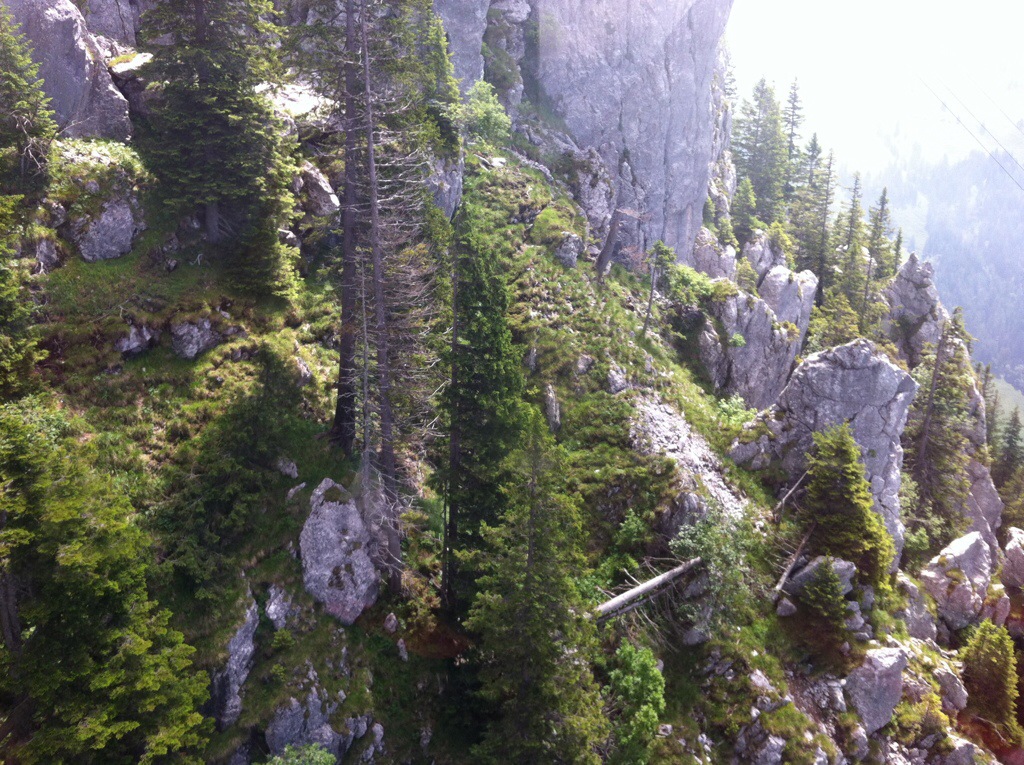
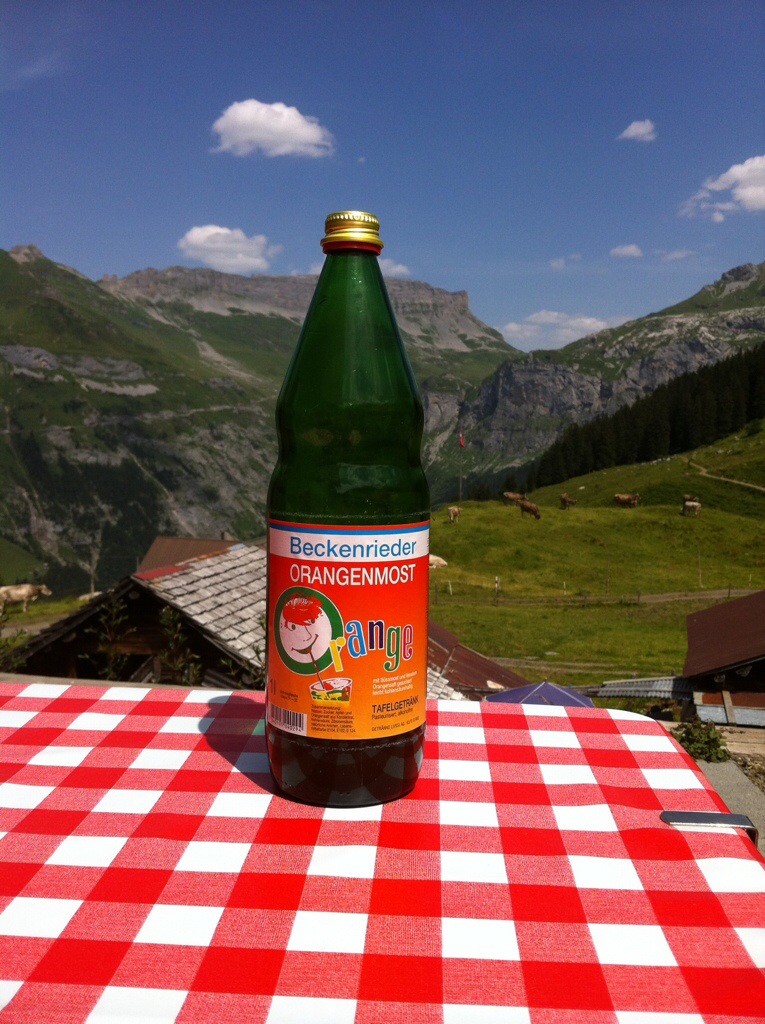
Barfalen translates to bear pit and Musenalp translates to Mouse Alp. Musenalp is 1,747m high and there is a restaurant up there which was like a nirvana on the horizon for Steve – he felt deserved of a beer! We stopped off and had a drink. We then caught the gondola down to Niederrickenbach – the gondola could fit four people in it – the ride down was quite steep and the views were fantastic. We decided that we prefer the smaller gondolas to the bigger ones. We descended about 700 metres.

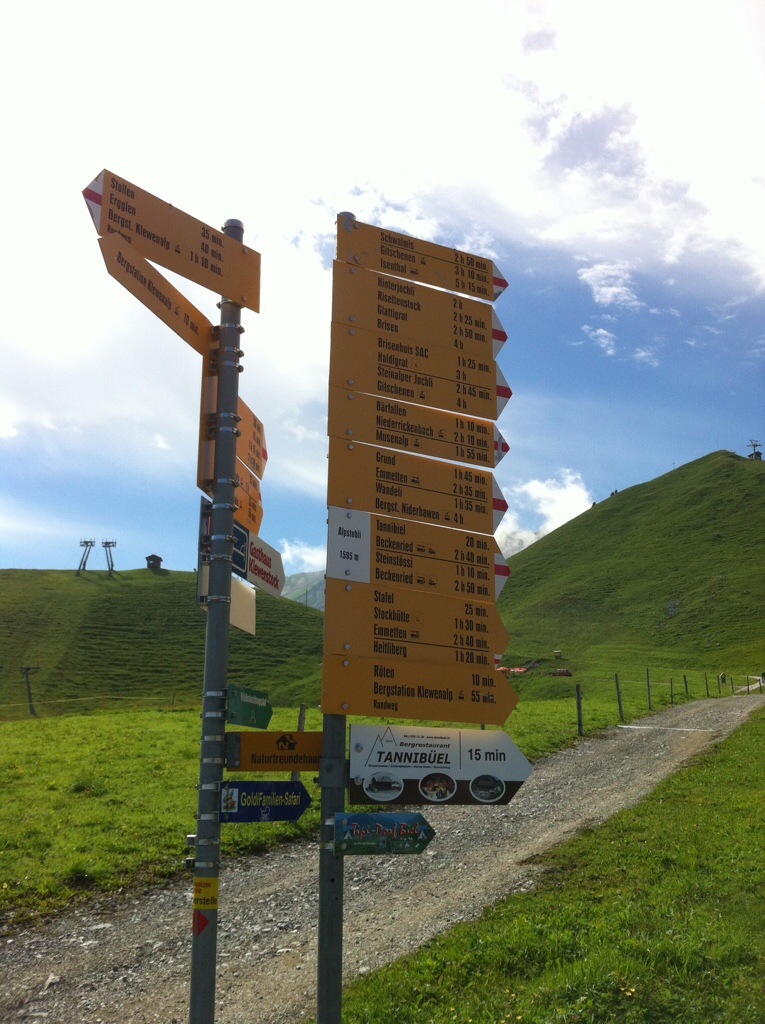
The boys decided to catch the next gondola down to Dallenwil and then train and bus home. Karin & I decided to continue down to Buochs which according to the signs was going to take us about 3 hours and 10 minutes. We started off going down which was a good sign. The next signpost indicated that we needed to go up again so off we went – we saw some people coming down the other way so thought that was another good sign. We were then traipsing through a steep paddock – we could see a road just below us so decided to get to that. The farmer drove by so Karin stopped him to confirm we were heading in the right direction – he had a smile on his face as he told us that we still had to keep going up quite a bit further. We’re not sure if we missed a sign somewhere or we were actually on the right track. The signage on the tracks is usually fantastic but seemed to be MIA in this area (unless we missed it of course – which is highly likely as some of my O & E and biking friends can attest to).
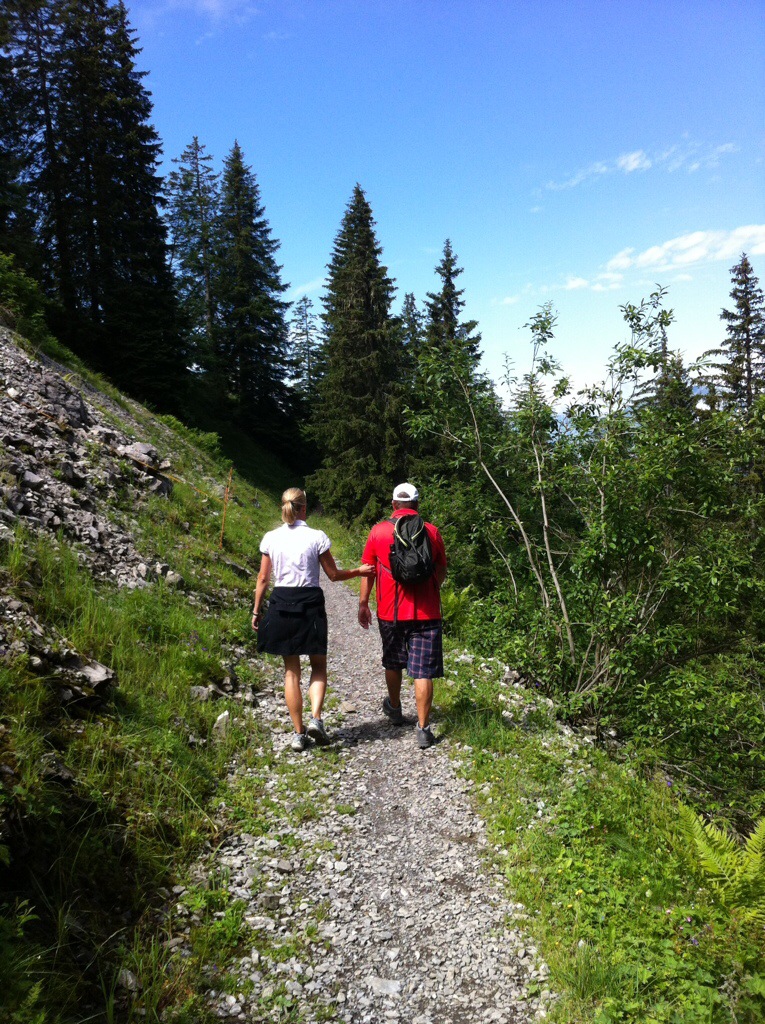
We wound our way further up and then found the sign pointing direction Buochs Post. It was quite a steep climb down through the forest. We came across a clearing where they had cut the grass to make hay. The process fascinated me given I have had experience with haymaking in NZ. Because the pastures are so steep they use this mower that looks a bit like a wide rotary hoe – it has these massive steel spikes on the wheels so that it can hold on without flipping over and rolling down the hill. The farmer walks behind and steers it. Once the grass has dried they hand rake it into these big nets. The nets then get gathered up and hooked onto a line that is going down the hill into a barn or to a central spot where it can then be put into the barn. The barn can be quite some distance away.

After a bit more climbing down through the forest we made it back to Buochs – it took us about 3 hours so we were pleased. The boys had only made it home a short while before us. After getting off the gondola in Dallenwil they just missed the train to Stans so Elvis suggested they walk – it will only take 45 minutes he says. Steve probably agreed reluctantly and off they went. 1 hour 15 later they reached Elvis’s parents place which is still another 20 minutes to home. They called in and Steve was handed a welcome cold beer by Elvis’s Mum Ana so all was well with the world again : ) Ana then drove them home!

It was a brilliant day and I am so impressed with all the hiking trails they have and how well signposted and managed they are. There are cable cars and gondolas going up the mountains all over the place which allows you to choose how far you walk. The bus service is also good so you can get back to your car or even home easily. The stunning weather of course also added to the experience : )

20140720-072715-26835254.jpg

20140720-072727-26847696.jpg

20140720-072742-26862493.jpg

20140720-072749-26869792.jpg

20140720-072758-26878332.jpg

20140720-072813-26893413.jpg

20140720-072821-26901491.jpg

20140720-072829-26909499.jpg

20140720-072839-26919289.jpg

20140720-072848-26928736.jpg

20140720-072901-26941934.jpg

20140720-072910-26950666.jpg

20140720-072918-26958427.jpg

20140720-072940-26980332.jpg

20140720-072953-26993626.jpg

20140720-073000-27000675.jpg

20140720-073011-27011704.jpg

20140720-073036-27036501.jpg

20140720-073105-27065042.jpg

20140720-073122-27082014.jpg

20140720-073130-27090565.jpg

Posted in Switzerland | Leave a comment

Ballenberg – Switzerland

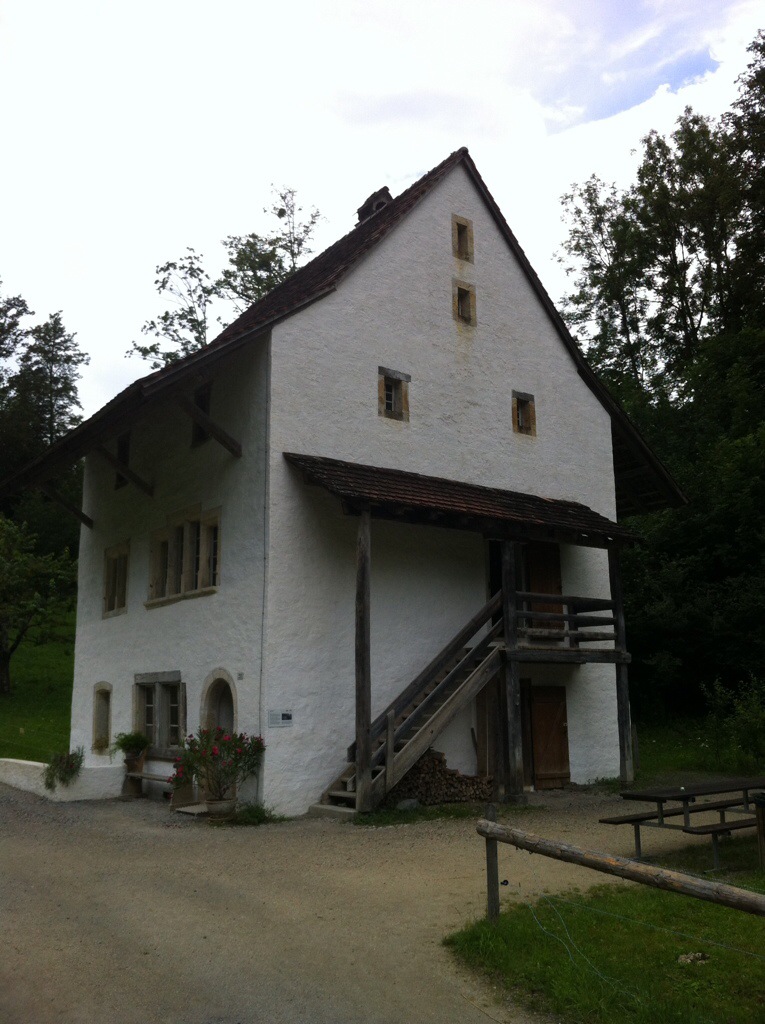
After taking in the Aareschlucht we drove to Ballenberg which is an open air museum showcasing Switzerland in days gone by. It is a stroll through the past.

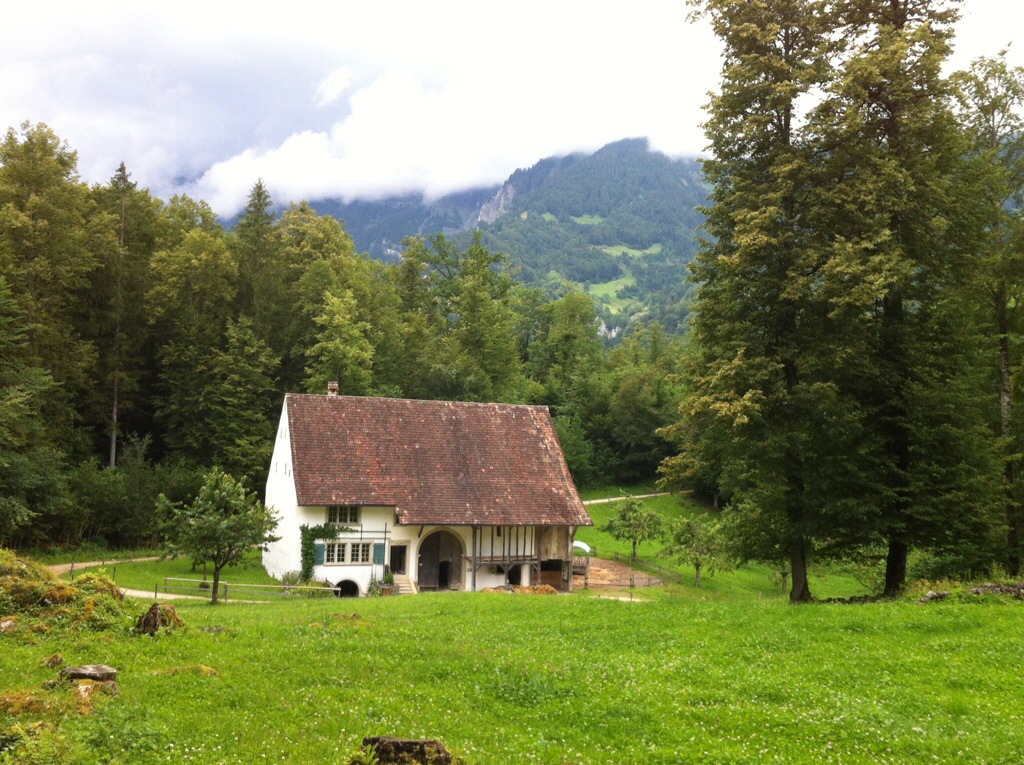
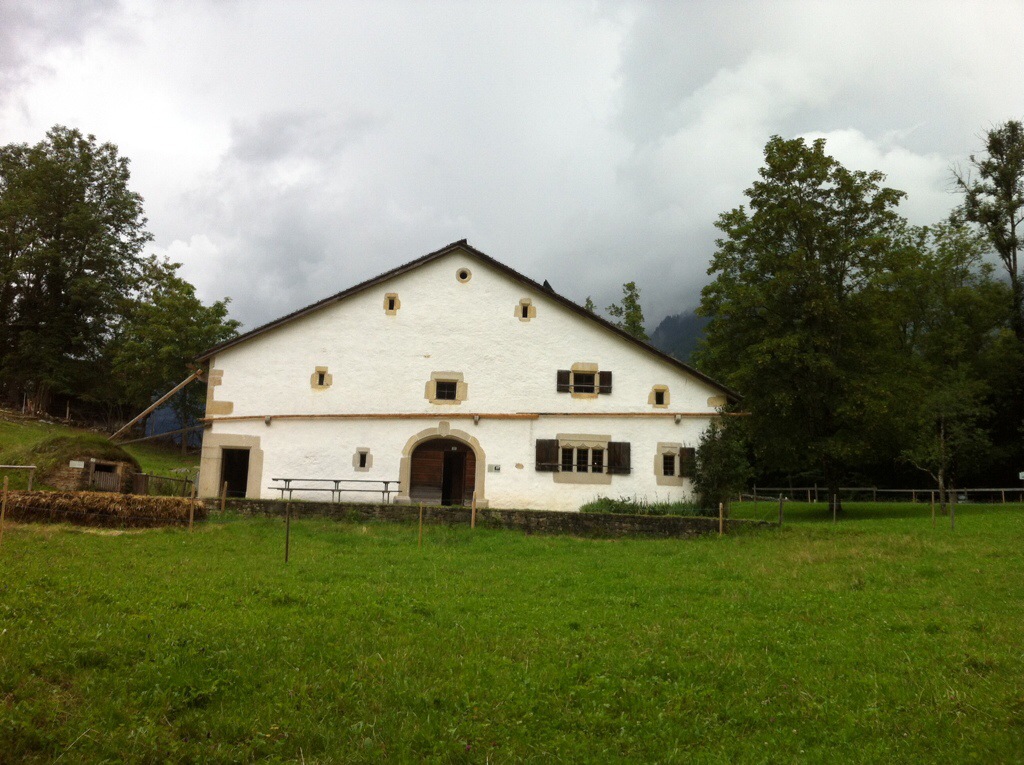
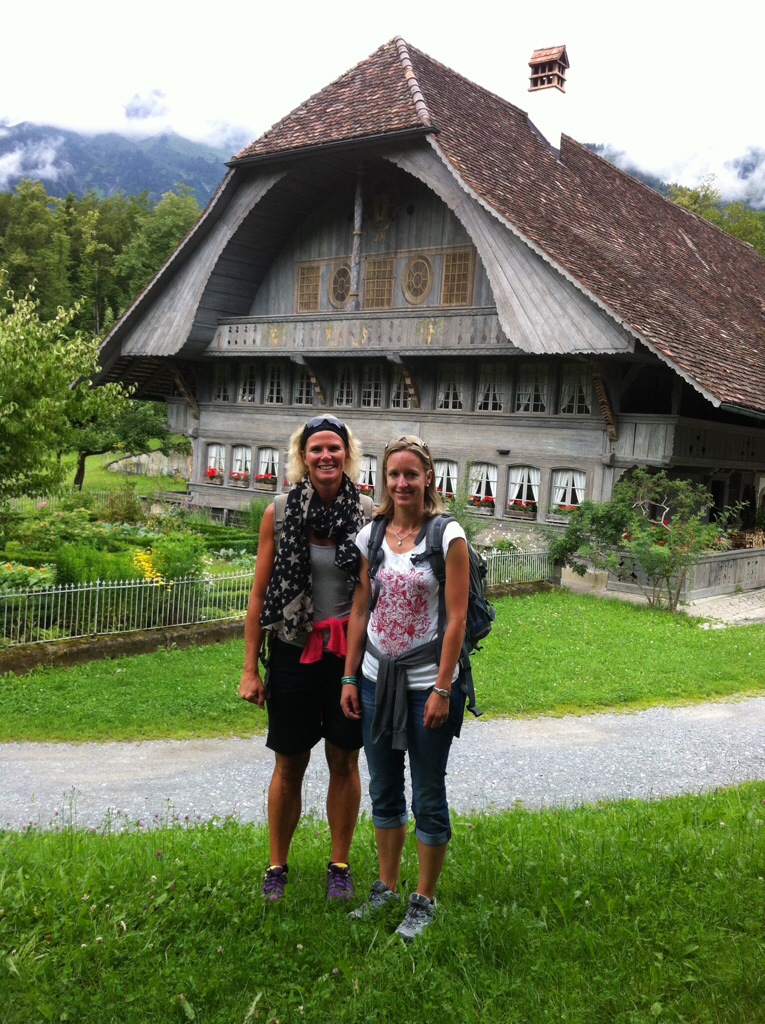
There are more than one hundred century-old buildings from all over Switzerland, 250 farmyard animals, traditional, old-time gardens and fields, demonstrations of local crafts and many special events which create a vivid impression of rural life in days gone by.

It is laid out as the country is laid out so you can go from the north to the south and the east to the west. Now that we have been to a few places around Switzerland we could appreciate the buildings and way of life.

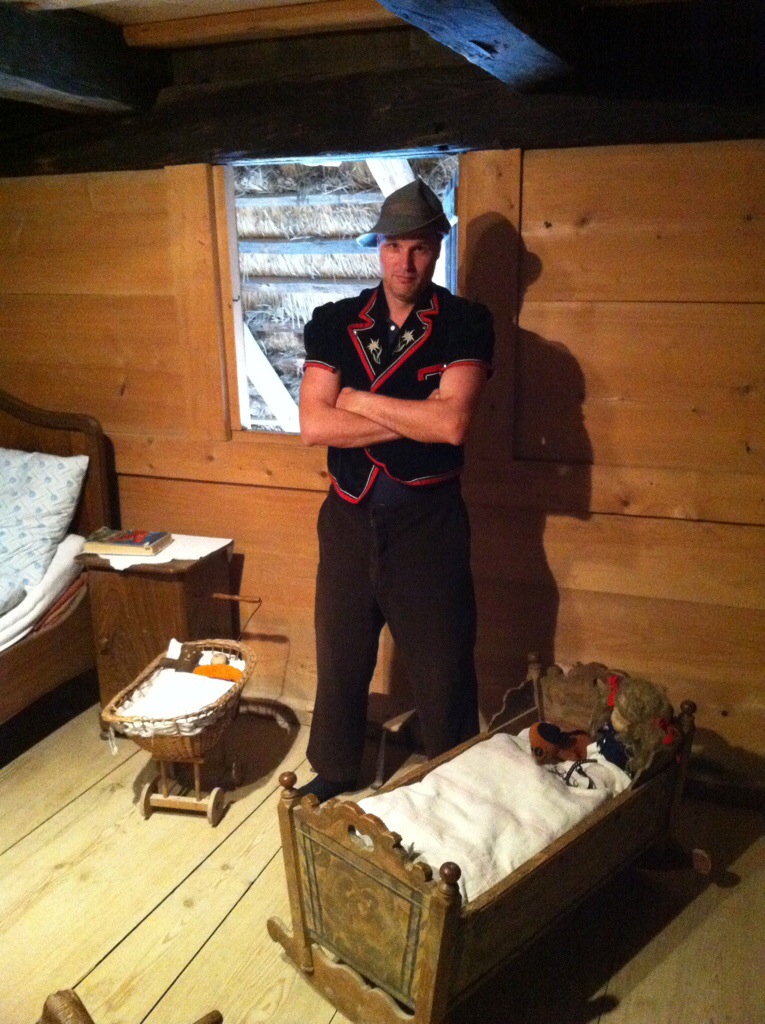
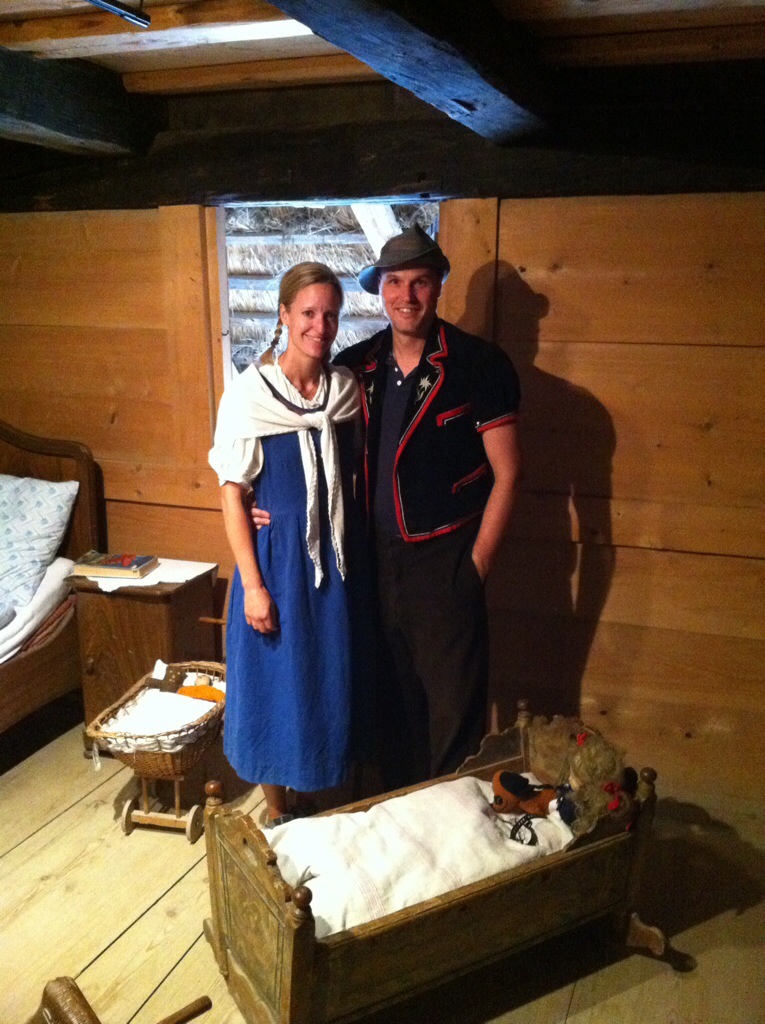
They had silk worms and silk weaving, beehives, rope making and a forgery. They also did bread baking and cheese making. You could really imagine what it was like back in the day. You could even go and dress up in costumes which we couldn’t resist.

My favourite house was a house from the Jura – it had all these lime stone tiles on the floor. You walked in on the ground floor which had the barn on the left and the living quarters to the right. You went upstairs and this is where the horses and carriages drove in and were housed.

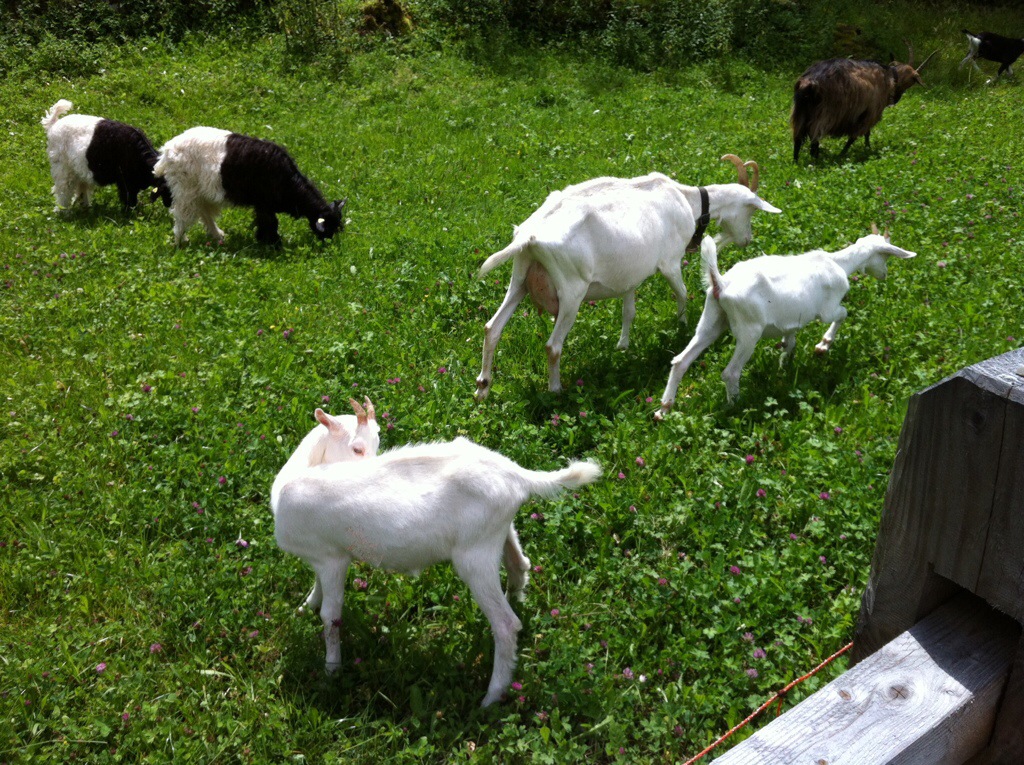
A lot of these houses had vegetable gardens. At the house from the Jura we encountered two escapee black goats who first tried to come into the house and after that idea was thwarted decided to get into the vegetable garden. Before Karin could get them out they had ripped out a couple of beetroot plants and lettuces.

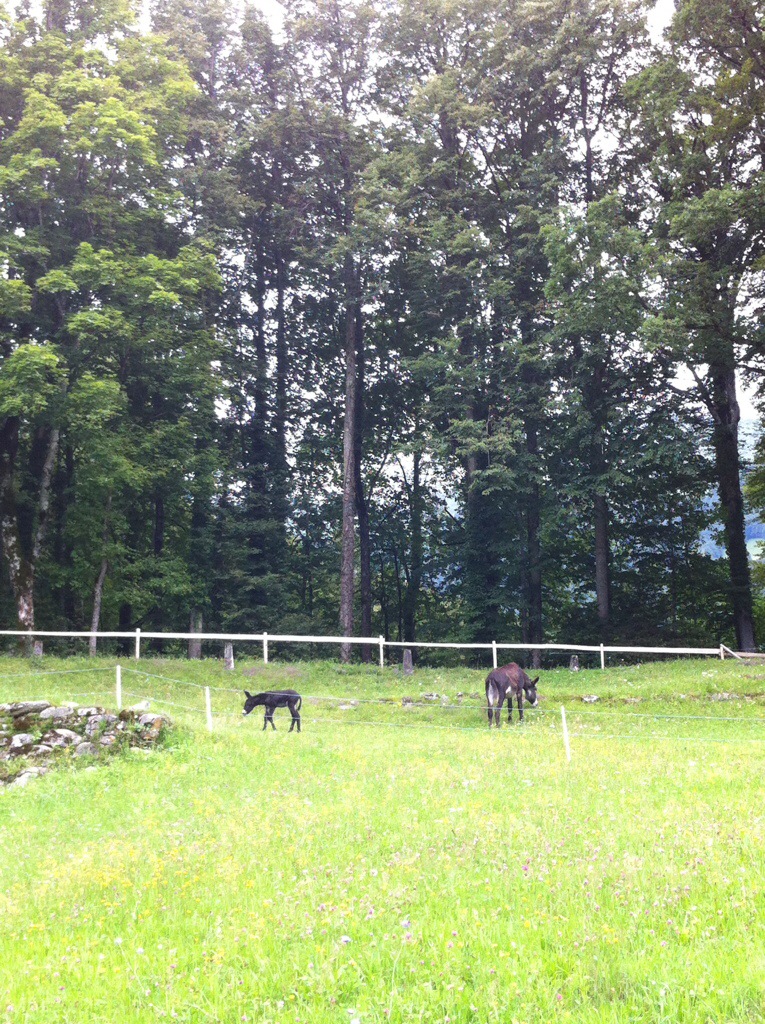
It was great to see all the animals up close. We were just checking out these different breeds of sheep at the same time Elvis was calling the butcher to order a leg of lamb for the following evening!

There is also this thing called the Chestnut Culture in Switzerland. Chestnuts were once a main subsistence food but today they are almost forgotten in spite of its qualities. Traditionally chestnut has been managed for its fruits in so called Selvas which are open forests which also serve as pasturage for cattle. There is a particular law that applies to the Selvas. It’s called ‘right of planting’ and grants ownership of any tree panted on public ground to the man that planted it – not only the tree but all its products. The ground may have one owner, but the tree another. Each tree is marked by a symbol for identification purposes.

20140718-074958-28198354.jpg

20140718-075008-28208008.jpg

20140718-075017-28217162.jpg

20140718-075025-28225173.jpg

20140718-075046-28246250.jpg

20140718-075100-28260008.jpg

20140718-075107-28267648.jpg

20140718-075118-28278977.jpg

20140718-075228-28348473.jpg

20140718-075246-28366528.jpg

20140718-075252-28372006.jpg

20140718-075303-28383535.jpg

20140718-075310-28390797.jpg

20140718-075319-28399124.jpg

20140718-075339-28419143.jpg

20140718-075345-28425496.jpg

20140718-182403-66243837.jpg

Posted in Switzerland | Leave a comment

Aareschlucht – Switzerland

After leaving Interlarken on Monday we headed for Aareschlucht which translates to the Aar Gorge. The Aar Gorge is a section of the river Aar that carves through a limestone ridge near the town of Meiringen. The gorge is an indirect product of glaciation; 10,000 years ago, just as the Ice Age was coming to an end, torrential runoff water from melting glaciers eroded a deep, narrow chasm through the limestone barrier. Although barely one mile long, this passage is bordered by sheer cliffs up to 165 feet (50 m) high on either side. At the bottom of this steep drop the river is only a few metres wide.

The gorge has been opened to the public since 1889, by building walking paths along the Gorge. Before then, the only way was to go through the dangerous river torrent, which provided fables by travellers, who claimed to see large snakes and monsters. Since then, the gorge is a popular tourist attraction for many visitors who like natural beauty and are attracted by the nearby Reichenbach Falls, which Sir Arthur Conan Doyle selected as the proper set for Sherlock Holmes’ murder by Professor Moriarty.

The paths through the gorge are linked to two stations on the Meiringen-Innertkirchen railway. At the western end of the gorge is Aareschlucht West station, whilst the underground Aareschlucht Ost station links opens directly through a door into the gorge.

Because there had been a lot of rain in the days preceding our visit the river was flowing very fast and the small waterfalls were quite impressive. We walked from the Meiringen end to Aareschluucht Ost where we caught the train back.

Posted in Switzerland | Leave a comment

Bern – Switzerland

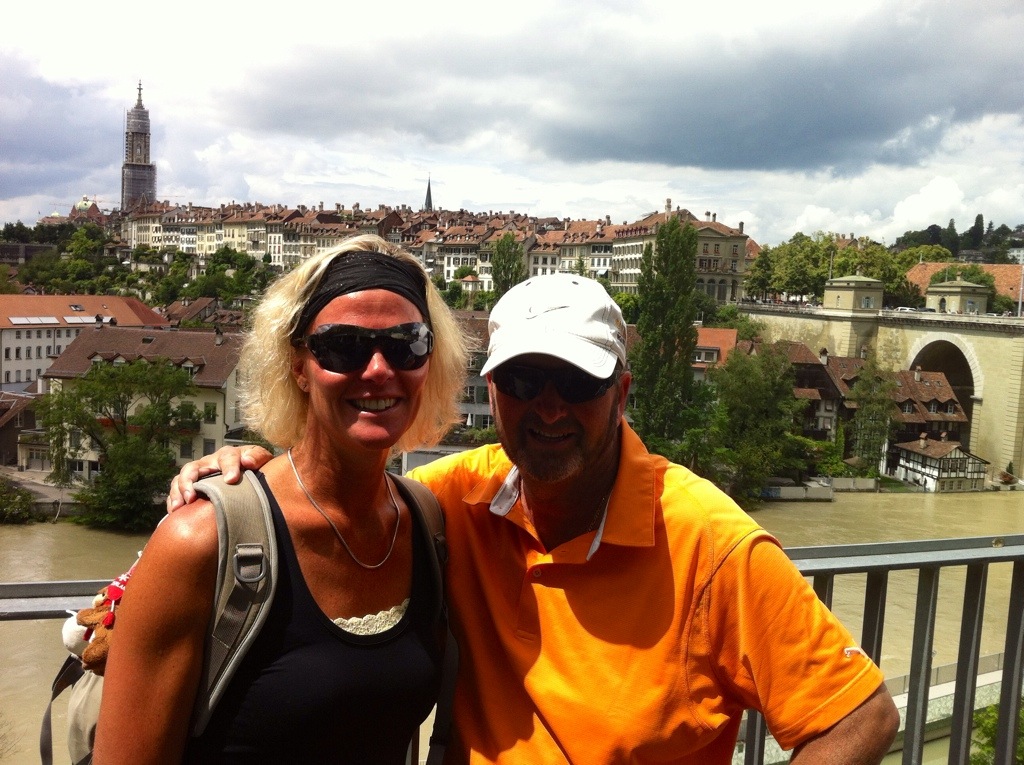
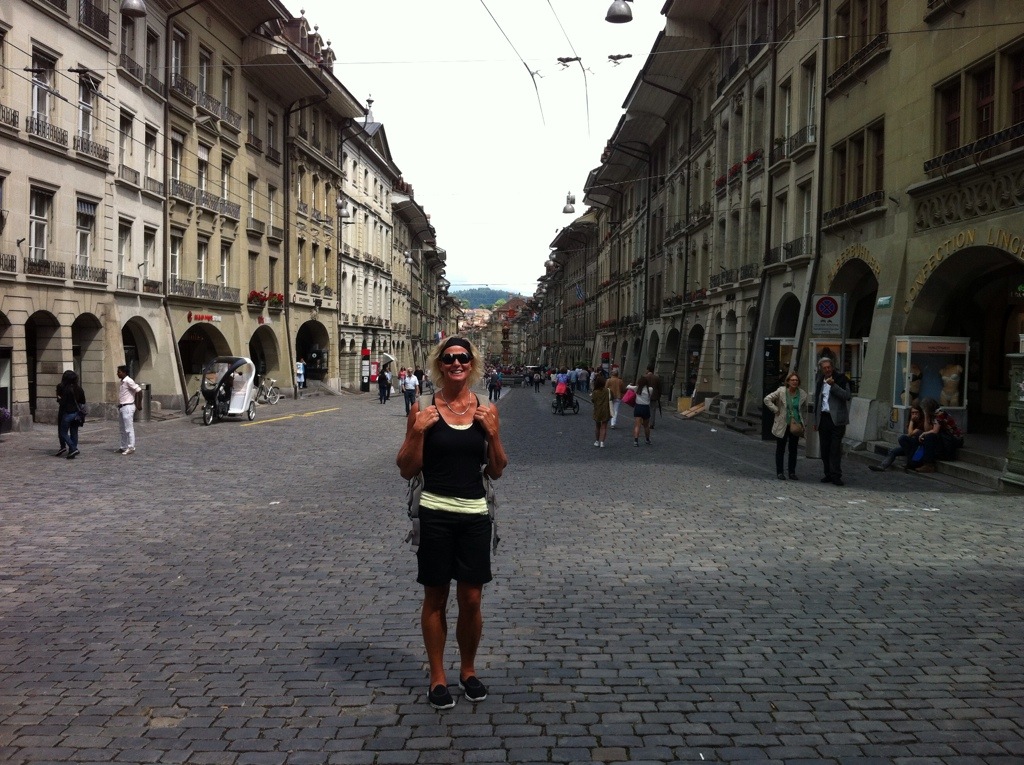
After our day in The Jura we headed for Bern which is the capital of Switzerland. It is a lovely city – we had parked at the bottom of the old town and the sight looking up is impressive. In 1983 the historic old town in the centre of Bern became a UNESCO World Heritage Site and Bern is ranked among the world’s top ten cities for the best quality of life.

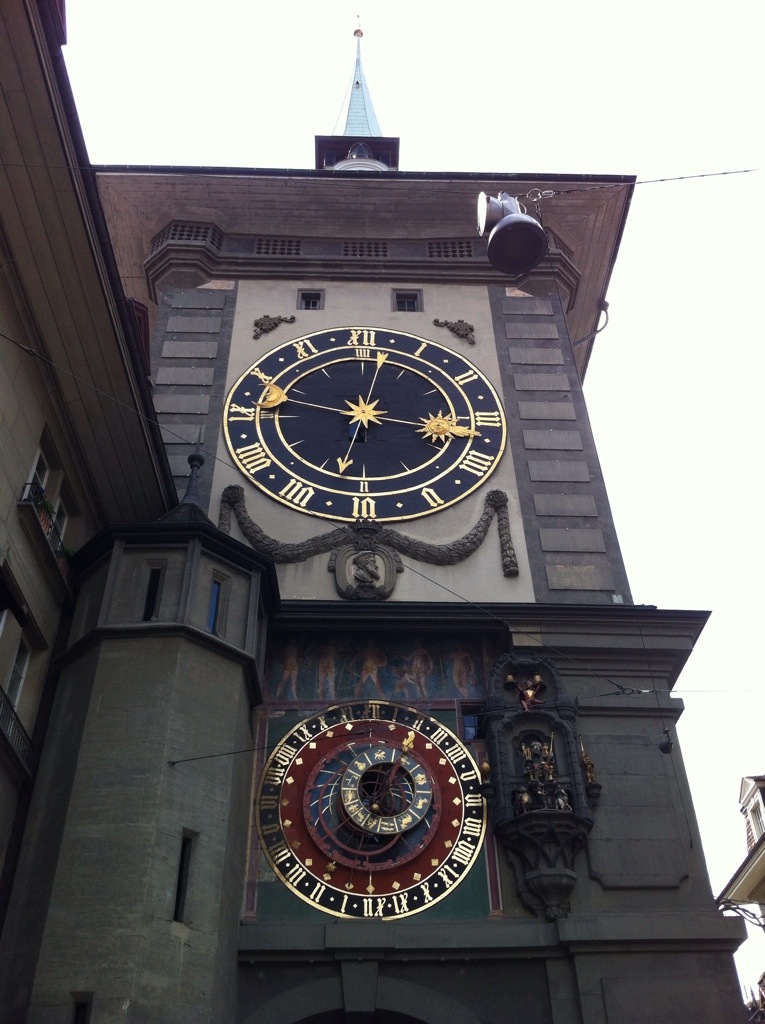
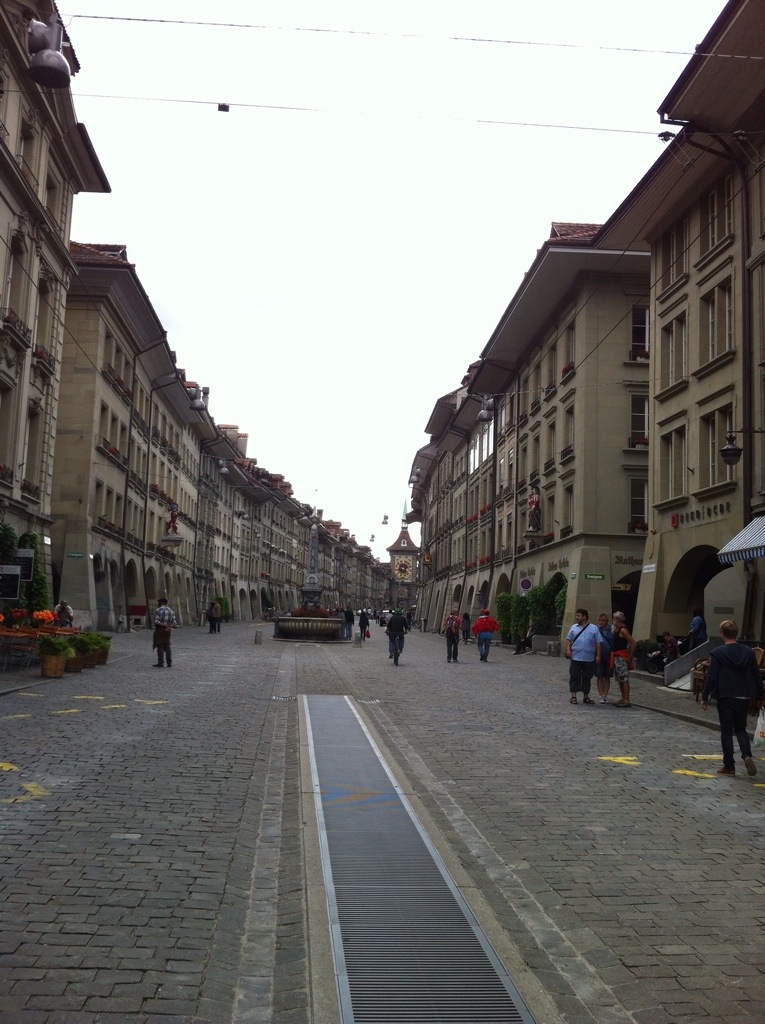
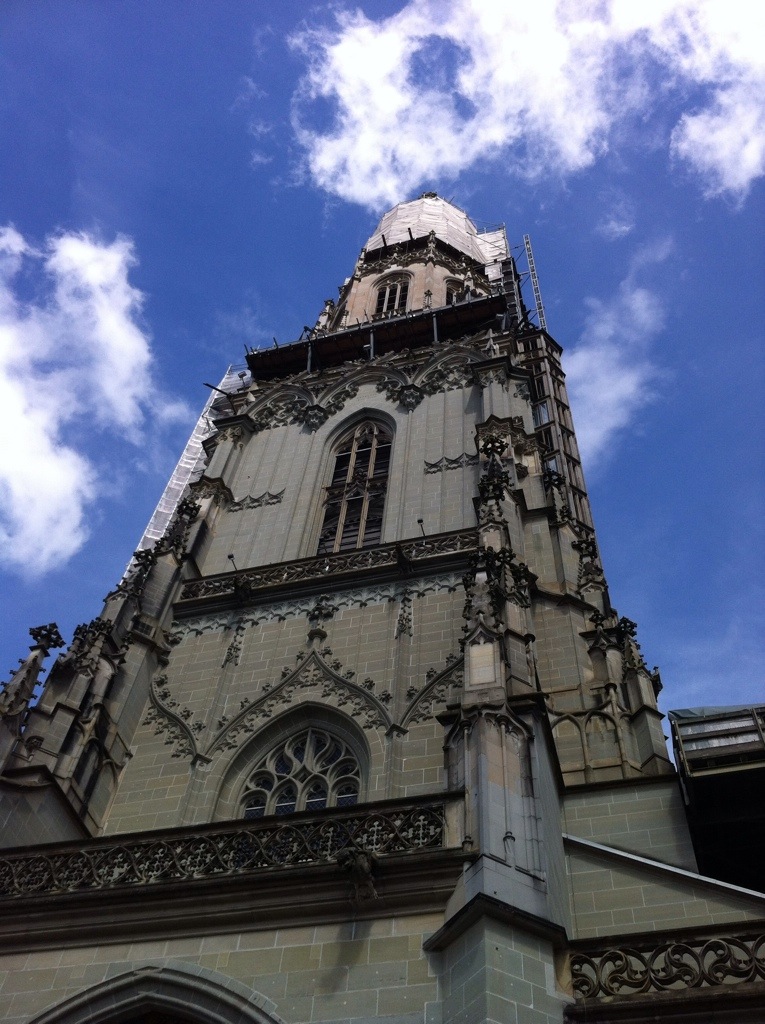
The structure of Bern’s city centre is largely medieval. Perhaps its most famous sight is the Zytglogge (Bernese German for “Time Bell”), an elaborate medieval clock tower with moving puppets. It also has an impressive 15th century Gothic cathedral, the Münster, and a 15th-century town hall. Thanks to 6 kilometres (4 miles) of arcades, the old town boasts one of the longest covered shopping promenades in Europe.

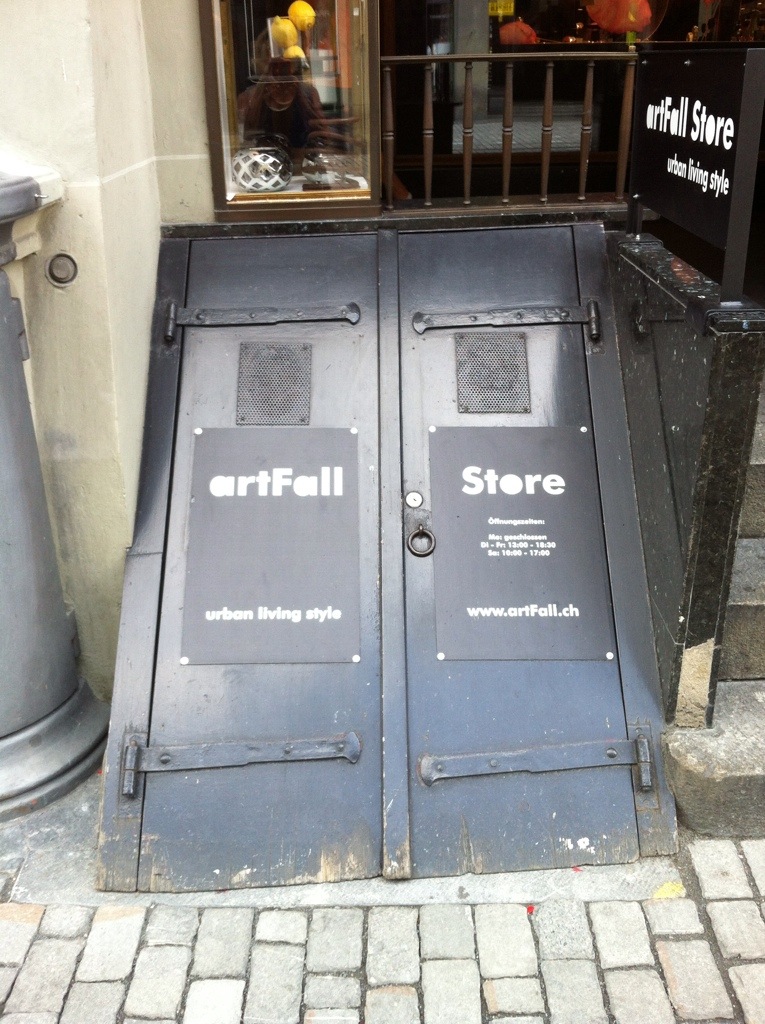
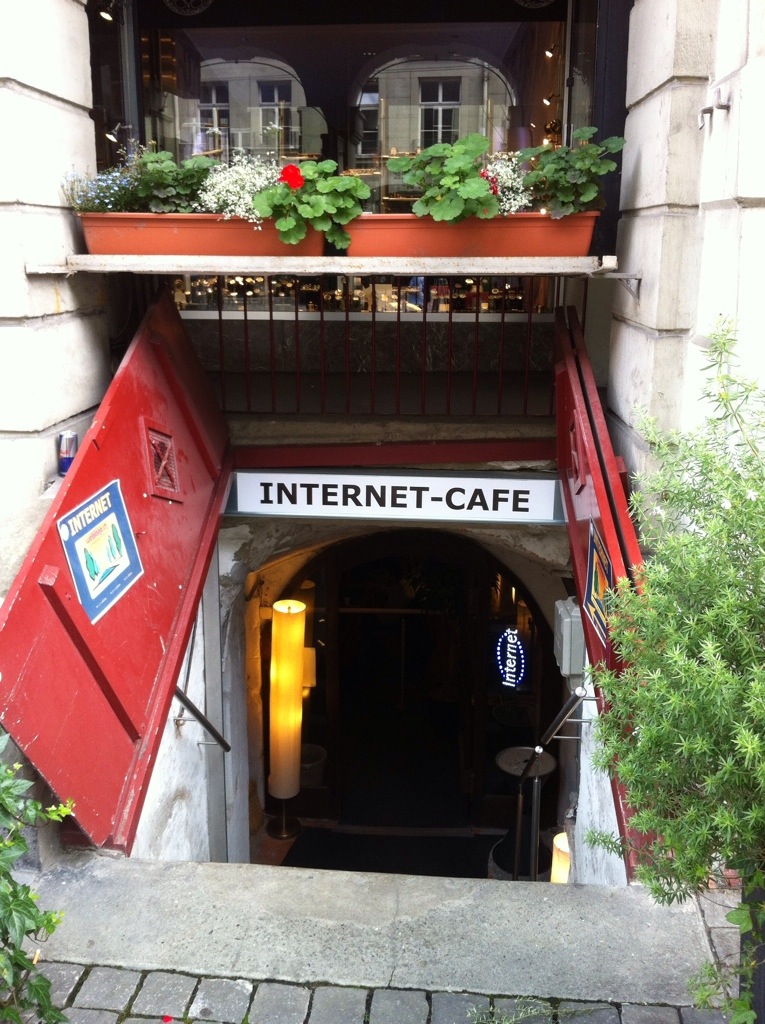
The covered arcades were impressive with a large variety of shops – it was probably lucky it was Sunday or we may still be there. They also have underground shops. They have these double doors on an angle which reminded me of going into a dungeon. Once open they have stairs that lead down to an underground store.

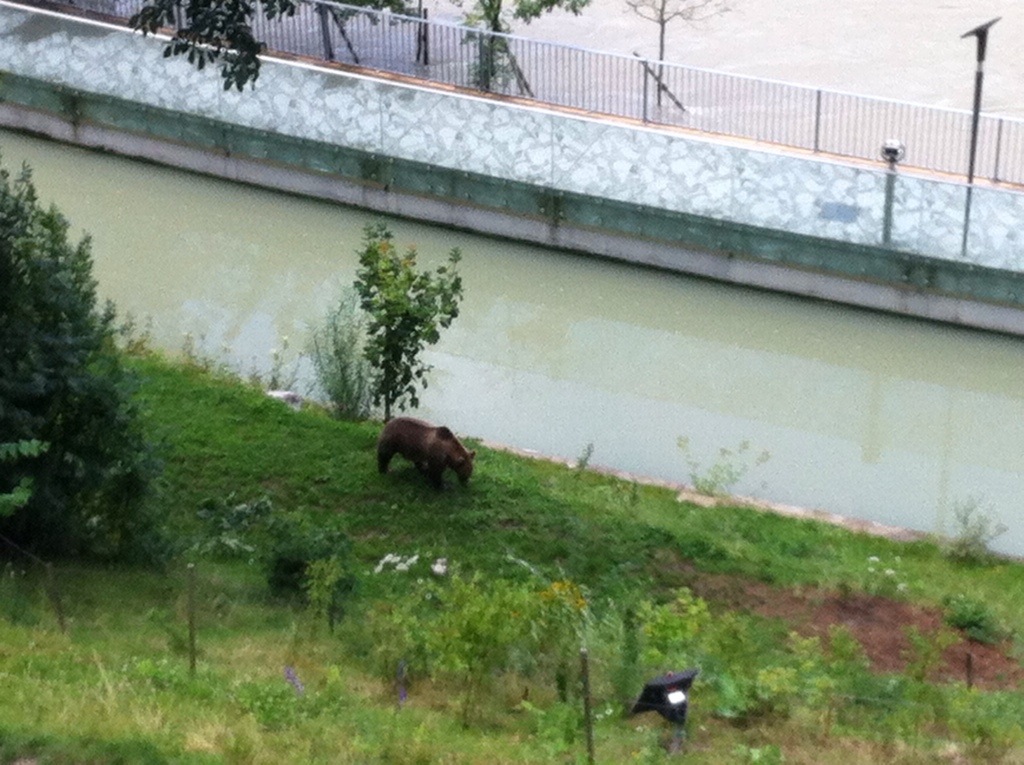
Since the 16th century, the city has had a bear pit, the Bärengraben, at the far end of the Nydeggbrücke to house its heraldic animals. The currently four bears are now kept in an open-air enclosure nearby, and two other young bears, a present by the Russian president, are kept in Dählhölzli zoo.

The original bear pit is a concrete hole in the ground filled with big stones and very little vegetation – not the best environment for the bears. The new open air enclosure is much better with lots of trees and is on the edge of the river. We managed to spot one of the bears in there. When we returned later on they had moved two of the bears to the old bear pit so you could see them closer up.

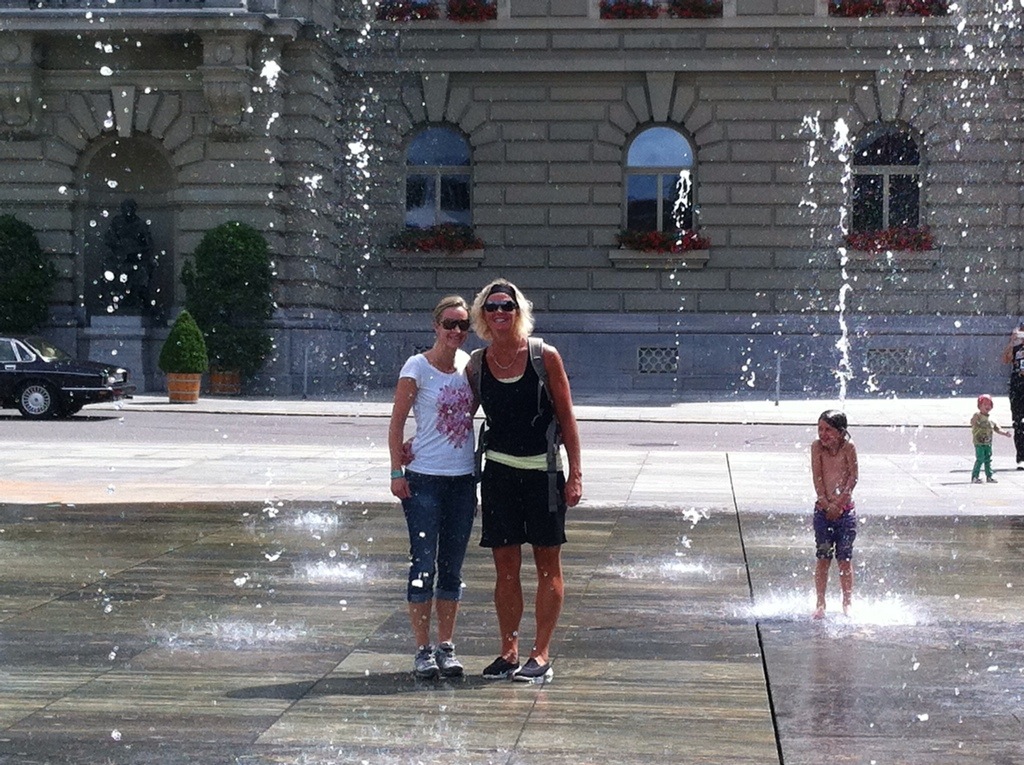
The Federal Palace (Bundeshaus), built from 1857 to 1902, which houses the national parliament, government and part of the federal administration is also in Bern. Switzerland is the closest state in the world to a direct democracy. For any change in the constitution, a referendum is mandatory (mandatory referendum); for any change in a law, a referendum can be requested (optional referendum). Through referenda, citizens may challenge any law voted by federal parliament and through federal popular initiative introduce amendments to the federal constitution.

Any citizen may challenge a law that has been passed by parliament. If that person is able to gather 50,000 signatures against the law within 100 days, a national vote has to be scheduled where voters decide by a simple majority of the voters whether to accept or reject the law.

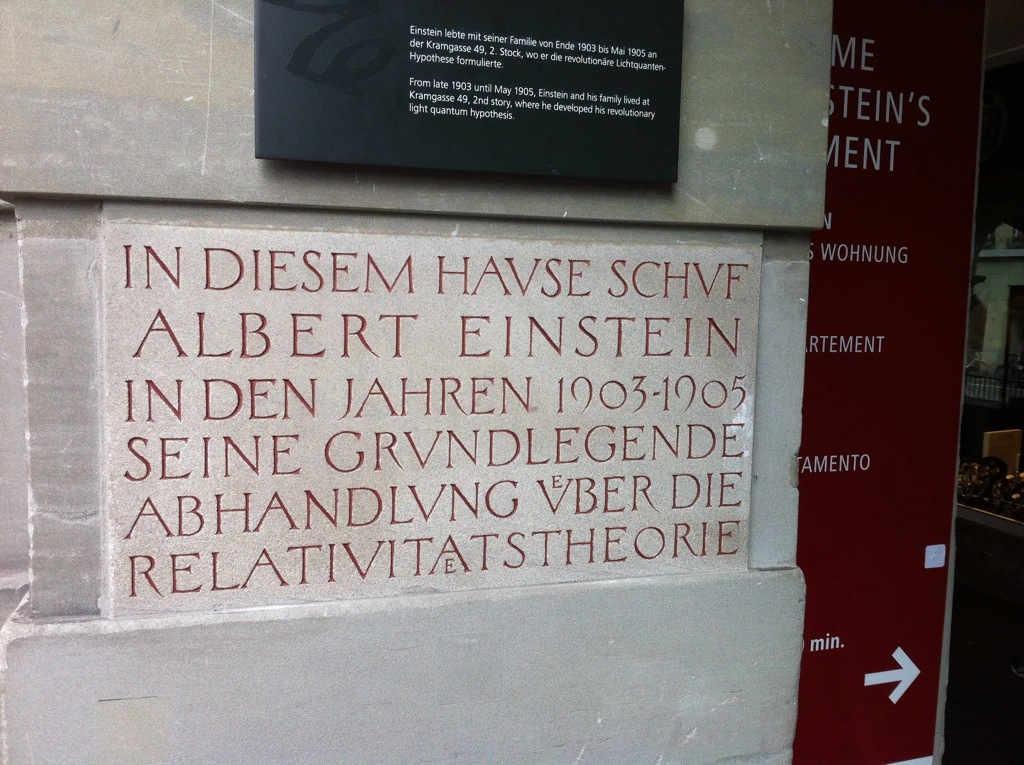
Albert Einstein lived in a flat at the Kramgasse 49, the site of the Einsteinhaus, from 1903 to 1905, the year in which the Annus Mirabilis Papers were published.

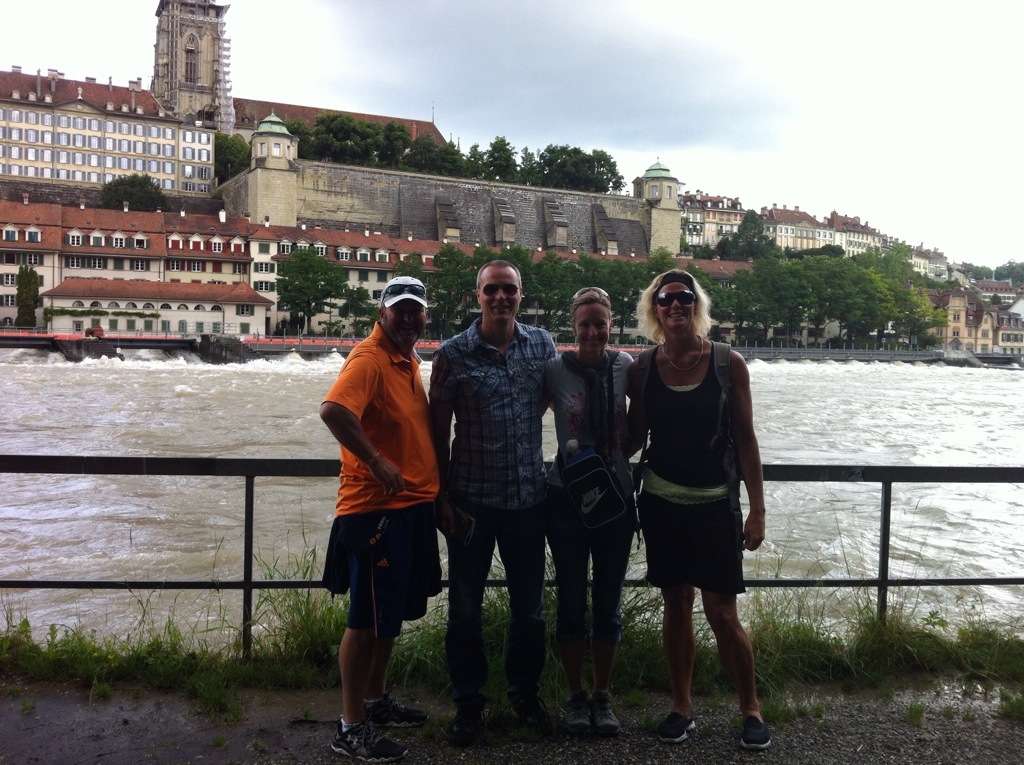
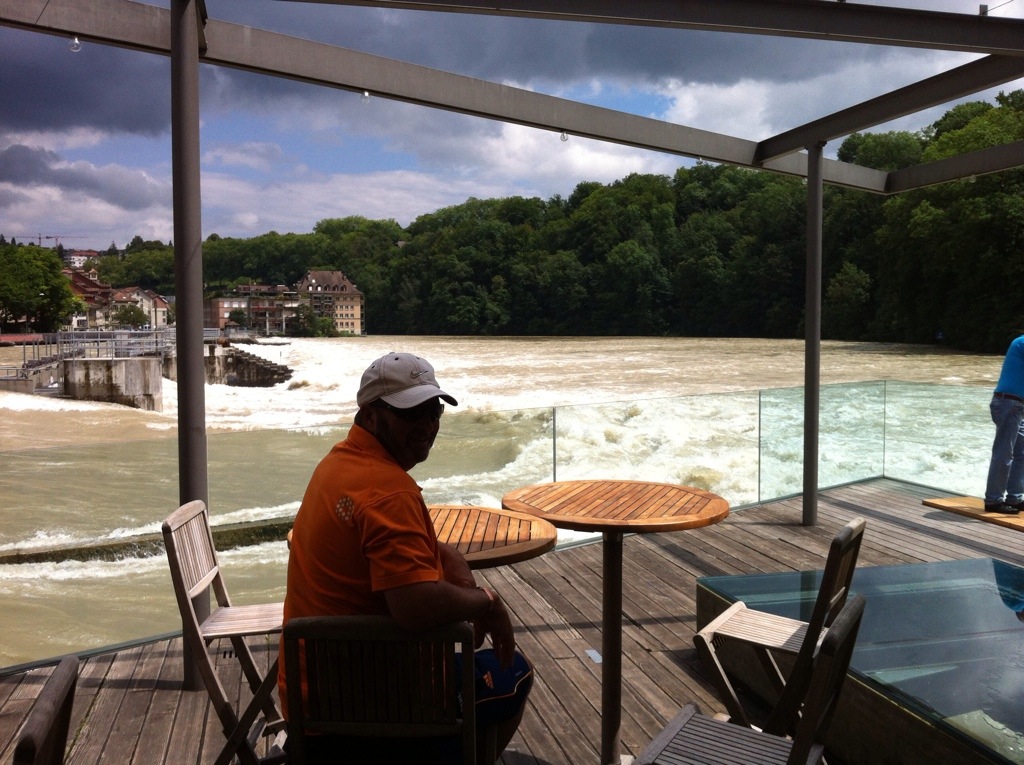
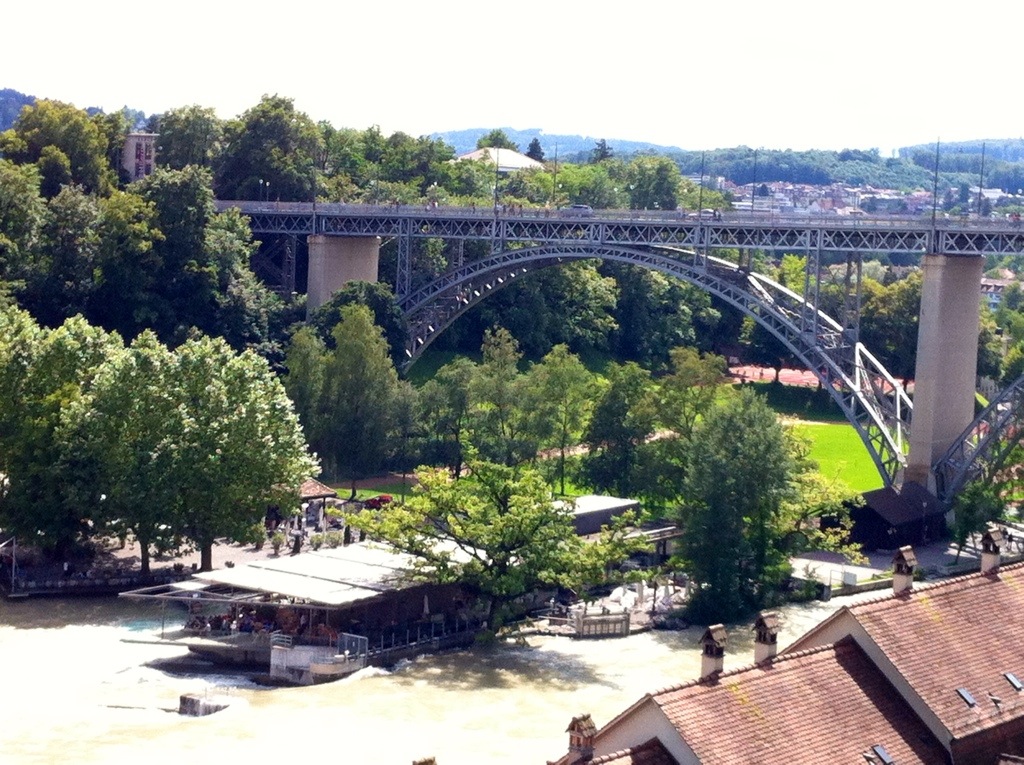
There are three main rivers in Switzerland – the Rhine, the Rhone and the Aare. All the rivers originate in the Swiss Alps. The Aare runs through Bern and because there had been a lot of rain in the days before we were there it was at full capacity and we could see where there had been a bit of flooding. There were a couple of houses right down by the river pumping out water. If you look at a map of the city you can see that the Aare runs round the old city like a moat with the city standing high on the hill. The Aare river flows into the Rhine which then goes into the North Sea. The Rhone ends up in the Mediterranean.

We had lunch in this restaurant that was built over the river and with the river flowing as fast as it was it was quite impressive sitting where all the action was.

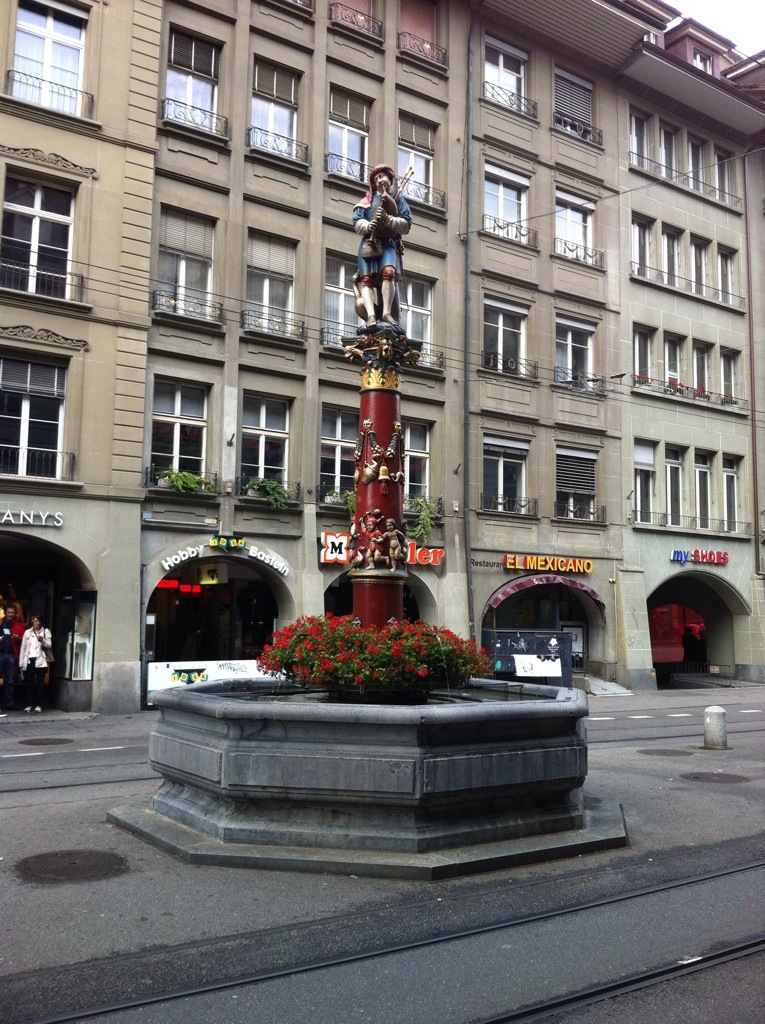
There are over 100 public fountains in the city of Bern of which eleven are crowned with Renaissance allegorical statues. The statues were created during the period of civic improvement that occurred as Bern became a major city-state during the 16th century. The fountains were originally built as a public water supply. As Bern grew in power, the original fountains were expanded and decorated but retained their original purpose.

After exploring Bern we drove onto Interlarken to stay the night. Interlarken is in the canton of Bern of which Bern is the capital of not only the country but also this canton. It is an important and well-known tourist destination in the Bernese Oberland region of the Swiss Alps, and the main transport gateway to the mountains and lakes of that region. The two famous mountains here are the Eiger and the Jungfrau which is one of the main summits in the Bernese Alps standing at 4,158 metres tall. Jungfrau translates to maiden or virgin.

The town is located on the Bödeli, between Lake Thun and Lake Brienz, and alongside the Aare river that flows between the two lakes hence the name Interlarken.

We stayed in a traditional guesthouse called Hotel Hirschen which had been built in 1622. It was very quaint and the ceilings were very low so I had to be careful not to knock myself out while walking around. We walked into the centre of town to have dinner and watch the World Cup final. Interlarken definitely has a different feel than other towns in Switzerland due to it being a major tourist destination.

20140717-075009-28209823.jpg

20140717-075111-28271511.jpg

20140717-075128-28288260.jpg

20140717-075147-28307178.jpg

20140717-075219-28339906.jpg

20140717-075249-28369061.jpg

20140717-075321-28401763.jpg

20140717-075616-28576026.jpg

20140717-075635-28595497.jpg

20140717-075653-28613573.jpg

20140717-075716-28636028.jpg

20140717-075730-28650362.jpg

20140717-075749-28669593.jpg

20140717-075904-28744593.jpg

20140717-075924-28764660.jpg

Posted in Switzerland | Leave a comment

The Jura – Switzerland

On Saturday we headed to the northwest to a canton called The Jura – we were planning on having a look around the area and then joining a couple of Elvis and Karin’s friends for dinner.

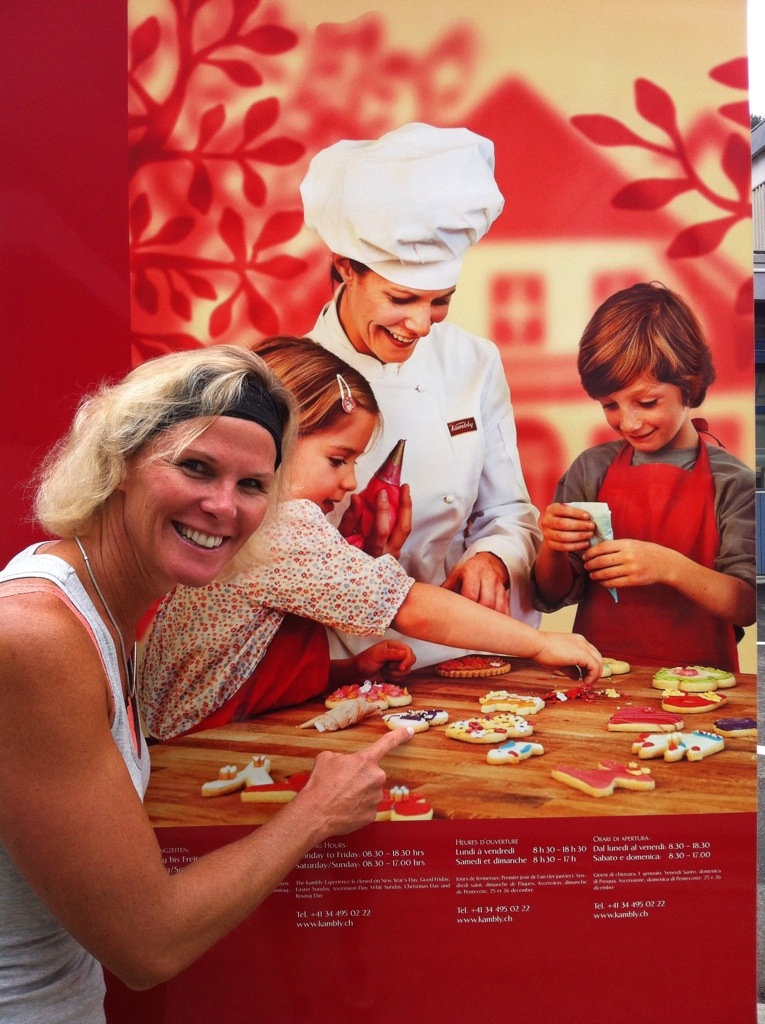
Our first discovery was the Kambly Biscuit factory. I am not a big biscuit fan but I was very impressed when I walked into the factory shop and saw all the rows of biscuits and sitting next to each type was a sample bowl where you could help yourself. Between the four of us I am sure we devoured the equivalent of a packet each!

Oscar R. Kambly established the company in 1910 and transformed his village bakery into a biscuit factory of regional significance. The Bretzeli, a fine, crêpe-type biscuit, his first and most important product, is still the company’s market leader.

Oscar J. Kambly takes over in 1953 and transforms Kambly into a strong, nationally well-known and much-loved brand.

Oscar A. Kambly follows his father in 1983 and gradually establishes Kambly as a brand of international recognition.

It all began with a love story….
During a stay in the French part of Switzerland, young Oscar Kambly met a girl from the village of Trubschachen, and soon he could not imagine life without her. Thus, after graduating from school he followed his beloved to her farming village in the Emmental, where he learnt his trade as a baker and confectioner at the village bakery.

Today, Kambly is still a family owned business and is Switzerland’s largest biscuit producer and leading exporter. Kambly is represented in more than 30 different countries. It is the most famous and most liked biscuit brand of Switzerland’s. Emmental is referred to as the land of milk and honey. The majority of raw ingredients come from local suppliers – flour from the local mill, butter from the local dairy. Over 80% of Kambly’s raw ingredients either come from Switzerland or are processed here – chocolate, for example, is produced to Kambly’s own recipe by renowned Swiss chocolate manufacturers.

Emmental cheese also originated here back in 1292 and is amongst the best-known types of cheese. It is made from cow’s milk. Two of the features that make Emmental distinctive are its holes and sweetness. The holes are there because of the way the cheese is made with bacteria which produce the cheese and over time (usually several months) create bubbles of carbon dioxide gas.

Back to the task at hand – getting to The Republic and Canton of the Jura.

The King of Burgundy donated much of the land that today makes up Canton Jura to the Bishop of Basel in 999. The area was a sovereign state within the Holy Roman Empire for more than 800 years. After the Treaty of Westphalia in 1648 the Jura had close ties with the Swiss Confederation. At the Congress of Vienna (1815), the Jura region became part of the canton of Bern. This act caused dissention. The Jura was French-speaking and Roman Catholic, whereas the canton of Bern was mostly German-speaking and Protestant. It became a separate canton in 1979.

Canton Jura lies in the northwest of Switzerland. It consists of parts of the Jura mountains in the south and the Jura plateau in the north. The Jura plateau is hilly and almost entirely limestone. The districts of Ajoie and Franches-Montagnes lie in this region. The term “Jurassic” is derived from the Jura Alps, strata of which date to that era.

We were staying in Delémont which is the capital of the Canton Jura. Karin & Elvis’s friends, Beth & Shaun lived in the village of Undervelier which is about 10km from Delémont – it felt further than 10km after we got lost a couple of times. Beth is from Sussex in the UK and Shaun is from Winnipeg in Canada and they have been in Switzerland for about 3 years. They love the outdoor lifestyle and have bought an old property in Undervelier which they are doing up – the property was built originally in 1910. The views up the valley are amazing – it is going to be a pretty special property once they have finished with it. We had a great night and feasted on lots of good local products.

The Jura is known as the “Watch Valley” and is the primary location of the Swiss watch-making industry.

Beginning initially in 15th century Geneva, the cradle of the European time keeping industry, and spreading north east through the Jura Mountains, the great majority of the companies related to the Swiss watch-making industry were first established. Continuing to the present day, centuries of tradition, rigor, and the know-how of skilled artisans, has forged the world recognized reputation of the great Swiss watch houses.

Some of the famous watchmakers currently producing in the Watch Valley include Breitling, Corum, Gallet, Girard-Perregaux, Movado, Patek Philippe, Rolex, TAG Heuer, Tissot, Ulysse Nardin, and others.

20140716-201514-72914094.jpg

20140716-201538-72938140.jpg

20140716-201653-73013860.jpg

20140716-201703-73023324.jpg

20140716-201714-73034787.jpg

Posted in Switzerland | 1 Comment

Where has all the Sun gone – Switzerland

After a promising start to our second stint in Switzerland the sun simply disappeared making limited guest appearances as it saw fit. As you all know this is not a common occurrence in my world. Despite the trying conditions the fun times have continued to roll.

On Monday we took a drive to Engelberg which is in the canton of Obwalden. The town is surrounded by Alps and has on it’s border Mt Titlis which stands at 3,238 metres high and is famous as the site of the world’s first revolving cable car. I had been up there on my first ever trip to Switzerland in 1997. We had lunch in Engelberg in this cafe where they also make cheese by hand with the milk from the surrounding farms.

We weren’t here for the mountains though, we were here to check out the golf course. Engelburg Golf Club is set up the valley and is surrounded by mountains – it is a very picturesque course. We took a walk along the river and we could see some of the holes – Steve was salivating at the sight. So close but oh so far. We may return next week to have a round.

On our walk up the valley we also came across zip lining along with a confidence course set up in the trees. The zip lining is self guided – they show you the ropes, excuse the pun, and then let you go and conquer on your own. You make your way from platform to platform by climbing up these wooden steps set into the trees. I must say it looked very cool and it only cost 40 Swiss Francs or about NZD51 and you could do all 6 sets of zip lines. Another thing on the list for next week.

On Wednesday Karin’s brother Michael and his wife Aileen and seven year old son Lucas came for lunch. We had met them at Karin & Elvis’s wedding back in 2009 so it was nice to see them again. They live in Singapore so are back for their summer holidays. Lucas goes to a Swiss school in Singapore and speaks fluent German and English – Aileen is from Singapore so he also has Chinese lessons once a week which he is not too fussed on. He loves his sport and good food – a boy after my own heart : ) I think he devoured more salad than anyone else at the table.

Lunch turned into early evening and the game Dog came out – we had never played it before so it was good fun. Steve was the first to have all his marbles home safe so one can only imagine the crowing! Elvis our Master chef then worked his magic in the kitchen once again to prepare a delicious meal of Spaghetti Bolognese and Fettuccine – all the sauces made from scratch of course.

On Thursday night we had tickets to a concert in Locarno which is in the Italian speaking part of Switzerland – about 2 hours south of here. We decided to go down for the day as the weather forecast was better down there. We had a nice Italian lunch of pasta followed by Gelato. A spot of shopping then followed and a boat trip on the lake.

Locarno is the capital of the Locarno district, located on the northern tip of Lake Maggiore (Lago Maggiore) in the Swiss canton of Ticino, close to Ascona at the foot of the Alps. It has a population of about 15,000 (60,000 for the urban area including Ascona). The official language of Locarno is Italian.

The concert we came to see was that of Laura Pausini. The support act was a Swiss singer called Bastian Baker. The concert was being held in the Piazza and we managed to get a table for dinner in one of the restaurants inside the Piazza. It was Italian Pizza all round – yum! We then joined the rest of the concert goers in the middle of the Piazza. Migros which is a large supermarket chain over here sponsor the Moon & Stars Festival which is held every year in the Piazza. Also featuring this year are Dolly Parton, James Blunt, Backstreet Boys and Jack Johnson. The orange hats you see in the photo are courtesy of Migros.

Bastian Baker was born Bastien Kaltenbacher in Lausanne, Switzerland – he is 23 years old and is a singer, songwriter, and performer. He was coach in the third season of The Voice Belgique (The Voice of Belgium). He sings in English generally but is fluent in German, French and Italian.

Born to a professional hockey player father, Bastian wanted to become a professional hockey player in the footsteps of his father and played on Swiss National League’s Juniors Elite A side “Lausanne 4 Clubs” under the name Bastien Kaltenbacher but his interest in music won out. He was really good and certainly warmed the crowd up for the main act.

Laura Pausini, born 16 May 1974, is an Italian pop singer-songwriter and record producer. She debuted in 1993, winning the newcomer artists’ section of the 43rd Sanremo Music Festival with the song “La solitudine”, which became an Italian standard and an international hit, reaching the top spot on the Italian Musica e Dischi singles chart, as well as on the Dutch Top 40 and on the Flemish Ultratop 50. Her eponymous debut album was released in Italy on 23 April 1993 and later became an international success, selling two million copies worldwide.

Pausini describes herself as a Roman Catholic woman, but expressed doubts about Roman Church’s position on various themes, including contraception, abortion and premarital sex. In September 2000 she explained her position during an interview to the Italian newspaper la Repubblica:

I really believe in God, and the Pope is the man that I most want to meet again in the world. I already met him in 1996. I just have a few doubts about the Catholic Church, such as the discrimination against homosexuals. I don’t understand how they condemn racism, but at the same time take issue with gay people.

She made reference to homosexuality when she spoke saying that love is love and can be between a man and a woman or a man and a man or a woman and a woman. Her parting words when she left the stage was “everyone make love tonight”. This of course was all translated by Elvis for us.

I would have to say that she would be the best artist I have ever seen in concert and I couldn’t understand a word she said! She spoke and sang with such passion and enthusiasm – as well as she had this cheeky sense of humour. Her facial expressions and body language also contributed to the performance. She spoke in between some of the songs and told stories about the songs or who she was dedicating them to – Elvis our interpreter extraordinaire translated the gist for us so our imagination could sweep us along during the song.

The setting in the Piazza was also awesome – surrounded by these lovely old buildings that had been lit up in different colours. There were people out on the balconies soaking up the atmosphere and dancing away. It was a great night. We drove back to Buochs after the concert so got to bed about 2am.

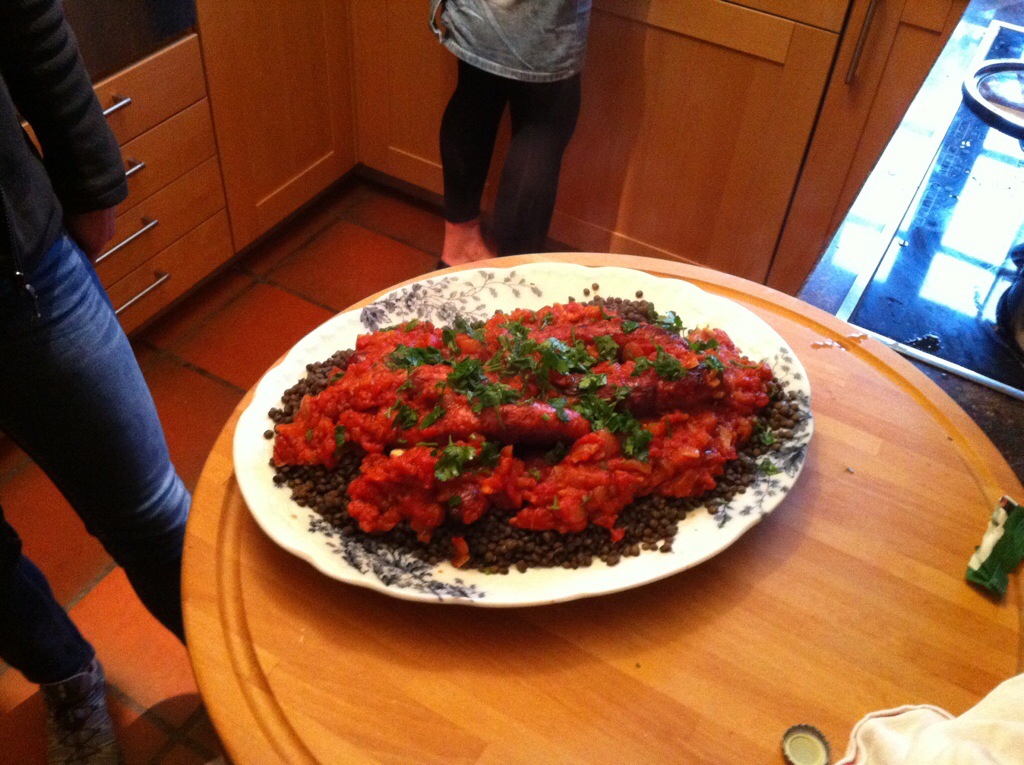
The pasta theme continued tonight as Karin and I made ravioli filled with ricotta and fresh herbs from the garden. Karin also introduced me to battered sage leaves – her sage plant is on steroids and has produced these large leaves so instead of them being sage mice we called them sage rats. They were very delicious. The Swiss are great gardeners so we are certainly learning a lot of new recipes using all sorts of things in the vege garden. They also don’t eat a lot of meat so are quite creative with their meals. Everything is always delicious and much appreciated by us!

20140712-005151-3111689.jpg

20140712-005202-3122871.jpg

20140712-005209-3129508.jpg

20140712-005215-3135580.jpg

20140712-005224-3144563.jpg

20140712-005233-3153692.jpg

20140712-005238-3158211.jpg

20140712-005244-3164723.jpg

20140712-005250-3170355.jpg

20140712-005255-3175849.jpg

20140712-005300-3180041.jpg

20140712-005306-3186035.jpg

20140712-005310-3190845.jpg

20140712-005318-3198123.jpg

20140712-005326-3206400.jpg

20140712-010628-3988726.jpg

20140712-010638-3998795.jpg

20140712-010644-4004647.jpg

20140712-010649-4009776.jpg

20140712-010653-4013922.jpg

20140712-010658-4018553.jpg

20140712-010705-4025907.jpg

Posted in Switzerland | 4 Comments

Lake Lucerne – Switzerland

We arrived back into Zurich in Switzerland on Friday night. Karin met us at the airport and told us that it was a very busy time on the roads due to the start of the summer holidays. We decided to take a scenic route home which was lovely and took us all around one end of Lake Lucerne. It was a nice evening so after arriving home we went down to the Lake for a swim. It wasn’t too bad : )

On Saturday afternoon Elvis’s parents invited us to go out onto Lake Lucerne on their boat. Just when we thought our cruising days were on hold for a few weeks : ) It had been a slightly overcast day but we had some late afternoon sun and the lake was like a mill pond. It was so relaxing sitting on the front of the boat watching the world go by. We went to a restaurant called Obermatt for dinner – you can only get to this restaurant by boat or by hiking over the Bürgenstock.

Four out of six of us decided to have Älplermagronen, otherwise known as Herdsman’s Macaroni and Cheese with applesauce on the side. It is a very traditional dish which was popular with the alpine farmers as it was easy to prepare and is a very hearty meal so perfect after a hard day on the slopes herding the animals. It was indeed hearty and very delicious topped with crispy fried onions.

A suggestion was made to go and have dessert across the other side of the lake – why not – a new style of progressive dinner but by boat! All aboard for another relaxing boat trip on the lake – Steve even did a bit of driving. We stopped in the middle of the lake where you could see a lot of the arms of Lake Lucerne and Elvis’s father got the lake map out to explain what was what.

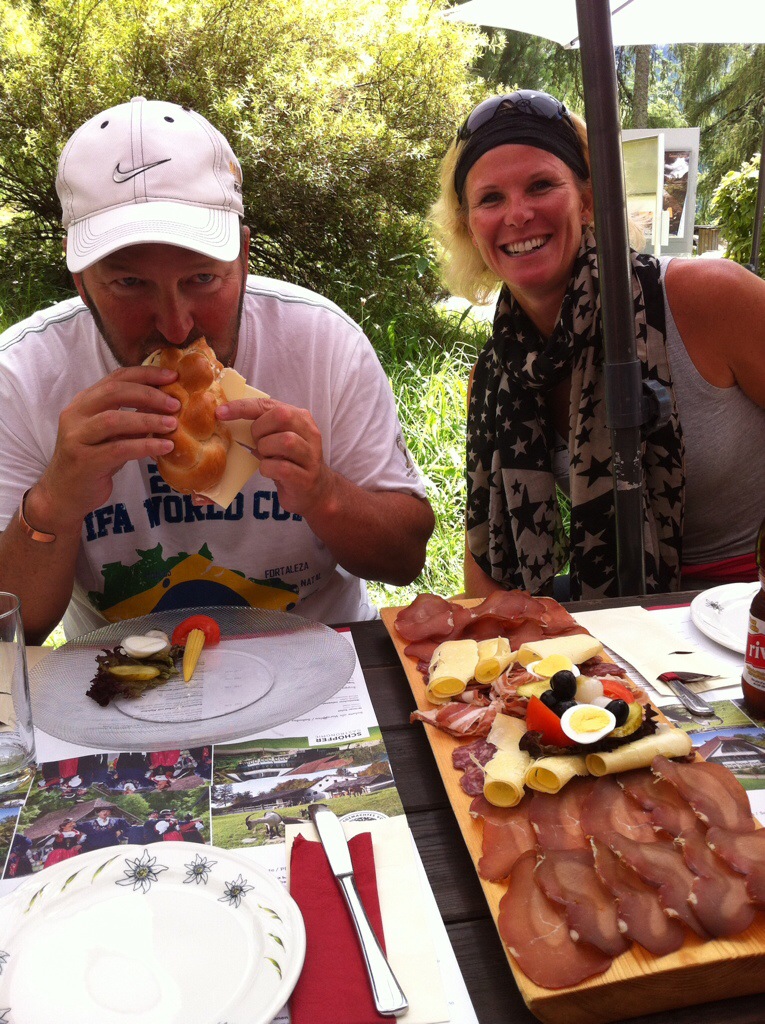
We carried on to a restaurant called Riva which is in Weggis. Weggis is known as a wellness destination situated on the lake at the south western foot of the famous mountain Rigi. It has a particularly mild climate that allows palms and chestnuts to thrive. Dessert was very enjoyable and afterwards we took a walk around Weggis as they had a summer festival on.

It doesn’t get dark until about 9.30pm but the boat had lights so wasn’t too much of an issue – we got back to the marina about 10.45pm and walked home. It was a lovely evening and I now have a new found appreciation for boating – especially on a lake as beautiful as Lake Lucerne.

Lake Lucerne or “Lake of the Four Forested Cantons” is a lake in central Switzerland and the fourth largest in the country.

The lake has a complicated shape, with bends and arms reaching from the city of Lucerne into the mountains. It has a total area of 114 km² (44 sq mi), an elevation of 434 m (1,424 ft), and a maximum depth of 214 m (702 ft). Its volume is 11.8 km³. Much of the shoreline rises steeply into mountains up to 1,500 m above the lake, resulting in many picturesque views including those of Mount Rigi and Mount Pilatus.

Sunday morning Steve and I went for a walk down to the lake and around the village. It was a beautiful morning so afterwards I joined Elvis in the lake for a swim – a little fresh to start with but after a few strokes managed to warm up. We met up with a lady from the village who takes her pet turtle down to the reserve by the lake to play – the turtle’s name is something like Homthy Domthy which reminds me of Humpty Dumpty. Karin & Elvis have met up with her a few times by the lake before and she loves to chat – she doesn’t speak English though which Karin said is fortunate or we would have been down there for another half an hour chatting to her.
Karin & I then got stuck into weeding the garden and enjoying the sunshine. Very therapeutic and rewarding as we made good progress and could see where we had been. The pool was now working so we enjoyed a refreshing swim afterwards.

It was then time to watch the Wimbledon’s Men’s Final – Roger Federer from Switzerland versus Novak Djokovic from Serbia. In true Wimbledon style we had some strawberries and cream accompanied by champagne. It was a great match – 5 sets – but unfortunately it didn’t go the Swiss way. Well done Novak Djokovic : )

20140707-122106-44466396.jpg

20140707-122113-44473037.jpg

20140707-122118-44478844.jpg

20140707-122125-44485017.jpg

20140707-122135-44495563.jpg

20140707-122156-44516301.jpg

20140707-122203-44523335.jpg

20140707-122216-44536955.jpg

20140707-122229-44549332.jpg

20140707-122246-44566715.jpg

20140707-122408-44648616.jpg

20140707-122418-44658325.jpg

Posted in Switzerland | 1 Comment

Rhodes, Greece oops I mean Marmaris, Turkey – Cunard Line

The plan was to dock at the port in Rhodes at 8am this morning but the winds had got up to 35 knots making it too difficult to do so. The Captain (Inger Klein Thorhauge from Denmark) made an announcement that the attempt to dock had been aborted but they would make a second attempt. The high winds also thwarted the second attempt so we “circling” in the bay while the powers that be decided on the next course of action.

At about 9am the Captain was back online saying that the winds didn’t look like they were going to drop so they had decided on an alternative port – Marmaris in Turkey. Rhodes which is in Greece is actually closer to Turkey than it is to Greece being only 11 nautical miles off the Turkish Coast. I was a bit disappointed as we hadn’t been to Rhodes before and was looking forward to checking it out as well as having another fix of greek yoghurt and honey. I was also very interested in going to the Temple of Apollo – Apollo being the sun god. I hope this won’t have any bearing on my sun powers going forward : )

We wouldn’t be docking at Marmaris until 12pm so we decided to watch the replay of the Rafa Nadal v Nick Kyrgios match – it was a great match with the young Australian, Nick Kyrgios defeating Rafa in 4 sets. As I write this we are watching his live quarter final match against the Canadian Raonic – it is another good game although the Aussie is showing his youth and inexperience at times.

Anyway we had been to Marmaris before for a night and my memories of the place were that it was filled with all these replica English pubs and sunburnt, beer swilling English tourists. We went ashore to see if our memories were serving us right and we were pleasantly surprised that there was more to Marmaris than what we had previously experienced. The port area is lovely and we walked along the marina to the town area. There are a lot of bars along the way catering for the English but the replica ones I remembered were in the middle of town away from the water.

It was 31 degrees and fair sweltering – just quietly the SUNGRL was beginning to fade. We walked all along the waterfront and settled in a bar so Steve could be reunited with his beloved Efes beer and I could cool down. The Turkish guys running the bar were friendly and Steve couldn’t help impart some gems re how they could improve their business and get more punters in. We had a spot of lunch and re connected with the world via wifi.

We then reversed our journey along the waterfront in the sweltering heat to return to the boat but not before another reunion with the mighty Efes in a bar at the marina. When we returned to the ship we noticed a yacht in the marina with a silver fern flag and on closer inspection noted that it was registered in Wanaka.

After dinner tonight we went on deck as we sailed away from Marmaris – it is a lovely part of Turkey where the hills run into the sea and with the sun setting behind them made for an even better spectacle.

The town of Marmaris is located at the meeting place of the Aegean and Mediterranean seas, surrounded by pine clad hills. Situated in Southwest Turkey, in the province of Mulga, Marmaris is one of Turkey’s biggest tourist resorts. The population rises from 75,000 in winter to around 300,000 in summer.

The Ottoman Sultan at the time, Kanuni Sultan Suleyman, changed the name of the town to Mimaras, which then became Marmaris according to the historian Evlija Celebi. A local rumour has it that the reason for the change of name to Mimaras was that Suleyman, on returning from his expedition to Rhodes, disliked the castle and exclaimed “mimar as!” which means “hang the architect!” Unfortunately there is no evidence to support this amusing story.

Rhodes – what we missed : (
The island of Rhodes, once sacred to the sun god Apollo, is the largest in the group known as the Dodecanese (Twelve Islands) off the south west coats of Turkey. Well wooded, mountainous and scenically beautiful inland, Rhodes offers the contrast of rich agriculture in its coastal plains. Of the major islands in the Dodecanese, Rhodes is the most developed and is hugely popular with British and Scandinavian visitors alike. Other well known islands in the group are Kos, home of Hippocrates and the lettuce, and Patmos, where St John wrote the Book of Revelation.

The Romans ruled Rhodes in the 5th Century B.C. and during their rule Rhodes became a household name in the academic world; Athens and Rhodes were the Oxford and Cambridge of their day where rich young Romans, Julius Caesar amongst them, came to learn the art of public speaking. When Rome fell, Rhodes became part of the Byzantine empire ruled from Constantinople, but her great days were over and she fell continual prey to Saracen pirates.

In 1948, Rhodes together with the rest of the twelve islands, was united with Greece.

20140705-112207-40927343.jpg

20140705-112220-40940056.jpg

20140705-112231-40951468.jpg

20140705-112242-40962553.jpg

20140705-112252-40972150.jpg

20140705-112303-40983208.jpg

20140705-112313-40993764.jpg

20140705-112323-41003386.jpg

20140705-112338-41018471.jpg

20140705-112355-41035797.jpg

20140705-112407-41047419.jpg

Posted in Cunard Line | Leave a comment