Arlington National Cemetery – Virginia, USA

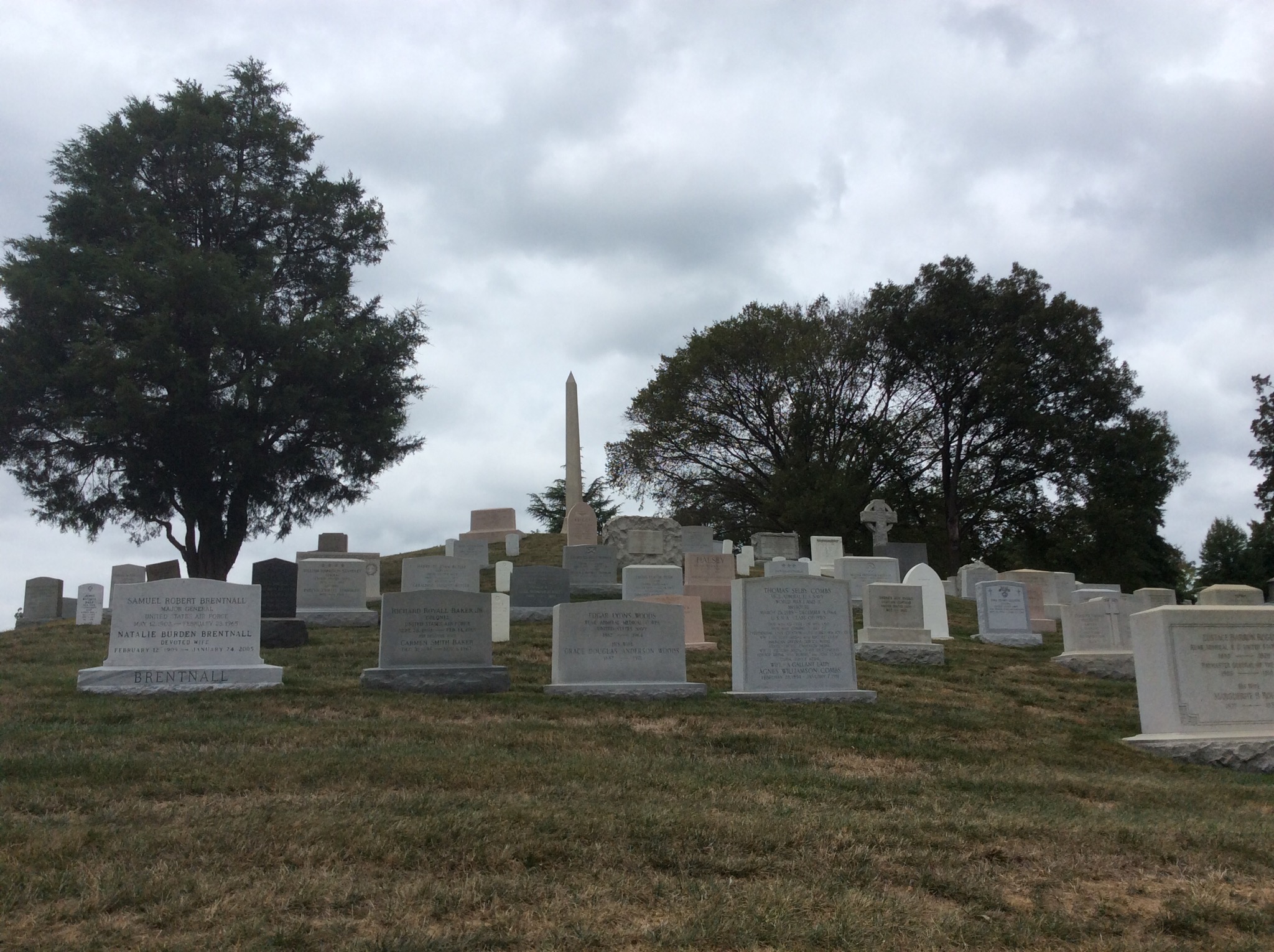
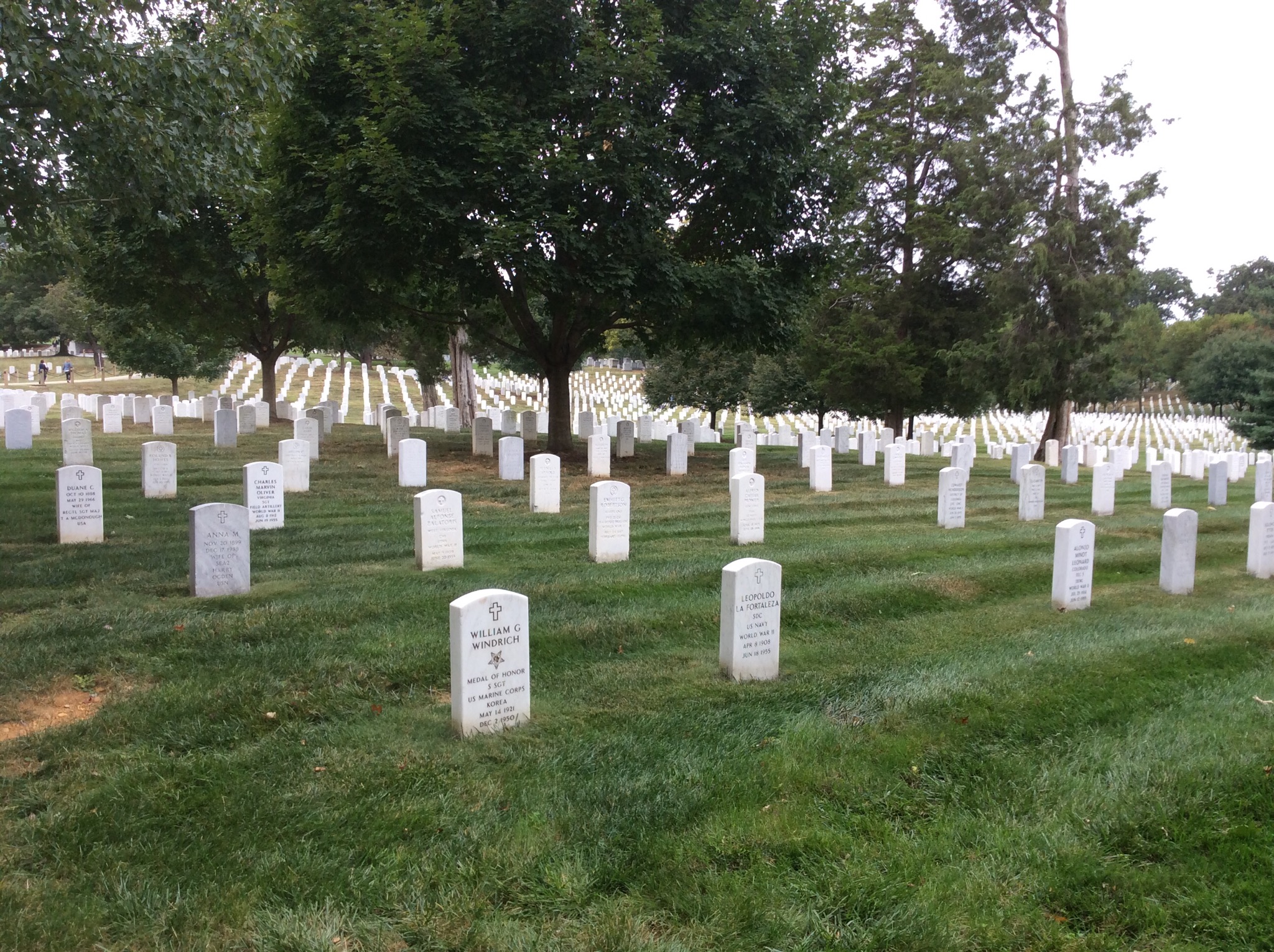
This morning we took an Old Town Trolley Bus tour around the city to orientate ourselves with the many neighbourhoods and sights. We went on all three lines to start with – the orange line being the National Mall and Downtown Loop, the green loop being the National Cathedral, Uptown & Georgetown Loop and the red line being the Arlington Cemetery Loop. We got off at the Arlington National Cemetery and although a humbling place to walk around is very interesting.

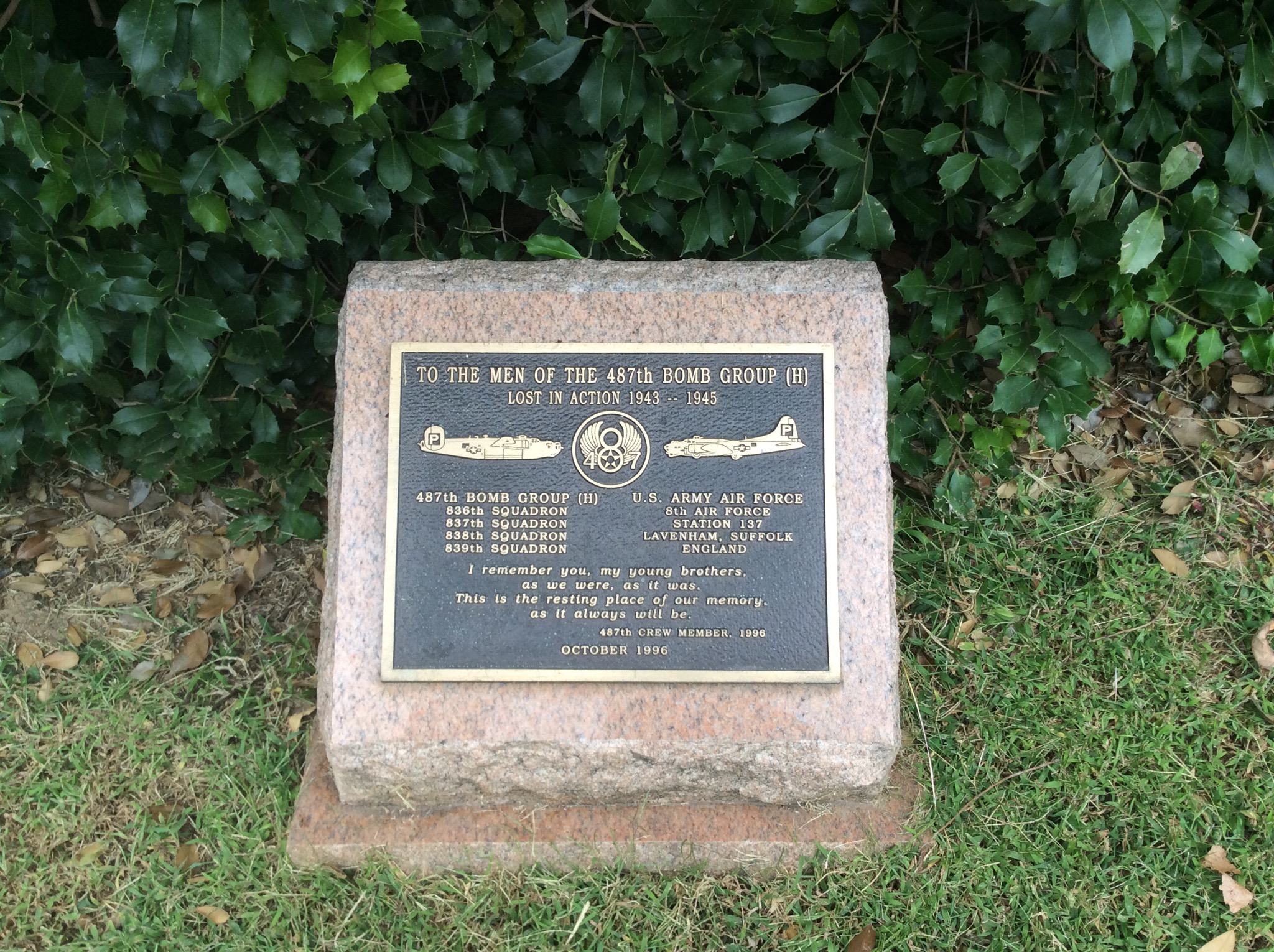
Arlington National Cemetery is a United States military cemetery in Arlington County, Virginia, across the Potomac River from Washington, D.C., beneath whose 624 acres (253 ha) have been laid casualties, and deceased veterans, of the nation’s conflicts beginning with the American Civil War, as well as reinterred dead from earlier wars.

The cemetery was established during the Civil War on the grounds of Arlington House, which had been the estate of the family of Confederate general Robert E. Lee’s wife Mary Anna (Custis) Lee (a great-granddaughter of Martha Washington). The cemetery, along with Arlington House, Memorial Drive, the Hemicycle, and the Arlington Memorial Bridge, form the Arlington National Cemetery Historic District, listed on the National Register of Historic Places in April 2014.

There are certain criteria that have to be met in order to be buried or cremated and interred in the columbaria but in general terms you have to have served in the Unite States military or have served the country politically.

The first military burial at Arlington was in May 1864. The flags in Arlington National Cemetery are flown at half-staff from a half hour before the first funeral until a half hour after the last funeral each day. Funerals are normally conducted five days a week, excluding weekends.

Funerals, including interments and inurnments, average between 27-30 per day. The cemetery conducts approximately 6,900 burials each year.

With more than 400,000 interments, Arlington National Cemetery has the second largest number of burials of any national cemetery in the United States. The largest of the 130 national cemeteries is the Calverton National Cemetery, on Long Island, near Riverhead, New York, which conducts more than 7,000 burials each year.

IMG_0948.JPG

IMG_0952.JPG

IMG_0976.JPG

IMG_0959.JPG

IMG_0977.JPG

IMG_0978.JPG

Five state funerals have been held at Arlington: those of Presidents William Howard Taft and John F. Kennedy, his two brothers, Senator Robert F. Kennedy and Senator Edward “Ted” Kennedy, and General of the Armies John J. Pershing. Whether or not they were wartime service members, U.S. presidents are eligible to be buried at Arlington, since they oversaw the armed forces as commanders-in-chief.

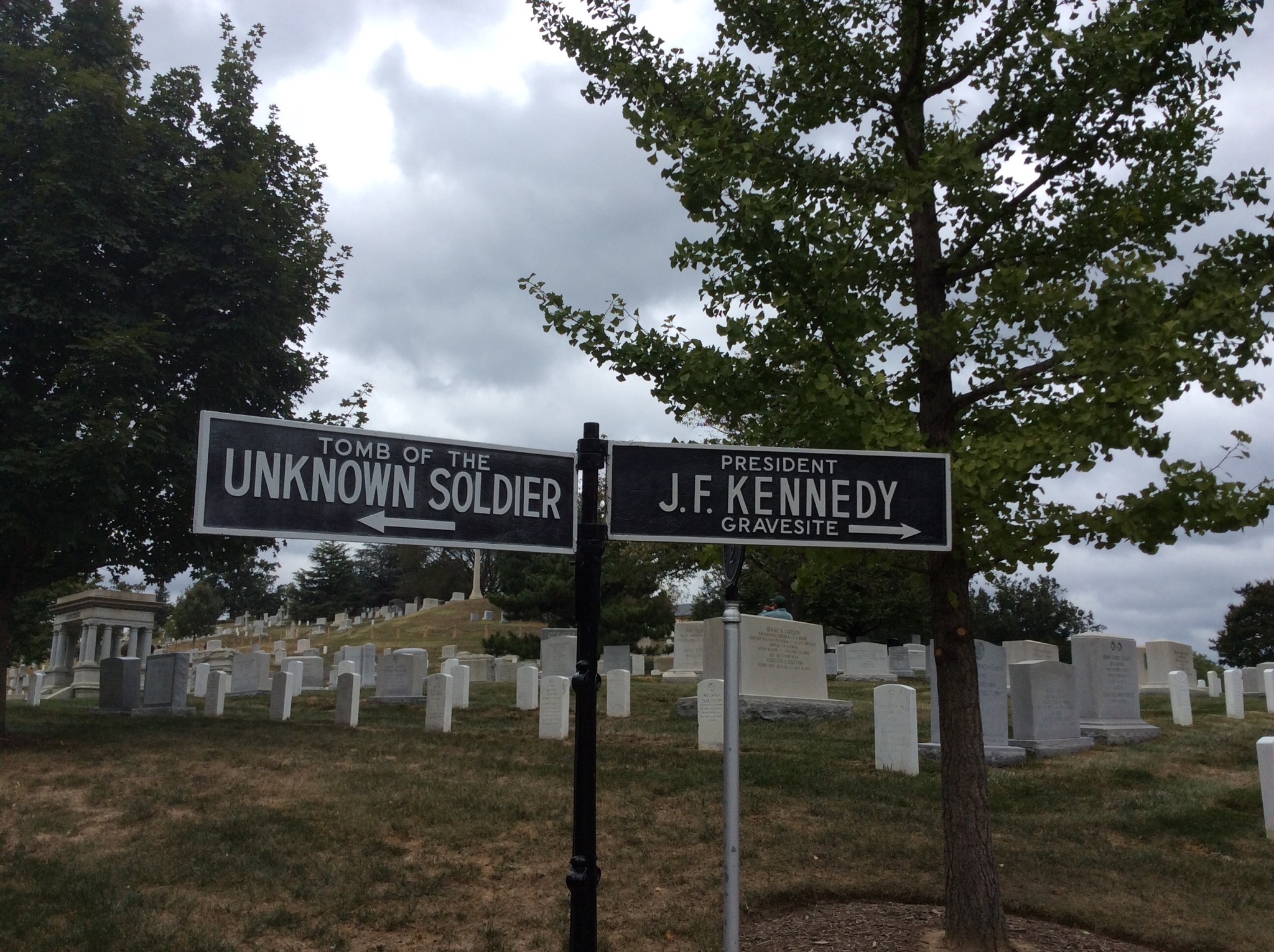
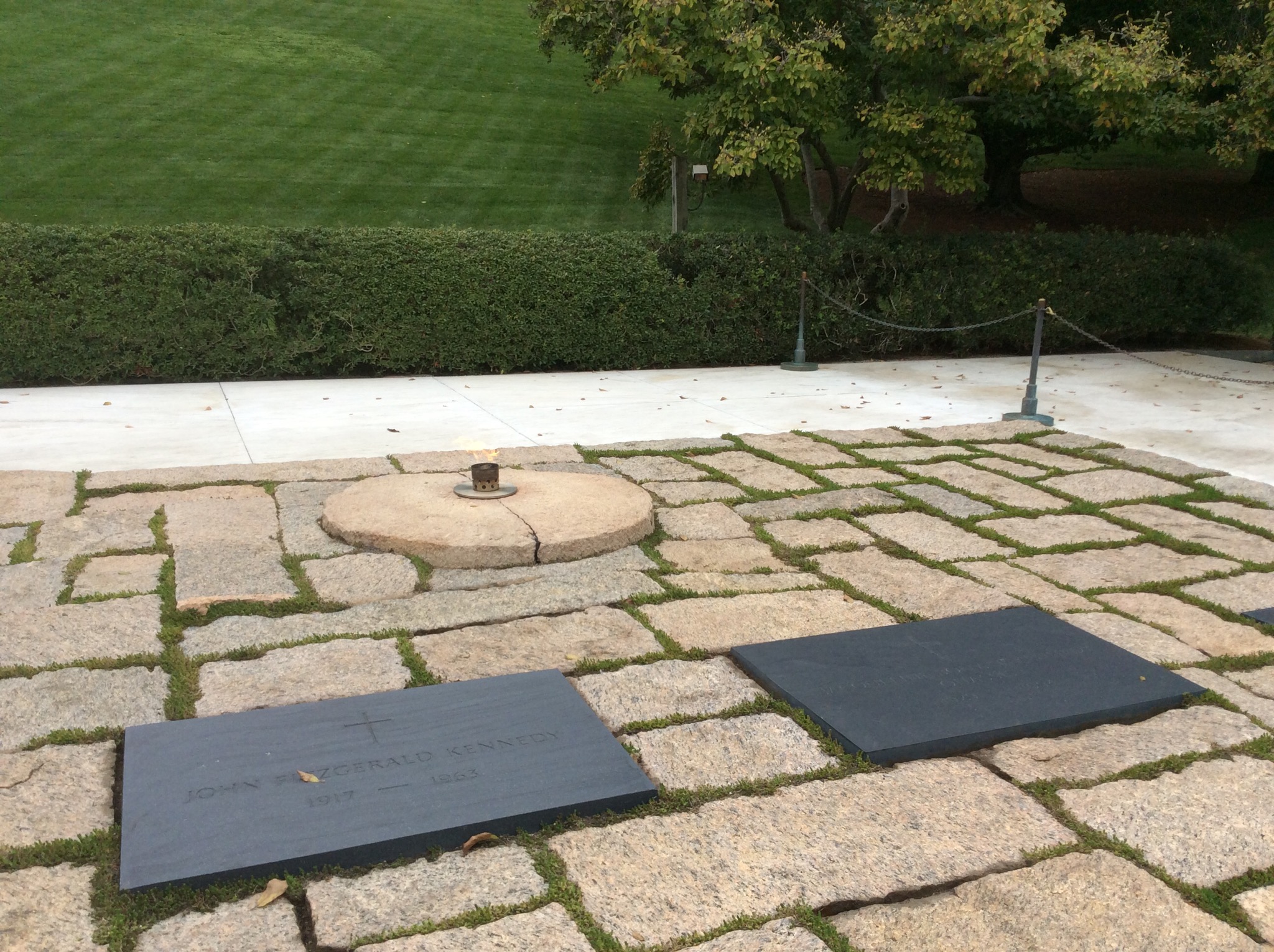
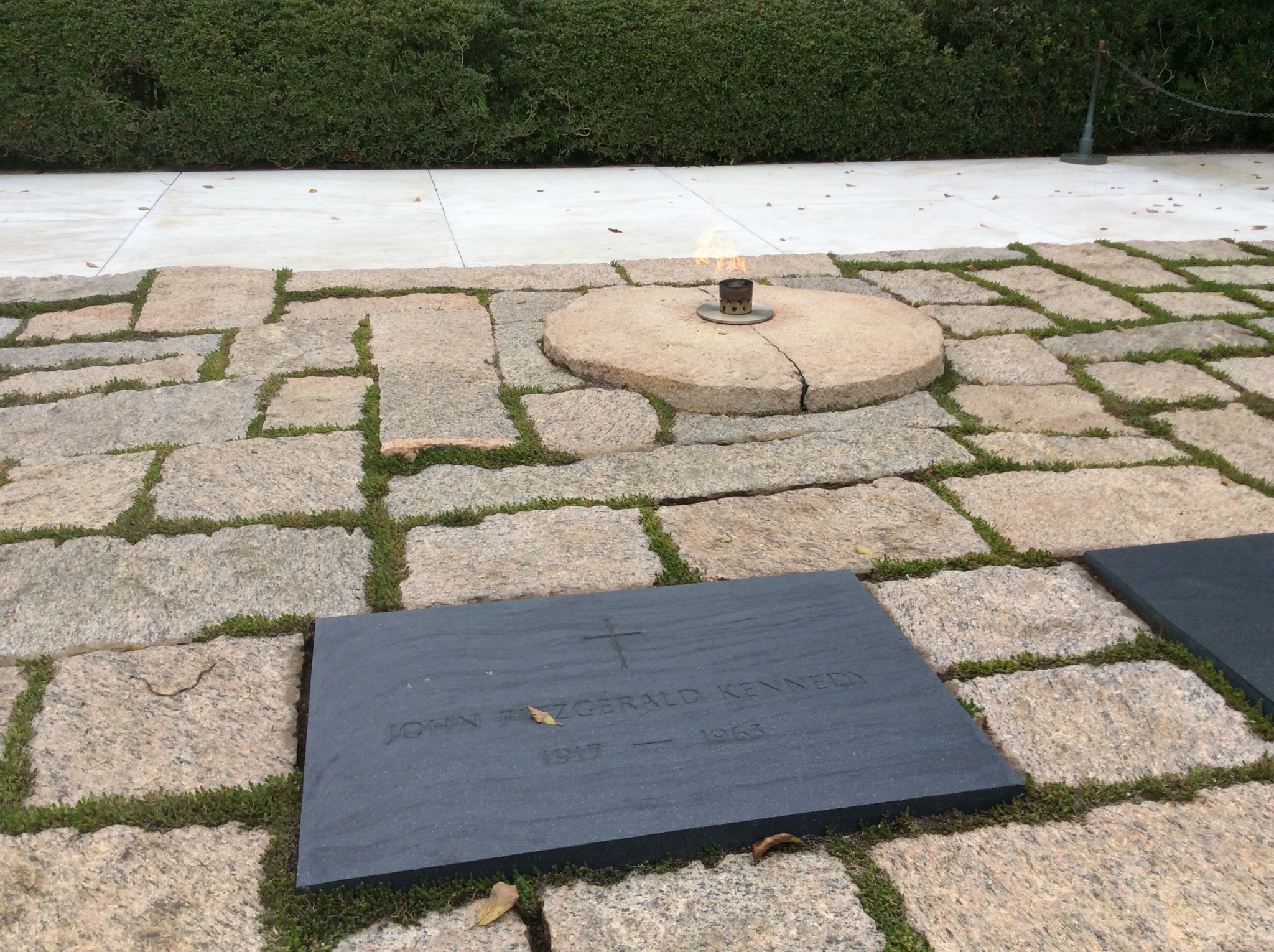
Among the most frequently visited sites in the cemetery is the grave of President John F. Kennedy, who is buried with his wife, Jacqueline, and two of their children. His remains were interred there on March 14, 1967, a reinterment from his original Arlington burial site, some 20 feet (6.1 m) away, where he was buried in November 1963. The grave is marked with an “eternal flame”. The remains of his brothers, Senator Robert F. Kennedy and Senator Edward M. “Ted” Kennedy, are buried nearby. The latter two graves are marked with simple crosses and footstones. On December 1, 1971, Robert Kennedy’s body was re-interred 100 feet (30 m) from its original June 1968 burial site.
IMG_0954.JPG

IMG_0955.JPG

IMG_0958.JPG

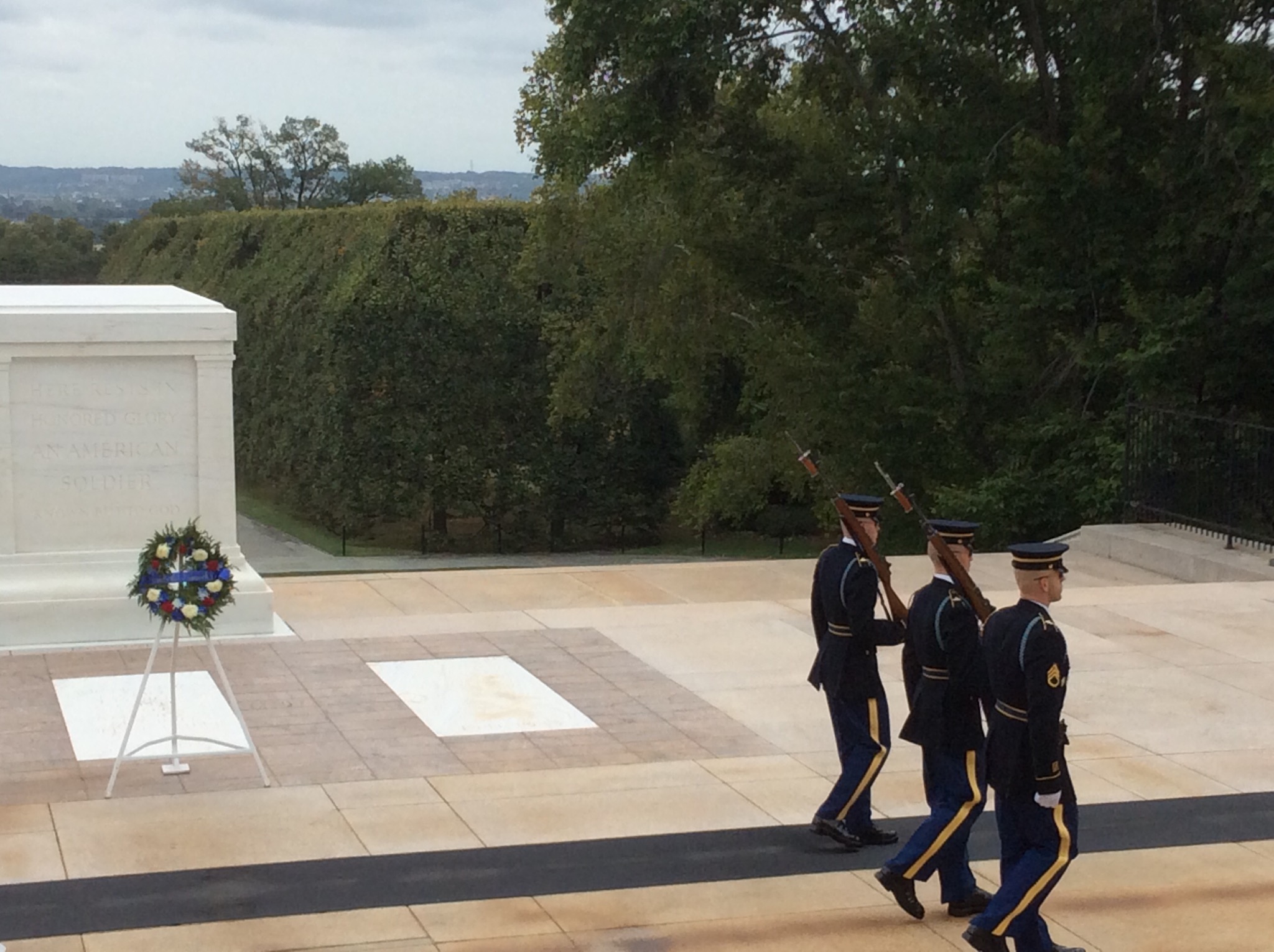
We went to see the Tomb of the Unknowns and saw the changing of the guard. The Tomb of the Unknowns has been perpetually guarded since July 2, 1937, by the U.S. Army. The 3rd U.S. Infantry Regiment (“The Old Guard”) began guarding the Tomb on April 6, 1948. There is a meticulous routine which the guard follows when watching over the graves. The Tomb Guard:

Marches 21 steps down the black mat behind the Tomb.
Turns, faces east for 21 seconds.
Turns and faces north for 21 seconds.
Takes 21 steps down the mat.
Repeats the routine until the soldier is relieved of duty at the Changing of the Guard.
After each turn, the Guard executes a sharp “shoulder-arms” movement to place the weapon on the shoulder closest to the visitors to signify that the Guard stands between the Tomb and any possible threat.

Twenty-one was chosen because it symbolizes the highest military honor that can be bestowed—the 21-gun salute.

Each turn the guard makes precise movements and followed by a loud click of the heels as he snaps them together. The guard is changed every half hour during daylight in the summer, and every hour during daylight in the winter and every two hours at night (when the cemetery is closed to the public), regardless of weather conditions.

IMG_0961.JPG

IMG_0963.JPG

IMG_0972.JPG

IMG_0975.JPG

Posted in Virginia, USA | Leave a comment

Washington D.C. – District of Columbia, USA

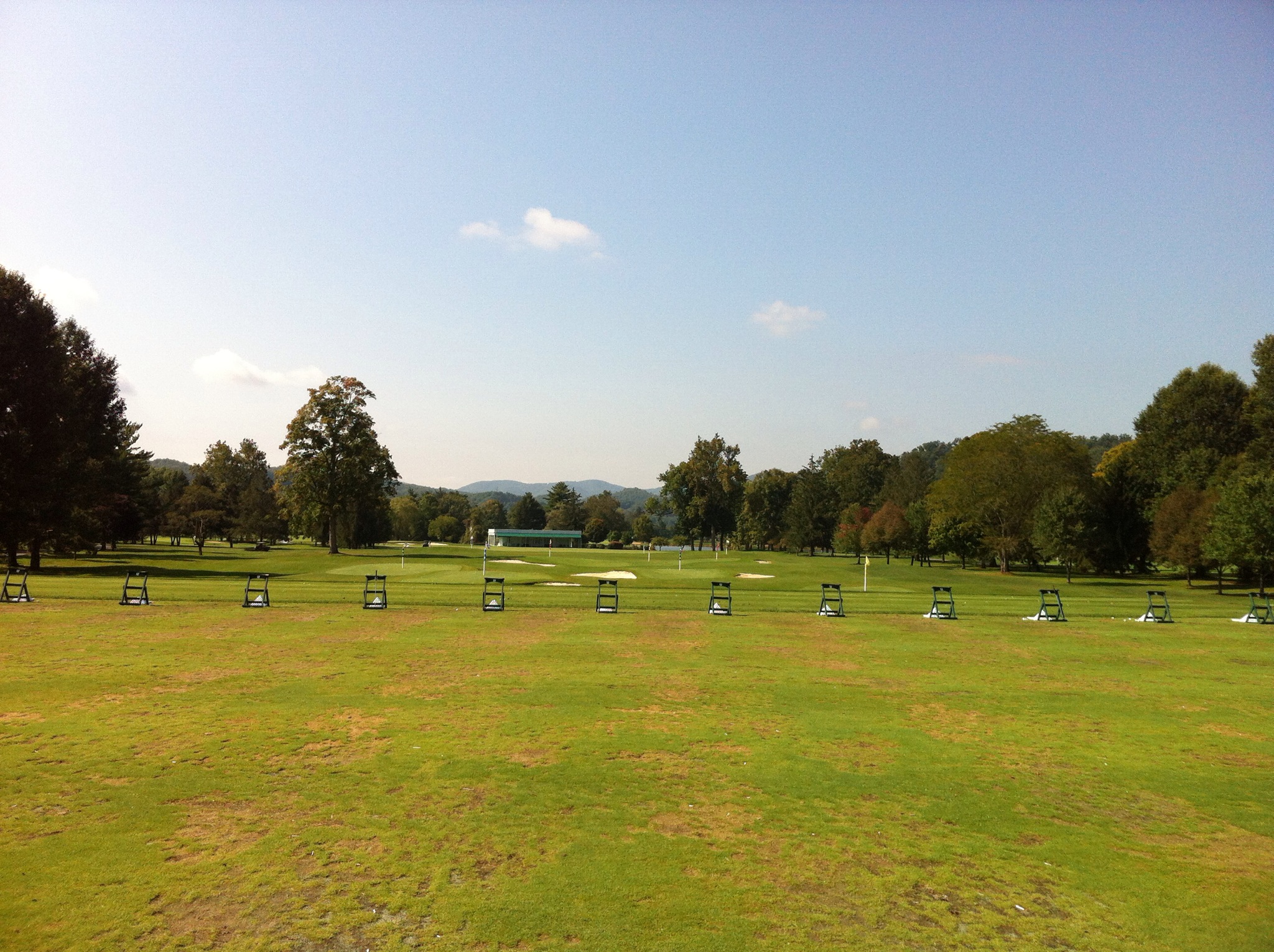
We woke on Tuesday morning to a foggy morning at The Greenbrier. It was also very chilly. We were going to play 9 holes before making our way to Washington D.C. We went to the driving range and it was not pretty so I decided it was better for all concerned if I gave golf a miss. Steve went off with a couple of guys from Pennsylvania while I persevered at the range. I was freezing so abandoned the range.

The sun came out about 9.45am. Steve managed to play 13 holes so he was pleased. We then hit the road – destination Washington D.C. some 400km away. The roads are very good over here so it is easy driving. We were a bit nervous driving in the city but Washington is a very orderly city and the traffic isn’t that bad. We had to drop the car off at Union Station and went round the block due to there not being any signs but eventually got it sorted. It is always a relief to drop a rental car back in one piece : )

IMG_3244.JPG

We then walked back to our hotel which despite my original post on Facebook is just around the corner from The White House rather than at The Whitehouse : ) The hotel is called AKA White House though and is very nice. As I said above, Washington is a very orderly place and easy to navigate around.

IMG_0928.JPG

We walked back through Chinatown and saw the Friendship Archway. Much of DC’s Chinatown is about symbols. The neighborhood is small and fragile, seemingly forever on the brink of extinction. Its identity as a destination hinges on a smattering of things Chinese: the restaurants (of course), the red and green lampposts, the Chinese characters on street signs. But without a doubt the most striking and enduring symbol of all is the great Friendship Archway, constructed in 1986 just east of 7th and H Streets NW, and said to be the largest in the world when it was constructed. Boldly symbolic of Chinese identity, this project ironically was once plagued by controversy over what sort of China it truly symbolized.

IMG_0926.JPG

Washington, D.C., formally the District of Columbia and commonly referred to as Washington, “the District”, or simply D.C., is the capital of the United States. The signing of the Residence Act on July 16, 1790, approved the creation of a capital district located along the Potomac River on the country’s East Coast. The U.S. Constitution provided for a federal district under the exclusive jurisdiction of the Congress and the District is therefore not a part of any U.S. state.

The states of Maryland and Virginia each donated land to form the federal district, which included the preexisting settlements of Georgetown and Alexandria. Named in honor of George Washington, the City of Washington was founded in 1791 to serve as the new national capital. In 1846, Congress returned the land originally ceded by Virginia and created a single municipal government for the remaining portion of the District in 1871.

Washington, D.C., had an estimated population of 646,449 in 2013, the 23rd most populous city in the United States. Commuters from the surrounding Maryland and Virginia suburbs raise the city’s population to more than one million during the workweek. The Washington metropolitan area, of which the District is a part, has a population of 5.8 million, the seventh-largest metropolitan area in the country.

Posted in District of Columbia, USA | Leave a comment

The Meadows Course at The Greenbrier Resort – West Virginia, USA

We woke to another stunning day at The Greenbrier. While I hit the gym, Steve went for a walk and checked out The Old White. He thought it looked rather challenging.

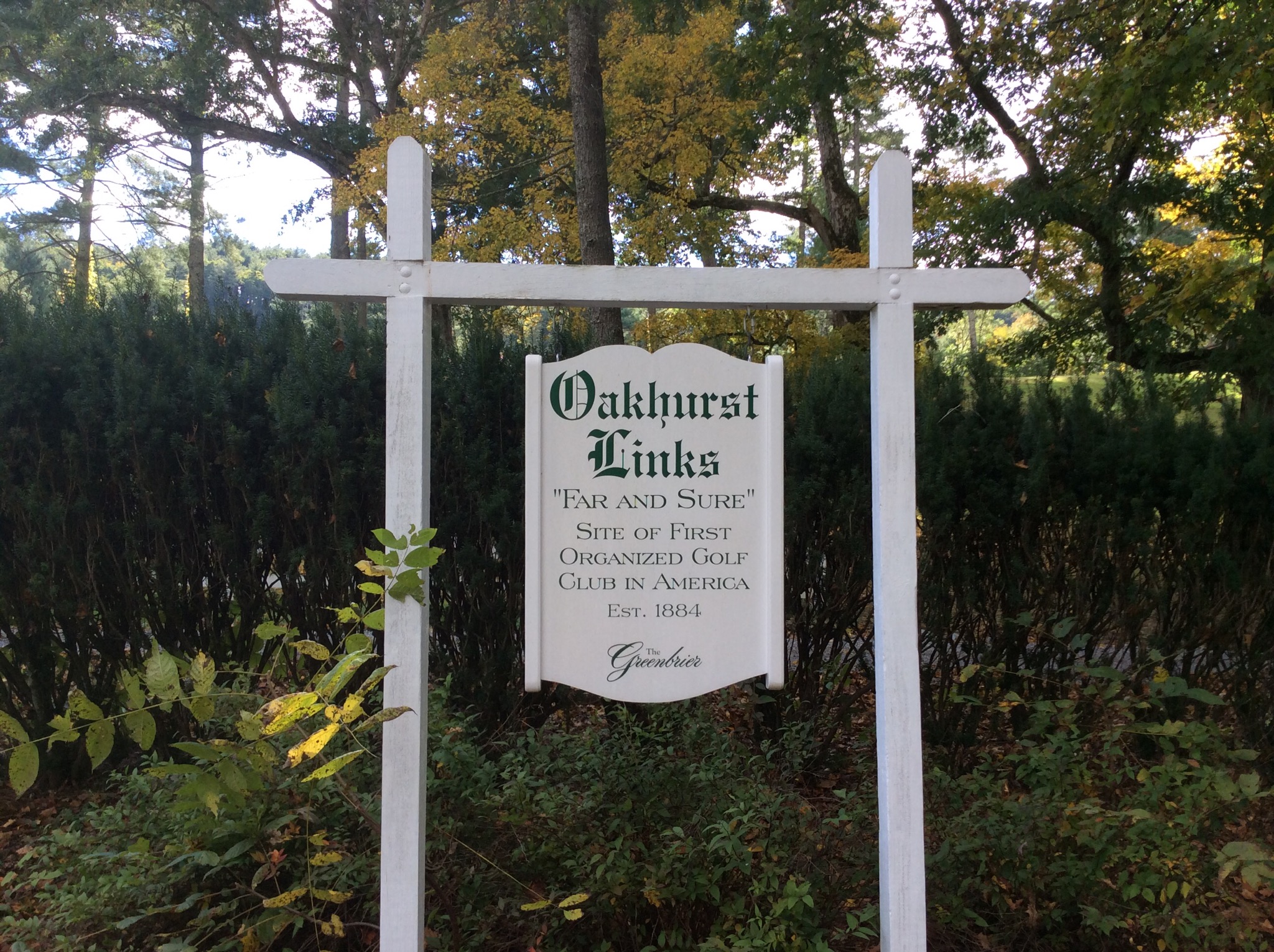
After breakfast we went for a drive to have a look at Oakhurst Links. Oakhurst Links is a historic golf course located at White Sulphur Springs, Greenbrier County, West Virginia. It is a nine hole course conceived in 1884, in a design based upon traditional Scottish design elements. The first competition at Oakhurst was held in 1888.

Located on the grounds is course developer Russell W. Montague’s home which served as the Oakhurst Links Clubhouse. It was built about 1880, and is a two story “I house” plan dwelling with sparse Colonial Revival stylistic elements. The property was operated as a golf course until 1912, when the property reverted to pasture.

Lewis Keller purchased the property in 1959 but it wasn’t until 1994 that a restoration effort was launched for the course. The National Hickory Championship has been played at Oakhurst since 1998. Modern players typically dress in period clothes and use hickory-shafted clubs and gutta-percha balls driven from tees fashioned from sand as was done before the wooden tee was invented.

The course struggled financially and Lewis Keller tried to find a buyer with no luck. Just before the bank foreclosed, Jim Justice the owner of The Greenbrier Resort purchased the property and added it to The Greenbrier fold. They have continued with the tradition of playing with hickory clubs and gutta-percha balls which you can hire.

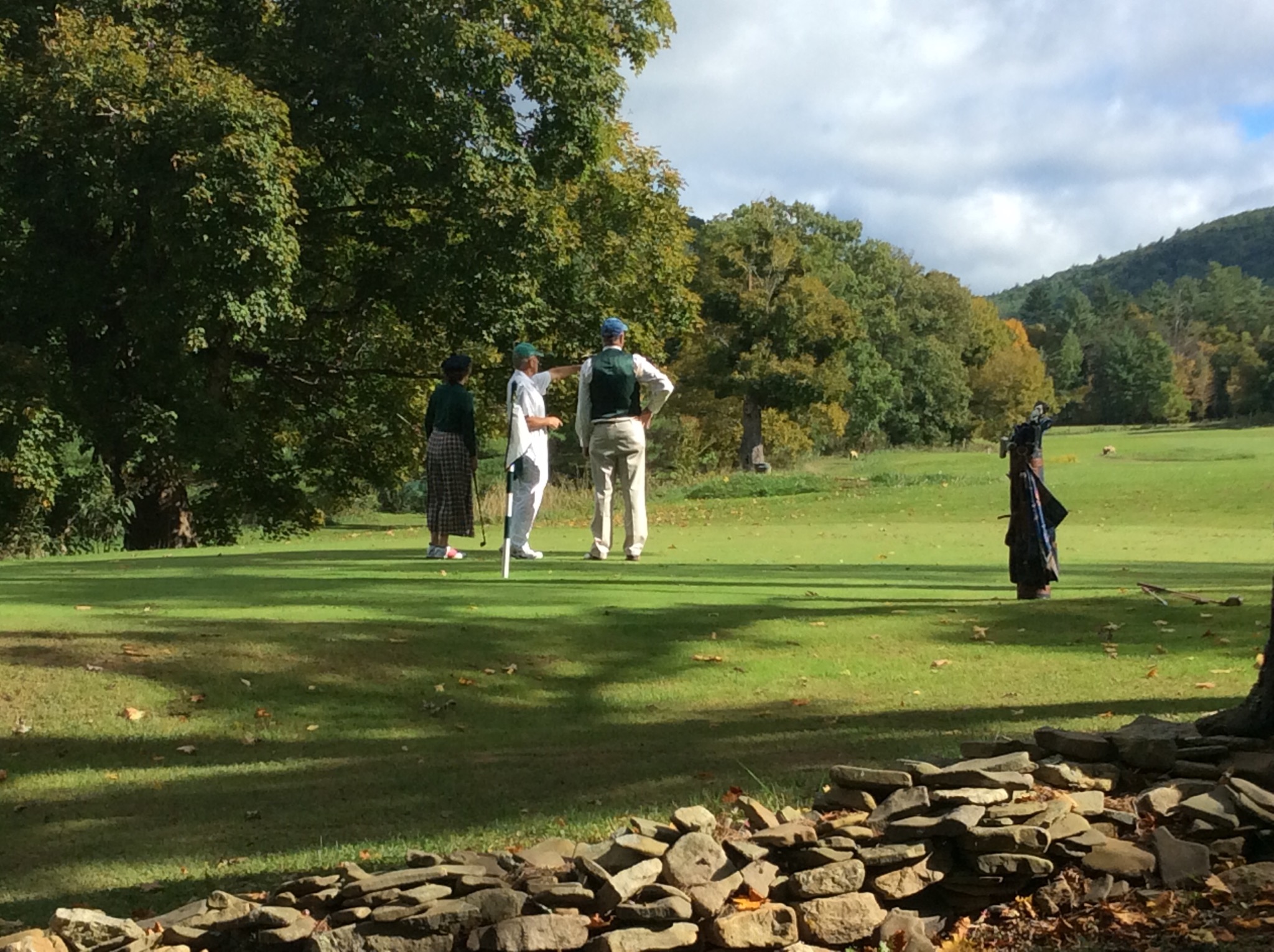
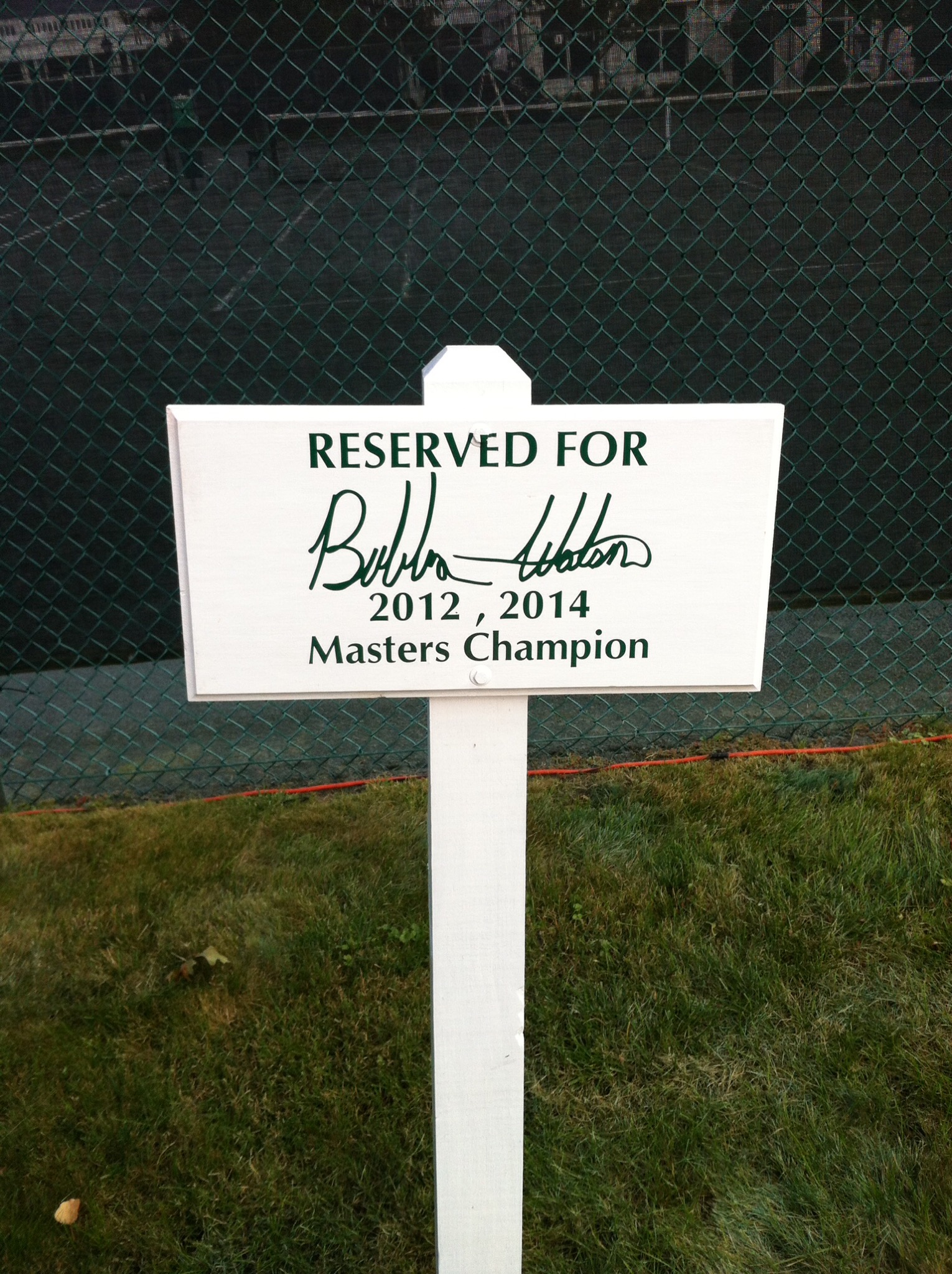
We saw a couple dressed up playing a round – apparently the guy owns his own hickory shafted golf clubs. It was quite cool to see. We had a chat to the guy in the shop and he said it is really hard to play with these type of clubs. Just makes you appreciate how good these guys were back in the day. Bubba Watson holds the course record at Oakhurst Links – a 2 under 35. Apparently he gets really frustrated as the ball goes straight – for those of you who know Bubba Watson’s style you will know he hits everywhere but straight on purpose : )

IMG_0922.JPG

IMG_0921.JPG

IMG_0923.JPG

IMG_3230.JPG

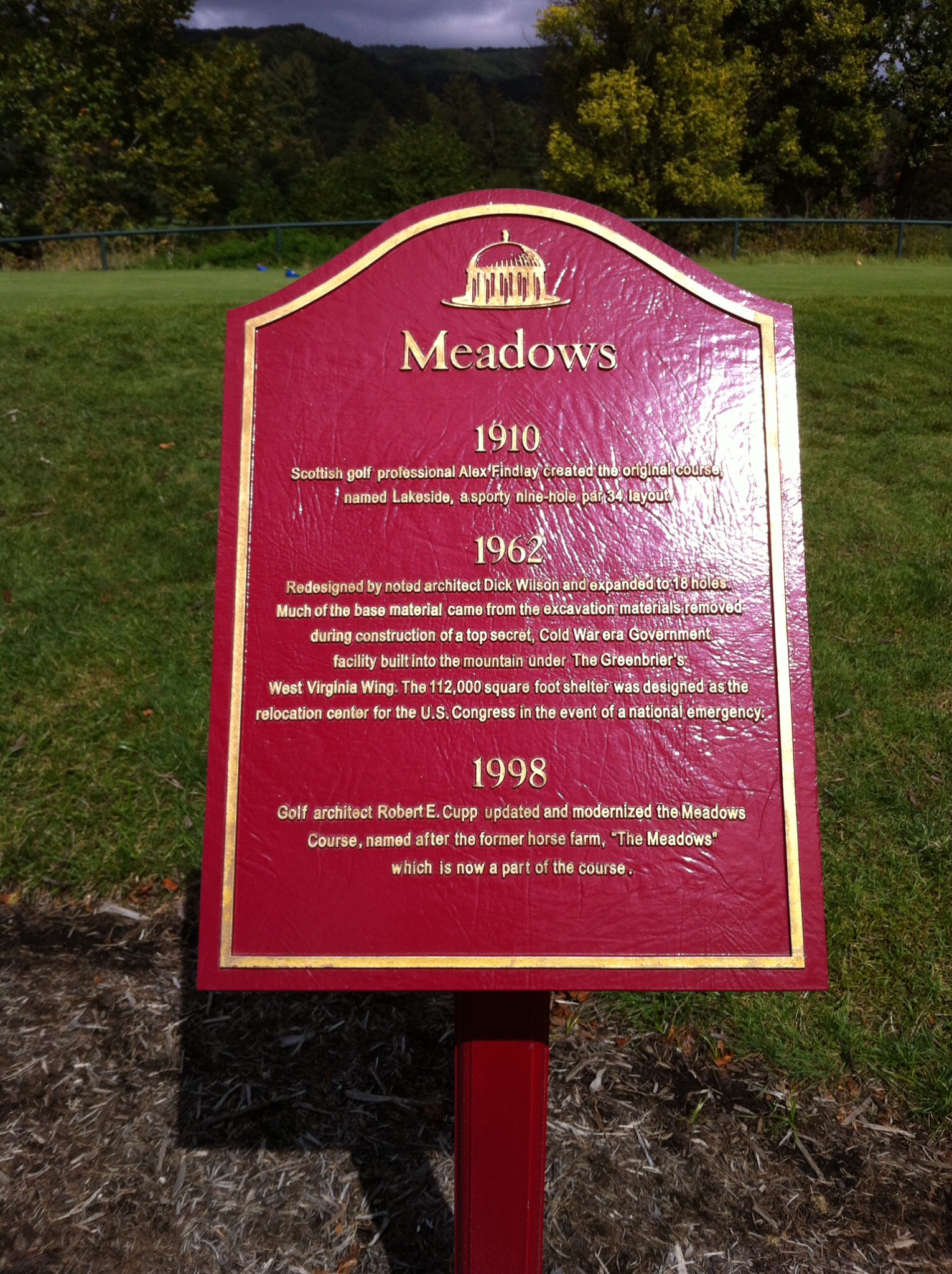
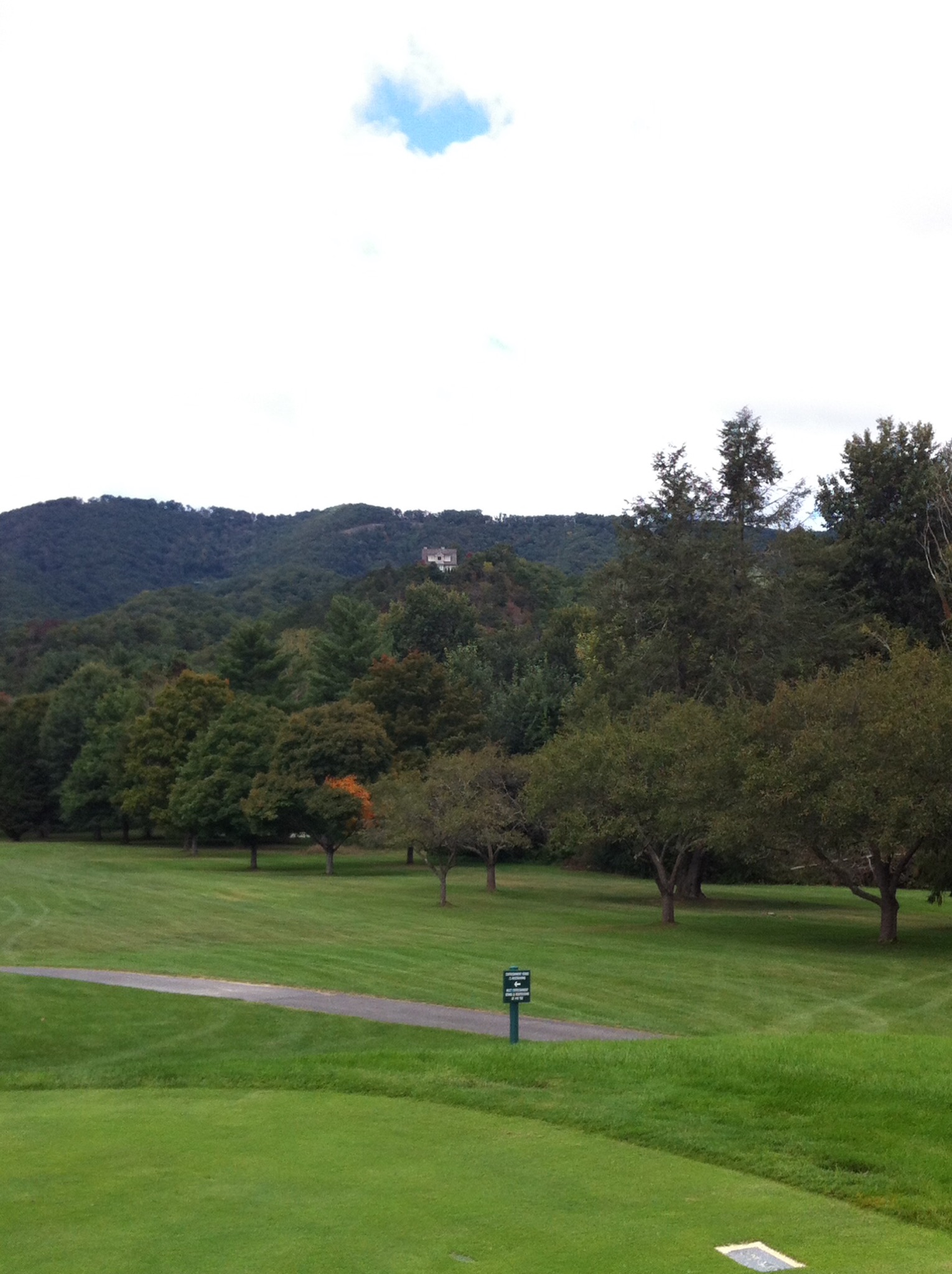
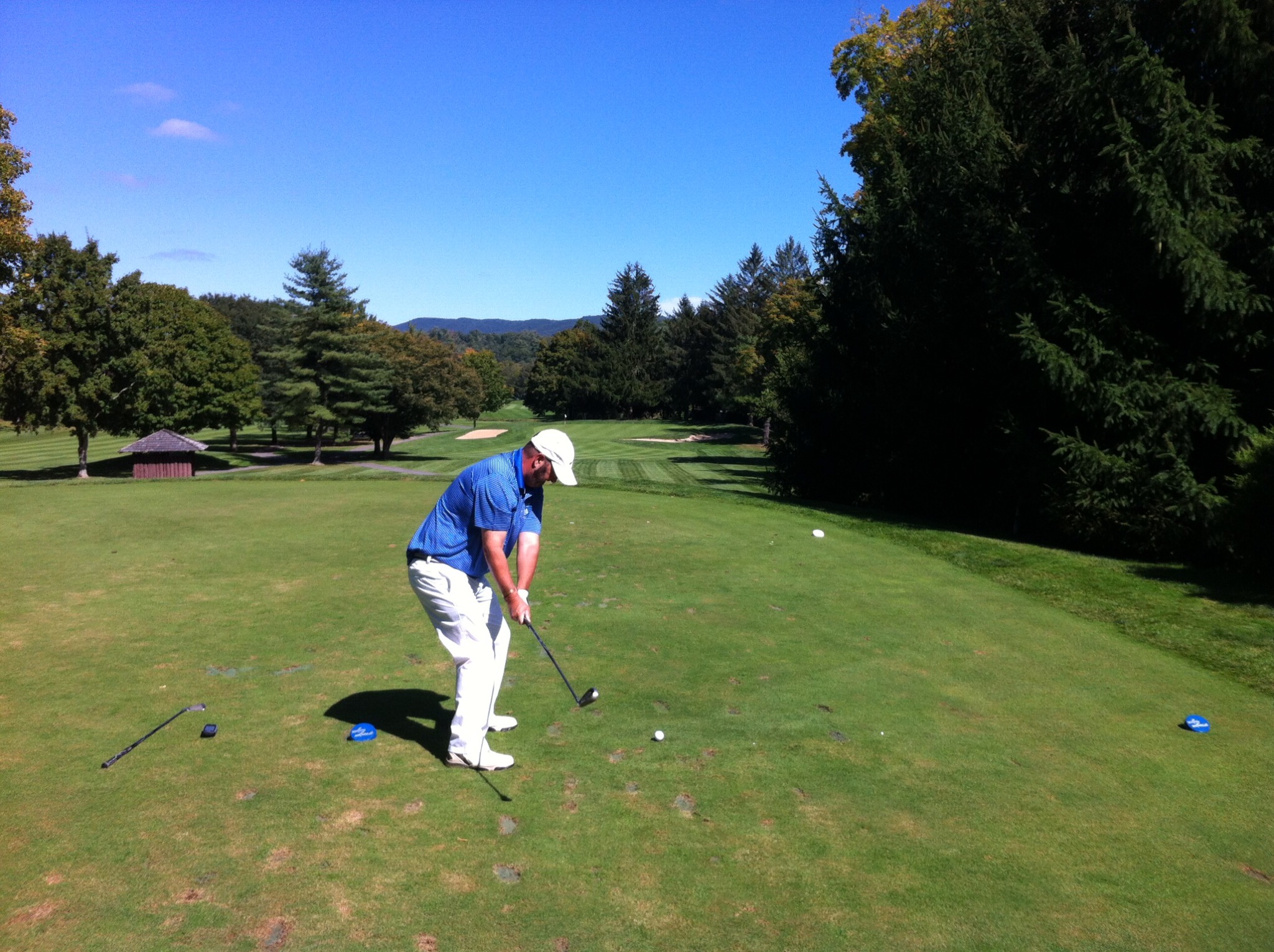
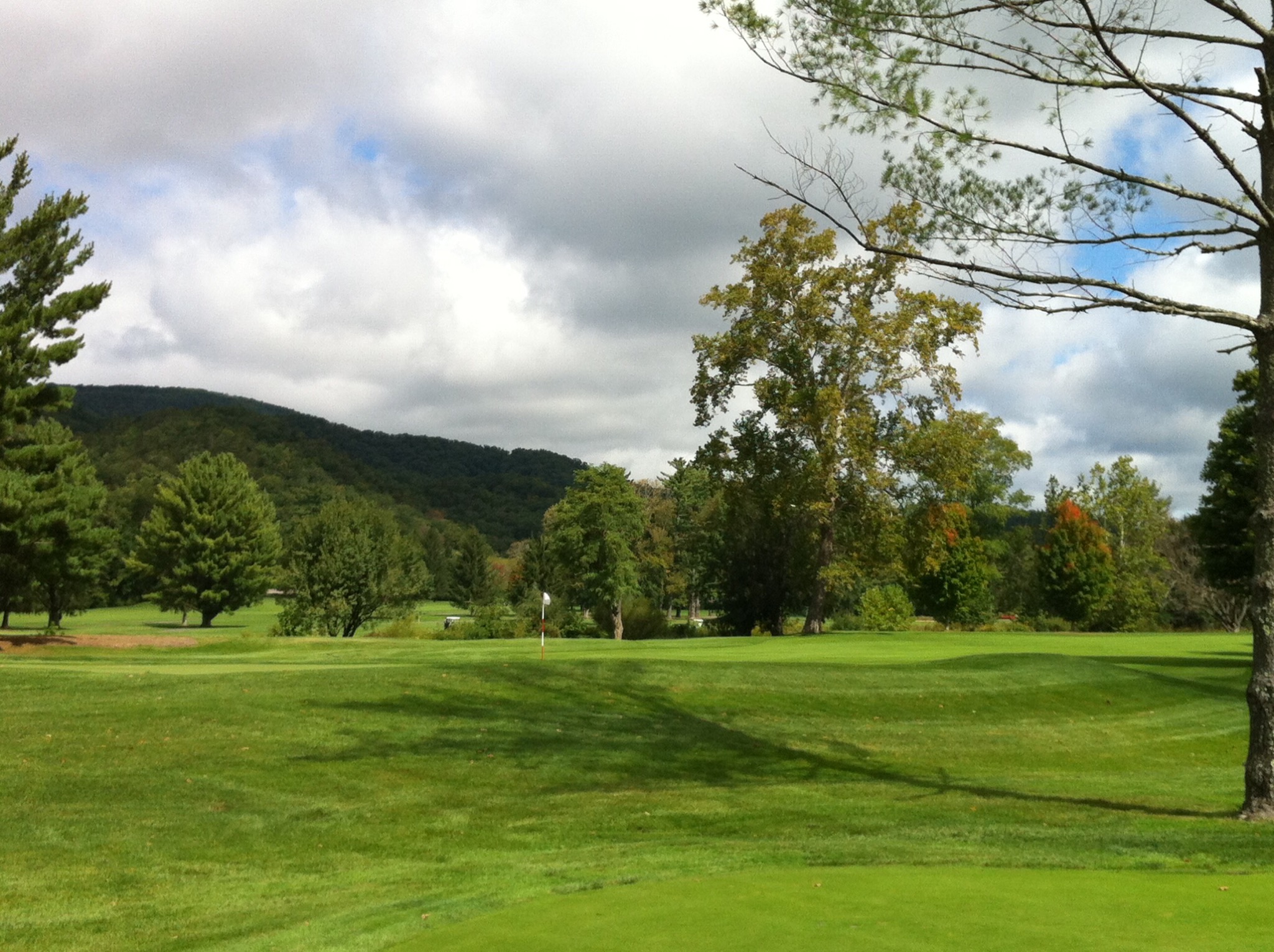
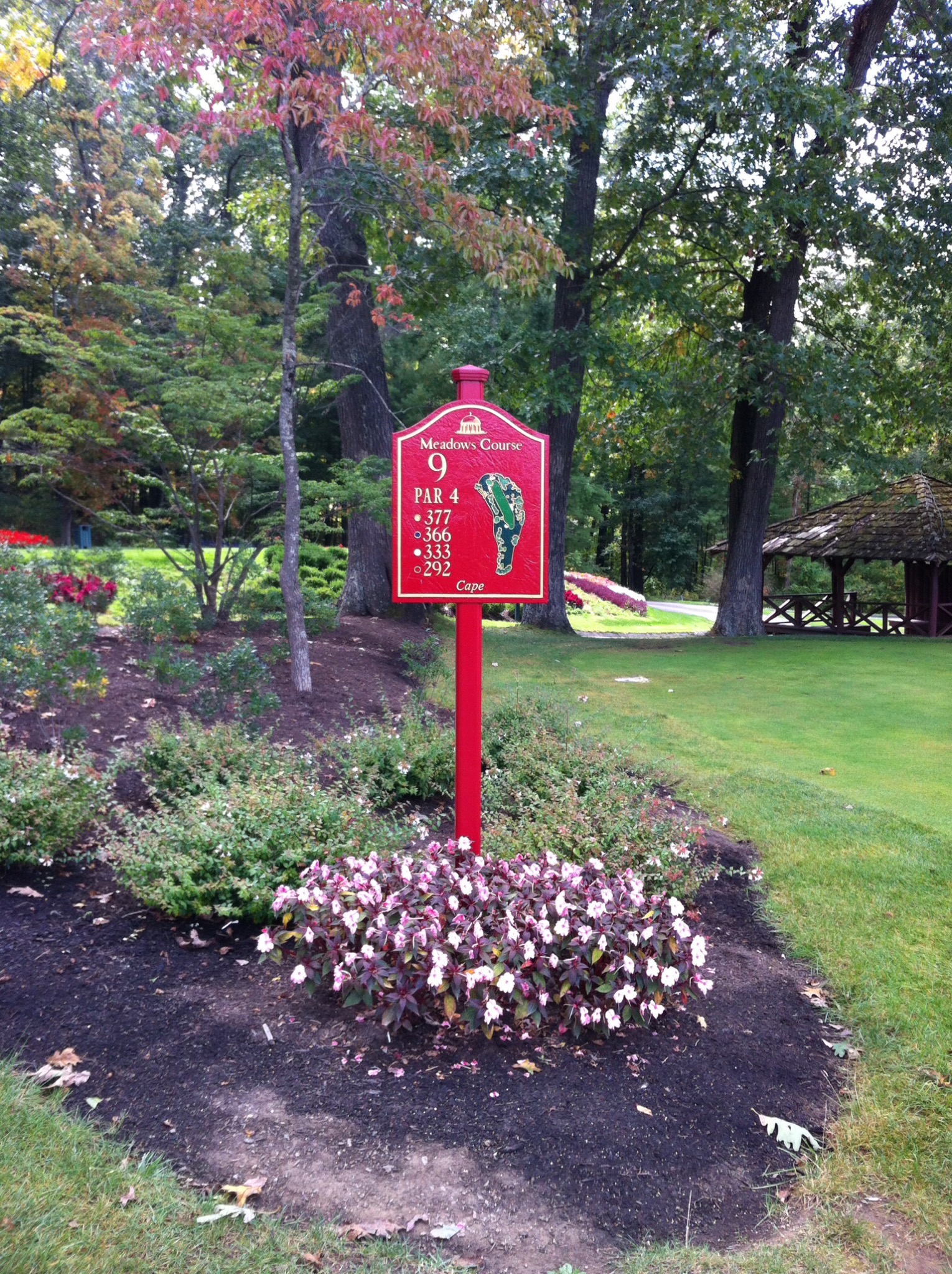
This afternoon we played the Meadows course which is another picturesque course. This course originally designed by Alexander H. Findlay and opened in 1910. It was known as The Lakeside until 1999 when it re opened after being completely redesigned by Robert Cupp.

Although the weather was stunning, unfortunately my golf wasn’t quite as stunning. I got my 6 par quota though so coach Thomas was reasonably happy with me : )

IMG_3228.JPG

IMG_0932.JPG

IMG_3206-0.JPG

IMG_3207.JPG

IMG_3208.JPG

IMG_3209.JPG

IMG_3211.JPG

IMG_3212.JPG

IMG_3213.JPG

IMG_3214.JPG

IMG_3217.JPG

IMG_3218.JPG

IMG_3220.JPG

IMG_3221.JPG

IMG_3224.JPG

IMG_3225.JPG

IMG_3226.JPG

Posted in West Virginia, USA | Leave a comment

The Greenbrier Course at The Greenbrier Resort – West Virginia, USA

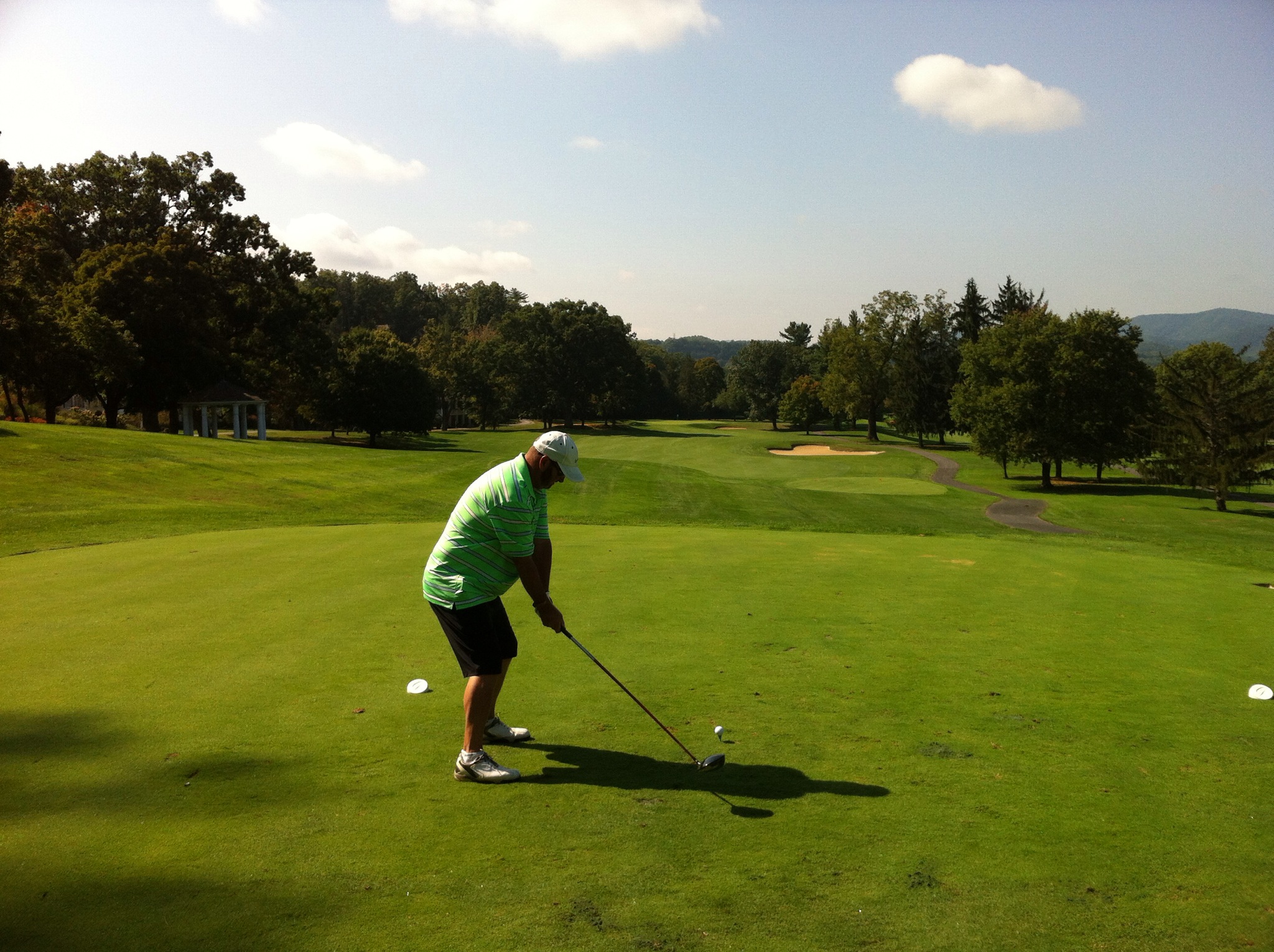
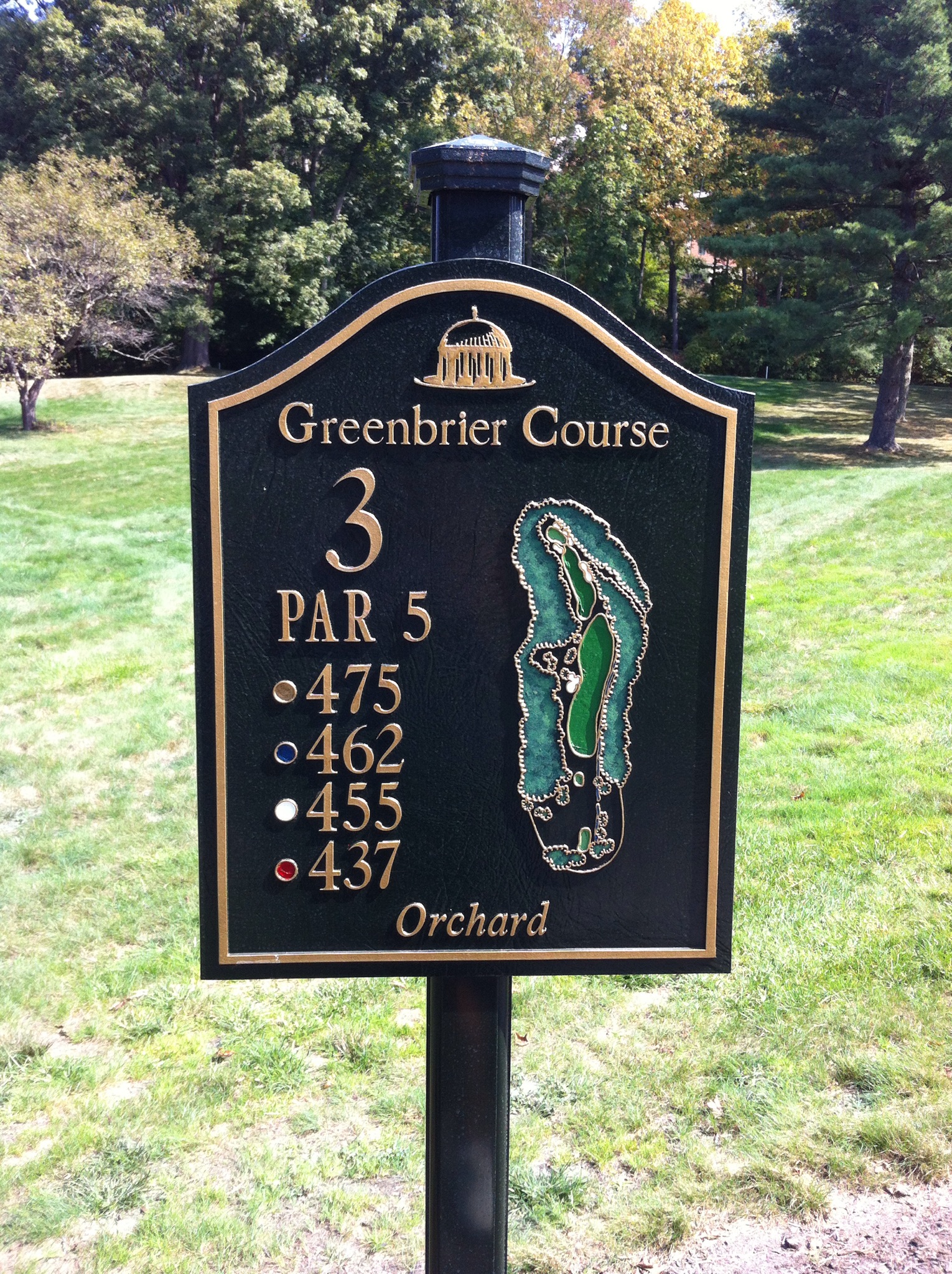
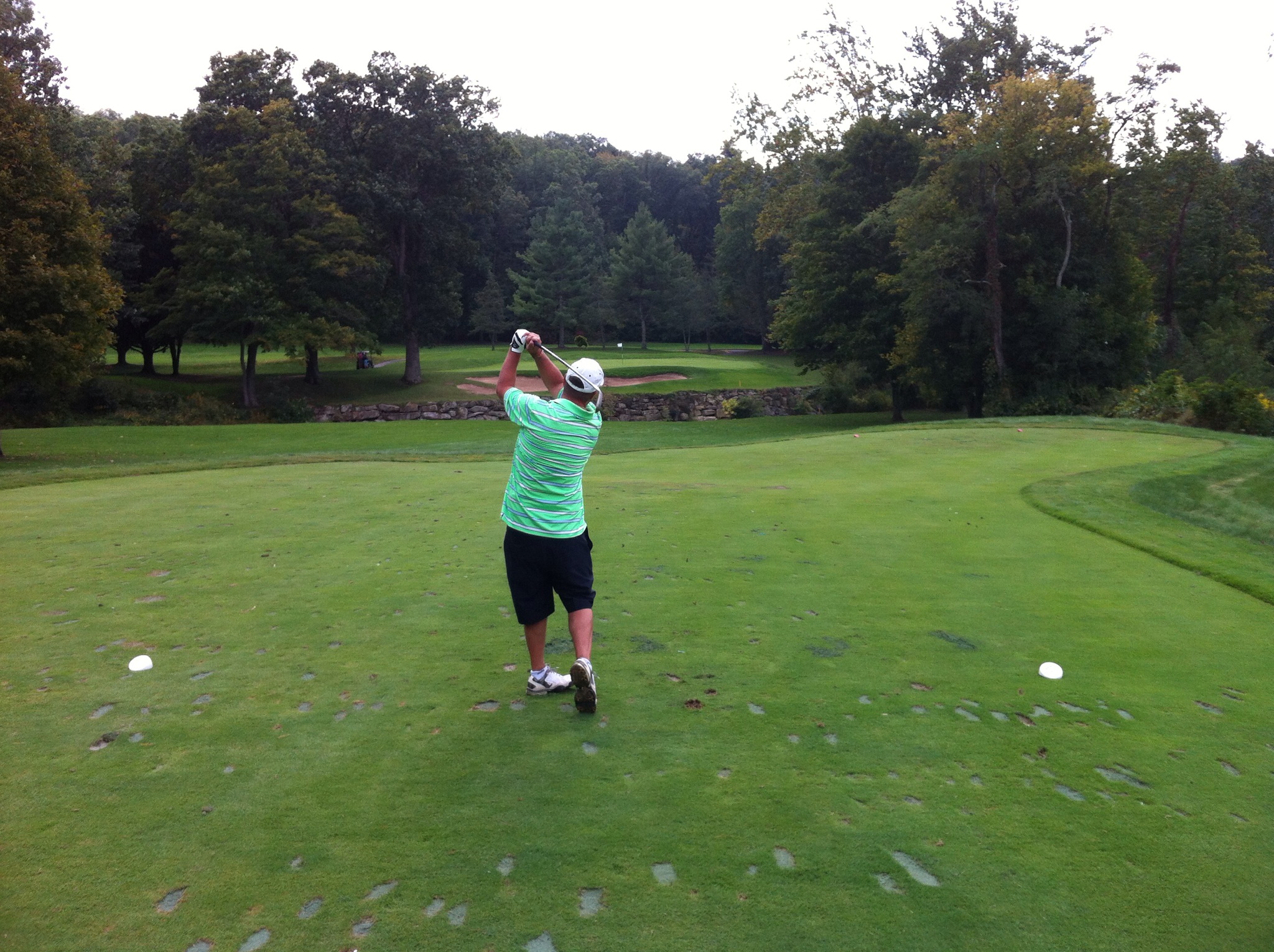
After checking in at the hotel we headed for the Golf Club. We were booked to play The Greenbrier course. Originally constructed in 1924 by Seth Raynor, The Greenbrier was redesigned by Jack Nicklaus in 1977. The Greenbrier is the only resort course in the world to have hosted both The Ryder Cup (1979) and The Solheim Cup (1994).

It was a very pretty course set amongst lots of native bush. The only downside to all this natural bush was the little bugs that were flying around and that insisted of annoying me. They didn’t seem to bother Steve – obviously he doesn’t taste or smell as good as me : )

I had another good round and another “just quietly” moment – I shot 84 off the stick as did one Steve Thomas.

We joined up with another couple on the 16th hole. Danny & BJ were from Florida and they were on their annual pilgrimage to The Greenbrier. We had seen them on previous holes with their extendable ball scoop retrieving balls from those hard to get spots. BJ reckons that is one of the main reasons Danny likes to come to The Greenbrier so he can stock up on Titleist Pro V’s that the people that play these courses lose willy nilly. This got Steve’s attention and on the next water hole he asked if he could borrow the scoop – he managed to retrieve 4 balls in as many minutes. Danny, Steve and the extendable ball scoop – a match made in heaven!

We went down to the town that is White Sulphur Springs for dinner at April’s Pizzeria. We were far to tight to pay the exorbitant prices charged at The Greenbrier. White Sulphur Springs is a fairly unassuming and basic town unlike the fancy pants resort up the road. The pizza was great and the waitress very friendly. She bought us the bill which was a copy of our order that she had written down. The prices were listed down but it wasn’t totalled. We thought we had to add it up ourselves so we did. We took the bill and the money up to the counter and they added up there – duh!

We had another “duh”moment when we returned to the hotel – we were putting our key card into the lock on room 2235 and it wasn’t working. We tried it a few times and then Steve asked what our room number was – we couldn’t remember. We then tried 2237 and wallah it opened.

IMG_4663.JPG

IMG_4645.JPG

IMG_4646.JPG

IMG_4647.JPG

IMG_4648.JPG

IMG_4649.JPG

IMG_4650.JPG

IMG_4651.JPG

IMG_4653.JPG

IMG_4654.JPG

IMG_4655.JPG

IMG_4656.JPG

IMG_4658.JPG

IMG_4660.JPG

Posted in West Virginia, USA | Leave a comment

The Greenbrier Resort, White Sulphur Springs – West Virginia, USA

We spent the last couple of nights in Charleston, the capital of West Virginia. We decided to take a break from golf on Saturday and instead did a bit of forward planning and then spent the afternoon by the pool. It was a gorgeous day. We had dinner at the Bluegrass Kitchen – a hippy type organic restaurant which was delicious.

On Sunday morning we hit the road singing along to Take me Home, Country Roads, Almost Heaven, West Virginia…. It was another sunny day but we hit a bit of fog and low cloud the higher we got into the mountains. We were heading for The Greenbrier in White Sulphur Springs.

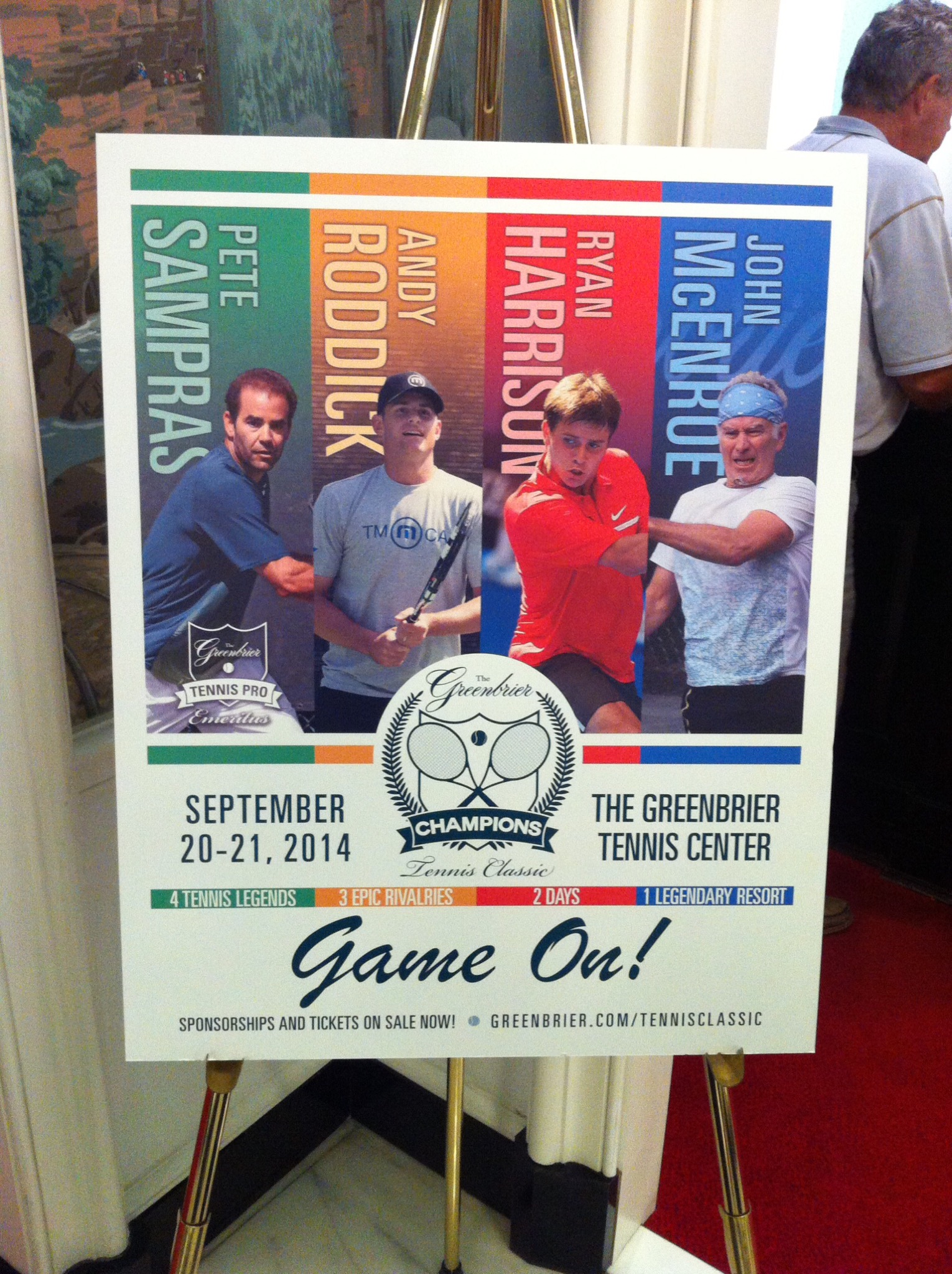
The Greenbrier has been around since 1778 and as you can see from the history timeline below has seen some interesting times. We checked in and had a quick look around – it is a grand old place. We also discovered that they were holding The Greenbrier Tennis Classic and Pete Sampras, Andy Roddick, Ryan Harrison and John McEnroe were in the house. We actually saw John McEnroe in action after we finished our round of golf – he was playing a social doubles game.

The Greenbrier has 6 golf courses. The Old White held the first Greenbrier Classic in 2010, an event that is now held annually in June. In 2011, it was announced that The Old White is now The Old White TPC, joining the most prestigious golf courses in the nation within the PGA TOUR’s The Tournament Player’s Club Network.

The other courses include The Greenbrier, The Meadows, Oakhurst Links (1884) and The Snead.

Built in 1884, Oakhurst Links is a unique 30-acre course, museum and clubhouse listed on the National Register of Historic Places and located just a few miles north of The Greenbrier.

Russell Montague, the original owner, learned about golf in Scotland and built the course with some local friends before any other course existed in America. Guests of The Greenbrier then thought golf was an oddity – so rare was the game at that time. The first competition at Oakhurst was held in 1888 in the Scottish match play tradition, and Montague and his friends played on their course for many years.

Today, conventional golf clubs are not used at Oakhurst. Instead, players use hickory-shafted clubs and hit gutta-percha balls off tees fashioned from sand and water the same way it was done more than 130 years ago.

The Snead is exclusive to members of The Greenbrier Sporting Club. It was designed by Tom Fazio and named after the famous Sam Snead (1912 – 2002) who was the involved with The Greenbrier from the 1930’s.

The History Timeline of The Greenbrier

1778 – Earliest guests come to White Sulphur Spring to “take the waters” to restore their health.

1830s – The resort enters its first period of prominence as politicians, judges, editors, lawyers, diplomats, ministers, planters and merchants, primarily from the Southern states, annually congregate at the “village in the wilderness.” They do so only in the summer months because the 2,000-foot elevation offers relief from the heat and humidity down in the lowlands. The antebellum resort consists only of cottages and many including Paradise Row, Alabama Row and Baltimore Row still stand today.

1830-1861 – Before the Civil War, five sitting presidents stay here, demonstrating the resort’s reputation as the favored gathering place for the nation’s most influential and powerful families.

1858 – White Sulphur Springs’ well-established status as America’s most fashionable social resort leads to the construction of the first large hotel in 1858. It is officially named the Grand Central Hotel but affectionately known as “The Old White.”

1861-1865 – The resort closes during the Civil War. During that conflict, both sides occupy the grounds, using the hotel either as a hospital or military headquarters.

1865 – Shortly after the war’s end, it reopens and the resort’s prospects are incalculably improved with the completion of the Chesapeake and Ohio Railway in 1873.

1910 – The Chesapeake and Ohio Railway purchases the historic resort property and embarks upon a major expansion.

1913 – The railroad adds The Greenbrier Hotel (the central section of today’s hotel), a new Mineral Bath Department (the building that includes the grand Indoor Pool), and an 18-hole golf course (now called The Old White Course) designed by the most prominent contemporary golf architect, Charles Blair Macdonald.

1914 – For the first time, the resort, now renamed The Greenbrier opens year round. President and Mrs. Woodrow Wilson spend their Easter holiday at The Greenbrier, and Joseph and Rose Kennedy travel down from Boston for their October honeymoon.

1920s – The Greenbrier takes its place within high society’s traveling network that stretches from Palm Beach, Florida, to Newport, Rhode Island.

1922 – The obsolete Old White Hotel is removed, which leads to a substantial rebuilding of The Greenbrier Hotel in 1930. This refurbishment doubles the number of guest rooms to five hundred. Cleveland architect Philip Small redesigns the hotel’s Main Entrance and adds both the Mount Vernon-inspired Virginia Wing and the signature North Entrance façade.

1941 – The U.S. State Department leases the hotel for seven months after the U.S. entry into WWII. Hundreds of German, Japanese and Italian diplomats and their families are relocated from Washington, D.C., until their exchange for U.S. diplomats similarly stranded overseas is completed.

1942 – The U.S. Army purchases and converts the hotel into a 2,000 bed hospital known as Ashford General Hospital. Over the course of four years, 24,148 soldiers are admitted and treated at the surgical and rehabilitation center.

1946 – The Chesapeake and Ohio Railway reacquires the hotel from the U.S. government and commissions a comprehensive interior redecoration by the noted designer Dorothy Draper.

1948 – The Greenbrier reopens in 1948. Sam Snead returns as golf pro to the resort where his career began in the late 1930s. More than any other individual Sam Snead establishes The Greenbrier’s reputation as one of the world’s foremost golf destinations.

1950s – The U.S. government once again approaches The Greenbrier for assistance, this time in the construction of an Emergency Relocation Center, a bunker or bomb shelter, to be occupied by the U.S. Congress in case of war. The classified underground facility is built in conjunction with an above ground addition to the hotel, the West Virginia Wing. For thirty years the facility codenamed Project Greek Island is maintained at a constant state of operational readiness.

1978 – Jack Nicklaus redesigns the then fifty-year-old Greenbrier Course, bringing it up to championship standards for the 1979 Ryder Cup Matches. That course was also the site of three PGA Seniors tournaments in the 1980s and the 1994 Solheim Cup competition.

1992 – At the end of the Cold War, and prompted by exposure in the press, the project is terminated and the bunker decommissioned.

1999 – The Meadows Course evolves when Bob Cupp redesigns, reroutes, and upgrades the older Lakeside Course, a project that includes the creation a new Golf Academy.

2000 – The Greenbrier Sporting Club begins developing selected portions of the resort’s 6,500 acres into neighborhoods of custom-designed homes featuring panoramic views of the surrounding Allegheny Mountains.
2004 – The new infinity edge outdoor pool opens, offering a spectacular view of the Allegheny Mountains.

2006 – Golf course architect Lester George creates a challenging new version of the Old White Course based upon a historic restoration inspired by the original C. B. Macdonald design.

May 7, 2009 – Jim Justice, a West Virginia entrepreneur with a long-standing appreciation for The Greenbrier, becomes the owner of America’s most fabled resort. He purchases it from the CSX Corporation which, through its predecessor companies the Chessie System and the C&O Railway, had owned the resort for ninety-nine years.

August 2009 – Construction begins on the most beautiful casino in the world, one that will include shops, restaurants, and entertainment in a smoke-free environment. Carleton Varney is commissioned to extend the legendary “High Style of Dorothy Draper” throughout the new entertainment venue.

July 2, 2010 – The Casino Club at The Greenbrier opens in grand fashion.

2010 – Mr. Justice arranges to relocate a PGA TOUR event with a multi-year contract under the name The Greenbrier Classic. The Greenbrier’s Golf Pro Emeritus, Tom Watson, flies in to join Mr. Justice for the announcement. The first Greenbrier Classic is held July 26 through August 1, 2010.

March 28, 2011 – The Old White becomes a Tournament Players Club (TPC) Network course.

September 2012 – The inaugural Greenbrier Champions Tennis Classic won by Pete Sampras.

April 2014 – Pete Sampras is named The Greenbrier’s first Tennis Pro Emeritus.

July 2014 – The New Orleans Saints Training Camp is relocated to The Greenbrier.

IMG_0920.JPG

IMG_3185.JPG

IMG_0919.JPG

IMG_3195.JPG

IMG_3188.JPG

Posted in West Virginia, USA | Leave a comment

Kearney Hill Golf Links – Kentucky, USA

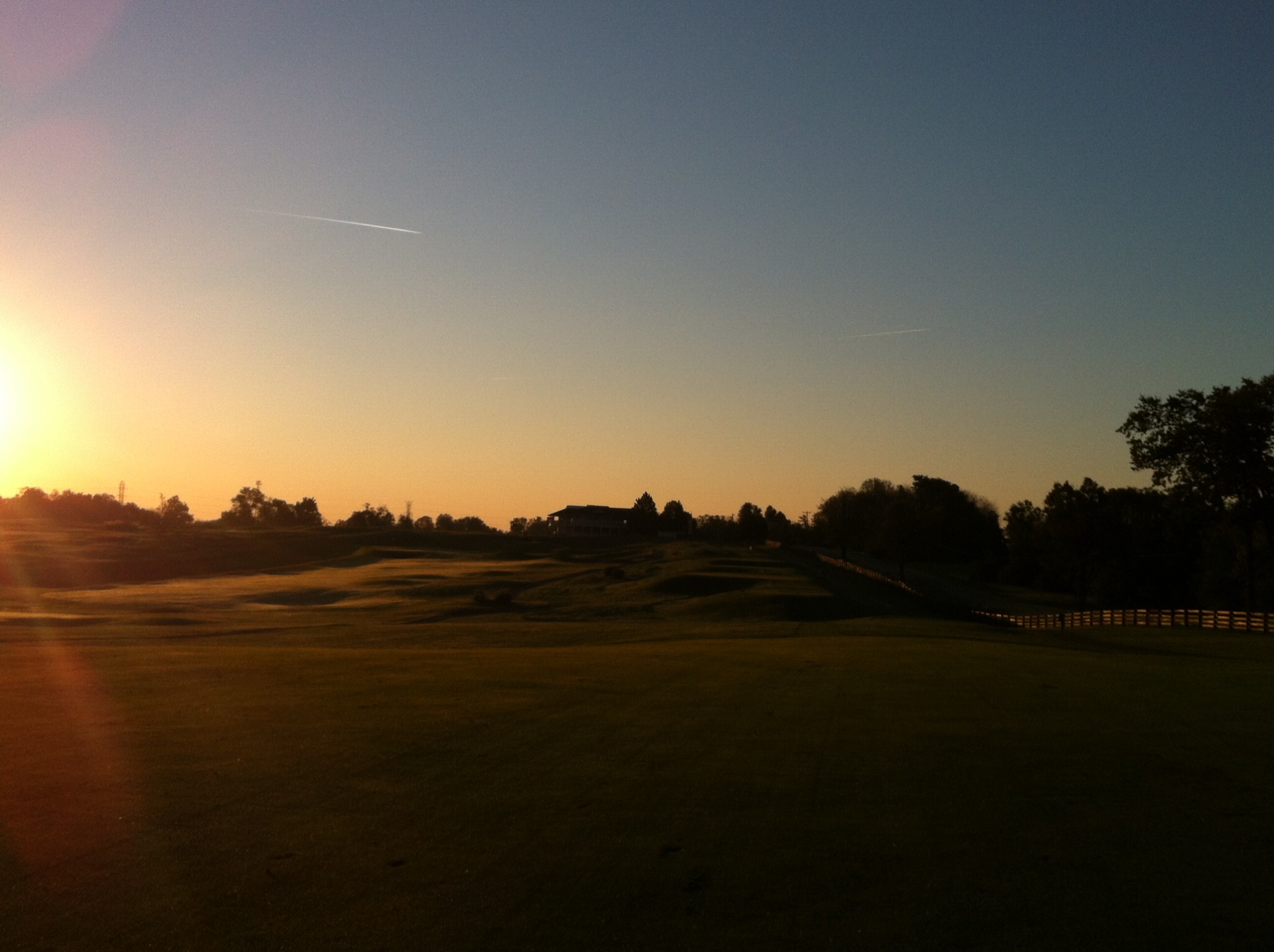
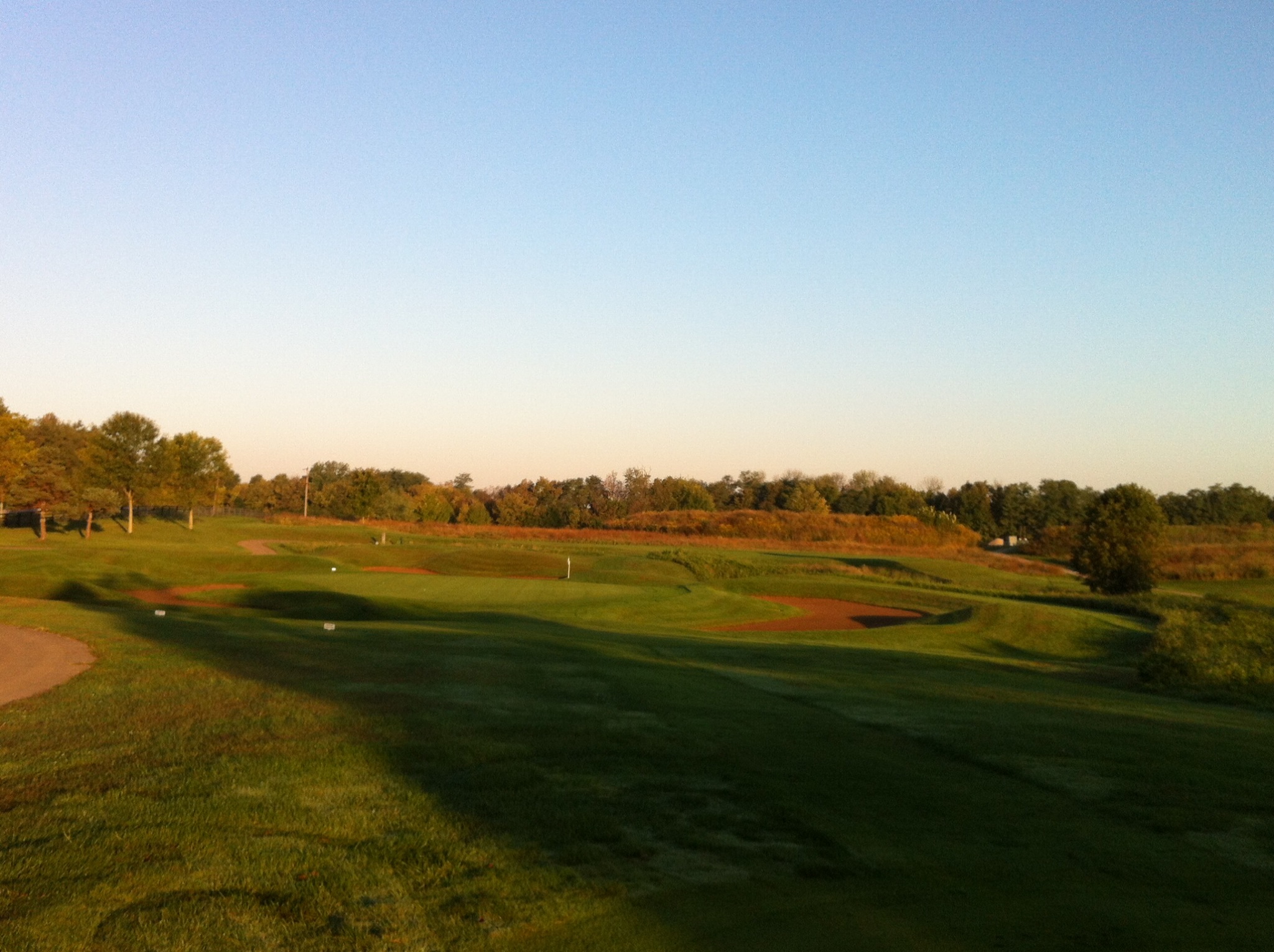
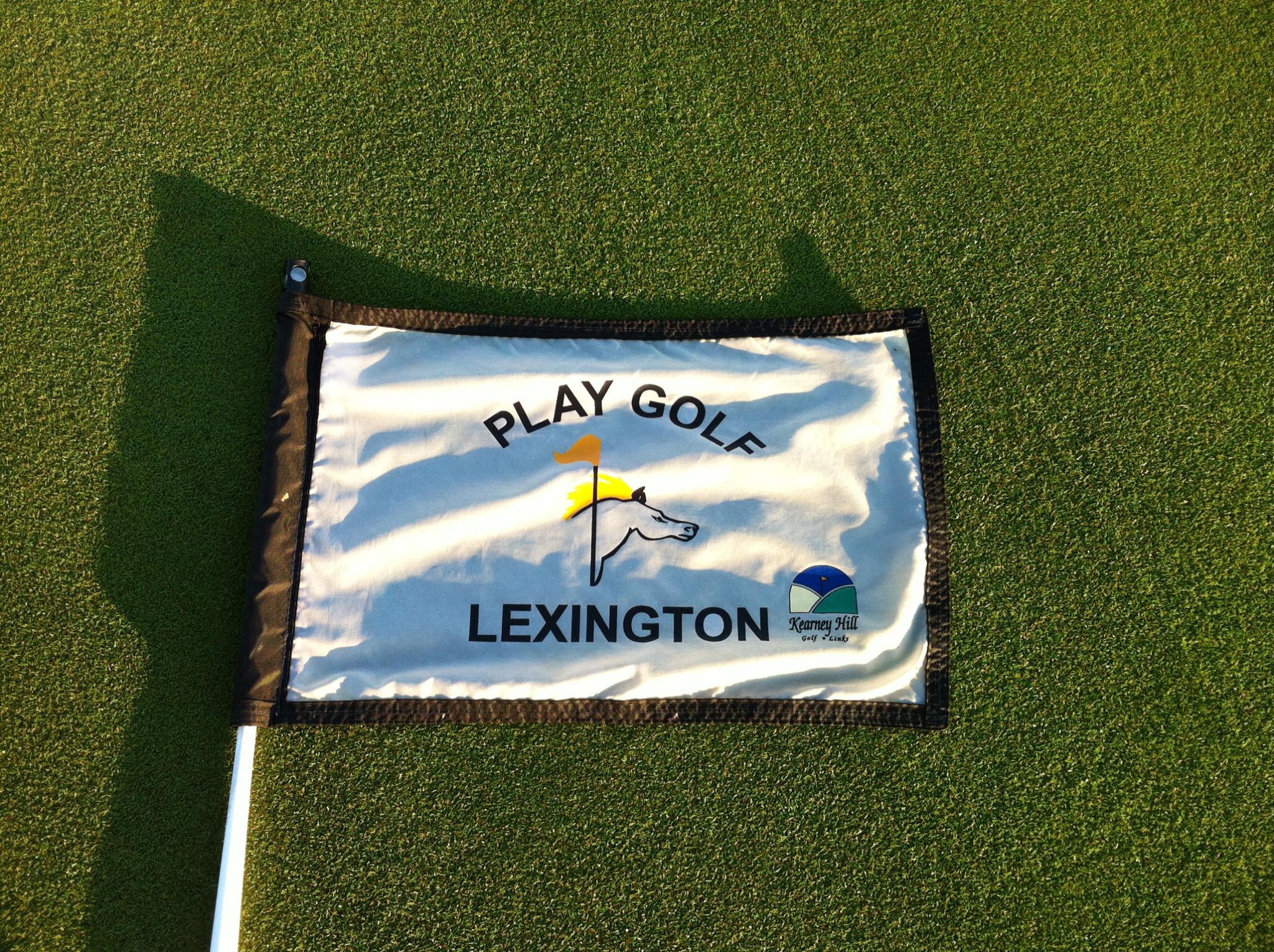
The Kearney Hill Golf Links were recommended to us by a number of people so we went and played it this morning. It is another Pete Dye designed course and is owned by the State of Kentucky. We got out there in time to see the sun rise over the course – it was a lovely morning. Again the Starter was so friendly and made us feel very welcome. Bud, the guy in the Pro Shop was also super friendly and gave us a book on Pete Dye designed golf courses. He said “you came all the way from NZ to play our course so we want to give you something – thanks so much for coming on out”

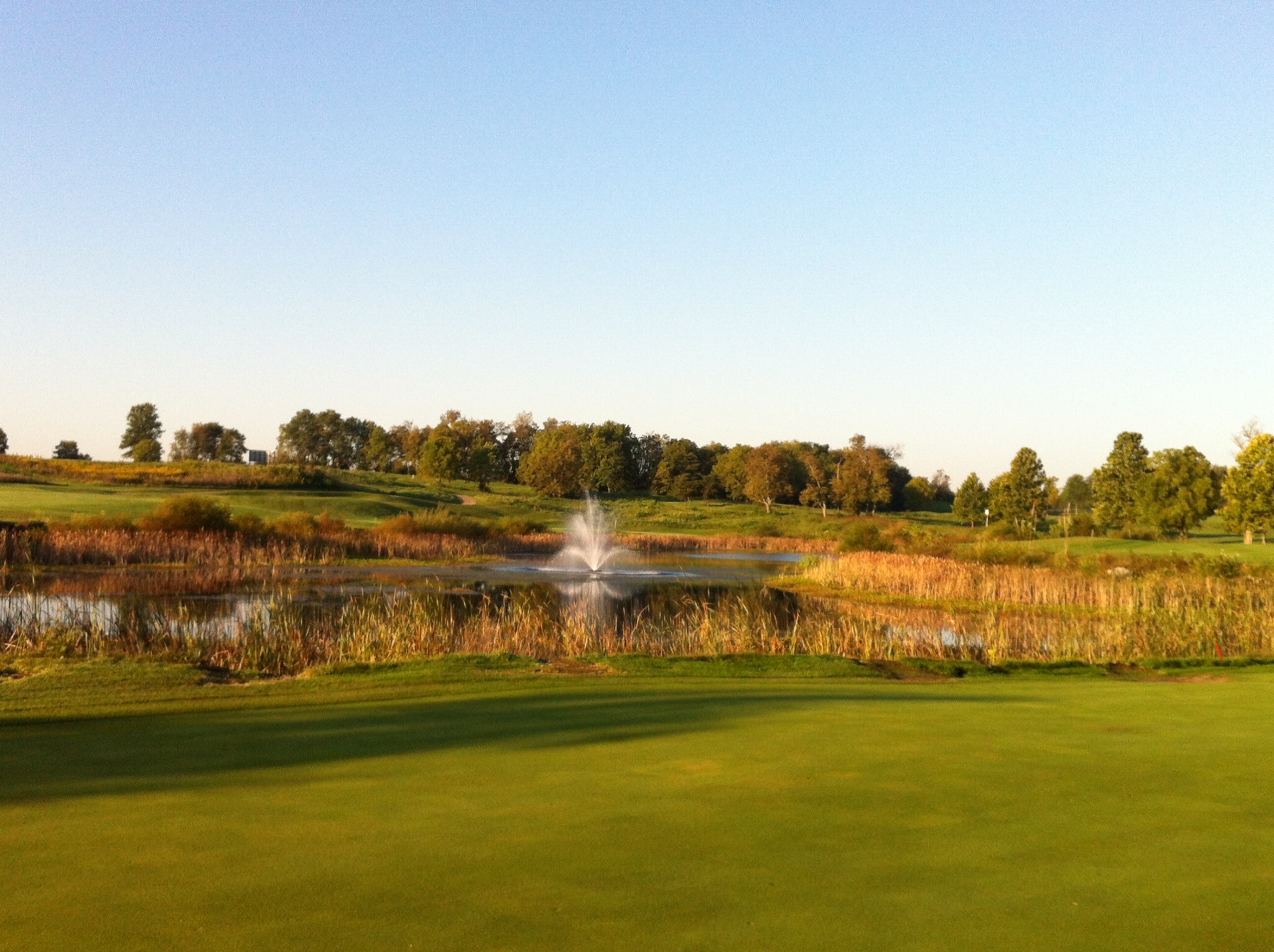
The course was great and featured lots of natural bush and water hazards. We had an encounter with one of the green keeping staff after my drive went straight where I aimed it instead of the little fade that I have become used to. The ball bounced not far from where he was working so when I got up there he told me it had gone into the rough and I probably wouldn’t find it. He then recognised that we weren’t from around these parts and when we told him we were from NZ he said “I ain’t met nobody from NZ before. I went to Washington in the winter and I met someone from England, that’s the furtherest away person I’ve ever met”. It really was his lucky day : )

After failing to find my ball in the rough I emerged with all these biddy bids on my skirt – I didn’t realise until I sat in the cart – my poor white tuss (as Sonya from the hotel called it). It took a few holes to get rid of those them there biddy bids.

Speaking of Sonya, Steve bought her a bottle of NZ wine the other night. She was serving someone else when he went down and she tells them, ignore him, he’s trouble. Didn’t take her long to work him out did it! Anyway she was so happy with the bottle of wine, he got a big hug – she’s saving it to drink on her 40th birthday and 8th wedding anniversary which happens to be this coming Tuesday. Apparently she is going to email Steve on Tuesday to let him know how she enjoyed the wine.

I had an exceptional front nine and was only three over. Just quietly I had also beaten Steve off the stick by one shot. Unfortunately the back nine was a different story and although I hit it well a few silly mistakes ensured I did not score well. Steve meanwhile came into his own and turned the tables on me : (

IMG_0916.JPG

IMG_3166.JPG

IMG_3168.JPG

IMG_0917-0.JPG

IMG_3165.JPG

IMG_3163.JPG

IMG_3175.JPG

IMG_3170.JPG

IMG_3174.JPG

IMG_3173.JPG

IMG_3171.JPG

IMG_3169.JPG

IMG_4637.JPG

History of Kearney Hill Golf Links…
The Lexington Division of Parks & Recreation, which already operated three municipal courses and was heavily involved with the administration of the up-and-coming Senior PGA Tour event being held at the Marriott Griffin Gate Resort, proposed an idea to construct an upscale, municipal facility to meet the needs of both the community and the region. This facility would be designed to attract players from all over the region and to attract future championships to the Lexington area as well.

Local officials retained the help of a well-known amateur player with national recognition who had lived in Lexington for many years, Johnny Owens. Owens, who played at the University of Kentucky and had competed in every major national amateur championship both in the U.S. and Europe, agreed to come on board to help make this facility a reality. Owens first developed a feasibility study and then contacted Pete Dye. Dye, along with his son P.B., accepted the challenge of designing a municipal course that would be playable by the local golfer and at the same time capable of hosting national championships.

Construction began in 1987 and the course opened on Oct. 13, 1989. The design was unique in many ways. First, Pete Dye had not done many municipal courses and his son was just beginning his design career. A rolling piece of 200 acres of land was found in northern Fayette County. The land was wide open, contained only a handful of trees, an old cemetery and no water. The design would feature very large greens, wide fairways and a lack of trees which would make the course friendlier for the average municipal golfers yet challenge the best players. These characteristics defined the classic links-style course.

Since it opened, Kearney Hill Golf Links has gone beyond fulfilling the expectations of everyone involved. It has hosted many national and local championships, has been enjoyed by golfers of all skill levels and has been recognized as one of the best by publications such as Golf Digest, Golf World, Links Magazine and the Wall Street Journal.

Posted in Kentucky, USA | Leave a comment

Unique Horse Farm Tours – Kentucky, USA

We are in Kentucky, the horse capital of the world and I thought we can’t come all this way and not check out a horse farm tour. As we’ve been driving to the golf courses we have noticed the beautiful rural properties with the horses frolicking beyond the typical horse fencing.

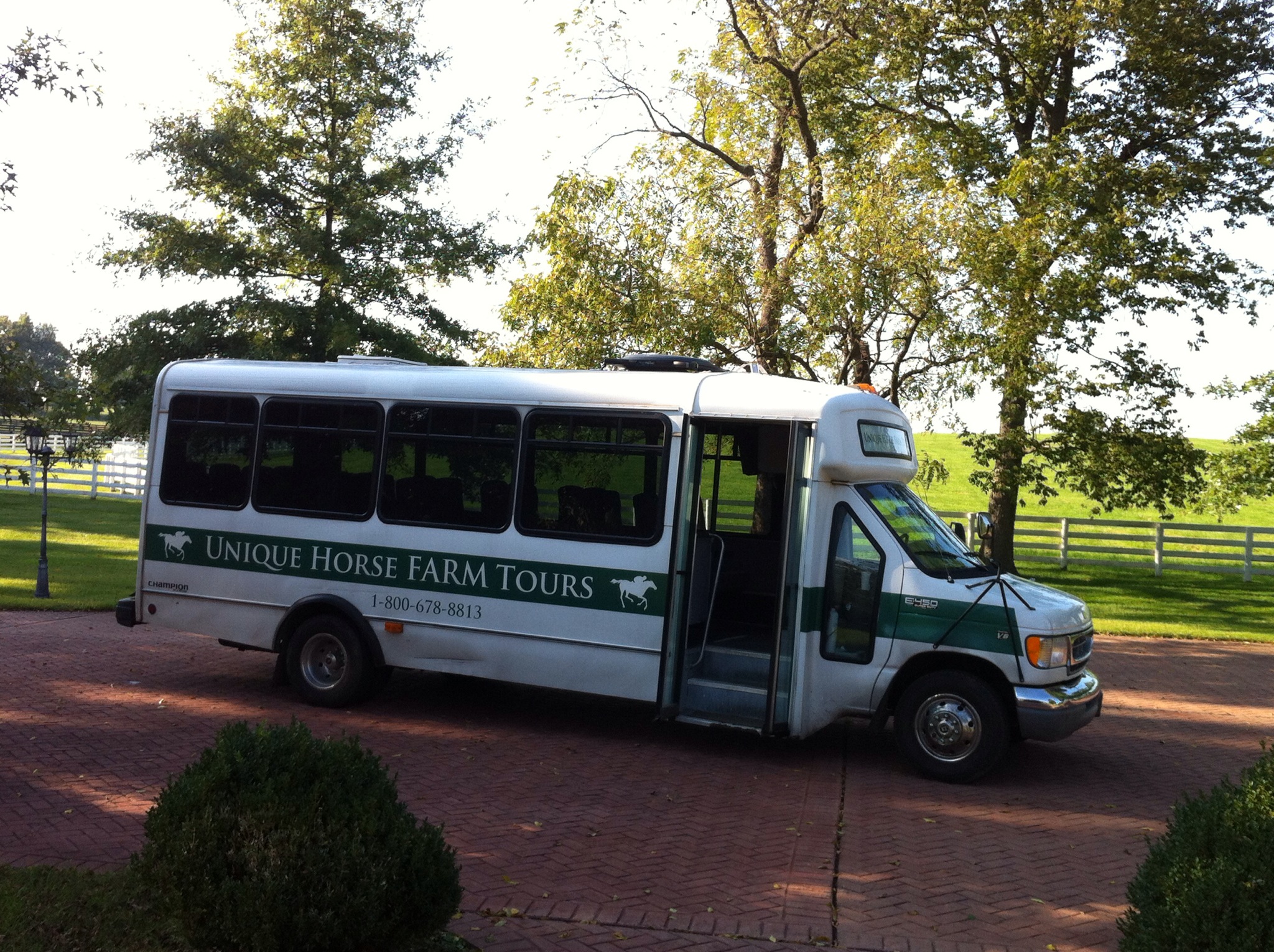
I booked a tour via the Kentucky Horse Park on the Unique Horse Farm Tours and unique it was. Our guide Shaun Washington picked us up from the Visitor Centre at the Kentucky Horse Park. He was a born and bred Kentuckian and a very jovial character. What he didn’t know about the horses, trainers and farm owners wasn’t worth knowing. Being non horse people it was all a bit foreign to us but extremely interesting.

One of the first things Shaun pointed out was the black and white railing fences. Apparently the white paint is nearly six times as expensive as the black paint and the black paint lasts about three times longer. Being accountants we knew which one we would be going with. Steve asked the question – why have any white fences at all then? Apparently it is just a bit of a prestige thing and Shaun pointed out that most of the wealthiest horse farm owners have black railing fences – that’s why they’re wealthy!

Shaun explained to us that central Kentucky where we were is referred to as the Bluegrass State due to the colour of the pastures. He was chuckling away saying that in his 50 years in Kentucky he has never seen blue grass but apparently that is one of the reasons it is such good horse breeding country – the quality of the land and pastures. We were talking about NZ and he said that it is on his bucket list – we warned him though that our grass was green : )

Shaun talked about some of the horse farm owners in the area – there are some wealthy people that own property and horses in this State although there really isn’t any money in horses. Most of the horse farm owners have made money elsewhere and due to a passion for horses they have invested in the industry. The first farm we stopped at was called Katierich farm and is effectively a hobby farm although it cost it’s owner about USD15 million. It’s owner made his money as a hedge fund manager in New York and named the place after his daughter (Katie) and his son (Richard). The farm employs about 30 people and has about 70 breeding horses and foals. These horses have better accommodation than some people.

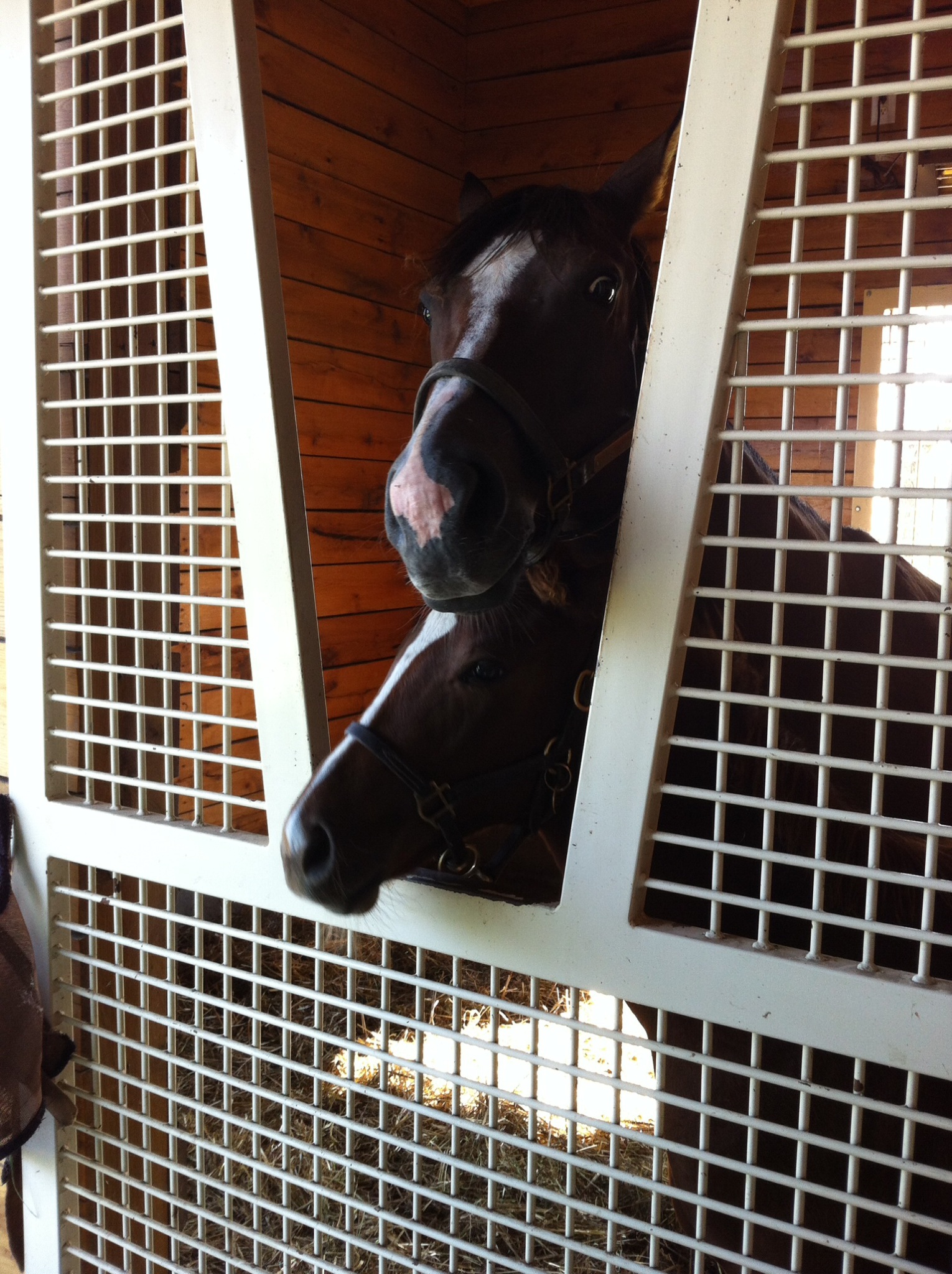
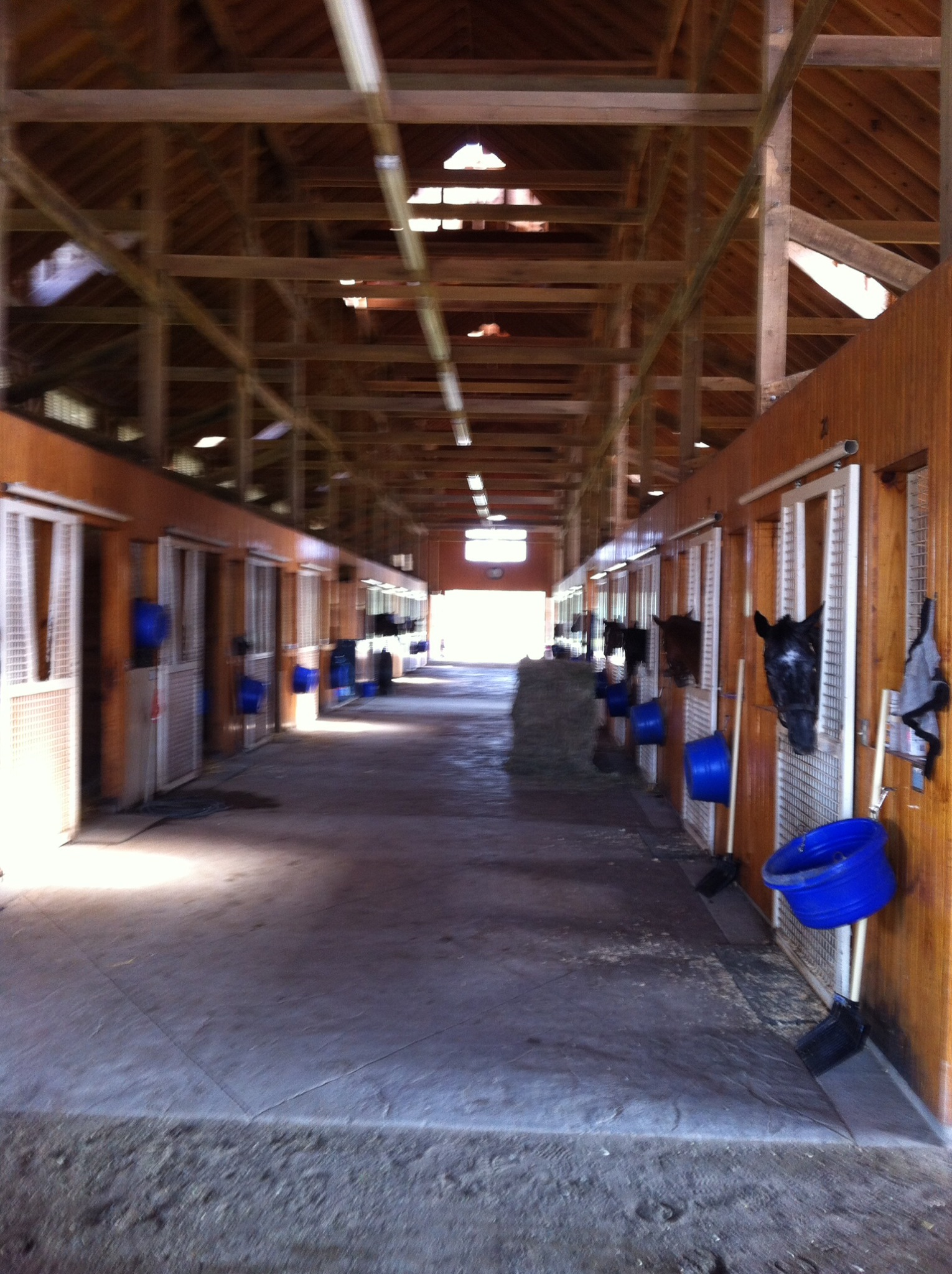
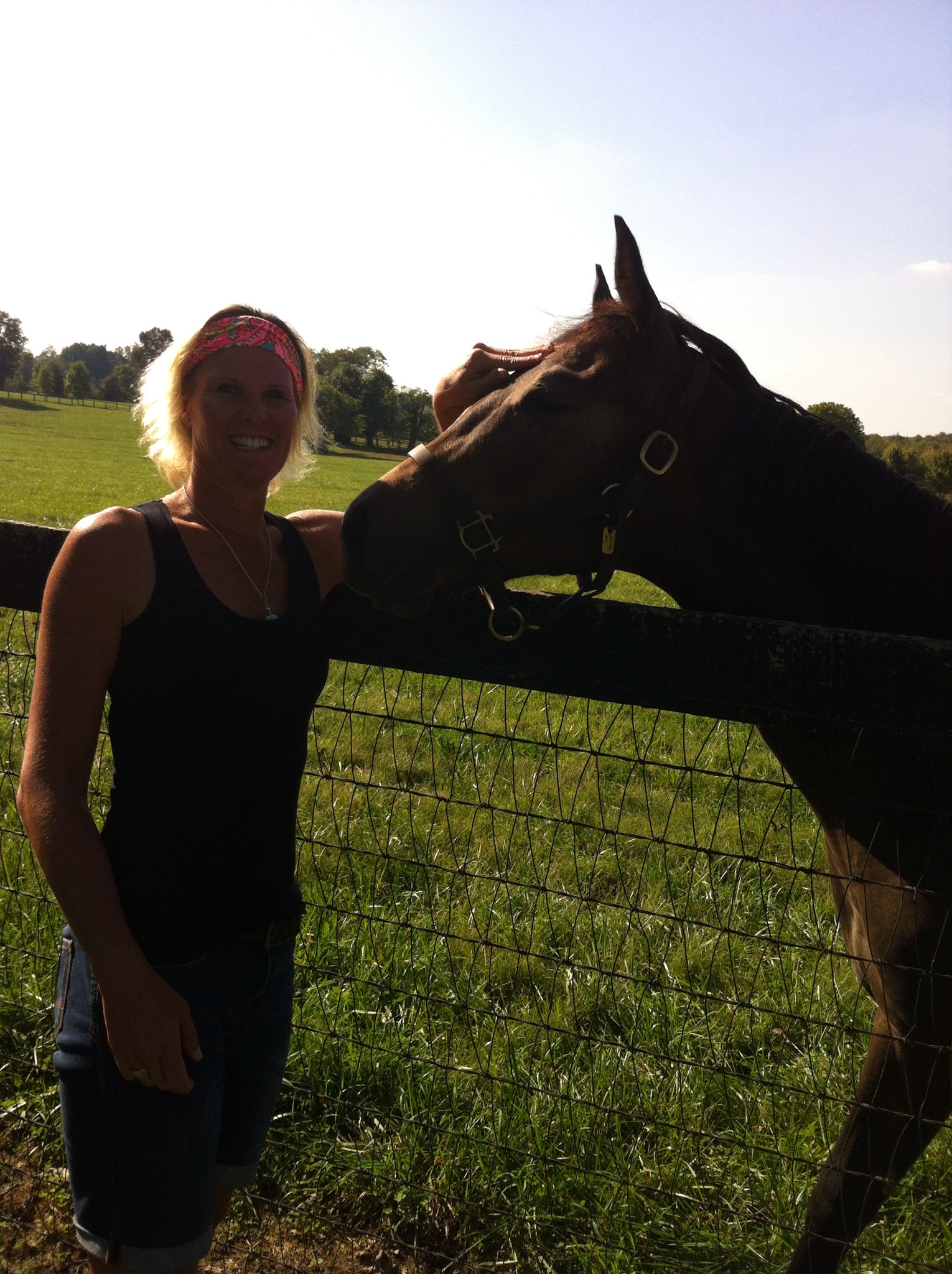
We went into the stables and were able to pat all the horses and foals. Steve had a lot of fun getting up close and personal with these beautiful creatures. There were some very expensive breeding mares in these stables.

IMG_3133.JPG

IMG_3134.JPG

IMG_3135.JPG

IMG_3138.JPG

IMG_3144.JPG

The Kentucky Derby is a horse race held annually in Louisville, Kentucky, United States, on the first Saturday in May, capping the two-week-long Kentucky Derby Festival. The race is a Grade I stakes race for three-year-old Thoroughbreds with a length of one and a quarter miles (2 km) at Churchill Downs. Colts and geldings carry 126 pounds (57 kilograms) and fillies 121 pounds (55 kilograms). The race is known in the United States as “The Most Exciting Two Minutes In Sports” or “The Fastest Two Minutes in Sports” for its approximate duration, and is also called “The Run for the Roses” for the blanket of roses draped over the winner. It is the first leg of the American Triple Crown and is followed by the Preakness Stakes, then the Belmont Stakes. The Kentucky Derby has been run every consecutive year since 1875. A horse must win all three races to win the Triple Crown.

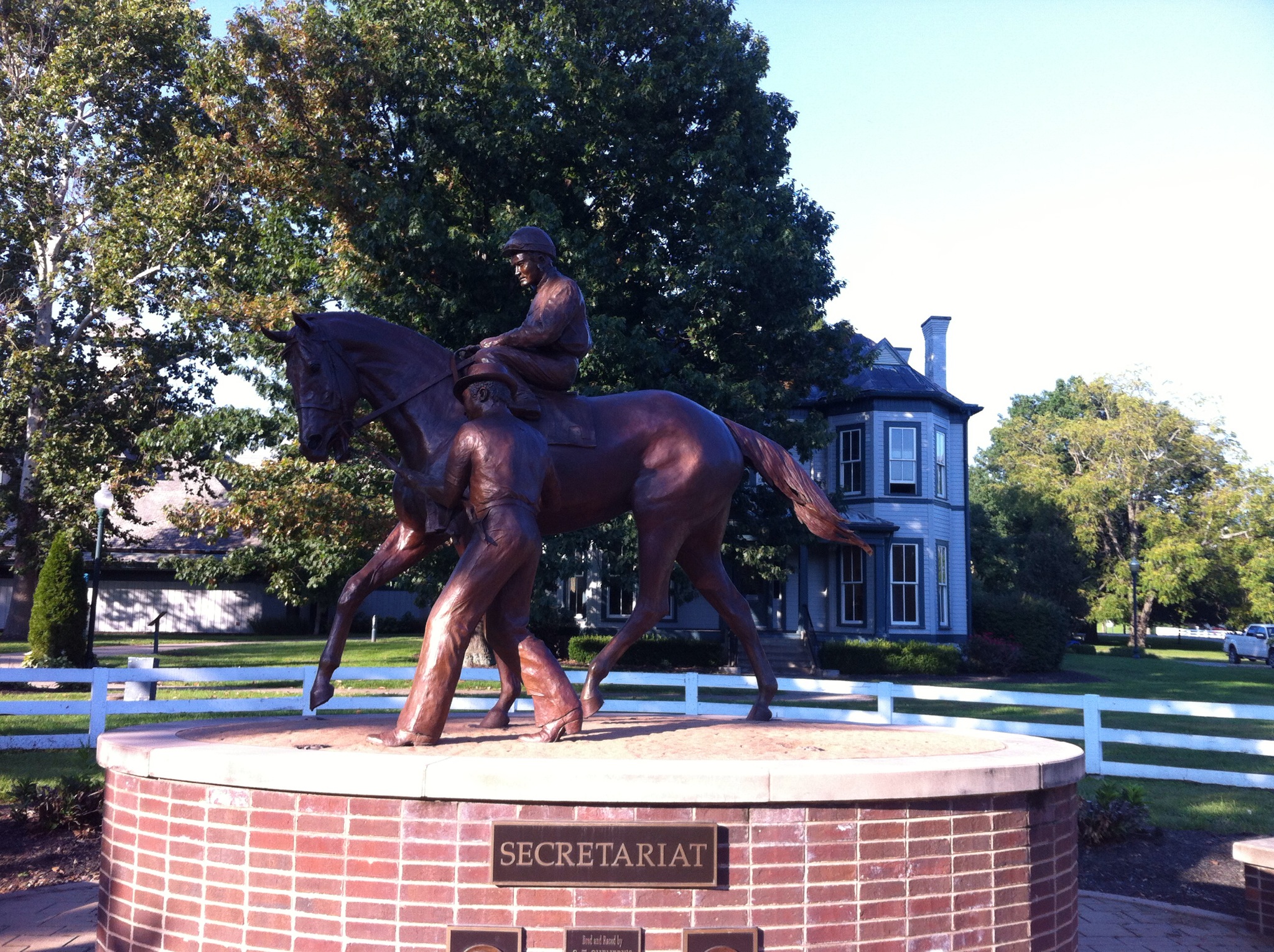
In Shaun’s opinion Secretariat will be the best horse that he will see in his lifetime despite being ranked second behind Man o’ War in The Blood Horse’s List of the Top 100 U.S. Racehorses of the 20th Century. Secretariat (March 30, 1970 – October 4, 1989) was an American Thoroughbred racehorse that in 1973 became the first U.S. Triple Crown winner in 25 years. He set race records in all three events in the series – the Kentucky Derby (1:59 2/5), the Preakness Stakes (1:53), and the Belmont Stakes (2:24) – records that still stand today.

IMG_4613.JPG

IMG_4614.JPG

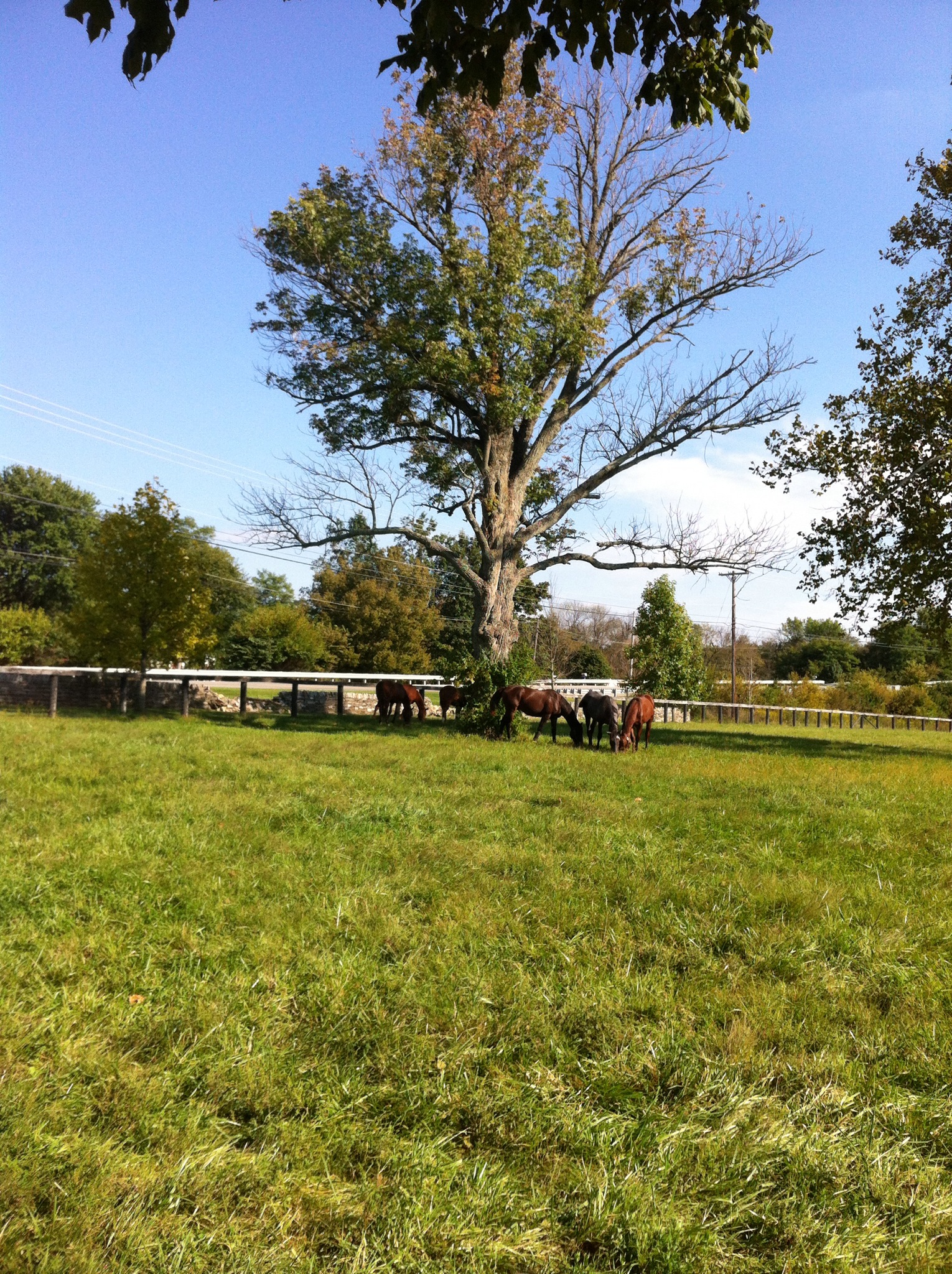
We then went to another horse farm called Hurricane Hall owned by Brad Kelley a billionaire businessman who made his money in tobacco. He is the fourth largest land owner in the USA. Here we got acquainted with some stallions and mares that were grazing in the paddocks.

IMG_4596.JPG

IMG_4601.JPG

IMG_4606.JPG

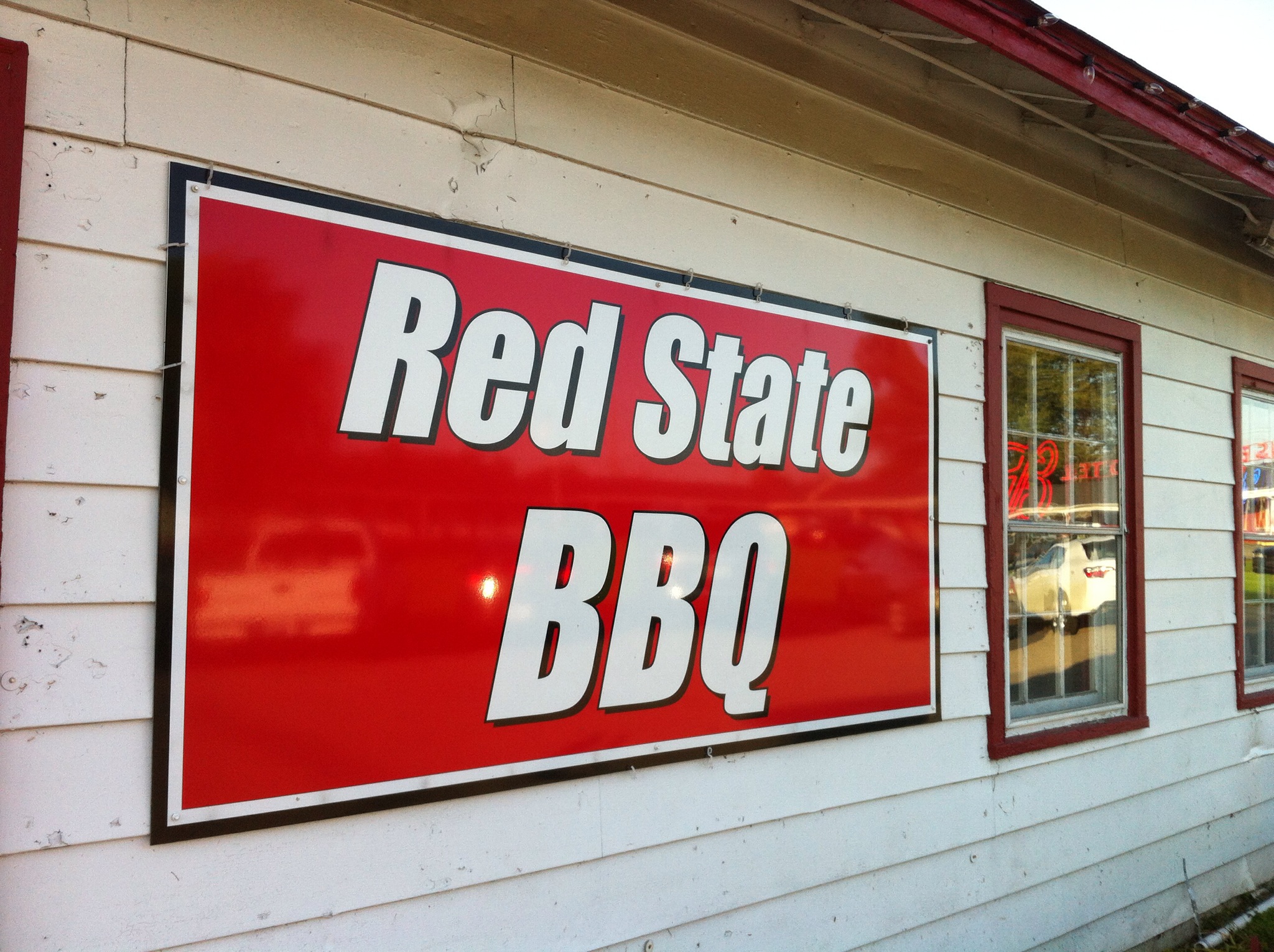
We then popped across the road to the Red State BBQ. Shaun wanted to shout the ladies on the tour a chocolate bourbon ice cream – it was pretty good : ) This place didn’t look much but Shaun couldn’t speak highly enough of the food they served – brisket, corn pudding, ribs. The staff were so friendly and even bought out a plate of brisket for the guys to try. I didn’t have any but Steve said it was delicious, so much so he wanted to come back for dinner. They cook it slowly for 14 hours and bourbon plays a role.

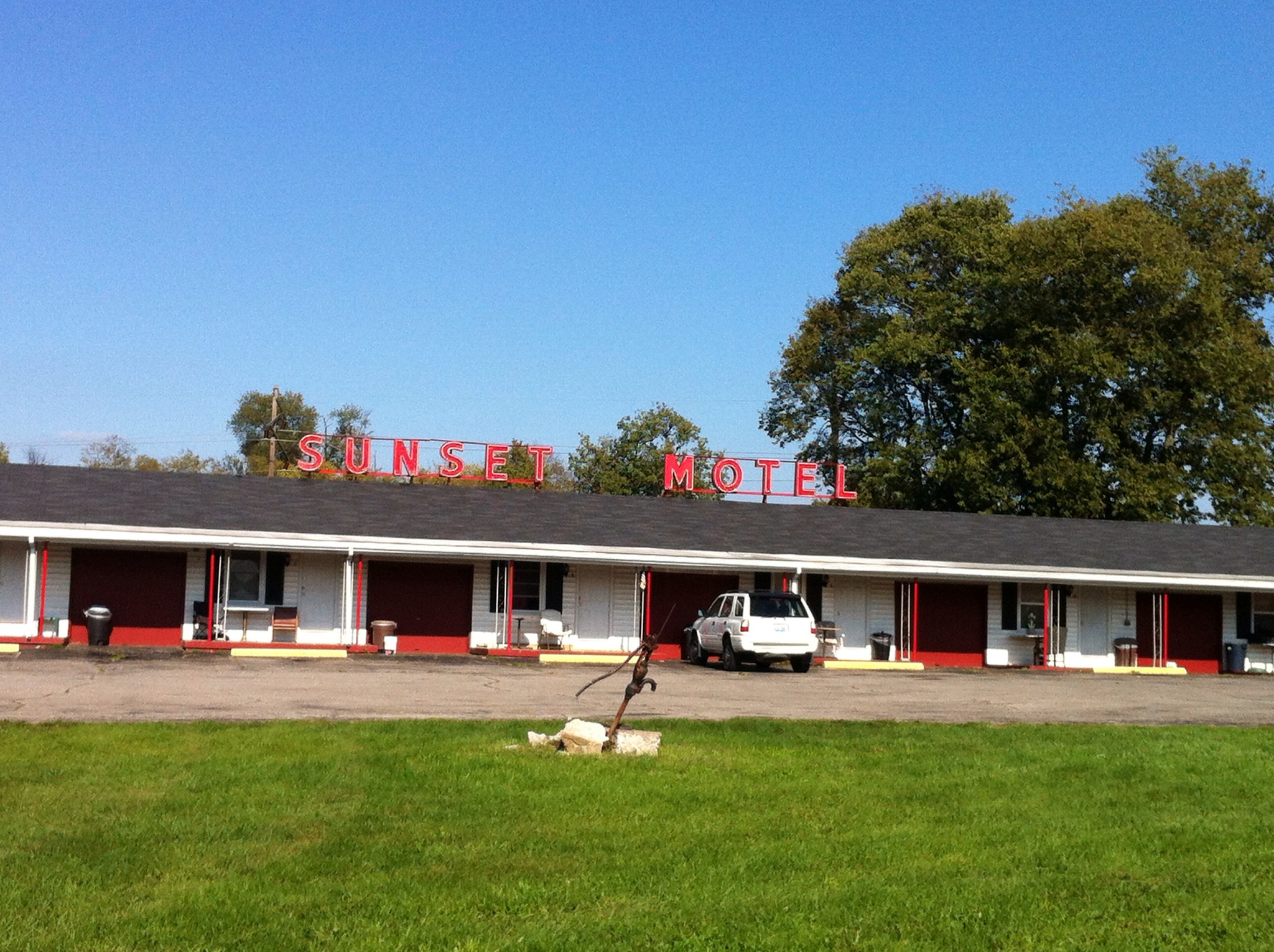
Next door to the Red State BBQ was the Sunset Motel. Shaun told us you didn’t want to be anywhere near that place after sunset! It so reminded me of the places where Jack Reacher stays in the Lee Childs novels.

IMG_4607-0.JPG

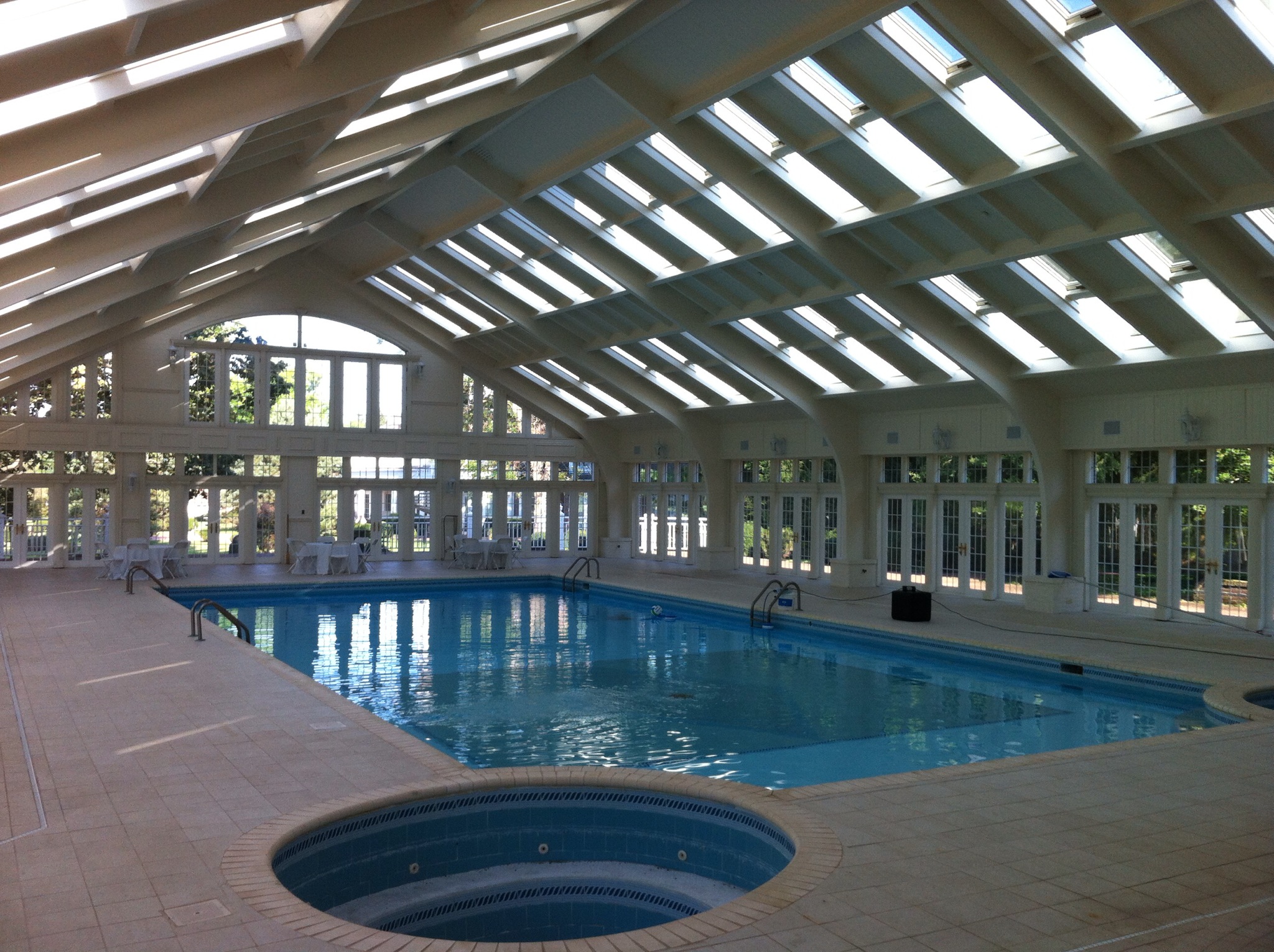
Next stop on the tour was not listed in the brochure. Shaun’s mate is currently looking after this huge house with a fancy pool house for a guy in New York. Apparently the guy in New York bought the place in the recession for USD3.2 million, spent about USD500,000 on it and put it back on the market for USD5 million. No takers so he lowered the price to USD4 million, still no takers so it is now on for USD3.8 million. Shaun’s mate is staying there rent free while it is on the market just keeping an eye on the place. Shaun wanted to show us the pool house – it is huge. Shaun is apparently going to have his son’s 6th birthday party there. I’m not sure if the owner knows that his pool house is featuring on the Unique Horse Farm Tours or if it will soon be hosting a 6 year old’s birthday party! We didn’t go into the house (that would probably be pushing the boundaries) but it has 6 bedrooms and 11 toilets. You could actually live in the pool house – it had a kitchen, bathroom, mezzanine floor and bedroom.

IMG_4610.JPG

IMG_4612.JPG

IMG_4608.JPG

IMG_4609.JPG

Shaun sure was a character. He told us that he organises the monthly farm owners poker game where some serious money is played for. He does all the catering and tends the bar. He said depending on who wins he can take a tip of USD3,000 home at the end of the night. Given the winner is taking home about USD180,000 he thought the USD3,000 was a bit stingy : ) Buy in for the monthly poker game is USD50,000. Fact or fiction it is always good to listen to the locals spin a yarn.

After bidding farewell to Shaun we decided to go back to the Red State BBQ for dinner. They had sold out of the brisket though so Steve settled on the ribs and I had the chicken plate with corn pudding and coleslaw. The corn pudding reminded me of Watties Creamed Sweetcorn – it was quite nostalgic. We also got some peach bread pudding which was like the old bread and butter pudding we ate as kids – it was a bit sweet for my liking but I’m pleased I took another trip down memory lane. Steve declared the ribs as the best he has ever had and trust me he has had a few.

IMG_4618.JPG

IMG_4620.JPG

IMG_4619.JPG

Kentucky, officially the Commonwealth of Kentucky, is a state located in the east south-central region of the United States. Kentucky is one of four U.S. states constituted as a commonwealth (the others being Virginia, Pennsylvania, and Massachusetts). Originally a part of Virginia, in 1792 Kentucky became the 15th state to join the Union.

Kentucky is known as the “Bluegrass State”, a nickname based on the bluegrass found in many of its pastures because of the fertile soil. One of the major regions in Kentucky is the Bluegrass Region in central Kentucky which houses two of its major cities, Louisville and Lexington. It is a land with diverse environments and abundant resources, including the world’s longest cave system, Mammoth Cave National Park, the greatest length of navigable waterways and streams in the contiguous United States, and the two largest man-made lakes east of the Mississippi River.

Kentucky is also home to the highest per capita number of deer and turkey in the United States, the largest free-ranging elk herd east of the Mississippi River, and the nation’s most productive coalfield. Kentucky is also known for horse racing, bourbon distilleries, automobile manufacturing, tobacco, bluegrass music, college basketball, and Kentucky Fried Chicken.

Posted in Kentucky, USA | 1 Comment

University Club of Kentucky, Big Blue Course – Kentucky, USA

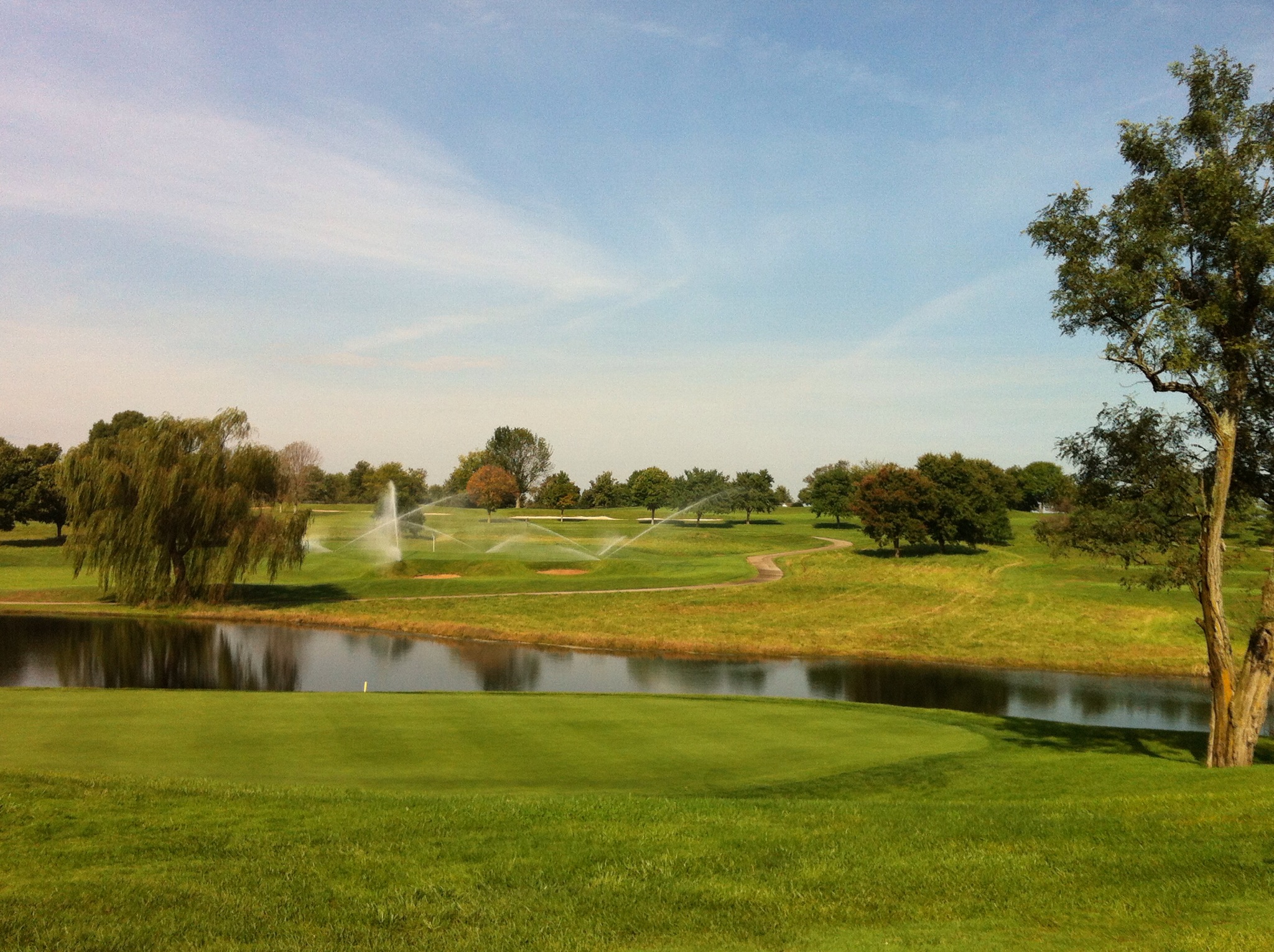
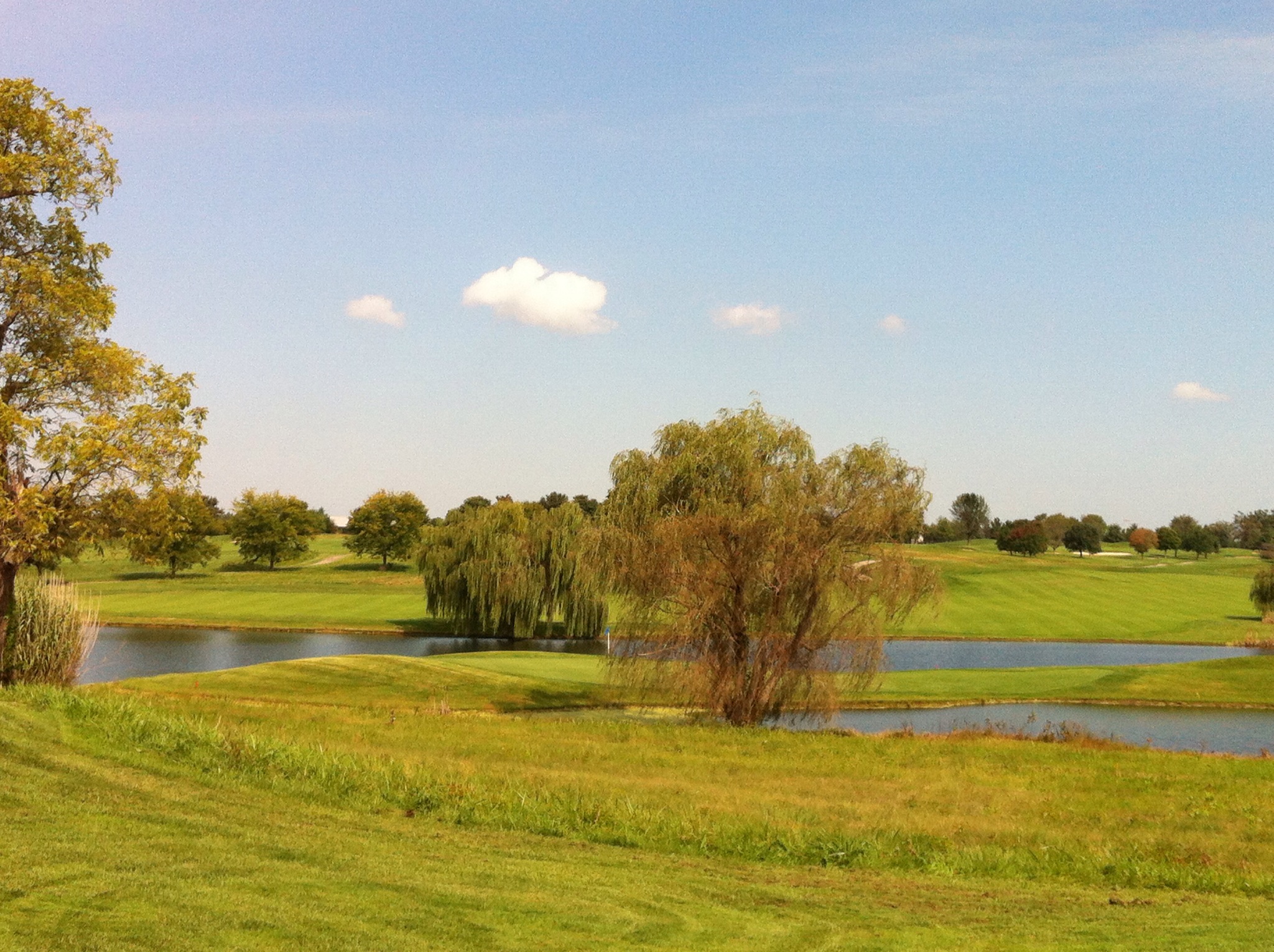
Today we played the Big Blue Course at the University Club of Kentucky. It is another picturesque course but more open than the Wildcat course. It also had a bit more water on it, hence the name Big Blue.

I didn’t score as well as I did yesterday but was pleased with my 92. I had a few too many three putts : )

IMG_3117.JPG

IMG_3123.JPG

IMG_3125.JPG

IMG_3122.JPG

IMG_3128.JPG

IMG_3120.JPG

IMG_3129.JPG

IMG_4575.JPG

IMG_4576.JPG

IMG_4577.JPG

Posted in Kentucky, USA | Leave a comment

University of Kentucky, Wildcat Course – Kentucky, USA

After golf on Tuesday we drove to Lexington in Kentucky. We stopped along the way for some lunch and were warmly welcomed by the guy behind the counter – he was customer service personified. He was quite perplexed as to why we would come to Kentucky when NZ is such a beautiful place according to the pictures he has seen. He said “you call each other mate in NZ don’t you?” I said that was a fairly common greeting so he took great pride in calling us mate.

We then arrived at our hotel and Steve checked us in while I waited in the car. He came out and said that the girl behind the desk was so cool. She loved his Kiwi accent – she probably had no idea what he was saying, quite a common problem especially after a few coronas! I met Sonya later that evening and she is a laugh a minute. Her and Steve enjoyed taking off each other’s accents.

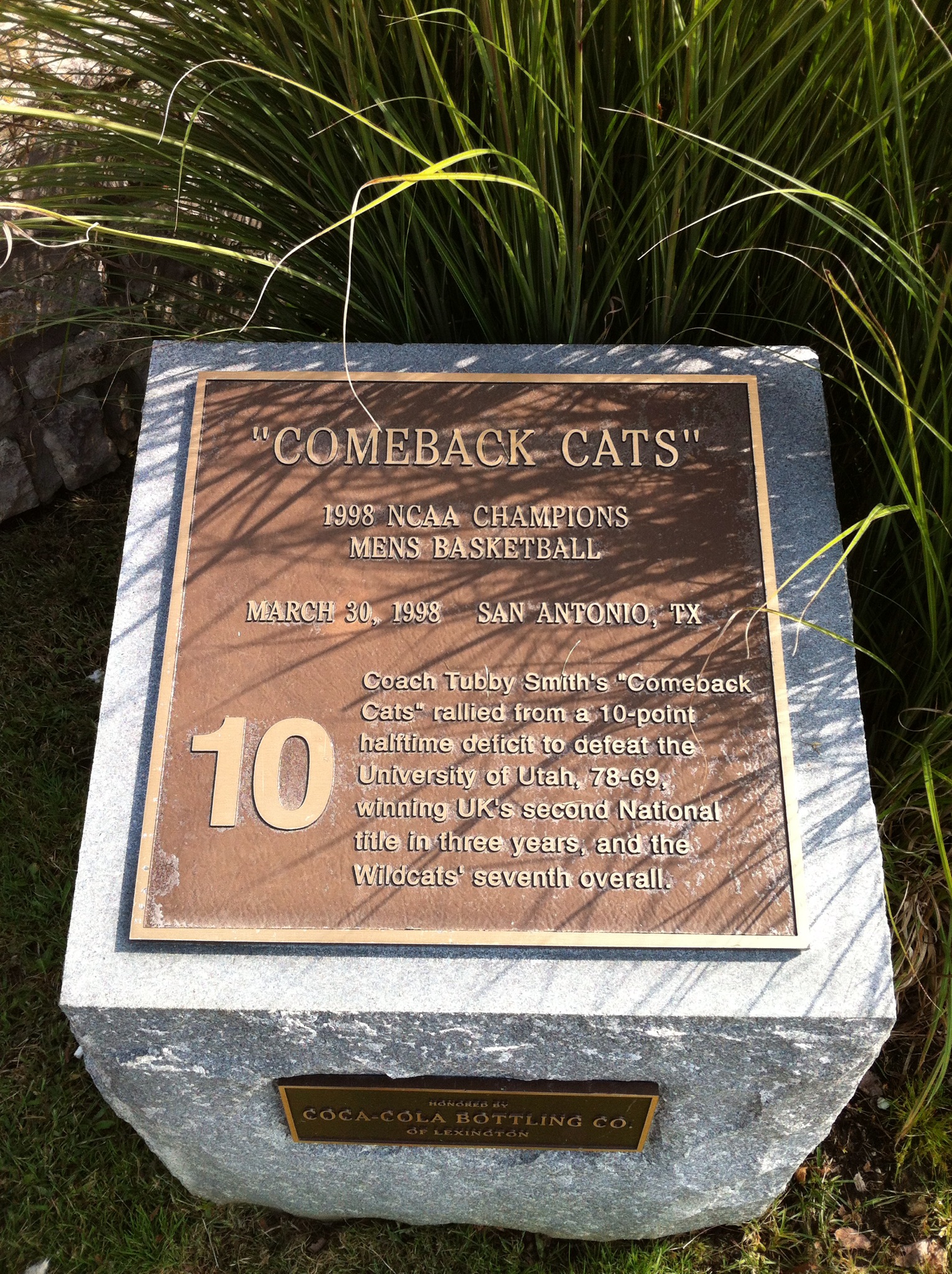
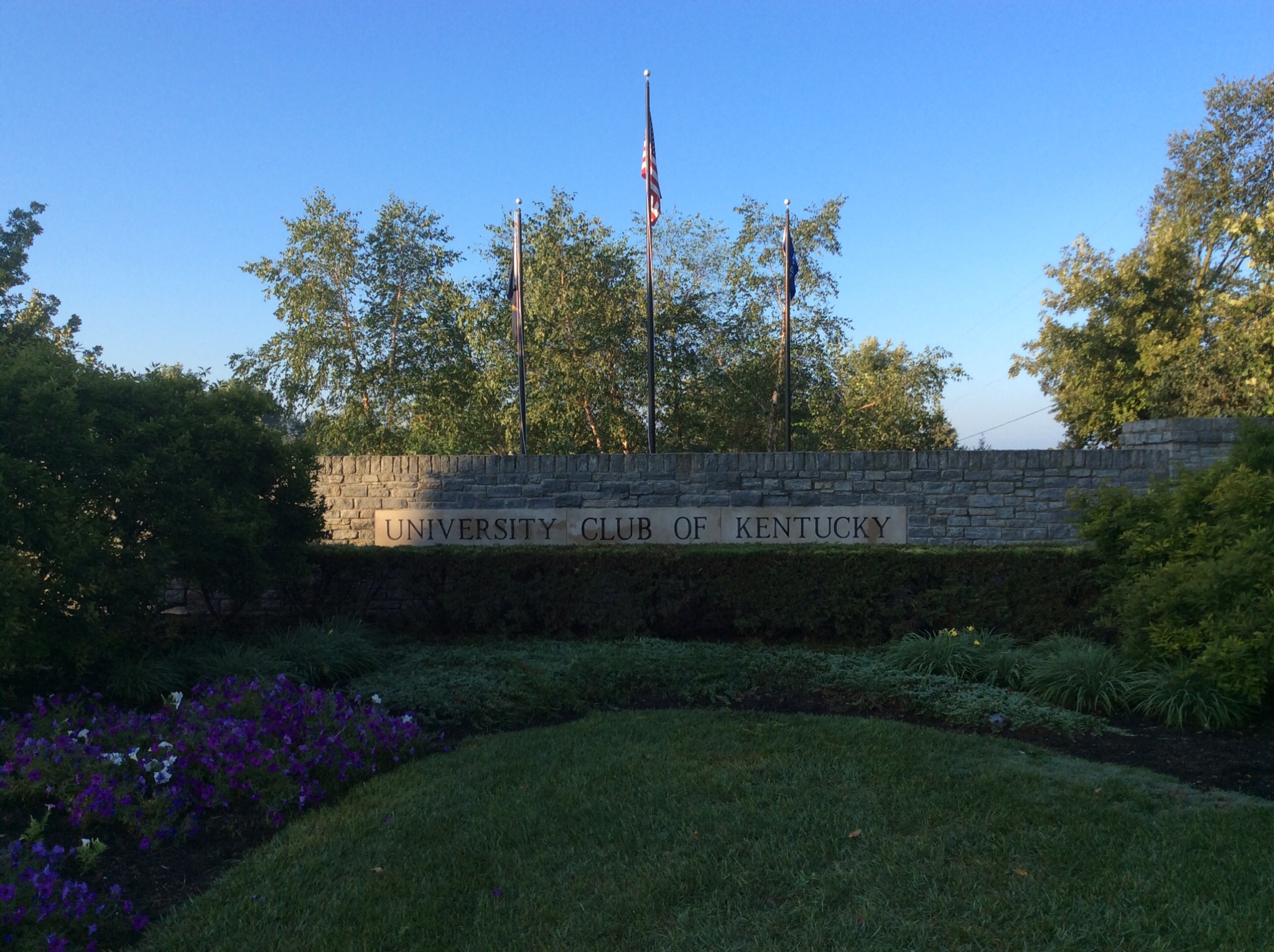
Today we went out to the University Club of Kentucky where there are two golf courses – the Big Blue and the Wildcat. The current course set ups were designed by Arthur Hills. The course is the official home of the university’s men’s and women’s golf teams and serves as the host site for all of the University of Kentucky tournaments. In the car park they have a dedicated spot for JB Holmes who is a professional on the PGA. He is from Kentucky and went to the University of Kentucky. The University of Kentucky men’s basketball team are called the Wildcats.

Steve had called to book us in yesterday and no one answered the phone, he then emailed them and the email bounced. We managed to book online after that. When we turned up at the Club this morning the young guy in the Pro Shop was sitting with his feet up on the counter, very casual. Steve told him about the phone and email issues – his response “oh yeah, that’s been a problem for like the last ten years”. Those customer service standards in Kentucky just got a small blot on them.

We played the Wildcat today which was a very picturesque course. I finally had a great round – you might have noticed that there has been very little reference to my scores in previous blogs. This has been for good reason – the scores haven’t been flash. Today I shot 83 and that included an 8 on a par 4 due to going in the water! The sun was shining, my timing was on, all was well with the world.

IMG_3116.JPG

IMG_3114.JPG

IMG_3101.JPG

IMG_3115.JPG

IMG_3113.JPG

IMG_3103.JPG

IMG_3106.JPG

IMG_3107.JPG

IMG_3110.JPG

Posted in Kentucky, USA | 1 Comment

The Fort Golf Resort, Indianapolis – Indiana, USA

We arrived into Indianapolis from South Bend on Sunday afternoon. We were staying at the Fort Harrison State Park Inn which overlooks The Fort Golf Resort. As a historic landmark, The Fort Golf Resort & Conference Center has a rich and colorful heritage. It once served as the Officer’s Club of Fort Benjamin Harrison. In 1995, due to base realignment and closure processes, 1,700 acres of the 2,500 acre military post were acquired by the State of Indiana. They became Fort Harrison State Park, The Fort Golf Course and The Garrison Restaurant and Conference Center.

Today, Fort Harrison State Park continues to preserve the green space that the Army kept out of development from 1903 to 1996. Today, you can experience forests and meadows, wildlife, and revealing glimpses of the past. The park features walking and jogging trails, a sledding hill, an interpretive center, guided horse trail rides, hayrides, picnic sites, fishing access to Fall Creek, two national historic districts, as well as the golf course.

Monday started off nice and sunny – we had a 12.20pm tee time so we had a late breakfast and headed to the driving range to warm up before our tee time. We got to the tee on time and the starter said there were two others joining us. 12.20pm came and went so the Starter radioed up to the Pro Shop looking for our playing buddies for the day. Apparently they had checked in so someone was sent to the range to find them. A few minutes later these two lads rolled up in their cart apologising in their twang for being late. These boys were from Louisville in Kentucky – they had driven two hours to have a game of golf before taking in the football game that night in Indianapolis.

Shawn and Leigh were friendly characters and we soon learnt that Shawn was a pretty handy golfer nearly driving a lot of the par fours. Steve was ecstatic to have some male company on the golf course. Unfortunately the clouds started rolling in and we could hear thunder in the distance and saw the odd flash of lightening. We had a couple of spits of rain but they didn’t come to anything. We were just about to putt on the 9th and the rain came down with a vengeance. We decided to go back to the Pro Shop and wait it out but when we checked the rain radar we decided to pack up for the day – it was not going to let up anytime soon.

We went down to the local pub with Shawn and Leigh for lunch. They spent a bit of time teaching us about American football which seems to be on about 10 sports channels from Friday through to Sunday. They were off to see the Indiana Colts play the Philadelphia Eagles – it was one of the few Monday night football games going on. They were Colts supporters having grown up in Indiana. Steve and Shawn then took to the pool table and US reigned supreme over NZ with Shawn winning 3 games to 2. We bid the lads farewell and wished the Colts well – I checked the score late that night and unfortunately the Colts lost by points – 30 to 27.

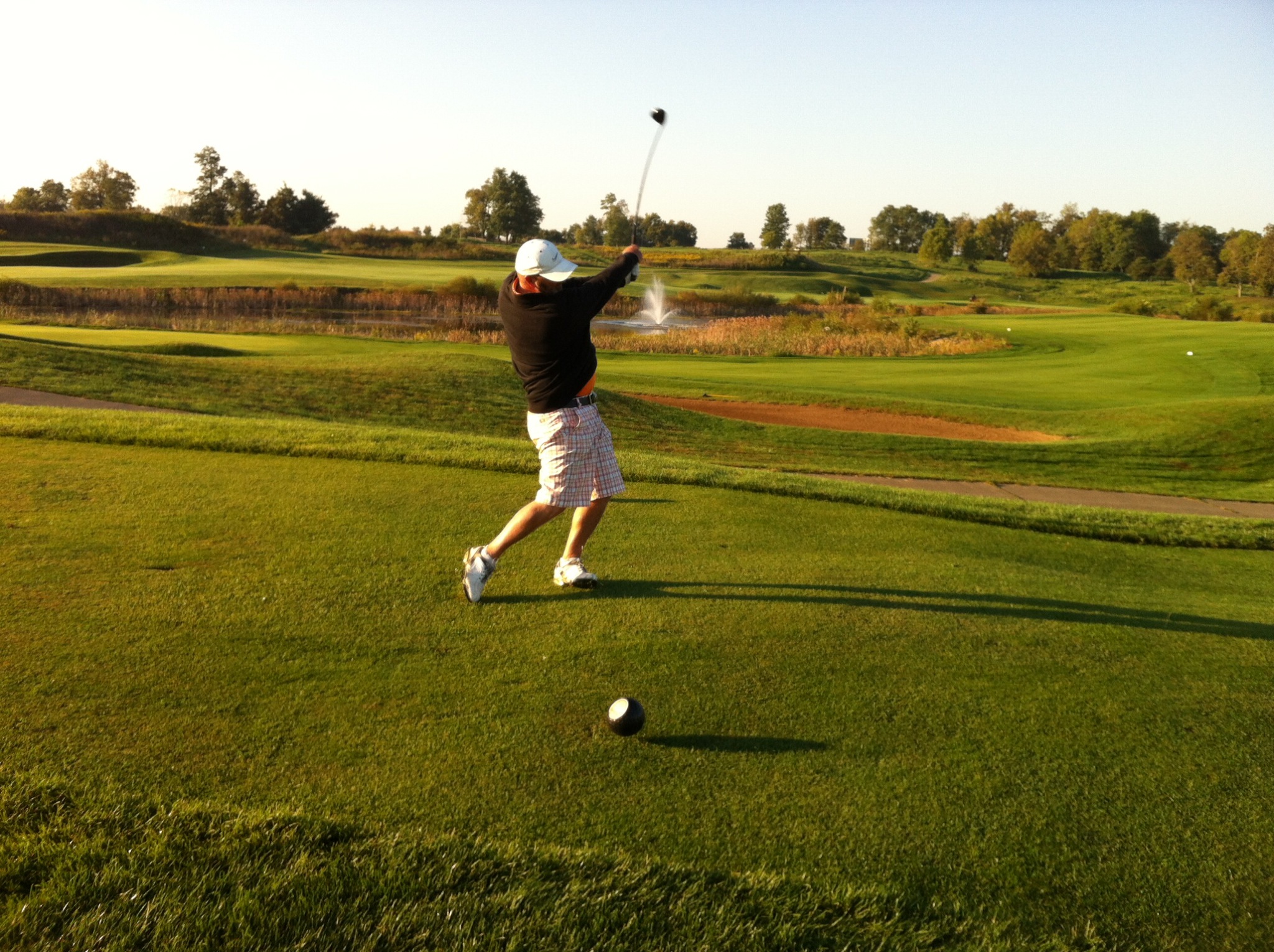
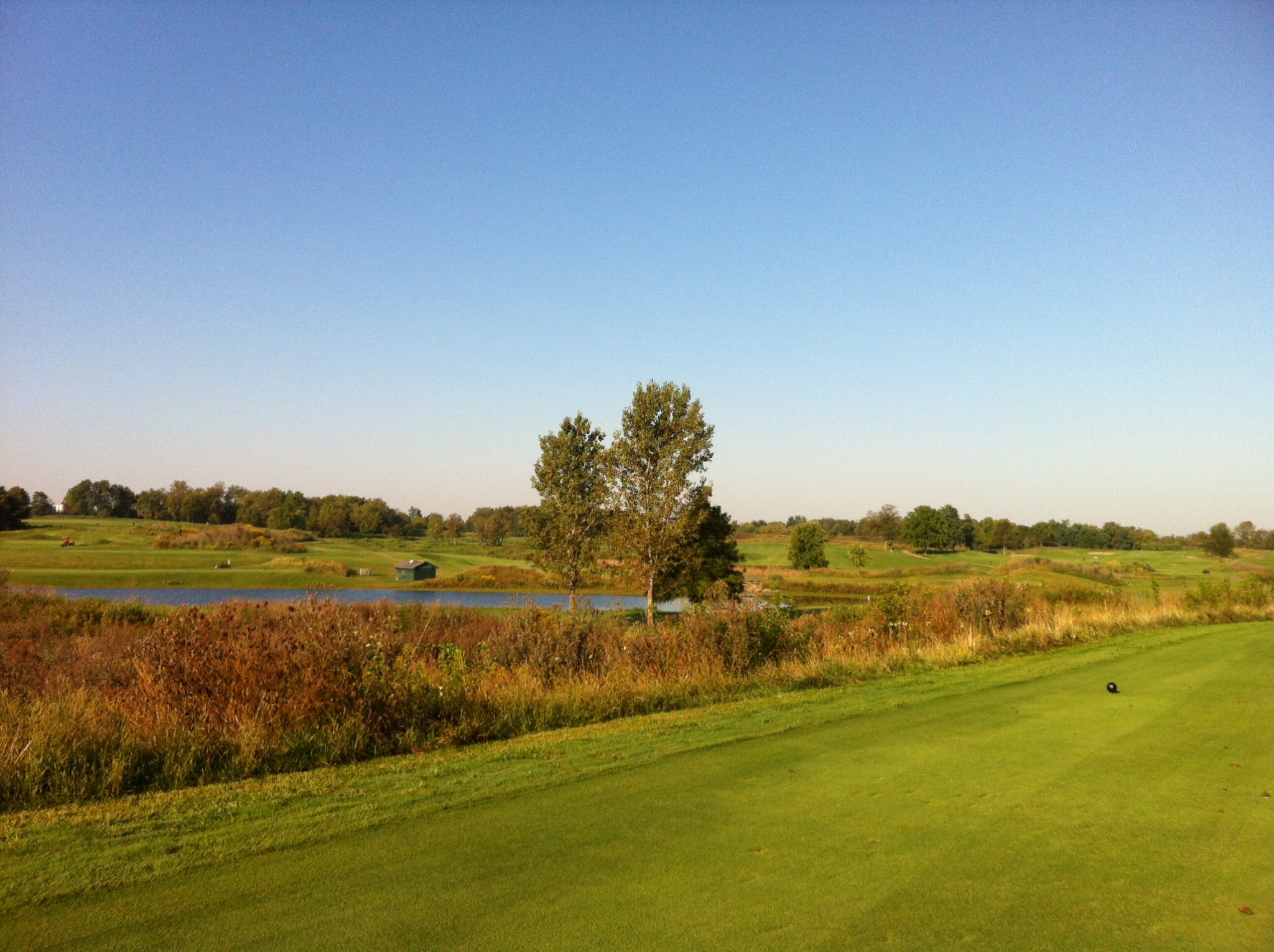
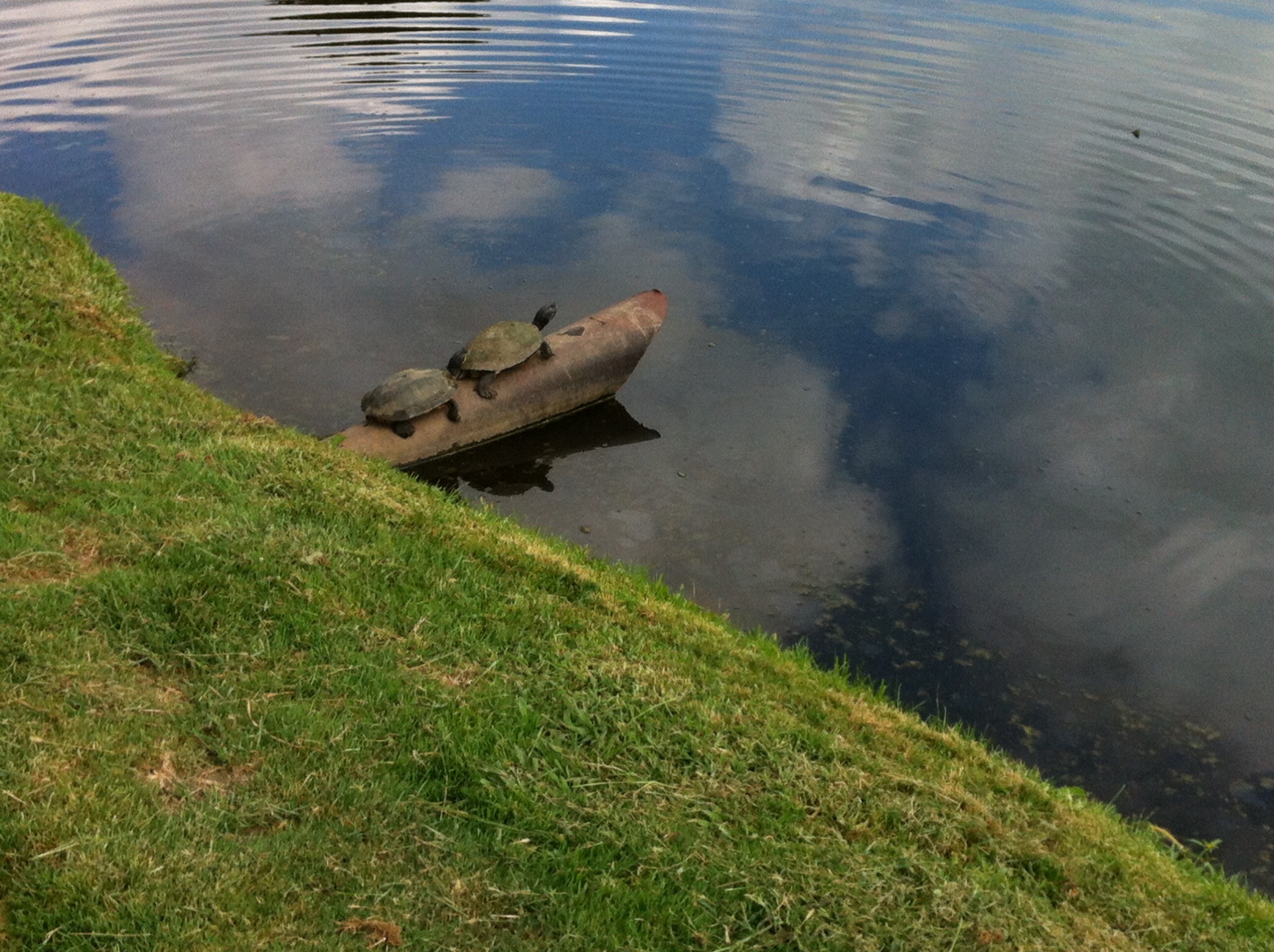
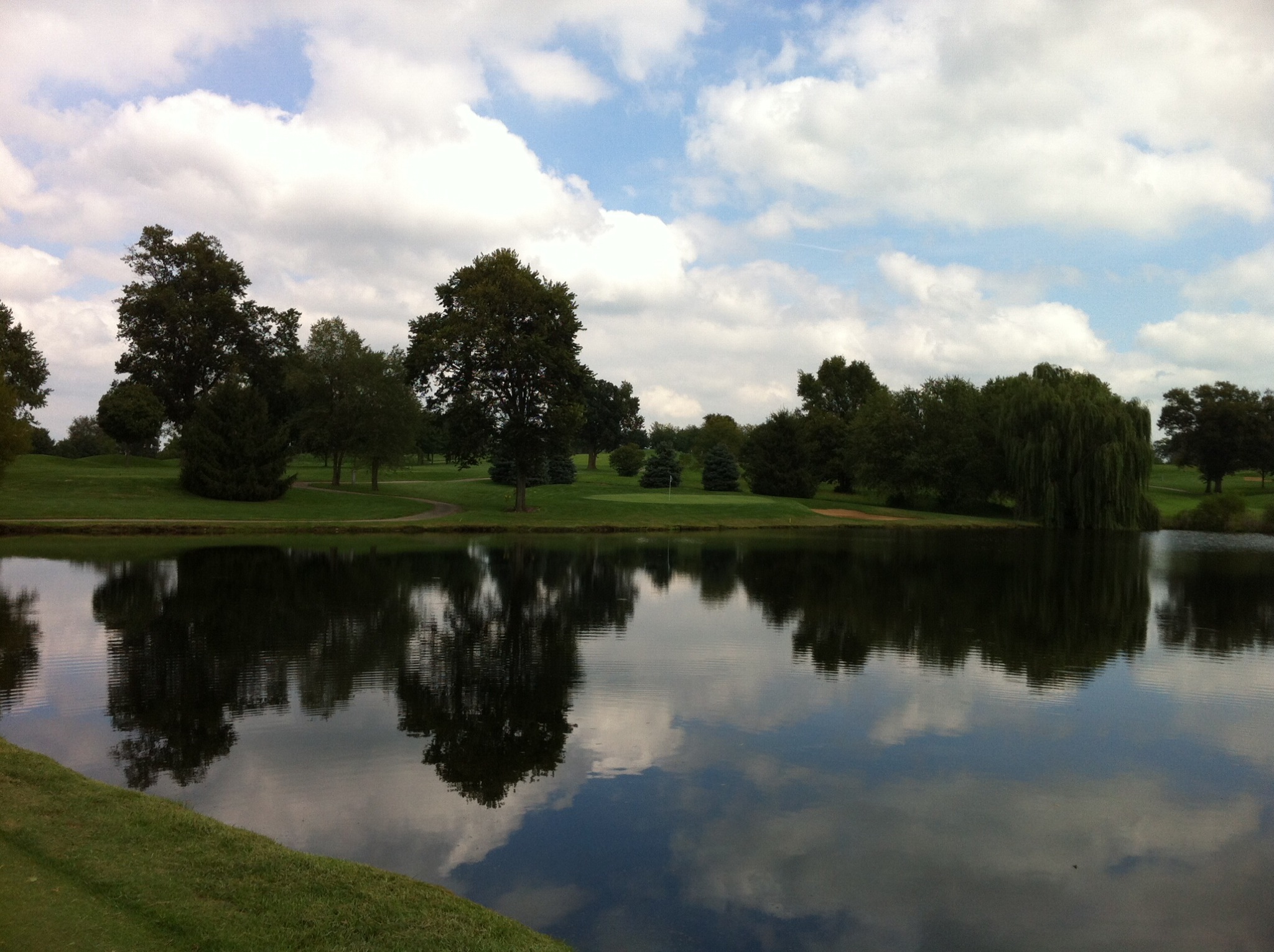
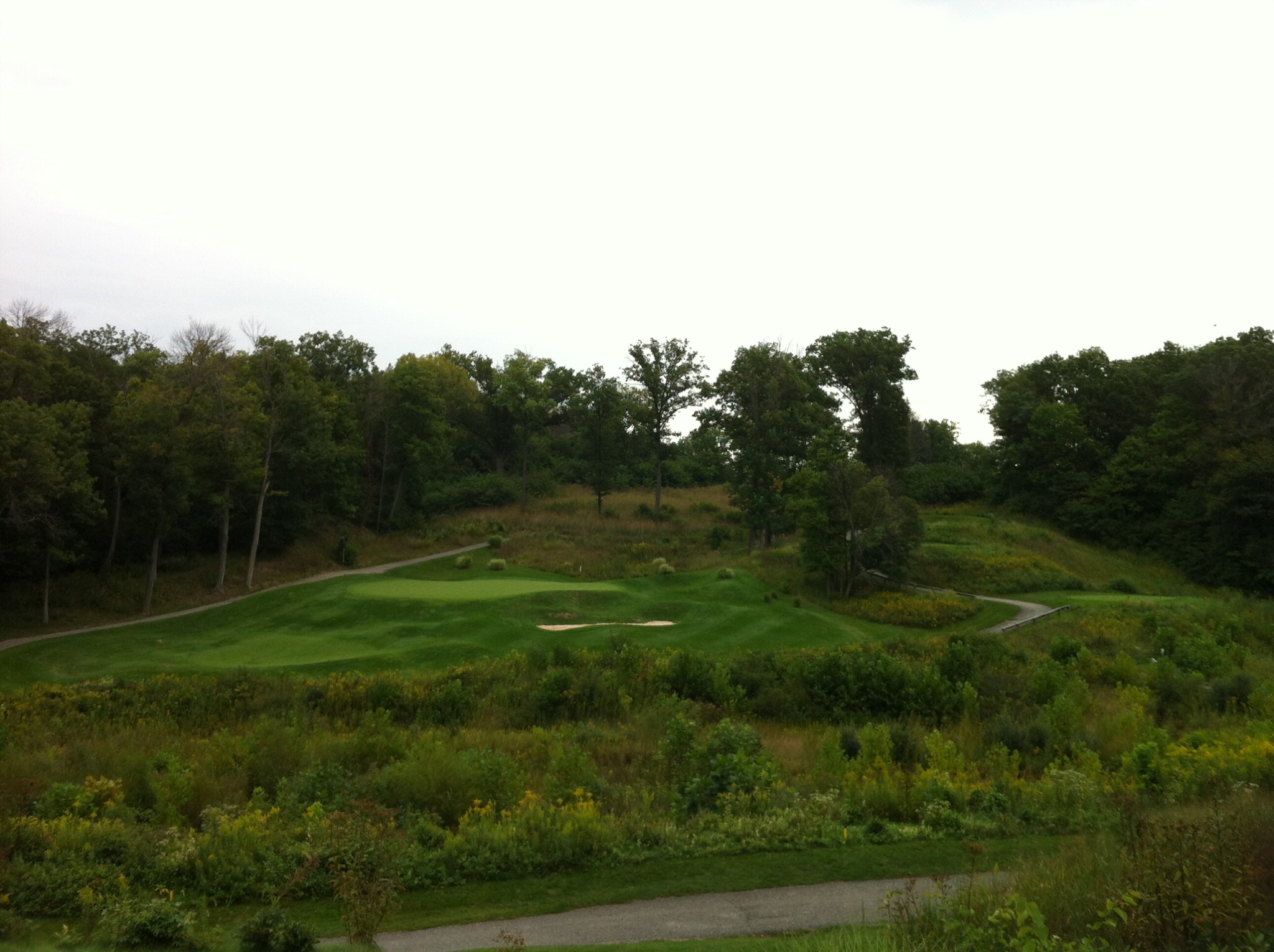
We went back to the Fort Golf Club and played another nine holes this morning before heading to Lexington in Kentucky. It is a really lovely course with lost of natural bush.

History of the land that is now the Fort Golf Resort….
During the Civil War, the Indianapolis Arsenal supplied munitions to federal troops. Located near the State House from 1861 to 1865, the War Department later moved the arsenal east of downtown to Woodruff Place. By 1901, the War Department planned to close the arsenal.

In March of 1901, Lieutenant Colonel Russell B. Harrison came back to Indianapolis to bury his father, President Benjamin Harrison. Russell felt strongly that some military presence should remain in the city to honor the tradition the arsenal played in fighting slavery and maintaining the Union.

On June 28, 1904 the War Department issued General Order No. 117 officially announcing the purchase of land for “military purposes…about nine miles north-easterly from Indianapolis.” In 1906, President Theodore Roosevelt dedicated Fort Benjamin Harrison, in honor of our 23rd President and city resident.

The post represents the first effort to create a “national” army out of a collection of state militias. The post served multiple roles as troop reception center, classroom, and soldier support facility during all major military conflicts from WWI to Desert Storm. The park includes the Camp Glenn Historic District which housed the Citizens Military Training Camps from 1935 to 1940, and hundreds of prisoners of war in 1944-1945.

Rumored shutdown of Fort Benjamin Harrison Military Reservation became reality in 1991 through the Base Realignment and Closure process. In 1995 the U.S. Department of the Interior approved the State of Indiana’s request to convert 1700 of the 2500-acre post into a state park and nature preserve.

This decision led to The Fort Golf Course. The course was redesigned by Pete Dye and Tim Liddy. In 1998, The Fort Golf Course was third under “Best Affordable New Public Courses” in Golf Digest. Today The Fort is considered one of Indiana’s best public golf courses.

IMG_3089-0.JPG

IMG_3084-0.JPG

IMG_3090-0.JPG

IMG_3085-0.JPG

IMG_0911-2.JPG

IMG_3093-1.JPG

IMG_3095-1.JPG

Posted in Indiana, USA | Leave a comment