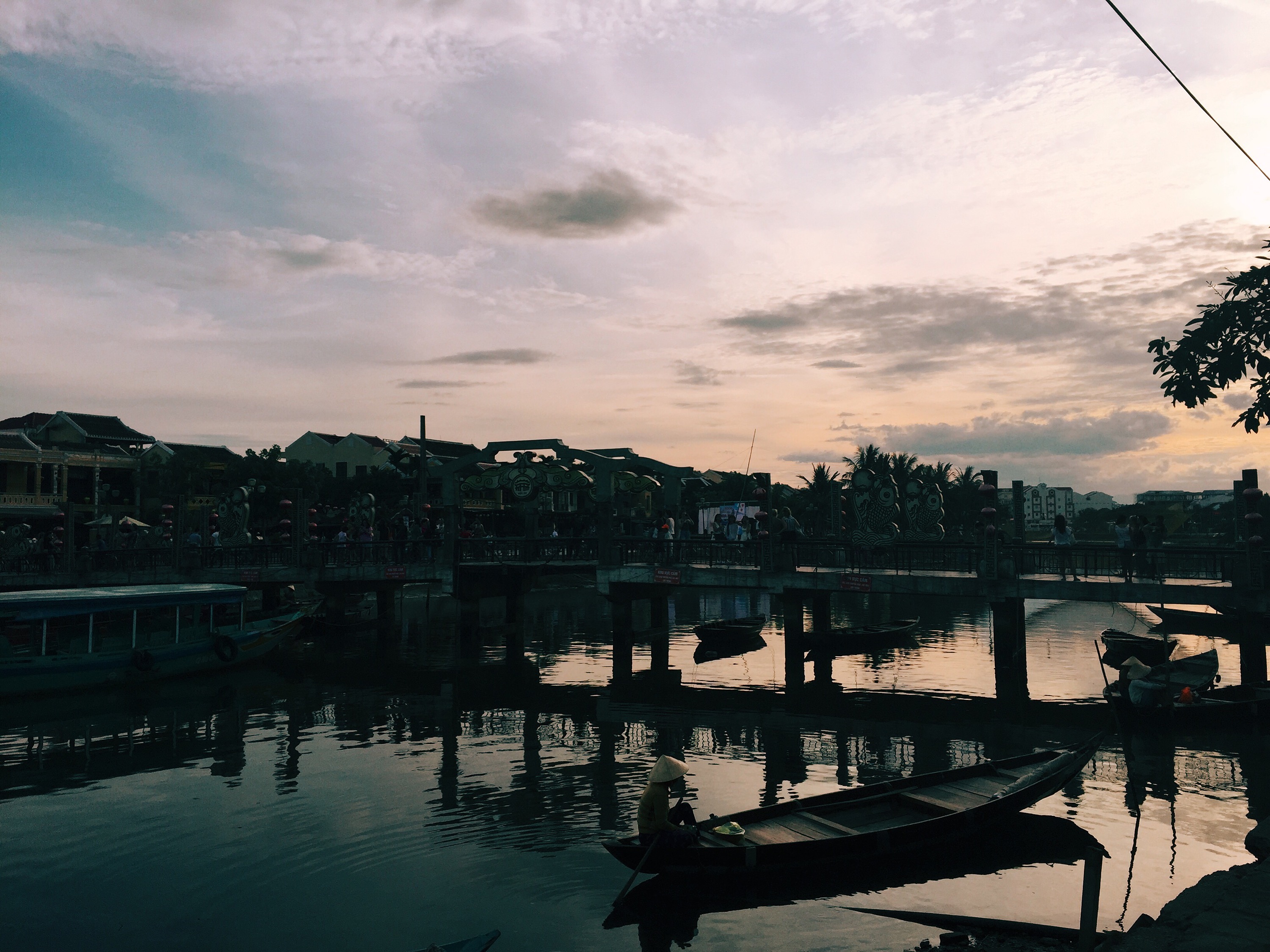
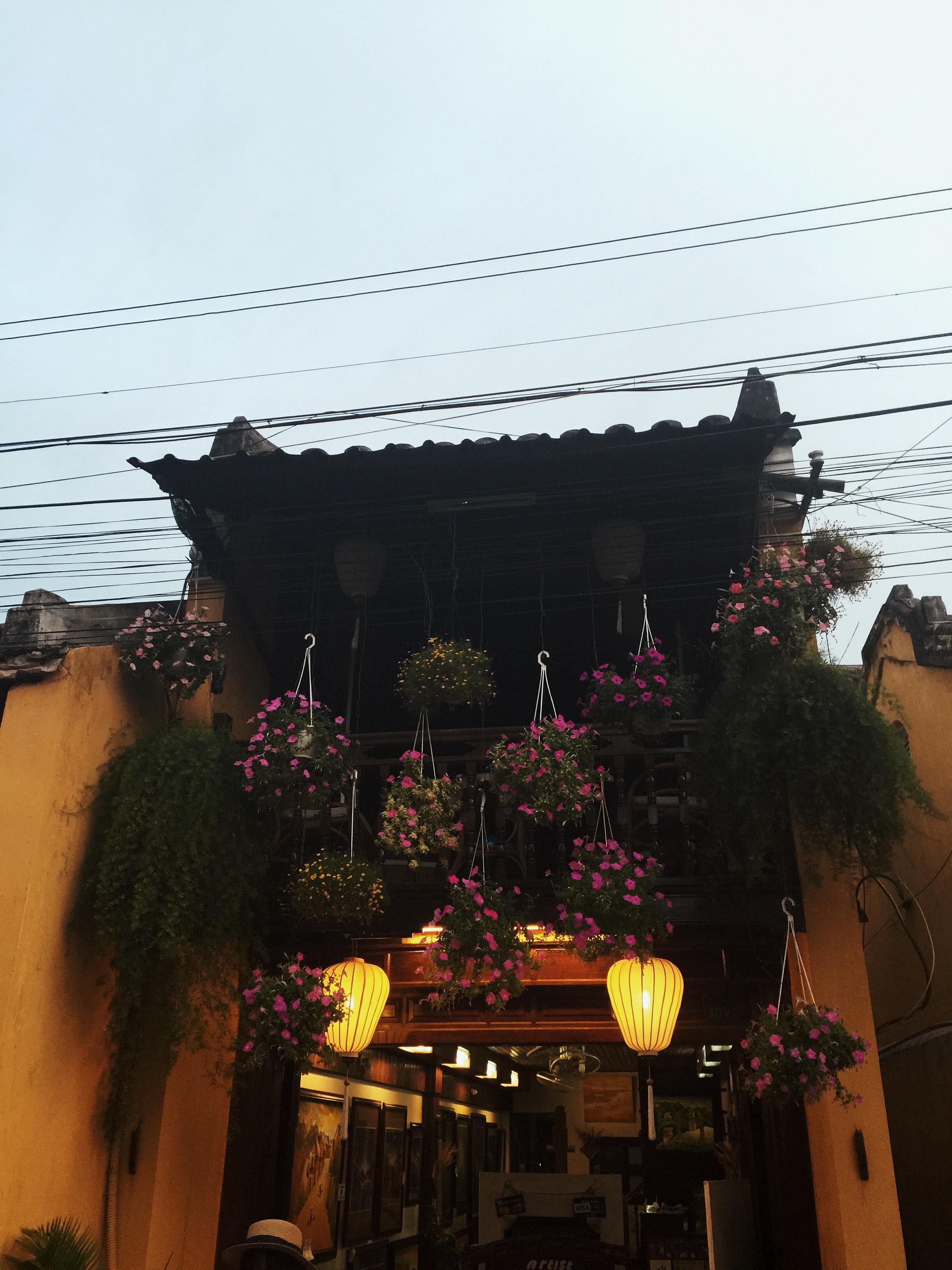
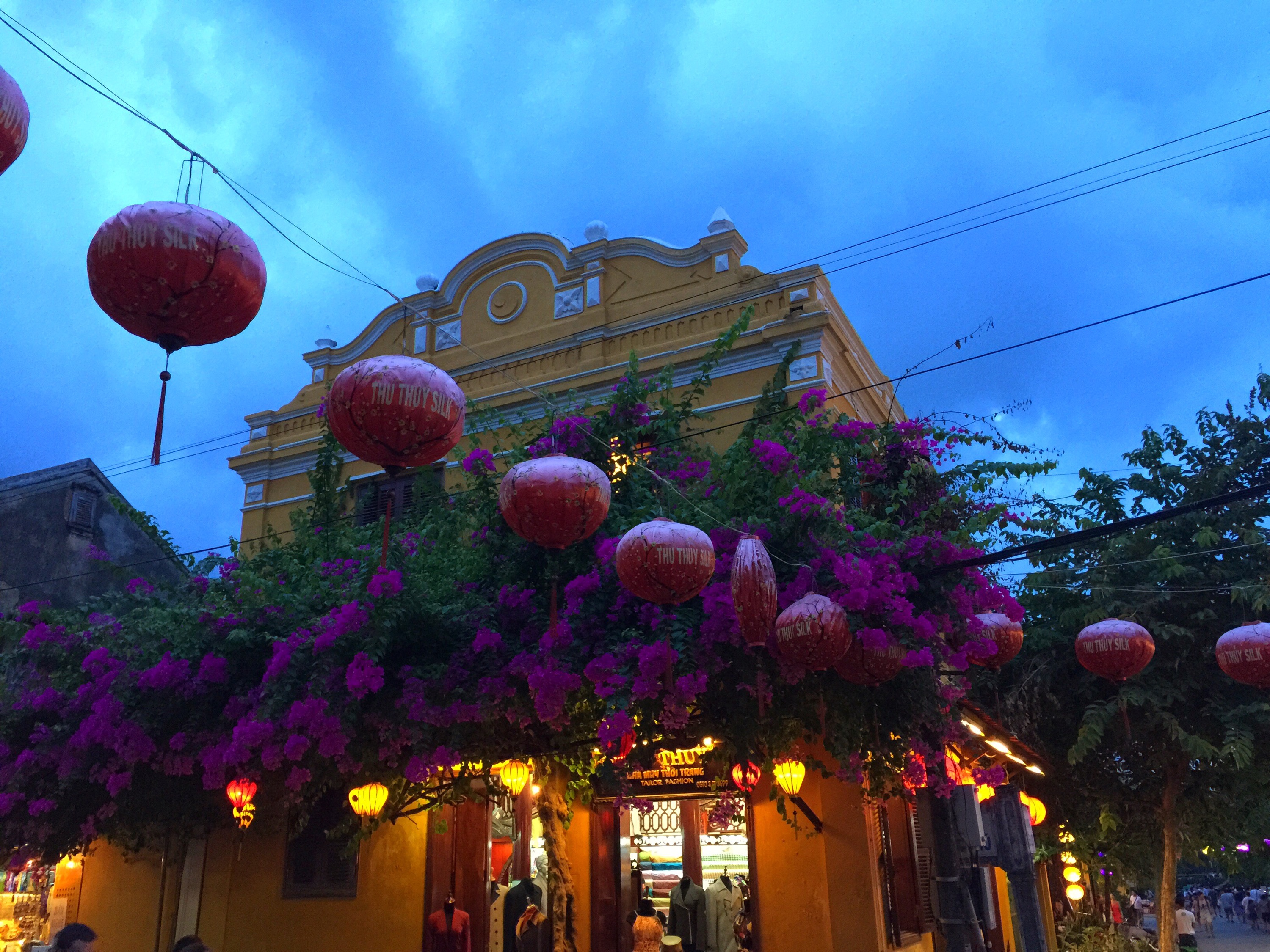
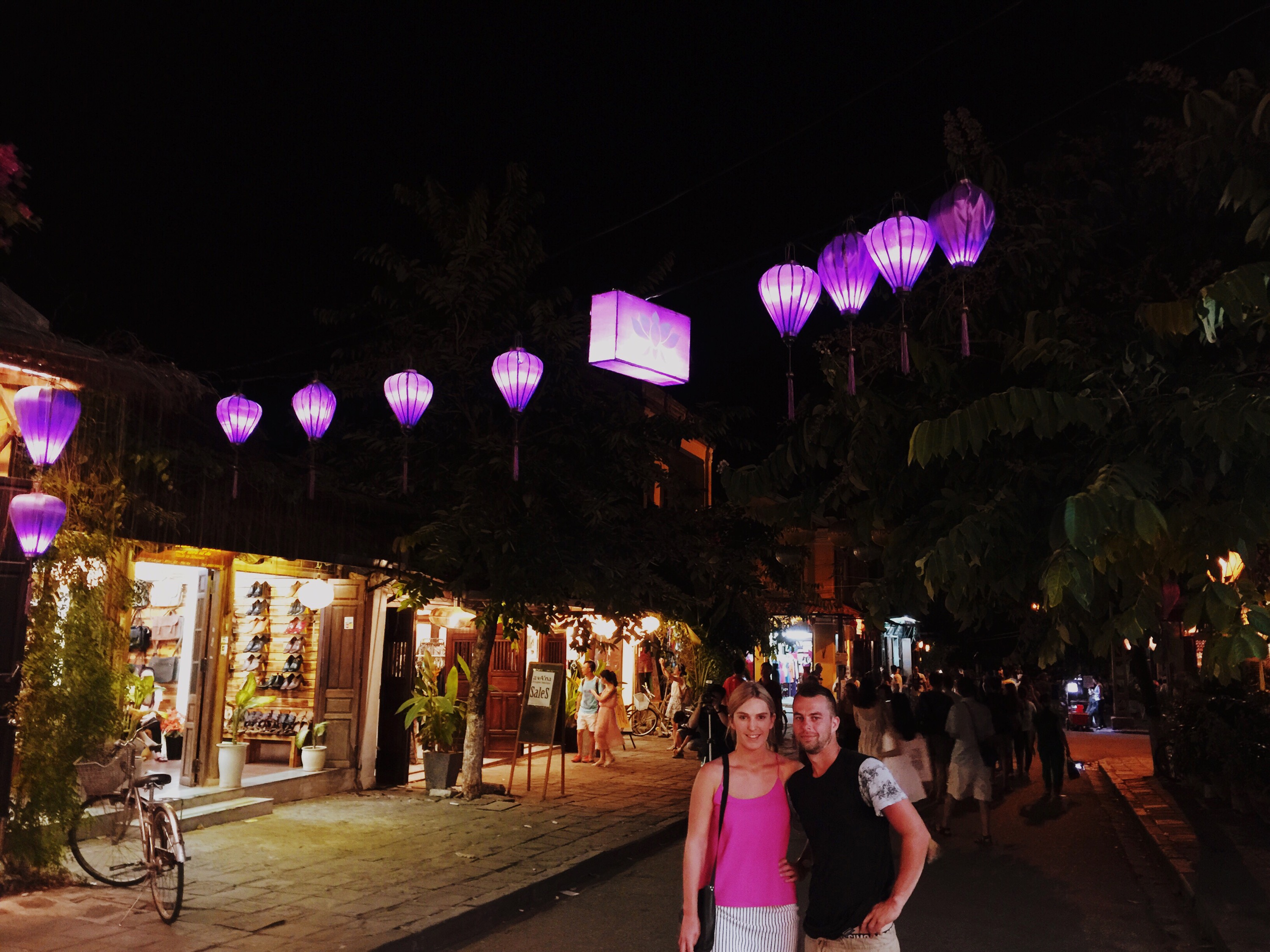
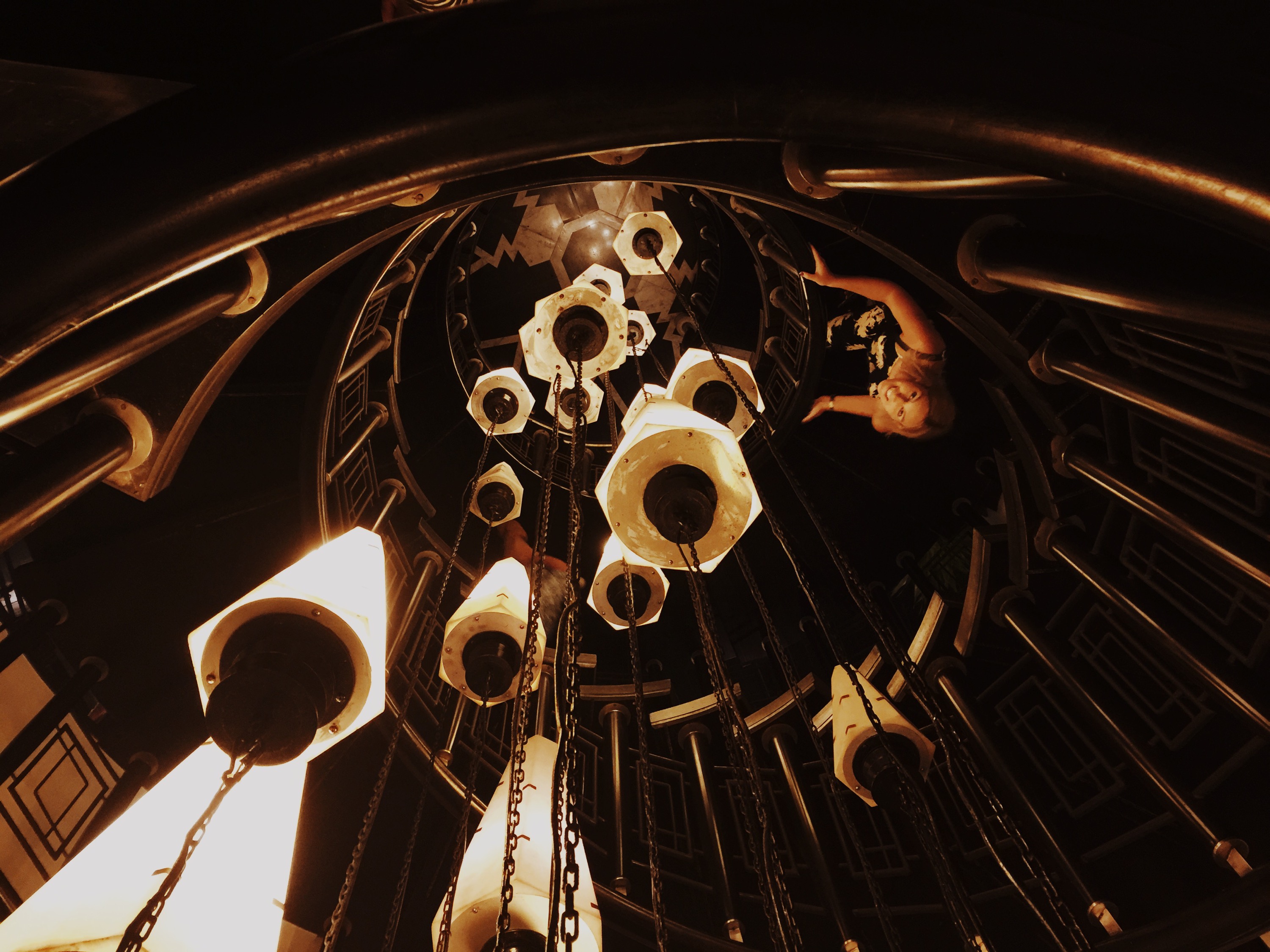
Hội An Ancient Town – Hội An, Vietnam

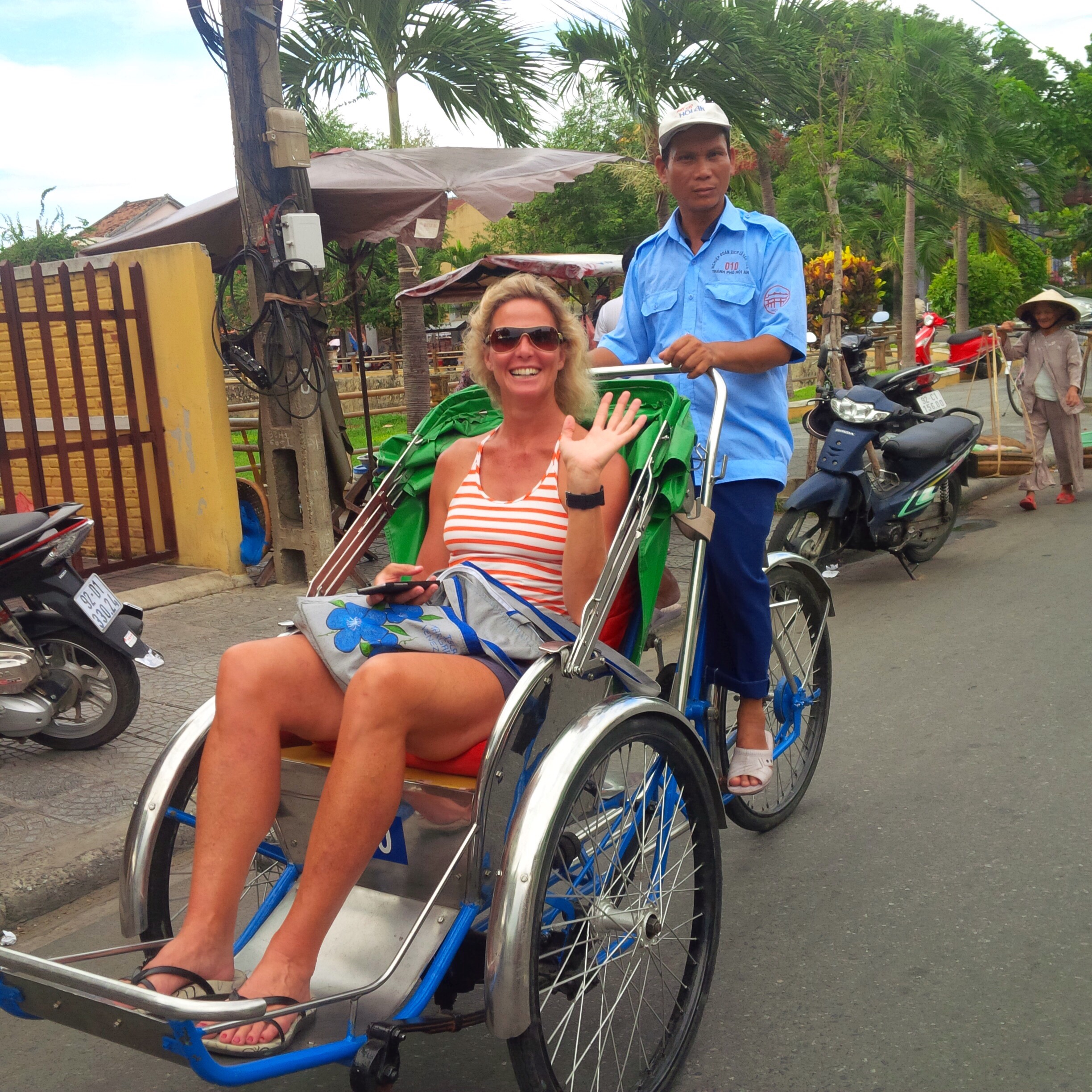
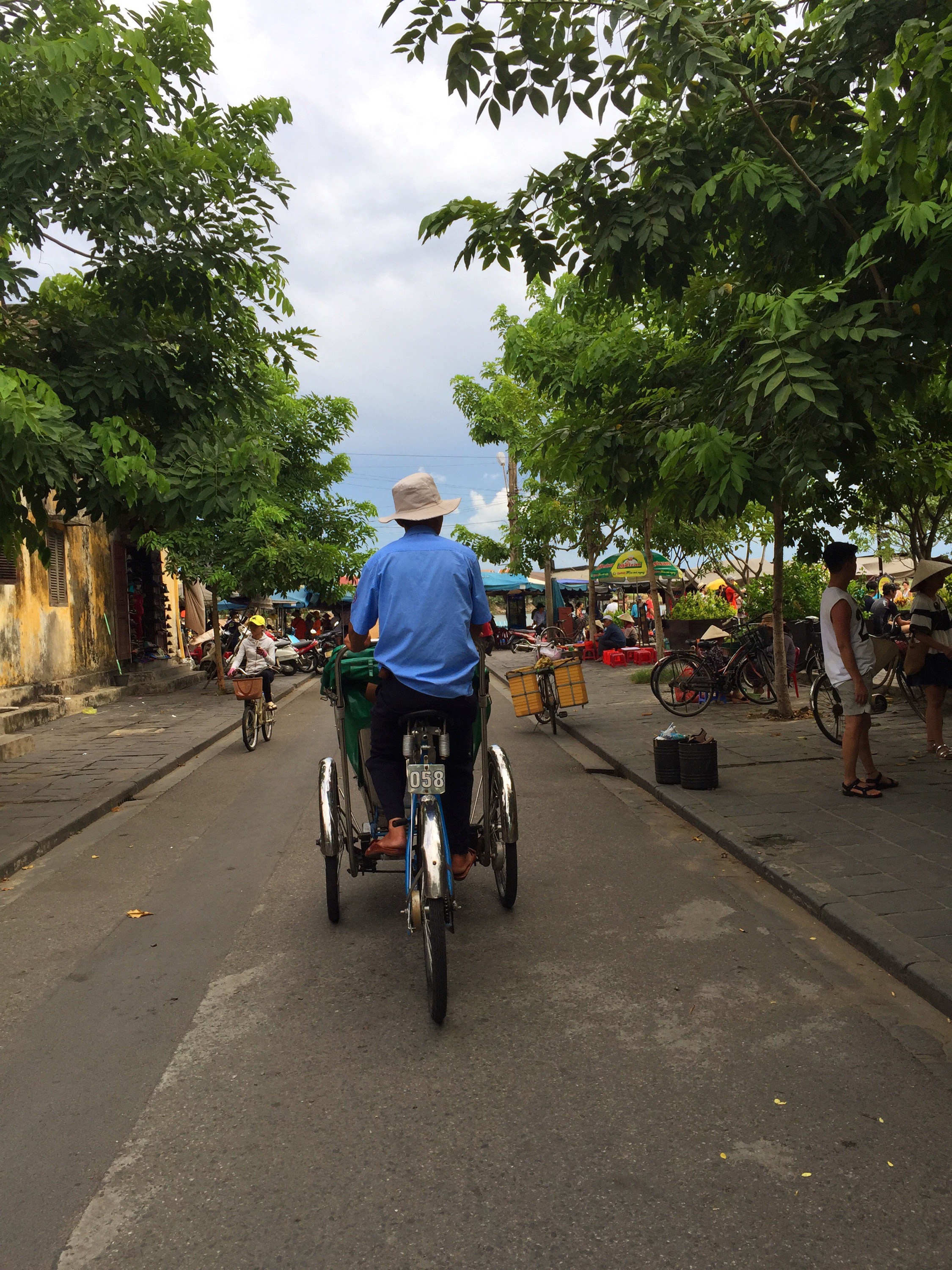
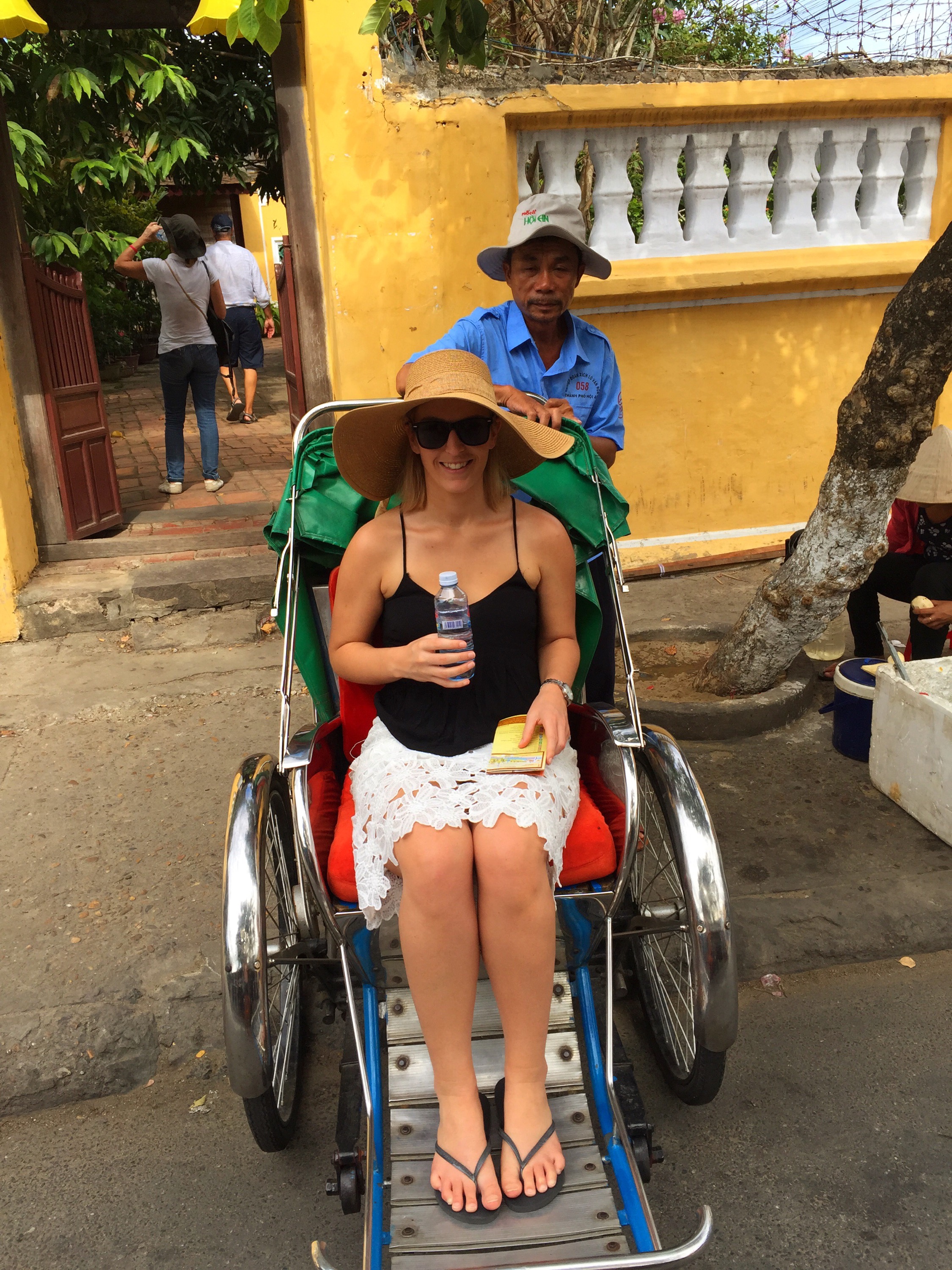
Due to a scheduling change at the Spa (it’s a tough life I know), Laura & I were at a loose end for an hour so we decided to take a cyclo tour of Hội An Ancient Town.  We thought it would be nice to be pedalled around taking in the sights, however, there was a catch.  The cyclo riders take you round to the ticket office where you have to purchase a ticket to go to some of the attractions in the Ancient Town – so much for just sitting back and taking in the sights!  Seriously, I had been wanting to learn a bit more about the various landmarks I had been walking past daily so this was the perfect opportunity.

Hội An, also known as Fai-Fo or Faifoo, is a city in Vietnam, located on the coast of the South China Sea in the South Central Coast region, in the Quảng Nam Province.  With approximately 120,000 inhabitants, Hội An is recognized as a World Heritage Site by UNESCO. Hội An Ancient Town is an exceptionally well-preserved example of a South-East Asian trading port dating from the 15th to the 19th century. Its buildings and its street plan reflect the influences, both indigenous and foreign, that have combined to produce this unique heritage site.

The city possessed the largest harbour in Southeast Asia in the 1st century and was known as Lâm Ấp Phố (Champa City). Between the seventh and 10th centuries, the Cham (people of Champa) controlled the strategic spice trade and with this came tremendous wealth. The former harbour town of the Cham at the estuary of the Thu Bồn River was an important Vietnamese trading centre in the 16th and 17th centuries, where Chinese from various provinces as well as Japanese, Dutch and Indians settled. During this period of the China trade, the town was called Hai Pho (Seaside Town) in Vietnamese. Originally, Hai Pho was a divided town with the Japanese settlement across the “Japanese Bridge” (16th-17th century).  

   
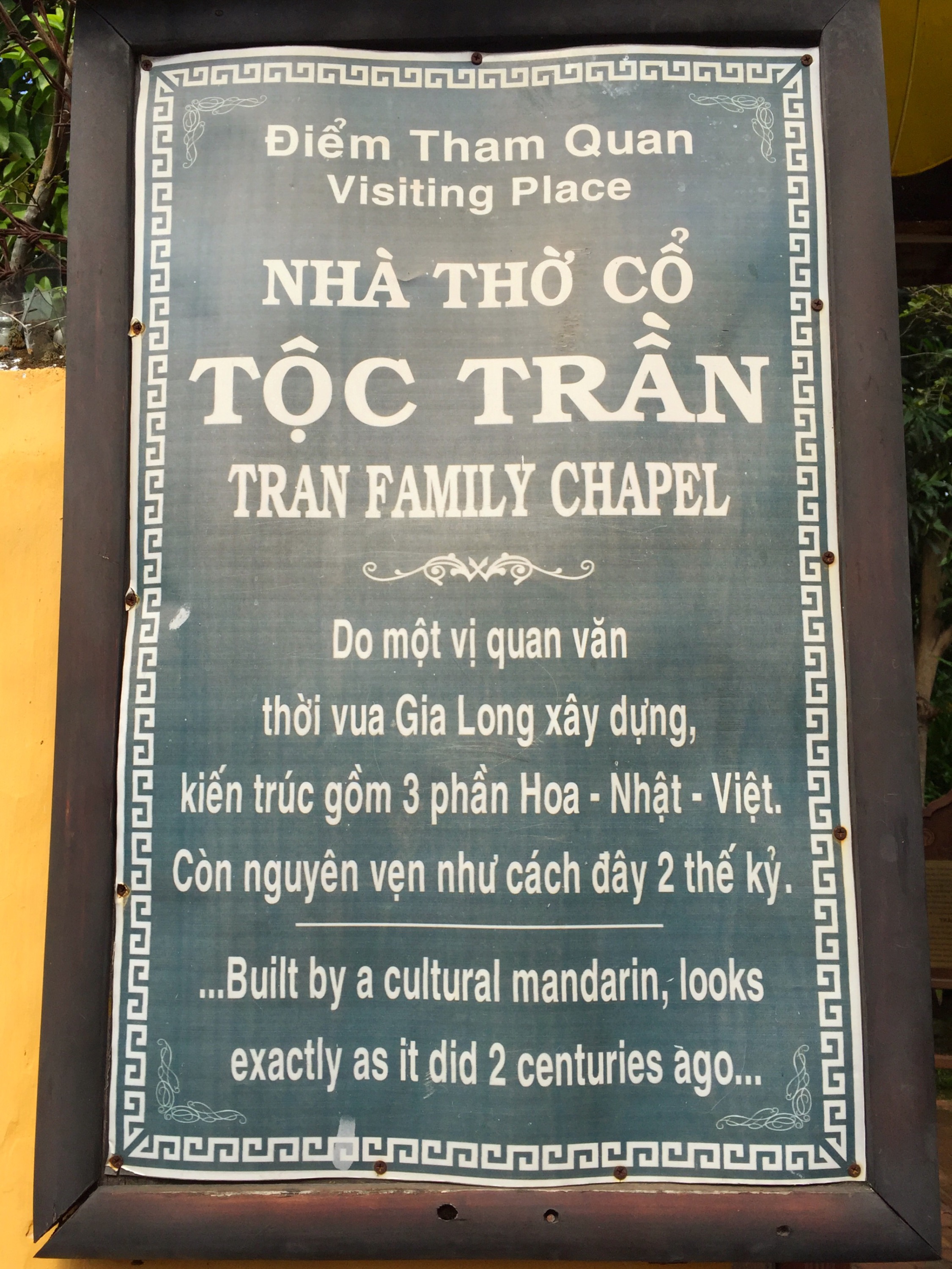
First stop was the Tran Family Chapel which is one of the oldest and most historical houses in this city, dating back to the beginning of the 19th century. It was built by Tran Tu Nhac – a highly-respected mandarin under Gia Long Reign, before he was sent to China as the King’s envoys. Originally, it serves as a worshipping place for the family’s ancestors, as well as a reminder about the family’s tradition to the following generations. 

Sitting amidst a 1500m2-garden of ornamental plants, flowers, fruit trees and century-old plants, with a gate and high surrounding walls is a combination of Chinese, Japanese and Vietnamese architecture, which has remained almost the same as two centuries ago. Made of precious wood and pan-tiles-covered roof, the house has become well-known for its Asian style of architecture: one main part for worshipping, and one supplemental part which houses the leader of family and his guests. The house and the garden were built in harmony following strictly the rules of Feng Shui. The drawing room of the chapel has separate entries for men and women: the left is for men and the right is only for women, according to old belief. There is another door in the center of the room, used for festivals such as Tet, which is said to be the door for souls of the ancestors to enter the house. 

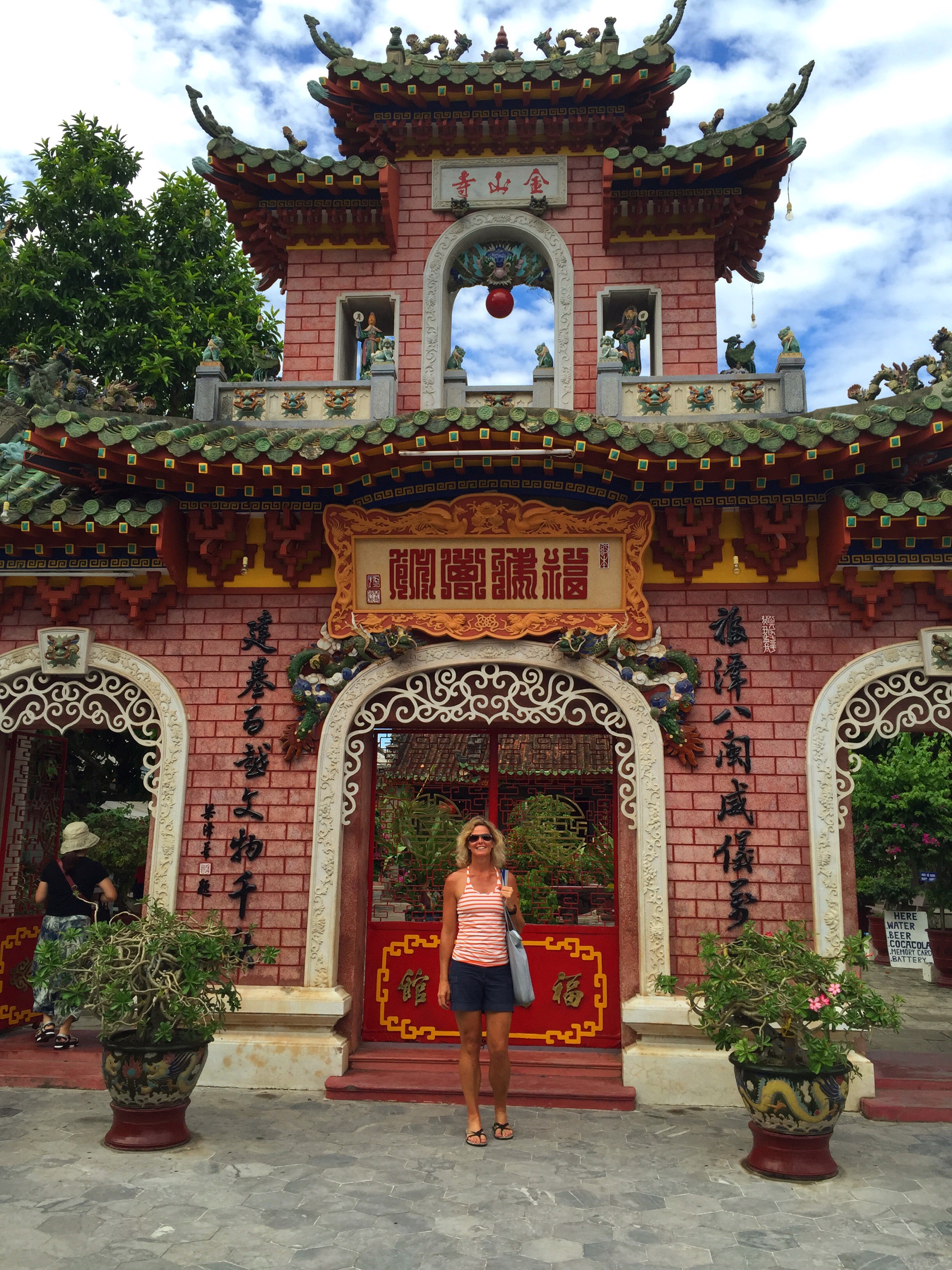
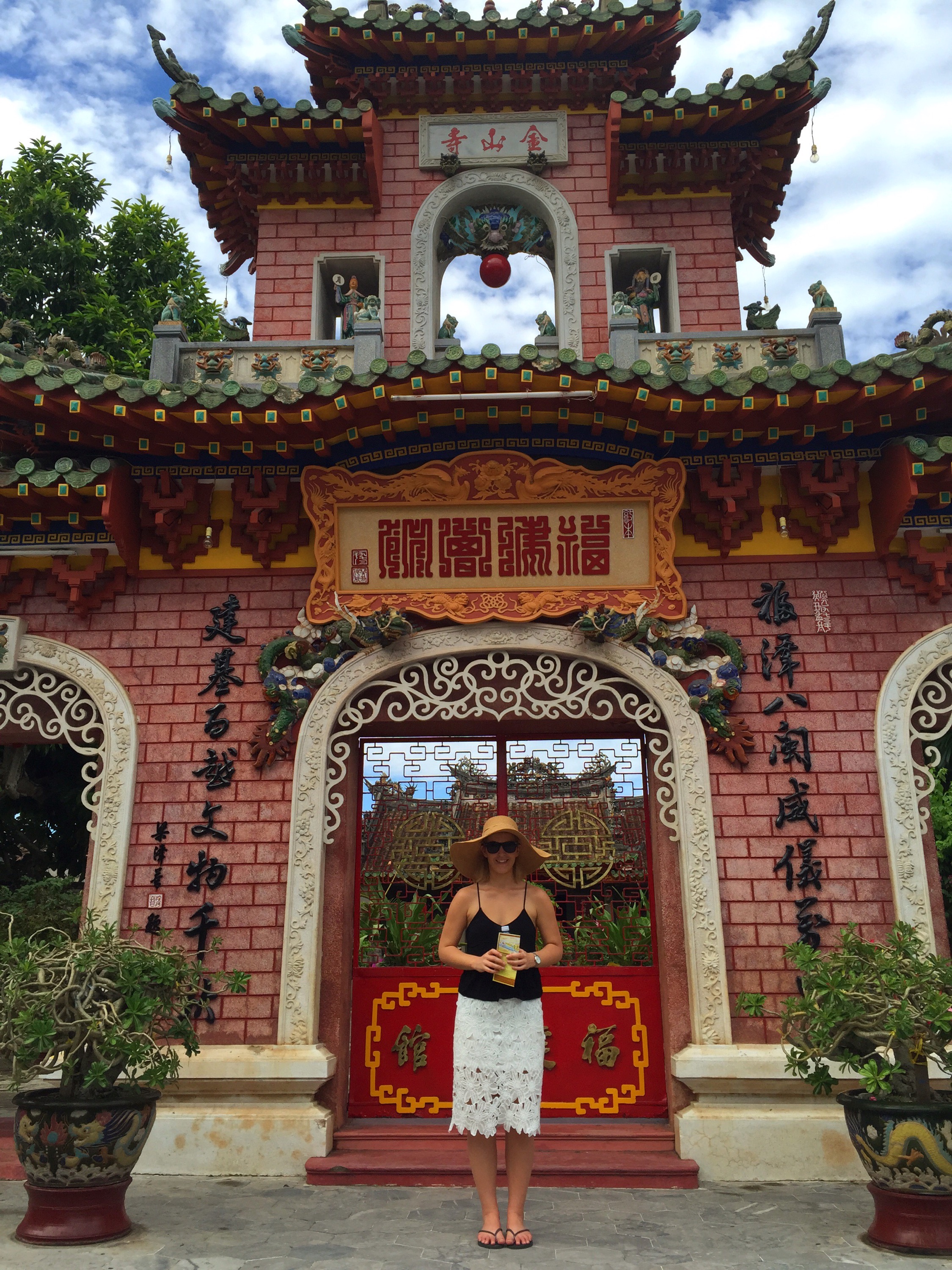
Every year, the Tran Family Chapel is still the gathering place for all members of the family to meet and express their thankfulness to their ancestors.       We then visited the Fujian Assembly Hall which is the greatest and most famous of the Assembly Halls in Hội An.  As the Chinese immigrants reached the central part of Vietnam known as Hoi An today, they decided to create the opportunities for themselves and the next generations to socialize and protect the Chinese traditions by building many Assembly Halls.

Building Assembly Halls as a place to socialize for themselves and the next generations is a tradition of Chinese people when they migrated or did business in another country. Therefore, a lot of Assembly Halls of this type can be found in Vietnam today. In Hội An Town, which has a long history of international trade, there are 5 Assembly Halls constructed by the Chinese, all are located on Tran Phu Street, facing Thu Bon River. Nowadays, even though not all of the halls stay the same, the five remaining ones (Fujian, Chaozhou, Hainan, Cantonese, and Chinese) become famous attractions of Hoi An.    

Generally, they all follow a formula that has been used by other Chinese assembly halls in other cities: a grand gate, a nice garden with ornamental plants, a main hall and a large altar room. As decoration is a fundamental part of an assembly hall, it is carried out meticulously at all of the halls with statues, lacquered boards, murals, etc. However, because each Chinese community has its own beliefs, different assembly halls worship different gods and goddesses. 

   
We also stopped off at the gallery where they embroider pictures using silk – these are amazing and the detail created by the stitching creates the impression that you are looking at a photograph.  

Our last stop was the Japanese Bridge.  The bridge (Chùa cầu) is a unique covered structure built by the Japanese, the only known covered bridge with a Buddhist temple attached to one side.  In the early seventeenth century, the Japanese, who lived in Hội An Town, built this bridge over the stream to do business with the local people in the residential area.  The two entrances to the bridge are guarded by a pair of monkey gods at one end and a pair of dog gods at the other end.

In later centuries, the Chinese and Vietnamese continued to restore the bridge and built a small temple dedicated to the God Bac De Tran Vo, Emperor of the North.  This religious architectural complex has a unique pain-tiled shaped roof, which is related to the misfortune and happiness of people in the locality.  The local people often call it Chua Cau (bridge and temple).  The structure is also a symbol of the cultural exchange between the Japanese, Chinese and Vietnamese people in Hội An.  Over the past four hundred years, Chua Cau has become famous for having supernatural power and is still a sanctuary for worship by local people, a status respected by tourists.

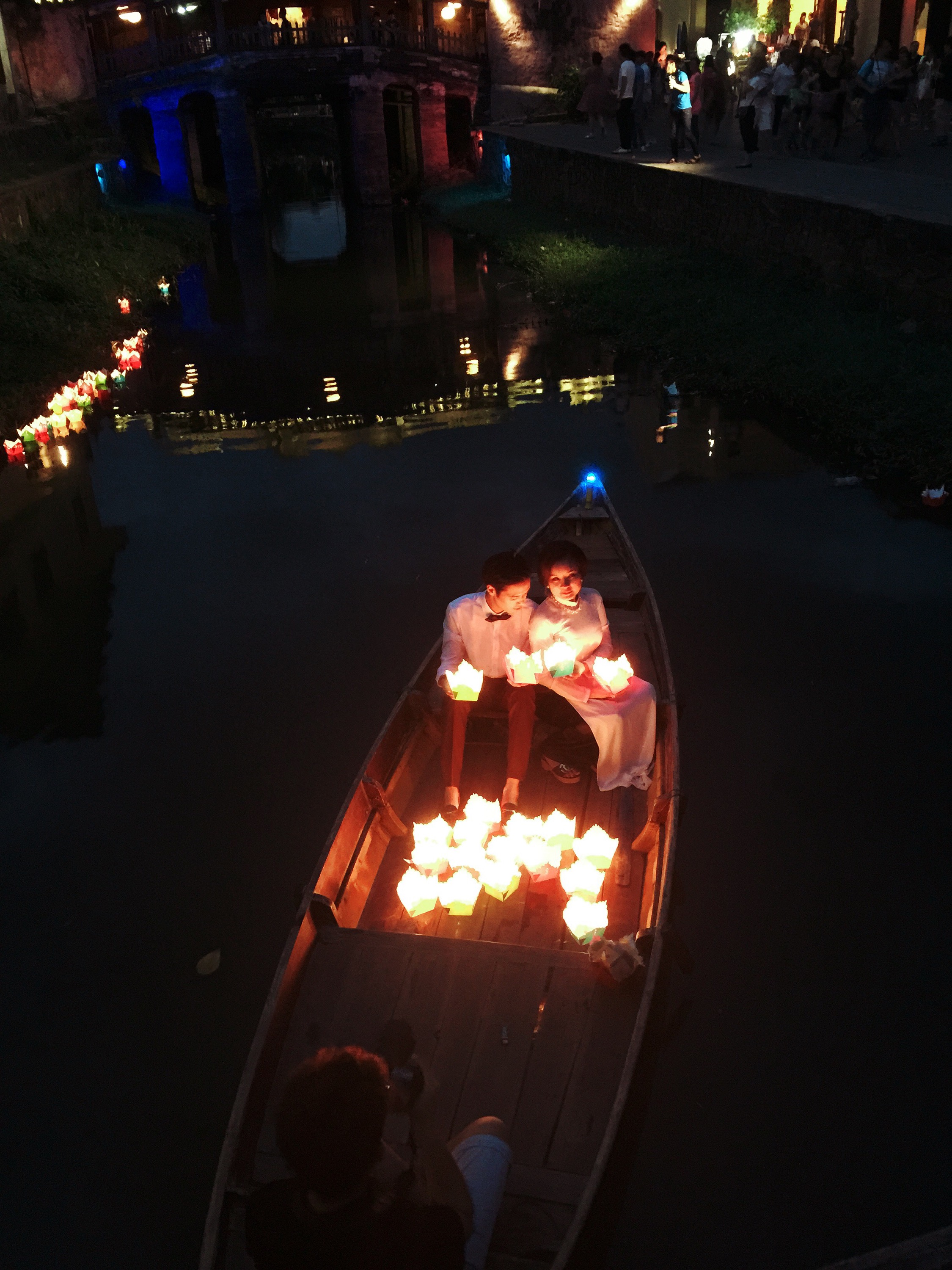
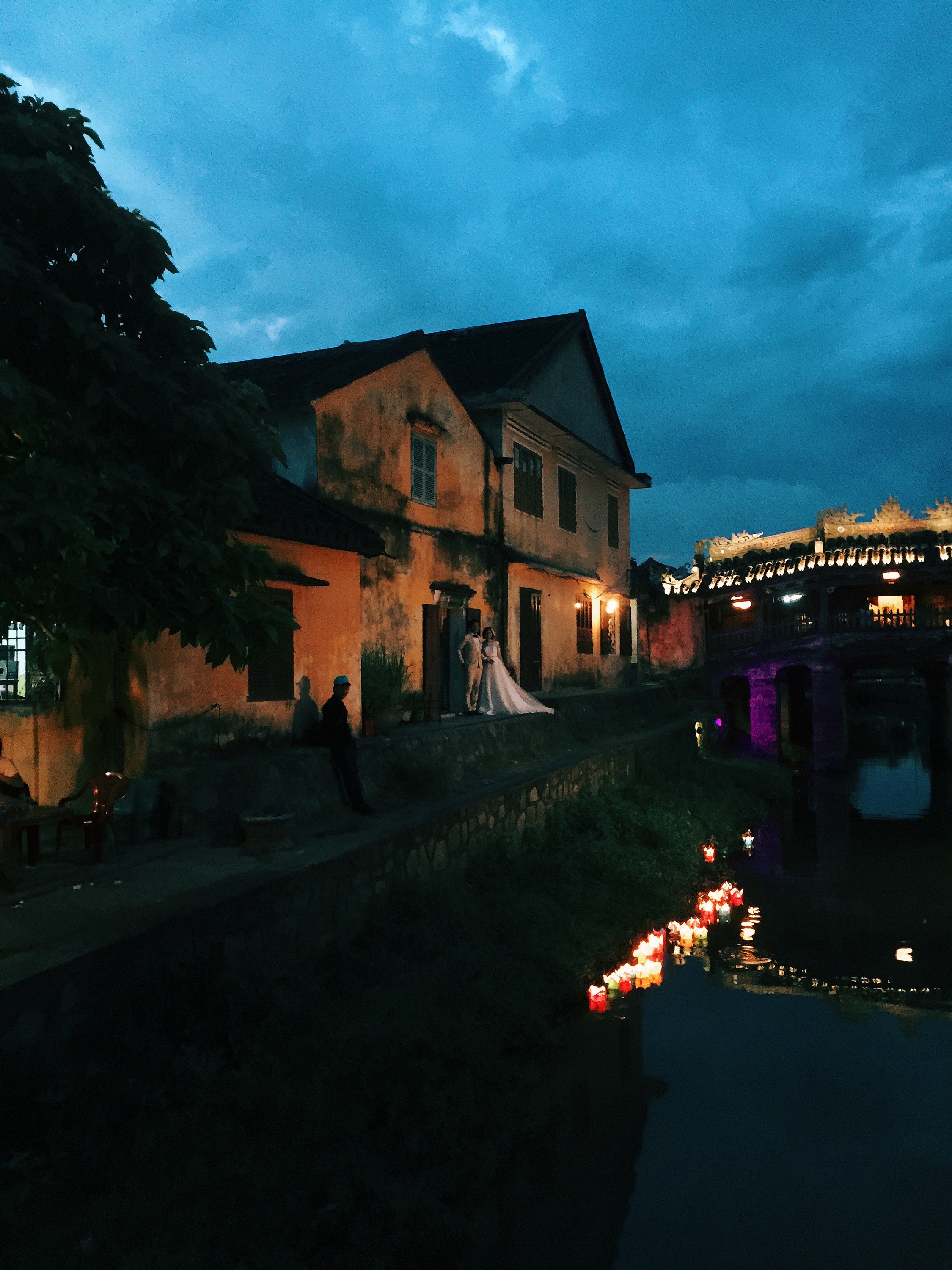
It is certainly a very popular attraction and probably the most photographed in Hội An.  It is nearly impossible to get a photo of the bridge unimpeded by people so I have included a couple of photos from the internet.  The other night, however, I got a couple of photos of two Brides and Grooms who were using the bridge as a backdrop.  It is quite often lit up at night with different colours. 


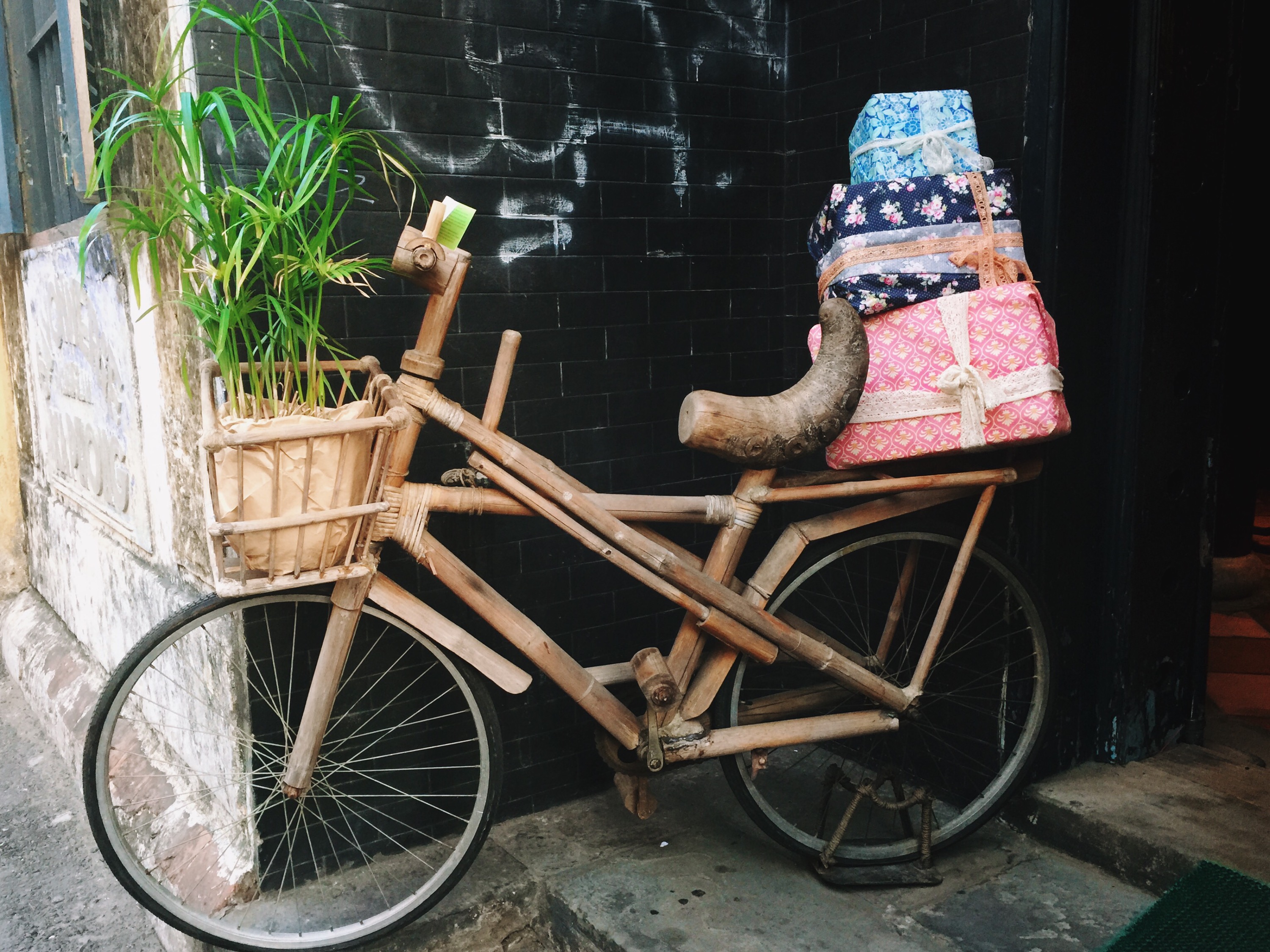
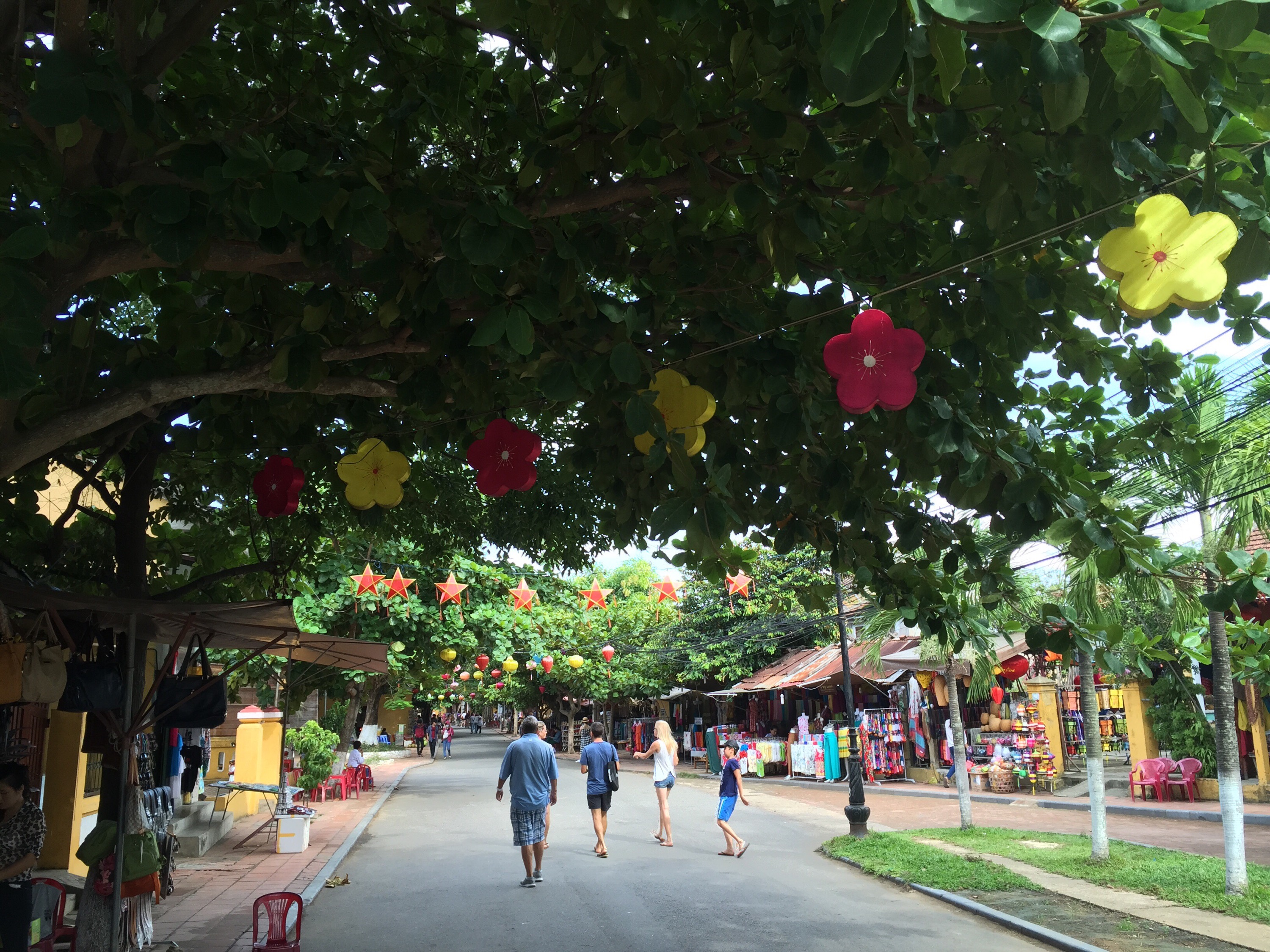
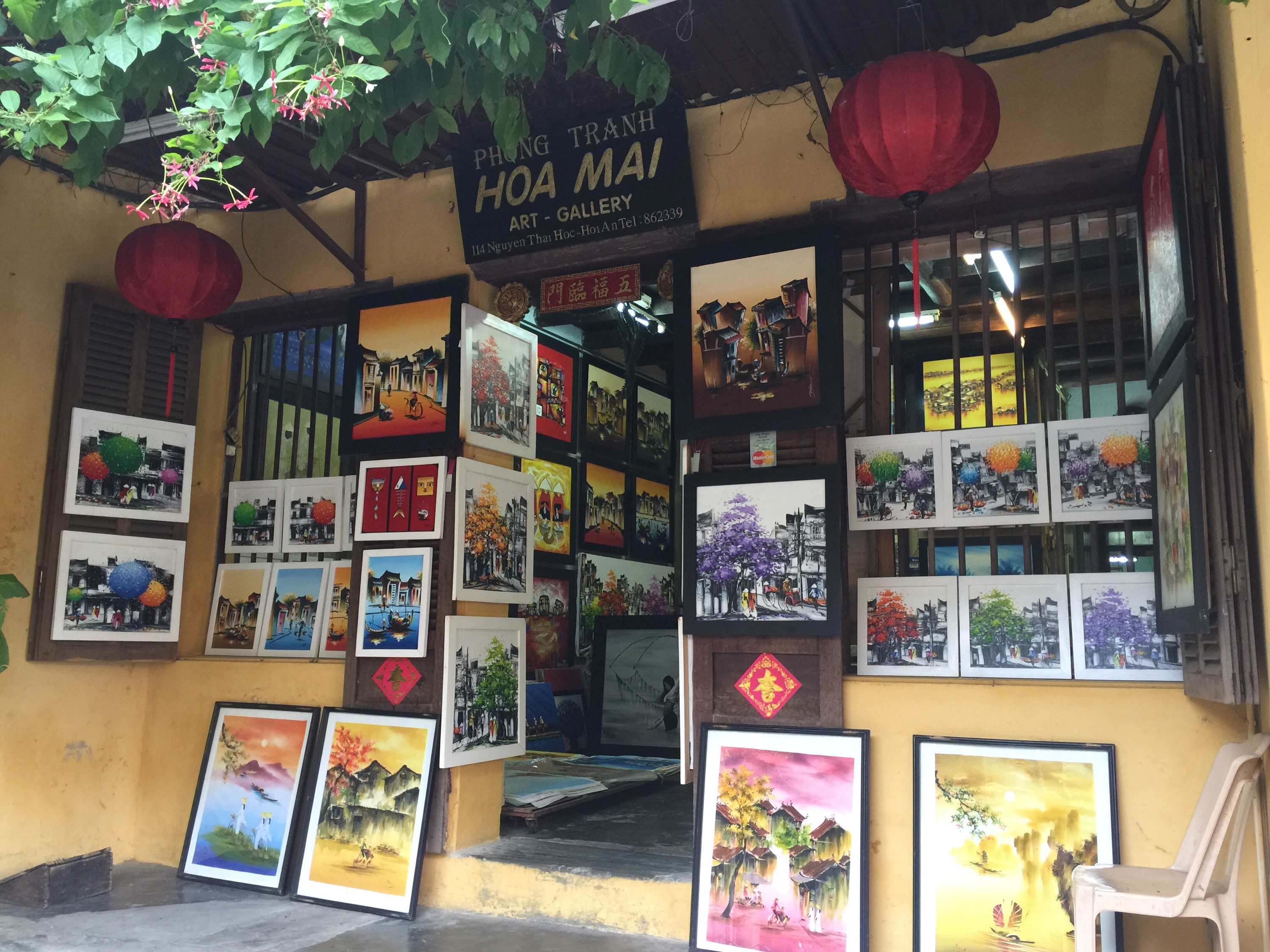
   Hội An is full of quaint looking buildings that represent the architecture and cultural influences of the time.  Most of them are restaurants or shops with the locals living above or behind them and it is easy to miss the beauty of them if you don’t take the time.  Hội An comes alive at night and the colourful lanterns and trpoical plants really add to the ambience and beauty of the town.  It is hard to capture the essence on a camera but here are a few of my favourite shots.  


Posted in HoiAn, Vietnam | Tagged , , | Leave a comment

Thuan Tinh Island Cooking School – Hoi An, Vietnam

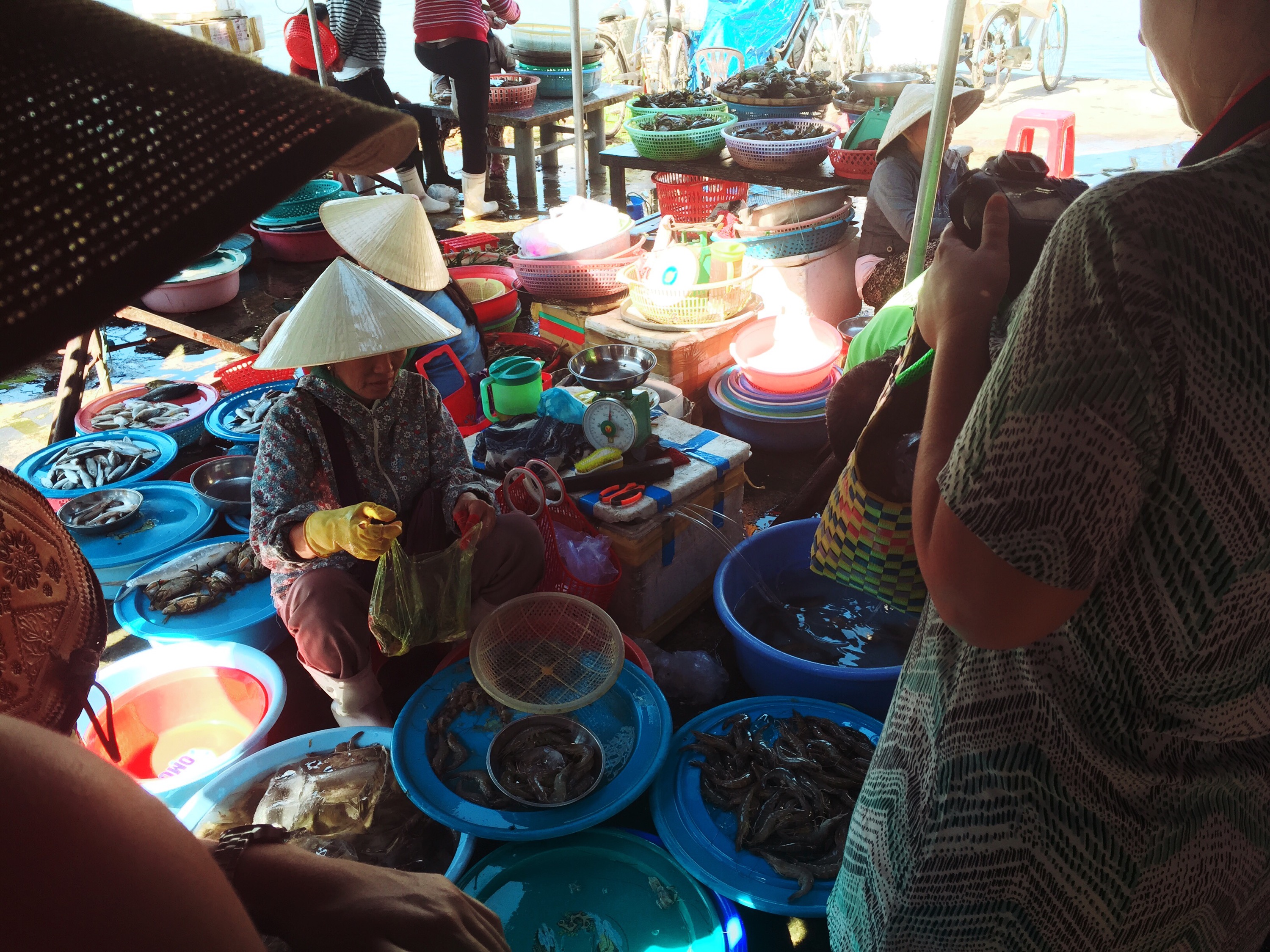
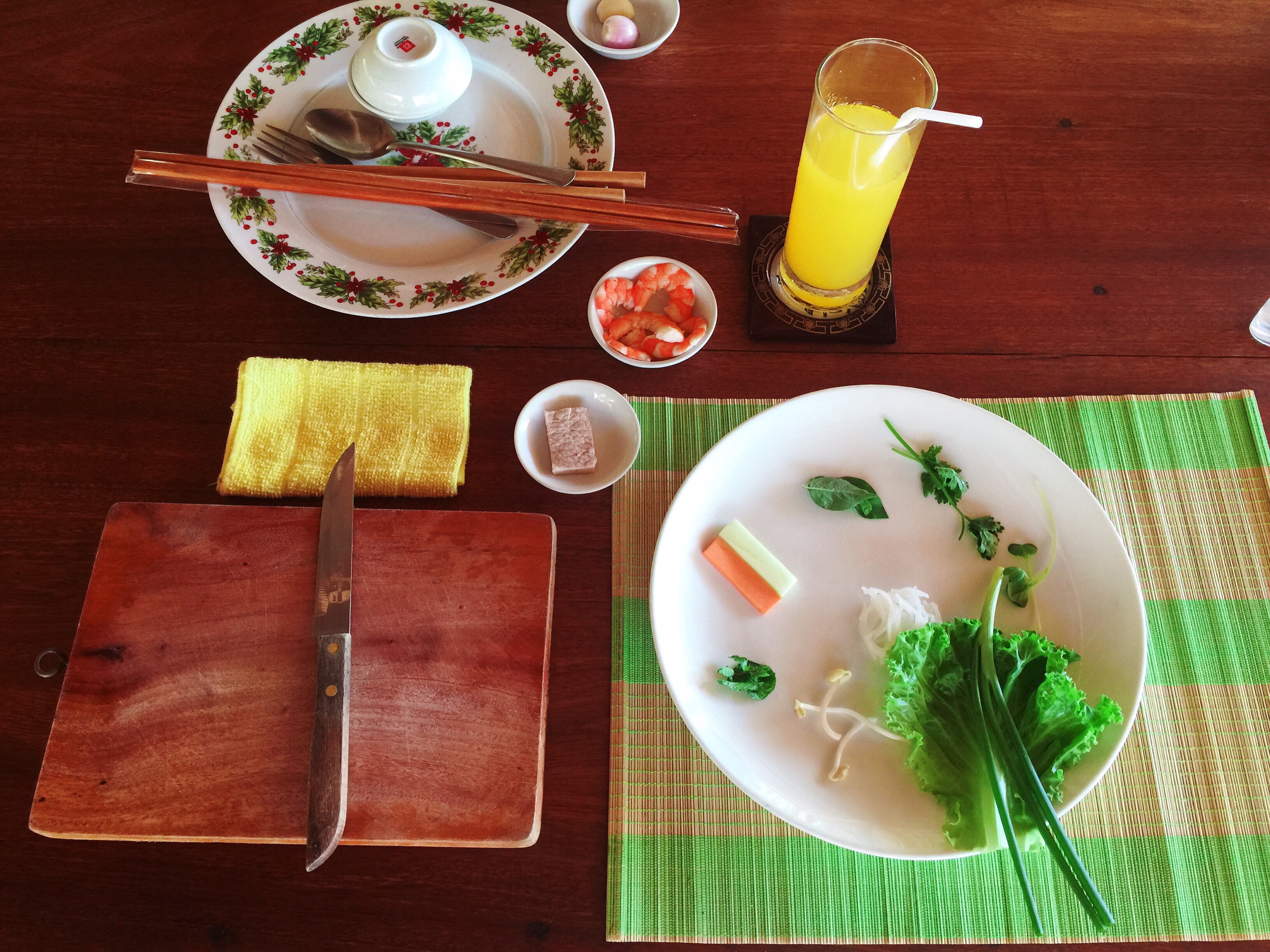
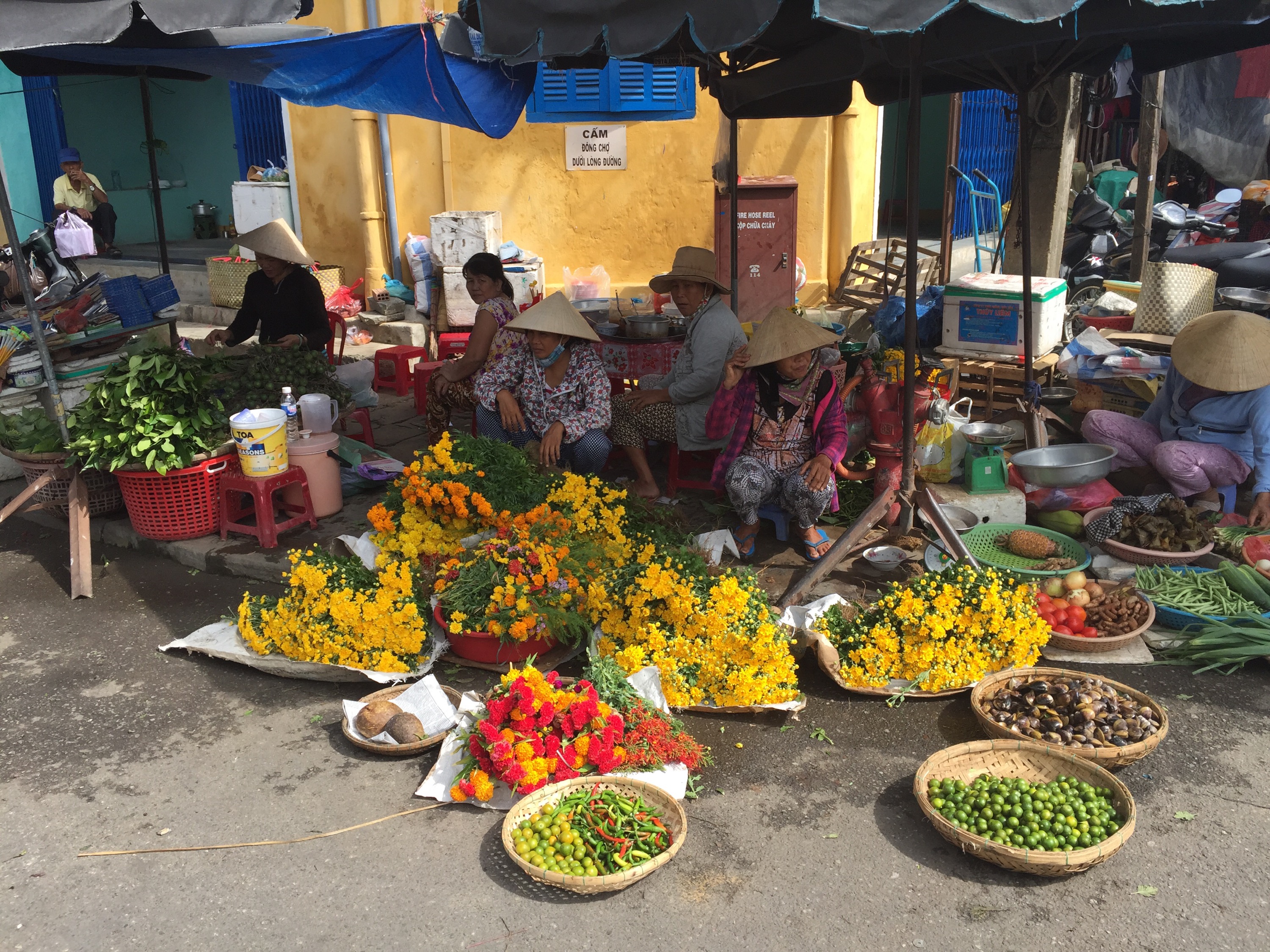
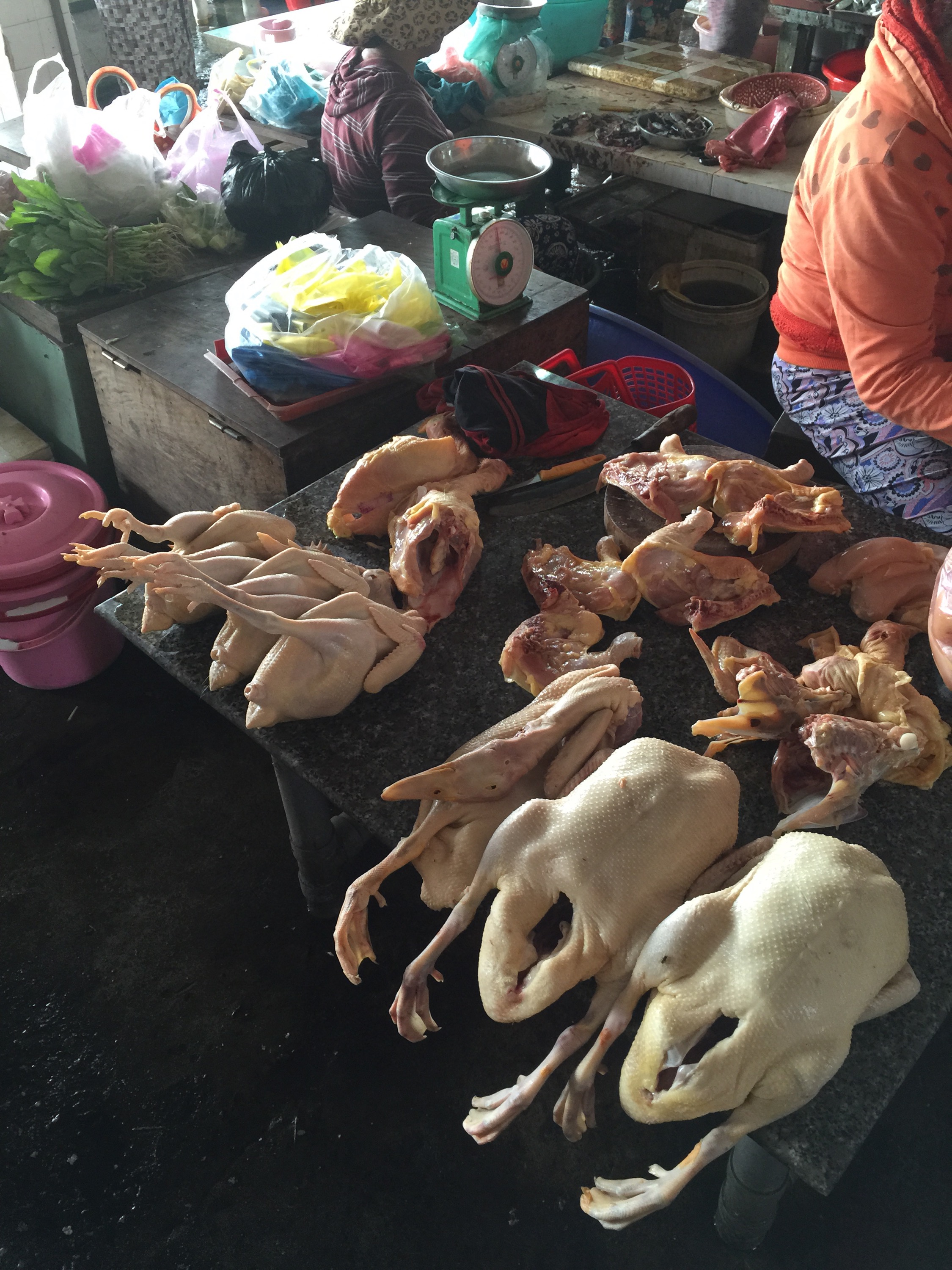
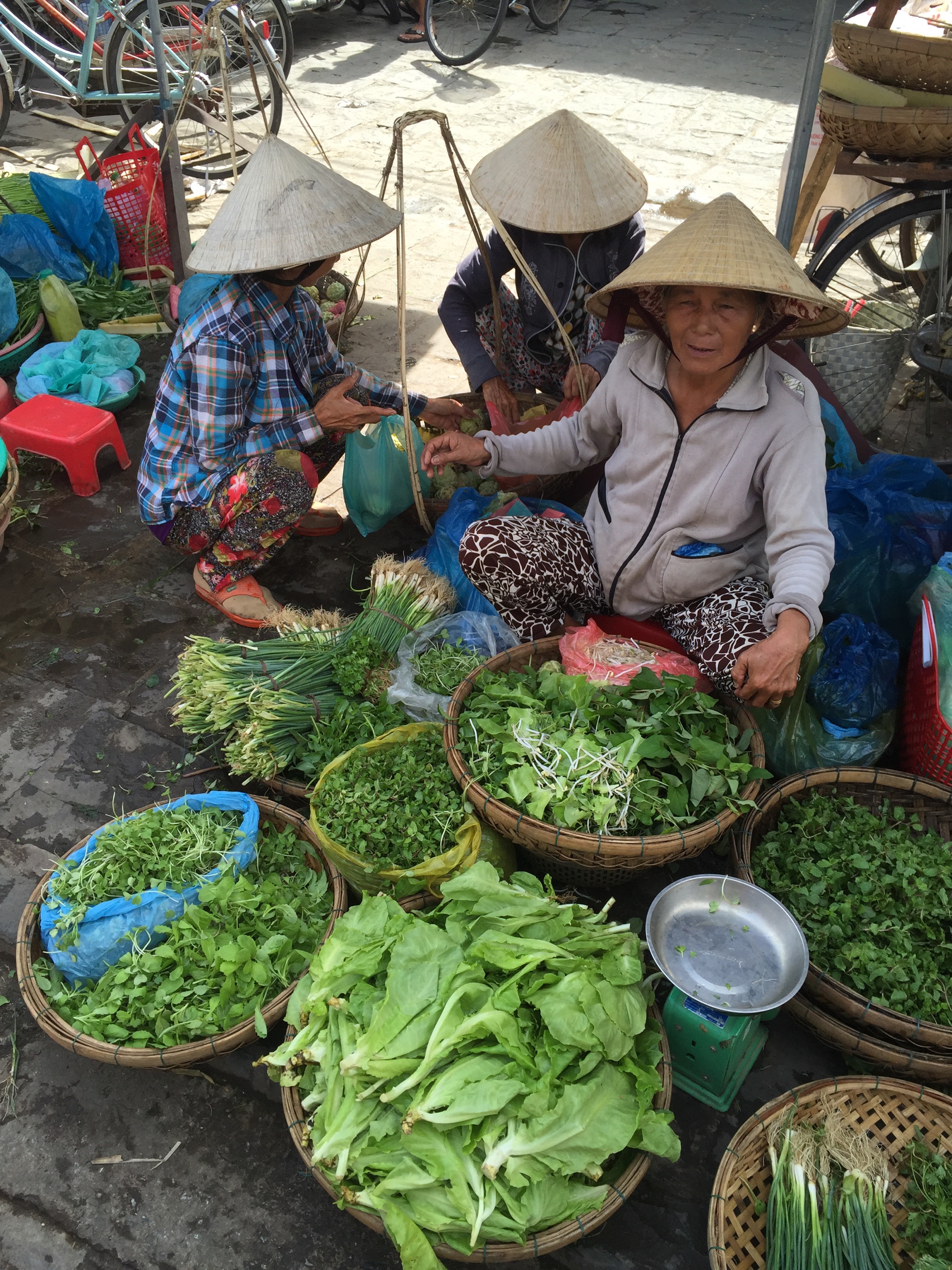
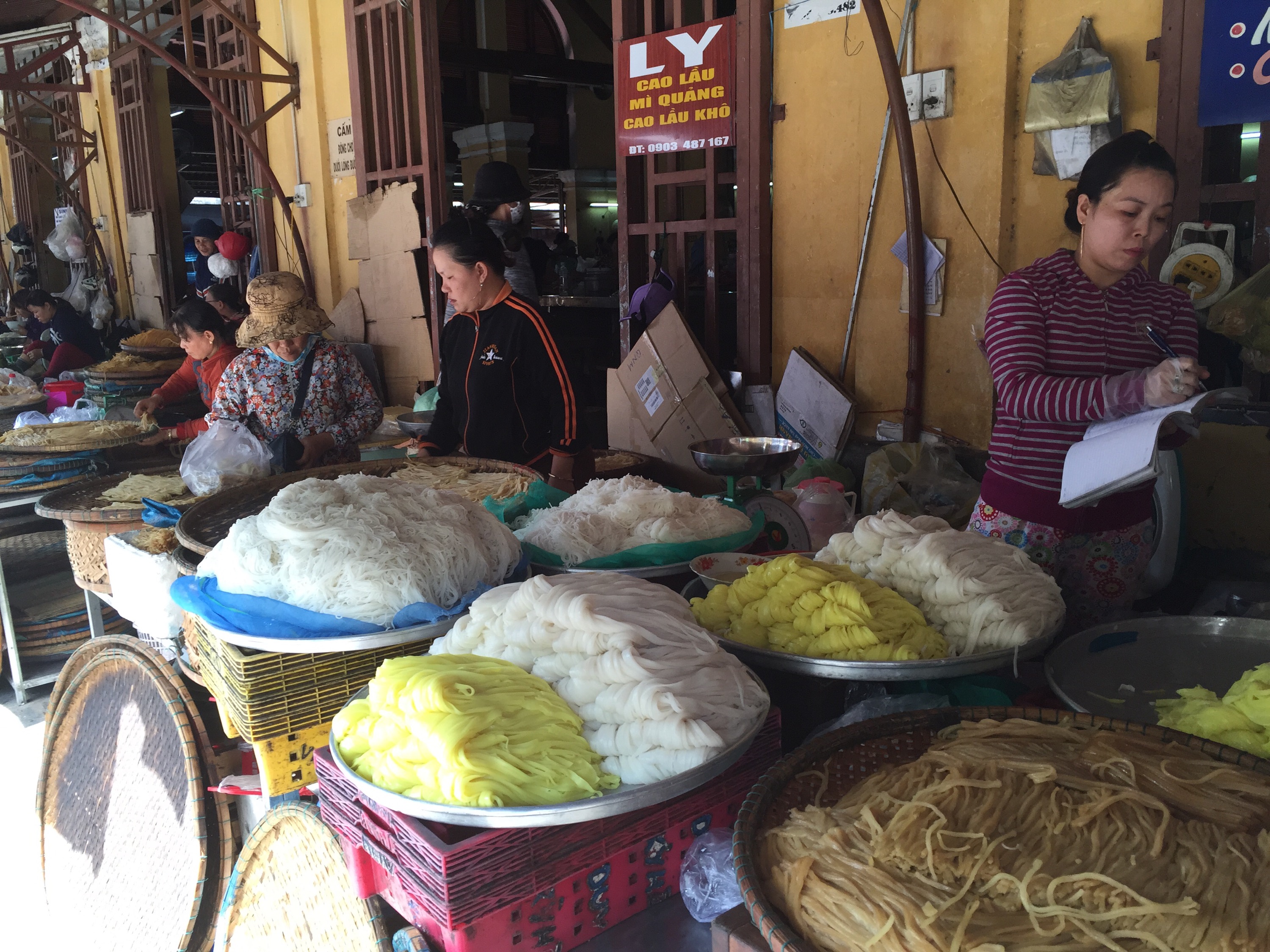
On Thursday Laura and I went into Hoi An to join a group going out to Thuan Tinh Island’s Cooking School.  There were six of us in our group and our Chef and Tour Leader Hon handed us all a shopping basket as we arrived.  It was then a short walk to the market where Hon explained various foods to us and purchased the ingredients we would need for the cooking class.  No matter how many times I have been in the market all the weird and wonderful produce still amazes me.  The meat section is especially interesting given they don’t have refrigeration as such – that is why it is imperative they sell all their product as quickly as possible.  All the stalls are attended by woman wielding large knives – some I wouldn’t want to get on the wrong side of!

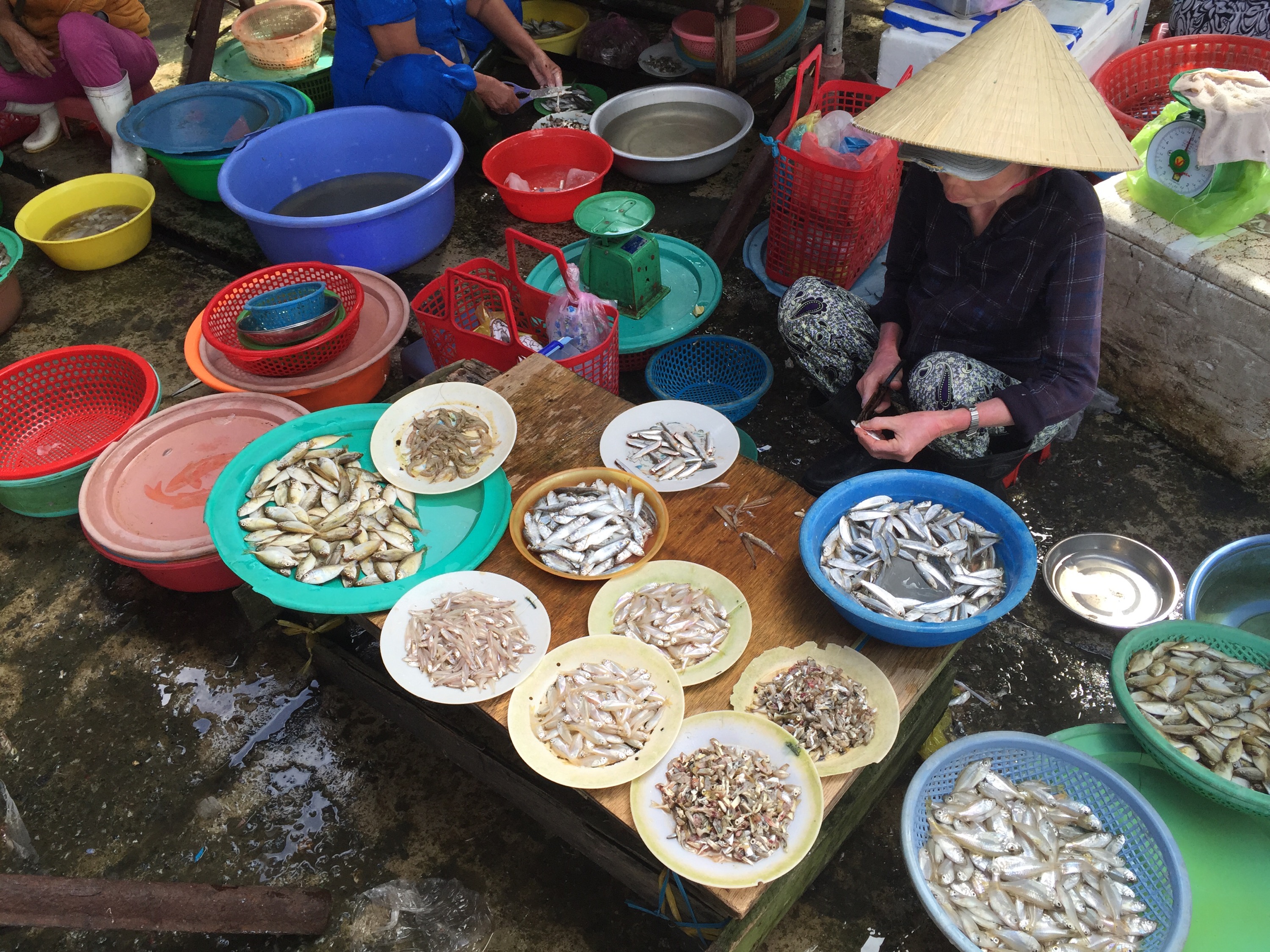
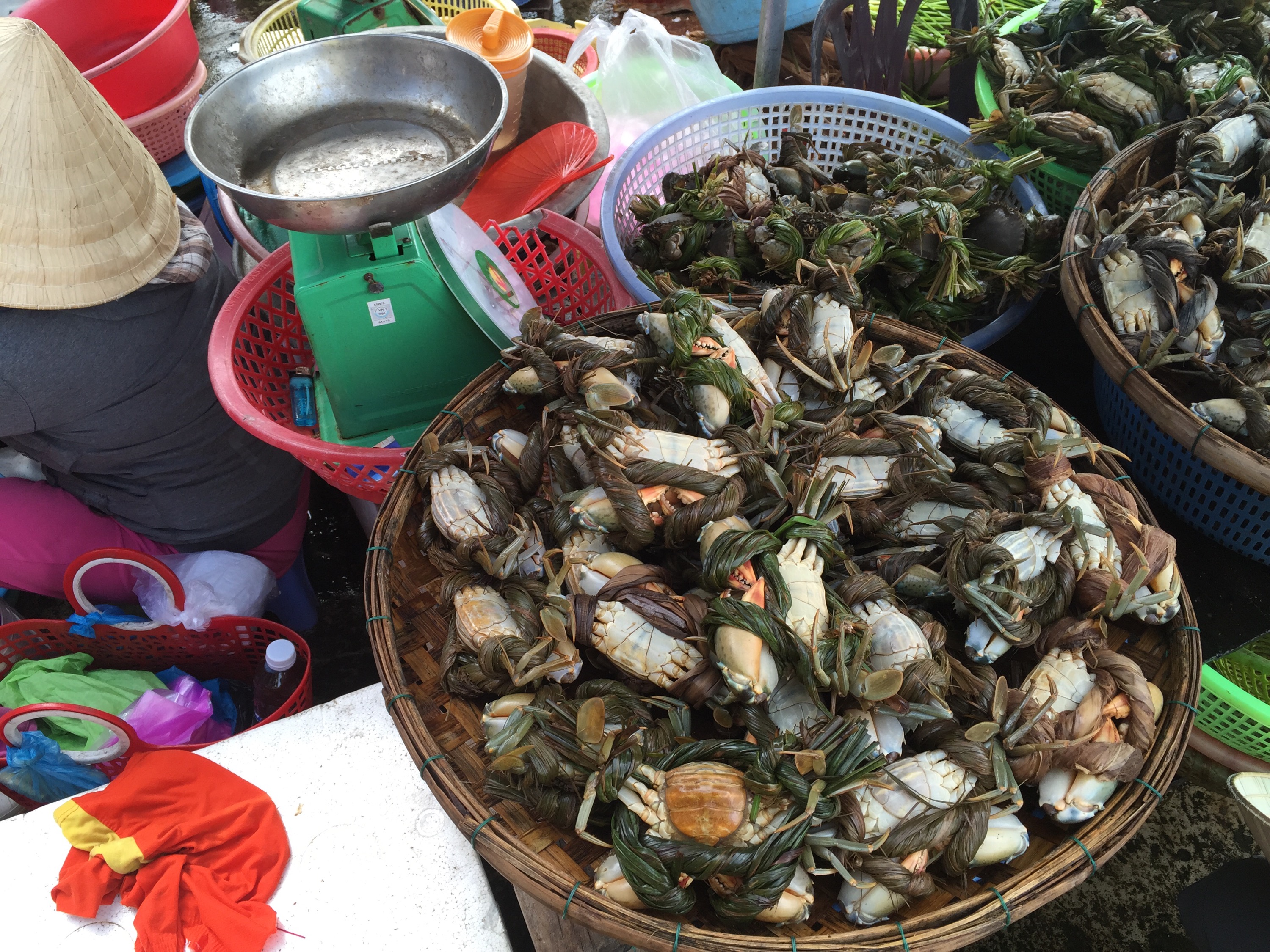
We also visited the wet market where the fish is sold.  The prawns, shrimp and crabs are all still alive so Hon was picking the shrimps out of a bucket of water and they were flapping around much to Laura’s horror.  A couple escaped onto the ground so there was a bit of squealing! 

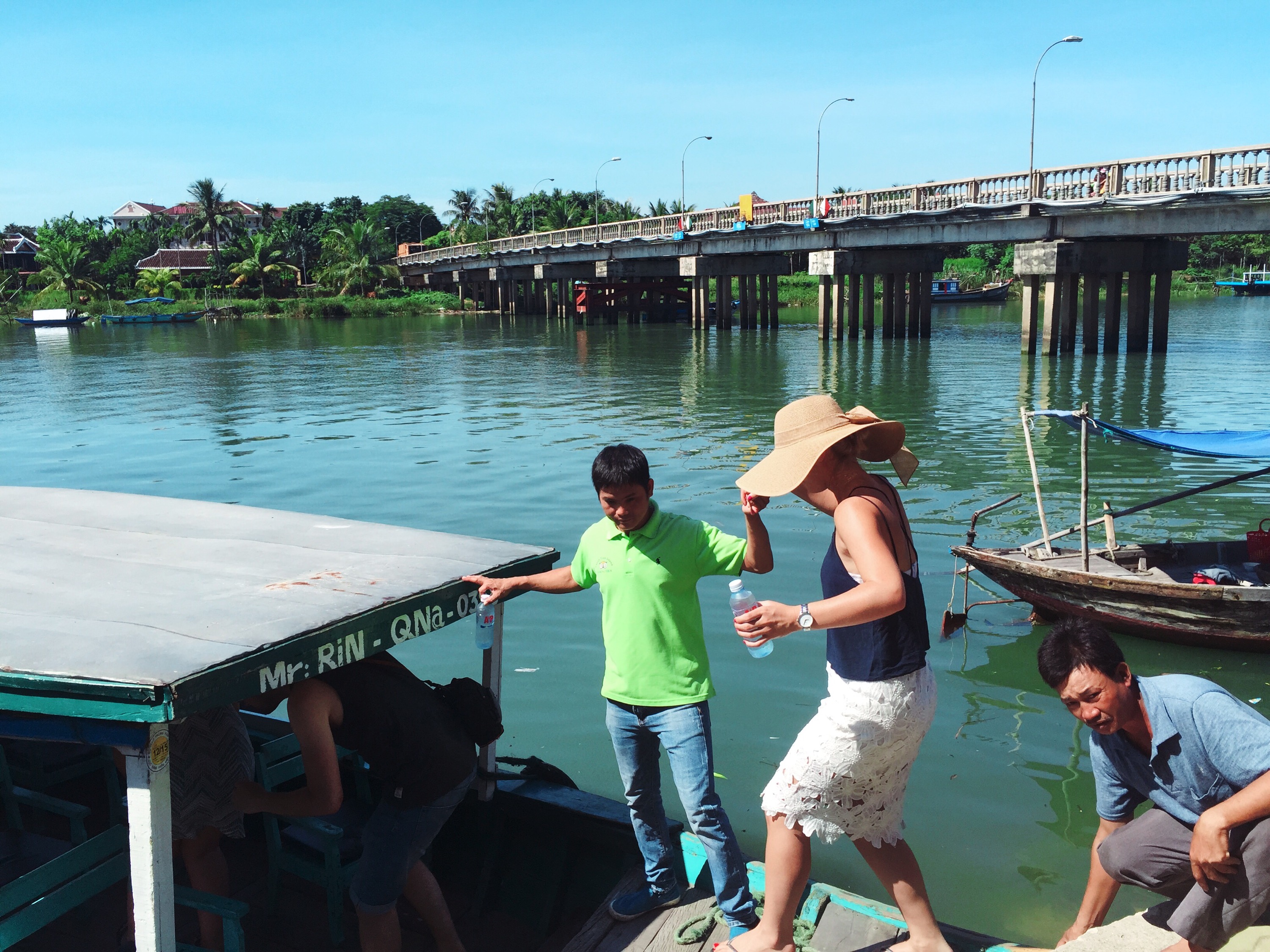
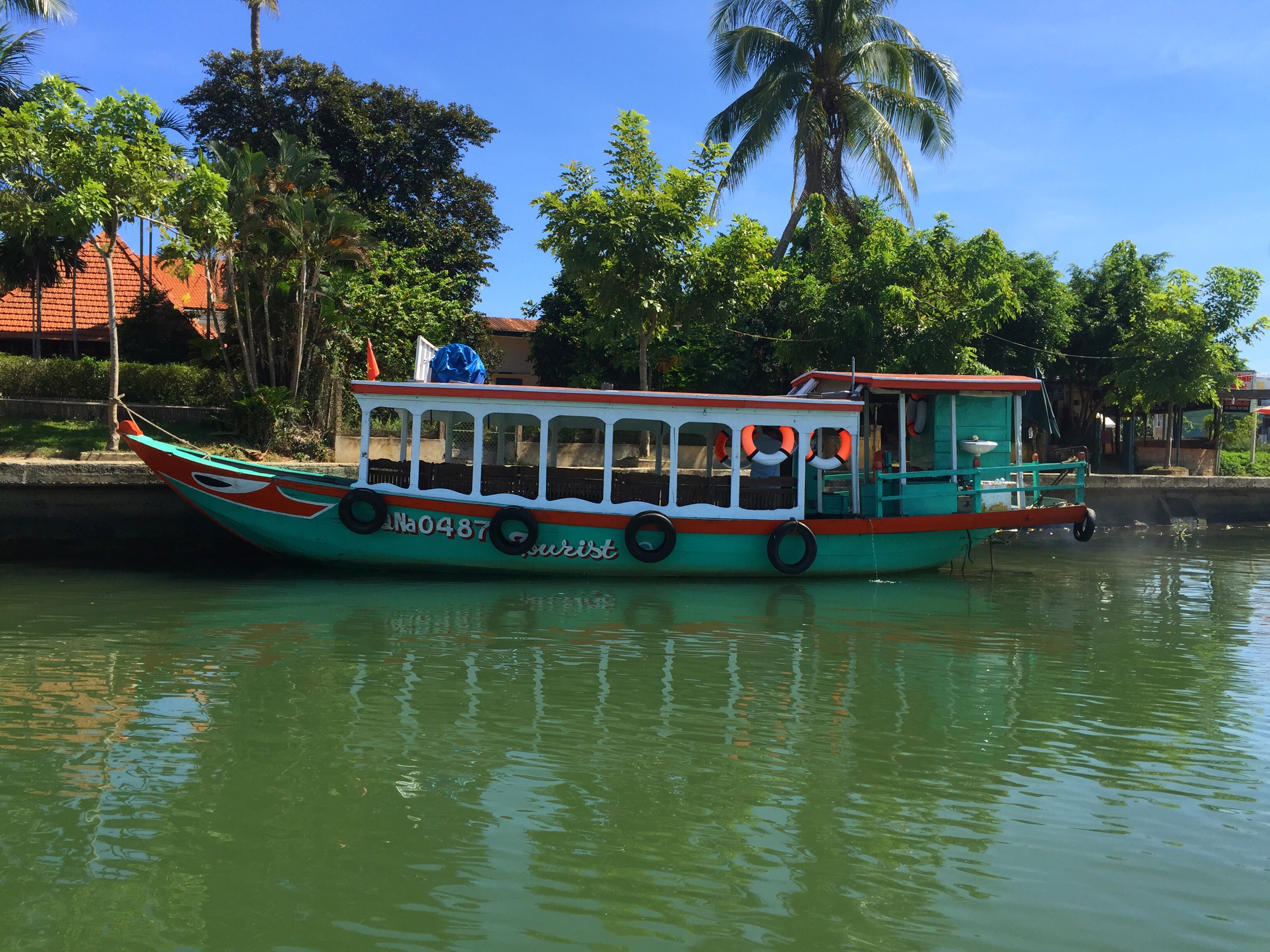
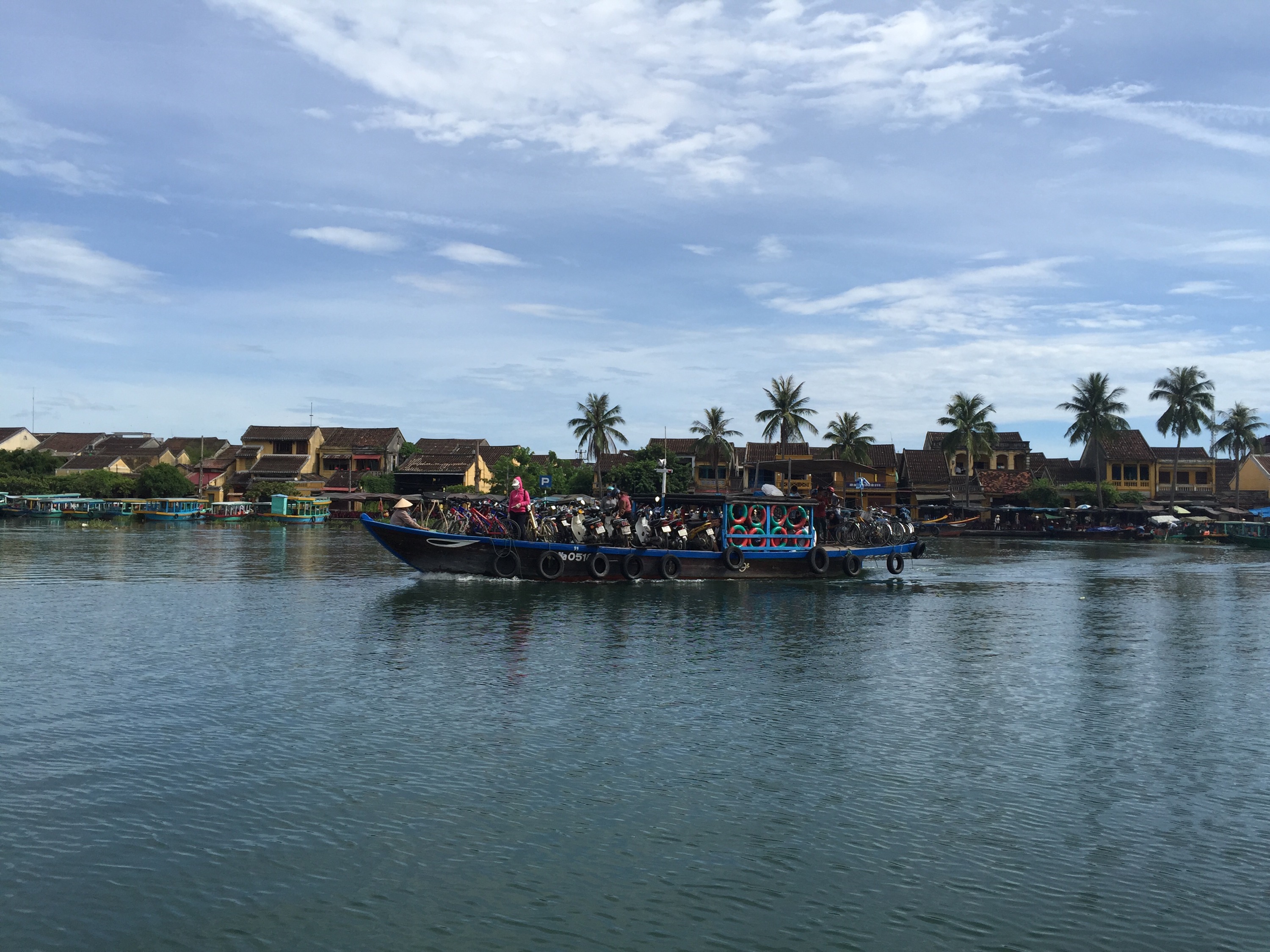
 All our purchases were then off loaded to be transported to the island by motorbike – a much quicker way to get there as we discovered on our trip back to Hoi An after the cooking class.  We walked down to the river to board our boat for the 45 minute ride to Thuan Tinh Island.  All the fishing is done at night so there were a number of fishing boats parked up.  The big fishing nets were also out of the water. 


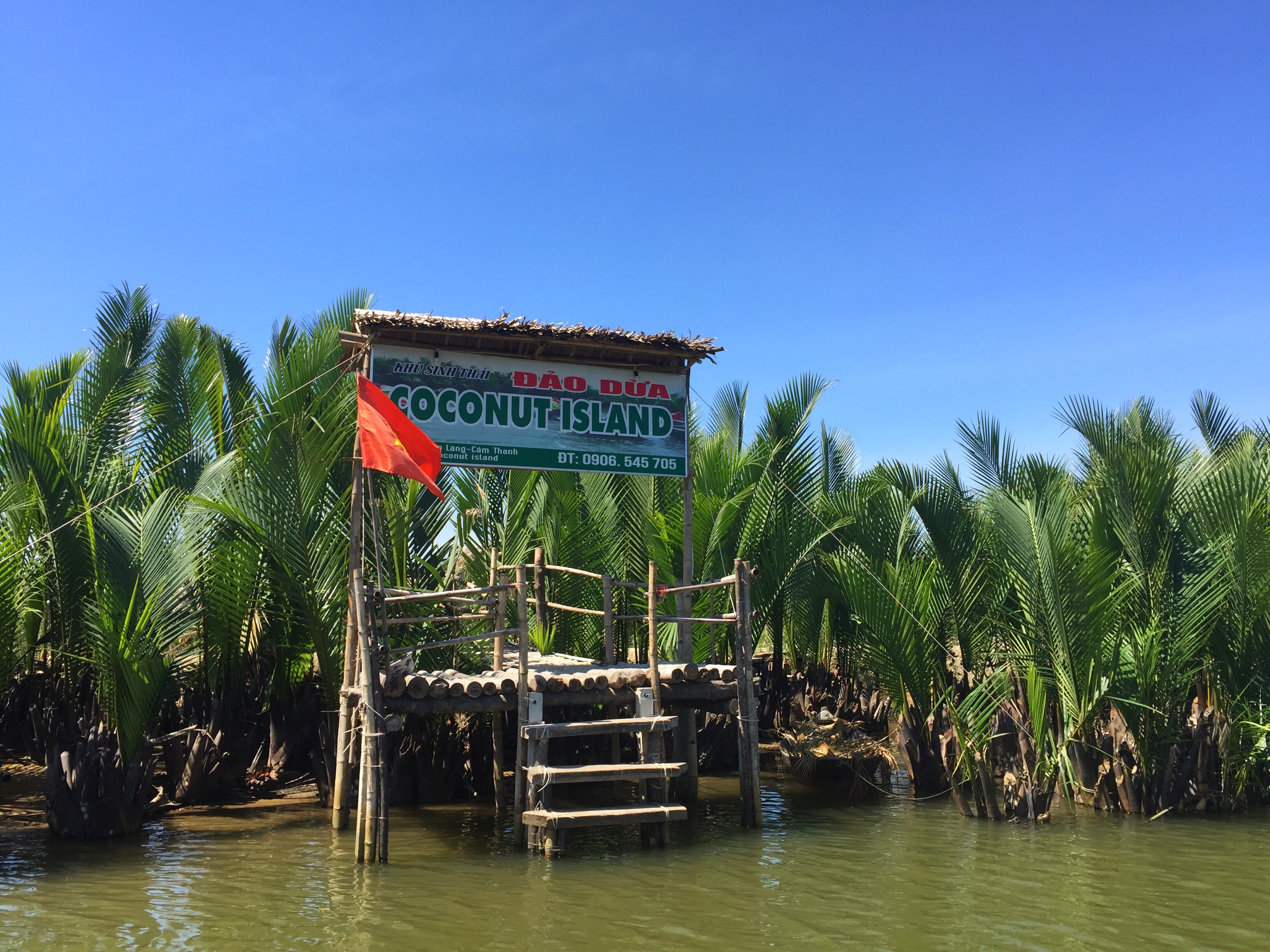
We passed by Coconut Island where they grow these water coconut trees that produce the leaves they use to thatch the roof of a house or as a cover on a fishing boat.  We had to switch to a row boat for the last five minutes of our journey and we had to row!  Thuan Tinh Island is recognized by Hoi An as an official ecological zone. 

    
 First stop on Thuan Tinh Island was the local farmer’s house to make rice milk for our Banh Xeo.  

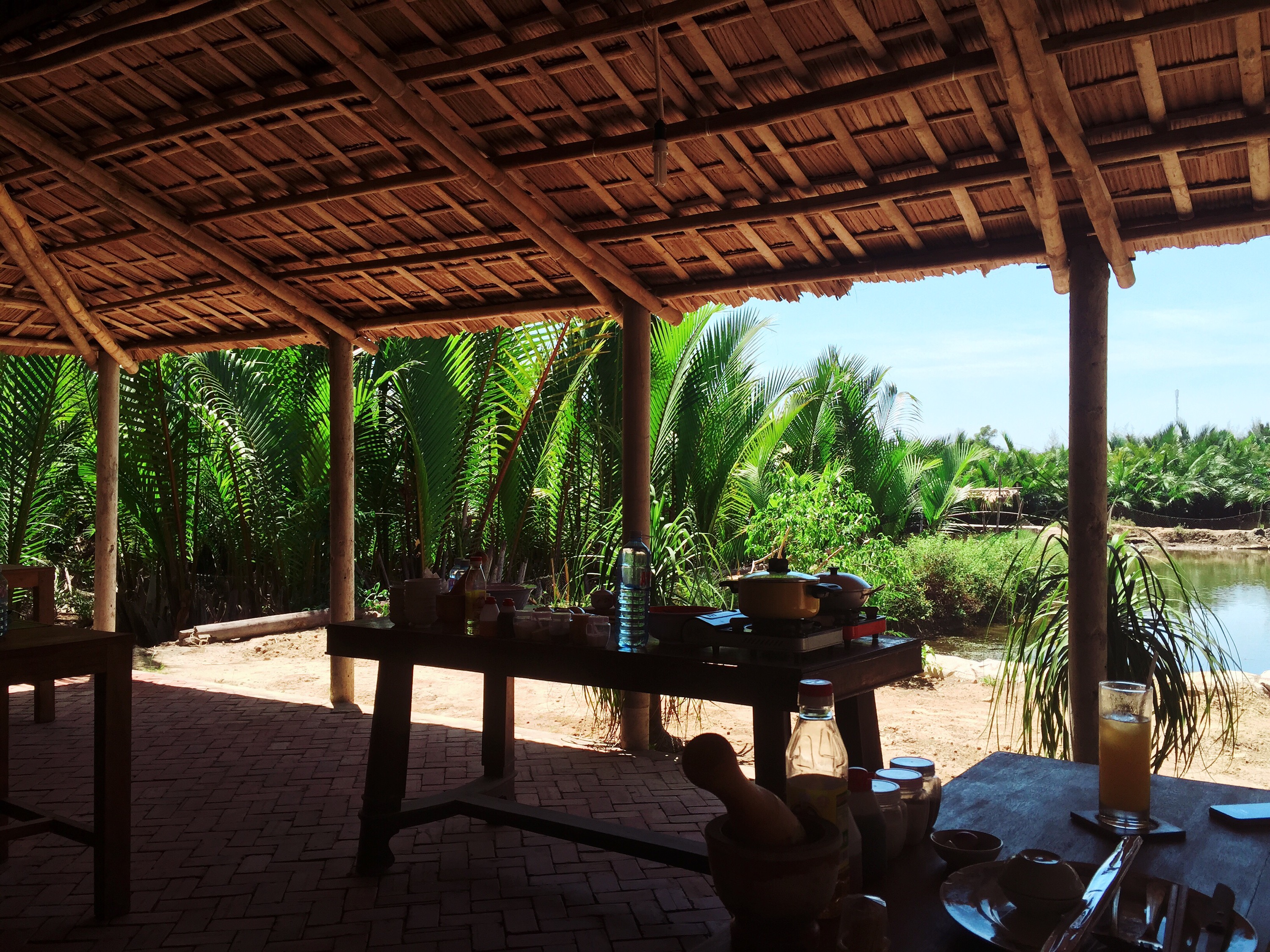
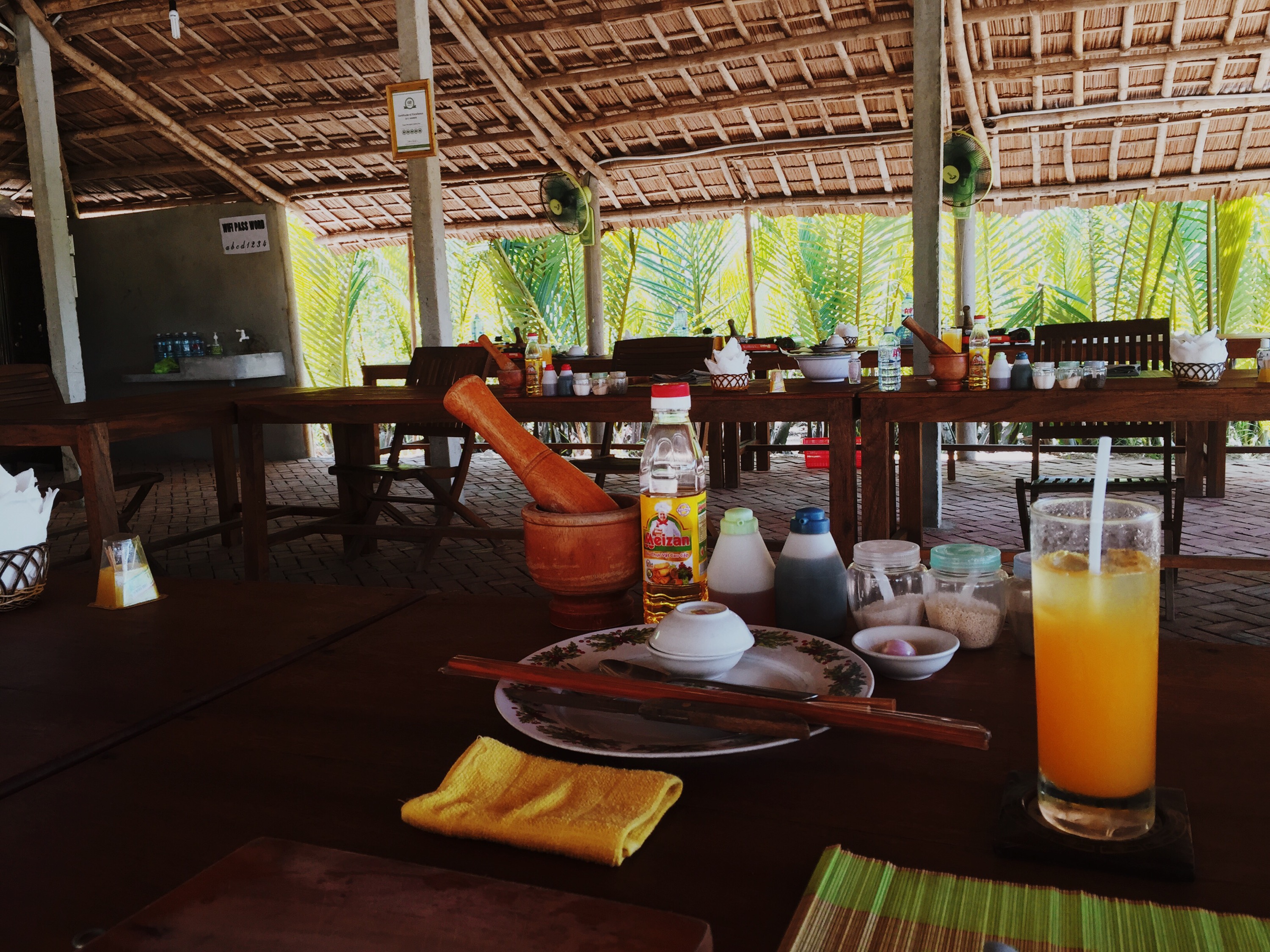
 We then made our way back to our classroom for the morning which is effectively a bamboo building with no sides overlooking the water.  The last cooking class I did was inside so it was nice to have the airflow and it is definitely a cooler scenario once all the little cookers are fired up. 


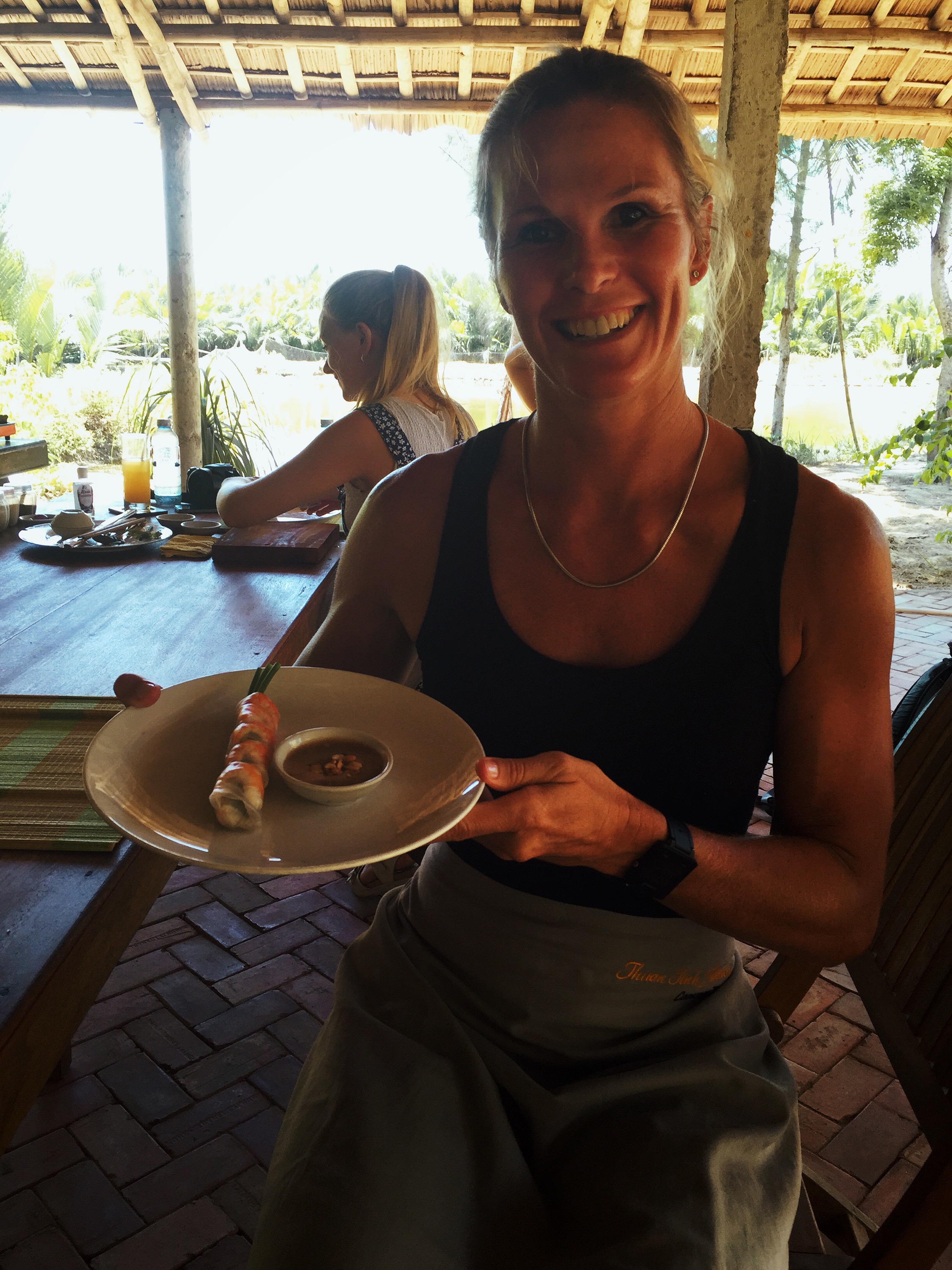
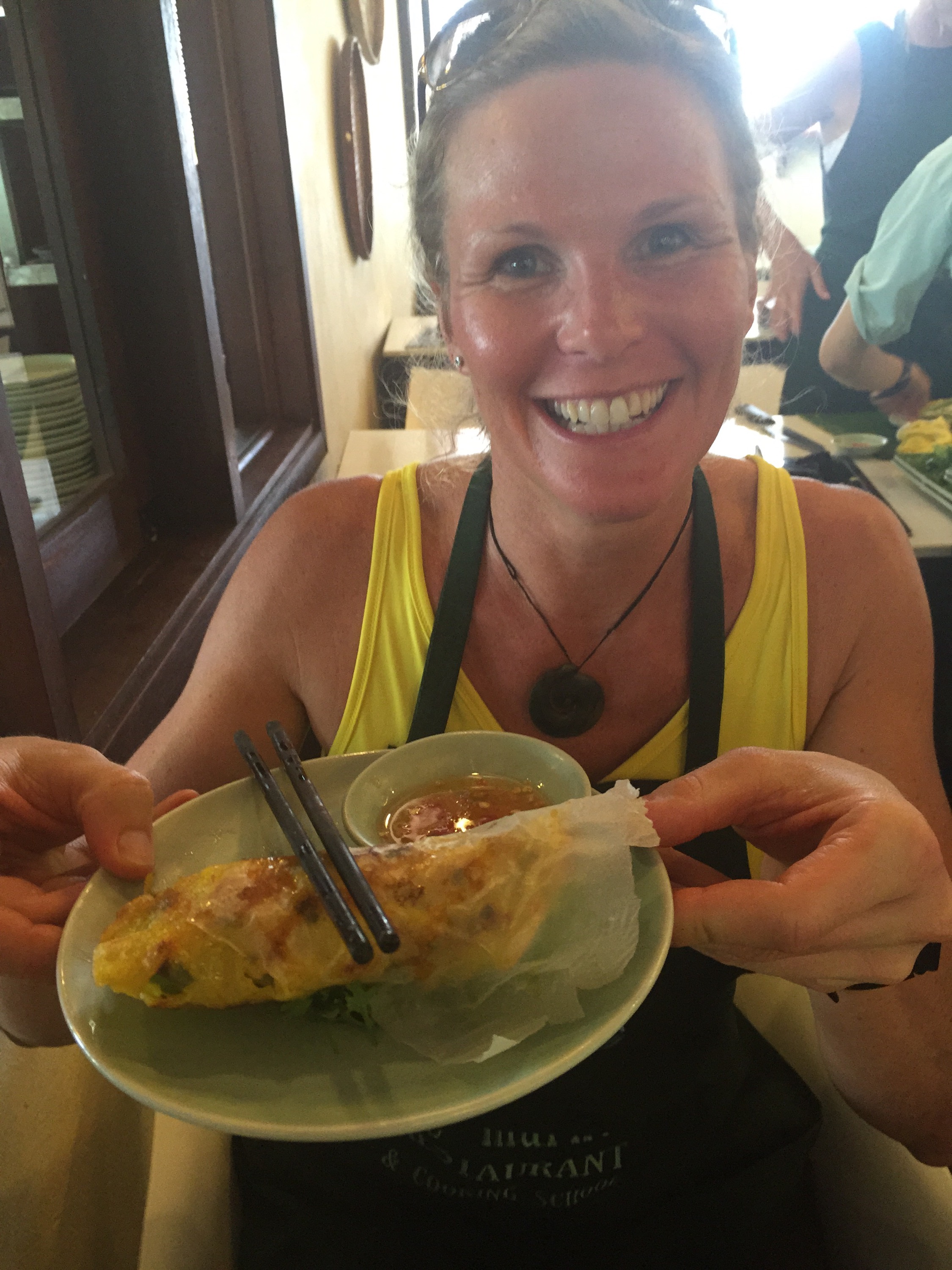
The first dish of the day was Goi Cuon – Fresh Rice Paper Salad Rolls with Pork and Shrimp with a Tangy Peanut Hoisin Dipping Sauce.  Hon showed us how to make the dipping sauce first which is yummy.  He then showed us how to make the rolls – I have been making these at home for a while but Hon’s methodology is certainly more clinical with much better results.  It was then our turn and I must say I am sold on his methodology – just like a bought one! 

    
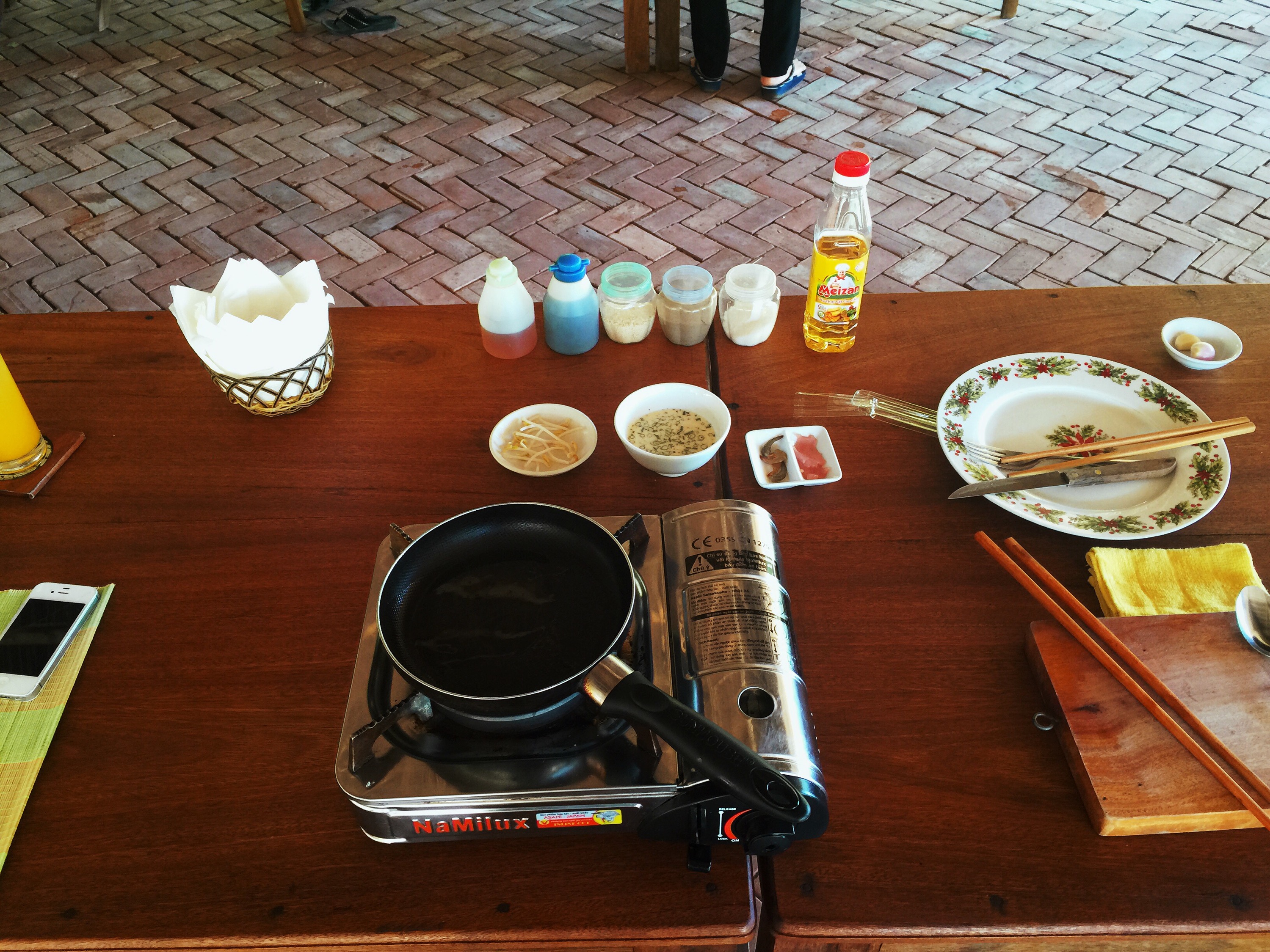
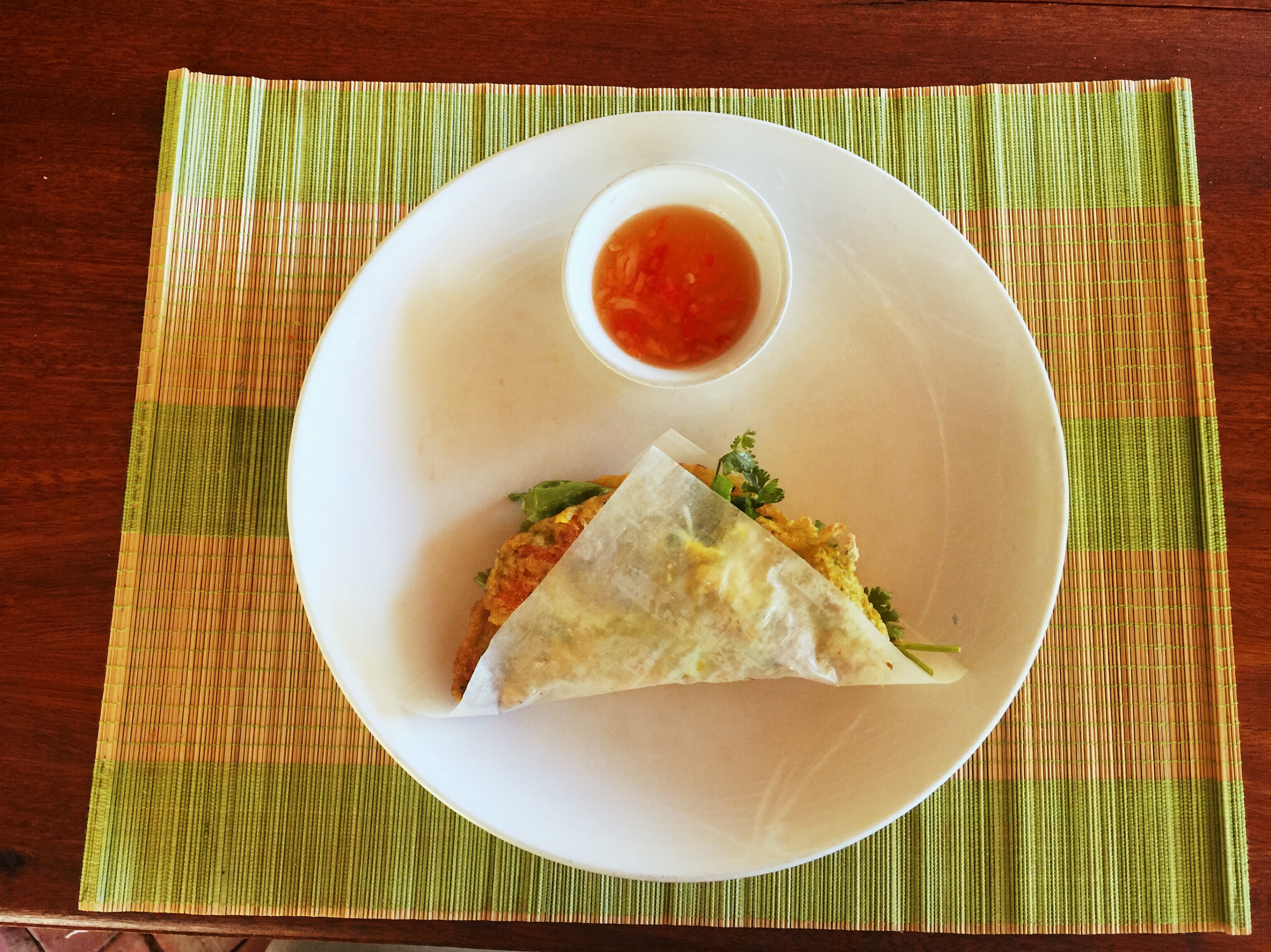
 Next up was the Banh Xeo – Crispy Vietnamese Crepes filled with pork and shrimp, bean sprouts and green onion. Served with lettuce leaves, fresh herbs and nuoc (dipping sauce).  I have made these before and have eaten my fair share of these around town so they are definitely a favourite of mine.  The trick is to have patience and let the pancake get crispy.  Hon showed us how to flip the pancake which was fun – I did OK but Laura had a few issues and Hon had to do some remedial work on her pancake.  Our theory though, was that they would still taste delicious and they did. 

    
 One of my favourite main dishes in the local restaurants is the Bun Bo Nam Bo – Herb salad with rice vermicelli and sauté beef, topped with roasted peanuts and hot soy sauce vinaigrette.  I normally ask them to replace the beef with chicken as I find the beef a little bland (far too spoilt at home with eye fillet steak).  Hon showed us how to make the soy sauce vinaigrette which tasted OK – I am more a fan of using a fish sauce based dipping sauce on my noodle salads – a bit more tang.  This dish gave us the chance to showcase our creative skills as it was all about the presentation.  Check it out : ) 

 The last dish of the day was the Pho Bo Hanoi – Beef rice noodle soup infused with beef bones, cinnamon, ginger and star anise.  Pho or soup is a staple dish of the Vietnamese people.  Prior to doing the spring rolls we had prepared the beef stock which needed to boil for about an hour and a half. Hon showed us how to ‘cook’ the noodles by putting them in a strainer and holding them in a pot of boiling water for about ten seconds. We also cooked some thinly sliced beef in the same way.  We then assembled our Pho and ate it – we were pretty full by this stage so didn’t do the dish justice.  I have had this dish once before and although I am a cinnamon fan it isn’t a favourite of mine. 

   
We had been plied with homemade passionfruit juice throughout the morning which was very tasty and refreshing – a bit more of a sugar hit than I’m used to but hey we were working hard cooking up a storm.

Hon escorted us back into Hoi An in a taxi which only took about ten minutes – it had taken us about 45 minutes by boat to get to the island but this gives the Chef’s assistants time to prepare all the ingredients that we had purchased at the markets.  This preparation includes chopping off the heads of the shrimp and prawns so they are no longer high tailing it around the place!  Laura was so releived : )

Posted in HoiAn, Vietnam | Tagged , , | 1 Comment

Danang Golf Club – Danang, Vietnam

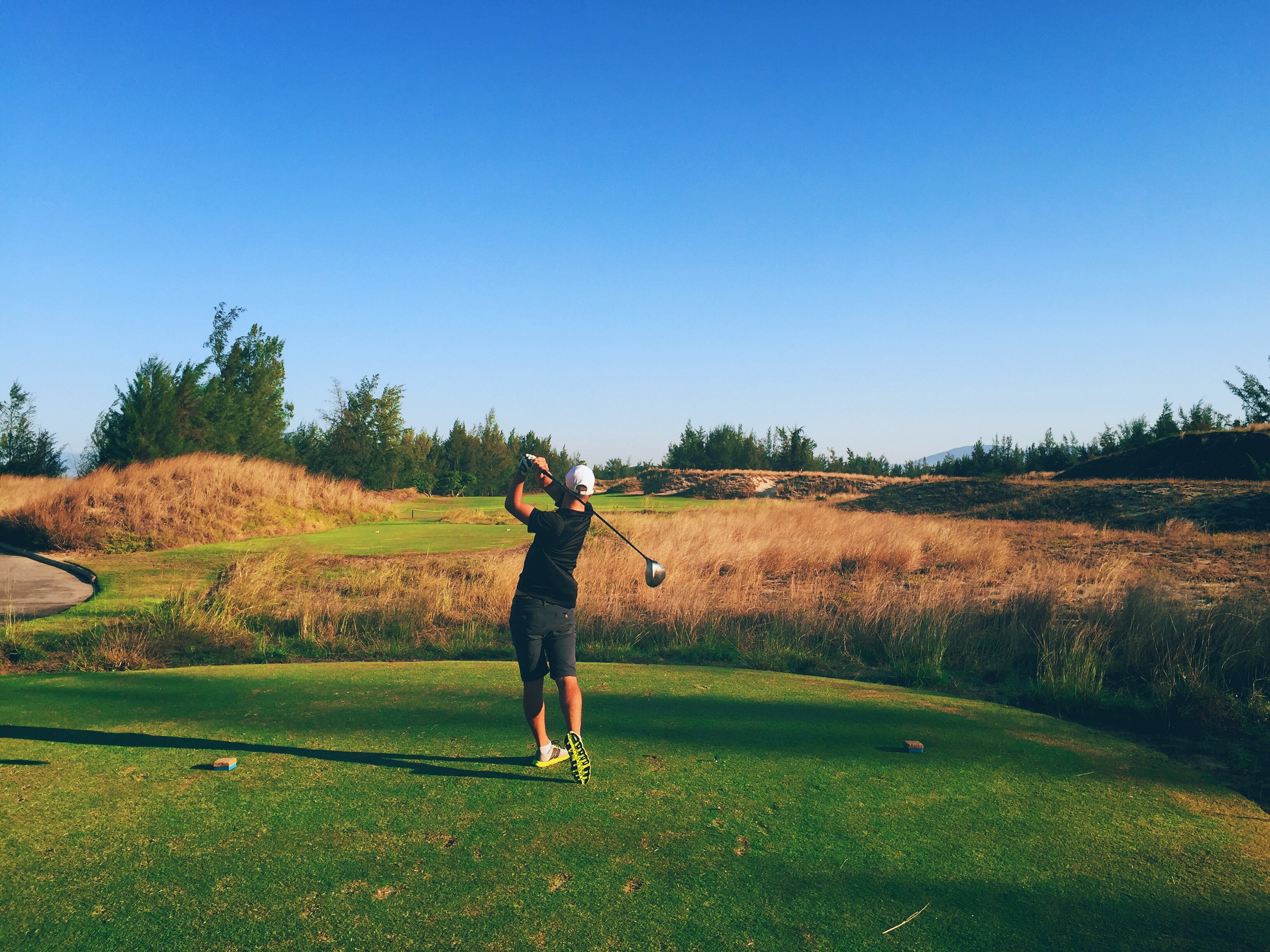
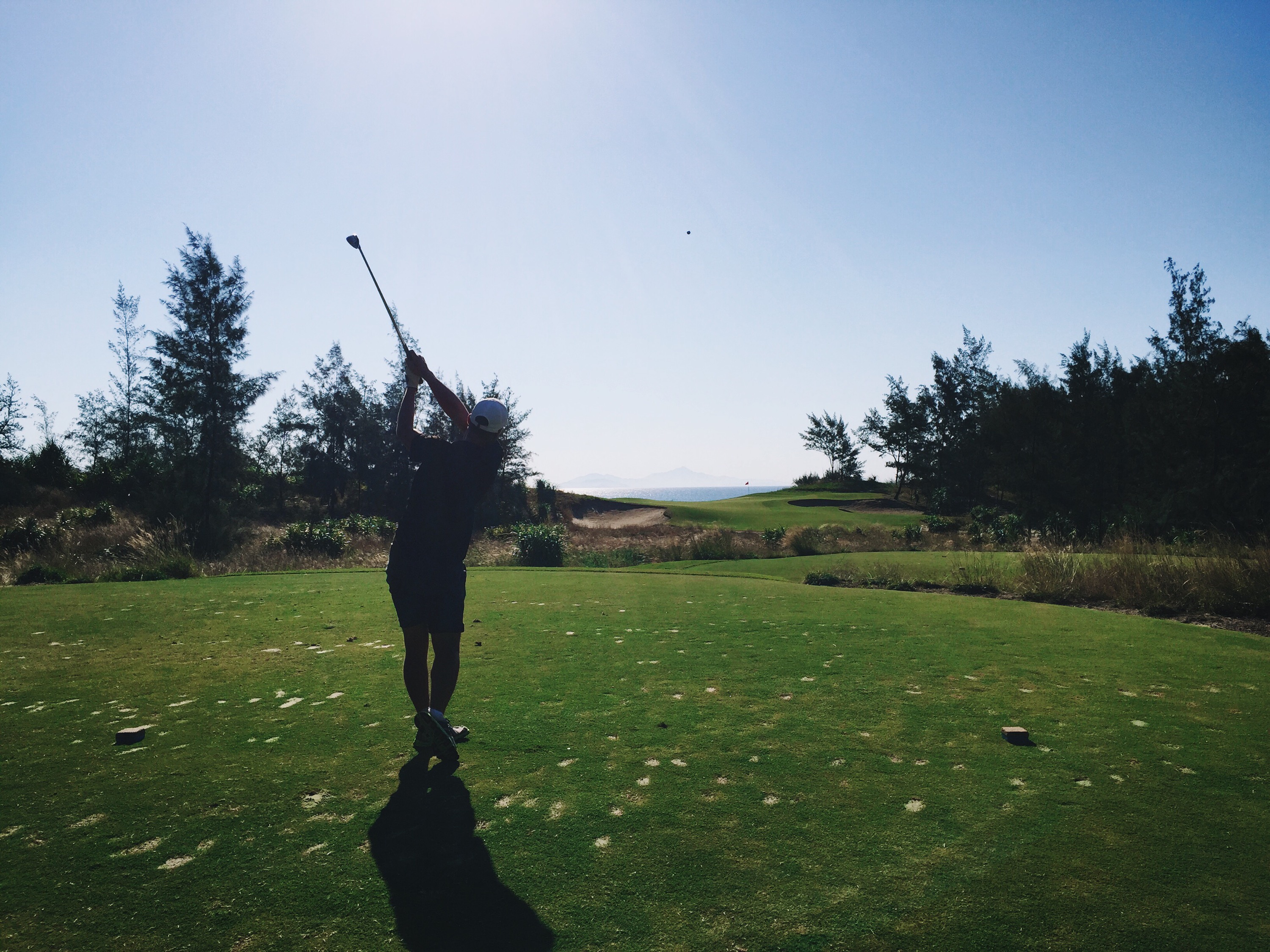
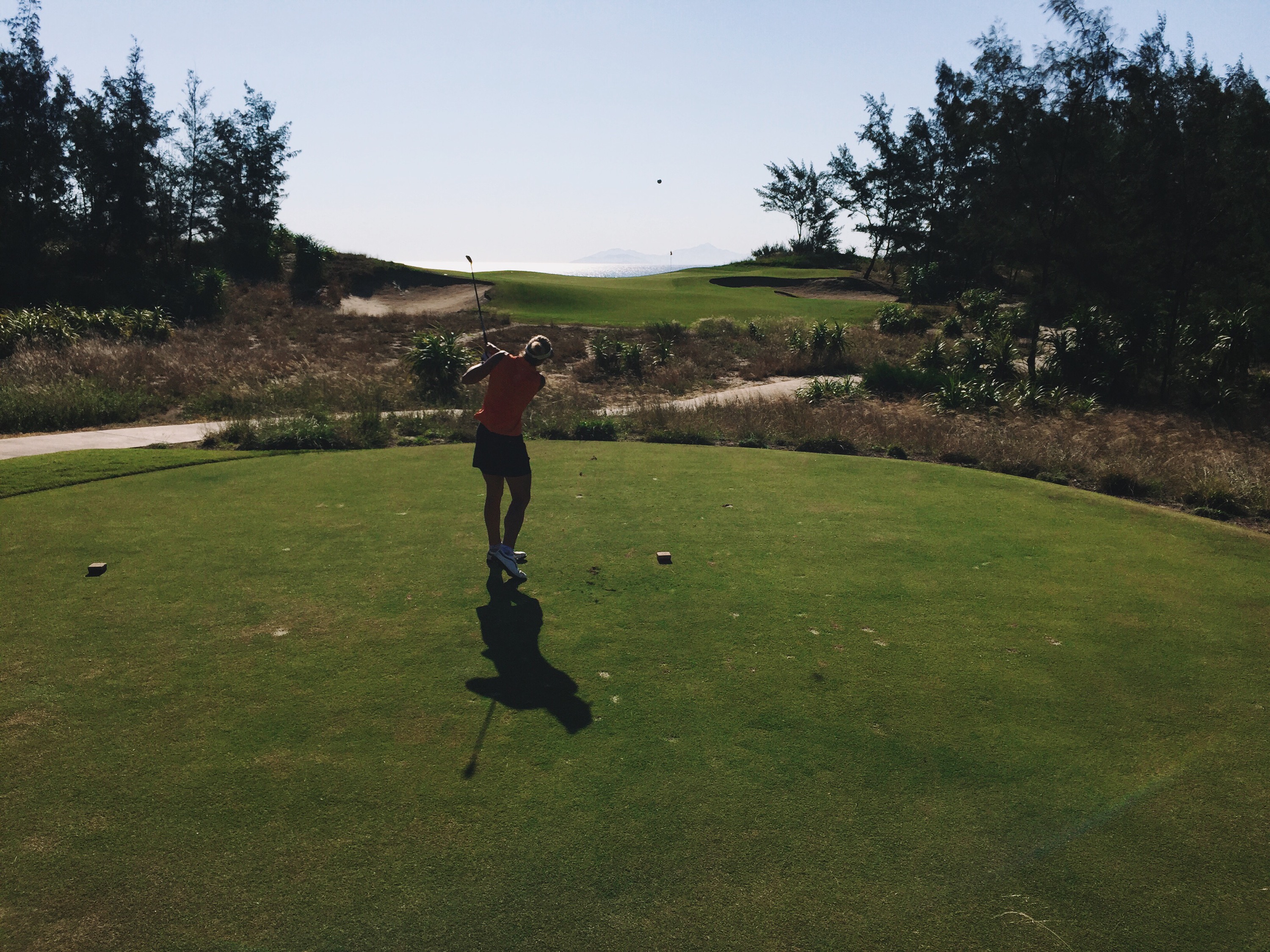
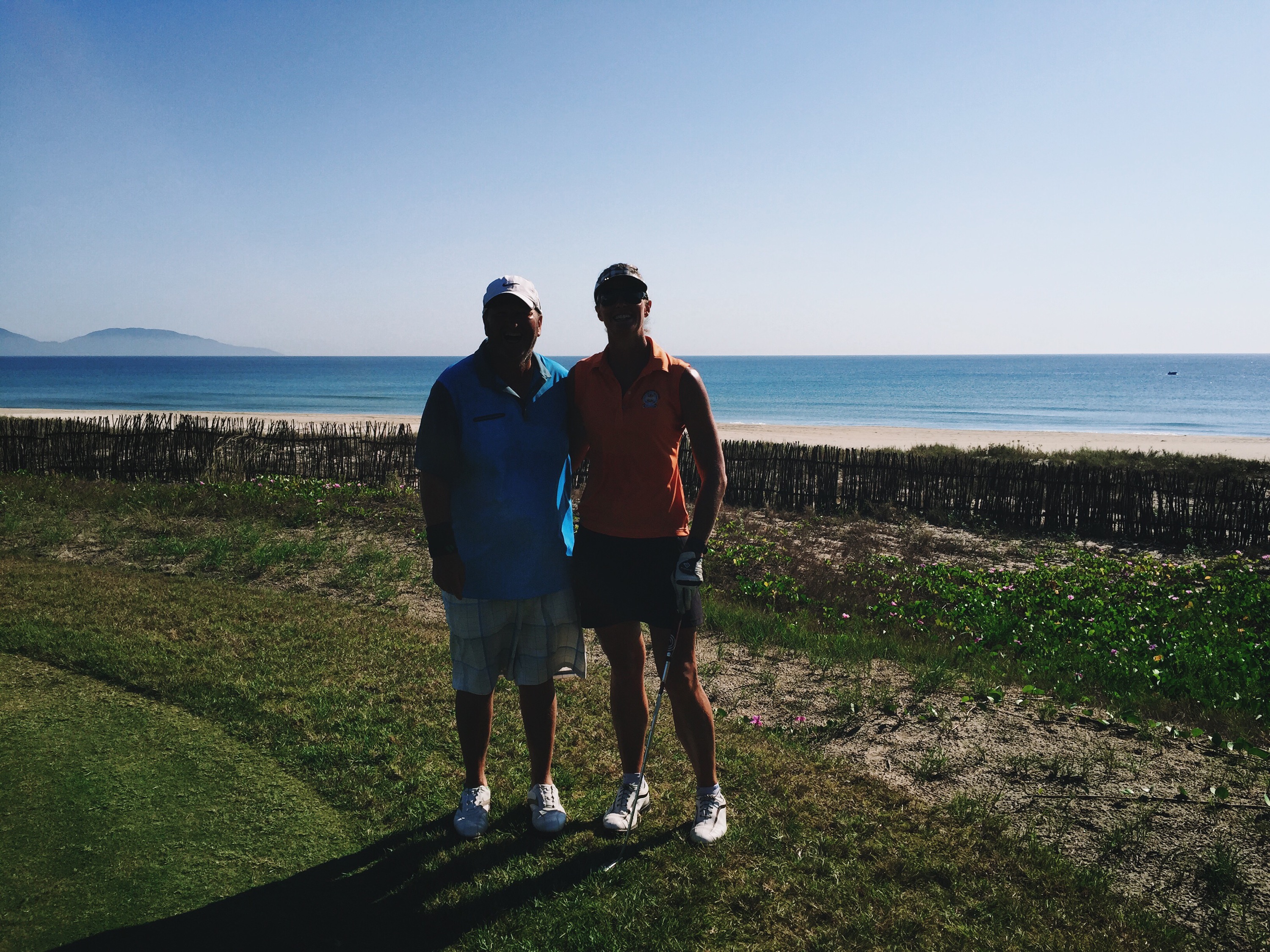
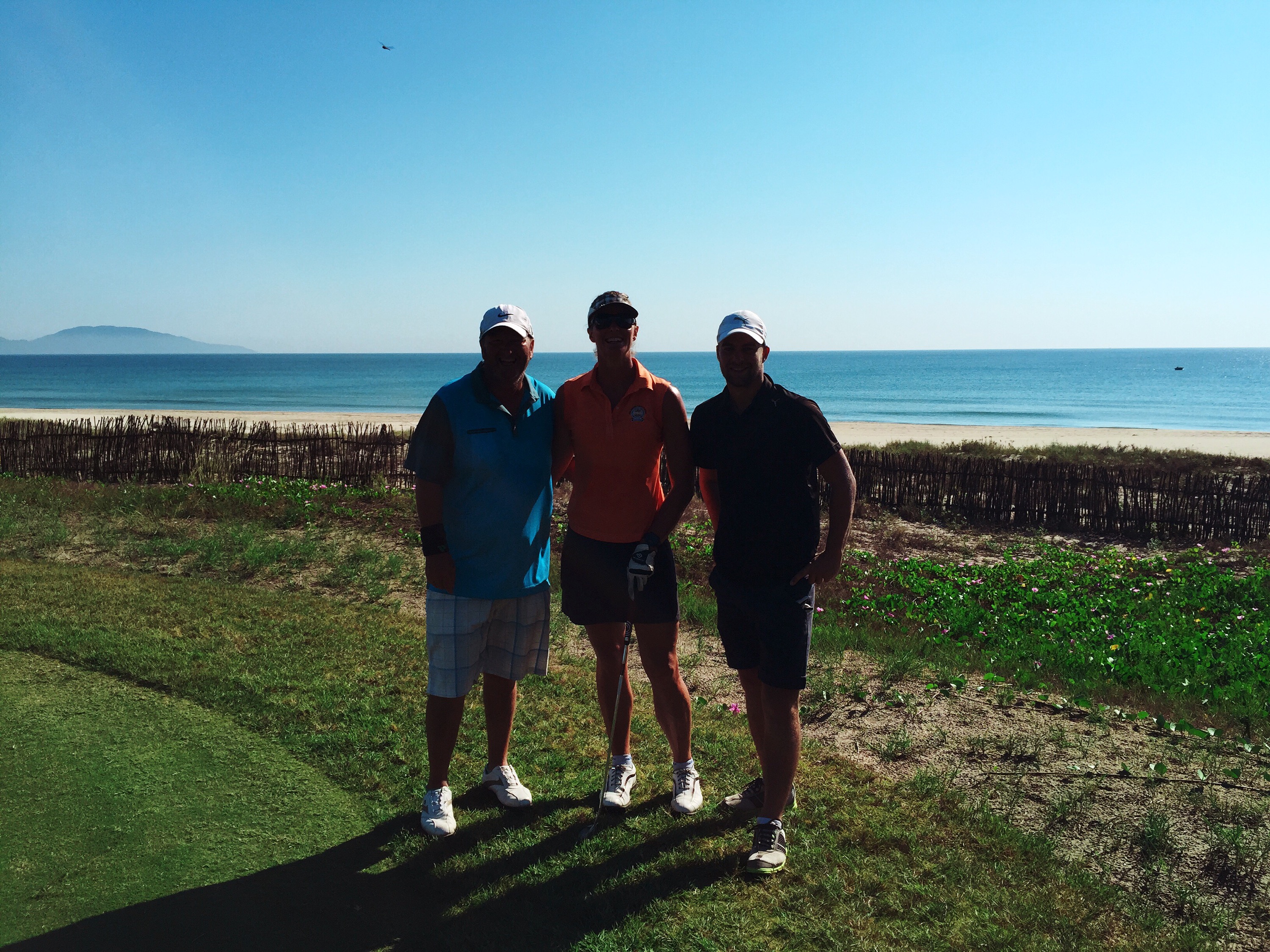
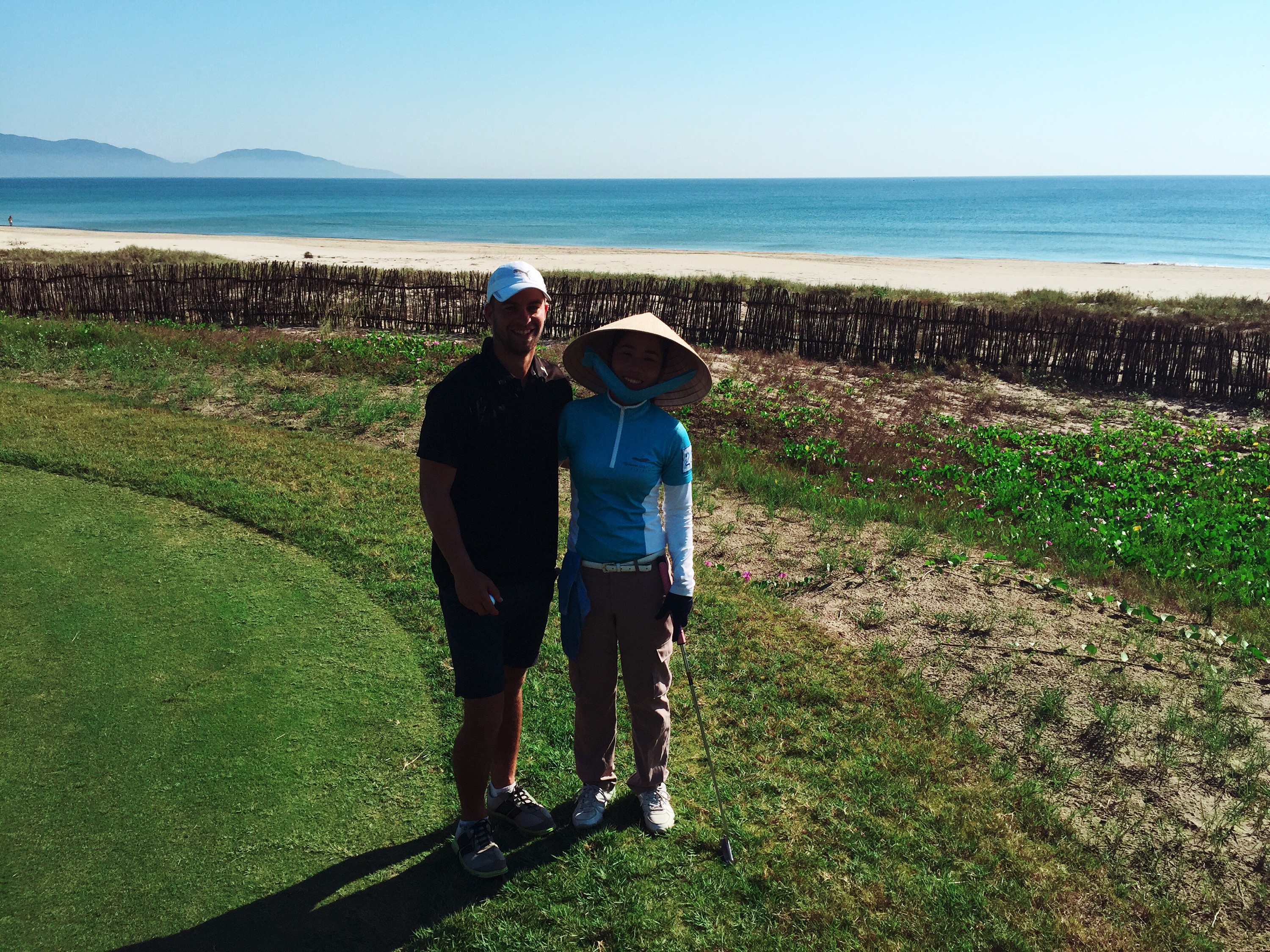
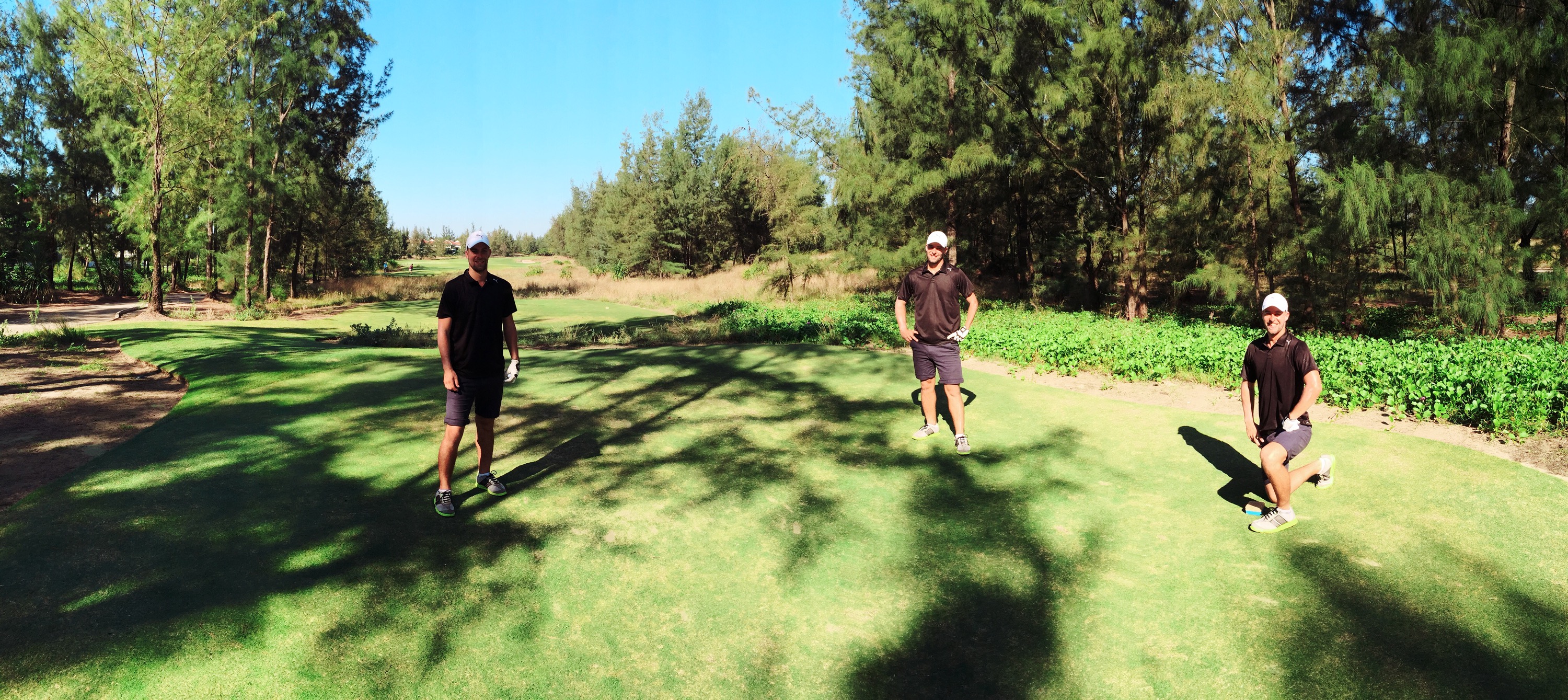
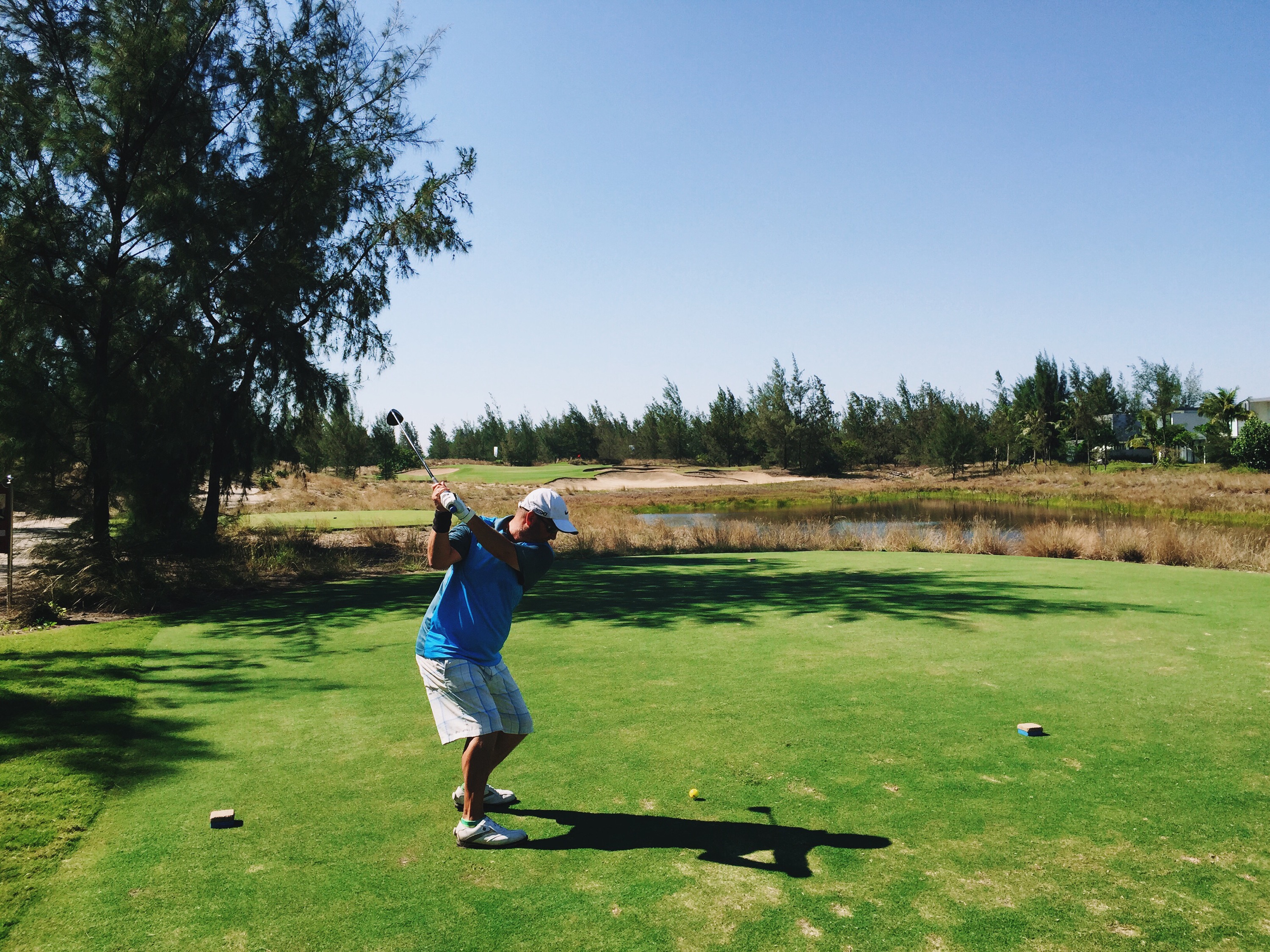
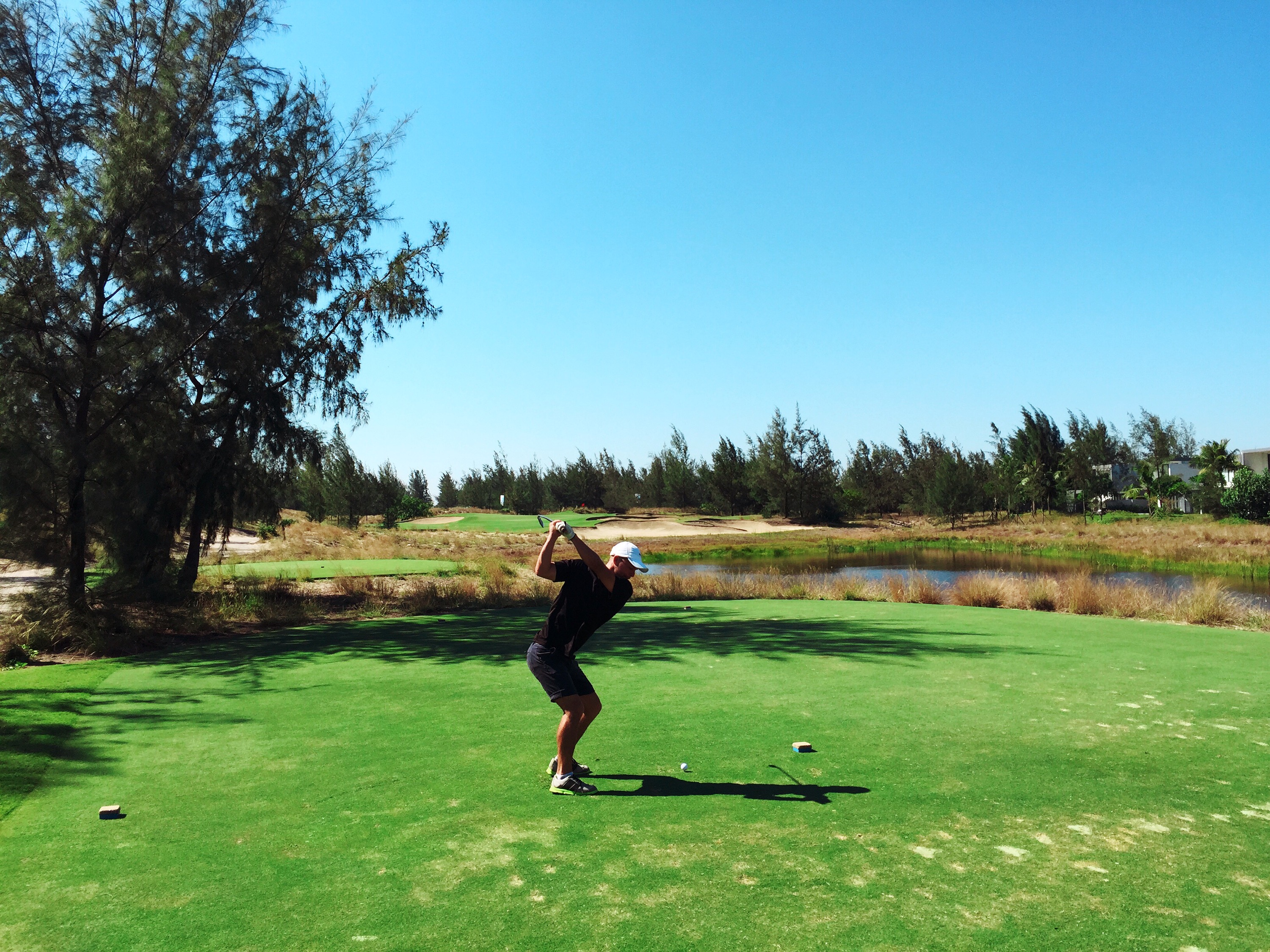
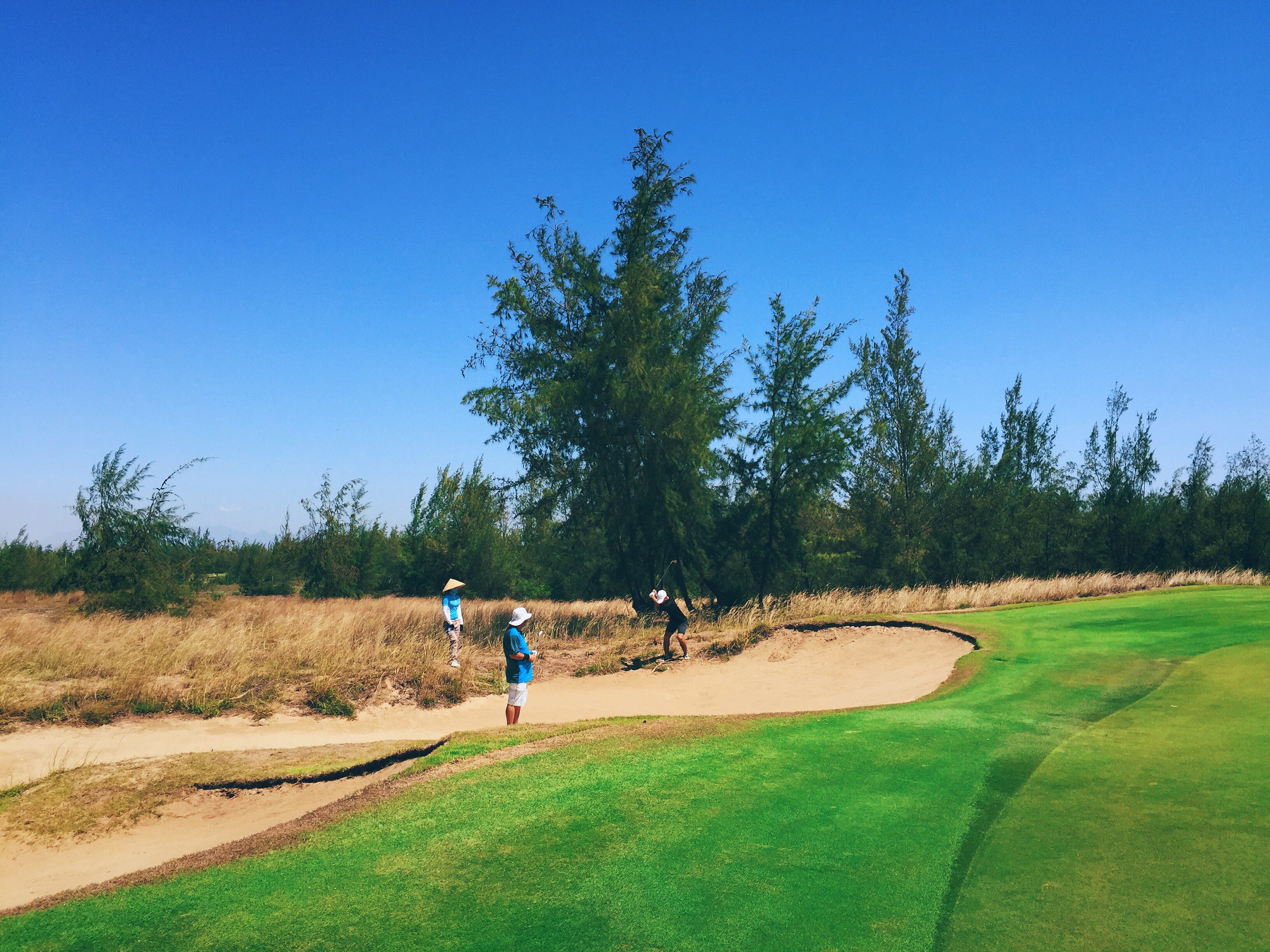
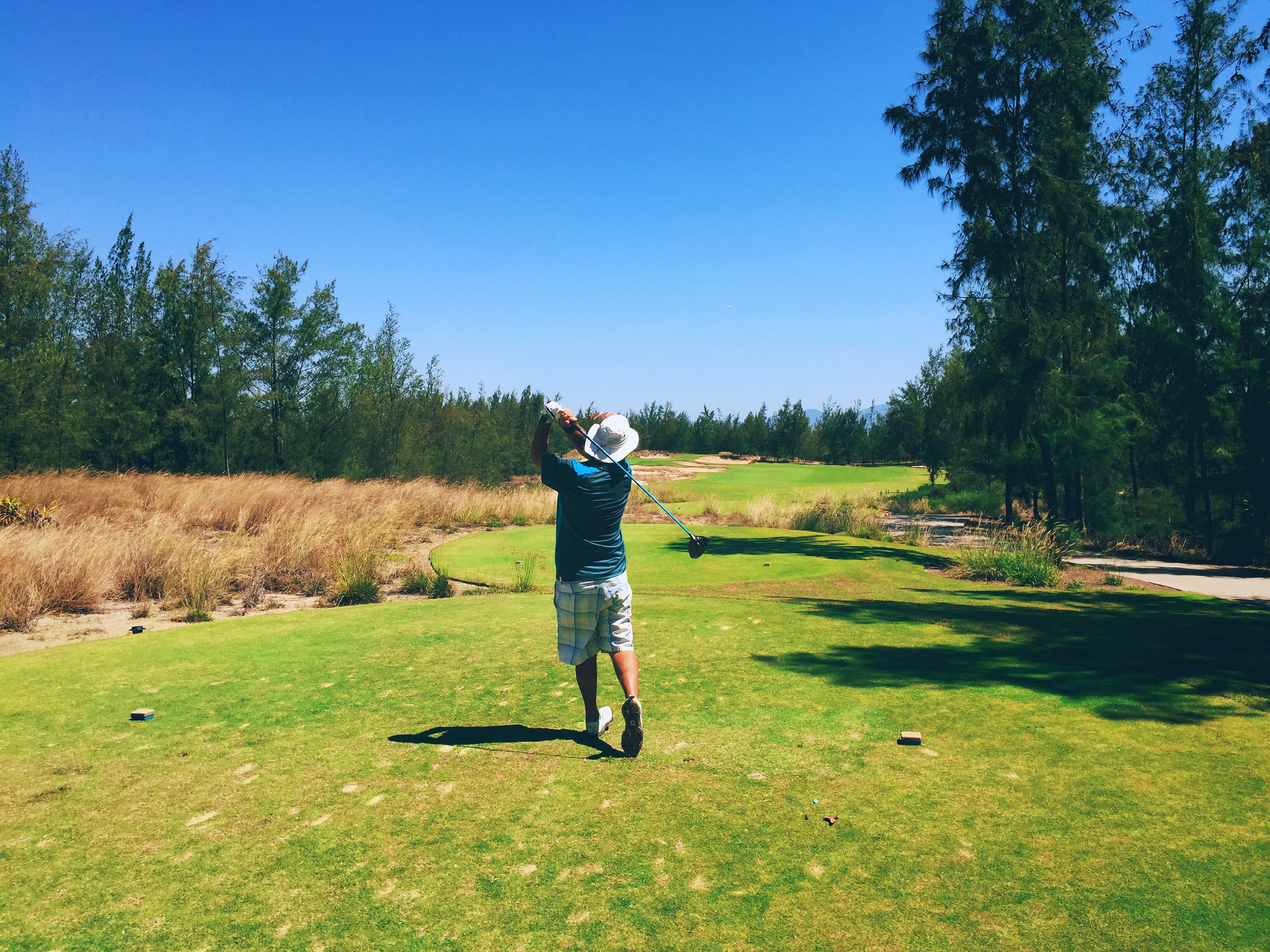
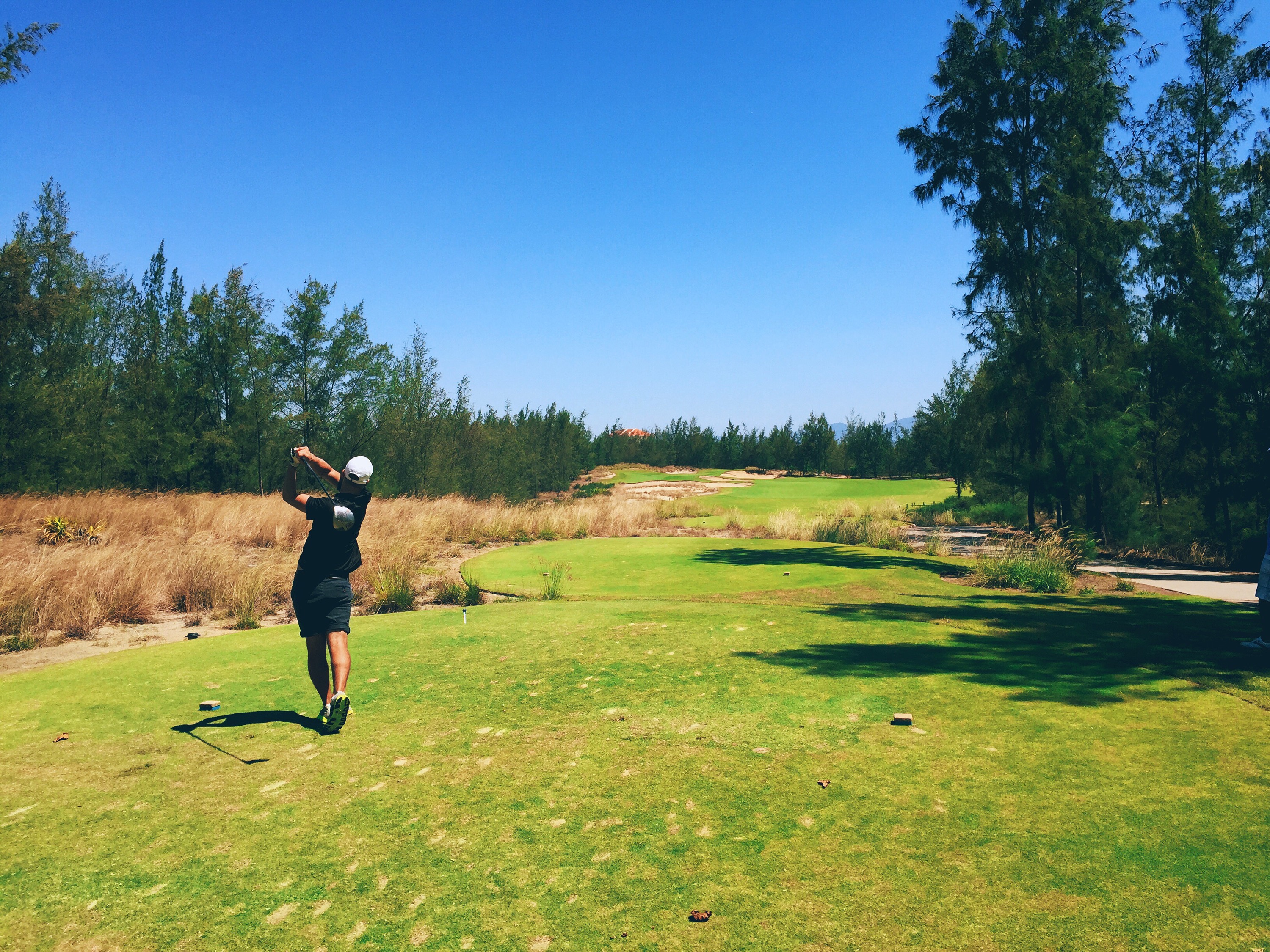
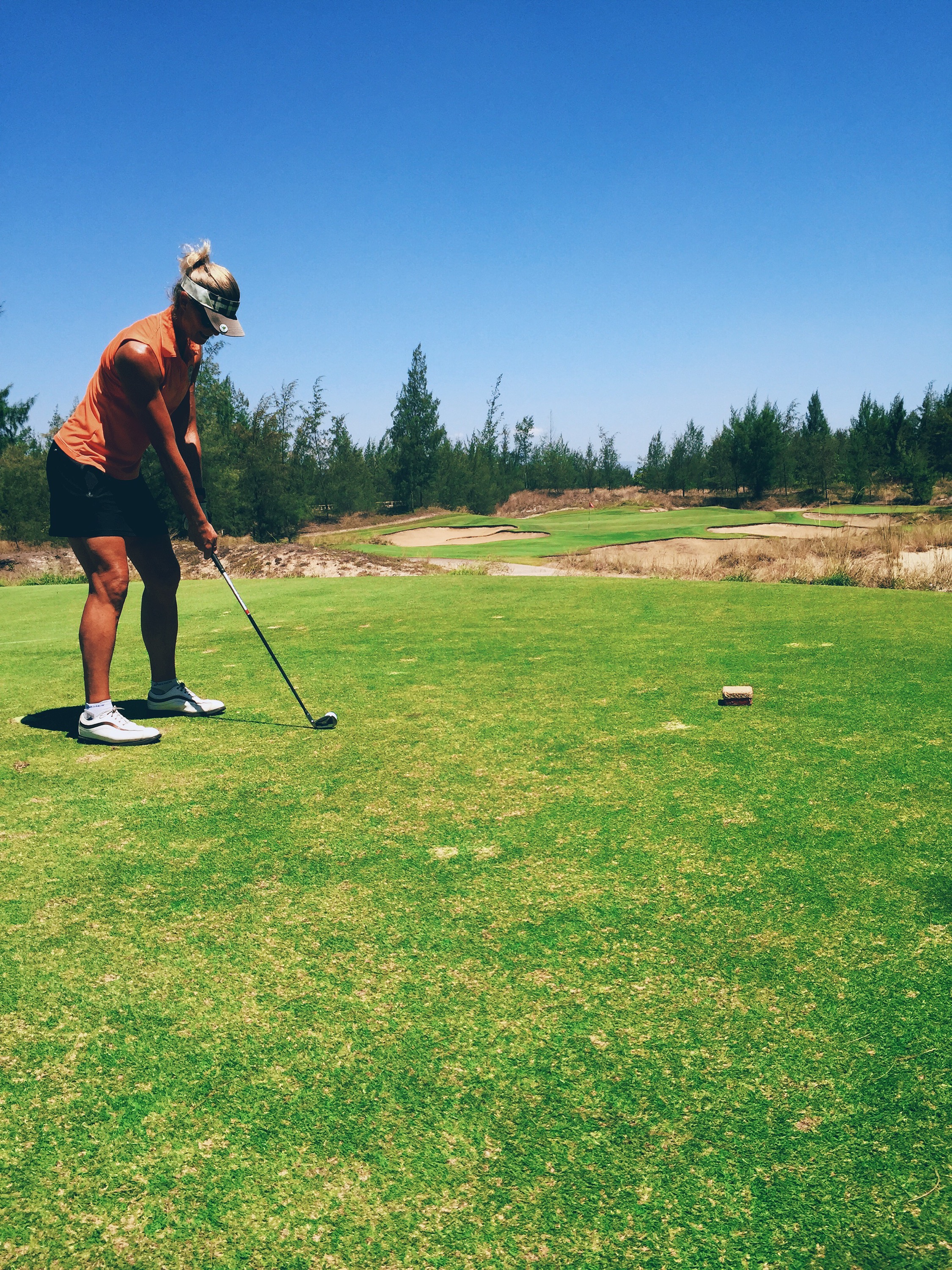
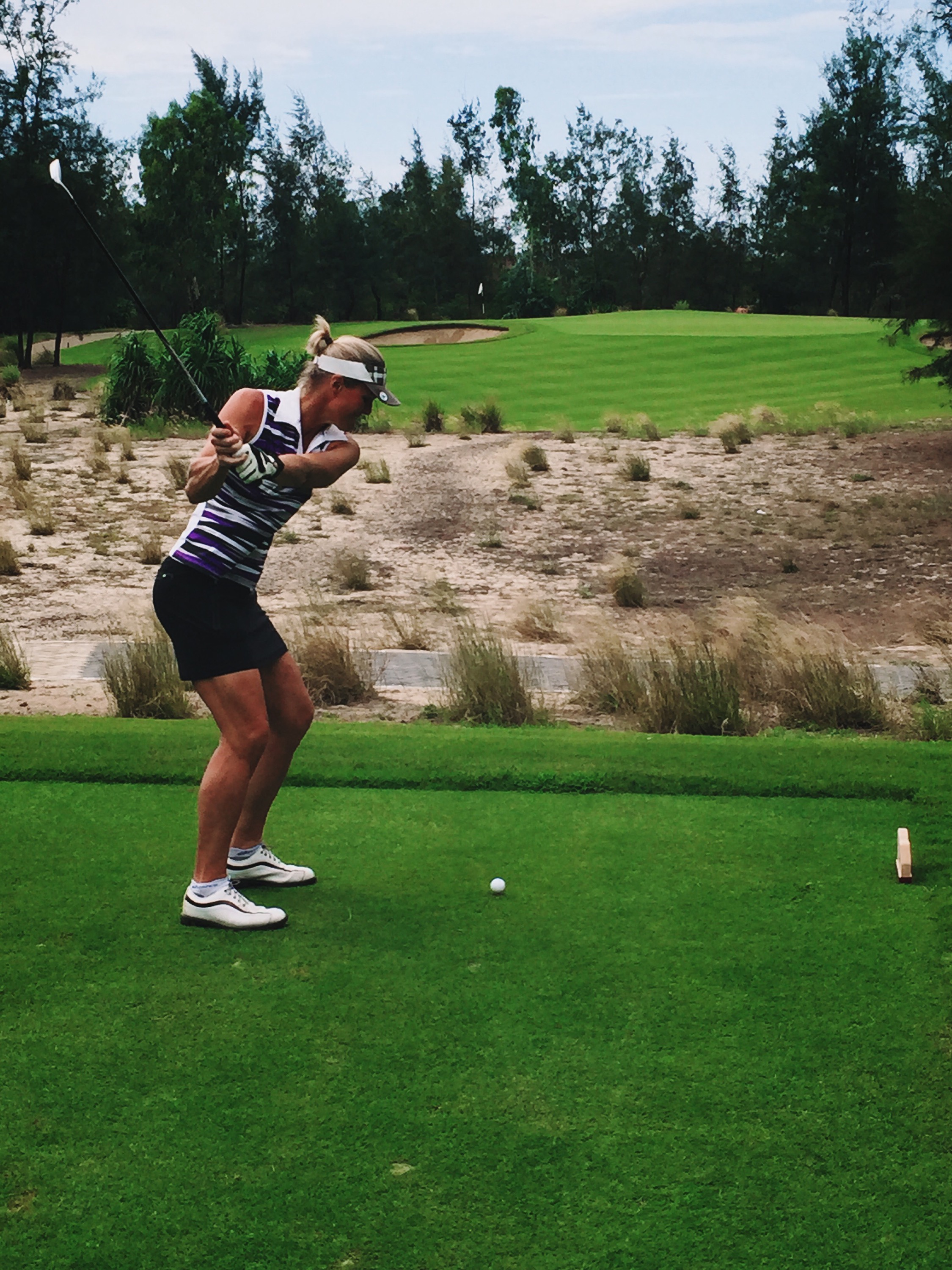
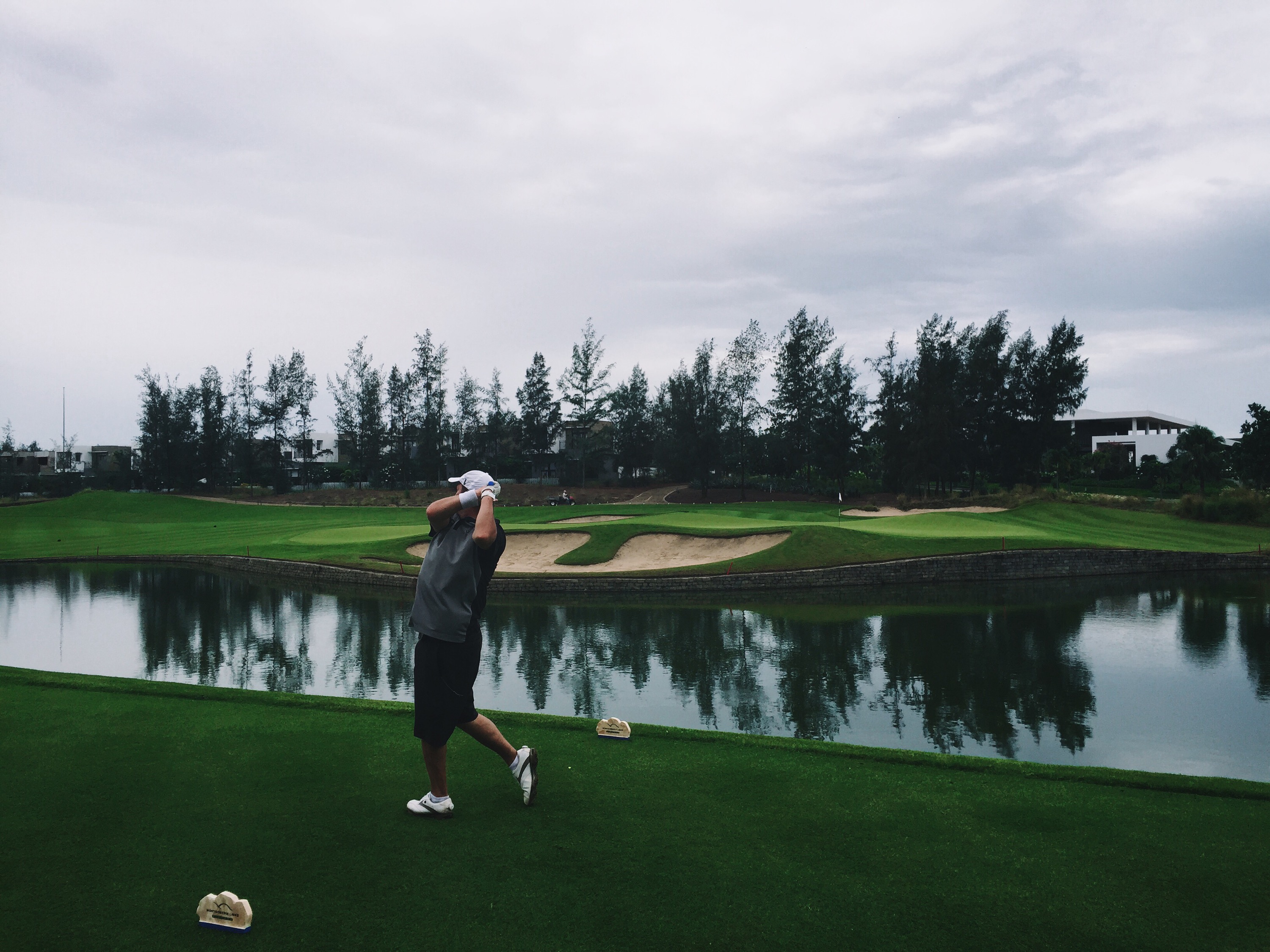
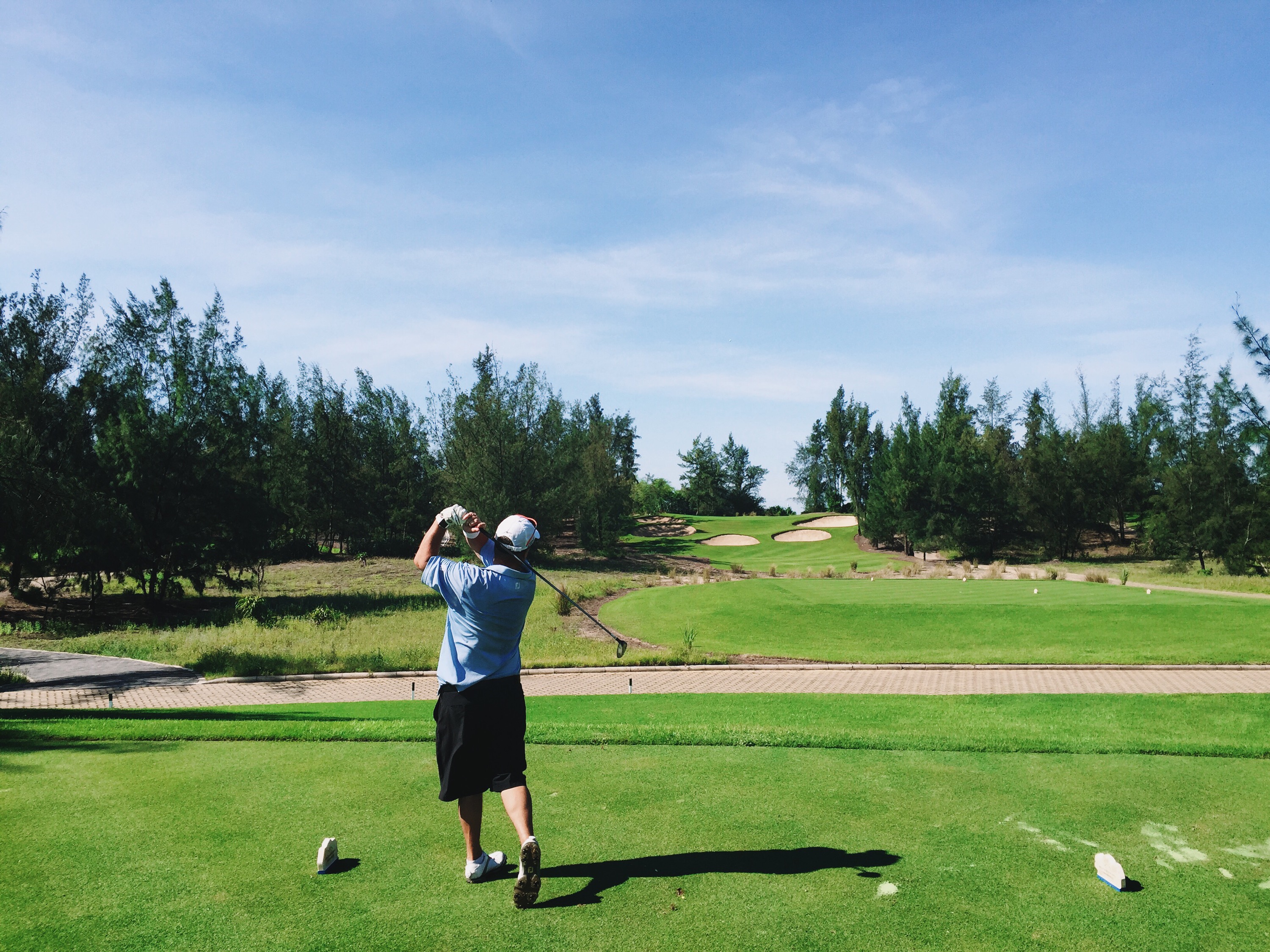
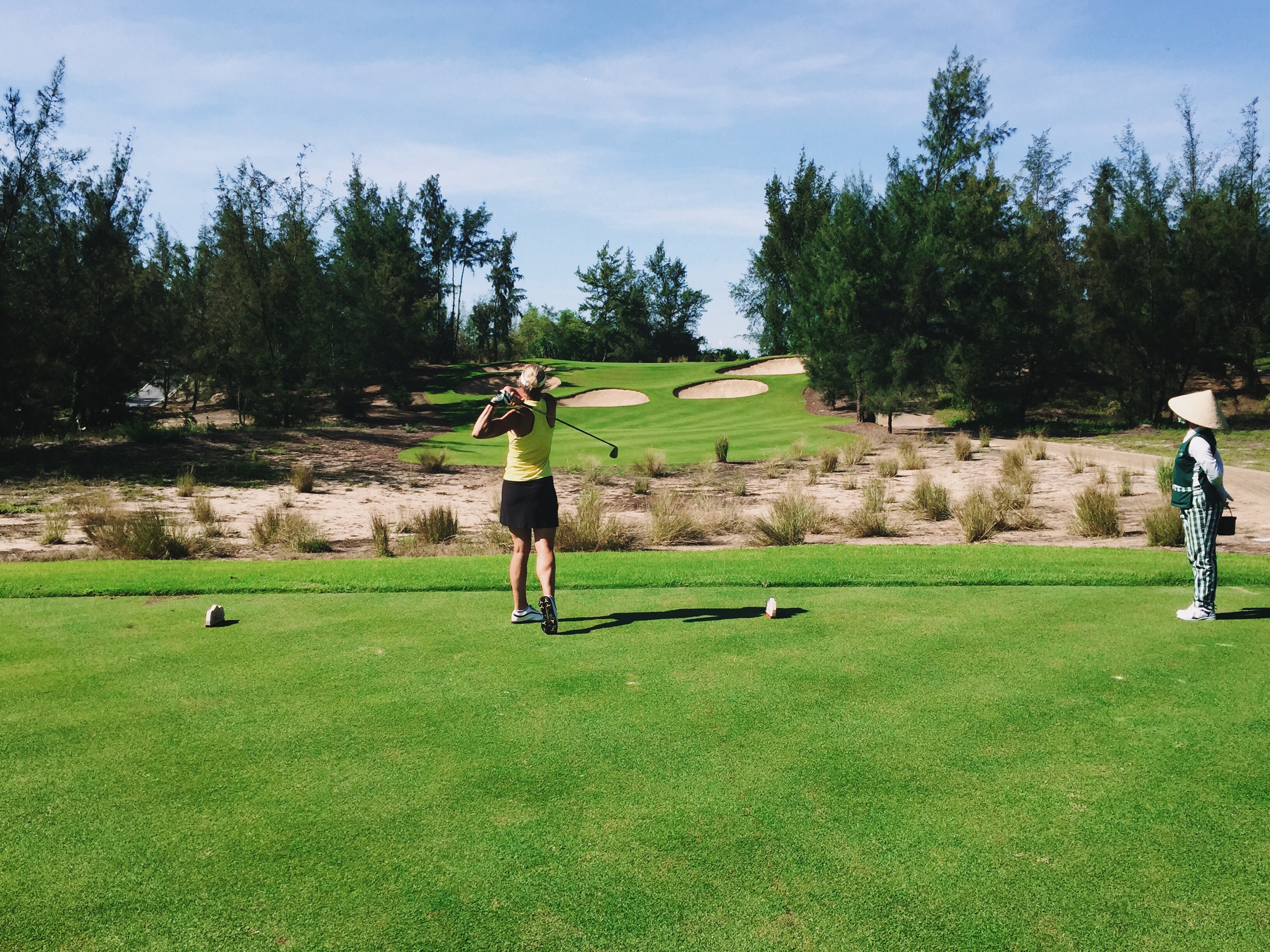
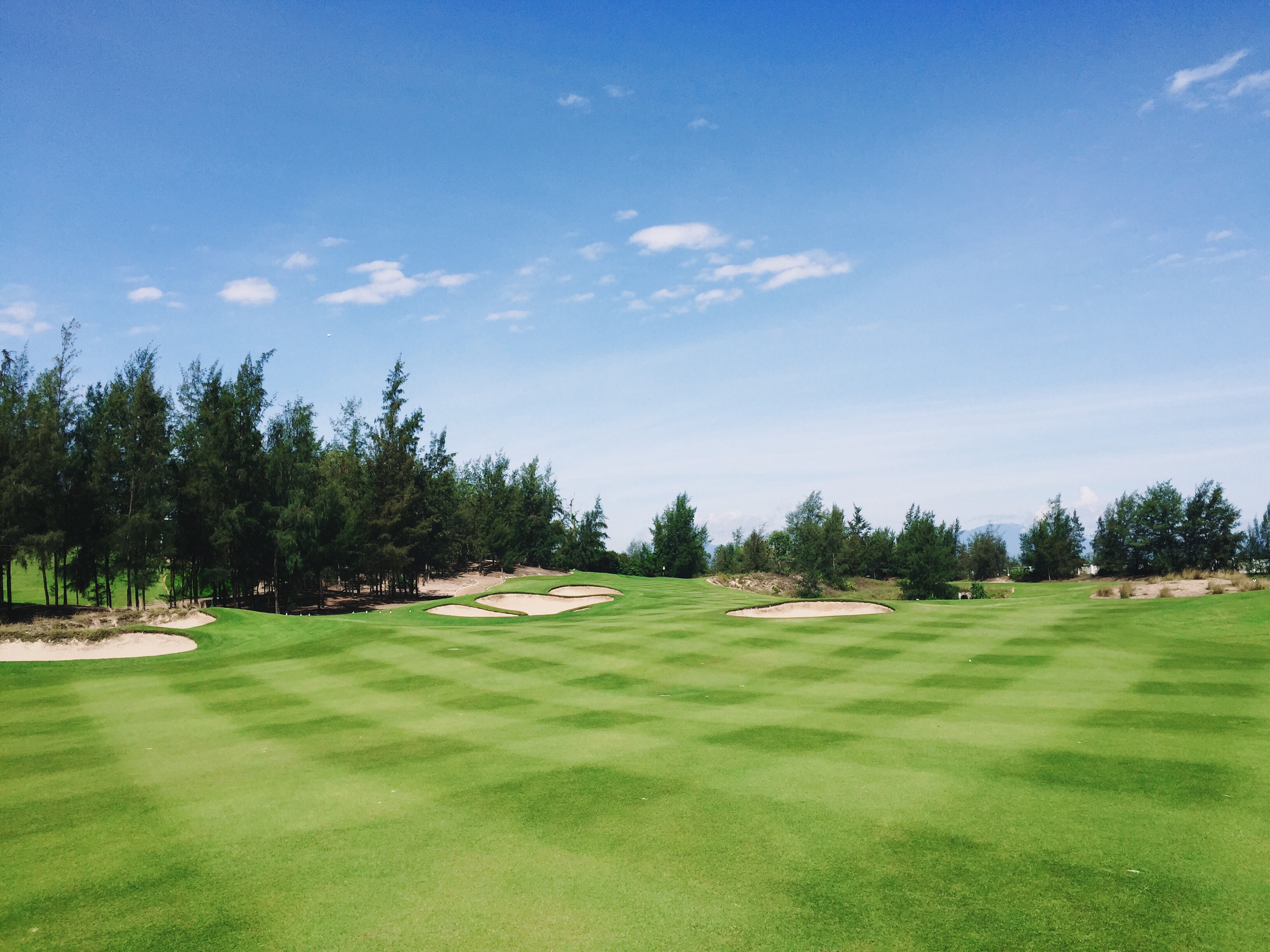
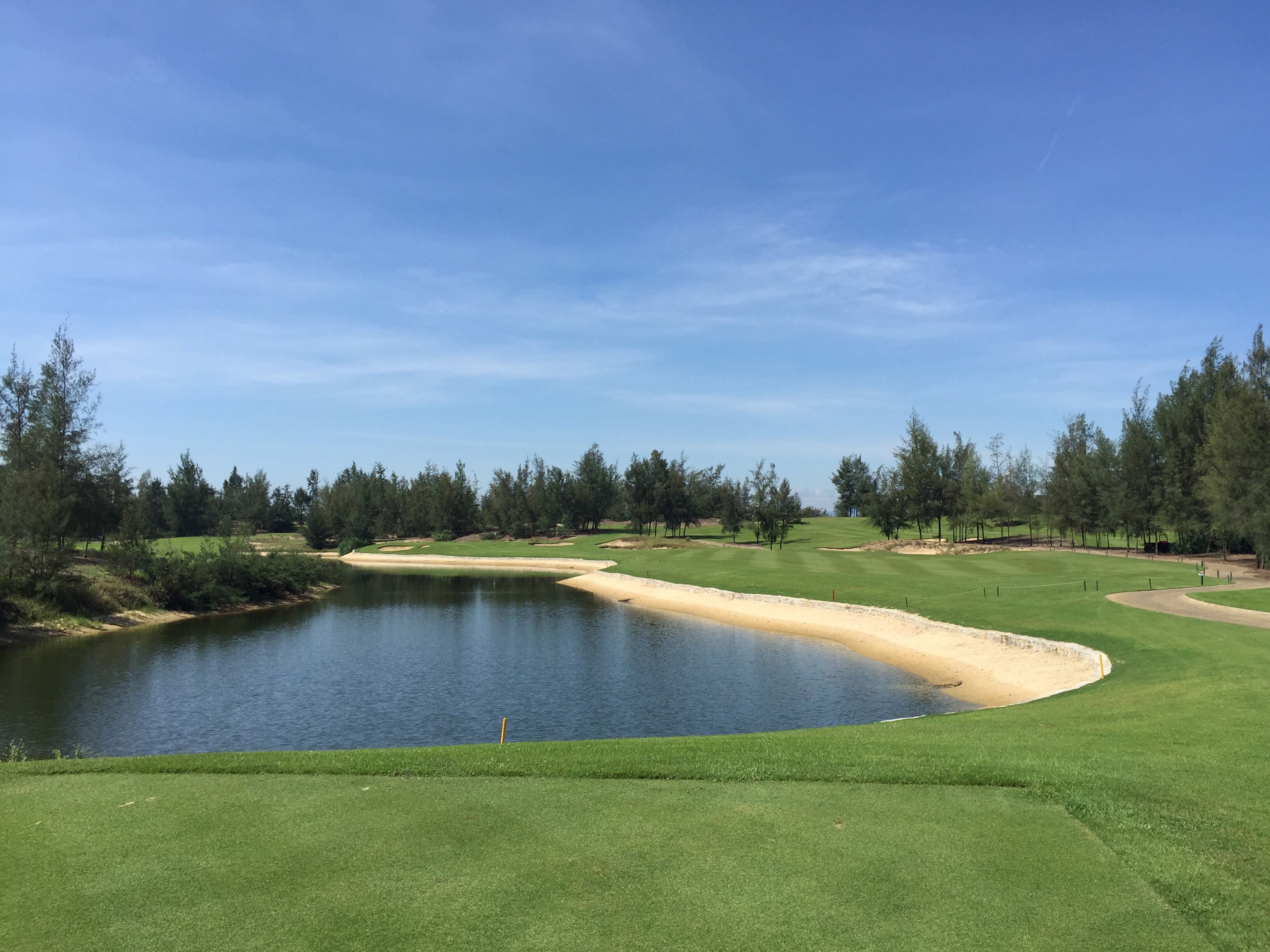
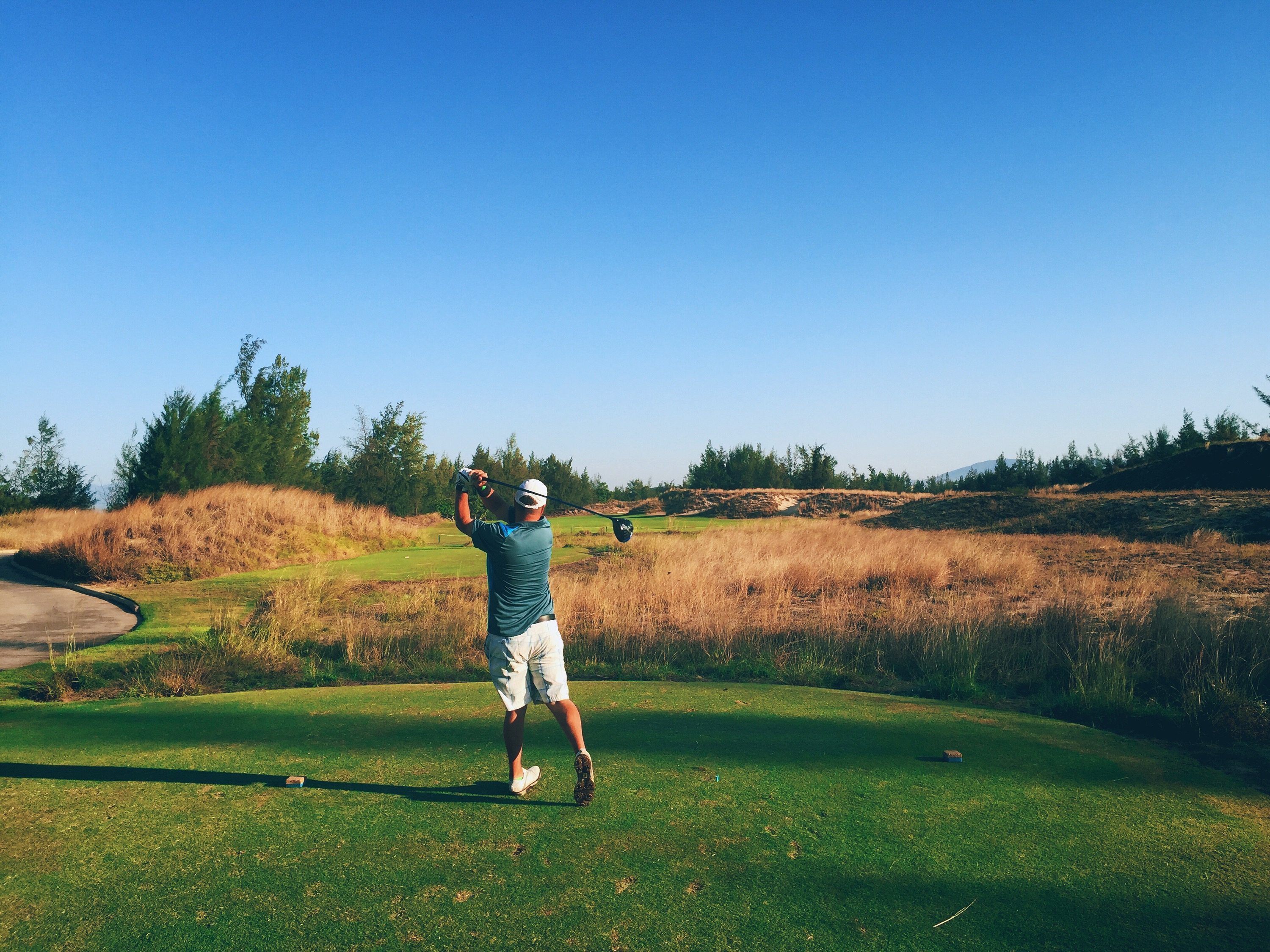
On Tuesday the 18th August we went next door to play golf at the Da Nang Golf Club.  It is situated on the fledgling central coast of Vietnam amid 150 hectares of dunescape similar to what the world’s first golf courses were carved from.  It’s chief feature is a 7,160-yard, 18-hole, links-style layout that was designed in the true spirit of the game — blown-out bunkers, firm and fast fairways that bleed gently into wild seaside vegetation, rugged waste areas, swales and hollows — by Australian golf legend and former world No. 1 Greg Norman. 

When Greg Norman checked in on the progress of the Dunes Course, in March 2010, he said: “The fact is, you’d be doing a very poor job to make a boring course out of a site like this.” Certainly Mother Nature had a gigantic hand in the formation of a layout that evokes an experience often found in seaside courses in the British Isles and southeastern Australia. 

When it comes to professional golf achievements, few players in the history of the game are in the same category as Greg Norman. During his prime, he won 86 international titles, including two British Opens. In 1987, The Shark (as he came to be known) took his profound knowledge of the game and made the official jump into the design industry. He formed Greg Norman Golf Course Design (GNGCD) and the rest is history.  Over the past quarter century, GNGCD has created more than 70 courses on six continents and established a reputation for imaginative designs that acknowledge golf’s traditional origins and the landscapes on which it has been played.

Da Nang Golf Club’s Dunes Course is the first true links style course in Southeast Asia. Its tapestry of Old World features is reminiscent of the traditional links courses of the UK, while its indigenous surroundings call to mind the acclaimed courses of Australia’s Sandbelt region. 

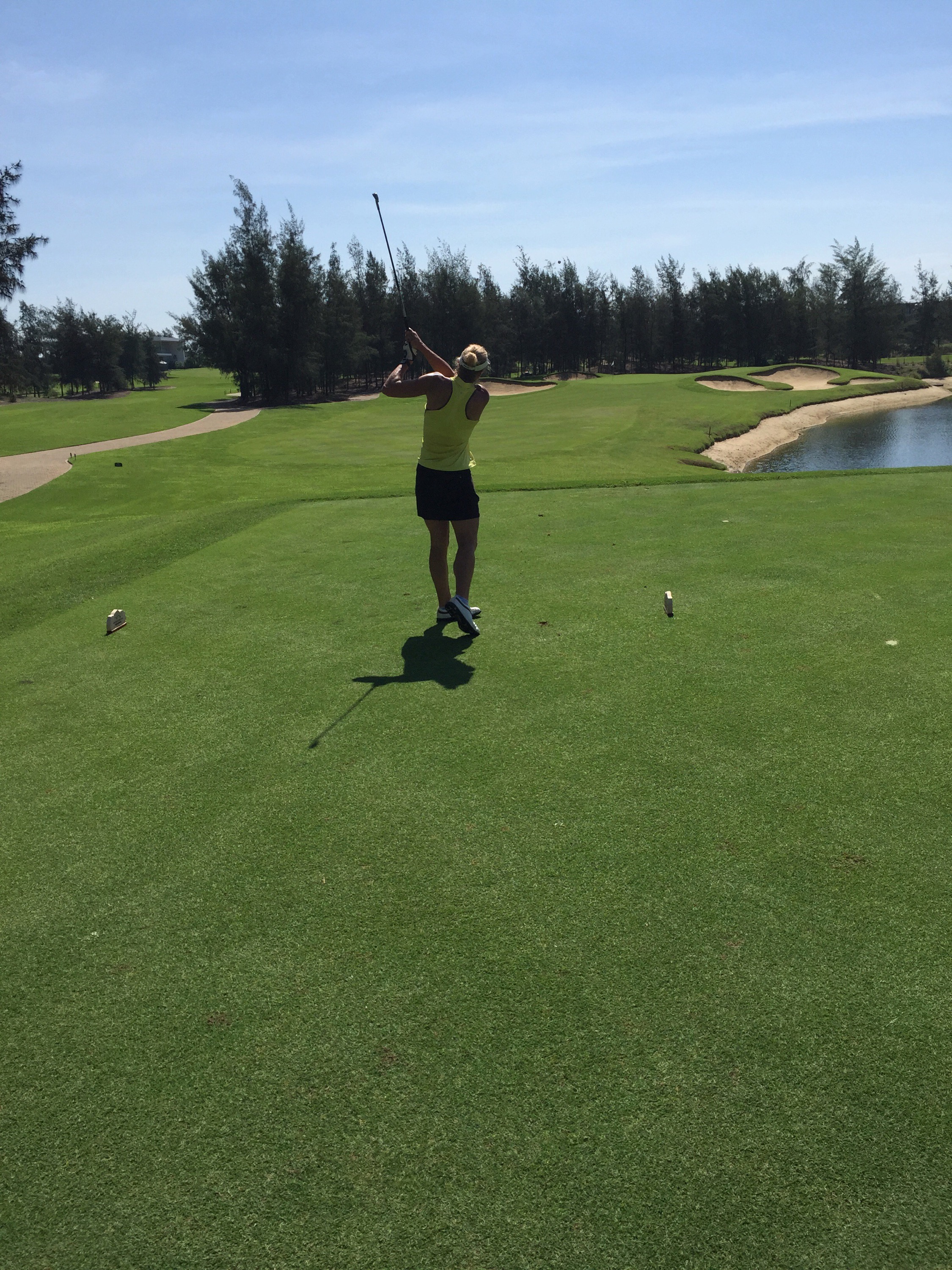
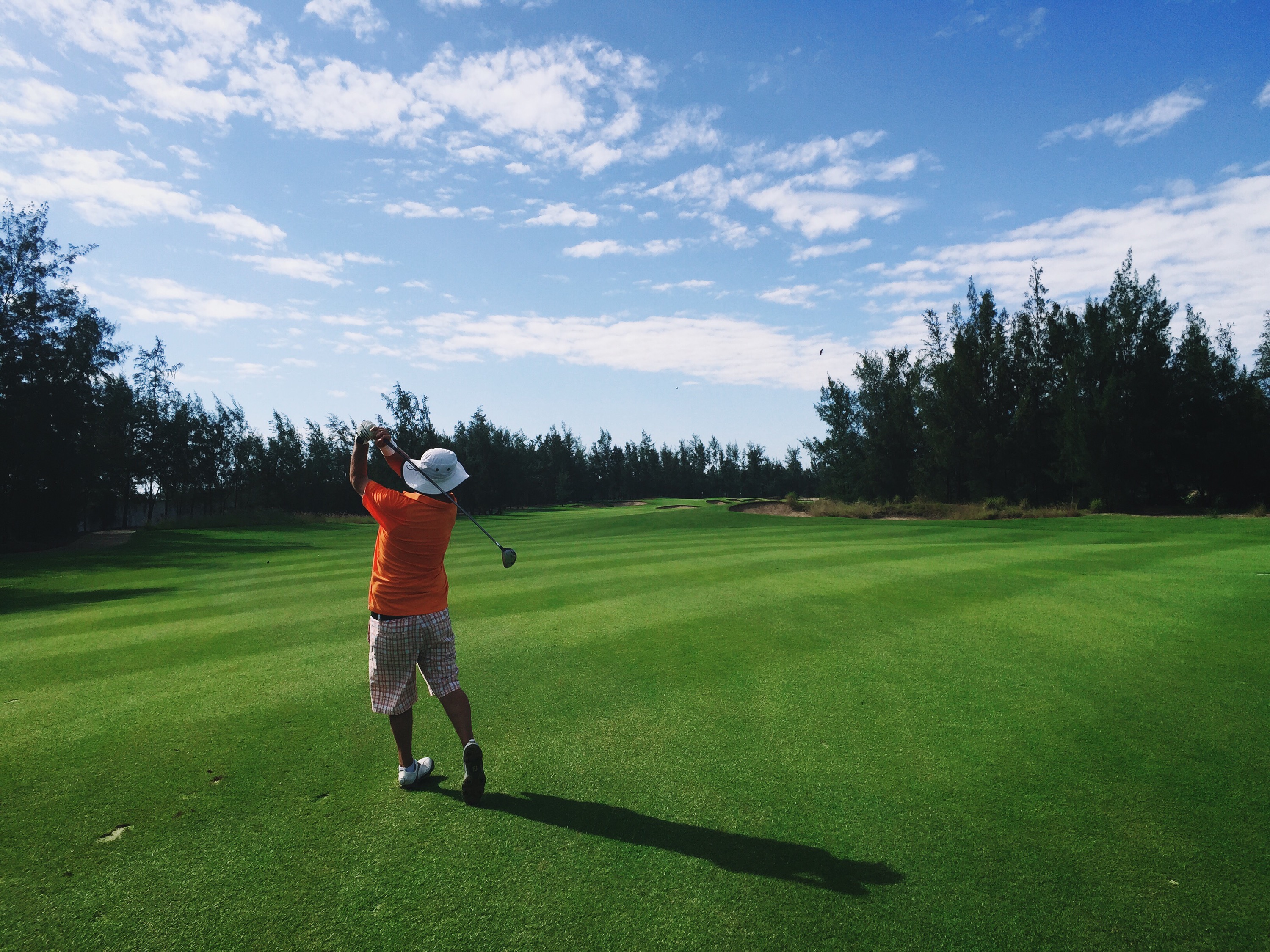
The Dunes Course certainly has a different feel to it’s neighbour – Montgomerie Links, which in my mind is a more classical, pretty course.  We started on the tenth hole which is a little daunting as you look down the fairway and are greeted with sand dunes jutting out on both sides of the fairway.  After you are reunited with your tee shot you realise there is actually more room than you think.  The hole reminded me of the first hole at Doonbeg Golf Club on Ireland’s West Coast – although that hole had an elevated tee block and the Atlantic Ocean down the left hand side.

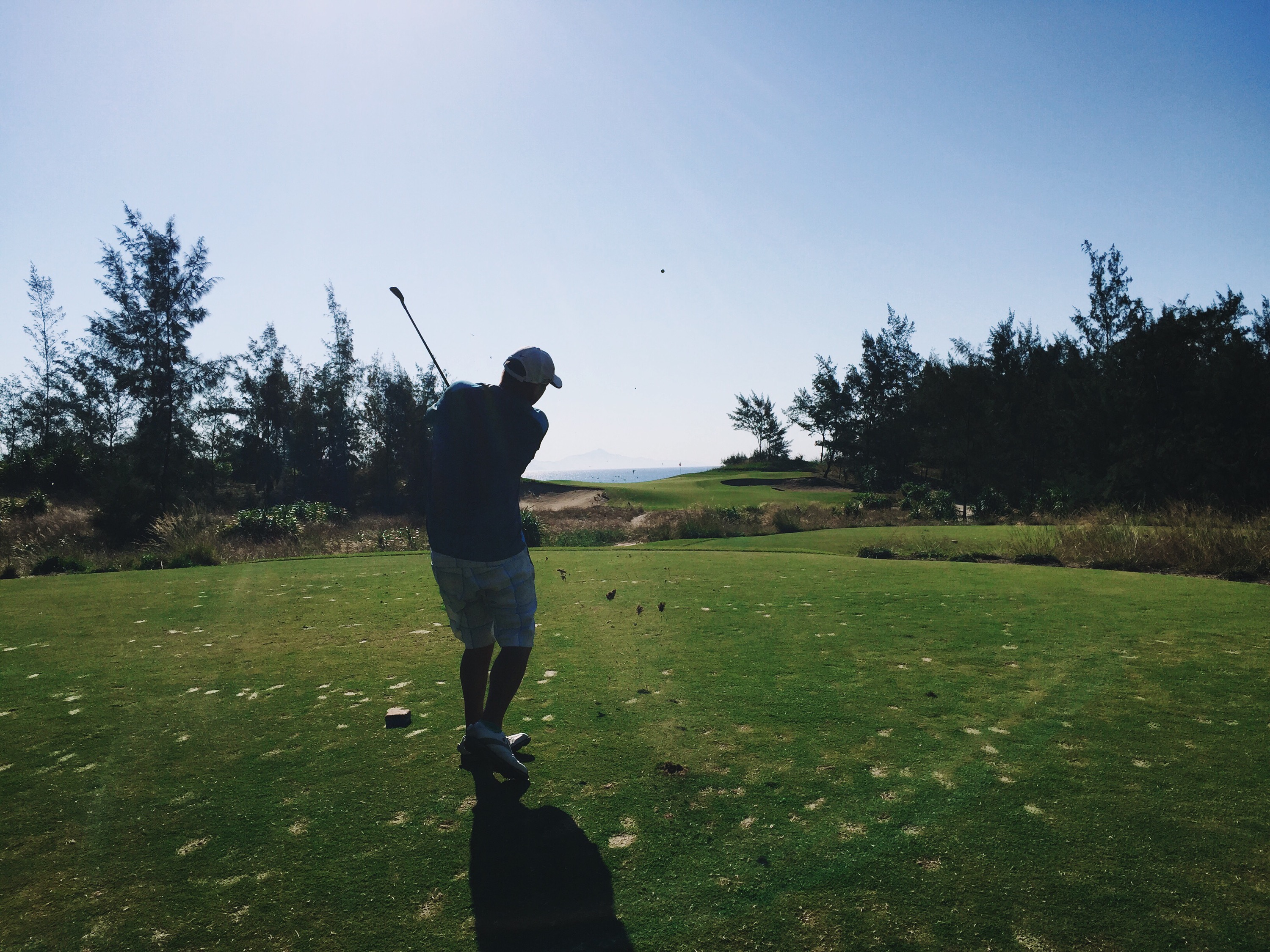
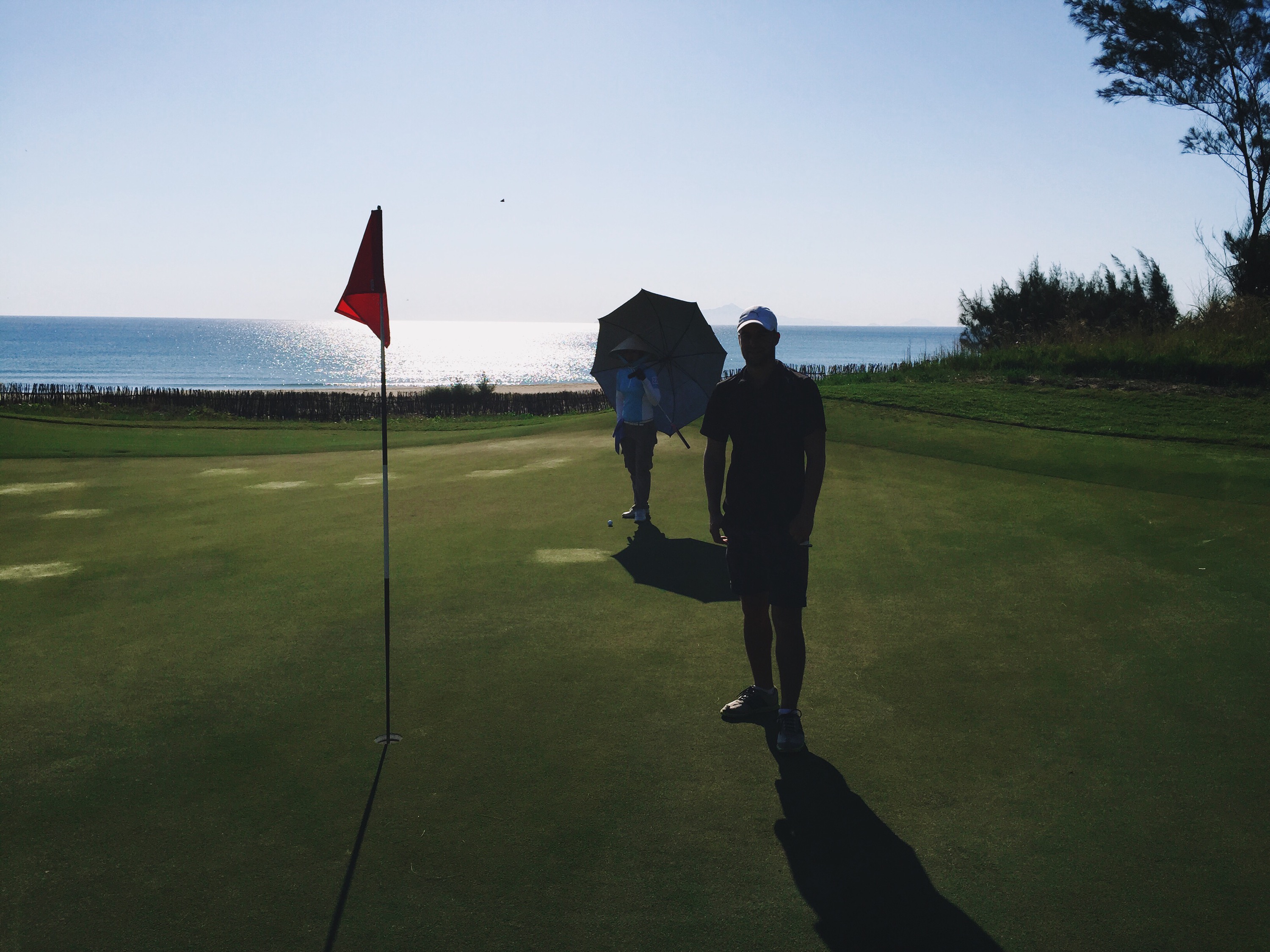
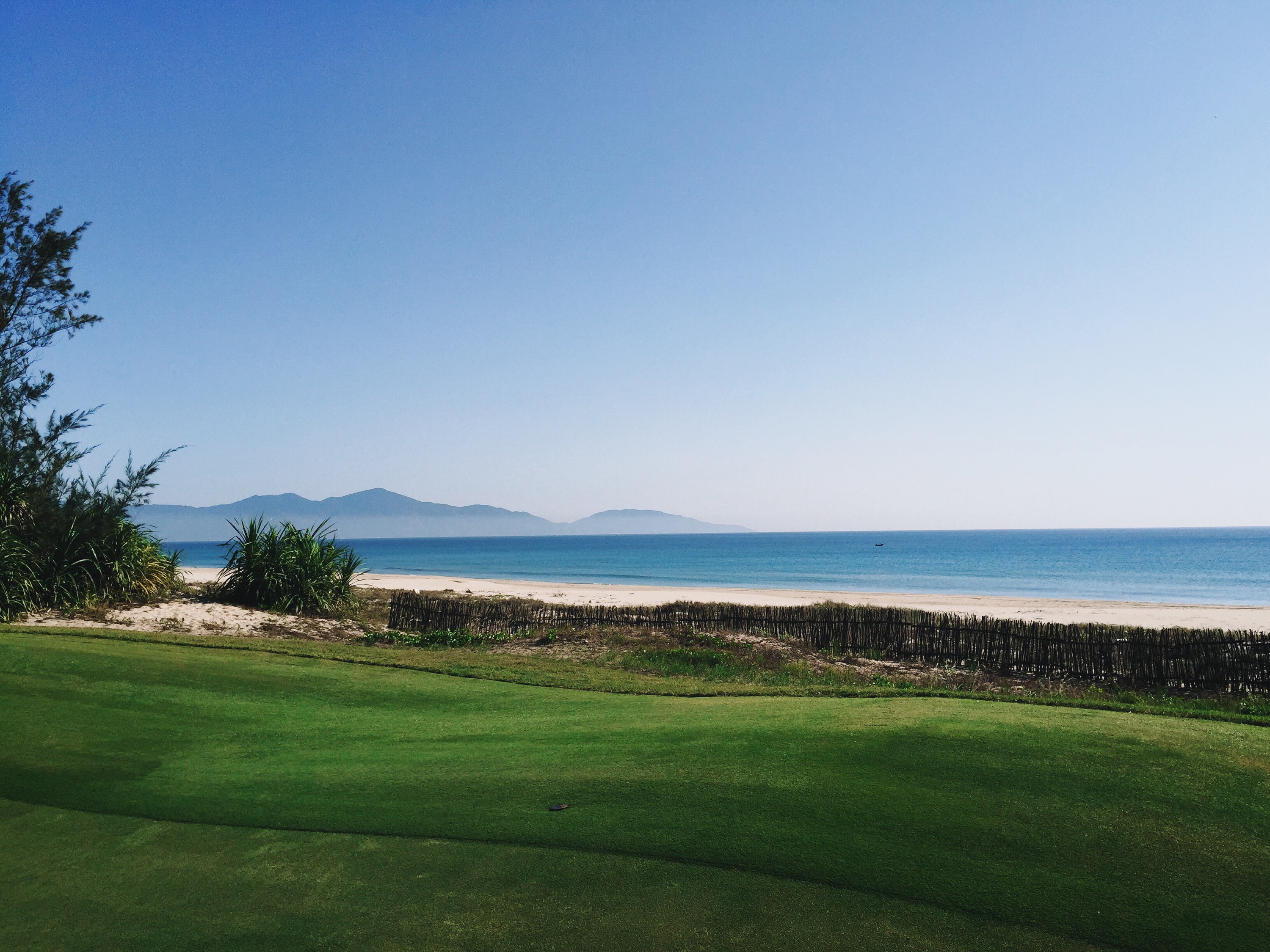
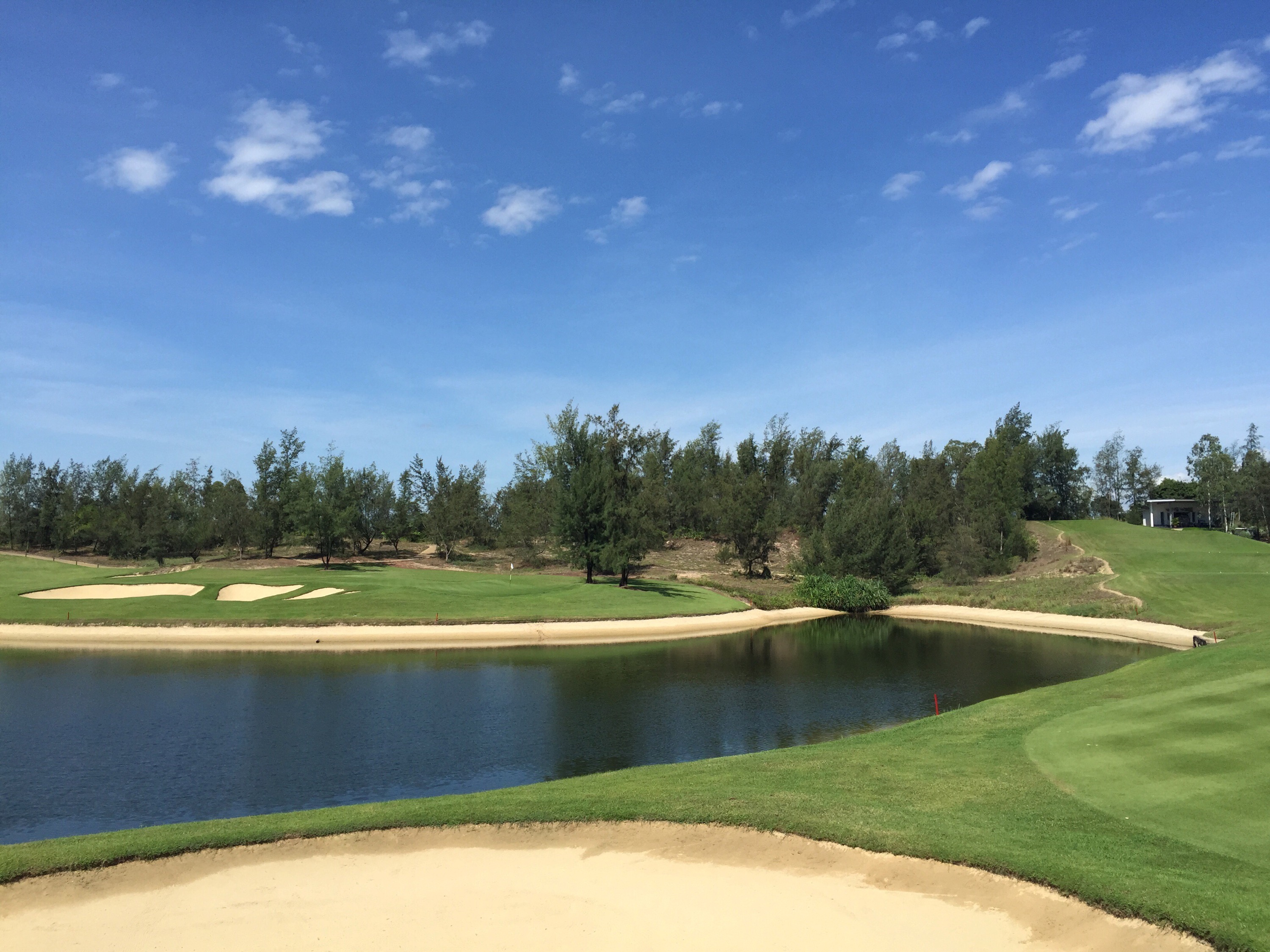
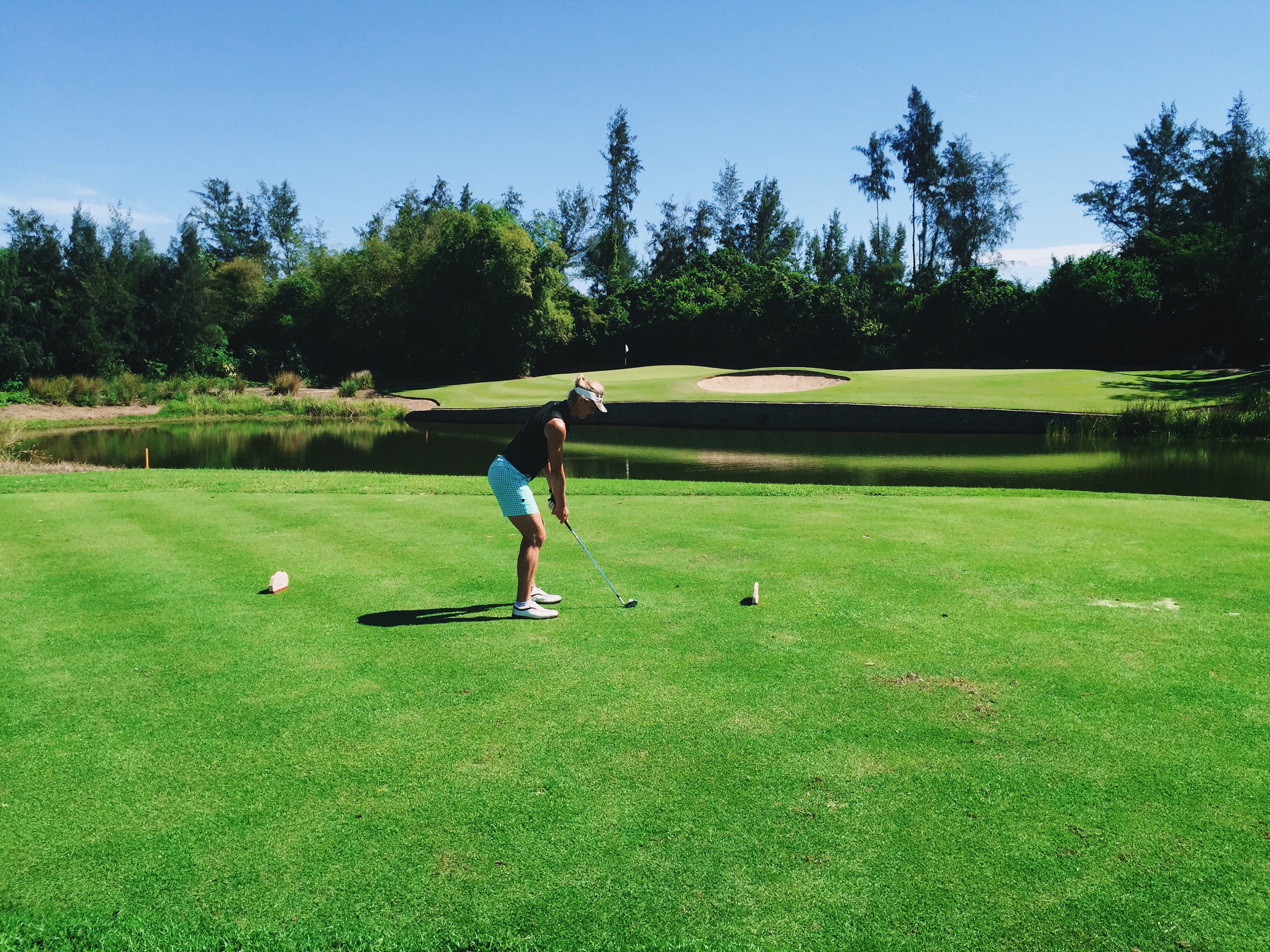
The fifteenth, sixteenth and seventeenth holes are on the ocean side of the road which are reached by an under road tunnel.  The par three sixteenth is the course’s signature hole – you hit towards the ocean and a back drop of the Cham Islands.

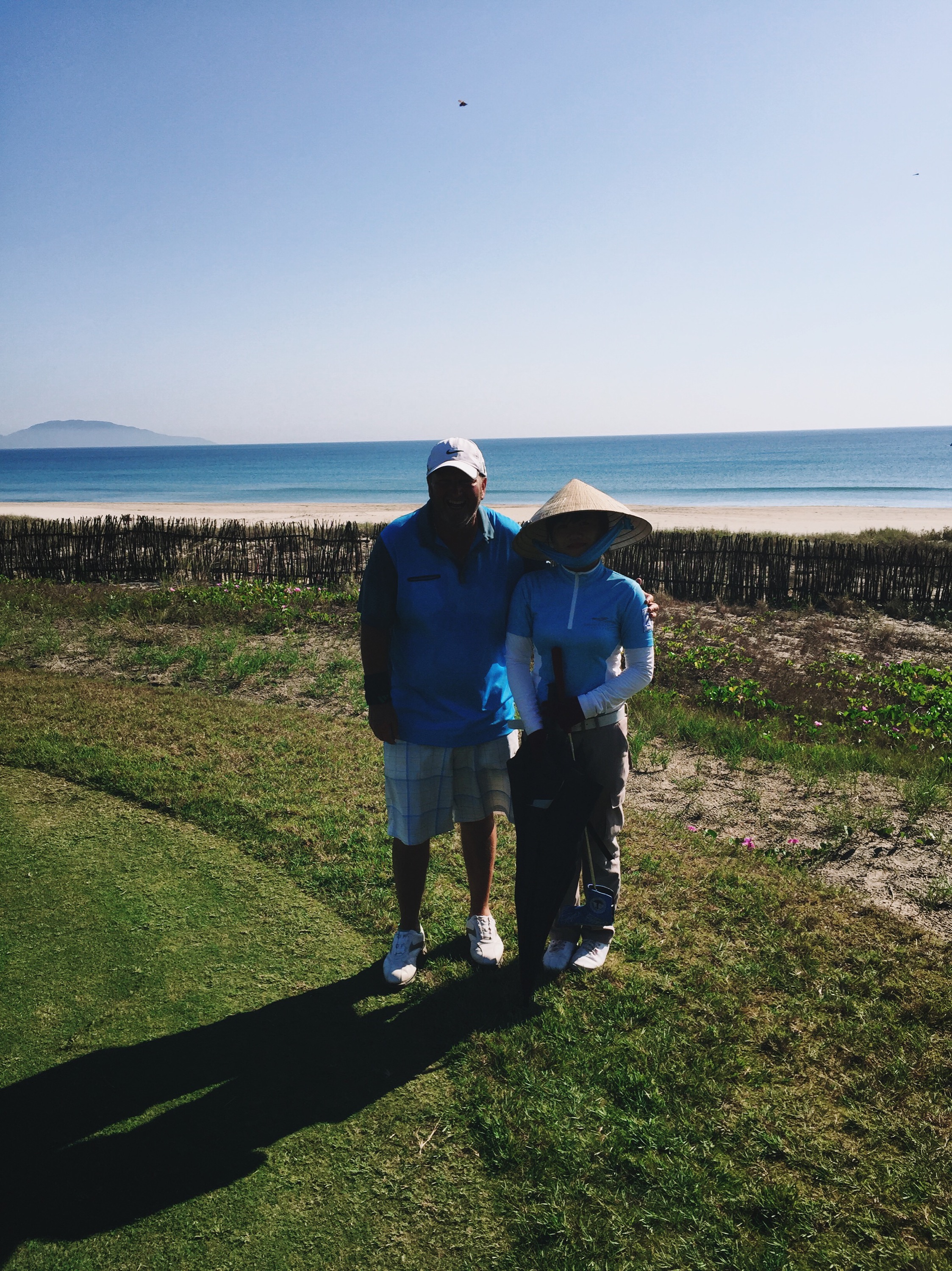
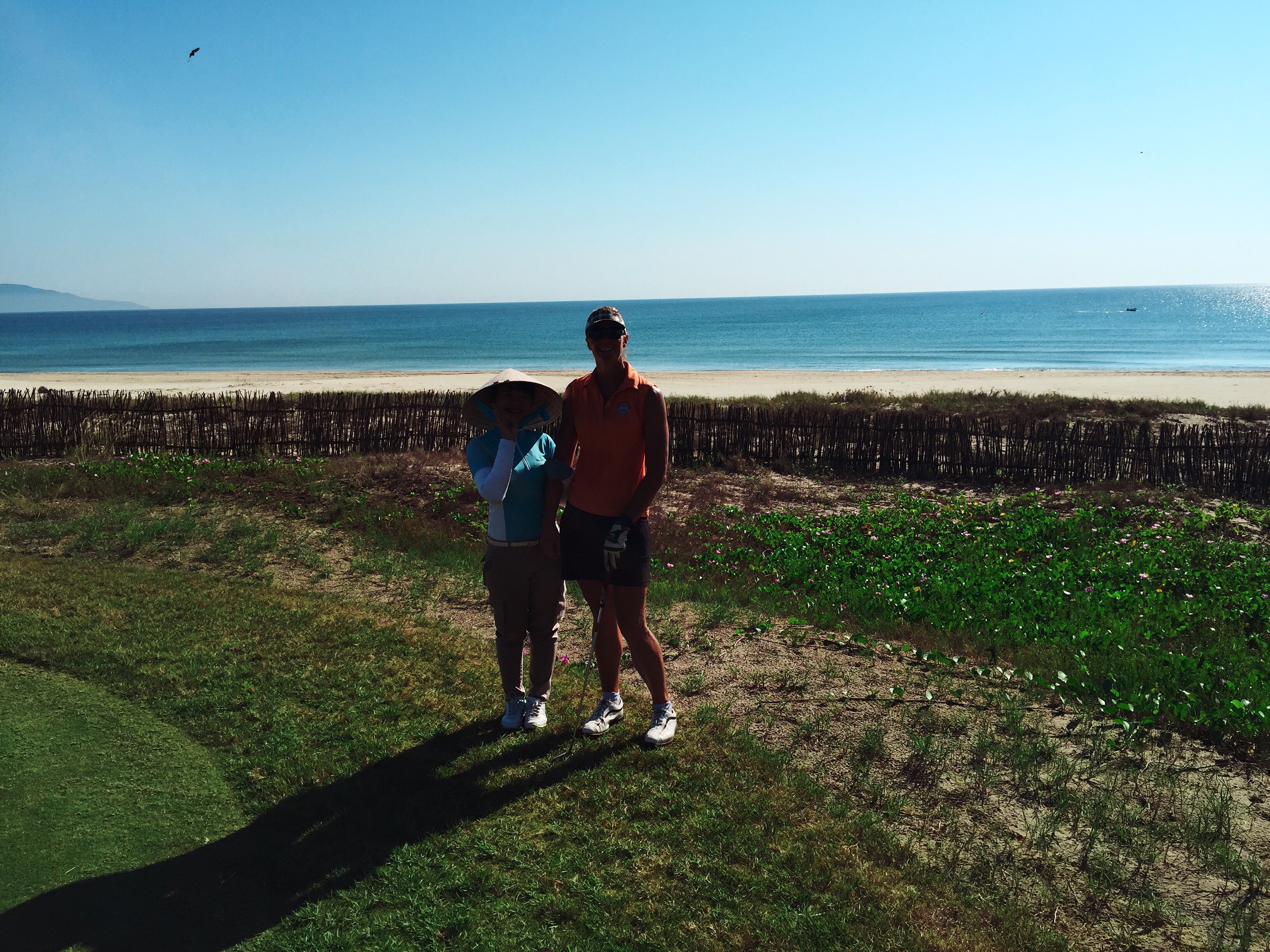
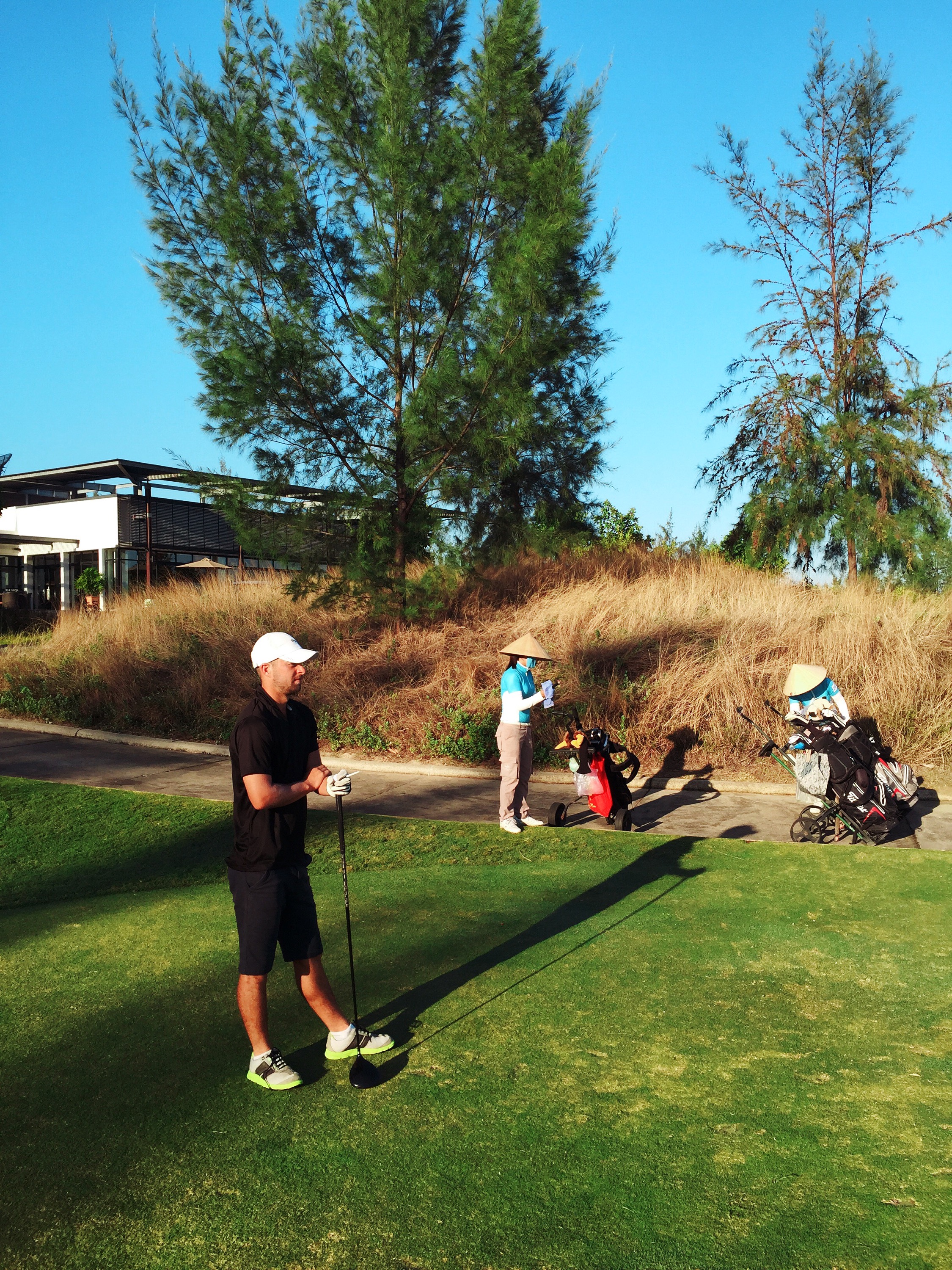
We all enjoyed the course and the Caddies were all very interactive and lots of fun.  They were all in there early twenties and single (very unusual in Vietnam).  Of course they all loved Paul but we had to let them down gently when we told them he was spoken for ; )  


Posted in Danang, Vietnam | Tagged , , | 1 Comment

Intercontinental Da Nang Sun Peninsula Resort – Da Nang, Vietnam

On Wednesday night we decided to treat ourselves to a bit of luxury.  Laura wanted us to all get dressed up and go somewhere nice for dinner.  A splendid idea.  Most of the restaurants in Hoi An are very casual and I am not that familiar with the restaurants in Da Nang so if in doubt let your fingers do the typing.  “fine dining Da Nang” produced the InterContinental Da Nang Sun Peninsular Resort – it has three fine dining restaurants.  

La Maison 1888 captures the essence of haute French dining, with the distinct gourmet experience of delectable à la carte menu of distinguished classic French cuisine. This signature restaurant is fast becoming the number one gastronomic destination in Vietnam.

Barefoot is a relaxed beachfront restaurant which offers chic and casual dining accompanied by an ocean breeze. 

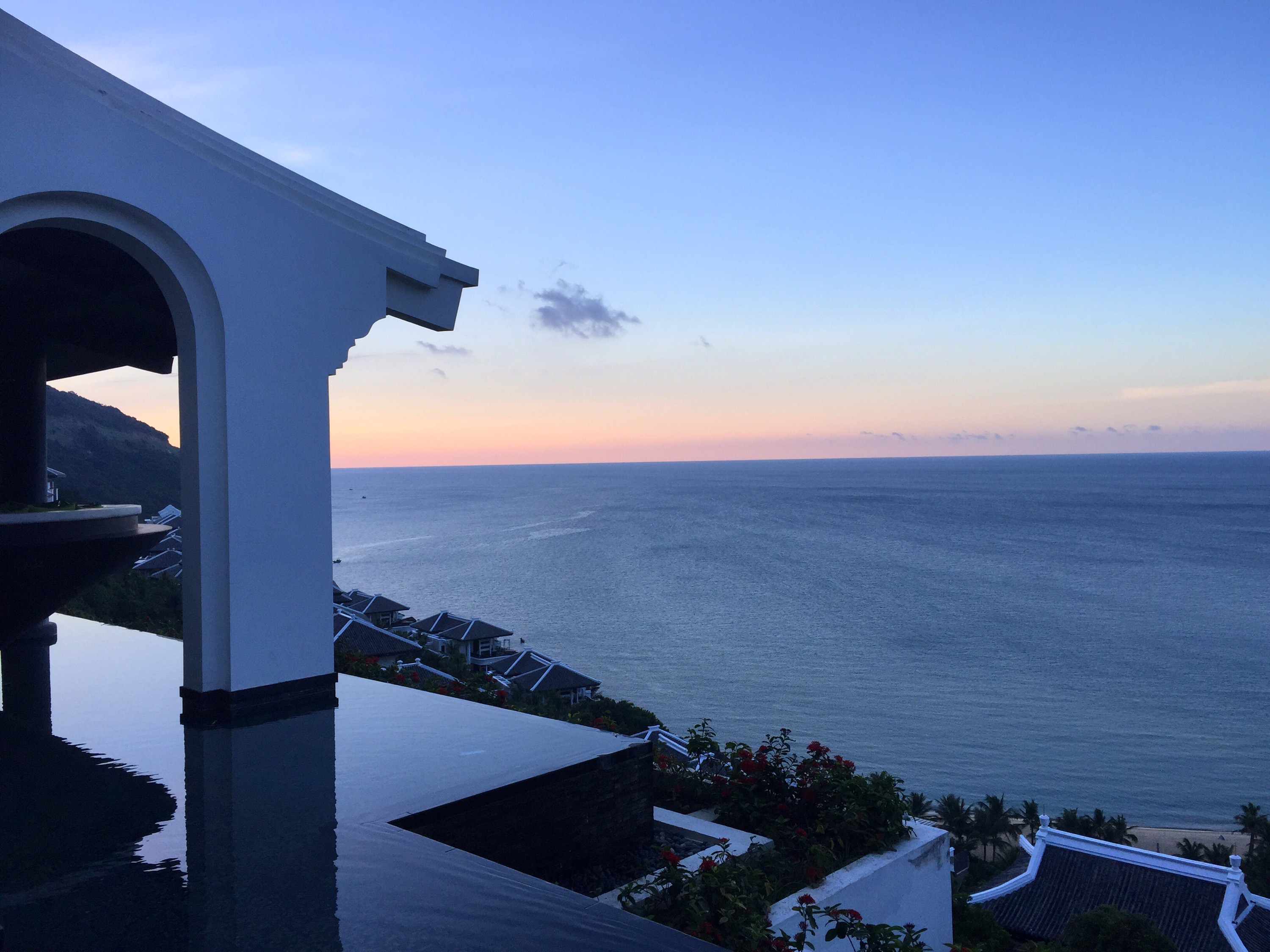
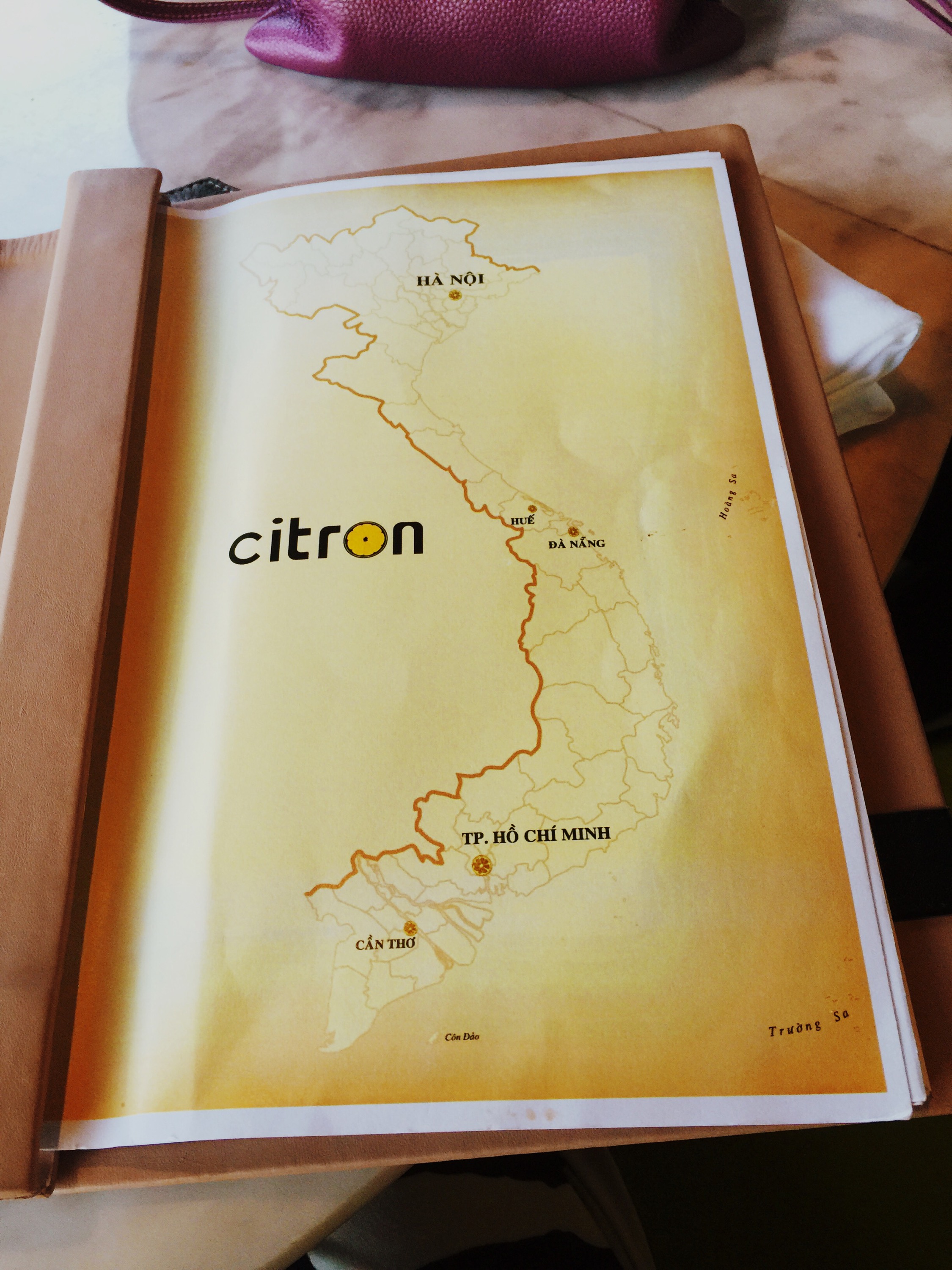
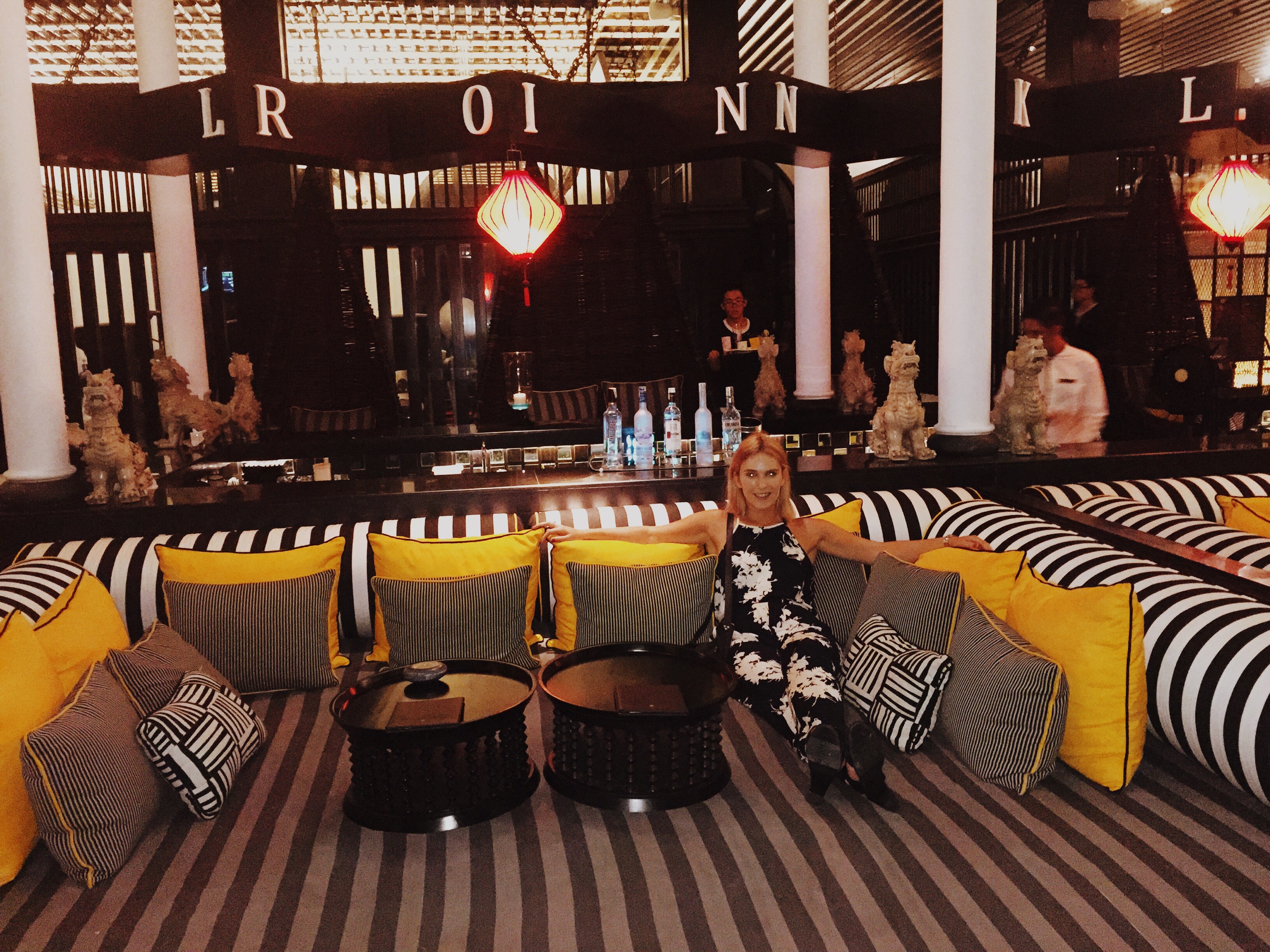
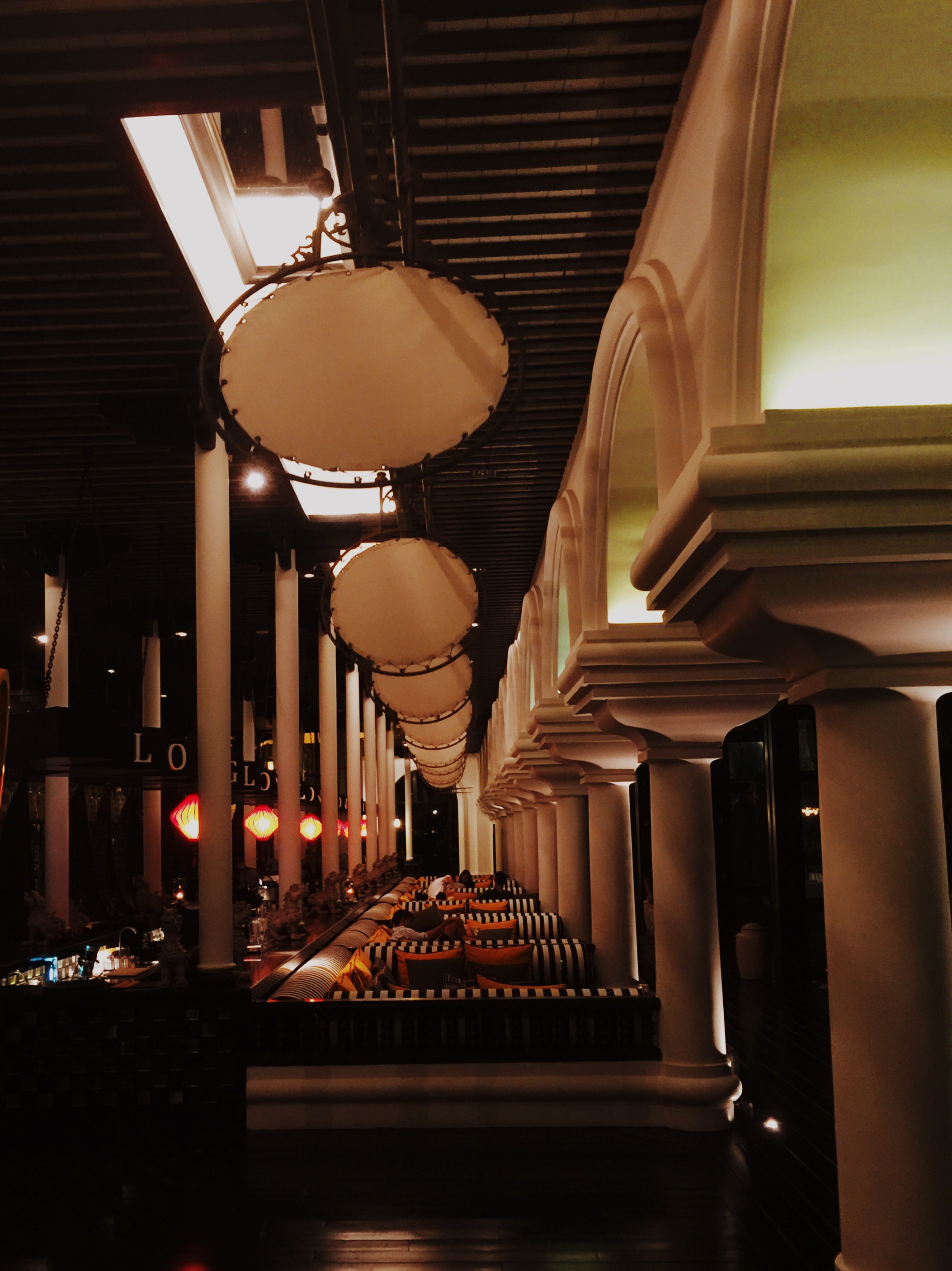
Citron, located on the highest level of the resort, makes a striking first impression.  Citron has a full menu that travels the culinary map of Vietnam with signature dishes from the North all the way down to the Mekong Delta.  The piece de resistance, however, were the private dining booths in the shape of inverted non la (Vietnam’s iconic conical hats) that float out over the hillside 100 meters above sea level, with spectacular views of the entire bay and surrounding mountains. 

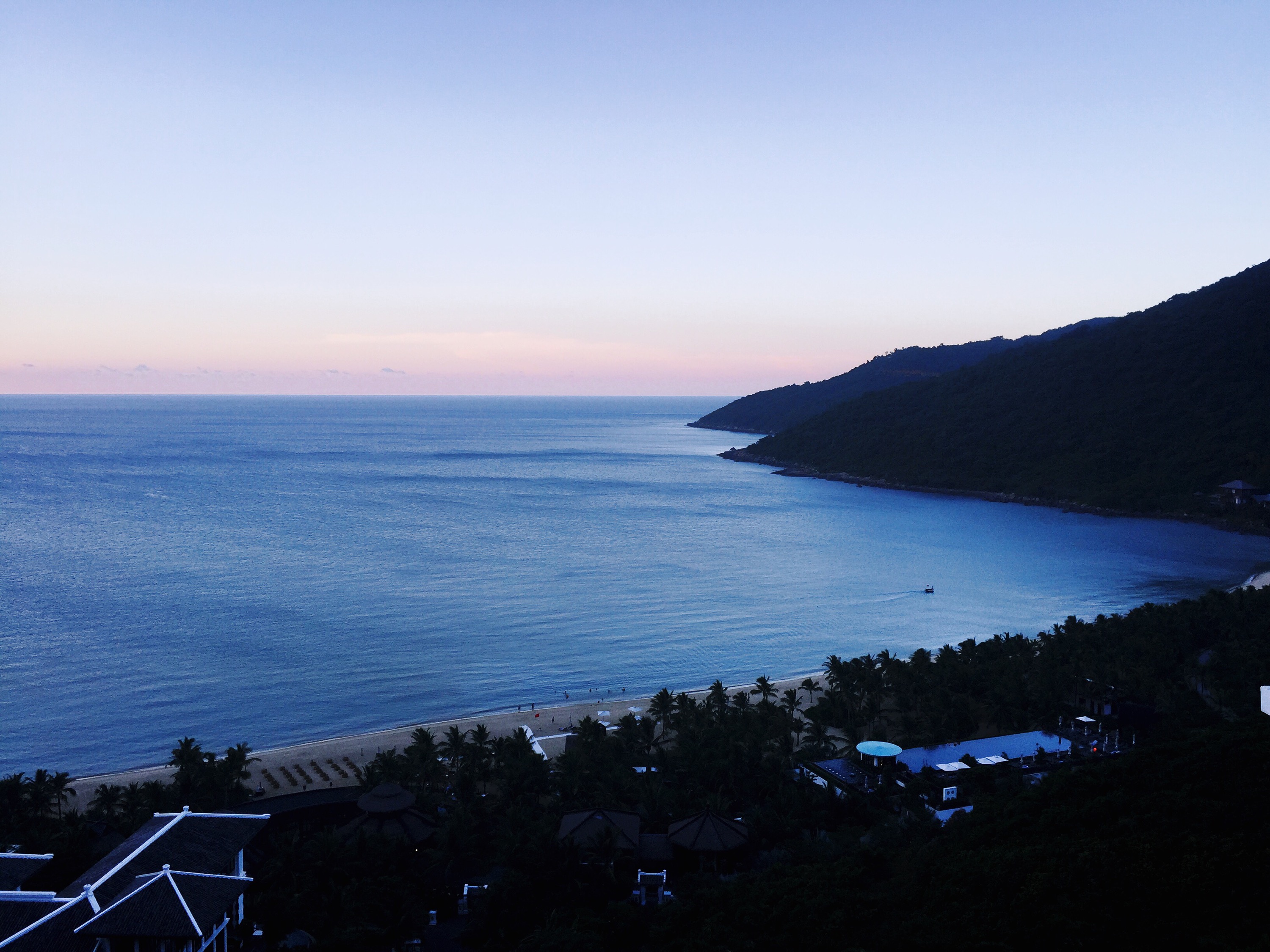
InterContinental Da Nang Sun Peninsula Resort is 5 star luxury resort & spa.  It is one of the flagship resorts under the management of InterContinental Hotels Group in Vietnam. The resort opened on June 1, 2012.  InterContinental Da Nang Sun Peninsula Resort is located in the Sơn Trà Peninsula of Da Nang, which is also known as Monkey Mountain.  The resort occupies 39 hectares of the peninsula which also includes a  700-meter private beach.  There are four levels to the resort – Heaven, Sky, Earth and Sea.  Each level is reached by a funicular.

This resort was designed by Bill Bensley, a Harvard-educated architect and landscape designer. The design of the resort is inspired by the culture of traditional Vietnamese with luxury and contemporary elements. The resort was under construction for over 6 years before the official opening date.  Apparently Mr Bensley oversaw every single detail right down to the crockery and cutlery.  The construction standard and attention to detail on this property are definitely a world above the rest of Vietnam where the standards are quite poor compared to what we are used to.

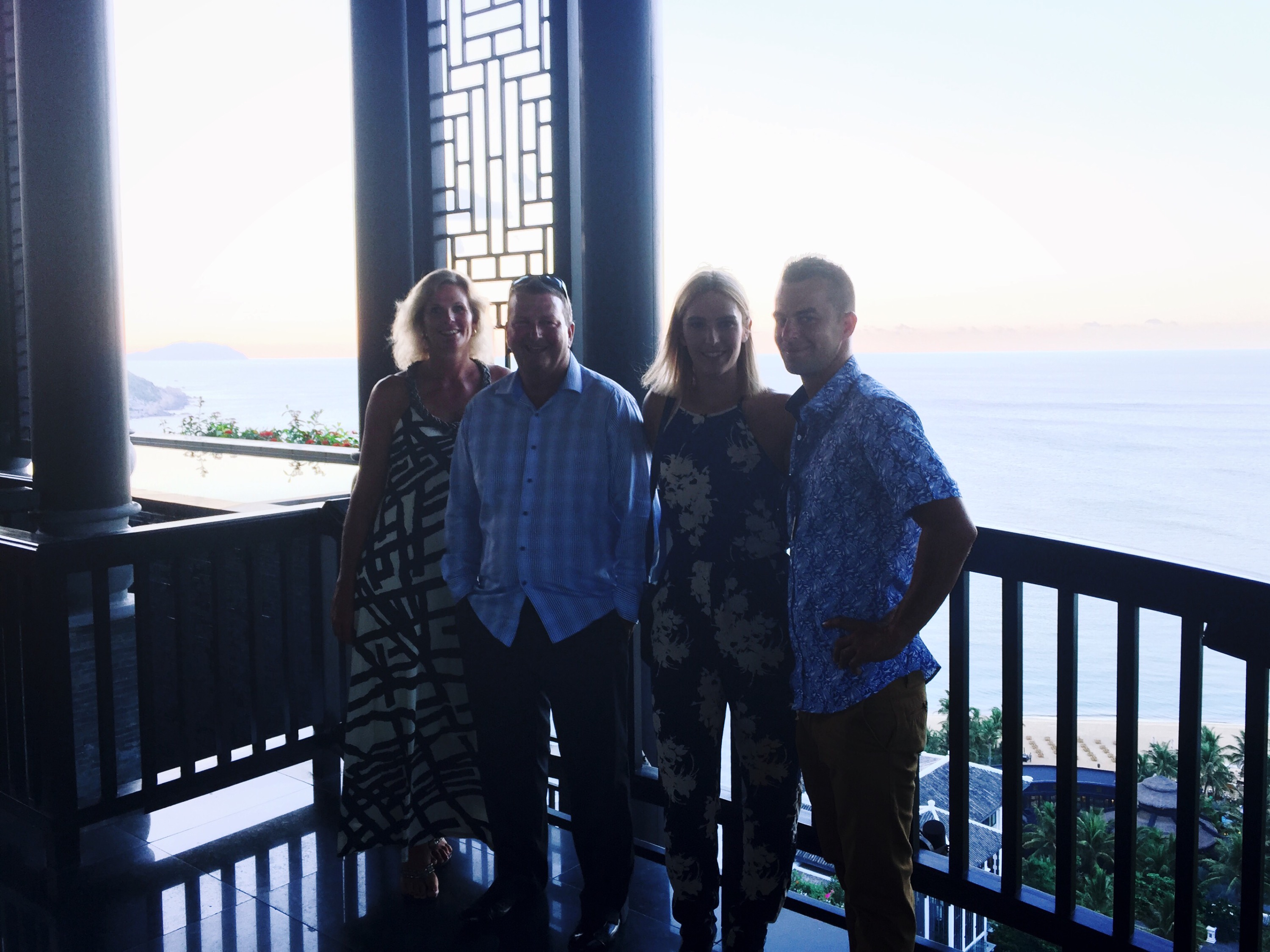
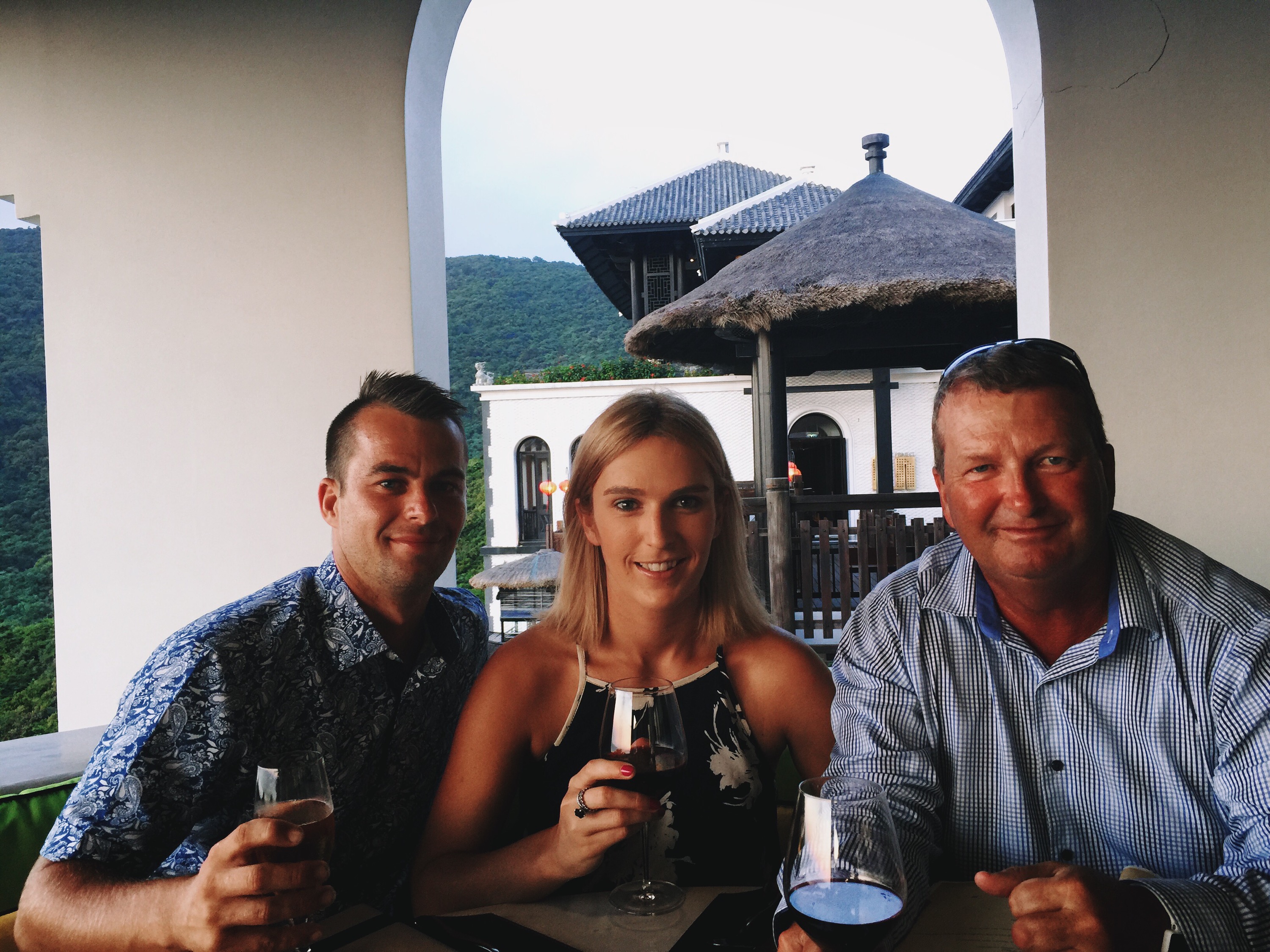
We chose to dine at Citron – there was no beating the views and the private dining booths were something else.  We are also enjoying the Vietnamese cuisine and it was nice to enjoy some specialities from the north and south too.  After dinner and a bottle of red we caught the funicular down to the sea where we checked out the beach and the Long Pool which sits on top of the Long Bar.  It sure is a very nice resort and we enjoyed our few hours of luxury before returning to our home away from home on the golf course.  


Posted in Danang, Vietnam | Tagged , , | 1 Comment

The Hills of Đà Nẵng – Đà Nẵng, Vietnam

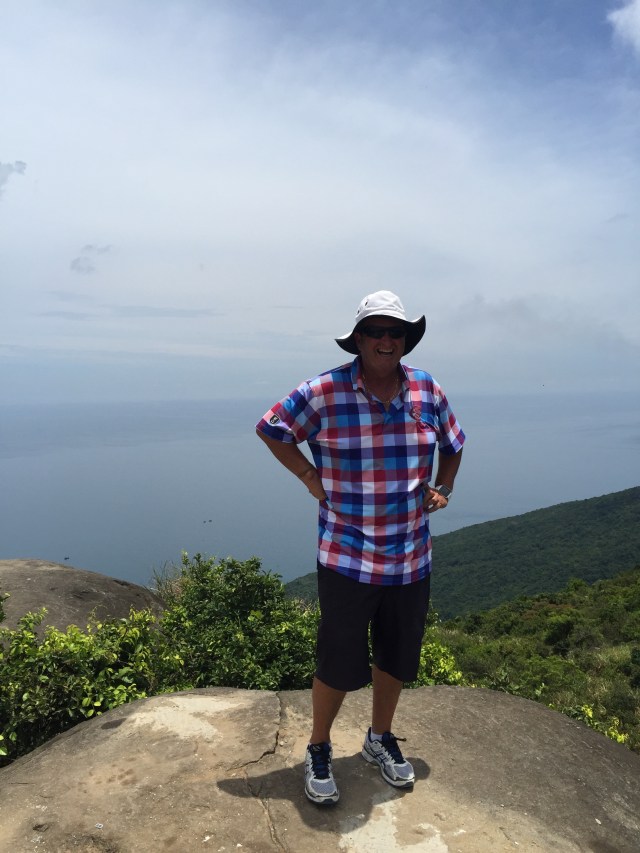
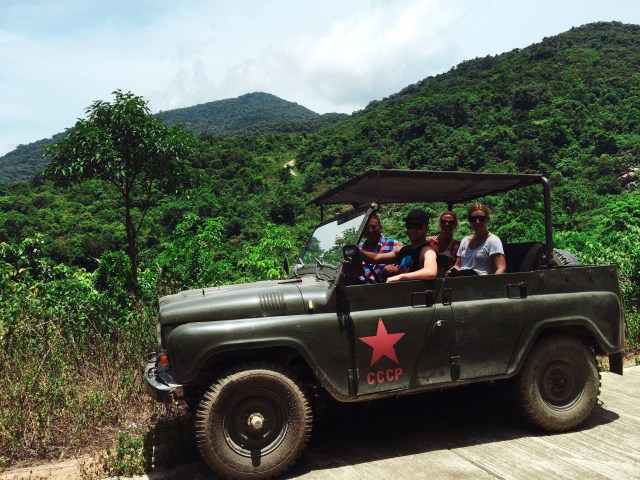
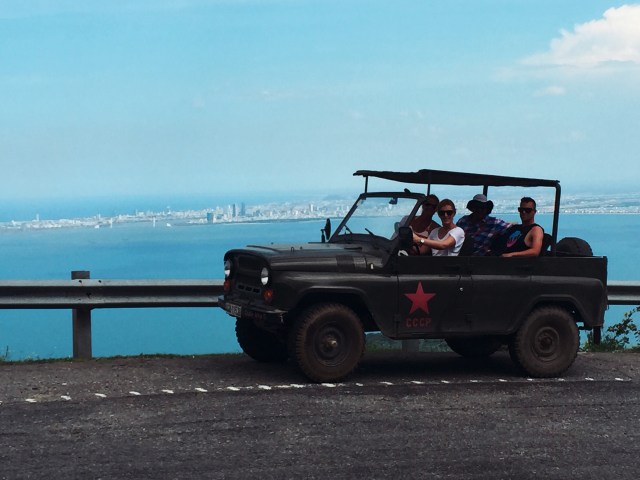
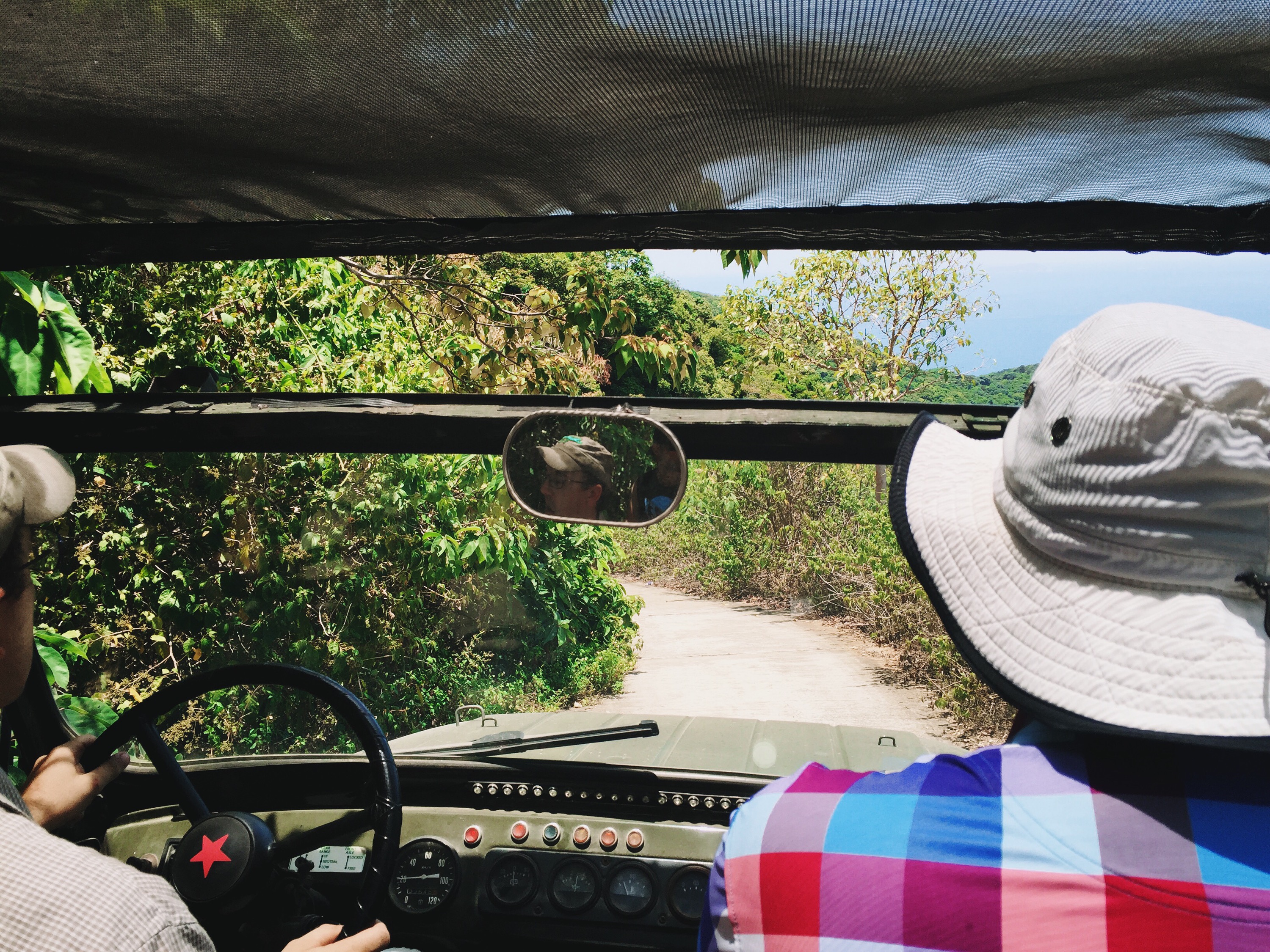
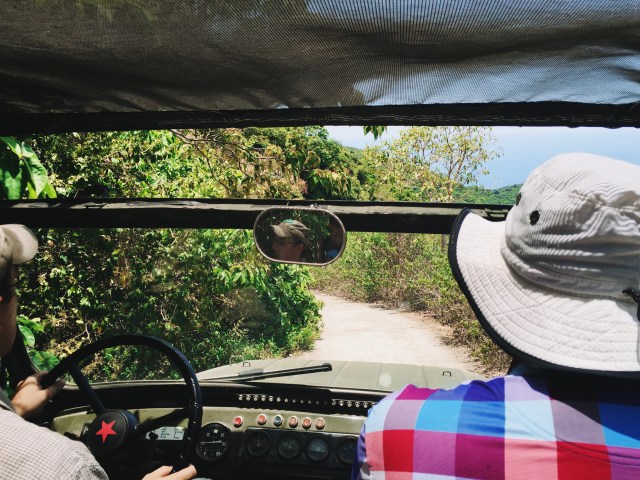
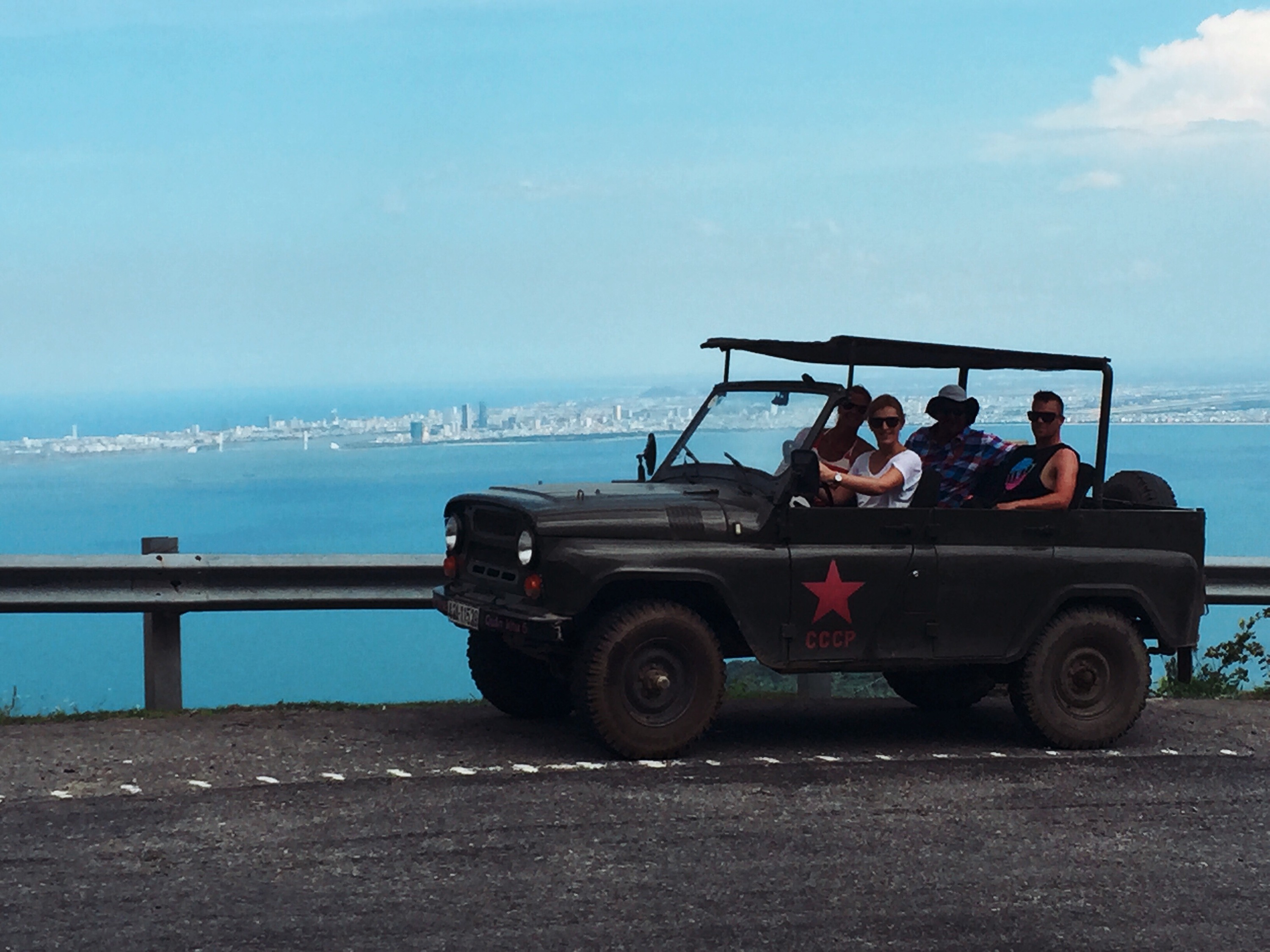
On Thursday the 13th August we took a Looking Glass Jeep Tour into the Hills of Đà Nẵng.  Jeremy picked us up in his 1980’s restored US Army Jeep, set the iPod to play Good Morning Vietnam and we were off.  It was very cool whipping along the highway with the wind blowing in our hair. 
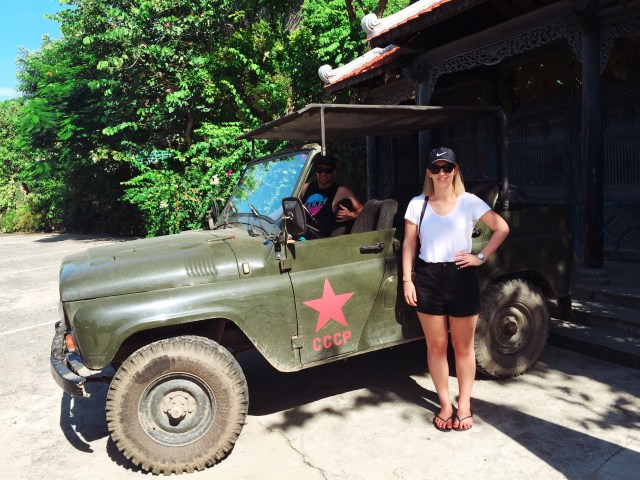
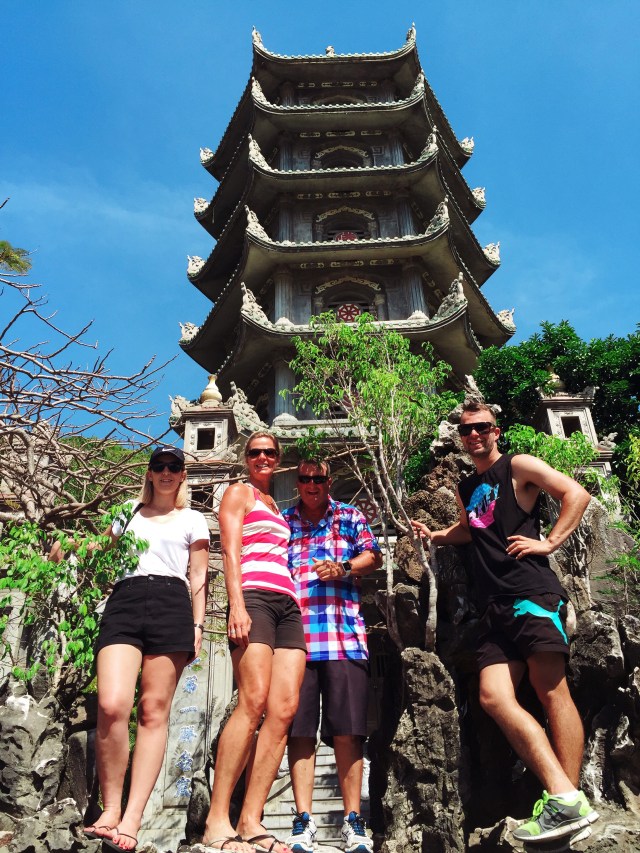
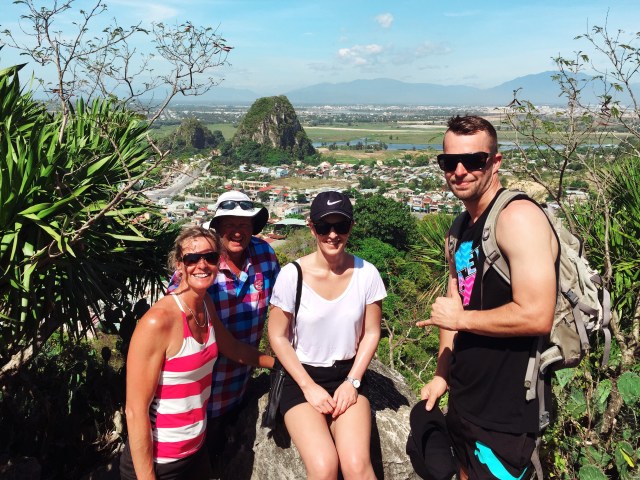
 First stop was Marble Mountain.  Marble Mountains (Vietnamese: Ngũ Hành Sơn; “Five elements mountains”) is a cluster of five marble and limestone hills located in Ngu Hanh Son ward, south of Đà Nẵng city in Vietnam. The five ‘mountains’ are named after the five elements; Kim (metal), Thuy (water), Moc (wood), Hoa (fire) and Tho (earth).  Thuy Son (Mountain of Water) is the largest and most famous of the five marble mountains and contains a number of caves in which Hindu, Buddhist and Cham deities are worshipped. A stairway of 156 steps leads to the summit of Thuy Son, the only marble mountain accessible to visitors.  It was only 8.45am but it was already about 30 degrees as we climbed these stairs.  There is a lot to see once you get up the stairs – temples, shrines, caves and a great view over China Beach and Đà Nẵng.  You also get a good view of the other Marble Mountains.

Despite sharing our experience with other tourists it is a very peaceful and serene place.  I can see why people would come up here to worship and meditate.  There are some monks that live on Marble Mountain as caretakers of the shrines and the faith.  There are a number of grottoes, including Huyen Khong and Tang Chon (caves), and many Hindu and Buddhist sanctuaries, the pagoda Tam Thai, built in 1825, Tu Tam (place of worship for people buried at the Pho Dong tower) and Linh Ung, and the tower of Pho Dong (the place where homeless people were buried).   The sanctuaries feature statuary and relief depictions of religious scenes carved out of the marble. 
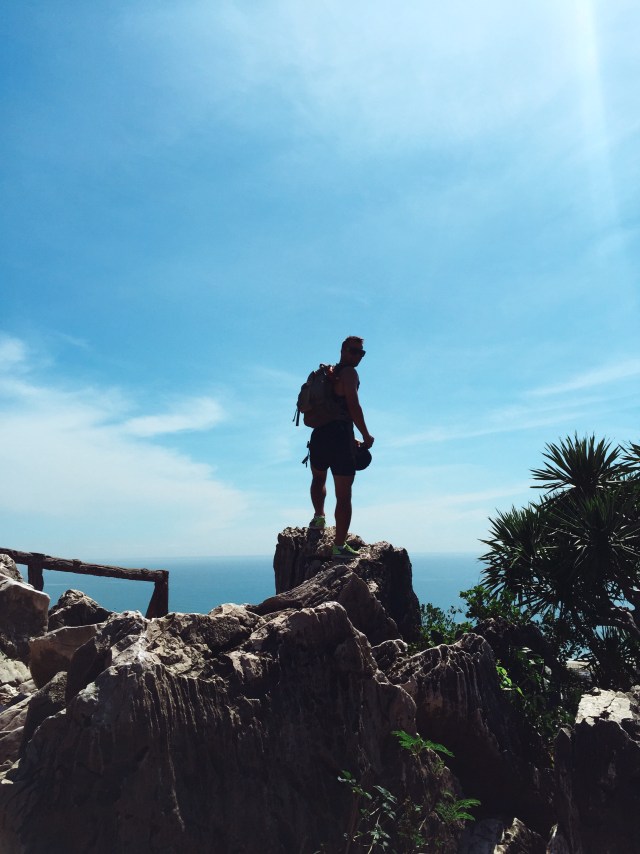
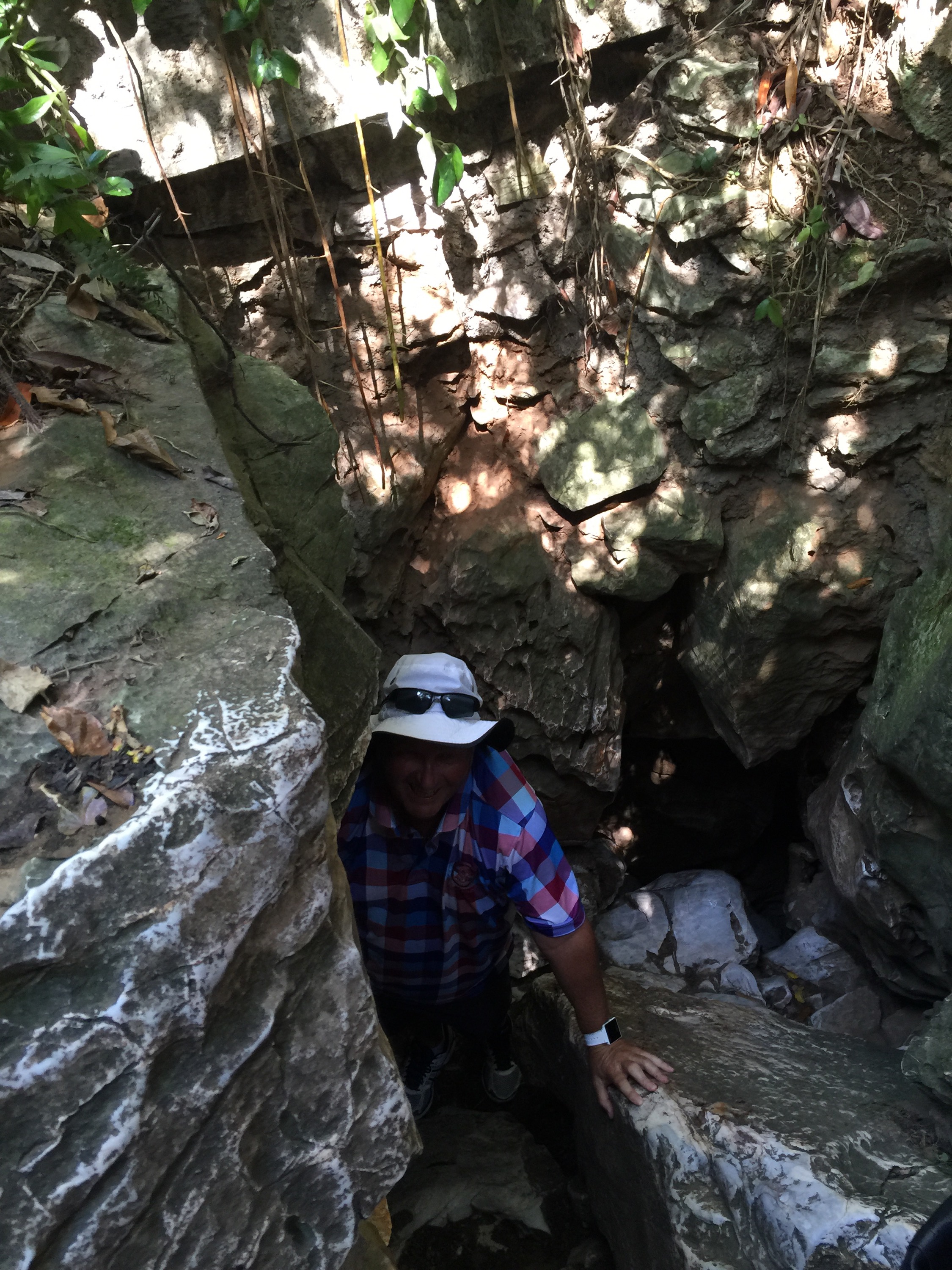
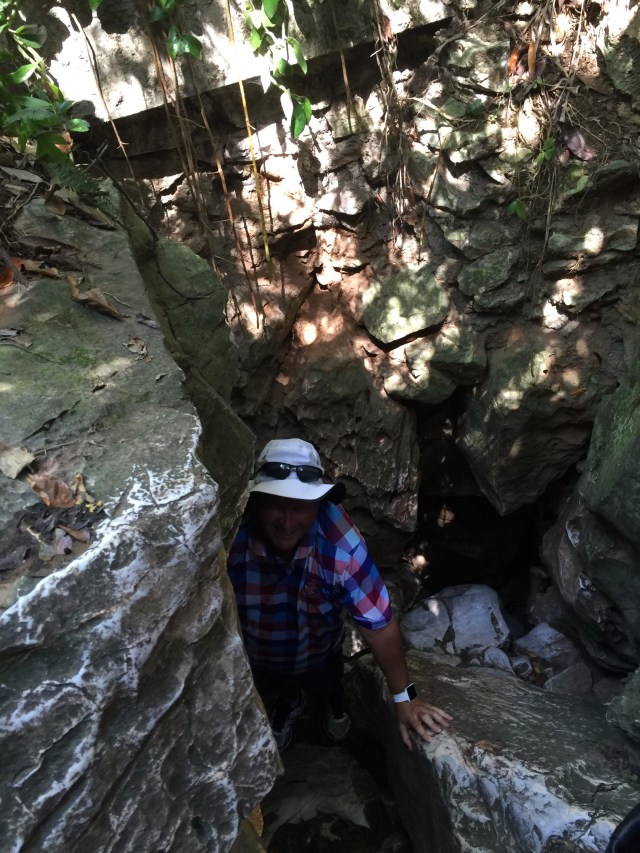
   We then climbed up to one of the summits – not the highest one but it still had panaromic views of the area.  Jeremy had given us the option of doing either summits, both or none.  I choose to go up one of the summits and the others agreed although after the climb Steve was wishing he had chosen the ‘none’ option!  We had to climb up through a cave and then through an opening near the top.  The views were certainly worth it though.  
  
 
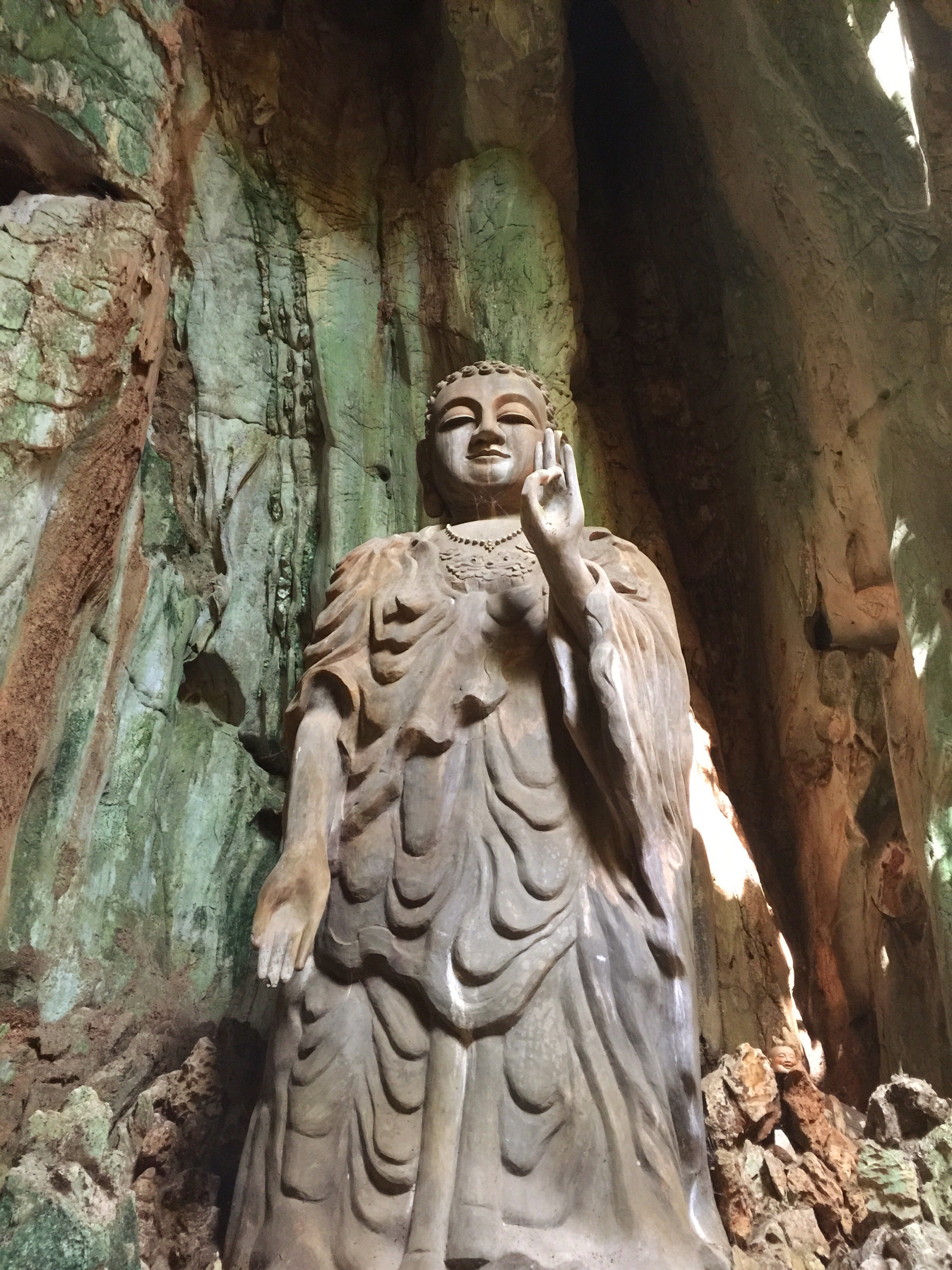
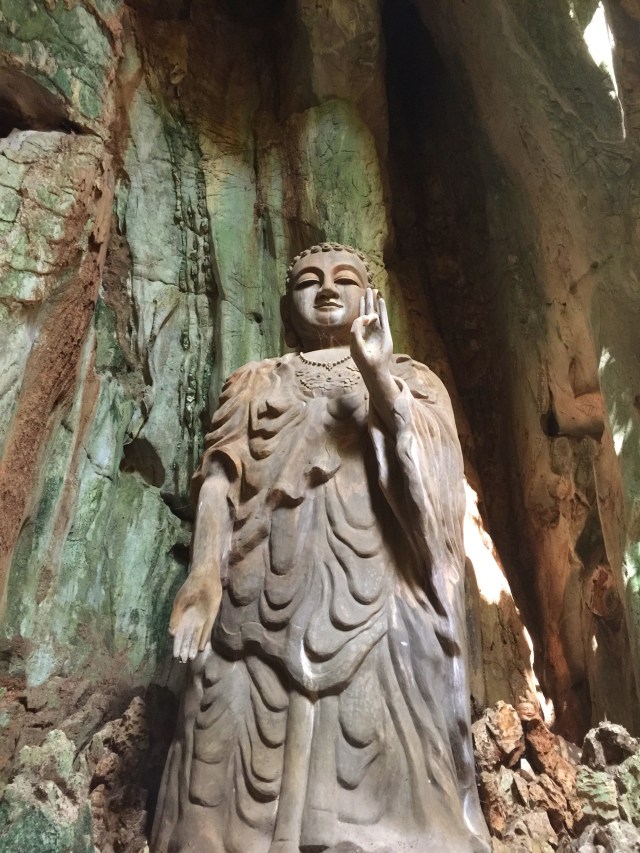
 After descending part way down we went into the Huyen Khong Cave.  It is a very impressive Cathedral-like cave with natural light entering through a small skyward opening.  This large cave houses a large Cham Buddha, Buddhist and Confucian shrines along with various inscriptions carved into the walls.

The mountains were very near the American Marble Mountain Air Facility during the Vietnam War. According to William Broyles, Jr.’s “Brothers in Arms”, the Marble Mountains contained a hospital for the Vietcong, probably within earshot of the American air field and China Beach (which bordered the air field on the side opposite the mountains). He describes the enemy as having been so “certain of our ignorance. . . . that he had hidden his hospital in plain sight”.

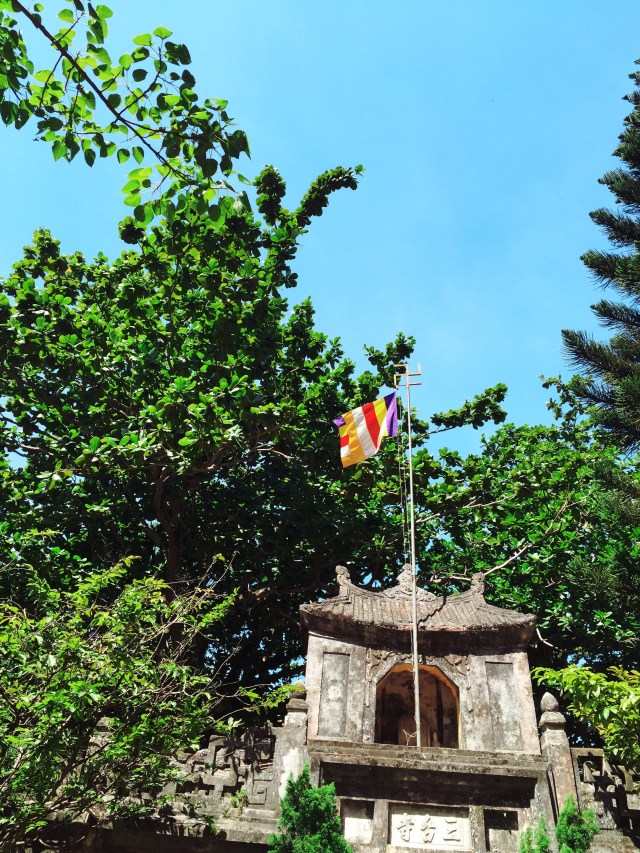
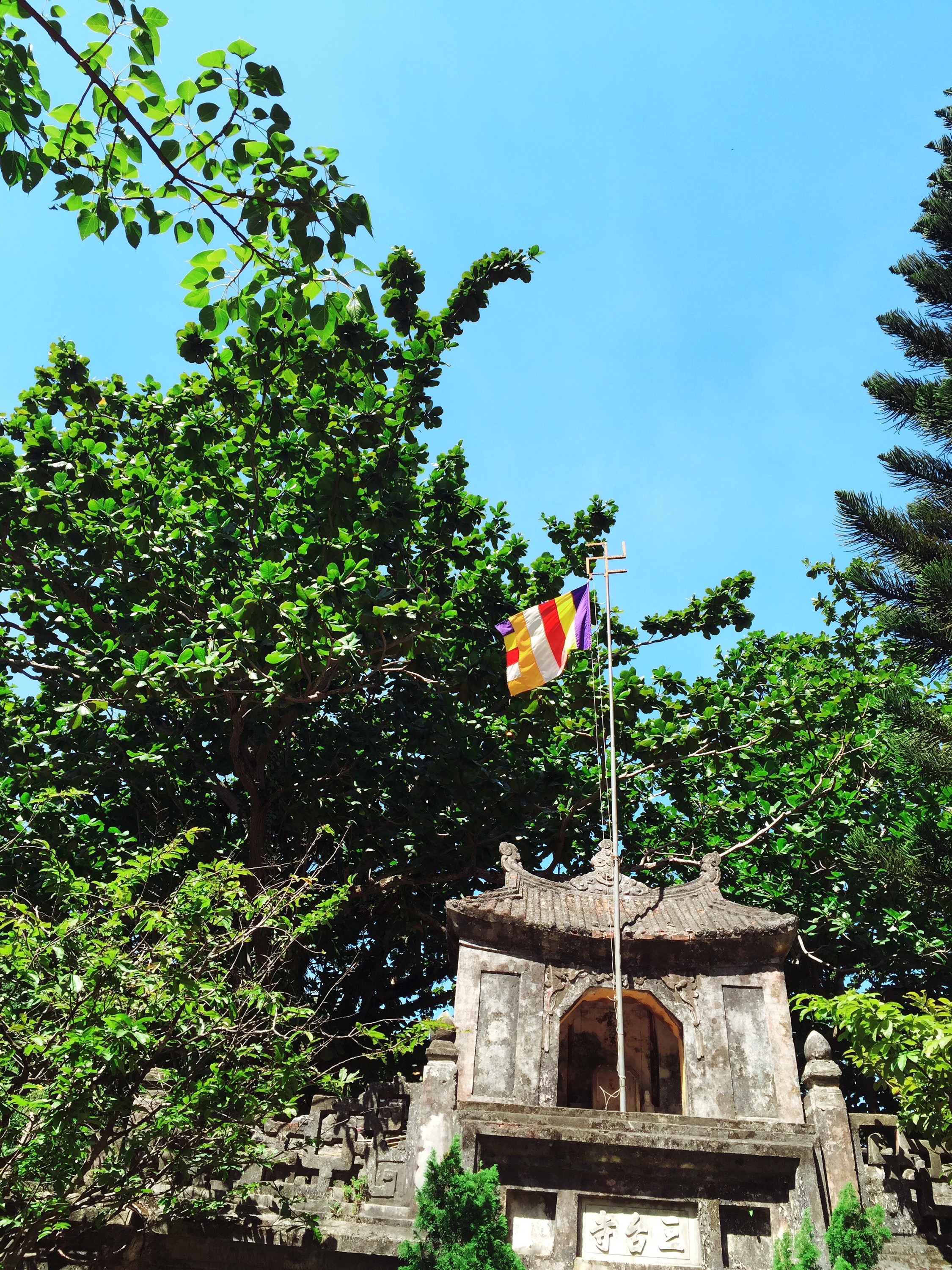
On the way out of the gates we passed a statue of a happy Buddha and Jeremy explained the basic prrinciples  of Buddhism – ssee below for a more in depth explanation.  There was also a flag flyng above the entrance gate which is the flag of Buddha.  The six vertical bands of the flag represent the six colors of the aura which Buddhists believe emanated from the body of the Buddha when he attained Enlightenment:

Blue (Nīla): Loving kindness, peace and universal compassion

Yellow (Pīta): The Middle Path – avoiding extremes, emptiness

Red (Lohita): The blessings of practice – achievement, wisdom, virtue, fortune and dignity

White (Odāta): The purity of Dharma – leading to liberation, outside of time or space

Orange (Manjesta): The Buddha’s teachings – wisdom

The sixth vertical band, on the fly, is made up of a combination of rectangular bands of the five other colours, and represents a compound of the other five colours in the aura’s spectrum. This compound colour is referred to as Pabbhassara (‘essence of light’). 
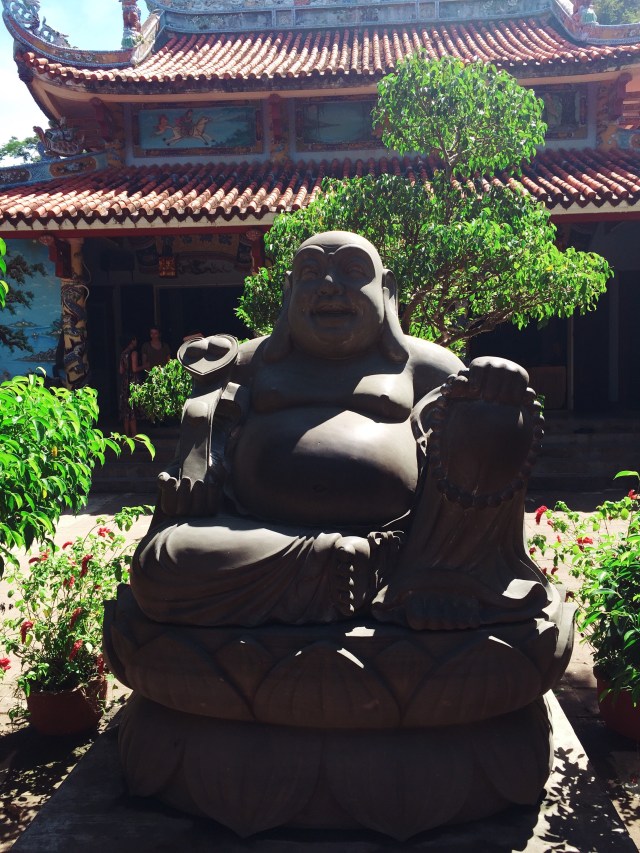
   We then walked back through Non Nuoc Village at the foot of the Mountain where the locals are famous for stone sculptures and handicrafts.  Here you can buy many things made of marble stone, from earrings, necklaces, vases to the huge sculptures of Buddha. In the past, rock was extracted directly from the Marble Mountains to make sculptures but now the direct extraction is illegal. Materials for sculpturing work are now transported from nearby provinces like Quang Nam and Thanh Hoa.  Jeremy told us it also comes in from China.

It was back into the jeep and the natural air conditioining which was desperately needed – we were all melting in the heat.  Next stop was to see a local boat builder who uses bamboo and cow manure to make fishing baskets.  The bamboo is split and stripped down into a flax like form and then woven together into a square.  The square is then shaped into a circle and a more solid form of bamboo is used to form the rim. The holes in the weaving are then plugged up with cow manure and left to dry.  A cow manure slush is then used to effectively lacquer the boat before more drying and setting in the sun.  The Vietnamese are very good at using everything for something. 
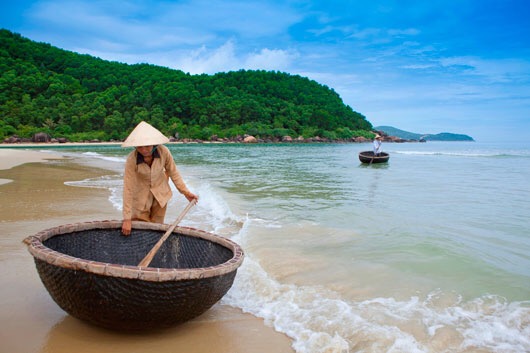
 

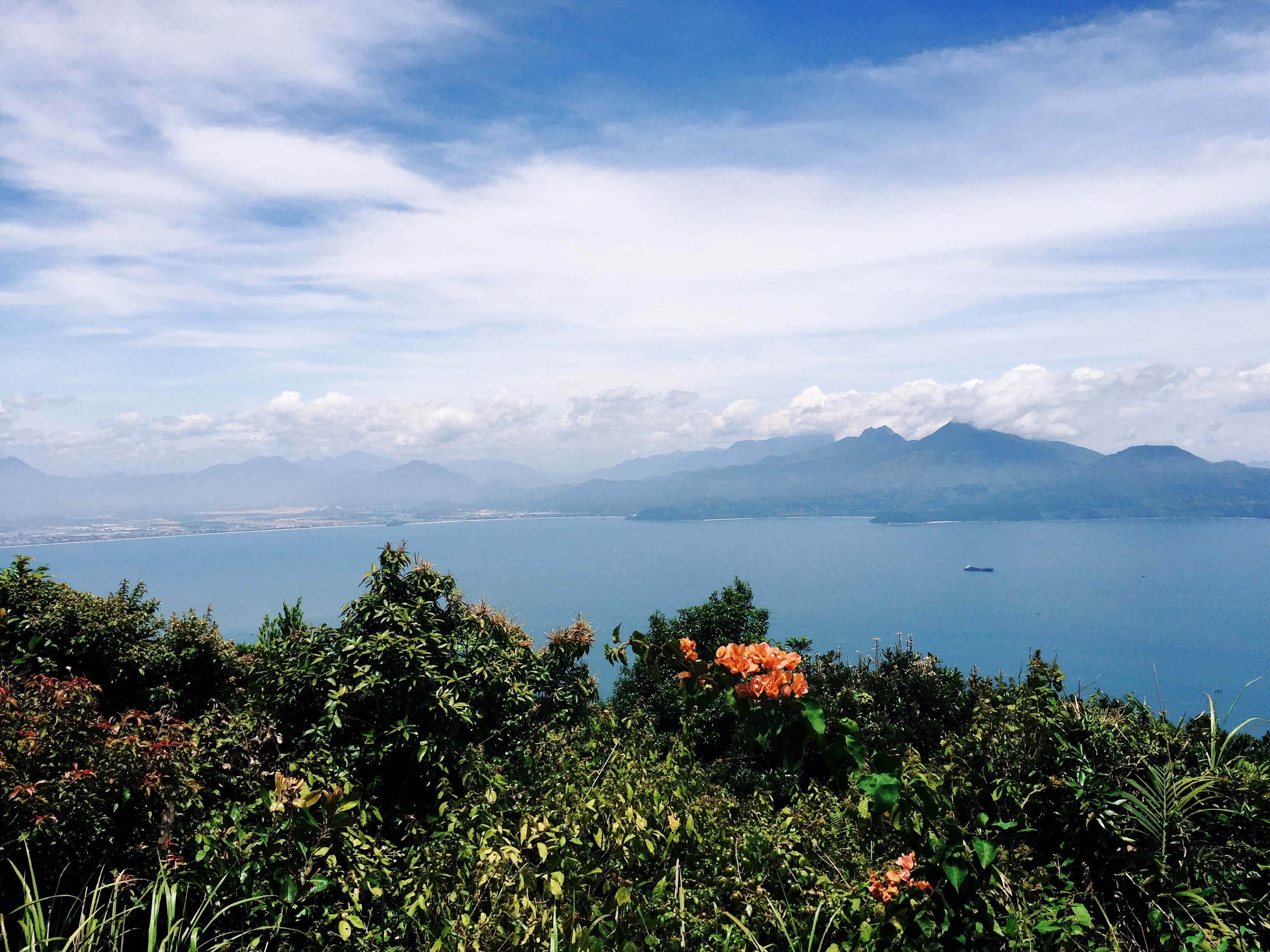
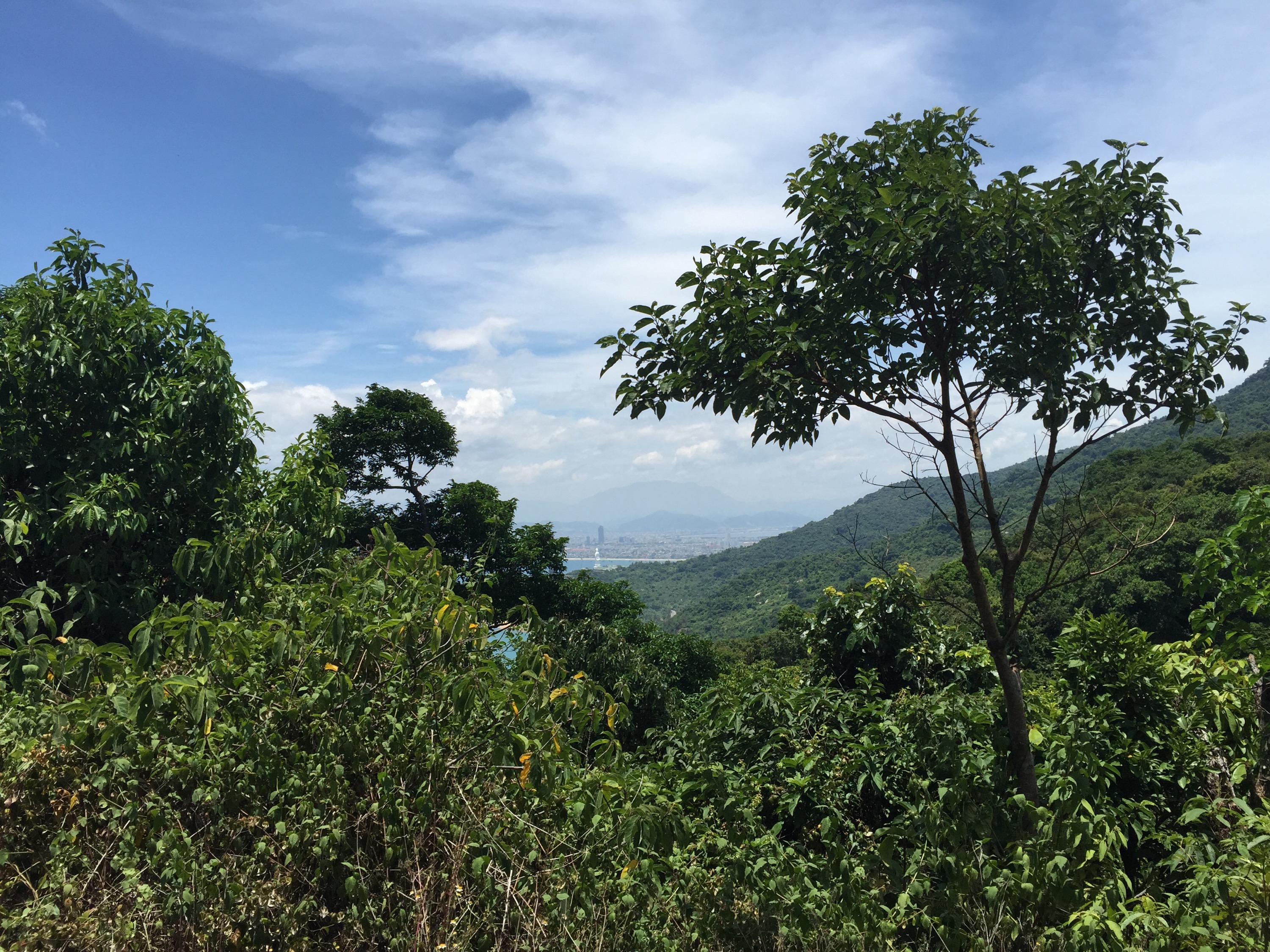
We then headed for the next hill on our agenda – Sơn Trà Mountain (Vietnamese: Núi Sơn Trà), known to American soldiers during the Vietnam War as Monkey Mountain.  The mountain is located on Sơn Trà Peninsula, in Sơn Trà district, Đà Nẵng, overlooking the Bay of Đà Nẵng and the East Sea. Đà Nẵng Port’s Tiên Sa Terminal is located at the base of the mountain’s western face, as is nearby Tiên Sa Beach. A military base (now little used) is also located on the mountain. 
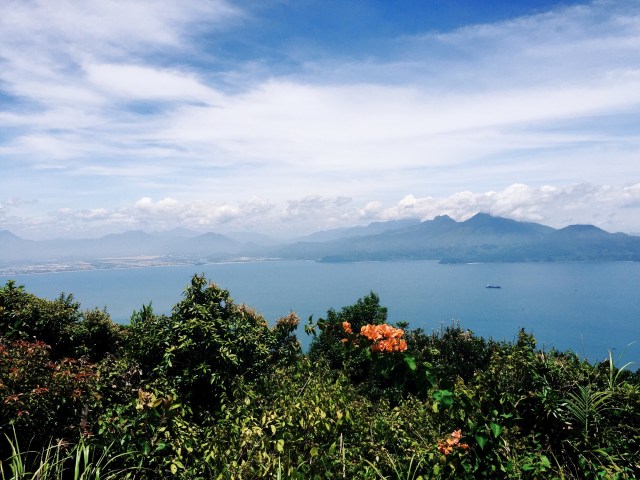
    
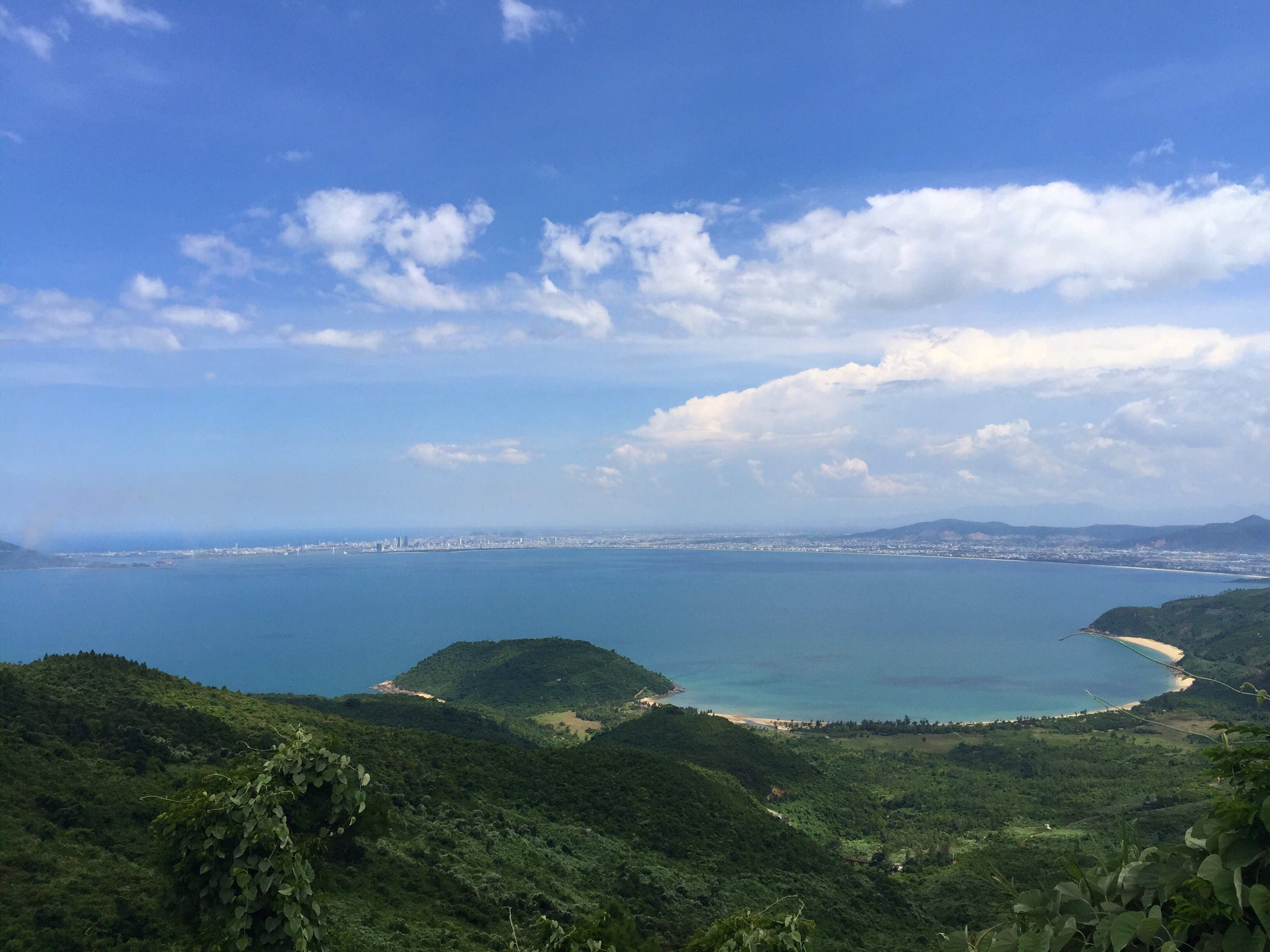
   We went up one side of the mountain to a look out – the views were great.  We then descended down the other side on a fairly narrow, windy, steep road which is not used as much as the road coming up.  It was lots of fun but would have been interesting if we had met any vehicles of substance coming the other way. Unfortunately we didn’t get to any monkeys either. 
   By now it was lunchtime so we headed back down to Đà Nẵng for lunch.  We went down an alley to a local restaurant that specialises in Banh Xeo or crispy pancakes which is a specialty of central Vietnam.  The restaurant is located at the owner’s house and is very popular with the locals.  Apparently at night the queues stretch down the alley and as a consequence a couple of the neighbours have created replica restaurants in their homes to cater for the overflow.  As I said the Vietnamese are very enterprising.  Banh Xeo have bcome a favorite of mine since I have been here so I indulged myself quite happily – they were good.  They are one of those foods though that you coulld just keep eating as they are very moorish. 

 Đà Nẵng is one of the major port cities in Vietnam (in addition to Ho Chi Minh City and Haiphong) and the biggest city on the South Central Coast of Vietnam; the city is situated on the coast of the Eastern Sea, at the opening end of the Hàn River. Đà Nẵng is the commercial and educational center of Central Vietnam, with a well-sheltered, easily accessible port; its location on the path of National Route 1A and the North–South Railway makes it a hub for transportation. It is the third biggest economic center in Vietnam (after Ho Chi Minh City and Hanoi).  Đà Nẵng is the fifth most populated city in Vietnam, with a population of approximately one million people.

During the Vietnam War, the city was home to a major air base that was used by both the South Vietnamese and United States air forces. The base was considered one of the world’s busiest airports during the war, reaching an average of 2,595 air traffic operations daily, more than any airport in the world at that time.  The final U.S. ground combat operations in Vietnam ceased on 13 August 1972, when a residual force of the 196th Light Infantry Brigade stood down in Đà Nẵng

With our tummies fill it was back into the jeep to conquer the Hai Van Pass.  The Hải Vân Pass (Vietnamese: Đèo Hải Vân, “ocean cloud pass”), is an approximately 21 km long mountain pass on National Route 1A in Vietnam. It traverses a spur of the larger Annamite Range that juts into the South China Sea, on the border of Đà Nẵng and Thừa Thiên–Huế Province, near Bạch Mã National Park. Its name refers to the mists that rise from the sea, reducing visibility. Historically, the pass was a physical division between the kingdoms of Champa and Đại Việt.  It also forms a boundary between the climates of northern and southern Vietnam, sheltering the city of Da Nang from the “Chinese winds” that blow in from the northwest. During the winter months (November–March), for instance, weather on the north side of the pass might be wet and cold, while the south side might be warm and dry. 
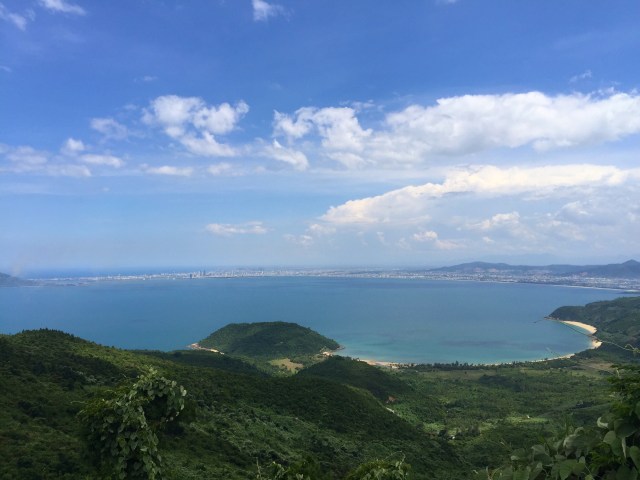
 
 
The pass is renowned for its scenic beauty.  Presenter Jeremy Clarkson, former host of the BBC motoring programme Top Gear, featured the pass during the show’s 2008 Vietnam Special, calling the road “a deserted ribbon of perfection—one of the best coast roads in the world.”

Hải Vân Pass has been of major strategic importance in this history of Vietnam, and for a long time represented a major barrier to any land army that attempted to move between the northern and central regions of the country.  The pass is crossed by two main transport routes: Vietnam’s main north–south highway, National Route 1A, and the North–South Railway. The road crosses over the mountain more or less directly, climbing to an elevation of 496 m (1,627 ft) and passing south of the 1,172 m (3,845 ft) high Ai Van Son peak, while the railway hugs the coastline more closely, passing through a series of tunnels along the way. Since its opening in 2005, the Hải Vân Tunnel—the longest tunnel in Southeast Asia—offers an alternative road across the pass, reducing travel times by at least an hour.  

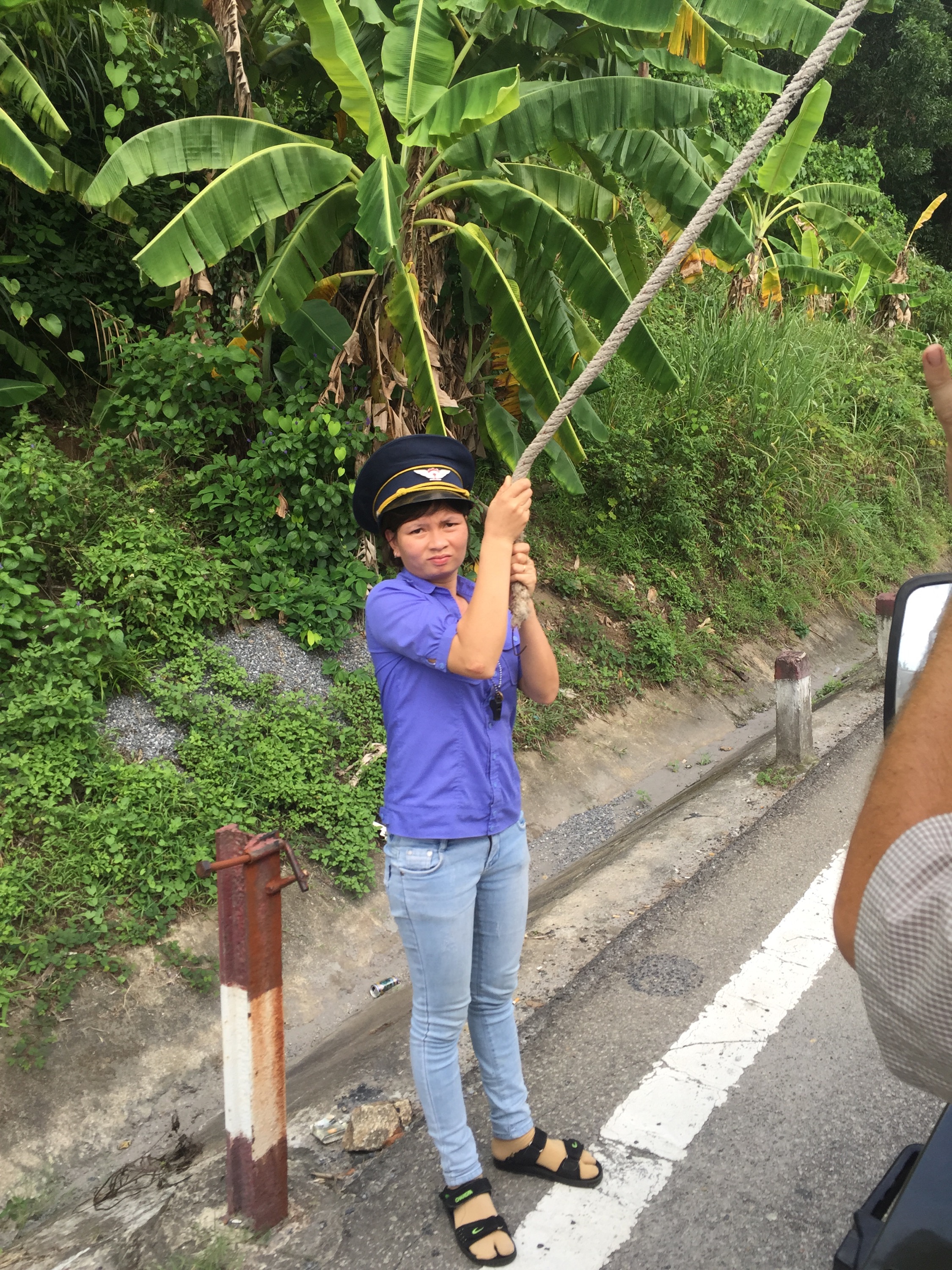
As we came down the other side of the Hai Van Pass on the Hue side we had to wait for the train to cross.  The crossing barrier is operated manually – see the picture below.  We then looped around and entered the Hải Vân Tunnel which is approximatley 6km long.  Not an ideal scenario to travel through a tunnel in an open top jeep – it got very hot and it felt like my ears were on  fire.  As the saying goes ‘there is always light at the end of the tunnel” and in this case we were pretty happy to see it that’s for sure. 

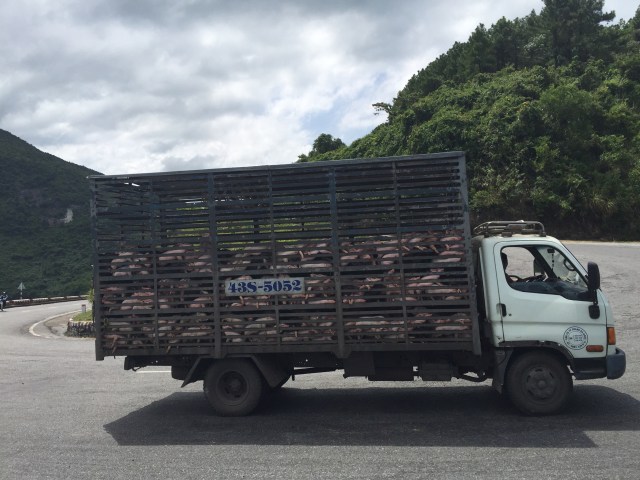
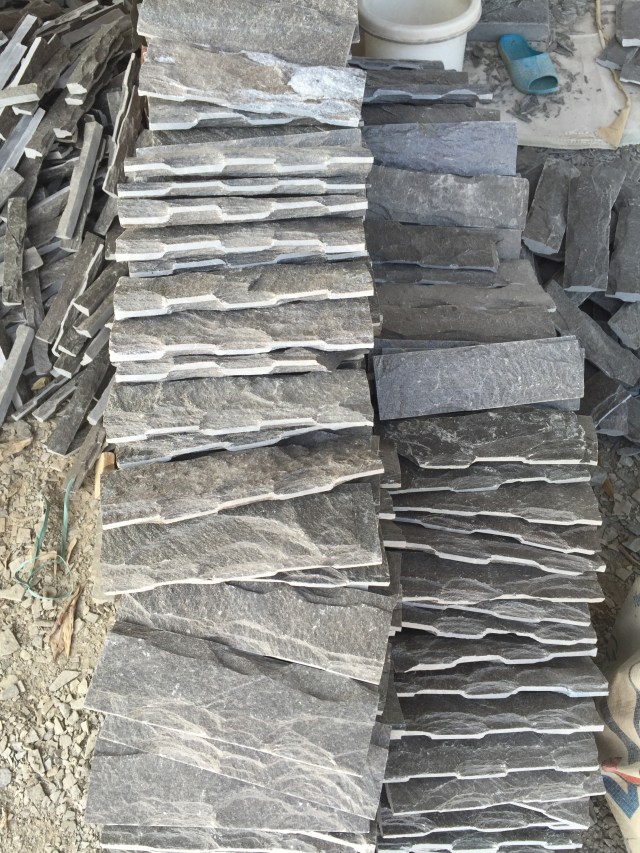
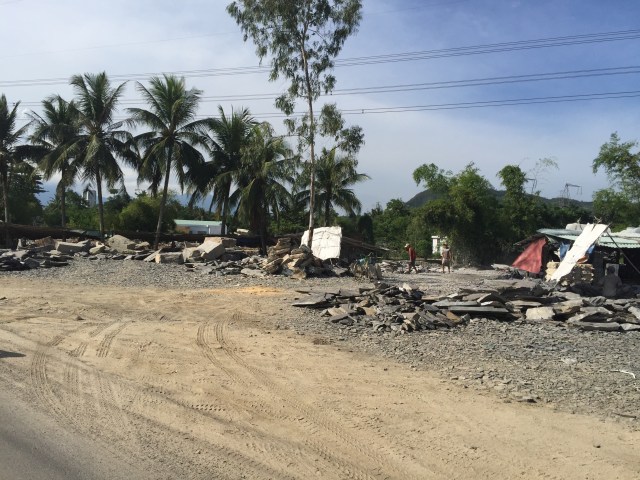
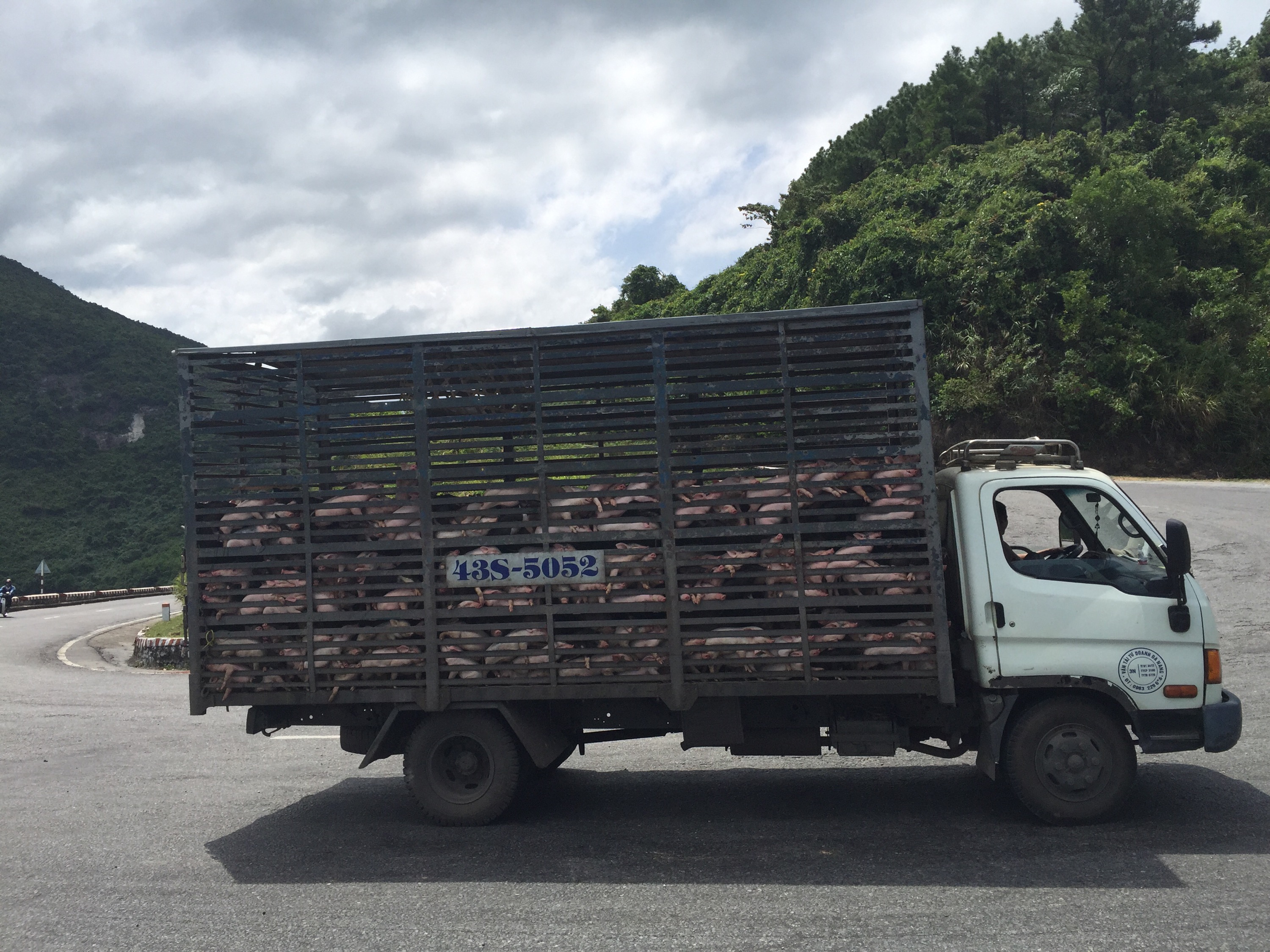
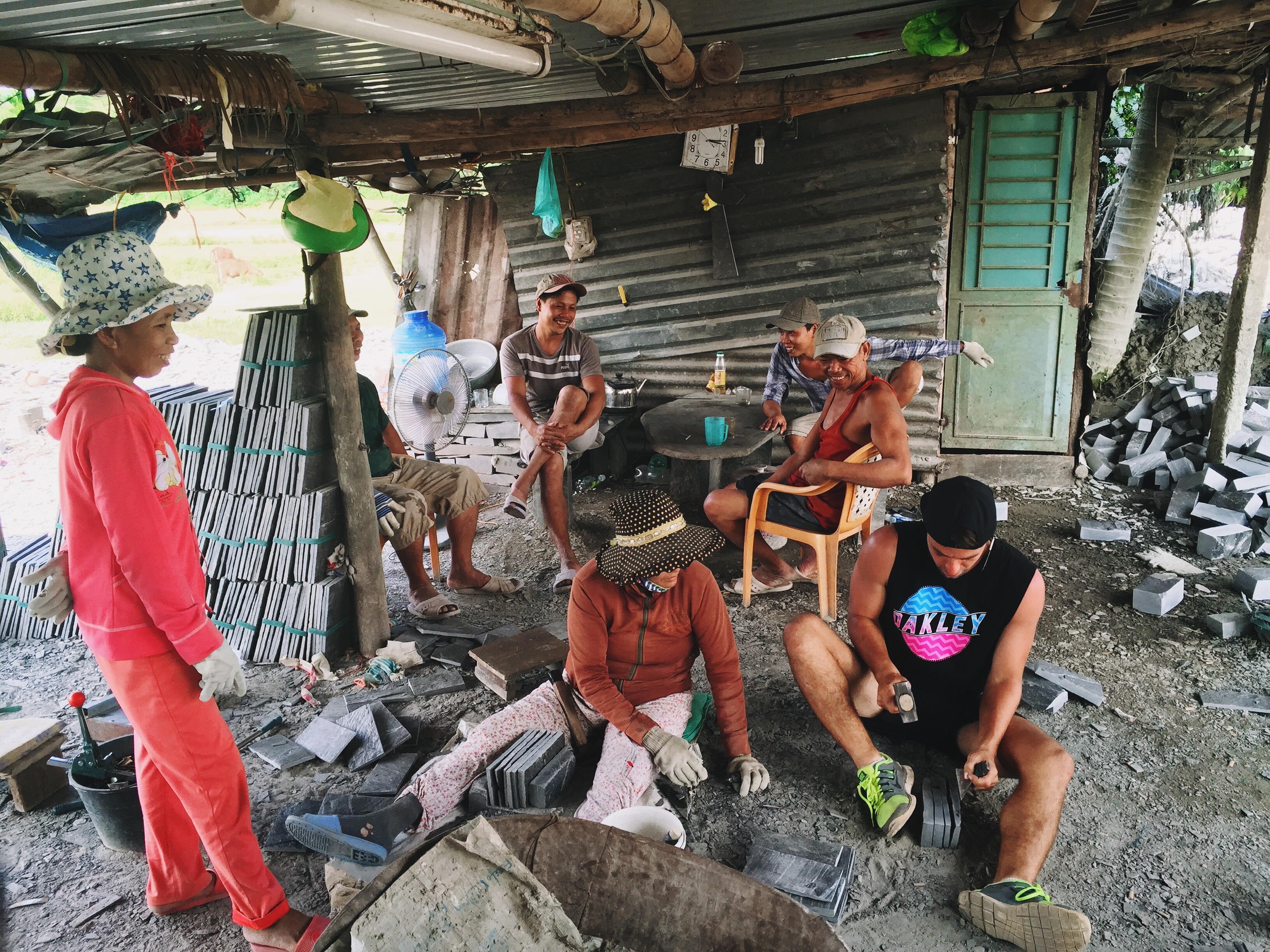
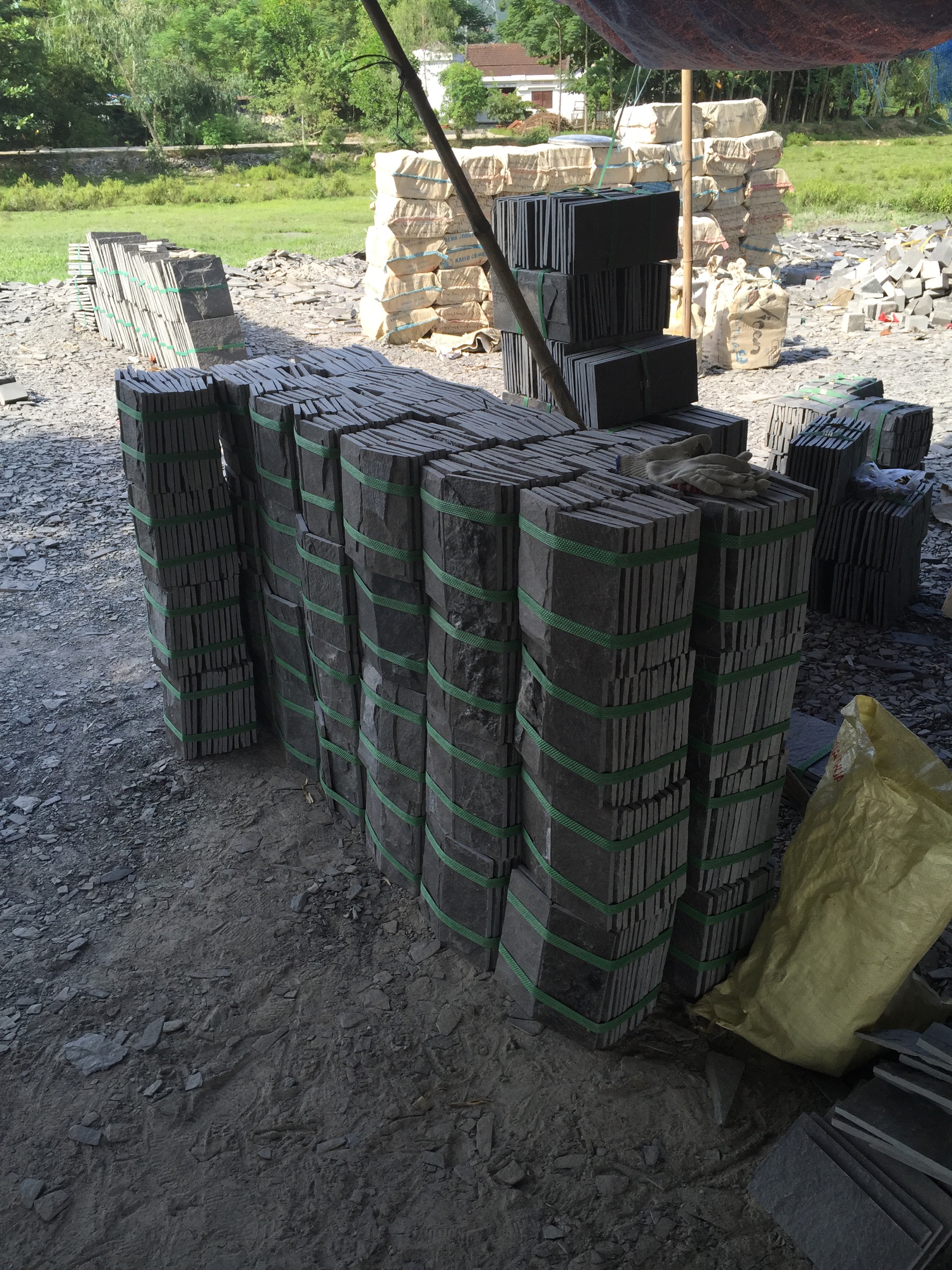
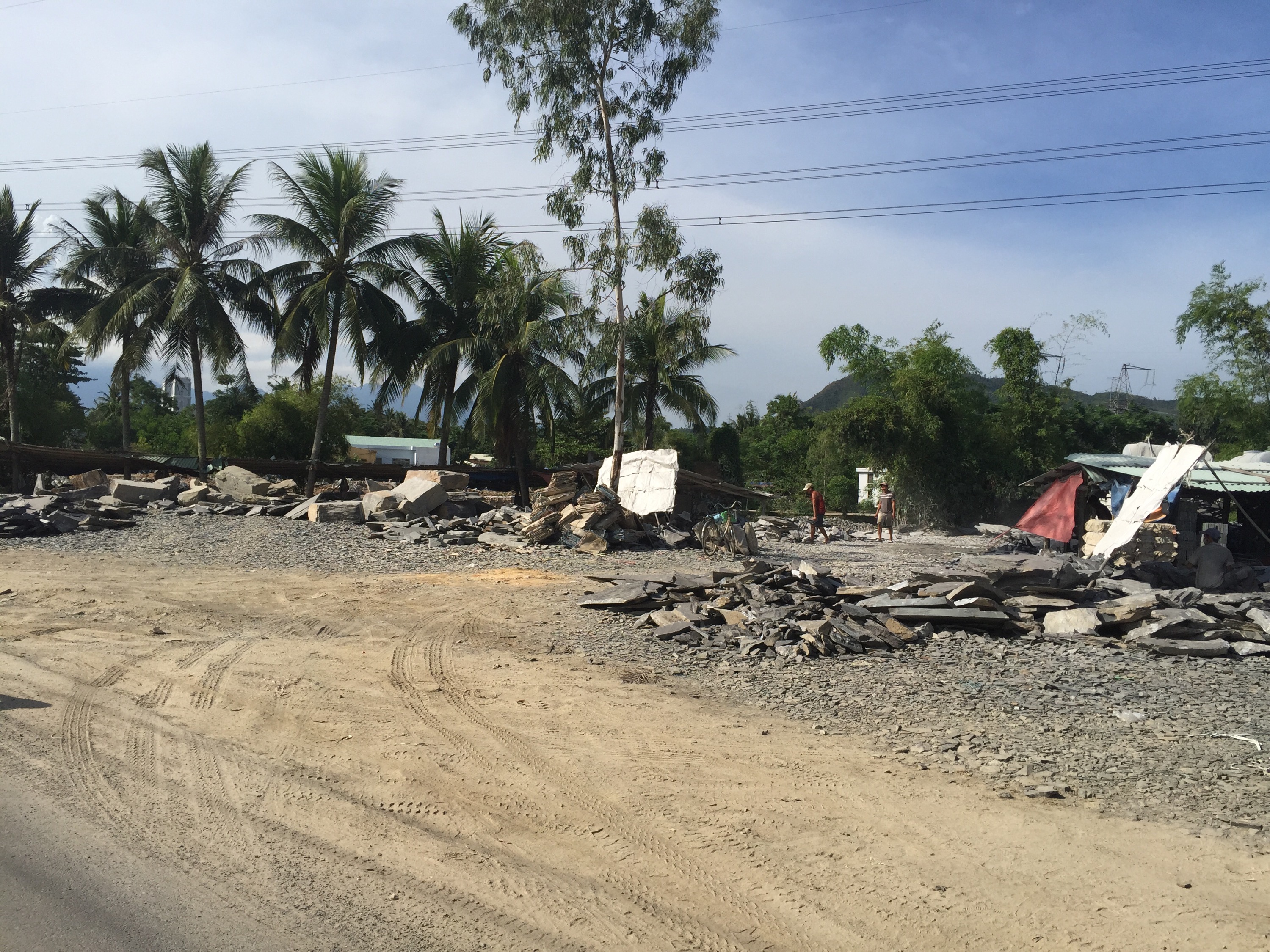
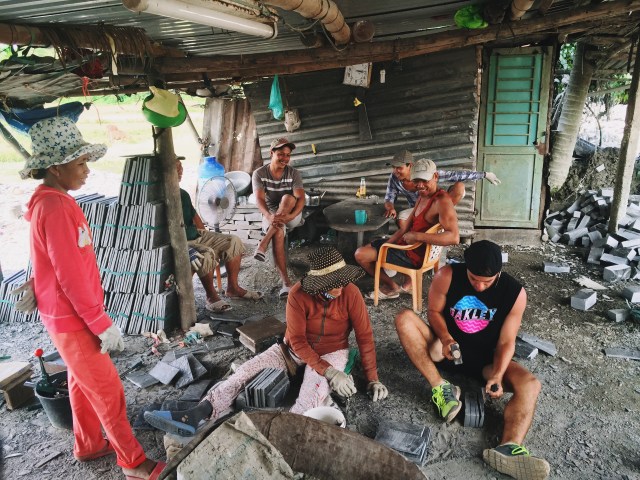
 We then headed inland to a local village that specialised in slate tiles.  Jeremy explained that it is quite common for different villages to specialise in different industries.  We stopped off at one of the stone works and watched the woman making slate tiles out of solid blocks.  At the time the men were all sitting around watching and I made the comment to Jeremy re  that being typical – the women doing all the work while the men watch!  He said they were just taking a break – they normally operate the big saws and sledge hammers breaking the big rocks into more manageable pieces for the women.  OK I believe you : )  We did see evidence of this as we drove further into the vilage.

Paul had a go at chipping the block into tiles and did pretty well.  Apparently these tiles are bundled up and sold all over the world.  The employees get paid USD2 per day which is apparently USD1 more per day than they would get in the rice paddy fields. 
 
 
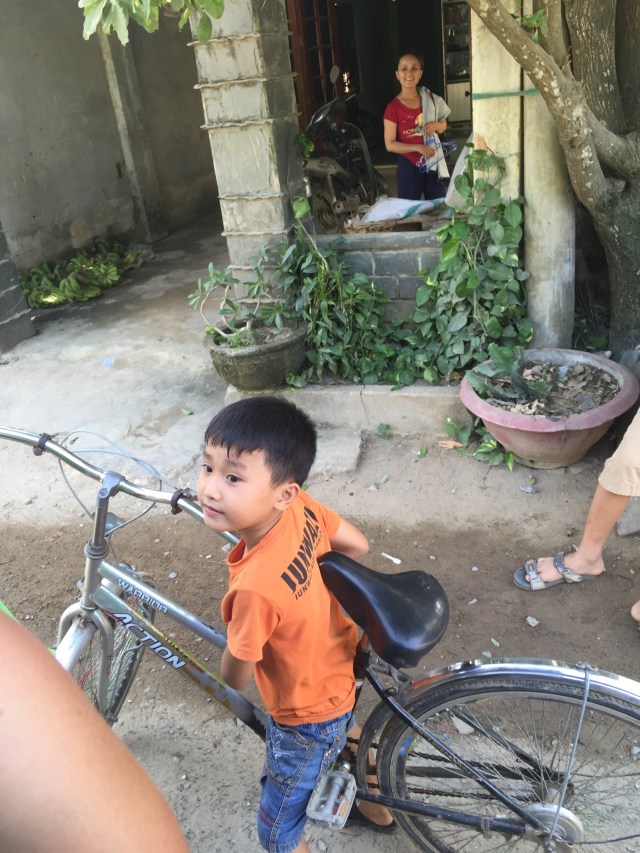
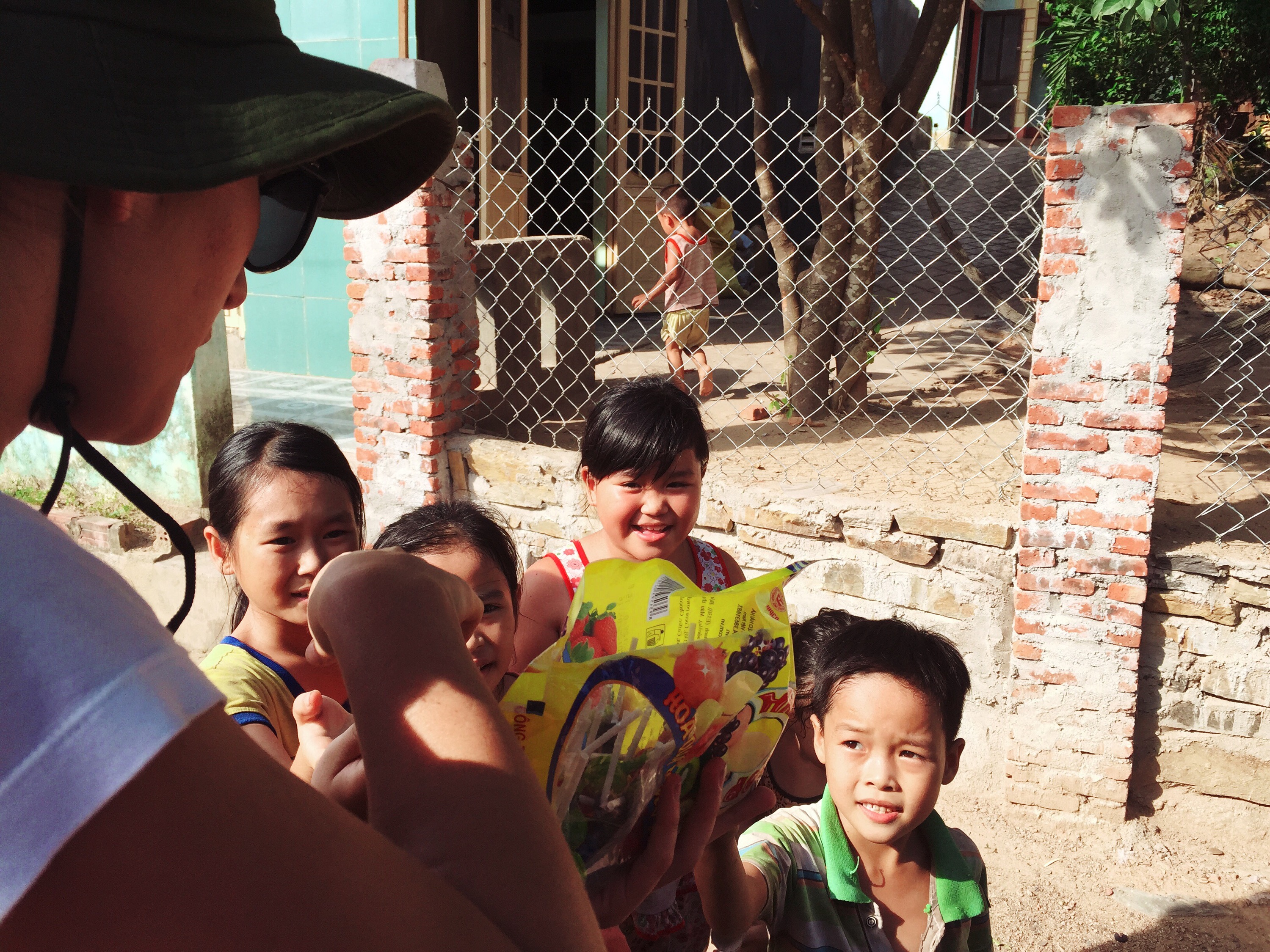
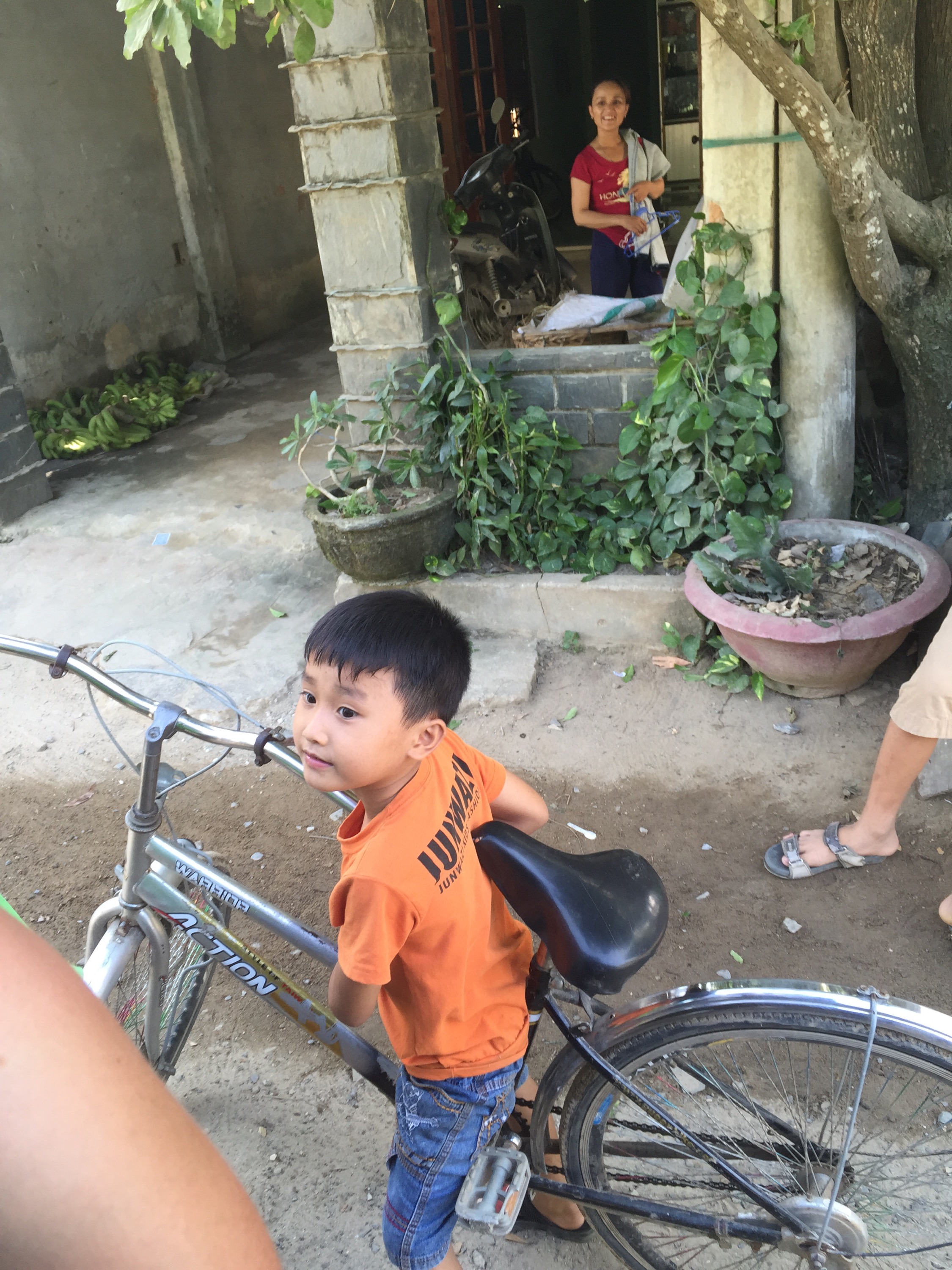
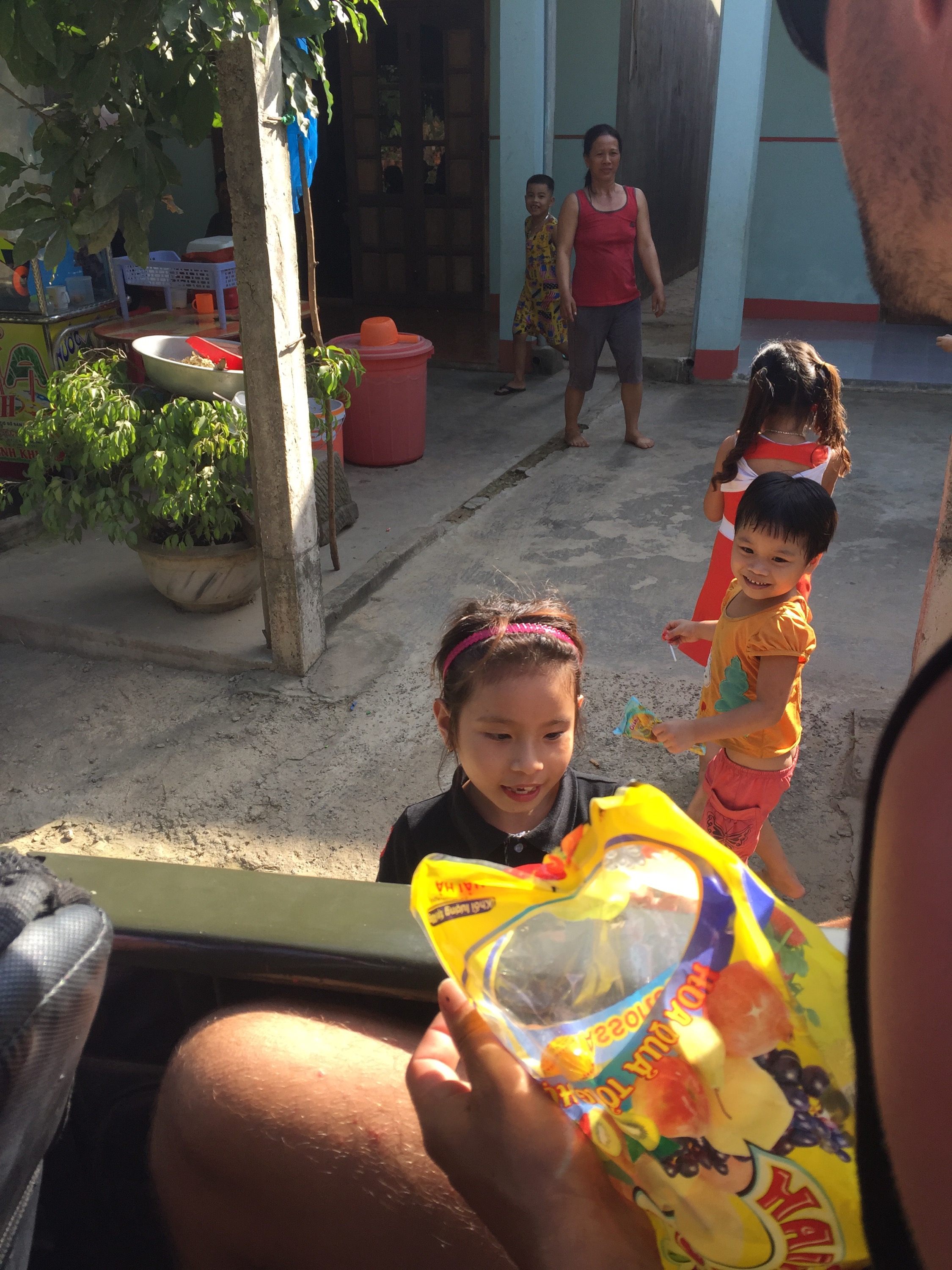
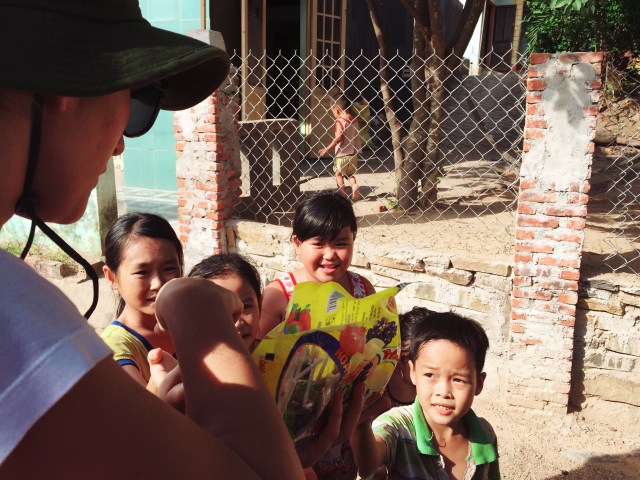
   We then drove through the vilage sharing the love – Jeremy’s jeep is well known in the village and he always has a bag of lollipops on board to give to the kids.  We all had fun handing out the lollipops and the kids were so happy.  They all greeted us and thanked us in English. 
    
 It was then back to Đà Nẵng and the end of the tour.  It had been a long day but we really felt we got to know the area as well as learning many things about the Vietnam culture.  If you’re looking for an intimate way to see Central Vietnam check out http://www.lookingglassjeeptours.com 

What is Buddhism? 

Buddhism is a religion to about 300 million people around the world. The word comes from ‘budhi’, ‘to awaken’. It has its origins about 2,500 years ago when Siddhartha Gotama, known as the Buddha, was himself awakened (enlightened) at the age of 35.

Is Buddhism a Religion?
To many, Buddhism goes beyond religion and is more of a philosophy or ‘way of life’. It is a philosophy because philosophy ‘means love of wisdom’ and the Buddhist path can be summed up as:

(1) to lead a moral life,

(2) to be mindful and aware of thoughts and actions, and

(3) to develop wisdom and understanding.
Buddhism explains a purpose to life, it explains apparent injustice and inequality around the world, and it provides a code of practice or way of life that leads to true happiness.

Who Was the Buddha?
Siddhartha Gotama was born into a royal family in Lumbini, now located in Nepal, in 563 BC. At 29, he realised that wealth and luxury did not guarantee happiness, so he explored the different teachings religions and philosophies of the day, to find the key to human happiness. After six years of study and meditation he finally found ‘the middle path’ and was enlightened. After enlightenment, the Buddha spent the rest of his life teaching the principles of Buddhism — called the Dhamma, or Truth — until his death at the age of 80.  He was not a God, nor did he claim to be. He was a man who taught a path to enlightenment from his own experience.

Buddhists sometimes pay respect to images of the Buddha, not in worship, nor to ask for favours. A statue of the Buddha with hands rested gently in its lap and a compassionate smile reminds us to strive to develop peace and love within ourselves. Bowing to the statue is an expression of gratitude for the teaching.

What did the Buddha Teach?
The Buddha taught many things, but the basic concepts in Buddhism can be summed up by the Four Noble Truths and the Noble Eightfold Path.

What is the First Noble Truth?
The first truth is that life is suffering i.e., life includes pain, getting old, disease, and ultimately death. We also endure psychological suffering like loneliness frustration, fear, embarrassment, disappointment and anger. This is an irrefutable fact that cannot be denied. It is realistic rather than pessimistic because pessimism is expecting things to be bad. lnstead, Buddhism explains how suffering can be avoided and how we can be truly happy.

What is the Second Noble Truth?
The second truth is that suffering is caused by craving and aversion. We will suffer if we expect other people to conform to our expectation, if we want others to like us, if we do not get something we want,etc. In other words, getting what you want does not guarantee happiness. Rather than constantly struggling to get what you want, try to modify your wanting. Wanting deprives us of contentment and happiness. A lifetime of wanting and craving and especially the craving to continue to exist, creates a powerful energy which causes the individual to be born. So craving leads to physical suffering because it causes us to be reborn.

What is the Third Noble Truth?
The third truth is that suffering can be overcome and happiness can be attained; that true happiness and contentment are possible. lf we give up useless craving and learn to live each day at a time (not dwelling in the past or the imagined future) then we can become happy and free. We then have more time and energy to help others. This is Nirvana.

What is the Fourth Noble Truth?
The fourth truth is that the Noble 8-fold Path is the path which leads to the end of suffering.

What is the Noble 8-Fold Path?
In summary, the Noble 8-fold Path is being moral (through what we say, do and our livelihood), focussing the mind on being fully aware of our thoughts and actions, and developing wisdom by understanding the Four Noble Truths and by developing compassion for others.

What are the 5 Precepts?
The moral code within Buddhism is the precepts, of which the main five are: not to take the life of anything living, not to take anything not freely given, to abstain from sexual misconduct and sensual overindulgence, to refrain from untrue speech, and to avoid intoxication, that is, losing mindfulness.

What is Karma?
Karma is the law that every cause has an effect, i.e., our actions have results. This simple law explains a number of things: inequality in the world, why some are born handicapped and some gifted, why some live only a short life. Karma underlines the importance of all individuals being responsible for their past and present actions. How can we test the karmic effect of our actions? The answer is summed up by looking at (1) the intention behind the action, (2) effects of the action on oneself, and (3) the effects on others.

What is Wisdom?
Buddhism teaches that wisdom should be developed with compassion. At one extreme, you could be a good hearted fool and at the other extreme, you could attain knowledge without any emotion. Buddhism uses the middle path to develop both. The highest wisdom is seeing that in reality, all phenomena are incomplete, impermanent and do not constitute a fixed entity. True wisdom is not simply believing what we are told but instead experiencing and understanding truth and reality. Wisdom requires an open, objective, unbigoted mind. The Buddhist path requires courage, patience, flexibility and intelligence.

What is Compassion?
Compassion includes qualities of sharing, readiness to give comfort, sympathy, concern, caring. In Buddhism, we can really understand others, when we can really understand ourselves, through wisdom.

Source – http://www.buddhanet.net/e-learning/5minbud.htm 

Posted in Danang, Vietnam | Tagged , , , | Leave a comment

Montgomerie Links – Hoi An, Vietnam

For the past month we have been enjoying the heat of Vietnam and the spoils of the Montgomerie Links Golf Course.  The course was designed by eight-time European Order of Merit winner and 2010 Ryder Cup-winning captain, Colin Montgomerie.  It is a visually appealing course and is always in mint condition thanks to the many green keeping and gardeing staff the course employs.

The course is located in Central Vietnam halfway between Danang (Vietnam’s third bigest city) and Hoi An.  We had played here back in 2011 and really enjoyed the area.  They were building the accomodation villas back then and we talked about coming back and staying one day.

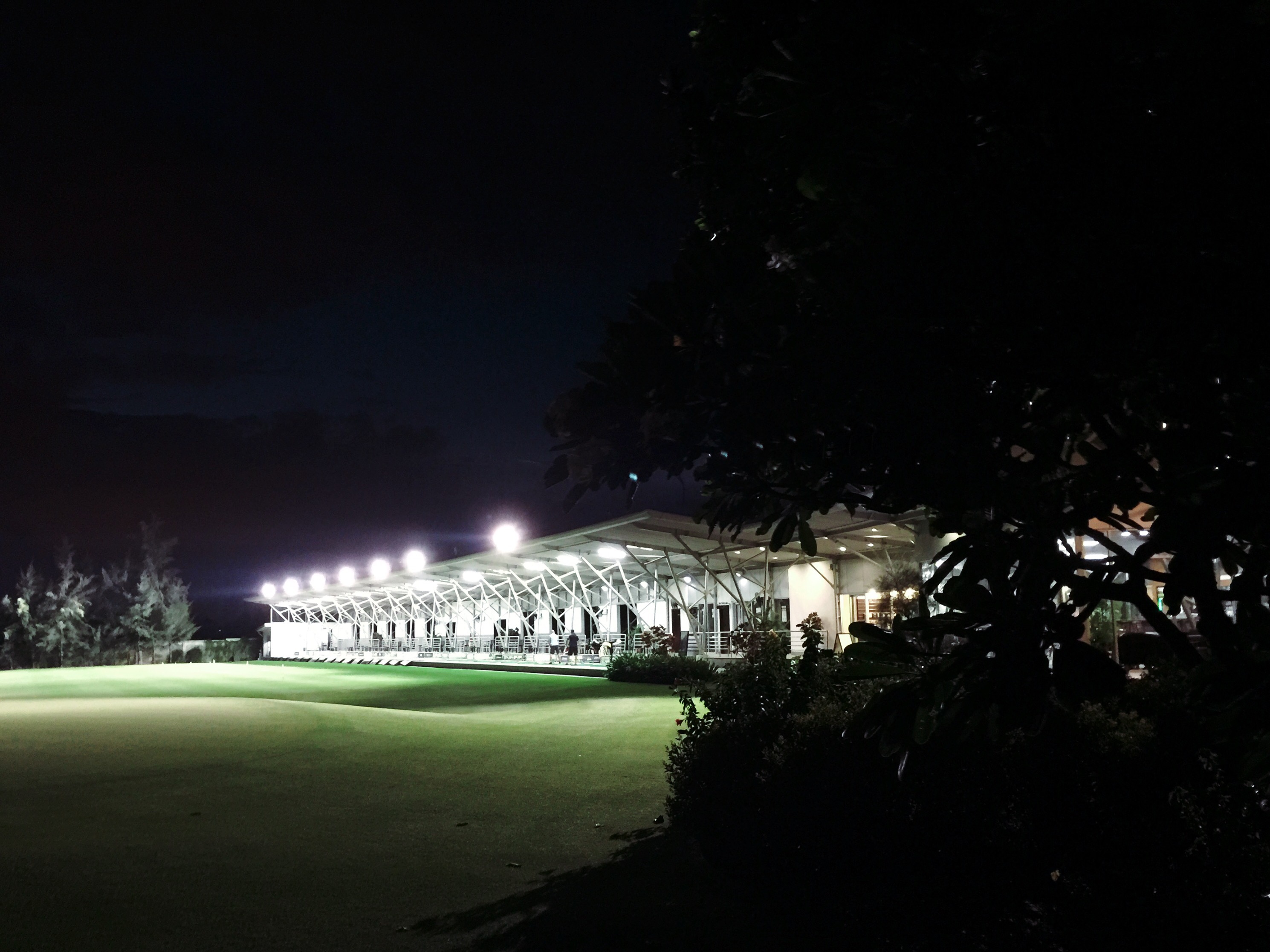
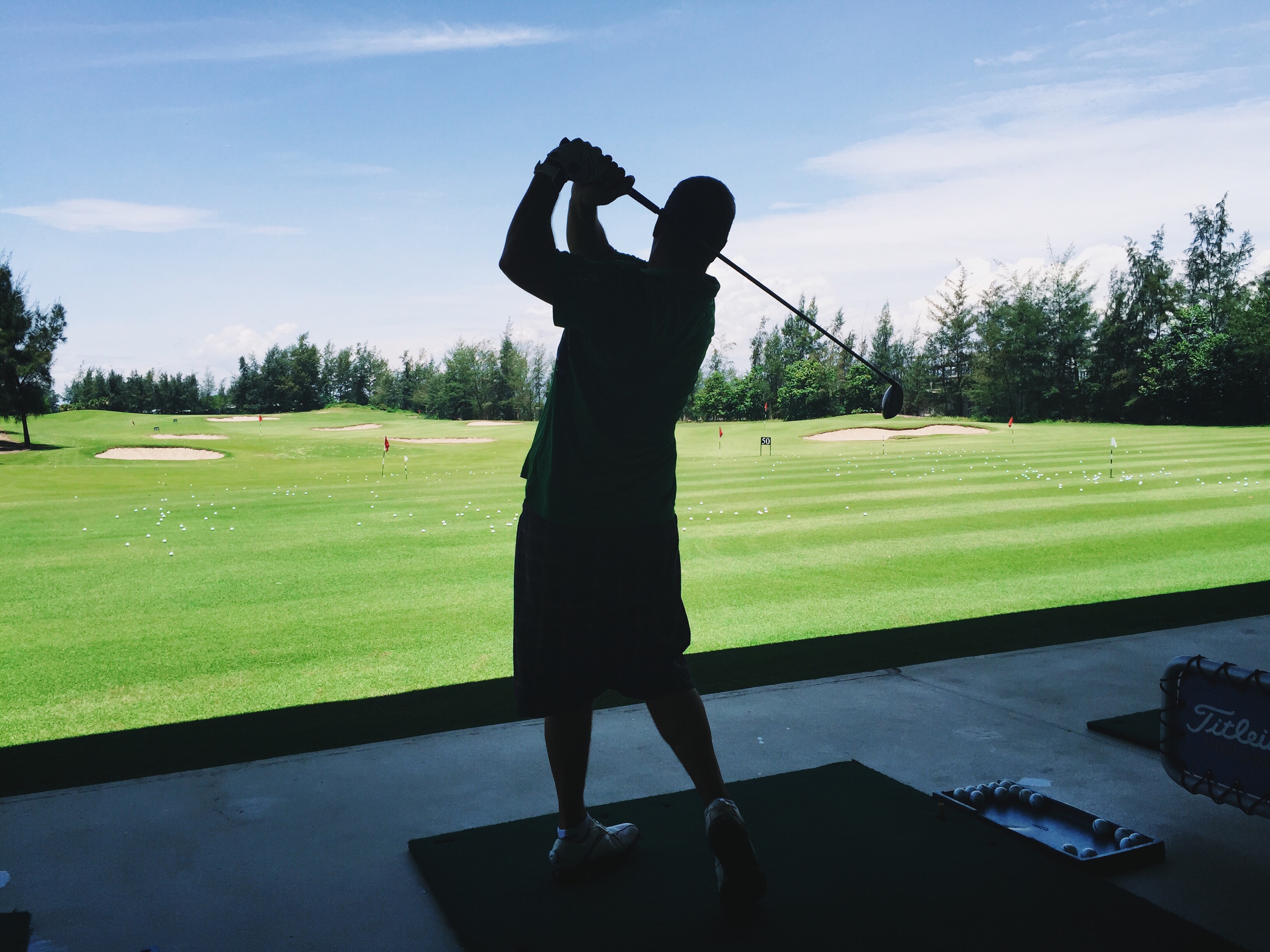
They have a great practice facility including a 30 bay covered driving range, chipping and bunker practice area as well as a putting green.  We have made good use of the facilities : )  We have been playing Monday, Wednesday and Friday and practising on the other days.  I am also pleased to report that the golf has improved – one would hope so with all that play and practice!

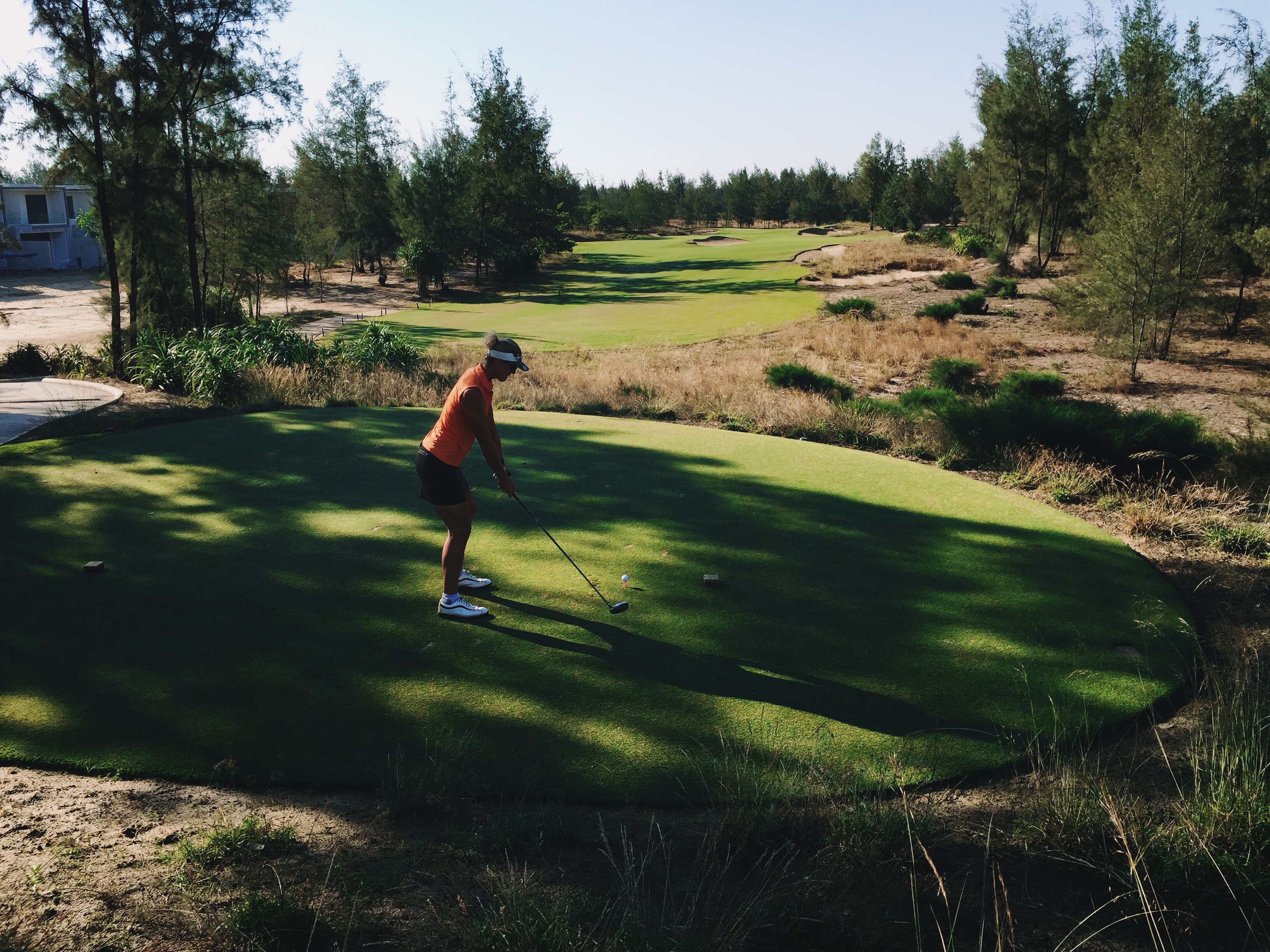
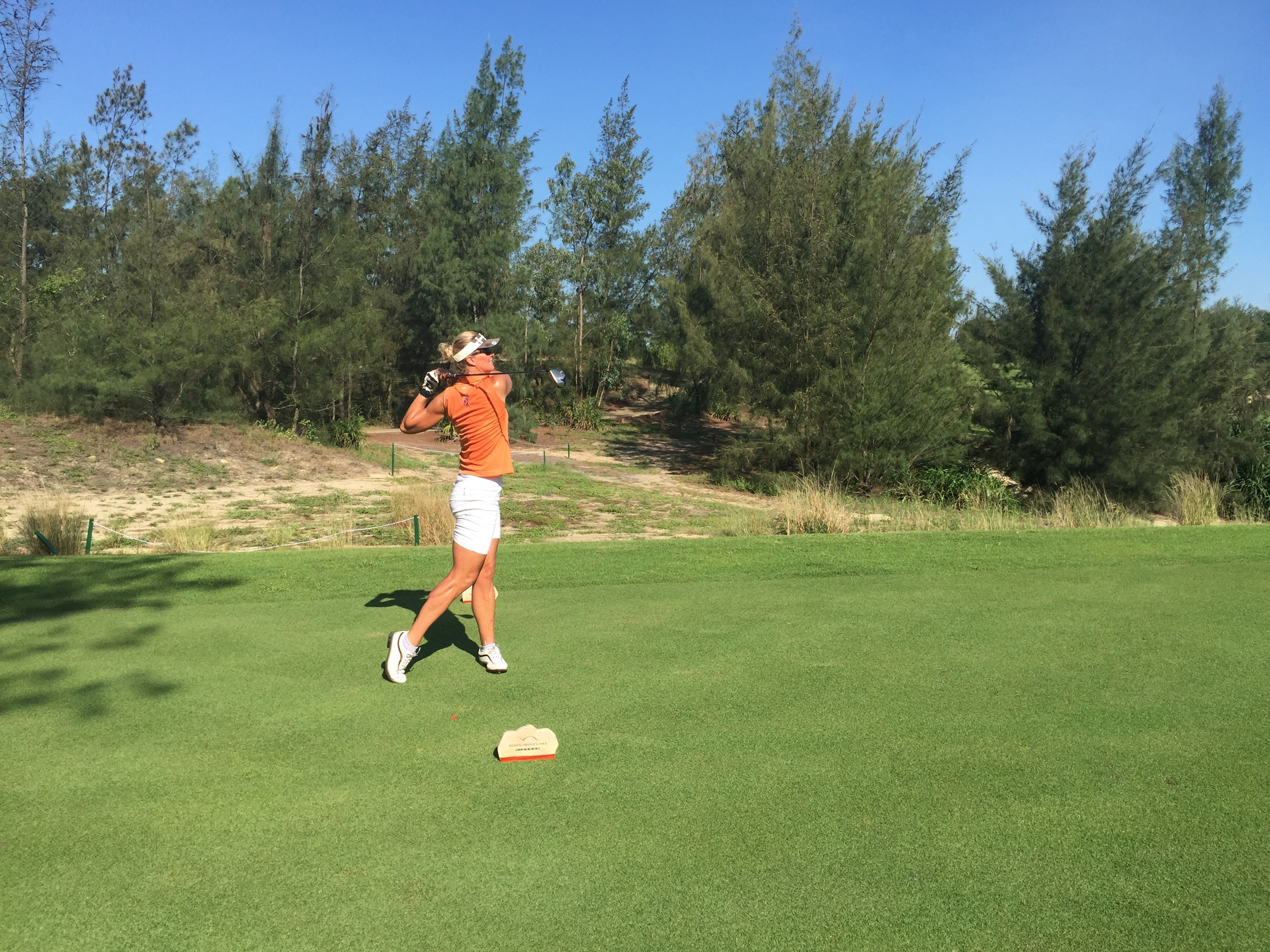
Due to the heat we normally tee off before breakfast at about 6.20am.  It can still be 27 degrees at this hour of the day but fortunately there is always a sea breeze offering some repreive.  You have to have a Caddy so there is no pushing your trundler involved or raking of bunkers – it’s a tough life I know!  The Caddy’s are very well trained and give good advice on yardage and are very good at reading your putts.  They are very sweet and like to converse in English with us in order to improve their own English.  We are also learning some Vietnamese words which always give them a giggle.    


 The Driving Range

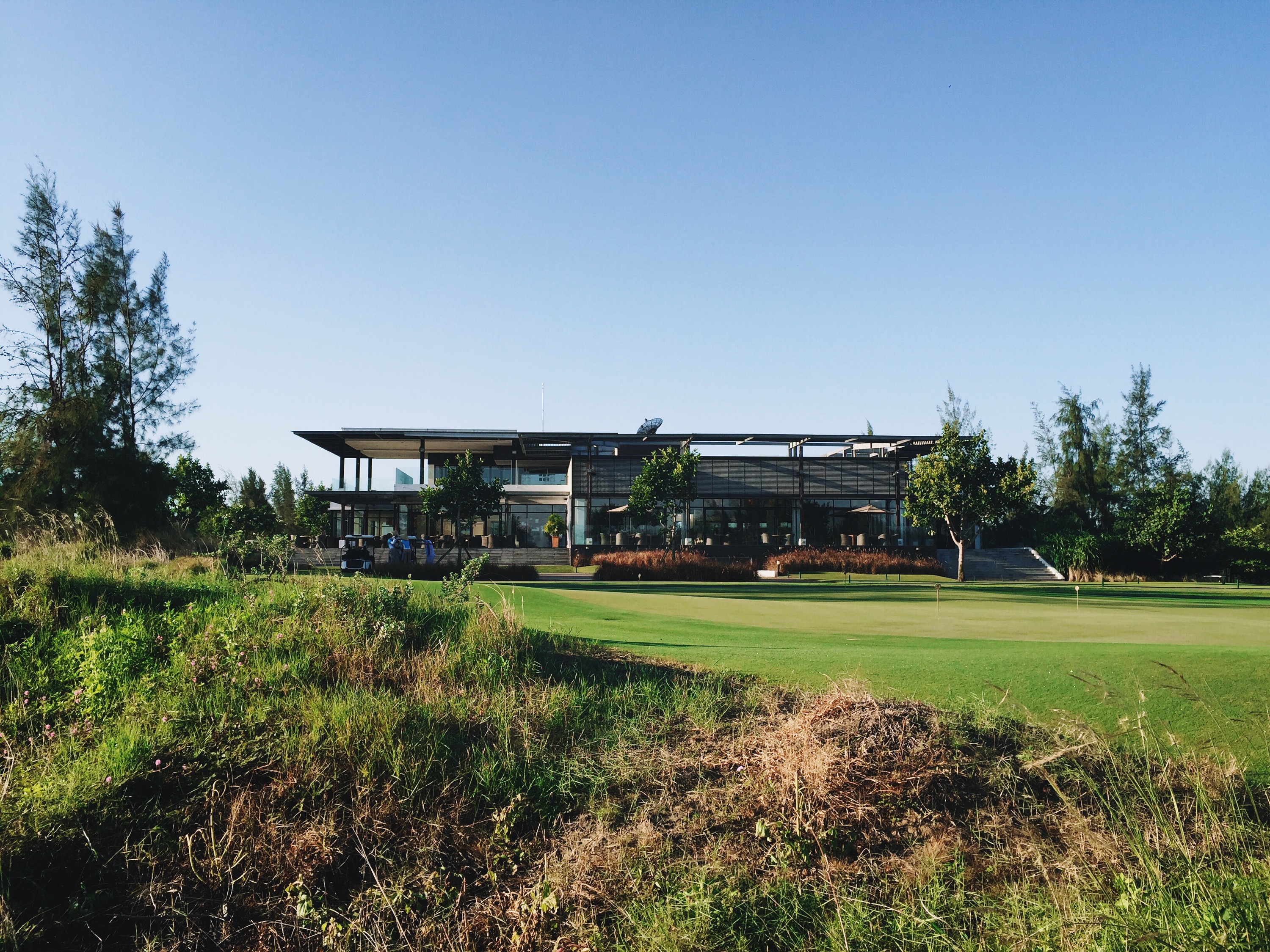
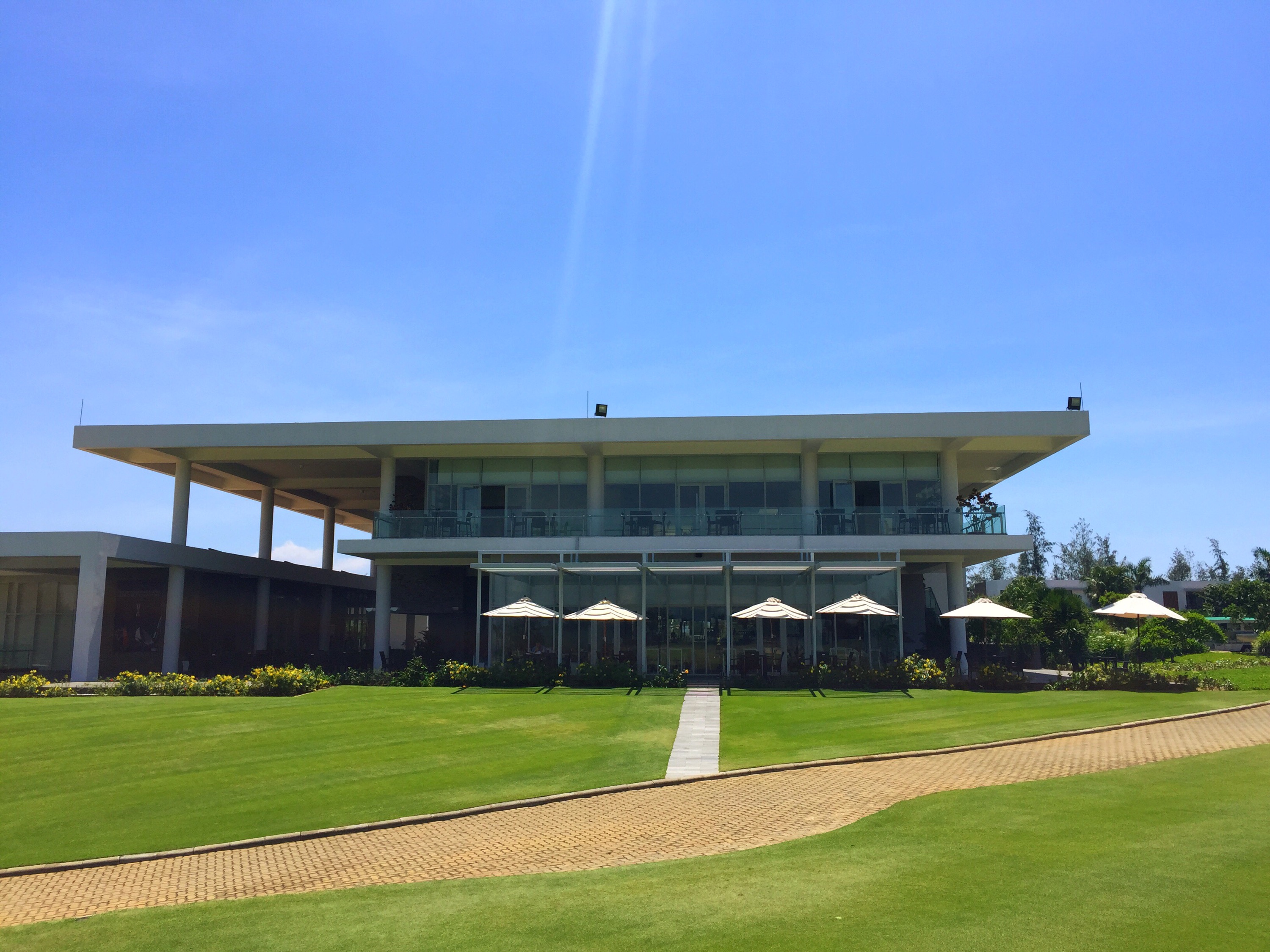
 The Clubhouse


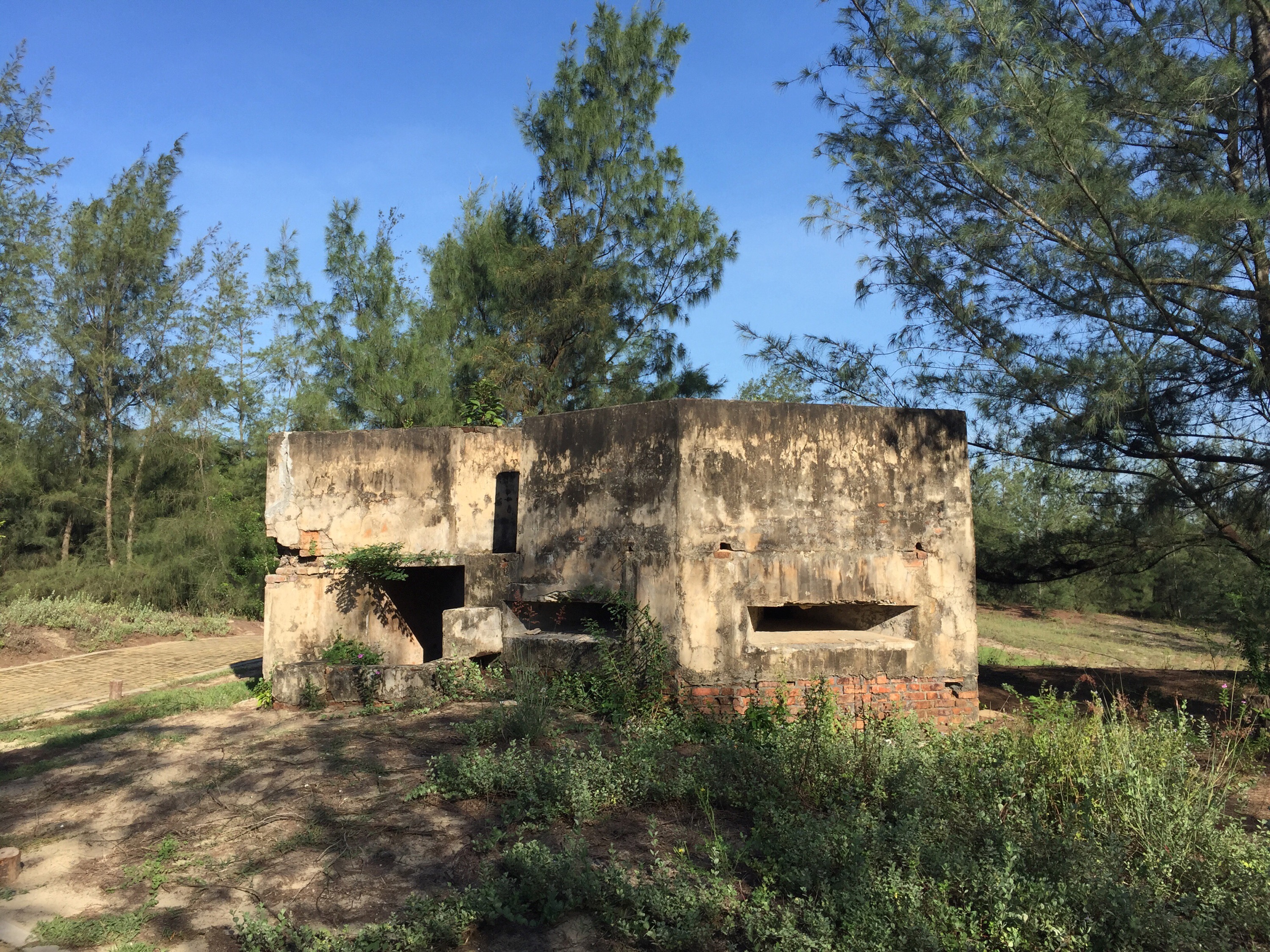
 The Gun Bunker next to the 7th tee block – a remnant of the Vietnam War
  

Posted in HoiAn, Vietnam | Tagged , , | 1 Comment

The Wet Rice Farmer – HoiAn, Vietnam

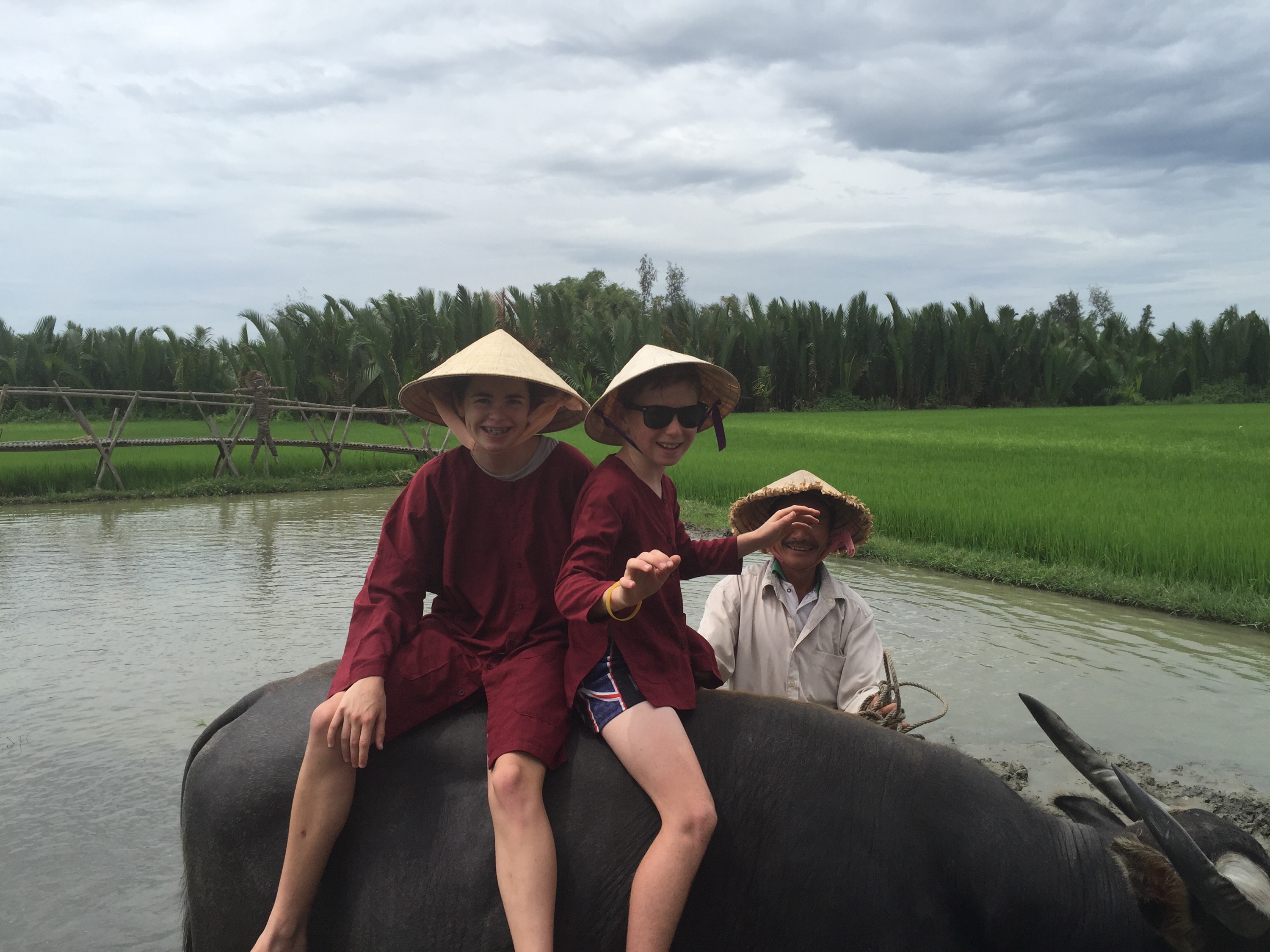
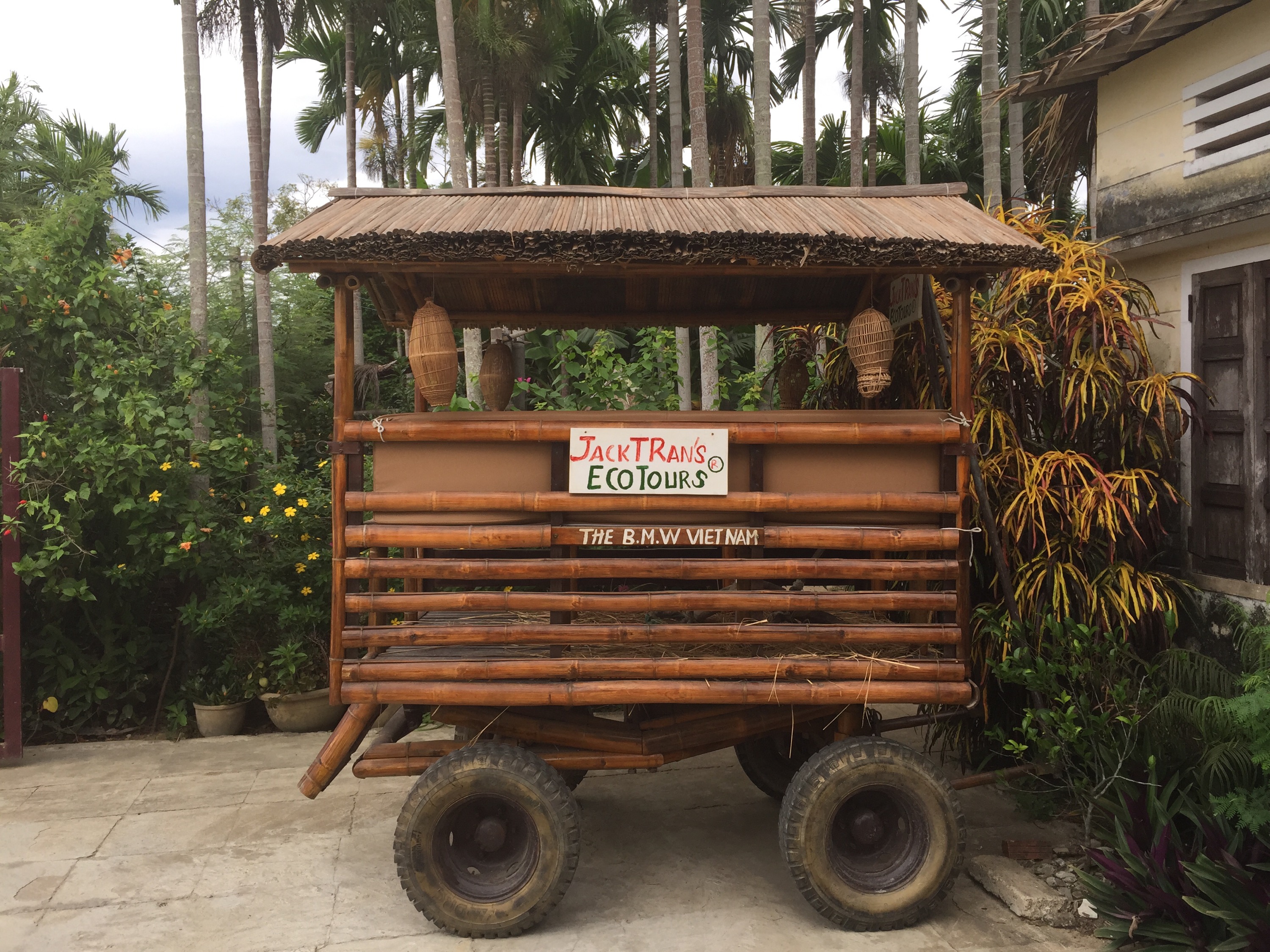
It’s my birthday and I’ll ride if I want to, I’ll ride if I want to!  A water buffalo that is : )  The water buffalo is referred to as the BMW of Vietnam so it was only fitting really.

We had looked at a few tours and settled on Jack Tran’s Wet Rice Farmer Tour – Janine, Rod, Zoe and Hunter treated me for my birthday.  Last year swimming in Lake Lucerne and enjoying fantastic Swiss hospitality, this year learning about rice and riding a water buffalo with more good friends – how lucky am I!

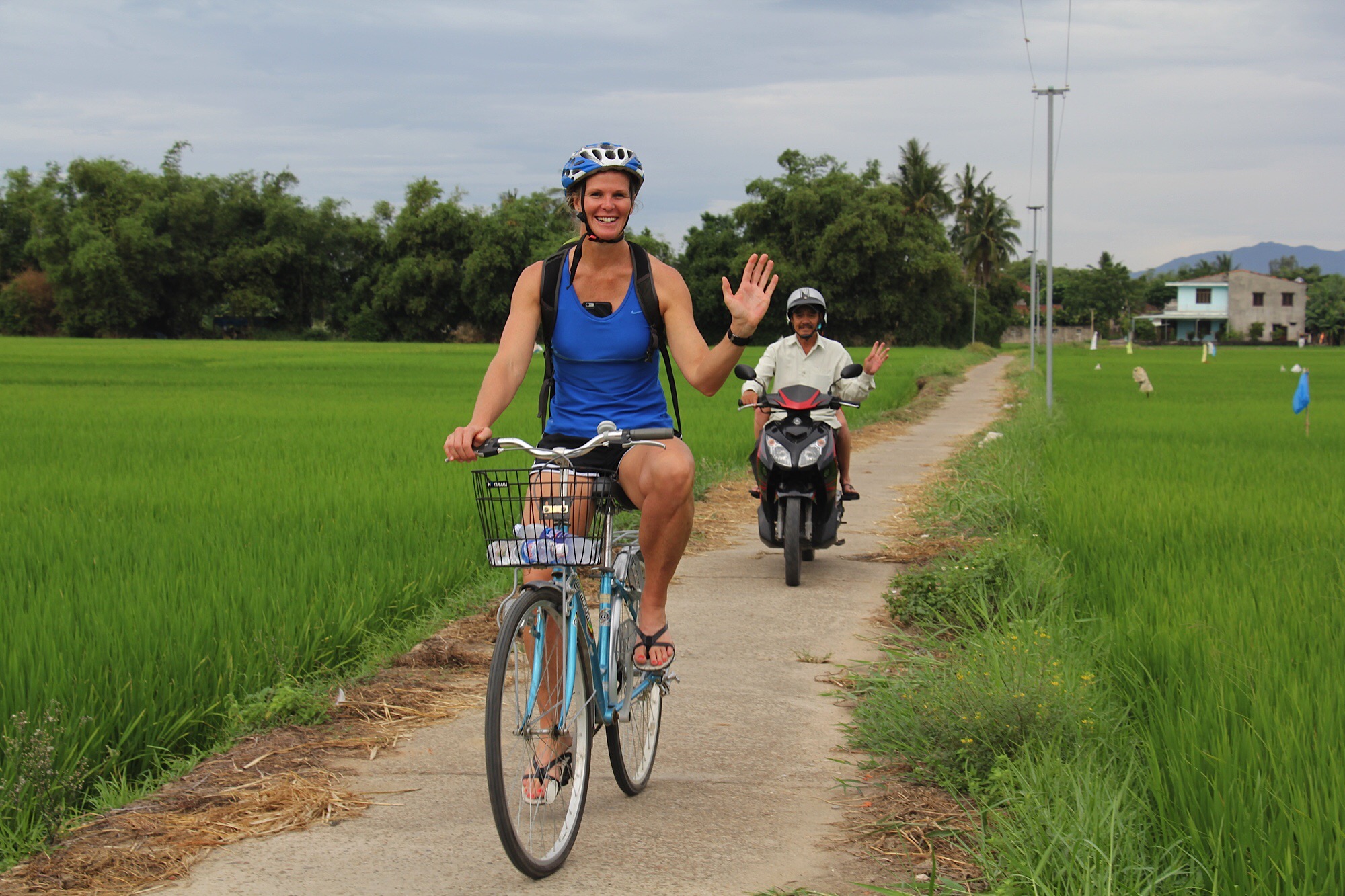
The tour started in Hoi An where we were fitted to our bicycles.  We were soon on the little lanes behind the town and into the rice paddy fields.  It is very picturesque and it was good to be riding a bike again.  The weather was perfect – about 29 degrees with cloud cover and a gentle breeze.  Our guide Lilli was great fun – she was defying all the odds in Vietnam – she was 24 and still single.  Her mother had taken her to see the Witch the day before to see why she wasn’t married and pregnant!  24 appears to be the cut off – if you’re not married and pregnant by this stage in your life you are bringing shame on your family.  Lilli said she loves her job, enjoys improving her English by conversing with the tourists and is learning there is a whole wide world out there that one day she hopes to see.  We were of course encouraging her : )  


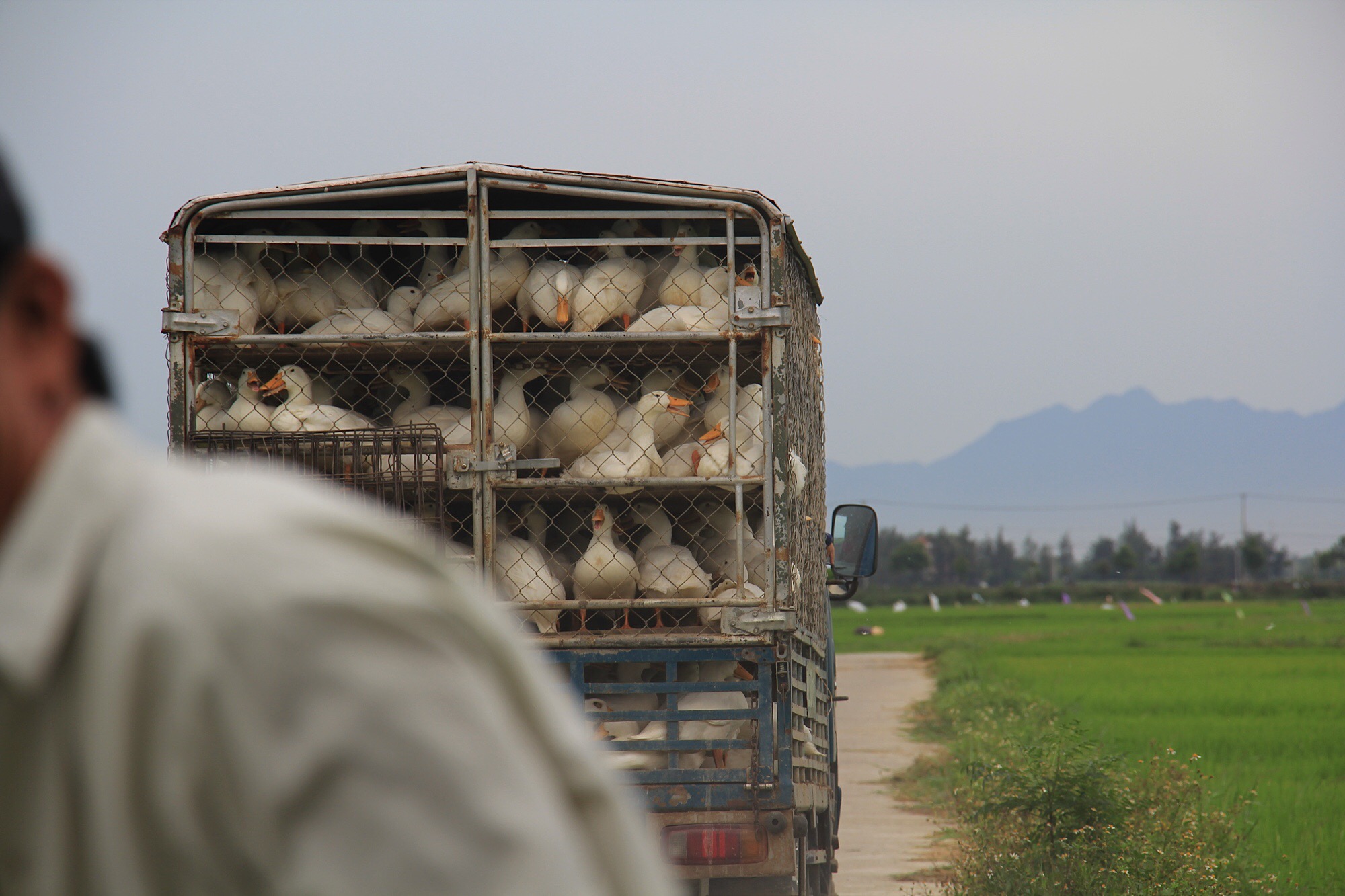
 The first stop on our leisurely cycle was a duck farm. Eight million households (about 36% of all households) in Vietnam keep poultry – 65% of households keep chicken in small numbers (less than 200 heads per year), 25% of households keep ducks in small numbers (less than 200 heads per year) and 10 to 15% of chicken comes from commercial operations with a herd size of 200 to 500.  0.1% are integrated industrial farms with herd sizes of bewteen 2,000 and 30,000 chicken heads – these operations are normally integrated with foreign feed companies.  Ducks are much cheaper to buy than chickens.  A chicken in Vietnam is a high-value asset. Keep it laying eggs for you as long as possible. When guests come over or when you want a special meal, serve a whole chicken.     Lilli explained that most of the rice paddy fields in Hoi An are family plots where the rice is grown purely for the family’s consumption.  Each family has a plot of about 500 square metres – you can see the divisions between plots where there is no rice growing.  There are two harvests per annum – January to April and then May to September.  October to December is the wet season so no rice is grown then.  If the families sold the rice they would get about USD143 (NZD217) per harvest – USD286 (NZD434) per annum.  Not a great deal of money for eight months work, hence why it is mainly used to feed the family.  The tourism industry in Vietnam has now allowed work outside the home so this money is used to pay for other necessities as well as education for the children beyond primary school.

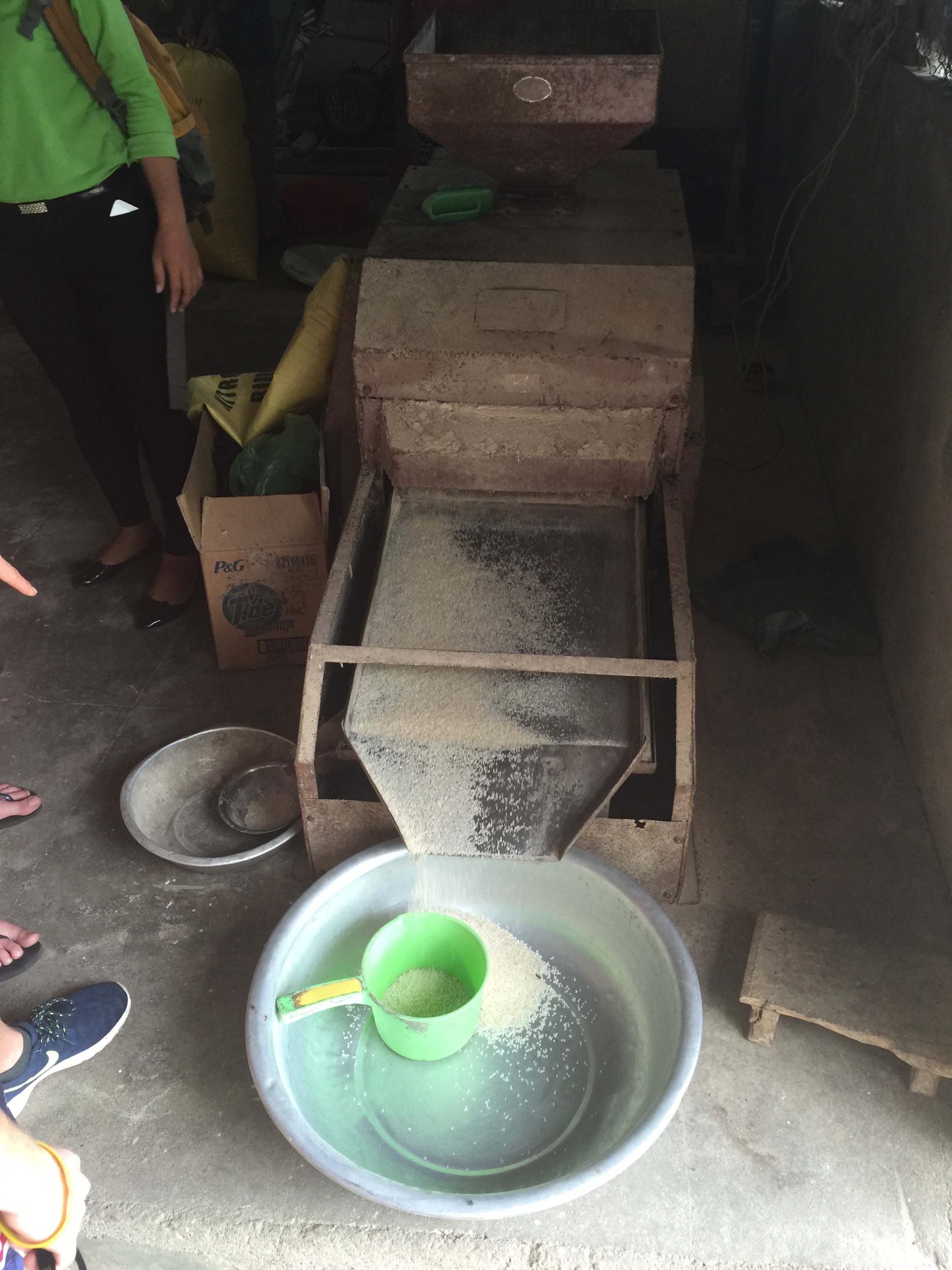
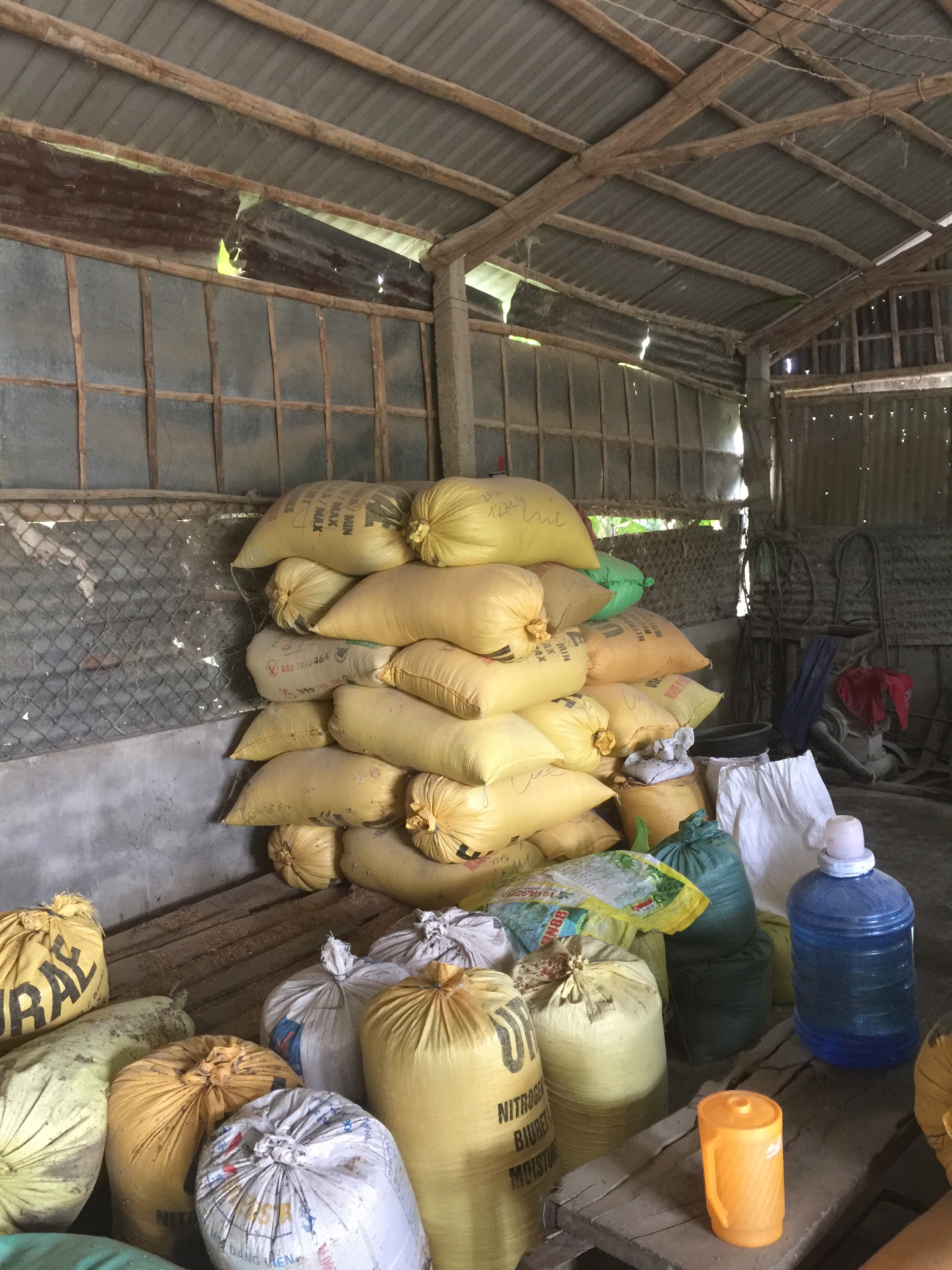
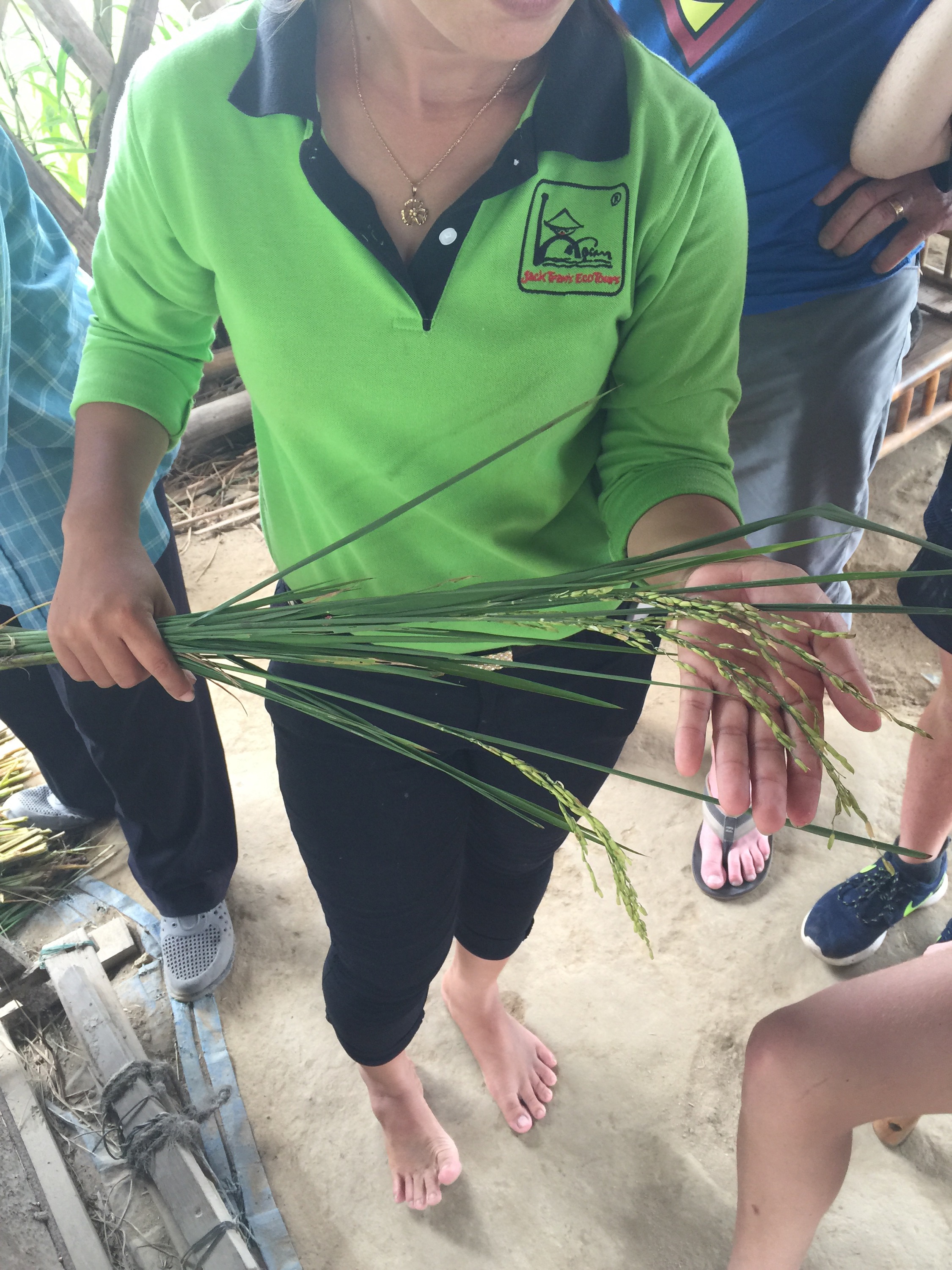
We were going to visit a wet rice farmer who was going to show us the traditional methods of wet rice farming from preparing the field to sowing the seed and then harvesting the rice.  The traditional harvesting methods are not widely used anymore so we stopped off at a rice factory to see how machinery is now used.  They had three machines – the first one separated the rice grain from the husk – this husk is then used for cooking fires.  The next machine removed the finer husk remnants which are used in chicken food while the final machine cleaned the rice.  The finished rice was then put into sacks and marked with the families name.  The families pay the factory to carry out this process.     


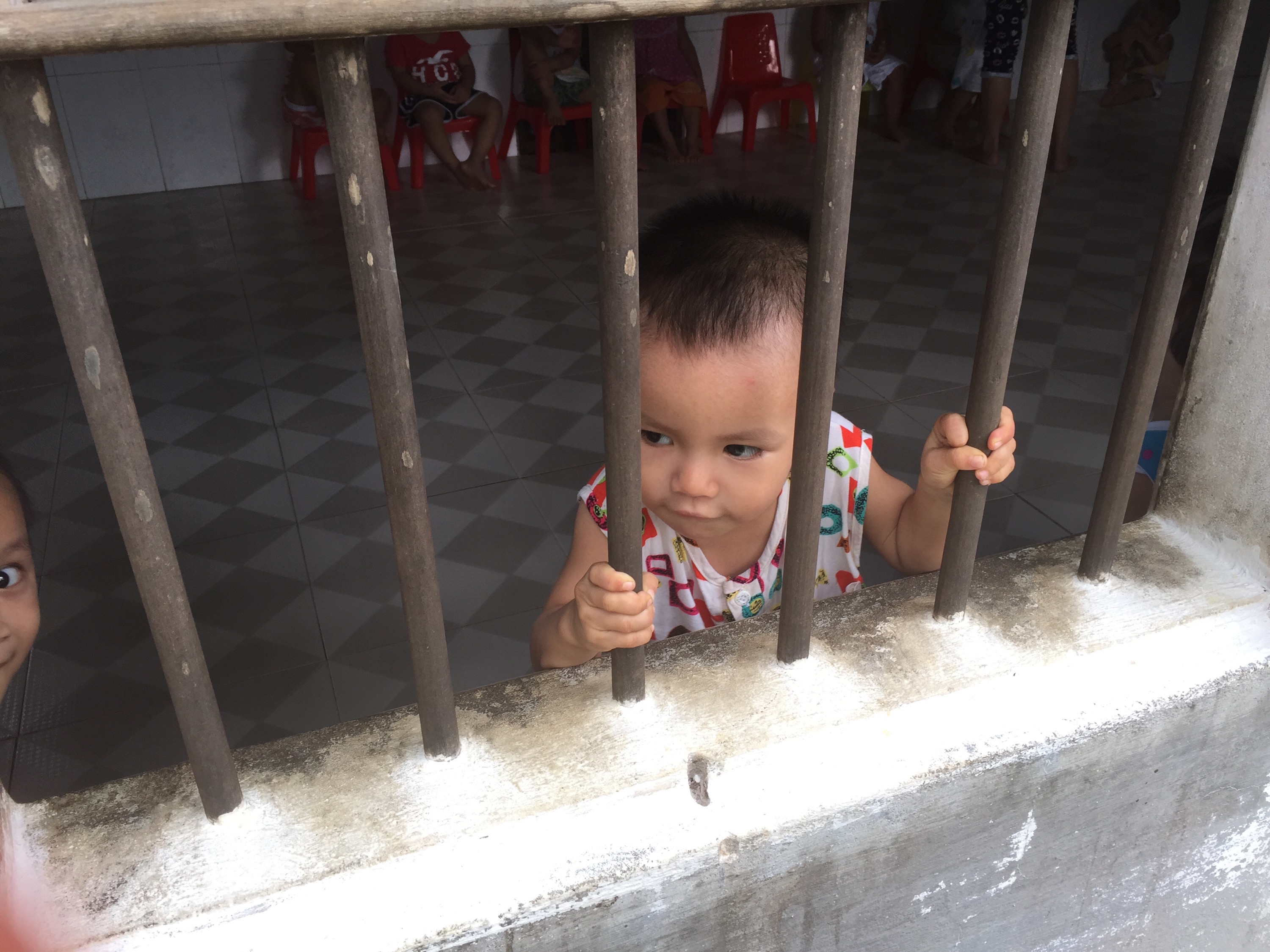
 We arrived at the farmers home and parked our bikes.  There was a kindergarten or daycare on the premises too with all these little tots inside singing and playing.  They were quite fascinated by us and some came to the windows to look and converse.  They were so cute – a lot of them stayed on their little chairs chatting and smiling away – they seemed remarkably well behaved!  Apparently most of them are dropped off about 7.30am and picked up at 5pm six or seven days a week.  They are given two meals a day and they have an afternoon sleep.  This service costs the parents USD25 (NZD38) per month but given the average wage is USD150 (NZD228) per month this still represents a large percentage of their wages – 17%. 


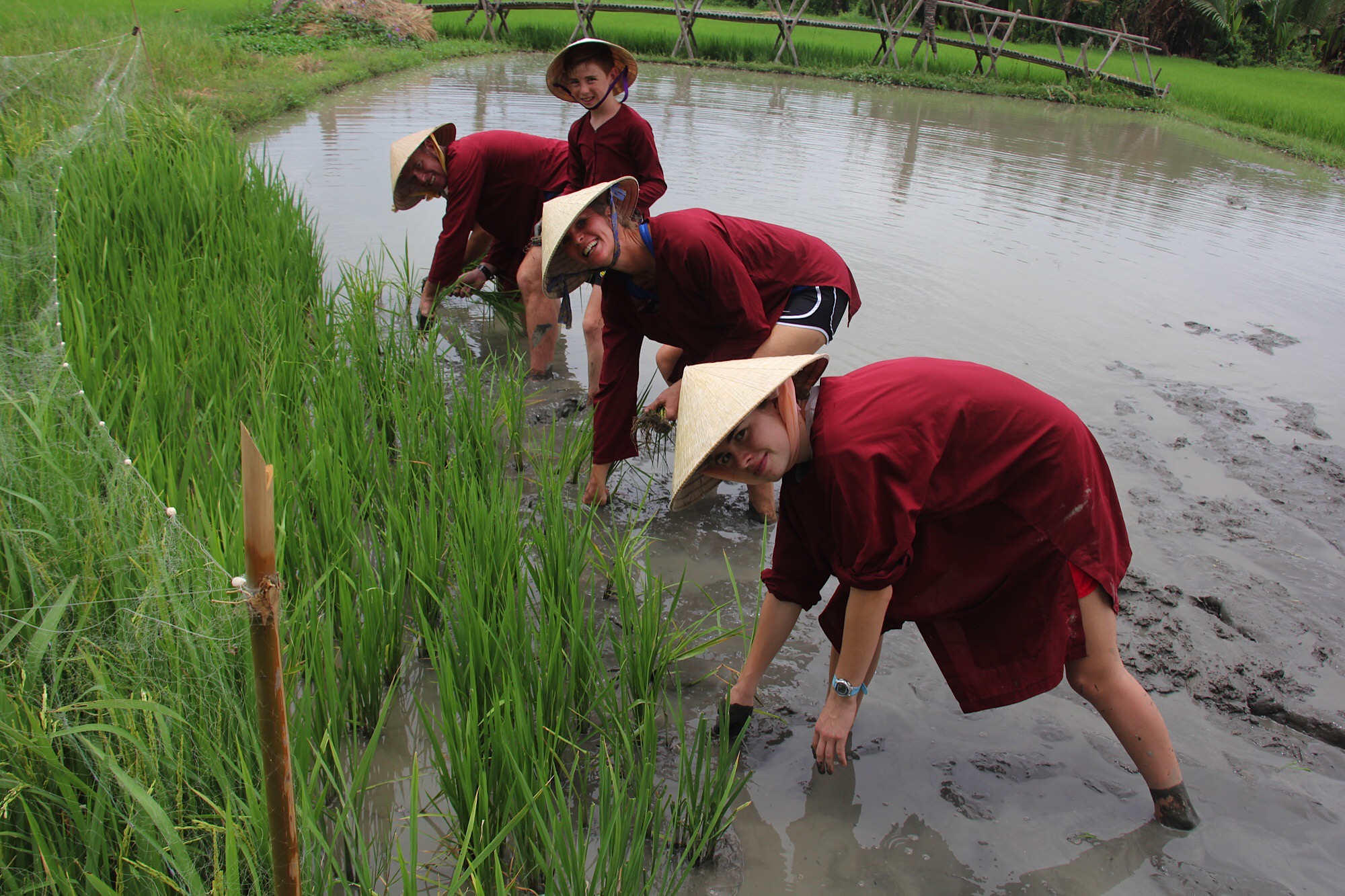
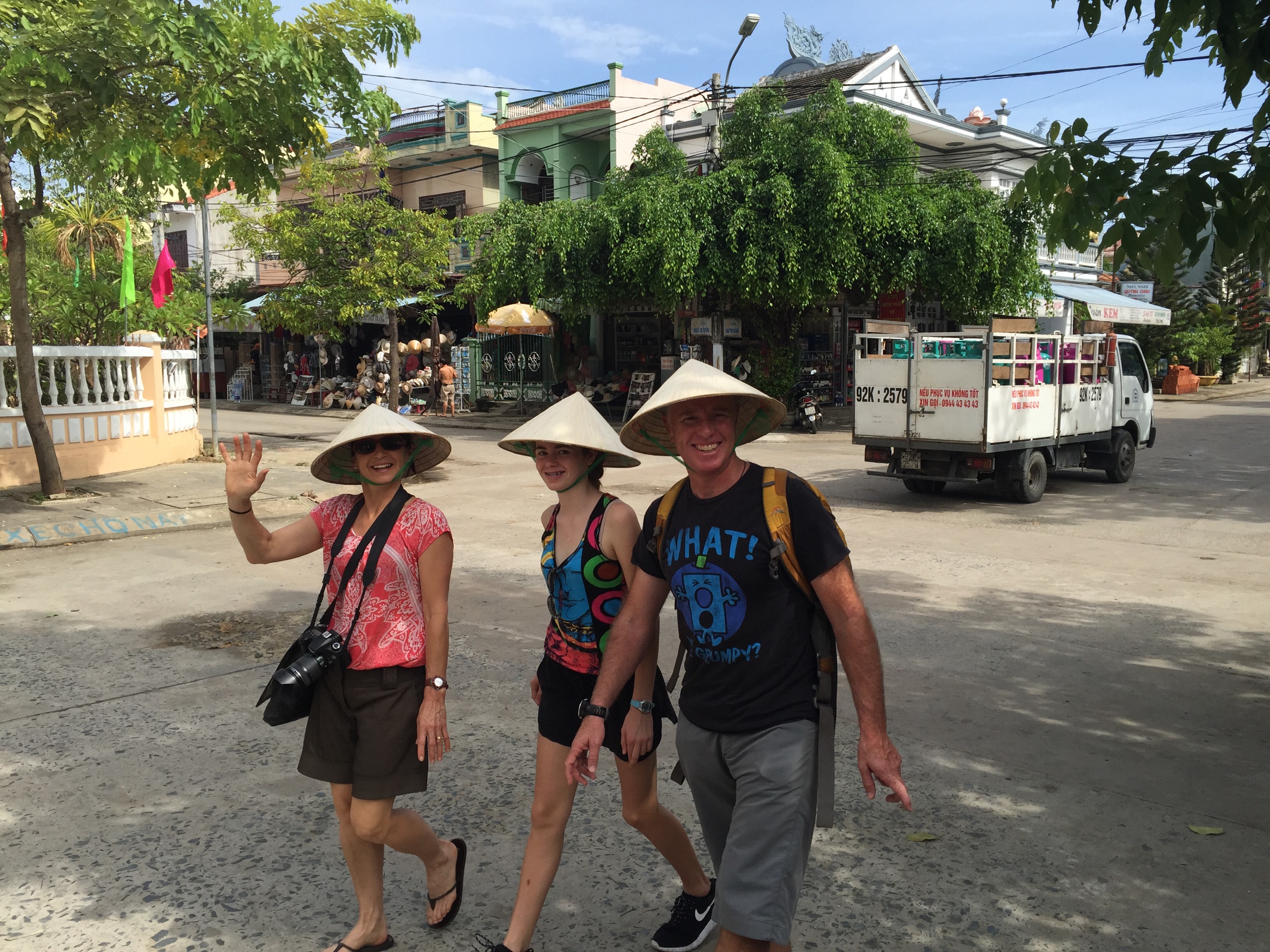
 After much gooing and gaaing it was time to get to work.  We donned our farmer clothes and traditional hats took some photos and choose who was going to ride Se (pronounced Say) the water buffalo first.  Janine was first up followed by Zoe and Hunter in unison – they were figuring there was safety in numbers.  Then it was my turn – it was a strange sensation and I was concerned that I would end up in the brown stuff!  Rod took to riding the buffalo like a duck to water – he looked like he was going rodeo riding. 


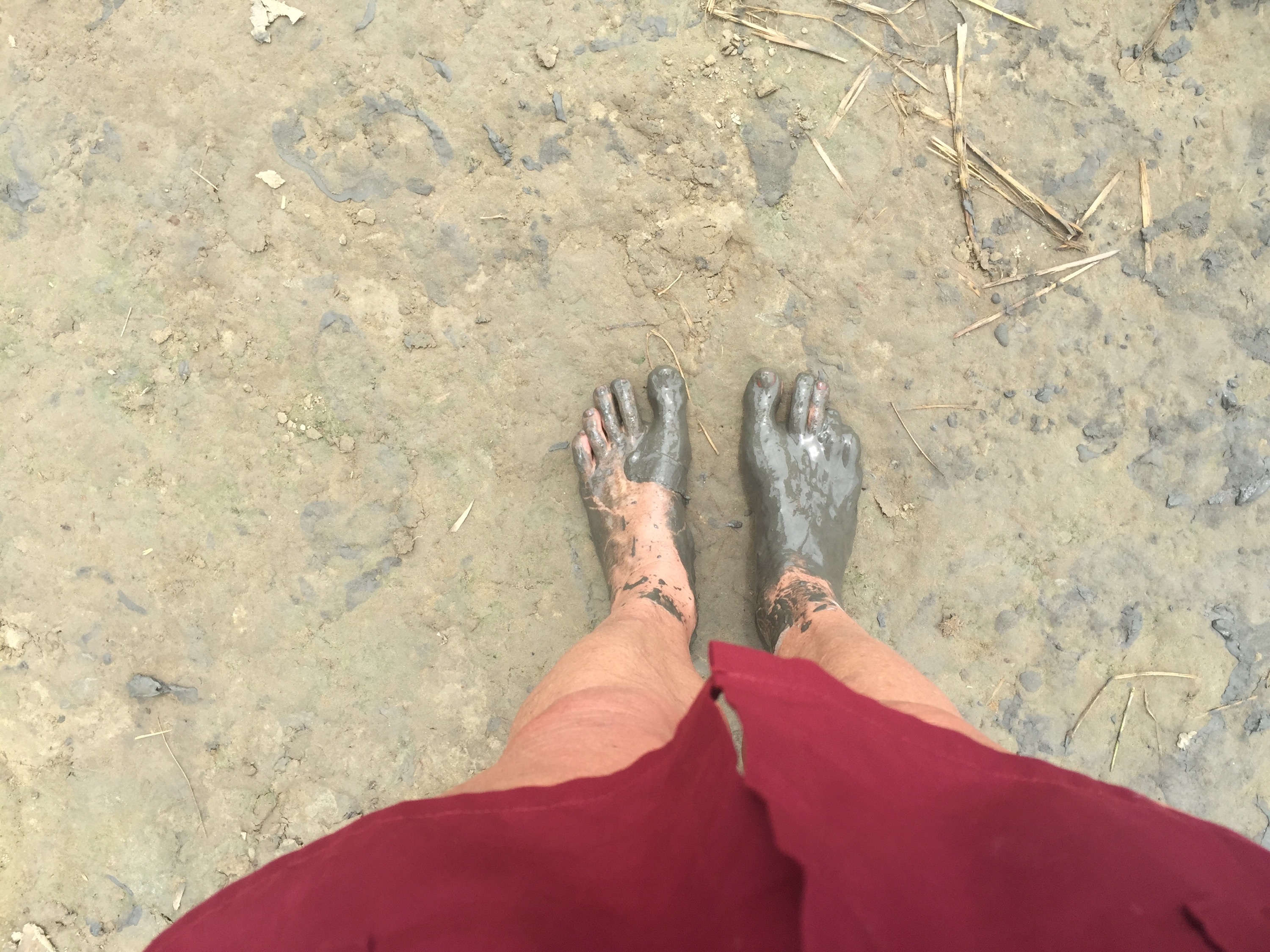
 The rotary hoe was then hooked up and we had turns leading Se and guiding the hoe from behind.  We all braved squishing and squelching through the mud.  After a rice harvest the soil is very acidic so turning it over allows all the good stuff to come to the top.  Ploughing a plot of 500 square metres would normally take two to three days.  The field is then raked – we stood on top of the rake and held onto Se’s tail as he pulled us around – water skiing buffalo style.  Standing on the rake provides weight and allows it to get traction.  The next step is to  remove the water from the field – there was a little plot set aside where we could practice the traditional method which consisted of two people on either side of a bamboo bucket with ropes attached.  You use the top and bottom ropes to maneuverer the bucket.  No need for the gym here – this is a good workout in itself. 


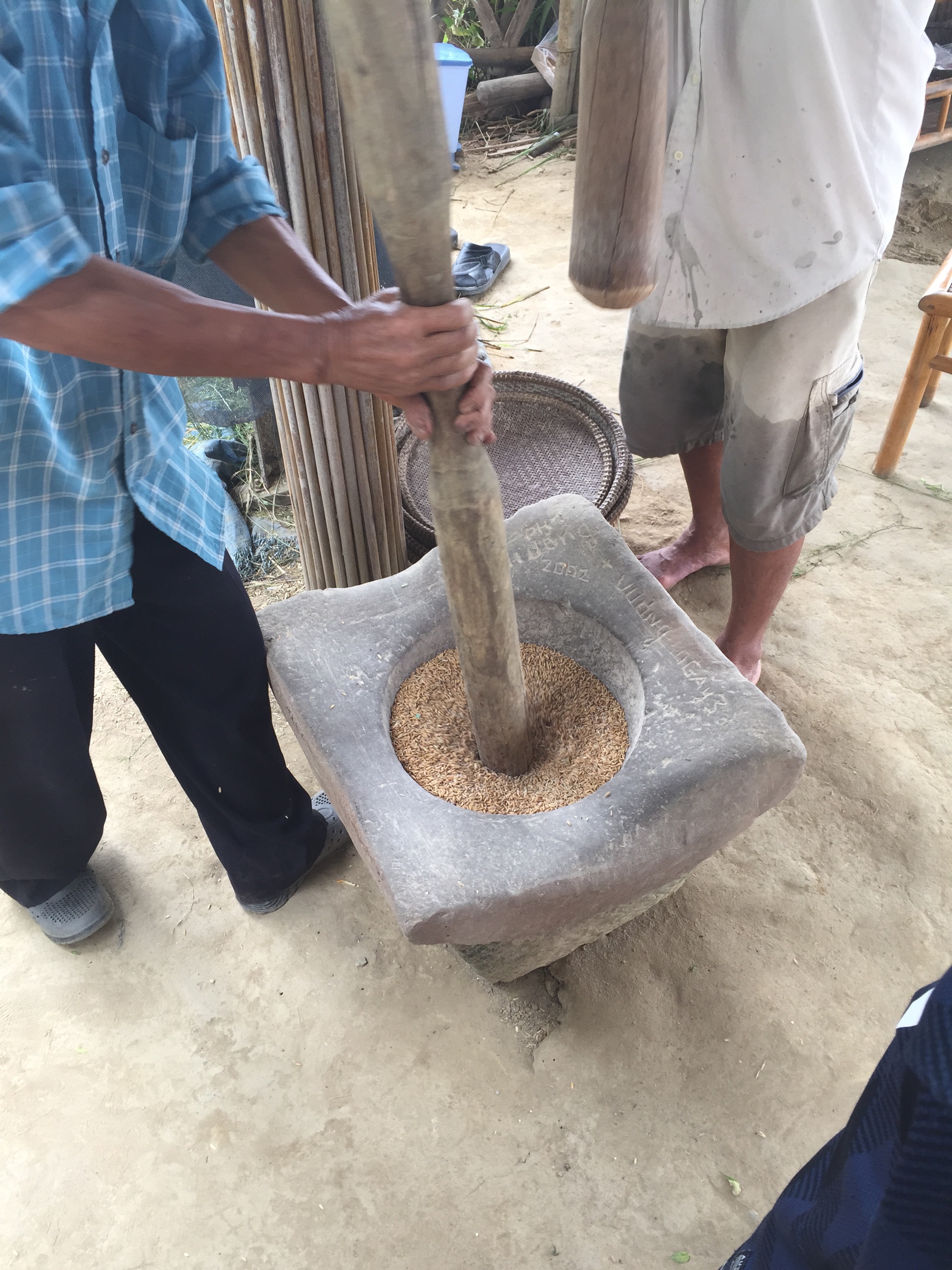
 Once the water is removed you scatter the rice seeds evenly over the plot.  Once the seeds start growing water is added to the field, hence the name wet rice farming.  To get maximum yields the rice is usually started in special seed beds and then transplanted by hand to the flooded fields when the seedlings are strong enough.  After about a month the plants are then thinned out with the plants removed being replanted in new rows.  After another couple of months the rice is ready for harvesting. The standing water in a rice paddy field prevents weed growth and the algae which grows on the water provides fertiliser in the form of nitrogen and oxygen.  This plus the addition of animal manure keeps the ground fertile year after year.  Rice paddy fields are a major source of methane.  After harvesting, the rice must be dried before being pounded to separate the rice grain from the husk, or the rice bran.  Traditionally rice was pounded by hand and retained more protein and fat which made it more nutritious.  Now rice is more often milled at a rice mill but is less nutritious. 

As mentioned above most of the rice grown in Hoi An is for consumption by the family.  Vietnam is one of world’s richest agricultural regions and is the second-largest (after Thailand) exporter worldwide and the world’s seventh-largest consumer of rice.  The Mekong Delta is the heart of the rice producing region of the country where water, boats, houses and markets coexist to produce a generous harvest of rice.  Vietnam’s land area of 33 million hectares has three ecosystems that dictate rice culture. These are the southern delta (with its Mekong Delta dominating rice coverage), the northern delta (the tropical monsoon area with cold winters) and the highlands of the north (with upland rice varieties).  The most prominent irrigated rice system is the Mekong Delta.   Rice is a staple of the national diet and is seen as a “gift from God”.

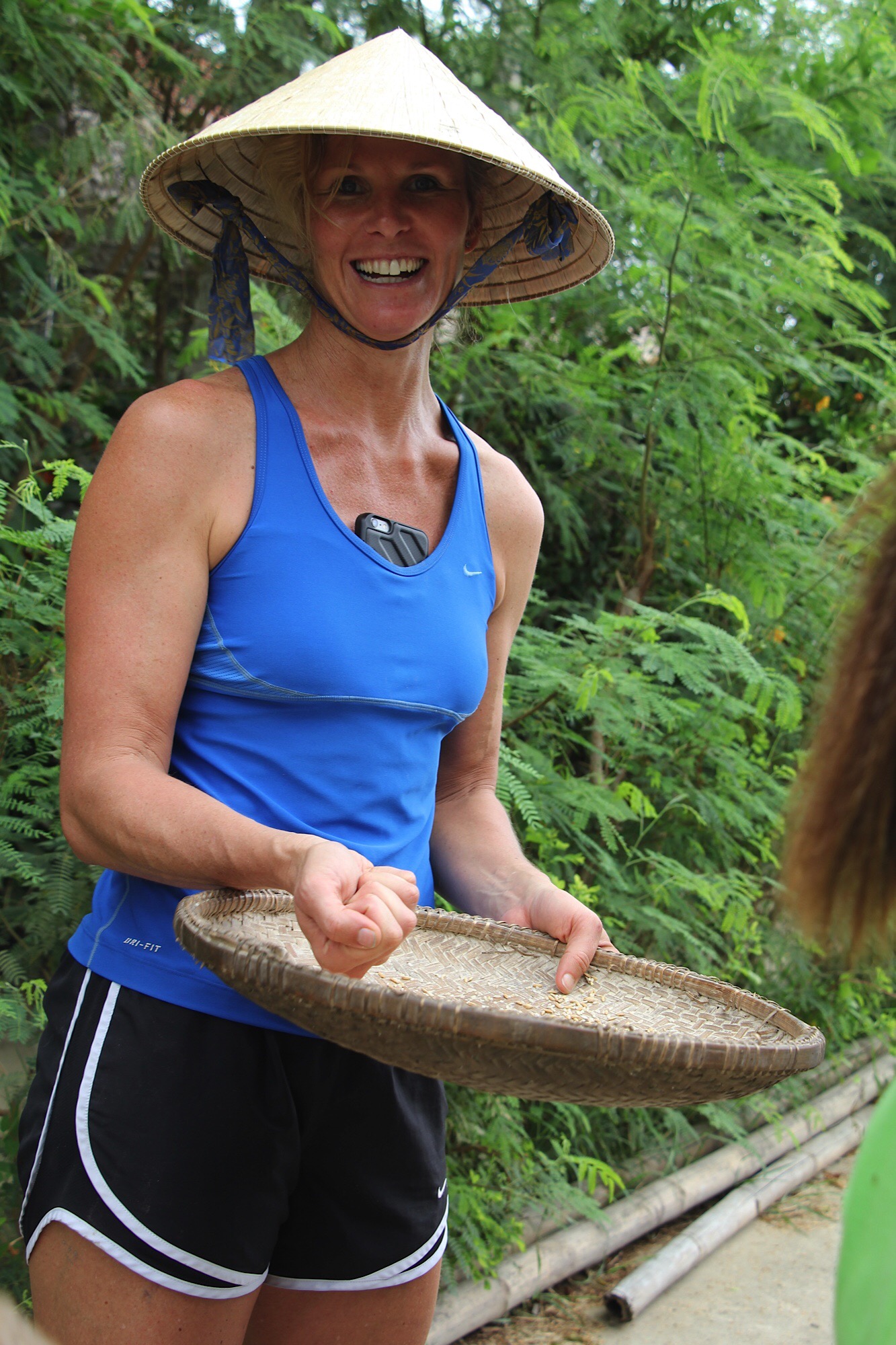
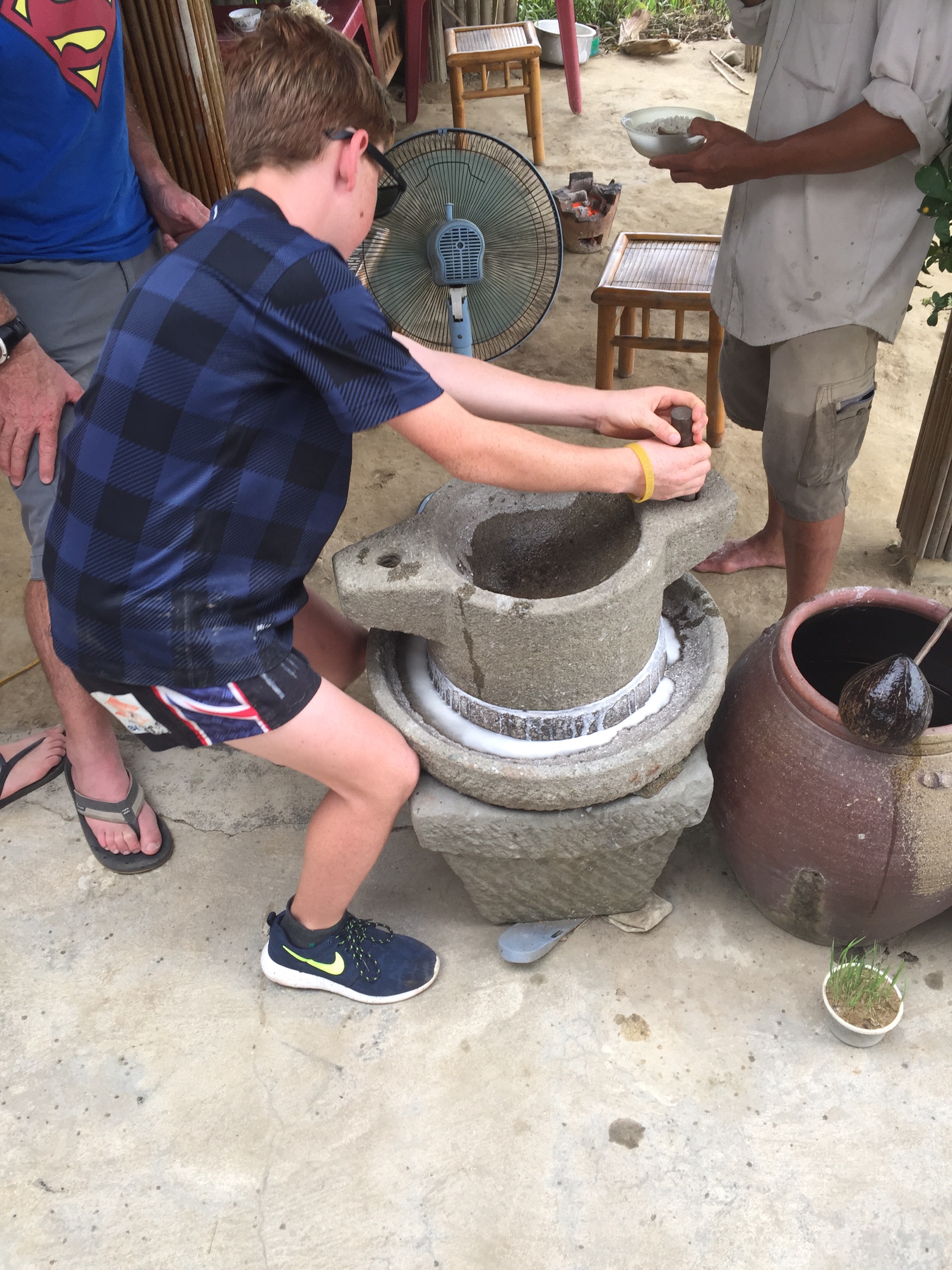
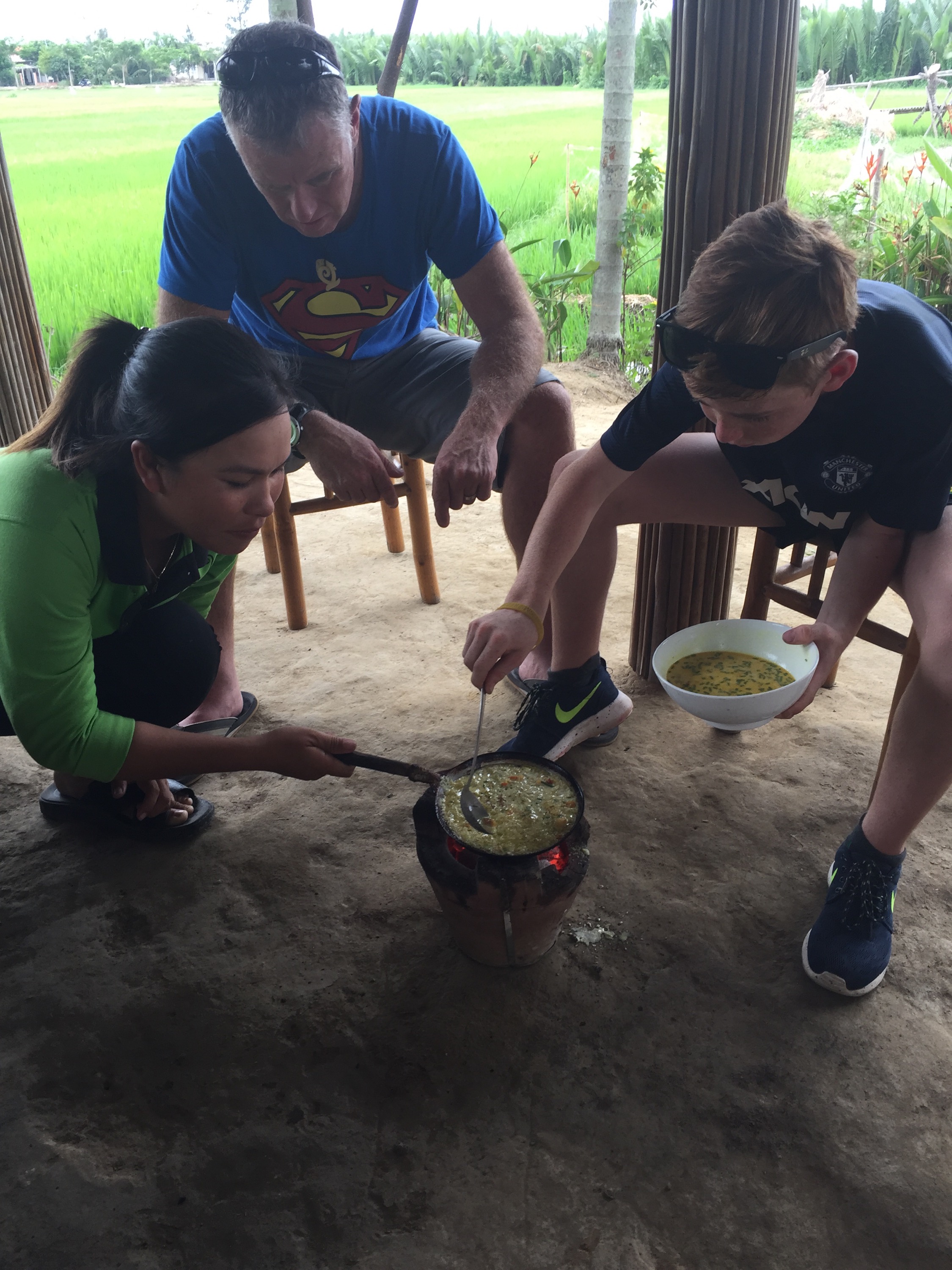
After all our farming activities we had a go at pounding the rice and then separating the rice grains from the husks – definitley not as easy as the farmer made it look!  We then ground some rice into rice milk using a traditional grinder.  We were all getting a bit peckish now so next up we made some traditional pancakes with rice milk.  It was then time for lunch – there was so much food that we couldn’t eat it all.  To top it off Lilli had secretly organised a birthday cake for me – it was quite a work of art.  Very spoilt indeed. 


 After thoroughly enjoying the hospitality afforded us by Lilli and the farmer and his family it was back to Hoi An.  It had been a great morning.

When we arrived back at our apartment the staff here had also organised some flowers and another birthday cake – Steve was of course trying to take credit for it but no one was beleiving him.  My birthday was topped off at a local restaurant called The Purple Lantern – friends had recommended it and after a little bit of wandering around near An Bang beach we eventually found it.  Another memorable birthday : ) 


Jack Tran’s Eco Tours

JackTran’s EcoTours (Hoi An Eco-tour) is a local Vietnamese fishing family-run business that shows travellers about the Vietnamese people – how they live, work and eat.  The owner and Managing Director is Mr. Tran Van Khoa, born in 1978, known as Jack Tran.

Jack Tran founded JackTran’s EcoTours (Hoi An Eco-tour) in 2005 with the vision of creating a sustainable business that would preserve and promote both our environment and our social and cultural values.  They specialize in organizing and hosting eco-tours in and around Hoi An.  They do this by engaging local Vietnamese people who: provide knowledgeable commentary; demonstrate traditional fishing and faming techniques; and then provide our guests with the opportunity for some hands-on experiences. 


Posted in HoiAn | Leave a comment

Vy’s Market Restaurant – a Vietnamese Cooking Experience – HoiAn, Vietnam

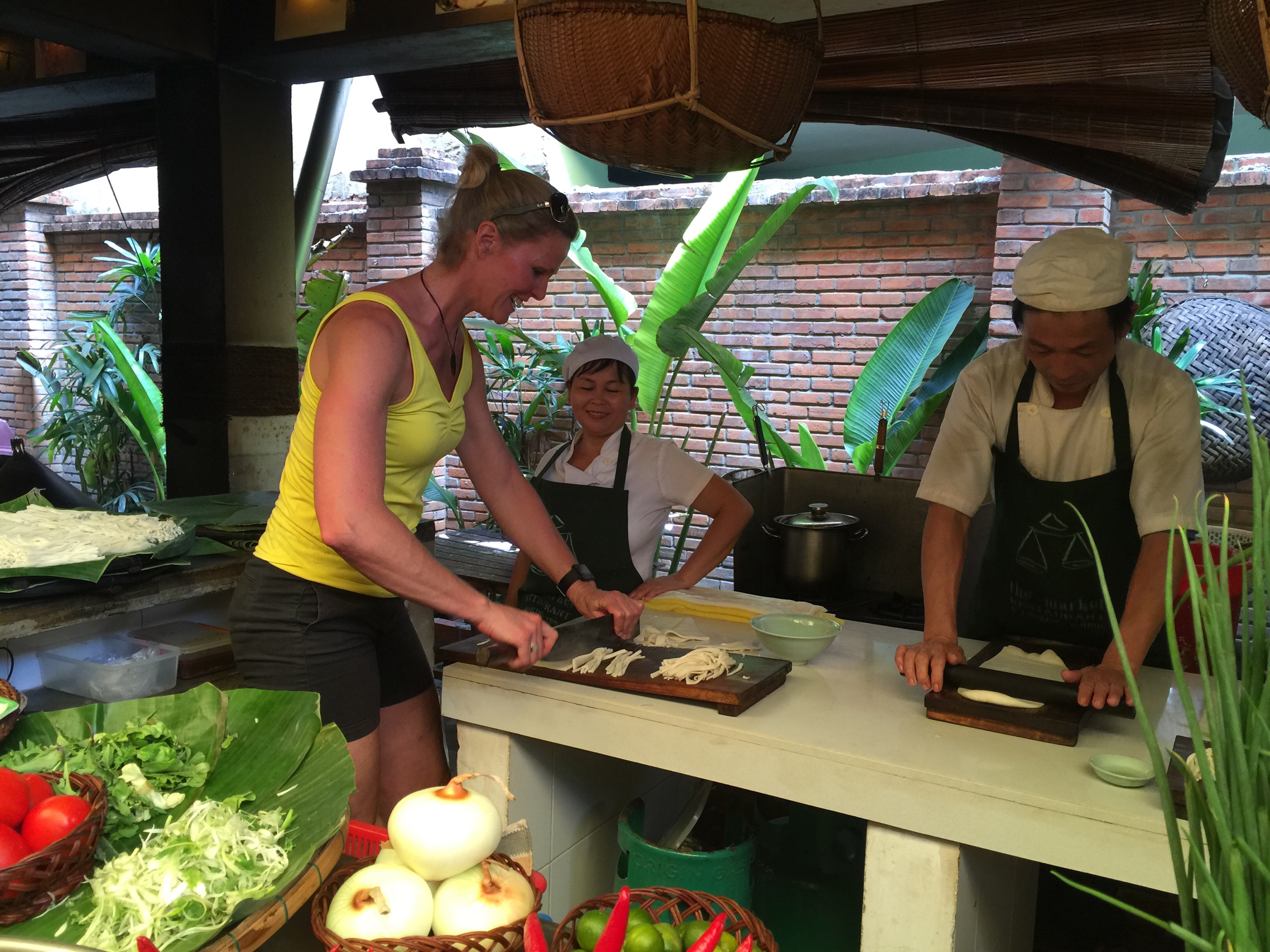
On Wednesday the 15th July Rod, Janine, Zoe and I did a Vietnamese cooking class.  I had done a similar one when we were last in Vietnam in 2011 so I knew we were in for a treat.  We had chosen to do Ms Vy’s Taste Vietnam Cooking Class which was the same organisation I used last time but it was then under the Morning Glory banner and held above the Morning Glory restaurant.  Ms Vy is famous in Hoi An as she opened the first restaurant here in 1992 called Mermaids which is still operating today.  She added Morning Glory and Cargo to her portfolio and now has Vy’s Market Restaurant which is a purpose built cooking school.  The bottom floor showcases lots of street food and specialities with the cooking school occupying the next two floors.

As with all of Ms Vy’s culinary ventures the key purpose of Vy’s Market Restaurant is to give customers a sensory food experience unlike any other. In Vietnam, a town’s market represents not just a place of commerce, but a meeting point for catching up, gossiping and, of course, eating – it is at the pulse of all community activity.

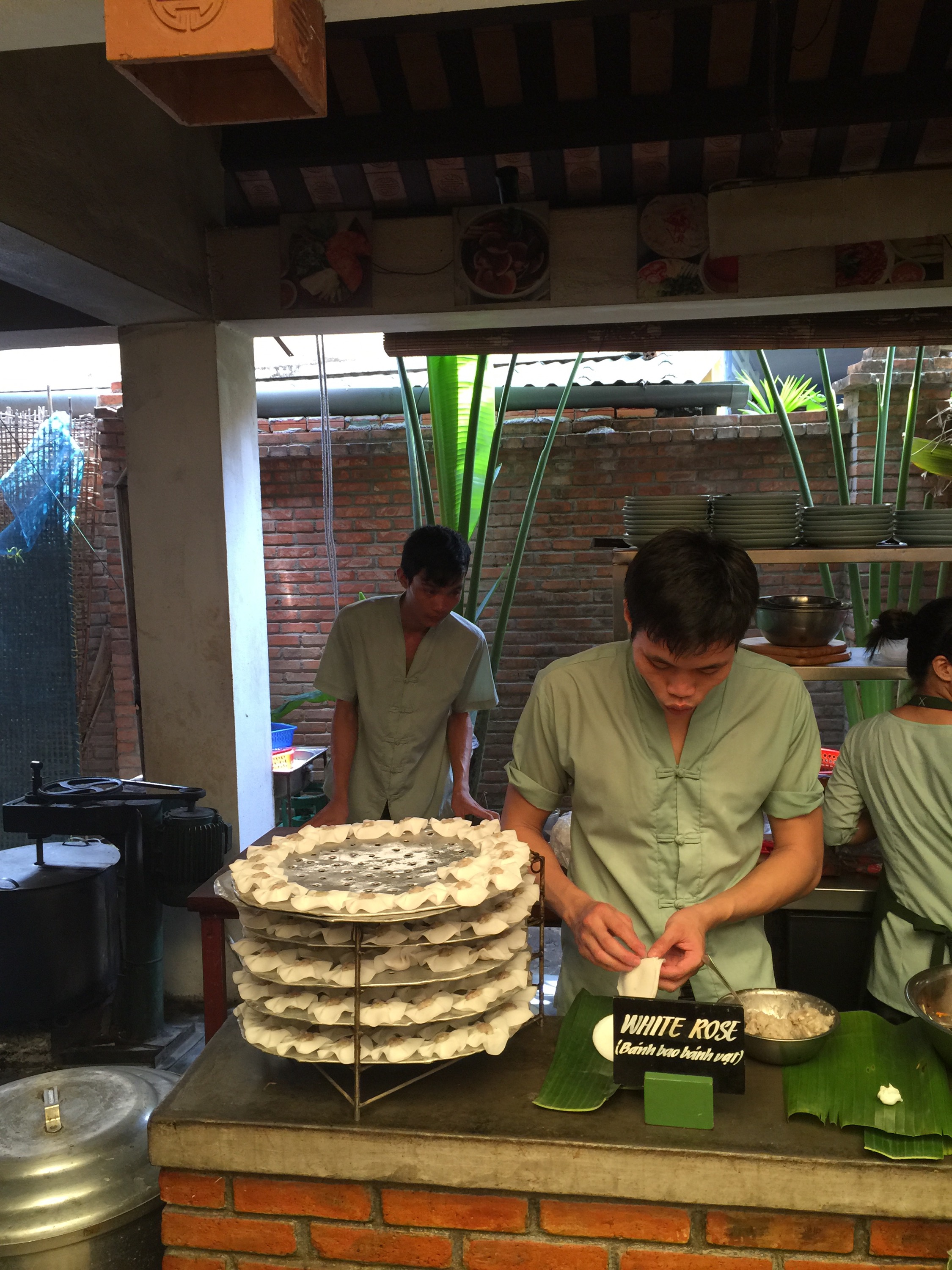
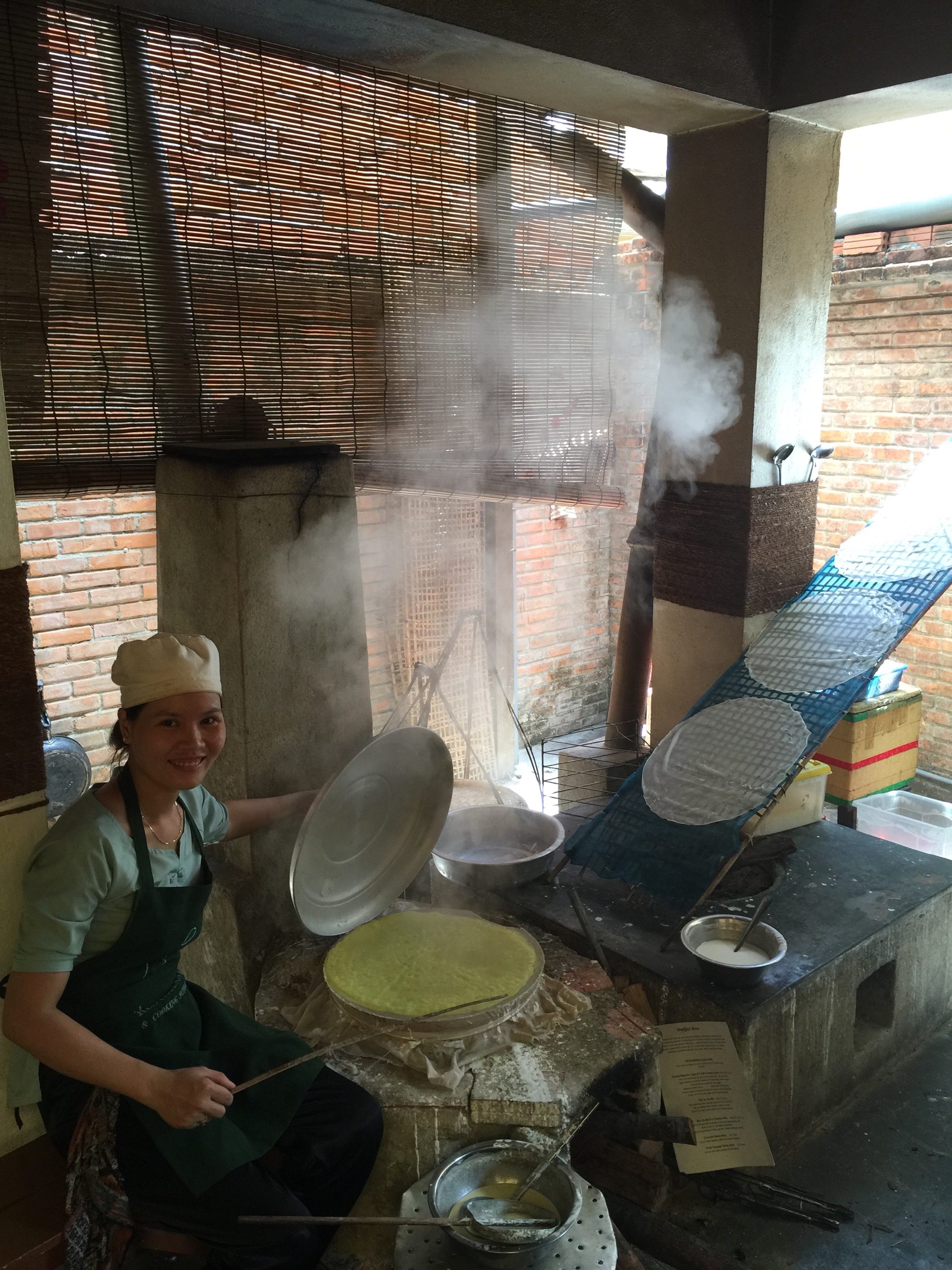
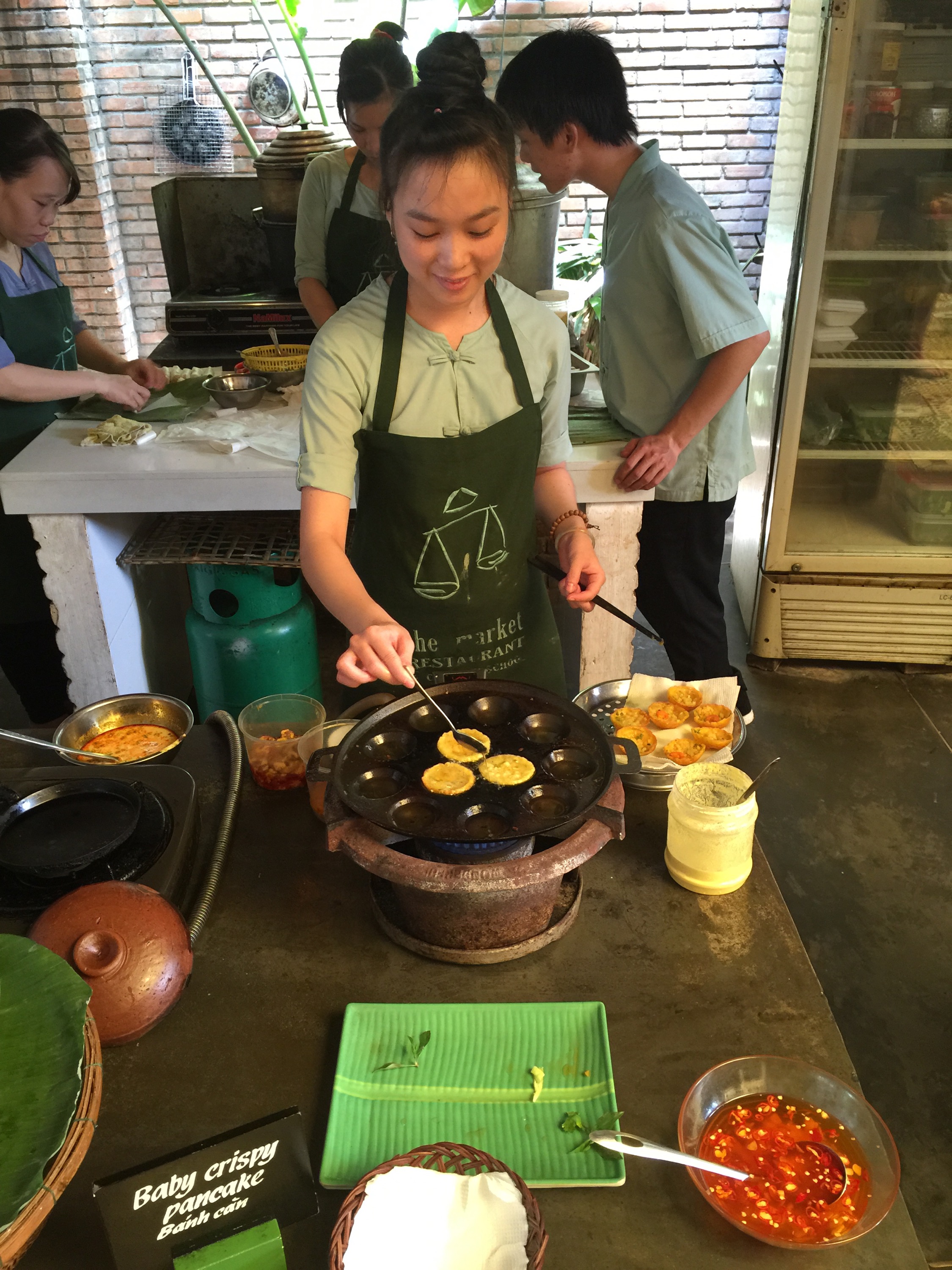
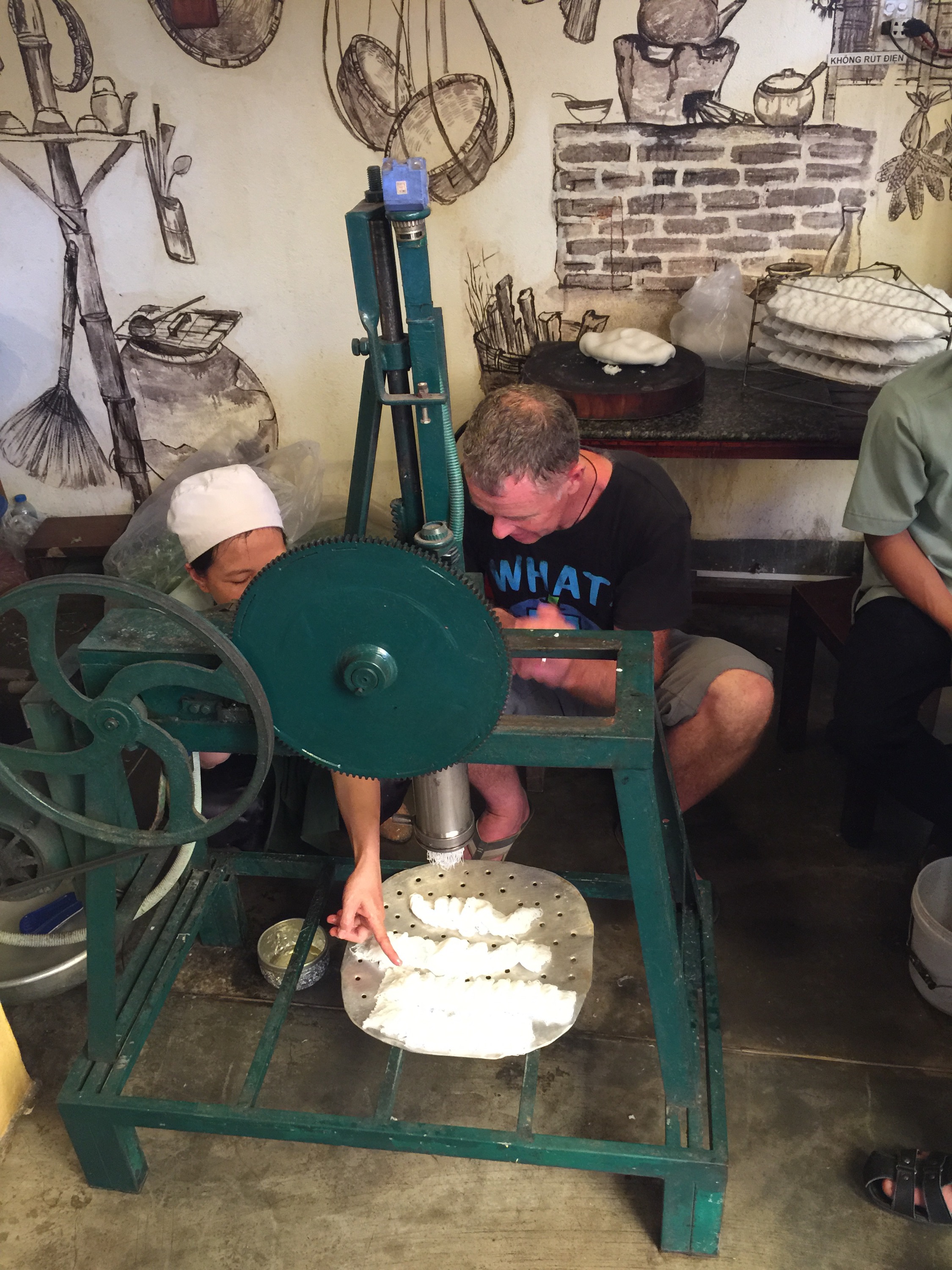
With Vy’s Market Restaurant in Hoi An, Ms Vy has captured the essence of a traditional Vietnamese market by offering a wide choice of street foods and specialties to visitors but in a space where they can feel comfortable to enjoy them. Guests get an up close view of how their favourite Vietnamese foods are made – from individual ingredients to the final meal. Whether it be watching how rice noodles are formed, peanuts are traditionally roasted, or bearing witness to a suckling pig being cooked over a charcoal grill, there is much to see, learn and taste.

In her own words, Ms Vy has explained: “My idea was to provide an interactive experience where customers could gain a better understanding of the cooking culture in Vietnam. Everything here is made fresh to order – just like in the actual real market – except here our guests can really see how the ingredients and dishes are prepared. We explain to customers about why we use certain techniques or combine certain ingredients together to create the unique flavours of a dish; giving them an invaluable Vietnamese food experience that they really couldn’t have elsewhere.”

Her latest restaurant venture also emulates her own story – Ms Vy honed many of her cooking skills and business expertise as a child in the local market, learning from the other veteran vendors. Many of her peers as a child jokingly referred to the central Hoi An market as ‘Vy’s market’ because of her daily presence there.  Later, as a young adult, she made history by becoming the first restaurateur to cater to foreign tourists in Hoi An and the town’s first ever teaching chef.  It is therefore only fitting that her latest venue pays homage to this important part of her childhood history in its name – The Market Restaurant – whilst also emulating her famous cooking classes by providing a space that is truly conducive to the interactive nature of the Vietnamese cooking experience.

We met at the Market Restaurant before walking down to the water to catch a boat to Hoi An’s central market.  It is a busy place that engages all the senses – sight, sound, smell and taste.  Vendors with similar produce are usually found together and although there is a lot of banter there is also a sense of competitiveness as they vy for the consumer dollar.  As tourists we were taking photos which some of the older woman took offence at.  We asked our guide why that was and he just said that sometimes they are just having a bad day : )


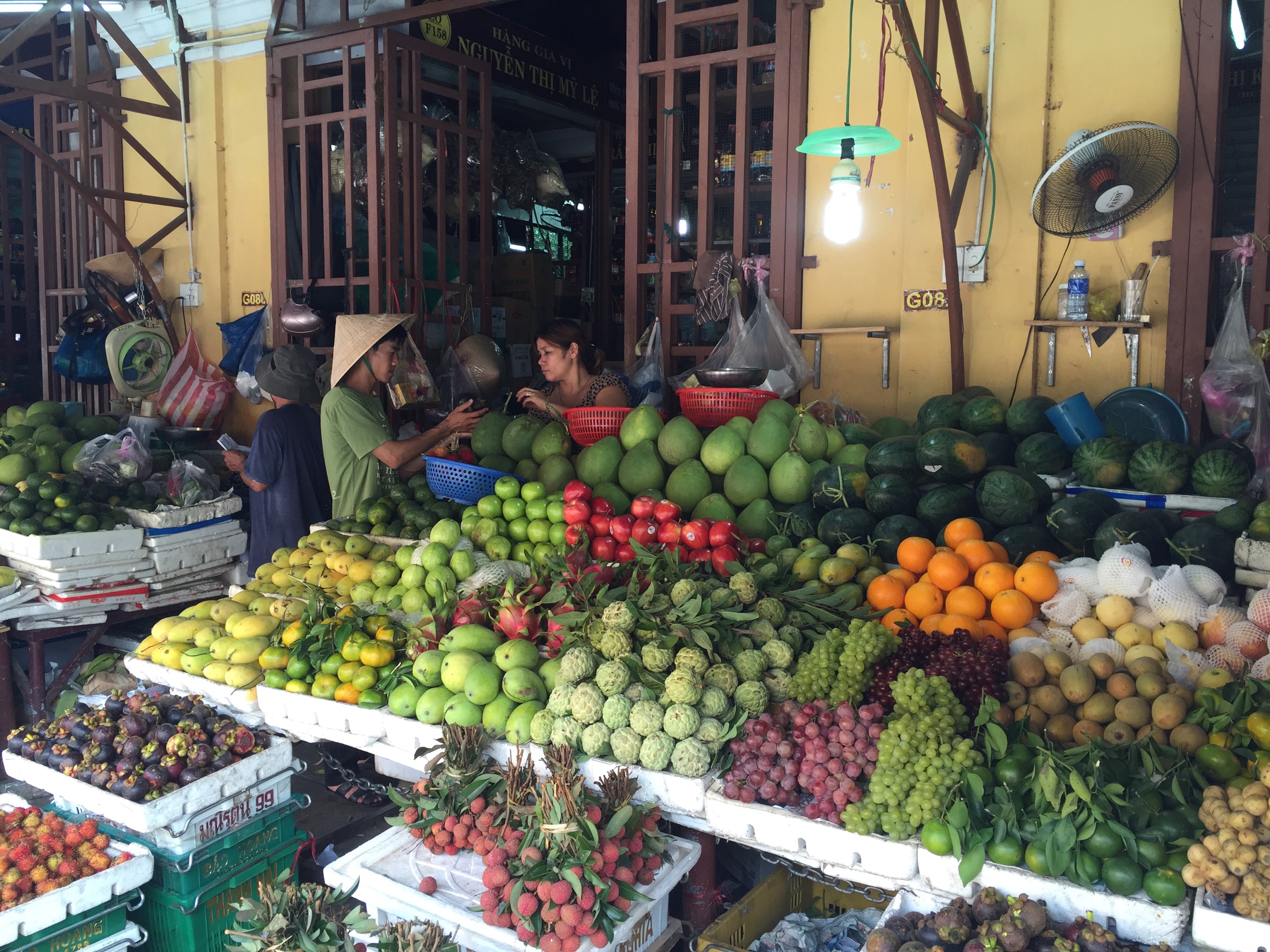
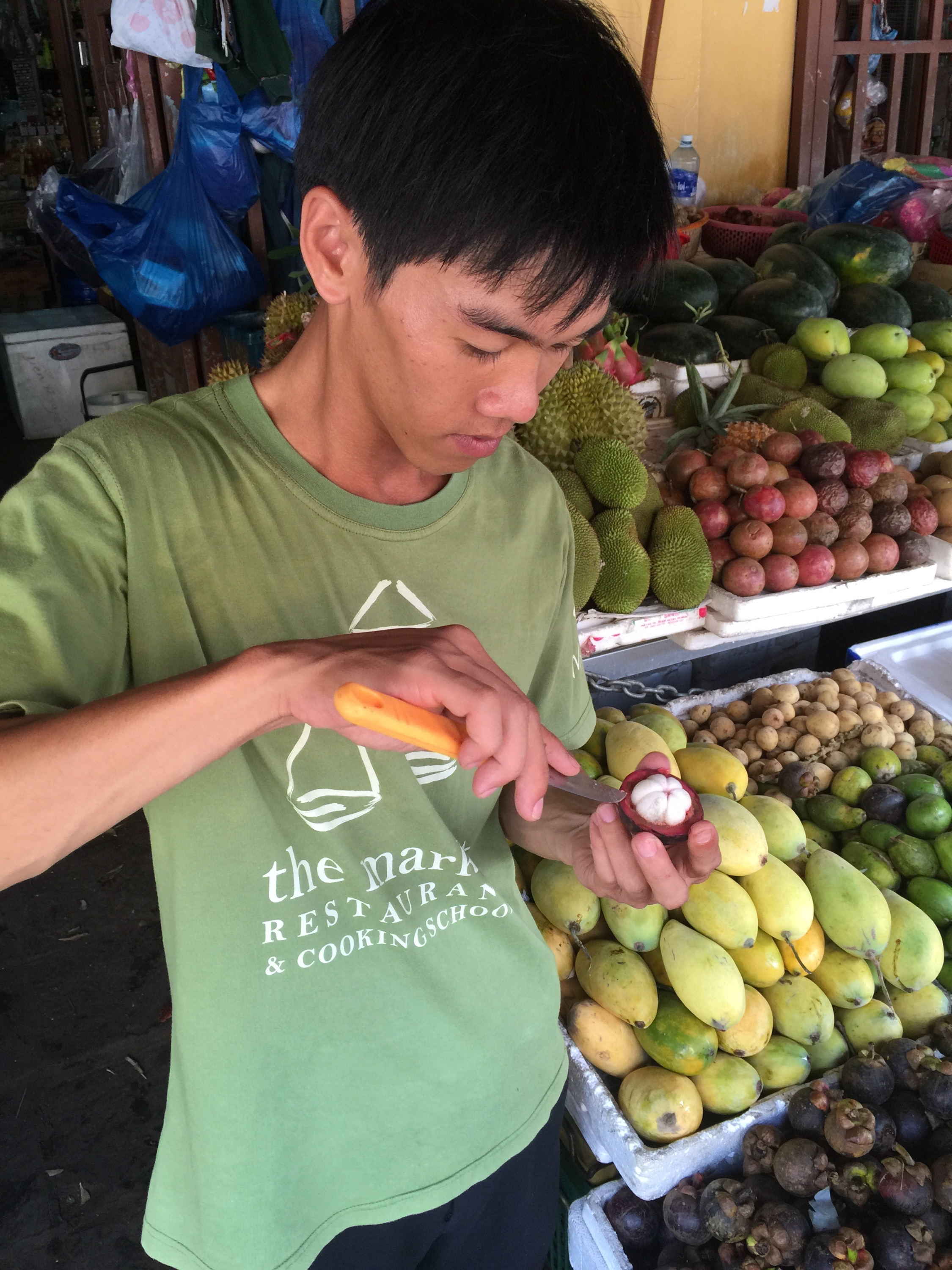
We spent about an hour at the market with our guide explaining all the different types of food we were seeing.  We then stopped at one of the fruit vendors to enjoy some Mangosteen which is so yummy.  It is purpoted to have compounds with antioxidant, anti-bacterial, anti-fungal, and anti-tumor activity. It also appears to have anti-histamine and anti-inflammatory properties.

  
  It was then back on the boat to Vy’s Market Restaurant where we did a tour around all the stalls learning more about Vietnamese street food and specialities with lots of samples being devoured.  I can’t get enough of this food!  There is a weird and wonderful section which included silkworm salad – Rod was brave enough to try that and said it wasn’t too bad.  I thought I was pushing the boundaries trying pigs ear and snails.  The pigs ear was very chewy.  I didn’t quite have the right technique to suck the snail flesh out of the shell – they were very small.  The flavours on the outside were good though. 


 We also learnt about the Workers Food and the rationing proces that happened post World War II.  This was detailed on an information board in the Market Restaurant:

Government Rationing 1945 to 1990

The worst and most limiting times were towards the end and after World War II all the way to 1985.  We would receive coupons for the below items and family members would go to ‘special coupon offices’ to receive these and sign for the rations which had to last for a month.  These formed the basis of our nutrition.

5kg rice / cassava / sweet potatoes or a combination / all dried

100gm pork for special treats like holidays etc…

1L vegetable oil

500gm sugar

400g MSG powder

2L gas (every second or third month)

If anything else was needed, families would typically grow these (livestock / vegetables / herbs) and then barter or sell these between families for additional services or goods.  This is one of the big reasons that gardens are found so easily amongst the houses even in the more settled areas; people would grow what they could for extra nutrition / currency.  This trend has remained even if now mostly used for personal use.

The biggest treat was when Russia sent wheat flour (dried and usually mouldy from the trip) but Mums would keep this for special occassions.  Eateries (back then they were just places for poeple to eat out of necessity and thus not called restaurants) would even have small holes in the spoons to avoid people taking them home.

One of the biggest treats was ‘Pho’ but there was very little beef available so it was commonly referred to as the ‘soup without a pilot or noodle broth without meat’.

MSG was introduced to flavour dishes on the cheap as there were very little herbs and other spices available.  Only now are restaurants returning to using fresh herbs and spices and MSG is becoming less prevelant.

When someone seemed unhappy , people would jokingly ask ‘did you lose your rice book’?  Referring to the very valuable coupon book.

While the above was hard for the Vietnamese people , it also gave us the power and immense pride to succeed and find other ways to improve our lives.  This carries on to this day.

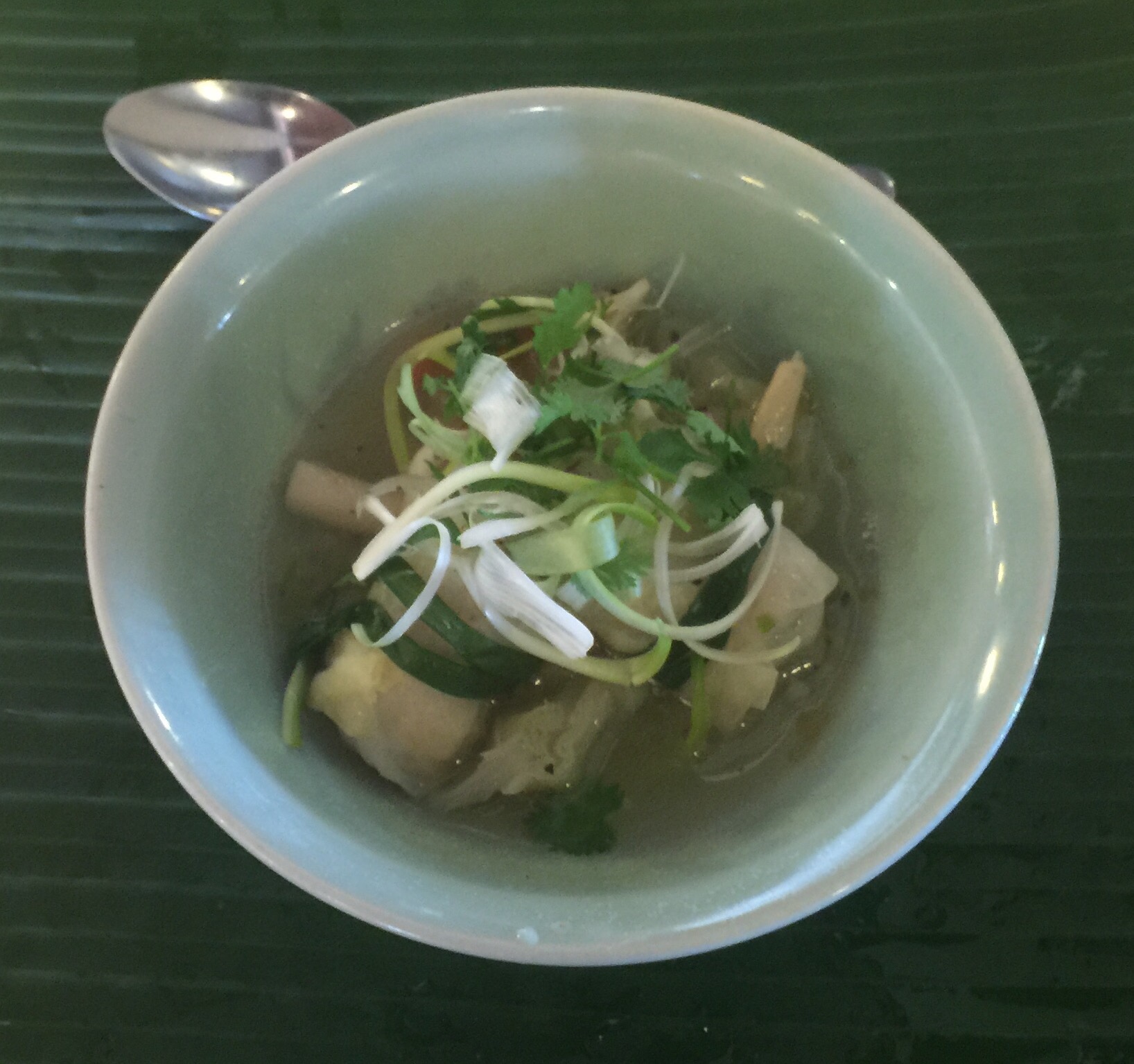
It was now time for us to start the cooking class.  Our teacher was Hong who was such a sweetie and a very good communicator.  First up was the Cabbage leaf parcels with shrimp mousse in broth.  I am not a huge seafood fan but I have actually been eating a lot of shrimp here as it is so well flavoured in the various dishes.       

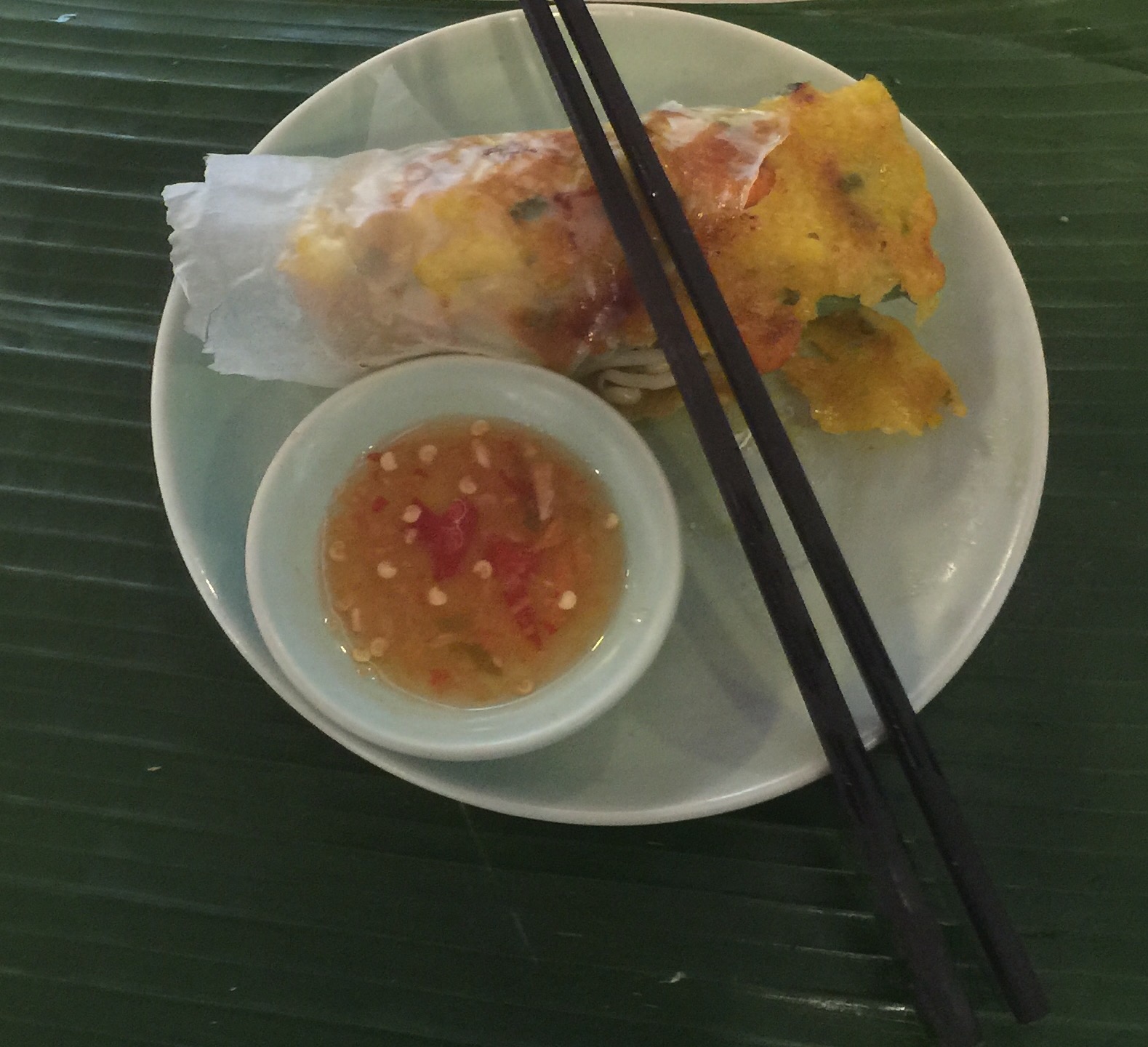
 Next up is one of my favorite foods in Hoi An although now I know how much oil is used to cook them I have restricted my intake : (  Banh Xeo or Crispy Pancakes are so delicious.  The base of them is made from rice milk and blended mung beans that have been soaked overnight, coconut cream, tumeric, pork, shrimp and bean sprouts.  You cook them until they are crispy on the bottom and soft on the upper side.  You then put mixed herbs, green banana slices and star fruit slices inside and roll up with rice paper and eat.  The green banana slices and the star fruit provide the sweet and the sour or the yin and the yang which is very important in Vietnamese cuisine.  Heaven : )


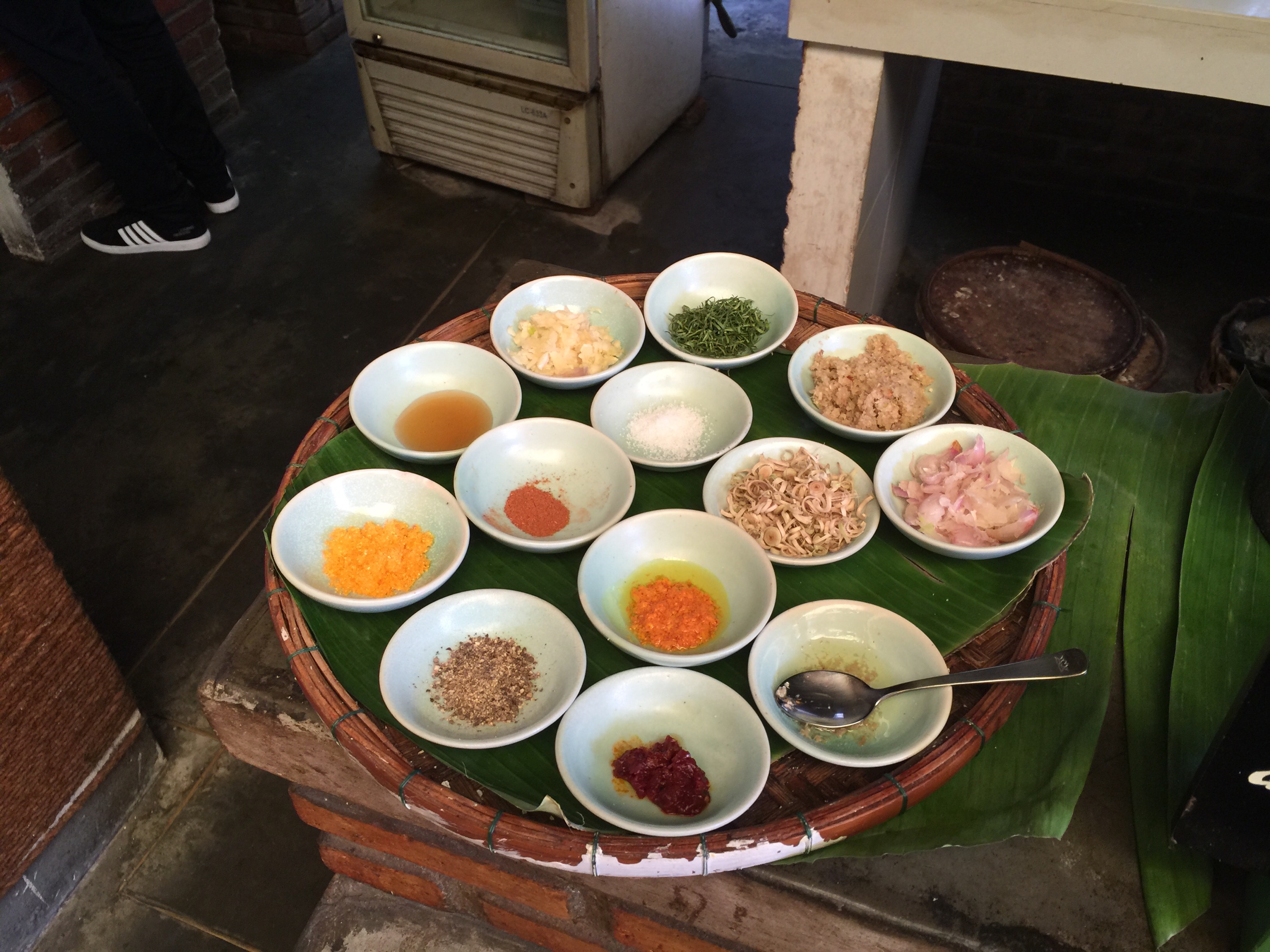
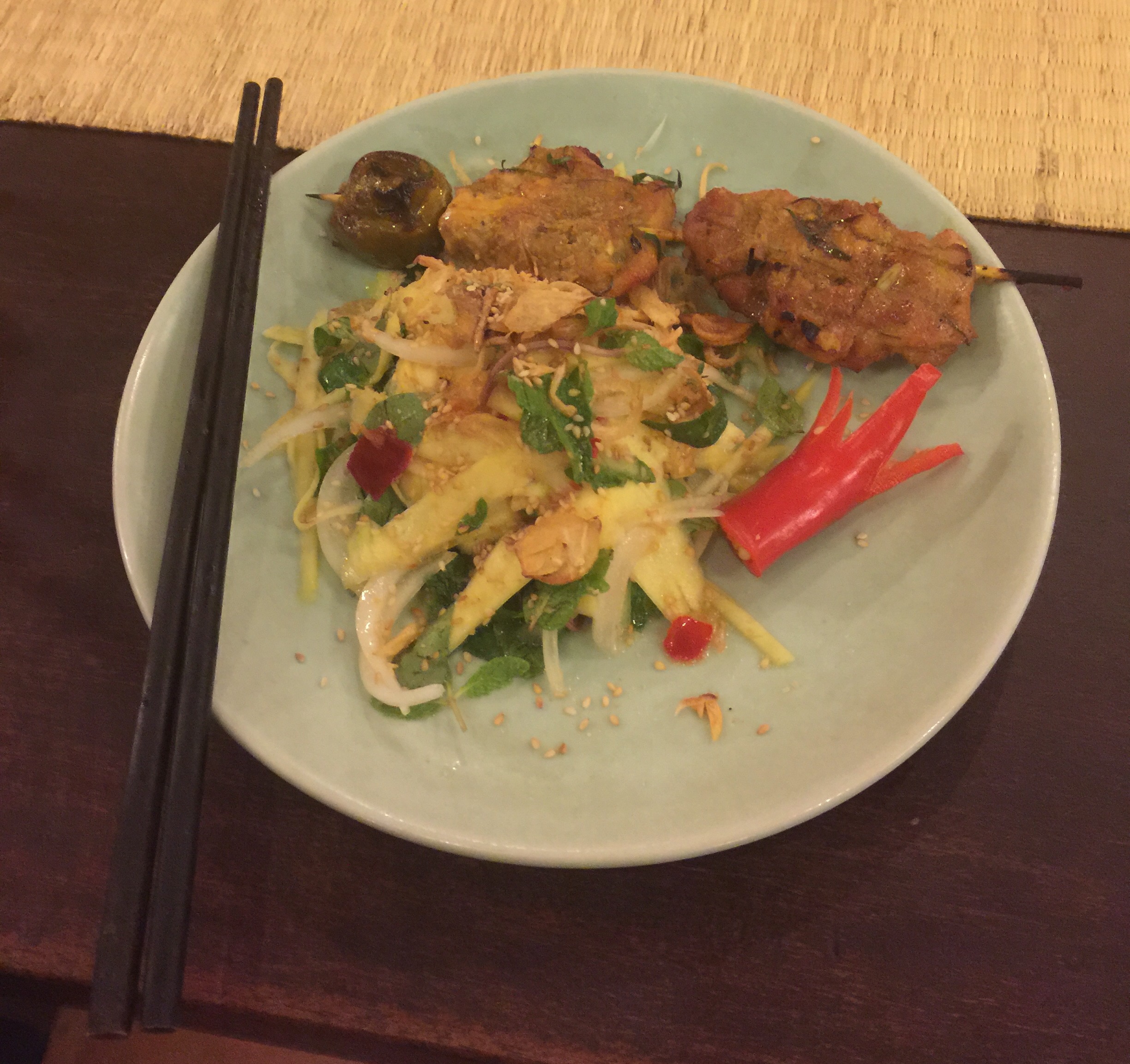
For the main course we made BBQ chicken and lime leaves – we prepared the marinade which consisted of tumeric, lemongrass, salt, sugar, pepper, five spice, lime leaves, garlic, shallots, chilli flakes, sesame oil and fish sauce.  While the meat was marinating we prepared the salad which was to accompany the chicken – a green mango salad which consists of green mango, onion, vietnamese mint, sesame seeds and fried shallots.  The contrast between the sweet and the sour is again very prevalent but works so well.

The chicken had been taken away to be grilled over an open flame.  We were reunited with our chicken in the dining room and along with our green mango salad lunch was served.  It was so good!  To top it all off we were given lemongrass flavoured icecream for dessert : )  Foodie heaven.  

Posted in HoiAn | 1 Comment

Escape to Warmer Climes

As much as the SUNGRL loves NZ the SUNGRL does not love NZ winters!  The warm climes and golf courses in Asia beckoned so on Friday the 10th July we departed Napier for Auckland and then Auckland for Singapore.  From Singapore we had a direct flight booked to DaNang in central Vietnam.

 
The ash cloud hanging over Indonesia as a result of Mount Raung erupting on the 2nd July had other ideas for our travel plans though.  Mount Raung had sent ash and debris 2,000 meters into the air meaning flights were cancelled or re routed.  Thankfully we were re routed but that added two hours to our travel time to Singapore meaning we missed our direct connection.

The Air NZ staff on our flight were fantastic in terms of working through connecting passengers options and by the end of our twelve hour flight we had been handed a slip of paper with our new flights.  Unfortunately things didn’t run quite so smoothly once we were airside in Singapore.  After wasting 20 minutes at the wrong transfer desk we were sent to another transfer desk where there were a lot of people trying to sort their new connections.  The speed at which the staff were dealing with individual cases meant we were not likely to make our new flight.  We got moved to the front of the queue due to the looming flight time only to discover that there wasn’t actually room on the flight that had been organised for us.
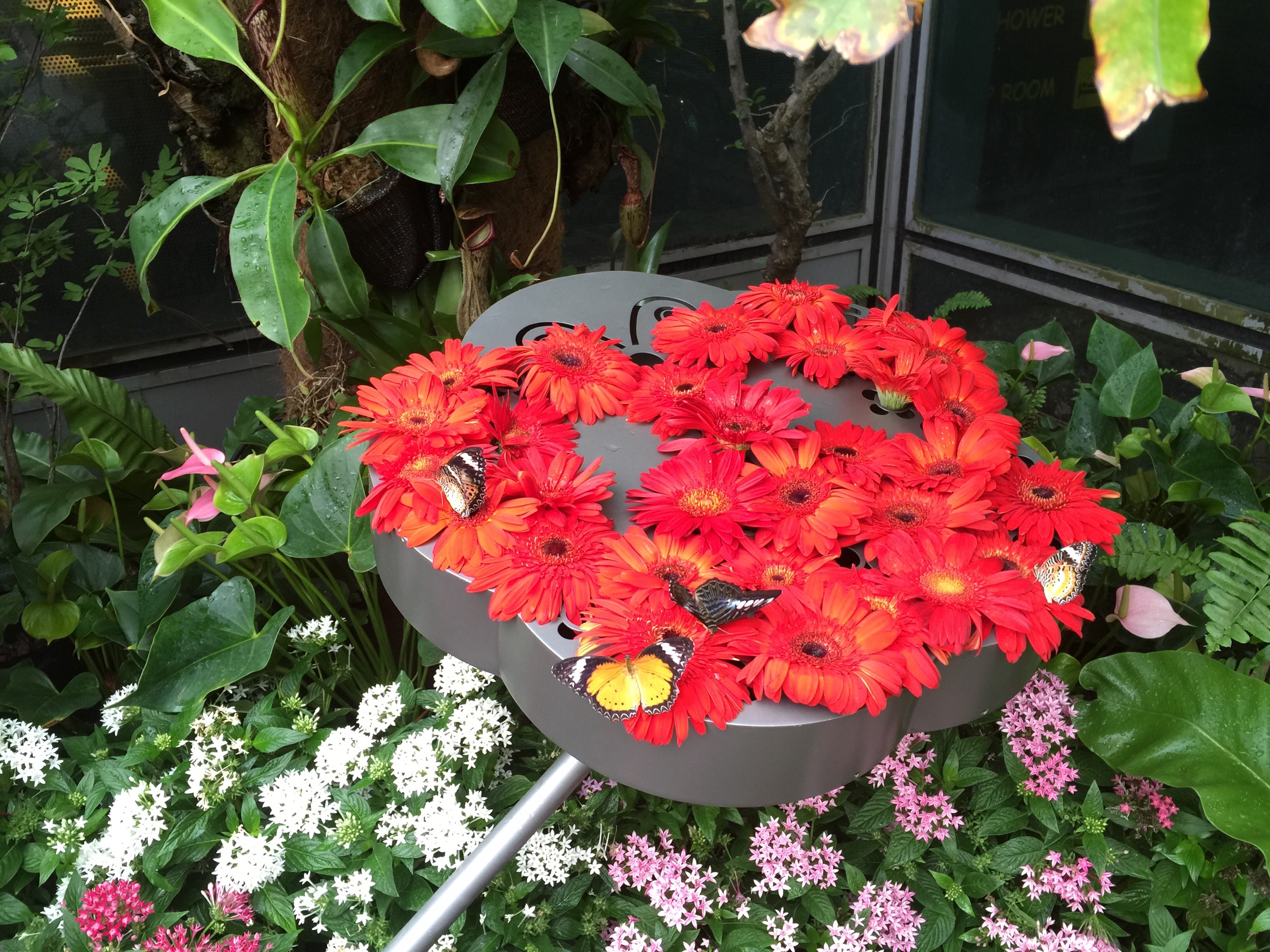
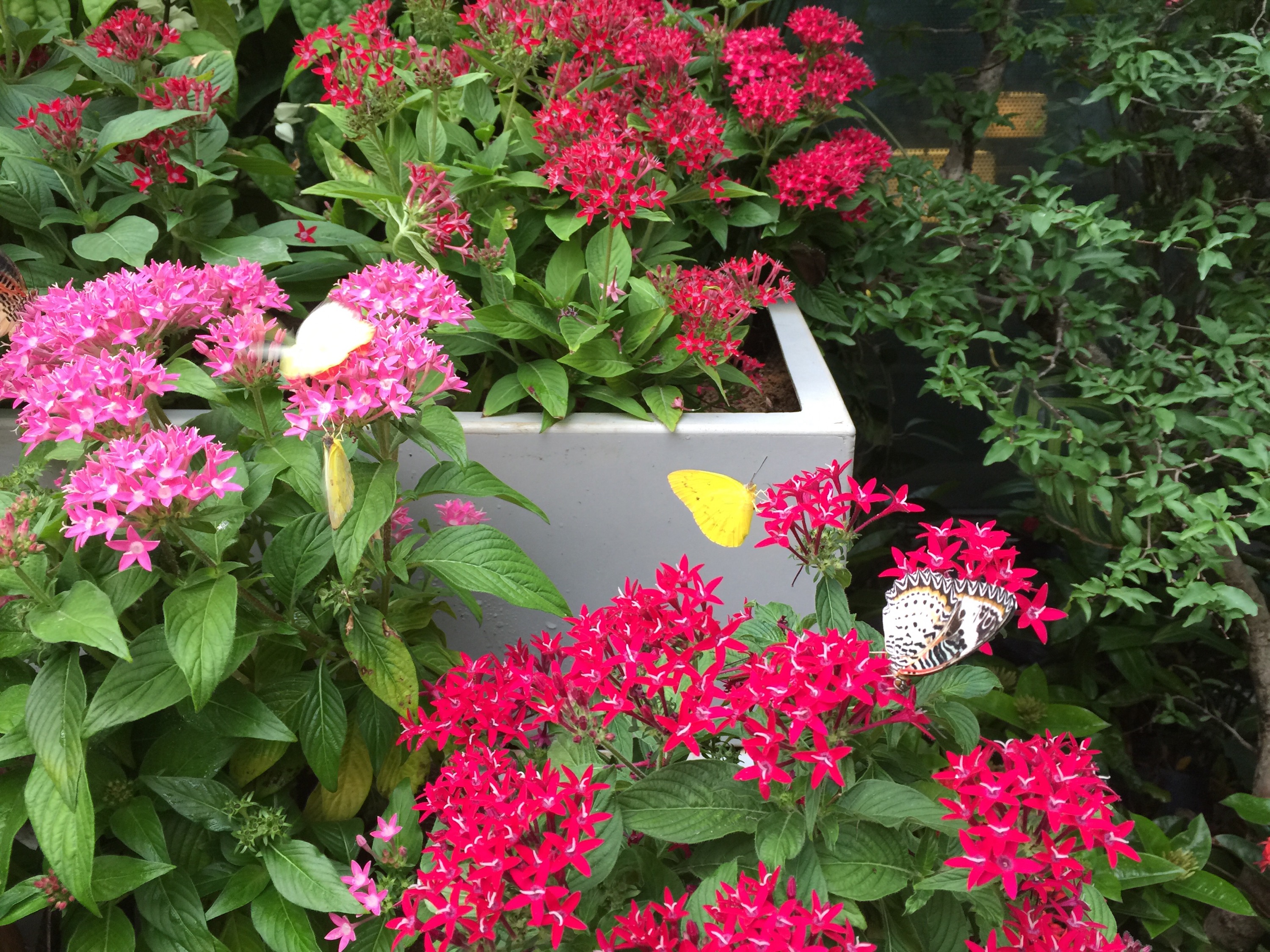
Our new options were waiting for the next direct flight to DaNang which was some 28 hours later or switching to Vietnam Air and flying through Ho Chi Min – this was our preferred option.  At least we would arrive on the day we were supposed to.  The next problem was that there was no one on the transfer desk that could authorise a change in airline.  We had to wait an hour for someone in authority to come and give the nod to the transfer staff. In the meantime we were given a food voucher for Burger King – happy, happy, joy, joy – NOT!  A trip to the butterfly sanctuary at Singapore Airport provided a nice distraction though.
 
During all this waiting we met some nice people who were in similar positions so stories were shared.  We were fairly relaxed given the fact that we were coming over to Asia for a couple of months but for those travellers who were on tight schedules or had pressing family emergencies it wasn’t much fun.  Unfortunately Air NZ got a bit of a bad rap as it appeared the air stewards had organised our alternative arrangements but some of the flights didn’t have capacity and then the staff on the transfer desks had no authority to offer alternatives.  As much as I love Air NZ I will be writing to them to offer some suggestions for better handling of these unfortunate incidents in the future.

Our next concern of course was our luggage – it had been tagged all the way through to DaNang on Air NZ and then Silk Air.  We were now on Vietnam Air going through Ho Chi Min City.  The transfer staff assured us that our bags would be re tagged and put on our flight.

As we were entering Vietnam in Ho Chi Min City we had to get our Visas and clear customs there.  This process was fairly smooth given we had pre approval and had completed all the correct documentation.  We went to the baggage belt and what do you know – no bags!  Off to Lost and Found and a trace on our bag tags confirmed the bags were still in Singapore – fantastic!  They said they would put the bags on the next flight to Ho Chi Min City and then send them onto DaNang that evening or early the next morning.  That was better than nothing so we walked over to the domestic terminal to catch our flight to DaNang.

We arrived into DaNang at 7.30pm – our original arrival time had been 9.40am.  Another trip to Lost and Found at DaNang to tell them to expect our bags and to send them onto where we were staying.  No bags arrived that night so a phone call Sunday morning found the bags were still in Singapore but would arrive in Danang Sunday afternoon.  By this stage we had got the reception staff here involved so they could call Lost and Found and speak the lingo.  A few more phone calls Sunday afternoon and lots of conflicting information and Sunday night rolled round – still no bags.  We had now been wearing the same clothes for 48 hours – remembering we left NZ and the temperature was 8 degrees – we were now enduring temperatures of 36 degrees.  Thank goodness I put a singlet on under all my layers when we left NZ.  I didn’t have an answer for the tracksuit pants though.  Thank goodness for air conditioning and the ability to at least have a shower.

Monday morning arrived as did some good news – our bags were now in DaNang and were enroute to our apartment.  All’s well that ends well.  As the saying goes in The Best Exotic Marigold Hotel movie – it will be alright in the end and if it is not alright it is not the end : )

PS – we love our digs at the Montgomerie Links Villas – our home for the next two months.


Posted in Vietnam | 2 Comments

The Great Lake Trail – A Taster – Taupo, New Zealand

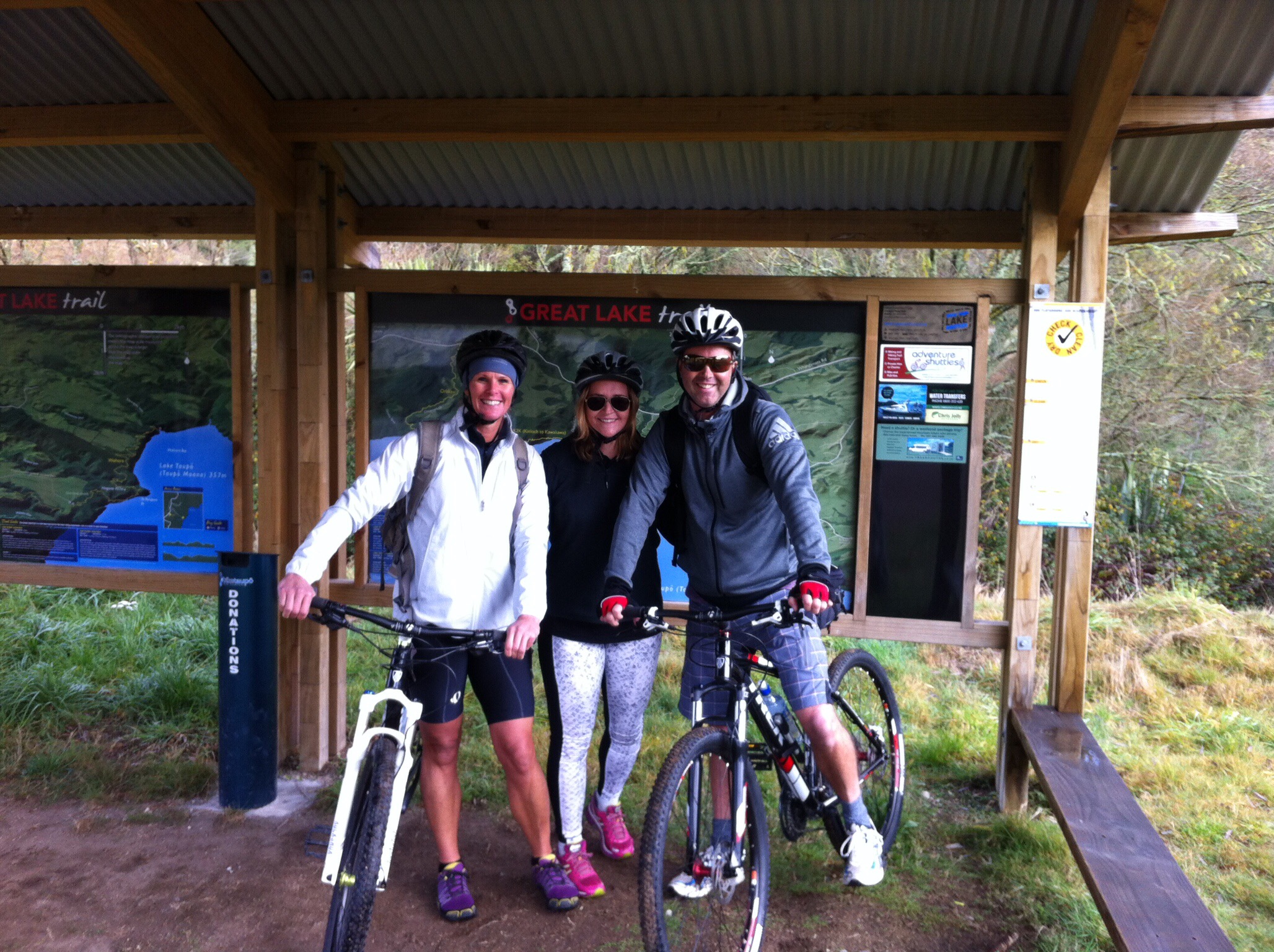
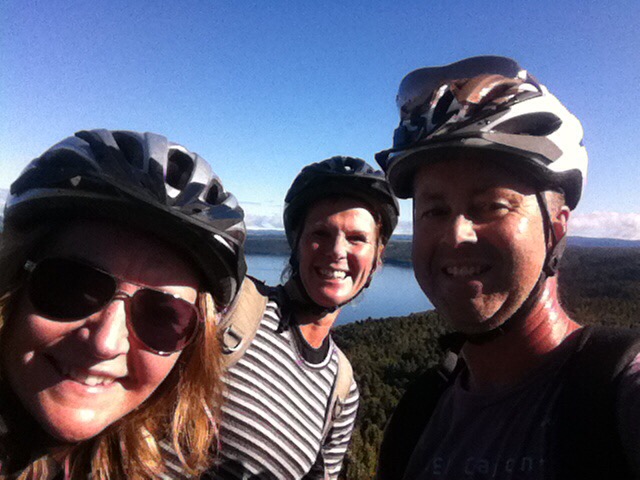
When we did The Timber Trail ride back in February, Ted from Tread Routes said we may also like The Great Lake Trail near Taupo.  I had the opportunity to ride the first 20km last Friday and Kinloch turned on a stunner.  We met Sheree & Matthew in Taupo on the Thursday night and had a lovely meal at The Brantry.  After a hearty breakfast in Taupo on Friday morning Steve headed for the golf course at Wairakei and Sheree, Matthew & I went to Kinloch to meet Ted.  Ted was providing the bikes and a shuttle from Kinloch to the start of the trail at Orakau.

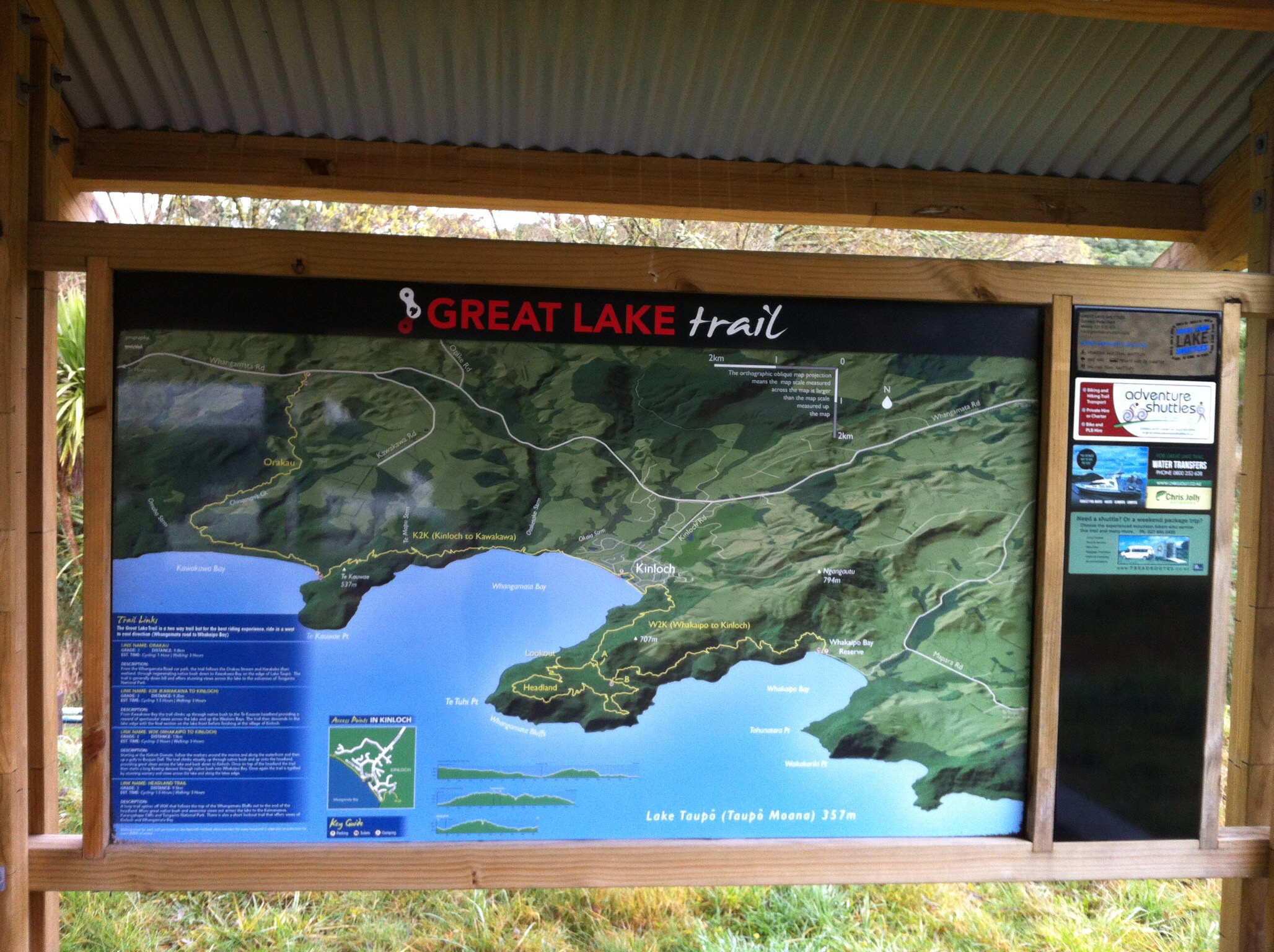
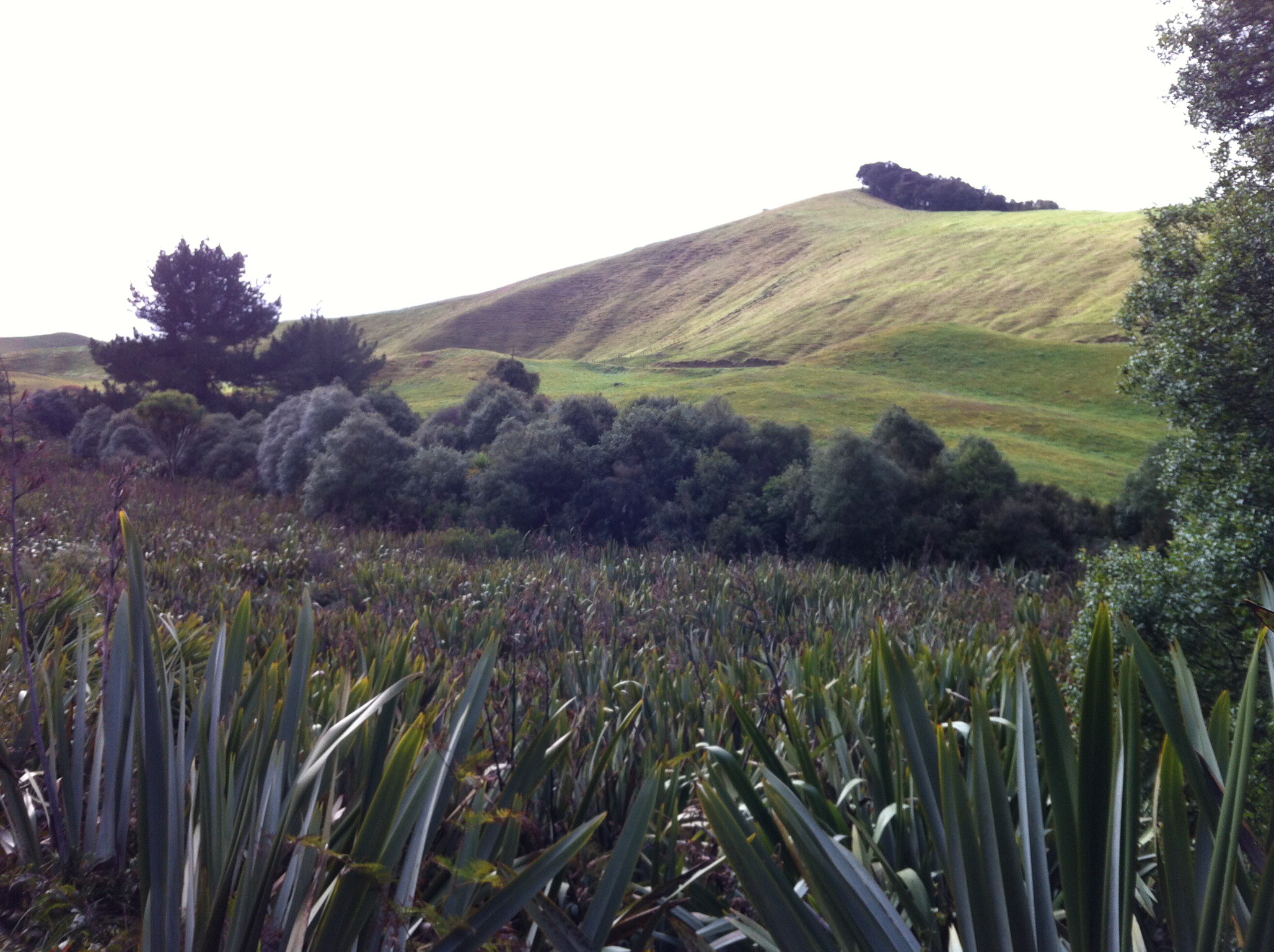
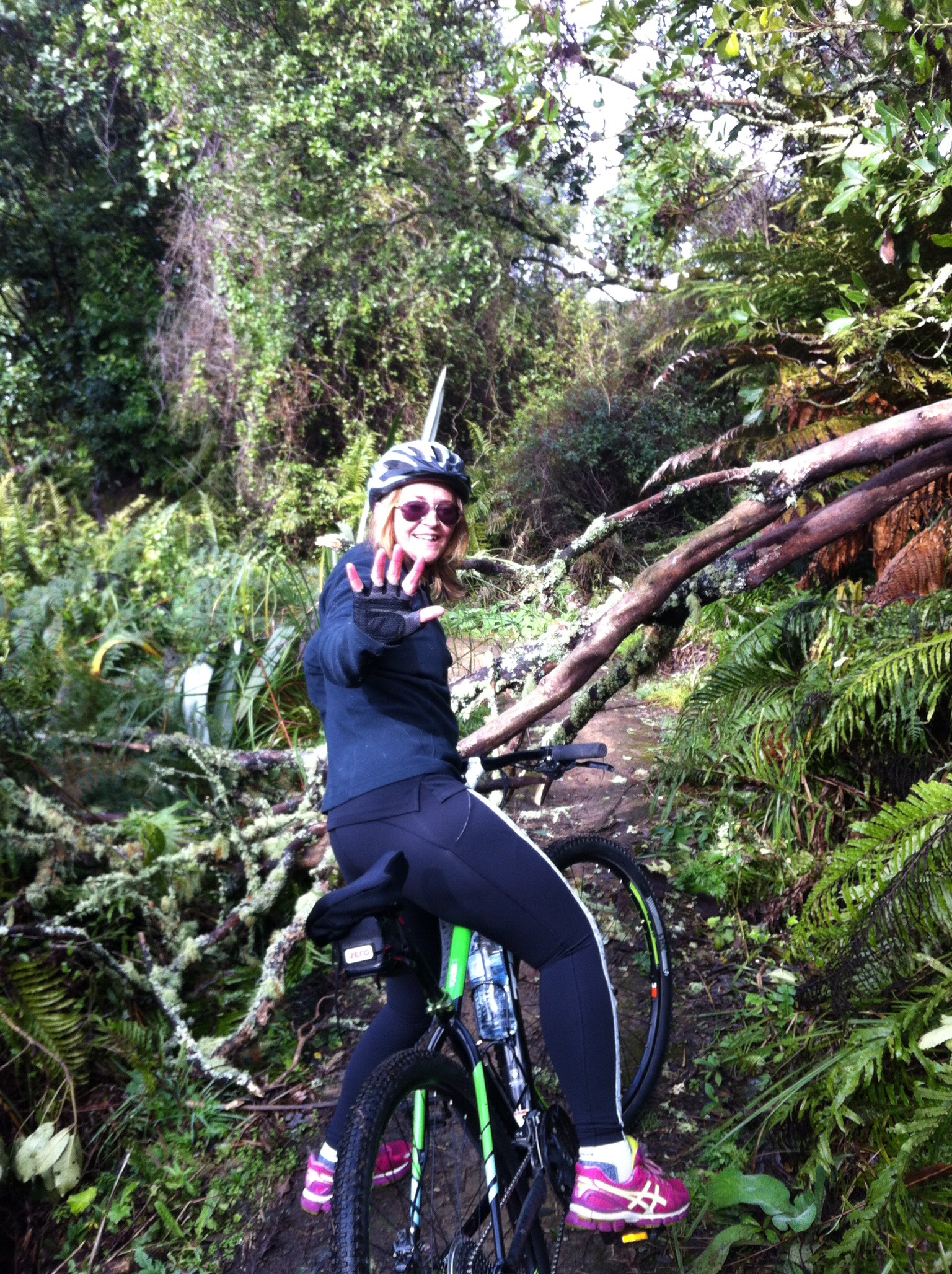
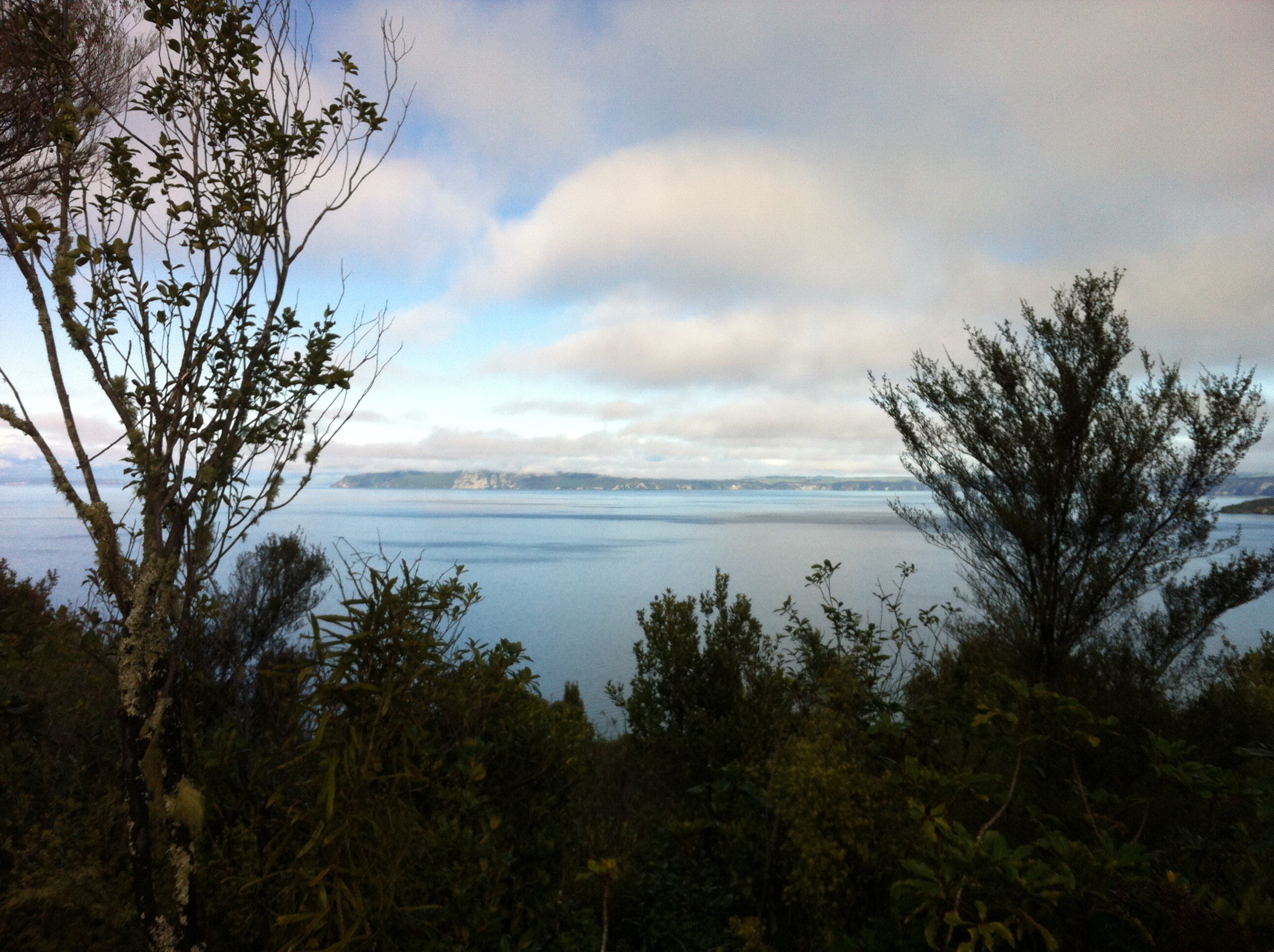
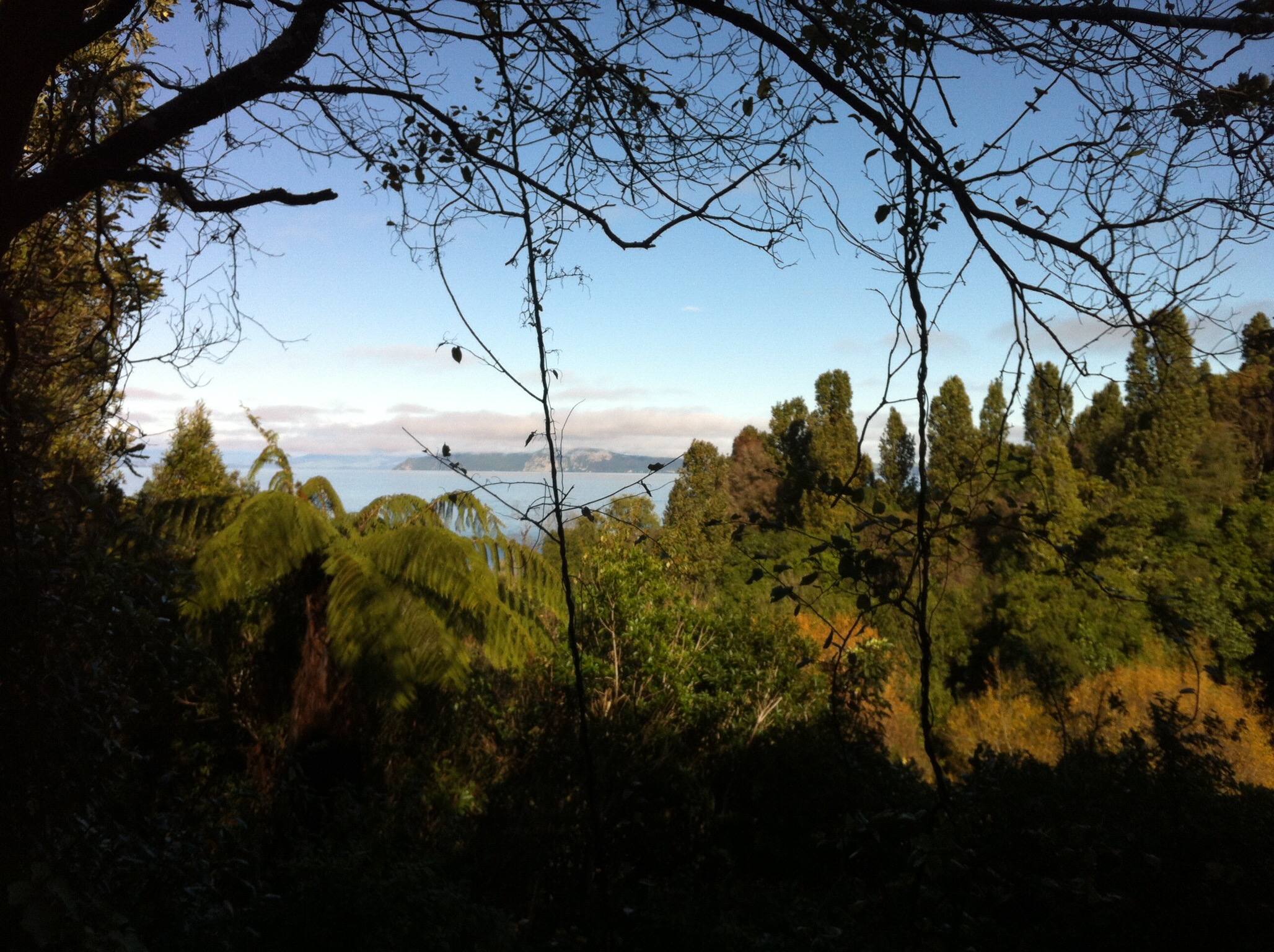
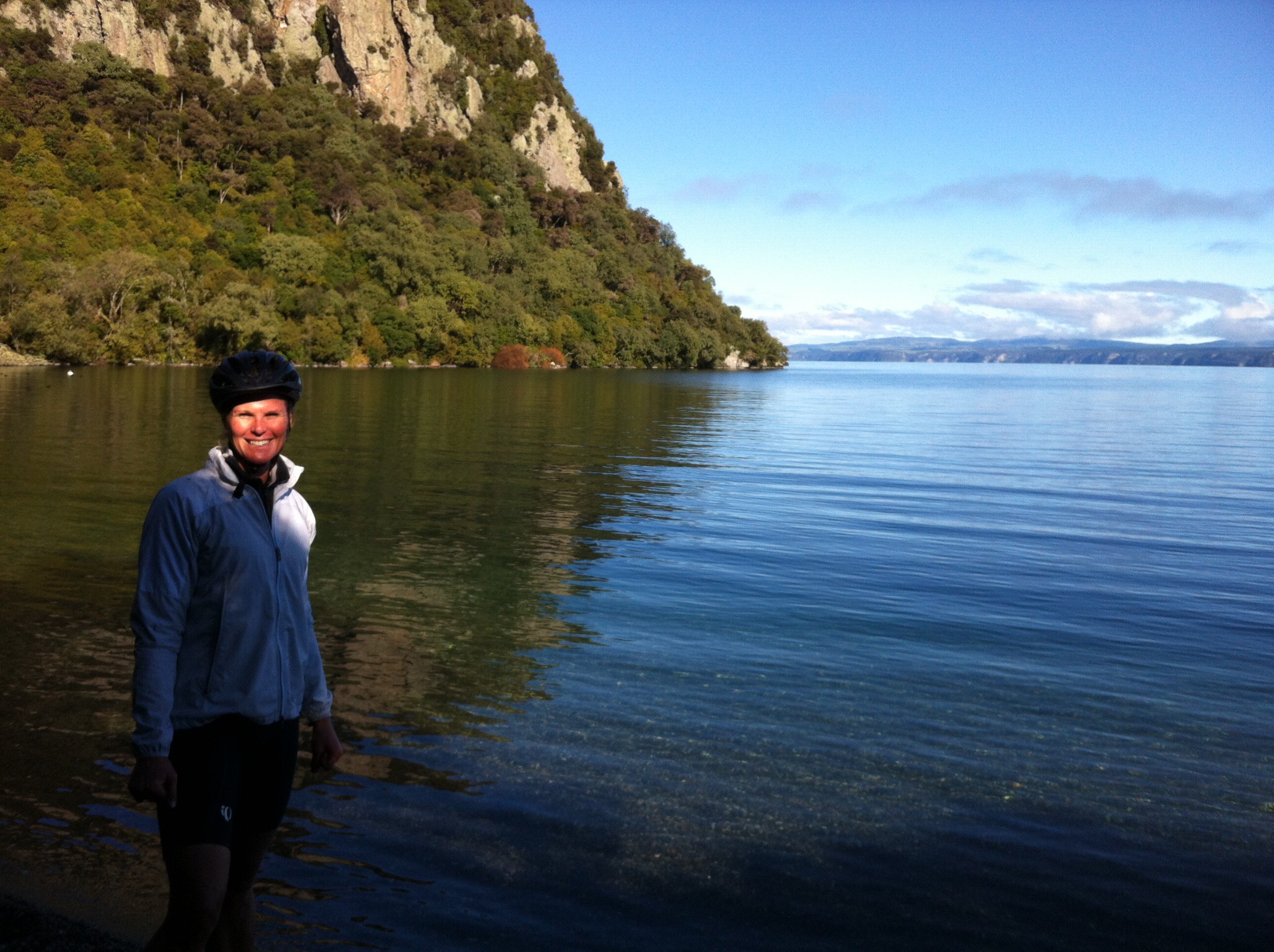
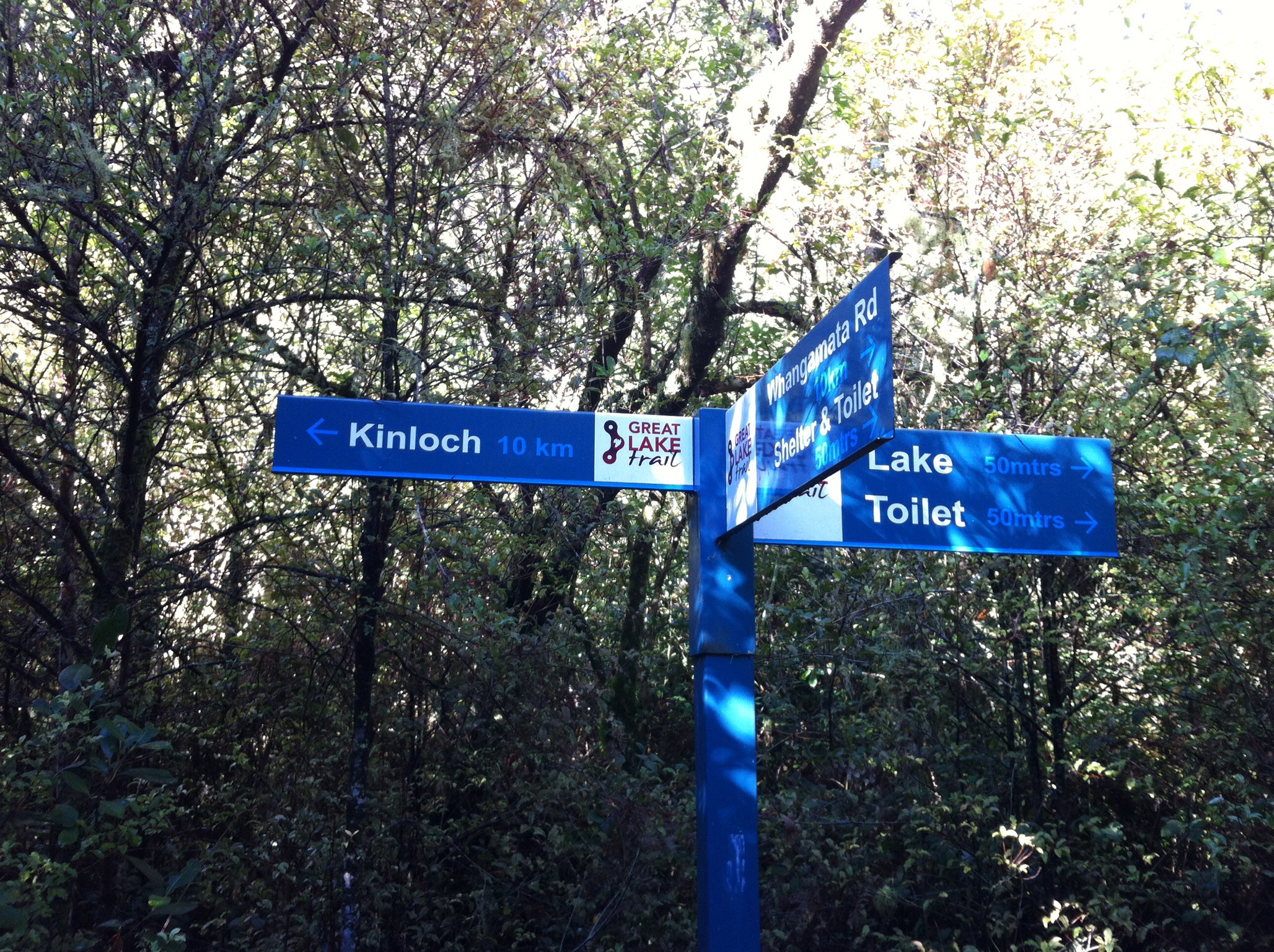
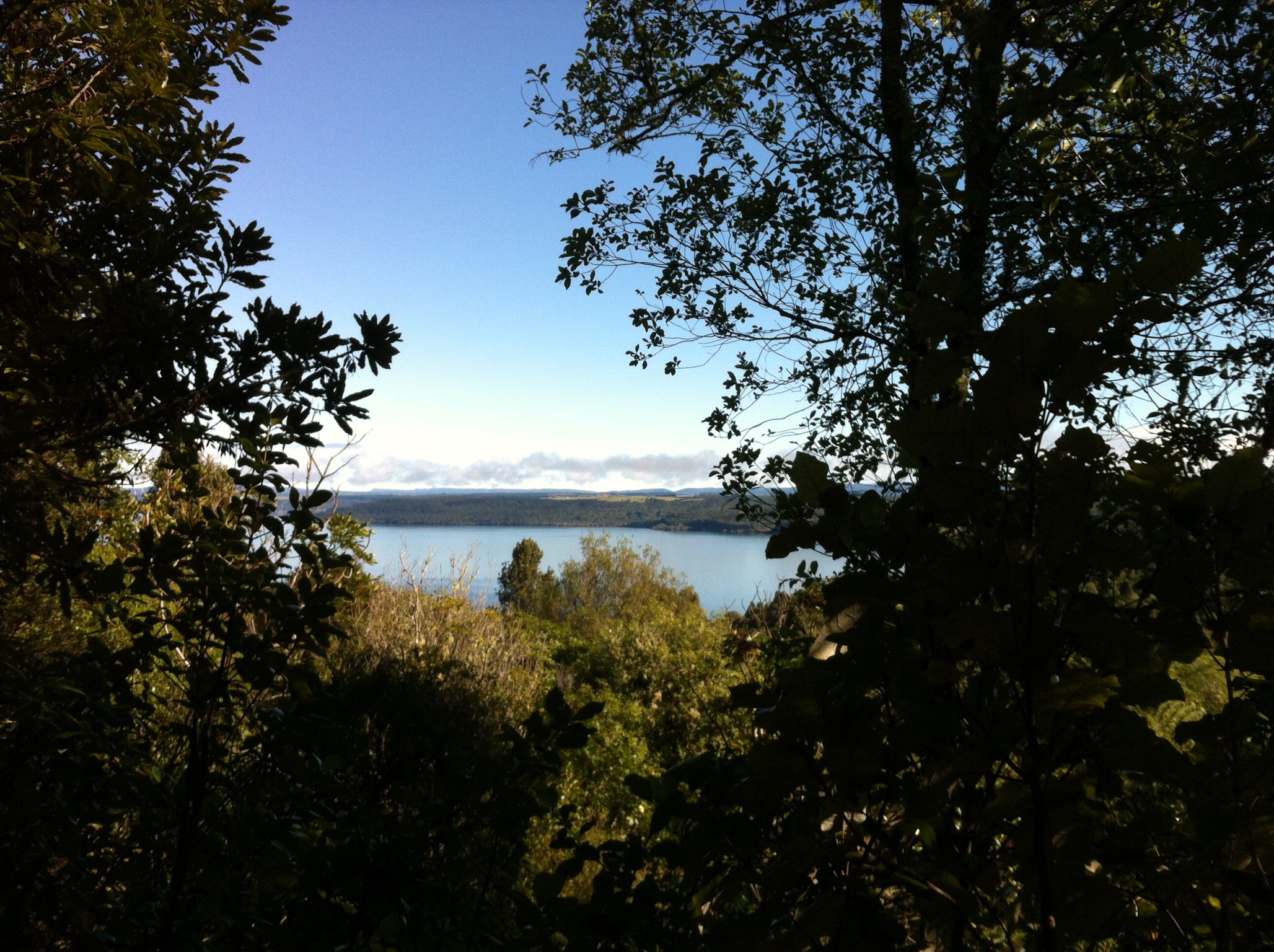
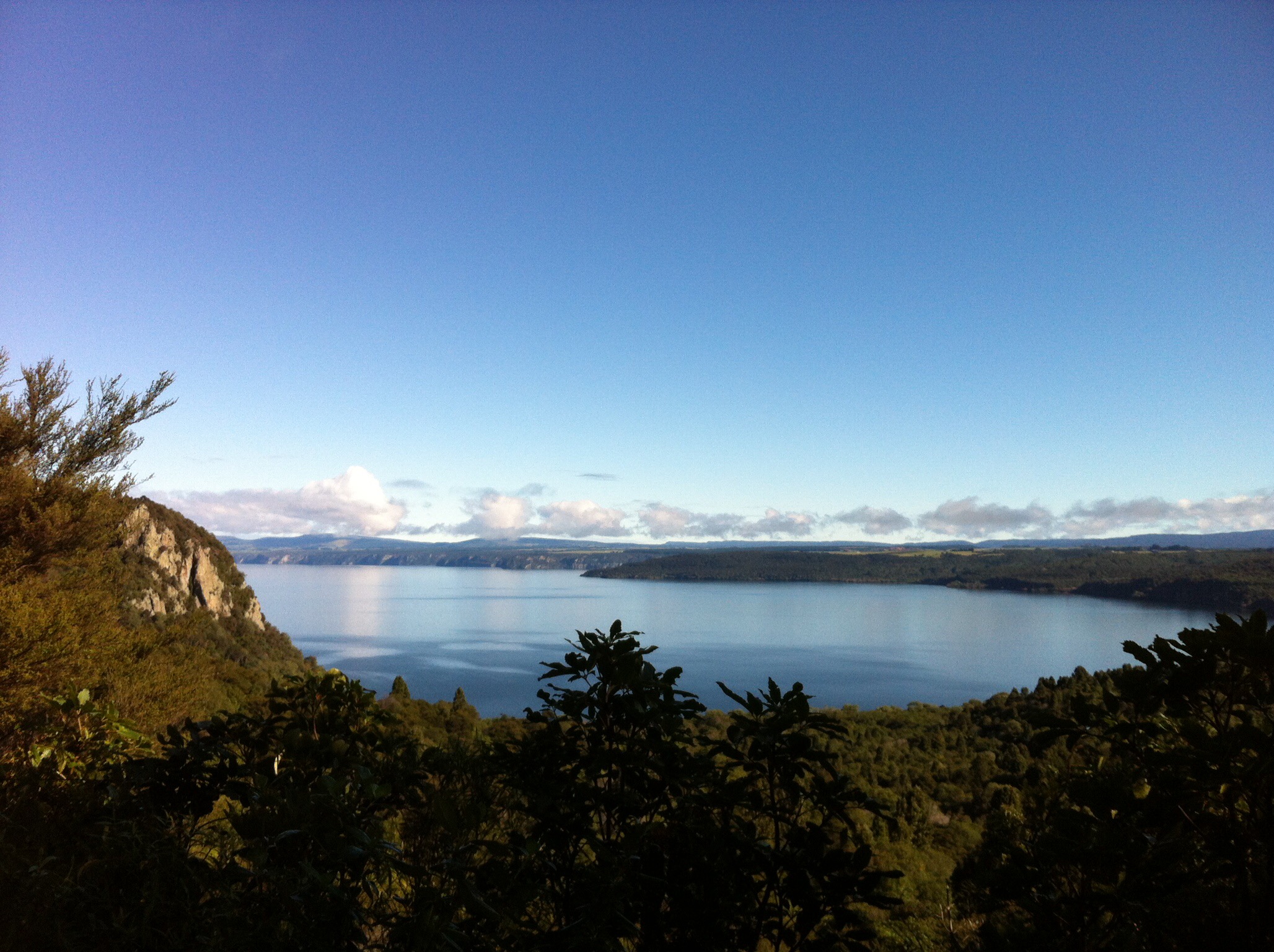
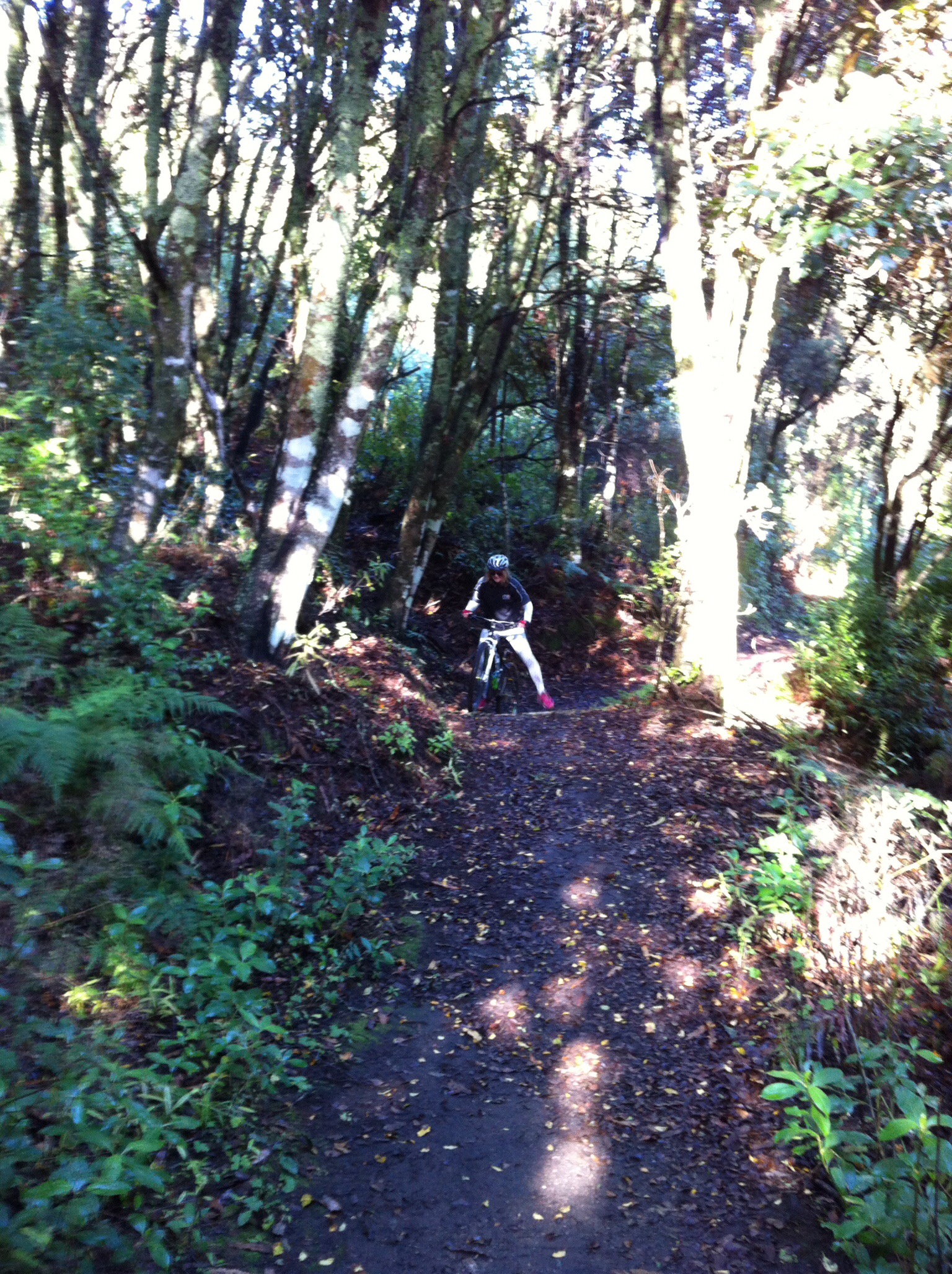
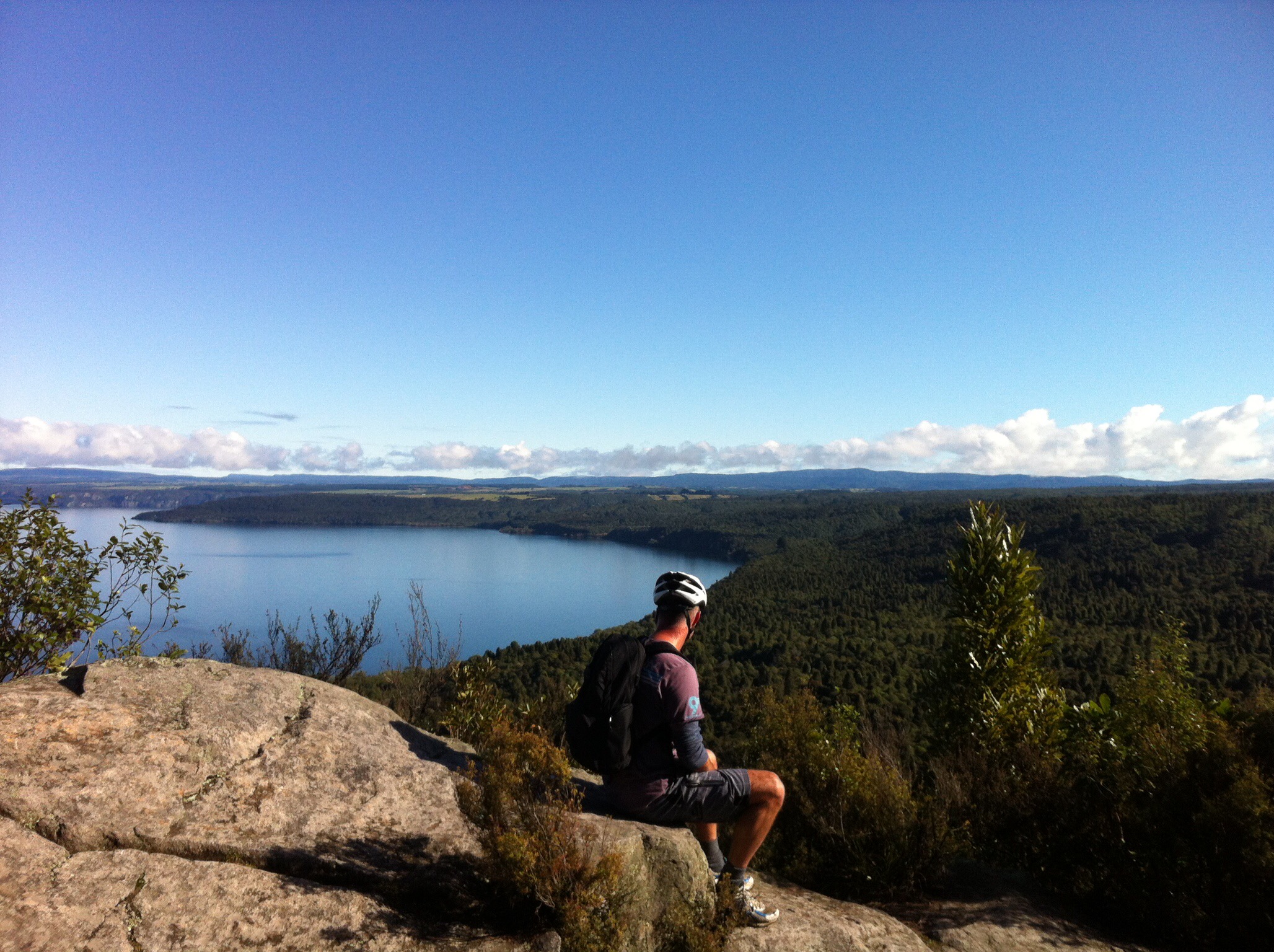
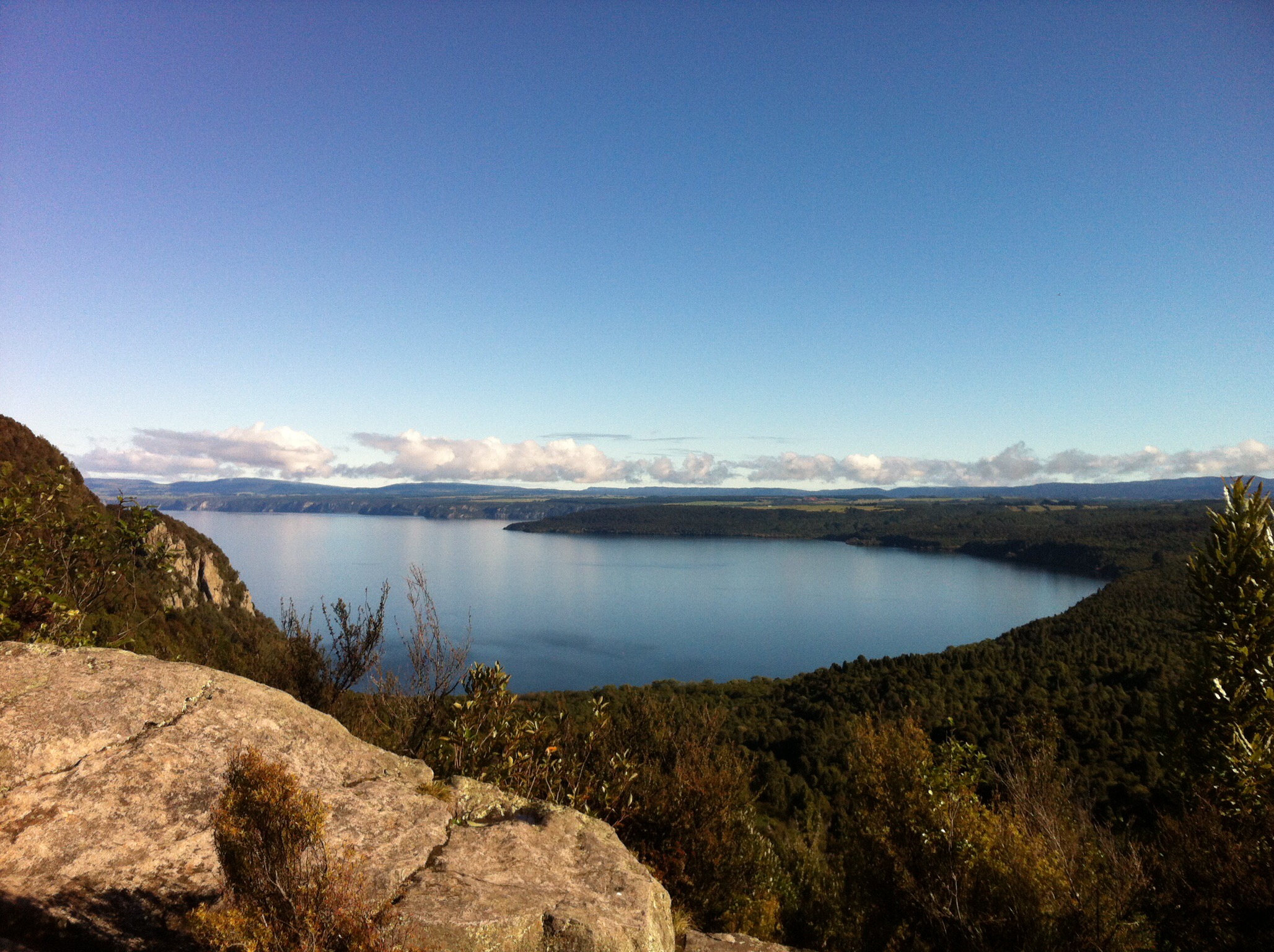
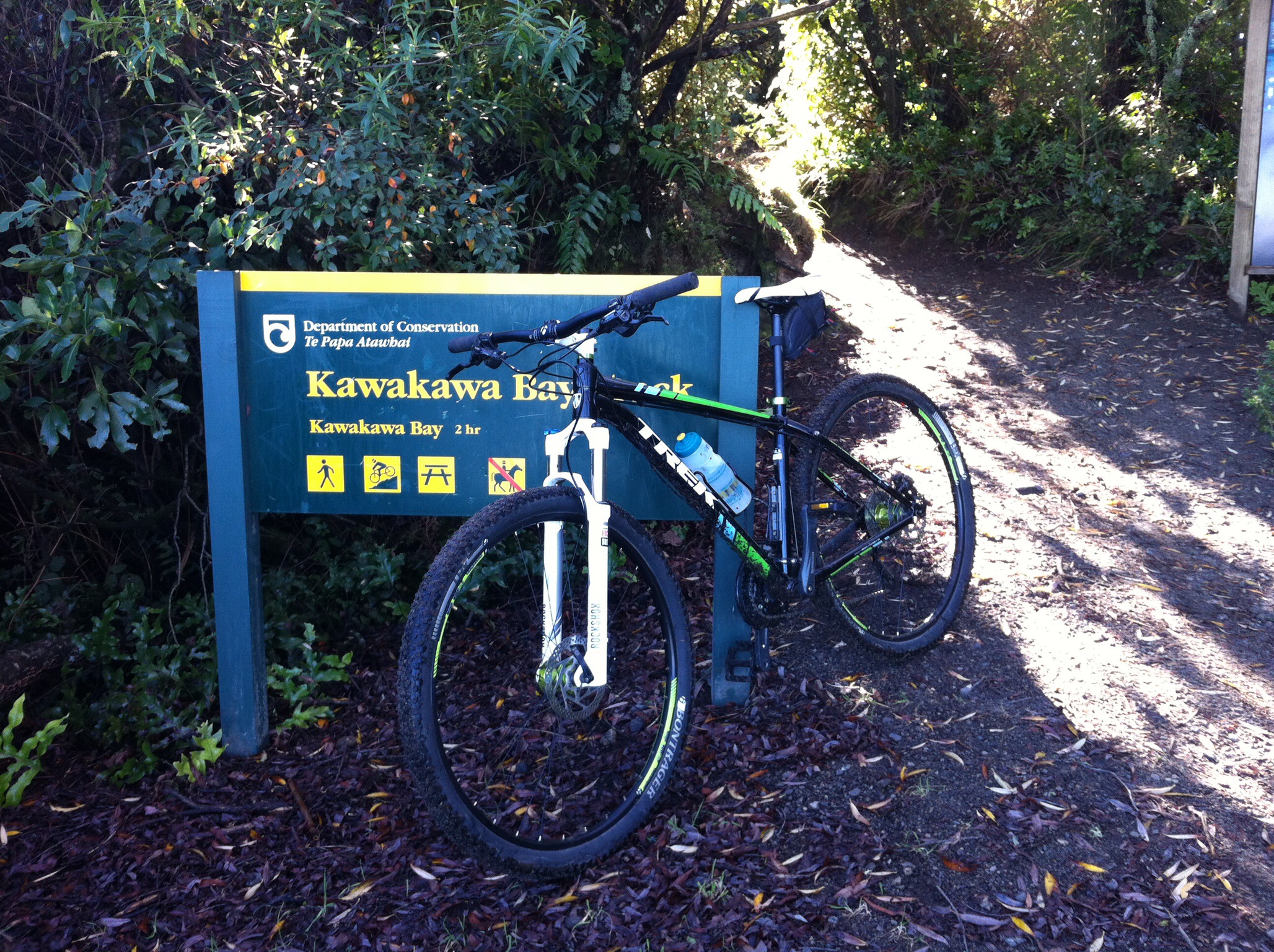
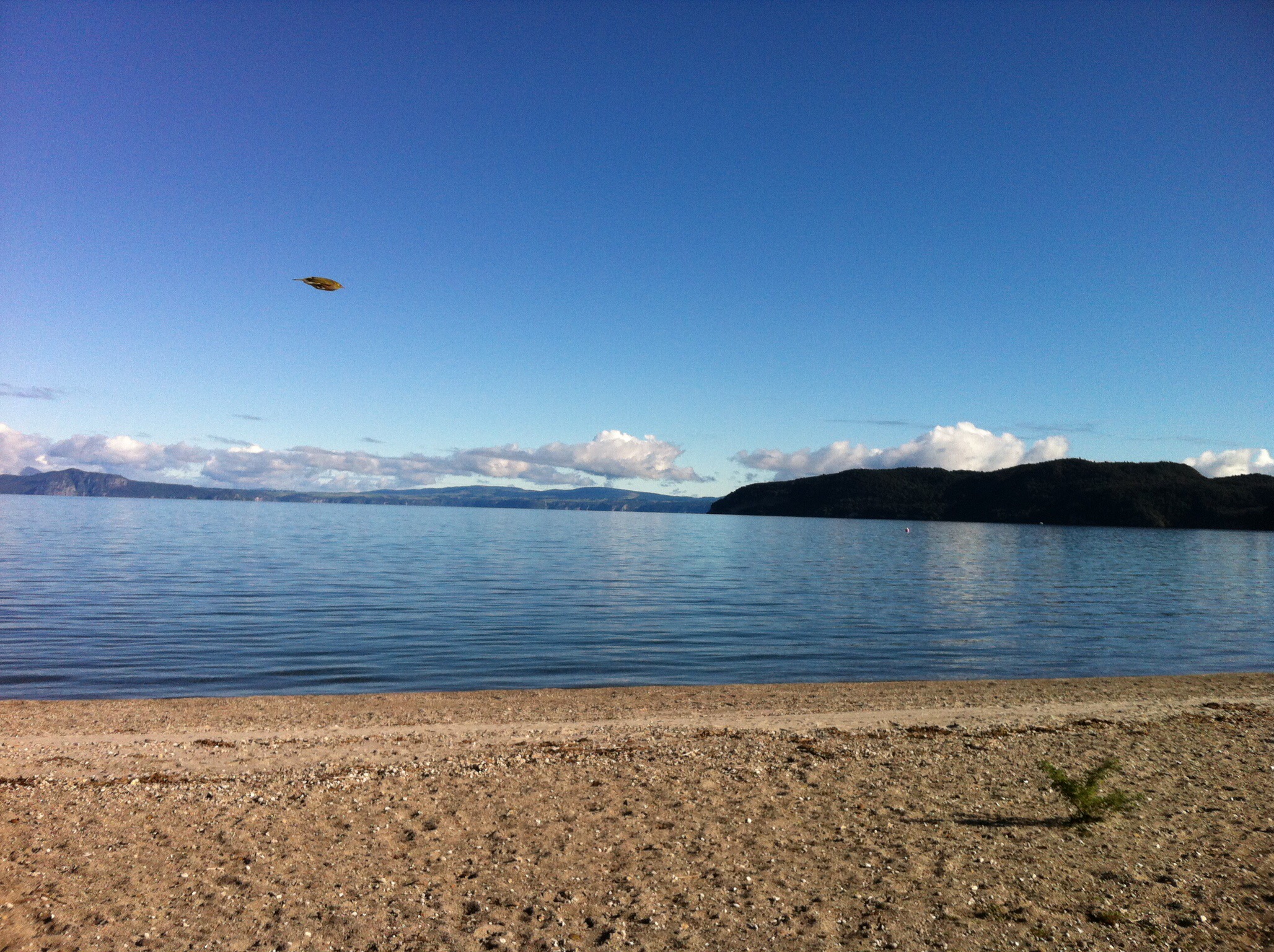
We were going to ride two parts (links) of the trail – Orakau to Kawakawa (9.8km) and Kawakawa to Kinloch or the K2K link (9.2km).  There had been a bit of rain so the track was quite wet to start with and there were a few trees across the track which we had to manhandle.  We also came across some very large hoof prints in the track which also made the riding fun.  It wasn’t long before we discovered who the hoof prints belonged to – some large black beefies who took off at a rate of knots into the bush when we came along.  Just prior to that Sheree had managed a spectacular dismount – luckily there was no harm done 🙂  The trail follows the Orakau Stream and Harakeke (flax) wetland and regenerating native bush down to Kawakawa Bay on the edge of Lake Taupo.  This part of the trail is generally downhill and offers stunning views across the lake to the volcanoes of Tongariro National Park. 


 After admiring the crystal clear waters at Kawakawa Bay it was back on the bikes for a climb through native bush to the Te Kauwae Headland.  The views from the high point across the lake and up to the Western Bays were spectacular.  We were so lucky to have a clear day so we could enjoy the views.  The trail then descends towards Kinloch with the last part of this section along the lake edge.  We encountered some mountain bikers coming the other way as we got closer to Kinloch. 


Ted had told us that the General Store at Kinloch did good coffee and food so after locking the bikes up we made our way to there.  Ted was right – the food was good – the things you would find at a Takeaways.  I had a Vege Burger and Kumara Chips – soul food after a jaunt through the bush on a bike : )

The 20km introduction to the Great Lake Trail has certainly inspired me to do the entire trail in the future.

The 71km Great Lake Trail is a grade 3 trail composed of six links (trails) which can be broken down into three sections. On the western side of Lake Taupo is a 30 km section (Waihora & Waihaha links) and on the northern side is a further 41 km of track in two sections (Orakau & K2K links and the W2K & Headland links). The shelter on the Kinloch Domain has a large map and can be the starting point for W2K (Whakaipo to Kinloch) and K2K (Kinlock to Kawakawa) tracks. There is no link between the end of the Waihora link (Kotukutuku Stream in Waihora Bay) and Orakau or K2K links. A boat transfer is required to get between these areas or back to Kinloch. The Great Lake Trail is a two way trail but for the best riding or walking experience, ride or walk in a west to east direction. Cycle the whole track in two or three days or break it up and choose the sections/links you want to enjoy.  The trail can be used year round as the free draining pumice soil surface means that even in wet weather there is little or no mud.
For more information check out http://www.treadroutes.co.nz/great-lake-trail.html

Posted in Taupo | Leave a comment