Christmas comes early at Cog Hill Golf & Country Club – Illinois, USA

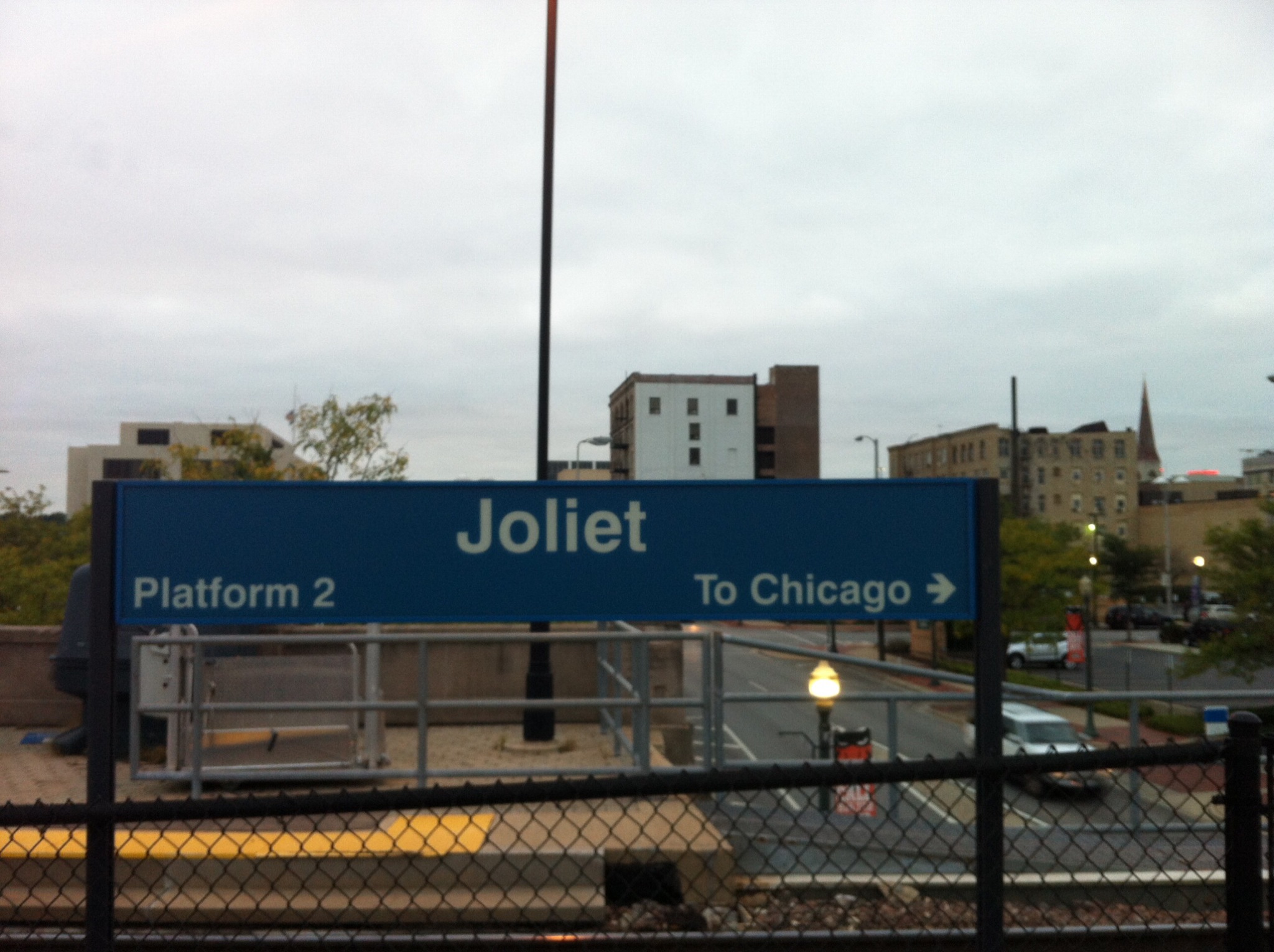
We left Iowa on Monday morning and headed for Illinois. It took us about 5 hours – the driving is so easy over here due to the large straight roads. We are staying about 50km south of Chicago in Joliet. We choose this location as it is reasonably close to Cog Hill Golf & Country Club which has four golf courses.

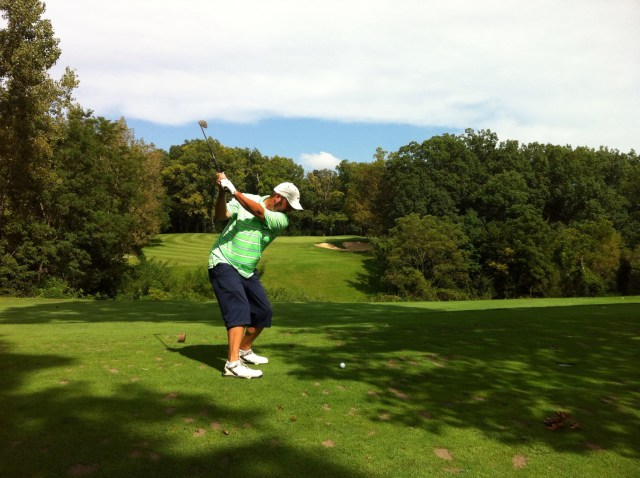
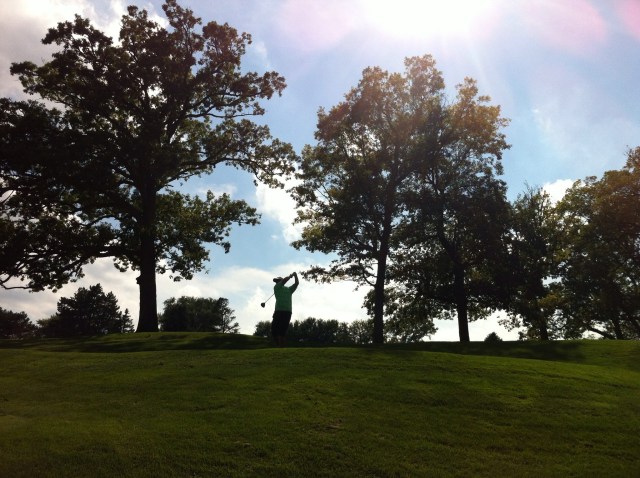
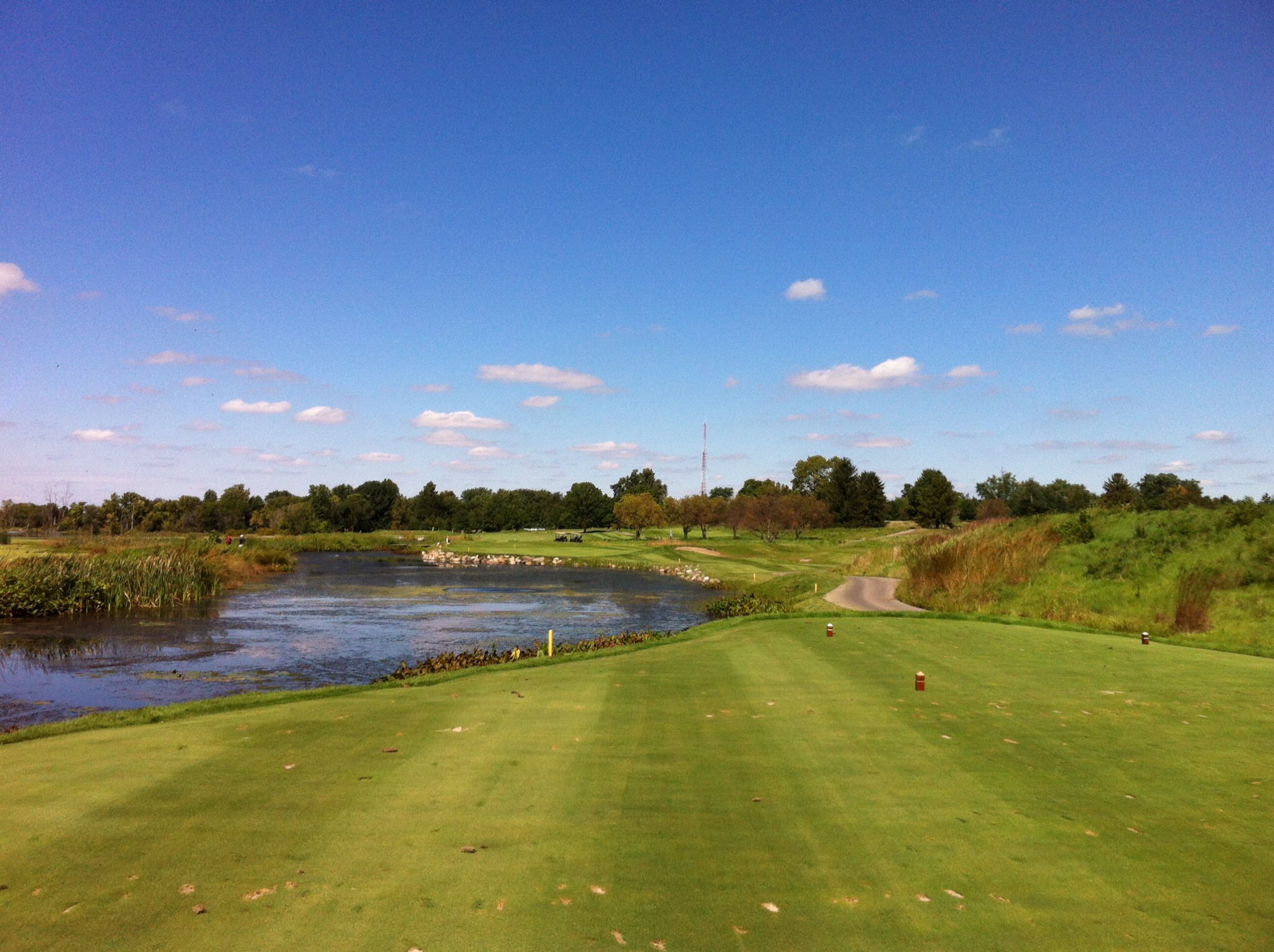
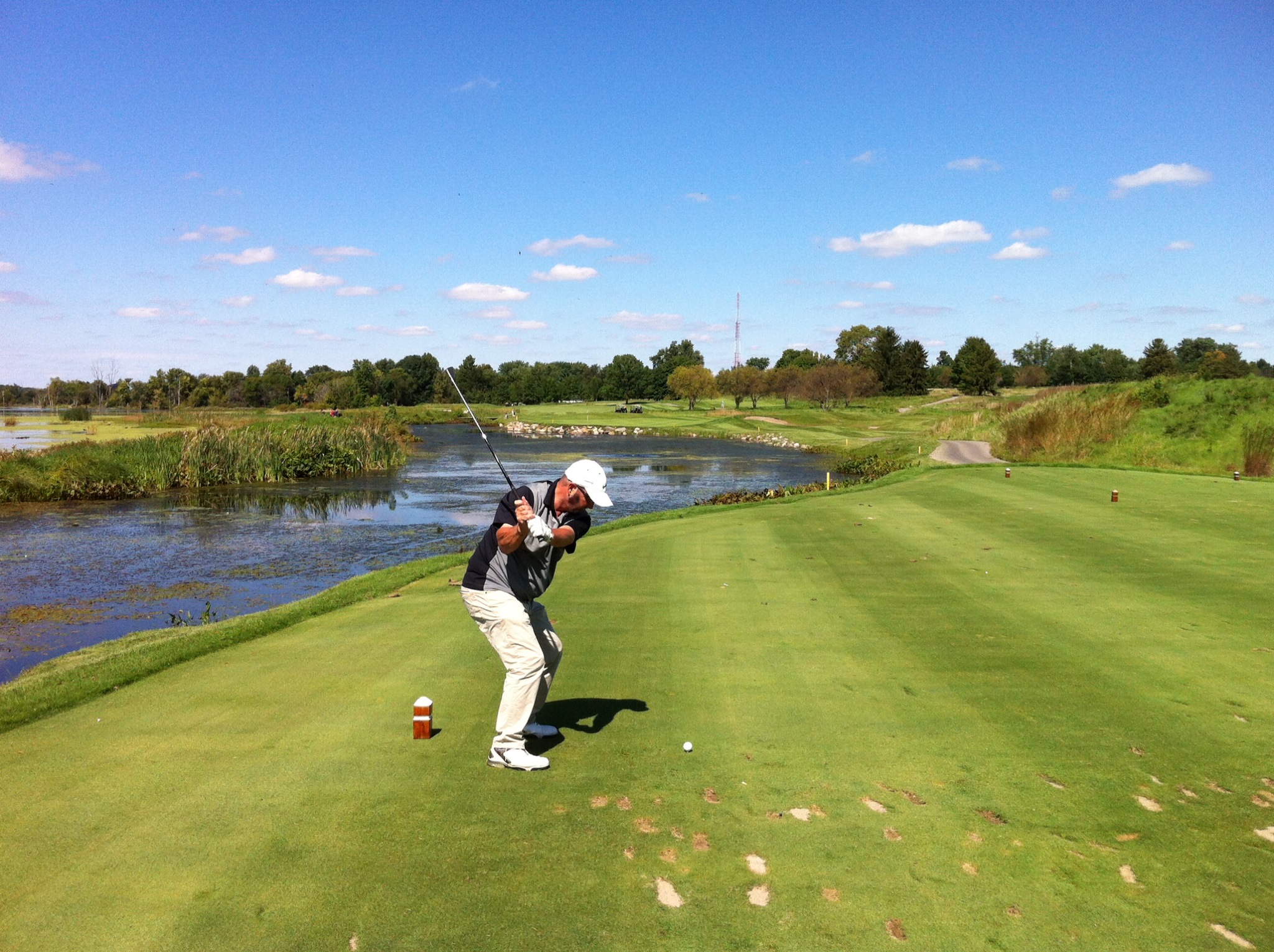
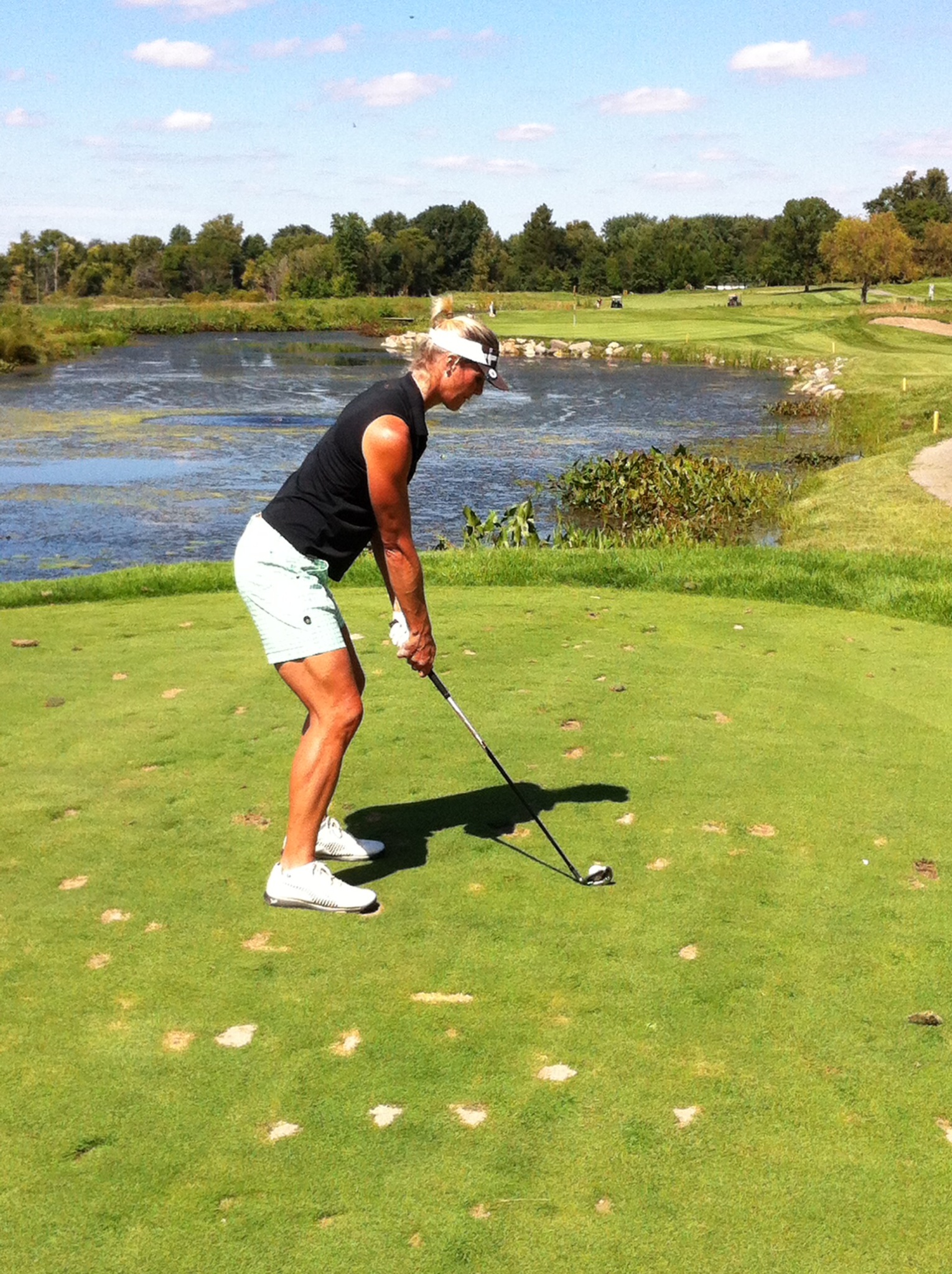
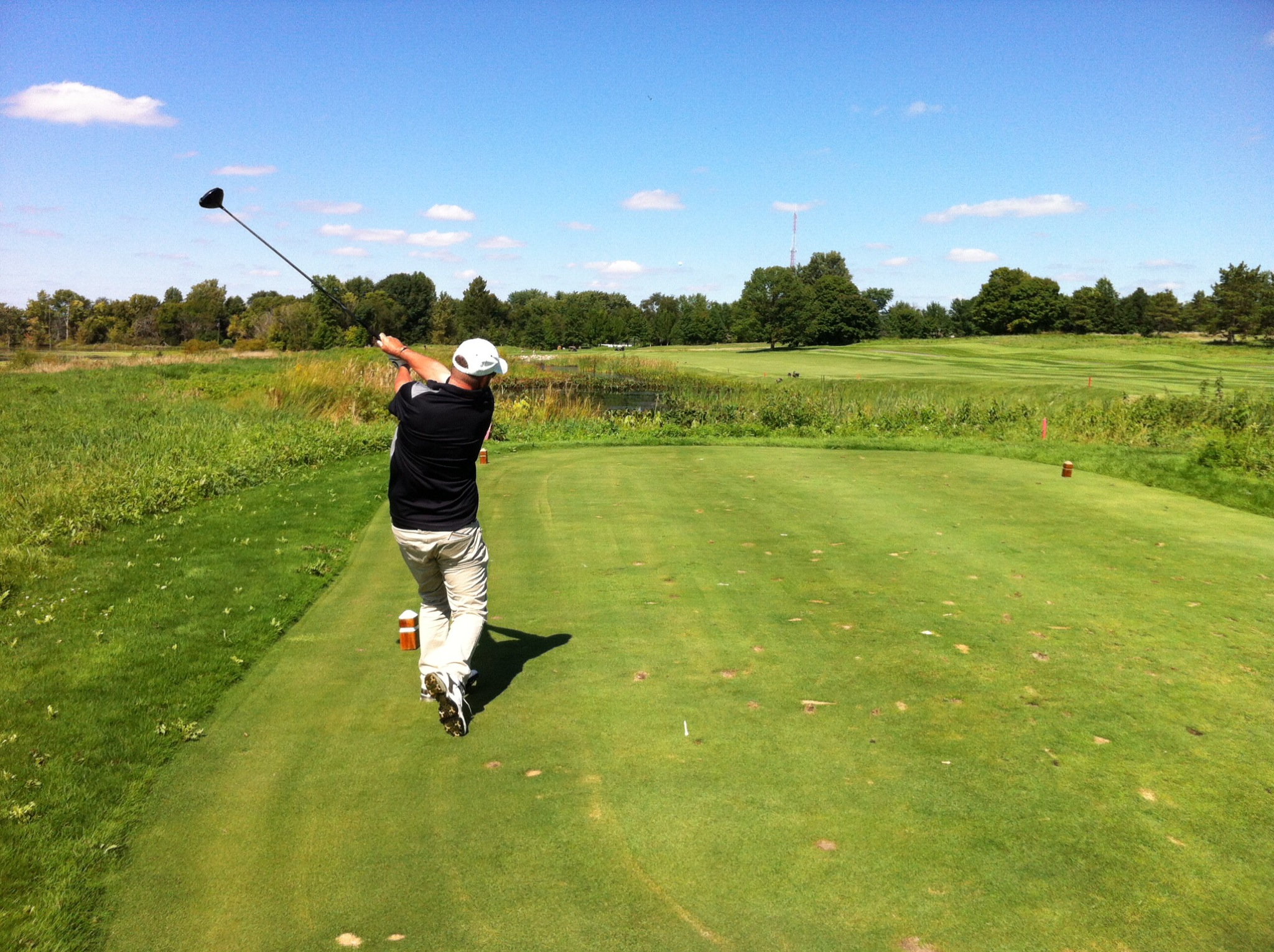
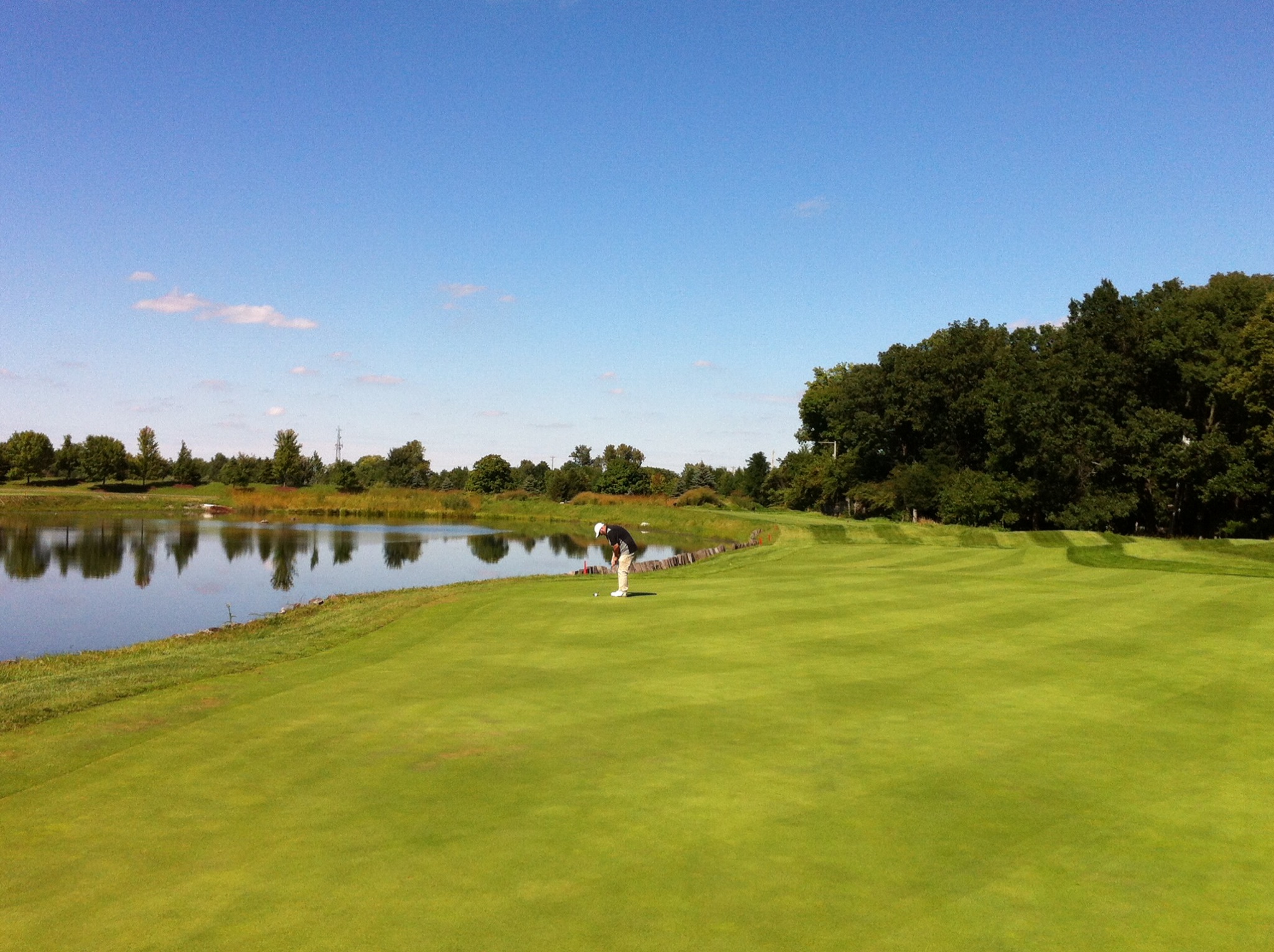
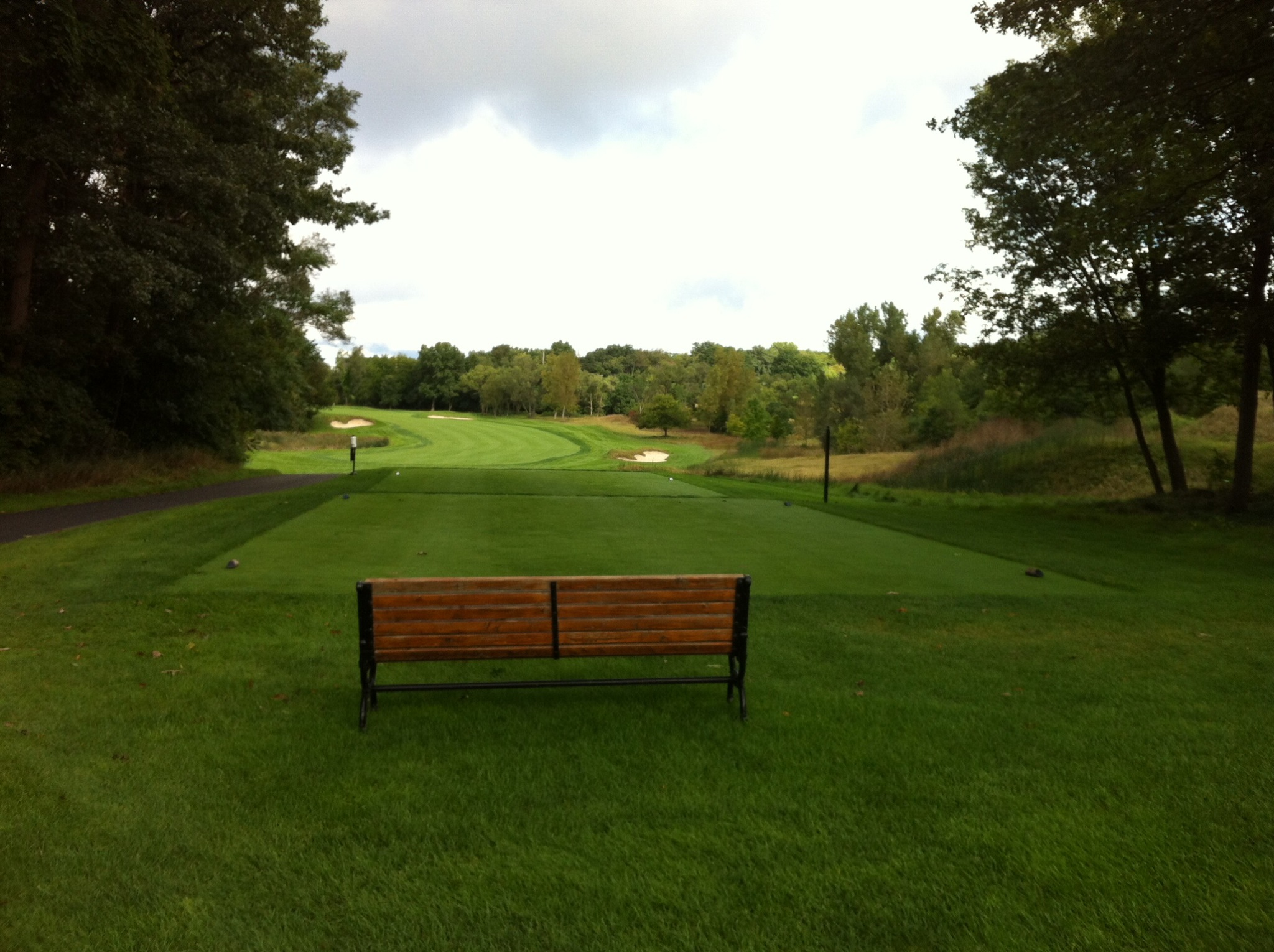
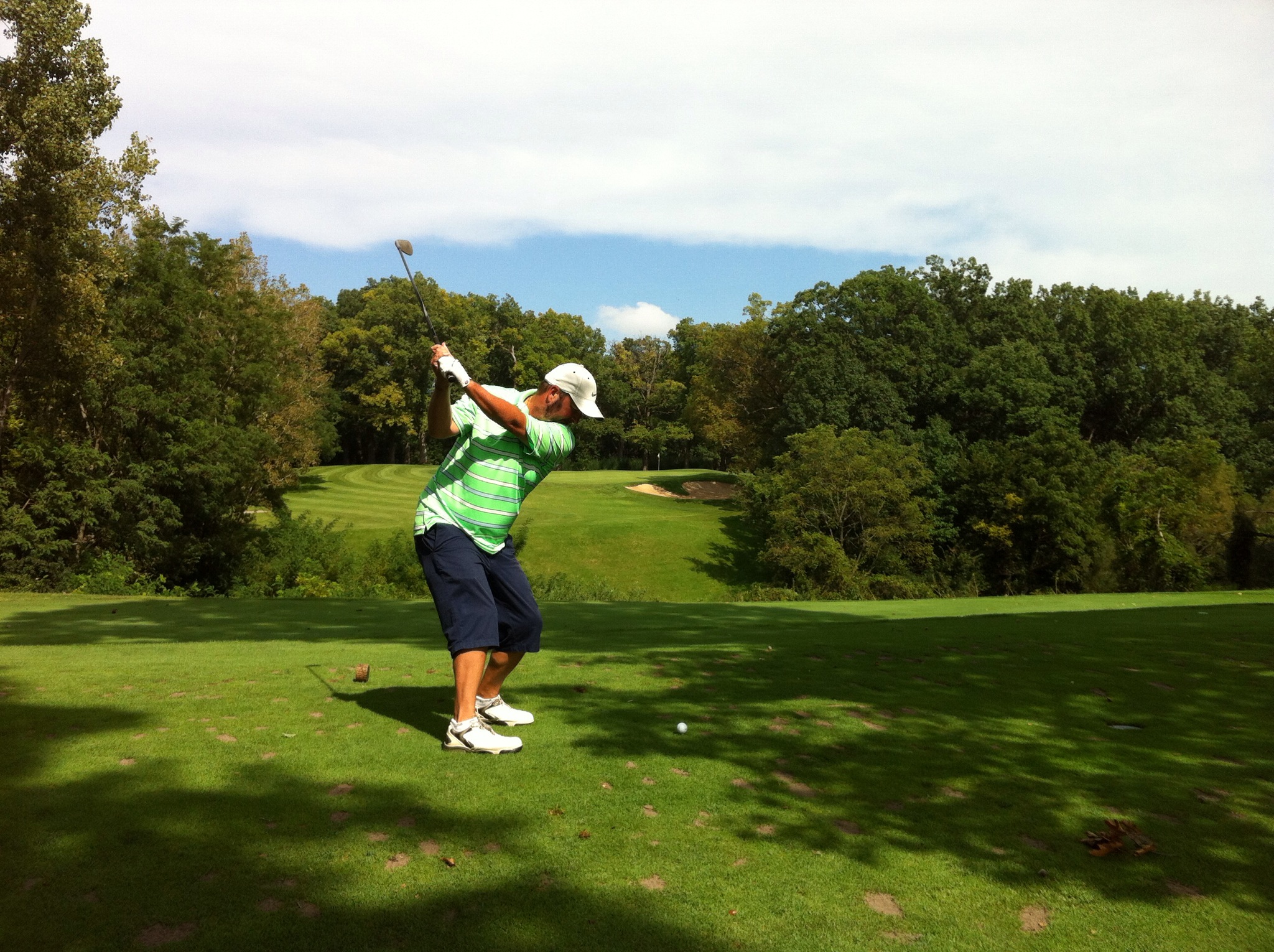
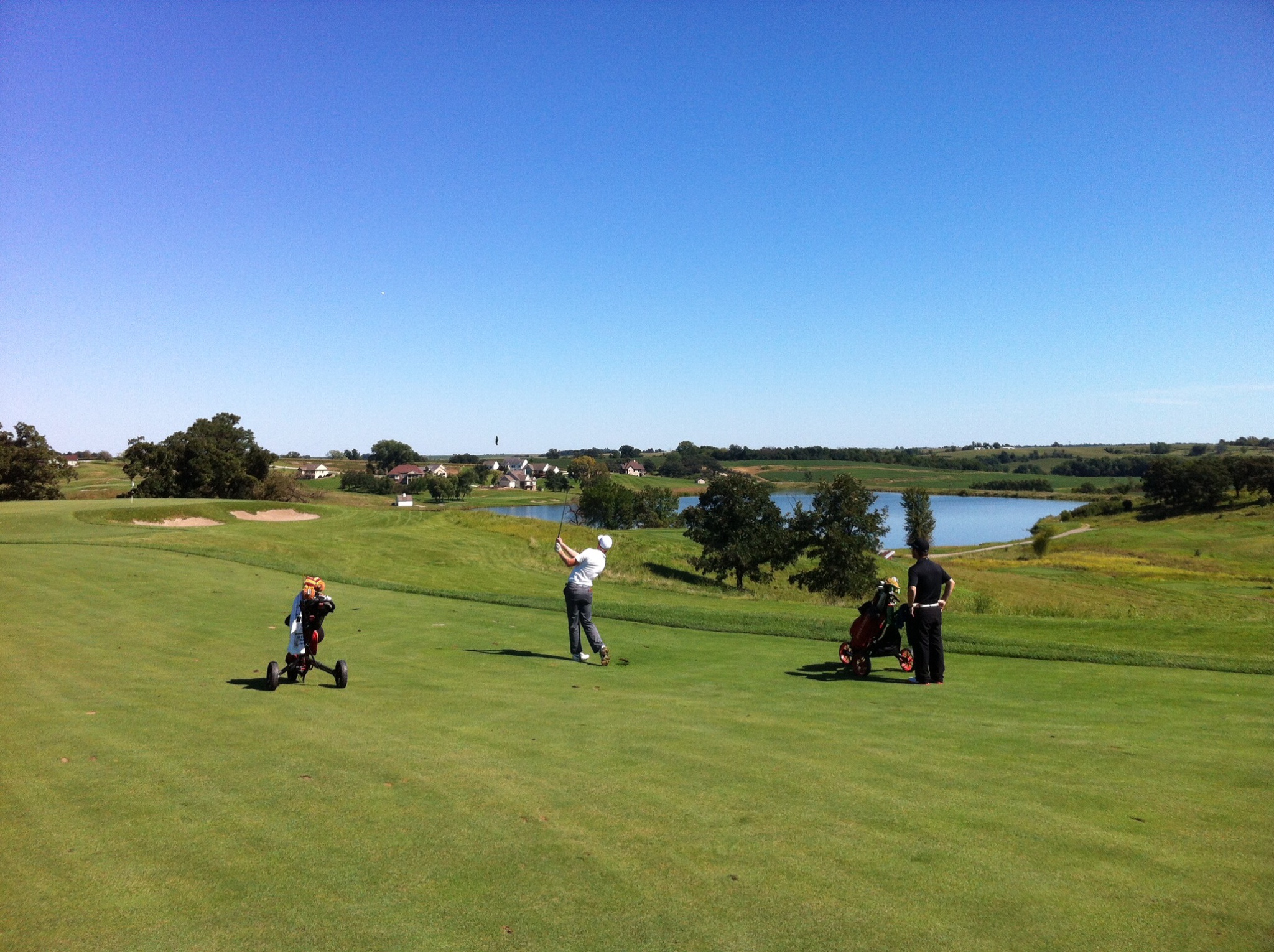
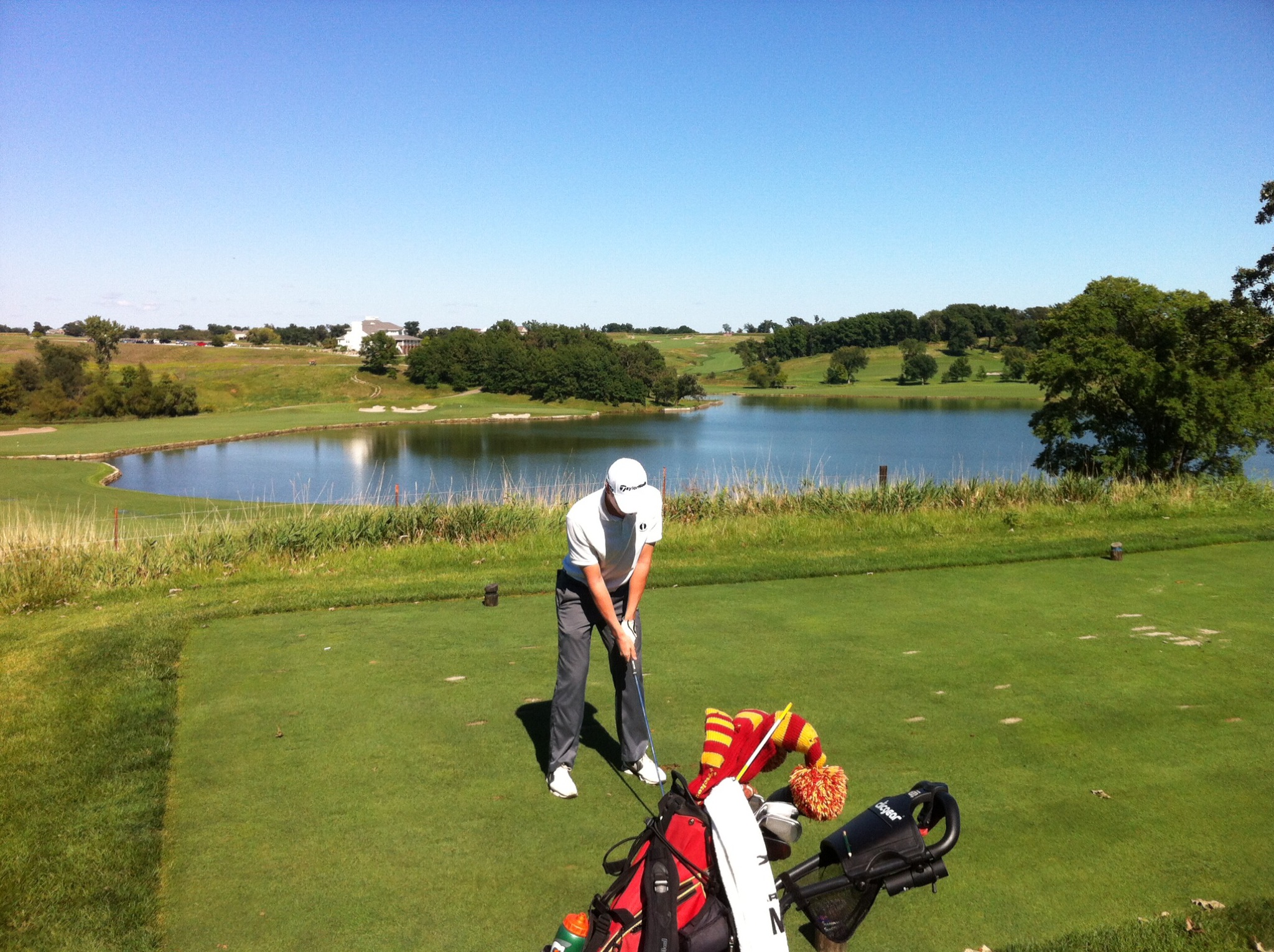
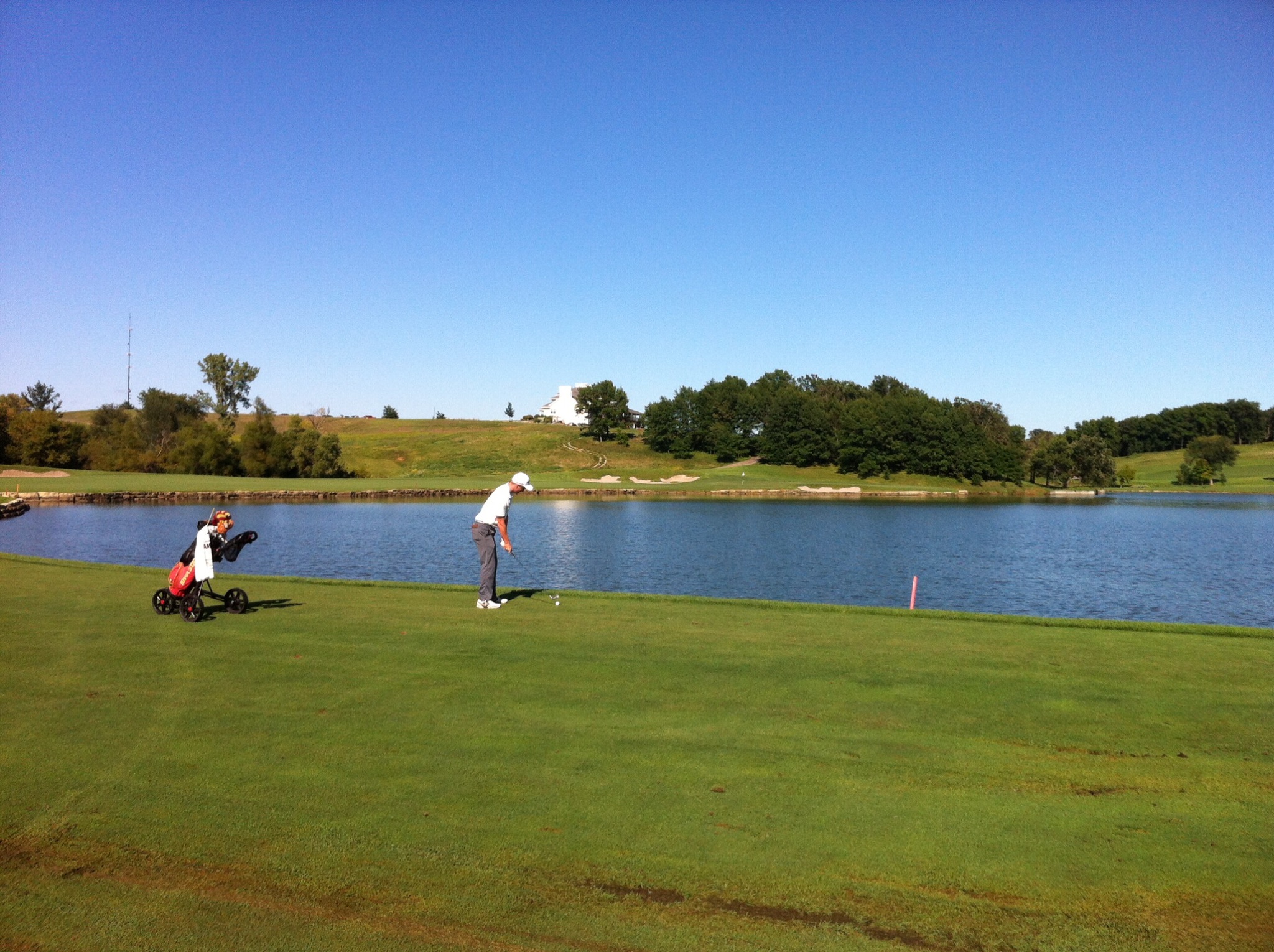
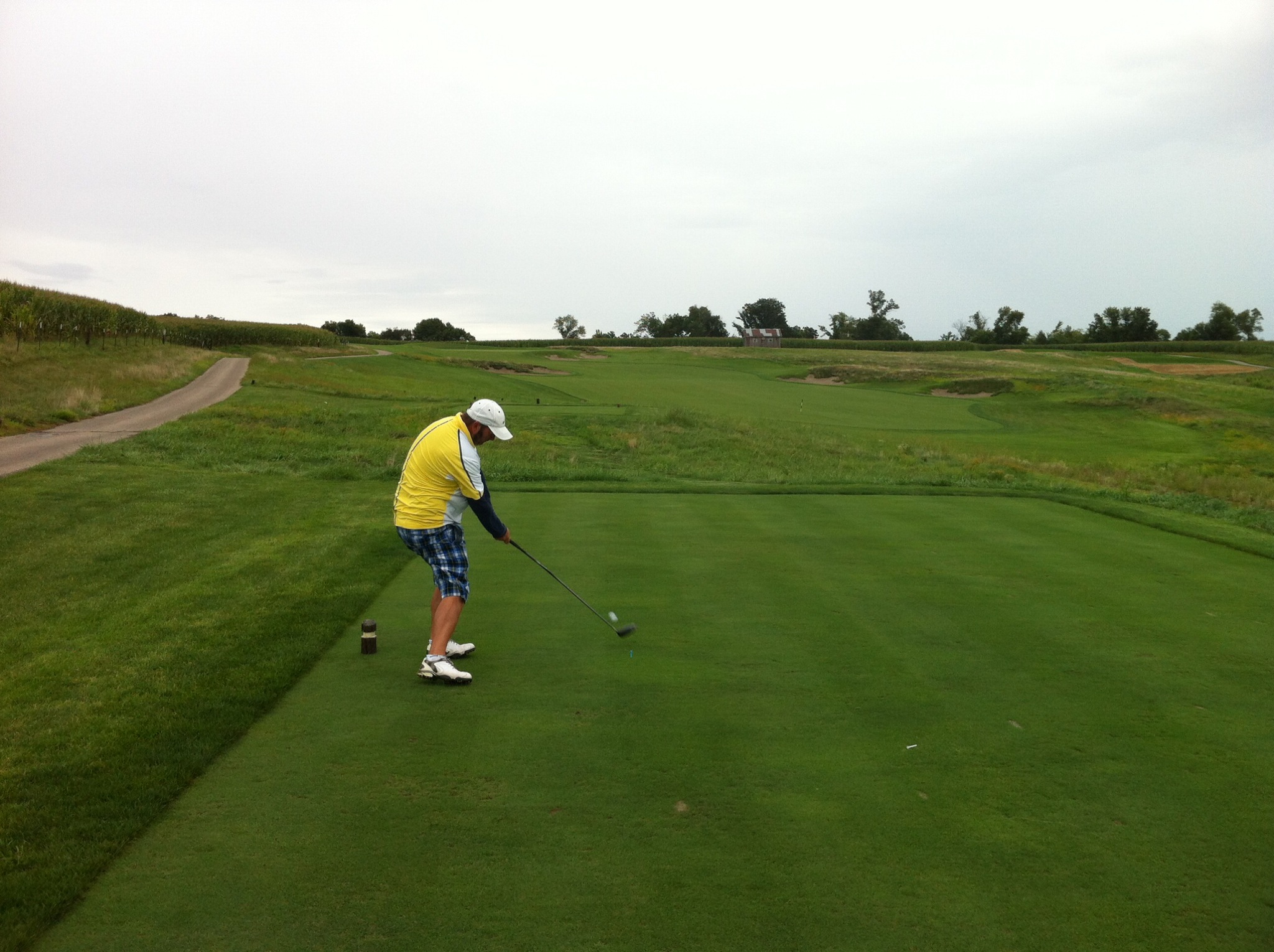
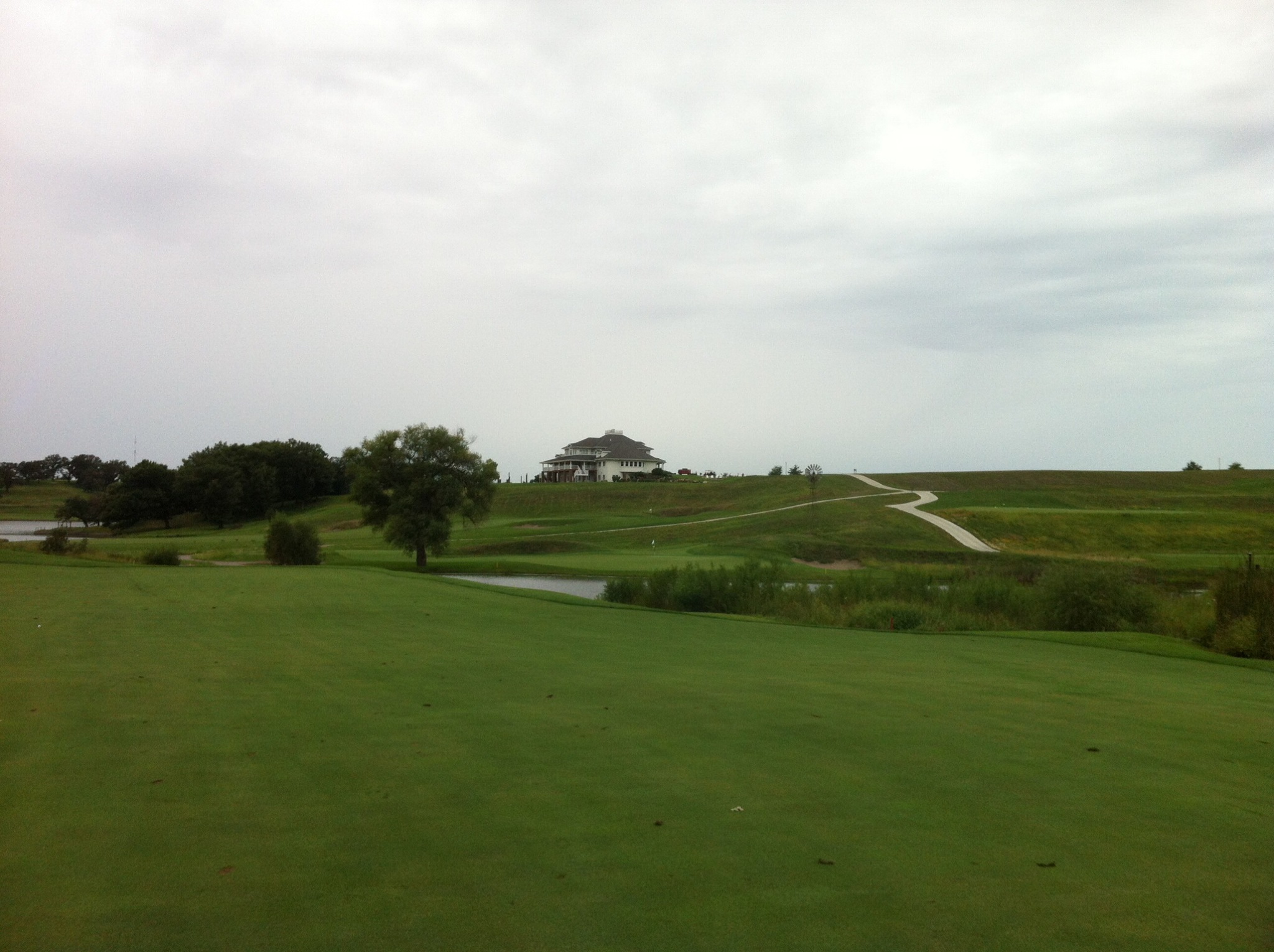
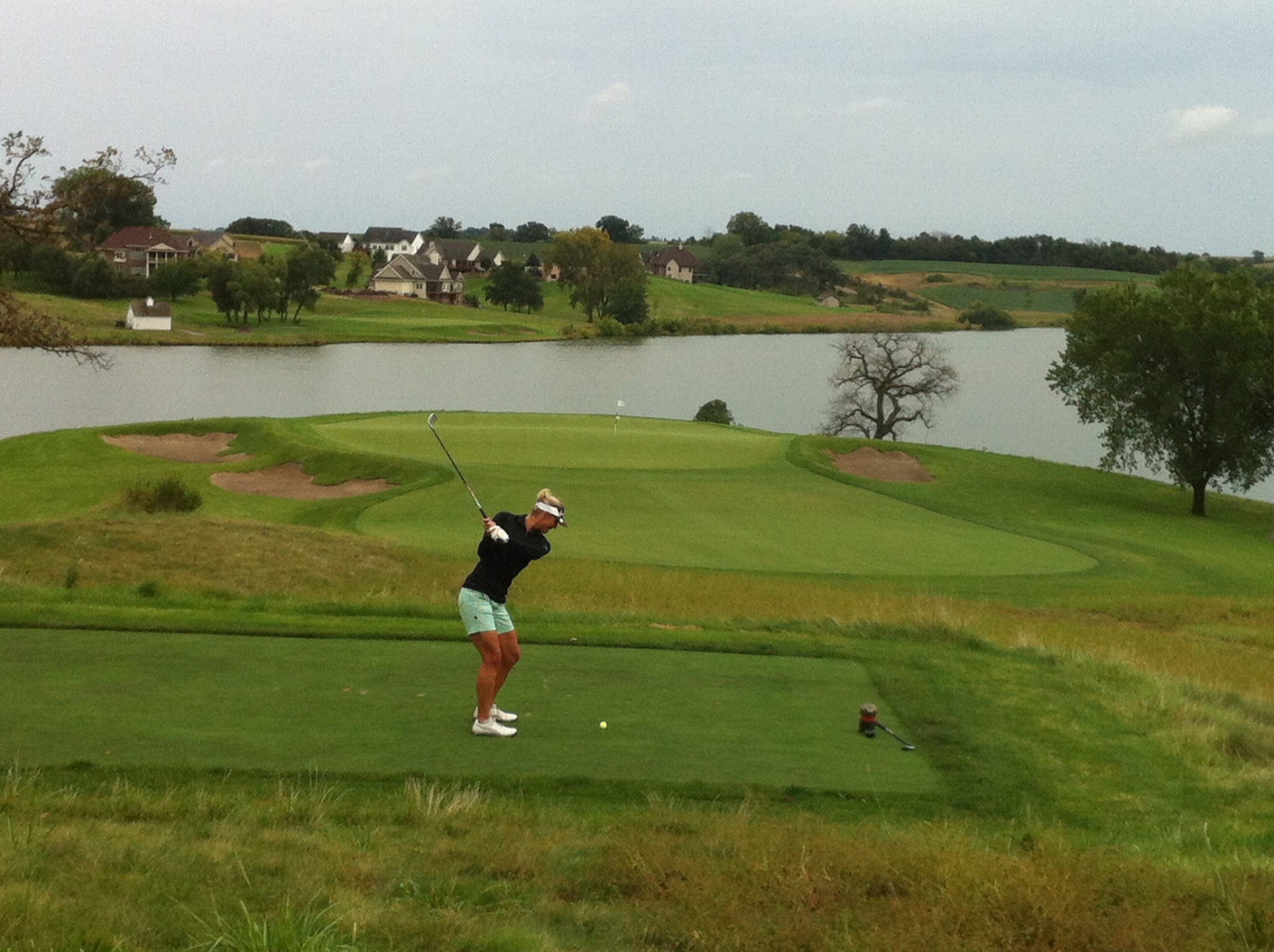
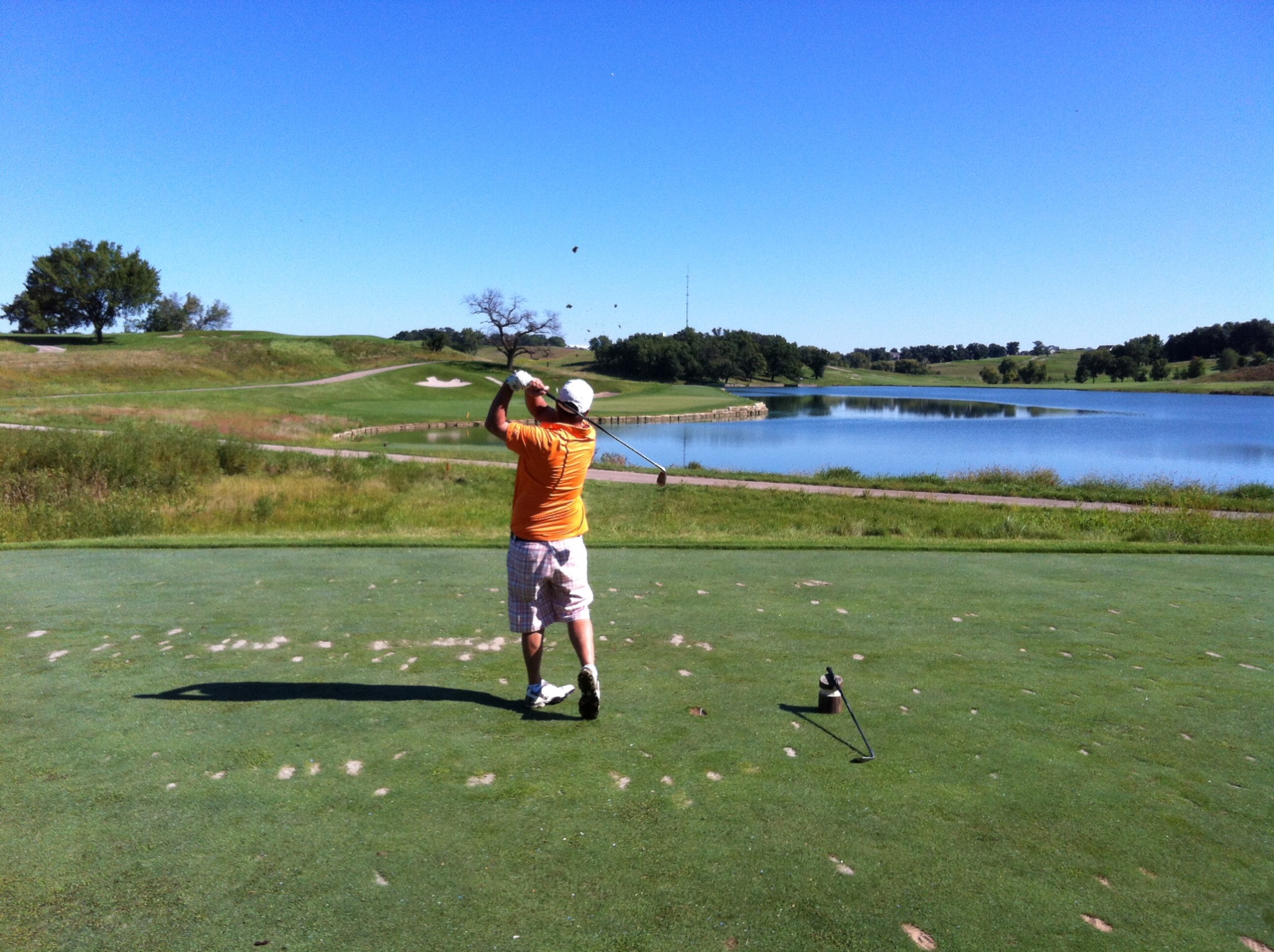
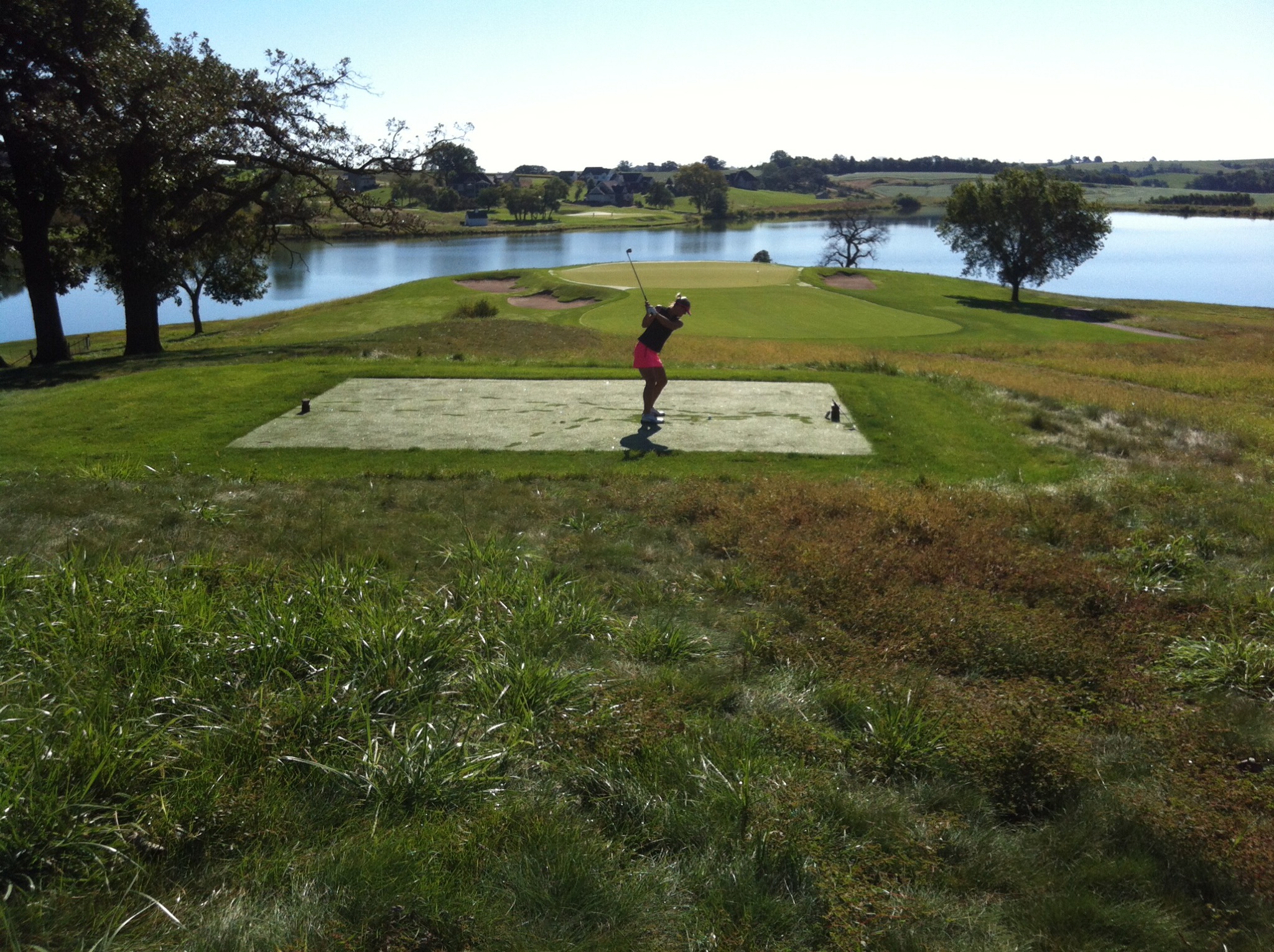
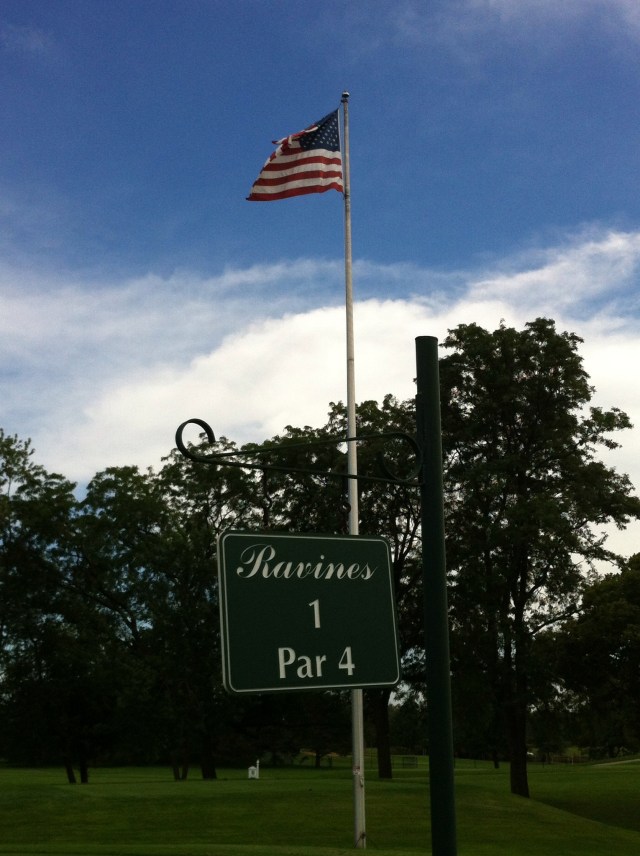
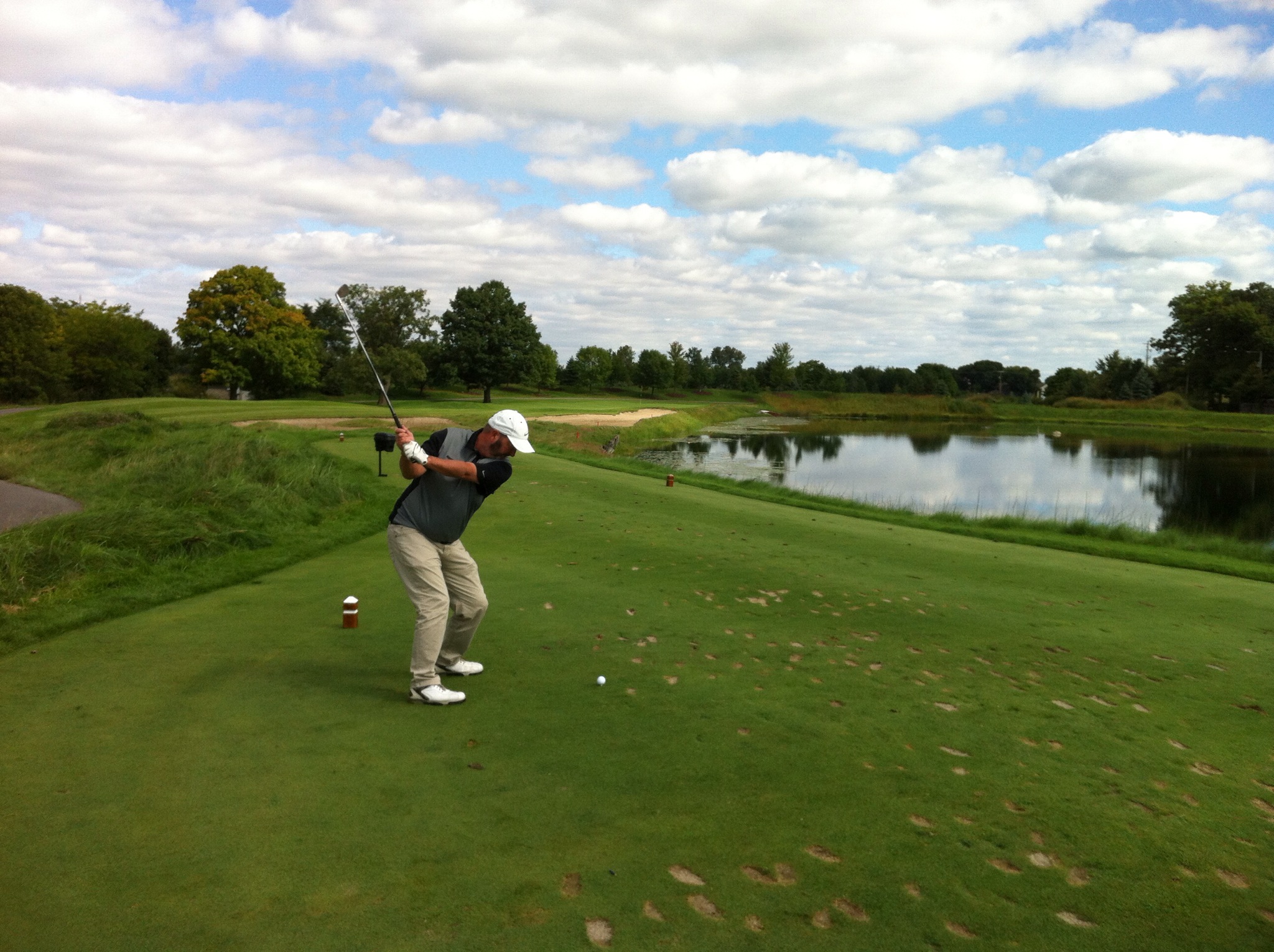
Today we played Course No. 2 at Cog Hill. Since its opening in 1929, Course No. 2 was given the nickname “RAVINES.” The sporty, championship layout is routed through wooded, rolling terrain and challenges golfers with ravines on nearly half of the holes. Unique to the RAVINES course is the closing “19th hole.” The challenging par-3 offers a testy putting surface and a memorable end the day’s golf match. Unfortunately the 19th hole was closed today.

We actually had a dry run out to the course at 6am – there was a 6.30am tee time available so we decided to get up early and get out there. When we left the hotel is was raining and looking at the rain radar it was set to pour down mid morning so we decided to take a rain check and book a tee time in the afternoon which was looking much brighter. It was a lovely afternoon with the temperature sitting at 28 degrees.

The starter welcomed us and told us that the first two holes were pretty easy – they lull you into a false sense of security and then be prepared to work hard or the course will eat you up. We both lost a ball on the first hole – this was not boding well! The course was very picturesque with well established trees and of course all those ravines!

We got to the 7th hole and Steve’s approach shot hit the top left of the green and bounced towards the scrub. He had a good look for his ball but it didn’t want to be found – he found another ball instead. As we drove to the next tee we looked in the scrub from a different angle which was much more accessible. Out we hop and into the scrub we go – between us we found 9 balls, 3 of them were Nike Pro-V’s (for you non golfers – they are good golf balls). Steve was still distressed that he couldn’t find his original ball even though we had scored 9 other balls. We were just about to get out of the scrub and wallah he found his ball.

This probably sounds quite sad to you non golfers but it is quite exciting to find a golf ball. In saying that we were struggling to find our own golf balls in the rough – it wasn’t links type rough it was just long enough green grass to camouflage your ball. We saw a lot of squirrels and sometimes I wondered whether they had stolen our balls!

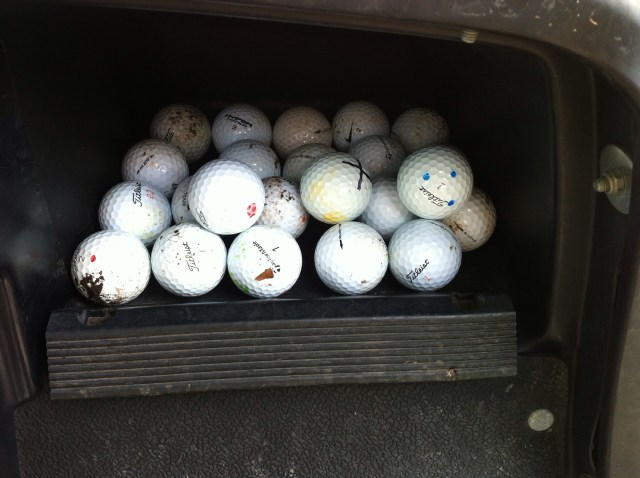
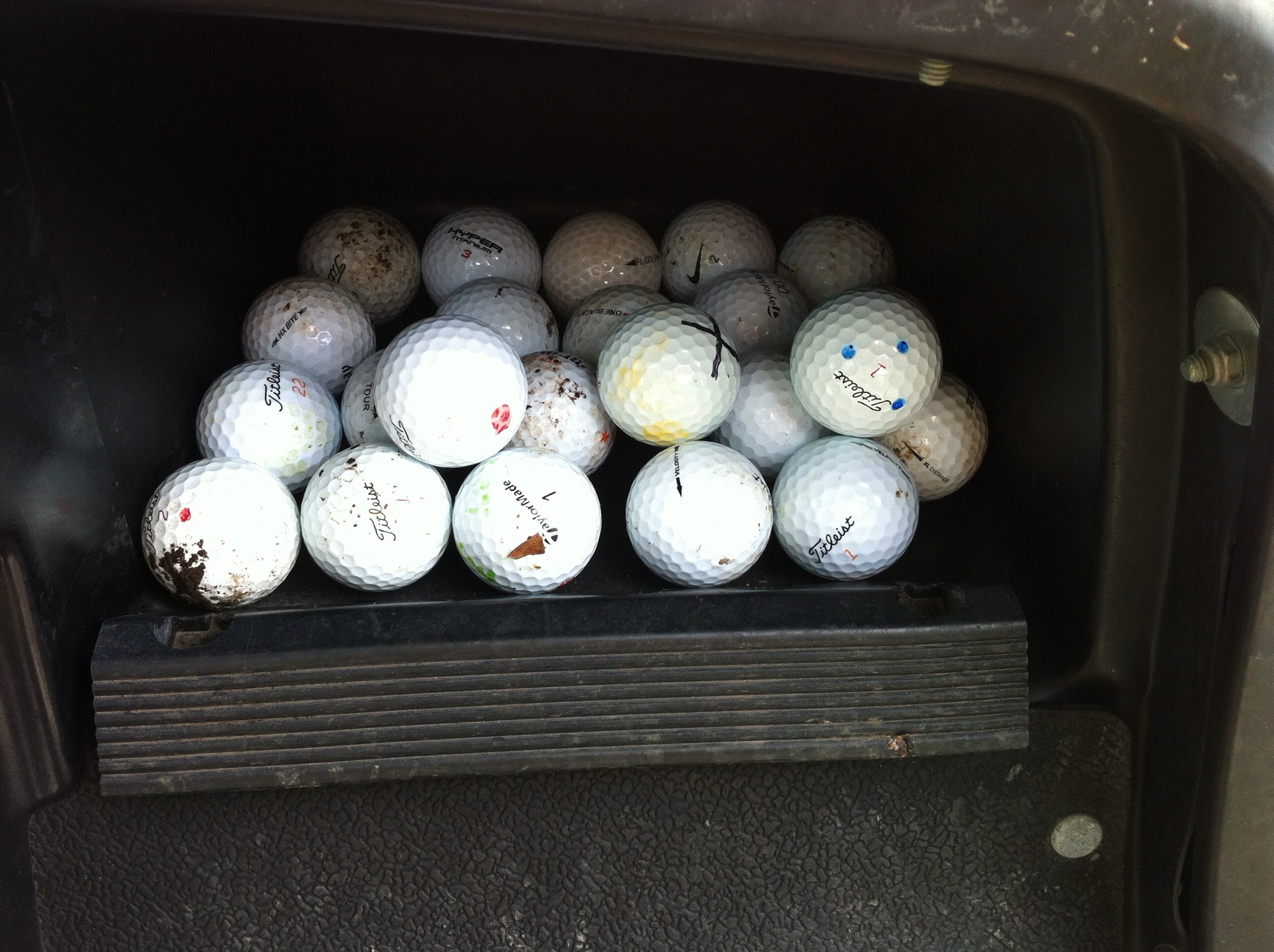
We both hit good drives on the 10th but when we got up to where we thought they were we realised they had both been a bit too right and had gone into the scrub. Yes you guessed it – into the scrub we went. There were golf balls everywhere in there. Steve was so excited – it was like christmas. As most of you know his nickname is Precious and that is due mainly to him not putting his personage in any sort of danger but when it comes to getting free golf balls it is a whole different story. Here he is scrambling down the bank to retrieve golf balls. We came out of that scrub with 25 balls! Clearly these Illinoisan’s are too lazy to move a bit of scrub to find their balls – some of them were only just in there. There were a few bugs in there and mosquito’s buzzing around so maybe that is also a reason.

On every whole after that Steve would clean a different ball and use that – he was like a kid in a candy store. We had a great afternoon – the golf was fun but I think the highlight was finding 34 golf balls : )

I thought the history of how the four golf courses at Cog Hill came to be was interesting and a bit of a feel good story – read on after the photos if you’re interested……
IMG_4420-1.JPG

IMG_4422-1.JPG

IMG_4423-1.JPG

IMG_4428-1.JPG

IMG_4429-1.JPG

IMG_4431-1.JPG

IMG_4432-0.JPG

IMG_4433-0.JPG

The History of Cog Hill Golf & Country Club

The Village of Lemont was settled in 1836, and about 90 years later three brothers by the name of Coghill bought a farm from John McLaughlin on the west side of Parker Road. Like a snowball rolling downhill, this farm began the complex that today is Cog Hill Golf & Country Club.

THREE ELECTRICIANS BUILD A GOLF COURSE…

The story begins with three brothers, John W., Martin J., and Bert Coghill who lived on a farm in Monticello, Indiana, and were hired by Western Union to string wire from their hometown to Chicago in the early part of this century. By the time they got to Chicago, they considered themselves electricians, joined the International Brotherhood of Electrical Workers (Local 134) and began the Coliseum Electrical Company at 5422 South Halsted Street, in 1920. They expanded and moved across the street to 5441. Most of their work was residential, rewiring homes that formerly were only gas.

In the early twenties, they went to a golf outing sponsored by the electrical union at Oak Hills Country Club in Palos Heights. None of them had played golf, but they thought the game looked like fun, was easy, and they had a good time. They decided “we’re plungers” and began looking for a site to build a golf course. Their search brought them 28 miles Southwest of Chicago to Lemont.

The Village of Lemont is located on a bluff that overlooks the Des Plaines River Valley. The hills and valleys of Lemont were carved out by the Wisconsin glacier during the last ice age. The change in elevation between the floor of the valley and the hills of Cog Hill are a striking contrast to the plains of Illinois. This land reminded the Coghills of land around their birthplace. They found the McLaughlin farm East of town and bought it with money they borrowed from Orland State Bank. Next, they hired David McIntosh, who owned Oak Hills, to build them a golf course.

Building and maintaining a golf course today is a scientific operation. In 1926-27, a golf course was built by manual labor and horse-drawn equipment. Men filled a scoop with two handles to move dirt and the horse would pull the scoop to an elevation they created and the men then molded and sculpted the dirt into a green. Mowers were pulled by horses. The back-breaking work produced the original Cog Hill No. 1. It opened on the 4th of July weekend in 1927.

To complement the course, the Coghills constructed a large, beautiful clubhouse. The building housed a great dining room with a 24-foot ceiling, massive wood beams, and an impressive stone fireplace.

Outside the clubhouse, the owners touted another unique feature – the children’s playground. It was billed as having the “last word in juvenile amusement devices.” A maid was in attendance to insure the care and comfort of the children while their parents enjoyed a game of golf – child care 1930’s style.

Cog Hill also had a Chicago link in those days. Reservations for golf were taken at the Boston Store, which, at that time, was one of the city’s leading department stores. Another key to their success was the Chicago & Joliet Electric streetcar system that ran between Argo and Joliet, giving their customers easy access to the course. In those days a round trip ticket between Lemont and Joliet cost only 25 cents.

The course was busy from the very beginning, and soon they bought 160 acres on the east side of Parker Road from the Reed Family. David McIntosh and Bert Coghill worked together to design and build the original Course No. 2, which opened in the fall of 1929 – just in time for the Black Thursday (October 24, 1929) crash of the stock market and the Great Depression. Despite the twelve years the depression persisted, the golf course prospered and the people who had money continued to make their way to Cog Hill.

JOE JEMSEK – A CADDIE BECOMES AN OWNER……

About that time, along came Joe Jemsek, a young man from Argo who began caddying at the age of 6. He had caddied at Laramie, Acacia, and Palos Hills before coming to Cog Hill when he was 15. He became a golf professional at 17 and joined the tour. Despite scores that kept him near or under par, he didn’t want to be a tour player. He wanted to be a golf course owner. One day while caddying for Marty Coghill, Marty asked him what he thought of the place. Joe told Marty, “It’s the most beautiful place I’ve ever seen; some day I’m going to going to own it.” Marty related the story to his playing partners, who just happened to be his brothers. They all had a good laugh, but Joe kept his word. He left the tour and came back to Cog Hill where he parked cars, caddied, worked behind the desk, on the golf course, and in the kitchen, all while giving lessons and working as caddie master. When he was denied a raise, Joe moved to St. Andrews G&CC (West Chicago, IL) where he taught and ultimately purchased in 1939 for $40,000. Joe had $25,000 in the bank from money he had saved and was able to get a loan for 4%.

During his years at St. Andrews, he remained friendly with the Coghill brothers, visited them frequently and often played cards with them. In 1951, after John and Bert passed away, Marty Coghill asked Joe to buy the two courses. He did so for $400,000 even though Marty was offered $500,000 by another outfit. Joe said Marty chose him because he knew he would get paid. They had an agreement that the course would continue to be called Cog Hill. Not willing to break up a winning team, Joe also kept the golf professional, Heinie Sick and the groundskeeper George Dahlman. George Dahlman remained the greenskeeper until his death in 1973. Heinie Sick continued to be the head professional for another 42 years. Poor health forced him to retire in 1993, two years before his death.

In 1963, Joe hired Dick Wilson to build a third course. The original layout of Course No. 1 had the front nine finishing at the clubhouse. This created both a problem and a solution for the new course. The problem was that there was not enough room to have the new course start and finish near the existing clubhouse. The solution was to “break-up” the original Course No. 1 layout. It was accomplished as follows: No. 1 would be composed of the first four holes of the front nine, plus nine new holes, and then return to the clubhouse on the last five holes of the original front nine. The new course, No. 3, would start out with the first four holes of the original No. 1 back nine, plus nine new holes, and then return to the clubhouse on the last five holes of the original No. 1 back nine. The two new layouts turned out to be of similar length and difficulty. Over the years, the new parts of the courses matured and blended into the old, and now most of the remodeled feeling has gone away.

Still concerned that he didn’t have a course to equal Medinah No. 3, Joe asked Dick Wilson to build a fourth course, good enough to hold a national Open or PGA Championship. Wilson complied, but unfortunately died before finishing, and the course was completed by Joe Lee. The collaboration was so successful that No. 4 is ranked among the top courses in the United States by Golf Digest, Golfweek, and Golf Magazine. Joe nicknamed the course “Dubsdread” after a course in Orlando, Florida where he spent his winters as a young pro. Dubsdread translates to “dubbers beware” and give players a warning of the test of golf that awaits them.

Over the years, many National Championships have been contested at Cog Hill. They include the 1970 and 1989 USGA Men’s Public Links Championship, the 1987 United States Women’s Public Links Championship, and the 1988 Western Junior. In 1991, the Western Golf Association brought the Western Open to Dubsdread, bringing the top PGA Tour stars, such as Tiger Woods, a five-time winner. The name of the tournament has changed over the years, but the cause has remained the same- providing college scholarships to deserving caddies. Recongnized as one of the premiere events on the PGA Tour, Cog Hill has grown to be a favorite of many of the touring professionals. The list of National Championships also contains the 1997 United States Amateur Championship which was contested over Course No. 2 and Course No. 4 in August of that year. In addition, Cog Hill has hosted many qualifiers for both U.S. Opens and Men’s Public Links Championships.

Cog Hill is one of the economic engines that drives Lemont. At peak season, over 400 people are employed on the golf courses and in the clubhouse to assure a great time to as many as 1,200 golfers per day and the myriad of receptions, weddings, banquets, and business meetings regularly accommodated. Much of that payroll is spent in and around the Lemont area.

Joe Jemsek has received many honors. Almost single-handedly, he brought golf for the public player up to the standard of the provate club and he proved that he could be successful doing it. Today, there are public courses across the country that never would have been built had not Joe Jemsek shown the way. With all this in his life, Joe Jemsek was most proud of being a Class A member of the PGA since the early forties, of receiving the PGA Professional Golfer of the Year award in 1991, and being the first to represent public golf on the Executive Committee of the United States Golf Association (1988-1989).

Cog Hill has received many coveted honors throughout its years. Dubsdread has also received many industry accolades annually, among them are being name No. 1 on the list of Best Courses You Can Play in Illinois by Golfweek, Top 100 in the U.S. by Golf Magazine, and America’s 100 Greatest Public Courses by Golf Digest. When speaking of Dubsdread, Joe said, “We built this course in 1964 to be the best course in the United States. We’ve had many USGA qualifying rounds, as well as state and district events, and now the Western Open and the U.S. Amateur and it has always stood up, right through 1996. Our courses have received many honors, but what is most important to my son and I is when our customer comes to play, we provide a quality round of golf on all four courses. We continue to try and make everything better at Cog Hill, every year.” Jemsek Courses have the service of 22 PGA and LPGA teachers and six high schools call Jemsek courses home.

Joe Jemsek died April 2, 2002. He was a widower and left two children, Frank and Marianne (Mrs. Gerard Hinckley), seven grandchildren, and ten great grandchildren. Joe’s legacy for public golf continues today with Frank and his daughter Katherine operating Cog Hill and Pine Meadow Golf Club (Mundelein, IL) and Joe’s daughter Marianne operating St. Andrews Golf and Country Club (West Chicago, IL).

Dubsdread has been the site of the PGA Tour’s Western Open (1991-2006) and the BMW Championship (2007, 2009-2011).

Posted in Illinois, USA | Leave a comment

Iowa State University Golf Team – Iowa, USA

We had the pleasure of watching the ISU men’s golf team play a qualifying round at The Harvester on Saturday afternoon. They are a great bunch of young guys and their golf swings are amazing. It was magical to watch. The conditions were perfect – blue skies and no wind.

There are eight guys in the team – 2 from Spain, 2 from Australia, 3 Americans and our very own Kiwi. They are a mix of sophomores (second years), juniors (third years) and a couple of seniors (last year). They are coached by Andrew Tank (referred to as Coach Tank) who is from Minnesota. He has been the head coach since 2010. They also have an assistant coach – Chad Keohane (referred to as Coach Chad). We walked a few holes with Coach Chad – he had just joined the team in August and was enjoying being in Iowa with the guys. He had tried his hand on the tour but it was tough going.
After golf on Saturday Nick and his two Australian teammates Reuben and Sam came for a BBQ. They are great guys and we had a great night. Nick stayed the night with us as they had another qualifying round on Sunday morning at The Harvester. They also played on Friday and will have another 54 holes the next weekend – this is to determine the top 5 who will travel to the first tournament in West Virginia in a couple of weeks. After this weekend’s 54 holes Nick is in 4th position – not bad given he is making a comeback after breaking his collar bone skateboarding – say no more! He is now banned from skateboarding!

IMG_2934.JPG

IMG_2937.JPG

IMG_2939.JPG

IMG_2940.JPG

IMG_2945.JPG

IMG_2947.JPG

After golf on Sunday we went into Ames and had lunch with most of the team at Hickory Park Restaurant. This place is a large diner and a bit of a tradition for the boys after playing The Harvester. I think they all got the Hickory Special – chicken, ribs, mashed potatoes and fries – great carbo loading for USD9.95!

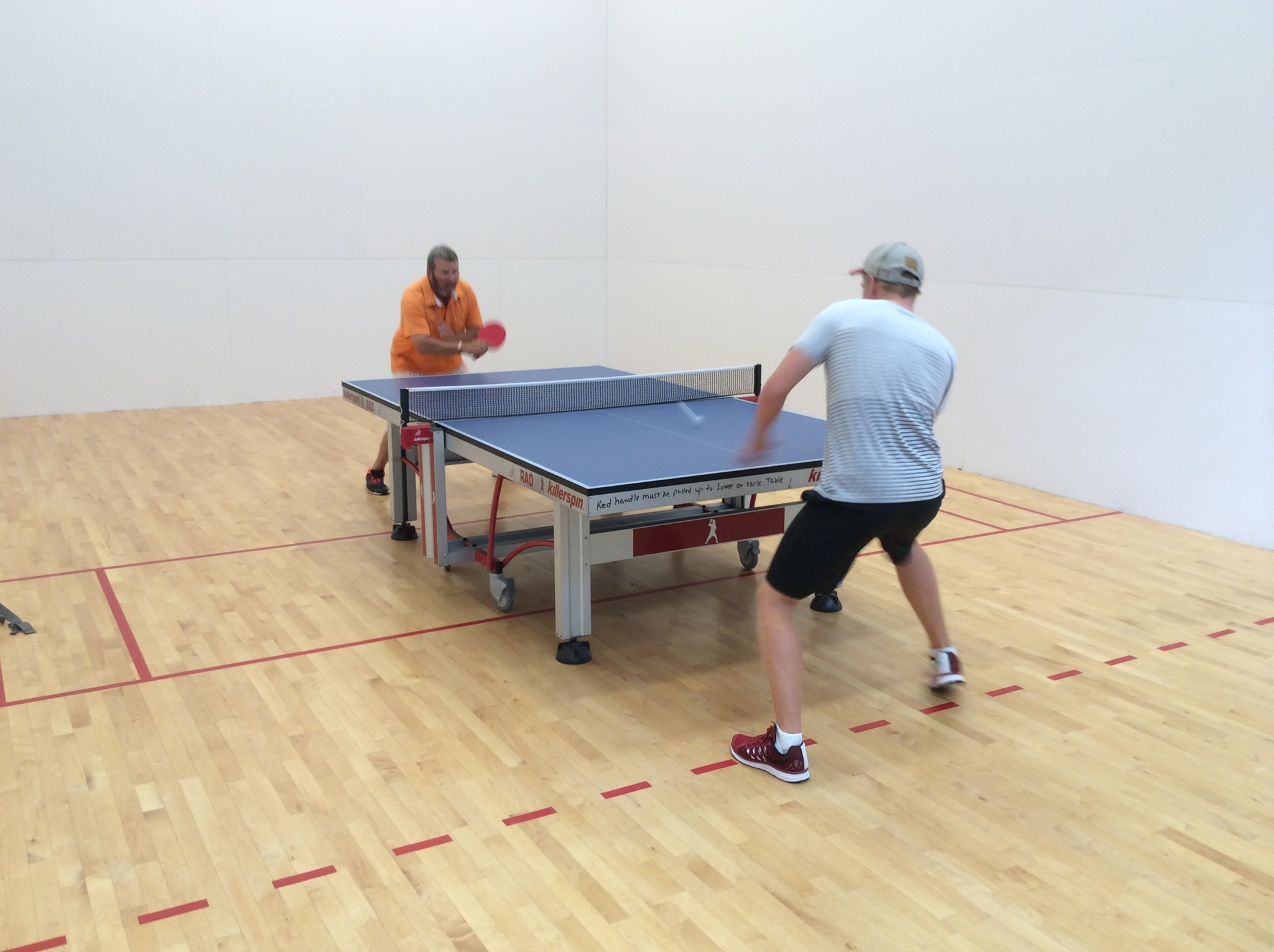
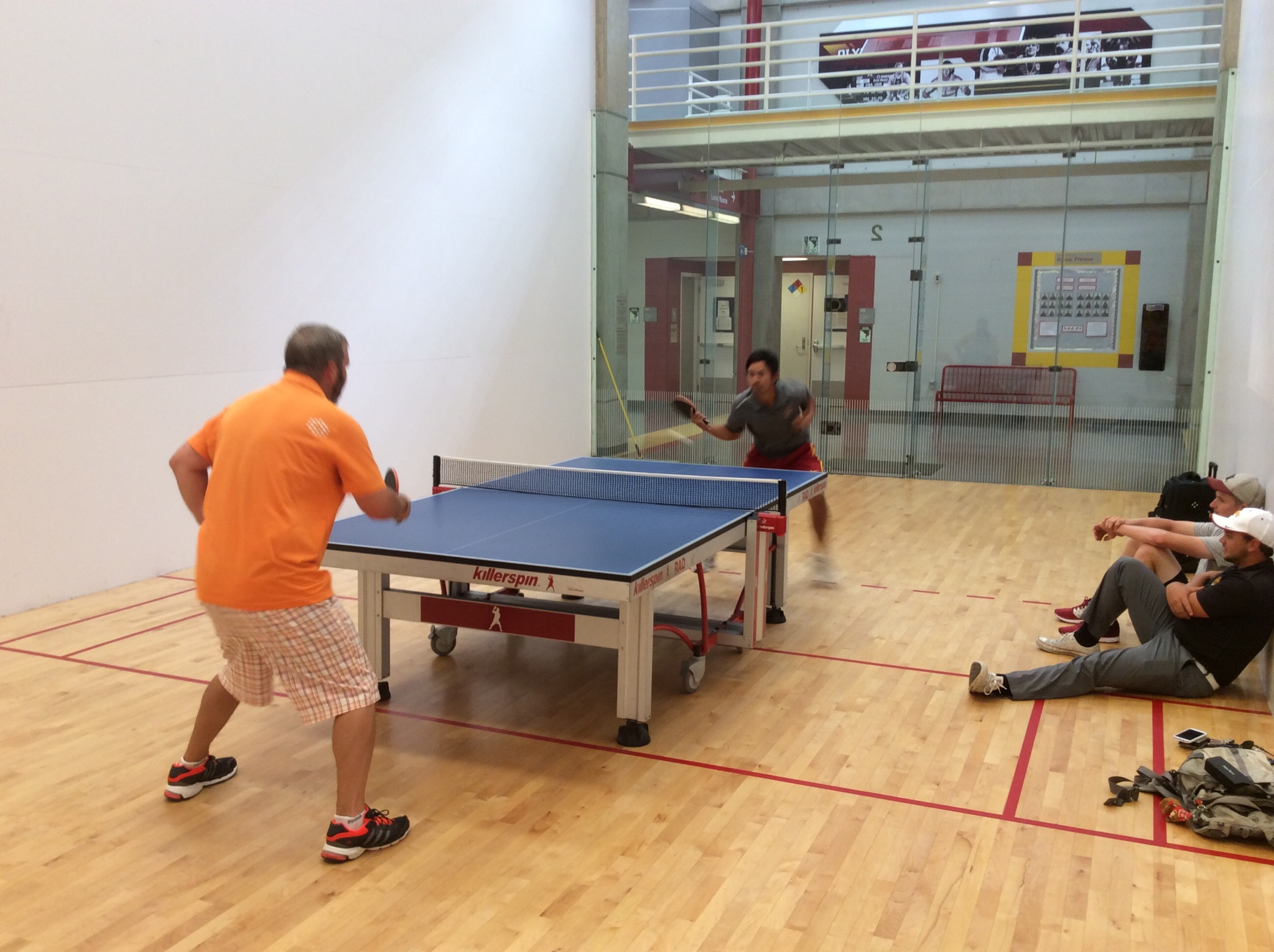
Next stop was the ping pong table at the Lied – Steve needed to redeem himself after the tennis. Again Nick has improved and managed to take one game off Steve but Steve won all the other games. Reuben and Sam also came to have a game – Reuben was pretty good too. Steve certainly got a good workout.

IMG_0863.JPG

IMG_0852.JPG

IMG_0854.JPG

IMG_0858.JPG

IMG_0861.JPG

We then went to check out The Golf Performance Center, home for the Iowa State men’s and women’s golf programs, which debuted in the fall of 2013.

Located just 3 miles from campus, the facility ranks as one of the finest of its kind nationally. The 16-acre home for Cyclone golf was built at a cost of $2 million and is used solely by the Iowa State golf teams, providing ISU student-athletes with all the amenities they need for individual development.

World-renowned architect Keith Foster designed the complex. Foster and his team have provided renovations to Augusta National, Southern Hills Country Club and Colonial Country Club. Some of Foster’s original designs include: The Quarry (San Antonio, Texas), ranked as the top public golf course in Texas by Golf Digest in 1996 and The Harvester (Rhodes, Iowa), ranked as the best golf course in Iowa multiple times.

It is WOW!

They have four covered bays that open out onto this amazing looking driving range. In the winter it snows for about three months but they can still use the driving range as the bays are heated! They also have nine holes around the range where they can practice all manner of shots – five of the nine greens have been inspired by a different architect. They also have bunkers and water hazards. They have a computer room set up with trackman so they can hit balls and analyse their swings. To top it off they have an indoor putting green that is also heated so they can use it in the winter. They also have this large common area with a kitchen, lounge, ping pong table and dining room. Apparently the Golf Channel is constantly on the TV in the lounge area.

These practice facilities are very impressive and one of the best in the country. I think Nick is still pinching himself. To get a great education and to train in these facilities on a daily basis is amazing. It is all laid on for them – they even had the Taylor Made club fitting trailer and rep visit them on Saturday and a lot of them got brand new clubs fitted just for them at no cost.

They work hard with gym workout sessions three mornings a week at 6am. They then practice every afternoon from 2pm to 6pm and travel to tournaments in the weekends. In between the golf commitments they have to do their studies and maintain good grades. In saying that they really are living the dream – good on them! Steve wants to go back to school : )

IMG_0877.JPG

IMG_0876.JPG

IMG_0865.JPG

IMG_0864.JPG

IMG_0866.JPG

IMG_0867.JPG

IMG_0868.JPG

IMG_0872.JPG

IMG_0874.JPG

IMG_0831.JPG

Posted in Iowa, USA | Leave a comment

The Harvester Golf Club – Iowa, USA

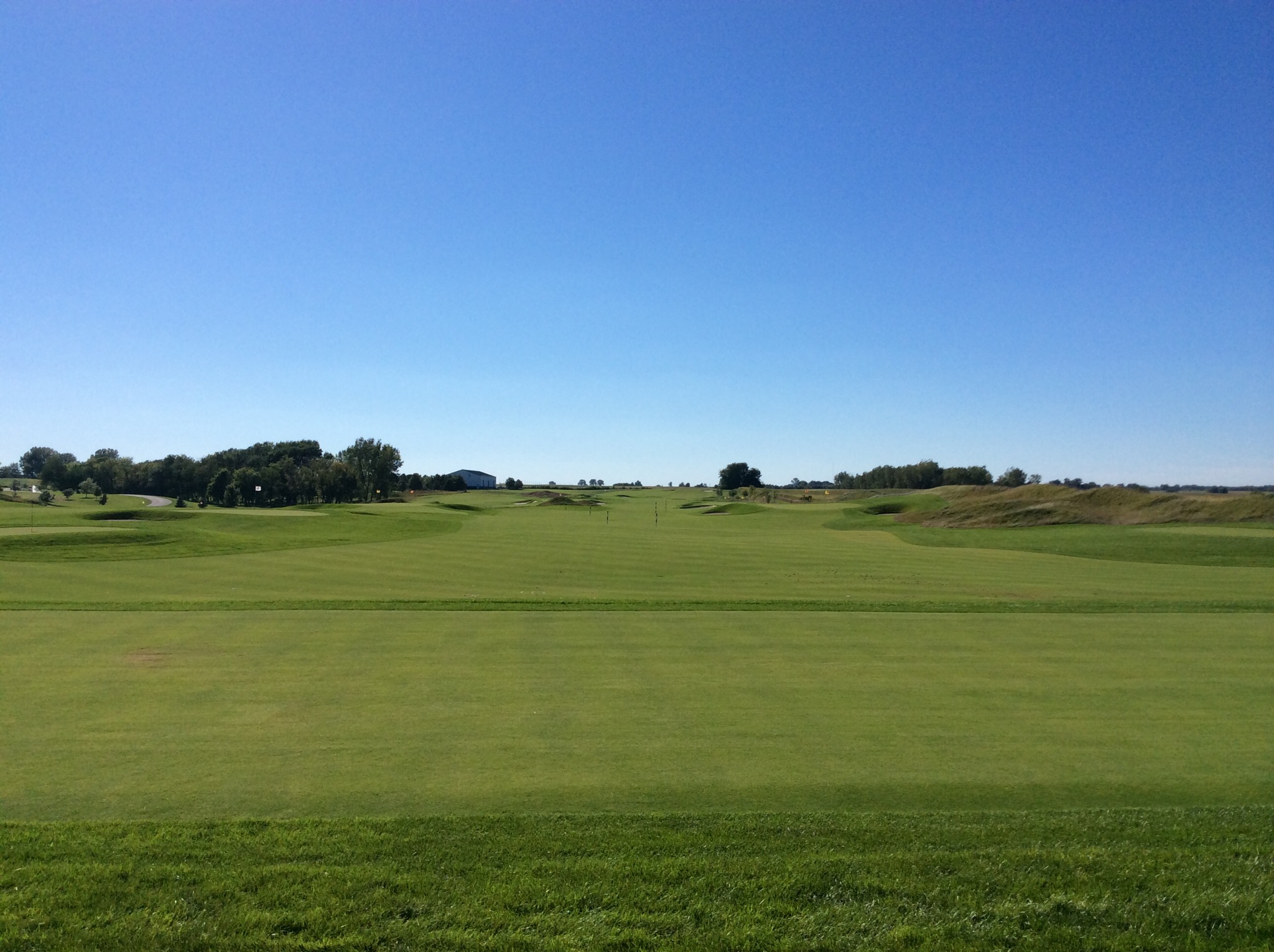
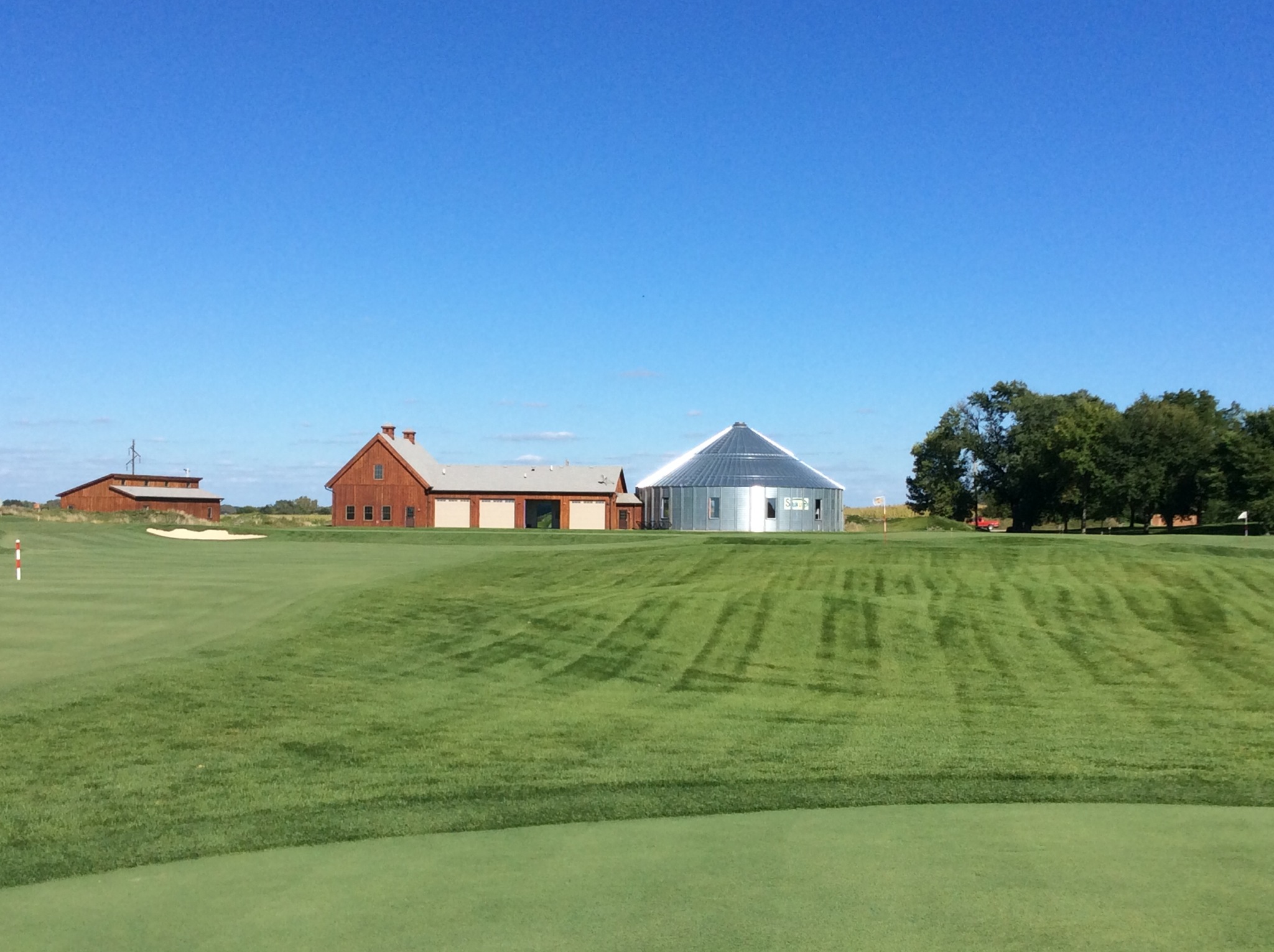
We are staying in a condo on The Harvester Golf Club. It is in the middle of nowhere but the accommodation and golf course are fantastic. It is one of the Iowa State University golf team’s home courses and we had heard good things about it from Nick.

We had a round on Friday afternoon and unfortunately it was a little wet. It is certainly a challenging course and the greens are the fastest we have ever putted on. It was good to be back out there after three weeks of no golf.

We played the course again on Sunday morning and it was the most stunning morning – clear blue skies and not a breath of wind. Iowa is renowned to be a windy state so we were very fortunate. The ISU women’s and men’s golf teams were also out playing the course after us. We took a cart but the golf team has to either carry their clubs or take a trundler. Even though we were in a cart we were literally being chased along by the two girls following us. We managed to lose them on the back nine as it is a bit longer between holes and up hill.

The Harvester Golf Club was opened in 2000 and designed by Keith Foster. It is privately owned by Dickson Jensen who also had the impressive practice facility at ISU built.

IMG_2908.JPG

IMG_2910.JPG

IMG_2912.JPG

IMG_2914.JPG

IMG_2924.JPG

IMG_2931.JPG

IMG_0181.JPG

IMG_0184.JPG

IMG_0183.JPG

IMG_0182.JPG

Posted in Iowa, USA | Leave a comment

Iowa State University – Iowa, USA

We arrived into Des Moines Airport, Iowa on Wednesday night. We picked up our rental car and fired up the GPS. I also google mapped our route on my iPad – the GPS was telling us it would take about 1 hour and fifteen minutes and the iPad was telling us it would take 10 hours and 42 minutes. I was starting to panic a little bit thinking we’d booked accommodation in the wrong state.

We stopped and asked a local and he said our destination was about 30 miles so the 1 hour fifteen made sense. As we were driving along the time on Google Maps was decreasing at quite a rate and then I worked it out. I had set Google Maps to walk mode so the 10 hours and 42 minutes was how long it would have taken us to walk from Des Moines Airport to our accommodation at The Harvester Golf Club. I’m so pleased we took the rental car option!

The main reason for our visit to Iowa was to catch up with Nick Voke, a friend of ours from Manukau Golf Club who is over here on a golf scholarship at Iowa State University or ISU.

On Thursday afternoon we drove into Ames where the ISU campus is based and met up with Nick at the golf performance facility. The rest of the team was practising so we couldn’t check the facility out so we decided to check the rest of the campus out instead. The campus is like a little city in it’s own right – it is home to about 33,500 students and 1,900 staff. It is located on a lush 2,000 acres.

Founded in 1858, it was coeducational from the start. Iowa State’s academic offerings are administered today through eight colleges, including the graduate college, that offer over 100 bachelor’s degree programs, 112 master’s degree programs, and 83 at the Ph.D. level, plus a professional degree program in Veterinary Medicine.

ISU is classified as a Research University with very high research activity by the Carnegie Foundation for the Advancement of Teaching. The university is a group member of the prestigious American Association of Universities and the Universities Research Association, and a charter member of the Big 12 Conference. ISU is ranked among the top 50 public universities in the U.S. and is known for its degree programs in agriculture, engineering, and science. ISU receives nearly $300 million in research grants each year.

Like all universities in the USA there is a strong orientation around sport. ISU have a very good basketball team who finished in the top 16 in the USA in 2014. And no US university would be complete without the football team or grid iron team as we know it. The ISU sports teams are nicknamed the “Cyclones”, a name that dates back to 1895. That year, Iowa suffered an unusually high number of devastating cyclones (as tornadoes were called at the time). In September, the Iowa State football team traveled to Northwestern University and defeated that team by a score of 36-0. The next day, the Chicago Tribune’s headline read “Struck by a Cyclone: It Comes from Iowa and Devastates Evanston Town.” The article reported that “Northwestern might as well have tried to play football with an Iowa cyclone as with the Iowa team it met yesterday.” The nickname stuck and the Iowa State team had made a name for itself.

The school colors are cardinal and gold. The mascot is Cy the Cardinal, introduced in 1954.

Nick showed us around the sports stadiums and facilities – they are out of this world. Their football stadium holds a capacity crowd of 54,800 and they have announced they are expanding it to 61,000. To put it in context, Eden Park has a capacity of 50,000. In 1975, the stadium’s playing field was named in honor of Jack Trice, Iowa State’s first African American athlete and the school’s first athlete to die of injuries sustained during a Cyclone athletic competition.

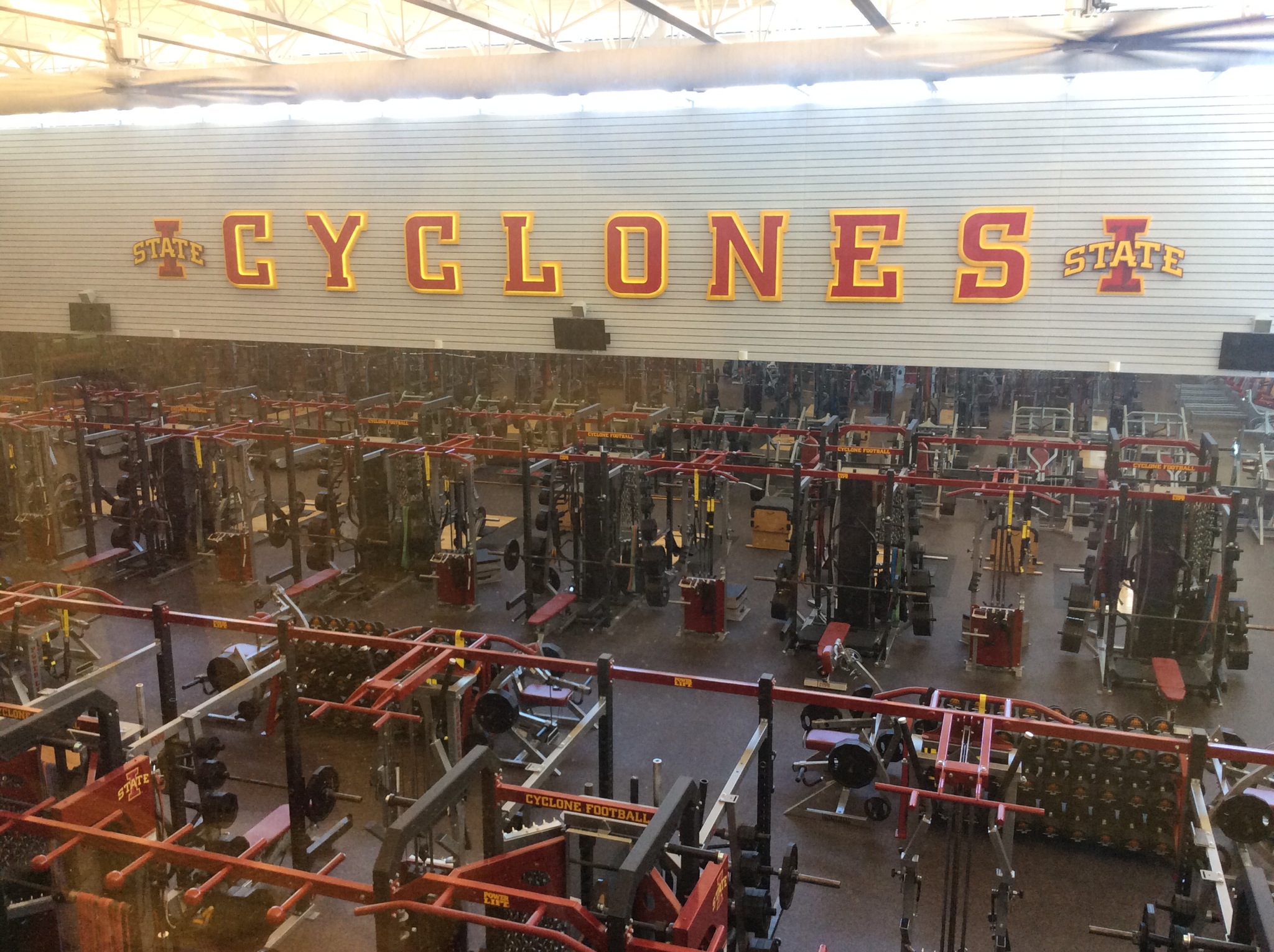
The gym, physio, rehab rooms and high tech gadgets these athletes have available to them are very impressive. They even have this under water treadmill with video technology so you can see how the injured athlete is moving. One of the football stars was on the treadmill when we went in there – he had injured his AC in the previous weekend’s game. A lot of the facilities are built with funds donated by alumni members. They display a list of the donors in the facilities and it is nothing for someone to have donated $2 million.

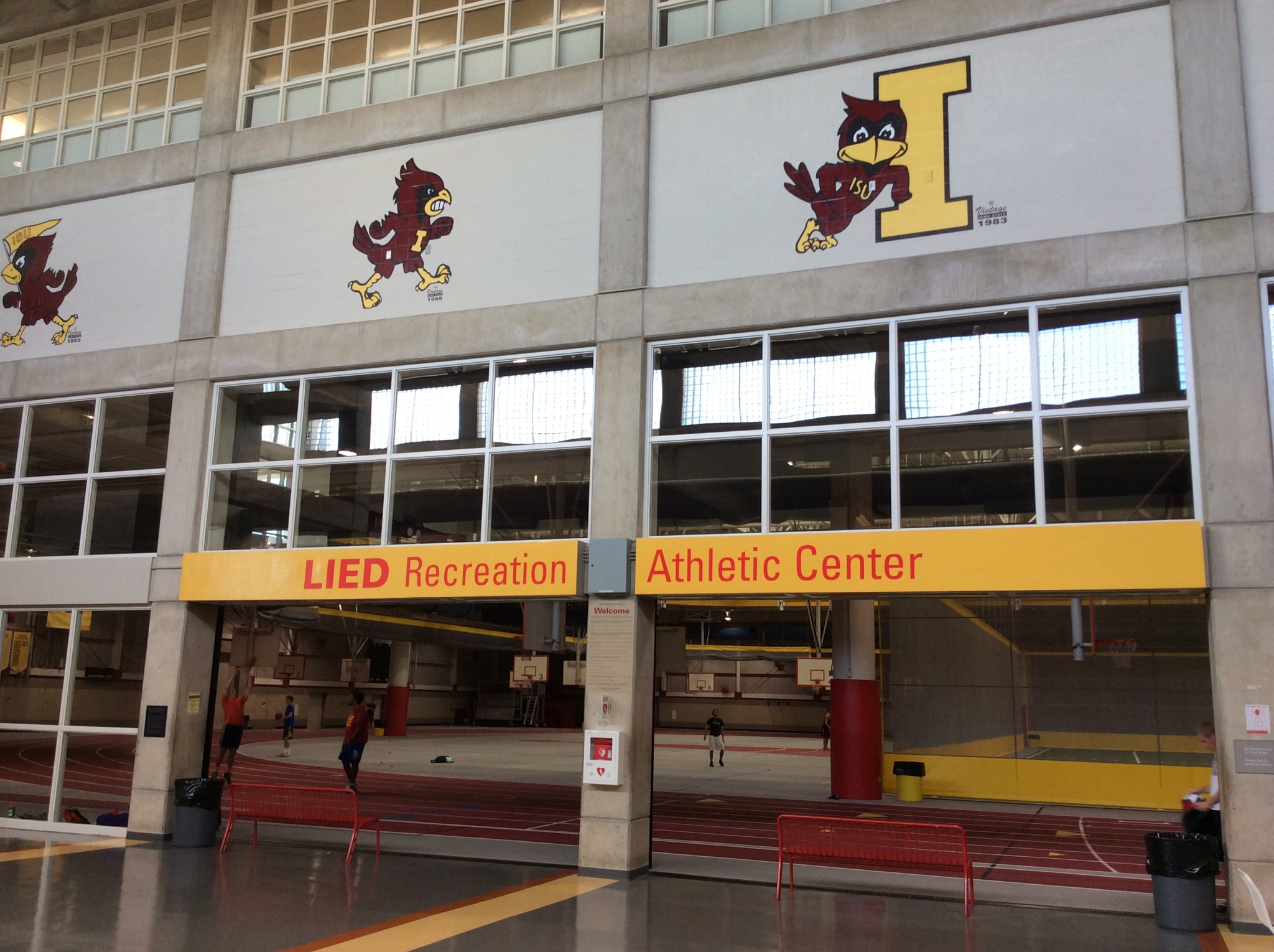
The general student population are also provided with gym facilities. The Lied as it is known was a three story building with two indoor running tracks that are not quite 400 metres in circumference. They have racquet ball courts and a ping pong table which will come in handy over the next few days : ) They also have a wrestling facility as ISU have a pretty good wrestling team.

We also drove through the Greek quarter where all the Fraternity and Sorority houses are – there are approximately 40 houses accommodating 2,000 students. There were some nice houses and they looked just like they do in the movies. They usually have a house mother or father who runs the house and organises the catering and cleaning staff. You have to go through a number of interviews and activities to be accepted into the house. Apparently it only costs a little bit more than typical student apartment living.

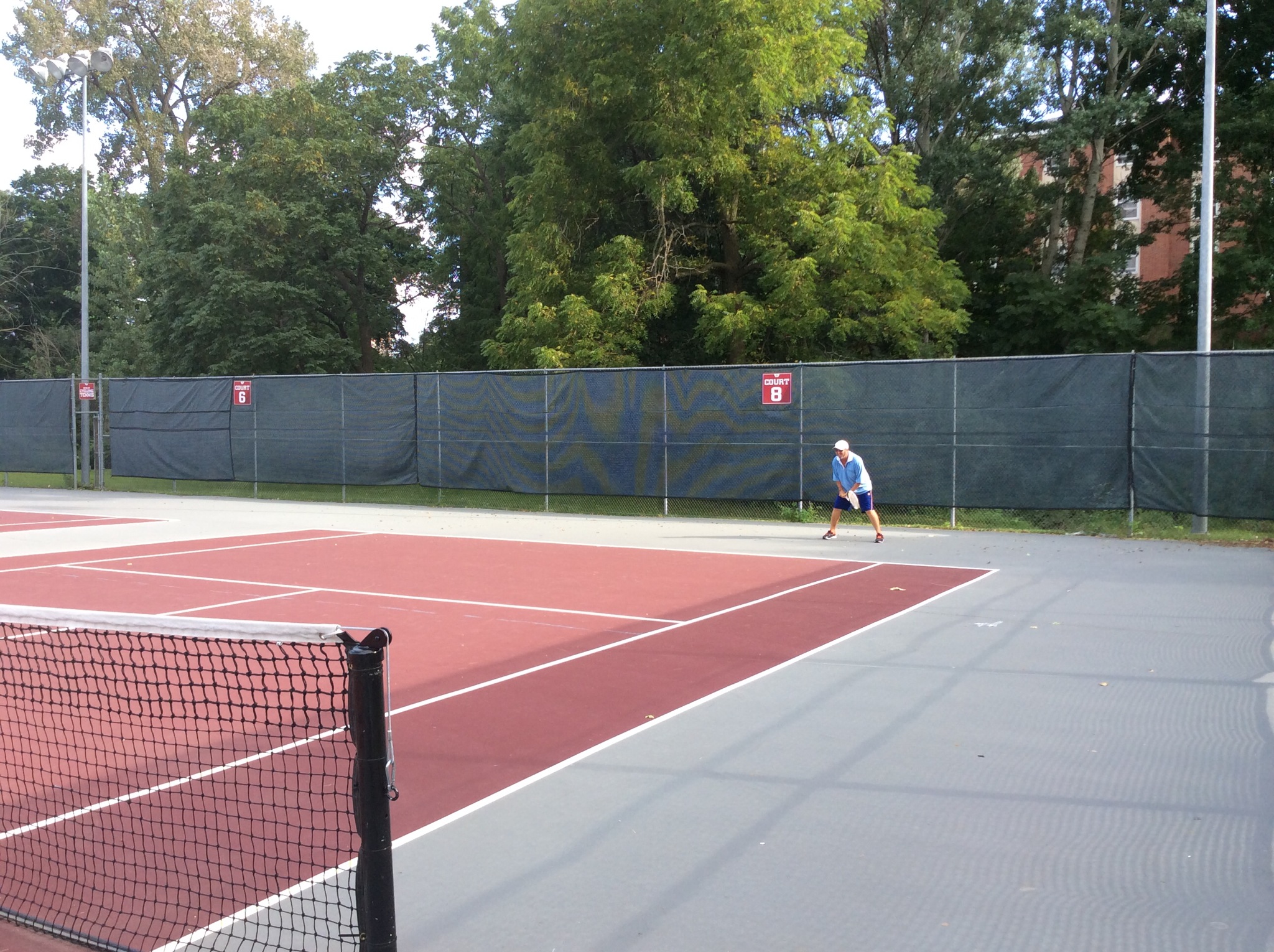
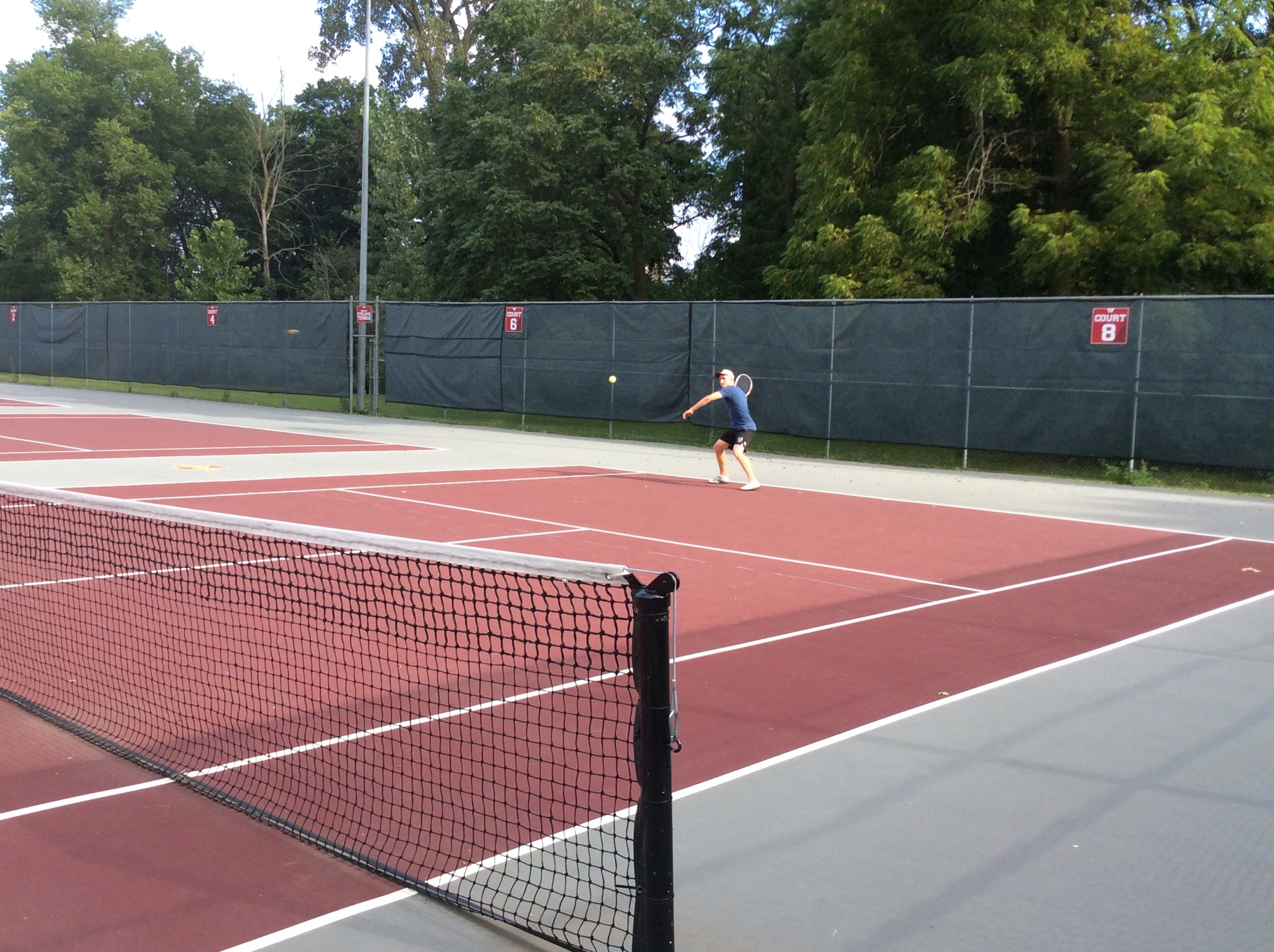
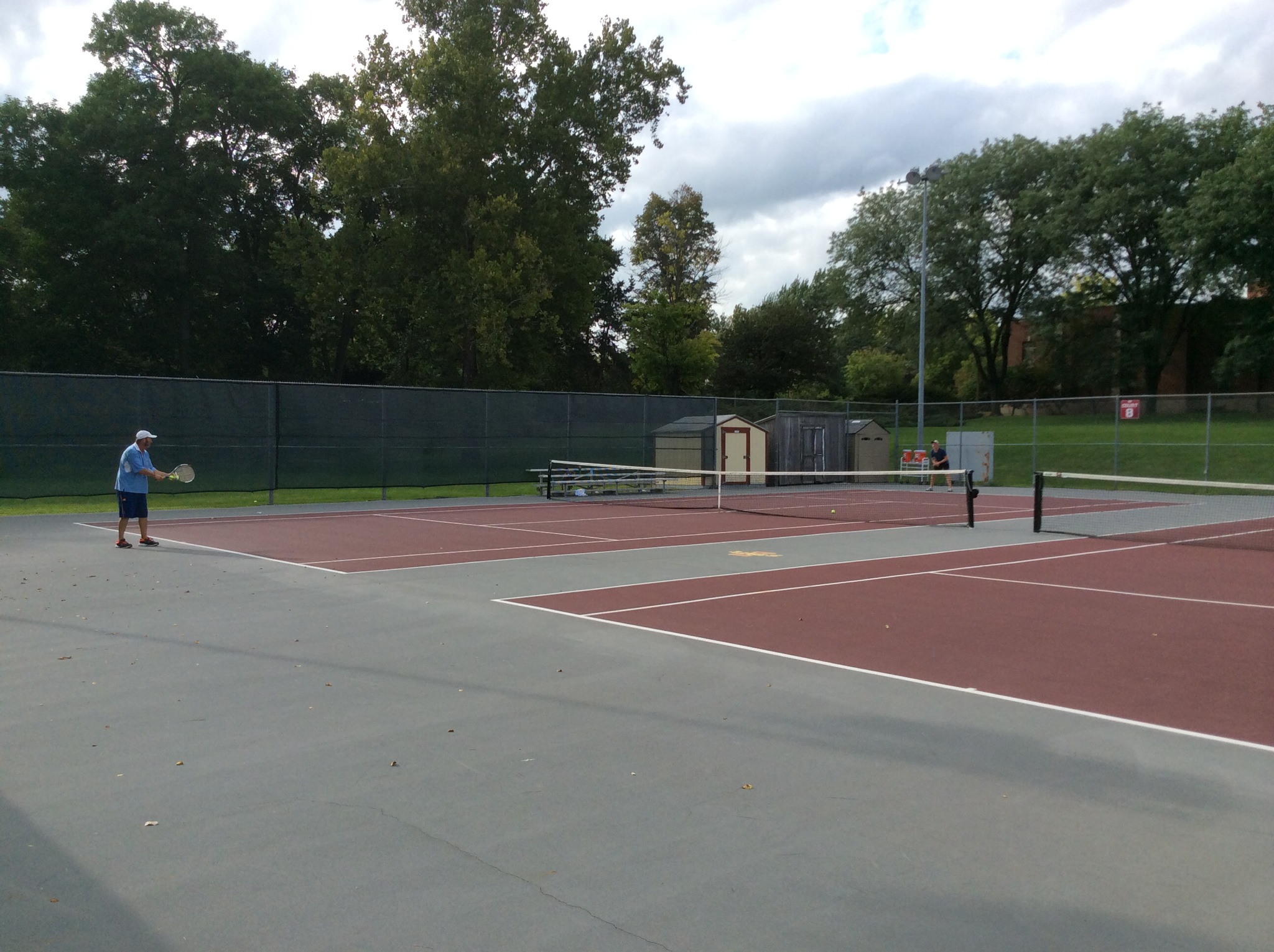
Next stop was the tennis court – Steve and Nick had regular matches back in NZ and Steve always managed to win. Nick is now super fit and has befriended the ISU girls tennis team so has been having some lessons. He did warn Steve that the re match wouldn’t be pretty. He was right, the old man struggled and got played off the court! The fitness and lessons paid dividends. It didn’t help that it was about 31 degrees and very humid – I was sweating just watching them!

We finished the day with a nice dinner out at Aunt Maude’s a restaurant in Ames. Nick’s girlfriend Sarah joined us and we had a lovely meal.

IMG_0833-1.JPG

IMG_0835-1.JPG

IMG_0836-1.JPG

IMG_0845-0.JPG

IMG_0837.JPG

IMG_0838.JPG

IMG_0844.JPG

IMG_0851-0.JPG

IMG_0847-0.JPG

Posted in Iowa, USA | Leave a comment

US Tennis Open 2014, Flushing Meadows – New York

When we started planning our big OE we came up with the idea of going to all the tennis grand slams in one year. So we got the yearly planner out and blocked the relevant dates out and started planning our journey around those.

It all started with the sexy six in Melbourne in January where we had four fabulous days at the Australian Open. It was hot and we saw some great tennis. Next up was Roland Garros in Paris – the only major on clay. Paris is one of my favourite cities so it provided a perfect back drop for our second grand slam. It was a freezing cold day but we saw some good tennis. Next up was the getting up at 3.30am to join the queue at 4.30am in order to secure a seat at Wimbledon. The whole experience was well worth it and we had another wonderful tennis experience basking in the London sun.

Last but definitely not least was the US Open in New York…..

We arrived in New York on Saturday night from London. I think our taxi driver was either a stunt double in the Fast & Furious movie or thought he was on the Nascar set. We had been warned that New Yorkers do everything at a furious pace. We used Sunday as an orientation day to check out how to get to the tennis, visit Times Square and to experience a New York thunderstorm first hand. The weather was hot and sticky but I wasn’t complaining after being in the Baltic’s for the two weeks prior where it was a little chilly.

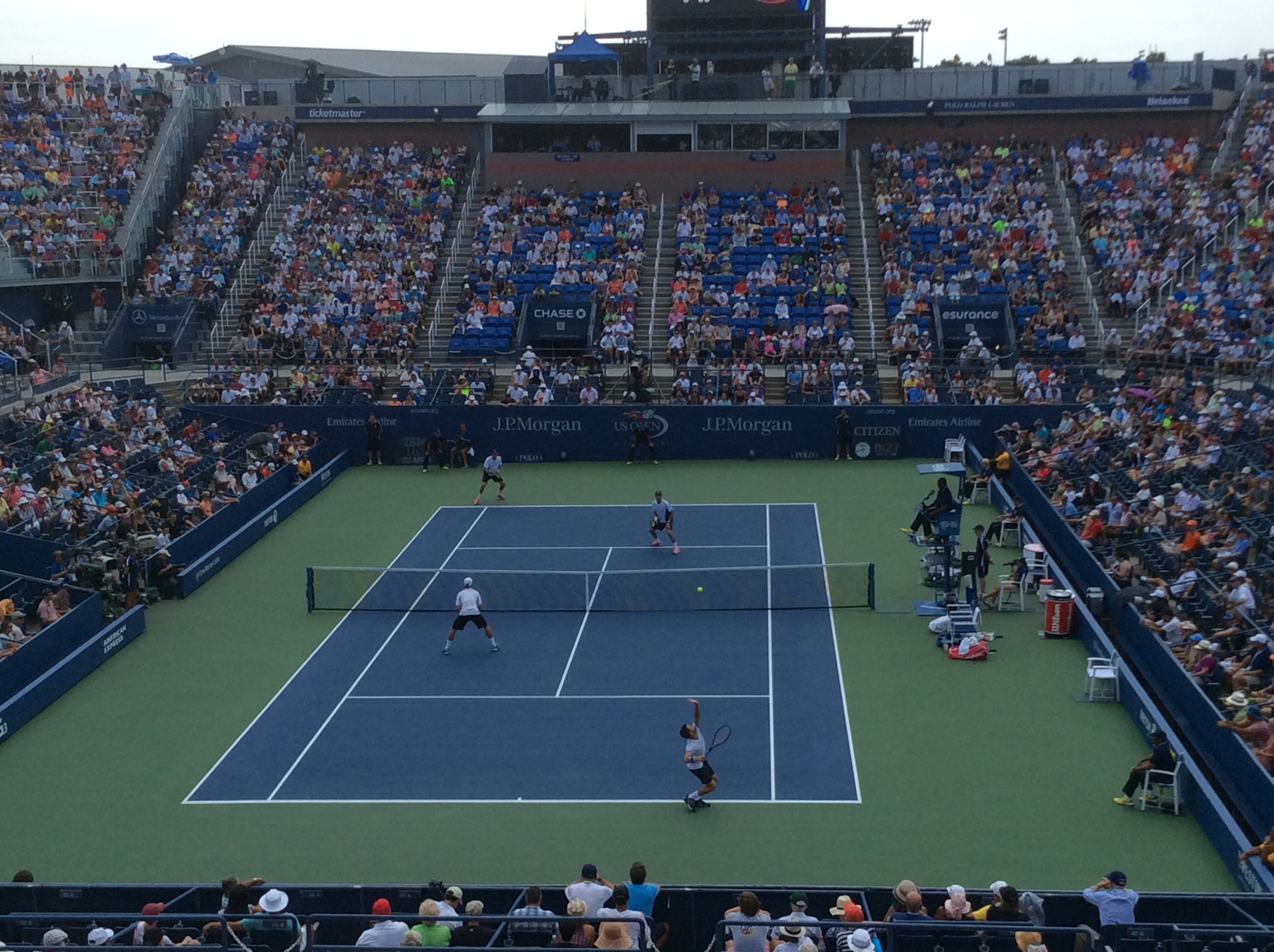
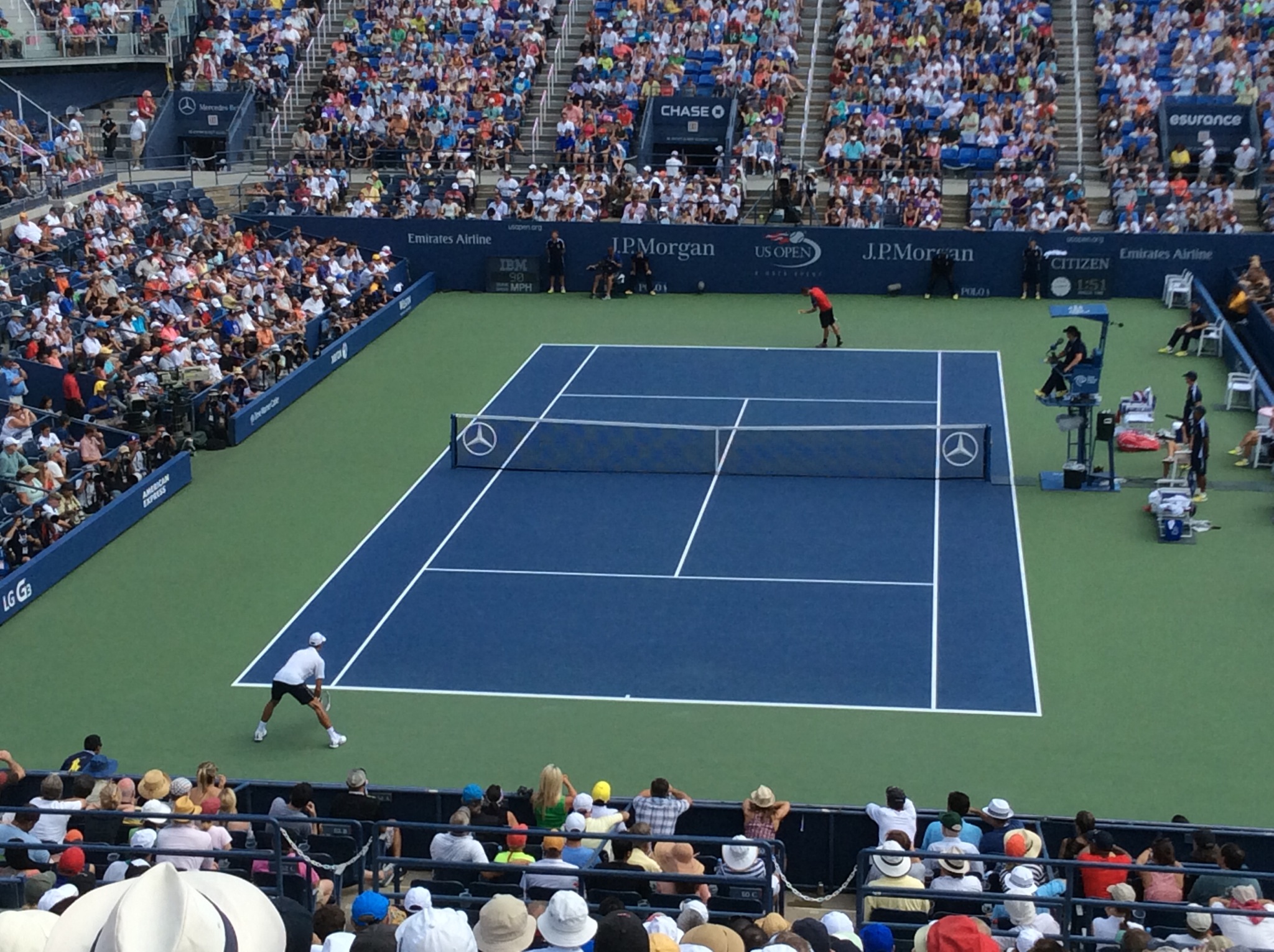
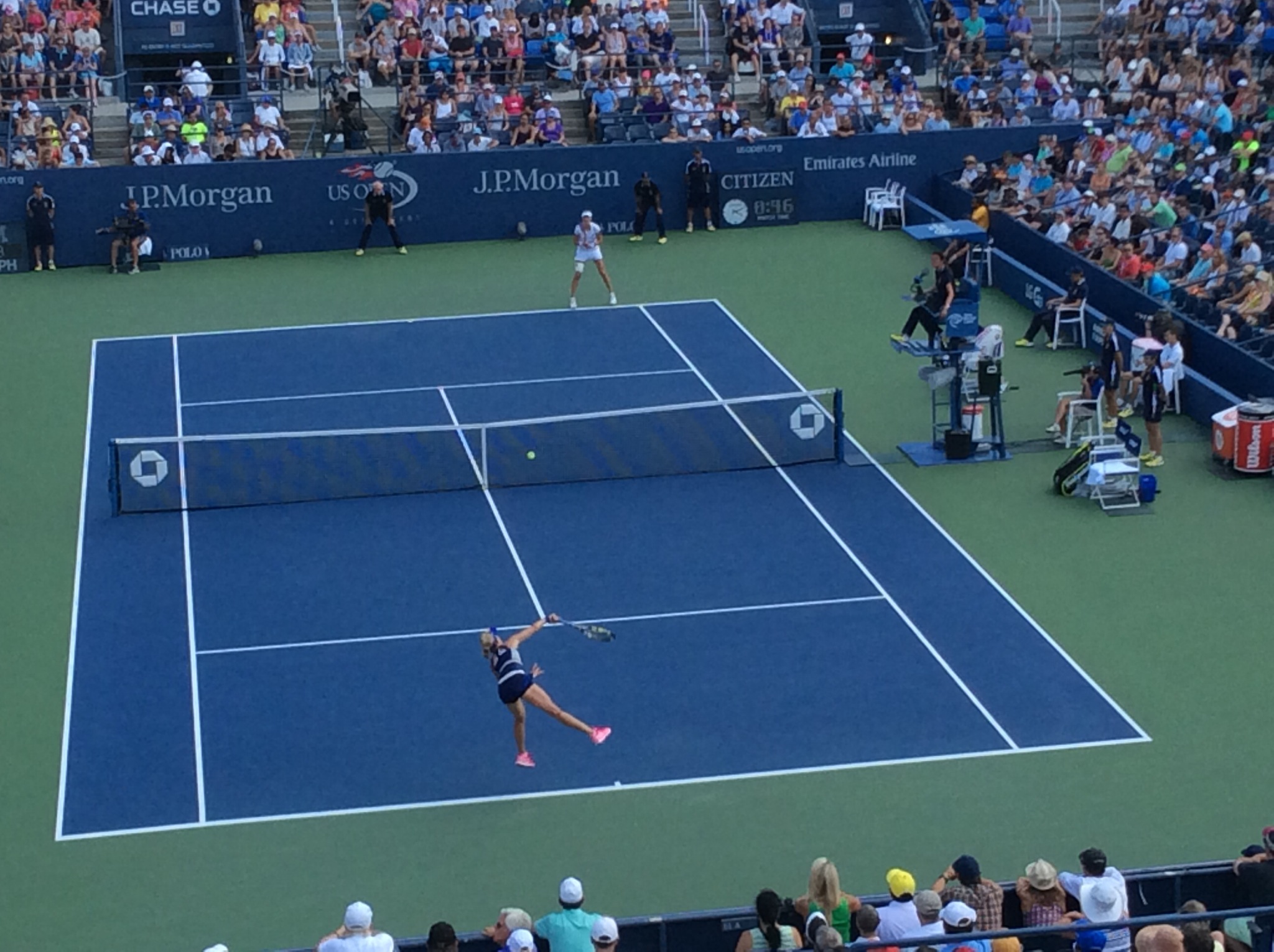
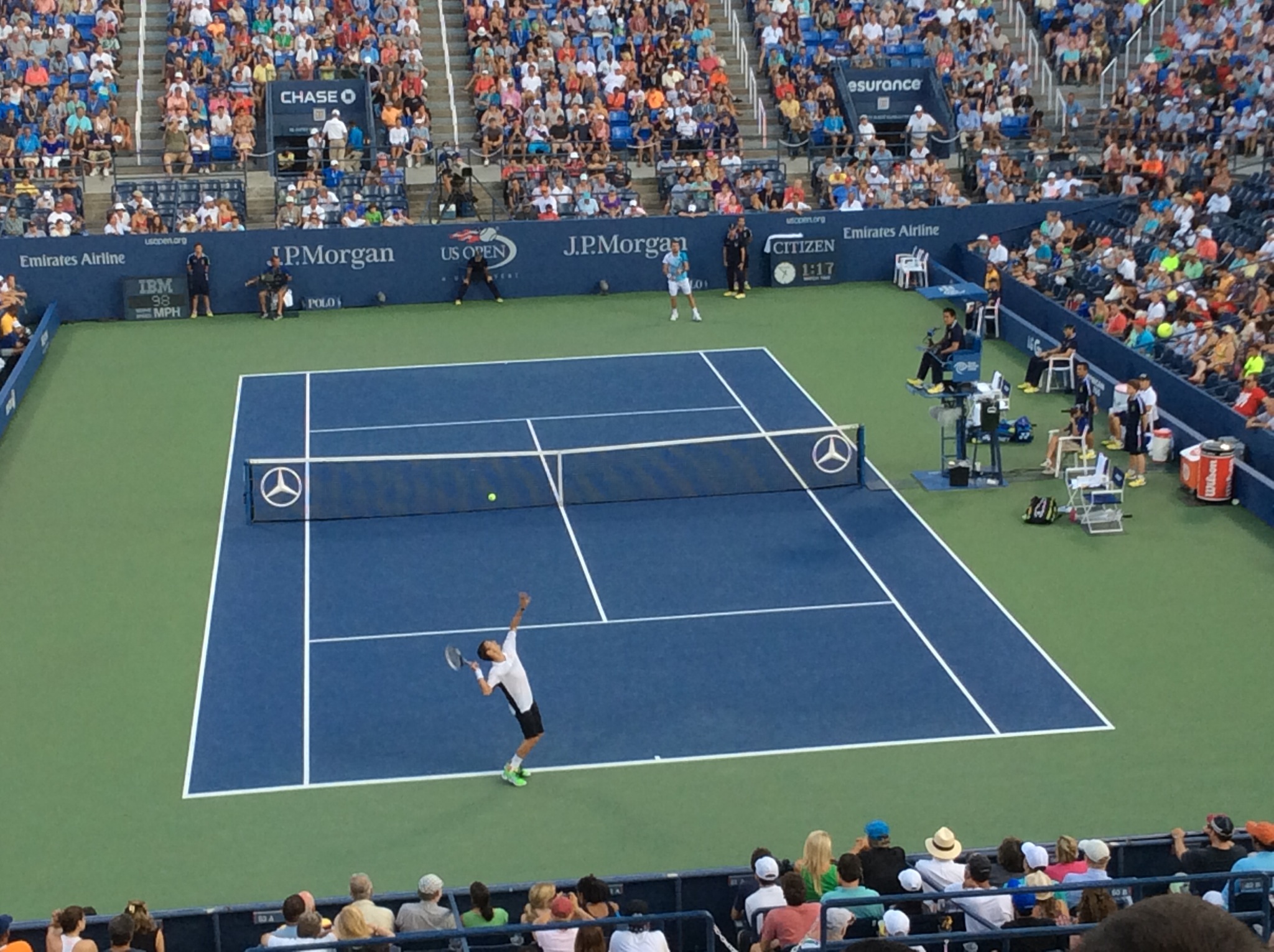
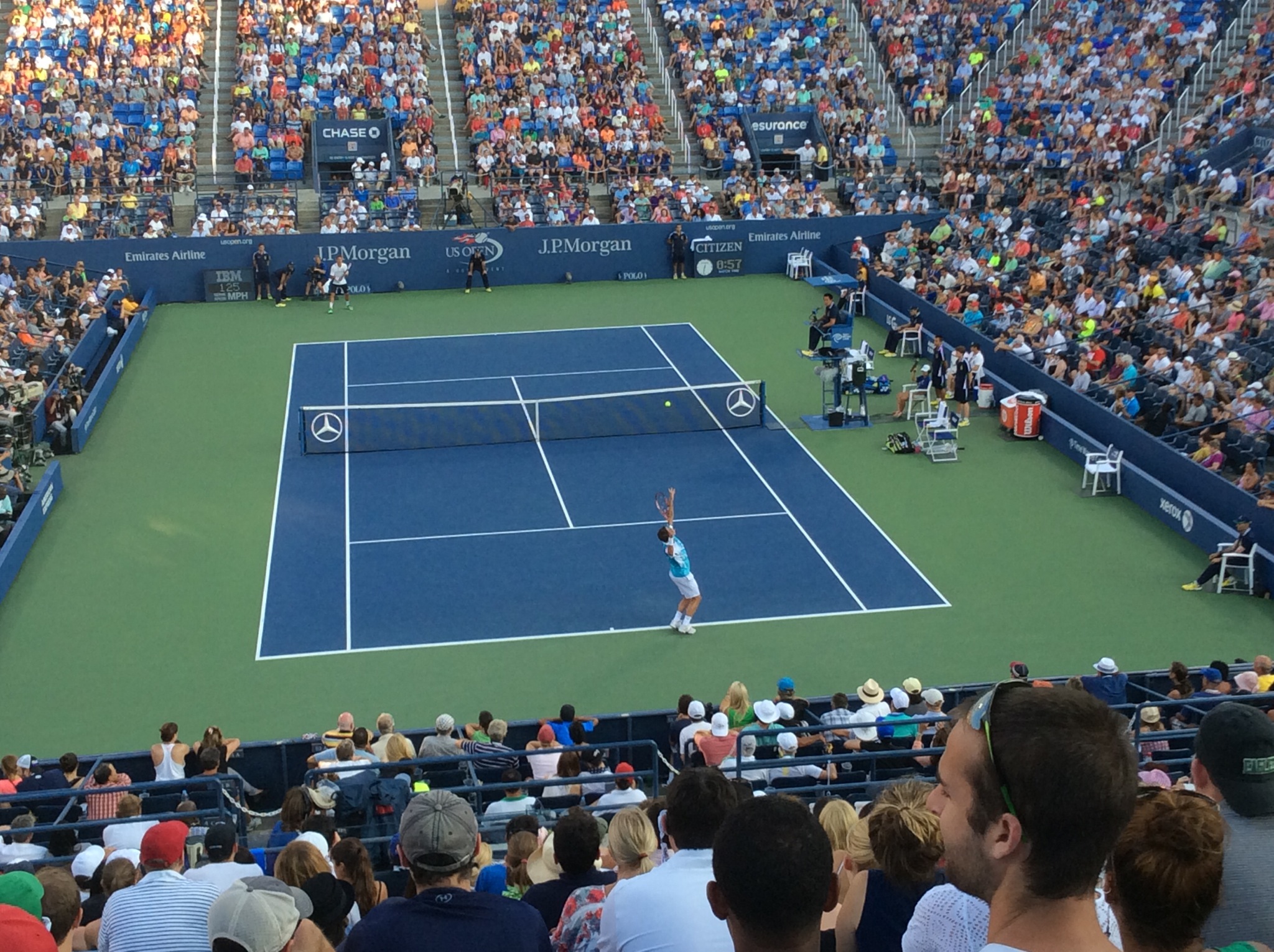
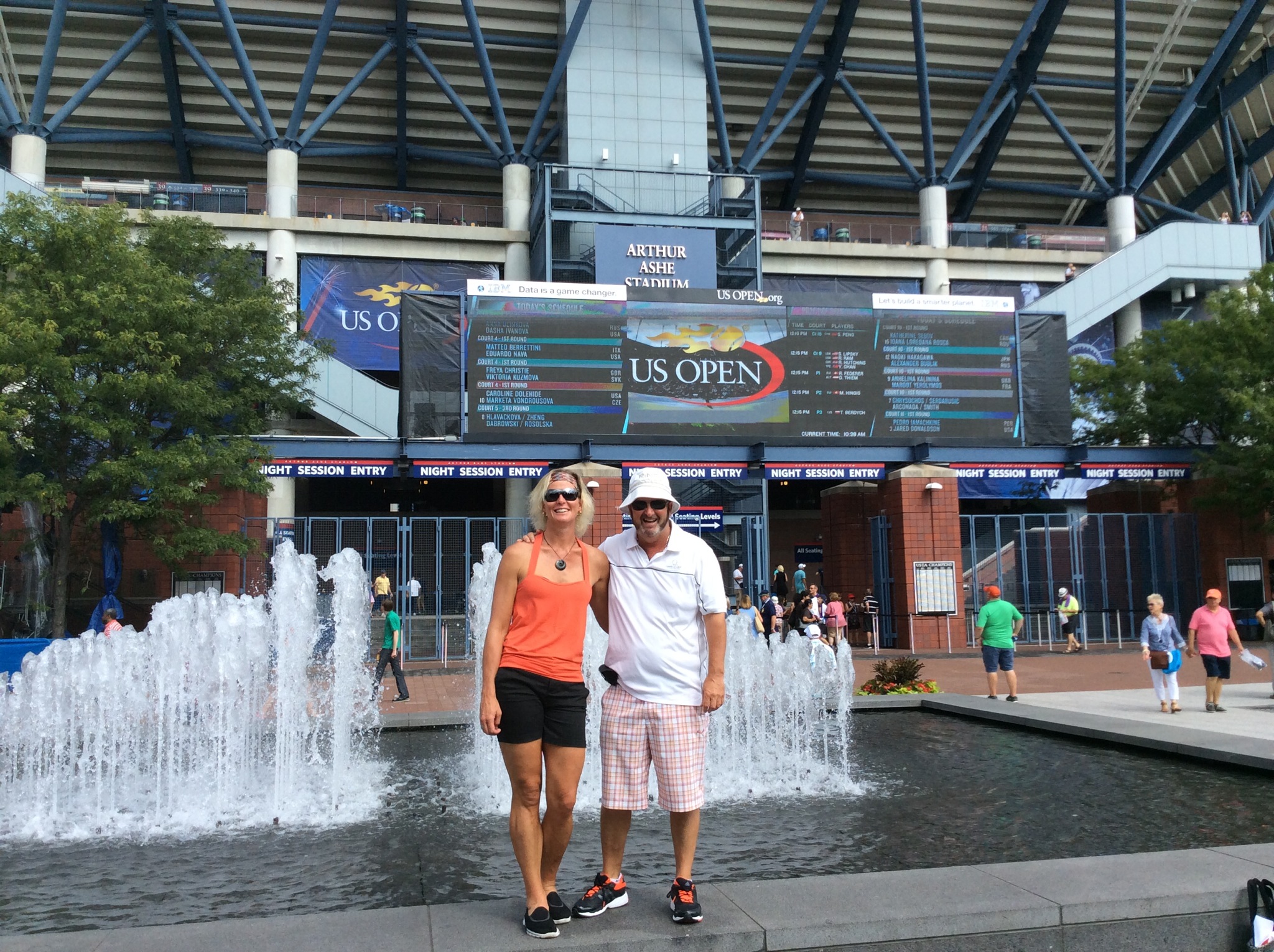
Monday morning we jumped on the subway and headed for Flushing Meadows – it was all fairly straight forward really. It was another steamy day with the temperature reaching 31 degrees. We had seats in the Louis Armstrong stadium and it had some great games that day.

First up we saw a third round men’s double match between the top seeded Bryan brothers and another American pairing. The Bryan brothers, Mike and Bob are twins and at 36 years old are quite an institution in the tennis world. They turned professional in 1998 when they were 20 years old. There opponents were 24 year old Bradley Klahn and 27 year old Tim Smychez also from the USA. It was a good game which the Bryan brothers won in two sets.

IMG_0742.JPG

IMG_0744.JPG

IMG_0745.JPG

Next up was world number one Novak Djokovic from Serbia playing Philipp Kohlschreiber from Germany who has a current ranking of 25. This was the fourth round of the men’s singles. Novak won in three but the last two sets were more evenly matched. Novak even gave the crowd a little dance at the end after his post match interview. He has won 45 singles titles in his career including 7 grand slams. His total career earnings to date are a cool USD65 million.

IMG_0748.JPG

IMG_0749.JPG

IMG_0751.JPG

IMG_0753.JPG

We then watched the young Canadian sensation Eugenie Bouchard play Ekaterina Makaroa from Russia. Eugenie is only 20 years old and has only being playing professionally for the last couple of years – she has a current ranking of 8. We saw her play in Australia where she played really well. Unfortunately it wasn’t her day today and she ended up having a medical timeout – they were taking her temperature and icing her down – it was hot out there. Ekaterina was too strong winning in two sets. Ekaterina is 26 years old and has a current ranking of 18.

IMG_0767.JPG

IMG_0766.JPG

IMG_0764.JPG

IMG_0761.JPG

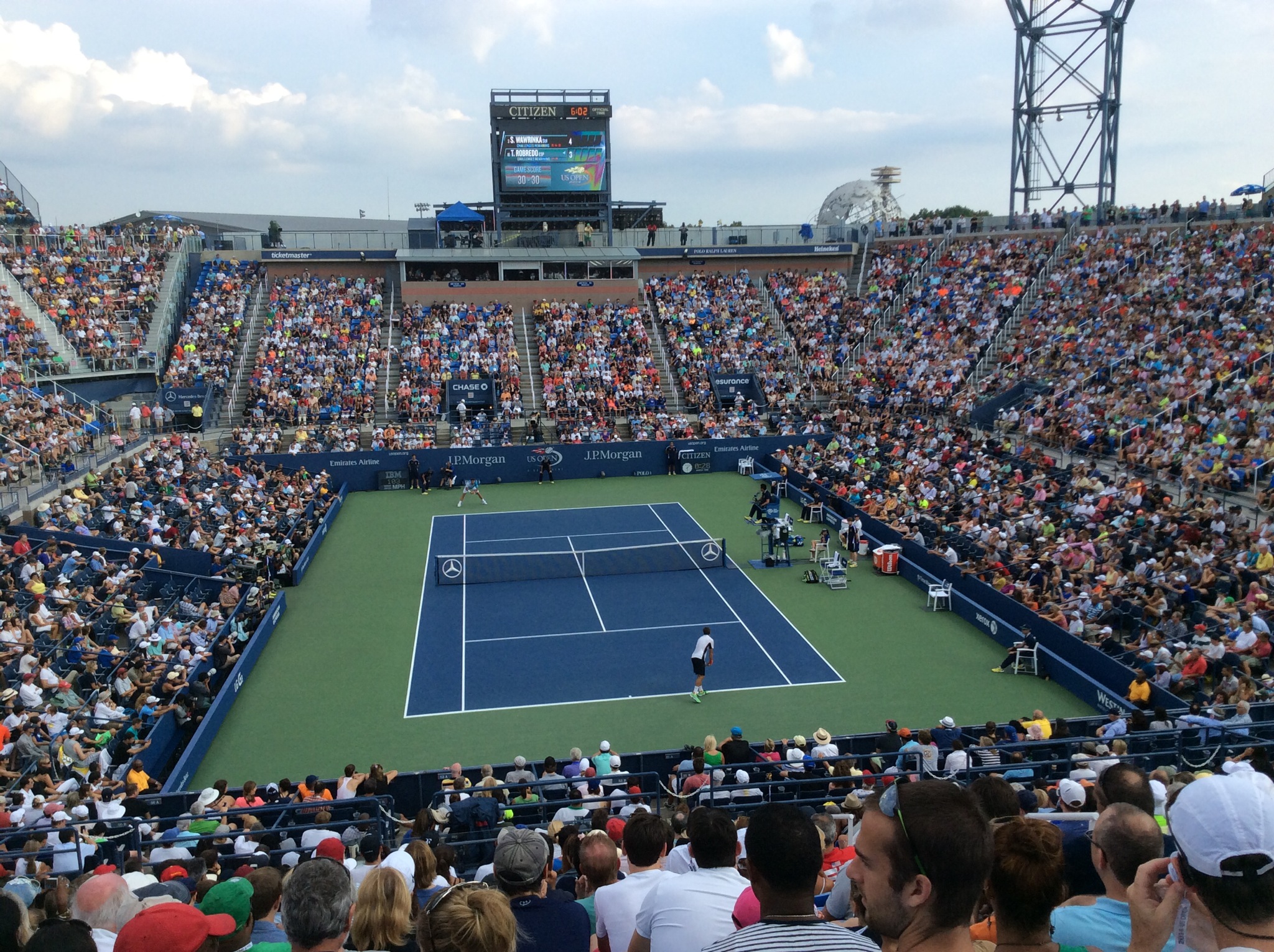
The last game of the day was another fourth round men’s singles match between Stan Wawrinka from our adopted home Switzerland and Tommy Robredo from Spain. We also saw Stan play in Australia where he ended up winning the Australian Open – his current ranking is 4 although he ranked 3rd for this tournament due to Rafa Nadal being injured. Tommy Robredo is 32 years old and has a current ranking of 18 but that doesn’t stop him although he is more of a clay court player than a hard court player. It was a great game that went to four sets.

IMG_0774.JPG

IMG_0773.JPG

IMG_0771.JPG

IMG_0770.JPG

Tuesday was going to be even hotter than Monday and in fact it turned out to be the hottest day that New York as seen this summer. It was 34 degrees with 96% humidity. You broke out in a sweat just thinking about it.

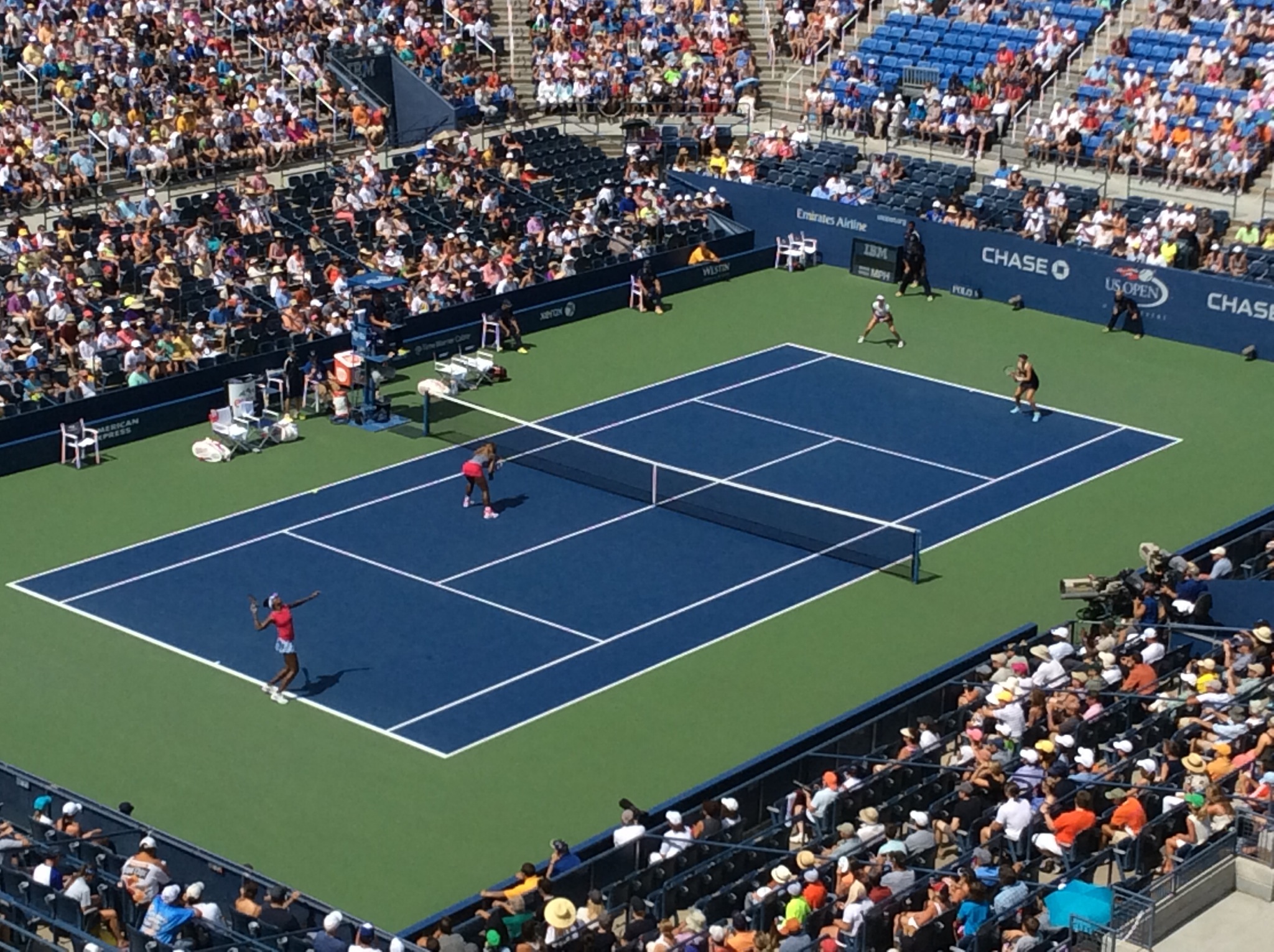
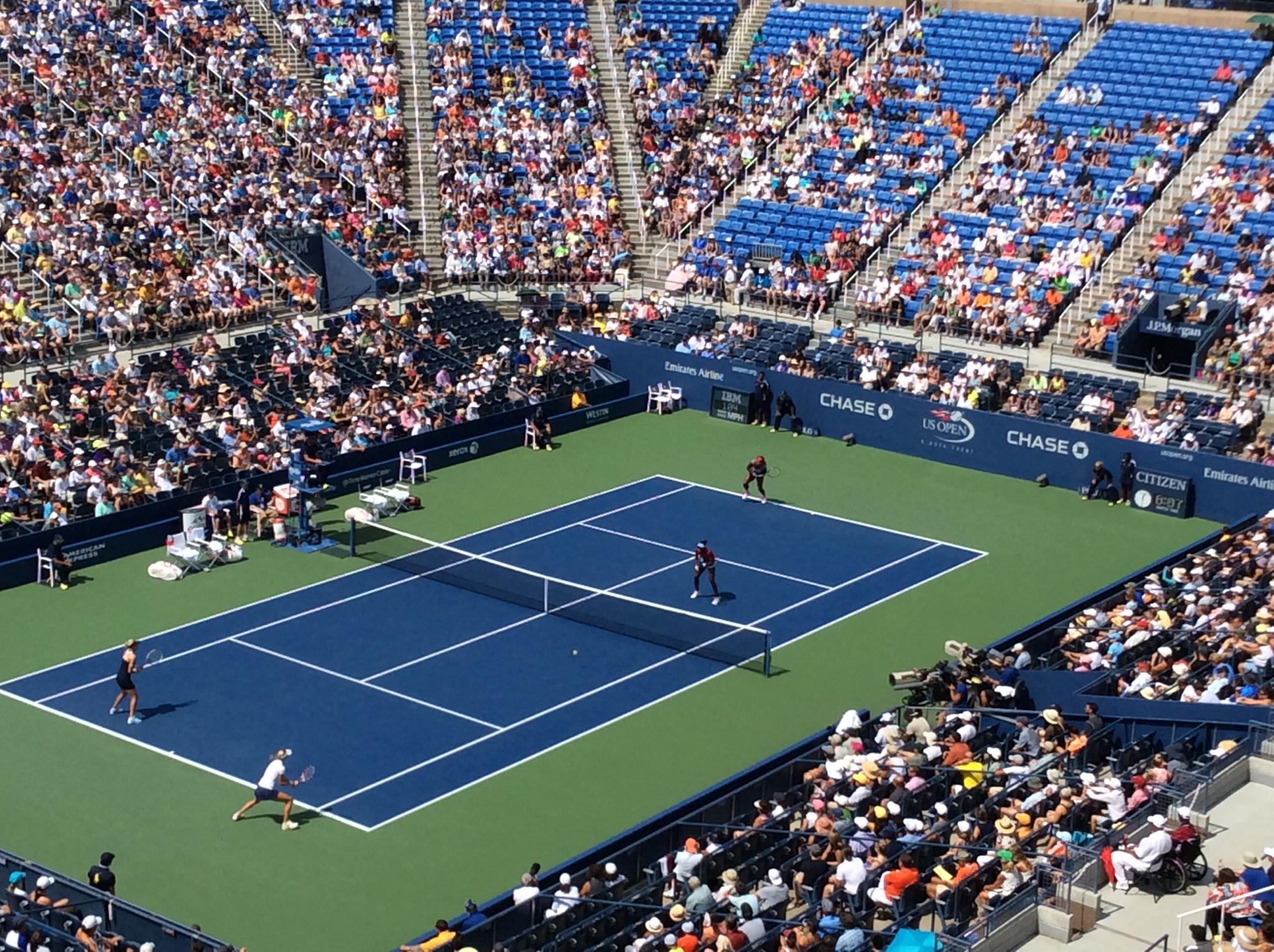
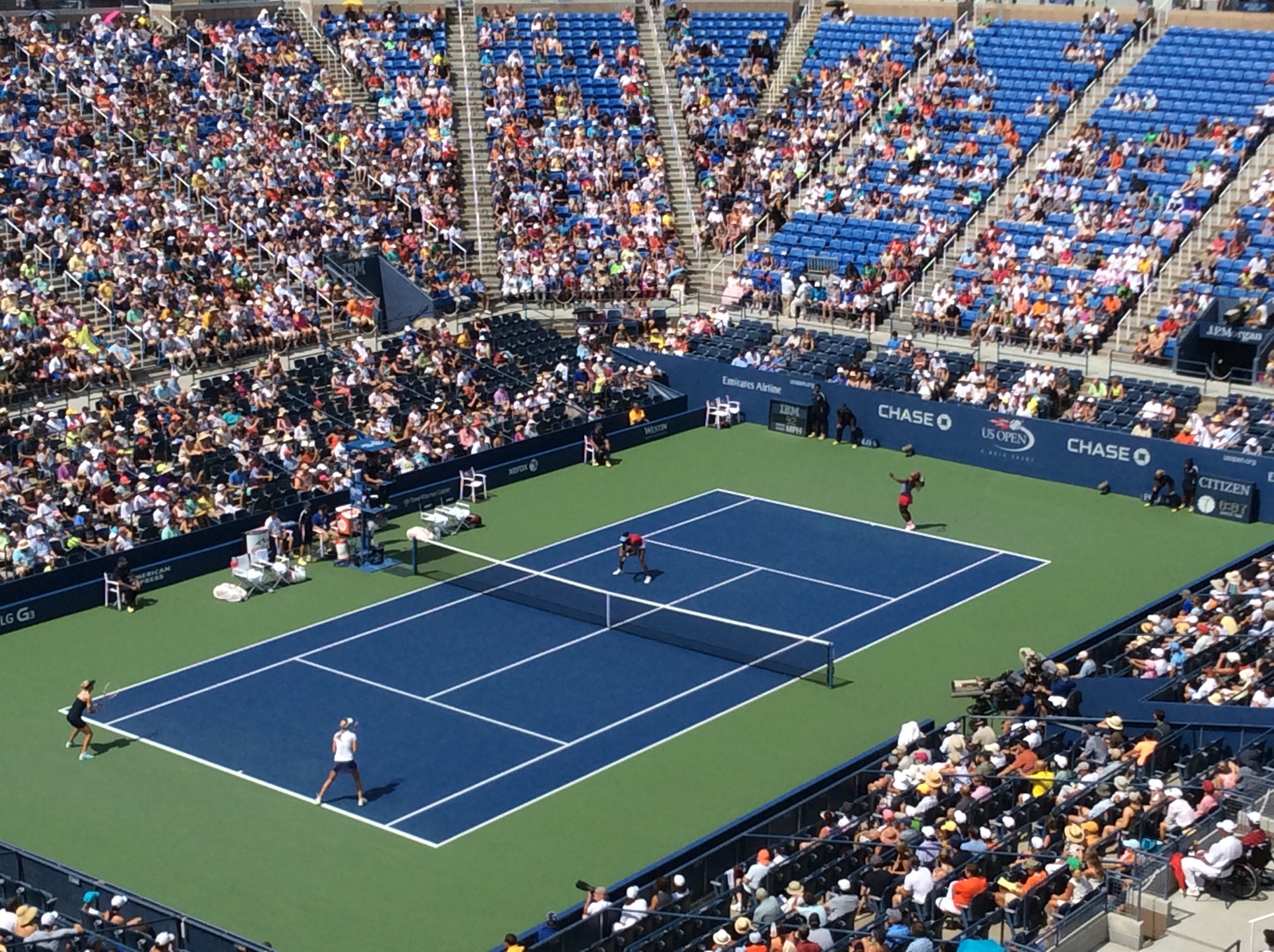
We had tickets to Arthur Ashe but could also go into the general seats on other courts. I hadn’t seen Serena play in the flesh and her and Venus were playing doubles on Louis Armstrong so that was the first stop of the day. They were playing Ekaterina Makarova who we had seen play singles the day before and Elena Venina, both from Russia. Elena had knocked our own Marina Erakovic out in the second round. The Russians were the fourth seeds and won the match in two sets.

Serena is certainly a good player and played some great shots but she just doesn’t do it for me in the friendly stakes. The Williams sisters come across a little bit like spoilt princesses. If Venus served into the net instead of flicking the ball to the ball boy, Serena would just step over it and let the ball boy run and get it. In the other doubles matches we watched generally the players would flick it to the ball boy to speed the game up.

We were sitting next to these ladies from down country who had binoculars – they were checking out the William’s players box and giving us the low down on who was who. Apparently the mother and sister had bought their little dogs in their handbags and I did spot one little dog poking it’s head out of a bag. Poor little mites in the heat. They also said that rumour has it that Serena’s coach is also her boyfriend.

IMG_0783.JPG

IMG_0784.JPG

IMG_0785.JPG

IMG_0786.JPG

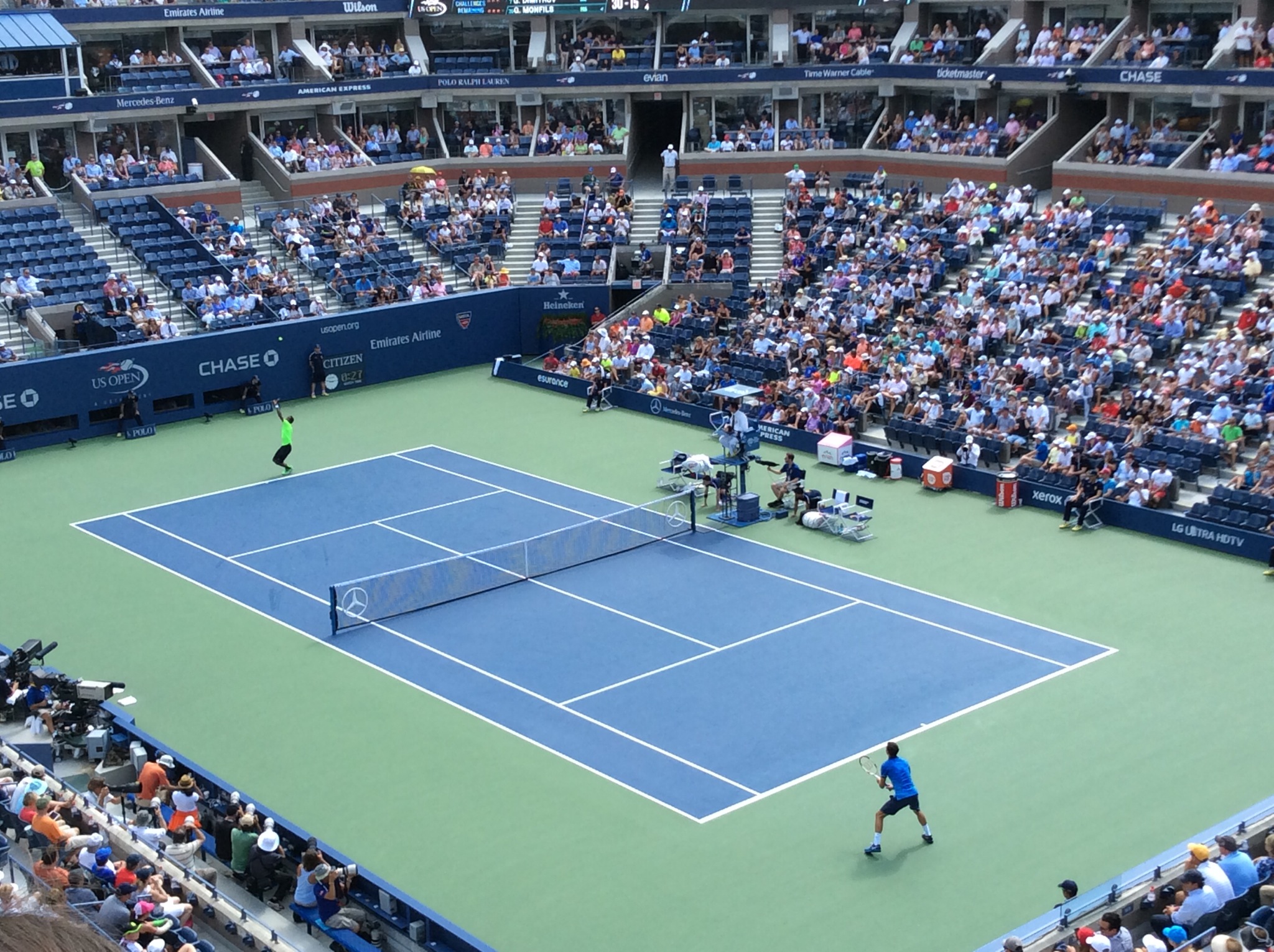
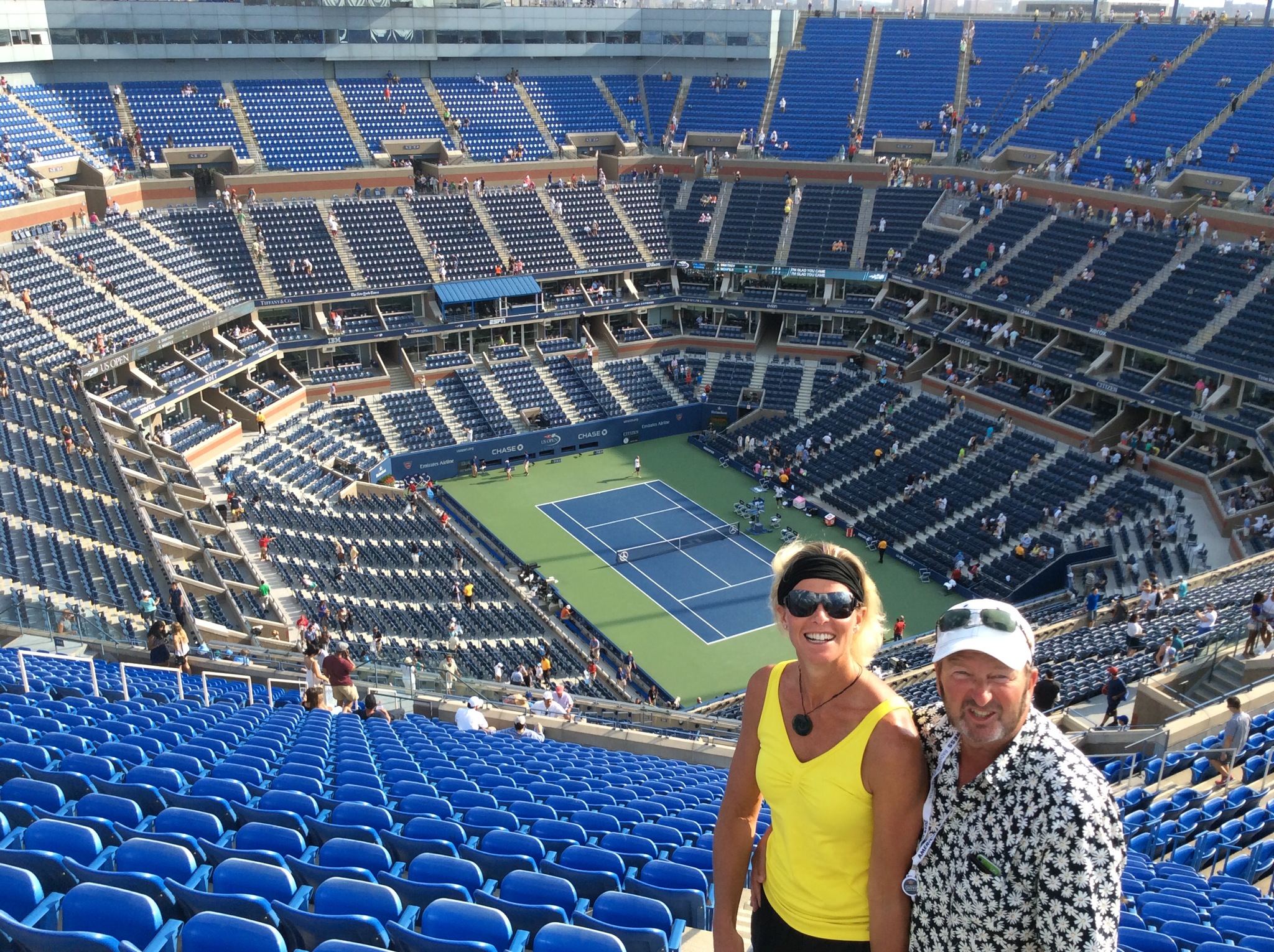
We then went across to Arthur Ashe – it is huge! It can hold a capacity crowd of 24,000. It wasn’t full by any stretch of the imagination so we sat down in the second tier. There were lots of spare seats so we thought if the ticket holders came along we would just shift elsewhere. Fortunately that didn’t happen so we had good seats to watch the fourth round men’s singles match between Gael Monfils from France and Grigor Dimitrov from Bulgaria.

We have seen Gael Monfils play a number of times in NZ, Australia and France. He has become a bit of a favourite of ours as he is such an entertaining player who can go from moments of brilliance to complete brain explosions. He has made a bit of a come back over the last couple of years and is currently ranked ay number 24. He is also currently without a coach which he seems pretty happy with – he just does his own thing and says he is quite happy that way.

Grigor Dimitrov is currently ranked at number 8 and has been rising quickly through the ranks this last year – he is only 23 and is Maria Sharapova’s latest squeeze, so they say.

It was damn hot by the time this match was played and Gael really struggled. He would stand with his hands on his knees in between points. The match went game for game on serve and Gael appeared to do just what he needed to when Dimitrov served saving his energy for his service games. His strategy worked as he won the first set on a couple of Grigor’s mistakes. The second set went to a tie break which again Gael capitalised on Grigor’s errors. In the third set, Grigor’s shoes broke so he had to run off in his socks to get another pair – he came back with two spare pairs. The commentators were laughing saying that his feet were on fire and the soles had melted – not surprising given the heat.

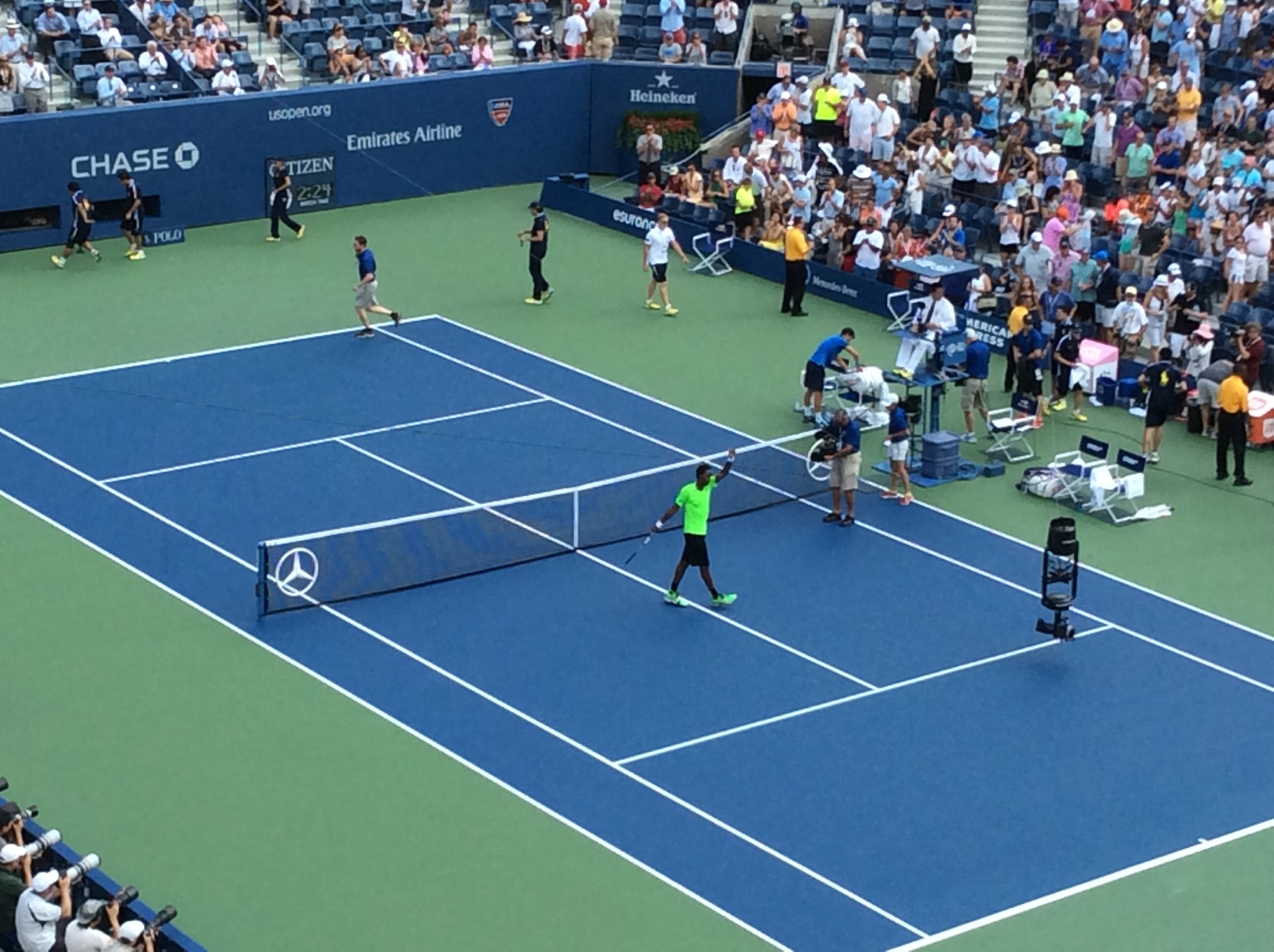
The third set was similar to the first and Gael broke serve when Grigor double faulted on match point. We were pleased Gale won but were probably surprised that he did it in three sets. He will now play Roger Federer in the quarters – we love Roger so our loyalty will be tested given our growing affinity with the lanky Frenchman!

IMG_0794.JPG

IMG_0797.JPG

IMG_0798.JPG

IMG_0804.JPG

IMG_0806.JPG

We had an absolute blast at the tennis and enjoyed every minute of all four grand slams. The US Open had a similar atmosphere to the Australian Open made all the more similar with the hot temperatures. We were pretty zapped after spending two days in the heat so we were asleep fairly early on Tuesday night. It seems quite surreal to have ticked that part of our journey off. We’ll enjoy watching the rest of the US open play out on TV as we continue our journey in the US of A : )

IMG_0827.JPG

IMG_0735.JPG

IMG_0740.JPG

IMG_0741.JPG

IMG_0778.JPG

IMG_0787.JPG

IMG_0807.JPG

IMG_0811.JPG

IMG_0812.JPG

IMG_0813.JPG

IMG_0821.JPG

IMG_2788.JPG

The United States Open Tennis Championships is a hardcourt tennis tournament which is the modern iteration of one of the oldest tennis championships in the world, the U.S. National Championship, for which men’s singles was first contested in 1881. Since 1987, the US Open has been chronologically the fourth and final tennis major comprising the Grand Slam each year; the other three are the Australian Open, French Open and Wimbledon.

The tournament was first held in August 1881 on the grass courts at the Newport Casino, Newport, Rhode Island and in that first year only clubs that were members of the United States National Lawn Tennis Association (USNLTA) were permitted to enter. In 1915 the national championship was relocated from Newport, Rhode Island to the West Side Tennis Club at Forest Hills, New York. A From 1921 through 1923, the tournament was played at the Germantown Cricket Club in Philadelphia and it returned to Forest Hills in 1924.

Since 1978, the tournament has been played on acrylic hard courts at the USTA Billie Jean King National Tennis Center at New York City, New York, United States.

In 1973 the US Open became the first Grand Slam tournament to award equal prize money to men and women with that year’s singles champions John Newcombe and Margaret Court both receiving $25,000. The winners in 2013 each received $1,900,000. In 1978 the tournament moved from the West Side Tennis Club, Forest Hills, Queens to the larger USTA National Tennis Center in Flushing Meadows, Queens, in the process switching the surface from clay, used in the last three years at Forest Hills, to hard courts. Jimmy Connors is the only individual to have won US Open singles titles on all three surfaces (grass, clay, hardcourt), while Chris Evert is the only woman to win on two surfaces (clay, hardcourt).

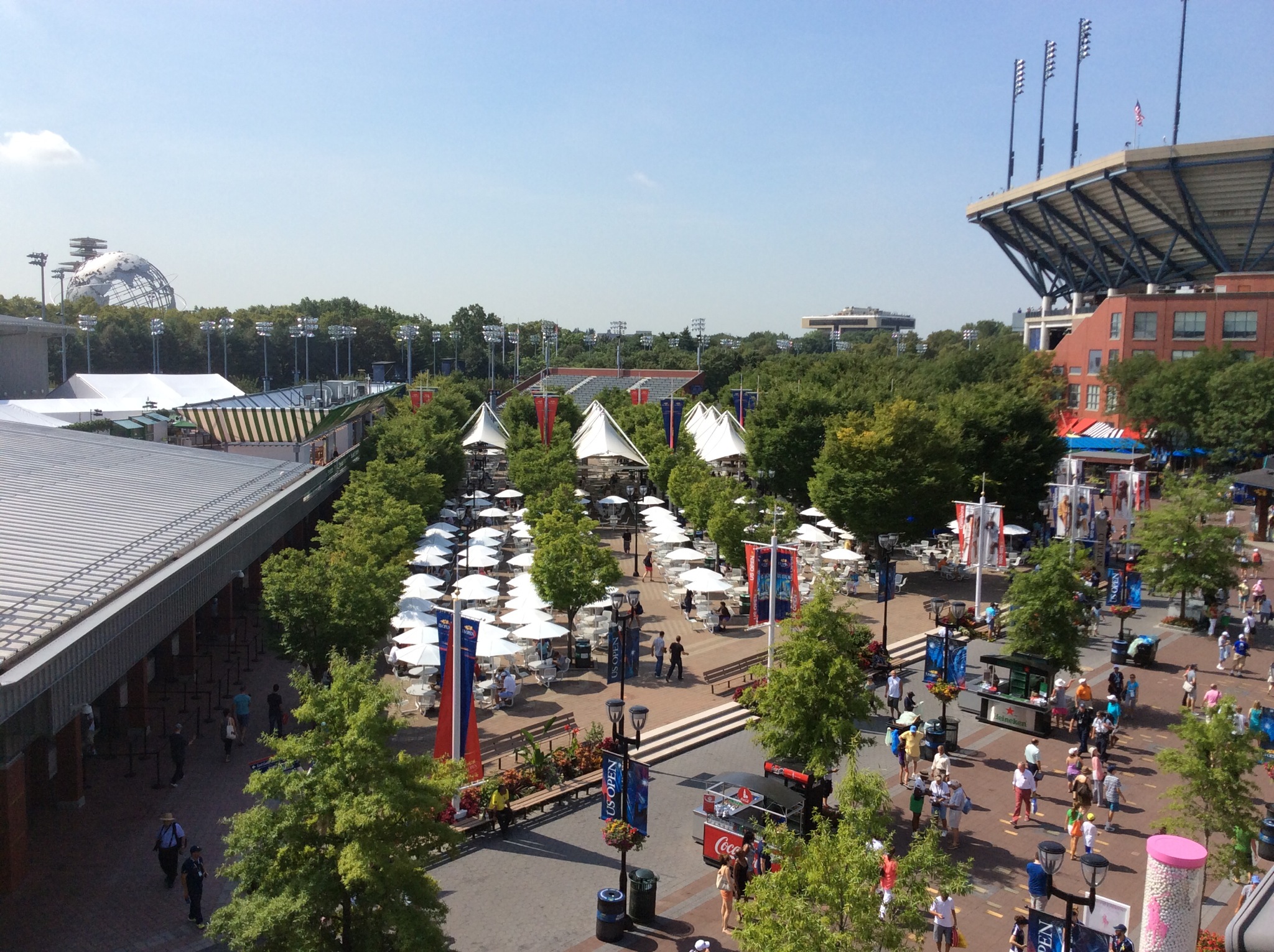
The main court is located at the 22,547-seat Arthur Ashe Stadium, opened in 1997. It is named after Arthur Ashe, the African American tennis player who won the men’s final of the inaugural US Open in 1968. The next largest court is the Louis Armstrong Stadium, opened in 1978, extensively renovated from the Singer Bowl, which was built for the 1964 New York World’s Fair. It has a capacity of 10,200. The globe pictured above was also built for the 1964 New York World’s Fair.

Posted in New York, USA | 2 Comments

Our First Atlantic Crossing

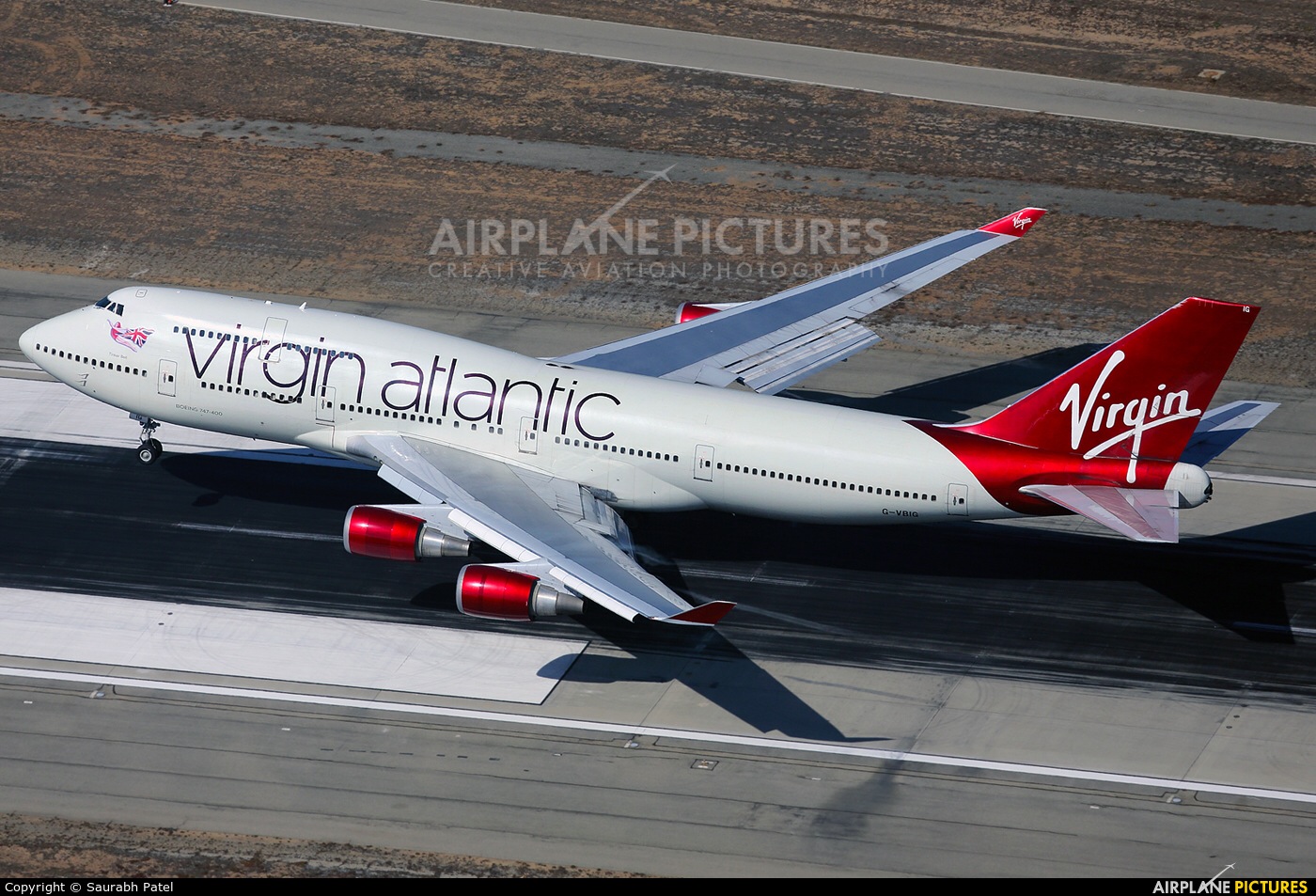
After getting off our cruise ship on Saturday in Southampton we headed to Heathrow’s Terminal 3 to catch our Virgin Atlantic flight to New York. Although we have been to the USA before it has always been to the West Coast as that is the closest coast to NZ. We were excited to be visiting New York and also to be crossing the Atlantic.

We are a bit behind the times re checking in online so when we checked in at the desk there were no seats left sitting together so we got allocated window seats one behind the other. We thought we would be able to sweet talk our roommates into swapping so no problem.

My roommate was a young lady from New York called Lauren who was pretty happy with swapping and getting a window seat. She was quite funny making a joke about hopefully getting some hot single guy as her new roommate. Alas no, it was another young lady. As it turned out though this young lady had a husband who was seated a few seats over. He clearly wasn’t happy to be seated apart from his wife. The wife asked Lauren if she wanted to swap with the husband but Lauren said she had already swapped with us and was happy with her new seat.

Once we had taken off and the seatbelt sign had been turned off the husband proceeded to stand next to the wife in the aisle, just over my left shoulder. Every time I turned around he gave me the evils – clearly not happy that we swapped and got to sit together but they didn’t. This went on for quite a while even through the dinner service. Eventually he want back to his seat and sulked. Meanwhile, according to Lauren his wife was sitting there crying. I was feeling a bit bad for Lauren at this stage after she had such high expectations of some hot young guy. Instead she was stuck with some physco couple having issues!

A few hours later the husband had disappeared from his seat and the wife shifted there. Lauren then had a new roommate and it wasn’t the husband. Her new roommate was an Englishman named Gary who was actually travelling with his wife and children. The husband had asked him to swap seats! So not only did Lauren now have a married man sitting next to her she also had the 7 year old daughter sitting on his knee! Actually, Gary turned out to be a nice guy and the daughter was no problem.

The four of us ended up having quite a good chat over our seats about the weirdos and New York. Gary was a first time visitor to New York as well so Lauren gave us all some good insight – she said we were going to be blown away. She was also shocked that we were staying in Queens and Gary was staying in Harlem. She told us how to hail a cab, hand out to the side rather than the old heil Hitler arm up in the air that you see on TV. You also don’t tell the taxi driver that you want to go to Louis Vuitton on 5th Avenue for example, you tell him you want to go to 5th Avenue between 25th and 26th Streets.

Remove your backpacks and hold them by your side when on the subway and don’t take offence if you get pushed out of the way on the street. New Yorkers are very busy people and very fast moving so if an awestruck tourist gets in there way while gorking at the Empire State Building from the middle of the footpath, they will be removed, in the nicest possible way of course : )

She also told us that in New York it is all about where you live – that is how your status is measured and apparently people will even go as far as to ask if you rent or own! Shock horror. In Washington DC it is all about where you work and apparently the people in Washington DC are much nicer than the ones in New York.

Running concurrently to all this drama was the green tea saga. I had asked for a green tea after dinner and it was no problem. The problems started when I asked for another green tea a little later on. The air hostess told me that she would bring me one this time but it would probably have to be my last as this class was only allocated so many green tea bags and the upper class had priority over the green tea bags! Seriously! She then bought my second cup of green tea and the tide was half out! I marched up to the galley and said if this is to be my last cup of green tea the least you could do is full the cup. Anyway I decided I would recycle the said green tea bag so when the next air hostess came to take my cup and used green tea bag away I told her that due to the shortage of green tea bags on this flight I was going to recycle it later in the flight. She was a little horrified and embarrassed so point made! Next step – an email to Richard me thinks : )

We have been in New York for two days so far and haven’t broken any rules (not that we can remember anyway) and we’re also still safe and well despite our staying in Queens : )

PS – the physco’s were last seen all snuggled up together in their seats – oooooohhhhhh

IMG_0776.JPG

Posted in New York, USA | 1 Comment

Food Glorious Food – Celebrity Cruises

Well the food on board the Eclipse in the main restaurant wasn’t as impressive or as inspiring as we had come to expect on a cruise ship. Thank goodness for the speciality restaurants on board though.

The Tuscan Grille, an Italian steakhouse with a nouveau twist was delicious. It was situated at the back of the boat so it was nice enjoying our dinner as we navigated through the Stockholm archipelago.

Next up was Qsine which is designed to awaken your inner foodie on a culinary journey. The decor was really funky and they present you with an iPad which is your menu. They have 20 dishes from all around the world in varying sizes but along the line of a tapas menu. You go through and add all the dishes that take your fancy to your “favourites” list. They recommended we choose 5 to 6 dishes – they are all designed to share. We had chosen 7 and boy by the time we were through we were rather full.

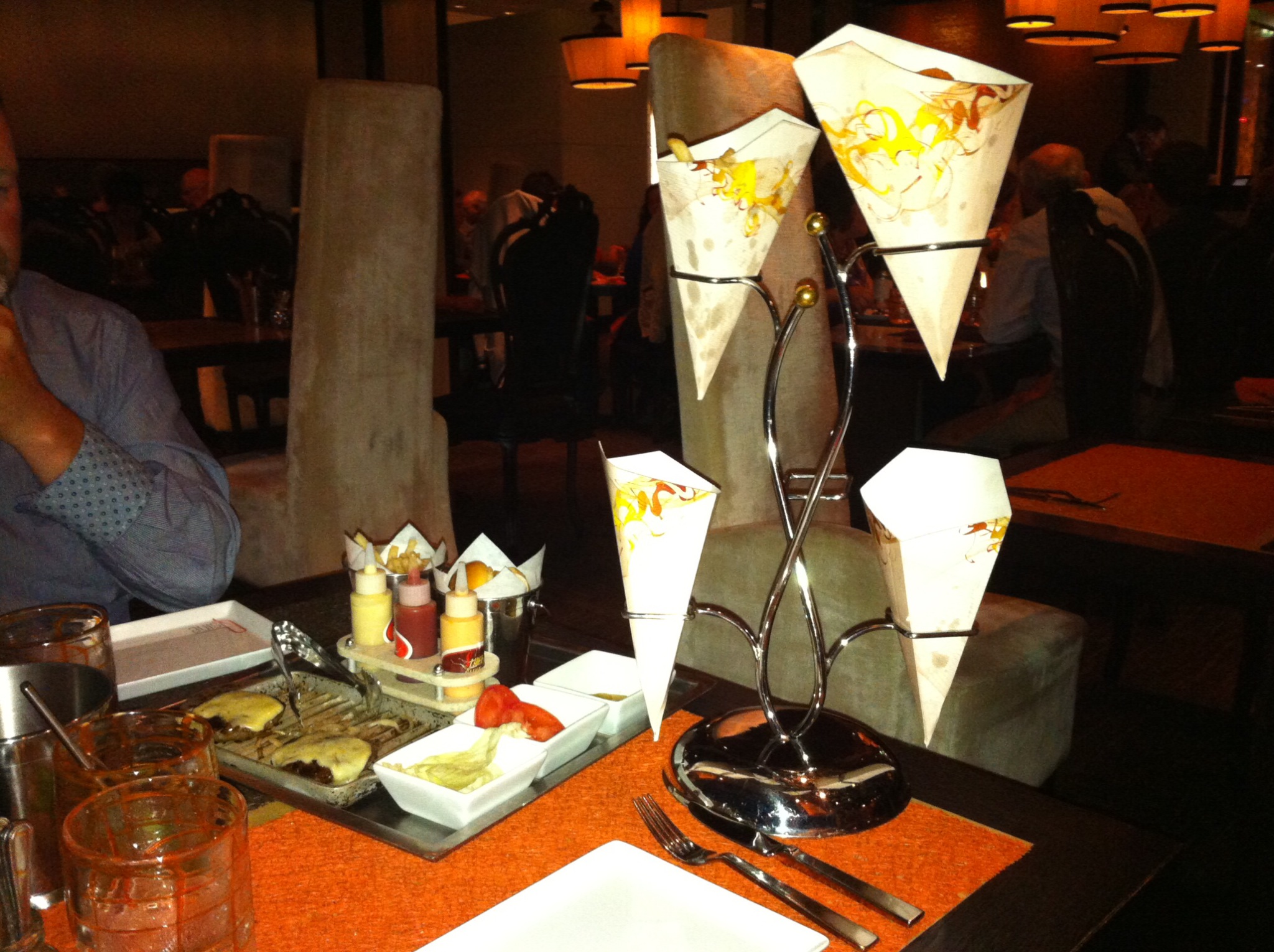
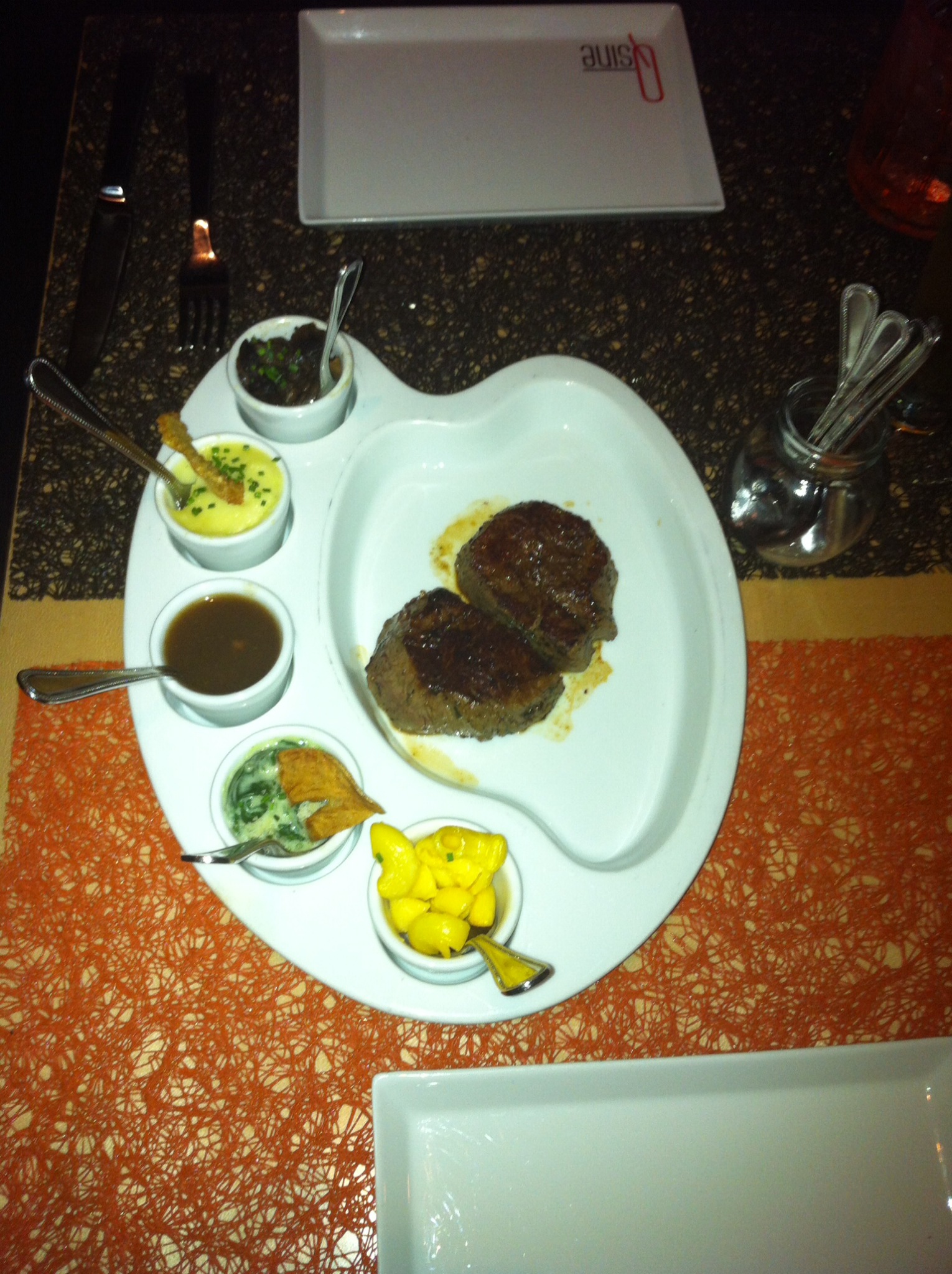
We had spring rolls that turn up in springs, a Chinese medley which turned up in martini glasses with no stems, filet mignon presented on a painters palate with all the accompaniments ready to be painted on your steak. The steak was gorgeous and trust me we know our steak. The beef tacos come with all the ingredients to make your own guacamole and you can even make your own mojito.

The dessert menu is presented on a cube which you need to open up and change around to find all the items, one of which is the chef’s surprise. We so did not need any dessert but those waiters are so persuasive! I did feel rather ill after that meal and said next time we come here I am not having dessert – yeah right! Steve had the silver bullet which contained an ice cream, fruit and sorbet medley.

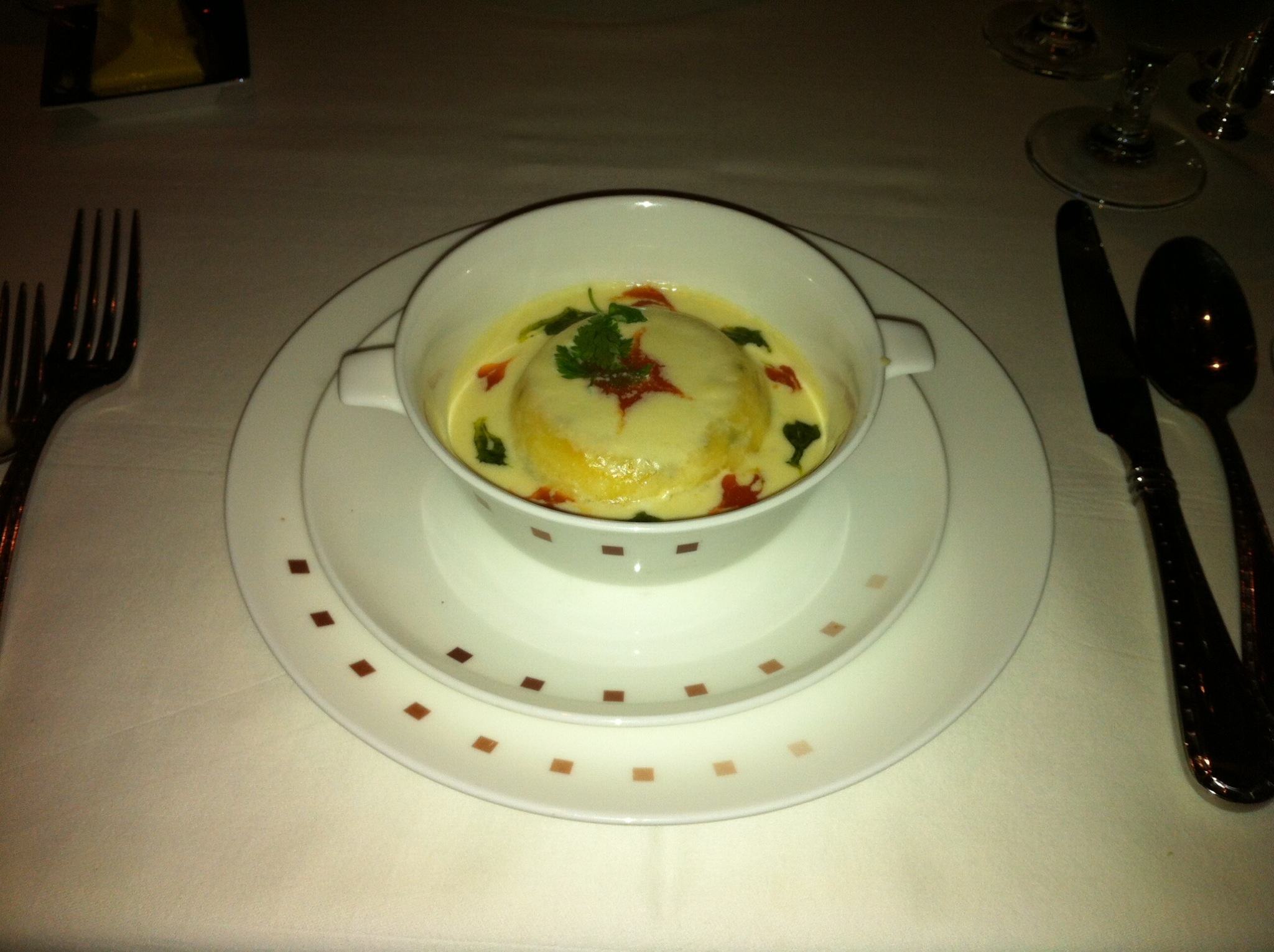
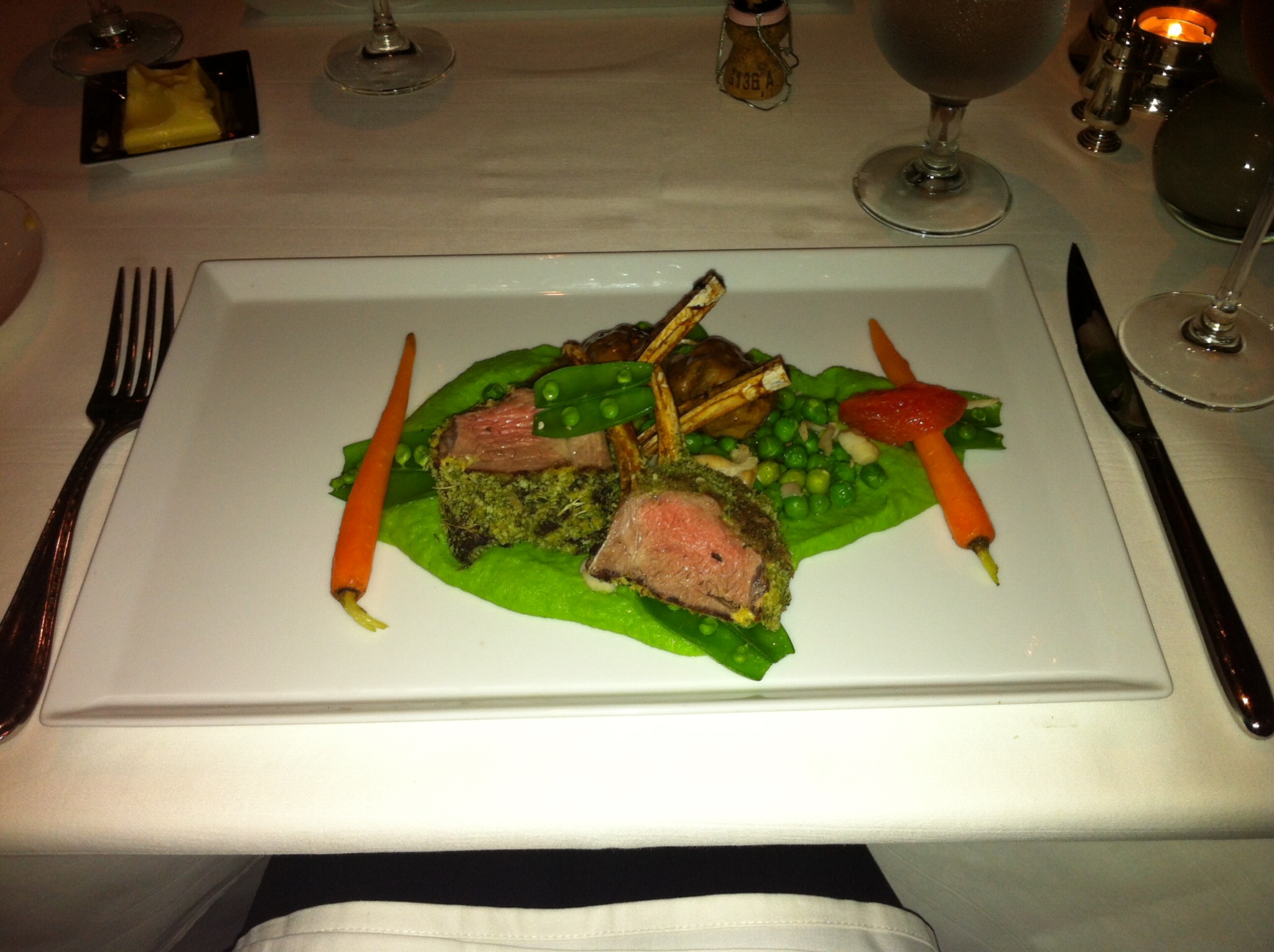
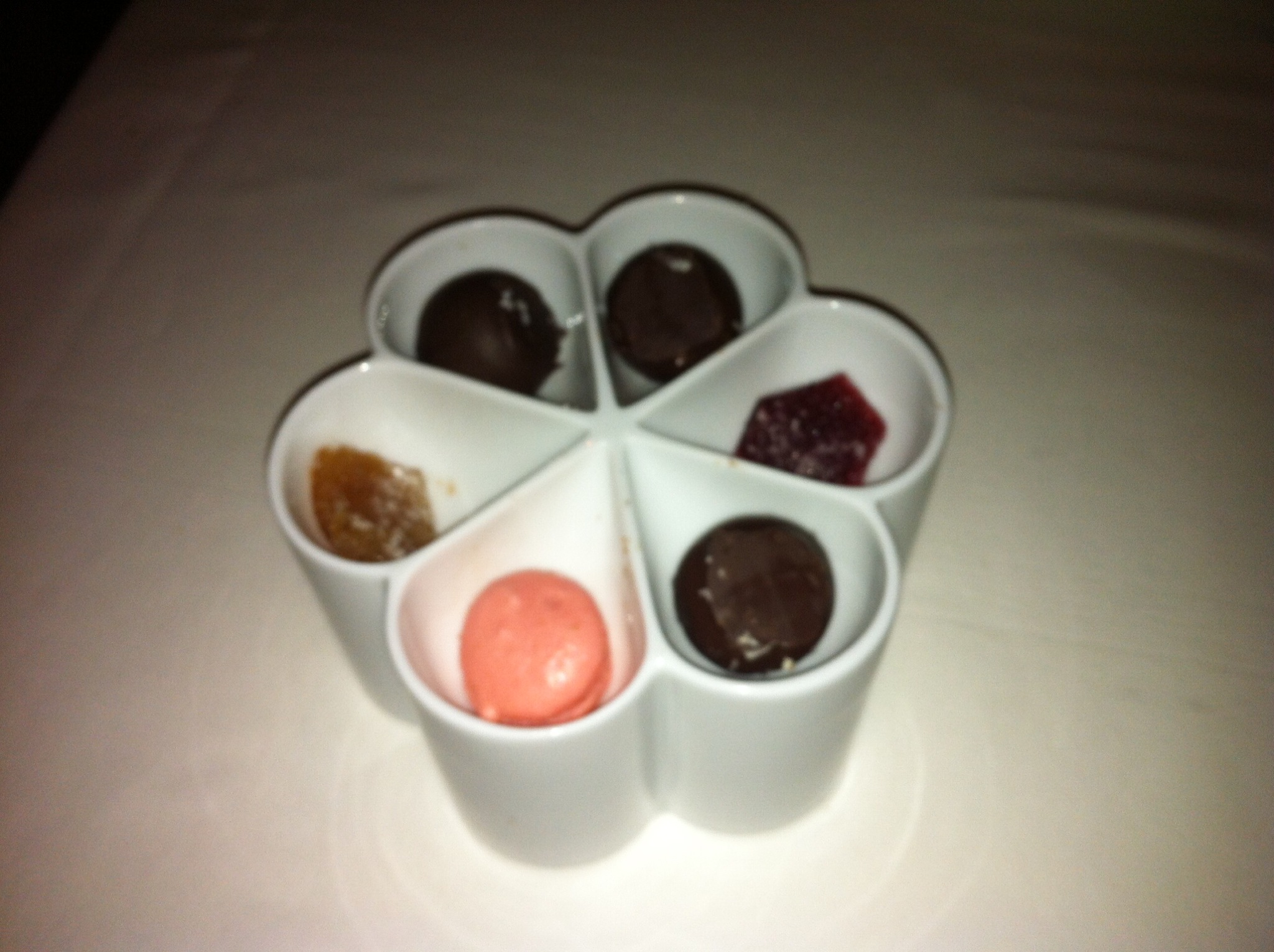
Last but not least was Murano which is a classic fine dining restaurant with impeccable service, food and food presentation. Goats cheese soufflé to start with followed by rack of lamb and finished off nicely with a valrhona chocolate dessert. Well actually it was the petit fours that finished us off – they were delightfully presented in a lovely dish. This was all washed down with a bottle of Veuve Clicquot Rose. Life is grand : )

IMG_2645.JPG

IMG_2640.JPG

IMG_2660.JPG

IMG_2661.JPG

IMG_2678.JPG

IMG_2680.JPG

IMG_2675.JPG

IMG_2677.JPG

IMG_2679.JPG

IMG_2681.JPG

IMG_2682.JPG

IMG_2774.JPG

IMG_2778.JPG

IMG_2772.JPG

IMG_2773.JPG

IMG_2777.JPG

IMG_2776.JPG

IMG_2751.JPG

IMG_2752.JPG

IMG_2750.JPG

Posted in Celebrity Cruises | 3 Comments

Copenhagen, Denmark – Celebrity Cruises

On Wednesday we spent the day in Copenhagen. We docked at 8am and weren’t sailing until midnight so it was nice to be able to take our time exploring the city. It was a lovely sunny day although the temperature only got to about 19 degrees. There were quite a few things to see so we took the Hop On Hop Off bus tour which had three routes to choose from.

Originally a Viking fishing village founded in the 10th century, Copenhagen became the capital of Denmark in the early 15th century. It is the most populated city of Denmark, and second largest in Scandinavia, with an urban population of 1,246,611 and a metropolitan population of 1,975,361 (as of 1 April 2014). It is situated on the eastern coast of Zealand, 42 km northwest of Malmö, Sweden and 164 km (102 mi) northeast of Odense. The city stretches across parts of the island of Amager and also contains the enclave of Frederiksberg, a municipality in its own right.

Since the summer of 2000, Copenhagen and the Swedish city of Malmö have been connected by the Øresund Bridge, which carries rail and road traffic. As a result, Copenhagen has become the centre of a larger metropolitan area spanning both nations.

In 2012, Copenhagen was third in the ranking of the richest cities in the world in terms of gross earnings, dropping from first place in 2009. Copenhagen has some of the highest gross wages in the world. High taxes mean that wages are reduced after mandatory deduction. A beneficial researcher scheme with low taxation of foreign specialists has made Denmark an attractive location for foreign labour. It is however also among the most expensive cities in Europe.

Copenhagen were the first city in the world to officially introduce green policy. They are aiming to be carbon neutral by 2019. Cars attract an import tax of 180% so they are very expensive. They have bicycle lanes everywhere – 35,000 bicycles come into the city every day.

Copenhagen has over 94,000 students enrolled in its largest universities and institutions, including the University of Copenhagen, the Technical University of Denmark and Copenhagen Business School. The University of Copenhagen, founded in 1479, is the oldest university in Denmark, and has repeatedly been ranked as one of the best universities in Europe.

As a result of Denmark’s neutrality in the First World War, Copenhagen prospered from trade with both Britain and Germany while the city’s defences were kept fully manned by some 40,000 soldiers for the duration of the war. However, during World War II, Copenhagen was occupied by German troops along with the rest of the country from 9 April 1940 until 4 May 1945. On 8 May 1945 Copenhagen was officially liberated by British troops commanded by Field Marshal Bernard Montgomery who supervised the surrender of 30,000 Germans situated around the capital.

Copenhagen is home to a number of international companies including A.P. Møller-Mærsk, Novo Nordisk, Carlsberg and Novozymes. A.P. Møller-Mærsk is the largest shipping company in the world. It’s logo is a seven point star which represent the seven seas that they sail. The city also has successful business clusters in several innovative sectors including information technology, biotechnology, pharmaceuticals and clean technology.

The Tivoli Gardens had been highly recommended to us so that was our first stop. Tivoli Gardens is a famous amusement park and pleasure garden in Copenhagen. The park opened on 15 August 1843 and is the second oldest amusement park in the world, after Dyrehavsbakken in nearby Klampenborg. With 4.033 million visitors in 2012, Tivoli is the second most popular seasonal theme park in the world, the most visited theme park in Scandinavia and the fourth most visited in Europe, only behind Disneyland Paris, Europa-Park Rust and the Efteling.

While Tivoli looked cool we actually decided amusement parks weren’t really our thing so next stop was the Carlsberg factory. As you can imagine this was right up Steve’s alley. We decided to do the tour and it was really interesting. They main factory has been shut since 2008 due to the difficulty of getting the raw product to the site – it is very close to the centre of Copenhagen. They still operate a microbrewery from the site though with the main facilities now located in another part of Denmark. They have many offshore breweries making beer under the Carlsberg label with the yeast being supplied from the laboratory in Copenhagen – this ensures consistency in the brew. The only thing that can alter the taste of the beer is the quality of the water.

Carlsberg was founded by J. C. Jacobsen; the first brew was finished on 10 November 1847. Export of Carlsberg beer began in 1868; foreign brewing began in 1968 with the opening of a Carlsberg brewery in Blantyre, Malawi. Some of the company’s original logos include an elephant (after which some of its lagers are named) and the swastika. Use of the latter was discontinued in the 1930s because of its association with the Nazis. The company’s flagship brand is Carlsberg Beer but it also brews Tuborg, Kronenbourg, Somersby cider, Russia’s best selling beer Baltika, Belgian Grimbergen abbey beers as well more than 500 local beers.

Carlsberg is named after J.C. Jacobsen’s only child, a son called Carl. Berg mean’s hill so the translation is Carl’s Hill. Carl had a strict upbringing and was sent abroad to learn the art of brew making. J.C. and Carl didn’t see eye to eye and this was further exacerbated by Carl being well educated and having his own ideas. They ended up operating separate brew houses side by side – Old Carlsberg and New Carlsberg. Carl had been written out of his father’s will so on his father’s death all his father’s assets were put into a foundation to help all sorts of projects that benefited Copenhagen going forward.

In the early 20th century Carl got into some financial difficulty and asked the foundation for money – they originally refused but later agreed on the proviso that when Carl died all his assets were also put into a foundation. Carl agreed but there was provision for each of his children and their children etc… to be paid a lump sum annually for 50 years. He died in 1914 so in 1964 the last payments to any of his descendants were made. The foundations were eventually joined and continue to benefit Copenhagen with none of the descendants of the family benefiting directly.

In 1901, on brewer Carl Jacobsen’s initiative, the Architect Professor J. L. Dahlerup created a tower resting on four elephants carved in granite from the Danish island Bornholm. Brewer Jacobsen was inspired by this gate by the obelisk supporting elephant on the Piazza della Minerva in Rome. The four elephants each bear the initial of one of Carl Jacobsen’s four children: Theodora, Paula, Helge and Vagn. This became known as The Elephant Gate and is a landmark entrance to the brewery. To the west of the gate, Carl Jacobsen’s motto was inscribed: Laboremus pro Patria (Let us work for our country). Since then the Elephant has been a famous part of the Carlsberg Family, especially after the strong Elephant Beer was created in 1955 under the name “Export Lager Beer” and featuring the Elephant label. The Elephant is still brewed in Carlsberg Breweries in Copenhagen and exported around the world. A few markets brew their own Carlsberg Elephant beer locally according to the original recipe.

After the Carlsberg tour we caught the bus back to the city to check out the Nyhavn Canal which is also known as the longest bar in the world. It has all these bars set up alongside the canal. It had turned into a beautiful afternoon and there were people everywhere sitting on the edge of the canal. All the wooden sailing ships in the canal and the colourful 17th and 18th century townhouses alongside make it such a picturesque spot. The bars advertise takeaway beer – it is cheaper to buy a beer and go and sit on the edge of the canal and drink it.

Nyhavn was constructed by King Christian V from 1670 to 1673, dug by Swedish war prisoners from the Dano-Swedish War 1658–1660. It is a gateway from the sea to the old inner city at Kongens Nytorv (King’s Square), where ships handled cargo and fishermens’ catch. It was notorious for beer, sailors, and prostitution. Danish author Hans Christian Andersen lived at Nyhavn for some 18 years.

As ocean-going ships grew larger, Nyhavn was taken over by internal Danish small vessel freight traffic. After World War II land transport took over this role and small vessel traffic disappeared from the Port of Copenhagen, leaving Nyhavn largely deserted of ships.

Hans Christian Andersen (2nd April 1805 – 4th August 1875) was a Danish author. Although a prolific writer of plays, travelogues, novels, and poems, Andersen is best remembered for his fairy tales. Andersen’s popularity is not limited to children; his stories, called eventyr in Danish, or “fairy-tales” in English, express themes that transcend age and nationality.

Andersen’s fairy tales, which have been translated into more than 125 languages, have become culturally embedded in the West’s collective consciousness, readily accessible to children, but presenting lessons of virtue and resilience in the face of adversity for mature readers as well. Some of his most famous fairy tales include “The Little Mermaid”, “The Snow Queen”, “The Ugly Duckling”, “The Nightingale”, “The Emperor’s New Clothes” and many more. His stories have inspired plays, ballets, and both live-action and animated films.

After spending a couple of hours exploring the area around the Nyhavn canal we had missed the last bus back to the boat but it was only about 2km to walk so we took the waterfront route past the Amalienborg Castle which is the winter home of the Danish Royal Family. It consists of four identical classicizing palace façades with rococo interiors around an octagonal courtyard in the centre of the square is a monumental equestrian statue of Amalienborg’s founder, King Frederick V.

IMG_0730.JPG

The Danish Royal Family enjoys remarkably high approval ratings in Denmark, possibly ranging from somewhere between 82% and 92%. Queen Margrethe II is married to a French man who is known as the Prince Consort. They have two sons – Prince Fredrik who married Mary Donaldson from Australia, now known as Crown Princess Mary, and Joachim.

The Queen’s style of reigning is outgoing and during her reign, the royal house’s relationship with the population has become more open than before. During her annual summer cruises on the royal yacht Dannebrog, she attaches great importance to reaching all parts of the realm, including the Faroe Islands and Greenland. In addition, she has managed to give her traditional televised New Year message a personal touch, which has strengthened the monarchy’s position in the nation.

There is quite a connection between all the various royal families in Europe. The royal descendants of Queen Victoria (Queen of the United Kingdom) and of Christian IX (King of Denmark) currently occupy the thrones of Belgium, Denmark, Norway, Spain, Sweden and the United Kingdom. At the outbreak of the First World War their grandchildren occupied the thrones of Denmark, Greece, Norway, Germany, Romania, Russia, Spain and the United Kingdom. For this, Queen Victoria was nicknamed “the grandmother of Europe” while Christian IX was nicknamed “Father-in-law of Europe”. Of the remaining kingdoms of Europe today, only Willem-Alexander of the Netherlands descends neither from Queen Victoria nor Christian IX.

Not far from where our boat was docked is the Little Mermaid statue. It is a bronze statue by Edvard Eriksen, depicting a mermaid. The sculpture is displayed on a rock by the waterside at the Langelinie promenade. It is 1.25 metres tall and weighs 175 kilograms. Based on the fairy tale of the same name by Hans Christian Andersen, the small and unimposing statue is a Copenhagen icon and has been a major tourist attraction since 1913. In recent decades it has become a popular target for defacement by vandals and political activists.

The statue was commissioned in 1909 by Carl Jacobsen, son of the founder of Carlsberg, who had been fascinated by a ballet about the fairytale in Copenhagen’s Royal Theatre and asked the ballerina, Ellen Price, to model for the statue. The sculptor Edvard Eriksen created the bronze statue, which was unveiled on August 23, 1913. The statue’s head was modelled after Price, but as the ballerina did not agree to model in the nude, the sculptor’s wife, Eline Eriksen, was used for the body.

IMG_0683.JPG

IMG_0684.JPG

IMG_0687.JPG

IMG_0688.JPG

IMG_0691.JPG

IMG_0693.JPG

IMG_0697.JPG

IMG_0695.JPG

IMG_0699.JPG

IMG_0700.JPG

IMG_0708.JPG

IMG_0710.JPG

IMG_0718.JPG

IMG_0721.JPG

Posted in Celebrity Cruises | Leave a comment

Saint Petersburg, Russia – Celebrity Cruises

We docked in Saint Petersburg at 7am Saturday morning. We are here until 6pm Sunday night which gives us two days to explore the city – there is a lot to see. We had organised a private tour with Tours by Locals and our guide Margarita met us off the boat at 9am.

Saint Petersburg is situated on the eastern coast of the Gulf of Finland on the Baltic Sea and is considered the most European of all Russian cities. It is Russia’s second largest and Europe’s fourth largest city after Moscow, London and Paris. In 1914 the name of the city was changed from Saint Petersburg to Petrograd, in 1924 to Leningrad, and in 1991, back to Saint Petersburg. It is built on a network of islands, featuring 65 rivers and canals that crisscross the city. Along with about 400 bridges, the city also closely resembles Venice or Amsterdam.

Saint Petersburg was founded by Czar Peter the Great on the 27 May 1703. Between 1713–1728 and 1732–1918, Saint Petersburg was the imperial capital of Russia. In 1918, the central government bodies moved from Saint Petersburg (then named Petrograd) to Moscow. It is Russia’s 2nd largest city after Moscow with 5 million inhabitants. The total population of Russia is 150 million.

In 1725, Peter died at the age of fifty-two. His endeavours to modernise Russia had met with opposition from the Russian nobility—resulting in several attempts on his life and a treason case involving his son. In 1728, Peter II of Russia moved his seat back to Moscow. But four years later, in 1732, under Empress Anna of Russia, Saint Petersburg was again designated as the capital of the Russian Empire. It remained the seat of the Romanov Dynasty and the Imperial Court of the Russian Tzars, as well as the seat of the Russian government, for another 186 years until the communist revolution of 1917.

The names of saints Peter and Paul, bestowed upon original city’s citadel and its cathedral (from 1725—a burial vault of Russian emperors) coincidentally were the names of the first two assassinated Russian Emperors, Peter III (1762, supposedly killed in a conspiracy led by his wife, Catherine the Great) and Paul I (1801, Nicholas Zubov and other conspirators who brought to power Alexander I, the son of their victim). The third emperor’s assassination took place in Petersburg in 1881 when Alexander II fell victim to narodniki (see The Church of the Saviour on Spilled Blood).

The Russian Revolution of 1917 began in Saint Petersburg when the Bolsheviks stormed the Winter Palace. During World War I, the Imperial government renamed the city Petrograd, meaning “Peter’s City”, to remove the German words Sankt and Burg.

In March 1917, during the February Revolution Nicholas II abdicated both for himself and on behalf of his son, ending the Russian monarchy and over three hundred years of Romanov dynastic rule. On November 7, 1917, the Bolsheviks, led by Vladimir Lenin, stormed the Winter Palace in an event known thereafter as the October Revolution, which led to the end of the post-Tsarist provisional government, the transfer of all political power to the Soviets, and the rise of the Communist Party.

In September and October 1917, German troops invaded the West Estonian archipelago and threatened Petrograd with bombardment and invasion. On March 12, 1918, the Soviets transferred the government to Moscow. During the ensuing Civil War, in 1919 general Yudenich advancing from Estonia repeated the attempt to capture the city, but Leon Trotsky mobilized the army and forced him to retreat.

On January 26, 1924, five days after Lenin’s death, Petrograd was renamed Leningrad. Later some streets and other toponyms were renamed accordingly. The city has over 230 places associated with the life and activities of Lenin.

Stallin took over from Lenin in 1924 and ruled until his death in 1953. He was a very cruel man, if you were wealthy you were an enemy and put into prison. He was widely disliked and there are no statutes or memorials to him anywhere in Russia.

During World War II, German forces besieged Leningrad following the Axis invasion of the Soviet Union in June 1941. The siege lasted 872 days, from September 1941 to January 1944. The Siege of Leningrad proved one of the longest, most destructive, and most lethal sieges of a major city in modern history. It isolated the city from most supplies except those provided through the Road of Life across Lake Ladoga. More than one million civilians died, mainly from starvation. Many others were eventually evacuated or escaped, so the city became largely depopulated.

1991 saw the fall of the Communist Party and the election of a President. Leningrad was renamed back to St Petersburg. Meanwhile, economic conditions started to deteriorate as the country tried to adapt to major changes. For the first time since the 1940s, food rationing was introduced, and the city received humanitarian food aid from abroad.

Ironically, those close to the power at the time of the fall of the Communist Party benefited greatly when the state assets were privatised. They managed to buy these state assets for a pittance and now they are worth billions. These new Russians, as Margarita referred to them, are known as Russian Oligarchs in the western world.

Being under soviet rule actually made the Russian people feel safe – everything was regulated and they knew where they stood. In saying that the economy has never been better than now. Putin is considered a very secretive man but has made good changes. There is still a lot of corruption in the police and government but he is trying to clean it up Government ministers are now required to declare all their income and interests.

People in urban Saint Petersburg live mostly in apartments. Between 1918 and the 1990s, the Soviets nationalised housing and forced residents to share communal apartments (kommunalkas). With 68% living in shared flats in the 1930s, Leningrad was the city in the USSR with the largest number of kommunalkas. Resettling residents of kommunalkas is now on the way out, albeit shared apartments are still not uncommon. As new boroughs were built on the outskirts in the 1950s to 1980s, over half a million low income families eventually received free apartments, and about an additional hundred thousand condos were purchased.

Saint Petersburg is a major trade gateway, financial and industrial centre of Russia specialising in oil and gas trade, shipbuilding yards, aerospace industry, radio and electronics, software and computers; machine building, heavy machinery and transport, including tanks and other military equipment, mining, instrument manufacture, ferrous and nonferrous metallurgy (production of aluminium alloys), chemicals, pharmaceuticals, medical equipment, publishing and printing, food and catering, wholesale and retail, textile and apparel industries, and many other businesses.

The Saint Petersburg Mint (Monetny Dvor), founded in 1724, is one of the largest mints in the world, it mints Russian coins, medals and badges.

In 2007, Toyota opened a Camry plant after investing 5 billion roubles (USD200 million) in Shushary, one of the southern suburbs of Saint Petersburg. Opel, Hyundai and Nissan have signed deals with the Russian government to build their automotive plants in Saint Petersburg too. Automotive and auto-parts industry is on the rise there during the last decade.

Saint Petersburg is the location of a significant brewery and distillery industry. It is known as the “beer capital” of Russia, due to the supply and quality of local water, contributing over 30% of the domestic production of beer with its five large-scale breweries including Europe’s second largest brewery Baltika, Vena (both operated by BBH), Heineken Brewery, Stepan Razin (both by Heineken) and Tinkoff brewery (SUN-InBev).

The city has a lot of local distilleries which produce a broad range of vodka brands. The oldest ones is LIVIZ (founded in 1897). Among the youngest is Russian Standard Vodka introduced in Moscow in 1998, which opened in 2006 a new $60 million distillery in Petersburg (an area of 30,000 square meters, production rate of 22,500 bottles per hour). In 2007 this brand was exported to over 70 countries.

Saint Petersburg is inscribed on the UNESCO World Heritage list as an area with 36 historical architectural complexes and around 4,000 outstanding individual monuments of architecture, history and culture. New tourist programs and sightseeing tours have been developed for those wishing to see Saint Petersburg’s cultural heritage.

The city has 221 museums, 2,000 libraries, more than 80 theaters, 100 concert organizations, 45 galleries and exhibition halls, 62 cinemas and around 80 other cultural establishments. Ballet performances occupy a special place in the cultural life of Saint Petersburg. The Petersburg School of Ballet is deservedly named as one of the best in the world. With a packed cultural program and a large number of world heritage sites, as well as a developing tourist infrastructure, Saint Petersburg has become among the world’s leading centers of culture and tourism.

The weather in Saint Petersburg, however, leaves a lot to be desired. It gets up to about 25 in summer which is June and July and can get as cold as minus 25 in the winter. Due to location at ca. 60° N latitude the day length in Petersburg varies across seasons, ranging from 5:53 hours to 18:50 hours. A period from mid-May to mid-July when twilight may last all night is called the white nights.

History of Russian Czars
Czar (also spelled as tsar) literally means an emperor or a male monarch. It was the imperial title of Russian rulers, who ruled Russia from 16th century until the Bolshevik revolution in 1917. The title Czar is derived from the Latin word Caesar, the title of Roman emperors. Czar also means a person having great power. The Russian Czars were the rulers of Russia, whose reign began with Ivan, the Terrible and ended with Nicholas II. They ruled for nearly 350 years.

In earlier times, the rulers of Russia were known as Grand Princes of Moscow, Grand Princes of Vladimir, Grand Princes of Kiev, etc. The House of Romanov is the most popular dynasty in Russia. But, the use of the title, ‘Czar’ dates back to nearly 50 years before the Romanov emperors ascended the throne. Ivan IV (popularly known as Ivan, the Terrible) was the first Russian ruler to assume the title of Czar in 1547. He belonged to the House of Rurik and reigned from 1547-1584. He was an authoritarian and a ruthless ruler. Ivan IV is infamous for killing his own son in a fit of rage. Ivan IV died in 1584, leaving his worthless second son Feodor, as heir to the throne.

The time of troubles began in Russia, after Ivan IVth’s death. The country was torn by civil war, unrest and famines. Finally, in 1613, the chaos ended. Representatives of 50 cities and some peasants unanimously elected Mikhail Fedorovich Romanov as the new Czar. From here began the Romanov dynasty that ruled Russia till 1917.

Czar Peter, popularly known as Peter the Great, was the founder of modern Russia. He transformed Russia into a great European empire. During the reign of Catherine the Great, the Russian empire expanded and improved in administration. Czar Alexander II abolished serfdom in 1861. But, he was assassinated. His son Czar Alexander III, in order to avenge his father’s murder, imposed strict and ruthless laws. The last Czar Nicholas II’s failure to take action, even in extreme conditions, eventually led to his downfall and eradication of the monarchy in Russia.

The stories of the Czar’s fascinated me and a lot of what we saw and what Margarita told us about focused around Peter the Great (1696 – 1725), his daughter Elizabeth (1741 – 1761) and Catherine the Great (1762 – 1796). Peter the Great had 11 children of which only two survived – Elizabeth and Mary. There were a couple of rulers after Peter and then Elizabeth took over. Elizabeth didn’t have any children so her nephew succeeded her. He married a German woman called Rita who became known as Catherine II (Peter’s wife was Catherine I). Catherine had her lover murder her husband after which she took over the country. She ruled for 34 years and became known as Catherine the Great.

The Last Russian Czar
Nicholas II was the last Czar of Russia. He was not an able ruler due to inconsistency in his decisions and actions. He was under great influence of his wife Czarina Alexandra, and his corrupt ministers. A monk named Rasputin influenced the Czarina and manipulated most of the Czar’s decisions. Russia faced military as well as economic losses during the First World War. There was rising discontent due to the Czar’s reluctance to undertake immediate action. The people were fed up of the autocratic and dictatorial rule. The event known as Bloody Sunday, shattered people’s belief in the Russian Czars. The consequence of which was the Russian Revolution (Bolshevik Revolution), which took place in 1917. Czar Nicholas II abdicated. He and his immediate family were imprisoned, and later killed by the Bolsheviks. Czarism and monarchy came to an end in Russia with the death of Nicholas II.

Serfdom was prevalent in Russia during the reign of the Russian Czars. Almost 80% of the Russian people were either peasants or serfs. The Czars did not wish to end the feudal system. As they were afraid of losing power, capitalism was verboten. Most of the Czars were autocratic rulers. Although, the Russian Czars were oppressive, the world was gifted with works of great Russian authors, painters and artists during their reign.

After Margarita had picked us up from the Port we drove out of town to explore Catherine Palace.

Catherine Palace
The residence originated in 1717, when Catherine I of Russia engaged the German architect Johann-Friedrich Braunstein to construct a summer palace for her pleasure. In 1733, Empress Elizabeth commissioned Mikhail Zemtsov and Andrei Kvasov to expand the Catherine Palace. Empress Elizabeth, however, found her mother’s residence outdated and incommodious and in May 1752 asked her court architect Bartolomeo Rastrelli to demolish the old structure and replace it with a much grander edifice in a flamboyant Rococo style. Construction lasted for four years, and on 30 July 1756 the architect presented the brand-new 325-meter-long palace to the Empress, her dazed courtiers, and stupefied foreign ambassadors.

More than 100 kilograms of gold were used to gild the sophisticated stucco façade and numerous statues erected on the roof. It was even rumoured that the palace’s roof was constructed entirely of gold. In front of the palace a great formal garden was laid out.

Although the palace is popularly associated with Catherine the Great, she actually regarded its “whipped cream” architecture as old-fashioned. When she ascended to the throne, a number of statues in the park were being covered with gold, in accordance with the last wish of Empress Elizabeth, yet the new monarch had all the works suspended upon being informed about the expense. In her memoirs she censured her predecessor’s reckless extravagance.

Upon Catherine the Great’s death in 1796, the palace was abandoned in favour of Pavlovsk Palace. Subsequent monarchs preferred to reside in the nearby Alexander Palace and, with only two exceptions, refrained from making new additions to the Catherine Palace, regarding it as a splendid monument to Elizabeth’s wealth and Catherine II’s glory.

When the German forces retreated after the siege of Leningrad, they intentionally destroyed the residence, leaving only the hollow shell of the palace behind. Prior to World War II, the Russian archivists managed to document a fair amount of the interior, which proved of great importance in reconstructing the palace. Although the largest part of the reconstruction was completed in time for the Tercentenary of St. Petersburg in 2003, much work is still required to restore the palace to its former glory. In order to attract funds, the palace’s administration has leased the Grand Hall for such high-profile events as Elton John’s concert for an elite audience in 2001 and an exclusive party in 2005 featuring the likes of Bill Clinton, Tina Turner, Whitney Houston, Naomi Campbell, and Sting.

IMG_0672-0.JPG

Peterhof
We then went to Peterhof. The Peterhof Palace is a series of palaces and gardens laid out on the orders of Peter the Great. These Palaces and gardens are sometimes referred as the “Russian Versailles”. The palace-ensemble along with the city centre is recognised as a UNESCO World Heritage Site. Peter the Great used the palaces to receive foreign dignitaries. He didn’t stay in the palace’s when he was there in the summer months – instead he choose to stay in a simple house down on the water’s edge. He was obsessed with water, hence the many fountains on the property and it’s proximity to the Gulf of Finland.

IMG_0673.JPG

The State Hermitage
On Sunday we visited The State Hermitage which is located on Palace Square. The State Hermitage is a museum of art and culture. One of the largest and oldest museums in the world, it was founded in 1764 by Catherine the Great and has been open to the public since 1852. Its collections, of which only a small part is on permanent display, comprise over three million items, including the largest collection of paintings in the world. The collections occupy a large complex of six historic buildings along Palace Embankment, including the Winter Palace, a former residence of Russian emperors. Apart from them, the Menshikov Palace, Museum of Porcelain, Storage Facility at Staraya Derevnya and the eastern wing of the General Staff Building are also part of the museum. The museum has several exhibition centers abroad. The Hermitage is a federal state property.

Of six buildings of the main museum complex, five, named the Winter Palace, Small Hermitage, Old Hermitage, New Hermitage and Hermitage Theatre, are open to the public.

Just before the Second World War the artworks were shipped off in three train carriages to protect them from the Germans. The artworks returned after the war so are all original pieces. Van Gough, Rembrandt, Picasso and Leonardo Da Vinci feature amongst the artists. There are only 14 original artworks by Leonardo Da Vinci remaining in the world and we saw two in the Hermitage.

I had heard of the different styles of art but never really understood the differences – Margarita did a good job explaining the differences between renaissance, impressionist and baroque. You could spend days in The Hermitage – there is so much to see.

IMG_0676.JPG

The Peter & Paul Fortress
We then went to the Peter & Paul Fortress which was built in 1703 to protect the area from Swedish invasion, and the the first site chosen by Peter the Great to build his new city. Inside the impressive Citadel is the former Royal Mint and the Peter and Paul Cathedral, with it’s tall slender golden spire, which was the City’s first monumental building and the burial place of all the Russian Czars. It became a museum in 1924. We saw the tombs of Peter the Great, Elizabeth and Catherine the Great. There bodies are actually under the ground and still accessible although under lock and key.

IMG_0729.JPG

The Church of the Saviour on Spilled Blood
The Church of the Savior on Spilled Blood is one of the main sights of St. Petersburg, Russia. It is also variously called the Church on Spilt Blood and the Cathedral of the Resurrection of Christ, its official name. This Church was built on the site where Tsar Alexander II was assassinated and was dedicated in his memory. It is completely decorated inside by mosaic paintings which were quite a sight and hard to capture on camera.

IMG_0674.JPG

Saint Isaac’s
Saint Isaac’s Cathedral in Saint Petersburg, Russia is the largest Russian Orthodox cathedral in the city. It is the largest orthodox basilica and the fourth largest cathedral in the world. It is dedicated to Saint Isaac of Dalmatia, a patron saint of Peter the Great, who had been born on the feast day of that saint.

St. Issac’s Cathedral is the original Church of Russia. It has been rebuilt four times. The fourth and final church as situated on the site today was built between 1818 and 1858. A French architect oversaw this project – it was his life time’s work. He died 6 months after it was completed. It is decorated with 14 kinds of minerals and semi precious stones, as well as mosaic paintings.

IMG_0675-1.JPG

The main religion in Russia is Russian Orthodox which has it’s roots in the Greek Orthodox religion although it broke away from that in the 15th century. My understanding is that it has many similarities to the Catholic religion and is extremely conservative. The Russian Orthodox Church currently claims its exclusive jurisdiction over the Orthodox Christians living in the former member republics of the USSR. Prior to the Russian revolution in 1914 there were 55,173 Russian Orthodox churches and 29,593 chapels, 112,629 priests and deacons, 550 monasteries and 475 convents with a total of 95,259 monks and nuns in Russia.

The year 1917 was a major turning point in Russian history, and also the Russian Orthodox Church. The Russian empire was dissolved and the Tsarist government – which had granted the Church numerous privileges – was overthrown. The Soviet government stood on a platform of antireligion, viewing the church as a “counter-revolutionary” organization and an independent voice with a great influence in society. While the Soviet Union officially claimed religious tolerance, in practice the government discouraged organized religion and did much to remove religious influence from Soviet society.

In the time between 1927 and 1940, the number of Orthodox Churches in the Russian Republic fell from 29,584 to less than 500. Between 1917 and 1935, 130,000 Orthodox priests were arrested. Of these, 95,000 were put to death. After Nazi Germany’s attack on the Soviet Union in 1941, Joseph Stalin revived the Russian Orthodox Church to intensify patriotic support for the war effort. Between 1945 and 1959 the official organization of the church was greatly expanded, although individual members of the clergy were occasionally arrested and exiled. The number of open churches reached 25,000.

By 1987 the number of functioning churches in the Soviet Union had fallen to 6893 and the number of functioning monasteries to just 18. Beginning in the late 1980s, under Mikhail Gorbachev, the new political and social freedoms resulted in many church buildings being returned to the church, to be restored by local parishioners. A pivotal point in the history of the Russian Orthodox Church came in 1988 – an implicit ban on religious propaganda on state TV was finally lifted. For the first time in the history of the Soviet Union, people could see live transmissions of church services on television.

The Church and the government remained on unfriendly terms until 1988. In practice, the most important aspect of this conflict was that openly religious people could not join the Communist Party of the Soviet Union, which meant that they could not hold any political office. However, among the general population, large numbers remained religious.

This close alliance between the government and the Russian Orthodox Church has become a defining characteristic of Mr. Putin’s tenure, a mutually reinforcing choreography that is usually described here as working “in symphony”.

It was a fantastic couple of days in St Petersburg and we learnt a lot about the history of Russia both recent and further back. There sure is a lot of history here and it was so good spending two days with Margarita – she has experienced a lot of the recent history first hand so her insight was so interesting. We had some interesting discussions about communism, Putin and the current situation involving the Ukraine.

P1030118 P1030120 P1030124 P1030128 P1030149 P1030158 P1030176 P1030179 P1030129 P1030180 P1030195 P1030201 P1030202 P1030203 P1030206 P1030208

Posted in Celebrity Cruises | Leave a comment

Helsinki, Finland – Celebrity Cruises

Today’s port of call was Helsinki in Finland. The sky was blue and the sun was shining but it was rather chilly. We took the shuttle bus into the central city which is very nice. We had a look in the local department store – Stockmans. We then wandered down to Market Square which was bustling with vendors selling Finnish souvenirs and food. Reindeer meatballs were on the menu – mmmmm? Next stop was the Helsinki Cathedral which is the Finnish Evangelical Lutheran cathedral of the Diocese of Helsinki. The church was originally built from 1830-1852 as a tribute to the Grand Duke of Finland, Tsar Nicholas I of Russia. It was also known as St Nicholas’ Church until the independence of Finland in 1917.

Helsinki is the capital and largest city of Finland – the city has a population of 616,000 with the wider metropolitan area being home to 1.4 million people. It is located in the southern part of the country, on a peninsula with a fringe of small islands overlooking the Gulf of Finland and the Baltic Sea. Surrounded on three sides by water, this natural seaport is known as the “city of the sea”. Helsinki is Finland’s capital for business, education, research, culture and government.

The town of Helsinki was founded by King Gustavus of Sweden (to which Finland belonged for many centuries) as a new trading post in southern Finland and as a competitor to Tallinn in Estonia, the Hanseatic city on the opposite shore of the Gulf of Finland.

Russia’s growing power in the 18th century and the founding of it’s new capital, St Petersburg, not far from the Finnish border in 1703 were to have a decisive influence on the growth and future of the Finnish capital. Shortly after Sweden lost its position as a superpower, Finland was annexed to Russia as an Autonomous Grand Duchy in 1809. Finland declared it’s independence from Russia in 1917.

The nation of Finland has never been an independent sovereign monarchy: no attempt to establish one was crowned with success. When it finally became established as a modern independent nation-state, it was – despite a very brief flirtation with monarchy – in the form of a republic.

Unlike all other states on the European continent that were involved in the Second World War, Finland was never occupied by foreign forces. Therefore, Finland is one of the very few European countries with an unbroken record of democratic rule from the end of the First World War to the present. In 1995, Finland became a member of the EU, once again marking the start of a new era for the capital.

IMG_0657.JPG

IMG_0660.JPG

IMG_0658.JPG

Posted in Celebrity Cruises | Leave a comment