Golfpark Oberkirch – Switzerland

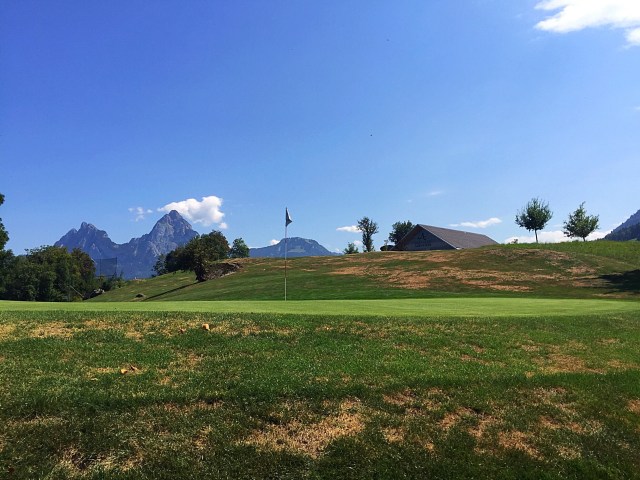
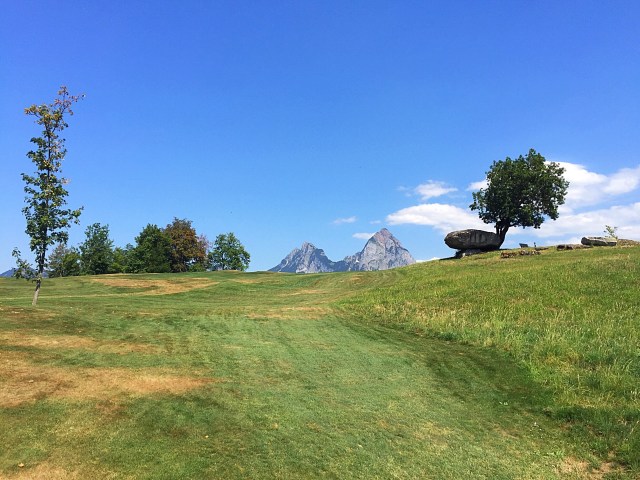
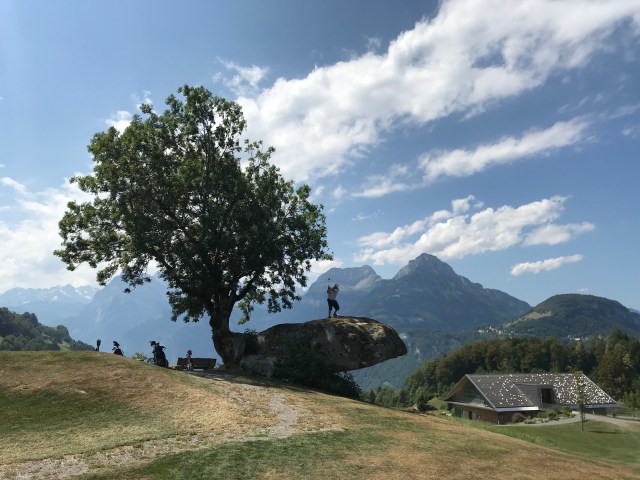
On Thursday afternoon we went to the Golfpark in Oberkirch which is in the opposite direction to where the other golf courses we had played were. It was about 35 minutes from Buochs just past Lucerne.

The Golfpark is owned by Migros (pronounced Migro) which is Switzerland‘s largest retail company, its largest supermarket chain and largest employer. It is also one of the forty largest retailers in the world. It is structured in the form of a cooperative society (the Federation of Migros Cooperatives), with more than two million members. They are involved in many well being programs in the communities and the Golfparks are one of these. They own 7 Golfparks in Switzerland and the objective was to allow more people to be able to play the sport.

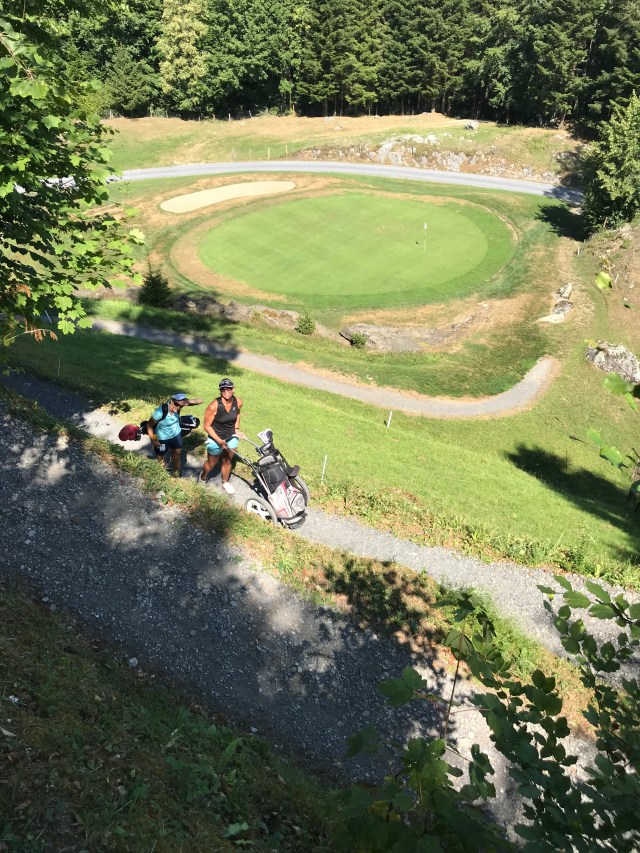
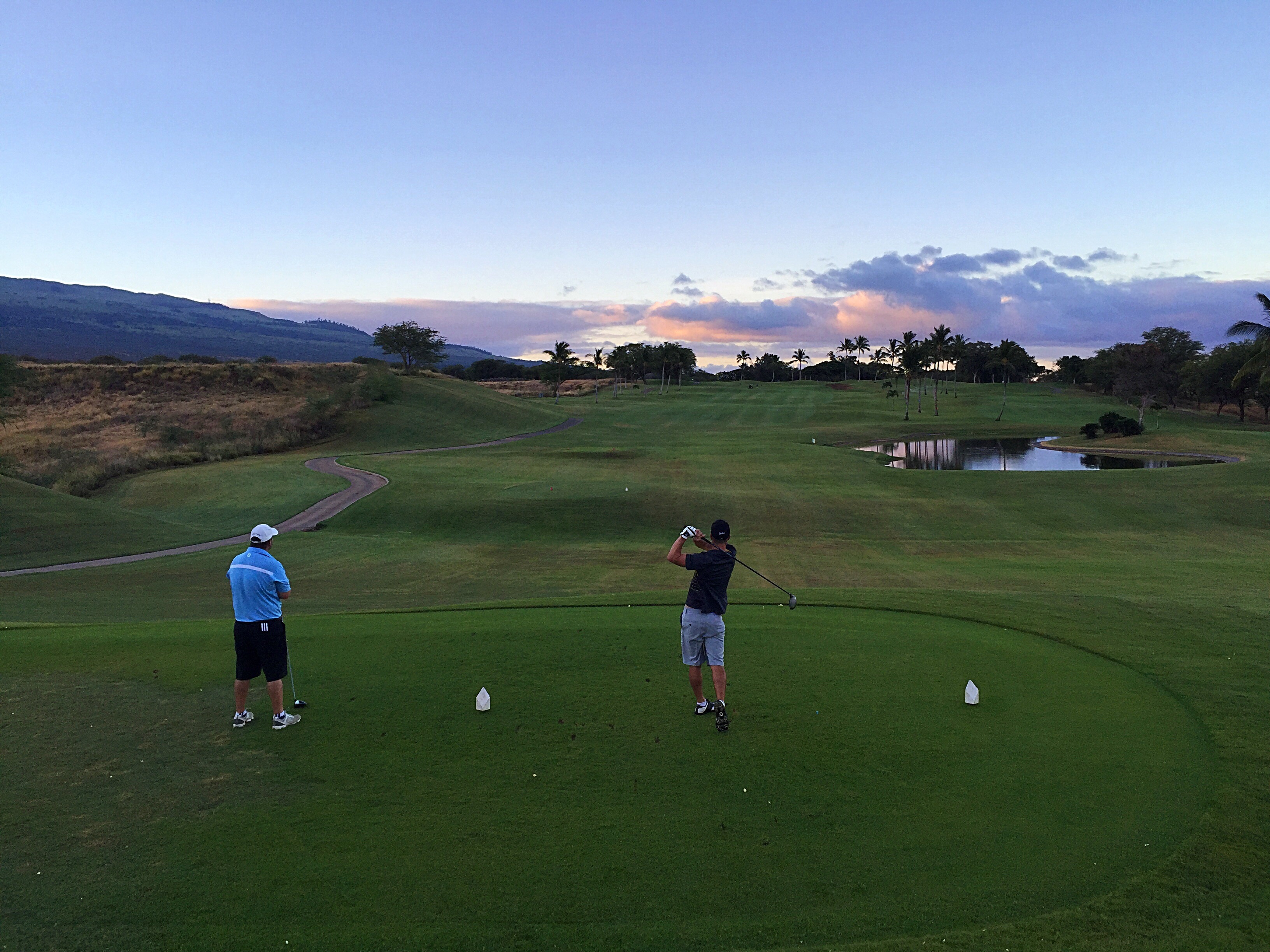
The course was more in line with what we are used to – a lot flatter although it still had a few hills. The practice facilities were amazing so we spent a bit of time there before venturing out. We teed off at 5.42pm and unfortunately we didn’t manage to fit the whole 18 holes in. We skipped 13, 14 and 15. There was still a little bit of light left when we finished but it was getting more difficult to see the ball.

Posted in Switzerland | Leave a comment

Golf Club Axenstein – Switzerland

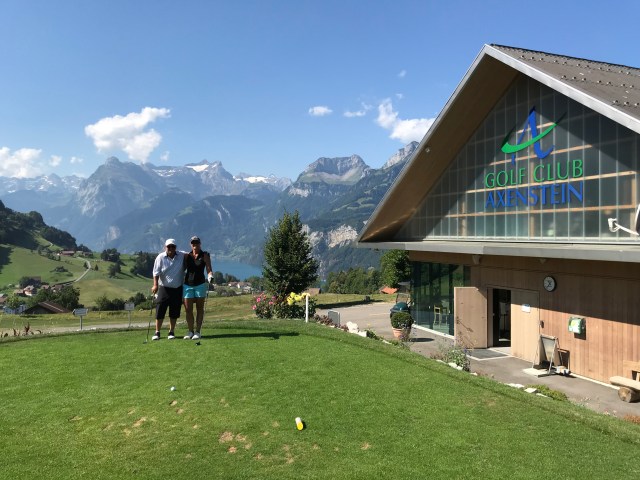
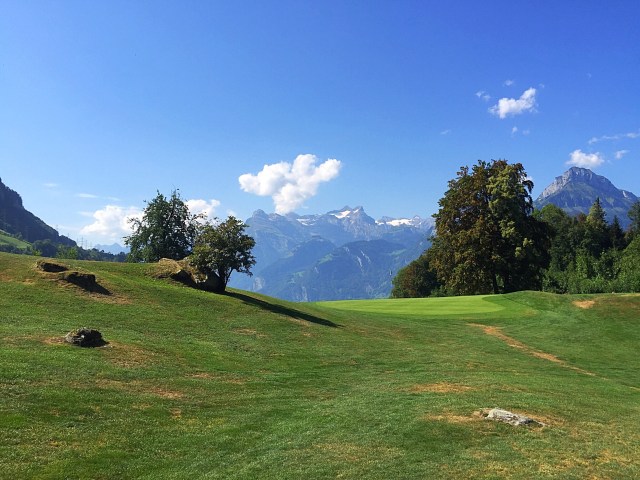
Next up on our Swiss golf tour was Axenstein which is a 9 hole, par 31 course in Morschah. It sits at about 750 metres above sea level and has spectacular views.

In the nineteenth century, the prestigiously situated Morschach region of Switzerland evolved into a trendy holiday resort, discovered mainly by guests from England, France and the USA. In 1869, the luxury hotel “Axenstein” was opened, followed by “Palace Axenfels” in 1873. Morschach became world-renowned and experienced magnificent times. In 1904, Axenfels opened a 9-hole golf course for English golfers, becoming the first of the two hotels to do so. At the time, it was regarded as one of the most beautiful courses in all of Switzerland. In 1924, Axenstein followed suit and opened its own course, originally with 18 holes before later being reduced to 11 and then 9 holes due to topographical reasons. The children of farming families living in the area were willing caddies, a role which proved a profitable activity. Many elderly residents still look back on this magnificent time with fond memories. However, World War II killed off the luxury hotel trade and the two hotels were demolished, the golf course was used for agriculture and the tennis courts and hiking trails disappeared.

At the beginning of the 1990s, Dr Georg Wiederkehr, with Axenstein Immobilien AG, took over the land and commissioned engineer Stephan Kalt of Wermatswil to reconstruct today’s golf course in consultation with Scottish golf professional David James. The course was re opened in 2006.

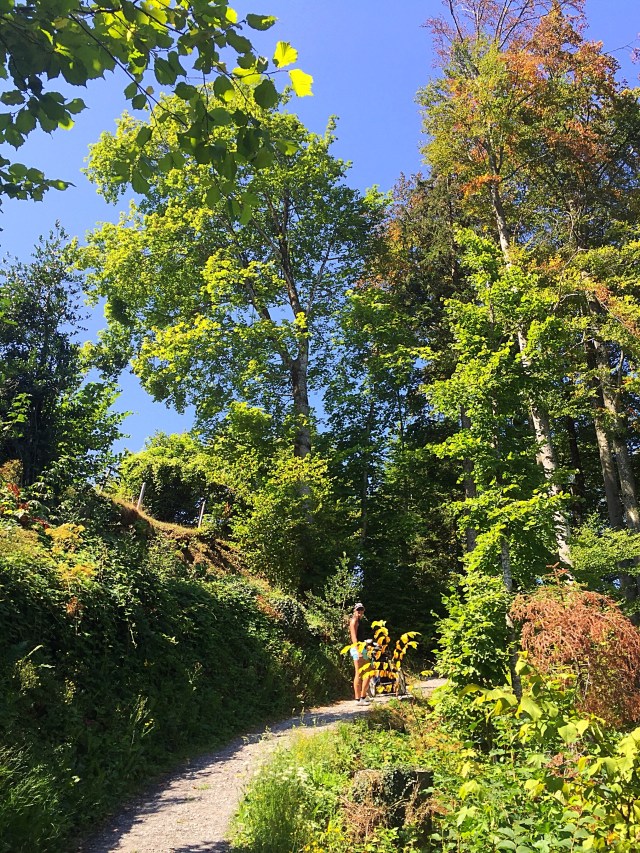
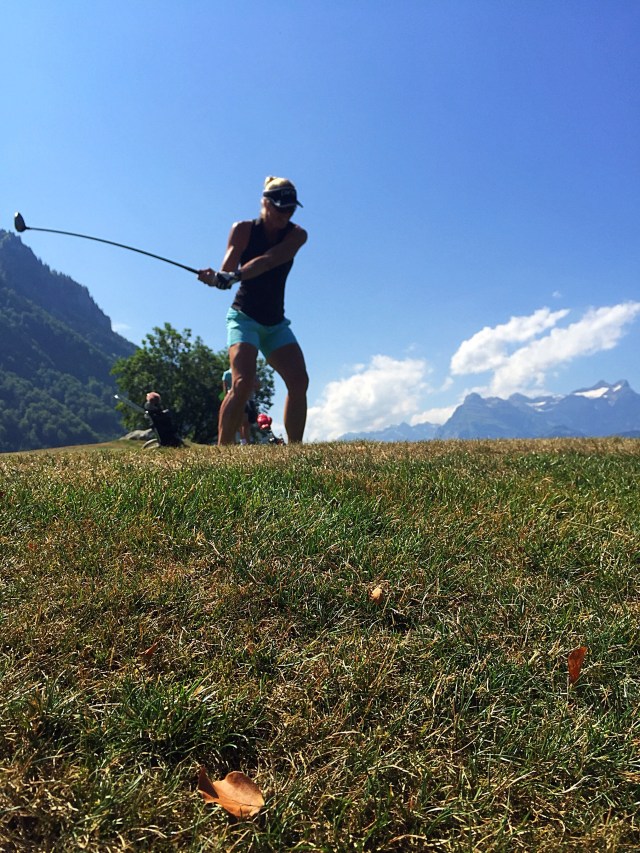
Axenstein is not the type of course we normally play with the steep inclines and declines and short holes but it was fun and really makes you focus on the accuracy of your shots. We played the nine holes and then had a really good lunch at the restaurant before going out and playing the nine holes again. It really was much easier the second time round and my score reflected that. Again we had a perfect day and the I couldn’t get enough of the vistas.

IMG_3710

IMG_3716IMG_3723IMG_3726IMG_3728

Posted in Switzerland | Leave a comment

Andermatt Swiss Alps Golf Course – Switzerland

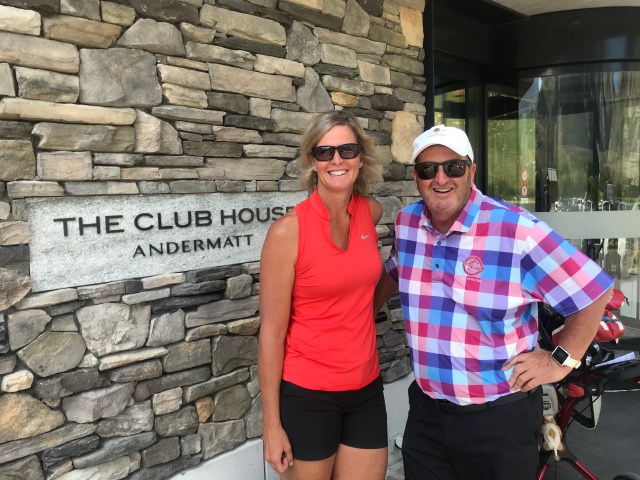
We had a 2pm tee time booked at Andermatt on Thursday 26th July so we decided to make a day of it. Andermatt is about 45 minutes from Buochs where we are staying with Karin and Elvis.

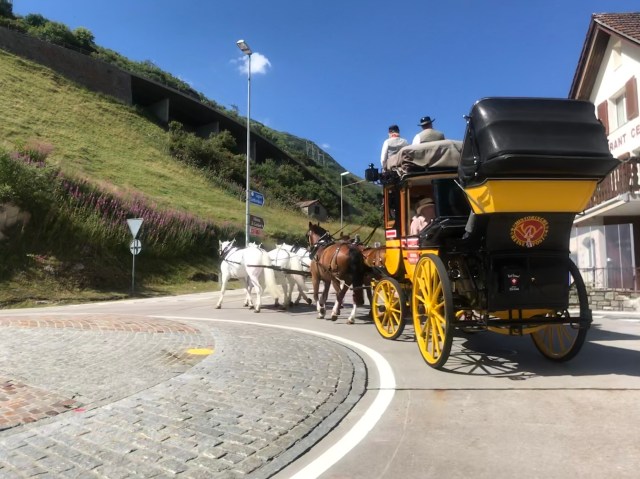
Just after we got to Andermatt we saw the replica horse drawn mail carriage – this goes from Andermatt to Airolo via the Gotthard Pass. 170 years ago, crossing the Gotthard pass was an exhausting trial for the merchants, scientists, messengers and world travellers who embarked on the journey. Today you can relive history by following the same route as a tourist.

20180726 Andermatt Golf_10

The Gotthard Pass or St. Gotthard Pass at 2,106 m (6,909 ft) is a mountain pass in the Alps traversing the Saint-Gotthard Massif and connecting northern and southern Switzerland. The pass lies between Airolo in the Italian-speaking canton of Ticino, and Andermatt in the German-speaking canton of Uri, and connects further Bellinzona to Lucerne, Basel, and Zurich. The Gotthard Pass lies at the hearth of the Gotthard, an important north-south axis in Europe, and it is crossed by three major traffic tunnels, each being the world’s longest at the time of their construction: the Gotthard Rail Tunnel (1882), the Gotthard Road Tunnel (1980) and the Gotthard Base Tunnel (2016). Since the Middle Ages, transit across the Gotthard played an important role in Swiss history, the region north of Gotthard becoming the nucleus of the Swiss Confederacy in the early 14th century.

We then went and had a look at Andermatt Realp Golf Club which is further up the valley – it is a 9 hole course and looked extremely hilly which put Steve off straight away 😂 .

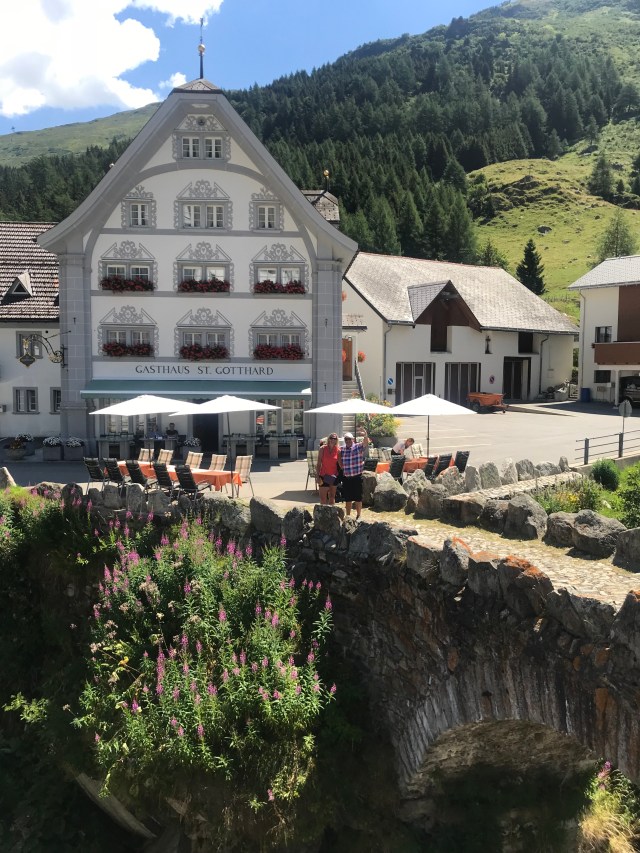
Next stop was the Hotel St. Gotthard where we had lunch. This is a historical building that is listed as a protected site by the Swiss Federation. It was built in 1723, became a private residence in 1886 the owner was then granted permission to sell liquor in 1888 and in 1889 it became a guesthouse under the current name Hotel St. Gotthard. Only thereafter was the previous residence transformed into a hotel. In 1906 the storage and cellar rooms were converted to a cozy tavern with panelled walls. This tavern has been preserved to the present day. On September 24th, 1799, the Russian general Suworow stayed here overnight, before he began the gruelling and bloody march with his army through the maze of the Schoellenen Gorge and the Swiss Alps.

20180726 Andermatt Golf_11

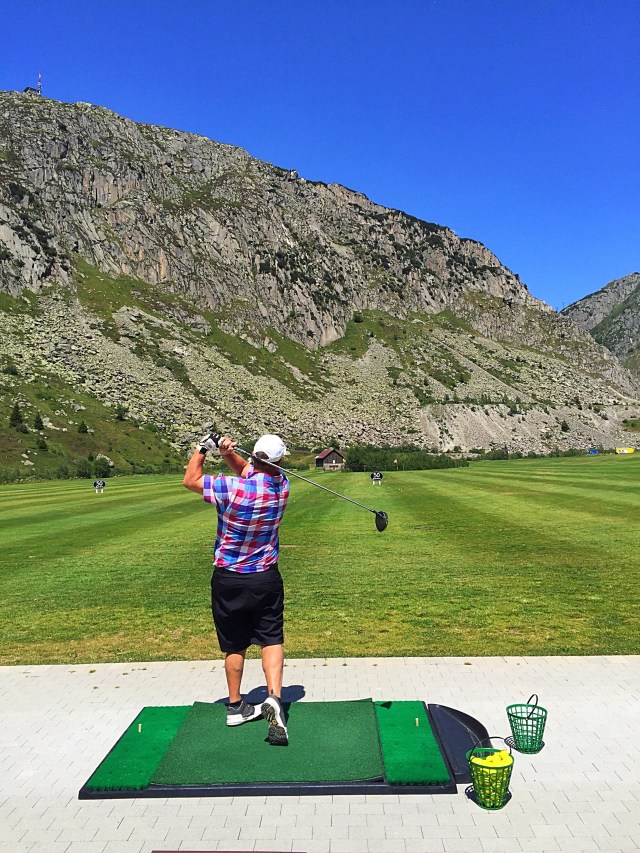
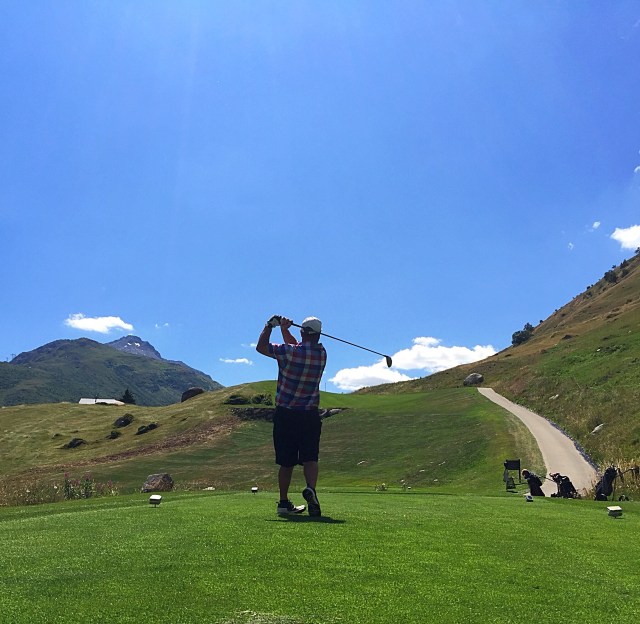
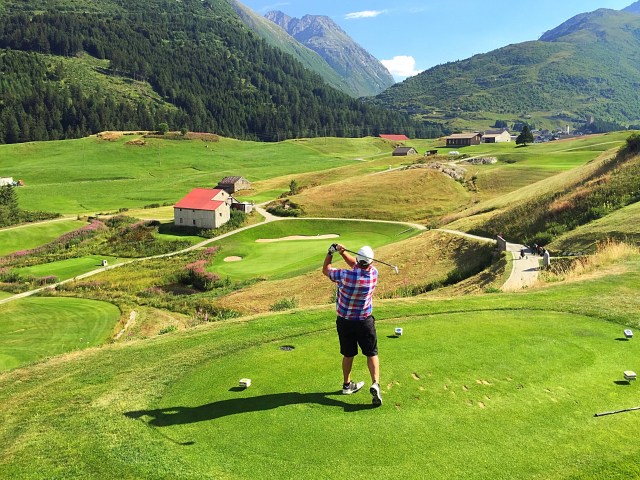
Next up was the golf – the practice facilities at Andermatt are fantastic so we spent a couple of hours warming up before hitting the course. The course is located directly adjacent to the village of Andermatt, the ecologically designed, 18-hole, par 72 championship golf course is beautifully nestled into the spectacular natural setting – surrounded by mountains and the Reuss River.

The 18-hole Andermatt Swiss Alps Golf Course meets international tournament standards and was awarded the title of Switzerland’s Best Golf Course for the second year in a row in 2017.

20180726 Andermatt Golf_720180726 Andermatt Golf_520180726 Andermatt Golf_1Only the best golf carts in Switzerland

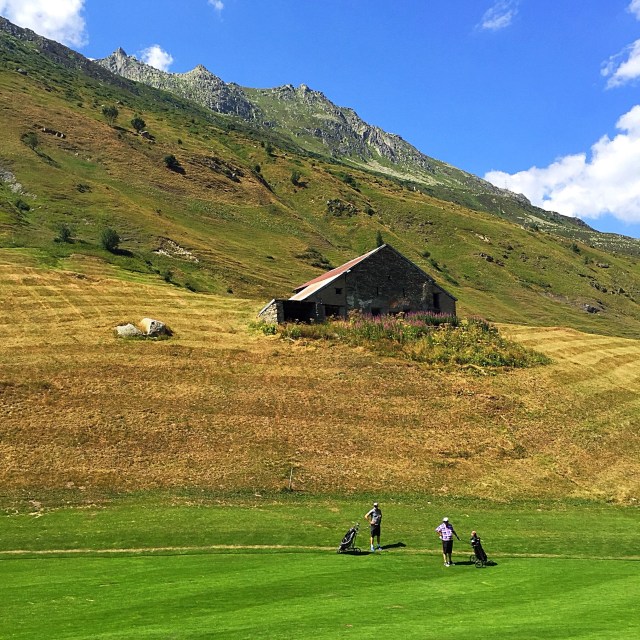
It really was quite surreal playing at 1,400 metres above sea level surrounded by mountains. We have been to this area in the winter when it was covered in snow so it was great to see the contrast. The other thing that is unique to playing golf in Switzerland is the constant ringing in the distance of the cow bells.

Despite all the practice there was some mixed golf played 😲 but we really couldn’t have asked for such a good day and a fantastic experience. It is always good to play a course again so we repeated the experience again on Tuesday the 31st July.

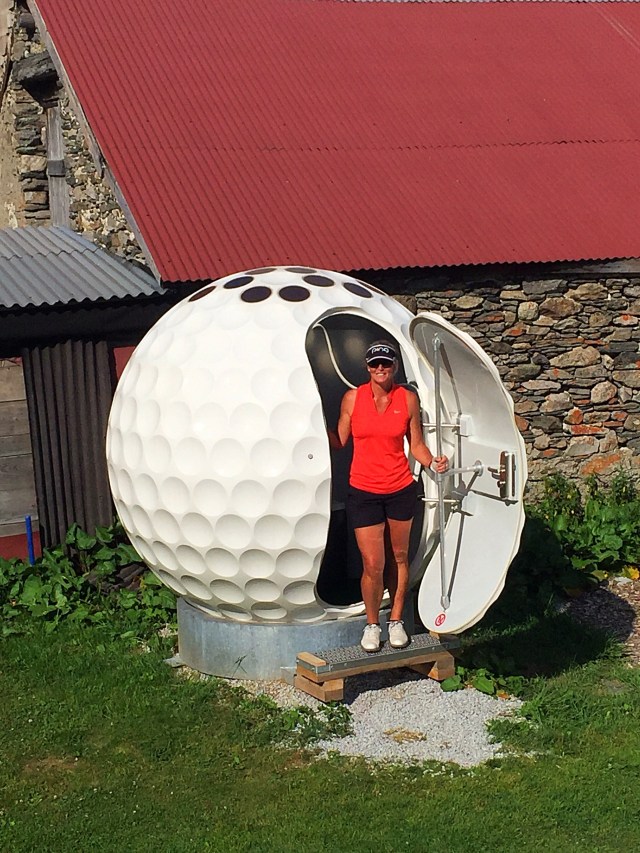
The Golf Ball toilet 😊

Posted in Switzerland | Leave a comment

Reconnecting, Golf and exploring Kirkaldy – Scotland

On Wednesday the 18th July (my birthday) we caught the train into Liverpool St Station in London before connecting through to Euston Station where we boarded a train to Edinburgh. It took us five odd hours to get up there but the train is a very relaxing way to travel.

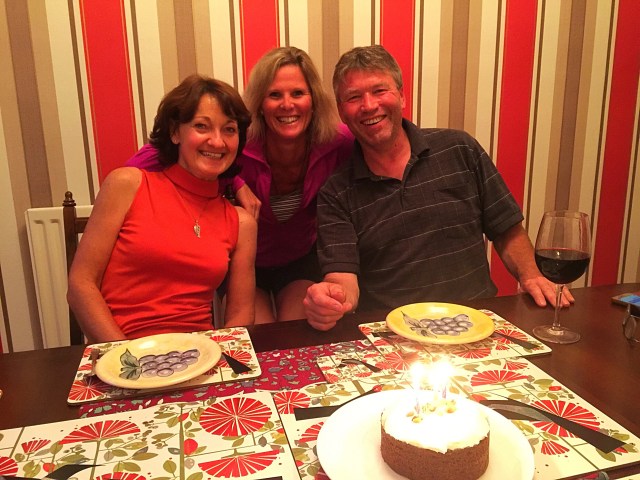
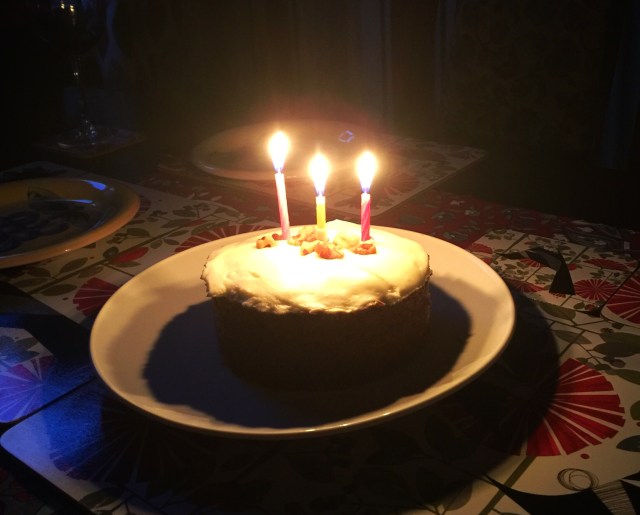
We picked up a rental car and headed to Ross & Geraldine’s in Kirkcaldy. Ross & Geraldine hail from Kirkcaldy but spent 22 years living in NZ which is how we got to know them. I had last seen Geraldine at her leaving lunch in May 2017. It was so lovely to see them and catch up on all the news. We enjoyed a lovely meal cooked by Ross who is the chef extraordinaire in the house. Not only that he also grew most of the veges that we ate too : ). They also spoilt me with a little birthday cake 🎂.

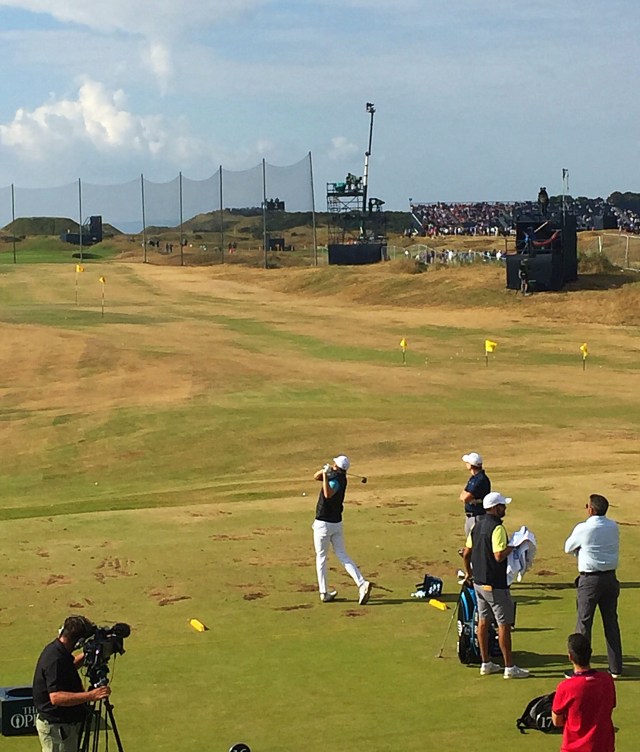
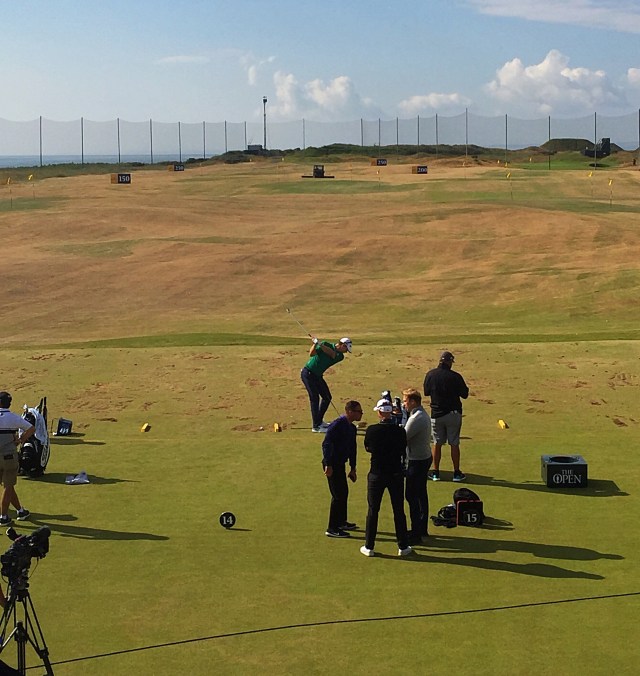
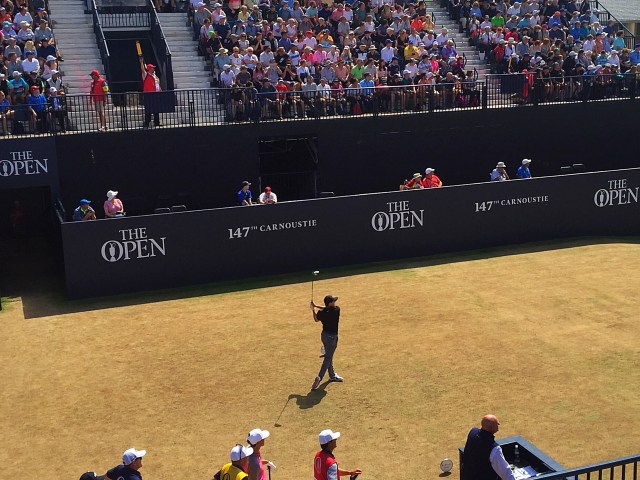
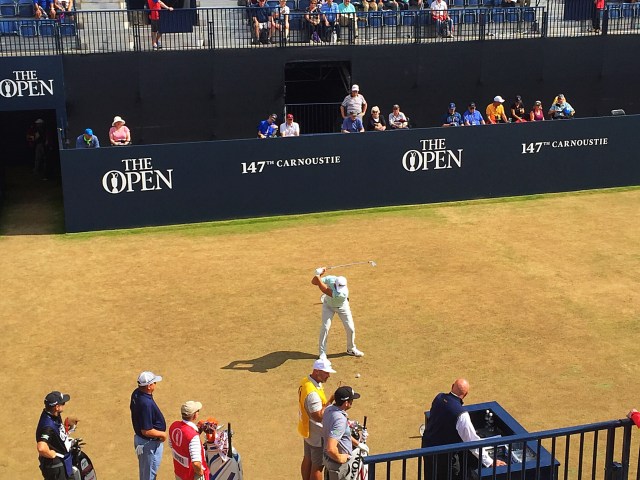
On Thursday we headed to Carnoustie to see the first round of the British Open – we were very excited to see all the big guns in action. We got up at 4.30am so we could leave at 5am – the first tee time was at 6.30am so we wanted to get there nice and early to soak up the atmosphere. We spent about three hours on the practice range watching the players warm up.

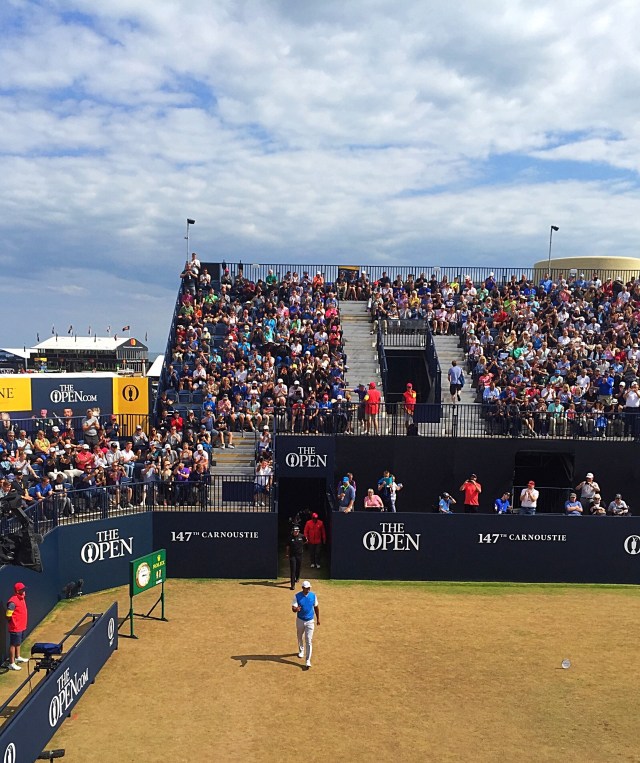
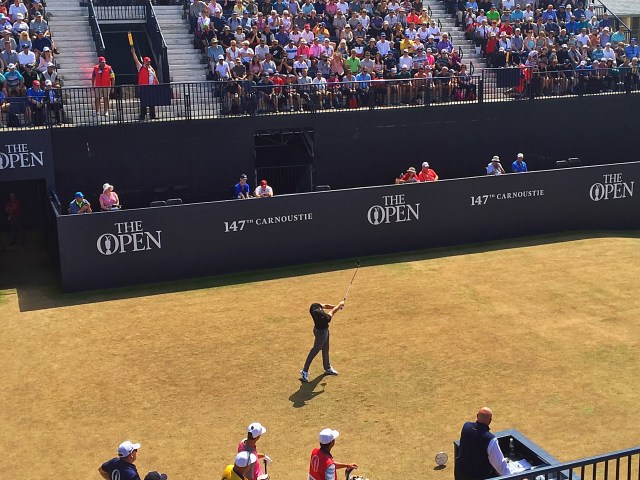
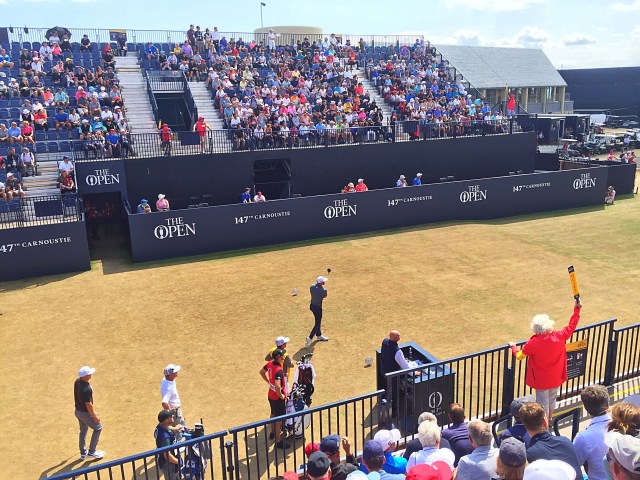
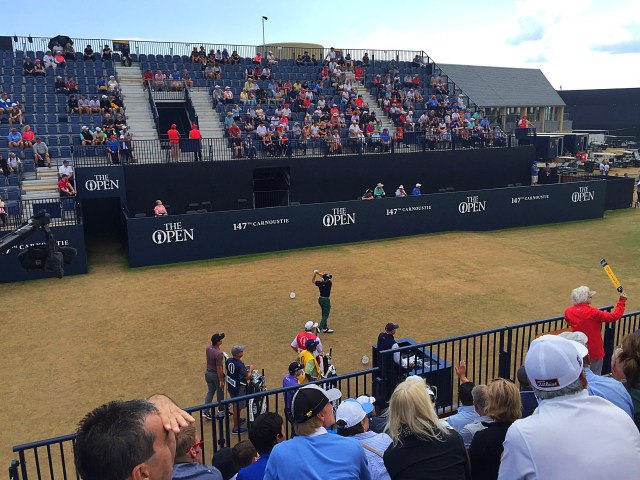
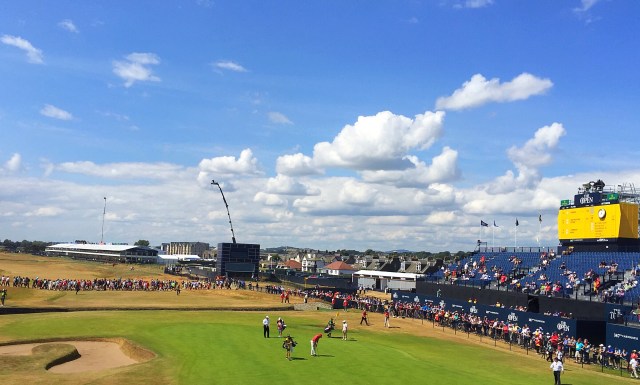
We then ventured out onto the course but realised it was very hard to see a lot with so many people. We are also used to watching it on TV where you get a good overview as to what is happening everywhere on the course. Our next strategy was to take a seat in the grandstand on the first tee to watch them all tee off – we could also see the 18th green so were able to see some of the groups finishing too.

We were also entertained by one of the grandstand marshalls who took exception to people taking photos – to be fair there were signs up saying you couldn’t take photos but no one else seemed to be enforcing it. Her ‘silent’ sign had a double use – she held it up when the players were teeing off and then waved it furiously at people taking photos. She even managed to hit this young guy’s hat as she was waving it furiously at him. As you can see below I was the perfect, rule abiding citizen – NOT 😲

The British Open

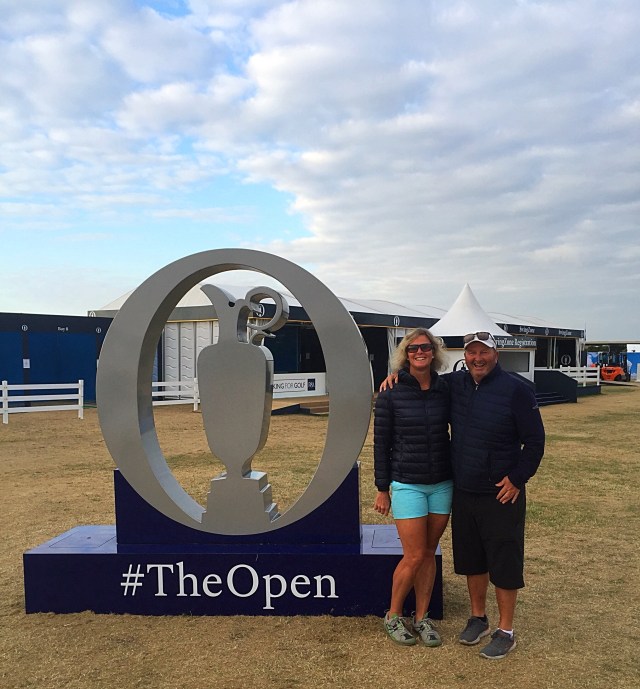
The Open Championship, often referred to as The Open or the British Open, is the oldest of the four major championships in professional golf. It was first played in 1860 at Prestwick Golf Club in Scotland. The Open has always been held in the United Kingdom and is the only major played outside the United States. It is administered by The R&A (The Royal & Ancient). The Open is currently the third major of the year, between the U.S. Open and the PGA Championship, and is played in mid-July.

Carnoustie Golf Links

Golf is recorded as having been played at Carnoustie in the early 16th century. In 1890, the 14th Earl of Dalhousie, who owned the land, sold the links to the local authority. It had no funds to acquire the property, and public fundraising was undertaken and donated to the council. The original course was of ten holes, crossing and recrossing the Barry Burn; it was designed by Allan Robertson, assisted by Old Tom Morris, and opened in 1842. The opening of the coastal railway from Dundee to Arbroath in 1838 brought an influx of golfers from as far afield as Edinburgh, anxious to tackle the ancient links. This led to a complete restructuring of the course, extended in 1867 by Old Tom Morris to the 18 holes which had meanwhile become standardized. Young Tom Morris won a major open event there that same year. Two additional courses have since been added: the Burnside Course and the shorter though equally testing Buddon Links.

Carnoustie first played host to The Open Championship in 1931, after modifications to the course by James Braid in 1926. The winner then was Tommy Armour, from Edinburgh.

Jordan Speith warming up

Justin Rose warming up

Here comes Tiger 🐯

Rory McIlroy

Dustin Johnson

Justin Thomas

Phil Mickelson finishing on the 18th green

Our very own Ryan Fox 🦊 from New Zealand 🇳🇿 with his #foxtracker fans 👍🏻

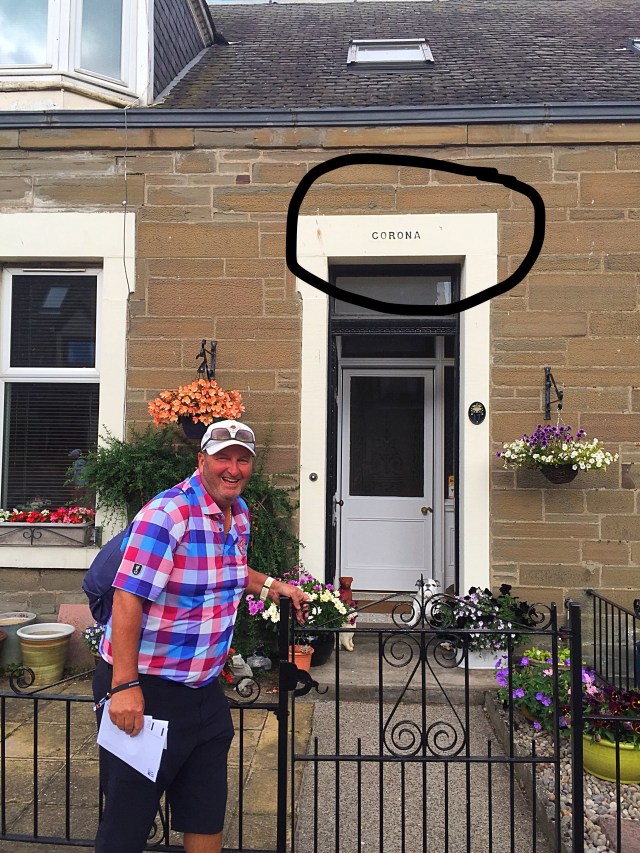
Steve found his dream home on the way out – Corona in Carnoustie 😛

We had a great day – it really was a bucket list thing to do and the icing on the cake was the weather – hot and sunny ☀️😎 – very unlike Scotland 😂 .

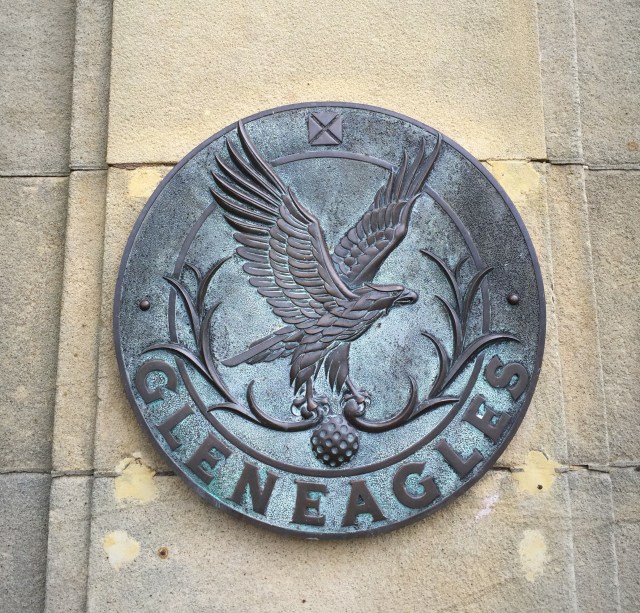
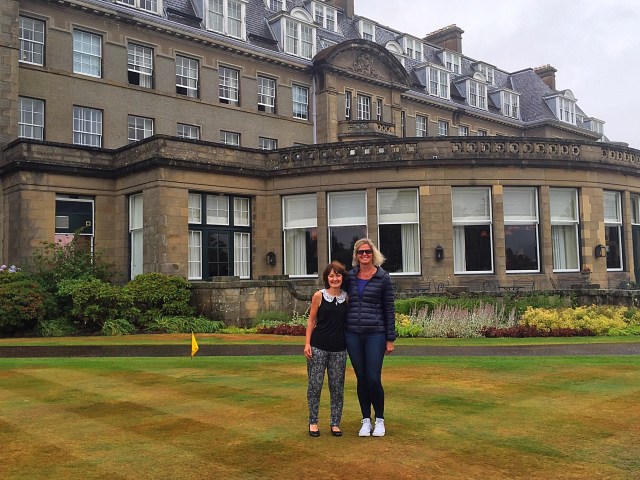
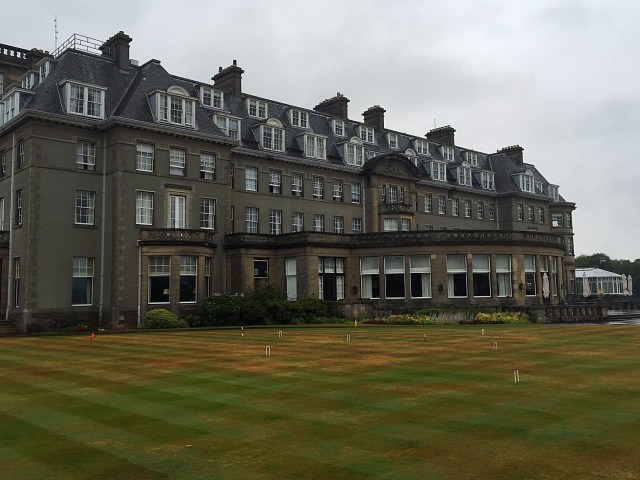
On Thursday morning I went for a walk along the promenade in Kirkcaldy with Geraldine and her sister Gemma. The true Scotland then showed itself and there were grey skies and some rain. We took a drive to Gleneagles, another famous golfing mecca. We had a coffee in the hotel and a look in the clubhouse before venturing to Falkland. The rain had stopped by now so we could enjoy a walk around this ancient village.

Falkland is a village, parish and former royal burgh in Fife, Scotland at the foot of the Lomond Hills. A settlement is believed to have existed at Falkland prior to the 12th century.

Scotland’s first conservation village is best known as the location of Falkland Palace, begun in 1500 by James IV, and the best example of French-influenced Renaissance architecture in the United Kingdom. The palace was built to accommodate the royal court when they came to Falkland to hunt in the nearby forests; Mary, Queen of Scots, was a frequent visitor.

The castle is open to the public so we had a chat to the staff behind the desk. Apparently Prince Edward had been up at the palace the previous week to play tennis.

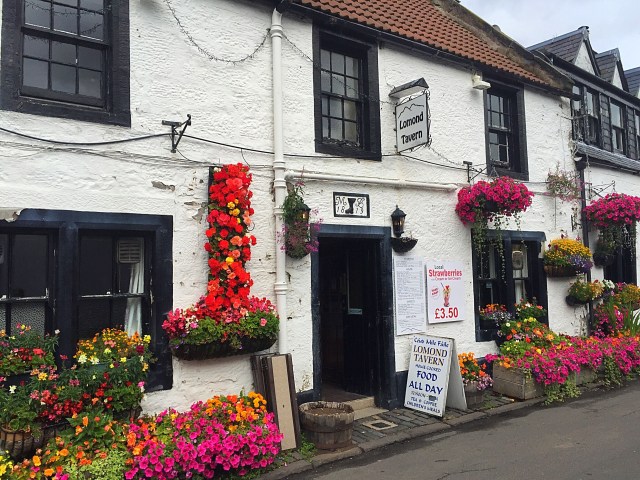
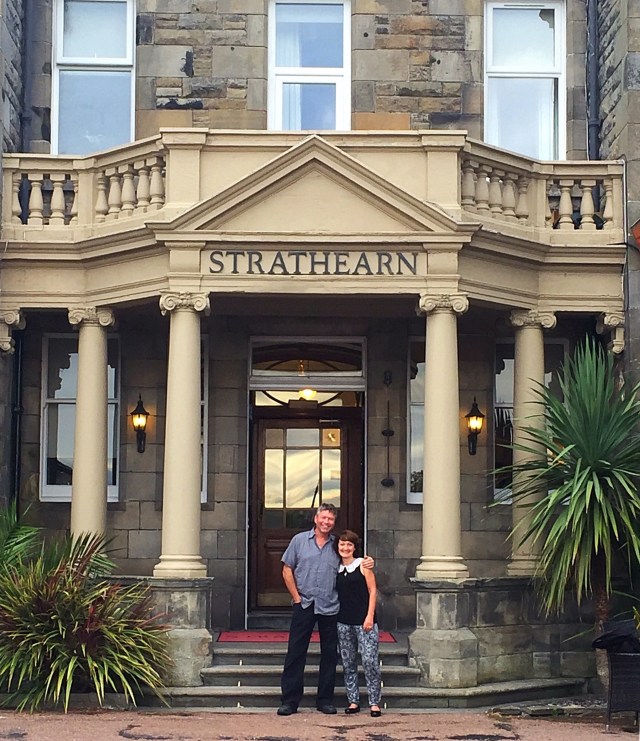
We had a pub lunch at the Lomond Tavern which was very tasty. After a relaxing afternoon we wandered along to the Strathearn Hotel which is conveniently located a short walk from Geraldine and Ross’s 😉. We enjoyed a nice meal and Steve discovered they had the golf on so a plan was formed for the following afternoon’s viewing – how convenient!

On Saturday morning, Steve, Ross and I went to Dunnikier Park Golf Club for a round. It is a parkland course surrounded by lots of trees. It was an enjoyable morning.

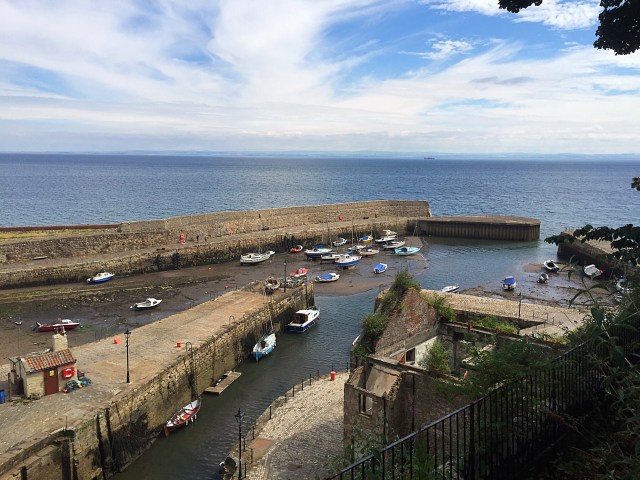
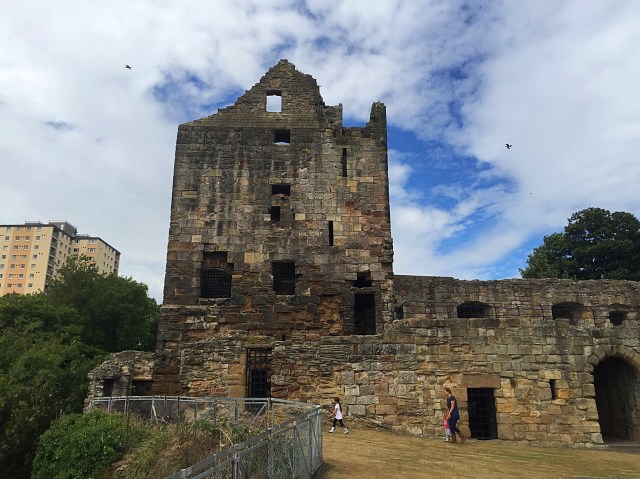
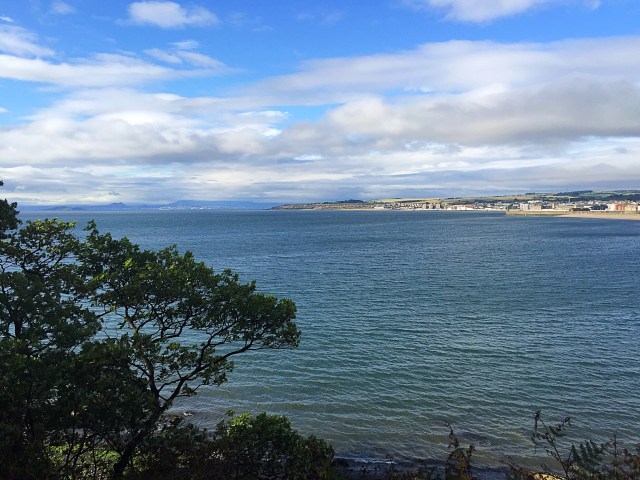
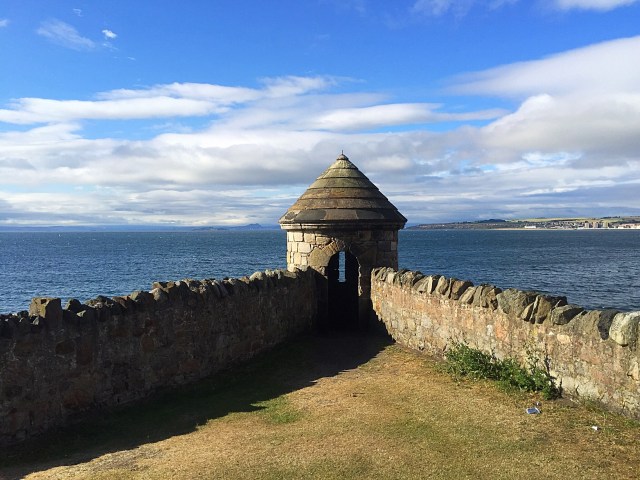
On Saturday afternoon, Geraldine and I did a walk through Ravenscraig Park, down to the Harbour which sits on the Firth of Forth and up to Ravenscraig Castle which is a ruined castle which dates from about 1460. The castle is considered one of the first – perhaps the very first – in Scotland to be built to withstand cannon fire and provide for artillery defence.

On our walk we also passed Dysart Carmel which is the home of a community of nuns of the Roman Catholic Church. Geraldine’s understanding of these nuns is that they live in silence – they do not speak. A discussion followed and we pondered how this could be? My perception built up over the years of nuns is that they not only serve God but they do a lot of good in the community – I couldn’t work out how this could be done if they didn’t speak. This piqued my interest so I did a bit of research.

A certain freedom of soul is felt upon walking through the courtyard gate of the Carmelite monastery. Peace reigns here. When you pass through the doors of the monastery, you enter a world apart. The noise and values of the world have no place here. The Carmelite nuns live their lives of poverty and silence, of prayer, penance and sacrifice for the world, hoping that the austerity of their lives would be acceptable reparation for the losses and sufferings of the Church and the ills of the world at large.

The scope of their concern is the whole world. The main work of a Carmelite nun is prayer. Their day begins at 4.30am and ends at 10.30pm – eight hours a day are spent in prayer, two hours in recreation and about five hours are given to manual work, reading and study. Except for the time they are in recreation they strive to keep strict silence and recollection so as to make their lives of prayer continuous.

There are 15 monasteries in Britain. The Dysart one which borders Ravenscraig Park is an Infirmary Carmel, ready to welcome sick and infirm Sisters from other communities when they are in need of special nursing care. There are 24 Sisters living in the Dysart monastery.

So there you have it – you learn something new every day 😊.

Whilst we were enjoying Kirkaldy and contemplating life the boys were making friends at the Strathearn Hotel. Well that was their version anyway – apparently they talked to everyone that came in and Ross even reconnected with a childhood neighbour.

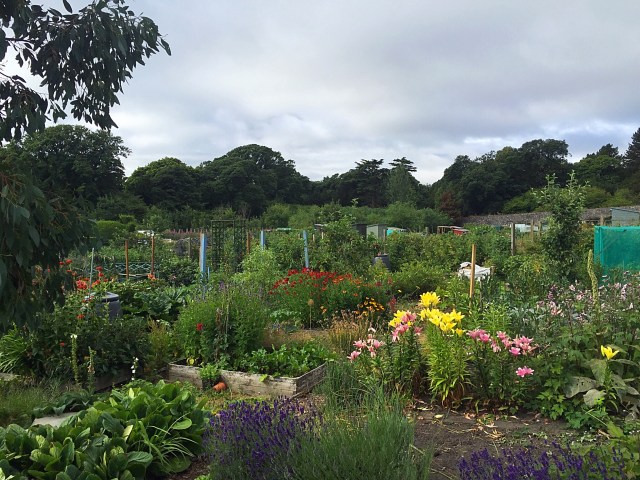
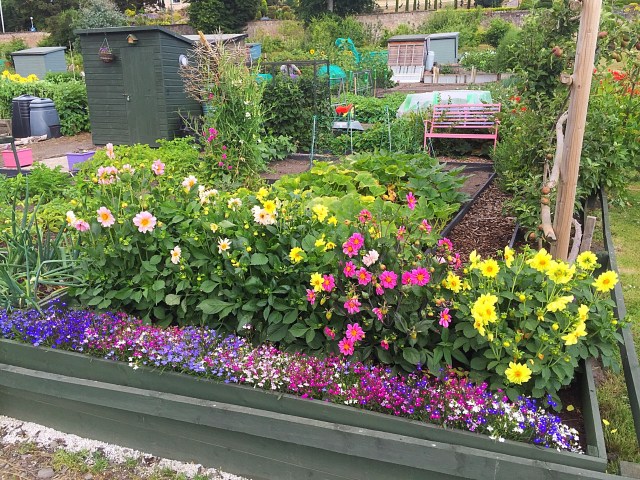
On Sunday morning we went for a walk to see Ross’s allotment and the Greener Kirkaldy planting’s. Greener Kirkaldy is a community lead charity and development trust working on a local scale to benefit people and the environment. Their aim is to build a future where everyone is able to heat their home affordably, eat well and tread more lightly on our planet. Ross volunteers down at the community garden with his green fingers. It was impressive and we enjoyed picking and eating the fresh raspberries and goose berries.

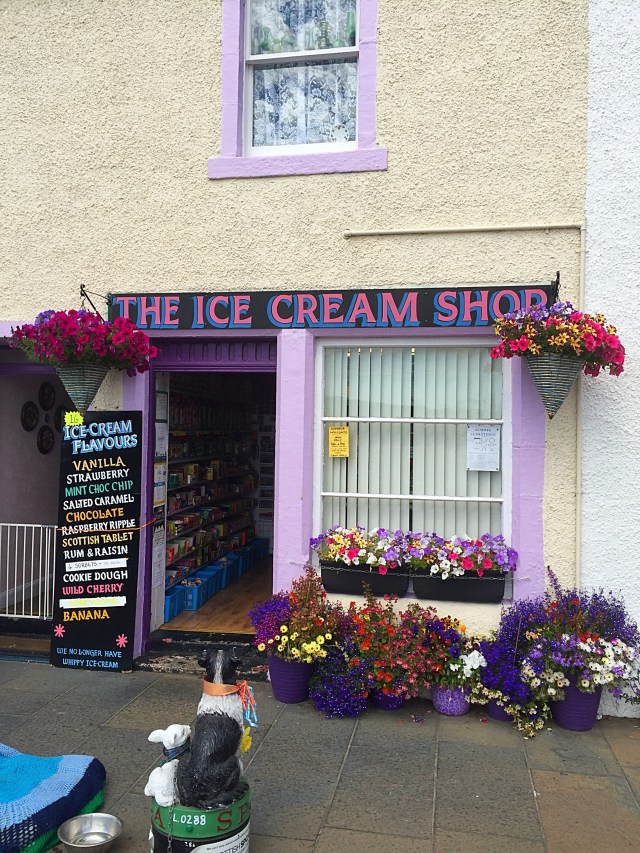
The rest of Sunday was going to be all about the final round of the British Open and what better place to watch it than in the home of golf – St Andrews. We took a drive along the East Neuk passing old fishing villages enroute to St Andrews. We stopped for an icecream in Pittenweem.

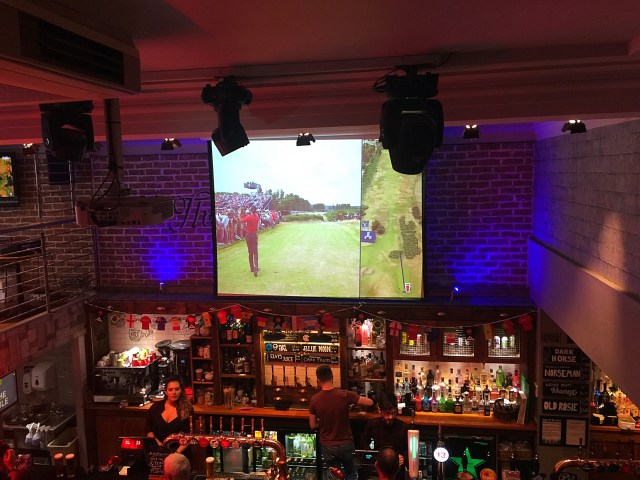
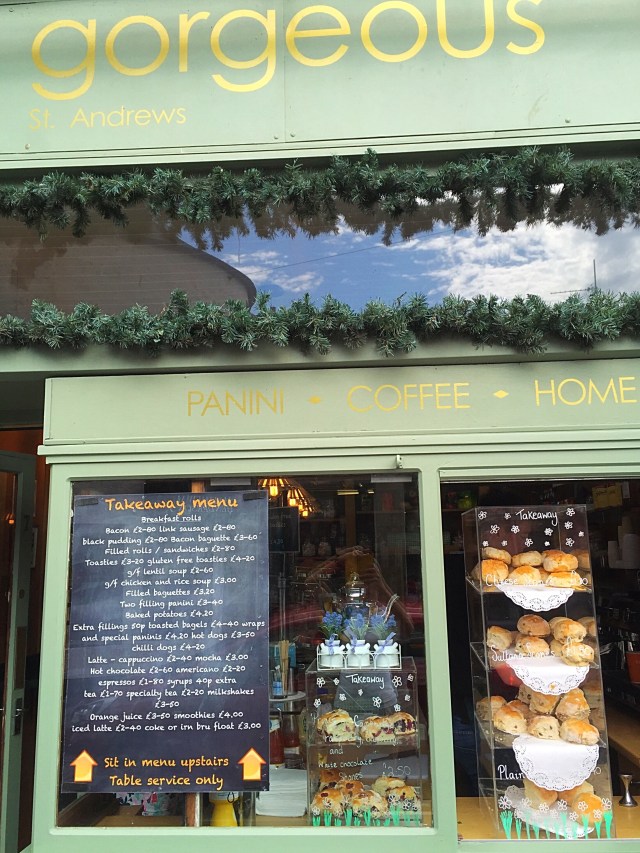
We then walked the streets of St Andrews to reacquaint ourselves with this cool town and the Old Course before settling on a bar called The Rule. They had many TV’s and a big screen showing the golf so it was perfect. Geraldine and I did sneak off for a coffee at a quaint cafe called Gorgeous before returning to The Rule.

Steve had gone downstairs to get a drink and came back and stood at the top of the stairs demanding I go to him which of course I dutifully did 😂. He says you won’t believe who I have just bumped into. After playing the guessing game and winning we went downstairs to see Gus & Sheila.

We had met Gus & Sheila in Portugal in 2014 after Steve took a liking to their dogs – Lucy & Mac. They convinced us that we should visit Scotland that summer and we spent 5 days up at their place in Edzell, 3 of which we looked after Lucy & Mac.

They were in The Rule watching the golf too with Lucy and Mac in tow and Steve recognised the dogs. He said to Gus, “I know you” and Gus said “I don’t know you” to which Steve replied “well I know your dogs”. It then all came back to Gus and we had a great catch up with them both. Lucy is now 16 so is not the dog that we first met but Mac was in fine fettle.

It turns out they have shifted to St Andrews which they are loving and they spend six months there and six months in Portugal. The other canny thing was that the night before Sheila had been online trying to find out what we were up to but she couldn’t quite remember my blog address. We have now reconnected via email and look forward to catching up again in due course. What a lovely coincidence and the icing on our trip to Scotland.

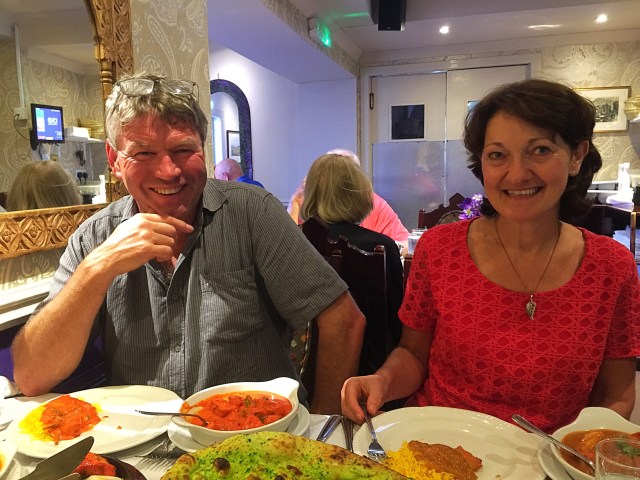
They then recommended we go to an Indian restaurant called Jahangar for dinner which was delicious. They also served the biggest naan breads I have ever seen 😋.

On Monday morning Steve and Ross went to play Kinghorn which is another municipal golf course in Kirkaldy. Steve said it was the hilliest course he has ever played but the views along the coast were fantastic.

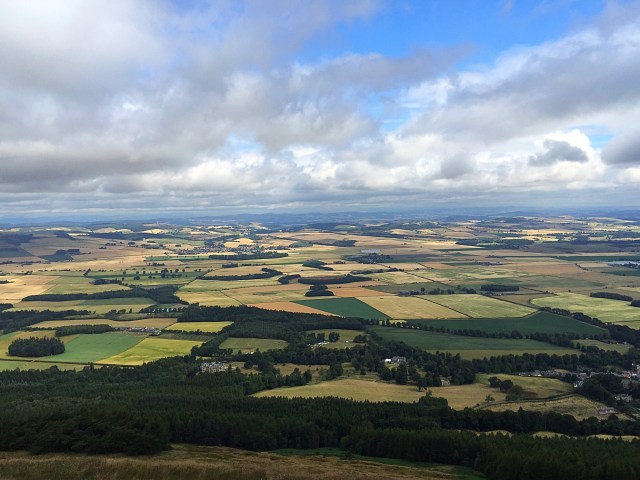
Meanwhile Geraldine and I joined her sister Pauline to climb West Lomond and East Lomond. West Lomond is the highest point in the county of Fife – it is 522 metres high. East Lomond is 485 metres high. It was a bit cloudy but you still got a good view over Fife and out to the sea. In total we did about 15km.

We had a relaxed afternoon before being treated to another of Ross’s gastronomic delights – green soup, meatloaf, beetroot and potato salad. Again all the produce was home grown – such a treat. We had such a good time catching up with Geraldine and Ross and seeing the life that they have built for themselves back in Scotland. I must say I came away very inspired – watch this space 😊.

Posted in Scotland | Leave a comment

Sunny Shenfield – UK

We were London bound and the fact that London was experiencing a hot summer was encouraging as we left behind the heat of Thailand.

We flew into Gatwick at 7.25am on Friday the 13th of July and our friend Denise was there to meet us. After a little disorientation at the airport we found the carpark where she had parked the car and we set off for Shenfield which is in East London.

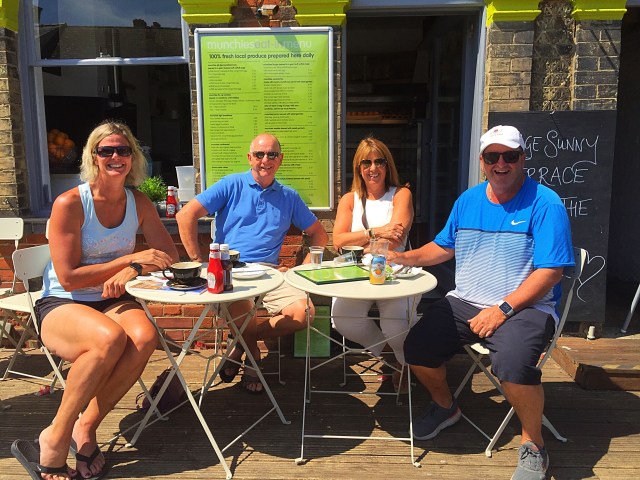
The girls enjoyed a relaxing day in the garden while the boys headed out for a game at Thorndon Park Golf Club where Gary is a member. It had been three and a half years since we last saw Denise and Gary in NZ so it was great catching up.

On Saturday we did a 16km walk around the countryside and back into Shenfield where we had lunch which was the highlight of the walk for Steve : )

It was finals weekend at Wimbledon as well as the Football World Cup final so it was a bit of a sport fest afternoon. First up was the carry over semi final match between Rafa and Novak – we were cheering for Rafa but sadly it wasn’t his day. Next up was the women’s final between Serena Williams and Angelique Kerber – we were pleased that Angelique achieved her first Wimbledon title. Next up was the third and fourth playoff between England and Belgium in the football World Cup.

Prior to arriving in the UK we had been watching both the Wimbledon and Football World Cup games hoping for a Federer / Nadal final and for England to be in the World Cup final (probably the only time I would be cheering for England). Unfortunately it wasn’t to be. Never mind, we were in good company and the sun was shining : )

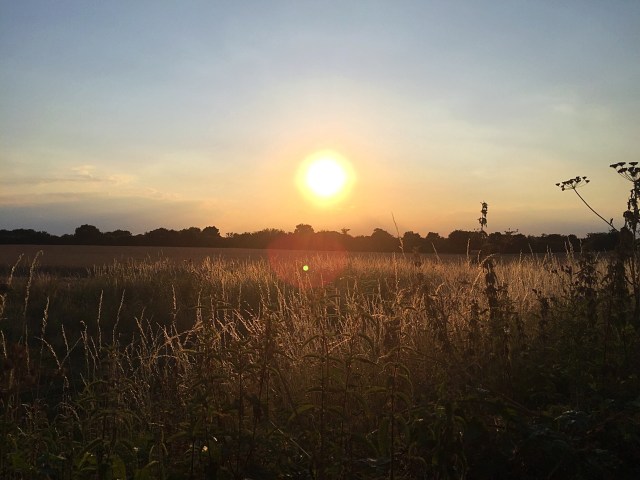
On Saturday night we went to The Cuckoo in Ingatestone for dinner and had a lovely meal. It was a beautiful evening and I captured a pretty cool shot of the sun setting.

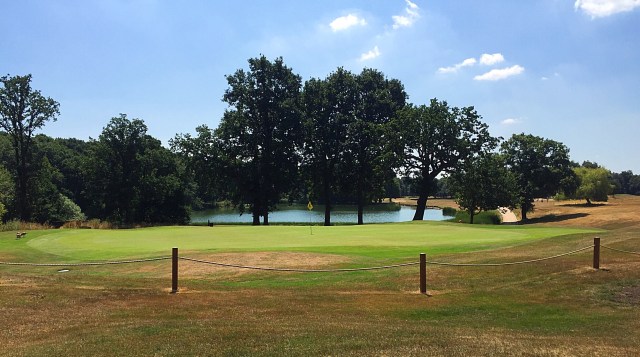
On Sunday I joined Steve, Gary and Gary’s son Nick for a round at Thorndon Park. It is a links type course and due to the hot weather they had been enjoying it was extremely brown. It was NZ v England and we managed to come out on top with very little thanks to me although I did sink the winning putt on the 18th – better late than never I suppose. Steve played well and evened the score with Gary – Gary had won on Friday so they were one a piece.

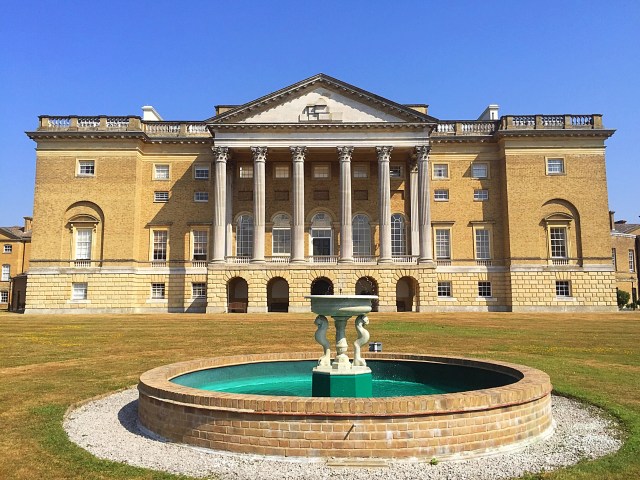
Thorndon Park Golf Club is a classic design in 1920 by Harry Shapland Colt, one of the greatest golf architects. It is situated in 240 acres of an ancient deer park with the Palladian mansion of Thorndon Hall as the magnificent backdrop to the final hole.

After a few mis purchases and a mad rush around the shops late Sunday afternoon (Gary had got the wrong wood for the BBQ and the butcher didn’t put the kebabs in with the other meat – he didn’t charge us either which was a bonus) we enjoyed a lovely BBQ in the garden. Steve was in his element of course creating big flames. Nick’s girlfriend, Rachel, also joined us so it was great to meet her too.

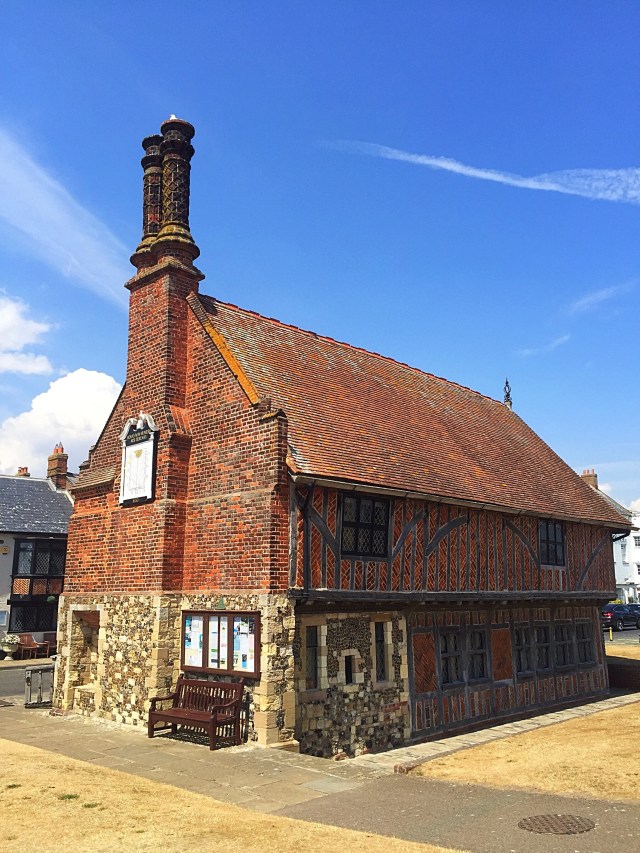
On Monday we took a trip to the seaside – we visited Aldeburgh (pronounced Allbra) on the Suffolk Coast. It was another beautiful day and Aldeburgh was so quaint. We walked along the coastal path to Thorpeness for lunch at The Dolphin.

Aldeburgh is a coastal town in the English county of Suffolk. Located on the North Sea coast to the north of the River Alde, the town was the home of the composer Benjamin Britten and has been the centre of the international Aldeburgh Festival of arts at nearby Snape Maltings, founded by Britten in 1948. It remains an artistic and literary centre, with an annual Poetry Festival, along with several food festivals and other cultural events. A former Tudor port, Aldeburgh was granted borough status in 1529 by Henry VIII. Its historic buildings include a 16th-century moot hall and a Napoleonic-era Martello Tower.

Second homes make up about a third of the town’s residential property. It is a tourist destination, with visitors attracted by its Blue Flag shingle beach and fisherman huts, where fresh fish is sold daily, by Aldeburgh Yacht Club, and by its cultural attractions. The three family-run fish and chip shops in the High Street receive high customer gradings.

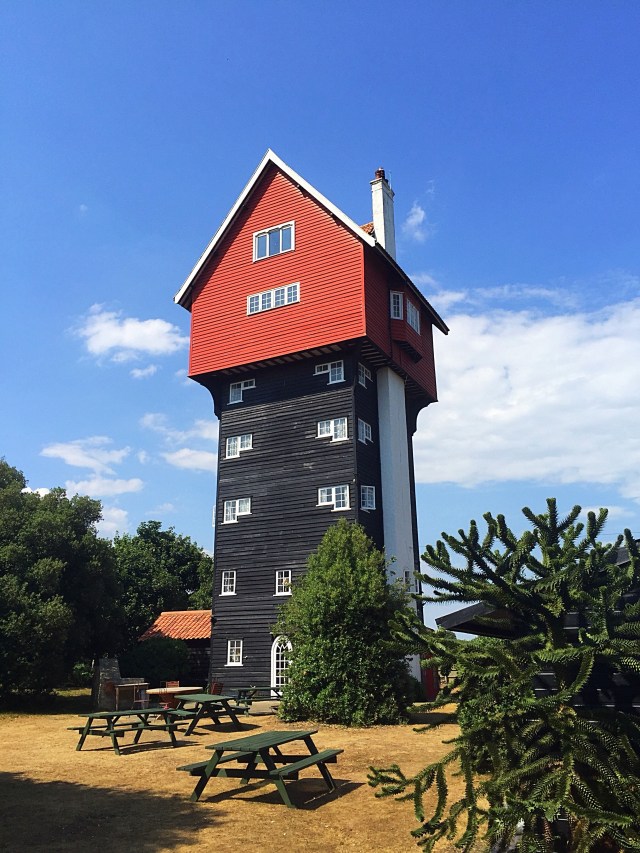
We then had a look at the golf course and the House in the Clouds before walking back along the beach to Aldeburgh. The House in the Clouds is a water tower at Thorpeness, Suffolk, England. It was built in 1923 to receive water pumped from Thorpeness Windmill and was designed to improve the looks of the water tower, disguising its tank with the appearance of a weatherboarded building more in keeping with Thorpeness’s mock-Tudor and Jacobean style, except seeming to float above the trees. The original capacity of the water tank was 50,000 imperial gallons (230,000 l) but during the Second World War, the House in the Clouds was hit by gunfire from anti-aircraft guns based at Thorpeness. The water tank was repaired using its own steel, which resulted in a reduced capacity of 30,000 imperial gallons (140,000 l). In 1977 the water tower was made redundant by a mains water supply to the village, and additional living space was created. In 1979 the main water tank was removed to fully convert the building into a house. The building currently has five bedrooms and three bathrooms; it contains a total of 85 steps from top to bottom and is around 70 ft high.

The North Sea was remarkably calm and didn’t seem too cold – there were a few people out swimming. We watched a bulldozer haul in a big fishing boat. The boat came in at such a pace and then ground to a halt on the pebbly beach before being winched up – obviously not their first rodeo. We watched them unload the fish – it was certainly the place to buy fresh fish.

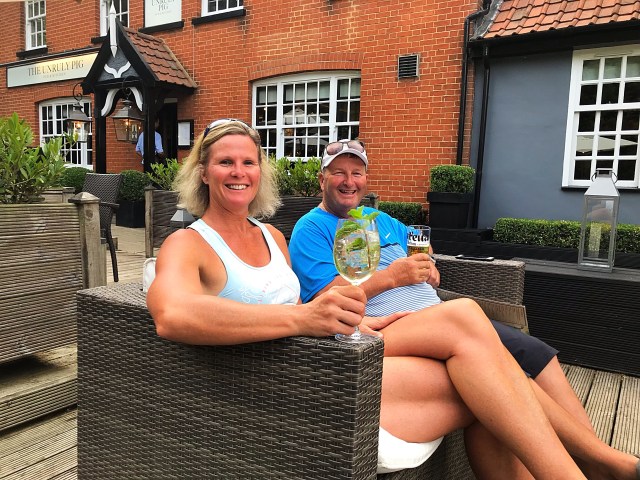
We headed back towards Shenfield stopping off at Snape Maltings for a wander and then at the Unruly Pig for a drink. I enjoyed a Hugo which is prosecco, soda water, elderflower syrup and mint leaves – very refreshing. The English countryside and coastline is beautiful when the sun is shining.

On Tuesday Steve and I ventured into London for the day – it wouldn’t have been right coming all this way without popping into London to see the royals : ). Steve got his Harrods fix while I walked to Kensington Palace – I love walking around the gardens there and hoping for a glimpse of William, Kate, Harry or Meghan. Unfortunately they were all busy!

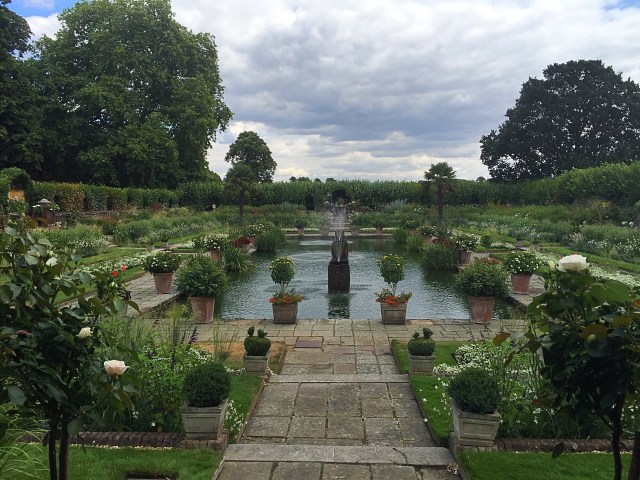
The Sunken Garden at Kensington Palace which was a favourite of Princess Diana – apparently she used to stop to talk to the gardeners and find out more about their choices for that season. This year the garden team have taken their inspiration from the exhibition featuring the Princess’s iconic wardrobe to inform the planting.

We then caught the tube to Oxford Circus and again Steve got his retail fix at John Lewis & Selfridges. I wandered down to Neal’s Yard in Covent Garden to check out the Wild Food Cafe – I am really enjoying my green juices at the moment so ordered a Vibrant Green – kale, celery, cucumber, samphire, nettle, watercress, mint, lime, apple and spirulina. 😋

We headed back to Shenfield to enjoy a pre birthday dinner celebration at the Turks Head with Denise and Gary before saying goodbye to them the next day as we headed north to Edinburgh.

It had been so nice to re connect with our friends and take some time to enjoy their backyard as such. To fact that the sun was shining was the icing on the cake. We look forward to catching up with Denise and Gary again later in our trip when we meet them in Croatia 🇭🇷.

Posted in United Kingdom | 2 Comments

The Great Taste Trail – Nelson, NZ

With the car loaded up and the bikes on the back we headed for Wellington and the Bluebridge Ferry. I hadn’t been on the ferry since I was about 18 and here I was doing two crossings in as many months. Steve has never been on the ferry between the North and South Islands so was a bit anxious. It was a smooth sailing which we both enjoyed.

We spent a couple of days in Nelson with my Mum and some friends. The geographical “centre of New Zealand” allegedly lies in Nelson; on a hilltop near the centre of the city. This is the point “zero, zero” from which the first trigonometricalsurveys were started in the 1870s by John Spence Browning, the Chief Surveyor for Nelson. We climbed up there to check it out.

From this 360-degree viewpoint, the zero, zero points in neighbouring geodetic survey regions (including Wellington in the North Island) could be triangulated and a better survey of the whole of New Zealand constructed. In 1962, the ‘gravitational centre’ (including Stewart Island and some smaller islands in addition to the North and South Island, but excluding the Chathams) of New Zealand lay in a patch of unremarkable dense scrub in a forest in Spooners Range near Tapawera, 35 km (22 miles) south-west of Nelson: 41°30′S 172°50′E.

We then checked out Mapua before going to some friends for a yummy lunch of wagyu rump steak and wine. The Great Taste Trail had begun : )

We met up with the rest of the bike group at the Honest Lawyer for dinner. Natural High from Christchurch had organised this tour for us and we met our guides Steve and Paul at dinner too. We all got given a wine varietal name which reflected our personalities which created a few laughs. Steve and Paul became known as Big Cheese and Little Cheese respectively.

See below for the daily accounts of our adventure. It really was a fantastic way to explore the Nelson, Golden Bay and Tasman regions. The weather was awesome and showcased the places we went really well. It is called the Great Taste Trail due to the abundance of good food and wine in the region and it lived up to it’s name. Natural High had organised all the cafes and restaurants we visited and none of them disappointed. Our friend Andrea from Australia who joined us on the tour commented on how much she enjoyed all the different flavours.

Natural High did a great job of coming up with a tour that included biking, kayaking, sight seeing, caving and lots of eating and drinking. The variety was great and allowed us to experience the best the area had to offer.

It was a pleasure to spend 5 days with a bunch of like minded people. There was a lot of laughter and our evening fine sessions proved quite entertaining. It is amazing the stupid things people will do or say to get a fine 😂.

We then spent a couple of days at the end of the tour catching up with family, friends and their animals again before doing the road trip in reverse. Another smooth sailing and Wellington put on a stunner for our arrival.

I thoroughly recommend exploring this part of NZ and have included a bit more information courtesy of Wikipedia at the bottom of this blog about the places we visited.

To check out what Natural High has on offer go to http://www.naturalhigh.co.nz

Day 1 – Monaco to Kaiteriteri- 66km. Yes I’m back on the bike and Philip has insisted I continue with the daily “homework” so he can keep tabs on us from the cowshed. There are 18 of us doing The Great Taste Trail over Easter. We had a lovely meal at The Honest Lawyer last night before hitting the trails this morning. Nelson greeted us with a stunner. We rode towards Richmond before veering right to Mapua athough half the group missed the turnoff – not boding well 4km into a 66km ride 😳. Some parts of the trail were damaged in the recent storms so we had a couple of detours before getting to Rabbit Island. Onto the Mapua Ferry we went to Mapua for lunch at Jellyfish which was delicious and the service spirited and charming. We then rode out of Mapua towards Ruby Bay and up to the Tasman Bay lookout – a little bit of a climb but the views were worthy of the effort. We skirted around Motueka where the trail scenery is great before heading to Kaiteriteri. You ride through the mountain bike park to get to Kaiteriteri and have some different track options. Three of us did a couple of the side tracks before getting to the bottom in one piece. I then had one of my infamous involuntary lie downs on what could only be described as a bump 😳😂. A couple of kilometres and we arrived in Kaiteriteri where we had a refreshing swim and witnessed a nude male making a dash for the sea before making a dash back to his mates on the beach – obviously a dare. We are staying at the Kaiteriteri Recreation Reserve right opposite the beach 👌🏻. Enjoyed a nice meal at The Beached Whale and did a bit of post dinner dancing – not sure 🤔 if this was wise given my ever stiffening body!

Day 2 – Kaiteriteri to Takaka – 0km cycle, 8km kayak, ?km water taxi and 32km van. Today was all about the kayaking and the Abel Tasman National Park. The Abel Tasman National Park is renowned for its golden beaches, sculptured granite cliffs, and its world-famous coast track. It is NZ’s smallest National Park and was established in 1942. We left Kaiteriteri at 7am for breakfast at Hooked on Marahau which was delicious. Next stop – Abel Tasman Kayaks. We were met by our guides Travis, Marty & Jess and taken through the basics of kayaking before heading for the water. It was another lovely day and the sea conditions were perfect. We started out along the coastline looking for stingray in the clear, shallow waters to no avail. Danny spotted a shark but by the time we all managed to manoeuvre our kayaks around it was long gone. We had to settle for the seals on Adele Island which is a wildlife sanctuary and home to bellbirds, saddleback and penguins. The birdsong on the island was incredible – so different to the mainland which is devoid due to it still being home to many rodents. We finished on Observation Beach for lunch and a swim for a select few. The water taxi collected us and after a pretty choppy ride – the wind had got up – delivered us to Totaranui which is towards the top of the Abel Tasman National Park. The van met us there and we had a cuppa. Unfortunately the weather had turned and we gave the walk in the Park a miss. We did have a short walk on Pohara Beach on our way back to Takaka where we are staying tonight. We enjoyed a lovely dinner at the Brigand Cafe and Bar. Tonight we turn our clocks back as daylight savings comes to an end – you wouldn’t believe the discussions that were had about what time we’re meeting for breakfast tomorrow morning 🤔😳😬😂

Day 3 – Takaka to Collingwood – 40km cycle, 10km walking and ?km van. After a delicious breakfast at the Wholemeal Cafe in Takaka we drove to Te Waikoropupū Springs which are the largest freshwater springs in New Zealand, the largest cold water springs in the Southern Hemisphere and contain some of the clearest water ever measured. We enjoyed a bush walk to view the springs before getting on our bikes to ride to the Pupu Hydro Power Scheme which is a small hydroelectric power station. It opened in 1929 as the first power station in the region and was the first public electricity supply in Golden Bay. After closing in 1980 following damage to the generator, the power scheme was fully restored by the local Pupu Hydro Society and many volunteer groups over the course of seven years and re-opened in 1988, again supplying electricity to the national grid. We walked up to the top to view the old gold mining water race which is now reused in the power scheme. Back on the bikes to the Springs before being driven to Pakawau where we had lunch at the Old Schoolhouse Cafe. They had blue cod on the menu so it was a no brainer what I was having for lunch. Next stop was the Farewell Spit Visitors Centre where you can view the longest sandspit in New Zealand, stretching for about 26 km above sea level and another 6 km underwater. The spit runs in from west to east, and is made from fine golden sand. We then drove further on to Puponga Farm Park where we walked out to Wharariki Beach which is on the West Coast. It was very windy and the sand skims along the surface of the beach which looks cool. We saw some baby fur seals playing in a pool close to the beach. It was then time for our last ride of the day – 28km back to Collingwood. We had a bit of a head wind but it was lovely riding. It got dark about 6.30pm and with that came quite a drop in temperature. We’re staying in Collingwood tonight where we enjoyed a lovely roast lamb for dinner. Happy Easter 🐣 everyone 🚴‍♀️☀️😎

Day 4 – Collingwood to Kaiteriteri – 15km cycling, ?km van, caving. We enjoyed a brief walk on the beach at Collingwood before eating the best breakfast on tour at the Courthouse Cafe. We were then driven out to the start of the Heaphy Track before cycling back to Langfords Store & Post Office at Bainham. The store has been in the same family four generations since it opened in 1928. EB Langford was the initial proprietor, followed by his granddaughter Lorna who ran the store and post office for 63 years. Lorna retired in 2008 and handed the reins to EB Langford’s great granddaughter. The store is a little treasure trove and Philip I even managed to acquire some trainer wheels while I was there to help with the involuntary lie downs 😂. We then drove to the Mussel Inn for lunch. This is a very rustic place where they take environmental matters very seriously with composting toilets and many green initiatives in their brewing plant. They brew a number of beers, ciders and non alcoholic drinks. They also had their own cell phone tower – see photo 😂. The Ngarua Caves on Takaka Hill came highly recommended so we popped in there to do a tour. Our tour guide Lee was extremely enthusiastic about the caves and even sang for us so we could appreciate the wonderful acoustics. The caves are full of marble Stalactites and Stalagmites as well as Moa bones. The Takaka Hill is known as Marble Mountain as there are many of these cave systems running through the hill. Tonight we are staying at Kimi Ora Eco Resort which sits on the hill above Kaiteriteri. We enjoyed a spa before a wonderful vegetarian meal – even the carnivores were impressed. What a great place – definitely putting it on the list for a longer return visit.

Day 5 – Kaiteriteri to Monaco – 60km. After a lovely breakfast at Kimi Ora Eco Resort we drove down to the Motueka River just outside Riwaka and got saddled up. The ride along the river was very enjoyable although we had a shower not far from Woodstock. You could see the damage that Cyclone Gita had done in February with lots of slips and debris washed up. After morning tea our bikes were re loaded onto the trailer to drive to Spooners Tunnel. Spooners Rail Tunnel was built between 1891 and 1893 and is 1352 metres long. It was decommissioned in 1955 and is the longest disused Railway Tunnel in NZ. It was great riding through there in convoy. We then followed the track to the Wai-Iti Reserve past free range chicken farms, sheep and through some lovely forest. It was the best part of the trail and everyone really enjoyed it even though we had a couple of spillages – surprisingly I wasn’t one of them 😜. We had lunch in Wakefield at The Villa which was delicious. Wakefield is considered to be the oldest inland settlement in NZ and has NZ’s oldest primary school that is still in use today. The weather really warmed up for the last 22km back to Monaco through farmland and vineyards. We were back to where it all started on Good Friday. We enjoyed a drink at the Honest Lawyer before saying goodbye to everyone. It had been a fantastic 5 days with lots of food for the soul in the form of good chat and laughter and plenty of good food for the body. The Great Taste Trail certainly lived up to its name – we had the most fantastic food everywhere we went 😋👌🏻.

Nelson

Nelson is the oldest city in the South Island and the second-oldest settled city in New Zealand – it was established in 1841 and was proclaimed a city by royal charter in 1858. It’s known for local arts and crafts stores, and art galleries. It’s also a popular base for nearby caving sites, vineyards and Abel Tasman National Park.

Nelson City has a population of around 50,000, making it New Zealand’s 12th most populous city and the geographical centre of New Zealand. When combined with the town of Richmond which has close to 14,000 residents, Nelson is ranked as New Zealand’s 9th largest urban area by population.

Nelson was named in honour of the Admiral Horatio Nelson who defeated both the French and Spanish fleets at the Battle of Trafalgar in 1805. Many roads and public areas around the city are named after people and ships associated with that battle and Trafalgar Street is the main shopping axis of the city.

Nelson’s Māori name, Whakatū, means ‘build’, ‘raise’, or ‘establish’.

In an article to The Colonist newspaper on 16 July 1867, Francis Stevens described Nelson as “The Naples of the Southern Hemisphere“. Today, Nelson has the nicknames of “Sunny Nelson” due to its high sunshine hours per year or the “Top of the South” because of its geographic location.

Abel Tasman National Park

Abel Tasman National Park is a New Zealand national park located between Golden Bay and Tasman Bay at the north end of the South Island. It is named after Abel Tasman, who in 1642 became the first European explorer to sight New Zealand and who anchored nearby in Golden Bay.

The park was founded in 1942, largely through the efforts of ornithologist and author Pérrine Moncrieff to have land reserved for the purpose. Moncrieff served on the park board from 1943 to 1974.

The park was opened on the 18 December 1942 to mark the 300th anniversary of Abel Tasman’s visit.[3] Those in attendance at the opening ceremony at Tarakohe included Charles van der Plas, as personal representative of the Netherlands’ Queen, Wilhelmina. The Queen was made Patron of the park.

The idea for the park had been under consideration since June 1938. The Crown set aside 15,225 hectares (37,622 acres), comprising 8,900 hectares (21,900 acres) of proposed state forest, 5,809 hectares (14,354 acres) of Crown land and 554 hectares (1,368 acres) of other reserve land for the national park. The Golden Bay Cement Company donated the land where the memorial plaque was sited. The area’s primary historic interest was the visit of Tasman in 1642, D’Urville in 1827, and the New Zealand Company barques Whitby and Will Watch, and brig Arrow in 1841. The site was also of significant botanical interest.

The Abel Tasman Coast Track is a popular tramping track that follows the coastline and is one of the Department of Conservation’s Great Walks; the Abel Tasman Inland Track is less frequented. Other walks in the park, such as the Wainui Falls Track are considered ‘short walks’.

Takaka

Takaka is a small town situated at the southeastern end of Golden Bay, at the northern end of New Zealand‘s South Island, located on the lower reaches of the Takaka River. It lies at the start of the winding road which follows the river valley before climbing over Takaka Hill, linking Golden Bay with the more populated coast of Tasman Bay to the southeast.

During the period, 1853 to 1876, Takaka was administrated as part of the Nelson Province.

Farming, sawmilling, limestone quarrying and tourism are major local industries. The area around Takaka is mineral-rich, with gold, iron ore, copper, silver and asbestos all found locally, although not all in commercially viable amounts. The area around Takaka Hill is also notable for its cave systems, with New Zealand’s deepest vertical shaft, Harwood’s Hole located nearby. There is also a large Fonterra dairy factory located in the township of Takaka.

Takaka and Golden Bay are also known for rock climbing, the most area being Paynes Ford. This area is situated about 20 minutes walk from Takaka and has over 200 bolted climbs. The most famous climb is 1080 and the letter G because of its unique “no-hands-rest” at the top and its views of Golden Bay.

The town is also known for Te Waikoropupu Springs (colloquially known as Pupu Springs), which holds the world record for fresh water clarity.

Golden Bay

Golden Bay / Mohua is a shallow, paraboloid shaped bay in New Zealand, near the northern tip of the South Island. An arm of the Tasman Sea, the bay lies northwest of Tasman Bay and Cook Strait. It is protected in the north by Farewell Spit, a 26 km long arm of fine golden sand which is the country’s longest sandspit. The Aorere and Takaka Rivers flow into the bay from the south.

The bay was once a resting area for migrating whales and dolphins such as southern right whales and humpback whales, and pygmy blue whales may be observed off the bay as well.

The west and northern regions of the bay are largely unpopulated. Along its southern coast are the towns of Takaka and Collingwood, and also the Abel Tasman National Park. Separation Point, the natural boundary between Golden and Tasman Bays is situated within the park.

It is known for being a popular tourist destination, because of its good weather and relaxed, friendly lifestyle. Its beaches like Tata Beach are popular locations for retirees and holiday-homes.

Collingwood

Collingwood is a town in the north-west corner of the South Island of New Zealand along Golden Bay. The town is an ecotourism destination due to its proximity to Kahurangi National Park and Farewell Spit Nature Reserve.

The town was originally named Gibbstown after the local settler and politician William Gibbs (1817–1897), who arrived in the area in 1851. The settlement was later renamed Collingwood after Admiral Cuthbert Collingwood, Lord Nelson‘s second-in-command at the Battle of Trafalgar in 1805.

Following the discovery of payable gold deposits in the Aorere Valley in 1856 the town’s population surged and the suggestion was made that Collingwood should become New Zealand’s capital. In 1864, three Australian commissioners were tasked with recommending a more central location for the capital and they did visit Golden Bay (then still known as Massacre Bay) but their recommendation was for Wellington. The town has been damaged by fire several times, being almost destroyed in 1904.

The Heaphy Track

The Heaphy Track is a popular tramping track in the north west of the South Island of New Zealand. It is located within the Kahurangi National Park and classified as one of New Zealand’s nine Great Walks by the Department of Conservation. Named after Charles Heaphy, the track is 78.4 kilometres (48.7 mi) long and is usually walked in four or five days. The track runs from Kohaihai, north of Karamea on the northern west coast of the South Island to the upper valley of the Aorere River, inland from Golden Bay.

Wakefield

The small New Zealand community of Wakefield is situated some 25 km south west of Nelson at the top of the South Island.

First settled in about 1843, it was originally called Pitfure. However the name was soon changed to Wakefield, and it is believed to have been named after the birthplace of one of its original settlers, who was from Wakefield in Yorkshire. It is often assumed that the settlement was named after Captain Arthur Wakefield, who led the expedition that first established Nelson City and Province. Arthur Wakefield was killed in the Wairau Affray and it is assumed that the event has helped confirm the change of name from Pitfure to Wakefield.

Wakefield is notable for Wakefield Primary School, the oldest school in continuous usage in New Zealand. It was set up in 1843 by Mary Ann Baigent, the wife of Edward Baigent. St John’s Church in Edward Street, built in 1846, is New Zealand’s second oldest surviving church. It is registered by Heritage New Zealand as a Category I heritage structure, with registration number 40.

Posted in Golden Bay, Nelson, Tasman Bay | 2 Comments

Tour Aotearoa 2018 – New Zealand

Tour Aotearoa is one of the world’s great bike packing trips: stretching 3000 kilometres from Cape Reinga to Bluff in New Zealand it follows a combination of cycle trails, tracks, paths and lanes connected by the most enjoyable country roads available.

The Tour Aotearoa route was designed by Jonathan Kennet, a New Zealand cycling guidebook writer. In February 2016 he organised a Brevet event designed to highlight the best New Zealand Cycle Trail Great Rides, Heartland Rides and quiet back country roads. Approximately 250 took part in this Brevet. The event was such a success he organised another one for February 2018 where there were spaces for 600 people to participate starting on 6 different dates.

The idea of participating in such an event was sparked about four years ago when my friend Philip said he would like to ride from the top of NZ to the bottom before he was 50. I thought that sounded like a fun thing to do but that was as far as it went at that stage. Fast forward a couple of years and a friend of mine from Auckland sent me an email detailing the 2018 Tour Aotearoa and wondered if I would be keen. I had a look and thought it would be awesome so got my name onto the list – I was about number 587 out of 600. I then contacted Philip and he basically said “where do I sign?” He went onto the waiting list but it wasn’t long before he had a confirmed spot.

We then requested to start on the 12th February 2018 – this was confirmed in December 2016 so we had a good 14 months of planning ahead of us.

Philip lives in Taranaki so we each did our own gathering of information and research into bikes and bike packing gear. There was quite a lot of information from the 2016 Brevet with people posting handy hints online. I relied a lot on the guys at the bike shop to advise me on bikes and gear – I just wanted something that was reliable and would work from a practical point of view.

Philip did a lot more research into bikes and drove his wife mad as he went backwards and forwards trying to make a decision.

Next up was the training – the message I got loud and clear via the online posts was not to over train – that was fine by me! Because we do an annual bike trip with a group of friends I was out on my bike once a week which I kept up over the winter before increasing to twice weekly rides in September. The training plan on the website recommended:

Month One – two one hour rides and a three hour ride per week

Month Two – two two hour rides and a five hour ride per week

Month Three – a two hour, a three hour and two five hour rides per week

It was all about time in the saddle rather than distance. Having a good base of a couple of rides a week I then pretty much stuck to the above regime for November through to January. I tapered off in the first two weeks of February which was really nice as the training had started to take over my life.

D day loomed and the final gear preparation occurred. I didn’t have any gear when I signed up so slowly acquired the bike packing bags – one of the training recommendations is to ride with a fully laden bike towards the end so you get used to it. I bought a one man tent for the times we would need to camp and spent a night in it on my back lawn. I spent quite a bit of time looking at cycling clothes working out what would be most practical – I am not a fan of the traditional cycling tops so ended up with some lightweight merino singlet tops with a built in bra – one less item of clothing to pack : ). I also bought a UV 50 long sleeve top to keep the sun off. I also trialed some merino cycling shorts from Ground Effects which ended up being really good. I took two singlet tops, two cycle shorts, one sun top and a rain jacket. I used arm warmers and knee warmers if I got cold and found that was all I needed from a cycling perspective. I took another merino singlet and some shorts for sleeping in as well as a pair of tights and a technical long sleeve top for at night if it got cold. I also took my lightweight puffer jacket for extra warmth at night and my togs for either swimming in or if I had to shower outside.

Now all we had to do was get to Cape Reinga! We managed to get a seat on the bus organised via the Tour – this left from Auckland so I just had to get myself and my bike to Auckland. Steve ended up driving my bike up while I flew up. He just about beat me to Auckland though as my first flight got cancelled along with the next one I had been transferred to due to the plane not being able to land in Napier. Third time lucky and I got on the 1pm fight. Philip flew up from New Plymouth with his bike and Steve picked him up. His bike box weighed well over the 23kg limit but he pulled a swifty on the check in staff by discreetly holding one end of the box off the scales 😂.

We spent that night with friends in Auckland which was nice before Steve dropped us at Park N Fly in South Auckland to catch the bus. The bus turned out to be the old mountain bike bus they use for shuttles in the Redwoods in Rotorua. It definitely did not make for a comfortable ride! It was, however, the only bus that could pull a trailer with 30 odd bikes on. It started raining just as we loaded our bikes on and pretty much didn’t stop until Kaitaia.

There was an additional minibus with about 9 people on it leaving from Albany – the driver went and put petrol in when it should have been diesel so we had to divert and pick up the extra bikes while they arranged another minibus for the people. This probably added two hours to our trip which was already going to be about six hours!

Finally on the road, the bus creaked and groaned its way over the hills. We did wonder if we would make it at all sometimes!

We grabbed some dinner in Kaitaia before the final stretch to Waitiki Landing which is about 20km south of Cape Reinga. We had booked a twin cabin at the camp ground for the night but when we got there we had been given a double – not a good start! They couldn’t find the roll away bed so Philip ended up in the bunk room with some guy that snored!

I did a Facebook post for every day of our journey which I have replicated below along with the photos. In summary the Tour was the most challenging thing I have ever done – it was definitely harder than I thought to was going to be but at no point did I feel like quitting. In the beginning we underestimated how the different surfaces and gradients would impact on how long it would take us to get from A to B. We also set some unrealistic targets which sometimes we achieved but maybe to our detriment the next day. We didn’t book any accommodation in advance and winged it from day to day up until the final week when we had a clear plan as to what we going to do each day. We got lucky with the accommodation and only ended up tenting twice. We wouldn’t have minded tenting a bit more but the weather wasn’t that conducive and when you could get a bunk for $25 a night versus a tent site for $15 it was a no brainer. The North Island was much easier to get accommodation in than the South Island beyond Nelson.

I had a leg issue due to my seat being slightly crooked after our big day into Whakahoro. The difficult Kaiwhakauka Trail made it worse so we had to reduce our daily goals for a couple of days to sort that out which worked well as it never flared up again. We managed our butts well and had no issues there apart from the end of day uncomfortableness from sitting on a bike seat for too long. Some people did not fare so well and there were a few withdrawals due to serious infections along with other injuries. Our mantra was to preserve our bikes and to preserve our bodies – 3000km is a long way and we wanted to make it to the end! There were no risks taken even though I had three involuntary dismounts! Our bikes did very well too – I had four broken spokes and Philip had to get his bottom bracket replaced. I took my bike to get serviced when I got home and have got a new chain and cassette, new brake pads and wheel bearings. The bike shop also told me that whoever had fixed my spokes hadn’t put the cassette back on properly so I think Lady Luck was on my shoulder from Palmerston North to Bluff as I didn’t have any issues apart from some clunky gear changing at times 😅.

Food wise we found that wraps, salami and cheese slices travel very well so that was a good lunch option if there were no cafes.  After a few days we got sick of wraps so replaced them with fresh buns – Philip had a little backpack that they traveled well in.  Our friend in Matamata gave us some of the local baker’s (Baker Brian) hot cross buns which were a hit so they became a go to.  Apart from the ones another friend in Queenstown bought us, none measured up to Baker Brian’s : )

We enjoyed a lot of good cafe food and coffee along the way as well as some nice casual meals at night.  The meals at Formerly the Blackball Hilton and Dawsons Hotel in Reefton were standouts along with the home cooked meals we were spoilt with.  We ate our fair share of OSM’s (one square meals) as well as various other muesli bars.  Chocolate milk was also a bit of a hit for later in the day to get us through.

We met some great people along the way – everyone was on their own journey but we shared the end goal of getting to Bluff. One of the things that got me through on the hard days was knowing I had a hot shower, nice food and some good chat to look forward to in the evening.  We got nick named the “dilly dalliers” as we usually arrived last in the evening but we never turned down an opportunity to talk to someone along the way, whether they be a fellow rider, a local farmer or someone interested in what we were doing.  This really enriched our experience and enjoyment along the way.

It was nice to ride into Bluff with some of those people we had met and share the jubilation with them. It was also great having people along the way give us words of encouragement or a thumbs up. The support via text, email and social media was also awesome and buoyed us along.

Some statistics:

Pies – 6

Easter Buns – way too many to count

Nights in a tent – 2

Nights with friends and family – 5 including the Massey Halls of Residence

Longest Day – 180km (South Auckland to Matamata)

Shortest Day – 40km (Whakahoro to Pipiriki)

Am I pleased to be home – yes

Would I do it again – I’m unsure

PS – Philip turns 50 in October so he achieved his goal 😃

Day -2 The bike is enroute to Auckland for phase one of the journey north 🚲🚗

Day -1 Phase 2 and 3 of our trip to the Cape. A little bit of precipitation in Auckland but forecast for tomorrow is looking good and apparently we’ll have a tail wind – wahoo. We’ve been warned to watch out for rogue waves going down 90 mile beach tomorrow though – apparently they’ve been known to take out buses 🚎 so what chance do we have 🚴‍♀️ 🌊

Day 1 – Cape Reinga to Broadwood 139.4km. It was airy and mystical up at the Cape – quite apt for such a special and spiritual place. The conditions were then pretty close to perfect for our jaunt down 90 mile beach – slightly cloudy with a side / tail wind. We got to Ahipara about 5pm had a break and decided to push on to Broadwood – we did wonder what we’d done 10km in after the sun decided to really beat down but we got our second wind. Stayed at Broadwood Guest House with a few others and enjoyed a good carbo load of spag bol.

Day 2 – Broadwood to Trounson Kauri Park – 103.5km. A very wet start to the day that eventually let up for the 400m climb up to Tane Mahuta. Awesome downhill afterwards though. A cup of soup for dinner at Donnelly’s Crossing before bunking down at the DOC Camp. Nice hot showers so no complaints.

Day 3 – DOC’s Trounson Kauri Park to Maungaturoto by bike 103.4km and then on to Helensville by bus. The original plan was to ride to Pouto Point and catch a boat across the Kaipara but the boat’s engine has bitten the dust. All sorts of weather today. Met some trail angels just out of Dargaville offering fresh water and freshly picked grapes. Tonight’s accommodation is at The Kaipara Yacht Club with about 20 others – $5 including hot showers and a cuppa. Our new motto is “what goes down always goes up”

Day 4 – Helensville to just north of Clevedon – 90km. The sun was shining for our arrival into Auckland. After our jaunt up Mt Eden we were greeted in Cornwall Park by our own personal trail angels – Kaye, Margaret, Debs & Paul. Cold water and sliced fruit plus coffees 👍🏼. Another trail angel greeted us under the Mangere Bridge – thanks for the chat and encouragement Rosco. Arrived at Rachel & Jim’s and our clothes made their own way to the washing machine 😂. They’re smelling so much better now as are we. Spoilt with a lovely dinner and comfy beds. A great day in the City of Sails – such a pretty city. Life is good 😊.

Day 5 – just north of Clevedon to Matamata – 180kms. An early start and a big day! We decided the conditions and terrain warranted giving 180kms a nudge and thankfully it all panned out. The Seabird Coast taking in Kawakawa Bay, Kaiaua and Miranda was stunning – lovely to look across and see the Coromandel Peninsula in all its glory. We then moved onto the Hauraki Rail Trail which takes you through one of NZ’s most valuable dairy farming areas and the towns of Paeroa and Te Aroha. Had to have an obligatory photo stop at the L&P bottle. Spotted a supportive sign between Paeroa and Te Aroha – it’s the little things that buoy you on. With 37km to go we decided we’d indulge in our first pie as well as some liquid sustenance. Not part of the normal eating plan but after 11 hours in the heat it helped get us through. Met some personal trail angels just out of Matamata – thanks Steve and Sue for your encouragement and chat – so good to see your smiling faces. About a kilometre from our bed for the night we were escorted by a horn tooting maniac down the street – thanks for letting all of Matamata know we had arrived Sheree, Heidi and Tayla (although I think Tayla may have had second thoughts about being seen in the car with her embarrassing mother 😂). Phil and I loved it though and appreciated the swimming pool, hot shower, washing machine and amazing dinner. Another amazing day on the road 🚴‍♀️☀️😎.

Day 6 – Matamata to Mangakino – 95km. The day started well with the first 40kms going reasonably fast. We had some more personal trail angels pop up on Horahora Rd – thanks Dad & Dot for the plums and homegrown passionfruit as well as the lamb mascots and flag waving. The day then took a harder turn in the form of the Waikato River Trails – section 1, 2 and 3. As the name suggests they roll down beside the Waikato River and roll they do – upwards and downwards and pretty steeply in places. Challenging riding towards the end with a fair amount of bike pushing – this is when you really find out how heavy your bikes are 😬. After thinking several times they had shifted the town of Mangakino we finally arrived at about 8pm. Staying in the Maraetai Lodge with a number of other cyclists. Made a quick call to Gary at the Bus Stop Cafe to see if he would stay open for us which he did. Good vege burger and smoothie for dinner and a good chat with Gary and his wife. Looking forward to seeing the lake in the morning before we leave. A hot, sticky and challenging day that included an unscheduled lie down 😂.

Day 7 – Mangakino to the Timber Trail Lodge – 90km. We visited the Bus Stop Cafe for breakfast and checked out Lake Maraetai before heading off on the trails. We did about 5km of section 4 of the Waikato River Trails before branching off onto some back country farm and forestry roads. I took protein snacks to a new level when a bee flew in my mouth and stung my 😛 ouch! Got the drug cabinet out and all was well again after a few hours – didn’t stop me talking though 😂. We climbed just over 800 metres over 40km before getting to the geographic centre of the North Island. Check out the monument picture as to how they determined where this was. We crossed a narrow wire bridge over Mangakino Stream which was interesting with a loaded bike. My bike then had a lie down just before a river crossing 😂. No trail angels today but we did come across what we named a “hells angel” who rode his motorbike down to the swing bridge to laugh at the cyclists crossing it! After descending from the centre of the North Island we entered the Timber Trail. The first 13km of the Timber Trail climbs from 600 metres to just under 1000 metres so that kept the legs awake. We came across a couple of trees down which again gave us a little challenge. We then rolled up and down to the Timber Trail Lodge which is at the 40km mark and arrived just in time for dinner at 7pm which was delish.

Day 8 – Timber Trail Lodge to Whakahoro – 137km.  After a lovely evening at the Timber Trail Lodge followed by breakfast we hit the trail at 8am. We did the second half of the Timber Trail which I had remembered from my previous experiences as being predominantly down hill. We carried on through to Taumarunui where we consumed two pies each – it felt like a two pie kind of day. Next destination was Whakahoro some 67km away – we had never heard of the place. It was about a 300 metre climb over 30km and then a 37km descent. Unfortunately it started raining and the downhill gravel roads didn’t roll quite as fast as we would have liked. We didn’t end up getting into Whakahoro until about 9.30pm – tested out the night riding skills. We were staying at the Blue Duck Lodge which is a shared accommodation arrangement. The instructions for us were left at the cafe with a map. Interesting times looking for our accommodation in the dark – a bit of slip, sliding around and we found it. Some people were in our allocated beds but we found another empty room so alls well that ends well. Found our dinner in the communal kitchen, had a yarn with the local bee keeping crew and then it was a shower and bed – we were knackered!

Day 9 – Whakahoro to Pipiriki – 40km cycling plus 32.5km jet boat ride. We had big plans for today but they went out the window after we first got onto the Kaiwhakauka Trail – a wet and muddy single track combined with my dodgy leg which had developed the previous night. There was a 500 metre climb over 17km and we walked about 12km of it – we were slip sliding all over the show! Saw one guy come off and slide down the bank – fortunately he was OK. After a wet night the weather was remarkably nice unlike the track! If I never see that track again it will be too soon 😬. We got to the Mangapurua Track and had a break at the trig – I elevated my leg for a bit but it was still a little painful on the downhill and even more so as we got closer to the Bridge to Nowhere. I then limped down to the landing to get on the boat. A big thumbs up to my riding buddy Phil who pushed me along, manoeuvred my bike over the swing bridges and got my bike loaded onto the boat – he is a legend 😊. We then blasted along the Wanganui River to Pipiriki. Our original plan was to go on to Wanganui (another 77km) but opted for an early finish in Pipiriki. Wanganui River Adventures are amazing – they put on a burger, chips and drink combo for $20 and provided free tea and coffee. We asked about accomodation options as we didn’t fancy putting the tents up and were offered free camp stretchers in the communal room next door – there ended up being about 10 of us in there. Free showers were also on offer but the power went off. They got a generator going but the shower queue became very long so we opted for a baby wipe shower – another first for the trip. Their hospitality and friendliness was second to none. Let’s hope the anti inflams, tiger balm and rest payoff for tomorrow’s riding.

Day 10 – Pipiriki to Wanganui – 73km. Hallelujah – tar seal! Had a lovely ride down the Wanganui River past the settlements of Jerusalem, Ranana and Matahiwi. There is a lot of history in this area – for more info check out the blog https://sungrl18.com/?s=Jerusalem+&submit=Search I did last year. There is also a lot of roadworks going on along that road and we stopped a few times before dodging diggers, dump trucks and the like. Enjoyed a good chat with one of the Wanganui Loader boys though who was manning the Stop / Go sign. A good climb over the Gentle Annie tested the leg but I got there with a bit of a push from Phil. A nice downhill to Upokongaro where we enjoyed a late lunch at the cafe. Checked into Anndion Lodge right on the trail where Donna, Aleisha and James joined us for the night and bought homemade lasagne and veges 😋. Resting and icing – will be good to go again tomorrow 🚲 ☀️ 😎

Day 11 – Wanganui to Ohingaiti (we think) – 83km. After a late start from Wanganui due to socialising, a torrential downpour and shopping our first stop was the Durie Hill Elevator. You go into a tunnel and the elevator takes you up to the suburb of Durie Hill. Apparently it was built to encourage people to live in the suburb. After leaving Wanganui we ventured through sheep and forestry land which was very scenic. We got to Hunterville late afternoon, had a bite to eat and stocked the pantry for dinner, breakfast and morning tea. The sun was shining so we headed towards Rangiwahia and about 23km in decided to camp out for the night. Found a lovely spot in a hay paddock, put up the tents and had our dinner of buns, salami and cheese. We splashed out with a yoghurt each for dessert along with some sultana biscuits. It was an enjoyable evening ride high above the Rangitikei River. We can hear the stags roaring and the sheep bleating – ain’t nature grand.

Day 12 – Ohingaiti (we think) to Palmerston North – 110km. After a pretty good sleep in what sounded like the wild at times 🦌🐄🐑🐈 we woke to our chilliest morning on tour. It was a lovely clear day though and it didn’t take long to warm up as we had more climbing to do. Got caught in a sheep traffic jam early on and then had a yarn with a local farmer before more climbing. A trio of Taranaki Trail Angels turned up just prior to Rangiwahia bearing friendly smiles and yummy food gifts. John, Chris and Bede had also bought their bikes and took turns riding with us. The overall ride profile trended downhill but there was actually a lot of climbing pre Ashurst. The countryside is beautiful and we had great views of Mt Ruapehu. We had lunch at the Apiti Tavern and then carried on to Ashurst with a coffee stop along the way – the boys had even bought a flask of coffee with them. The boys then headed back to Taranaki while we made our way to Palmerston North along the Manawatu Cycle Way. Tonight’s accomodation surprise is on the floor of Aleisha’s (Phil’s daughter) room in the halls of residence at Massey University. Given it is O week it could be a noisy night. The leg has definitely improved – shame about the rest of the body 😂

Day 13 – Palmerston North to Masterton – 112km. Amazingly we had a good sleep on the floor of Aleisha’s room – just shows how tired we were. We had to venture back into the city for bike repairs – I had 4 broken spokes and Phil had a dodgy bottom bracket. After a bit of mucking about we were on the road at 10.30am. We thought our first challenge for the day was the Pahiatua Track which is a 250 metre climb over 5kms but no, our first challenge was the climb up Polson Hills Drive – even my heart was hurting after that! Just prior to that we had to wait for the entire Harley Davidson population to fly by before we could cross the road. The Pahiatua Track was actually quite pleasant. After a quick lunch we headed for Eketahuna which was a gradual incline over 35km. Took the photo control point snap of the big kiwi before heading onto Masterton. A few ups to start with before a nice long descent over 20kms. The countryside on today’s trip was a bit more mixed than yesterday but still beautiful. We had a few friendly waves from the local farmers and a big thumbs up and well done from one of them. We’ve splashed out on a bunk room tonight at Mawley Holiday Park – very excited to be sleeping in a proper bed tonight. We’ve officially clocked up 1,420 kilometres so not far off the halfway point 👍🏼😊

Day 14 – Masterton to Upper Hutt – 110km. After a leisurely breakfast (it was Sunday after all) at the Village Grind we hit the road to Martinborough. The profile looked pretty good and it was all on tar seal so how hard could that first 50km of the day be? The windy Wairarapa put paid to that – it was a sign of things to come for the rest of our day. We came across another sheep jam and some friendly roadies (road bikers) – this is quite something given they normally won’t even acknowledge us. One applauded us as we went by while another stopped to chat and take a photo for us. We had a picnic lunch in the square in Martinborough before venturing back into the wind! We had 30kms to do before we hit the Rimutaka Incline and it was windy, windy, windy. Had a few near misses where we nearly got blown off. My odometer clicked over 1,500kms so we celebrated with a hot cross bun. The incline itself which is a 350m climb over 7km was challenging and again I managed an involuntary lie down after being blown sideways and losing my footing 😂. We crossed the ravine at what they call Siberia and even in the middle of summer it is pretty chilly. Got to the summit and had some afternoon tea in the shelter before descending the 10kms to the start of the track. You know it’s windy when you’re going downhill at 20km an hour and then a big gust comes along and you’re suddenly doing 5kms an hour – actually feels like you’re going backwards. We took a couple of wrong turns after getting off the trail but managed to find our way to the Kiwi Holiday Park in Upper Hutt – another bunk bed which I believe was a wise choice over pitching the tents in this wind. Fingers crossed the wind drops before we get on the⛴ tomorrow.

Day 15 – Upper Hutt to Smiths Farm Holiday Park (20km past Picton) – 60km cycling and 92km ferry crossing. The forecast was not looking flash for our 40km jaunt into Wellington and sure enough it delivered. Head winds and driving rain made for what felt like the longest 40km to date. One bright spot along the way was a 2016 TA rider coming out to meet us near Avalon – thanks for the words of encouragement Jeff Lloyd. He told us he was going to bring a flask of hot chocolate out but he couldn’t find the flask – what do you think we thought of for the next 25km! Visibility was next to nothing so it was very disconcerting not being able to see the city in the distance. We were absolutely drenched by the time we arrived at the Bluebridge Ferry Terminal – our fingers had given up working so changing gear was a no go and getting the helmets and gloves off at the end was a challenge. Luckily we had dry clothes to change into for the Crossing so after warming the hands up with hot water we peeled our wet kit off. I was a bit nervous about how rough the Crossing was going to be given the weather so got some sea legs. It turned out to be quite pleasant and by the time we had left the end of the North Island the skies cleared a bit and it stopped raining. We shared a table with Laura from Bath who has just started her year long OE in NZ and Ron and Rosie from Yorkshire who are doing a bit of a whistle stop tour of NZ. Really enjoyed their company before parting ways in Picton. The ferry was half an hour late docking because they had a learner driver who wanted to take a different route 😬. It was 6pm by this time so we grabbed a bite to eat before getting back into our cycling gear for the 20km ride to Smiths Farm Holiday Park. We have a nice little unit tonight equipped with a jug and tea bags – it really is the simple things when you’re on the road. The owner offered us a farm walking tour and the opportunity to feed the animals – we politely declined – we need to save our legs and we do enough talking to animals along the road everyday 🦌🐄🐑🐈. Very excited to have finished the North Island in one piece – may the South Island deliver sunny skies and tail winds.

Day 16 – Smiths Farm Holiday Park (20km past Picton) to Monaco In Nelson – 83km. We managed an early start and headed to the green lipped mussel capital of NZ, Havelock. We had a pit stop there before sharing the road with a number of trucks to Pelorus – luckily it was a quick, slightly downhill ride of 19km. We enjoyed our second breakfast at the Pelorus Bridge Cafe – we knew what lay ahead so fuelling appropriately was critical. A few Kodak moments on the Pelorus Bridge – an ancient one lane structure over the Pelorus River. Next mission – the Mangatapu Saddle – see the profile photo – a 650 metre climb over 7km. We had been told it is the hardest climb on the trip and that the last few kilometres are unrideable due to the loose rocks and ruts. They were not wrong and I certainly did my fair share of walking. Philip “the legend” Cram on the other hand managed to ride all the way to the top! The descent is just as narly in places and I again did some walking. Towards the bottom the track starts rolling next to the Maitai River which is very pleasant. We reached Nelson and popped into the bike shop for further maintenance before following the cycle track out to my Mum’s at Monaco. Enroute I did manage to get my side bar caught on the bridge and had another involuntary lie down and cause a traffic jam 🙈. Enjoyed a nice dinner and am looking forward to a comfy 🛏 tonight.

Day 17 – Monaco, Nelson to Lake Rotoroa – 130km. Leaving the home comforts of Mum’s was made doubly hard by the fact it was raining ☔️ but we forced ourselves out onto the road at 7am. We passed through Brightwater before stopping for coffee at Wakefield where we met up with Gill who we hadn’t seen since Auckland. It was then up and over the Dovedale Saddle which was wet and mushy – the climb wasn’t too bad though before a pretty good descent. We then spent 10kms on a forestry road where we met a couple of logging trucks – afterwards we were told it was closed due to logging – oh well! We were then met by our personal trail angel bearing hot soup and homemade buns and muffins – thanks JP, it was spot on given the wet conditions. A quick 7kms into Tapawera where we got supplies for dinner and breakfast. There is minimal accomodation or supplies at Lake Rotoroa and we had lucked out on the backpackers so we were conjuring up all sorts of plans – haybarns, abandoned buildings, basically anything but putting up a tent in the rain. When we were in Tapawera there were three other TA riders who had named themselves “the buggered bunnies”. Apparently they had started off as “the bouncing bunnies” on Ninety Mile Beach. We had a chuckle to ourselves and went on with our business. Ten kilometres towards Lake Rotoroa we saw one of the bunnies coming back towards us – she told us she was too buggered to carry on so was heading back to Tapawera. Five minutes later the other two bunnies were also heading back towards Tapawera. They stopped and told us that they had just cancelled their accommodation at the Lake and if we wanted it we should ring straight away. My fingers hit redial (I had called earlier) faster than you could say Jack Robinson. Success – we had secured a warm bed and hot shower for the night. That certainly buoyed our efforts in the rain. We came across these funny looking vines before working out they were hops. Hops is a big industry in this area and we went past a couple of processing plants too. They are exported all over the world so it was cool to see another thriving industry in our backyard. We spent a bit of time playing cat and mouse with the trucks on State Highway 6 before turning off for the Lake. We got to the Gowan Bank Backpackers about 7pm and were offered pies and a washing service – result. We were pretty hungry so also consumed the peanut butter sandwhiches we had made at Mums. We’re sharing the bunk room with Gill who we had reunited with this morning and Ed from Dunedin. Always good to swap war stories.

Day 18 – Lake Rotoroa to Reefton – 155km. After a very comfortable evening at the Backpackers we headed to the lake to take our photo control point picture. Today was all about conquering saddles while on our saddles. The skies were light and the sun came out which was a nice change from yesterday. First up was the Braeburn Track – a 200 metre climb over 3.4km before descending 30km into Murchison. We enjoyed a lovely breakfast at Rivers Cafe including free coffee for TA riders 😊. Next up was the Maruia Saddle – a 280 metre climb over 7km. This was a very pleasant ride through the beech forest. We descended down to Highway 65 where we played Russian roulette with the trucks – the road is extra busy due to the issues through Kaikoura. We celebrated passing the 2000 kilometre mark at Springs Junction with a milkshake and a few marshmallow 🐣 eggs 😋 👏🏻. The third and final saddle for the day was the Rahu Saddle – a 250m climb over 8km. The descent from the Rahu Saddle was pretty awesome – it really was the hill that just kept on giving – 34km all the way into Reefton. We arrived at The Old Breadshop Backpackers about 7pm. Met a European couple staying here who are walking the Te Araroa Trail – the walk from Cape Reinga to Bluff. 😲 what a challenge – they are taking six months to do it. Had a very tasty meal at the local pub in town called Dawson’s – great West Coast hospitality too. Really enjoying the South Island so far and the body and bike appear to be holding up. A real boost to pass the 2000km mark too 😊.

Day 19 – Reefton to Blackball – 86km. Today we rode the Big River Track to Waiuta – this is the last technical off road trail for the TA. They say to allow 5 to 7 hours as you climb up into old gold mining country and descend on a grade four track through the forest and many streams. The first 25km climbed up about 500 metres to Big River Hut. We had three river crossings just before the hut and we got wet feet! There were a few spots I found unrideable but it was generally OK. We came across some treats that had been left especially for TA riders at the Merrijigs Hotel – thanks to the anonymous trail angel 😇. They call this ride “The Greatest ride in History” due to gold mining heritage in the area. We enjoyed our lunch up at the hut before embarking on our next challenge – the Waiuta Track section. When we registered to ride the TA we had to make a $100 donation to a charity of our choice. They did, however, suggest the Waiuta Track upgrade program and I believe they received about $60k from the TA riders. I found this track very challenging and ended up walking a lot of it – it was wet and slippery with many little stream crossings. It was hard work pushing my loaded bike and I got close to throwing my toys out of the cot! The surrounds were beautiful but I was pleased to see the end of it. We then descended to Ikamatua and made a decision to carry on another 30kms to Blackball. Enroute to Blackball we stopped off at the Pike River Memorial – this is a lovely tribute to the 29 miners who lost their lives on the 19th November 2010. It was very sobering looking at each personal tribute – they were much loved family men. We got to Blackball about 7.30pm where we are staying at Formerly the Blackball Hilton. Blackball, at first, was a base for transitory gold seekers. But from 1893 a more settled community developed with the coal mine’s opening. We enjoyed a fabulous meal here tonight with Glen, a fellow TA rider from Wellington.

Day 20 – Blackball to Hokitika- 129km. Today was all about the Wild West. After a second breakfast in Greymouth we started the West Coast Wilderness Trail which is a 132km mostly off road trail from Greymouth to Ross. Our photo control point was the Greymouth Bar which we missed so we improvised from the beach 😉. We also met a group from Wanaka doing the trail and they gave us $30 each for our charities – how cool was that. We enjoyed a snack in Kumara where we met up again with Tim who we hadn’t seen since Wanganui – his group has drifted apart with a couple of the guys pulling out 😳. We then rode up into the forest to Cowboys Paradise – this is supposedly a replica Wild West town but it is extremely underwhelming. The trail back down to Hokitika is fast flowing through bush and next to a waterway system that feeds into a hydro dam. I did the West Coast Wilderness Track in 2014 and only about 30% of it was off road – it is about 90% off road now and would be the best trail by far that we have ridden on the TA. The surface is great, the scenery lovely and it is well sign posted – no need for the guide books today. Today we swapped Russian roulette with the trucks to Russian roulette with the 🐝 – they fly into you at high speed in this part of the country. Luckily they haven’t been able to make landfall in my mouth yet 😂. We got to Hokitika to find it pretty much booked out! After a few phone calls we did manage to find a cabin at the Hokitika Holiday Park – the only downside was that it was 4km outside Hokitika in the wrong direction. It had a laundry though which was very high on the priority list after a bit of precipitation over the last couple of days. It was warm and sunny when we arrived in Hokitika though so no complaints ☀️😎.

Day 21 – Hokitika to Franz Josef – 144km. We cycled the 4km back to town where we visited the iconic Hokitika driftwood sign. We then completed the West Coast Wilderness Trail by cycling the 32km to Ross. Had our second breakfast there at the one and only cafe. The forecast looked fairly dire but at this stage we’d only got a little bit wet. We carried on towards Harihari and stopped at Lake Ianthe (pronounced “an-thee” or “ee-an-thee”). This is a popular spot for water sports. We had a nice lunch in Harihari with a couple of other riders before our last 62km to Franz Josef. The guide book said that the scenery would just keep getting better and I’m sure it did but unfortunately our visibility was limited due to the cloudy and misty conditions. We got extremely wet in the last 30km and were happy when we rolled into town. The town is named after the Franz Josef Glacier – itself named by Julius von Haast in honour of the Emperor of Austria Franz Josef I of Austria. Following the passage of the Ngai Tahu Claims Settlement Act 1998, the name of the town was officially altered to Franz Josef / Waiau. The glacier’s terminal face is 5 kilometres (3 mi) from the town and its accessibility makes it a major tourist attraction and the reason many people visit Franz Josef. The town is within the Westland Tai Poutini National Park. We are staying at Chateau Franz Backpackers – $34 for a bed, hot soup at 6pm and breakfast 👍🏼😊. A bit light on the photos and news today so will confess to eating our remaining two hot cross buns as a midnight snack the other night – Crammers has now taken to keeping them under lock and key from me 😂. 2390km down – 610km to go 👍🏼.

Day 22 – Franz Josef to Haast – 146km. We decided to take advantage of the free breakfast at the Backpackers so didn’t get away until 8am. To be honest it was raining cats and dogs so motivation was also lacking. We had three big climbs ahead of us between Franz and Fox Glacier – 321m, 408m and 411m over 23km. It took us just under two hours. We took advantage of the free coffee for TA riders at Hobnail Cafe and had a second breakfast. Tried drying my top under the hand dryer before re layering. Back into the wet we went. We were supposed to do a 12km side trip to Fox Glacier to take a control point photo – what a shame the road was closed 😜. It stopped raining about two hours later and we saw these signs to Bruce Bay – we were a little confused about this Bay as we thought we were inland – that’s the trouble when you just follow the prompts in the guidebook and look at elevation profiles. Bruce Bay was like an oasis – the sun had come out and there was a real fruit Icecream 🍦caravan – heaven. Who would have thought we would be standing on a beach eating Icecream after the start to the day we had. We actually followed the coast around for most of the afternoon. Next stop was the Salmon Farm Cafe – neither of us like salmon so luckily they had some other options for lunch. Our next photo control point was at Knights Point Lookout. Te Wahipounamu (place of greenstone) or South West NZ is one of the great wilderness areas of the Southern Hemisphere with it’s snow capped mountains, ice rivers, unbroken forests and tussock grasslands. A world heritage area was granted in 1990 in recognition of the natural values. World heritage is a global concept that identifies natural and cultural sites of world significance – places so special that protectionism is of concern to all people. The other significant natural occurrence in the South West of NZ are the sandflies – holy guacamole they are vicious and immune to bug spray it would seem. Apart from the sandflies it was certainly nice to be able to see and appreciate the landscapes today. Knights Point was also where Sir Keith Holyoake (past Prime Minister of NZ) officially opened the Haast Pass in 1965 – the road connecting Westland with Otago. We crossed the long, single lane Haast bridge about 7.15pm and took in the magnitude of the river. We checked in to the Haast Lodge and went to the Hard Antler Bar & Restaurant for some dinner. There were 7 other TA riders there so we joined them to catch up on the days happenings. We decided it was a two Icecream 🍦 sort of day so after our Blue Cod mains we had an Icecream sundae 😋. Long may this fine weather continue ☀️😎.

Day 23 – Haast to Lake Hawea – 128km. Another wet morning – yee ha 😳. We set off early because we had a big hill to conquer – the Haast Pass. The Haast Pass is a mountain pass in the Southern Alps of the South Island of New Zealand and takes its name from Julius von Haast, a 19th-century explorer who also served as Provincial Geologist for the Provincial government of Canterbury. After leaving Haast at 7am we rode 50km from sea level to 100 metres above sea level. We then started the climb proper – 464 metres over 9km. The first part was incredibly steep and I must admit I freaked out thinking there was no way I could maintain that gradient for 9km. Fortunately it levelled out and was actually OK. The elevation map looked like it was pretty steep right at the end so I was mentally prepared for it but it never eventuated. I was ecstatic to see Ed & Gill at the high point sign and don’t think I’ve smiled so much for a photo yet. There is a note in our guide book that says we should spare a thought for explorer, AP Harper who in 1900 was the first person to hike and bike over the Haast Pass – 65 years before the road was completed. It rained the whole time but I was so worried about this climb I didn’t notice it until our descent when we got pretty cold – being wet and travelling at high speed on a bike will do that to you. The rain did mean that there was practically a waterfall on every corner. Prior to the climb we took a side trip to see Roaring Billy Falls. Next stop was Makaroro which was 78km from Haast. Because we arrived after the supermarket had shut the night before we had to make do with limited supplies from the Backpackers – a small box of cereal and fruit and a tin of spaghetti. We had a couple of snack bars on the way over the pass but by Makaroro we were famished. Hot food and coffee never looked and tasted so good. The next 49km undulated from 300m to 450m along the northern tip of Lake Wanaka through what they call The Neck to Lake Hawea. We had a lovely southerly head wind 😬 most of the afternoon but rolled along quite nicely and arrived at Lake Hawea at 5.50pm. Despite the overcast conditions the scenery was still spectacular. We needed to do some washing but discovered there was only one washing machine and dryer at Lake Hawea hotel – a long queue of Backpackers meant that was going to be too much of a mission. We decided instead to hand wash the shorts and have been making good use of the hair dryer to dry them 😂. Donna and James have joined us for the night – they are on a road trip to Bluff to take Philip home when it’s all over. We enjoyed a nice meal together in the hotel tonight.

Day 24 – Lake Hawea to Queenstown – 120km. My SUNGRL powers have been restored – after having rain most days on our South Island leg we got a stunner today. It was a little chilly leaving Lake Hawea – the long fingered gloves had to be dusted off for the first time in 24 days. First up was the Hawea River Track before getting onto the Outlet Track through to Wanaka. We enjoyed a second breakfast at Relishes Cafe – very 😋. Next up was the 25km ascent to Cardrona which wasn’t too bad. Took the obligatory photo of the old Cardrona Pub which was established in 1863 and is one of New Zealand’s oldest hotels. It is one of only two remaining buildings from the Cardrona Valley gold rush era. We then began tackling the last 14km to the top and the highest point on our entire trip – 1076 metres above sea level. I’ve driven this road many times and seen cyclists battling away and thought “are they nuts?” Well today it was me who was nuts! The last 3kms are the steepest but we managed to hang on to the handlebars and make it to the summit. I felt pretty proud of myself. The Crown Range Road is the highest sealed pass in NZ beating the Desert Road in the North Island by 2 metres. The weather was perfect and Queenstown never fails to disappoint with its stunning vistas from every angle. Our Queenstown Trail Angel turned up at the summit with hot cross buns and jet planes – what a legend – thanks Paul. Donna had driven Paul to the top and he then turned into our very own personal tour guide. After a very fast descent down the other side of the Crown Range we popped into Arrowtown for lunch. Paul then guided us along the Queenstown Trail into Queenstown itself. The shores of Lake Wakatipu were alive with tourists enjoying the beauty of the place. We met Donna, James and Paul’s wife Rachel for a drink before being spoilt with hot showers, a washing machine and dryer, lamb shanks and pavlova 👍🏼😊. We actually felt like we were on holiday after conquering the Crown Range – it was just so nice to be enjoying the scenery and nice weather. A boat trip and 240km’s to go – we got this 👍🏼.

Day 25 – Queenstown to Mossburn – 103km. A little bit grey and murky this morning as we boarded the TSS Earnslaw for our crossing on Lake Wakatipu to Walter Peak Station. The TSS Earnslaw is a 1912 Edwardian vintage twin screw steamer. It is one of the oldest tourist attractions in Central Otago, and the only remaining commercial passenger-carrying coal-fired steamship in the southern hemisphere. Walter Peak Station, founded in 1860, is a 25,758 hectare working high country sheep station on the southern shore of Lake Wakatipu. It runs approximately 18,000 Merino and Perendale sheep and about 800 beef cows. After a spot of bike maintenance we set out at 11am – the first boat is at 10am so it was a nice leisurely start to the morning. It warmed up fairly quickly as we started our ascent towards Von Hill. We stopped for some lunch next to the river which was very picturesque. Next up was the ascent proper which again was nicer than the profile suggested. Unfortunately the head wind kicked in which added to the challenge. It felt surreal to be so high up (700 metres above sea level) surrounded by these big mountain ranges. It had turned into a blue sky day and the scenery was stunning. After about 50km of it though on a gravel road we were a little over it 😬. We stopped for a couple of picnic lunches along the way before dropping down onto the Around the Mountains Cycle Trail for 23km into Mossburn. We questioned the appeal factor of this trail – the trail meanders via farmland and is not particularly scenic. We finally arrived into Mossburn at 7.30pm – it was another one of those “have they moved the town” ends to the day. We are staying at the Mossburn Railway Hotel which is great – the owner got us sorted and took our dinner orders which got prepared while we showered. Blue Cod is a must when you’re in the Deep South – melt in your mouth 😋. There are 15 of us here tonight and we enjoyed a bit of banter over dinner. Everyone is excited to be finishing tomorrow but a little sad that the adventure is coming to an end. We have met some great people and enjoyed the camaraderie out on the trails. Bluff here we come 🚴‍♀️☀️😎.

Day 26 – Mossburn to Bluff – 137km. Everyone was up early – the end was in sight. Most of the 15 riders who had stayed at the Railway Hotel were on the road at 7am – there was a trail of red flashing lights snaking their way down the first 13km on the Around the Mountains Trail. Enroute to Winton we stopped for a snack outside Dipton West School (apparently Bill English’s farm was 3km down the road) and had a chat to the caretaker. The kids were doing a triathlon today so were busy warming their bikes up around the field. Some stopped by to wish us luck – they’ve had a steady stream of TA riders going past their gates for the past few weeks so knew the deal. By the time we got to Winton we had done 69km so a larger snack and coffee were in order. We followed the Winton Trail out of town and missed reading the instruction to turn right so ended up going round in a circle – we don’t like doing extra kms but it gave us a laugh anyway. Today’s photo control was a Southland local – I said I would take a photo of a sheep – Philip said I had to be cuddling it though so we spent a bit of time looking for a friendly sheep to no avail. I had to settle for an uncuddly shot. Next stop was Wallacetown where a milkshake was in order – taking advantage of all food stops on the last day. We then headed towards Invercargill where we skirted around the outside on the Estuary Trail. The tide was out and the landscape is fairly harsh and unattractive so it was head down towards Bluff. The wind had got up so we were also battling that. Ed who comes from Dunedin was taking the local lead – he told us the trail had been extended so we carried on – the trail soon ran out and we found ourselves marooned on the wrong side of the railway lines opposite the highway. No problems – we’ll just lug our fully loaded bikes down one side, across the railway lines and up the other side – thank goodness there were 5 of us to pull the bikes up. Everyday has had an adventure of some sort so that was today’s 😳. Onto State Highway One we went – a very busy road with trucks and cars. Most of the group that had left the Hotel this morning rode in convoy into Bluff which was pretty cool. It was quite an emotional moment seeing the iconic signpost at Stirling Point and to see the family and friends that had come to meet us. Donna and James had bought some beer and bubbles so we shared them around and savoured the moment with everyone. We spent about an hour and a half chatting and saying goodbye to these people we had enjoyed the journey with at various times along the way. I’m still wondering how I got from Cape Reinga to Bluff – it is quite surreal. I know I definitely wouldn’t have got there without my riding buddy Philip – he was happy to cruise along at my pace, kept my bike maintained, maintained the pantry in his frame bag (next to his butt butter and toothpaste 😂), shared the food prep and washing duties and was just an all round pleasure to bike 3000km with. Well actually we only physically biked 2952km according to my odometer. The official length of the course including boat trips was 3026km so we’ll go with that. Tonight we have enjoyed a great evening with friends in Invercargill and tomorrow I will box up my bike and fly home. Thanks to all our dot watchers and social media followers out there – your words of encouragement meant more than you’ll ever know 🙏🏻🚴‍♀️☀️😎.

Posted in New Zealand | Tagged | Leave a comment

Exploring Oahu – Hawaii, USA

After our eleven action packed days on Maui it was time to begin our journey home with a three night stopover on Oahu.  We had booked a house in Hawaii Kai which was a residential area.  It was the best Air BNB we have stayed in – the attention to detail of the owners was second to none.  We had our own elevated BBQ area with artificial grass, a table and chairs and sun loungers.  We had a view down the valley to the ocean.  It was so nice to sit outside at night time and have dinner and enjoy the breezey but warm air.  Taj loved it and spent his time crawling all over the place.  We wished we were staying longer.

After arriving and unpacking we headed to Wholefoods to get some groceries.  The Wholefoods supermarkets are amazing and I could literally spend hours in there.  They had a bar attached to the supermarket which happened to have a happy hour going on so that impressed the boys.

On our first morning on Oahu, Ashleigh and I went to do a walk to the Makapu’u Lighthouse – we had spotted the trail on our way to Wholefoods the night before.  Although the trail went up a hill it was all tarsealed and made for a pretty easy walk.  

Shipping companies petitioned the government to build a lighthouse at Makapu’s as early as 1888.  A light would assist the ships travelling the 26 mile wide Kaiwi Channel between Moloka’i and Oahu at night.  It was only after the cargo liner Manchuria with 257 passengers went aground in 1906 that building of the lighthouse began.

The 46 foot high concrete tower was complete by 1908 but sat empty awaiting the lens and lantern.  An incandescent oil-vapour lamp was installed inside the lens and burned vaporised kerosene under a mantel.  The kerosene was stored in the Oil House that had thick concrete walls to prevent fires.  The lamp was lit on 1 October 1909 and sent a signal 25 miles out to sea.

‘Stand by the light and keep it burning’ became the motto of lightkeepers after a tragic accident in 1925.  Keepers Alexander Toomey and John Kaohimaunu were using alcohol to heat the oil vapour lamp when fumes filled the room and exploded as the match was struck.  There was no damage to the lens but Toomey died and Kaohimaunu was burned.  The job of the lightkeeper was a hazardous one.  These kinds of accidents eventually led to reforms by the Lighthouse Service and a shift to electricity in the 1930s.

There were three lightkeeper’s houses situated in a depression on the summit.  This location offered some protection from the strong and constant winds.  The houses were built of cut lava rock (basalt) and mortar.  The walls were 14 inches thick.

A lightkeeper and his family had to travel 5 miles to the nearest town.  They travelled by foot or on horseback.  The children went to school in nearby Waimanalo.  In the 1950’s, the population of the Makapu’u Light Station consisted of 4 families with 14 people (8 adults and 6 children).  The families left Makapu’u in 1974 when the light was automated and no longer required the services of a keeper.

The Hawaiian islands are some of the most isolated islands in the world.  More than 25 percent of marine life on Hawaiian reefs is found nowhere else due to the remoteness of the islands.  Hawaii is also unique because it is the only place in the USA where humpback whales mate, calve and nurse their young.  Every year, from November to May, more than half of the North Pacific humpback whale population migrates nearly 3,000 miles to the warm, protected waters of Hawaii.

During whale season it is common to see humpback whales resting near the shore or performing acrobatics displays that can be seen from miles away.  In the spring and summer the whales return to the cool, nutrient rich waters near Alaska and other northern areas.

Unfortunately it was not whale season so we did not get to spot any of these magnificent creatures from our vantage point above the lighthouse. 
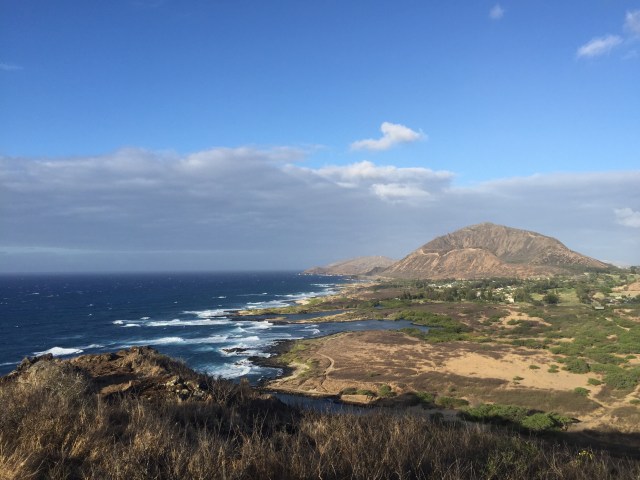
We only had two full days to explore Oahu so the plan on day one was to head to the North Shore beaches along the eastern coast.  We stopped off at Shark Cove which is a popular snorkelling spot.  It has a lava rock beach and is unique not only because of it’s spectacular underwater rock formations, but also because of its diverse marine life.  Apparently the lava has formed underwater caves and tunnels about 15 to 45 feet below the surface which are great for experienced scuba divers.  Both Ashleigh and Paul went for a snorkel – I just had a dip in the water to cool off.
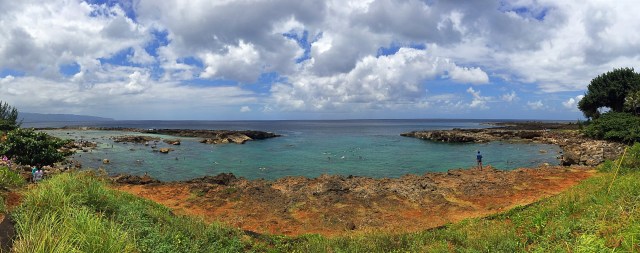
Next stop was Turtle Beach where we were told your old see the green sea turtles sunning themselves and playing in the water.  Unfortunately we didn’t see any turtles sunning themselves but there were two quite large turtles playing in the water just where the gentle surf was breaking.

We then carried on to see the famous Pipeline surf beach.  The waves can reach heights of 20 feet (6 metres) in the winter months – November to February.  We were visiting in August so it was flat – we knew that though so we weren’t disappointed. 

The Banzai Pipeline, or simply “Pipeline” or “Pipe,” is a surf reef break.  A reef break is an area in the ocean where waves start to break once they reach the shallows of a reef. Pipeline is notorious for huge waves which break in shallow water just above a sharp and cavernous reef, forming large, hollow, thick curls of water that surfers can tube ride. There are three reefs at Pipeline in progressively deeper water further out to sea that activate according to the increasing size of approaching ocean swells.

The location’s compound name combines the name of the surf break (Pipeline) with the name of the beach fronting it (Banzai Beach). It got its name in December 1961, when surfing legend producer Bruce Brown was driving up North with Californians Phil Edwards and Mike Diffenderfer. Bruce stopped at the then-unnamed site to film Phil catching several waves. At the time, there was a construction project on an underground pipeline on adjacent Kamehameha Highway, and Mike made the suggestion to name the break “Pipeline”. The name was first used in Bruce Browns movie Surfing Hollow Days. It also lent its name to a 1963 hit by surf music rockers The Chantays.

Numerous surfers and photographers have been killed at Pipe, including Jon Mozo and Tahitian Malik Joyeux, who was famous for his heavy charging (gutsy surfing) at Teahupo’o. Pipeline is often considered the world’s deadliest wave. Its average wave is 9 feet (3 metres), but can be larger. Many more people have died or been seriously injured at Pipeline than at any other surf spot.

We headed to Haleiwa for lunch and a look around.  In 1898 a businessman named Benjamin Dillingham opened a hotel in the North Shore area and named it Haleʻiwa. In the Hawaiian language, hale means “house”, and the ʻiwa’ is a frigatebird. He also built a railway line from Honolulu to Waialua along the west coast around Kaena Point, which opened the same year and ended in front of his hotel. The railroad inaugurated a passenger train, the Haleiwa Limited, which took two hours for this trip.  This railroad was chartered as the Oahu Railway & Land Company.

Hale’iwa was designated a State Historic, Cultural and Scenic District in 1984 by the City and County of Honolulu. All new buildings must adhere to a design plan that reflects the territorial architecture of Hale’iwa’s earlier sugar industry period. The town is home to 30 historic buildings featuring plantation architectural styles influenced by the Waialua Sugar Co.

Ashleigh had been here a couple of years before and didn’t get a chance to paddle board down the Anahulu Stream which is located at the end of town so we did it this time.  It was a very relaxing paddle.  Some people coming the other way told us that they had seen turtles so we went on the lookout – I managed to see one poke it’s head up but Ashleigh saw a couple more – I was going too fast : ). The Anahulu River is the longest watercourse on Oahu and is 11.4km long – due to some big boulders you can only paddle 1.7km up it from Haleiwa.  

Over the past 15 years the green turtles or honu have been moving in and out of the stream.  In order to better understand the river habitat use by the honu, a research project began to track the honu’s movements using hypersonic tags and inwater receiving stations to pick up signals from the tags.  They tagged 15 turtles in October 2016 and have been monitoring their movements ever since – all 15 turtles remain in the area off and on.

Next stop was Waikiki Beach where we had booked a sunset cruise on a catamaran that left from the beach.  The traffic turned out to be a bit of a nightmare so we only had about 15 minutes to spare to get down to the beach.  The crew were a pretty relaxed lot and we didn’t leave ontime anyway!  They warned us before we got on that the waves crashing in on the shore were causing people to get a little wet while they waited on the boat.  Steve managed to get fairly wet just hopping on the boat – a wave crashed on the beach just as he was climbing the stairs.

We grabbed a drink and settled ourselves on the netting at the bow of the boat.  The waves were rolling in and we got a little wet – the water was warm so it wasn’t a problem.  In my mind I was thinking that the waves were just breaking on the beach and it was going to be dead calm once we got underway.  When we finally got underway I realised this wasn’t going to be the case. It was quite choppy out there.  It didn’t take long before Steve went and sat in the boat and Ashleigh and Taj were not far behind him although they had all got quite wet.  Paul and I stayed up there and got absolutely drenched.  There was a women’s volleyball team on board from the University of California (UCLA) and they were all in their bikinis – they had the right idea!

Again Ashleigh had done this exact same trip two years earlier and she said it had been dead calm – they were fully clothed and didn’t get wet at all.  She had a Mumma Bear moment when it got a bit rocky out there fearing for Taj.  The crew reassured her it was fine and it wasn’t long before we turned around.  The water crashing over me was warm but the air was getting a bit cooler so I was getting a bit chilly.  It was great fun.  Just as the sun was going down this three story cruise boat cruising out in the harbour blocked our view 😬

When we got back to shore Ashleigh was talking to the crew telling them about her previous experience being calm and they said she must have picked one of only about 15 days a year when it is calm.  The conditions we had incurred were normal.  I think they need to re name the trip from a Sunset Cruise to a Sunset Adventure – a sunset cruise conjures up images of drinking cocktails as you sit back and relax to watch the sun set.  Most of our drinks ended up heavily diluted with sea water and there was no sitting back relaxing watching the sun set.

The catamaran we sailed on was called Kepoikai which means “Crest of the Wave” in the Hawaiian language – a very apt name for the experience we had just had 🌊😂. The boat was built in 1977 and it was a pretty sturdy vessel.

The aftermath – a drowned rat!

The plan for our second day was to get up and do a walk and then head to Waikiki where we would drop Paul, Ashleigh and Taj while we went to Pearl Harbour.  I realised that we wouldn’t have time to do Pearl Harbour justice in a short space of time so we all headed to Waikiki to have a look around.  Pearl Harbour has been shelved for our next visit to Hawaii : )

Ashleigh had googled another walk close to us which went up the old Koko Head railway track to the summit of Koko Head.  Paul and Taj had decided to join us for this walk.  We got there around 7.30am and it was pretty popular with people of all shapes and sizes heading for the trail.  We looked up and could see all these stairs – how hard can it be!  There are 1,048 stairs in total to the top which sits at 1,200 feet above sea level.  

Koko Head is often called nature’s stair master, but humans helped the evolution of the incline by adding a railway during World War II in order to transport military personnel and supplies up to the lookouts which were built at the top.  Today, all that remains are remnants of old lookouts and a trail lined with railroad ties.

It was a fairly challenging climb and we stopped often to replenish our resolve.  Paul was carrying Taj in a front pack so this was pretty tough going for him.  Taj of course was having the ride of his life and again attracting the attention of the other hikers with his super cuteness 👼.  The views at the top were well worth the effort though and we spent a bit of time up there admiring them.  I thought the descent might be a bit tricky but it wasn’t too bad.
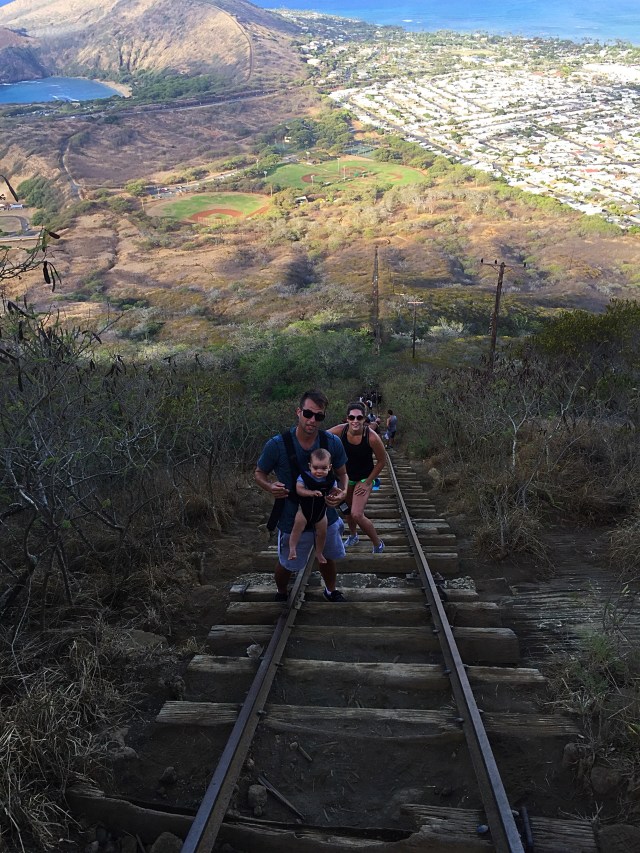
After recovering from our morning exercise and then having breakfast we headed to Waikiki to have a look around.  The area was a retreat for Hawaiian royalty in the 1800s who enjoyed surfing there on early forms of longboards.

A few small hotels opened in the 1880s. In 1893, Greek-American George Lycurgus leased the guest house of Allen Herbert and renamed it the “Sans Souci” (French for “without worries”) creating one of the first beach resorts. Later that year Robert Louis Stevenson stayed at the resort; subsequently it became a popular destination for tourists from the mainland.  

Today, the area is filled with large resort hotels, such as the Hilton Hawaiian Village, Halekulani, the Hyatt Regency Waikīkī, Marriott Waikiki, Sheraton Waikīkī, and historic hotels dating back to the early 20th century (such as the Moana Surfrider Hotel and the Royal Hawaiian Hotel). The beach hosts many events a year, including surf competitions, outdoor performances, hula dancing and outrigger canoe races.

Next stop was the Hawaii Five-O headquarters – I so wanted to meet Steve and Danno 😜.  Unfortunatley they were on holiday so I had to settle for a photo outside by myself.  It turns out that they only use shots of the the outside of the building in the TV series to depict the headquarters.  See below for 8 Myths about Hawaii Five-0.

Iolani Palace

You can go inside and sit in one of the old court rooms which we did.  The architecture inside is a far cry from the modern architecture portrayed in the TV show.

The building depicted as the headquarters is called Aliʻiōlani Hale.  It is currently used as the home of the Hawaiʻi State Supreme Court. It is the former seat of government of the Kingdom of Hawaiʻi and the Republic of Hawaiʻi.

Located in the building’s courtyard is the famed gold-leaf statue of Kamehameha the Great.

The Aliʻiōlani Hale was designed by Australian Thomas Rowe in an Italian Renaissance Revival as the royal palace for King Kamehameha V.  In the Hawaiian language, Aliʻiōlani Hale means “House of Heavenly Kings”.  The name “Aliʻiōlani” was also one of the given names of Kamehameha V.

Although the building was designed to be a palace, Kamehameha V realized that the Hawaiian government desperately needed a government building. At that time, the several buildings in Honolulu used by the government were very small and cramped, clearly inadequate for the growing Hawaiian government. Thus, when Kamehameha V ordered construction of Aliʻiōlani Hale, he commissioned it as a government office building instead of a palace.

Kamehameha V laid the cornerstone for the building on February 19, 1872.  He died before the building was completed, and it was dedicated in 1874 by one of his successors, King David Kalākaua. At the time, Hawaiian media criticized the building’s extravagant design, suggesting that the building be converted into a palace as originally designed.

Until 1893, the building held most of the executive departments of the Hawaiian government as well as the Hawaiian legislature and courts.

In the 2010 version of CBS’ Hawaii Five-0 TV series, Aliʻiōlani Hale is depicted as the Iolani Palace; headquarters for the Five-0 task force with exterior shots of the building being used frequently throughout the series.

Over the next many decades, most of the state judiciary functions moved out of Aliʻiōlani Hale to various other buildings around Honolulu (including the state district, family, and circuit courts). Today, the building houses the Hawaiʻi State Supreme Court and is the administrative center of the Hawaiʻi State Judiciary.

8 Myths of Hawaii Five-0

Sheila and Andy, a couple of Hawaii nerds and frequent visitors to Oahu, noticed some things about the show that don’t exactly portray reality. 

Myth 1: Honolulu is laden with crime.

The show’s ongoing plot is built on fighting crime in Honolulu County, which is the island of Oahu. So, crime is naturally emphasized each week, but Honolulu is the nation’s third safest city per a recent Forbes report.

Myth 2: You can use your cell phone while driving.

As McGarrett and Danno drive around Oahu, they sometimes pull out their cell phone for personal calls. While that may be ok for law enforcement, that’s against the law for us civilians. If, as a civilian, you are caught driving while talking or texting on a mobile phone, you could get a $67 ticket. In fact, if you’re caught just holding a cell phone or any other electronic device while driving, you get a ticket. 

Myth 3: Five-0 Headquarters Located in Historic Buildings

When the detectives gather at headquarters, a scene of a very attractive historic building shows on the screen with a caption that it’s their headquarters. Well, those are actually scenes of Iolani Palace and Ali’iolani Hale in downtown Honolulu. 

Ali’iolani Hale is located across the street from Iolani Palace. Ali’iolani Hale is home to Hawaii’s judicial system. 

Myth 4: Kukui High School Fighting Nuts! Let’s go Nuts!

In a recent episode, we learned that McGarrett played football at Kukui High School. That’s a fictitious high school. Some enterprising local guys have generated a social media stir by creating a website along with facebook and twitter pages supporting this fictitious high school. You can even become an alum of this high school and play along.

Myth 5: The North Shore is just few minutes away from Waikiki.

Sometimes, you’ll see the guys driving from the North Shore down to Waikiki or Ala Moana beaches within minutes. While, we’d all love that to be true, in reality, you need to allocate about 45-minutes to an hour to make that trip.

Myth 6: You can openly drink wine on the beach in Hawaii.

In a recent episode, we saw McGarrett and his lady-friend enjoying a sunset barbeque and bottle of red wine on the beach. Well, consuming alcohol on the beach is actually illegal in Hawaii.

Myth 7: Sunrises are sunsets.

In the scene mentioned in myth 6, we are led to believe it’s a romantic sunset beach barbeque, but that scene was actually filmed on the eastern shore of Oahu. (If I remember correctly, you can see Kaneohe in the background.) So that romantic barbeque was really at sunrise. Doesn’t seem as romantic now, does it?

Myth 8: Hawaii Five-Oh

I learned that I’ve been mistakenly typing Hawaii Five-O, with the letter O. CBS would like to refer to the show as Hawaii Five-0 with a zero. So if you’re searching for official information about the show, you need to use a zero, not an O.

Anatomy of a Crimnial Case

Murder – is the unlawful killing of one human being by another.

A Coroner’s Jury – examines the causes and circumstances of any death which occurs by violence or under suspicious conditions.  The coroner conducts the examination with the assistance of a jury.  Witnesses may be called to testify.

A Grand Jury – is a group of citizens that hears evidence against a suspect and decides if probable cause exists o formally charge the suspect with a crime.

A Trial Date – is set by the court once it is determined that a crime has been committed and a suspect has been charged.  In a trial, the defence and the prosecution argue and can present evidence through witnesses to prove their point.  The defence has no obligation whatsoever to produce any evidence.  A judge or the jury, decides if the accused is guilty or not guilty of the crime.

A Verdict – is the decision of guilty or not guilty.  After the jury hears the evidence, the judge instructs the jury on the applicable law.  The jury retires to a separate room and makes a decision.  The verdict is announced to the courtroom.

The Appellate Court – reviews cases when a trial court decision has been questioned.  The court upholds or reverses the decision of the trial court.  If the decision is reversed, the case often goes back to the lower court for a new trial.  

The Hawaii Supreme Court – is the highest court in the state and was the highest court in the territory.  The court decides questions of law (or mixed questions of law and facts) in cases that are appealed from a lower court.  A decision of the Hawaii Supreme Court is final but may be reviewed by the United States Supreme Court.

Posted in Hawaii, USA, United States of America | Tagged | Leave a comment

Plantation Course – Kapalua, Maui – Hawaii, USA

We saved the best until last : ). Plantation at the Kapalua Golf Resort is consistently ranked as the number one golf course in Hawaii.  Steve had been fortunate enough to play here a few years ago but for Paul and I this was our first time and certainly a bucket list item for me.  It is set on the slopes of the West Maui mountains and offers dramatic ocean views from virtually every hole.  We teed off at 1pm and it was fairly breezey and some dark rain clouds lurked in the mountains.  It had rained quite heavily the previous afternoon and that morning so it was cart path only which certainly made it a physical test going up dale and down dale to our balls.

Plantation hosts the PGA Tour’s Sentry Tournament of Champions every January which features an elite field of previous year’s PGA Tour winners.  The field has included golf greats such as Tiger Woods, Vijay Singh, Justin Leonard, Ernie ELS, Davis Love III and Jason Day.

The course was designed by Ben Crenshaw and Bill Coore and opened in 1991.  See below for a more detailed history of the Kapalua Resort and its commitment to the environment.

The rain held off but the wind never really abated so it made for some interesting golf.   It is a seriously cool golf course though and we loved every minute of it.  I ended up shooting 99 so I was pretty happy with that given the challenging nature of the course and conditions.

History of Kapalua Resort

When it Comes to Preserving Natural Beauty Kapalua is One of the Best

Located on the northwest coast of Maui, the Kapalua resort is well-known for its championship golf courses, world-class tennis facilities, luxury hotels and villas. The transformation from agricultural land to the elegant resort of today is symbolized through Kapalua’s highly recognized logo of a butterfly with a pineapple it the middle. Kapalua’s roots stem from a descendent of one of Maui’s oldest missionary families.

The modern history of the area began in 1836 when Dwight Baldwin, a doctor with the fourth company of American missionaries to Hawaii, settled on Maui. After seventeen years of service, Doctor Baldwin was granted 2,675 acres, the lands of the Mahinahina and Kahana ahupua’a, for farming and grazing. From that base, new lands were acquired until the holdings, known as Honolua Ranch, reached 24,500 acres in 1902.

The business of Honolua Ranch included fishing, raising cattle and farming crops of taro, mango, aloe and coffee bean. It was ranch manager, David Fleming, of Scotland, who first experimented with a new fruit, hala-kahiki, pineapple. He planted four acres.

One taste of the exceptionally sweet Kapalua-grown pineapple, and H.P. Baldwin, son of Dwight Baldwin, predicted a golden future for the crop. He ordered the whole coffee operation moved upland to make room for a pineapple cannery, homes for immigrant plantation workers, a railroad, store, and a new home for Fleming.

In a short time, Honolua Ranch became Baldwin Packers, the largest producer of private label pineapple and pineapple juice in the nation. By 1946, the cattle operation ceased to exist. In the next two decades, Baldwin Packers merged with Maui Pineapple Company. In 1969, it became Maui Land & Pineapple Company, Inc. (ML&P), the largest employer on the island of Maui. The company’s president was Colin C. Cameron, a fifth-generation descendant of the Baldwin family. Cameron was a man of extraordinary vision. In a rapidly changing Hawaii, he saw Kapalua as a sanctuary for both man and nature. To that end, he conceived a resort that would abide in harmony with its environment, fulfill the historic destiny of the area, as a place of culture, a playground fit for royalty, and a special place of the spirit.

Kapalua was designed as a master-planned resort community where all development conformed to the contours of the land itself, rather than imposing man’s ambitions on nature. Respect for the past, a present committed to enrichment of life, and a sense of responsibility to future generations were integral to the design.

Today, the resort encompasses 671 homes, homesites and condominiums; three championship golf courses; a wide variety of restaurants; two championship tennis facilities; a vacation rental program, The Kapalua Villas (managed by KLC); and two premier hotels — The Kapalua Bay Hotel and The Ritz Carlton, Kapalua.

Open spaces and a precious sense of solitude are built in, for the resort is 1,650 acres surrounded by a 23,000-acre working pineapple plantation. Many of the old plantation buildings have been recruited to new service. Part of the original pineapple cannery has become the new Art School at Kapalua, and the rustic Honolua Store with its homey front porch is still open. D.T. Fleming’s gracious old plantation home grandly sits at the top of Pineapple Hill and Hawaiian hymns still ring out on Sunday mornings from Sacred Hearts Church. Wide open spaces of a different sort are also found at Kapalua. The resort is one of a few Hawaii resorts that offer three championship golf courses.

Stretching from the pristine West Maui Mountains to the azure Pacific Ocean, Kapalua’s golf courses ( The Bay, The Village and The Plantation ( capture Maui’s stunning natural terrain and diverse topography.

They are three courses of dramatically distinctive character, each venue fine-tuned for players of all abilities. Arnold Palmer designed both The Bay Course and The Village Course. The forerunner of Kapalua’s three championship golf courses, The Bay Course opened in 1975. It is a 6,600- yard par 72 with gently rolling fairways and generous greens. Kapalua’s Village Course twists, turns, rises and falls through the West Maui foothills. A serene trek through forested Hawaiian headlands, stands of Cook pines and Eucalyptus remain scattered throughout the par 71, 6,632-yard course. The resort’s newest course, the par 73, 7,263-yard Plantation Course, presents Kapalua’s ultimate golf challenge. Designed by Ben Crenshaw and Bill Coore and opened in 1991, The Plantation Course unfurls across island canyons, native vegetation and panoramic oceanfront plateaus. The Plantation Course will challenge the best of the PGA TOUR in January 1999 when the Mercedes Championships makes Kapalua its new home. Though many know Kapalua for its outstanding golf, in recent years, the resort has gained recognition for its commitment to the environment and their conservation efforts.

Kapalua’s trend-setting conservation programs include partnership arrangements with the State of Hawaii, The Nature Conservancy of Hawaii and Audubon International; the development of a code of environmental ethics; marketing of enrichment travel packages with partial funds going to benefit The Nature Conservancy; and resort-wide dedication of all properties to the ideal of preserving the unique Hawaiian environmental and cultural heritage of which Kapalua is a part.

In 1995, the Kapalua resort established the Kapalua Nature Society to foster its partnership between man and nature. Dedicated to fostering an appreciation of Maui’s unique natural and cultural treasures, this unique environmental organization oversees the resort’s Audubon International programs; publishes the semi-annual Kapalua Nature Journal; and contributes to Hawaii’s natural legacy through their Native Hawaiian Plant Reforestation Project.

Additionally, all three golf courses are “Certified Audubon Cooperative Sanctuaries.” Kapalua’s courses received this Sanctuary designation by meeting the stringent environmental standards set forth by the Audubon International for water conservation, habitat enhancement, public involvement, integrated pest management and more.

In August 1996, Kapalua again reaffirmed its environmental commitment by becoming the first resort in the world to be certified by the Audubon International under the Audubon Heritage Program. In this process, every aspect of the resort was evaluated, from waste management to educational programs, cultural and natural preservation, wildlife protection and land conservation. Audubon president Ronald G. Dodson said, “We wanted to establish a model of international significance. We needed to demonstrate that good business decisions and good environmental decisions are permanently linked both locally and globally.” Dodson said Kapalua was chosen as the model Audubon resort because, “It has a diverse ecology, diverse usage and a long heritage of caring for the land. It’s like taking many threads and weaving each one into a fabric so beautiful others will emulate it.”

Posted in Hawaii, USA, United States of America | Tagged , | Leave a comment

Maui Nui Golf Club, Maui – Hawaii, USA

We had spotted this golf club alongside the highway not far from where we were staying in Kihei so Steve checked it out online.  It was rated one of the best value golf courses to play in the USA and it was 10 minutes from where we were staying – result : ). We booked three rounds here and managed to get one of the first tee times each day which meant we were teeing off about 6.20am.  This worked perfectly as we were normally back to the apartment by 10am to spend the rest of the day with Ashleigh and Taj.

It turned out to be a really nice course with lots of hole variety, vistas and the odd water hole.  The layout wanders through the foothills of Haleakala, providing subtle elevation changes as well as views of the ocean and surrounding West Maui Mountains and the volcanic atoll Molokini.

The course was designed by Bill Newis and opened in 1987.

Legend of Maui Nui

The Legend has been told, that millions of years ago, the Polynesian Demi-God Maui was belittled by his family as he was not a great fisherman. Maui prayed and received a magical hook to fish the ocean. Maui’s brothers teased him and did not want to let him fish, but at last they allowed him to charter the ocean with them. On their fated journey after days of failure to catch nothing but sharks, Maui prayed to the heavens and cast his magical hook into the depths of the ocean and hooked the earth. Maui instructed his brothers to paddle and never look back. After days of fighting the ocean, the line snapped and Maui had pulled the earth to the surface of the water to form the island chain that is now known as Hawaii.

Posted in Hawaii, USA, United States of America | Tagged | Leave a comment