Adieu Paris – Gruezi Switzerland

Yesterday we caught the train from the Gare de Lyon station in Paris to Zurich in Switzerland. It was a two story train and we had very comfortable seats upstairs. It really is such a great way to travel. The train left Paris 20 minutes late and lost time on route due to track maintenance so we arrived into Zurich 40 minutes late.

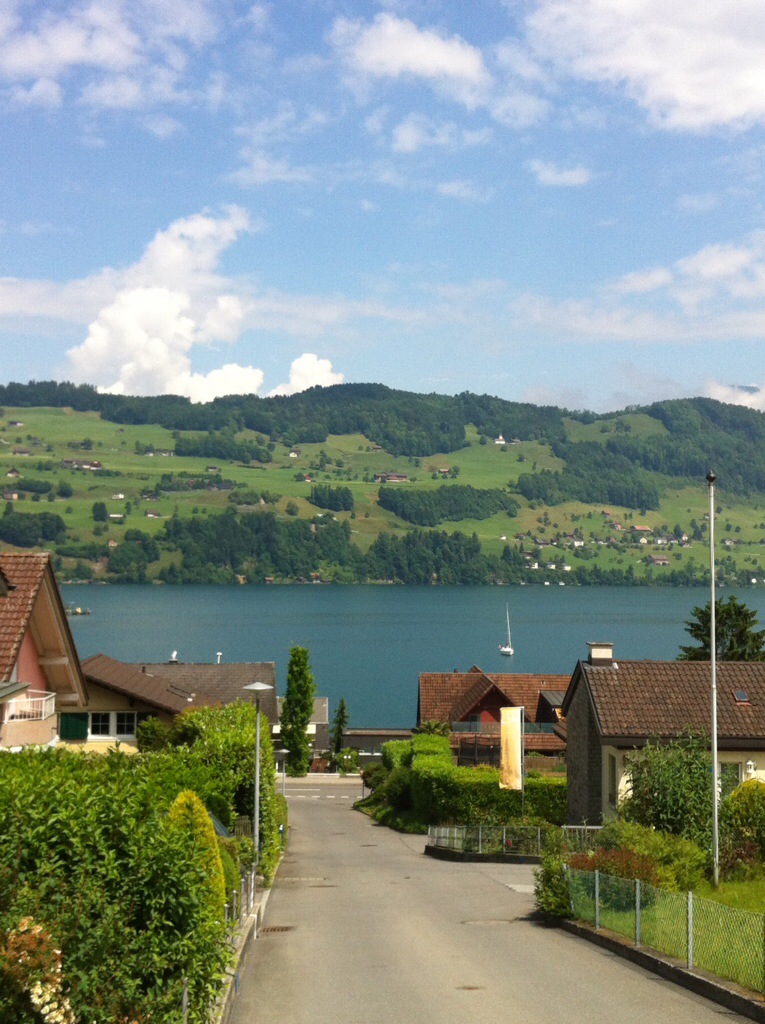
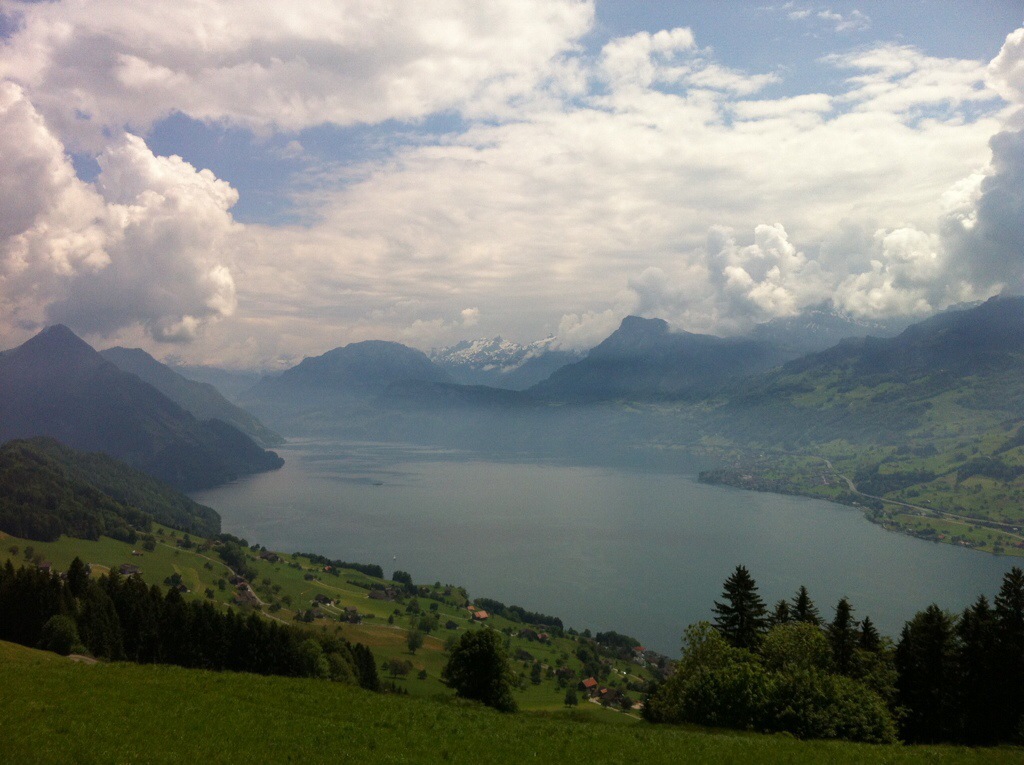
Karin was there to meet us – it was great to see her : ) Karin & Elvis have built a new house in Buochs which is in the canton of Nidwalden. Nidwalden is about 15 minutes from Lucerne and about 1 hour and 15 minutes from Zurich. The new house is really nice and has great views over Lake Lucerne.

There are 26 cantons in Switzerland – they are the member states of the federal state of Switzerland. Each canton was a fully sovereign state with its own border controls, army and currency from the Treaty of Westphalia (1648) until the establishment of the Swiss federal state in 1848. Each canton has its own constitution, legislature, government and courts.

Elvis comes from the canton of Nidwalden which has the flag with the white key on a red background. Karin comes from the canton of Glarus which has the flag with the man on it – the only canton to have a person on their flag. See the pictures below.

We had a leisurely start to the day and went for a walk down to the lake’s edge and around the village. This was followed by a yummy breakfast sitting in the sun overlooking the lake.

We then ventured up a small mountain across the lake called Burgenstock.
The Bürgenstock is a famous mountain in Switzerland (1,127.8 m above sea level) located on the eponymous peninsula Bürgenstock, in the middle of Lake Lucerne. The Bürgenstock is a mountain ridge that stretches over 10 km and is surrounded to the North, East and South-East by Lake Lucerne. The northern slope drops very steeply into the lake.

This area was very popular back in the 1950’s and 1960’s for famous people to take their summer holidays – these included Audrey Hepburn & Sophia Loren. It was then fairly inactive until recently when some middle eastern developers came and and have started to renovate some of the old hotels as well as building new resorts. The new resort includes a 9 hole alpine golf course.

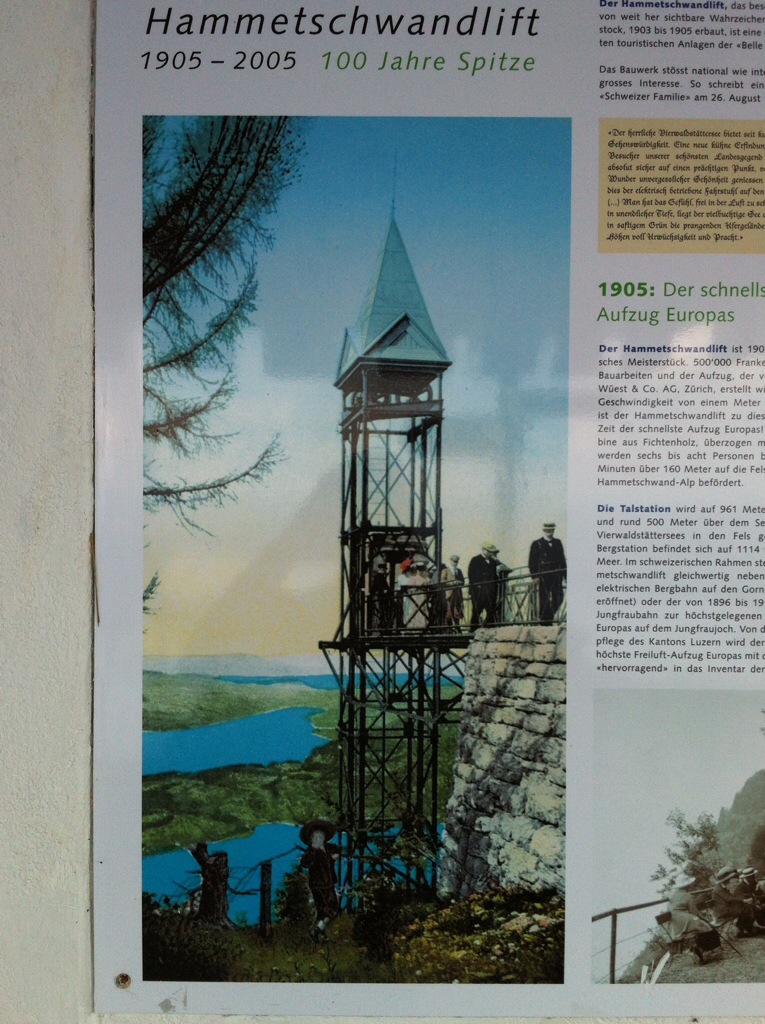
We walked for about 20 minutes and then caught the Hammetschwandlift to the top of the mountain – this is the highest outdoor lift in Europe with unique panoramic views.

20140529-225336-82416652.jpg

20140529-225345-82425320.jpg

20140529-225400-82440414.jpg

20140529-225352-82432840.jpg

20140529-225407-82447670.jpg

20140529-225414-82454013.jpg

20140529-225423-82463712.jpg

20140529-225429-82469504.jpg

20140529-225449-82489116.jpg

Posted in Paris, Switzerland | 1 Comment

Roland Garros, Paris – France

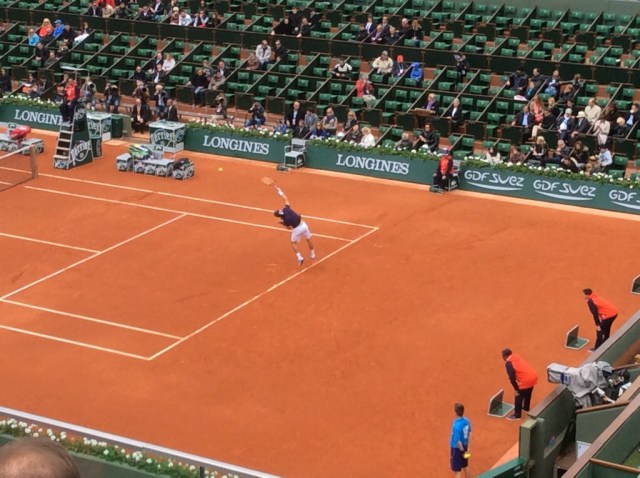
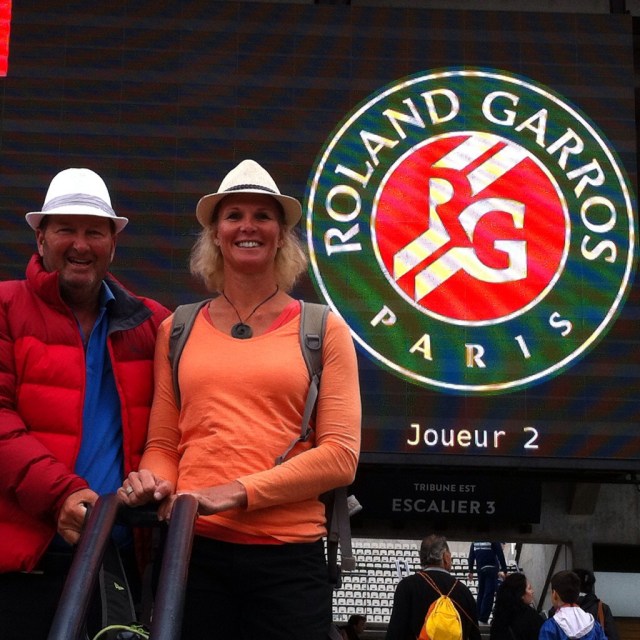
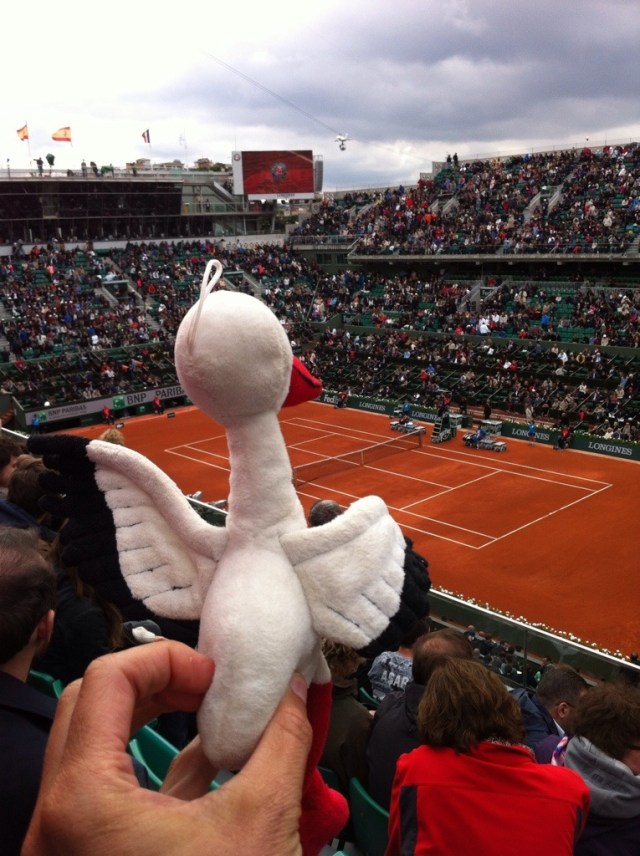
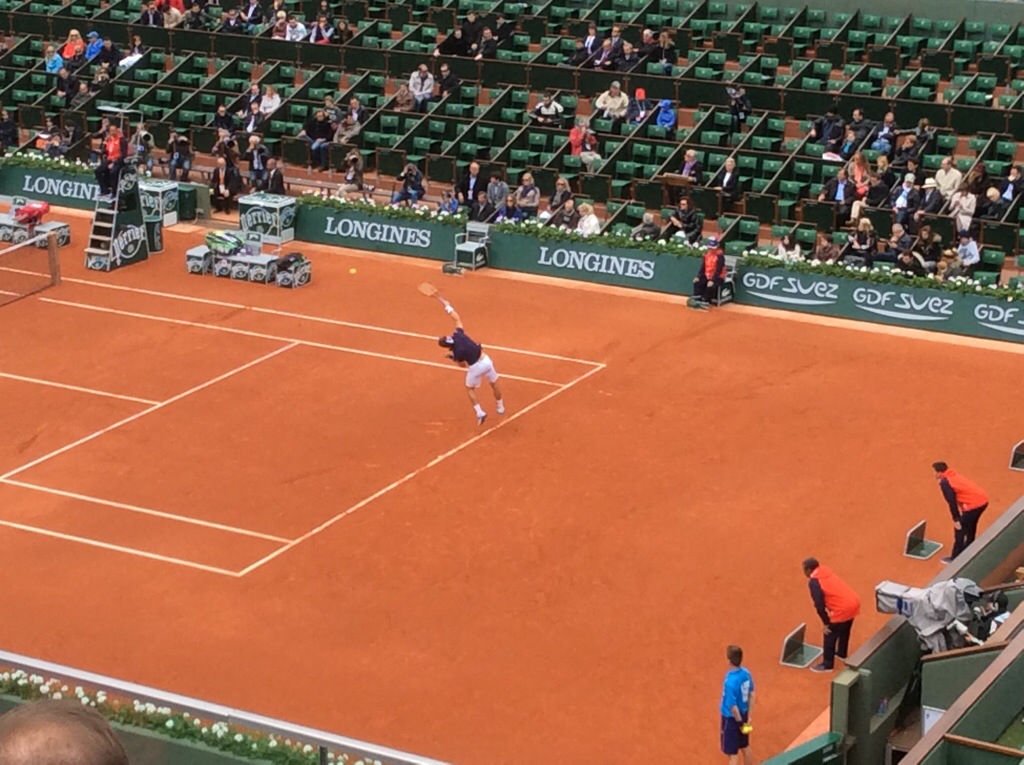
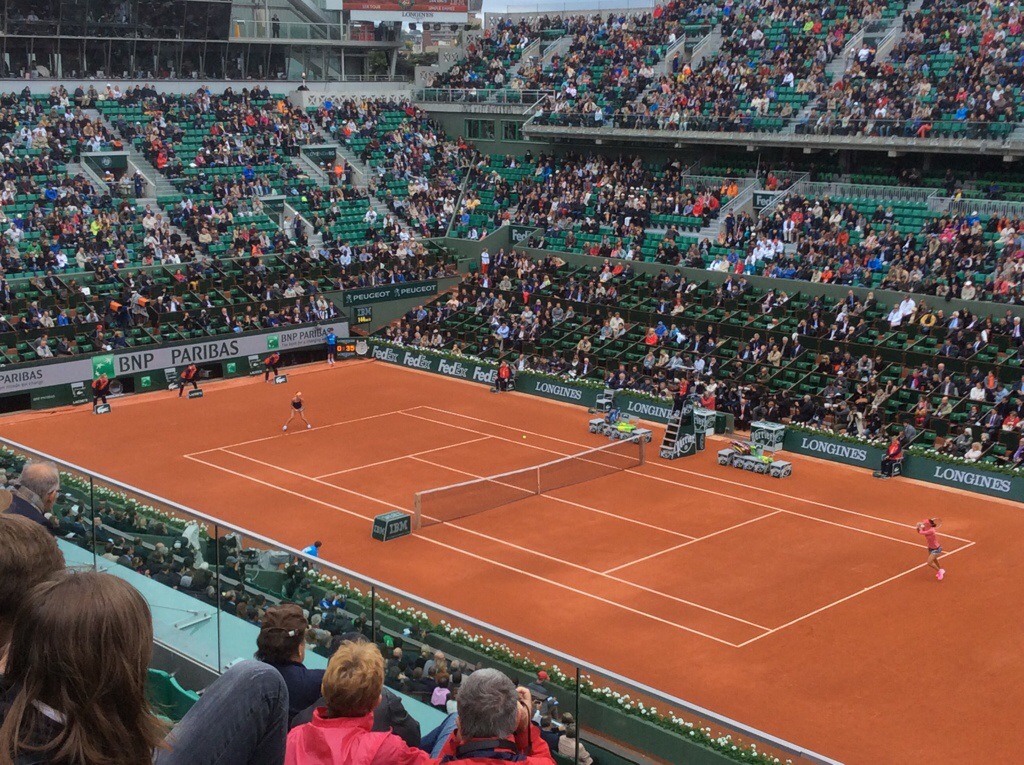
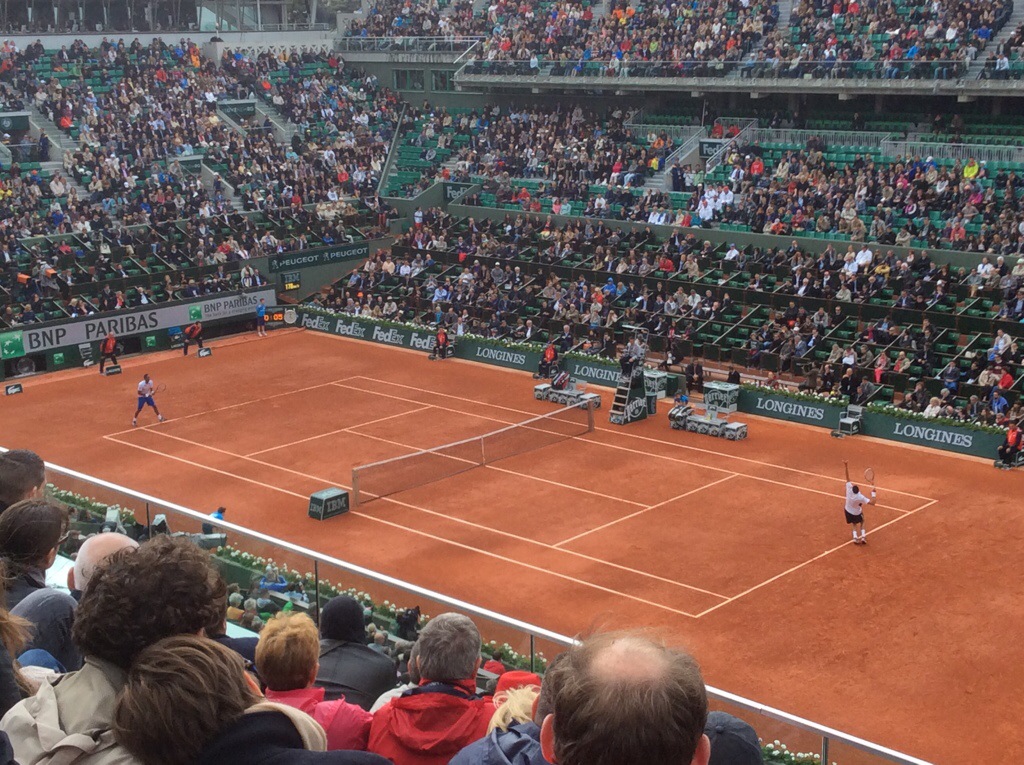
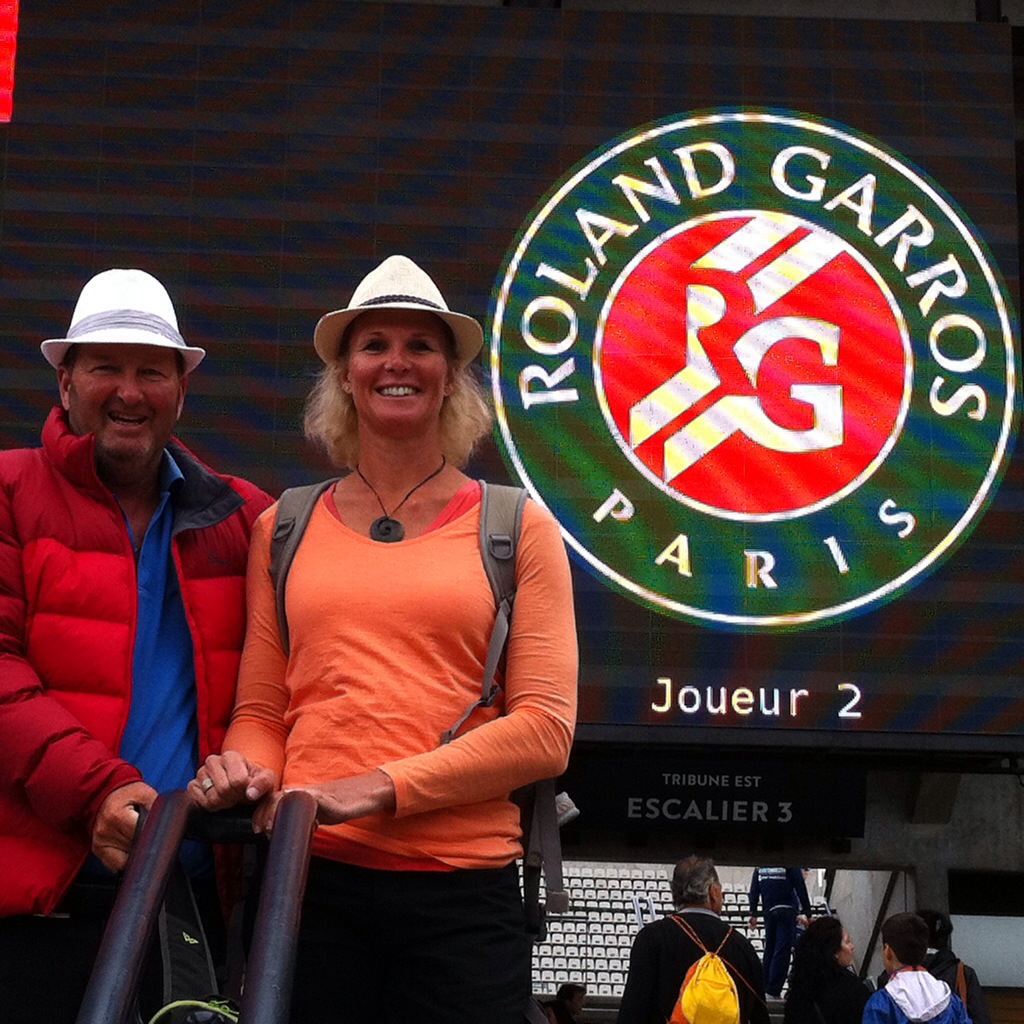
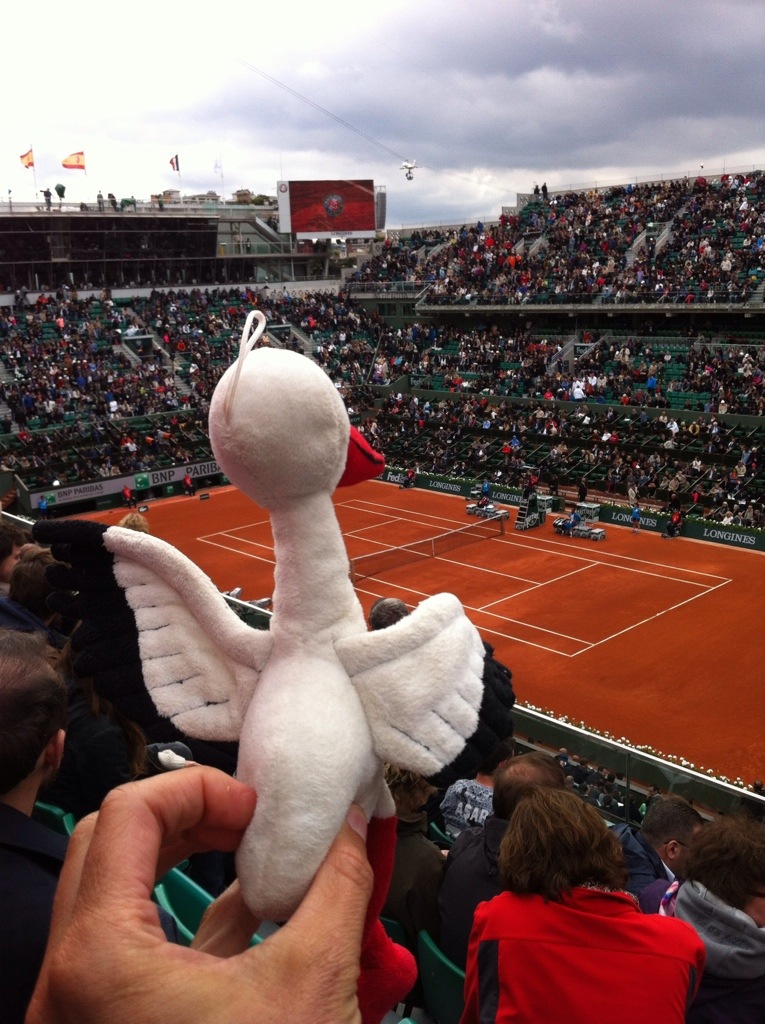
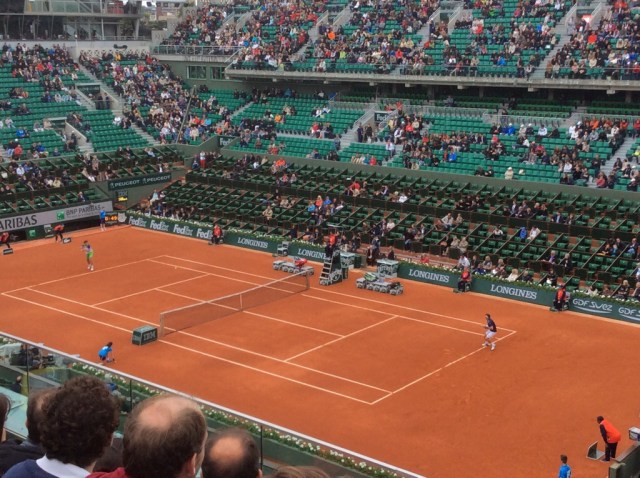
Today we went to Roland Garros to watch day three of the first round. I was so excited that I woke at 5.15am and couldn’t go back to sleep. We caught the RER and then the Metro to the stadium – was a bit nervous about getting on the wrong train but it was a piece of cake. You’ve just got to understand what the end destination point on the line is so you can make sure you get on the train that is going in the right direction.

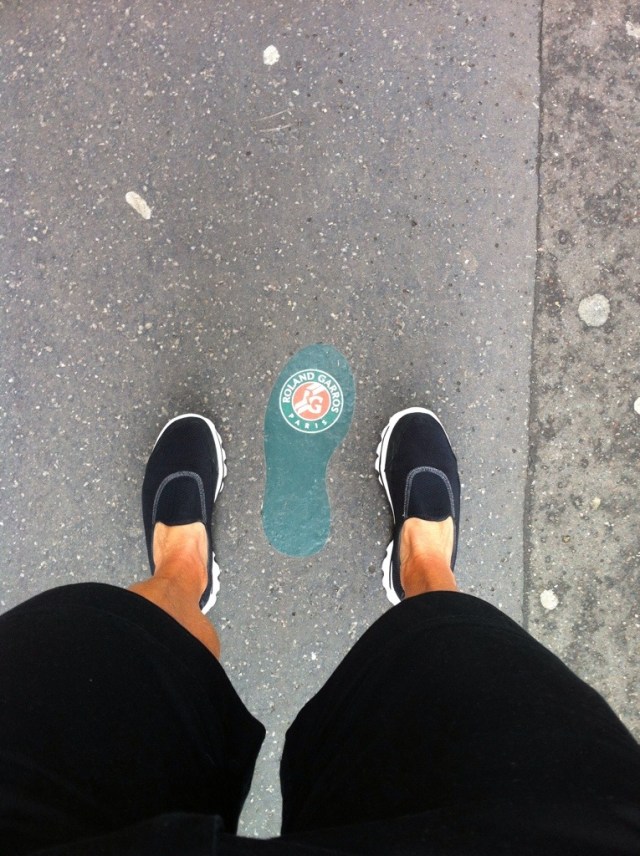
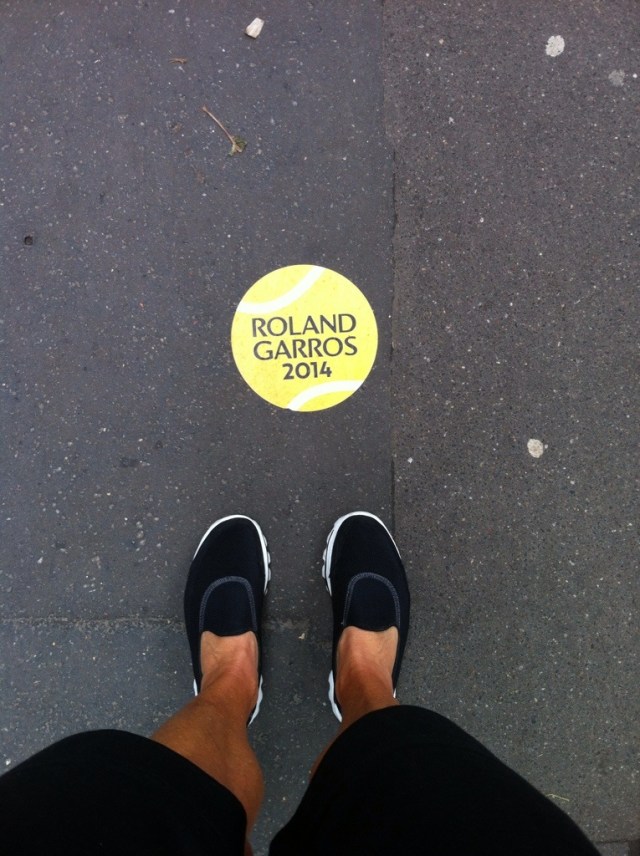
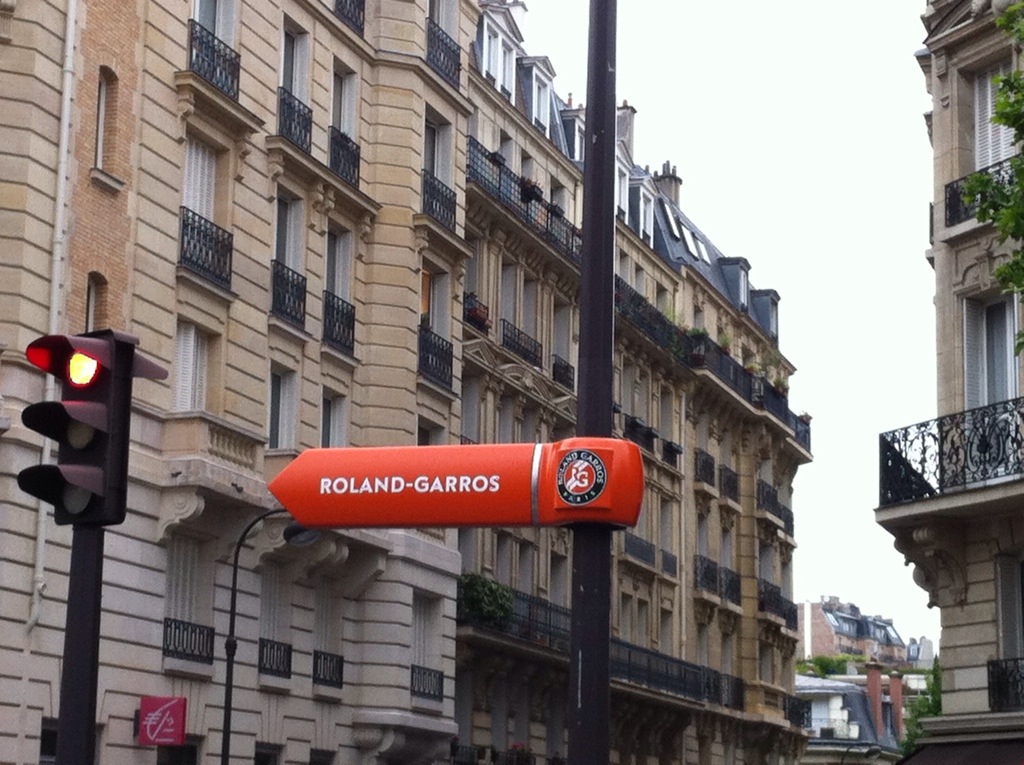
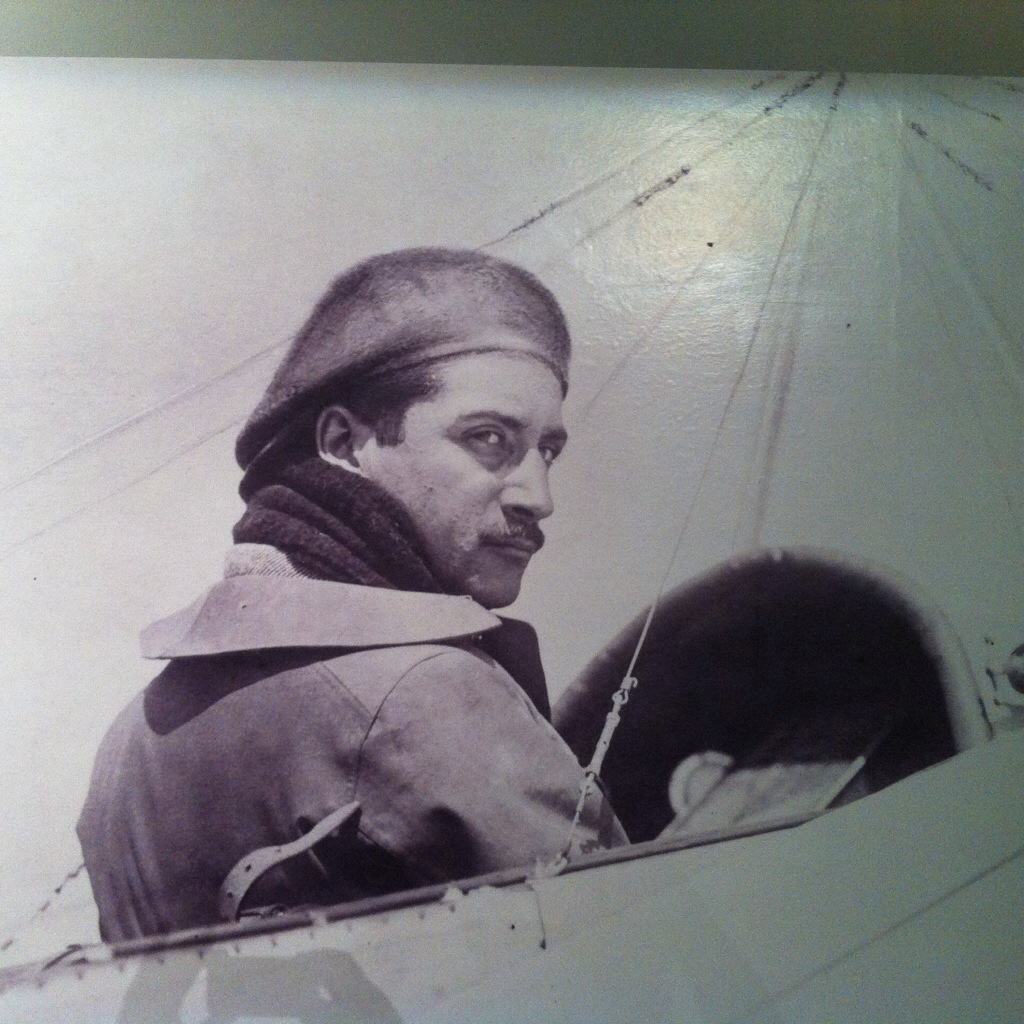
We got off the Metro at Michel-Angel Auteuil and went to navigate our way to the stadium and there were all these footsteps and tennis balls on the pavement showing us the way. Got to the stadium and lined up ready to go in. It is quite a large complex but very well laid out and organised. They have a tennis museum which also has a large part dedicated to Roland Garros – who is Roland Garros you ask? Well he is not a famous tennis player for starters.

Eugène Adrien Roland Georges Garros was born in Saint-Denis, Réunion, and studied at the Lycée Janson de Sailly and HEC Paris. He started his aviation career in 1909 flying Alberto Santos-Dumont’s Demoiselle (Dragonfly) monoplane, an aircraft that only flew well with a small lightweight pilot. He gained Ae.C.F. licence no. 147 in July 1910. In 1911 Garros graduated to flying Blériot monoplanes and entered a number of European air races with this type of machine, including the 1911 Paris to Madrid air race and the Circuit of Europe (Paris-London-Paris), in which he came second. In September he established a new world altitude record of 5,610 m (18,410 ft). By 1913 he had switched to flying the faster Morane-Saulnier monoplanes, and gained fame for making the first non-stop flight across the Mediterranean Sea from Fréjus in the south of France to Bizerte in Tunisia. The following year, Garros joined the French army at the outbreak of World War I.

After achieving a number of things in World War 1 in the aviation arena he was taken prisoner. He managed to escape the POW camp and went on to re join the French Army before his plane was gunned down on the 5th October 1918, one month before the war ended and one day before his 30th birthday.

In the 1920s, a tennis centre which he attended religiously when he was studying in Paris, was named after him, Stade de Roland Garros. The stadium accommodates the French Open, one of tennis’ Grand Slam tournaments. Consequently, the tournament is officially called Les internationaux de France de Roland-Garros (the “French Internationals of Roland Garros”).

The international airport of La Réunion, Roland Garros Airport, is also named after him.

The French car manufacturer Peugeot commissioned a ‘Roland Garros’ limited edition version of its 205 model in celebration of the tennis tournament that bears his name. The model included special paint and leather interior. Because of the success of this special edition, Peugeot later created Roland Garros editions of its 106, 206, 207, 306, 406, and 806 models.

From the first ball games in Ancient times to Rafael Nadal’s victories, tennis, in all it’s different forms, came slowly into being in Greek mythology, Nausicaa is the first to play with a ball, leading to pila played by the Romans, and then making way for jeu de paume (“game of the palm”), which was codified in 1555. Across the English Channel, the invention of lawn tennis by Major Wingfield, in 1874, marks the beginning of a new pastime for high society, played during garden parties and which rapidly turns into competitive events. Thus begins the tennis adventure.

From 1891 the first French championships, ancestors of the Roland Garros tournament, are held in front of a very small public. In the 21st century, the French Open welcomes nearly 450,000 spectators every year and attracts almost 3 billion television viewers.

In 1928, following the Musketeers triumph in Davis Cup, Roland Garros stadium is built and becomes home to the French Open. Like the three other Grand Slam events (the Australian Open, the US Open and Wimbledon), the historical stadium, where the legendary tournament filled with spirited emotion is held, writes the pages of tennis history.

Note that the French Open is played on a clay surface, the Australian and US Opens are played on a concrete surface and Wimbledon is played on a grass surface.

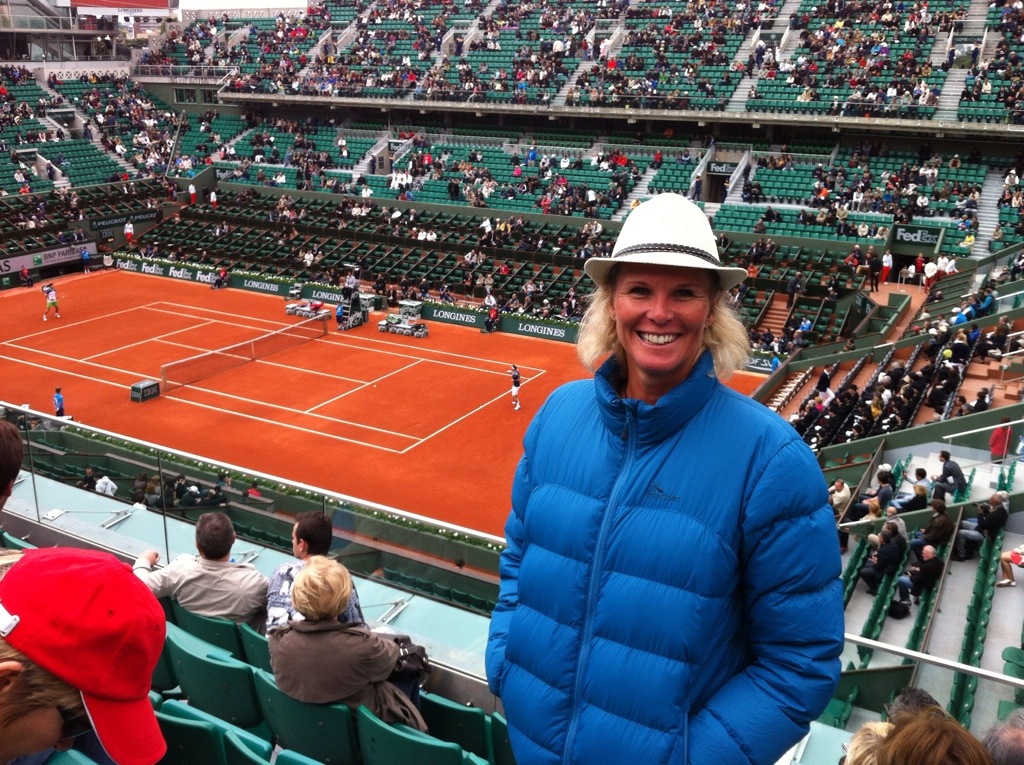
Despite the weather being very overcast and looking like at least spitting with rain we were fortunate enough to stay dry all day and watch four singles games – two men’s and two women’s. The sun actually came out about 5.30pm- we have noticed that this is quite common in Paris. The day starts off very glum and by early evening it is quite pleasant.

First up was:

Simona Halep from Romania – 22 years old and ranked number 4 in the world versus Alisa Kleybanova from Russia – 24 years old and ranked number 87 in the world. Simona won in two sets.

Next up was:

David Ferrer from Spain – 32 years old and ranked number 5 in the world versus Igor Sijsling from the Netherlands – 27 years old and ranked number 55 in the world. David won in three sets. David Ferrer is NZ’s favourite Spaniard – he has come to play in the Heineken Open in Auckland many times and has won it many times although he didn’t make the final in 2014.

Next up was:

Ana Ivanovic from Serbia – 27 years old and ranked number 12 in the world versus Caroline Garcia from France – 20 years old and ranked number 43 in the world. Ana won in two sets. Ana Ivanovic played in the ASB Classic in Auckland in January 2014 and won it.

Last but not least was:

Gael Monfils from France – 28 years old and ranked number 28 in the world versus Victor Hanescu from Romania – 33 years old and ranked number 85 in the world. Gael Monfils won in four sets. This was the best game of the day. Gael Monfils has been to Auckland to play in the Heineken Open before – he is a bit of a showman and quite fun to watch.

It was a great day and we managed to navigate our way back on to the Hotel on the RER and Metro.
20140528-000630-390691.jpg

20140528-000641-401303.jpg

20140528-000658-418458.jpg

20140528-000715-435402.jpg

20140528-000733-453929.jpg

20140528-001018-618912.jpg

20140528-001031-631138.jpg

20140528-001040-640724.jpg

20140528-001053-653022.jpg

20140528-001110-670373.jpg

20140528-001123-683247.jpg

20140528-001138-698204.jpg

Posted in Paris | 1 Comment

Paris – France

Paris is one of those cities where you can just walk and walk and not run out of things to see. We started the day with a run, walk up to the Arc de Triomphe and down the Champs Elysees and back to the hotel. After breakfast we continued with the walking theme and went back down the Champs Elysees to check out all the luxury goods on offer.

Paris is the capital and most populous city of France. It is situated on the Seine River, in the north of the country, at the heart of the Île-de-France region. Within its administrative limits (the 20 arrondissements), the city had 2,243,833 inhabitants in 2010 while its metropolitan area is one of the largest population centres in Europe with more than 12 million inhabitants.

The city has one of the largest GDPs in the world, €607 billion (NZD969 billion) as of 2011, and as a result of its high concentration of national and international political, cultural and scientific institutions is one of the world’s leading tourist destinations. The Paris Region hosts the world headquarters of 30 of the Fortune Global 500 companies in several business districts, notably La Défense, the largest dedicated business district in Europe.

Paris was at the centre of the French Revolution from 1789 to 1799.

Paris is home to the Paris Saint-Germaine Football Club and the Stade Francais Rugby Union Club. The 80,000 Stade de France was built for the 1998 FIFA World Cup.

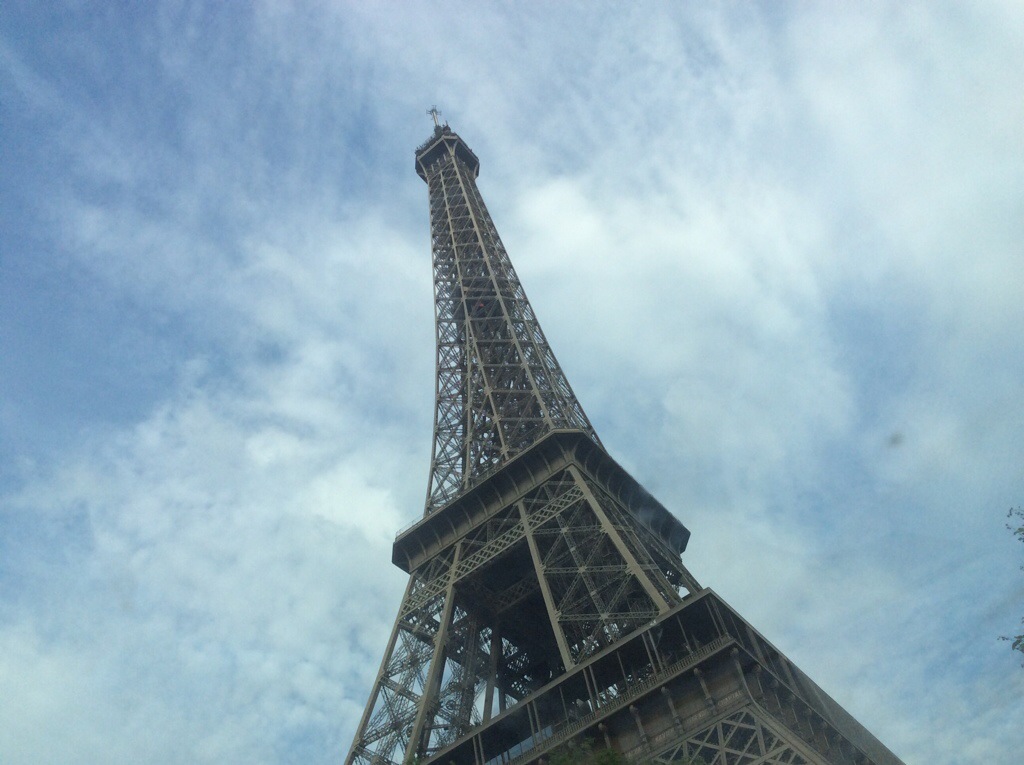
Some of the well known icons in Paris are the Louvre, the Eiffel Tower and the Arc de Triomphe.

The Louvre is one of the world’s largest museums and a historic monument. A central landmark of Paris, France, it is located on the Right Bank of the Seine in the 1st arrondissement (district). Nearly 35,000 objects from prehistory to the 21st century are exhibited over an area of 60,600 square metres (652,300 square feet). With more than 9.7 million visitors each year, the Louvre is the world’s most visited museum.

The Eiffel Tower is an iron lattice tower located on the Champ de Mars in Paris. It was named after the engineer Gustave Eiffel, whose company designed and built the tower. Erected in 1889 as the entrance arch to the 1889 World’s Fair, it was initially criticised by some of France’s leading artists and intellectuals for its design, but has become both a global cultural icon of France and one of the most recognizable structures in the world. The tower is the tallest structure in Paris and the most-visited paid monument in the world; 6.98 million people ascended it in 2011. The tower received its 250 millionth visitor in 2010.

The tower is 324 metres (1,063 ft) tall, about the same height as an 81-storey building. During its construction, the Eiffel Tower surpassed the Washington Monument to assume the title of the tallest man-made structure in the world, a title it held for 41 years, until the Chrysler Building in New York City was built in 1930. Because of the addition of the antenna atop the Eiffel Tower in 1957, it is now taller than the Chrysler Building by 5.2 metres (17 ft). Not including broadcast antennae, it is the second-tallest structure in France, after the Millau Viaduct.

The Arc de Triomphe is one of the most famous monuments in Paris. It stands in the centre of the Place Charles de Gaulle, at the western end of the Champs-Élysées. The Arc de Triomphe (in English: “Triumphal Arch”) honours those who fought and died for France in the French Revolutionary and the Napoleonic Wars, with the names of all French victories and generals inscribed on its inner and outer surfaces. Beneath its vault lies the Tomb of the Unknown Soldier from World War I. The monument stands 50 metres (164 ft) in height, 45 m (148 ft) wide and 22 m (72 ft) deep.

20140526-223518-81318624.jpg

20140526-223540-81340584.jpg

20140526-223533-81333221.jpg

20140526-223609-81369008.jpg

20140526-223617-81377957.jpg

Posted in Paris | 1 Comment

Cycling in Bordeaux, Day 4 – France

Our bed was so luxurious last night we didn’t want to get out of it this morning. It rained quite a bit during the night but was starting to ease by the time we had breakfast.

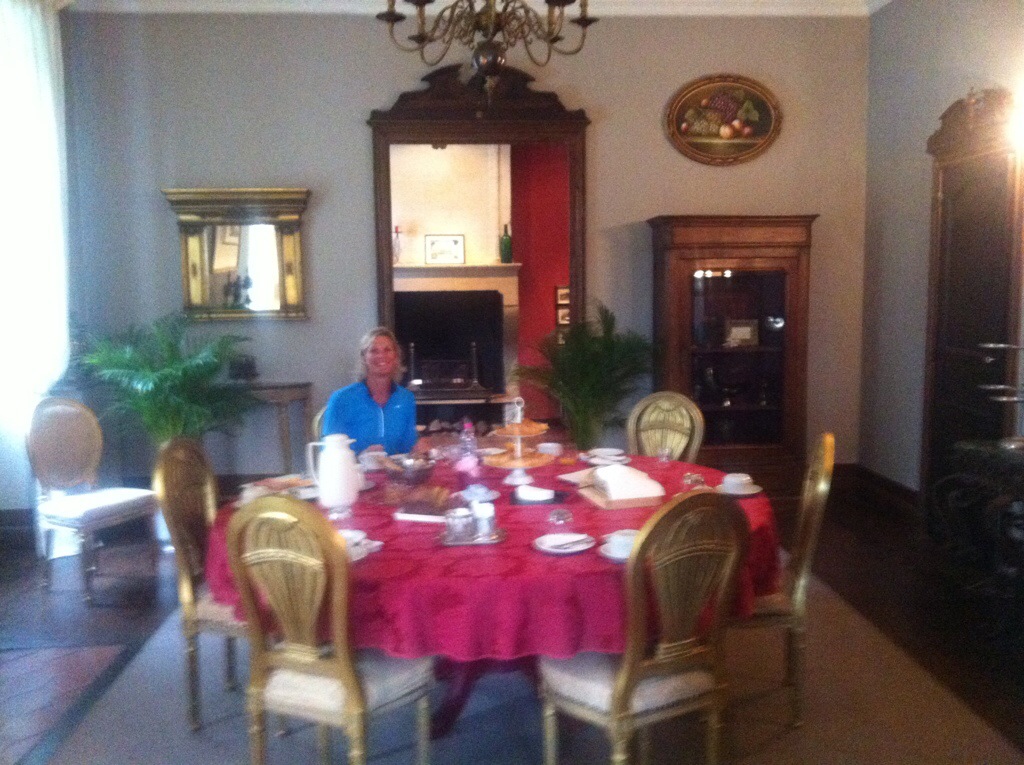
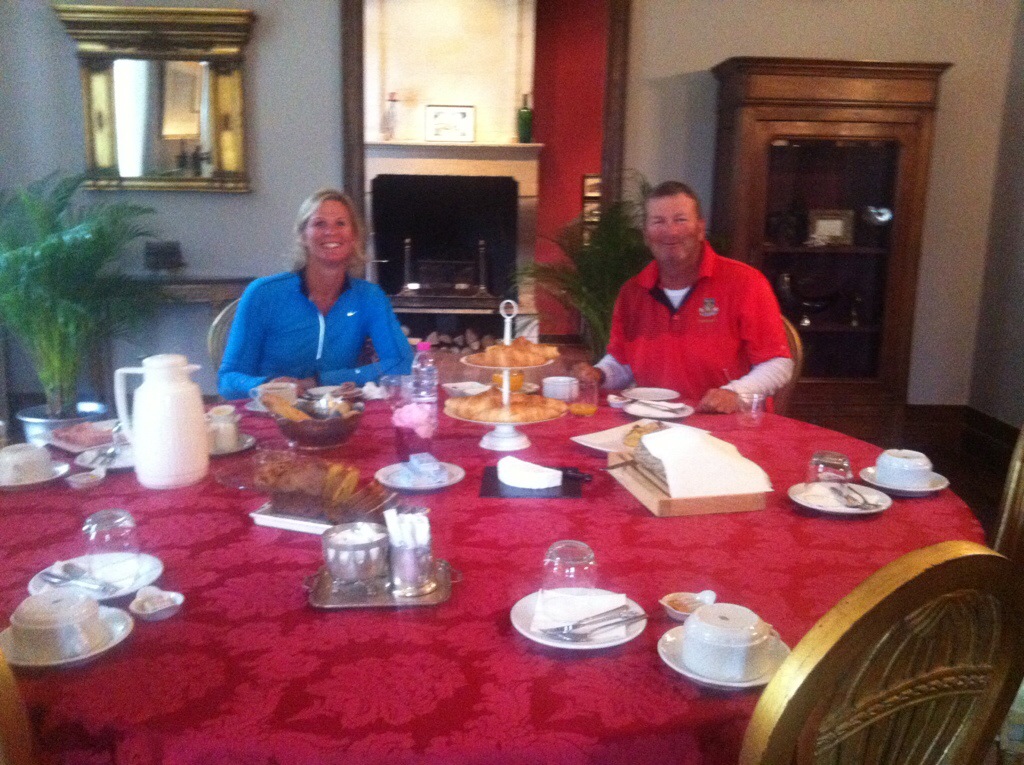
I said we felt like royalty in our big bed last night, well this morning we were served a breakfast that was fit for a King & Queen. There was a fresh fruit salad, croissants, bread, fresh preserves, small crepes, cheese, ham, yoghurt, stewed apples, cake and freshly squeezed orange juice. The big table was beautifully laid with fresh flowers.

It was then time to hit the road – the rain had stopped and being a Sunday morning the country lanes were quiet. We managed to follow the trip notes for the first hour until disaster struck – we took a wrong turn and ended up going back to a village we had already been too. We worked out what we had done wrong due to unclear notes and decided to take a more direct route.

We got to the outskirts of Bordeaux but it wasn’t clear which way the centre was. We stopped and asked this father and son who told us to go back three lots of traffic lights and turn left. Once we saw some street signs with suburbs close to the centre we felt a bit better. We then found the Decathlon store mentioned in the notes and started following the instructions again – another go round in circles moment and some choice words! I must say I felt quite stressed knowing that we had a train to catch – we were so close but so far.

We were to follow the Garonne River into the centre and managed to find a trail but it was then barricaded up. We had just seen another cyclist go up a ramp onto the bridge so decided to back track and follow him. We were still not 100% convinced that we were right so stopped another cyclist to confirm. We were about 2km to the centre of Bordeaux and got back onto the cycling lane that we had left the city by three days earlier.

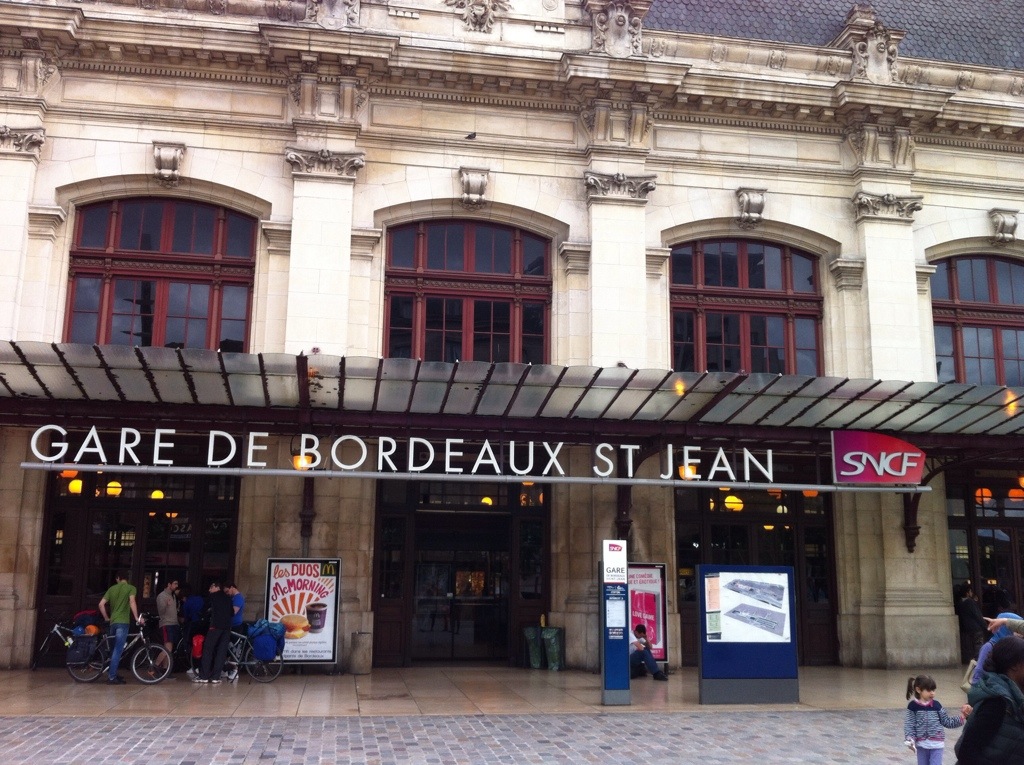
By this time it was 1.20pm – we were meeting Graham at the train station with our bags about 2.30pm in order to catch our 3.18pm train to Paris. We had some lunch, got our bags and headed across to the station. Found the platform, the train arrived at 3.13pm and once we located our carriage I’m telling Steve to get on the train with the two bags and a golf bag. There is not a lot of space for bag storage and Steve was sorting out the suitcases while I’m dragging the golf bag on – my theory is that once we’re on we can sort the bags – just get on the train. At 3.18pm the train pulled out of the station – they do not muck around – we hadn’t even found our seats.

Doing my own personal bike trip debrief I would have to say that it wasn’t all that I expected. The cycling was nice but having to navigate these country lanes and little villages without, in our opinion, really clear notes took the enjoyment out of it. You were constantly wondering if you were going in the right direction. However, the hotels, food and people we met along the way well and truly made up for that – we want to come back to this area to experience more of that.

The other thing I thought was that you would be able to pop into the Chateaus and do wine tastings like we can in NZ but it doesn’t work like that here – you have to make appointments at a lot of the Chateaus and because this is not peak season a lot of them aren’t operating. Next time we return we will do things differently – a bike tour guide with pre organised visits to the Chateaus. Who’s keen?

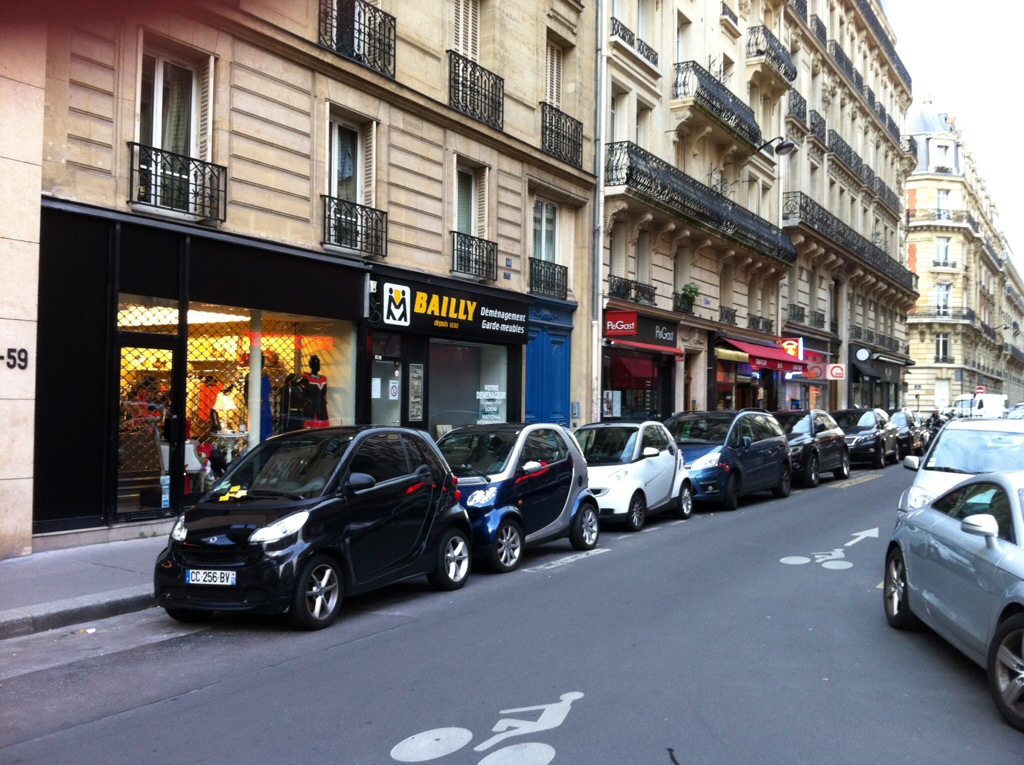
Our train trip to Paris was fast – 3 hours 15 minutes to cover 500km. We got a taxi to our hotel which is about a 1km from the Arc de Triomphe. We had a wander around the streets and had some dinner. There are so many smart cars here but when you see the streets and the parking spaces you can understand why!

20140525-223533-81333448.jpg

20140525-223549-81349165.jpg

20140525-223604-81364373.jpg

20140525-223614-81374440.jpg

20140525-223723-81443149.jpg

20140525-223731-81451195.jpg

20140525-223746-81466224.jpg

Posted in France | 2 Comments

Cycling in Bordeaux, Day 3 – France

Today we were cycling from Saint Macaire to Isle St Georges. We didn’t have the trip notes for day 3 as Graham’s printer had been playing up so he was going to meet us at 9am to go over them before we set off. 9am came and went, 9.30am came and went, 9.45am came and went with no sight nor sound from Graham. We had the big picture map so decided to set off and stick to the main roads.

It was Saturday so they weren’t too busy and the French drivers are very considerate – they slow down and give you a wide berth. We made it to Cadillac and they had a Saturday market so that was a bonus. We stopped off and explored the produce on offer – lots of fresh fruit and veges, cheeses, breads, salami and even live chickens, ducks and rabbits. Couldn’t resist the strawberries of course.

Indirectly, Cadillac gave its name to the motor car of that name – a story of successful social climbing, adventures in North America and political intrigue.

Graham finally caught up with us and gave us the notes. We had a few hiccups along the way and I must say some major frustrations with the trip notes. I am directionally challenged but am good at following instructions – we had a few go round in circle moments that resulted in a few choice words.

We stopped off at Chateau Mongenan to do a tour – not the sort of tour we were expecting but interesting nevertheless. The lady that met with us was seventh generation on this property and her fore fathers were involved in the French Revolution in the 17th century. They were obviously very well to and do and very well connected moving in some very illustrious circles. She had these rooms filled with memorabilia dating back to the mid 17th century and they were all original.

She had old fashioned models adorned with original clothing and porcelain remnants some of which belonged to Marie Antoinette. The original house where she still lived was built in 1764 and she still had some original furnishings inside. We had a tour of the parlour, music room and lounge – she had a beautiful harp, violins and a piano dating back to the 18th century.

The lady was about 70 and she told us she hadn’t been married, had no children and no siblings. This collection and display of history was her passion and she didn’t know what would become of it when she was gone. I asked her if she had cousins but she said they were not interested.

We had a wine tasting at the end – a merlot, cab sauv blend. It was quite nice – the grapes were grown on her property but the wine is produced elsewhere. The property produces 25,000 bottles per annum.

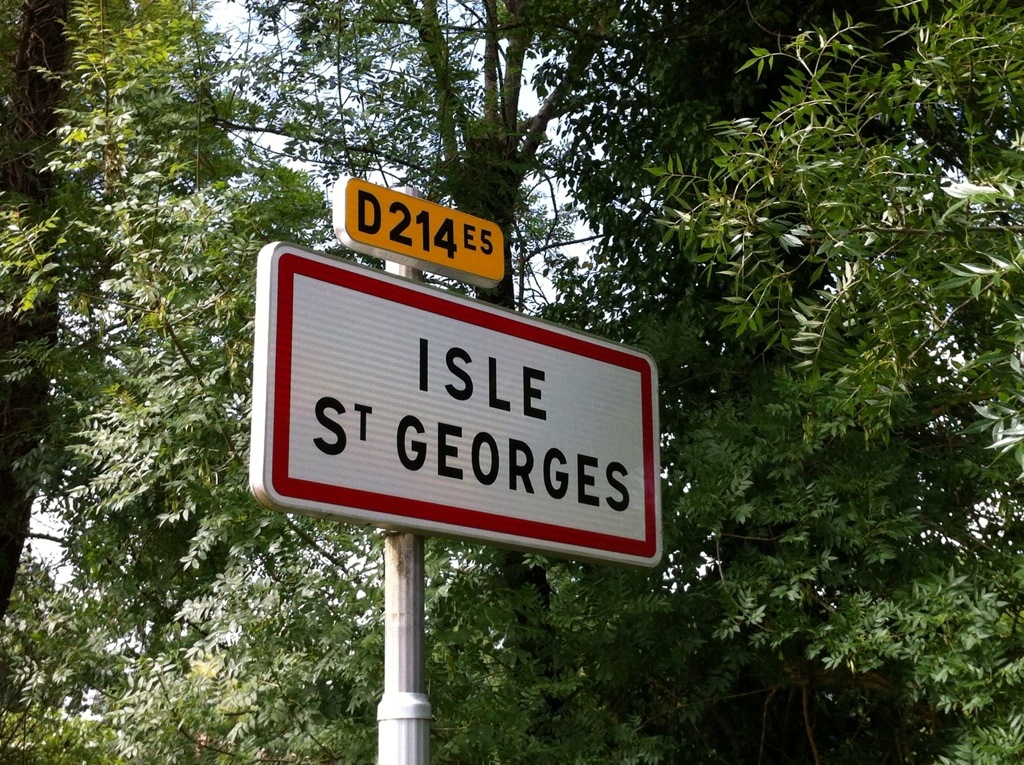
We set off again – next stop Isle St Georges. No problem finding Isle St Georges but we did have a bit of trouble finding our lodgings for the night. A couple of local cyclists came along and the woman taught English – perfect! Her husband knew where the Chateau we were staying was so they decided to cycle with us to the property.

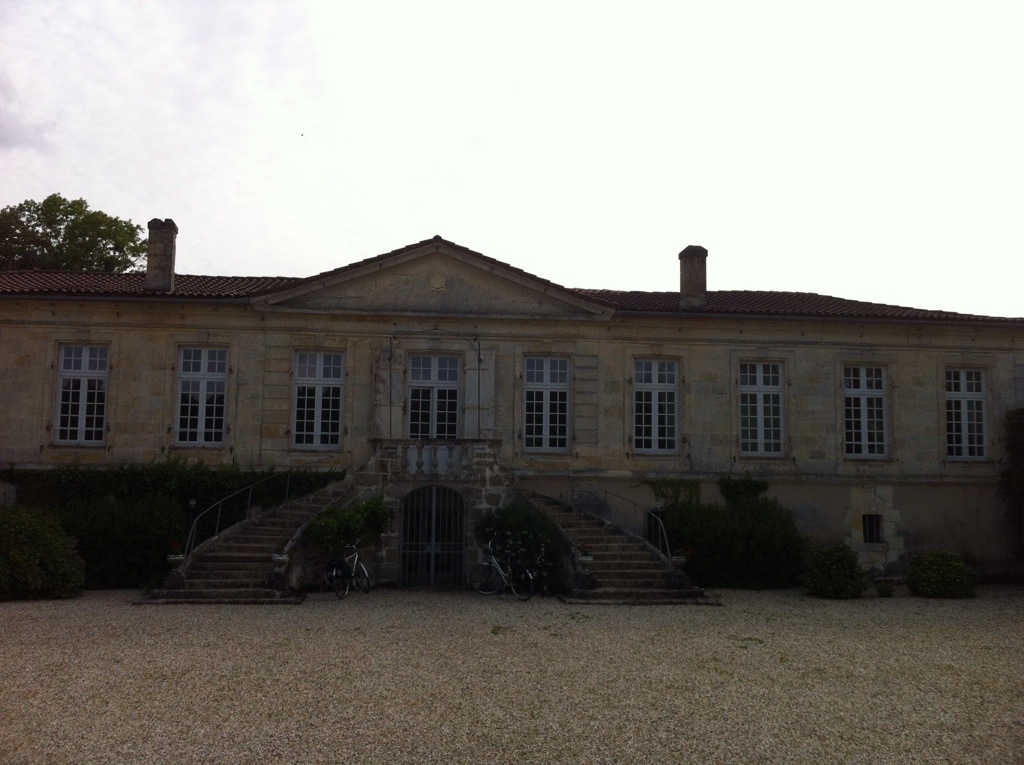
We are staying at Chateau de Montigney-Rabey – the couple that own it, Bridgette & Jean Claude, have fully restored it – it took them six years. The chateau was built in 1765. It is lovely and we have this very large room with beautiful amenities. Bridgette doesn’t speak a lot of english but we managed to have a very animated conversation until Jean Claude came home. The property overlooks the Garonne River and we saw a tourist boat go by. Bridgette was then trying to tell us about the Airbus going up the river – we thought she meant that the planes fly over but when Jean Claude came home we learnt that the use the river to ship the parts for the A380’s that are being assembled in Toulouse. They are too big to go by road so they use the river.

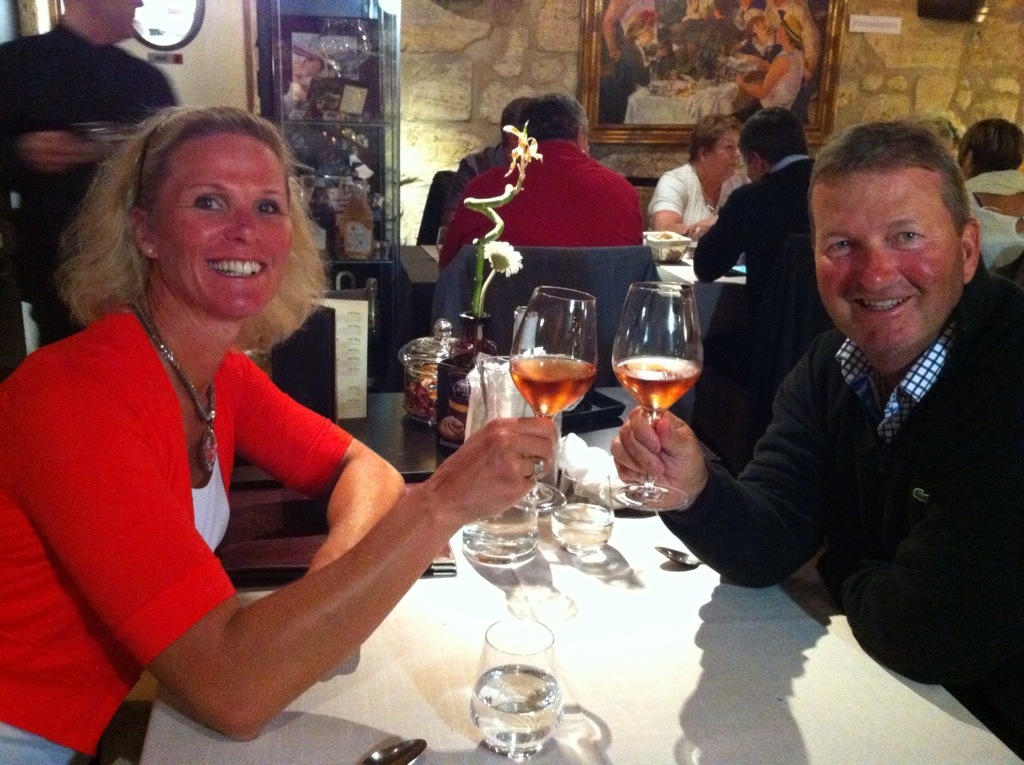
There is only one restaurant in Isle St Georges – Le Petit Caboulet which is 2km from the Chateau. We rode our bikes to dinner. Again the meal was delicious – so tasty and so well presented. Definitely loving the french food. We sampled another Bordeaux Rose with our meal and were not disappointed. It gets dark about 9.40pm so we thought we better set off on our bikes before it was pitch black. Steve’s bike has a light but mine doesn’t. Home safely tucked up in our very large bed feeling like royalty : )

20140525-200748-72468390.jpg

20140525-200804-72484524.jpg

20140525-200831-72511985.jpg

20140525-200842-72522188.jpg

20140525-200852-72532810.jpg

20140525-200902-72542813.jpg

20140525-200912-72552254.jpg

20140525-200926-72566238.jpg

20140525-200934-72574805.jpg

20140525-200947-72587801.jpg

20140525-200954-72594763.jpg

Posted in France | Leave a comment

Cycling in Bordeaux, Day 2 – France

We had a leisurely start to the day as it was raining when we woke up. By the time we had breakfast it had cleared so we went across to the garage where we had stored our bikes. It had these electronic doors so we put the code in and wallah it opened. Got our bikes sorted and went to get back out through the electronic doors and they wouldn’t open – great – trapped in a garage in Saint Emilion.

Luckily another couple were checking out and came to get there car out so they opened the doors from the other side. We escaped out the open doors quickly. Apparently the trick is that the doors need to open fully before you enter. When the couple opened the door they stepped in before the doors fully opened so when they went to get out they couldn’t get out either – we tried opening from the outside but it wouldn’t open so we told the hotel reception and got on our way. Hopefully the couple managed to get out!

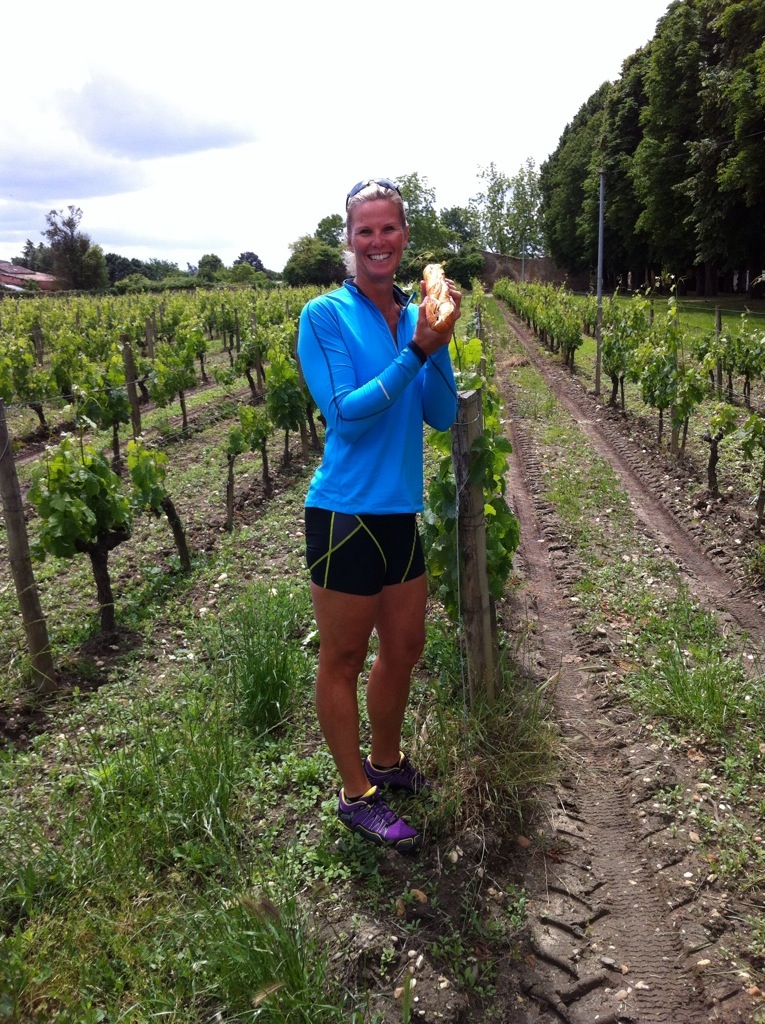
I spoke too soon re getting lost – we had a small bit of trouble leaving Saint Emilion so had to retrace our steps back to the one way Main Street and go down it the wrong way! Stopped at the Boulangerie (bakery) and ordered two baguettes with jambon (ham), cheese and salad on them for lunch.

Today we were on country roads for 85% of the ride so we had to do quite a bit of navigating. It was a bit nerve wracking at times as the trip notes weren’t always super clear. We did go off route at some stage but managed to get back on track by finding a sign to the little hamlet we were supposed to get to. The ride was fairly challenging today with a lot of up dale and down dale and a 60km an hour wind to boot. We didn’t get wet though so that was a bonus.

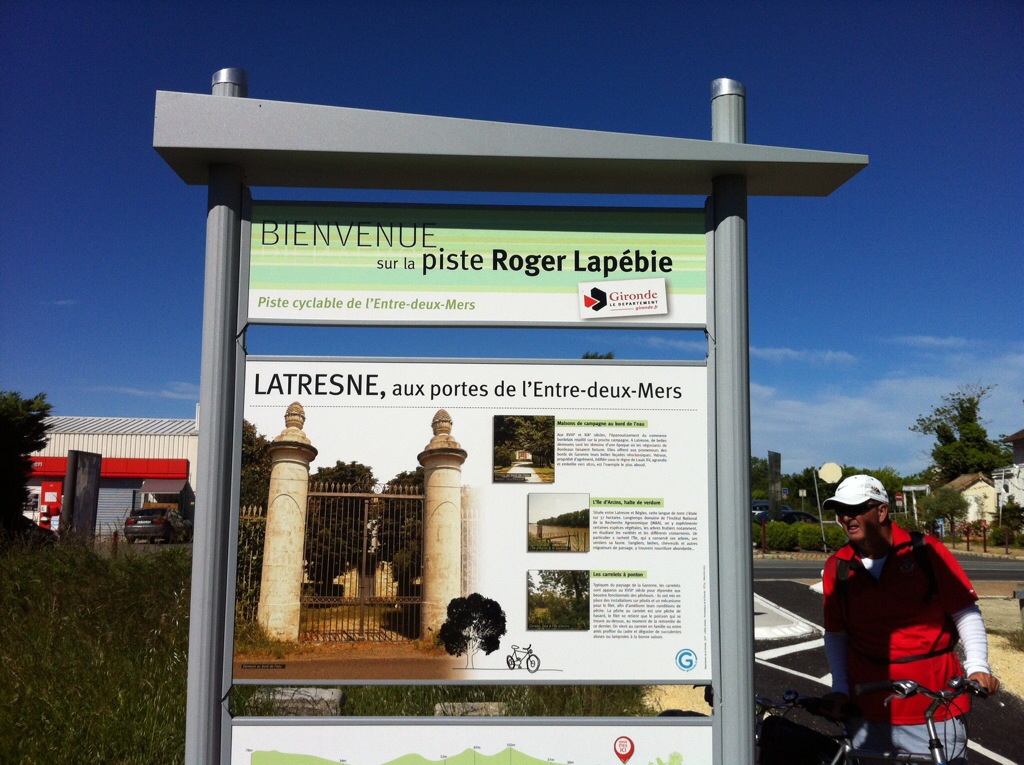
We re joined the Roger Lapebie cycle way for about 8km which was nice. We stopped for lunch to eat our baguettes – wow they were big and super delicious.

The countryside was vine after vine for as far as the eye could see. I still can’t get over the houses and other buildings – most of them look abandoned to me but the car parked outside is a give away that someone does live there. There is no sign of life although we did see a few workers pruning vines along the way. We also saw various size tractors with different contraptions on them which are used on the vines – spraying from above, trimming the bottom leaves off etc…

We reached our destination of Saint Macaire about 4pm. It is a lovely little village where all the old buildings do look like they are cared for. We are staying in a lovely hotel called Les Feuilles d’Acanthe – the lady here is awesome and has been helping us understand a bit of French. There are 6 restaurants in this village including the one at the hotel. It had great reviews on Trip Advisor so we decided to have dinner here. Again the lady helped us translate the menu and the food was great – typical french cuisine. We also had a bottle of Clairet which is a darker Rose – very nice. I’m really enjoying the red wines from this region.

Saint Macaire was reputedly founded by a wandering Greek monk who gave his name to the town and the gift shop. The town had a prosperous past when it was a major river port allowing country wine to be exported from Bordeaux and was a barrel making centre. It had the usual battles during the Hundred Years’ War and it’s Abbey was the scene of power struggles within the clergy, with the monks being evicted.

20140523-220032-79232350.jpg

20140523-220031-79231943.jpg

20140523-220032-79232557.jpg

20140523-220332-79412964.jpg

20140523-220335-79415697.jpg

20140523-220337-79417280.jpg

20140523-220334-79414392.jpg

Posted in France | 2 Comments

Cycling in Bordeaux, Day 1 – France

We woke to clear blue skies – perfect cycling weather!

Bordeaux is a lovely city. It has a population of about 240,000 in the city and about 1.2 million in the metropolitan area. Bordeaux is the world’s major wine industry capital. It is home to the world’s main wine fair, Vinexpo while the wine economy in the metro area takes in 14.5 billion euros each year. Bordeaux wine has been produced in the region since the 8th century. The historic part of the city is on the UNESCO World Heritage List as “an outstanding urban and architectural ensemble” of the 18th century.

The vine was introduced to the Bordeaux region by the Romans, probably in the mid-1st century, to provide wine for local consumption, and wine production has been continuous in the region since then.

Bordeaux now has about 116,160 hectares (287,000 acres) of vineyards, 57 appellations, 10,000 wine-producing châteaux and 13,000 grape growers. With an annual production of approximately 960 million bottles, Bordeaux produces large quantities of everyday wine as well as some of the most expensive wines in the world.

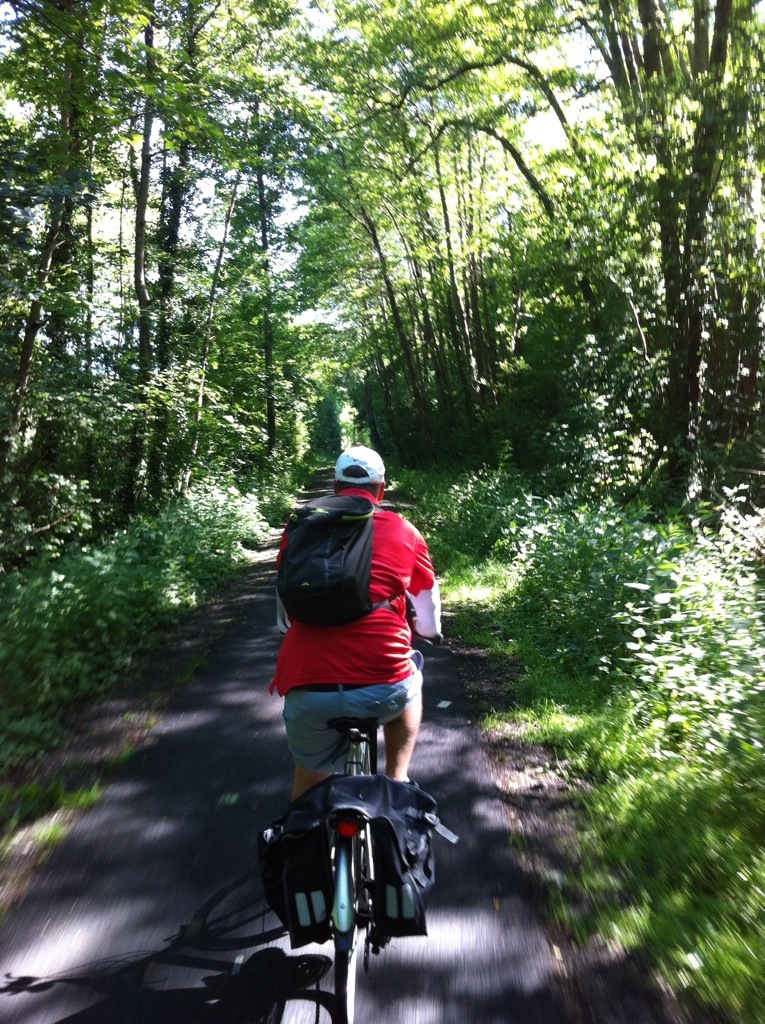
We headed out along the Garrone River and crossed over to the other side – the cycle path ran alongside the road so we felt very safe as we exited the city. After a few kilometres we were on the Roger Lapebie Cycle Way. Roger Lapebie was a French racing cyclists who won the Tour de France in 1937 – he was from the Aquitaine area of which Bordeaux is the capital. His victory was controversial as he was the first rider to complete the race using a modern derailleur. This gave him the advantage of shifting gears without having to stop, dismount and flip the wheel as was customary of racing bicycles used at the time. Following Lapébie’s victory derailleurs became standard racing equipment in the Tour peloton.

The track is amazing – it is fully asphalted and so smooth. The track even has it’s own traffic islands & traffic signs as it crosses the roads. The track is surrounded by trees and vegetation with a few properties nestled amongst them. The properties never seem occupied to me – they look like they have been left to rack & ruin but they are inhabited. The houses are built from neutral stone with shuttered windows and they never look like anyone is in them.

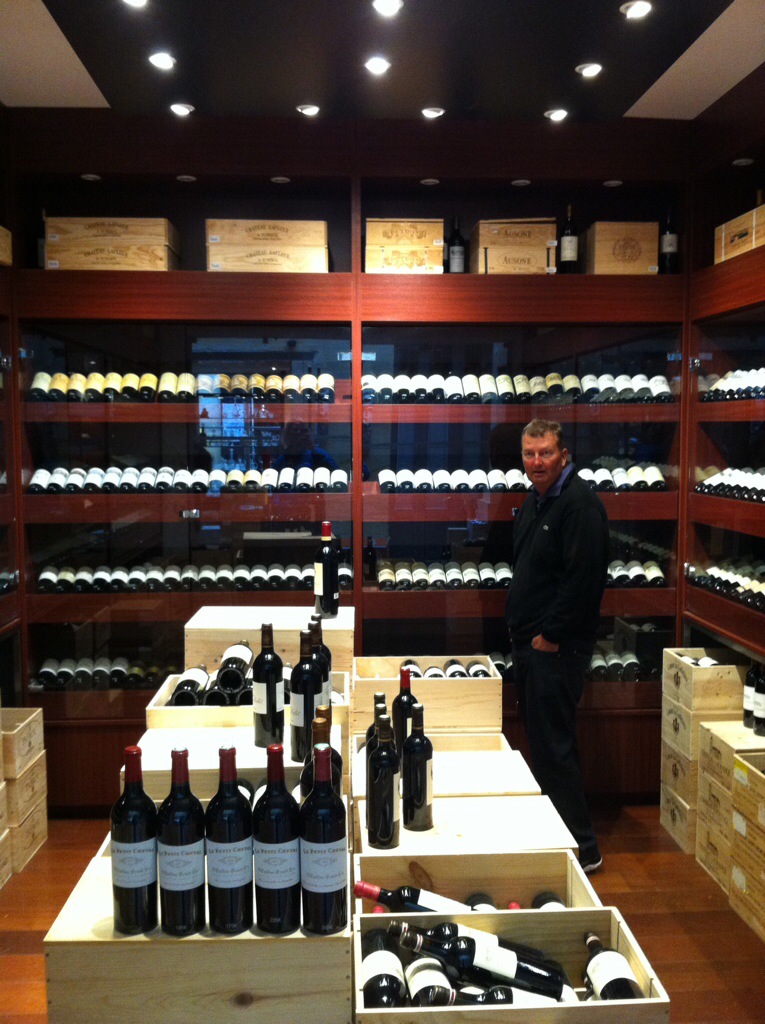
We took a recommended detour at La Sauve to see the 12th century Abbey. While riding up the small incline my chain jockey broke and was catching my spokes. I couldn’t ride the bike like that so had to text Graham from Bordeaux Cycle Tours to bring a replacement bike. By the time he got the message etc… we were stuck at the abbey for about 2 hours. Opposite the Abbey is the original Tithe Barn which houses a Maison de Vin or Wine Shop – given we had time on our hands we decided to check it out.

Two bottles purchased, bike swapped and we were on our way again. After getting back on the cycle way we went through a tunnel – it had sensor lights in it so as you rode through it a light would come on to guide you through. This is what they need in the tunnels on the Central Otago Rail Trail – might have saved a trip to A & E for Sharon Gardner : )

We had to leave the cycle way a bit further on and navigate our way along some country roads. Andy would have been so proud of us – after managing to get lost in Twizel we didn’t get lost once in this foreign country! I hope I am not speaking too soon – tomorrow is 85% on country roads.

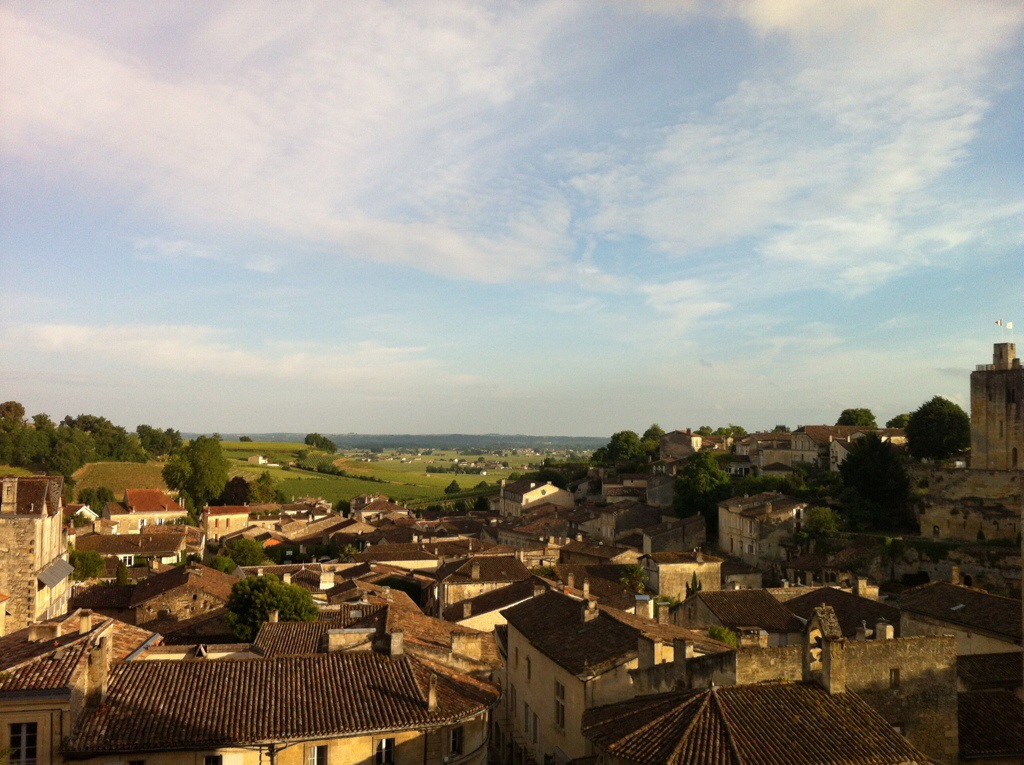
Once we got onto the country roads the landscape changed to how I imagined it would be – lots of vines surrounded by stone Chateaus. The closer we got to Saint Emilion the more Chateaus there were. The streets up to Saint Emilion got steeper and narrower so we had to dismount. We found our hotel – Hotel Palais Cardinal – and checked in. Saint Emilion is a mass of very old buildings and many wine shops!

Saint-Émilion’s history goes back to prehistoric times and is a World Heritage site, with fascinating Romanesque churches and ruins stretching all along steep and narrow streets.

The Romans planted vineyards in what was to become Saint-Émilion as early as the 2nd century. In the 4th century, the Latin poet Ausonius lauded the fruit of the bountiful vine.

The town was named after the monk Émilion, a travelling confessor, who settled in a hermitage carved into the rock there in the 8th century. It was the monks who followed him that started up the commercial wine production in the area.

20140522-220054-79254587.jpg

20140522-220055-79255032.jpg

20140522-220054-79254808.jpg

20140522-220225-79345798.jpg

20140522-220228-79348577.jpg

20140522-220232-79352002.jpg

20140522-220229-79349966.jpg

Posted in France | 4 Comments

Bonjour Bordeaux

We flew TAP Portugal’s code share partner airline Portugalia Air to Bordeaux. The plane was delayed about one and a half hours due to minor technical issues. We thought it was best they sorted those out while we were on the ground rather than in the air!

We had to get on one of those airport buses out to the tarmac and it seemed to go to the back blocks of the airport – the plane was reasonably old with a one seat / two seat configuration. There were probably about 50 passengers on board. Anyway the seats were quite comfortable. We paid about EU80 or NZD127 each for the two and a half hour flight so thought we might get a glass of water if we were lucky but no we were offered a nice filled roll, water, wine, orange juice and tea and coffee.

We arrived into a blue skied Bordeaux about 7.30pm – it was 19 degrees. We got our bags and caught the bus into the city – it took about 40 minutes and cost EU1.40 or NZD2.22 each. We were met at the bus by Graham from Bordeaux Cycle Tours. We walked to the hotel and dropped our bags off and then went for a test drive on the bikes around town.

Bordeaux is a beautiful city. Graham gave us a whirlwind tour and orientated us to the river, train station and restaurants. We had a nice meal at Cafe Manmar – the owner was a mad rugby supporter and was glad to chat about the All Blacks. He looked a little bit like that wild one in the French team – Chauvil?

Anyway we will be reunited with our bikes in the morning all set to discover what Bordeaux has to offer.

20140522-005327-3207757.jpg

20140522-005327-3207939.jpg

20140522-005327-3207506.jpg

20140522-005328-3208133.jpg

20140522-005328-3208331.jpg

Posted in France | 1 Comment

Sintra, Day 2 – Portugal

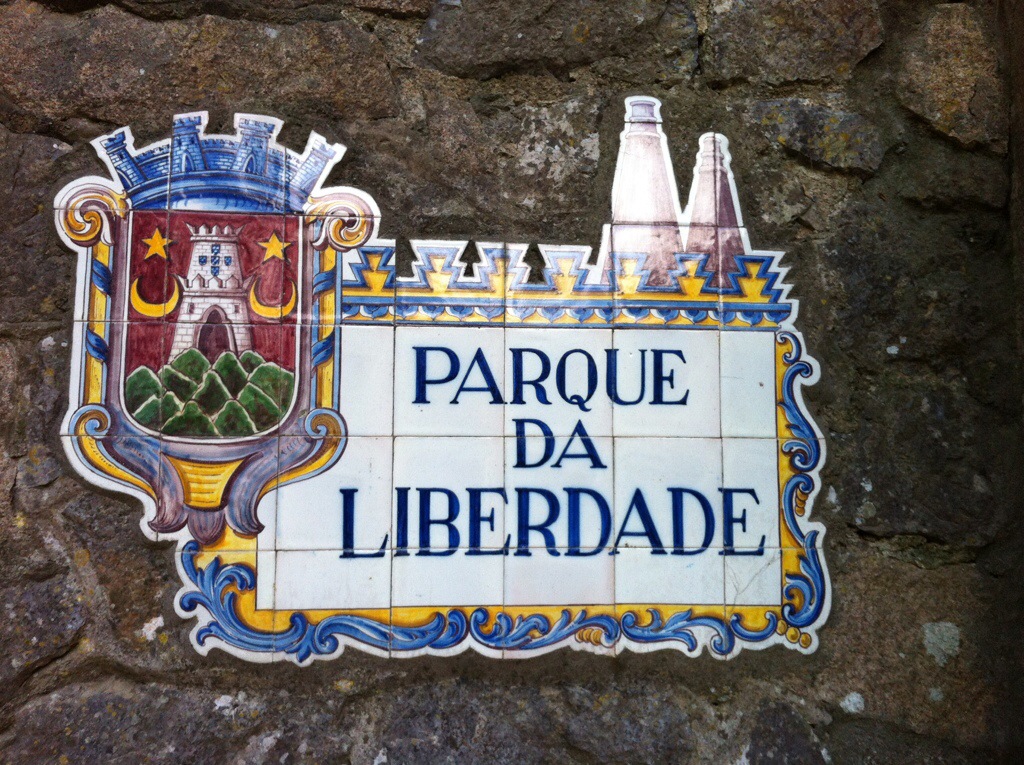
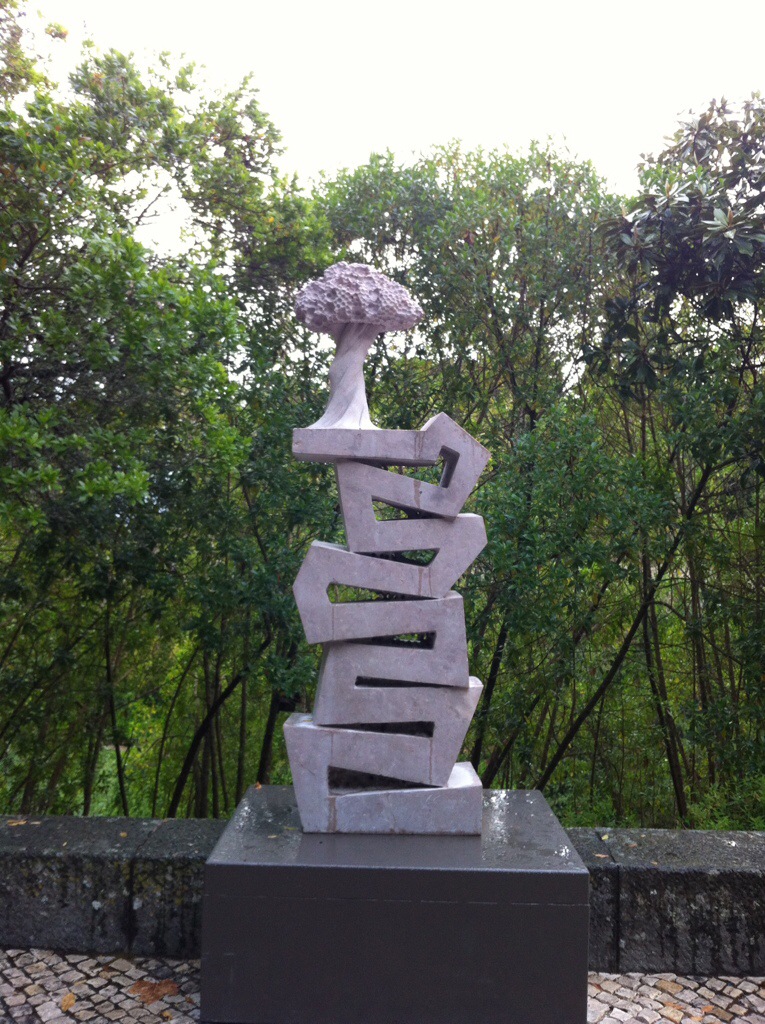
There was a bit of rain during the night and we woke to more rain this morning, however, by 7.30am it had cleared so I decided to go for a wander through the now deserted streets of Sintra.  There are little alleys and streets surrounding the historical centre.  There is an open air art museum which has a number of pieces of art dotted along the round that surrounds the park.

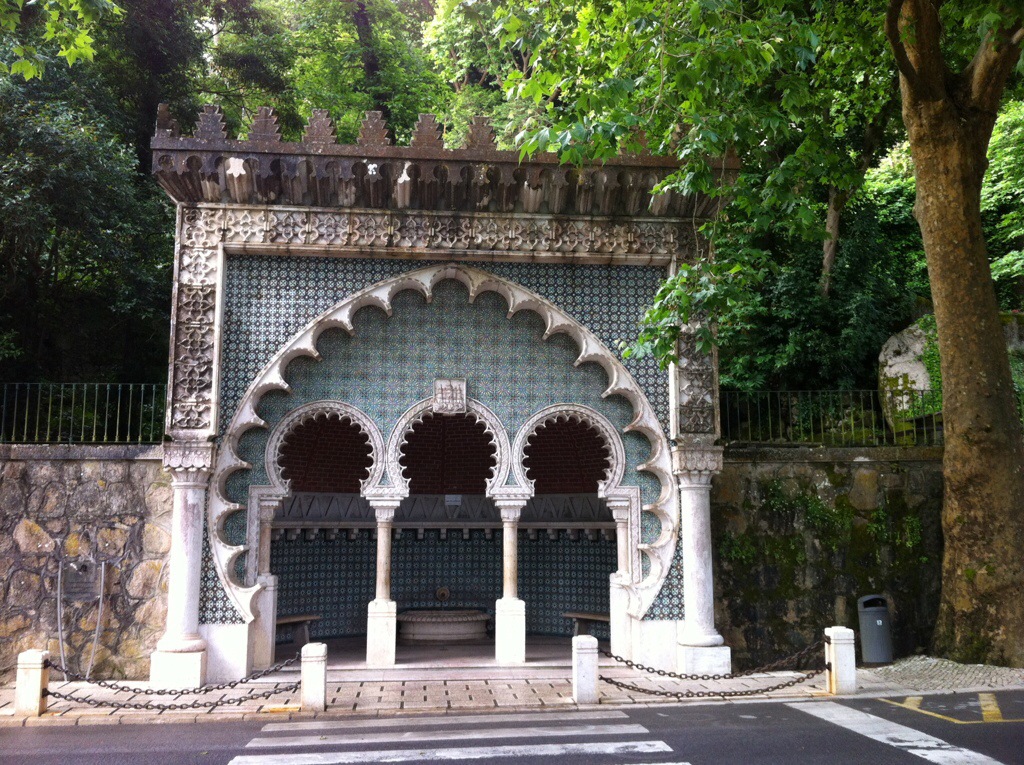
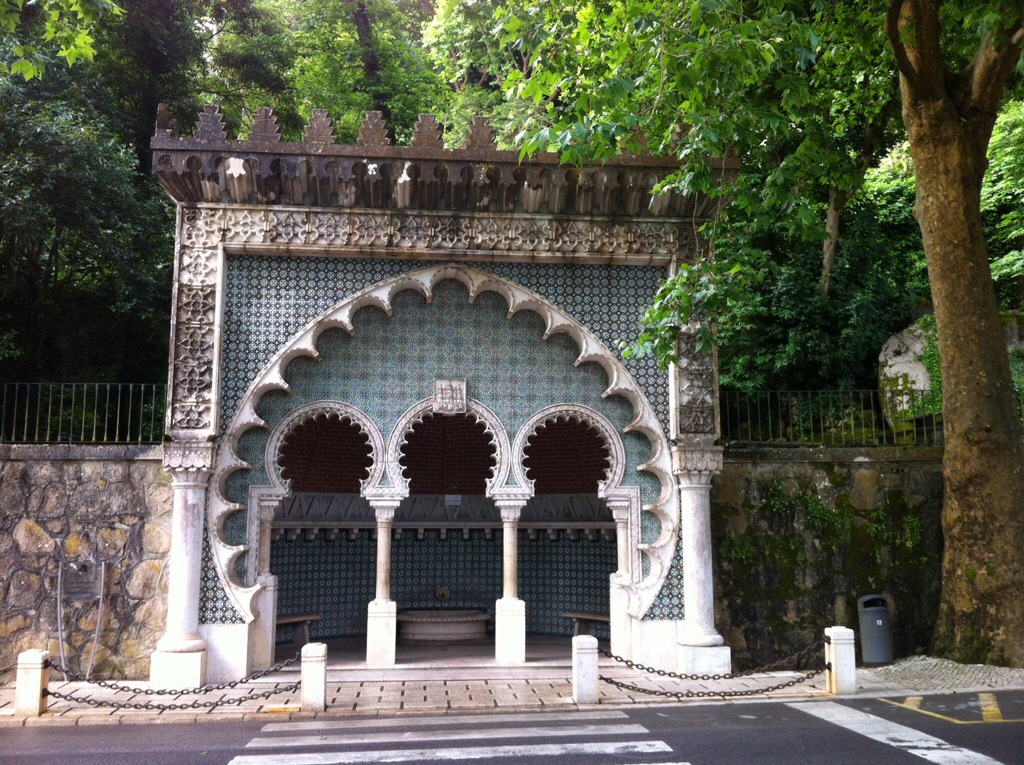
The hills behind Sintra contain all these underground water tributaries producing water from the springs.  There is a water fountain down in the historical centre built in the times of the Arabs where people queue to fill their water bottles.  I witnessed a lady filling about 20 two litre containers and loading them into her car.  Not long afterwards another lady pulled up and got out and filled her two litre container.

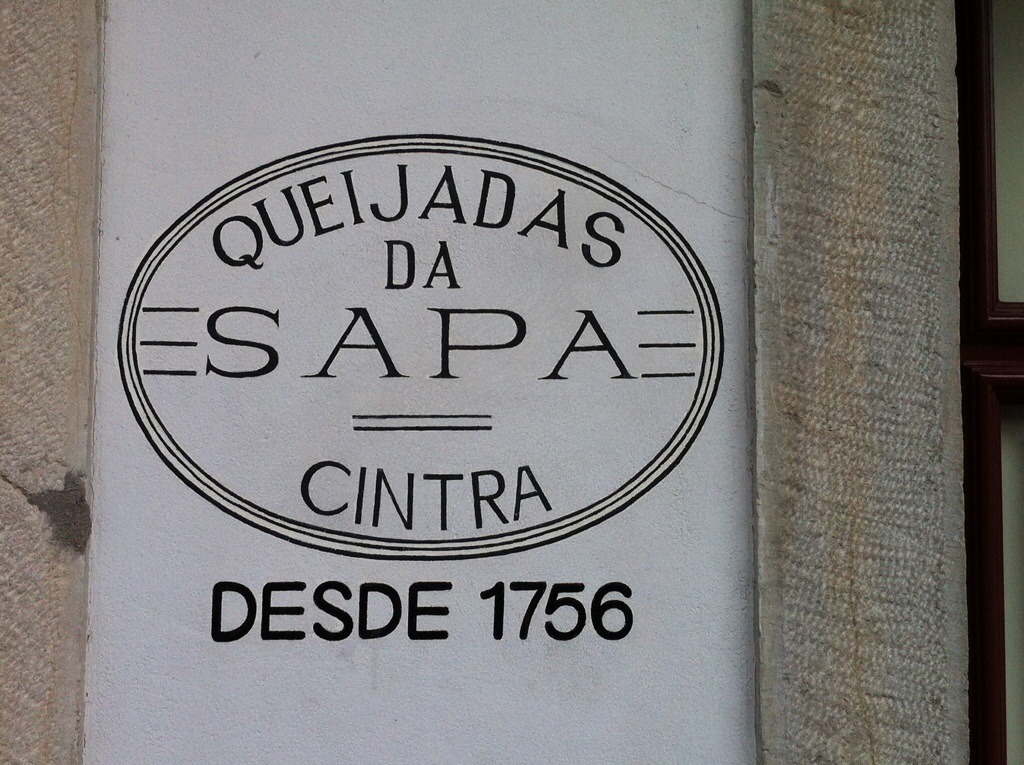
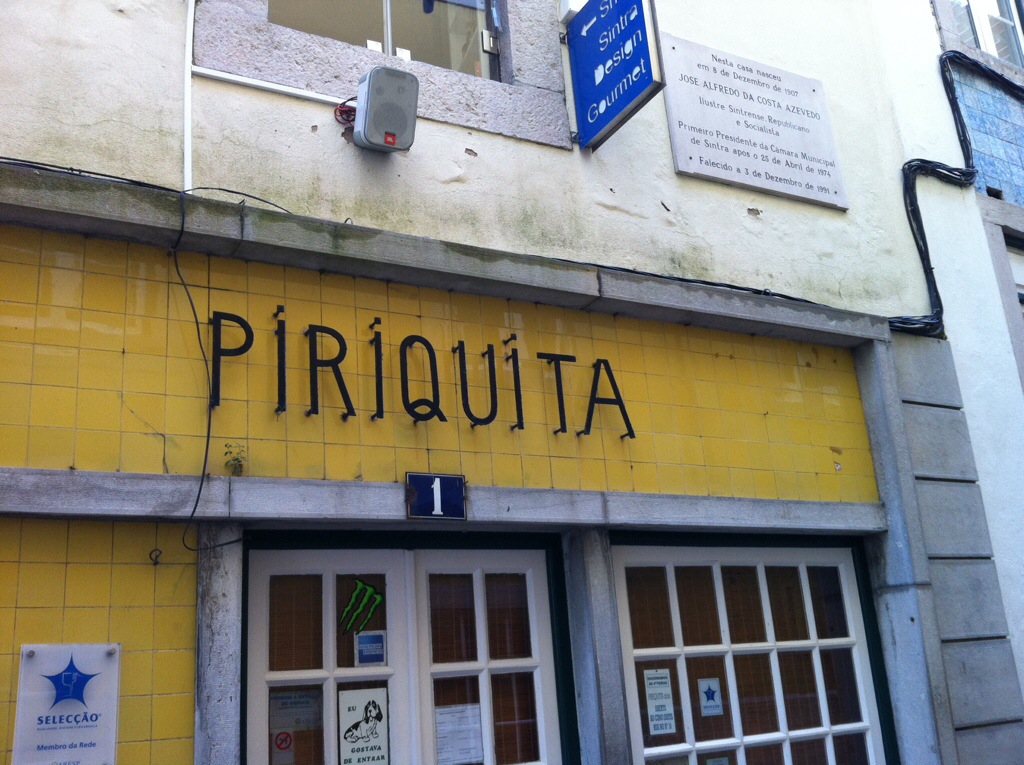
There is a cafe in Sintra that dates back to 1756 and a bakery called Piriquita which is known as the royal bakery as it used to serve the royal family.  They make and sell the famous Travesseiro – a delicately rollled pastry with a mixture of almonds and eggs.

There is a five star hotel called Lawrence’s that dates back to 1764 – the rooms are not numbered but named after famous people that have stayed there.  Lord Bryon was one of these along with a number of famous Portuguese writers and poets.  It is probably not a five star hotel by today’s standards but because of it’s history it is accorded such a status.

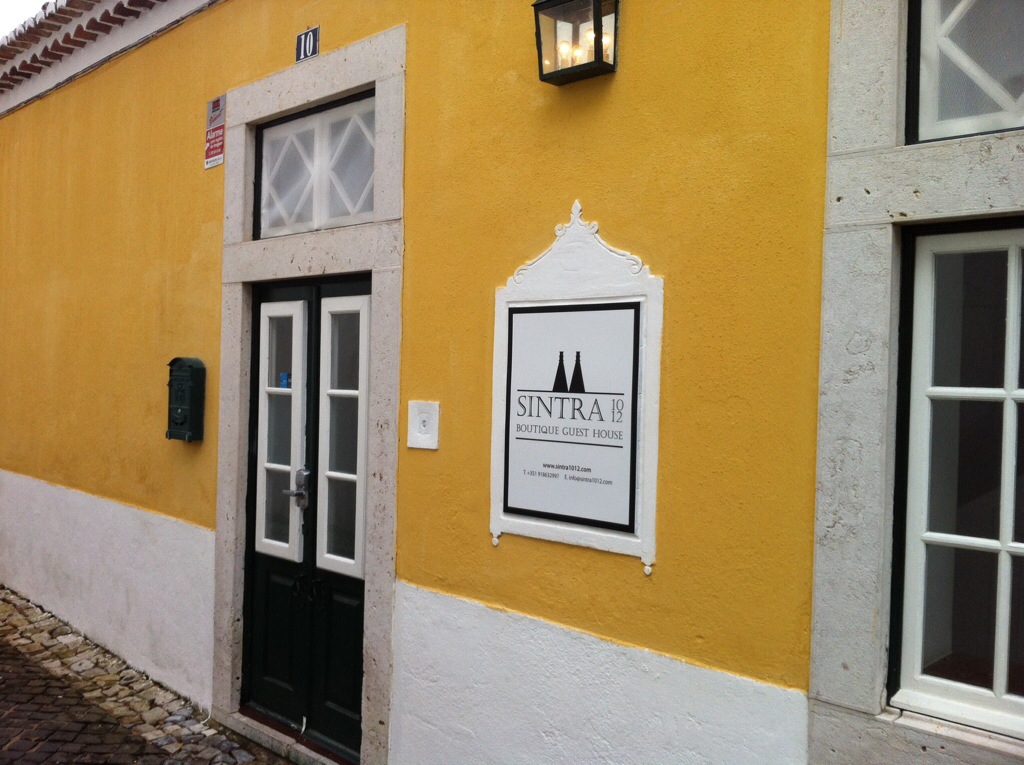
We stayed at the Sintra 1012 Boutique Guest House – it has 4 rooms and is lovely inside.  It is run by Karen who is originally from California and her Portuguese husband.  It was such a fun place to stay.  We had breakfast at the communal table this morning with a couple from Chile and Stefan (Germany) and Katerina who is from Sweden along with Katerina’s mother.  They were all very well travelled and had some great tips for us.

Stefan, Katerina and her mother had all traveled to NZ.  Stefan & Katerina had spent two months in NZ and for one of those months traveled around in a Jucy Campa.  Katerina’s mother is a teacher and looks after international exchange students – she bought 8 Swedish students down to NZ to settle them in for their year in NZ. She had been to Invercargill and even visited Stewart Island – not that many Kiwi’s can say they have been there!  To top it all off Katerina had been a golf professional on the LPGA in the USA for six years.  They were all in Portugal to watch the UEFA Woman’s Champions League final – Katerina’s brother is the coach of Tyreso FF, the Swedish team in the final.

The UEFA Men’s Champions League final is being held in Lisbon on Saturday between two Spanish teams from the same city of Madrid – Real Madrid CF and Club Atletico De Madrid.  They are expecting a lot of people from Madrid and given it is only 5 hours by car the streets of Lisbon will be bedlam.

After breakfast we drove back to Lisbon and dropped our trusty Fiat Punto off and got dropped at the airport to catch our flight to Bordeaux.

Adeus Portugal and Bonjour France.

20140522-002733-1653721.jpg

20140522-002734-1654028.jpg

20140522-002734-1654732.jpg

20140522-002734-1654241.jpg

20140522-002735-1655222.jpg

20140522-002734-1654988.jpg

20140522-002735-1655478.jpg

20140522-002734-1654446.jpg

20140522-002736-1656971.jpg


20140522-002736-1656776.jpg

20140522-002735-1655760.jpg

Posted in Portugal | Leave a comment

Sintra – Portugal

We left the Algarve this morning and headed for Sintra which is about 3.5 hours away – approximately half an hour north of Lisbon. The forecast in the Algarve and Sintra was for some rain – something we haven’t seen for a month. Anyway we got a bit of rain but it was just one of those days where we had to create our own sunshine : )

Sintra is located in the Grand Lisbon sub region of Portugal. In addition to the Sintra Mountains and Sintra-Cascais Nature Park, the parishes of the town of Sintra are dotted by royal retreats, estates, castles and buildings from the 8th and 9th century, in addition to many buildings completed between the 15th and 16th centuries. It was classified as a UNESCO World Heritage site in 1995.

I had read on Trip Advisor that the Tuk Tuk tour around Sintra was very good so we decided to check them out. We have less than a day here so wanted to learn and see as much as possible. Our guide and driver, Andre was excellent. He was born in the Algarve but moved to Sintra when he was about six. His knowledge of the area and the monuments was great. He also had a great sense of humour..

He took us through the historical centre where we saw the National Palace and various other famous landmarks. We then started our ascent of the hills behind Sintra to the Castle of the Moors and the Pena Palace. There are a lot of amazing properties in the hills behind Sintra and most of them have massive gardens which are referred to as farms. Our trip down the hill was quite exhilarating with all the windy one way streets. It was a great way to get our bearings and learn about Sintra.

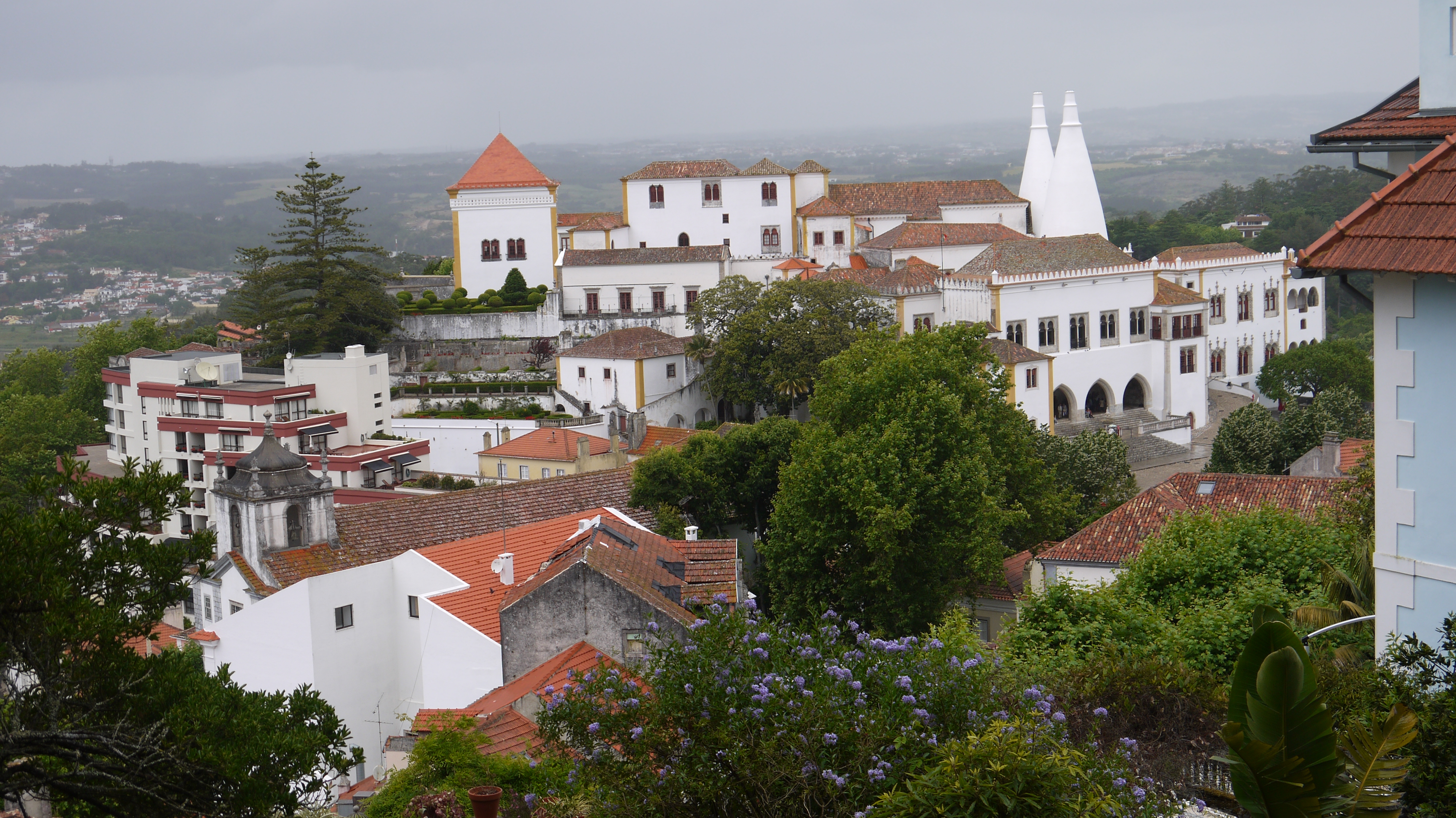
The National Palace located in the historic centre dates back to the 10th century to the times of Islamic rule. Nothing of this era forms part of the existing Palace – the mixture of Gothic, Manueline and Moorish styles in the present Palace are mainly as a result of building campaigns in the 15th and 16th centuries.

There are two conical chimneys that dominate the skyline – they were built to keep the kitchens smoke free. They are a symbol of wealth – the chimneys can be seen for kilometres around and one can only imagine the kind of banquets held at the courts that required such massive chimneys.

The Palace was used by the Portuguese Royal Family until 1880. In 1910, with the proclamation of the Republic, the Palace became a national monument.

The Castle of the Moors is a hilltop medieval castle built in the 8th and 9th centuries during the period of Muslim Iberia. It is strategically placed so it can protect the lands around it which were used for agriculture.

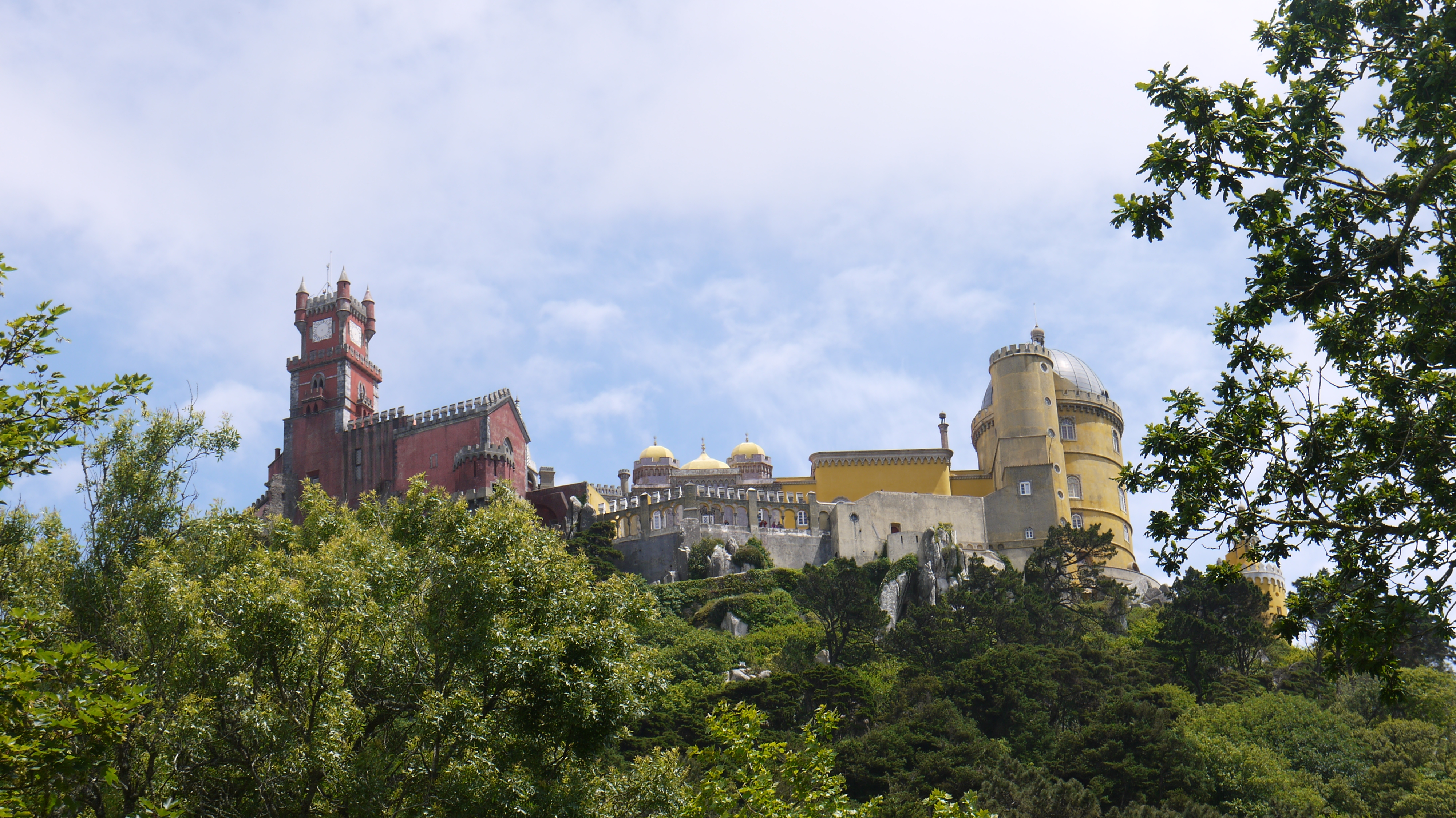
The Pena National Palace also sits on top of a hill above Sintra. It’s history dates back to the Middle Ages. The site was originally a monastery which suffered damage due to various natural disasters in the centuries that followed. For many centuries it remained untouched. In 1838 King Ferdinand II acquired it along with the surrounding land, the Castle of the Moors and a few other estates in the area. He then set out to transform the remains of the monastery into a Palace that would serve as a summer residence for the Portuguese Royal Family.

The surrounding grounds comprise 200 acres of uneven terrain. The exotic taste of the Romanticism was applied to the park as it was to the Palace. The king ordered trees from diverse, distant lands to be planted there. Those included North American Sequoia, Lawson’s Cypress, Magnolia and Western Redcedar, Chinese Ginkgo, Japanese Cryptomeria, and a wide variety of ferns and tree ferns from Australia and New Zealand. The micro climate in the hills of Sintra means that all sorts of plants grow well. The micro climate being quite diverse as we saw today – four seasons in one day although it didn’t snow and is not likely to.

P1020757 P1020774 P1020766 P1020769 P1020762 P1020755

20140520-232040-84040500.jpg

Posted in Portugal | Leave a comment