Invermere Adventures – Invermere, Canada

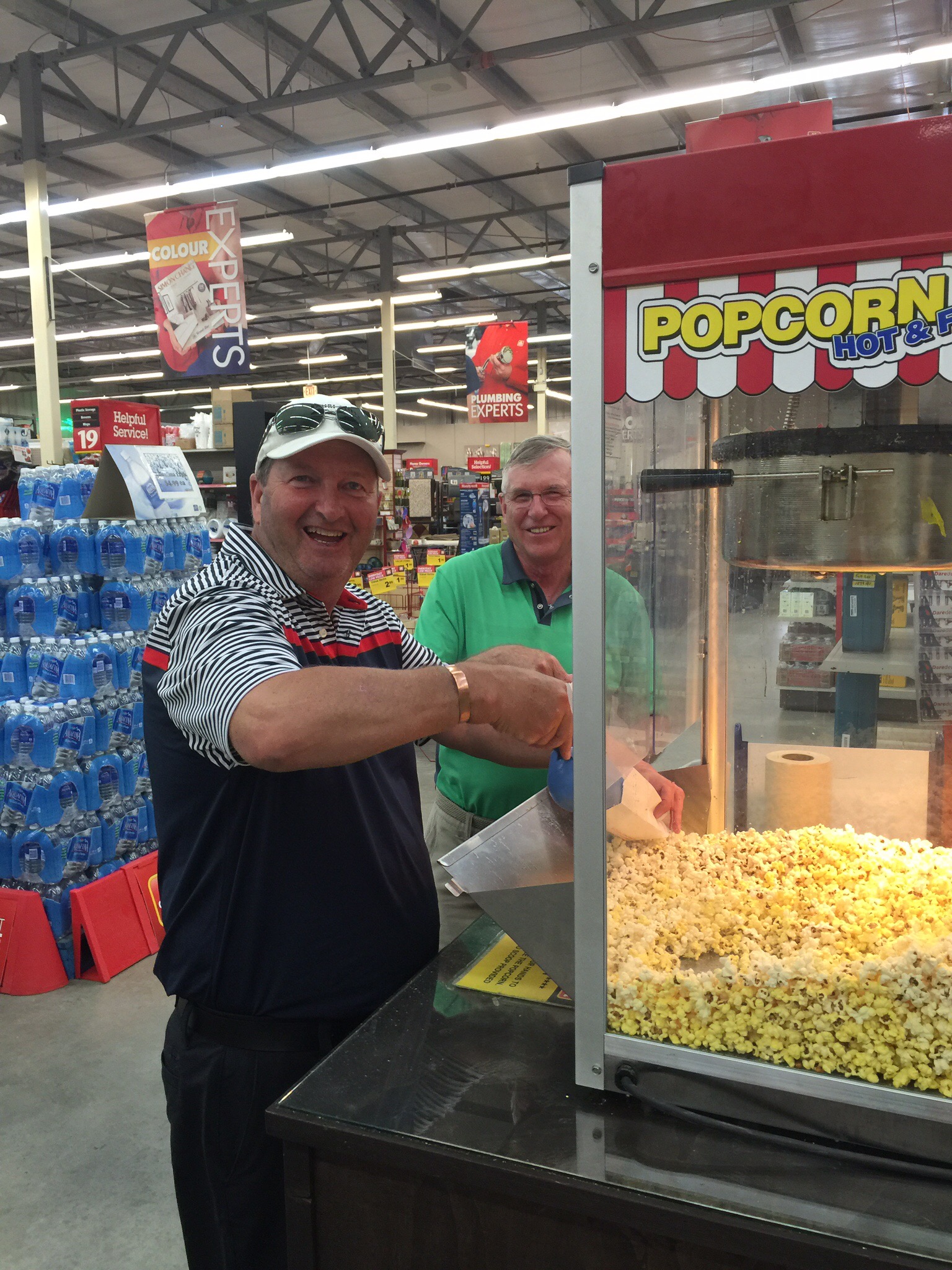
On our first morning at Diane & Ken’s we managed to break the shower rail.  That afternoon we took a trip to the hardware store – foreign hardware stores are to Steve what foreign supermarkets are to me.  He then discovered they had a big popcorn machine where customers could help themselves – we just about had to surgically remove him from the store. 
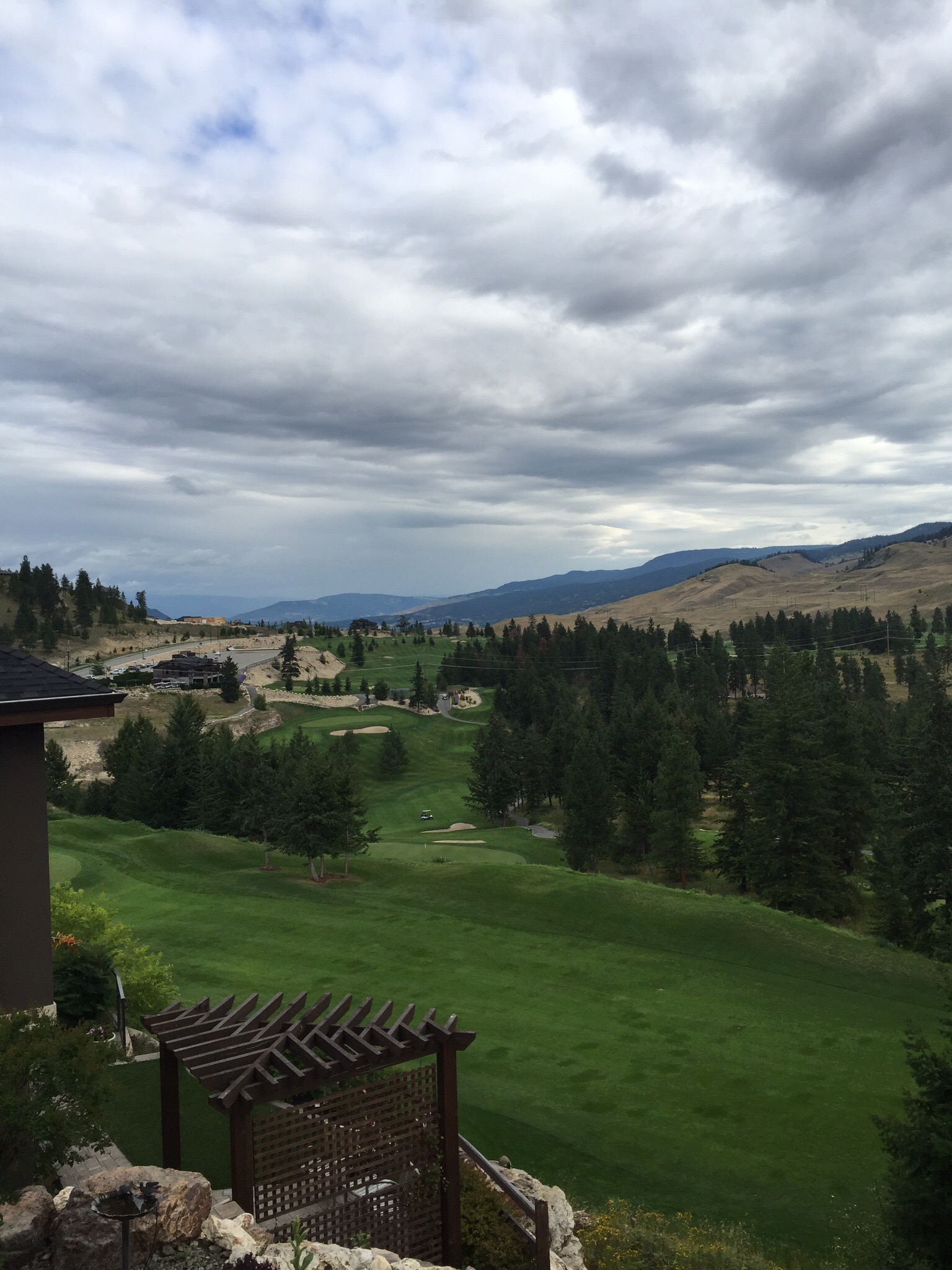
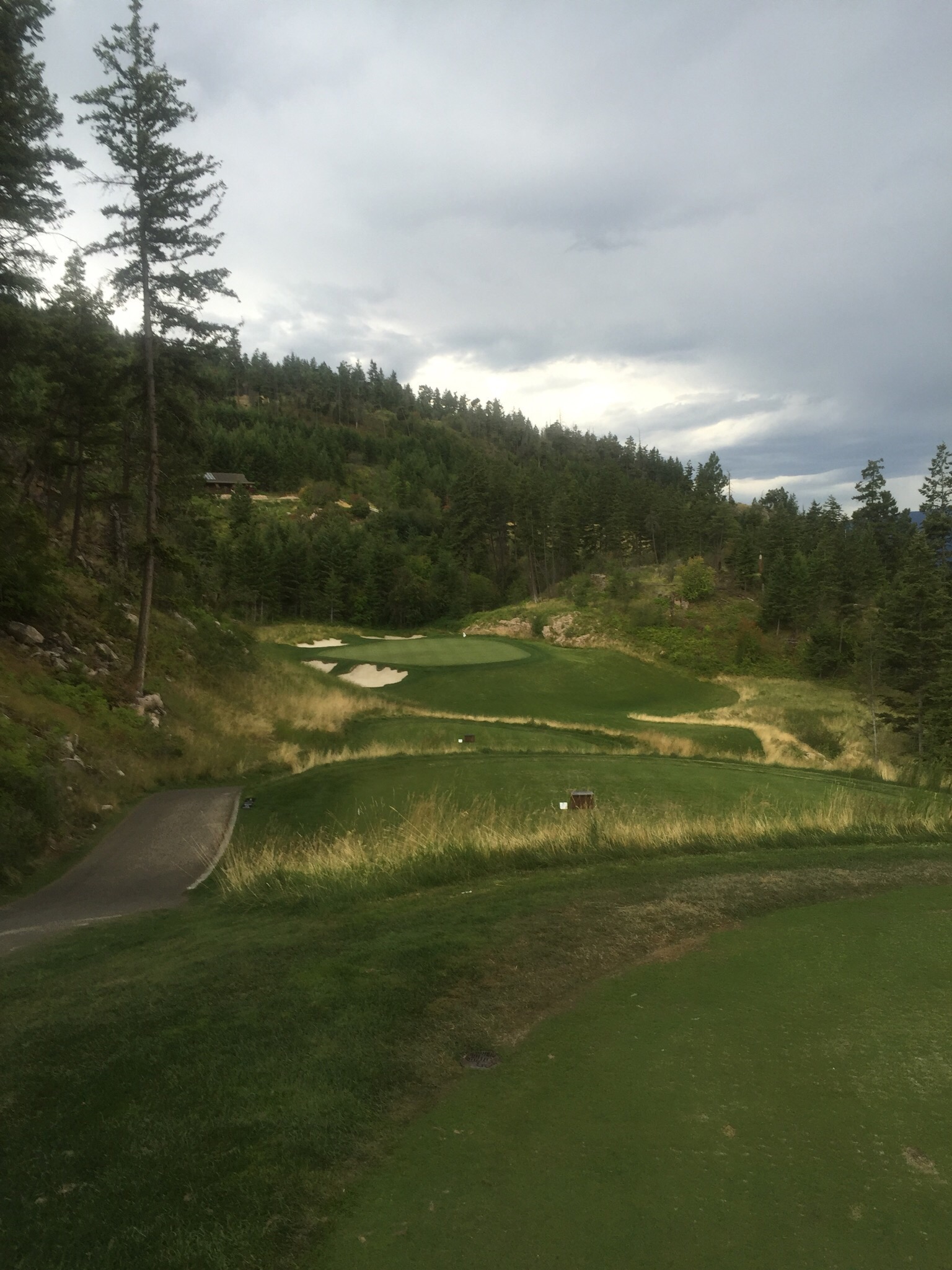
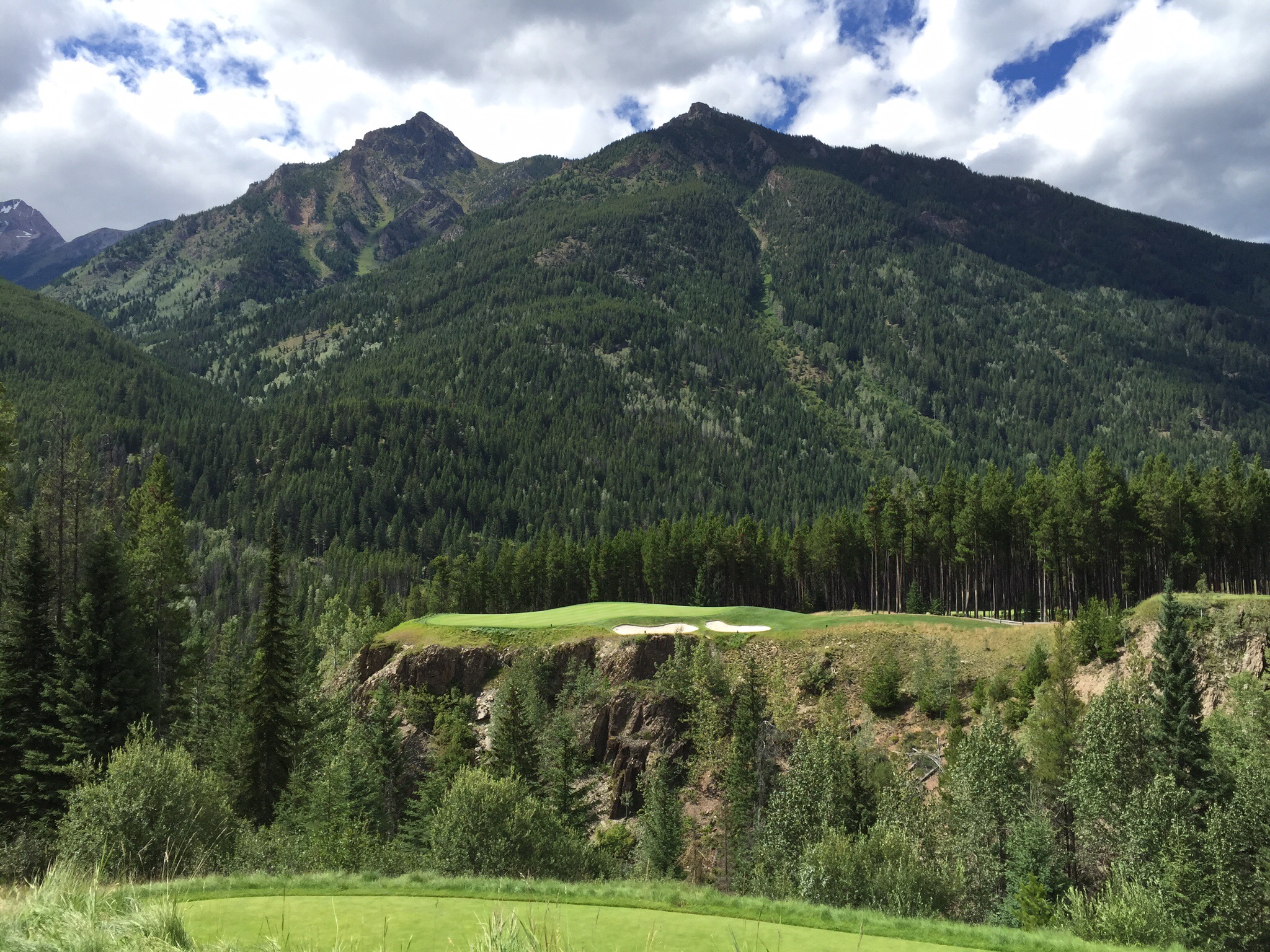
Popcorn in hand, we took a drive up to Panorama Mountain Resort which is a ski and golf resort in the Purcell Mountains. Greywolf, the golf course up there was designed by Canadian architect Doug Carrick. We went up to have a look at their signature hole called Cliffhanger. Cliffhanger has already secured a place among the best golf holes in the world. Golfers face an island green perched across the aptly named “Hopeful Canyon” with a cliff on the front left and back of the green.
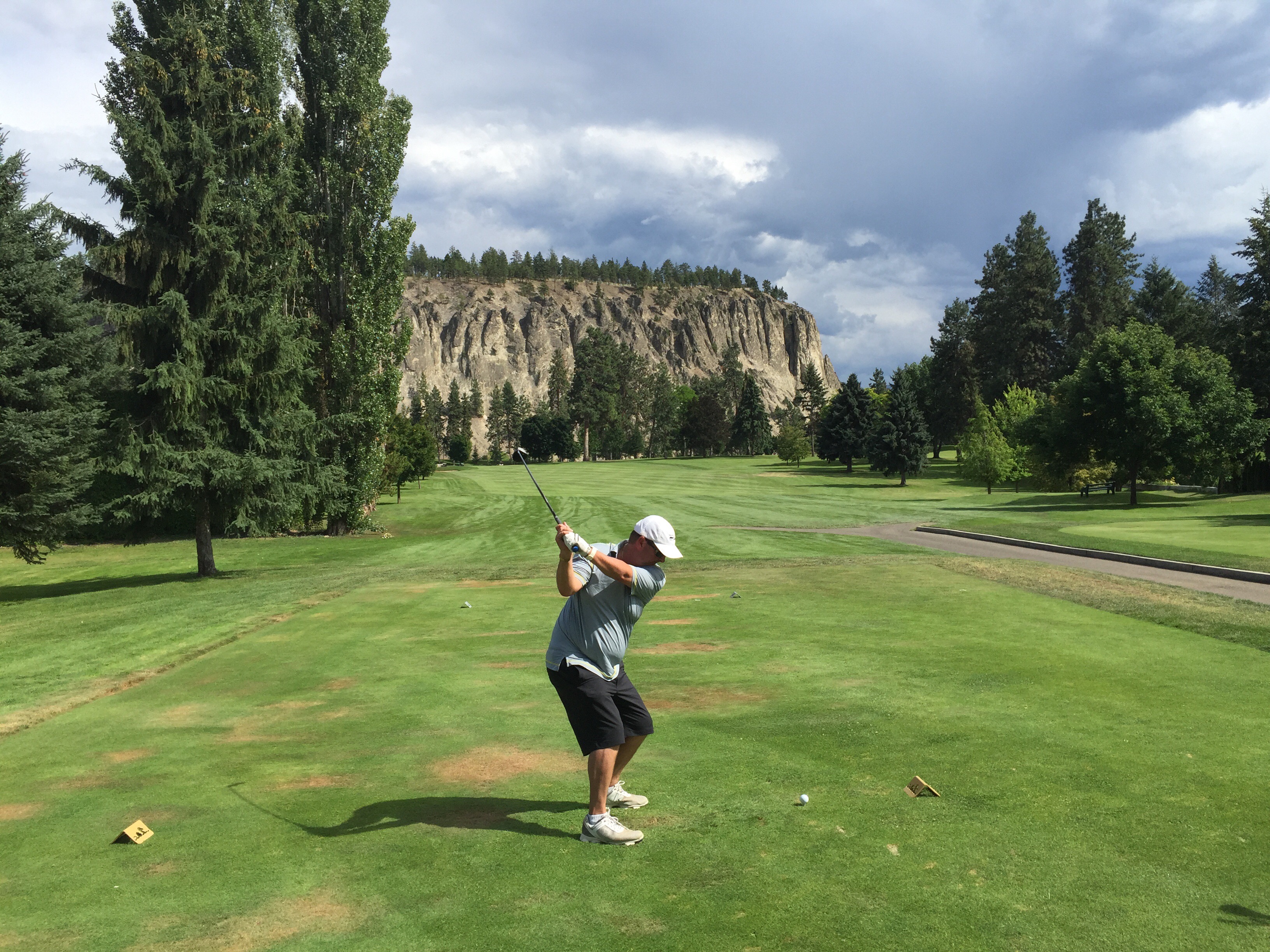
We snuck onto the course to have a look at the hole.  Some people then came up to tee off so we watched them – one of the guys ended up in the canyon but both of the ladies got over.  Steve was salivating looking at this hole and other parts of the course that we could see.  We will definitely be back to play on our next trip.

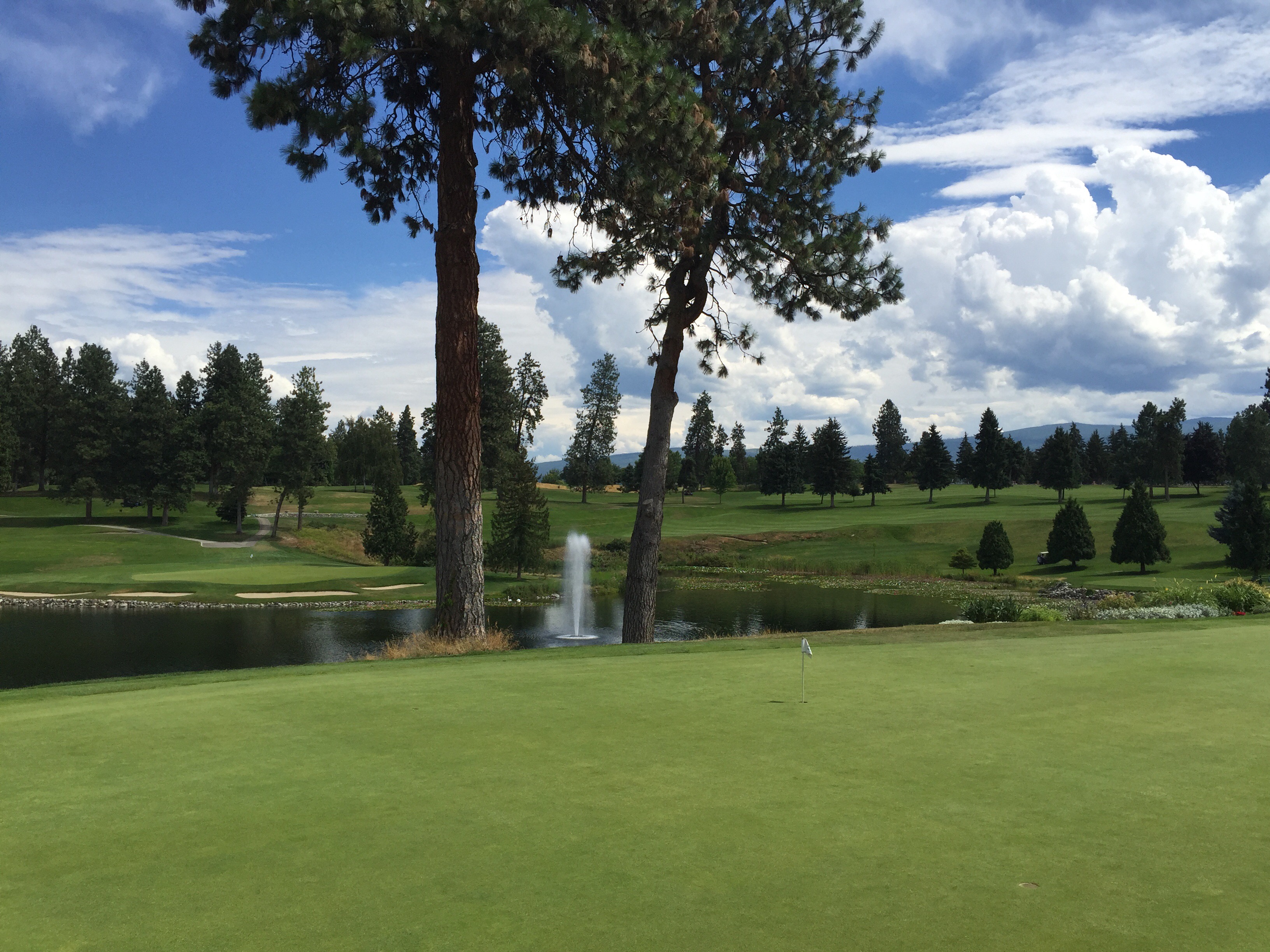
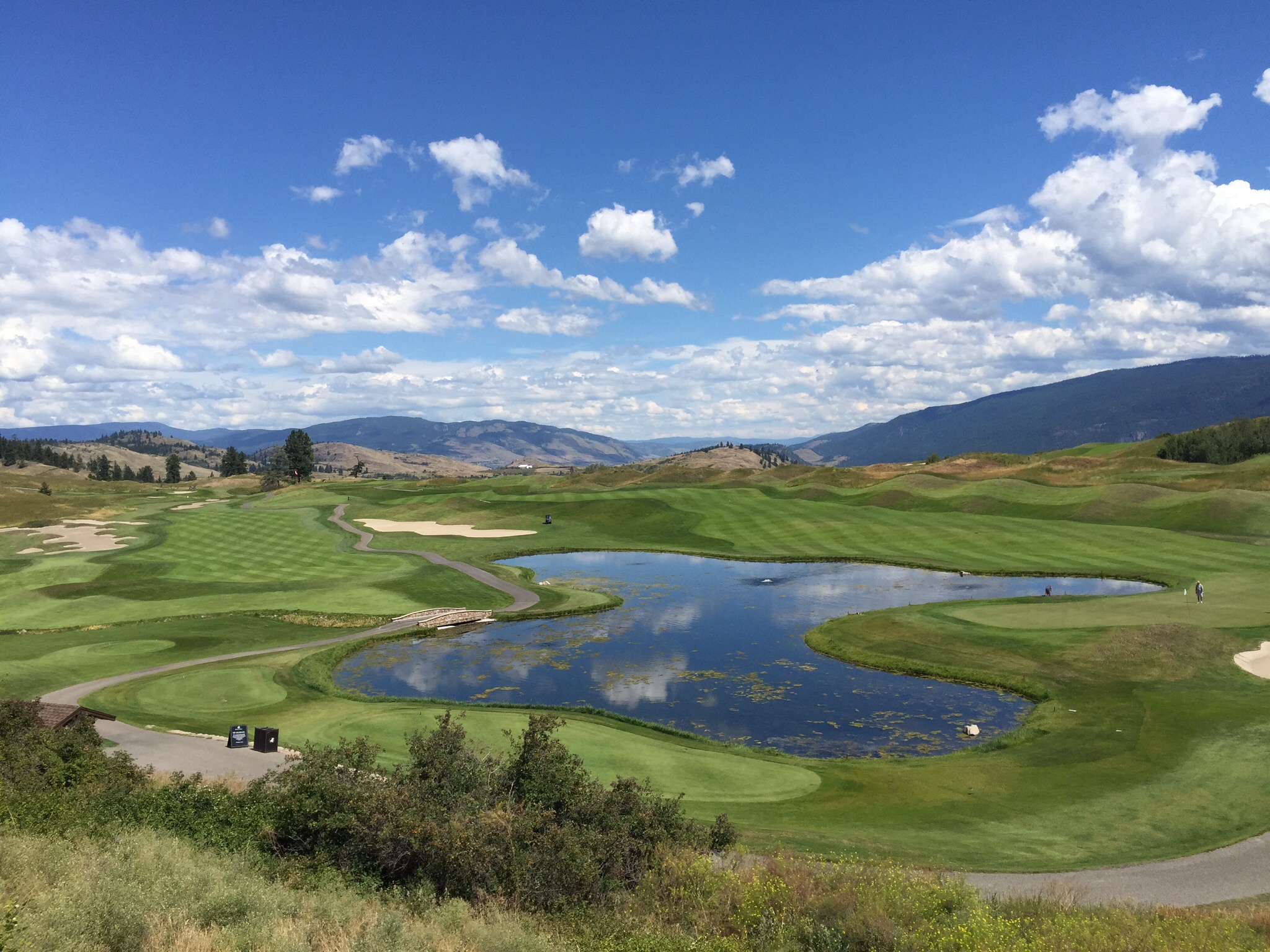
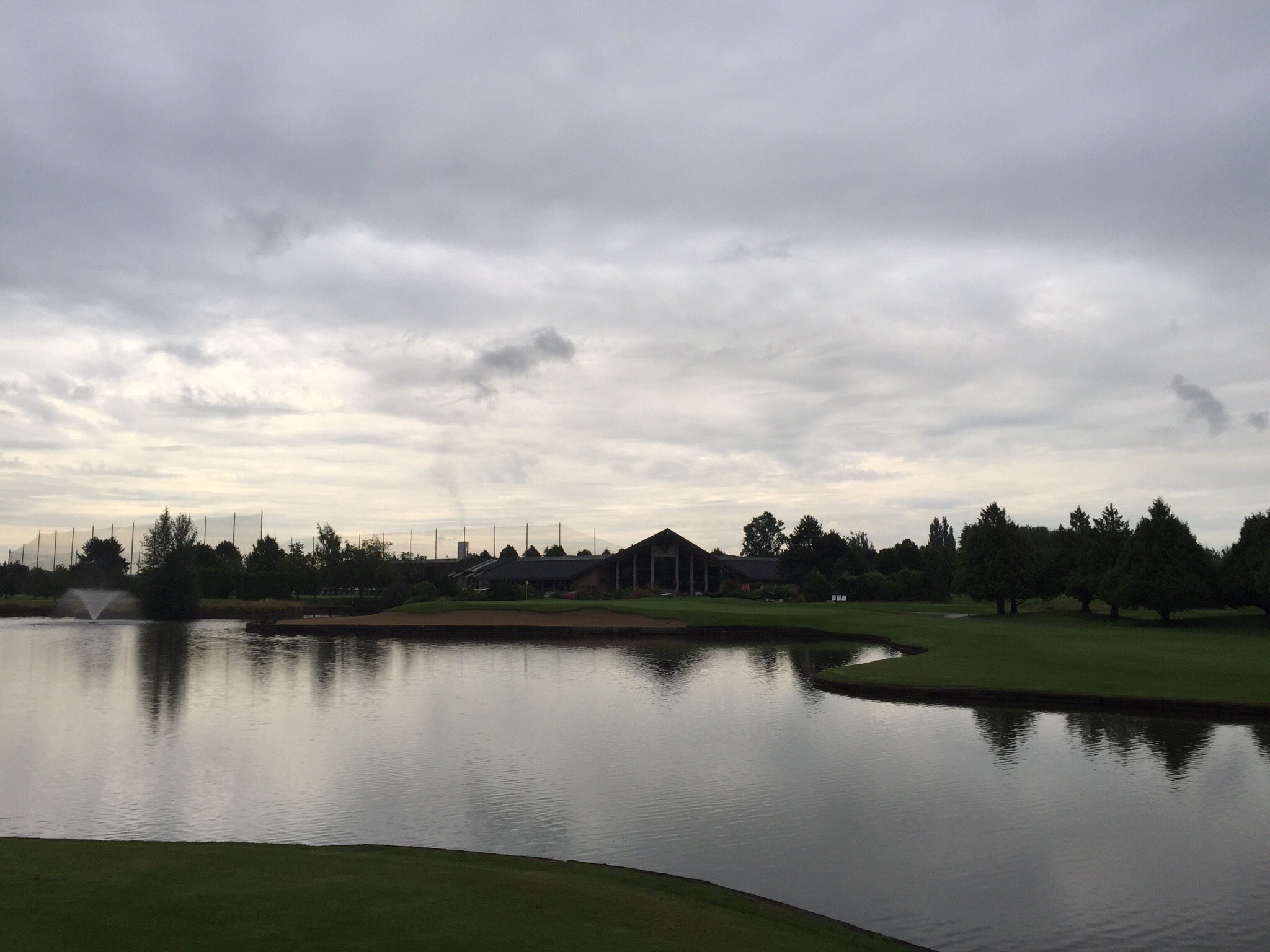
We then drove to Eagle Ranch golf course to have a drink at the Clubhouse which is beautiful.  This course is built on the First Nation Shuswap reserve land.  The Shuswap Indian Band (SIB) is a First Nation community in the East Kootenays. The band has 260 members, and two reserves on 1,240 hectares of land, with its main reserve located one mile north of Invermere. Whereas many First Nations have focused their economic development on natural resource industries such as fishing, forestry and mining, the Shuswap Indian Band has focused on commercial, residential and land development.  The construction of the golf course was started in 1997 and finished in 2000.  Another one to go on the list for our return visit.

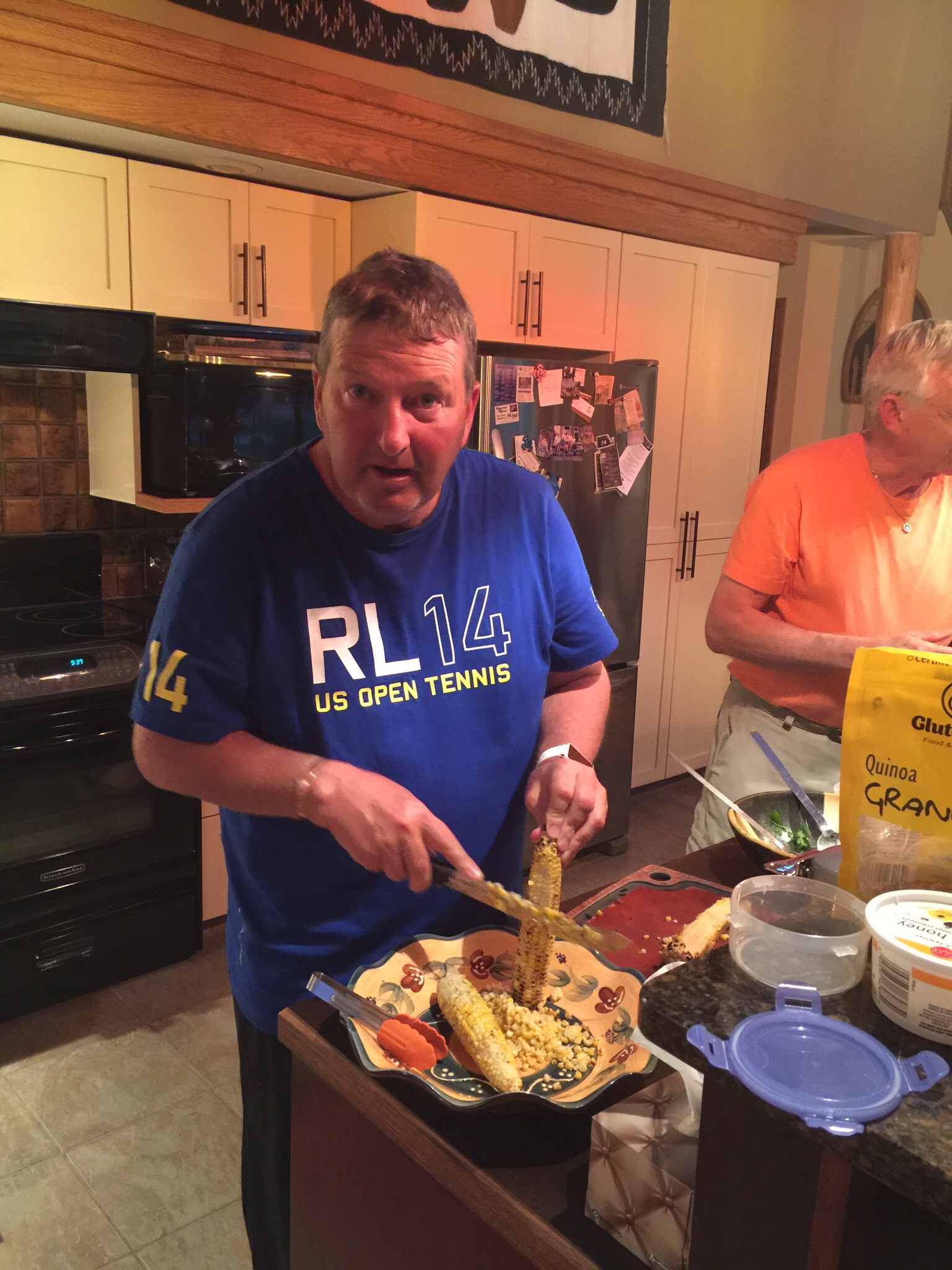
That evening we enjoyed another delicious meal – marinated flank steak with corn cooked on the BBQ.  We’re learning lots of new recipes so look forward to trying them out when we get home.  We had some corn left over so we decided to strip the cobs so we could use the corn the next day in a salad.  Most of you know about Steve’s grasp of the English language so according to Steve he was ‘pruning’ the corn.  And another Stevism was born!

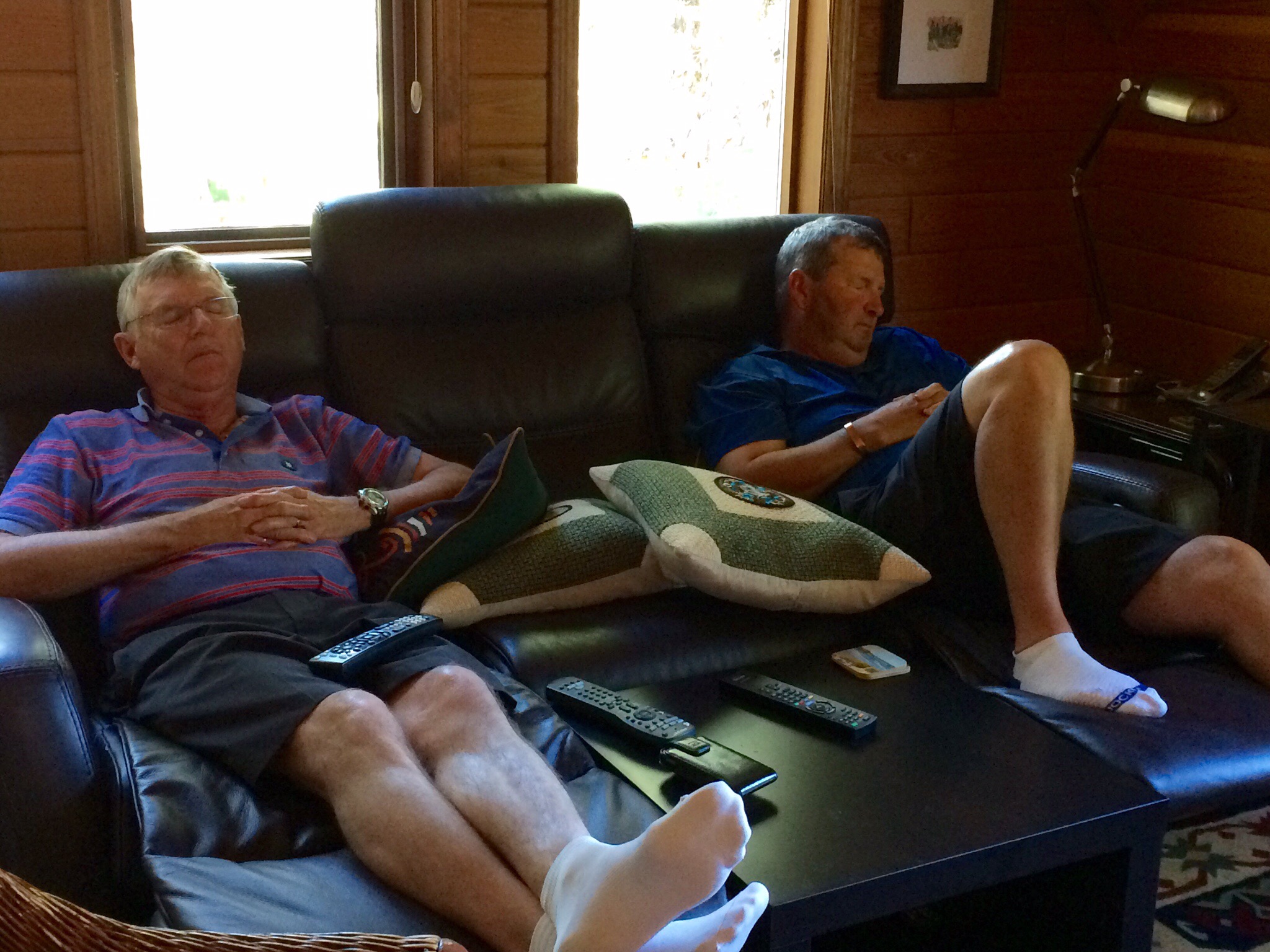
After golf on Thursday the boys watched some of the Canadian Open which had just started in Toronoto.  This picture really works in the favour of the naysayers who say they would rather watch paint dry than watch golf!

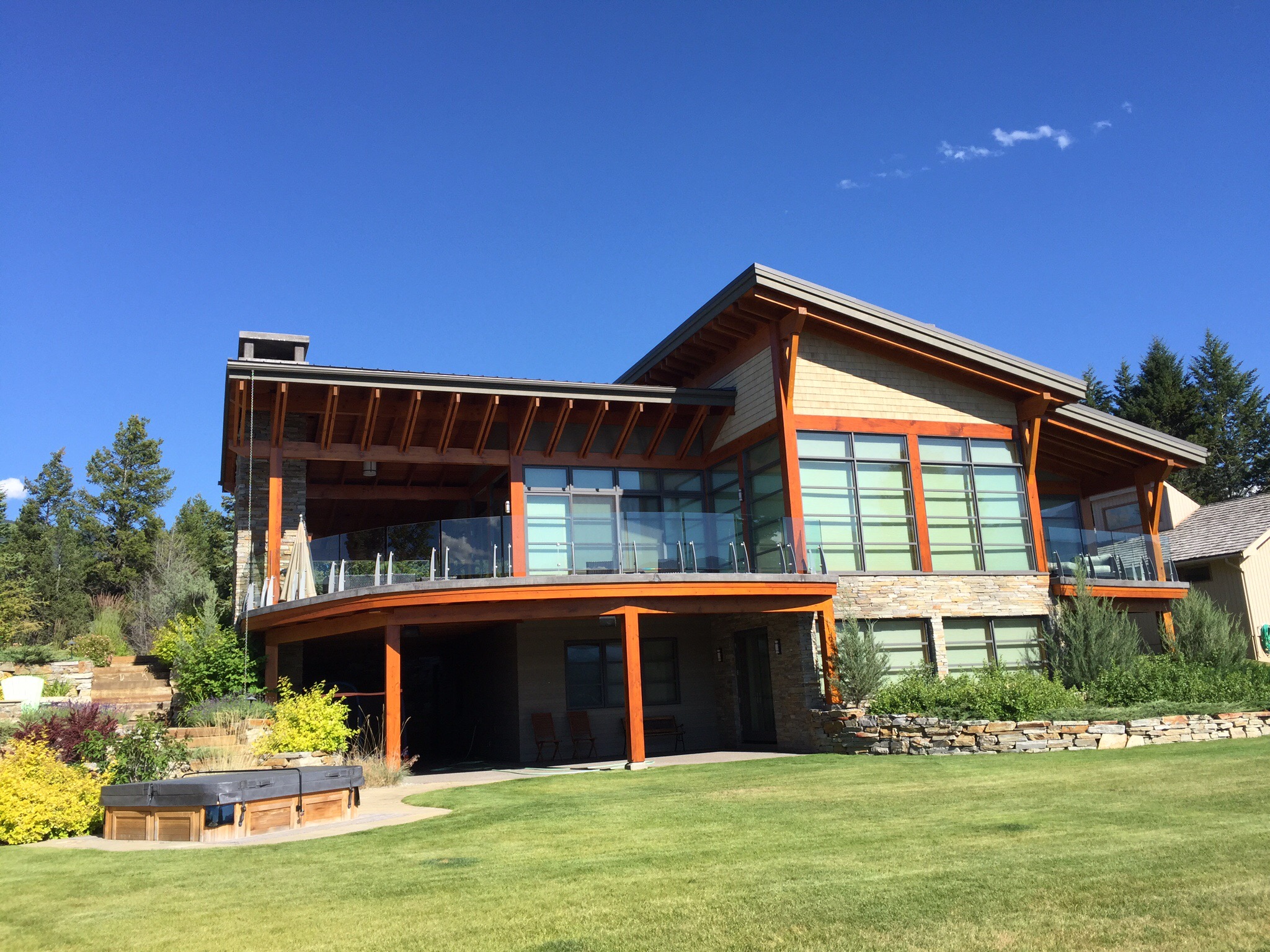
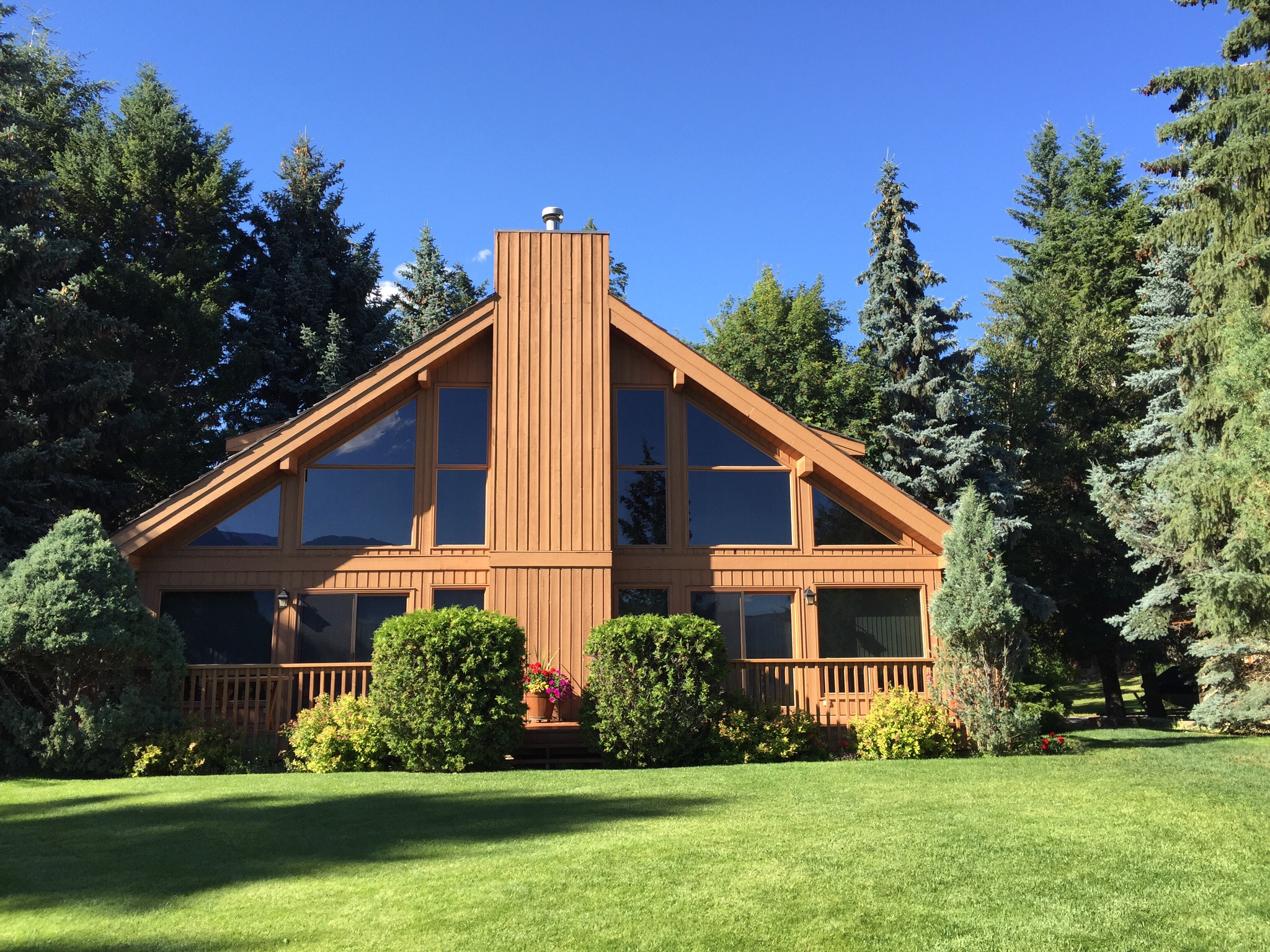
After the boys nap time we took a walk around Timber Ridge where the cabin is.  It was about 28 degrees at 5pm.  There are some very nice properties and a lot of them are built with native timbers and stone – they really blend in with the environment which I love.  They are not allowed to fence their properties to allow the wildlife and people to roam free – in true cabin style they want them to blend in with nature and not to have any barriers.  We saw a deer on our walk.  Diane and Ken have seen black bears passing through their property.  The Bears are normally looking for food.

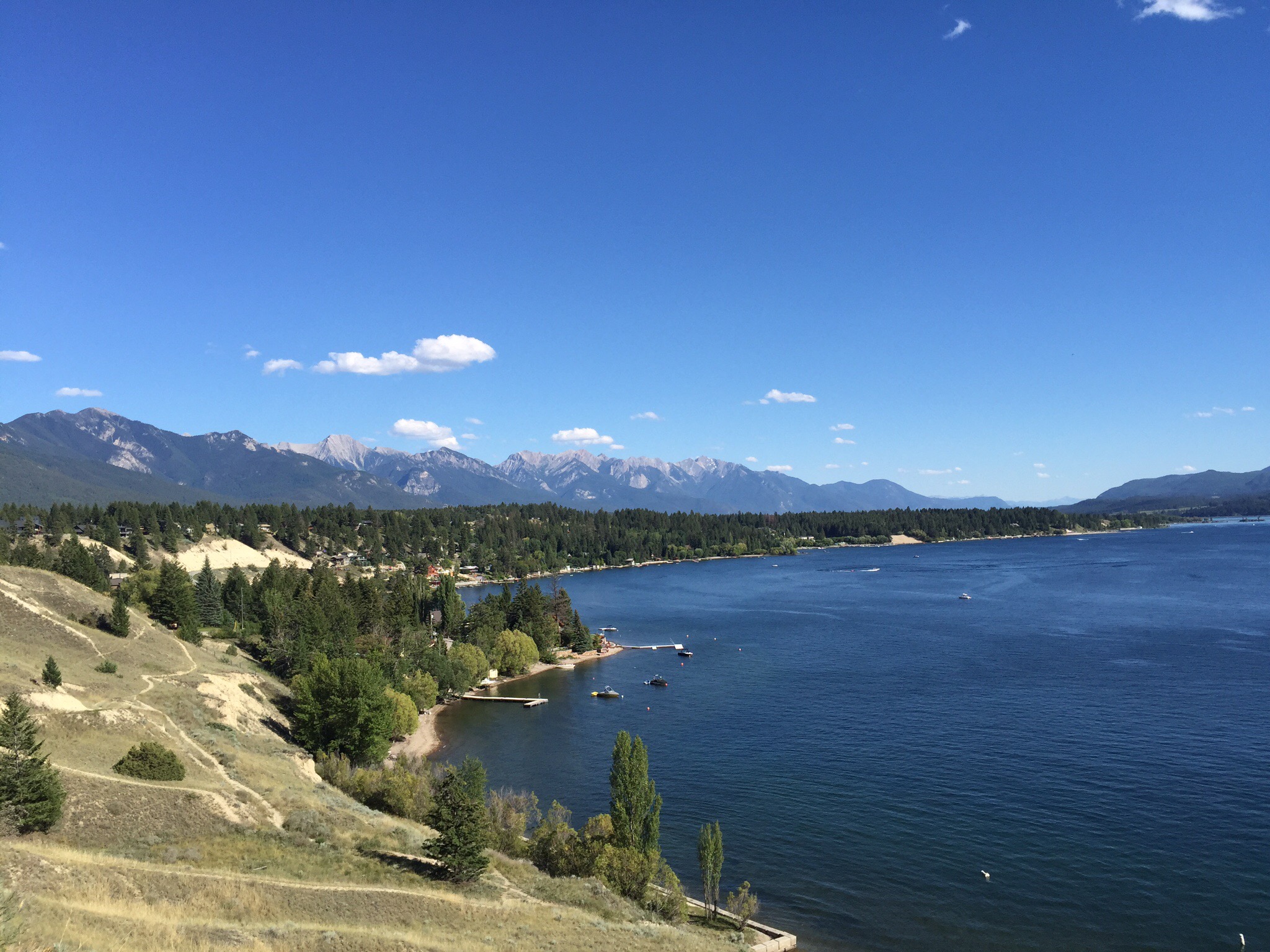
This area is mainly holiday homes with the majority of people having their primary homes in Calgary which is about a 3 hour drive away.  They have their own marina and beach area down on the edge of Lake Windermere.  What an idyllic spot.  They call them cabins in this part of the world which is the equivalent of our batches or cribs if you come from the South Island.
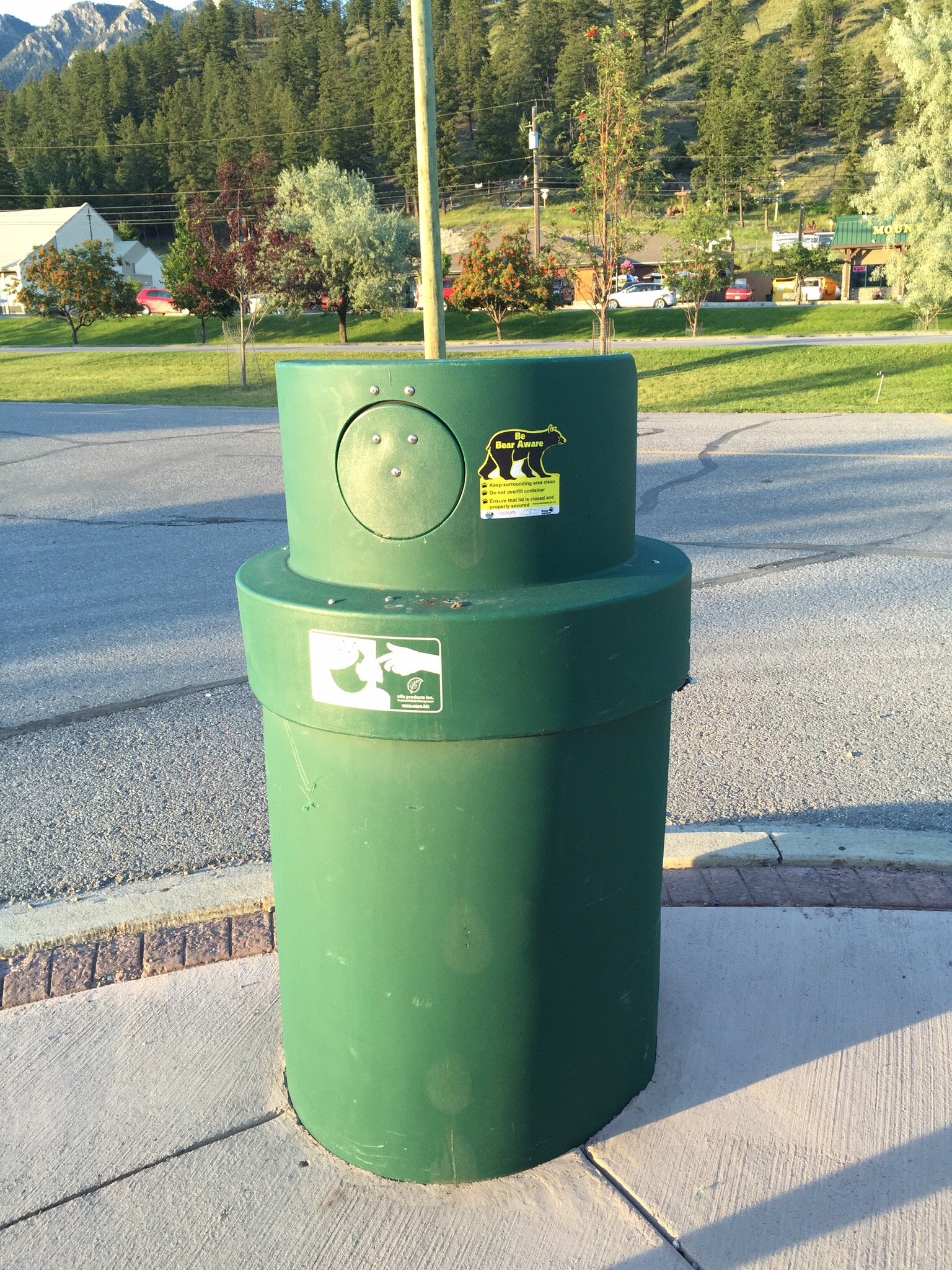
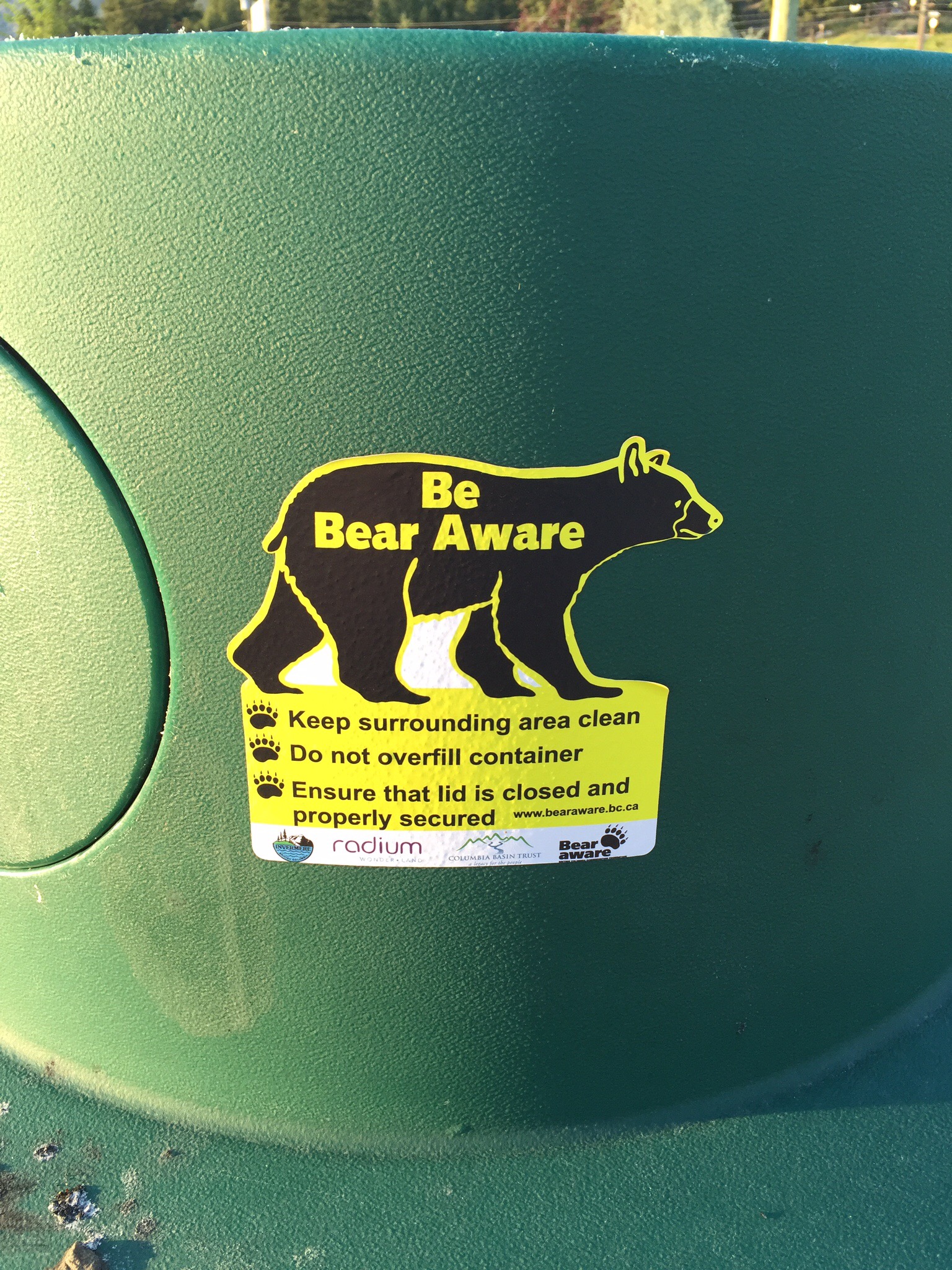
That evening we went to an Austrian restaurant in Radium for dinner called Helnas Stube. A Stube is a warm and cozy room – a place to enjoy the company of your friends and family. The Chef and his wife who are originally from Austria opened the restaurant in 1999. You can’t beat a good schnitzel and it was good! In the street outside the restaurant there was a large rubbish bin concreted into the ground with only a small flapped opening. On the side of the bin is a sign “Be Bear Aware” – these bins are designed so the Bears can’t get into them or knock them over.
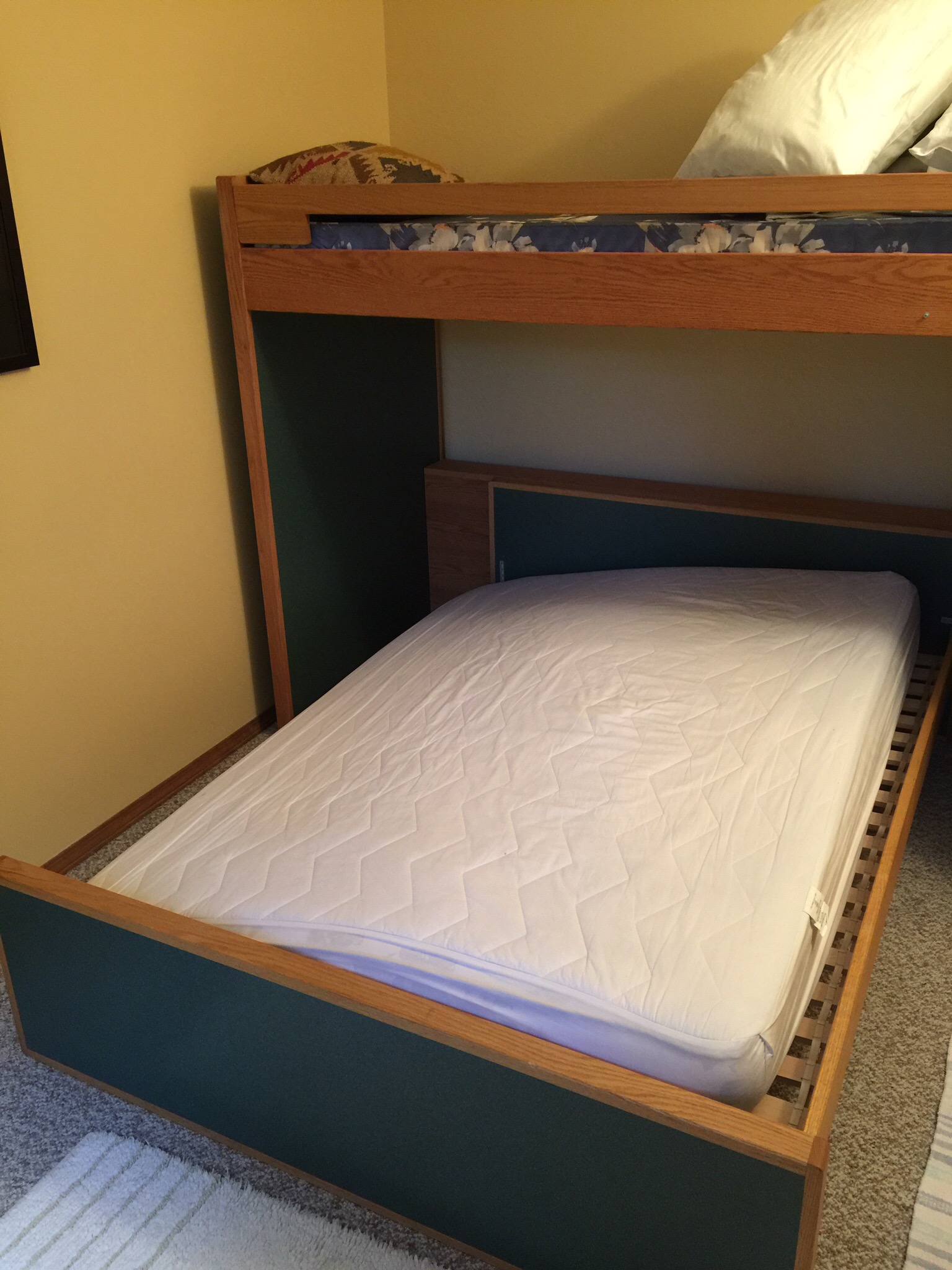
Steve was obviously dreaming about another trip to the hardware store so proceeded to break the bed and fall out at 2am that morning. I woke up to see him cast on all fours on the floor – I said what the heck happened there. The side arm had fallen off causing all the slats to go south. We turned the light on but didn’t think it was an easy fix at that hour of the night so decided Steve would sleep on my side and I would sleep on the top bunk. He had the cheek to say to me “make sure you only take one blanket”. I was the one venturing to the top bunk after he had broken the bed! I went back to sleep but dreamt that the top bunk fell on top of Steve – I was agonising over telling him to turn around and sleep with his head the other way. Funnily enough Steve had the same thoughts as he heard the top bunk creaking.
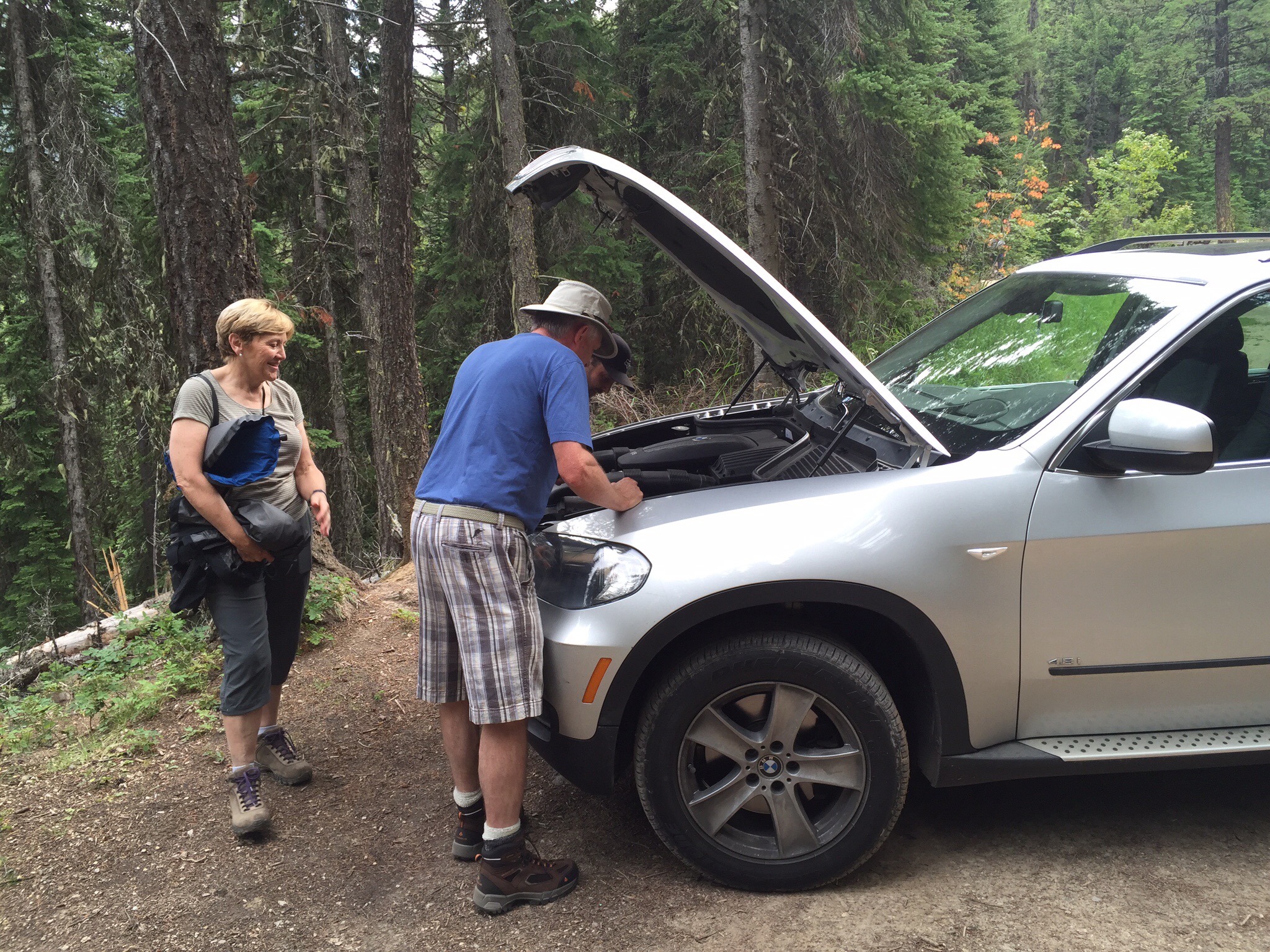
We woke up on Friday morning with no further nocturnal incidents.  The plan this morning was to take a drive up Mount Swansea – we would drive up to the carpark and then walk the 15 minutes up to the summit.  The drive up is on a fairly rugged road, twisting up through the forest.  It is a popular spot for mountain biking so we saw a few of the trails.  A warning light came on in the car not far from the top which Ken wondered what it meant.  When we arrived in the carpark we noticed there was steam coming from under the bonnet – uh oh!  Ken lifted the bonnet and it was fairly warm under there.  We then noticed a lot of liquid coming out from under the engine.  Oh boy this was not looking good.  

Ken called the Canadian equivalent of the AA and explained the problem.  The next problem for the AA was finding a garage who had a flat bed trailer and a four wheel drive to tackle the forestry road.   A flat bed trailer was required because you can’t tow a BMW.  Two families pulled up with quite big vehicles so we had a chat with them and they offered us a lift down if we didn’t get the problem resolved.  We carried on with our hike to the top.  There were a few phone calls back and forth with the AA and the consensus was that it may take a while to find someone with the appropriate vehicles and also someone who was willing to come up the Mount.

We decided to take up the kind offer the two families had made.  They managed to squeeze three adults and six kids into one of the vehicles while the other guy drove the four of us down in his.  Luckily they didn’t have to go too far.
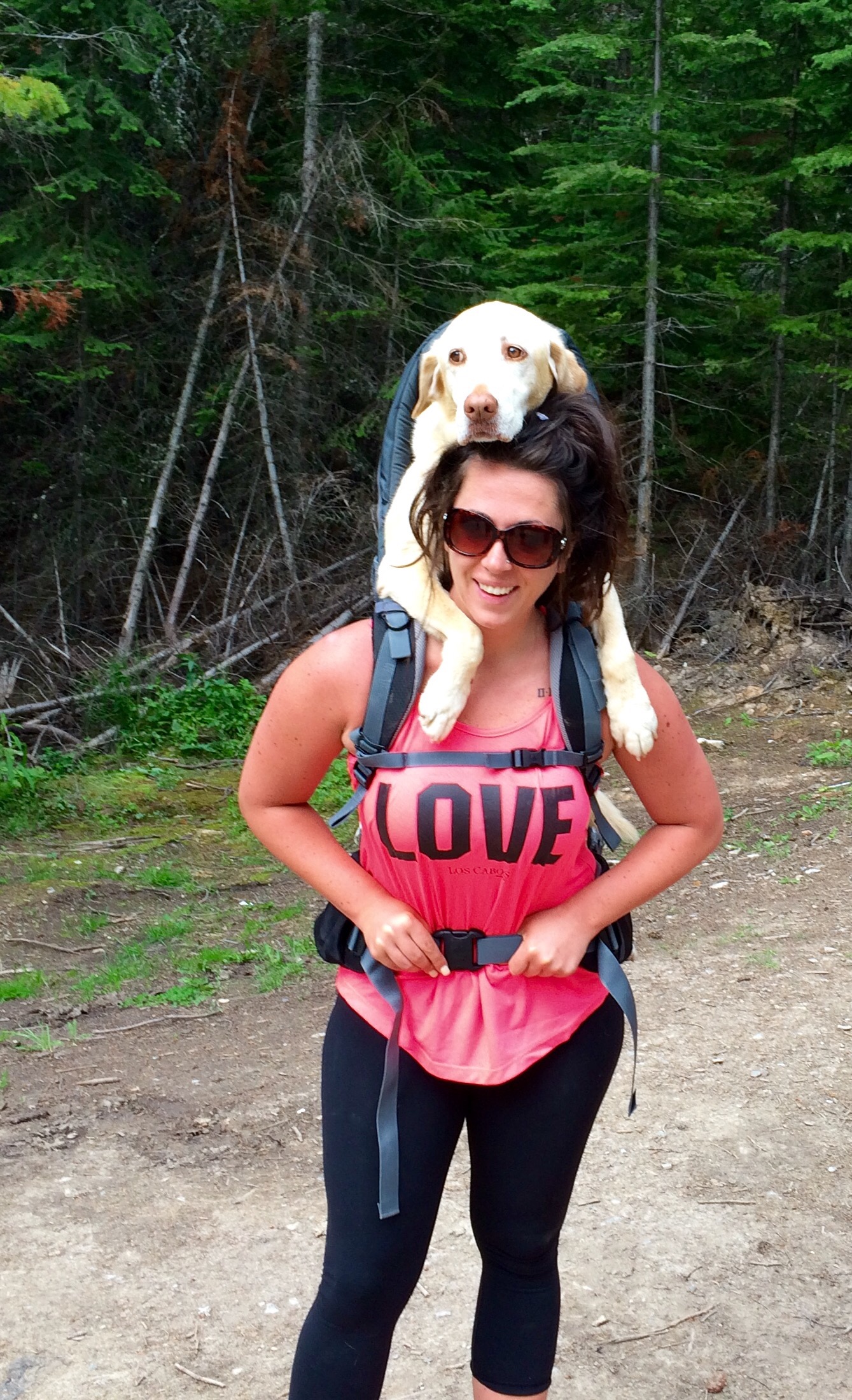
Prior to going down we met another group of people who had come up to do the walk. They had a three legged dog with them who was good on the flat but no good on the hills so they had a child’s backpack carrier to carry him up the hill. He was a very cool dog.
We got back to the cabin and Ken decided to call some of the local garages directly – the main problem he was having was finding someone who was willing to go up there.  In the end one of the garages said they would send one of their staff in a beat up truck to go up with Ken to have a look at the problem.  Steve the accountant had made the suggestion when we were up the Mount re just getting bottles of coolant, filling it, driving down and topping it up along the way.  In the end that is what they did although Ken didn’t stop to refill – he got off that Mount as fast as he could!  When he got to the bottom they got a flat bed trailer and towed him to the garage.  This was Friday afternoon so we still haven’t heard what the problem was.

We decided this was the third incident in three so hopefully Steve and I wouldn’t jinx anything else!  The shower rail, the bed and now the car!

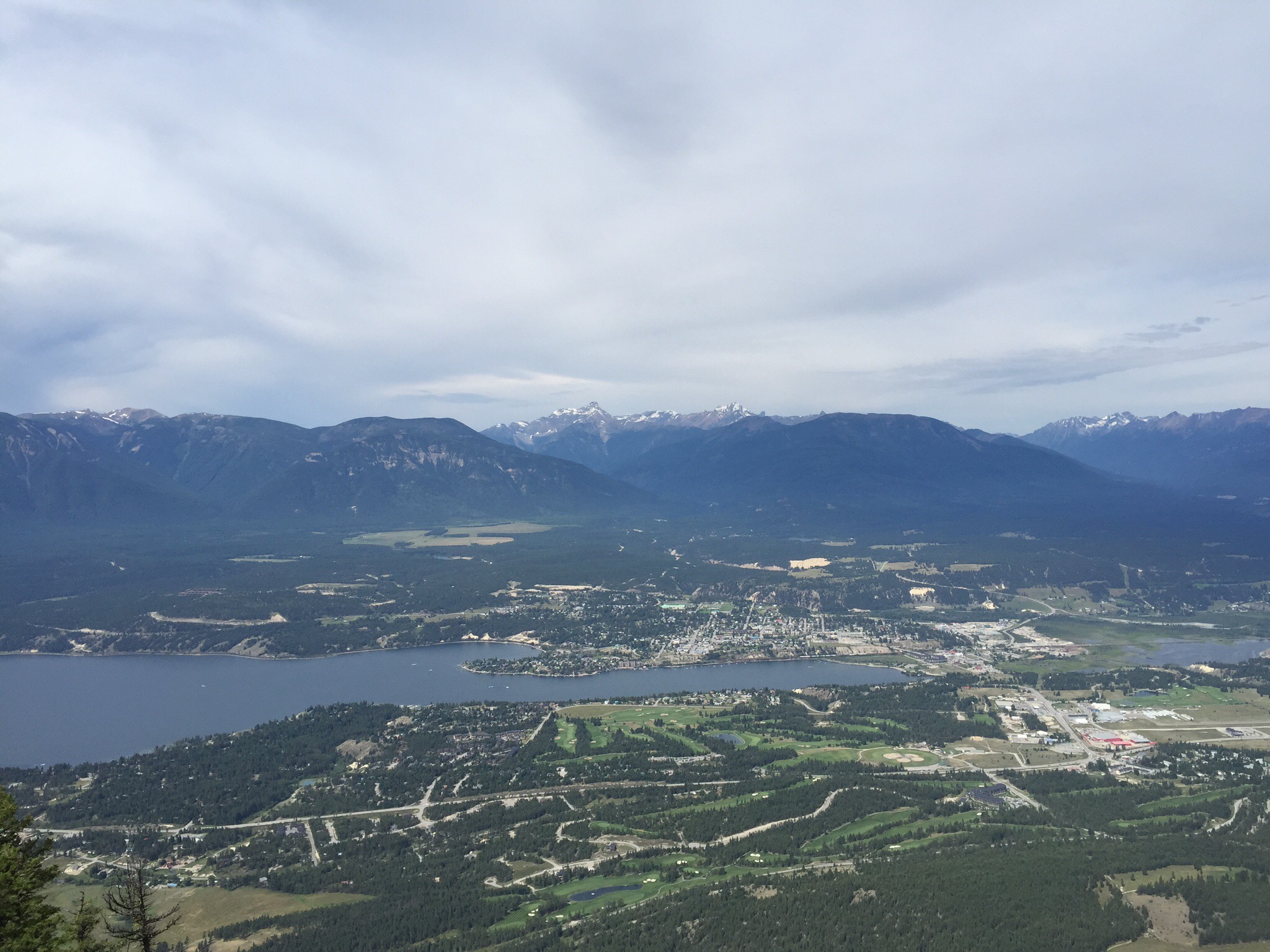
Mount Swansea is located in the Columbia Valley, overlooking the Upper Columbia River, Lake Windermere, the Columbia Wetlands and the town of Windermere.  At an altitude of 1,727 metres or 5,665 feet, it is a mere bump compared to the towering Candian Rocky Mountains in the distance but it is high enough to allow some grea views and provide some challenges to outdoor enthusiasts.

Mount Swansea wasn’t always known by it’s present name.  In 1801, it was known to all as Windermere Mountain.  The initial trail was constructed to reach a copper mine at the summit.  In the first year, pack-horses carried 50 tons of copper ore down the mountainside in ordinary pack loads.  From the Salmon Beds in Athalmer (lower Invermere), the ore was shipped by barge to Golden, then on to Vancouver by train and across the ocean to Wales, where it was concentrated and sold, bringing a tidy profit to the owners of the mine.

In 1891, one of the mine’s owners named the location Mount Swansea since supposedly, the original name given by Vikings to Wakes was Sweyne’s Eue.  True or not, it makes for a good story and it kind of also makes some sense.

In 1924, the BC Forest Service established the mountain as a fire lookout.  In 1952, they constructed a lookout hut filled with the latest fire detecting equipment and a metallic telephone line that was strung on trees along the old pack trail.  The lookout person kept records of sky conditions, wind direction, velocity and humidity.  He then sent the information each day to the local forest service by telephone (later by radio).
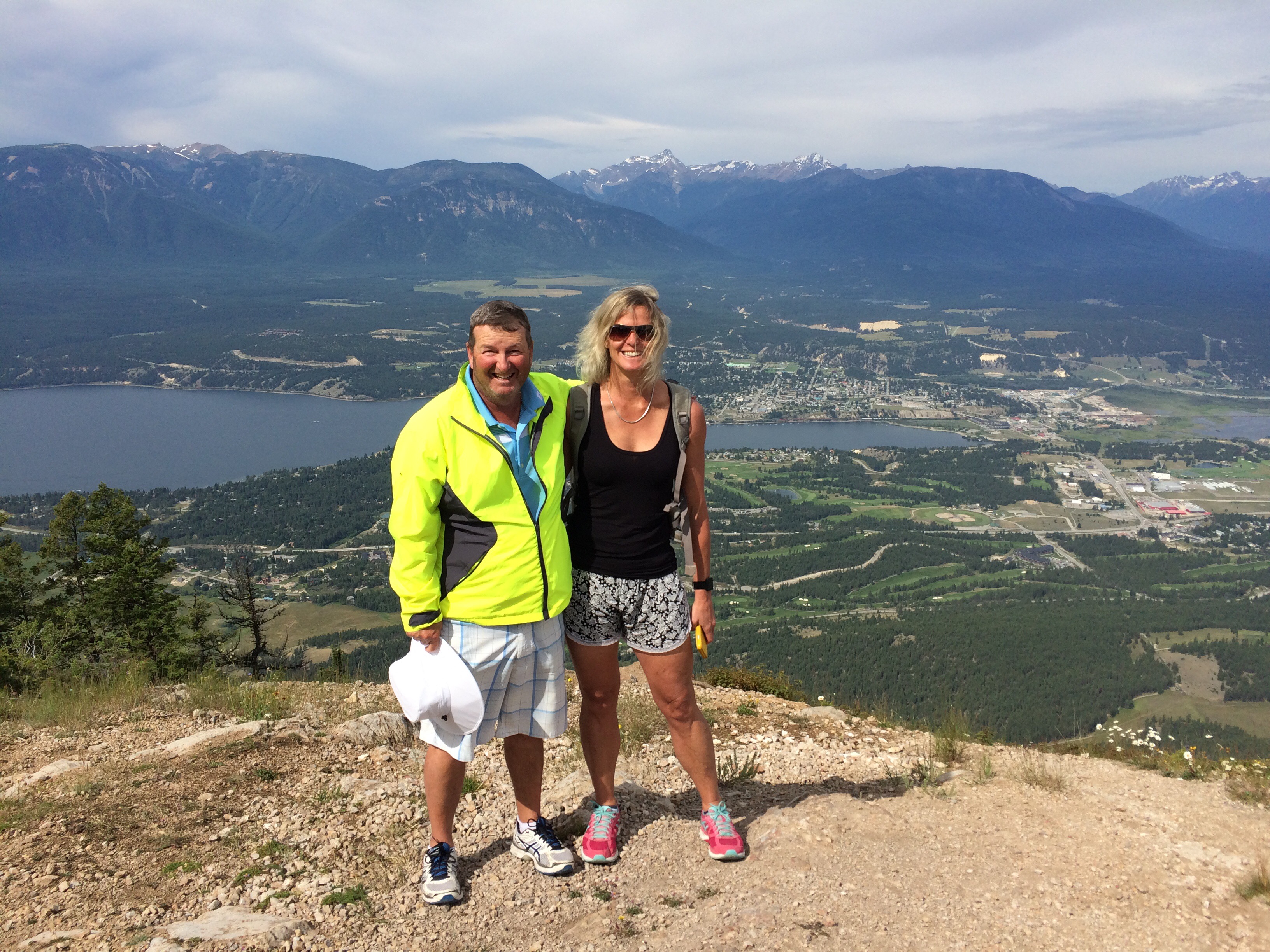

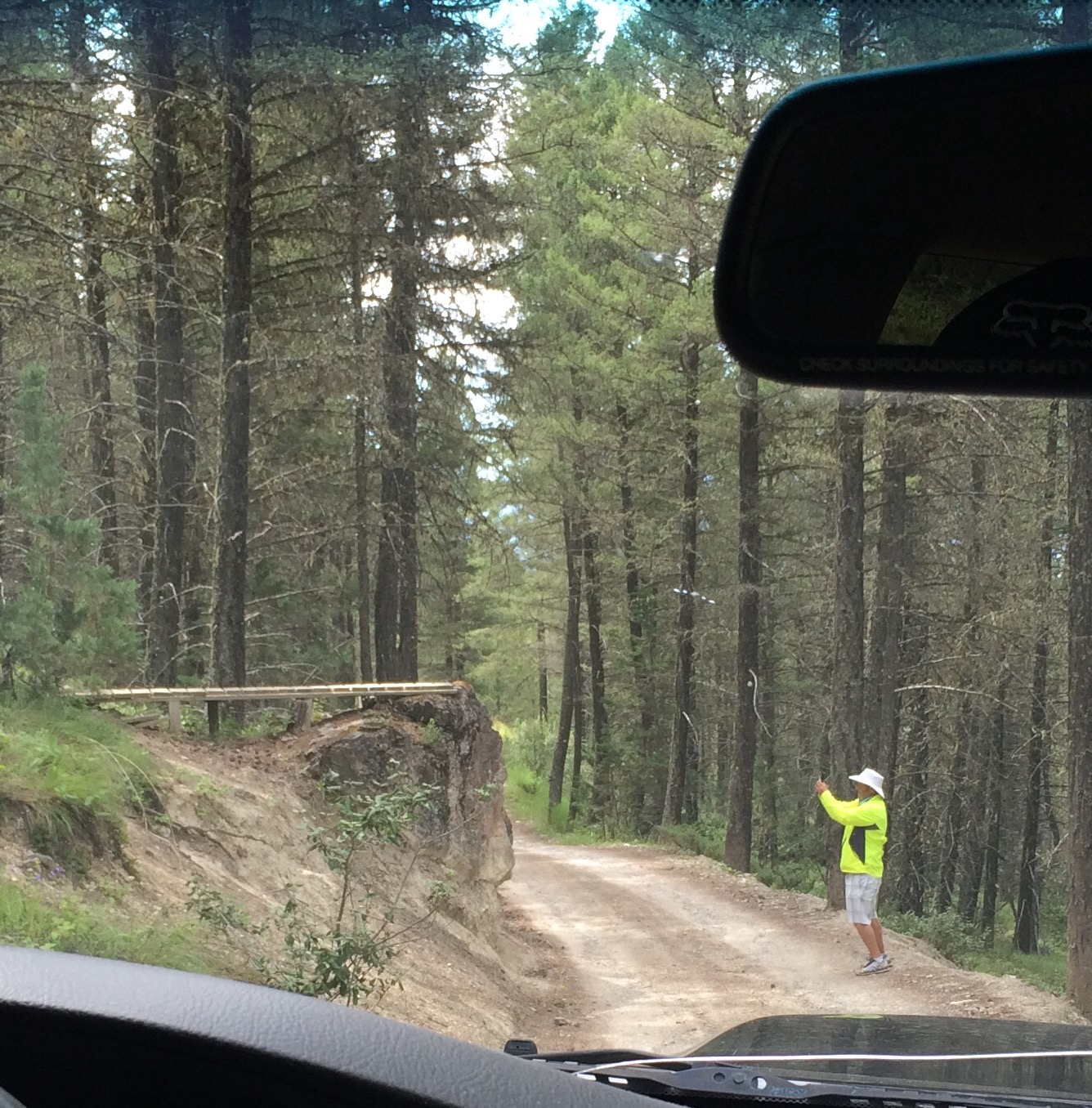
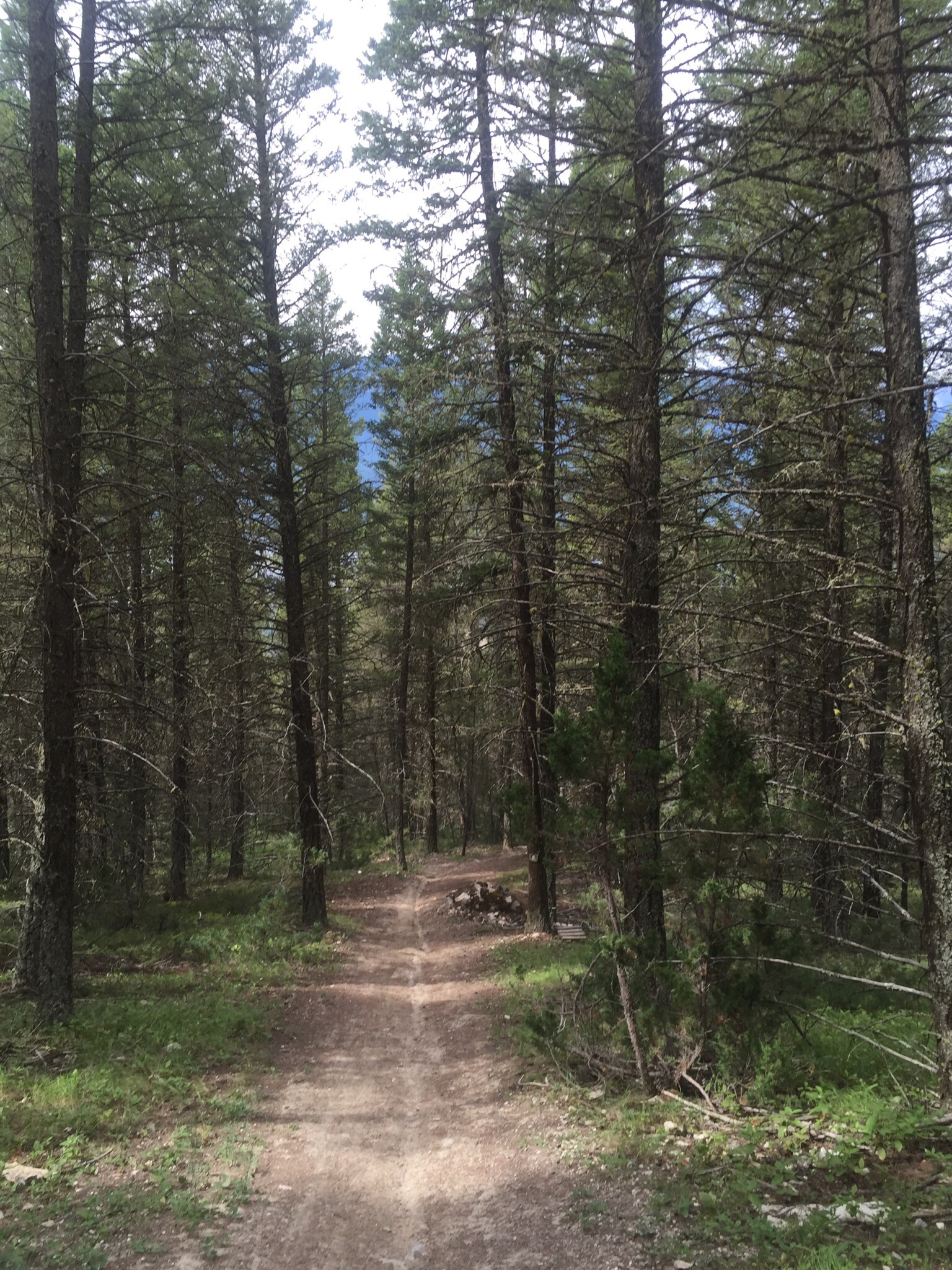
On the way down we stopped to take some photos of a mountain bike jump that looked suicidal to us.
That afternoon we took a drive in our car down to the village of Invermere. It is a nice little village with some really good art stores which we had a good look in. We then went to the butcher to get something for dinner and decided on Bison – neither Steve or I had eaten it before.  
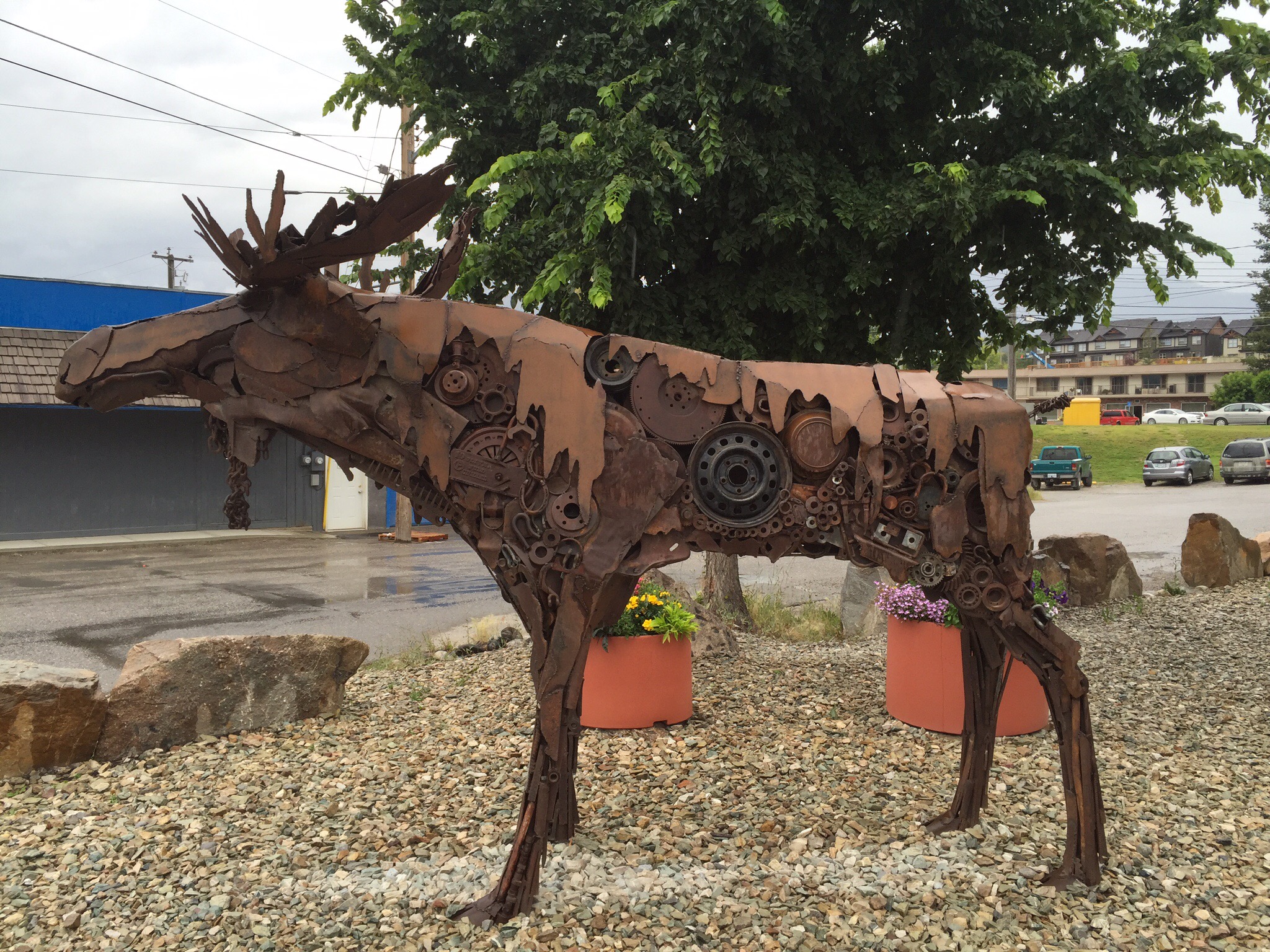

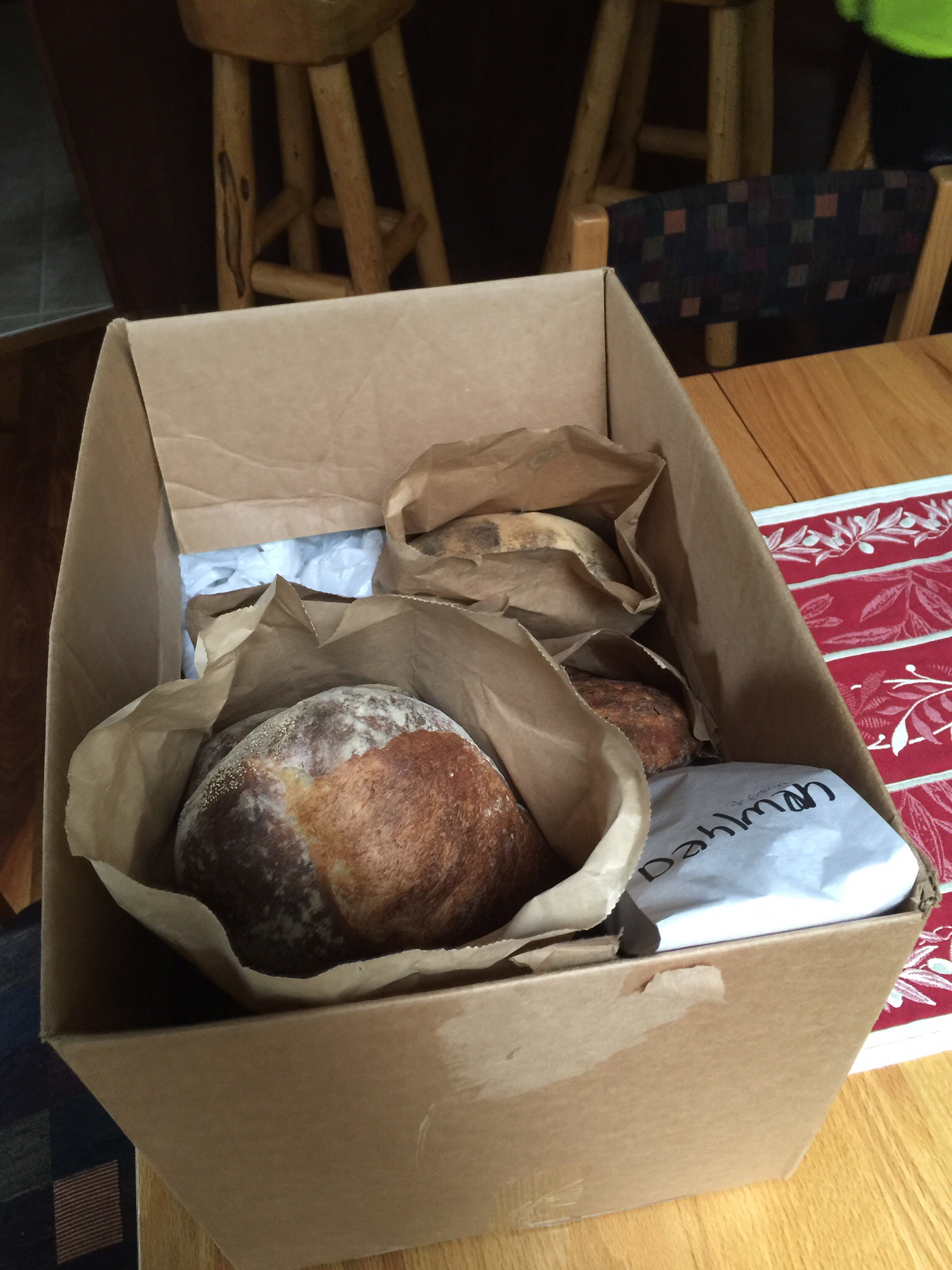
We then went to pick up the bread.  Now this bread is not just any bread – it is made by the bread God I tell you – it is so good!

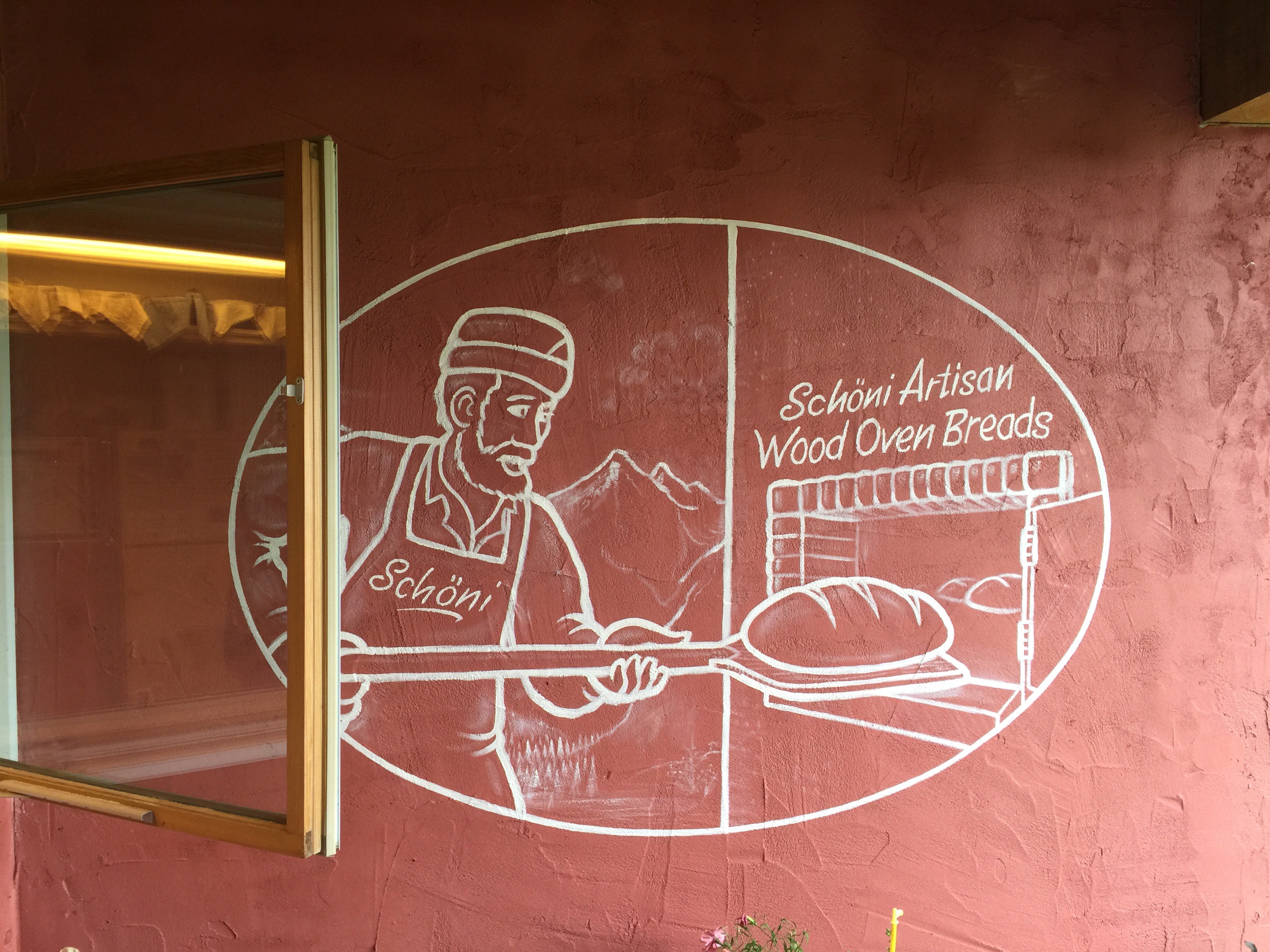
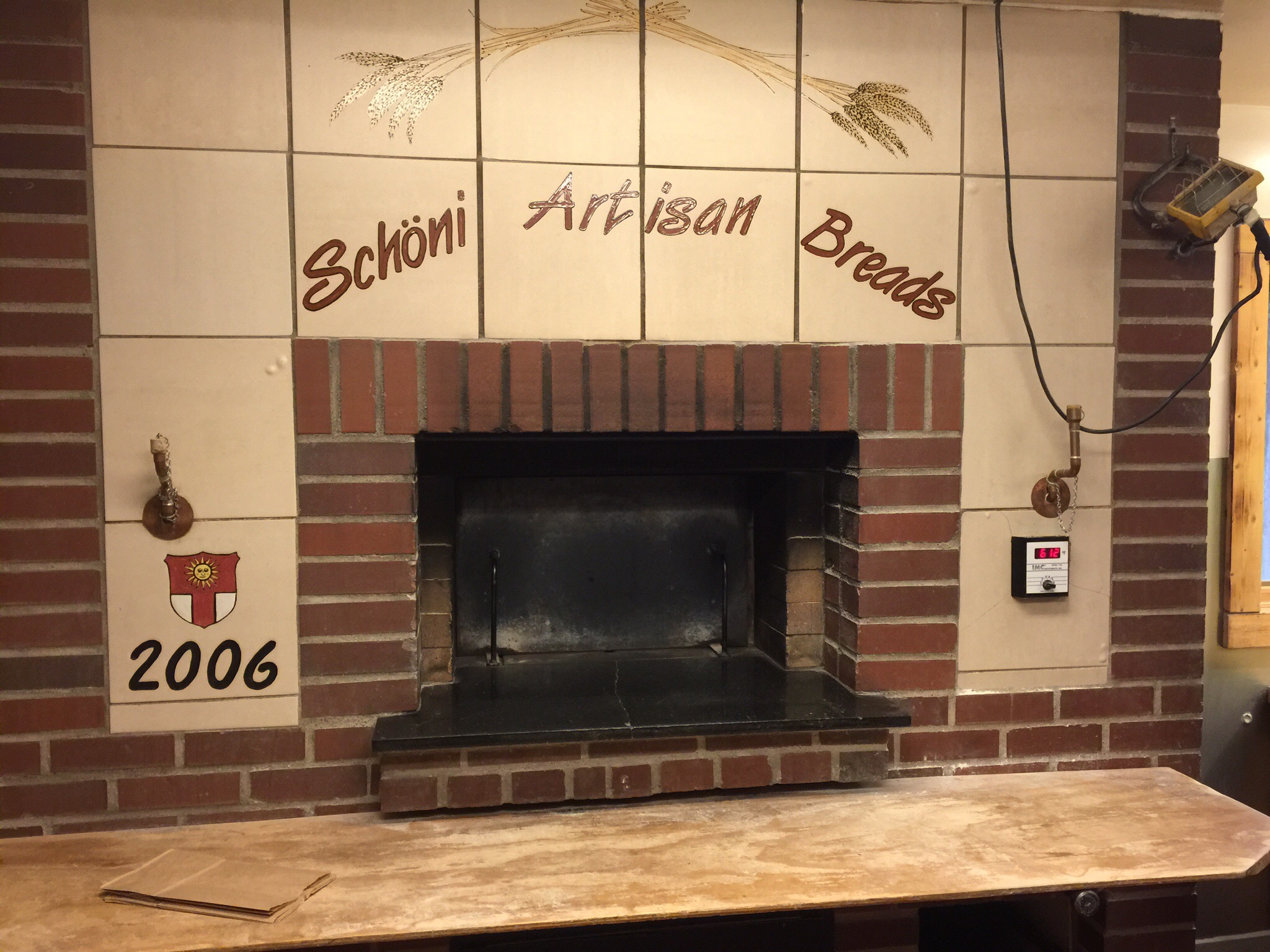
The bread God is Andi Schöni (pronounced Sheu ∙ nee) who left Switzerland in 1982 to work in Canada as a trained French chef at Strands Restaurant in Invermere.  He instantly fell in love with this small town seated amongst the magnificent Rockies, but left it to pursue chef opportunities, first in 1984 at Assiniboine Lodge in Alberta, then in Whistler, B.C. in 1985, and ended up owning a wholesale bakery (Little Mountain Bakery) there for 12 years where he eventually met his spouse, Suzanna. They moved to Invermere in 2000, but Andi was unable to find his idea of a decent loaf of bread, so he worked with a wood oven at a local bakery for a few years, but found he was limited with what he could do there. After leaving there, customers begged him to begin baking bread on his own.  

Finally, Andi began baking bread for customers again in a small wood oven in his home, but this time, he was able to be as creative as he wanted, use better and higher quality ingredients, and take the extra time and attention that authentic wood oven breads need to meet his Swiss quality standards as well as his passion for the art of proper bread making. After lots of research, he built a custom commercial bakery with a custom wood oven, built locally by Lusti in 2006. Today, Andi continues to passionately create and experiment away. Although it’s been over 30 years since leaving Switzerland, Andi still maintains his high Swiss standards in year round production, while Suzanna helps out with the rest of the details and orders.

You might wonder why he is such an excellent baker when he was never professionally trained as one. His passion and love of bread (who else would take so many days to make a loaf and then buy back his sold bread if he runs out of bread for himself?) and his gift as a chef who knows instinctively what flavours and ingredients work best, combined with his Swiss precision certainly helps, but he’s also able to create freely, not being bound by all those bakers’ rules, and take the extra time needed to properly prepare every step and ingredient by working where he lives. At least, this is what Suzanna sees! 

He bakes for restaurants with deliveries on Wednesday, individual customers pick up between 4pm and 6pm on Fridays and he bakes sweet treats for restaurants and cafes on a Saturday.  It was like a train station when we were there doing our pick up on Friday.  He also had some sample loaves you could help yourself to.  Luckily I don’t live in Invermere – it would be fatal!
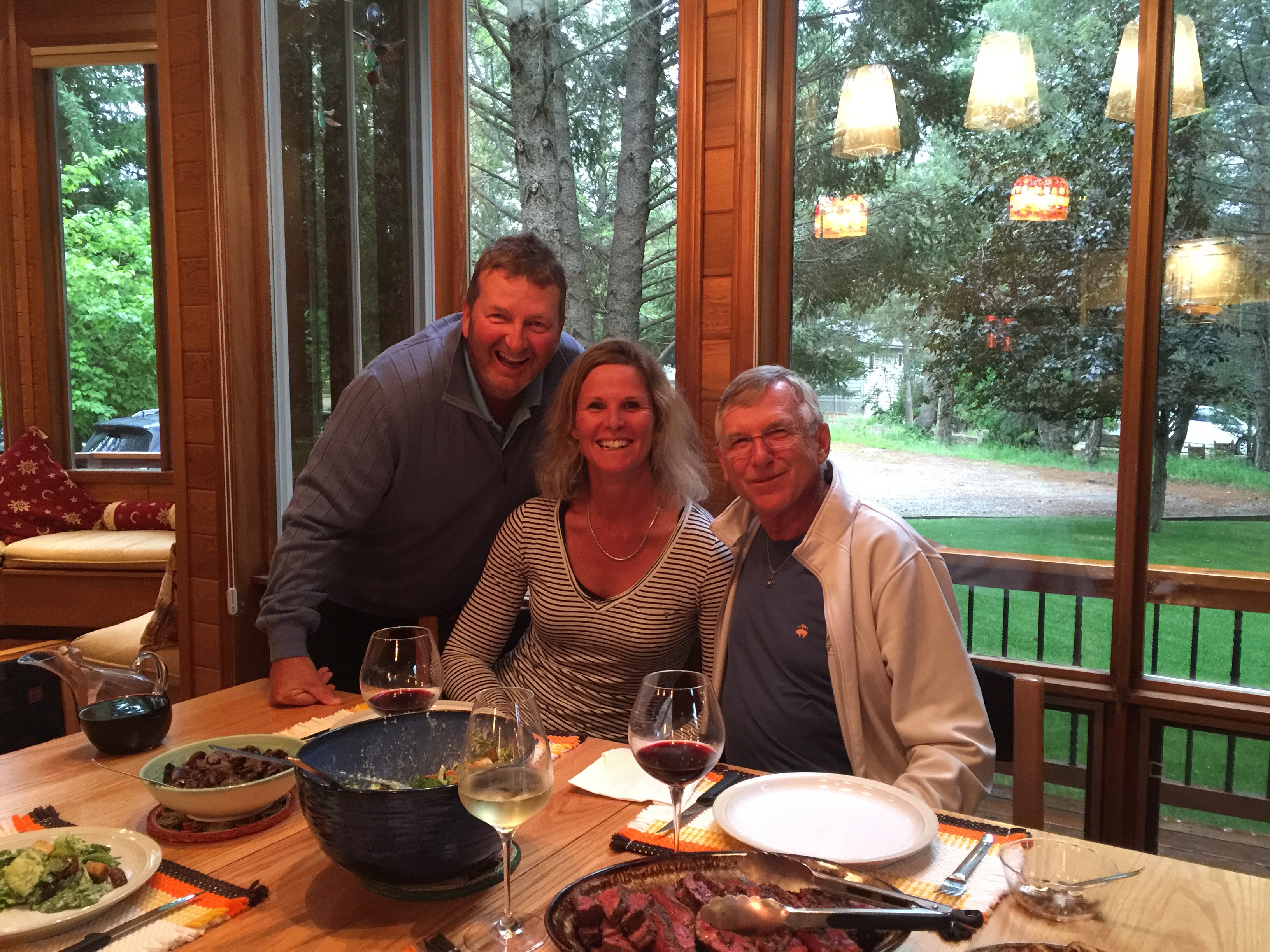
Another culinary masterpiece was served up for dinner – Ken is a whiz on the BBQ and cooks the meat to perfection.  Diane is very creative in the kitchen so we had bison, Caesar salad and a reduction of mushrooms, onions and red wine.  The bison is cooked medium rare and was lovely and tender.  That was a YES from us : )
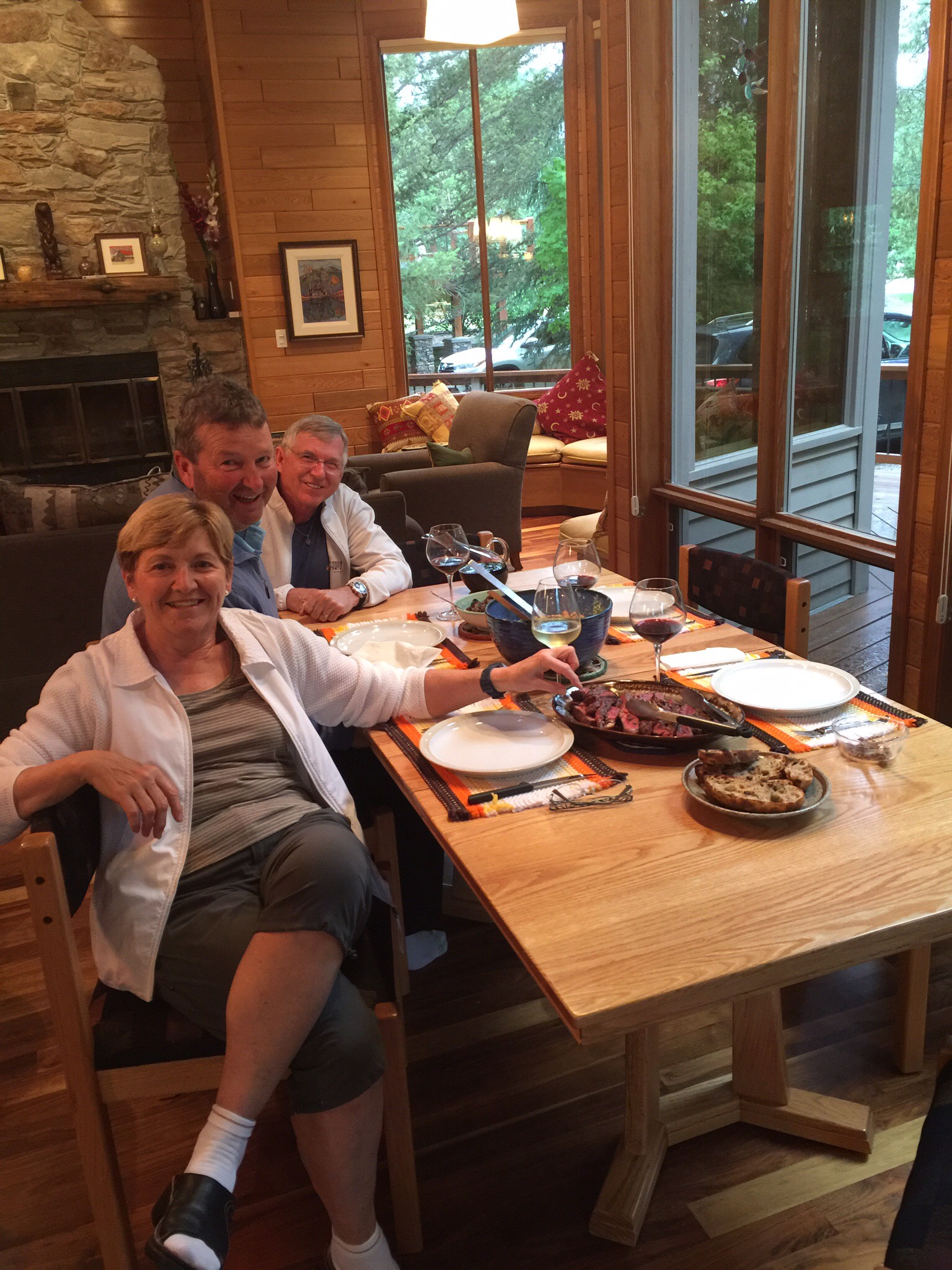
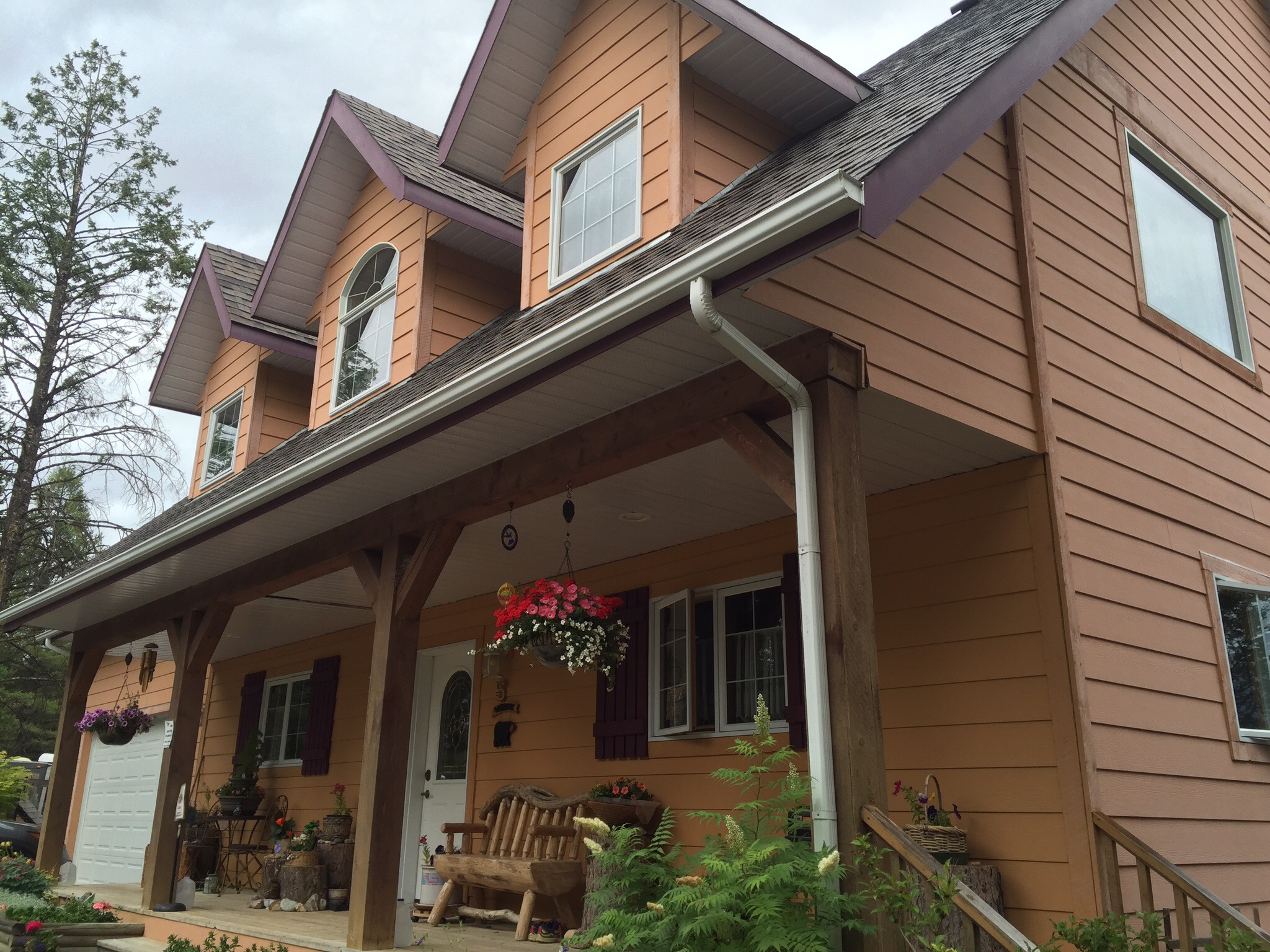
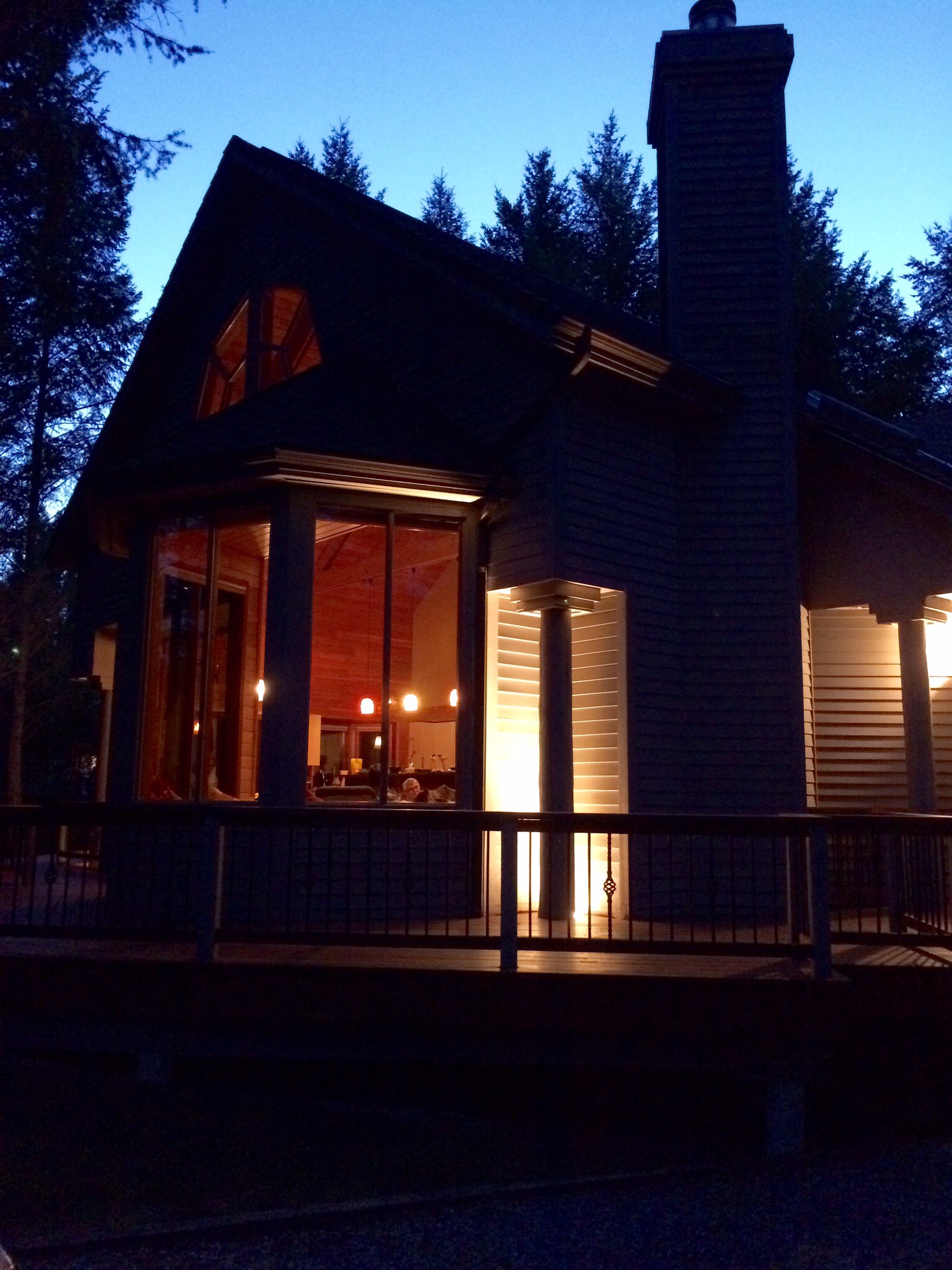
The lovely cabin at Timber Ridge where we stayed.
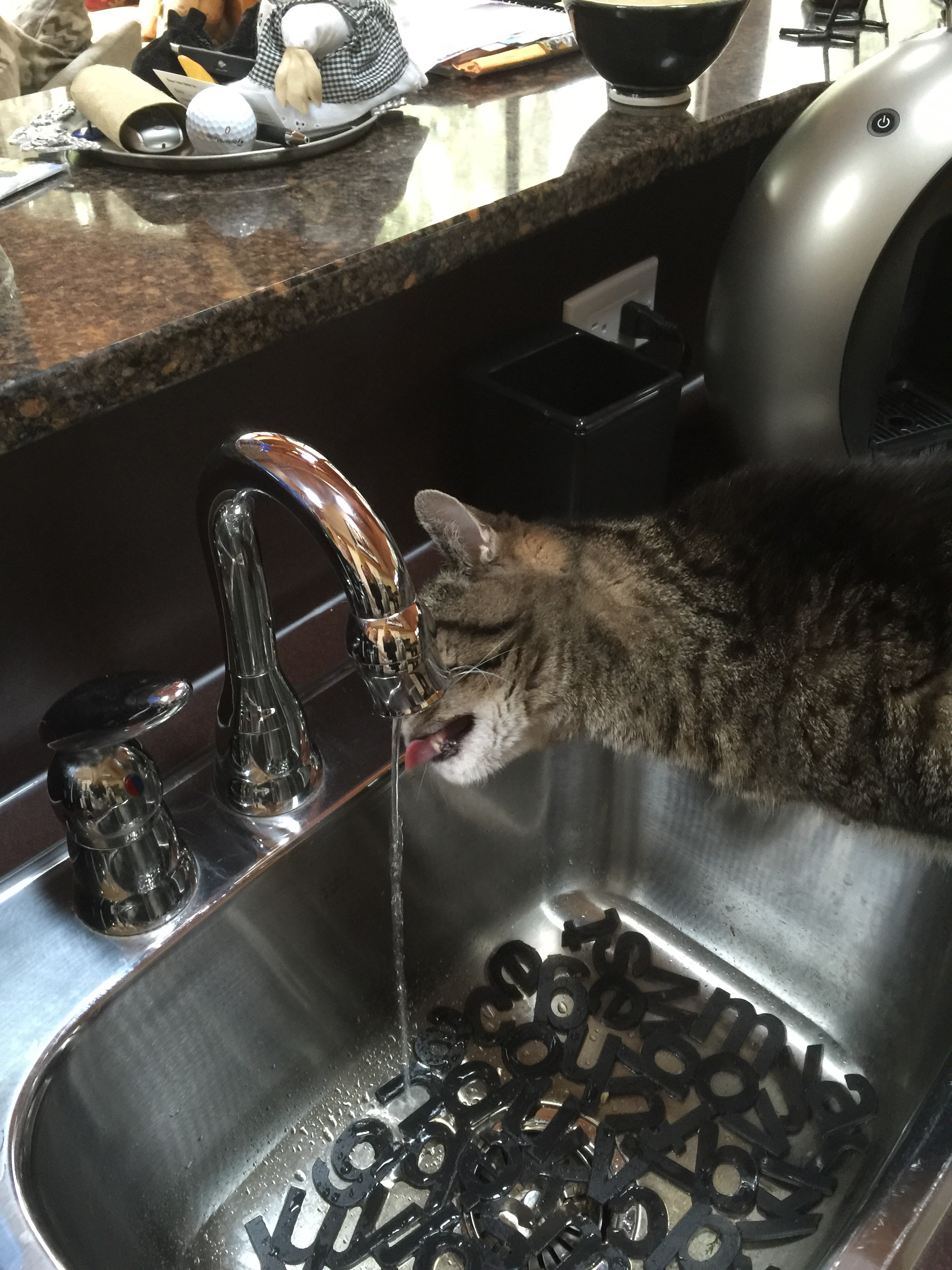
Smokey the cat having a drink – this is normal behaviour : ). Smokey spends his time between Calgary and Invermere.  The other interesting thing about Smokey is that he is a fulltime indoor cat.  He cannot go outside due to the threat of predators – bears, Cougars etc…  This is also normal practice in Canada.

Posted in Canada, Invermere | 3 Comments

Copper Point Golf Club – Invermere, Canada

On Wednesday morning we were booked in to play golf at Copper Point Golf Club which is where Diane and Ken belong.  There are two courses at Copper Point – The Point Course and The Ridge Course.  We played The Point which is carved from the natural beauty of the land and follows the rise and fall of the Kootenay Rockies.  It was designed by Browning Design Inc and opened in 2004.

The Ridge course is a par 62 Masters Course which can be played in about three hours.  The innovative design features full length Par 3 and Par 4 holes that maintain the perfect blend of playability and challenge, appealing to every level of golfer.

It is a cart only course due to the terrain.  We really enjoyed the course and the scenery is lovely.  

We played the course again on Thursday and we both played a lot better – it is always better the second time around when you know where you are going.

Steve, myself and Ken


Posted in Canada, Invermere | 1 Comment

Kelonwa to The Rockies – Canada

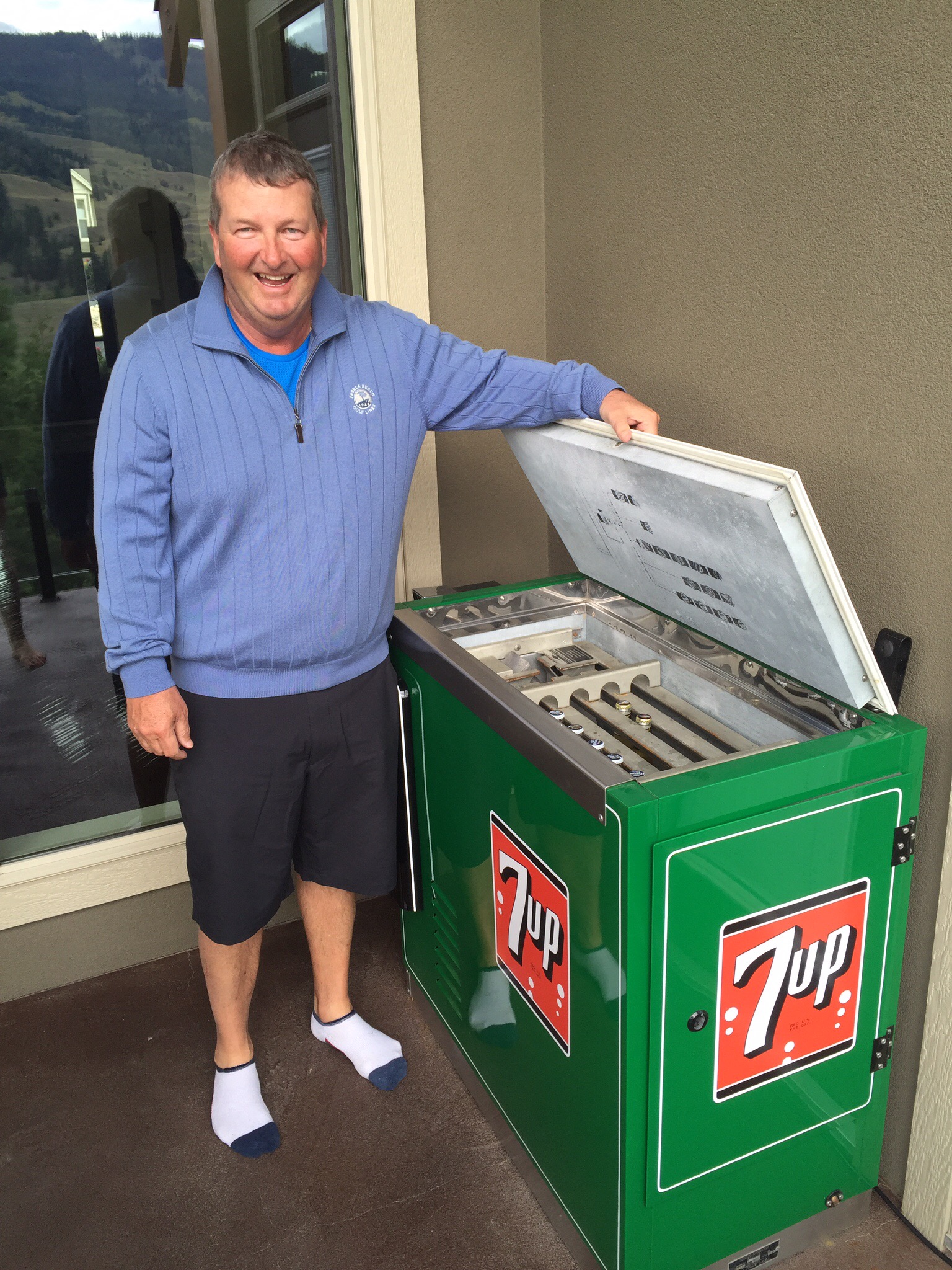
We stayed in a B & B on Monday night just out of Kelonwa.  It was called Fairways B & B and it overlooked the Black Mountain Golf Course.  It was a lovely spot and our hosts, Linda and Al were very hospitable.  Linda cooked us a beautiful breakfast the next morning – I even ate the bacon which I am normally not fussed on.  It was maple cured bacon which she dusted in flour and sprinkled with Montreal Spice – very tasty and crunchy.  Steve wasn’t too pleased that I ate the bacon – this would normally be passed his way. We ended up getting away a bit later than we had planned due to an impromptu business coaching session with Linda – Steve can never resist these opportunities. She was reasonably new to the B & B business so was grateful for the ideas. Steve was also enamoured with DJ the little dog. Not to mention the 7Up fridge that had been restored and contained coronas – thank goodness it was a bit early for partaking.

Today we were travelling through to Invermere to stay with our friends Diane and Ken.  Invermere is a community in eastern British Columbia, near the border of Alberta.  It sits on the northwest shore of Lake Windermere and is a popular summer destination for visitors and second home owners from Calgary.  Invermere is approximately 465km or five and a half hours drive from Kelonwa.

We were going to be following the Trans Canada Highway for the majority of the trip and we were going to pass through two National Parks – Mount Revelstoke and Glacier.  We stopped in Revelstoke for a look around and to grab some lunch.  Revelstoke’s economy has traditionally been tied to the Canadian Pacific Railway (CPR) and it still maintains a strong connection to that industry. However forestry, construction, tourism and retail have increased over the past decades. Today, telecommuters, freelancers, tech workers and entrepreneurs play an increasingly important role in Revelstoke’s success. 

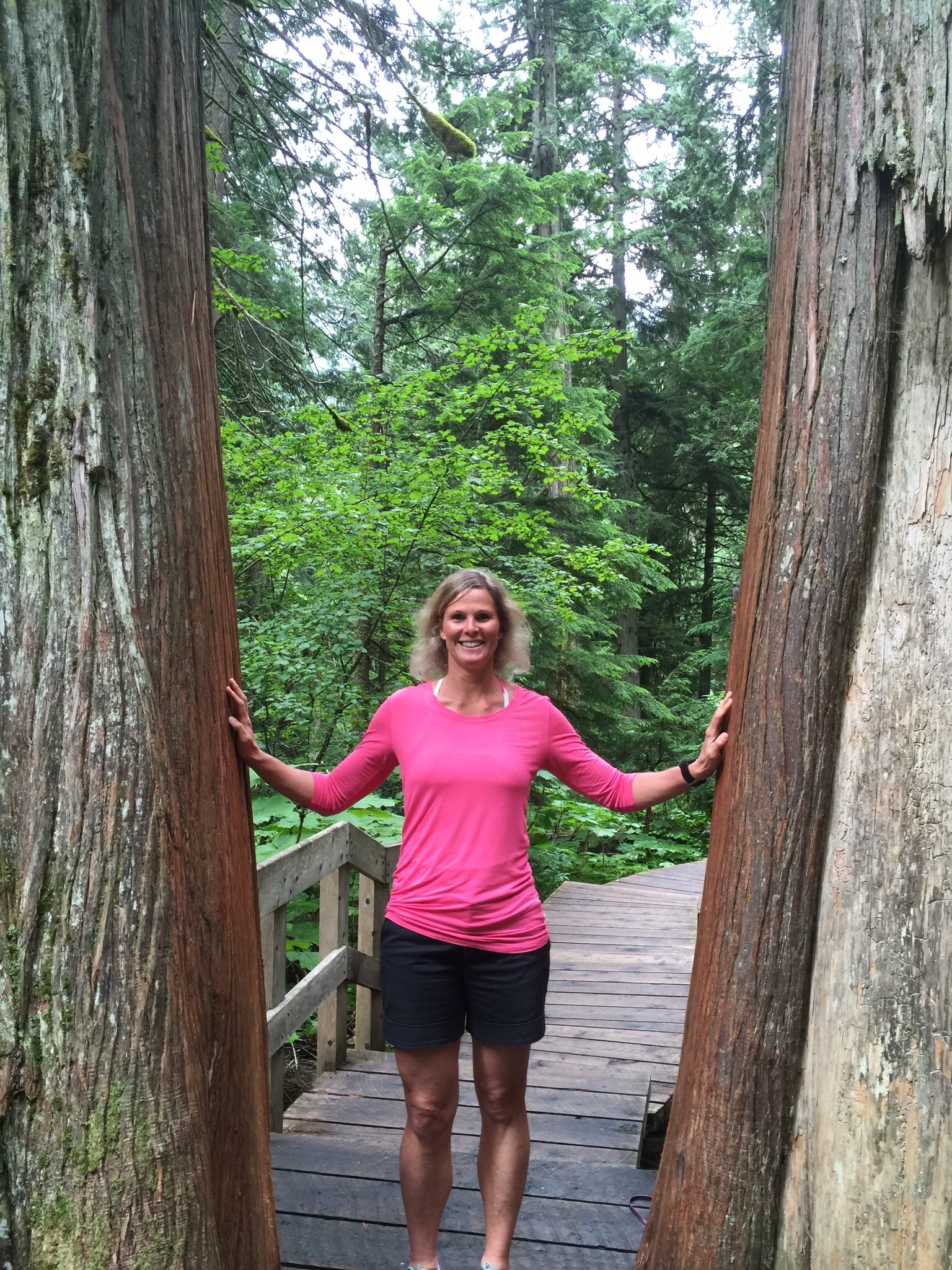
About 25km out of Revelstoke is the Giant Cedars Walk which Diane had recommended we do – it was only half a kilometre long but had a high concentration of giant Cedar Trees, some of which were more than 500 years old.  Unfortunately the weather wasn’t the best but the rain had eased when we got to the GIant Cedars Walk.  This forest is here as a result of moist westerly air flows from the Pacfic Ocean rising over the Columbia Mountains.  As this moist air climbs, it cools and produces incredible amounts of rain and snow.  The combination of substantial Spring snowmelt followed by abundant rainfall during the growing season makes this area the perfect lush forest environment.  These conditions are unique to British Columbia.  This is the only place in the world where a temperate rainforest exists this far from an ocean coastline.  

The old growth forests of Mount Revelstoke National Park are unmanaged landscapes cultivated by time where natural processes have created a collection of old and new, large and small, living and dead trees.  This delicate balance of age and form took centuries to evolve.  They are home to hundreds of species, living in fragile equilibrium, that would not exist in younger forests.

No tree lives forever, but because of their extensive root system, trees can remain standing long after they die.  Western Red Cedar snags (stab dubs dead trees) can remain virtually intact for up to 125 years.  These larger snags provide habitat for many cavity-nesting birds and mammals.  The hollow cores of large old growth cedar trees are sometimes used by black bears for winter denning sites.  


Our next stop was at the Rogers Pass Discovery Centre.  Rogers Pass is in the heart of Glacier National Park, in the midst of mountains popular for ski mountaineering, camping, hiking and mountain climbing ever since the region became accessible in 1886.  Rogers Pass is commemorated as a National Historic Site of Canada.  The pass was discovered on May 29, 1881, by Major Albert Bowman Rogers, a surveyor working for the Canadian Pacific Railway. 

He was accompanied by his nephew and ten Shuswap Indians, he first set eyes on the potential pass from the crest of Mt Avalanche.  He was forced to turn back due to lack of food and provisions, but confirmed this route a year later from the east.  In gratitude, the Canadian Pacific Railway named the pass for Rogers and presented him with a $5,000 cheque.  Initially, he refused to cash the cheque, preferring instead to display it in a frame.  I’m not here for the money he declared.

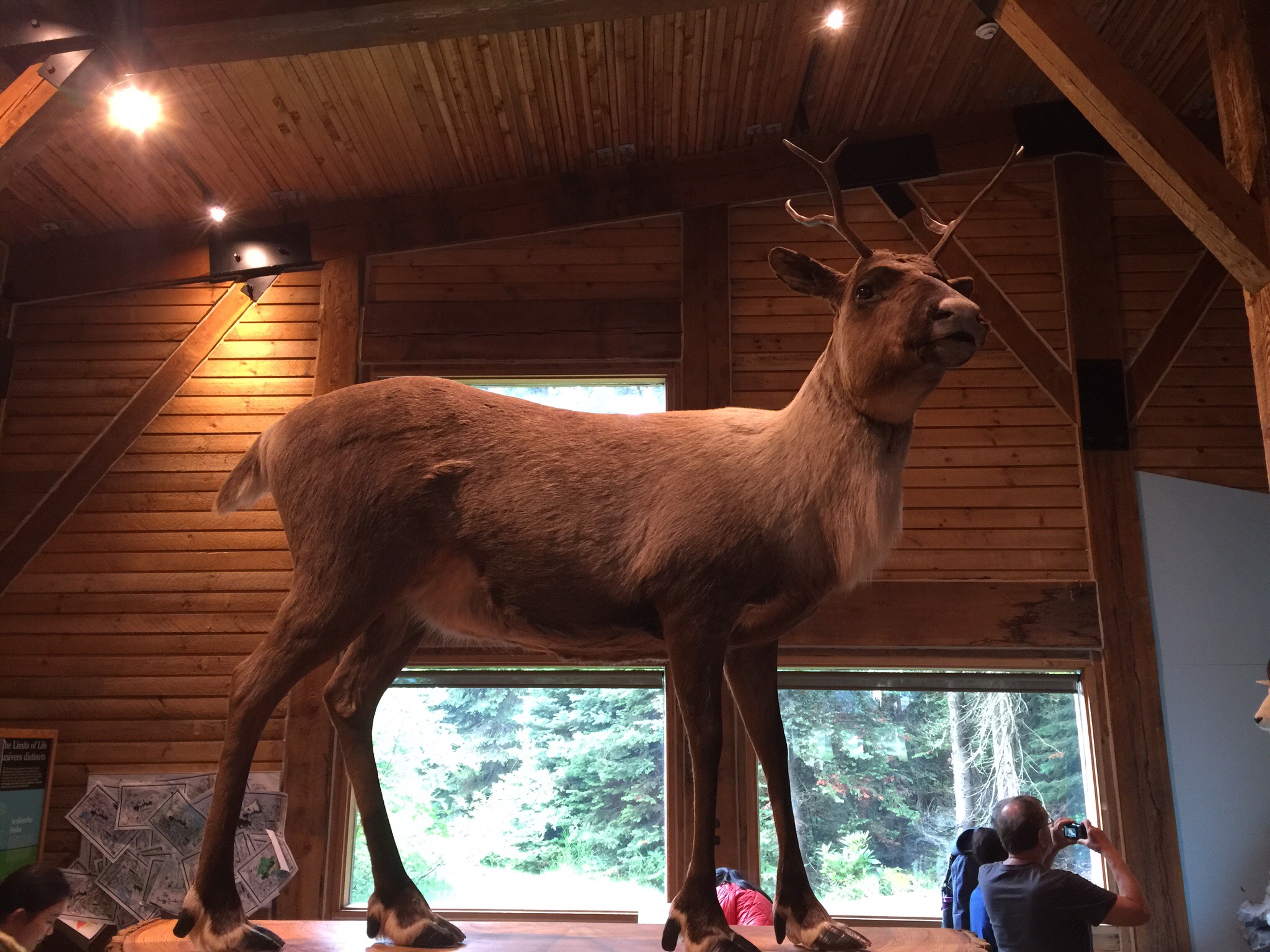
The Discovery Centre was quite busy as a couple of tour buses had just pulled up.  We had a quick look around – there were a number of stuffed animals typical of this area.  They also had a sample of their fur that you could touch – it was amazing how warm they felt and you could imagine why they were used by people as clothes.

Mountain goats negotiate cliffs using their non-skid hooves and natural sense of agility.  They live in the most rugged and inhospitable areas of the Columbia Mountains to avoid pursuit by predators.  In summer, mountain goats graze in alpine meadows, seldom ex far from an escape route.  During the warm months they shed their dense coat of winter fur in ragged clumps, giving them a scruffy look.  Mountain goats are continuously threatened by falling rock and avalanches, but the goats of Glacier National Park also face the unusual problem of avoiding Avalanche control artillery fire.  Remarkably, these herds persist, wintering just out of range of deadly shrapnel.  

The Caribou are a subspecies in North America.  They are well adapted to cooler climates, with hollow-hair fur that covers almost all of it’s body including its nose, and provides insulation in winter and flotation for swimming.  They can reach speeds of 60 to 80km per hour.

Our next destination after leaving Rogers Pass was a town called Golden.  We dropped down from the Selkirks (part of the Columbia Mountains) into the Rocky Mountain Trench, where we crossed the Columbia River. The Rocky Mountain Trench is a geological depression extending north-northwest for about 900 miles (1,400 km) from western Montana, south of Flathead Lake and through British Columbia to the headwaters of the Yukon River. The trench’s rugged floor, which is 2–10 miles (3–16 km) wide and 2,000–3,000 feet (600–900 m) above sea level, forms a natural travel route.  In this section of the trench we followed the Columbia River south towards its headwaters which are not very far from Invermere. What is really interesting is that the Columbia is in fact flowing north to Golden (where we crossed it), continuing on until what is called “The Big Bend” where it then turns to flow south not far from Revelstoke.  It crosses the Canadian border into the State of Washington, ending on the border between Washington and Oregon at its entry to the Pacific. It is the largest river in the Pacific Northwest of North America.

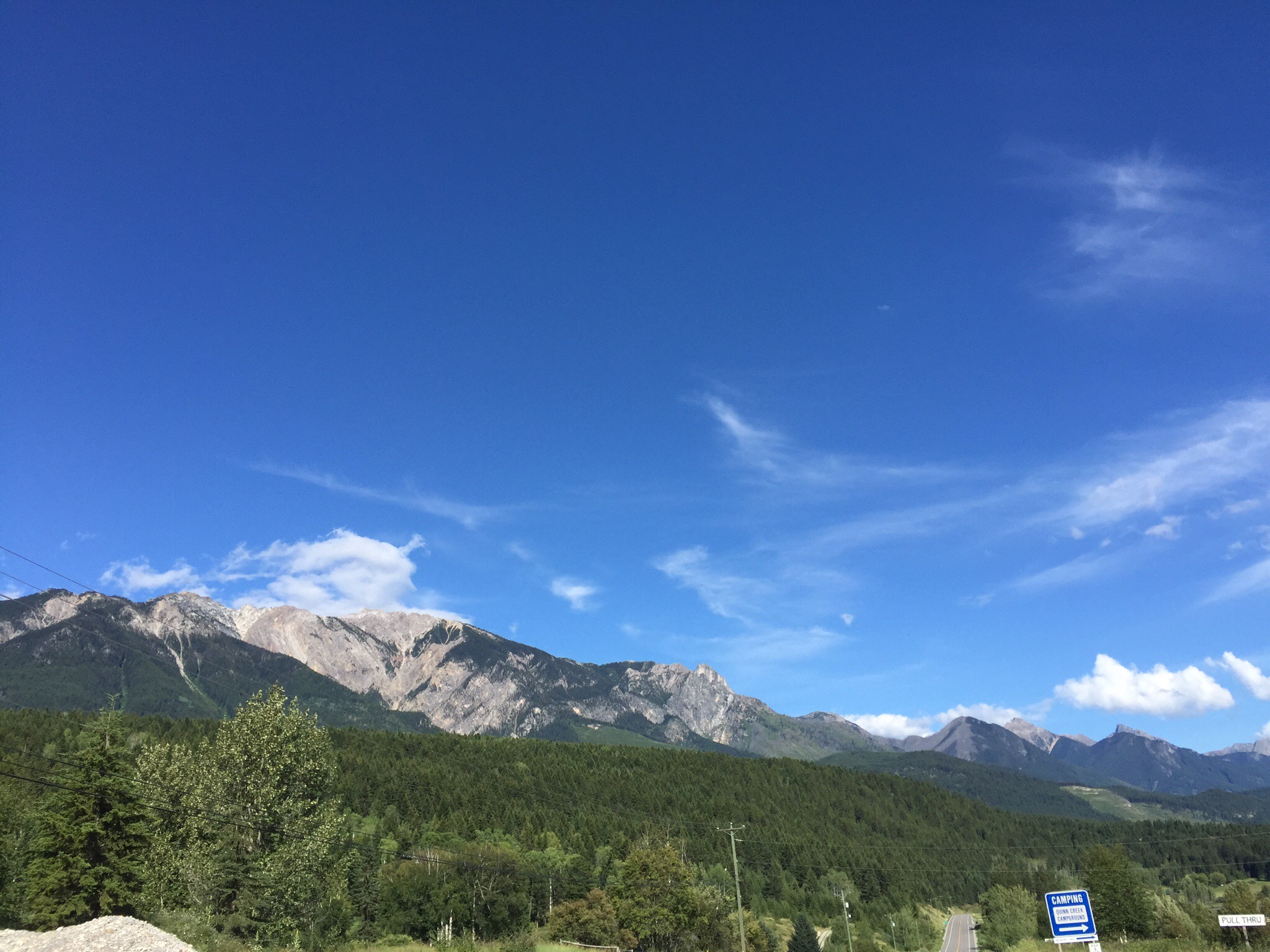
Just after Golden the sun came out so we were able to see the Rockies which are very majestic.  We had crossed into the Mountain Time Zone just before Rogers Pass so we lost an hour.  We arrived into Invermere about 6.30pm to a warm welcome from Diane and Ken.  We met Diane and Ken in the Hawke’s Bay back in 2011.  They were travelling around NZ for two months and we were staying at the same B & B in the Hawke’s Bay.  We got chatting over a glass of wine and it turned out they were going to be in Auckland later in their trip so we invited them to come and have dinner.  We have kept in touch over the years and finally we are visiting them in their own backyard.  They had prepared a feast for us which was so good – Steve was in heaven with the salmon.  The weather had definitely warmed up so we sat outside under the mosquito proofed pergola.  

Posted in Canada | 2 Comments

Kelonwa Golf & Country Club – Okanagan Valley, Canada

Monday the 18th July was my 45th birthday and this year I celebrated in the beautiful Okanagan Valley. We had a relaxed start to the day before a nice walk around the lake down in Kelonwa.  We then enjoyed a relaxed lunch at Bliss Bakery before heading out to the Kelonwa Golf & Country Club.  We were lucky enough to be invited by Mike and his wife Brenda who are members there.  Steve met Mike while playing in the Holland Derby at Predator Ridge.

The first golf in Kelowna was played in 1899 on a 9-hole course located near the present day City Hall and Memorial Arena. In 1914 the golf course moved to a new location in the Bankhead area where a 9-hole course was established. This location proved unsuccessful due in part to members leaving to join the Armed Forces to fight in World War 1 (1914 – 1918).

In 1920, the members decided to purchase and move to the present location known then as the Wolaston property. The Club had 72 members at that time. Funds to purchase the property were raised by the sale of shares to members. The Club was incorporated in 1920 as the Kelowna Golf Club. Play commenced on the new course consisting of nine holes with sand greens.  Due to an increasing membership the course was extended into an 18 hole course which was officially opened in 1962.  

We teed off at 3pm and it was really hot which was a nice change.  It is a really nice course – Steve and Mike were enjoying playing off the Blue Tees rather than the Tips which they had played off in the tournament.  On about the 6th hole the skies started getting darker and we could hear thunder rumbling in the distance.  We also saw the odd bolt of lightening.  Mike didn’t think we would be affected but we did get the odd spot of rain.  We were just about to putt on the 9th when the hooter sounded for everyone to get off the course.   We did putt out and then decided to go to the Clubhouse for an early dinner.  It was a Monday which is Seniors Day at the Club so they had a CAD12 roast beef special plus dessert.  Steve thought I now qualified given I was now 45!

After the roast beef the thunder and lightening threat had passed so we went back out to finish the back nine.  We had dessert after we finished which was a chocolate mint cake – I decided that could be the equivalent of my birthday cake.

Gary had dropped us at the golf course before leaving the car at the airport – he was flying back to Calgary.  He had only bought one set of keys with him so on the Sunday we had a debate about what the best course of action was re where to leave the keys etc…  It was decided after consultation with some of the guys that Kelonwa is a pretty safe place so the car and our luggage would be fine in the airport carpark with the keys hidden in the car : 0. Living dangerously in the Okanagan Valley!

Mike and Brenda dropped us at the airport and we found the car and our luggage safe and sound.


The logo on the flag is Ogopogo – Lake Okanagan’s answer to the Loch Ness Monster
We saw many Marmots on the golf course – we had first come across Marmots in Switzerland up on a mountain where they were very shy.  These guys were very used to people and were living the life of Riley eating the lush grass on the golf course.

Lake Okanagan

My birthday cake which was yummy 🍰👌🏼😚

Posted in Canada, Okanagan Valley | 2 Comments

Kettle Valley Railway, Myra Canyon – Okanagan Valley, Canada

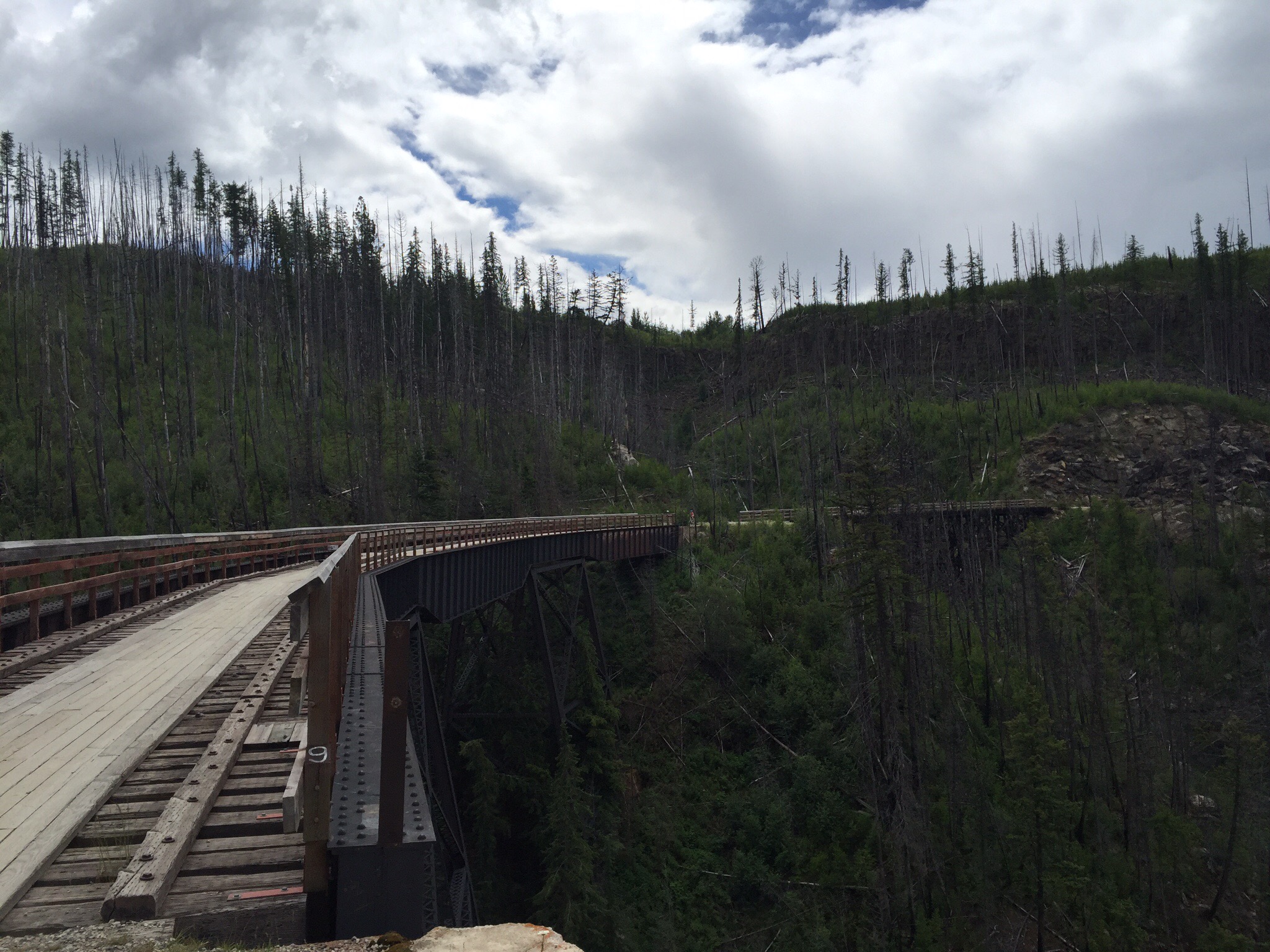
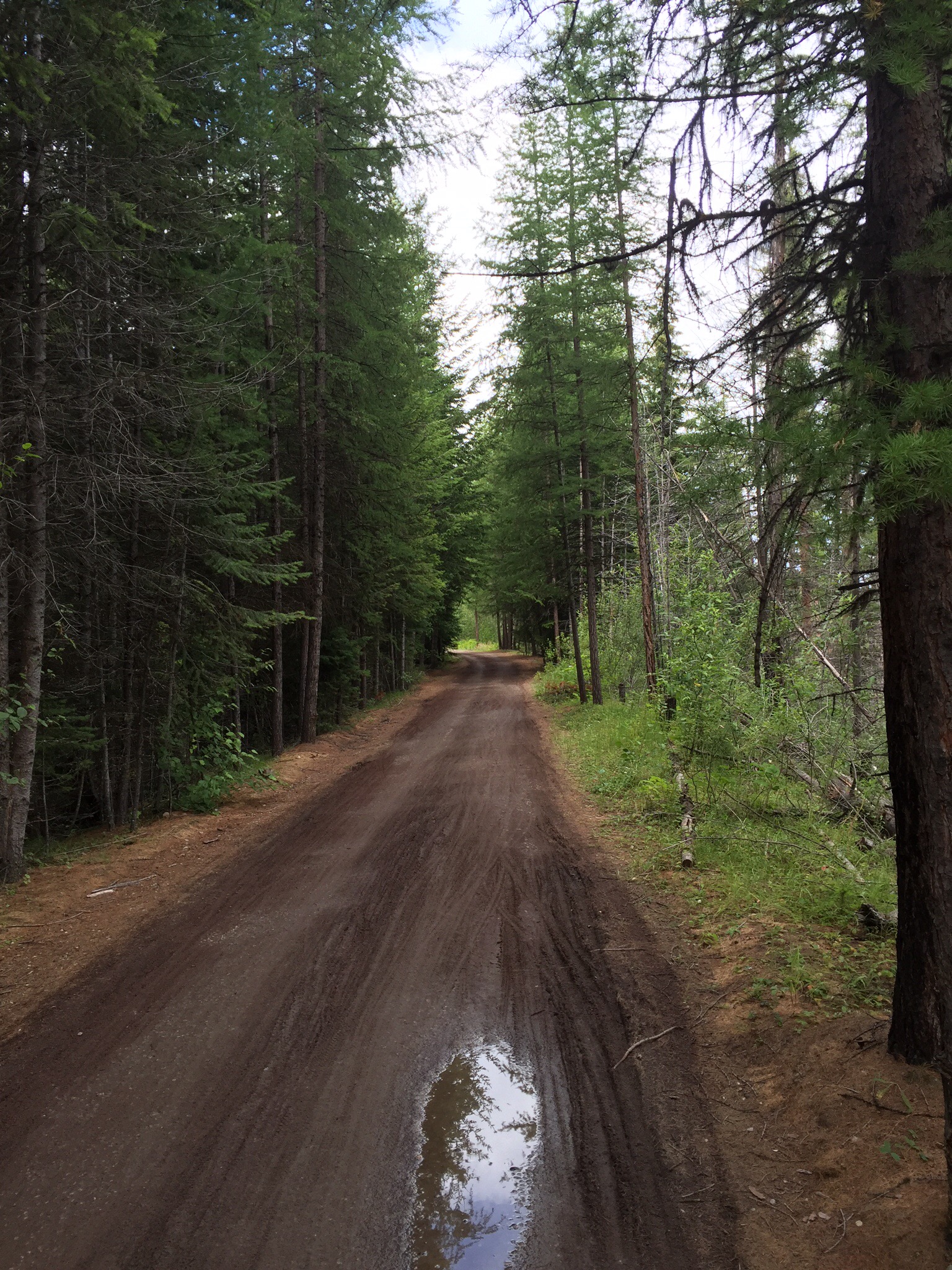
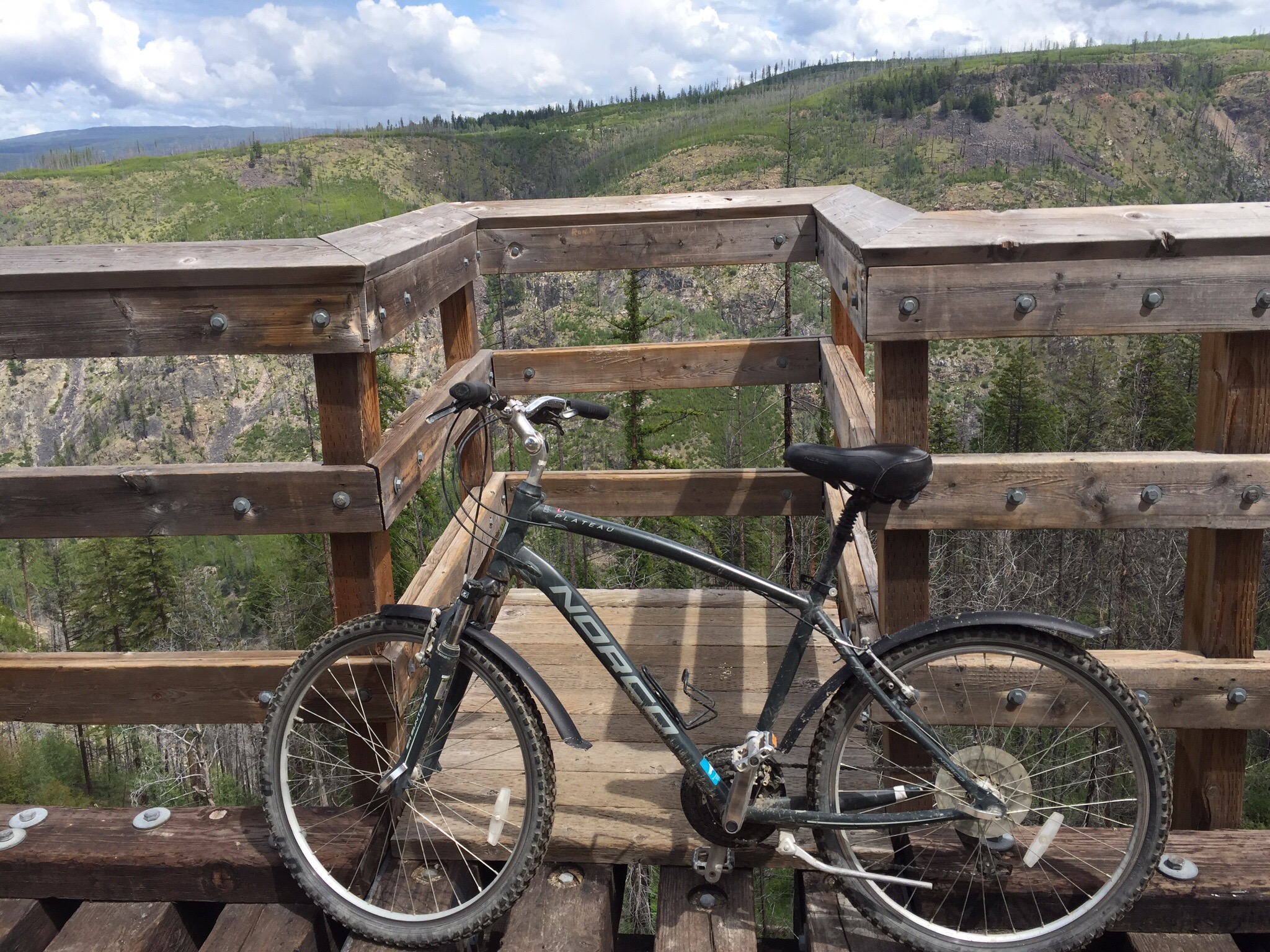
On Sunday I decided to check out the Kettle Valley Railway (KVR) in Myra Canyon.  It took me about an hour to get there with the last 8km being on a forestry road.  It is a popular spot with lots of people up there to go hiking or biking.  I hired a bike and set off – the trail is 12km one way, when you get to the end you turn around and come back.  You cross 18 trestle bridges and go through 2 tunnels.  The ride was easy but the gradient deceiving.  As I started out it appeared I was going downhill – I thought I would have a slight uphill ride coming back.  On my return trip it appeared I was going downhill also.  Apparently the gradient is only 2% so is relatively flat.

I came across a dog that carries his own water pack.  I spoke to the owner and she said “we have to carry our own water, so he does too”.  He was a Husky dog and apparently they enjoy carrying somethings as it makes them feel like they are working.

I found the majority of the scenery quite stark, barren and not particularly attractive.  The forest has been milled up there and the remnants of the 2003 fire remain with a lot of charred trees.  It was good to be out on the bike though.

When I drove back down the forestry road it had obviously rained so it was a bit muddy.  The car got quite dirty so I went in search of a car wash : 0


The Kettle Valley Railroad was a subsidiary of the Canadian Pacific Railway that operated in the Thompson-Okanagan region of southern British Columbia.

It opened in 1915 and was abandoned in portions beginning in 1961, with the final segment falling into disuse in 1989.

Much of the railroad’s original route has been converted to a multi-use recreational trail, known as the Kettle Valley Rail Trail, which carries the Trans-Canada Trail through this part of British Columbia.

Freight carried on the KVR consisted primarily of ore from the Kootenay region of British Columbia, as well as forestry products and fruit from the Okanagan. Finished goods were primarily brought into the Southern Interior on trains heading Eastbound. During the Kettle Valley Railway’s lifespan, on numerous occasions it was called upon to act as “The Second Mainline” when washouts, avalanches and rock slides closed off the main CPR line through the Fraser Canyon. CPR recognized the benefit of having a second railway transiting through British Columbia, so in the 1950s, they set off on an upgrade program that saw the weight-bearing strength of the rails increased, as well as bridge and trestle improvements which brought the railway up closer to mainline standards.

One of the most popular sections of the hiking trail along the former Kettle Valley Railway line is the section through Myra Canyon. Myra Canyon is located South of Kelowna on Okanagan Mountain. The section of line originally transited between Midway and Penticton. When the railway was built, the section of railway between Myra station and June Springs station required 18 wooden trestles and two tunnels in order to traverse the deep canyon.

For years after the abandonment of this section of rail line, the area was a noted attraction, with its relatively gentle grade, it became a hiker and cyclist haven. Years of disrepair on the trestles began to take its toll on the line. In some cases vandals had removed railway ties on the larger steel bridges, thus creating large gaps. In some cases hikers and cyclists wanting to cross the trestles would be required to walk on sections of steel no wider than a foot across in sections where the ties were removed. This would not normally be an issue, but many of these trestles and bridges were hundreds of feet in height. However after a fatal accident involving a cyclist on one of the trestles, many people petitioned to have the bridges and trestles made safer. These upgrades included repairs after numerous years of disrepair, and the installation of handrails and planks so that people did not have to jump between each railway tie.

This section of the railway was designated a National Historic Site of Canada in 2002.

From August to September 2003, lightning sparked the 2003 Okanagan Mountain Park Fire in Okanagan Mountain Provincial Park. This fire rapidly grew in strength and size and made its way Southeast across Okanagan Mountain. This fire engulfed many portions of the KVR between Penticton and McCulloch Lake. Despite concerted efforts by the firefighters, the fire claimed 12 of the 18 trestles within Myra Canyon. In addition, the bridge decks of two of the metal bridges were also destroyed in the fire.

Soon after the Okanagan Mountain Park Fire in 2003, the B.C provincial government announced that it would rebuild the damaged and destroyed trestles and bridges. In addition, safety improvements including stabilizing rock faces along the line and clearing rock also has taken place. The trestles have since been rebuilt and the trail is fully open to the public. There are indications that plans for further improvement are in place, such as a restroom located at approximately the middle of the trail.

Summerhill Pyramid Winery

Two people had recomended visting the Summerhill Pyramid Winery and it was not far from the KVR.  It is a lovely spot with great views over Lake Okanagan. It was a very popular spot with the tourists with about three tour buses in when I got there.  It was the 17th of July but in NZ it was already the 18th of July which is my birthday so I had been receiving many messages so felt I should have a little NZ celebration – lunch for one overlooking the Lake was just the ticket.

Summerhill is committed to producing 100% organic wine, and has received Demeter Biodynamic certification for our Kelowna vineyard in 2012. Certified organic status was achieved in our cellar in 2007, allowing us to display the Canadian certified organic logo on our bottles, ensuring that a level of quality and purity can be expected by the consumer.

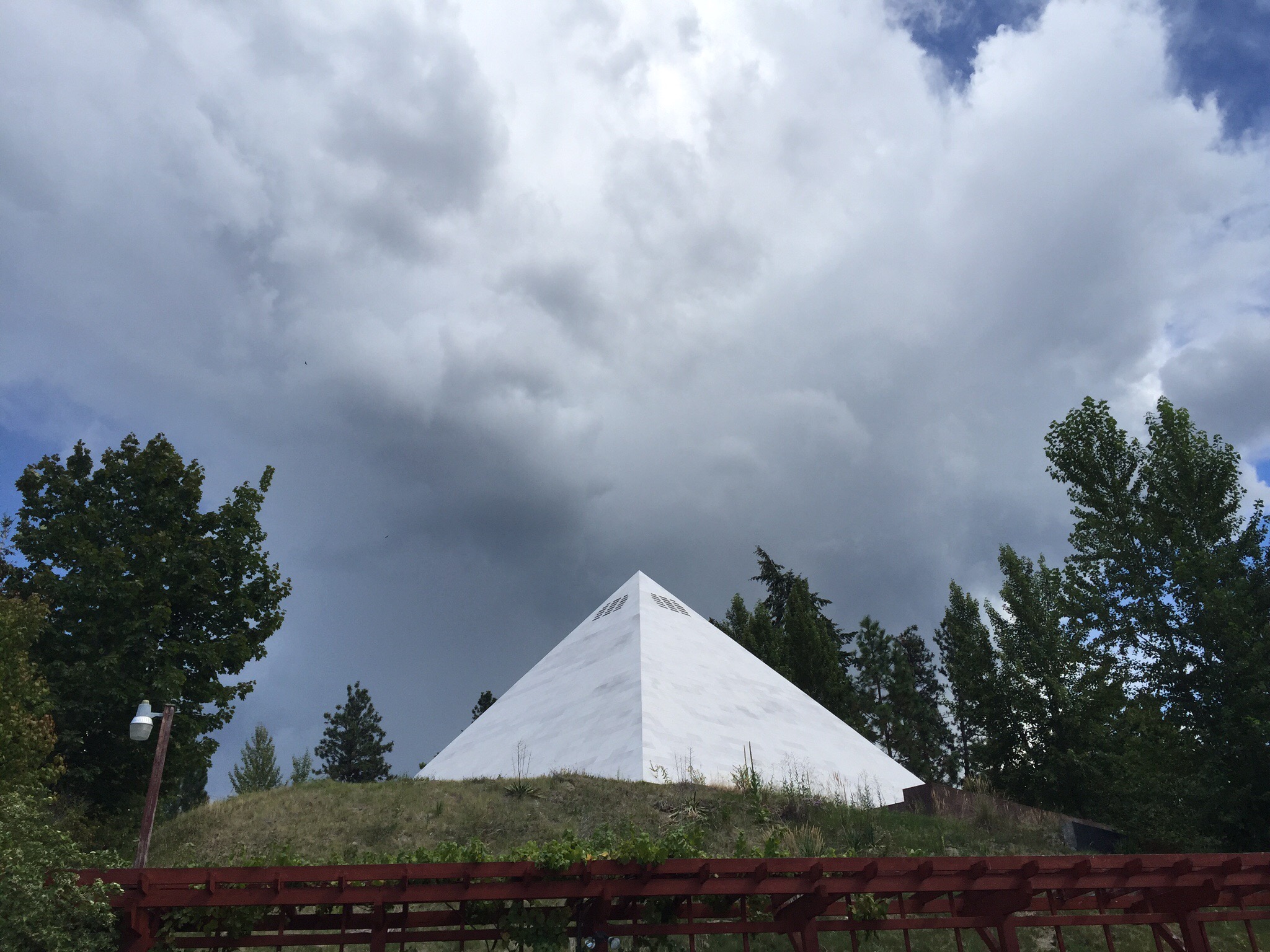
They have also built a replica of the great pyramid in Egypt to cellar there wine in.  The reasons for this are very interesting.  The Summerhill Pyramid is second only to the Great Pyramid of Egypt for alignment and precision.   The message is profound. They have done a twenty year experiment proving the effect of sacred geometry on liquids with a twenty year track record of international gold medals. 

The word Py-ra-mid means “fire in the middle”. We all have this fire in the middle. It is our hearts, our souls. We are mostly liquid and we are affected just like the wine is effected. The effect is clarification. If a wine has a flaw in it, the flaw is accentuated. If the wine has good qualities, they are enhanced. We humans are mostly liquid so when we enter this sacred chamber, it is a grand opportunity to clarify our own inner selves. This chamber helps us to get to the knowingness of who we are. We are electrical in nature, with impulses running from our brains through our spinal columns. We are receivers, we are conduits, and this chamber enhances our receptiveness, opening the left and right sides of our brains, much like the dolphins, whales, and elephants who are in touch with Essence, the all-one ‘soul of the world’.

The experiment is an overwhelming success! The conclusion… There is a definite and profound effect on liquids placed in sacred geometry. Three years of conclusive taste test comparisons in the 900 ft² pyramid led to the building of our new Pyramid that is a 4 story high 3249 ft² 8% replica of the Great Pyramid. Every day at 2 o’clock for three years, we toured the smaller pyramid with the general public. We did taste comparisons of the same wine, bottled on the same day, and served at the same temperature. One was stored in the pyramid for 30-90 days and the other never having being put in the pyramid. The results were overwhelming. The tasters chose the pyramid-aged wine almost unanimously every day as being smoother and having a better aroma. These experiments boosted our convictions that indeed, a precisely constructed pyramid (that was oriented to true north versus magnetic north, and that was constructed without the use of ferrous metals so that it would not be reoriented to magnetic north) becomes a chamber for the “clarification” of liquids. For instance, a bad tasting wine, or juice, would become more foul tasting. The chamber seems to bring out flaws as well as exaggerating the qualities. We humans are made mostly of liquid and seem to be affected by the chamber as well. We can actually feel our own “life force energy” strengthen within the Pyramid!


Posted in Canada, Okanagan Valley | 1 Comment

Predator Ridge – Okanagan Valley, Canada

We have just spent the last four nights at the Predator Ridge Golf Resort.  Steve was invited to play in a 54 hole tournament by our Canadian friend Gary.  This tournament is called the Holland Derby as it was initiated by Ken Holland.  Ken Holland is the General Manager of the Detroit Red Wings Ice Hockey Team who play in the National Hockey League (NHL) so there were a lot of guys at the tournament that have had or currently have an association with NHL.  Ice hockey is the national sport in Canada.  Ice hockey and the NHL are all new to us so it was fascinating learning about how the league works and who are the major players etc…

Ken Holland has gained a reputation as one of the most successful General Managers in the NHL.  Under his leadership as GM the Red Wings have won the Central Division ten times, the regular-season Conference title five times, the Presidents’ Trophy four times, and the Stanley Cup three times, and won more regular-season games (789) and postseason games (118) than any other NHL team.  The Stanley Cup has been around since 1893 and is the oldest sports trophy in North America.  Apparently it is the creme de la creme of NHL.  After a series of league mergers and folds, it became the championship trophy of the National Hockey League (NHL) in 1926. Today, the championship round of the NHL’s playoffs is a best-of-seven series played between the champions of the Eastern and Western Conferences.

We arrived into Kelonwa (pronounced Colona) on Thursday – we flew from Vancouver which is only an hour’s flight.  Gary picked us up from the airport – it was good to see him again.  We first met Gary and his wife Anita in 2014 – we were on a shore excursion in Naples and the Isle of Capris and sat next to them and their Canadian friends Pat and Kaye on the ferry.  It turned out they were all keen golfers and the conversation went from there.  Steve and Gary met up most days after that on the cruise ship to play mini putt – apparently Steve holds the Canada Cup in mini putt.  Anyway we kept in touch and now we have come to visit them in their native Canada.  They actually live in Medicine Hat, Alberta so we will be heading that way next week.

Thursday was a practice round on The Ridge course and Steve and Gary were partnered together.  Pre match they were like little kids getting ready for a birthday party – they were so excited to get out on the course.  They played pretty well and were very happy with themselves although they were just out of money contention.

The tournament proper started the next day and it was a different kettle of fish – you have drawn partners and you play off the Tips – these are the tees right at the back, effectively where the pros would play.  Pretty hard work for the old fellas :). Steve’s partner was Gilly who has a reputation for drinking whisky and smoking cigars all the way around the course.  They had fun but didn’t do particularly well in the golf stakes.  Some of the Canadian guys are quite touchy feely, hugs all around etc… When you do a good shot.  Steve is not used to this and it became a bit of a joke – he reckons he was too scared to get a birdie due to the amount of man love he would experience!  The first day you played to your normal handicap, the second it was halved and the third it was halved again.  It was the best team score per hole that counted.

Overall Steve played OK but found it really tough playing so far back.  He loved meeting all the guys and enjoyed many a drink with them all each evening.  Ken hosted a pizza party at his house on the shores of Lake Kalamalka which we were invited to.  What a beautiful spot.  We all made our own pizzas and cooked them in the outdoor pizza oven.  I got to meet the guys and some of the wives which was good – there were about 40 guys that played in the tournament.  I got lots of hugs too!  It turns out Ken isn’t much of a hugger so him and Steve devised a plan for the final night.

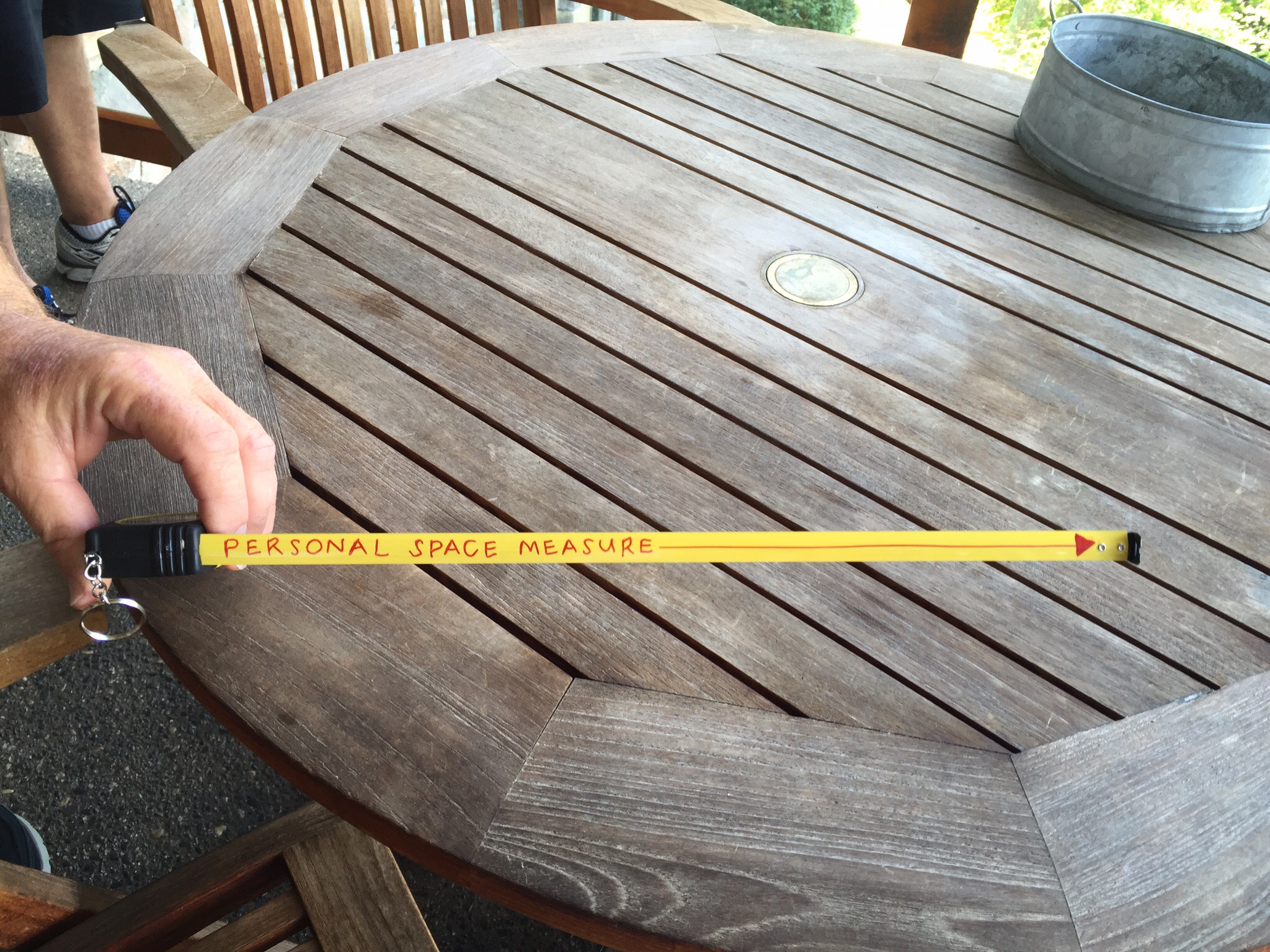
I acquired a couple of tape measures on my travels and we made “Personal Space Measures” for Gilly and Gary who was the biggest hugger of them all.  Steve presented these to them at the final presentation and apparently all the other guys thought it was hilarious.  The personal space measure was originally devised by Rose, one of my Business Like colleagues who thought Steve sat too close to her when they were working at her desk – it was a bit of a joke between them so Rose presented Steve with his own “Personal Space Measure” – ironic really : ). Steve’s defence was that the desk was too small.

All in all Steve had a blast and we really enjoyed staying at the resort.

Steve on the practice range on Day 1

The Practice Facilities   

The Lodge where we stayed


 Steve and GillySteve, Gilly and the other pair they played with – Dan & Tony.  Tony, as well as having his own private practice he is the Doctor for the Detroit Red Wings

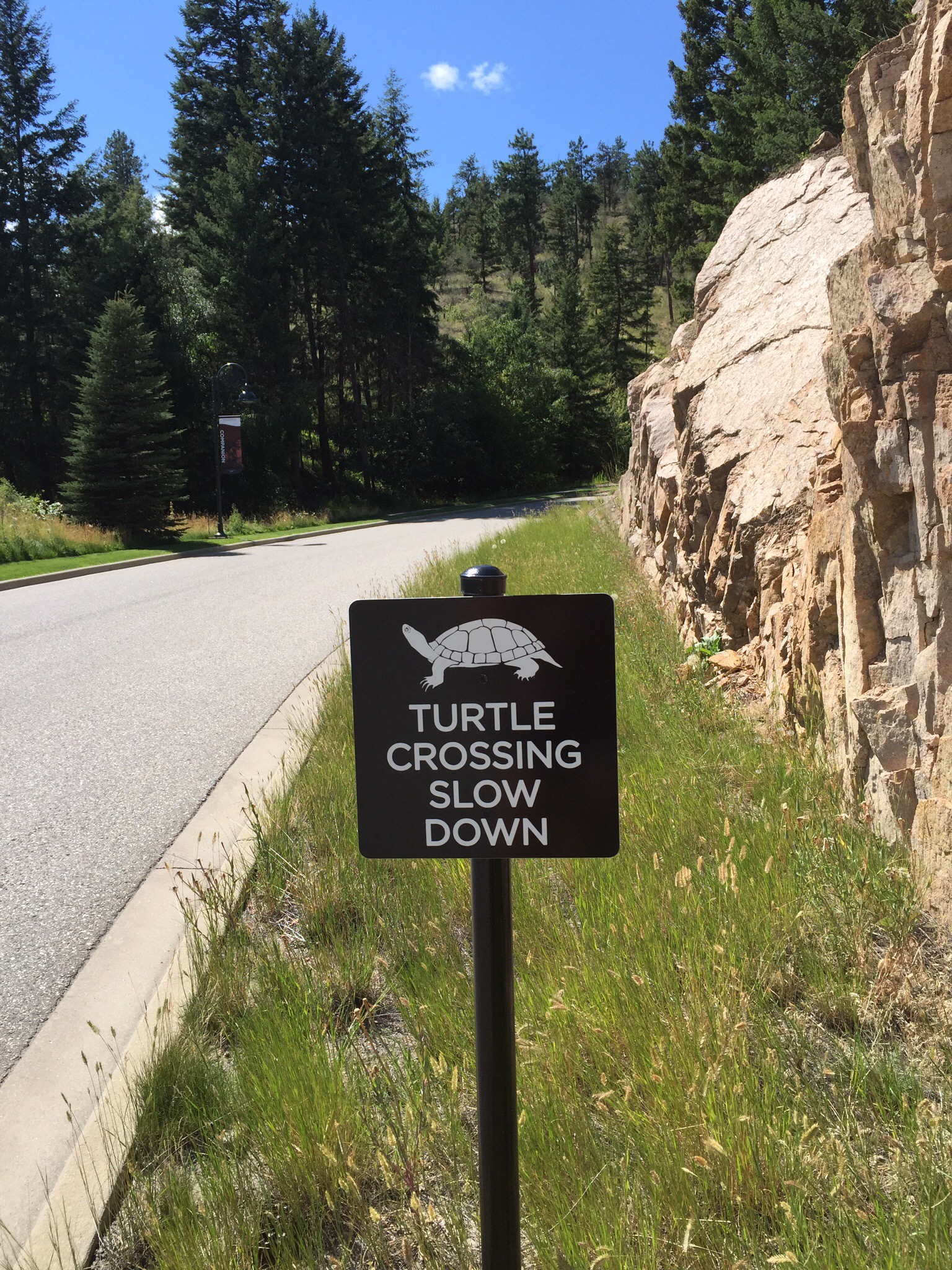
Meanwhile I was a golf widow but had no problem entertaining myself. There are 25km of biking and hiking trails around the resort so I went exploring on these most days. The first day I did a walk up to the Lake Okanagan lookout. It took me a little while to find the start of the trail – my Adventure Racing buddies would have been proud of me for preservering with map in hand! I came across a couple of amusing signs on day one – “Turtle Crossing Slow Down” and “Warning Bear Sighting in Area”. I must say I jumped a couple of times when I heard rustling in the bushes! I did see a small snake one day too – it slithered across the path in front of me. It was very well camouflaged and it was only the fact that it was moving that I managed to spot it.

It is a beautiful spot and I enjoyed all the walks. The scenery reminded me of Switzerland with the mountains and lakes.

I drove myself around the Okanagan Valley as you can see from my other blogs. Steve was freaking out that I would ding the car or drive up the road the wrong way – it is left hand drive over here. I had no problems and feel quite comfortable driving on the other side of the road. Steve experienced that the night I drove them to the pizza party so has decided that perhaps I should do the majority of the driving going forward!


Predator Ridge Golf Resort

Predator Ridge Golf Resort is a 36-hole golf resort community in the Okanagan Valley outside Vernon, British Columbia.
Predator Ridge Resort spans 1,200 acres and is home to a community of over 800 people. 

Opened in 1991, Predator Ridge originally consisted of 27-holes, designed by Les Furber. The three nine-hole courses were named after resident birds of prey: The Osprey and The Red Tail (built in 1991) and eventually The Peregrine built in 2000.  To expand into a 36-hole golf facility, architect Doug Carrick was hired to build 9 new holes as well as renovate the original 9-hole Peregrine course. This new 18-hole golf course was renamed The Predator Course.

In 2010, Carrick opened another 18-hole course which was named The Ridge Course. Predator Ridge is the only Golf Digest 4.5 star course in the Okanagan, and was voted as the best BC golf course by the Vancouver Sun.

Designed by Carrick, the Ridge Course is a par-72 championship 18-hole course which opened in July 2010.[4] It was voted best new golf course in Canada in 2010 by Scoregolf. From the tournament tees, The Ridge Course measures 7123 yards with a slope rating of 133 and course rating of 73.8.

The Predator course was designed by Furber. The course hosted the Telus World Skins Game, twice, in 2000 and 2008.  It is a par-71 golf course with elevated greens and links-style bunkers. From the tournament tees, The Predator Course measures 7090 yards with a slope rating of 137 and course rating of 74.2.

Posted in Canada, Okanagan Valley | 1 Comment

Exploring Kelonwa & The Okanagan Valley – Canada

On Saturday morning I took a free walking tour through the Culltural District of Kelonwa.  Apparently the distance was only 2km but we saw a lot of things and the tour went for two hours!  Our tour guide Robin was originally from Adelaide but has lived in Kelonwa since 1968.  Throughout his working life he was a professional tour guide and he had bought many tours down to NZ, some were land tours and some were on the cruise ships.  He knew Napier well and said he loved to visit NZ. 

Kelowna is a situated on Okanagan Lake in the Okanagan Valley.  It serves as the head office of the Regional District of Central Okanagan. Its name derives from an Okanagan language term for “grizzly bear”.  Kelowna is the third largest metropolitan area in the province and ranks as the 22nd largest in Canada, with a population of 179,839 in 2011. 

The service industry employs the most people in Kelowna, the largest city in the tourist-oriented Okanagan Valley. In summer, boating, golf, hiking and biking are popular, and in winter, both Alpine skiing and Nordic skiing are favourite activities at the nearby Big White and Silver Star ski resorts.

Kelowna produces wines that have received international recognition.  Okanagan College and University of British Columbia are the predominant centres for post-secondary education. Over 5000 full-time students attend Okanagan College. 

With scenic lake vistas and a dry, mild climate, Kelowna has become one of the fastest growing cities in North America. The appropriate management of such rapid development (and its attendant consequences) is a source of significant debate within the community. Kelowna is the fourth least affordable housing market in Canada, currently maintaining the classification of “Severely Unaffordable”.  Because of the Okanagan’s climate and vineyard-filled scenery, it is often compared to Napa Valley, California.
The meeting point for the tour was the Laurel Packinghouse.  The Laurel Packinghouse was built in 1917, using bricks made locally from Knox Mountain clay. At that time, what is now Kelowna’s Cultural District was packed with fruit warehouses, packinghouses, canneries, and a sawmill. Horses, boxcars, and trucks jostled for position on tracks and dirt roads.

A fire in the 1960’s destroyed much of the industrial district, but the Laurel was a working packinghouse until the 1970s. When it was slated for demolition in 1982, members of the community rallied to save it, making it Kelowna’s first designated heritage building. The building was revitalized in 2010.

Today the Laurel is a unique and atmospheric rental space for events such as weddings, private functions, and community events. All proceeds from rentals help the Kelowna Museums Society support the preservation and presentation of Kelowna’ s heritage.  It houses a wine museum and an orchard industry museum.This region has many similarities to the Hawke’s Bay back in NZ with it’s orchard and wine industries.  The climate is also similar although it gets cooler in the winter which means they cannot grow citrus fruits.

Cultivated fruits have been grown in British Columbia since the early 1800’s, but the commercial orchard industry in the Okanagan Valley began just over a hundred years ago.  European explorers introduced many fruits to North America and the western world. Stocks of grafted fruit tress were transported across the America’s by wagon and transplanted in regions of the Pacific Northwest where they thrived in the mild climate.

In 1859, a French Catholic mission, Father Charles John Felex Adolphe Marie Pandosy, arrived in the Okanagan and established the first white settlement in the valley. In 1862, Father Pandosy planted the first Okanagan fruit trees, apple seedlings, which were brought from the St. Mary’s Mission in the Fraser.  Other early settlers in the Okanagan concentrated their agricultural efforts on growing grain and cattle ranching, but over time began to grow small plantings of fruit trees, mostly to supply themselves.

Although paying high prices for fruit that was brought in was difficult, the region wasn’t yet suited for growing commercial orchards. The absence of a needed railroad for rapid and gentle transportation of crops was a barrier to getting fruit to a larger market.  As time passed, the Pandosy mission expanded their crops with other fruits, and gave names to apple varieties such as ‘Fallawater’. They bought nursery stock at Olympia and transported it up the Columbia to the Okanagan Valley by canoe.  For several years, the Pandosy Mission was the only orchard in the area.

Father Pandosy died in Penticton in 1891, and in the same year, Lord Aberdeen (Sir John Campbell Hamilton Gordon, 7th Earl and 1st Marquess of Aberdeen and Temair), a Scottish born politician and colonial governor, purchased 13,000 acres of land in Coldstream BC (The Coldstream Ranch) and moved there to pioneer fruit farming.

Lord Aberdeen, former Governor General of Canada, and his wife purchased, sight unseen, 480 acres of land (The McDougall Ranch) near the Okanagan Mission, in 1890, while touring through Canada. This property was intended as a home for Lady Aberdeen’s brother. This ranch was named ‘Guisachan’, after the estate of Lady Aberdeen’s father.

In 1892, two 100 acre lots of orchards were planted on the two Aberdeen estates. Okanagan fruit trees included apricots, peaches, apples, crabapples, prunes, cherries, plums, raspberry canes and strawberries.  Lord Aberdeen was appointed Governor General of Canada in 1893 and held this position for five years. The Aberdeen’s built a jam factory at Vernon to process the much anticipated crops of the small berry fruits, and subdivided a portion of their Coldstream property, selling 900 acres in just a year.

The Aberdeen’s grew the Coldstream Ranch into one of the largest producers of fruit in the British Empire. But not without it’s difficulties. Improper care, and other factors, caused problems with the hundreds of acres of Okanagan fruit planted on the Guisachan and Coldstream estates, and by 1896 the entire Guisachan planting was pulled, as well as most of the Coldstream orchard, delaying fruit producing crops for another number of years.  Following the Aberdeen’s early footsteps other commercial growers began planting large orchards, while other ranchers and farmers planted smaller orchards.

As the economic depression began to ease after the Klondike Gold Rush of 1898, the Okanagan fruit industry began to flourish.  John Moore (JM) Robinson, a prairie farmer from Manitoba traveled to the Okanagan on a gold mine venture near Lake Okanagan in 1897. This venture failed, however Mr. Robinson saw the potential of the fruit industry and began selling land to interested prospects in an area he called ‘Peachland’.

He then expanded his developments to include the Summerland (1906), and Naramata (1907) settlements, setting up irrigation and enticing settlers into fruit farming in the communities of Peachland, Summerland and Naramata.

In 1910 Penticton heard news that it would be the headquarters for the new Kettle Valley Railway, and the rail would finally link transportation between the coast and the Kootenays. The railway would provide a much needed form of efficient transportation for local products, opening the entire Okanagan fruit orchard industry to more distant markets.  With Penticton’s economic future secure, the railway’s arrival brought multitudes of jobs and the town’s population more than doubled by the time the line was finished in 1914.

With some successful, and some not so successful, Okanagan fruit growing came innovation, technology, and horticultural research.  The Dominion Experimental Farm, also known as the Summerland Research Station, was established in the Summerland ‘dry belt’ area in 1914 for trialing different fruit varieties, and studying fruit growing methods such as fertilization, pruning, disease resistance and hardiness.  The first apple breeding program began in 1924 by R.C. Plamer.

Over the years, apple varieties produced included Sinta, Spartan and Summerred apples, as well as cherry varieties including Star, Van cherries, Lapins, Stella and the Sam cherry. The Skaha apricot was also the product of the Summerland Research Station.  Today, the Agriculture Canada’s Pacific Agri-Food Research Station, scientists are continuing to develop new varieties of apples, cherries, grapes and other fruits.

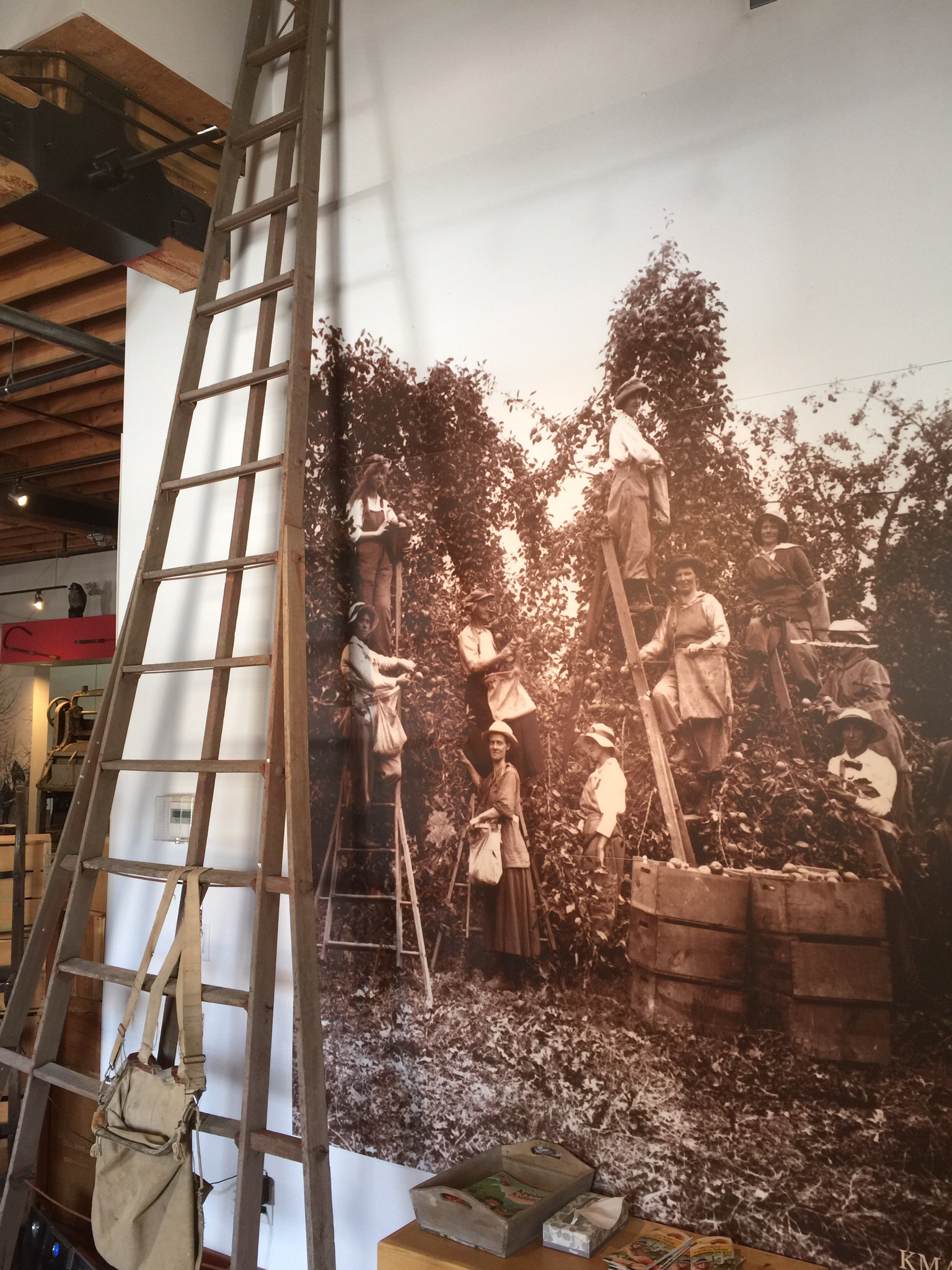
The woman pictured in this photo were known as the apple wrapper flappers – each Apple was wrapped in tissue paper and then artfully loaded into boxes maximising the numbers in the box

This is the size of the ladders they used to use to pick the apples – they now grow trees that are a lot smaller so no ladder is required making it less time consuming.  The smaller trees produce more fruit than the larger trees too.

The history of winemaking in the Okanagan Valley is long and storied and began with Father Charles Pandosy, who was also instrumental in the development of the orchard industry in the region, in 1859.  Pandosy planted the first vines in the region, with the wine earmarked for Church sacramental purposes. 

Father Pandosy planted vines of the labrusca variety and while the wine produced from the grapes was suitable for sacramental purposes, it did not produce high-quality wines – the likes of which are now associated with the valley. Nevertheless, following Father Pandosy, a number of small wineries emerged. However, prohibition forced the wineries to remove their vines and plant other crops instead.

The next significant development came in 1925 when Charles Casorso planted vines in Rutland. 1930 saw Pete and Louis Casorso, Charles’ brothers, plant vines just off what is now Casorso Road in Kelowna. That vineyard presently supplies Sperling Vineyards.  The Casorsos were influential in launching Kelowna’s Calona Vineyards, which opened in the early 1930s. Calona Vineyards is British Columbia’s oldest continuously operating winery. Another significant event occurred in 1966, as that is the year that Mission Hill winery opened.

As the twentieth century progressed, Okanagan wineries started experimenting with hybrid grape varieties and eventually vinifera vines (vinifera meaning common grape vine which is a species of Vitis, native to the Mediterranean region, central Europe, and southwestern Asia, from Morocco and Portugal north to southern Germany and east to northern Iran.  There are currently between 5,000 and 10,000 varieties of Vitis vinifera grapes though only a few are of commercial significance for wine and table grape production allowing them to produce much better wines).  The vinifera grapes produce wine of a high-quality and it is this development that has allowed the Okanagan to compete for wine awards on the world stage. However, it wasn’t until the latter part of the 1980s that vinifera vines really took hold in the Okanagan. This was thanks, in part, to the North American Free Trade Agreement and the influx of American wines on the Canadian market. As a result, the Canadian government introduced a vine pulling scheme where they paid growers to remove non-vinifera crops and replace them with vinifera vines.

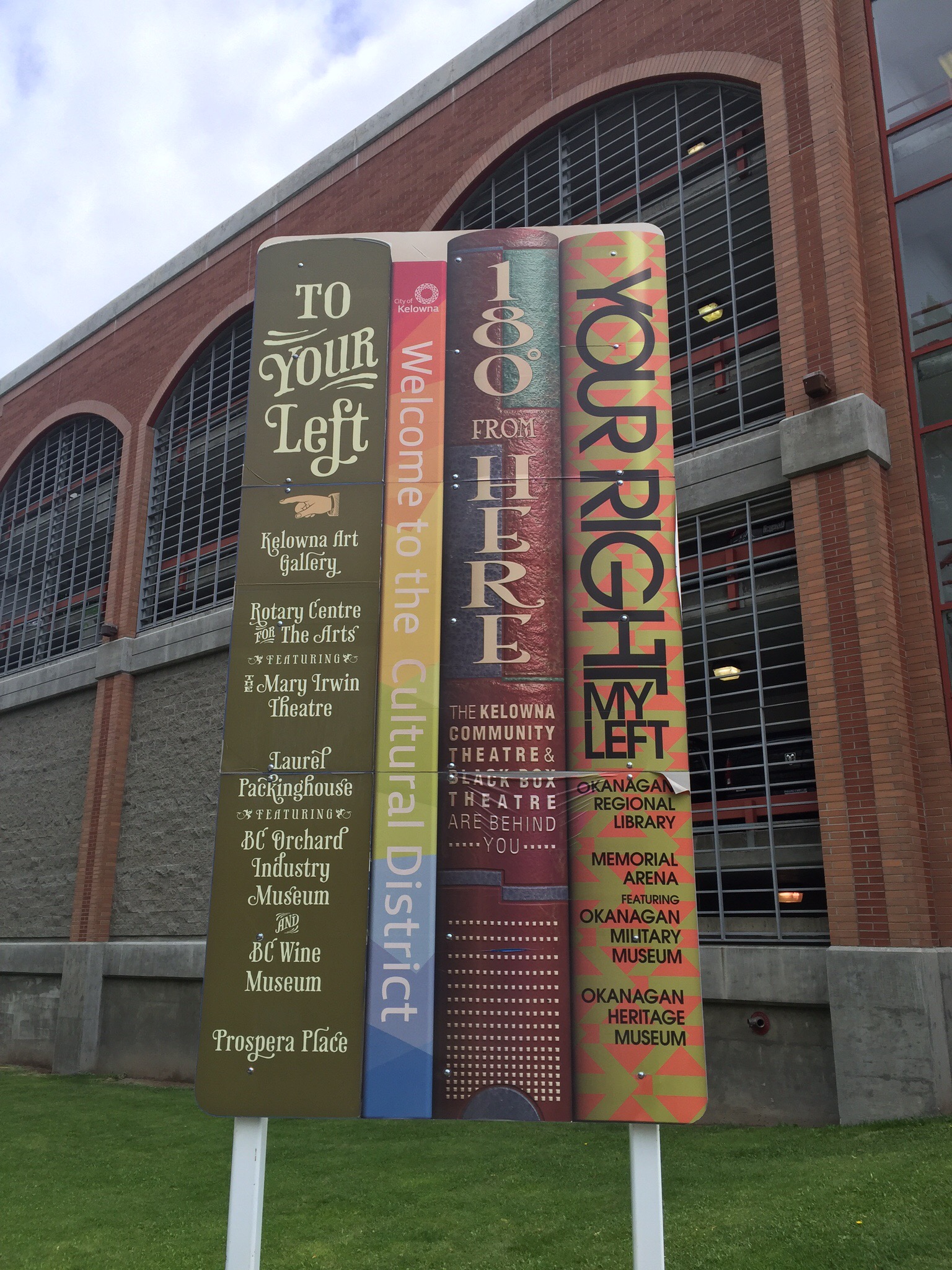
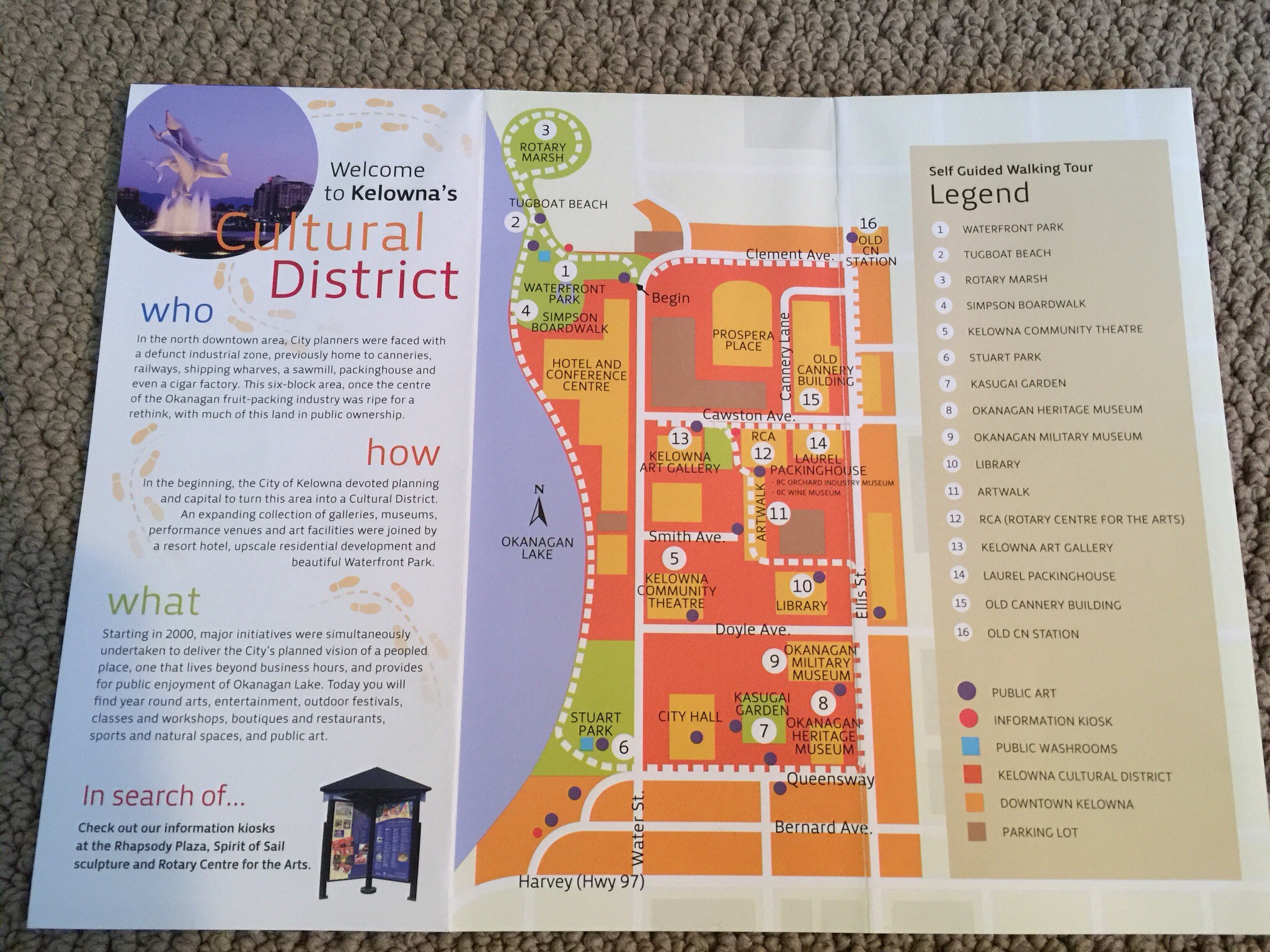
After discussing the history of the orchard and wine industries we went out to explore the Cultural District.  Robin is very passionate about the culture and is on the Board of the Rotary Centre for the Arts.  The building that houses the Rotary Centre for the Arts is actually built around and over the old Growers Supply agriculture warehouse.  Beams, walls and flooring from the original building are still evident.  This multi purpose facility openings in 2002.  It houses a 326 seat theatre, rehearsal hall, eight artist studios, an art gallery, a dance studio, rentable space and a bistro.  It brings together the performing arts and the creative arts.

The Cultural District was borne out of the defunct industrial zone which was previously home to packing houses, canneries, railways, shipping wharves, a sawmill and even a cigar factory.  The city planners have done a fabulous job and there are some 16 spots or buildings to see in a six block area.  This major initiative started in 2000 and as well as all the points of interest there are year round arts, entertainment, outdoor festivals, classes and workshops.  The city is extremely clean with Robin picking up the only couple of peices of rubbish we saw.  They also have an anti graffiti initiative where the service and  ultities boxes are covered with a silicone based coating that repels everything.

A utilities box covered in anti graffiti silicone – they have also made clever use of it putting some historical information on it

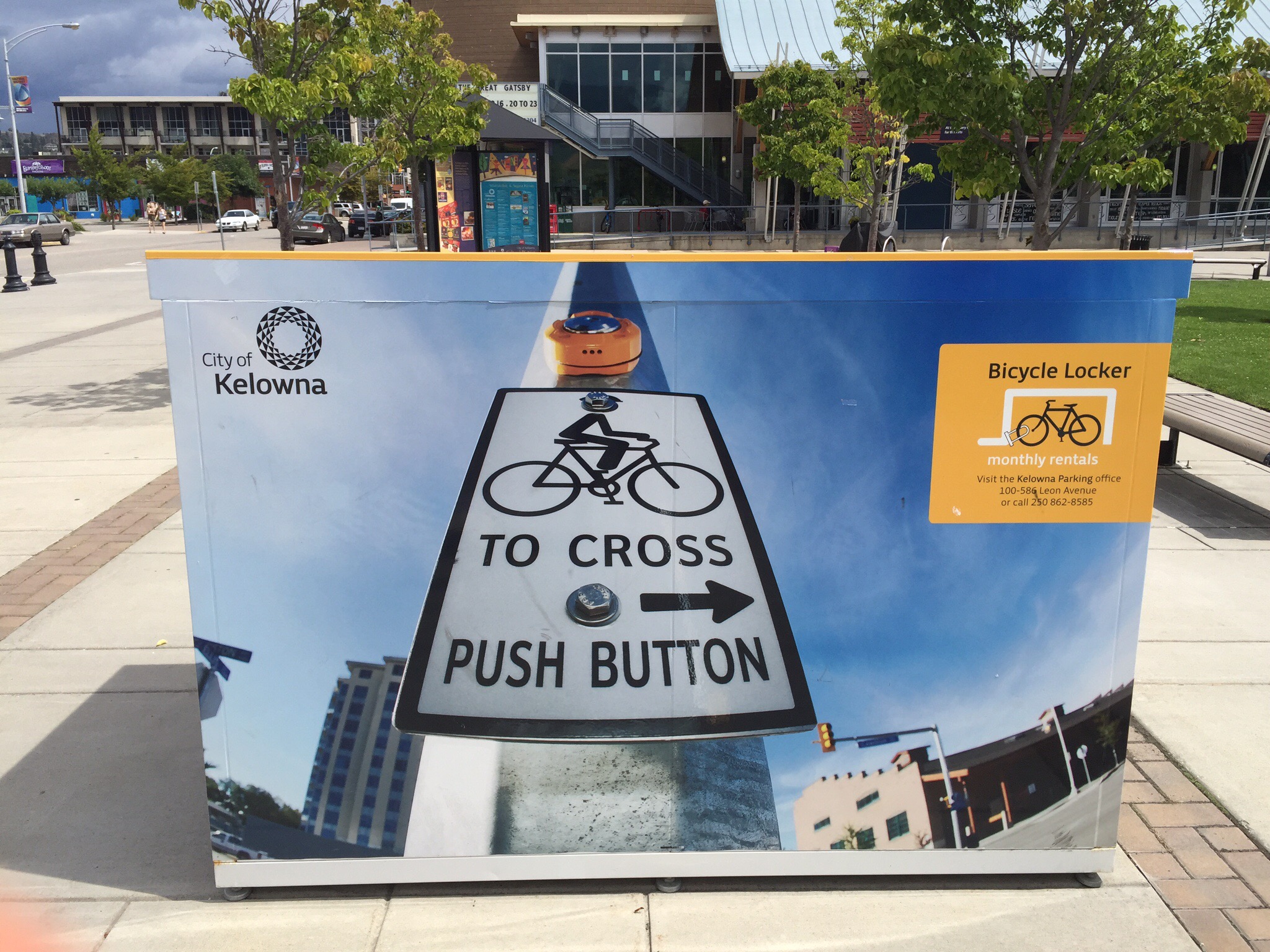
This is a bicycle locker provided by the city – you can lock your bike in here for free

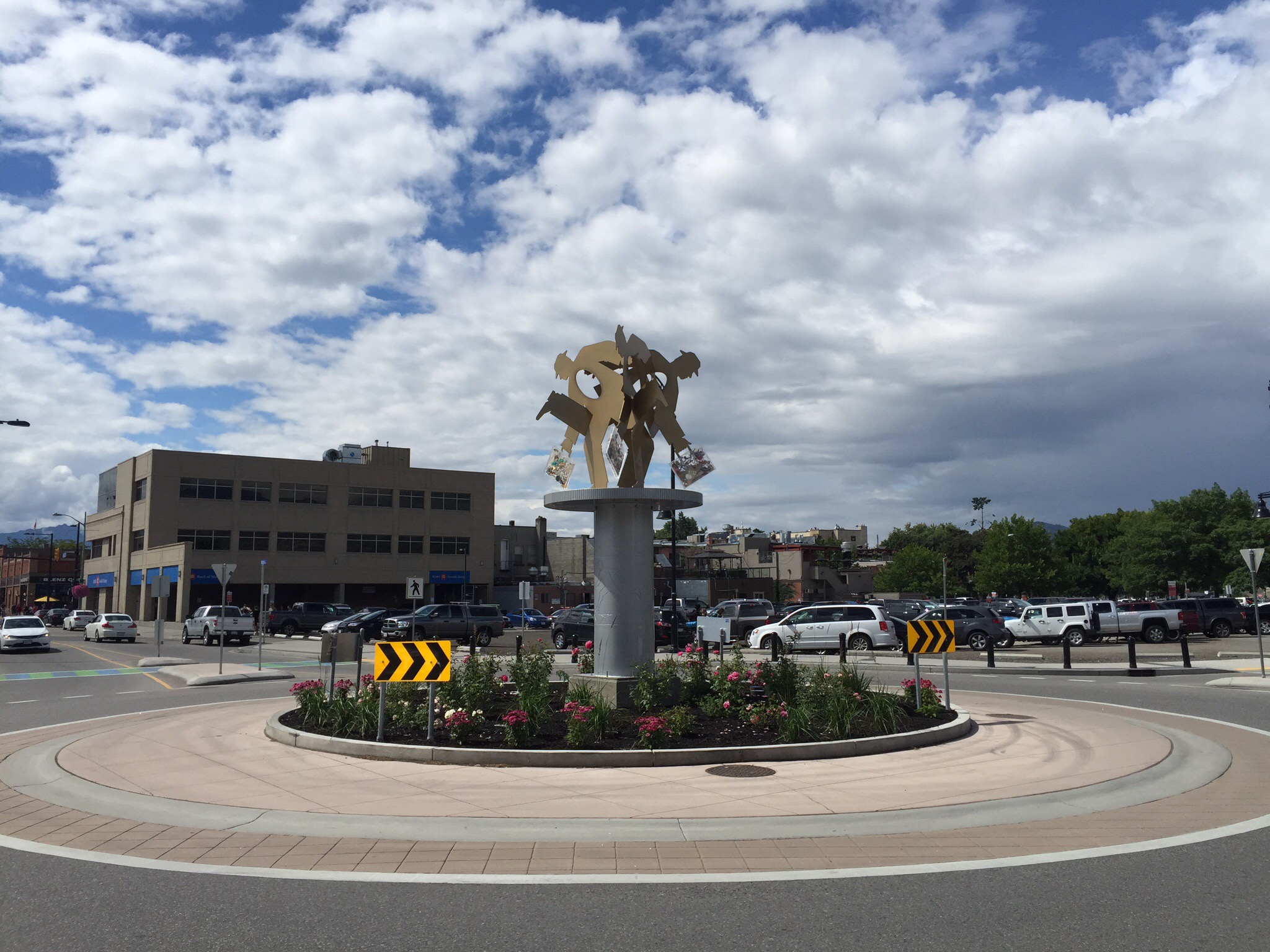
They area also very big on public art with many pieces around the city.  Property developers are usually required to contribute to the public art scene when they build a new building.
Running Man

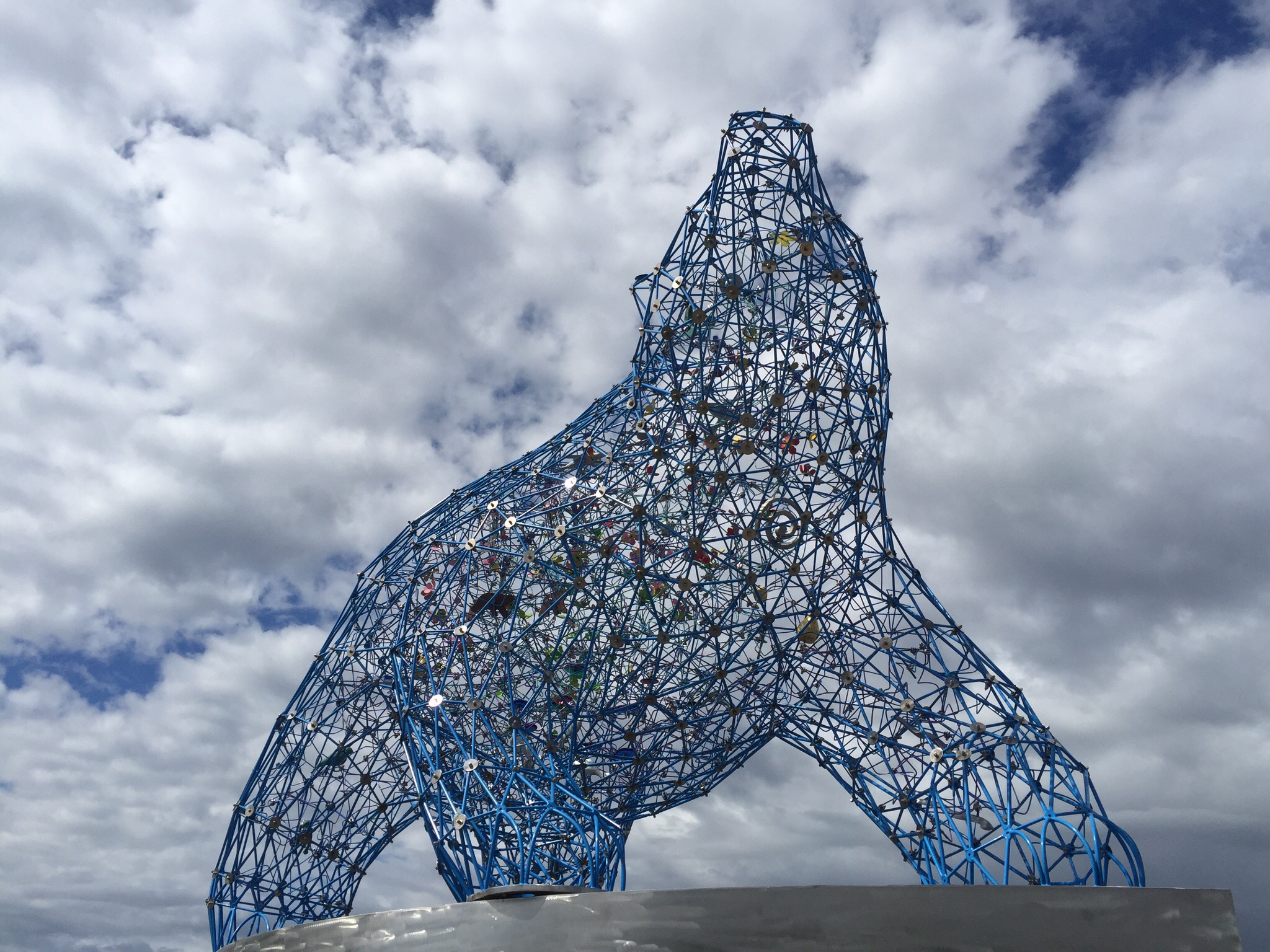
Bear is a tribute to Kelonwa’s settlement on the shores of Lake Okanagan.  The theme of the artwork is a Grizzly Bear – “Kelonwa” being an English translation of the Okanagan / Syilx First Nation word for “Femal Grizzly Bear”.  Within the Bears body are symbols that represent periods of Kelonwa’s history.


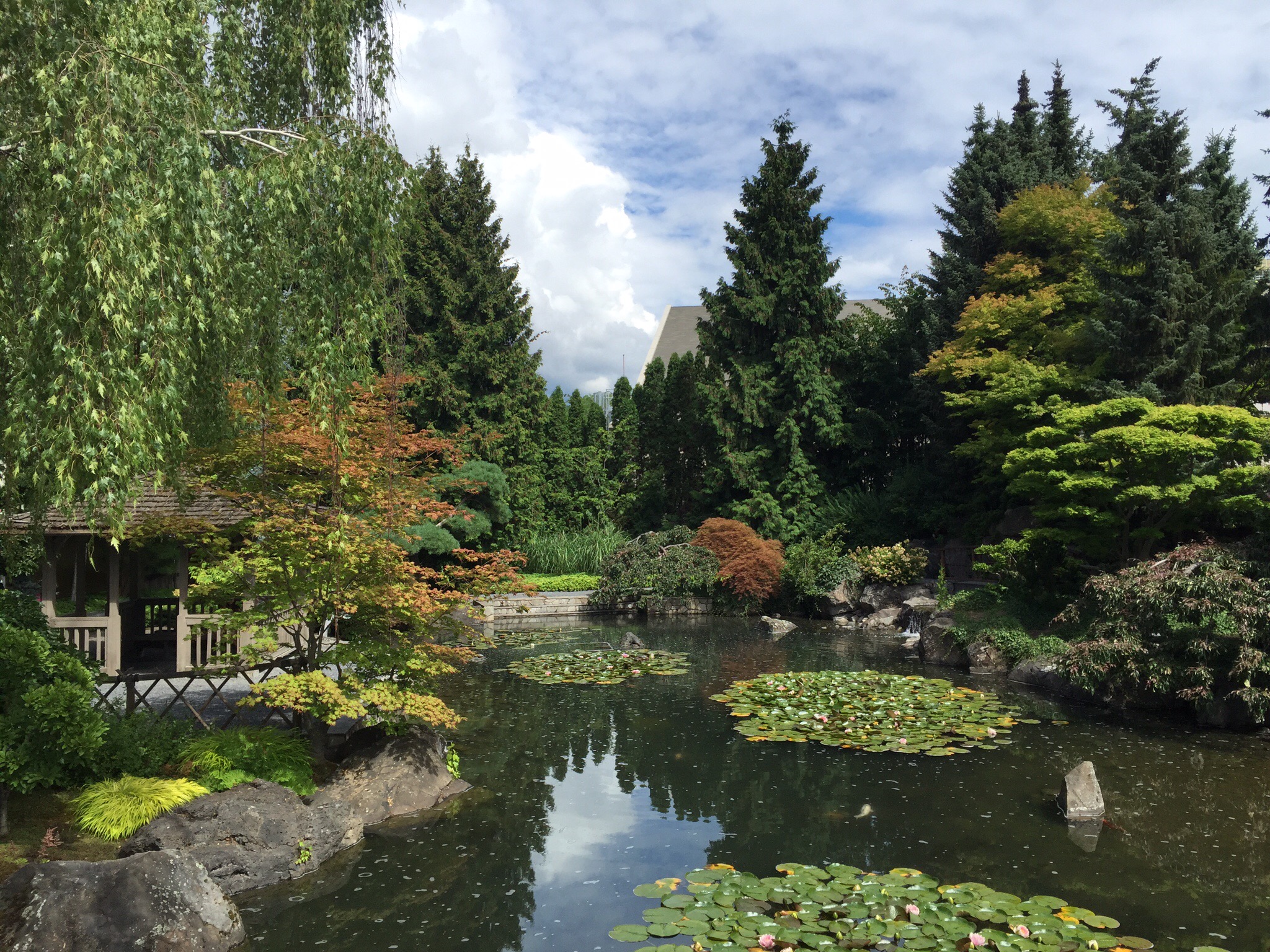
The Kasugai Gardens – co designed by Kelonwa and their sister city in Japan, Kasugai

William Andrew Cecil Bennett, a Kelowna resident, was British Columbia’s longest-serving premier. The 20 spires on the tower represent Bennett’s 20 years as premier, and 7 steps on either side of the clock represent the number of his terms in office.

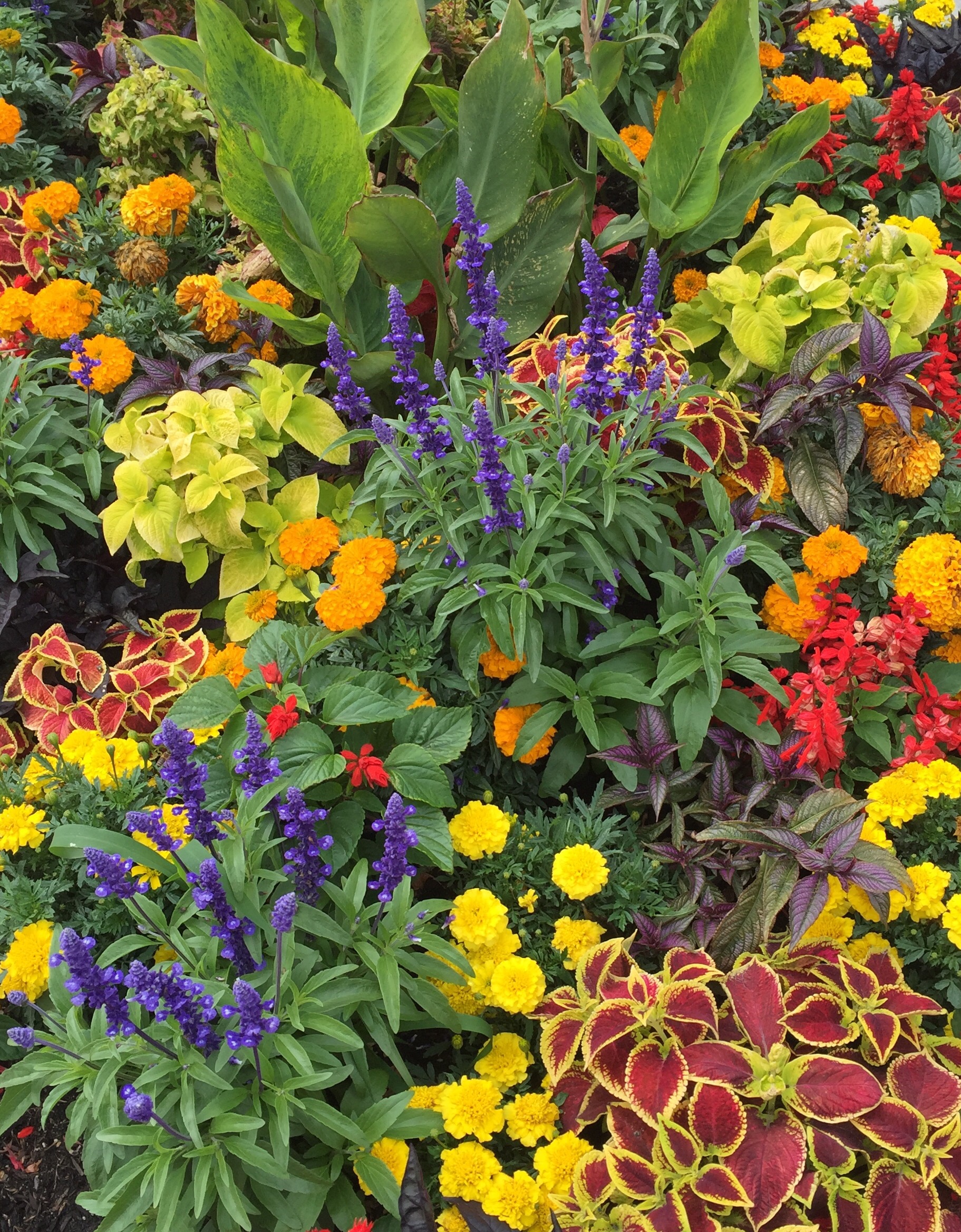
There were beautifully panted gardens all over the city

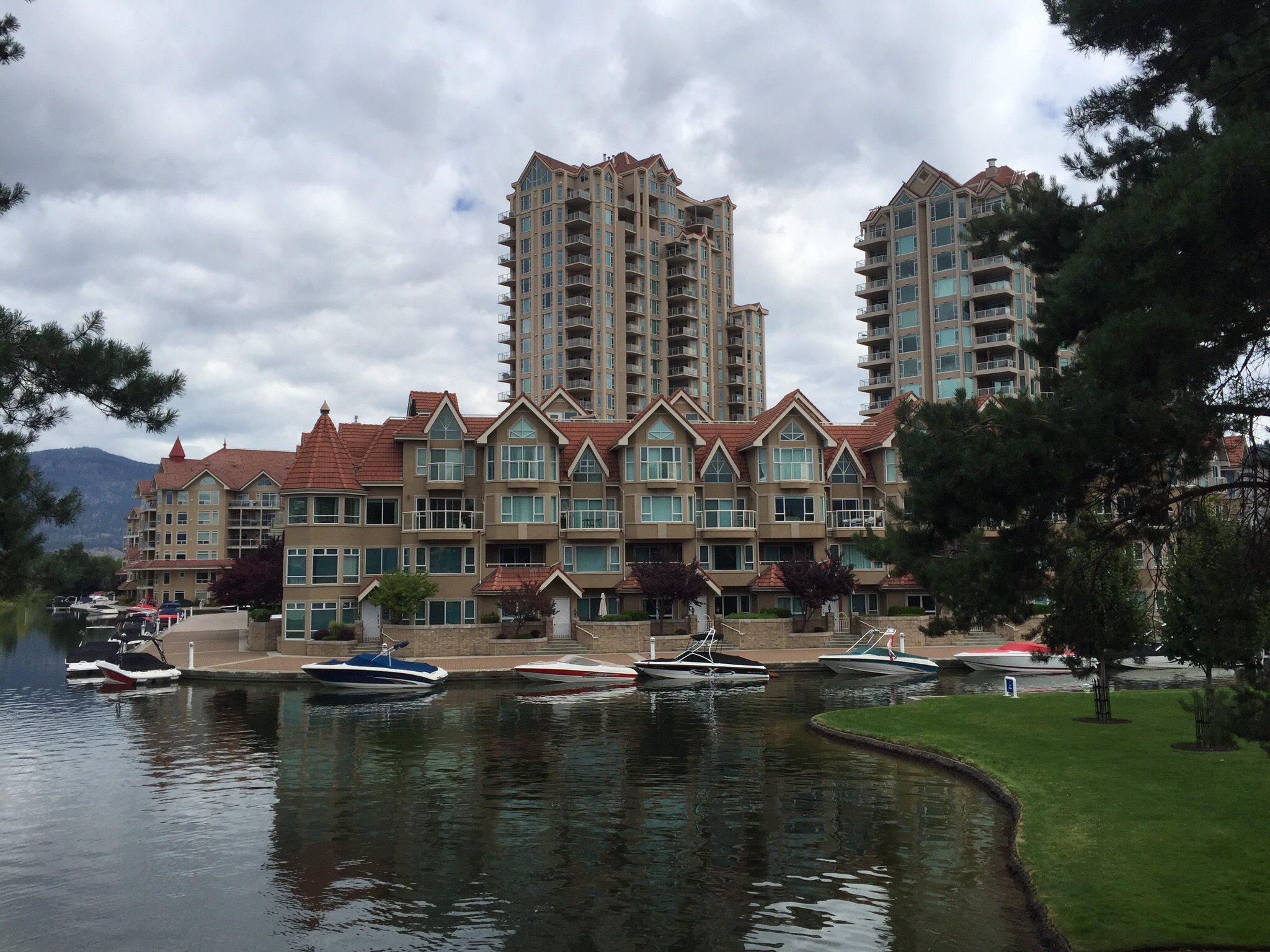
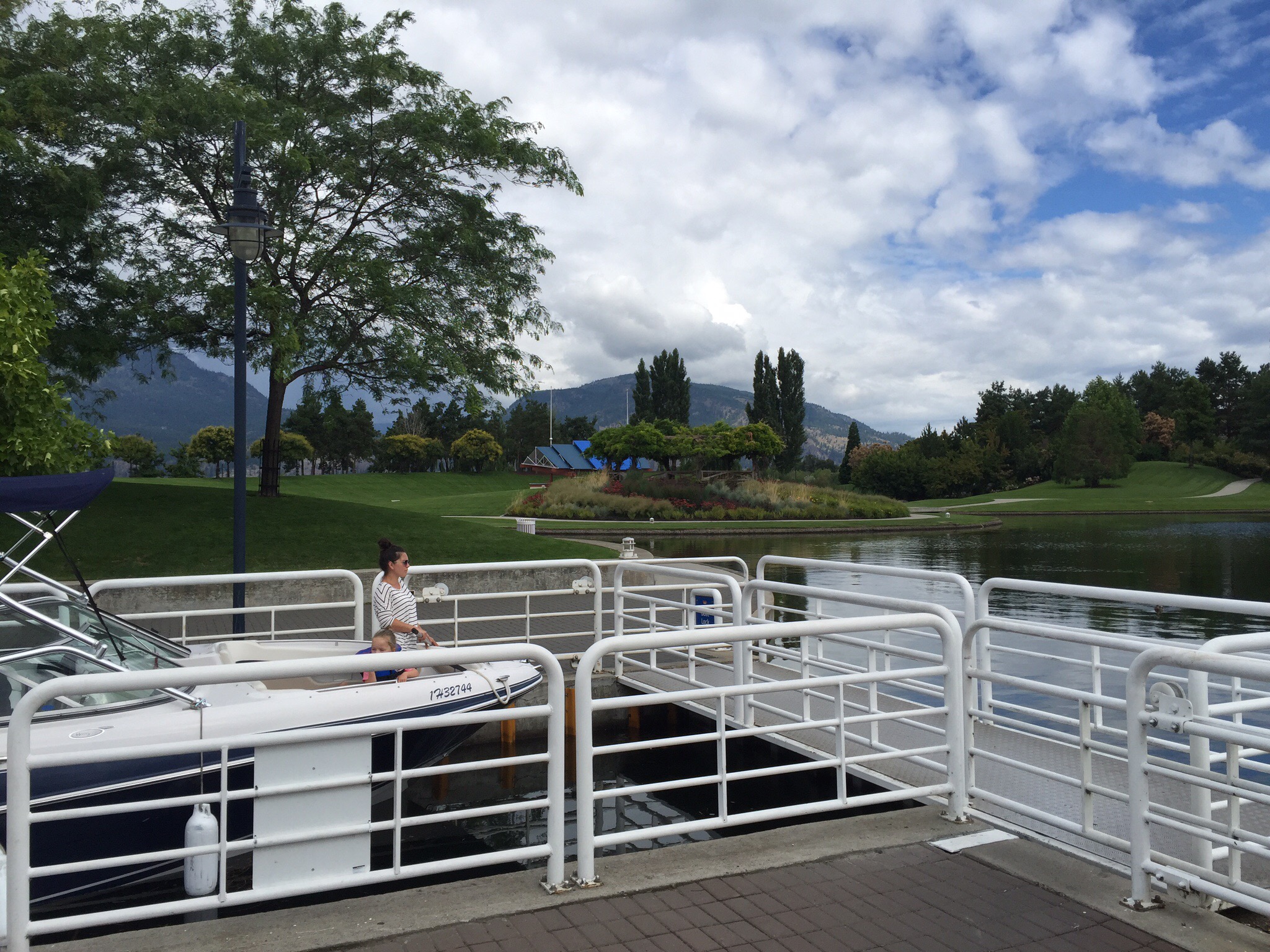
There is also a small canal that winds its way around a couple of the high rise accomodation blocks – you can park your boat right outside your condo.  There is a lock that joins the canal system with the lake.
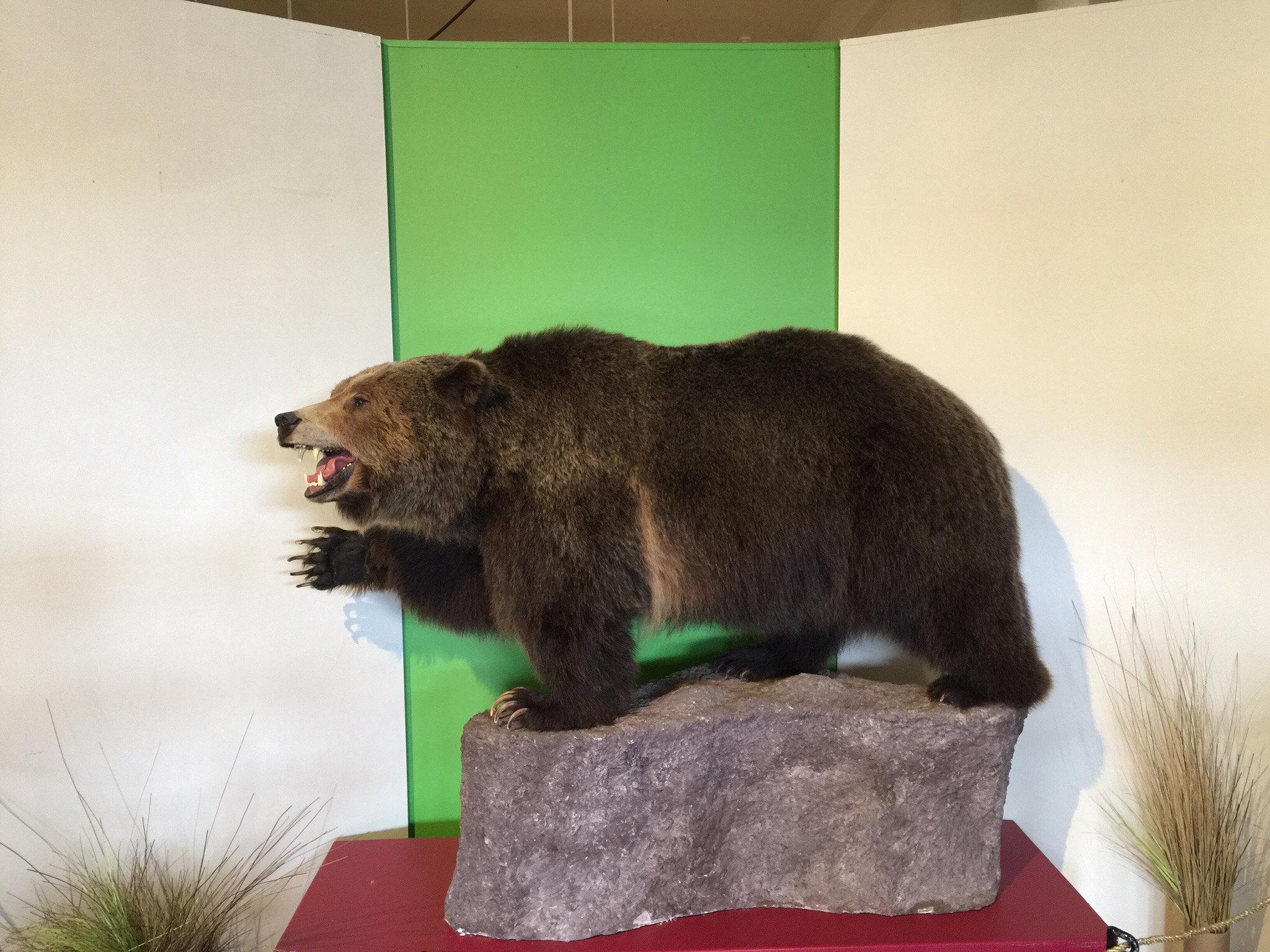
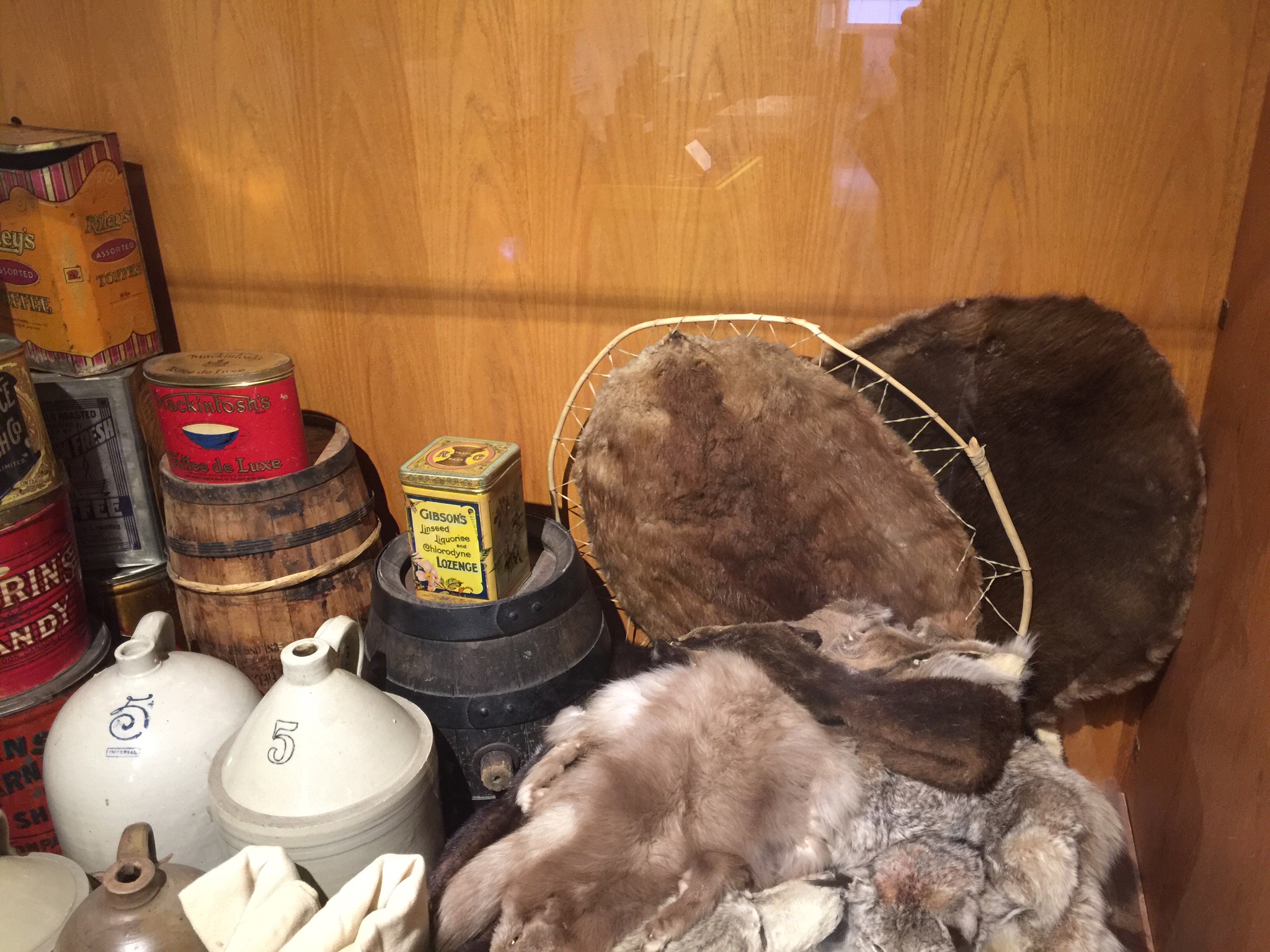
We visited the Okanagan Heritage Museum which had quite an array of stuffed animals.  I also learnt where the Mad Hatter reference came from.  Beaver fur predisposes it to the felting process due to it’s strength and malleability.  The milners or hatters used a solution containing mercuric nitrate as a smoothing agent.  Prolonged exposure to mercury vapours caused these hatters to go mad.

After the tour my energy levels were feeling a little depleted so I sampled the coffee and some of the goodies at Bliss Bakery.

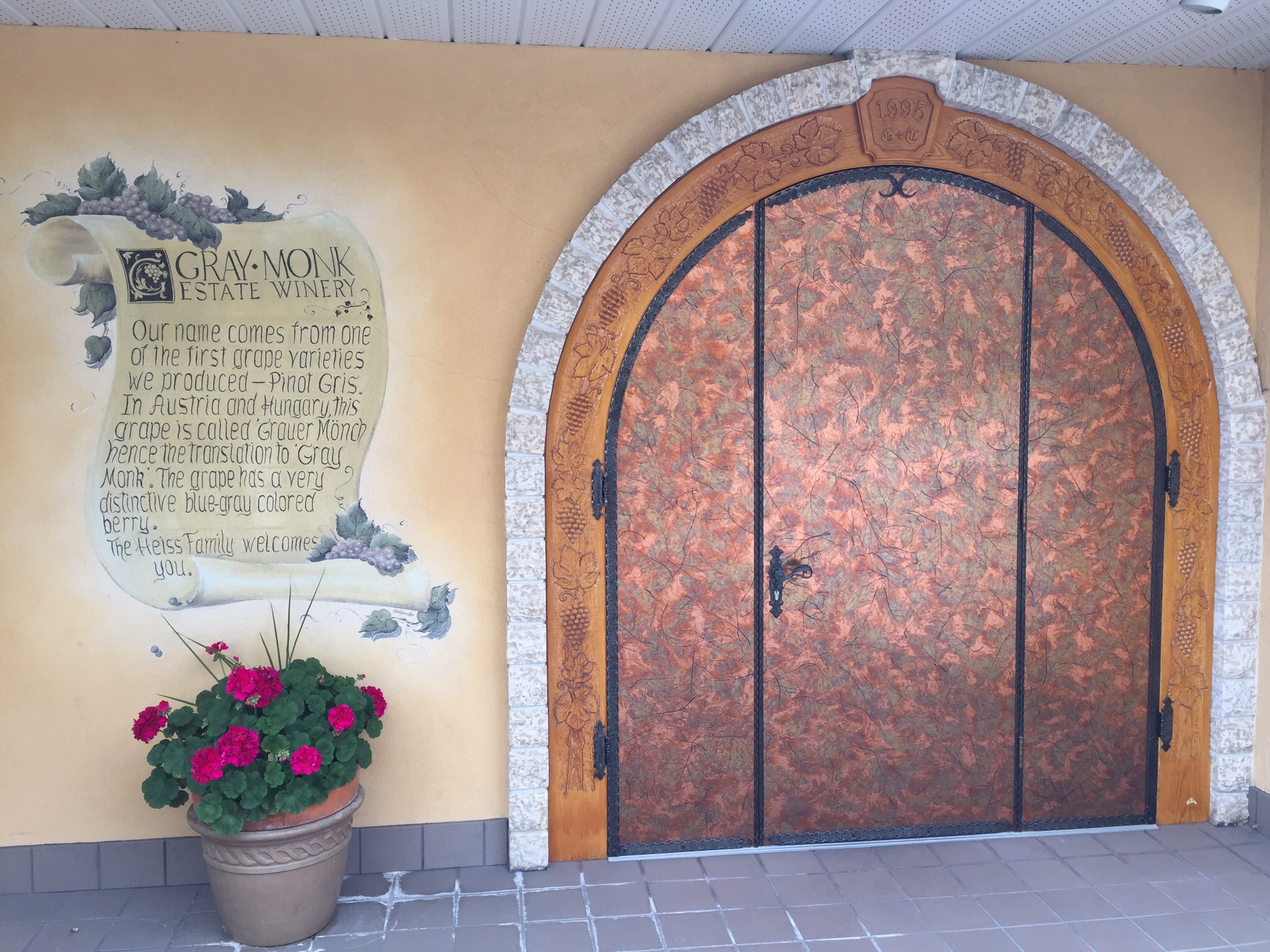
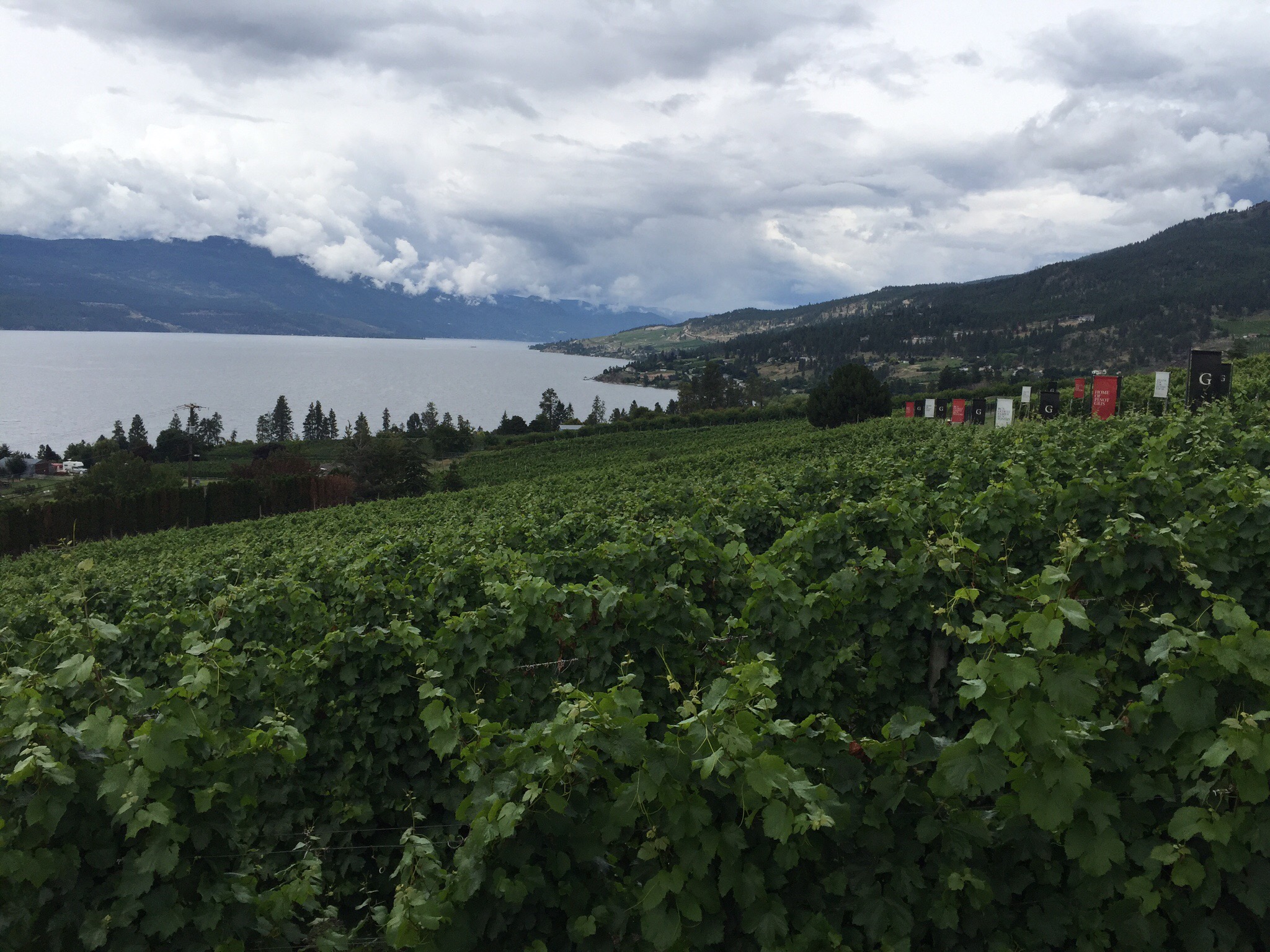
On the way back to Predator Ridge where we are staying I called in at Gray Monk Estate Winery where I did a wine tasting.   The Heiss family moved to the Okanagan Valley from Europe via Edmonton, Alberta with dreams of owning a successful vineyard. In 1972, George & Trudy Heiss were at the front of the line presenting their request to be allowed to make (and sell) wine from their own grapes. That began the Estate Winery program – which many believe was the turning point for British Columbia Wines.  The winery’s name, Gray Monk, is the English translation of the Austrian name for Pinot Gris. The winery is appropriately named as George & Trudy sourced 50 plants of Pinot Gris from a nursery in Colmar, Alsace in 1976. These 50 vines are recognized as the first plantings of Pinot Gris in Canada.
In the early 1980’s, the BC provincial government defined three types of wineries that were regulated under these separate categories:

Farm Winery – could only use their own grapes; required ten acres of land and had a production limit of 5,000 gallons (19,000 litres) annually.

Estate Winery – first known as “cottage wineries”, but soon changed, required 20 acres of land; could contract up to fifty per cent of what they owned; had a production limit of 30,000 gallons (114,000 litres) annually.

Commercial Winery – basically had no restrictions.

When Gray Monk was first started, they began as an Estate Winery as defined by the regulations at that time.  Today, the rules have changed – there is no more distinction between a farm, estate or commercial winery – wineries need only to have a license. However, Gray Monk chose to keep the name of Estate Winery because of its importance in their history and the volume of their production.

The family now own and farm 75 acres in the Okanagan Valley.

After my big day out I needed to have a bit of a lie down when I got home : )

Posted in Canada, Okanagan Valley | 1 Comment

Vancouver Day 5 – Vancouver, Canada

Again the day started off cool with grey skies.  We decided to go and do the Park Loop on the Hop on Hop off Trolley Bus.  Unfortunately we got the same driver that we had the other day.  He pointed out all the sights which was great but in between speaking he didn’t shift the microphone from his mouth so we had to enjoy his very heavy breathing : 0

The trip took us all around Stanley Park which was great as we were planning to cycle the Seawall around there in the afternoon.  Heavy Breather pointed out all the points of interest and paths to get to certain things which was great because again you can very easily miss things when you don’t know they are there.

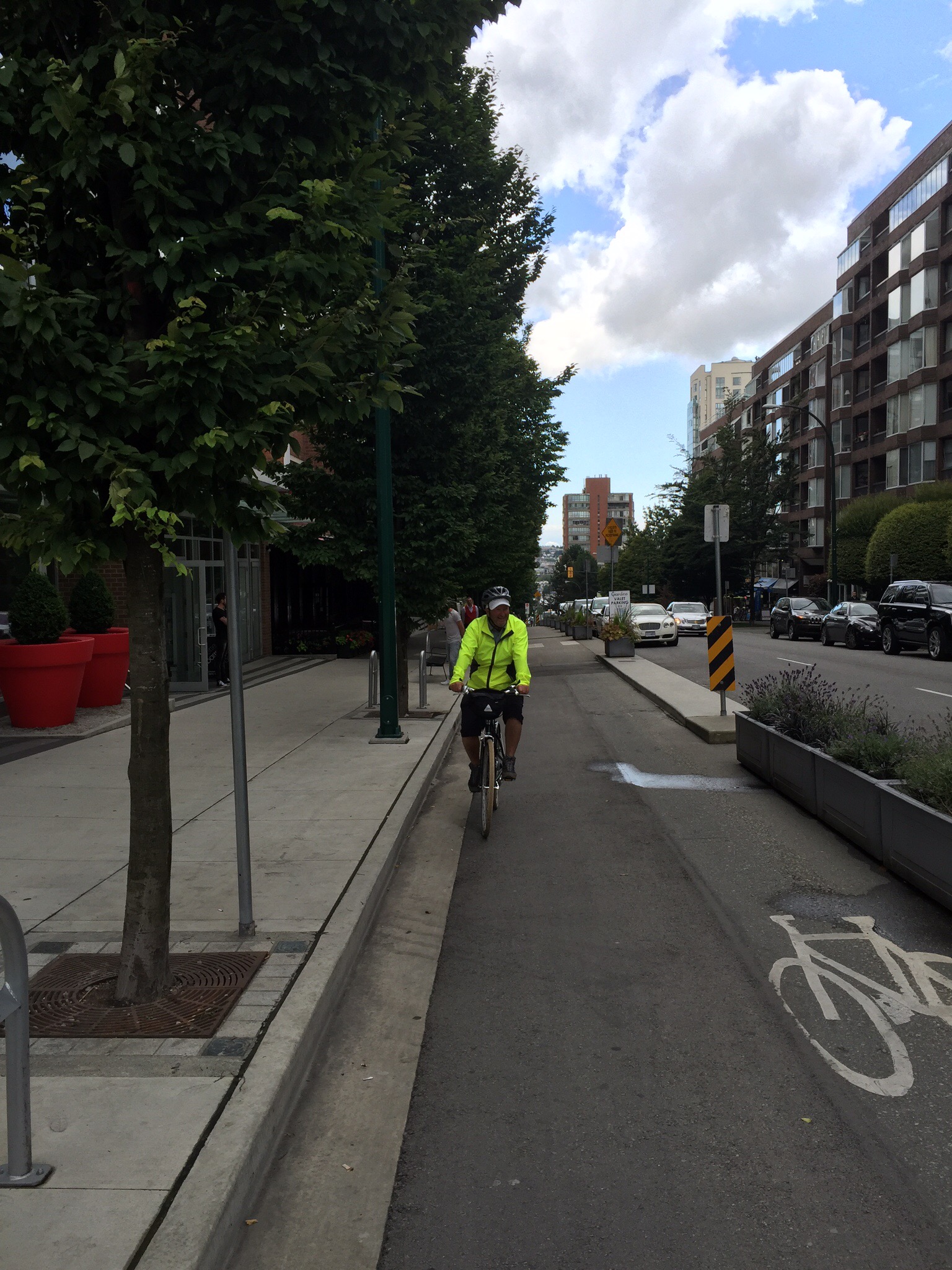
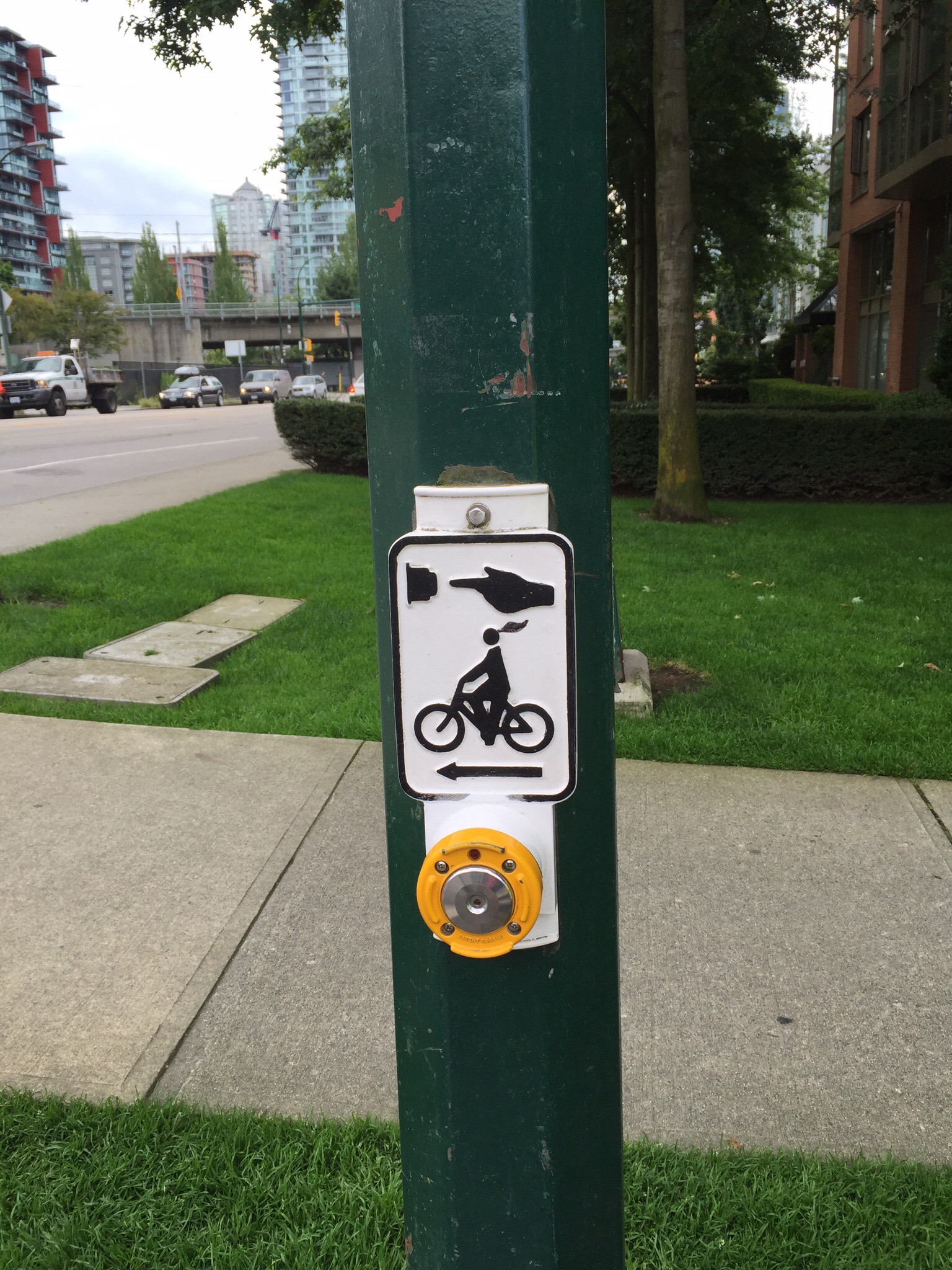
After the tour we walked to the bike hire shop – Steve had checked it out a couple of days prior and was quite excited because the bikes were electric, or so he thought.  When we got to Cycle City Tours on Hornby Street he was bitterly disappointed that he had been mistaken – there were no electric bikes in sight.  Not sure what he thought he saw the other day but just confirms that he lives in a state of delusion at times : ). They had only been open for a month and all the bikes were brand new.  Bikes and helmets acquired and we were off.  They have all these bike lanes in Vancouver which are curbed off from the road – they even have their own traffic lights. We rode through the city to Canada Place and the start of the Seawall. I told Steve that I was going to be stopping off along the way to take photos etc.. To me that meant, don’t go too far ahead so we can explore the park together. To Steve that meant great, how fast can I do the Seawall – anyone would think he was doing the Tour de Vancouver. So we cycled the Seawall separately and I didn’t take as many detours as I would have like in case I missed him coming back down to another spot because he was waiting for me – yeah right!

I eventually caught up with him so we could at least cycle back into town together.

Stanley Park is a 405-hectare (1,001-acre) public park that borders the downtown of Vancouver and is almost entirely surrounded by the waters of Vancouver Harbour and English Bay.

The park has a long history and was one of the first areas to be explored in the city. The land was originally used by indigenous peoples for thousands of years before British Columbia was colonized by the British during the 1858 Fraser Canyon Gold Rush. For many years after colonization, the future park with its abundant resources would also be home to nonaboriginal settlers. The land was later turned into Vancouver’s first park when the city incorporated in 1886. It was named after Lord Stanley, a British politician who had recently been appointed governor general.

Unlike other large urban parks, Stanley Park is not the creation of a landscape architect, but rather the evolution of a forest and urban space over many years.  Most of the manmade structures we see today were built between 1911 and 1937 under the influence of then superintendent W.S. Rawlings. Additional attractions, such as a polar bear exhibit, aquarium, and miniature train, were added in the post-war period.

Much of the park remains as densely forested as it was in the late 1800s, with about a half million trees, some of which stand as tall as 76 metres (249 ft) and are up to hundreds of years old.  Thousands of trees were lost (and many replanted) after three major windstorms that took place in the past 100 years, the last in 2006.

Significant effort was put into constructing the near-century-old Vancouver Seawall, which can draw thousands of residents and visitors to the park every day.  The park also features forest trails, beaches, lakes, children’s play areas, and the Vancouver Aquarium, among many other attractions.

On June 18, 2014 Stanley Park was named ‘top park in the entire world’ by TripAdvisor.

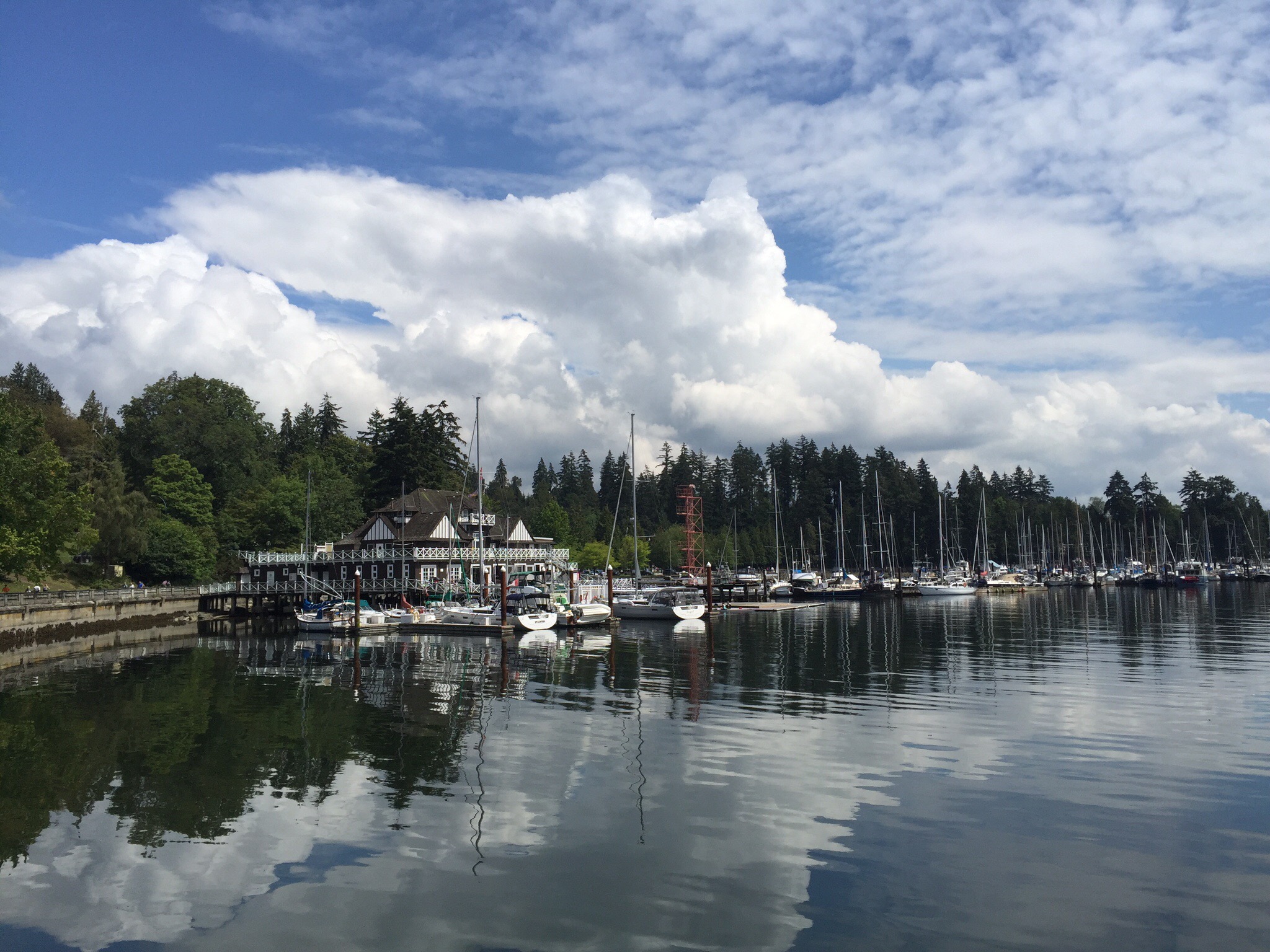
Vancouver Rowing Club which has been going since 1886

 You have to cycle around the park anti clockwise and there are separate paths for cyclists and pedestrians 


A statue of Harry Winston Jerome who was a Canadian Track & Field Athlete.  He held seven world records – some for the 100 metre sprint and some for the 100 yard dash – one of only a handful of people to hold both.  He was named British Columbia’s Athlete of the Decade (1871 to 1971).  That is Downtown Vancouver in the background.

Brockton Point Lighthouse built in 1914

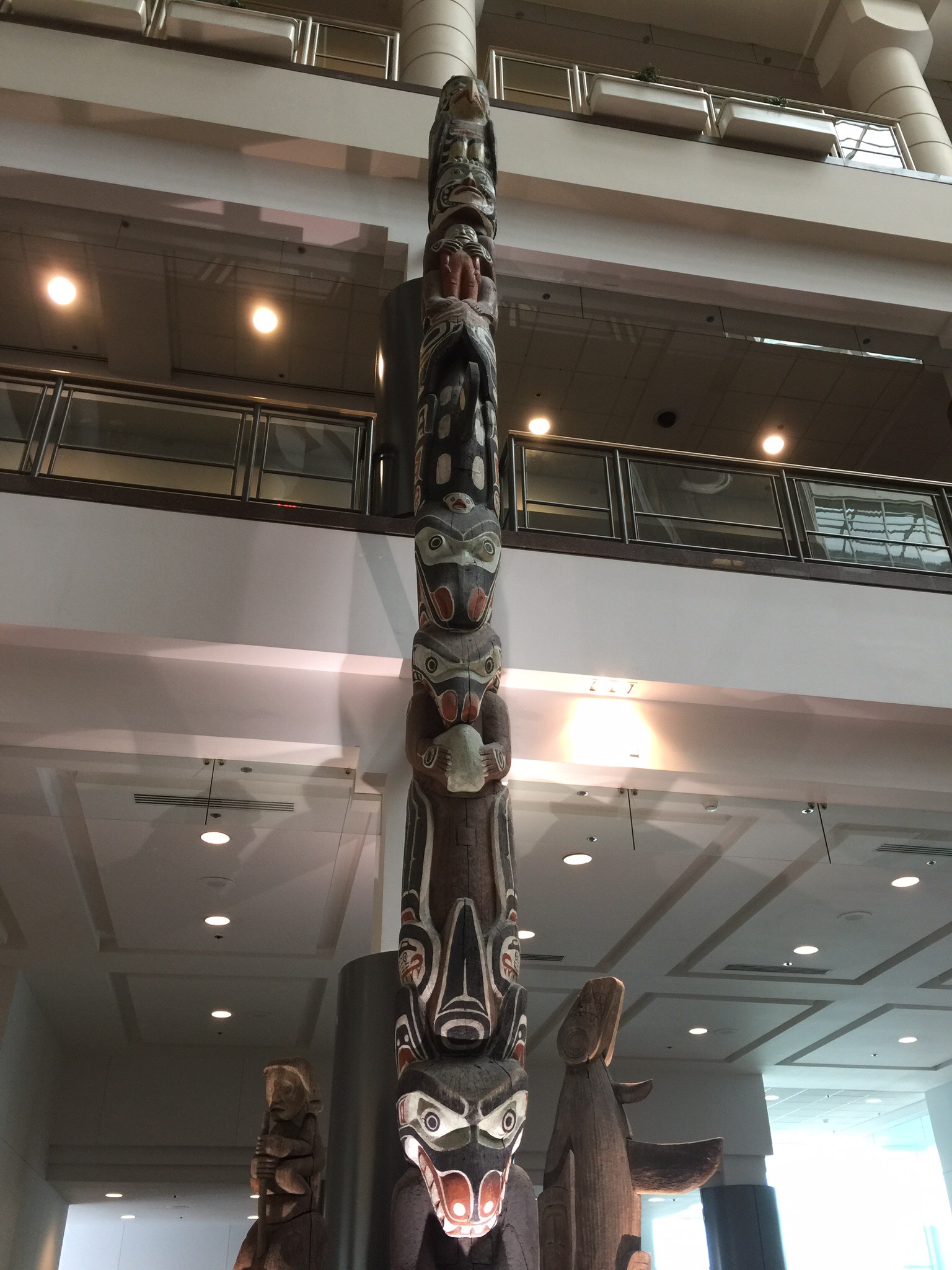
Totem Poles in Stanley Park – these are replicas of the ones made in 1880 and the 1920’s and 1930’s.  The originals have been preserved in various museums.

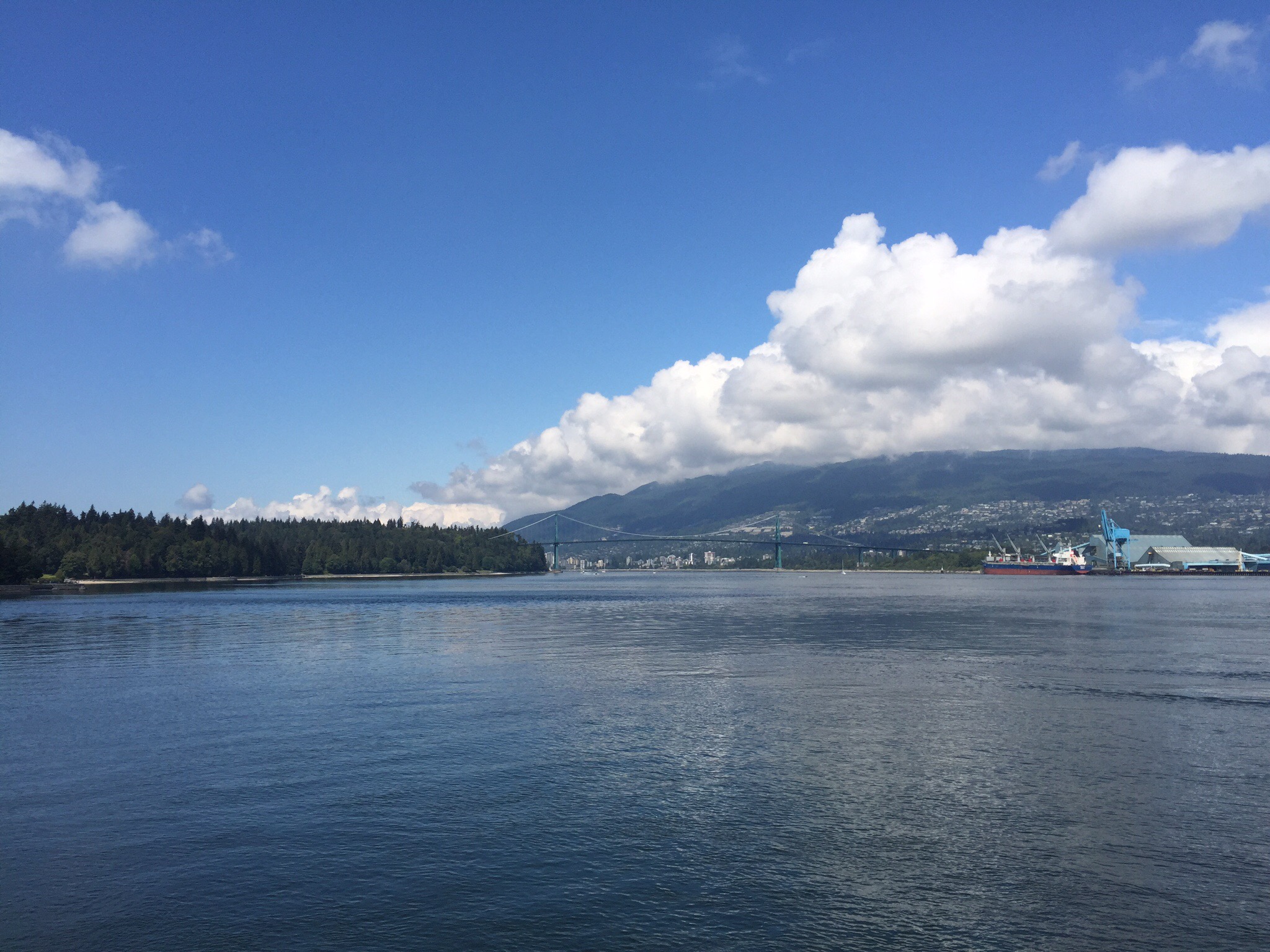
Girl in a Wetsuit is a life size bronze sculpture by Elek Imredy – there was some controversy in relation to it being like the famous Little Mermaid statue in Copenhagen, Denmark.  Elek Imredy was quoted as saying “I didn’t believe we should have a copy of the mermaid. She is rightfully a symbol of Copenhagen… I proposed to have a life-size scuba diver seated there. At that time scuba diving was getting quite popular here in Vancouver and, just as important, I didn’t know of any similar sculpture anywhere in the world. It was a new idea… There was tremendous opposition and great controversy. I still don’t know why.”The Lions Gate Bridge, opened in 1938, officially known as the First Narrows Bridge, is a suspension bridge that crosses the first narrows of Burrard Inlet and connects the City of Vancouver to the North Shore municipalities of the District of North Vancouver, the City of North Vancouver, and West Vancouver. The term “Lions Gate” refers to The Lions, a pair of mountain peaks north of Vancouver. Northbound traffic on the bridge heads in their general direction. A pair of cast concrete lions, designed by sculptor Charles Marega, were placed on either side of the south approach to the bridge in January, 1939.

The stone sculpture behind me is an Inukshuk which is an ancient symbol of the Inuit culture which is traditionally used as a landmark and navigational aid and also represents northern hospitality and friendship.  It is constructed of grey granite and was commissioned for Expo 86 and later gifted to the city of Vancouver.  It was moved to this site in 1987.

We have enjoyed our time in Vancouver and come across some interesting sights as we have wandered around or ridden the bus to and from the city.  As we travelled through the Downtown Eastside of Vancouver we were surprised by the number of homeless people – both sides of the street seemed to be taken up with them and there was always a police presence. 

Homelessness in Vancouver is a social crisis that has been rapidly accelerating over the last decade.  According to the United Nations, homelessness can either be relative or absolute. Absolute homelessness describes people living in absence of proper physical shelter.  Relative homelessness describes people living in poor conditions of health or security, including an absence of both personal safety and steady income despite having physical shelter to reside in.  As of 2011, roughly 2,651 people in Vancouver are subject to one of these types of homelessness, or are transitioning between them.  Homelessness as a social issue in Vancouver originated from federal funding cuts to affordable housing.  After market housing increased, the cost of housing became one of Vancouver’s main causes of homelessness, alongside lack of income. The homeless population in Vancouver have developed or previously suffered from mental health and addiction issues, and they are subjected to high amounts of crime-related victimization. There have been several approaches to reducing the homeless population in Metro Vancouver by the city and other organizations. As of 2011, the rate of homelessness in Vancouver has stopped increasing, but it is not being reduced either.

On one of our bus rides home we sat near these three young Indian people who were planning a weekend away.  They were discussing hiring a car and when they should hire it to and from etc…  The two guys were trying to get a better deal on their phones than the girl could get.  Anyway they were laughing and joking with that great Indian sense of humour.  After sorting their weekend away ‘ride’ the girl then said “OK shall we hire a car this Saturday then so we can practice driving before the weekend away?”  OMG, I hope she was joking!

We stopped for a chat with one of the neighbours one afternoon – he was out doing some concreting.  It turns out he was a Fijian Indian who has lived in Vancouver for the past 35 years.  He was building a concrete ramp for under a gate so he could back his RV in for when his mates come to party in it.

We came across another neighbour on our first day in Vancouver and she had loud music blaring from her car – she came across and said something to us which we have no idea what she was going on about.  Her pet parrot was perched happily on her shoulder.  We came across her or should I say, her car most days – it appeared she didn’t have a sound system in the house so just blasted the music from her car which was sitting on the roadside : 0

On our last day we got off the bus and I was in my cycle gear – this girl got off with us and she said “you look like you’ve been cycling, you didn’t forget to get your bike off the bus did you?”  You can transport your bike on the front of the bus and as she was saying this to us the bus was driving off.  Jokingly I said, oh no I forgot my bike and she believed me.  After having a bit of a laugh about that she asked us if we were Australian – we said no, so she said OK, so are you Australianish, you know like from NZ?  She then proceeded to ask us what language we spoke – we told her English and she said ‘oh English but with an accent’.  She was quite excited to work out that if she ever visited NZ she would be speaking English but with an accent!  She then proceeded to crazy parrot lady’s house who still had her music blaring from her car.  Say no more!

Stevie on the bendy bus – he looks like he has wings : 0

Stevie enjoying some local beer samplers at Steamworks – there are lots of micro breweries in the city which is great but you need to do a sampling tray every time you go to a different bar as no two beers are alike – Steve of course didn’t see a problem with this : )

Yam fries with balsamic glaze and pesto aioli – OMG so good

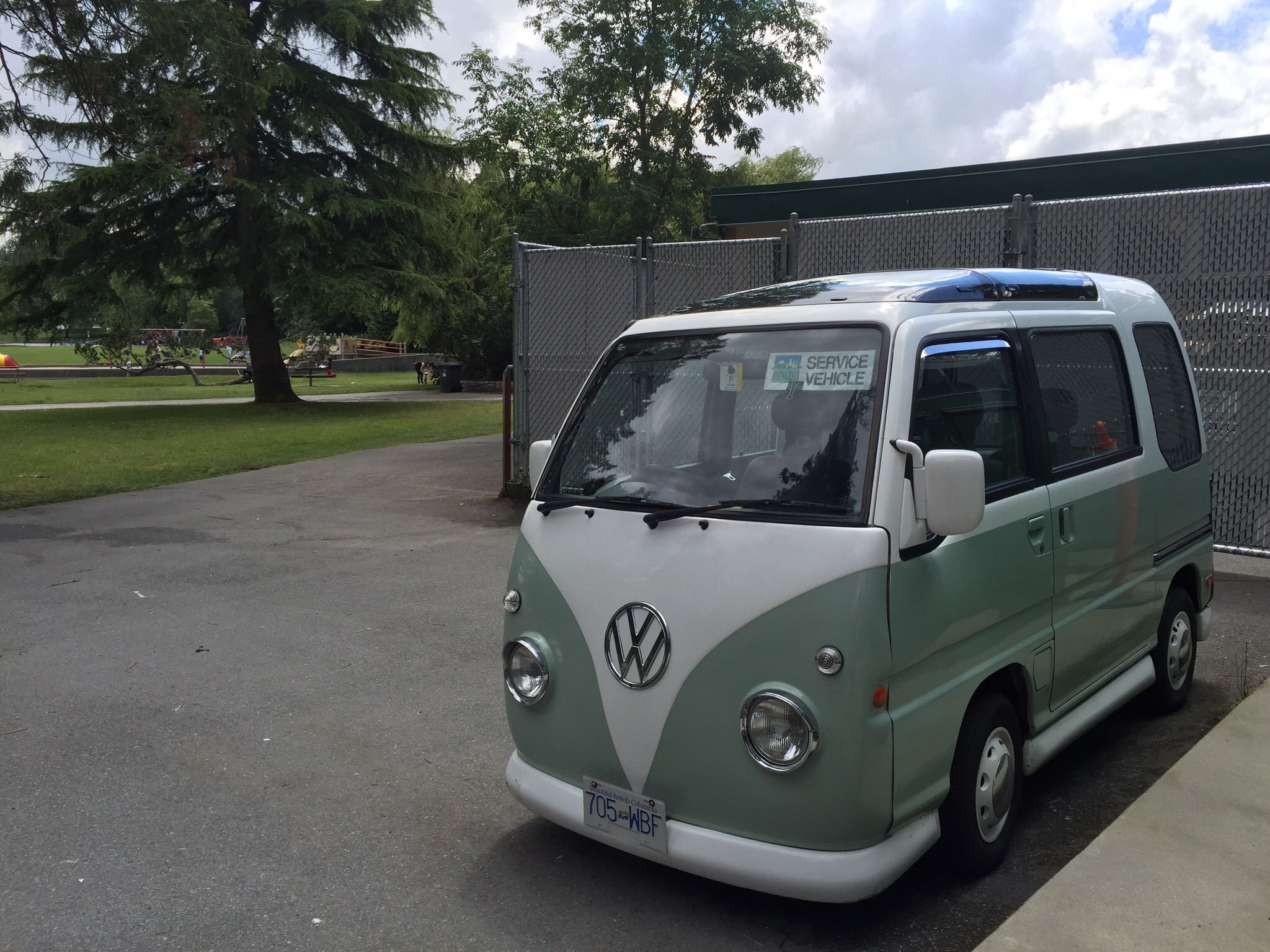
A cute little VW Combi spotted in Stanley Park

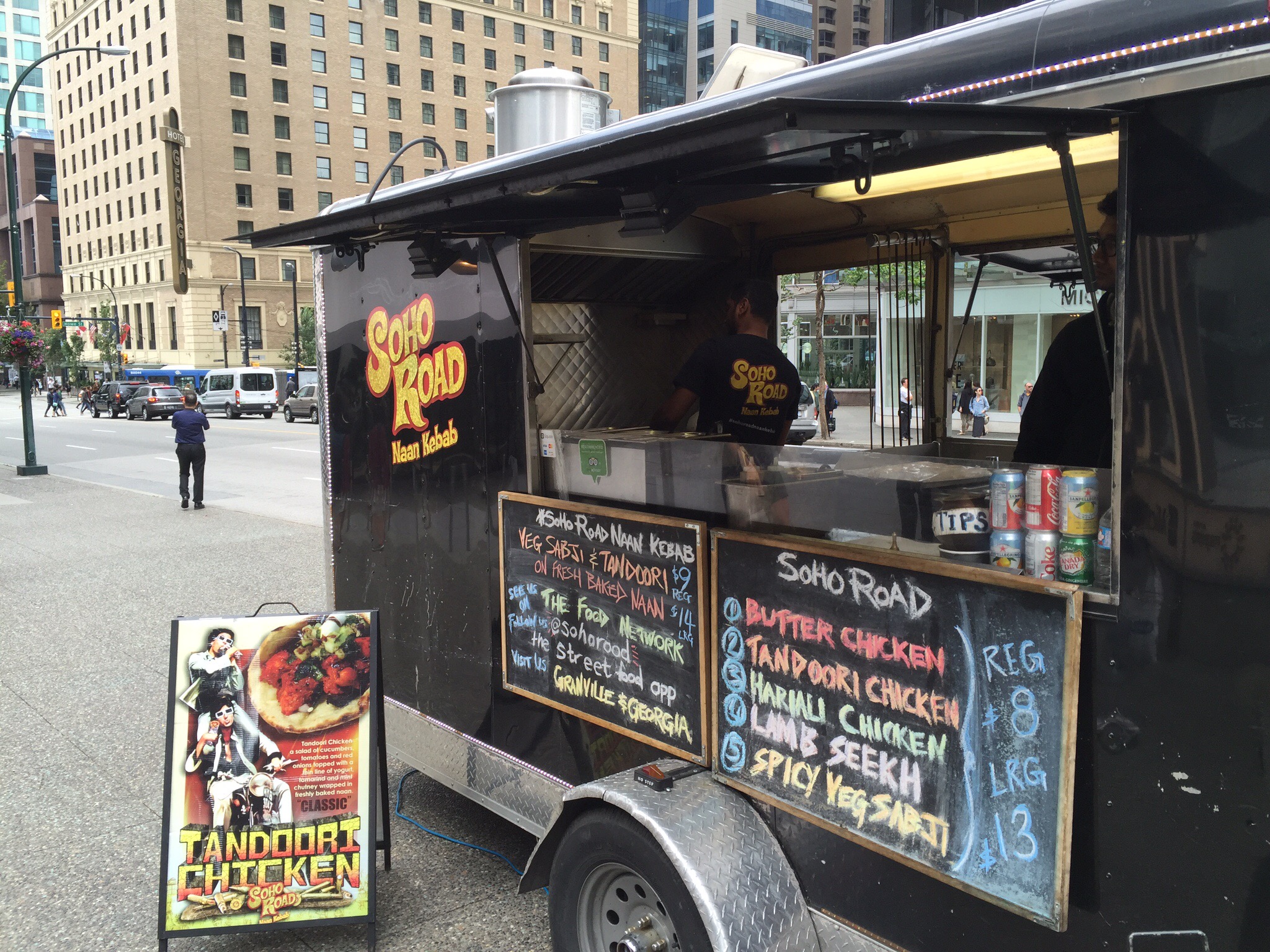
Lunch on our last day from this food truck – Butter Chicken Naan Kebab – delish

Posted in Canada, Vancouver | 1 Comment

Mayfair Lakes Golf & Country Club – Vancouver, Canada

On Tuesday we decided to have a game of golf in Vancouver.  Steve had been checking out the deals of course and spotted Mayfair Lakes.  It was a shot gun start at 8am so we signed up.  We played with two local ladies although they were not members of this particular club.  They were lovely and a lot of fun to play with.  Ann was originally from Hong Kong but has been in Vancouver for twenty years – both her daughters were born in Canada.  Her husband has had to go back to Hong Kong for his job so she travels regularly back to Hong Kong to see him and play golf at Misson Hills where they are members.
Cindy was originally from Malaysia but has been in Vancouver for forty years.  It is always good to chat with the locals to get the inside running on the place.  The golf course was in the suburb of Richmond where 80% of the population is of Chinese descent.  

Unfortunately the weather wasn’t that nice – it was overcast and we got the odd spit of rain.  It appears that this is the normal state of affairs in Vancouver – the mornings start off cloudy and cool with the hottest part of the day being at 5pm.  The course was really nice and well maintained.  Thirteen of the eighteen holes had water on them – that is why it is called Mayfair Lakes!  I managed to lose three balls and Steve lost two although one of those was out of bounds into the trees along the road!

After the game we had a drink with Ann who then offered to drive us back to our accomodation which was very nice of her.  We have swapped email addresses and hope to catch up again in either Vancouver, Hong Kong or NZ!

Mayfair Lakes is a semi private golf club that was designed by Les Furber.  It has had the privilege of hosting many national tour events, including the Canadian Tour’s Telus Open and BC Tel Open (1994-2000), and continues to rank as a favourite among PGA and Canadian PGA tour professionals.


Posted in Canada, Vancouver | 1 Comment

Vancouver Day 3 – Vancouver, Canada

Erik my tour guide from Granville Island mentioned he was doing a walking tour in the city on Monday so I signed us both up.  The Tour Guys run various tours in the city and they are free- you just pay a tip to the guide at the end.  Check out http://www.tourguys.ca. We had 22 in our group today but Erik stopped in strategic points along the way and pointed out various things, told stories and discussed the history of what we were looking at.  It is such a cool way to see a city – it is amazing the things you don’t notice as you are wandering around on your own.

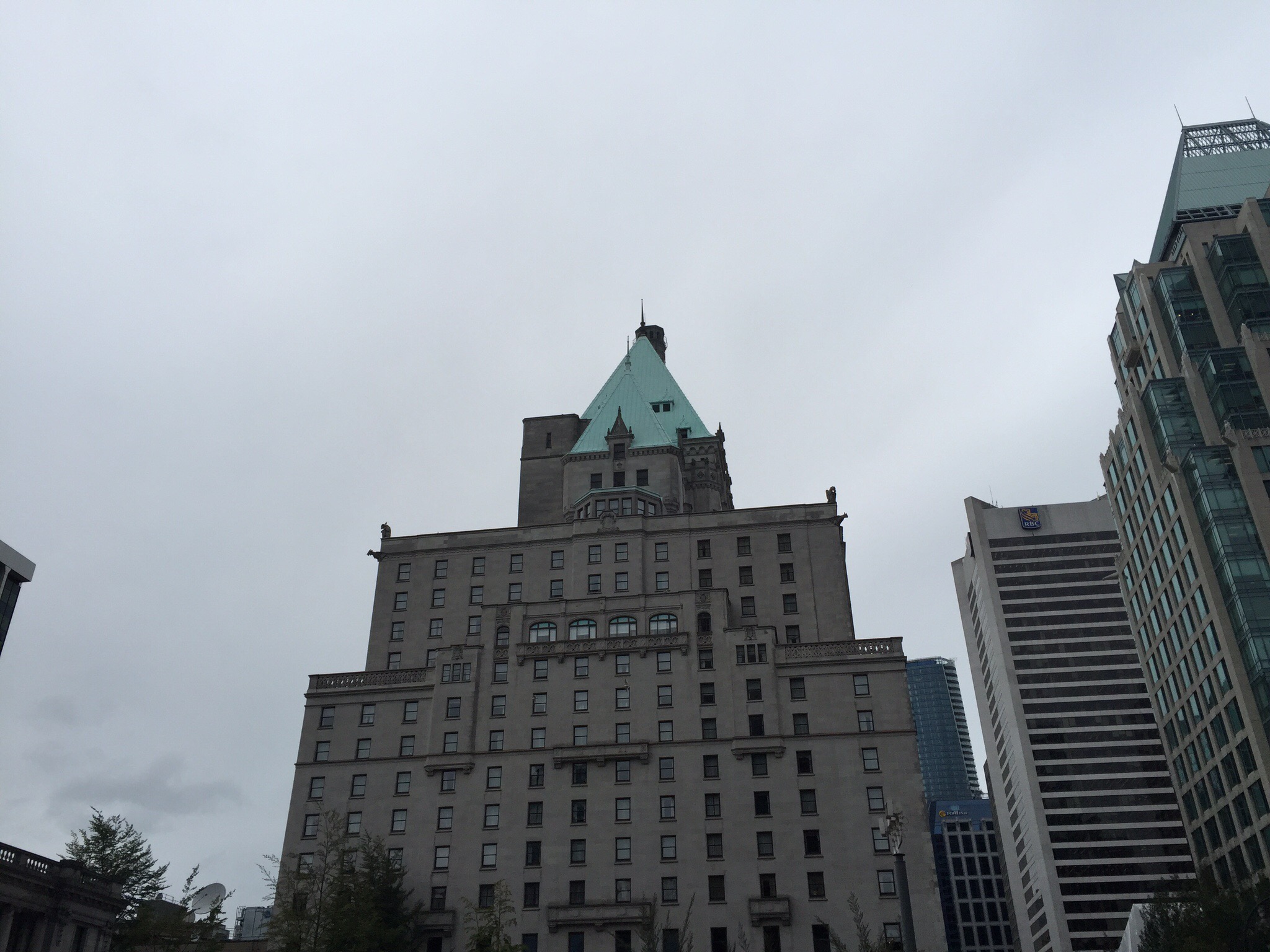
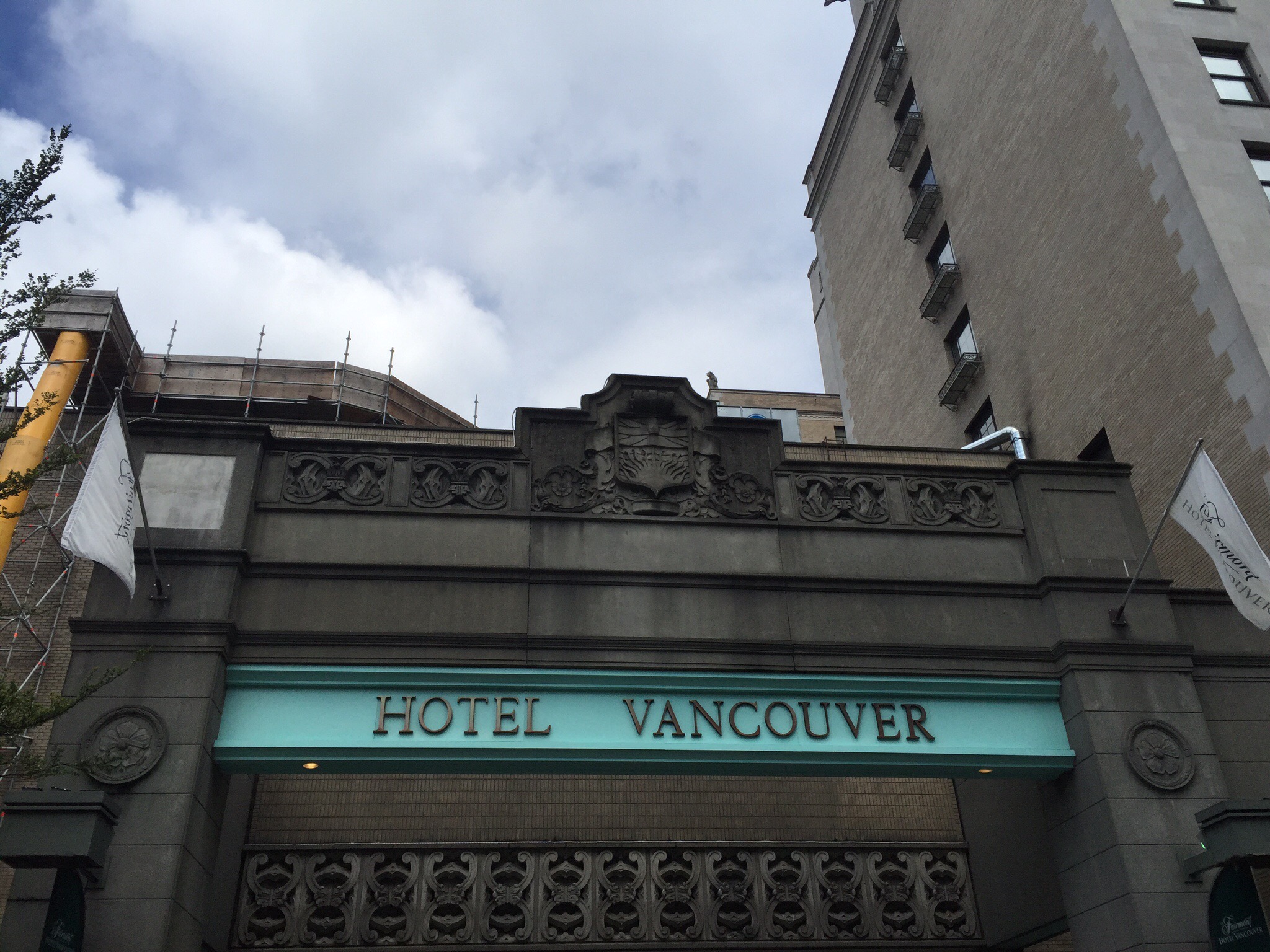
Our first stop was The Fairmont Vancouver Hotel.  Some of Canada’s most unique features are the majestic railway hotels that were built across the country by the Canadian Pacific and the Canadian National Railways. For their time, these hotels were miracles of construction and engineering. Everything that went into them was the biggest and best of their time and they have become very much a part of Canada’s national heritage and identity. The Hotel Vancouver was constructed in the style of a 16th century French Chateau, heavily favoured by Canadian railway companies at the time. The hotel stands 111 metres high and was the tallest building in the city when finished in 1939.  It cost CAD12 million to build and took 11 years to build because construction was halted for five years during the Great Depression.

Though its name and heritage date back to 1888, the present Hotel Vancouver first opened its doors in 1939, on the eve of the Royal visit of King George VI and Queen Elizabeth.  The King and Queen took high tea in the Royal Suite but didn’t actually end up staying in the hotel.   

 We then stopped at a building that was home to the suffragette movement in years gone by. Much like today’s women’s movements, the suffrage cause drew great strength from a world-wide constituency. Helena Rose Gutteridge was just such a dedicated transplant from London to the far flung shores of the British Empire in Vancouver, British Columbia. Born to a working-class London family that disapproved of girls’ education, Helena proved an early rebel. As a young teenager and aspiring ‘New Woman’ of her age, she left home, supporting herself in studies of hygiene and sanitation that gained her a teaching certificate. She won the right to vote for white women in Canada in 1917 and was the first female elected as a city councillor in Vancouver. Erik said that Canada was the second country to achieve the vote for women after Australia. I had to correct him and tell him that NZ was actually the first country in the world to achieve this feat in 1893. Further research shows that South Australia which was a self governing colony at the time acheived this in 1894, one year later so he can proabably be forgiven for being confused. : )

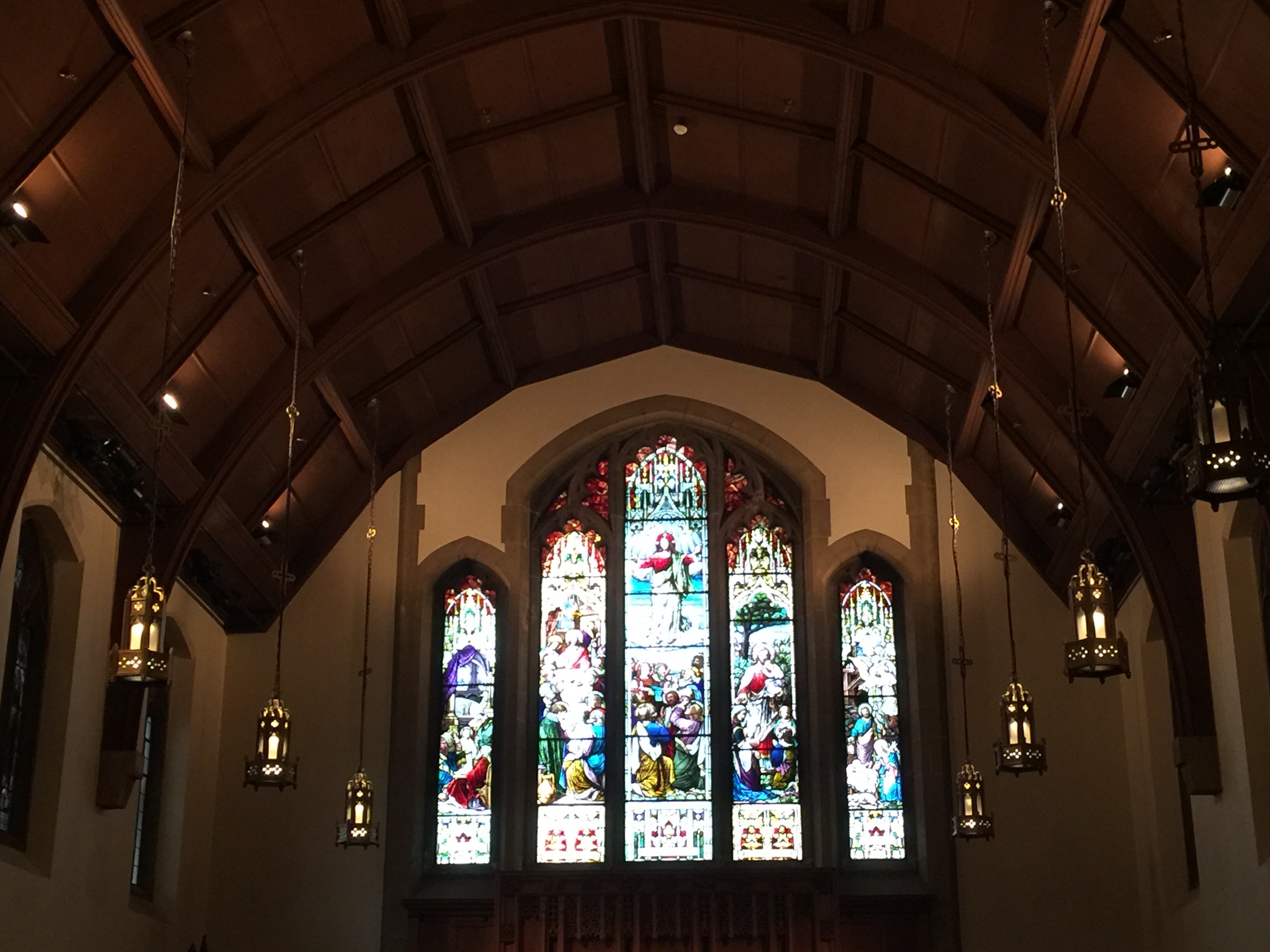
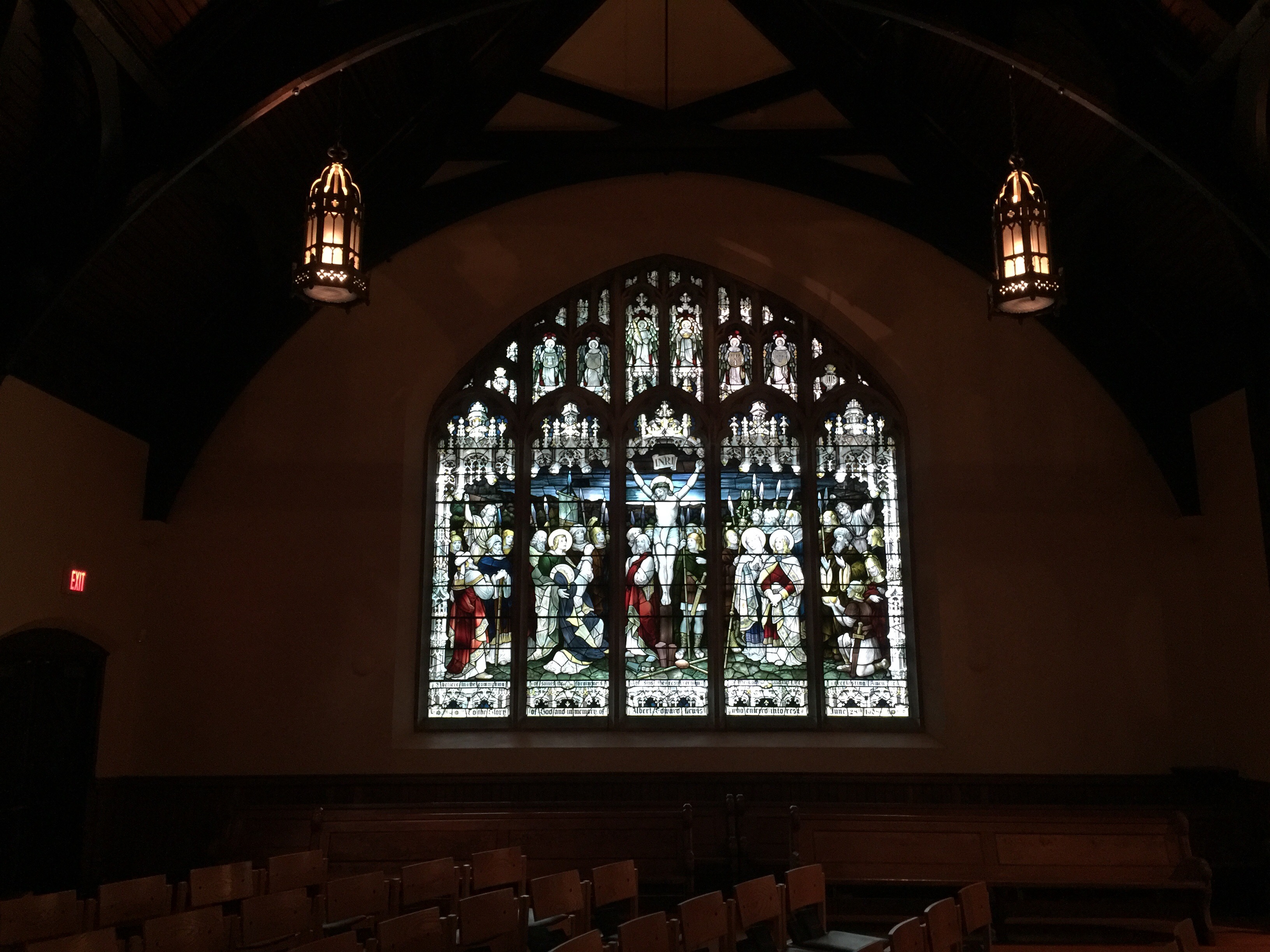
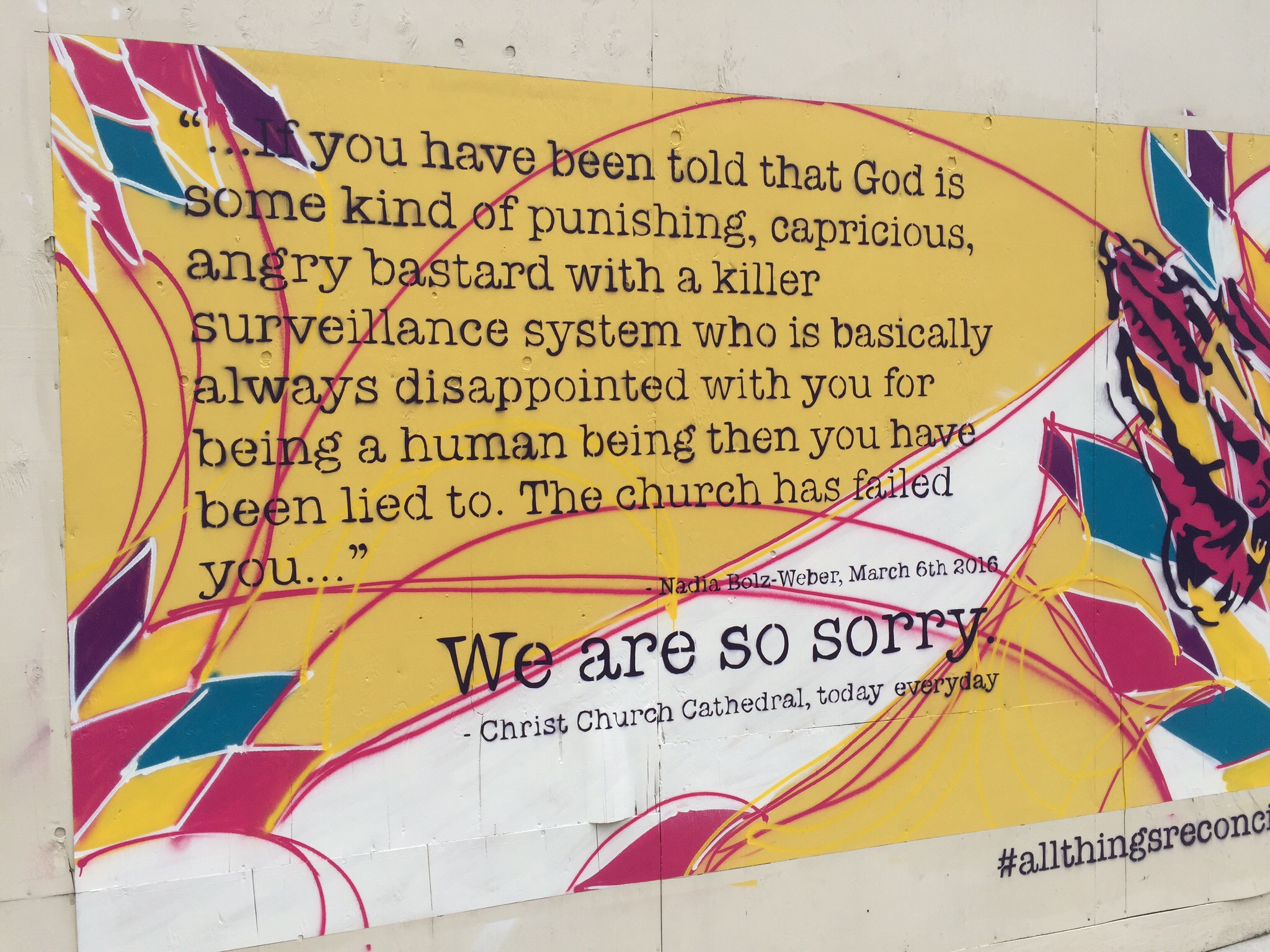
We then continued down Burrard Street to the Christ Church Cathedral.  The Cathedral was started in 1889 and completed in 1895.  The church was built in the Gothic Style with ceiling made of cedar planking and ceiling beams and floor constructed out of old growth Douglas fir.  It has been expanded many times over the last century with the organ also being replaced a few times.  In 1971 the church membership voted to demolish the building and replace it with a hi-rise tower complex designed by Arthur Erickson. This redevelopment was opposed by the public and in 1976 after much lobbying; the cathedral was named a Class A Heritage building in the municipality of Vancouver and the Province of British Columbia.

In 1995 an eleven-year program of restoration and renewal was begun. Christ Church Cathedral is the Regimental Church of the Seaforth Highlanders and is in the process of being designated Regimental Church of the BC Regiment, Duke of Connaught’s Own. It is also the church at which the British royal family worships when in Vancouver.

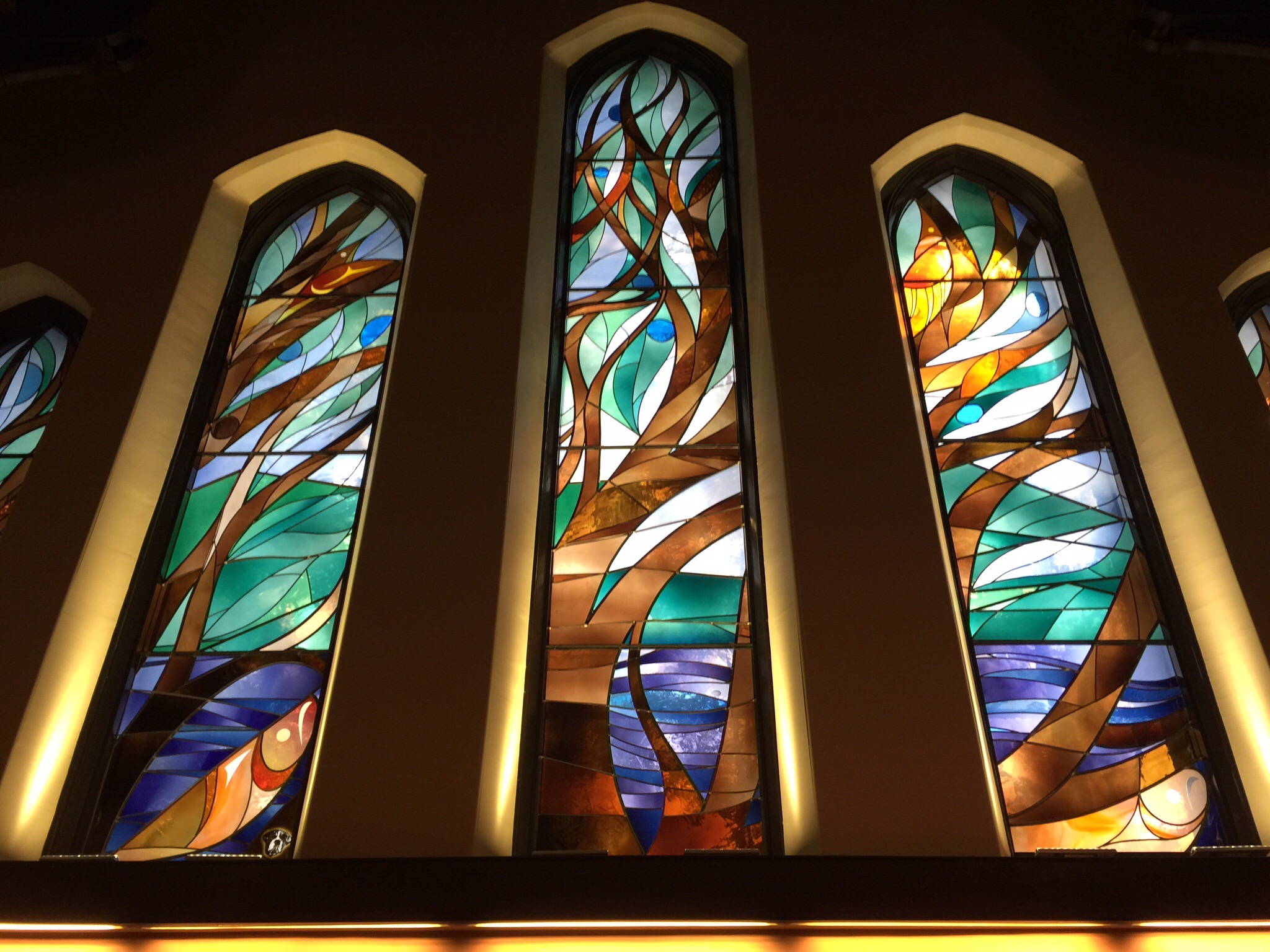
When we visited the inside of the cathedral was completely finished.  The outside is still covered in scaffolding with that work ongoing.   It is beautiful on the inside being restored to it’s original state.  The stained glass windows at the entrance to the church were designed by local artist Susan Point – he brief was to design something that represented BCs natural beauty.  The woman who donated the money for these windows did so on the proviso that her dog featured in them.  If you look carefully in the bottom left hand window you will see a dog’s face.Vancouver has a very strong and robust urban planning strategy.  Property developers wanting to build buildings have to do certain things like create parks and green spaces or contribute to the public artworks.  The minimum building height is 25 stories and the maximum is 40 although there are a few exceptions to this.  Vancouver has 27 protected view corridors which limit the construction of tall buildings which interfere with the line of sight to the North Shore Mountains, the downtown skyline, and the waters of English Bay and the Strait of Georgia.

  The dog’s face is in the right hand corner of the left hand panel – these windows were designed by Susan Point

An interesting billboard on the scaffolding outside the Cathedral

When the Park Place building that sits next to the Cathedral was being built it was restricted to 20 stories but wanted an extra 15 stories. The cathedral sits at about 10 stories high so the city did a deal with the developers – they could have another 15 stories if they effectively paid the cathedral for their space. This money has allowed the cathedral to be renovated and equated to approximately CAD12 million.

Vancouver has more high-rise buildings per capita than most North American metropolitan centres with populations exceeding 1,000,000.  Vancouver’s population density is the 4th-highest in North America and the city has more residential high-rises per capita than any other city on the continent.  There are roughly 650 high-rise buildings that equal or exceed 35 m (115 ft)., and roughly 50 buildings that equal or exceed 100 metres (328 ft). 

The tallest building in Vancouver is the 62-storey, 201 m (659 ft) Living Shangri-La and represents the city’s efforts to add visual interest into Vancouver’s skyline.   The Private Residences at Hotel Georgia completed in 2012 at 157 m (515 ft) and 48 stories is currently the second-tallest in the city.  One Wall Centre, at 150 m (492 ft) tall, with 48 storeys, is currently the city’s third tallest building.  One Wall Centre has the distinction of being the first building in the world to use a tuned liquid column damper to control wind vibrations.  One tower currently under construction, Trump Vancouver at 188 metres will become the city’s 2nd tallest building when completed in 2016.  It’s amazing Mr Trump didn’t go all out to become the tallest building!

The majority of the buildings have glass exteriors – apparently it rains a lot in Vancouver which means grey skies so the glass helps to create reflections to promote lightness.

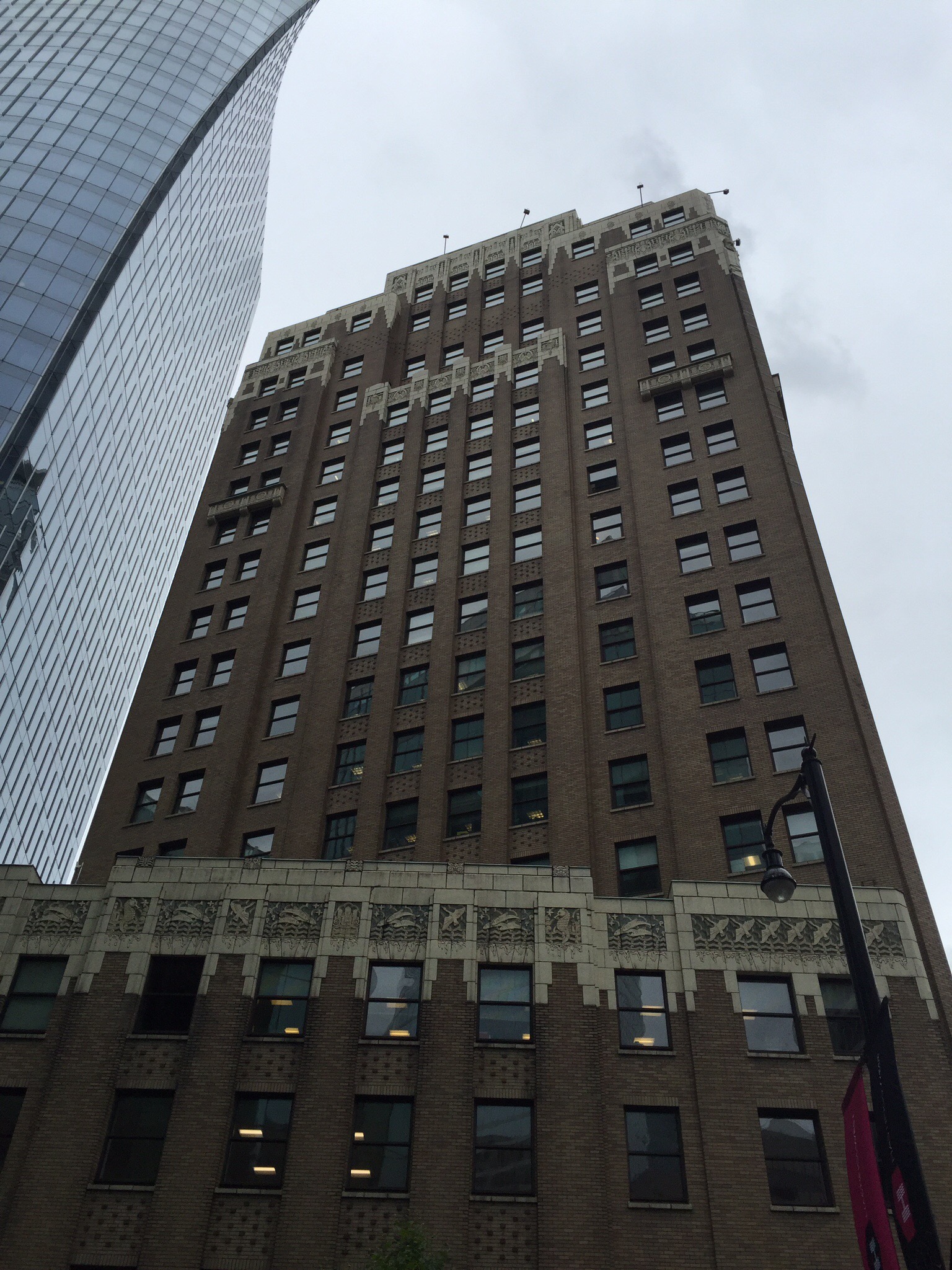
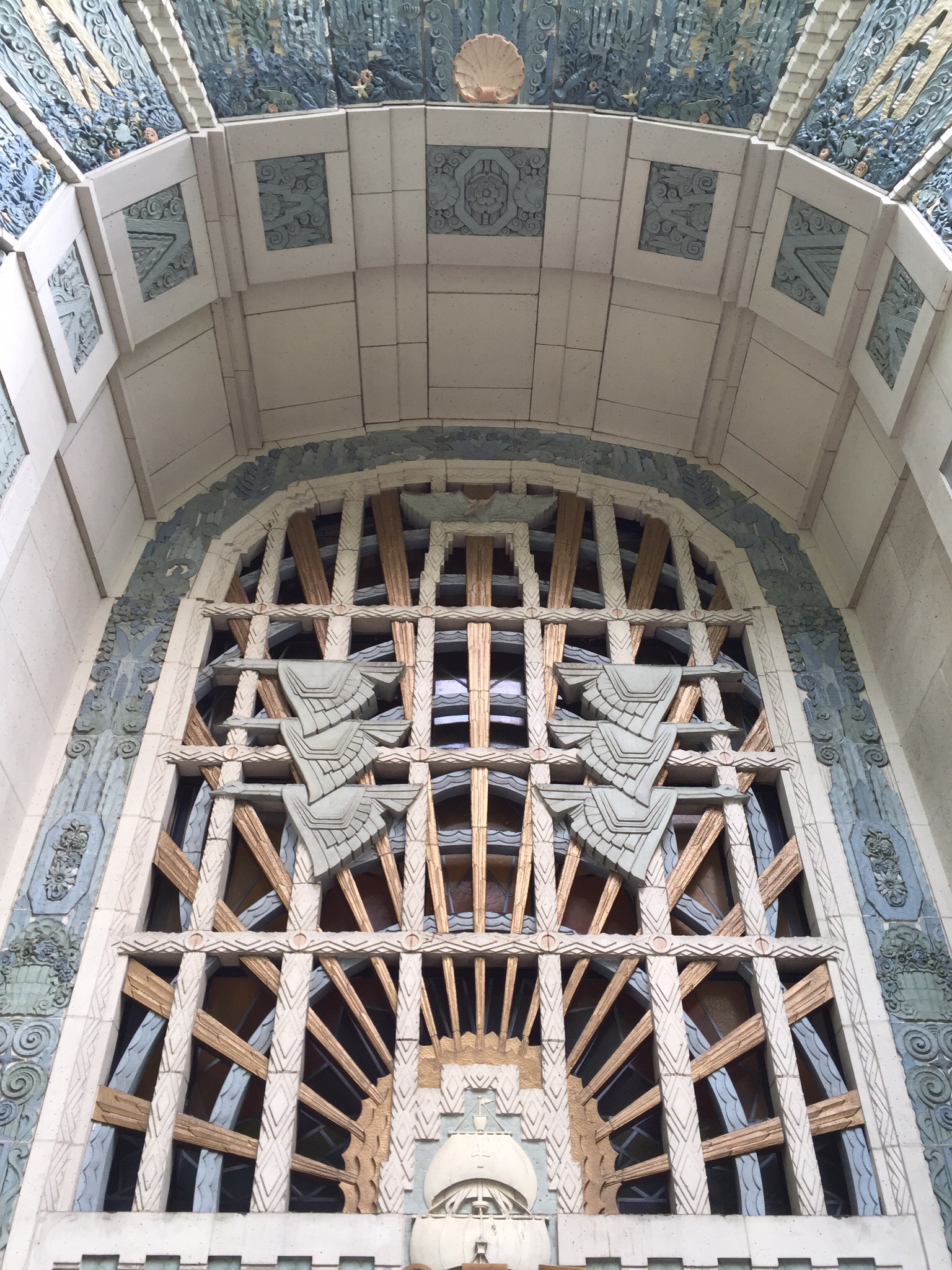
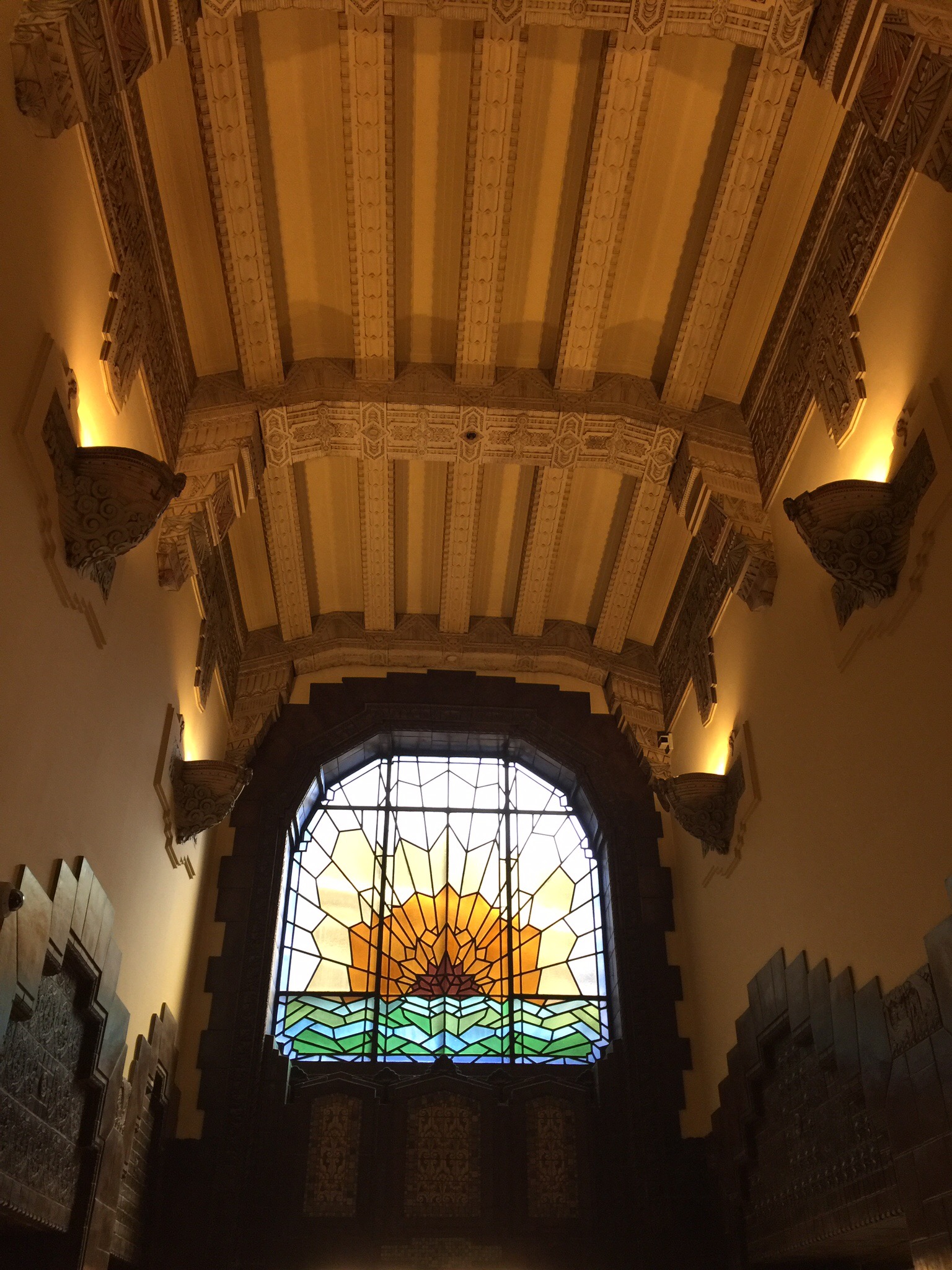
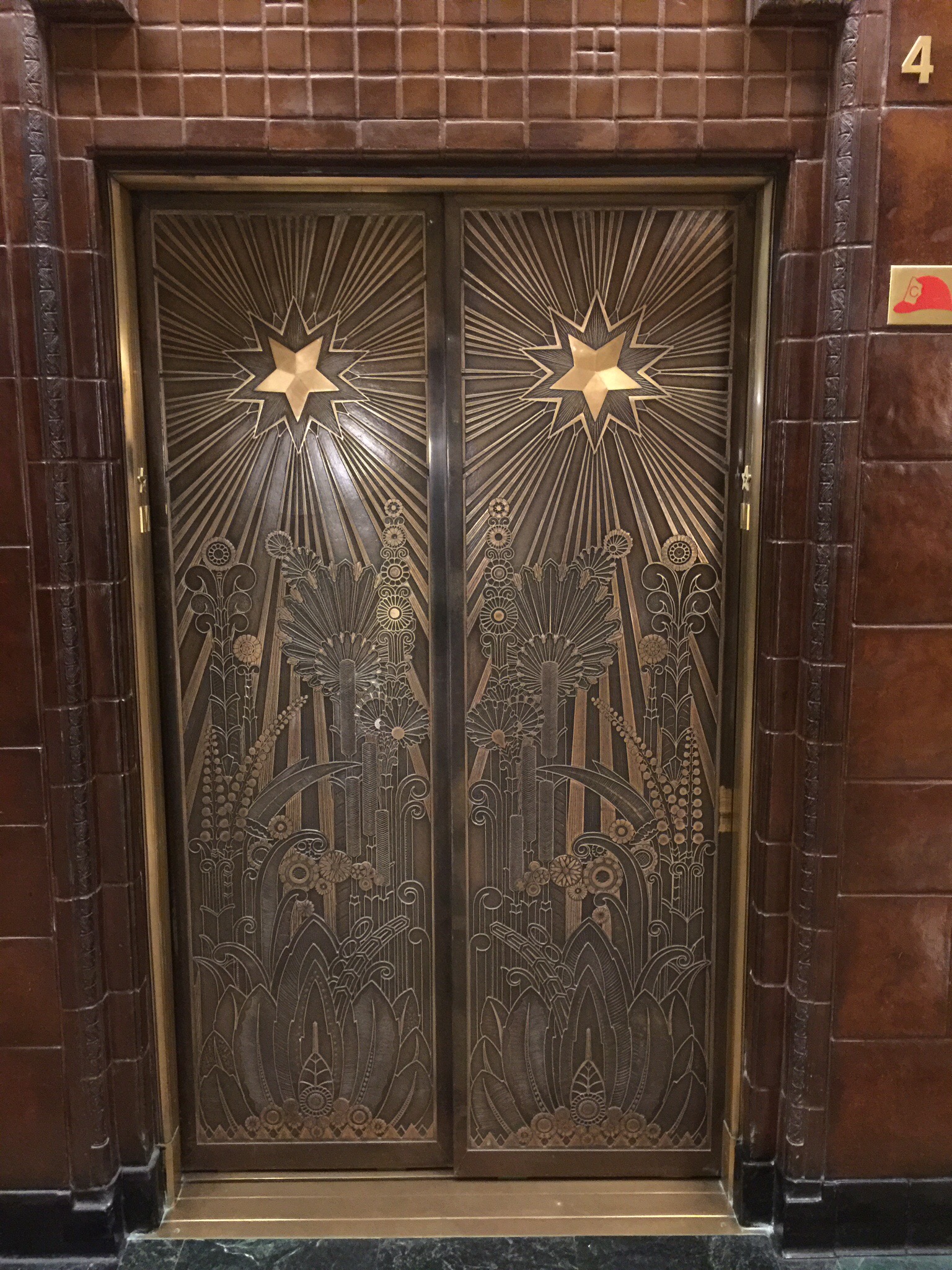
Next stop was the Marine Buildng which I was particularly interested in seeing given it’s Art Deco theme – this building was built in 1929 so is of a similar era to the Art Deco buildings in Napier, NZ which were built after the 1931 earthquake.  The Art Deco detail on this building was definitely more elaborate and intricate than that seen on the buildings built in Napier.  I imagine it had something to do with the budget : ). 

The brainchild of Lt. Commander J.W. Hobbs of Toronto, it was opened on 7 October 1930, and at 97.8 metres (321 ft) (22 floors) it was the tallest skyscraper in the city until 1939.  According to the architects, McCarter & Nairne, the building was intended to evoke “some great crag rising from the sea, clinging with sea flora and fauna, tinted in sea-green, touched with gold.” The building cost $2.3 million to build – $1.1 million over budget—but due to the Great Depression it was sold to the Guinness family of Ireland for only $900,000. The 2004 property assessment is $22 million.

There was an observation deck, but during the depression in the 1930s the 25-cent admission price proved unaffordable for most. Currently, there are no public galleries in the building.Inside the massive brass-doored elevators the walls are inlaid with 12 varieties of local hardwoods. All over the walls and polished brass doors are depictions of sea snails, skate, crabs, turtles, carp, scallops, seaweed and sea horses, as well as the transportation means of the era. The floor presents the zodiac signs. The exterior is studded with flora and fauna, tinted in sea-green and touched with gold.

The building has often been used in filmmaking and television production. It was the setting for the final scene in the movie, Timecop and it was used as the headquarters of the Daily Planet in the popular television show Smallville which is based on Superman. The building was used in the movie Blade: Trinity. It stood in for the Baxter Building in New York City in 2005’s Fantastic Four and its sequel, Fantastic Four: Rise of the Silver Surfer.


 We carried on downtown to Canada Wharf which is the rise ship terminal and also home to the Vancouver Convention Centre. A major expansion to the Vancouver Convention Centre opened in 2009, tripling the capacity of the original Canada Place venue in time for the hosting of the Winter Olympics in 2010. The region enthusiastically hosted the Vancouver 2010 Olympic and Paralympic Winter Games in February and March. More than 2.5 billion people around the world tuned in to watch 2,600 athletes from 82 nations compete. The highlight for Canadians? Winning the men’s hockey gold medal. They beat the USA, their fiercest rivals!

The new west building expansion is certified LEED (Leadership in Energy and Environmental Design) Platinum and is designated a PowerSmart Convention Centre by BC Hydro. It was awarded a “GO GREEN” certificate from the Building Owners and Managers Association (BOMA) for industry-approved, environmental best practices in building management. The living roof, seawater heating and cooling, on-site water treatment and fish habitat built into the foundation of the West Building make it one of the greenest convention centres in the world. The Centre recycles an average of 180,000 kilograms of materials annually, nearly half of the total volume of waste generated. It avoids canned goods, disposable utensils and dishes, and donates leftover food to local charities.

The 6-acre (24,000 m2) “living roof” is the largest in Canada and the largest non-industrial living roof in North America. The roof landscape is designed as a self-sustaining grassy habitat characteristic of coastal British Columbia, including 400,000 native plants and 4 colonies of 60,000 bees each which provide honey for the public plaza restaurant. No public access is allowed to the roof, which made it possible to create a fully functional ecosystem with natural drainage and seed migration patterns using the roof’s architectural topography. The landscape functionally connects to nearby Stanley Park via a corridor of waterfront parks. Irrigation to the roof is provided by the building’s wastewater treatment plant. In the event that the roof irrigation demands exceed the capacity of the wastewater treatment plant, make-up water can be provided by a reverse osmosis desalinization plant drawing and treating seawater pumped from the harbour as well as municipal water through an air gap connection to the storage tanks, as needed.  All wastewater generated in the building is treated and recycled for use in toilet and urinal flushing, as well as green roof irrigation. 

We saw various artwork in the Convention Centre including the Totem Pole.  Totem poles are monumental sculptures carved on poles, posts, or pillars with symbols or figures made from large trees, mostly western red cedar, by indigenous peoples of the Pacific Northwest coast of North America (northwestern United States and Canada’s western province, British Columbia).  The carvings may symbolize or commemorate cultural beliefs that recount familiar legends, clan lineages, or notable events. The poles may also serve as functional architectural features, welcome signs for village visitors, mortuary vessels for the remains of deceased ancestors, or as a means to publicly ridicule someone. Given the complexity and symbolic meanings of totem pole carvings, their placement and importance lies in the observer’s knowledge and connection to the meanings of the figures. We also saw some more Susan Point artwork. Susan Point is considered one of Canada’s most famous artists. She was born in Alert Bay, BC in 1952 and has lived on the Musqueam First Nation reservation in Vancouver since birth. She began her art career in 1981, choosing to concentrate on the traditional designs of her own people, and was particularly intrigued with the Spindle Whorl, an elaborately carved wooden disk used for spinning wool which inspires many of her works. A prolific artist, her large scale works grace public buildings on both sides of the Canadian and USA borders, paying tribute to the First People’s of these countries. She has received a National Aboriginal Award for her work as an artist and was recently awarded the Order of Canada.  We also saw a display of metal salmon. The salmon is a very important food source in this part of the world. Erik explained how salmon are born in fresh water and make there way down stream to the sea where they live their lives. When it is time for them to breed and subsequently die they swim upstream back to the place they were born. They then lay their eggs and die. Swimming upstream makes them a very strong fish with many health benefits for those that consume them. They have high levels of nitrogen so when the beers eat them and then defecate in the forest they return this nitrogen to the land which helps the trees prosper. It is a great story of the circle of life. The living roof on top of the convention centre 
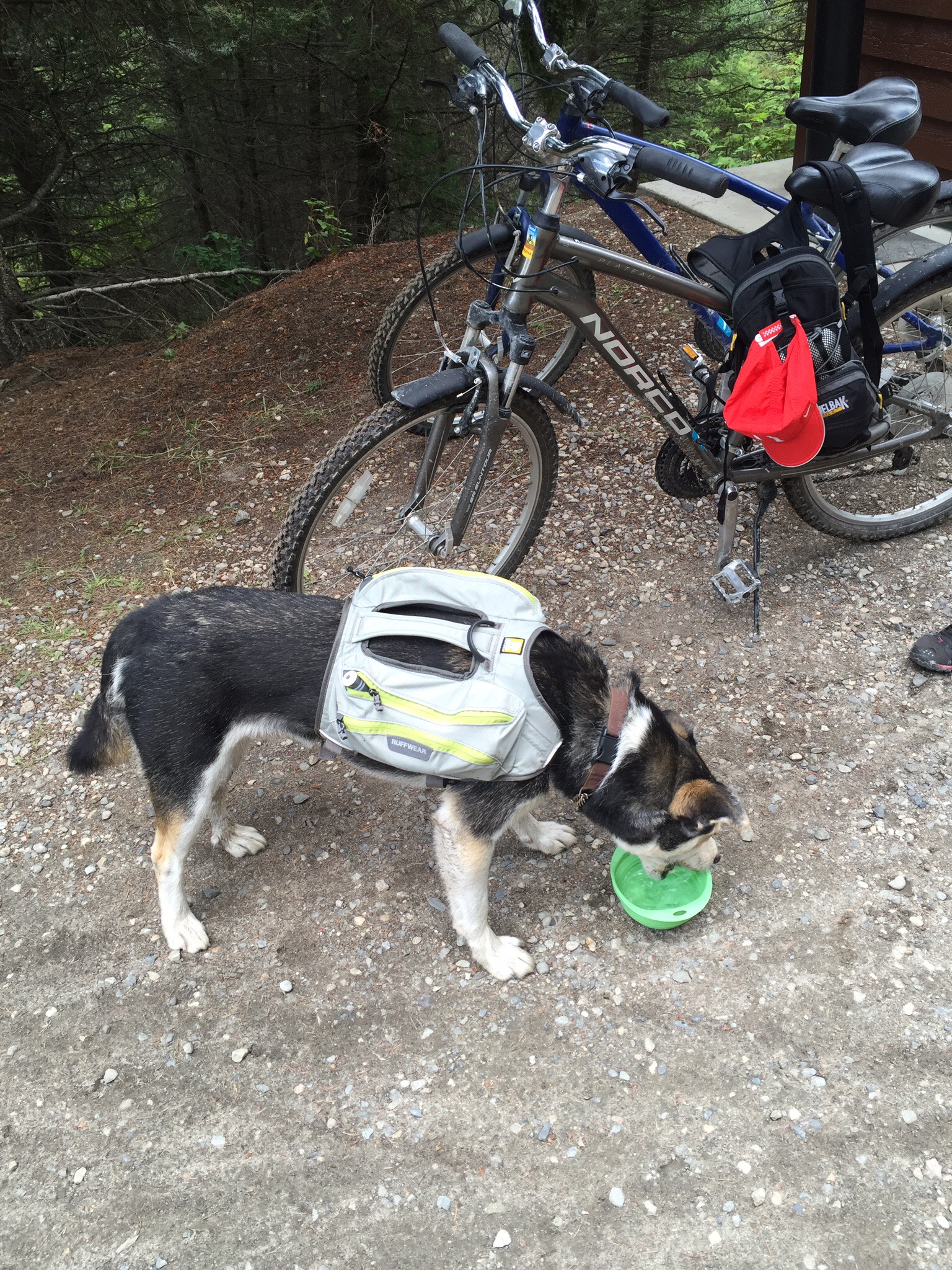
We saw a number of food trucks around the city – these are a new addition and are proving very popular. They cover a wide range of ethnic foods. Steve had spotted the Japadog Truck which sold hots dogs using Kurobata Pork which comes from a rare breed of pigs called Berkshire. The Berkshire breed is well documented as having superior meat quality when compared to other commercial pig breeds. The most popular Japadog is served with Japanese Mayo and seaweed. The verdict – pretty good 🐷 👌🏼. 

After the tour we had a wander around the shopping district which is very good.  It was then time for some liquid refreshments and we managed to get the best seats in the house at the Tap & Barrel.  They have a verandah that overlooks Coal Harbour which is home to the Sea Plane terminal.  This Sea Plane terminal is the 17th busiest airport in Canada.  The capital of Vancouver, Victoria, is located on the southern tip of Vancouver Island.  It can take about 5 hours to get here by road and ferry so it is much more time efficient to take a seaplane – it takes about 2o minutes!  There are many islands out from Vancouver, hence the use of seaplanes.
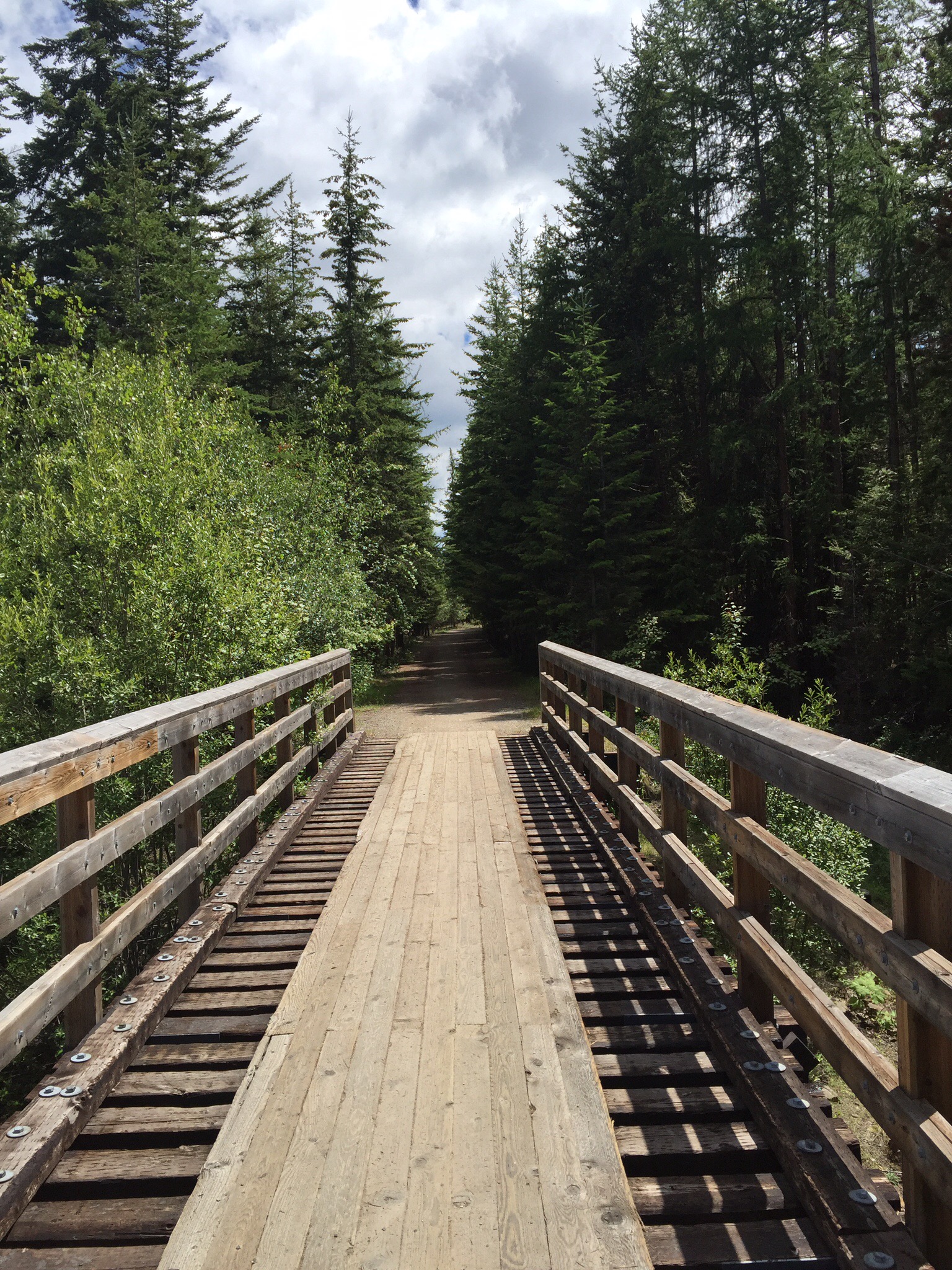
You can also see Vancouver’s North Shore and watch all the water activity including oil tankers, ferries and cruise ships.  Vancouver welcomes 829,000 cruise ship passengers a year – they have at least one cruise ship in port everyday between May and September.  The cruise ships depart here for Alaska, Hawaii and Asia.


Vancouver ex Wikipedia

Vancouver, officially the City of Vancouver, is the most populous city in the Canadian province of British Columbia. The 2011 census recorded 603,502 people in the city, and the Greater Vancouver area has a population of around 2.4 million. Vancouver is one of the most ethnically and linguistically diverse cities in Canada; 52% of its residents have a first language other than English. Vancouver is the most densely populated Canadian municipality with over 250,000 residents, and the fourth most densely populated such city in North America behind New York City, San Francisco and Mexico City.
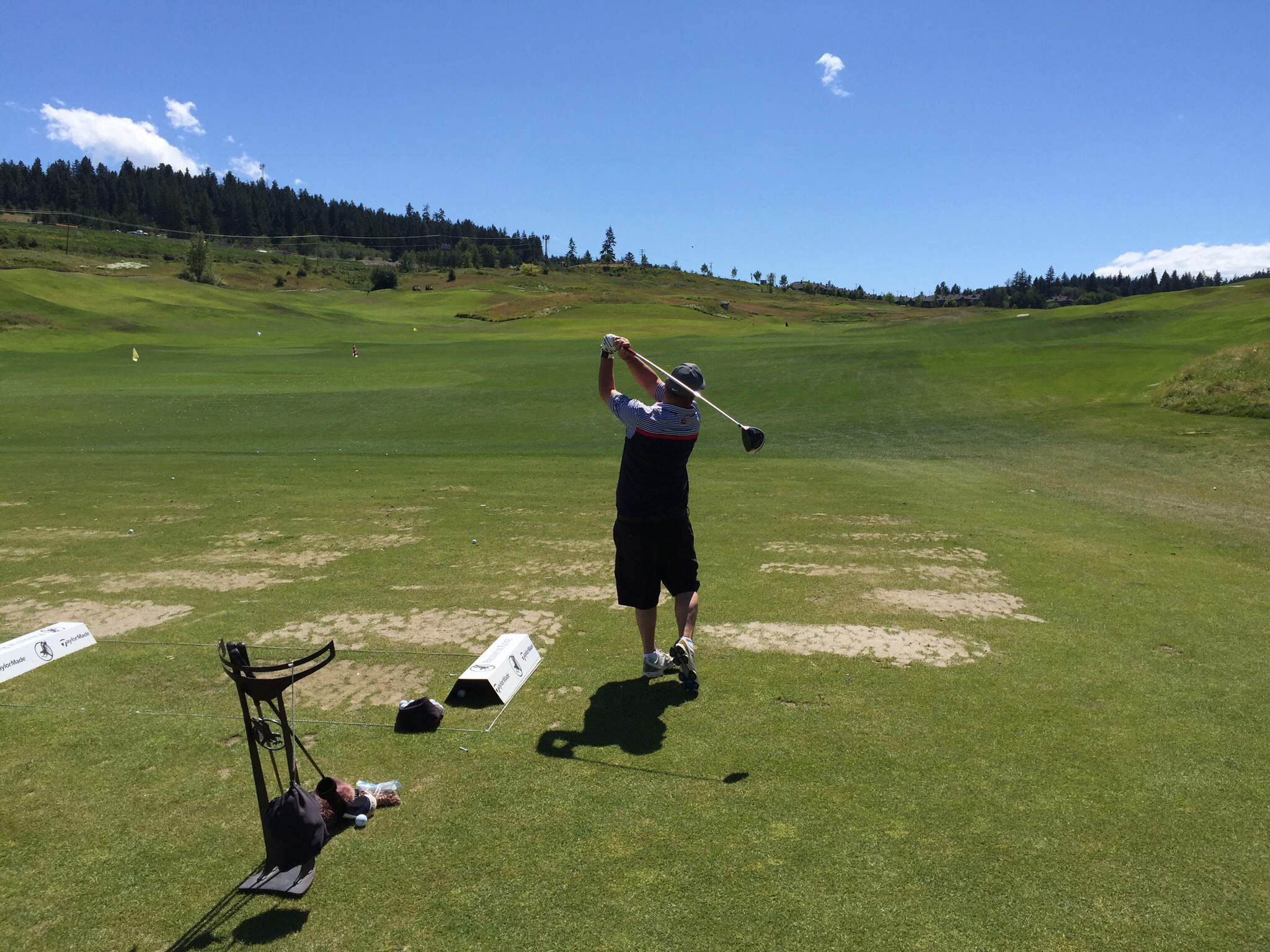
The original settlement, named Gastown, grew up on clearcuts on the west edge of the Hastings Mill logging sawmill’s property, where a makeshift tavern had been set up on a plank between two stumps and the proprietor, Gassy Jack, persuaded the curious millworkers to build him a tavern, on 1 July 1867. From that first enterprise, other stores and some hotels quickly appeared along the waterfront to the west. Gastown became formally laid out as a registered townsite dubbed Granville, B.I. (“B.I” standing for “Burrard Inlet”). As part of the land and political deal whereby the area of the townsite was made the railhead of the CPR, it was renamed “Vancouver” and incorporated shortly thereafter as a city, in 1886. 

By 1887, the transcontinental railway was extended to the city to take advantage of its large natural seaport, which soon became a vital link in a trade route between the Orient, Eastern Canada, and Europe.  As of 2014, Port Metro Vancouver is the third largest port by tonnage in the Americas (displacing New York), 27th in the world, the busiest and largest in Canada, and the most diversified port in North America.  While forestry remains its largest industry, Vancouver is well known as an urban centre surrounded by nature, making tourism its second-largest industry.  Major film production studios in Vancouver and Burnaby have turned Greater Vancouver and nearby areas into one of the largest film production centres in North America, learning it the film industry nickname, Hollywood North.
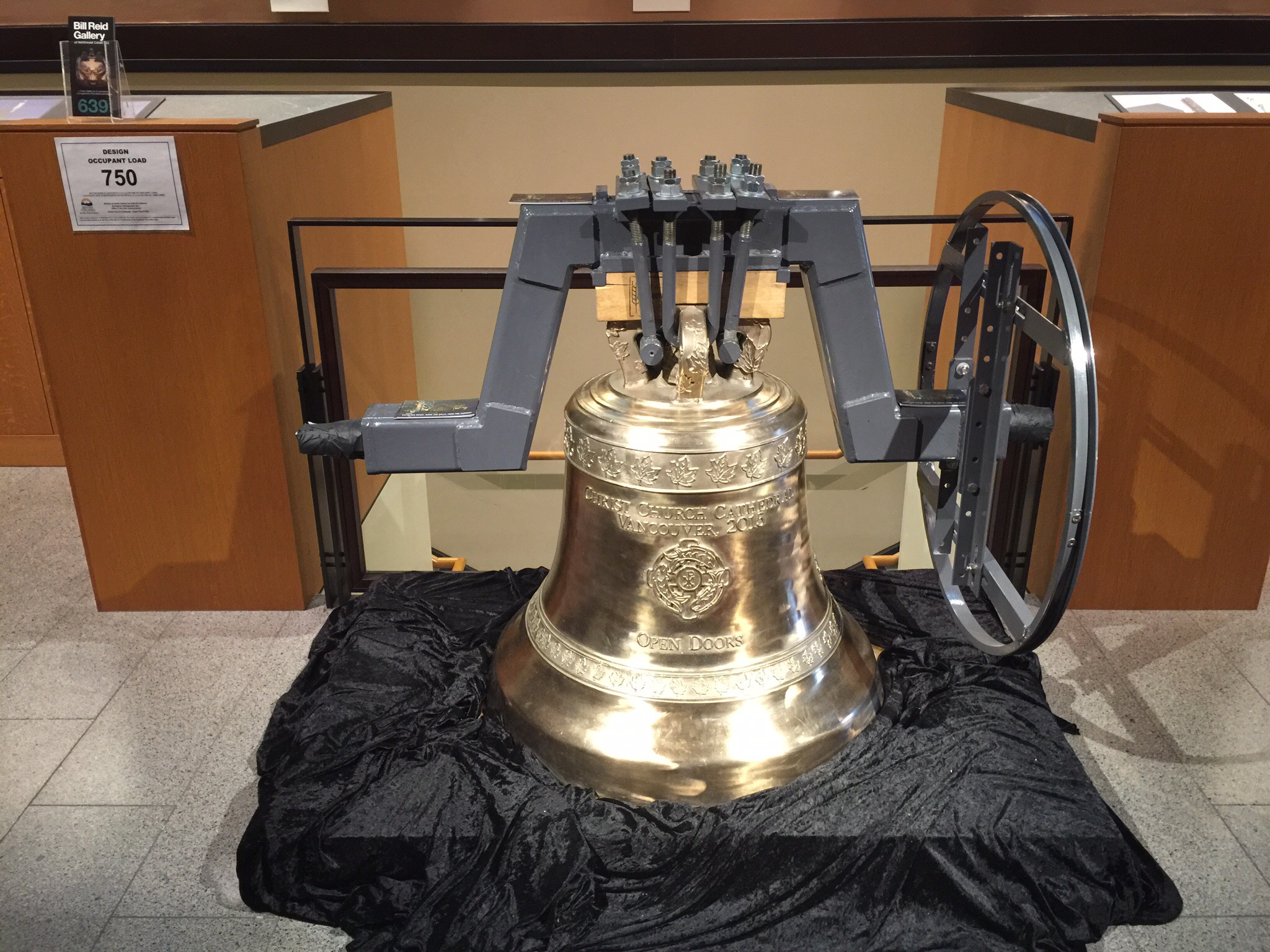
Vancouver is consistently named as one of the top five worldwide cities for livability and quality of life, and the Economist Intelligence Unit acknowledged it as the first city to rank among the top-ten of the world’s most liveable cities for five consecutive years.  Vancouver has hosted many international conferences and events, including the 1954 British Empire and Commonwealth Games, UN Habitat I, Expo 86, the World Police and Fire Games in 1989 and 2009; and the 2010 Winter Olympics and Paralympics which were held in Vancouver and Whistler, a resort community 125 km (78 mi) north of the city.

Indigenous People

Archaeological records indicate the presence of Aboriginal people in the Vancouver area from 8,000 to 10,000 years ago. The city is located in the traditional territories of the Squamish, Musqueam, and Tseil-Waututh (Burrard) peoples of the Coast Salish group.  They had villages in various parts of present-day Vancouver, such as Stanley Park, False Creek, Kitsilano, Point Grey and near the mouth of the Fraser River.

Europeans became acquainted with the area of the future Vancouver when José María Narváez of Spain explored the coast of present-day Point Grey and parts of Burrard Inlet in 1791 – although one author contends that Francis Drake may have visited the area in 1579.  The city takes its name from George Vancouver, who explored the inner harbour of Burrard Inlet in 1792 and gave various places British names.

Today the Chinese are the largest visible ethnic group in the city, with a diverse Chinese-speaking community, and several languages, including Cantonese and Mandarin.  Neighbourhoods with distinct ethnic commercial areas include the Chinatown, Punjabi Market, Little Italy, Greektown, and (formerly) Japantown.

In the 1980s, an influx of immigrants from Hong Kong in anticipation of the transfer of sovereignty from the United Kingdom to China, combined with an increase in immigrants from mainland China and previous immigrants from Taiwan, established in Vancouver one of the highest concentrations of ethnic Chinese residents in North America.

Posted in Canada, Vancouver | 1 Comment