Chiang Mai Fun – Chiang Mai, Thailand

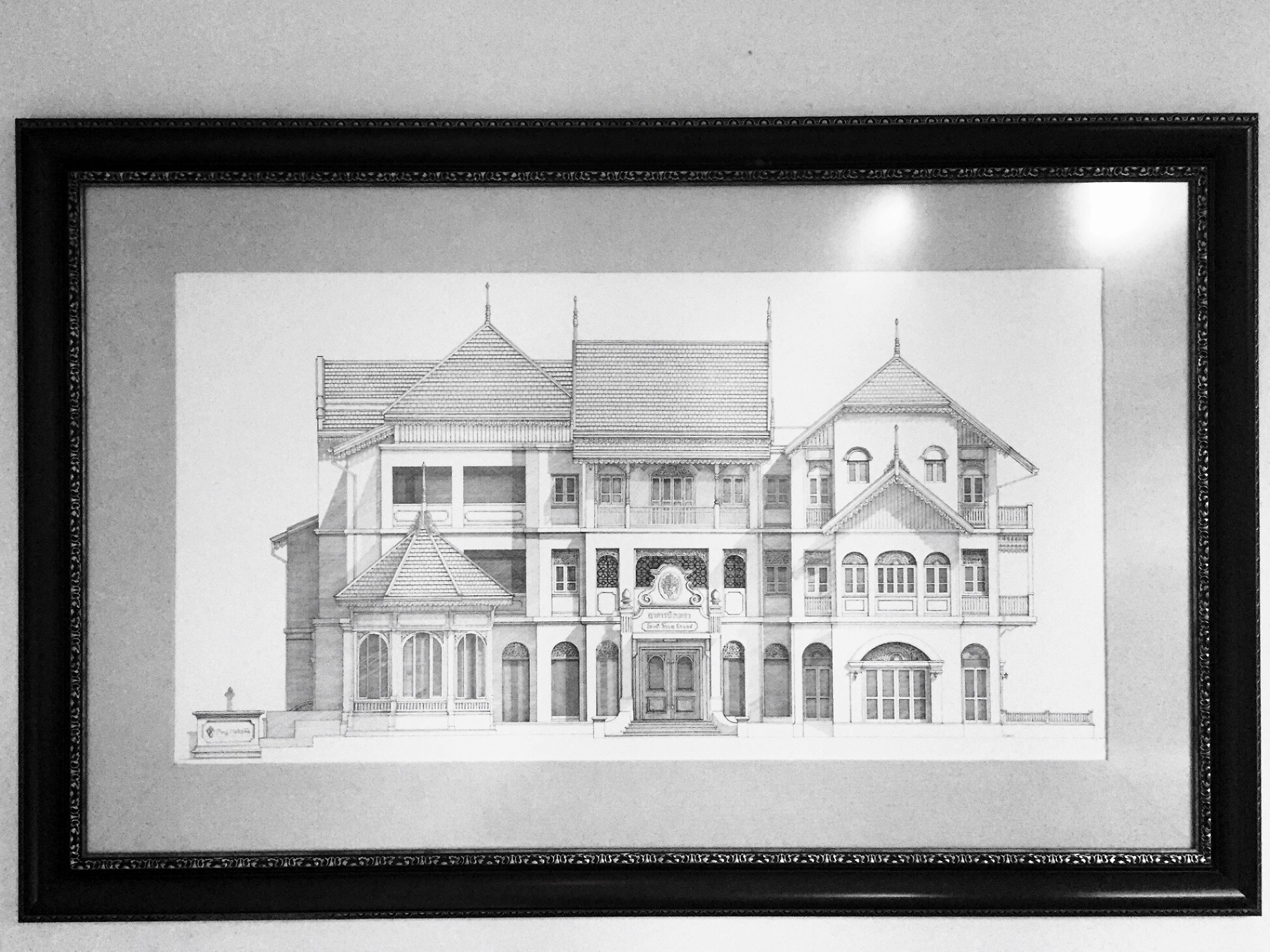
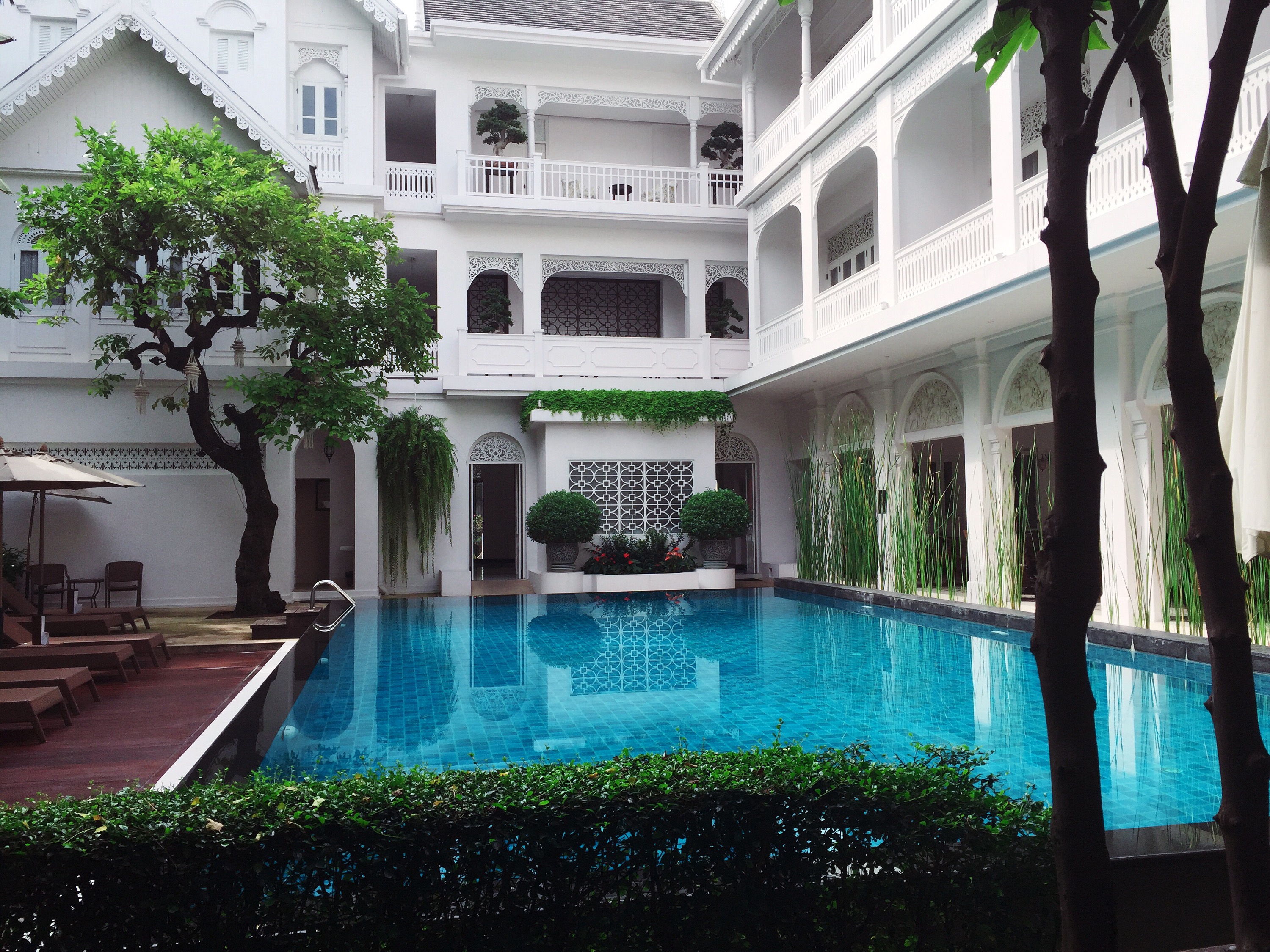
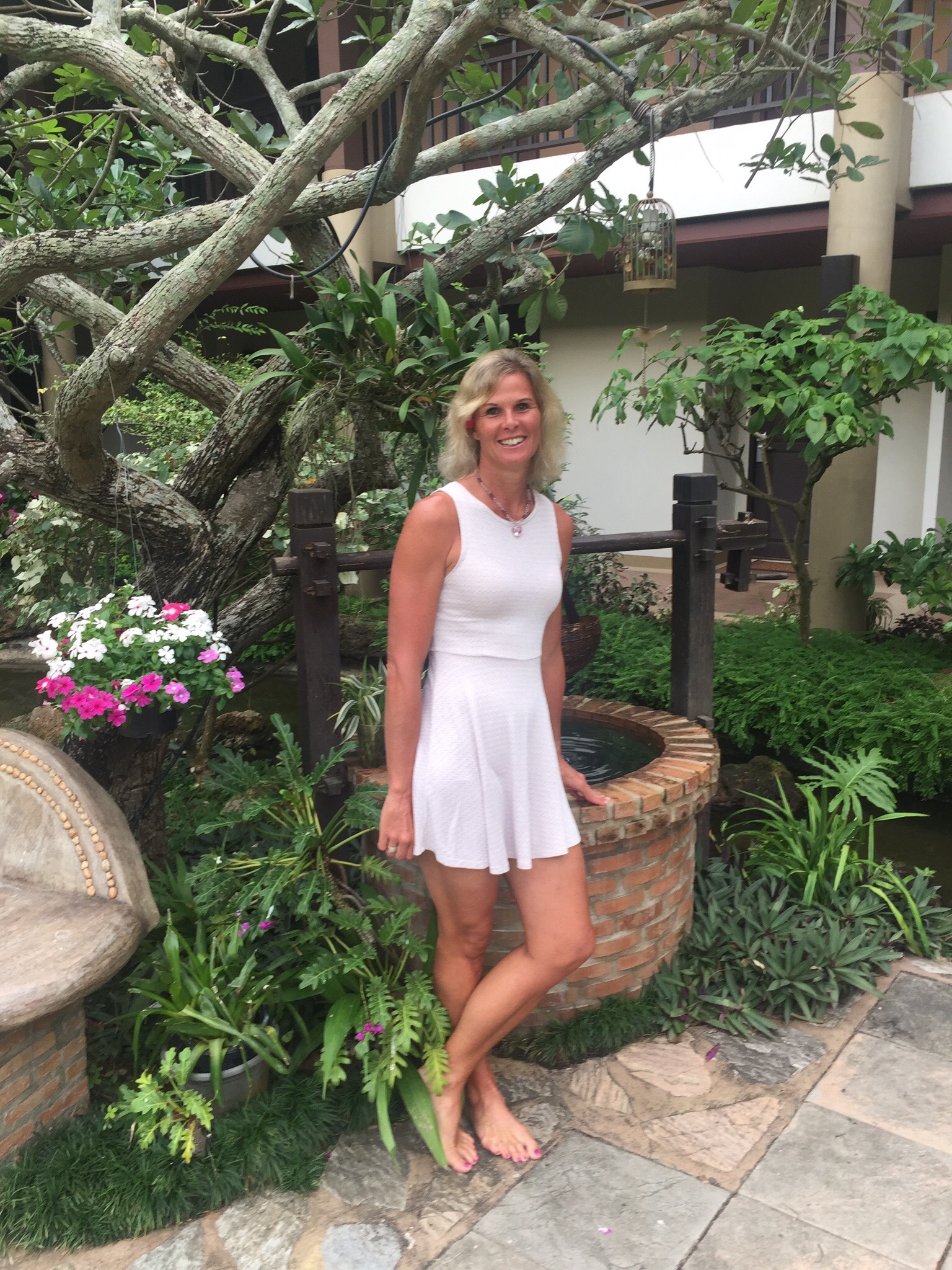
After our week out at Mae Jo Golf Club & Resort we then moved into the Ping Nakara in Chiang Mai city.  It was nice to be close to the city happenings again.  We have stayed at the Ping Nakara before and it is one of my favourite boutique hotels with only 19 rooms.

During the reign of King Rama V, in the opening years of the 20th century, the area where the hotel stands was at the center of Northern Thailand’s thriving teak logging business.  There were many beautiful colonial style buildings along this stretch of the river, among them the house of Luang Yonnakarn Phichitra and the British consulate, and these elegant forebears provided the inspiration for the Ping Nakara.

While the hotel captures the appearance and feeling of old colonial buildings in Chiang Mai and the North, it is far from being a simple reproduction.  To preserve the essence of the past but blend it seamlessly with the demands of contemporary life required many original designs and creative re-imaginings.  Three storey buildings in this style were all but unknown, yet by combining seven structures of differing heights and styles the whole feels natural.  The fretwork patterns, beds, door knobs, window fixtures and furniture throughout are all of new design but inspired by and in keeping with historical antecedents.  

As mentioned above teak logging was the main industry and source of revenue in the North of Thailand, and much of it was administered from this locality.  Where this hotel now stands, mahouts (elephant handlers) and their elephants used to bide time in simple wooden buildings while their bosses attended to business in the adjacent Forestry Office, the first such office in Thailand.  For the elephants and their handlers this would often be the last moment of respite before an arduous month or more in the forest.

It is only fitting, then, that construction of the hotel began in the year of the elephant (2007) and that this magnificent creature is an important theme throughout the hotel.  The 16 bas-reliefs around the terrace present the complete story of the elephant and its close relationship with man, beginning with preparations for a journey into the jungle and ending with pulling teak logs out of the river.  Outside of shows, this working cooperation between man and elephant can no longer be seen today.

The attention to detail around the hotel mentioned above is evident and the staff are very friendly and courteous.  The daily breakfasts are delicious and they top your mini bar up daily with local snacks and treats.  There are many little alcoves for relaxing in including a library.  They even gave us our own little momento when we left – two little ceramic elephants.  Just around the corner from the hotel are some great little cafes where I enjoyed some very good coffee.  It is also only about a ten minute walk to the Night Bazaar.  We highly reccomend this hotel if you are visting Chiang Mai. 


Day out at the Dam

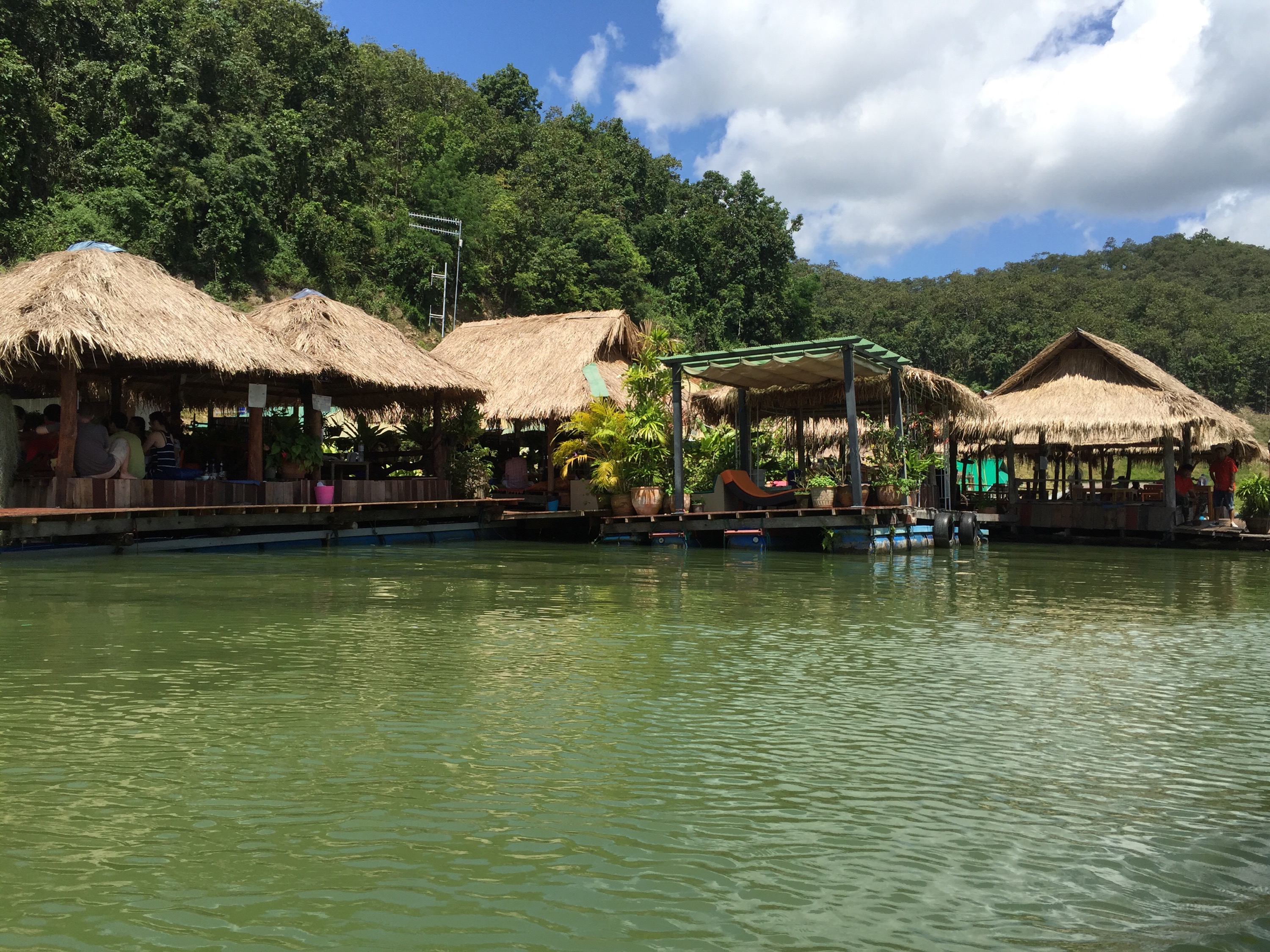
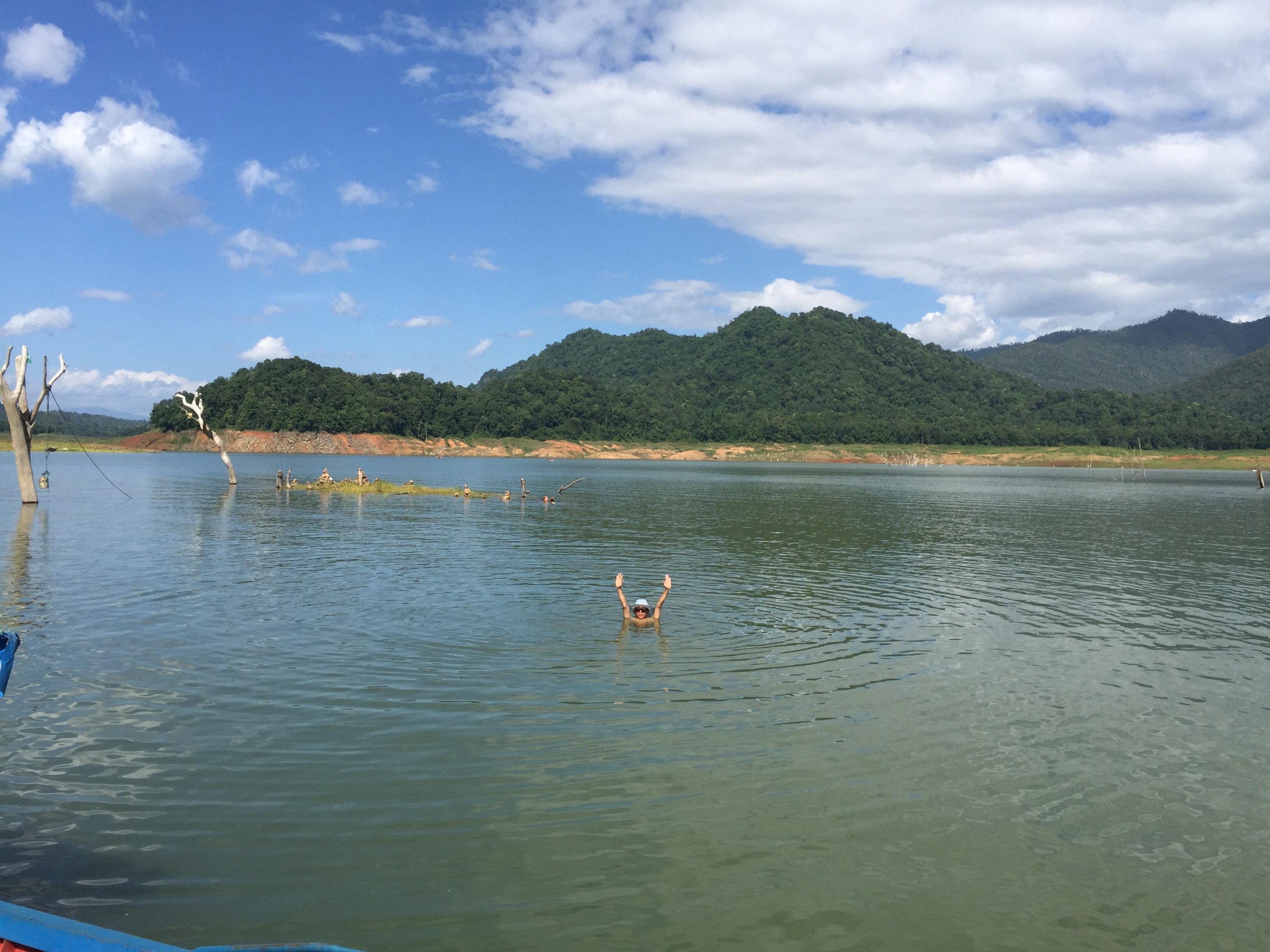
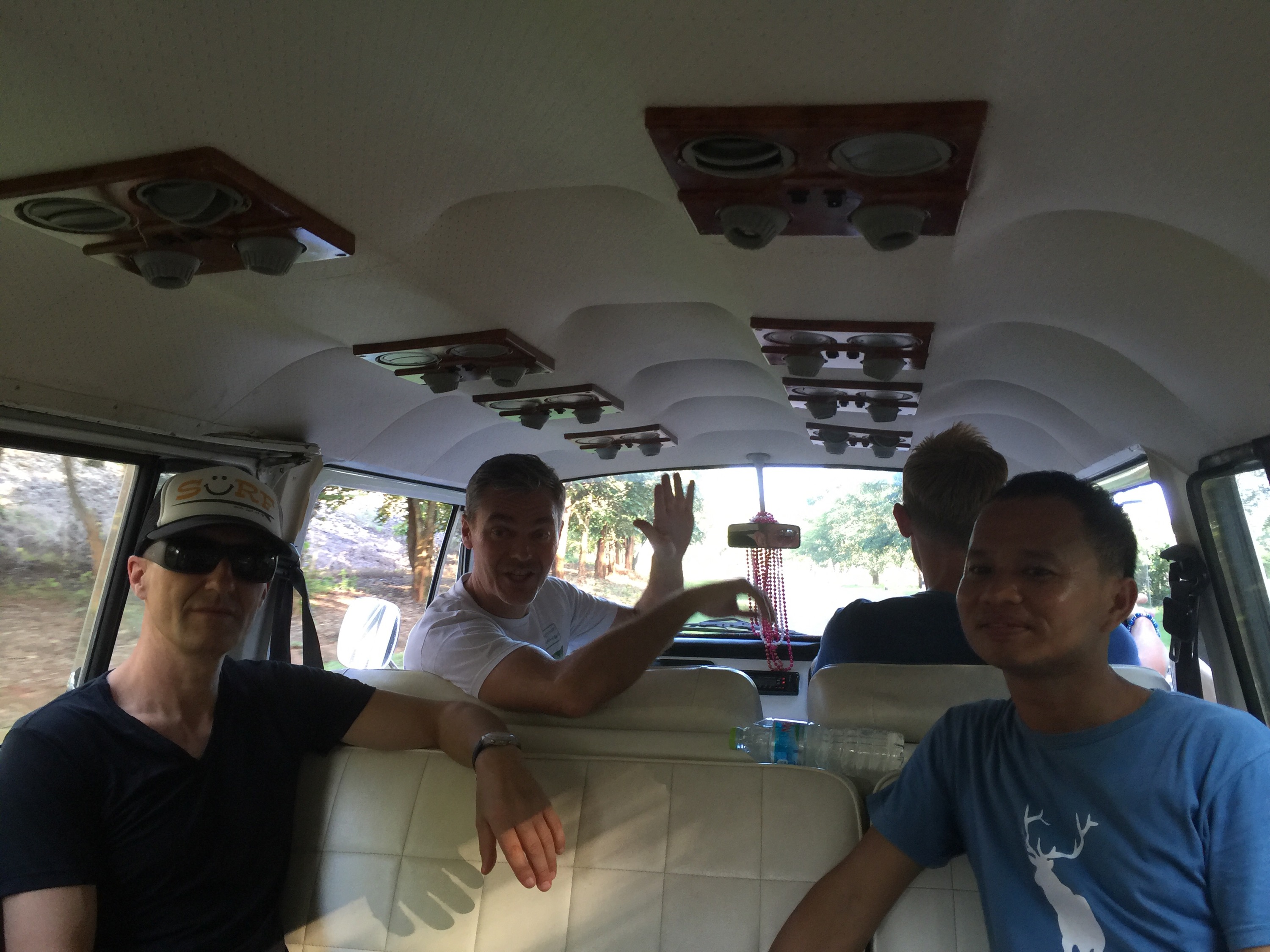
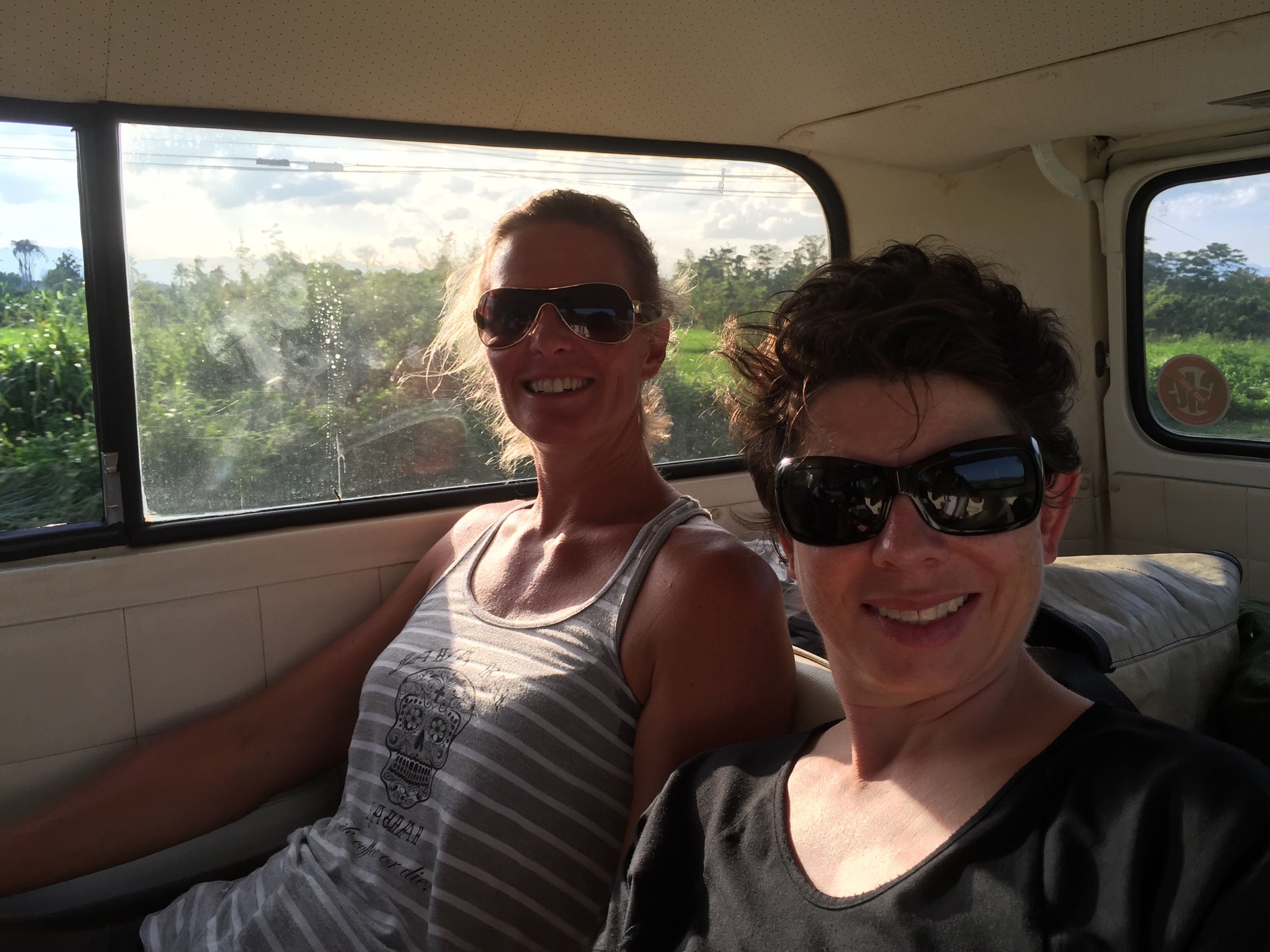
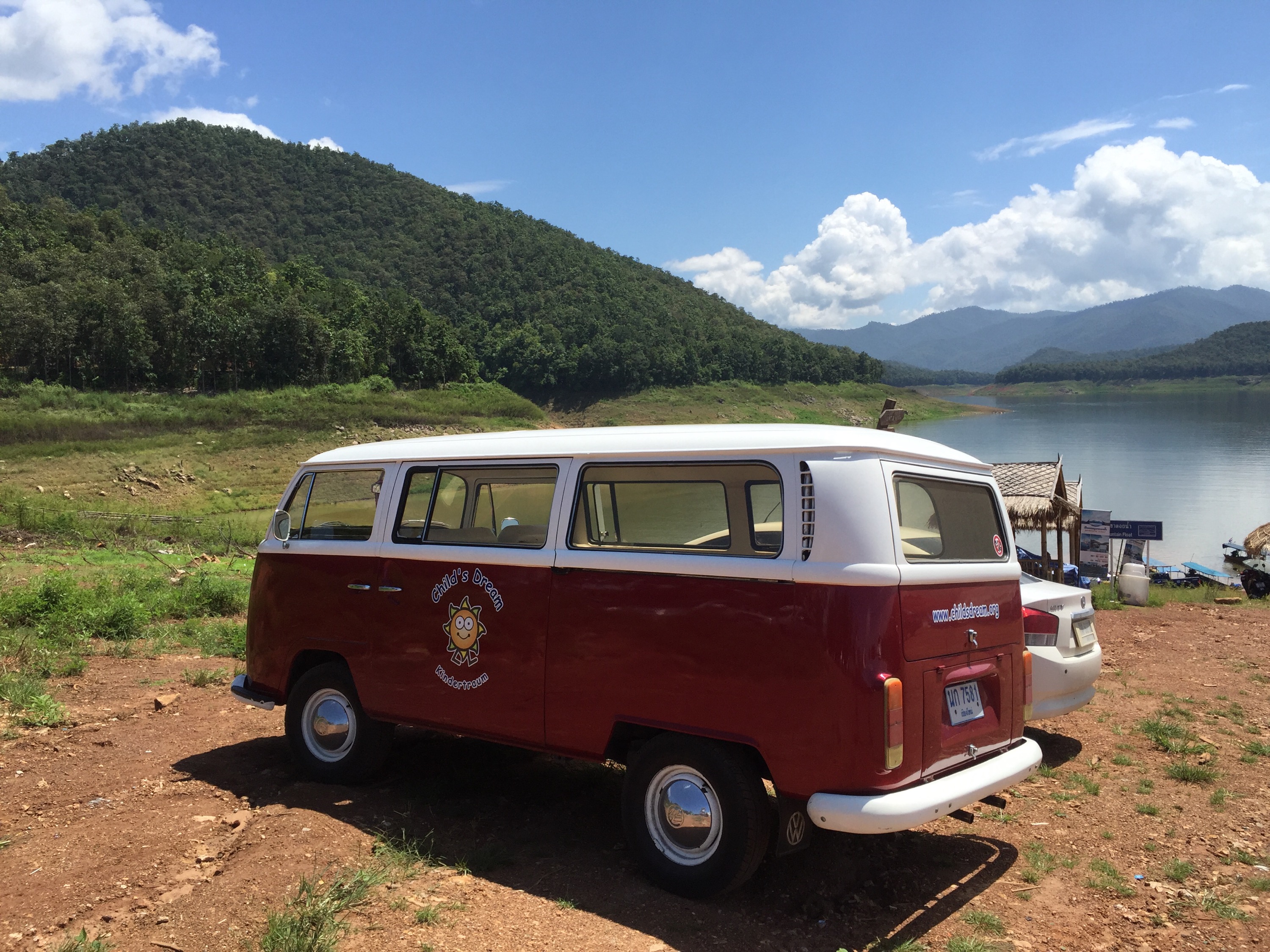
On the Sunday our Swiss and Thai friends (Daniel, Marc, Icy and Boom) that live in Chiang Mai invited us out for the day.  Regula and Dani from Switzerland were also in town so a day out on a house boat on the Mae Ngat Dam had been planned.  Steve wasn’t too keen but I certainly was so at 9.45am Noki (Daniel’s VW Combi) and the team pulled up outside the hotel to pick me up.  It took about an hour and a half to get to the Dam but it is always nice enjoying the scenery in Thailand from the back of Noki.

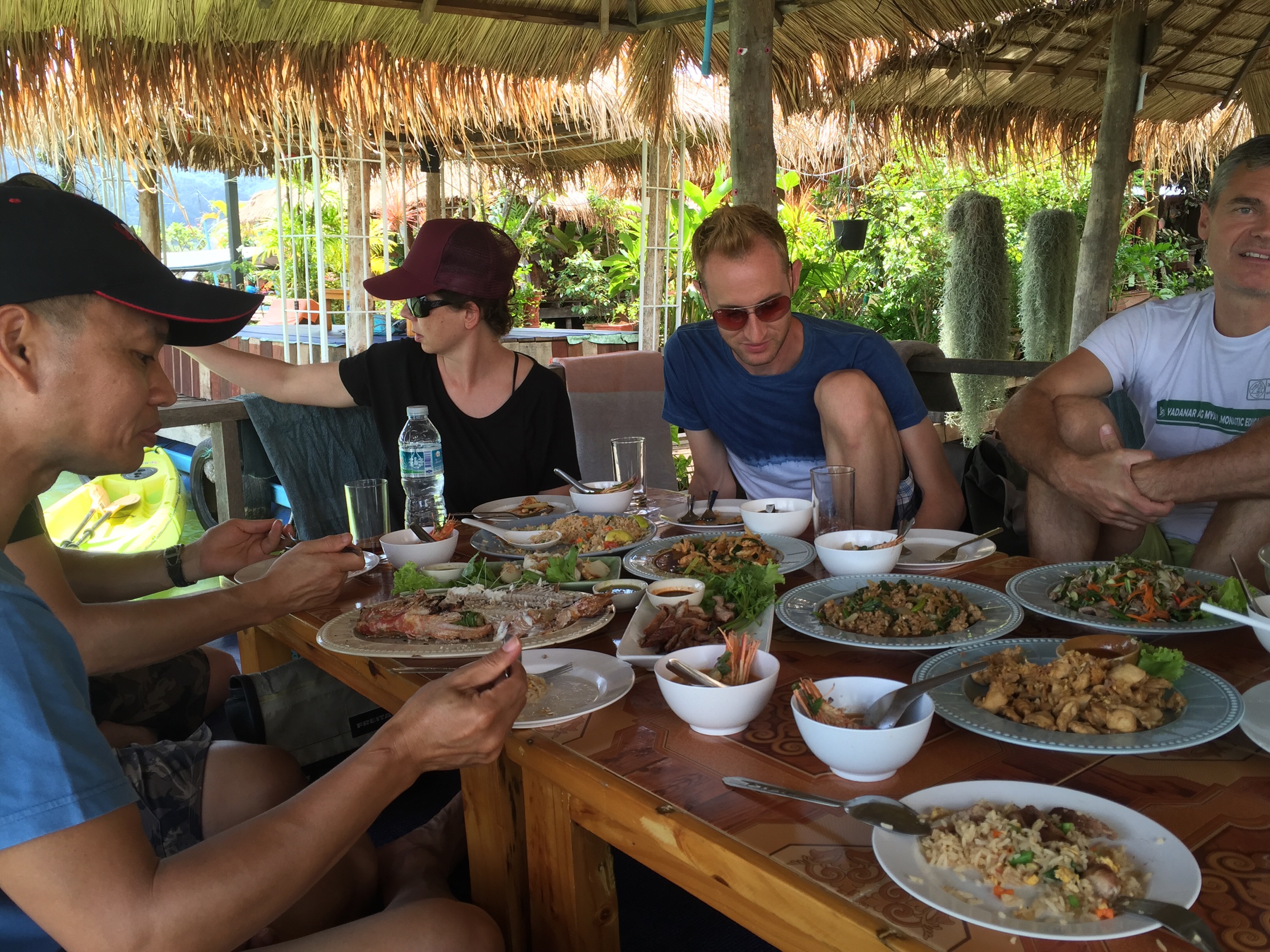
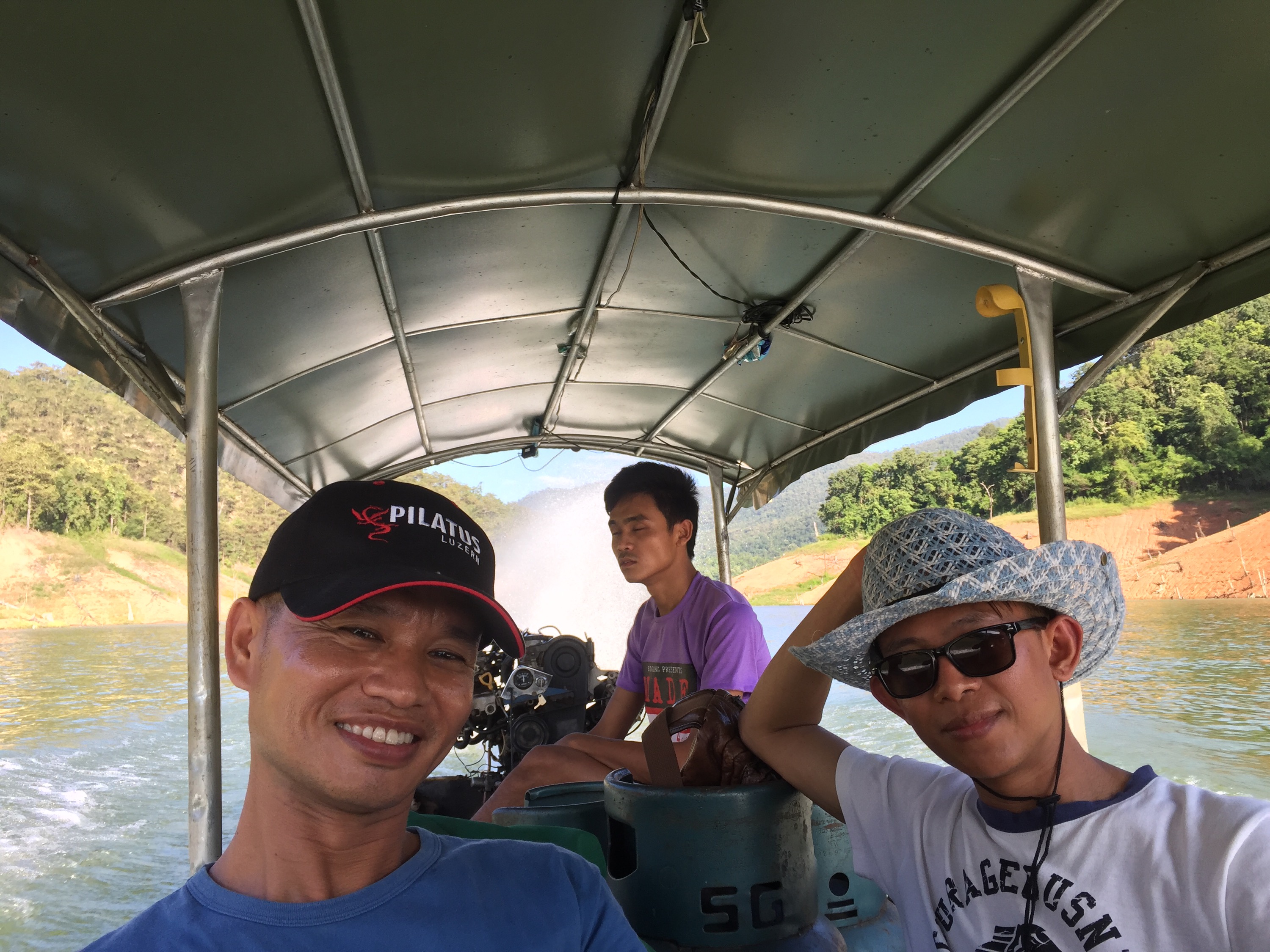
We then jumped onto a long tail boat and were taken out to a houseboat.  These houseboats are stationery and have restaurants, accommodation and water sport options.  We picked our spot and settled in for the day.  A nice long lunch of many Thai dishes was served along with drinks.  After lunch most of us got into our togs and went for a swim – Marc & Boom took the chance to have an afternoon nap – something about too much beer the night before!  The water was reasonably warm – not like the dams or lakes in NZ or Switzerland.  The water is very murky but from what I read it is quite ‘clean’.  Regula and I decided it was best we didn’t know what could be lurking beneath the surface!  I only did the research below on the Dam after our visit – a good move!

We spent about an hour in the water before it was time to pack up and head back to the carpark on the long tail.  We came back to Chiang Mai via a different route so Dani could see some rice fields which are beautiful and green at this time of the year.  It was a very enjoyable and relaxing day – a great way to spend a lazy Sunday.

Situated in the Sri Lanna National Park, The Mae Ngat Dam and Reservoir is one of Chiang Mai’s best kept secrets. This enormous stretch of fresh water was formed when a Dam was built across the Mae Ngat river and flooded the valley. The Mae Ngat Reservoir sits between the Mae Ngat and Mae Taeng forests creating an idyllic spot to relax, swim or to fish. The reservoir has Giant Catfish, Jungle Fish and Indian Carp. The reservoir has many tributaries and bays along its length and the surrounding forests are a haven for wildlife.

There are a number of Dams in Thailand that are used to generate electricity and provide water and irrigation to the farmers.  The water level in these Dams is currently very low and given that the rainy season is nearly over this is causing major concerns throughout the country. 


BBQ Time

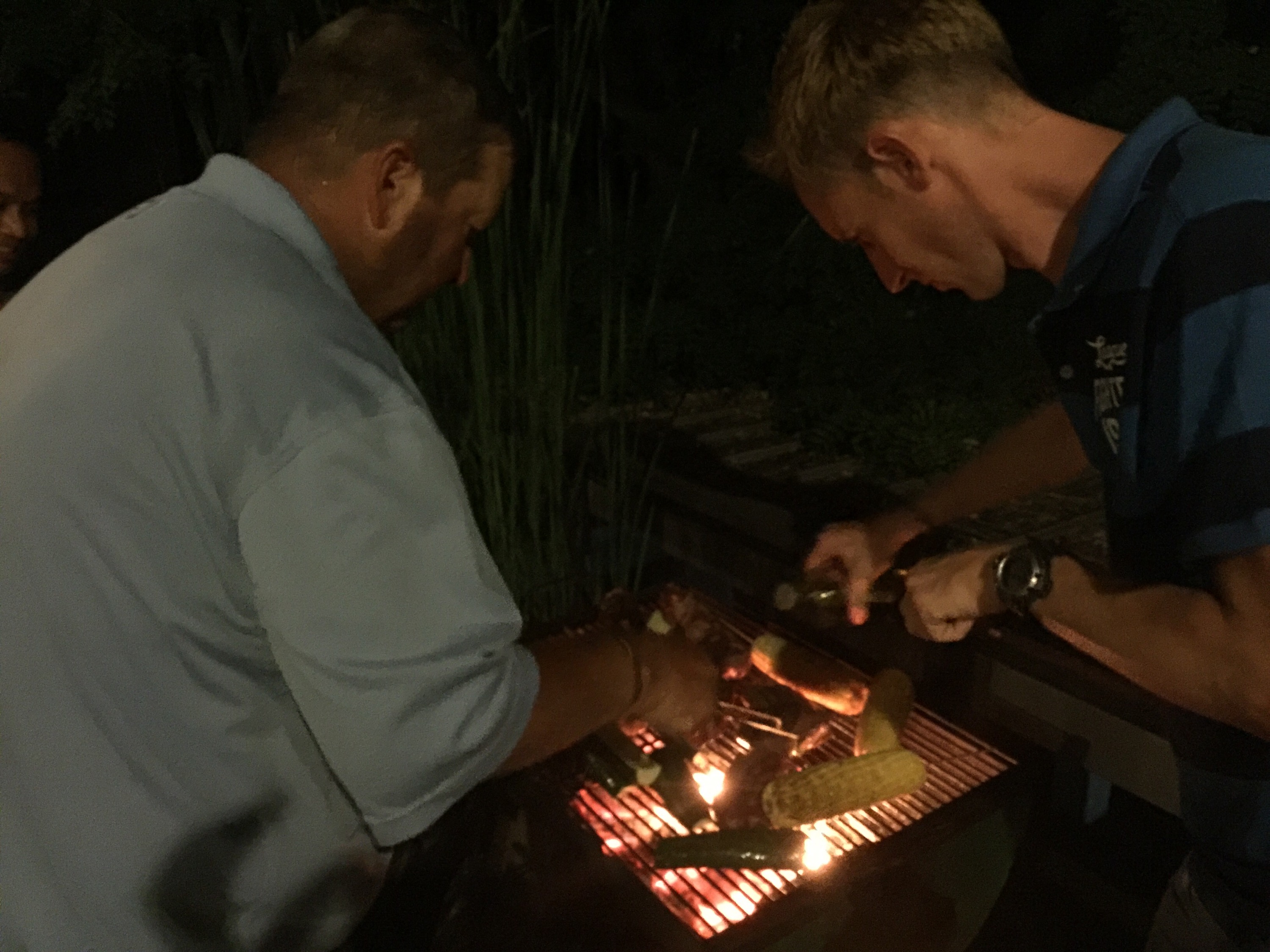
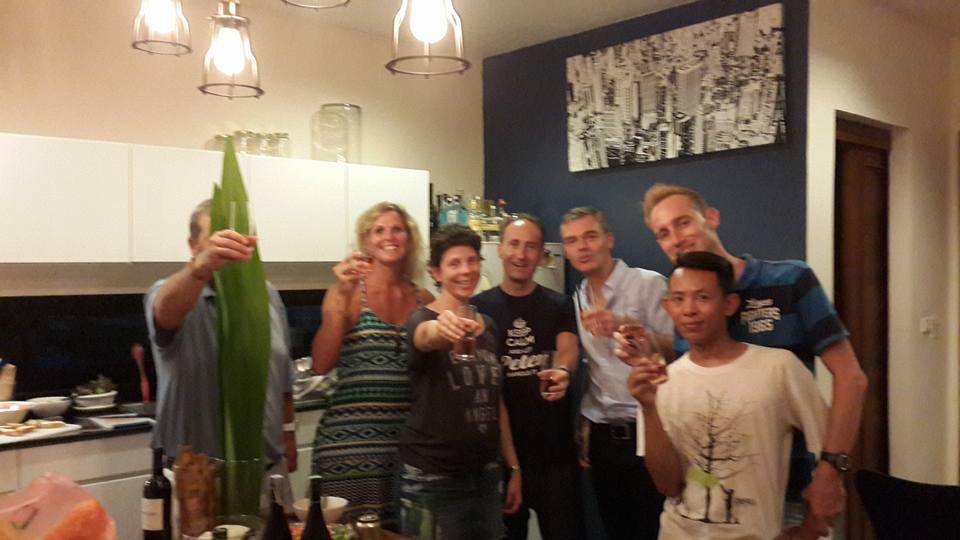
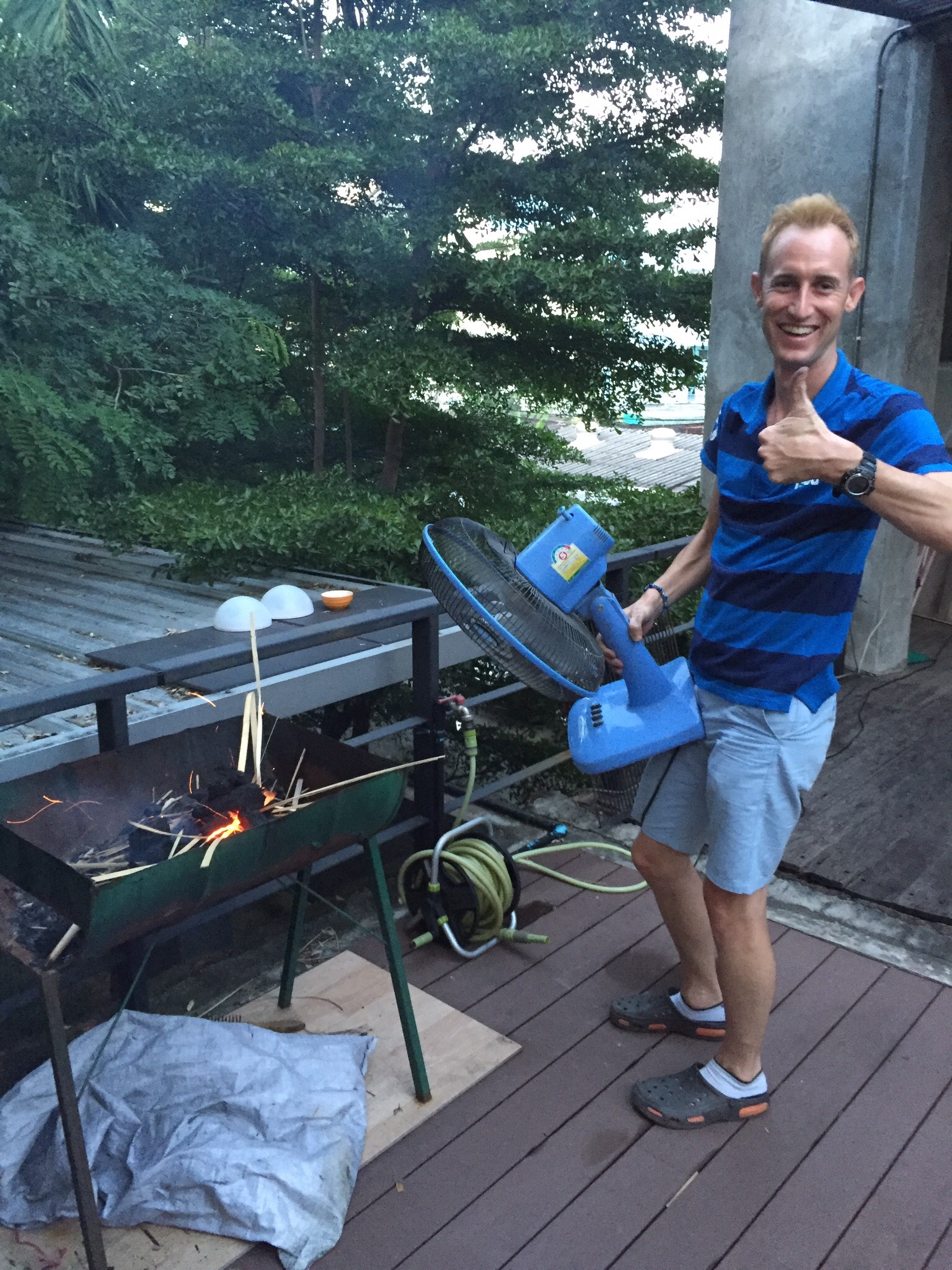
On Monday night we went to Daniel and Icy’s place to cook a BBQ for everyone.  This has become a bit of a tradition on our visits to Chiang Mai.  Steve’s BBQing skills are world famous here – no pressure!  A trip to the supermarket yielded the popular pork loin and some NZ steak along with various accompaniments.  It was then all hands on deck – Daniel was getting the BBQ up to temperature using a bit of Swiss / Thai ingenuity – this is no fancy gas BBQ but a half gallon drum fuelled by charcoal and the good old household fan.  I was on potatoes, Regula was on salad and of course Steve was marinating the meat.  In amongst all this hive of activity the champagne was poured and a couple of birthday toasts made – Icy had turned 40 earlier in the month and Regula’s birthday was on the Friday just gone.  Any excuse for champagne really!

As with all Kiwi BBQ’s the chip and Kiwi dip was also in attendance – Daniel fell in love with Kiwi dip when he came to NZ so when we visit we try and bring a couple of cans of reduced cream and packets of onion soup with us – they are not easily obtainable here.

It was then time.  The red wine was poured and dinner was served – pork, steak, garlic and rosemary potatoes, chargrilled corn on the cob and zucchini, asparagus and salad.  Everything was delicious and it was so nice to be eating our standard fare after a lot of Asian food.  Very excited about getting back to our BBQ at home now : )

It was a fantastic night with lots of laughs and interesting discussions.  The boys are all coming to NZ next February and we can’t wait to see them again and show them some of our Kiwi hospitality. 


Chiang Mai

Chiang Mai is the largest and most culturally significant city in Northern Thailand. It is the capital of Chiang Mai Province and was a former capital of the Kingdom of Lanna (1296–1768), which became a tributary state of the Kingdom of Chiang Mai from 1774 to 1939. It is 700 km (435 mi) north of Bangkok and is situated amongst the highest mountains in the country. The city sits astride the Ping River, a major tributary of the Chao Phraya River.

Chiang Mai means “new city” and was so named because it became the new capital of the Lan Na kingdom when it was founded in 1296, succeeding Chiang Rai, the former capital founded in 1262.
Chiang Mai has positioned itself to become a Creative City and is considering applying for Creative City status with UNESCO.  Chiang Mai was one of two tourist destinations in Thailand on TripAdvisor’s 2014 list of “25 Best Destinations in the World”, where it stands at number 24.

Chiang Mai’s historic importance is derived from its close proximity to the Ping River and major trading routes.

While officially the city (thesaban nakhon) of Chiang Mai only covers most parts of the Mueang Chiang Mai district with a population of 160,000, the city’s sprawl extends into several neighboring districts. The Chiang Mai Metropolitan Area has a population of nearly one million people, more than half the total of the Chiang Mai Province. 


Childs Dream

Our friends, Daniel and Marc, mentioned above founded Child’s Dream.  

Overview

Child’s Dream was established in 2003 as a charitable organisation dedicated to unconditional help for underprivileged children in the Mekong Sub-Region. This region is at the core of many humanitarian crises and children are suffering the most. Our well over 300 projects focus on extremely remote and neglected areas in this region.

Our offices in Chiang Mai (Thailand), Siem Reap (Cambodia) and Yangon (Myanmar) serve as bases for our humanitarian and community development activities. Our 40 staff members are dedicated to working in the most efficient and effective way to achieve our mission.

Our mission is to empower marginalised communities to shape their own futures. We achieve this by working with communities to improve health care and education for children and provide socioeconomic opportunities for families. We are working towards the second and fourth UN Millennium Development Goal which are universal primary education and reduction of child mortality respectively.
Please check out http://www.childsdream.org for more information


Posted in Chiang Mai, Thailand | Tagged , , , | Leave a comment

Mae Jo Golf Club & Resort – Chiang Mai, Thailand

After leaving our home away from home in Vietnam we flew from Da Nang to Kuala Lumpur in Malaysia.  We had one night there staying at the Tune Hotel out at the airport as our flight to the north of Thailand departed at 6.55am the next morning.  Both flghts on Air Asia were comfortable and uneventful so that was chalked up as a good result : )

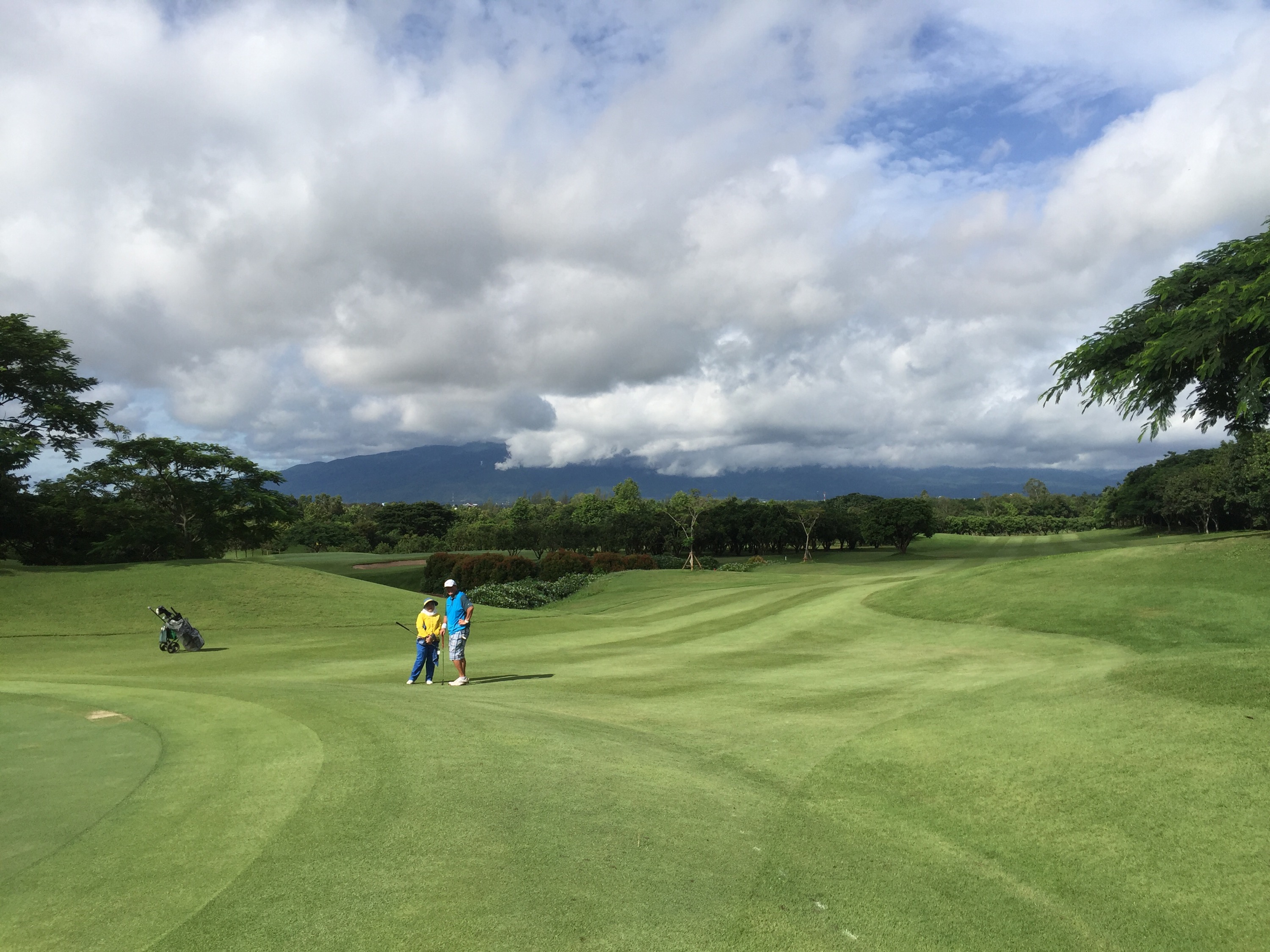
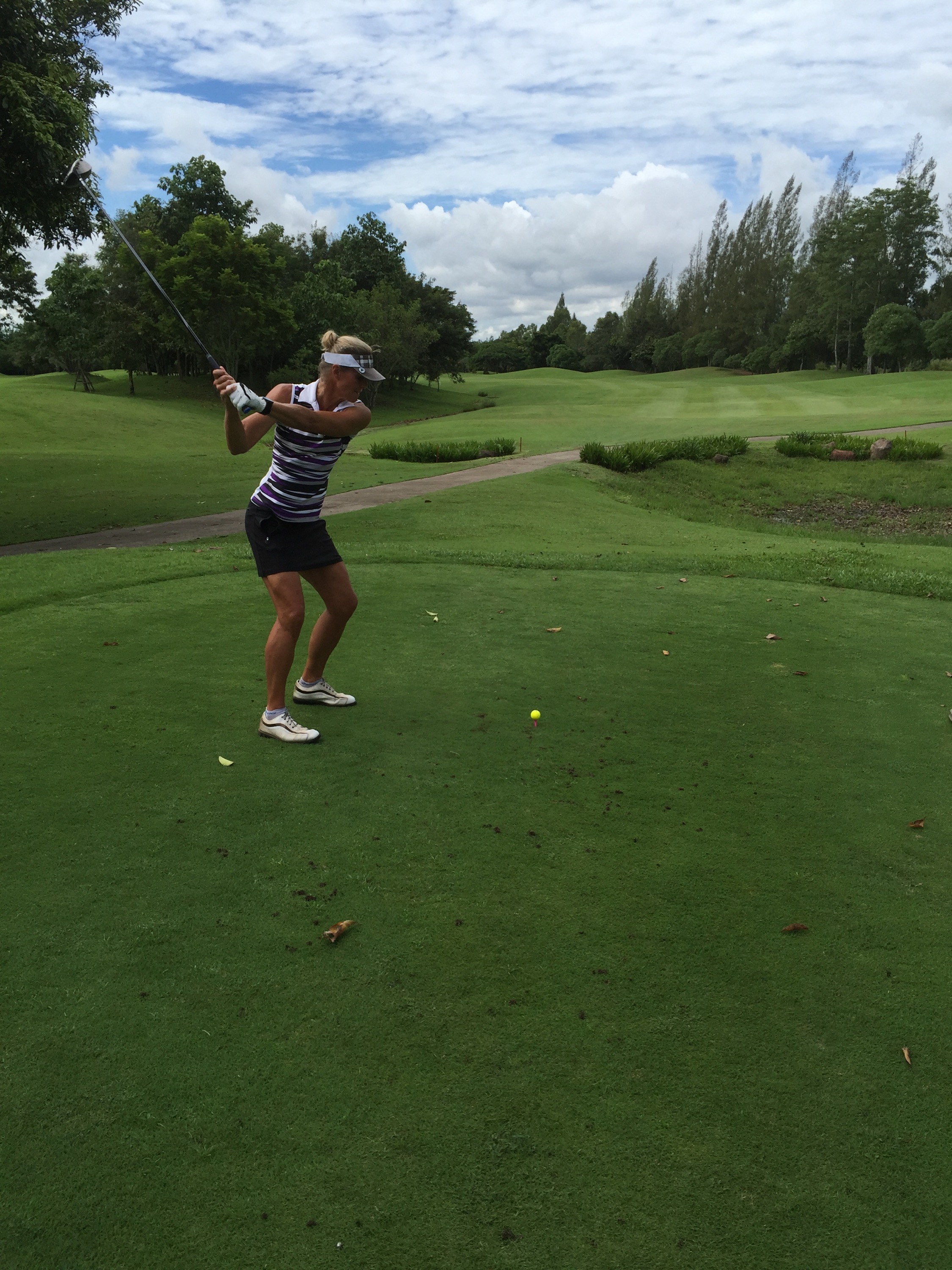
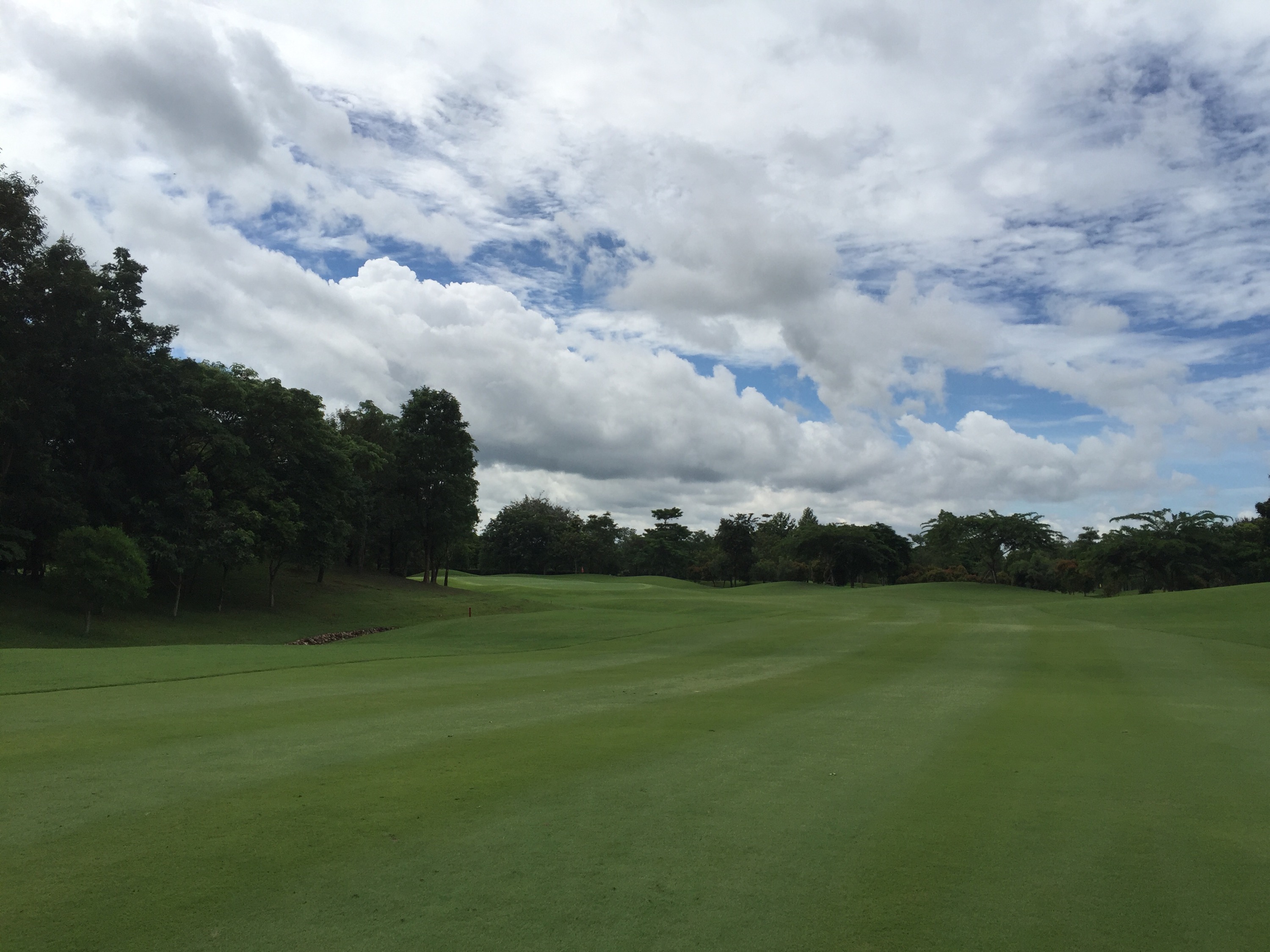
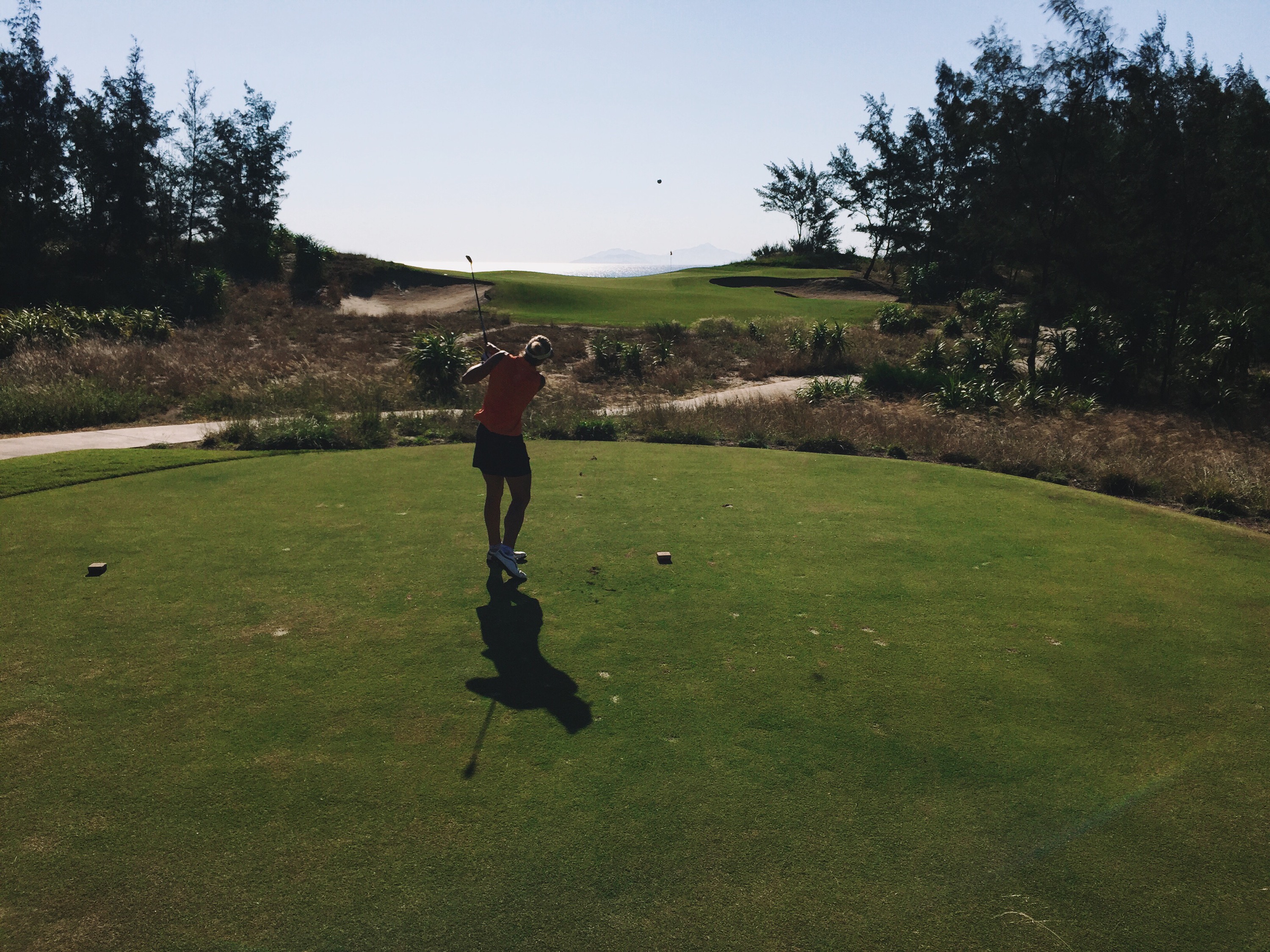
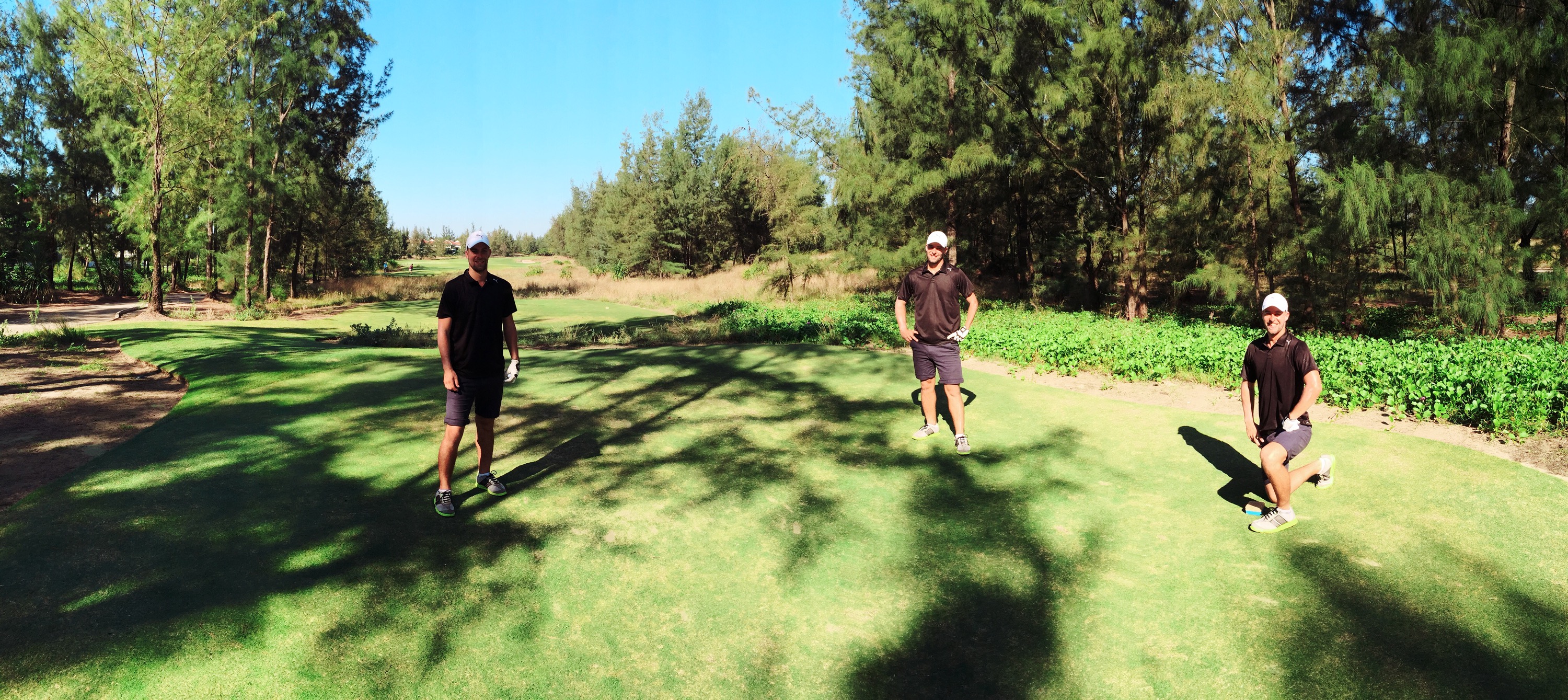
We arrived into Chiang Mai at 8.40am on Saturday and were greeted by the driver from Mae Jo Golf Club & Resort – our home for the next week.  We have been here before to play golf and the course is really nice and extremely picturesque with a lot of fruit trees.

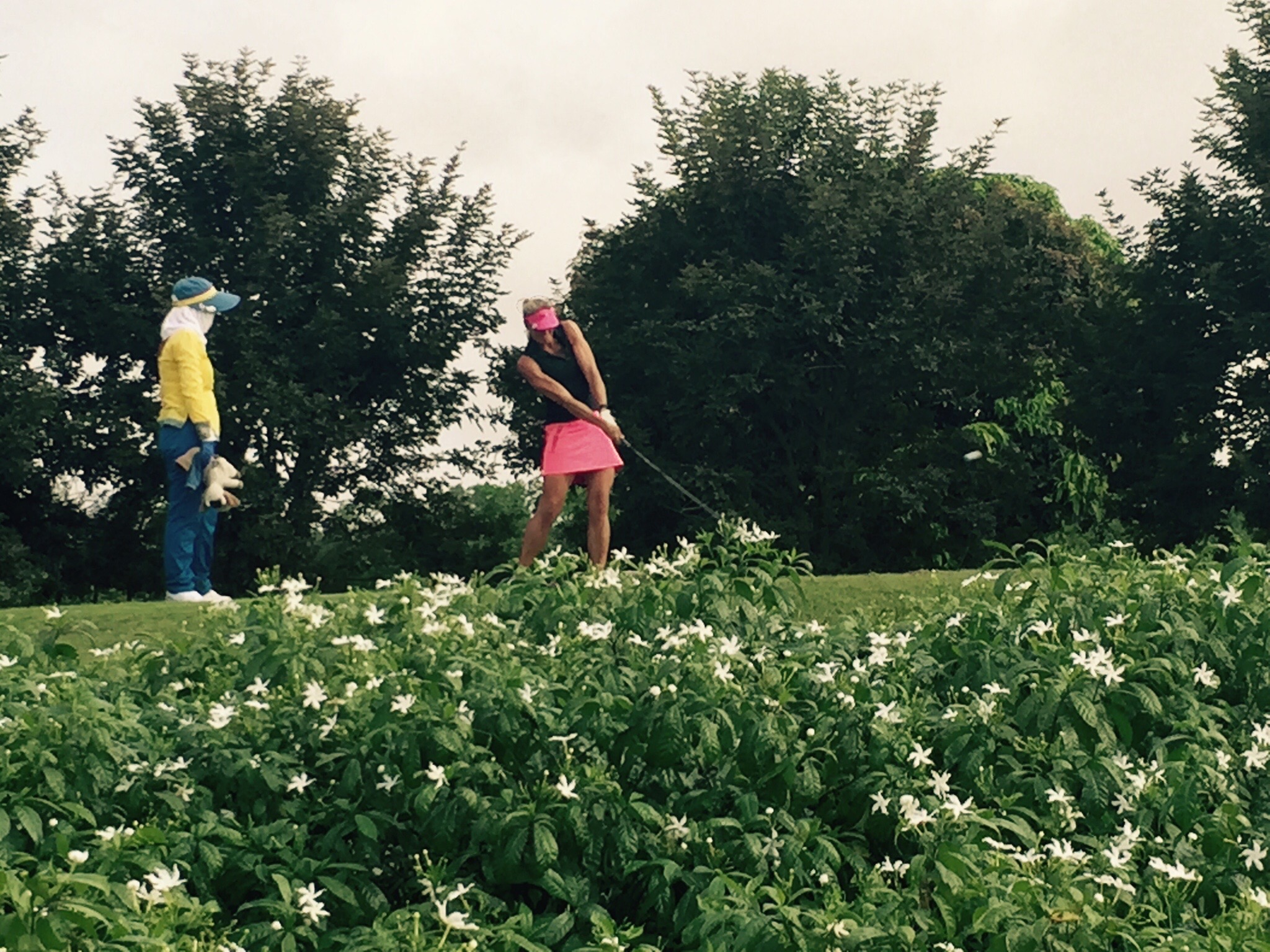
On Saturday afternoon we went back into Chiang Mai city to have a look around and reaquaint ourselves with some old haunts.  Steve had tweaked his back packing his suitcase so I suggested a massage – most people would think that was a marvellous idea but Steve is very loyal and is very remiss to have a massage with anyone except his beloved Kiri back in NZ!  Anyway I convinced him it was a good idea so there we were at Miracle Spa.  There were a few grunts and groans from Steve’s corner and a lot of sorry’s and giggling from his masseuse.  The verdict afterwards “Did I enjoy it – probably not.  Was it good for me – probably.”  His back is still a bit tender but he has managed seven rounds of golf with the Caddy teeing the ball up for him and retrieving it from the hole at the end.  I kept a close eye on him to make sure he didn’t take advantage : )

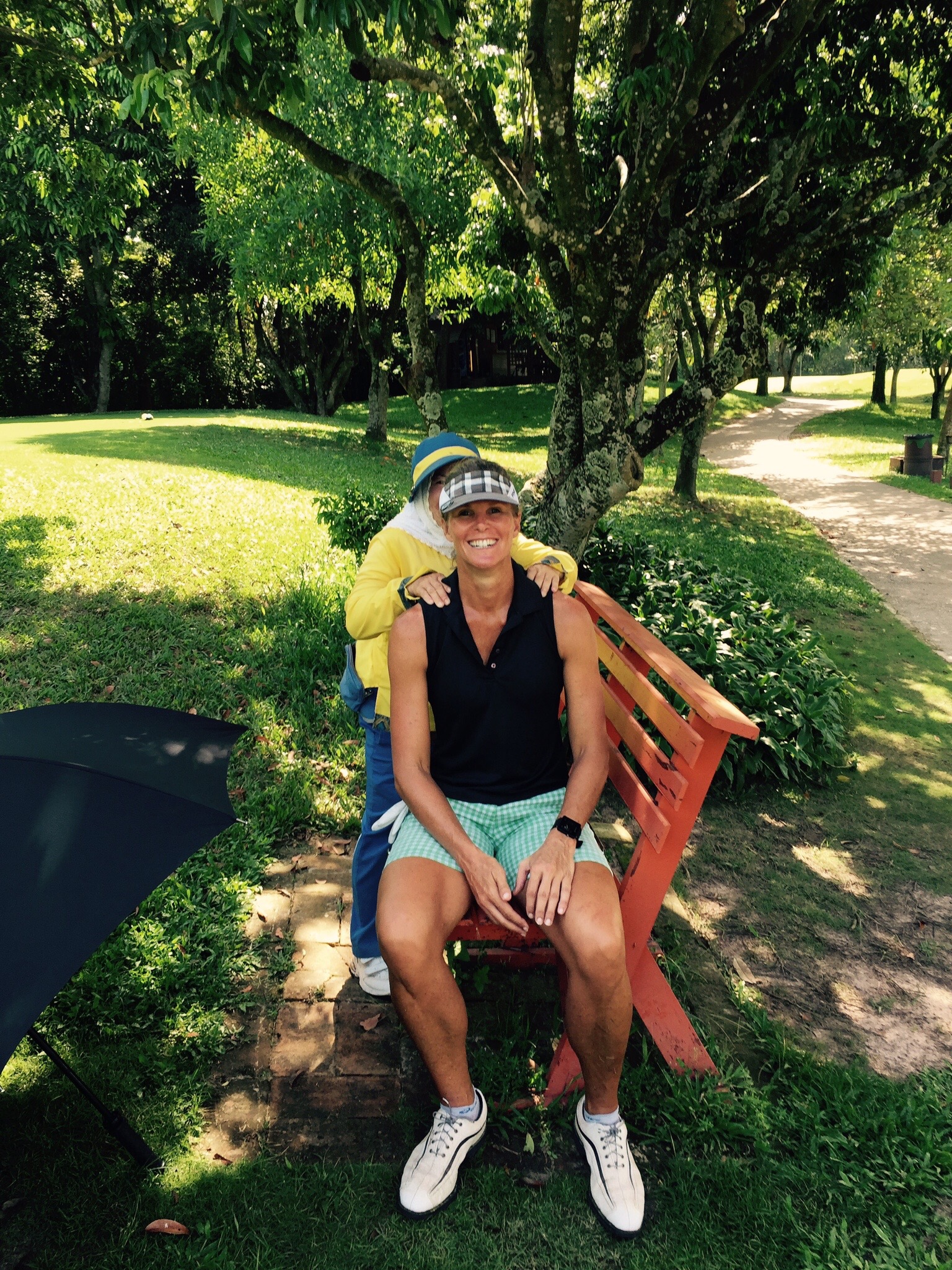
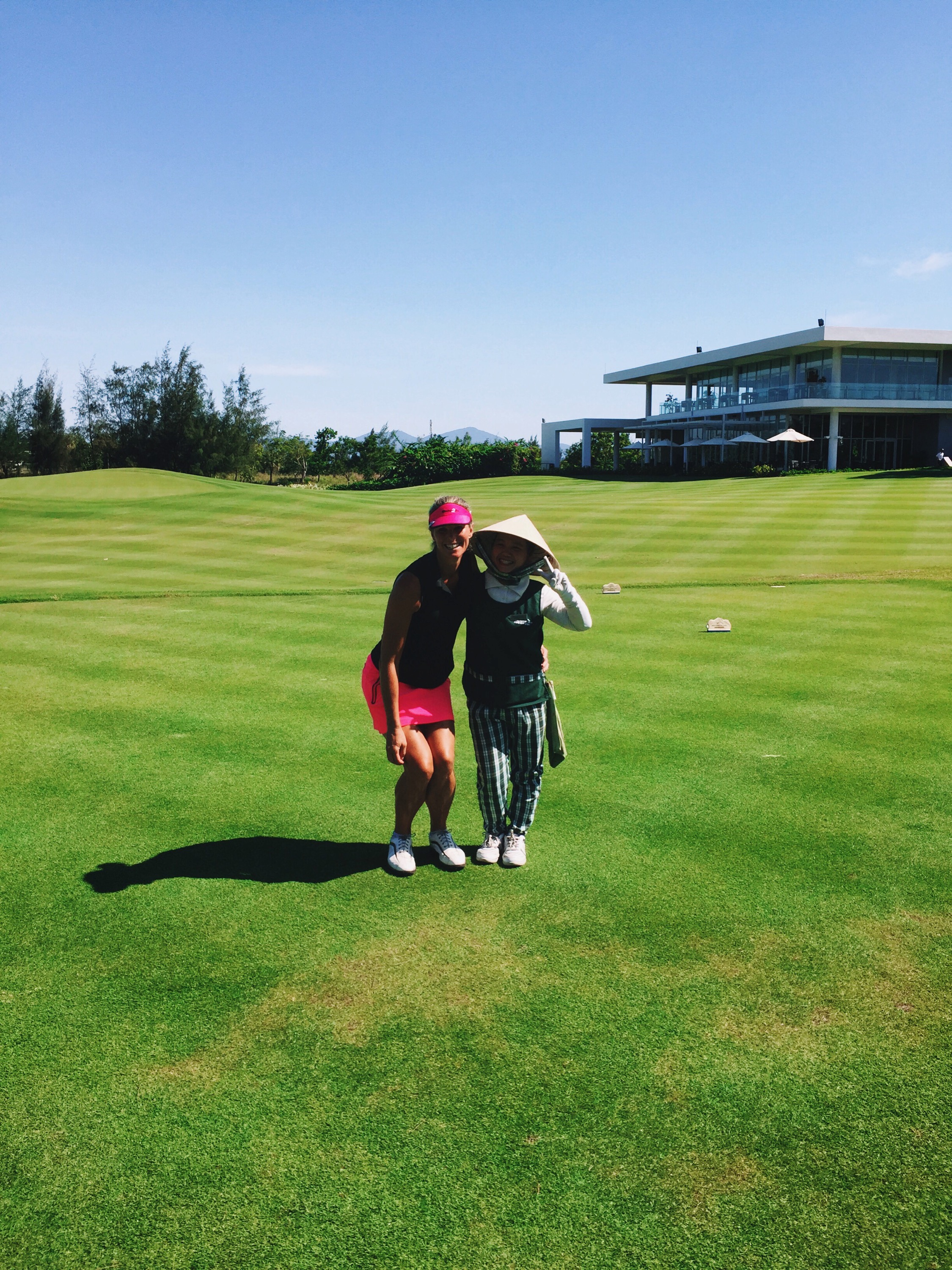
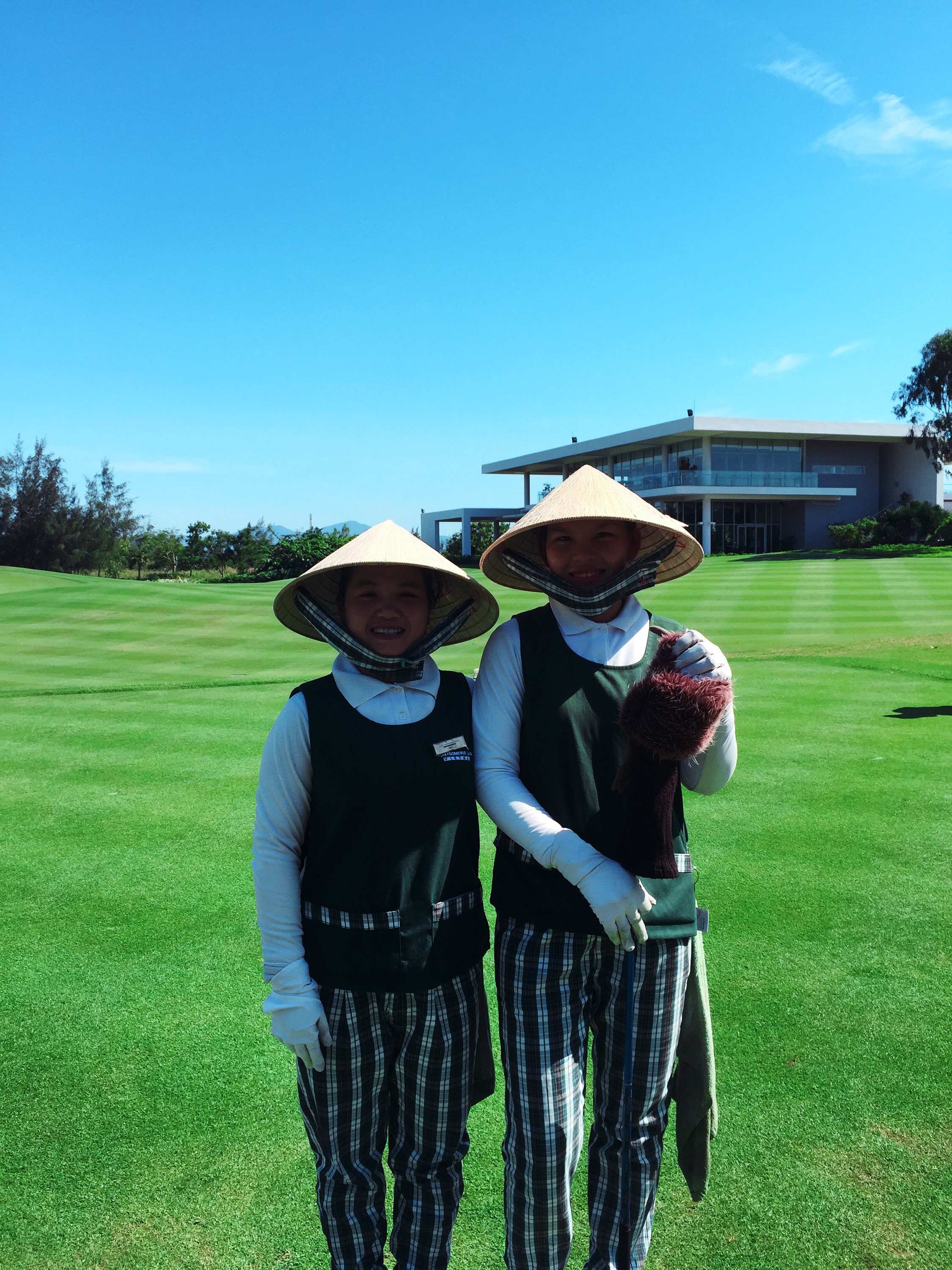
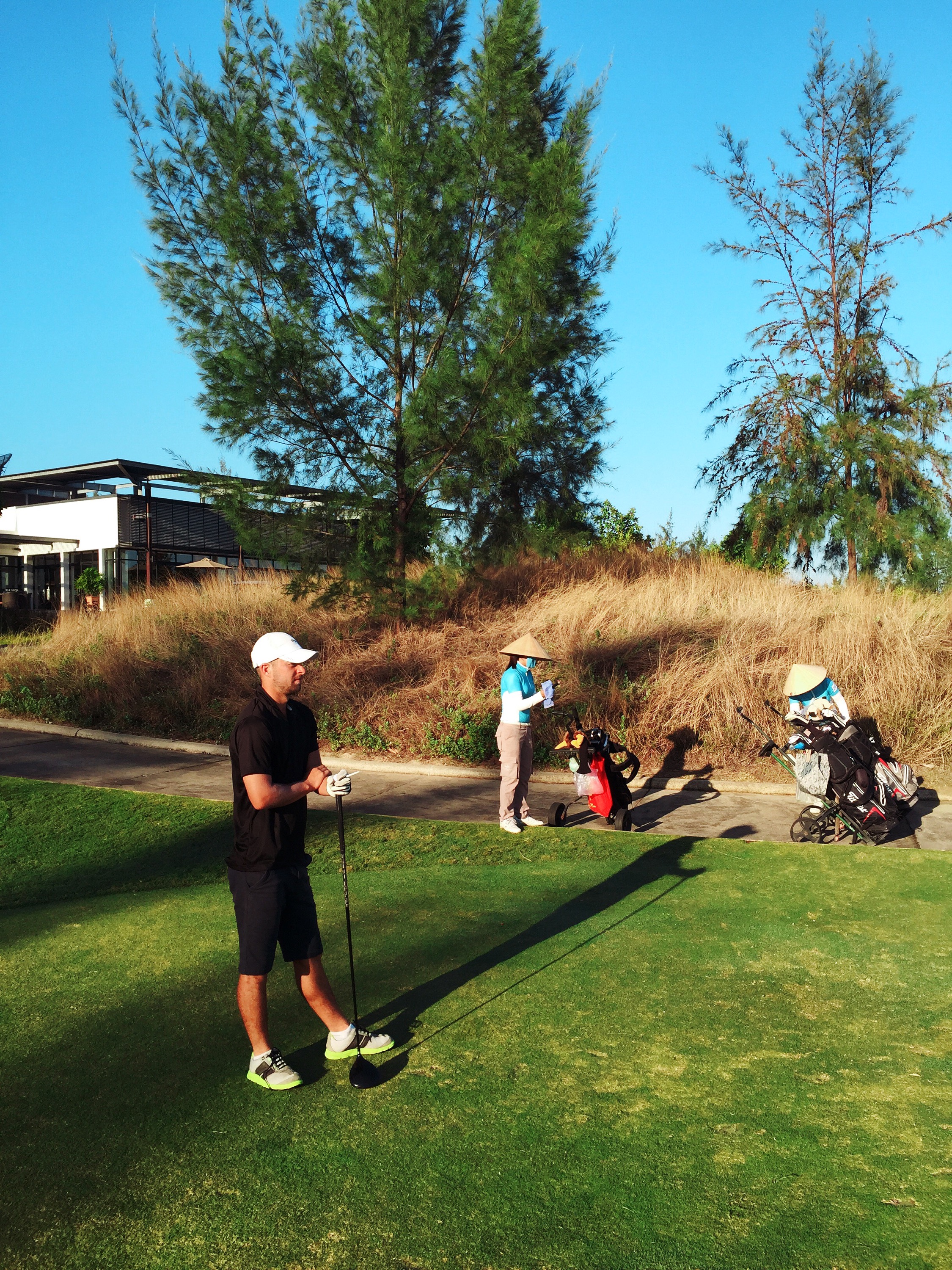
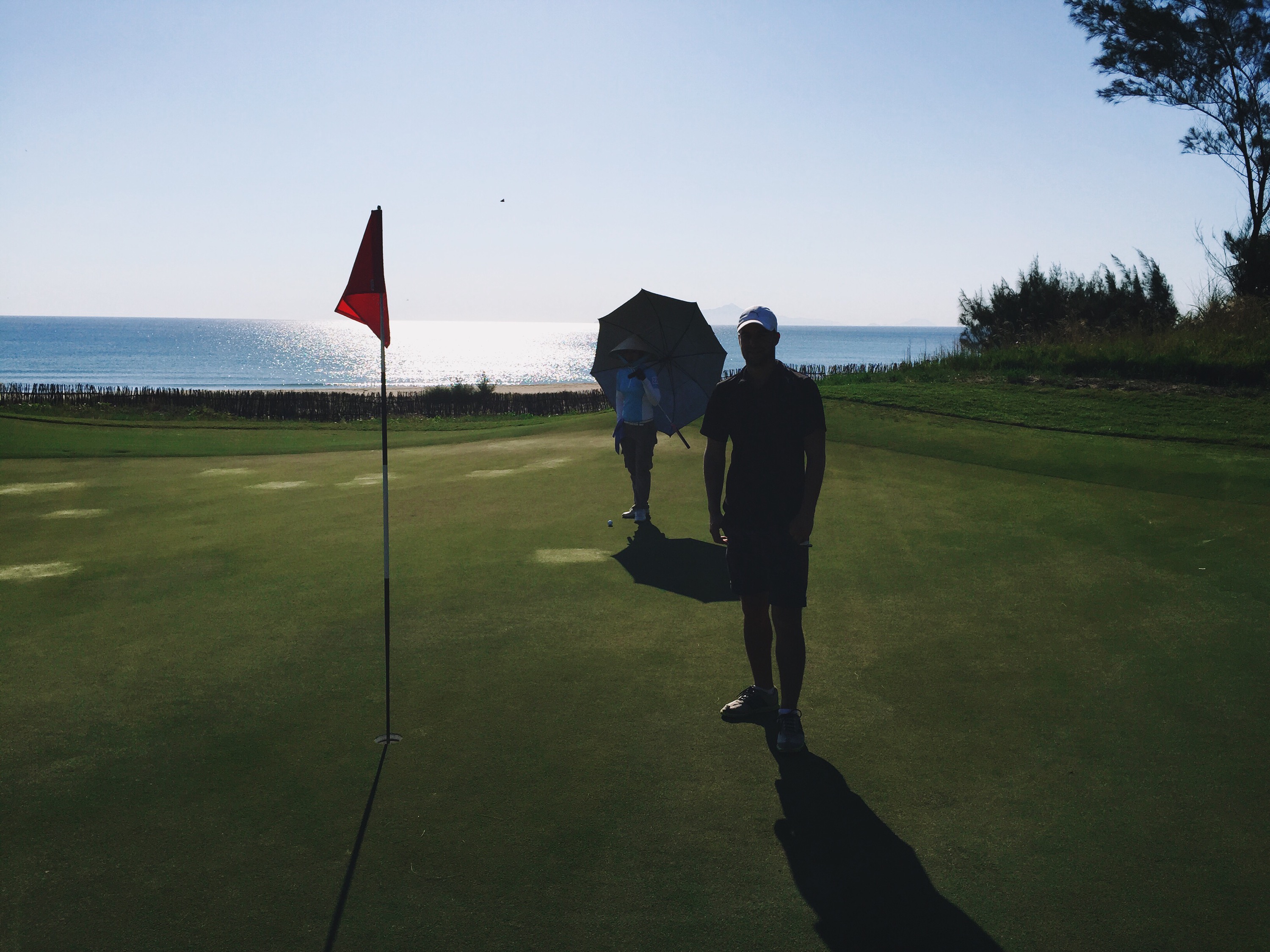
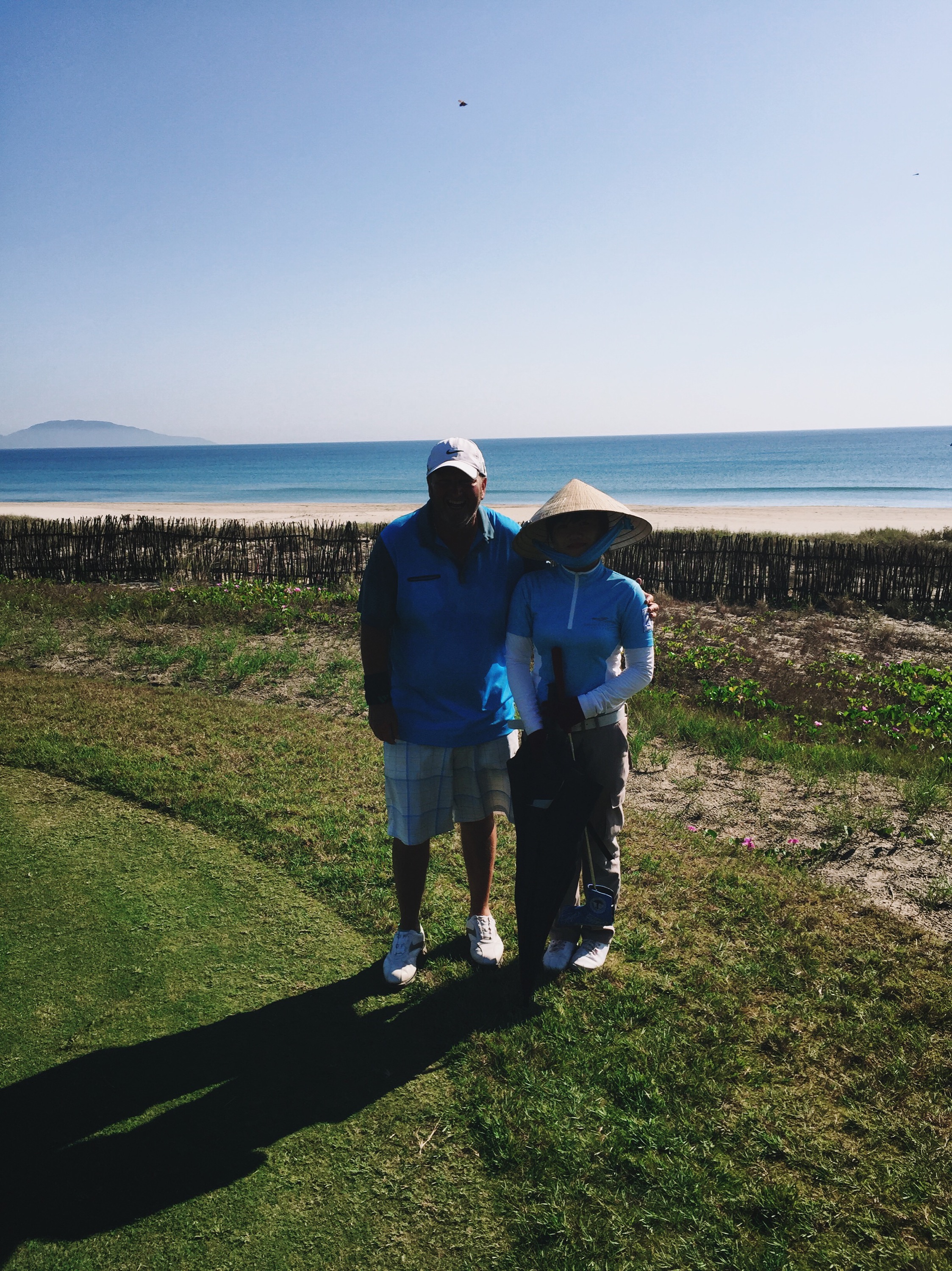
We had these two great Caddy’s for our first round on Sunday – Kat and Ya.  They were great fun so we had them for all seven rounds.  Kat is 26 and speaks very good English.  She also plays golf in the Caddy team so has a good knowledge of the course and is very good at reading putts.  Ya is 43 and has only been caddying for 9 months – she told me she used to sell stuff in the markets but decided she was getting too fat so needed a more physical job.  She said she has lost some weight and is feeling much healthier so that is great.  She actually speaks good English but is a little shy – after a week with us she certainly came out of her shell.  She was little misguided though thinking that Steve was the Boss!  I had to set her straight on that front.

We had lots of laughs with them.  It is funny hearing Kat’s perspective on the older foreign men who either live or visit here.  She told us that they sometimes wink at the Caddy’s but if it happens to her she just turns away.  However, if the man was young and handsome it would be a different story.  Steve has had a hard time convincing her that he is young and handsome so she should be winking at him.  Oh dear!

I really admired Kat’s spirit and attitude to life.  She is single, lives alone and is fiercely independent.  She looks after herself very well and is always looking at ways to better herself.  She studies languages in her spare time, namely English, Japanese and Korean so she can better communicate with her golfing clients.    She would love to be a tour guide but the course and other requirements are a bit expensive at the moment.  She makes golf club covers in the low season and sells them to the golf club – I was the lucky recipient of Caddy Kat – a gift that she was a million percent sure she wanted me to have.  She takes her golf clubs on her motorbike to the driving range which is about 30 minutes from where she lives to practice.  We’re hoping to meet up with her later in the week at the range so Steve can give her some tips.


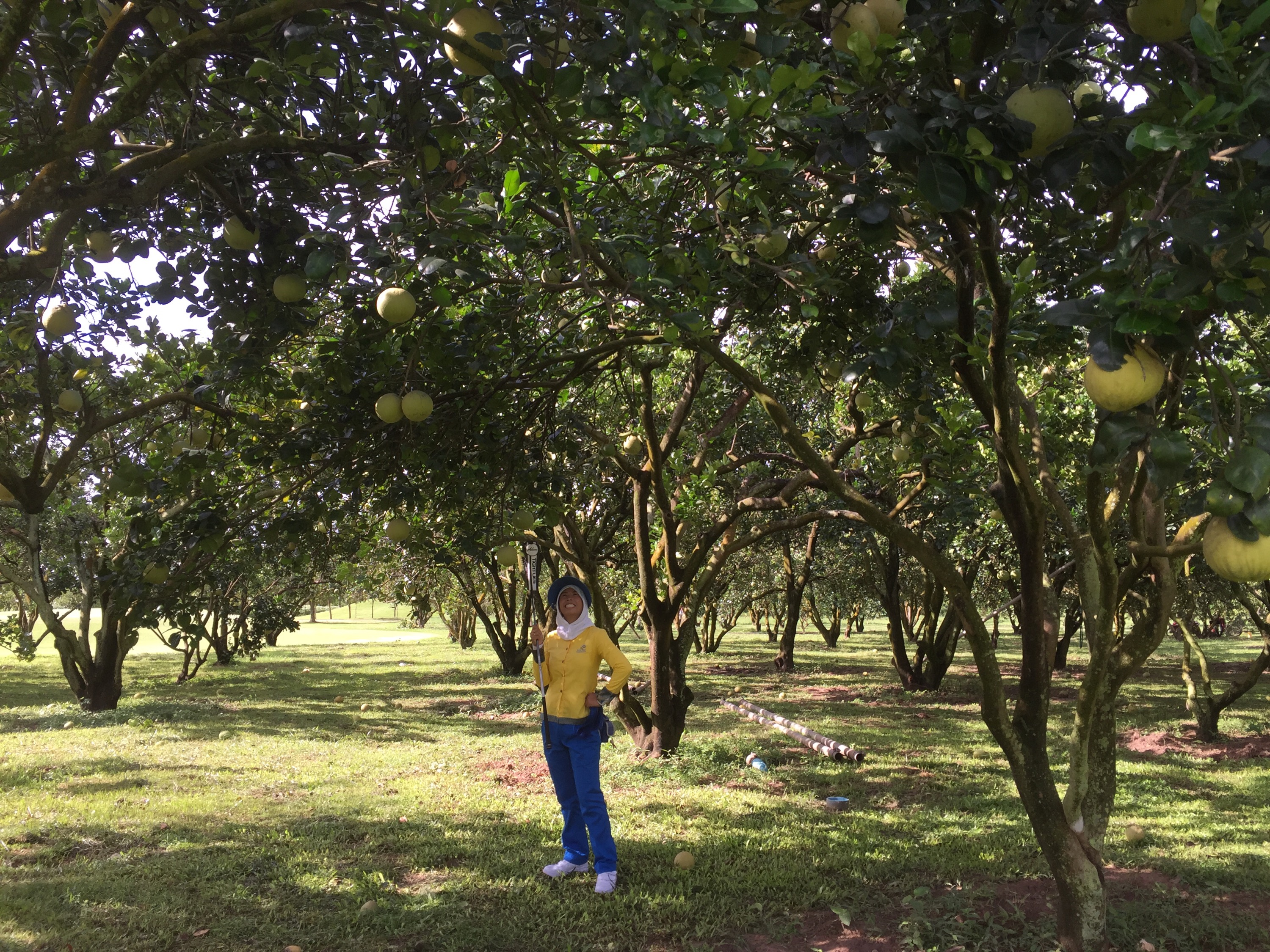
 As I mentioned above there are a large number of fruit trees on the golf course.  At the moment the pomelo’s are in season.  The Caddy’s aren’t allowed to take the fruit but if the guests would like some then that is fine.  Kat has convinvced us that we need pomelo and mango everyday so we are collecting and then giving to her!  They did cut open a pomelo the other day and it was delicious – a little sour but so juicy.

  
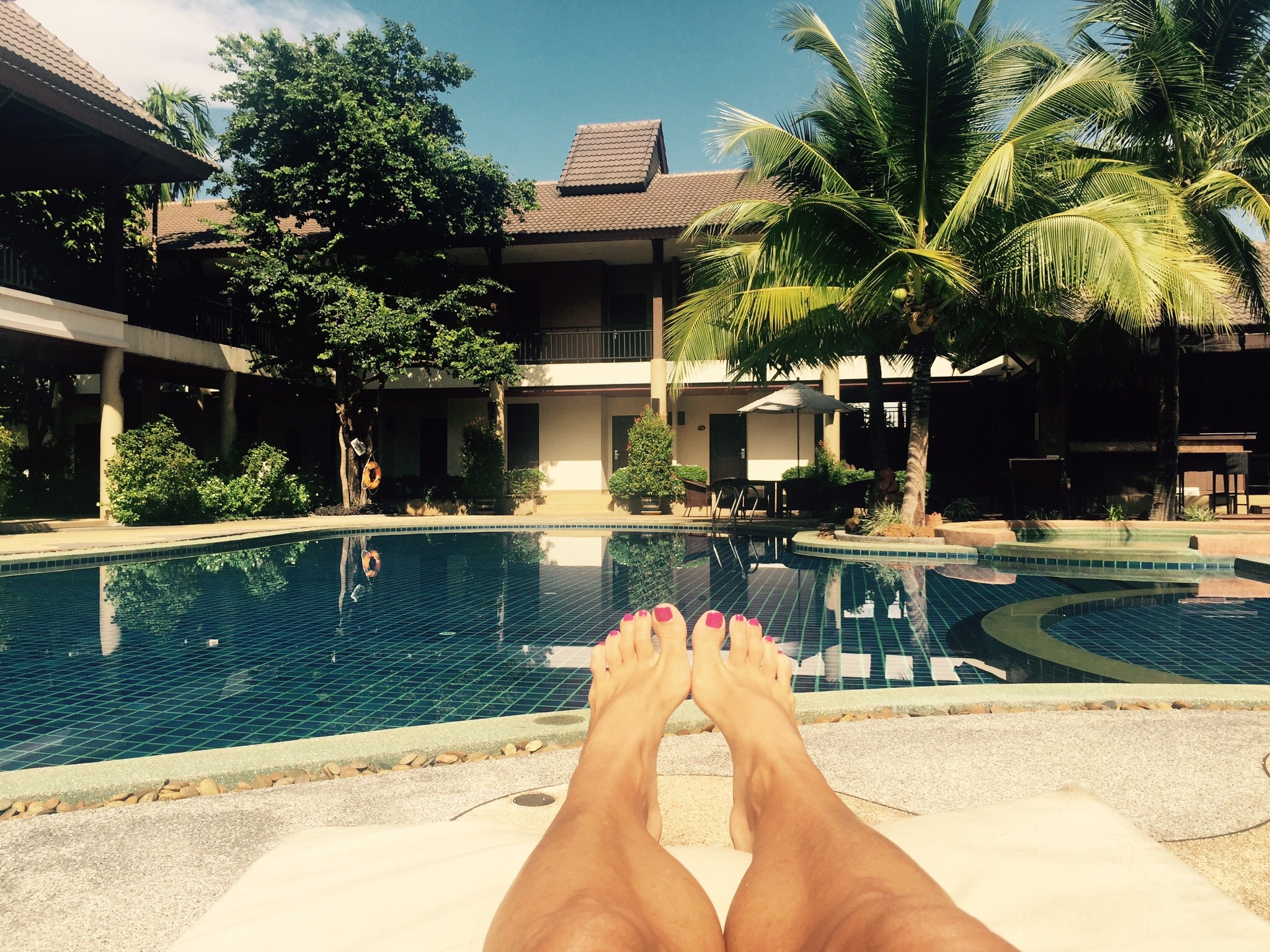
The hotel complex is very comfortable with a lovely big pool that we have had pretty much to ourselves for the last week.  Although my weather app has been telling me it is 31 degrees it feels a lot cooler.  It was about 35 degrees in Vietnam and the air was warm.  It is the rainy season here so there is a lot more cloud cover so feels cooler.  There has been a bit of rain at night but generally dry during our golf rounds.  On Friday it was raining when we started but then cleared for a few holes before coming down quite heavily about the 11th.  We then got stuck behind some social club players so cut through and missed out a couple of holes to avoid getting too soaked.


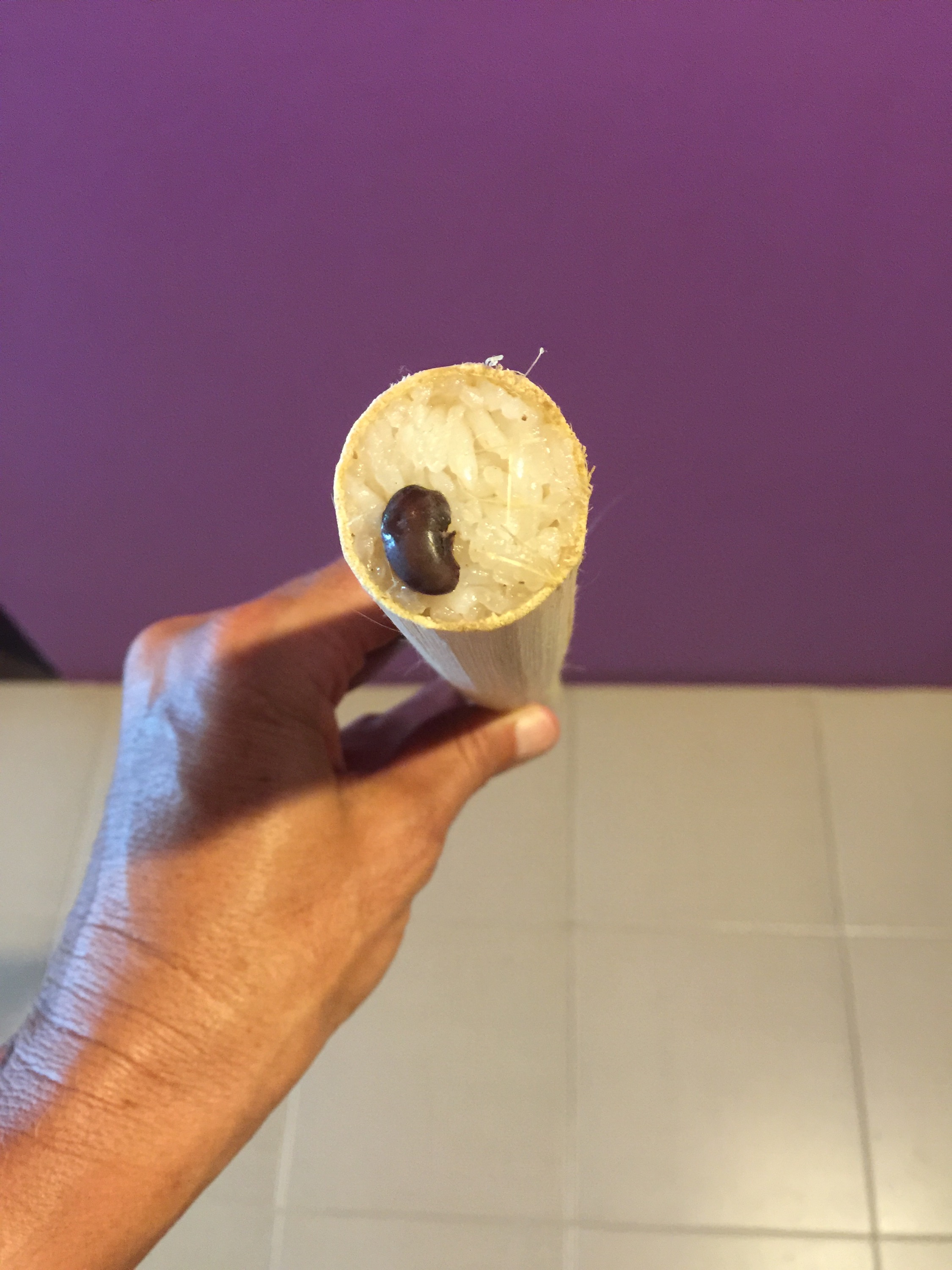
Ya bought me a sticky rice stick one day without knowing that I absolutely love them.  I was so happy – I told her I would give her some money so she could buy me one each day but she insisted on buying them for me – they cost between 10 or 12 baht each or NZD0.50 cents.  This is a very interesting and tasty Thai food dish. Sticky rice which is a very famous Thai preparation is mixed with sugar and coconut milk. This mixture is filled into bamboo sticks, the sticks are then baked for many hours. The name given to this Thai sweet dish is ‘Khao Lham’. To eat the sticky rice that is cooked in the bamboo, you will need to split open the bamboo vertically.  Soaked black beans are sometimes added to the rice, you can then see the cooked beans in the rice when the bamboo is split.


The Course

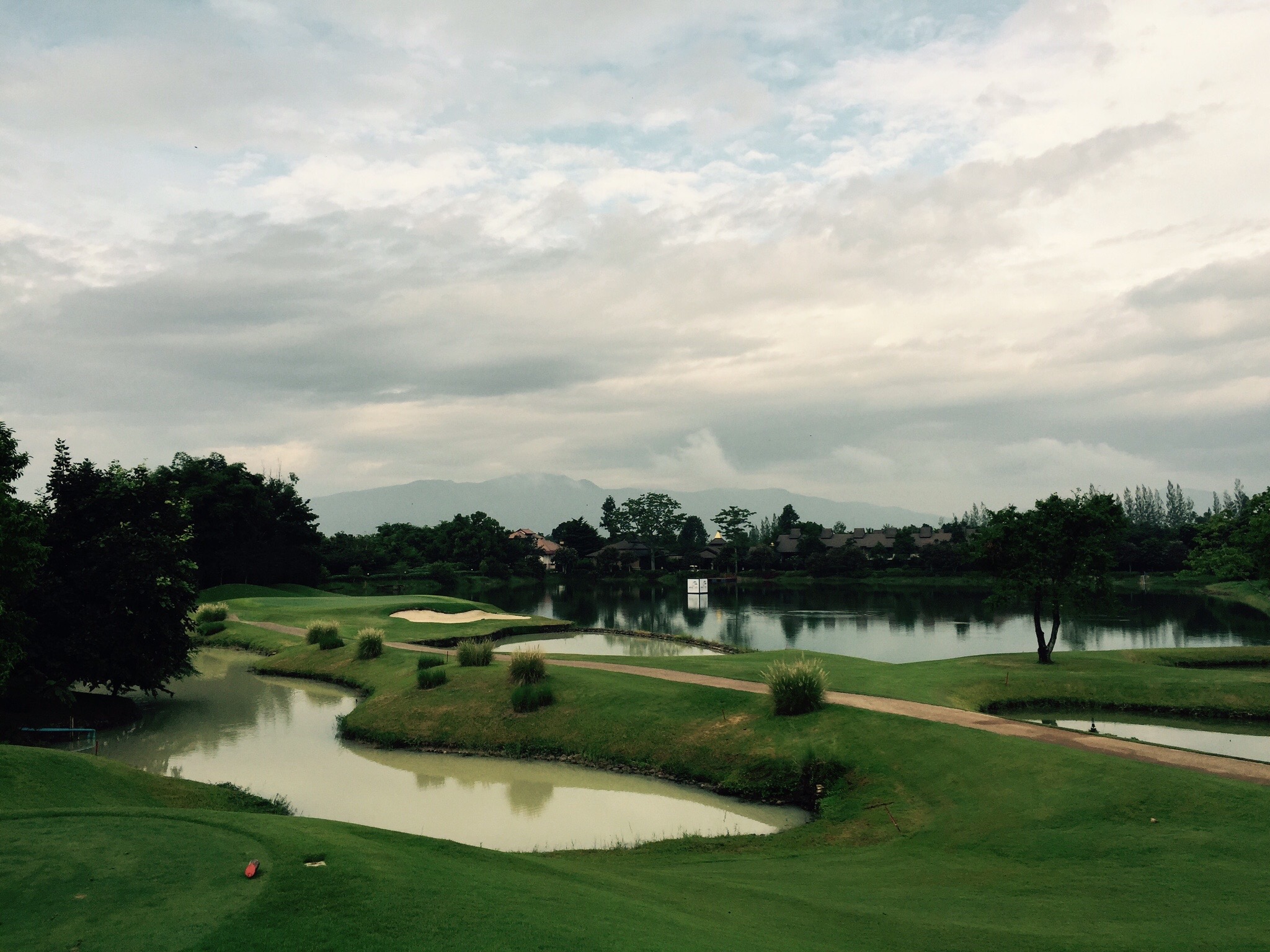
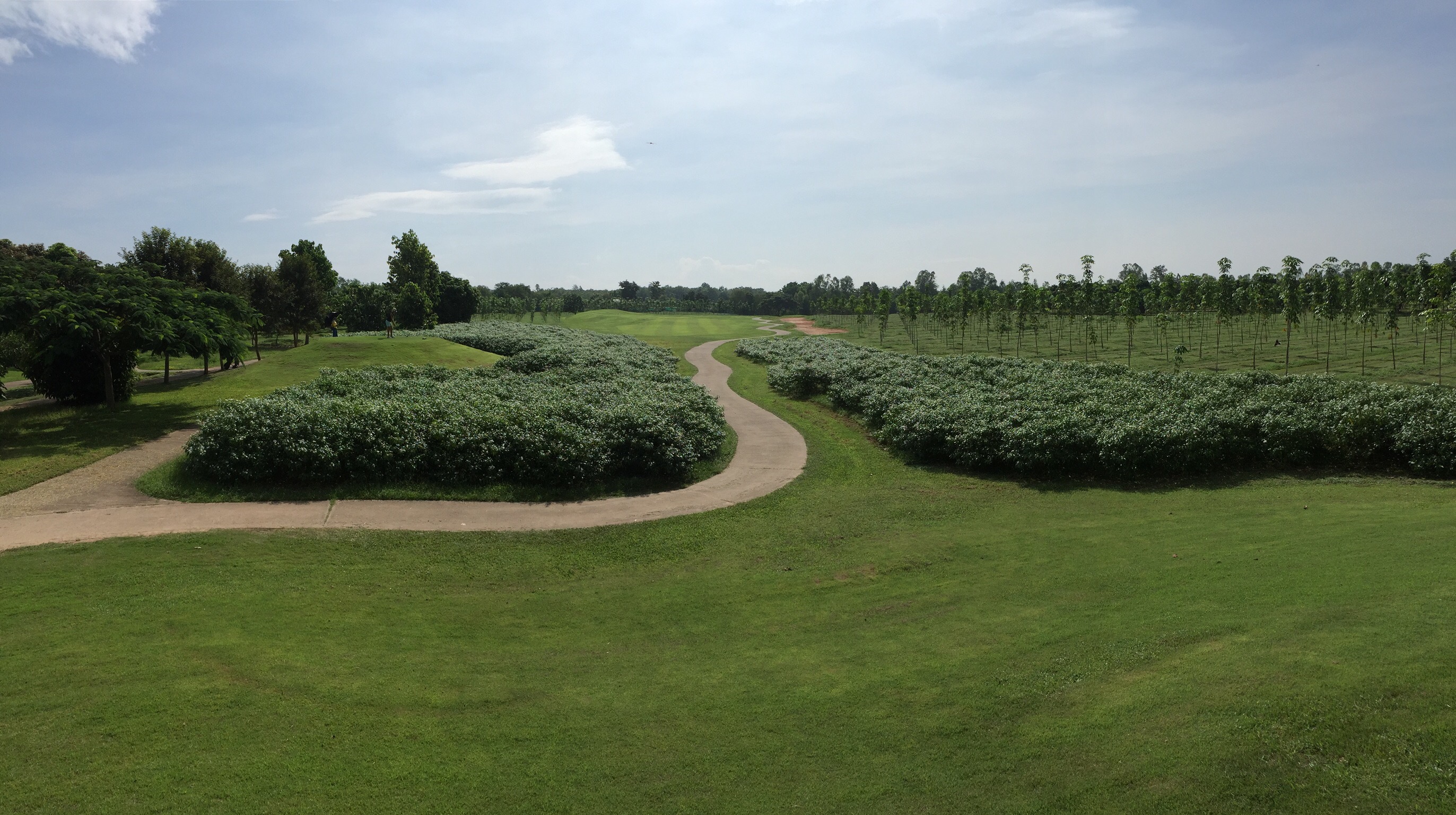
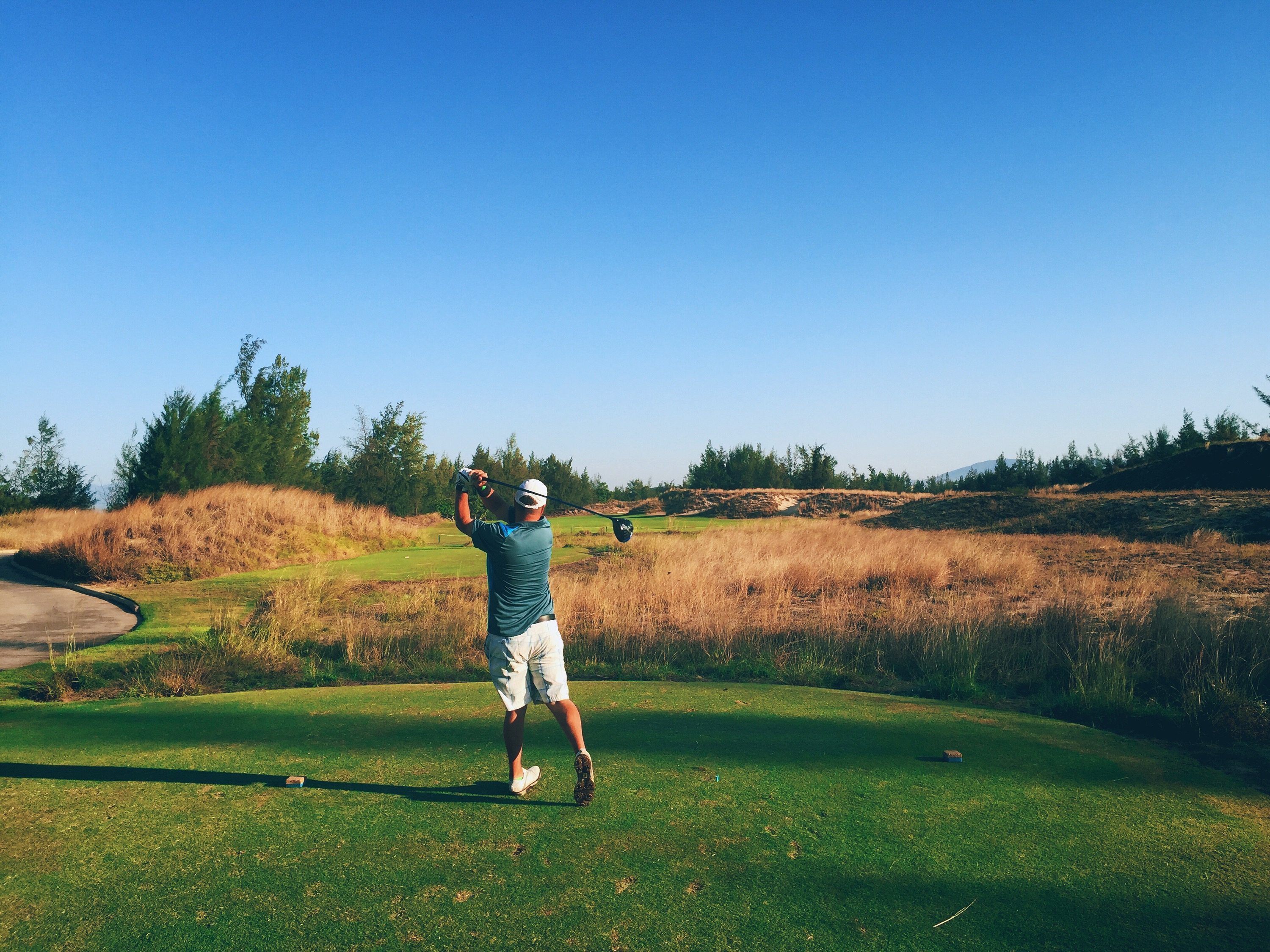
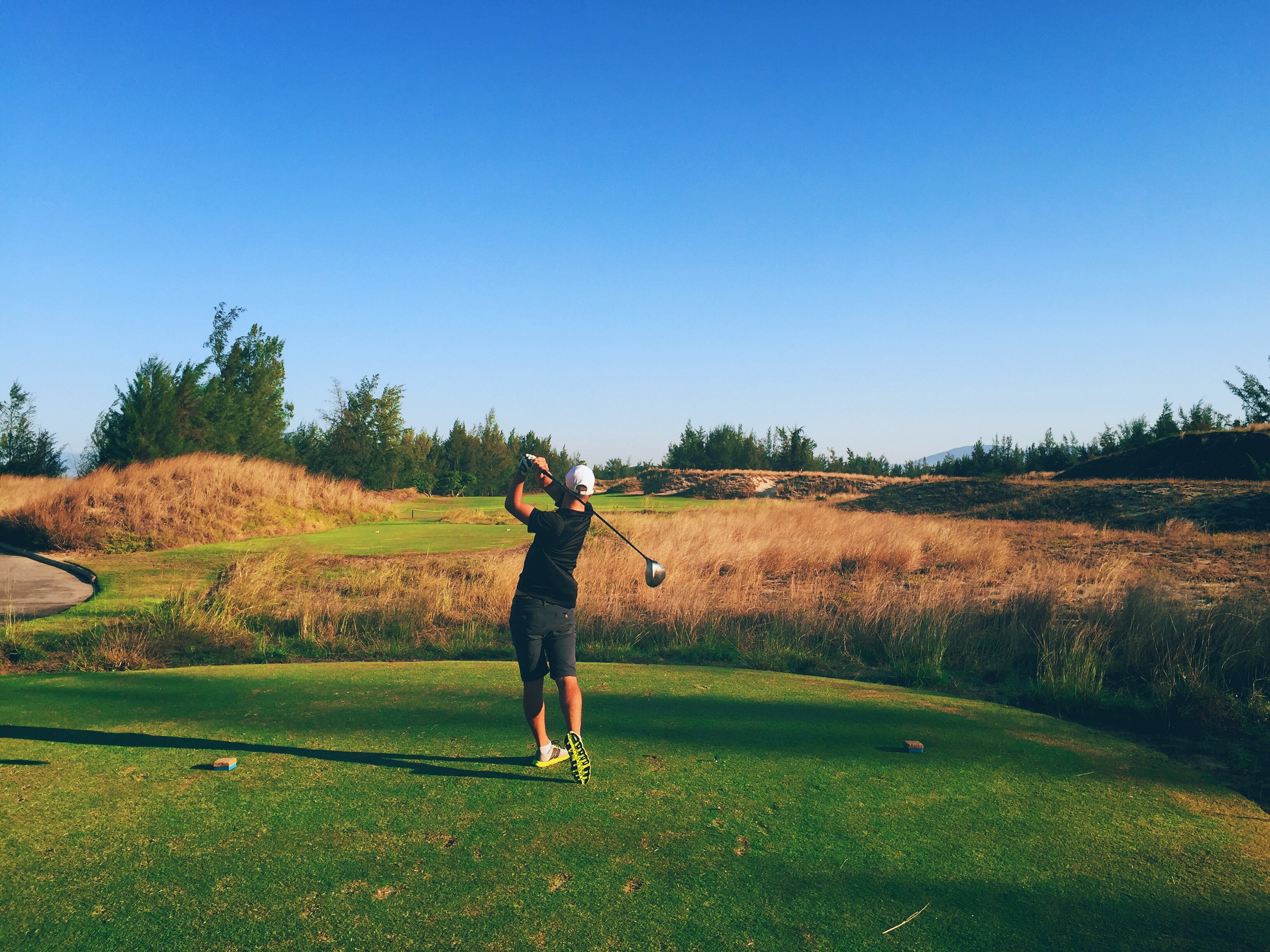
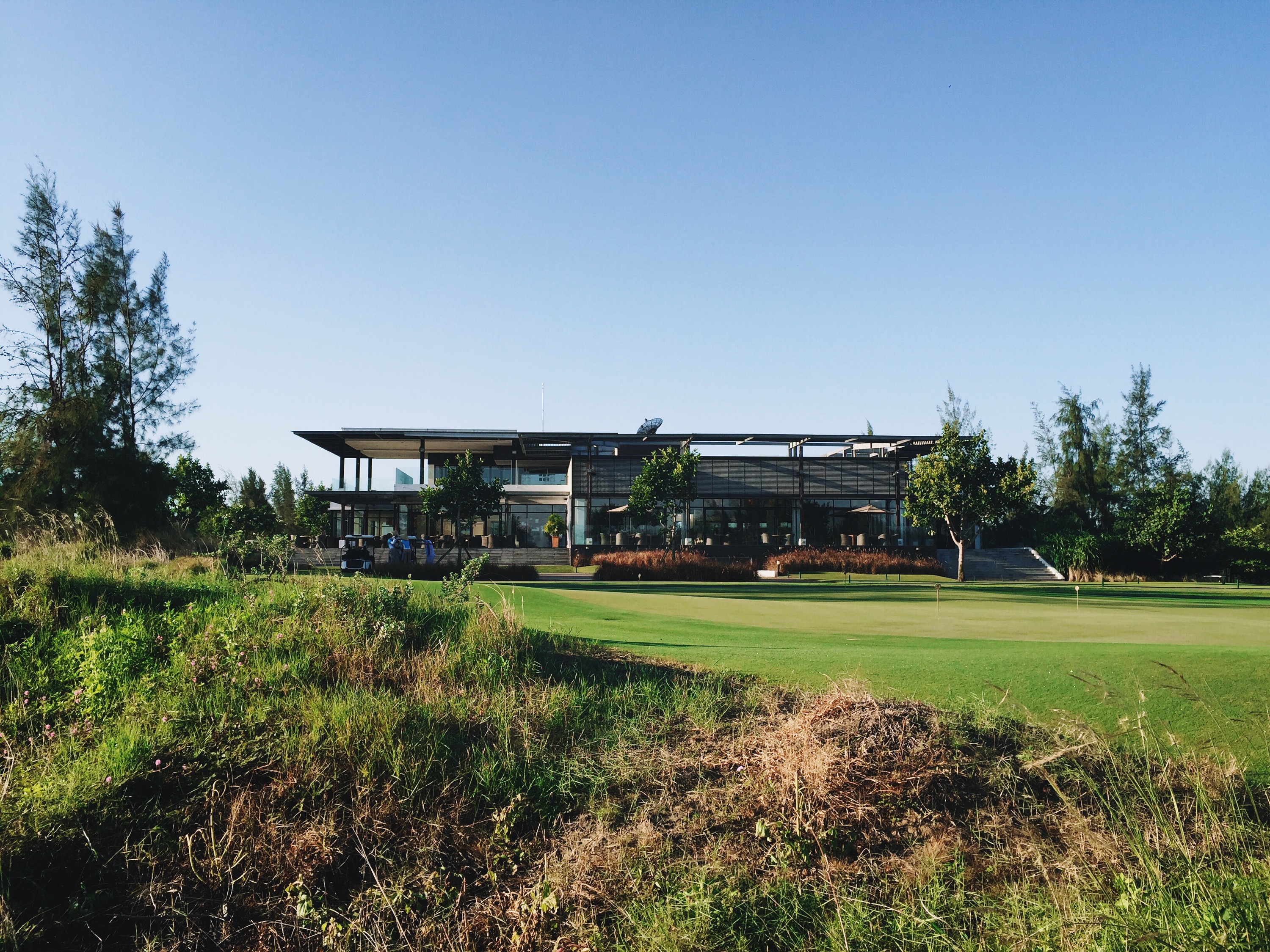
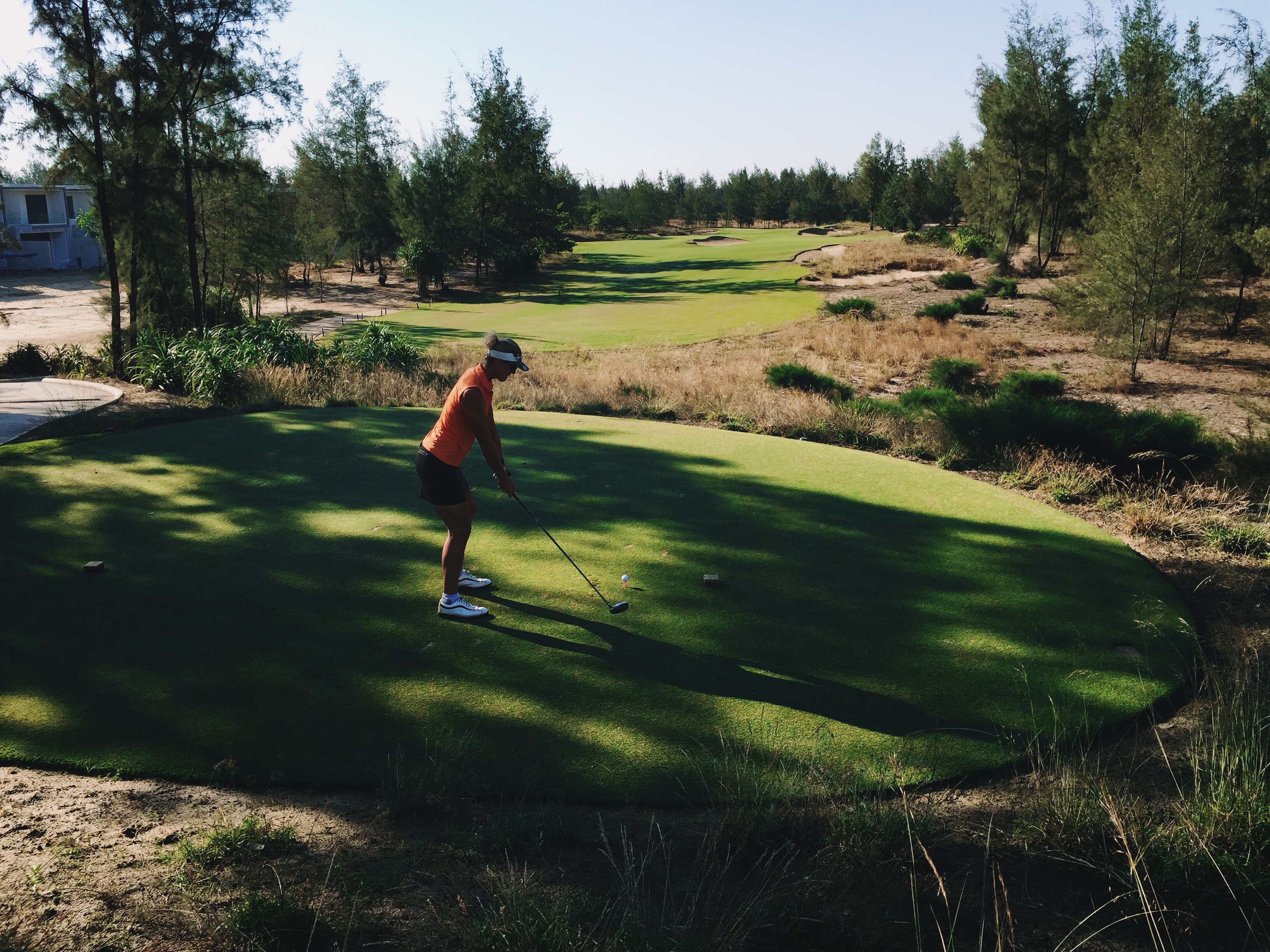
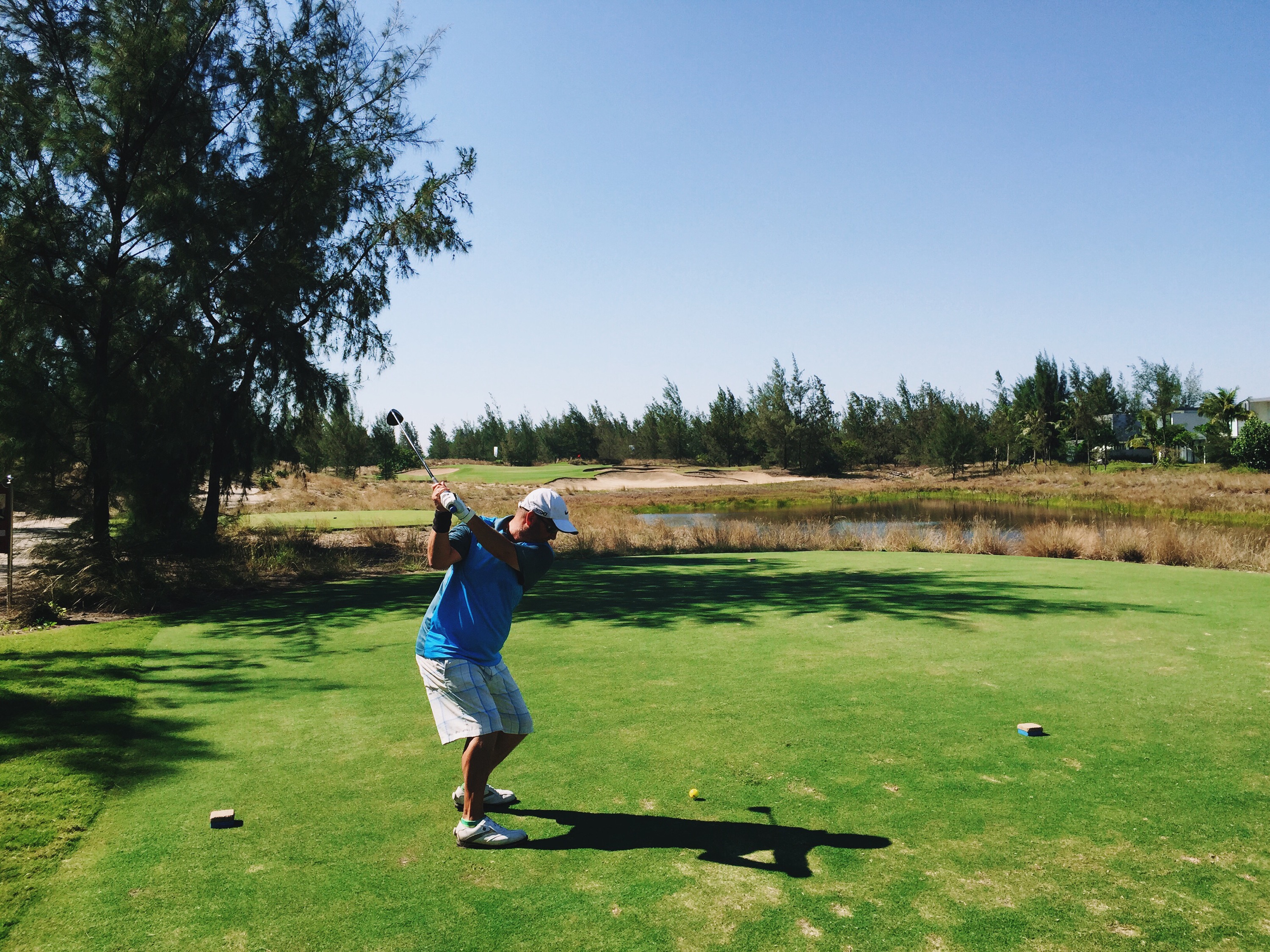
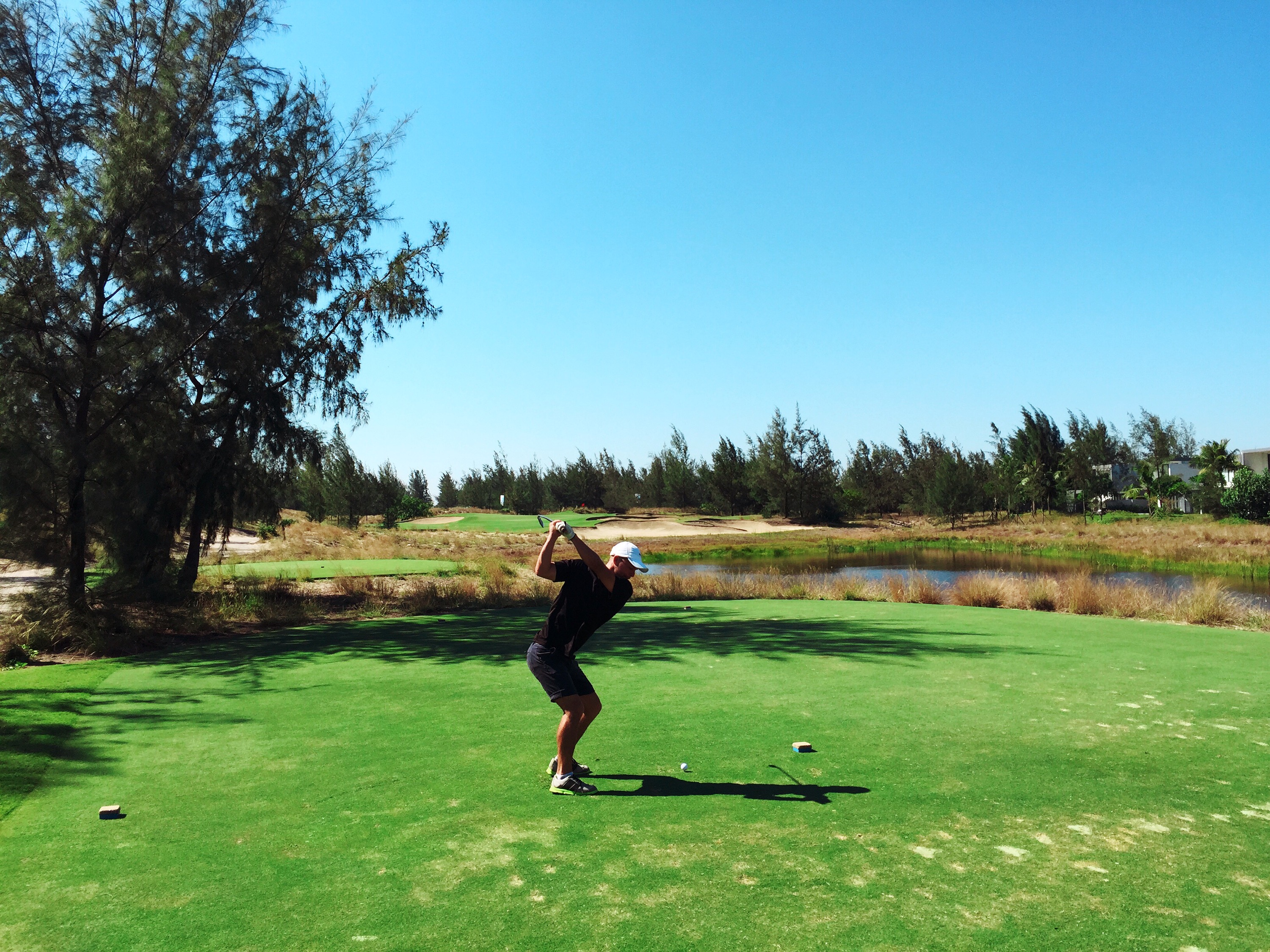
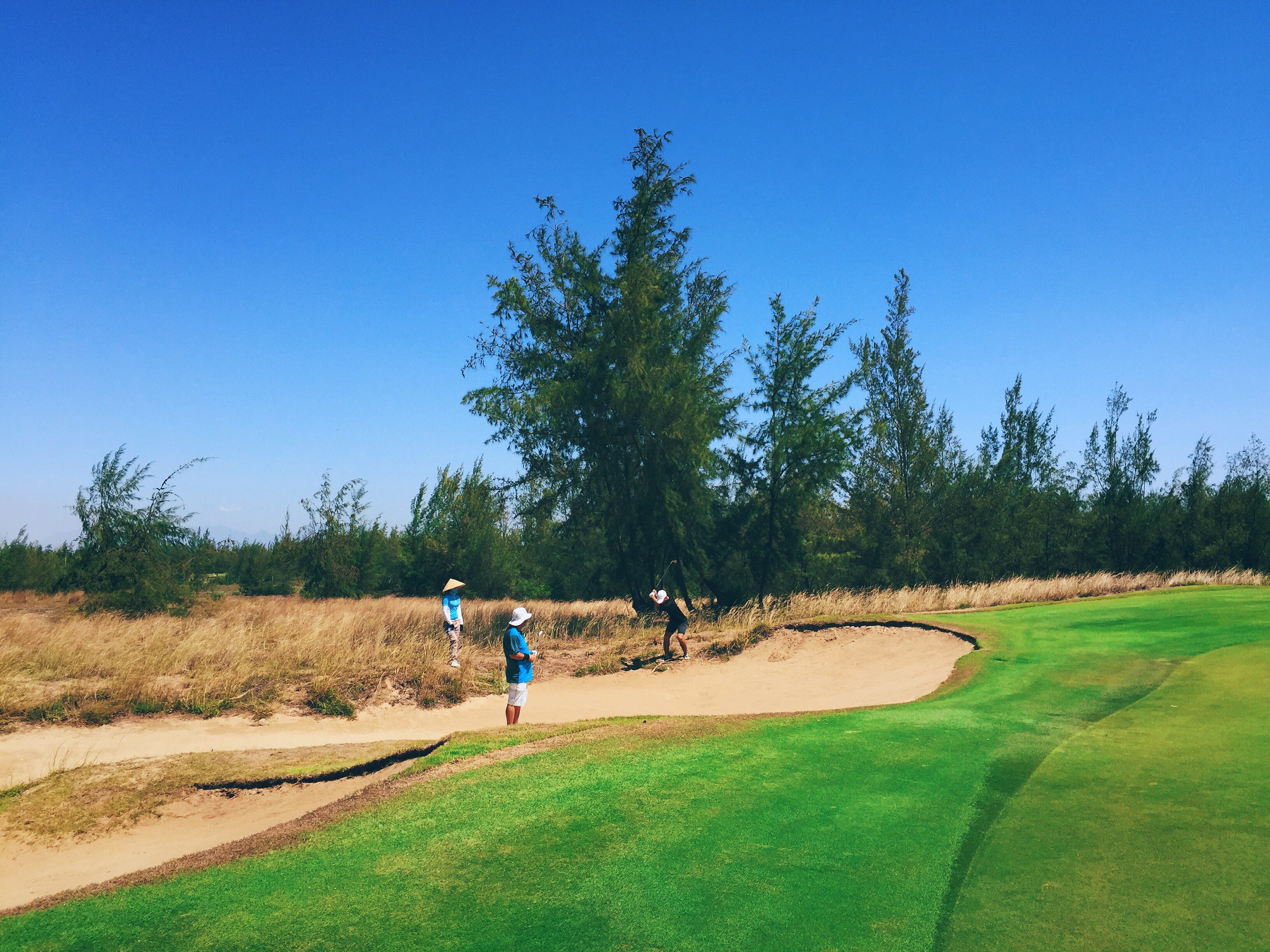
Ranging over 500 rais (1,600 square metres), the 18-Hole par 72 course was thoroughly designed to blend in beautifully with its natural terrains and spectacular surroundings.  The course was designed by a well-known architect, Mr. Seni Thirawat and established in 2004.  The course layout, was designed based on maximum safety and risk-reward approach shots and provides challenging but fair play to both amateurs and professional golfers. Each hole has a unique design and requires a different game plan to shoot for a par.

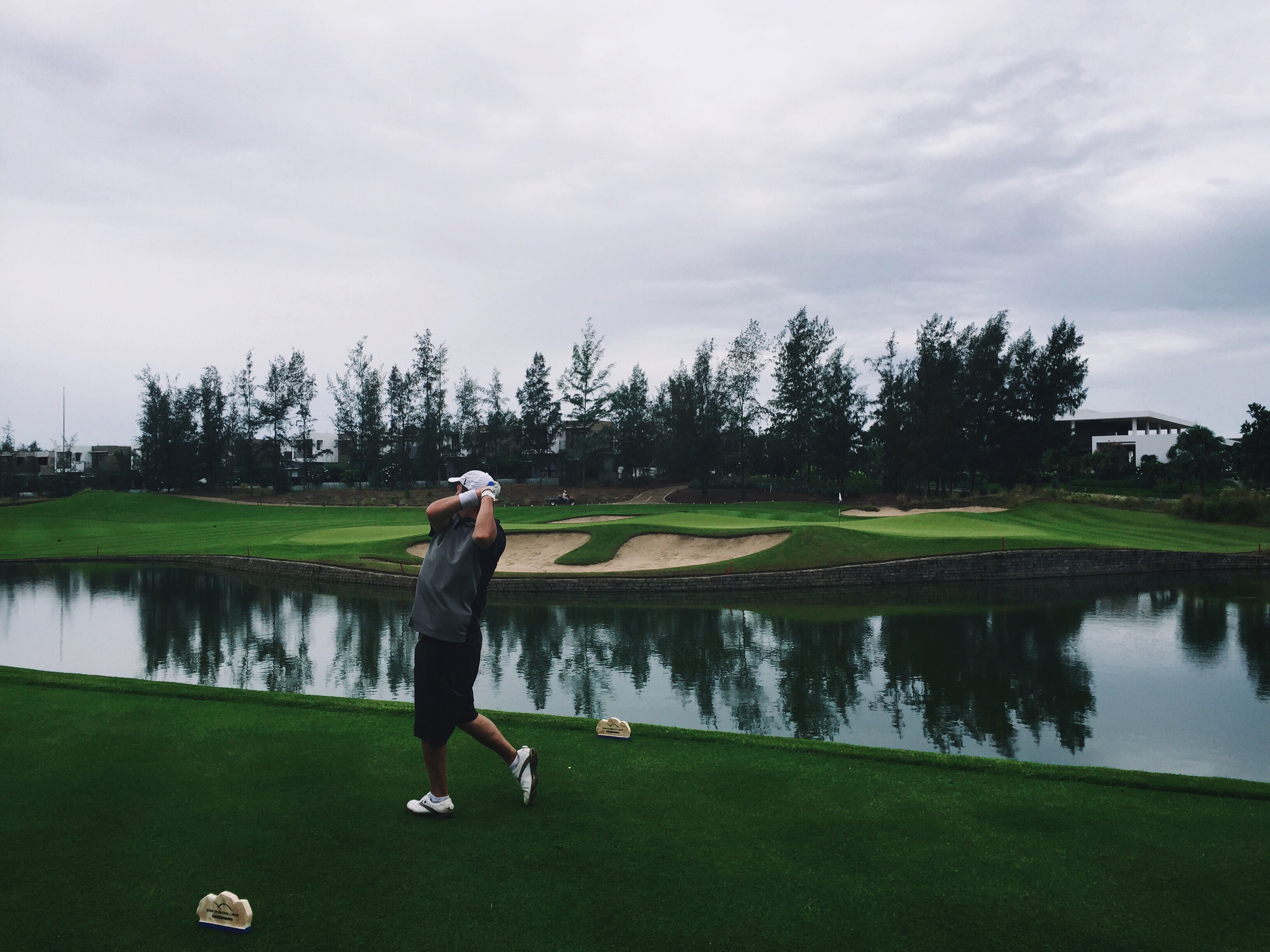
Several elevated tee boxes, which are spread throughout the course, reserve panoramic views of the course and surroundings, and at the same time, provide more challenging plays. The course features rolling fairways and large challenging greens which are considered some of the most challenging greens in the northern part of the kingdom of Thailand – I will definitely vouch for that!

Along side the fairways, you come across many local fruit-bearing trees, such as Longan, Lychee, Pomello and Tangerine, which provide not only unique scenery but also a unique tasting experience.


Posted in Chiang Mai, Thailand | Tagged , , , , | Leave a comment

Montgomerie Links – Thanks for the Memories – Danang, Vietnam

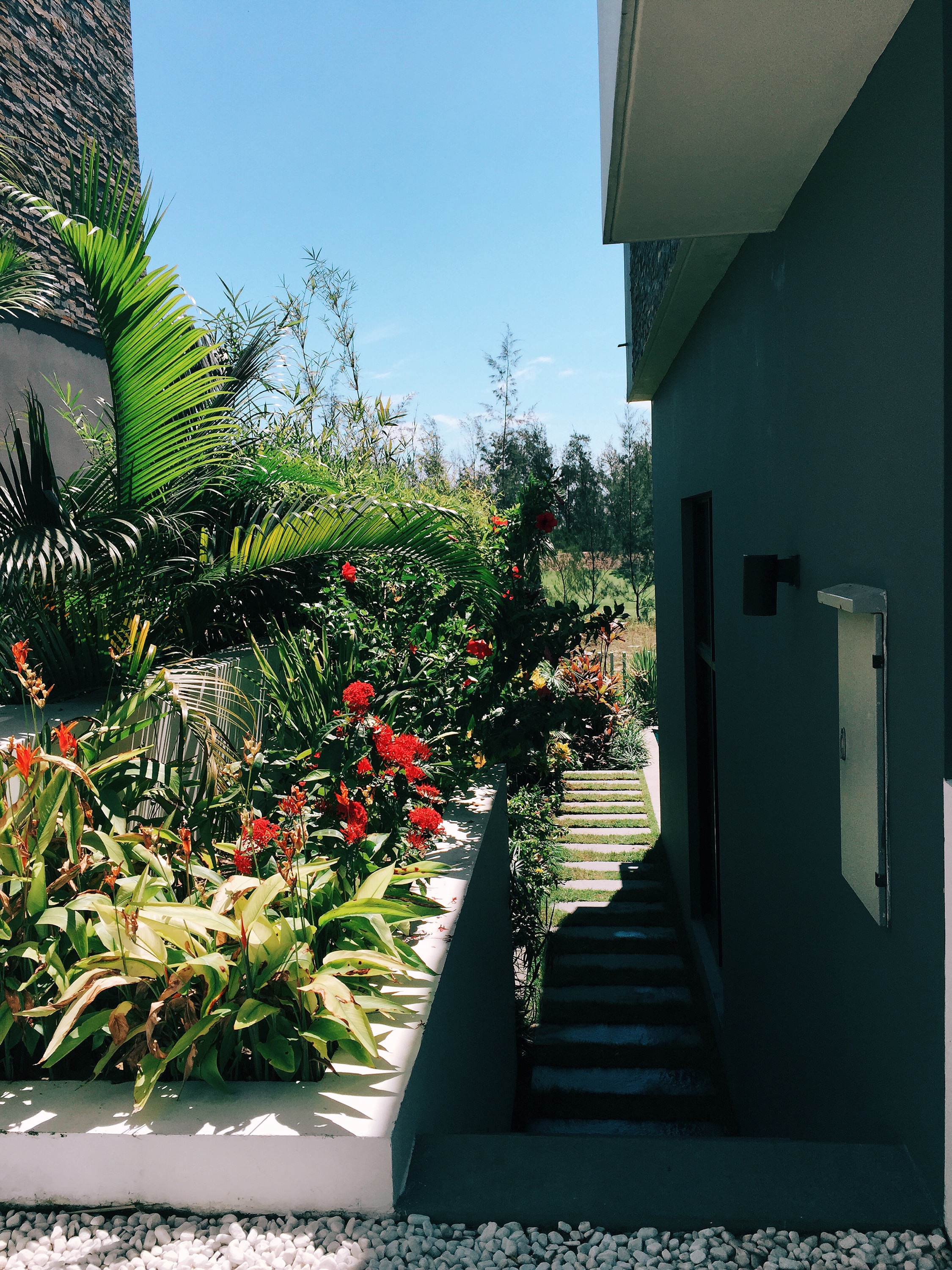
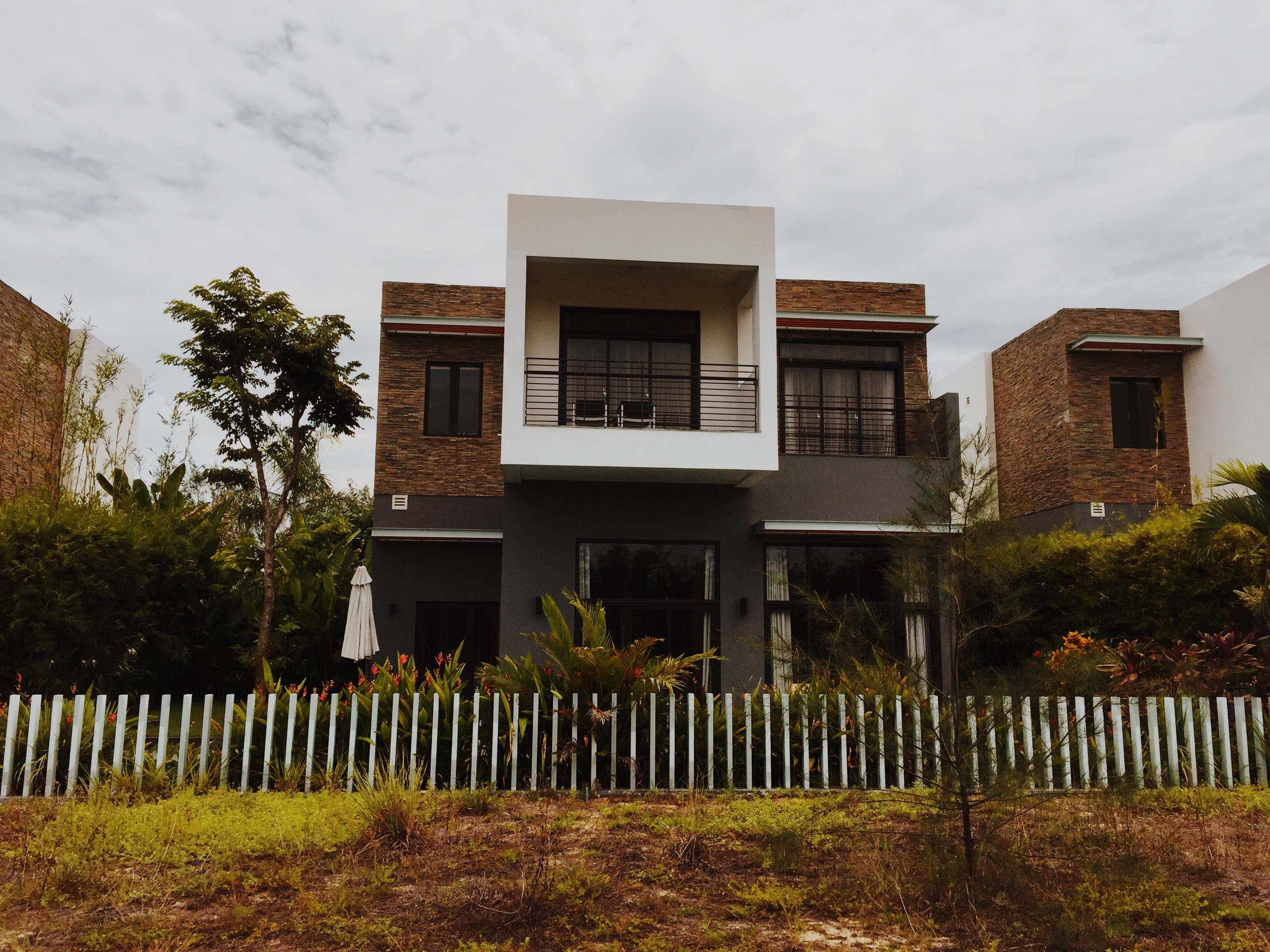
We have just spent two wonderful months at the Montgomerie Links Golf Club and Villas.  We visited this area in 2011 and played golf at Montgomerie Links at which time they were building the villas.  We discussed coming back here and staying for a period of time to enjoy the golf courses and surrounding area.  Apart from the golf the other major attraction in this area is the food as you will have seen from my previous blog.

The first week we were here our friends from Nelson, Rod, Janine, Hunter and Zoe joined us which was lots of fun – we re discovered and they discovered the area together.  We then had three weeks on our own to hone our golf skills before Paul and Laura joined us.  We spent an action packed 12 days with them which was so much fun and a very special family time.

We then had another three weeks on our own where we continued to enjoy the golf course and the team at Montgomerie Links.  All the staff here are so friendly and there was no shortage of a xin chào or a good morning along with a friendly wave as we walked around the resort.  We were spoilt with gifts in our last week – a nice bracelet from Nga in the restaurant as well as a marble plate from the Food & Beverage Team.

We organised to have our two favourite caddies, Hoa and Tinh join us for our last round on Wednesday and they also presented us with a bracelet each.  I then received a nice bag and Steve a golf shirt from the management team.

The Villa


The Sun Rises


The Lovely Staff

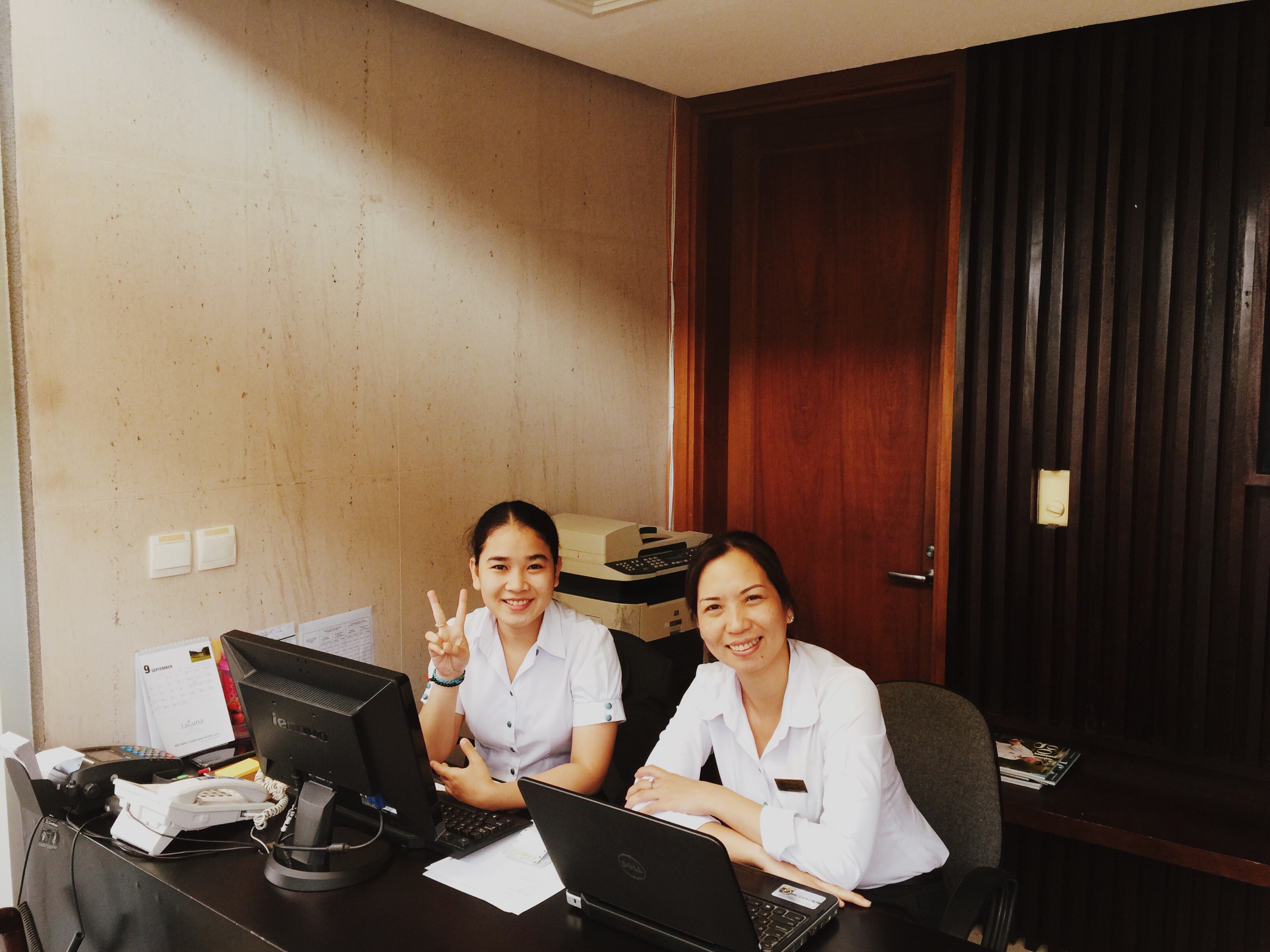
 Van and Hang our Villa Reception superstars.  These two made sure we had everything we needed and made sure everything in the Villa was spot on.  A special mention to Van who stayed until 9pm the night we arrived trying to track our lost luggage down.  Van & Hang also personally delivered us to the airport the day we left so they could wave goodbye. 

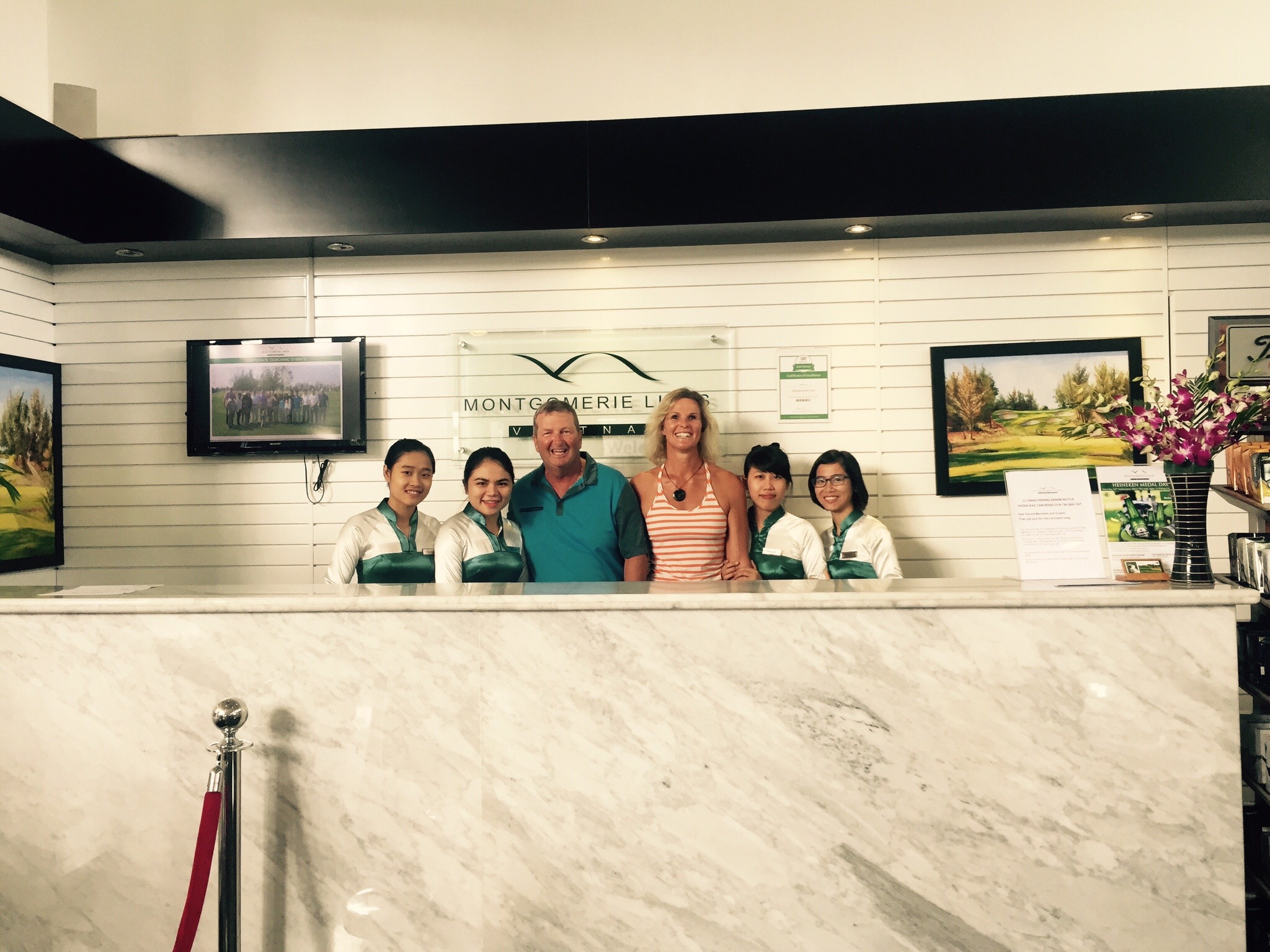
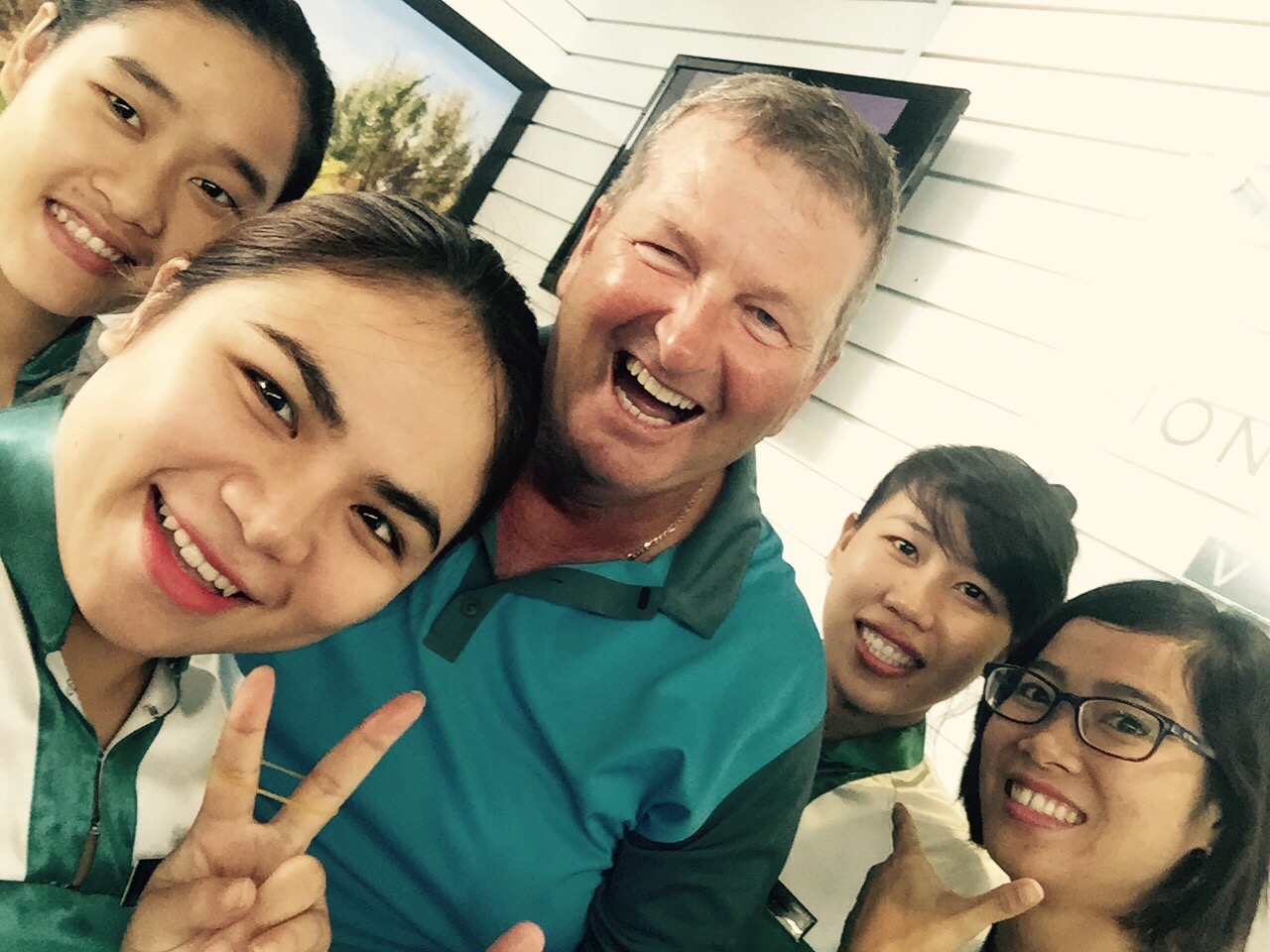
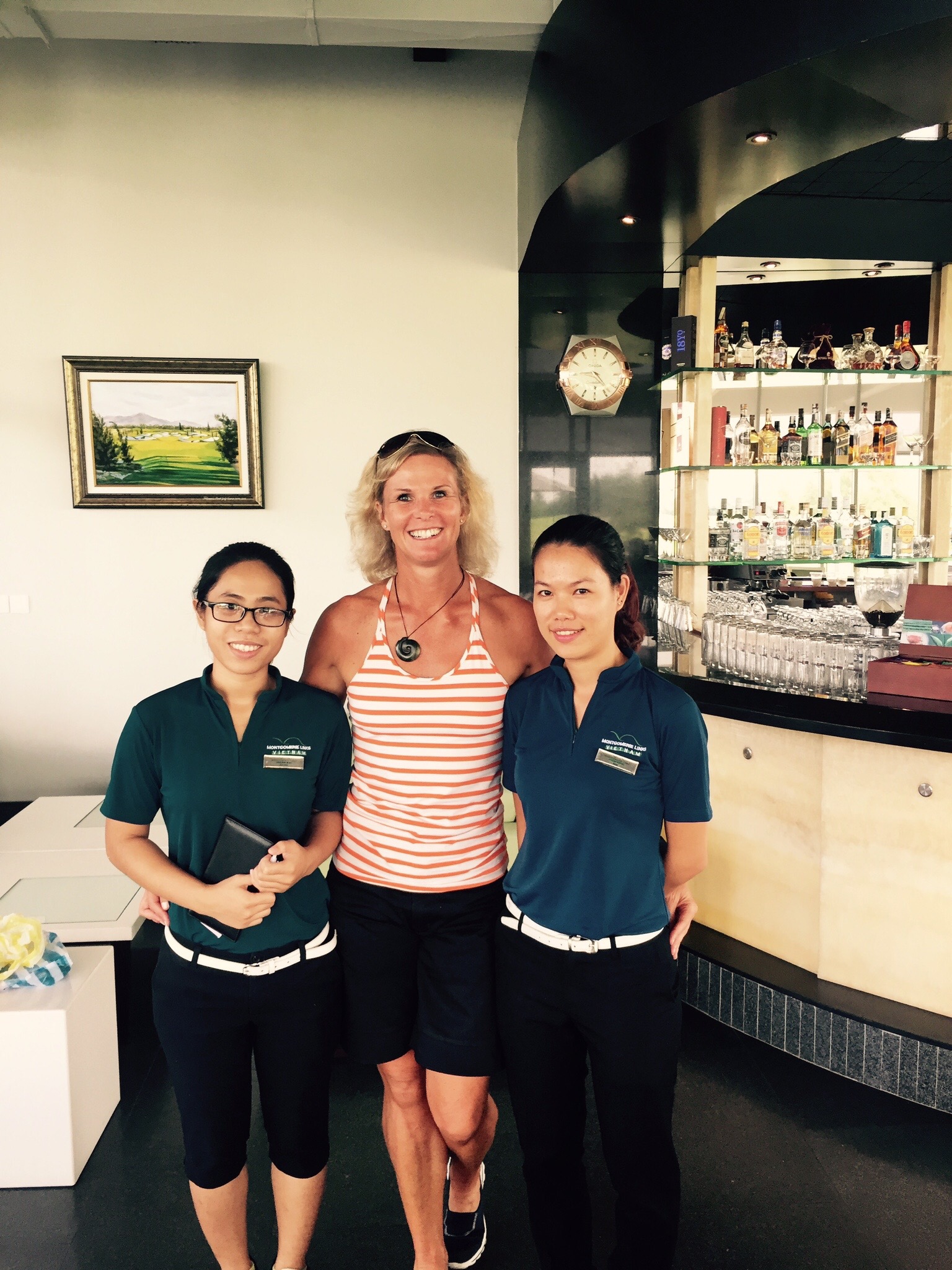
  The Golf Reception Team – these girls were at work every morning at 5.15am setting up ready to greet and check the golfers in as they came to tee off.  They organised all our tee times and were always ready with a friendly wave or hello when we saw them.  Steve, who has never done a ‘selfie’ in his life was quite excited to be taking a selfie with these girls.


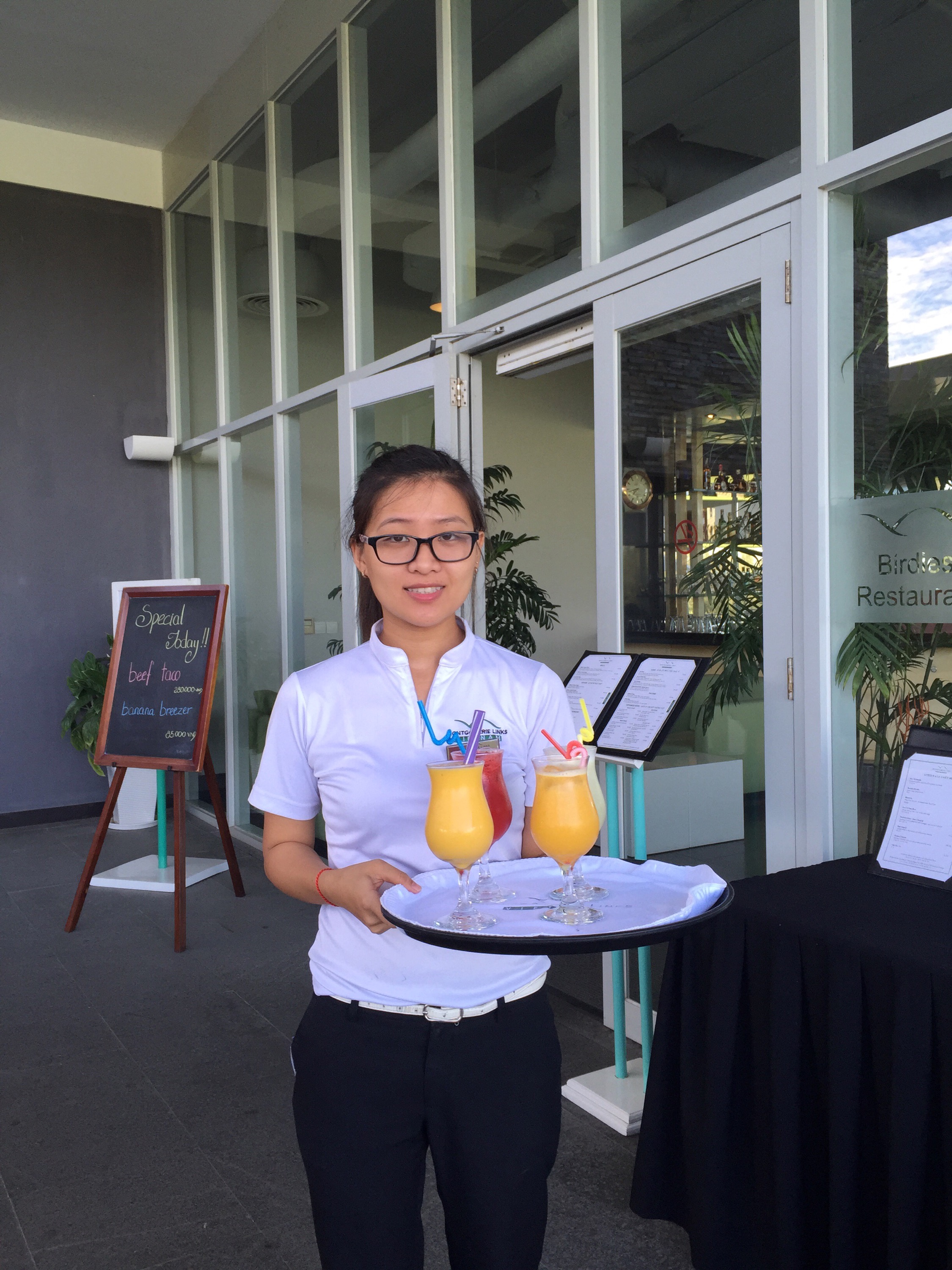
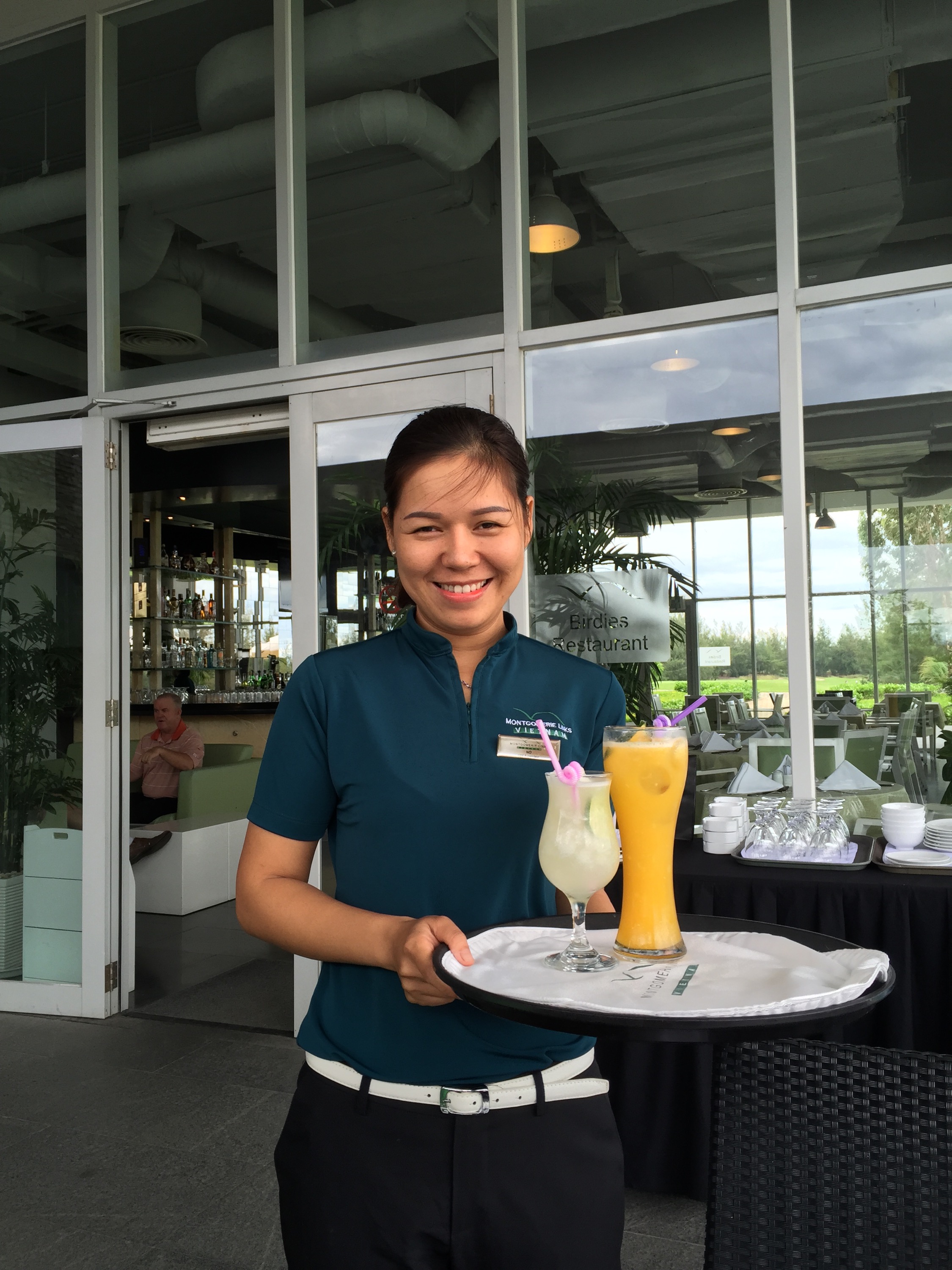
The Food & Beverage Team (Nga, Suong, No and Thuy) were always a pleasure to deal with and we enjoyed a chat every morning over breakfast.  Once they sussed out our little idiosyncrasies re our breakfast requests I am sure we were the easiest breakfast guests ever : )

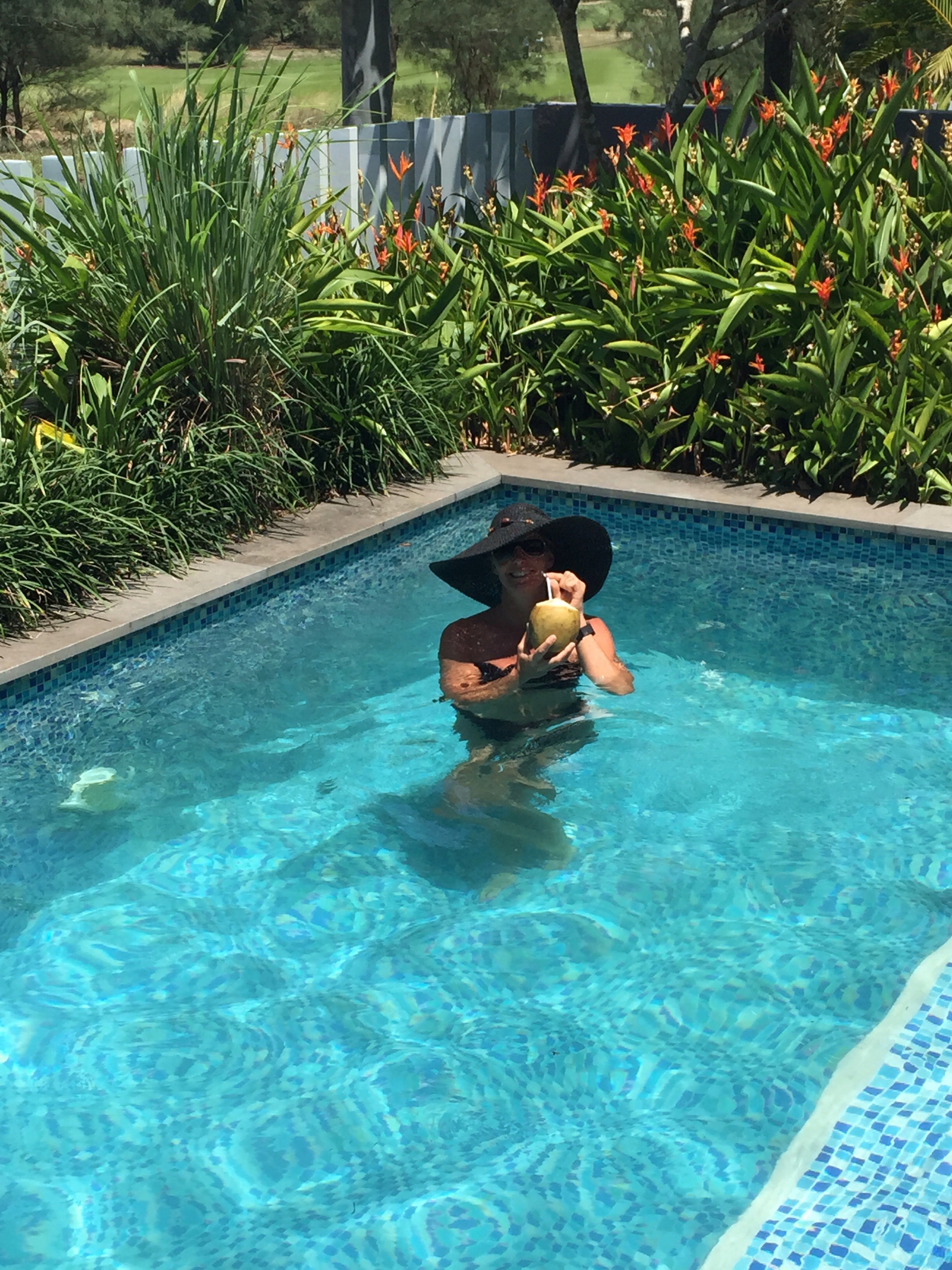
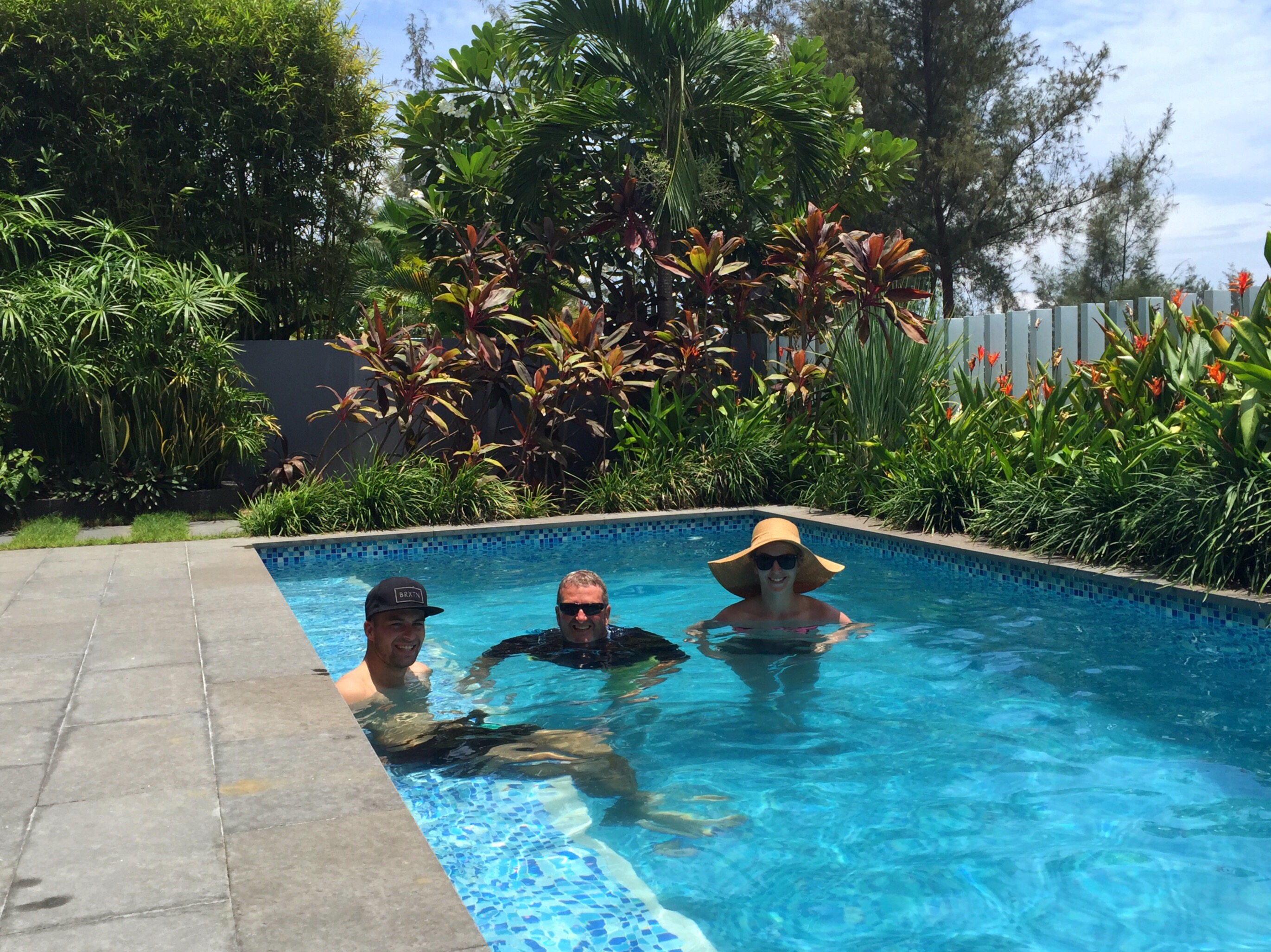
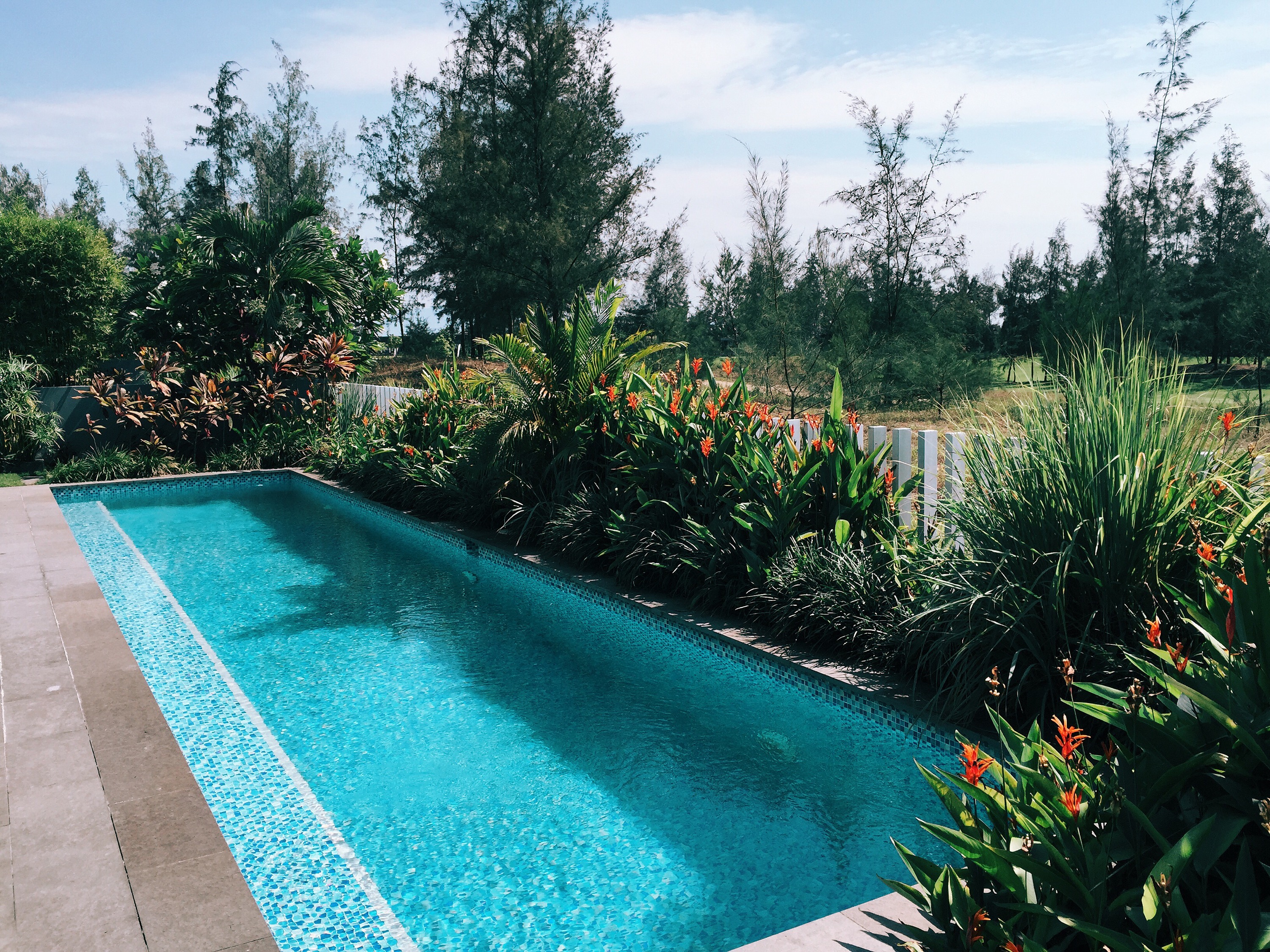
The Pool


Birdies Restaurant

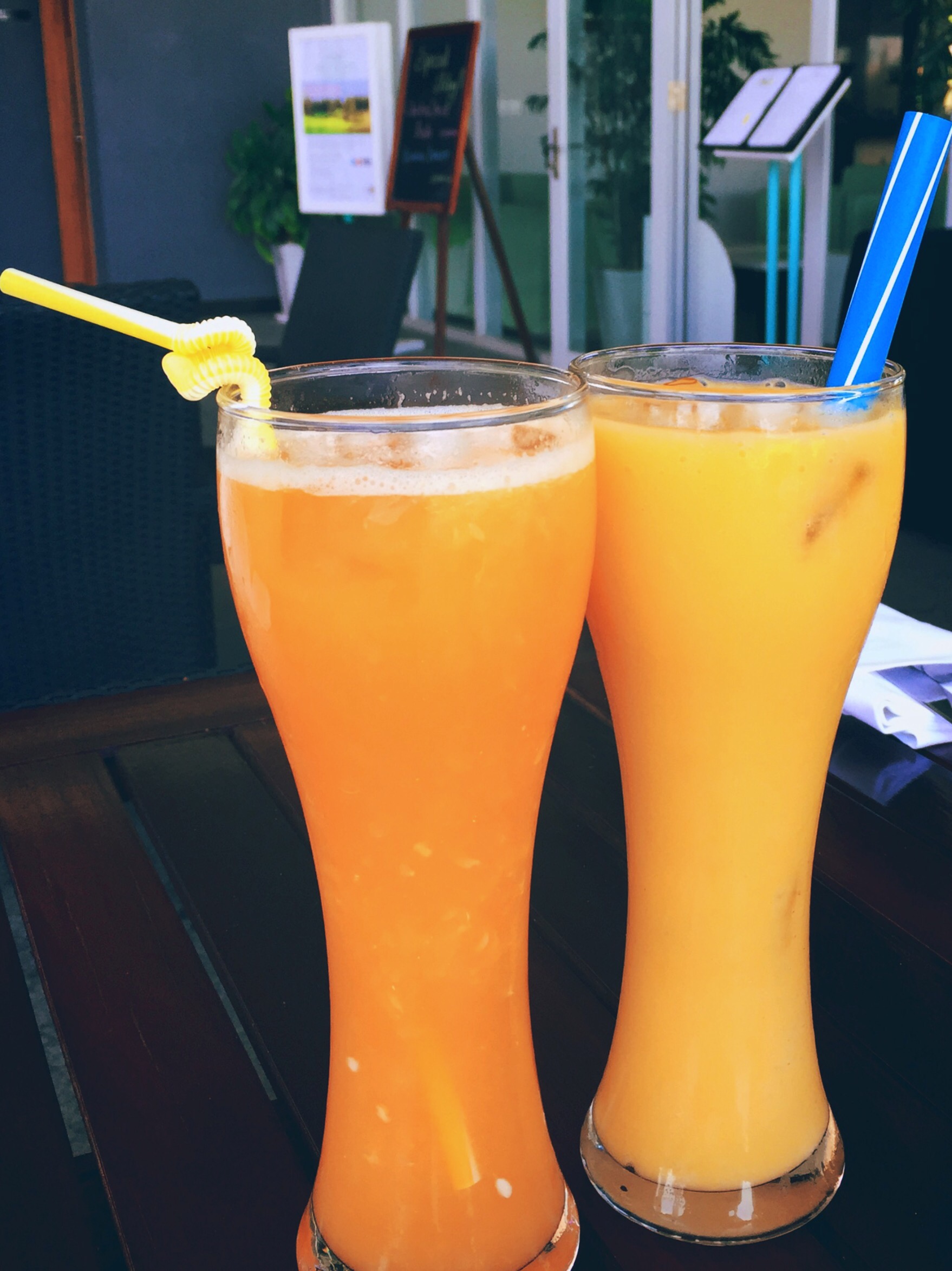
Fresh Juices

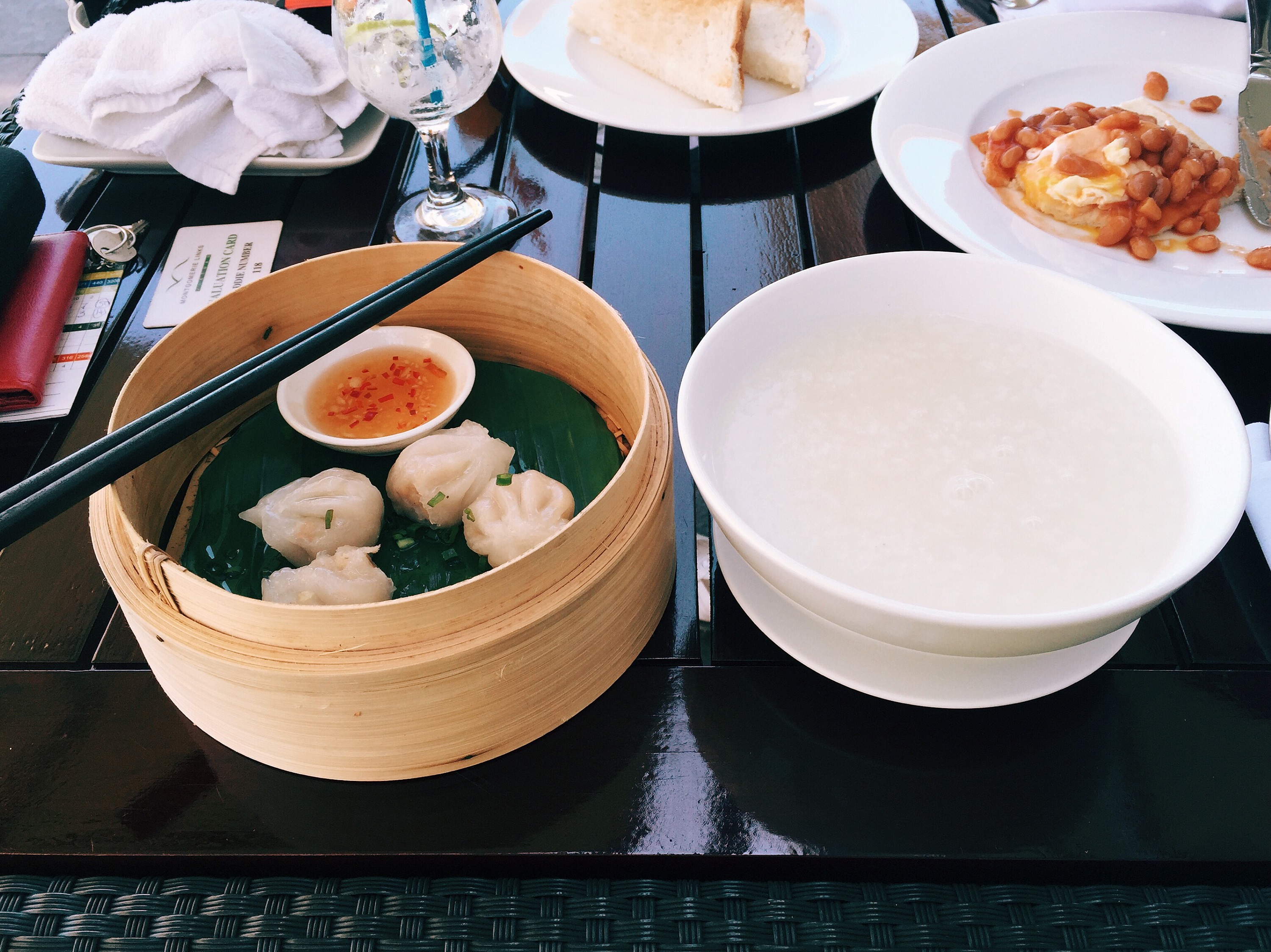
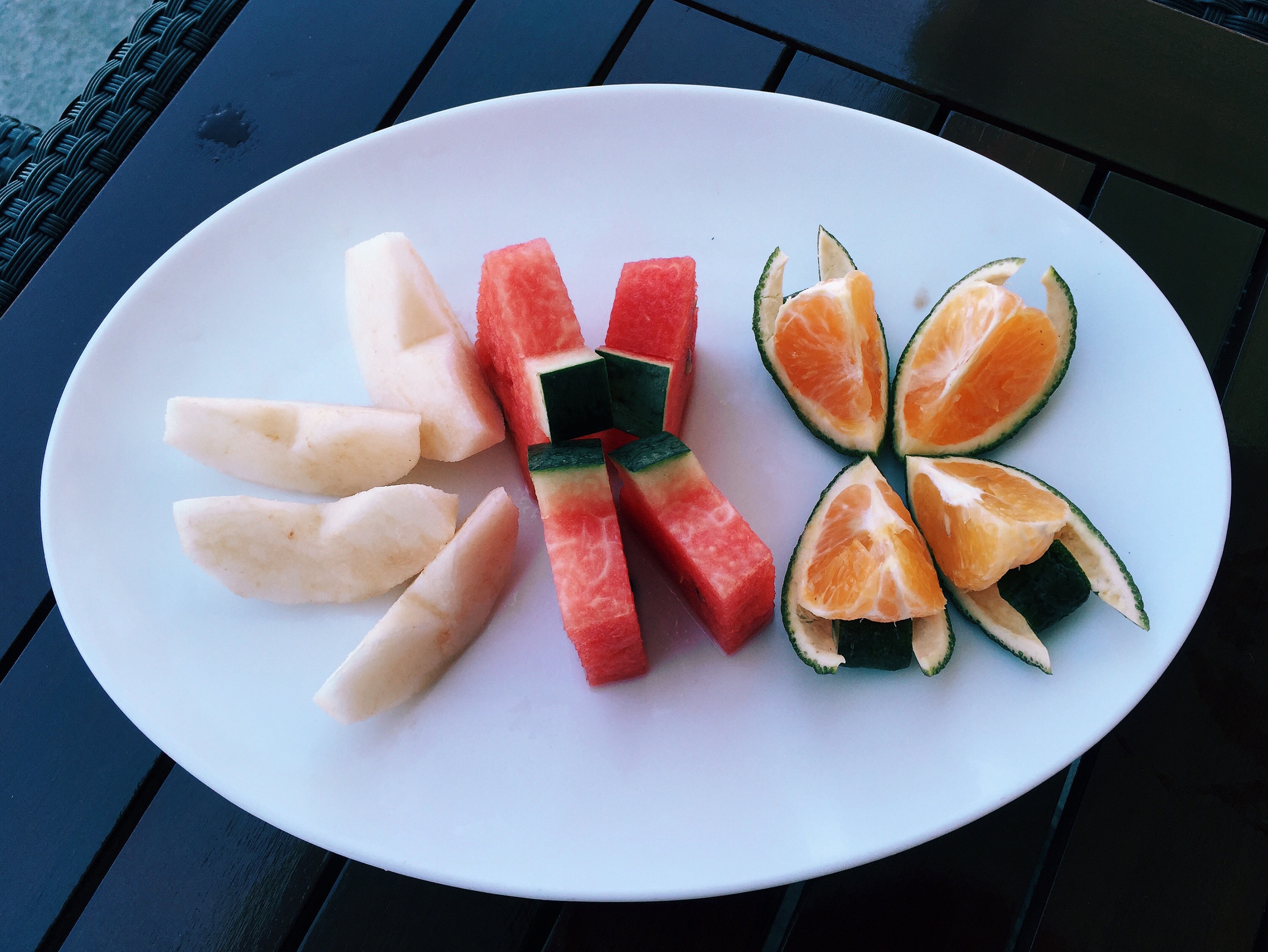
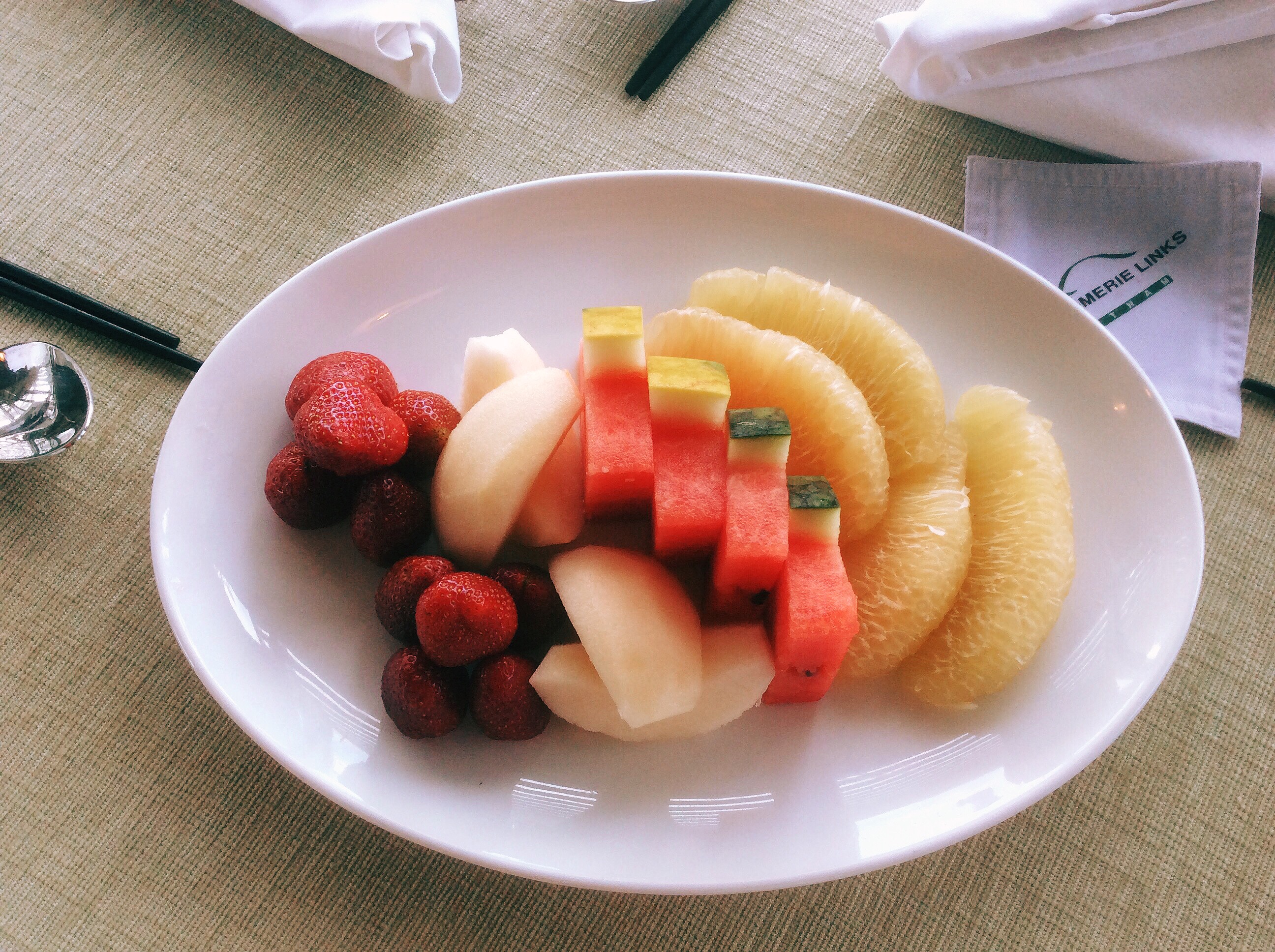
Breakfast

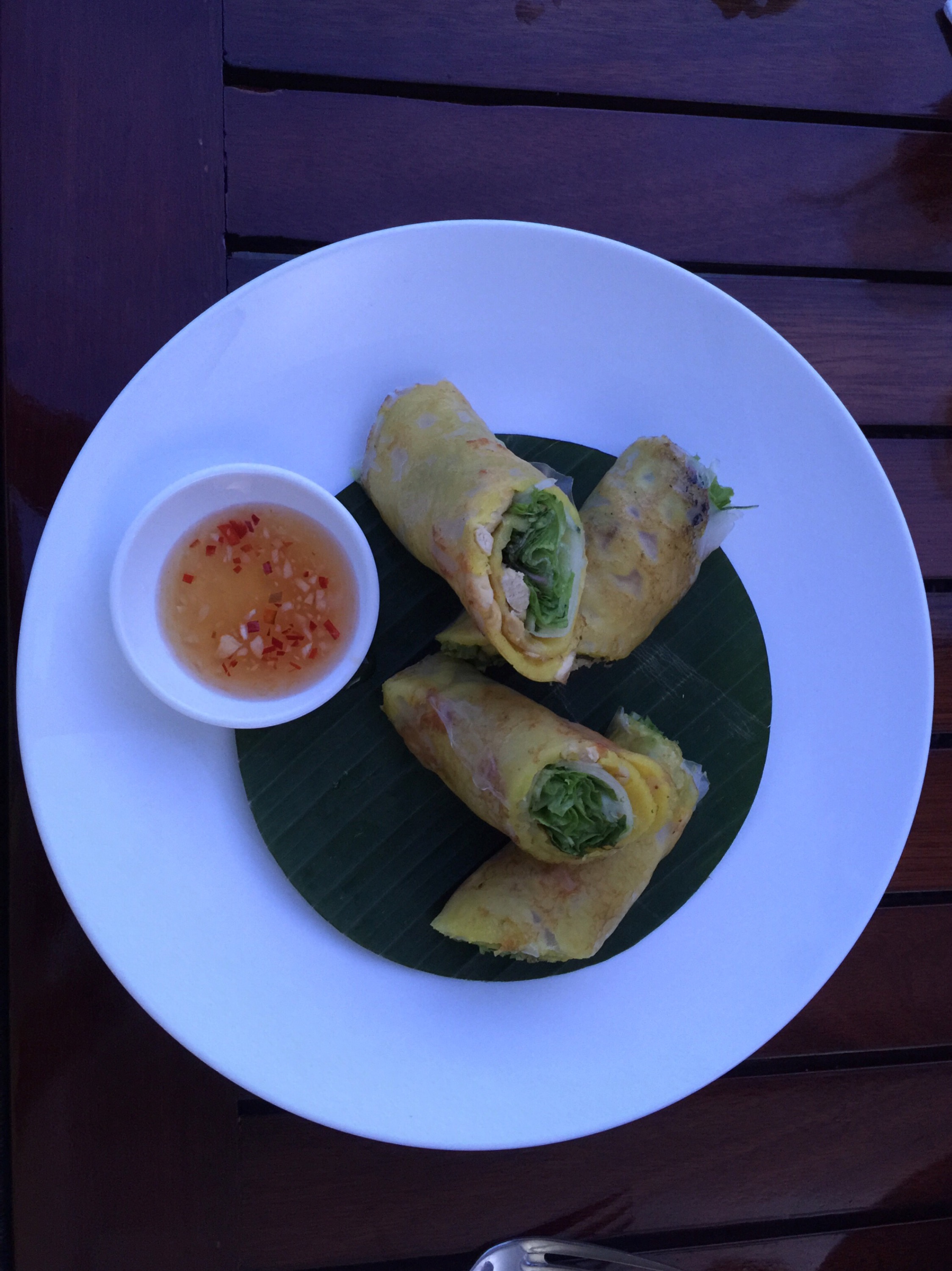
Dinner


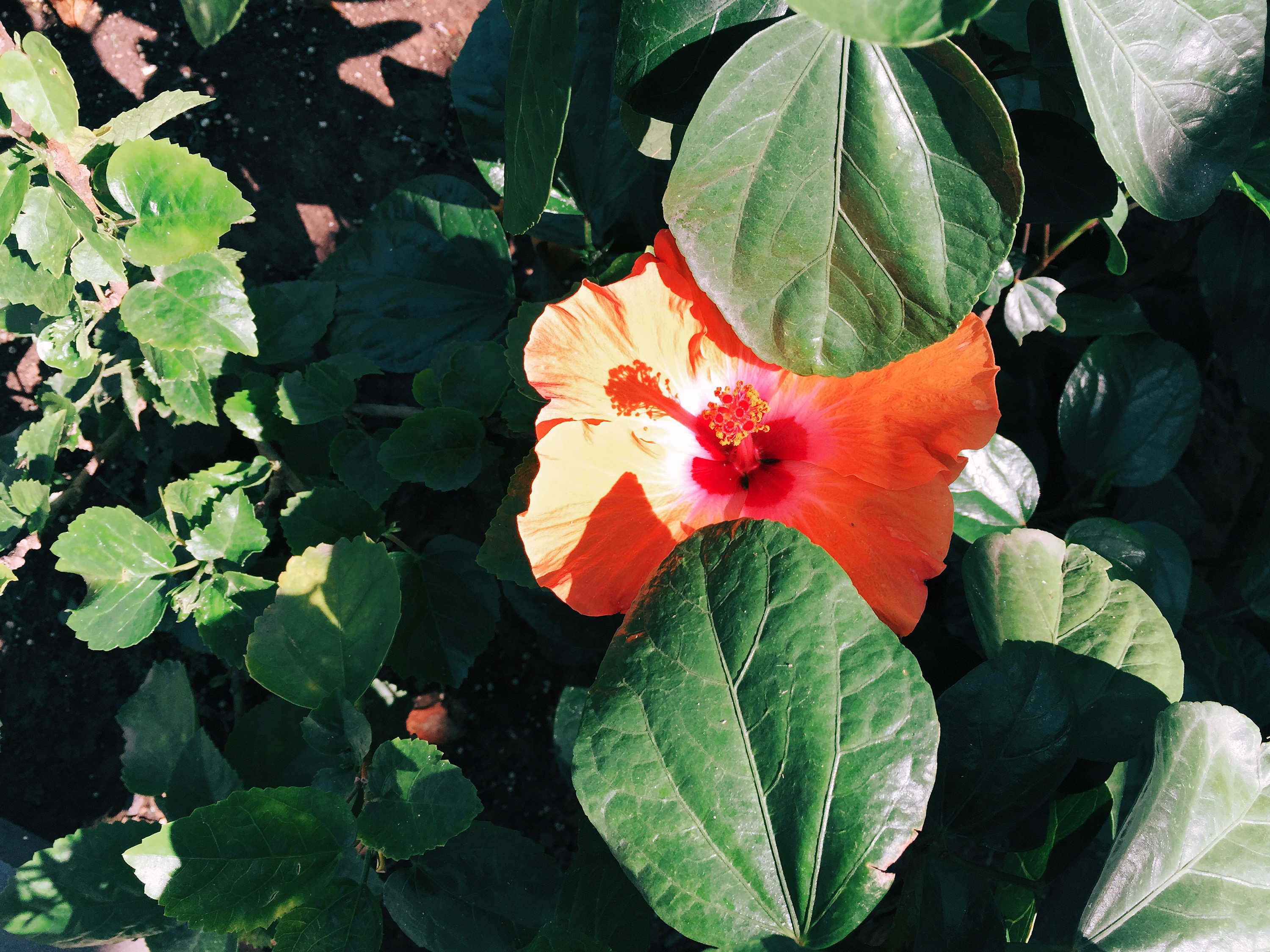
The Flowers


The Golf Course and Caddies


The Gifts


Thanks Team Monty!  We will be back for sure and we can’t wait to see you all again.  In the meantime, keep up the fantastic job that you all do every day : )

Posted in Danang, Vietnam | Tagged , | Leave a comment

Hoi An Restaurants – SungrlAdvisor – Hoi An, Vietnam

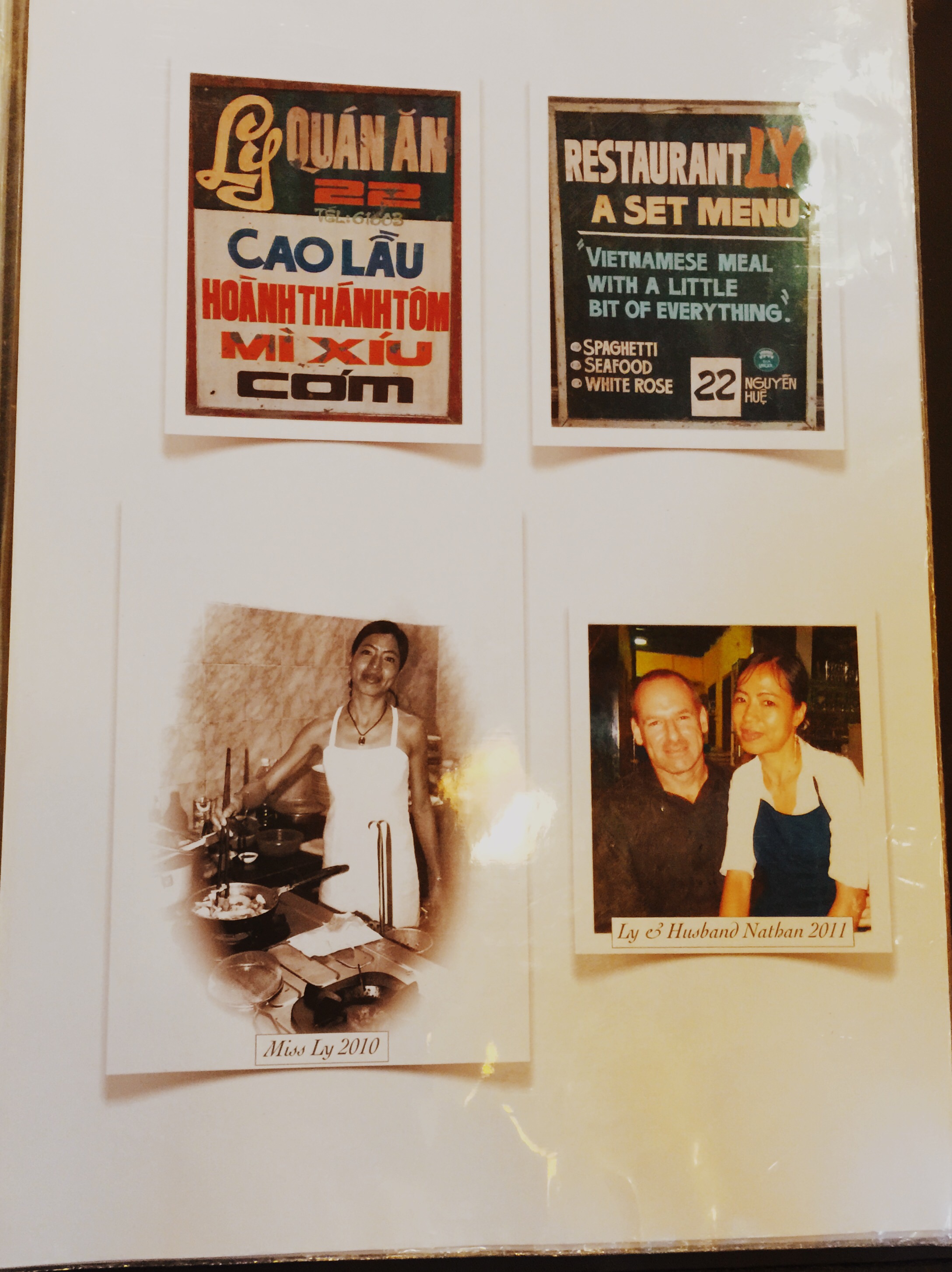
 Miss Ly

22 Nguyen Hue Street, Hoi An

Miss Ly’s Mother has lived at this historic Hoi An location since 1949.  They were one of the first family restaurants in old Hoi An.  They established the restaurant in 1993 when there was only one hotel in Hoi An with all of eight rooms.  In 2012 they expanded and opened Ly 2 in a separate family house next door to the original Miss Ly.  Much has changed since those early days but Miss Ly’s Mother still lives in the house and Miss Ly still does most of the cooking.

Miss Ly uses only the finest quality ingredients, bought fresh every day.  She believes that the best ingredients are essential for good health and they are the foundation for her fine Vietnamese cuisine.  Miss Ly’s sister is a produce dealer and supplies the restaurant with beautiful vegetables and fruits, and they also buy directly from local farmers.

Due to Hoi An’s history as a major port city, their local cuisine is a mixture of many cultures over many cultures over many centuries and several dishes are unique to this area and unlike other Vietnamese food.

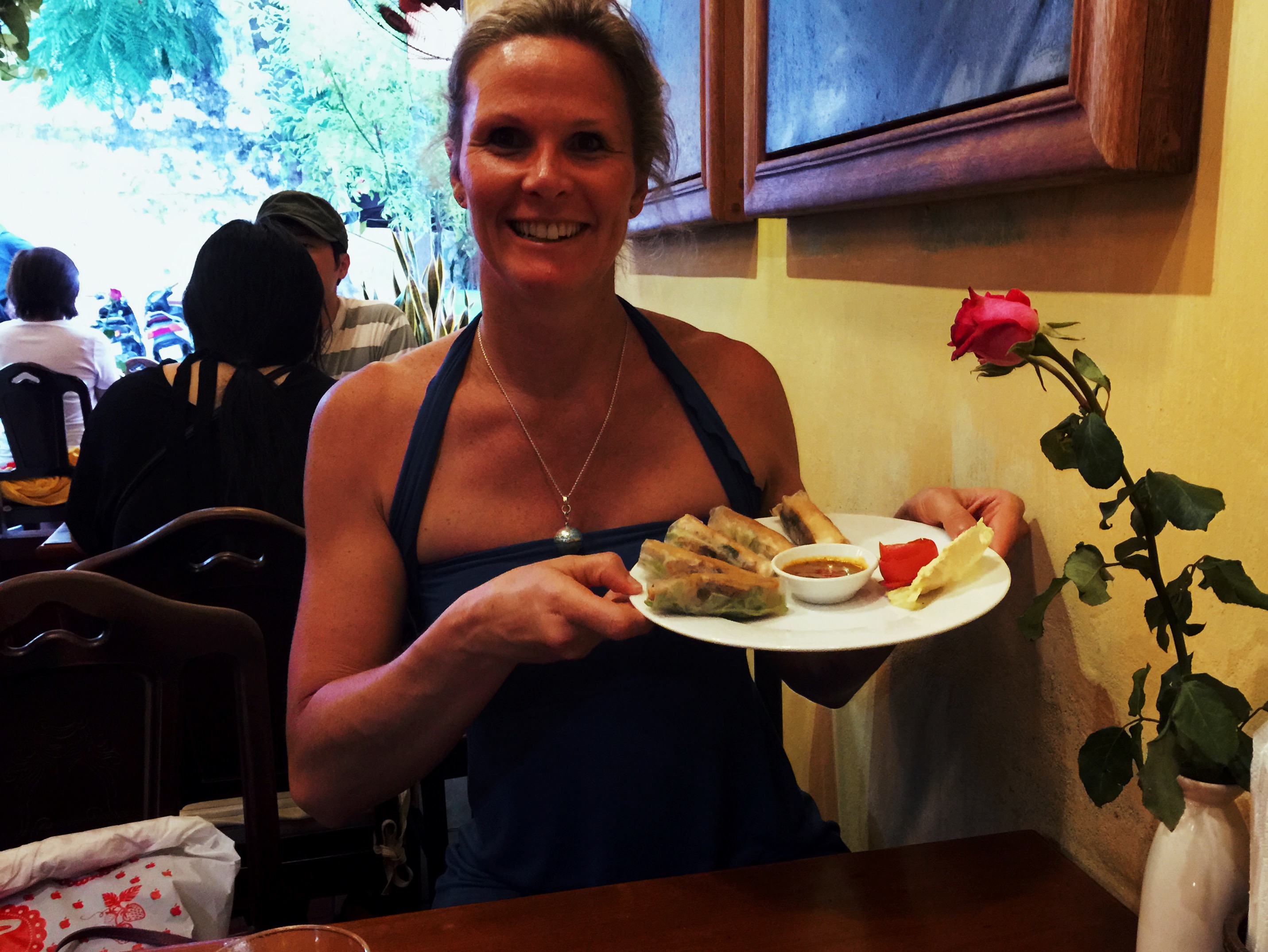
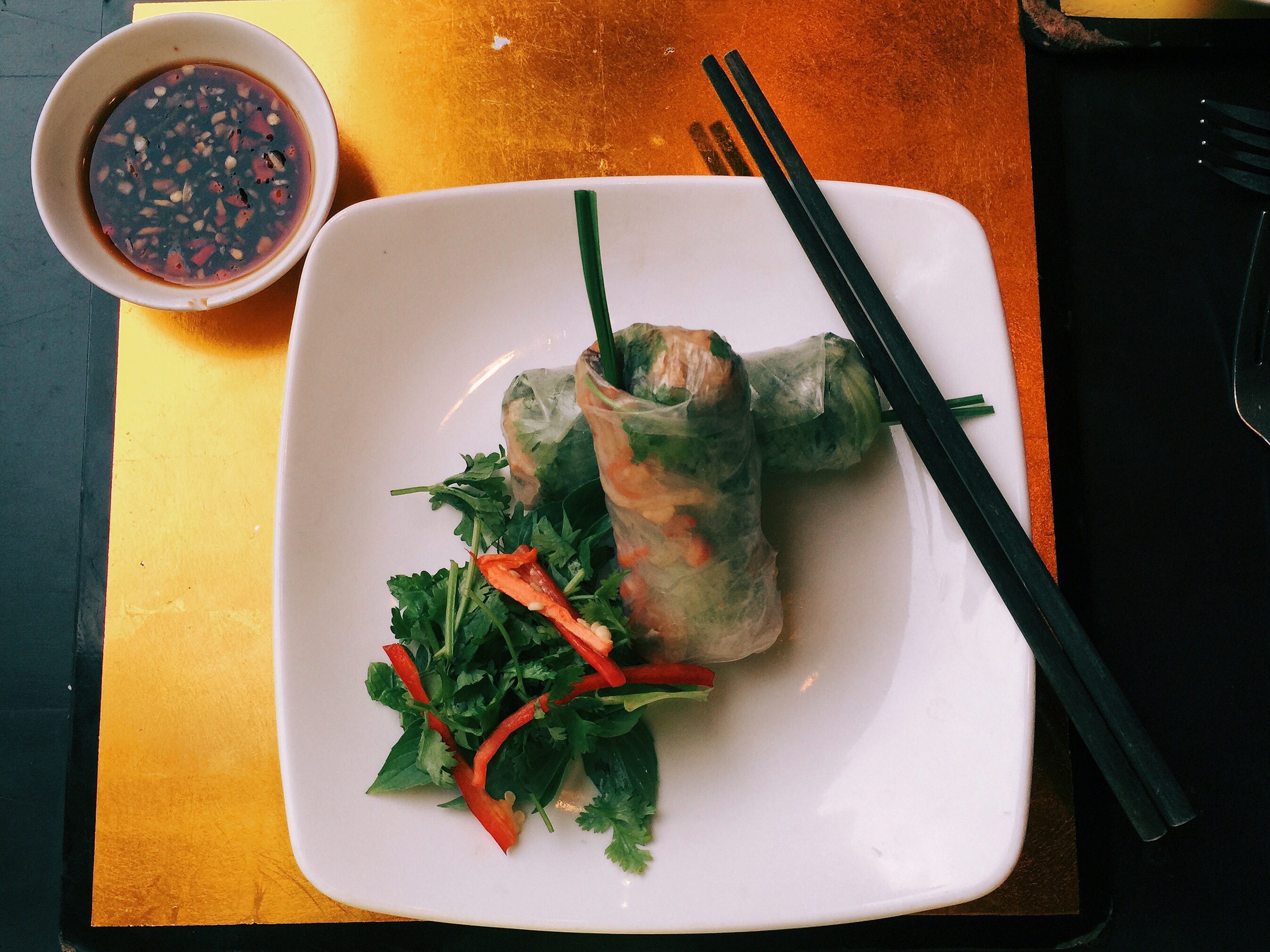
We had a few great meals at Miss Ly and the food lived up to her fresh and flavorful reputation .  It is very popular so you need to either get there early or make a booking.  The staff are very friendly and efficient.  I favored the vegetarian fresh spring rolls and the chicken and papaya salad.


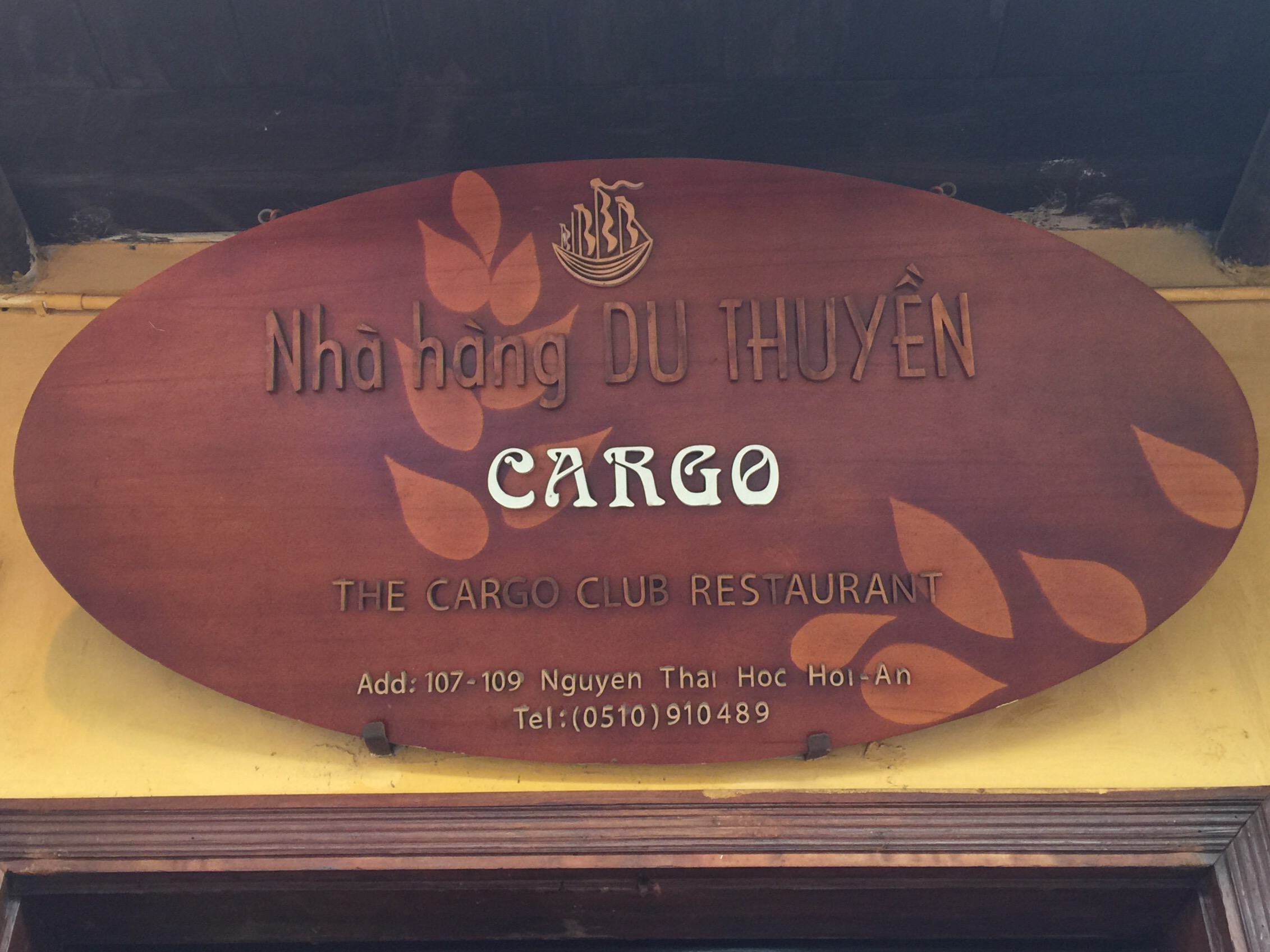
The Cargo Club

107 – 109 Nguyen Thai Hoc, Hoi An

The Cargo Club is owned by Miss Vy who also owns Mermaid, the first restaurant in Hoi An selling food to tourists and the infamous Morning Glory which housed her cooking school before Vy’s Market Place Restaurant started up (see previous blog).

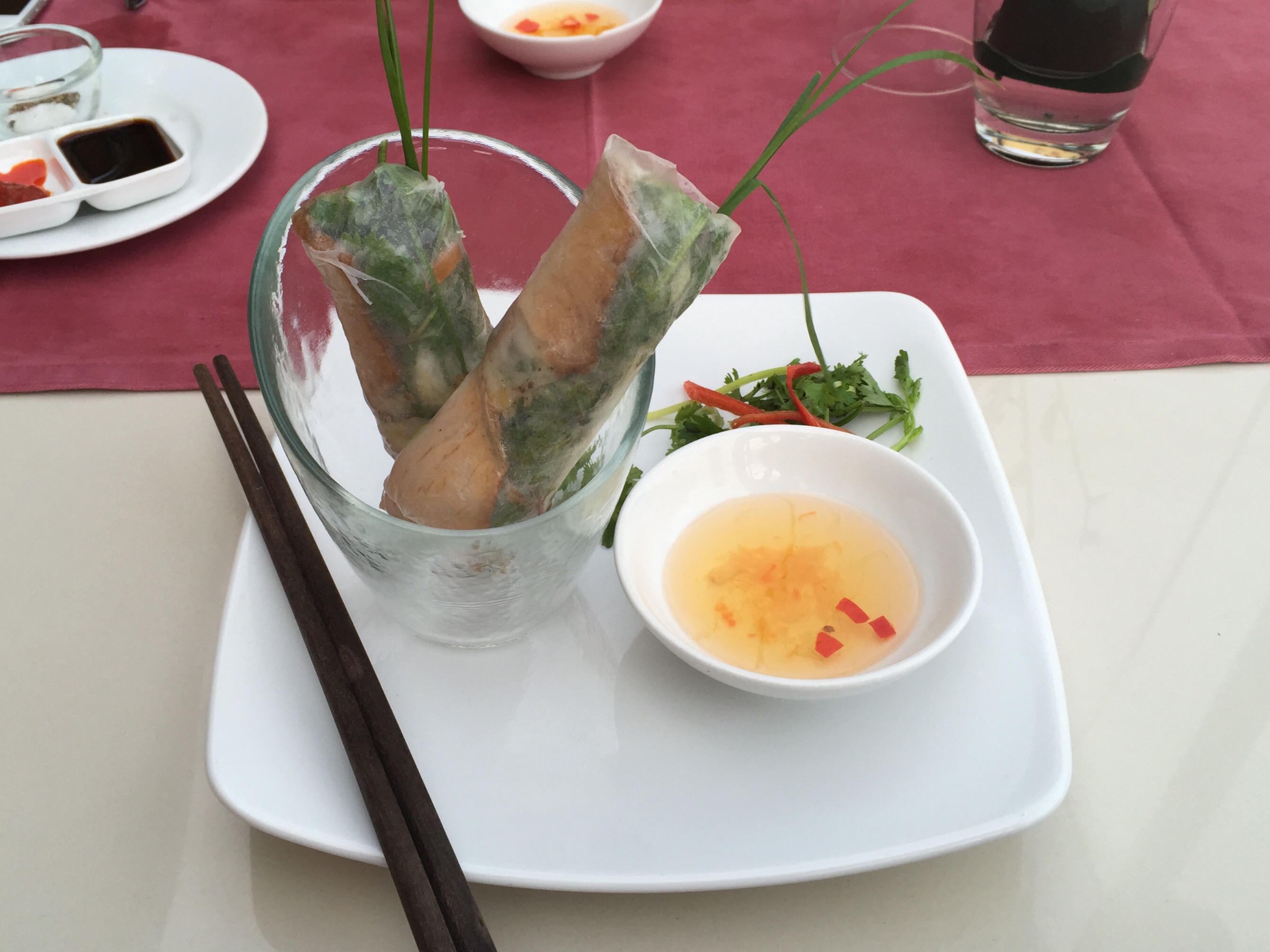
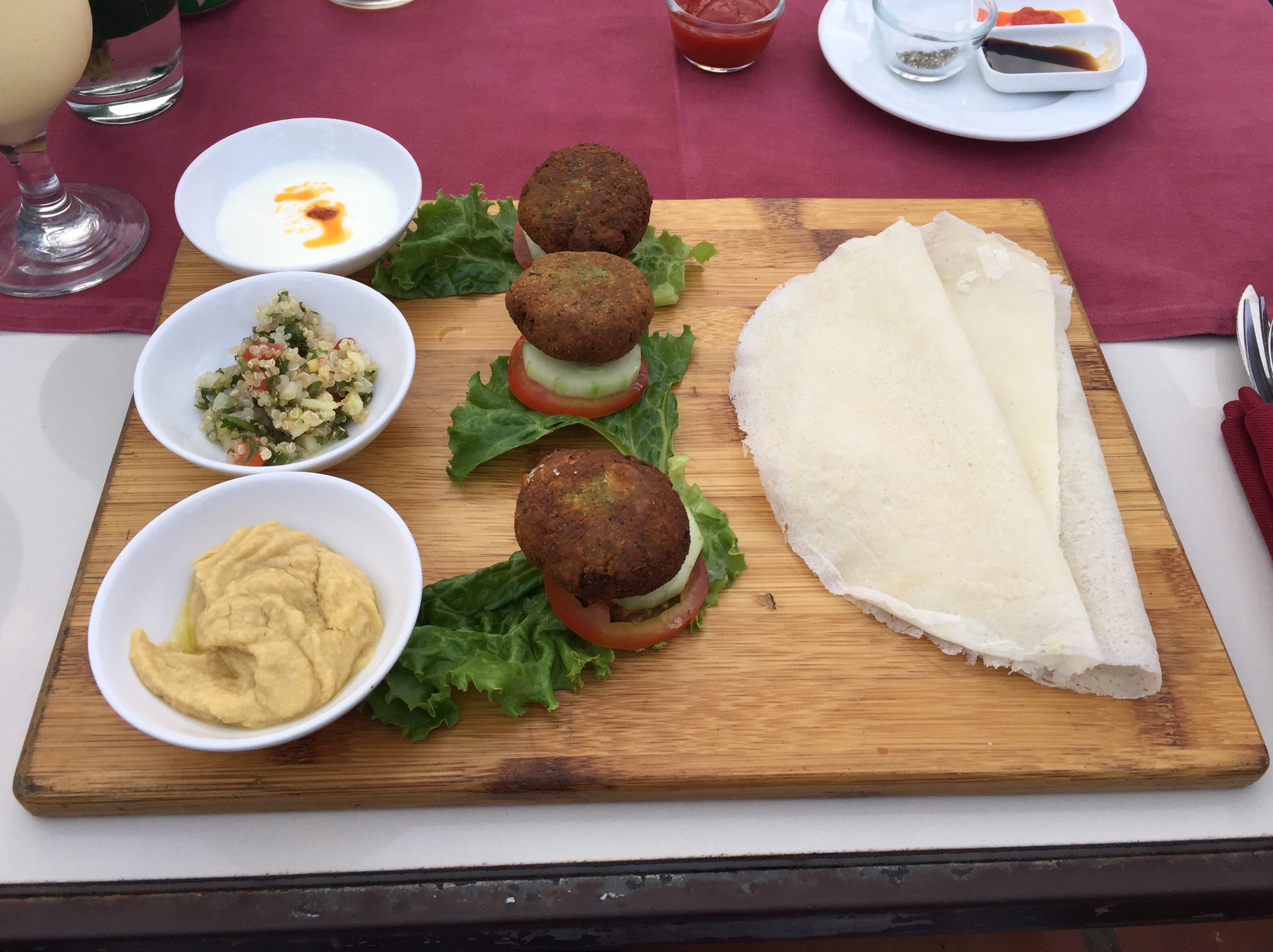
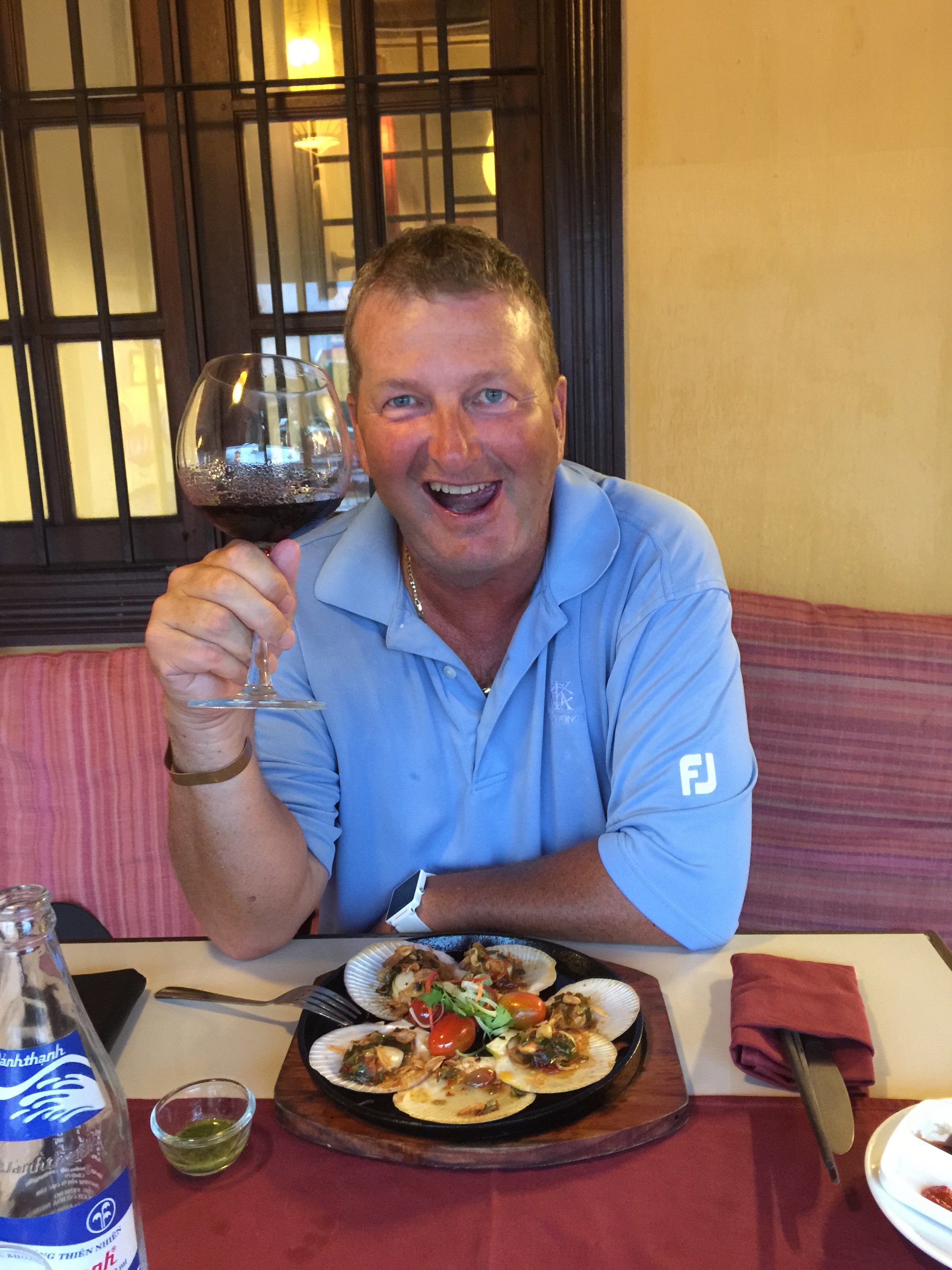
The Cargo Club has an extensive menu with a Vietnamese section and a large European section which is nice as sometimes you just feel like something from a bit closer to home.  They also have a bakery on the ground floor where you can buy bread, cakes and desserts.  The food and service are of a high standard and we have never been disappointed here.  The fresh spring rolls are delicious as is the Beef, Noodle and Herb Salad dish – I always get them to swap the beef for chicken and it is never a problem.   On another visit to The Cargo Club I had the Falafels as a starter – delicious. I followed those up with the Chicken, Noodle & Herb Salad which I just can’t go past.They also do a fabulous scallop entree but this is dependent on them being able to get fresh scallops.  They have a bit of a kick to them but Steve just can’t get enough of them.


Morning Glory

106 Nguyen Thai Hoc, Hoi An

As mentioned above and in my previous blog, Morning Glory is the brainchild of Ms Vy who also owns Mermaid and Cargo.  Morning Glory’s menu is a showcase of Ms Vy’s traditional and favorite Vietnamese dishes.  The menu also has a selection of home remedies like “Firm up your Insides” which is a hot drink made from fresh orange juice, honey and salt – I really like the flavor so usually enjoy a cup every time I go there.

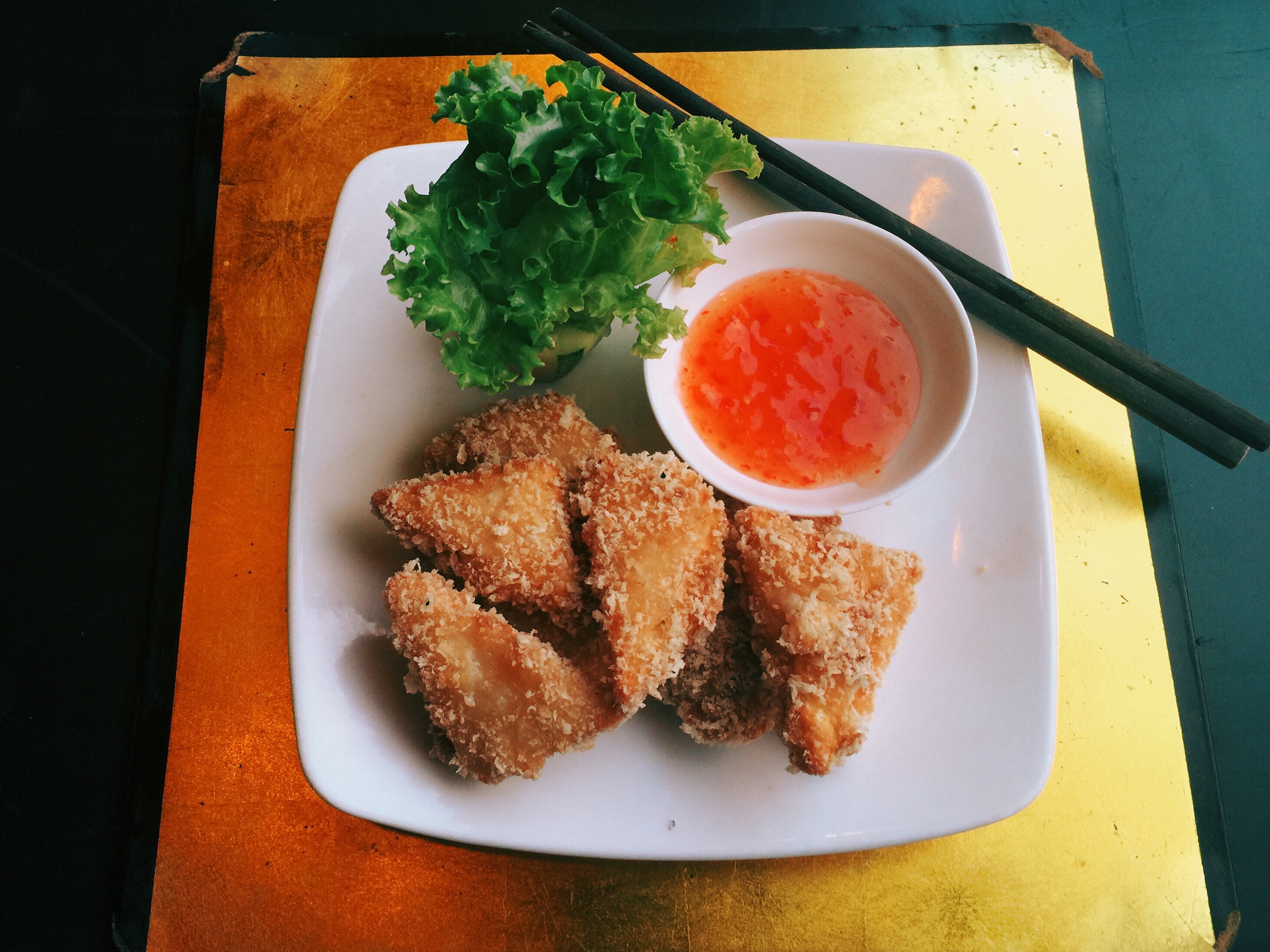
The crunchy tofu and fresh spring rolls are a couple of my favorite entrees followed by the chicken marinated in lime leaves.  Steve’s absolute favorite is the crunchy pork belly with red rice – he can’t go past it when we dine at Morning Glory.


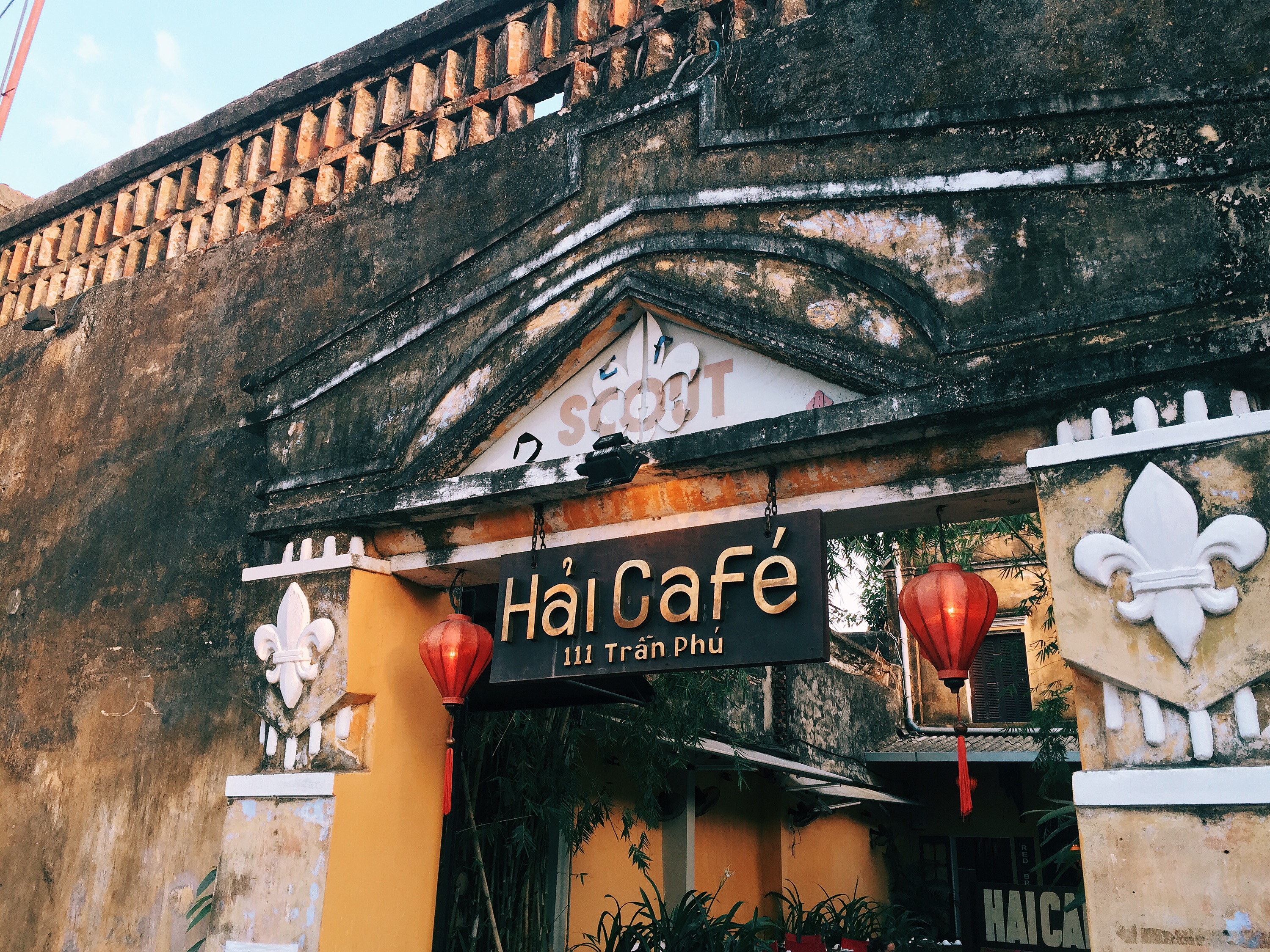
Hai Scout Cafe

99 Tran Phu, Hoi An

Hai Scout Cafe is located in the old Scout hall of Hoi An.  It has a lovely outdoor setting area with a BBQ area at one end so you can see your meat being cooked..  They have an extensive menu with a number of BBQ options.  They also do pizzas but they are not quite up to Good Morning Vietnam standards (see below).  They do great Hoi An Chicken Rice and barbecued chicken with a rice noodle salad..  I have also tried the traditional Beef Pho or Soup – the flavors of the soup were lovely but the beef was very chewy so I didn’t eat much of that and have decided that despite the fact that the Pho is very good for you it is not for me.   I did indulge in their ginger tea which was delicious and packed with lots of fresh ginger.


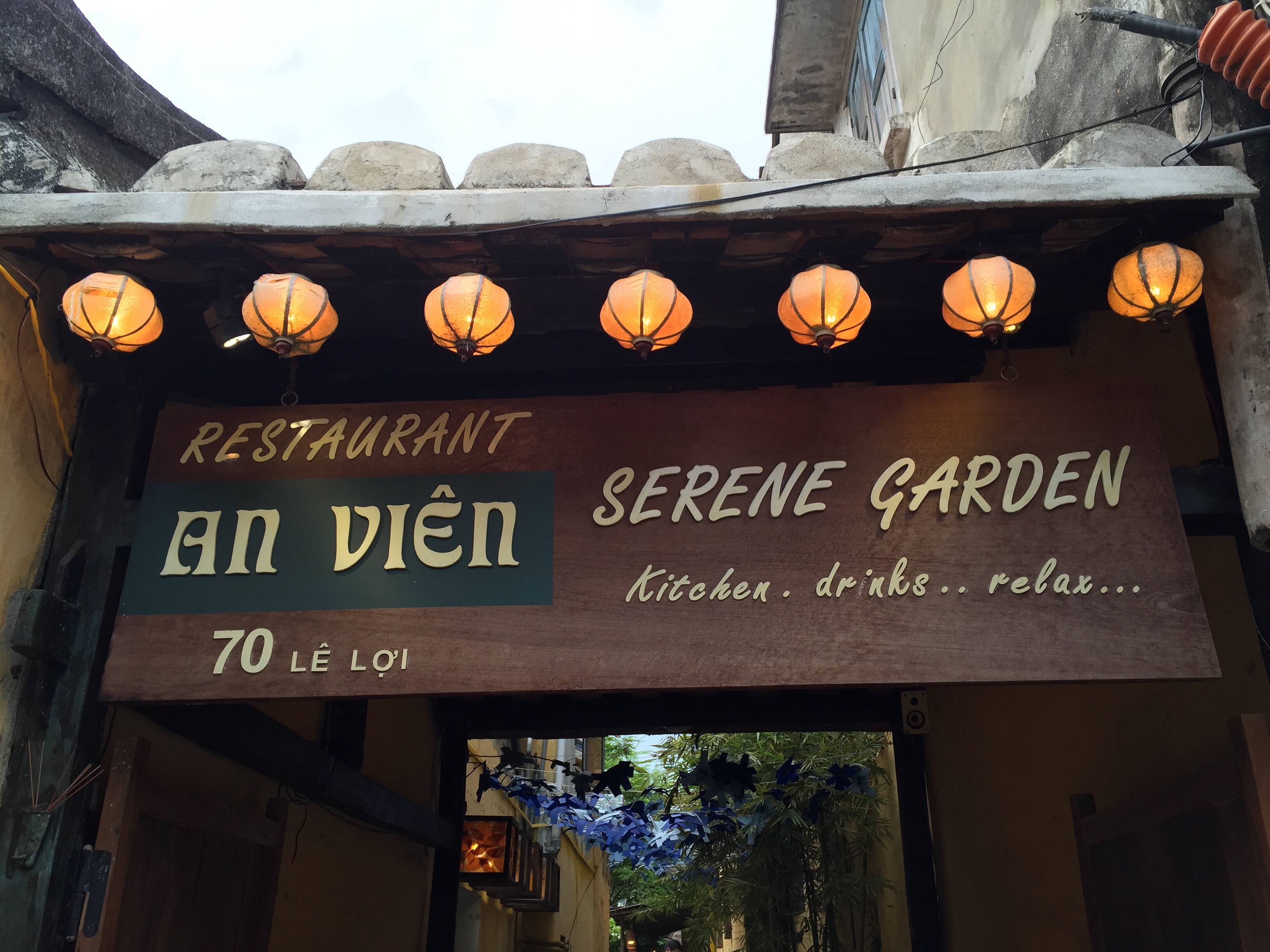
Serene Garden

70 Le Loi

Serene Garden is tucked down an alley way on Lei Loi Street and the restaurant is set in an open courtyard – it doesn’t look flash but the food is actually very good.  Steve and Paul fell in love with their scallops and onion entree and would go there for afternoon tea.  Unfortunately we went there for dinner the other night and the scallops were not good at all – we tried to talk to the wait staff about them but it was lost in translation.  The rest of our meals were up to the usual standard though.

My favorite dish is the green papaya salad with chicken served on shrimp crackers – it is so tasty!  I usually have the Serene Garden Special Fried Rice as a main which is also very tasty with pineapple, veges and shrimp in it.  They also do good fish and chips and a good stir fried chicken with cashew nuts.  The mains aren’t huge but you definitely leave there feeling satisfied.


Triet

69 Tran Hung Dao

Triet is one of those quiet achievers – they have a nice menu with a great cocktail and shakes menu and the service is always friendly and efficient.  I had a Coco Shake made with coconut and cacao and it didn’t disappoint.  I also tried their fresh spring rolls which are very good although I am not sure about the mushroom they put in each one – it didn’t appeal to me visually.


Baby Mustard Restaurant

Hai Ba Trung, Hoi An

When I was looking at restaurants in Hoi An on Trip Advisor, Baby Mustard came up as number four.  The only issue is that it is out of town so a bit more logistically challenging.  We went there one night for dinner after being in town watching the rugby at the Sports Bar.  The setting is lovely – it is an open air bamboo restaurant and you overlook their garden.  The food was really good and all the ingredients were very fresh – you could see the women in the kitchen preparing everything from scratch.

Green Chilli Restaurant

122 Nguyen Thai Hoc

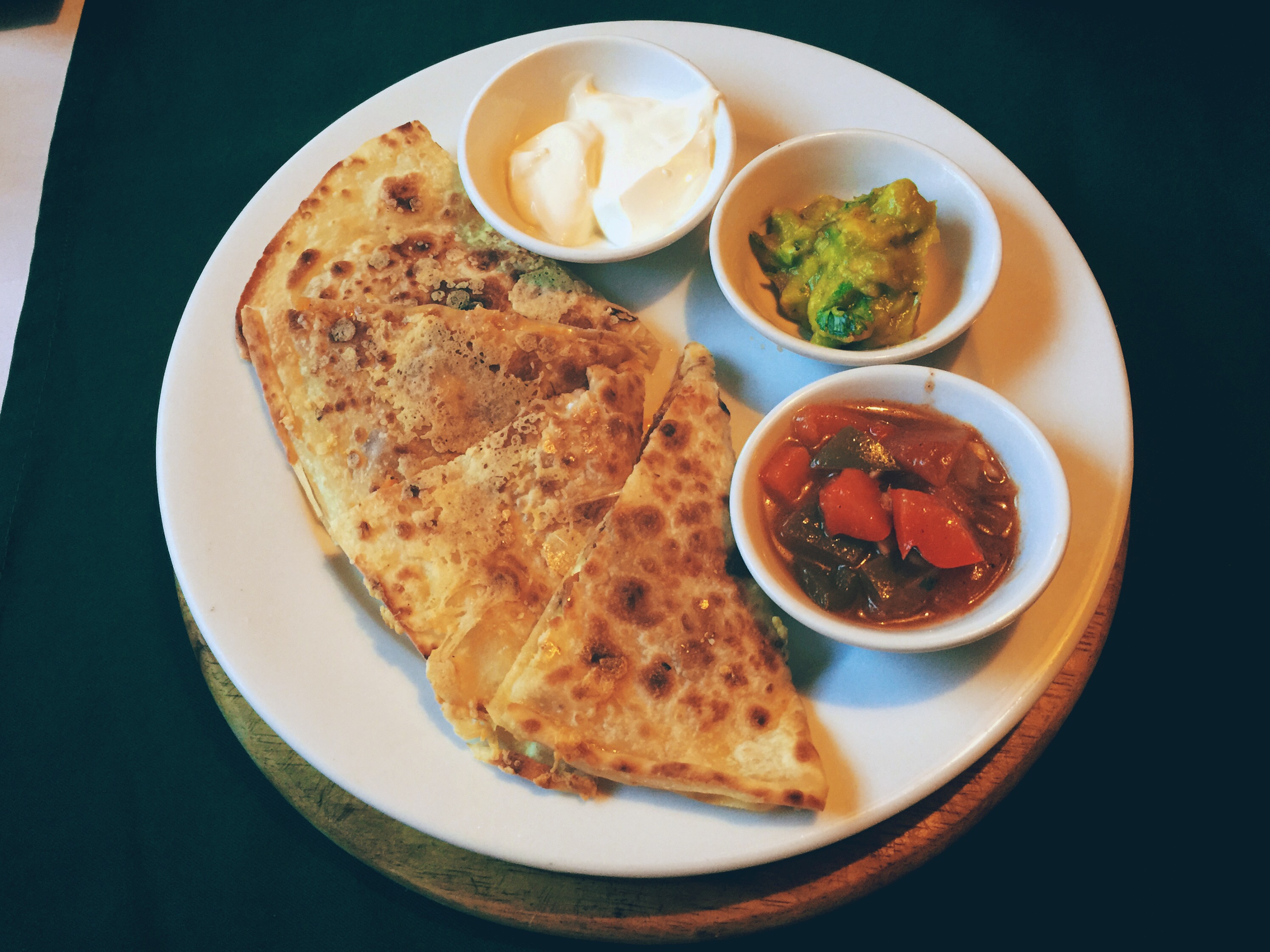
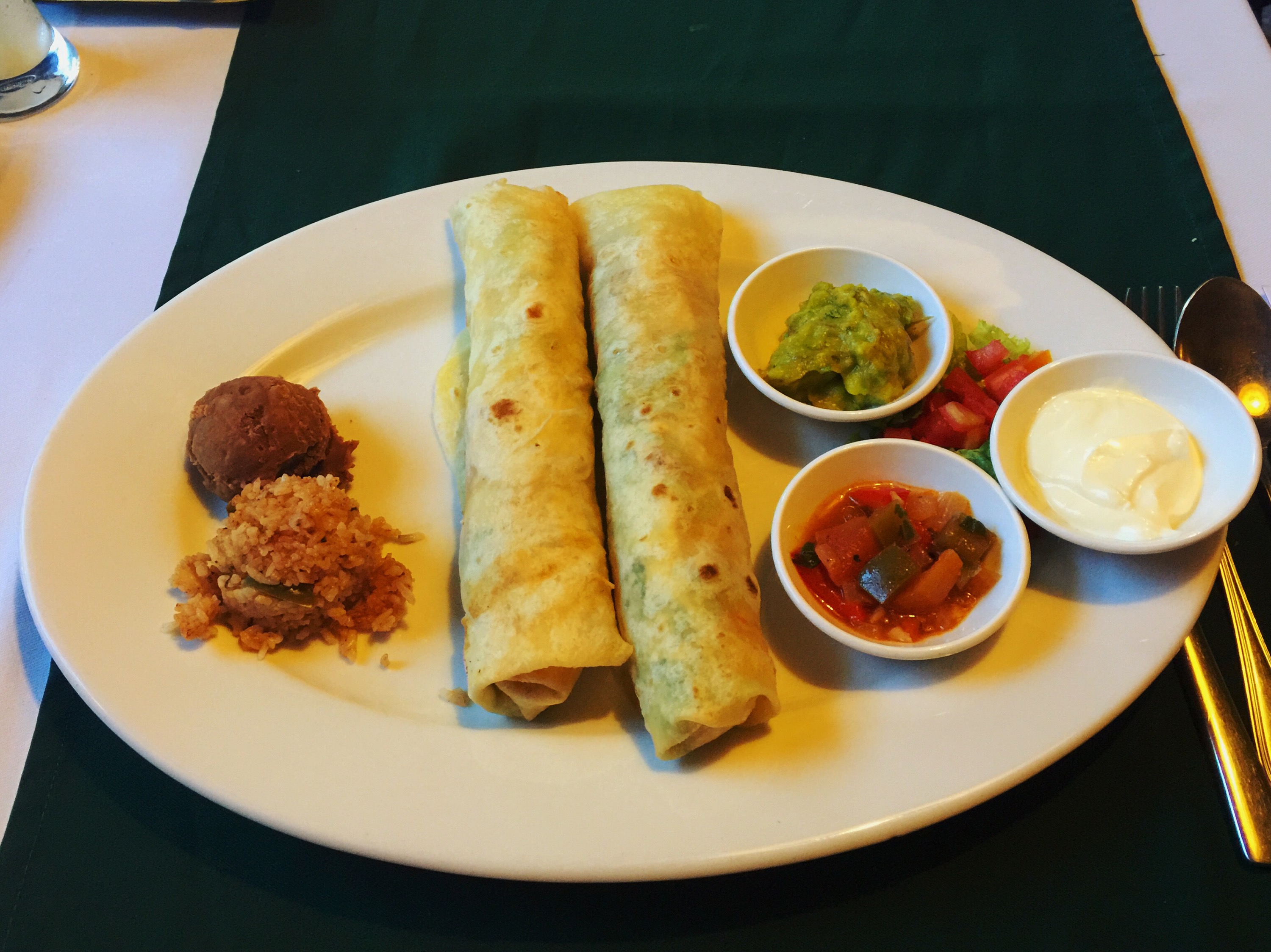
Green Chilli is Hoi An’s answer to Tex Mex.  They serve Mexican food with a Vietnamese twist.  The Chef is a real character and can often be seen at the front of the restaurant having a laugh with the patrons.  We really enjoyed the Chicken Quesadilla and Chicken Burritos.  They also do great friend spring rolls.


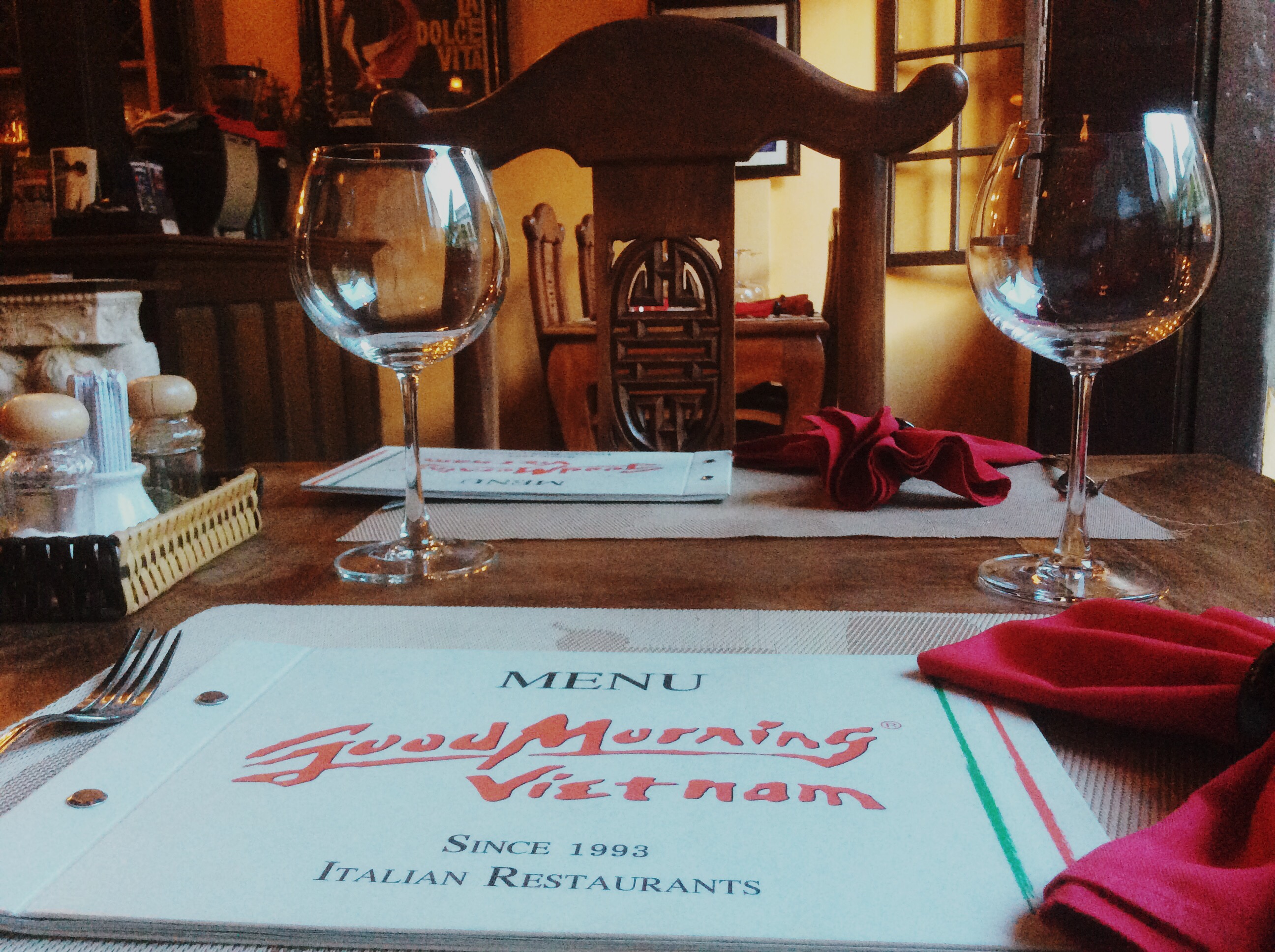
Good Morning Vietnam

102 Nguyen Thai Hoc

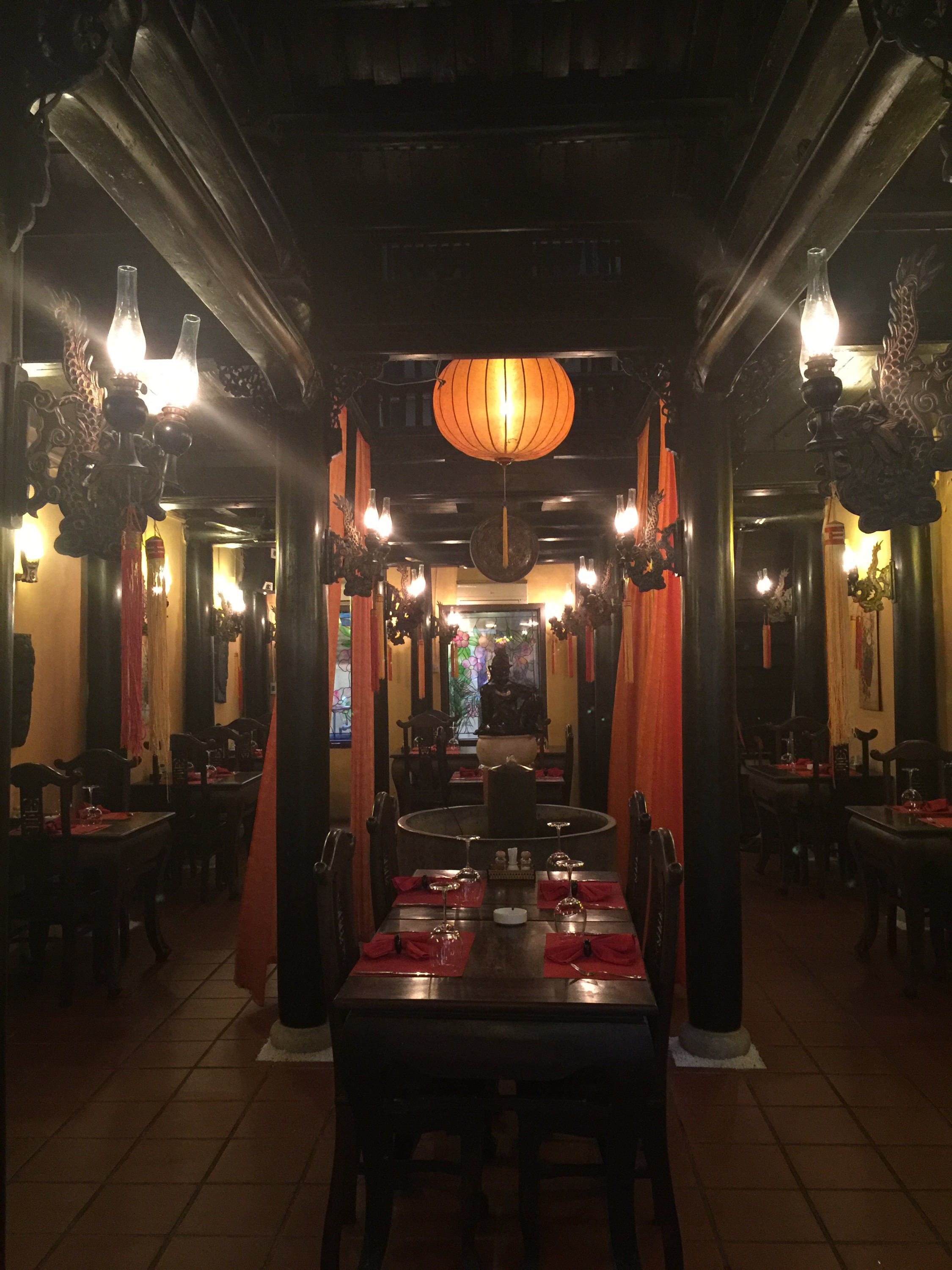
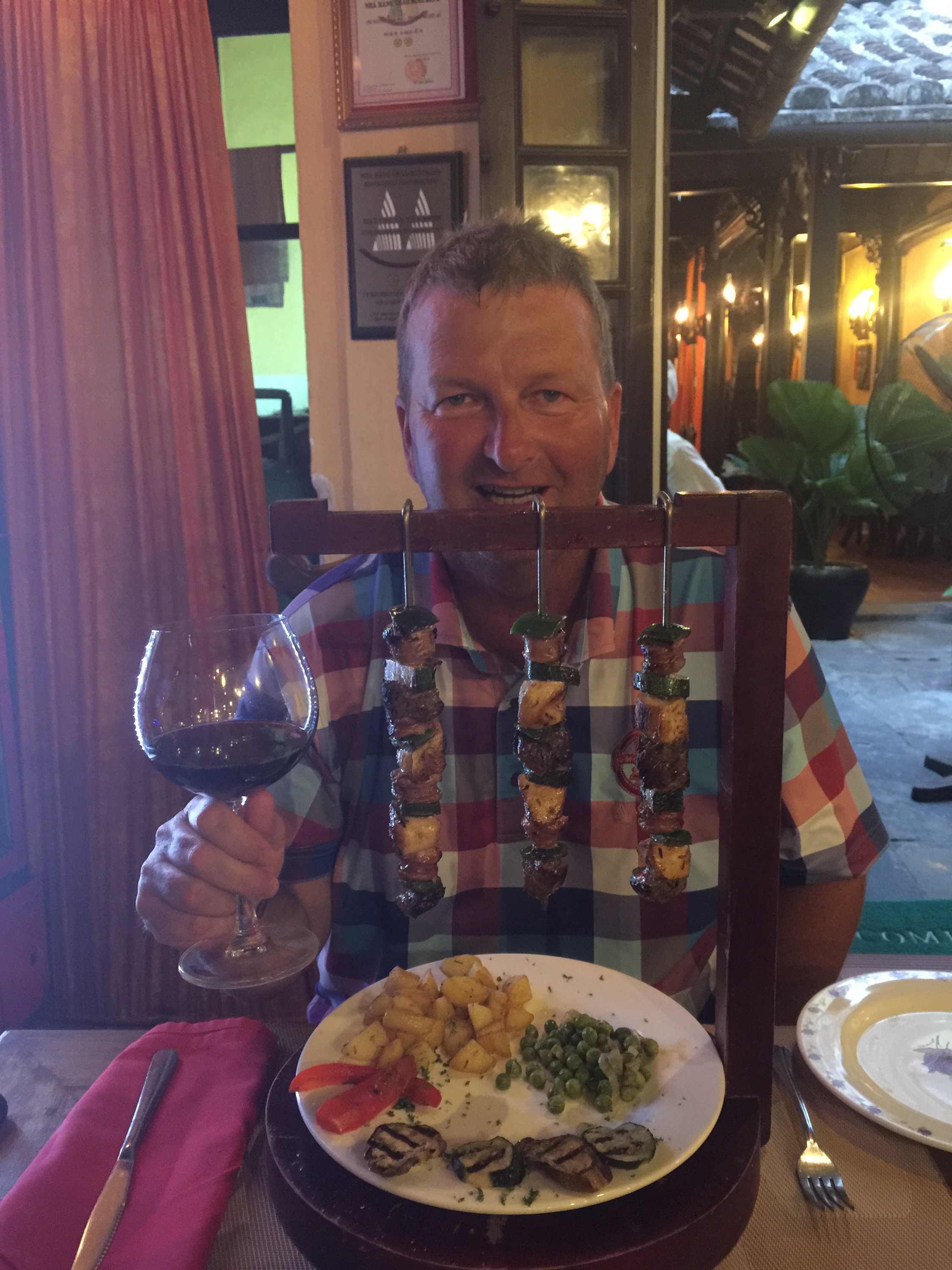
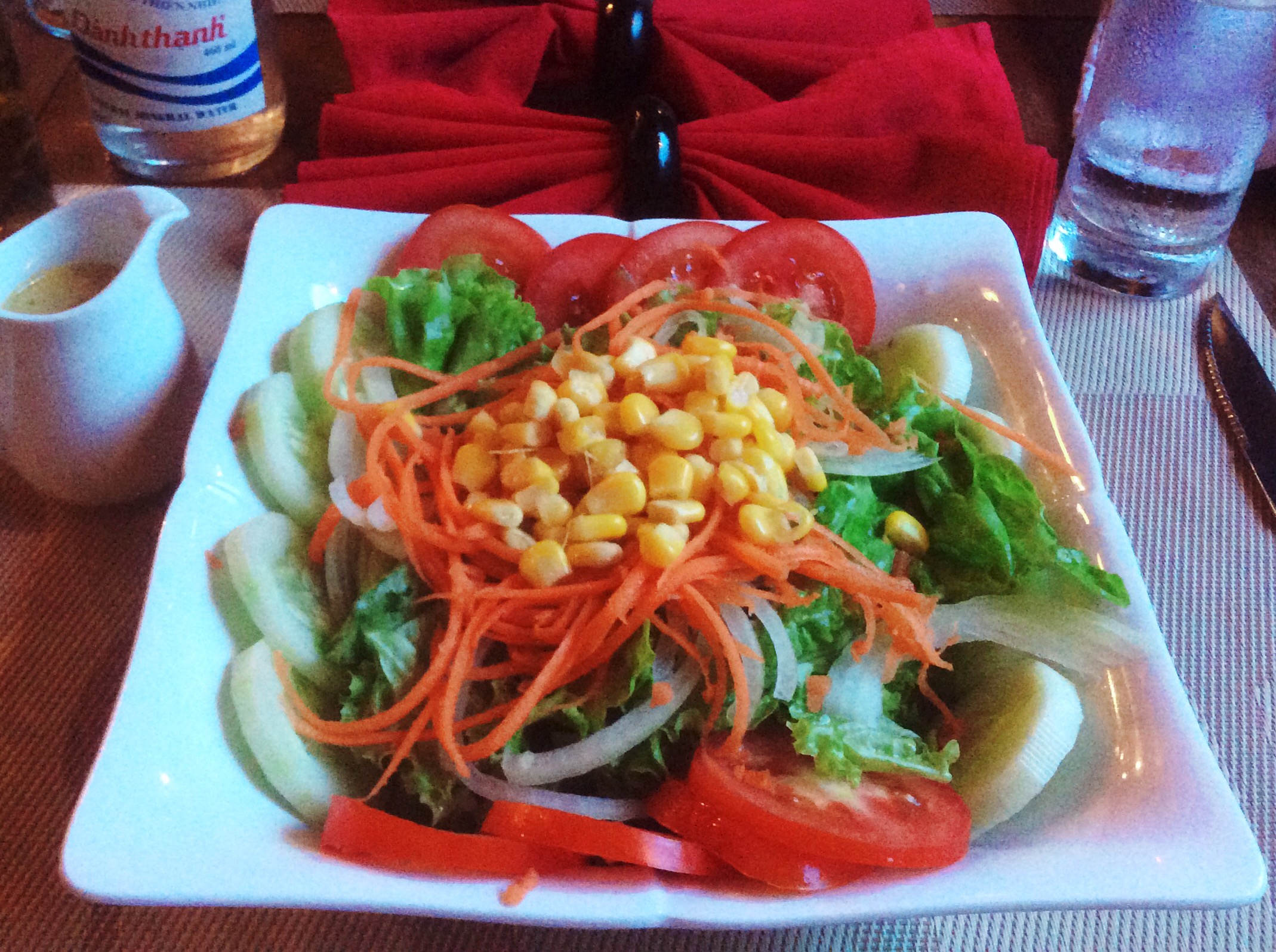
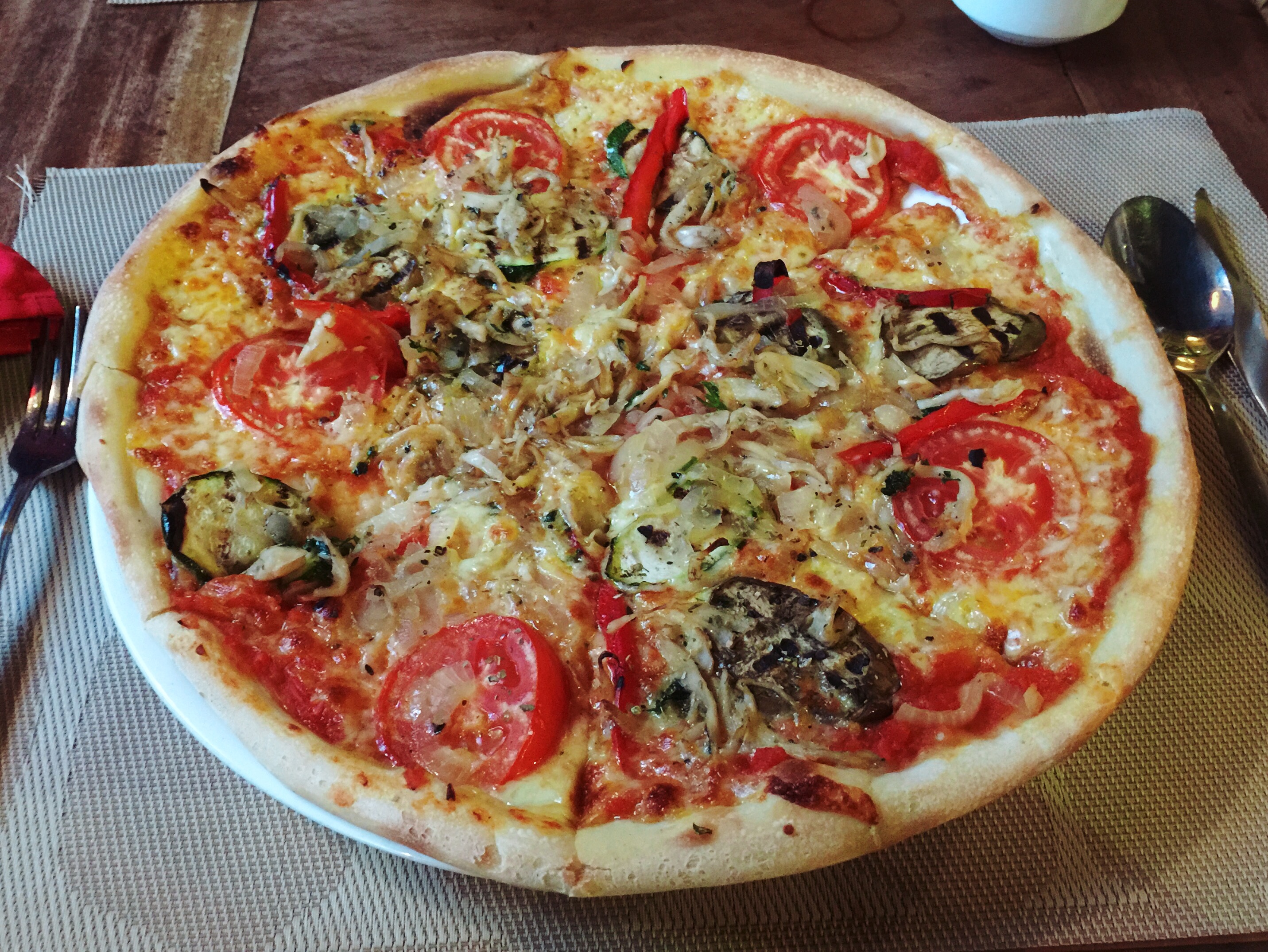
Strangely enough this is an Italian restaurant and boy do they do it well.  They have an extensive Pizza and Pasta menu as well as a number of other delicious main courses.  The Chef is Italian and is also a very friendly character who likes to chat with the patrons.  They do a chicken, beef, sausage and vegetable skewer dish which Steve loves – he goes there for his meat fix.  I go there for my pizza fix – the Vegeteriano Pizza is delicious!  They also do great salads with lovely Italian dressings.  Another big plus for this restaurant is the great wine list at reasonable prices. 


Hoi An Roastery – Espresso & Coffee House

135 Tran Phu, Hoi An

I must say since our last visit to Hoi An in 2011 the number of cafe’s serving good coffee has increased dramatically.  Hoi An Roastery only opened earlier this year but they do a great coffee – as good as any you would get in a cafe in Auckland.  They have a fairly extensive drinks menu and the staff are very friendly and accommodating.  Unfortunately they don’t do a soy, decaf latte but I have managed to struggle on with a standard latte : )

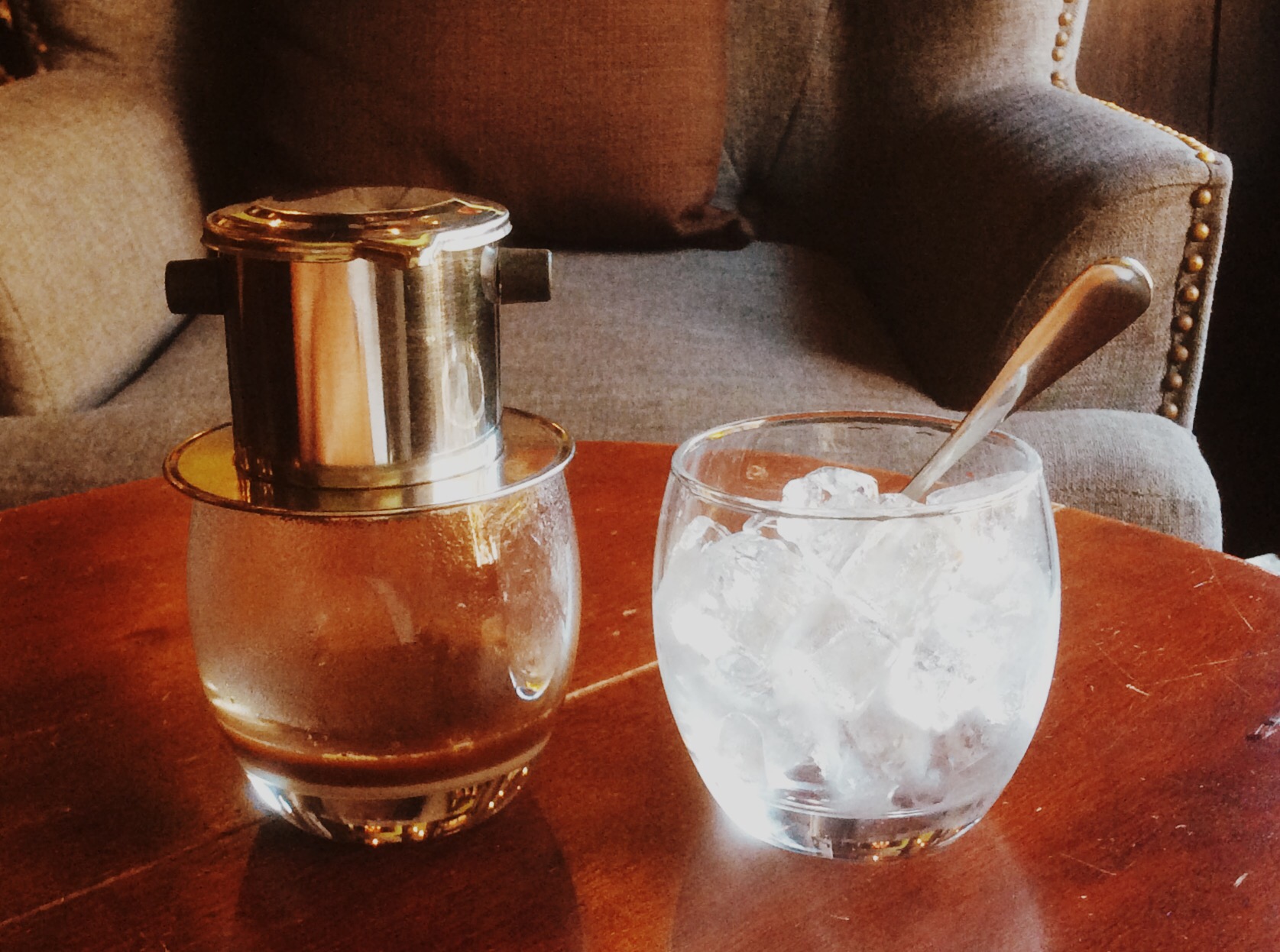
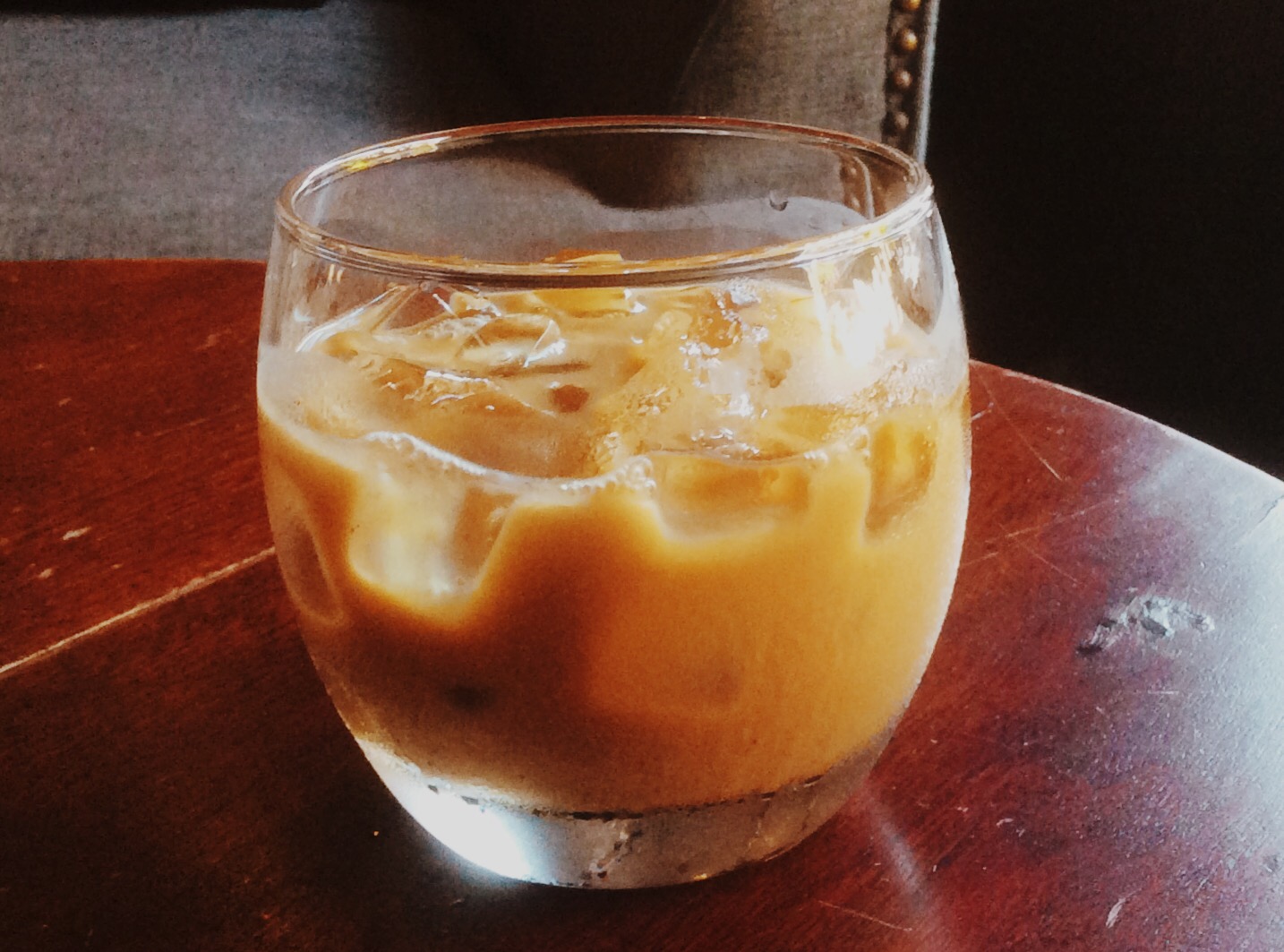
I have also tried the Ca Phe Sua (Da) which is the traditional Vietnamese Coffee with Condensed milk – see below under Highlands for more information.  Hoi An Roastery serve it the traditional drip filter cup and you pour it over the ice yourself.


Highlands Coffee

83 Tran Hung Dao

I first discovered Highlands Coffee in Ho Chi Min City back in 2011 – not only did they do great coffee but they also did great cafe food which is a nice change from Vietnamese food every now and then.

Highlands Coffee is a Vietnamese coffee shop chain and producer and distributor of coffee products, established in Hanoi by Vietnamese American David Thai in 1996.  The founding of the Highlands Coffee company marked the first time an Overseas Vietnamese was able to register a private company within Vietnam.  They have over 80 coffee shops across Vietnam.  David Thai lived in Seattle and witnessed the Starbucks coffee chain grow from a small company to a multinational corporation – this was his inspiration.

Coffee production has been a major source of income for Vietnam since the early 20th century.  It was first introduced by the French in 1857 and developed through the plantation system becoming a major economic force.  In 2009, Vietnamese coffee exports were reported at 1.13 million tonnes with coffee being second only to rice in the value of agro-products exported from Vietnam.  The 2013 / 2014 year produced a bumper crop which led to an over supply problem and a drop in revenue which saw many export firms fold.

Vietnam is the second largest coffee producer in the world after Brazil.  The quality of the beans, however, has typically limited their marketability.  Robusta coffee accounts for 97% of Vietnam’s total output – these beans are considered inferior to the Brazilian Arabica beans due to their bitterness.  Vietnam is looking to increase it’s production of Arabica beans.

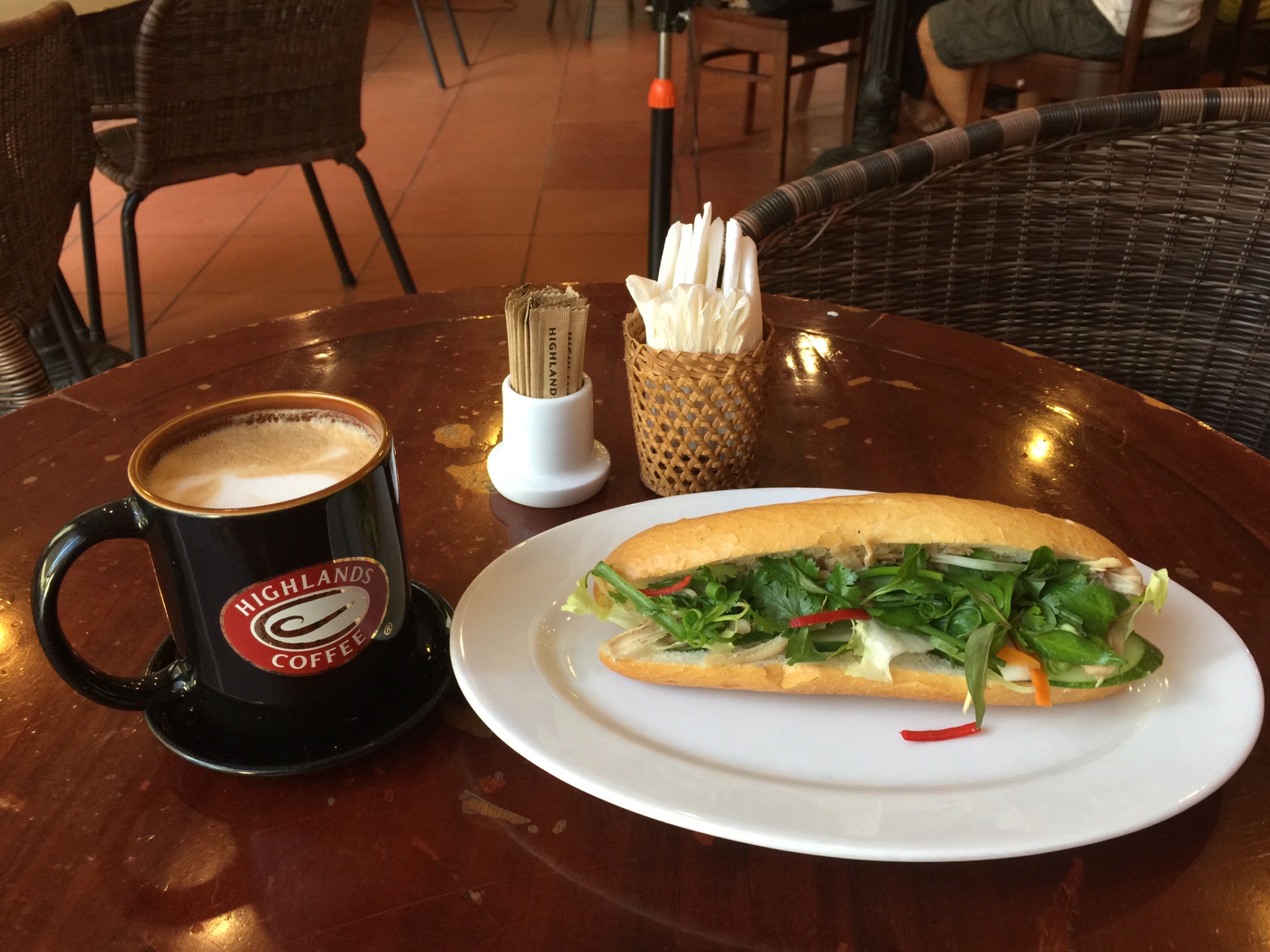
The Highlands Coffee shop in Hoi An does great coffee but they don’t have the food side of things as such – they do the famous Banh Mi and a range of cakes.  My standard order when visiting Highlands is a Latte and a chicken Banh Mi and at NZD5.85 for both it is a great deal.  The staff are very sweet and one of the young lads likes to try and converse with me.  He delivers my love heart decorated coffee with a wide smile.

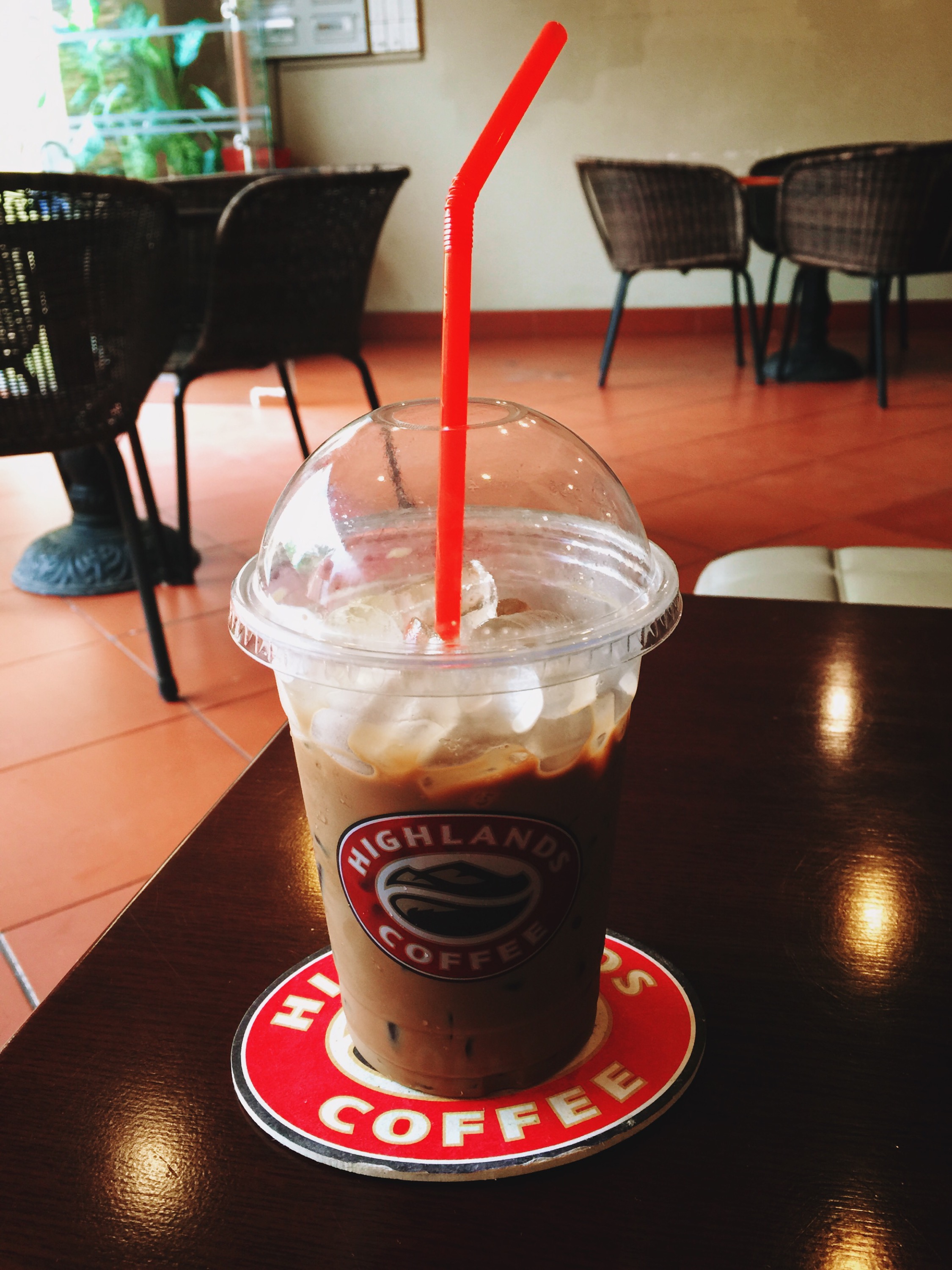
They also do the traditional Vietnamese Iced Coffee or Ca phe da.  At it’s simplest, Ca phe da is made with coarsely ground Vietnamese grown dark roasted coffee individually brewed with a small metal French drip filter into a cup containing about a quarter to half as much sweetened condensed milk, stirred and poured over ice.  The coarse grind allows the use of the metal drip filter.  I must say the Ca phe da’s are very delicious and very moorish!


The Little Menu Restaurant

12 Le Loi

The Little Menu Restaurant was another Trip Advisor find and it is up there with the likes of Morning Glory and Cargo in terms of food quality.  And as there name says the menu is small but I think they offer a good range of traditional dishes with their own twist.  They do a crispy duck spring roll and a pork meatball, rice noodles and herb salad dish.  The pork meatballs are so flavourful.

Their white rose which is a type of shrimp dumpling made from translucent white dough bunched up to look like a rose is very delicate in looks and flavour.  They also do a tasting platter which includes white rose, fried spring rolls and crispy wontons – a great way to enjoy a selection of their entrees.


CocoBox

94 Le Loi St

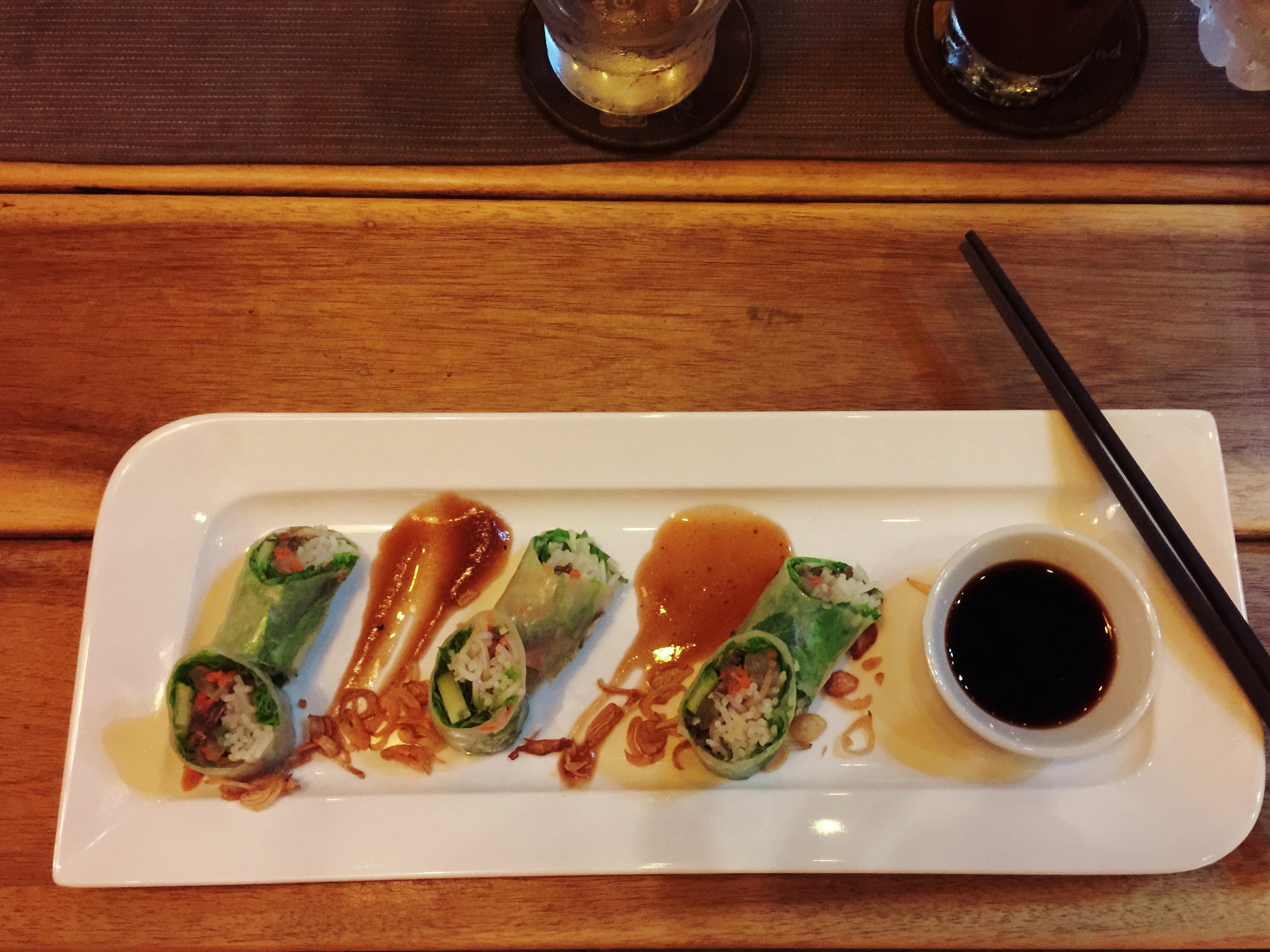
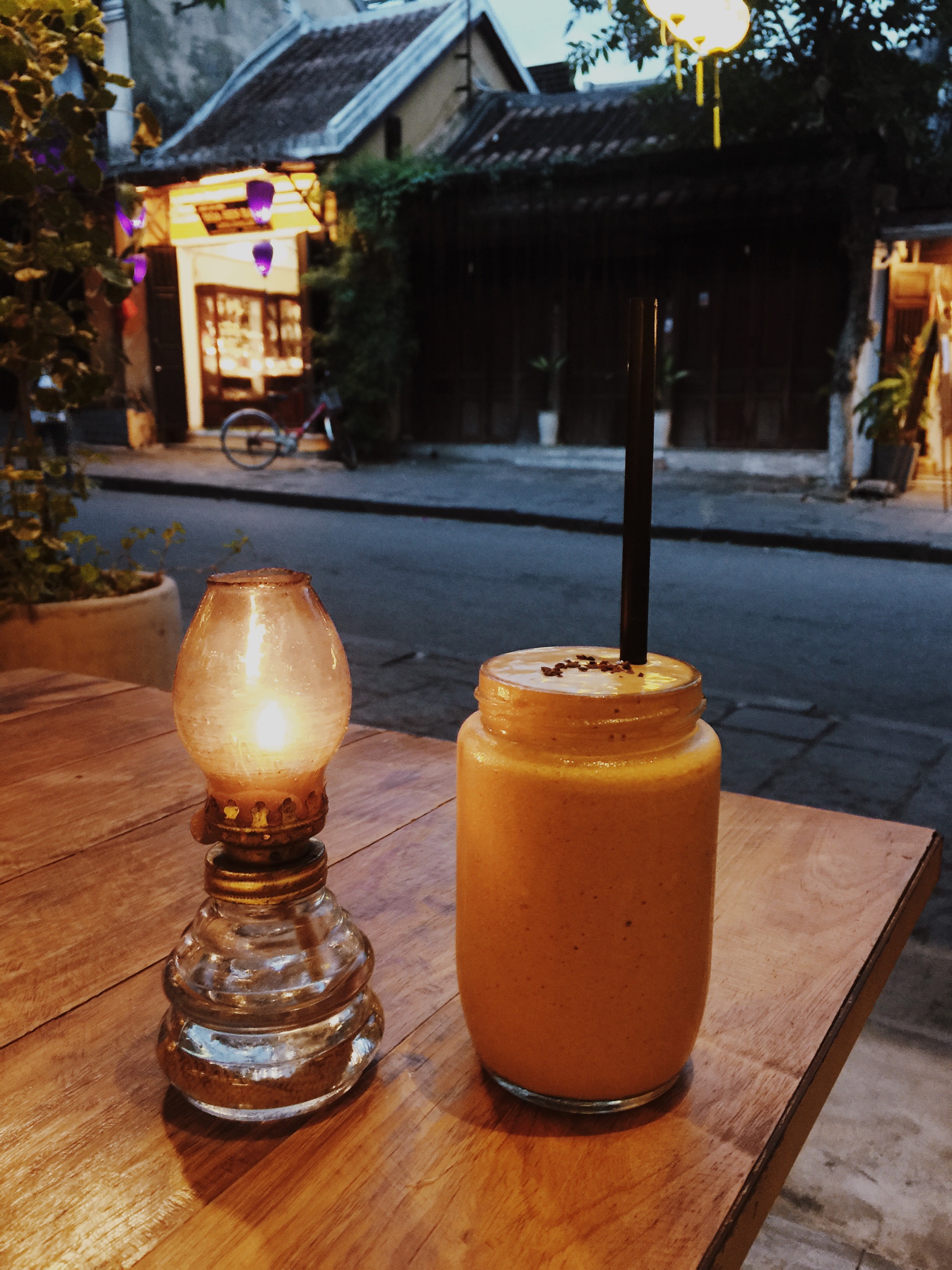
CocoBox is a rustic cafe, juice bar and farm shop.  They do a range of healthy smoothies, cold pressed juices and wholesome food.  They also stock the best products made in Vietnam from organic Robusta coffee to homemade jams and honey as well as organic teas.  This is my sort of place and I especially enjoyed their milkshake of the week which consisted of Vietnamese coffee, avocado, cinnamon, milk and honey.  To accompany this I had some home made granola, organic yoghurt, fresh strawberries and banana.  On another visit I tried the ham and cheese on rye bread – delicious.  The only downside to CocoBox is that it is quite small and with it’s ever expanding popularity it is not always easy to get a seat on which to savour their treats which I beleive deserve a lot of savouring.  On the plus side they do takeaways : )


9 Grains Bakery

441 Hai Ba Trung

I spotted this place as we drove into Hoi An on a regular basis and thought I must pay them a visit as the place looked very modern and inviting.  It is about 1.5km from the centre of the Ancient Town which in the scheme of things in not far.  As it turned out, Pandanus Spa, which became my go to spot for all things luxurious was just around the corner so a visit to the Spa was always preceeded with a visit to 9 Grains.  I enjoyed a latte or two as well as the traditional Ca phe da.  I also enjoyed their homemade muesli, yoghurt and honey.  Laura especially enoyed their banana bread so I got some to enjoy beside the pool – not bad : )


Hoi An Sports Bar

61 Phan Chau

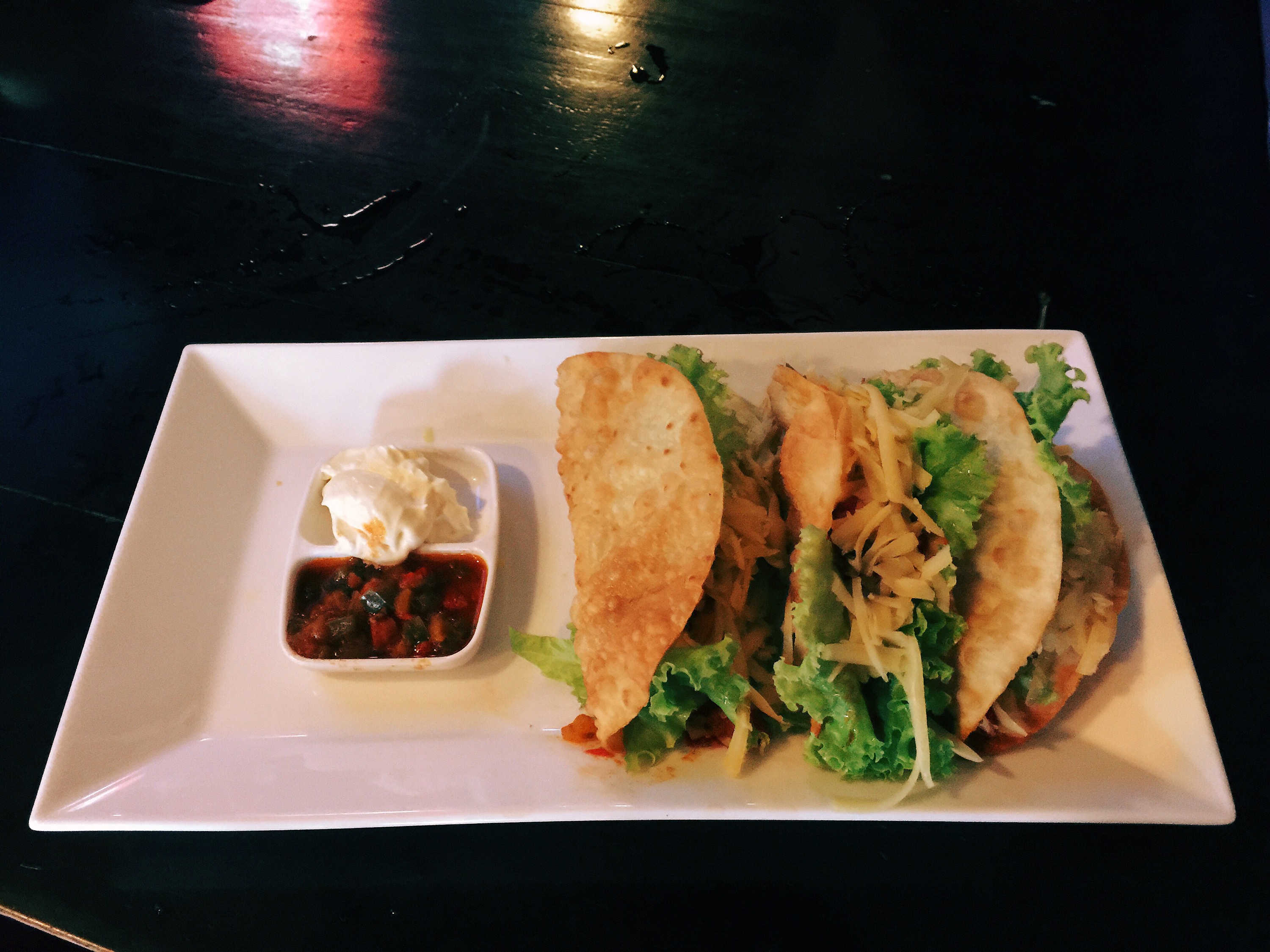
The Hoi An Sports Bar is the place to be for all things sport.  We were able to watch our beloved All Blacks play three matches here on the big screen.  This place became Steve’s, and Paul when he was here, home away from home.   Many afternoon has been spent here playing pool and chatting with the owner, Gordon and his staff.  During quiet times the staff enjoy a game of pool too so Steve was always a willing participant.  They have the coldest beer in town – they keep it in the freezer and in 35 degree temperatures this goes down a treat.  They do great bar food with their Nachos, Tacos and twice cooked French Fries topping the list.  They also do the best chocolate milkshake in town – half chocolate icecrean, half chocolate milk.  Very decadent and loaded with calories so saved for an extra special treat only!


Posted in HoiAn, Vietnam | Tagged , , , , , , , , , , | 1 Comment

Happy Independence Day Vietnam – Vietnam

Today the 2nd of September is National Day in Vietnam.  It is a national holiday in Vietnam commemorating the Vietnam Declaration of Independence from France on September 2, 1945.

The Japanese occupied Vietnam during World War II but allowed the French to remain and exert some influence. At the war’s end in August 1945, a power vacuum was created in Vietnam. Capitalizing on this, the Việt Minh launched the “August Revolution” across the country to seize government offices. Emperor Bảo Đại abdicated on August 25, 1945, ending the Nguyễn Dynasty. On September 2, 1945, at Ba Đình Square, Ho Chi Minh, leader of the communist Viet Minh organization, declared Vietnam’s independence under the new name of the Democratic Republic of Vietnam (DRVN) in a speech that invoked the United States Declaration of Independence and the French Revolution’s Declaration of the Rights of Man and of the Citizen.
 Vietnam, officially the Socialist Republic of Vietnam (SRV), is the easternmost country on the Indochina Peninsula in Southeast Asia. With an estimated 90.5 million inhabitants as of 2014, it is the world’s 13th-most-populous country, and the eighth-most-populous Asian country. The name Vietnam translates as “Southern Viet” (synonymous with the much older term Nam Viet); it was first officially adopted in 1802 by Emperor Gia Long, and was adopted again in 1945 with the founding of the Democratic Republic of Vietnam under Ho Chi Minh.  It’s capital city has been Hanoi since the reunification of North and South Vietnam in 1976.

Vietnam was part of Imperial China for over a millennium, from 111 BC to AD 939. The Vietnamese became independent in 939, following the Vietnamese victory in the Battle of Bạch Đằng River. Successive Vietnamese royal dynasties flourished as the nation expanded geographically and politically into Southeast Asia, until the Indochina Peninsula was colonized by the French in the mid-19th century. Following a Japanese occupation in the 1940s, the Vietnamese fought French rule in the First Indochina War, eventually expelling the French in 1954. Thereafter, Vietnam was divided politically into two rival states, North and South Vietnam. Conflict between the two sides intensified, with heavy intervention from the United States, in what is known as the Vietnam War. The war ended with a North Vietnamese victory in 1975.

Vietnam was then unified under a communist government but remained impoverished and politically isolated. In 1986, the government initiated a series of economic and political reforms which began Vietnam’s path towards integration into the world economy.  By 2000, it had established diplomatic relations with all nations. Since 2000, Vietnam’s economic growth rate has been among the highest in the world, and, in 2011, it had the highest Global Growth Generators Index among 11 major economies.  It’s successful economic reforms resulted in its joining the World Trade Organization in 2007.

The Socialist Republic of Vietnam, along with China, Cuba, and Laos, is one of the world’s four remaining single-party socialist states officially espousing communism. Its current state constitution, 2013 Constitution, asserts the central role of the Communist Party of Vietnam in all organs of government, politics and society.

Deep poverty, defined as the percentage of the population living on less than USD1 per day, has declined significantly in Vietnam, and the relative poverty rate is now less than that of China, India, and the Philippines.  This decline in the poverty rate can be attributed to equitable economic policies aimed at improving living standards and preventing the rise of inequality.

The official national language of Vietnam is Vietnamese which is spoken by the majority of the population. In its early history, Vietnamese writing used Chinese characters. In the 13th century, the Vietnamese developed their own set of characters.  The romanized Vietnamese alphabet used for spoken Vietnamese, was developed in the 17th century by the Jesuit Alexandre de Rhodes and several other Catholic missionaries.  The French language, a legacy of colonial rule, is spoken by many educated Vietnamese as a second language, especially among the older generation and those educated in the former South Vietnam, where it was a principal language in administration, education and commerce.

Vietnam has an extensive state-controlled network of schools, colleges and universities, and a growing number of privately run and partially privatised institutions. General education in Vietnam is divided into five categories: kindergarten, elementary schools, middle schools, high schools, and universities. A large number of public schools have been constructed across the country to raise the national literacy rate, which stood at 90.3% in 2008.

The Lonely Planet describes Vetnam as “Astonishingly exotic and utterly compelling, Vietnam is a country of breathtaking natural beauty with an incredible heritage that quickly becomes addictive.”

It is a culinary superpower – Vietnamese food is that good. Incredibly subtle in its flavours and outstanding in its diversity, Vietnamese cooking is a fascinating draw for travellers – the dozens of cooking schools in Hoi An are testament to this. Geography plays a crucial role, with Chinese flavours influencing the soups of northern Vietnam, spices sparking up southern cuisine and myriad herbs and complex techniques typifying the central region, rightly renowned as Vietnam’s epicurean epicentre.

Vietnamese people are energetic, direct, sharp in commerce and resilient by nature.  Poor in parts but never squalid, Vietnam is developing at an astonishing pace and inevitably there are some issues to consider (including some minor scams). However, on the whole this is an extremely safe (apart from the traffic!) and wonderfully rewarding country to explore.

On our three visits to Vietnam we would whole heartedly agree with the above sentiments.  The food is amazing and the people are very friendly.  They appear to work incredibly hard with most earning between USD150 and USD250 per month regardless of what job they do – the Communist model.  Unfortunately there is a high level of corruption at Government level with those in office being incredibly wealthy.  The people seem to accept this which we find unusual due to living in one of the least corrupt countries in the world.  They are very family orientated and usually live in multi generational settings with the grandmothers providing daycare for the grandchildren while the mothers work.  Pro creation is very important to the family unit as these youngsters are going to provide the physical and financial care later in life.

Posted in Vietnam | Tagged , , , | Leave a comment

Hội An Ancient Town – Hội An, Vietnam

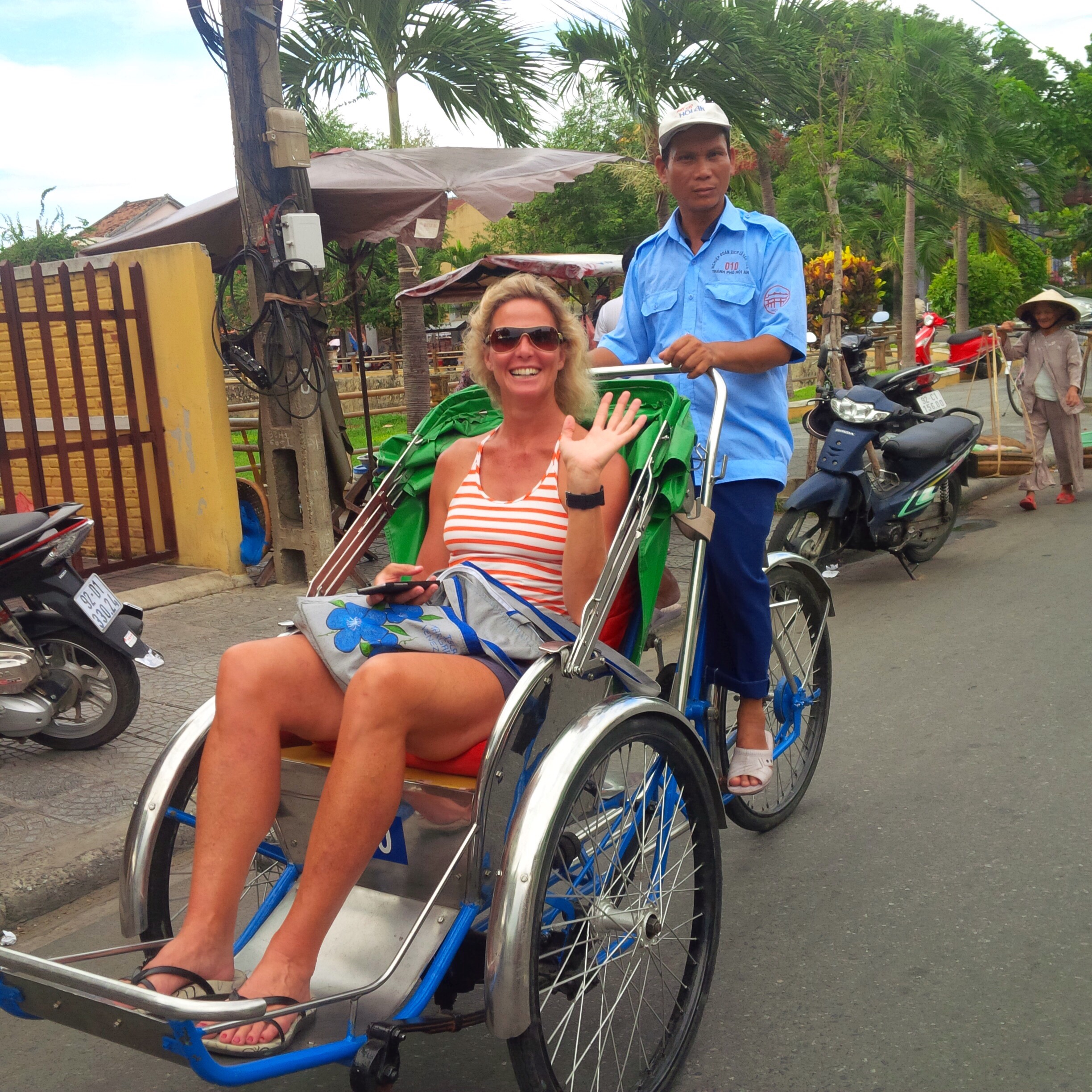
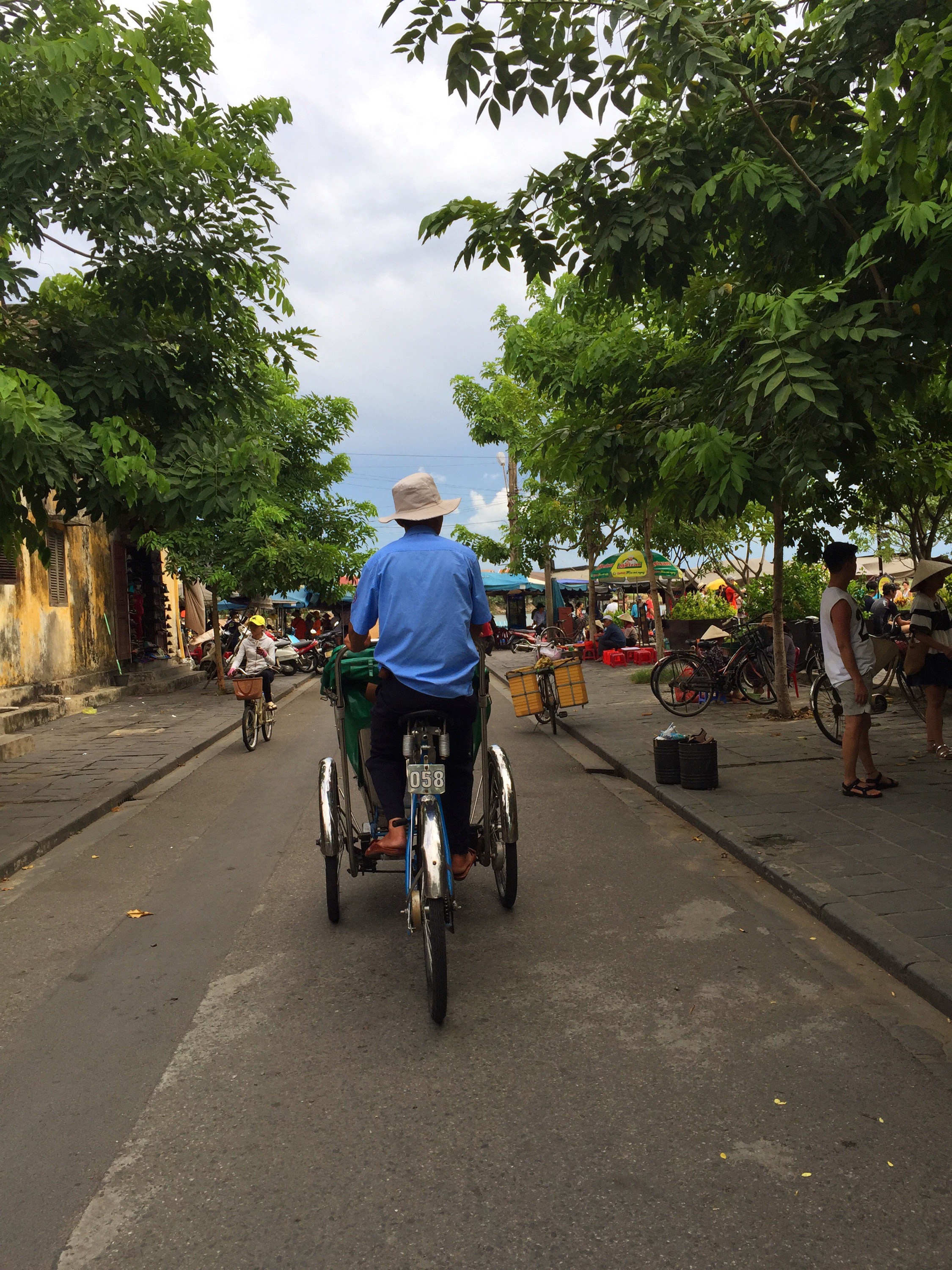
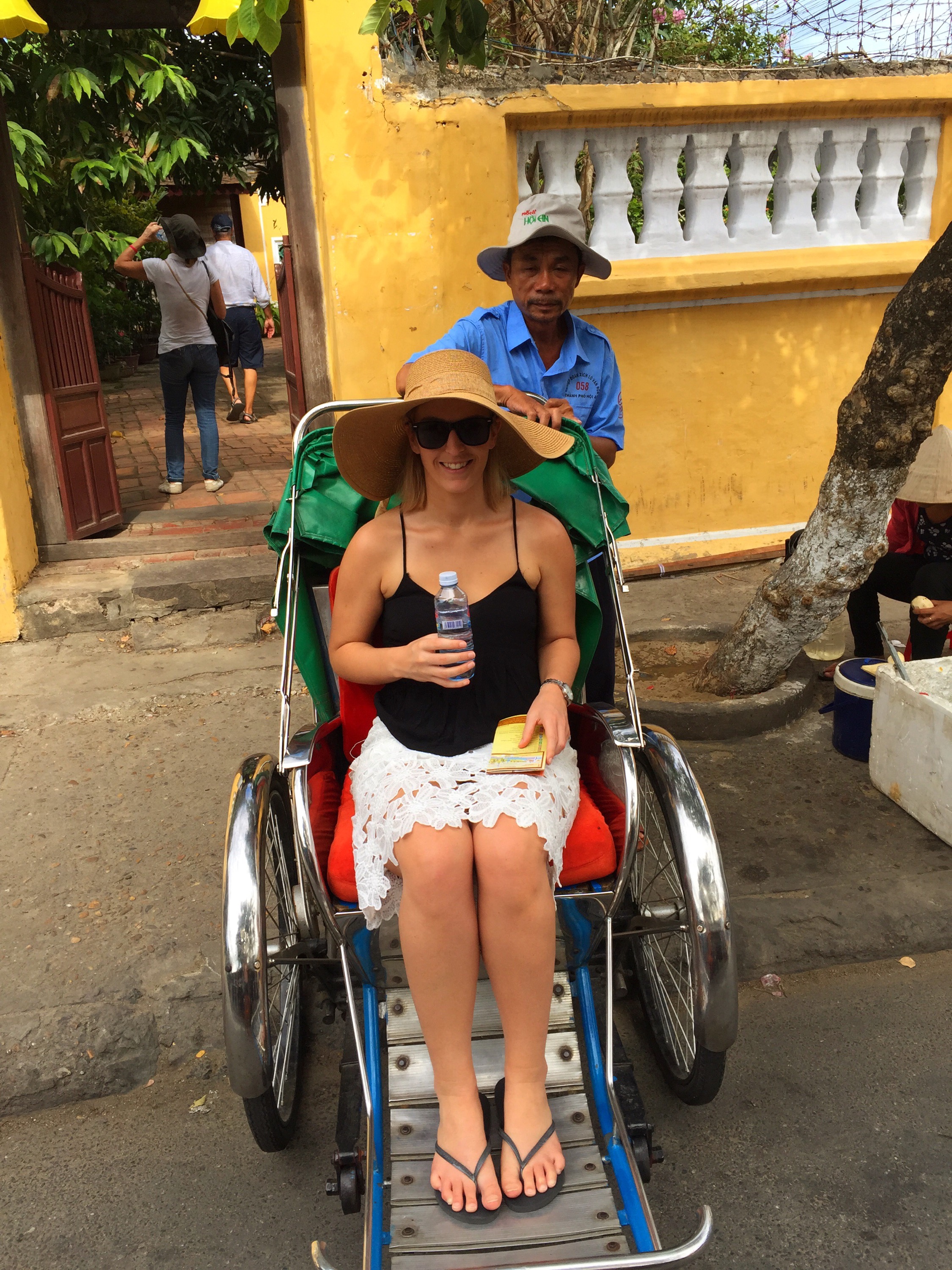
Due to a scheduling change at the Spa (it’s a tough life I know), Laura & I were at a loose end for an hour so we decided to take a cyclo tour of Hội An Ancient Town.  We thought it would be nice to be pedalled around taking in the sights, however, there was a catch.  The cyclo riders take you round to the ticket office where you have to purchase a ticket to go to some of the attractions in the Ancient Town – so much for just sitting back and taking in the sights!  Seriously, I had been wanting to learn a bit more about the various landmarks I had been walking past daily so this was the perfect opportunity.

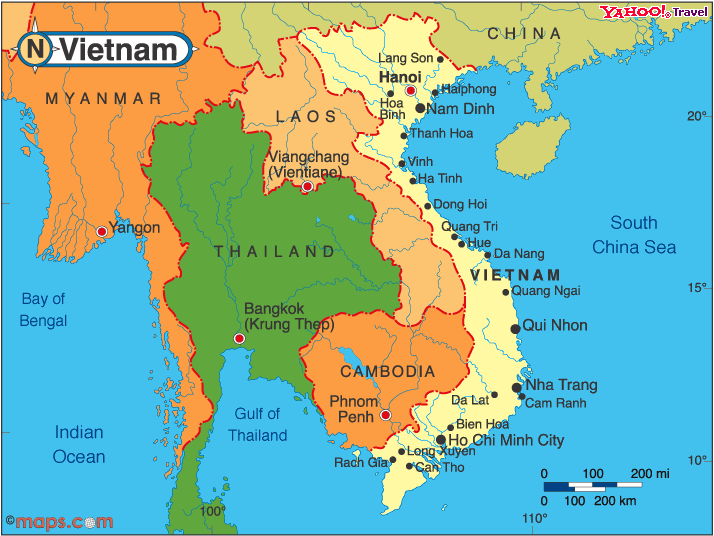
Hội An, also known as Fai-Fo or Faifoo, is a city in Vietnam, located on the coast of the South China Sea in the South Central Coast region, in the Quảng Nam Province.  With approximately 120,000 inhabitants, Hội An is recognized as a World Heritage Site by UNESCO. Hội An Ancient Town is an exceptionally well-preserved example of a South-East Asian trading port dating from the 15th to the 19th century. Its buildings and its street plan reflect the influences, both indigenous and foreign, that have combined to produce this unique heritage site.

The city possessed the largest harbour in Southeast Asia in the 1st century and was known as Lâm Ấp Phố (Champa City). Between the seventh and 10th centuries, the Cham (people of Champa) controlled the strategic spice trade and with this came tremendous wealth. The former harbour town of the Cham at the estuary of the Thu Bồn River was an important Vietnamese trading centre in the 16th and 17th centuries, where Chinese from various provinces as well as Japanese, Dutch and Indians settled. During this period of the China trade, the town was called Hai Pho (Seaside Town) in Vietnamese. Originally, Hai Pho was a divided town with the Japanese settlement across the “Japanese Bridge” (16th-17th century).  

   
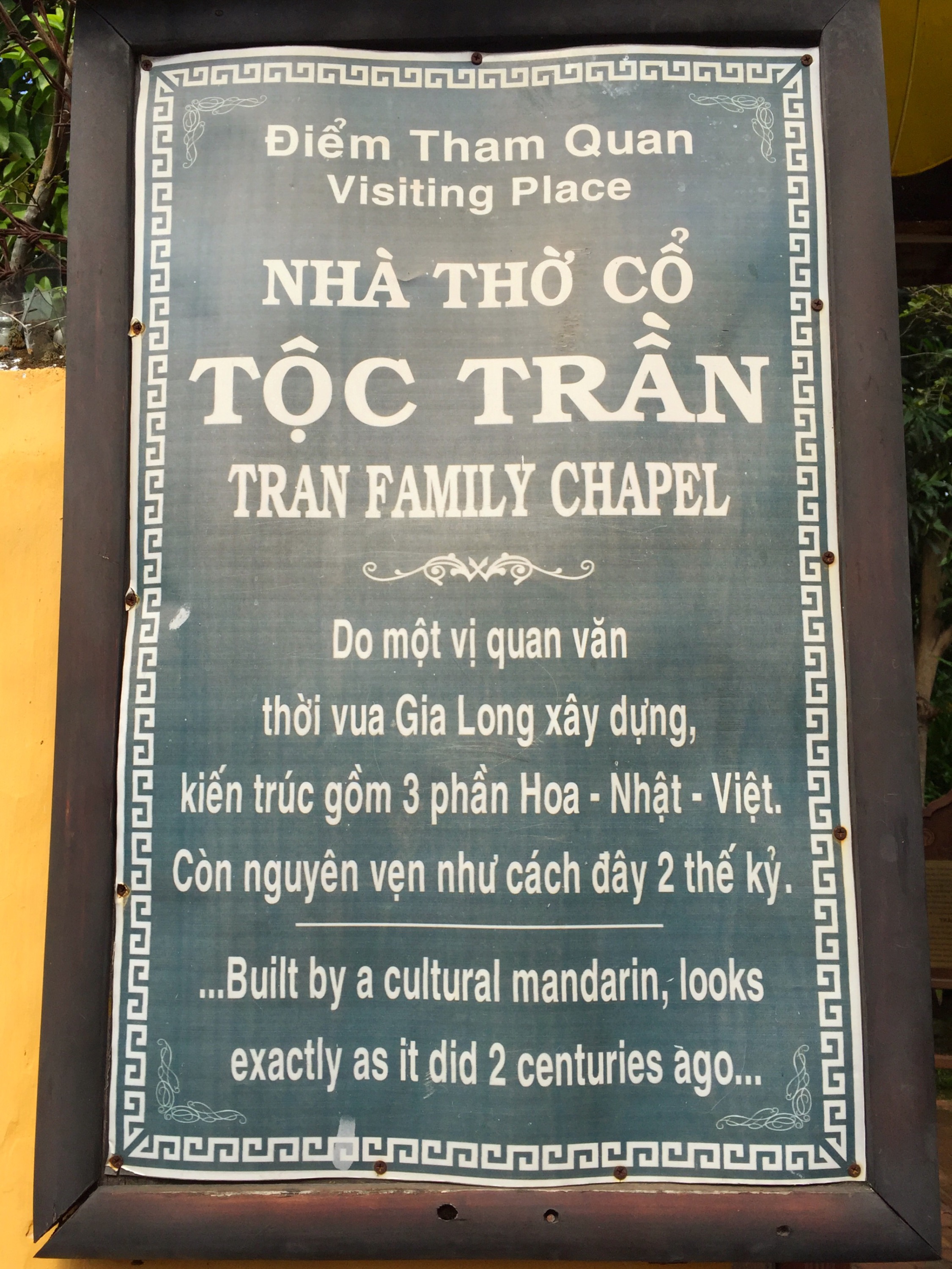
First stop was the Tran Family Chapel which is one of the oldest and most historical houses in this city, dating back to the beginning of the 19th century. It was built by Tran Tu Nhac – a highly-respected mandarin under Gia Long Reign, before he was sent to China as the King’s envoys. Originally, it serves as a worshipping place for the family’s ancestors, as well as a reminder about the family’s tradition to the following generations. 

Sitting amidst a 1500m2-garden of ornamental plants, flowers, fruit trees and century-old plants, with a gate and high surrounding walls is a combination of Chinese, Japanese and Vietnamese architecture, which has remained almost the same as two centuries ago. Made of precious wood and pan-tiles-covered roof, the house has become well-known for its Asian style of architecture: one main part for worshipping, and one supplemental part which houses the leader of family and his guests. The house and the garden were built in harmony following strictly the rules of Feng Shui. The drawing room of the chapel has separate entries for men and women: the left is for men and the right is only for women, according to old belief. There is another door in the center of the room, used for festivals such as Tet, which is said to be the door for souls of the ancestors to enter the house. 

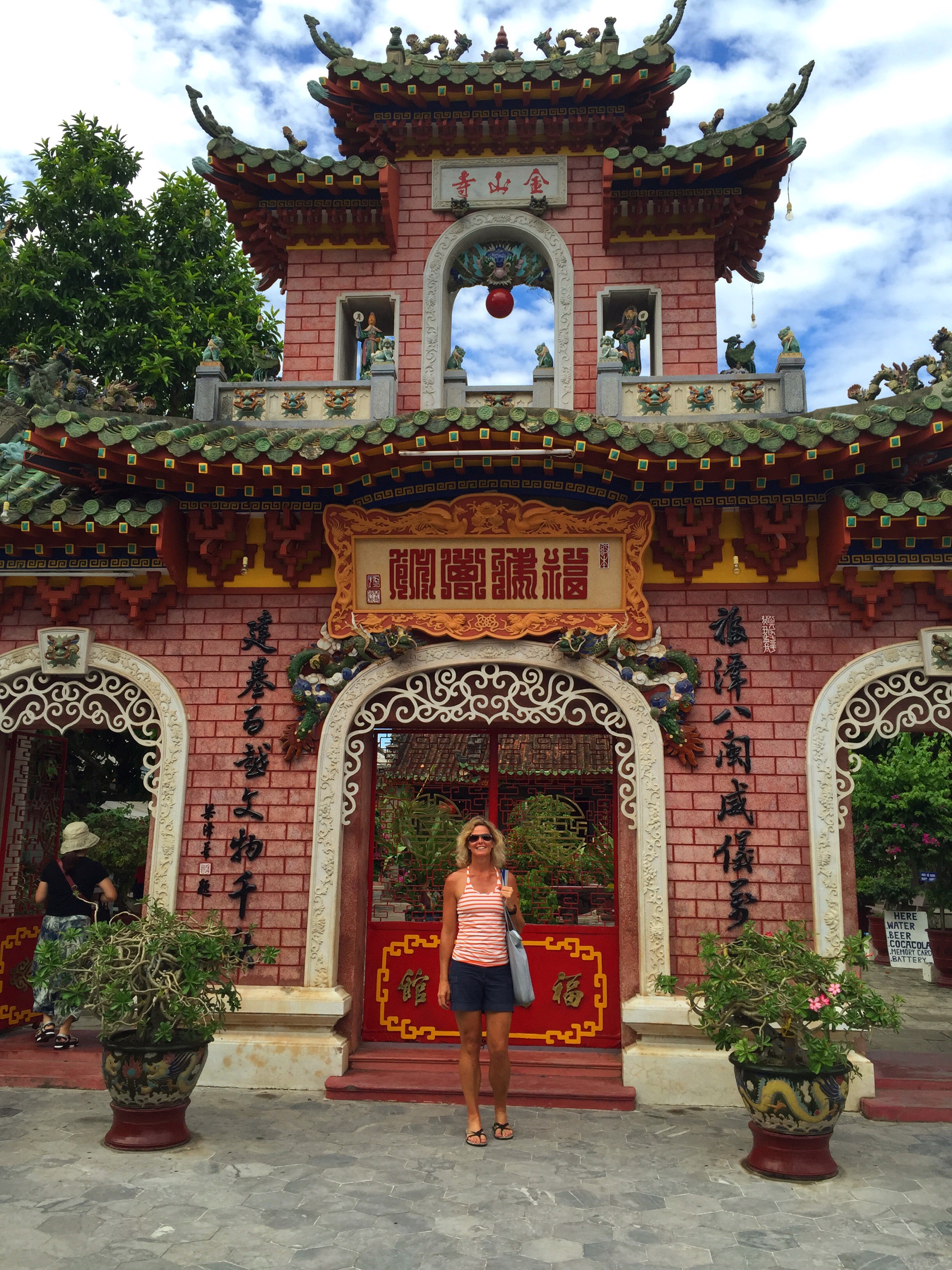
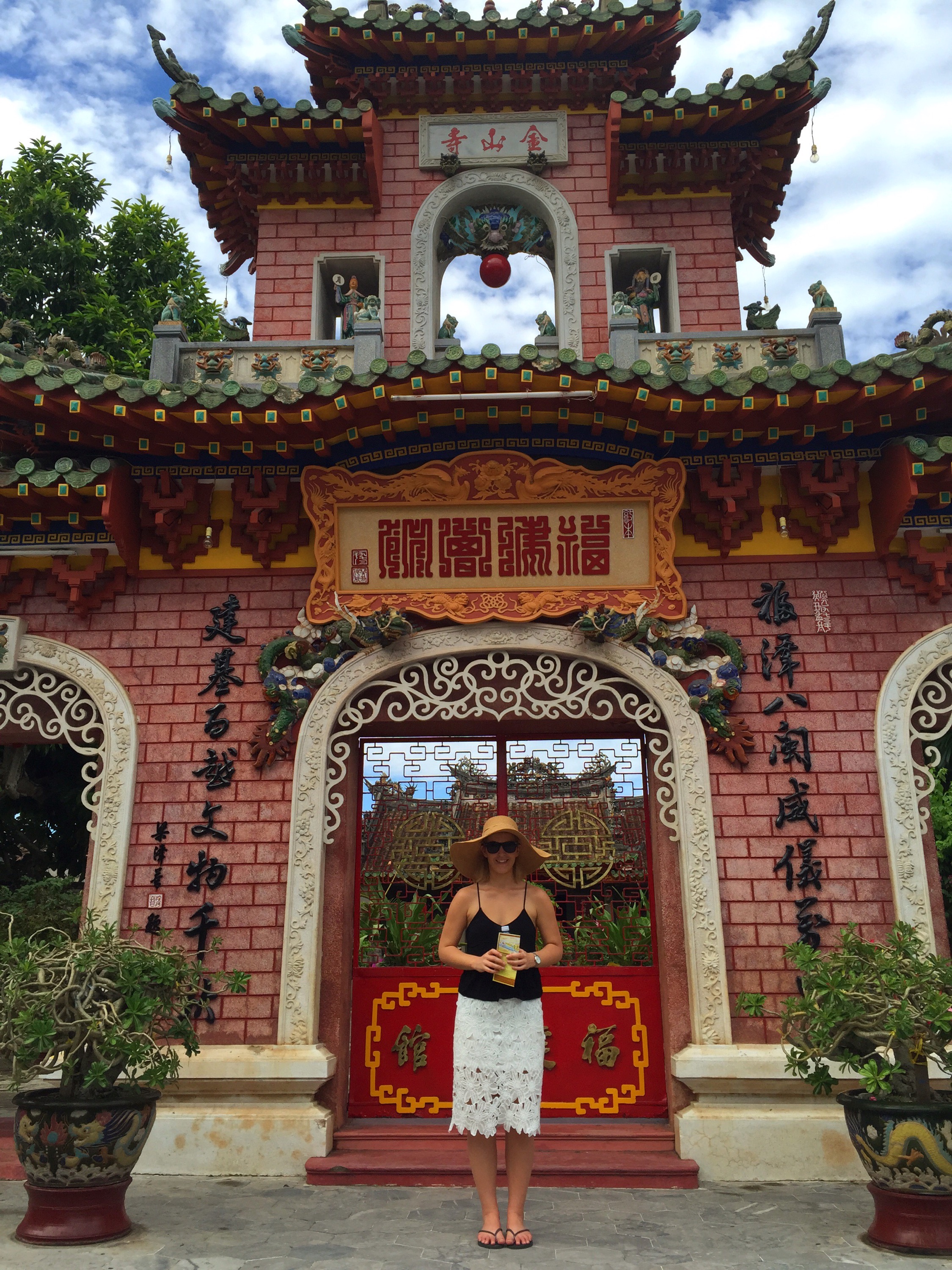
Every year, the Tran Family Chapel is still the gathering place for all members of the family to meet and express their thankfulness to their ancestors.       We then visited the Fujian Assembly Hall which is the greatest and most famous of the Assembly Halls in Hội An.  As the Chinese immigrants reached the central part of Vietnam known as Hoi An today, they decided to create the opportunities for themselves and the next generations to socialize and protect the Chinese traditions by building many Assembly Halls.

Building Assembly Halls as a place to socialize for themselves and the next generations is a tradition of Chinese people when they migrated or did business in another country. Therefore, a lot of Assembly Halls of this type can be found in Vietnam today. In Hội An Town, which has a long history of international trade, there are 5 Assembly Halls constructed by the Chinese, all are located on Tran Phu Street, facing Thu Bon River. Nowadays, even though not all of the halls stay the same, the five remaining ones (Fujian, Chaozhou, Hainan, Cantonese, and Chinese) become famous attractions of Hoi An.    

Generally, they all follow a formula that has been used by other Chinese assembly halls in other cities: a grand gate, a nice garden with ornamental plants, a main hall and a large altar room. As decoration is a fundamental part of an assembly hall, it is carried out meticulously at all of the halls with statues, lacquered boards, murals, etc. However, because each Chinese community has its own beliefs, different assembly halls worship different gods and goddesses. 

   
We also stopped off at the gallery where they embroider pictures using silk – these are amazing and the detail created by the stitching creates the impression that you are looking at a photograph.  

Our last stop was the Japanese Bridge.  The bridge (Chùa cầu) is a unique covered structure built by the Japanese, the only known covered bridge with a Buddhist temple attached to one side.  In the early seventeenth century, the Japanese, who lived in Hội An Town, built this bridge over the stream to do business with the local people in the residential area.  The two entrances to the bridge are guarded by a pair of monkey gods at one end and a pair of dog gods at the other end.

In later centuries, the Chinese and Vietnamese continued to restore the bridge and built a small temple dedicated to the God Bac De Tran Vo, Emperor of the North.  This religious architectural complex has a unique pain-tiled shaped roof, which is related to the misfortune and happiness of people in the locality.  The local people often call it Chua Cau (bridge and temple).  The structure is also a symbol of the cultural exchange between the Japanese, Chinese and Vietnamese people in Hội An.  Over the past four hundred years, Chua Cau has become famous for having supernatural power and is still a sanctuary for worship by local people, a status respected by tourists.

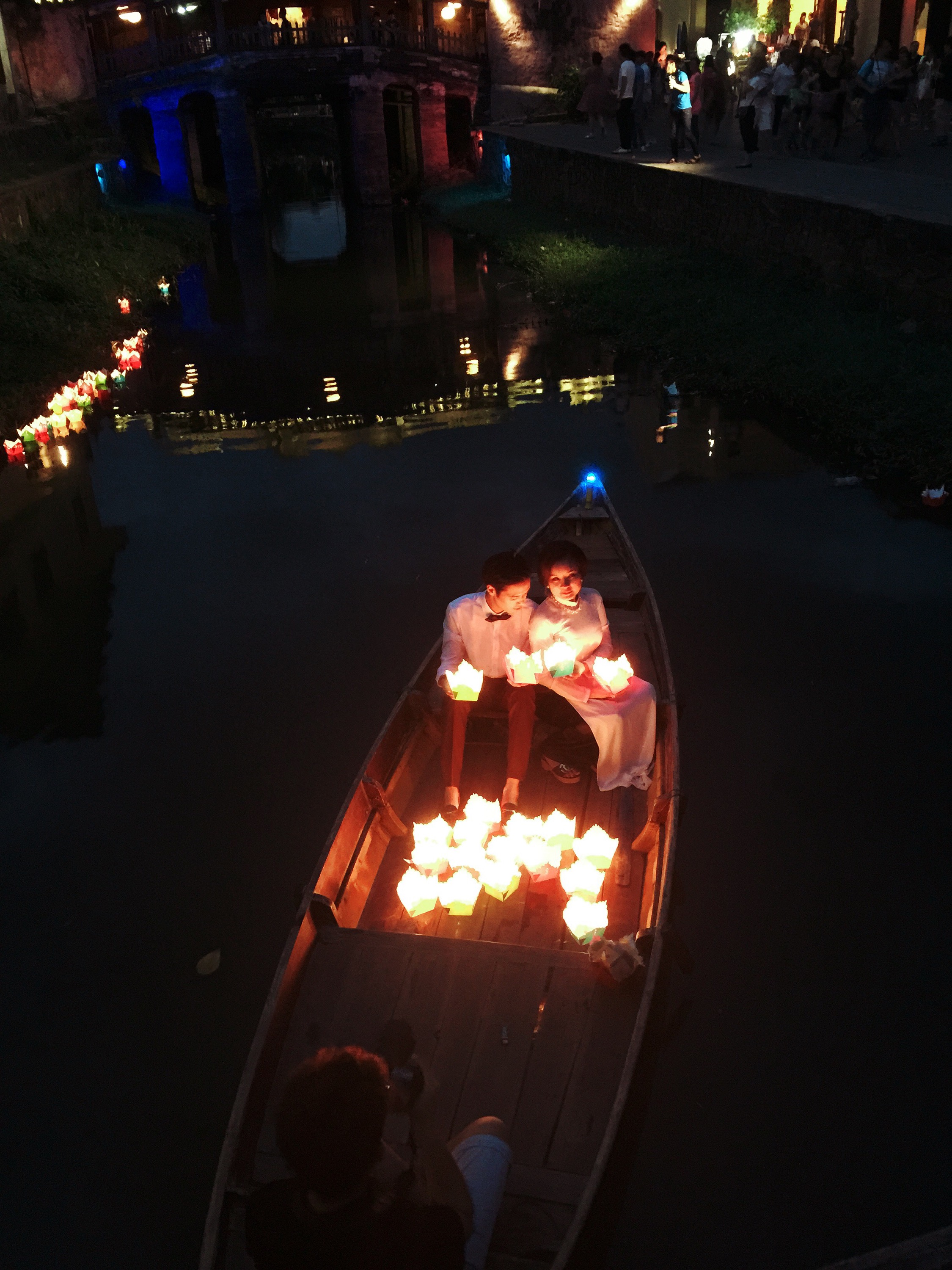
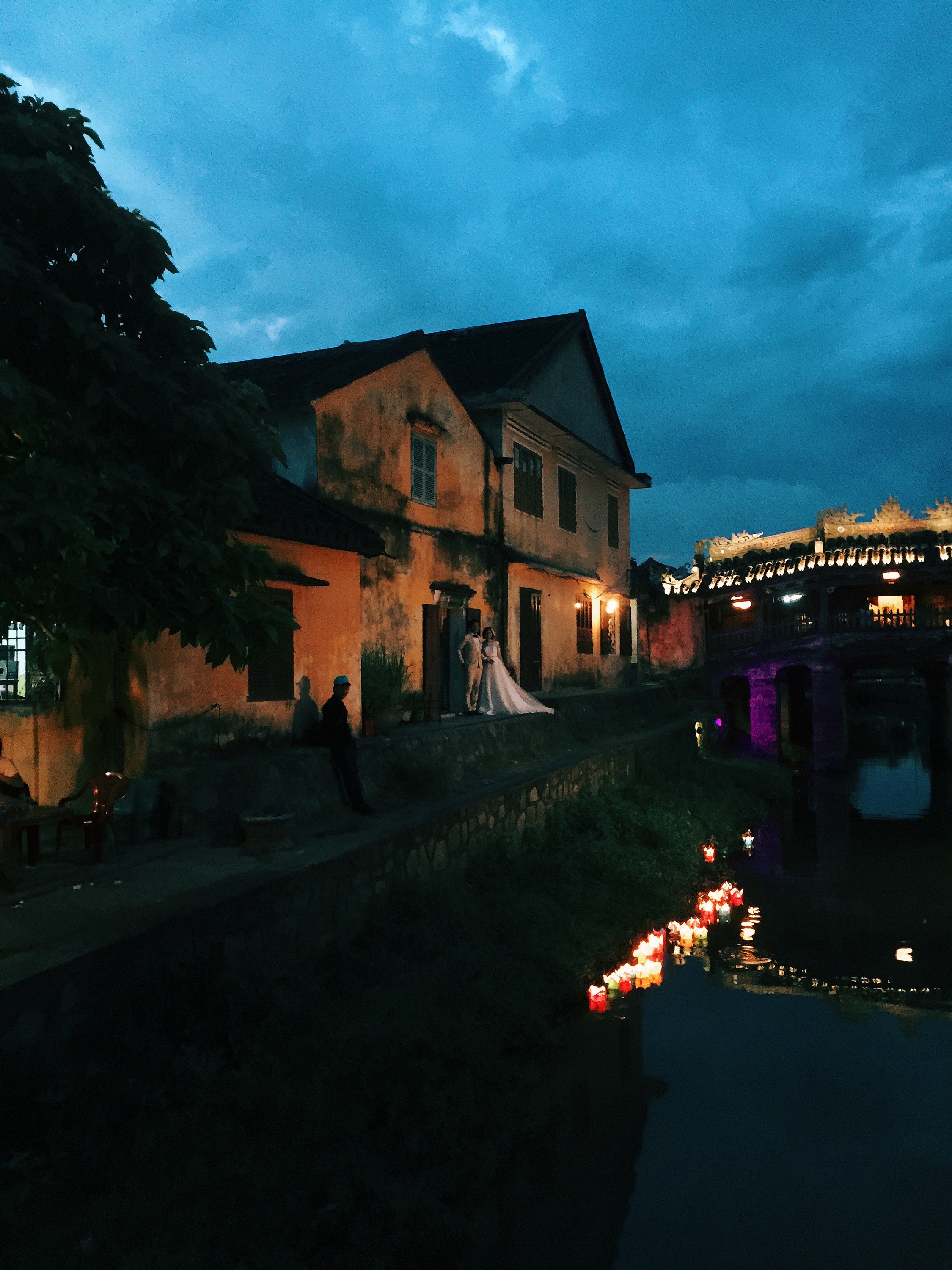
It is certainly a very popular attraction and probably the most photographed in Hội An.  It is nearly impossible to get a photo of the bridge unimpeded by people so I have included a couple of photos from the internet.  The other night, however, I got a couple of photos of two Brides and Grooms who were using the bridge as a backdrop.  It is quite often lit up at night with different colours. 


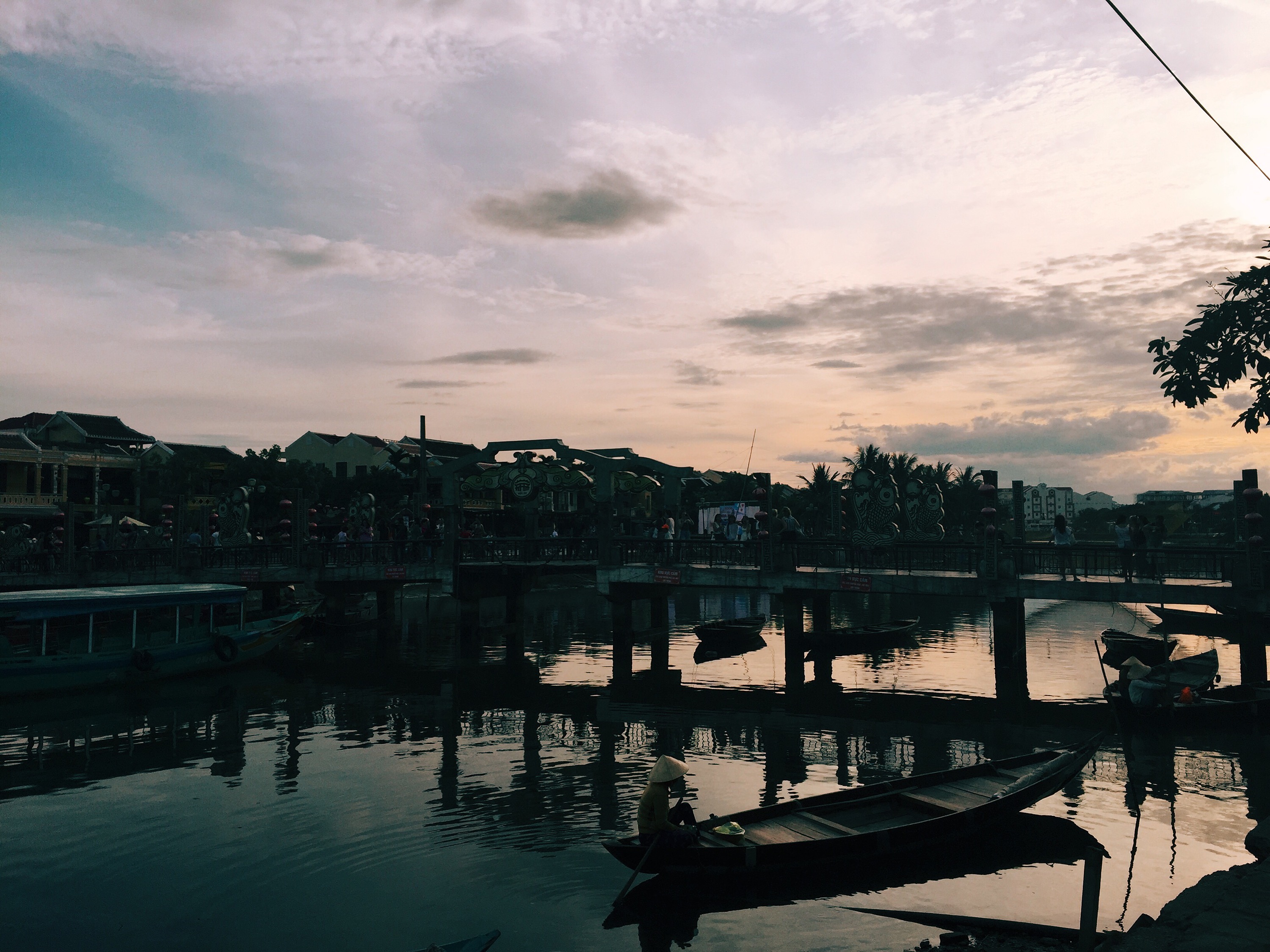
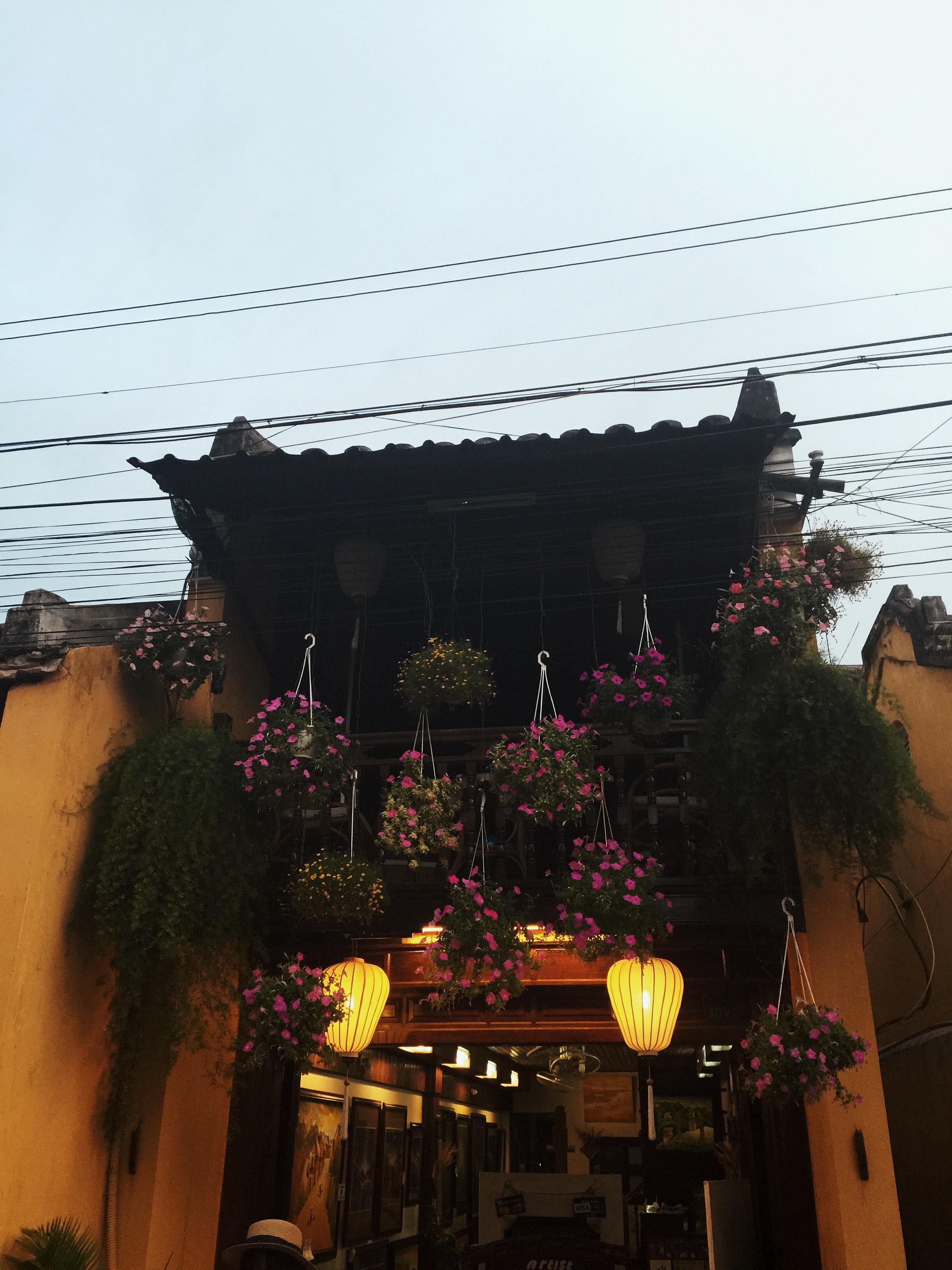
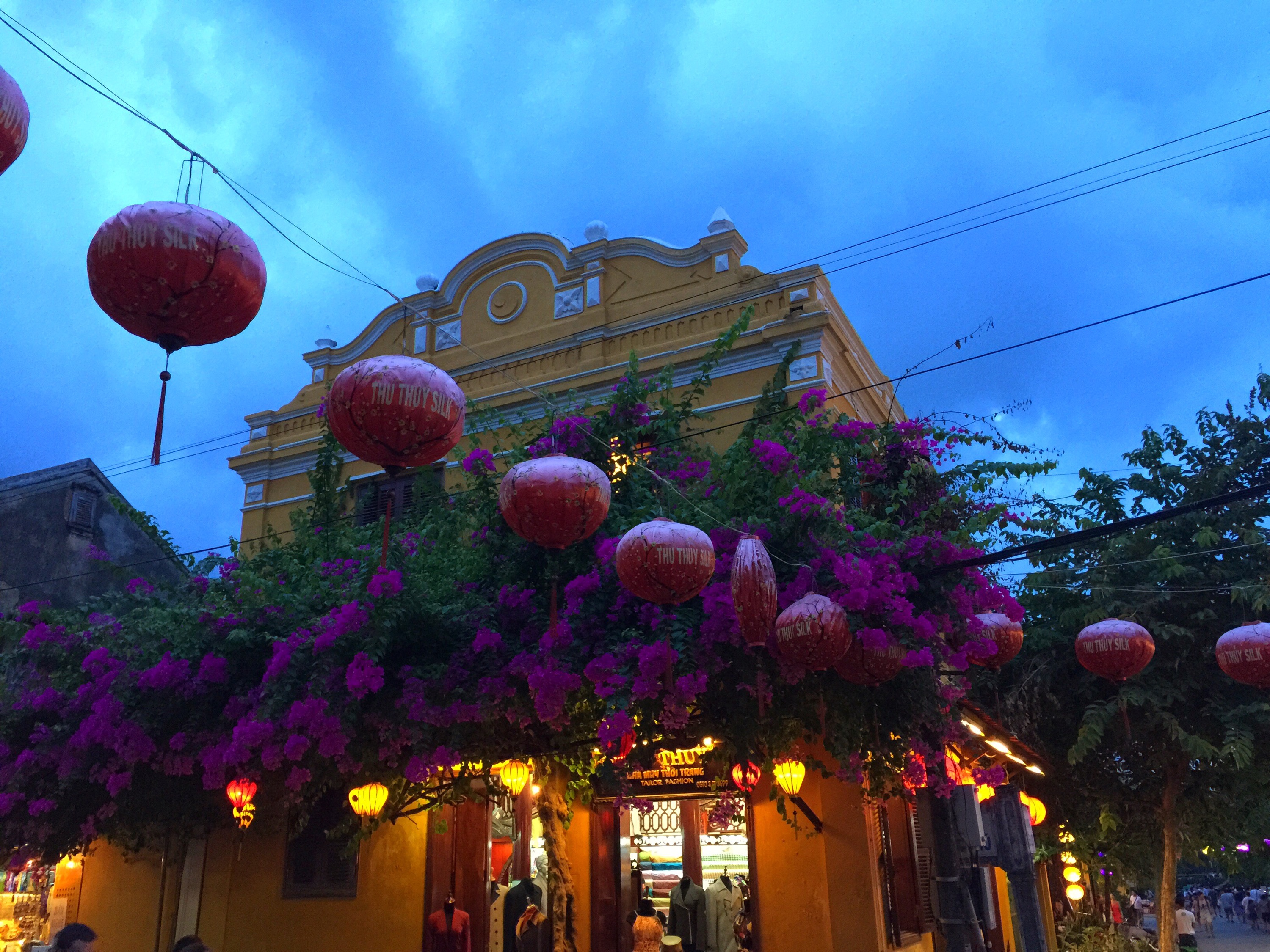
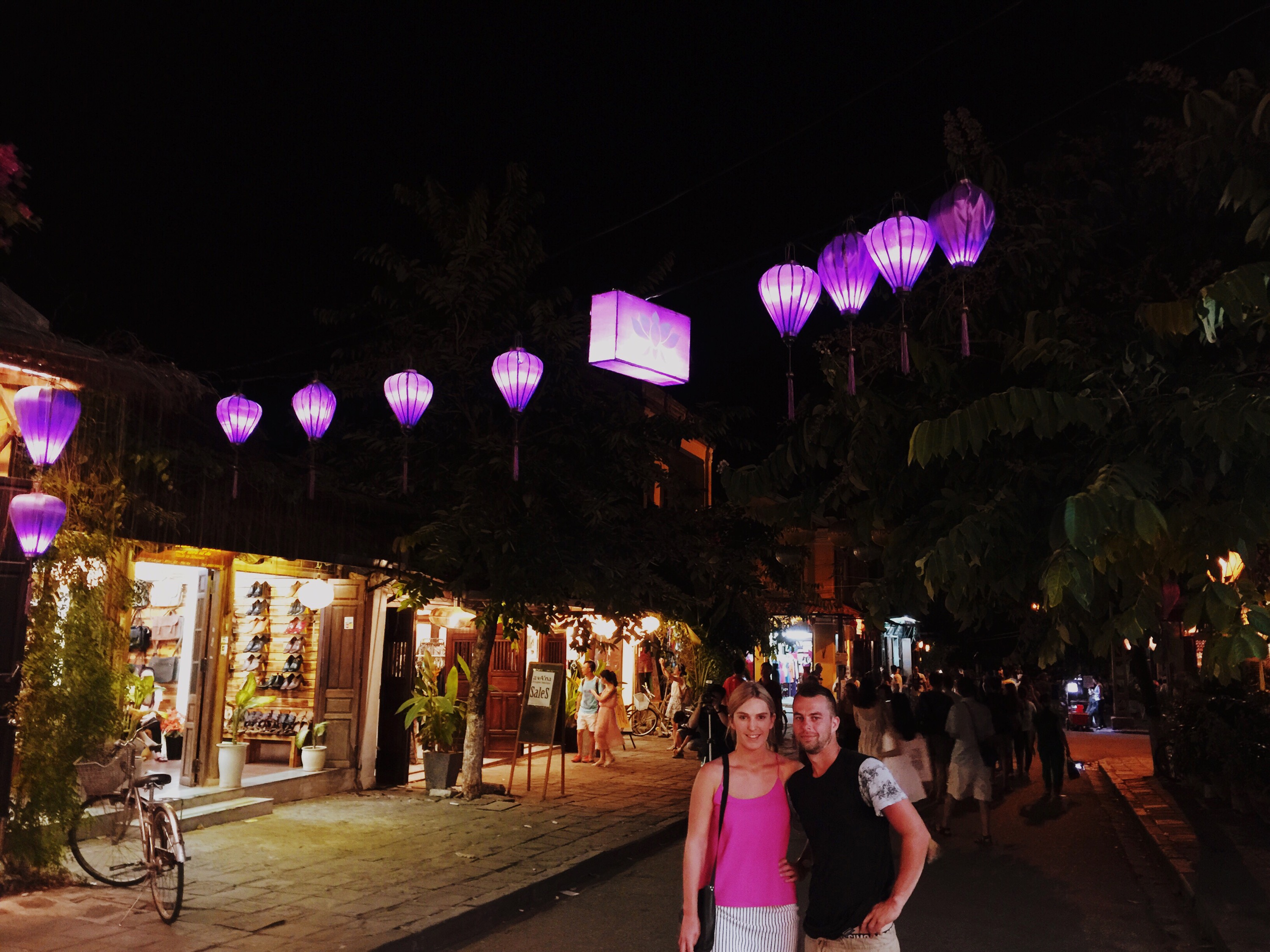
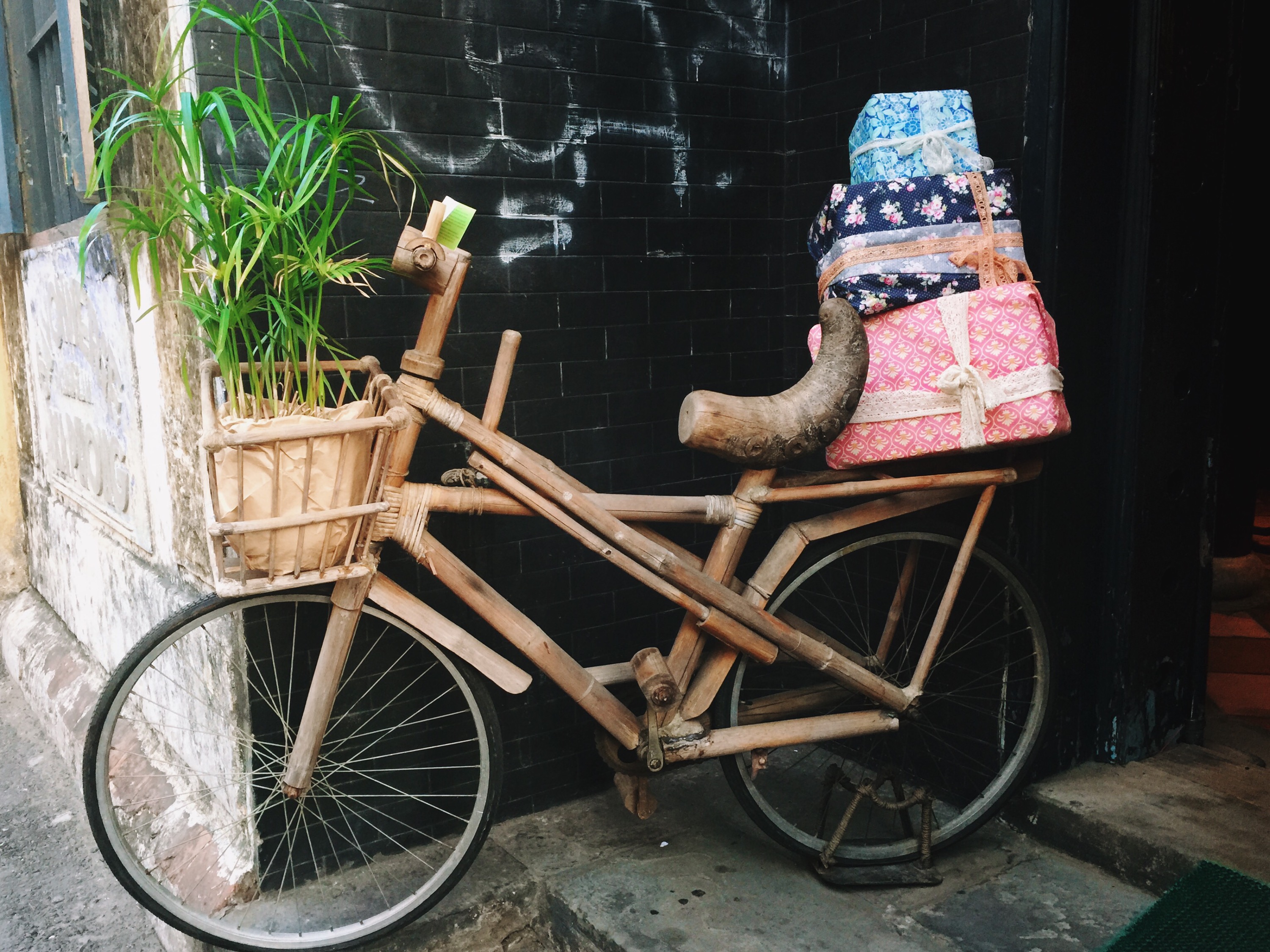
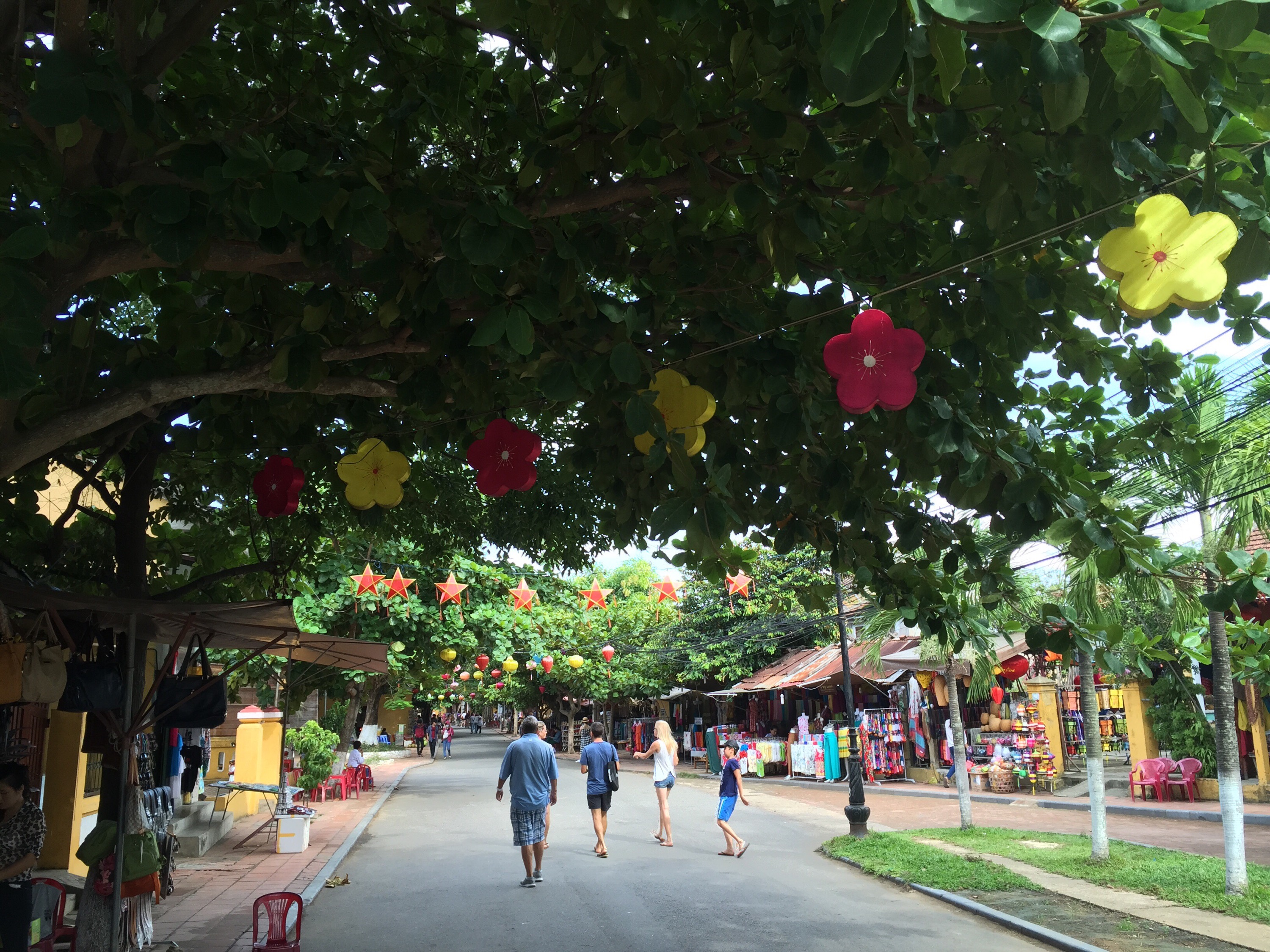
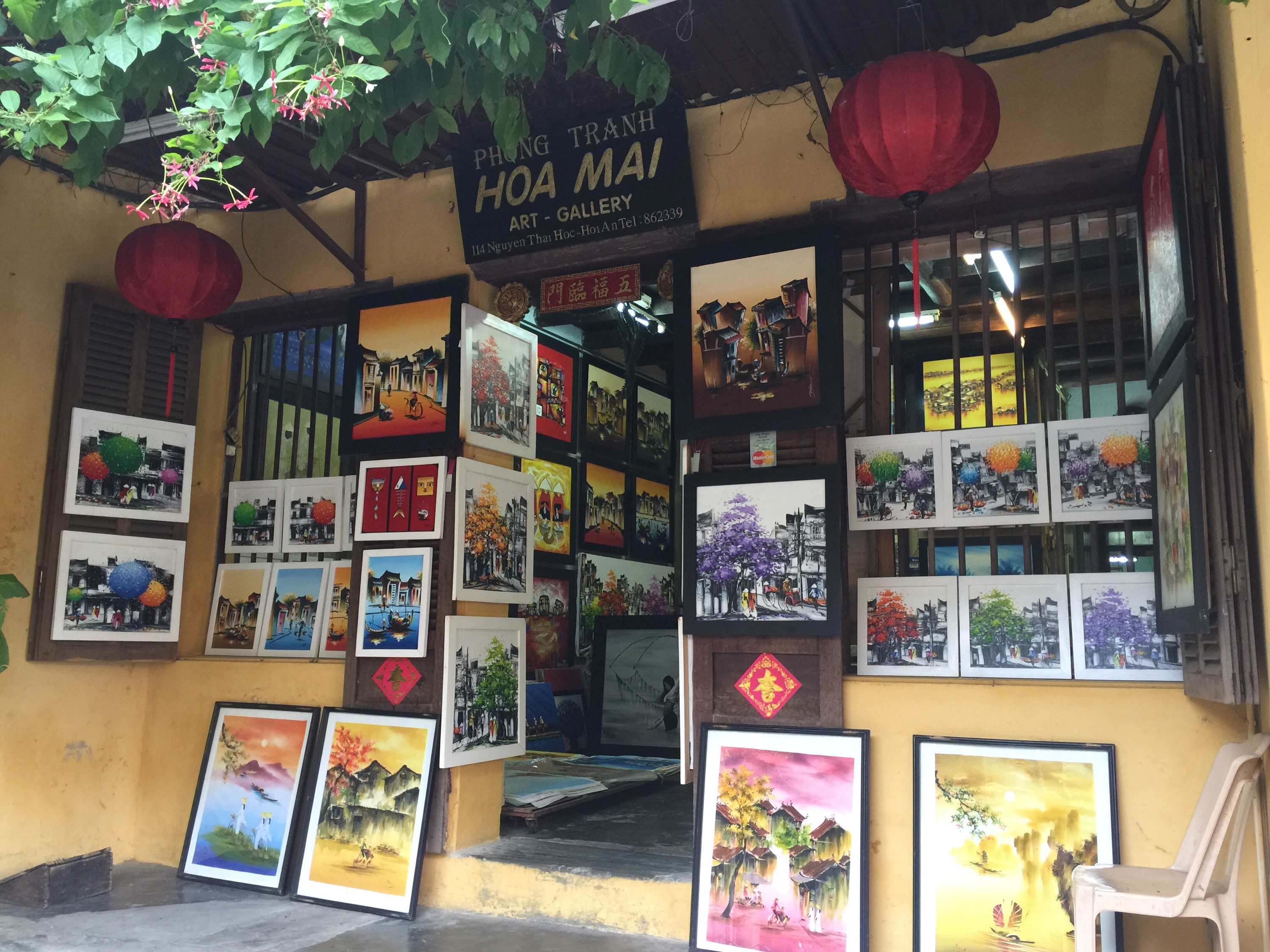
   Hội An is full of quaint looking buildings that represent the architecture and cultural influences of the time.  Most of them are restaurants or shops with the locals living above or behind them and it is easy to miss the beauty of them if you don’t take the time.  Hội An comes alive at night and the colourful lanterns and trpoical plants really add to the ambience and beauty of the town.  It is hard to capture the essence on a camera but here are a few of my favourite shots.  


Posted in HoiAn, Vietnam | Tagged , , | Leave a comment

Thuan Tinh Island Cooking School – Hoi An, Vietnam

On Thursday Laura and I went into Hoi An to join a group going out to Thuan Tinh Island’s Cooking School.  There were six of us in our group and our Chef and Tour Leader Hon handed us all a shopping basket as we arrived.  It was then a short walk to the market where Hon explained various foods to us and purchased the ingredients we would need for the cooking class.  No matter how many times I have been in the market all the weird and wonderful produce still amazes me.  The meat section is especially interesting given they don’t have refrigeration as such – that is why it is imperative they sell all their product as quickly as possible.  All the stalls are attended by woman wielding large knives – some I wouldn’t want to get on the wrong side of!

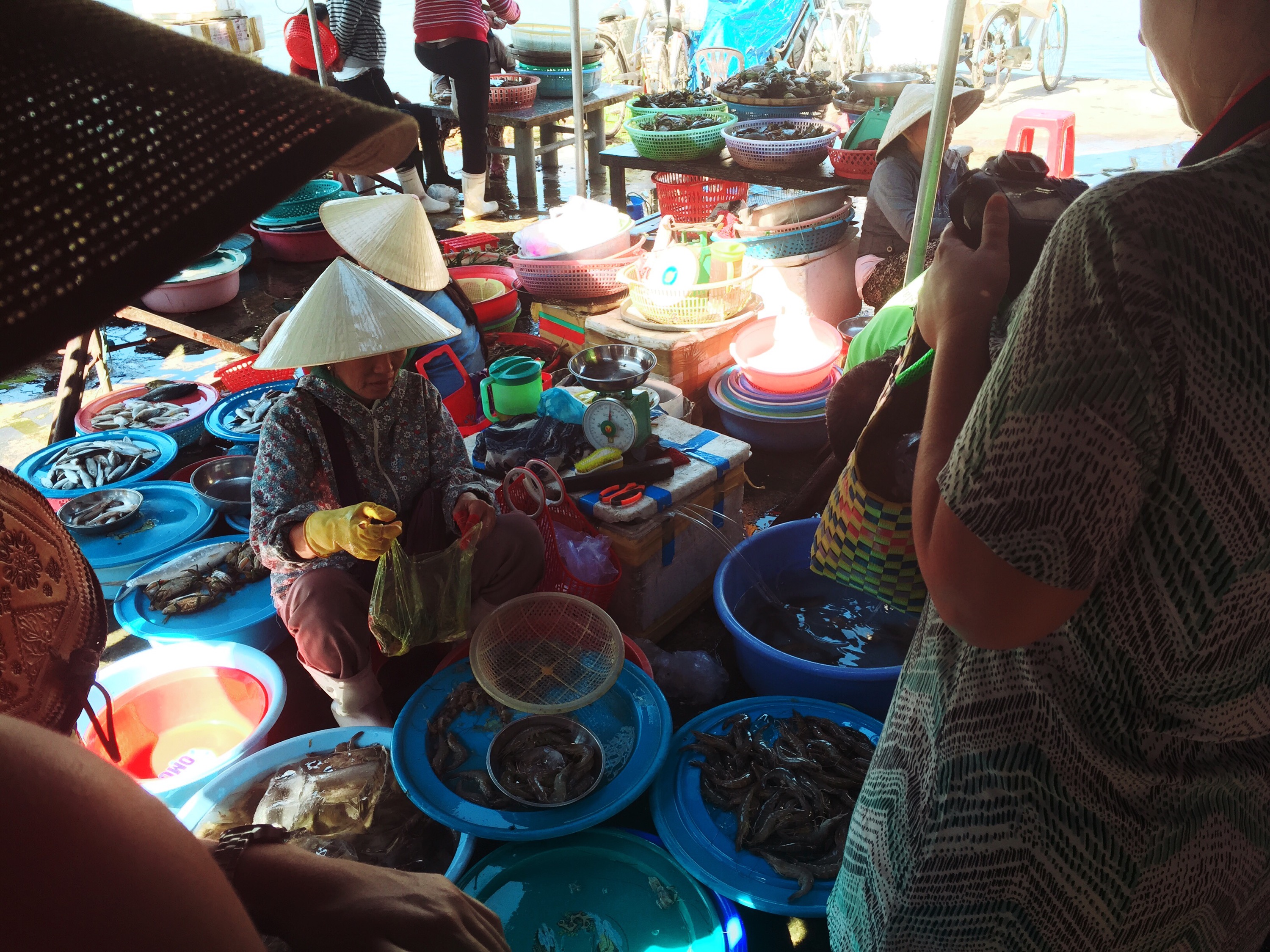
We also visited the wet market where the fish is sold.  The prawns, shrimp and crabs are all still alive so Hon was picking the shrimps out of a bucket of water and they were flapping around much to Laura’s horror.  A couple escaped onto the ground so there was a bit of squealing! 

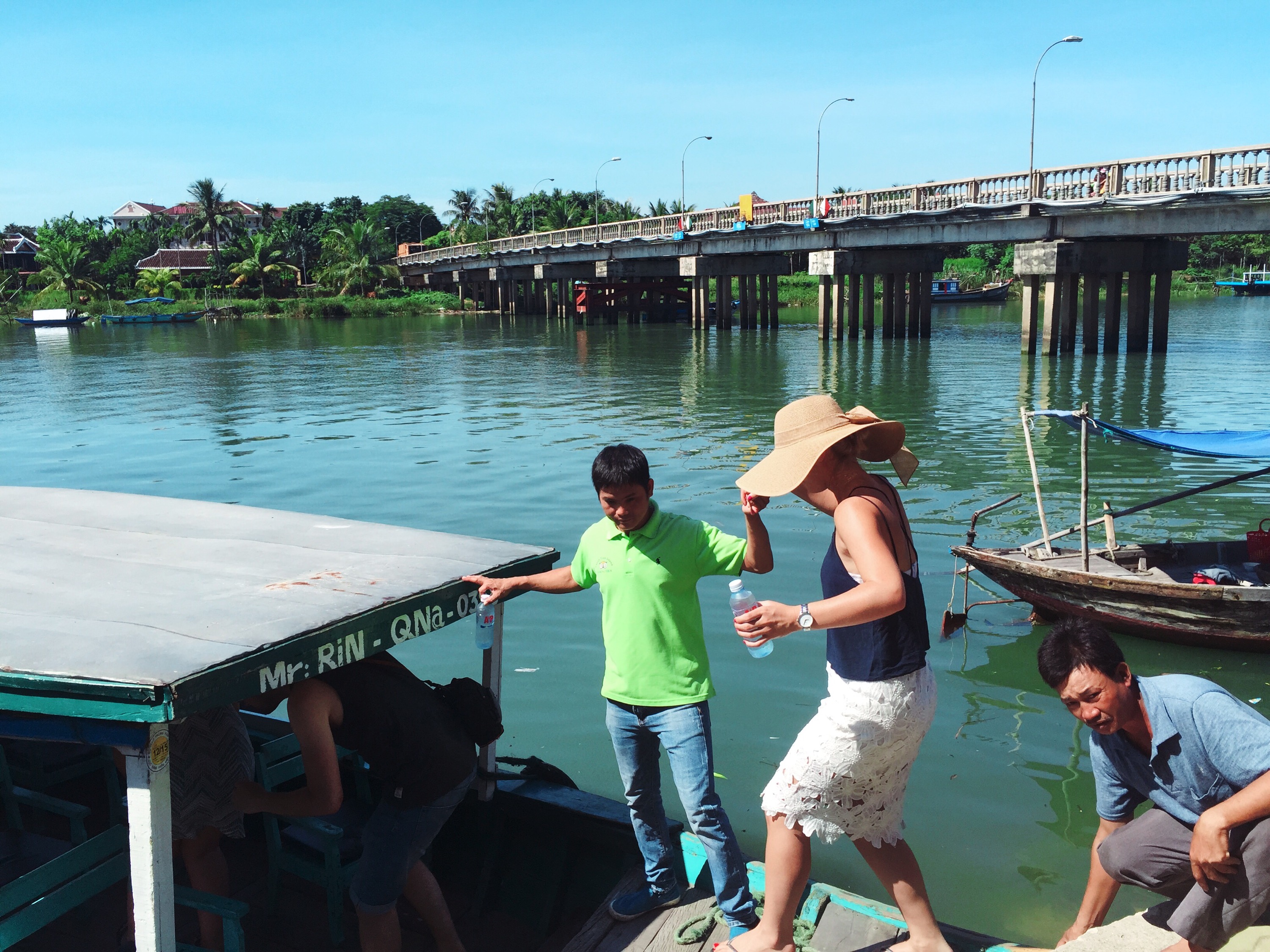
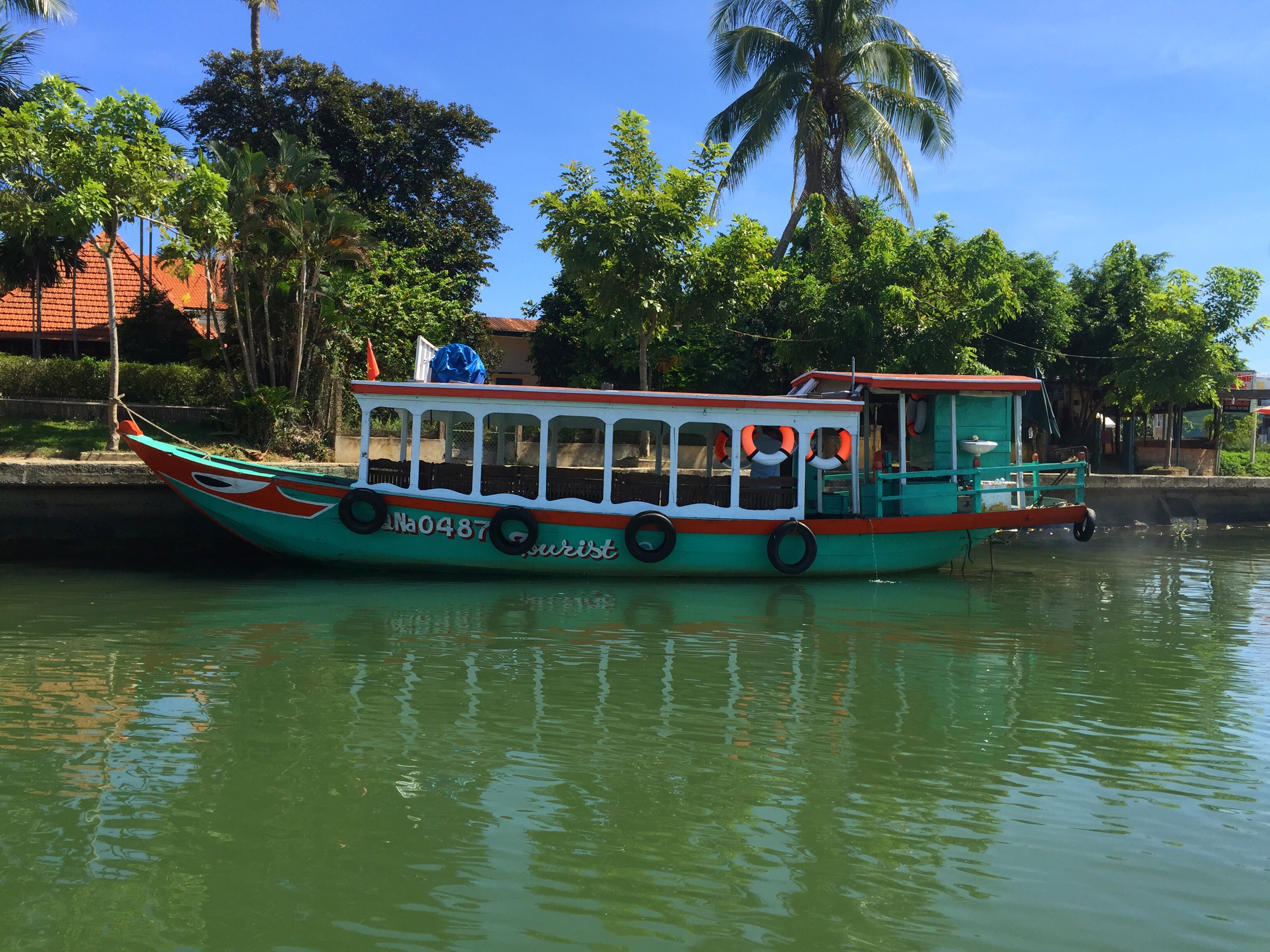
 All our purchases were then off loaded to be transported to the island by motorbike – a much quicker way to get there as we discovered on our trip back to Hoi An after the cooking class.  We walked down to the river to board our boat for the 45 minute ride to Thuan Tinh Island.  All the fishing is done at night so there were a number of fishing boats parked up.  The big fishing nets were also out of the water. 


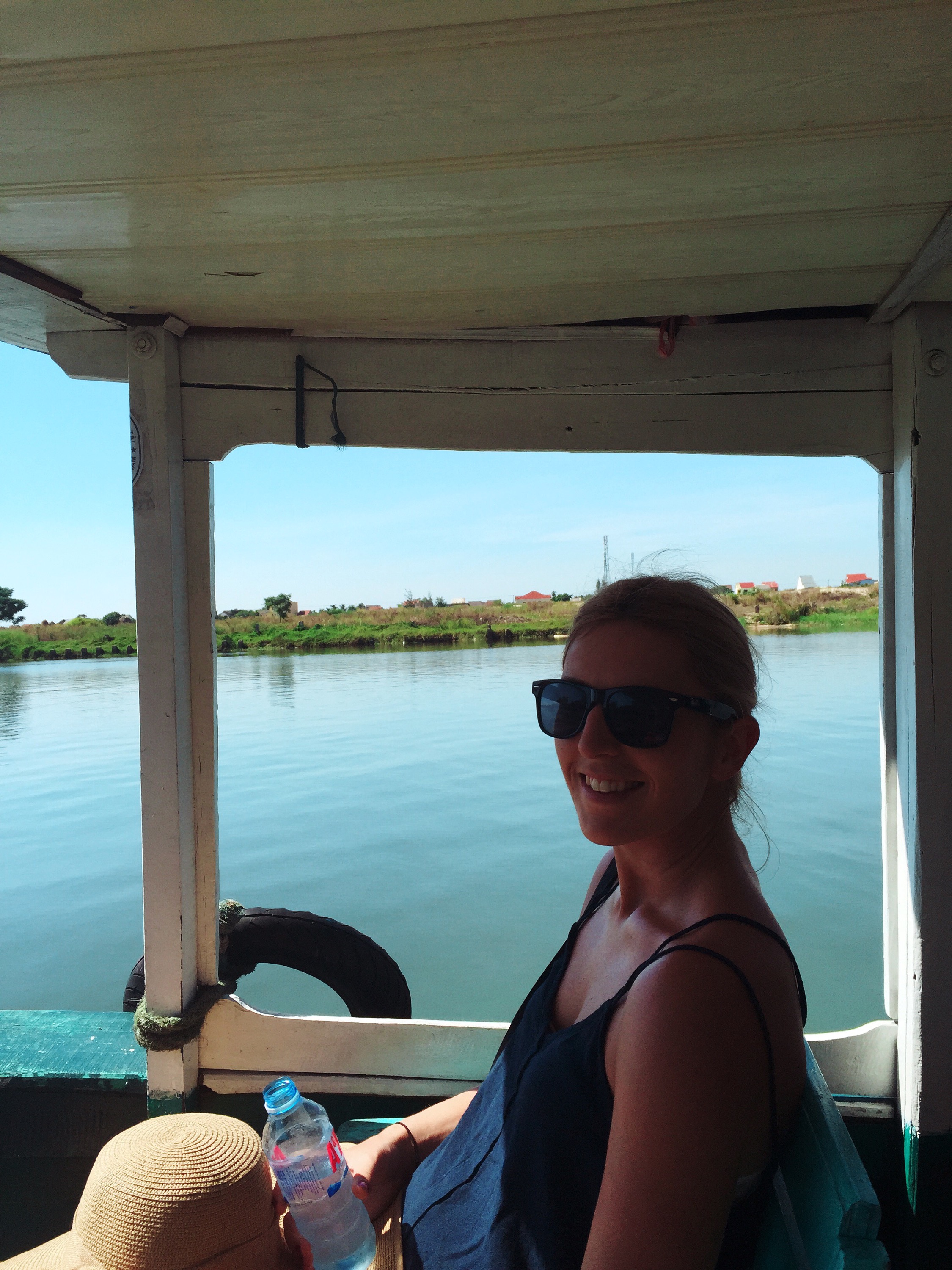
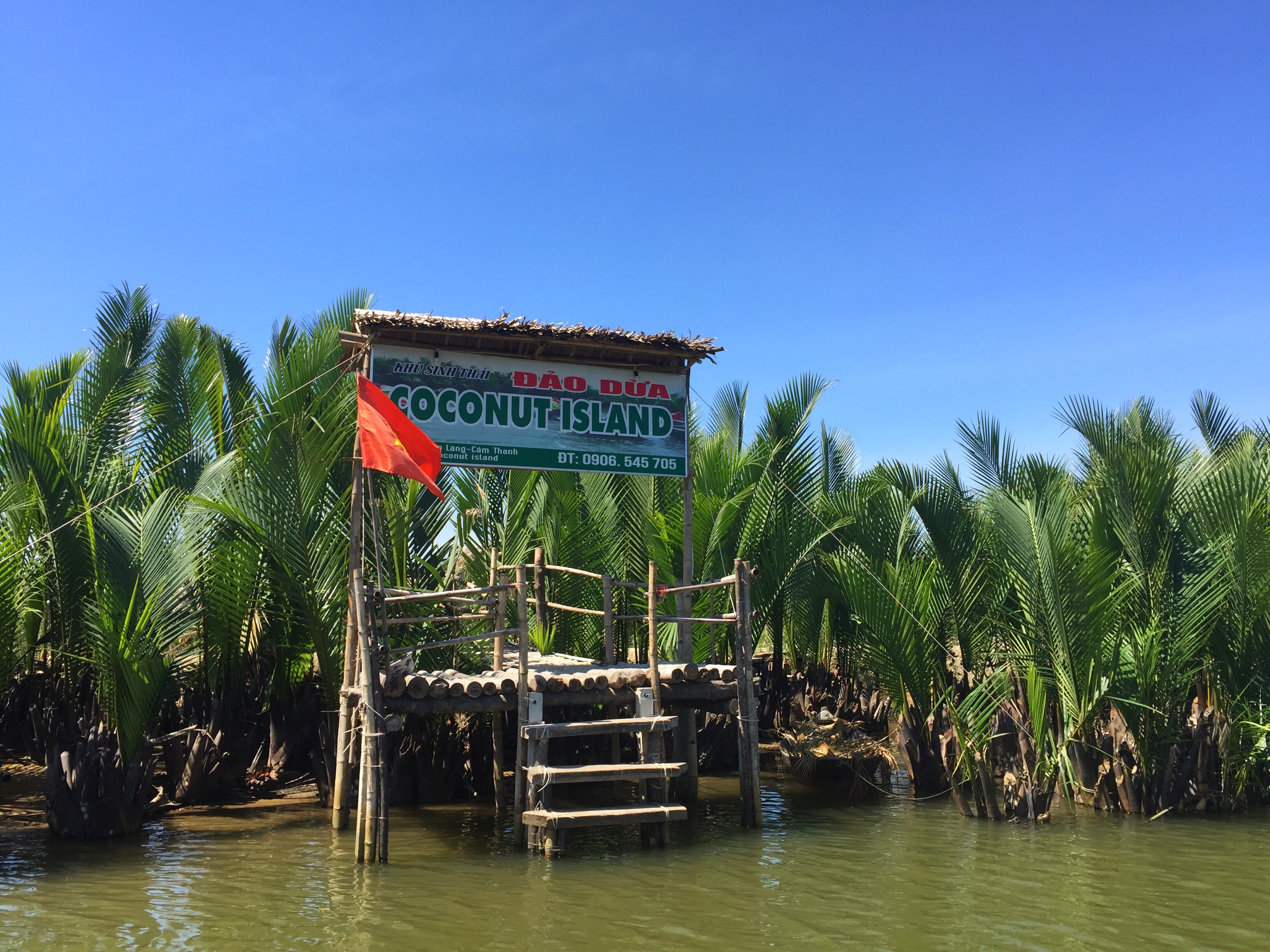
We passed by Coconut Island where they grow these water coconut trees that produce the leaves they use to thatch the roof of a house or as a cover on a fishing boat.  We had to switch to a row boat for the last five minutes of our journey and we had to row!  Thuan Tinh Island is recognized by Hoi An as an official ecological zone. 

    
 First stop on Thuan Tinh Island was the local farmer’s house to make rice milk for our Banh Xeo.  

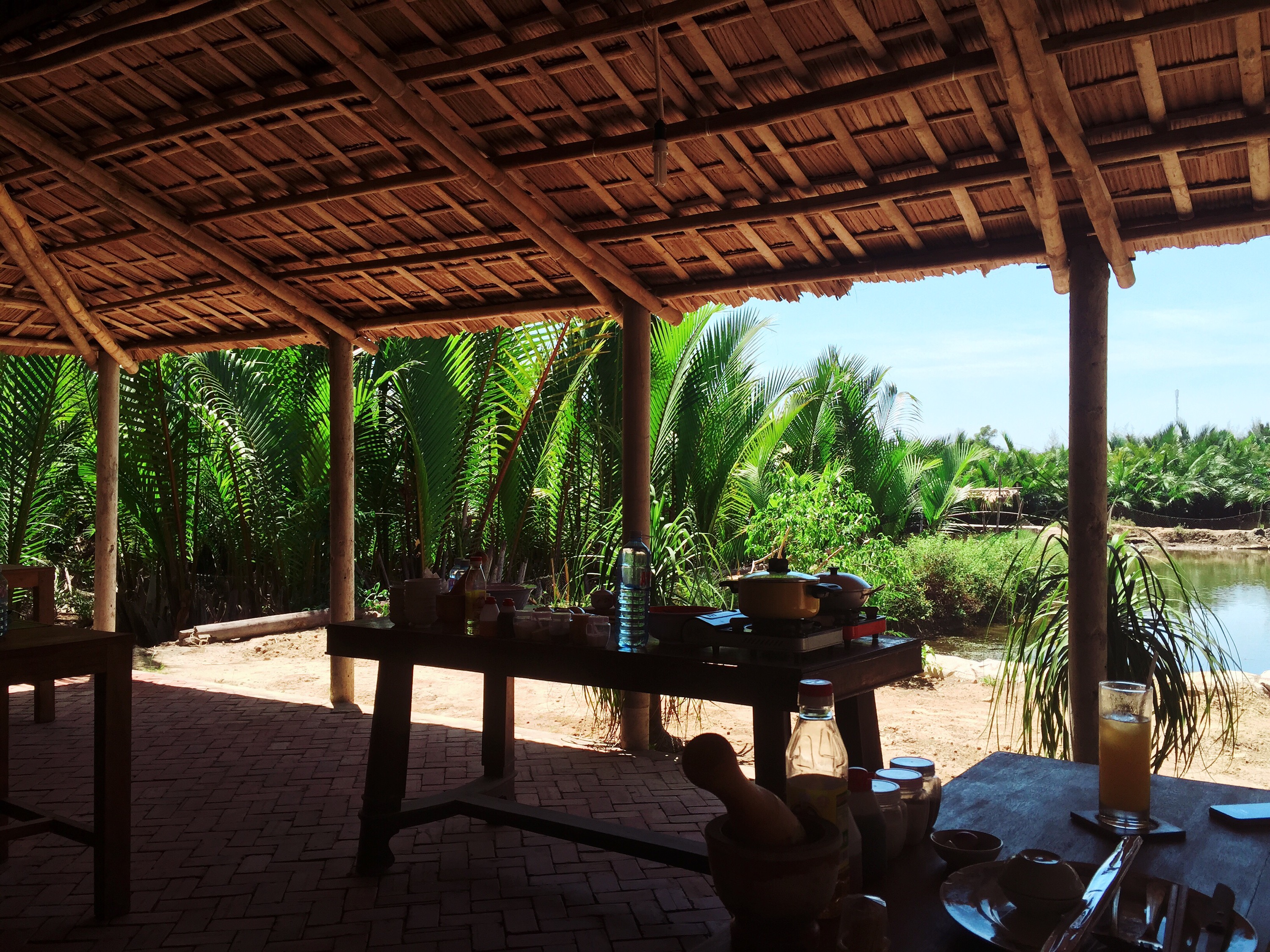
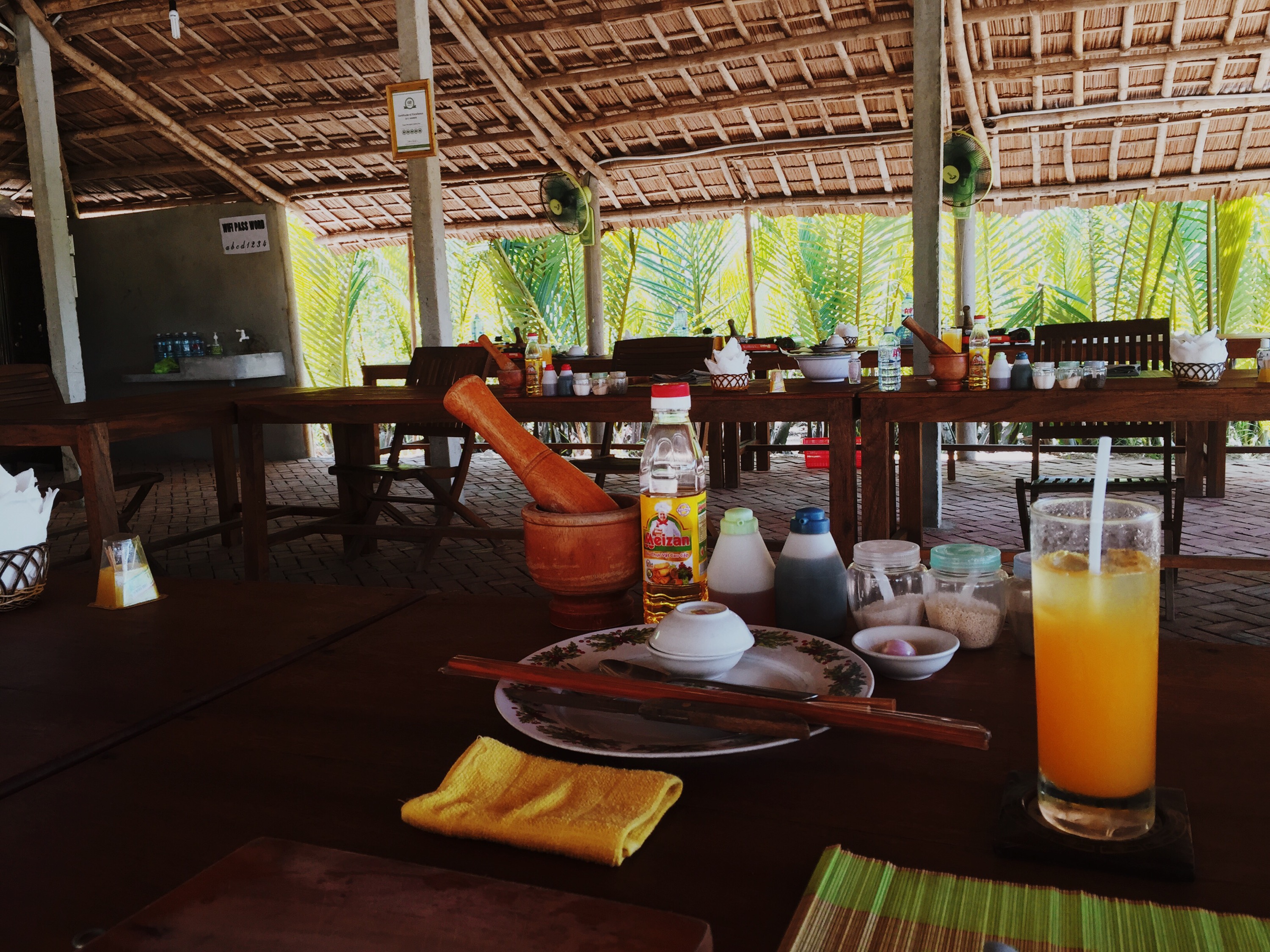
 We then made our way back to our classroom for the morning which is effectively a bamboo building with no sides overlooking the water.  The last cooking class I did was inside so it was nice to have the airflow and it is definitely a cooler scenario once all the little cookers are fired up. 


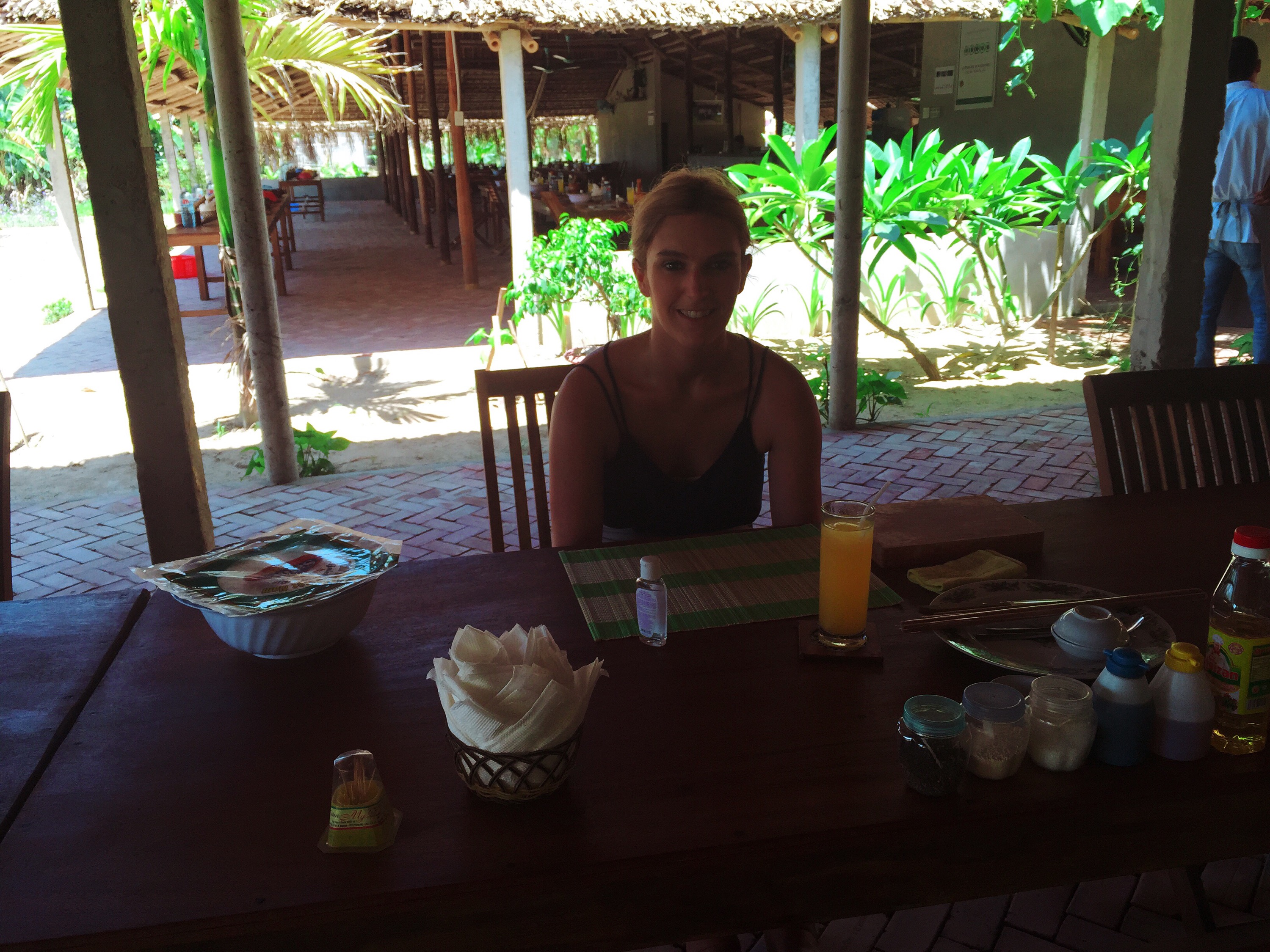
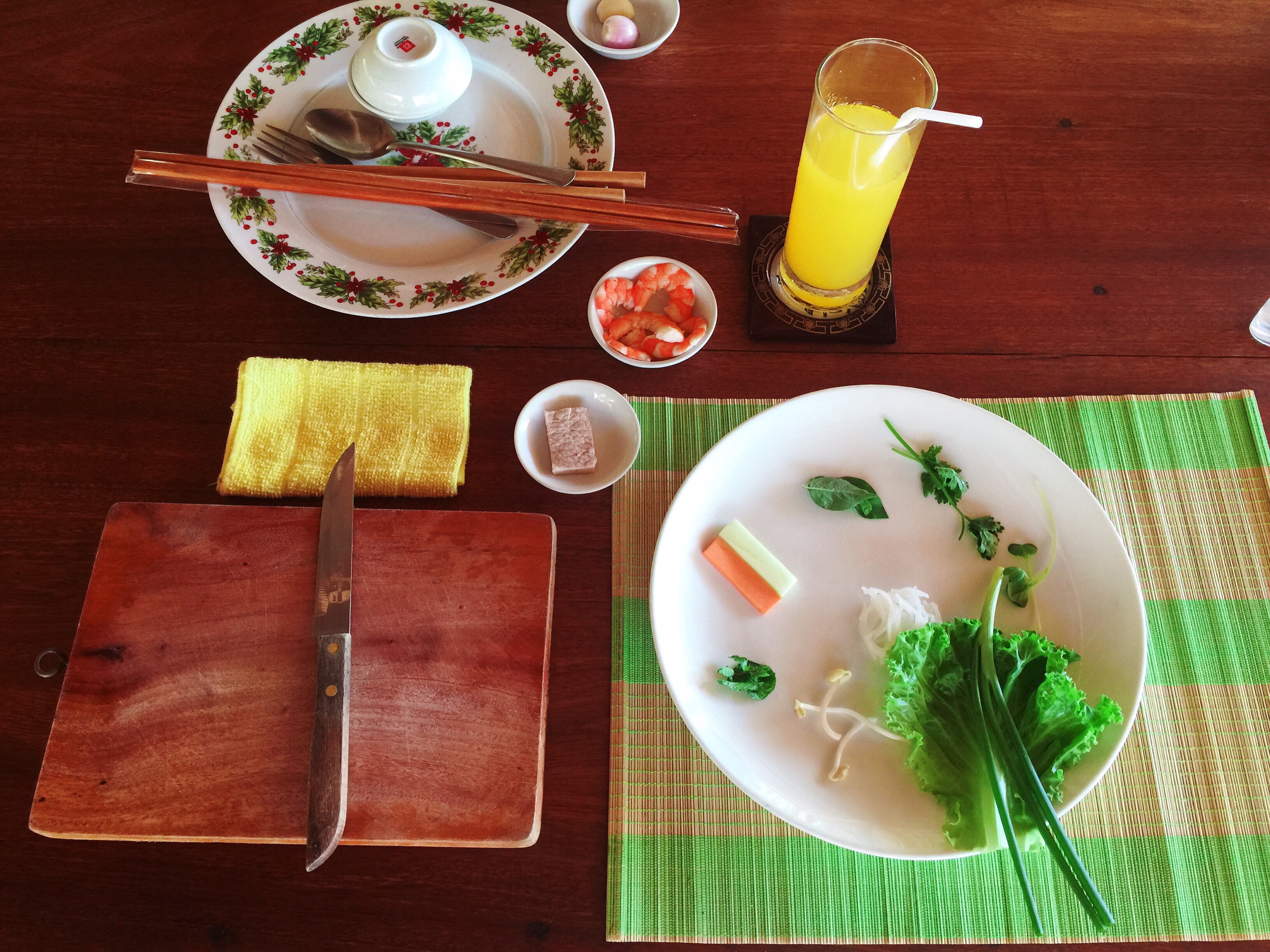
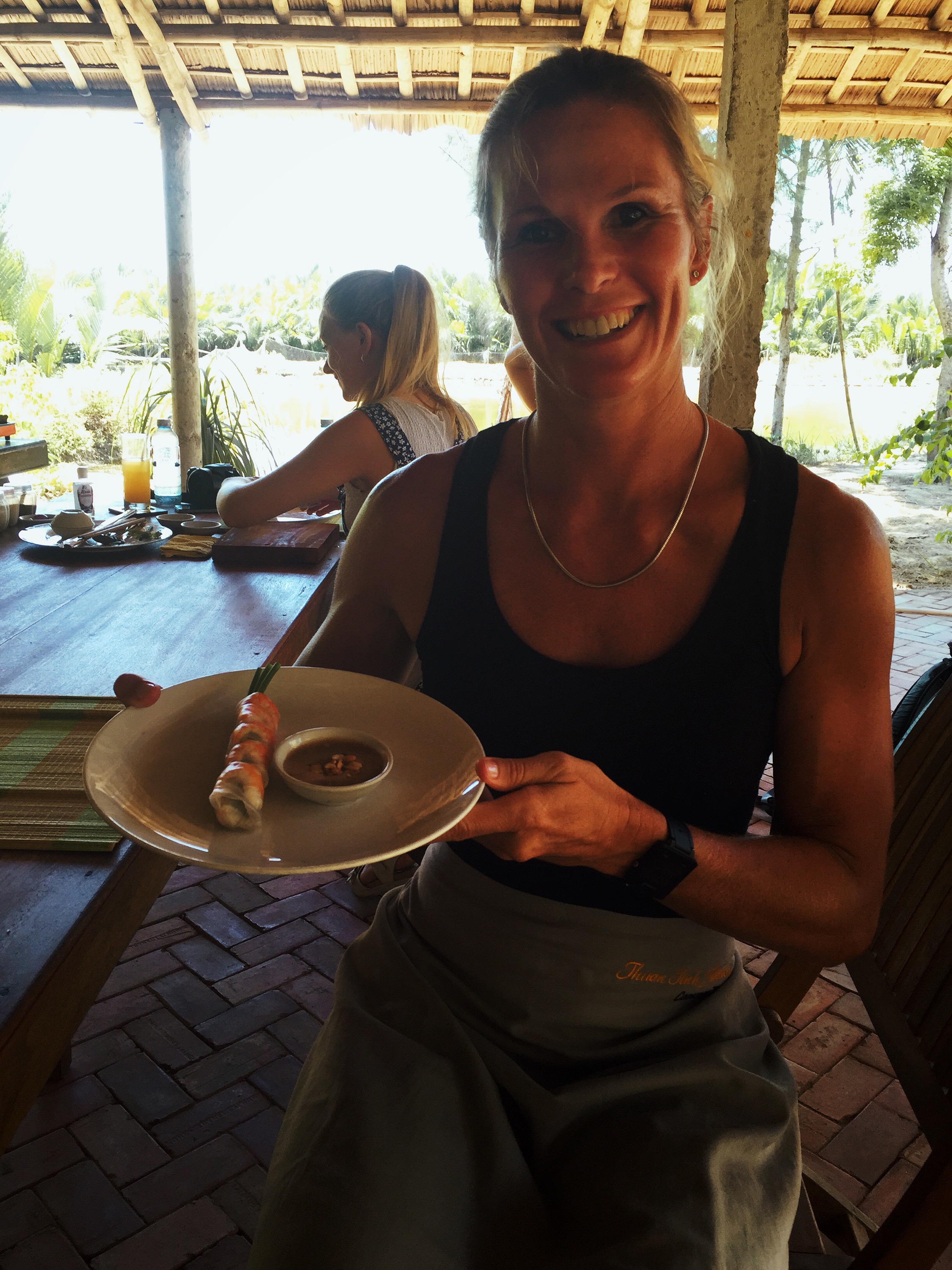
The first dish of the day was Goi Cuon – Fresh Rice Paper Salad Rolls with Pork and Shrimp with a Tangy Peanut Hoisin Dipping Sauce.  Hon showed us how to make the dipping sauce first which is yummy.  He then showed us how to make the rolls – I have been making these at home for a while but Hon’s methodology is certainly more clinical with much better results.  It was then our turn and I must say I am sold on his methodology – just like a bought one! 

    
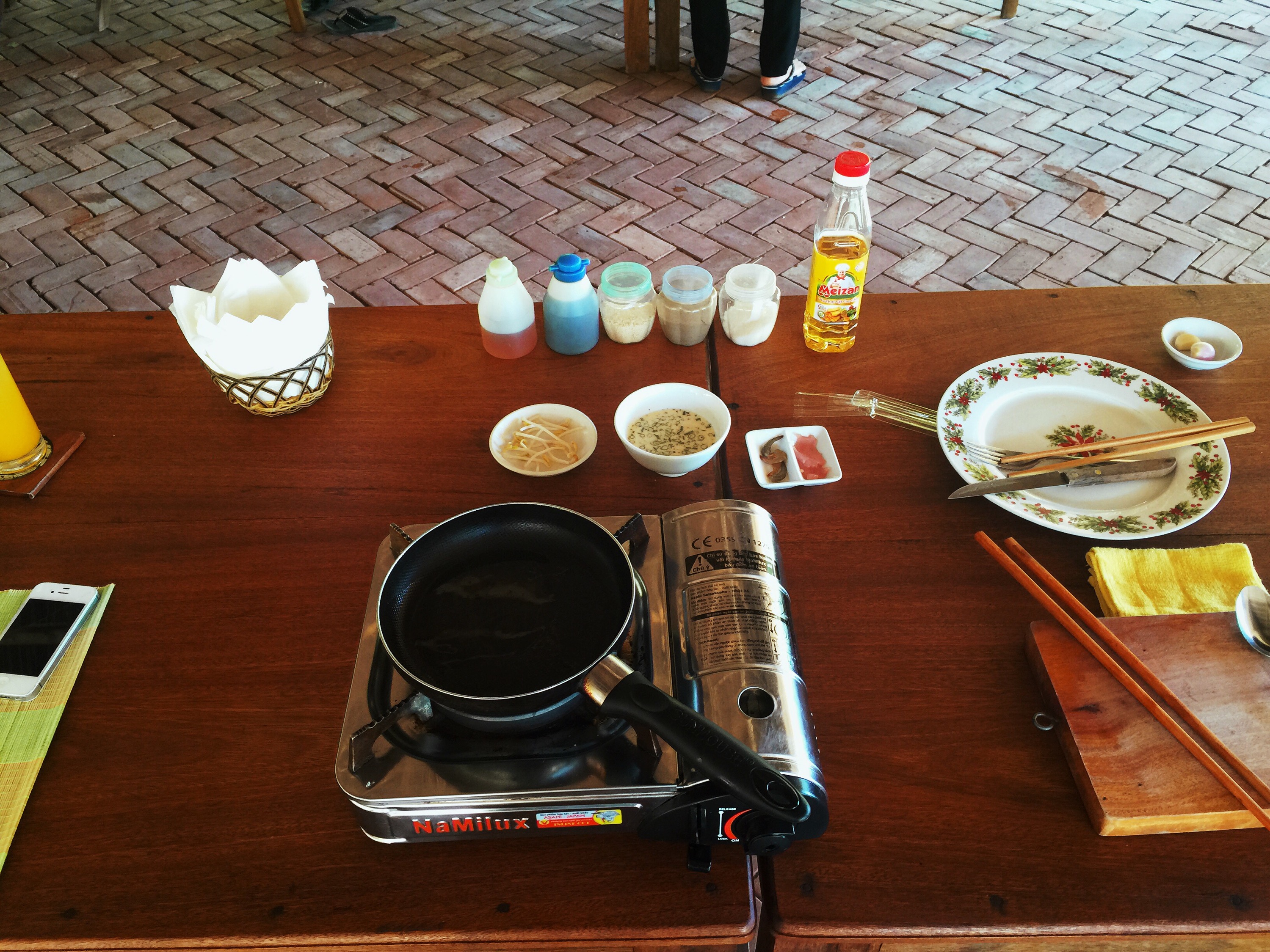
 Next up was the Banh Xeo – Crispy Vietnamese Crepes filled with pork and shrimp, bean sprouts and green onion. Served with lettuce leaves, fresh herbs and nuoc (dipping sauce).  I have made these before and have eaten my fair share of these around town so they are definitely a favourite of mine.  The trick is to have patience and let the pancake get crispy.  Hon showed us how to flip the pancake which was fun – I did OK but Laura had a few issues and Hon had to do some remedial work on her pancake.  Our theory though, was that they would still taste delicious and they did. 

    
 One of my favourite main dishes in the local restaurants is the Bun Bo Nam Bo – Herb salad with rice vermicelli and sauté beef, topped with roasted peanuts and hot soy sauce vinaigrette.  I normally ask them to replace the beef with chicken as I find the beef a little bland (far too spoilt at home with eye fillet steak).  Hon showed us how to make the soy sauce vinaigrette which tasted OK – I am more a fan of using a fish sauce based dipping sauce on my noodle salads – a bit more tang.  This dish gave us the chance to showcase our creative skills as it was all about the presentation.  Check it out : ) 

 The last dish of the day was the Pho Bo Hanoi – Beef rice noodle soup infused with beef bones, cinnamon, ginger and star anise.  Pho or soup is a staple dish of the Vietnamese people.  Prior to doing the spring rolls we had prepared the beef stock which needed to boil for about an hour and a half. Hon showed us how to ‘cook’ the noodles by putting them in a strainer and holding them in a pot of boiling water for about ten seconds. We also cooked some thinly sliced beef in the same way.  We then assembled our Pho and ate it – we were pretty full by this stage so didn’t do the dish justice.  I have had this dish once before and although I am a cinnamon fan it isn’t a favourite of mine. 

   
We had been plied with homemade passionfruit juice throughout the morning which was very tasty and refreshing – a bit more of a sugar hit than I’m used to but hey we were working hard cooking up a storm.

Hon escorted us back into Hoi An in a taxi which only took about ten minutes – it had taken us about 45 minutes by boat to get to the island but this gives the Chef’s assistants time to prepare all the ingredients that we had purchased at the markets.  This preparation includes chopping off the heads of the shrimp and prawns so they are no longer high tailing it around the place!  Laura was so releived : )

Posted in HoiAn, Vietnam | Tagged , , | 1 Comment

Danang Golf Club – Danang, Vietnam

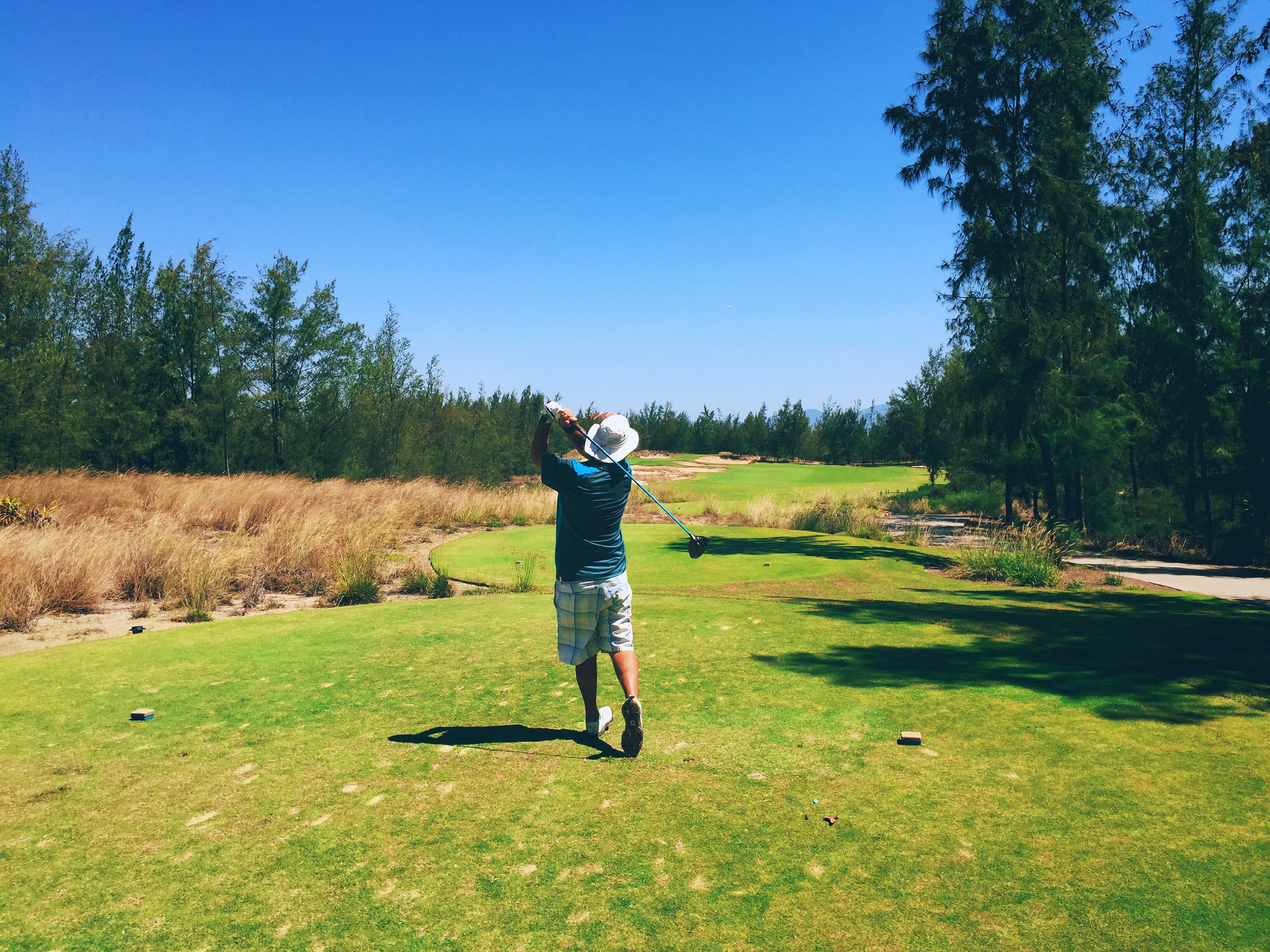
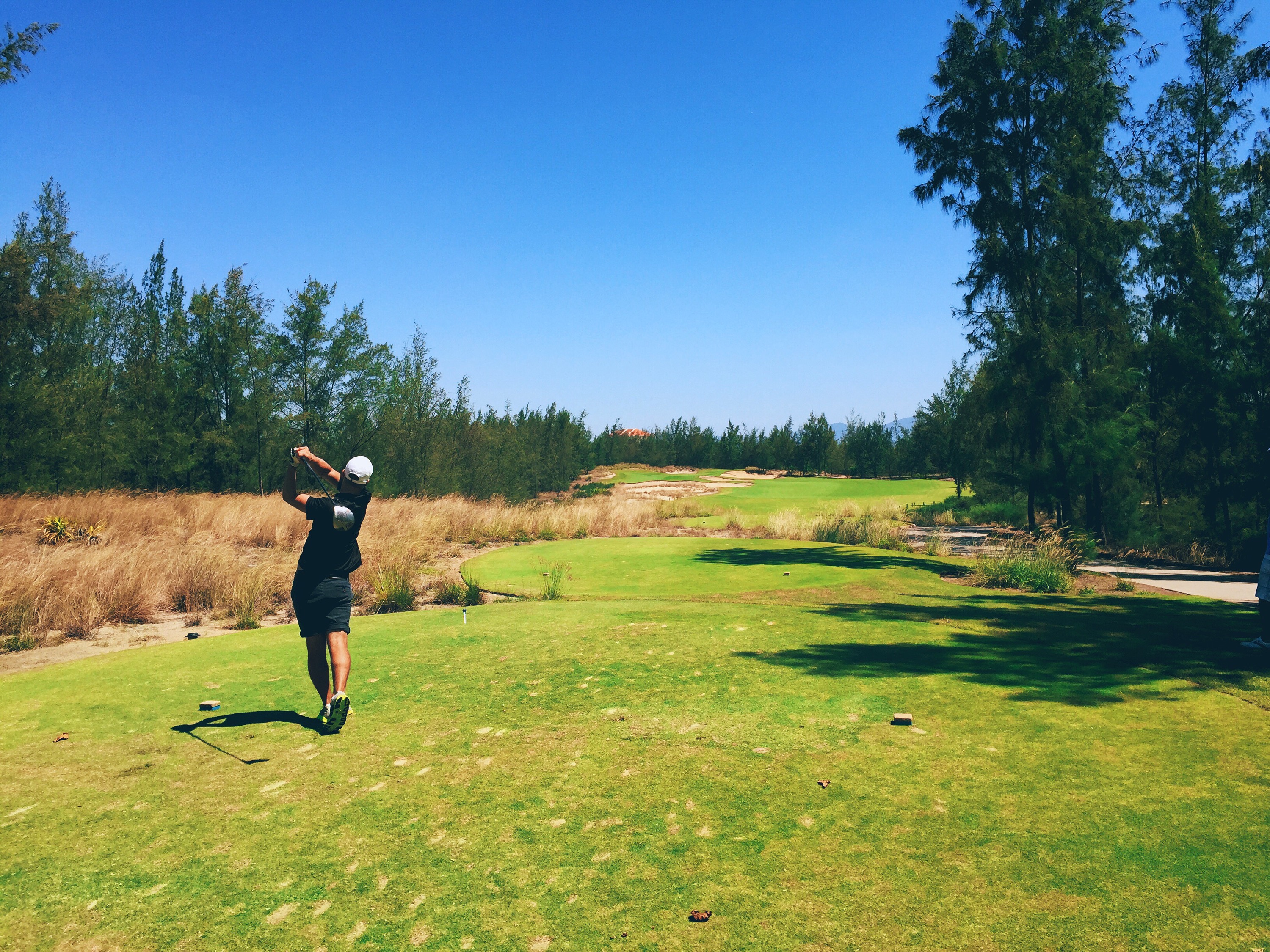
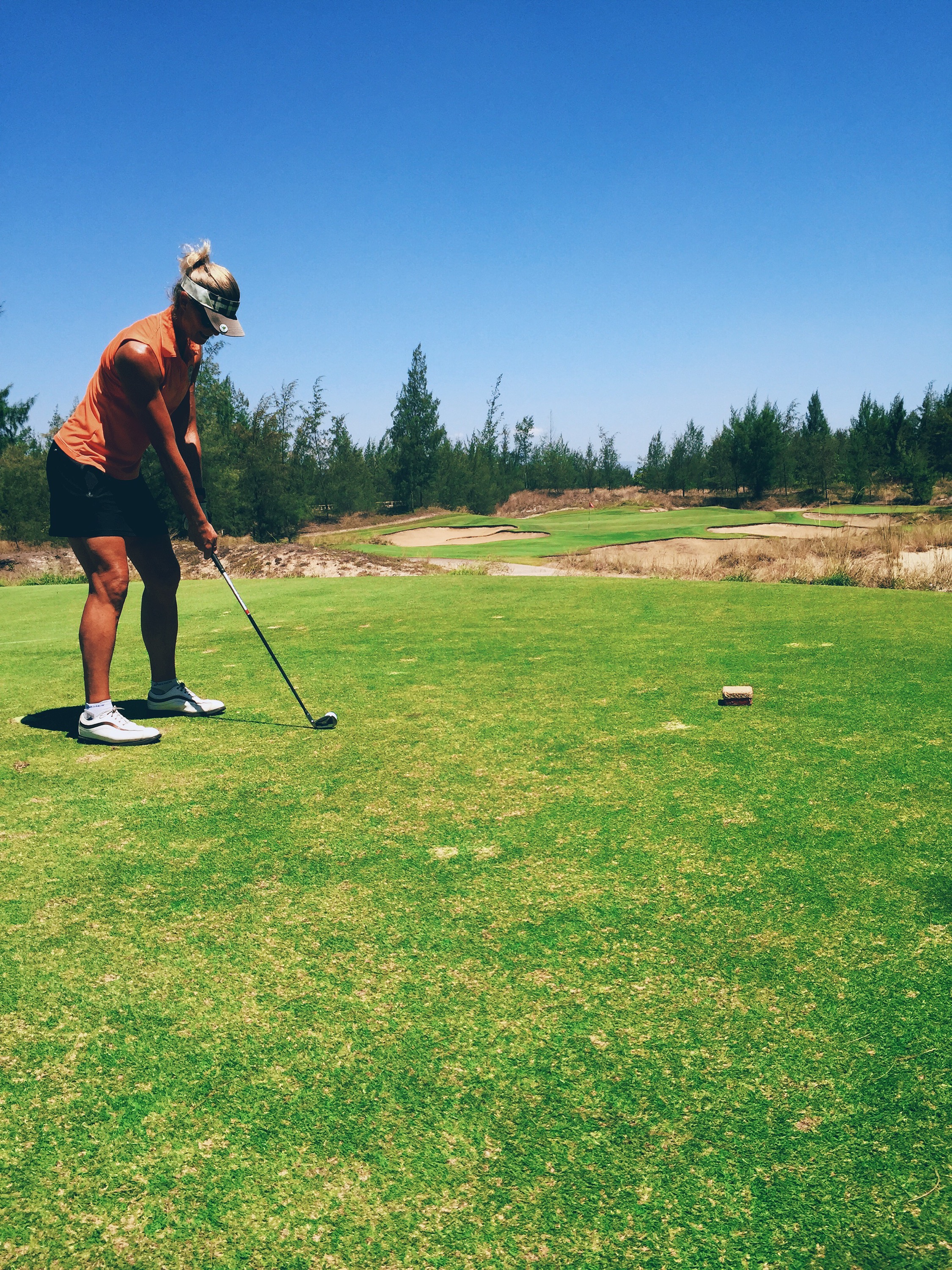
On Tuesday the 18th August we went next door to play golf at the Da Nang Golf Club.  It is situated on the fledgling central coast of Vietnam amid 150 hectares of dunescape similar to what the world’s first golf courses were carved from.  It’s chief feature is a 7,160-yard, 18-hole, links-style layout that was designed in the true spirit of the game — blown-out bunkers, firm and fast fairways that bleed gently into wild seaside vegetation, rugged waste areas, swales and hollows — by Australian golf legend and former world No. 1 Greg Norman. 

When Greg Norman checked in on the progress of the Dunes Course, in March 2010, he said: “The fact is, you’d be doing a very poor job to make a boring course out of a site like this.” Certainly Mother Nature had a gigantic hand in the formation of a layout that evokes an experience often found in seaside courses in the British Isles and southeastern Australia. 

When it comes to professional golf achievements, few players in the history of the game are in the same category as Greg Norman. During his prime, he won 86 international titles, including two British Opens. In 1987, The Shark (as he came to be known) took his profound knowledge of the game and made the official jump into the design industry. He formed Greg Norman Golf Course Design (GNGCD) and the rest is history.  Over the past quarter century, GNGCD has created more than 70 courses on six continents and established a reputation for imaginative designs that acknowledge golf’s traditional origins and the landscapes on which it has been played.
Da Nang Golf Club’s Dunes Course is the first true links style course in Southeast Asia. Its tapestry of Old World features is reminiscent of the traditional links courses of the UK, while its indigenous surroundings call to mind the acclaimed courses of Australia’s Sandbelt region. 

The Dunes Course certainly has a different feel to it’s neighbour – Montgomerie Links, which in my mind is a more classical, pretty course.  We started on the tenth hole which is a little daunting as you look down the fairway and are greeted with sand dunes jutting out on both sides of the fairway.  After you are reunited with your tee shot you realise there is actually more room than you think.  The hole reminded me of the first hole at Doonbeg Golf Club on Ireland’s West Coast – although that hole had an elevated tee block and the Atlantic Ocean down the left hand side.

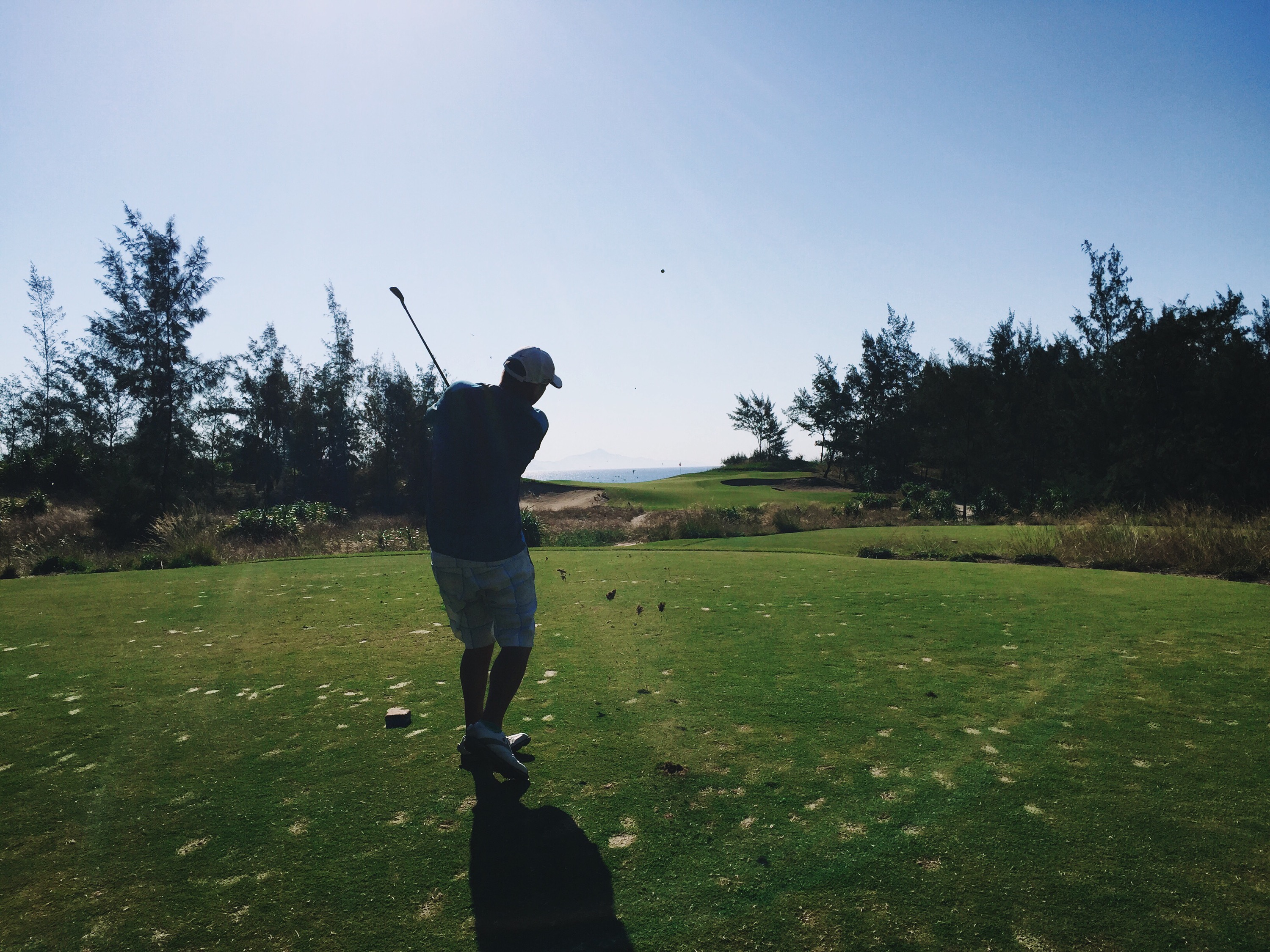
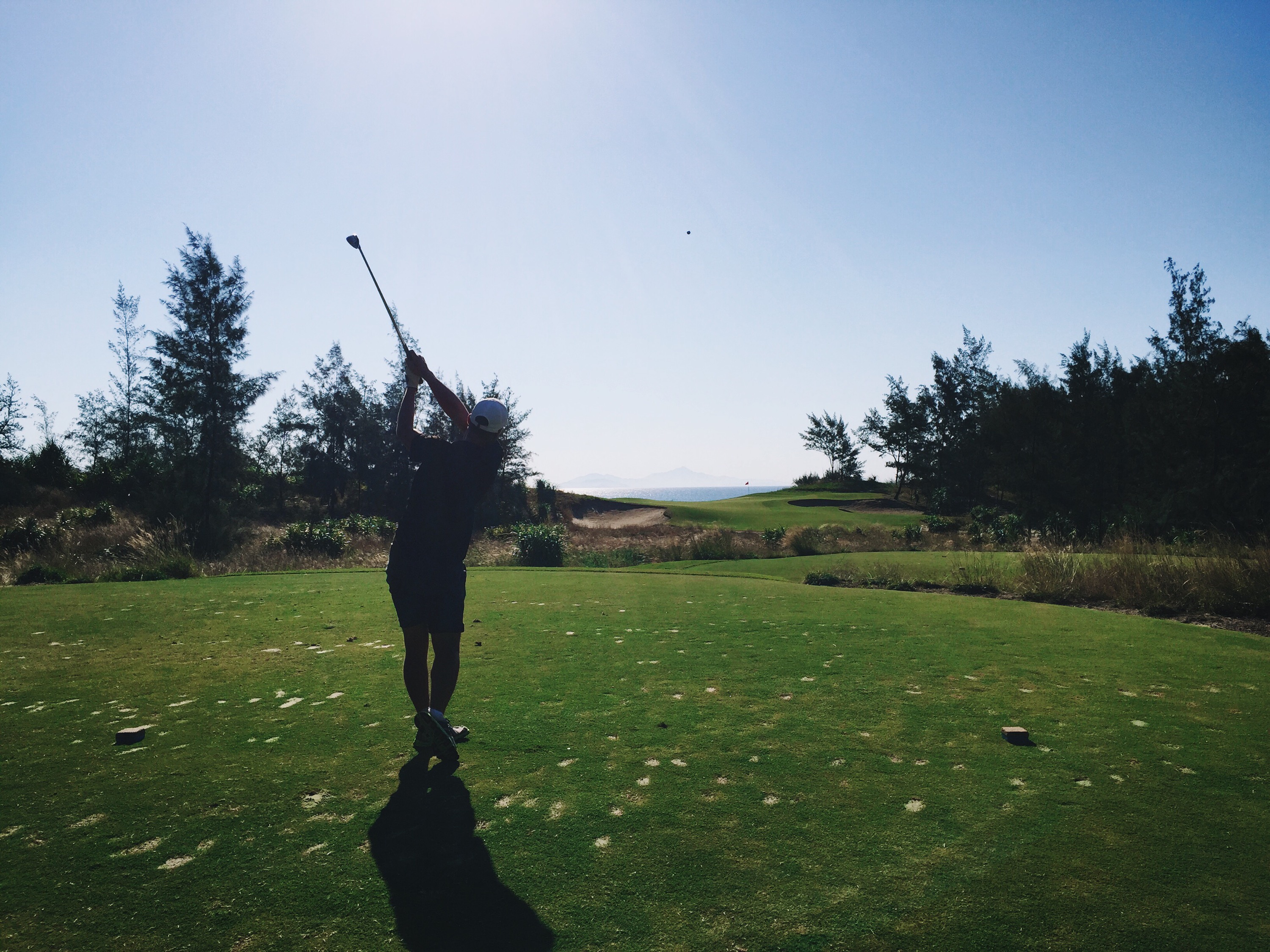
The fifteenth, sixteenth and seventeenth holes are on the ocean side of the road which are reached by an under road tunnel.  The par three sixteenth is the course’s signature hole – you hit towards the ocean and a back drop of the Cham Islands.

We all enjoyed the course and the Caddies were all very interactive and lots of fun.  They were all in there early twenties and single (very unusual in Vietnam).  Of course they all loved Paul but we had to let them down gently when we told them he was spoken for ; )  


Posted in Danang, Vietnam | Tagged , , | 1 Comment

Intercontinental Da Nang Sun Peninsula Resort – Da Nang, Vietnam

On Wednesday night we decided to treat ourselves to a bit of luxury.  Laura wanted us to all get dressed up and go somewhere nice for dinner.  A splendid idea.  Most of the restaurants in Hoi An are very casual and I am not that familiar with the restaurants in Da Nang so if in doubt let your fingers do the typing.  “fine dining Da Nang” produced the InterContinental Da Nang Sun Peninsular Resort – it has three fine dining restaurants.  

La Maison 1888 captures the essence of haute French dining, with the distinct gourmet experience of delectable à la carte menu of distinguished classic French cuisine. This signature restaurant is fast becoming the number one gastronomic destination in Vietnam.
Barefoot is a relaxed beachfront restaurant which offers chic and casual dining accompanied by an ocean breeze. 

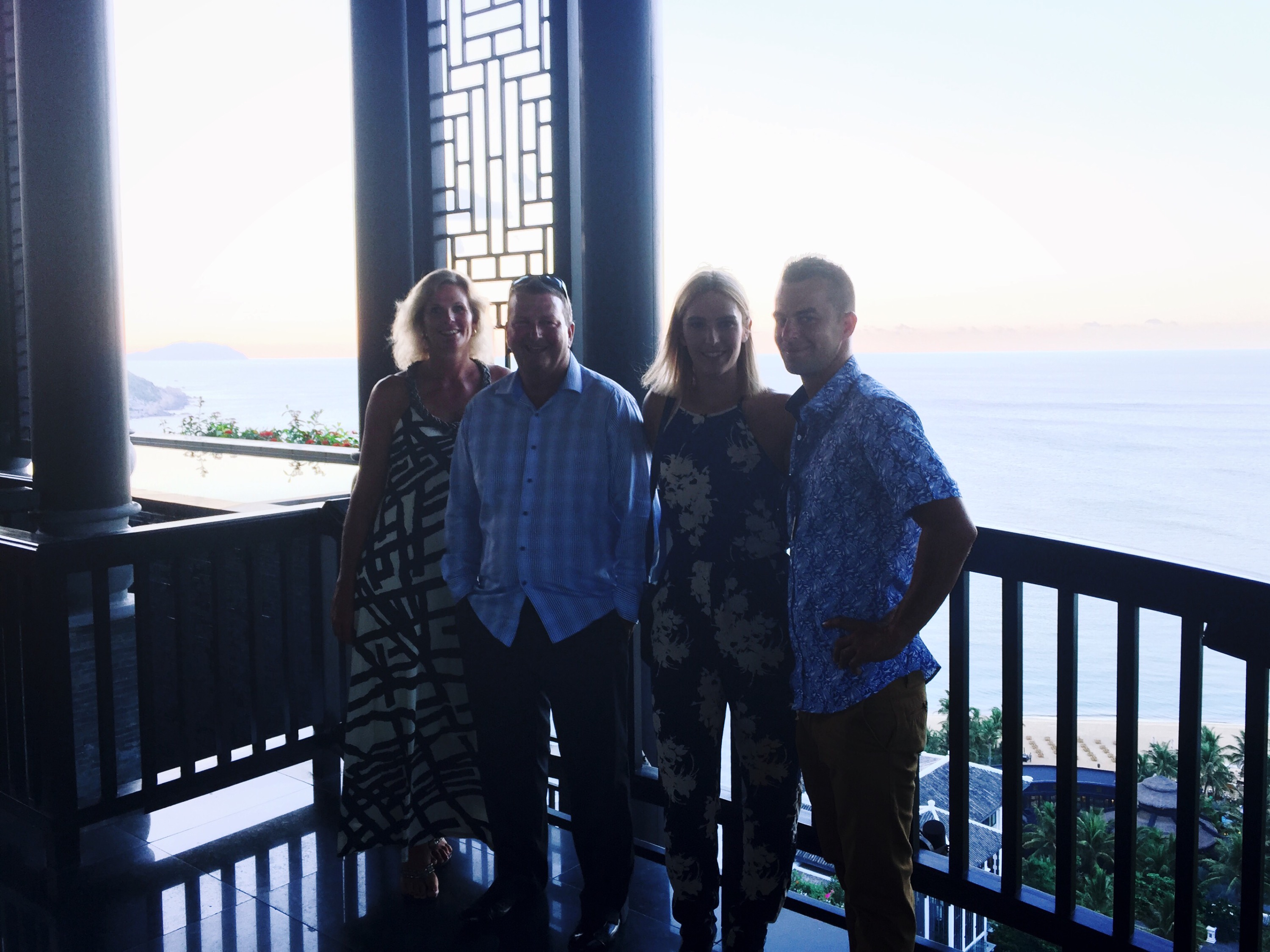
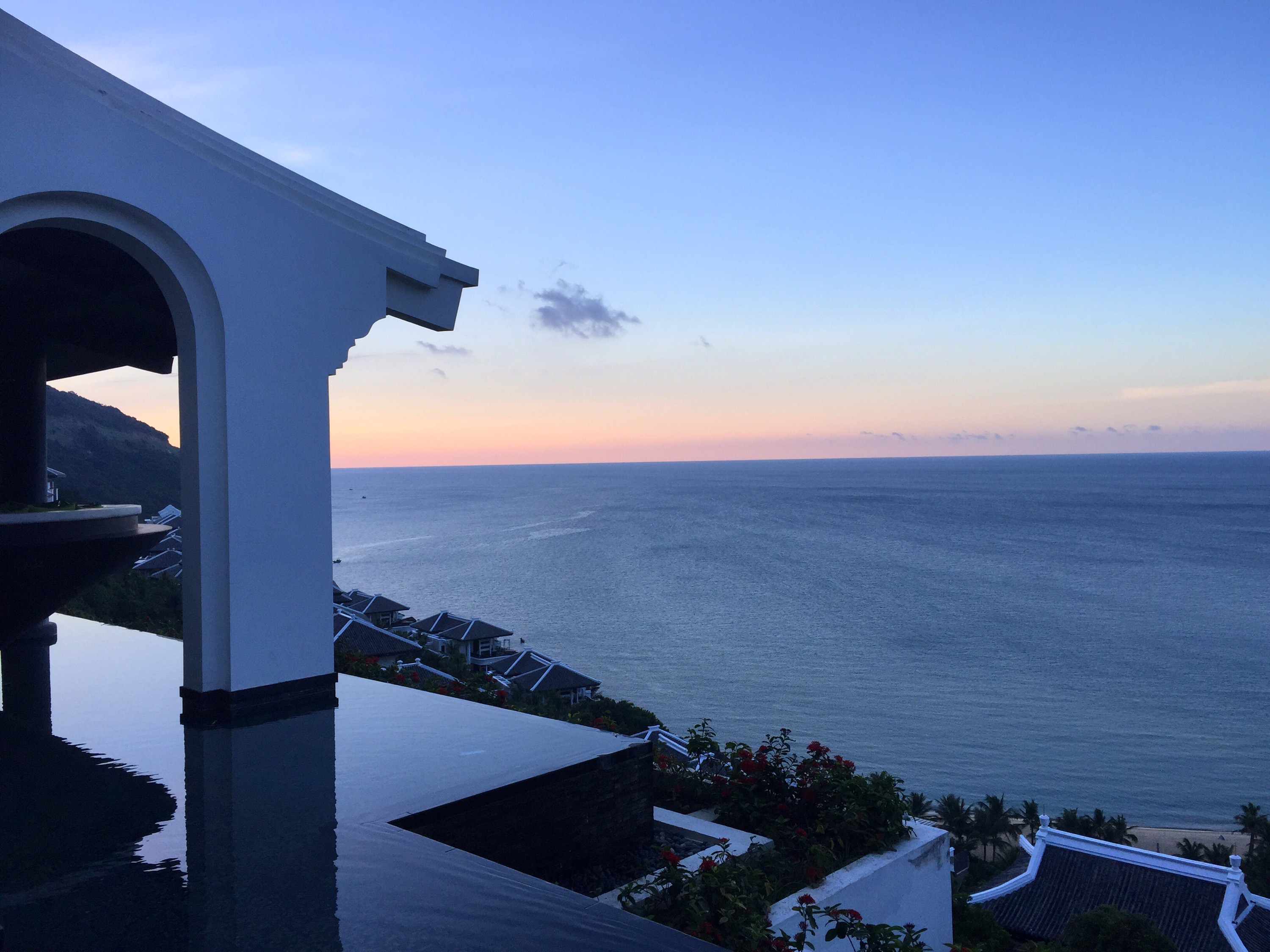
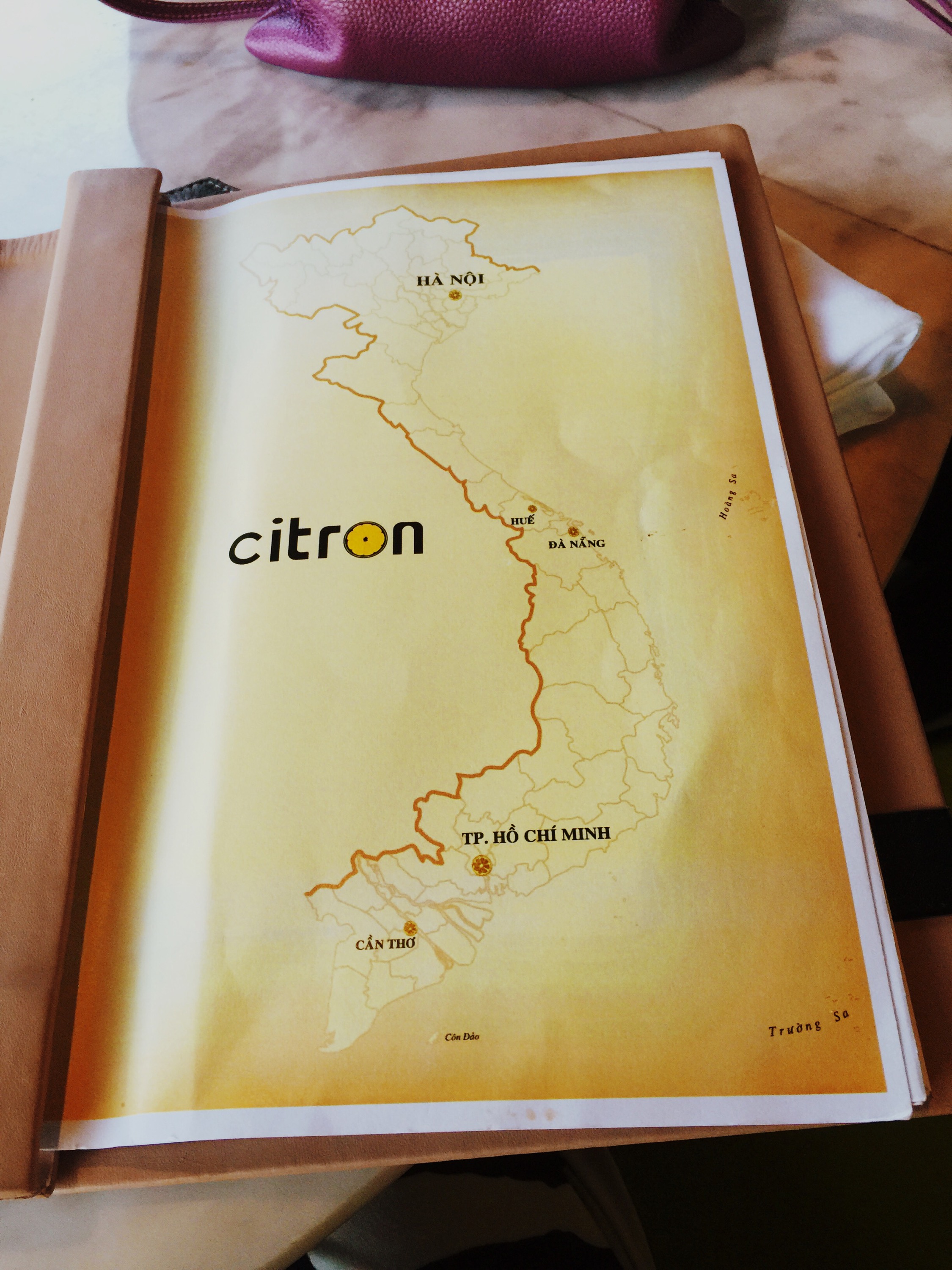
Citron, located on the highest level of the resort, makes a striking first impression.  Citron has a full menu that travels the culinary map of Vietnam with signature dishes from the North all the way down to the Mekong Delta.  The piece de resistance, however, were the private dining booths in the shape of inverted non la (Vietnam’s iconic conical hats) that float out over the hillside 100 meters above sea level, with spectacular views of the entire bay and surrounding mountains. 

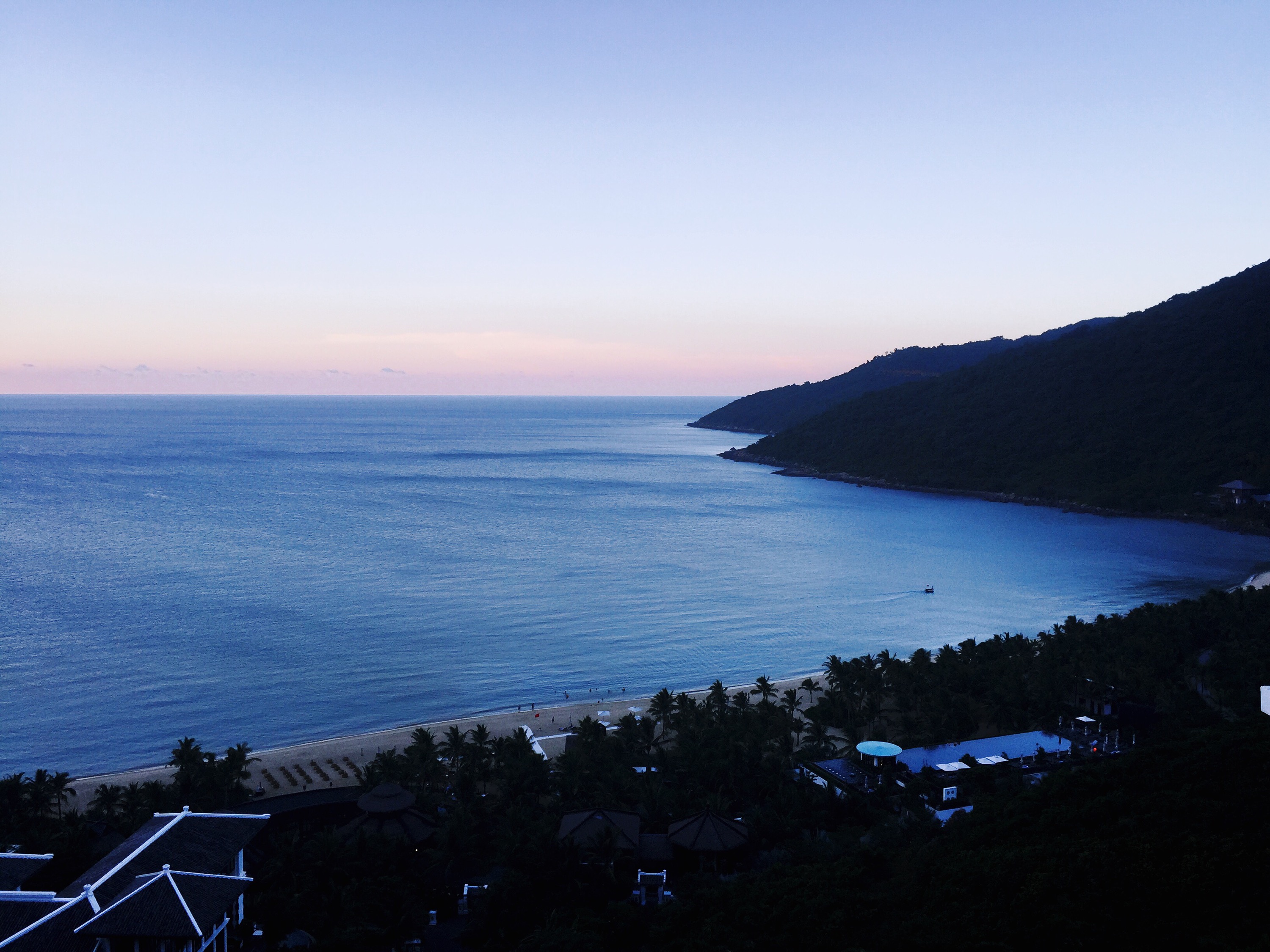
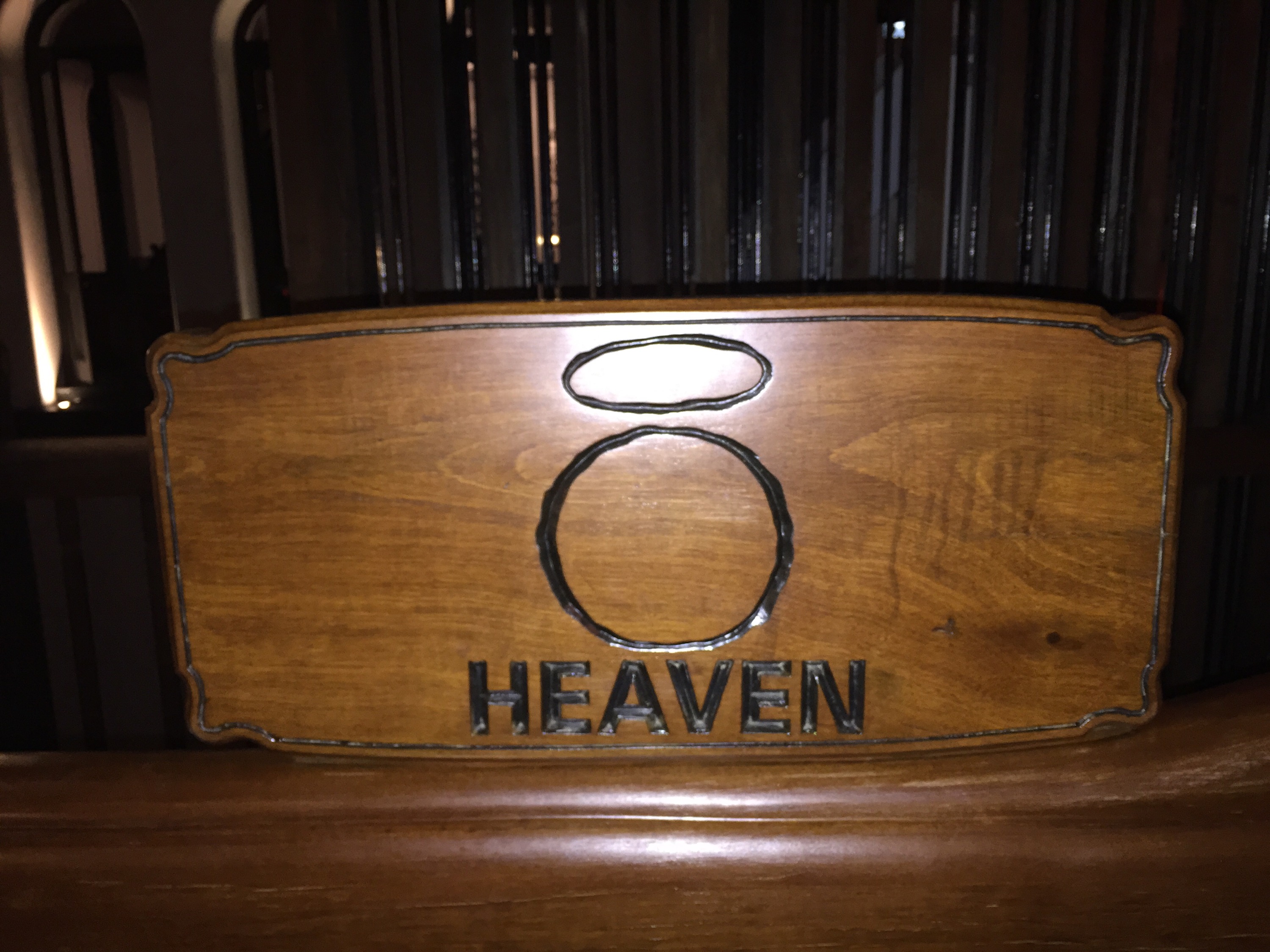
InterContinental Da Nang Sun Peninsula Resort is 5 star luxury resort & spa.  It is one of the flagship resorts under the management of InterContinental Hotels Group in Vietnam. The resort opened on June 1, 2012.  InterContinental Da Nang Sun Peninsula Resort is located in the Sơn Trà Peninsula of Da Nang, which is also known as Monkey Mountain.  The resort occupies 39 hectares of the peninsula which also includes a  700-meter private beach.  There are four levels to the resort – Heaven, Sky, Earth and Sea.  Each level is reached by a funicular.

This resort was designed by Bill Bensley, a Harvard-educated architect and landscape designer. The design of the resort is inspired by the culture of traditional Vietnamese with luxury and contemporary elements. The resort was under construction for over 6 years before the official opening date.  Apparently Mr Bensley oversaw every single detail right down to the crockery and cutlery.  The construction standard and attention to detail on this property are definitely a world above the rest of Vietnam where the standards are quite poor compared to what we are used to.
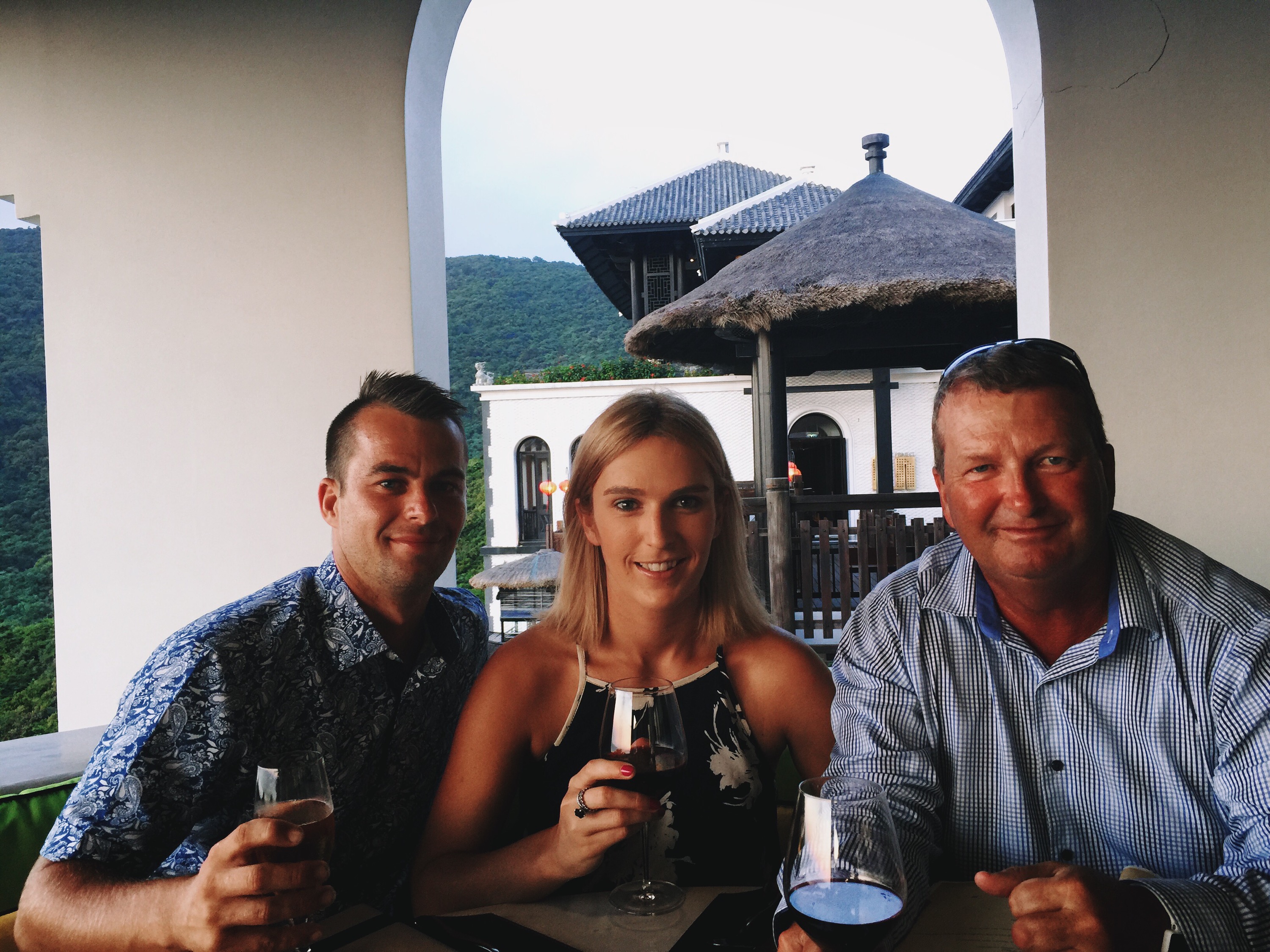
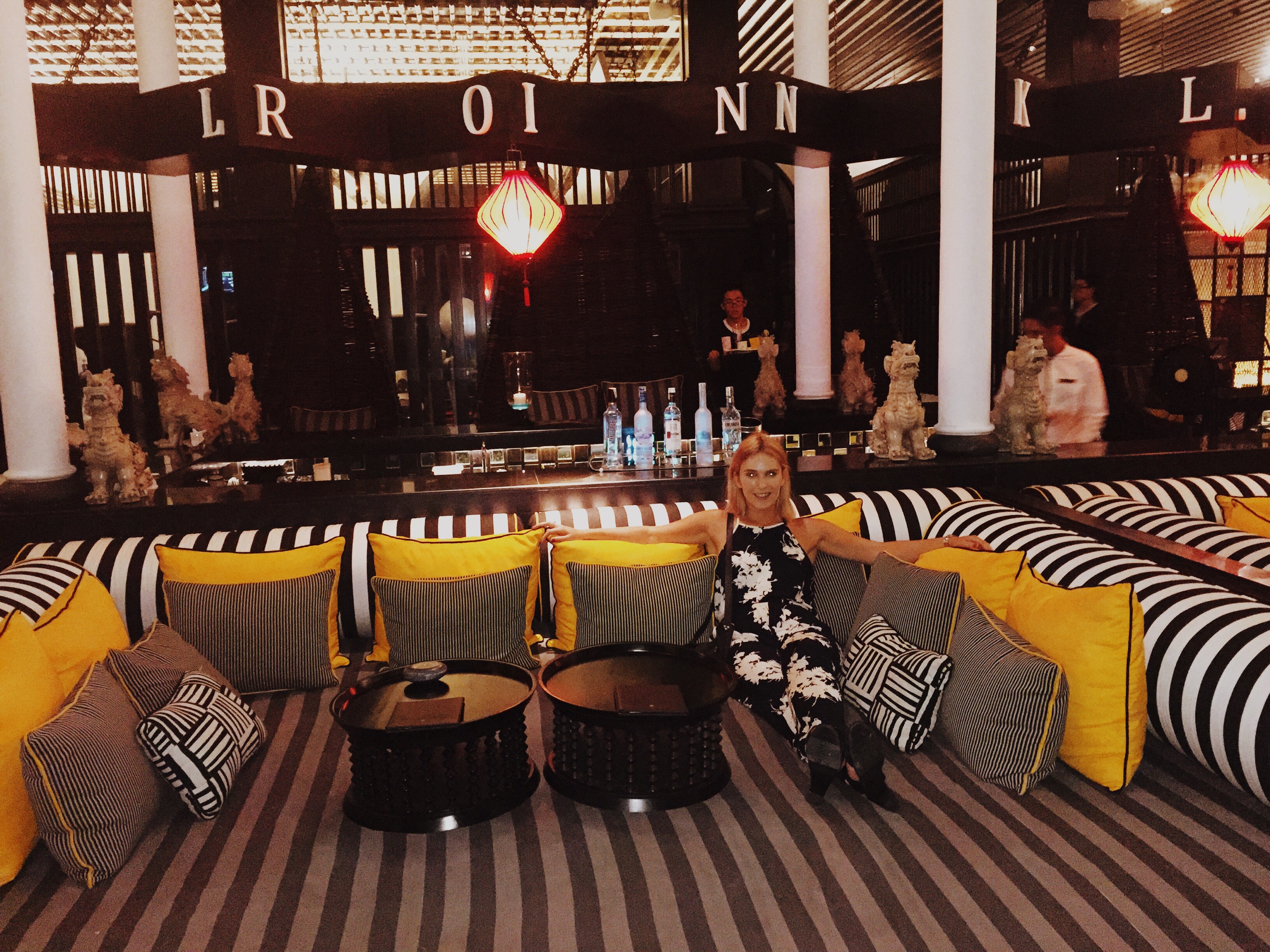
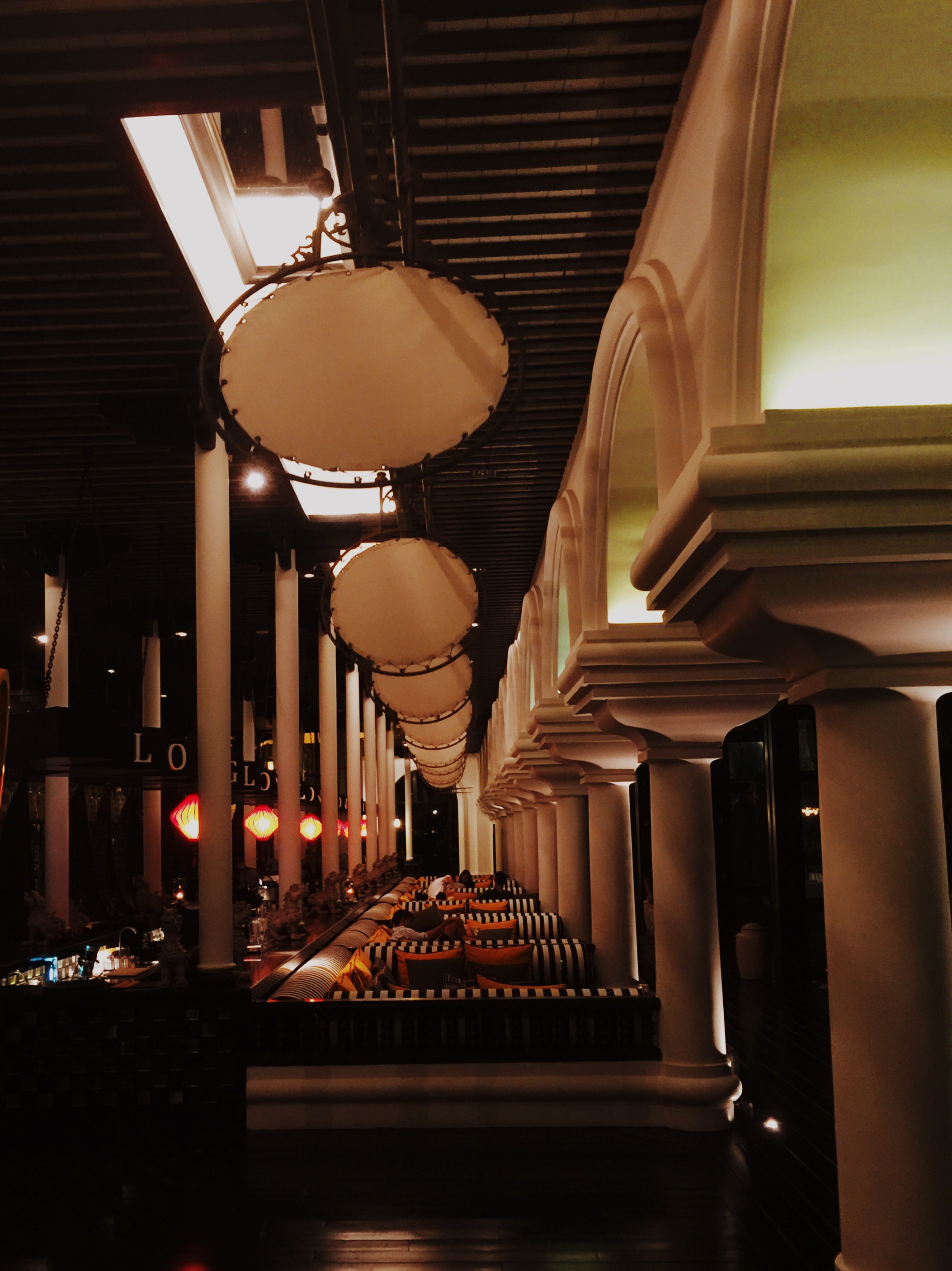
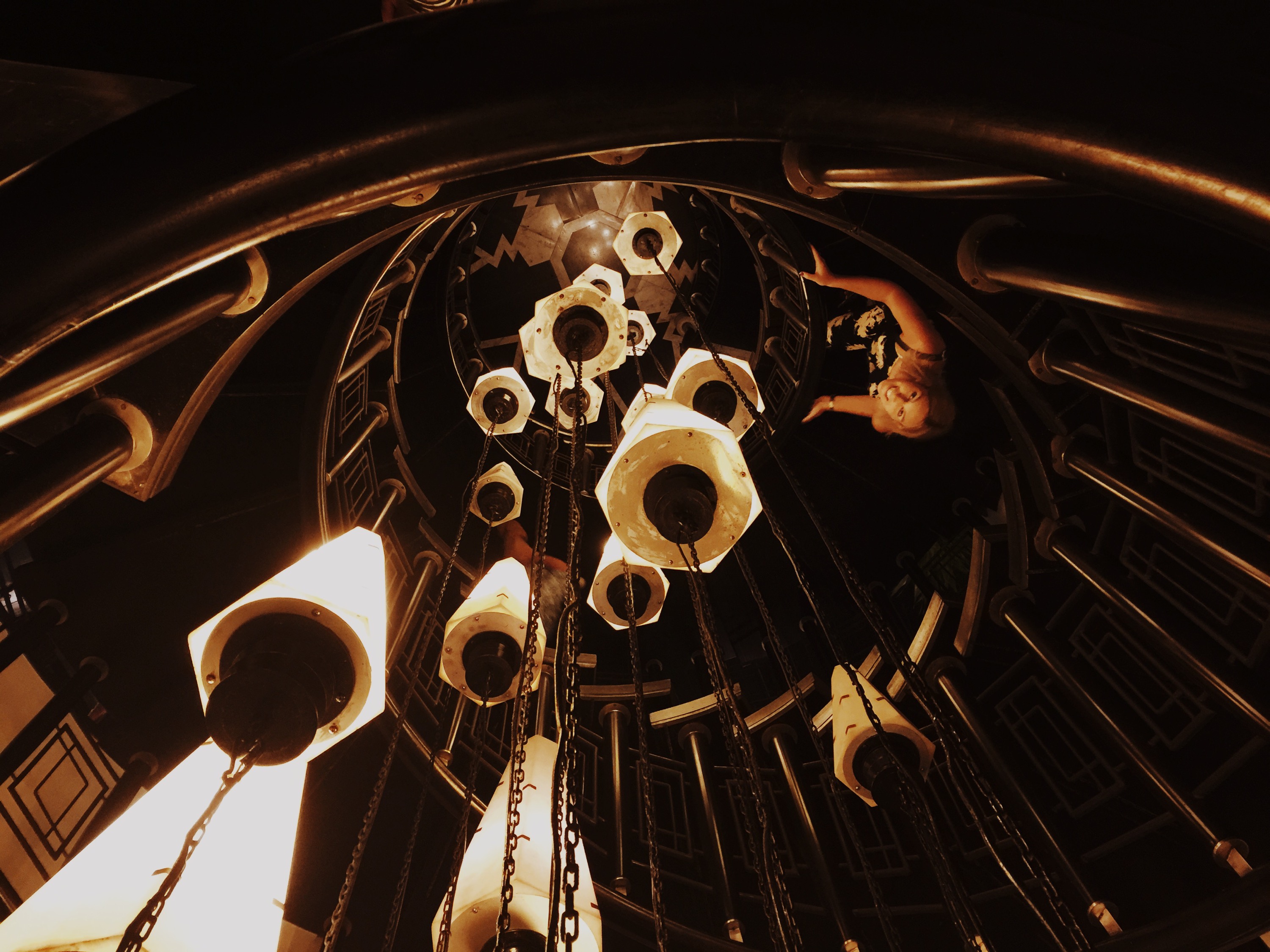
We chose to dine at Citron – there was no beating the views and the private dining booths were something else.  We are also enjoying the Vietnamese cuisine and it was nice to enjoy some specialities from the north and south too.  After dinner and a bottle of red we caught the funicular down to the sea where we checked out the beach and the Long Pool which sits on top of the Long Bar.  It sure is a very nice resort and we enjoyed our few hours of luxury before returning to our home away from home on the golf course.  


Posted in Danang, Vietnam | Tagged , , | 1 Comment

The Hills of Đà Nẵng – Đà Nẵng, Vietnam

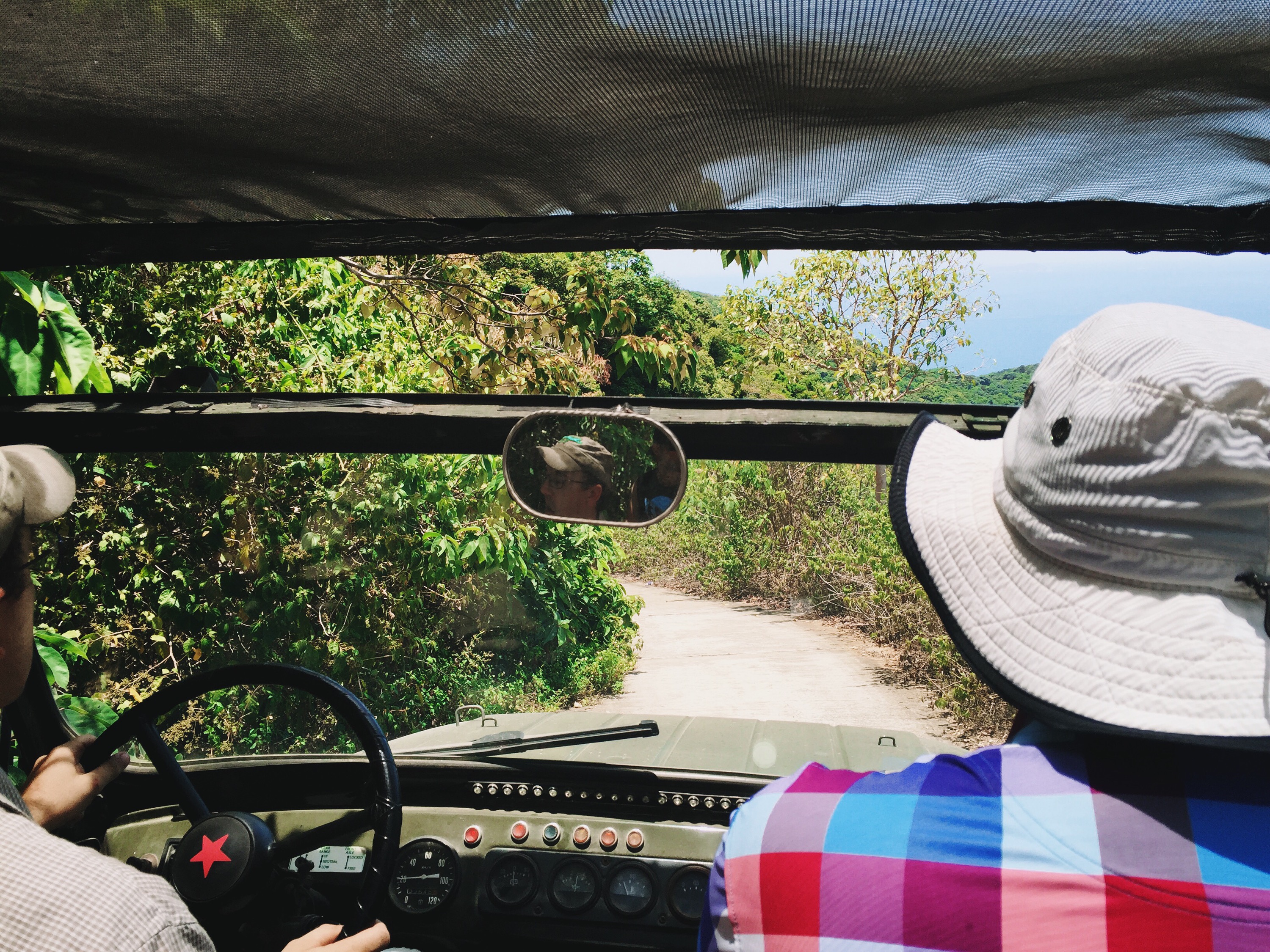
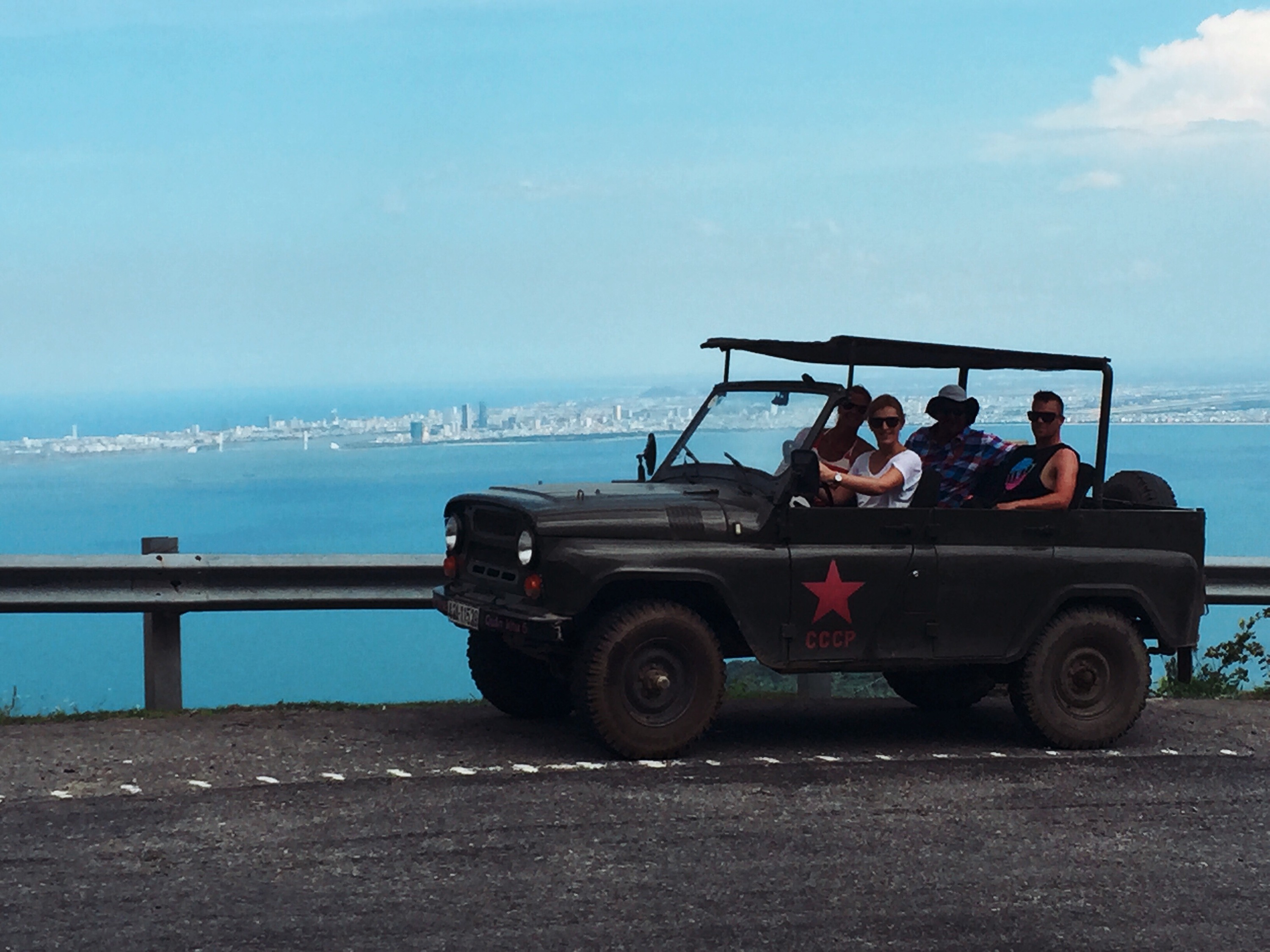
On Thursday the 13th August we took a Looking Glass Jeep Tour into the Hills of Đà Nẵng.  Jeremy picked us up in his 1980’s restored US Army Jeep, set the iPod to play Good Morning Vietnam and we were off.  It was very cool whipping along the highway with the wind blowing in our hair. 

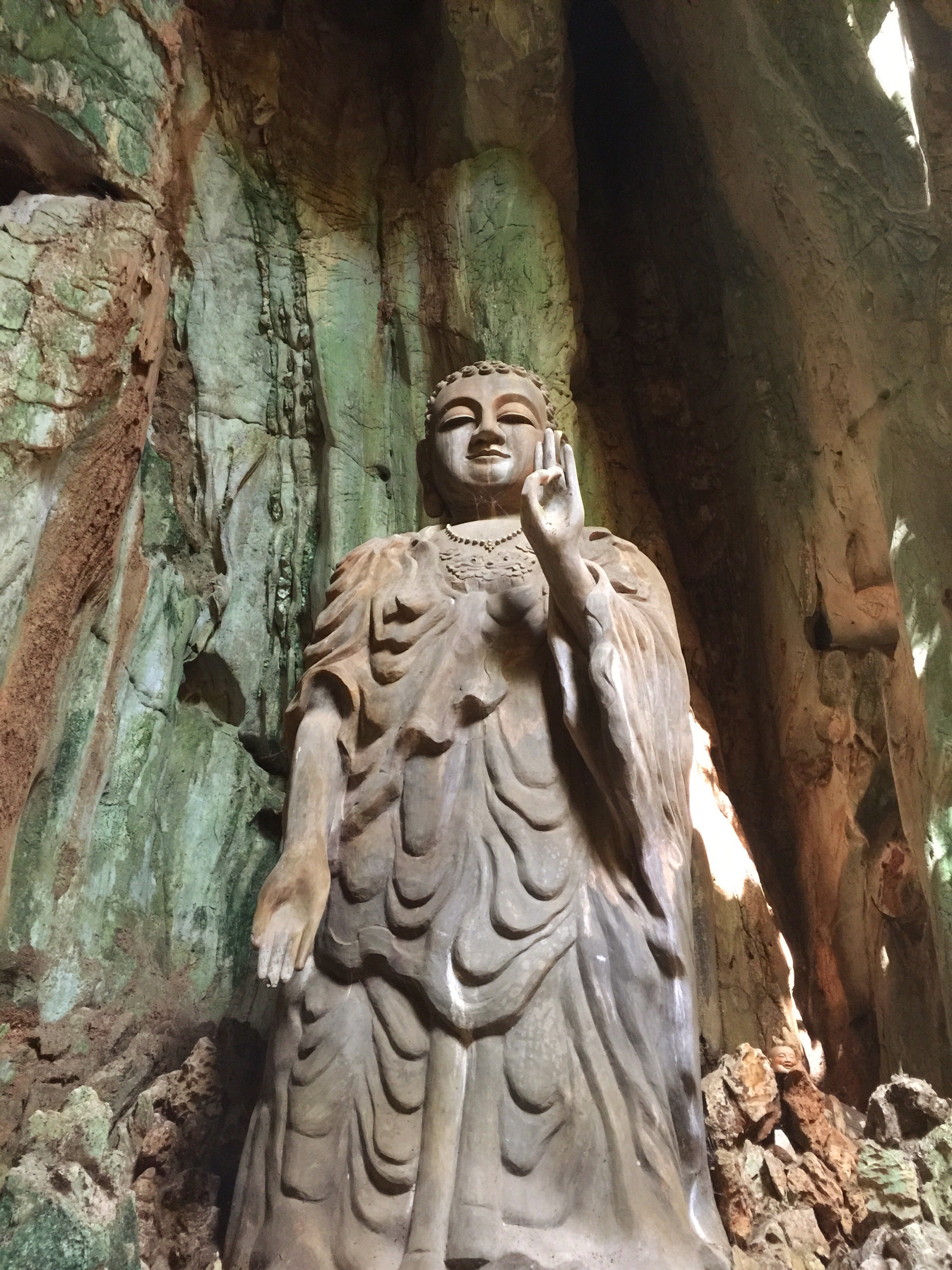
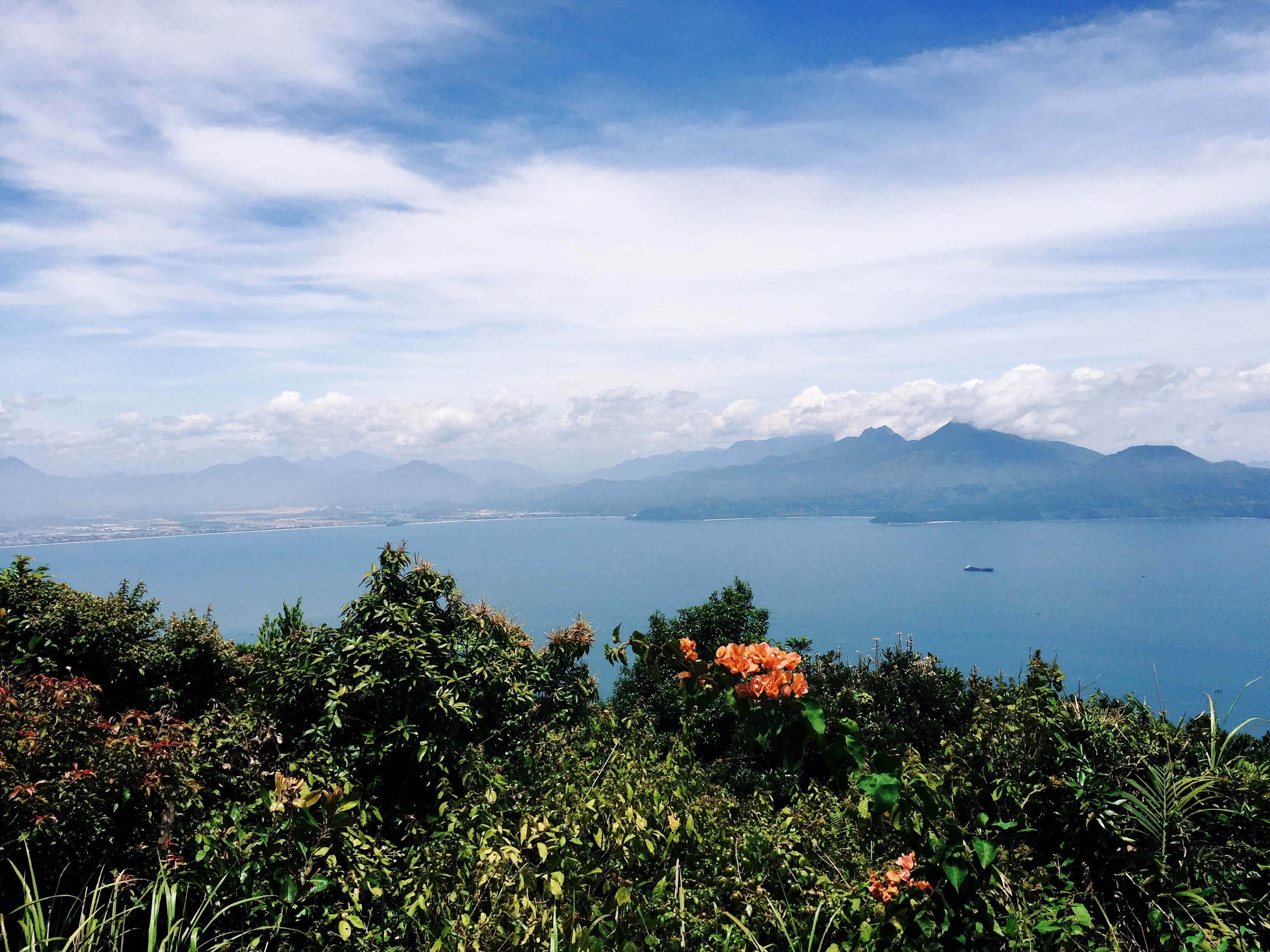
 First stop was Marble Mountain.  Marble Mountains (Vietnamese: Ngũ Hành Sơn; “Five elements mountains”) is a cluster of five marble and limestone hills located in Ngu Hanh Son ward, south of Đà Nẵng city in Vietnam. The five ‘mountains’ are named after the five elements; Kim (metal), Thuy (water), Moc (wood), Hoa (fire) and Tho (earth).  Thuy Son (Mountain of Water) is the largest and most famous of the five marble mountains and contains a number of caves in which Hindu, Buddhist and Cham deities are worshipped. A stairway of 156 steps leads to the summit of Thuy Son, the only marble mountain accessible to visitors.  It was only 8.45am but it was already about 30 degrees as we climbed these stairs.  There is a lot to see once you get up the stairs – temples, shrines, caves and a great view over China Beach and Đà Nẵng.  You also get a good view of the other Marble Mountains.

Despite sharing our experience with other tourists it is a very peaceful and serene place.  I can see why people would come up here to worship and meditate.  There are some monks that live on Marble Mountain as caretakers of the shrines and the faith.  There are a number of grottoes, including Huyen Khong and Tang Chon (caves), and many Hindu and Buddhist sanctuaries, the pagoda Tam Thai, built in 1825, Tu Tam (place of worship for people buried at the Pho Dong tower) and Linh Ung, and the tower of Pho Dong (the place where homeless people were buried).   The sanctuaries feature statuary and relief depictions of religious scenes carved out of the marble. 

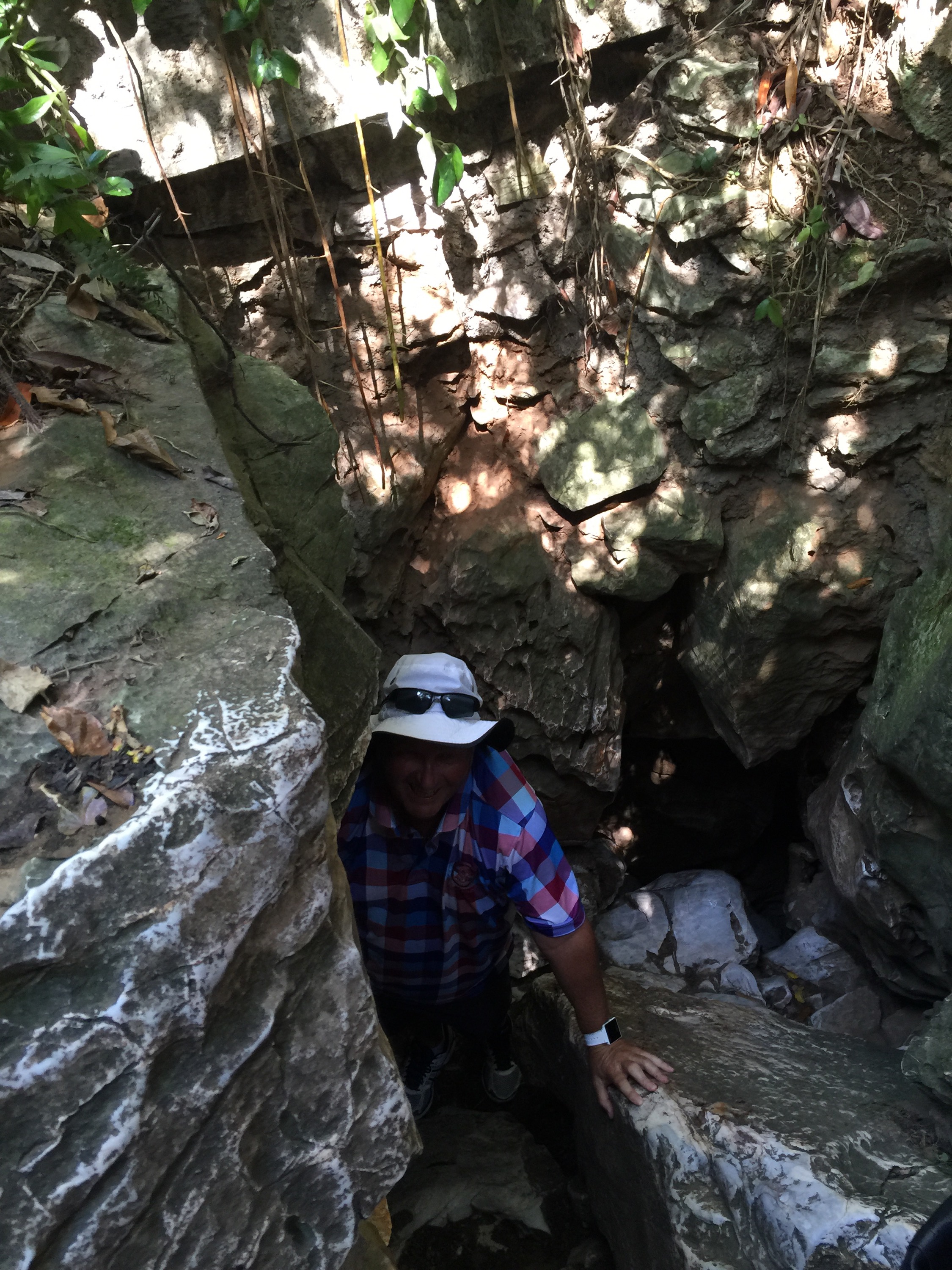
   We then climbed up to one of the summits – not the highest one but it still had panaromic views of the area.  Jeremy had given us the option of doing either summits, both or none.  I choose to go up one of the summits and the others agreed although after the climb Steve was wishing he had chosen the ‘none’ option!  We had to climb up through a cave and then through an opening near the top.  The views were certainly worth it though.  


 After descending part way down we went into the Huyen Khong Cave.  It is a very impressive Cathedral-like cave with natural light entering through a small skyward opening.  This large cave houses a large Cham Buddha, Buddhist and Confucian shrines along with various inscriptions carved into the walls.

The mountains were very near the American Marble Mountain Air Facility during the Vietnam War. According to William Broyles, Jr.’s “Brothers in Arms”, the Marble Mountains contained a hospital for the Vietcong, probably within earshot of the American air field and China Beach (which bordered the air field on the side opposite the mountains). He describes the enemy as having been so “certain of our ignorance. . . . that he had hidden his hospital in plain sight”.

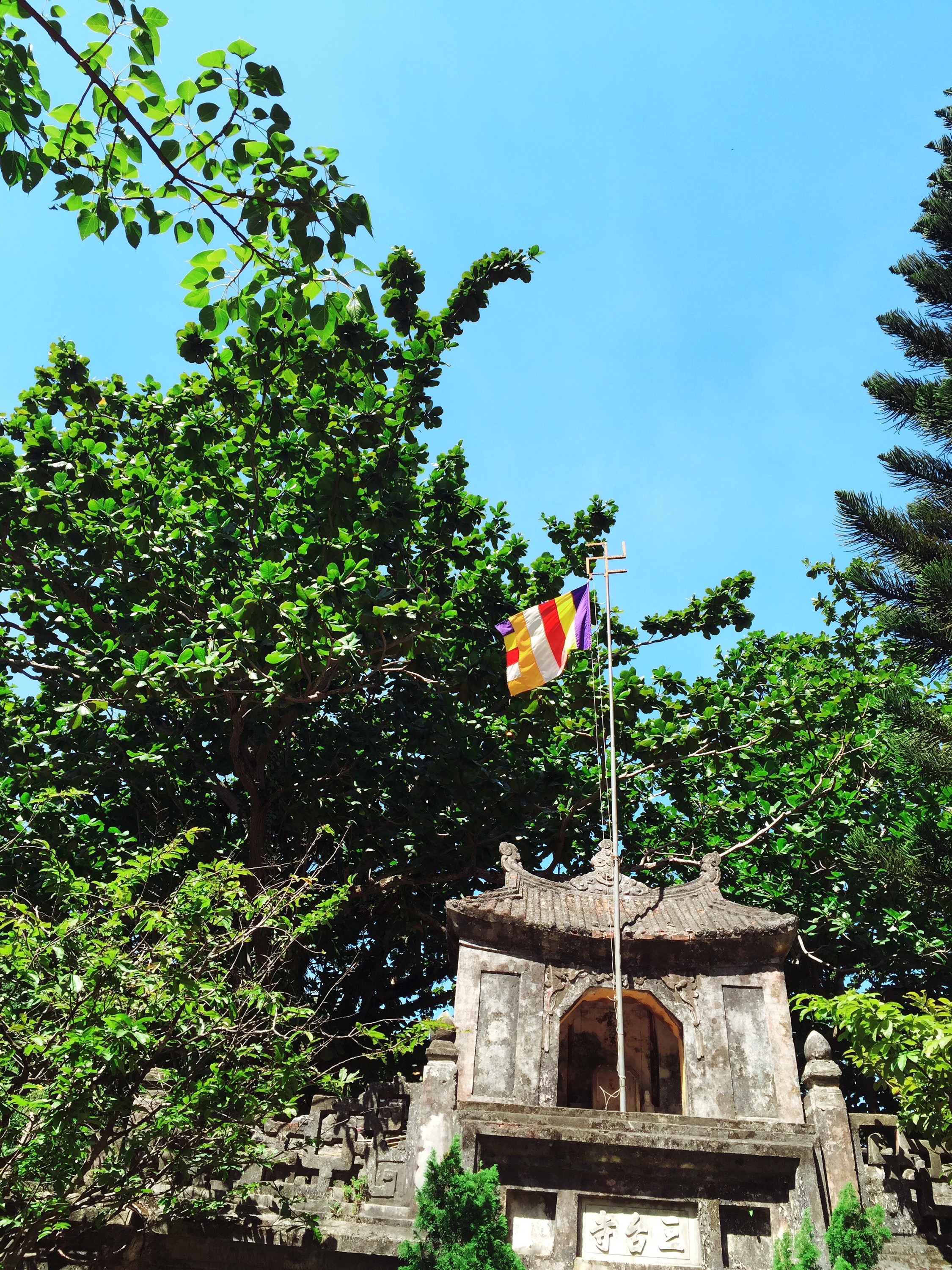
On the way out of the gates we passed a statue of a happy Buddha and Jeremy explained the basic prrinciples  of Buddhism – ssee below for a more in depth explanation.  There was also a flag flyng above the entrance gate which is the flag of Buddha.  The six vertical bands of the flag represent the six colors of the aura which Buddhists believe emanated from the body of the Buddha when he attained Enlightenment:

Blue (Nīla): Loving kindness, peace and universal compassion

Yellow (Pīta): The Middle Path – avoiding extremes, emptiness

Red (Lohita): The blessings of practice – achievement, wisdom, virtue, fortune and dignity

White (Odāta): The purity of Dharma – leading to liberation, outside of time or space

Orange (Manjesta): The Buddha’s teachings – wisdom

The sixth vertical band, on the fly, is made up of a combination of rectangular bands of the five other colours, and represents a compound of the other five colours in the aura’s spectrum. This compound colour is referred to as Pabbhassara (‘essence of light’). 

   We then walked back through Non Nuoc Village at the foot of the Mountain where the locals are famous for stone sculptures and handicrafts.  Here you can buy many things made of marble stone, from earrings, necklaces, vases to the huge sculptures of Buddha. In the past, rock was extracted directly from the Marble Mountains to make sculptures but now the direct extraction is illegal. Materials for sculpturing work are now transported from nearby provinces like Quang Nam and Thanh Hoa.  Jeremy told us it also comes in from China.

It was back into the jeep and the natural air conditioining which was desperately needed – we were all melting in the heat.  Next stop was to see a local boat builder who uses bamboo and cow manure to make fishing baskets.  The bamboo is split and stripped down into a flax like form and then woven together into a square.  The square is then shaped into a circle and a more solid form of bamboo is used to form the rim. The holes in the weaving are then plugged up with cow manure and left to dry.  A cow manure slush is then used to effectively lacquer the boat before more drying and setting in the sun.  The Vietnamese are very good at using everything for something. 


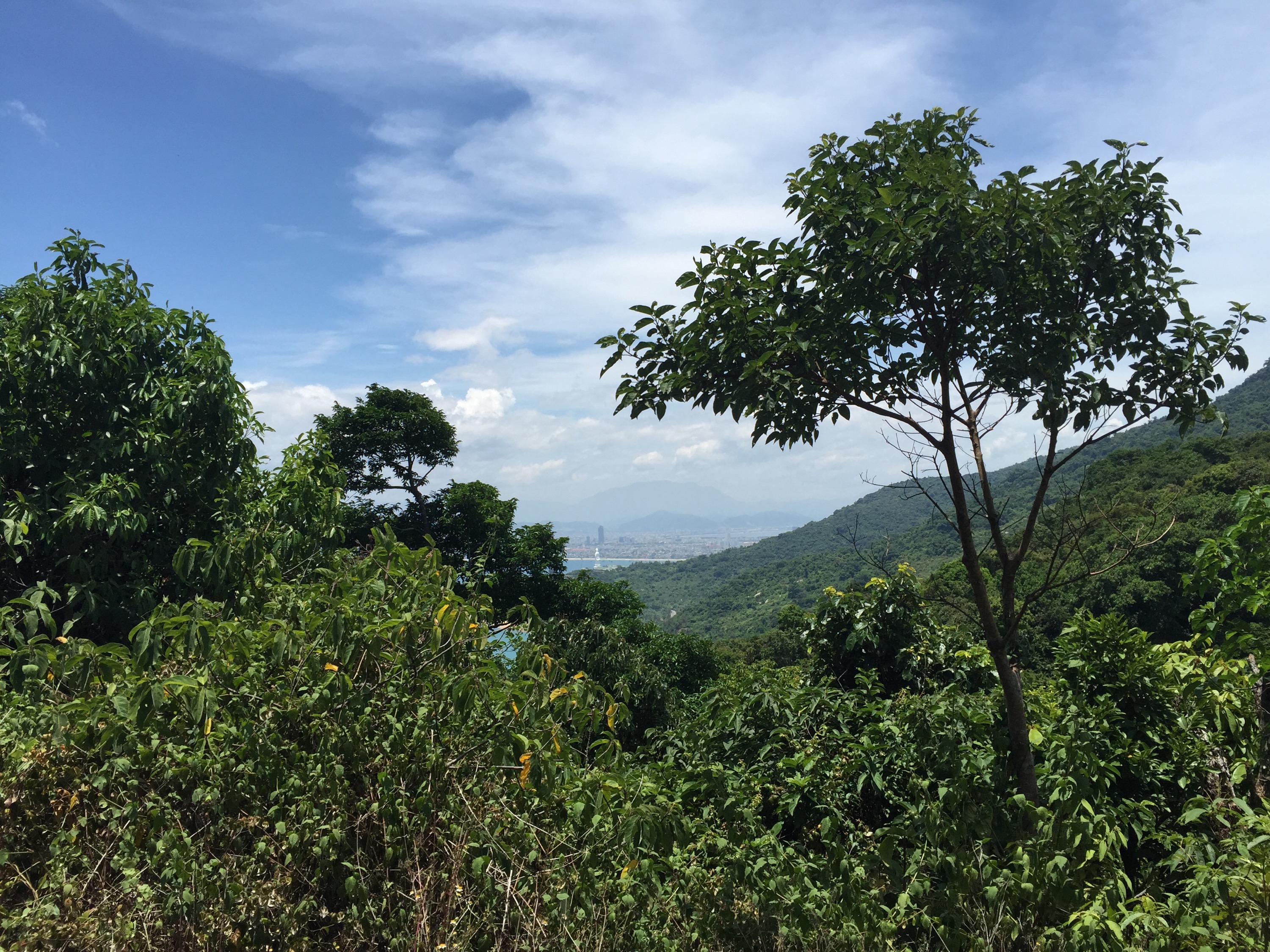
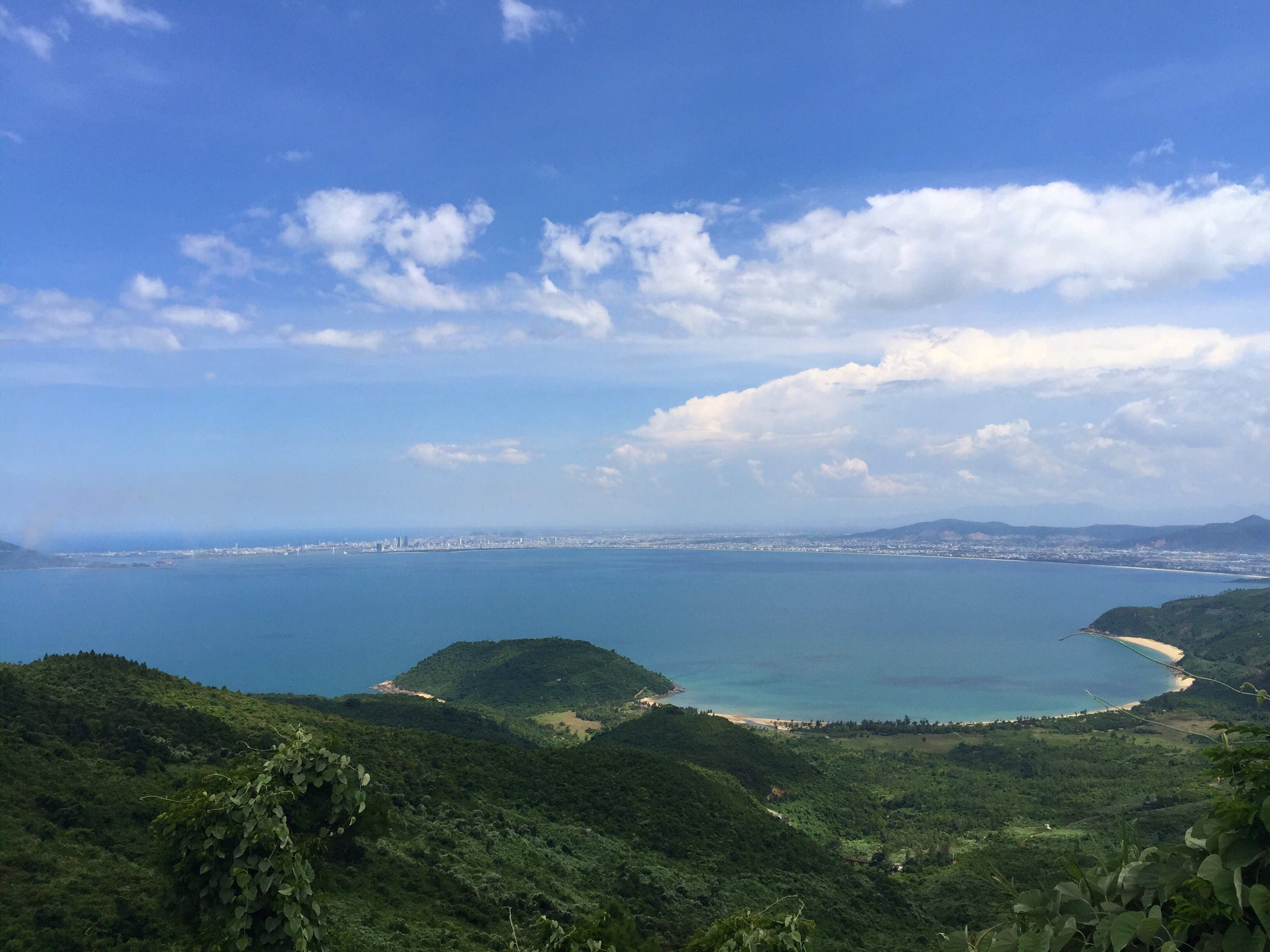
We then headed for the next hill on our agenda – Sơn Trà Mountain (Vietnamese: Núi Sơn Trà), known to American soldiers during the Vietnam War as Monkey Mountain.  The mountain is located on Sơn Trà Peninsula, in Sơn Trà district, Đà Nẵng, overlooking the Bay of Đà Nẵng and the East Sea. Đà Nẵng Port’s Tiên Sa Terminal is located at the base of the mountain’s western face, as is nearby Tiên Sa Beach. A military base (now little used) is also located on the mountain. 

    
   We went up one side of the mountain to a look out – the views were great.  We then descended down the other side on a fairly narrow, windy, steep road which is not used as much as the road coming up.  It was lots of fun but would have been interesting if we had met any vehicles of substance coming the other way. Unfortunately we didn’t get to any monkeys either. 

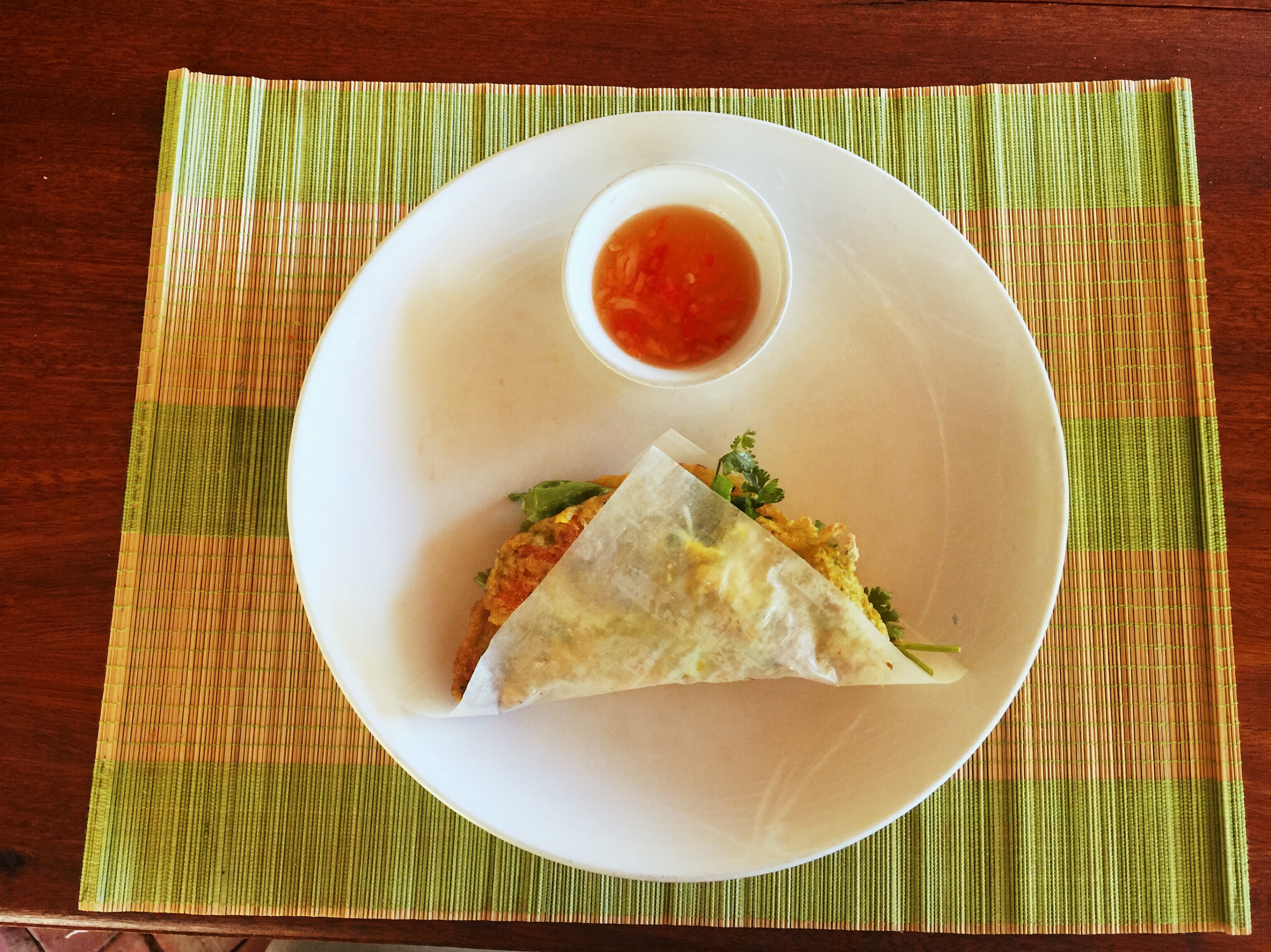
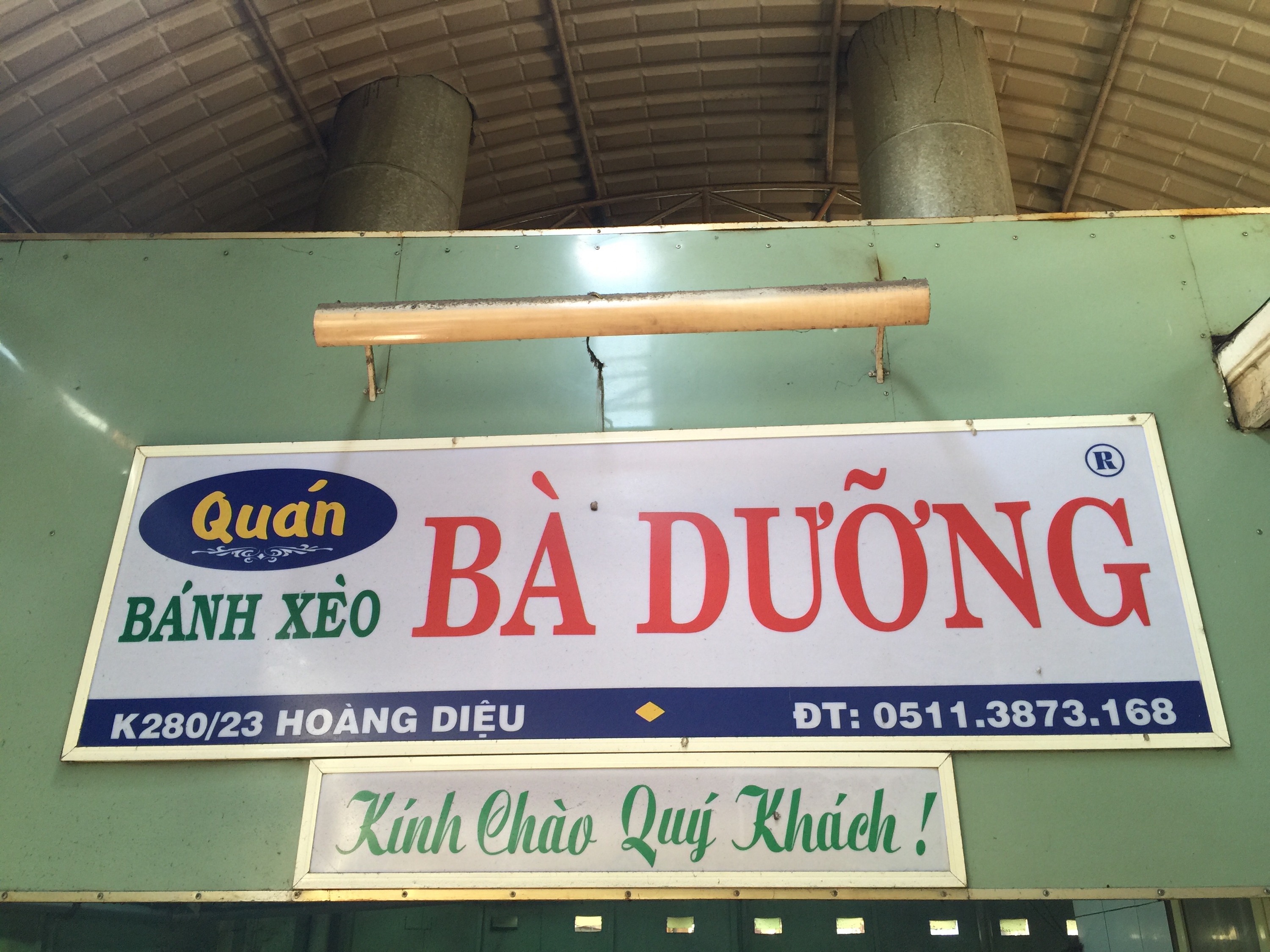
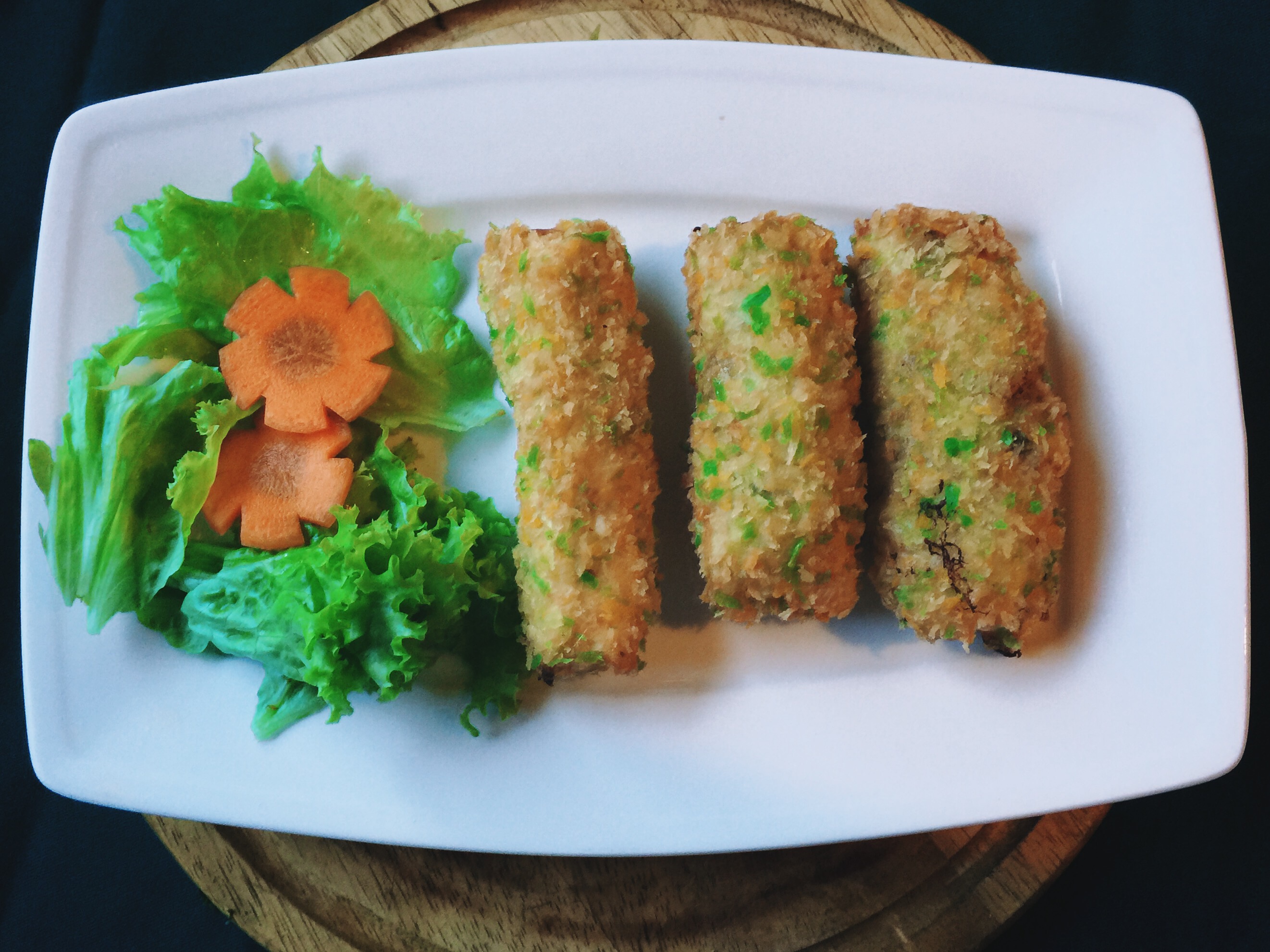
   By now it was lunchtime so we headed back down to Đà Nẵng for lunch.  We went down an alley to a local restaurant that specialises in Banh Xeo or crispy pancakes which is a specialty of central Vietnam.  The restaurant is located at the owner’s house and is very popular with the locals.  Apparently at night the queues stretch down the alley and as a consequence a couple of the neighbours have created replica restaurants in their homes to cater for the overflow.  As I said the Vietnamese are very enterprising.  Banh Xeo have bcome a favorite of mine since I have been here so I indulged myself quite happily – they were good.  They are one of those foods though that you coulld just keep eating as they are very moorish. 

 Đà Nẵng is one of the major port cities in Vietnam (in addition to Ho Chi Minh City and Haiphong) and the biggest city on the South Central Coast of Vietnam; the city is situated on the coast of the Eastern Sea, at the opening end of the Hàn River. Đà Nẵng is the commercial and educational center of Central Vietnam, with a well-sheltered, easily accessible port; its location on the path of National Route 1A and the North–South Railway makes it a hub for transportation. It is the third biggest economic center in Vietnam (after Ho Chi Minh City and Hanoi).  Đà Nẵng is the fifth most populated city in Vietnam, with a population of approximately one million people.
During the Vietnam War, the city was home to a major air base that was used by both the South Vietnamese and United States air forces. The base was considered one of the world’s busiest airports during the war, reaching an average of 2,595 air traffic operations daily, more than any airport in the world at that time.  The final U.S. ground combat operations in Vietnam ceased on 13 August 1972, when a residual force of the 196th Light Infantry Brigade stood down in Đà Nẵng

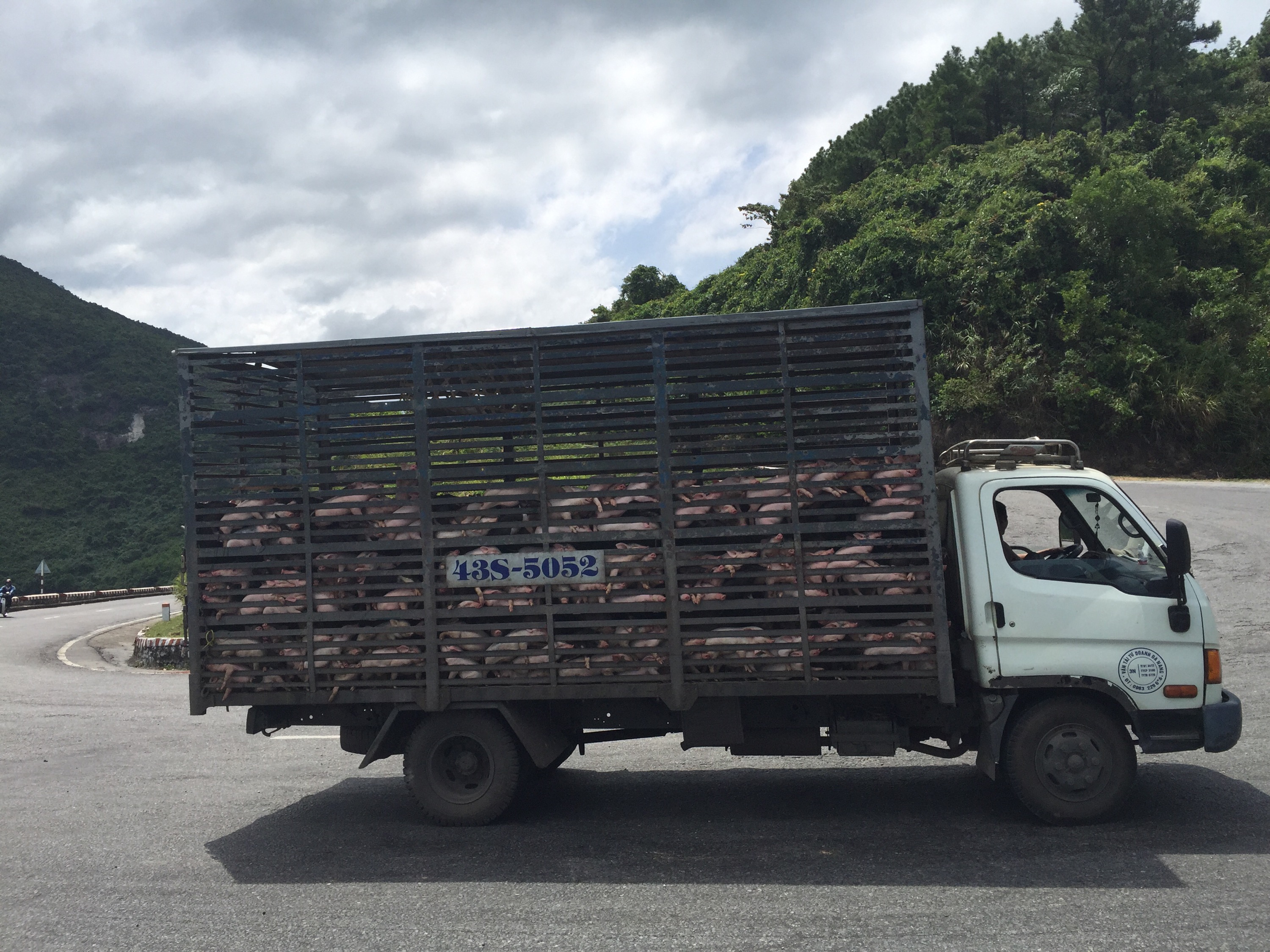
With our tummies fill it was back into the jeep to conquer the Hai Van Pass.  The Hải Vân Pass (Vietnamese: Đèo Hải Vân, “ocean cloud pass”), is an approximately 21 km long mountain pass on National Route 1A in Vietnam. It traverses a spur of the larger Annamite Range that juts into the South China Sea, on the border of Đà Nẵng and Thừa Thiên–Huế Province, near Bạch Mã National Park. Its name refers to the mists that rise from the sea, reducing visibility. Historically, the pass was a physical division between the kingdoms of Champa and Đại Việt.  It also forms a boundary between the climates of northern and southern Vietnam, sheltering the city of Da Nang from the “Chinese winds” that blow in from the northwest. During the winter months (November–March), for instance, weather on the north side of the pass might be wet and cold, while the south side might be warm and dry. 


The pass is renowned for its scenic beauty.  Presenter Jeremy Clarkson, former host of the BBC motoring programme Top Gear, featured the pass during the show’s 2008 Vietnam Special, calling the road “a deserted ribbon of perfection—one of the best coast roads in the world.”

Hải Vân Pass has been of major strategic importance in this history of Vietnam, and for a long time represented a major barrier to any land army that attempted to move between the northern and central regions of the country.  The pass is crossed by two main transport routes: Vietnam’s main north–south highway, National Route 1A, and the North–South Railway. The road crosses over the mountain more or less directly, climbing to an elevation of 496 m (1,627 ft) and passing south of the 1,172 m (3,845 ft) high Ai Van Son peak, while the railway hugs the coastline more closely, passing through a series of tunnels along the way. Since its opening in 2005, the Hải Vân Tunnel—the longest tunnel in Southeast Asia—offers an alternative road across the pass, reducing travel times by at least an hour.  

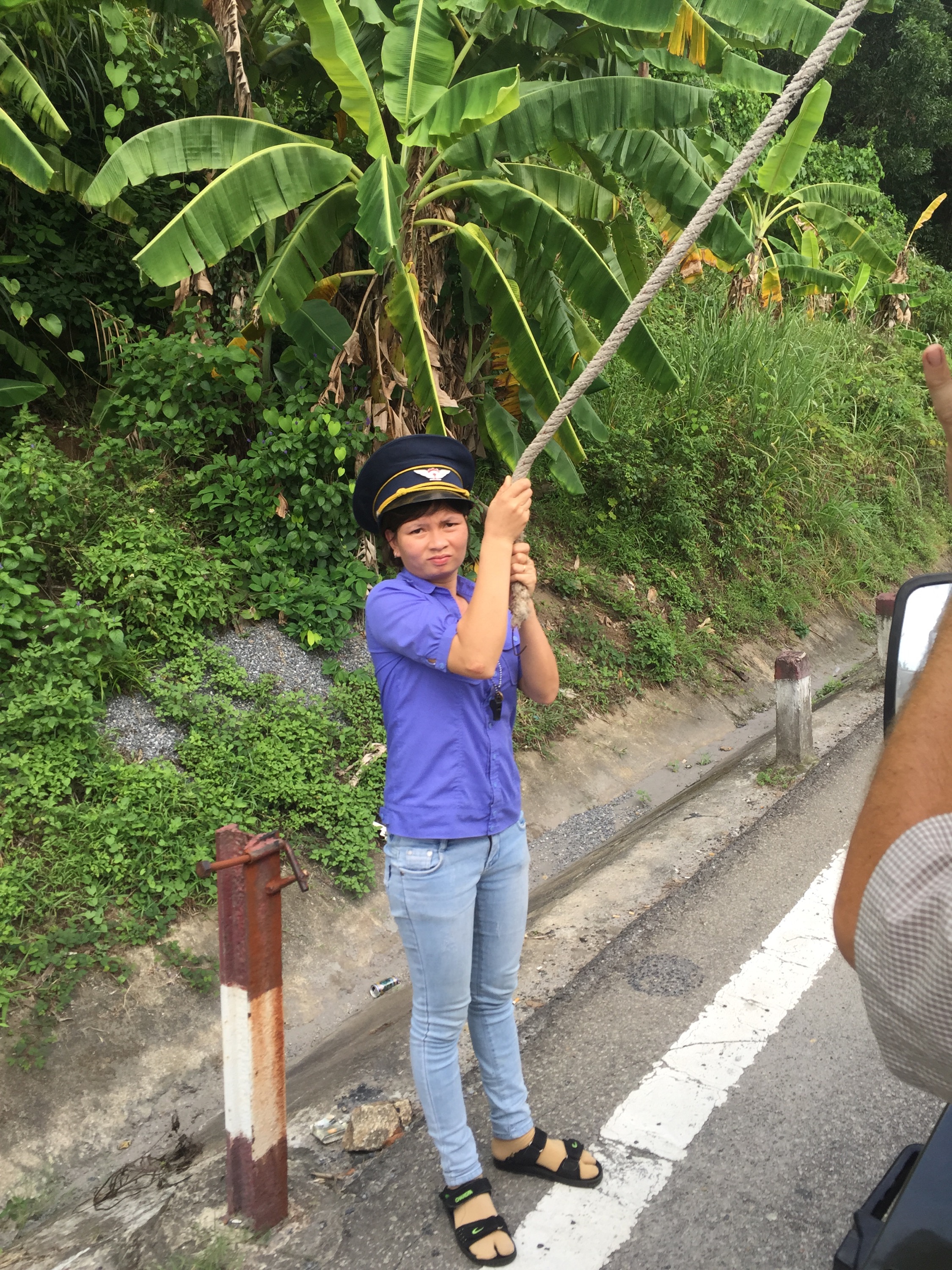
As we came down the other side of the Hai Van Pass on the Hue side we had to wait for the train to cross.  The crossing barrier is operated manually – see the picture below.  We then looped around and entered the Hải Vân Tunnel which is approximatley 6km long.  Not an ideal scenario to travel through a tunnel in an open top jeep – it got very hot and it felt like my ears were on  fire.  As the saying goes ‘there is always light at the end of the tunnel” and in this case we were pretty happy to see it that’s for sure. 

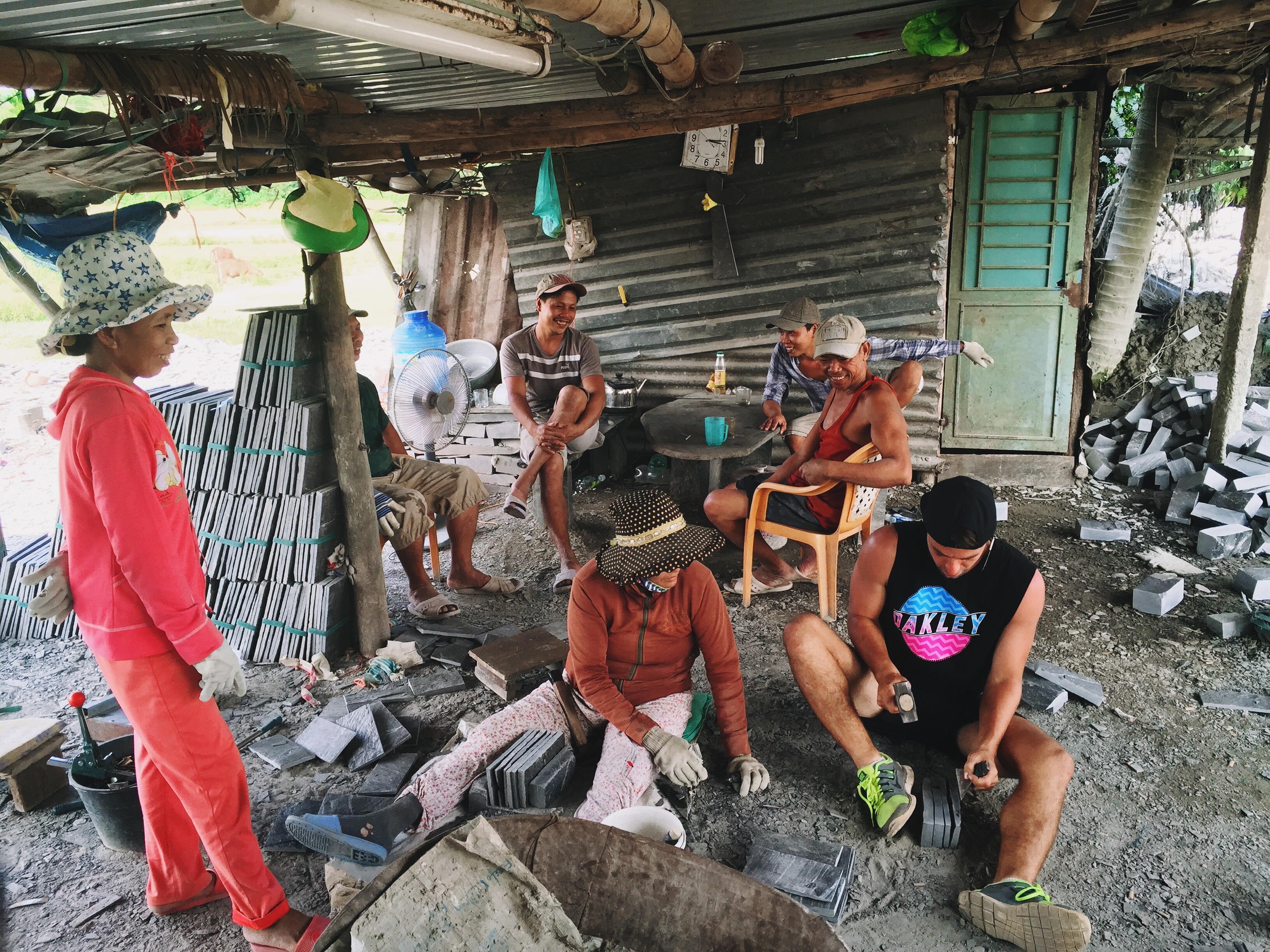
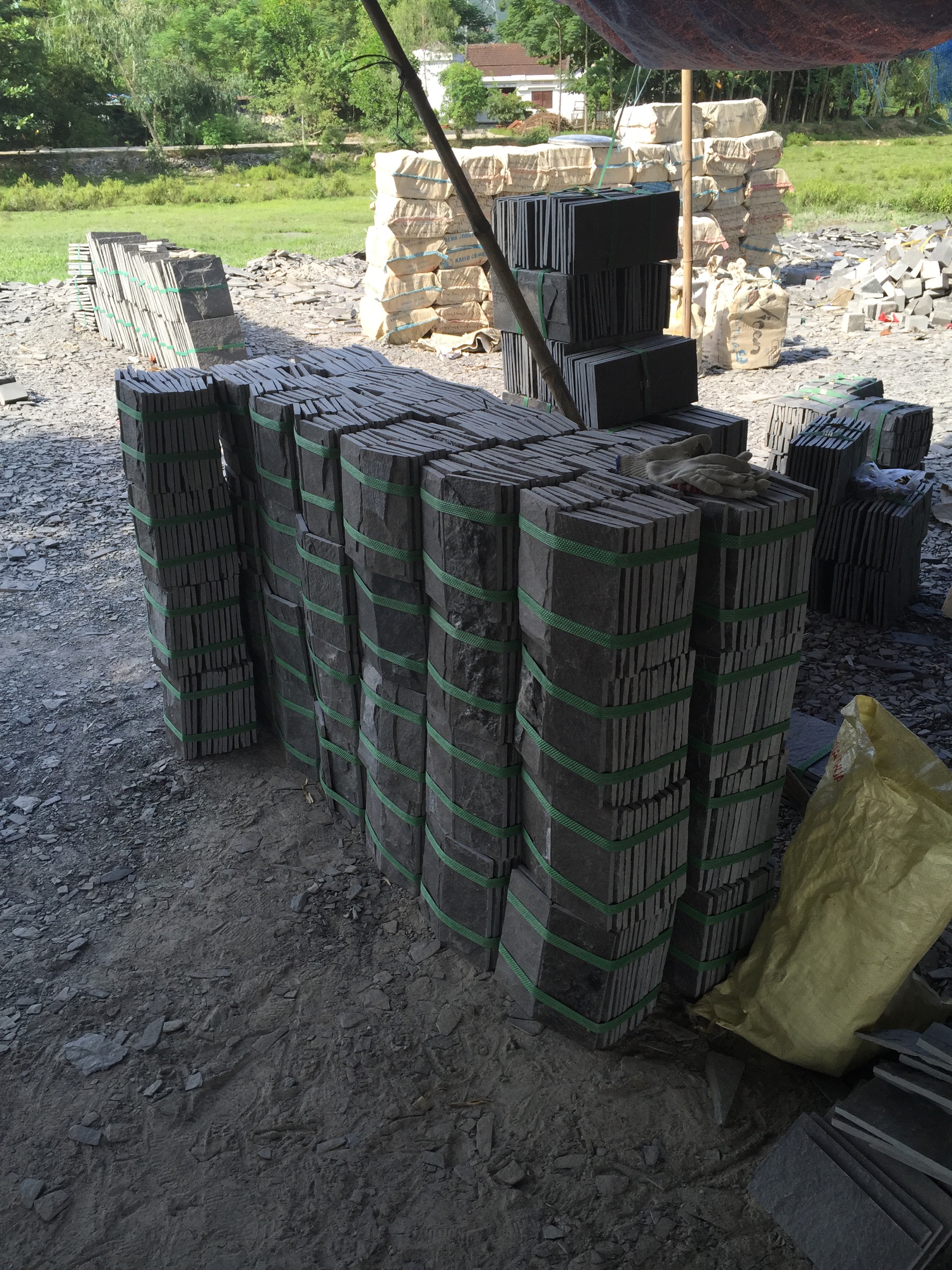
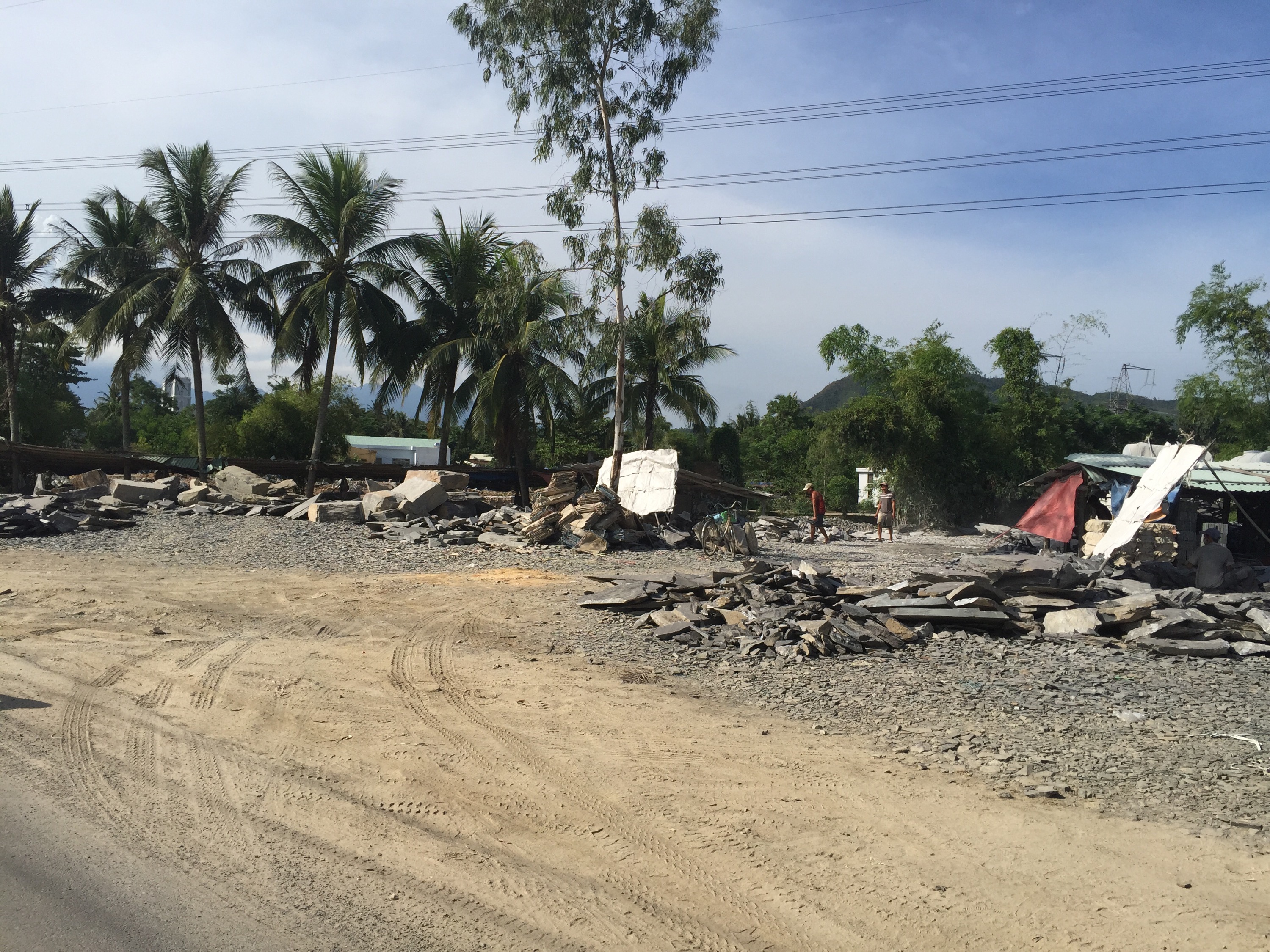
 We then headed inland to a local village that specialised in slate tiles.  Jeremy explained that it is quite common for different villages to specialise in different industries.  We stopped off at one of the stone works and watched the woman making slate tiles out of solid blocks.  At the time the men were all sitting around watching and I made the comment to Jeremy re  that being typical – the women doing all the work while the men watch!  He said they were just taking a break – they normally operate the big saws and sledge hammers breaking the big rocks into more manageable pieces for the women.  OK I believe you : )  We did see evidence of this as we drove further into the vilage.

Paul had a go at chipping the block into tiles and did pretty well.  Apparently these tiles are bundled up and sold all over the world.  The employees get paid USD2 per day which is apparently USD1 more per day than they would get in the rice paddy fields. 


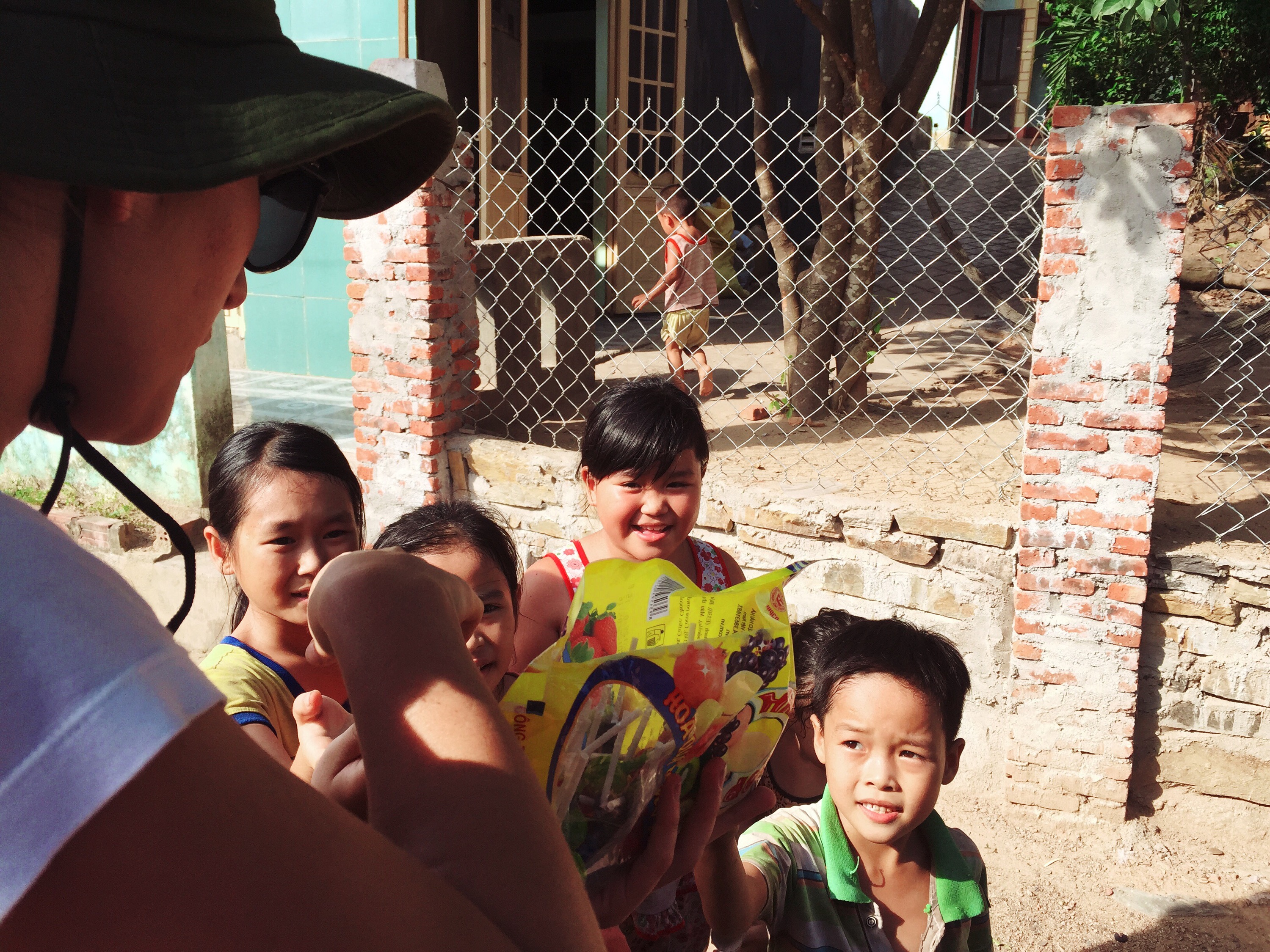
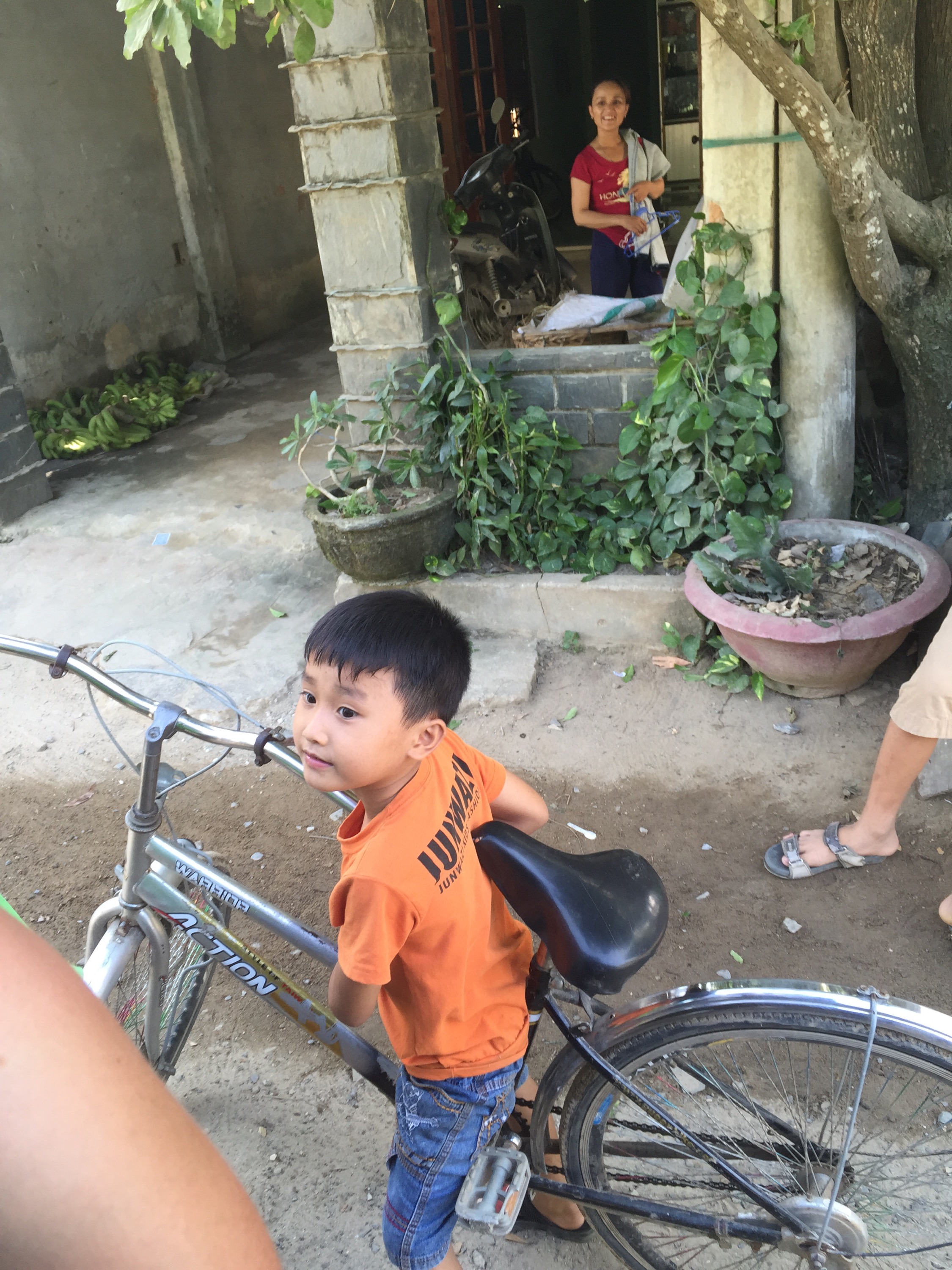
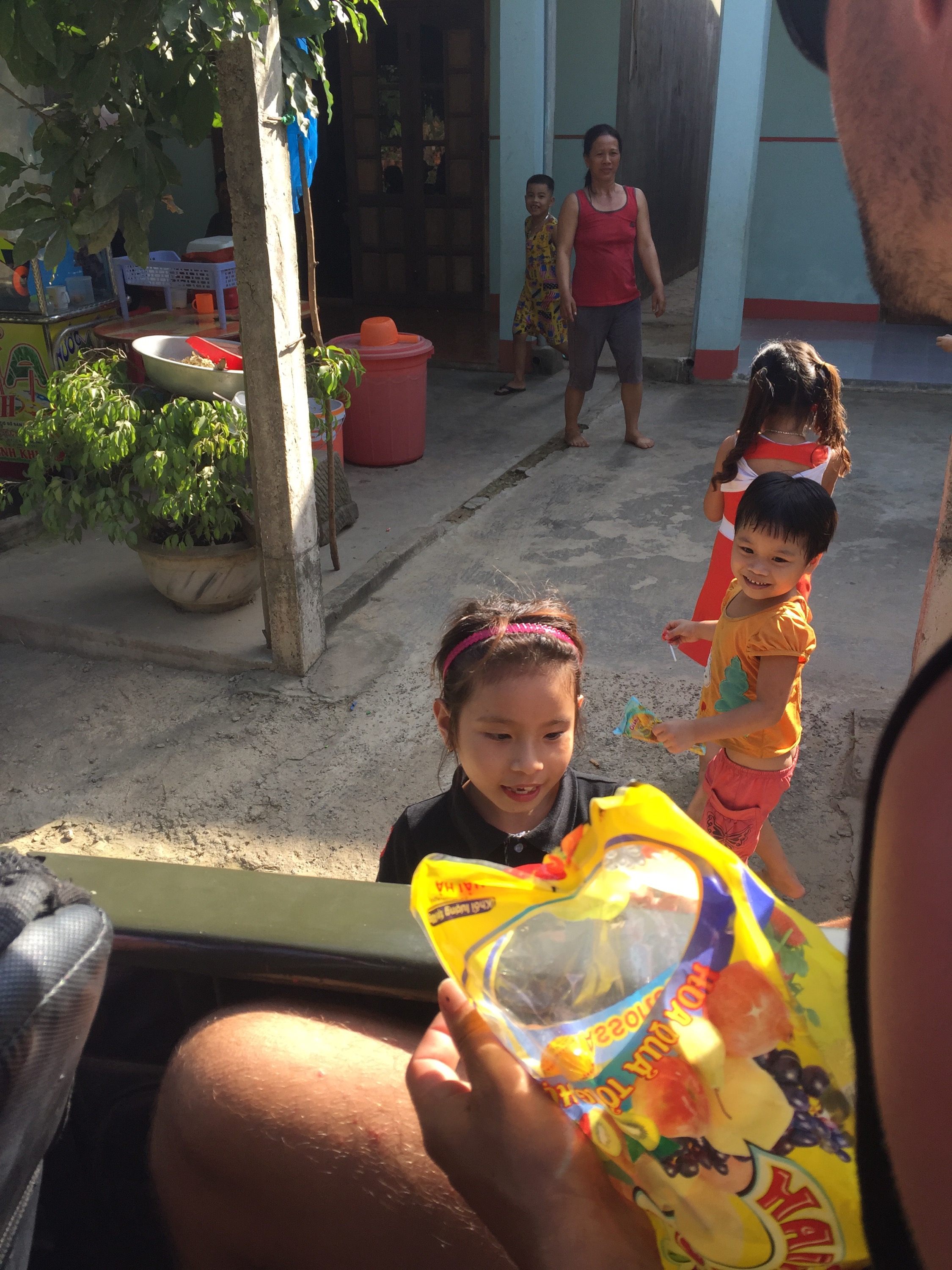
   We then drove through the vilage sharing the love – Jeremy’s jeep is well known in the village and he always has a bag of lollipops on board to give to the kids.  We all had fun handing out the lollipops and the kids were so happy.  They all greeted us and thanked us in English. 

    
 It was then back to Đà Nẵng and the end of the tour.  It had been a long day but we really felt we got to know the area as well as learning many things about the Vietnam culture.  If you’re looking for an intimate way to see Central Vietnam check out http://www.lookingglassjeeptours.com 

What is Buddhism? 

Buddhism is a religion to about 300 million people around the world. The word comes from ‘budhi’, ‘to awaken’. It has its origins about 2,500 years ago when Siddhartha Gotama, known as the Buddha, was himself awakened (enlightened) at the age of 35.

Is Buddhism a Religion?
To many, Buddhism goes beyond religion and is more of a philosophy or ‘way of life’. It is a philosophy because philosophy ‘means love of wisdom’ and the Buddhist path can be summed up as:

(1) to lead a moral life,

(2) to be mindful and aware of thoughts and actions, and

(3) to develop wisdom and understanding.
Buddhism explains a purpose to life, it explains apparent injustice and inequality around the world, and it provides a code of practice or way of life that leads to true happiness.

Who Was the Buddha?
Siddhartha Gotama was born into a royal family in Lumbini, now located in Nepal, in 563 BC. At 29, he realised that wealth and luxury did not guarantee happiness, so he explored the different teachings religions and philosophies of the day, to find the key to human happiness. After six years of study and meditation he finally found ‘the middle path’ and was enlightened. After enlightenment, the Buddha spent the rest of his life teaching the principles of Buddhism — called the Dhamma, or Truth — until his death at the age of 80.  He was not a God, nor did he claim to be. He was a man who taught a path to enlightenment from his own experience.

Buddhists sometimes pay respect to images of the Buddha, not in worship, nor to ask for favours. A statue of the Buddha with hands rested gently in its lap and a compassionate smile reminds us to strive to develop peace and love within ourselves. Bowing to the statue is an expression of gratitude for the teaching.

What did the Buddha Teach?
The Buddha taught many things, but the basic concepts in Buddhism can be summed up by the Four Noble Truths and the Noble Eightfold Path.

What is the First Noble Truth?
The first truth is that life is suffering i.e., life includes pain, getting old, disease, and ultimately death. We also endure psychological suffering like loneliness frustration, fear, embarrassment, disappointment and anger. This is an irrefutable fact that cannot be denied. It is realistic rather than pessimistic because pessimism is expecting things to be bad. lnstead, Buddhism explains how suffering can be avoided and how we can be truly happy.

What is the Second Noble Truth?
The second truth is that suffering is caused by craving and aversion. We will suffer if we expect other people to conform to our expectation, if we want others to like us, if we do not get something we want,etc. In other words, getting what you want does not guarantee happiness. Rather than constantly struggling to get what you want, try to modify your wanting. Wanting deprives us of contentment and happiness. A lifetime of wanting and craving and especially the craving to continue to exist, creates a powerful energy which causes the individual to be born. So craving leads to physical suffering because it causes us to be reborn.

What is the Third Noble Truth?
The third truth is that suffering can be overcome and happiness can be attained; that true happiness and contentment are possible. lf we give up useless craving and learn to live each day at a time (not dwelling in the past or the imagined future) then we can become happy and free. We then have more time and energy to help others. This is Nirvana.

What is the Fourth Noble Truth?
The fourth truth is that the Noble 8-fold Path is the path which leads to the end of suffering.

What is the Noble 8-Fold Path?
In summary, the Noble 8-fold Path is being moral (through what we say, do and our livelihood), focussing the mind on being fully aware of our thoughts and actions, and developing wisdom by understanding the Four Noble Truths and by developing compassion for others.

What are the 5 Precepts?
The moral code within Buddhism is the precepts, of which the main five are: not to take the life of anything living, not to take anything not freely given, to abstain from sexual misconduct and sensual overindulgence, to refrain from untrue speech, and to avoid intoxication, that is, losing mindfulness.

What is Karma?
Karma is the law that every cause has an effect, i.e., our actions have results. This simple law explains a number of things: inequality in the world, why some are born handicapped and some gifted, why some live only a short life. Karma underlines the importance of all individuals being responsible for their past and present actions. How can we test the karmic effect of our actions? The answer is summed up by looking at (1) the intention behind the action, (2) effects of the action on oneself, and (3) the effects on others.

What is Wisdom?
Buddhism teaches that wisdom should be developed with compassion. At one extreme, you could be a good hearted fool and at the other extreme, you could attain knowledge without any emotion. Buddhism uses the middle path to develop both. The highest wisdom is seeing that in reality, all phenomena are incomplete, impermanent and do not constitute a fixed entity. True wisdom is not simply believing what we are told but instead experiencing and understanding truth and reality. Wisdom requires an open, objective, unbigoted mind. The Buddhist path requires courage, patience, flexibility and intelligence.

What is Compassion?
Compassion includes qualities of sharing, readiness to give comfort, sympathy, concern, caring. In Buddhism, we can really understand others, when we can really understand ourselves, through wisdom.

Source – http://www.buddhanet.net/e-learning/5minbud.htm 

Posted in Danang, Vietnam | Tagged , , , | Leave a comment