
Day 15 – Chalon-sur-Saone to Dole – 95km
The SUNGRL’s powers took a break this morning and we started our cycle in the rain  . There was also some confusion as to how far we we had to go. Google maps by bike said 71km and Euro Velo 6 app said 95km – it was probably a no brainer that it was going to be 95km but we did a sweepstakes anyway and JP won.
We started off on the Saone and then switched to following the Doubs River which is a left bank tributary of the Saone.
Today is a public holiday in France – it is The Feast of the Assumption of Mary (L’Assomption de Marie) which celebrates the Catholic belief that the Virgin Mary’s spirit and body was assumed to heaven. It is an important occasion for village and church festivals. Forty seven percent of the country are catholic.
We stopped for a coffee and pastry in Abbeley and the weather was starting to clear up.
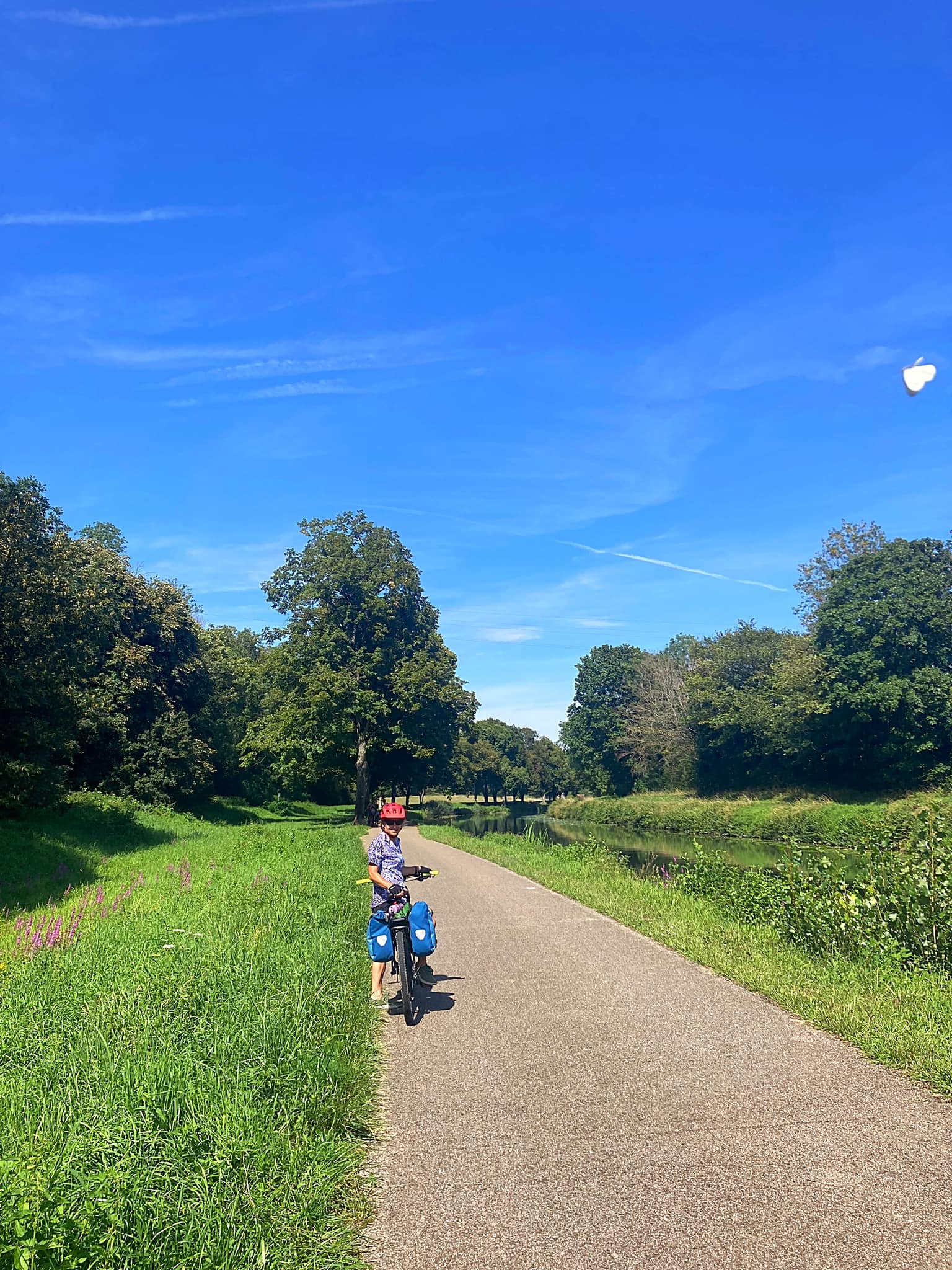
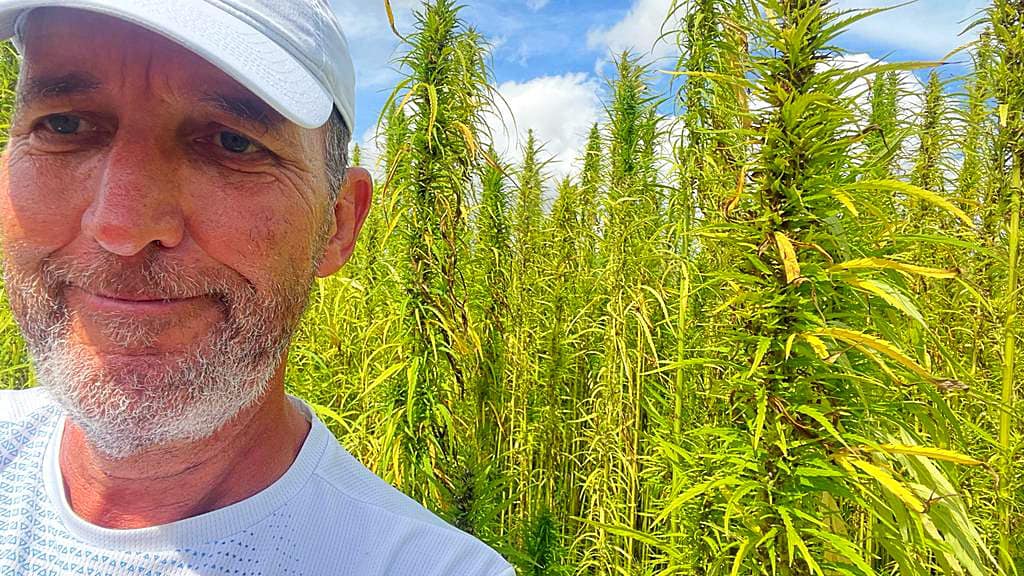
Today’s landscapes included lots of vast open fields planted with crops including corn, soy (edamame) and hemp. When we rode along the rivers they were just below the bike path level. It was definitely cooler today only getting to about 28 degrees.
We had another hike a bike experience after taking a shortcut through a paddock  . We had a picnic lunch by the river before celebrating the 1,000km mark – we are just under a third of the way to Belgrade.
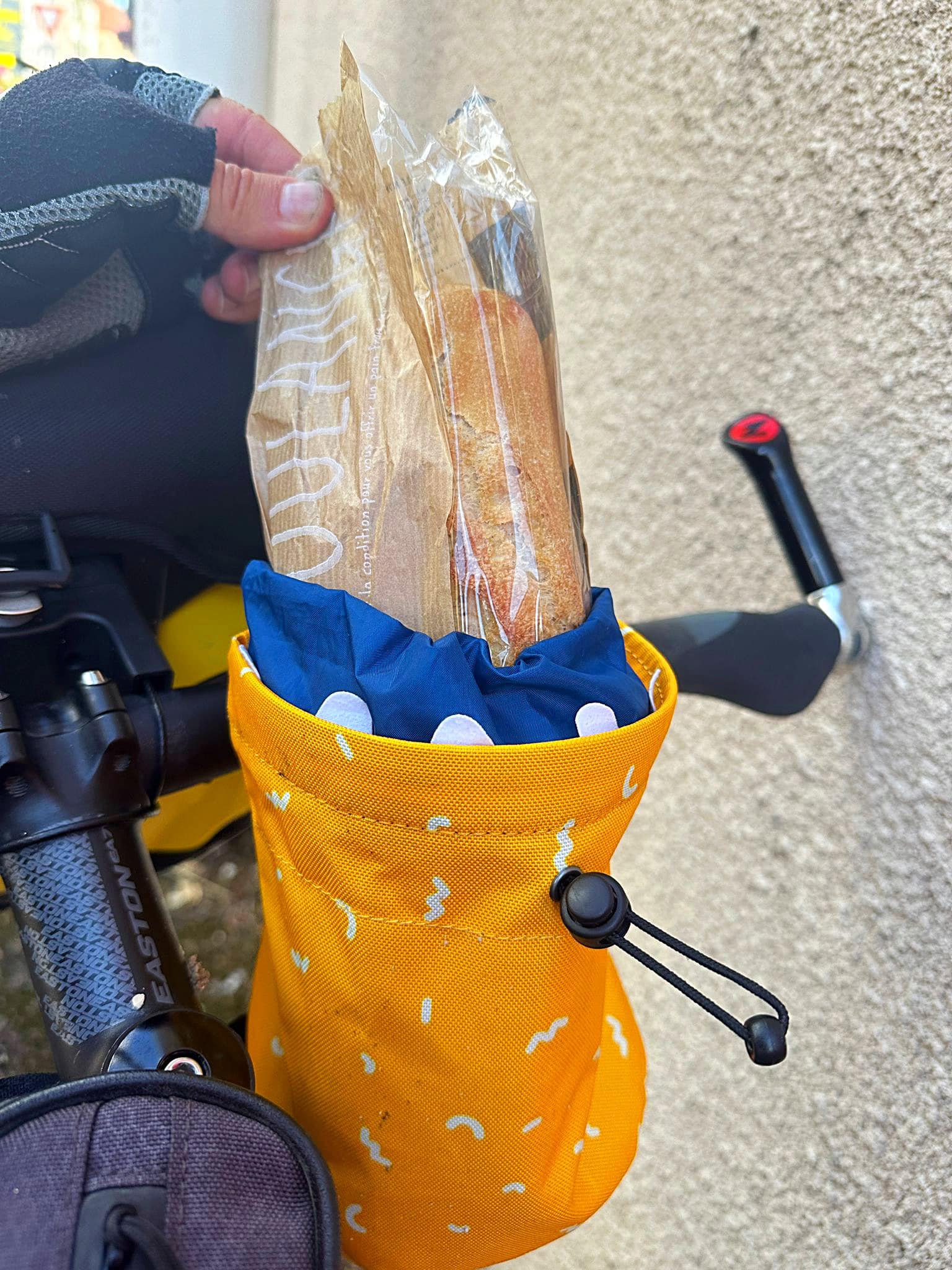
I was able to try out my new baguette holder today too.
We are staying in Dole tonight and there are no pineapples or bananas in sight  .
.





Day 16 – Dole to Besancon – 66km
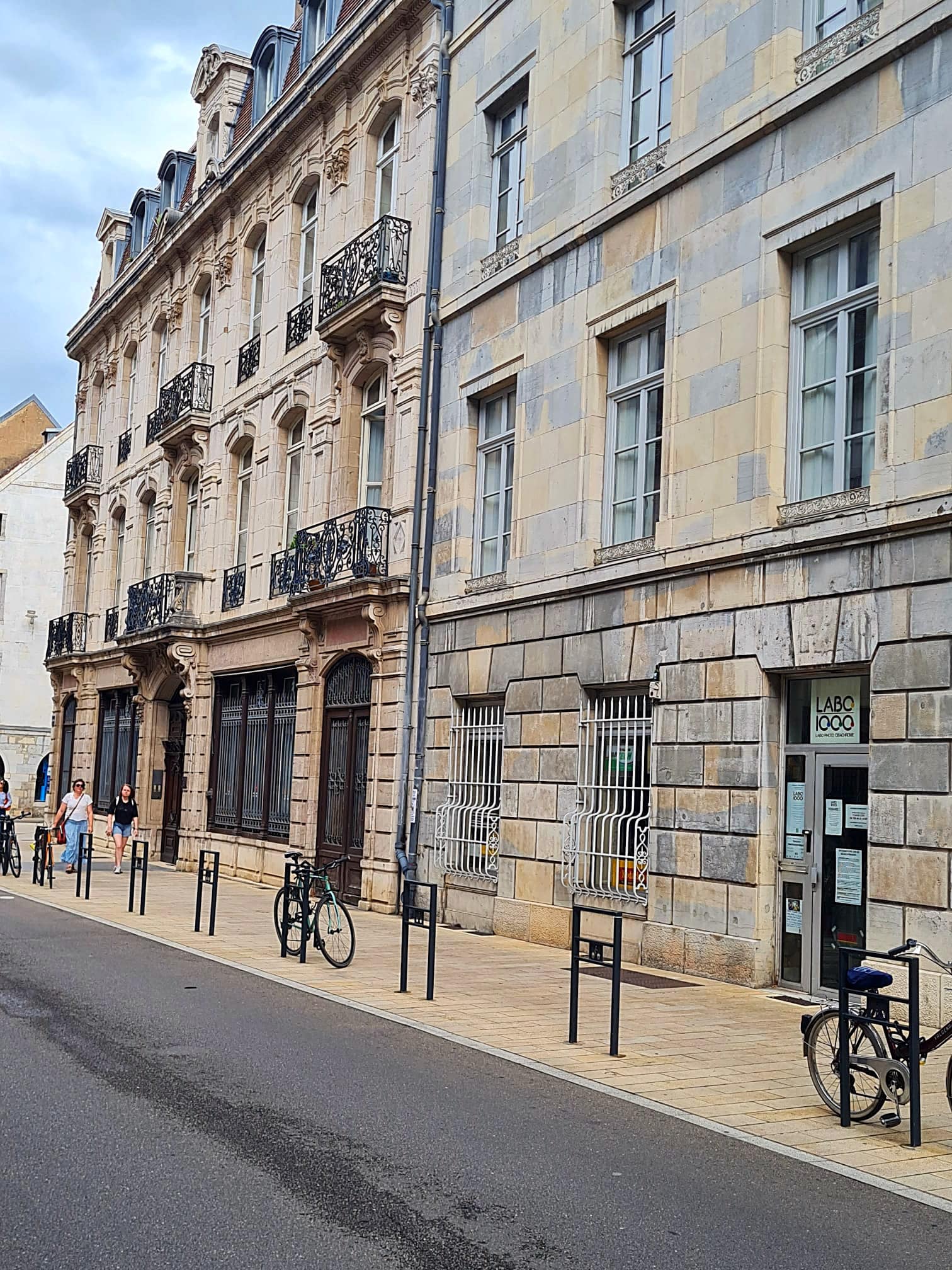
Due to our big day yesterday, getting in a bit later and staying out of the centre we decided to have breakfast in the city and do a little explore before heading off.
Finding a cafe in France that does anything resembling what we consider breakfast is impossible, so it was a pastry and sub par coffee at the boulangerie. When in France…
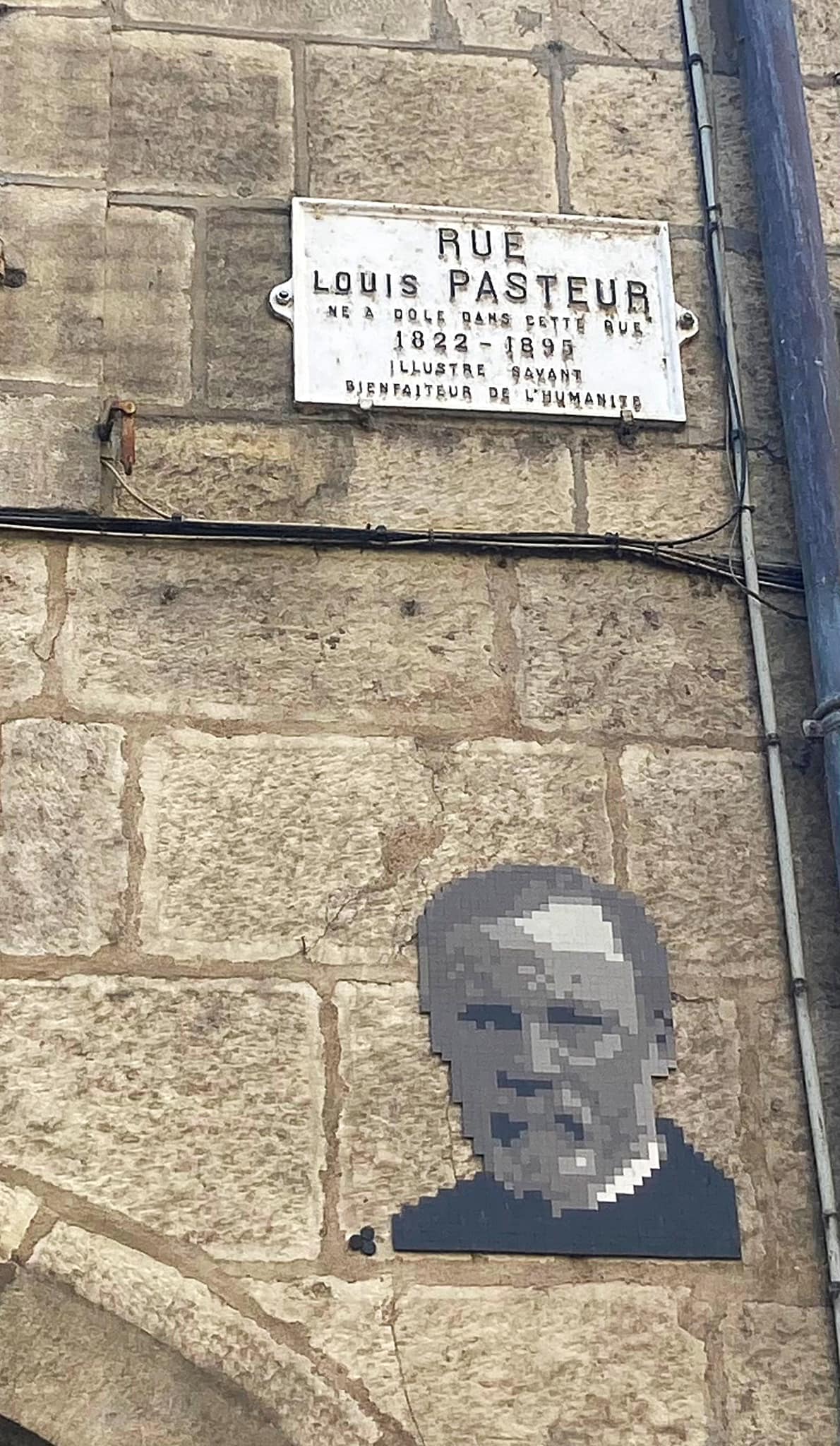
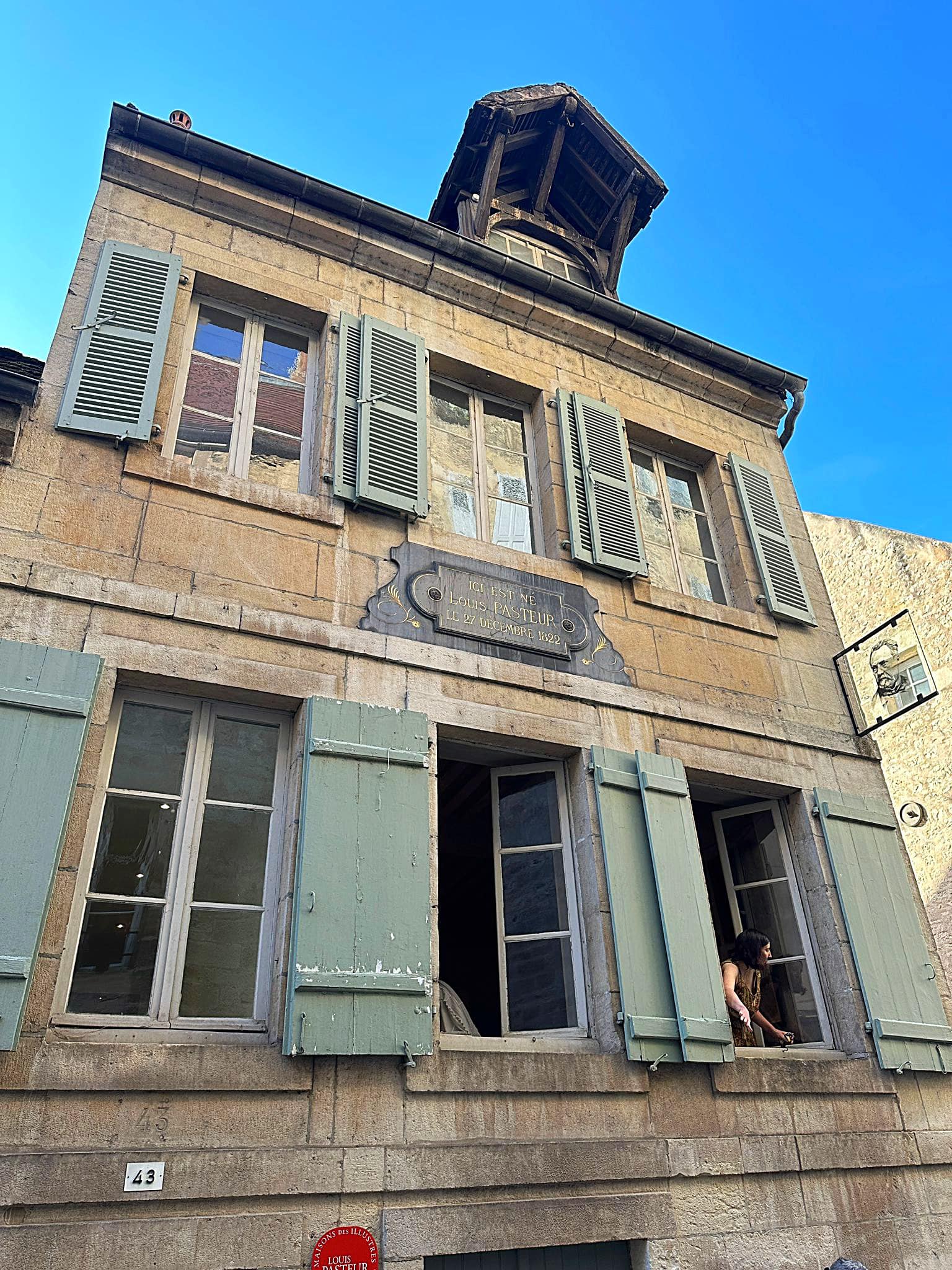
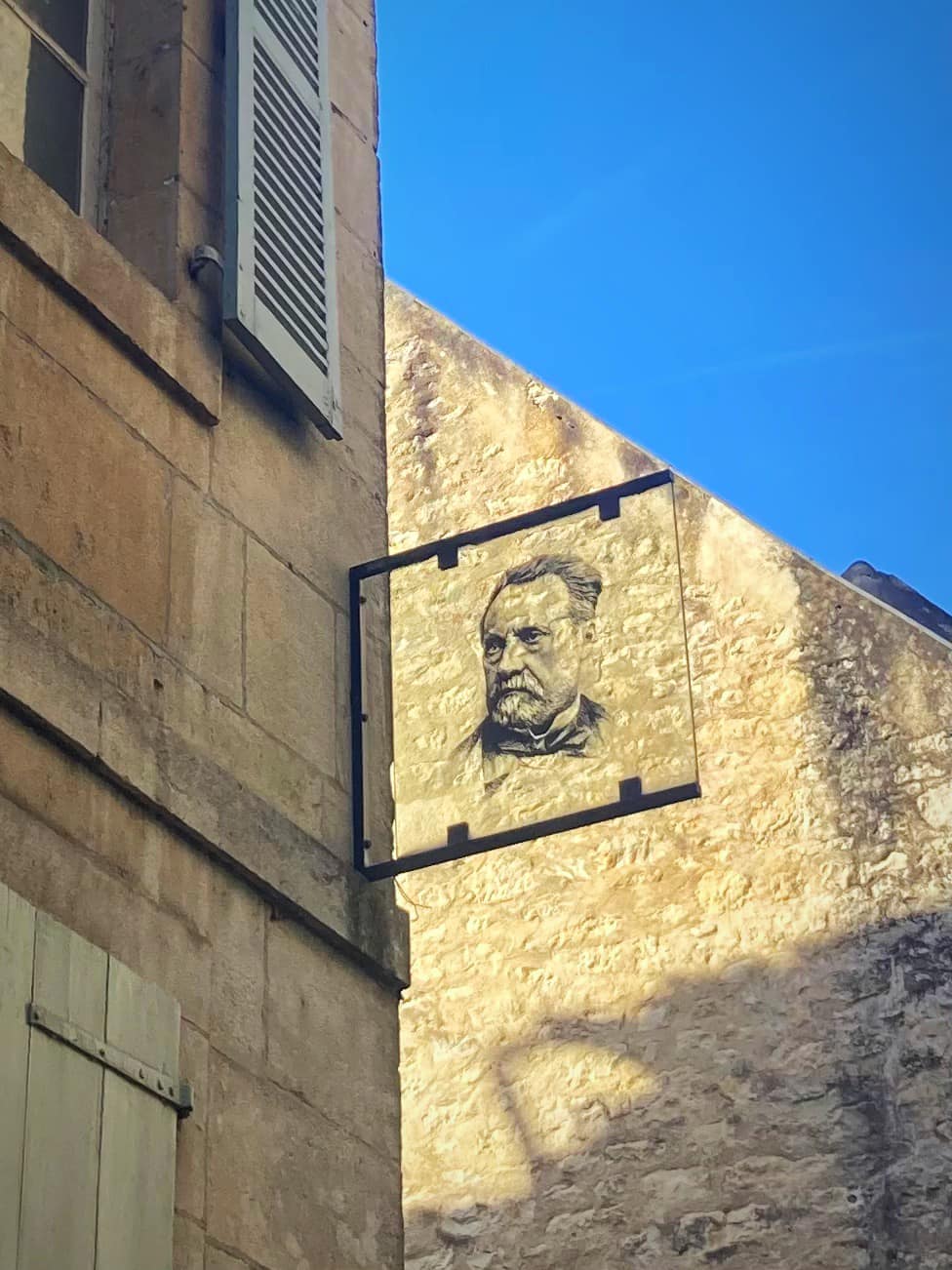
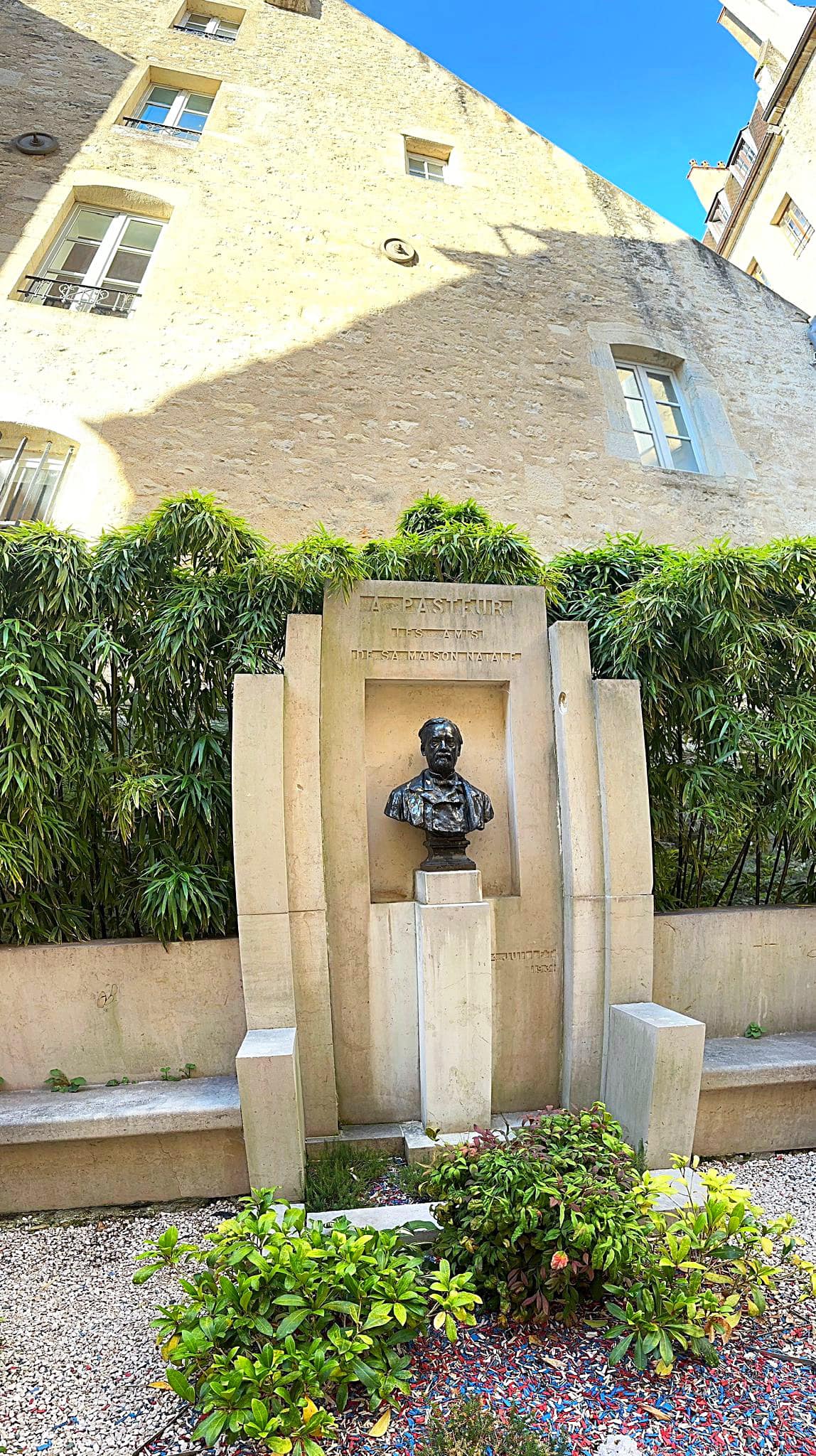
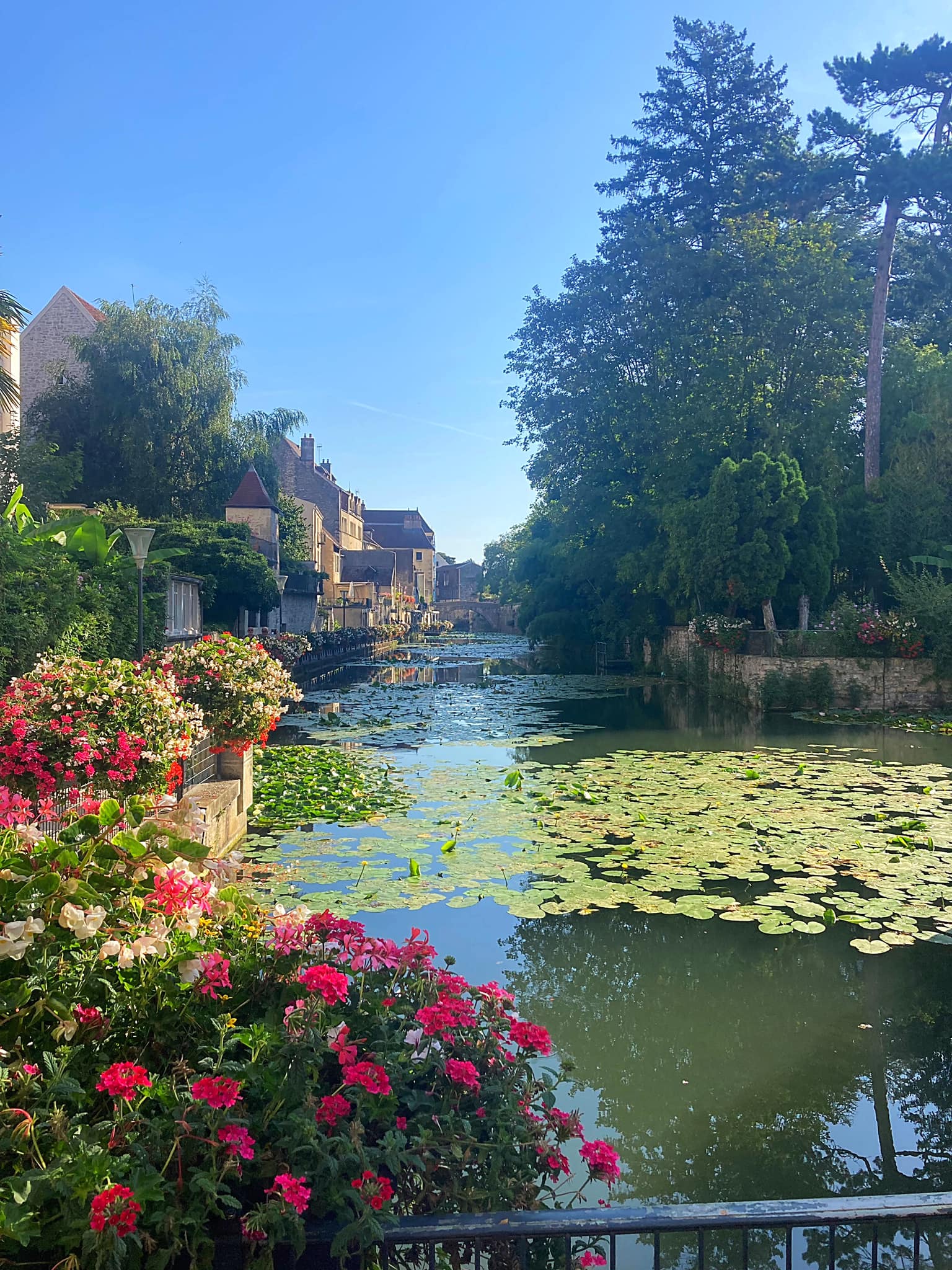
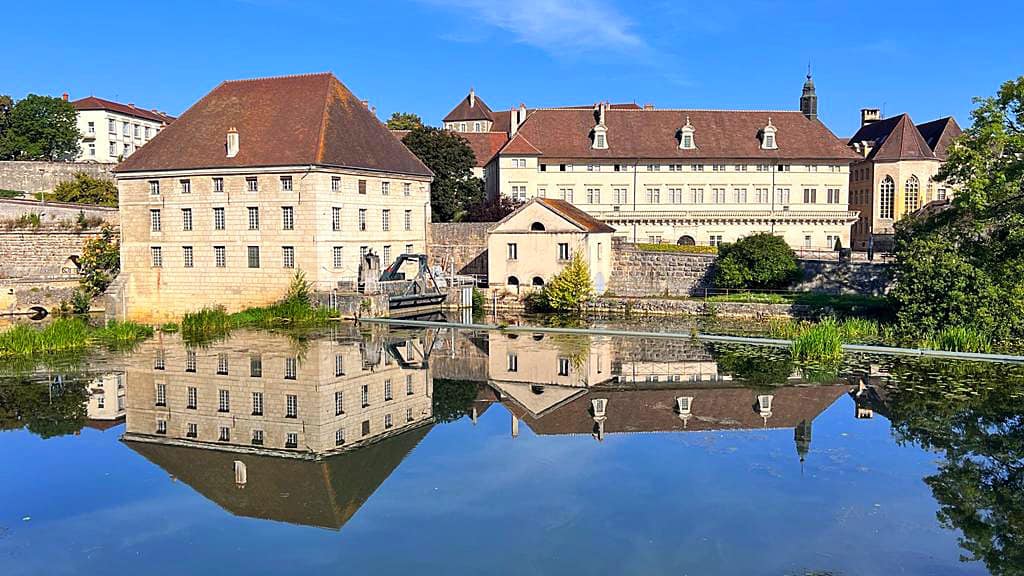
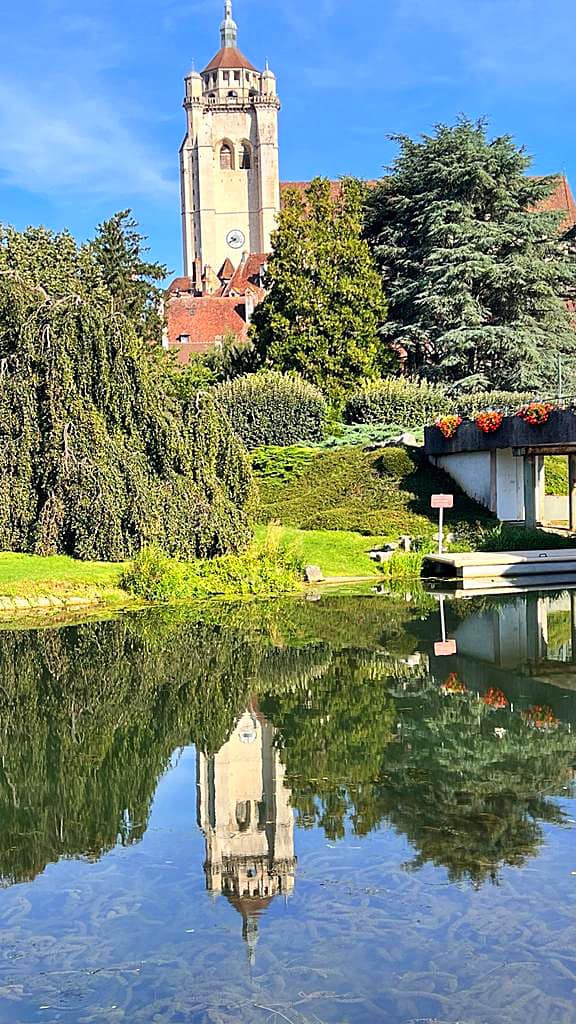
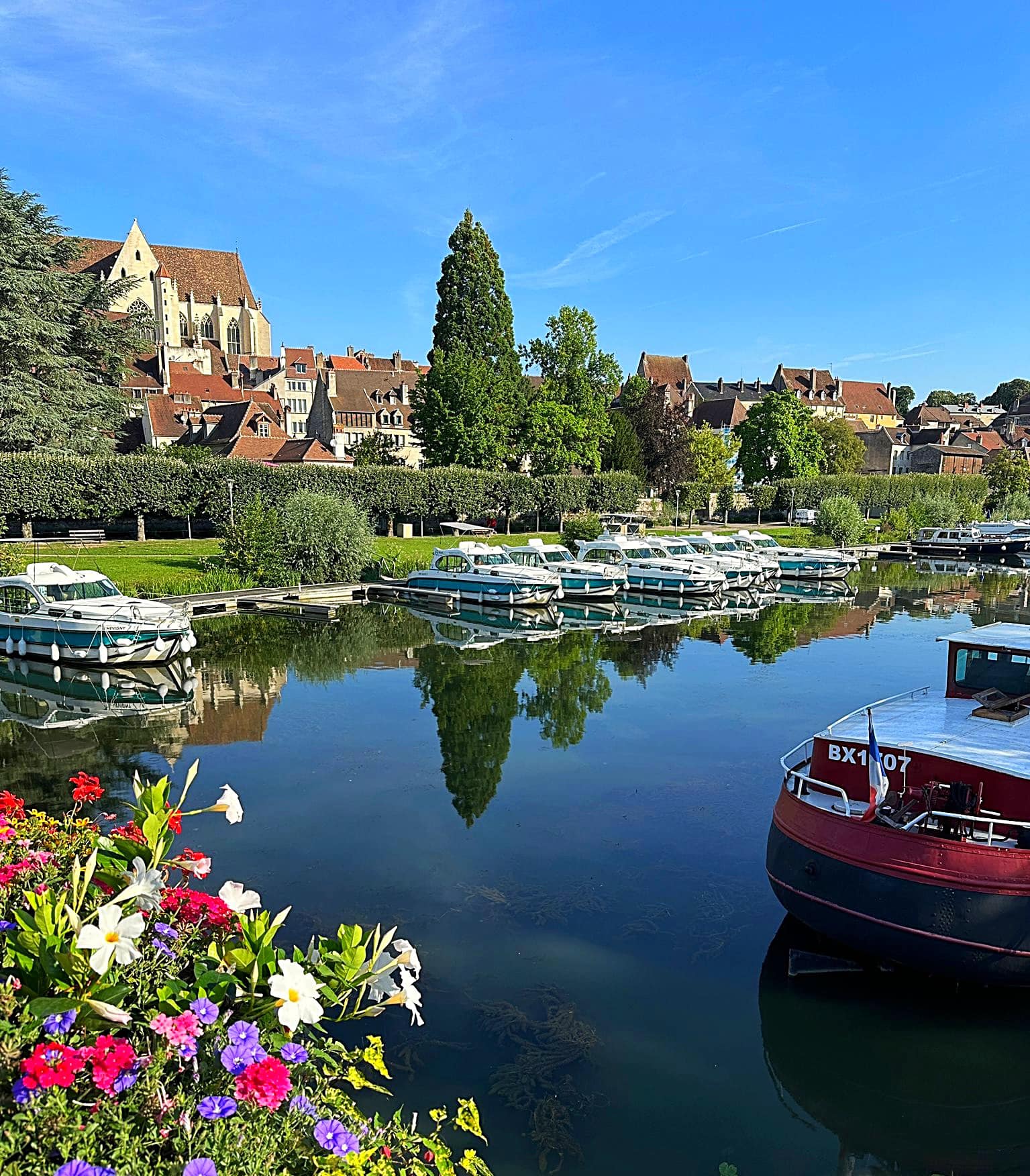
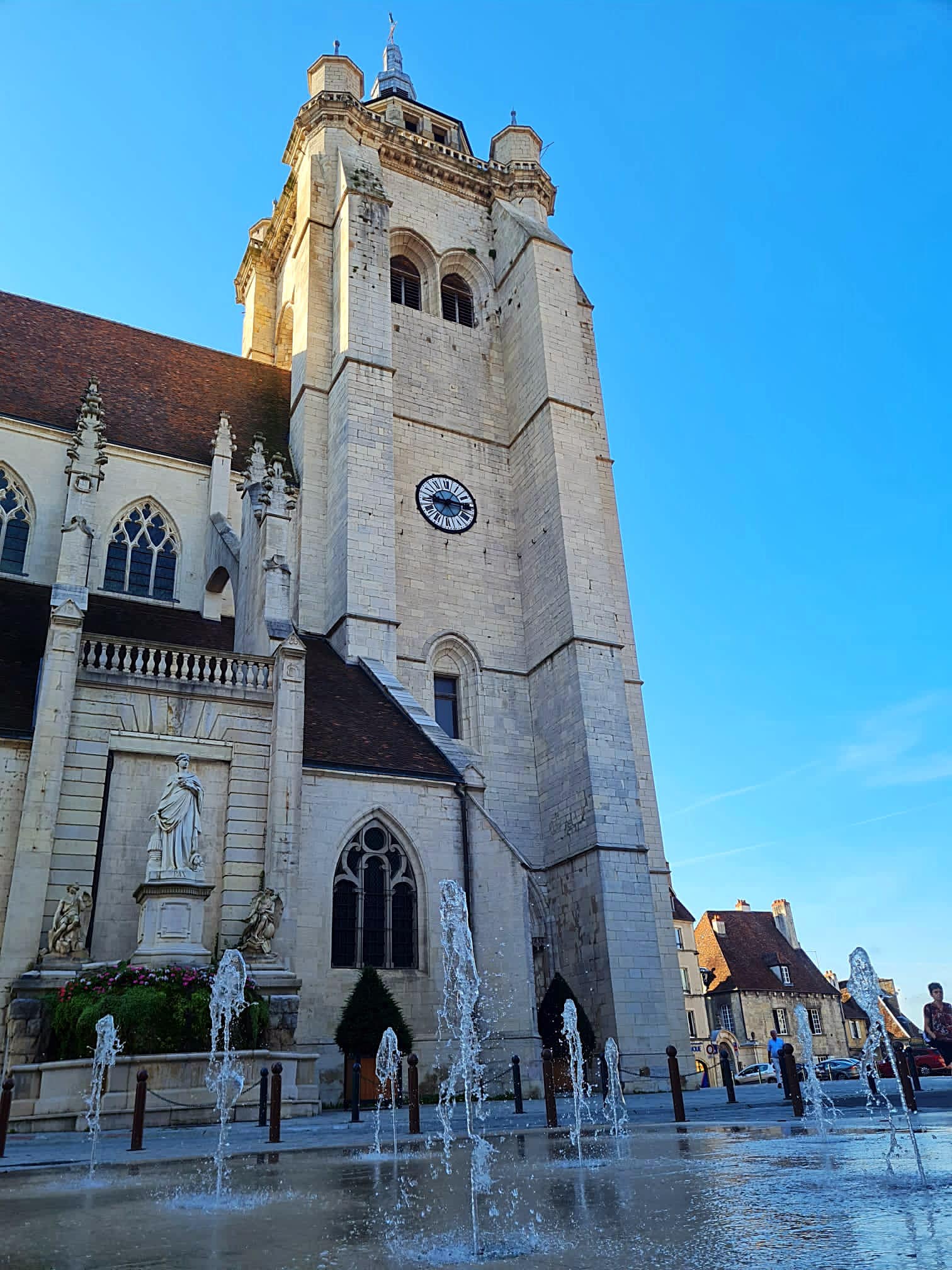
However, Dole would have to be the prettiest town we have come across. What a gem. It has a population of about 24,000 and one of its famous residents was Louis Pasteur.
Louis Pasteur was a French chemist and microbiologist renowned for his discoveries of the principles of vaccination, microbial fermentation, and pasteurization, the last of which was named after him. He is also regarded as one of the fathers of germ theory of diseases, which was a minor medical concept at the time. His many experiments showed that diseases could be prevented by killing or stopping germs, thereby directly supporting the germ theory and its application in clinical medicine. He is best known to the general public for his invention of the technique of treating milk and wine to stop bacterial contamination, a process now called pasteurization.
We had a wander round and visited the house where Louis Pasteur grew up.
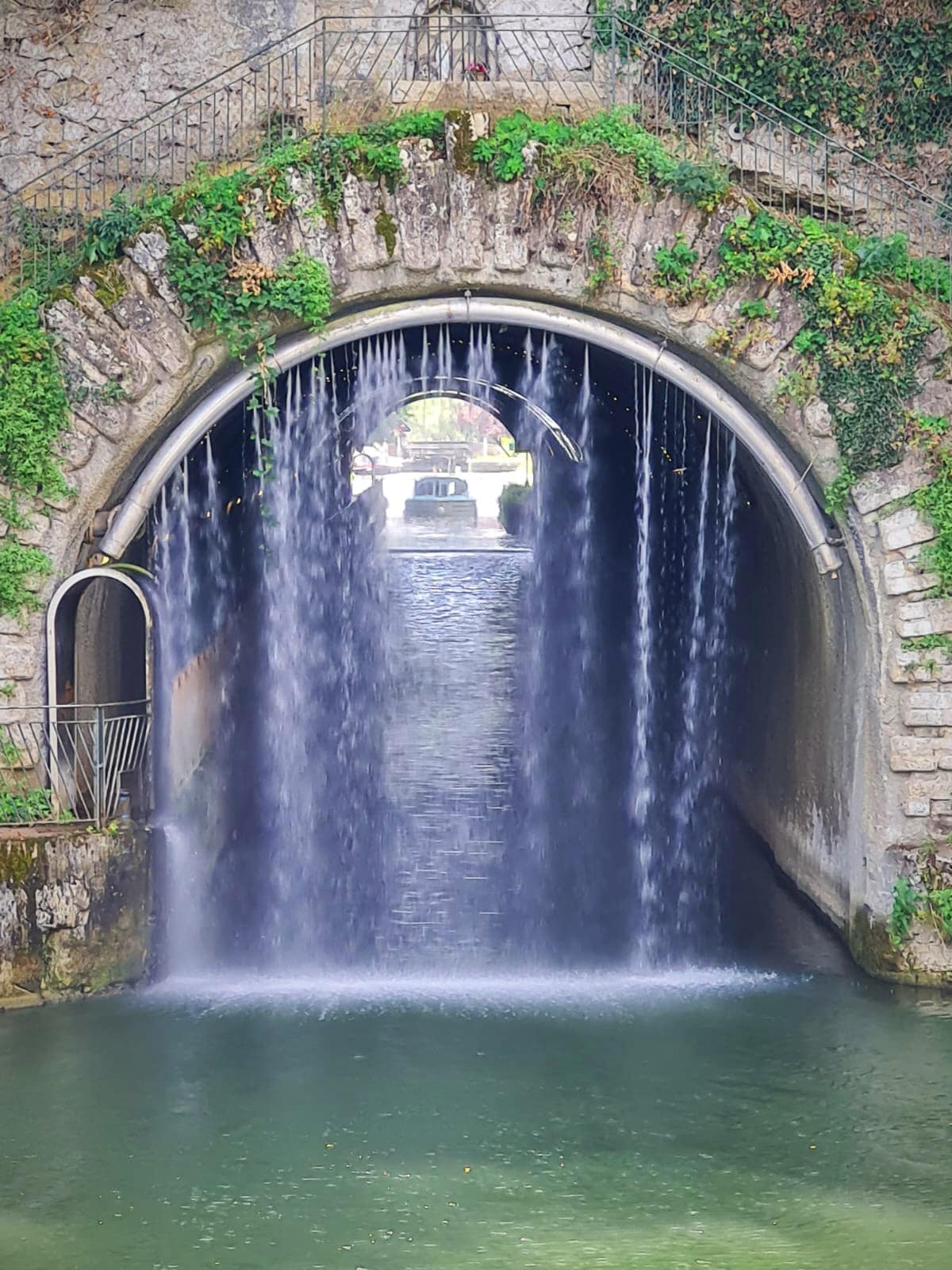
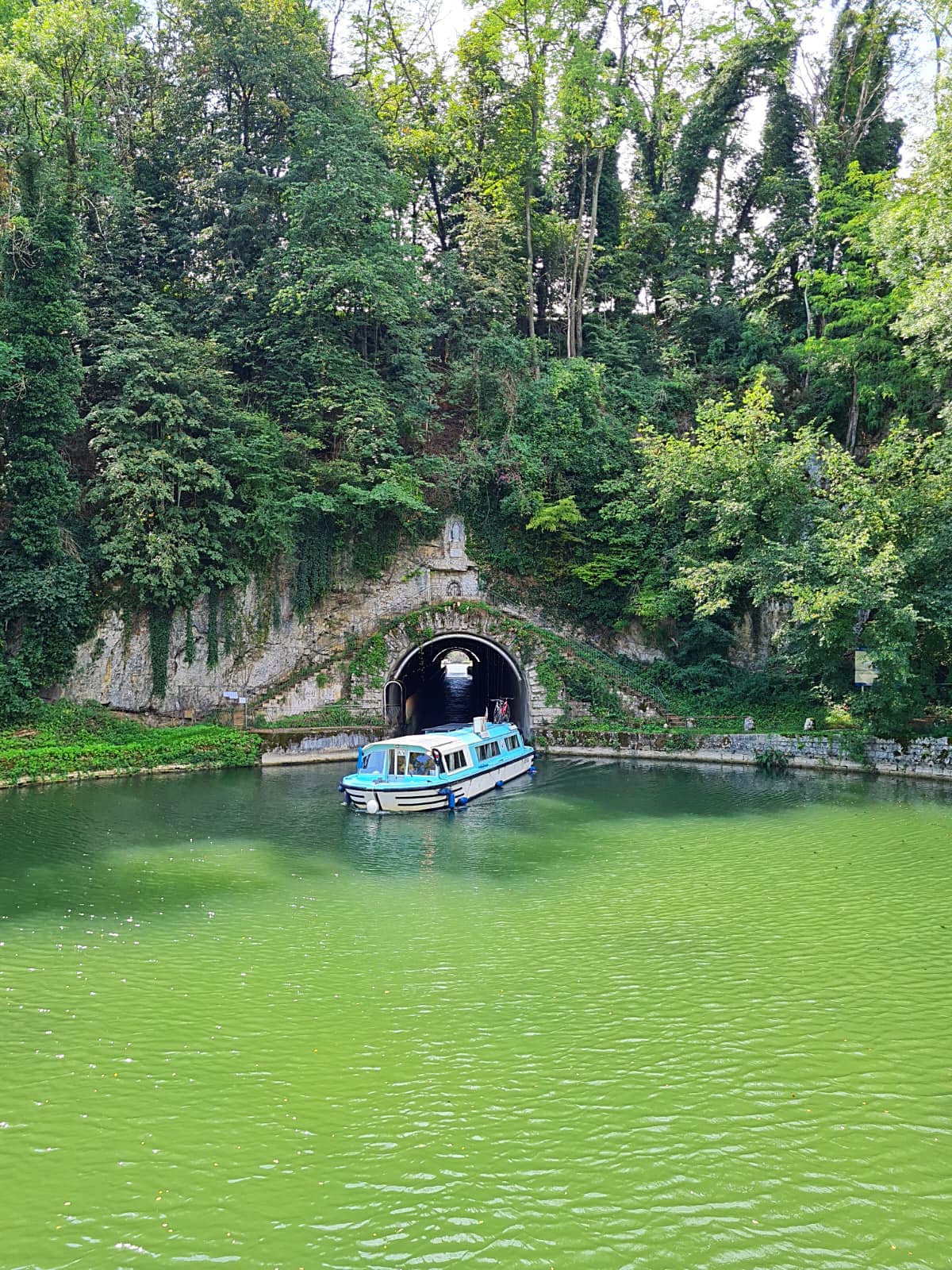
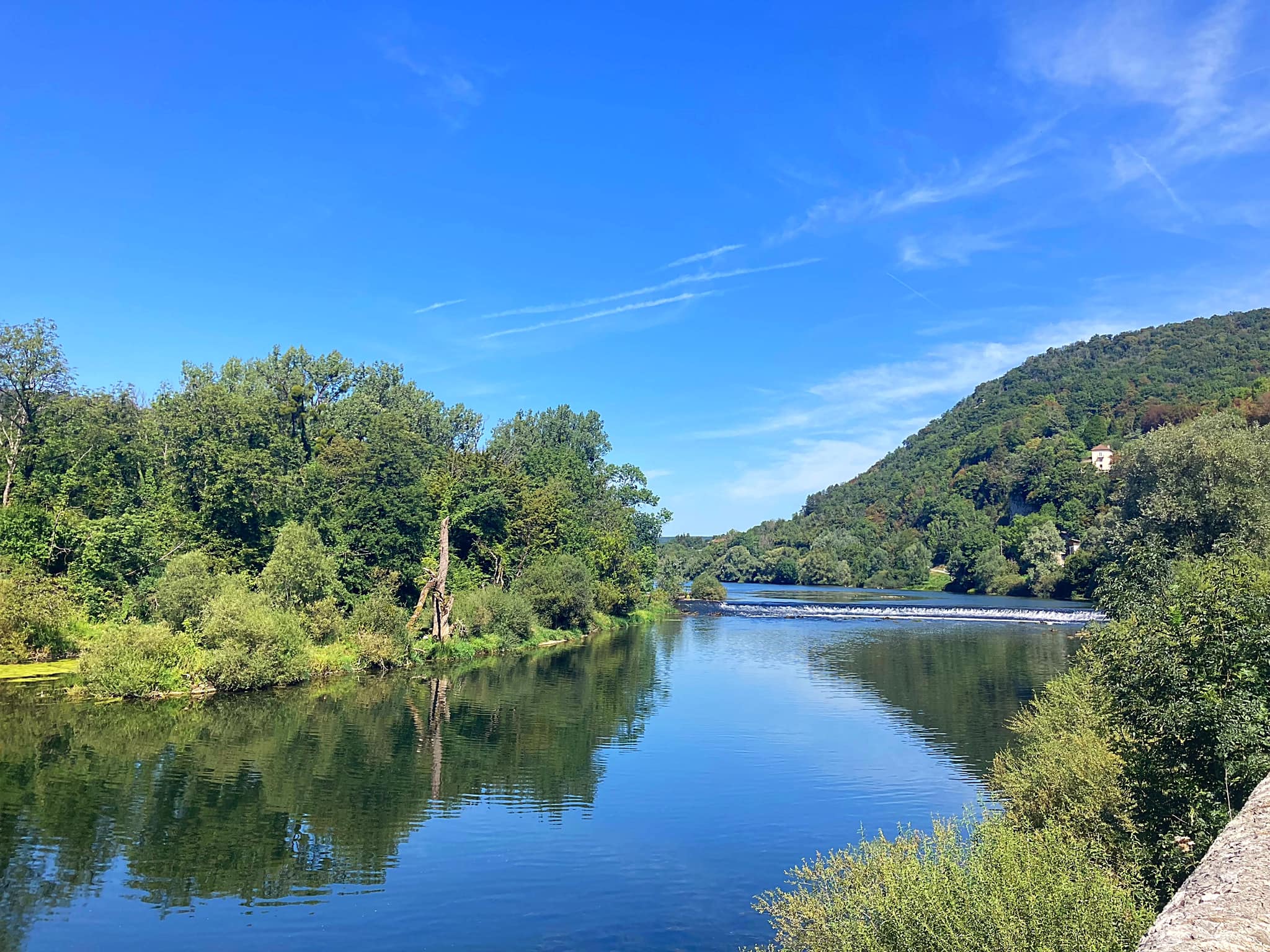
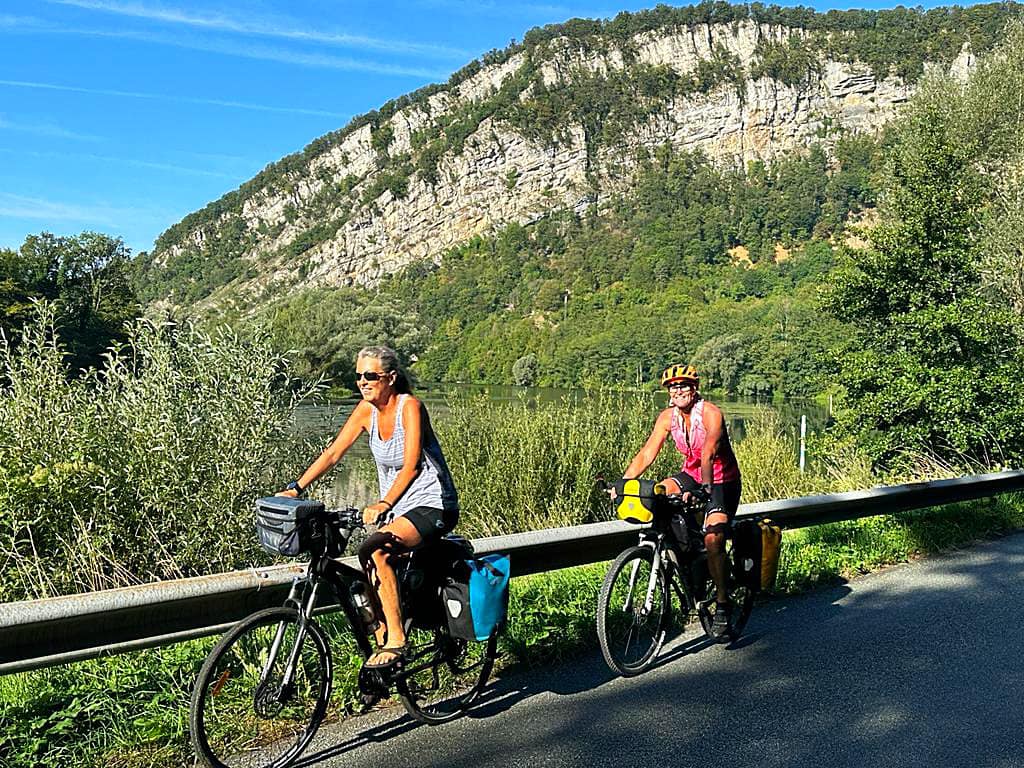
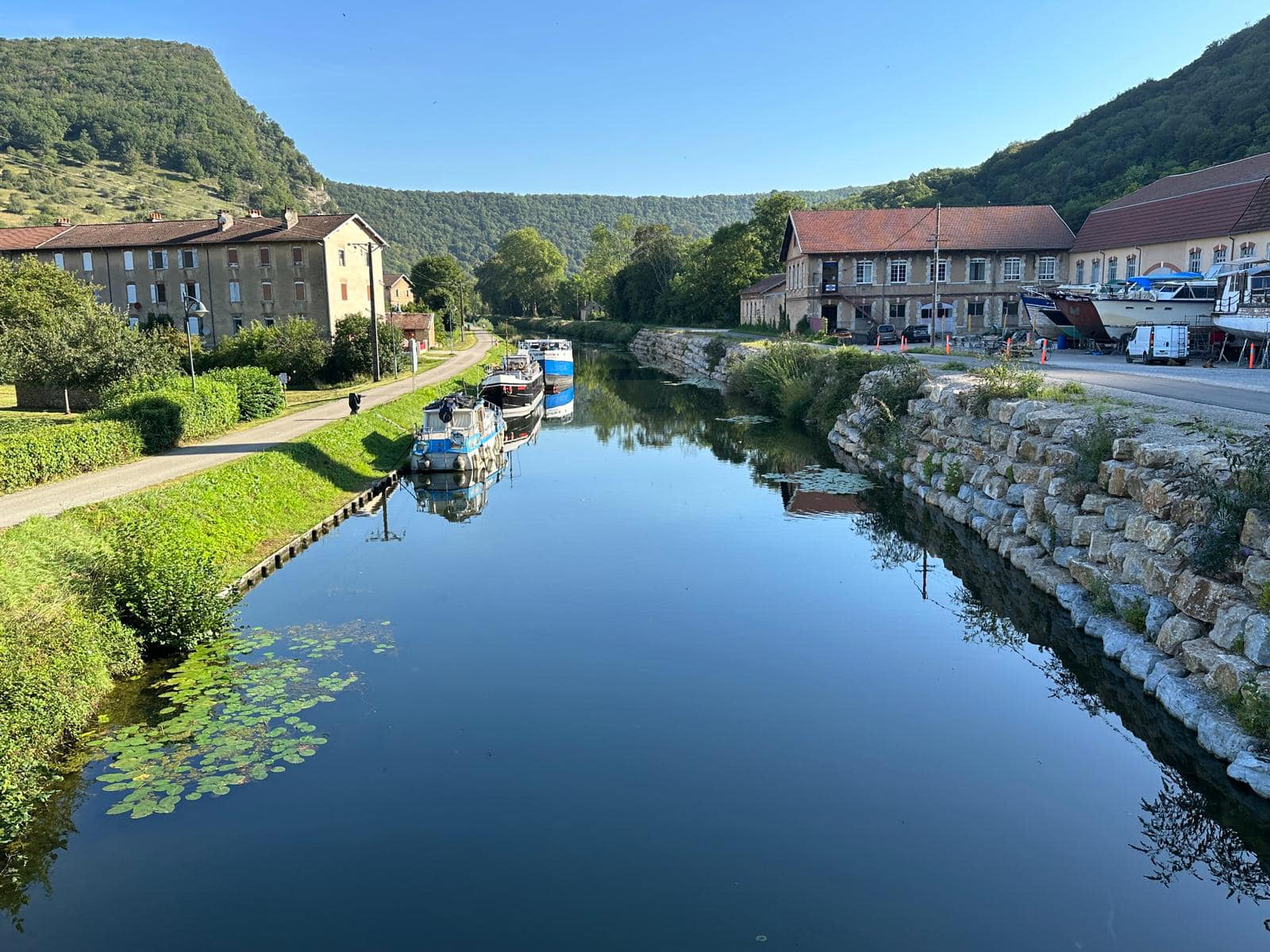
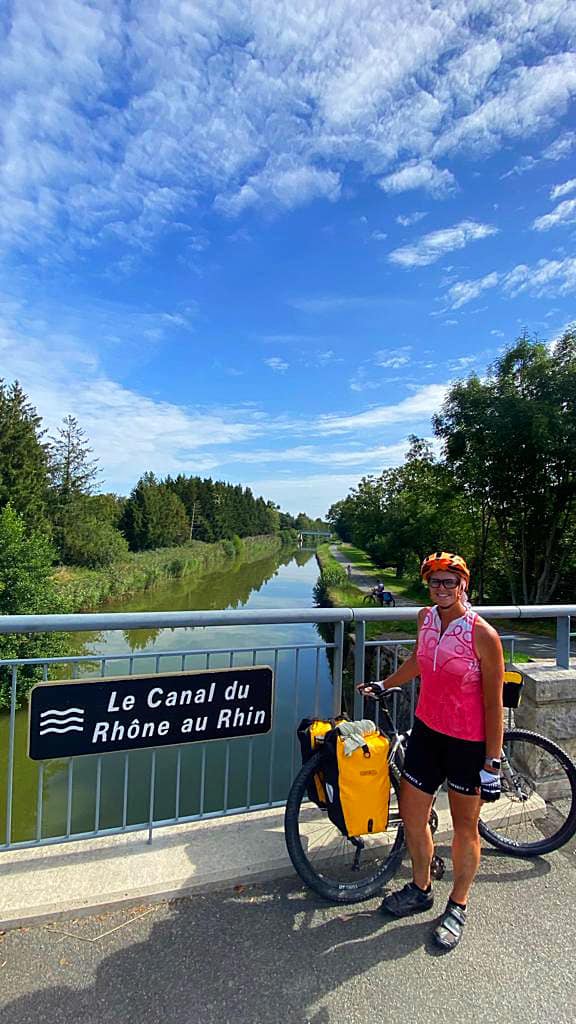
It was a blue sky day and the cycling today was magical – we spent a lot of it along the Canal du Rhône au Rhin. The landscapes have changed from rolling pastures, to high cliffs and bush along the rivers and canals. We are getting closer to the Swiss border now.
The Canal du Rhône au Rhin, built between 1784 and 1833, is a magnificently scenic route through the Jura, with wooded cliffs and blueish ranges of hills in the background. The two historic towns, Dole and Besançon, both have spectacular settings. It is used by large numbers of boats heading south from Germany and Switzerland to the Mediterranean, but it is also a cruising waterway in its own right, especially in the picturesque valley of the Doubs.
There was a lot of activity in the skies too with fighter jets flying backwards and forwards. We couldn’t always see them but there were jet streams all over the place.
We had a lunch stop at a makeshift beach spot where people paid EU4.50 to swim in the lake. It was super busy but not on our agenda to pay to go for a swim.
Tonight we are in Bescanon where we are staying for two nights – tomorrow we are having a rest day so everyone is looking forward to resting their derrière 



Day 17 – Besancon – 0km
Today our bikes remained stationary but after a home cooked breakfast of poached eggs and avocado we walked into the city to explore.
Besancon has a population of about 120,000 and 280,000 in the wider area. It is the historical capital of watchmaking in France. This has led it to become a centre for innovative companies in the fields of microtechnology, micromechanics, and biomedical engineering. The University of Franche-Comté, founded in 1423, enrolls nearly 30,000 students each year, including around 4,000 trainees from all over the world within its Centre for Applied Linguistics (CLA). It is the greenest city in France.
After yesterday’s beautiful weather, the day started off grey with a few showers. This kept us cool as we climbed up to the citadel.
The Citadel of Besançon is a 17th-century fortress in Franche-Comté, France. It is one of the finest masterpieces of military architecture designed by Sébastien Le Prestre de Vauban. The Citadel occupies 11 hectares (27 acres) on Mount Saint-Etienne, one of the seven hills that protect Besançon, the capital of Franche-Comté. Mount Saint-Etienne occupies the neck of an oxbow formed by the river Doubs, giving the site a strategic importance that Julius Caesar recognised as early as 58 BC. The Citadel overlooks the old quarter of the city, which is located within the oxbow, and has views of the city and its surroundings.
On 7 July 2008, UNESCO listed the Citadel, together with nearby Fort Griffon, as a World Heritage Site for its testimony to Vauban’s work and its influence in the design of military fortifications and strategy from the 17th through 20th centuries.
Sébastien Le Prestre de Vauban, Seigneur de Vauban, later Marquis de Vauban (baptised 15 May 1633 – 30 March 1707), commonly referred to as Vauban, was a French military engineer and Marshal of France who worked under Louis XIV. He is generally considered the greatest engineer of his time, and one of the most important in European military history.
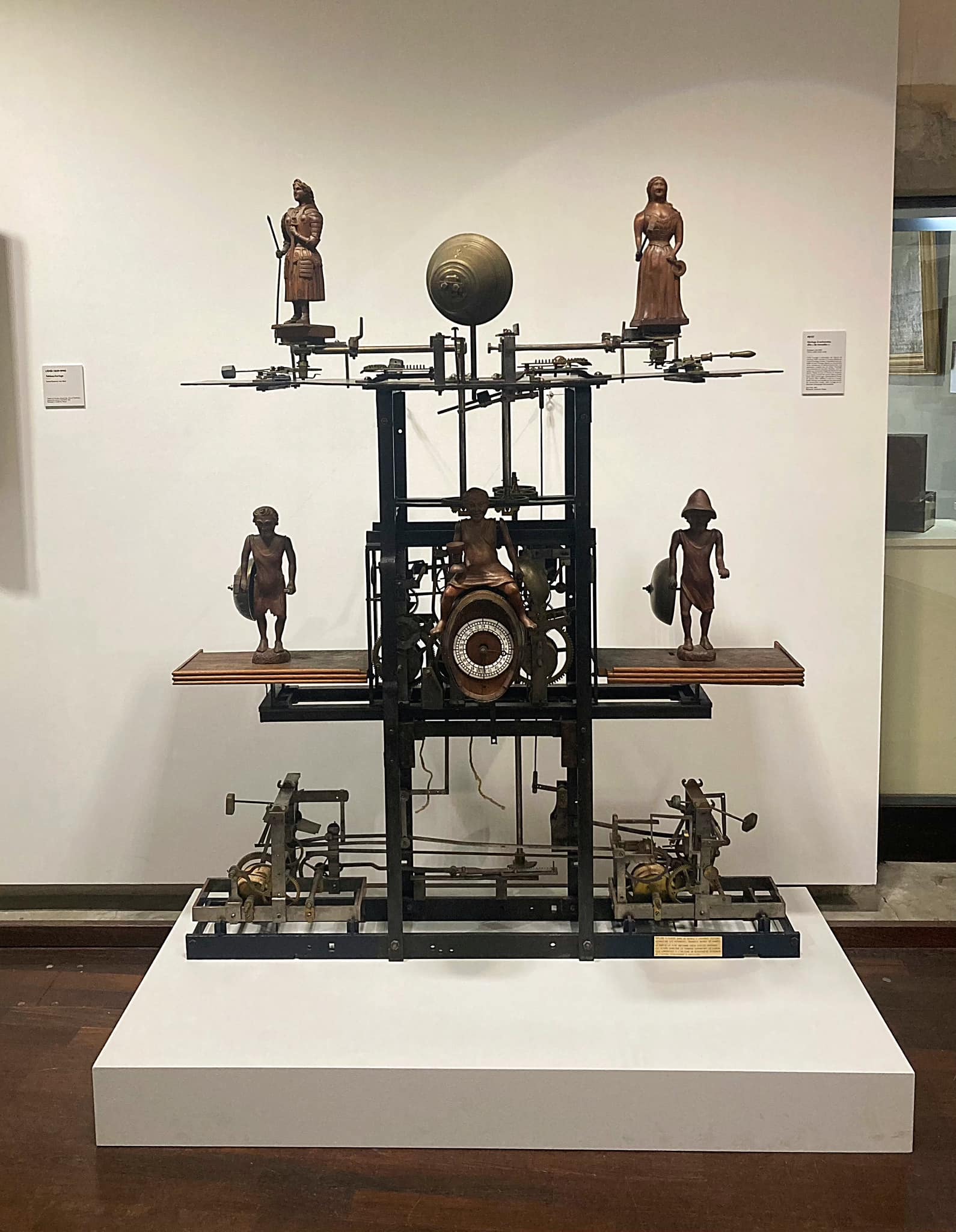
We came back down to the city for some lunch and a wander around before visiting the Musée du Temps (Museum of Time).
Measuring the passing of time involves identifying the rhythms and regularities in natural phenomena. Following the apparent movement of the heavenly bodies, of the sun, as well as the moon and stars, people marked out time on the basis of astronomy. The sundial divides up the days, the calendar fixes the rhythm of the years.
Time can we watched and can also be made. The birth of clockmaking from the Middle Ages led to the appearance of time created by man; mechanical time. “The sun lies, the clock tells the truth” became the watchmakers motto.
In the 1970’s, the arrival of quartz and outsourcing to Asia triggered a collapse of a large part of the regional industry, which is however still present in Besancon.
We climbed up to the palace tower to see the Foucault pendulum. It is 13 metres high and reproduces the experiment carried out by Leon Foucault at the Pantheon in Paris in 1851 to make the Earth’s rotation visible.
A little wander back through the streets before coming home to help prepare a delicious home cooked meal in the backyard.





Day 18 – Besancon to Montbeliard – 100km
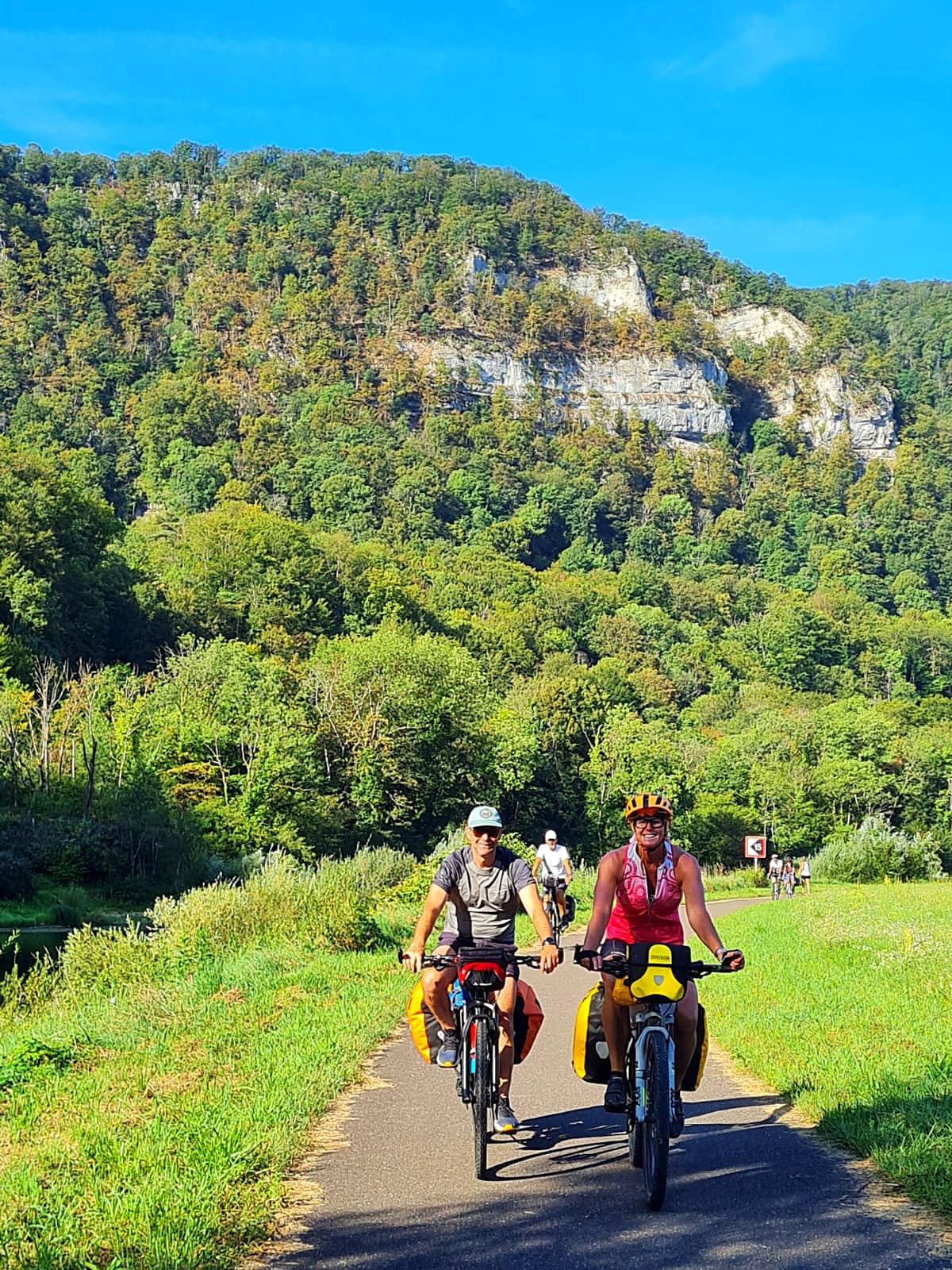
We had a big day ahead so we left Besancon at 8am – clear blue skies. We cycled past the citadel and up the valley. We started off along the Doubs with cliffs and bush on both sides – it actually reminded us of home – a little bit like the Wanganui River.
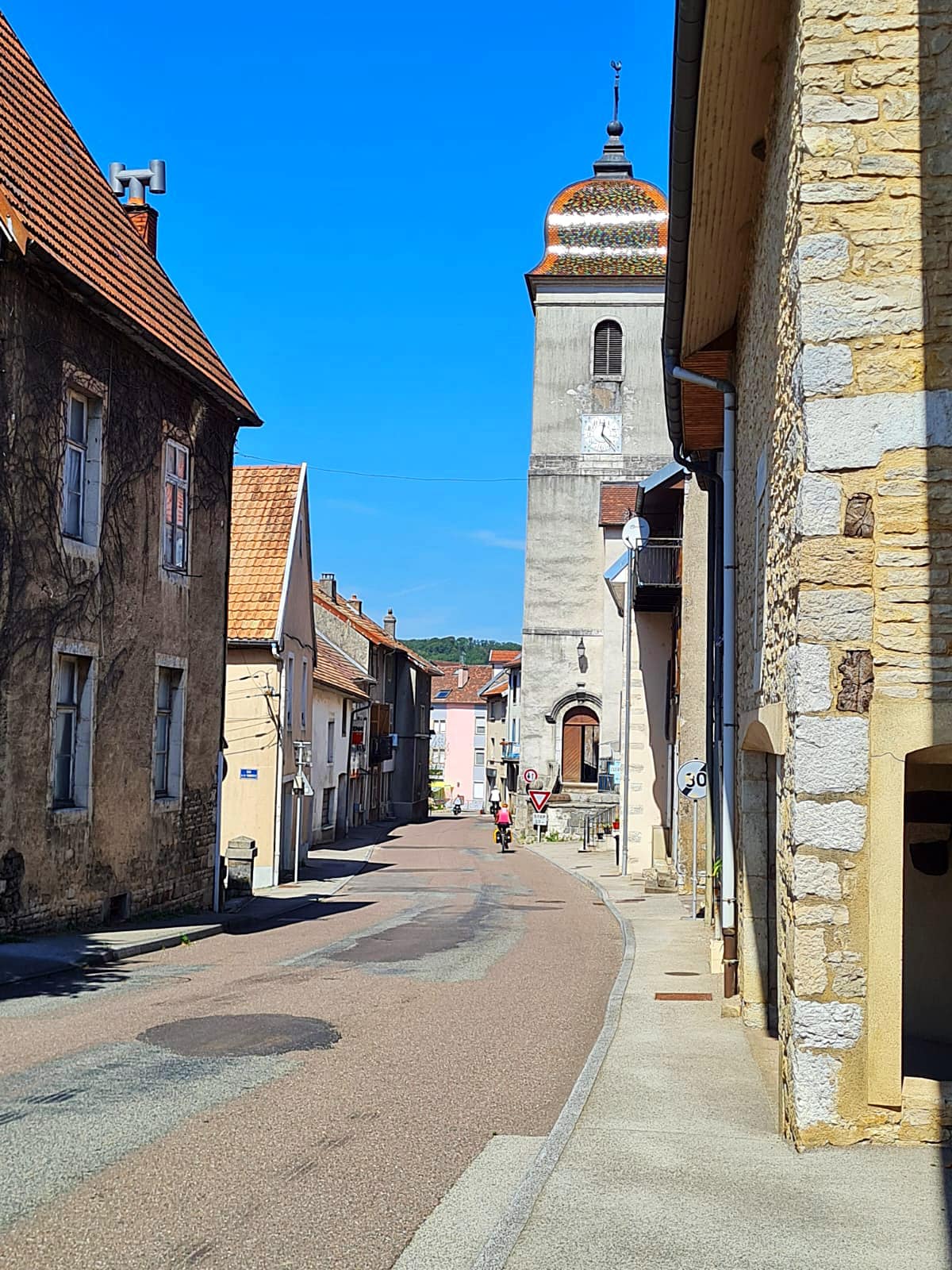
Again the trails were fantastic. We met a lady and a couple pushing their religious wares just before Baumé-les-Dames who pointed us in the direction of coffee and treats which happened to be in the Super U supermarket. The lady told me I was only the second person from NZ she had met. The coffee was on point – finally.
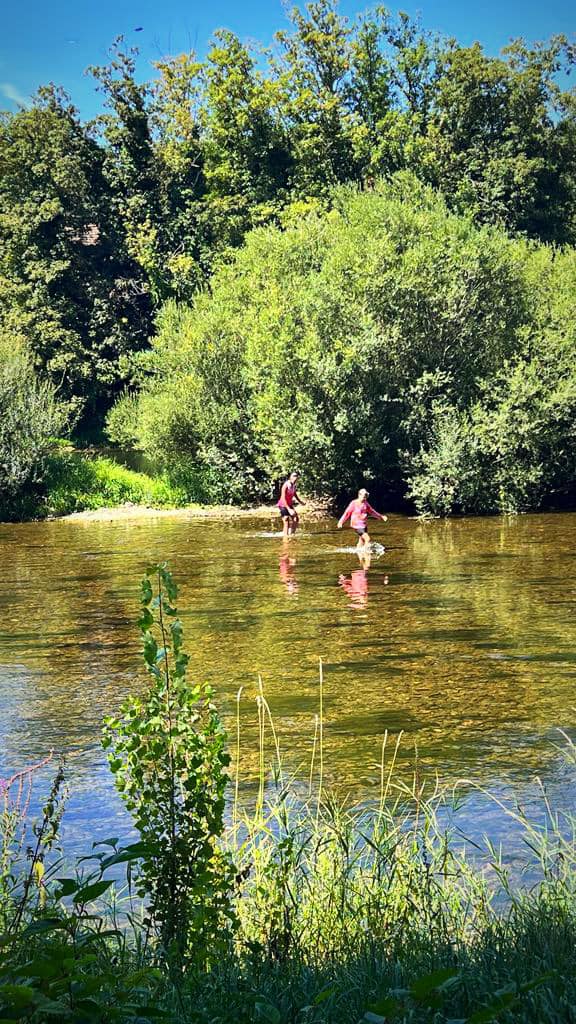
Our lunch stop today was in L’isle-sur-le-Doubs where we had a picnic by the river – my raisin baguette, goats cheese and honey was heavenly  . We saw a family swimming in the river and we wanted a part of the action – it was pretty hot. It was so refreshing.
We cycled back through town after lunch and the temperature on the pharmacy sign said 40 degrees but we think it was only about 33 degrees – still very hot.
We were back along the Canal du Rhône au Rhin heading for Montbeliard. My Swiss friend, Karin, met us about 20km from Montbeliard. She had driven, biked, trained and biked again from her home near Lucerne.
We are staying in the centre of Montbeliard which is a very pretty city. It has a population of 26,000 and is only 13km from the Swiss border.
We got cleaned up and had a walk around. JP, Karin and I walked to the park which has gardens, sculptures and a maze.
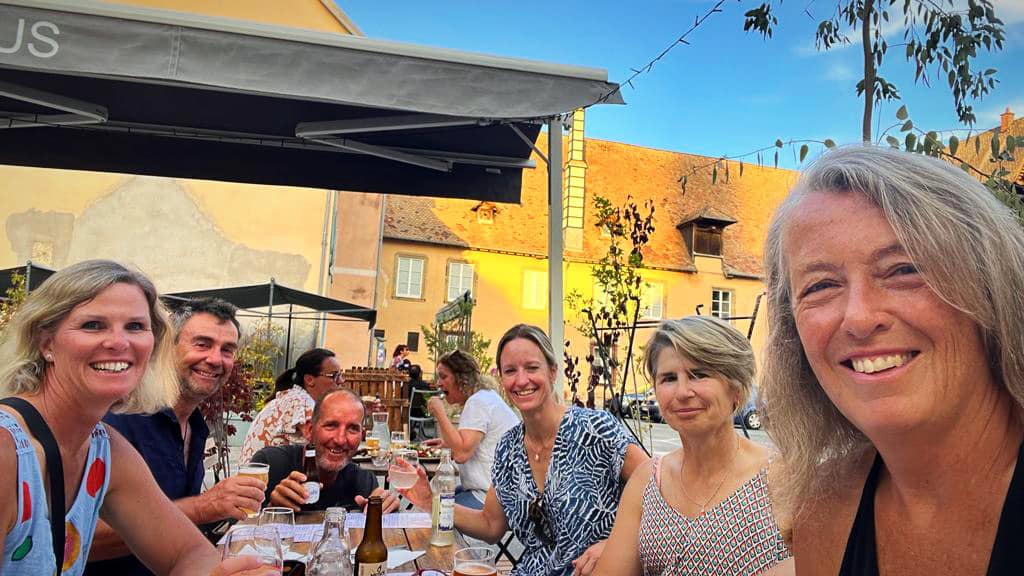
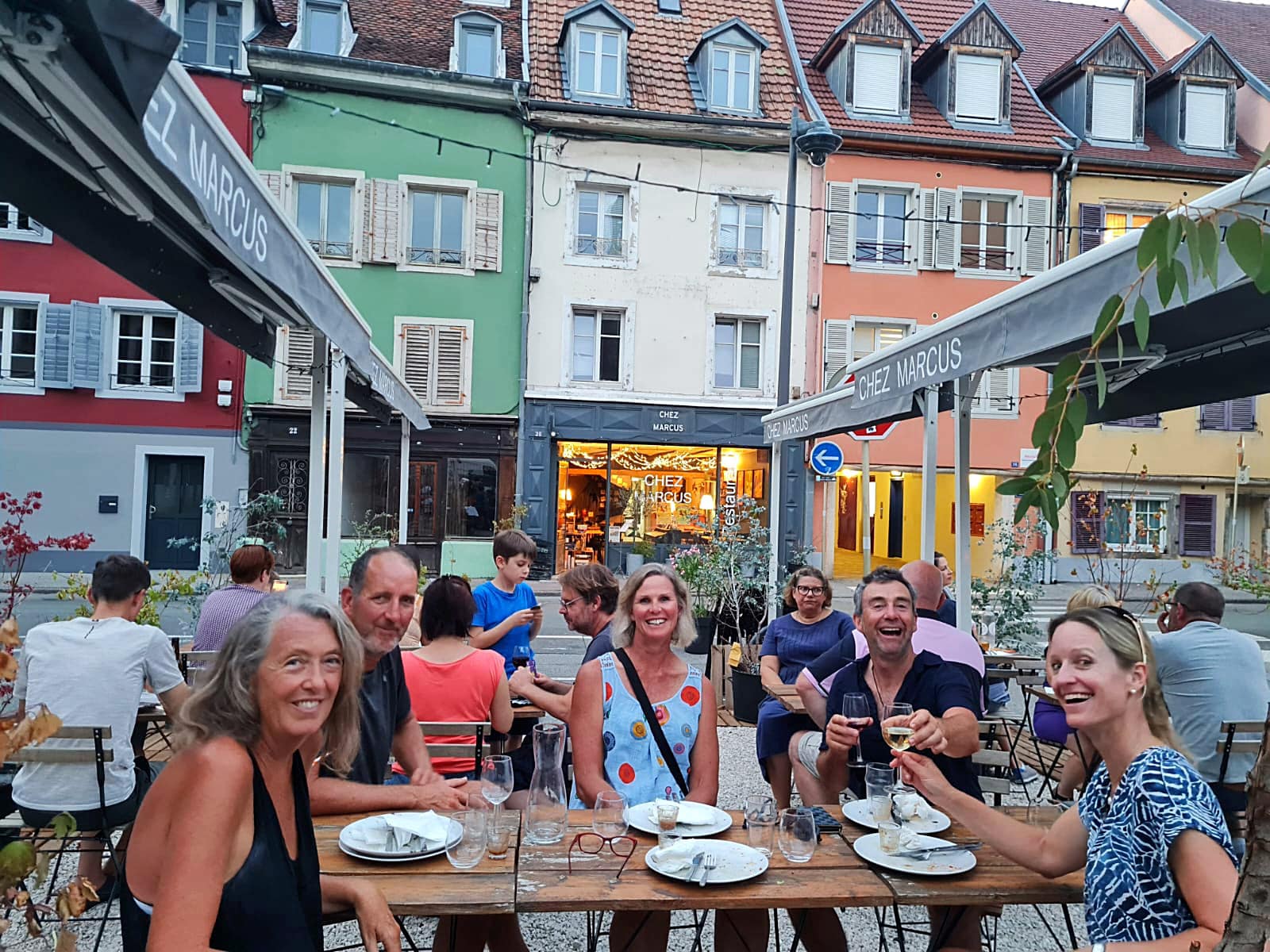
We then met the others for dinner at Chez Marcus. Marcus, the owner appeared to be a one man band, taking orders, preparing drinks, cooking the food. He was hilarious and told us he spoke all sorts of languages – it just depended on what he was drinking at the time . When Hilary had gone to book us a table she used her best French – when she had finished, Marcus said ‘for a moment then I thought you were trying to speak French’
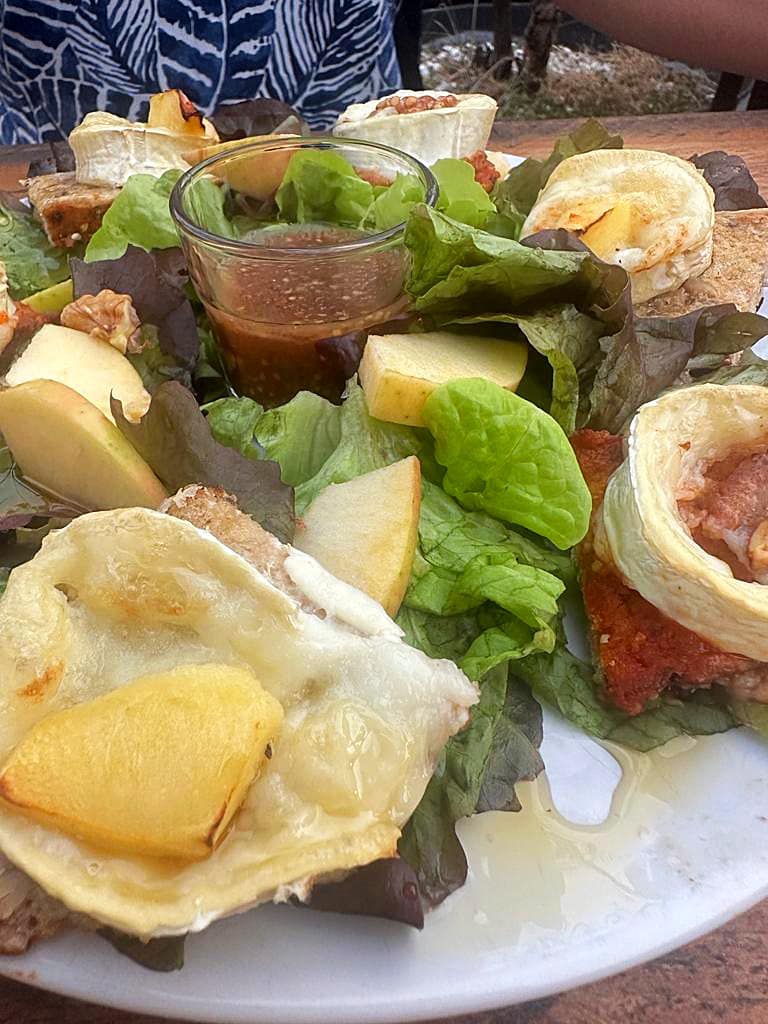
Another delicious dinner and lovely to have Karin as part of the crew for the next two days.
PS according to Hilary we only did 99.6km but all good accountants round up 








Day 19 – Mountbeliard to Mulhouse – 59km
An easier day today. We enjoyed a nice breakfast at the hotel before visiting the Decathalon store for more supplies.
Another beautiful hot day mostly spent alongside the Canal du Rhône au Rhin. We came across the Staircase locks of Valdieu-Lutran. This is a succession of locks on the canal, in which at least one door is used for both upstream and down stream locks. There were about 12 of them and I think it would take all day to make your way up or down.
We had a lovely coffee stop in Dannemarie alongside the canal. There was a sign showing we had another 1,570km to Budapest  . There was an interesting sign in the toilets at the cafe too – especially the last illustration
We came across the College Episcopal of Zillisheim. It hosted the first pupils on the 26th of October 1869. As an academic and Catholic institution it hosts boys and girls from the last year of primary school to the French baccalaureate. For 150 years it has been a real breeding-ground for the diocese: it has trained several generations of pupils including more than 1000 priests and bishops.
As we stopped to take a photo, a father and son were walking along. They stopped to chat and it turned out that the father had been the chef at the school for 19 years – cooking three meals a day for 700 students!
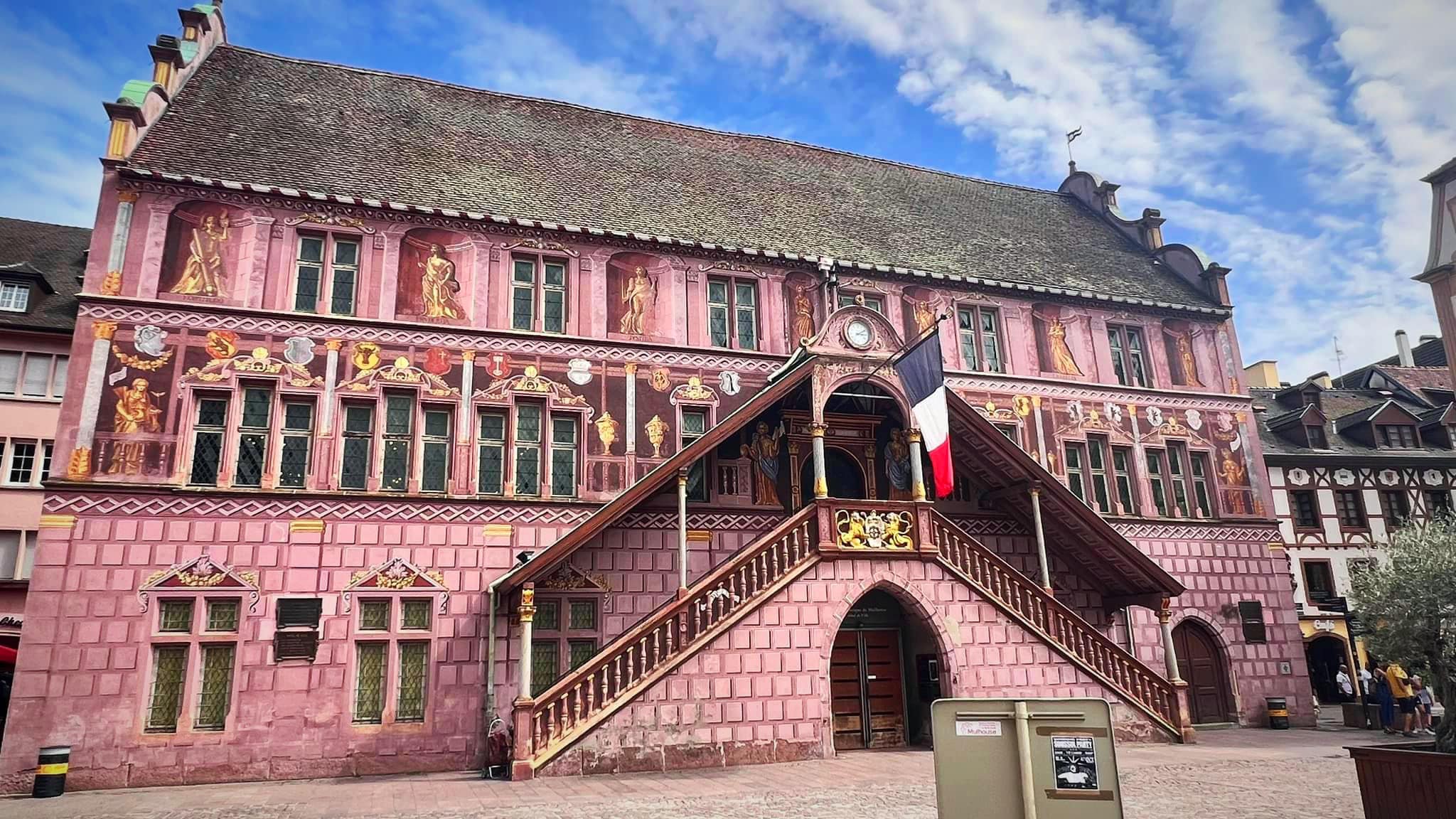
We arrived into Mulhouse at 2.30pm so parked up the bikes and went exploring.
Mulhouse has a population of about 110,000 and is famous for its many museums. The town’s development was stimulated first by the expansion of the textile industry and tanning, and subsequently by chemical and Engineering industries from the mid 18th century. Mulhouse was for a long time called the French Manchester. Consequently, the town has enduring links with Louisiana, from which it imported cotton, and also with the Levant.
In 1515 Mulhouse joined the Swiss Confederation, in 1798 it was under French rule, after the Franco Prussian war in 1870 – 1871 it became part of the German empire. After World War I ended in 1918, French troops entered Alsace, and Germany ceded the region to France under the Treaty of Versailles. After the Battle of France in 1940, it was occupied by German forces until its return to French control at the end of World War II in May 1945.
Tonight is our last night in France. This trip was dreamed up to celebrate my 50th birthday in July 2021 but had to be delayed. The team wanted to do a belated celebration and honoured my request for a picnic in the park with champagne. They even managed a little cake. Lovely to celebrate with a such a special group of friends  in what has become a very special place to me. France you have exceeded all my expectations.






Day 20 – Mulhouse to Basel – 44km
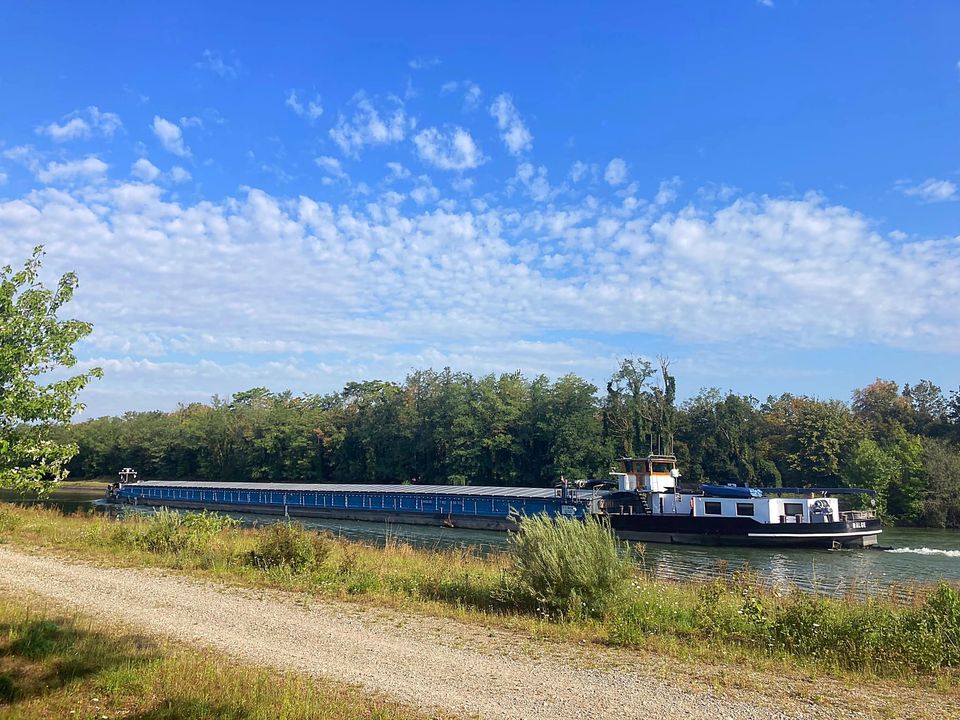
One of our best days on tour yet. A gentle 44km from France to Germany to Switzerland along the Canal du Rhône au Rhin and out onto the Rhine River.
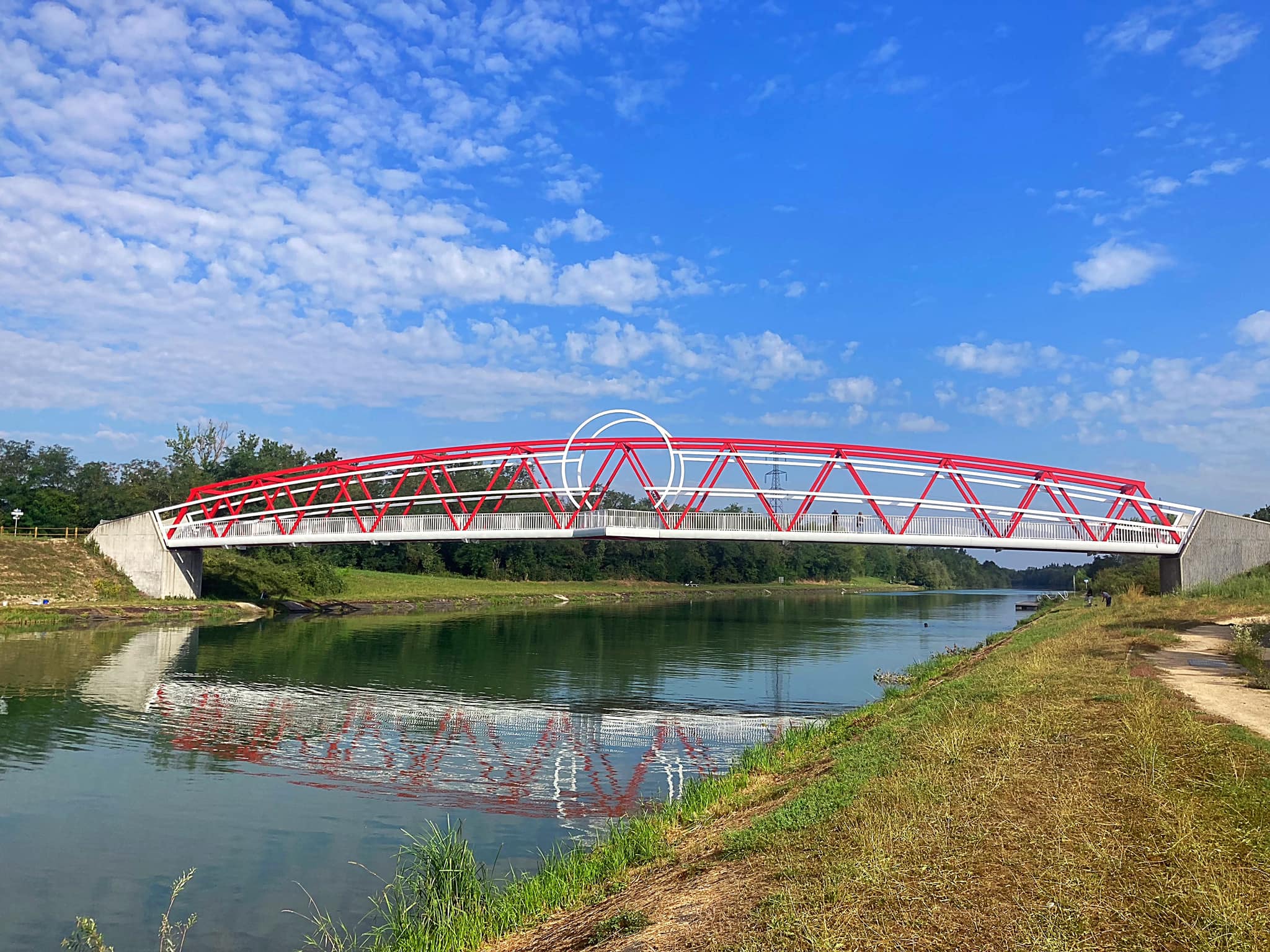
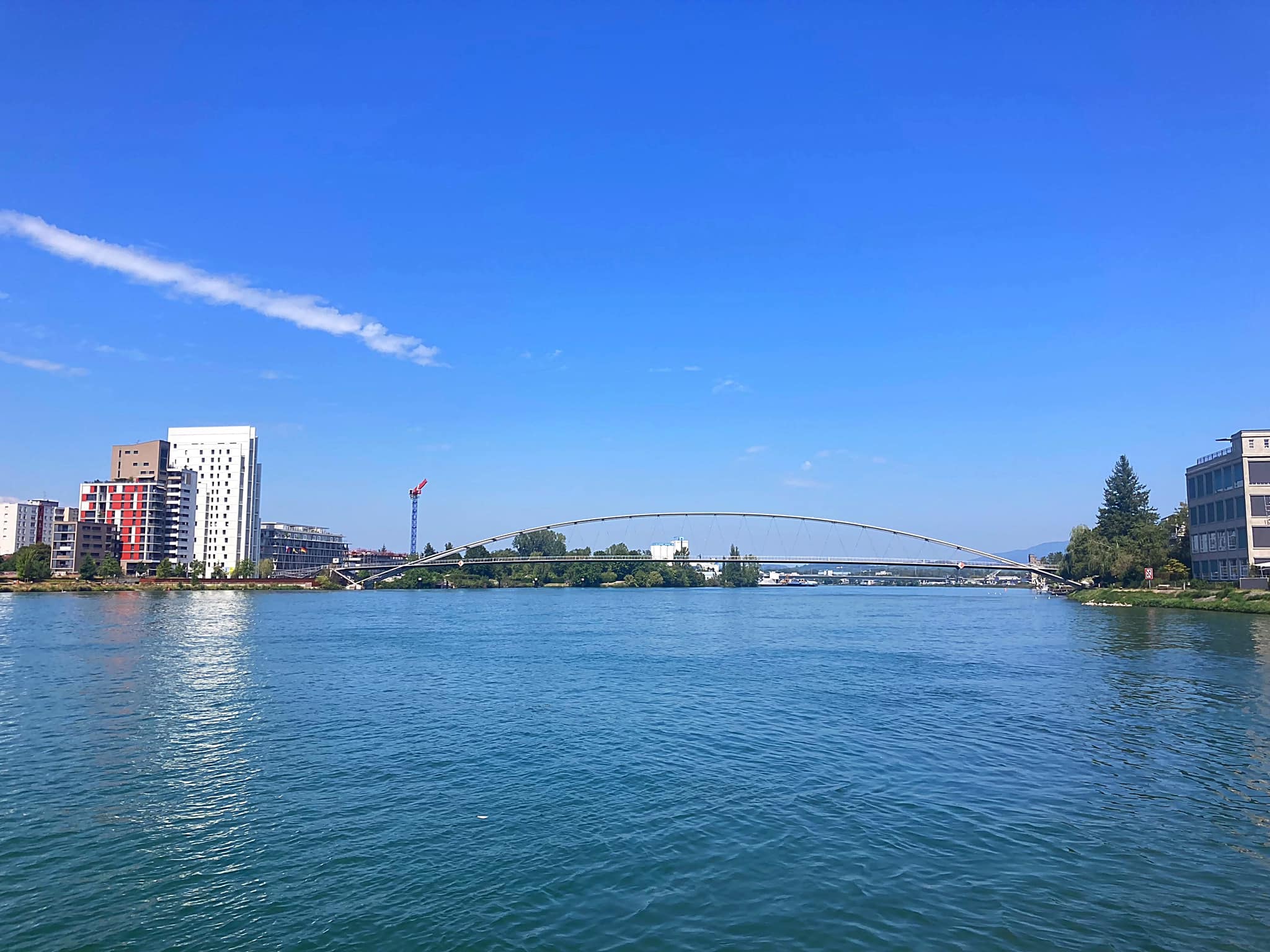
We said goodbye to France as we crossed the world’s longest pedestrian and cyclist suspension bridge that links Huningue in Alsace, France with the German town of Weil am Rhein in southern Baden. The Dreiländerbrücke (Three Countries Bridge) is 248 metres long.
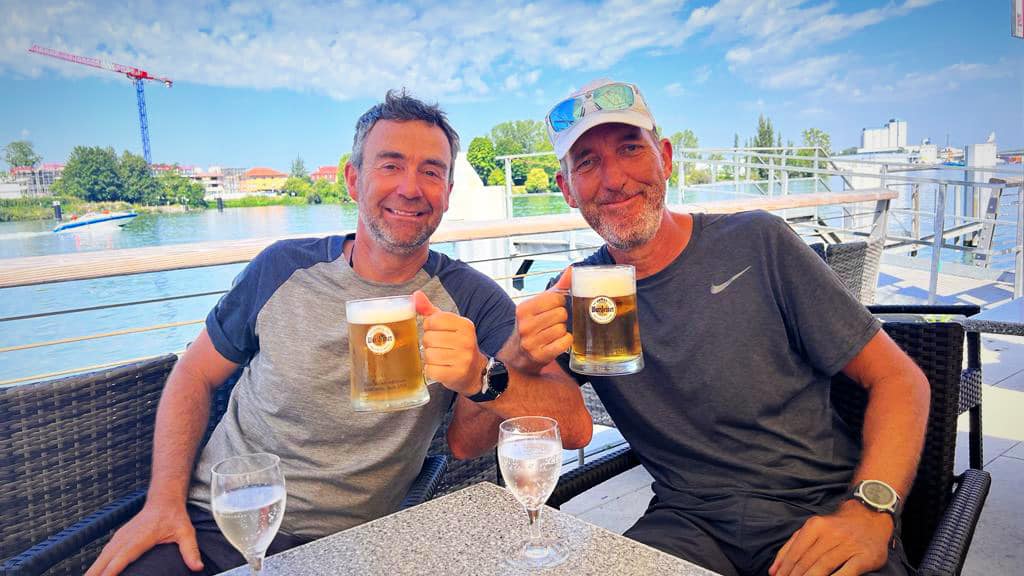
We had breakfast in France and lunched in Germany just under the bridge at an Italian restaurant. We were covering all bases today. After lunch we biked 5 or so minutes to enter Switzerland.
A certain point in the Rhine marks the point where the three countries meet. While it is hard to get there without a boat, there is a landmark you can visit by bike.
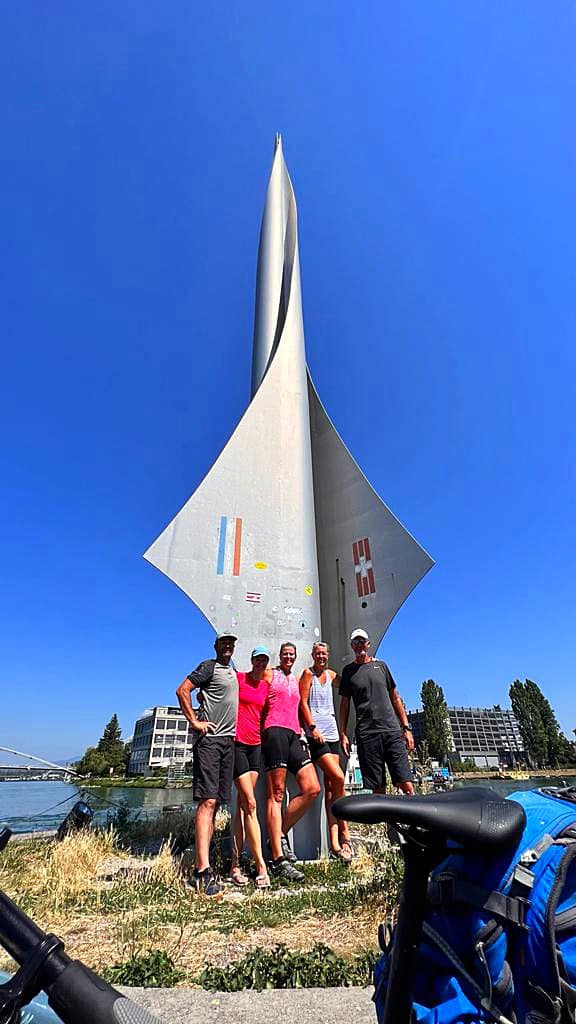
The tri-border point, or Dreiländereck as it is called in German, marks the point where Germany, France, and Switzerland intersect. The marker itself is built to resemble a futuristic rocket, with one of the three country flags on each of the wings. It is located on a piece of Swiss land approximately 150 meters (495 feet) southeast of the actual point where the three borders intersect.
What makes this tri-border point rare compared to most is that there are no passports or visas needed to cross it, or any other border in that location, given that all three countries have a free travel agreement.
We took a number of photos here and made some videos of us riding around three countries in three seconds – if only.
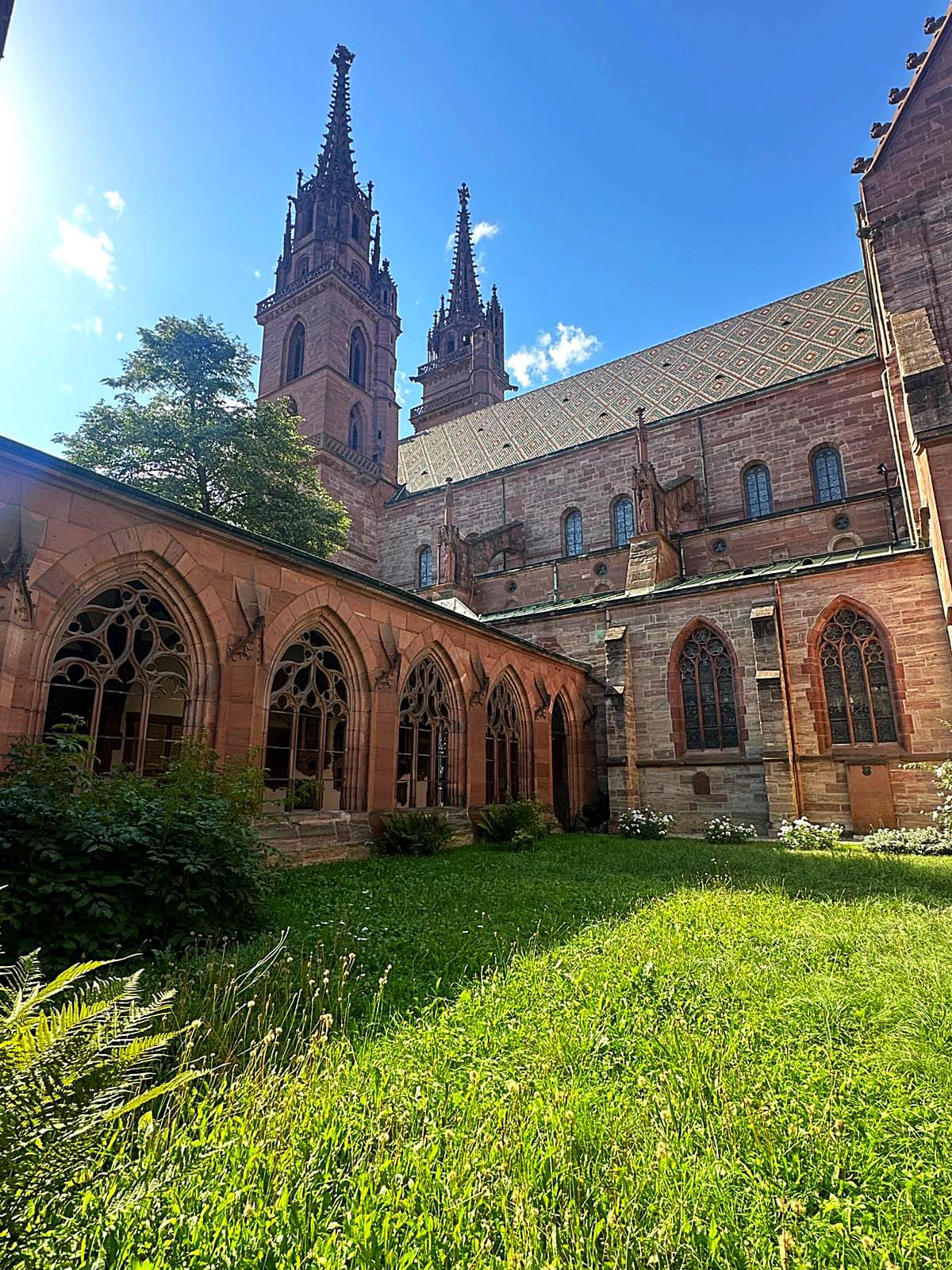
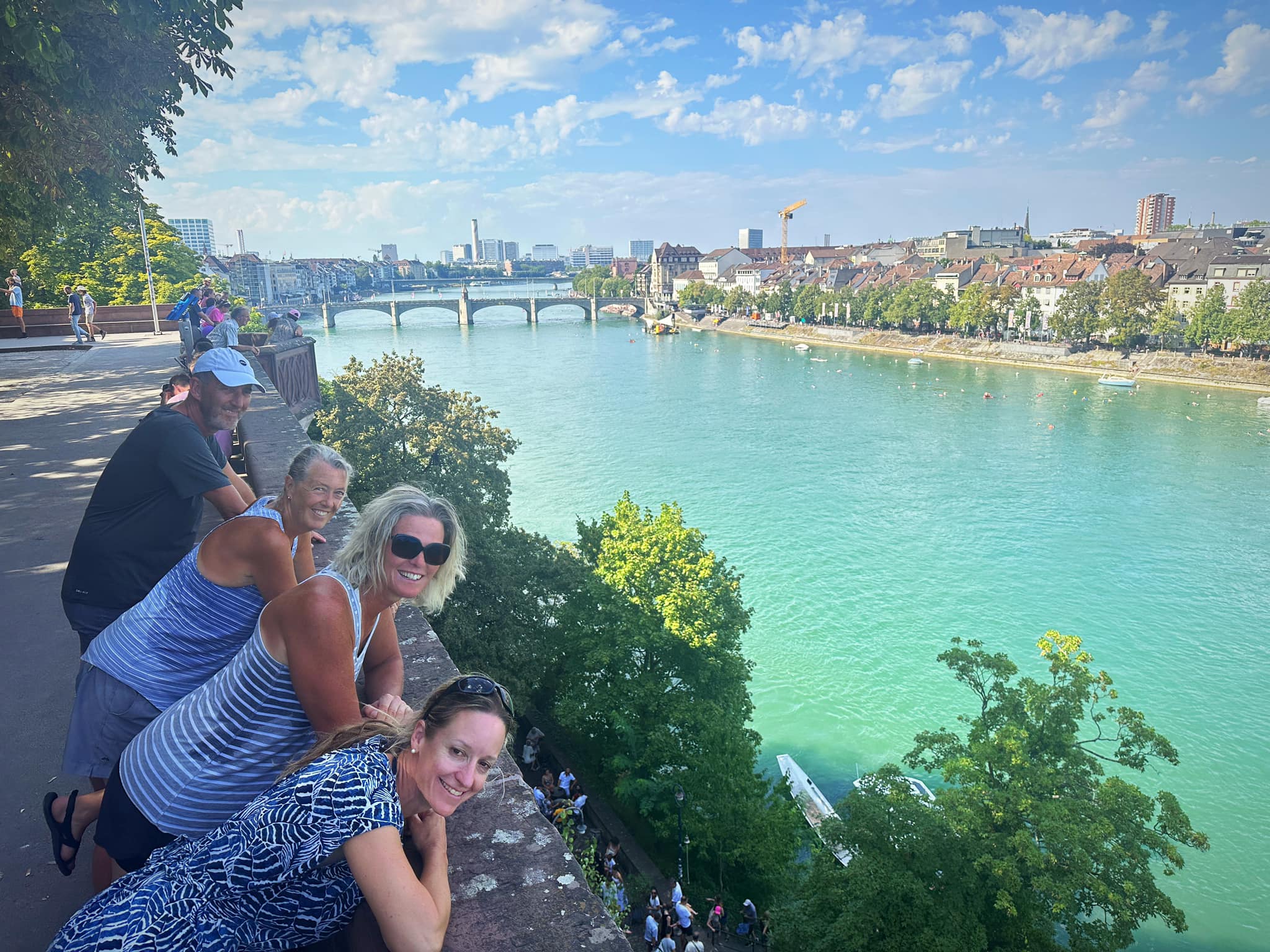
We then headed into Basel. Basel is Switzerland’s third-most-populous city (after Zürich and Geneva), with 165,000 inhabitants within the city municipality limits. Basel is commonly considered to be the cultural capital of Switzerland and the city is famous for its many museums. The University of Basel, Switzerland’s oldest university (founded in 1460), and the city’s centuries-long commitment to humanism, have made Basel a safe haven at times of political unrest in other parts of Europe.
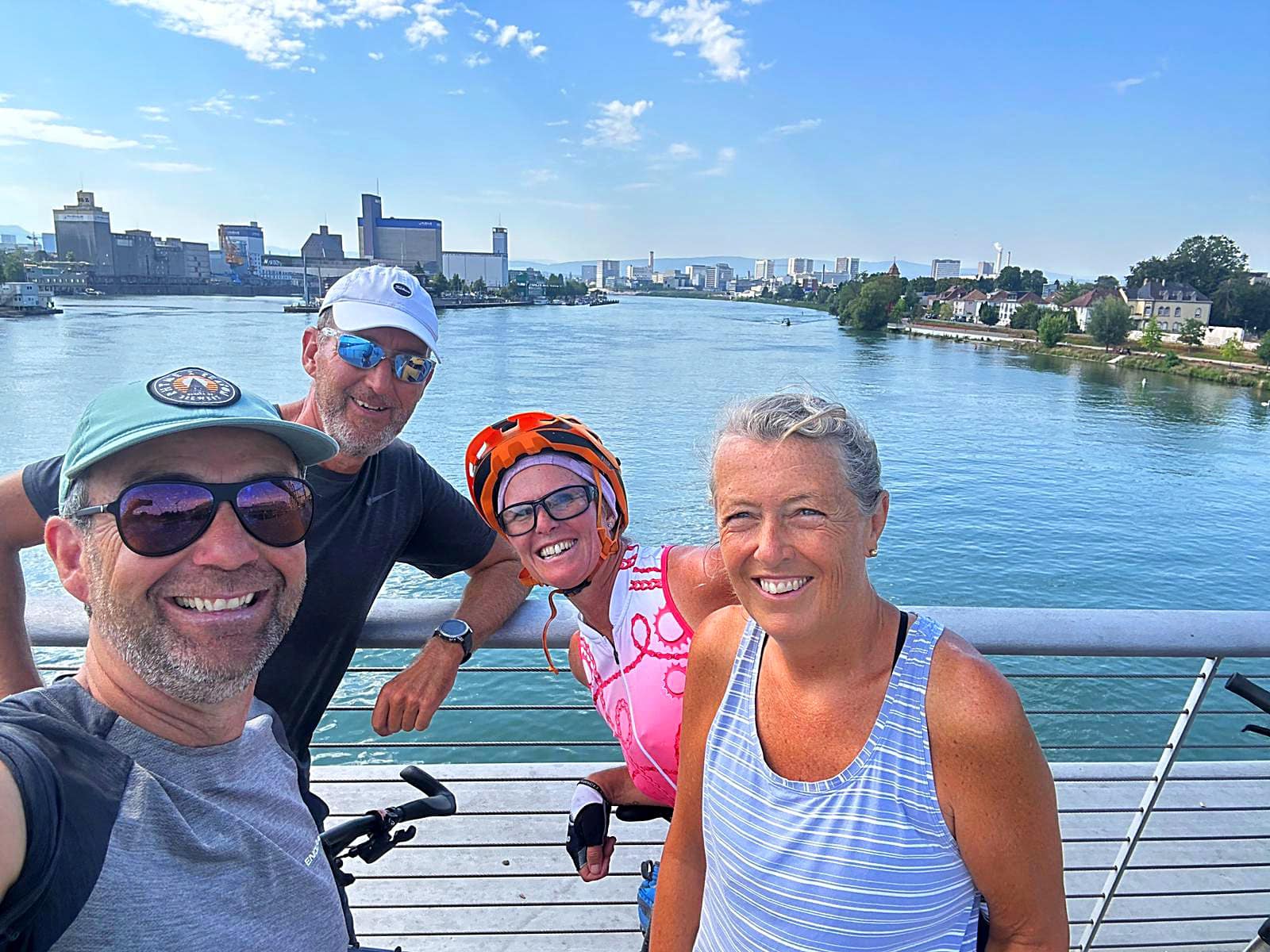
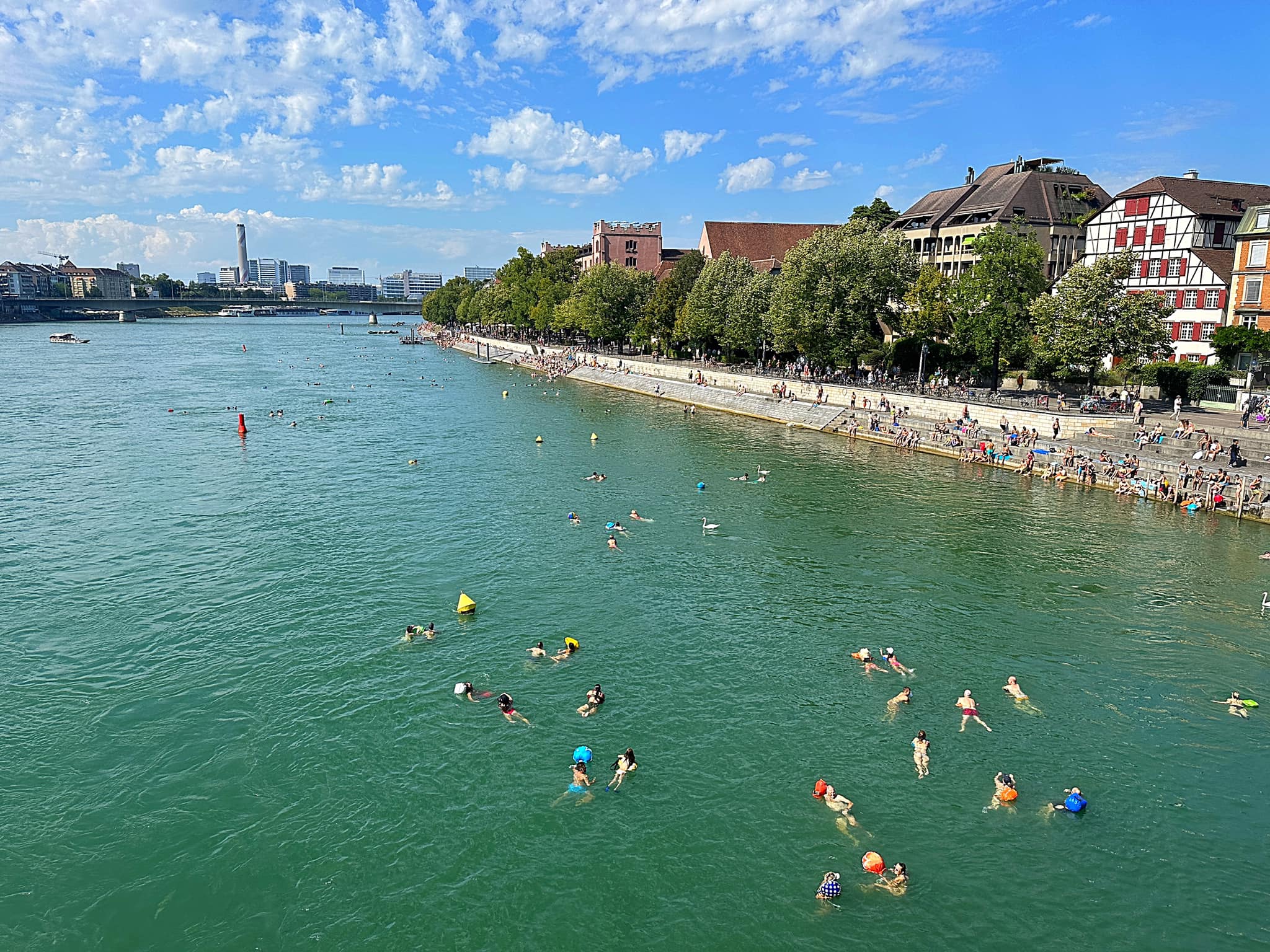
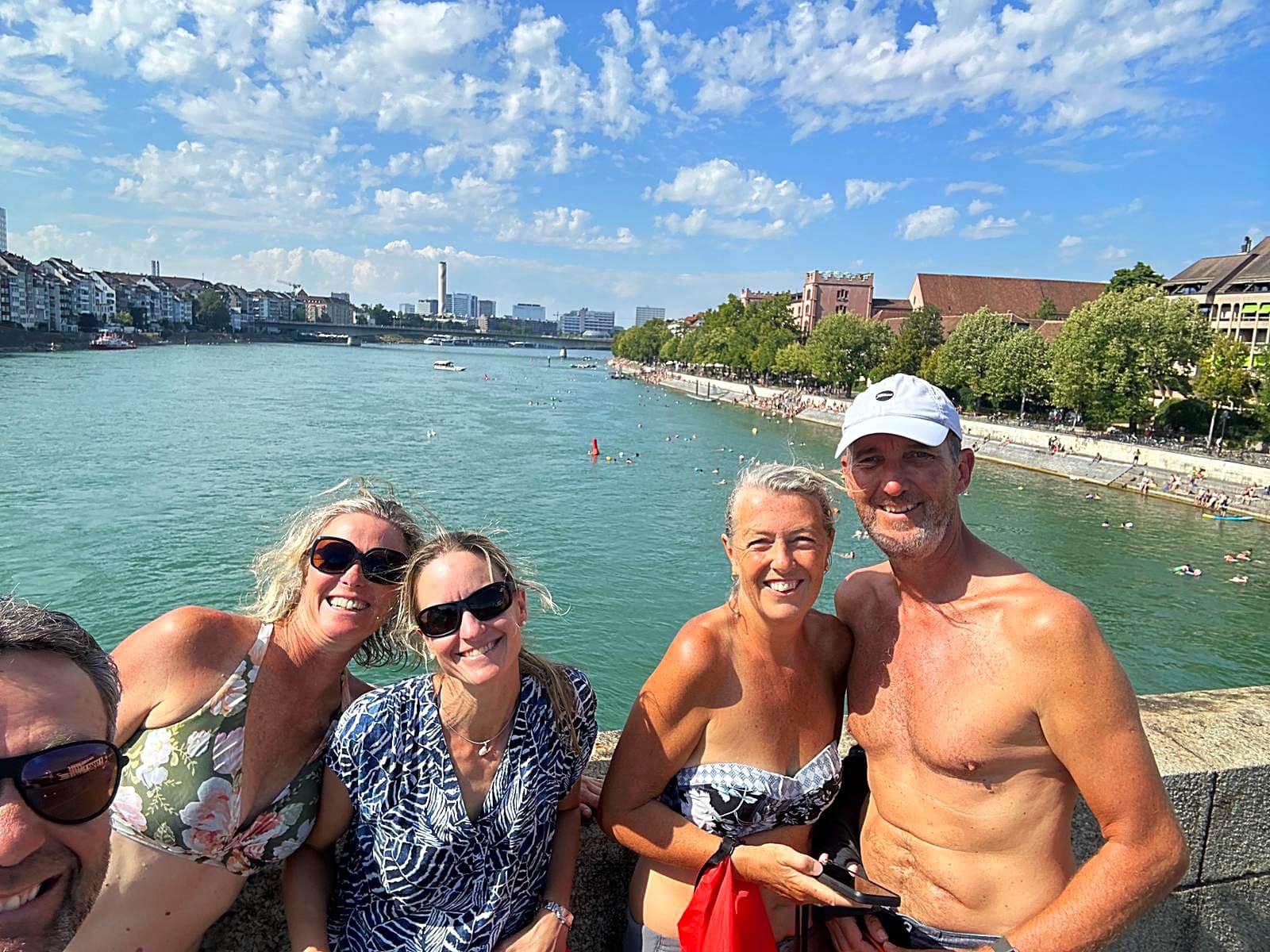
It was 32 degrees and as we biked to our hotel we saw hundreds of people floating down the Rhine and that’s exactly where we wanted to be. After securing our bikes at the hotel we walked up river for 1.2km, jumped in and then floated down river. OMG it was so good and so much fun.
Karin then took us on a walking tour around Basel which is a beautiful and vibrant place. We got some refreshments at the supermarket and came back to the hotel for a picnic dinner in the garden.
It was then back to the Rhine for a sunset float back down the river. One of those special experiences hard to explain but captured in your mind and soul.
Unfortunately we said goodbye to Karin after our sunset float as she headed back home  . She was an excellent tour guide and linguist helping us with our French and German. JP also left us this morning on her own little adventure to visit some friends in Germany. She’ll be back with us tomorrow night for our first night in Germany.






Day 21 – Basel to Laufenburg – 52km
We had a lovely cool nights sleep at Hotel Rochat last night, followed by an expensive but very nice latte before going in search of a wicklefisch.
A wicklefisch is a dry bag you can put your belongings in to take with you as you float down the river. It all began in the late 1980s, when a serious chemical accident turned the Rhine in Basel into a sewer.
In subsequent years, much work was undertaken to make the water clean once again and provide a habitat for fish. Some fantastic projects were launched, including Wickelfisch creator, Tilo Ahmels’s, idea to equip Basel’s swimmers with a swimming bag designed for use in the Rhine.
Together with local energy operator IWB, the idea for the first Wickelfisch bags was thus developed. They were carefully crafted from fabric and needed to be light yet tear-resistant. A distinctive design with a sealing system that also needed to be secure and absolutely waterproof – and quick and easy to use.
And so the Wickelfisch was born! An original Basel invention, and a registered trademark since 2010.
I bought one I can colour in, which will make it a one of a kind.
Not long after leaving Basel, we crossed into Germany. All in all today I crossed the border 4 times. The border being the middle of the Rhine.
It was quite an industrial landscape after we left Basel before getting into rural Germany. We spent quite a bit of time along the Rhine. It was a super hot day – 31 degrees but feeling like 34 
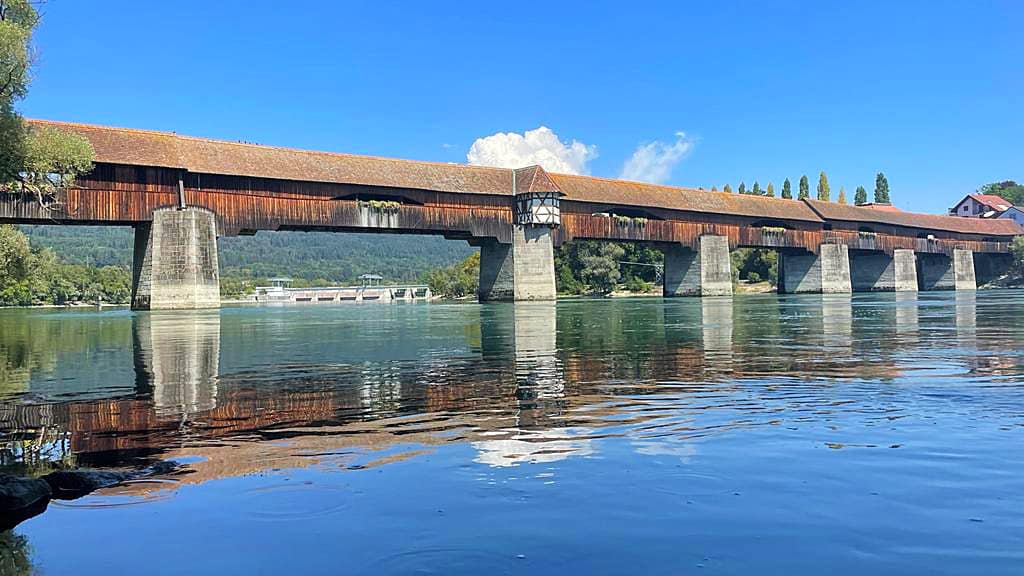
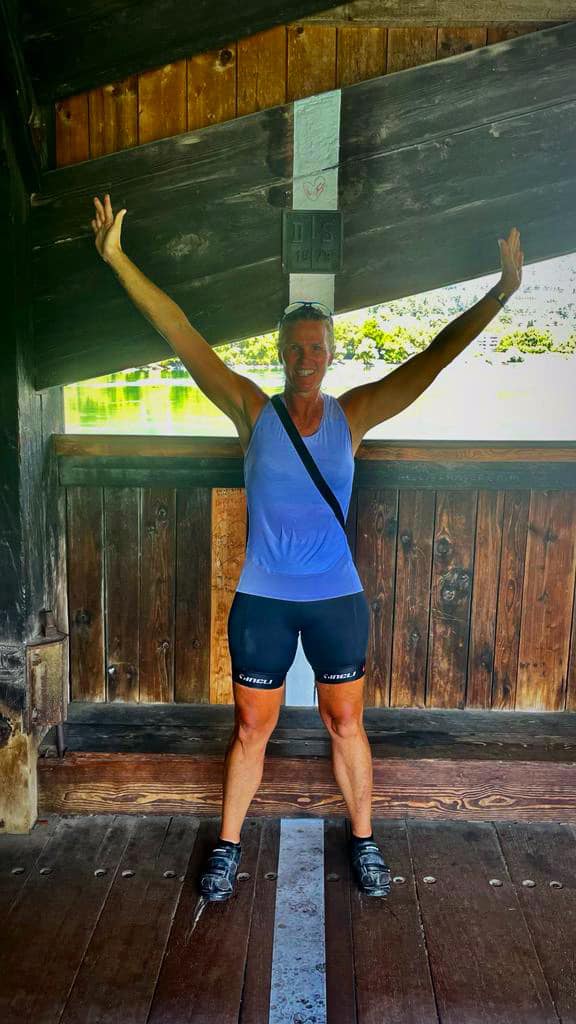
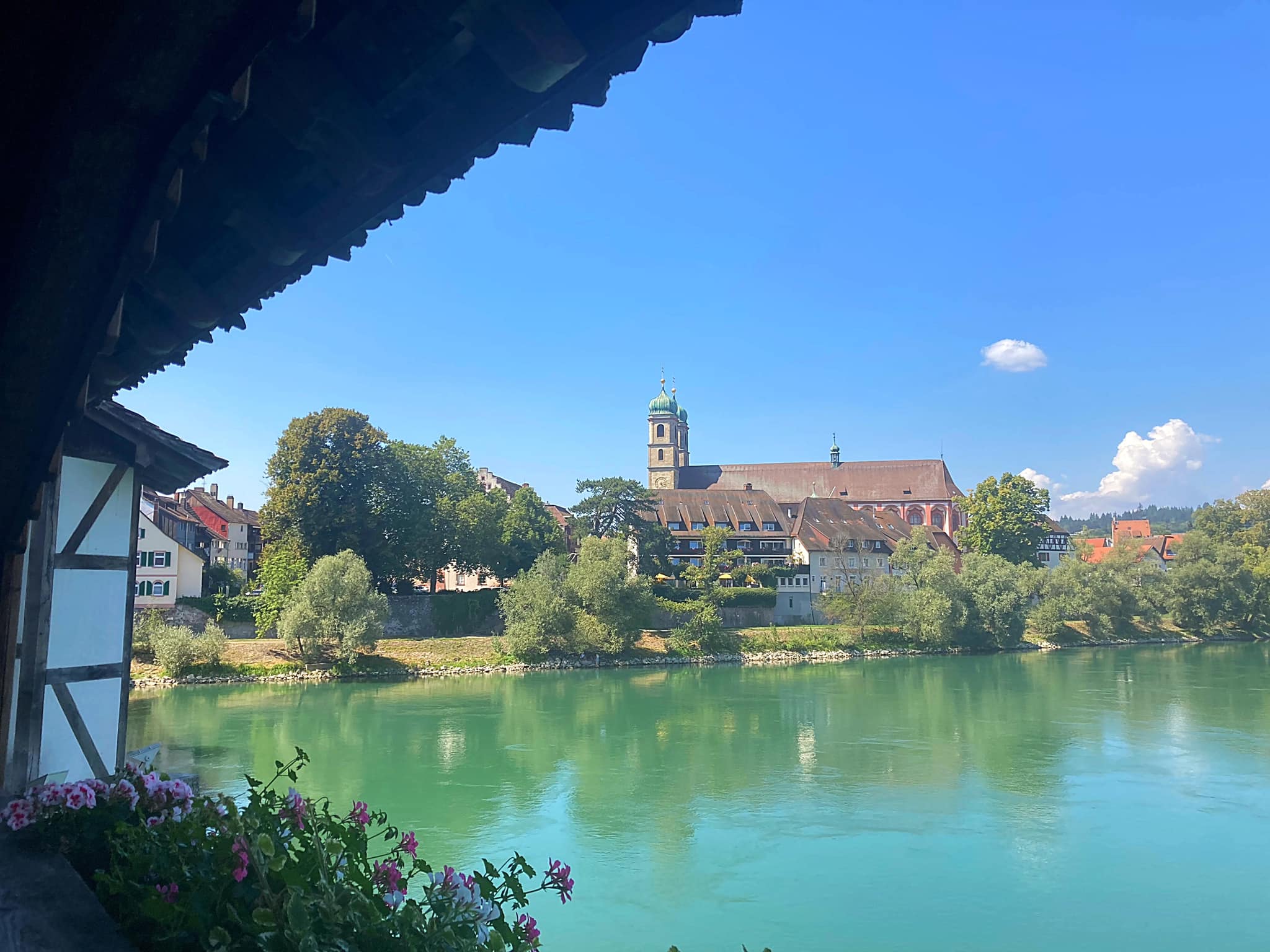
We had lunch in Bad Säckingen, had a dip in the Rhine to cool off and then walked over the Holzbrücke Bad Säckingen (German name) or Säckingerbrücke (Swiss name) which is a bridge over the Rhine. It connects the German city of Bad Säckingen with the village Stein in Switzerland. The covered bridge spans 203.7 metres (668 ft) over the Hochrhein and is the longest roofed wooden bridge in Europe. The bridge is listed as a national registered monument in Switzerland.
The bridge was built in 1272 and was destroyed several times (1570, 1633, 1678). The current bridge was completed in 1700. Originally a road bridge, the bridge is now only open for pedestrians.
Ten kilometres on we reached Laufenburg, our home for the night. Laufenburg is a town in Baden-Württemberg, Germany, part of the Waldshut district. It has approximately 4300 inhabitants. Laufenburg is separated from a Swiss city with the same name by the river Rhine.
Graham and I went for another swim in the river before dinner. It is still very hot and these temperatures are set to stick around until early next week .
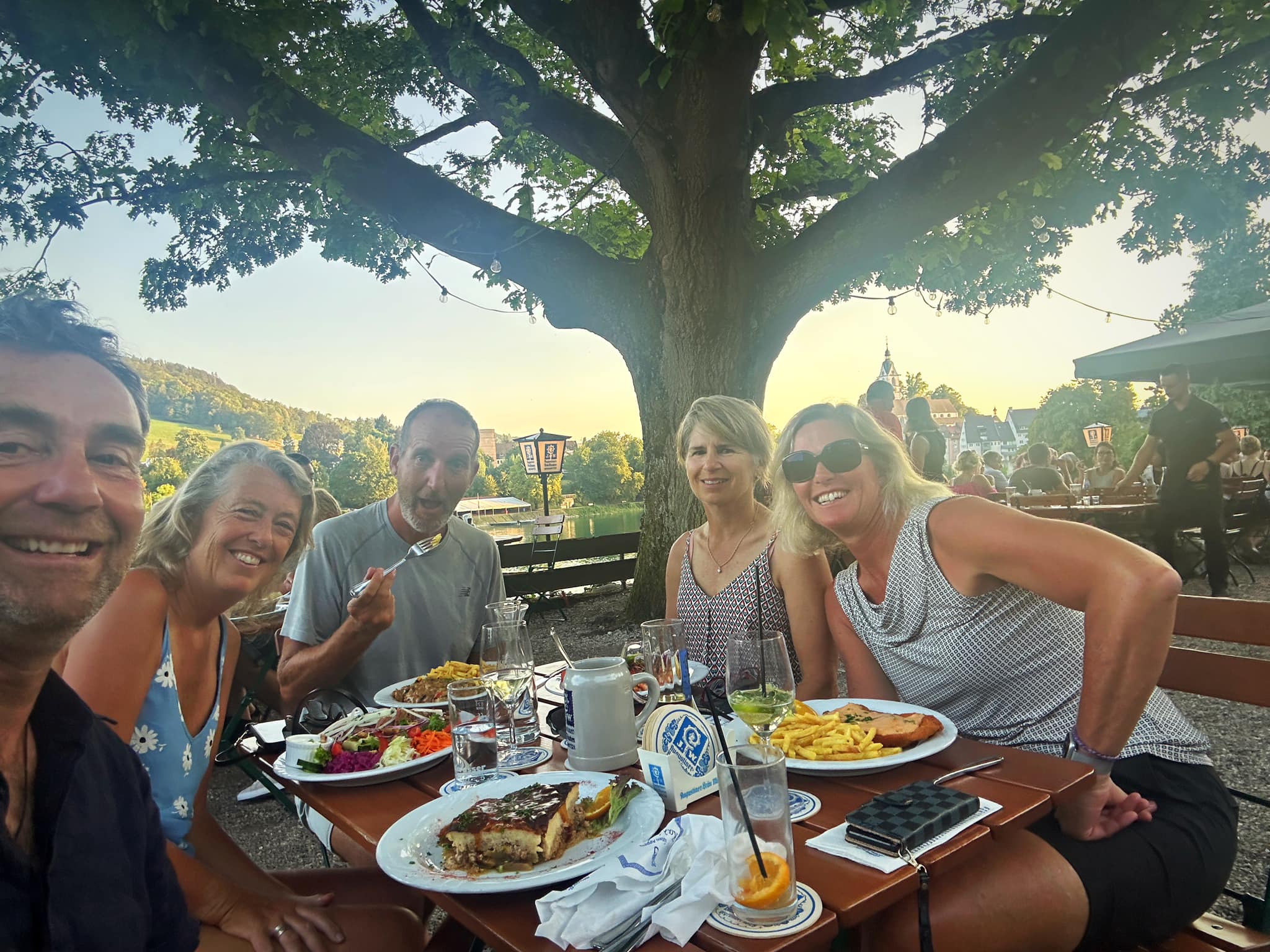
After dinner, JP and I walked across the bridge to Laufenburg in Switzerland. The two sister towns that form Laufenburg are quite exceptional. Napoleon split the town in two over 200 years ago, but joint cross-border festivals are still an essential part of life in Laufenburg.






 SUNGRL
shit Lambsy, I’m exhausted reading your blog. all that biking in that heat – go you good things! amazing pics and so proud of you x Jeffo