Chichén Itzá – Mexico

Last time we visited this area in Mexico I didn’t get a chance to visit Chichén Itzá so this time I didn’t want to miss the opportunity.  It is known as one of the seven wonders of the world.

Chichén Itzá is about a three hour drive from where we are staying so I chose a tour that was leaving early in the morning to beat the crowds and the heat of the day.  I had one of those nights sleep that you have when you are catching an early morning flight – I was awake about 2.20am worrying that I would sleep through the alarm and then when I went back to sleep I had some weird dreams.  All’s well that ends well – I didn’t sleep through the alarm and made my 5.50am pick up.

We got shuttled to a central meeting point before hopping on a bigger bus to head to Chichén Itzá.  Our guide for the day was Marcos who is an archeologist.  He did his masters on Chichén Itzá with a focus on proving that there were many other races and cultures on these lands before they were discovered by the Spanish.  He spoke Spanish and English and switched between the two with ease as there were both English and Spanish speaking people on the bus.  When we got to Chichén Itzá we were split into two groups – English speaking and Spanish speaking so that was good.  Marcos lead the English speaking group so that was great.  He had warned us about how hot it can get there and he wasn’t wrong. It didn’t feel super hot but I was dripping within minutes.  

The stepped pyramids, temples, columned arcades, and other stone structures of Chichén Itzá were sacred to the Maya and a sophisticated urban center of their empire from A.D. 750 to 1200.
 

Marcos described the Mayan people as short with very round heads that sit very close to their shoulders.  There are about 3 million Mayan people in a large number of communities around the Yucatan Peninsula.  He said to have a look around the hotel where we are staying and you will see lots of them – now that he mentioned it, I understood who he was talking about.

Viewed as a whole, the incredible complex reveals much about the Maya and Toltec vision of the universe—which was intimately tied to what was visible in the dark night skies of the Yucatán Peninsula.
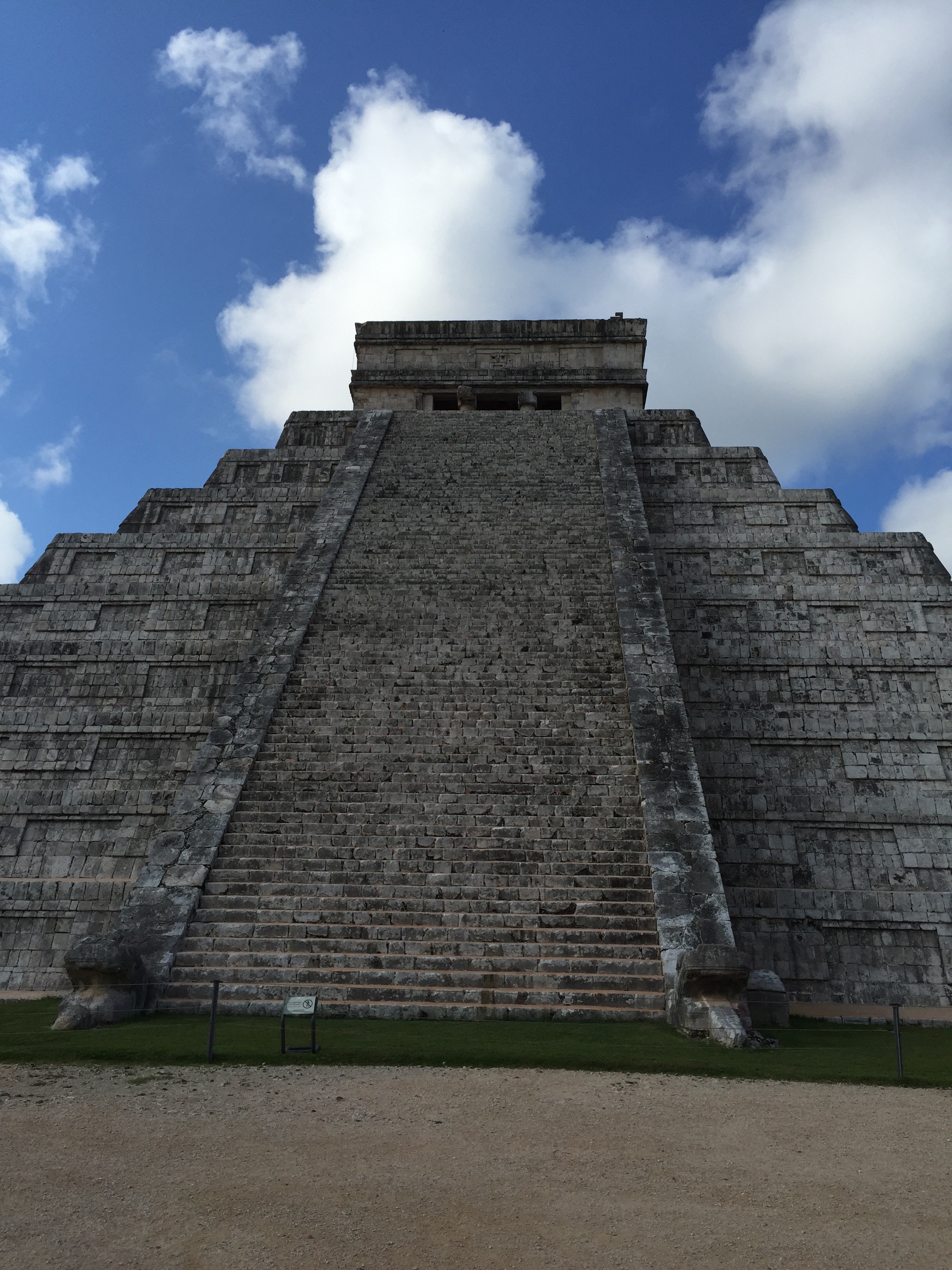
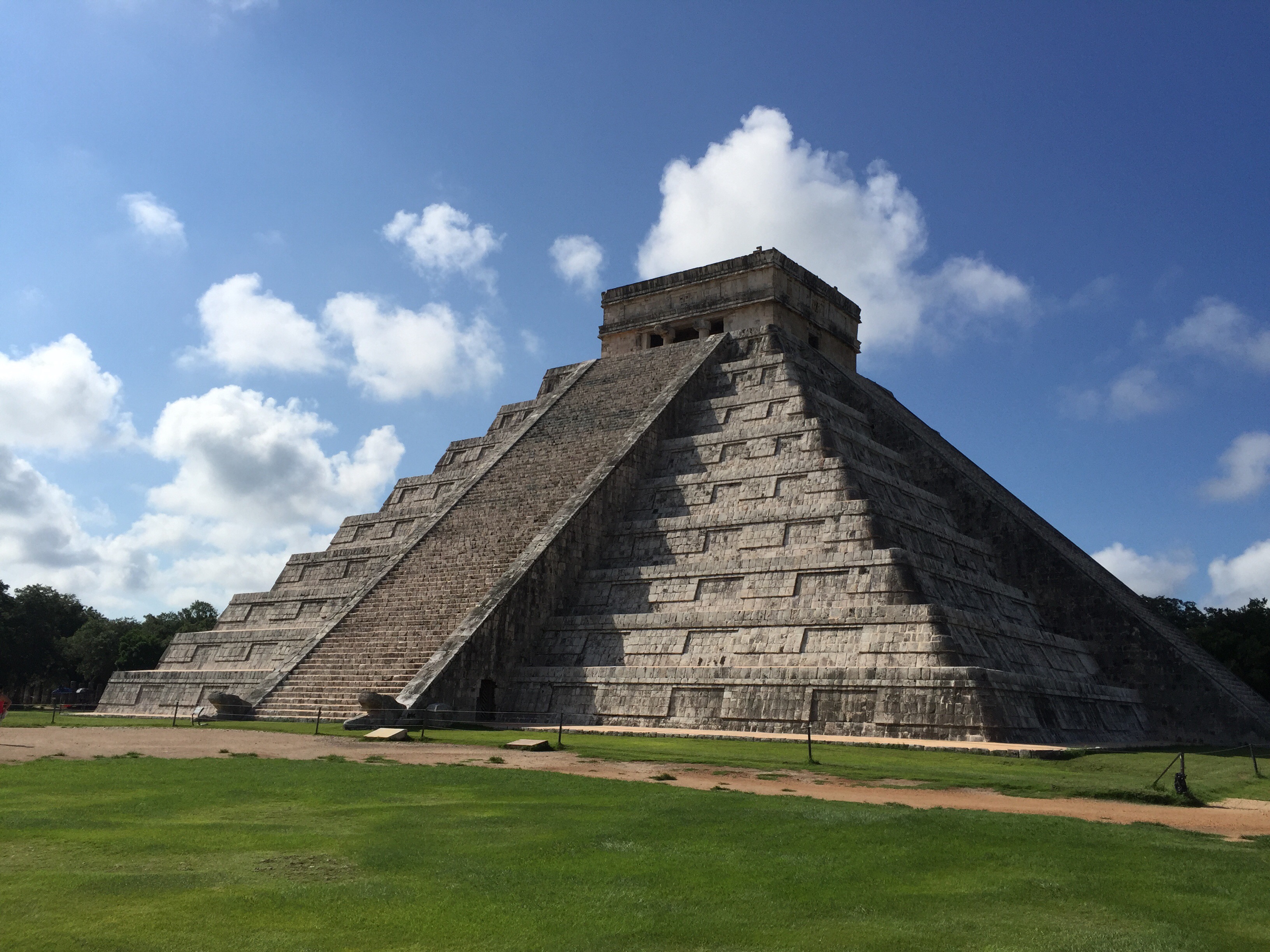
The most recognizable structure here is the Temple of Kukulkan, also known as El Castillo. This glorious step pyramid demonstrates the accuracy and importance of Maya astronomy—and the heavy influence of the Toltecs, who invaded around 1000 and precipitated a merger of the two cultural traditions.

The temple has 365 steps—one for each day of the year. Each of the temple’s four sides has 91 steps, and the top platform makes the 365th.

Devising a 365-day calendar was just one feat of Maya science. Incredibly, twice a year on the spring and autumn equinoxes, a shadow falls on the pyramid in the shape of a serpent. As the sun sets, this shadowy snake descends the steps to eventually join a stone serpent head at the base of the great staircase up the pyramid’s side.
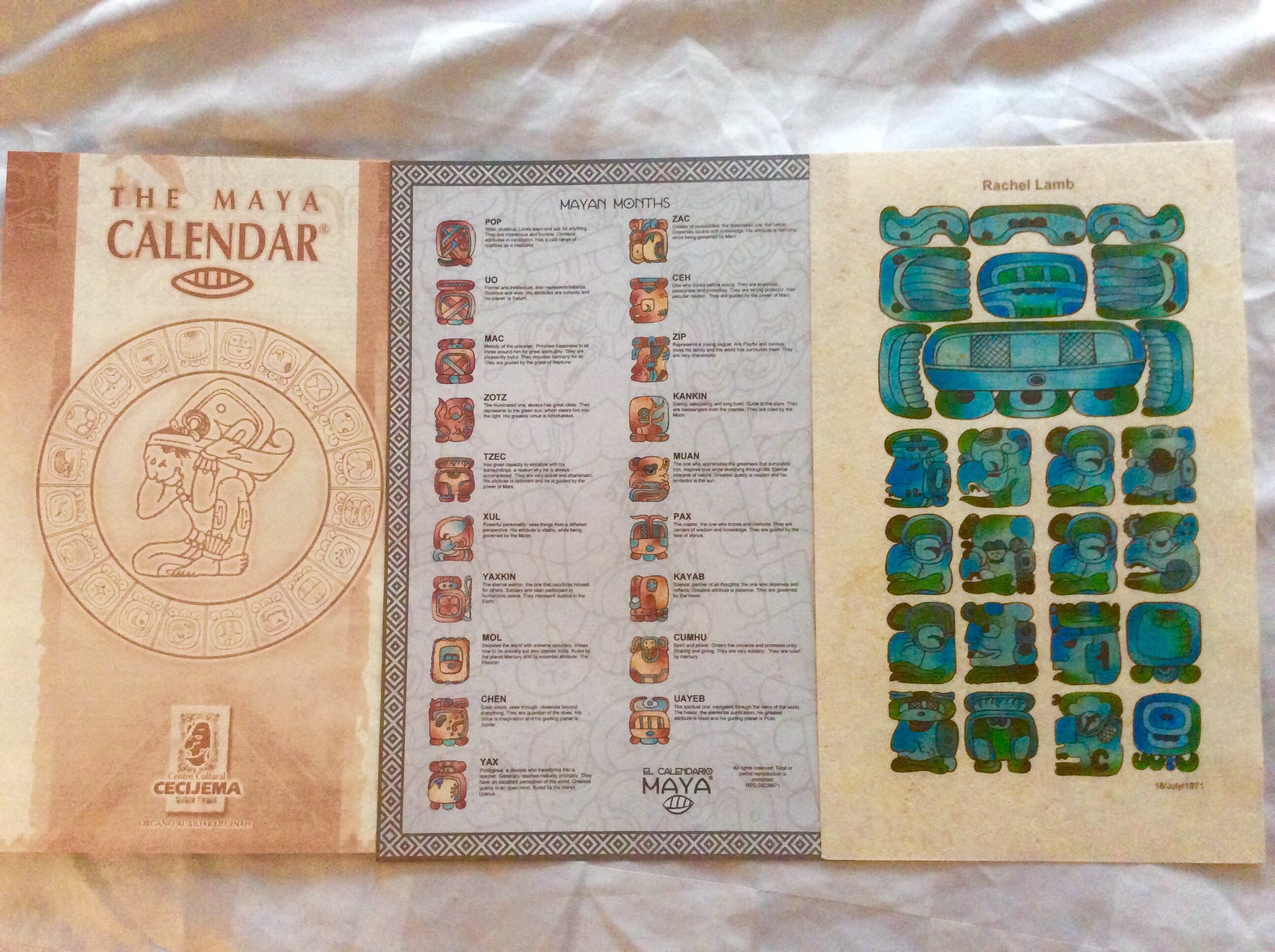
I got my birthdate translated using the Mayan calander – see below for an explanation as to how it works.  I think I will be trying to figure it out for the rest of my life!
Marcos talked about all these mathematical wonders and also demonstrated the sounds that could be heard by clapping your hands while standing in different positions around the Temple.  It was quite incredible – it sounded distinctly like a bird chirping as it reverberated off all the structures.  One clap caused 7 echoes – the number 7 having some significance I relation to the practice of Reiki which uses 7 prongs to massage the head.  

The Mayan’s worshipped the rattle snake because it shed it’s skin every 260 days symbolising the continuation of life.  Interestingly the Tzolkin calendar described below has 260 days.

The number 9 symbolises Men – multiply anything by the number 9 and then add up the result and it will equal 9.  The number nine represents the sun.

The number 13 represents Women – 365 days in a year divided by 28 days in a women’s cycle equals 13.  The number thirteen represents the moon – there are 13 full moons each year.

The Maya’s astronomical skills were so advanced they could even predict solar eclipses, and an impressive and sophisticated observatory structure remains on the site today.

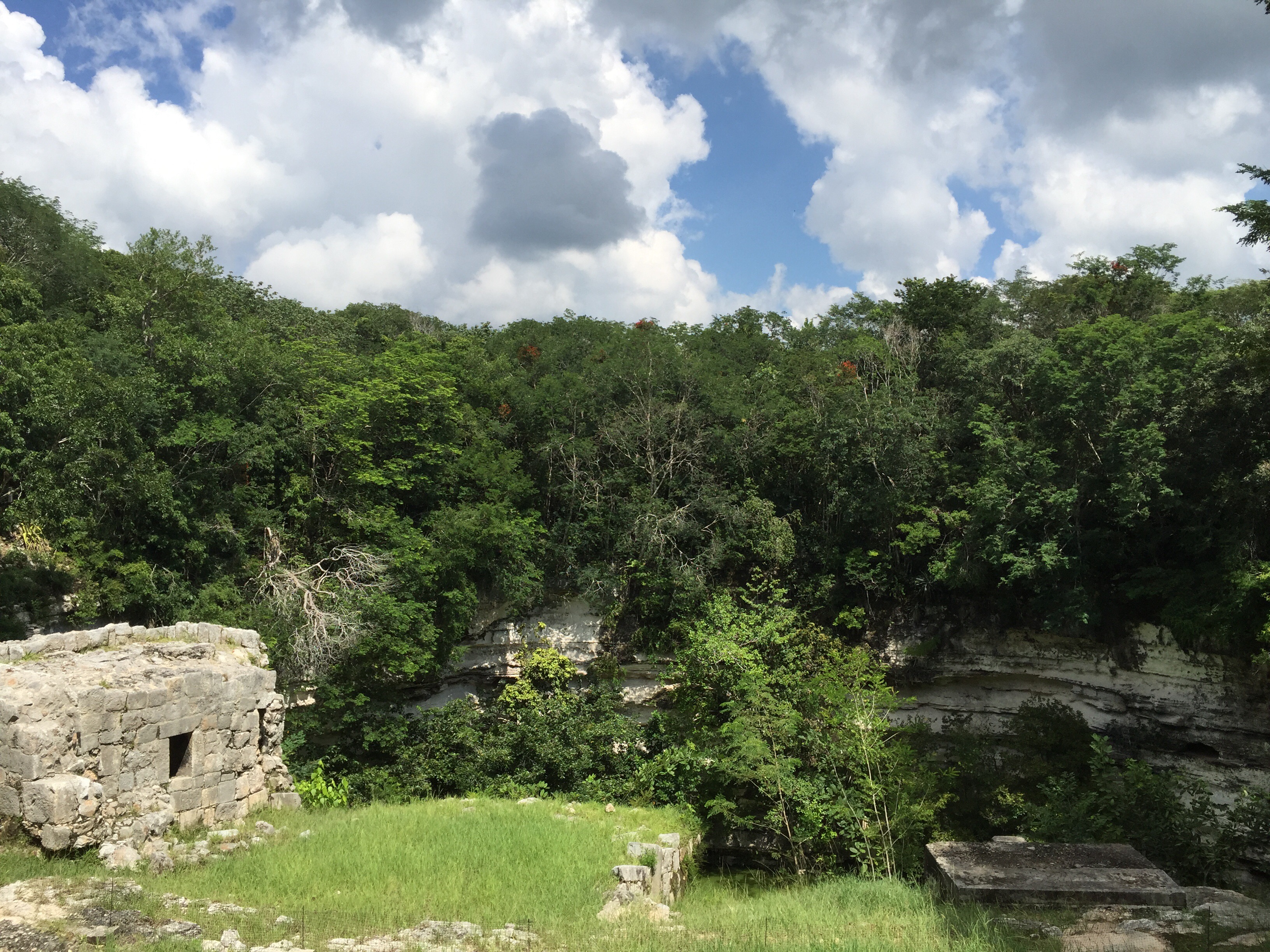
This great city’s only permanent water source was a series of sinkhole wells. Spanish records report that young female victims were thrown into the largest of these, live, as sacrifices to the Maya rain god thought to live in its depths. Archaeologists have since found their bones, as well as the jewelry and other precious objects they wore in their final hours.
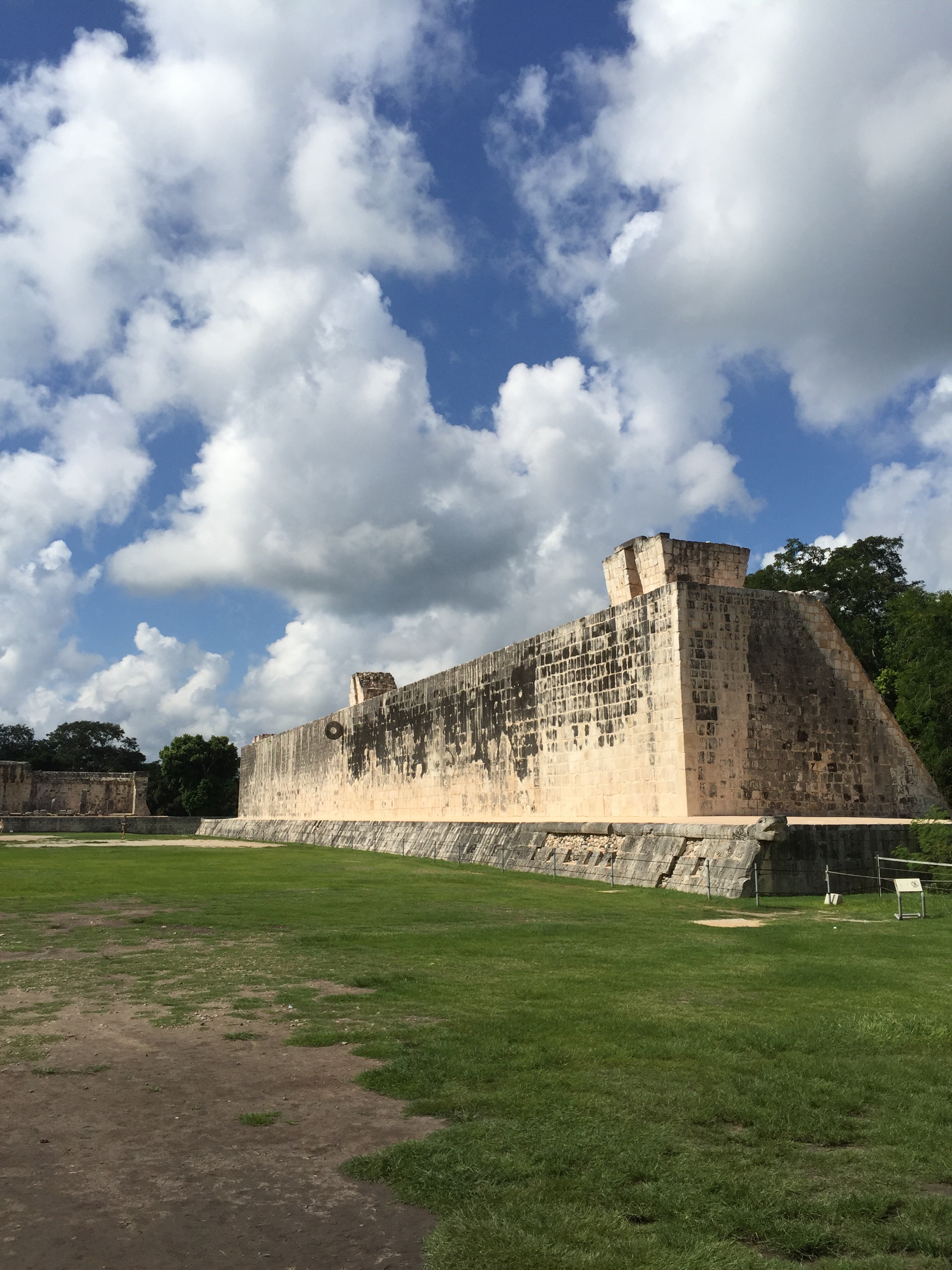
Chichén Itzá’s ball court is the largest known in the Americas, measuring 554 feet (168 meters) long and 231 feet (70 meters) wide. During ritual games here, players tried to hit a 12-pound (5.4-kilogram) rubber ball through stone scoring hoops set high on the court walls. Competition must have been fierce indeed—losers were put to death.

In the ball court, Marcos made one of our group, Andrew, walk down to the other end and when he got to the little stone pillar he was to turn around and measure three steps back towards us and stand there.  Marcos then called his name in a normal tone – he didn’t shout.  Andrew was to raise his hand when he heard his name – on the second go, he raised his hand.  He was standing about 165 metres away so that was quite amazing.  The King used to sit at the end where Andrew was to watch the games – the visitors used to sit where we were.  Apparently this sound travel phenomena only worked one way – the King could hear the visitors but they couldn’t hear him.  Good strategy.

The other thing that Marcos believed was that the winning captain actually got sacrificed not the losing one as the information above says.  He believed it was an honour to die and supported the Mayan’s beliefs about offering sacrifices for the continuation of human life. 
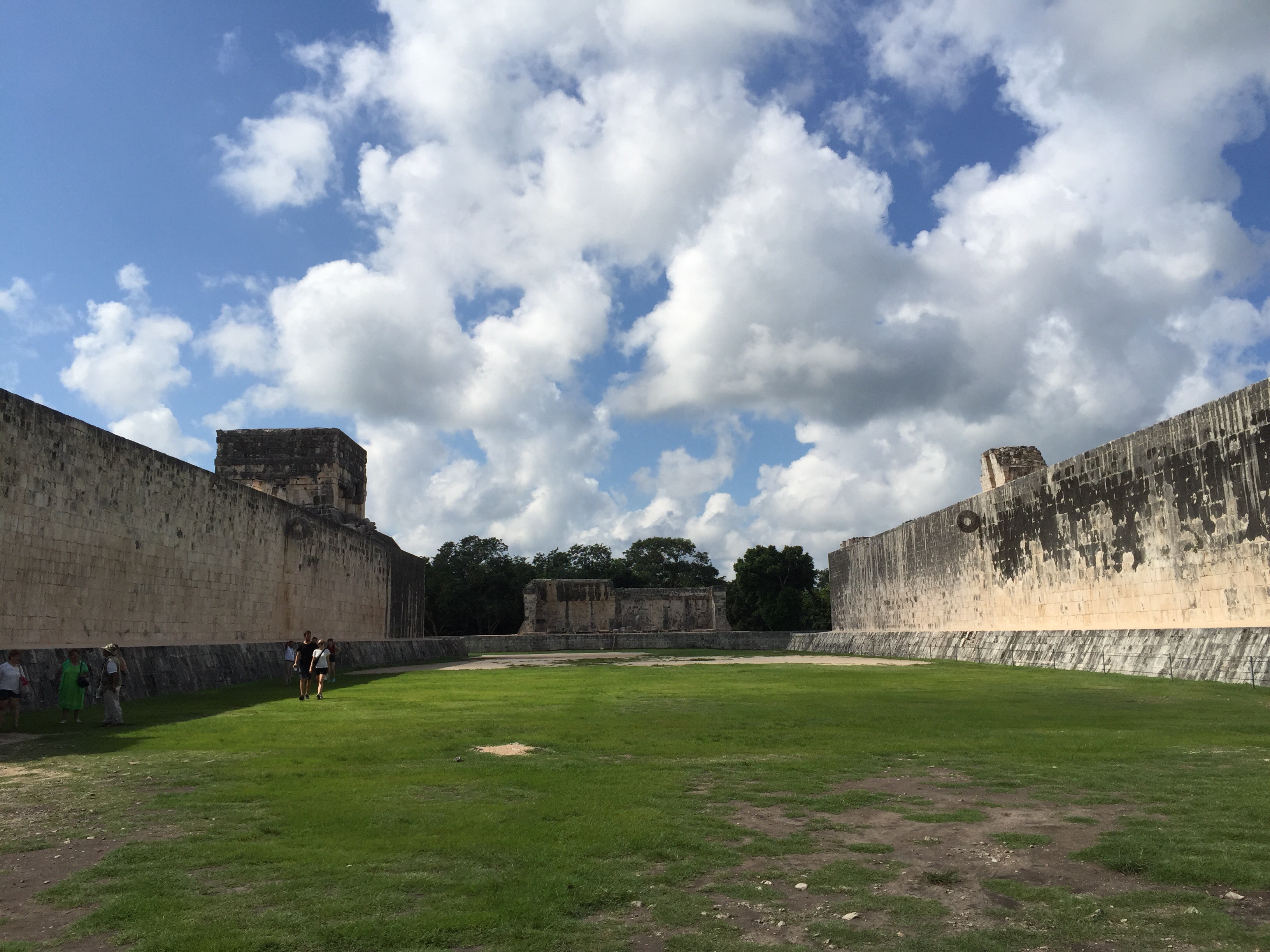
Where the King would sit


Chichén Itzá was more than a religious and ceremonial site. It was also a sophisticated urban center and hub of regional trade. But after centuries of prosperity and absorbing influxes of other cultures like the Toltecs, the city met a mysterious end.

During the 1400s people abandoned Chichén Itzá to the jungle. Though they left behind amazing works of architecture and art, the city’s inhabitants left no known record of why they abandoned their homes. Scientists speculate that droughts, exhausted soils, and royal quests for conquest and treasure may have contributed to Chichén Itzá’s downfall.

Recently this World Heritage site was accorded another honor. In a worldwide vote Chichén Itzá was named one of the New Seven Wonders of the World.

The New Seven Wonders of the World were announced on July 7th, 2007 in Lisbon, Portugal after seven years of publicity and promotion.

* Chichen Itza, Mexico

* The Great Wall, China 

* Petra, Jordan 

* Christ Redeemer, Brazil 

* Machu Picchu, Peru 

* The Roman Collesseum, Italy 

* The Taj Mahal, India

From its abandonment during the 15th century, Chichén Itzá underwent a process of gradual deterioration until the first excavations at the site began more than a century ago. Nevertheless, the excellent materials and building techniques used by the Maya in the construction of the buildings secured that the architectonic, sculptural and pictorial essence of Chichén Itzá would be conserved through the centuries.

Chichén Itzá is protected by the 1972 Federal Law on Monuments and Archaeological, Artistic and Historic Zones and was declared an archaeological monument by a presidential decree in 1986.

The site remains open to the public 365 days of the year, and received a minimum of 3.500 tourists per day, a number which can reach 8.000 daily visitors in the high season. This means that the site needs constant maintenance and attention in order to avoid deterioration of its prehispanic fabric.

Yucatan is the only state in Mexico where two institutions are involved in the management of archaeological sites: the National Institute of Anthropology and History (INAH), which is in charge of the care and conservation of the archaeological site, and the Board of Units of Cultural and Tourism Services of the State of Yucatan.

The Maya Calendar 

The Maya calendar is a system of three interlacing calendars and almanacs which was used by several cultures in Central America, most famously the Maya civilization.

The calendar dates back to at least the 5th century BCE (Before Common Era) and is still in use in a few Mayan communities today.  The Mayan calendar moves in cycles with the last cycle ending in December 2012. This has often been interpreted as the world will end on 21 December 2012, at 11:11 UTC.

Doomsday Prophecies

The last day of the Mayan calendar corresponds with the December Solstice, which has played a significant role in many cultures all over the world.

Not a Maya Invention

The Maya didn’t invent the calendar, it was used by most cultures in pre-Columbian Central America – including the Maya – from around 2000 BCE to the 16th century. The Mayan civilization developed the calendar further and it’s still in use in some Maya communities today.

Wheels Working Together

The Mayan Calendar consists of three separate corresponding calendars, the Long Count, the Tzolkin (divine calendar) and the Haab (civil calendar). Time is cyclical in the calendars and a set number of days must occur before a new cycle can begin.

The three calendars are used simultaneously. The Tzolkin and the Haab identify and name the days, but not the years. The Long Count date comes first, then the Tzolkin date and last the Haab date. A typical Mayan date would read: 13.0.0.0.0 4 Ahau 8 Kumku, where 13.0.0.0.0 is the Long Count date, 4 Ahau is the Tzolkin date and 8 Kumku is the Haab date.

The Haab

The Haab is a 365 day solar calendar which is divided into 18 months of 20 days each and one month which is only 5 days long (Uayeb). The calendar has an outer ring of Mayan glyphs (pictures) which represent each of the 19 months. Each day is represented by a number in the month followed by the name of the month. Each glyph represents a personality associated with the month.

The Haab is somewhat inaccurate as it is exactly 365 days long. An actual tropical or solar year is 365.2422 days long. In today’s Gregorian calendar we adjust for this discrepancy by making almost every fourth year a leap year by adding an extra day – a leap day – on the 29th of February.

The Tzolkin

The divine calendar is also known as the Sacred Round or the Tzolkin which means “the distribution of the days”. It is a 260-day calendar, with 20 periods of 13 days used to determine the time of religious and ceremonial events. Each day is numbered from one to thirteen, and then repeated. The day is also given a name (glyph) from a sequence of 20 day names. The calendar repeats itself after each cycle.

The Long Count

The Long Count is an astronomical calendar which was used to track longer periods of time, what the Maya called the “universal cycle”. Each such cycle is calculated to be 2,880,000 days (about 7885 solar years). The Mayans believed that the universe is destroyed and then recreated at the start of each universal cycle. This belief still inspires a myriad of prophesies about the end of the world.

The “creation date” for the current cycle we are in today, is 4 Ahaw, 8 Kumku. According to the most common conversion, this date is equivalent to August 11, 3114 BCE in the Gregorian calendar or September 6 in the Julian calendar.

How to Set the Date

A date in the Maya calendar is specified by its position in both the Tzolkin and the Haab calendars which aligns the Sacred Round with the Vague Year creating the joint cycle called the Calendar Round, represented by two wheels rotating in different directions. The Calendar round cycle takes approximately 52 years to complete.

The smallest wheel consists of 260 teeth with each one having the name of the days of the Tzolkin. The larger wheel consists of 365 teeth and has the name of each of the positions of the Haab year. As both wheels rotate, the name of the Tzolkin day corresponds to each Haab position.

The date is identified by counting the number of days from the “creation date”.

A typical long count date has the following format: Baktun.Katun.Tun.Uinal.Kin.

Kin = 1 Day.

Uinal = 20 kin = 20 days.

Tun = 18 uinal = 360 days.

Katun = 20 tun = 360 uinal = 7,200 days.

Baktun = 20 katun = 400 tun = 7,200 uinal = 144,000 days.

The kin, tun and katun are numbered from zero to 19; the uinal are numbered from zero to 17; and the baktun are numbered from one to 13. The Long Count has a cycle of 13 baktuns, which will be completed 1.872.000 days (13 baktuns) after 0.0.0.0.0. This period equals 5125.36 years and is referred to as the “Great Cycle” of the Long Count.

End of the World?

Will the world will end on 21 December 2012, at 11:11 UTC?

The Mayan calendar completes its current “Great Cycle” of the Long Count on the 13th baktun, on 13.0.0.0.0. Using the most common conversion to our modern calendar (the Gregorian calendar) the end of the “Great Cycle” corresponds to 11:11 Universal Time (UTC), December 21, 2012, hence the myriad of doomsday prophecies surrounding this date.

Mayan Culture Today

The Maya kept historical records such as civil events and their calendric and astronomical knowledge. They maintain a distinctive set of traditions and beliefs due to the combination of pre-Columbian and post-Conquest ideas and cultures. The Maya and their descendants still form sizable populations that include regions encompassing present day Guatemala, Belize, Honduras, El Salvador and parts of Mexico.
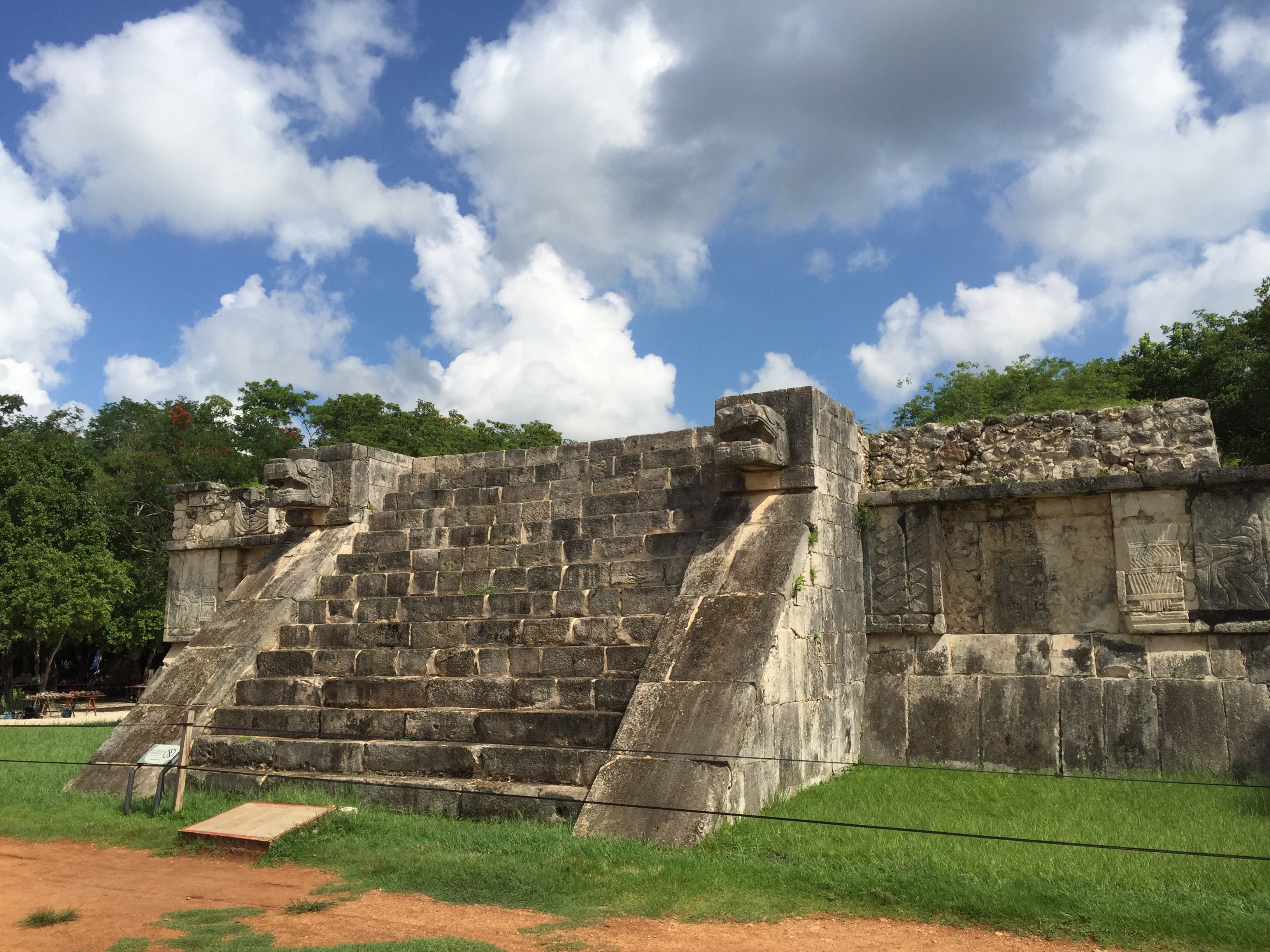
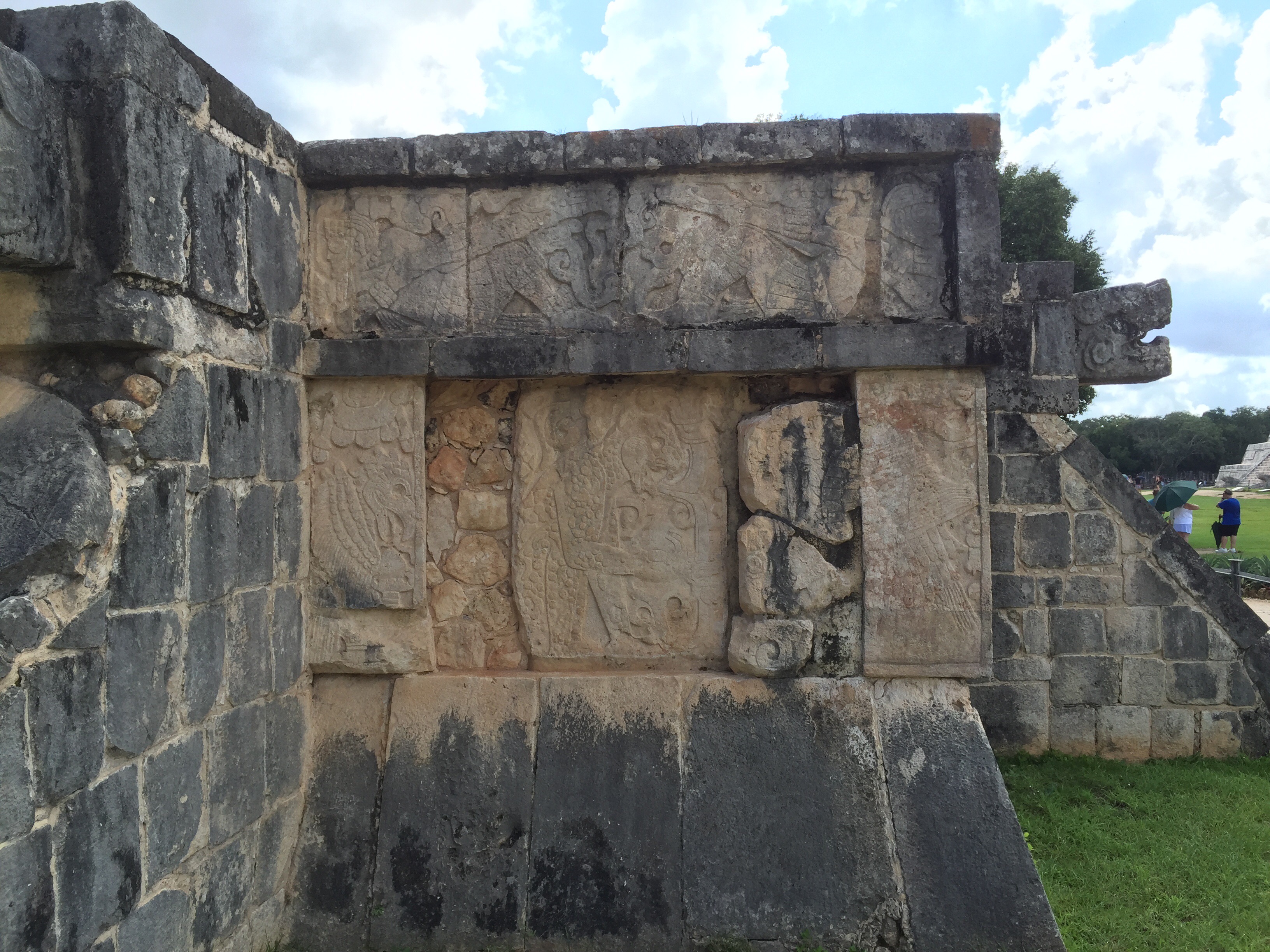
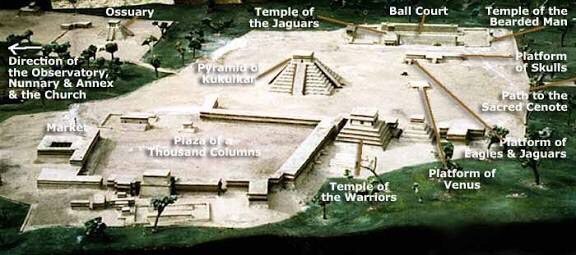
The Platform of Venus – this is a square shaped platform with steps on all four sides, each with balustrades ending in serpent heads, and whose bodies are represented in the upper section as being plumed and sinuous in form, and combined with fish figures.  Mythical creatures, (a combination of jaguar, eagle, serpent and human forms), adorn the center of the side panels.  In each corner, there are glyphs associated with the planet Venus.  Owing to its position within the plaza, it was probably used for ceremonial purposes.
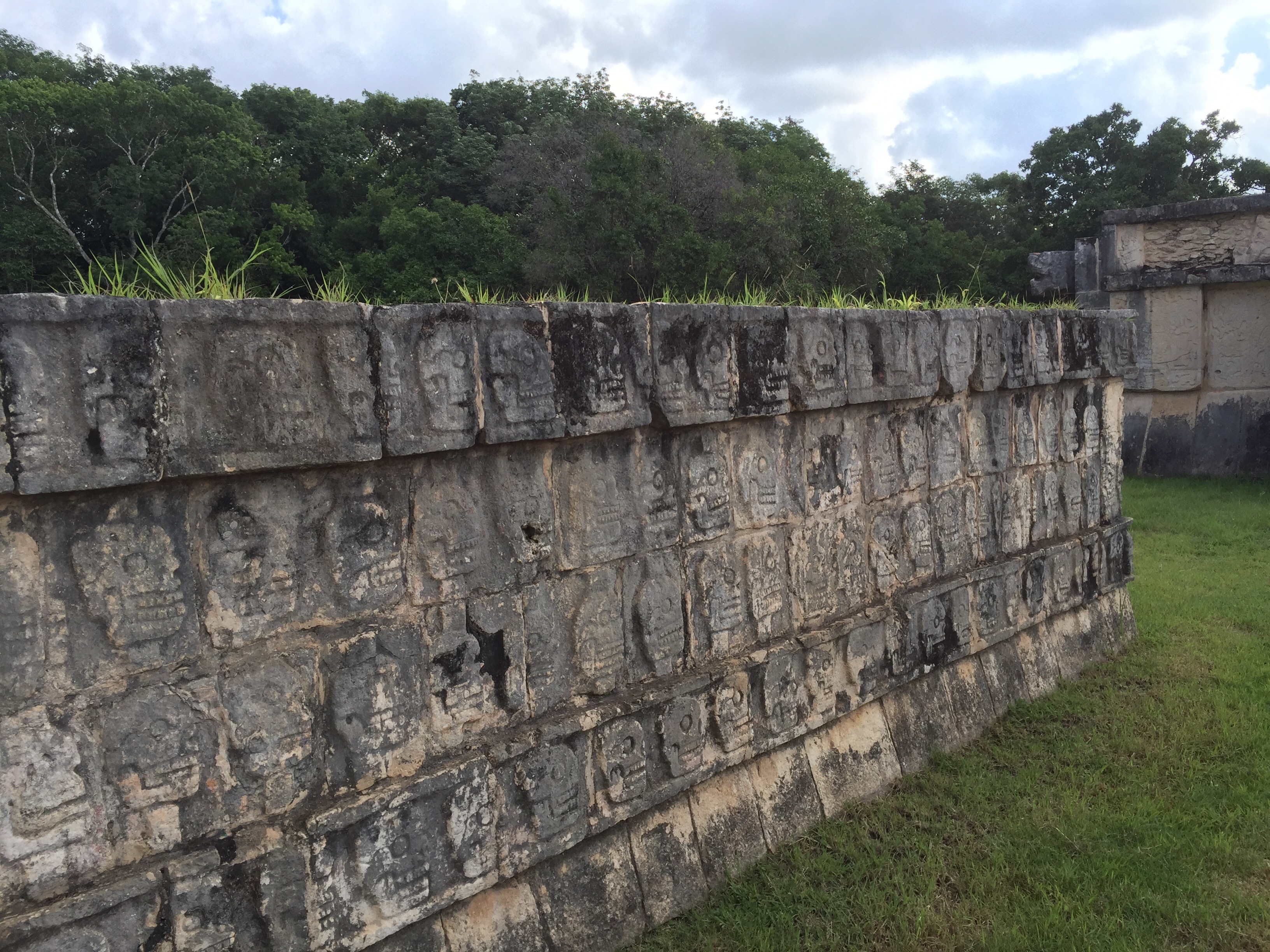
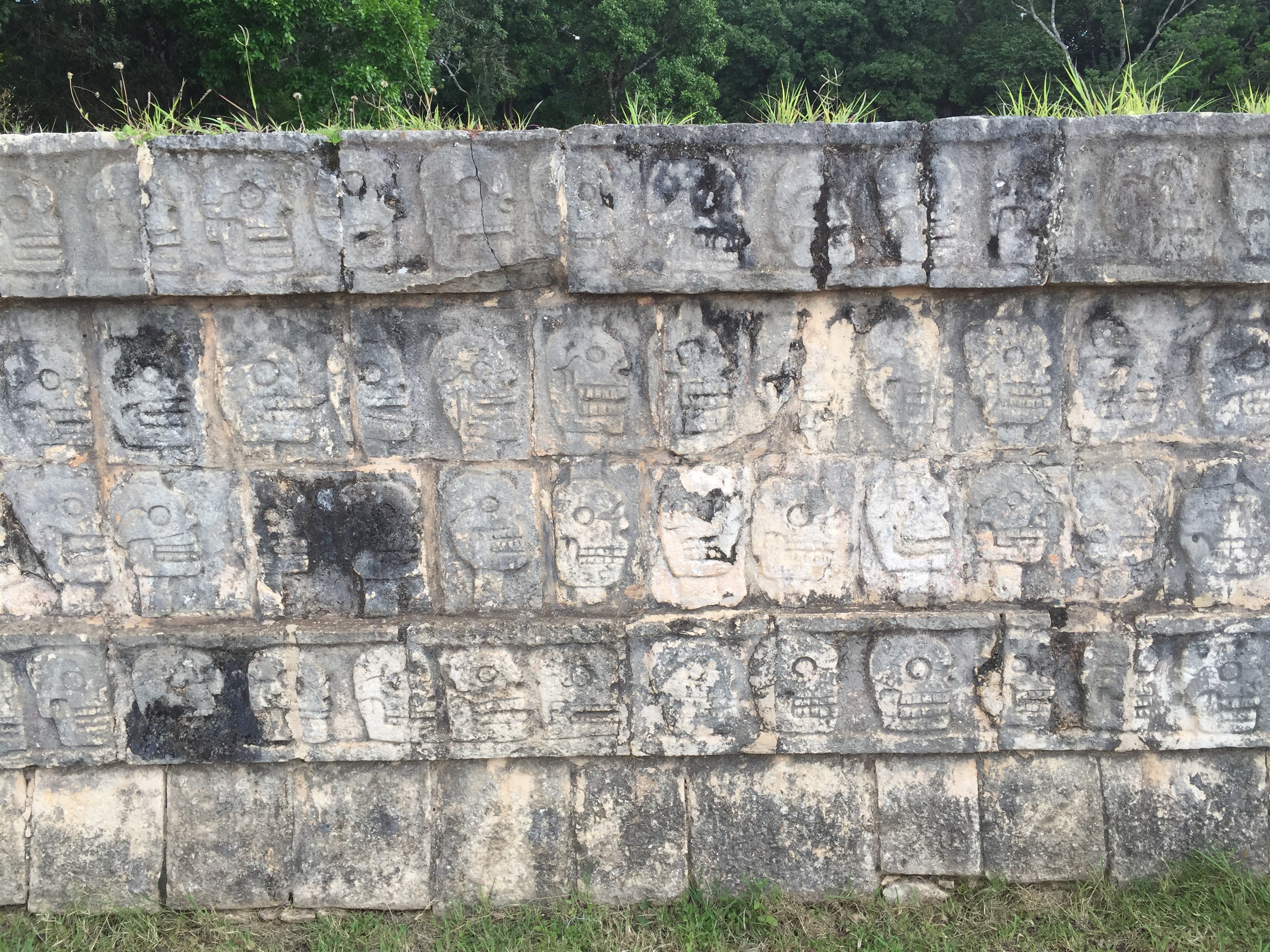
Tzompantli is called The Wall of Skulls, which is actually an Aztec name for this kind of structure, because the first one seen by the horrified Spanish was at the Aztec capital city of Tenochtitlan.  The Tzompantli structure at Chichen Itza is very interesting Toltec structure, where the heads of sacrificial victims were placed; although it was one of three platforms in the Great Plaza, it was according to Bishop Landa, the only one for this purpose the others were for farces and comedies, showing the Itza’s were all about fun.  The platform walls of the Tzompantli have carved beautiful reliefs of four different subjects. The primary subject is the skull rack itself; others show a scene with a human sacrifice; eagles eating all human hearts; and skeletonized warriors with arrows and shields.
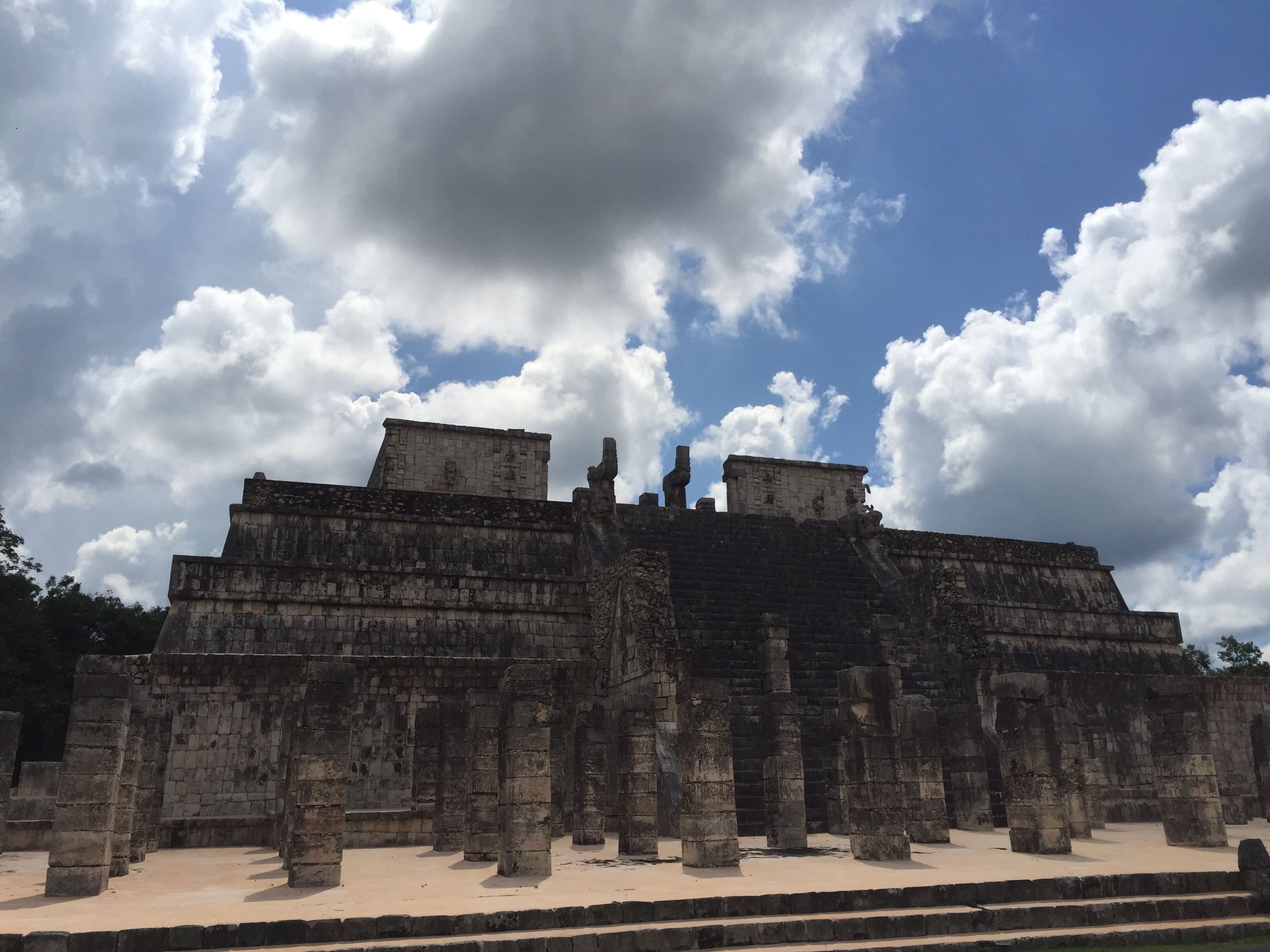
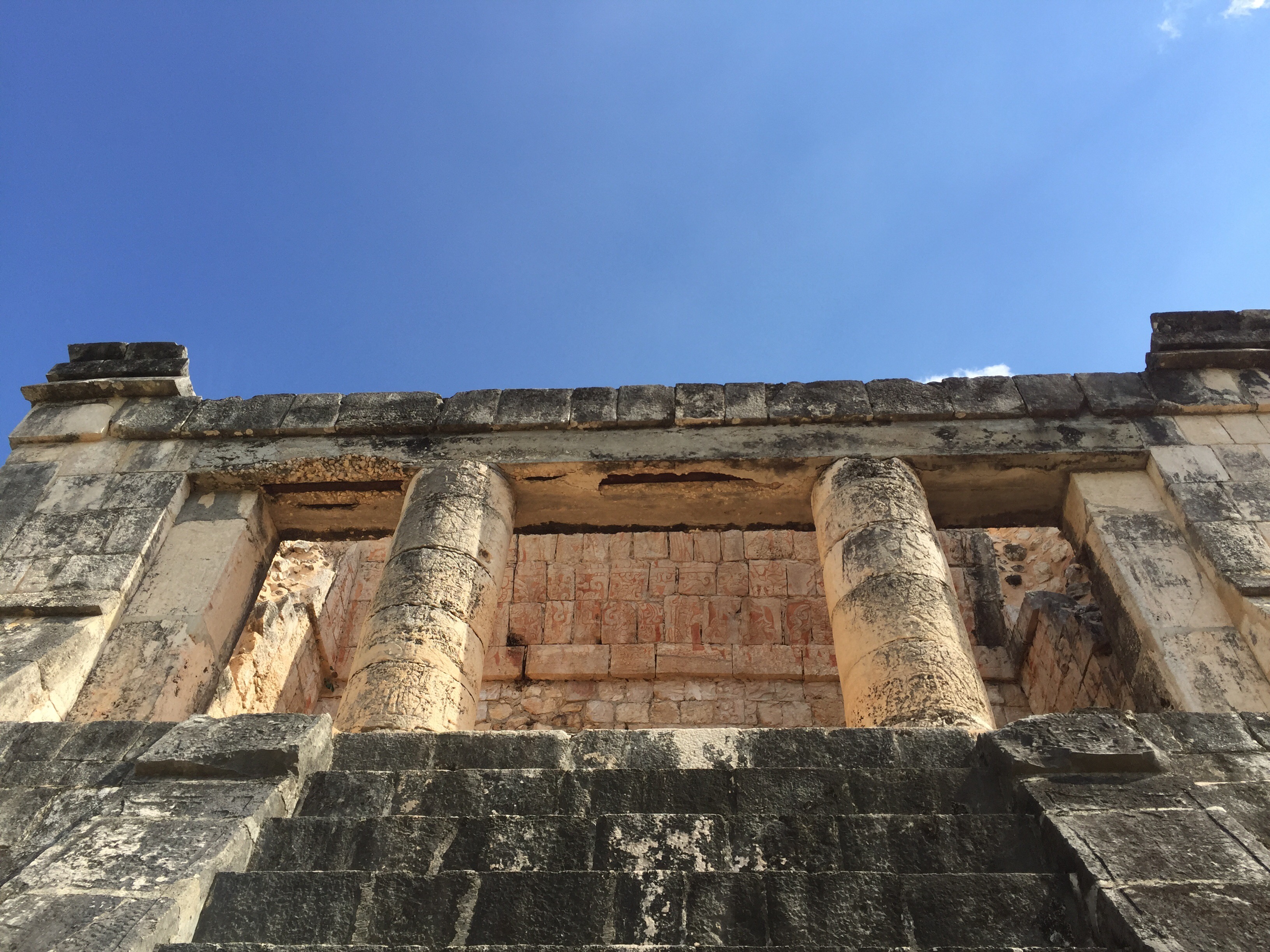
The Temple of the Warriors complex consists of a large stepped pyramid fronted and flanked by rows of carved columns depicting warriors. This complex is analogous to Temple B at the Toltec capital of Tula, and indicates some form of cultural contact between the two regions. The one at Chichen Itza, however, was constructed on a larger scale. At the top of the stairway on the pyramid’s summit (and leading towards the entrance of the pyramid’s temple) is a Chac Mool.  
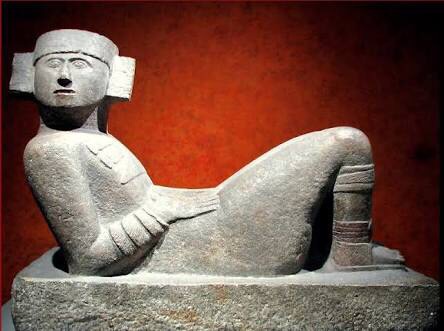

A Chac Mool is the term used to refer to a particular form of pre-Columbian Mesoamerican sculpture depicting a reclining figure with its head facing 90 degrees from the front, supporting itself on its elbows and supporting a bowl or a disk upon its stomach.
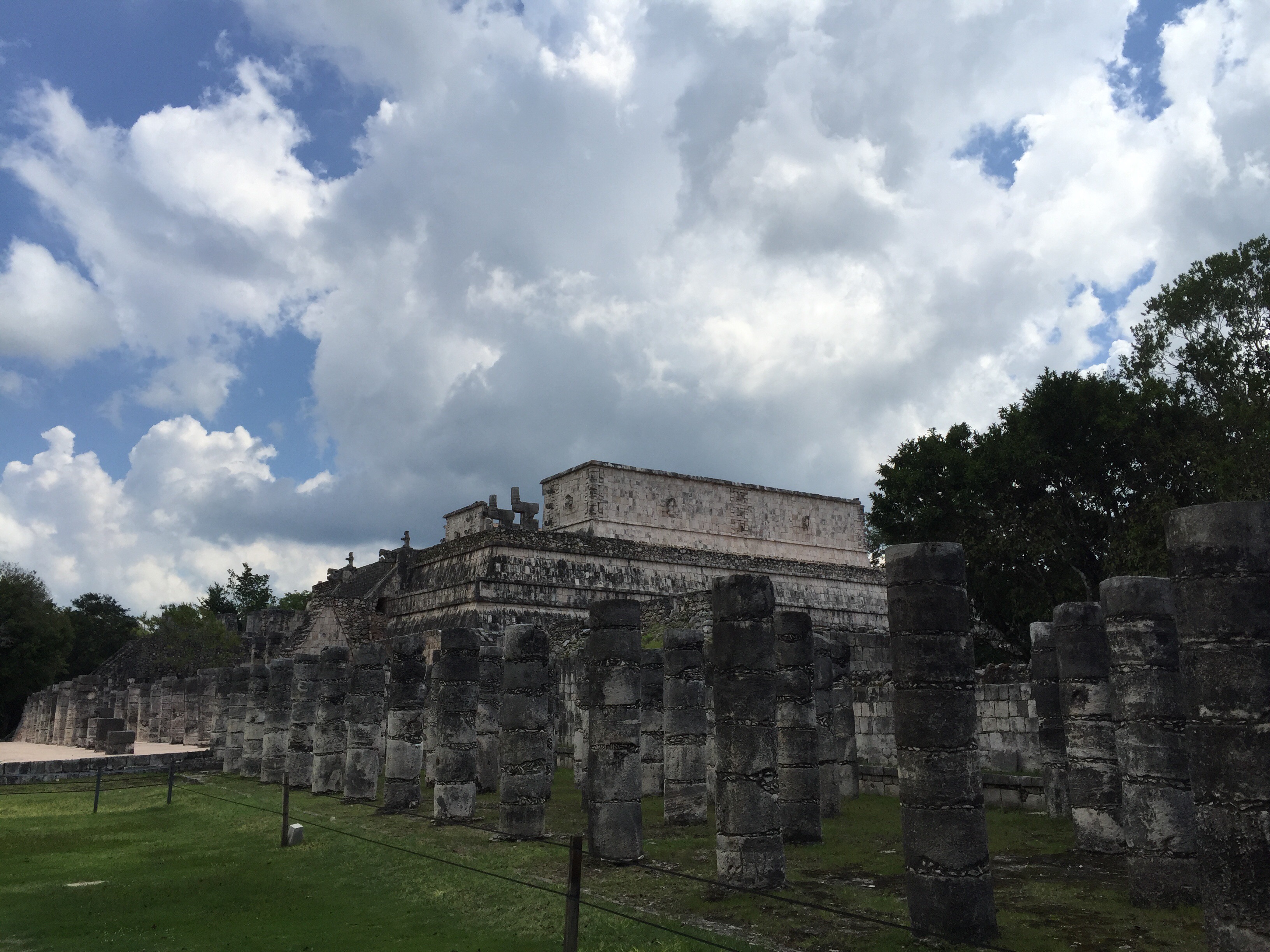
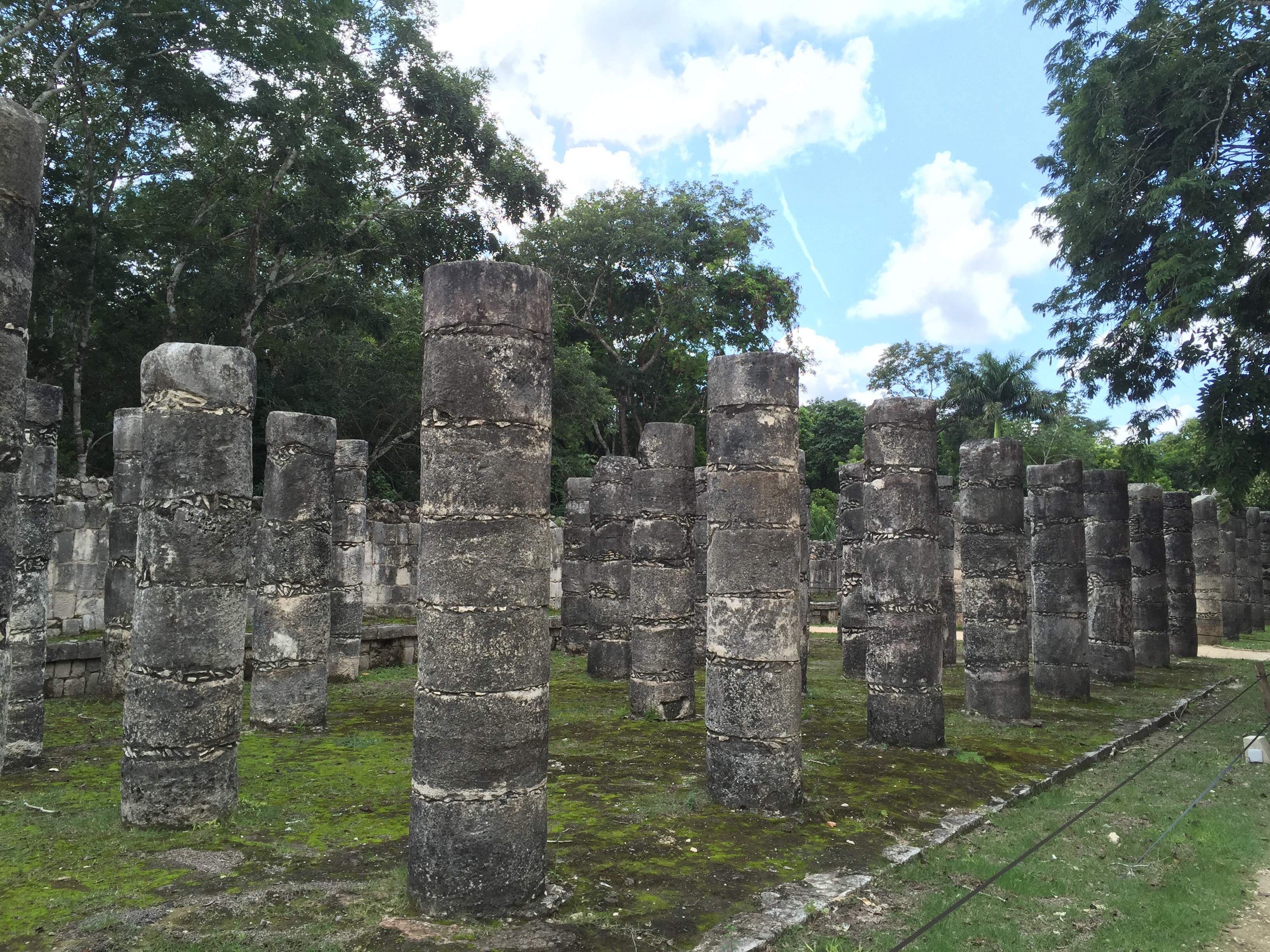
Along the south wall of the Temple of Warriors are a series of what are today exposed columns, although when the city was inhabited these would have supported an extensive roof system where they would have held a market for trading various goods.
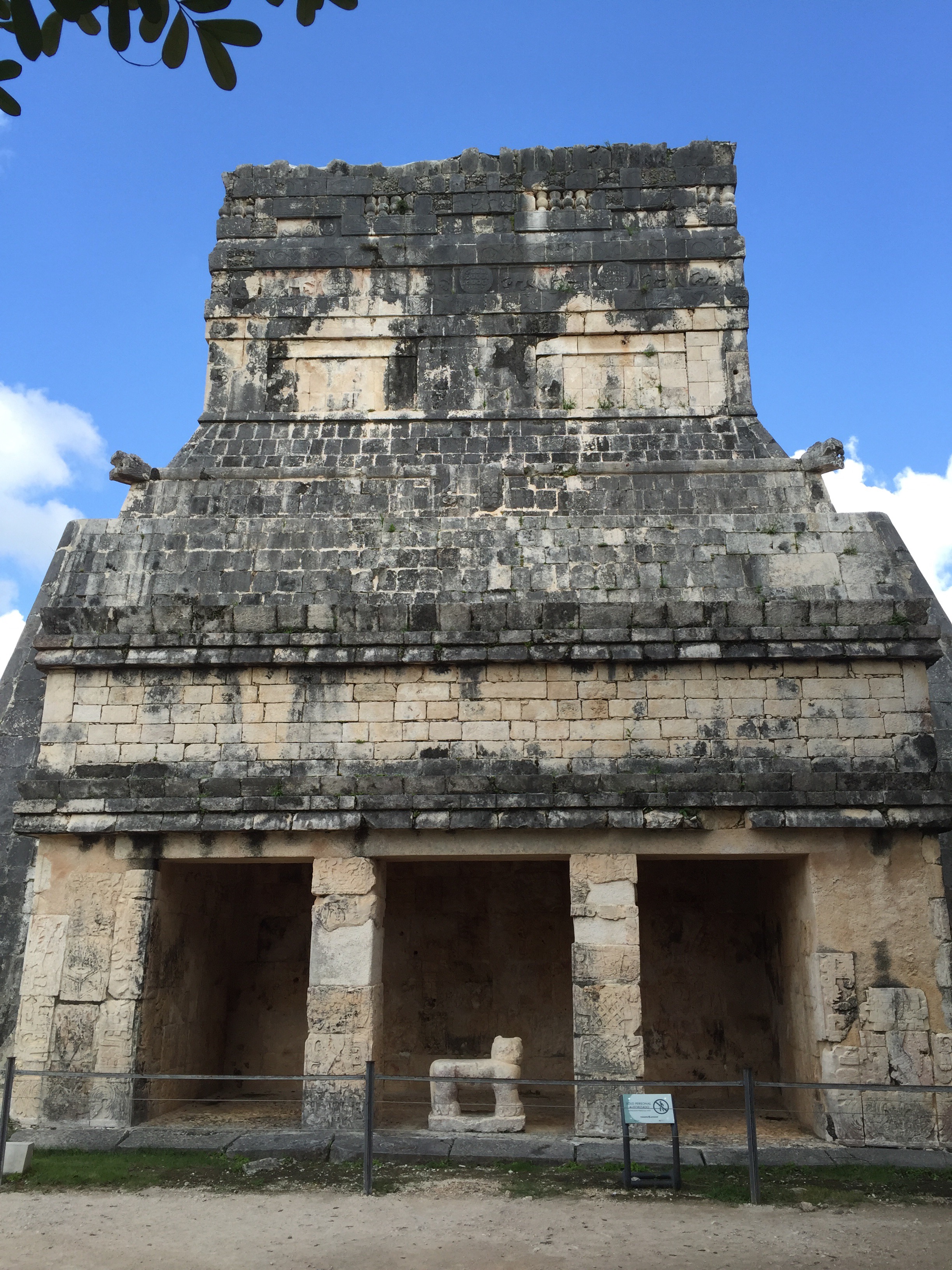
The Temple of the Jaguars is attached to the Great Ball Court


Posted in Mexico | 2 Comments

Lake Buena Vista Golf Course – Florida, USA

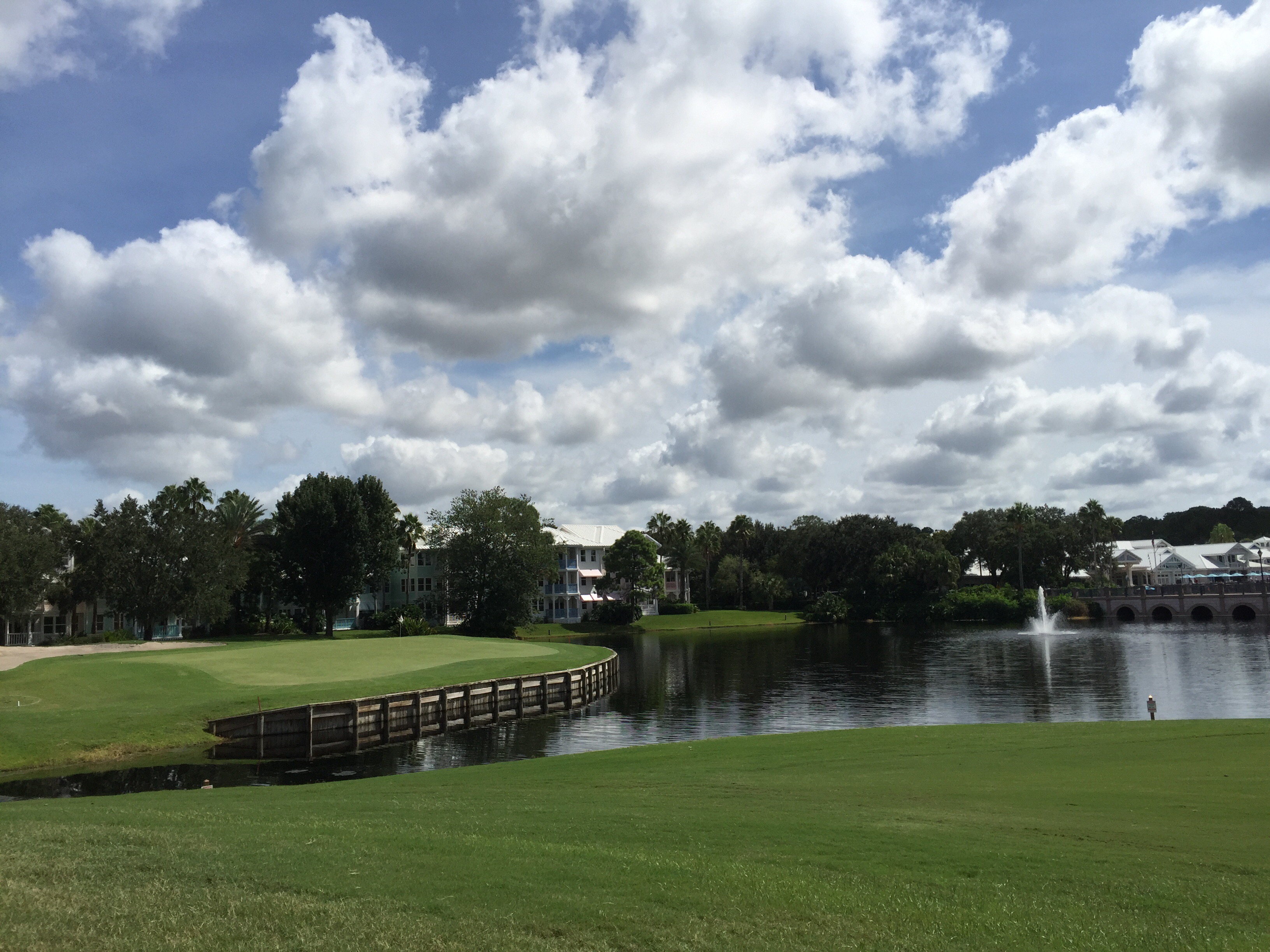
We went to Disneyland again on Sunday to play the Lake Buena Vista Golf Course.  This is located in a different spot to the Magnolia Course and doesn’t quite have the same magical feel in terms of having the Disney character references everywhere.  It was a lovely course that wound it’s way through the Old Key West Resort on the front nine.  We even had our own cheer squad on the third hole – a family staying at the resort where out on there deck watching our shots into the green.  They were clapping and calling out to us – I couldn’t understand a word they were saying and they were speaking English : 0

This course is also designed by Joe Lee who designed Magnolia and was built a year later in 1972 that caters to any level of player. It’s true that Lake Buena Vista doesn’t host the PGA Tour anymore like Disney’s Magnolia Course and Palm Course. It is, however, the only Disney golf course to have hosted both the PGA Tour and LPGA Tour.

Lake Buena Vista, the shortest of the four Disney courses at 6,819 yards, tends to be a hybrid of the wide-open Magnolia and the tighter confines of the shot-making Palm. Lake Buena Vista is also the only Disney golf course with out-of-bounds stakes – there is water on 11 holes.

We had a 10.04am tee time and pretty much teed off on time.  We played with a couple from North Carolina – Gary & Cathy.  Cathy had only just taken up golf earlier this year but recognised her limitations and picked up when appropriate.  It was quite busy anyway so we regularly waited on the group in front of us.  Again it got pretty hot but the water and ice stations kept us going.

Posted in Florida, USA, United States of America | Leave a comment

Walt Disney World of Golf – Magnolia Course – Florida, USA

Today we went to Disneyland, well Disneyland for golfers anyway : ). We played the Magnolia Course at Walt Disney World. We had a 10.20am tee time and unfortunately things had got a bit behind schedule and the field was backed up.  It was our longest day in the office to date – 5 hours – and in 39 degree heat it felt even longer : 0. To top it off I played like Mickey Mouse at times too!  We were paired up with Herman and Hosea, two retired Chicago cops.  Golf was not their strong point but they were nice guys and very interesting to talk to about there days in the force.  Herman had also spent 7 years in Internal Affairs investigating crooked cops – very interesting.  Hosea has a holiday house in Orlando and they were visiting with three other Chicago cops who were playing in the group ahead of us.  Chicago PD is one of our favourite programs but unfortunately these guys didn’t look anything like the boys in blue on the show 😜. 

There are three 18 hole courses at Disney World – Palms, Lake Buena Vista and Magnolia.  Palms apparently has the most water holes, Lake Buena Vista is the tightest and Magnolia is the longest.  

Its had all the great tour players play on it – Nicklaus, Woods, Nelson, Stewart, and Sutton.  They played the PGA sanctioned Walt Disney Classic tournament for thirty years from 1971 until 2012 on the three Disney World Courses.  Tiger Woods won his second PGA Tour event here in 1996.  On the 20th October 1996, a 20 year old Tiger Woods began the final round of the Classic on the 1st at Magnolia.  Starting a stroke behind four tightly bunched co-leaders, he emerged as the youngest champion in Classic history, the first in fifteen years to record top-five finishes in five consecutive PGA Tour events.  It was a clear glimpse of things to come!  He went on to win the tournament again in 1999.

Golf legend Sam Snead began the now time honoured tradition of PGA Tour players fishing on the Disney golf courses.  The canals that run along the 2nd and the 8th holes were among Sam’s favourite.  Largemouth Bass populate the water systems around these courses, and during the practice rounds of the Classic, there are often more fishing poles than golf clubs in players’ carts!

At the height of “Tigermania,” a group of Tiger Woods fans tried to get ahead of the crowd by traversing the woods adjacent to the 7th green.  They startled a deer, which jumped into the water at the exact moment an alligator was entering via the opposite shore.  The crowd watched in suspense as the two animals disappeared below the surface.  Suddenly the deer rose out of the water, jumped over the stunned spectators and green side gallery ropes, and scampered safely into the woods.

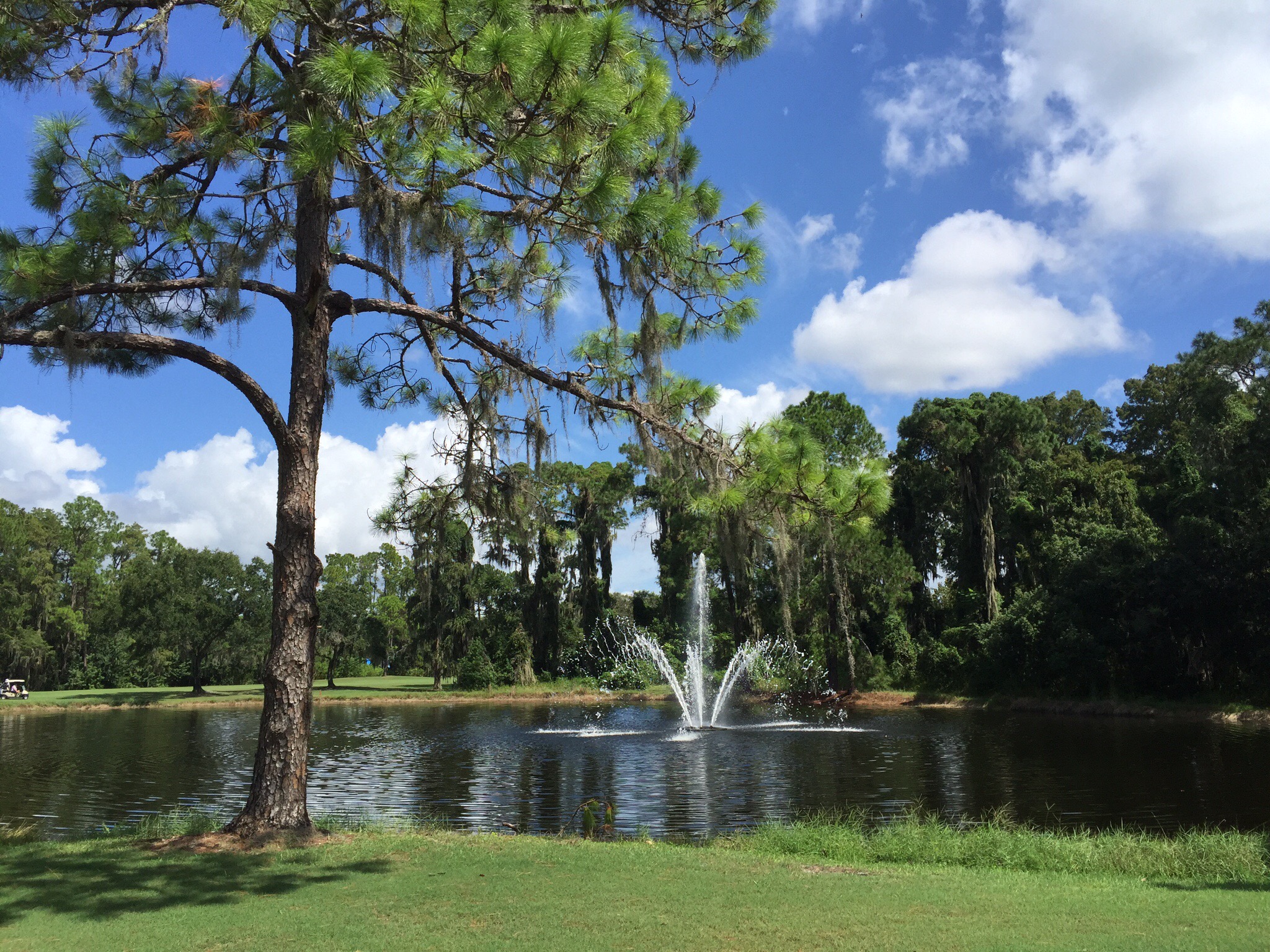
Built by Joe Lee in 1971, the Magnolia was field of choice for the PGA Tour Qualifying School finals until the early 1980s.  The Magnolia course features elevated tees and greens with wide and generous fairways graced by over 1,500 magnolia trees that bloom from late spring to mid-summer.  Of all the Disney courses, the Magnolia supports a greater abundance of wildlife. At any given time, you’re likely to see deer, osprey, alligators and turtles. Apparently there is a gopher turtle that has lived between holes four and five since the late 1980s. Additionally, a flock of wild turkeys has brought several tournaments to a standstill while they pecked along its fairways.  We were lucky enough to see the deer and turkeys and lucky enough not to see the alligators.

Like the Ritz Carlton course yesterday, Magnolia is also a Certified Audubon Cooperative Sanctuary. Endorsed by the United States Golf Association, the Audubon Cooperative Sanctuary Program for Golf Courses provides information and excellence to help golf courses preserve and enhance wildlife habitat, and protect national resources.

Posted in Florida, USA, United States of America | 1 Comment

Ritz Carlton – Grande Lakes Golf Course – Florida, USA

Back to the early starts today – destination the Ritz Carlton Grande Lakes Golf Course.  A little hiccup finding the golf club – Doris our GPS was saying one thing while Google Maps was showing something different and the poor signage just added to our woes.  We worked it out but wasted a few minutes and when you’re cutting it fine at 6.30am a few minutes is a lot!  Managed to hit a few balls on the range and then we met up with our playing buddies for the round – Kevin and Blake.  Kevin was a member at the course and Blake told us they were a couple of hacks – yeah right!  They were both big units and man could they hit the ball although Blake lost a few wayward balls off the tee – that will learn him for impersonating a gorilla : ). They both worked for the US Army in the property management area.  They were nice guys and we enjoyed our round with them.

The course was designed by Greg Norman and built in 2003.

Grande Lakes Orlando has been recognized for its commitment to the environment and is pleased to announce that The Ritz-Carlton Golf Club, Orlando, Grande Lakes is a Certified Audubon Cooperative Sanctuary. Endorsed by the United States Golf Association, the Audubon Cooperative Sanctuary Program for Golf Courses provides information and excellence to help golf courses preserve and enhance wildlife habitat, and protect national resources. The Ritz-Carlton Golf Club, Orlando is also GEO Certified™, a symbol designating that a golf facility has met a credible standard in the areas of nature, water, energy, supply chain, pollution control and community, and is committed to continually improve.

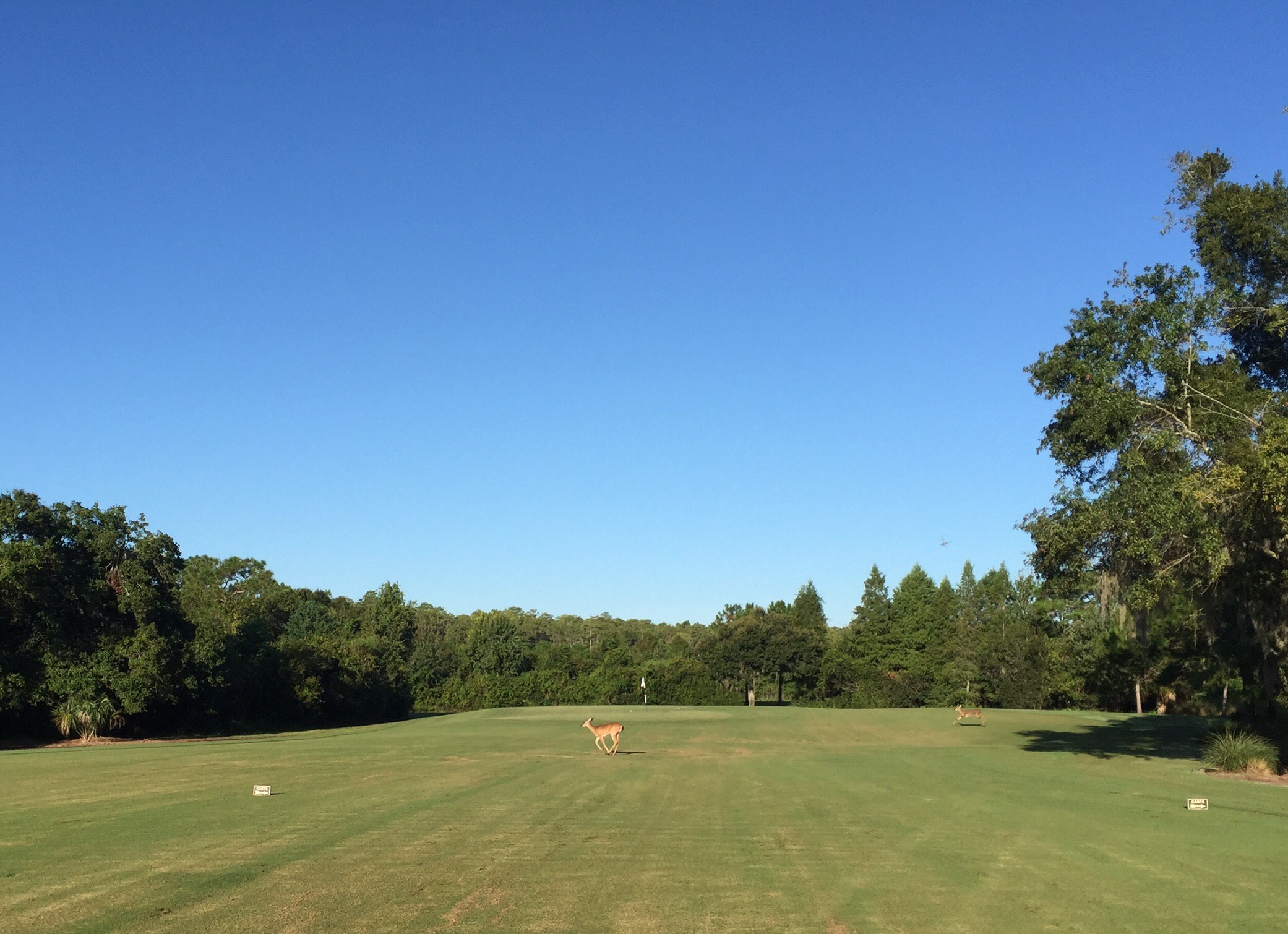
It was definitely one of the more serene courses we have played.  We saw a bit of wildlife including two baby deer – one was limping though.  Steve reassured me that it’s sore leg probably wasn’t attributed to being hit by a golf ball!  

Posted in Florida, USA, United States of America | Leave a comment

Grand Cypress Golf Course – The New Course – Florida, USA

On Thursday we re visited a course we had played in 2014 – The New Course at the Grand Cypress Golf Resort. The New Course is Jack Nicklaus’ tribute and homage to the famed Old Course at St. Andrews, Scotland. This Scottish links masterpiece is complete with double greens, stone bridges and walls, gorse mounds, burns and pot bunkers as deep as 12 feet—all in the spirit of the true Scottish original. Very few trees are located within the interior of the course, creating generous landing areas. The course was completed in 1988.

We didn’t tee off until 11am and it was pretty warm.  We kept a good pace around the front nine and then caught the field at the 10th – there were two groups of four banked up at the 10th so Steve suggested we go and play the front nine again which we did.  We have got used to playing at a good pace and find it really frustrating to sit behind other people and wait to hit every shot.  It really hinders your rhythm – I know, I know – first world problems : 0. 

Posted in Florida, USA, United States of America | Leave a comment

Orange County National Golf Centre – Panther Lake Course – Florida, USA

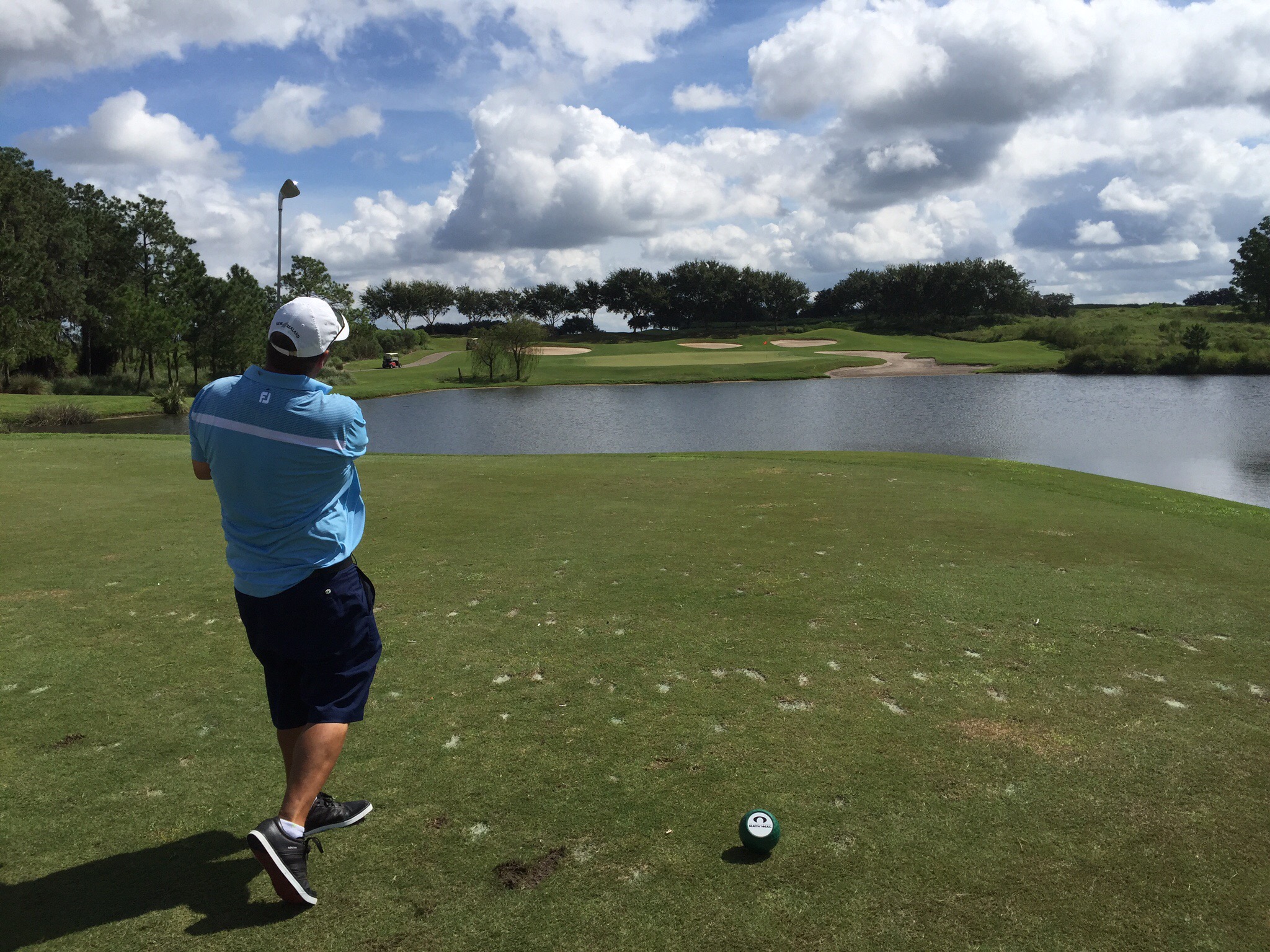
Sorry team but we are back on the golf bandwagon : ). On Wednesday we played the Panther Lake Course at the Orange Country National Golf Centre.  We were teamed up with a couple of lads – Shane and Dan.  They were good sorts but had a few issues with their golf balls off the tee : 0.  Shane was a local and Dan was visiting from California.  Shane had served with the US Army in Iraq for a couple of years and had retired – we reckon he was in his 40’s so the Army pension must be OK.

There are three golf courses at the Centre – Panther Lake, Crooked Cat and a short nine hole course called the Tooth.  We played Panther Lake which was very nice.  It was set amongst native pines, lakes and wetlands.  There is also no housing development around the course which is quite unique in Florida.

The course opened in 1997 and has hosted the Q School Qualifying finals a few times since 2003 and will host them again in December 2016.

The Centre is also known for having the largest practice facilities in the country.  Putting greens, a short game area and the driving range make up the 42 acre facility.  The facility gained notoriety when Tiger Woods bounced a ball off his sand wedge several times before striking it out of mid air 150 yards down the fairway in his famous Nike commercial. Conceived as an impromptu add on as the director watched Tiger playing in between shots of originally scheduled commercials, one of the most memorable commercials of all time was completed in less than 30 minutes. After three attempts that fell short, the director put Tiger under the gun and told him they would give him one last try. As we all know, Tiger lives for a challenge and responds to pressure, so when he pulled off the amazing series of very difficult maneuvers, it should have not come as a surprise to anyone.

A unique event that has been hosted at the golf practice range is the PGA Show Demo Day.  The PGA Demo Day is held in conjunction with the annual PGA Merchandise Show held each year in Orlando. During this event, 5,000 PGA Professionals visit Orange County National to see and test all of the new equipment products for the upcoming year. It is estimated that a half million golf balls are hit during that event, all in one day.

Posted in Florida, USA, United States of America | Leave a comment

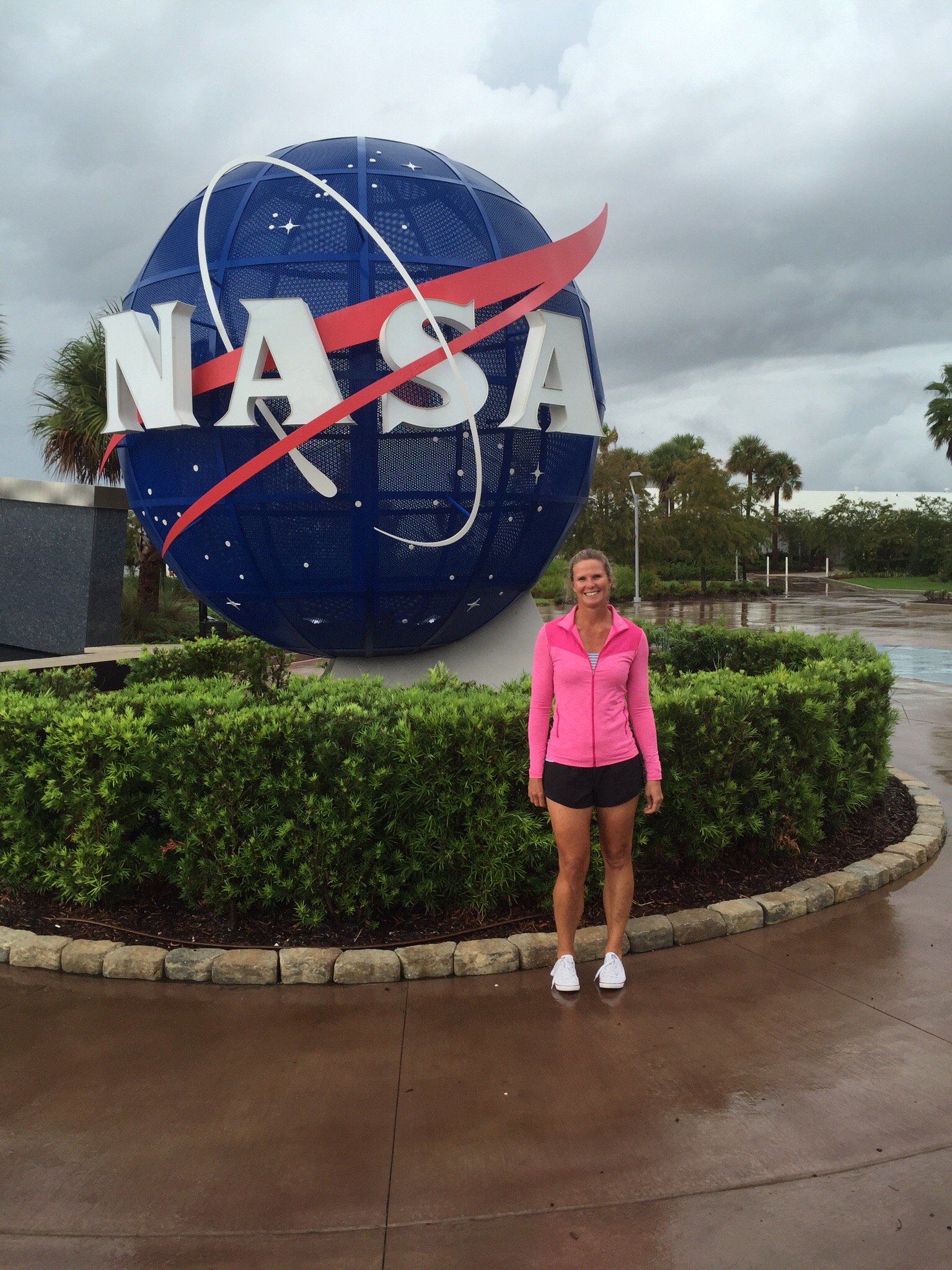
Kennedy Space Centre – Florida, USA

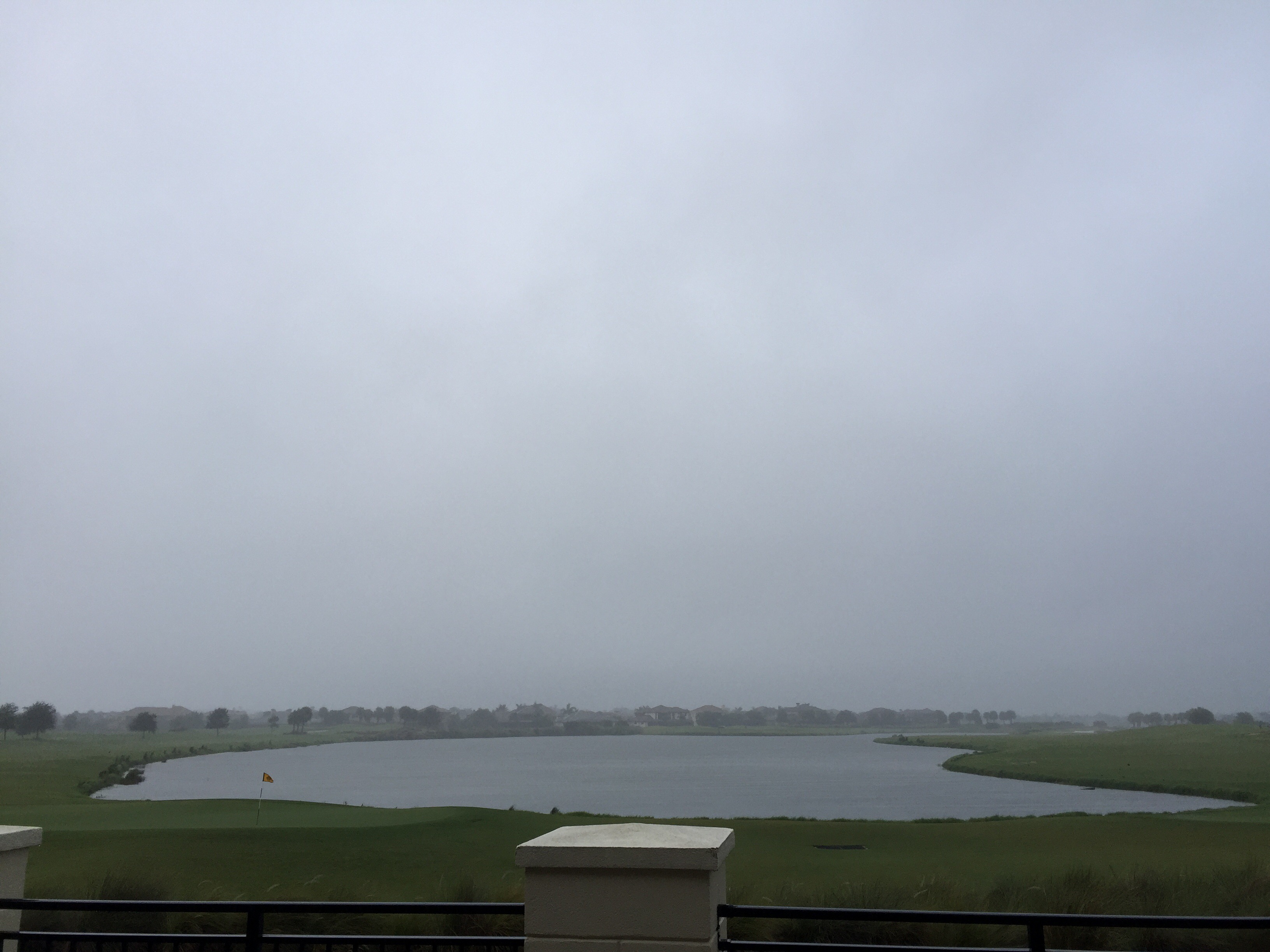
Just as you, my fellow blog followers, were about to psych yourselves up for yet another golf post the weather has come to your rescue : ).  After just over two months away and 36 rounds of golf we got rained out – our first really bad weather day.  I had checked the forecast for the area where we were intending on playing golf and I saw it wasn’t too flash.  Being the eternal optimist SUNGRL that I am I still thought we would be fine and be able to get our round in at Duran Golf Club.  About half an hour out from Duran it started to rain and it got persistently heavier the closer we got.  The plan was to play golf and then go and visit the Kennedy Space Centre which is in the same vicinity as Duran.  We got to Duran and decided there would be no golf for us today.

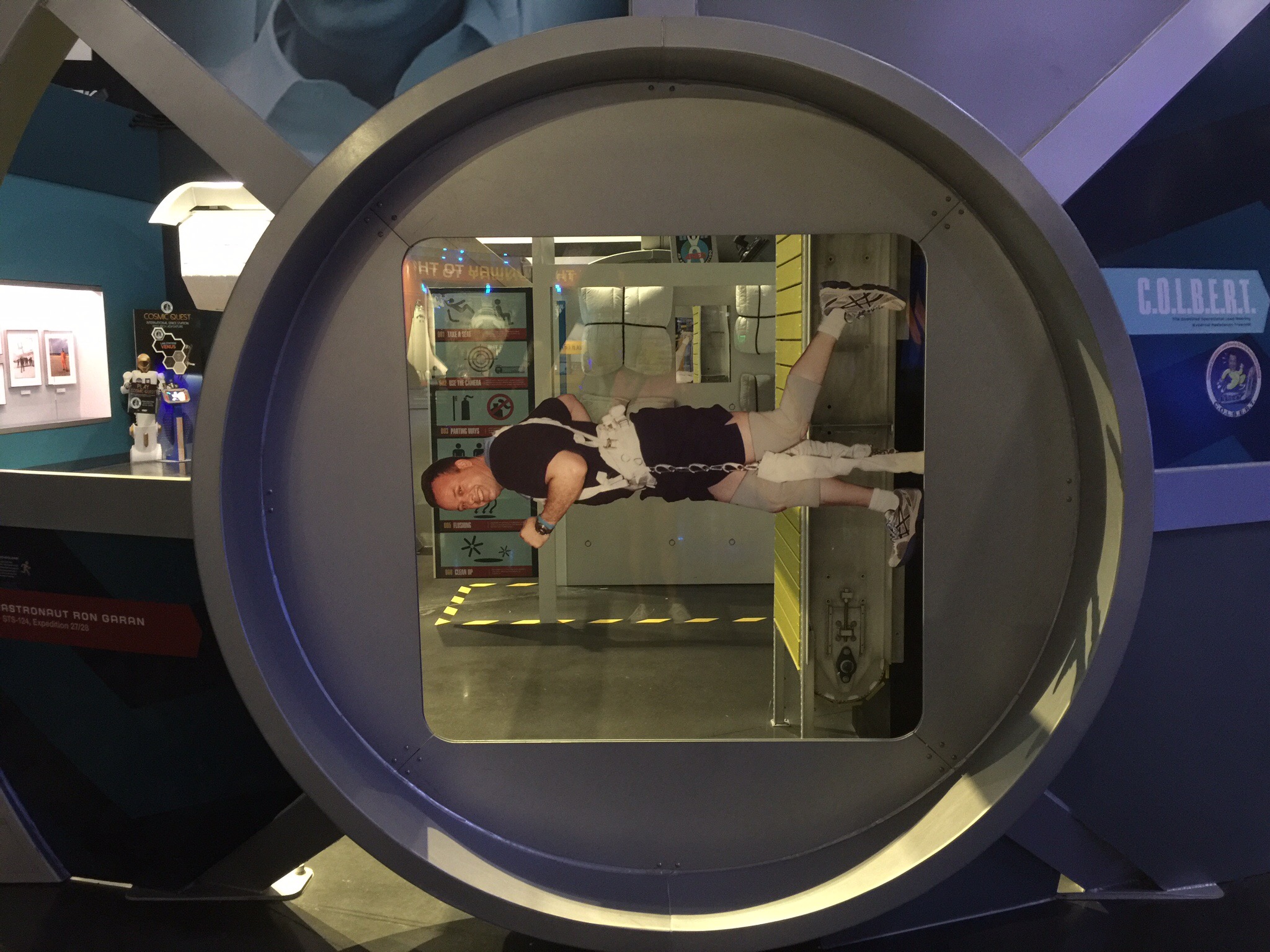
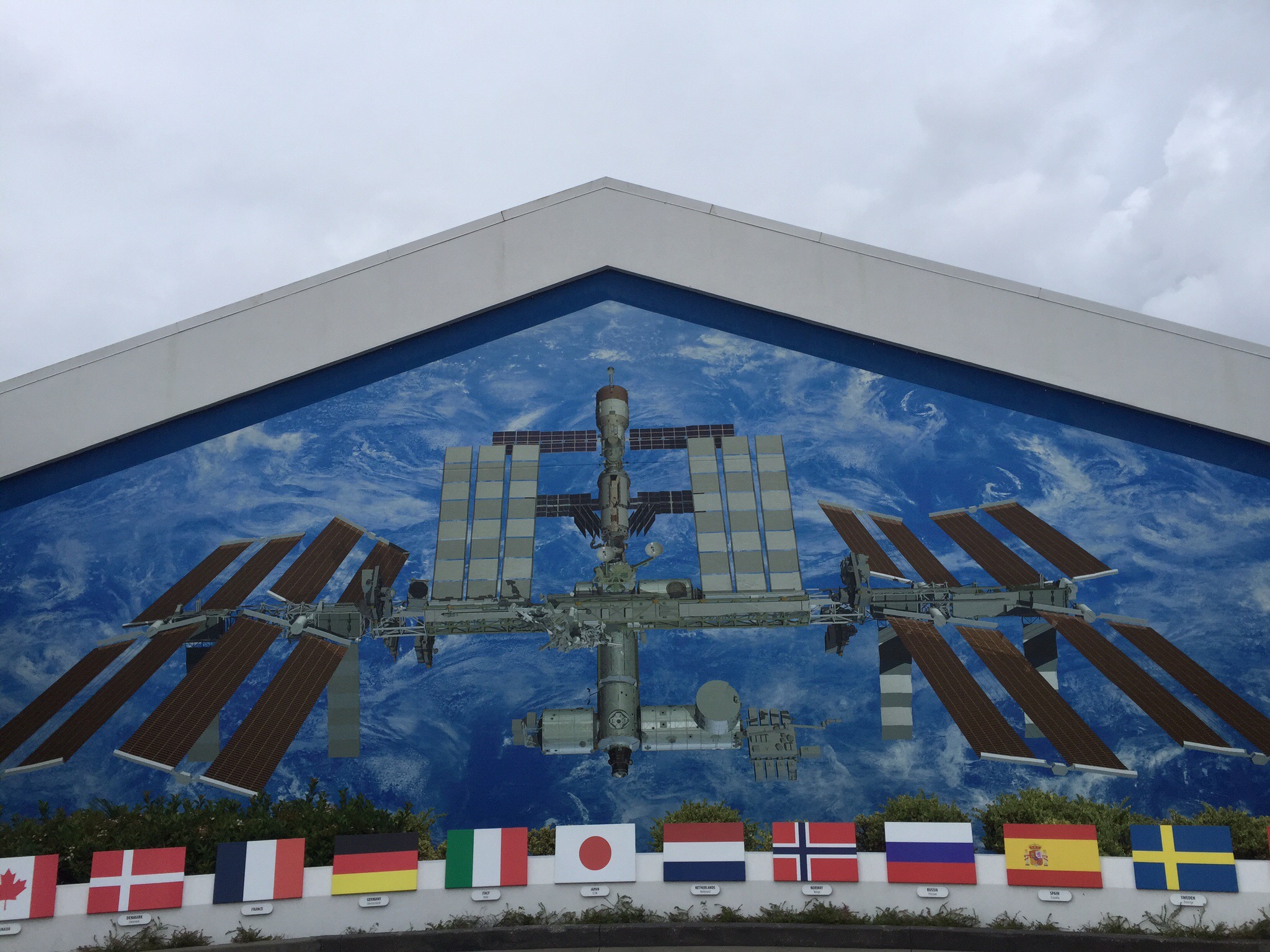
We carried on to the Kennedy Space Station, purchased our tickets and checked out the daily schedule.  For USD50 each there is a lot you can do – you really do need a whole day for this place.  We decided to go to the IMAX theatre first and watch the 3D documentary called A Beautiful Earth.  This documentary featured astronaut captured footage of Earth and provided an insight into the future of the planet and the effects humanity has had on it over time.  It was amazing and NZ even featured.  The astronauts were based on the International Space Station which is an amazing feat in it’s own right.  They showed how various parts of the planet have been affected by climate change.  They also talked about living on the Space Station – so fascinating.  They actually lose fitness and muscle condition being up there so it is very important that they do about two and a half hours exercise a day.  They have a treadmill which actually faces downwards and they are harnessed onto it.  There are typically six astronauts up on the Space Station at any one time – they tend to go up for about six months at a time with three rotating out every three months and being replaced by a new three.  They carry out research on various aspects of space and the earth below.  See below for more detailed information on the International Space Station courtesy of Wikipedia.

The Kennedy Space Centre (KSC) was originally called NASA’s (National Aeronautics and Space Administration) Launch Operations Center, and became the nation’s gateway to the Moon when it was decided that the undeveloped expanse of Merritt Island had compelling advantages over other prospective sites. Work began in 1962 to build the facilities which would launch Americans to the lunar surface.

The component parts of the Saturn V rocket and Apollo spacecraft were manufactured at hundreds of locations throughout the country, but they all came together here. Throughout the Apollo program, it was KSC’s role to receive, integrate, test and launch the Saturn V rockets and their Apollo spacecraft. More than 26,000 people worked here to accomplish these final and critical tasks.

In 1963, the Launch Operations Centre was renamed Kennedy Space Centre, in honor of the fallen leader who had challenged this country to do the impossible, to go to the Moon.

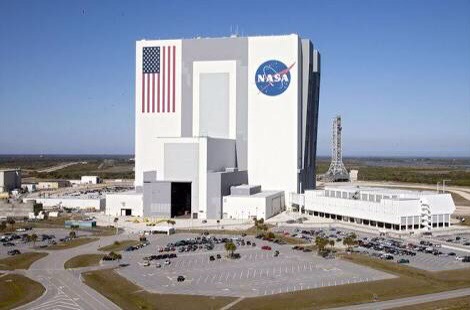
The next item on our agenda was the bus tour of the entire working space flight centre.  Unfortunately it was raining even harder now and visibility was next to zero.  We could hardly make out the sights that the Guide was pointing out and talking about and there was no point taking any photos so I thought I would just borrow some from the Internet.  We saw the outline of the Vehicle Assembly Building.  The Vehicle (originally Vertical) Assembly Building, or VAB, is a building designed to assemble large space vehicles, such as the massive Saturn V and the Space Shuttle. The future Space Launch System (SLS) will also be assembled there.  At 3,664,883 cubic meters (129,428,000 cubic feet) it is one of the largest buildings in the world by volume.  The VAB is the largest single-story building in the world, was the tallest building (160.3 m) in Florida until 1974, and is still the tallest building in the United States outside an urban area.

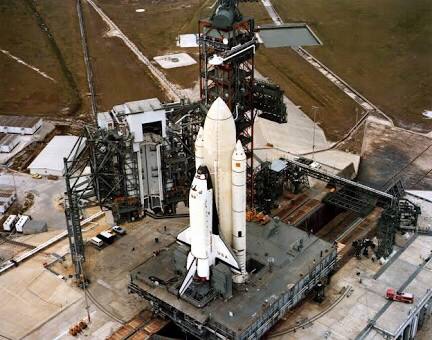
We then drove past the launch pads.  Since the late 1960s, Pads A and B at Kennedy Space Center’s Launch Complex 39 have served as backdrops for America’s most significant manned space flight endeavors – Apollo, Skylab, Apollo-Soyuz and space shuttle. 

Located on Merritt Island, just north of Cape Canaveral, the pads were originally built for the huge Apollo/Saturn V rockets that launched American astronauts on their historic journeys to the moon and back. Following the joint U.S.-Soviet Apollo-Soyuz Test Project mission of July 1975, the pads were modified to support space shuttle operations. Both pads were designed to support the concept of mobile launch operations, in which space vehicles are checked out and assembled in the protected environment of the Orbiter Processing Facility and the Vehicle Assembly Building, then transported by large, tracked crawlers to the launch pad for final processing and launch.

During the Apollo era, key pad service structures were mobile. For the space shuttle, two permanent service towers were installed at each pad for the first time, the fixed service structure and the rotating service structure.

On April 12, 1981, shuttle operations commenced at Pad A with the launch of Columbia on STS-1. After 23 more successful launches from A, the first space shuttle to lift off from Pad B was the ill-fated Challenger in January 1986. Pad B was designated for the resumption of shuttle flights in September 1988, followed by the reactivation of Pad A in January 1990.

Both pads are octagonally shaped and share identical features. Each pad covers about a quarter-square mile of land. Launches are conducted from atop a concrete hardstand 390 feet by 325 feet, located at the center of the pad area. The Pad A and Pad B hardstands are 48 feet and 55 feet above sea level, respectively.

The Guide also pointed out a few alligators in the lakes we passed.  While the interactions between man and alligator are few, the biggest problem is during Shuttle landings. Prior to each Kennedy Shuttle landing, it is the task of a special crew to clear the runway of all debris, including any alligators that might be sunning themselves on the runway surface.

Since August of 1963, Merritt Island’s National Wildlife Refuge has shared a common boundary with the John F. Kennedy Space Center on the east coast of Florida. Just south of launch pad 39A, manatees graze protected in a sanctuary in the northern end of Banana River. Between May and September, thousands of endangered sea turtles come ashore on this barrier island in the dark of night to lay their eggs. Merritt Island’s strategic location along the Atlantic Flyway provides a resting and feeding place for thousands of wading birds, shorebirds, and songbirds. Diverse habitats that include brackish marshes, salt water estuaries, and hardwood hammocks provide homes to an amazing diversity of more than 500 species of wildlife. Today these 220 square miles are managed by the Department of the Interior as a National Wildlife Refuge and National Seashore.

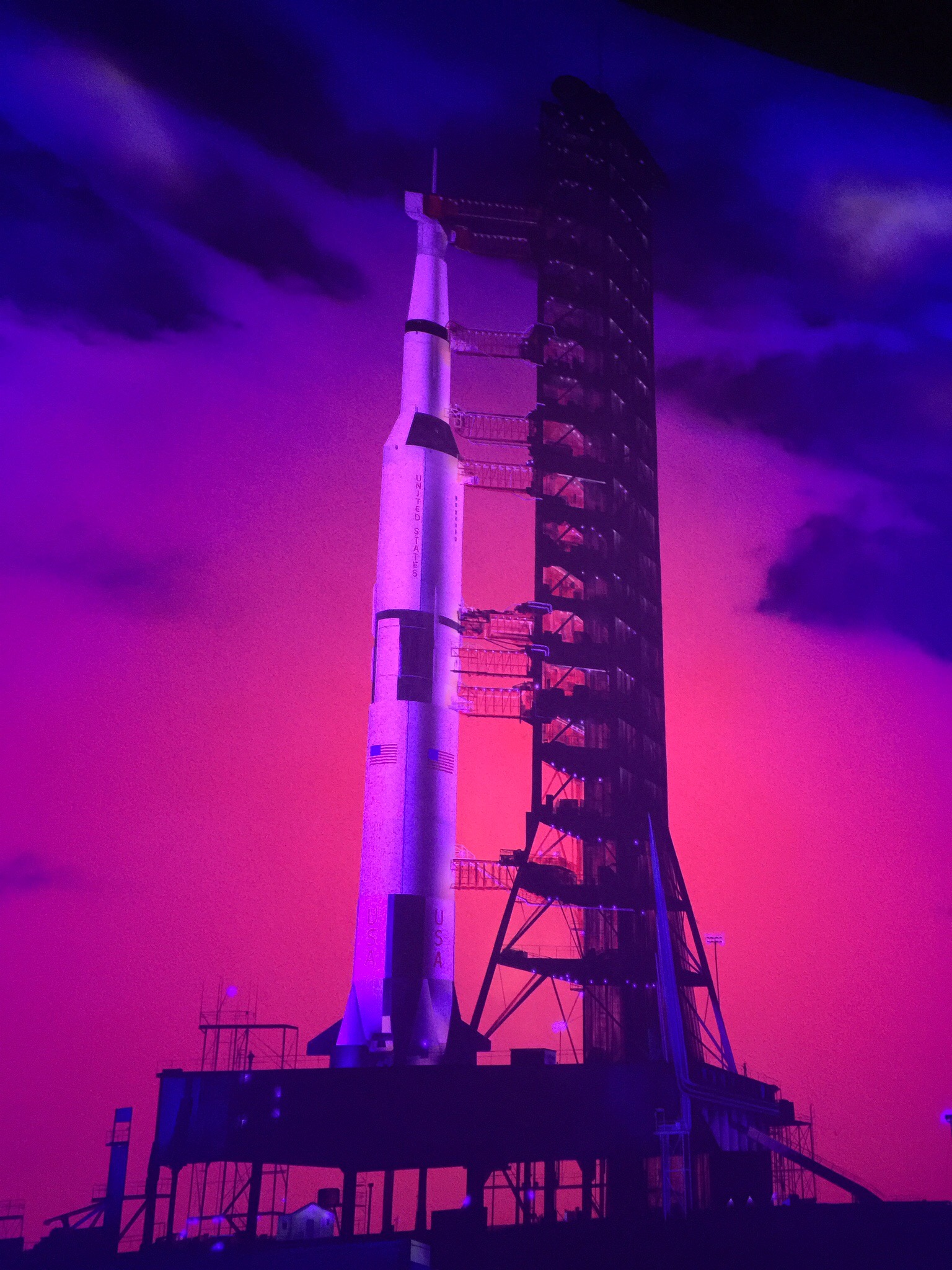
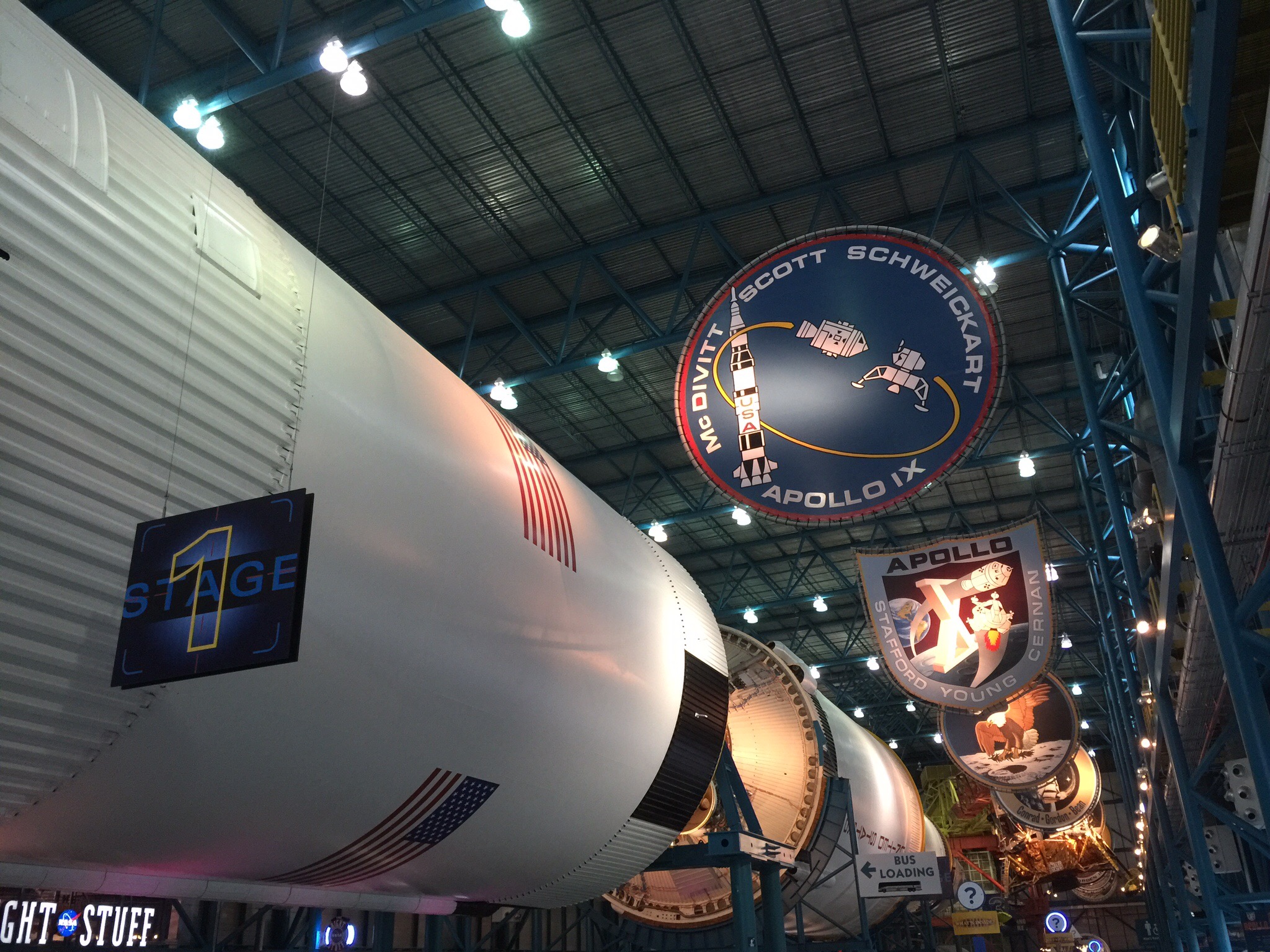
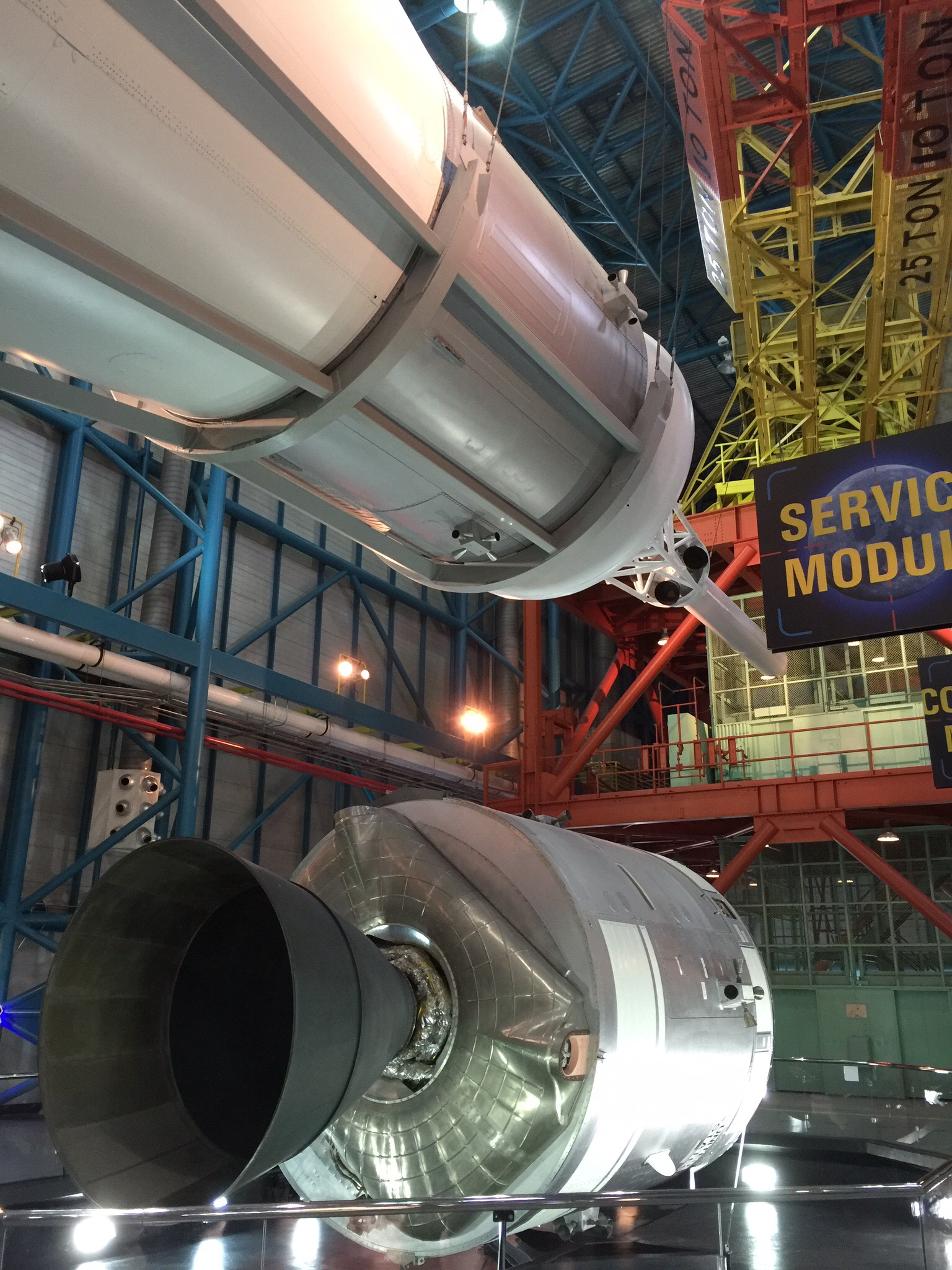
We were then dropped at the Apollo / Saturn V Centre which is dedicated to the Apollo Missions.  The building was built to house a restored Saturn V launch vehicle and features other exhibits related to the Apollo program. Until the structure was completed in 1996, the Saturn V was displayed horizontally for many years outdoors just south of the Vehicle Assembly Building.

The Saturn V Rocket served as the launch vehicle for the Apollo spacecraft and was composed of three main sections known individually as the S-IC, S-II and S-IVB stages.  The rocket’s Instrument Unit (IU) was stacked atop the third stage.

The Apollo spacecraft was made up of three main components; the Lunar Module (LM), Service Module (SM) and Command Module (CM).  The vehicle’s Launch Escape Systems (LES) was attached to the tip of the Command Module.

The Apollo program, also known as Project Apollo, was the third United States human spaceflight program carried out by the National Aeronautics and Space Administration (NASA), which accomplished landing the first humans on the Moon from 1969 to 1972. First conceived during Dwight D. Eisenhower’s administration as a three-man spacecraft to follow the one-man Project Mercury which put the first Americans in space, Apollo was later dedicated to President John F. Kennedy’s national goal of “landing a man on the Moon and returning him safely to the Earth” by the end of the 1960s, which he proposed in an address to Congress on May 25, 1961.

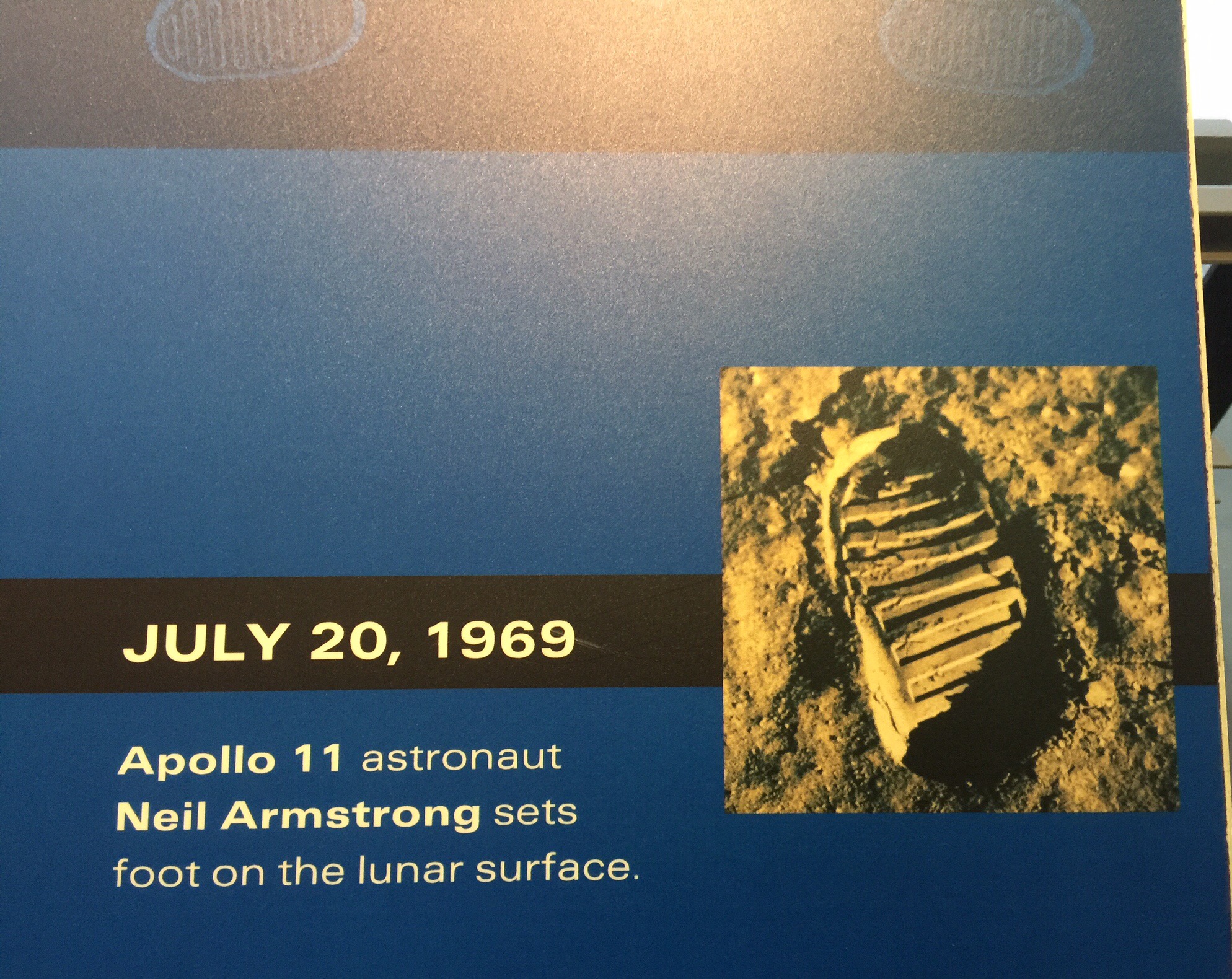
Kennedy’s goal was accomplished on the Apollo 11 mission when astronauts Neil Armstrong and Buzz Aldrin landed their Lunar Module (LM) on July 20, 1969, and walked on the lunar surface, while Michael Collins remained in lunar orbit in the Command/Service Module (CSM), and all three landed safely on Earth on July 24. Five subsequent Apollo missions also landed astronauts on the Moon, the last in December 1972. In these six spaceflights, twelve men walked on the Moon.  It achieved its goal of manned lunar landing, despite the major setback of a 1967 Apollo 1 cabin fire that killed the entire crew during a prelaunch test. 

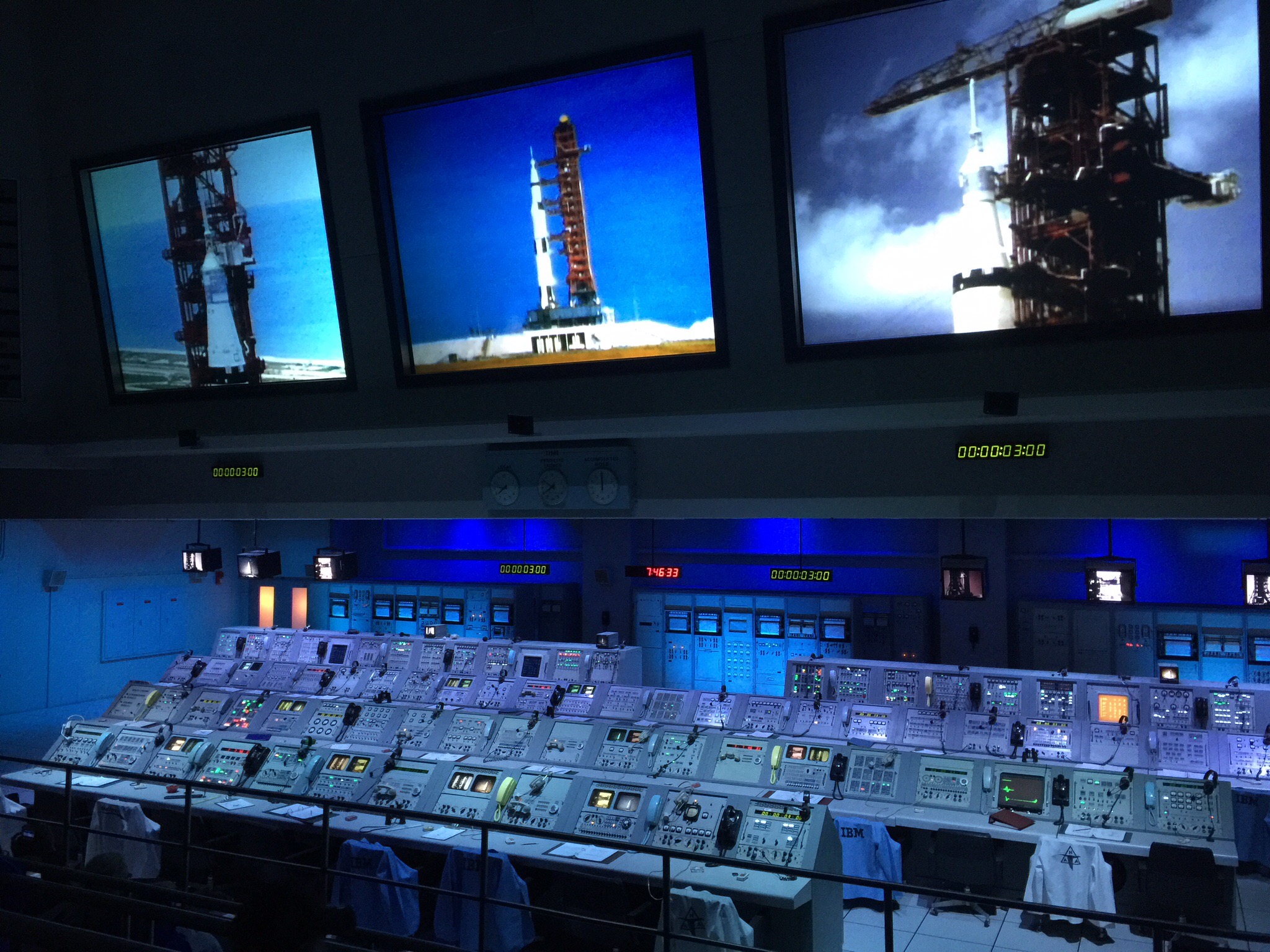
The actual control centre used for the Apollo flights

Some Space Geeks titbits I found interesting:

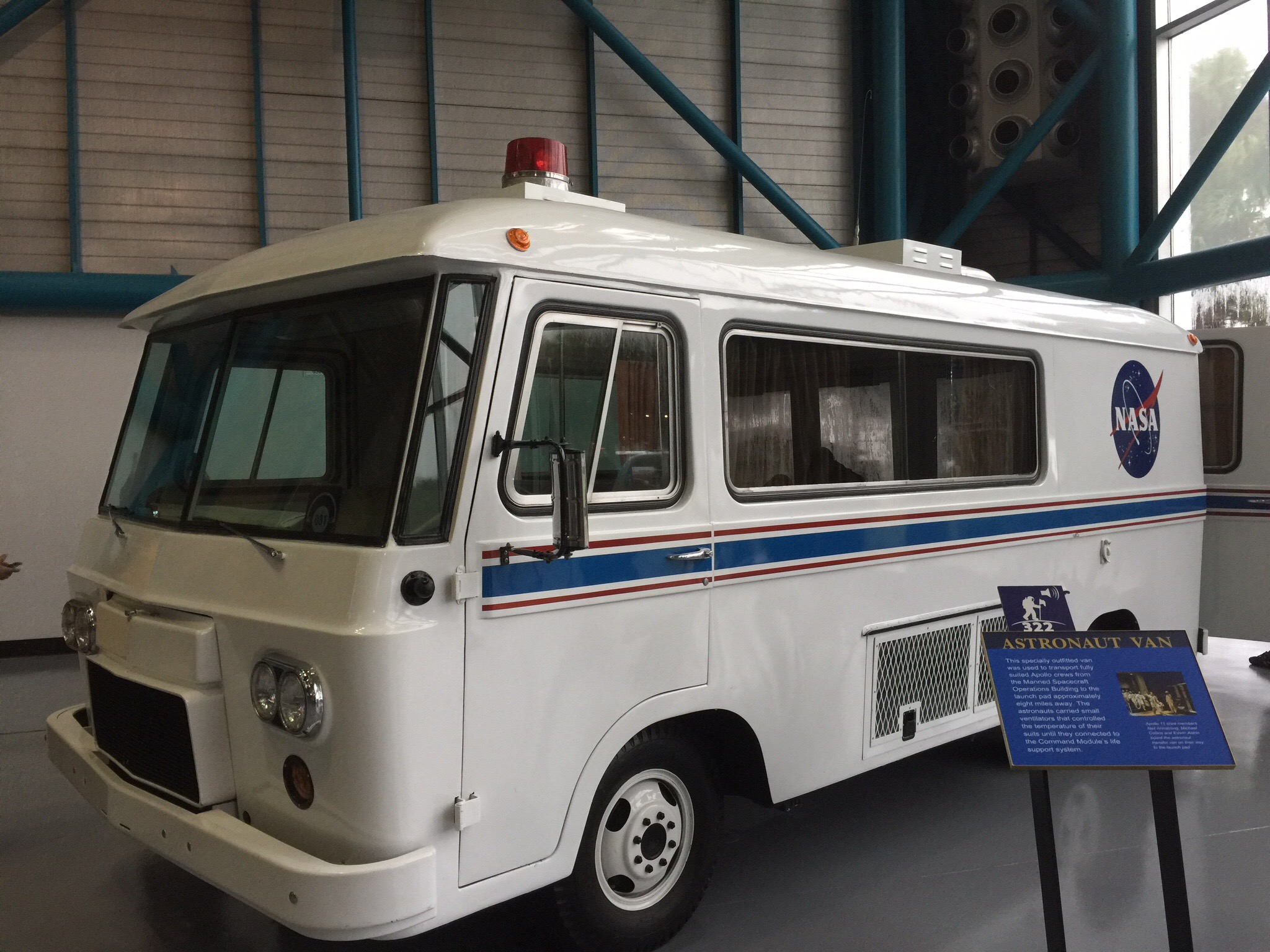
The Astronaut Van – this specially outfitted van was used to transport fully suited Apollo crews from the Manned Spacecraft Operations Building to the launch pad approximatley 8 miles away.  The astronauts carried small ventilators that controlled the temperature of their suits until they connected to the Command Module’s life support system.


What we’ve learnt from landing on the moon….

The oldest rocks retrieved from the Moon indicate that it formed approximatley 4.6 billion years ago.  Since the Moon lacks the geological forces that continuously alter the Earth’s surface, the youngest moon rocks are as old as the oldest Earth rocks.

Lunar samples have revealed no evidence of past or present life forms.  The Moon contains no living organisms, fossils or native organic compounds.

The Moon and Earth are composed of different proportions of the same chemical elements including oxygen, silicon, magnesium, iron, aluminium and calcium.  In contrast to the Earth, the Moon is poor in elements that are essential for life such as hydrogen, carbon and nitrogen.

The Moon is not perfectly round.  It’s slight egg shape may have resulted when it evolved under the influence of the Earth’s gravitational pull.

Early in its history, the Moon melted and began to cool from the surface inward.  Meteoroid fragments repeatedly bombarded the thickening crust, covering with craters.  About 4 billion years ago, a number of larger objects collided with the Moon, leading to the formation of its massive basins.

Unlike almost all rocks on Earth, Moon rocks contain no water.  Some scientists believe that ice may be preserved deep beneath the lunar poles, but it appears that water played little or no role in the Moon’s formation.

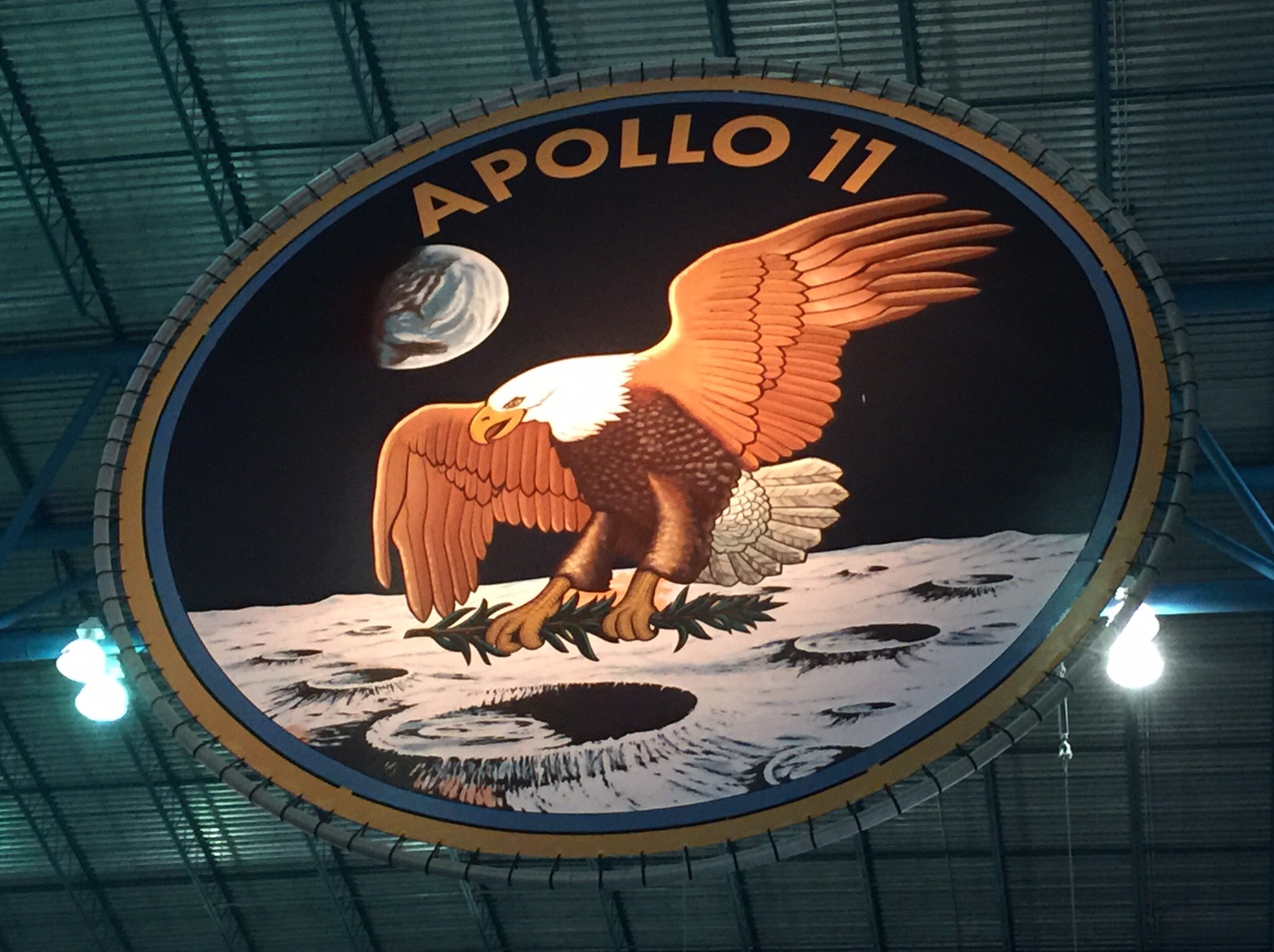
Apollo 11 – “Tranquility Base here.  The Eagle has landed.”  – Neil Armstrong 

Date – 16 to 24 July 1969

Crew – Commander: Neil Armstrong, 38.  Command Module Pilot: Michale Collins, 38.  Lunar Module Pilot: Edwin “Buzz” Aldrin, 39.

Craft – Command Module: Columbia, Lunar Module: Eagle.

Highlight – Apollo 11 achieved President Kennedy’s goal of landing a man on the Moon and returning him safely to Earth.  After landing on the Moon with only 30 seconds of fuel remaining, astronauts Armstrong and Aldrin planted the American flag and collected the first samples of lunar soil.


Training for Apollo

Flying the Apollo spacecraft – the Apollo Mission Simulator (AMS) offered trainees an opportunity to practice “flying the Command Module.  Rigged with sound effects and visual cues, the AMS was capable of duplicating complete missions, including potential emergency situations.

Landing the Lunar Module – Apollo astronauts practiced landing the Lunar Module in the Lunar Training Vehicle (LLTV).  Known as the “flying bedstead,” the LLTV was equipped with an extra engine that supported five-sixths of its airborne weight.

Experiencing weightlessness – Apollo trainees experienced brief periods of weightlessness in a modified, high speed KC-135 jet.  Each time the plane dove from an altitude of 34,000 feet to 24,000 feet the astronauts felt a sensation of zero-gravity for approximatley 30 seconds.

Withstanding gravity forces – During launch and re-entry, the Apollo astronauts were exposed to forces many times the normal pull of gravity.  They tested their abilities to withstand excessive g-forces in a huge, whirling centrifuge.

Survival training – Desert, jungle and water survival training prepared the astronauts for potential emergency landing situations and taught them how to secure food and shelter no matter where they landed.

Lunar Firsts and Lasts

First astronauts to see the Moon’s far side – Frank Borman, James Lovell and William Anders – Apollo 8

First footsteps on the lunar surface – Neil Armstrong – Apollo 11

First meal on the Moon – bacon squares, sugar cookies, canned peaches, juice and coffee – Apollo 11

Only astronaut to golf on the moon – Alan Sheperd – Apollo 14

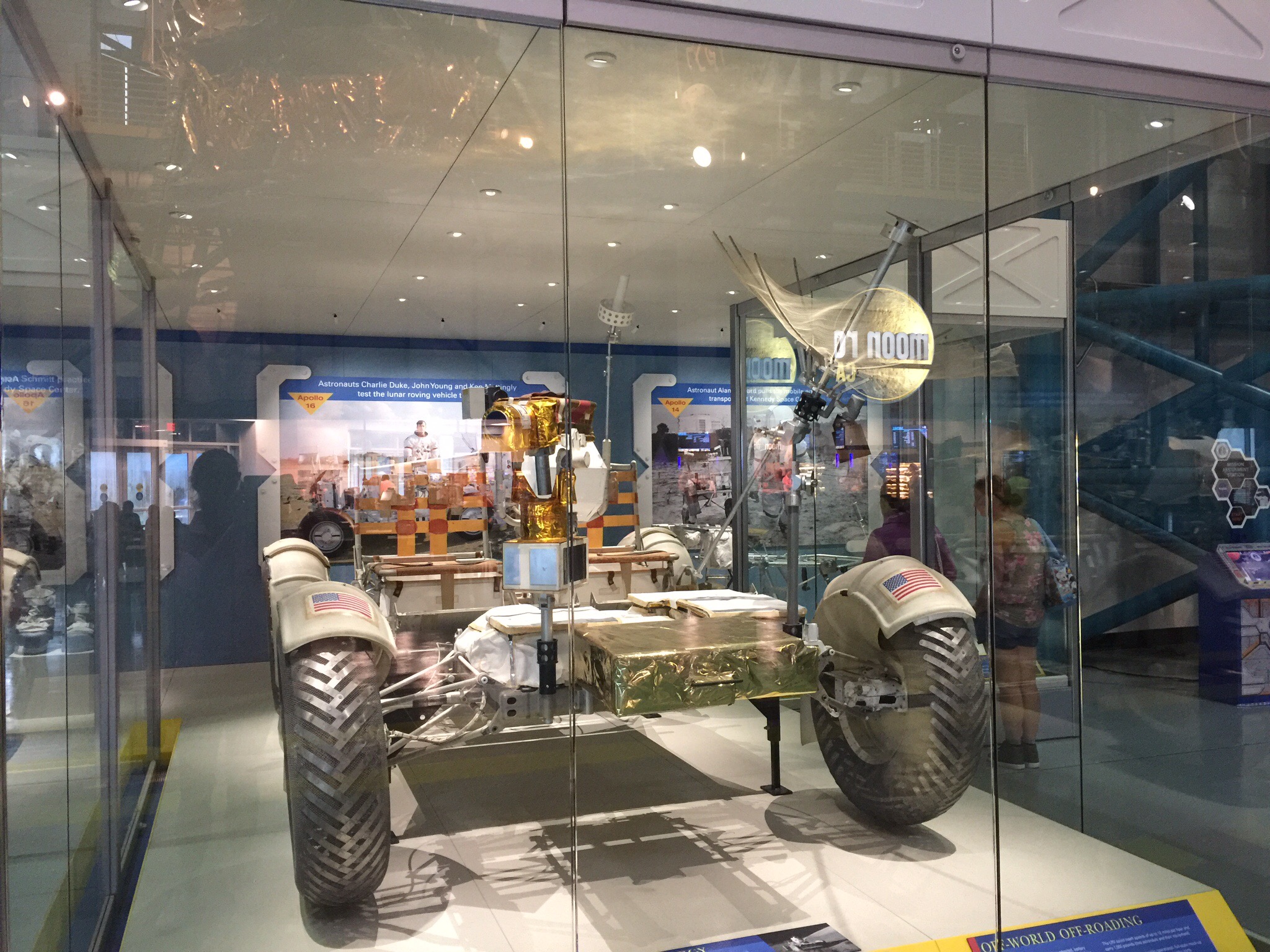
First astronauts to drive on the moon – David Scott and James Irwin – Apollo 15

Longest distance driven on the lunar surface – 19 miles by Eugene Cernan and Harrison Schmitt – Apollo 17

Last astronaut on the moon – Eugene Cernan – Apollo 17

Astronaut Recruitment 

Who could apply – all Apollo Program applicants had to meet the following criteria:

– Age 35 or under

– Height less than 6 feet (180cm)

– Weight less than 190 pounds (86kg)

– A college degree in the sciences or engineering

– US citizenship

– Excellent mental and physical condition

The average Apollo astronaut was aged 32.5 years old, weighed 164 pounds, was 5 foot 10 inches tall, was married and had 2 children and 1 dog : )

NASA recruited two main types of astronauts for the Apollo Program: pilots and scientists.  Pilot-astronauts were required to have at least 1,500 hours of jet flight time, while scientist-astronauts had to possess a doctorate degree or equivalent experience in the sciences or engineering.

Moon Rock

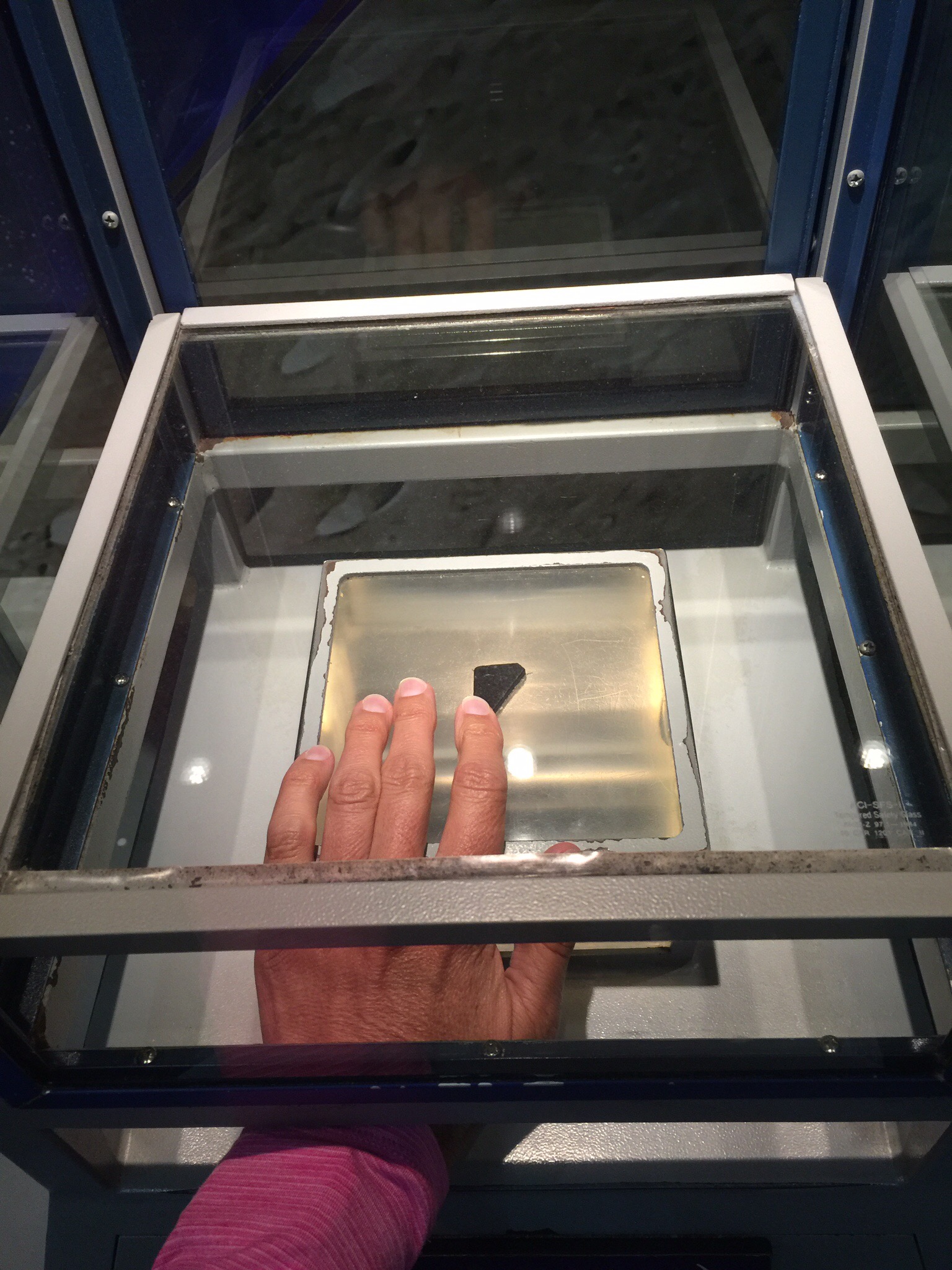
This moon rock was collected by Astronaut Jack Schmitt near the Apollo 17 Lunar Module landing site.  The rock weighs 17 grams and is a fragment of a much larger original sample.  The rock is known as a mare basalt, a porous rock produced from cooled lava.  Formed approximatley 3.7 billion years ago, it is older than 99.99% of all surface rocks on Earth.  Scientists continue to study the Apollo Program lunar samples today at NASA’s Johnson Space Station in Houston and other research institutions around the world.

The Apollo Spacesuit

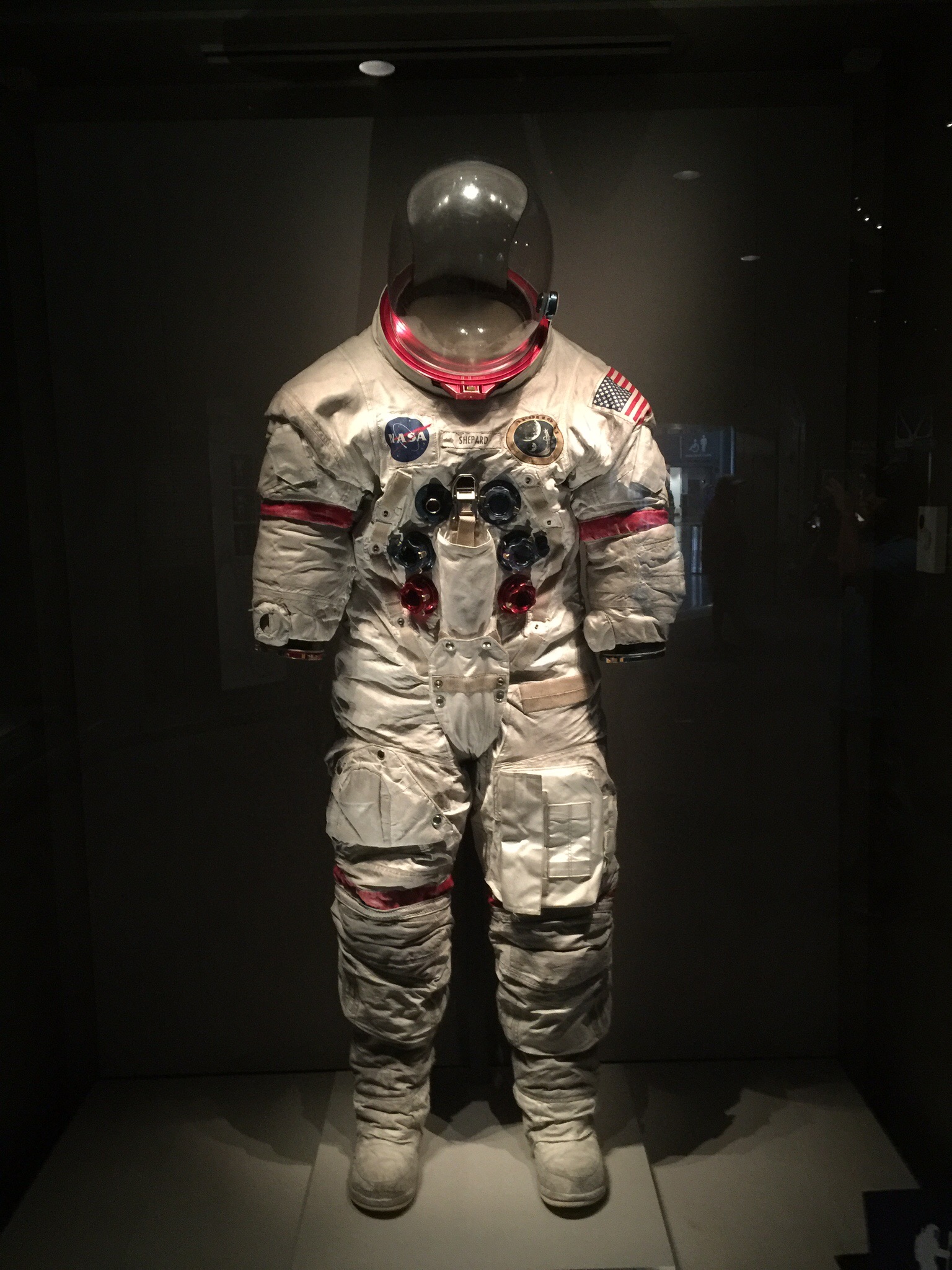
The Apollo progarm’s A7-L spacesuit was one of the few pieces of equipment that flew the entire mission, and had to work from launch to landing.  The suit had to interface with the command module seating, navigation and optics, and launch support system.  It also had to interface with the lunar module environmental control system and instrument system for landing and navigation.  Lastly, the suit had to be able to work with the portable life support system, and then all the way back to Earth.

“The design goal of the spacesuit was to give man enough mobility to get out and walk – and the key word is walk – on the surface of the Moon,” explained Richard Ellis, an employee of ILC Dover, the company NASA contracted to build the suits.

Three suits were custom made for each astronaut of the Apollo 14 prime crew: two suits that were flight ready and one for training purposes.  Each suit had a comfort liner, a nylon bladder to retain pressure, convoluted (coils) for movement and layers of thermal and micro-meteoroid protection.  In all, 22 layers of fabrics and materials were stitched, glued and cemented together to create the final suit assembly.  Each suit weighs almost 300 pounds (36 kg) on Earth.  Of course, in the microgravity of space a spacesuit weighs nothing.

Chill Pill – the physical demands of a spacewalk can lead to heat exhaustion.  To monitor body temperature, astronauts swallow a Thermometer Pill that ha a tiny temperature sensor that transmits internal temperature to a recorder outside the body.  Firefighters, football players, and divers have all used this device here on Earth.

It would take the efforts if ore than 500 people between NASA and ILC Dover working over several years to develop Apollo’s A7-L spacesuits.  But the suits were a magnificent engineering success.  

The suits are white to reflect the Sun’s heat and makes astronauts clearly visible against the blackness of space.

Allan Shepard’s A7-L Spacesuit – Apollo 14

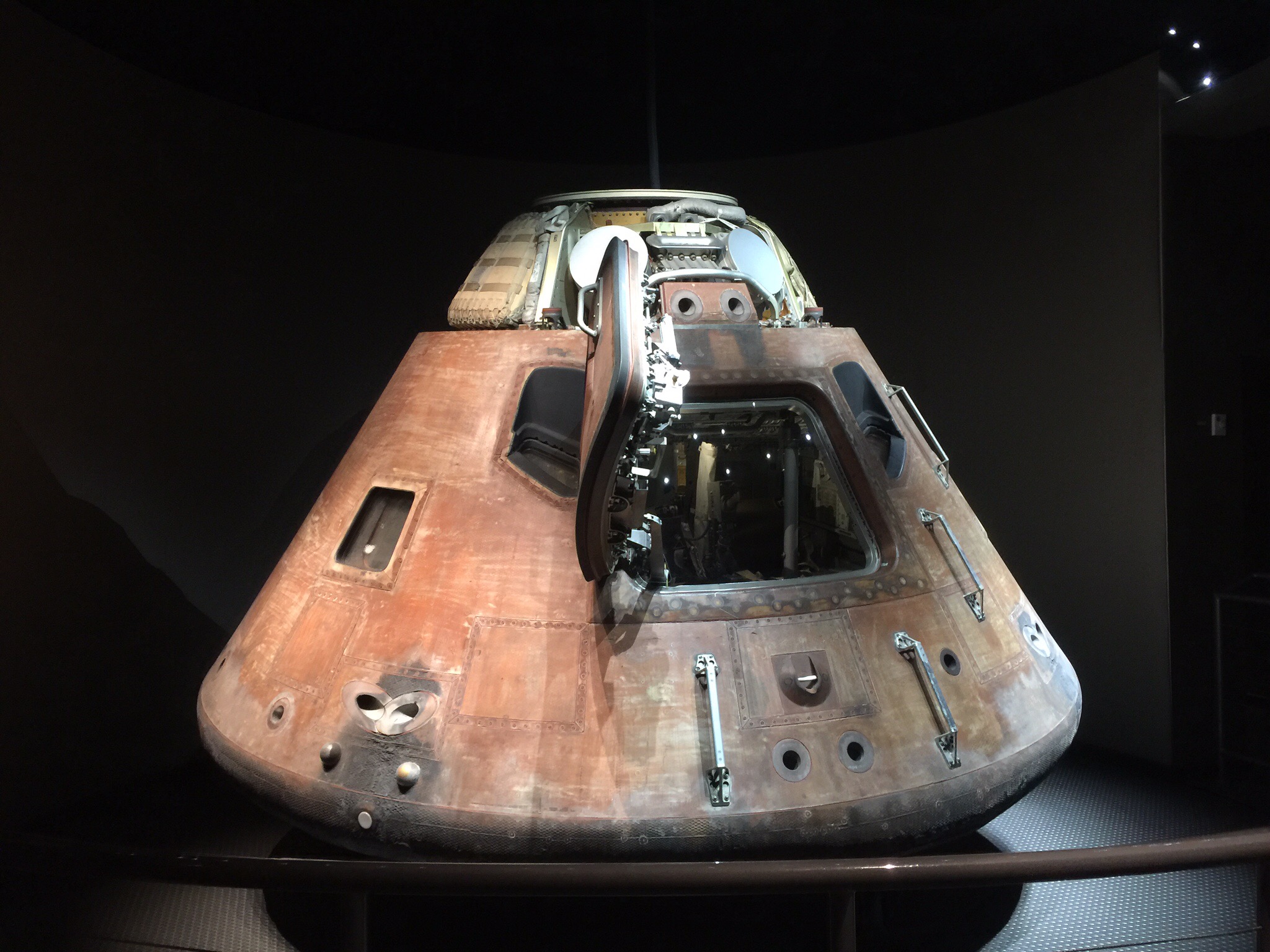
Apollo 14 Capsule

Space is a dangerous place, complete with micro-meteoroids, radiation and airlessness.  And coming home from it is no easy task.  The compact and confined command module with its three main crew would be welcomed and engulfed by searing white hot flames as it slammed through the atmosphere back down to Earth.  The key factor was keeping the crew alive.

The engineers at North American Rockwell (NASA’s prime contractor for the command module) were up for the challenge. 14,000 people and a talented collection of 8,000 other companies, all worked to ensure that millions of components on the command module were in perfect order.

Named Kitty Hawk, the capsule was crafted with more than 2 million parts; nearly 15 miles (24km) of wire; a control panel with 24 instruments, 565 switches, 40 indicators and 71 lights.  It would take a journey of 500,000 miles (804,672 kms) before it safely delivered the crew back home with a cargo of more than 100 pounds (45 kgs) of moon rocks.

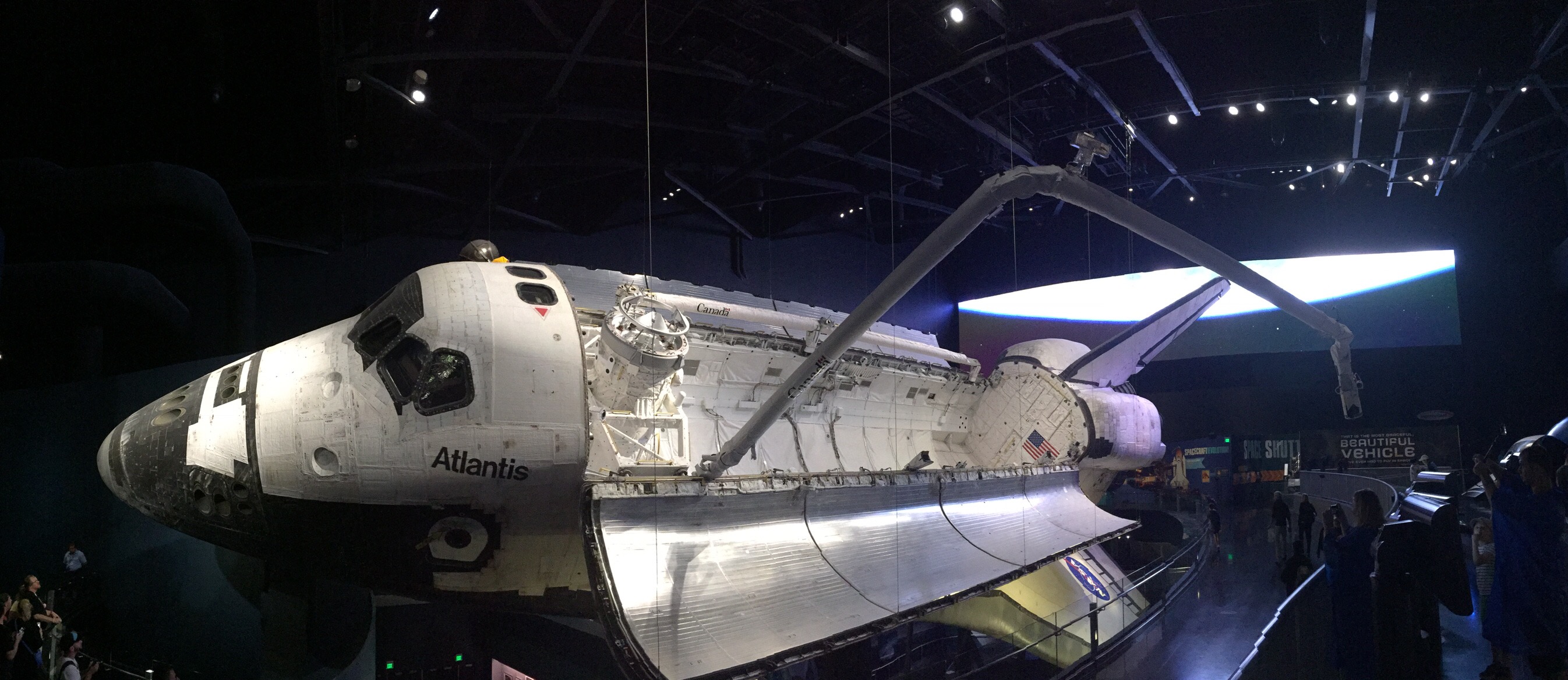
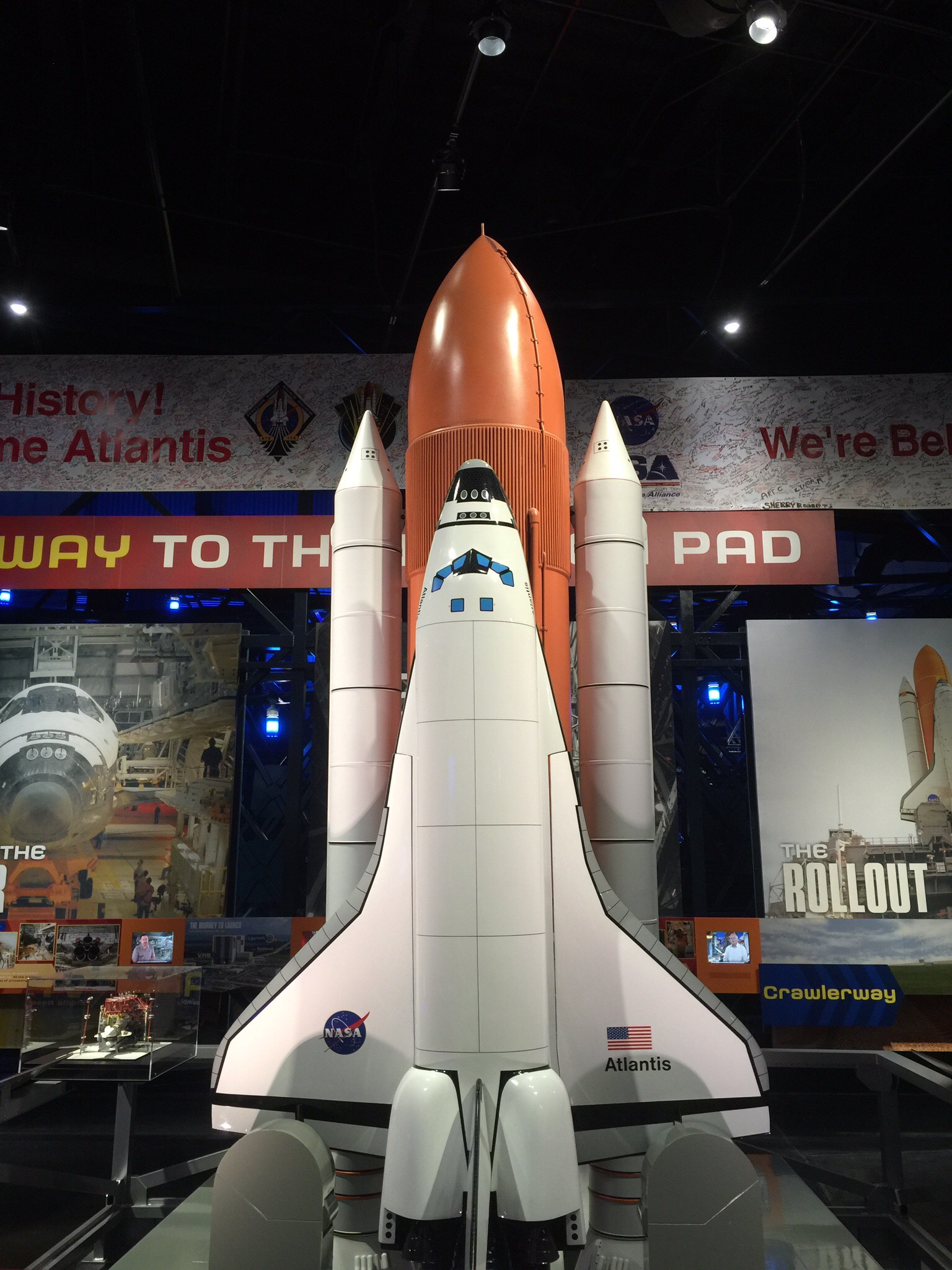
After exploring the Apollo / Saturn V centre it was back on the bus to visit the Space Shuttle Atlantis Centre.  his centre was opened in 013 and houses Atlantis a space shuttle that has been into space 33 times.  It is suspended from the ceiling and is quite a sight.

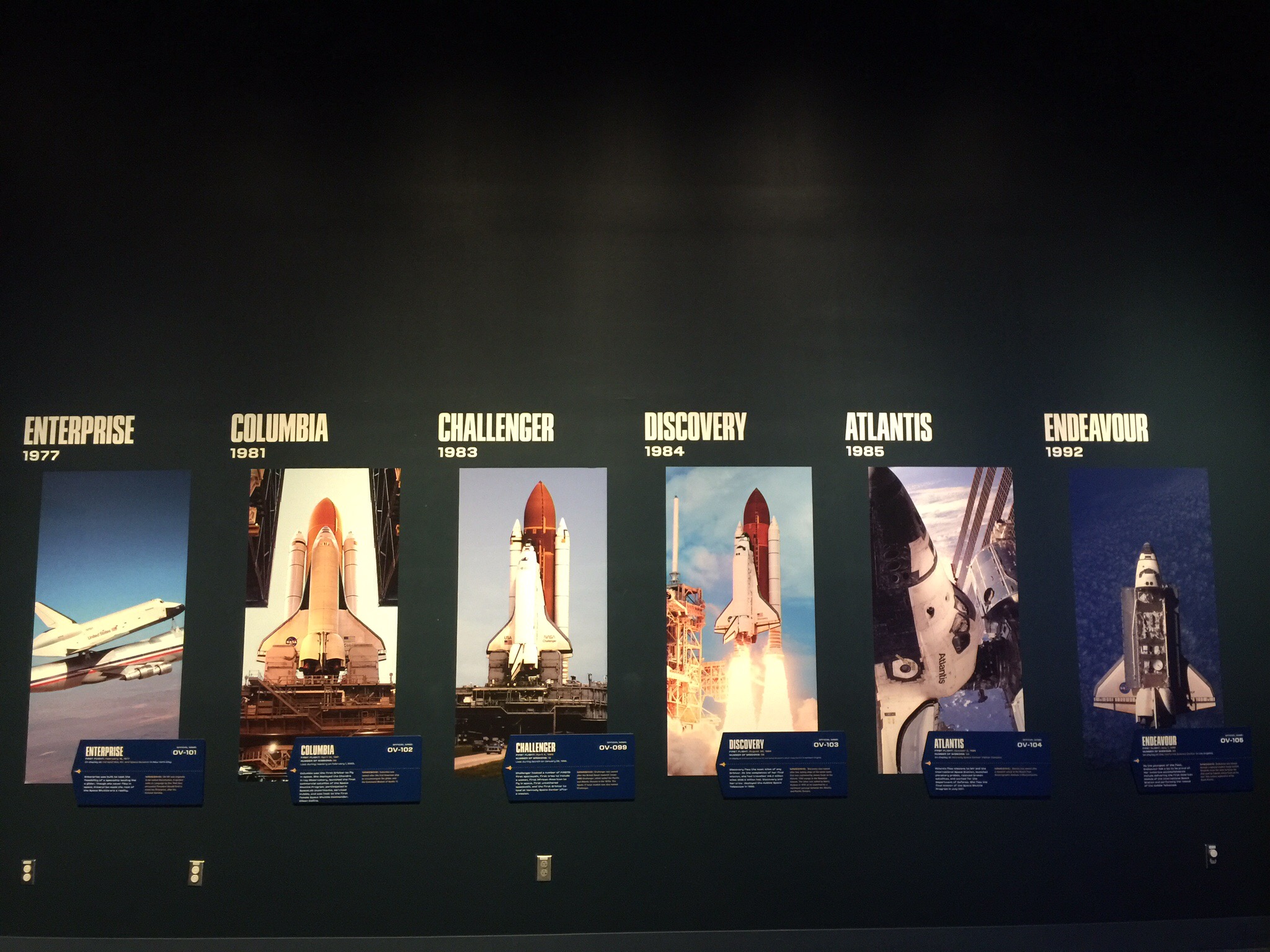
The Space Shuttle program, officially called the Space Transportation System (STS), was the United States government’s manned launch vehicle program from 1981 to 2011, administered by NASA and officially beginning in 1972. The Space Shuttle system—composed of an orbiter launched with two reusable solid rocket boosters and a disposable external fuel tank— carried up to eight astronauts and up to 50,000 lb (23,000 kg) of payload into low Earth orbit (LEO). When its mission was complete, the orbiter would re-enter the Earth’s atmosphere and land like a glider at either the Kennedy Space Center or Edwards Air Force Base.

The Shuttle is the only winged manned spacecraft to have achieved orbit and landing, and the only reusable manned space vehicle that has ever made multiple flights into orbit (the Russian shuttle Buran was very similar and was designed to have the same capabilities but made only one unmanned spaceflight before it was cancelled).  Its missions involved carrying large payloads to various orbits (including segments to be added to the International Space Station (ISS)), providing crew rotation for the space station, and performing service missions. The orbiter also recovered satellites and other payloads (e.g., from the ISS) from orbit and returned them to Earth, though its use in this capacity was rare. Each vehicle was designed with a projected lifespan of 100 launches, or 10 years’ operational life, though original selling points on the shuttles were over 150 launches and over a 15-year operational span with a ‘launch per month’ expected at the peak of the program, but extensive delays in the development of the International Space Station [1] never created such a peak demand for frequent flights.

The Space Shuttle program had 13 successful missions and 2 failed missions – Challenger where the launch failed and caused 7 fatalities and Columbia where the re entry failed which also caused 7 fatalities. We visited the Fallen Heroes tribute which had photos and personal possessions of each of the crew members who perished in these failed missions.

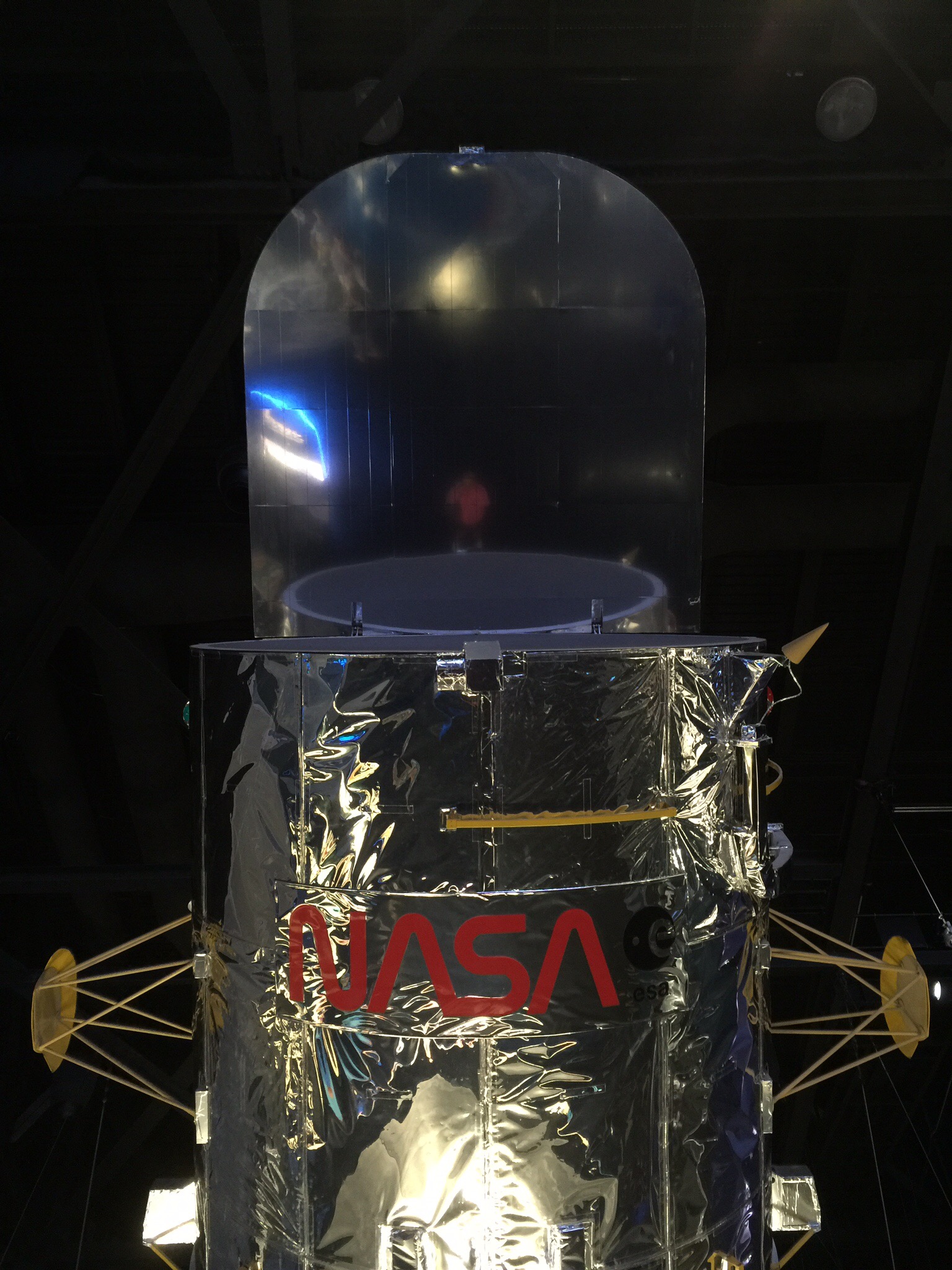
We also saw a replica of the Hubble Space Telescope which is an immensely powerful observatory orbiting more than 300 mile (483km) above the Earth.  This groundbreaking spacecraft is packed with delicate specialised mirrors, computers, and navigation equipment.  Multi-layered insulation on the outside protects it from the harsh environment of space, while large solar arrays turn the Sun’s light into usable energy.

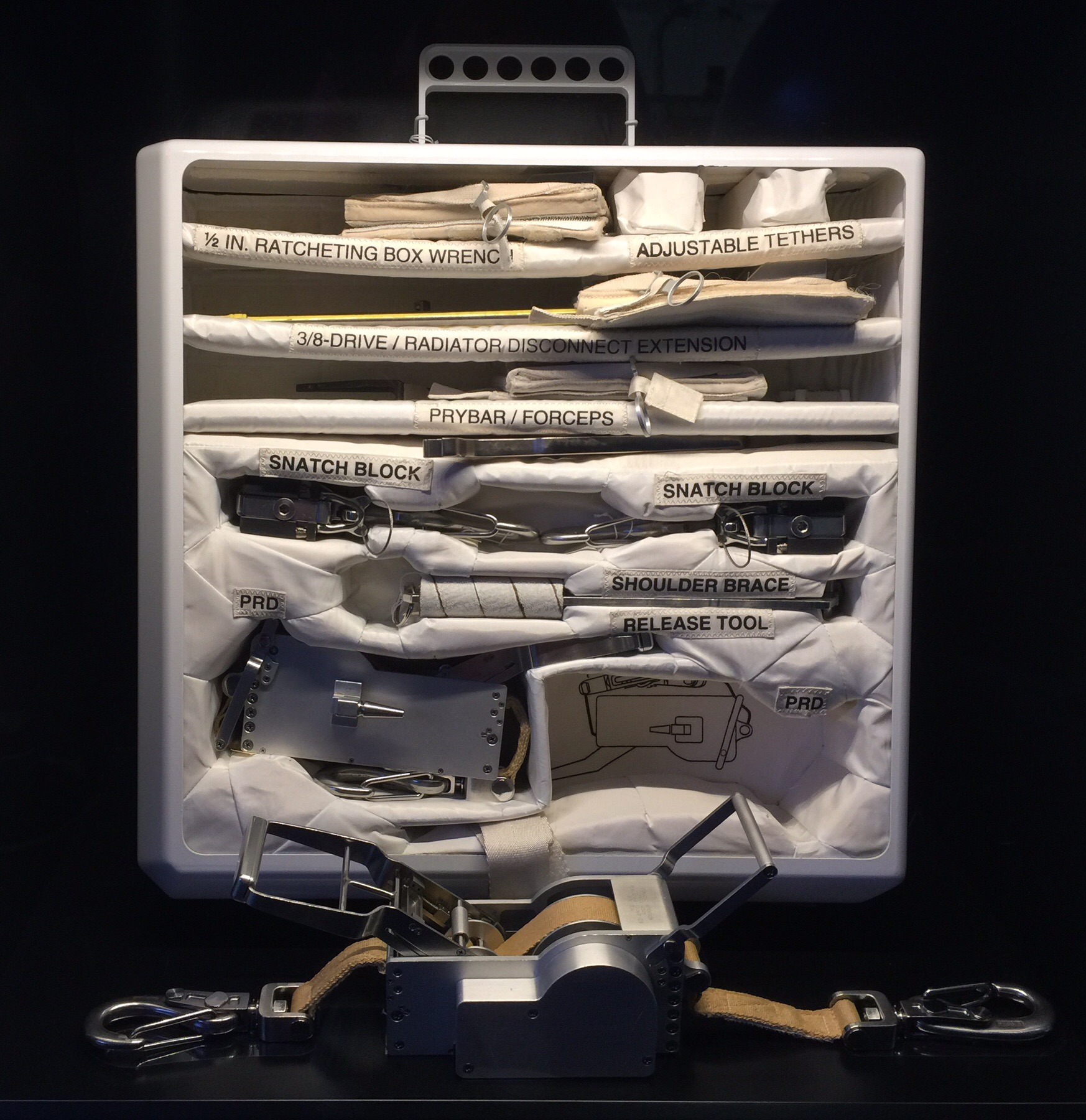
Space Tool Box – this held tools for space walks and onboard repairs.  This box was padded to protect tools during launch, reentry, and in the microgravity of space.

There are three components to the launch – the External Tank where the Shuttle attaches to for launch, the Solid Rocket Boosters on wither side of the External Tank and the Orbiter or Shuttle itself.

I was quite surprised by how fascinated I was was by my visit to KSC – I suppose it is one thing to see these things on the TV and another to actually see and understand what is involved in such a program.  I am really pleased we made the effort to go out there and thoroughly recommend a visit to anyone who visits Orlando.

The next step in the Space Program is getting people to land on Mars.  NASA is currently designing the next heavy launch vehicle known as the Space Launch System (SLS) for continuation of human spaceflight.

The International Space Station

The International Space Station (ISS) is a space station, or a habitable artificial satellite, in low Earth orbit. Its first component launched into orbit in 1998, and the ISS is now the largest artificial body in orbit and can often be seen with the naked eye from Earth.  The ISS consists of pressurised modules, external trusses, solar arrays, and other components. ISS components have been launched by Russian Proton and Soyuz rockets, and American Space Shuttles.

The ISS serves as a microgravity and space environment research laboratory in which crew members conduct experiments in biology, human biology, physics, astronomy, meteorology, and other fields.  The station is suited for the testing of spacecraft systems and equipment required for missions to the Moon and Mars.  The ISS maintains an orbit with an altitude of between 330 and 435 km (205 and 270 mi) by means of reboost manoeuvres using the engines of the Zvezda module or visiting spacecraft. It completes 15.54 orbits per day.

The ISS is the ninth space station to be inhabited by crews, following the Soviet and later Russian Salyut, Almaz, and Mir stations as well as Skylab from the US. The station has been continuously occupied for 15 years and 316 days since the arrival of Expedition 1 on 2 November 2000. This is the longest continuous human presence in low Earth orbit, having surpassed the previous record of 9 years and 357 days held by Mir. The station is serviced by a variety of visiting spacecraft: the Russian Soyuz and Progress, the American Dragon and Cygnus, the Japanese H-II Transfer Vehicle, and formerly the Space Shuttle and the European Automated Transfer Vehicle. It has been visited by astronauts, cosmonauts and space tourists from 17 different nations.

After the US Space Shuttle programme ended in 2011, Soyuz rockets became the only provider of transport for astronauts at the International Space Station, and Dragon became the only provider of bulk cargo return to Earth services (downmass capability of Soyuz capsules is very limited).

The ISS programme is a joint project among five participating space agencies: NASA, Roscosmos, JAXA, ESA, and CSA.  The ownership and use of the space station is established by intergovernmental treaties and agreements.  The station is divided into two sections, the Russian Orbital Segment (ROS) and the United States Orbital Segment (USOS), which is shared by many nations. As of January 2014, the American portion of ISS is being funded until 2024.  Roscosmos has endorsed the continued operation of ISS through 2024, but has proposed using elements of the Russian Orbital Segment to construct a new Russian space station called OPSEK.

On 28 March 2015, Russian sources announced that Roscosmos and NASA had agreed to collaborate on the development of a replacement for the current ISS.  NASA later issued a guarded statement expressing thanks for Russia’s interest in future cooperation in space exploration, but fell short of confirming the Russian announcement.

Posted in Florida, USA, United States of America | 2 Comments

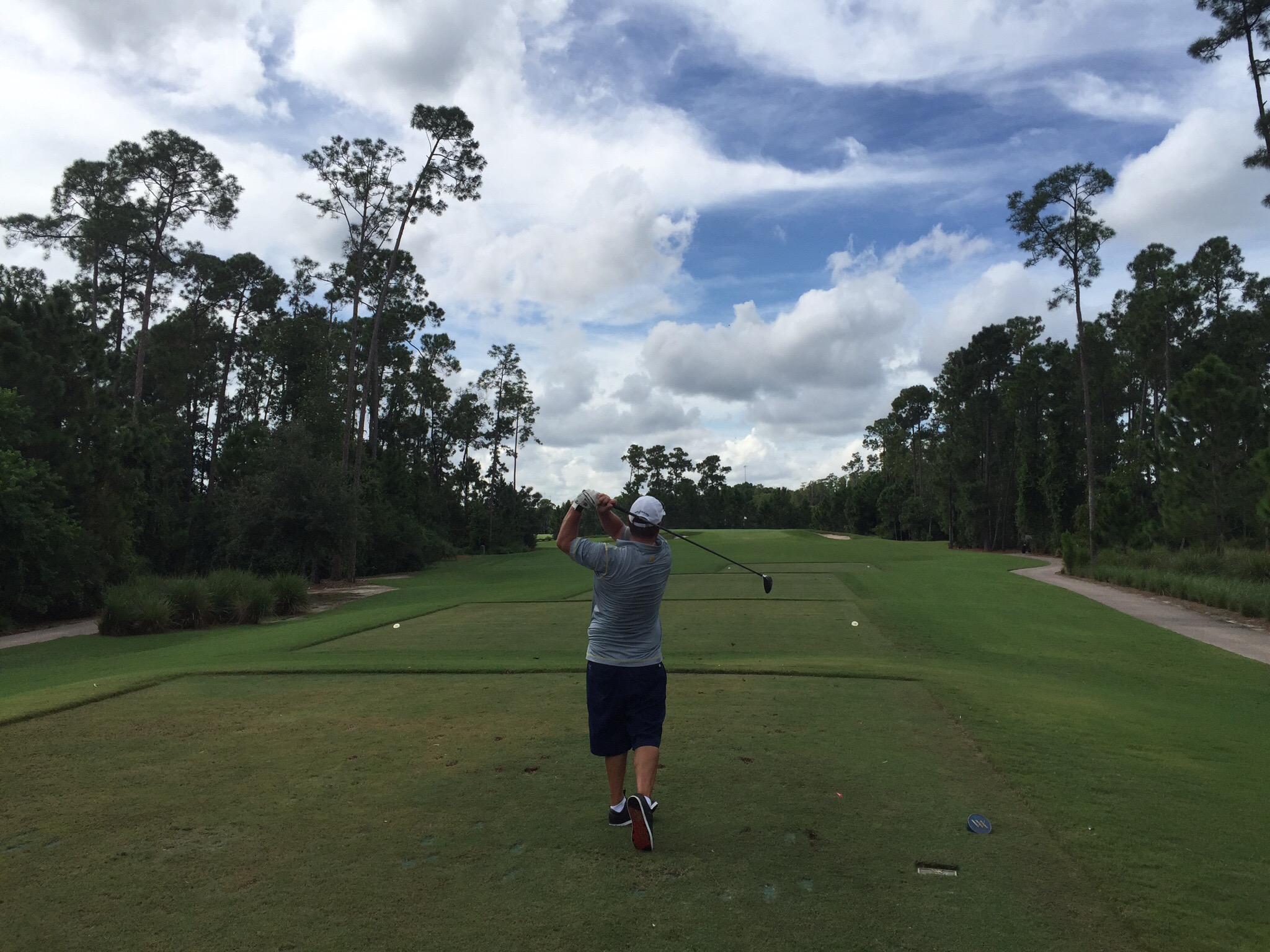
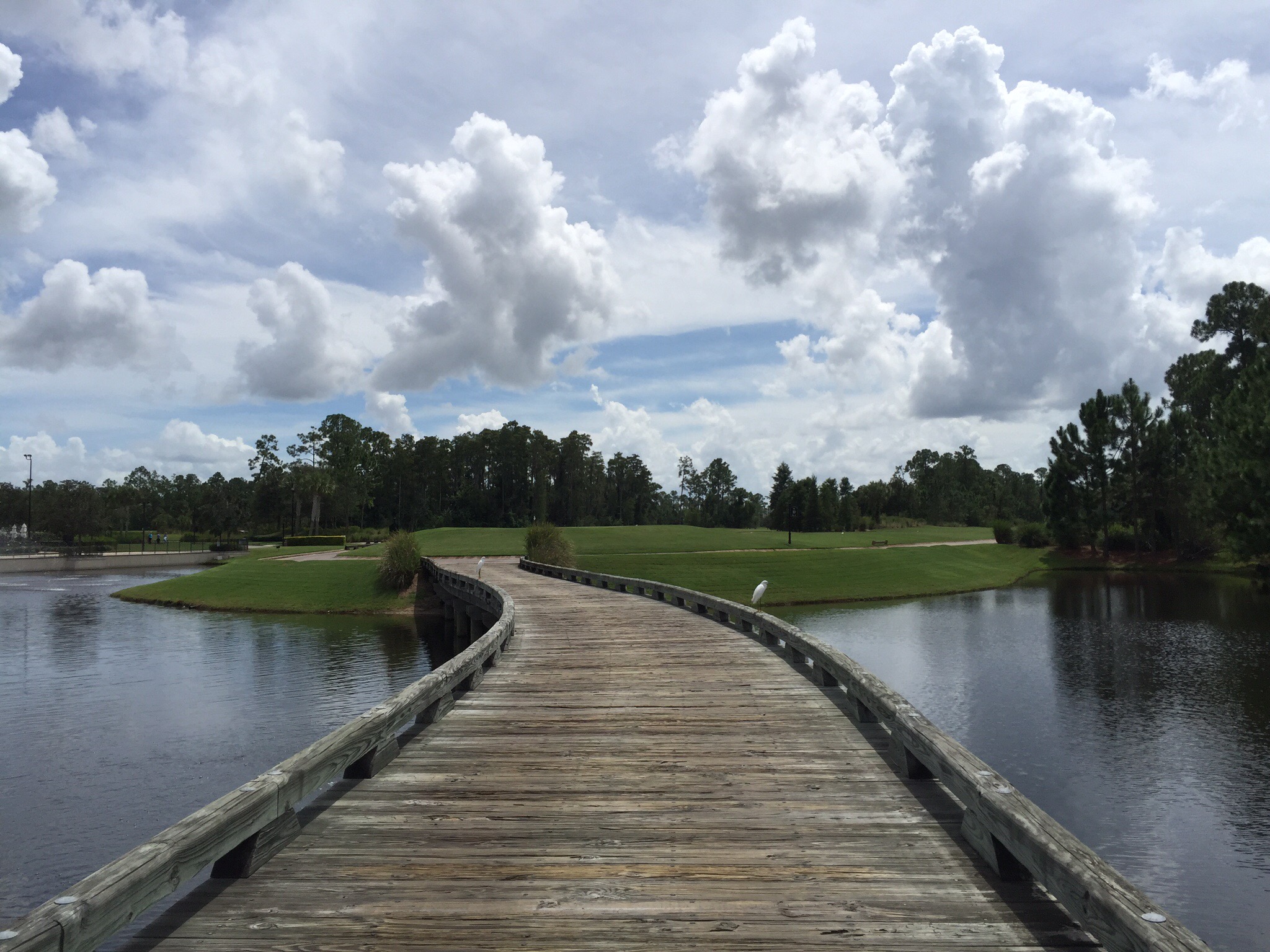
Waldorf Astoria Golf Club – Florida, USA

We had a later tee time today and were a bit worried how we would cope with the heat.  It turned out to be quite overcast and breezy so although warm we mostly avoided the wrath of the sun.  The facilities and staff at the Waldorf Astoria are pretty impressive.  We had complimentary valet parking so that was a novelty.  We were then welcomed to the practice facilities and then given a great briefing about the course.  We got chatting to the Starter about being from NZ and he said that the guy giving a putting lesson on the putting green was none other than Lydia Ko’s putting coach, Mark Sweeney!  Lydia is based in Orlando now and frequents the David Leadbetter Centre at Champions Gate Golf Course where we played the other day and comes to Waldorf Astoria to work on her putting.

I just googled Mark Sweeney and see he has coached three world number one ranked players and his hourly rate is USD500 : 0

The Waldorf Astoria Golf Club would be one of the best kept courses we have played so far in Orlando – it was in great condition.  It played quite long and if you went in the rough you paid the price.  Needless to say I had my worst round to date on our 2016 tour.

The course won the 2016 / 17 gold medal premier resort course.  Using the land’s natural contours as a canvas and a fertile imagination as a palette, this meticulously designed course was created by acclaimed golf course architect Rees Jones. The 18-hole masterpiece pulls in elements from several of the world’s classic courses – some designed a century ago. The layout ingeniously blends its traditional character with endless subtleties for a challenging experience. Mindful of the natural elements and in homage to the game’s storied history, Jones created a golf course of great integrity and environmental consciousness that seamlessly folds into the terrain, so it appears to have been here forever.


Posted in Florida, USA, United States of America | Leave a comment

Celebration Golf Club – Florida, USA

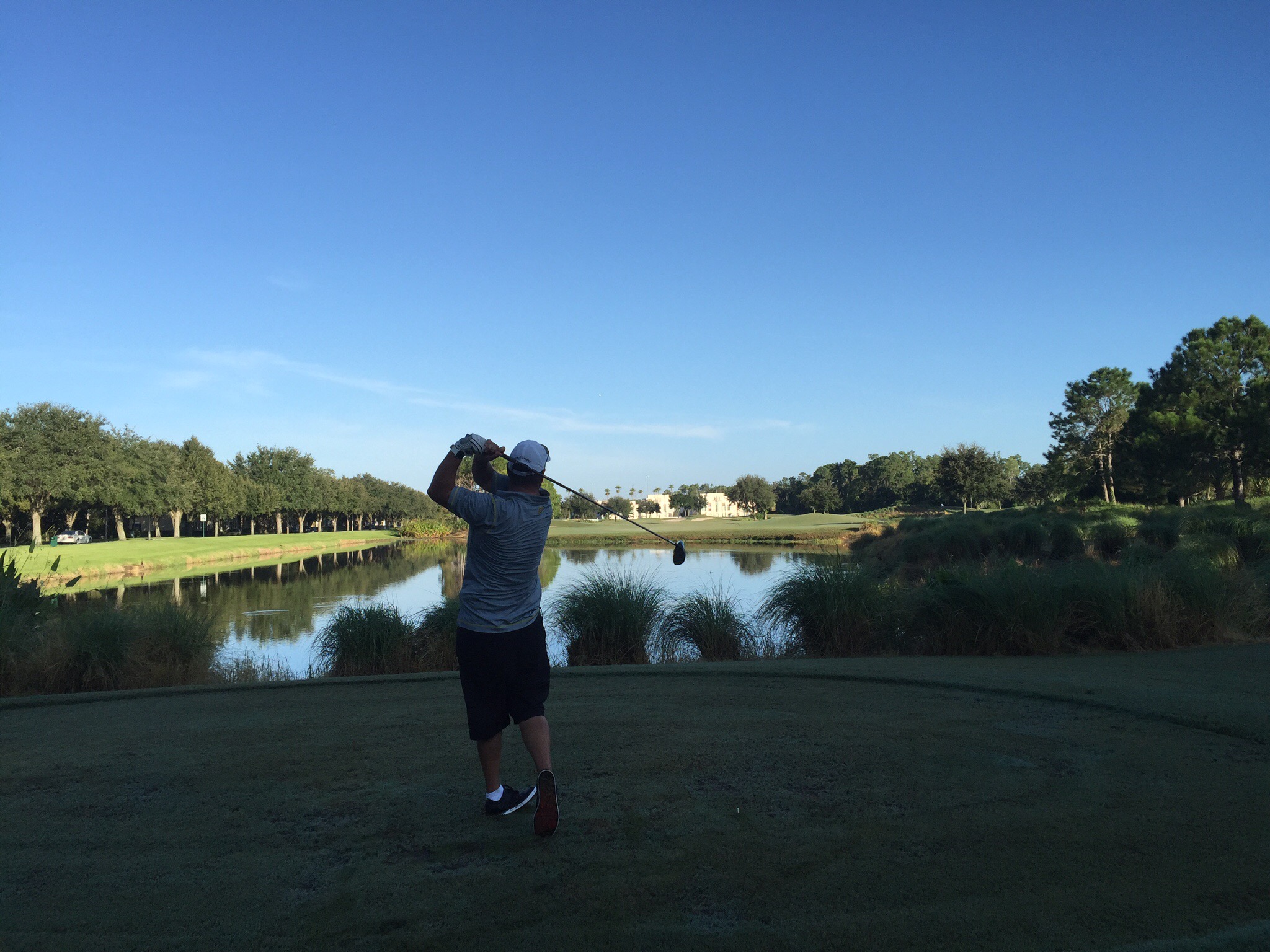
Next off the rank was Celebration Golf Club.  We actually played this course when we were here in 2014 based on a recommendation from a friend and really enjoyed it.  The practice range sees you hit balls into the water – the only time it is OK to hit balls into the water!  They use special balls that float and the wind and current usually push them to one spot for collection.

We were paired up with father and daughter, Steve and Sarah.  There are five tee blocks – black, gold, silver, white and green. I assumed we would play off the green tees as they are usually the women’s tees but I asked Sarah what tees she would like to play off – she said she plays off the silver tees – OK, we’ll play off the silver tees : 0. Actually it wasn’t too bad.  Sarah was a good player but a typical, sultry teenager when things didn’t quite work out with her shots.  She was studying veterinary science at Central Florida University.

Opened in 1996, Celebration Golf Club is the final collaboration between Robert Trent Jones Senior and Junior. From the onset, their belief was that “every hole should be a hard par and an easy bogey.” Using their joint design strategies and the natural lay of the land, they crafted an upscale daily-fee golf resort that takes full advantage of the natural pine forests and Florida wetlands.

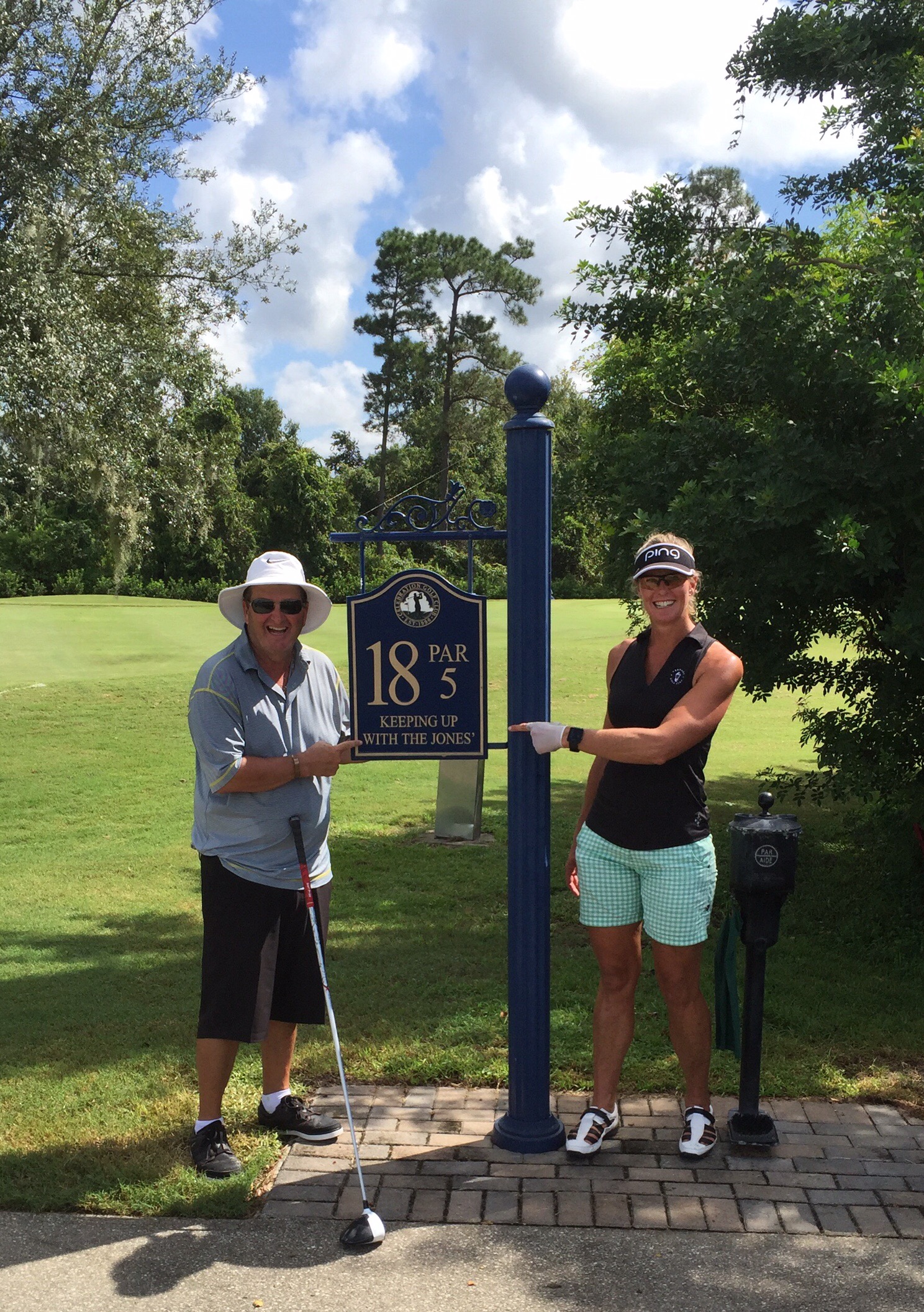
All the holes have names and the 17th is called Alligator Alley.  As I saw that sign I remembered last time we played here saw two alligators but none this time.  As we were waiting on the tee, Sarah pointed out one in the water – it had just raised it’s eyes above water level.  The last hole is called Keeping up with Jones so we had to have another photo here for our friends Marion & Warwick Jones : )

2016

2014

Posted in Florida, USA, United States of America | Leave a comment

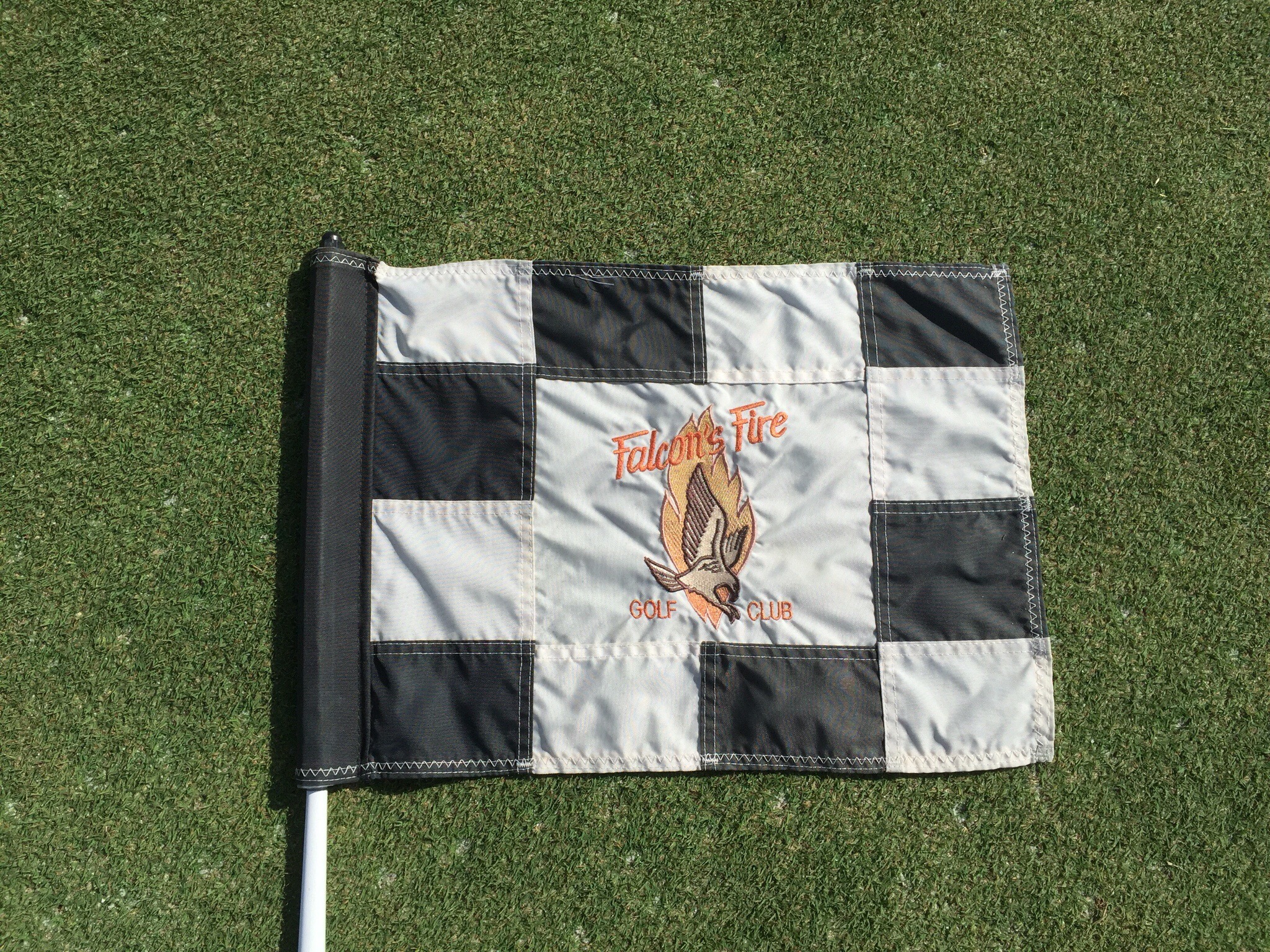
Falcons Fire Golf Club – Florida, USA

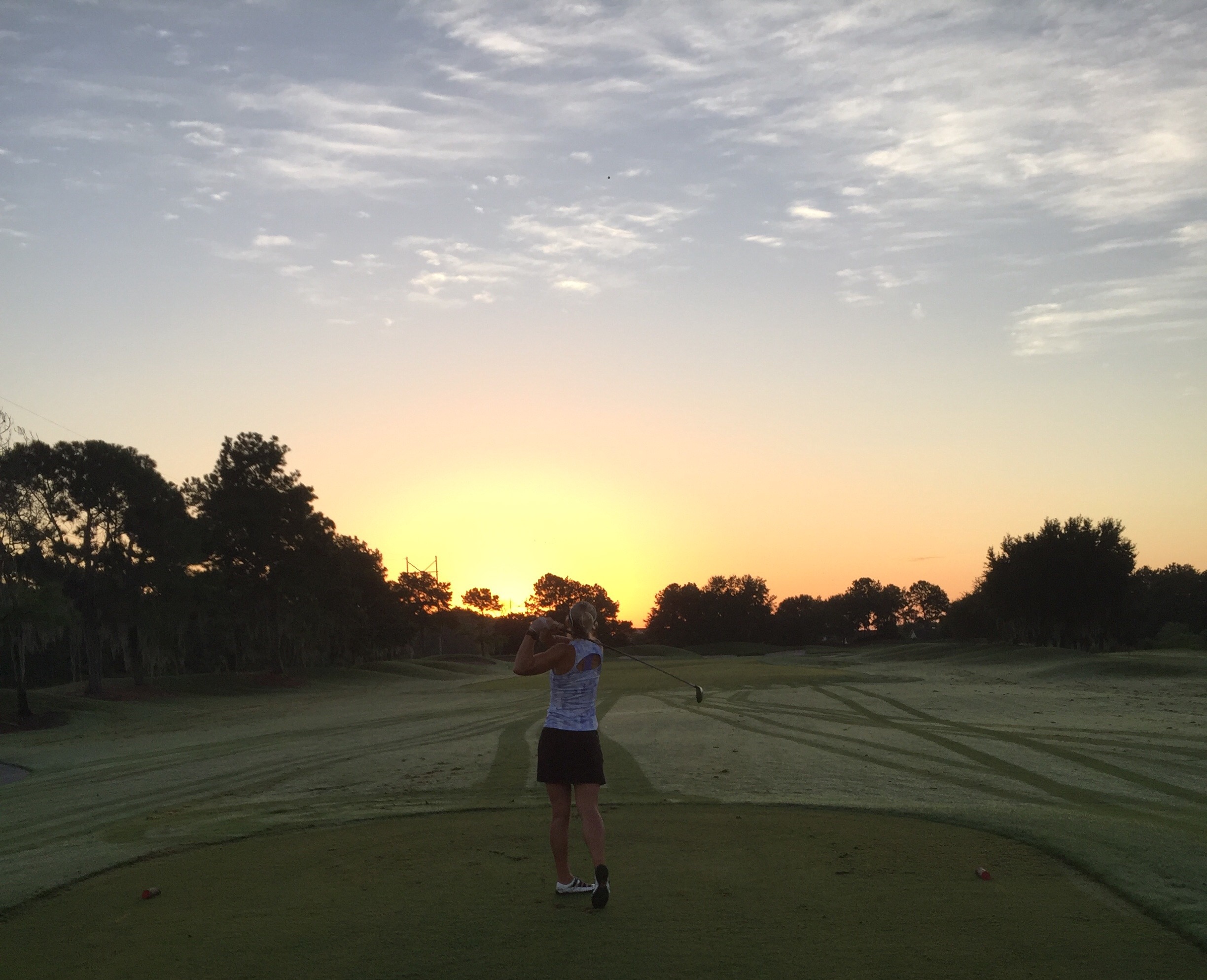
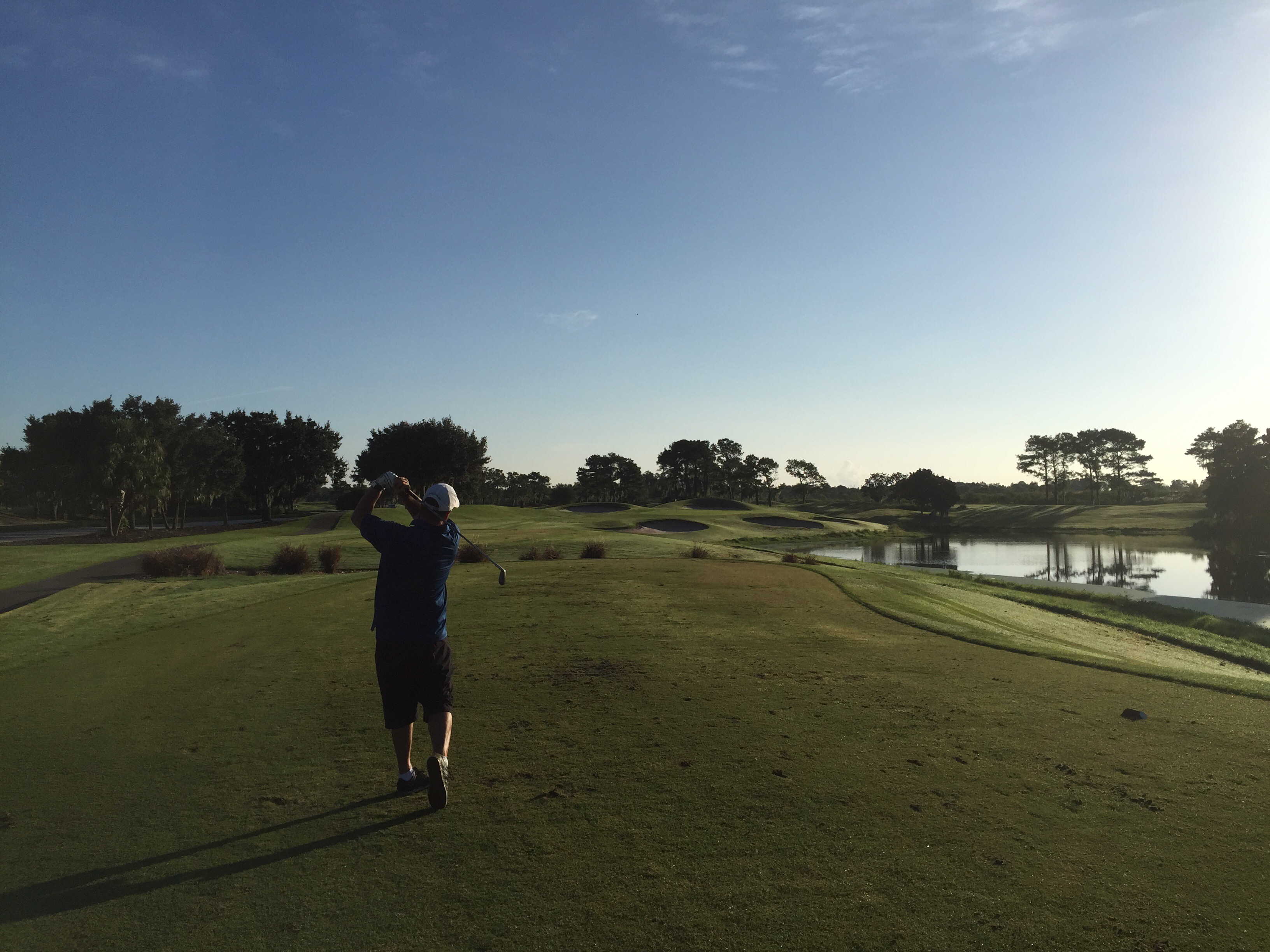
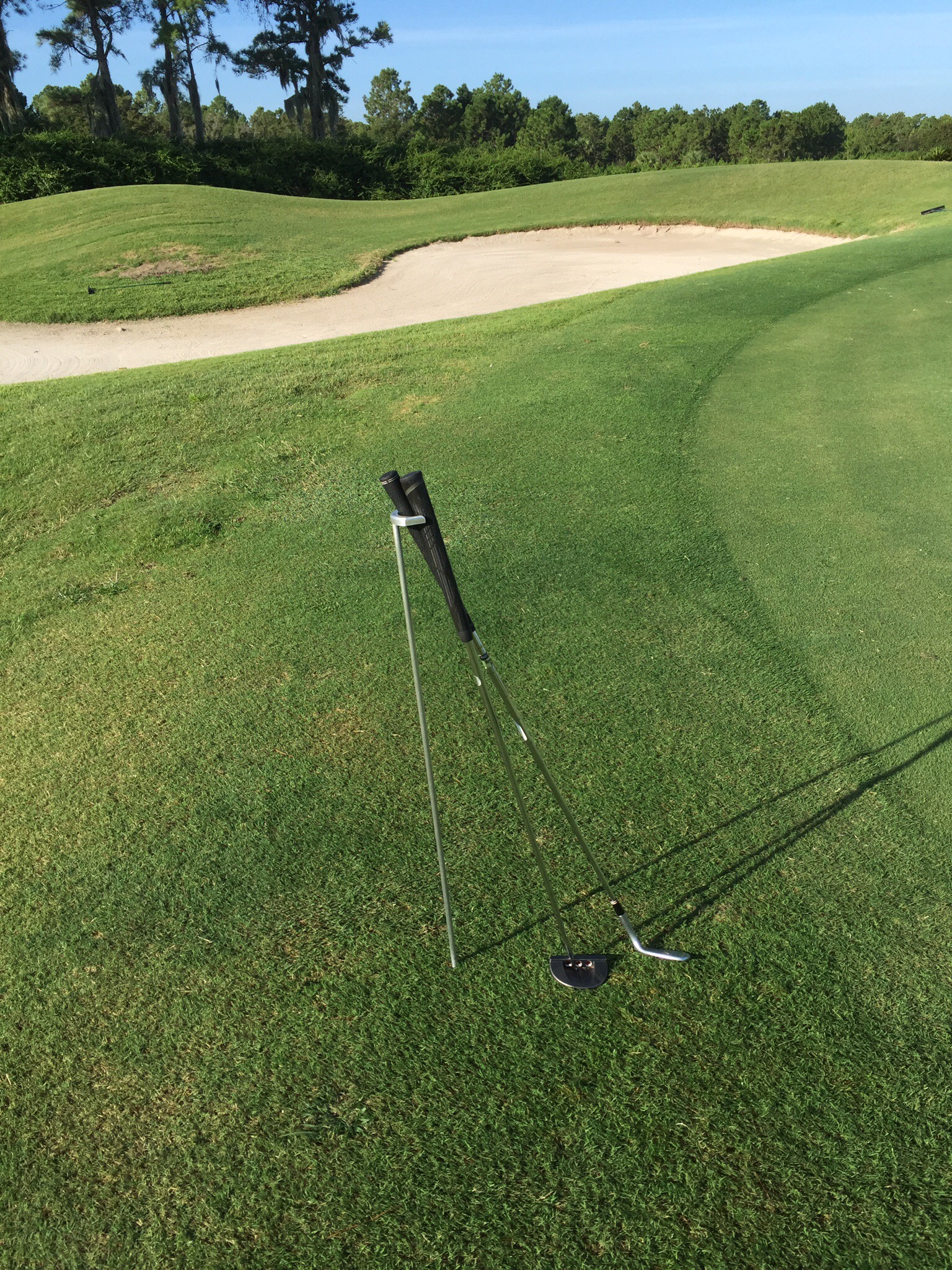
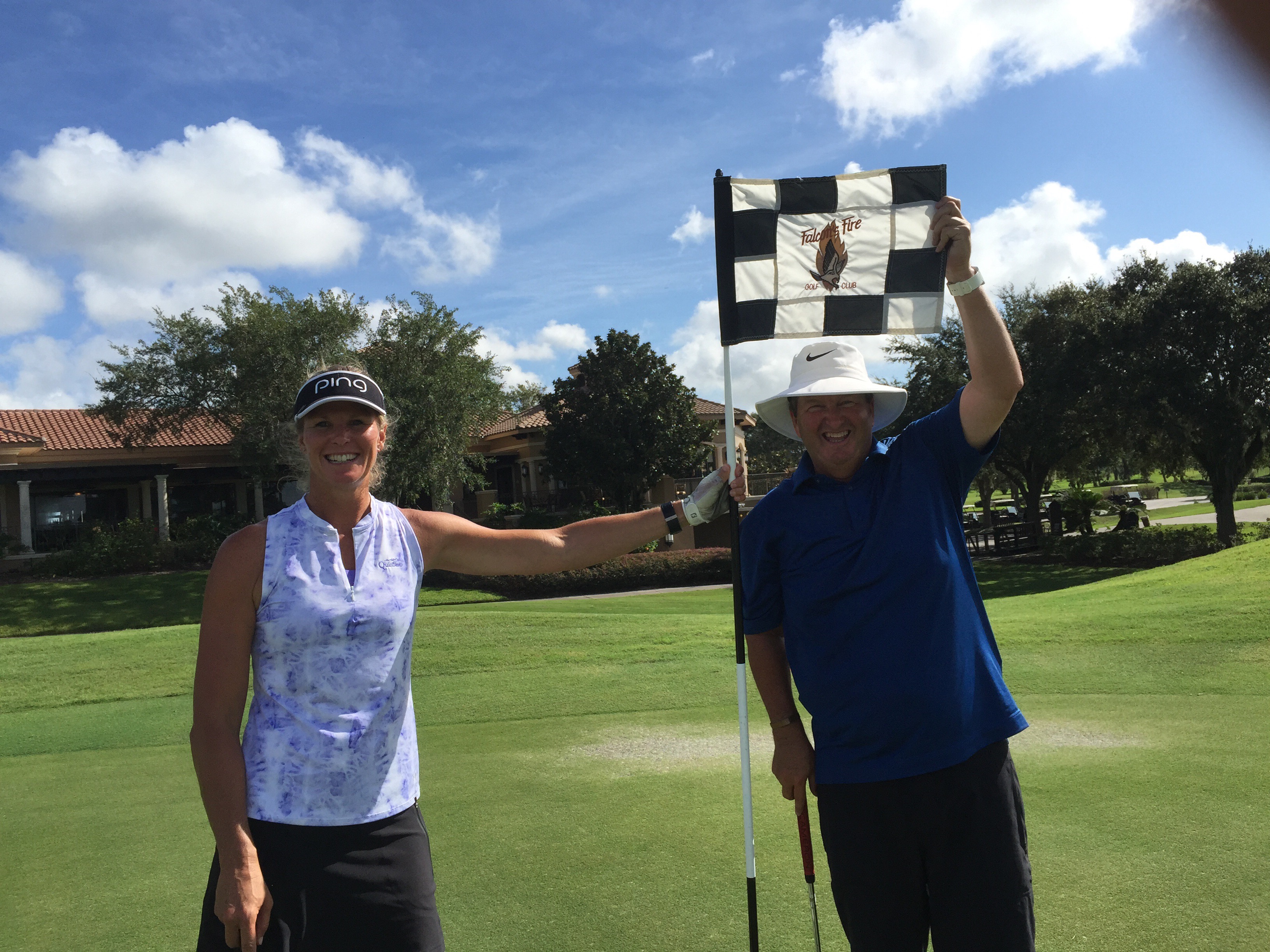
Back to the early starts because although Orlando’s temperatures are lower than Arizona’s the humidity levels are higher.  We had used Tee Times USA to come up with a golf itinerary for us while we are in Orlando and Falcons Fire Golf Club was first up on the schedule.  We had a 7am tee time so left home at 6am – it was still really dark and the sun only just came up as we teed off.  We were teamed up with a guy called LD.  Him and his wife are retiring to Orlando in December from California so he was visiting for a week to check things out.  He was a pleasant fellow and even gave us a gift – a club stand to hold your clubs around the green when the ground is wet.  He makes them courtesy of United Airlines who he works as a Fitter for : )

The course was designed by Greg Muirhead and Rees Jones and opened in 1993.

Posted in Florida, USA, United States of America | Leave a comment