Day 52 – Constanta, Romania – 0km
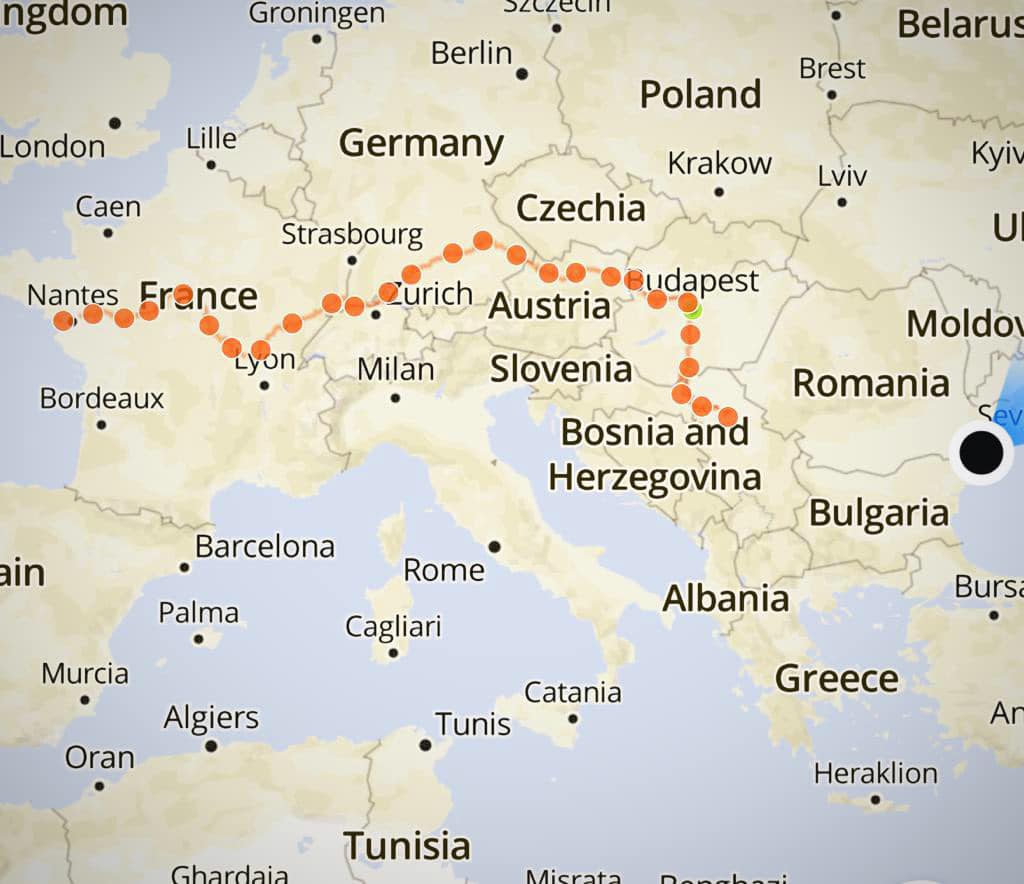
The full Euro Velo 6 cycle trail spans Europe between the Atlantic Ocean and the Black Sea. Due to a lack of cycle infrastructure and the fact that the route goes up near the Ukrainian border we decided to finish in Belgrade, Serbia.
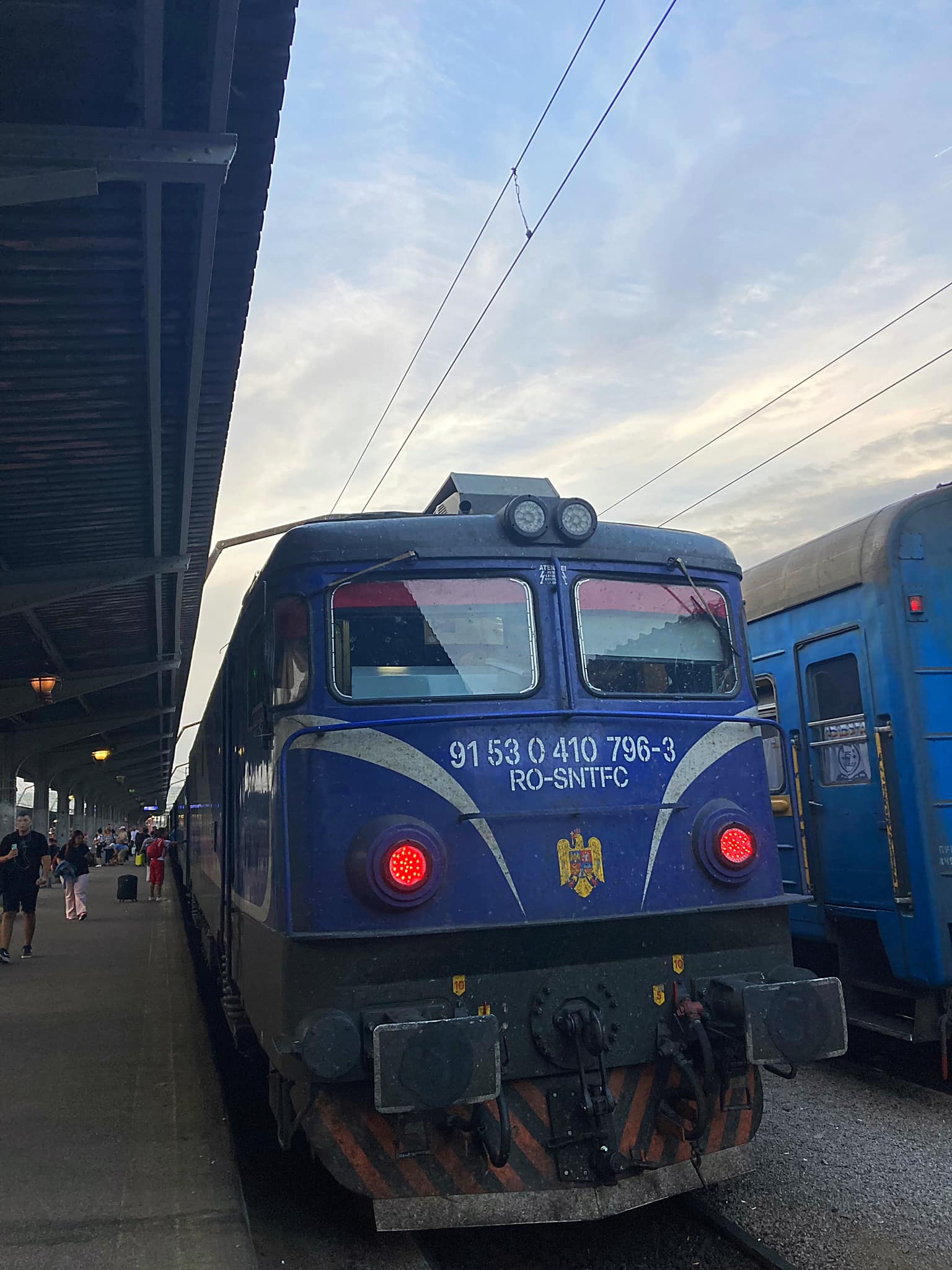
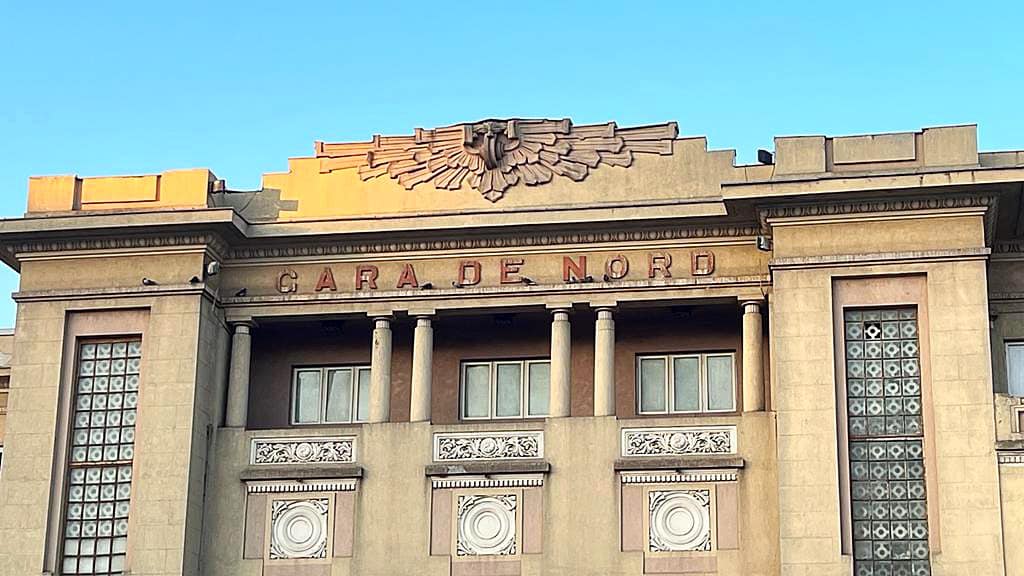
However, the lure of the Black Sea saw us fly from Belgrade to Bucharest in Romania for a few days. We had originally planned a private tour to Constanta and the Black Sea but it fell through at the last minute so we decided to take the train and do a self guided tour. The train station in Bucharest is called Gara de Nord reflecting the French influence in the city.
The train trip (about three hours) was fun and very relaxing. The landscape started off very flat and brown before becoming a little greener closer to the coast. We saw many herdsman with their flocks of sheep, goats and cows. A very different scene to what we are used to in NZ. The landscape and buildings had an impoverished look about them.
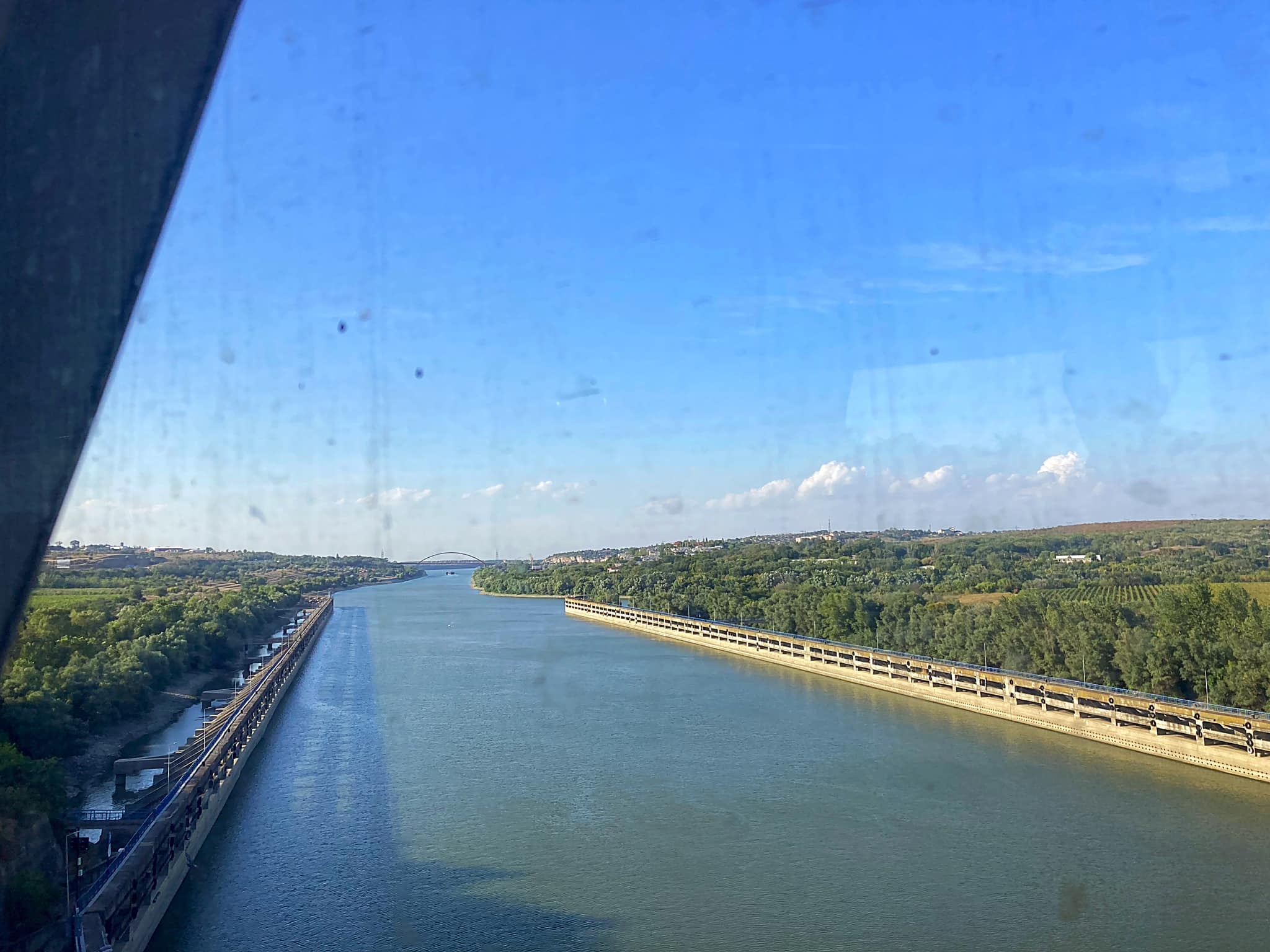
We crossed the Danube–Black Sea Canal (Romanian: Canalul Dunăre–Marea Neagră) which is a navigable canal in Romania, which runs from Cernavodă on the Danube river, via two branches, to Constanța and Năvodari on the Black Sea. It is an important part of the waterway link between the North Sea and the Black Sea via the Rhine–Main–Danube Canal.
Although the idea of building a navigable canal between the Danube and the Black Sea is old, the first concrete attempt was made between 1949 and 1953, when the communist authorities of the time used this opportunity to eliminate political opponents, so the canal became notorious as the site of labor camps, when at any given time, between 5,000 and 20,000 detainees, mostly political prisoners, worked on its excavation. The total number of prisoners used as labor force during this period is unknown, with the total number of deaths being estimated at several tens of thousands. The construction works of the Danube–Black Sea Canal were to be resumed 20 years later, in different conditions.
Constanta is the country’s fourth largest city and principal port on the Black Sea coast. It is also the oldest continuously inhabited city in the region, founded around 600 BC, and among the oldest in Europe. It has a population of about 265,000.
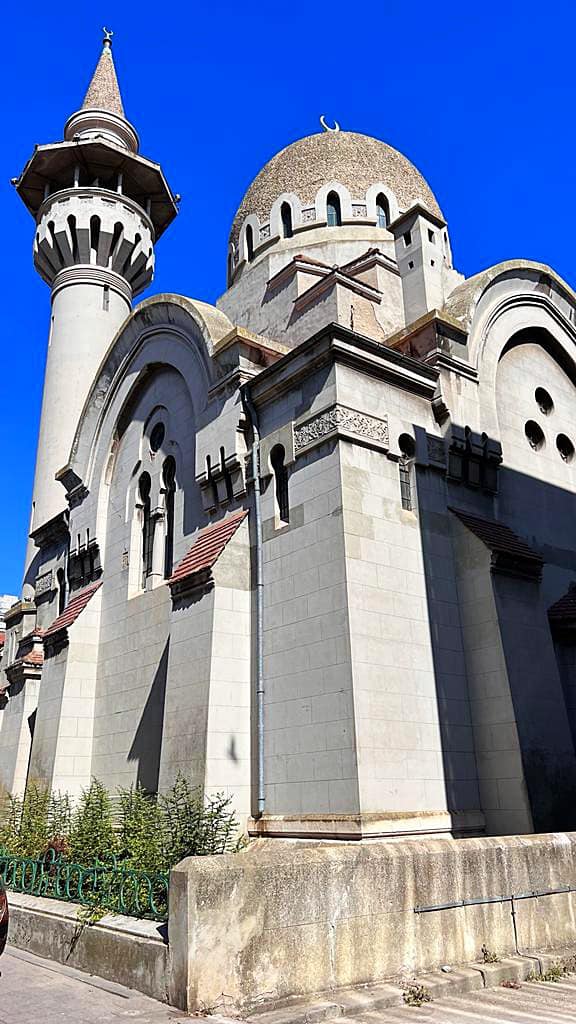
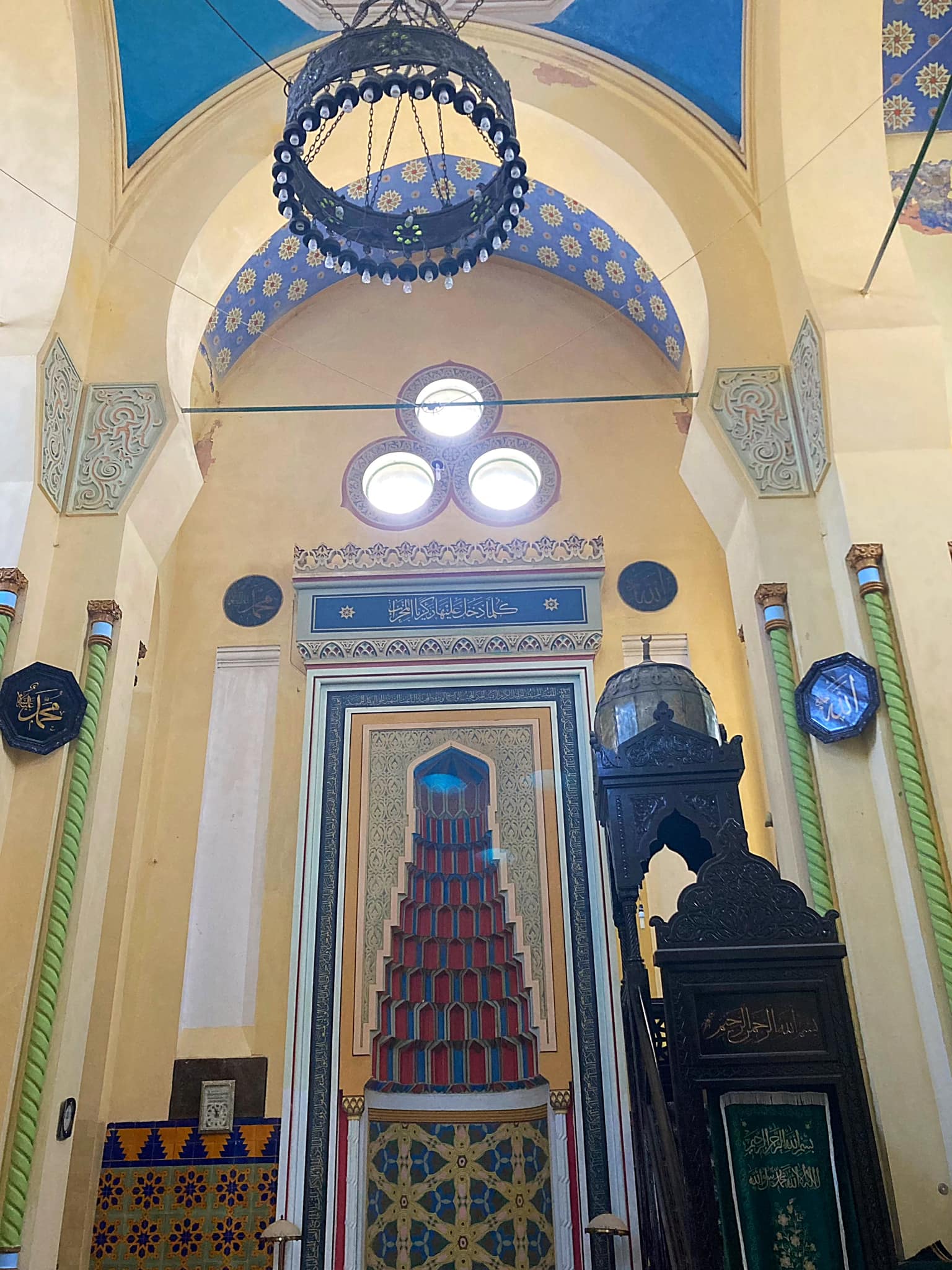
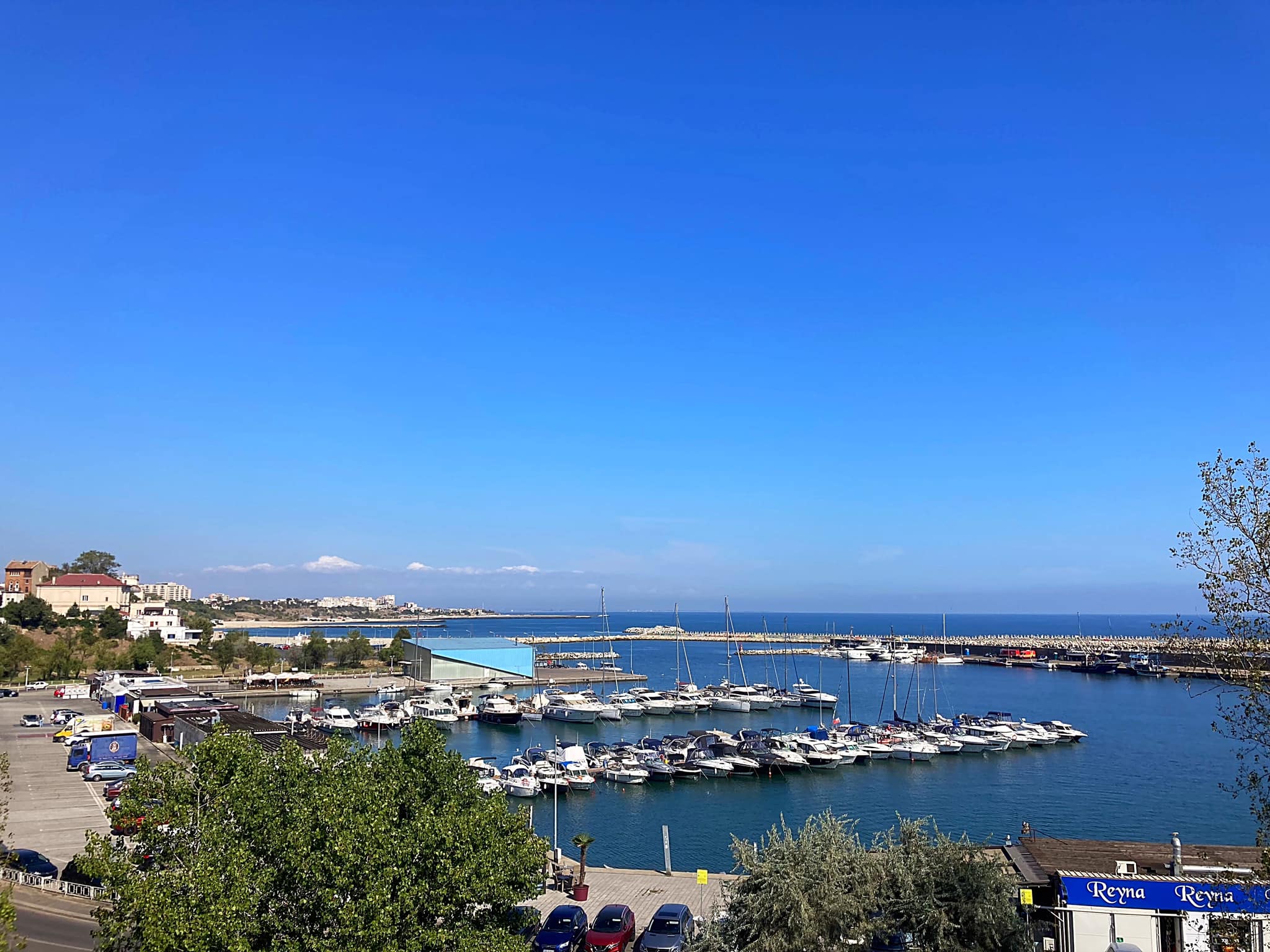
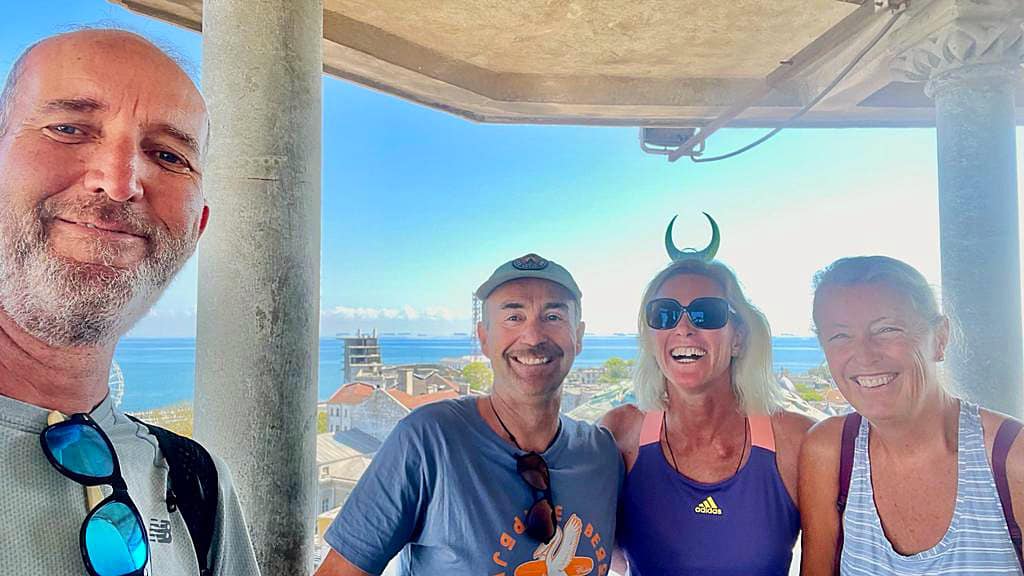
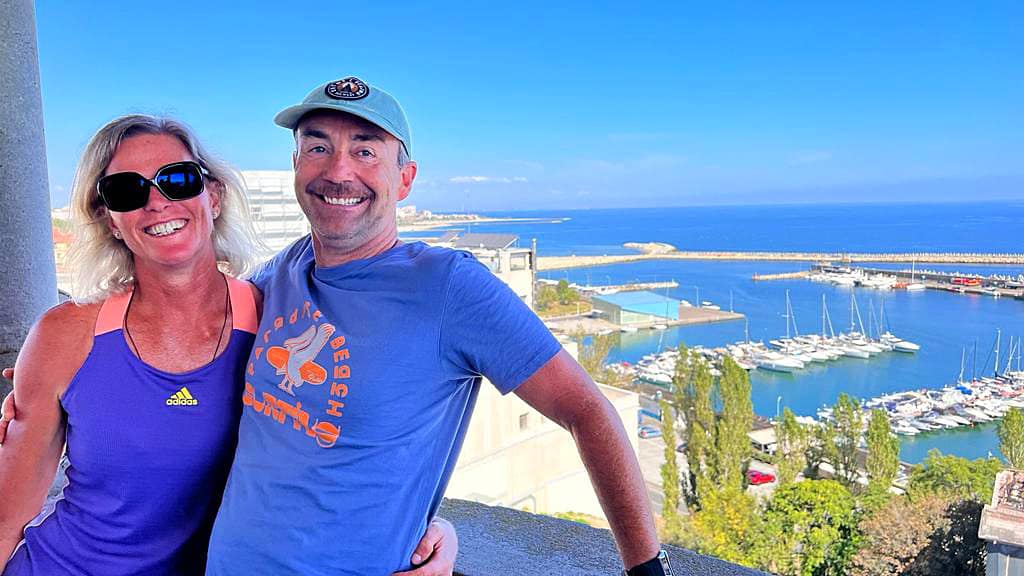
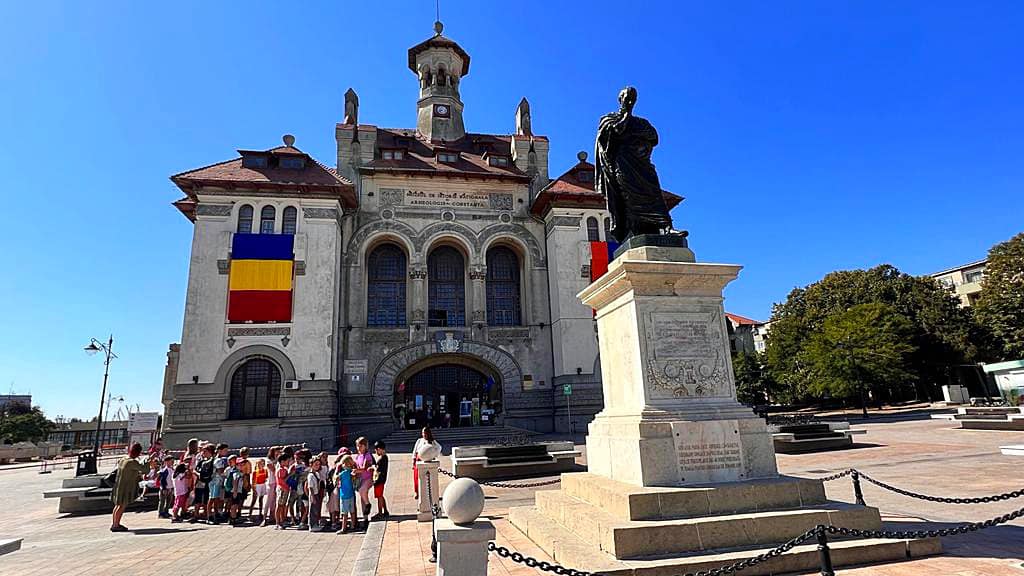
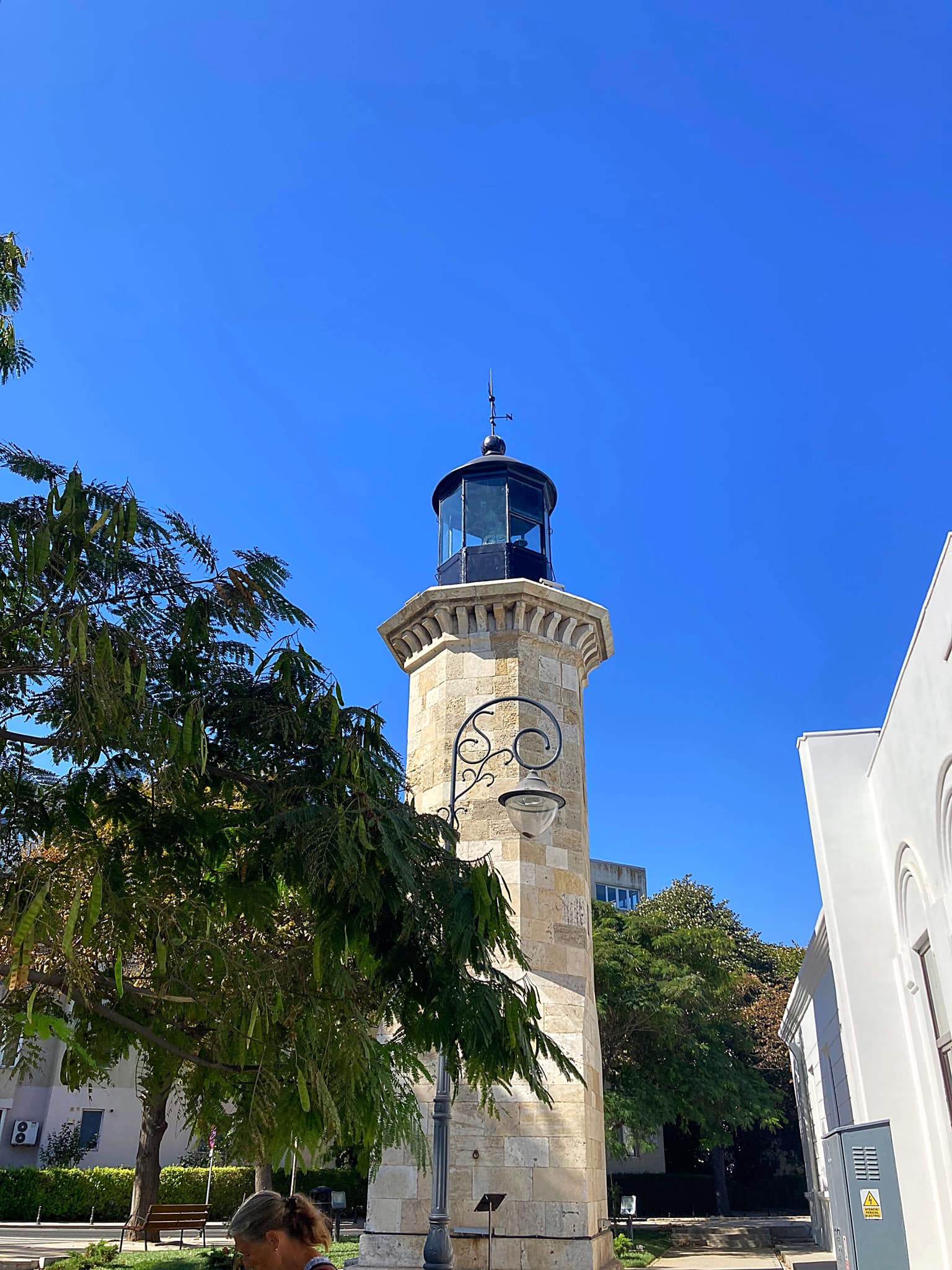
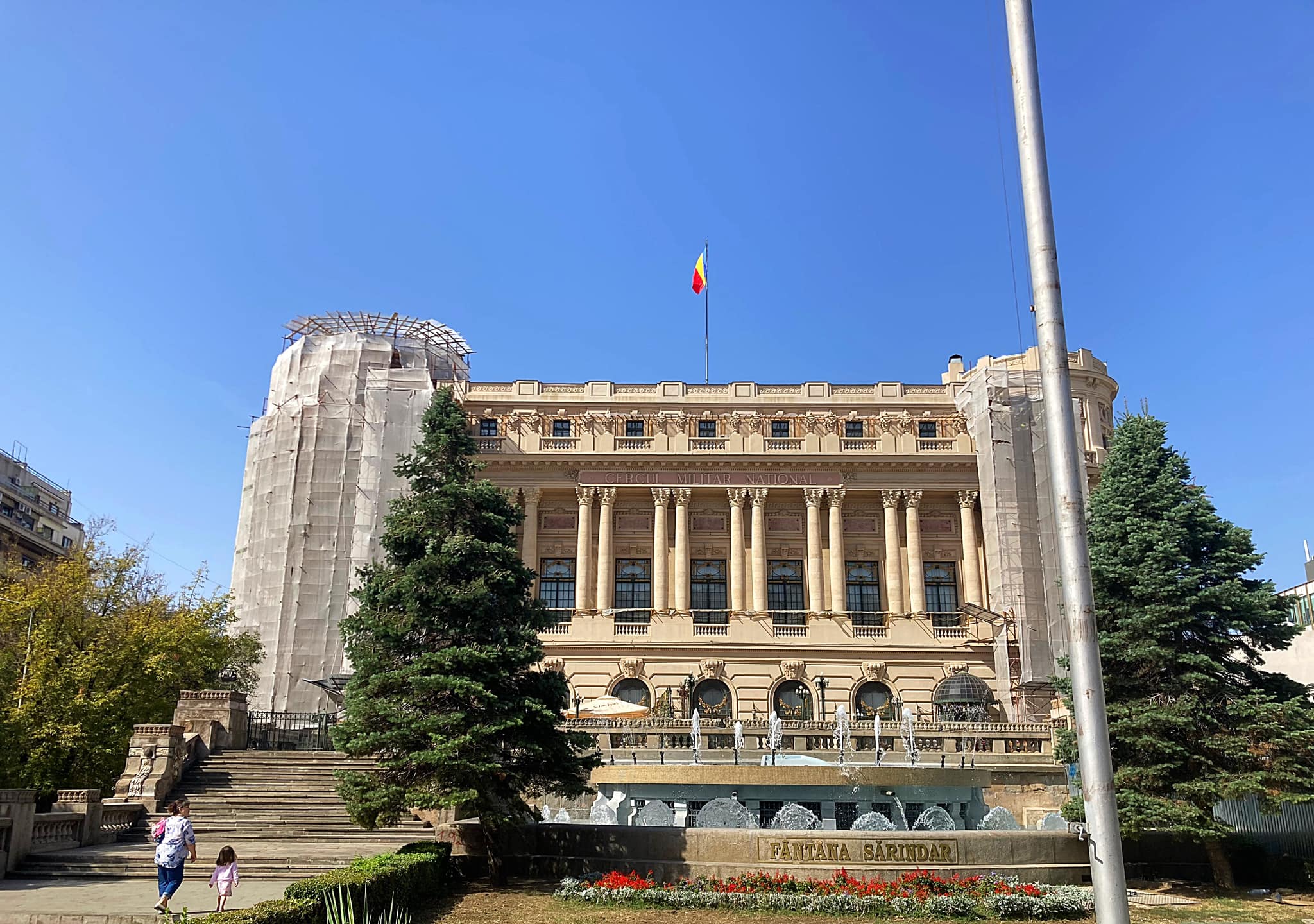
We caught an Uber from the train station to the old town where we wandered down to the waterfront. Along the way we saw the museum of archaeology, the Grand Mosque of Constanta and the Casino which was under renovation. We climbed to the top of the minaret of the mosque for a great view over the Port of Constanta and the Black Sea.
The construction of the port began on October 16, 1896, when King Carol I set the first stepping stone for the construction and modernization of the port. After the opening of the canal the port grew exponentially. After the Romanian Revolution of 1989, the port faded in importance for the Romanian economy, traffic was dwindling and in 2000 the port registered its lowest traffic since World War II of 30 million tonnes of cargo. It is now back up to about 56 million tonnes of cargo annually.
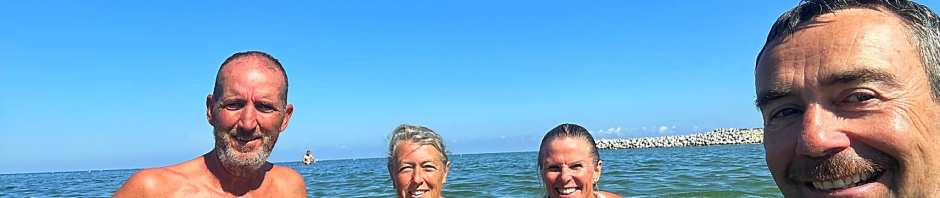
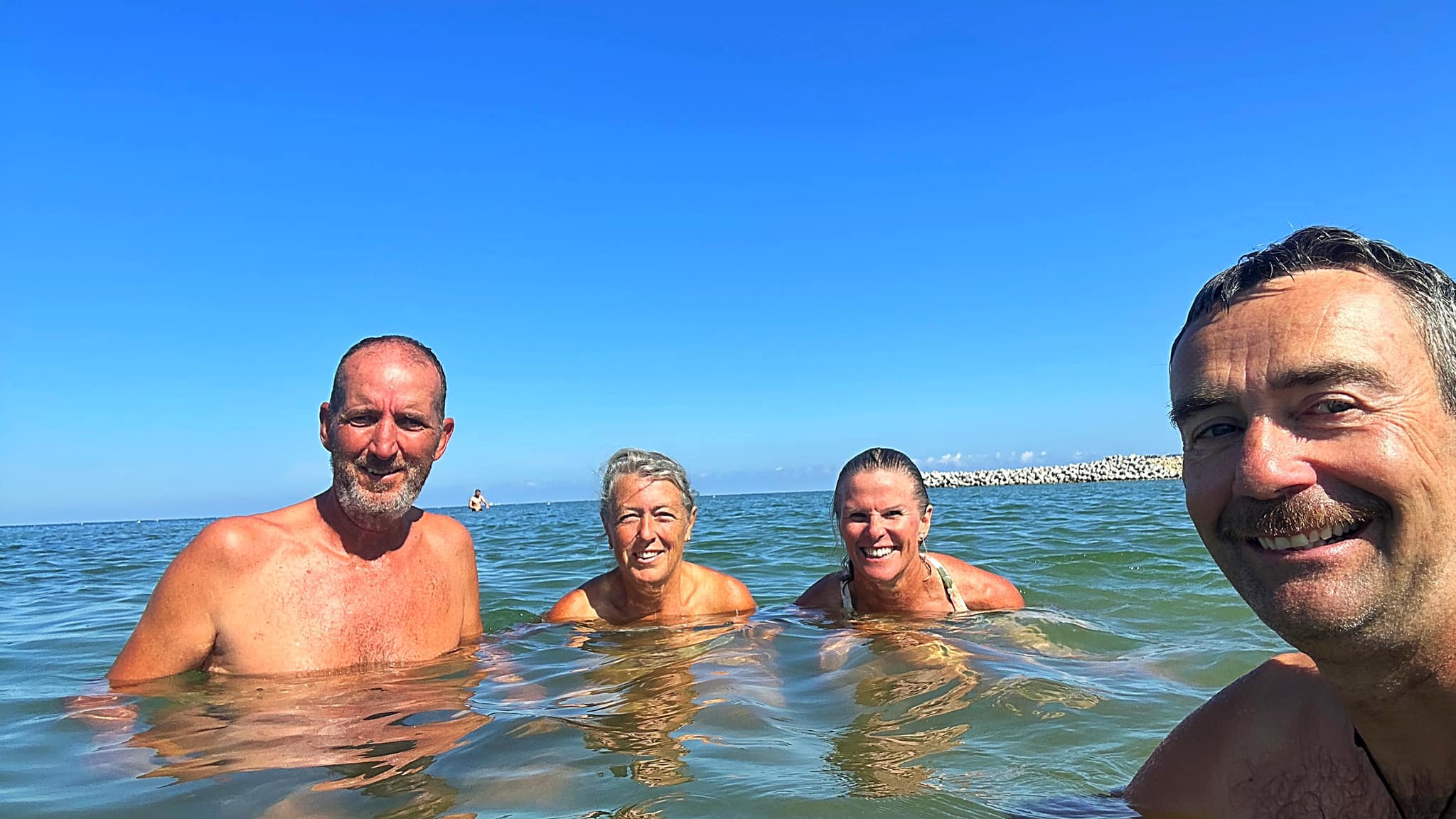
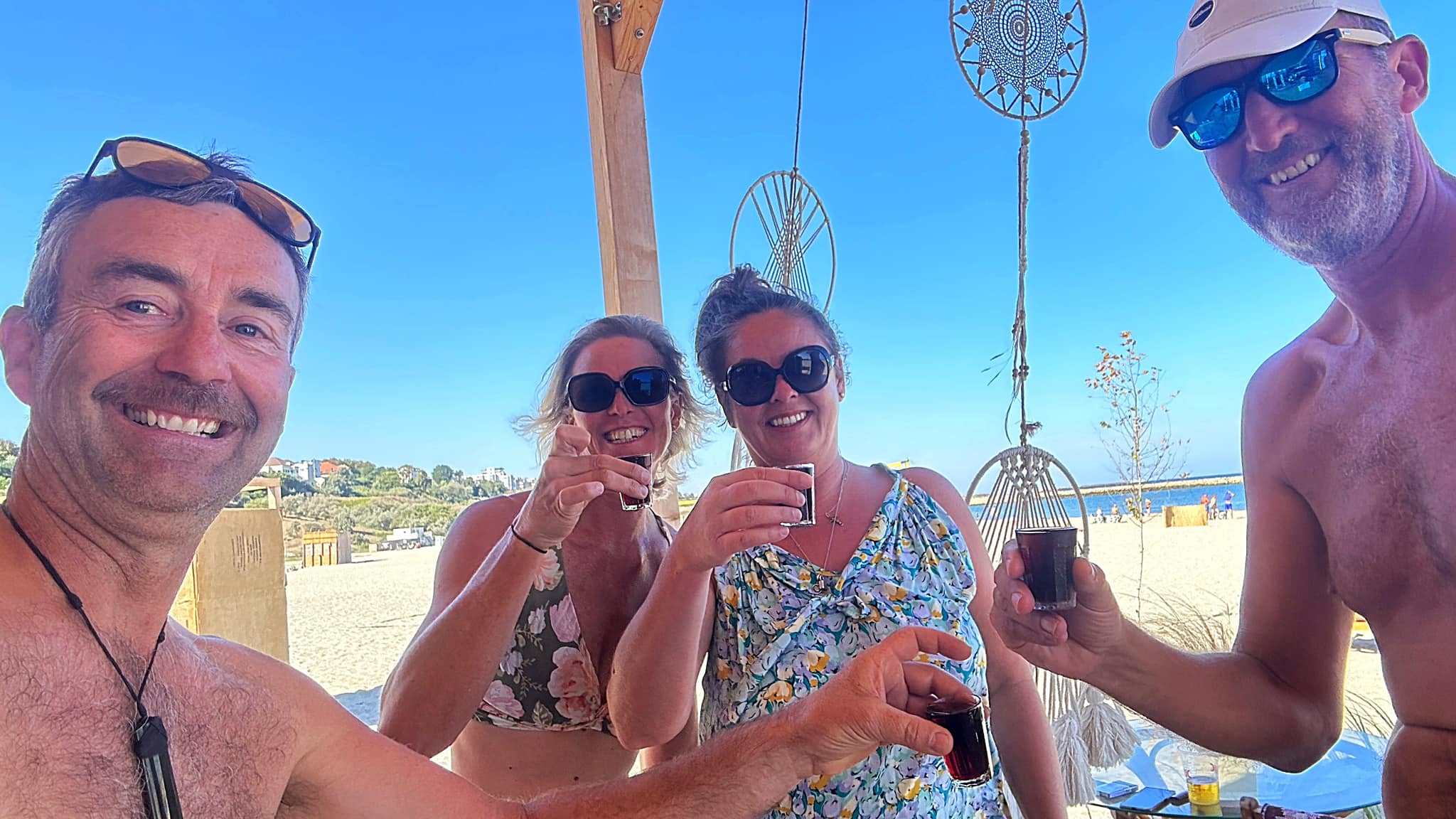
We enjoyed a Lebanese lunch before heading to the beach. The water was clear and a lovely temperature. It was so good to be swimming again. We then spent a relaxing couple of hours on the beach before heading back to Bucharest on the train.










Day 53 – Romania – Peles Castle, Brasov & Bran Castle – 0km
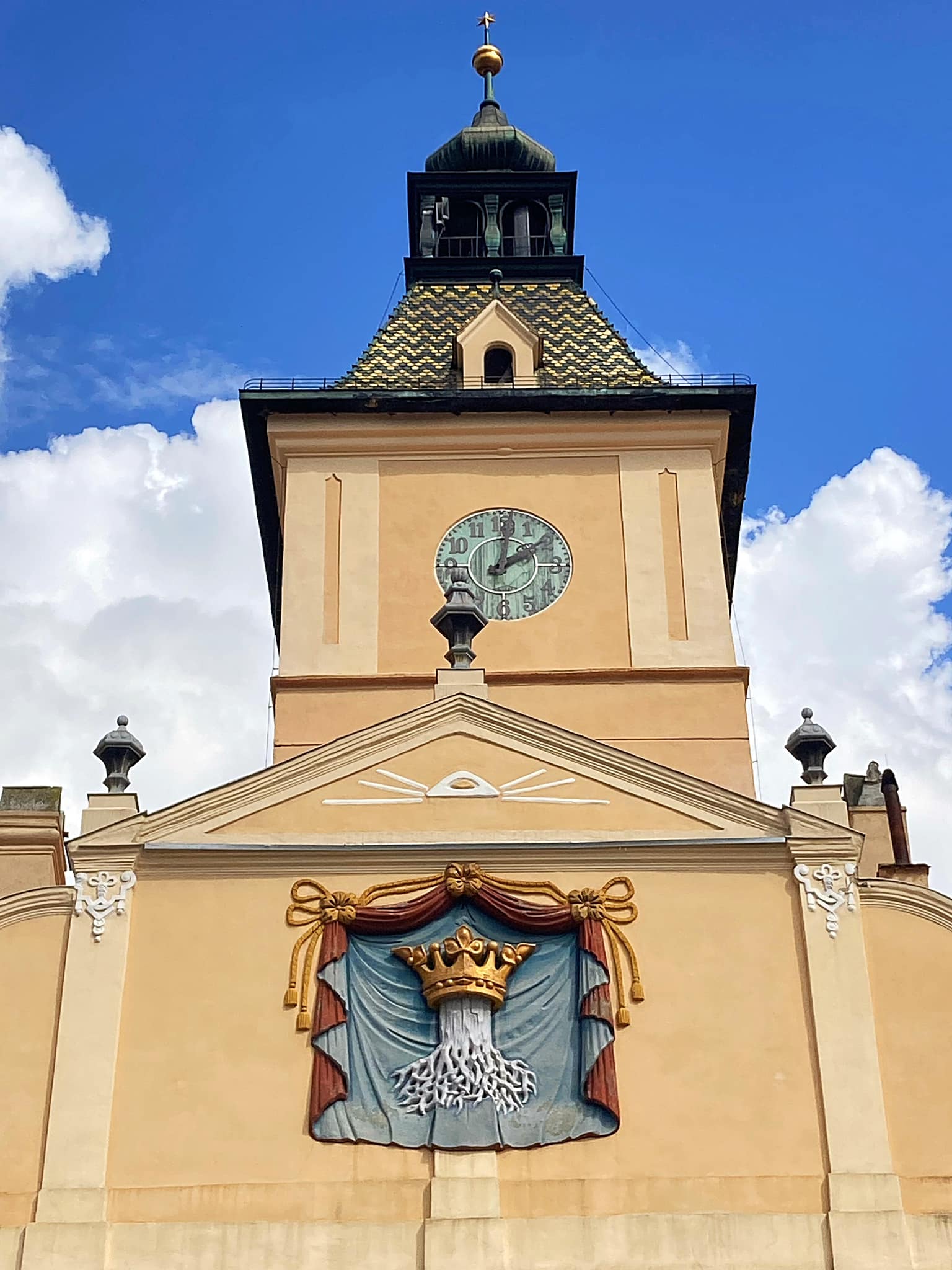
On our second day in Bucharest we took a tour up to the north through the Carpathian Mountains to visit Peles and Bran Castles and the town of Brasov.
Our guide, Emmanuel, was extremely knowledgeable and passionate with a great sense of humour. He warned us that the traffic on our journey could be particularly bad due to various roadworks. We could relate to his humour / sarcasm when he described how productive these road workers actually were 
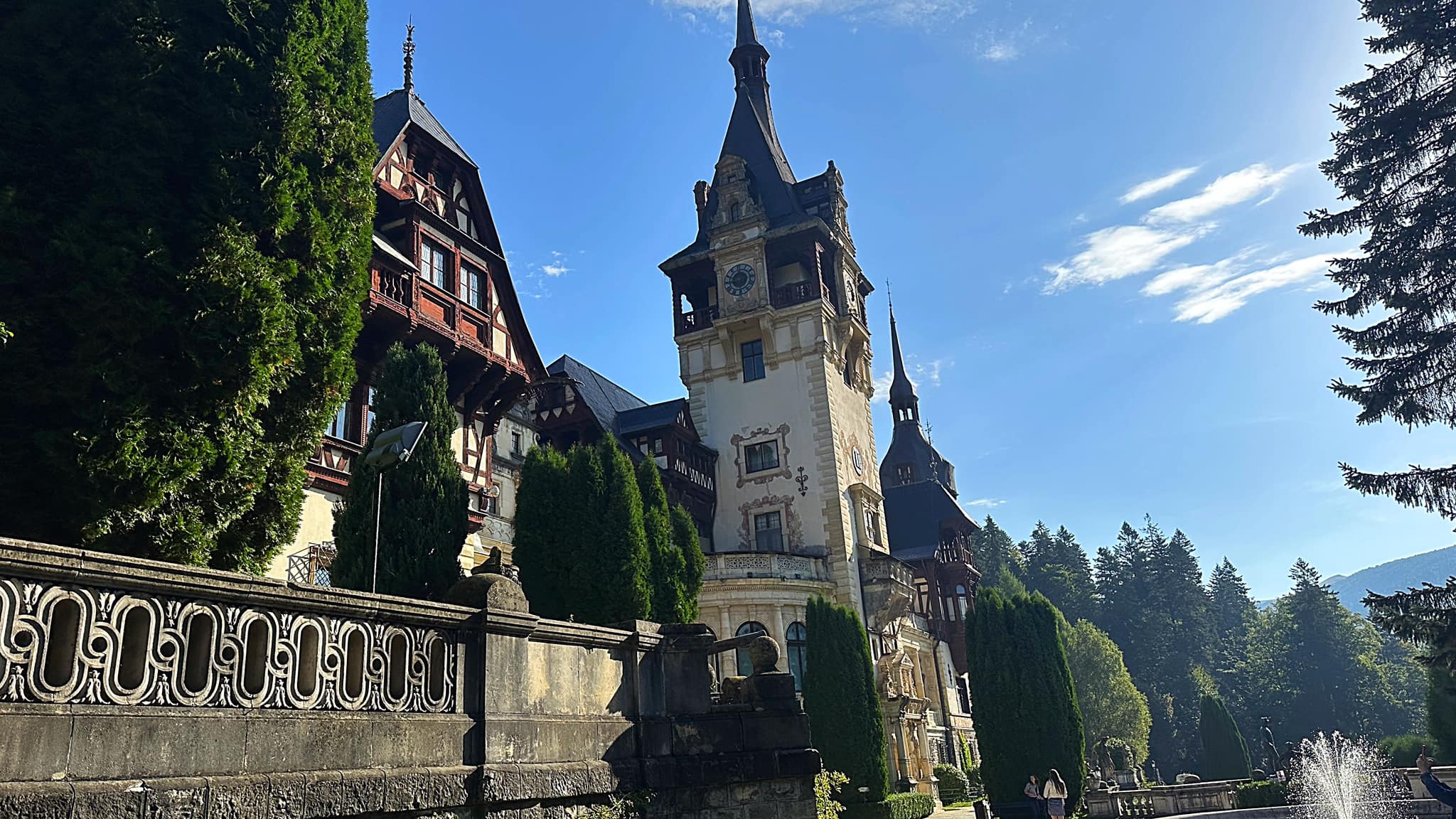
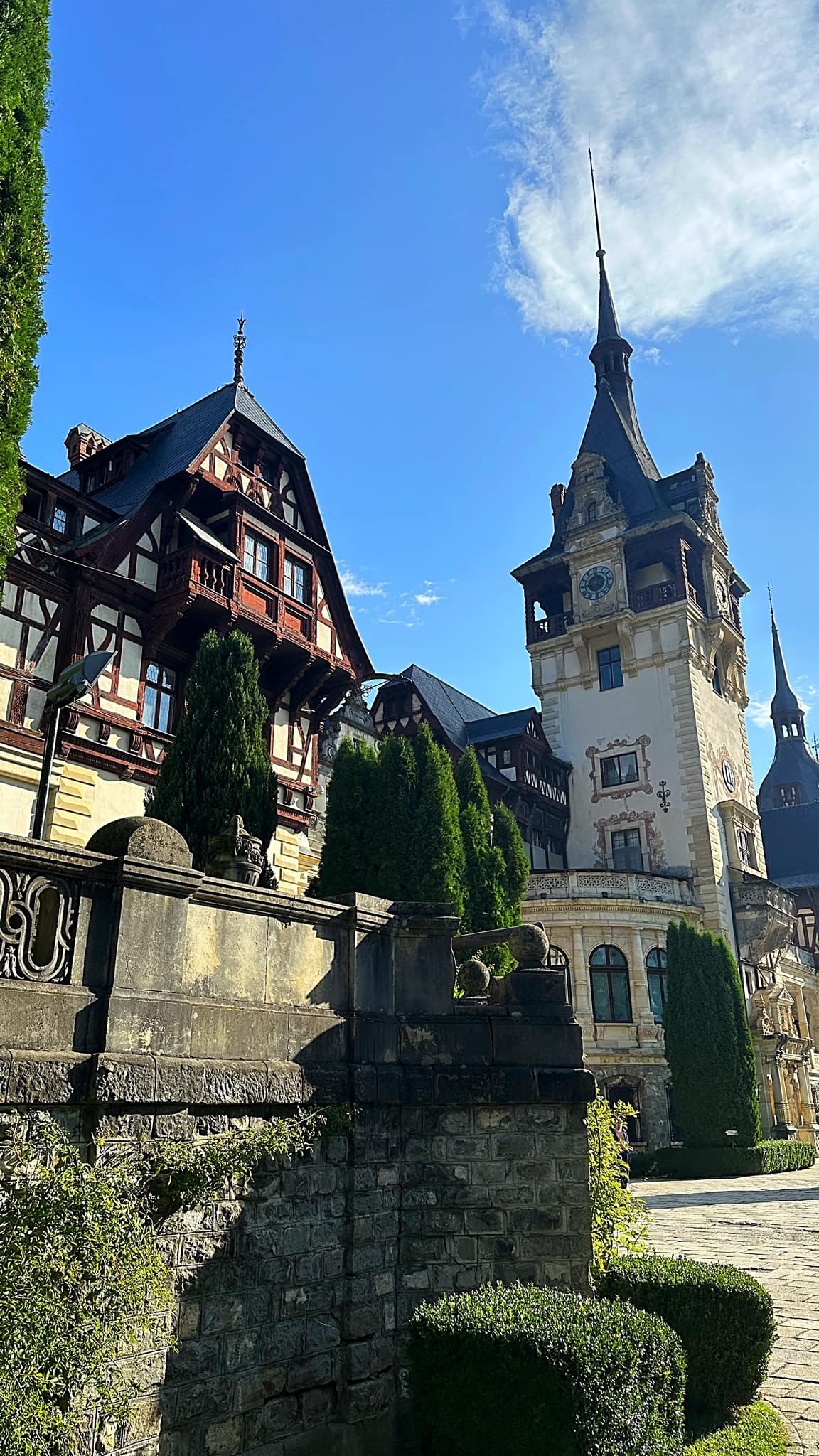
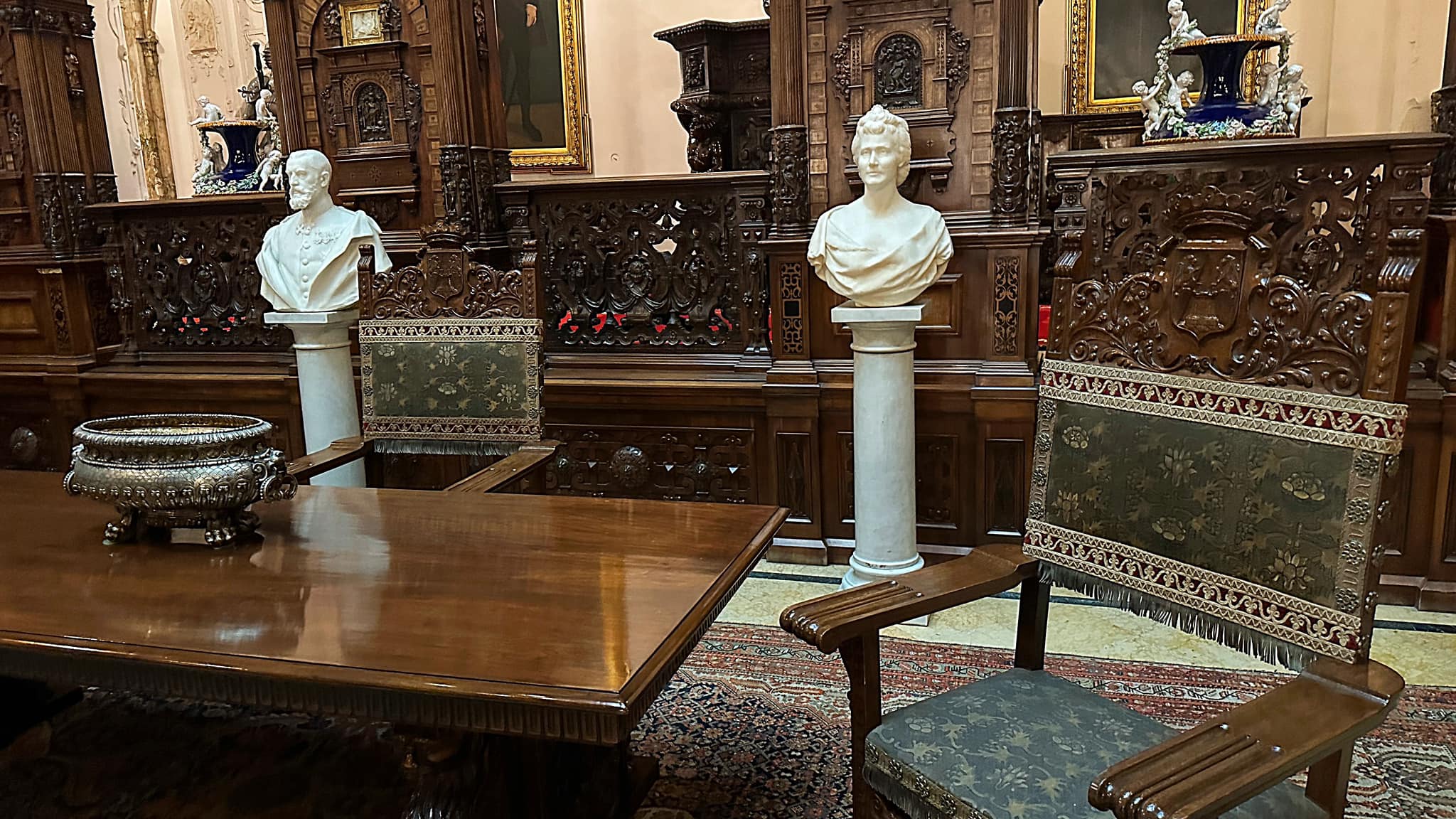
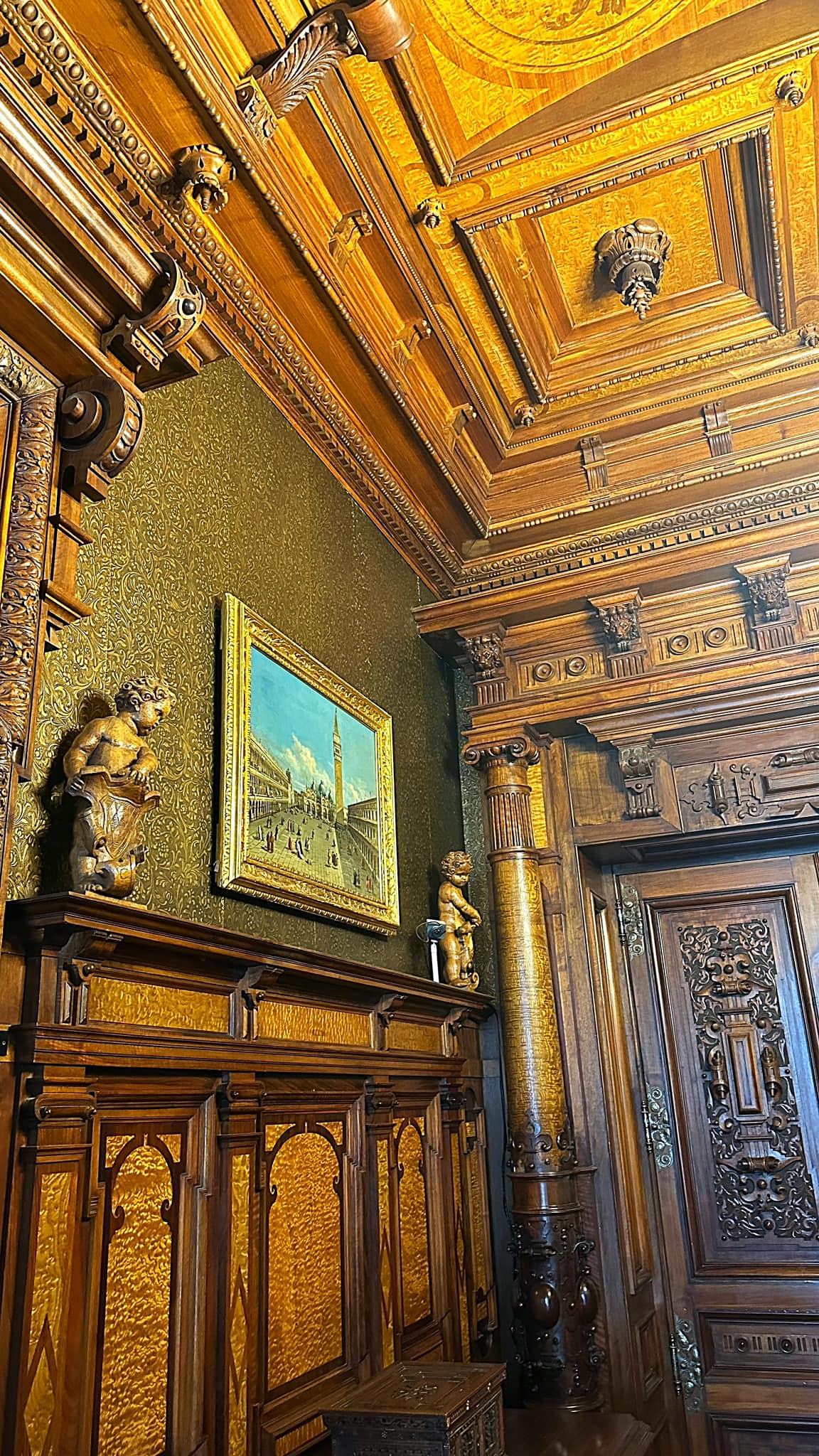
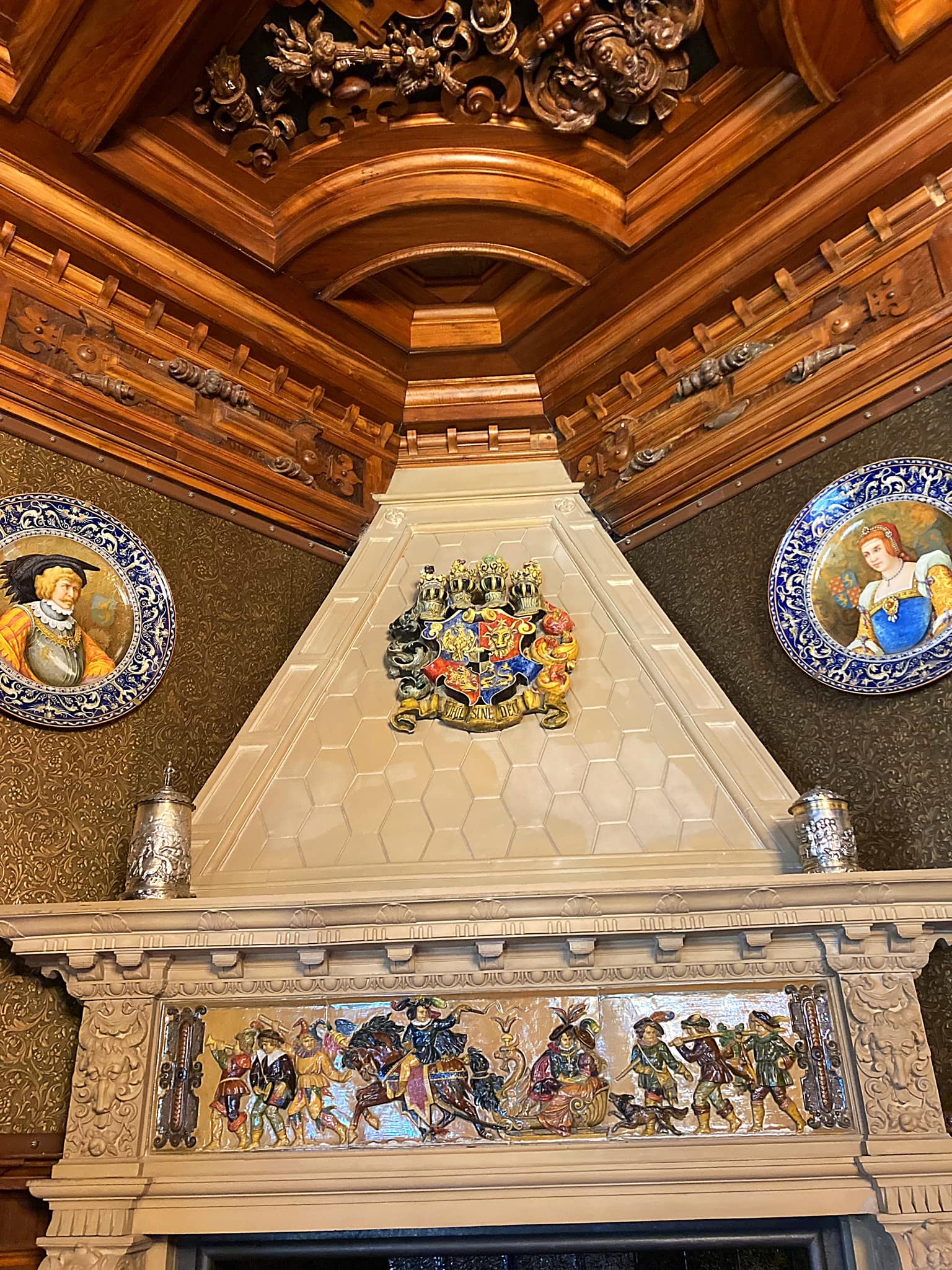
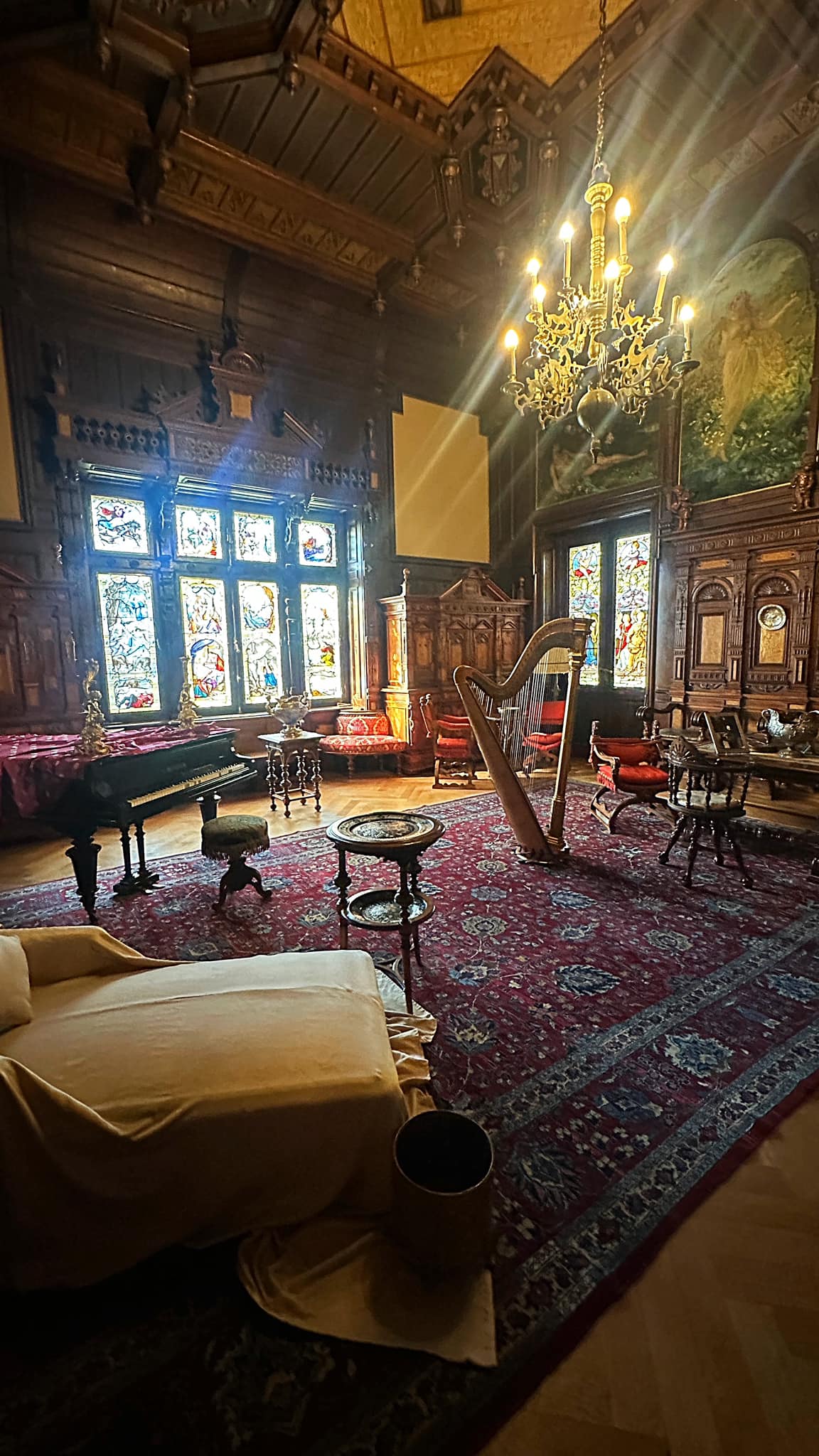
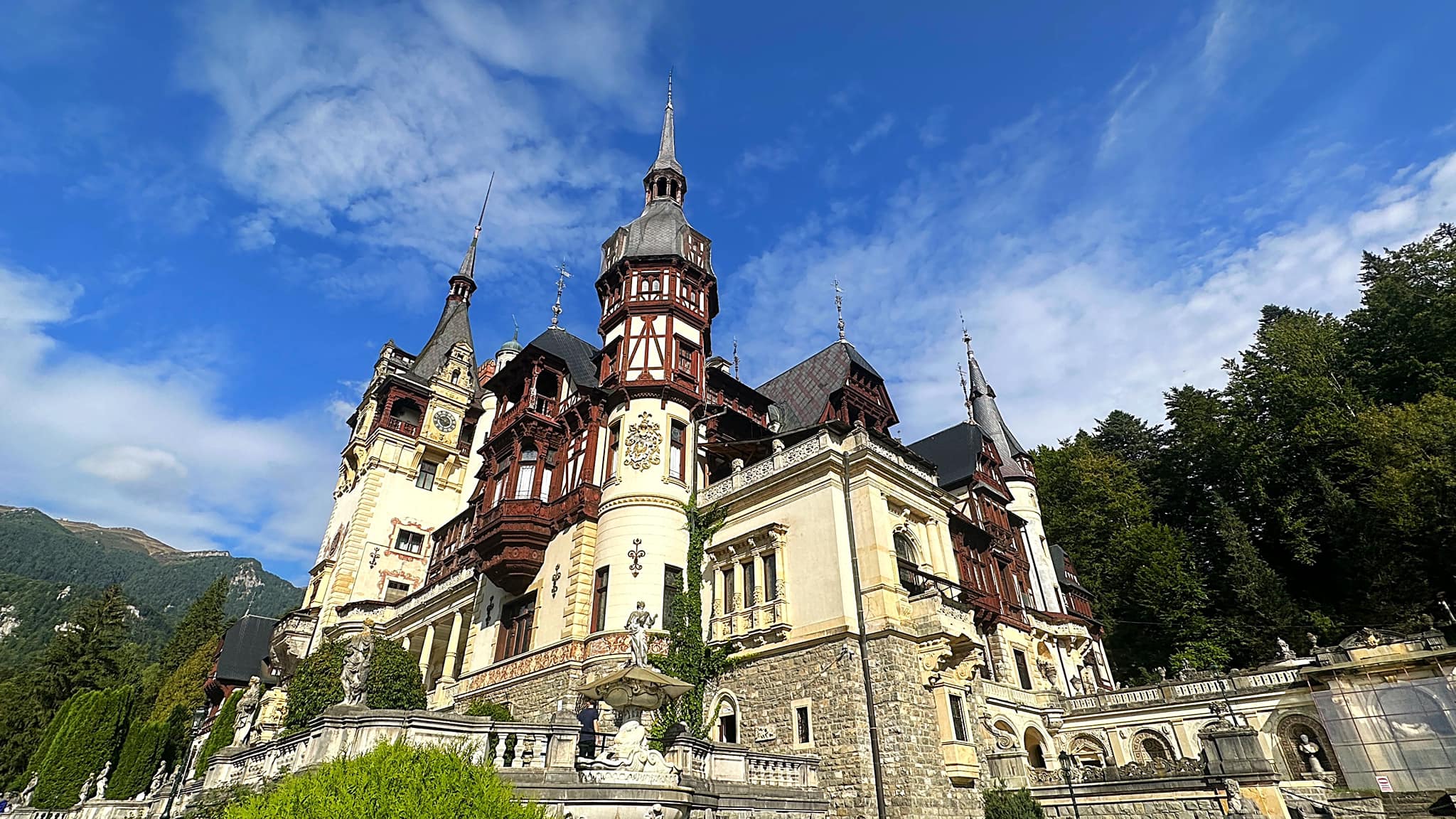
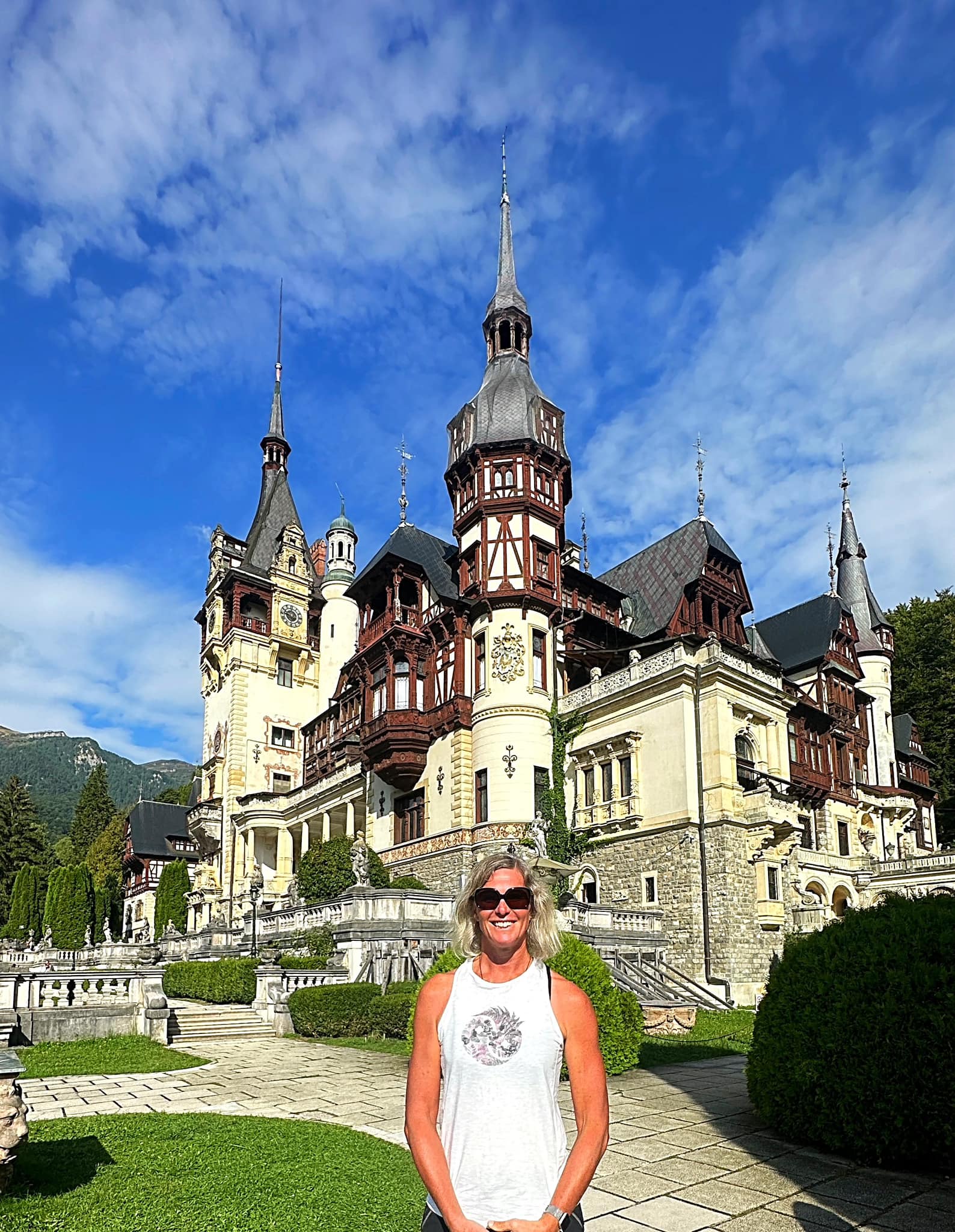
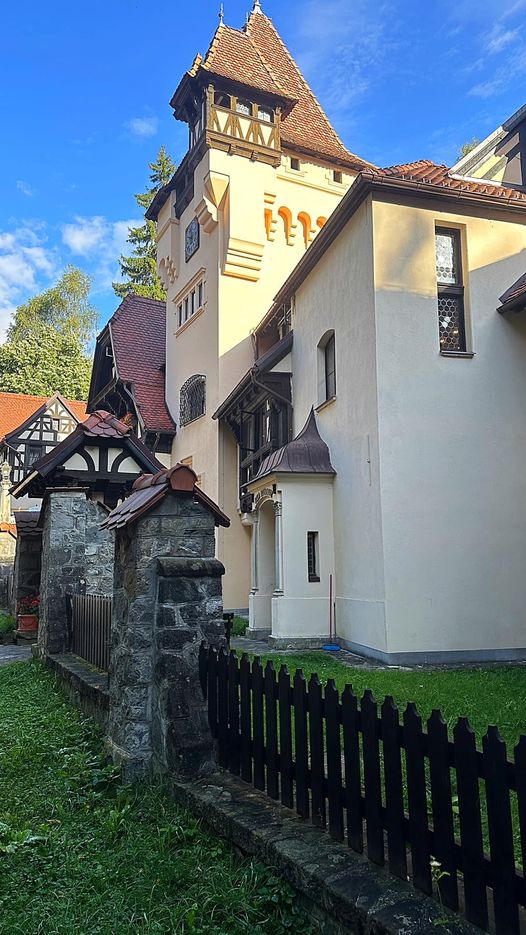
Our first stop was Pele Castle which was the summer residence of the Romanian royal family. Commissioned by Carol I (1839-1914), independent Romania’s first king, Peles Castle was constructed between 1873 and 1883 and built in a neo-Renaissance style with Fachwerk facades. Carol had fallen in love with the superb scenery and so commissioned a royal hunting preserve and summer retreat. Peles Castle was the first ever European palace to be powered by electricity, created in its own power plant, and to have central heating.
King Carol II of Romania was born at the castle in 1893, giving meaning to the phrase “cradle of the dynasty, cradle of the nation” that Carol I bestowed upon Peleș Castle. Carol II lived in Foișor Villa for periods during his reign. Princess Maria died there in 1874.
After the forced abdication of King Michael I of Romania in 1947, Communist Romania seized all royal property, including Peleș Estate. The castle was opened as a tourist attraction for a short time. It also served as a recreation and resting place for Romanian cultural personalities. The castle was declared a museum in 1953. Nicolae Ceaușescu (general secretary of the Romanian Communist Party from 1965 to 1989, and the second and last communist leader of Romania) closed the entire estate between 1975 and 1990, during the last years of the Communist regime. The area was declared a “State Protocol Interest Area”, and the only persons permitted on the property were maintenance and military personnel.
In 2006, the Romanian government announced the restitution of the Royal Domain including all properties and land within the domain to the former monarch, King Michael I. Negotiations soon began between the king and the government of Romania, and were concluded in 2007. The castle is on lease from the royal family to the Romanian state.
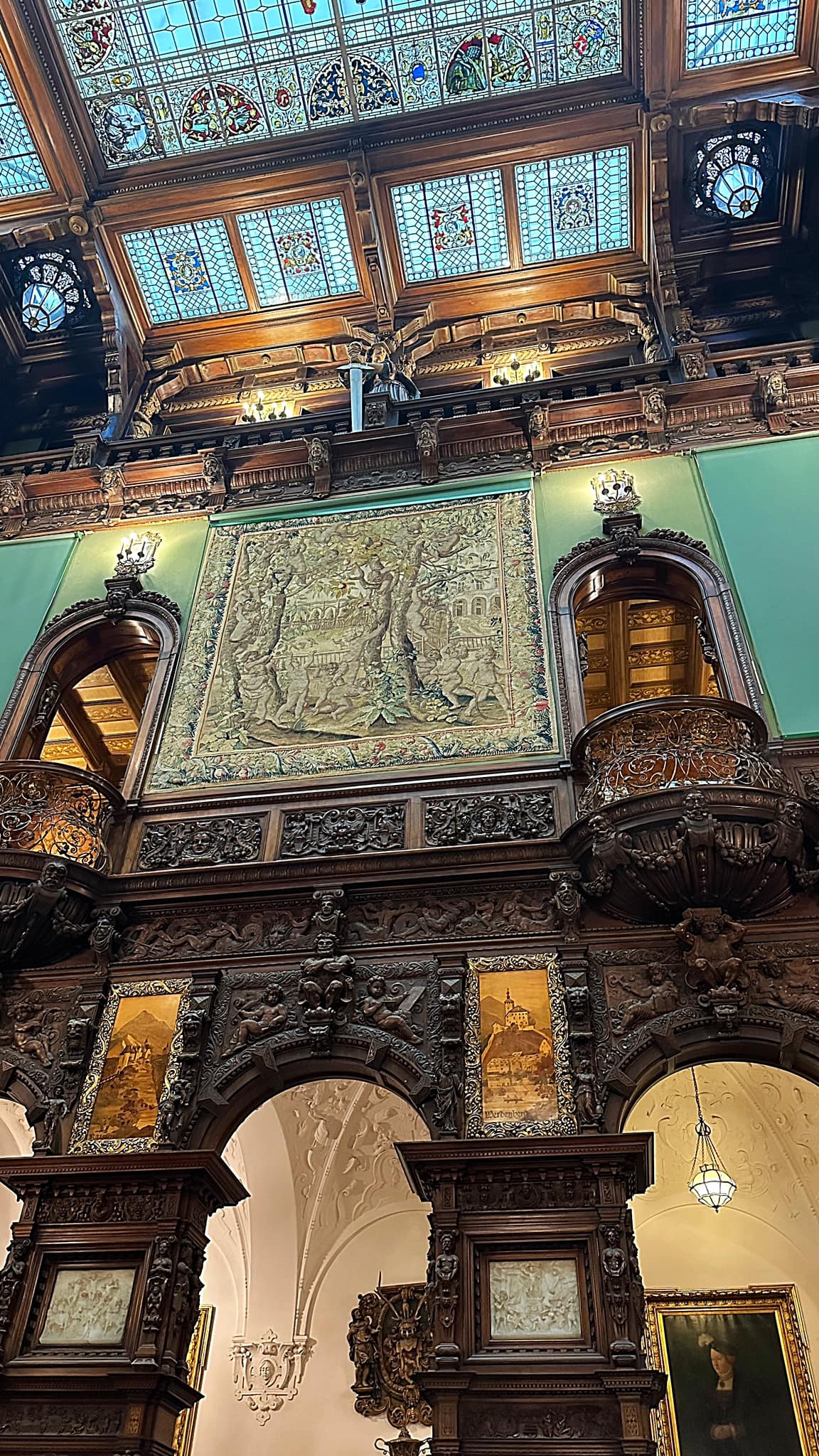
There was a lot to see inside the castle with so many different styles and artefacts. There were a number of rooms inspired by different countries. There is a wealth of artwork in over 160 rooms, including thousands of paintings and sculptures. The armoury room was particularly impressive.
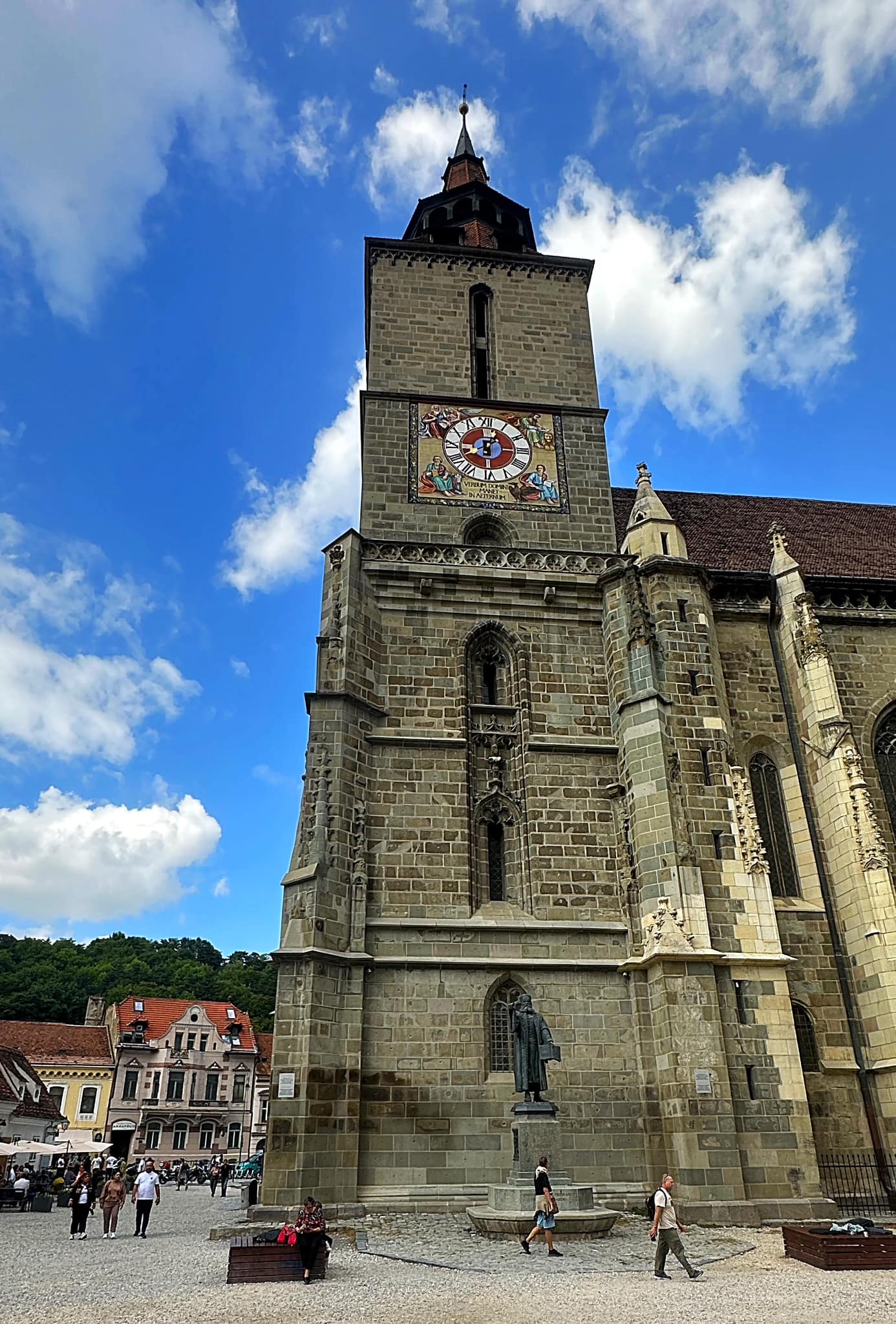
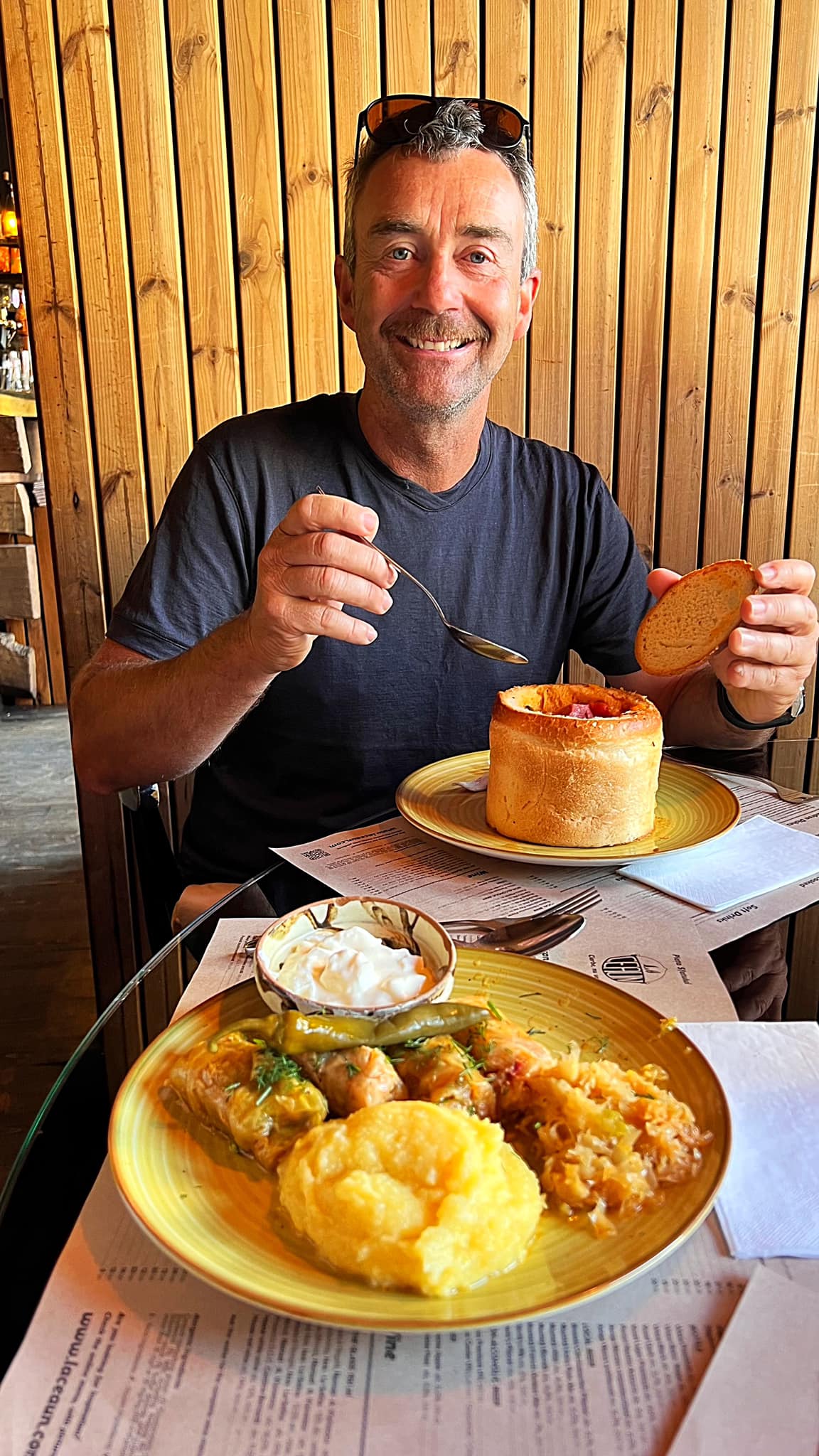
After Peles Castle we went to the town of Brasov for lunch, which is a city in Transylvania. Emmanuel recommended a local restaurant (La Ceaun) where we could have two of the local dishes – bean soup served in a bread bowl and cabbage rolls with rice and ham served with sour cream. Emmanuel also recommended having a shot of plum brandy with lunch, which we did – it was pretty strong and seemed to get stronger once we started eating 
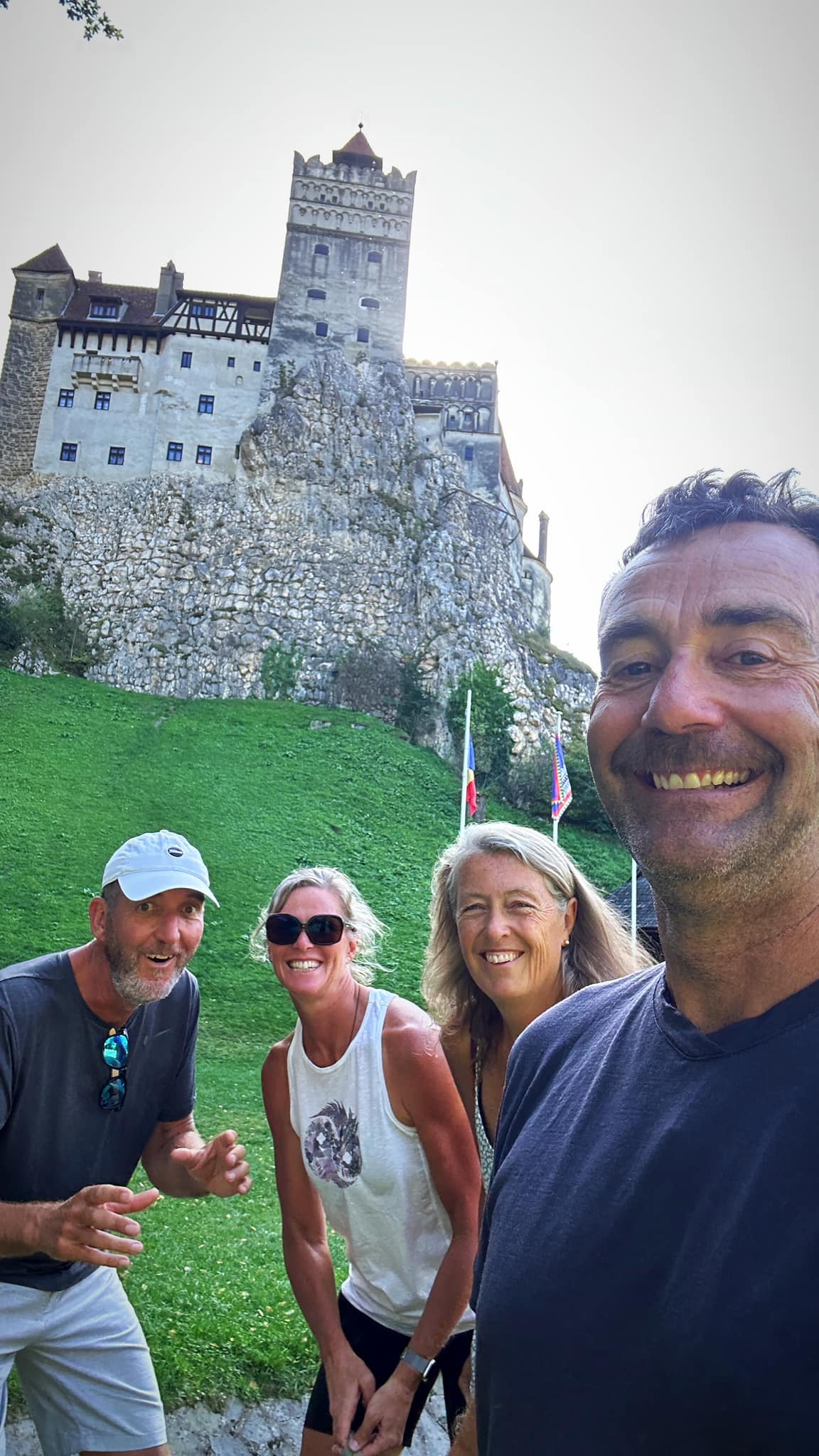
It was then time to meet Dracula at Bran Castle in Transylvania. The origins of this castle go back to 1212. The fortress is on the Transylvanian side of the historical border with Wallachia. Wallachia has always been part of the Romanian Empire whereas Transylvania was part of Hungary. With the 1920 Treaty of Trianon, Hungary lost Transylvania, and the castle became a royal residence within the Kingdom of Romania.
Although many castles of the time belonged to members of the nobility, it has been established that Bran Castle was built almost exclusively for fortification and protection of German colonists in Transylvania.
Bran Castle is not mentioned in the novel Dracula (author – Bram Stoker), and the novel’s description of the castle does not match Bran Castle. The claimed connection between the castle and the Dracula legend is tourism-driven.
During Stoker’s research on the region of Transylvania, he came across accounts of the atrocities committed by Vlad III, and used the Dracula name after reading on the subject; but his inspiration for Dracula was not solely based on the historical figure. It is largely due to American cinema that Vlad III is considered the inspiration for the Dracula character.
The Wallachian ruler Vlad Țepeș (Vlad the Impaler; 1448–1476) does not seem to have had a significant role in the history of the fortress, although he passed several times through the Bran Gorge.
Though many myths have been connected to him in connection with the Dracula myth, most historians agree that Vlad III Dracula, also known as Vlad the Impaler, never set foot in Castle Bran, which was neither a friendly place for him to visit nor under his rule.
Marie (born Princess Marie Alexandra Victoria of Edinburgh; 29 October 1875 – 18 July 1938) was the last queen of Romania as the wife of King Ferdinand I. The castle was inherited by her daughter Princess Ileana who ran a hospital there in World War II. It was later seized by the communist regime with the expulsion of the royal family in 1948.
After various legal proceedings, on the 18th May 2009, the administration of Bran Castle was transferred from the government to Princess Ileana’s children, Archduke Dominic and his sisters, Archduchess Maria Magdalena and Archduchess Elisabeth. On 1 June 2009, the Habsburgs opened the refurbished castle to the public as the first private museum in the country.
It was then time for our three hour trip back to Bucharest. We enjoyed a yummy Mexican dinner back in the city washed down with a few mango margaritas 

















Day 54 – Bucharest – 0km
We spent our last day in Romania doing a self guided walking tour of Bucharest. Bucharest has a population of 1.75 million and is extremely vibrant and busy with lots of tourists. We stayed in an AirBNB on the edge of the old city which is party central. A great location but extremely noisy with one of the bars nearby operating until 7am not ideal in the sleeping stakes.
Bucharest, the capital and cultural center of Romania, is one of the largest cities in Southeastern Europe.
First mentioned as the “Citadel of București” in 1459, the town became the permanent location of the Wallachian court during the reign of Vlad III the Impaler, in 1698. The medieval remnants from that period, still found in the Lipscani neighborhood, include Hanul lui Manuc (Manuc’s Inn), tiny Eastern Orthodox Stavropoleos Church, and the ruins of Curtea Veche (the Old Court).
In 1862, after Wallachia and Moldavia united into the Principality of Romania, Bucharest became the new nation’s capital city, and later, in 1881, that of the newly-proclaimed Kingdom of Romania. That period brought about a new phase in the urban development of Bucharest. Romanian Athenaeum, constructed from 1886 to 1888, is a living monument to that (part of the European Heritage since 2007) and a symbol of Romanian culture.
In between two world wars, the city’s elegant architecture and cosmopolitan sophistication of its elite earned Bucharest the titles “Little Paris” and “Paris of the East”, in which Calea Victoriei (Victory Avenue) was seen as its analogue to Champs-Élysées. Bucharest also has an Arcul de Triumf to commemorate Romania’s victory in the First World War and the coronation of King Ferdinand and his wife Marie. It is only 27 metres high compared to the Arc de Triomphe in Paris being 50 metres tall.
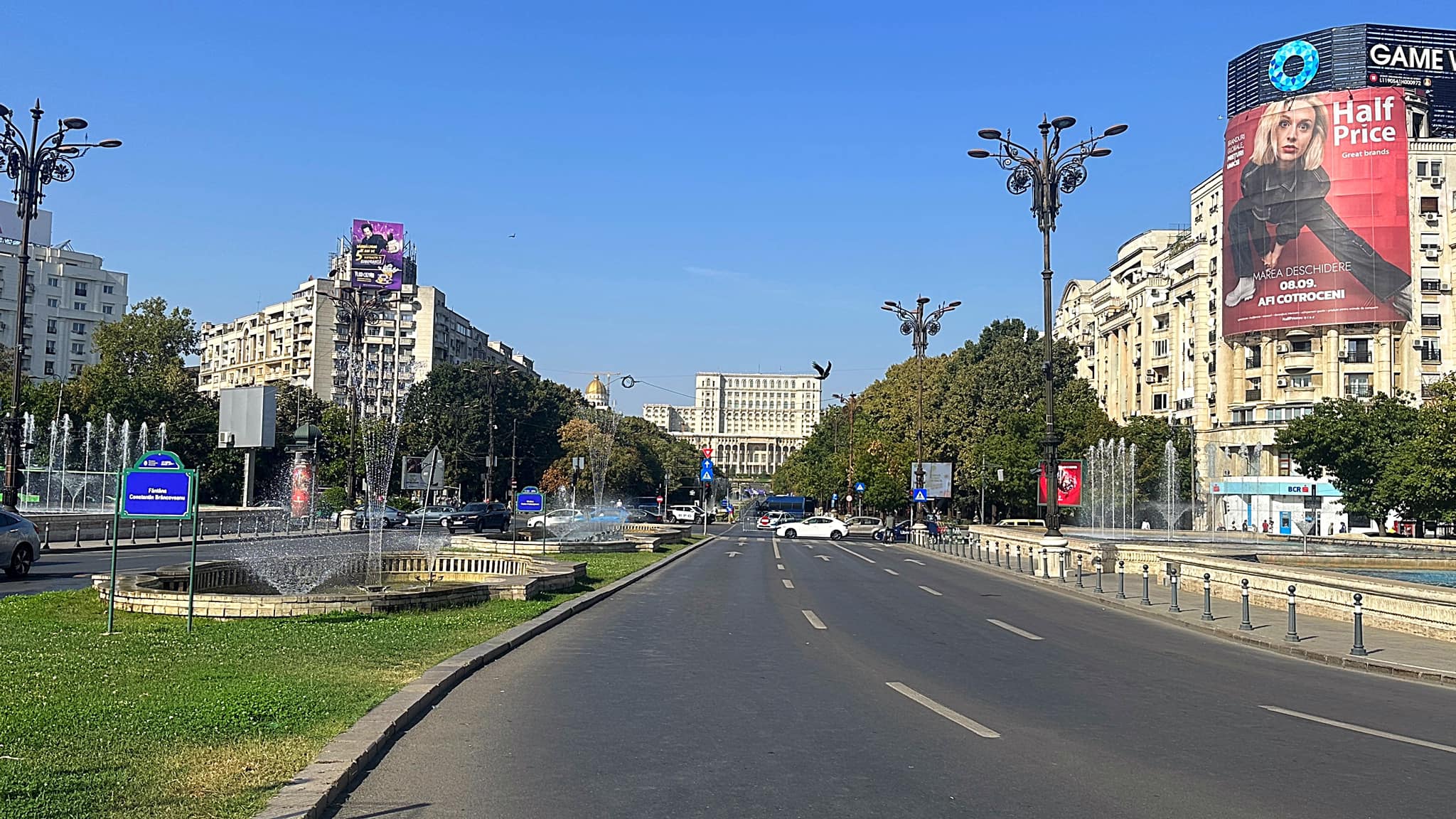
The city suffered heavy damage during World War II. After the establishment of Communism in Romania, Bucharest saw much of its historic center razed and built upon with new developments. One of the iconic landmarks of Socialist Realism, emerged in the 1980s under the dictatorship of Nicolae Ceaușescu, is the Palace of the Parliament, a massive government complex of 1,100 rooms.
Following the Romanian Revolution of 1989, and notably since 2000, the city has enjoyed continuous modernization prompted by both economic and cultural boom. In 2017, Bucharest was declared a European city with the highest growth of tourists staying overnight.
It is located in the south-east of Romania, on the banks of the Dâmbovița river, less than 60 km (37.3 mi) north of the Danube River and the border with Bulgaria. It is also one of the most populated cities of the European Union (EU) within city limits and the most populated capital in Southeastern Europe.
Our walking tour included:
1. The Palace of the Parliament
The Palace of the Parliament in Bucharest is a multi-purpose building which houses both chambers of the Romanian Parliament. According to the World Records Academy, the Palace is the world’s largest civilian building, most expensive administrative building, and heaviest construction. The Palace was designed and nearly completed under the Ceauşescu regime as the seat of political and administrative power. Nicolae Ceauşescu named it the House of the Republic, although many Romanians call it the People’s House.
Constructing the Palace and Civic Center required demolishing much of Bucharest’s historic district, including 19 Orthodox Christian churches, six Jewish synagogues, three Protestant churches (plus eight churches had to be relocated), and 30,000 residences. The construction began in 1983; the cornerstone was laid on 25 June 1984.
While the building was intended to house all four major state institutions (in a similar manner to the UK Houses of Parliament), Ceausescu opted to make the palace his personal residence and have the government operate in it.
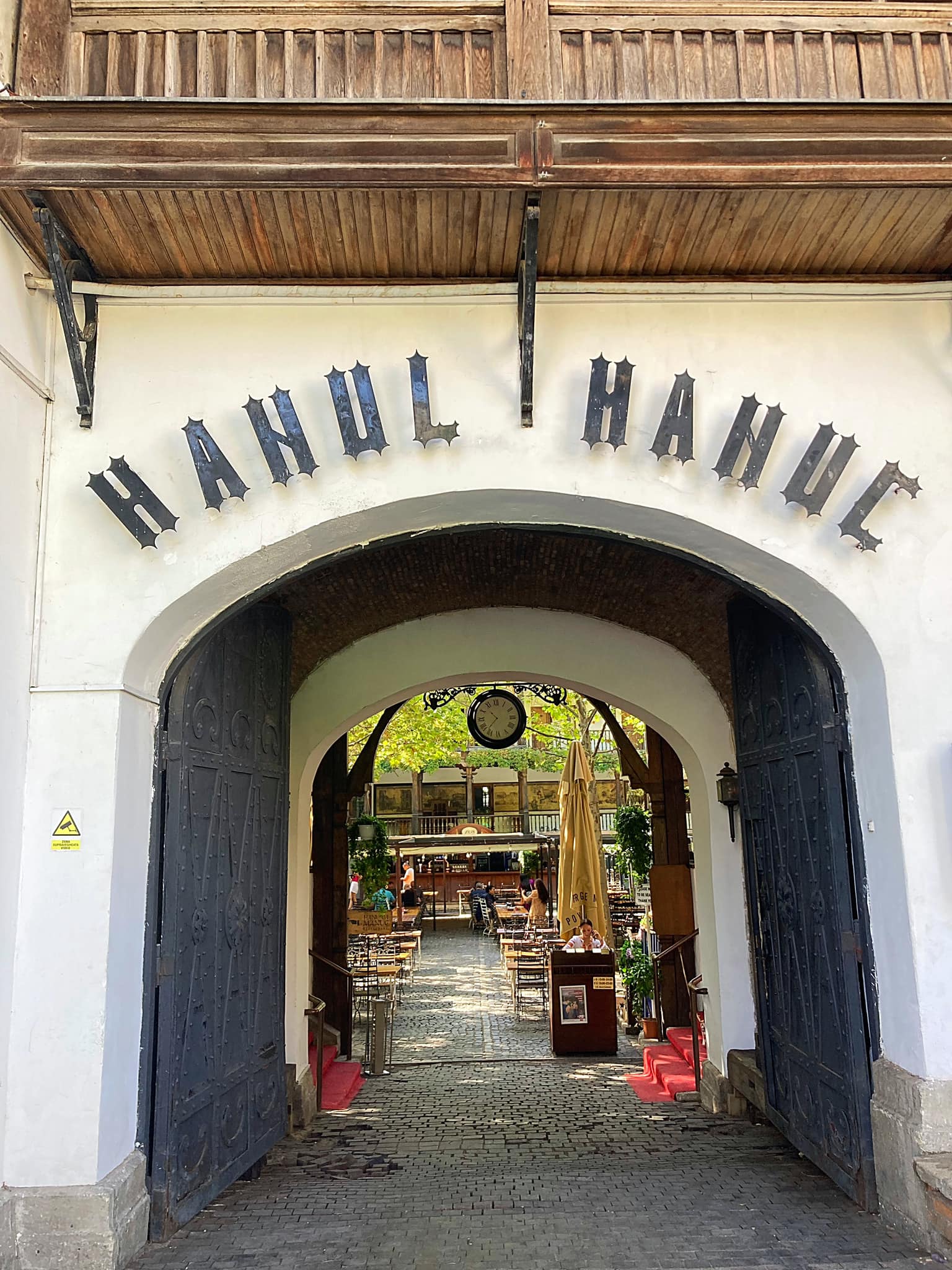
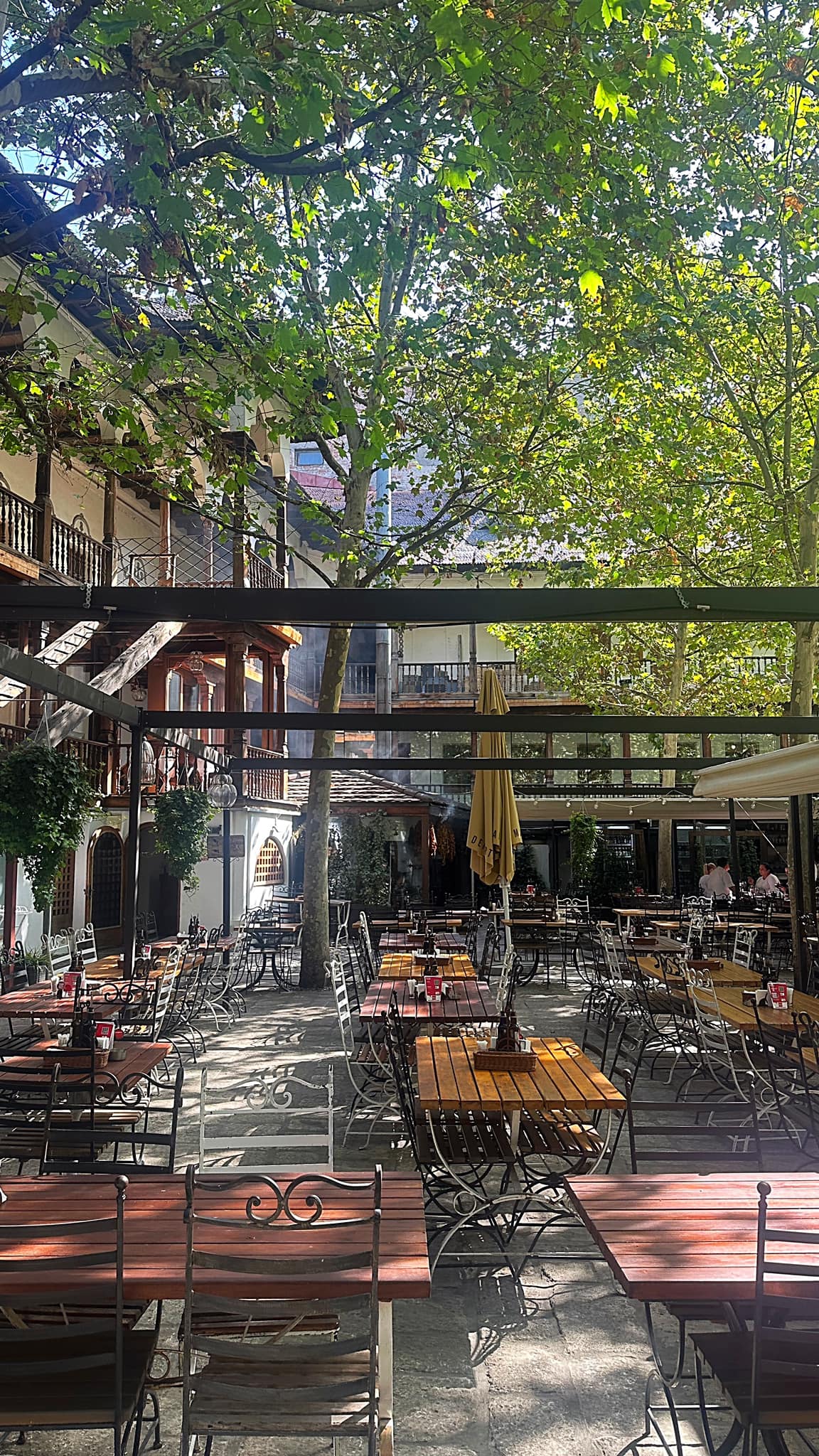
2. Manuc’s Inn
Manuc’s Inn is the oldest operating hotel building in Bucharest. We had a coffee stop here.
The inn was built in 1808 as a khan, and originally owned by a wealthy and flamboyant Armenian entrepreneur, Emanuel Mârzaian, better known under his Turkish name Manuc Bei. By the middle of the 19th century, it was Bucharest’s most important commercial complex, with 15 wholesalers, 23 retail stores, 107 rooms for offices or living, two receiving rooms, and a pub.
3. Stavropoleos Convent
Stavropoleos Convent, also known – during the last century when the convent was dissolved – as Stavropoleos Church built in 1704, is an Eastern Orthodox nunnery in central Bucharest, Romania. Its church is built in Brâncovenesc style. The patrons of the church are St. Archangels Michael and Gabriel. The name Stavropoleos is a Romanian rendition of a Greek word, Stauropolis, meaning “The city of the Cross”. Among other things the convent is particularly famous for is Byzantine music; it has a choir and the largest collection of Byzantine music books in Romania.
4. Revolution Square and Memorial of Rebirth
Piaţa Revoluţiei (Revolution Square) was once known as Piaţa Palatului (Palace Square), and was renamed after the Romanian Revolution of 1989.
The former Royal Palace (currently, the National Museum of Art of Romania), the Athenaeum, the Athénée Palace Hotel, the University of Bucharest Library, and the Memorial of Rebirth are all found here. The square also houses the former Central Committee of the Romanian Communist Party headquarters from where dictator Nicolae Ceauşescu and his wife fled by helicopter on December 22, 1989. Three days later the Ceaușescus were executed at 4:00 p.m. local time at a military base outside Bucharest on 25 December 1989. The execution was carried out by a firing squad consisting of paratroop regiment soldiers. The main charge against them was genocide with over 60,000 deaths.
In 1990, the building became the seat of the Senate and since 2006 has accommodated the Ministry of the Interior and Administrative Reform.
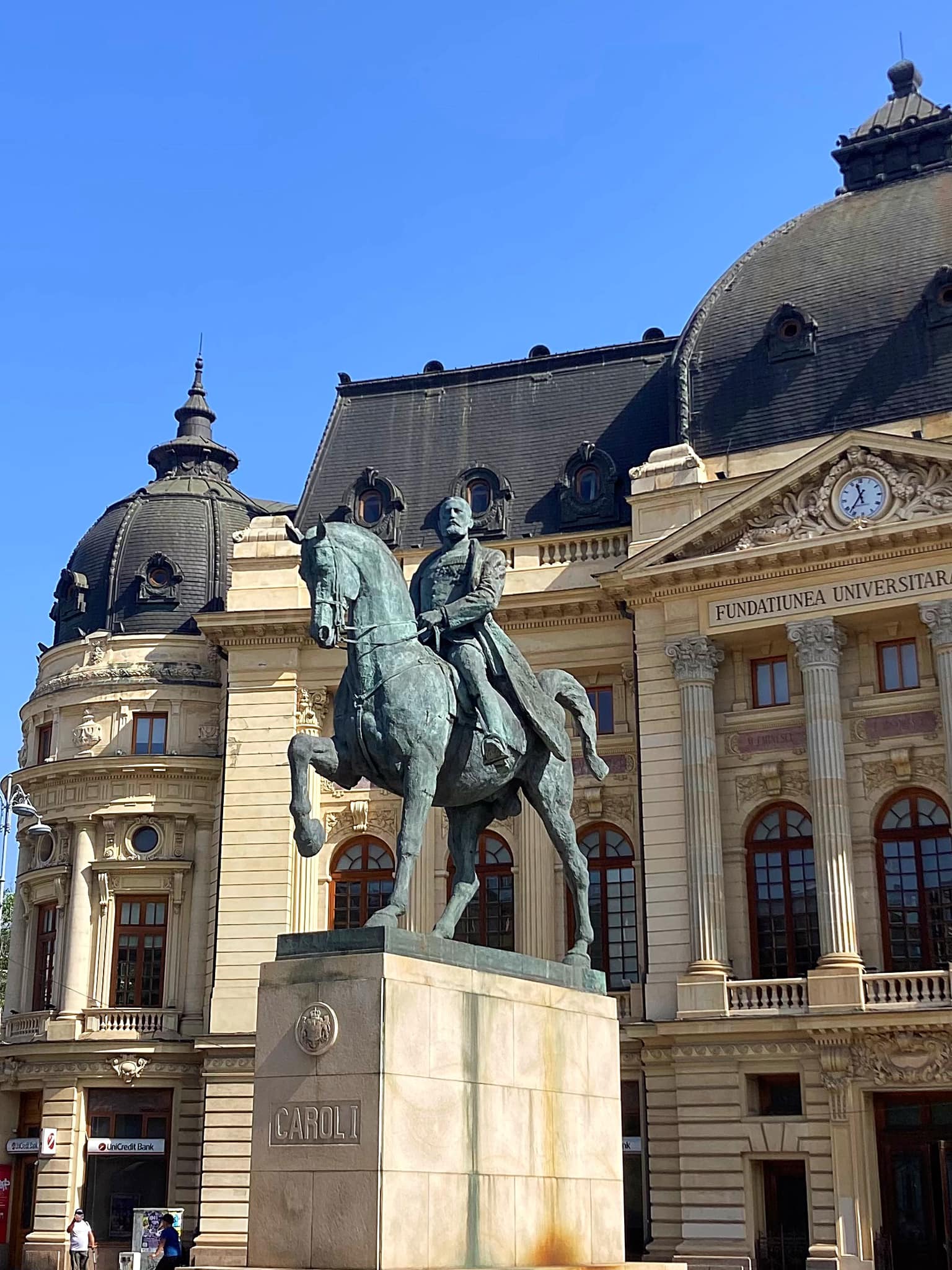
From 1930 to 1948, an equestrian statue of King Carol I dominated the square before being destroyed by the Communists. In 2007, the Bucharest City Hall set out to recreate the statue based on the original blueprints kept by the sculptor’s (Meštrović) family.
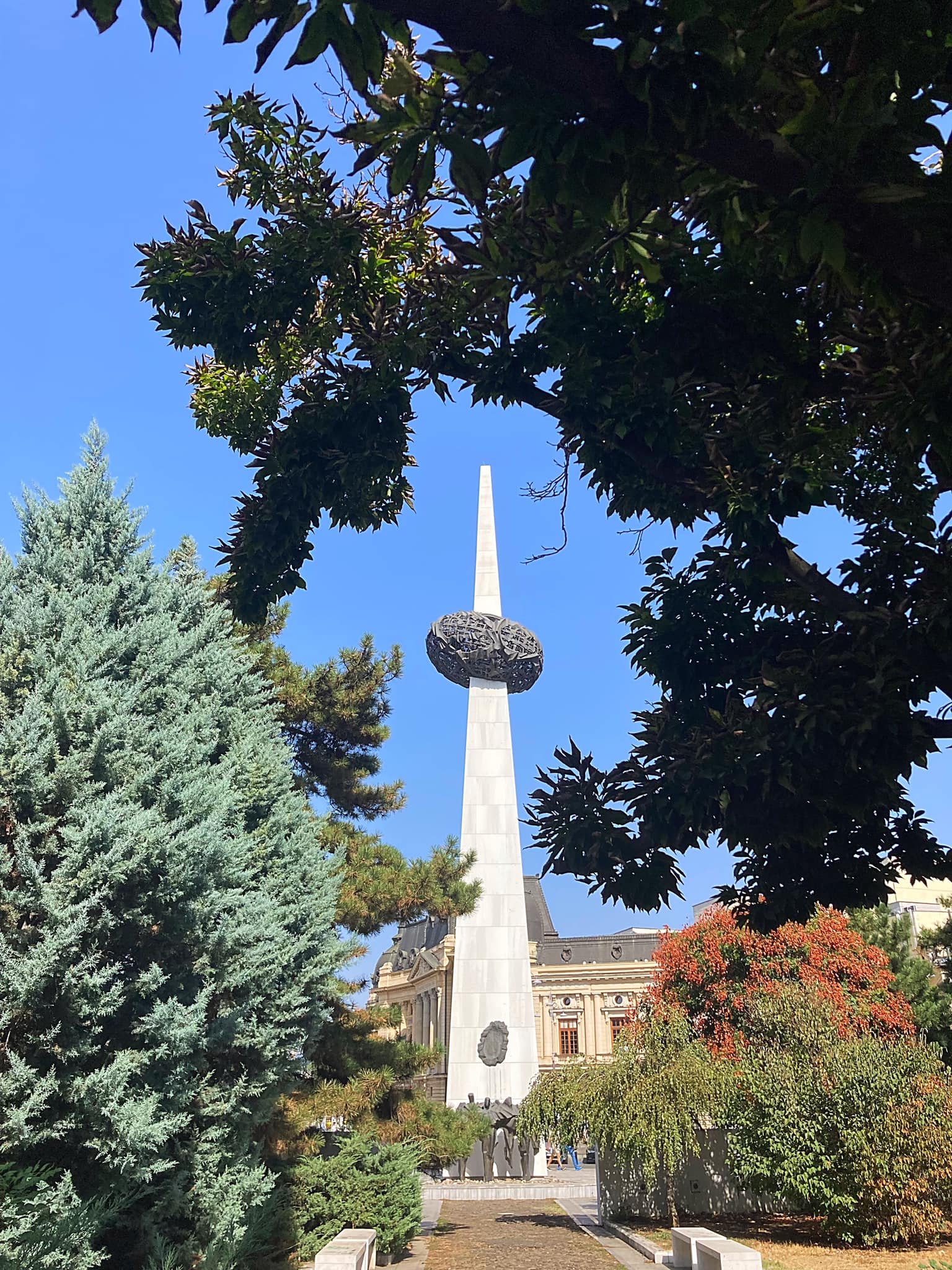
The Memorial of Rebirth, inaugurated in August 2005, commemorates the struggle, which claimed nearly 1,500 lives and brought Communist era in Romania to its end. The memorial features a 25-meter marble pillar, upon which a metal “crown” is placed. The pillar stands amid a 600 m² plaza covered in marble and granite. Despite a commonly-acknowledged need for such monument, its design has been largely criticized as devoid of symbolism, too abstract, and not adequately reflecting the suffering and magnitude of the 1989 revolution.
5. Romanian Athenaeum
The Romanian Athenaeum is a concert hall in the center of Bucharest and an architectural landmark of the Romanian capital city. Opened in 1888, this ornate, domed, circular building is the city’s main concert hall and the home of the George Enescu Philharmonic and the George Enescu annual international music festival.
6. Fountains
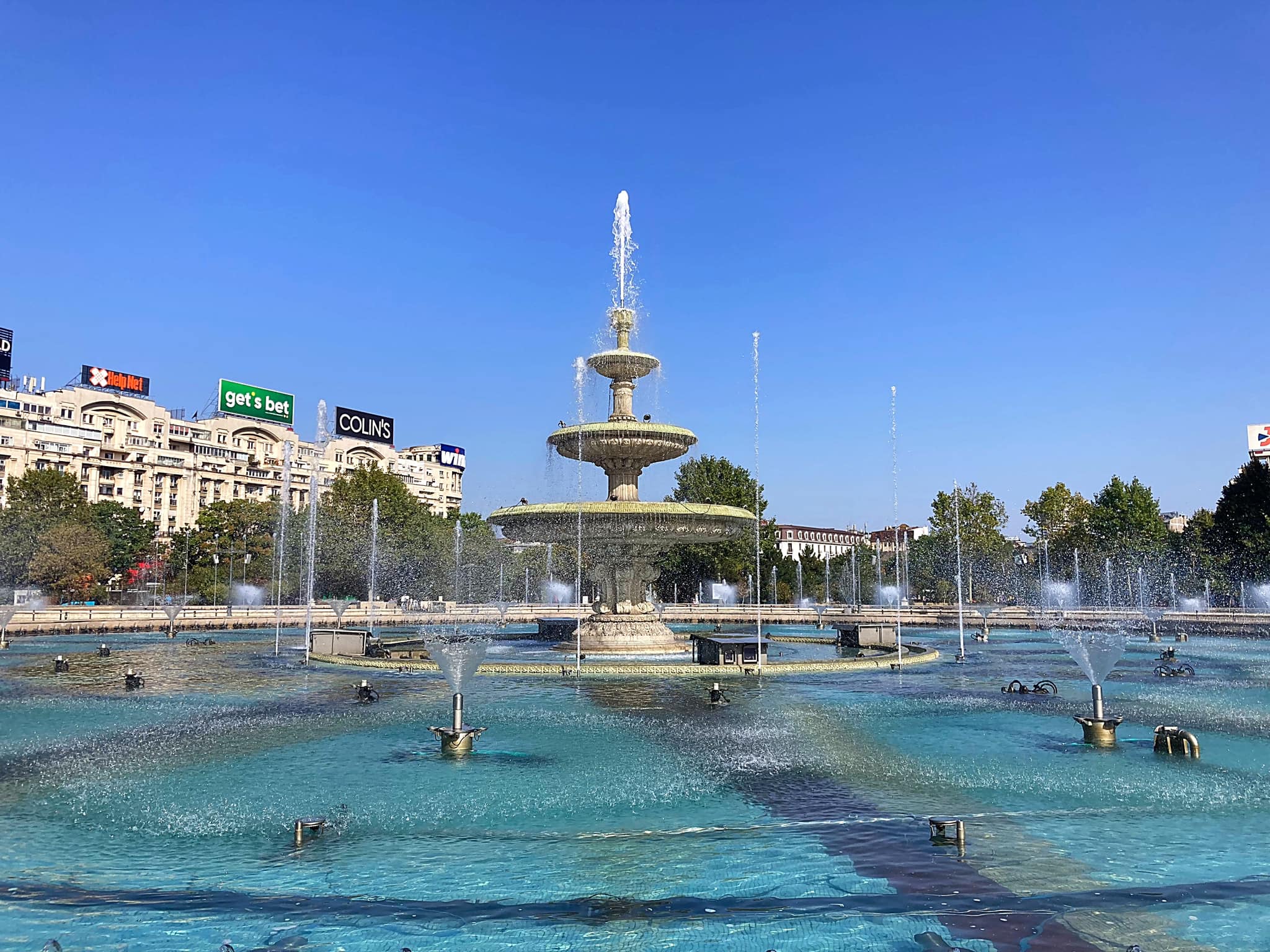
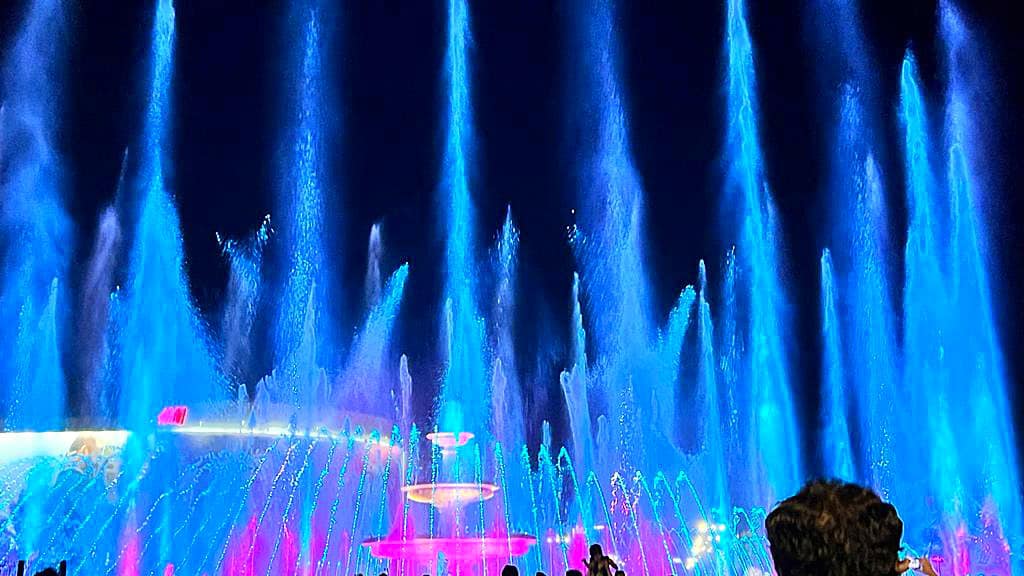
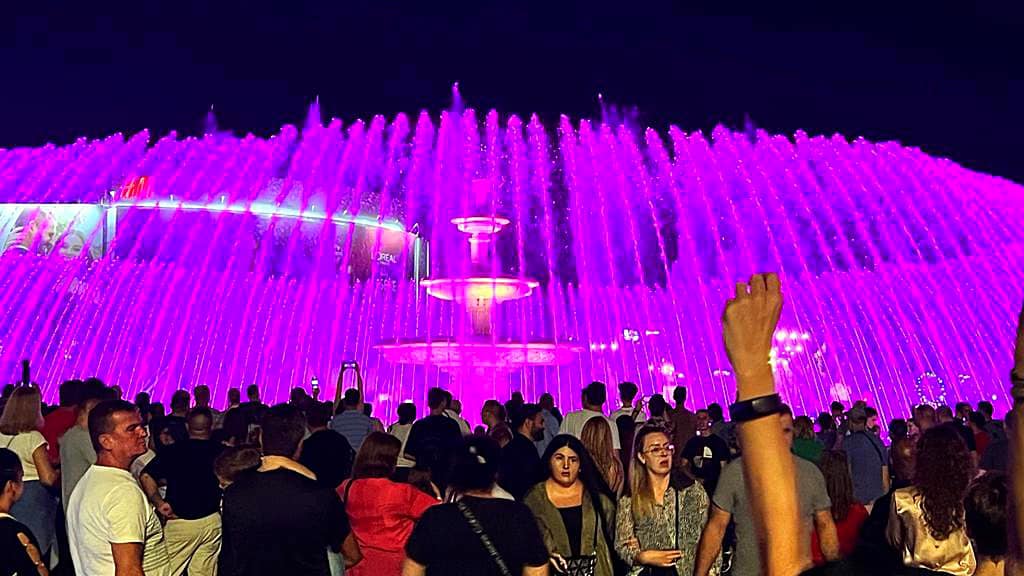
The 44 fountains in downtown Bucharest are located at a 1.4-km distance between Alba Iulia Square and Constitution Square. The artesian fountains of Unirii Square, built during the communist period, were restored to life following an investment of 9 million Euros. Bucharest can now boast the first smart fountains in Europe designed 100% on a computer, with a fantastic show of color, music, and 3D projections on the water. In fact, Bucharest holds the Guinness Record for the longest choreographed fountain system in the world.
Unirii Square wasn’t always what it is now. Before the 1980s, there were a lot of houses and covered food markets where the fountains now lie. The entire capital used to gather here on market days to stock up. The square used to be pretty small, until they decided to enlarge it. With this vast modification of the square, also came the building of 44 fountains, along the Unirii Boulevard. The locals used to walk by the fountains on sunny days, and this hasn’t changed throughout time.
We were fortunate enough to see the show after dinner on our last night in Bucharest – it was uplifting and amazing – a great lasting impression of our few days in the city.
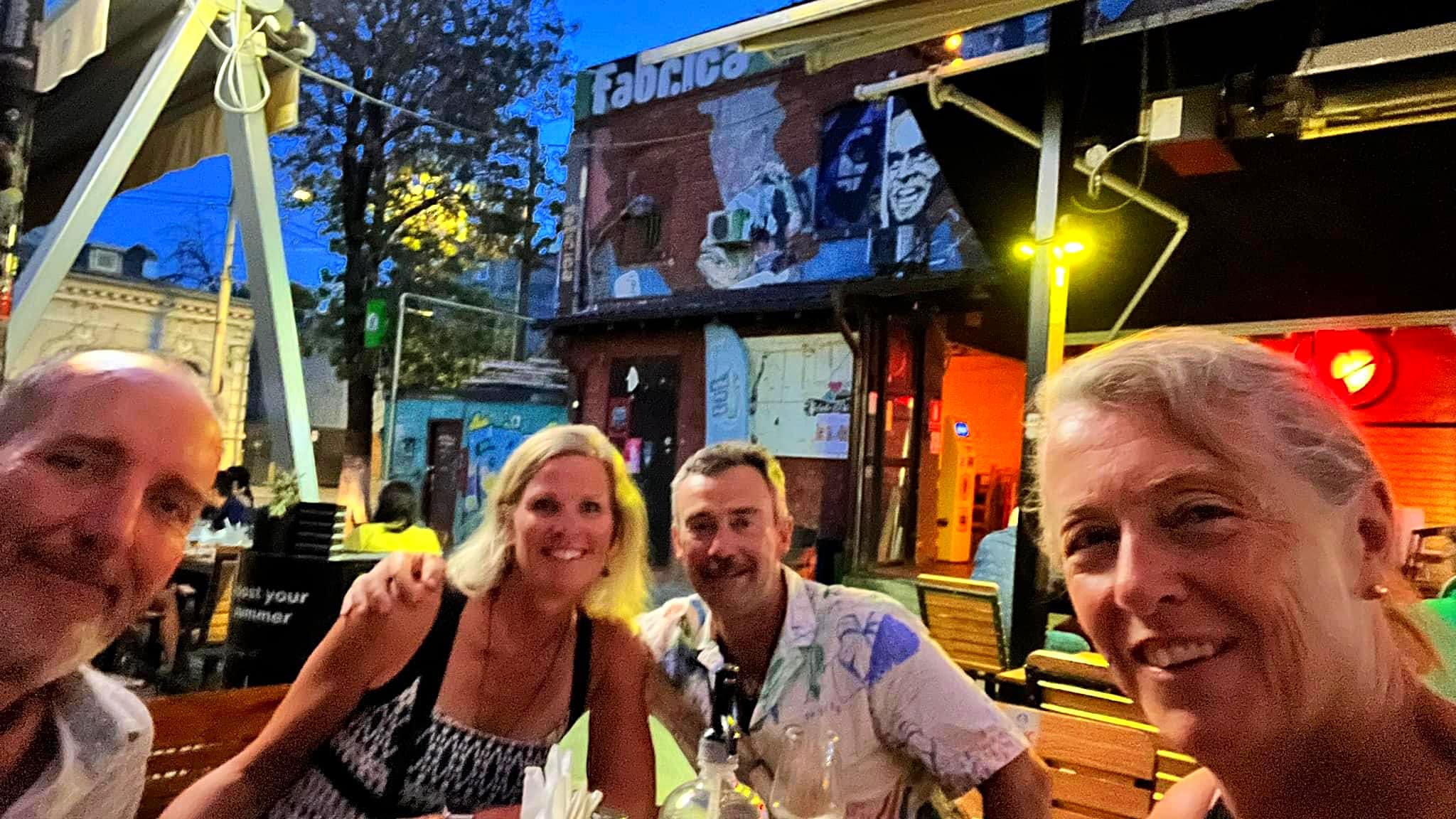
We had dinner at Fabrica – the red brick building was once a part of an industrial architectural complex dating back to 1898. For more than a century, it hosted a sock factory, Apollo. Yet, though it survived the transition to capitalism, the complex went bust in 2003. While some parts of the structure were demolished, with blocks of flats rising in their place, a part of Fabrica was saved and transformed into a bar, terrace, club, and arts centre — the first of its kind in Bucharest. The landmark has been added to city’s listed buildings giving it some protection.
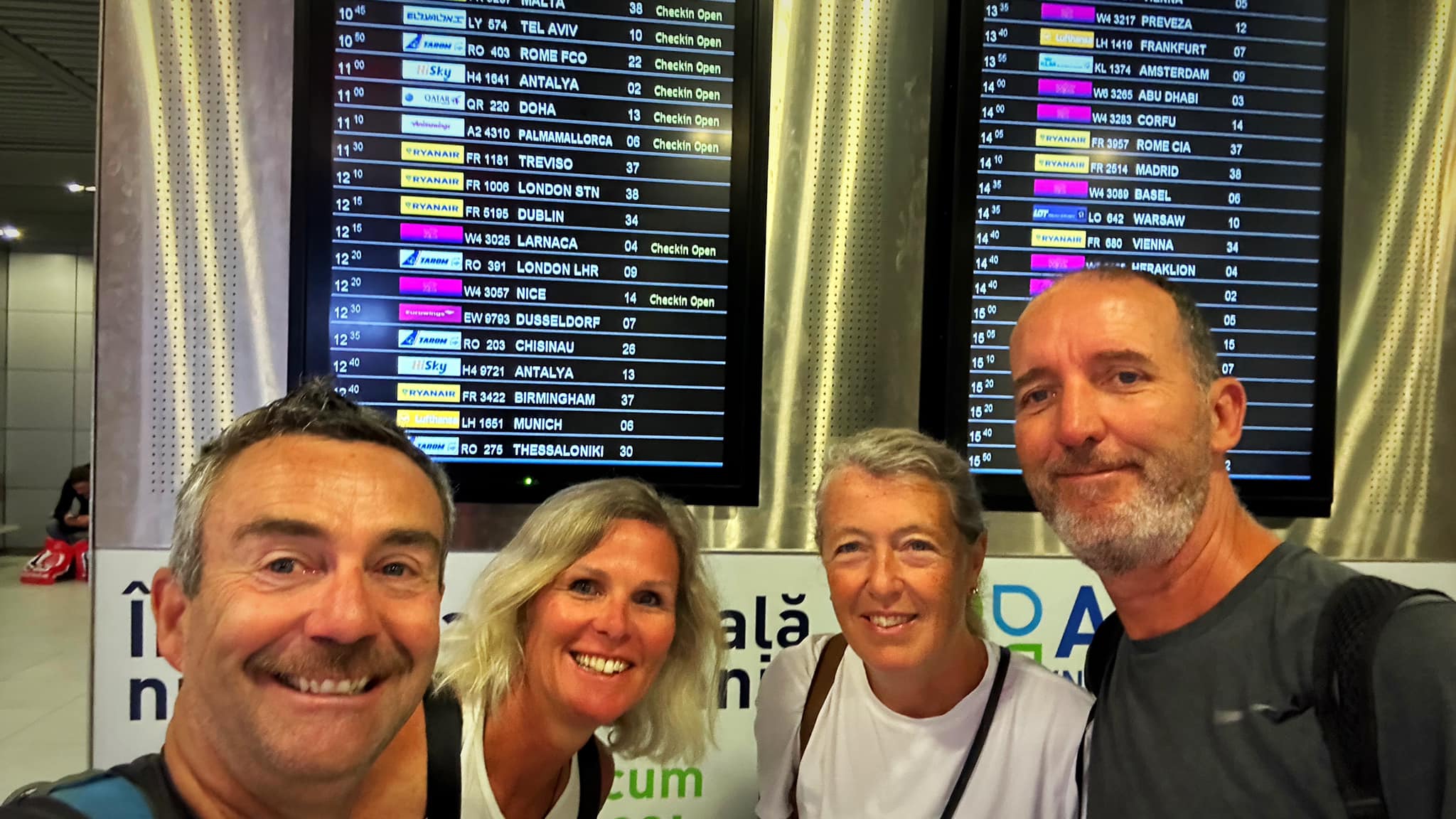
A bittersweet moment at the airport on Sunday morning, after eight amazing weeks together. We said goodbye and went our separate ways with our hearts and memories full after a very special adventure together.











 SUNGRL