
Day 43 – Ràckeve to Harta – 65km
Due to being so hot when we arrived yesterday and only having the energy to go to Aqua Land we didn’t explore Ràckeve. This morning we went in search of coffee and found a bustling little town full of people going about their business. Found a lovely little cafe which even did a Matcha Latte.
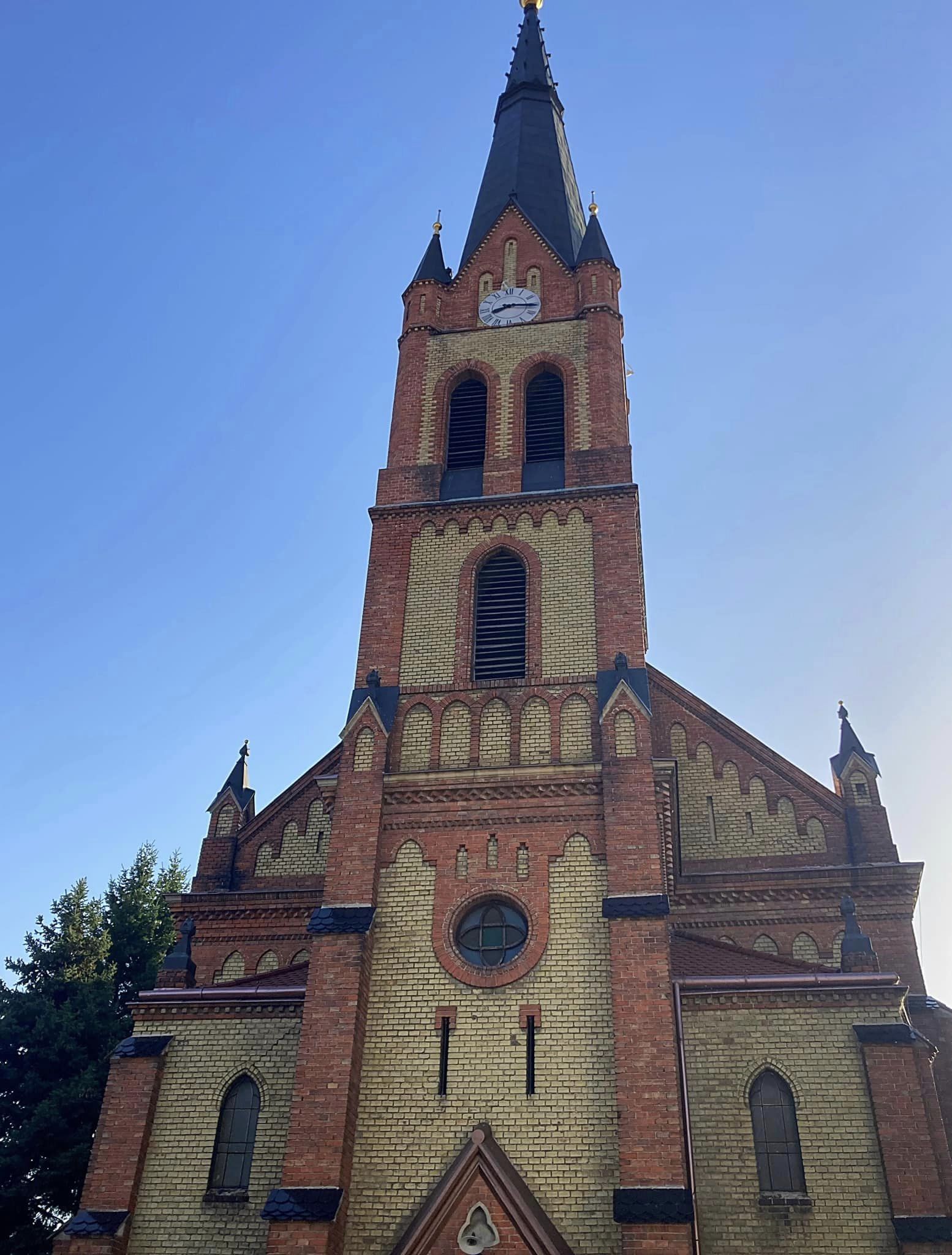
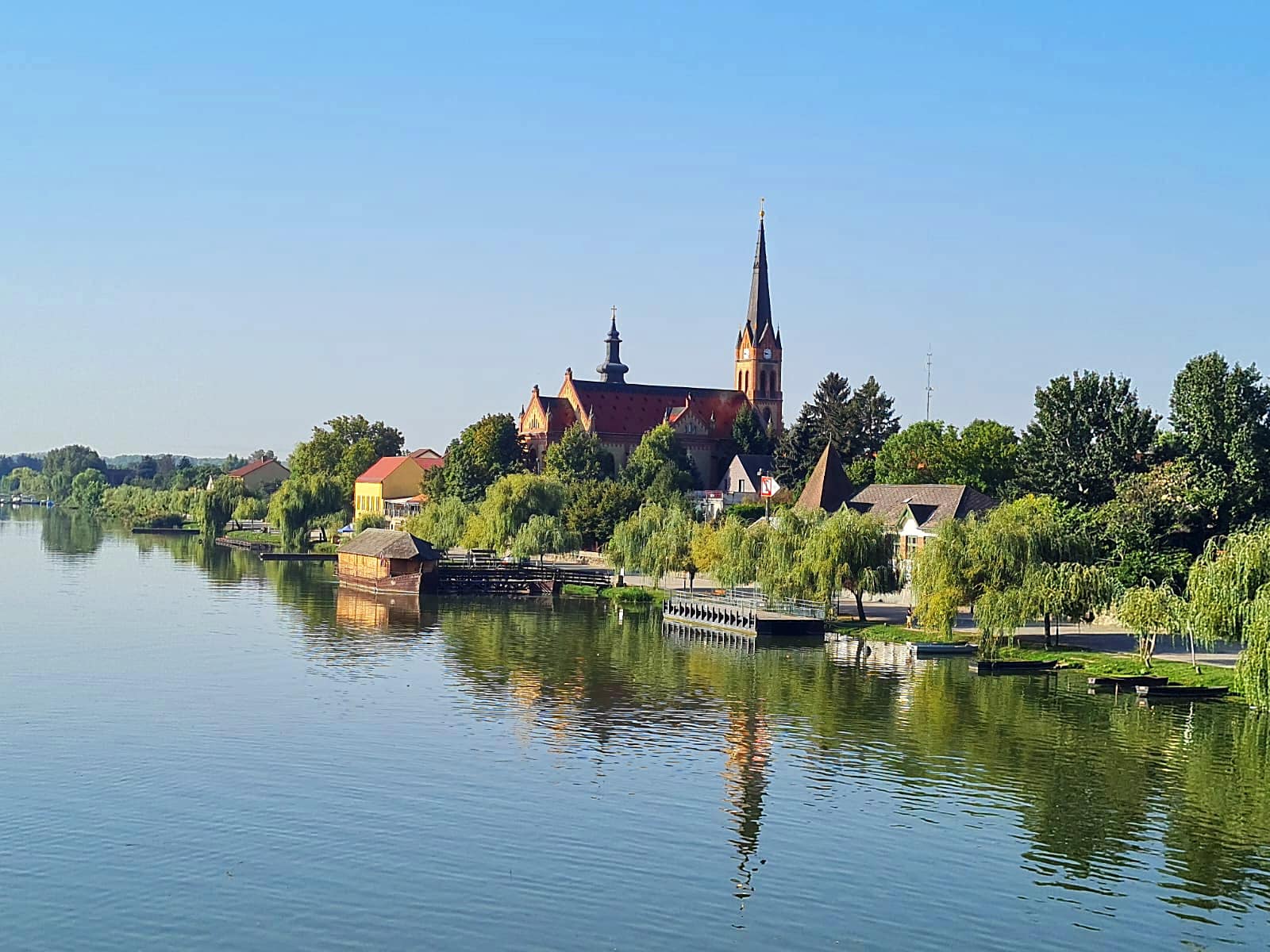
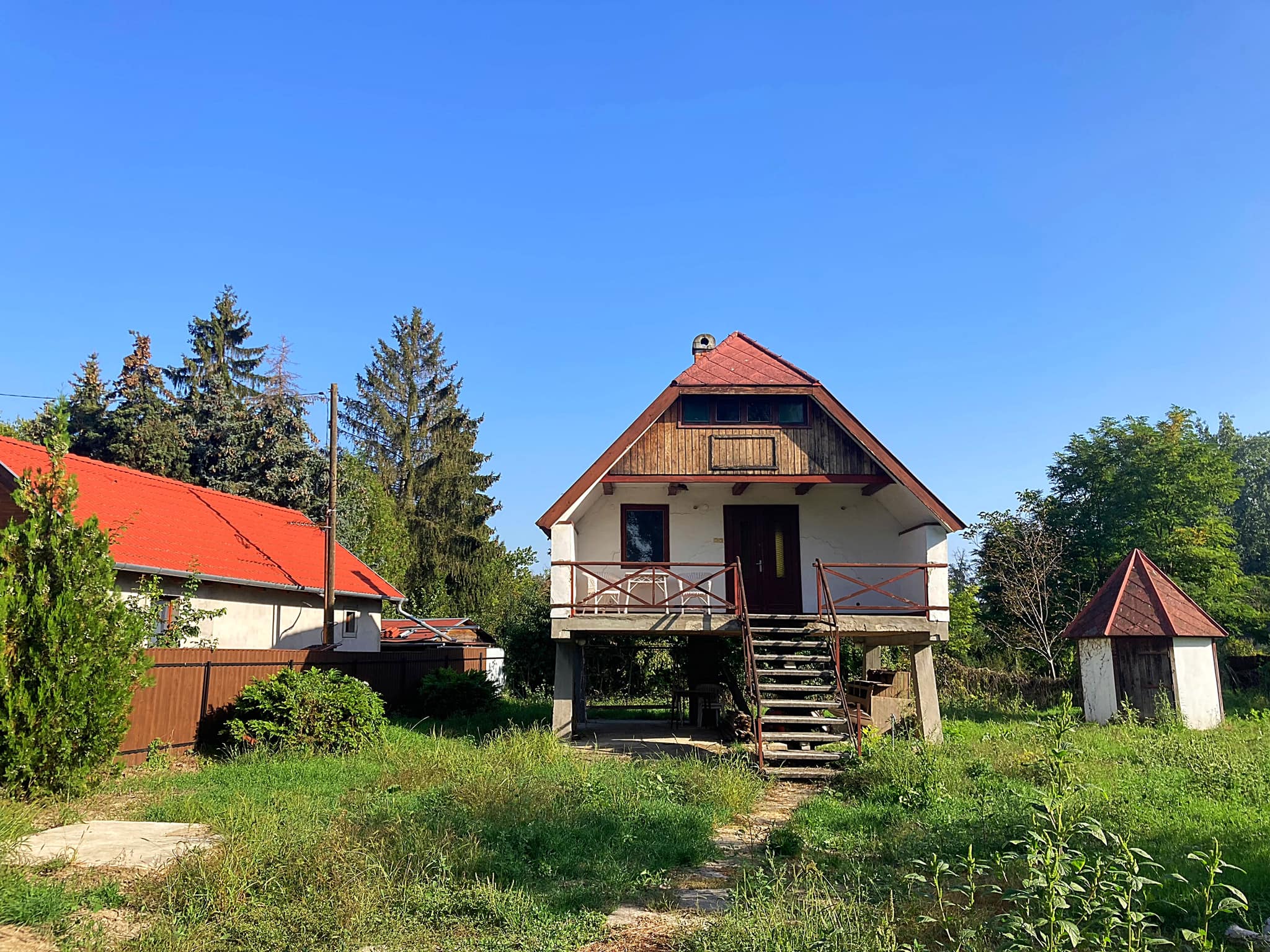
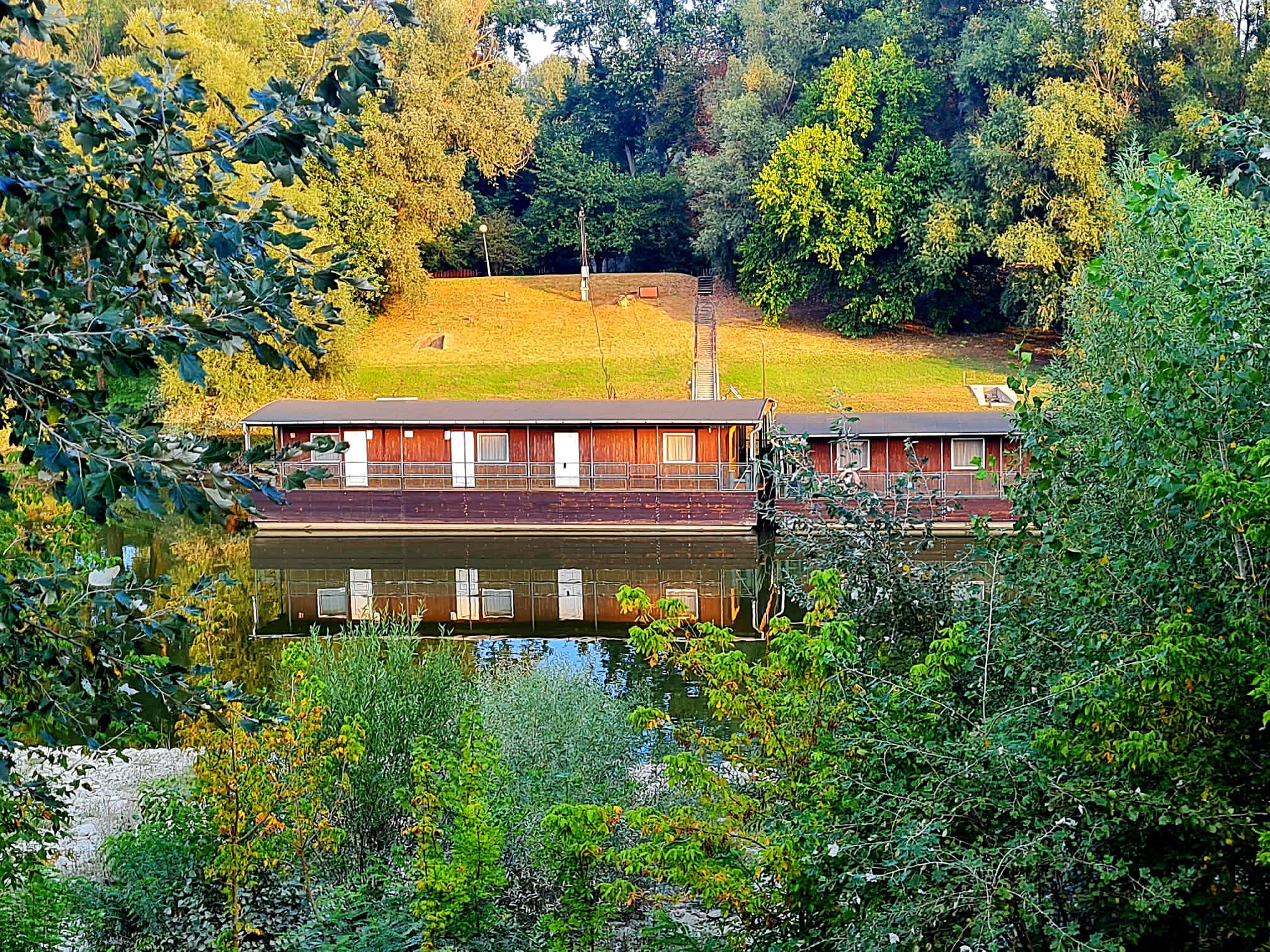
We crossed the Árpád hid bridge to the east side of the Ráckevei-Duna. Immediately our visual senses were inspired again as we looked across the water at the reflections of the church and little holiday houses on the water. It was a gorgeous time of the morning and we really enjoyed that first twenty kilometres along the river.
At one of the photo stops, Graham spotted a largish sea snake and along the track I saw a small snake wriggling along. Any thoughts of swimming in the Danube are fast disappearing. We then came across a lady heading to the river for a swim – she spoke a little English and told us that we could swim in the river – it’s not too cold she said. It’s not the cold we’re worrying about 
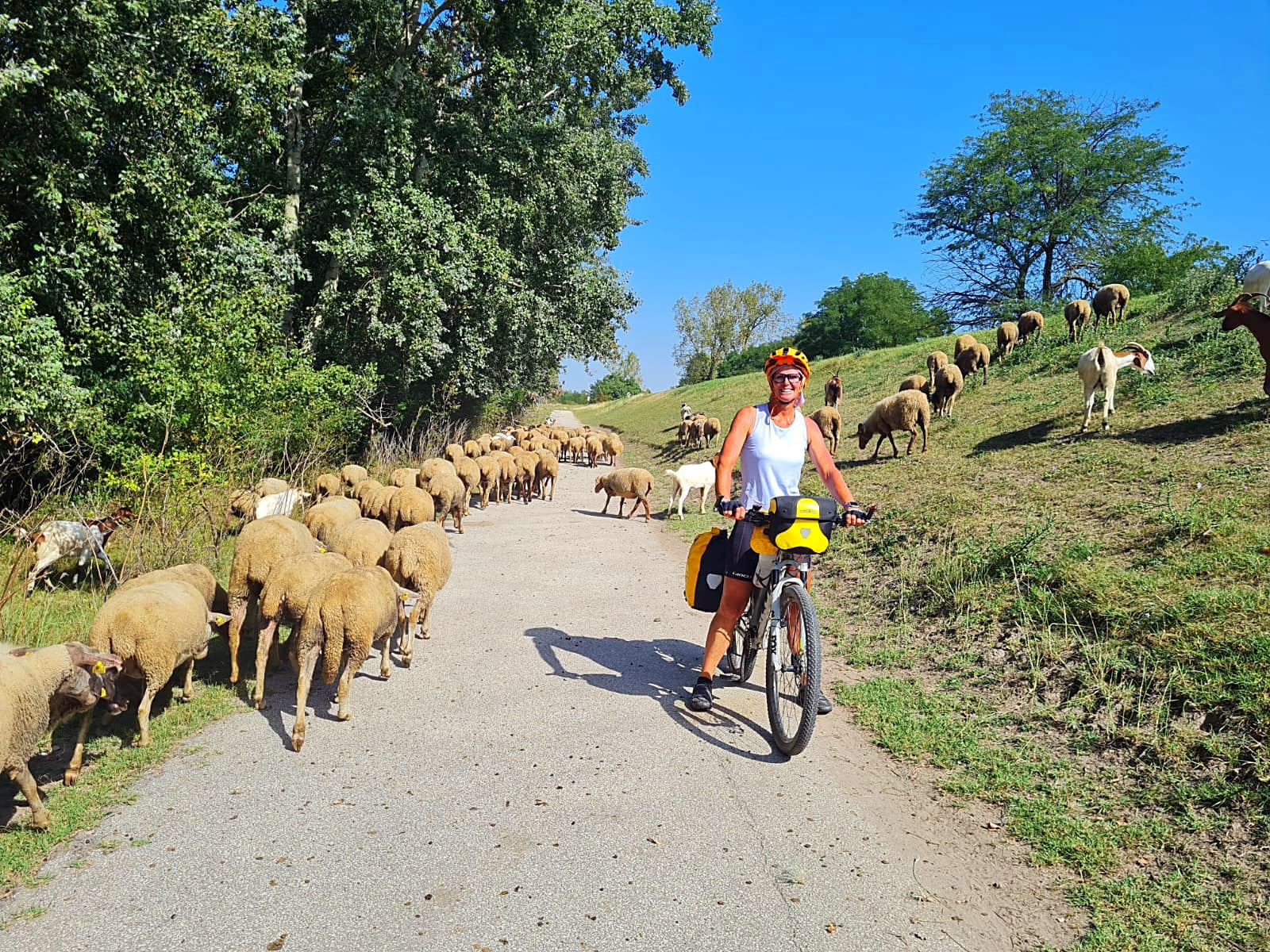
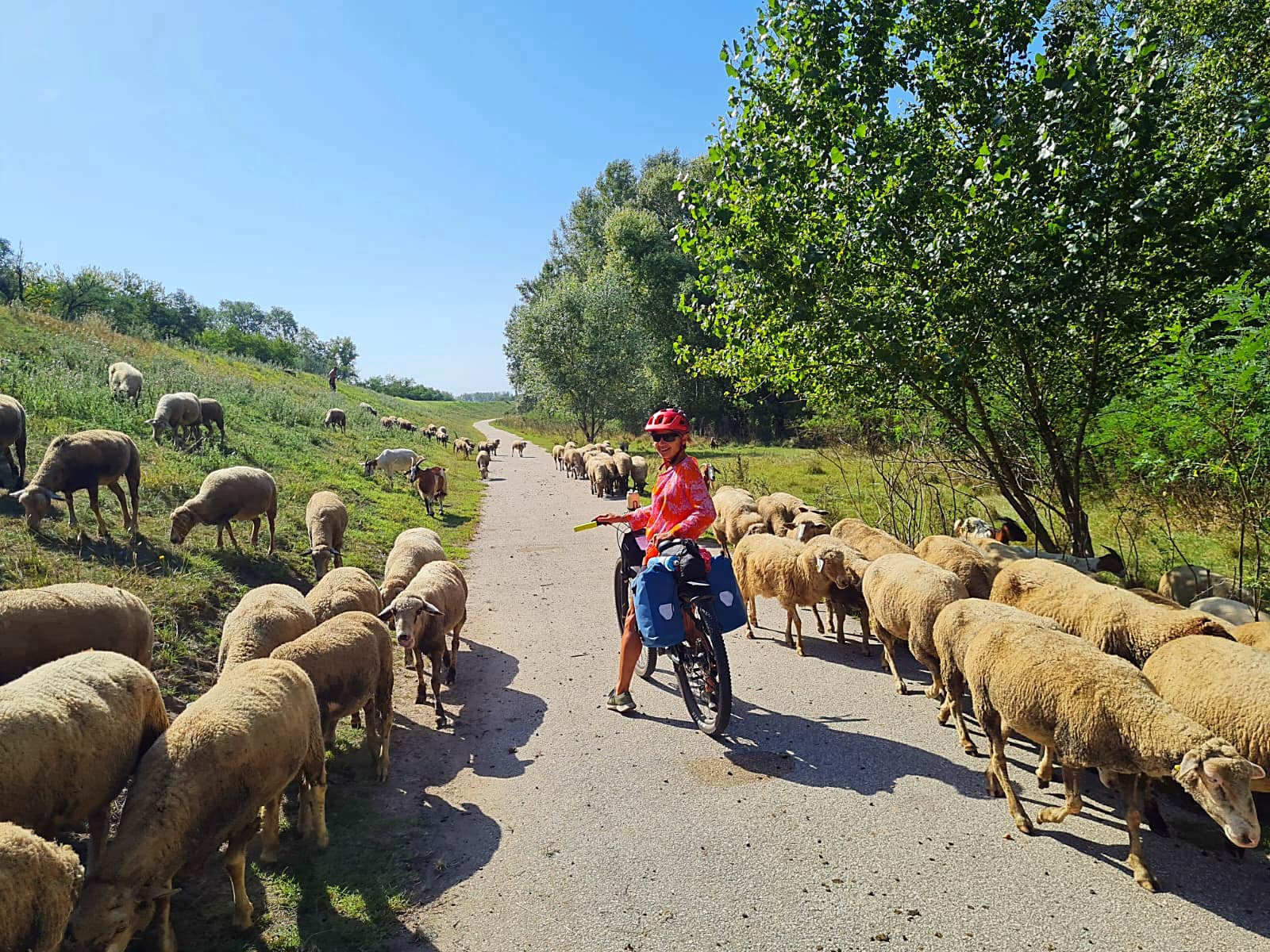
We then hit an unsurfaced track along the flood dyke. There was no shade so it was hot work in about 27 degree heat. There was a bit of a head wind which was both a hindrance and a help. We came across a herdsman moving his sheep, goats and a donkey along the riverside.
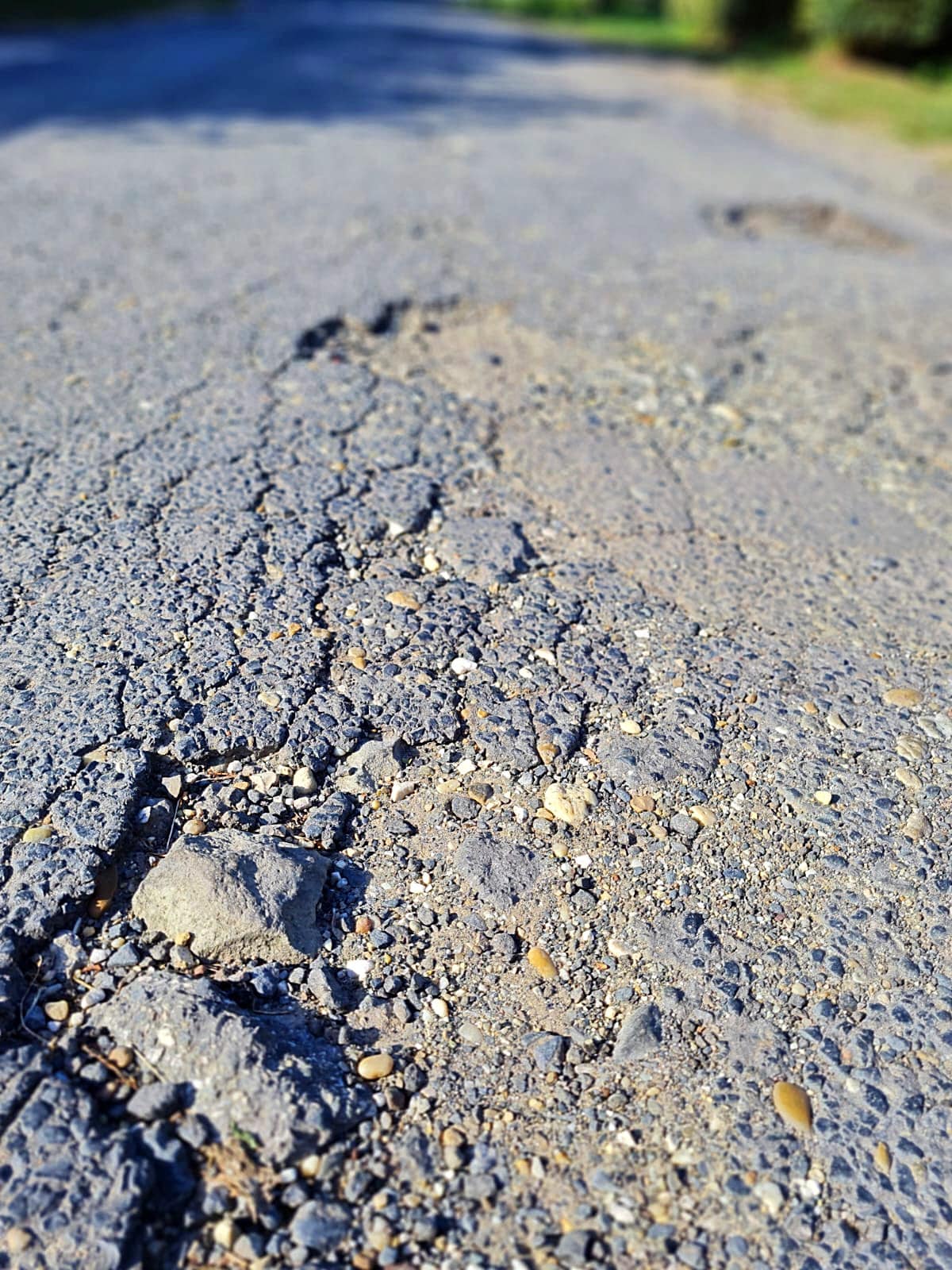
The road conditions in Hungary are pretty poor with lots of potholes which makes for interesting riding when we’re on the road sections.
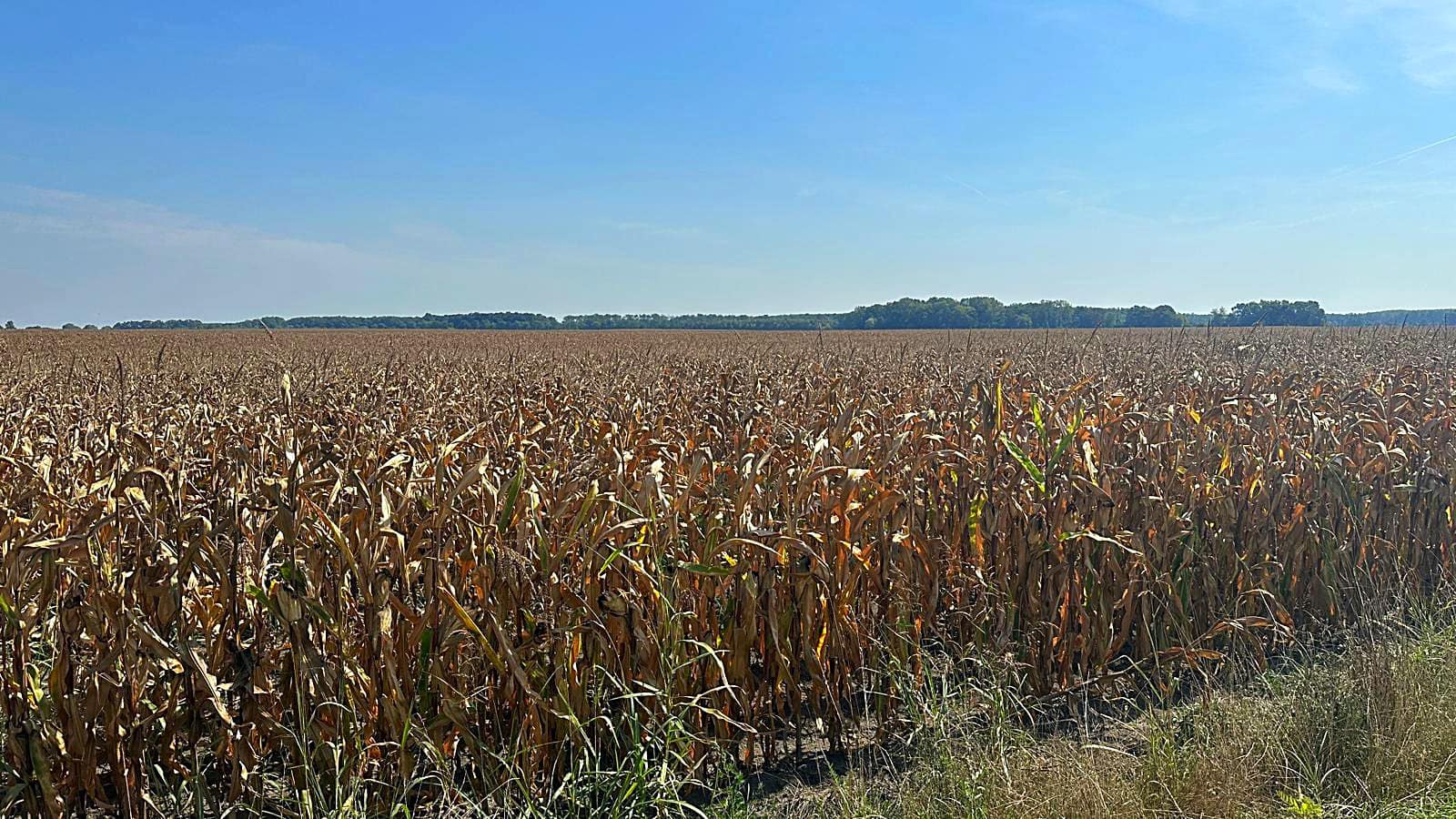
We had a coffee stop in Dunavecse before being back on a cycle path next to the road. We are now traversing the great Hungarian plain which is flat as far as the eye can see.
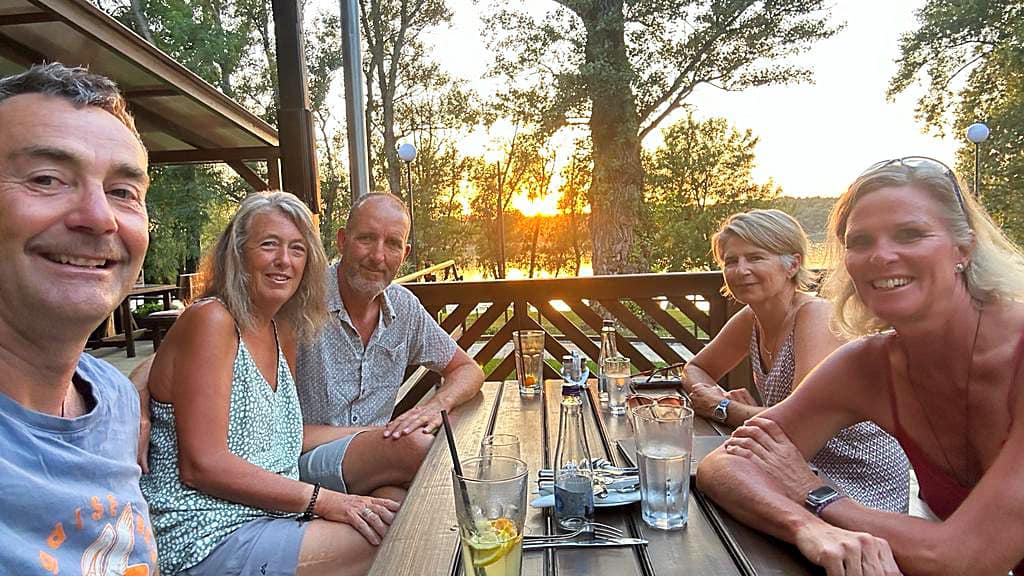
Our lunch stop was in Solt before a thirteen kilometre cycle to Harta which is home for the night. There is nothing of great interest here but our quasi AirBNB is very nice. We biked down to a restaurant on the Danube for dinner. The setting was great but unfortunately the food was definitely not as good as we have been having.
It is getting darker earlier now so we ended up cycling home in the dark using our phones as lights.







Day 44 – Harta to Baja – 74km
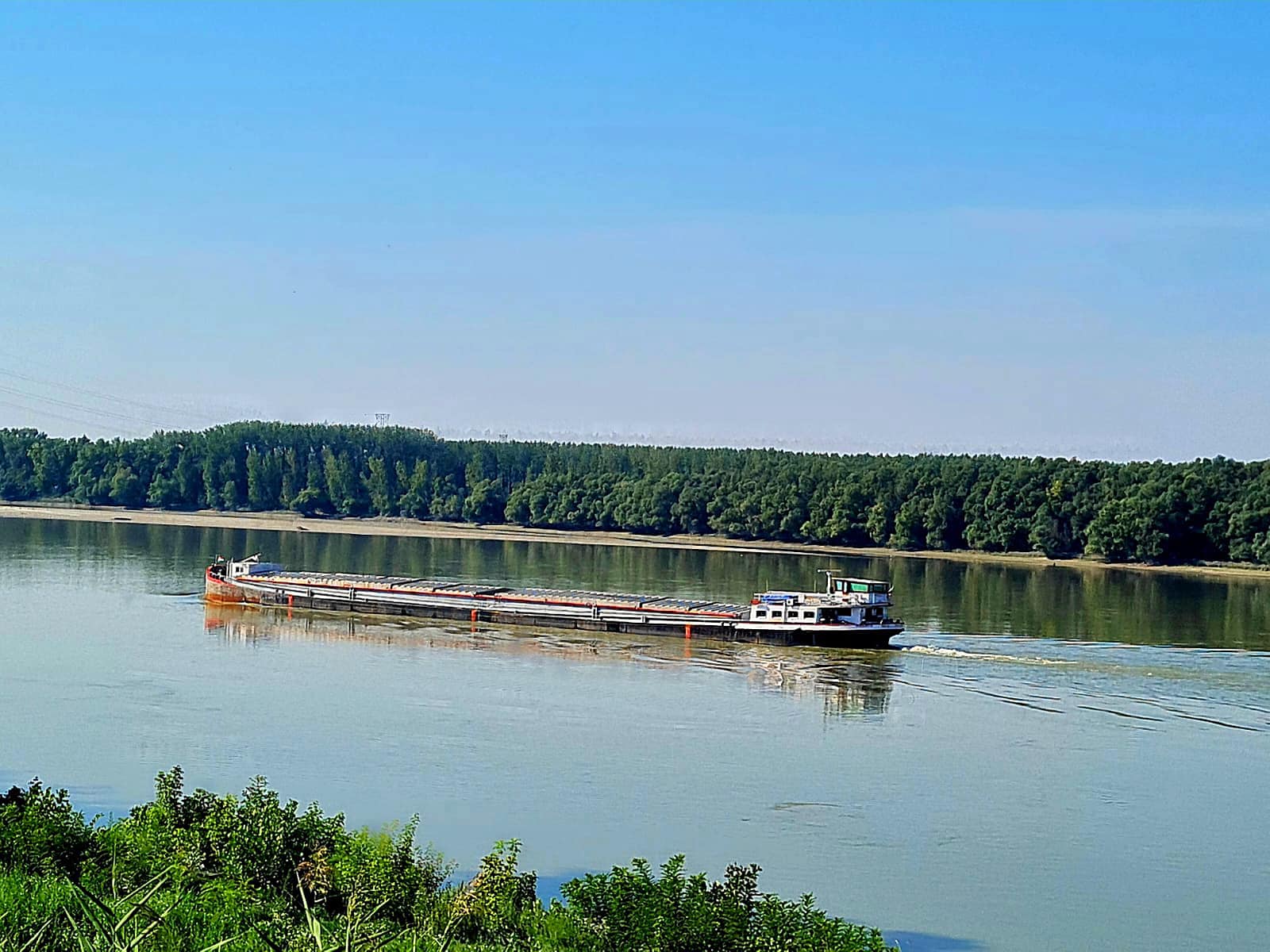
Another blue sky day with temperatures in the late twenties. After leaving Harta we followed the Danube before going inland through some villages.
Andy spotted the statue of Ferenc Rákòczi II and his horse in Ordas, which is carved out of a tree. He was the leader of the 1703 to 1711 uprising against the Hapsburgs.
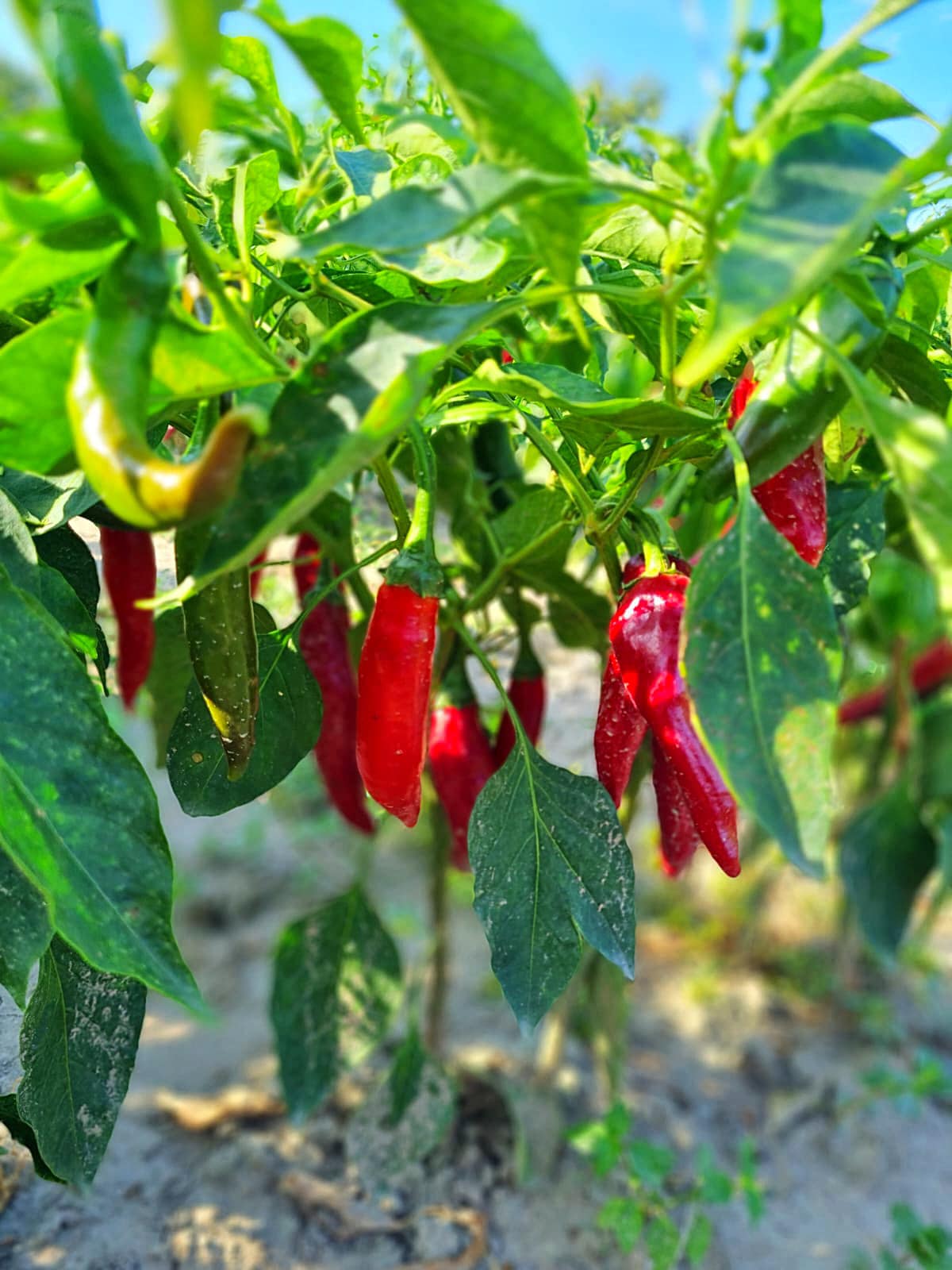
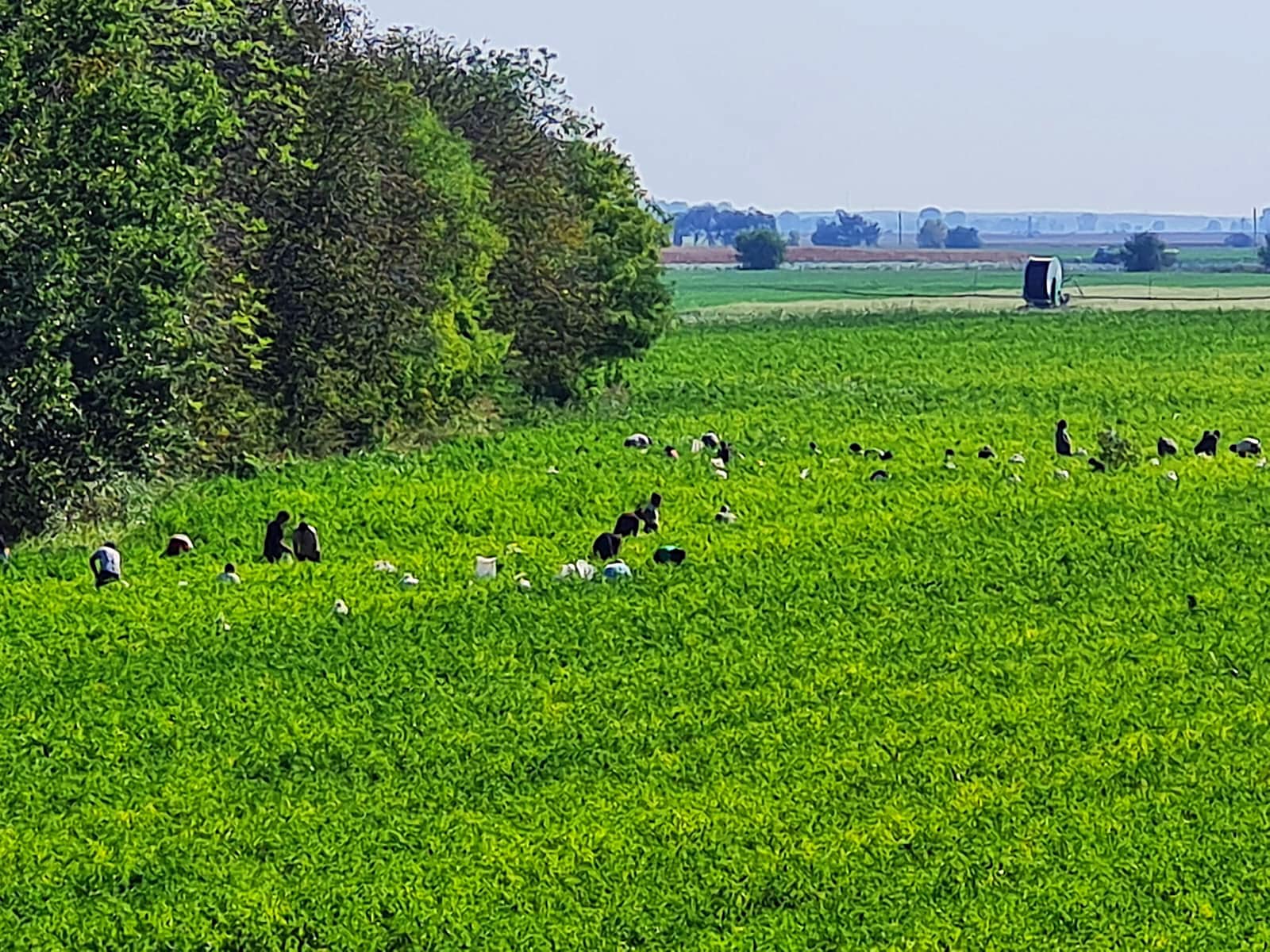
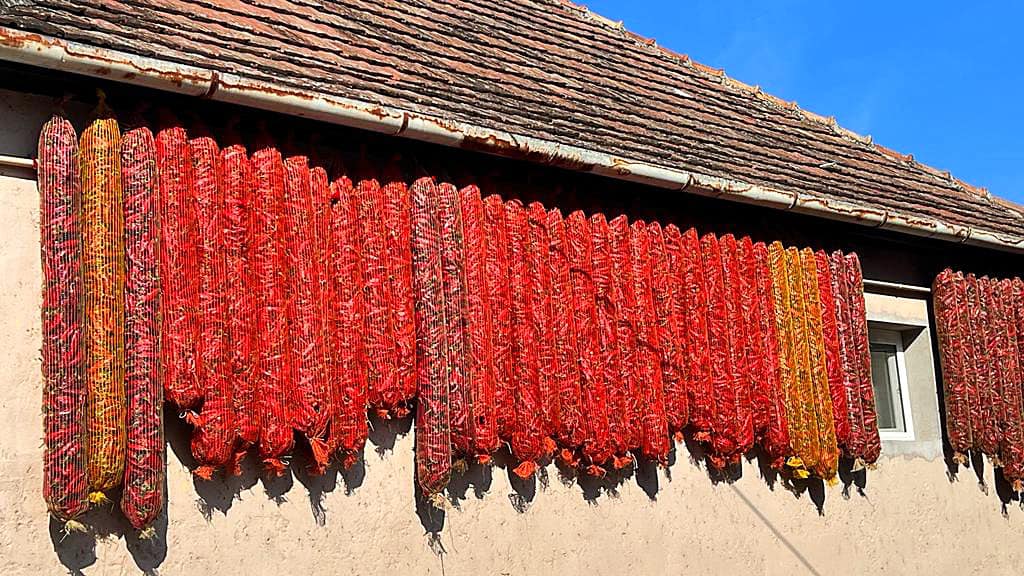
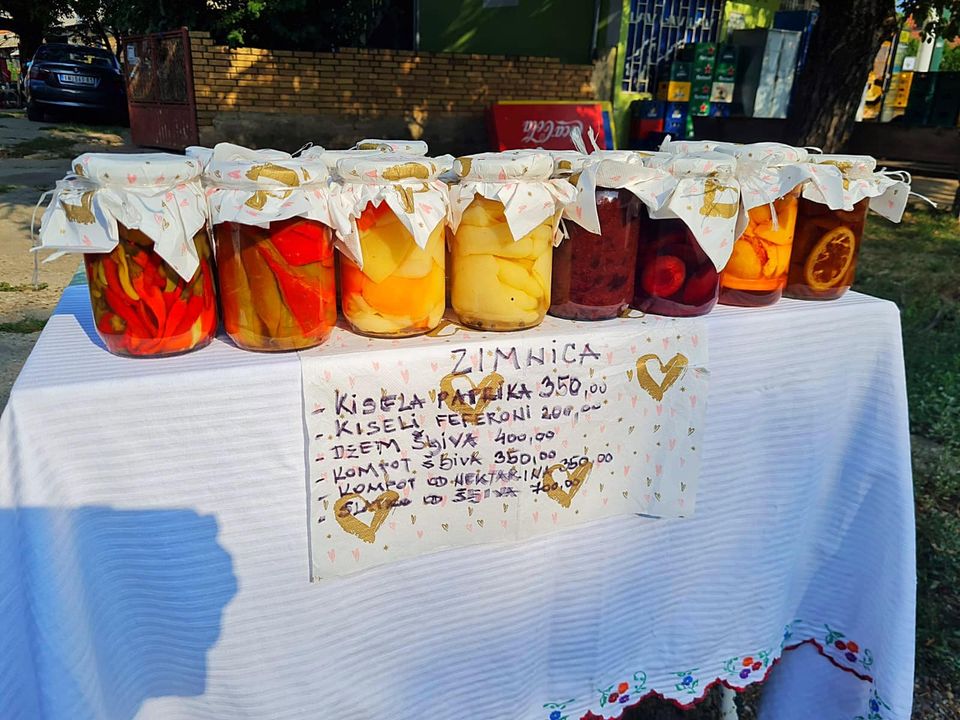
We were looking forward to visiting the town of Kalocsa but the directions got lost in translation and we ended up missing it. It is one of the oldest towns in Hungary. The countryside surrounding Kalocsa is Hungary’s main area for the cultivation of paprika peppers. We saw houses with strings of drying peppers and September is the month they have a paprika festival which brings thousands of visitors.
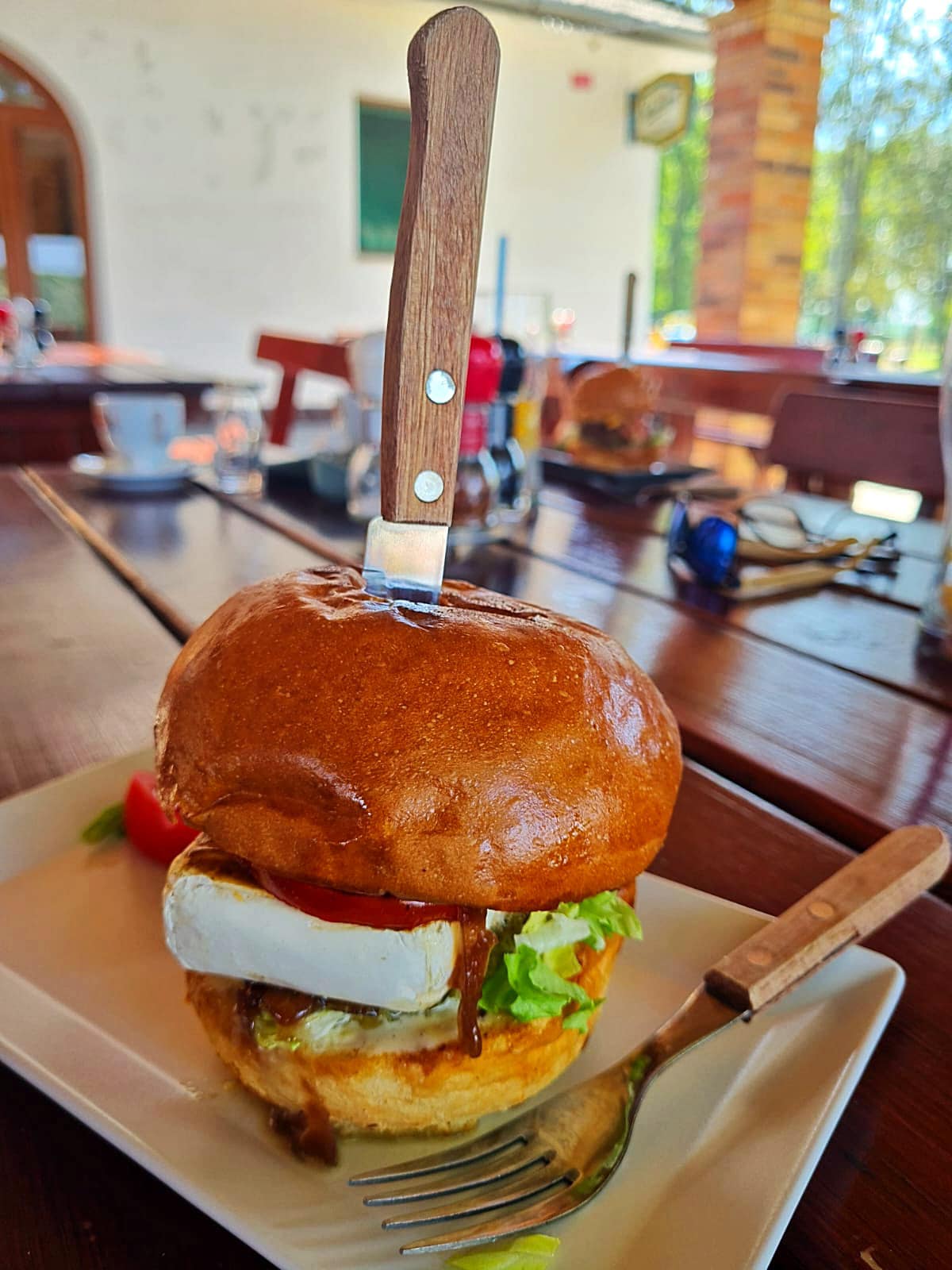
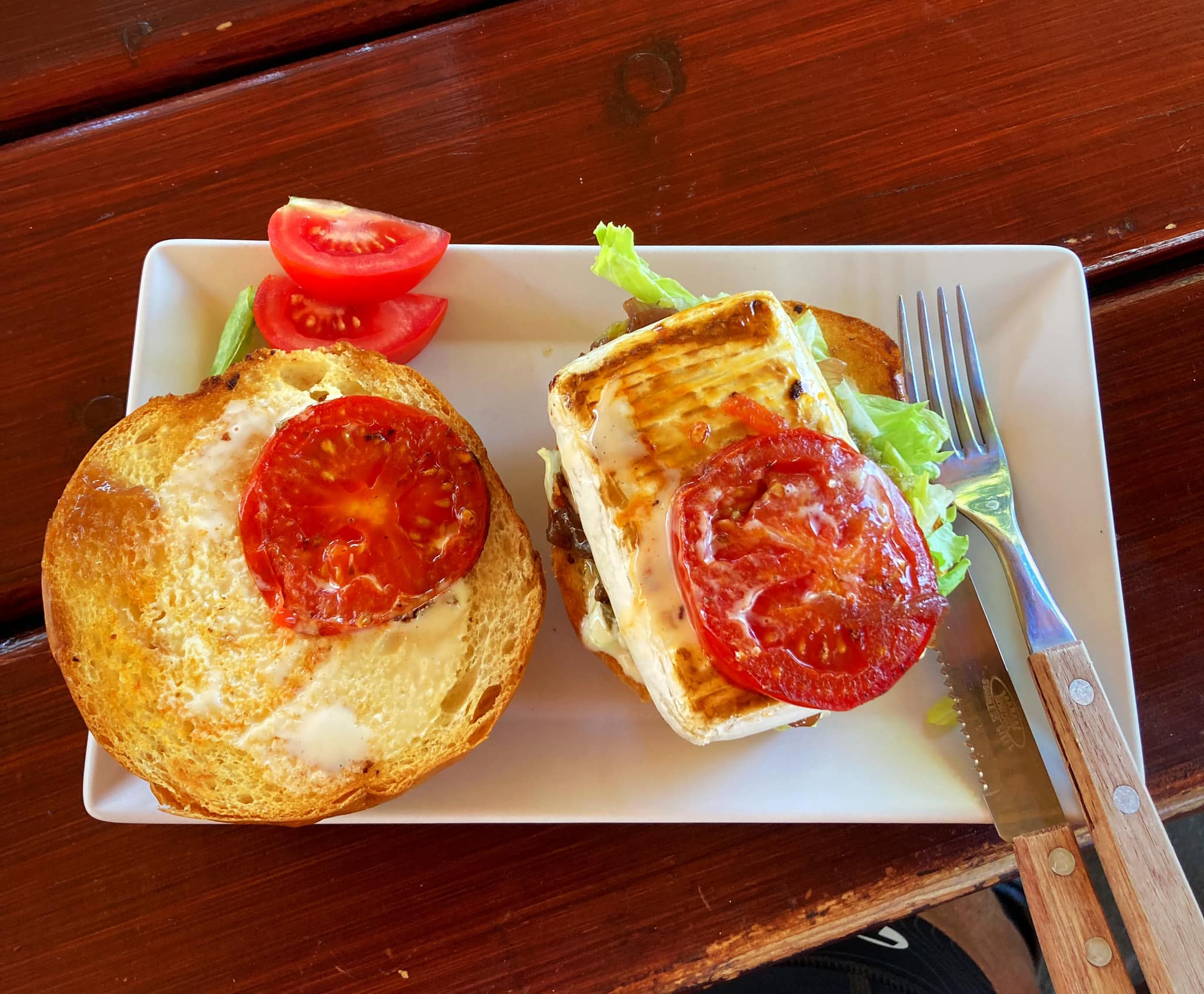
We were now on the flood dykes with very little shade and no coffee stop options in sight. We finally found a shady spot and checked Google for options. Wallah there was a cafe 150 meters away down by the river. We refuelled on coffee and burgers – I had a Camembert one 
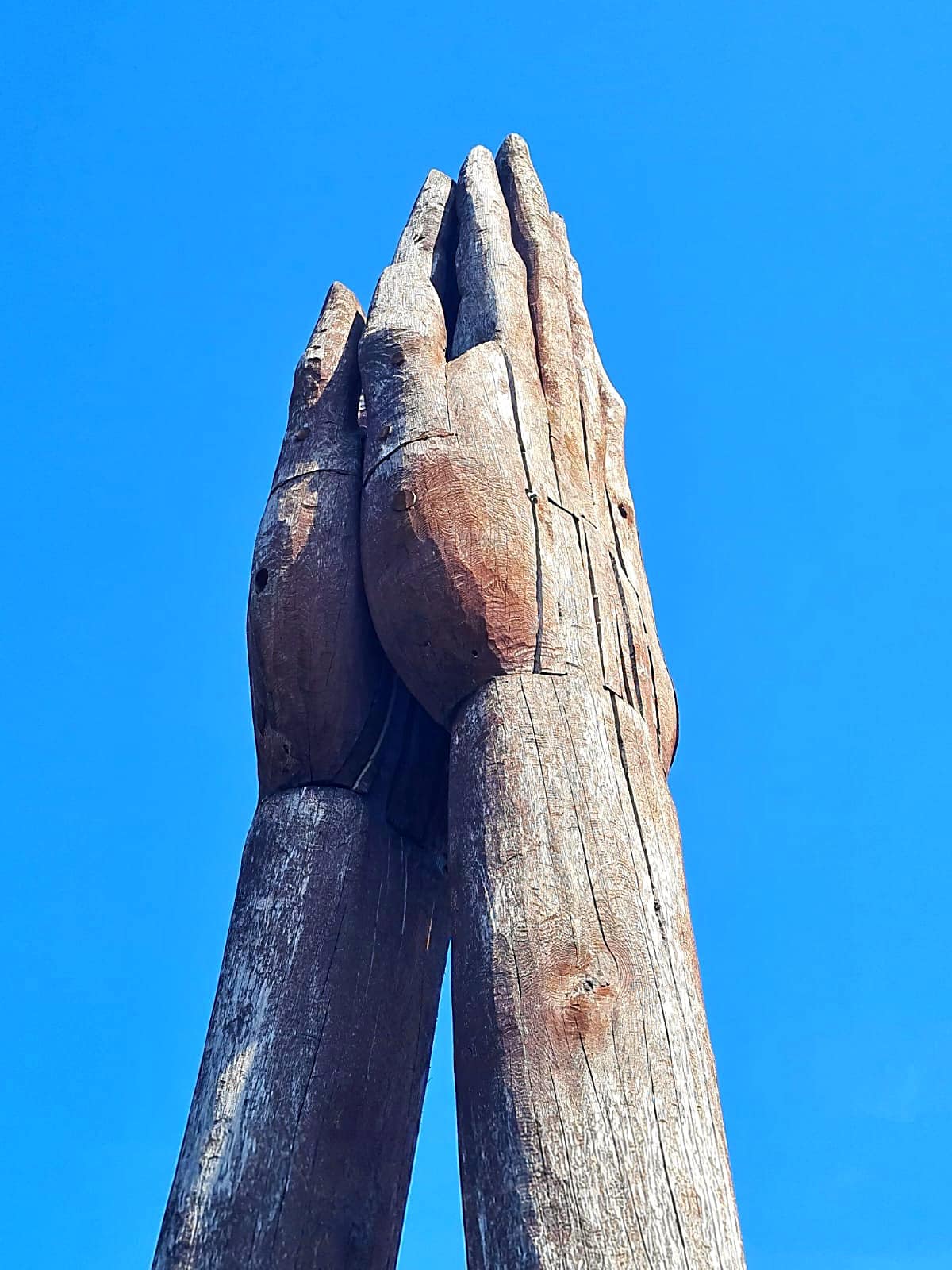
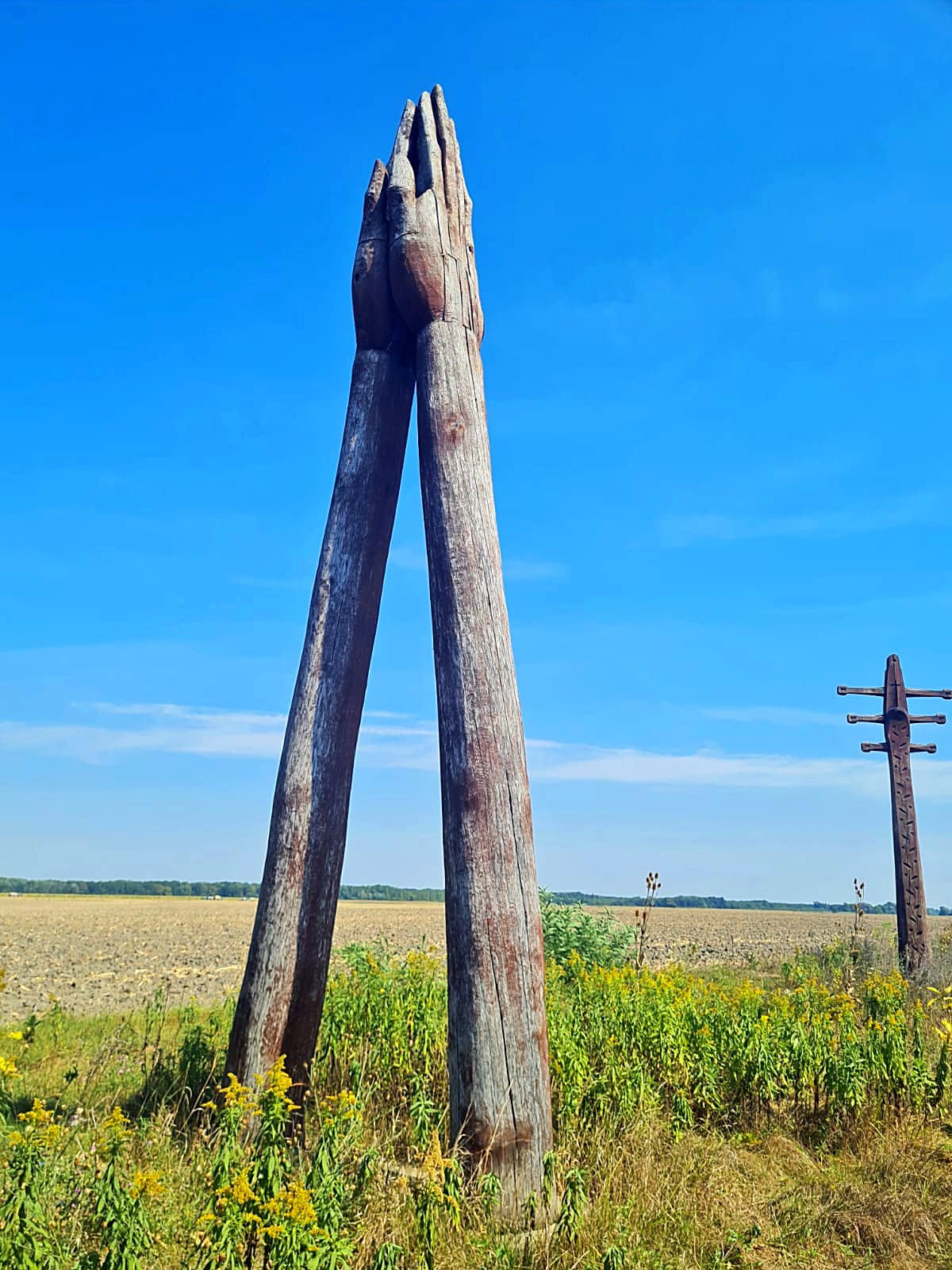
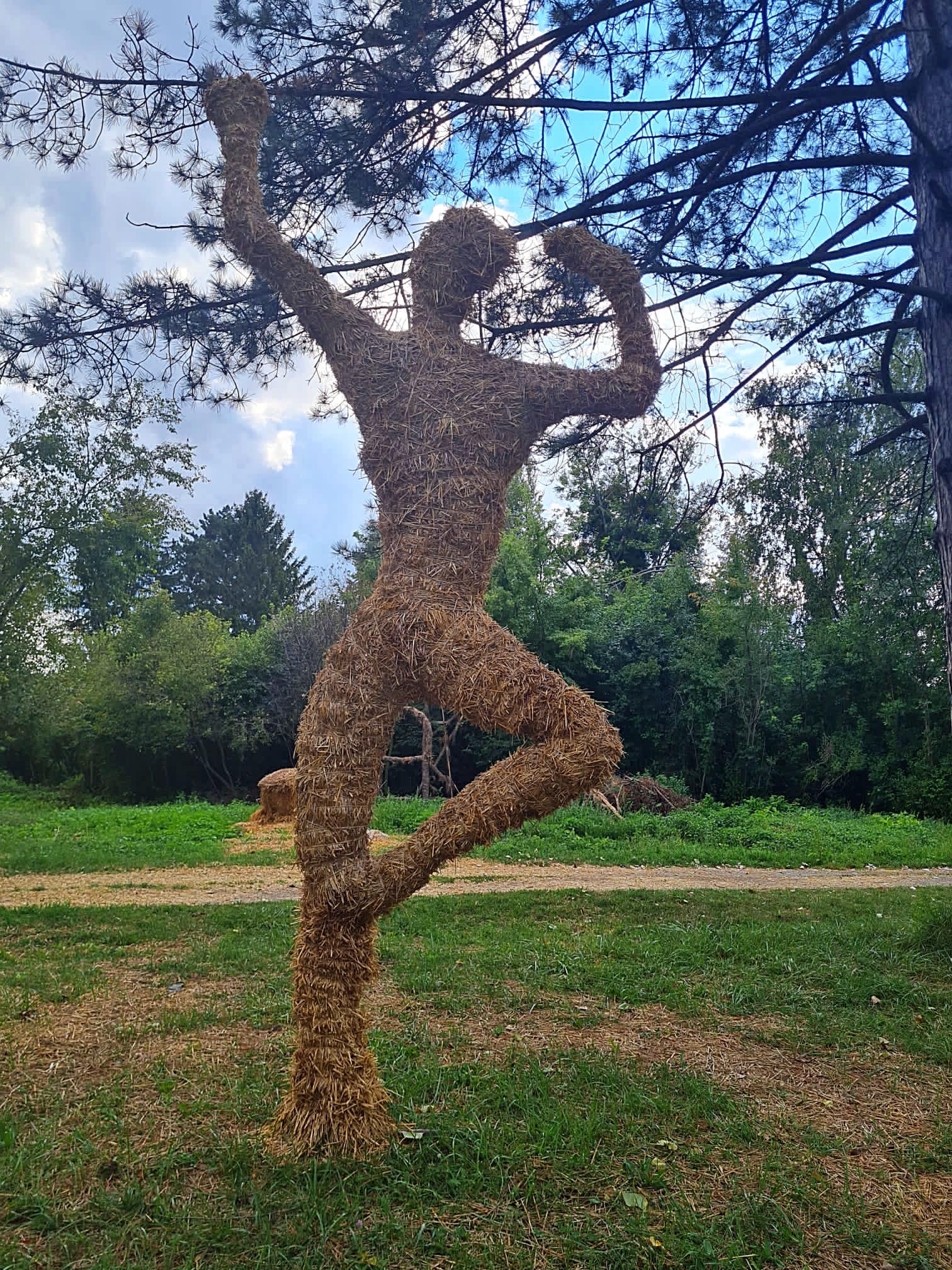
Back onto the flood dykes in full sun and a head wind. It was thirsty work. We came across a group of wooden statues which reminded us of the Maori pouwhenua. Unfortunately we couldn’t find any information about them so are unsure of their meaning and significance.
We arrived into Baja about 2pm and the guy who greeted us at the hotel was so lovely. He wanted to chat and was very interested in our NZ passports. We are staying in the centre of town which is quite bustling with a population of 38,000.
I needed a new cord for my laptop and I found a computer store. I asked the young guy if I could pay for the cable and then bring it back if it didn’t work. He said there was no need to pay, just take it and see how you go. I went back to pay for it and he said if I had any trouble just bring my laptop in and he would take a look. Great service and very trusting.
We enjoyed dinner at a Mexican restaurant down by the river which was nice. Tonight is our last night in Hungary. It has been interesting, the people have been friendly with a good level of English and we’ve enjoyed the food. The cycling has been the least favourite part with poor quality tracks and long, exposed stretches on flood dykes with very little time beside the Danube.
Hungary is a land locked country in Central Europe. It has a population of 9.7 million, mostly ethnic Hungarians and a significant Romani minority.
Hungary came under Habsburg rule at the turn of the 18th century, later joining with the Austrian Empire to form Austria-Hungary, a major power into the early 20th century.
Austria-Hungary collapsed after World War I, and the subsequent Treaty of Trianon established Hungary’s current borders, resulting in the loss of 71% of its territory, 58% of its population, and 32% of ethnic Hungarians. Following the tumultuous interwar period, Hungary joined the Axis powers in World War II, suffering significant damage and casualties. Postwar Hungary became a satellite state of the Soviet Union, leading to the establishment of the Hungarian People’s Republic. Following the failed 1956 revolution, Hungary became a comparatively freer, though still repressed, member of the Eastern Bloc. The removal of Hungary’s border fence with Austria accelerated the collapse of the Eastern Bloc and subsequently the Soviet Union. On 23 October 1989, Hungary again became a democratic parliamentary republic. Hungary joined the European Union in 2004 and has been part of the Schengen Area since 2007.
Hungary is an OECD high-income mixed economy with a very high human development index and skilled labour force. Major industries include food processing, pharmaceuticals, motor vehicles, information technology, chemicals, metallurgy, machinery, electrical goods, and tourism. Hungary is the largest electronics producer in Central and Eastern Europe. Electronics manufacturing and research are among the main drivers of innovation and economic growth in the country. In the past 20 years Hungary has also grown into a major centre for mobile technology, information security, and related hardware research.



Day 45 – Baja (Hungary) to Osijek (Croatia) – 123km
It was our biggest day on the pedals today so we got away at 7am. Baja was already buzzing with people going about their daily business.
After the first few kilometres we were then on the flood dyke heading for Újmohács to cross the Danube at the 34 kilometre mark. We all missed the turning resulting in a few extra kilometres on todays total. Back we went to find the turn and made it just in time to jump on the ferry to Mohács, which is the last town in Hungary on our trip.
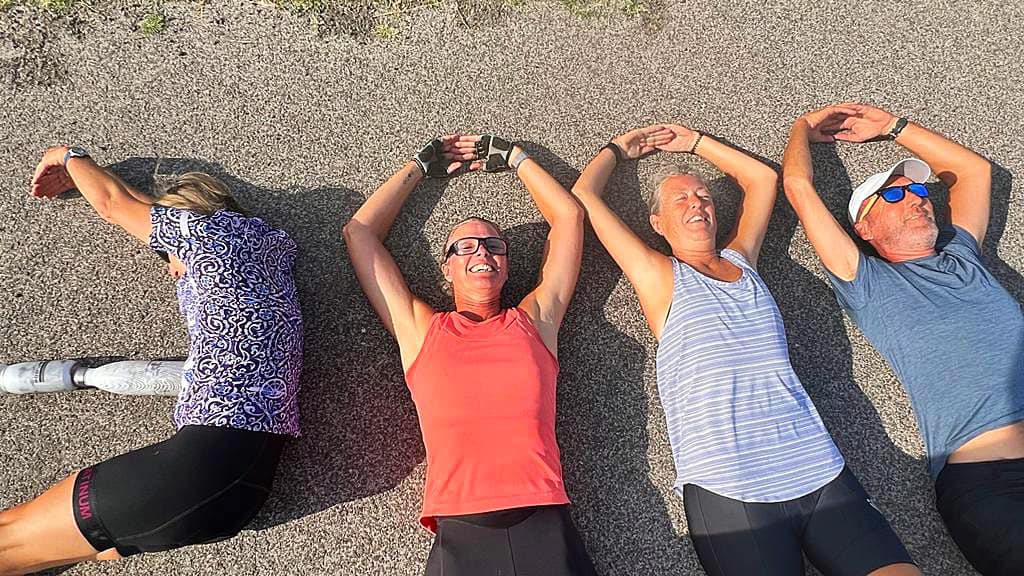
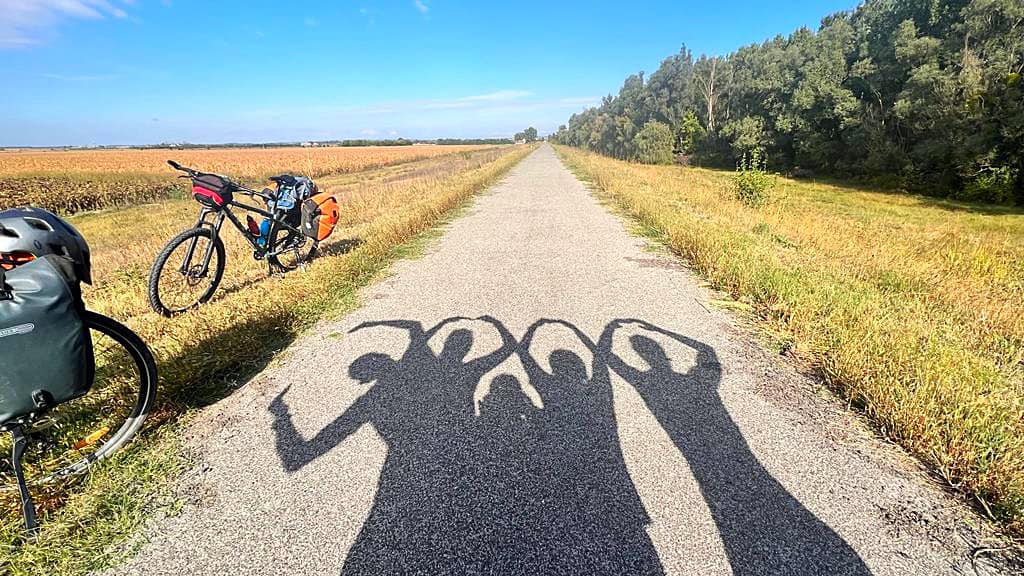
Three kilometres after Mohács we hit the 3000 kilometre mark so had great fun trying to make a 3000 sign – I hope you’re all impressed with our efforts.
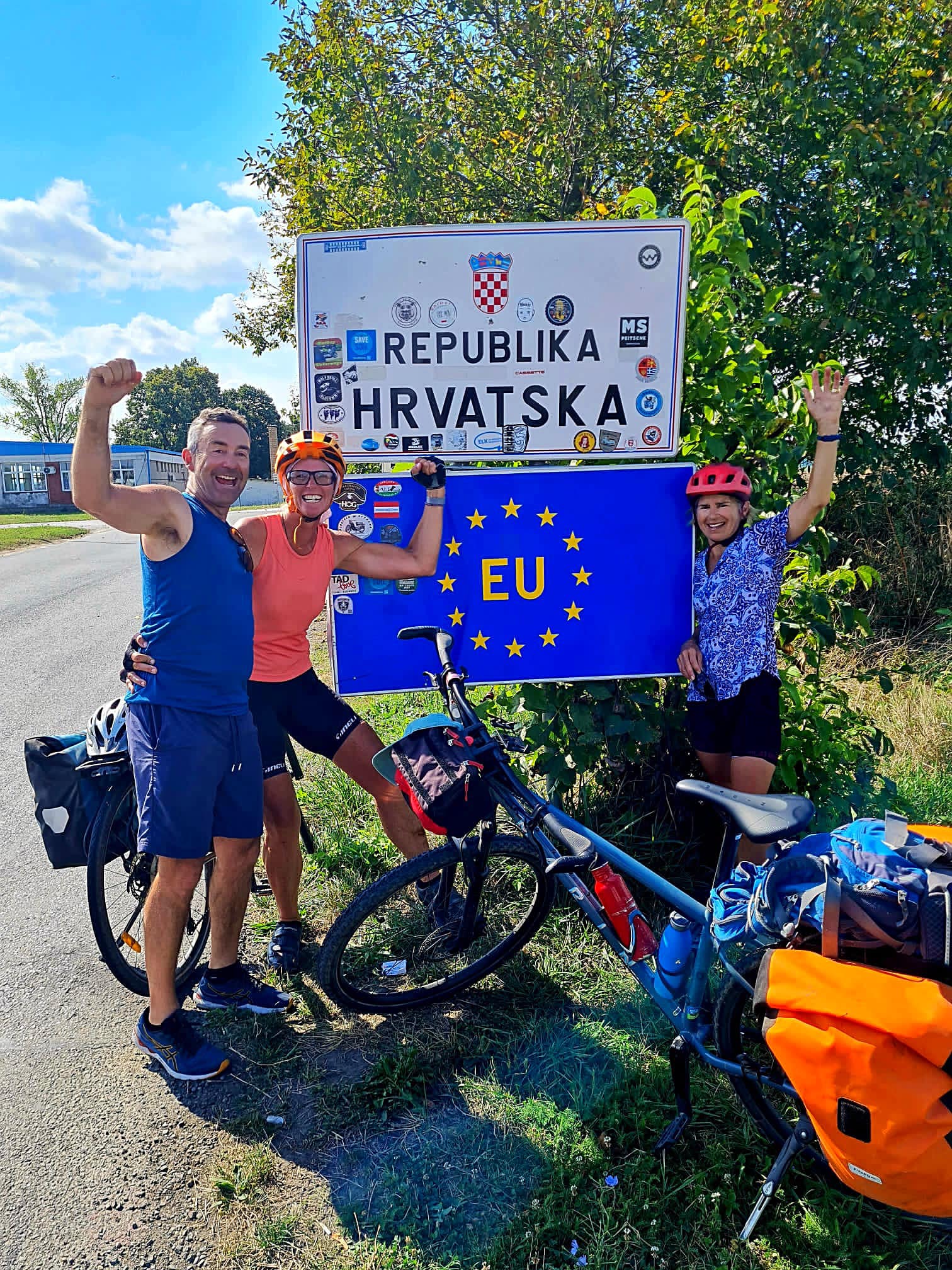
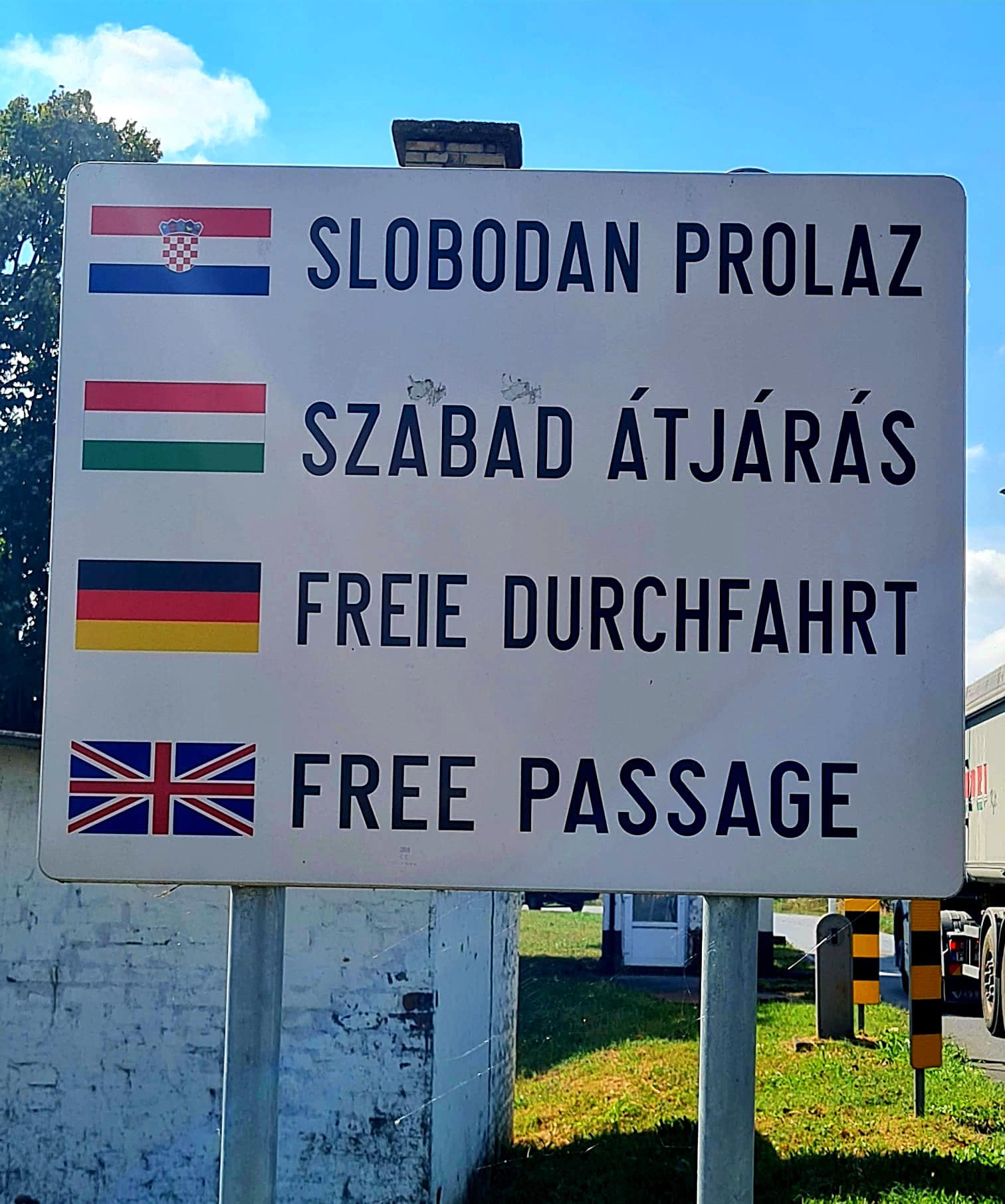
Another fourteen kilometres on and we crossed the border into Croatia or Republika Hrvatska which is our seventh country on the Euro Velo 6.
Just before the border we came across an old Iron Curtain watchtower.
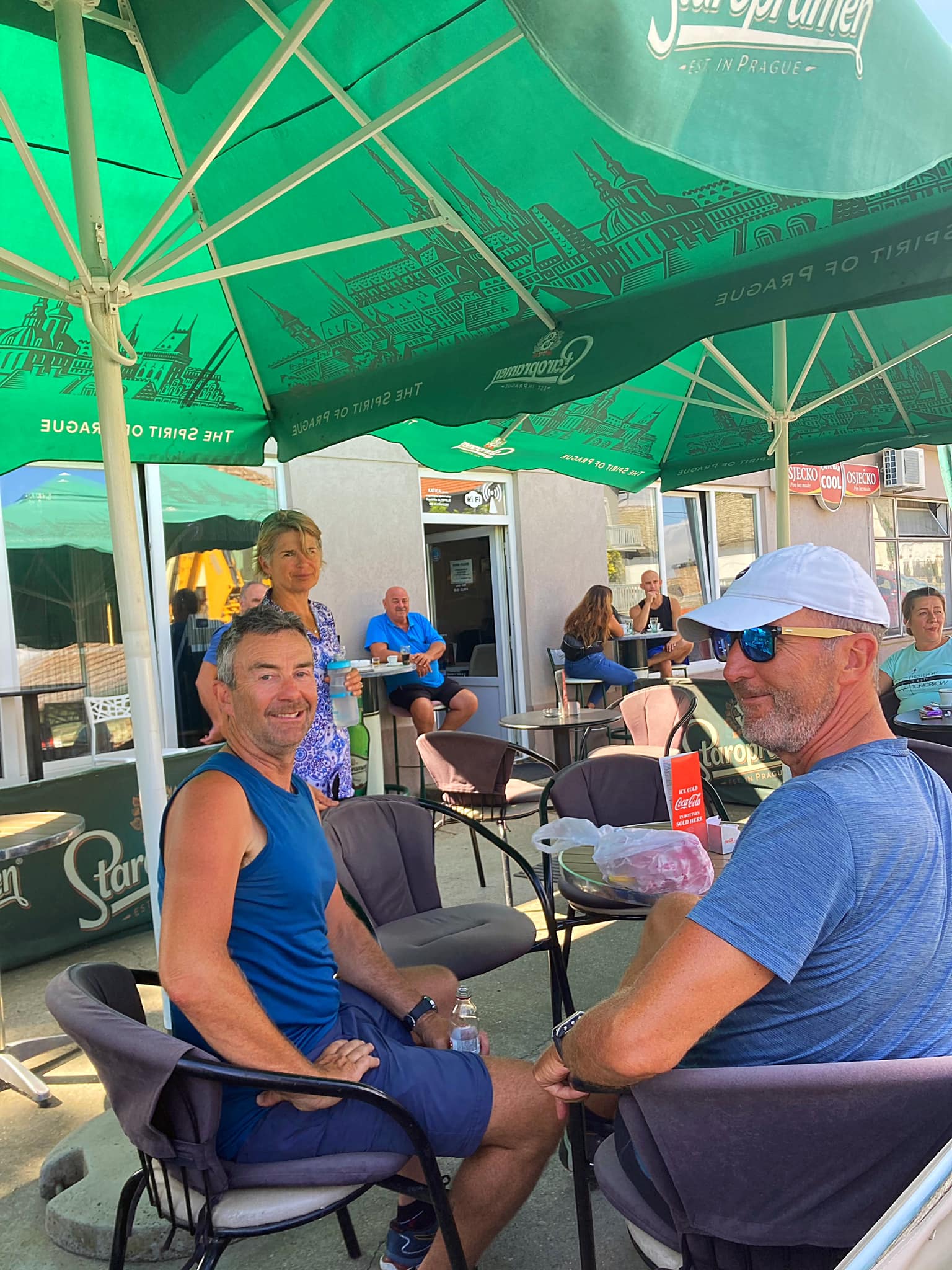
We found a coffee shop in the village of Topolje. The proprietor didn’t speak English but there was a young guy (customer) in the shop who did, so he helped us out. His name was Mikey and Andy struck up a conversation with him. His mother had been displaced to Germany during the Yugoslav Civil War and that is where he had been born. After the war ended they were asked to leave Germany and return to Croatia. Mikey ended up going back to Germany to study but has just shifted back to Topolje where he said work is scarce. Mikey then went on his way.
We enjoyed our coffee on the terrace out the front and then I went in to pay the bill. The proprietor said ‘no Mikey paid”. What a lovely start to our stay in Croatia. I left a little brass kiwi with the proprietor to give to Mikey next time he’s in to thank him for his kindness to the five kiwis whose day he made.
This part of Croatia is an important wine growing region that suffered badly during the Yugoslav Civil War. This was very evident in the villages we went through with a lot of damaged, derelict and abandoned houses and buildings. Whole villages have been left in rack and ruin thirty years on.
The Yugoslav Wars were a series of separate but related ethnic conflicts, wars of independence, and insurgencies that took place in the SFR Yugoslavia from 1991 to 2001. The conflicts both led up to and resulted from the breakup of Yugoslavia, which began in mid-1991, into six independent countries matching the six entities known as republics which previously comprised Yugoslavia: Slovenia, Croatia, Bosnia and Herzegovina, Montenegro, Serbia, and North Macedonia (then named Macedonia). Yugoslavia’s constituent republics declared independence due to unresolved tensions between ethnic minorities in the new countries, which fuelled the wars. While most of the conflicts ended through peace accords that involved full international recognition of new states, they resulted in a massive number of deaths as well as severe economic damage to the region.
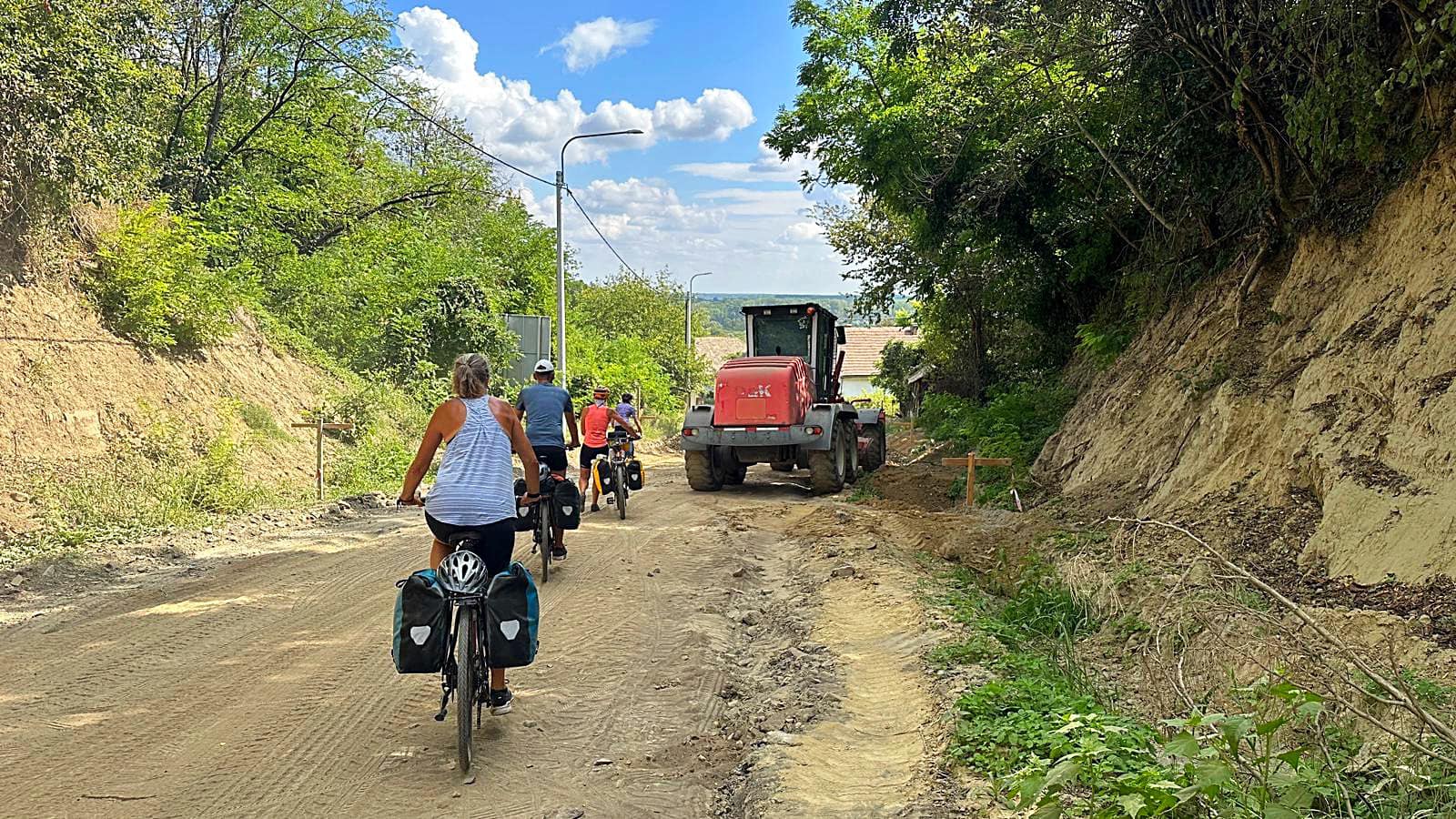
The afternoon’s cycling was mainly on rural roads. One road was under construction but a helpful local told us that we could get through on our bikes. The road workers were very friendly, saying hello, and threatening to hose us down. I’m sure in NZ we would have had to detour and there would have been 25,000 road cones in our way 
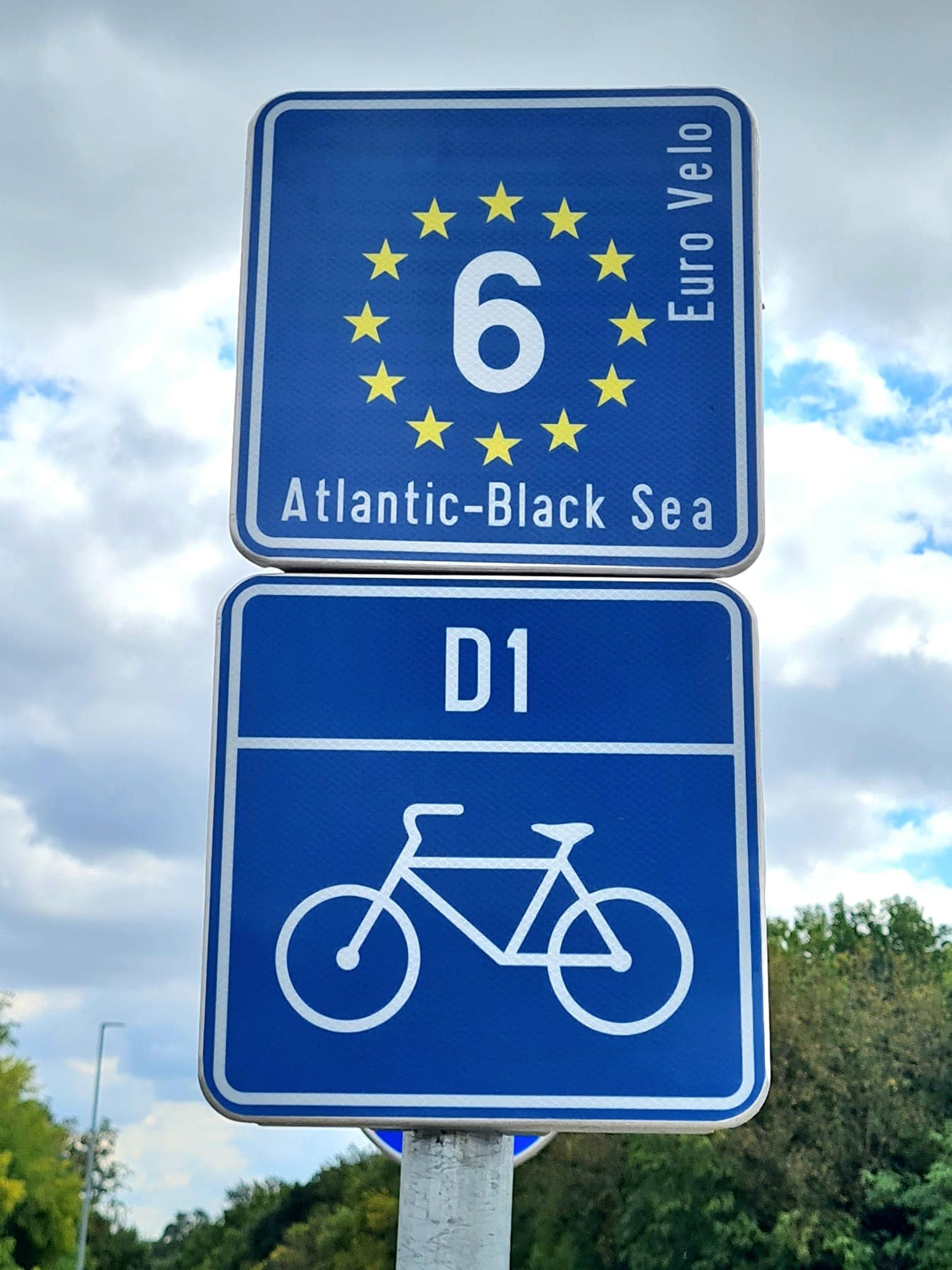
The Euro Velo 6 overlapped in part with what they call the The Amazon of Europe which spans across almost 1 million hectares of highly valuable natural and cultural landscapes, where the 3 rivers Mura, Drava and Danube connect Austria, Slovenia, Croatia, Hungary and Serbia into the world’s first 5-country UNESCO biosphere reserve.
We arrived into Osijek at about 3.30pm. Fortunately it hadn’t been as hot as previous days but still hot enough to warrant a trip to the supermarket to get beers and snacks for the team before going about our usual tasks of showering and laundry.
Osijek has a population of 108,000 and sits beside the River Drava 25km above its confluence with the Danube.
During the 20th century Osijek became an important industrial city, the oil refinery being a particular target for heavy allied bombing during the Second World War.
Osijek held out against an attack by Serbian forces of the Yugoslav National Army during the civil war (1991 to 1995) when it is estimated that 6000 shells landed in the city. Many residents fled with those remaining sleeping in bomb shelters. Most of the damaged buildings have now been restored. About 800 people were killed by Serbian shelling and air strikes; while atrocities against Serbs by Croatian forces have led to five Croats, including the Croatian commander General Glavaš, being imprisoned for war crimes.










Day 46 – Osijek (Croatia) to Backa Palanka (Serbia) – 93km
Another early start to beat the heat which again wasn’t too bad, with a bit of cloud cover for good measure.
Our first 44 kilometres was almost entirely on the road and was through an area that was a heavily fought over front line during the Yugoslav Civil War. The guide book said we may see signs warning of possible land mines and unexploded ordinance which fortunately we didn’t. We certainly saw houses and buildings that had been damaged by shelling though.
We stopped in Dalj for coffee – the coffee shop served coffee, beer and wine only and was full of men (young and old) chewing the fat, enjoying a coffee or a beer or a wine all at 8.30am 
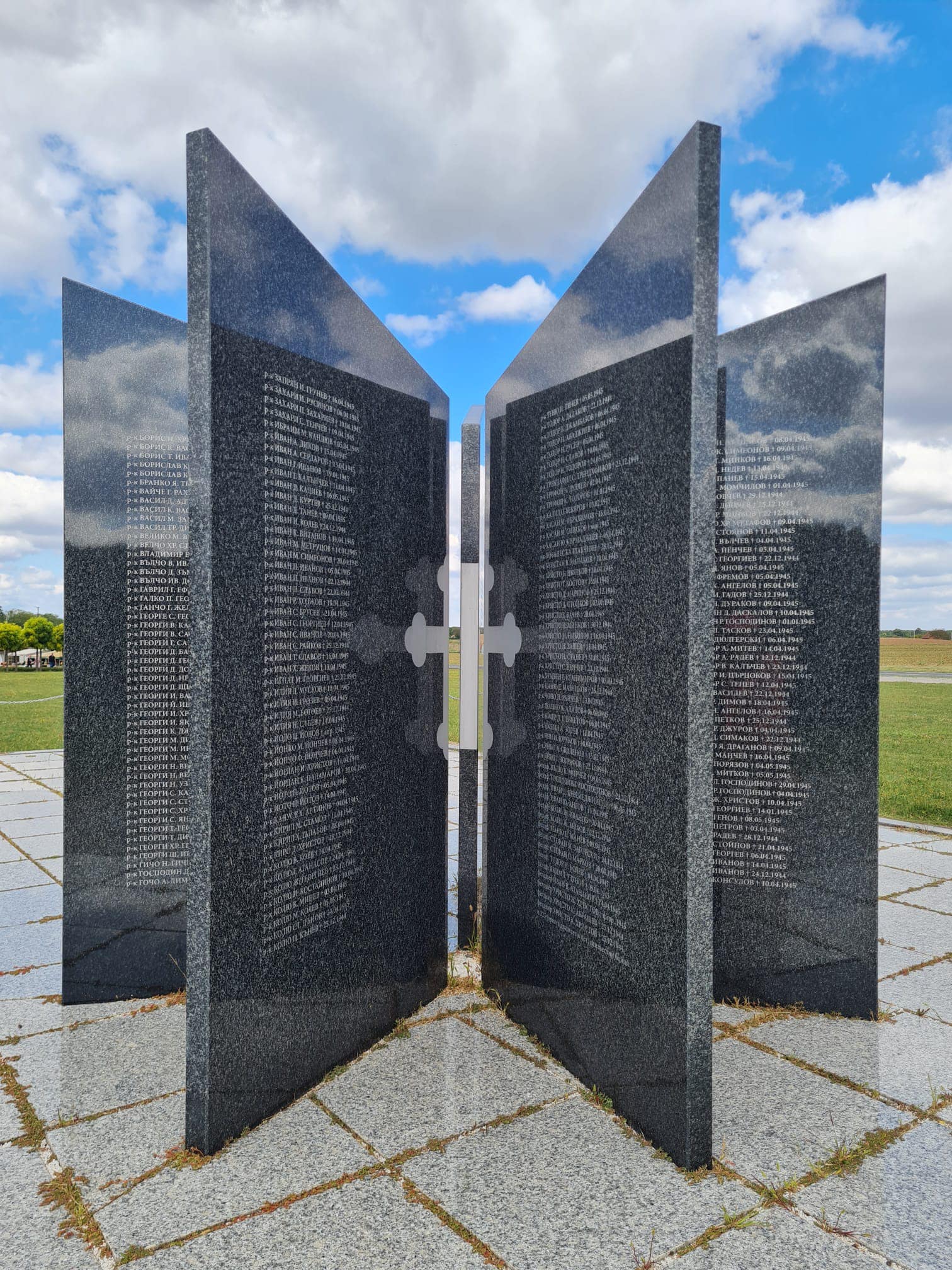
The first part of the route today had many memorials to the people who lost their lives in the war. There was also a memorial to the 714 Croat survivors of Serbian concentration camps.
We entered Vukovar at the 44 kilometre mark which has a current population of 27,000 (pre the war this was 46,000). After the Turkish occupation (1526 to 1687) the land was repopulated by a mixture of nationalities including Germans, Slovaks, Ukrainians and Russians, in addition to returning Croats and Hungarians, thus establishing a situation that would contribute to the disaster which occurred some 300 years later.
When the war broke out in 1991, Vukovar was on the front line. Battle for control of the city lasted 87 days and it is estimated that Yugoslav and Serb forces fired up to 12,000 shells and rockets into the city per day, making it the fiercest European battle since the Second World War. The city was completely destroyed and most of the population fled, many never to return. Post war recovery has been slow and Vukovar remains an ethnically divided city where approximately equal numbers of Croats and Serbs remain wary of each other’s actions and intentions.
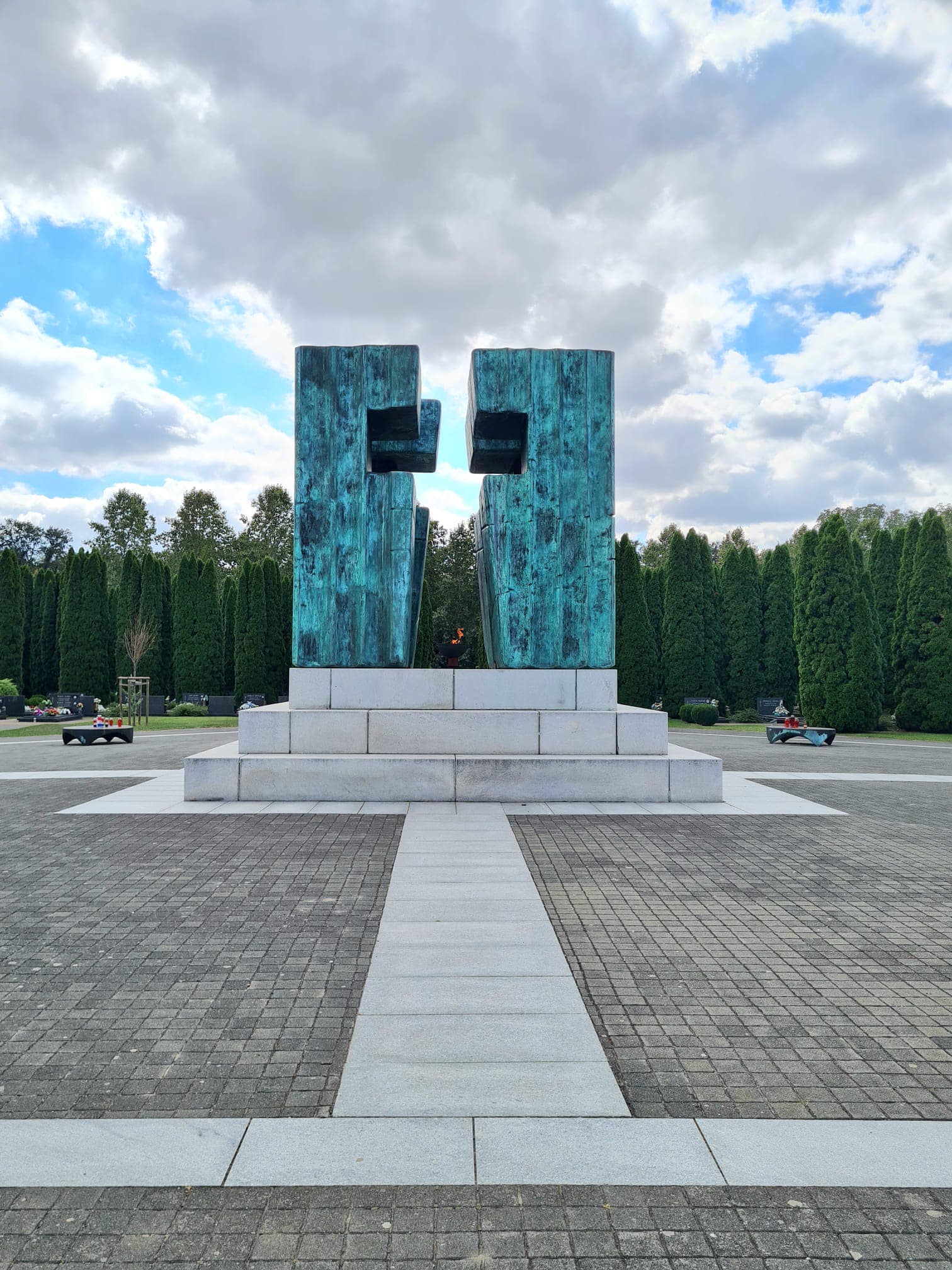
We visited the memorial (brac and pazin stone cross) erected in honour of all fallen defenders for Croatian freedom in October 1998 at the estuary of river Vuka. It was a gift from the Croatian Navy, military district Pula. The words “Navik on Zivi ki zgine posteno” (“Die Honourably, Live Forever”) are inscribed at the bottom of the Cross in the eldest Croatian script, the Glagolitic.
We also visited the shell marked and battered water tower that has been preserved as a symbol of the conflict.
One of the information boards had the following written on it which I thought was very poignant.
“Vukovar is a metaphor for life.
Life is never a straight line. Sorrow and joy, tears and laughter, rises and falls weave together all the time. “
After leaving town we stopped at the Vukovar war cemetery before descending and ascending on a plateau beside the Danube Valley. Our route has been so flat that this was a bit of a shock to the system but we all coped admirably.
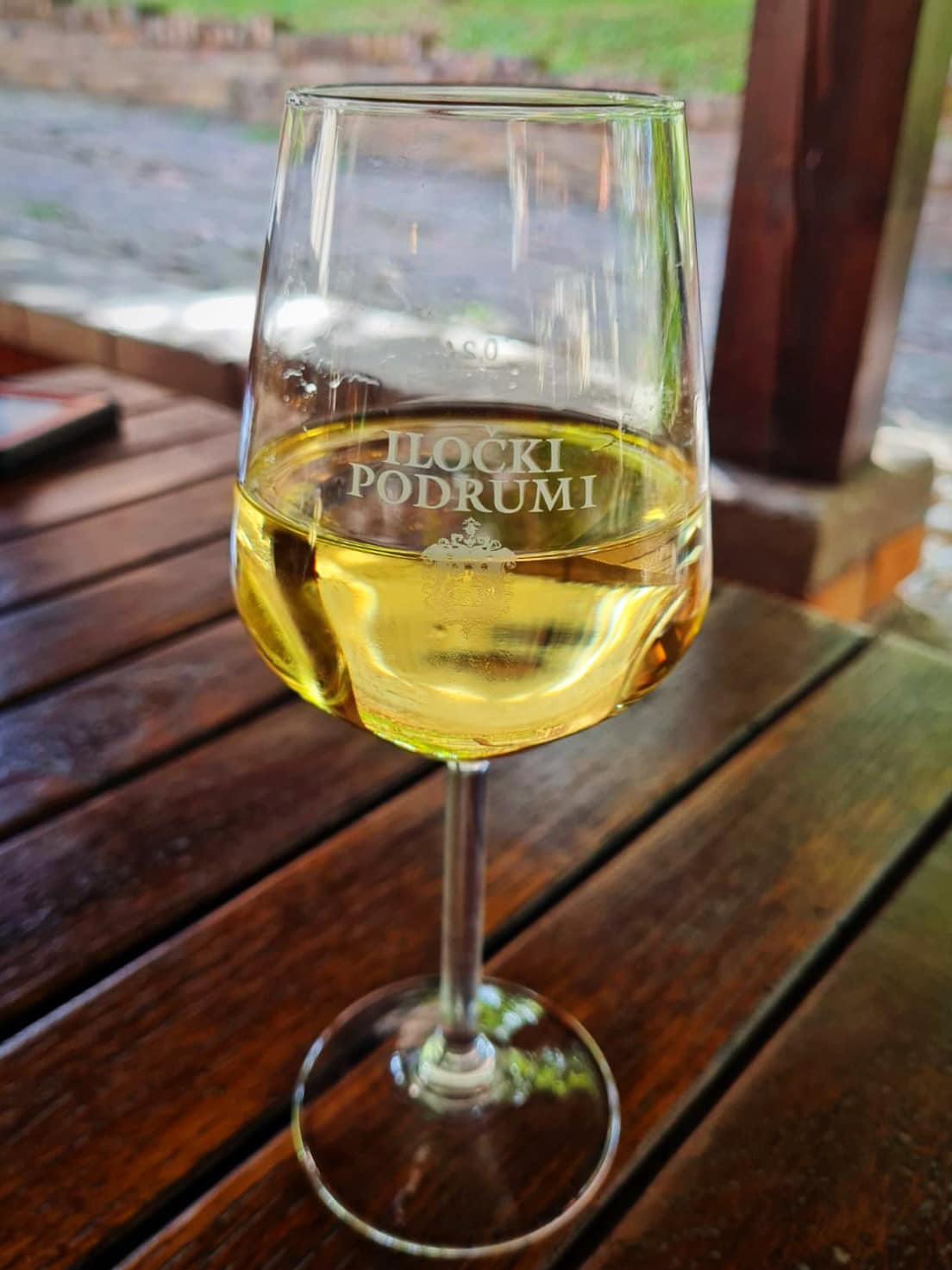
Before crossing the border into Serbia we stopped at a Croatian winery called Ilocki Podrumi which is a large winery still preserving the Croatian winemaking tradition. I tried a Traminac which I would liken to a Pinot Gris.
JP and wine create a very entertaining combination and we were wondering if our visit to a winery just before crossing our first border check point was a good idea. Apparently she was going to be very “elequent” if questioned 
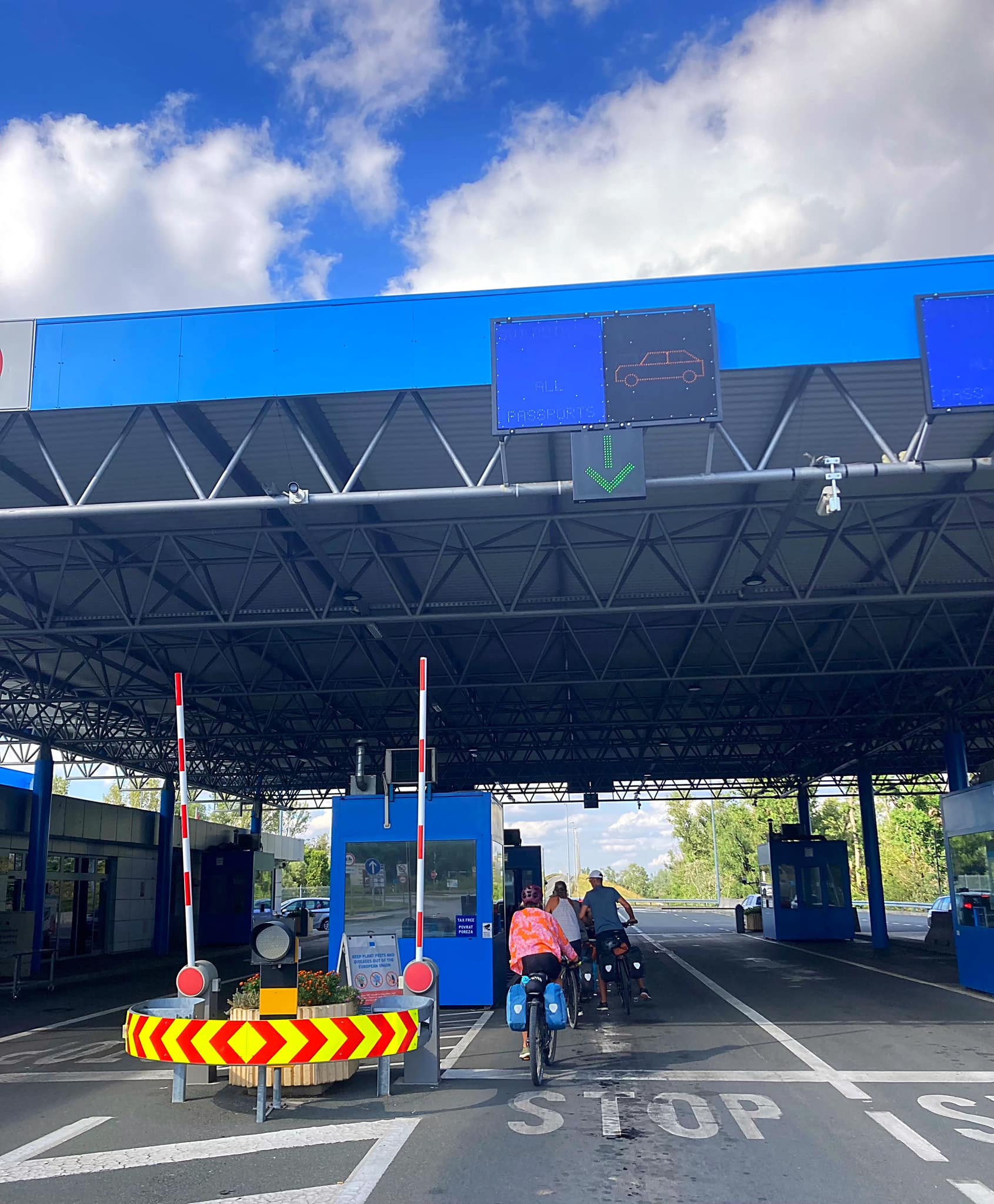
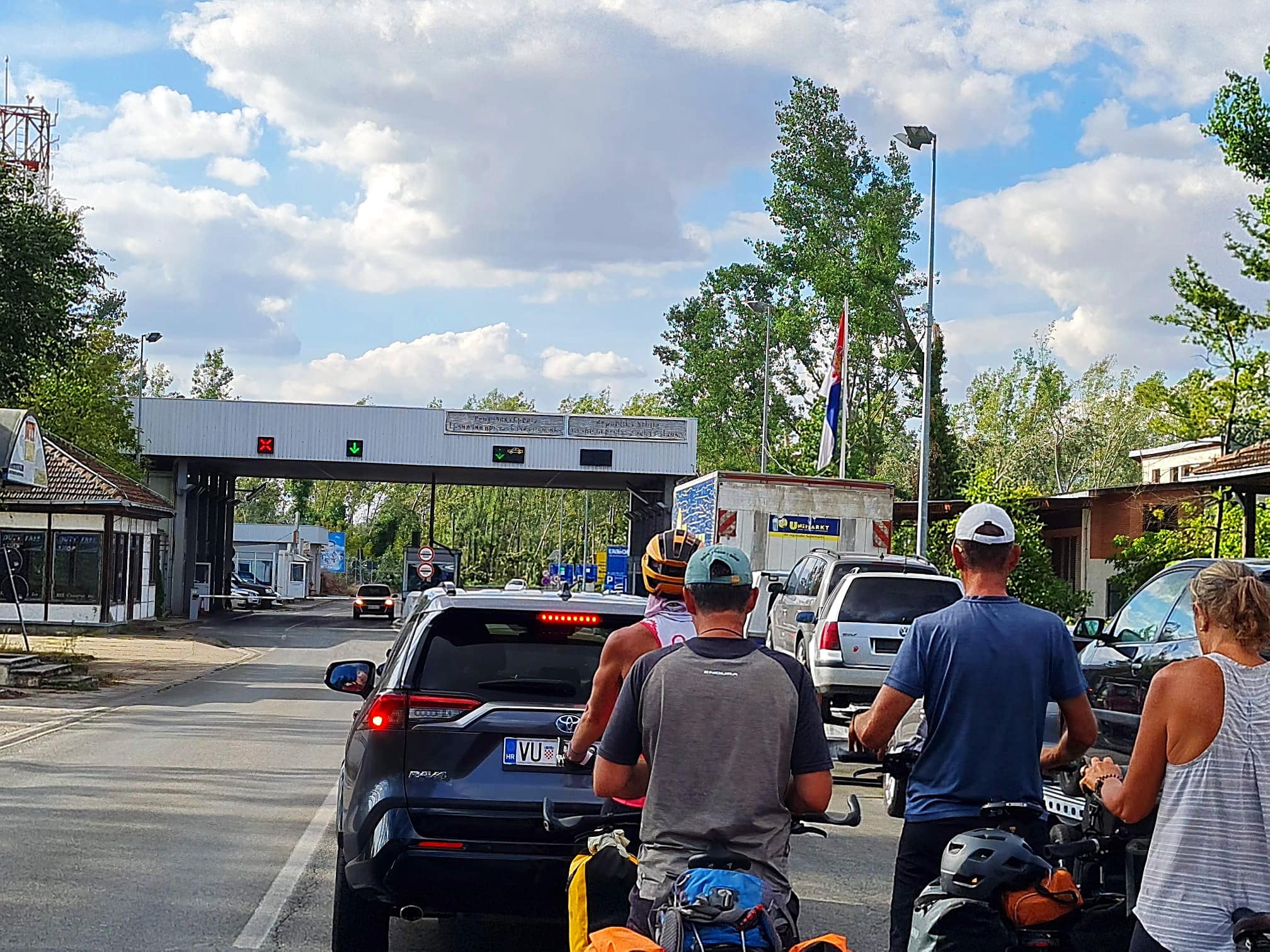
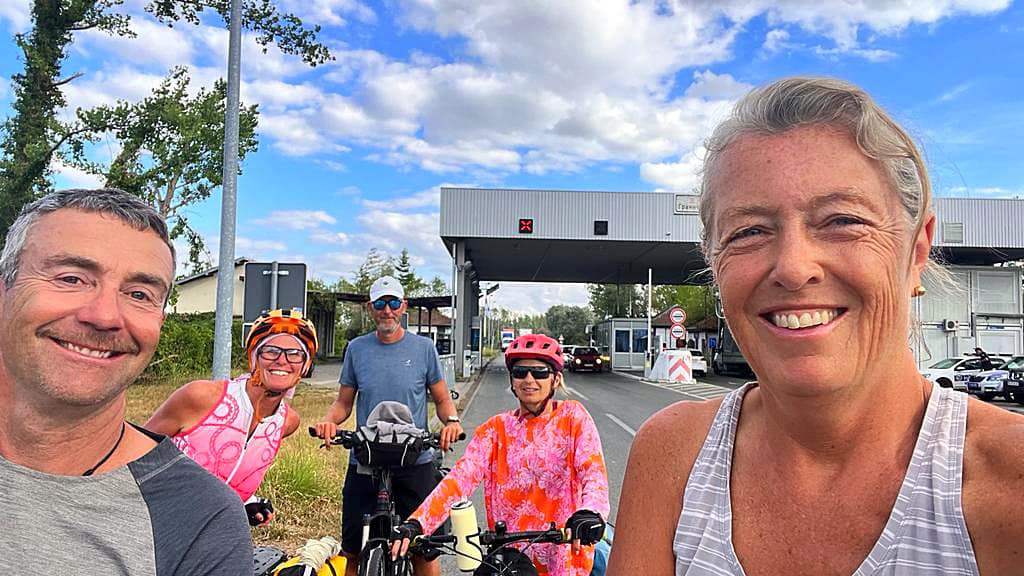
First stop was the Croatian border control where we got our passports stamped. We were then in no man’s land for about 500 metres before queuing with the cars at the Serbian border control. We all gave our passports to Hilary (Mother Duck) so she could field any questions. All our passports scanned successfully (a little trouble with JP’s) and we were into Serbia – no questions asked.
Serbia is the eighth and final county we will enter on our bikes. My only knowledge / perception of Serbia is what I have seen on the news which has invariably been about war and conflict, so it was a little surreal to be entering this country.
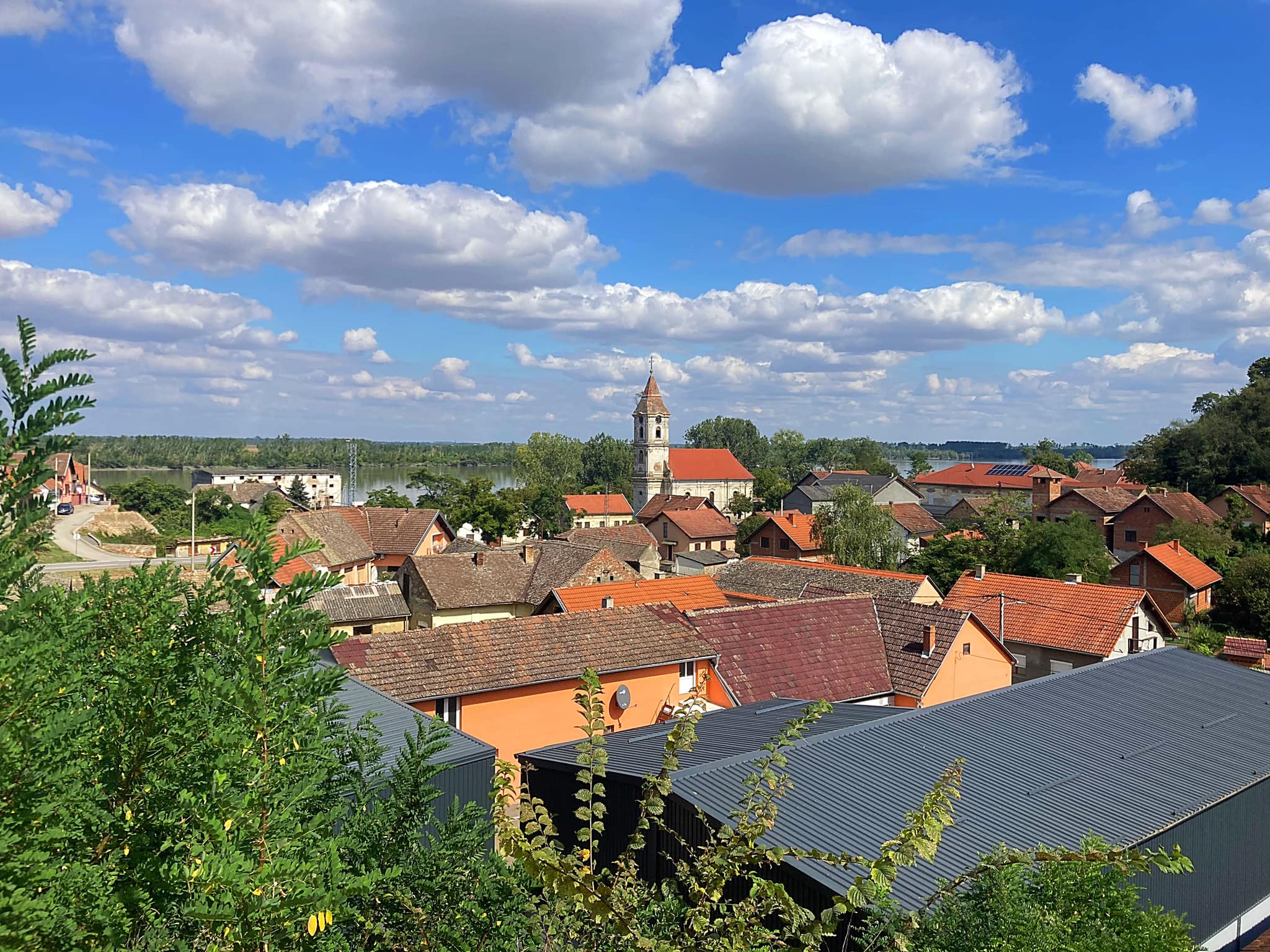
We are staying just out of Backa Palanka (population 28,000), which is an amalgam of three towns – Stara Palanka (Old Palanka, mostly Serbs who survived Turkish occupation), Nova Palanka (New Palanka, new Serb settlers after the occupation) and Nemačka Palanka (German Palanka, new German settlers after the occupation). By the time they merged in the 20th century there was an overall German majority. In 1945 the German population was expelled and the city repopulated with ethnic Serbs from Bosnia. During the civil war, 5000 Serb refugees arrived from Croatia and Bosnia and many have stayed.
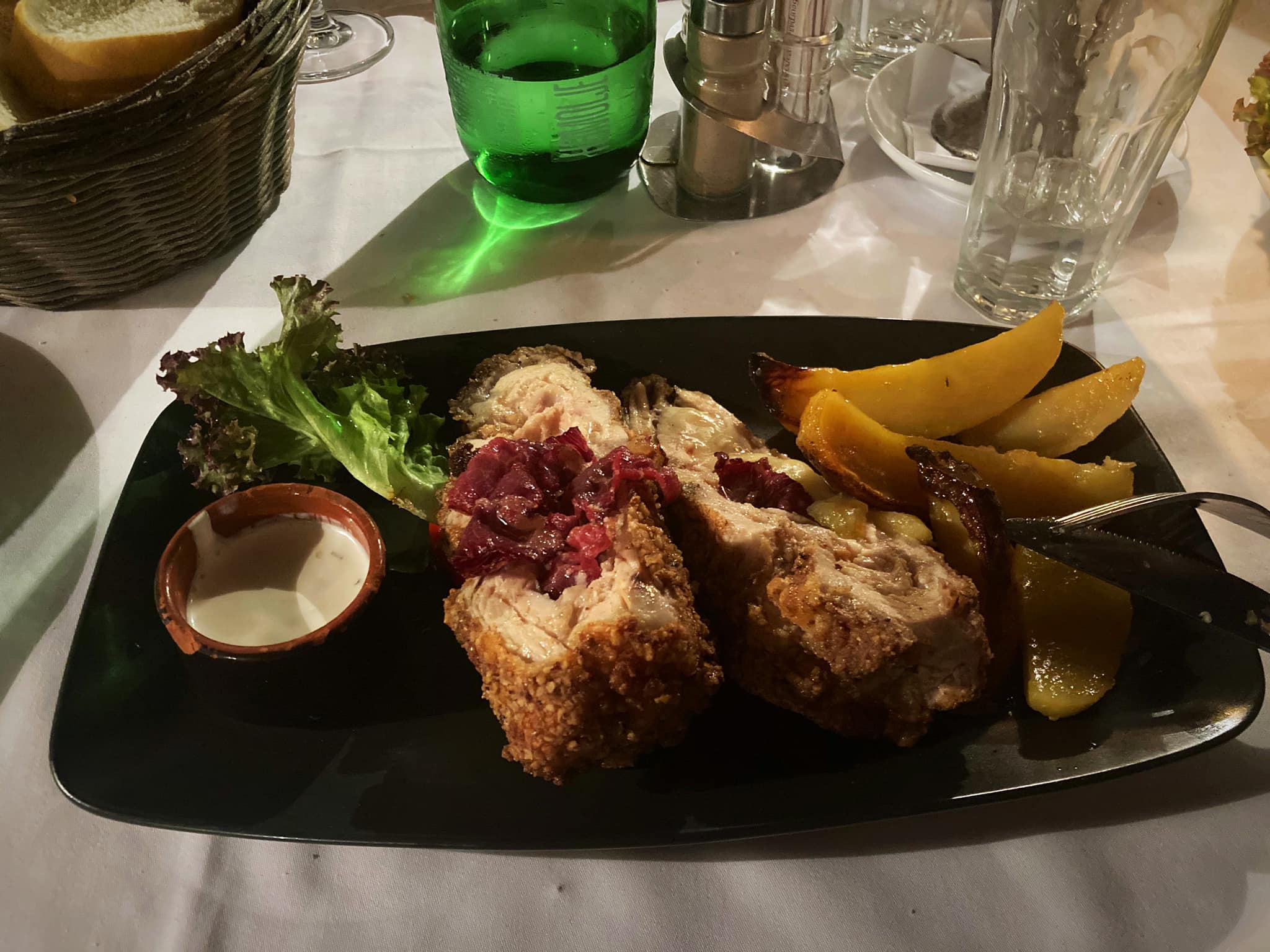
We are staying on the outskirts of town in what is an oasis compared to what we biked through (many damaged and derelict houses). The hotel, bar and restaurant are lovely. We had a fantastic waiter who made some great recommendations re local fare. I had Turkey with pastry and Gorgonzola cheese. Delicious
Today we had many interactions with the locals. We came across people biking, walking, in their front yards, shopkeepers, road workers and the majority engaged with us through a friendly wave, greeting or smile. Extremely welcoming and heartwarming.









Day 47 – Backa Palanka to Stari Slankamen – 73km
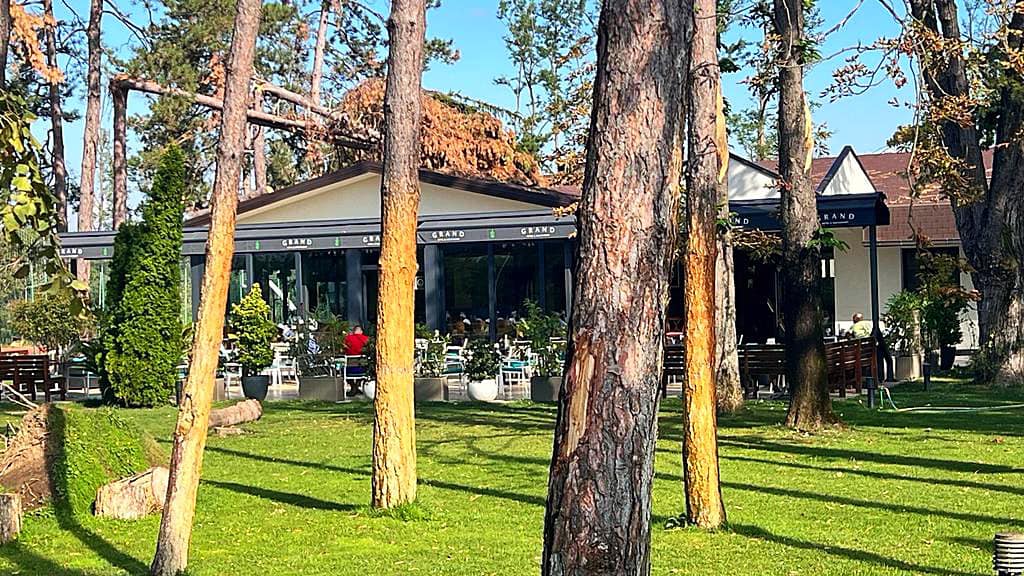
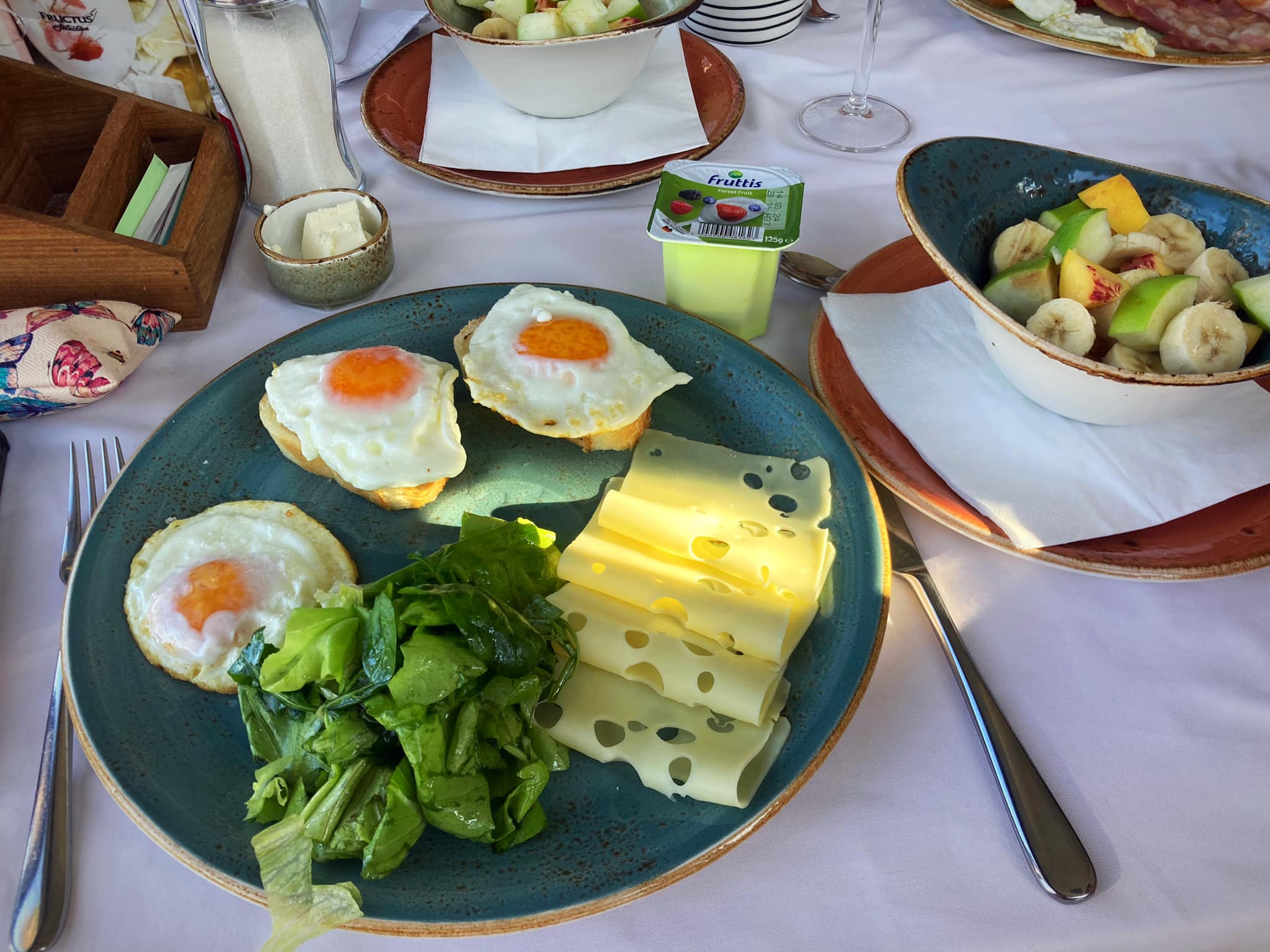
We had the biggest breakfast on tour this morning at the Grand Hotel which set us up for the day. It also turned out that the storm we had encountered in Brandon, France about a month ago also caused damage in Serbia. The Grand Hotel had a number of trees fall down with some of them still perched on the roof.
We spent the first twenty kilometres on the road with cars zipping past us at a rate of knots. The guide book had said that the off road flood dykes were rough which didn’t appeal. We then spotted people cycling on them from where we were on the road and they looked OK. We asked a farmer working his field how we could get up there and he let us cut across beside his rows of carrots.
It turned out to be a sealed bike path for the rest of the 24 kilometre ride into Novi Sad.
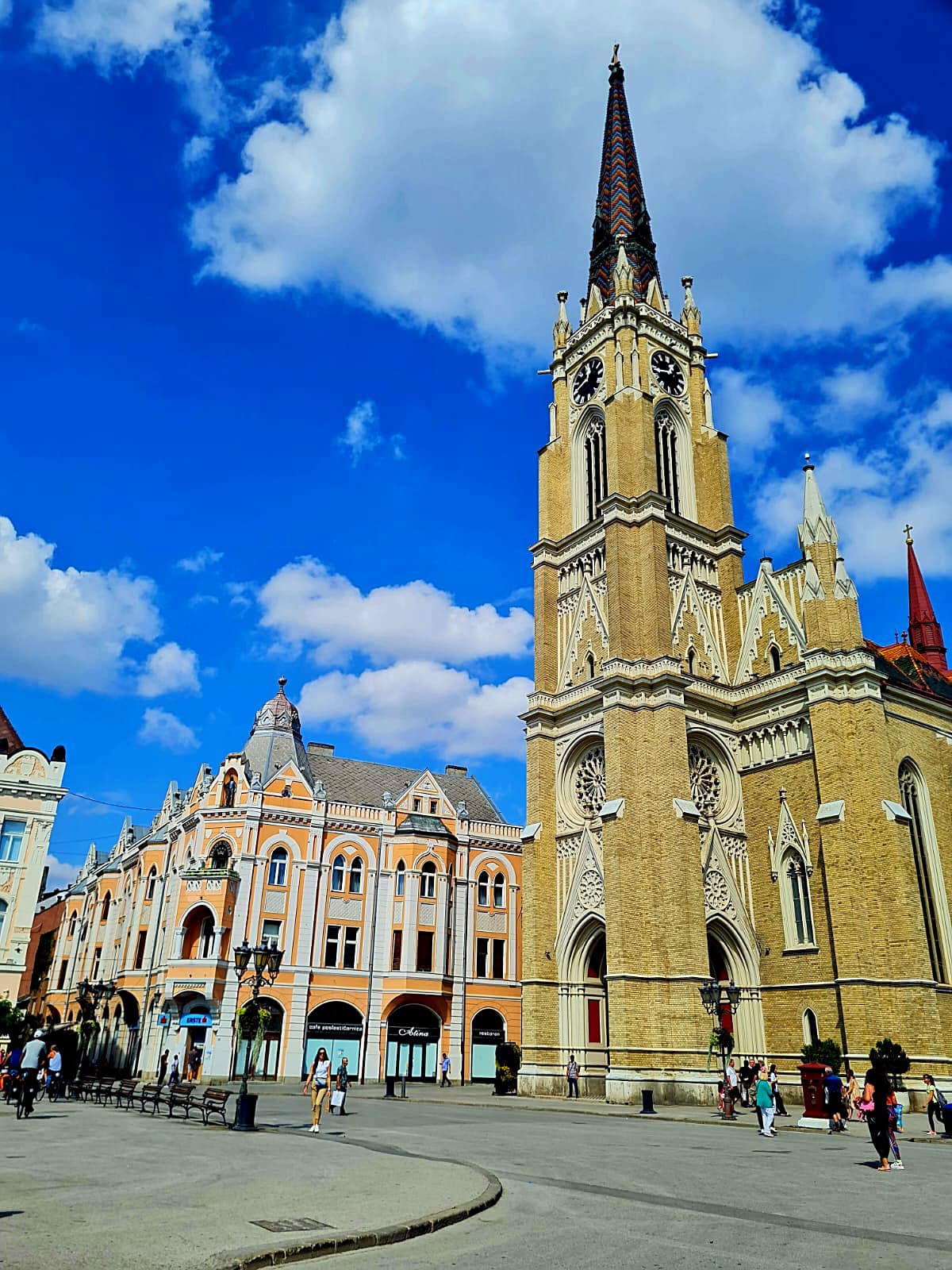
Novi Sad (translates to New Plantation) is the second biggest city in Serbia with a population of 208,000. Rapid post-war industrialisation more than doubled the population to 180,000 in 1991 and an influx of 50,000 Serb refugees from Bosnia and Croatia during the civil war expanded it further. NATO reprisal bombing raids during the Kosovo campaign (1999) destroyed all three bridges and severely damaged the city. The core city is surrounded by communist era housing developments.
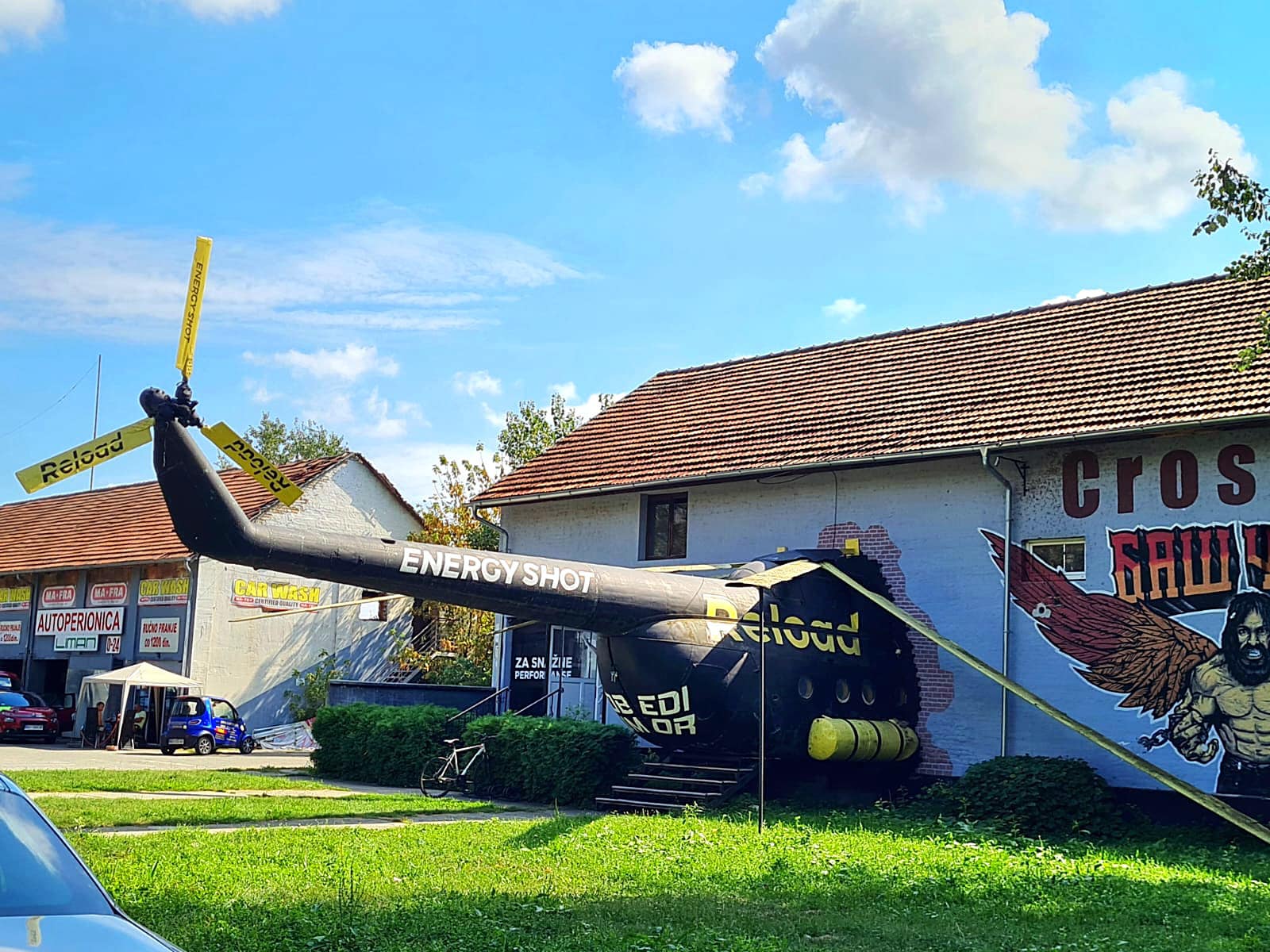
We also passed a Soviet era helicopter that has ended up as part of a nightclub in Novi Sad.
The second half of today was also going to be on busy roads so we opted to catch the train to Beska where we then had an eighteen kilometre cycle on quieter roads to our accommodation for the night in the vineyards.
The eighteen kilometre cycle turned into a twenty four kilometre adventure as we tried to find our Airbnb. For some unknown reason the owner couldn’t drop us a pin on Google maps or give us an address. He had just sent a list of instructions directing us from a local restaurant in the village.
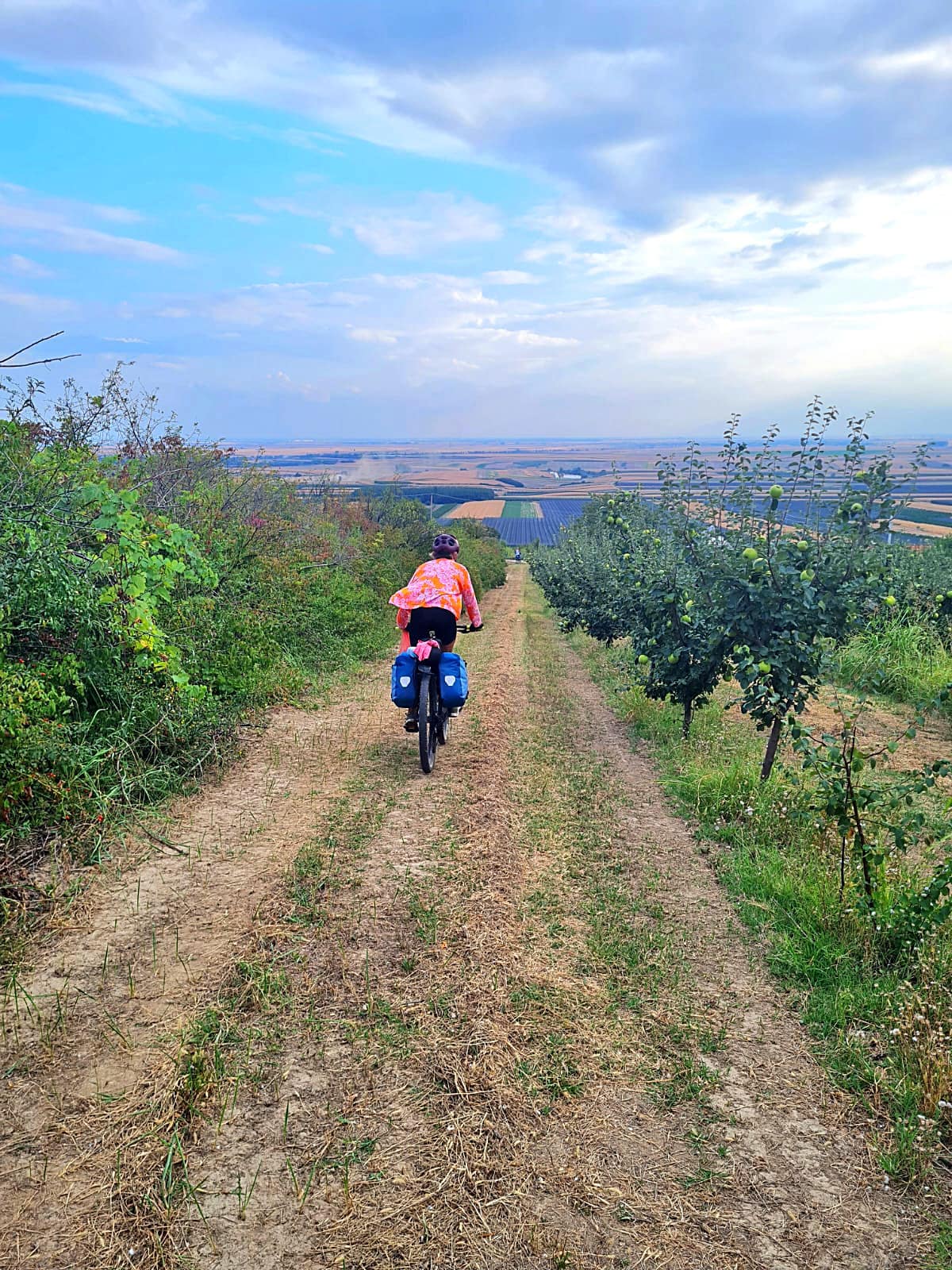
A few phone calls and pictures of hand drawn maps later (as well as a descent and then ascent through an apple orchard) we were met by a woman standing at the gate. She didn’t speak a word of English but showed us inside. The place ended up being about 4 kilometres from the village (not the 500 metres we were lead to believe) up and down some hills. Hilary then called the owner back to say that based on the original information, we had booked the restaurant back in the village for dinner but we were buggered if we were going to be biking back down there. He thought we had arrived by car so confusion reigned. In the end he organised for the neighbours to drive us to the restaurant and pick us up again.
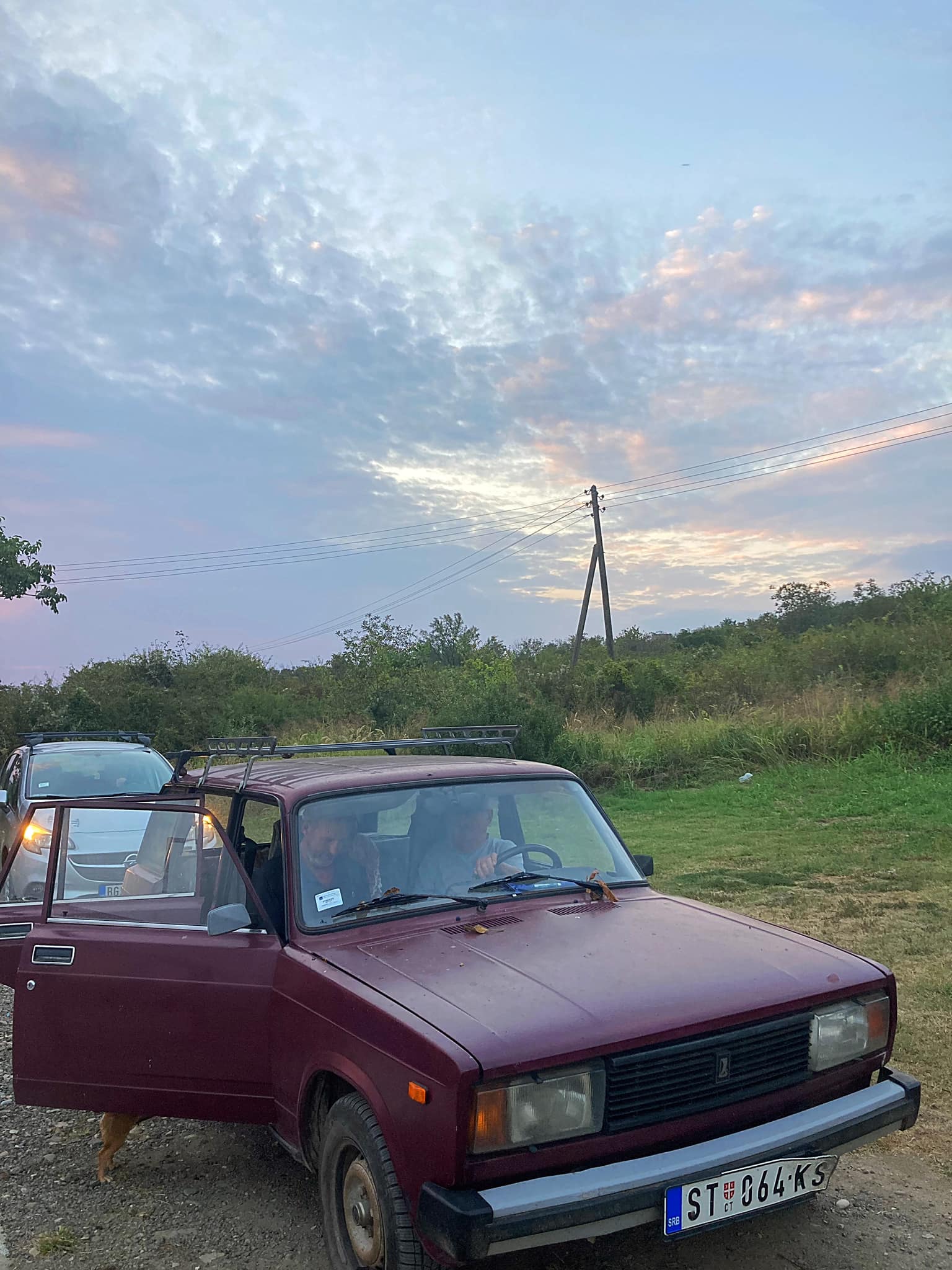
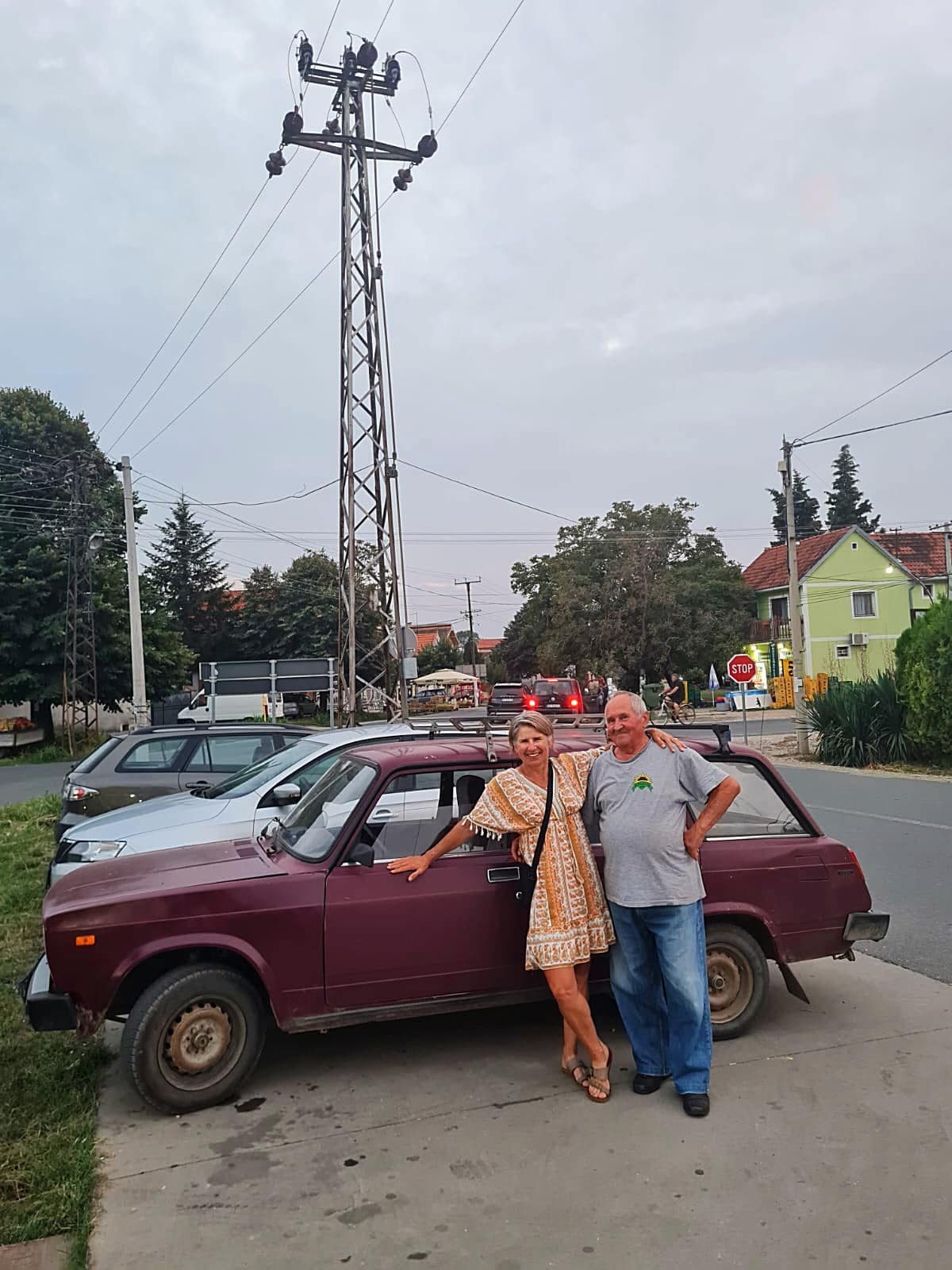
JP, Graham and I opted for the Lada which was hilarious. Very soft back seats with absolutely no suspension. The old guys two dogs chased and out ran the car almost halfway to the village – he was laughing as he pointed at the speedo to show the dogs were doing 40 kilometres an hour. He spoke no English but grinned away as we were in fits of laughter.
We had a lovely dinner at Rustic, again sampling some local dishes paired with local wine. Our waiter was lovely (and rather handsome) making great recommendations and enjoying a laugh with us. He was actually from Croatia.
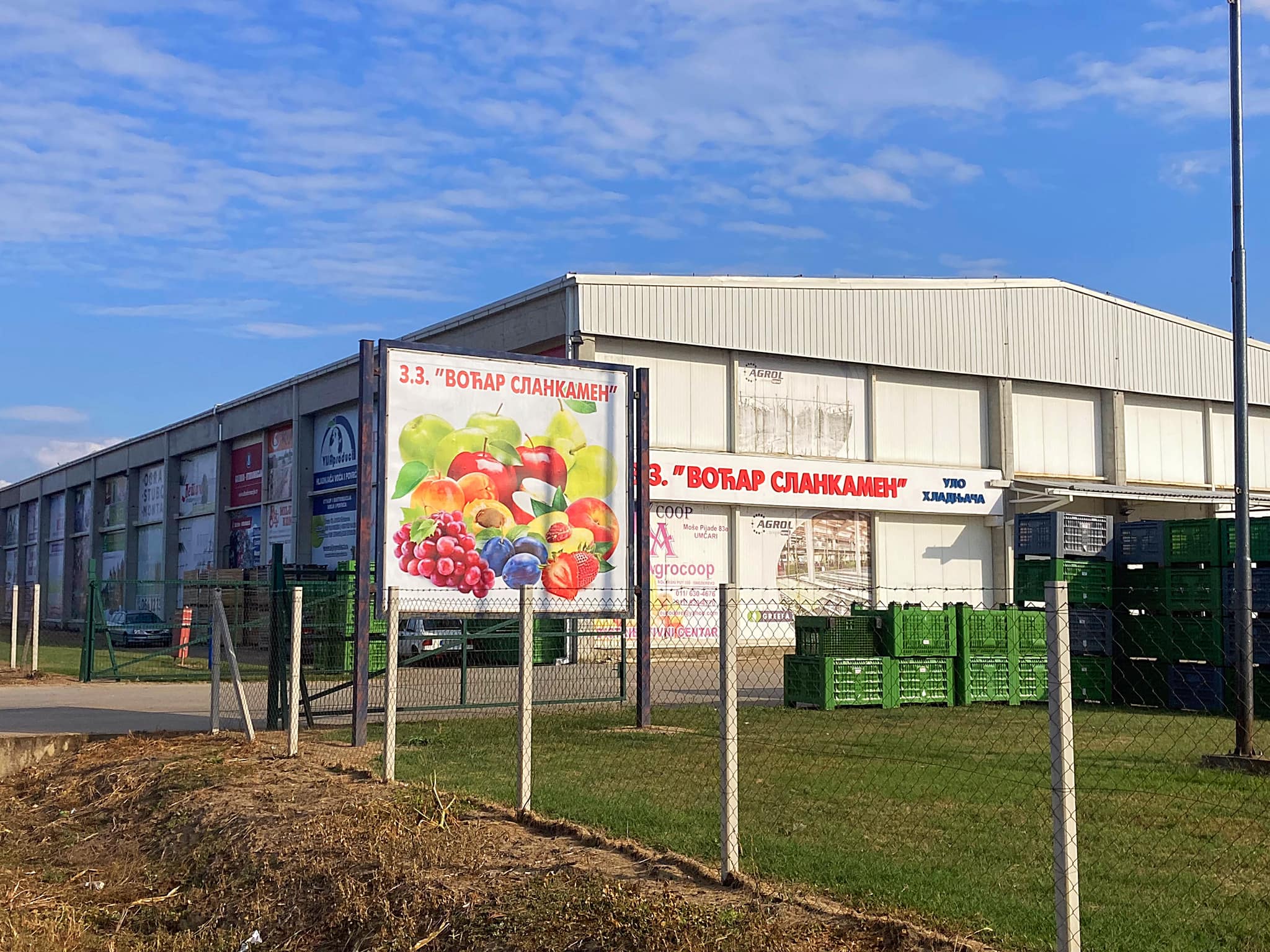
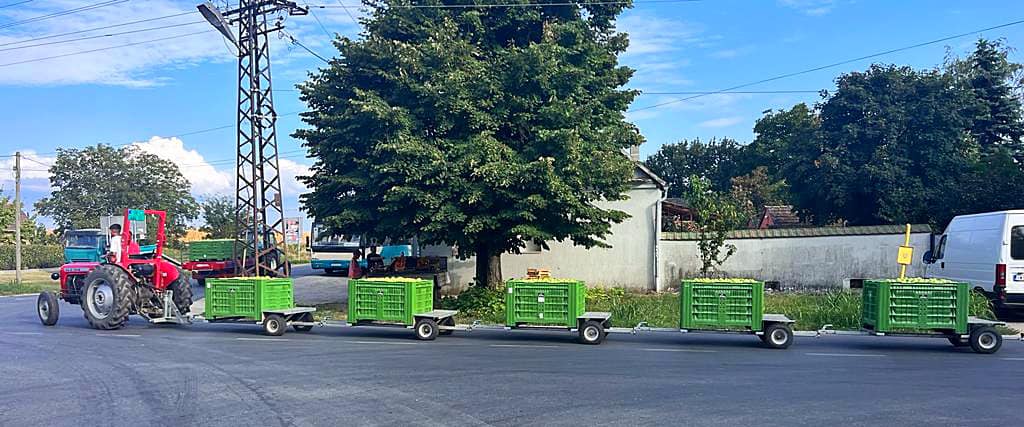
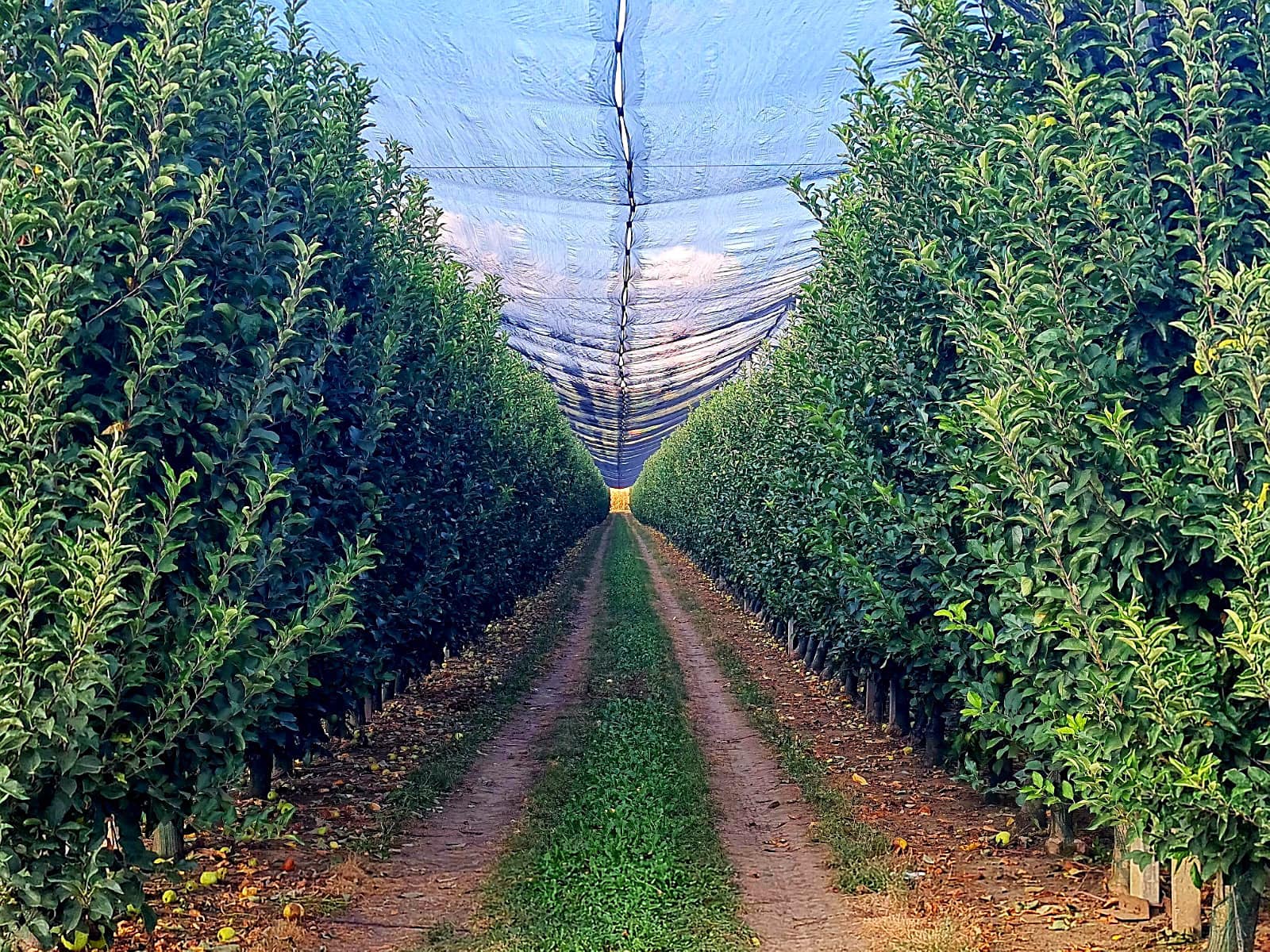
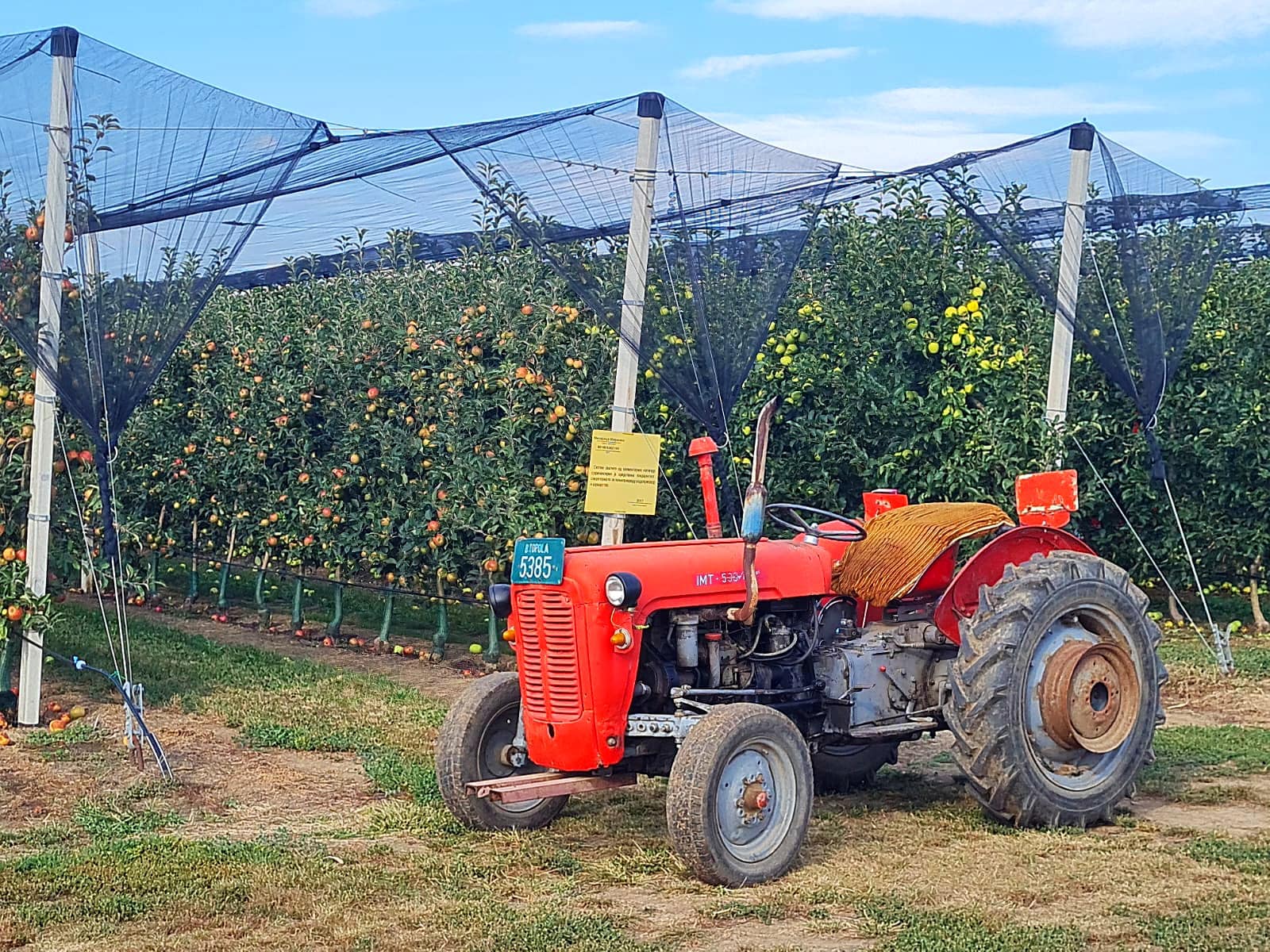
This area of Serbia is like a fruit bowl with many different crops being grown – apples, nectarines, peaches, watermelon, grapes, cabbages, potatoes, carrots. It is apple harvest time so we saw lots of crates of apples being transported around.
The Airbnb was also supposed to have a small pool per the pictures but no pool was to be found. I had been dreaming about that pool all day as the temperatures hit 30 degrees. To be fair, we were just happy to have found the place.
The views from the property are lovely as we look down on all the orchards and vineyards and we had a beautiful sunset as we sat out on the deck. We will always find the positives at the end of the day and we always end the day with lots of laughter.







Day 48 – Stari Slankamen to Belgrade – 32km
Today was our last day on the pedals – we have cycled over 3200 kilometres in the past 48 days from France to Serbia, experiencing eight different countries.
An absolute dream come true that exceeded all my expectations. The cycling was not hard (mostly) but to do it day in, day out, over an extended period takes an immense effort. Packing up each day and moving on, being in the moment and taking everything in, required resilience. We were on a journey together but also on our own individual journeys overcoming our own obstacles. I’m very proud of Hilary, Graham, JP, Andy and myself – this was an epic adventure, and we shouldn’t underestimate what we have just achieved. Thank you for helping to make my dream come true.
An especially big thank you to Hilary who did the lions share of the bookings and logistics – everything worked out so well and if it wasn’t quite on point we made the most of it anyway – another measure of the teams resilience and character.
The cycling infrastructure is now non existent so we made the decision to only cycle 20 kilometres today to Indija and then to catch the train into Belgrade central.
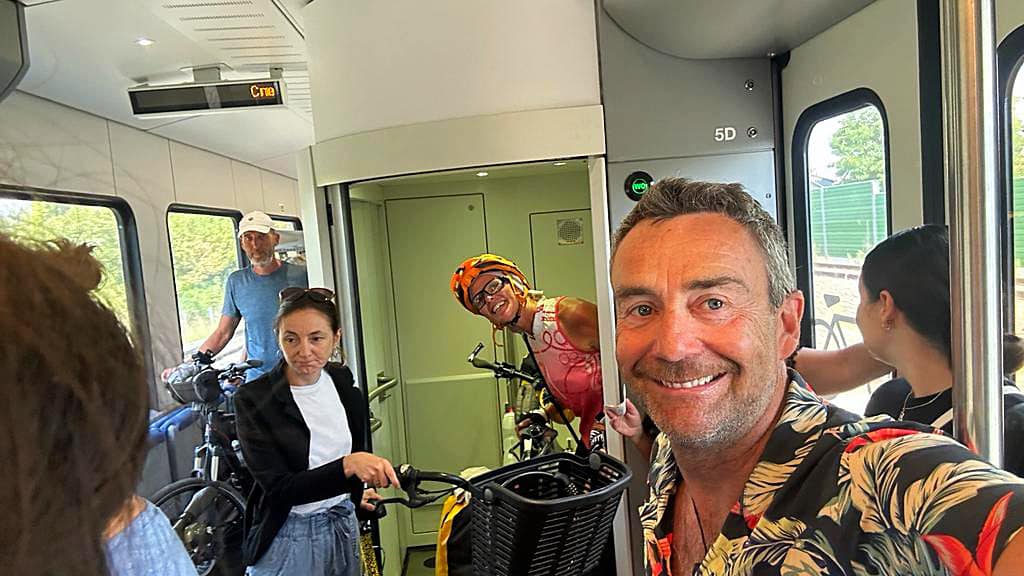
There wasn’t a big area on the train for bikes but we all managed to squeeze on. I ended up blocking the toilet door and when it opened these two woman appeared who had clearly been smoking in there (the trains are non smoking). They saw the door was blocked so stayed shut in there until the next stop. Once they left I just backed on in and stayed there for the rest of the journey which was about half an hour. The conductor came through and thought it was funny, even taking a picture of me standing in the toilet with my bike.
Meanwhile JP was making friends. Omar was quite a colourful character who spun a lot of yarns that were hard to believe. The guy sitting next to him, who we thought was his friend was grinning away. It turns out they had just met on the train – he was Russian but working remotely in Belgrade as an IT engineer. He had left Russia as a result of the war. JP aptly named him the Russian spy.
Omar then became interested in our bikes so JP was trying to broker a deal for Andy’s bike. Omar told Andy to message him at 9pm sharp that night re a deal – all very entertaining.
Once off the train, Andy navigated us across town to Decathlon (retail therapy was in order knowing we don’t have to carry it on our bikes now) – this involved nearly going onto a motorway off-ramp the wrong way, getting directions from the local police and cycling via the hospital which was pointing us towards the emergency department. Fortunately all ended well and we didn’t need to return to the emergency department.
We were wandering around the store and who should come up to JP but the Russian spy coincidence or not?
We cycled about 4 kilometres back to meet our Airbnb host Nina, who was delightful with lots of information to make our stay in Belgrade a good one.
The original plan had been to donate my bike to charity when I finished. A friend of Hilary’s who lives in Belgrade told her I could sell it, as the demand for second hand bikes is huge as they are hard to come by. She offered to advertise it on the expat electronic notice boards for me.
At 2pm she messaged to say she had someone interested and would put me in touch. We got into the Airbnb at 3pm, Andy helped me remove all the bits I wasn’t selling and by 4.30pm I was meeting Gywn and my bike was sold. It all happened so fast, I didn’t have time to be emotional. After 20,000 kilometres (give or take) I’m very happy she’s gone to a good home.
Gywn is an American just starting a two year stint with the US embassy here after spending the past ten years in Germany. She will use my bike for some commuting and an upcoming trip to Slovenia.
Graham’ brother Mike and his wife Sue turned up at the apartment – they are traveling in Europe and are going to ride Hilary and Graham’s bikes back to Vienna before taking them home to NZ.
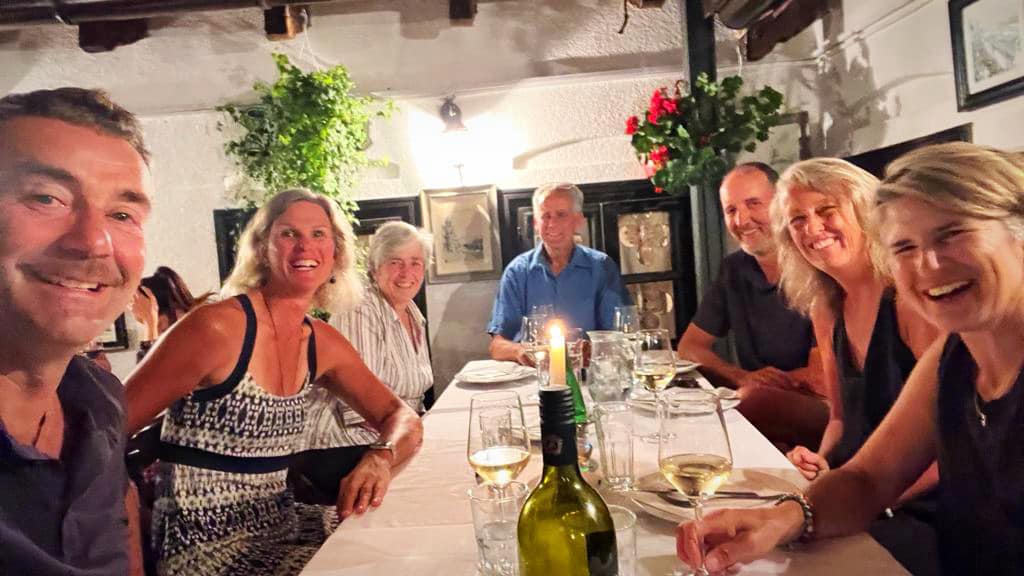
We had a lovely dinner together in Skadarlija which is the main Bohemian quarter, similar to Montmarte in Paris. The streets cobblestones go back to the Roman era and it is full of traditional restaurants. The restaurants were all busy and each one had traditional bands playing.
We had dinner at Tri šešira, founded in 1864, which is the oldest, still operational kafana in Skadarlija and second overall in Belgrade. The food was really good.
We have three nights together in Belgrade before JP goes home and the rest of us go to Bucharest. I look forward to the reflections and celebrations over the coming days.





 SUNGRL