
Day 36 – Vienna to Bratislava – 71km
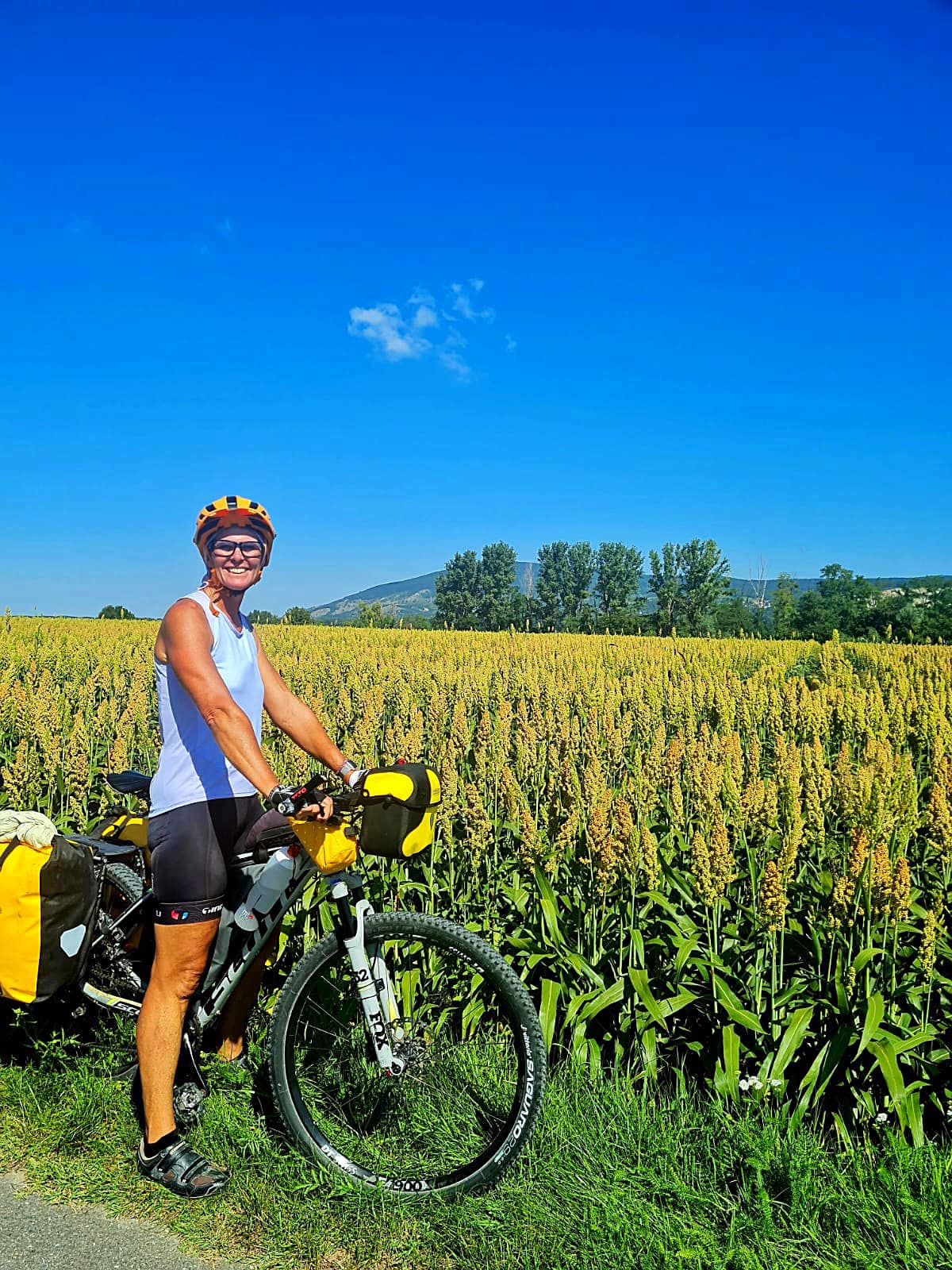
Well rested after our day off we were all happy to be back on our bikes – the cloudless blue sky certainly added a spring to our pedals.
Andy and Hilary expertly guided us out of Vienna in peak hour traffic – no mean feat in a city with a population of about 2 million. They do have a great network of cycle paths and lanes though. It was about 5km back to the route which resumed in the Prater Gardens.
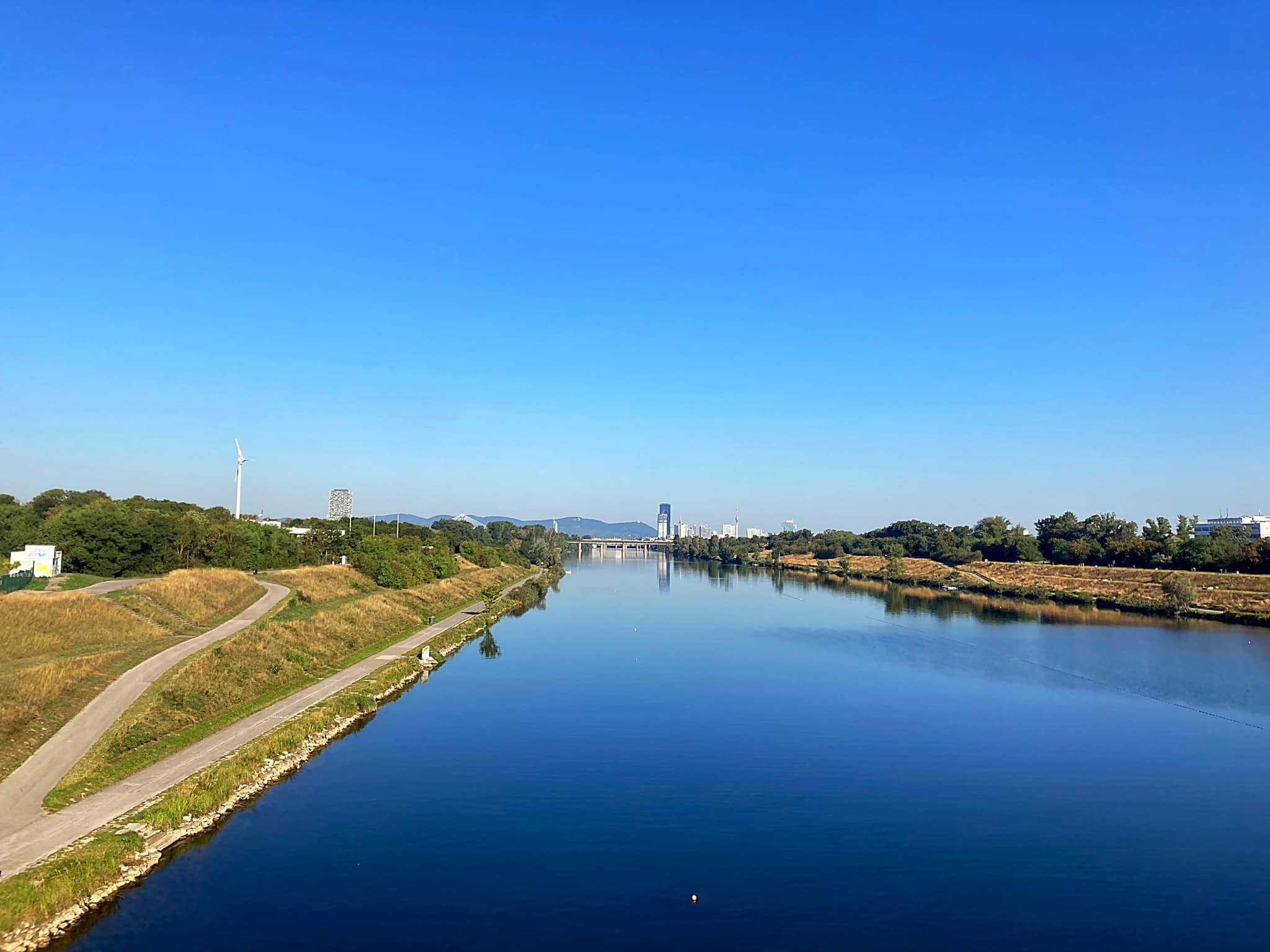
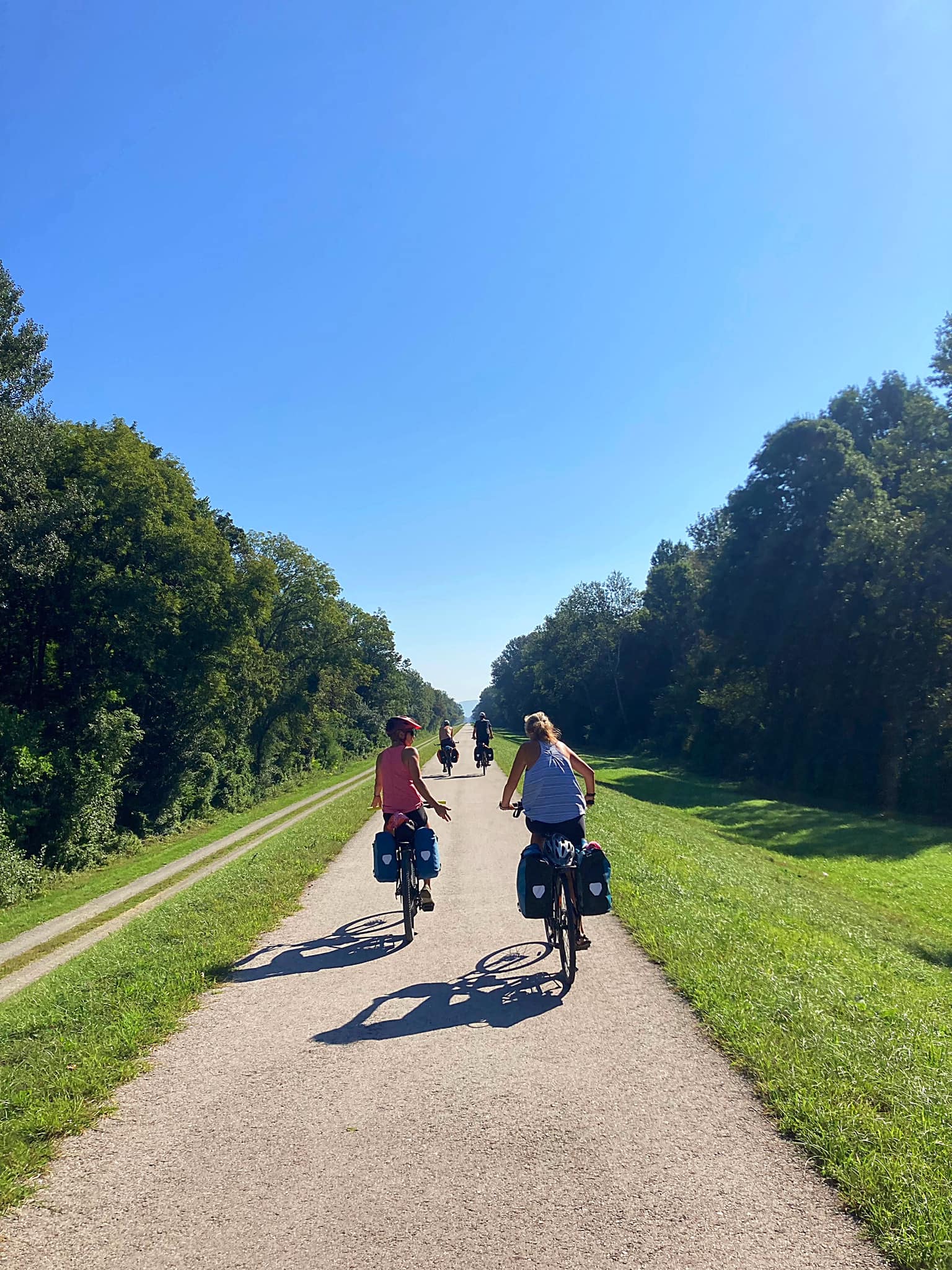
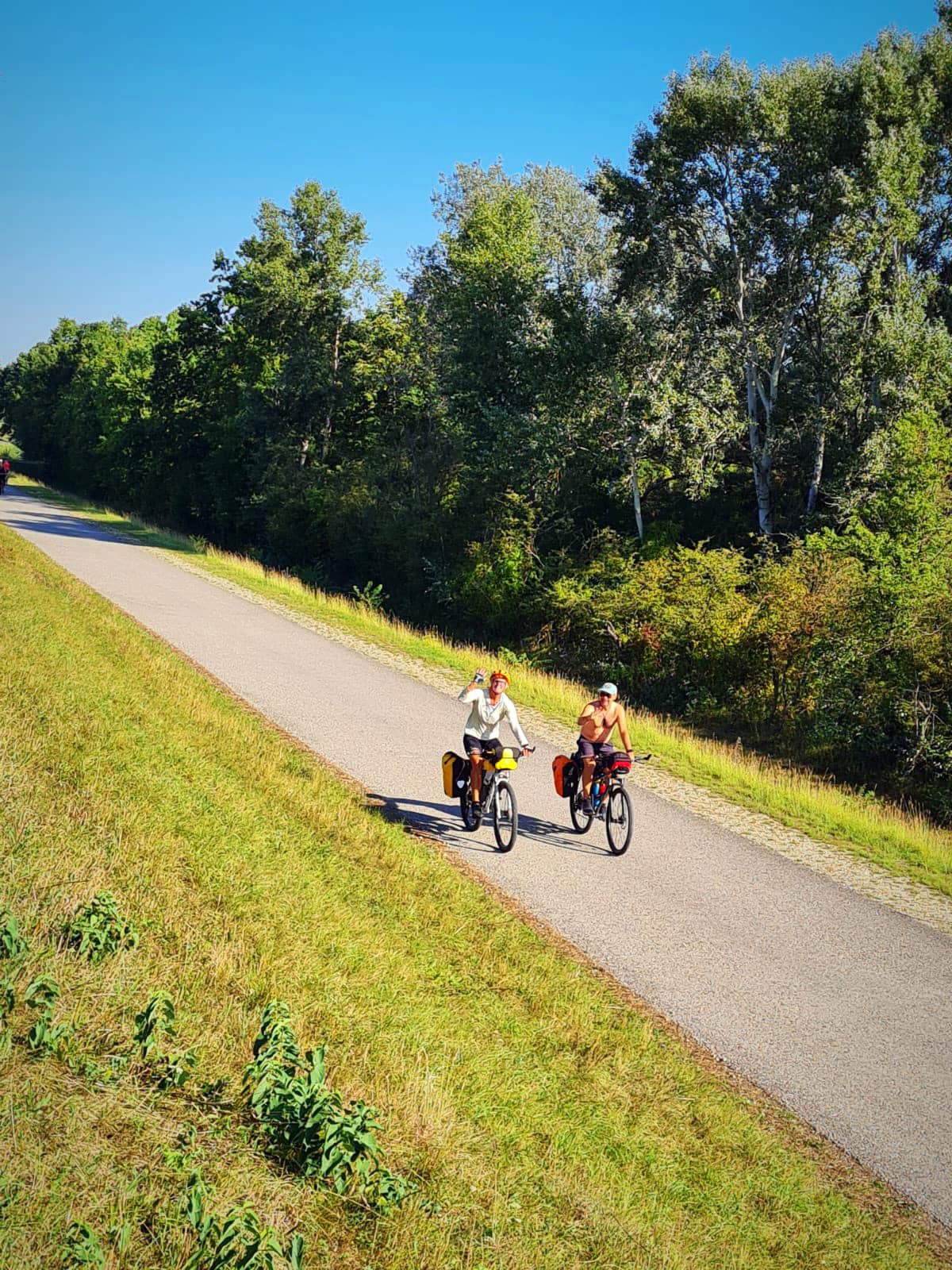
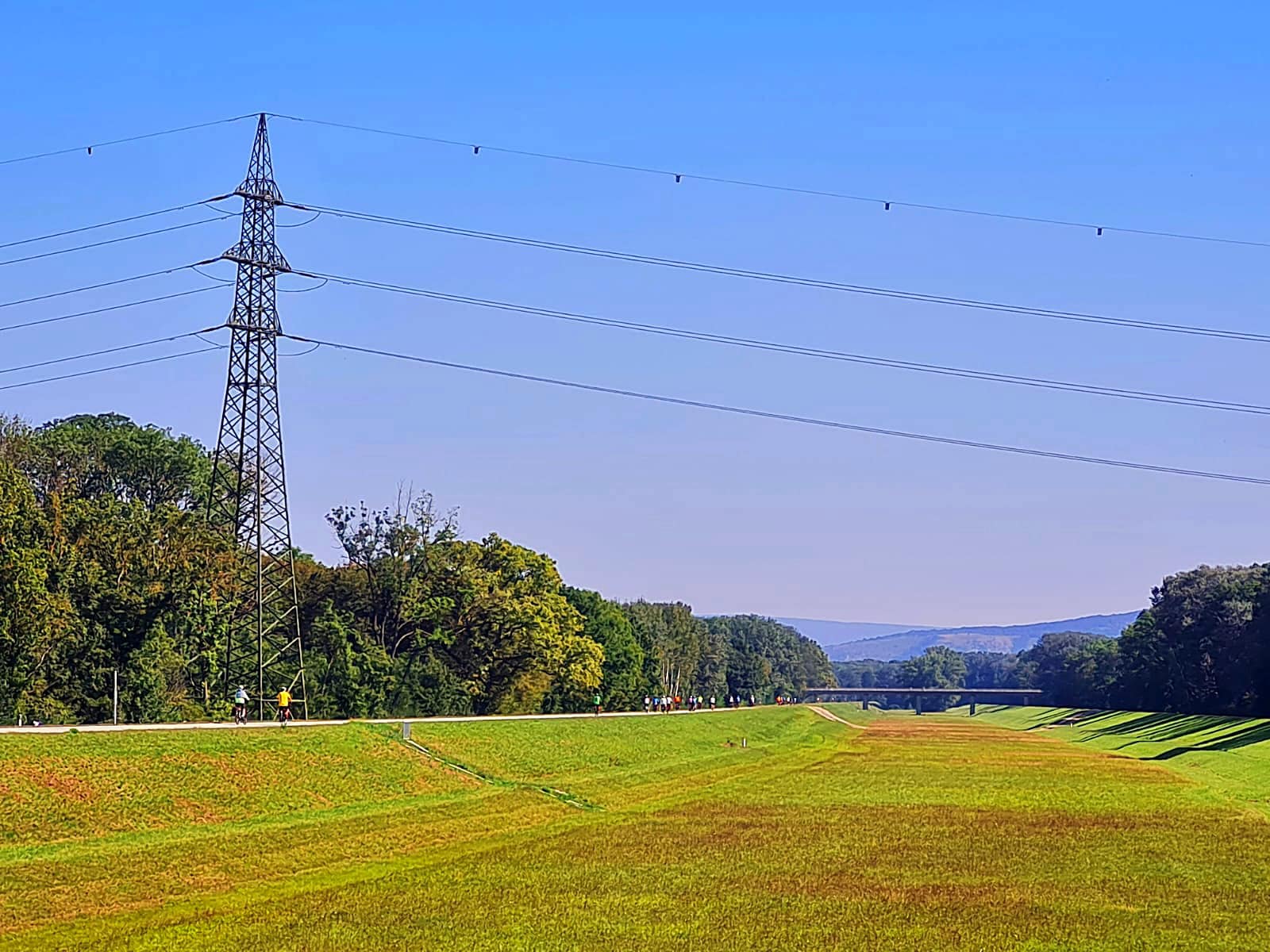
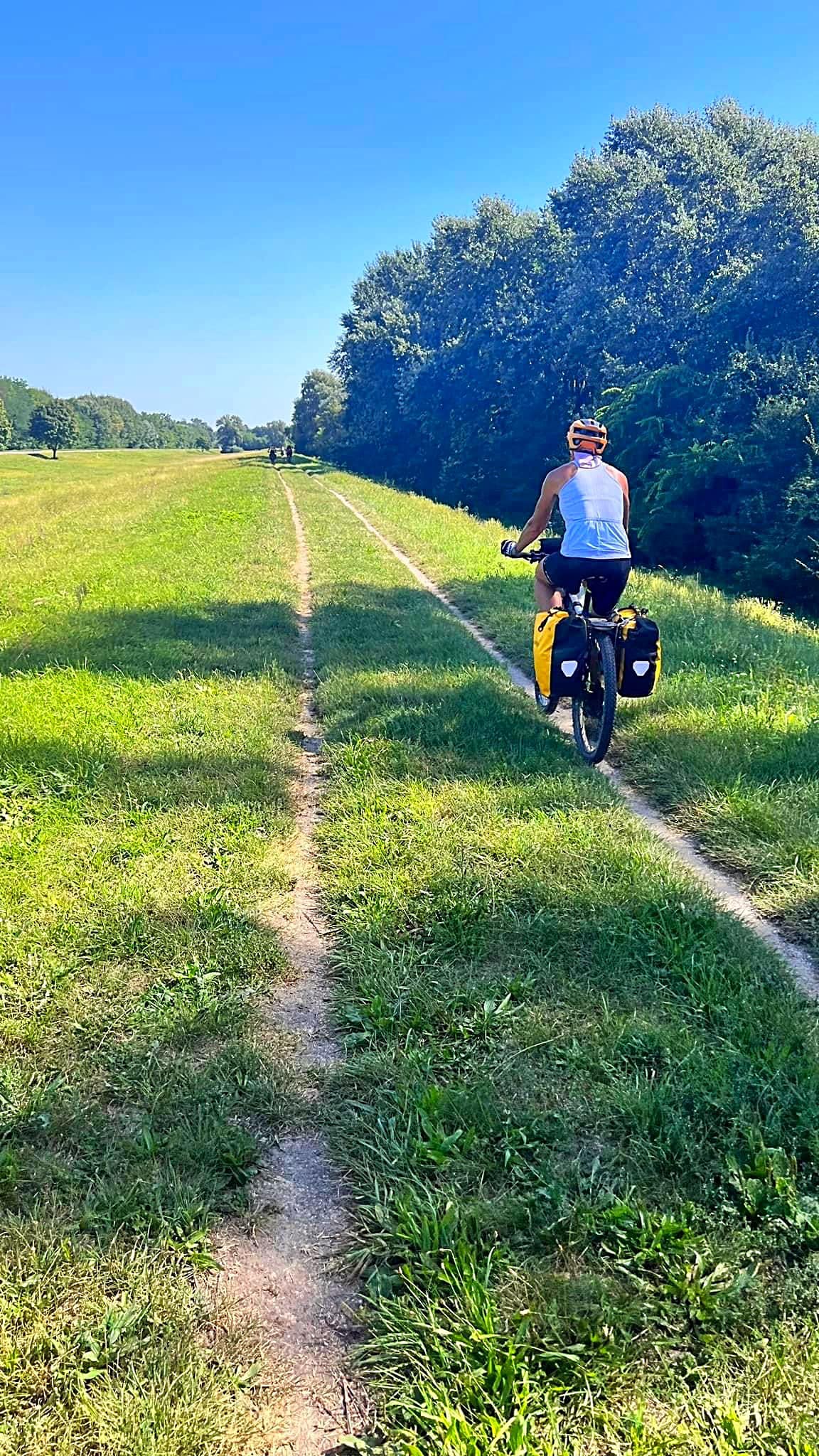
Again the trail was amazing, following long straight flood dykes through the riparian wooded wetlands of the Donau-Auen National Park. Prior to getting to the National Park we spent some time on Donauinsel which is a 21km long, man made island between the Danube and Neue Donau rivers, which was created between 1972 and 1988 as part of the flood protection scheme.
The 93km square Donau-Auen national park was established in 1996 to protect the largest area of undeveloped wetland floodplain in Central Europe, after environmentalists had succeeded in blocking construction of a hydroelectric dam at Hainburg, that would have flooded the whole area. It is home to more than 30 species of mammals and 100 types of birds.
Just before Hainburg we struck a traffic jam on the suspension bridge – there was a large group of mainly Australian cyclists on a day trip in front of us. One of the woman in the group didn’t want to cycle so had got off her bike and was pushing it. Instead of squeezing over to let everyone pass she proceeded to walk, holding everyone up. Eventually one of her group got through to her and we got past. You can imagine the Aussie twang while they sorted themselves out 
Hainburg occupies one of the most strategically important locations on the Danube, literally the point where east meets west as, for many centuries, it was the most easterly point of the Holy Roman Empire.
We crossed the Austrian-Slovak border or the old ‘Iron Curtain’ 62km from Vienna. There was an old border checkpoint and a blue gate on the track which is now permanently open. No signs or fanfare so if you weren’t aware of the blue gate you wouldn’t know you had crossed the border. We are now in country number five on our journey.
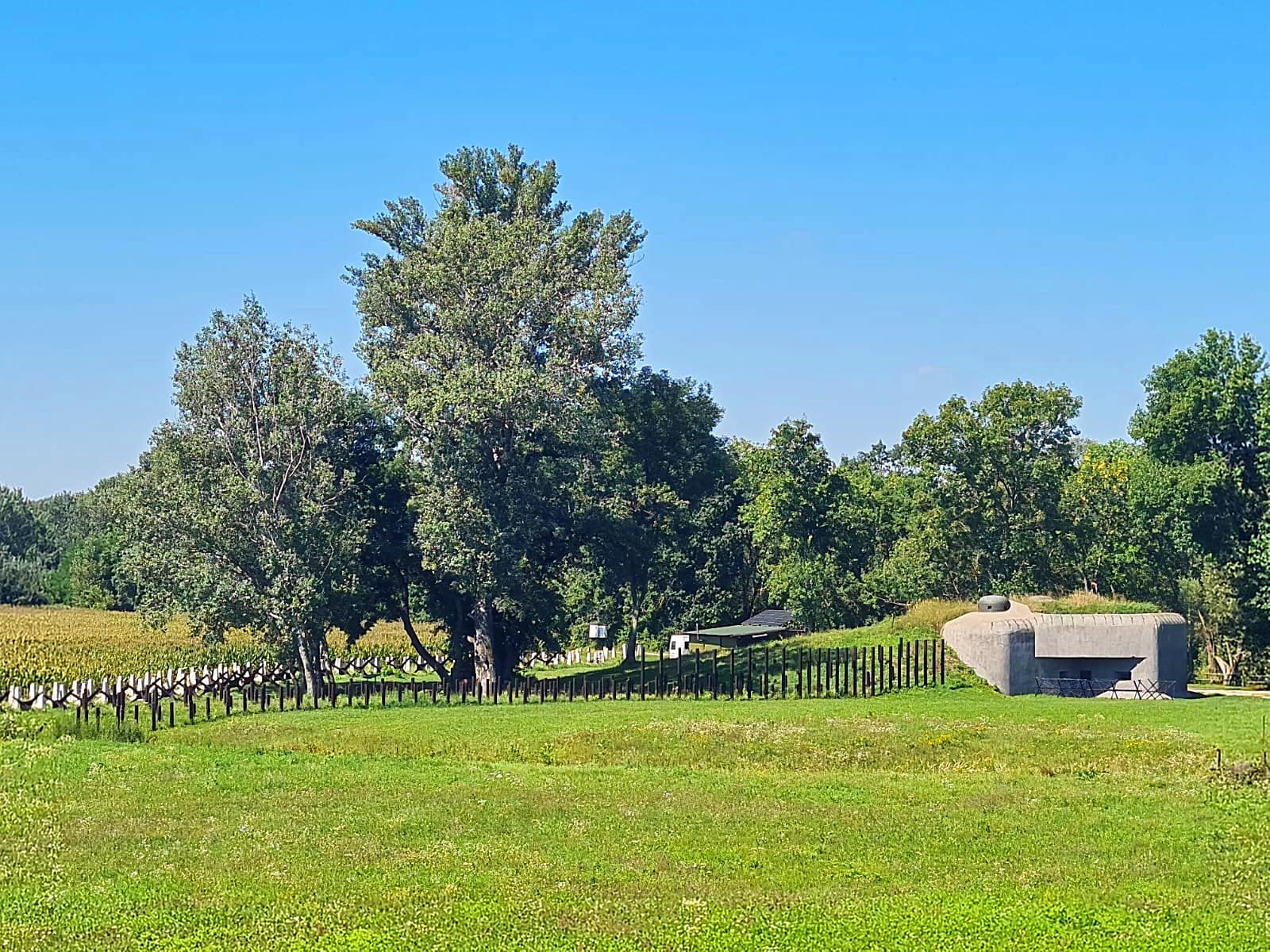
We passed an old Soviet isolated infantry casemate (bunker) B’S4 “Lany” which was built in 1937 as a part of the Czechoslovak border fortifications system, the most perfect European fortification system in the 30s of the 20th century.
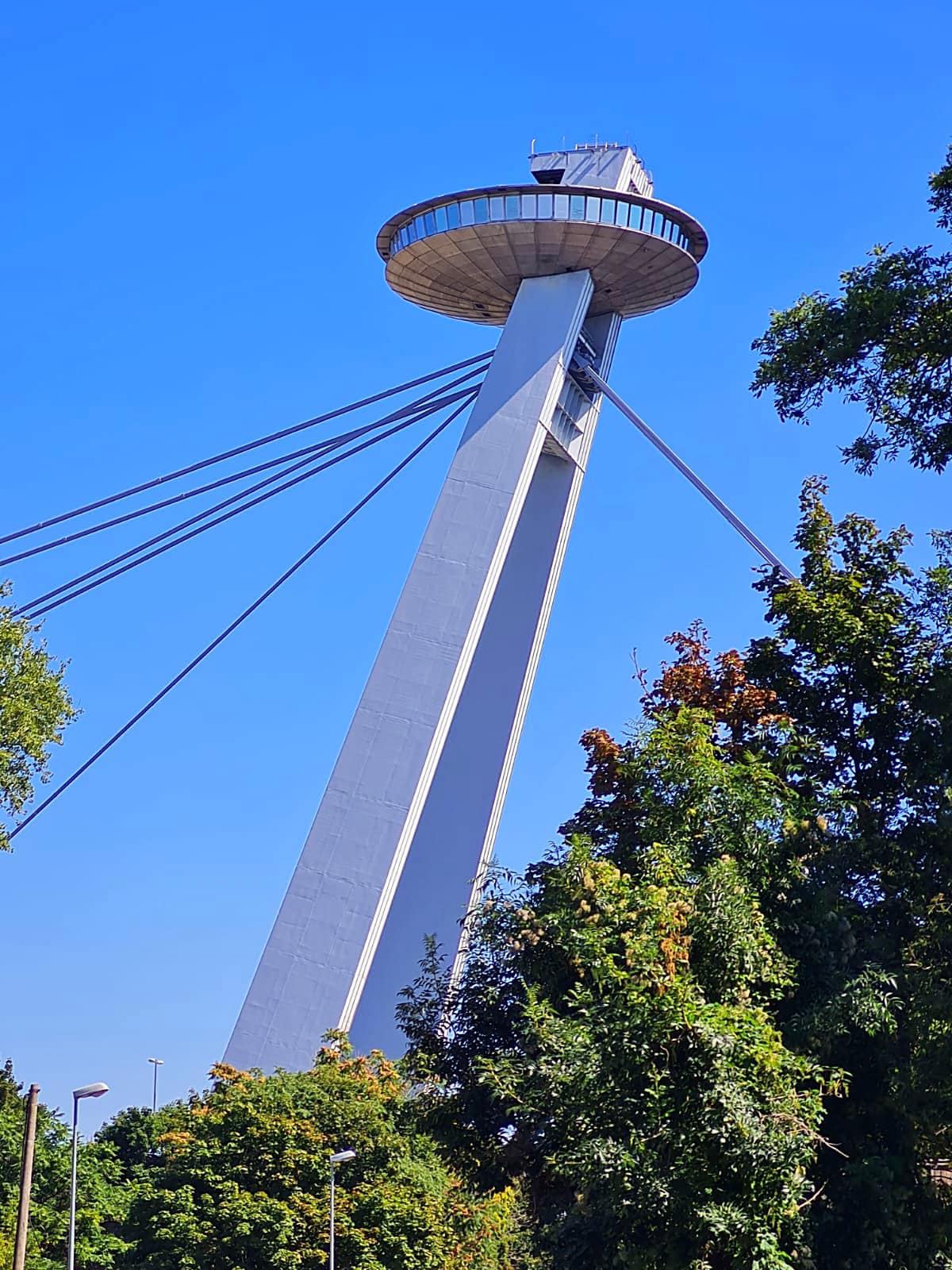
Just before crossing the bridge into Bratislava we could see the Novy Most suspension bridge in Petrzalka where there is a viewing platform.
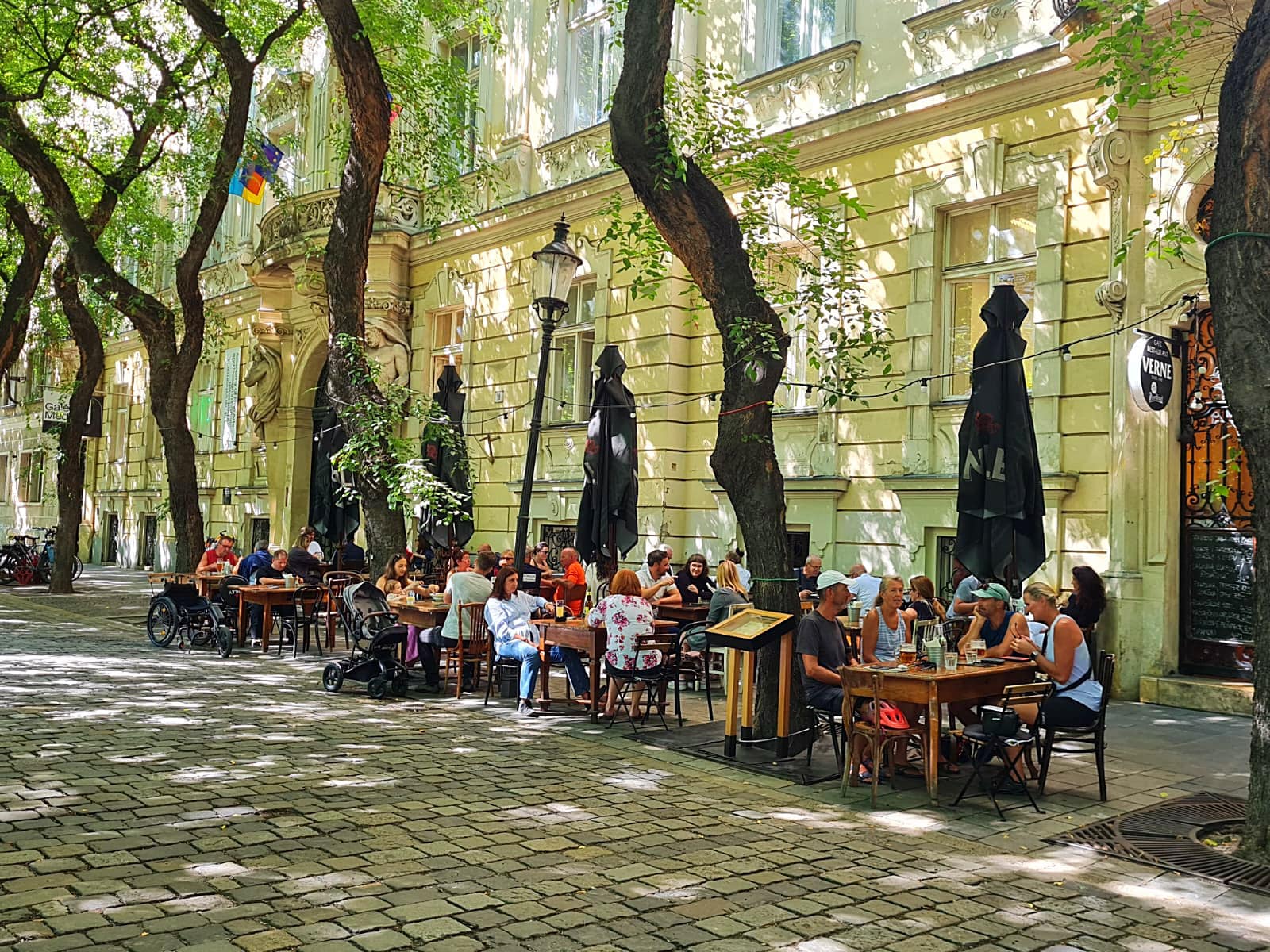
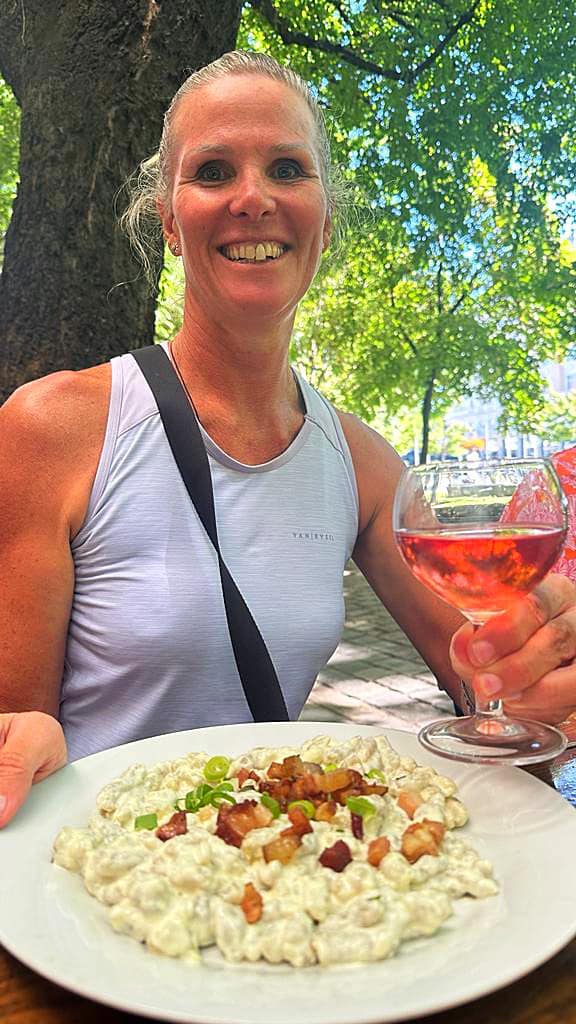
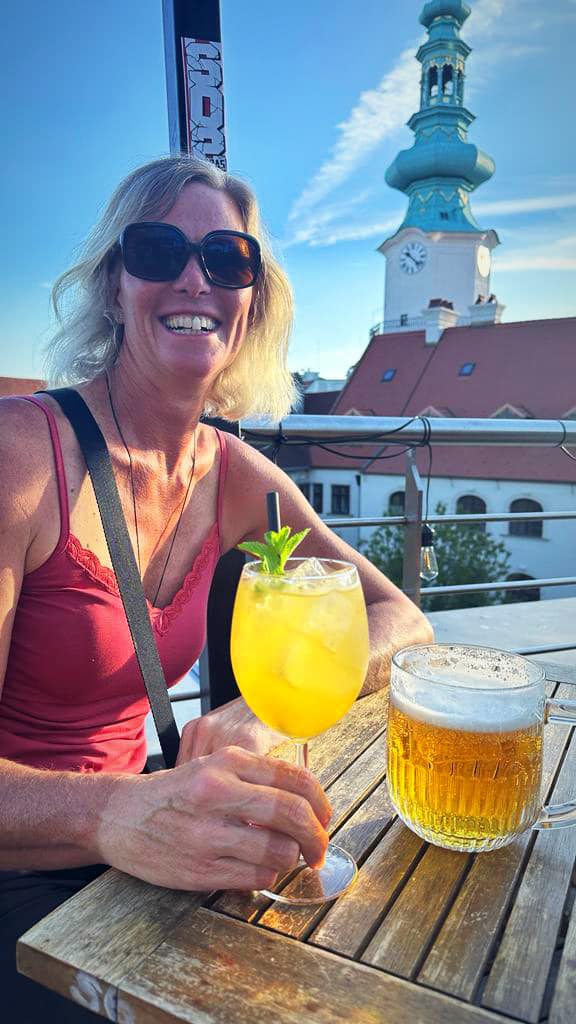
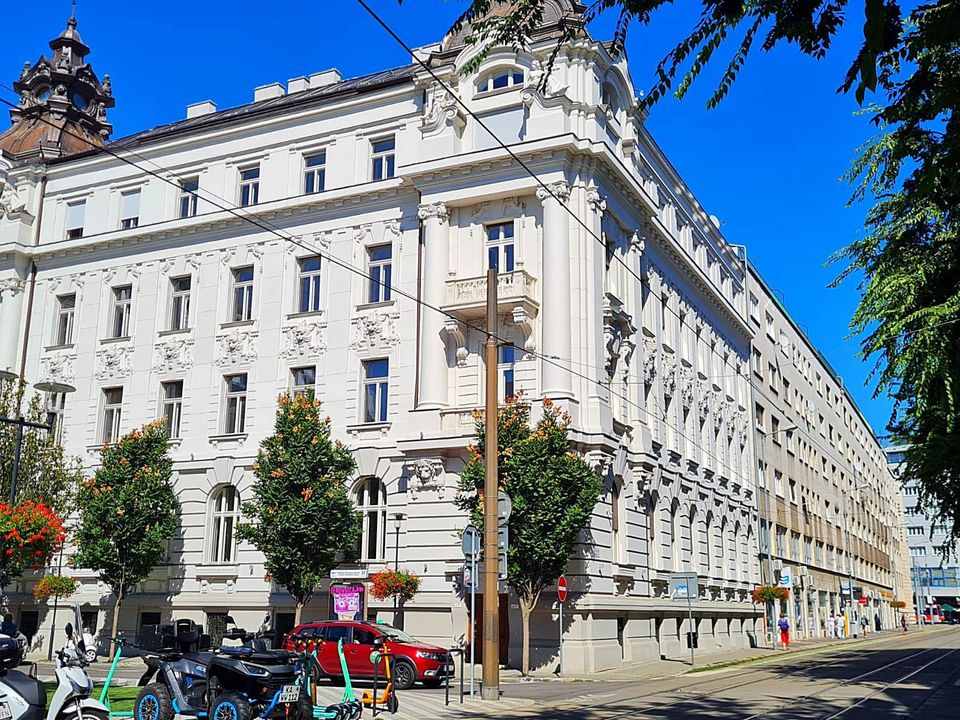
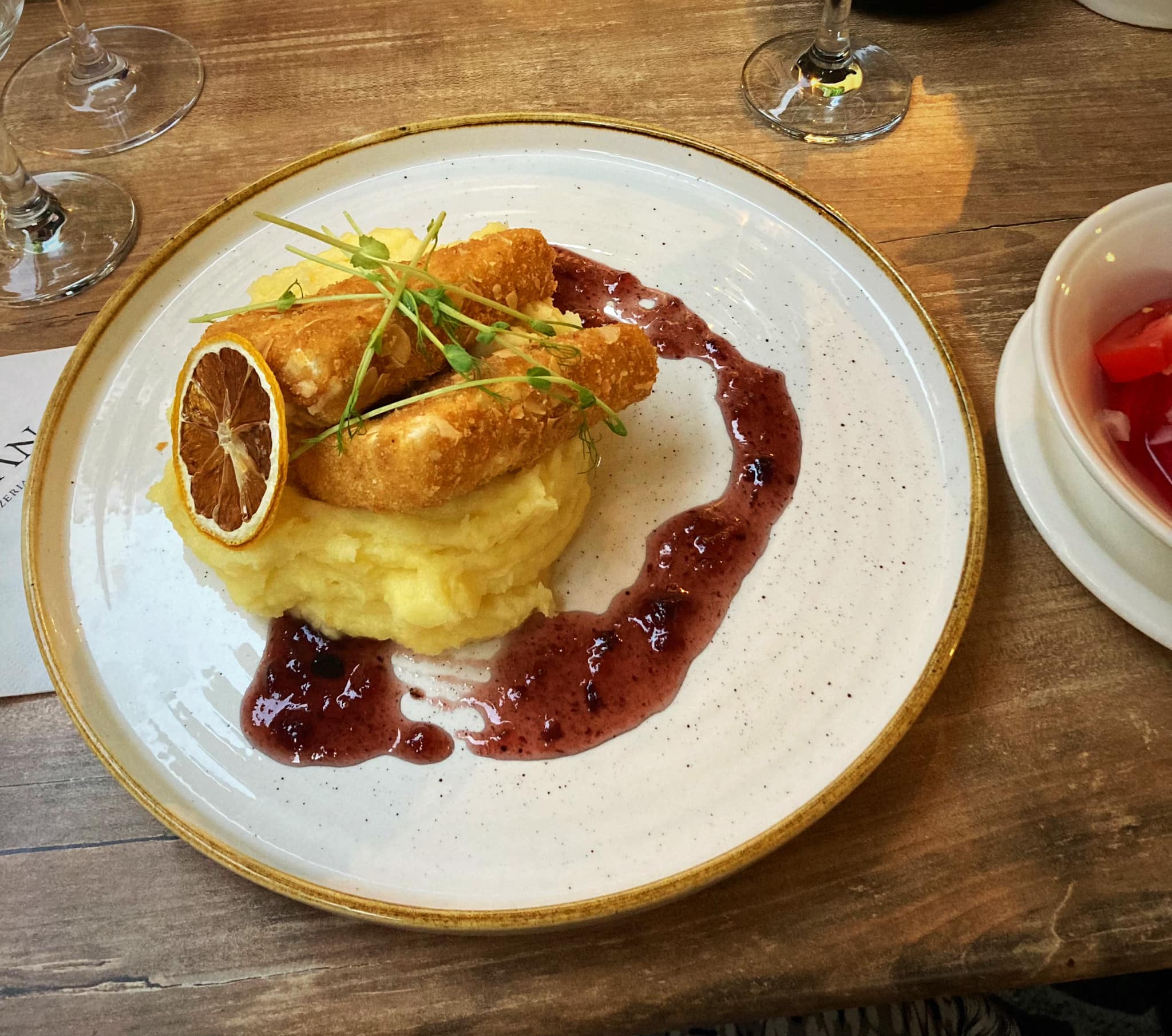
Bratislava was a revelation – soon after crossing the bridge we were in the old town with a gorgeous tree lined promenade with restaurants. I didn’t know what to expect but wow it is a vibrant and happening place. We found a restaurant serving traditional Slovakian food and settled in. I had sheep’s cheese gnocchi with bacon which I really enjoyed.
Bratislava has a population of 460,000 and was previously known as Pressburg (Germany) and before that as Pozsony (Hungarian). It has found a new purpose since the end of communism and the splitting of Slovakia from Czechoslovakia.
In 1919 the Austro-Hungarian Empire was broken up by the Trianon Treaty and the new country of Czechoslovakia was established. Pressburg, together with much of Hungary, north of the Danube became Czechoslovak; its name changed to Bratislava, the language of government changed to Czech and many of the Hungarian residents left. After the Second World War, the German speaking population were expelled, and Czechoslovakia came under Soviet control with a communist government. The old city became neglected and run down.
The end of communism in 1989 and Slovak independence in 1992 resulted in Bratislava becoming capital of the new country of Slovakia. Economic recovery was slow at first, but entry into the EU in 2004 and its close proximity to Western European markets attracted substantial investment in new industry. The city centre has been extensively renovated. In 2009, economic success led to Slovakia becoming the first ex Soviet block country to be admitted into the Euro currency zone.
We thoroughly enjoyed exploring the old town. It was full of people and there are many bars and restaurants. The people are friendly and most in the hospitality sector speak good English.









Day 37 – Bratislava to Gyor – 80km
Another perfect day for cycling – not a cloud in the sky but a gentle breeze to keep us cool.
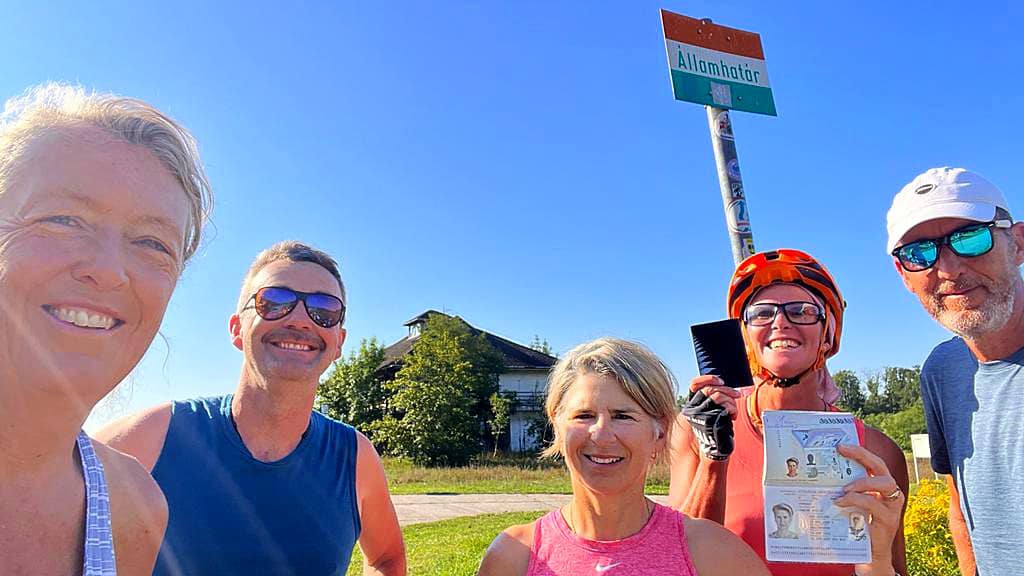
We left the beautiful old town of Bratislava and headed back across the bridge. Although the trails are still paved or asphalt, the quality has declined. The first 20 odd kilometres to the Hungarian border was uneventful. The guide book had said there was no demarcation of the border so Hilary kept an eye out on Google maps. In fact the border was well marked. There was an old bollard gate that we shut to give the effect, took the photos and realised later on that we didn’t even get it in the picture . Hungary is our sixth country on the Euro Velo 6.
Not long after crossing the border I was admiring the new Hungarian Euro Velo signs and went in a pothole. The impact threw one of my panniers off and broke the strap that holds it to the bike rack. JP and Graham to the rescue with a bungy cord.
The first village we passed through in Hungary was called Rajka. There was a new subdivision being built and the houses looked similar in style to what we have in NZ. The biggest difference was that they were all concrete. At times I felt like we could have been cycling through a suburb in small town NZ.
Our first stop was in Mosonmagyarovar which has a population of 32,500. It was weird to look at the road signs and signs in the shop fronts with not an ounce of recognition. In France, Germany and Austria we could decipher some words as they were more familiar and made sense. These signs really were in a foreign language.
Mosonmagyarovar was an important medieval trading route between Hungary and Austria. The reopening of trading links since the fall of communism has led to a boom in dentistry. With 350 practitioners, the town has the highest number of dentists per head in the world. Clients are not only from nearby Austria, where dental treatment is considerably more expensive than in Hungary, but also from worldwide, flying in via Vienna and Bratislava.
We found a traditional Hungarian restaurant for lunch and after a few lost in translation moments managed a lovely rapport with the staff who were very sweet. Hungarian goulash, dumplings and scrambled eggs and vegetable dumplings were enjoyed all round. Food and drink is a lot cheaper than in the previous countries. My latte was $3.25 versus about $7 previously.
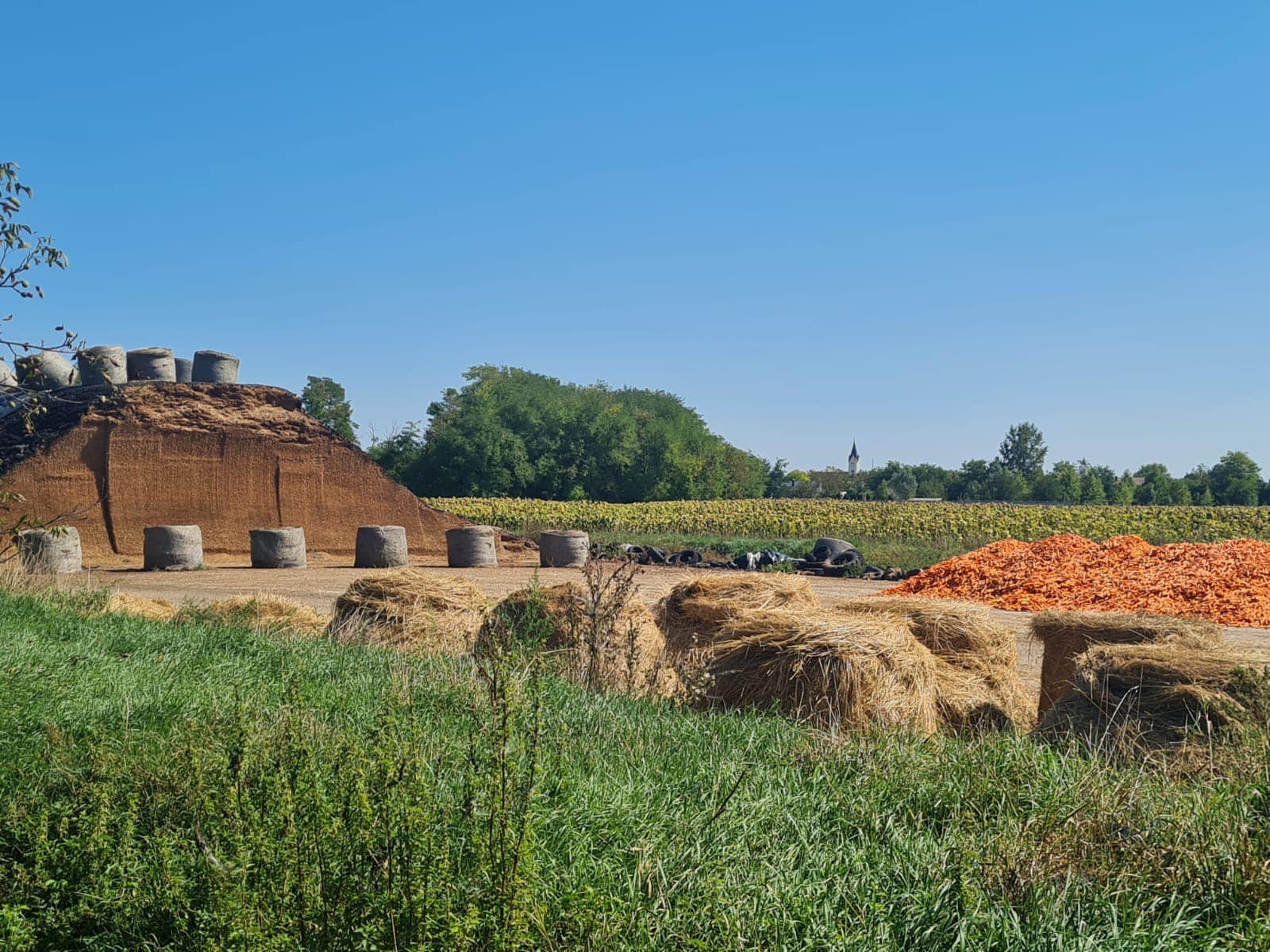
On the bikes again for what was a relatively boring cycle compared to our previous days – we really have been so spoilt with the scenery. We passed a lot of crops and harvested paddocks but even they looked a bit drab. Don’t get me wrong, there’s nowhere else I’d rather be than enjoying a blue sky day on my bike.
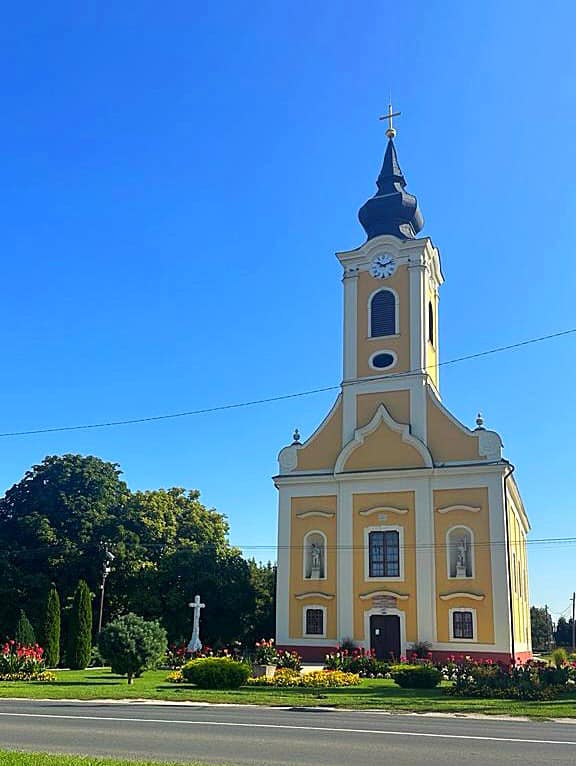
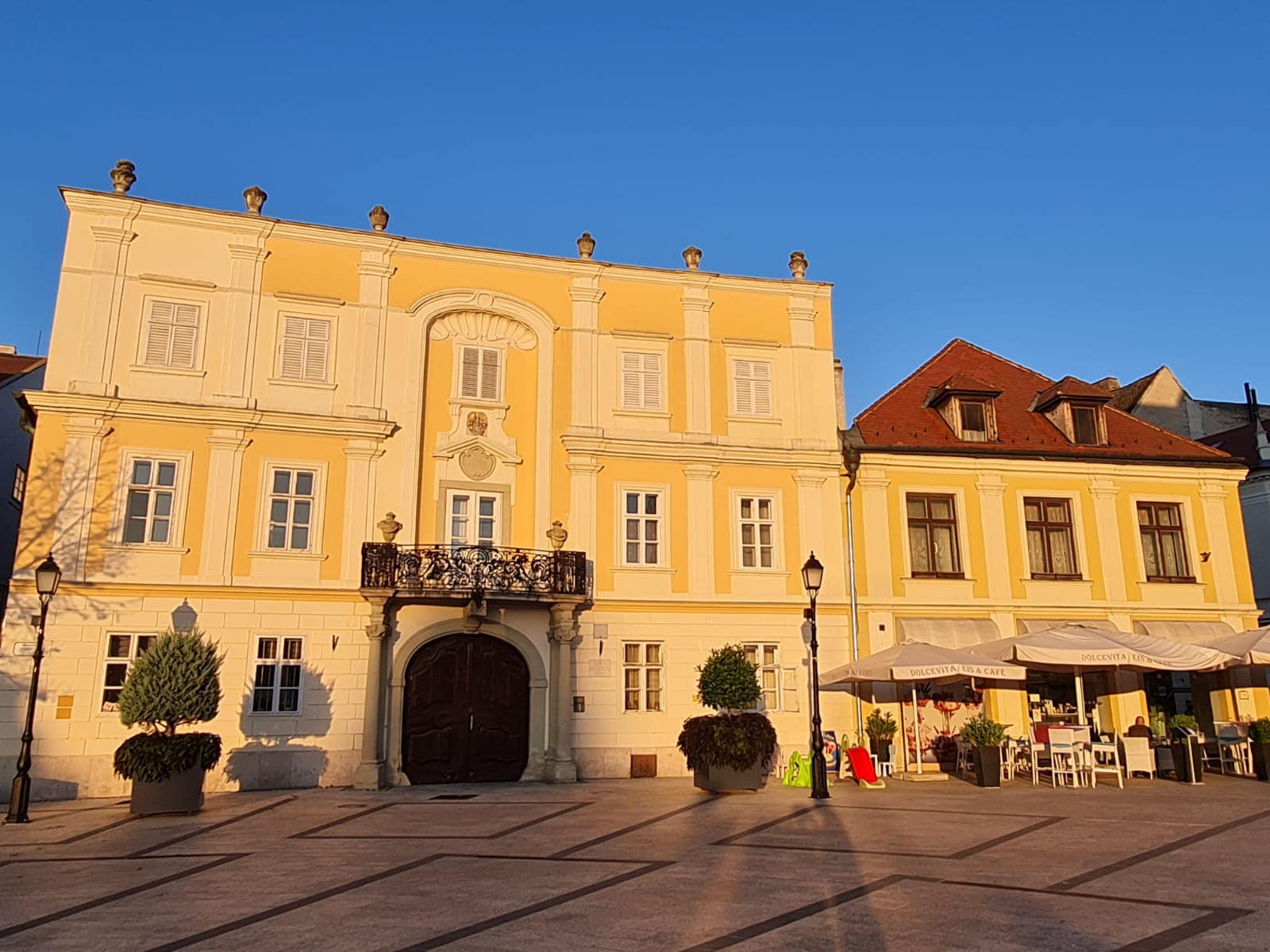
We arrived into Gyor (pronounced Gear) at about 2.30pm which is a beautiful town so our visual buds were back in their happy place.
Gyor has a population of 132,000 and sits on the confluence of the Mosoni Duna and Raba rivers and is the regional capital of north-west Hungary.
During the immediate post Second World War period with communists in power, many of the historic buildings were neglected. This changed in the 1970’s, so much so that in 1989 Gyor won a European award for its protection of historic monuments.
Post communist developments have seen Audi build a large car factory just east of the city, which produces two million car engines annually and assembles some Audi sports cars. Ninety percent of all Audi engines are made here, as well as some for Volkswagon and Lamborghini.







Day 38 – Gyor (Hungary) to Komarno (Slovakia) – 58km
After a lovely stay and breakfast at the Teatrum Hotel we navigated our way out of town and passed the vast Audi production site.
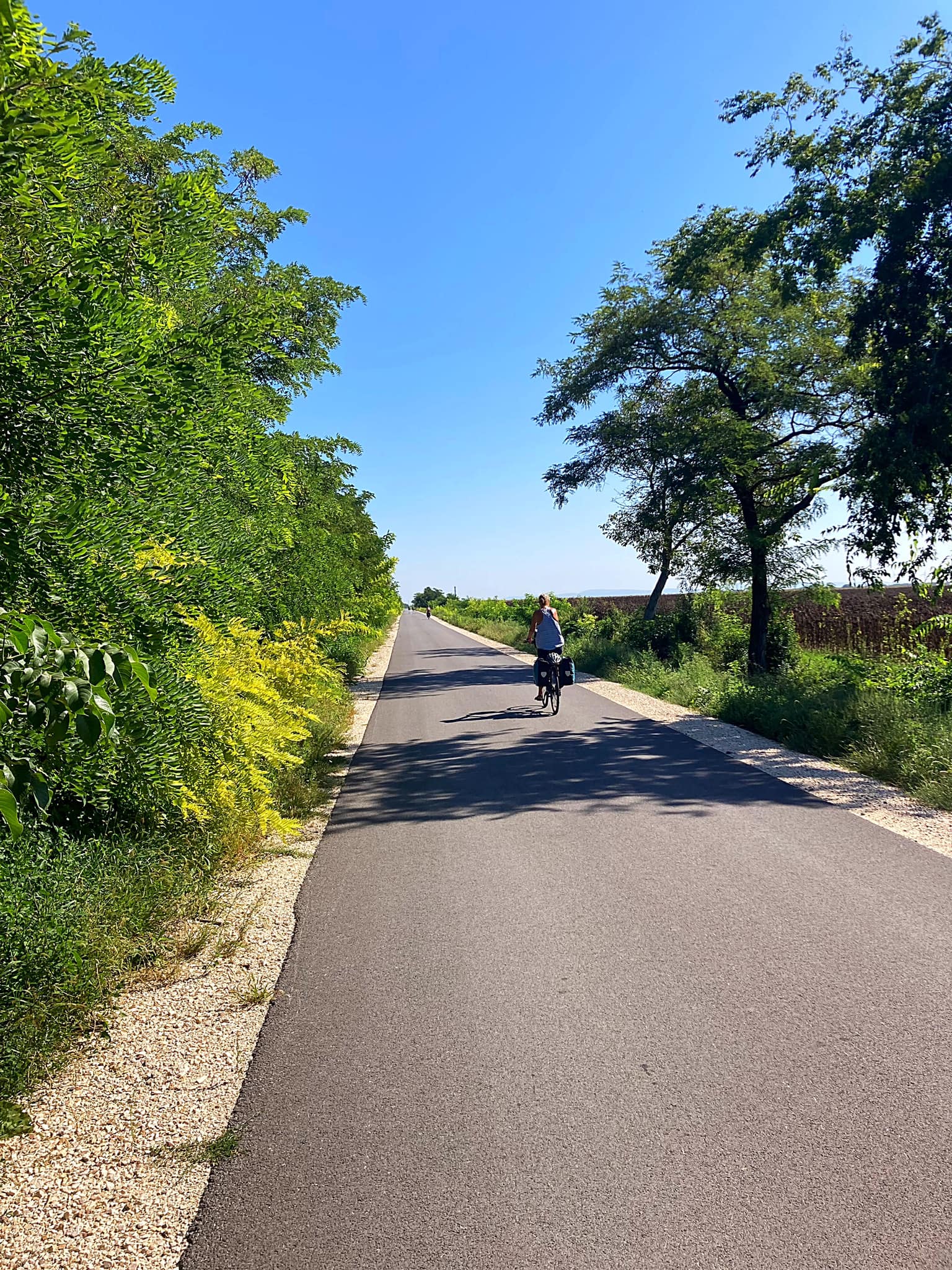
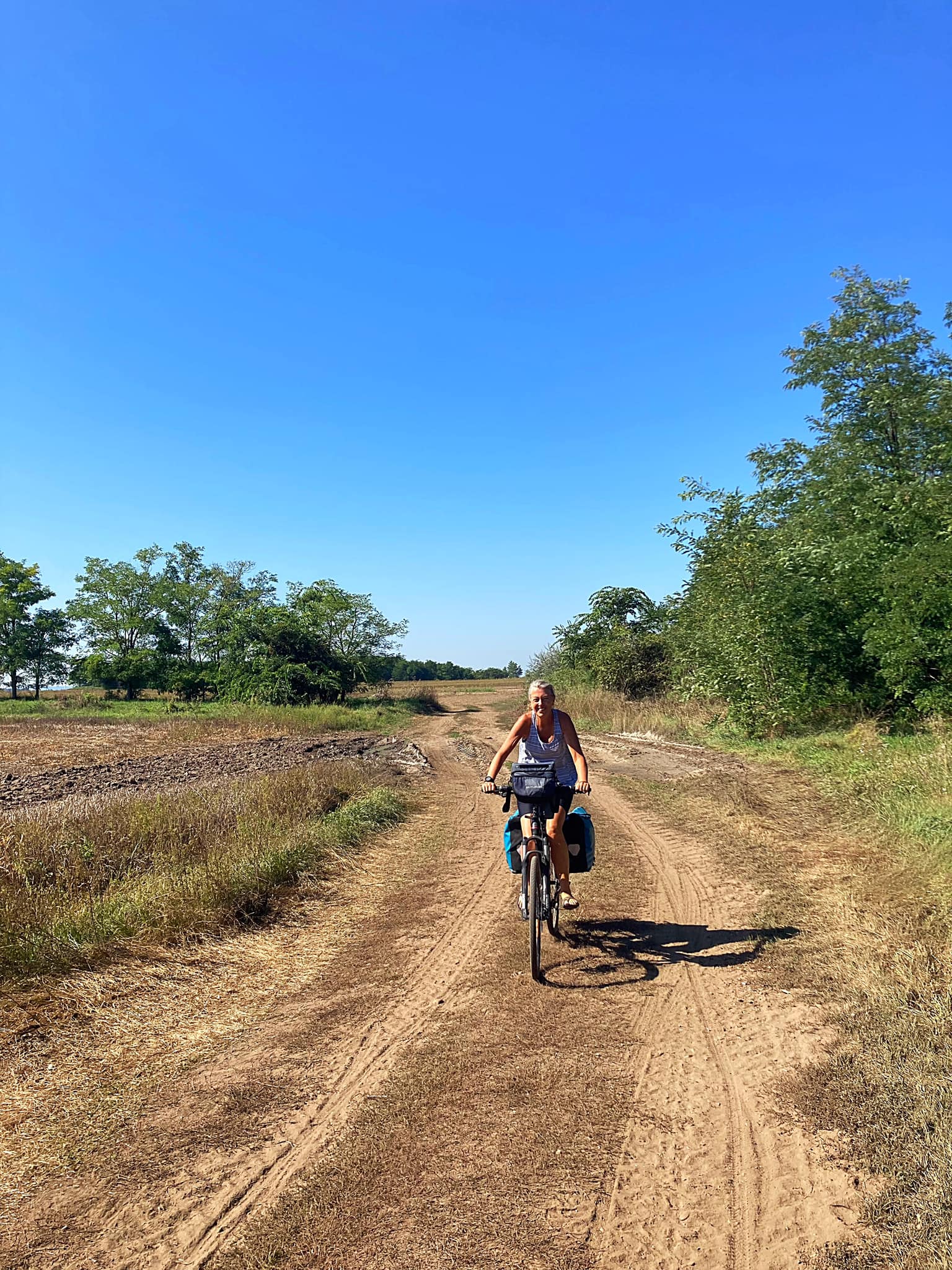
Today’s ride was much more interesting with gently rolling countryside. We had a mixture of field tracks, country roads and cycle tracks, with some stretches of main road without cycle lanes.
The guide book had us going through a village called Babolna but the Euro Velo signs bypassed it and there were no signs directing us there, which was a shame. A horse breeding and stud farm was established here in 1789, providing horses to the Hungarian army. In 1836 an Arabian stallion named Shagya  was imported from Syria and this horse became the progenitor of a breed of thoroughbreds now recognised all over Europe.
In addition to the stud, a military riding academy was established and Bablona became a centre of equine activity. It is now the Hungarian National Stud with over 250 horses stabled there, including 19 breeding stallions.
It would have been great to see but we were 10km down the road before we realised we had missed it.
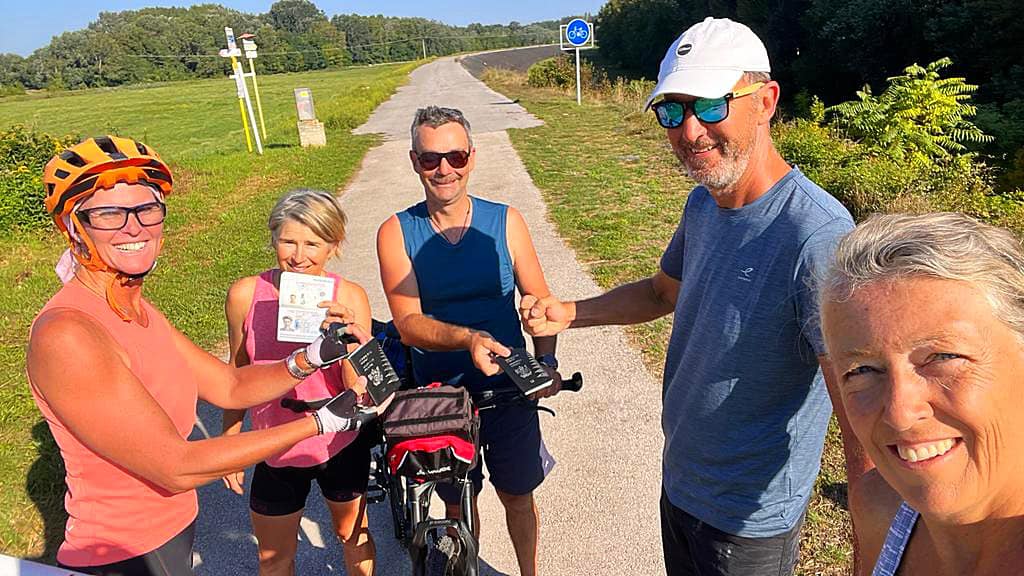
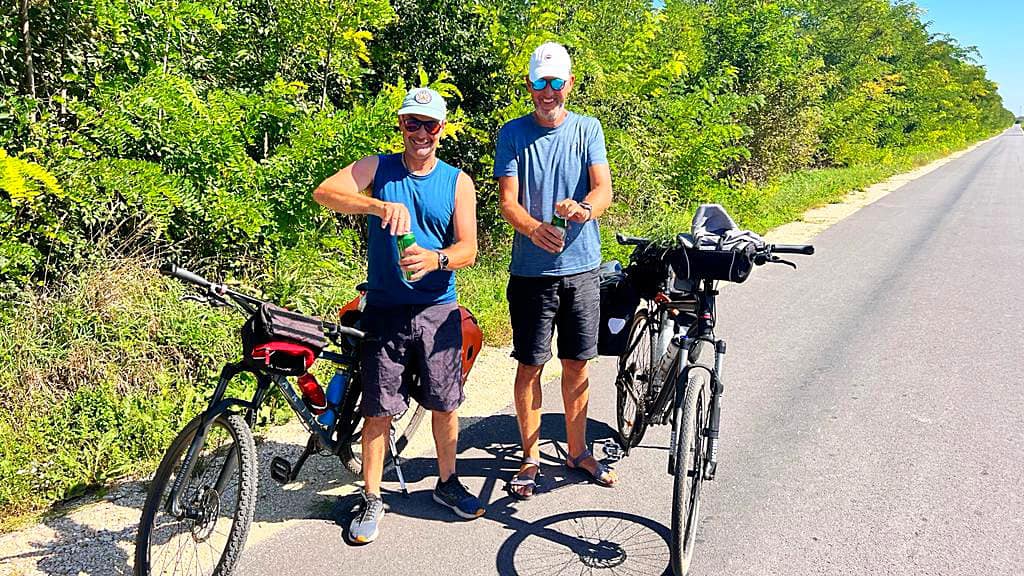
Andy clicked over 2000 kilometres today so we marked it out with some wild hemp plants found growing beside the track. Graham surprised Andy with a beer which was dutifully consumed  We had to do a quick photoshoot as a car appeared on what we thought was the cycle track
  .
.
Not long after that we went through a village where we found a little kebab shop with a friendly man behind the counter. We all enjoyed a tasty chicken pita bread for lunch.
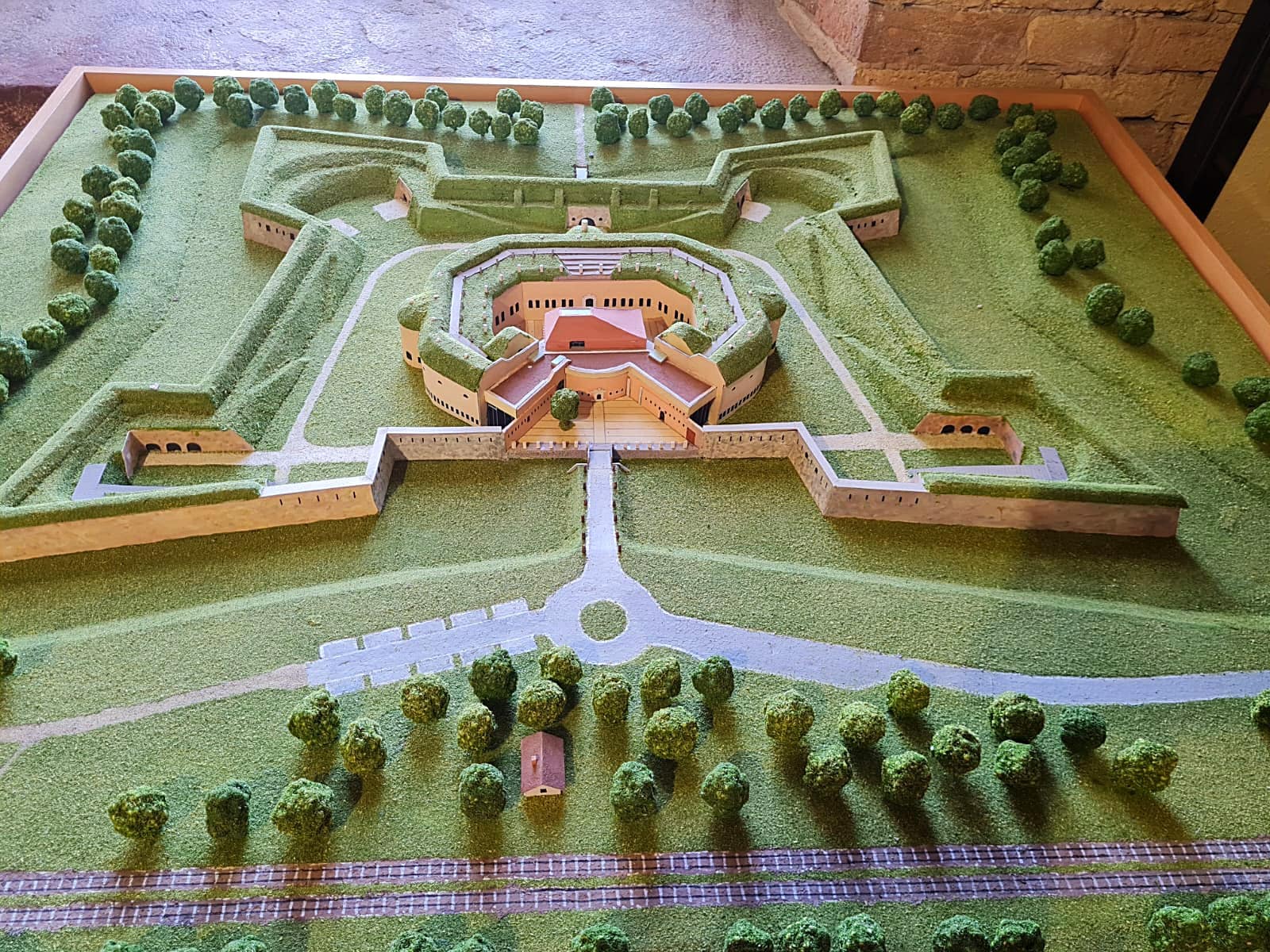
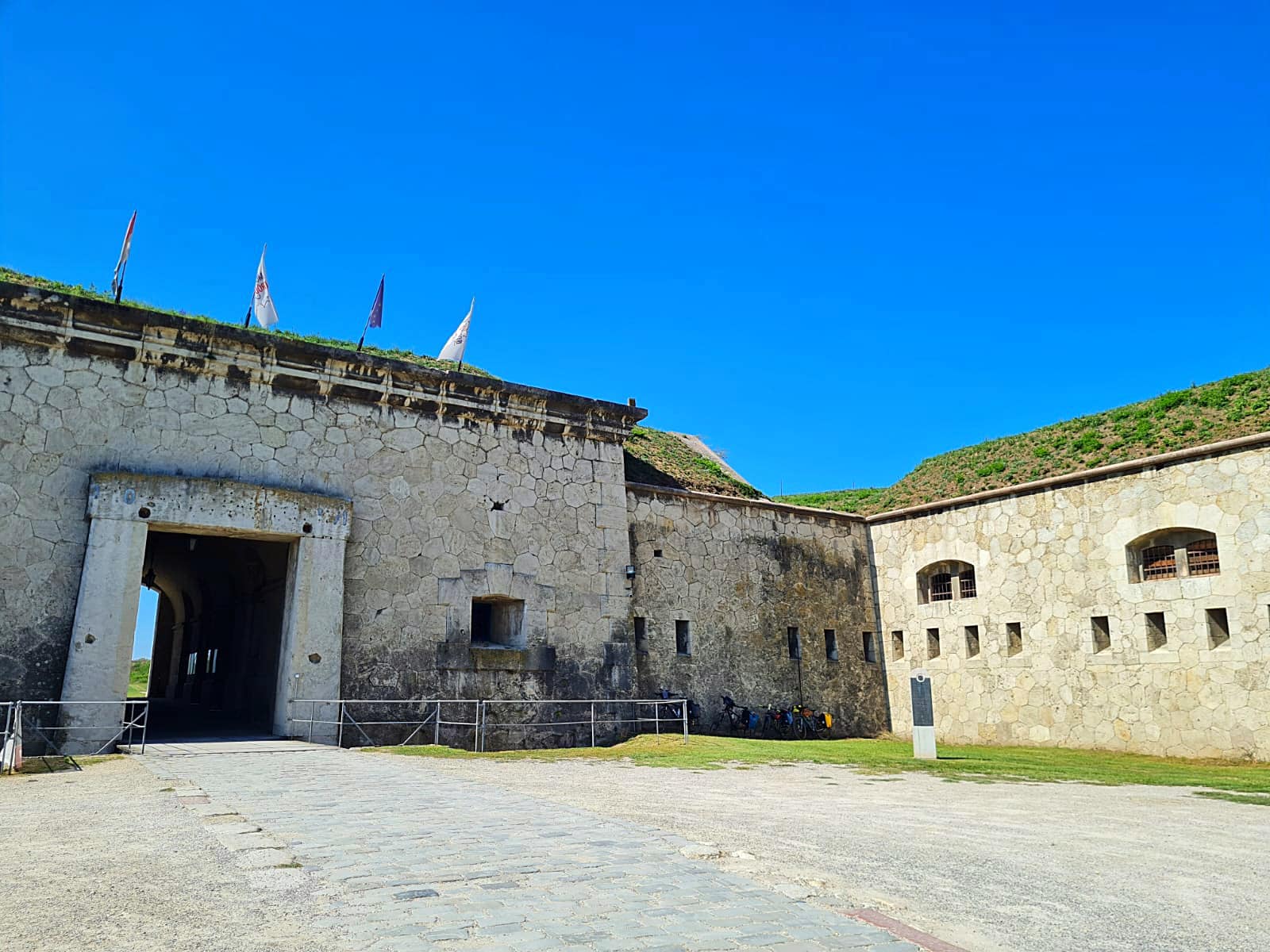
Just before entering Komarom we visited the Monostor fortress. Monostor, one of three military forts ringing Komarom, is the largest modern-era fortification in Central Europe, covering an area of over 70 hectares and possessing barracks for 8000 soldiers. Built between 1850 and 1871, during the period of the Austro-Hungarian Empire, its main purpose was to control shipping on the Danube.
Despite its impressive system of walls, ditches and casements, the fortress never saw military action and was mainly used as a training garrison. During the Soviet period it was used as a secret arsenal to store large quantities of Russian weapons and ammunition.
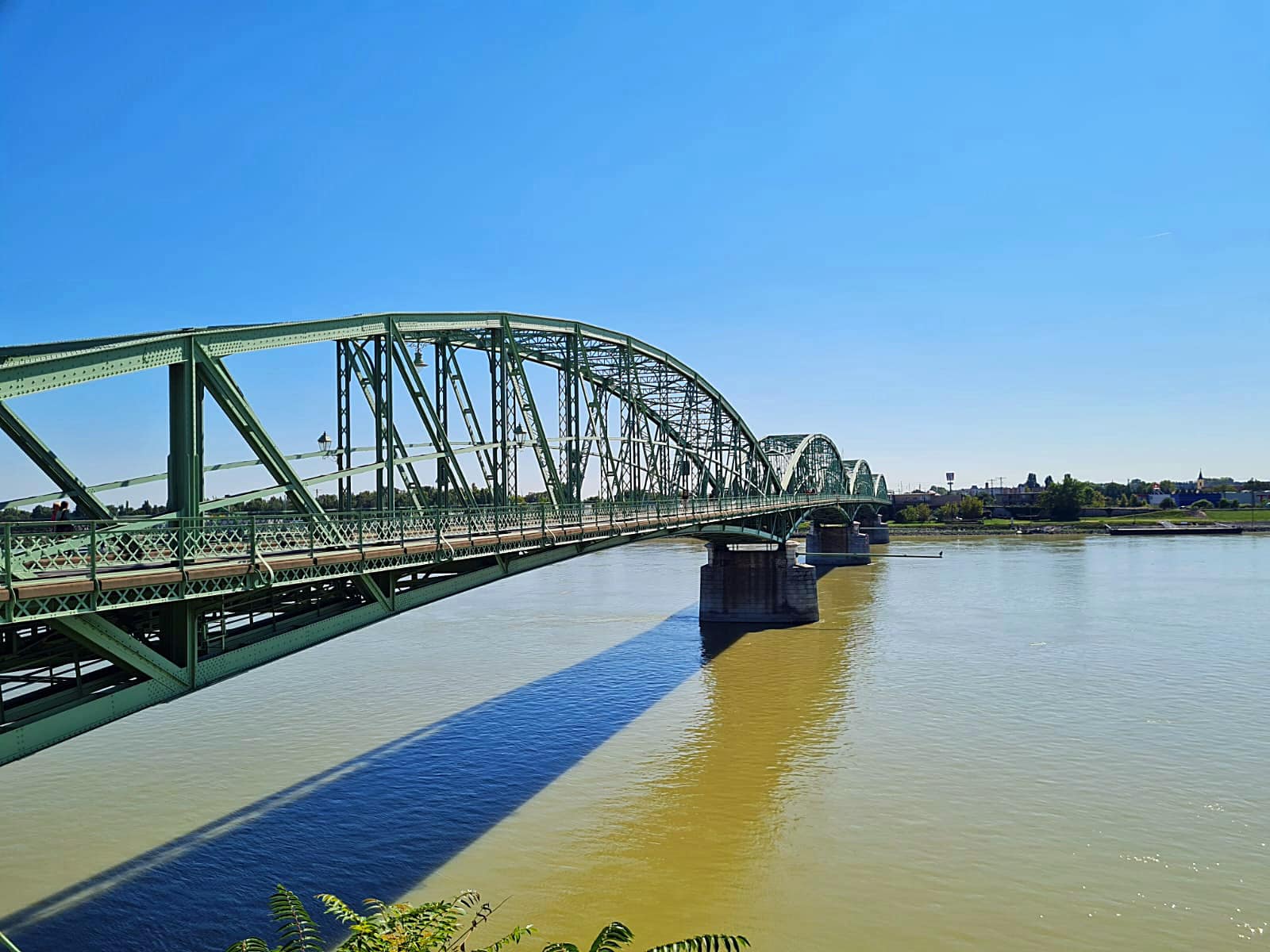
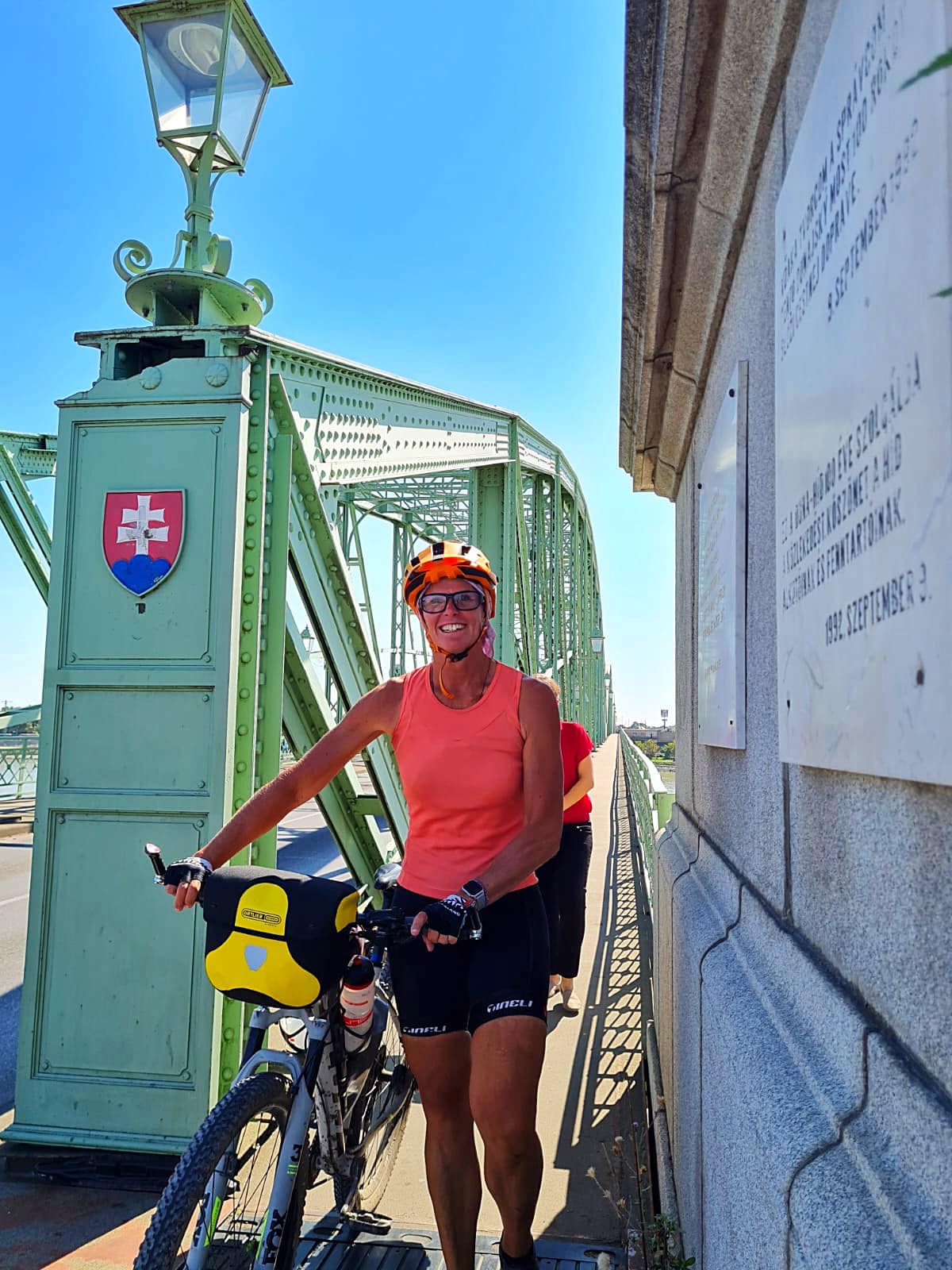
We then got our first glimpse of the Danube again after two days, as we crossed the bridge back to Slovakia where we are staying in Komarno which is the sister city to Komarom in Hungary.
Both cities were part of the Hungarian community prior to the breakup of the Austro-Hungarian Empire in 1919. From 1919 until 2007, customs and immigration checks slowed connections across the river, but since both Slovakia and Hungary signed the Schengen accord in 2007 all restrictions have been lifted. Even today, 60 percent of the population of Kormano are ethnically Hungarian.
Kormano’s main industry is shipbuilding, and it produces many of the vessels that ply the Danube.
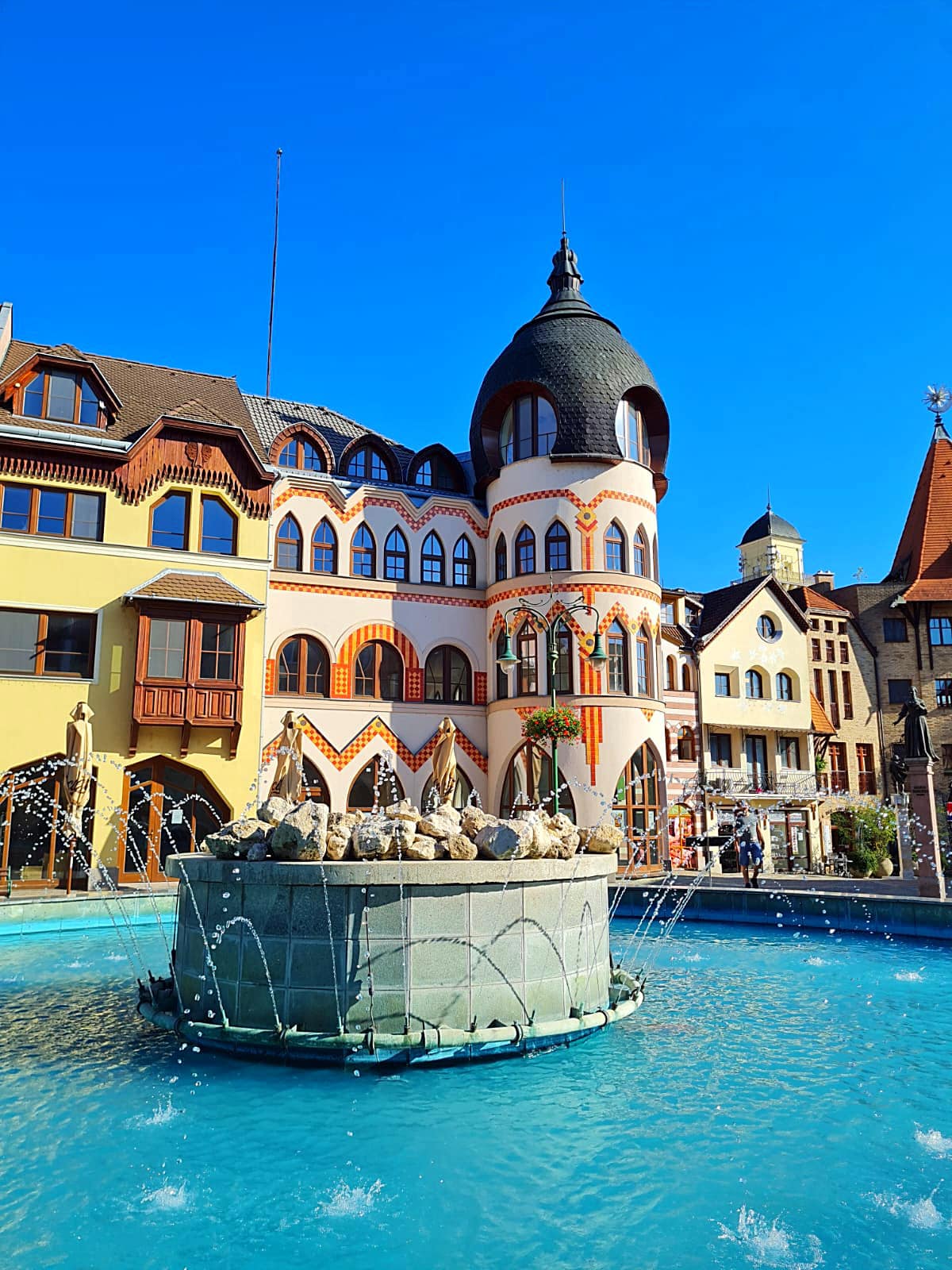
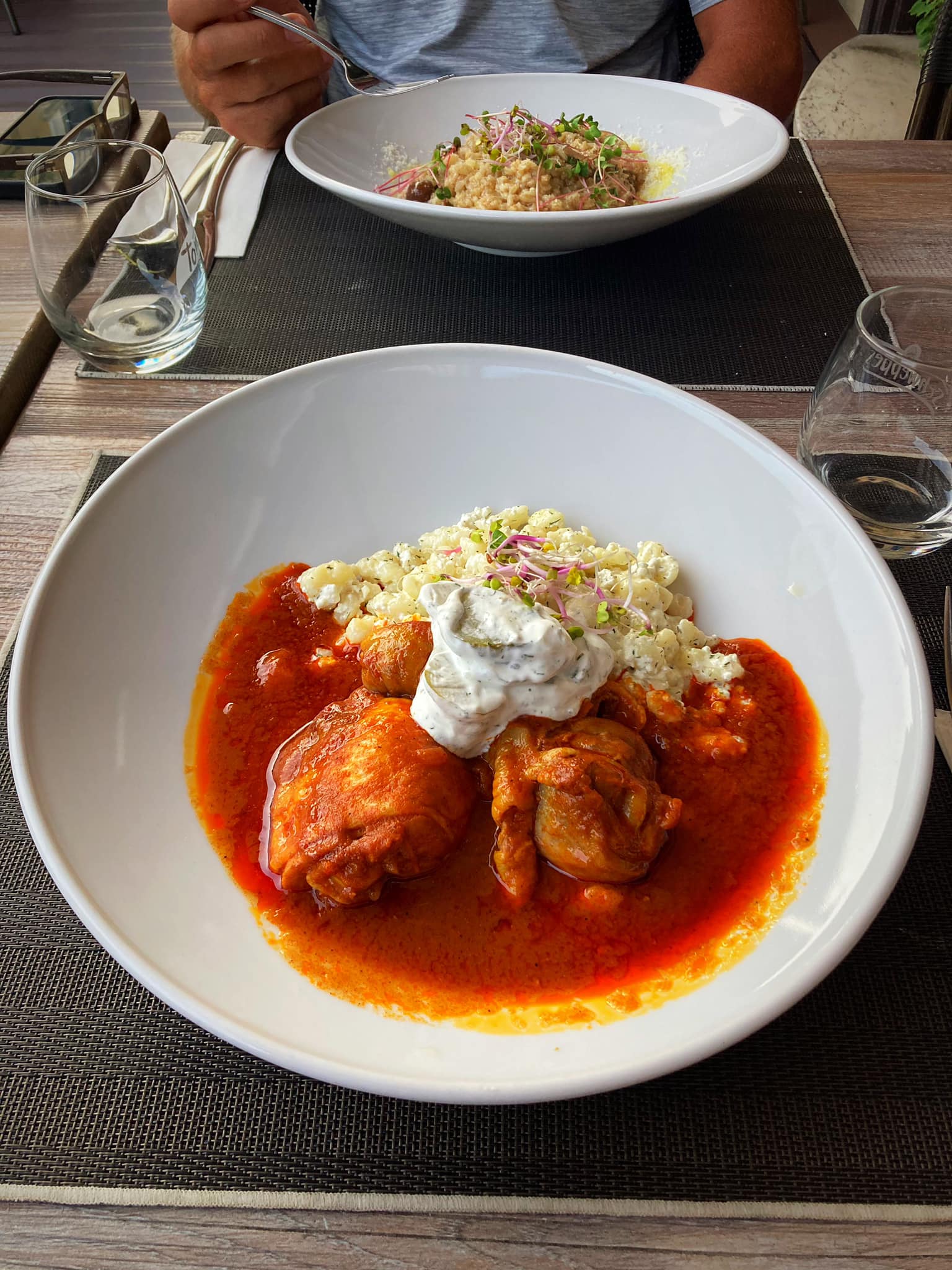
We are staying in a gorgeous apartment on Europa square and enjoyed a lovely afternoon wandering around the village. Tonight, I had a traditional Hungarian dish called Paprikish Chicken with dumplings and cottage cheese. It was delicious. We were worried that the food in the Eastern European countries wouldn’t be up to much, but boy have we been wrong. It is definitely heavier, but the combinations and flavors are great.










Day 39 – Komarno (Slovakia) to Esztergom (Hungary) 57km
Another gorgeous day as we headed down the Danube.
The first village we came across had a loud speaker playing Berlin’s, Take my Breath Away, in Slovakian. JP did a little dance performance for the team. The song then stopped and a woman proceeded to speak. As we carried on through the village, new speakers kicked in. We were imagining these speakers spouting communist propaganda back in the day.
Not long after this we found the best coffee spot on our trip to date. A gorgeous little coffee and wine shop attached to a small hotel with a tasting room with full glass windows looking over the Danube. The girl in the shop told us that the speakers we had heard were broadcasting the news.
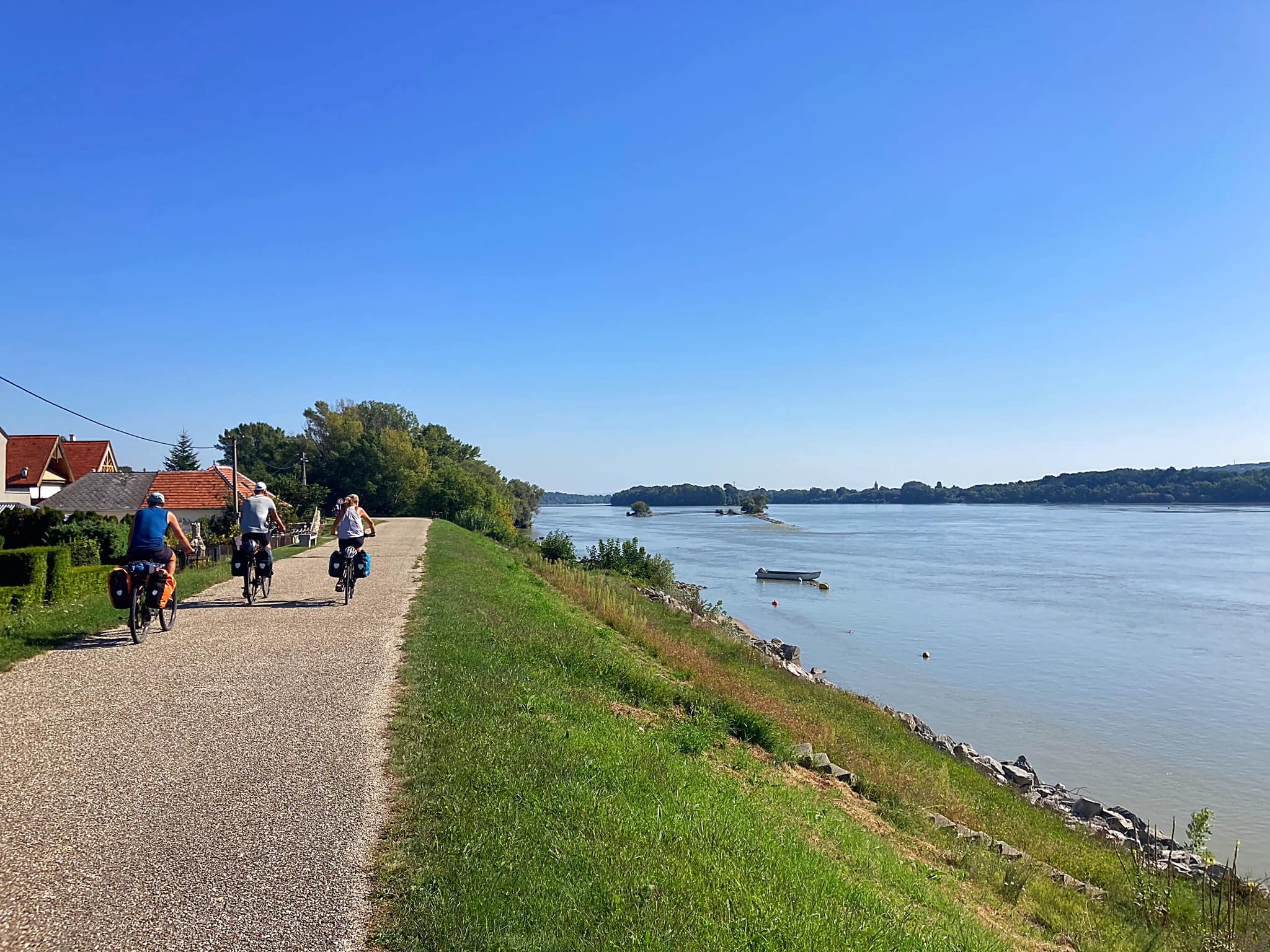
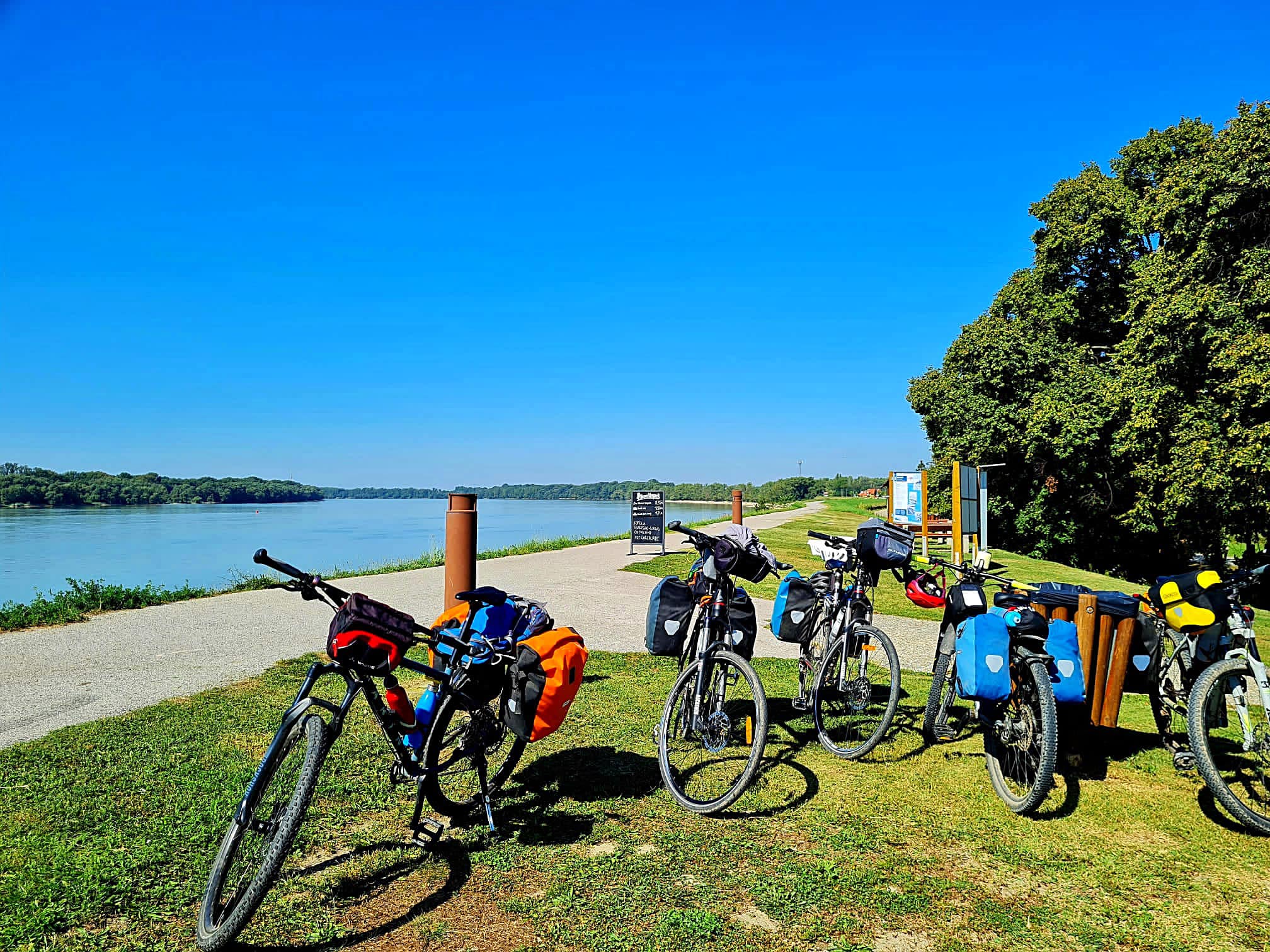
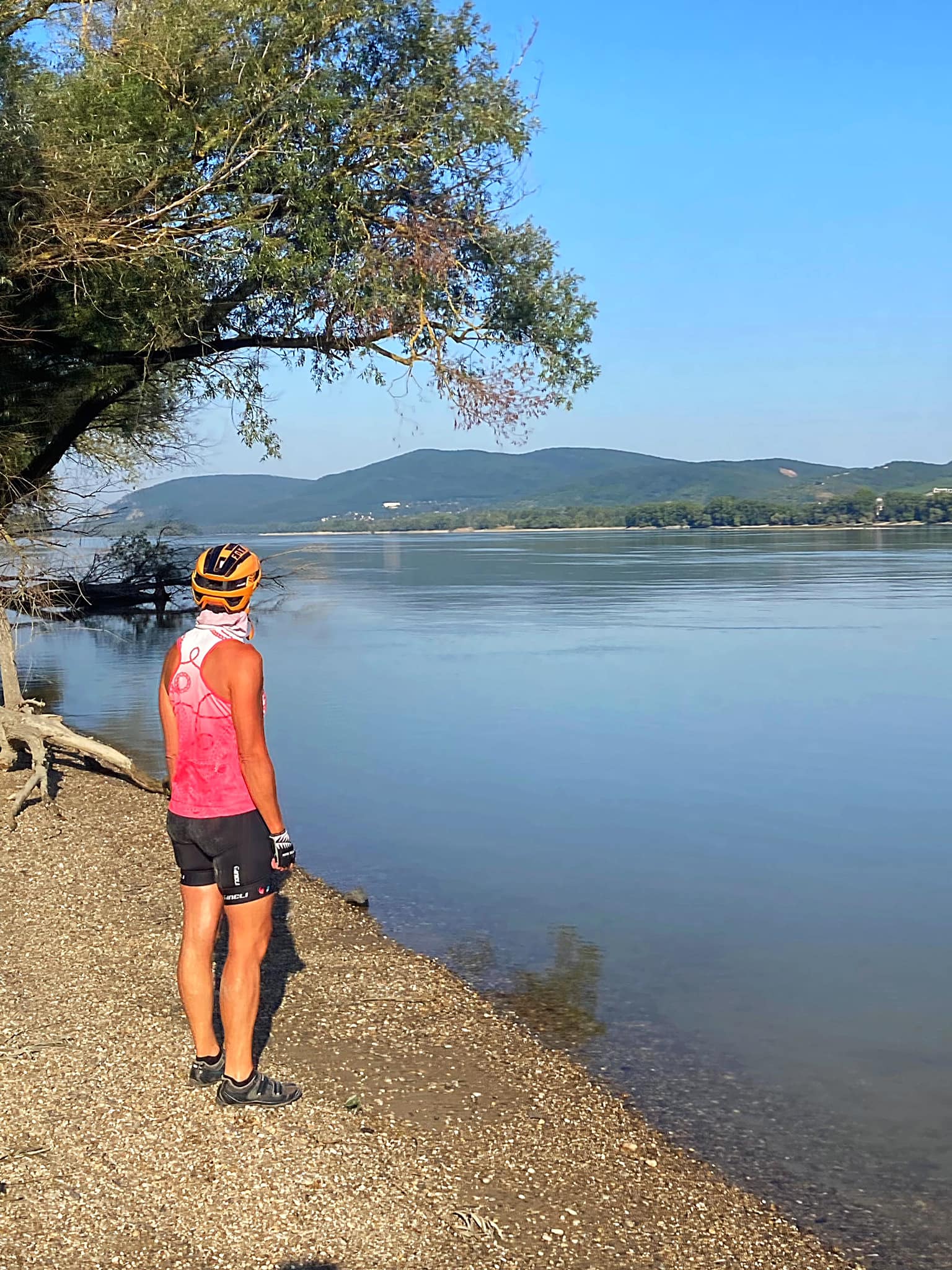
The next part of the ride was alongside the Danube where we weaved in and out of tree lined tracks. Although the water was glistening in the sunlight, we still thought it too murky to swim in. We had a paddle instead – our first in the Danube.
We climbed a lookout tower for an on high view up and down the Danube.
The last twenty odd kilometres weren’t as nice but we made it to Sturovo in time for lunch – we were still on the Slovakian side of the river.
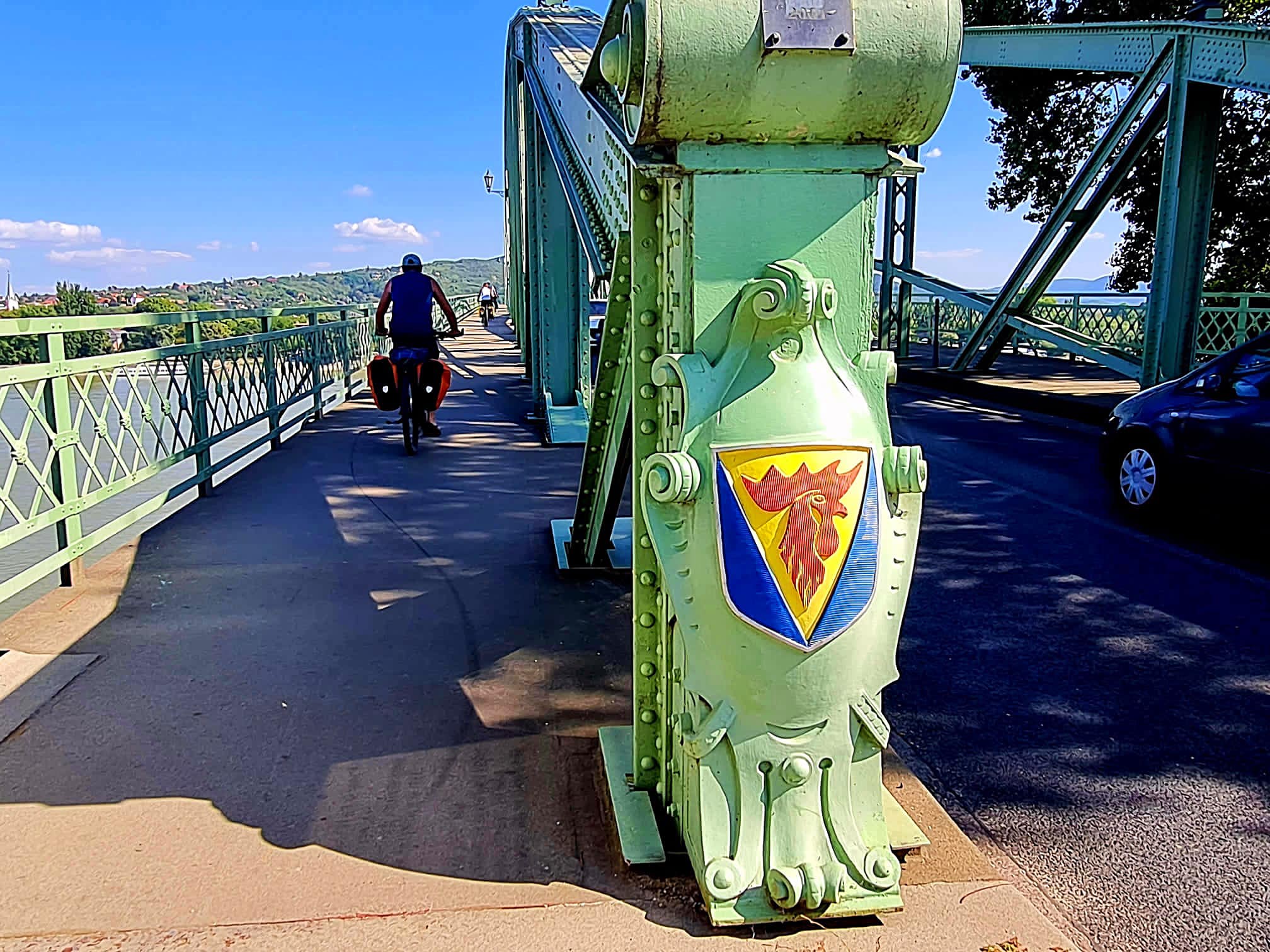
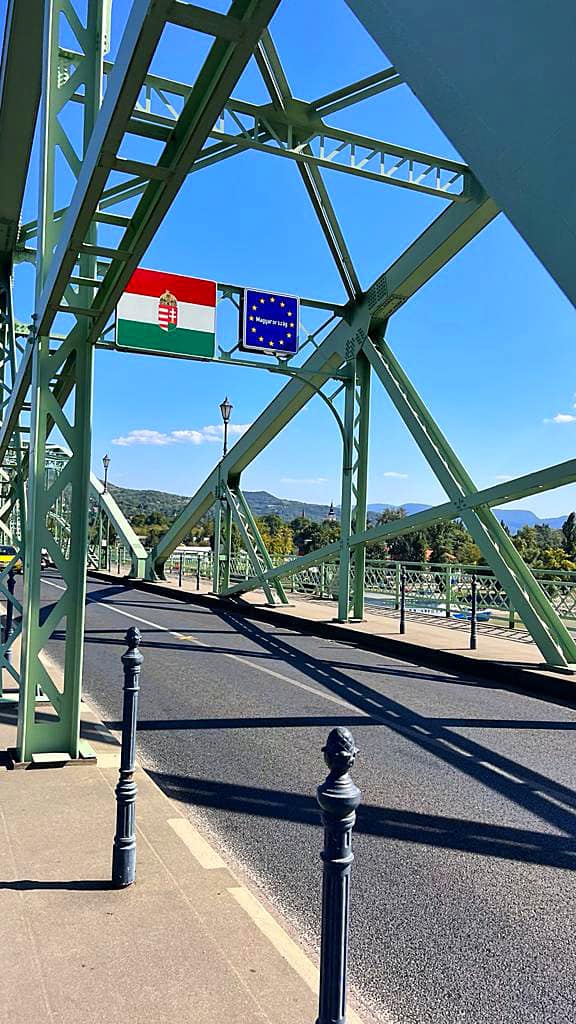
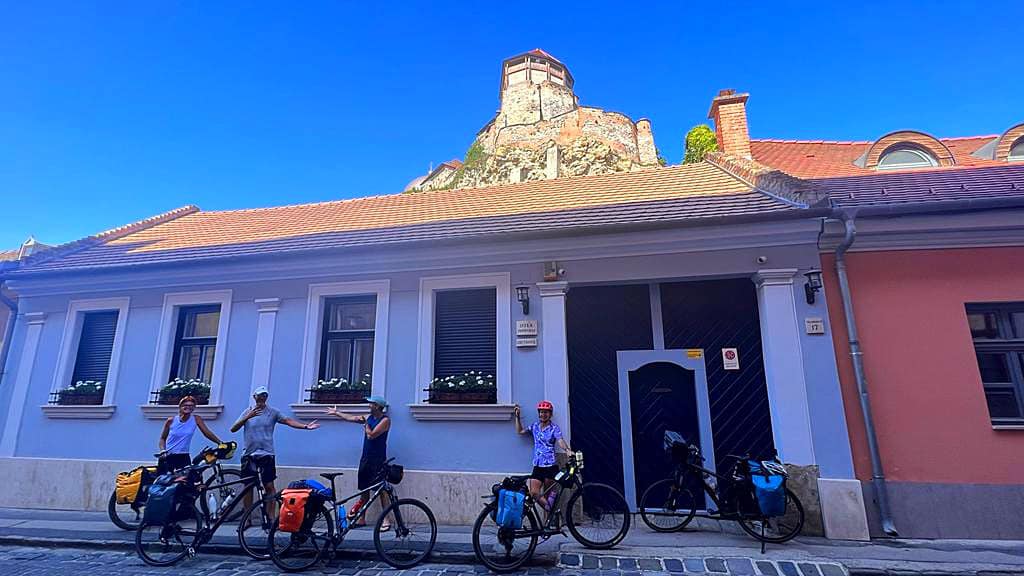
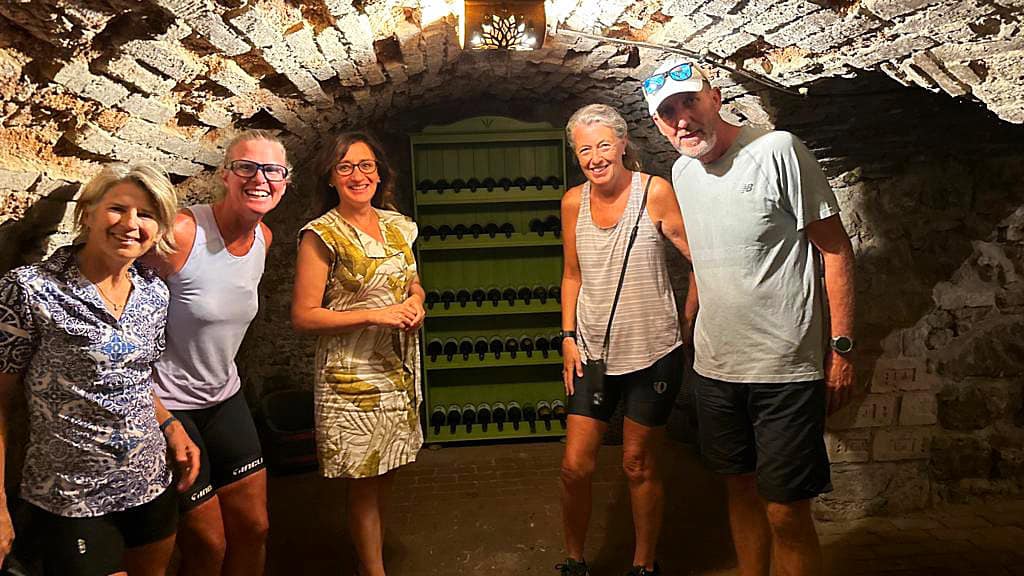
After lunch we crossed the Maria Valeria bridge to Esztergom in Hungary, where we met our landlord for the night. We are staying in two gorgeous little apartments with a lovely courtyard and an underground wine cellar. There was great excitement as the cellar was stocked with local wines we could purchase so we made a plan to have dinner in the cellar.
JP and I biked off to the Tesco Hypermarket to get supplies. We enjoyed pre dinner drinks and nibbles in our courtyard before shifting to the cellar for dinner. The wines were delicious (bubbles, a white and two reds) and were from a vineyard 20 kilometres away. We left JP in the cellar with her glass of red and Spotify. She put on her own concert for one.
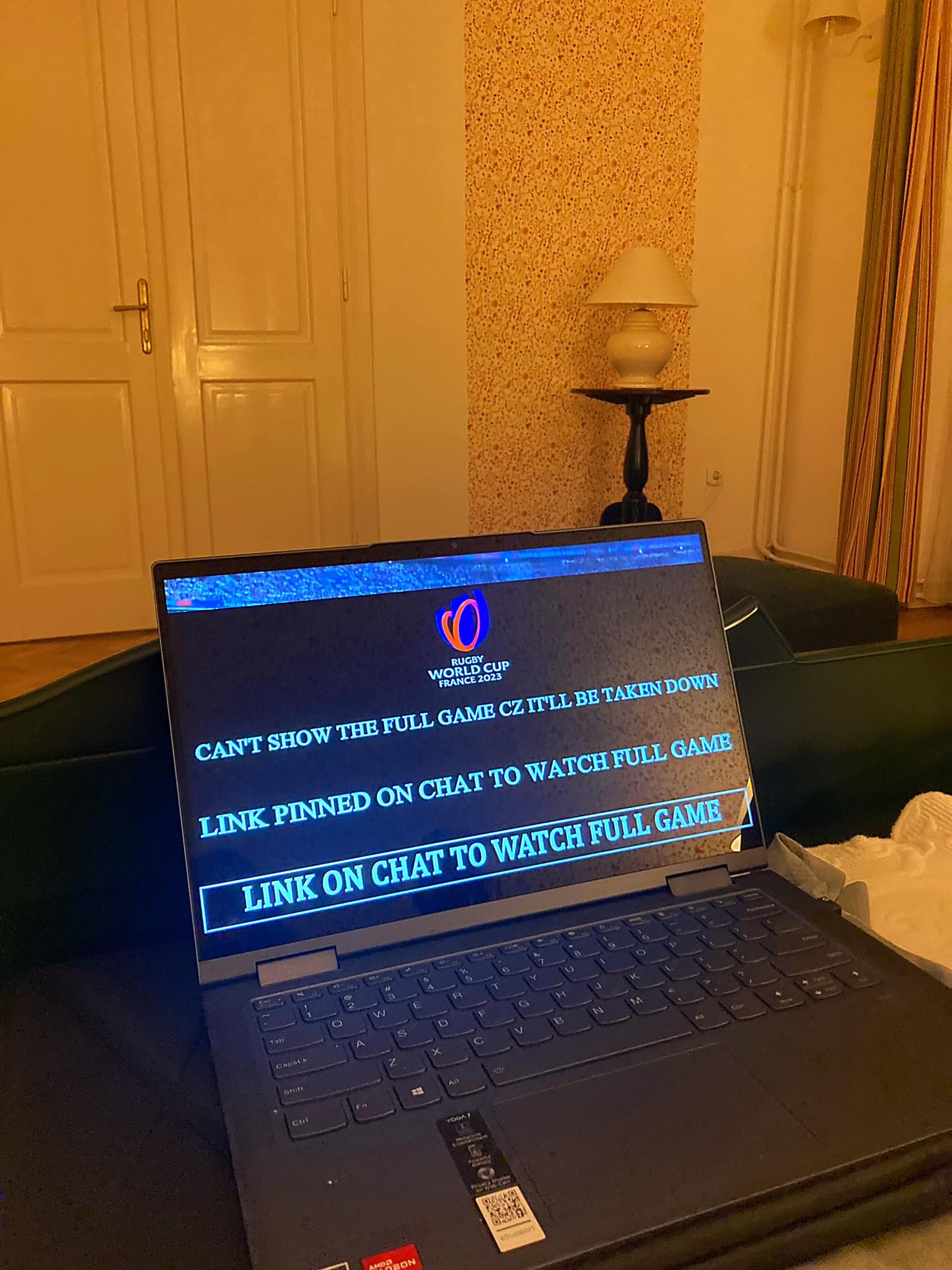
Meanwhile the rest of us attempted to watch the All Blacks v France game on YouTube but got blocked so ended up resorting to listening to it on Newstalk ZB. We all sat in Hilary and Graham’s bedroom – I imagine this is what it was like back in the day. Mum, Dad and the kids gathered around the wireless. One child had half an ear open, snoring intermittently, one was oblivious and singing to herself while the other was tuned in listening intently  .
.
We didn’t get a lot of time to explore Esztergom as we wanted to enjoy our home for the night.
We couldn’t miss the basilica though which stands atop Castle Hill. It was built between 1822 and 1869 and is Hungary’s biggest church. Esztergom’s role as the seat of the Catholic primate and centre of the church in Hungary earned it the contrasting sobriquets “Hungary’s Rome”, from believers, and “city of reaction”, from communist authorities.
The city was badly damaged during the Second World War and the impressive Maria Valeria bridge, which connects Slovakia and Hungary, was destroyed. It remained in ruins until it was rebuilt and reopened in 2001.










Day 40 – Esztergom to Budapest – 71km
We got away at 8am this morning as we had a ferry to catch across the river 12km down the track at 8.50am. The point of the ferry was to avoid 12km on the main road. We got there about 8.30am and enjoyed some quiet time as we waited, and waited and waited…
No ferry so it was back up to the main road to Visegrád which turned out to be a very popular place with the local lycra brigade (mainly middle-aged men riding road bikes). We found a lovely cafe with a garden out the back. Hilary got chatting to a couple of the lycra brigade who were super friendly and gave us some good tips for our cycle to Budapest.
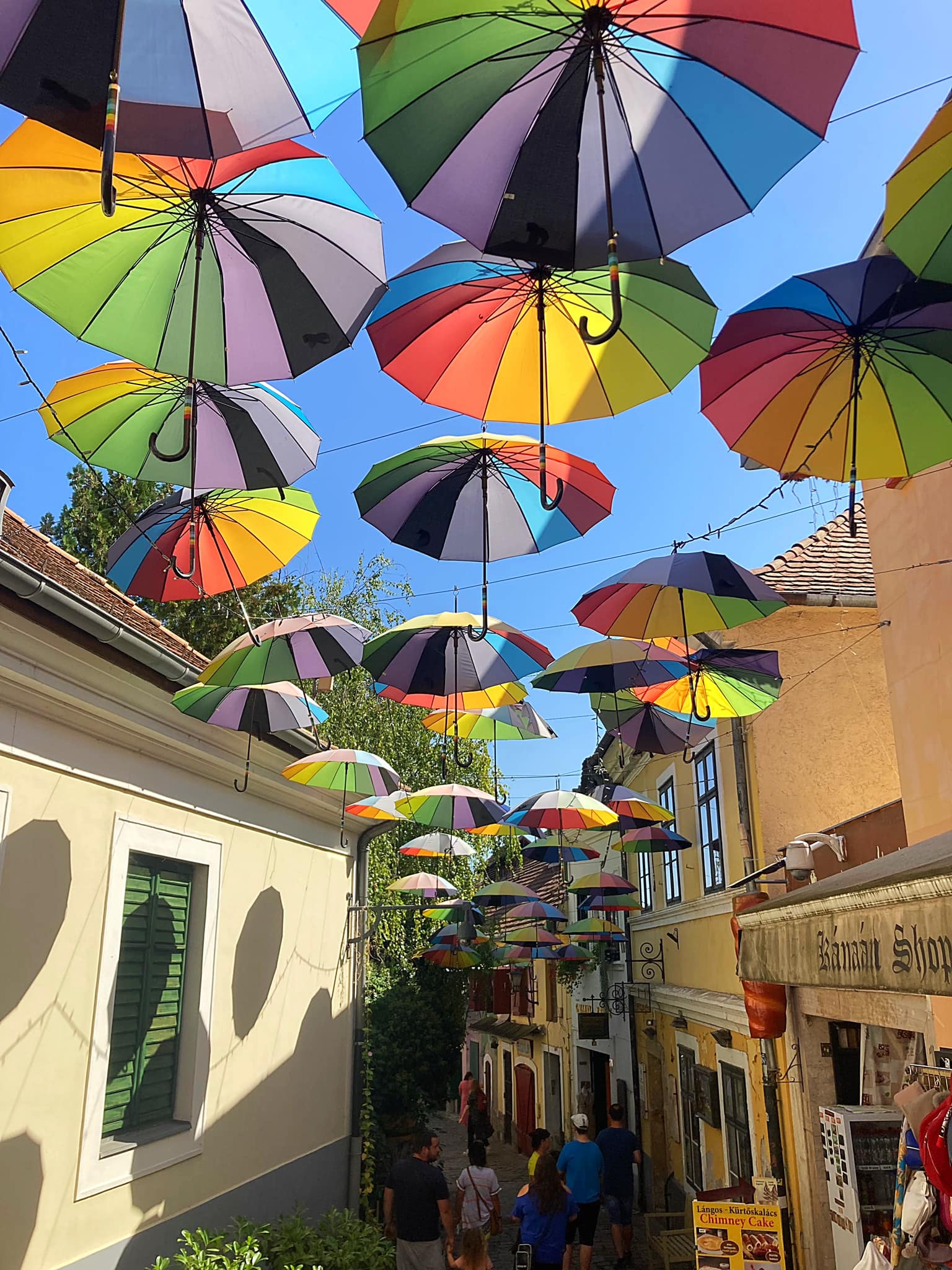
We stopped in Szentendre which is well known for its collection of craft workshops, studios and art galleries. The town was a centre of Serbian immigration into Hungary between the 17th and 19th centuries. They left Serbia to escape Turkish occupation. These Serbs bought Christian orthodox churches and colourful baroque merchant houses to Szentendre. After the Trianon Treaty most of Hungary’s Serbs immigrated to Yugoslavia and today there are less than 100 ethnic Serbs living in the town.
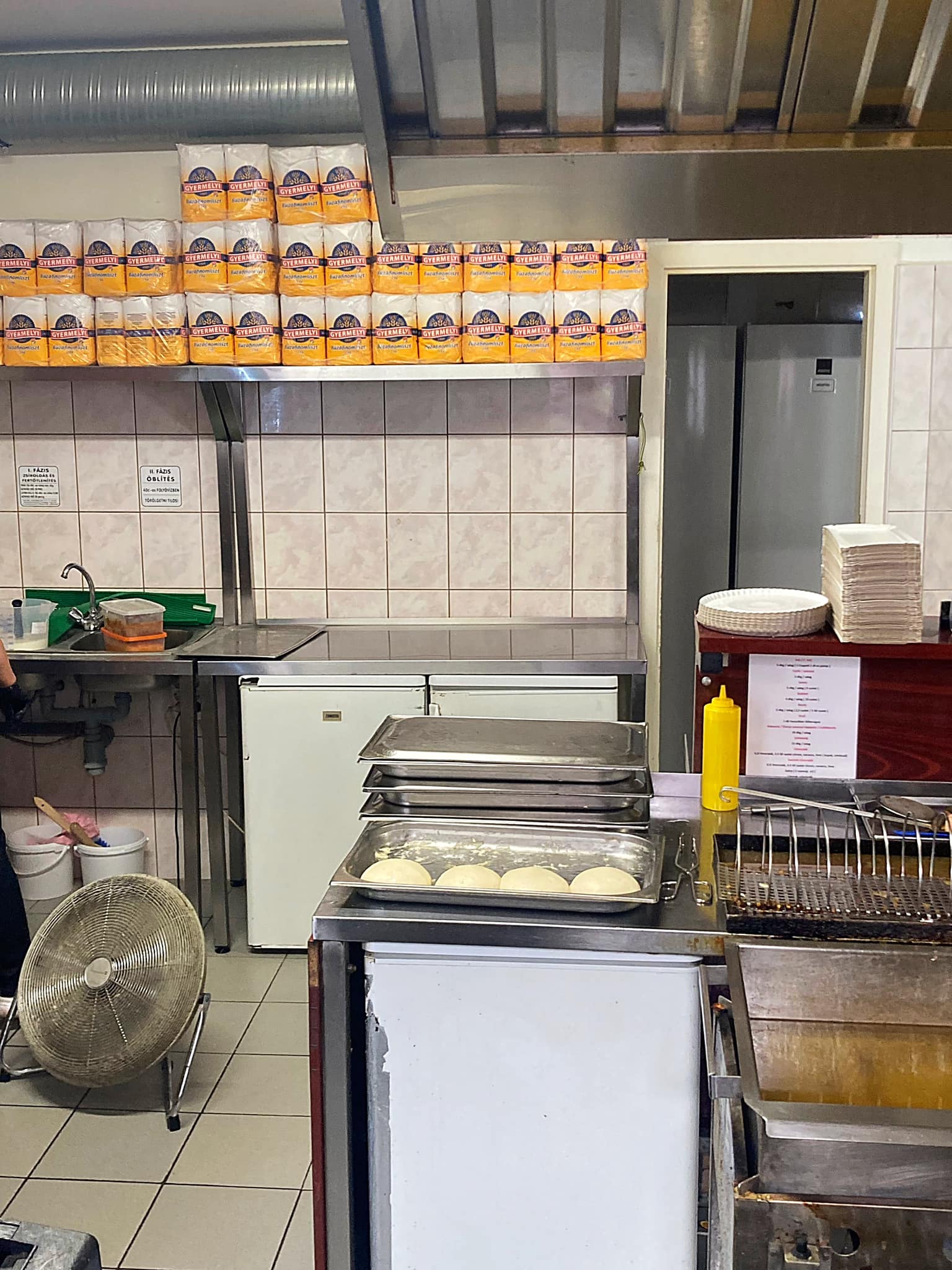
We enjoyed a Langos for lunch which is a traditional Hungarian dish made from deep-frying a yeasty dough. I had sour cream, sauerkraut and bacon bits on mine. The bread was delicious – the topping was a bit smokey for me. Traditionally they have a creamy garlic sauce topped with cheddar cheese.
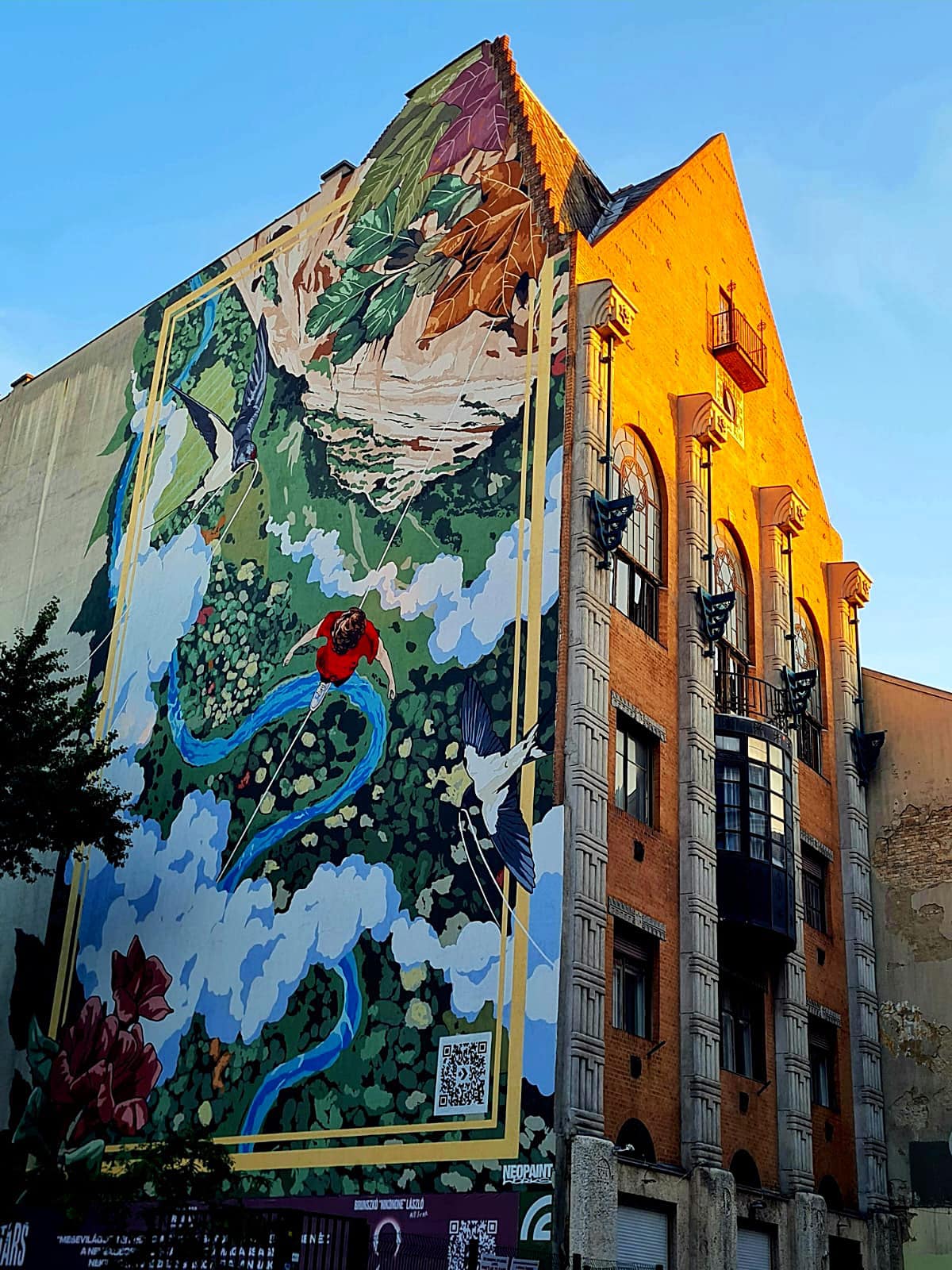
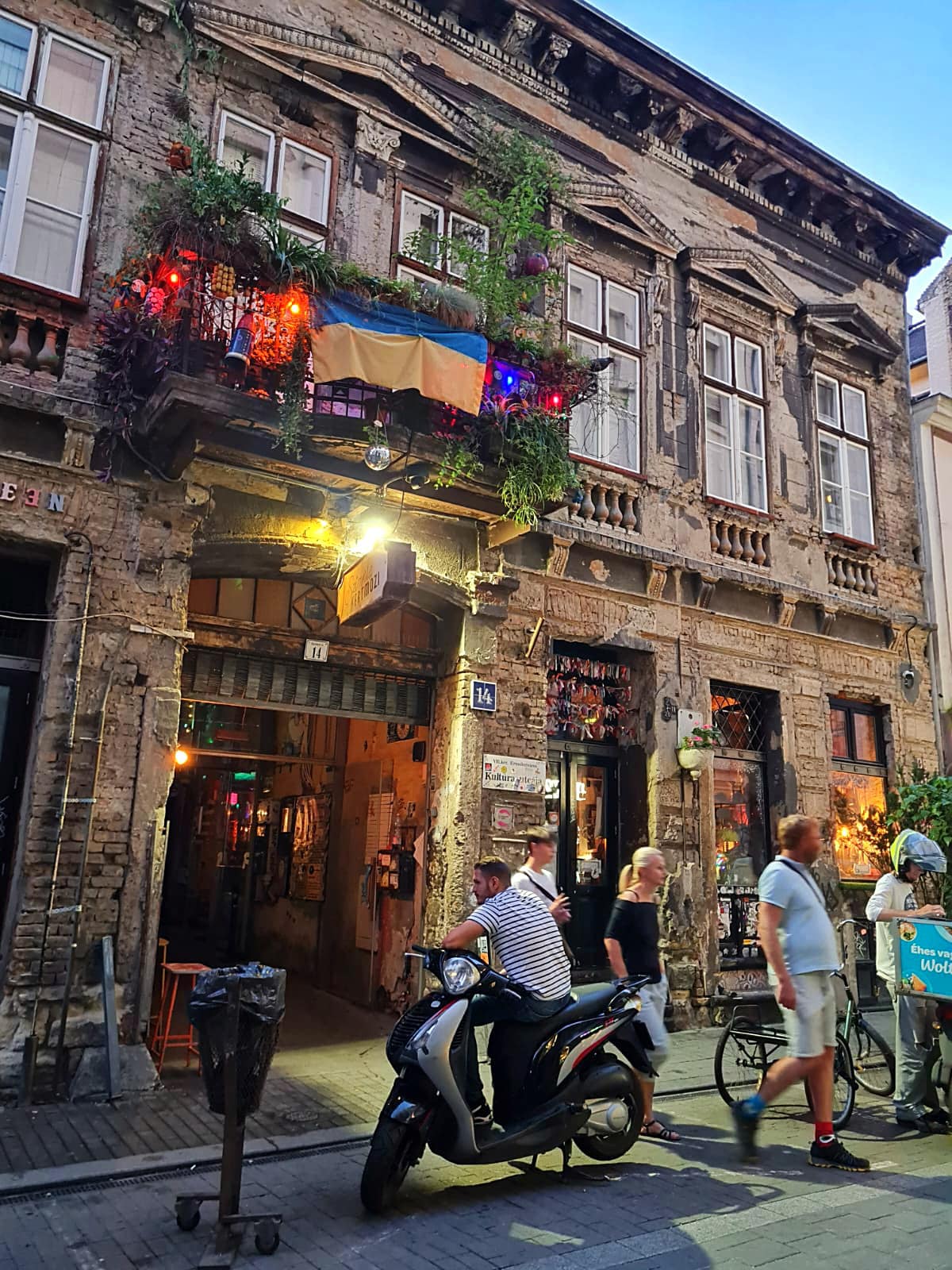
We were then back on a cycle path headed for Budapest. Budapest has a population of about 1.8 million so it was pretty busy as we navigated our way to our central city AirBNB. First impressions is that it is a mix of modern and historical buildings with a busy tourism sector. We loved the vibe and will enjoy exploring more tomorrow on our day off.
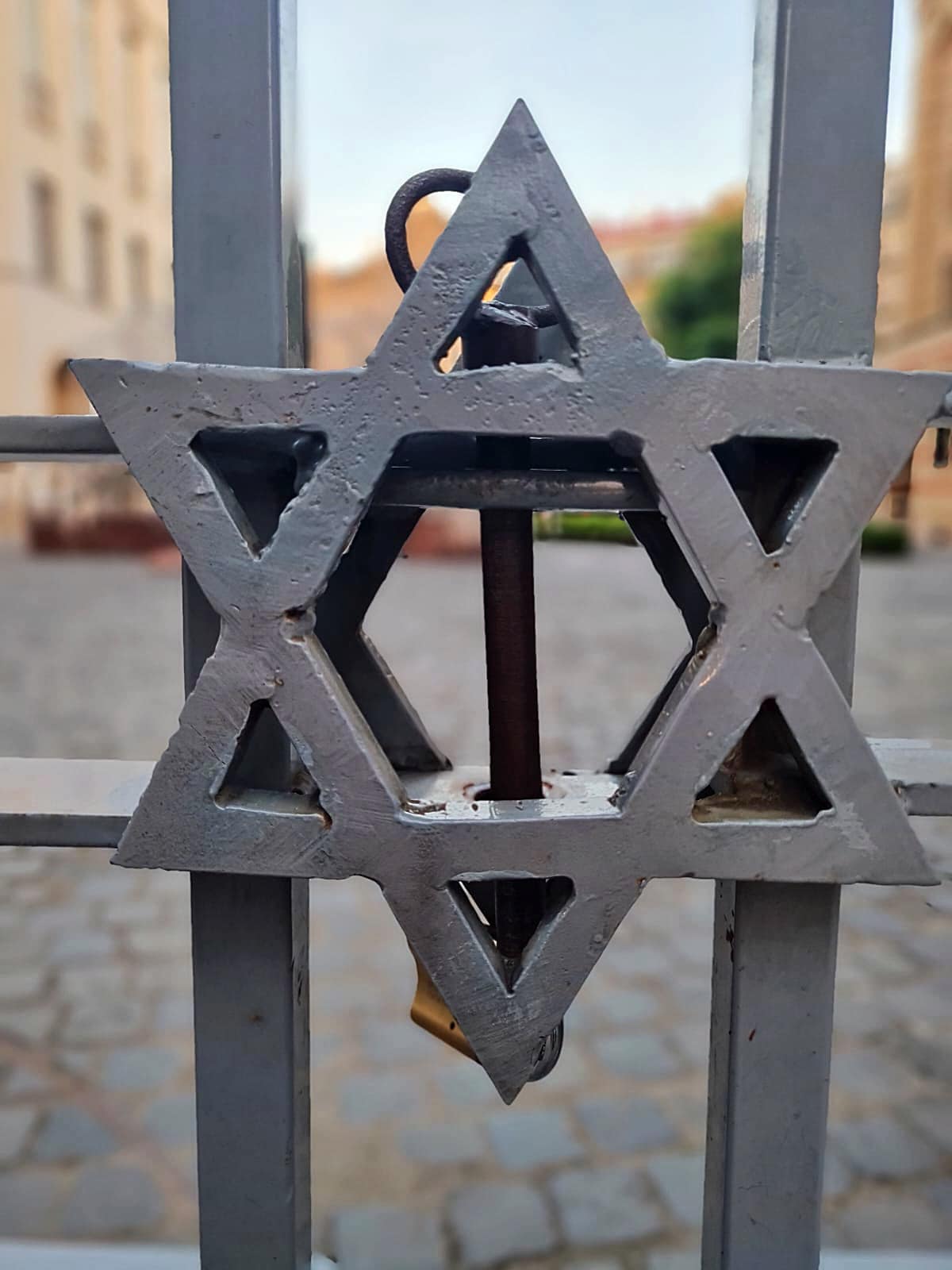
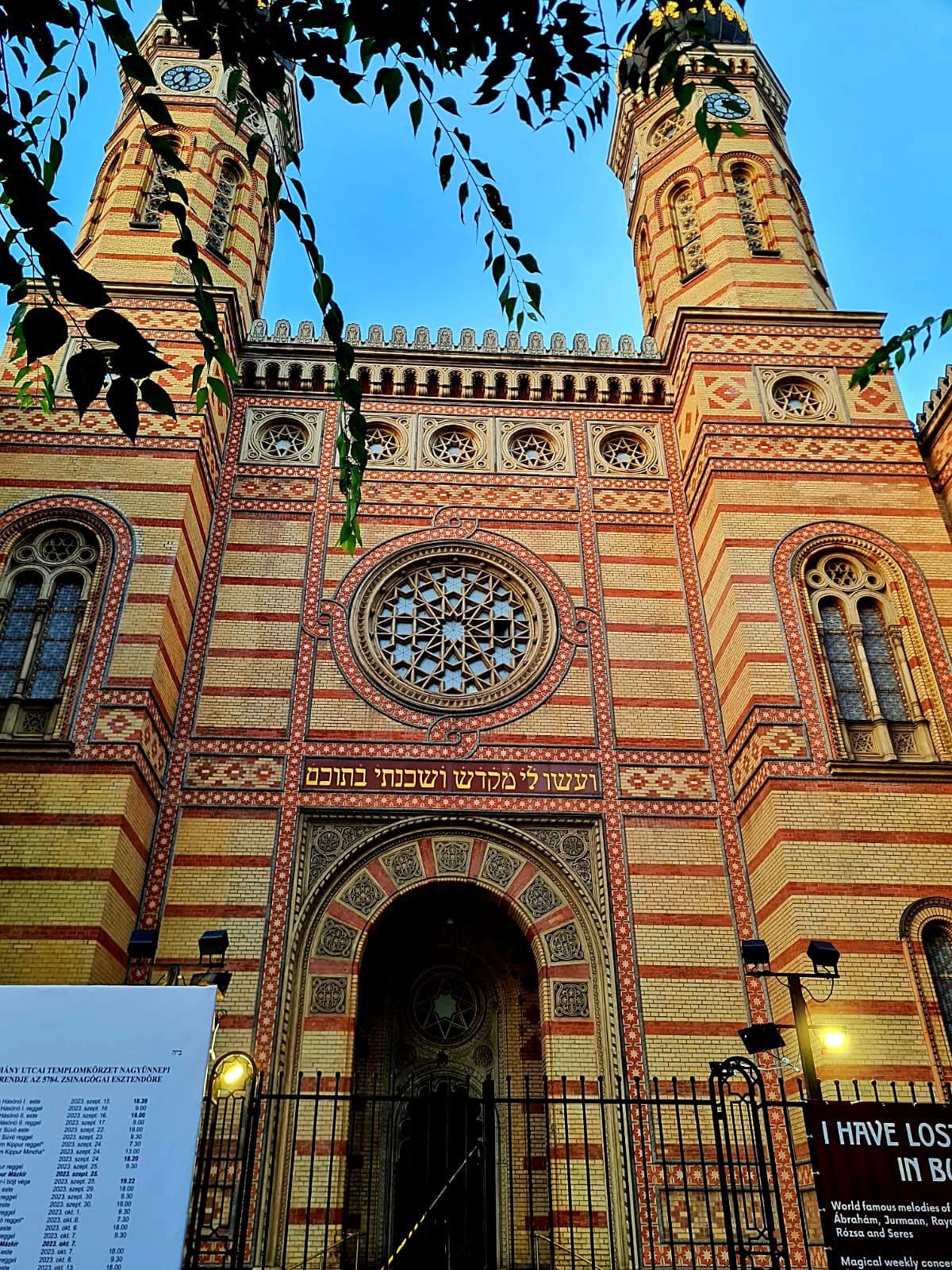
After getting cleaned up, JP and I explored a little market she had been recommended. We also visited the synagogue which is the largest in Europe. The Jewish population had reached 250,000 pre the Second World War. The synagogue was severely damaged by Nazi supporters and many of its congregation died in concentration camps.
The synagogue was restored in the 1990s with a USD5 million donation from the Estée Lauder foundation and an Imre Varga sculpture of a weeping willow tree with the names of 400,000 Hungarian victims of the holocaust inscribed on its leaves.
We continued to explore and came across a lot of what we think are stag parties – groups of men roaming around drinking. We came across a group of men dressed in suits with pink flamingos on them so JP asked if she could take a photo.
We had a traditional dish of Letcho for dinner – Hungarian style ratatouille. JP had hers natural but I got mine with egg and sausage. It was delicious.
We are looking forward to exploring more of this interesting city tomorrow.











Day 41 – Budapest – 0km
Where do I even begin! We have had a fabulous day exploring, in what is, my new favorite city.
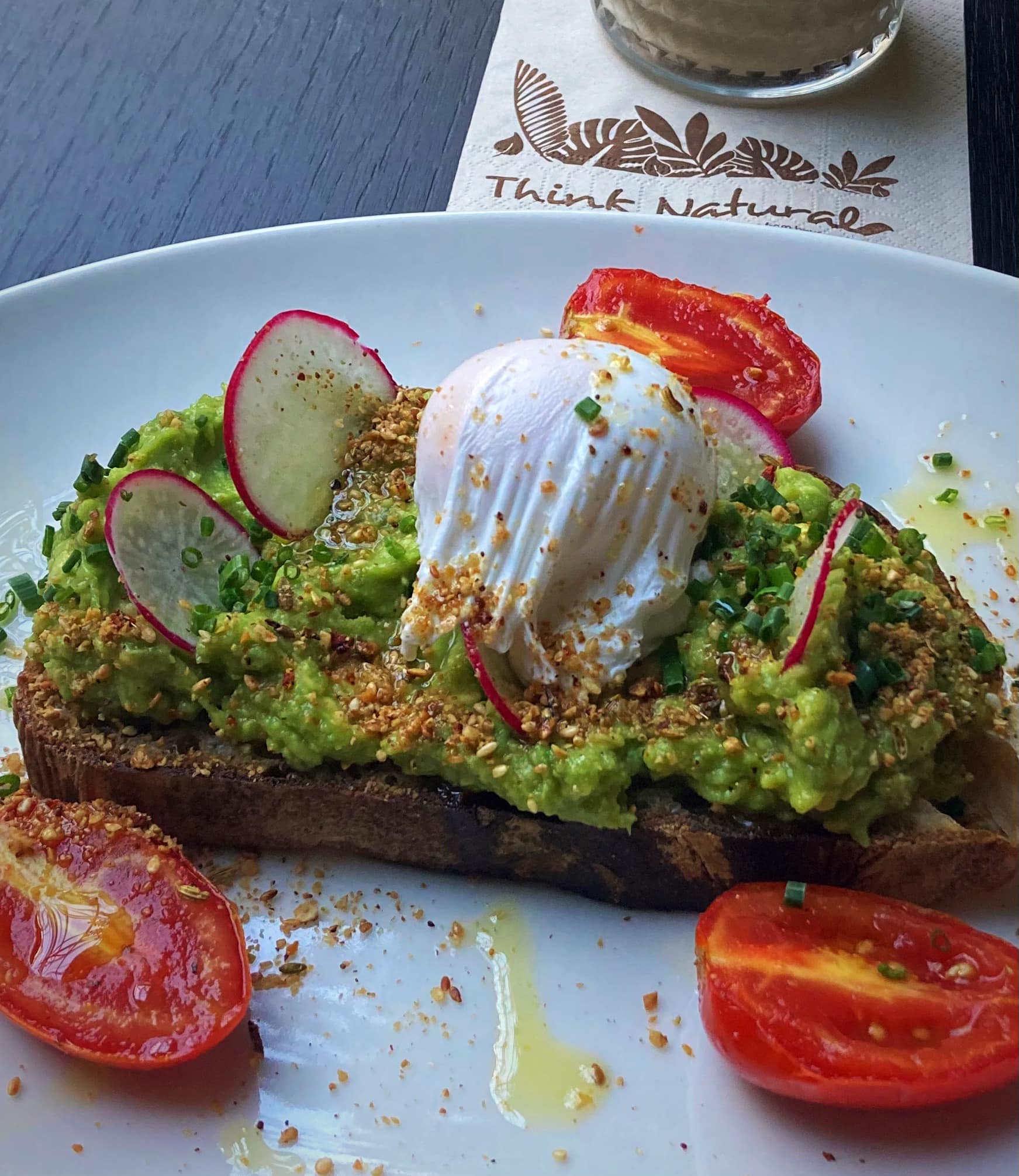
We treated ourselves to a yummy breakfast at a restaurant called TwentySix Degrees which was set in a tropical jungle setting.
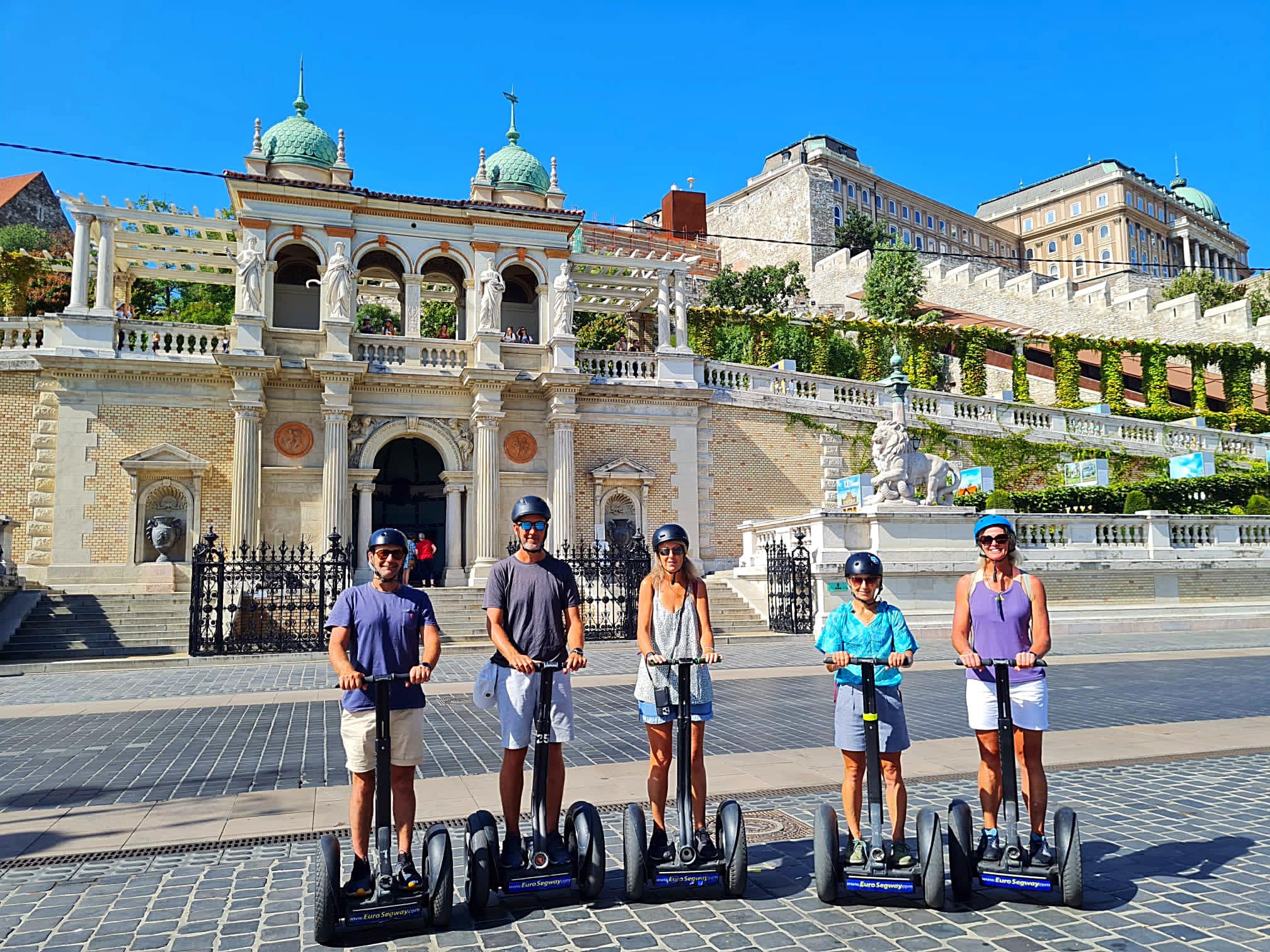
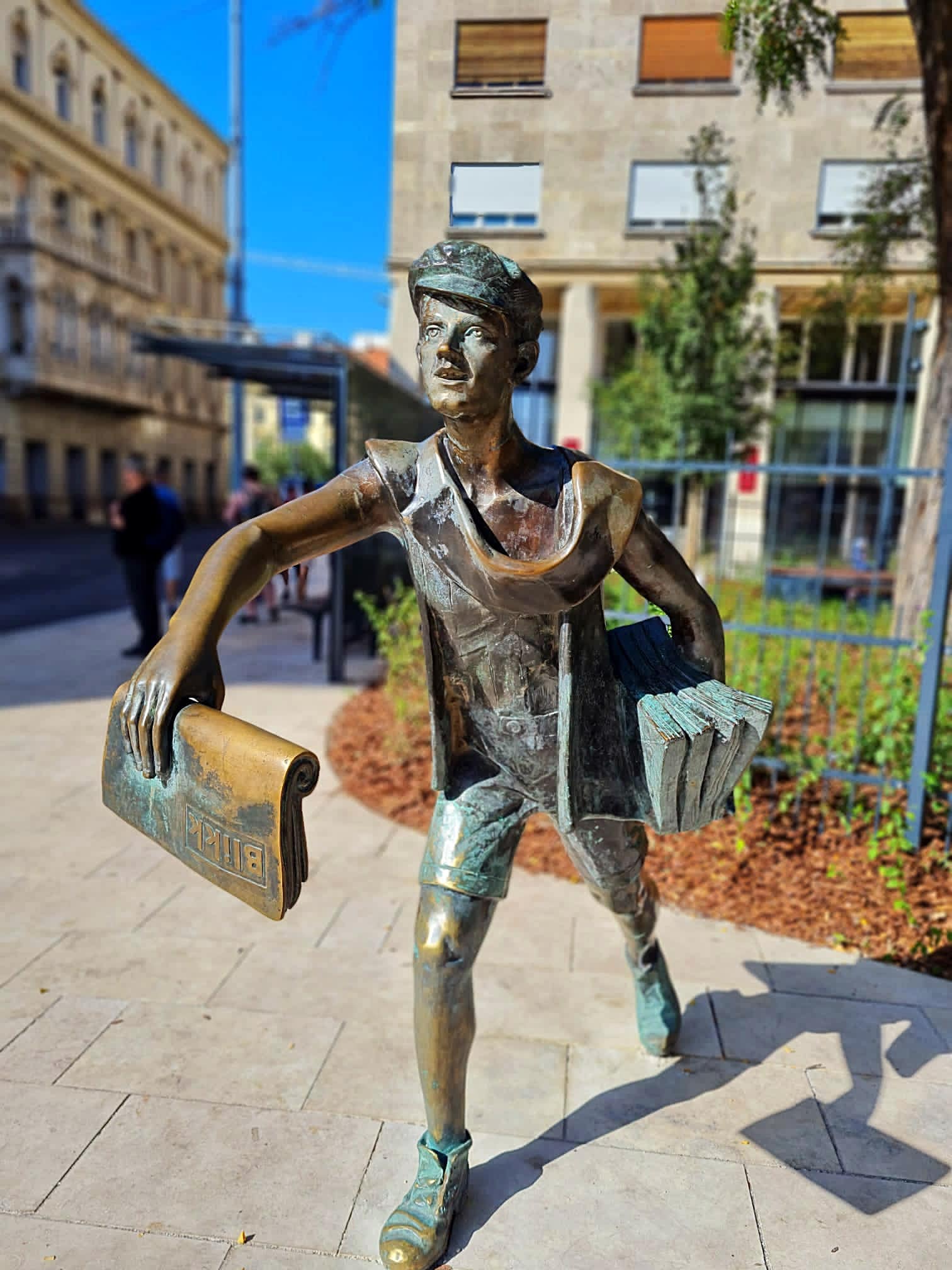
Next up we did a Segway tour of the city. Our guide Argen, originally from Kyrgyzstan, was lovely. He explained the history of Budapest well and showed us the main sites. He has been here for two years studying media and communication and does the Segway tours on the side. He speaks four languages (Kyrgyzstan, Russian, German and English) but doesn’t speak Hungarian. He said this is one of the hardest languages to learn in the world.
Budapest was an imperial city with splendour to match that of Vienna. The catastrophe of the Second World War, followed by over 40 years of communism, left the city in a run down state, with many of its elegant buildings dirty and crumbling. Much work has been done since 1989 to bring the city’s architecture back to life, and the freshly cleaned honey-coloured Süttö limestone of Budapest’s principal buildings reflects a new optimism in the city.
The current city is a result of an amalgamation in 1872 of Óbuda and Buda – on a hillside west of the Danube – with Pest, on the flat floodplain to the east. Buda had developed as the Royal city, first of Hungarian kings and later of Hapsburg emperors.
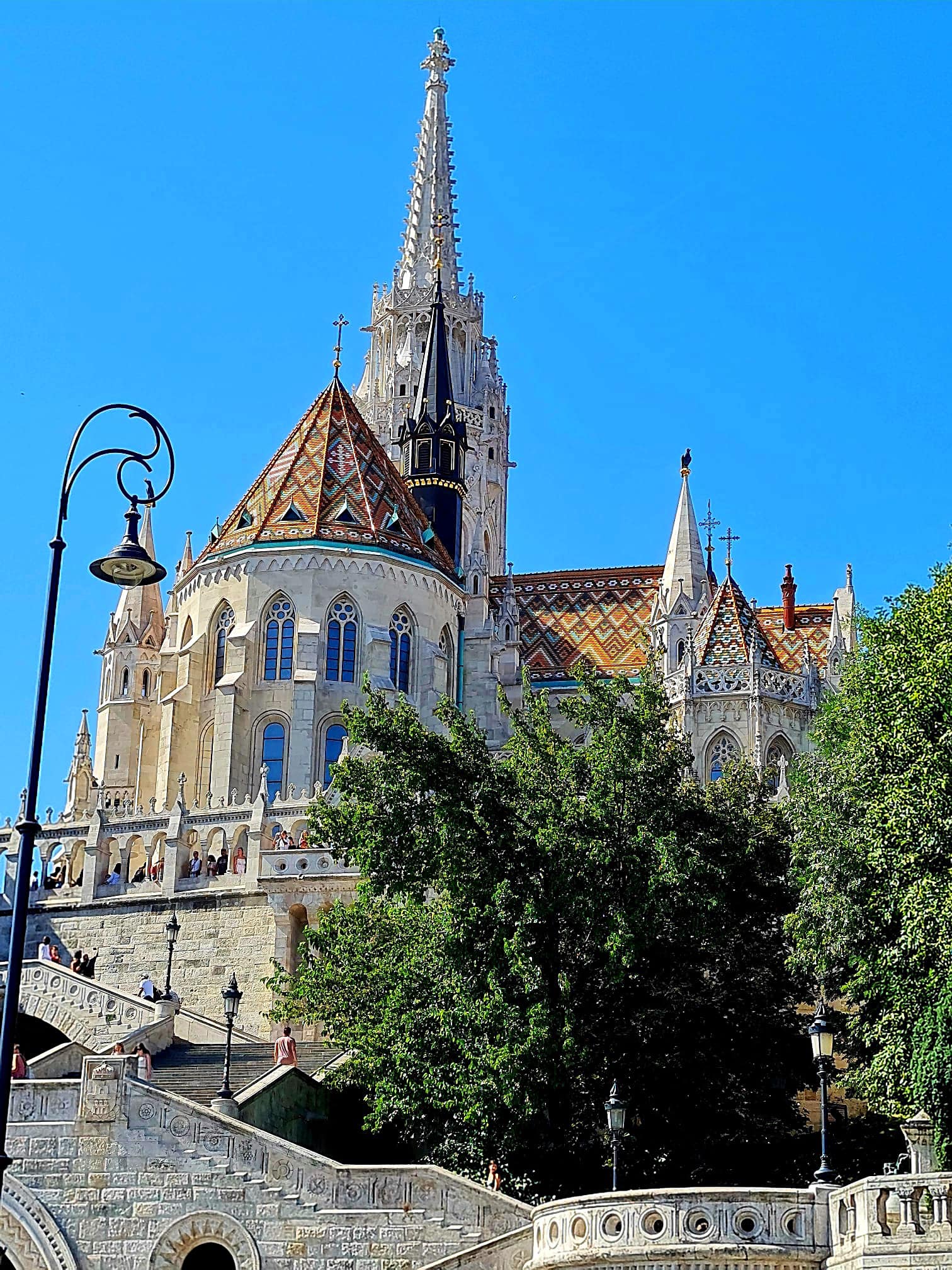
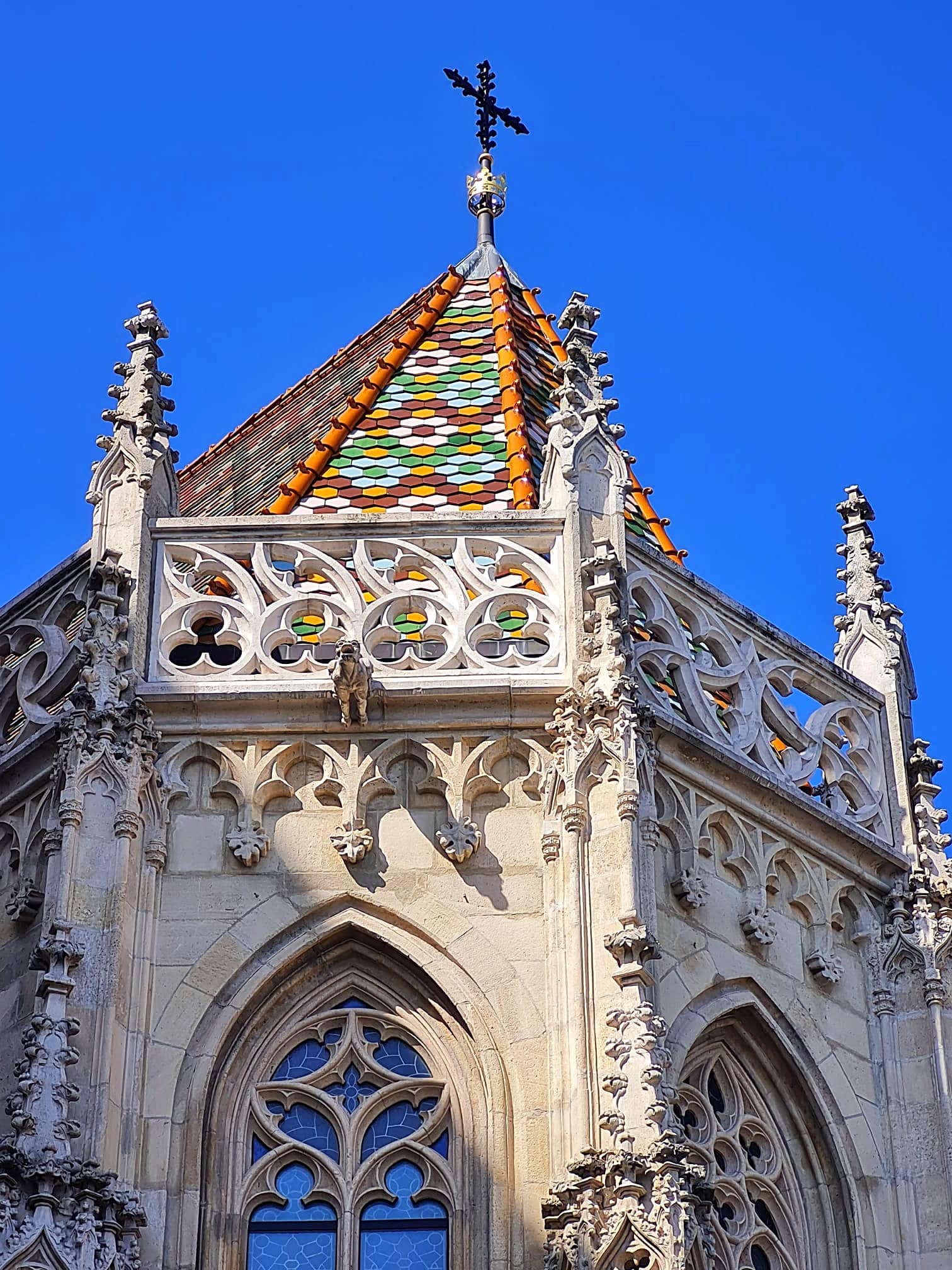
We were staying on the Pest side and started our Segway tour there crossing over to the Buda side to admire St Matthias Church and Fishermen’s bastion on castle hill. There is a great view over Pest from up here. We also saw where the President of Hungary resides on the hill which is currently the first female President. The Prime Minister, Viktor Orban has been re-elected for his fourth term of four years. Argen said the results were dubious – the older generation adore him but the younger not so much. The younger generation want change but there is a lot of apathy when it comes to actually voting.
We also saw the 0 km statue which is the starting point for all distances from Budapest.
Buda is linked to Pest, the commercial and industrial heart of the city, by seven road bridges, all rebuilt after destruction in 1944 – 1945.
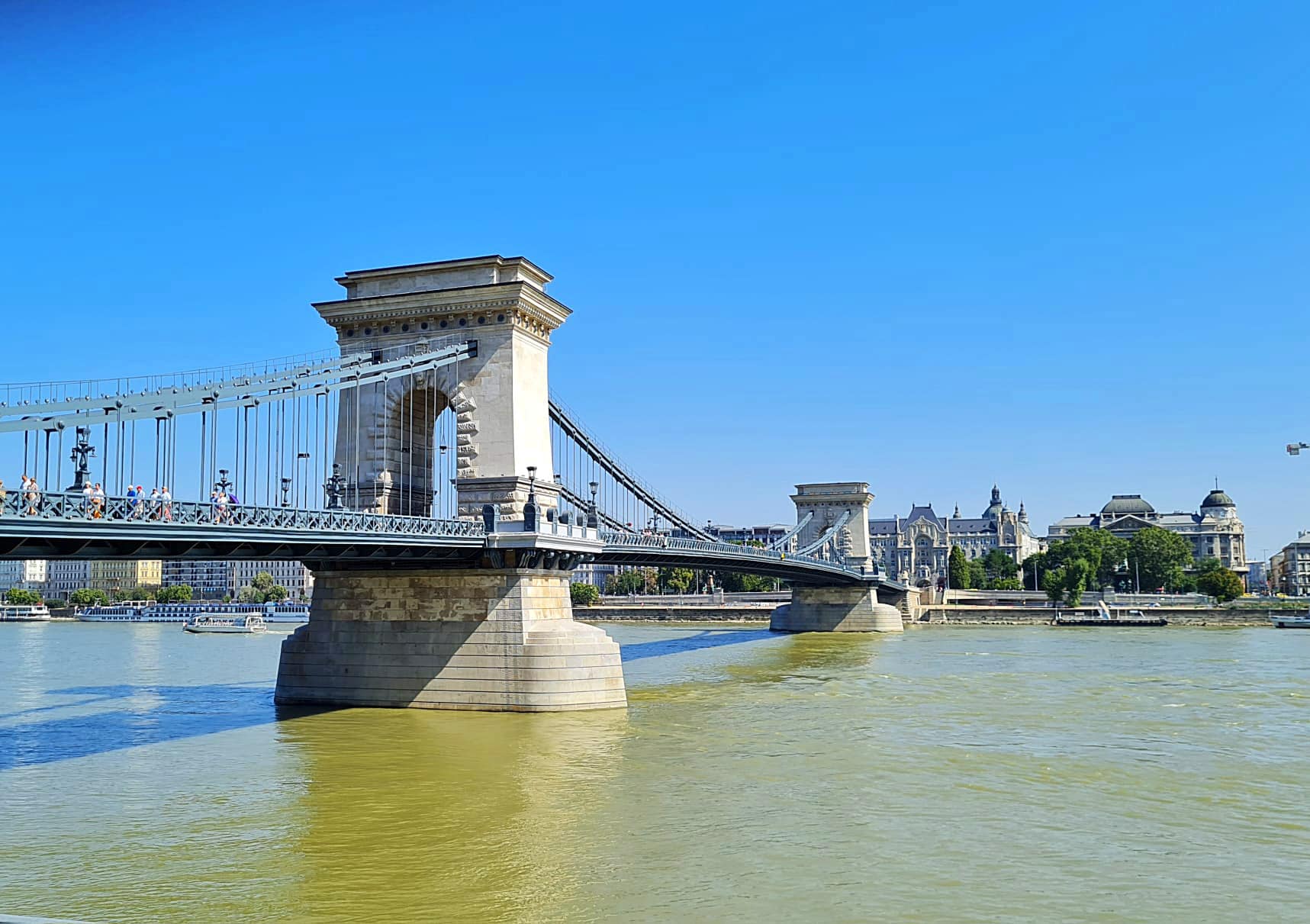
The oldest of these bridges, Széchenyi lanchid chain bridge (1849), originally built by British engineers, is a scaled up version of Marlow Bridge, which crosses the Thames in England. We were supposed to cross back over this bridge but it was closed for the Budapest marathon. We saw some of the front runners who were doing extremely well given it was about 30 degrees.
Instead we headed towards Margaret Bridge admiring the Hungarian parliament buildings (largest building in Hungary) across the river in Pest. These parliament buildings are the third largest in the world following Westminster in London and the Romanian parliamentary building in Bucharest.
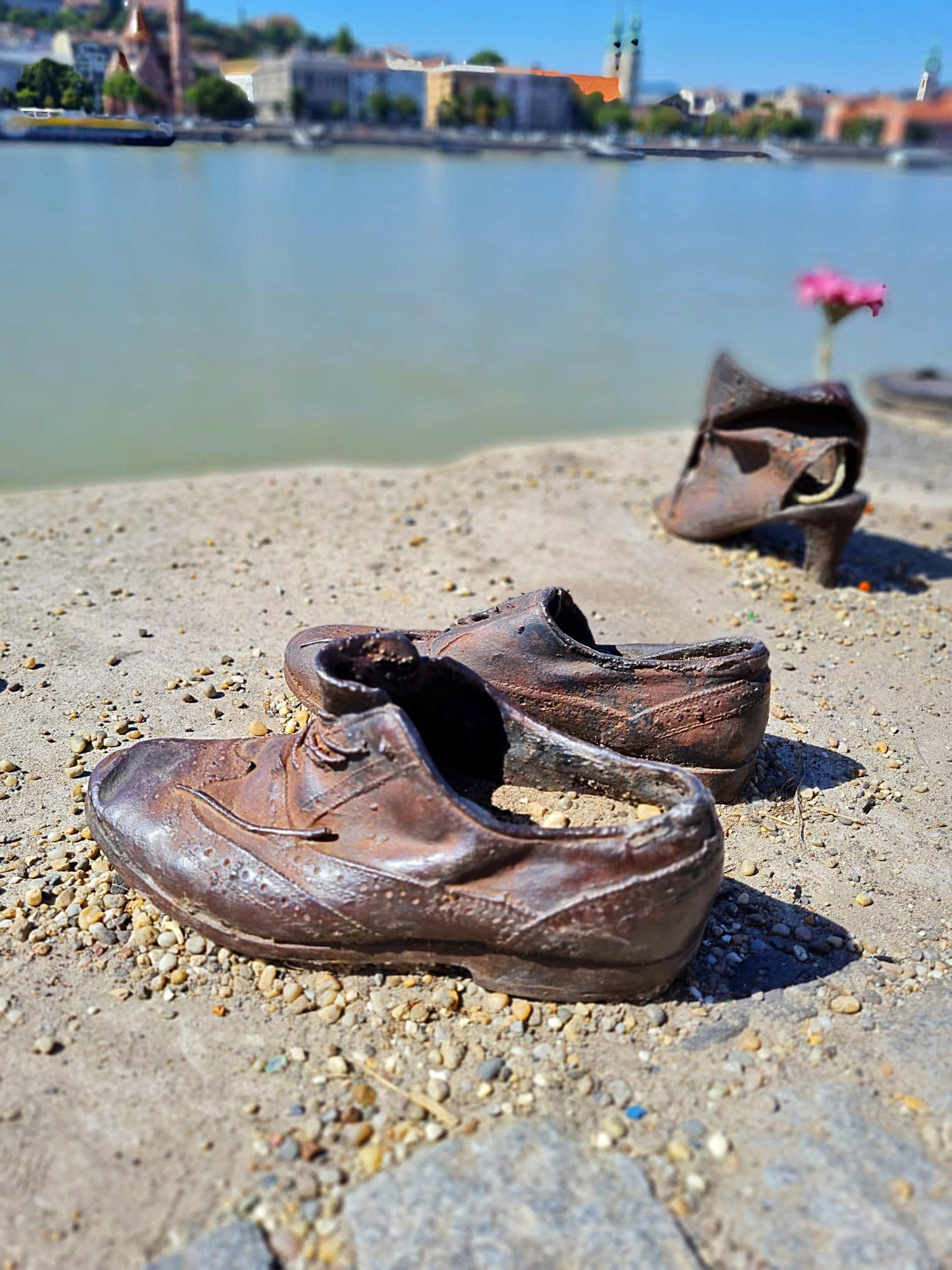
We crossed back to Pest and went to visit the Shoes on the Danube which is a memorial erected on 16 April 2005. Conceived by film director Can Togay, he created it on the east bank of the Danube River with sculptor Gyula Pauer to honour the Jews who were massacred by fascist Hungarian militia belonging to the Arrow Cross Party in Budapest during the Second World War. They were ordered to take off their shoes (shoes were valuable and could be stolen and resold by the militia after the massacre), and were shot at the edge of the water so that their bodies fell into the river and were carried away. The memorial represents their shoes left behind on the bank. It bought tears to my eyes thinking about the atrocities of war.
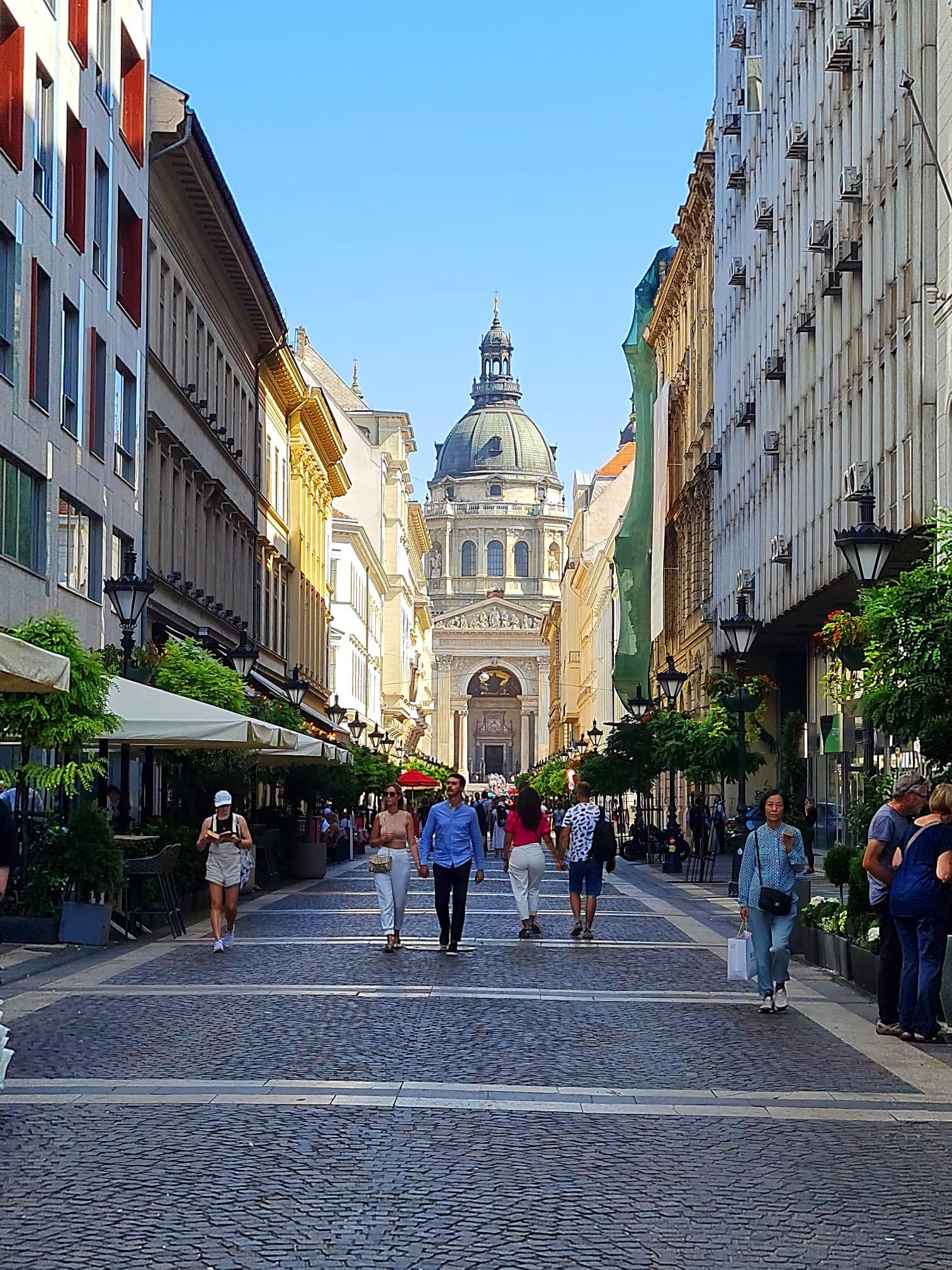
Our last stop was to view St Stephen’s Basilica which is named in honour of Stephen, the first King of Hungary (c. 975–1038).
A thoroughly enjoyable morning and such a great way to cover a lot of ground without breaking a sweat.
The afternoon was spent wandering around the city which is full of life. We enjoyed a lovely dinner at a restaurant that had been recommended to us by some locals JP got chatting too. We had a lot of laughs coming up with some appropriate hand signals to indicate if we needed help or were OK if we found ourselves a little way from each other and something happened. You’d think after 40 odd days we would have had this sussed .











Day 42 – Budapest to Ràckeve – 49km
It was very sad to say goodbye to the beautiful city of Budapest this morning.
We had read on the forum that it could take a bit of time to get out of the city but through some good navigation by Andy we made it to the outskirts in about 45 minutes.
It was another hot day in Hungary and not the most exciting of cycle trails or scenery. We are now following the lower Danube and unlike the well developed tourist infrastructure of Germany and Austria, after Budapest we have entered a region where tourism is still in its infancy.
South of Budapest, the Danube divides into two arms, with the 48km long Csepel-sziget island between them which is set between the western arm of the Danube and the smaller eastern Ráckevei-Duna arm. It varies in width between 3km and 8km.
Legend says it was originally settled by Arpad’s tribe of Magyars, the island being named after Arpad’s horse Cespel. Frequent floods caused issues for centuries but major hydrological works in the 20th century finally controlled the Danube. The Ráckevei-Duna arm is now a navigable side steam much valued for water sports and fishing.
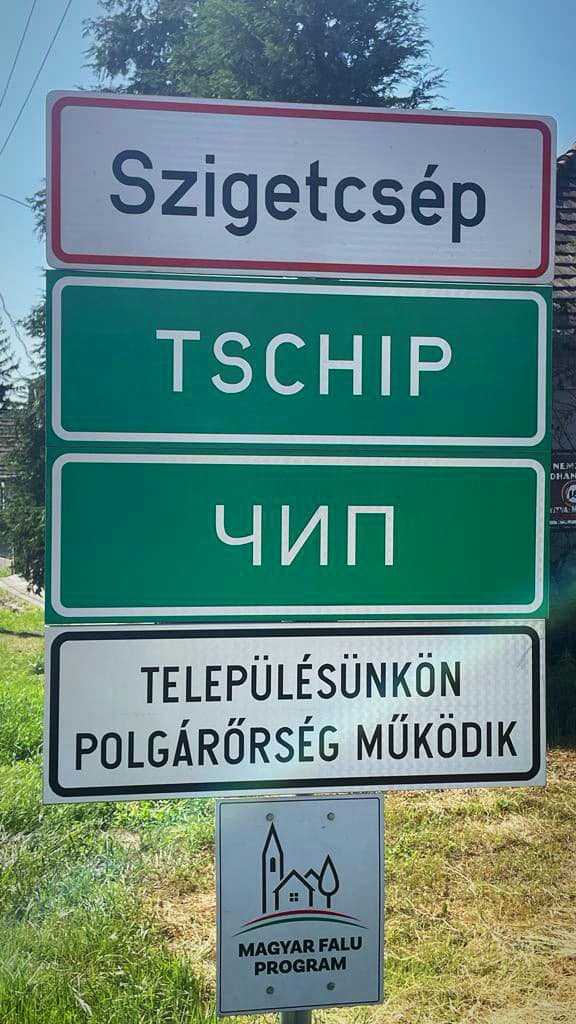
We cycled along the island to reach Rackeve. There was a lot of building and renovation going on and we got the impression that a lot of these houses were holiday homes.
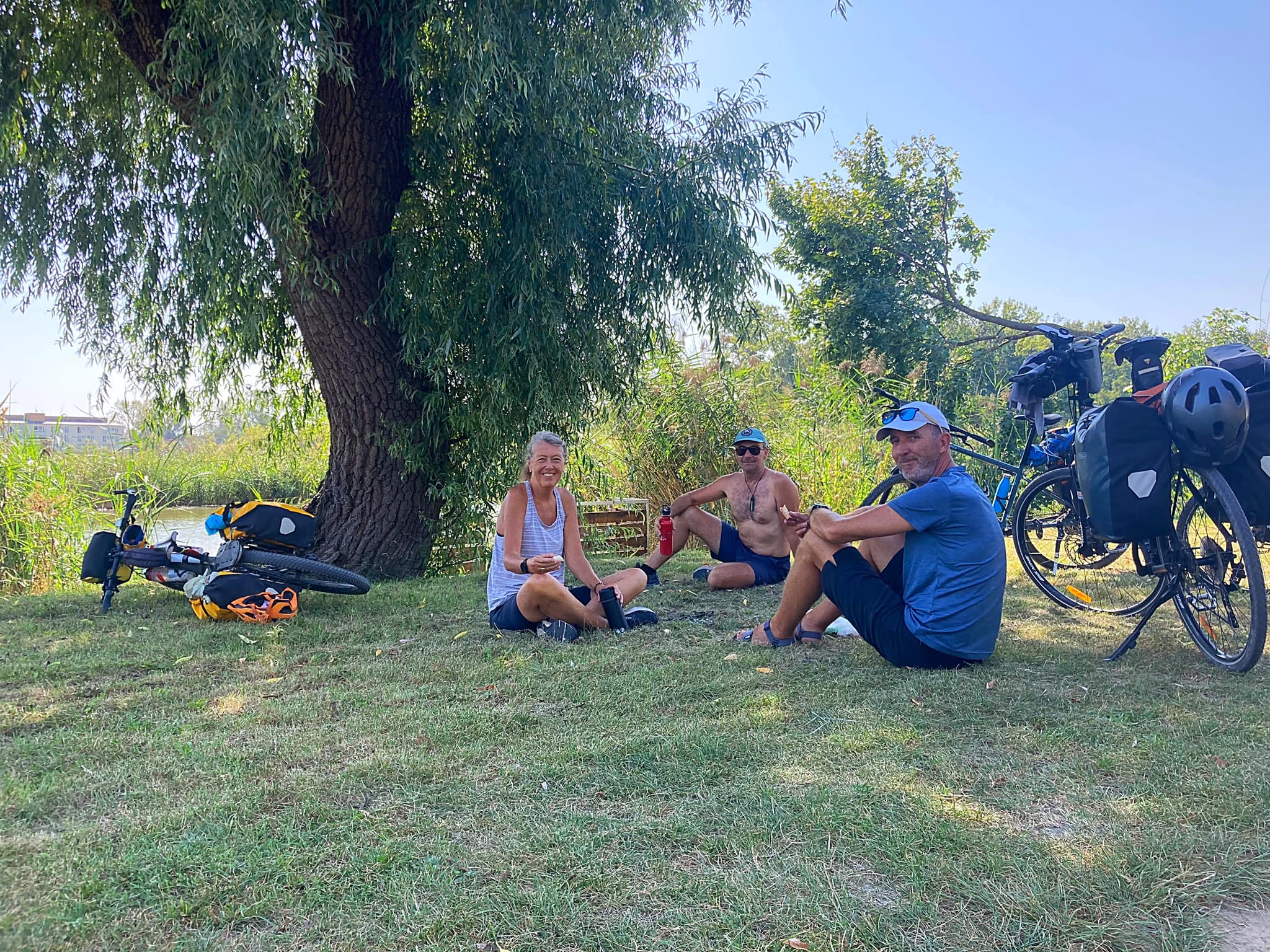
We had a little pit stop once we got on the island to enjoy the shade and refuel.
Just before Rackeve, Andy’s tyre started to go down and JP had a small issue with her bike. Mike’s Bikes and Bytes (he fixes both bikes and computers) to the rescue where both bikes have had an overnight stay.
Andy, Graham and I biked out to Aqua-Land and spent a few hours luxuriating in the various pools they had on offer. Some pools had these massage jets in them which worked wonders on our shoulders and backs.
We had dinner at one of the four restaurants in town, Cadran Pizzeria Pub, which was really nice. The house we are staying in has an underground cellar (no wine) where we played Cabo for the first time since Dole in France.



 SUNGRL